


Abstract
UAV-based rice direct seeding offers high operational efficiency and reduced labor demand, yet seed distribution uniformity remains a major limitation for centrifugal spreading devices. This study aims to design and optimize a novel centrifugal drone rice direct seeding device to improve seed lateral distribution uniformity. In this study, a centrifugal drone rice direct seeding device was developed with a concave perforated disc and double-arc seed-pushing blades to regulate seed motion and improve lateral distribution uniformity. Discrete element method (DEM) simulations were conducted to examine the effects of disc tilt angle, blade type, and blade number. Single-factor and response-surface simulation results identified an optimal parameter combination of a 29.0° disc tilt angle, double-arc blades with a 110° arc angle, and six blades. Based on these results, the disc structure was further refined, and the simulated lateral coefficient of variation (CV) of seed distribution reached 18.22%. Bench tests yielded a minimum CV of 16.34%, an average CV of 19.36%, and a total discharge coefficient of variation of 0.276%, which agrees with the simulation outcomes and supports the validity of the DEM model. Overall, the proposed device demonstrates improved seeding uniformity and meets agronomic requirements for rice cultivation, offering farmers a high-efficiency planting solution and providing UAV manufacturers with a validated double-arc disc design for equipment optimization.
1. Introduction
As a globally essential staple crop, rice planting remains one of the most complex and least mechanized production stages [1,2,3,4]. In China’s major agricultural regions, such as the Yangtze River basin, complex terrain and labor shortages make UAV direct seeding increasingly necessary. Furthermore, national flight regulations and regional agricultural subsidies in China are actively standardizing and promoting the widespread use of agricultural UAVs. Compared to manual transplanting, which is labor-intensive, and traditional ground-based machine sowing, which struggles in muddy or uneven terrain, drone-based direct seeding has emerged as a highly efficient alternative [5,6]. By integrating a seeding device with a drone platform, rice seeds can be delivered directly to the field, contributing to the standardization and automation of mechanized rice cultivation [7,8,9,10,11].
Existing drone rice direct seeding approaches can be broadly categorized into unordered broadcasting [12] and ordered seeding [13]. Unordered broadcasting typically relies on centrifugal or pneumatic devices, aiming to distribute seeds over the field in an approximately uniform but non-row-aligned pattern [14]. In contrast, ordered broadcasting employs tube-guided delivery or shot seeding devices to form organized seed rows on the ground. These two routes reflect a core trade-off in drone direct seeding: broadcasting systems generally prioritize high throughput and operational efficiency, whereas ordered seeding systems emphasize positional regularity and agronomic controllability.
Under unordered broadcasting, Song et al. [15] proposed a pneumatic drone rice broadcasting device in which fan-generated high-speed airflow transports seeds through a guiding channel, while a grooved-wheel metering mechanism enables rate adjustment by regulating rotational speed and coordinating airflow parameters under different flight conditions. Wu et al. and Ren et al. [16,17] developed centrifugal broadcasting systems driven by a rotating disc and integrated controllable feeding and flow-regulation units (screw conveying or servo-actuated flow control) to stabilize discharge and improve spreading uniformity through structural refinement of the disc-side components. Peng Dongxing [18] designed a broadcasting device featuring an inverted-cone seed hopper with an auxiliary stirring rod near the outlet and a servo-adjustable opening for variable-rate discharge; seeds fall onto a motor-driven spreading disc mounted on the drone landing gear and are subsequently broadcast by centrifugal action. Peng et al. [19] developed a quantitative centrifugal drone rice seeding device that feeds seeds via a vertical auger into a rotating disc, achieving disc-driven broadcasting and reporting distribution variability under typical operating conditions. For ordered seeding, He et al. [20] introduced a shot-seeding drone device in which pelletized rice seeds are accelerated by rotating friction wheels and projected into the field. Bench tests demonstrated good row formation, while also indicating that seed damage can occur during acceleration and ejection and is influenced by seed treatment and motor speed. Zhang et al. [21] developed a tube-guided drone seeding device that meters seeds using a tilted conical grooved-wheel mechanism and delivers them through a discharge tube. A simulation model was further established to analyze rotor-induced airflow effects on in-air seed drift and to support operating-parameter optimization. Huang et al. and Zhang Shun [22,23] addressed strip-forming placement under rotor disturbance by strengthening trajectory control: Huang designed an upward-concave disc structure to condition seed flow and added a tail-tube component to mitigate wind-field interference, while Zhang Shun improved pneumatic delivery by increasing transport-airflow velocity to actively constrain seed motion and narrow the resulting strip width. Liu Yu [24] proposed a modular drone strip-seeding device adaptable to rice and oilseed rape that uses an electrically driven grooved-wheel metering unit and a folding guide tube to achieve controlled strip placement.
Despite the progress above, two key gaps remain. First, many broadcasting-type drone seeders still suffer from lateral non-uniformity and unstable spread boundaries, because seed trajectories depend strongly on (i) short and variable seed–disc contact at high rotational speed, (ii) seed-shape-induced variability in exit velocity and direction, and (iii) airflow disturbance from drone rotors, which together amplify randomness in seed motion and dispersal. Second, although ordered seeding can improve placement regularity, row-forming devices often introduce new constraints, such as reduced throughput, higher structural complexity, clogging risk, and potential seed damage, making it difficult to achieve both high efficiency and stable uniformity in practical drone operation. To address these limitations while retaining the efficiency advantages of broadcasting, this study focuses on trajectory regulation within a centrifugal spreading framework and proposes a centrifugal drone rice direct seeding device featuring a concave perforated seeding disc, double-arc seed-pushing blades to enhance guided motion on the disc surface, and a double-layer outlet (inner–outer opening) configuration to mitigate the central sparse zone commonly observed with single-opening designs. The Discrete Element Method (EDEM) [25] is used to quantify seed–disc–blade interactions and identify influential parameters; single-factor and response-surface simulations are then conducted to relate key design factors to the lateral coefficient of variation (CV), followed by prototype fabrication and bench validation.
2. Material and Methods
2.1. Overall Structure and Design Principles
This study utilized 3D modeling (SolidWorks 2022), discrete element method (DEM) simulations, and prototype bench testing to evaluate the seeding device.
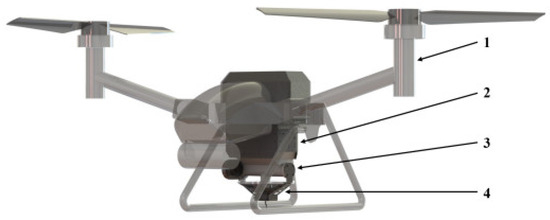
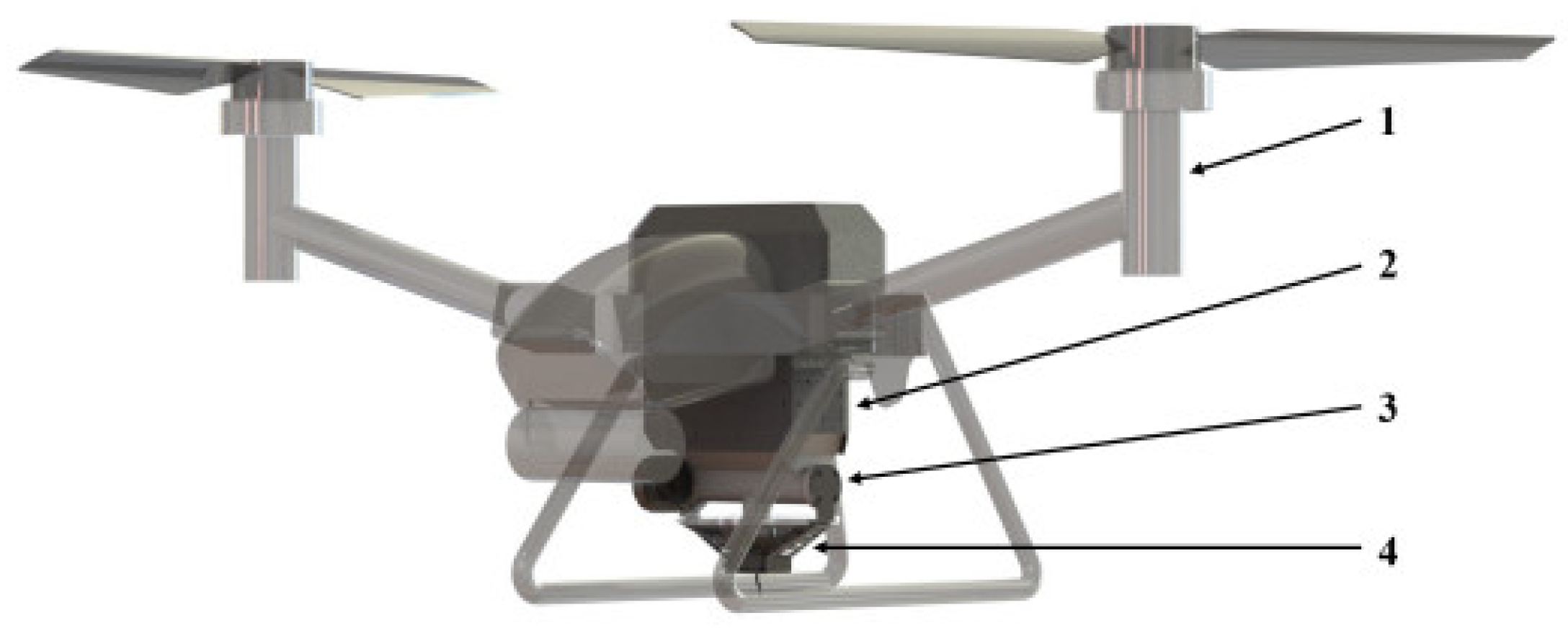
Figure 1 shows the three-dimensional model of the rice direct seeding device, which mainly comprises a seed box, a seed supply unit, a centrifugal seeding disc, and a control system.
Figure 1.
Overall view of the UAV rice direct seeding device. 1. Drone. 2. Seed box. 3. Seed supply device. 4. Centrifugal seeding disc.
2.1.1. Key Component Structures
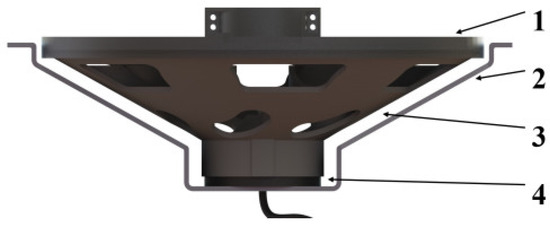
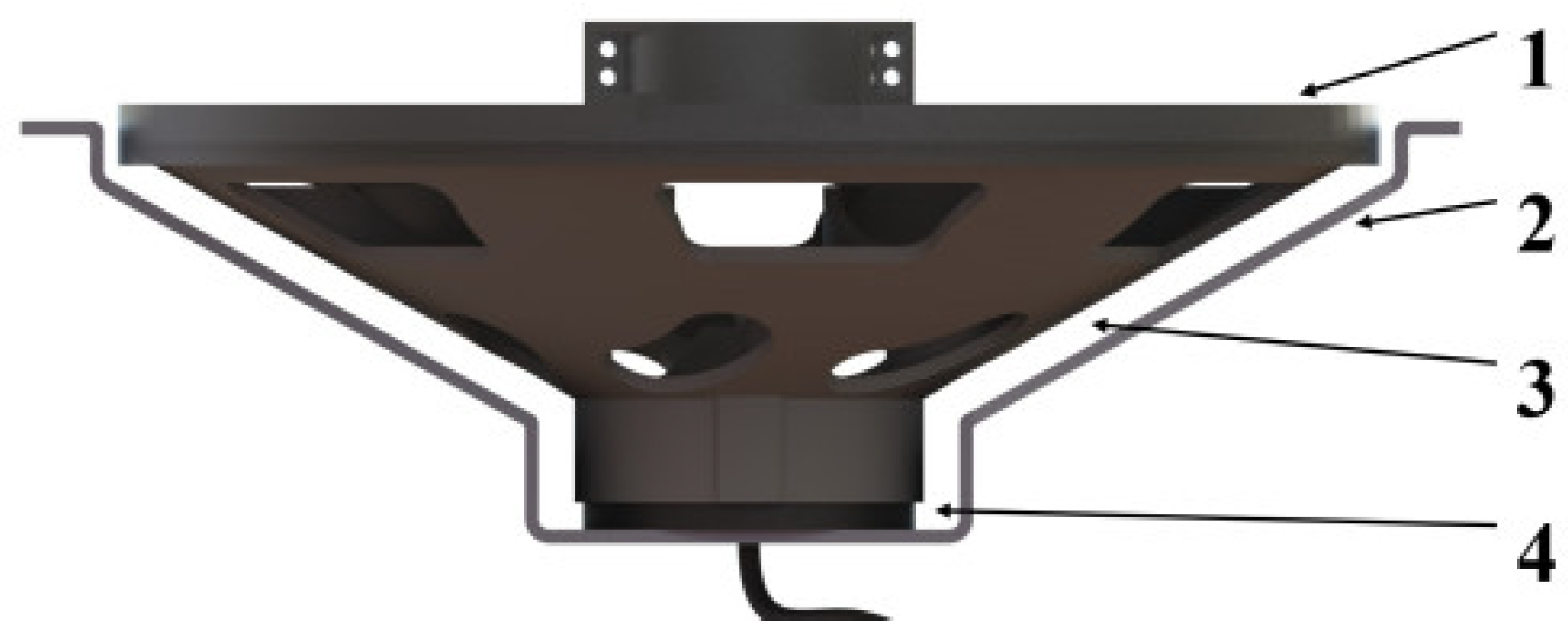
The physical structure of the centrifugal seeding disc device is illustrated in Figure 2. The centrifugal seeding unit adopts a concave perforated disc equipped with double-arc seed-pushing blades. During operation, seeds are accelerated and discharged mainly by centrifugal force, driven by a coordinated control system and motor to ensure even field distribution.
Figure 2.
Centrifugal seeding disc device. 1. Baffle plate. 2. Motor base. 3. Seeding disc. 4. Sowing motor.
2.1.2. Parameters and Design Principle of Concave-Type Hole Seeding Disc
The traditional centrifugal rice seeding device uses a flat seeding disc, where the seeding process is completed by the collision between the high-speed rotating disc and the rice seeds. Due to the brief contact time and high impact force, the seeds are prone to damage. Additionally, the varying shapes of the rice seeds result in different contact points with the disc, leading to uneven seed velocity. Consequently, field tests often show poor left–right uniformity and pronounced boundary fluctuations in the lateral distribution [26].
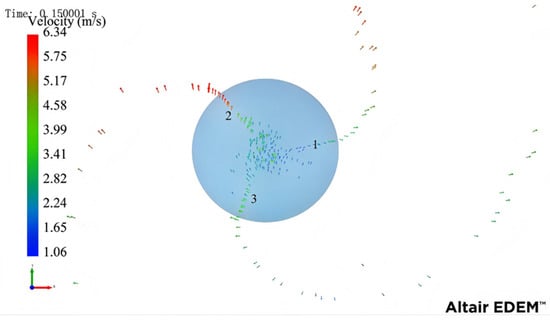
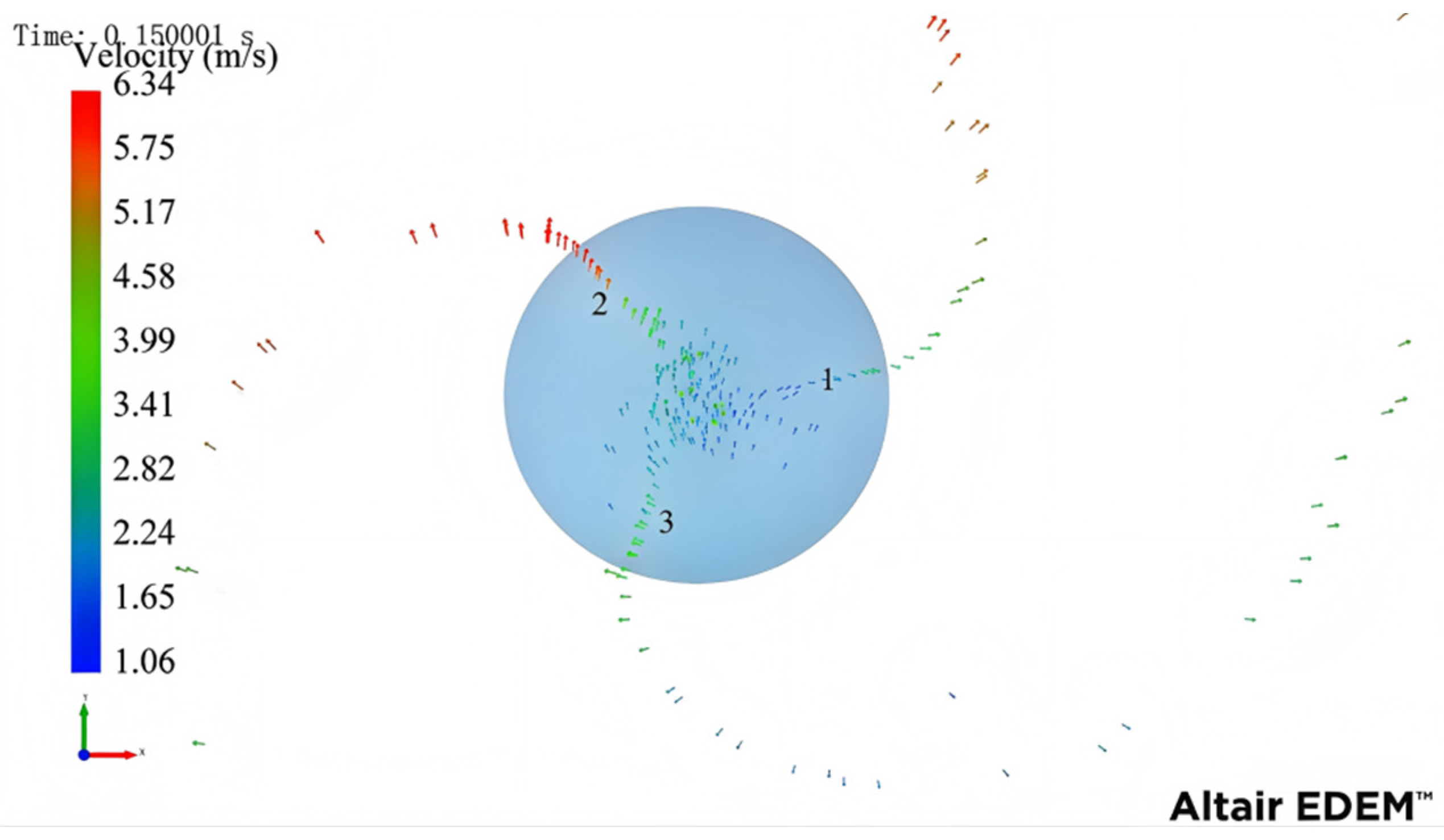
Seed motion was analyzed using the EDEM-based discrete element method (DEM), as shown in Figure 3. At a given moment during drone operation, seeds discharged by blade 2 exhibit a higher exit velocity than those from blades 1 and 3. In addition, the exit directions differ across blades (approximately parallel to the blade at blade 1, oblique at blade 2, and nearly perpendicular at blade 3), which contributes to left–right non-uniformity and asymmetric boundary shapes in the lateral distribution.
Figure 3.
Rice seed movement. Numbers 1, 2, and 3 denote different seed-pushing blades.
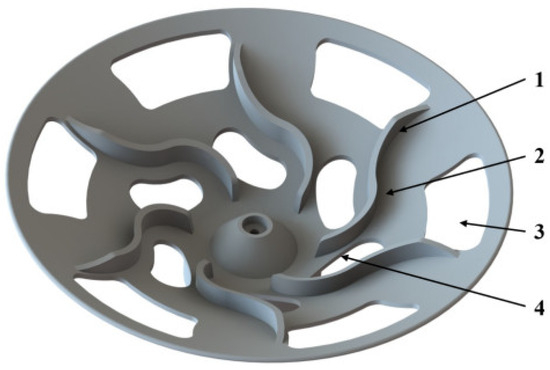
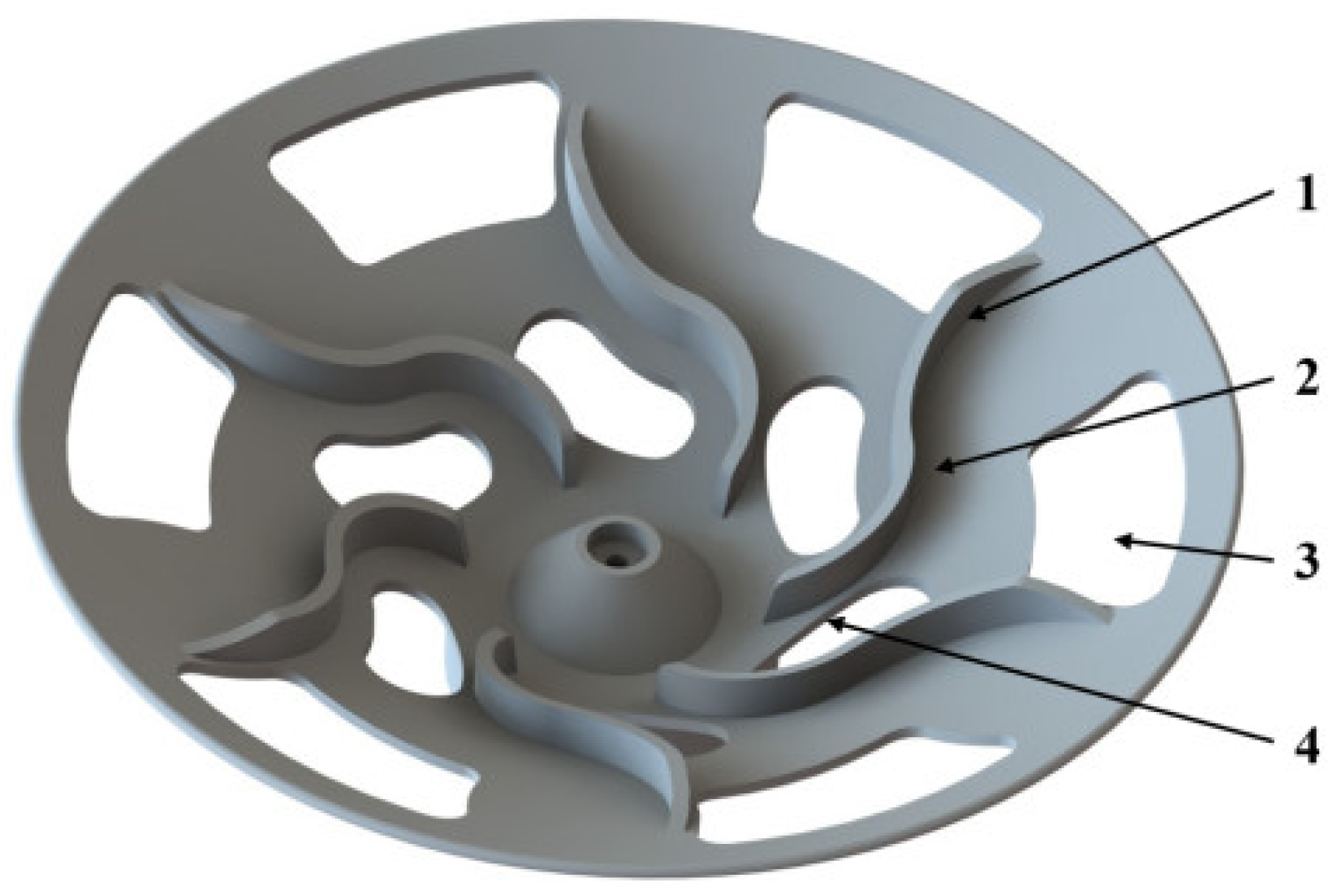
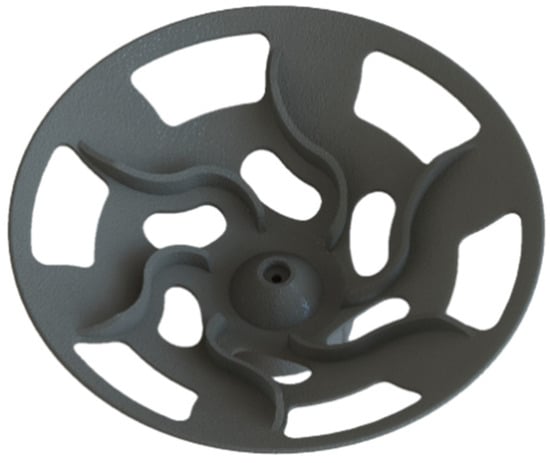
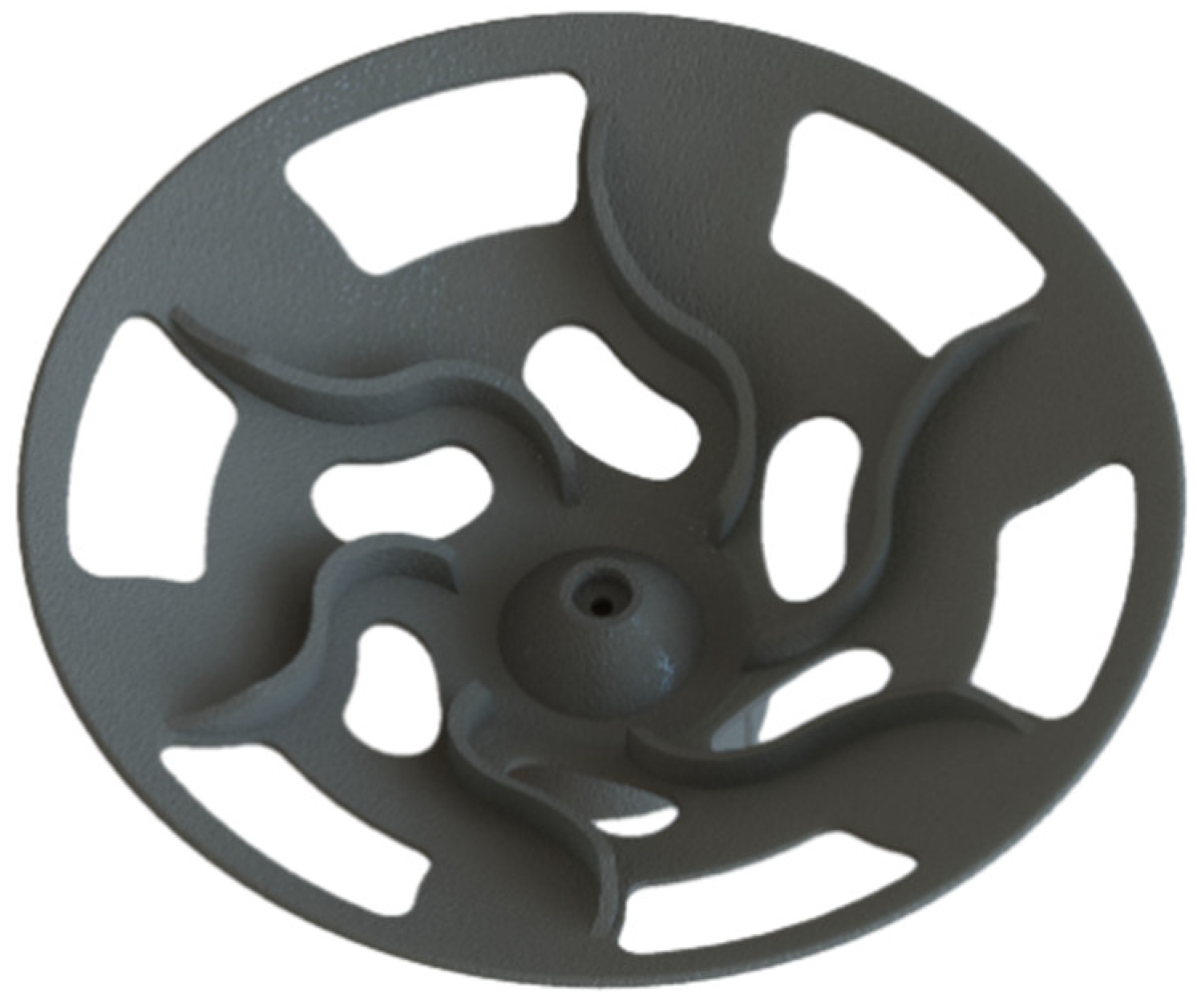
To address the aforementioned issues, a concave-perforated seeding disc was designed, as shown in Figure 4. The disc features a concave structure with two openings, and the seed-pushing blades are designed in a double-arc shape. The radius of the seeding disc is 112 mm, with an inclination angle of 29°. The conical base has a radius of 20 mm and a height of 20 mm. The seed-pushing blades have a height of 12 mm and a thickness of 3 mm.
Figure 4.
Three-dimensional view of the seeding disc. 1. Seed pushing area. 2. Seed collecting area. 3. Outer opening. 4. Inner opening.
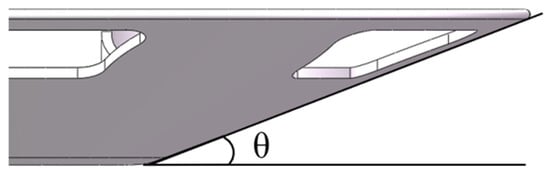
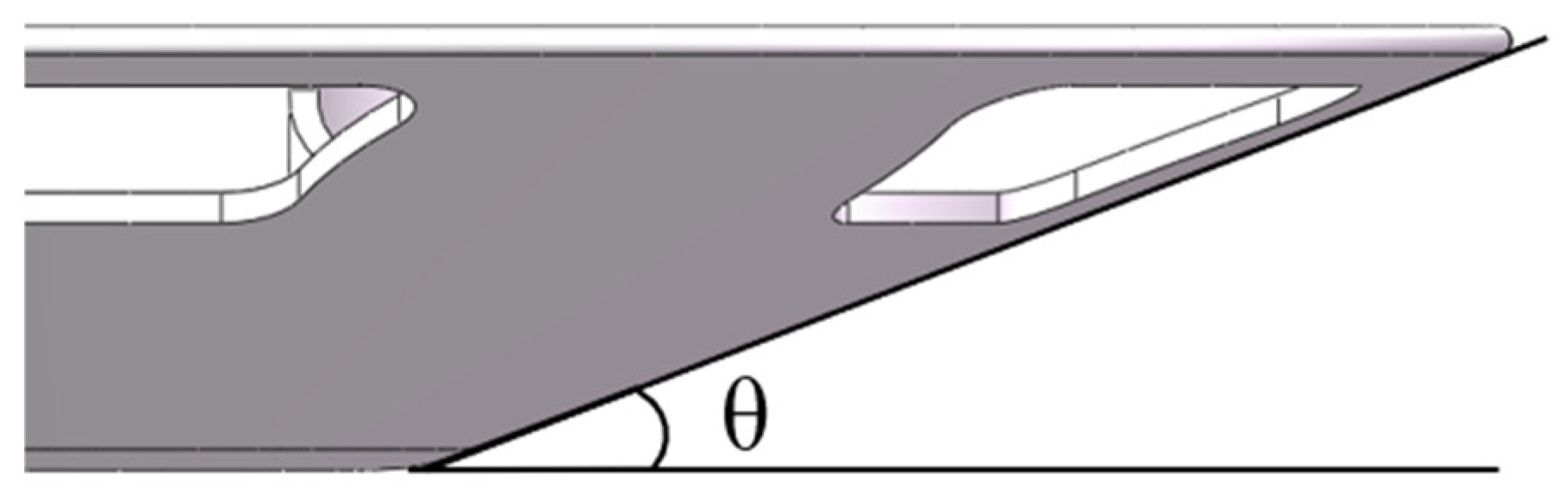
The specific definition of the seeding disc inclination angle is shown in Figure 5. The seeding disc is divided into four regions: (1) seed-pushing area, (2) seed-collecting area, (3) outer opening, and (4) inner opening. As seeds travel along the curved disc surface under centrifugal action, an upward velocity component is generated, which increases the post-discharge flight time and helps maintain seed velocity when entering the soil. The double-arc blades create distinct collecting and pushing zones: seeds tend to accumulate in the collecting area and are then guided outward along the blades, while seeds disperse more readily in the pushing area and exit through the outer opening. In addition, the dual-opening design allows the inner-layer discharge to compensate for the central void produced by the outer-layer discharge, thereby improving overall lateral uniformity.
Figure 5.
Angle of inclination of the seeding disc.
Rice seeds are mainly subjected to centrifugal force and the normal (supporting) force exerted by the blades. In the rotating reference frame, centrifugal force is an inertial (fictitious) force acting radially outward from the rotation axis and can be expressed by Equation (1).
where is the centrifugal force (N); m is the mass (kg); r is the radius of rotation (m); and ω is the angular velocity (rad/s).
Due to interactions with the blades, seeds rapidly approach the blade tangential velocity. Under a simplified contact model, seed acceleration is attributed to the blade normal (supporting) force, which is perpendicular to the contact surface and can be calculated using Equation (2).
where is the supporting force (N) and t is the time (s).
By dividing Equation (1) by Equation (2), we obtain:
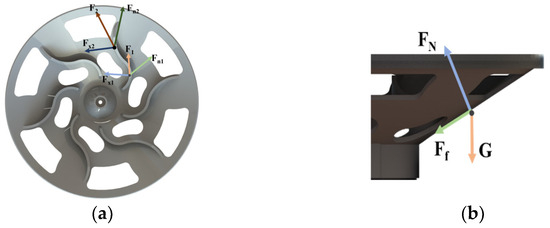
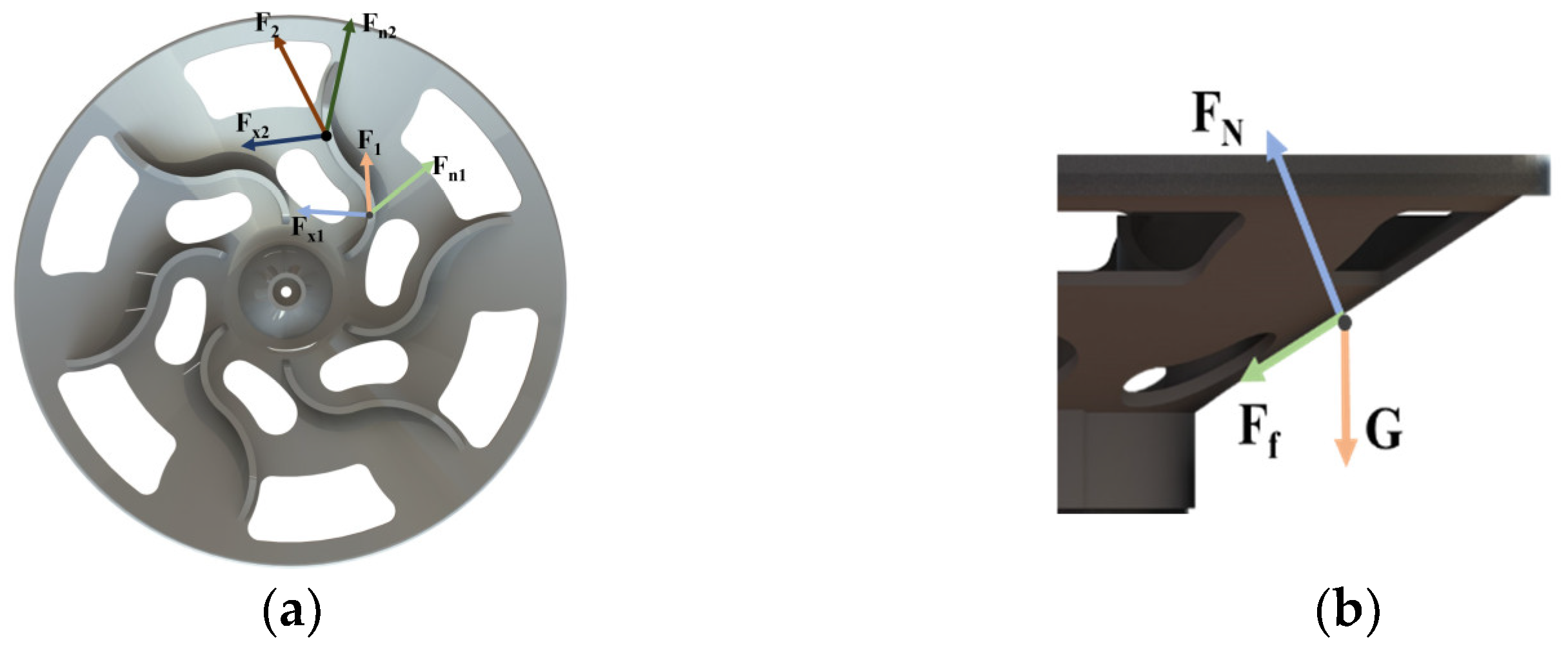
The angular velocity ω of the rice seeds is the same at different positions on the blades. The contact time t between the rice seeds and the blades is extremely brief, with minimal variation, allowing for the assumption that the ratio of centrifugal force to supporting force remains relatively constant at different positions on the seed-pushing blades. Figure 6 shows force analyses for seeds in the collecting and pushing areas. In the side view (Figure 6b), the rice seeds are subjected to the gravitational force G, the supporting force from the seeding disc, and the sliding friction , all of which are much smaller than the dominant in-plane forces (Figure 6a) and can therefore be neglected.
Figure 6.
Force analysis of rice seed: (a) Overhead force analysis; (b) Side-view force analysis.
As shown in Figure 6, the direction of centrifugal force acting on the rice seeds in the seed collection and seed-pushing areas changes significantly due to their different positions, causing a shift in the direction of the resultant force. In the seed collection area, the force on the rice seeds is directed toward the seed-pushing blades, while in the seed-pushing area, the force direction deviates away from the blades. Compared to linear seed-pushing blades, the double-arc structure seed-pushing blades provide stronger guidance for the seeds.
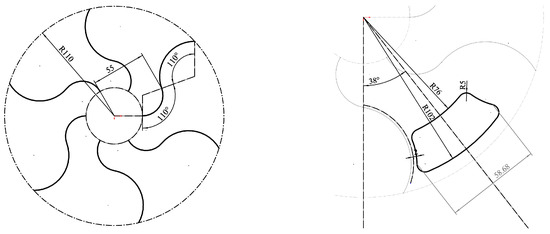
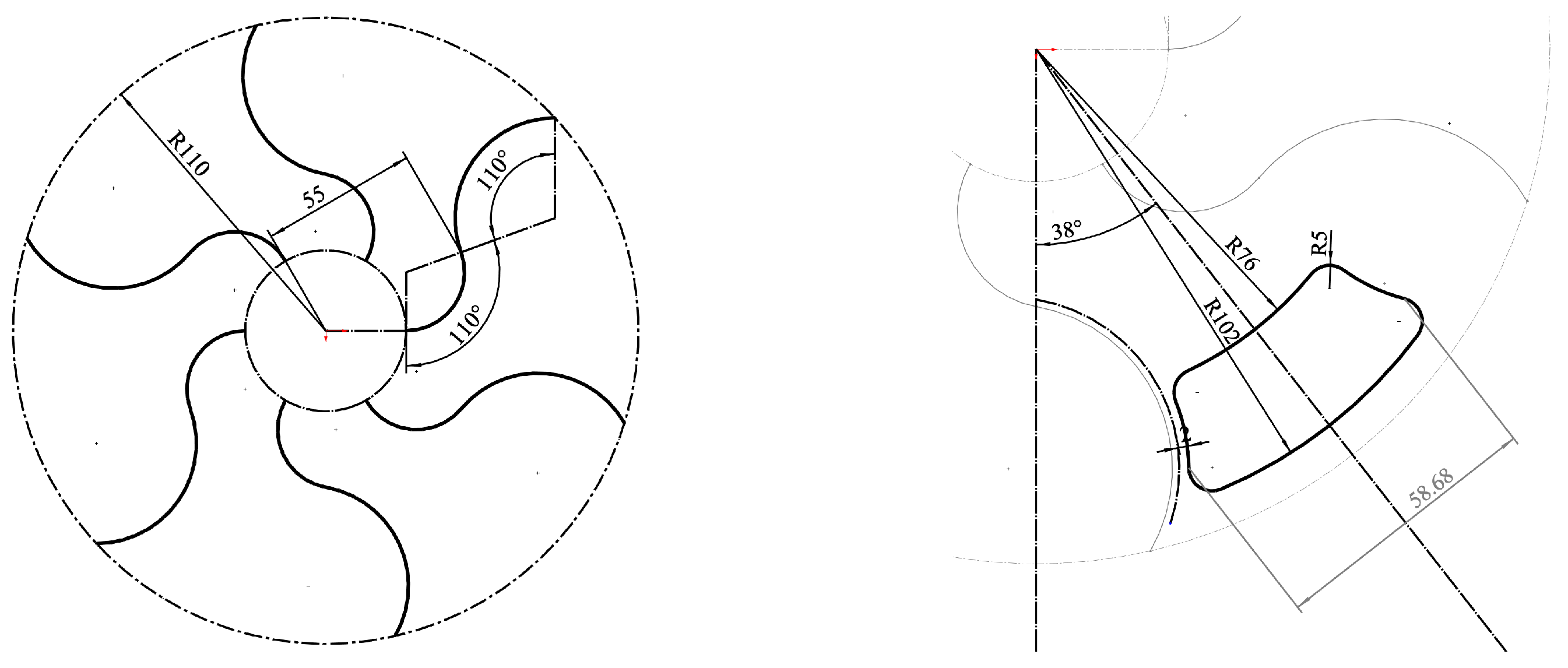
The detailed dimensions of the push seed blade and hole size are depicted in Figure 7. The seed-pushing blades employ a double-arc structure, with the two arcs being tangent to each other. The distances from the arc endpoints to the disc center are 55 mm and 110 mm, respectively, and the included angle between the arcs is 110°. The degree of curvature of the arcs can be adjusted by controlling the angle.
Figure 7.
Push seed blade and hole size.
The opening geometry is primarily determined by the blade profile. Near the outer edge, the opening follows the blade shape with a 2 mm clearance to accommodate seed thickness and width. To facilitate smooth discharge, the opening length is set to approximately five times the seed length, and the opening width is approximately twice the seed length.
2.2. Design of Control System
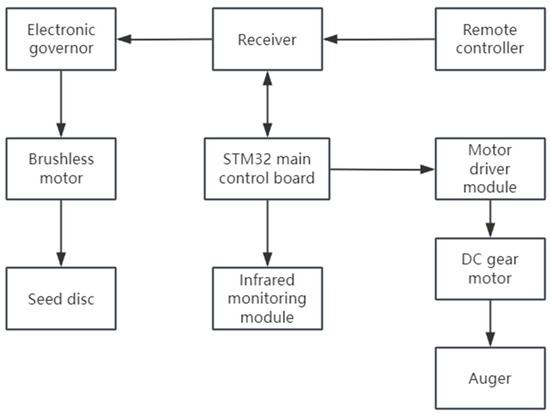
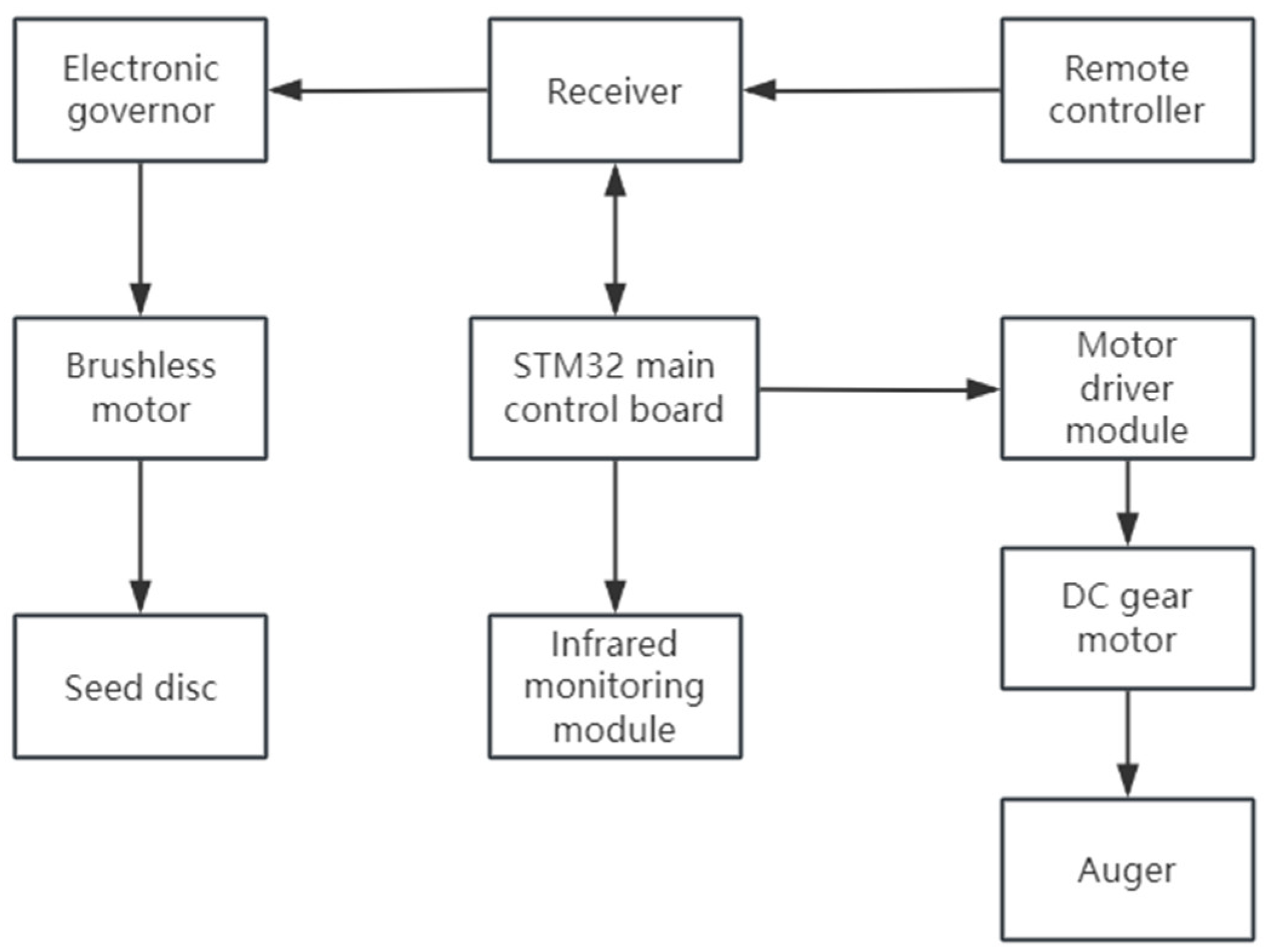
The control system of the drone-based rice direct seeding device comprises an STM32F103RCT6 main control board (STMicroelectronics, Geneva, Switzerland), a motor driver module, a DC gear motor, a brushless motor with an electronic speed controller (ESC), a remote controller and receiver, and a material monitoring module. The main control board serves as the system core, coordinating communication among modules and regulating motor operation. The motor driver module receives pulse-width modulation (PWM) signals from the control board and converts them into appropriate drive signals for the DC gear motor. The ESC controls the speed of the brushless motor, while the receiver relays commands from the remote controller to the main control board in real time. The material monitoring module is based on infrared sensing and includes an infrared emitter and a photodiode receiver; the emitter transmits infrared light, and the receiver detects the signal, which is then conditioned and sent to the control board. The overall control logic is shown in Figure 8.
Figure 8.
Control system structure diagram.
3. Results and Discussion
3.1. EDEM Model Development
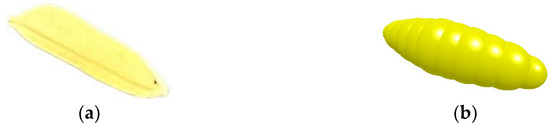
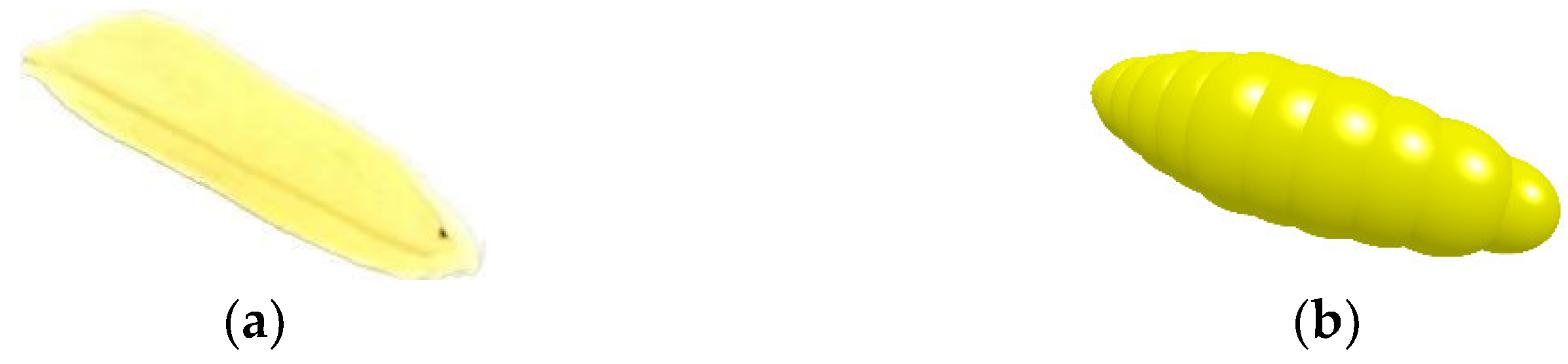
The discrete element modeling process for the rice seed is shown in Figure 9. Rice seeds have a relatively rigid outer surface and can be treated as granular agricultural materials. Therefore, a hard-sphere contact model was adopted in the discrete element simulation [27]. Seed particles were generated using a normal distribution, with particle volumes constrained to 0.8–1.2 times the nominal volume [28].
Figure 9.
EDEM rice seed modeling: (a) Rice seed geometry; (b) DEM particle model of rice seed.
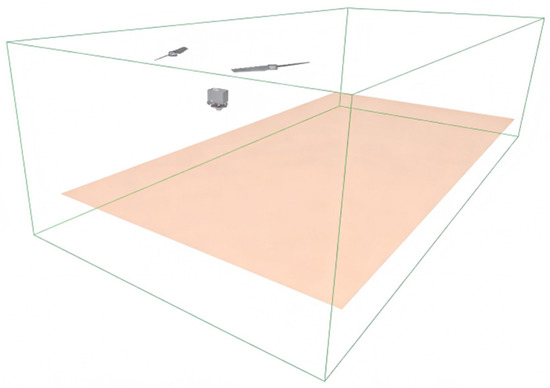
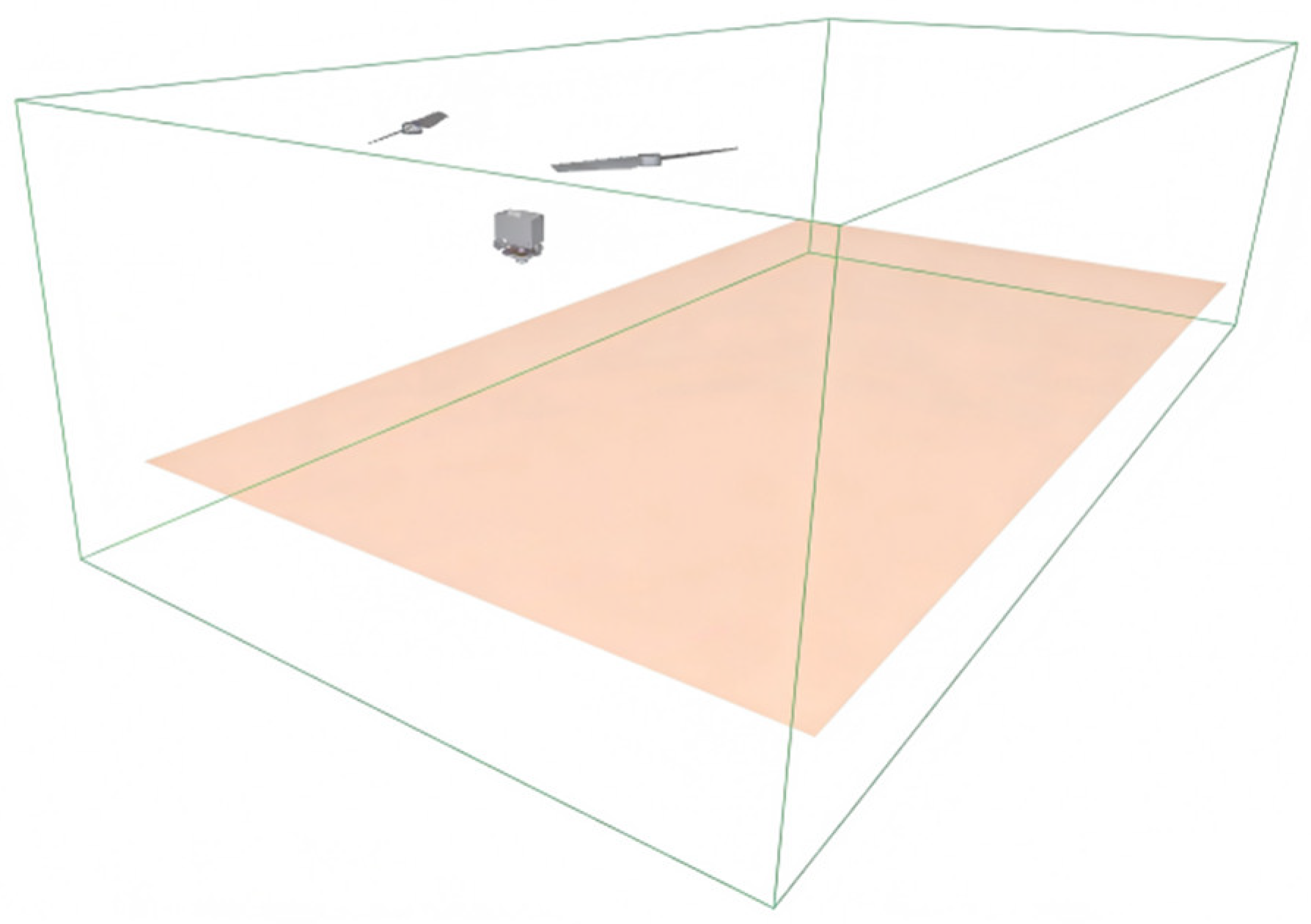
The discrete element simulation model is shown in Figure 10 and includes the drone rotors, the rice seeding device, the ground collection mechanism, and a virtual seed outlet. For computational efficiency, only the rotor components relevant to the airflow field were retained, and other features of the seeding device were simplified to reduce simulation time. The main components in contact with seeds are the seed supply device and the sowing disc, both of which were fabricated by 3D printing using photosensitive resin.
Figure 10.
Schematic of the EDEM simulation model.
Table 1.
EDEM material parameters.
Table 2.
EDEM contact parameters.
3.2. Experimental Design
3.2.1. Influence of the Sowing-Disc Tilt Angle on the Lateral Coefficient of Variation
To optimize the device structure, simulations were conducted to evaluate key structural parameters. For the centrifugal disc seeding device, the primary structural parameters are the disc tilt angle and disc size (radius). When the tilt angle is small, seeds are not readily discharged from the outlet and tend to accumulate near the disc edge. Conversely, an excessively large tilt angle impedes outward seed transport along the sowing disc. The sowing-disc radius mainly determines the effective sowing width. Within a practical range, increasing the disc radius increases the sowing width.
3.2.2. The Effect of Double-Arc Sowing Blades on the Trajectory of Rice Seeds
The effects of double-arc and straight blades on seed motion were compared, using the seed–blade contact time as the evaluation metric. Double-arc blades with different geometric configurations were further compared to identify the optimal blade structure.
3.2.3. Optimization of the Double-Layer Opening Design
The double-layer opening design is motivated by the fact that, at a given rotation speed, a larger sowing-disc radius produces a wider lateral seed distribution range. When there is only a single opening, the rice seed distribution forms a hollow ring pattern, and as the radius increases, the hollow area becomes larger. To compensate for the lack of rice seeds in the center, an opening is added to the inner side of the sowing disc.
The main factors affecting the distribution range of rice seeds are the radius of the sowing disc, flight altitude, and disc rotational speed. A response surface experiment is designed to investigate the relationship between the distribution range of rice seeds and these factors. The response variable is the rice seed distribution area, which cannot be represented by a single value. Therefore, the distribution area was approximated as an annulus, characterized by the central radius and the annulus width.
3.3. Bench Test Equipment
Rice direct seeding requires specific pre-sowing soil preparation, including pre-irrigation and land leveling to obtain a uniform paddy surface, which is time-consuming and costly during the early test stage. Furthermore, because field testing in muddy paddies complicates seed recovery and repeated trials, a controlled bench test environment was utilized. Moreover, conventional seeding test benches are typically designed for row or hill sowing; their effective working width is much smaller than that of drone-based broadcasting devices, and thus they are not suitable for evaluating drone rice direct seeding performance.
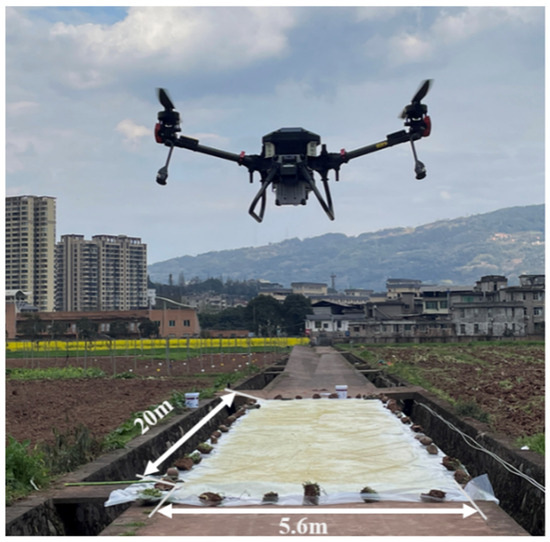
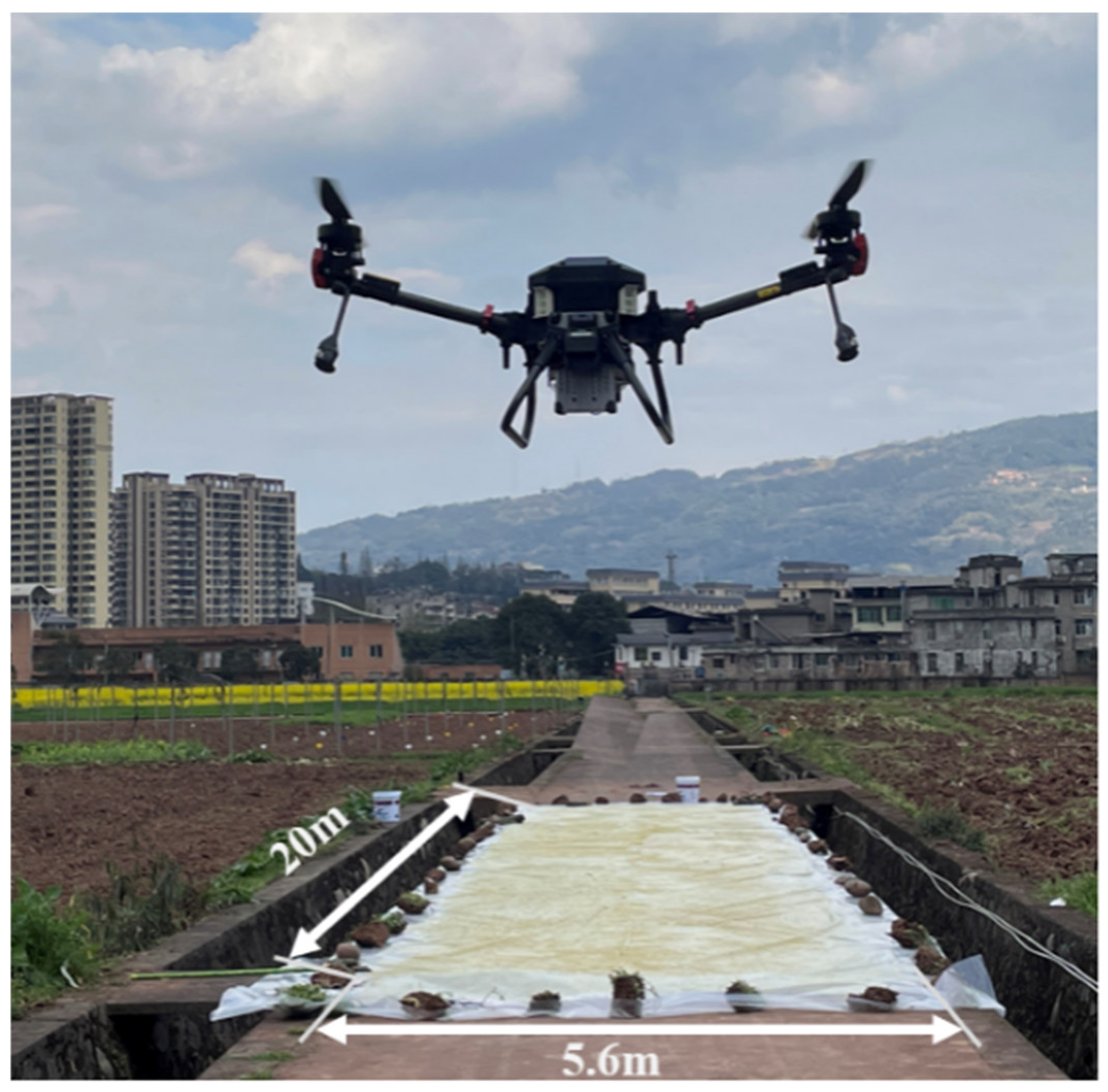
The experiment was conducted in April 2023 at the research park of Sichuan Agricultural University. All bench tests were repeated three times to ensure statistical reliability. For actual field operations, optimal UAV seeding requires natural wind speeds below 3 m/s, no precipitation, and suitable temperatures for rice germination. To simulate muddy field conditions, agricultural plastic film was laid on a leveled ground surface, and semi-solid lubricating oil was applied on top of the film to mimic the rheological characteristics of mud. The test area was approximately 5.6 m × 20 m (about 112 m2), which is sufficient to capture the full operational swath width and steady flight state of a single pass. As shown in Figure 11.
Figure 11.
Bench test process.
To reduce experimental costs, the rice cultivar Yixiangyou 2115 was used. The test prototype was a custom-built rice direct seeding device assembled using existing equipment in the laboratory. Based on the simulation analysis, a dual-rotor drone platform was selected because it provides a relatively stable and well-defined rotor downwash distribution. The flight platform used was an XAG 3WWDZ-15.2A dual-rotor drone (XAG Co., Ltd., Guangzhou, China). Bench-test procedures followed the NT/Y2881-2021 technical specification for quality evaluation of remote-controlled flight seeders, and were used to verify the coefficients of variation for total discharge stability and lateral distribution.
3.4. Results and Analysis
3.4.1. Optimization Test Results of the Sowing Disc Inclination Angle
A single-factor optimization study was conducted to determine the optimal seed-disc tilt angle. Based on simulations of the rotor-induced wind field under different flight heights and speeds, together with preliminary validation tests, the following conditions were selected: flight height of 3 m, flight speed of 2 m/s, seed-disc rotational speed of 800 r/min, and tilt angles ranging from 10° to 40°. A golden-section design was adopted, yielding 12 test groups.
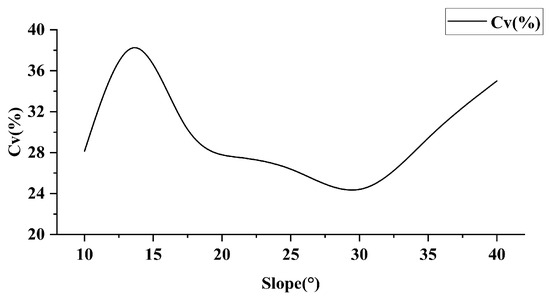
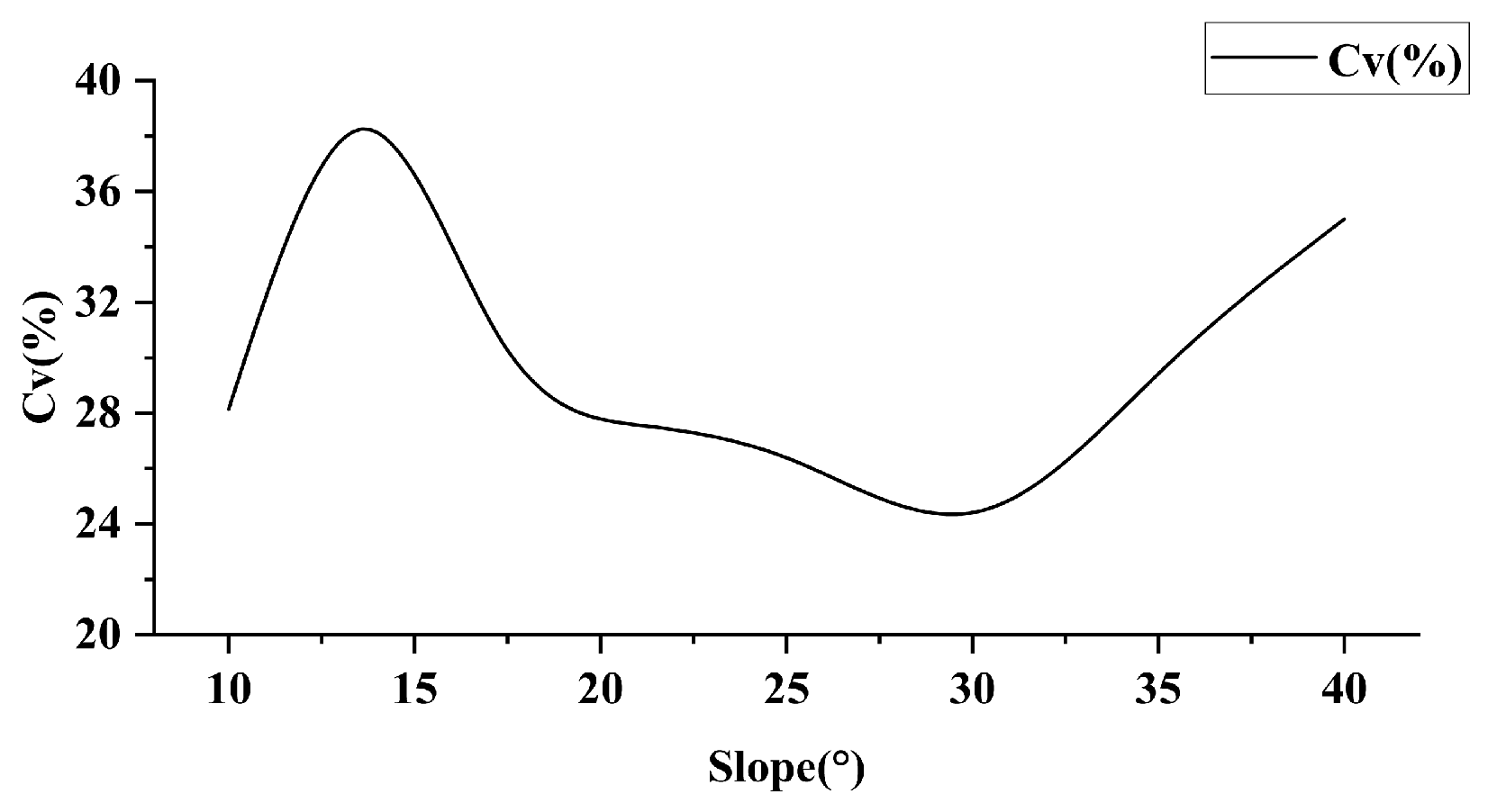
DEM simulations were performed in EDEM 2022, with the lateral coefficient of variation (CV) of seed distribution used as the response variable. The results were fitted with spline curves in Origin 2022 (Figure 12). The results indicate that increasing the tilt angle first improved distribution uniformity, then reduced it, and finally improved it again. Although the CV at 10° was lower than at some other angles, simulations showed poor discharge performance at this setting, with severe seed accumulation/blockage inside the device; therefore, this angle was excluded. The optimal performance was obtained at a tilt angle of 29.33°, with a CV of approximately 24%.
Figure 12.
Relationship between seeding disc inclination and lateral coefficient of variation.
3.4.2. Optimization Test Results of Double-Arc Sowing Blades
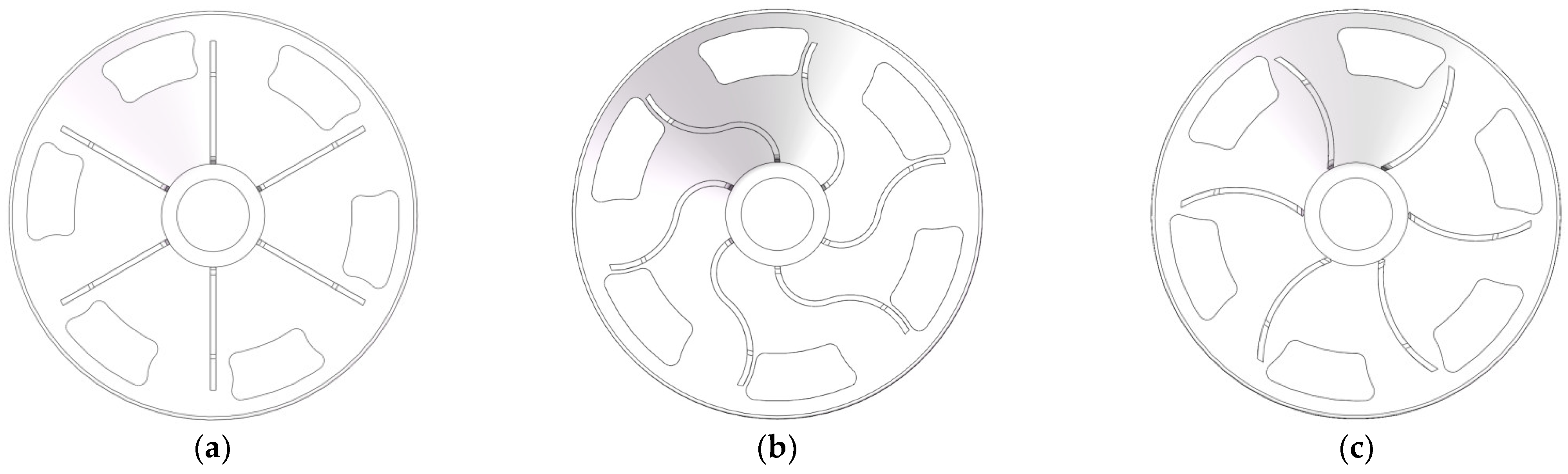
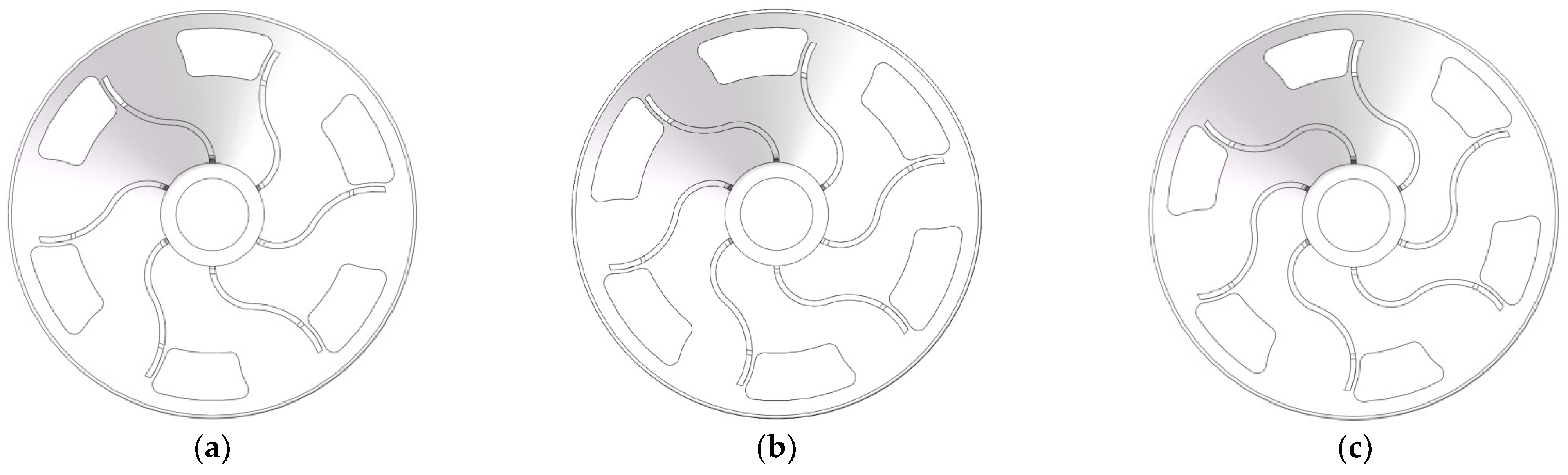
A single-factor experiment was designed to compare different types of seed-pushing blades for the seed disc. The types of seed-pushing blades tested included linear, arc-shaped, and double-arc structures, as shown in Figure 13. The double-arc structure was designed by connecting two arcs at both ends. Since the seed disc diameter and blade chord length remain constant, the shape of the seed-pushing blade is adjusted by varying the arc angle. To create distinct seed collection and pushing zones on the seed disc, the arc angles were set at 90°, 110°, and 130°, as shown in Figure 14.
Figure 13.
Different types of push seed blades: (a) Linear; (b) Type S; (c) Arc type.
Figure 14.
Push seed blades with different arc angles: (a) 90°; (b) 110°; (c) 130°.
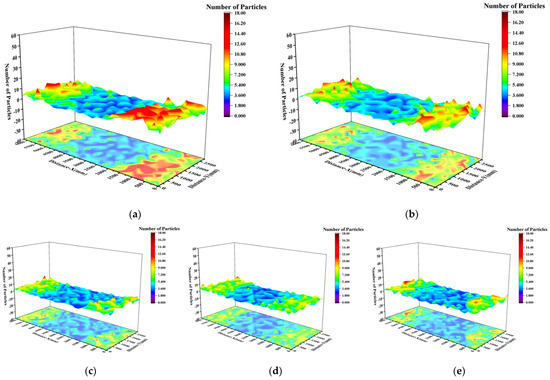
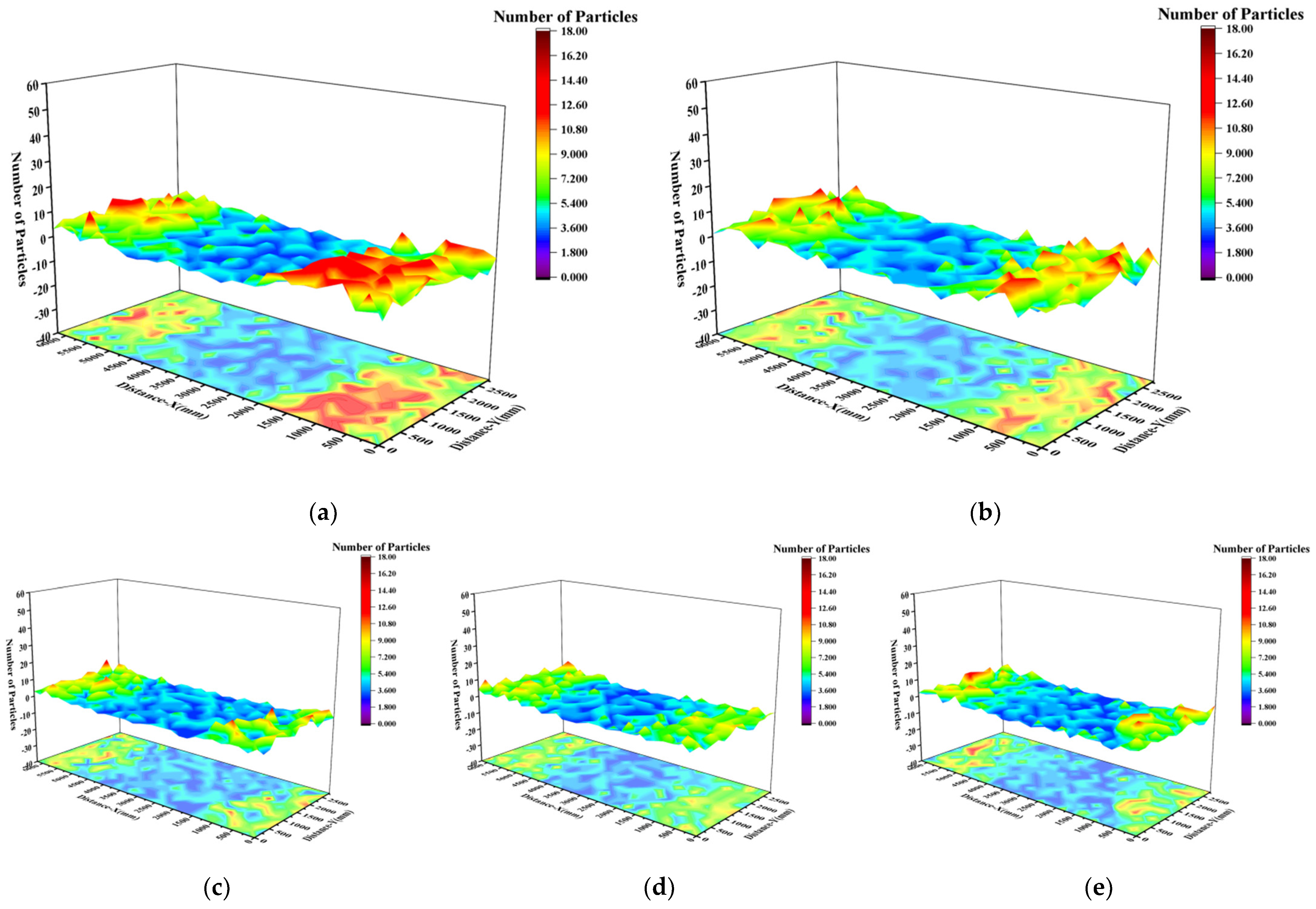
After the EDEM simulations were completed, the data were exported. Seeds were randomly sampled from the central region of the collection plane to generate a 3D distribution map in Origin 2022, enabling visual comparison of distribution patterns, as shown in Figure 15. The X and Y axes represent the distance within the area, while the Z axis represents the number of rice seeds. The color scale ranges from 0 to 18, and the color bands remain consistent across all graphs.
Figure 15.
Seed distribution using different blade designs: (a) straight blade; (b) single-arc blade; (c) double-arc blade (90°); (d) double-arc blade (110°); (e) double-arc blade (130°).
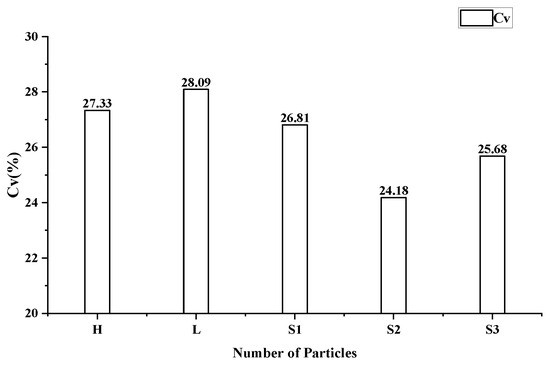
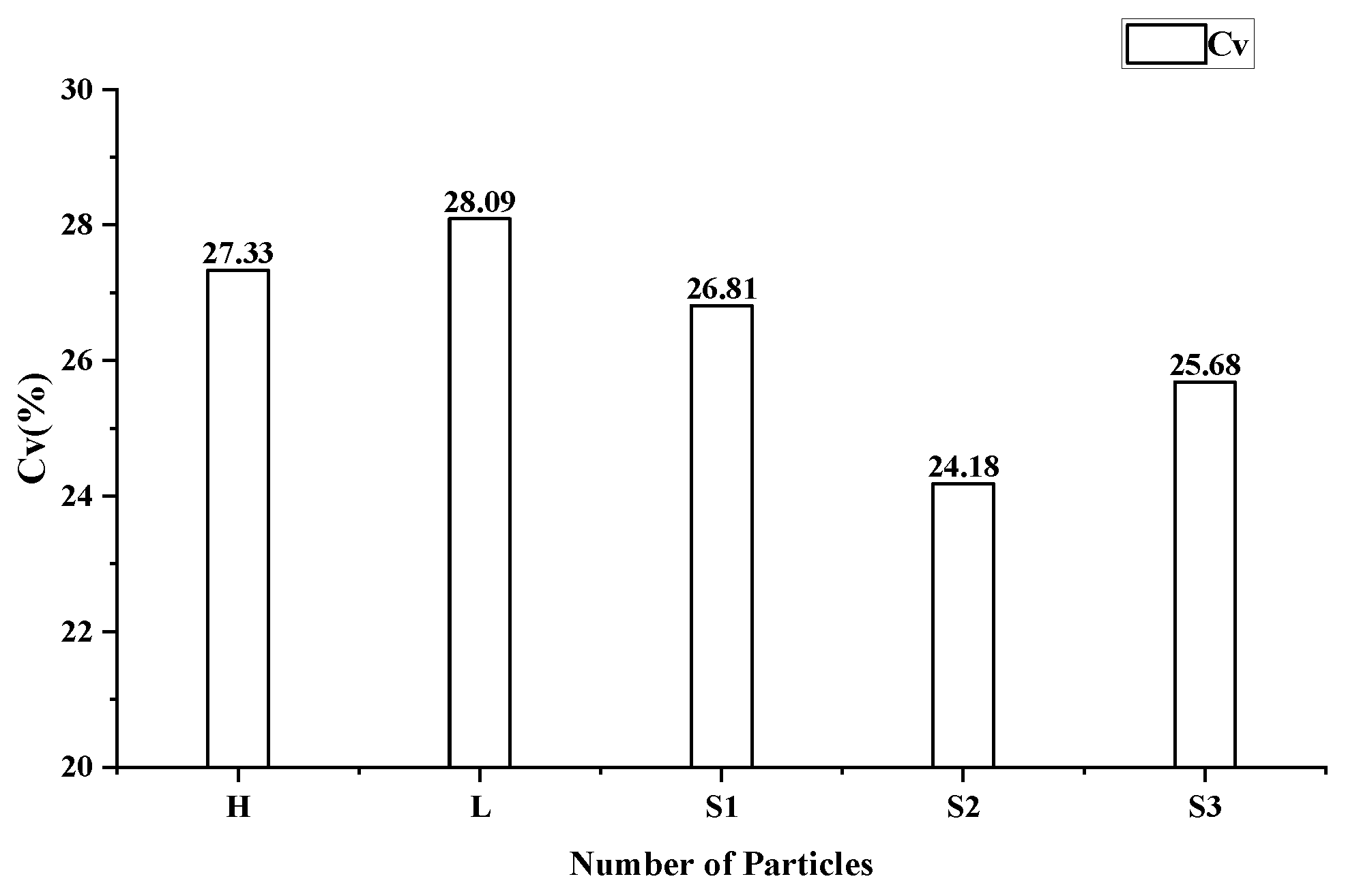
The experimental data for each group were calculated, and the lateral variation coefficient was computed and presented as a bar chart, as shown in Figure 16. The results indicate that the lateral variation coefficients (CVs) for the linear and arc-shaped seed distributions are relatively high, while the double-arc structure provides a more favorable lateral variation coefficient for seed distribution, with the 110° arc angle being the optimal design, resulting in a CV value of 24.18%. When the arc angles were 90° and 130°, the lateral variation coefficients were slightly higher than for 110° due to the smaller arc having less influence on guiding seed movement and the larger arc leading to poor seed flow, which can cause interruptions in seed flow.
Figure 16.
Relationship between the leaf blades of pushed species and the lateral coefficient of variation.
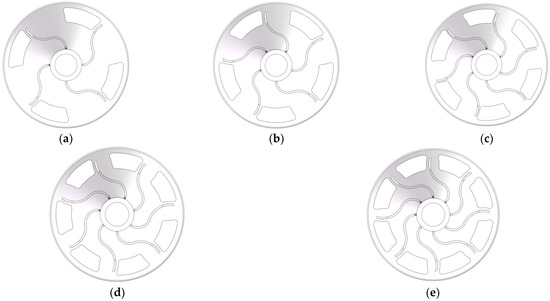
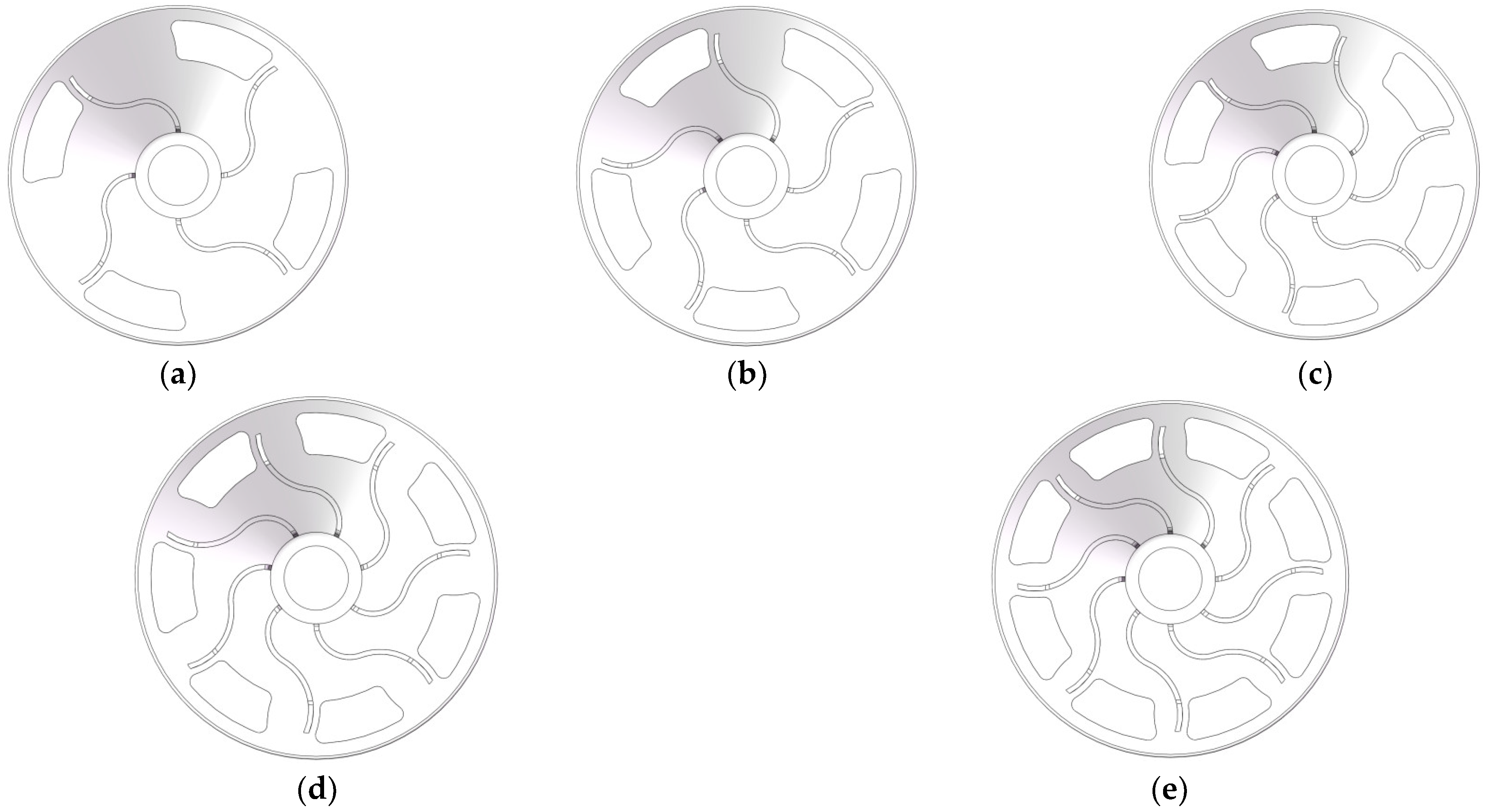
Another factor influencing the performance of the sowing device is the number of seed-pushing blades. To ensure that the blades make contact with the rice seeds and effectively guide their movement, five seed discs were designed with 4, 5, 6, 7, and 8 seed-pushing blades, respectively. The seed disc tilt angle was set at 29°, and the seed-pushing blades featured a double-arc structure with an arc angle of 110°, as shown in Figure 17.
Figure 17.
Seed discs with different numbers of seed-pushing blades: (a) 4 blades; (b) 5 blades; (c) 6 blades; (d) 7 blades; (e) 8 blades.
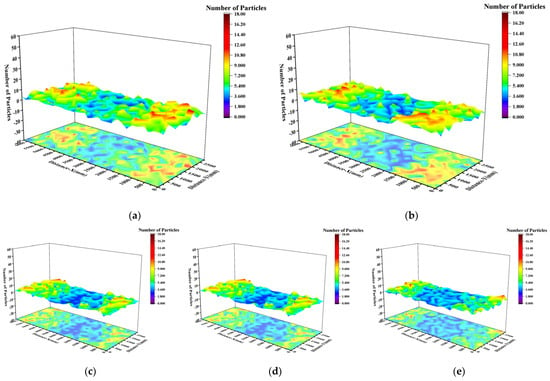
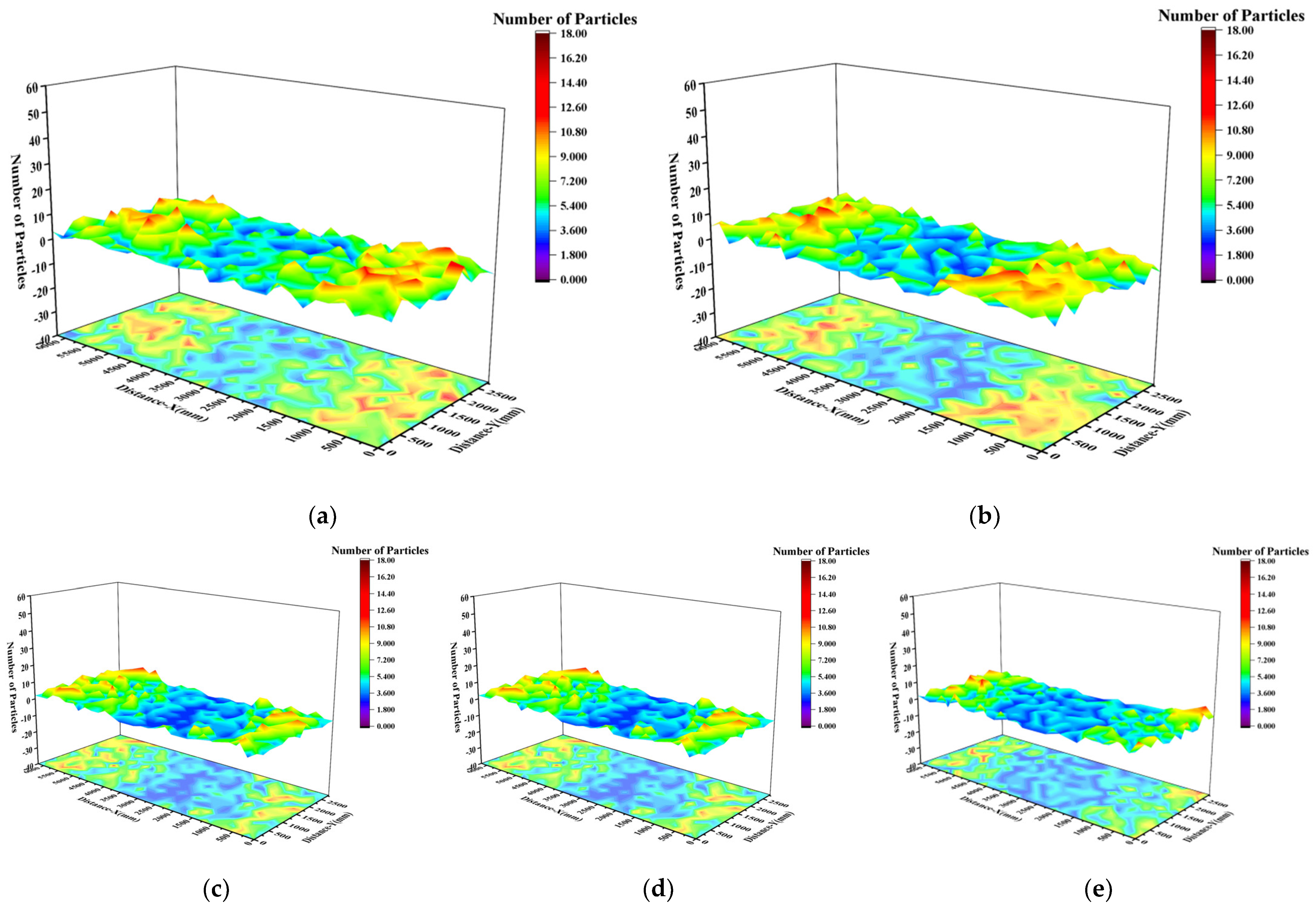
The same parameters as above were set in the EDEM software (2022)to carry out the DEM simulation. After the simulation was completed, the data was exported, and a map of the rice seed distribution was generated, as shown in Figure 18.
Figure 18.
Distribution of rice seeds by number of leaf blades of pushed species: (a) Distribution of rice seeds using 4-leaf blade; (b) Distribution of rice seeds using 5-leaf blade; (c) Distribution of rice seeds using 6-leaf blade; (d) Distribution of rice seeds using 7-leaf blade; (e) Distribution of rice seeds using 8-leaf blade.
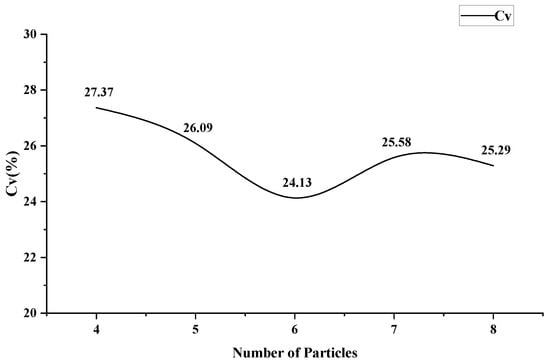
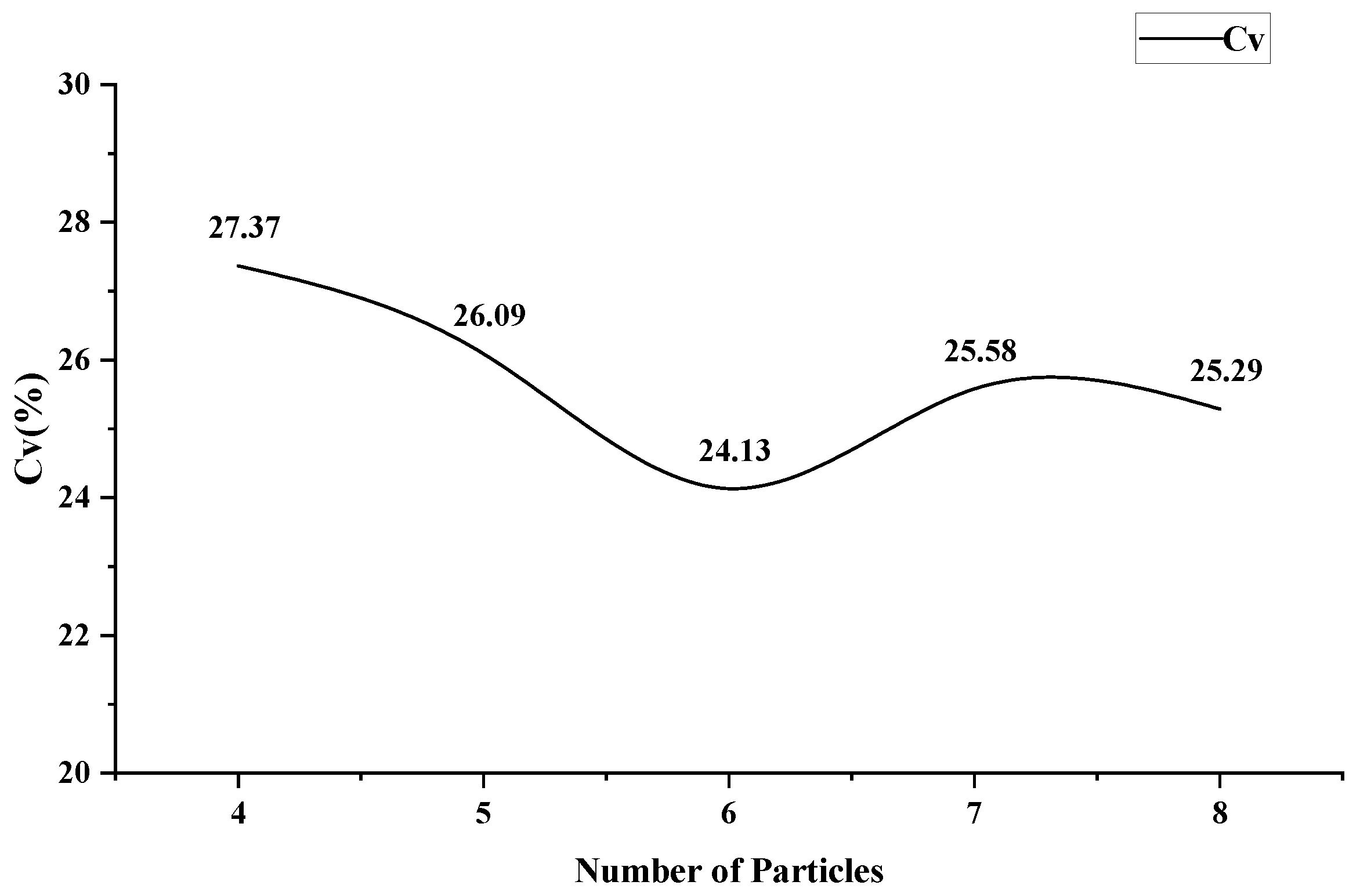
Figure 19 shows that as the number of seed-pushing blades increases, the lateral variation coefficient (CV) of rice seed distribution decreases initially and then increases. The optimal number of seed-pushing blades is 6, which has a CV value of 24.13%. When the number of seed-pushing blades is 7, CV again shows a decreasing trend. The seed disc is a high-speed rotating part, and as the number of seed-pushing blades increases, the effective sowing area of the disc decreases. When there are many blades, rice seeds falling from the seed outlet are prone to collide with the tops of the blades, which increases the seed damage rate. Therefore, increasing the number of seed-pushing blades further was not considered to study the sowing effect.
Figure 19.
Relationship between leaf number and lateral coefficient of variation using studied rice species.
3.4.3. Optimization Response Surface Results of the Double-Layer Opening Structure
Building upon the previous optimization test model, after increasing the number of openings in the seed disc, some rice seeds will be distributed through the inner openings, as shown in Figure 20. The primary factors influencing the seed distribution range are the radius of the seed disc, its rotation speed, and the flight height. Accordingly, a three-factor, three-level response surface design was adopted. The levels for the seed disc radius were 50, 75, and 100 mm; the levels for the rotation speed were 500, 750, and 1000 r/min; and the levels for the flight height were 2000, 3000, and 4000 mm. The flight condition was hover, and other experimental parameters remained consistent. The response variable was the seed distribution area. Because it cannot be represented by a single scalar, the distribution was approximated as an annulus characterized by the center radius and annular width. The experimental design is presented in Table 3.
Figure 20.
Double open seeding discs.
Table 3.
Response surface test data.
ANOVA was performed in Design-Expert 2022, and the results are summarized in Table 4 and Table 5. Specifically, Table 4 highlights a highly significant interaction between disc radius and rotation speed, emphasizing the need for their combined calibration to optimize distribution width.
Table 4.
Circle Width ANOVA.
Table 5.
Centre circle radius ANOVA.
The response surface experiment results show that the center of the seed distribution area annulus is positively correlated with the seed disc radius, rotation speed, and flight height. An interaction exists among the factors affecting the annular width, with the detailed expressions provided in Equations (4) and (5).
In the equation, D1 is the center annular diameter (mm); D2 is the annular width (mm); R is the seed disc radius (mm); S is the seed disc rotation speed (r/min); and H is the flight height (mm).
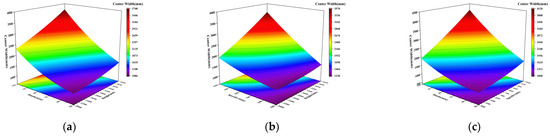
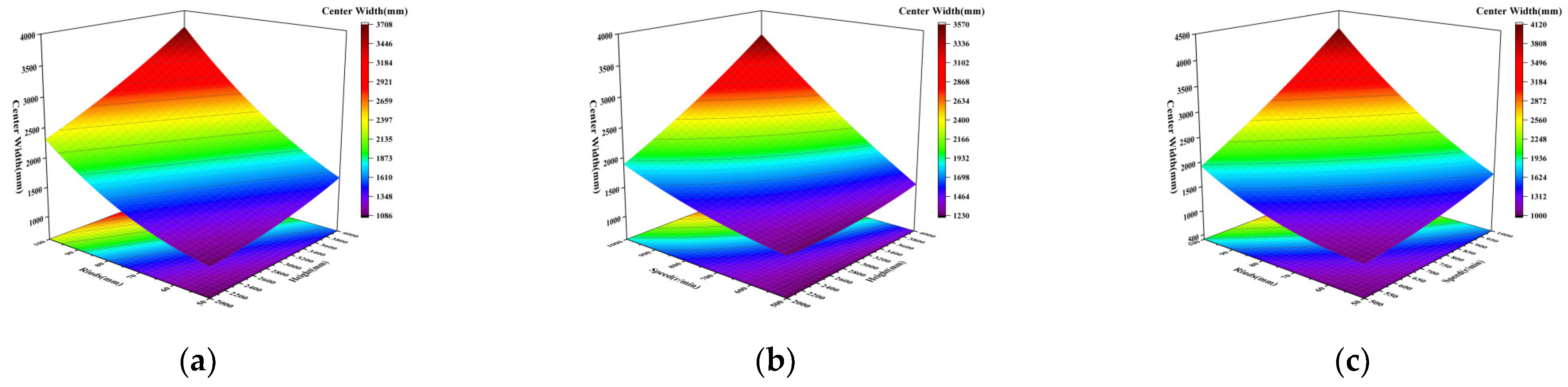
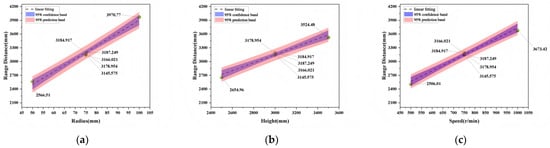
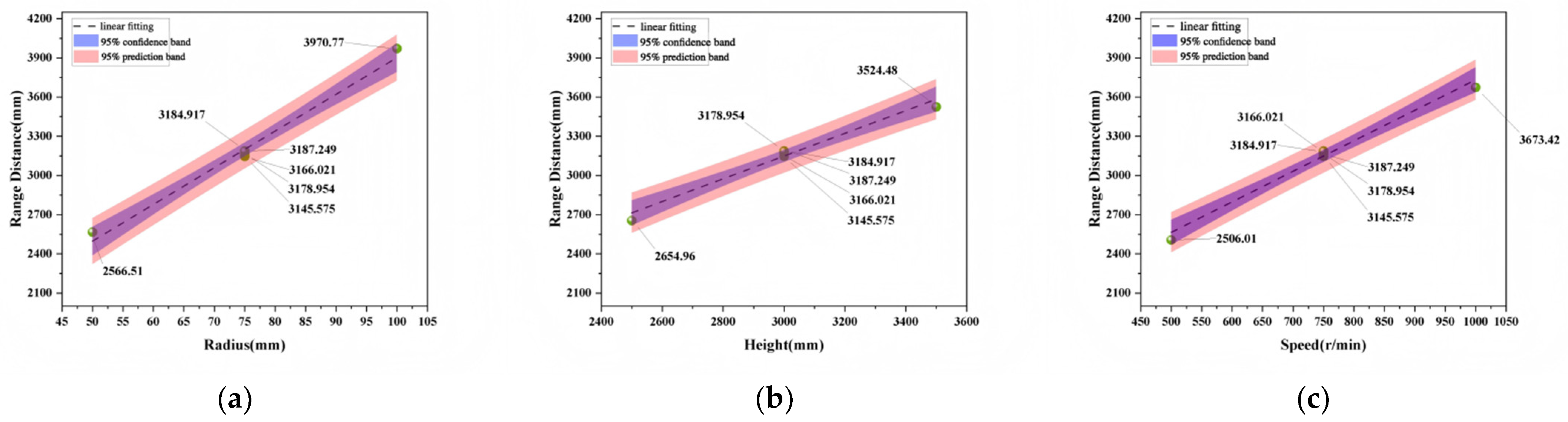
Based on the above equations, the response surface and confidence band plots were created, as shown in Figure 21 and Figure 22.
Figure 21.
The response surface of circle center and seeding disc radius, seeding disc rotation speed, flight height: (a) Seeding disc radius and flight height response surface; (b) Seeding disc rotation speed versus flight altitude response surface; (c) Seeding disc radius and Seeding disc rotation speed response surface.
Figure 22.
Circle width in relation to seeding disc radius, seeding disc rotation speed, flight height: (a) Seeding disc radius fitted to the width of the circle; (b) Flight height fitted to the width of the circle; (c) Seeding disc rotation speed fitted to the width of the circle.
Figure 21 shows that annular width increases with seed-disc radius, rotational speed, and flight height. The significance of the factors affecting the seed distribution area follows the order seed disc radius > seed disc rotation speed > flight height. The interaction between seed disc radius and rotation speed is stronger than the interactions between the other factors.
Figure 22 above shows the relationship between the center radius of the annulus and the seed disc radius, rotation speed, and flight height. The three factors show a linear relationship with the response value, with the significance of the factors being seed disc radius > seed disc rotation speed > flight height.
The seed disc is driven by a motor, and its speed is determined by the motor. Increasing the seed disc rotation speed increases the motor’s demand. At the same time, higher rotation speeds generate greater forces on the rice seeds, making them more likely to be damaged. Considering practical experiments and cost factors, the seed disc rotation speed is set to 800 r/min. The seed-disc size affects the overall device envelope. A larger disc may exceed the drone’s installation space and can increase vibration during rotation; therefore, the disc radius was set to 112 mm. If the flight height is too high, seeds remain longer in the rotor downwash, which may deflect their trajectories. If the flight height is too low, the seeds are more susceptible to disturbance from the wind field. Based on these factors, the flight height is set at 3 m. By substituting these conditions into Equations (4) and (5), the inner opening position is calculated to be where the seed disc radius equals 48.13 mm.
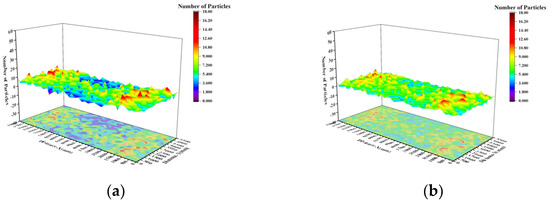
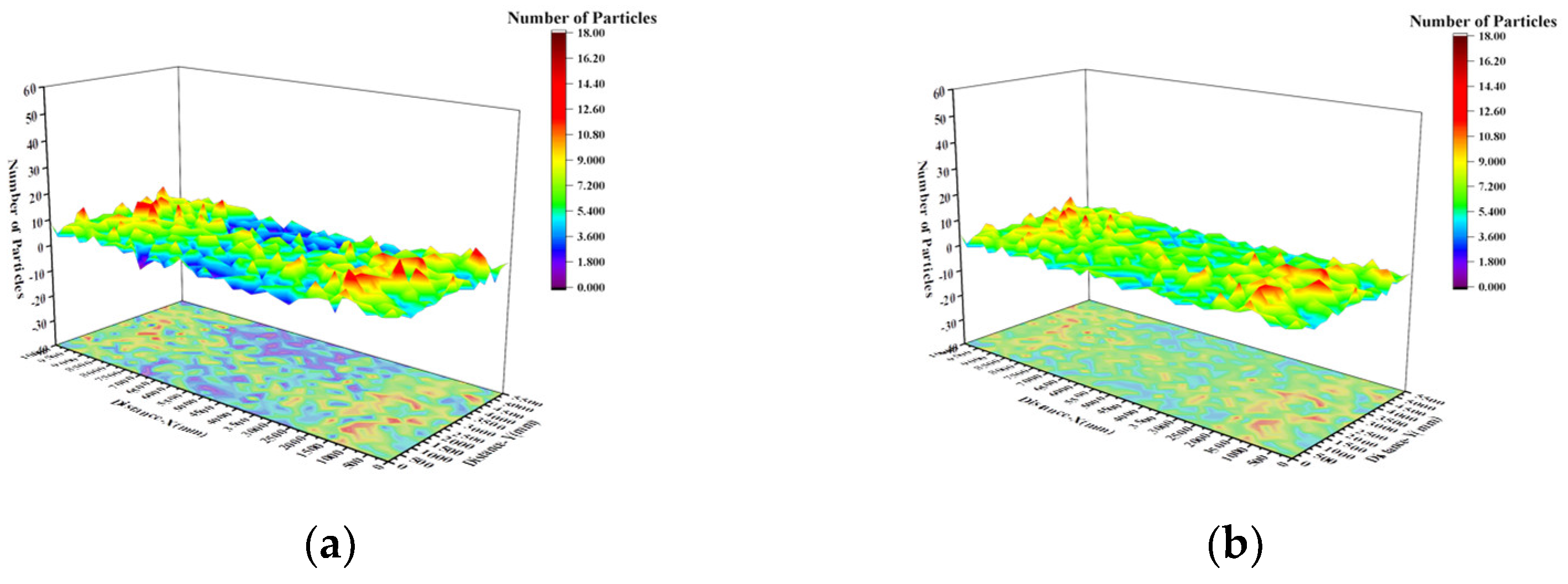
Single-layer and double-layer opening designs were compared under identical conditions (Figure 23). The double-layer opening increased the number of seeds in the central region while slightly reducing the distribution at the edges, resulting in improved overall uniformity. Calculations show that under these conditions, the lateral variation coefficient of seed distribution is approximately 18.22%, which is about 3.75% lower than that of the single-layer opening structure.
Figure 23.
Comparison of seeding results between single-layer and double-layer open seeding trays: (a) Distribution of rice seeds using single-layer seeding discs; (b) Distribution of rice seeds using double seeding discs.
3.5. Bench Test Results
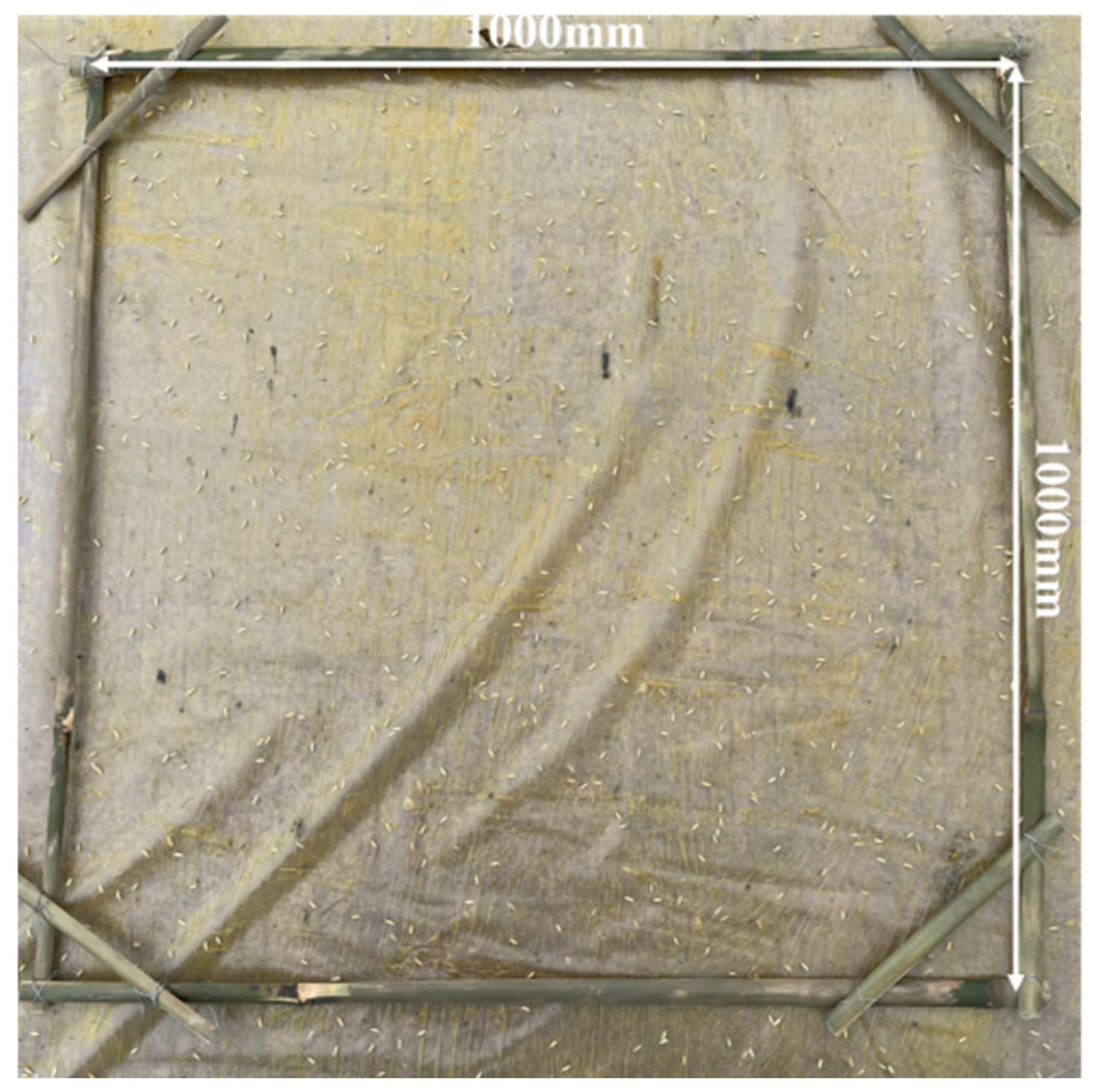
Based on the simulation results and practical operating constraints, the bench-test conditions for evaluating lateral distribution uniformity were set as follows: flight height of 3 m, flight speed of 3.5 m/s, seed-supply device speed of 300 r/min, and seed-disc rotational speed of 800 r/min. Performance checks on the drone and seeding device were carried out before the experiment, followed by a test flight to verify the stability of the film. The experiment was repeated three times. A self-made 1 m × 1 m bamboo frame was used for data collection, as shown in Figure 24. Data were collected from five randomly selected field locations. The area was divided into a 10 × 10 grid, and the number of seeds in each grid was counted. The experimental results are shown in Table 6.
Figure 24.
Distribution of rice seeds in bench tests.
Table 6.
Bench test transverse coefficient of variation results.
Table 6 shows that the average lateral variation coefficient is 19.364%, which is much lower than the 45% technical requirement for rice sowing uniformity variation coefficient outlined in the “NT/Y2881-2021 Remote-Controlled Flight Seeder Quality Evaluation Technical Specification”. This also demonstrates improved stability and uniformity compared to traditional single-opening or pneumatic UAV seeders [15,19]. The average seed count was 7.468. Based on the thousand-grain weight of Yixiangyou 2115, the seed consumption was calculated as 1.831 kg per mu, which meets agronomic requirements. During the total discharge stability test, the centrifugal seed disc of the drone’s rice direct seeding system was disassembled, and the seed supply device was activated independently. A plastic basin was used to collect the rice seeds from the seed outlet. The discharge time was 1 min, and the test was repeated 5 times, with the weight of the seeds recorded using an electronic balance.
Table 7 shows that the seed amount within 1 min is approximately 4.7 kg. When the drone flight speed is 3.5 m/s and the flight height is 3 m, the operational width of the rice direct seeding device can reach over 8 m. Excluding turning maneuvers, the effective operating area was 1680 m2 (about 2.52 mu), corresponding to a seed rate of 1.86 kg/mu, which meets agronomic requirements for rice direct seeding. The total discharge variation coefficient is 0.276%, far below the 2.6% technical requirement for total discharge stability in the “NT/Y2881-2021 Remote-Controlled Flight Seeder Quality Evaluation Technical Specification”.
Table 7.
Bench-test results for the coefficient of variation (CV) of total discharge.
4. Conclusions
In this study, a novel drone-based centrifugal rice seeding device was developed and evaluated using EDEM simulations and bench tests. The main conclusions are as follows:
- (1)
- To improve the efficiency of drone-based rice direct seeding, reduce labor input, and lower planting costs, a concave perforated disc was designed for the XAG 3WWDZ-15.2A dual-rotor drone platform. This design improves seed motion trajectories and thereby enhances lateral distribution uniformity.
- (2)
- A control system was developed using an STM32 control board and the SBUS communication protocol. The system supports seed-discharge and motor-speed control, as well as material (seed-level) monitoring.
- (3)
- The discrete element method (DEM) was used to analyze the working characteristics of key components and seed trajectories. Single-factor and response-surface analyses were conducted to identify the optimal structural parameters: a 29.0° disc tilt angle, double-arc blades with a 110° arc angle, and six blades. A double-layer opening design reduced the lateral coefficient of variation (CV) of seed distribution to approximately 18.22%, about 3.75% lower than that of the single-layer opening, thereby improving distribution uniformity.
- (4)
- Bench tests were conducted under the following operating conditions: flight height of 3 m, flight speed of 3.5 m/s, heading spacing of 7 m, motor speed of 800 r/min, and a seed rate of 2.5 kg per 666.7 m2. The lateral CV of seed distribution ranged from 16.34% to 22.14%, with an average of 19.364%. The CV of total discharge was 0.276%, and the average rice yield per acre was 571.32 kg, meeting agronomic requirements for rice production.
- (5)
- For end users and manufacturers, this study offers a method to reduce planting labor costs and provides a validated structural framework for future UAV seeding equipment optimization.
Author Contributions
Conceptualization, R.X. and S.S.; methodology, R.X.; software, S.S.; validation, R.X., Y.C. and S.S.; formal analysis, R.X.; investigation, S.S.; resources, Z.W.; data curation, Y.C.; writing—original draft preparation, R.X.; writing—review and editing, L.X., D.H. and L.C.; visualization, D.H. and L.C.; supervision, L.X.; project administration, Z.W.; funding acquisition, Z.W. All authors have read and agreed to the published version of the manuscript.
Funding
This research was funded by the National Natural Science Foundation of China (No. 32101818) and the Project Foundation of the Sichuan Provincial Science and Technology Department (No. 2021YJ0279).
Data Availability Statement
The data presented in this study are available on request from the corresponding author. The data are not publicly available due to intellectual property considerations regarding the structural design of the seeding device.
Conflicts of Interest
The authors declare no conflicts of interest.
References
- Wu, L.; Zhang, Y.; Liu, Y. Direct Seeding Rice: Research Progress and Development Strategy. Chin. Agric. Sci. Bull. 2023, 39, 1–5. [Google Scholar]
- Li, F.; Zhu, L. Advantages, Problems and Development Countermeasures of Rice Mechanized Direct Seeding. Agric. Eng. 2022, 12, 21–24. [Google Scholar]
- Ye, X.; Liang, S.; Song, Y. Recommended Pattern of Rice Production Mechanization in Guandong Province. Mod. Agric. Equip. 2021, 42, 79–82. [Google Scholar]
- Zhong, C.; Yang, X. Application Status and Development Trend of Drone Seeding in Rice Agricultural Production. China South. Agric. Mach. 2024, 55, 27–29. [Google Scholar]
- Chen, C.; Cao, G.; Zhang, M. Development Trend Forecast and Equipment Requirements of the Rice Transplanting Mechanization. J. Yunnan Agric. Univ. (Nat. Sci.) 2015, 30, 289–293. [Google Scholar]
- Yin, H.; Meng, Y. Development of Rice Mechanical Direct Seeding Technology. Agric. Sci. Technol. Equip. 2014, 7, 79–80. [Google Scholar]
- Li, J.; Li, G.; Yang, X. Research Status and Development Trend of Drone Seeding. Mod. Agric. Mach. 2023, 6, 3–5. [Google Scholar]
- Xiao, H.; Li, Y.; Yuan, L. Application and Prospect of China Agricultural Unmanned Aerial Vehicle in Rice Production. Guangdong Agric. Sci. 2021, 48, 139–147. [Google Scholar]
- Hong, P. Application Status and Development Strategies of Agricultural Drones in Chaohu City. Mod. Agric. Mach. 2023, 02, 1–4. [Google Scholar]
- Guo, Y.; Yang, H.; Zeng, R. Effects of Different Planting Methods on Rice Yield and Economic Benefits. China Agric. Technol. Ext. 2023, 39, 31–33. [Google Scholar]
- Hong, H. Problems and Solutions in Direct seeding Rice Cultivation Technology. Seed Sci. Technol. 2022, 40, 49–51. [Google Scholar]
- Li, M. Design and Test of Drone Centrifugal Rice Direct Seeding Device. Master’s Thesis, Sichuan Agricultural University, Ya’an, China, 2019. [Google Scholar]
- Song, C. Design and Experiment of Sowing Device for Small Agricultural Unmanned Helicopter. Master’s Thesis, South China Agricultural University, Guangzhou, China, 2018. [Google Scholar]
- Li, H.; Gao, F.; Zhao, Z. Domestic and overseas research status and development trend of precision seed-metering device. J. Chin. Agric. Mech. 2014, 35, 12–16+56. [Google Scholar] [CrossRef] [Scilit]
- Song, C.; Zhou, Z.; Jiang, R. Design and Parameter Optimization of Pneumatic Rice Sowing Device for Unmanned Aerial Vehicle. Trans. Chin. Soc. Agric. Eng. 2018, 34, 80–88+307. [Google Scholar]
- Wu, Z.; Li, M.; Lei, X. Simulation and Parameter Optimisation of a Centrifugal Rice Seeding Spreader for a UAV. Biosyst. Eng. 2020, 192, 275–293. [Google Scholar] [CrossRef] [Scilit]
- Ren, W.; Wu, Z.; Li, M. Design and Experiment of UAV Fertilization Spreader System for Rice. Trans. Chin. Soc. Agric. Mach. 2021, 52, 88–98. [Google Scholar]
- Peng, D. Study on a Rice Spreader Based on UAV. Master’s Thesis, Hunan Agricultural University, Changsha, China, 2018. [Google Scholar]
- Peng, Y.; Liu, Z.; Chen, X. Design and Experiment of Centrifugal Seeding Equipment with Quantitative Seed Supplying for Rice Based on UAV. Acta Agric. Univ. Jiangxiensis 2022, 44, 1283–1291. [Google Scholar]
- He, W.; Liu, W.; Jiang, R. Control System Design and Experiments of UAV Shot Seeding Device for Rice. Trans. Chin. Soc. Agric. Eng. 2022, 38, 51–61. [Google Scholar]
- Zhang, Q.; Zhang, K.; Liao, Q. Design and Experiment of Rapeseed Aerial Seeding Device Used for UAV. Trans. Chin. Soc. Agric. Eng. 2020, 36, 138–147. [Google Scholar]
- Huang, X.; Xu, H.; Zhang, S. Design and Experiment of a Device for Rapeseed Strip Aerial Seeding. Trans. Chin. Soc. Agric. Eng. 2020, 36, 78–87. [Google Scholar]
- Zhang, S. Research on Pneumatic Cylinder-Type Precision Seed-Metering Device for Rice. Ph.D. Thesis, Huazhong Agricultural University, Wuhan, China, 2022. [Google Scholar]
- Liu, Y. Design and Experiment of a Striped Aerial Sowing Device for Oil Rape and Rice. Master’s Thesis, Huazhong Agricultural University, Wuhan, China, 2023. [Google Scholar]
- Zhou, L. Design and Experiment of Rice Direct Seeding Machine Suspended by Unmanned Aerial Vehicle. Master’s Thesis, Sichuan Agricultural University, Ya’an, China, 2018. [Google Scholar]
- Ishfaq, M.; Akbar, N.; Anjum, S.A. Growth, yield and water productivity of dry direct seeded rice and transplanted aromatic rice under different irrigation management regimes. J. Integr. Agric. 2020, 19, 2656–2673. [Google Scholar] [CrossRef] [Scilit]
- Zhao, J.; Song, W.; Li, J. Modeling and Mechanical Analysis of Rice Straw Based on Discrete Element Mechanical Model. Chin. J. Soil Sci. 2020, 51, 1086–1093. [Google Scholar]
- Liu, Y.; Zhang, T.; Liu, Y. Calibration and Experiment of Contact Parameters of Rice Grain Based on Discrete Element Method. J. Agric. Sci. Technol. 2019, 21, 70–76. [Google Scholar]
- Deng, H. Design and Experiment Research of Rice Spreading Device Based on Unmanned Aerial Vehicle Wind Field. Master’s Thesis, Sichuan Agricultural University, Ya’an, China, 2022. [Google Scholar]

Disclaimer/Publisher’s Note: The statements, opinions and data contained in all publications are solely those of the individual author(s) and contributor(s) and not of MDPI and/or the editor(s). MDPI and/or the editor(s) disclaim responsibility for any injury to people or property resulting from any ideas, methods, instructions or products referred to in the content. |
© 2026 by the authors. Licensee MDPI, Basel, Switzerland. This article is an open access article distributed under the terms and conditions of the Creative Commons Attribution (CC BY) license.