


Abstract
Procymidone is a dicarboximide fungicide; its persistence and the formation of the toxic metabolite 3,5-dichloroaniline (3,5-DCA) pose environmental risks. A microbial strategy was developed to enhance the degradation of procymidone and its intermediates via complementary bacterial metabolism. A procymidone-degrading bacterium, Prescottella equi strain YW-05, was previously isolated from agricultural soil with long-term procymidone application. Strain YW-05 degraded 86% of procymidone (10 mg L−1) within 7 days in mineral medium, exhibiting a half-life of 2.6 days. However, the strain showed a limited ability to degrade the intermediate metabolite 3,5-DCA. Pseudomonas putida strains were screened to degrade dichloroaniline isomers, and Pseudomonas putida KACC 10270T exhibited the highest degradation activity toward 3,5-DCA. Co-inoculation with strain YW-05 and P. putida KACC 10270T enhanced 3,5-DCA degradation, reaching 90.5% removal within 14 days and 92.8% within 28 days. In soil microcosms, co-inoculation accelerated the early removal of 3,5-DCA, with 80.3% removed within 3 days compared with 52.3% in the uninoculated control, and reduced the half-life to 1.4 days. Metabolite analysis using LC-MS/MS revealed 4-chlorocatechol and cis,cis-muconic acid and suggested procymidone degradation proceeded through hydrolytic cleavage, followed by dechlorination and aromatic ring cleavage. These findings highlight the use of complementary microbial consortia as an effective strategy for detoxifying pesticide residues and their toxic intermediates in agricultural soils.
1. Introduction
Dicarboximide fungicides have been widely used in agriculture to control fungal diseases in fruit and vegetable crops owing to their broad-spectrum activity and long-lasting protective effects [1,2]. Among these fungicides, procymidone has been used extensively since the 1970s to protect crops such as grapes, melons, and tomatoes [3,4]. However, increasing concerns exist regarding the environmental persistence of procymidone and its residues in agricultural ecosystems. These residues can undergo degradation in agricultural soils, forming transformation products that may exhibit greater toxicity than the parent compound [5,6], posing potential risks to the environment and human health [7,8].
A major concern associated with procymidone contamination is the formation of its primary degradation product, 3,5-DCA. This compound exhibits greater toxicity than its parent pesticides. Previous studies have demonstrated that 3,5-DCA possesses mutagenic, carcinogenic, and endocrine-disrupting properties [9,10,11]. In addition, 3,5-DCA is relatively soluble and mobile in soil. This property increases the risk of migration through soil profiles and the potential contamination of groundwater systems [11].
Among these approaches, microbial biodegradation has considerably garnered attention owing to its environmental compatibility and cost-effectiveness. Although a degradation pathway for procymidone was previously proposed [12], only a limited number of microbial strains capable of degrading this compound have been reported. Furthermore, the transformation mechanisms of intermediate metabolites have not been comprehensively elucidated.
Another challenge in pesticide remediation is the contrasting physicochemical properties of the parent compounds and their metabolites. Hydrophobic pesticides such as procymidone are strongly adsorbed onto soil organic matter. This adsorption significantly reduces their bioavailability and slows microbial degradation in soil environments [5,13]. Conversely, intermediate metabolites such as 3,5-DCA are relatively hydrophilic and mobile, increasing the risk of leaching and environmental dispersion. These contrasting properties complicate the remediation of parent pesticides and their toxic metabolites.
Microbial consortia and co-inoculation strategies have been explored to overcome these limitations. Cooperative interactions between microbial strains can enhance degradation efficiency through the sequential transformation of intermediate metabolites and metabolic cross-feeding [14,15]. Such synergistic microbial interactions prove effective in remediating complex pesticide contaminants involving toxic intermediate metabolites.
In the present study, a microbial bioremediation strategy was developed to enhance the degradation of procymidone and its toxic intermediate 3,5-DCA. A procymidone-degrading bacterium, strain YW-05, was previously isolated from agricultural soil with a history of long-term procymidone application [16]. The strain was characterized based on its degradation capability. Although strain YW-05 efficiently transformed procymidone into 3,5-DCA, it exhibited a limited ability to further degrade this intermediate. Therefore, additional bacterial strains were screened from the Korean Agricultural Culture Collection (KACC). Among these, P. putida KACC 10270T was identified as an efficient degrader of 3,5-DCA. The degradation performances of both strains were evaluated individually and in combination within a minimal medium and soil microcosms. Intermediate metabolites were analyzed using LC–MS/MS to elucidate the procymidone biodegradation pathway. This study provides new insights into the cooperative biodegradation of procymidone and proposes a microbial consortium-based strategy to mitigate the environmental risks associated with pesticide residues and their toxic metabolites in agricultural environments.
2. Materials and Methods
2.1. Chemicals and Culture Media
Procymidone (purity ≥ 99%) and dichloroaniline (DCA) isomers (2,3-, 2,4-, 2,5-, 3,4-, and 3,5-DCA) were purchased from Sigma-Aldrich (St. Louis, MO, USA). HPLC-grade acetonitrile and formic acid were also obtained from Sigma-Aldrich. Ultrapure water (Milli-Q, Millipore, Burlington, MA, USA) was used for all experiments.
Mineral medium (MM) was prepared according to the method described by Ahn et al. [17]. The composition of MM is provided in Table S1.
2.2. Soil Sampling and Enrichment of Procymidone-Degrading Microorganisms
Soil samples were collected from agricultural fields in Yeongwol-gun, Gangwon-do, Republic of Korea, where procymidone-containing fungicides were repeatedly applied. The collected soil samples were homogenized to obtain representative composite samples.
To prepare the soil suspension, 2 g of soil was mixed with 20 mL of MM and vortexed for 20 min. After settling for 10 min, 2 mL of the supernatant was inoculated into 48 mL of MM containing 50 mg L−1 procymidone. The cultures were incubated aerobically at 28 °C with shaking at 150 rpm for 14 days. Enrichment was repeated thrice by transferring 0.1 mL of culture into fresh MM supplemented with 10 mg L−1 procymidone. Procymidone degradation was monitored using HPLC, as described in Sections S2.1 and S2.2 of the Supplementary Information.
2.3. Isolation and Screening of Procymidone-Degrading Strains
The final enrichment cultures were serially diluted, spread onto MM agar plates, and incubated at 28 °C for 3 days. Colonies with distinct morphologies were selected and purified. Each isolate was screened for its ability to degrade procymidone in MM supplemented with 10 mg L−1 procymidone.
Among the isolates, strain YW-05 exhibited the highest degradation efficiency and was selected for further experiments.
2.4. Taxonomic Identification of Strain YW-05
Strain YW-05 was identified using whole-genome sequencing. The genome sequence of this strain was previously reported as that of P. equi YW-05 [16]. The genome consists of one circular chromosome and two plasmids, and the sequence has been deposited in GenBank under the accession numbers CP173203–CP173205.
2.5. Screening of Bacterial Strains for Degradation of DCA Isomers
Five P. putida strains (KACC 10202, 10270T, 10271, 10272T, and 10275) were obtained from the Korean Agricultural Culture Collection (KACC). Each strain was cultivated on R2A agar at 28 °C for 72 h prior to the experiments.
Each strain was inoculated into MM containing 10 mg L−1 of individual DCA isomers and incubated at 28 °C with shaking at 150 rpm. Samples were collected at 0, 3, 7, 14, 21, and 28 days and analyzed using HPLC to evaluate DCA degradation. Overall, P. putida KACC 10270T showed the highest degradation activity toward 3,5-DCA and was selected for subsequent co-inoculation experiments.
2.6. Co-Inoculation Experiments for Procymidone and 3,5-DCA Degradation
To evaluate synergistic degradation, strain YW-05 and P. putida KACC 10270T were inoculated individually or in combination into MM containing either procymidone or 3,5-DCA at a final concentration of 10 mg L−1.
Each strain was inoculated at an initial density of approximately OD600 = 0.05. Cultures were incubated at 28 °C with shaking at 150 rpm. Samples were collected at 0, 3, 7, 14, 21, and 28 days and analyzed by HPLC, as described in Sections S2.1 and S2.2 of the Supplementary Information.
2.7. Fungal Growth Inhibition Assay
Fungal growth inhibition assay was conducted to evaluate the antifungal activity of procymidone and the potential reduction in toxicity following microbial degradation. Penicillium roqueforti KACC 47196T obtained from the KACC was used as the test fungus and maintained on potato dextrose agar (PDA).
For the control experiment, procymidone was incorporated into PDA medium at final concentrations of 0, 1, 5, and 10 mg L−1. A mycelial plug (5 mm diameter) obtained from the actively growing margin of a P. roqueforti KACC 47196T colony was placed at the center of each PDA plate. The plates were incubated at 28 °C for 7 days, and fungal growth was visually evaluated.
To assess toxicity after microbial degradation, strain YW-05 was inoculated into MM containing 10 mg L−1 procymidone and incubated at 28 °C with shaking at 150 rpm for 7 days. The culture broth was then filtered through a 0.22 μm membrane filter to remove bacterial cells.
The filtrate was used undiluted or diluted 2-, 10-, 20-, and 100-fold with sterile distilled water. PDA powder was added to each dilution according to the manufacturer’s instructions to prepare the PDA media. A mycelial plug (5 mm diameter) of P. roqueforti KACC 47196T was placed at the center of each plate, and fungal growth was evaluated after incubation at 28 °C for 7 days.
2.8. Biodegradation of Procymidone and 3,5-DCA in Soil Microcosms
The soil used for the microcosm experiments was air-dried, sieved through a 2-mm mesh, and adjusted to a moisture content of 20%. For each microcosm, 50 g of soil was placed in 100 mL glass bottles.
Procymidone and 3,5-DCA were spiked at final concentrations of 10 mg kg−1 each. Bacterial inoculation densities were adjusted to approximately 106 CFU g−1 soil.
Four treatments were established as summarized in Table 1. Microcosms were incubated aerobically at 28 °C in the dark. Soil samples were collected at 0, 3, 7, 14, 21, and 28 days and analyzed using HPLC, as described in Sections S2.1 and S2.2 of the Supplementary Information.
Table 1.
Experimental treatments used in the soil microcosm study.
2.9. Metabolite Profiling and Degradation Pathway Analysis
To identify intermediate metabolites during procymidone degradation, strain YW-05 and P. putida KACC 10270T were inoculated individually or in combination into MM containing 10 mg L−1 procymidone. Cultures were incubated at 28 °C with shaking at 150 rpm. Samples for metabolite analysis were collected after 3 days of incubation. The culture broth was centrifuged and the supernatant was filtered through a 0.22 μm membrane filter. The filtered samples were subjected to LC–MS/MS analysis as described in the Supplementary Information to identify intermediate metabolites. Based on the detected metabolites and previously reported degradation pathways, the degradation pathway of procymidone was proposed.
2.10. Analytical Methods
Sample preparation was performed using a modified QuEChERS method (see Supplementary Information). Procymidone and dichloroaniline (DCA) isomers were analyzed using HPLC (see Supplementary Information). Intermediate metabolites were identified using LC–MS/MS (see Supplementary Information).
2.11. Degradation Rate Analysis
Degradation (%) was calculated using the following equation:
where C0 and Ct represent the initial and residual concentrations (mg/L), respectively. This calculation was used to determine the degradation efficiency of procymidone and DCA isomers over time.
2.12. Kinetics Calculation
Degradation kinetics were evaluated using a first-order kinetic model:
where C0 is the initial concentration (mg/L), Ct is the concentration at time t (days), and k is the first-order rate constant (day−1). The half-life (t1/2, days) was calculated as follows:
t½ = ln(2)/k
For procymidone degradation by strain YW-05 in MM, kinetic analysis was restricted to the initial 7 days (days 0, 3, and 7), during which most of the observed removal occurred. The rate constant (k) was determined by linear regression of ln(Ct/C0) versus time using mean concentrations from three independent replicate flasks, with the intercept fixed at zero. Model fit was evaluated using the uncentered coefficient of determination (R2).
For 3,5-DCA degradation in soil microcosms, C0 and k were estimated by nonlinear least-squares regression using mean concentrations collected over the 28-day incubation period. Model fit was evaluated using the coefficient of determination (R2).
2.13. Statistical Analysis
Experiments were performed in triplicate, and data are presented as mean ± standard deviation. Statistical analyses were performed using SPSS v21.0. One-way ANOVA followed by Tukey’s HSD test was used to determine significant differences among means, with a p-value < 0.05 considered statistically significant. Graphs were generated using Microsoft Excel 2016.
3. Results and Discussion
3.1. Isolation and Characterization of Procymidone-Degrading Bacteria
Soil samples collected from long-term procymidone-treated agricultural fields were used for enrichment culturing. Enrichment was performed using a mineral medium containing procymidone as the sole carbon source through three successive enrichment cycles with a 14-day incubation period. High degradation efficiencies were consistently observed across enrichment cycles, with removal rates ranging from approximately 89% to 93%, indicating that the microbial community adapted well to prolonged pesticide exposure and maintained stable procymidone-degrading activity.
Following the third enrichment step, five bacterial strains (designated YW-01 to YW-05) were isolated and purified. The procymidone-degrading ability of each isolate was evaluated (Table 2). Strains YW-02, YW-04, and YW-05 exhibited high degradation efficiencies (>80%), whereas strains YW-01 and YW-03 showed minimal activity (<9%). Strain YW-05 demonstrated the highest degradation activity (89.2%) and was selected for further characterization.
Table 2.
Procymidone degradation efficiencies of bacterial strains isolated from enrichment cultures.
Whole-genome sequencing identified strain YW-05 as P. equi, and the genome sequence was deposited in GenBank under the accession numbers CP173203–CP173205 [16]. Therefore, strain YW-05 was used for subsequent degradation experiments.
Microbial bioremediation has gained attention as an eco-friendly and cost-effective approach to remove pesticide residues [18]. Previous studies have reported the degradation of procymidone by bacterial strains of the genera Providencia and Brevundimonas [12]. Conversely, bacteria of the genus Prescottella have mainly been associated with plant growth-promoting traits such as siderophore production and potassium solubilization [19], and their role in pesticide biodegradation has not been documented.
In this study, P. equi strain YW-05, isolated from agricultural soil subjected to long-term procymidone application, harbored genes encoding esterases and exhibited enzymatic activity for procymidone degradation. These findings suggest that strain YW-05 is a promising candidate for the bioremediation of procymidone-contaminated environments. To the best of our knowledge, this is the first study demonstrating the degradation of procymidone by a Prescottella species.
3.2. Degradation of Procymidone by Strain YW-05
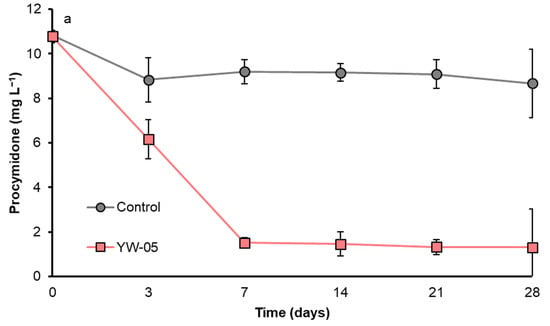
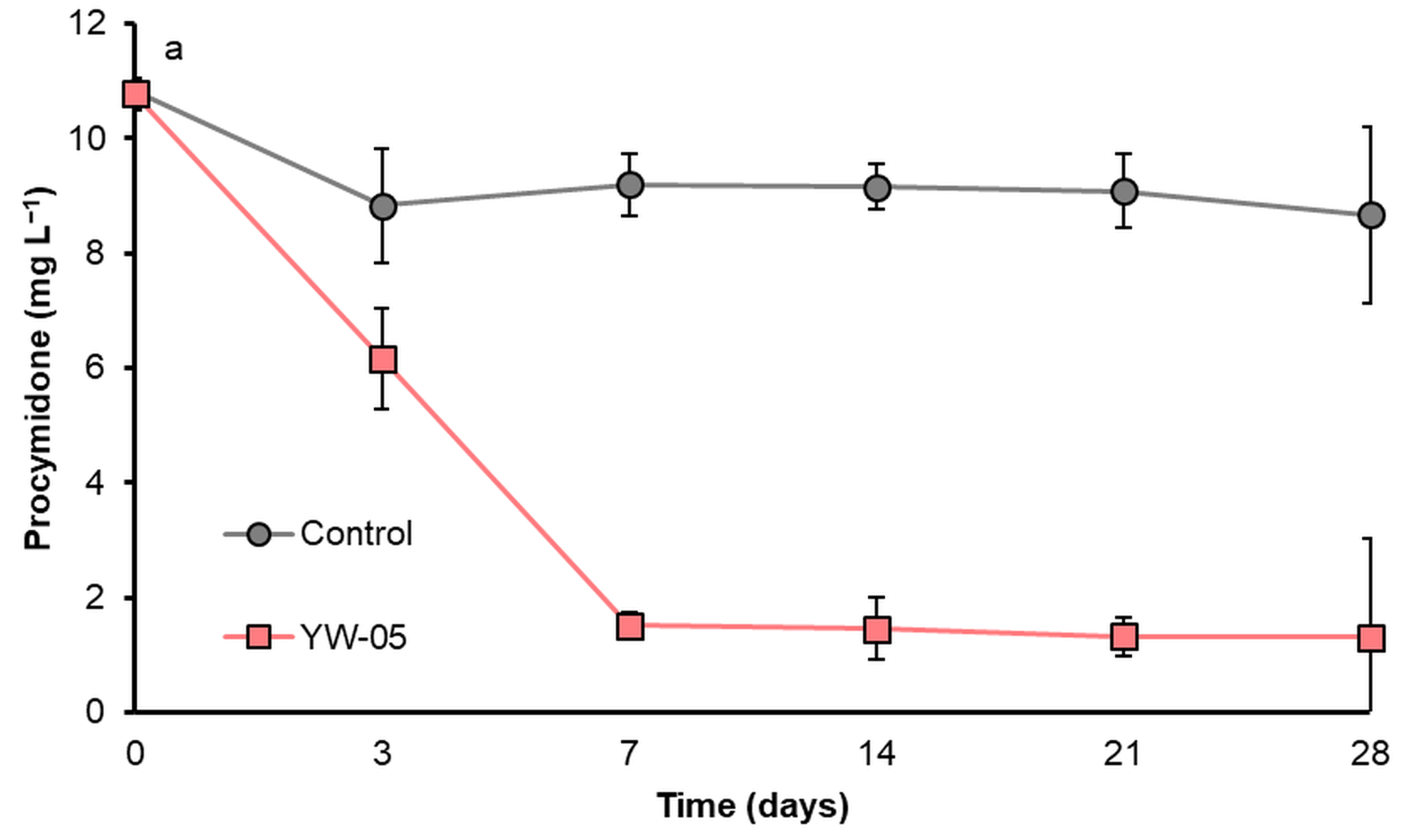
The degradation of procymidone by strain YW-05 was evaluated in a mineral medium (MM) containing 10 mg L−1 procymidone as the sole carbon source (Figure 1 and Table S2). Strain YW-05 exhibited rapid degradation of procymidone during the initial 7 days of incubation. The procymidone concentration decreased from 10.8 ± 0.3 mg L−1 at day 0 to 5.7 ± 0.5 mg L−1 at day 3 and further to 1.5 ± 0.2 mg L−1 at day 7, corresponding to a degradation of 86.0%. Thereafter, the concentration remained relatively stable, with an overall degradation of 87.9% at day 28.
Figure 1.
Degradation of procymidone by strain YW-05. Control, uninoculated control; YW-05, strain YW-05 (7 × 10⁶ CFU mL−1). Data are presented as means ± standard deviations from three independent replicate flasks. Lowercase letter a indicates significant differences between treatments at each time point (one-way ANOVA followed by Tukey’s HSD test, p < 0.05).
First-order kinetic modeling revealed that strain YW-05 exhibited a degradation rate constant (k) of 0.270 day−1, corresponding to a half-life (t1/2) of 2.57 days (R2 = 0.991), indicating efficient and reproducible procymidone removal (Table 3). In the uninoculated control, the procymidone concentration decreased from approximately 10.8 to 8.8 mg L−1 during the first 3 days and remained relatively stable (8.7–9.2 mg L−1) until day 28. This initial decrease may be associated with abiotic processes. Because the concentration profile did not exhibit consistent first-order decay, kinetic parameters were not determined for the control. Nevertheless, the procymidone concentration in YW-05 cultures on day 7 (1.5 mg L−1) was approximately 84% lower than that in the control (9.2 mg L−1), indicating substantial additional procymidone removal associated with strain YW-05.
Table 3.
Kinetic parameters of procymidone degradation by strain YW-05 during the initial 7 days.
During the degradation process, the primary metabolite 3,5-DCA was detected by HPLC analysis based on retention time matching with an authentic standard (Figure S1), indicating that procymidone was transformed into the intermediate metabolite 3,5-DCA. This observation is consistent with those of previous studies that reported 3,5-DCA as the major intermediate metabolite during procymidone degradation [5,11].
In this study, strain YW-05 achieved 86.0% removal of procymidone within 7 days in MM as a single strain, indicating high degradation efficiency. This performance is comparable to or even higher than that of previously reported procymidone-degrading bacteria. For example, Zhang et al. [5] reported that Providencia stuartii JD and Brevundimonas naejangsanensis J3 degraded 80.8% of 50 mg L−1 procymidone within 7 days in pure cultures, whereas their co-culture achieved 84.7% degradation within 5 days. These results highlight the strong degradation capacity of strain YW-05 and support its potential application in the bioremediation of procymidone-contaminated environments.
3.3. Detoxification Effect of Procymidone Degradation on Fungal Growth
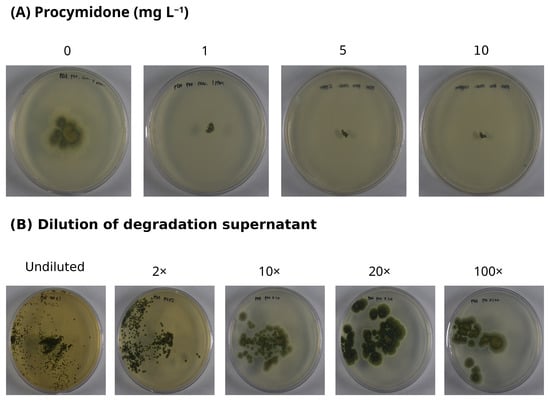
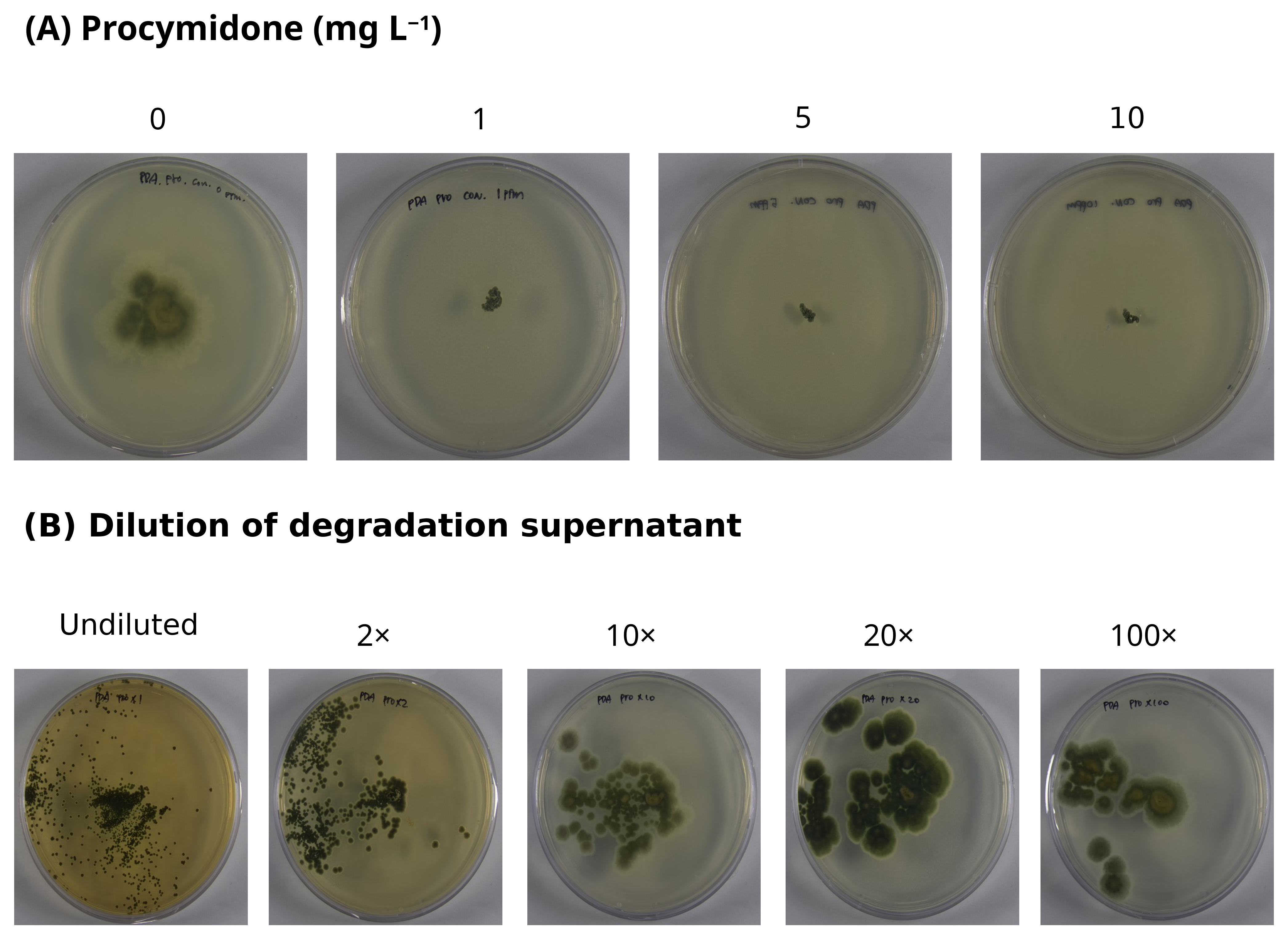
The detoxification effect resulting from the microbial degradation of procymidone was evaluated using a fungal growth inhibition assay with P. roqueforti KACC 47196T. Direct exposure to procymidone strongly inhibited fungal growth on PDA medium. Clear growth inhibition was observed at concentrations of ≥1 mg L−1, and fungal colony development was almost completely suppressed at higher concentrations (5 and 10 mg L−1), confirming the strong antifungal activity of procymidone.
To determine whether microbial degradation reduced this inhibitory effect, the culture supernatant obtained from strain YW-05 grown in MM containing 10 mg L−1 procymidone was used to prepare PDA media. After 7 days of incubation, when more than 80% of procymidone was degraded, the culture was filtered and diluted (undiluted, 2×, 10×, 20×, and 100×) before incorporation into the PDA medium. Figure 2 shows that fungal growth was substantially restored in the PDA media prepared with the degradation supernatant. Although slight growth inhibition remained in the undiluted treatment, colony development increased progressively with the dilution of the degradation supernatant.
Figure 2.
Detoxification effect of procymidone degradation by strain YW-05 on the growth of Penicillium roqueforti KACC 47196T. (A) Fungal growth inhibition on PDA plates containing procymidone at different concentrations (0, 1, 5, and 10 mg L−1). (B) Fungal growth on PDA plates prepared with culture supernatant obtained after 7 days of procymidone degradation by strain YW-05 and diluted at different ratios (undiluted, 2×, 10×, 20×, and 100×).
These results suggest that microbial degradation reduced the antifungal toxicity of procymidone. Similar reductions in toxicity following the microbial degradation of pesticides have been reported in previous studies [20,21], highlighting the ecological relevance of microbial detoxification processes in pesticide-contaminated environments.
3.4. Screening and Degradation of DCA Isomers by Bacterial Strains
Although strain YW-05 efficiently degraded procymidone, its major metabolite 3,5-DCA was still detected and exhibited limited degradation efficiency, indicating incomplete biodegradation of the parent compound (Figure S1). Therefore, five P. putida strains (KACC 10202, 10270T, 10271, 10272T, and 10275) were obtained from the KACC, and their ability to degrade DCA isomers was evaluated.
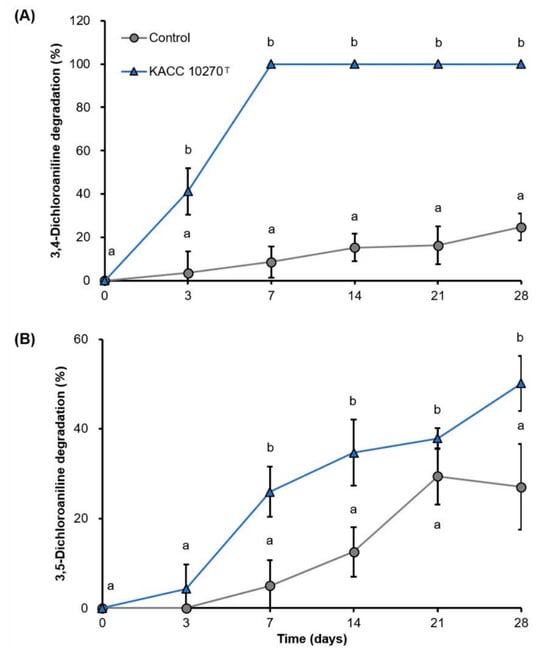
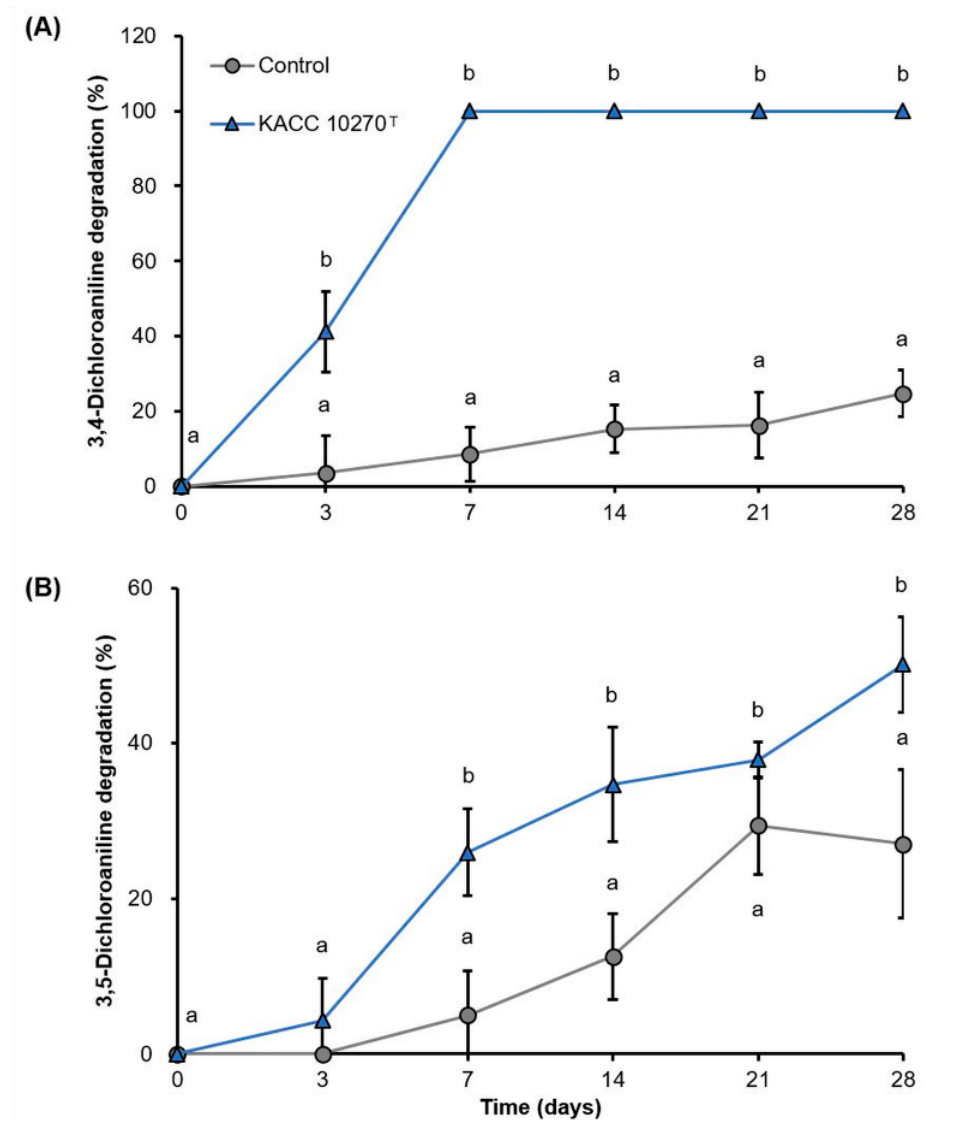
Among the five tested strains, P. putida KACC 10270T exhibited the highest DCA isomer degradation activity. Figure 3A shows that the strain completely degraded 3,4-dichloroaniline within 7 days (100.0 ± 0.0%). Conversely, degradation of 3,5-DCA (Figure 3B), the major metabolite of procymidone, was relatively gradual, reaching 34.7 ± 7.4% after 14 days and increasing to 50.1 ± 6.1% by day 28.
Figure 3.
Degradation of dichloroaniline (DCA) isomer by P. putida KACC 10270T (A) 3,4-DCA and (B) 3,5-DCA. Control, uninoculated control; P. putida KACC 10270T (7 × 10⁶ CFU mL−1). Data are presented as means ± standard deviations of three independent replicate flasks. Different lowercase letters indicate significant differences between treatments at each time point (one-way ANOVA followed by Tukey’s HSD test, p < 0.05).
To further evaluate the substrate range, three additional DCA isomers (2,3-, 2,4-, and 2,5-DCA) were tested. As shown in Figure S2, 2,3-DCA and 2,5-DCA were completely degraded within 3 days, and 2,4-DCA showed 99.8 ± 0.3% degradation at day 3. All three isomers were completely degraded within 7 days (100.0 ± 0.0%).
Substantial removal of dichloroaniline isomers was also observed in the uninoculated controls in mineral medium (Figure 3B and Figure S2A–C). This removal may be associated with abiotic processes, although the specific mechanisms responsible were not investigated in the present study. Nevertheless, the removal of 2,3-, 2,4-, and 2,5-DCA was substantially faster in the inoculated treatments than in the uninoculated controls (Figure S2).
These results demonstrate that P. putida KACC 10270T possesses broad substrate specificity for chloroaniline compounds. However, 3,5-DCA was degraded more slowly than the other isomers tested, consistent with previous reports that the number and position of chlorine substituents influence the biodegradability of chloroanilines [22]. The specific mechanism underlying this difference was not investigated in this study.
3.5. Enhanced Degradation of Procymidone and 3,5-DCA by Co-Inoculation of Strain YW-05 and P. putida KACC 10270T
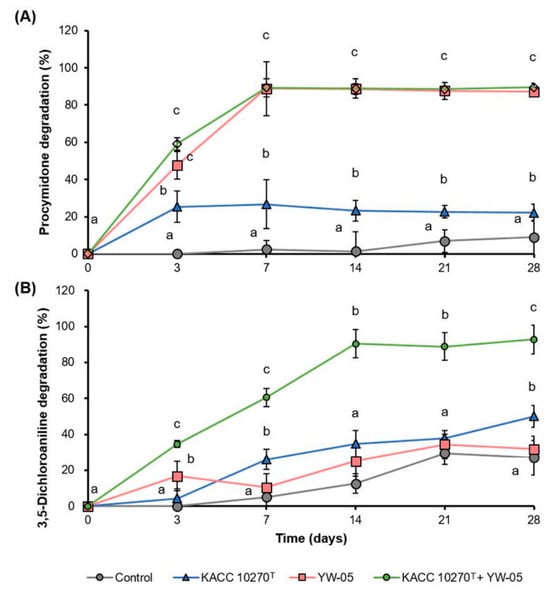
The synergistic potential of co-inoculating strain YW-05 and P. putida KACC 10270T for the degradation of procymidone and 3,5-DCA was evaluated using four treatments: an uninoculated control, strain YW-05 alone, P. putida KACC 10270T alone, and co-inoculation of both strains.
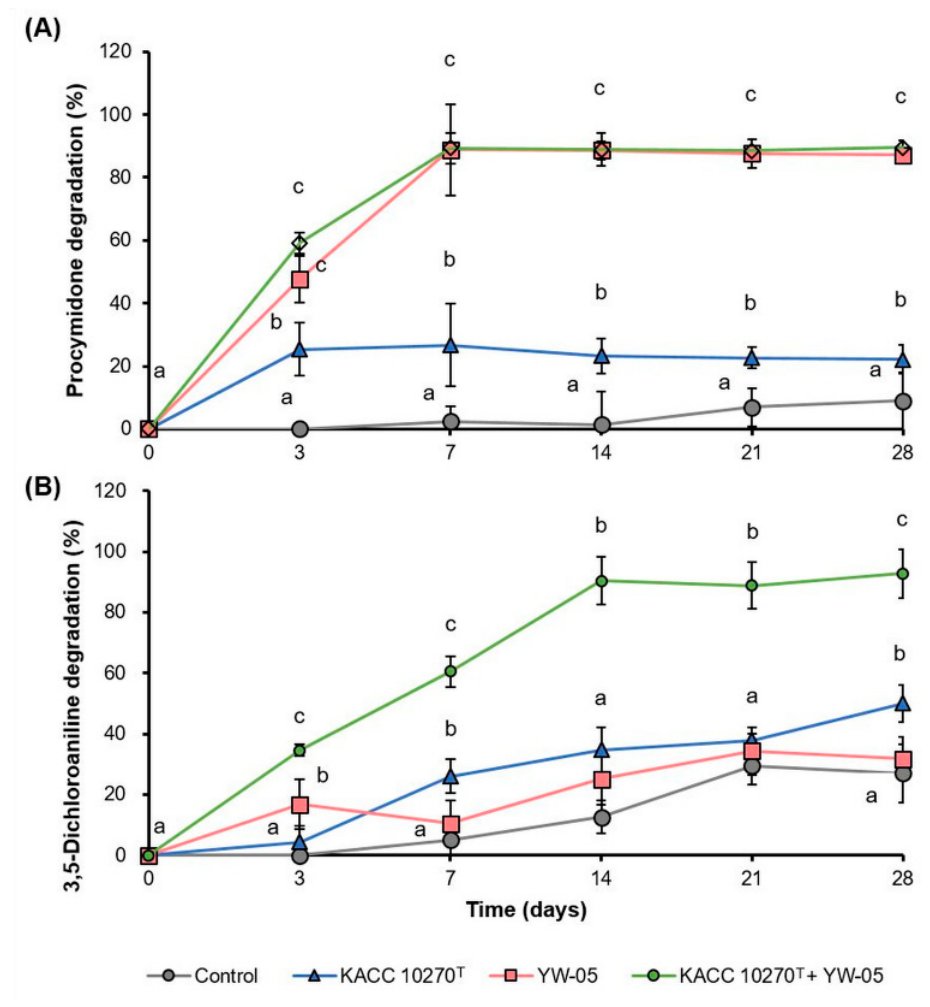
For procymidone degradation (Figure 4A), the uninoculated control showed minimal removal throughout the 28-day incubation period, reaching only 9.1 ± 8.9%. P. putida KACC 10270T alone exhibited limited degradation activity, achieving 22.2 ± 4.5% removal by day 28. Conversely, strain YW-05 alone demonstrated rapid and sustained degradation, removing 47.7 ± 7.4% of procymidone by day 3 and 87.2 ± 1.9% by day 28. Co-inoculation resulted in a slight but consistent increase in degradation efficiency compared with the single-strain treatment, reaching 59.2 ± 3.4% by day 3 and 89.4 ± 2.3% by day 28. This enhancement suggests that the metabolic interactions between the two strains facilitate a more efficient transformation of procymidone.
Figure 4.
Synergistic degradation of procymidone and 3,5-DCA by co-inoculation of strain YW-05 and Pseudomonas putida (P. putida) KACC 10270T. (A) Degradation of procymidone and (B) degradation of 3,5-DCA under single- and co-inoculation treatments. Control, uninoculated control; KACC 10270T, P. putida KACC 10270T (7 × 10⁶ CFU mL−1); YW-05, strain YW-05 (7 × 10⁶ CFU mL−1); KACC 10270T + YW-05, co-inoculation of P. putida KACC 10270T and strain YW-05 (each at 7 × 10⁶ CFU mL−1). Data are presented as means ± standard deviations of three independent replicate flasks. Different lowercase letters indicate significant differences between treatments at each time point (one-way ANOVA followed by Tukey’s HSD test, p < 0.05).
A more pronounced synergistic effect was observed in the degradation of 3,5-DCA (Figure 4B). In the uninoculated control, natural attenuation gradually reduced 3,5-DCA concentrations to 29.4 ± 6.2% by day 21 and 27.0 ± 9.7% by day 28. When inoculated individually, strain YW-05 and P. putida KACC 10270T showed only moderate degradation, reaching 34.4 ± 7.8% and 37.9 ± 2.3%, respectively, by day 21. Conversely, co-inoculation markedly enhanced degradation efficiency, reaching 90.5 ± 7.9% by day 14 and 92.8 ± 8.0% by day 28. Statistical analysis confirmed that degradation in the co-inoculation treatment was significantly higher than that in the single-strain treatment (p < 0.05), indicating a clear synergistic effect.
This degradation pattern suggests complementary metabolic roles for the two strains. Strain YW-05 primarily transforms procymidone into the intermediate metabolite 3,5-DCA, while P. putida KACC 10270T further degrades this compound. Similar synergistic biodegradation mechanisms have been reported in other pesticide-degrading microbial consortia. For example, Rhodococcus sp. JQ-L and Comamonas sp. A-3 exhibit complementary metabolism during the degradation of cypermethrin and its intermediate metabolite 3-phenoxybenzoic acid [23]. Similarly, co-cultures of Providencia stuartii JD and Brevundimonas naejangsanensis J3 significantly enhance the degradation of dicarboximide fungicides and their intermediate metabolite, 3,5-DCA [5]. Collectively, these findings highlight the importance of cooperative microbial interactions for achieving more comprehensive detoxification of pesticide residues and support the use of microbial consortia for pesticide bioremediation.
3.6. Biodegradation of Procymidone and 3,5-DCA in Soil Microcosms by Strain YW-05 and P. putida KACC 10270T
The biodegradation of procymidone and 3,5-DCA was evaluated in soil microcosms using four treatments: an uninoculated control, P. putida KACC 10270T alone, strain YW-05 alone, and co-inoculation of both strains.
Procymidone degradation in the soil was limited across all treatments (Figure S3). The highest removal was observed in the co-inoculation treatment, reaching 11.0 ± 5.8% after 28 days, whereas degradation in the single-strain treatments and the uninoculated control remained below 10.0%. This limited degradation is likely associated with the strong sorption of procymidone to soil organic matter (12.1 g kg−1), which reduces its bioavailability to microorganisms [24]. Such sorption effects are commonly reported for hydrophobic pesticides and can constrain microbial degradation in soil environments [25]. Biosurfactants have been reported to enhance the bioavailability of hydrophobic contaminants by promoting their solubilization and desorption from soil particles, potentially facilitating microbial degradation [26]. Although biosurfactants were not evaluated in the present study, which represents a limitation of this work, future research should investigate their potential to improve procymidone biodegradation in soil.
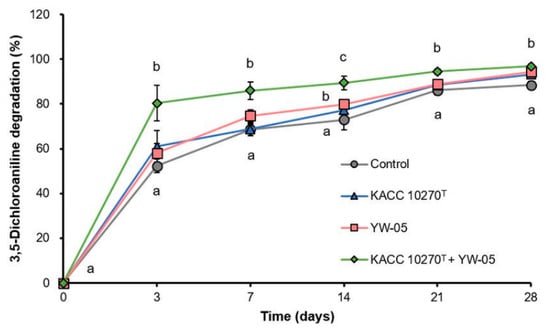
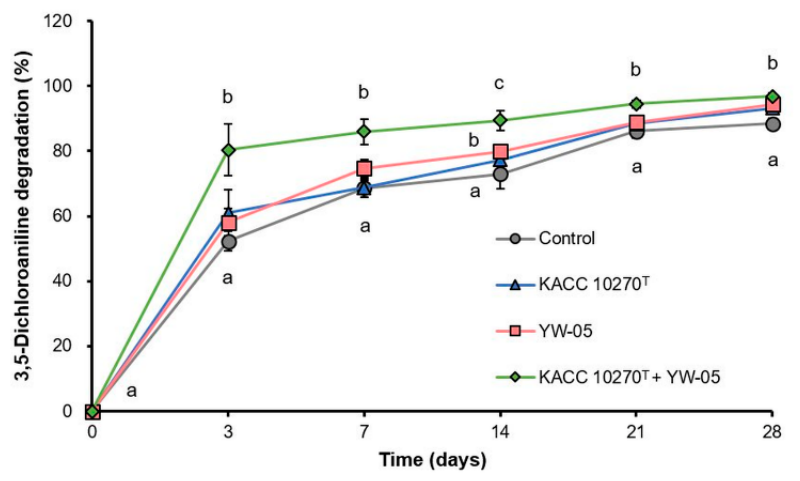
Conversely, the degradation of 3,5-DCA was substantially higher than that of procymidone (Figure 5). The most pronounced effect of co-inoculation was observed during the early incubation stage. By day 3, 80.3 ± 7.9% of 3,5-DCA had been removed in the co-inoculated treatment, whereas removal in the single-strain treatments (60.9 ± 7.1% for P. putida KACC 10270T and 58.1 ± 4.2% for strain YW-05) did not differ significantly from the uninoculated control (52.3 ± 2.9%; Tukey HSD, p > 0.05). In contrast, the co-inoculated treatment differed significantly from all three (p < 0.05). This pattern was consistent through day 21 and was reflected in the kinetic parameters, with the co-inoculated treatment showing a half-life of 1.44 days compared with 3.55–5.45 days in the other treatments (Table 4). The enhanced early removal observed in the co-inoculated treatment may reflect complementary metabolic activities between the two strains, although the underlying mechanism was not directly examined in the present study.
Figure 5.
Degradation of 3,5-DCA in soil microcosms by strain YW-05 and P. putida KACC 10270T. Control, uninoculated control; KACC 10270T, P. putida KACC 10270T (106 CFU g−1 soil); YW-05, strain YW-05 (106 CFU g−1 soil); KACC 10270T + YW-05, co-inoculation of P. putida KACC 10270T and strain YW-05 (each at 106 CFU g−1 soil). Data are presented as means ± standard deviations from triplicate microcosms. Different lowercase letters indicate significant differences between treatments at each time point (one-way ANOVA followed by Tukey’s HSD test, p < 0.05).
Table 4.
First-order kinetic parameters for 3,5-dichloroaniline degradation in soil microcosms under different microbial treatments.
By day 28, removal reached 96.8 ± 1.0% in the co-inoculated treatment, compared with 93.2 ± 1.8%, 94.4 ± 0.5%, and 88.5 ± 1.7% in the P. putida KACC 10270T, strain YW-05, and uninoculated control treatments, respectively. Although the difference between the co-inoculated treatment and the uninoculated control at day 28 remained statistically significant (p < 0.05), its magnitude was relatively small, indicating that co-inoculation primarily accelerated the removal of 3,5-DCA rather than substantially increasing its final removal efficiency. The substantial removal observed in the uninoculated control may be attributable to indigenous microbial activity and other soil-related processes.
Overall, these results demonstrated that although procymidone degradation in the soil was limited owing to low bioavailability, co-inoculation markedly enhanced the removal of its toxic metabolite, 3,5-DCA. The rapid degradation observed during the early incubation stage highlights the importance of complementary microbial metabolism in pesticide detoxification and supports the use of microbial consortia for remediating dicarboximide fungicide residues in agricultural soils.
3.7. Proposed Degradation Pathway of Procymidone
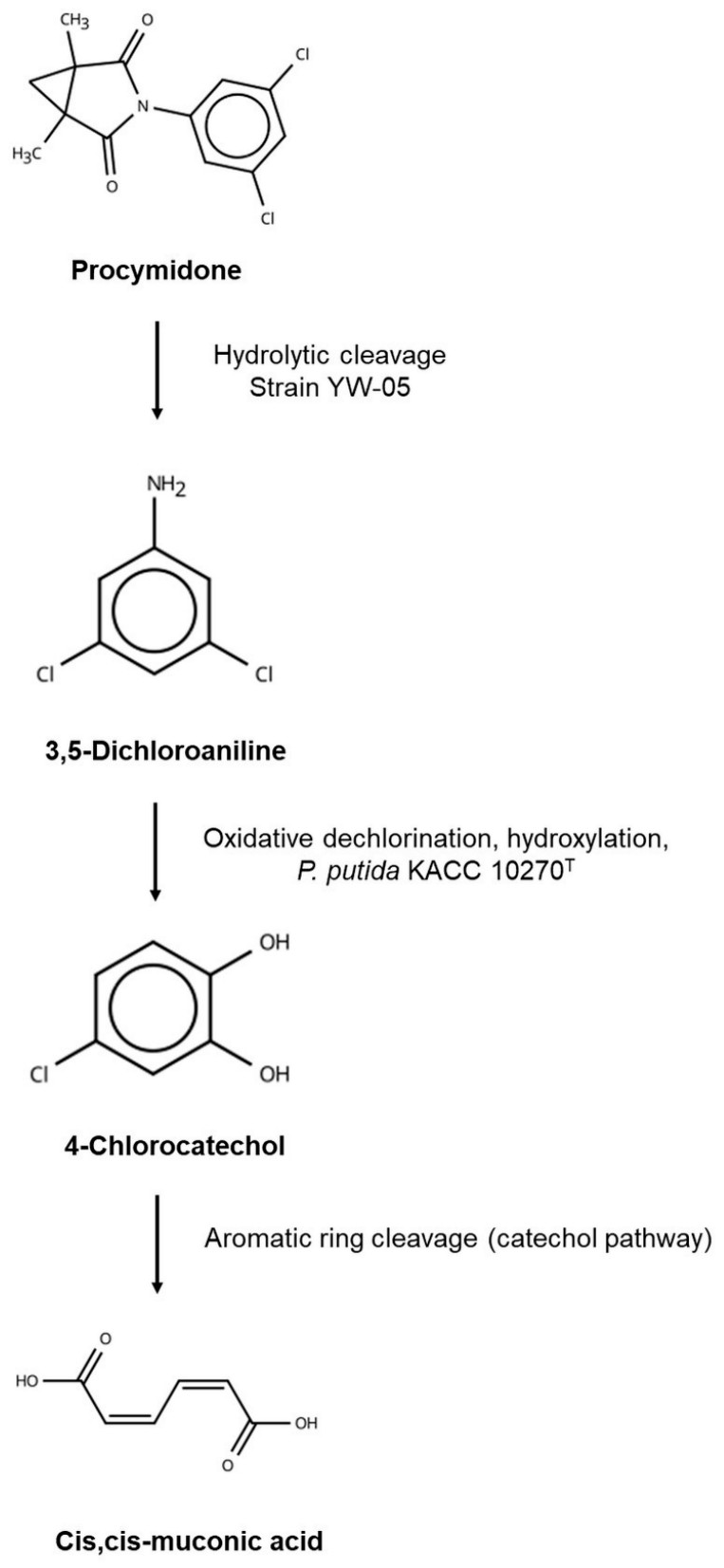
To elucidate the biodegradation pathway of procymidone, intermediate metabolites formed during the degradation process were analyzed using LC–MS/MS. Comparative analysis between the inoculated cultures and uninoculated controls revealed clear differences in metabolite formation patterns. In the inoculated treatment, the primary intermediate 3,5-DCA and downstream metabolites, including 4-chlorocatechol and cis,cis-muconic acid, were detected. Conversely, these metabolites were absent or detected at very low levels in the uninoculated control samples (Figures S4–S6).
The 3,5-DCA detection indicated that procymidone was initially transformed through hydrolytic cleavage of the imide bond, consistent with previously reported degradation pathways for dicarboximide fungicides [5,14,27]. The subsequent detection of 4-chlorocatechol suggested that the chlorinated aromatic intermediate underwent oxidative dechlorination and hydroxylation during microbial metabolism.
Furthermore, the presence of cis,cis-muconic acid indicated that the aromatic ring structure was cleaved via the catechol-mediated aromatic ring cleavage pathway, a common microbial degradation route for aromatic compounds [28,29]. The detection of this ring-cleavage product suggested that the degradation process progressed toward the breakdown of the aromatic structure and potential mineralization.
Additional experiments using 3,5-DCA as the sole substrate confirmed this transformation sequence. While 3,5-DCA degradation in the uninoculated controls was limited, inoculation with the microbial consortium significantly accelerated its degradation and resulted in the formation of downstream metabolites such as 4-chlorocatechol and cis,cis-muconic acid (Figures S7–S9). These results suggest that strain YW-05 primarily initiates the transformation of procymidone to 3,5-DCA, whereas P. putida KACC 10270T plays an important role in the subsequent degradation of this toxic intermediate.
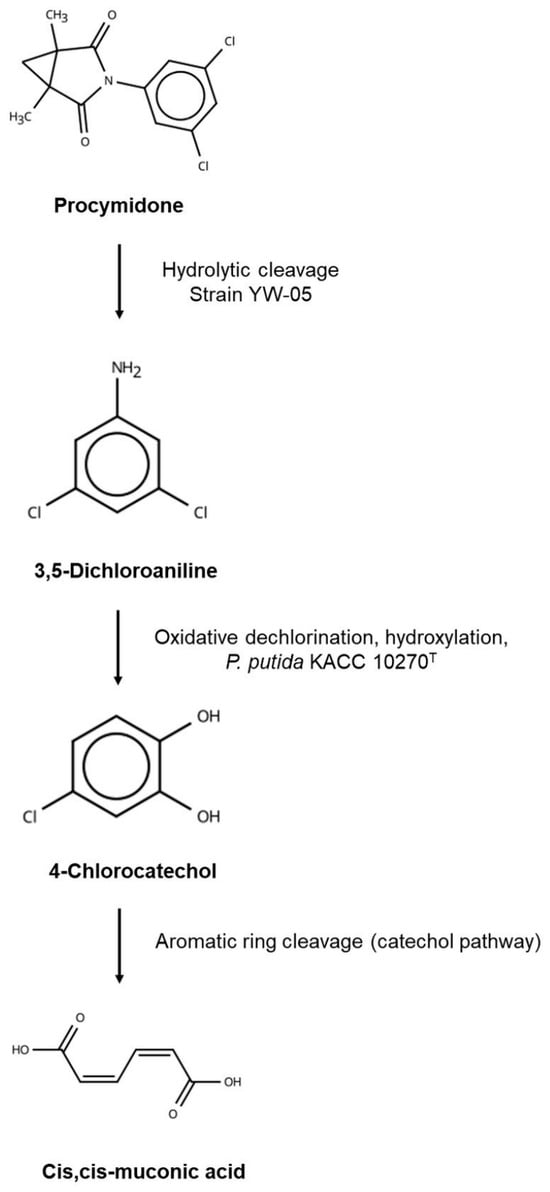
Based on the detected metabolites and comparative analyses of the inoculated and uninoculated treatments, a degradation pathway for procymidone mediated by the microbial consortium was proposed (Figure 6). In this pathway, procymidone is first transformed into 3,5-DCA by the strain YW-05 via hydrolytic cleavage. The intermediate 3,5-DCA is subsequently metabolized by P. putida KACC 10270T via oxidative dechlorination and hydroxylation to form 4-chlorocatechol, followed by aromatic ring cleavage that leads to the formation of cis,cis-muconic acid. This cooperative metabolic interaction between the two bacterial strains enables efficient degradation and detoxification of procymidone and its major toxic intermediate. Because 3,5-DCA has been reported to exhibit higher toxicity than its parent compound [9,10,11], its rapid degradation is critical for reducing the environmental risks associated with procymidone contamination.
Figure 6.
Proposed biodegradation pathway of procymidone mediated by strain YW-05 and Pseudomonas putida KACC 10270T. Procymidone is transformed to 3,5-DCA by hydrolytic cleavage, followed by oxidative dechlorination and hydroxylation to form 4-chlorocatechol. Subsequent aromatic ring cleavage via the catechol pathway results in the formation of cis,cis-muconic acid.
4. Conclusions
The procymidone-degrading bacterium P. equi strain YW-05, previously isolated from agricultural soil with a history of long-term procymidone application [16], efficiently degraded procymidone in MM and produced the major intermediate 3,5-DCA, indicating hydrolytic cleavage of the parent compound. To enhance the removal of this toxic intermediate, several P. putida strains were screened, and P. putida KACC 10270T showed the highest degradation activity toward DCA isomers. Co-inoculation of strain YW-05 and P. putida KACC 10270T significantly improved the degradation of 3,5-DCA, demonstrating clear synergistic interactions between the two strains. Metabolite profiling by LC-MS/MS revealed the formation of downstream metabolites, including 4-chlorocatechol and cis,cis-muconic acid; this suggested that procymidone degradation proceeded through oxidative dechlorination, which was followed by aromatic ring cleavage. Although procymidone degradation in soil microcosms was limited owing to reduced bioavailability, co-inoculation markedly accelerated the removal of toxic 3,5-DCA. Overall, these findings provide new insights into the microbial degradation mechanism of procymidone, while demonstrating that microbial consortia composed of functionally complementary strains represent a promising strategy for the detoxification of pesticide residues. Further studies focusing on the ecological stability and optimization of such microbial consortia under field conditions will contribute to the development of more effective bioremediation strategies for pesticide-contaminated environments.
Supplementary Materials
The following supporting information can be downloaded at: https://www.mdpi.com/article/10.3390/agriculture16212432/s1, Section S1: Supplementary tables; Table S1: Composition of a mineral medium (MM); Table S2. Changes in procymidone concentration and removal efficiency in mineral medium with and without strain YW-05 inoculation. Section S2: Analytical methods; Figure S1: HPLC analysis of procymidone degradation; Figures S2 and S3: Additional degradation experiments; Figures S4–S9: LC–MS/MS chromatograms. Reference [30] is cited in the Supplementary Materials.
Author Contributions
Conceptualization, J.Y., J.-H.A. and H.-Y.W.; methodology, J.Y. and J.-H.A.; validation, J.Y. and J.-H.A.; formal analysis, J.Y. and J.-H.A.; investigation, J.Y., J.-H.A., J.-h.C., D.K., S.A. and Y.-J.K.; data curation, J.Y. and J.-H.A.; visualization, J.Y. and J.-H.A.; writing—original draft preparation, J.Y. and J.-H.A.; writing—review and editing, J.Y., J.-H.A., J.-h.C. and H.-Y.W.; supervision, H.-Y.W.; project administration, H.-Y.W.; funding acquisition, H.-Y.W. All authors have read and agreed to the published version of the manuscript.
Funding
This research was funded by Rural Development Administration, Republic of Korea, project number RS-2020-RD009068.
Data Availability Statement
The whole-genome sequence data of Prescottella equi YW-05 generated in this study are available in GenBank under accession numbers CP173203–CP173205. The other data presented in this study are available on request from the corresponding author.
Conflicts of Interest
The authors declare no conflicts of interest.
References
- Li, L.; Zhao, T.; Liu, Y.; Liang, H.; Shi, K. Method validation, residues and dietary risk assessment for procymidone in green onion and garlic plant. Foods 2022, 11, 1856. [Google Scholar] [CrossRef] [Scilit]
- Sui, J.; Wang, L.; Zhou, Y.; Chen, F.; Wang, T.; Chen, S.-H.; Cui, X.; Yang, Y.; Zhang, W. Resolving the dilemma of dicarboximide fungicides residue contamination: Promises and challenges of microbial degradation. J. Agric. Food Chem. 2025, 73, 20563–20579. [Google Scholar] [CrossRef] [Scilit]
- Food and Agriculture Organization of the United Nations (FAO). FAO Specifications and Evaluations for Plant Protection Products: Procymidone; FAO: Rome, Italy, 2001. [Google Scholar]
- Fungicide Resistance Action Committee (FRAC). Background Information on Dicarboximide. Available online: https://www.frac.info/frac-teams/expert-fora/dicarboximides (accessed on 15 August 2026).
- Zhang, S.; Li, L.; Meng, G.; Zhang, X.; Hou, L.; Hua, X.; Wang, M. Environmental behaviors of procymidone in different types of Chinese soil. Sustainability 2021, 13, 6712. [Google Scholar] [CrossRef] [Scilit]
- Lee, Y.J.; Yang, J.W.; Choi, B.; Park, S.-J.; Lee, C.-G.; Jho, E.H. Changes in the toxicity of procymidone and its metabolite during the photohydrolysis process and the effect of the presence of microplastics. Korean J. Chem. Eng. 2023, 40, 612–617. [Google Scholar] [CrossRef] [Scilit]
- World Health Organization (WHO); Food and Agriculture Organization of the United Nations (FAO). Pesticide Residues in Food-2007: Toxicological Evaluations; World Health Organization: Geneva, Switzerland, 2009. [Google Scholar]
- Yang, J.W.; Lee, Y.J.; Jho, E.H. Sorption characteristics of procymidone and 3,5-dichloroaniline on microplastic films. Korean J. Environ. Agric. 2023, 42, 184–192. [Google Scholar] [CrossRef] [Scilit]
- Lai, K.P.; Gong, Z.; Tse, W.K.F. Zebrafish as the toxicant screening model: Transgenic and omics approaches. Aquat. Toxicol. 2021, 234, 105813. [Google Scholar] [CrossRef] [Scilit]
- Lai, Q.; Sun, X.; Li, L.; Li, D.; Wang, M.; Shi, H. Toxicity effects of procymidone, iprodione and their metabolite 3,5-dichloroaniline to zebrafish. Chemosphere 2021, 272, 129577. [Google Scholar] [CrossRef] [Scilit]
- Vasileiadis, S.; Puglisi, E.; Papadopoulou, E.S.; Pertile, G.; Suciu, N.; Pappolla, R.A.; Tourna, M.; Karas, P.A.; Papadimitriou, F.; Kasiotakis, A.; et al. Blame it on the metabolite: 3,5-dichloroaniline rather than the parent compound is responsible for the decreasing diversity and function of soil microorganisms. Environ. Microbiol. 2018, 84, e01536-18. [Google Scholar] [CrossRef] [Scilit]
- Zhang, C.; Wu, X.; Wu, Y.; Li, J.; An, H.; Zhang, T. Enhancement of dicarboximide fungicide degradation by two bacterial cocultures of Providencia stuartii JD and Brevundimonas naejangsanensis J3. J. Hazard. Mater. 2021, 403, 123888. [Google Scholar] [CrossRef] [Scilit]
- Vagi, C.; Petsas, A. Sorption/Desorption, Leaching, and Transport Behavior of Pesticides in Soils: A Review on Recent Advances and Published Scientific Research; Springer: Cham, Switzerland, 2022. [Google Scholar]
- Ahmad, S.; Ahmad, H.W.; Bhatt, P. Microbial adaptation and impact into the pesticide’s degradation. Arch. Microbiol. 2022, 204, 288. [Google Scholar] [CrossRef] [Scilit]
- Luong, T.T.; Nguyen, T.H.T.; Nguyen, T.D.; Le, V.T.; Pham, T.H.T.; Ho, T.-T.; Nguyen, N.-L. Degradation of triazole fungicides by plant growth-promoting bacteria from contaminated agricultural soil. J. Microbiol. Biotechnol. 2024, 34, 56–64. [Google Scholar] [CrossRef] [Scilit]
- Yeon, J.; Kim, S.; Choi, H.S.; Chung, J.-H.; Ko, Y.-J.; Kim, D.; An, S.; Ahn, J.-H.; Weon, H.-Y. Complete genome sequence of procymidone-degrading Prescottella equi YW-05, isolated from soil. Microbiol. Biotechnol. Lett. 2025, 53, 125–127. [Google Scholar] [CrossRef] [Scilit]
- Ahn, J.-H.; Lee, S.-A.; Kim, S.-J.; You, J.; Han, B.-H.; Weon, H.-Y.; Lee, S.-W. Biodegradation of organophosphorus insecticides with P–S bonds by two Sphingobium sp. strains. Int. Biodeterior. Biodegrad. 2018, 132, 59–65. [Google Scholar] [CrossRef] [Scilit]
- Raffa, C.M.; Chiampo, F. Bioremediation of agricultural soils polluted with pesticides: A review. Bioengineering 2021, 8, 92. [Google Scholar] [CrossRef] [Scilit]
- Valencia-Botín, A.J.; Chávez-Díaz, I.F.; Zurita-Martínez, F.; Tejeda-Ortega, A.; Zelaya-Molina, L.X. Plant growth-promoting and tequila vinasse-resistant bacterial strains. Microbiol. Res. 2024, 15, 1144–1162. [Google Scholar] [CrossRef] [Scilit]
- Yeon, J.; Chung, J.-H.; Chon, K.; Lee, J.-C.; Park, K.-D.; Park, I.; Kim, D.-Y.; An, S.-H.; Yoon, Y.; Ahn, J.-H. Neutralization of the toxic effects of a fungicide difenoconazole against soil organisms by a difenoconazole-degrading bacterium. Appl. Soil Ecol. 2022, 177, 104541. [Google Scholar] [CrossRef] [Scilit]
- Swathy, K.; Vivekanandhan, P.; Yuvaraj, A.; Sarayut, P.; Kim, J.S.; Krutmuang, P. Biodegradation of pesticide in agricultural soil employing entomopathogenic fungi: Current state of the art and future perspectives. Heliyon 2024, 10, e23406. [Google Scholar] [CrossRef] [Scilit]
- Dejonghe, W.; Goris, J.; Dierickx, A.; De Dobbeleer, V.; Crul, K.; De Vos, P.; Verstraete, W.; Top, E.M. Diversity of 3-chloroaniline and 3,4-dichloroaniline degrading bacteria isolated from three different soils and involvement of their plasmids in chloroaniline degradation. FEMS Microbiol. Ecol. 2002, 42, 315–325. [Google Scholar] [CrossRef] [Scilit]
- He, J.; Zhang, K.; Wang, L.; Du, Y.; Yang, Y.; Yuan, C. Highly efficient degradation of cypermethrin by a co-culture of Rhodococcus sp. JQ-L and Comamonas sp. A-3. Front. Microbiol. 2022, 13, 1003820. [Google Scholar] [CrossRef] [Scilit]
- Yu, L.; Wu, X.M.; Li, S.N.; Fang, H.; Zhan, H.Y.; Yu, J.Q. An exploration of the relationship between adsorption and bioavailability of pesticides in soil to earthworm. Environ. Pollut. 2006, 141, 428–433. [Google Scholar] [CrossRef] [Scilit]
- Giri, B.S.; Geed, S.; Vikrant, K.; Lee, S.S.; Kim, K.-H.; Kailasa, S.K.; Vithanage, M.; Chaturvedi, P.; Rai, B.N.; Singh, R.S. Progress in bioremediation of pesticide residues in the environment. Environ. Eng. Res. 2021, 26, 200446. [Google Scholar] [CrossRef] [Scilit]
- Kaczorek, E.; Pacholak, A.; Zdarta, A.; Smułek, W. The impact of biosurfactants on microbial cell properties leading to hydrocarbon bioavailability increase. Colloids Interfaces 2018, 2, 35. [Google Scholar] [CrossRef] [Scilit]
- Vanni, A.; Gamberini, R.; Calabria, A.; Nappi, P. Determination and identification of metabolites of the fungicides iprodione and procymidone in compost. Chemosphere 2000, 41, 1431–1439. [Google Scholar] [CrossRef] [Scilit]
- Liu, C.; Juvonen, V.; Meriläinen, E.; Efimova, E.; Luo, J.; Salmela, M.; Santala, S.; Santala, V. Cis,cis-muconic acid production from lignin related molecules by Acinetobacter baylyi ADP1. Microb. Cell Fact. 2025, 24, 150. [Google Scholar] [CrossRef] [Scilit]
- Vilbert, A.C.; Kontur, W.S.; Gille, D.; Noguera, D.R.; Donohue, T.J. Engineering Novosphingobium aromaticivorans to produce cis,cis-muconic acid from biomass aromatics. Appl. Environ. Microbiol. 2024, 90, e01660-23. [Google Scholar] [CrossRef] [Scilit]
- González-Curbelo, M.Á.; Varela-Martínez, D.A.; Riaño-Herrera, D.A. Pesticide-residue analysis in soils by the QuEChERS method: A review. Molecules 2022, 27, 4323. [Google Scholar] [CrossRef] [Scilit]

Disclaimer/Publisher’s Note: The statements, opinions and data contained in all publications are solely those of the individual author(s) and contributor(s) and not of MDPI and/or the editor(s). MDPI and/or the editor(s) disclaim responsibility for any injury to people or property resulting from any ideas, methods, instructions or products referred to in the content. |
© 2026 by the authors. Licensee MDPI, Basel, Switzerland. This article is an open access article distributed under the terms and conditions of the Creative Commons Attribution (CC BY) license.