


Abstract
Zinc (Zn) is an essential micronutrient for plants and is often considered antagonistic to cadmium (Cd) because the two metals have similar chemical properties and partially overlapping transport pathways. However, Zn does not uniformly suppress Cd accumulation in rice. Depending on soil conditions, Zn nutritional status, application strategy, and genotype, Zn can decrease, exert little effect on, or promote Cd transfer to aboveground tissues and grain. This review examines the mechanistic basis of these contrasting responses across the soil–root–shoot–grain continuum through four control steps: (i) soil Cd supply, (ii) root uptake and sequestration, (iii) root-to-shoot transport, and (iv) grain-directed allocation. Competitive sorption, redox-dependent mineral transformations, and sulfide formation and oxidation modify soil Cd availability. In plants, Zn can restrict Cd entry through partially shared uptake pathways, while Cd entry through comparatively Zn-insensitive pathways can persist and increased Zn supply can facilitate root-to-shoot transport. Root sequestration and vascular redistribution further regulate Cd delivery to grain. Uptake antagonism can therefore coexist with transport facilitation, and the final grain Cd response reflects the net balance among these control steps. Soil pH and redox history, relative Zn/Cd availability, Zn dose and nutritional status, application route and timing, and genotype influence which step dominates. Controlled mechanistic evidence and field responses are distinguished when assessing agronomic applicability. This synthesis provides a basis for evaluating Zn management while recognizing potential trade-offs among grain Zn enrichment, grain Cd reduction, and yield maintenance.
1. Introduction
Cadmium (Cd) accumulation in rice (Oryza sativa L.) grain remains an important food-safety concern, whereas increasing grain zinc (Zn) is an important objective for improving rice nutritional quality [1,2,3]. Management of the two metals is closely linked because Zn2+ and Cd2+ have similar chemical properties and partially overlapping transport pathways [4,5]. This similarity has supported the conventional view that increasing Zn supply may competitively restrict Cd uptake [6]. However, growing evidence indicates that Zn–Cd interactions are context-dependent, varying with soil conditions, developmental stage, genotype, and Zn application strategy. Experiments with four indica cultivars grown in chelator-buffered nutrient solutions illustrate this distinction [6]. Increasing Zn activity reduced root and shoot Cd concentrations but increased the root-to-shoot Cd transfer ratio; uptake competition and biomass dilution were proposed to explain the concentration decreases [6]. These contrasting responses indicate that Zn concentration alone cannot predict grain Cd accumulation. Tissue concentrations and translocation ratios describe different aspects of the response, and the net outcome depends on the balance among processes operating along the soil-to-grain pathway.
Field evidence further illustrates this context dependence. In a regional survey of rice and wheat, a soil Cd:Zn ratio ≤ 0.0083 was associated with reduced Cd uptake and translocation in wheat, but no corresponding threshold was established for rice [7]. In rice fields, soil Zn showed no overall association with grain Cd at pH < 5.9, with site-dependent relationships at higher pH [7]. Accordingly, the wheat-derived threshold should not be applied to rice without independent validation. Functional studies in nutrient solutions showed that increasing Zn could enhance Cd root-to-shoot transport under defined conditions [8]. Complementary rice-pot experiments under contrasting water regimes, combining stable-isotope analyses with transporter-expression measurements, suggested that Zn and Cd use partially overlapping uptake and transport pathways, with Cd retaining access to comparatively Zn-insensitive routes [5]. Thus, root-uptake antagonism may coexist with facilitation of internal Cd transport.
This context dependence also originates in paddy-soil redox processes. Flooding and drainage alter pH, iron (Fe) and manganese (Mn) mineral phases, and sulfide formation and oxidation, redistributing Cd among dissolved, sorbed, and mineral-associated pools [9,10]. These changes alter Cd availability and the concentrations of Zn and Cd encountered by roots. Under reducing conditions, coexisting zinc sulfide (ZnS) and cadmium sulfide (CdS) introduce another mechanism: during subsequent oxidation, ZnS can suppress CdS dissolution through sulfide voltaic coupling, limiting Cd remobilization independently of direct Zn2+–Cd2+ competition [11]. Thus, Zn may influence Cd accumulation through both soil geochemical processes and plant transport, with the final grain response depending on their combined effects.
The central question is therefore what determines the direction of Zn regulation of Cd accumulation in rice. Advances in paddy-soil biogeochemistry, functional studies of metal transport, and stable-isotope tracing provide a basis for interpreting apparently conflicting responses within a common mechanistic framework. Recent reviews have synthesized Cd uptake, translocation, and tissue distribution in rice together with its crosstalk with essential micronutrients such as Zn, Fe, and Mn [12]. Building on this work, the present review focuses specifically on the conditions governing directional changes in the Zn response. We integrate soil redox chemistry with plant uptake, sequestration, and transport mechanisms through four control steps: (i) soil Cd supply, (ii) root uptake and sequestration, (iii) root-to-shoot transport, and (iv) grain-directed allocation. We examine how soil conditions, relative Zn/Cd availability, Zn nutritional status and application strategy, and genotype shift the dominant control step and thereby alter the final grain Cd response. Mechanistic support and agronomic applicability are evaluated separately, with controlled experiments and field evidence interpreted in their respective contexts. This synthesis provides a basis for explaining divergent experimental outcomes and evaluating Zn-management strategies while recognizing potential trade-offs among grain Zn enrichment, Cd reduction, and yield maintenance.
Details of the literature search and evidence selection are provided in Text S1 of the Supporting Information.
2. Soil Cd Supply: Geochemical Controls on Zn–Cd Interactions
Soil Cd supply is the first control step in the soil–root–shoot–grain pathway. Before Zn and Cd enter plant transport pathways, soil processes determine the size and chemical form of the metal pools available to roots. Zn and Cd can compete for sorption sites, and occupation of these sites by Zn may decrease Cd retention and increase the fraction remaining in soil solution [13]. In paddy soils, flooding and drainage can reorganize Zn and Cd among dissolved, sorbed, and mineral-associated pools through changes in pH, Fe and Mn mineral phases, sulfate reduction, and sulfide oxidation [9,10,11]. The extent to which Zn participates in these processes depends on its chemical form and reactivity; a substantial proportion can remain in relatively stable mineral-associated pools, so total soil Zn alone does not indicate the amount available for interaction with Cd [14]. Soil processes therefore determine the concentrations and chemical forms of Zn and Cd encountered by roots and can reinforce or counteract subsequent interactions within the plant.
2.1. Zn–Cd Competition at Soil Interfaces: Roles of pH and Relative Availability
Because Zn2+ and Cd2+ have the same charge and similar coordination properties, they can compete for a finite number of reactive sites on soil minerals and organic surfaces [13]. Such competition does not necessarily decrease Cd availability; occupation of sorption sites by Zn may instead increase the fraction of Cd remaining in soil solution [13]. Soil pH modifies these interactions because protonation of variable-charge surfaces under acidic conditions can weaken the retention of divalent metals [13]. Ming et al. (2016) compared single- and dual-metal sorption in acidic and alkaline soils and observed stronger sorption in the alkaline soil, with Zn showing a higher modeled sorption affinity than Cd in both soils [13]. Zn–Cd competition occurred mainly at higher metal concentrations in the alkaline soil but was evident at relatively low concentrations in the acidic soil [13]. Moreover, combined Zn and Cd retention in the dual-metal treatments remained comparable to that in the corresponding single-metal treatments over the tested range, consistent with competition for a limited sorption capacity [13]. These laboratory observations identify a mechanism by which Zn can increase Cd mobility, but do not directly establish the direction of the grain Cd response in rice.
The consequence of Zn–Cd competition therefore depends on the interface at which it occurs. At the soil solid–solution interface, Zn may occupy sites that would otherwise retain Cd and thereby increase Cd mobility [13]. At the soil–root interface, however, higher Zn activity may restrict Cd entry through partially shared uptake pathways [6]. The interpretation of nutrient-solution results must nevertheless account for biomass dilution as well as proposed uptake competition, because lower tissue Cd concentrations do not by themselves quantify Cd entry [6]. Field observations further show that the relationship between soil Zn and rice Cd depends on soil conditions. In a regional investigation, Yang et al. (2020) found no detectable overall association between soil Zn and rice Cd accumulation in the more acidic soils, whereas Zn–Cd relationships differed among sites in the higher-pH group [7]. The same study identified an inhibitory Zn–Cd relationship in wheat within a study-specific soil Cd range, but did not establish a universal threshold for rice [7]. That wheat threshold should not be transferred to rice management without validation. In acidic paddy soils in southern China, Wang et al. (2018) found that higher grain Cd was associated with higher soil Zn and lower soil Mn, whereas the relationship between pH and grain Cd was not significant within the relatively narrow acidic range examined [15]. These Zn and Mn associations do not establish that Zn fertilization itself caused the increase in grain Cd.
These observations indicate that total soil Zn alone is a poor predictor of Zn regulation of Cd in rice. More relevant are the relative soluble or labile pools of Zn and Cd under the prevailing soil conditions. Porewater concentrations, free-ion activities, and method-defined extractable pools describe different aspects of metal availability and should not be treated as interchangeable measures of the Zn/Cd balance. In acidic soils with weak metal retention, a large available Cd pool can sustain root uptake even when Zn competes for some uptake pathways. At higher pH, stronger sorption can decrease dissolved Cd, but the resulting Zn effect still depends on relative Zn/Cd availability and other soil properties. Thus, pH acts as a boundary condition that shifts the balance between soil-phase mobilization and root-level competition, rather than determining a universally antagonistic or promotional Zn effect. Key study comparisons are summarized in Table 1, and detailed experimental conditions and quantitative results are provided in Table S1.
Table 1.
Key study comparisons illustrating context-dependent Zn–Cd interactions across soil processes, plant transport, and grain outcomes.
2.2. Flooding–Drainage Redox Cycling Reorganizes the Zn–Cd Pools in Paddy Soils
2.2.1. Redox History, Fe Cycling, and Cd Remobilization
Flooding–drainage cycles make Zn–Cd interactions particularly dynamic in paddy soils. Zinc and cadmium occur predominantly as divalent cations (Zn2+ and Cd2+), but their availability responds to changes in pH, transformations of Fe-bearing and Mn-bearing minerals, sulfate reduction, and sulfide stability [9,22,23,24]. Reductive dissolution of Fe-bearing and Mn-bearing minerals can release associated Cd and Zn, whereas increasing pH in acidic soils, formation of secondary Fe phases, and sulfide precipitation can favor Cd retention [9,23,24]. During drainage, oxygen intrusion and oxidation of reduced phases can promote Cd remobilization, while newly formed Fe oxides and Mn oxides can provide additional sorption sites [9,22,24]. These competing processes help explain the temporal variability of soil Cd supply. Water-management experiments have shown that flooding around heading and grain filling can decrease grain Cd, whereas aerobic management during the same period can increase it [25]. The timing of these transitions therefore matters when evaluating root exposure to Zn and Cd.
The dominant mechanism of Cd immobilization can change as soil reduction progresses. Wang et al. (2022) monitored three contaminated paddy soils during 40 days of flooding followed by 20 days of oxidation [9]. The decline in labile Cd was closely associated with Fe(II) dynamics and transformations of Fe-bearing minerals, while Cd remobilization during oxidation was attributed mainly to declining pH and release from secondary minerals [9]. Complementary experiments indicate that Cd association with amorphous Fe oxides can dominate earlier in reduction, with sulfide precipitation becoming more important under increasingly reducing conditions [23]. Spectroscopic and release-kinetic analyses also show that Cd immobilization during prolonged flooding can be rapidly reversed after drainage [10]. Together, these findings identify redox history and the accompanying pH trajectory as controls on the Cd supplied to roots; they do not imply that sulfide precipitation dominates in every flooded soil. Recent evidence further connects Fe cycling with sulfide oxidation during drainage. Using soil-slope incubations of three contaminated paddy soils, Zhang et al. (2025) resolved transient near-surface oxidation fronts where oxygen gradients and rapid Fe(II) oxidation generated hydroxyl radical (•OH) hotspots [26]. These hotspots accelerated CdS oxidation and increased Cd solubility, with pH, oxygen penetration, and mineral-bound Fe(II) speciation identified as important controls on radical production [26]. This soil-incubation evidence adds spatially uneven oxidation and Fe(II) speciation to the conditions governing drainage-associated Cd remobilization. Its relevance to Zn–Cd interactions must be evaluated alongside the composition and reactivity of the sulfides formed during the preceding flooded period.
2.2.2. Sulfur Availability and Competitive Sulfide Formation
Sulfur (S) cycling also changes the relative availability of Cd and Zn without necessarily changing their dissolved concentrations in parallel. de Livera et al. (2011) simulated preharvest drainage in soil-suspension reaction cells, applying 30 days of anaerobic incubation to laboratory-spiked soil and 42 days to field-contaminated soil, followed in both cases by 14 days of aerobic oxidation [27]. Without added sulfur, dissolved Cd remained essentially unchanged during oxidation, whereas dissolved Fe and Zn concentrations declined; accordingly, the dissolved Cd:Fe and Cd:Zn concentration ratios increased [27]. Sulfate addition decreased dissolved Cd while leaving dissolved Fe and Zn largely unchanged, so both ratios were lower than in treatments without added sulfur [27]. With additional Zn, the dissolved Cd:Zn ratio was lower during oxidation because dissolved Zn remained higher [27]. Thus, a change in the Cd:Zn ratio may reflect a change in dissolved Cd, dissolved Zn, or both; the ratio alone cannot identify Cd mobilization. These soil-suspension results do not establish a change in root Cd uptake or grain Cd accumulation.
The extent of sulfide-mediated Cd immobilization depends on the supply of reducible sulfur relative to sulfide-forming metals. Fulda et al. (2013) varied sulfate and copper (Cu) in a Cd-contaminated paddy soil during 40 days of reduction and 28 days of reoxidation [28]. Sufficient sulfate relative to Cd and Cu favored Cd-sulfide precipitation, whereas decreasing sulfate or increasing Cu limited this process; reoxidation transformed the Cd-sulfide pool back into more soluble species [28]. This establishes sulfur availability and competition from coexisting metals as boundary conditions for Cd immobilization. Spectroscopic studies provide complementary evidence. Sulfur-rich zerovalent Fe amendments enhanced CdS formation at selected microsites [29]. In soils with contrasting sulfur contents, bulk CdS proportions and the relationship between redox potential (Eh) and Cd solubility during reoxidation differed between soils [30]. The microscale and bulk-soil results should therefore be interpreted at their respective scales, with detailed conditions and quantitative comparisons retained in Table S1.
2.2.3. Microbial Sulfide Formation and Zn Speciation
Zn participation in these sulfur reactions also depends on microbial activity. Huang et al. (2023) used sulfate-reducing bacterial enrichment cultures from paddy soil and observed CdS formation under reducing conditions [31]. Adding Zn(II) and/or Fe(II) promoted the production of reduced sulfur species and formation of polymetallic sulfides, further decreasing Cd solubility; little dissolved Cd reappeared during subsequent reoxidation in the tested cultures [31]. These findings indicate that Zn can influence Cd immobilization through changes in microbial sulfur transformations and sulfide formation. The net effect of Zn therefore depends on its influence on sulfide production as well as incorporation into sulfide minerals. This culture-based mechanism requires evaluation under soil and field conditions before it can support a Zn-management recommendation.
Conversely, not all soil Zn is sufficiently reactive to participate strongly in flooding–drainage processes. Khaokaew et al. (2012) examined Cd–Zn co-contaminated paddy soils under contrasting pH and water conditions and found relatively little change in Zn speciation or release kinetics [14]. X-ray absorption fine structure analysis identified Zn-layered double hydroxides and Zn-phyllosilicates as the predominant Zn phases, and desorption experiments indicated limited Zn release across the tested conditions [14]. These results show that substantial amounts of Zn can persist in relatively stable mineral-associated forms. Soils with similar total Zn concentrations may consequently provide very different dissolved or labile Zn pools for root-level competition and sulfur reactions.
Overall, flooding–drainage cycling reorganizes the dissolved, oxide-associated, carbonate-associated, and sulfide-associated Cd pools together with the reactive fraction of soil Zn. Cd-isotope and sequential-extraction evidence shows that exchangeable Cd can become associated with carbonates as pH increases during flooding and be released when pH decreases after drainage [32]. This additional pathway reinforces the need to consider pH trajectory together with redox history, reducible sulfur, coexisting metals, and Zn speciation. These conditions determine the relative Cd and Zn supply reaching roots, whose consequences for grain Cd also depend on subsequent plant transport. When CdS and ZnS coexist in reactive contact, their oxidation during drainage can be electrochemically coupled, providing a further mechanism by which Zn modifies Cd remobilization [11].
2.3. Sulfide Voltaic Coupling as a Distinct Zn-Mediated Control of Cd Remobilization
Formation of metal sulfides during flooding creates a Zn–Cd interaction mediated by solid-phase electrochemical processes. Using soil microcosms, electrochemical experiments, isotope labeling, and microscopic and spectroscopic analyses, Huang et al. (2021) demonstrated that coexisting sulfide phases can interact through microscopic voltaic cells during drainage [11]. When sulfides with different electrochemical potentials are electrically connected, the lower-potential phase serves as the anode and undergoes preferential oxidation, while the higher-potential phase is cathodically protected [11]. ZnS can therefore protect CdS by oxidizing preferentially, whereas CuS promotes Cd-sulfide oxidation because CdS becomes the anodic partner [11]. The opposite effects of ZnS and CuS indicate that the identity and electrochemical relationship of the coexisting phases, together with their reactive contact, determine the direction of this interaction.
This mechanism gives Zn a delayed protective role that is not apparent from dissolved Zn2+ concentrations alone. When dissolved Zn is incorporated into ZnS during flooding, it becomes less available for immediate ionic competition, while the resulting sulfide can protect CdS during subsequent drainage [11]. Huang et al. (2022) tested a one-time ZnSO4 amendment equivalent to 75 kg elemental Zn·ha−1 in rice-pot experiments and field trials [16]. The amendment decreased CaCl2-extractable soil Cd during drainage and Cd concentrations in brown rice (dehulled grain retaining the bran layers and embryo), with the suppressive effect persisting into a second growing season without additional Zn application [16]. Sulfate controls indicated that the effect was not attributable to sulfate alone; no significant effect on grain yield was reported, and MnSO4 amendments produced similar Cd-reduction responses [16]. These results provide field evidence that Zn amendments can reduce soil Cd availability and grain Cd under the tested conditions, consistent with the proposed sulfide-protection mechanism. Table S1 retains the quantitative pot and field results, and Table 1 summarizes the field comparison.
The amendment rate requires consideration alongside these benefits. For dose context, field experiments examining nutritional Zn supply across contrasting soils used 15 kg elemental Zn·ha−1 [33], substantially below the 75 kg Zn·ha−1 treatment evaluated for Cd mitigation [16]. The latter should therefore be interpreted as a targeted Cd-mitigation amendment supported by experimental and field evidence, with its effective rate to be optimized for individual sites. Although the amendment study reported only a marginal increase in soil Zn and no significant yield effect after a single application [16], two-season persistence does not establish the safety or cost-effectiveness of repeated use. Wider application requires assessment of cumulative total and available soil Zn, possible Zn toxicity or micronutrient imbalance, fertilizer cost, and potential Zn losses, together with grain Cd, grain Zn, and yield.
The effectiveness of voltaic protection also depends on the preceding flooded conditions and subsequent oxidation. Formation of a reactive ZnS pool requires available Zn and reducible sulfur; coexisting sulfide-forming metals, including Cu, can compete for sulfur, while Zn and Fe can also influence microbial sulfide production [11,28,31]. Zn retained in relatively stable layered double hydroxides or phyllosilicates may contribute little to this reactive pool [14]. Protection should consequently depend on sulfide formation and contact, sulfur availability, the composition of the sulfide assemblage, and the duration and intensity of oxidation. Its contribution must also be considered alongside other Cd-remobilization processes, including declining pH and Fe(II)-linked oxidant formation during drainage [9,26]. More broadly, soil Zn can influence Cd in different directions: competition for sorption sites can increase dissolved Cd, relative Zn availability can modify potential competition at the root interface, and ZnS can suppress Cd remobilization during drainage [11,13,27]. Soil processes thus establish the amount, relative availability, and chemical history of Cd delivered to roots, while the final grain response also depends on root uptake, sequestration, and subsequent transport and allocation.
3. Zn–Cd Crosstalk During Root Uptake and Sequestration
Once Cd reaches the rhizosphere, Zn–Cd interactions become increasingly dependent on plant metal homeostasis. Root uptake controls Cd entry, while intracellular sequestration regulates its retention within root cells. Zn nutritional status denotes whether Zn supply is insufficient, sufficient, or excessive relative to the plant’s physiological requirements and is assessed through plant nutritional responses. Cd entry involves Zn-associated pathways such as Oryza sativa zinc-regulated transporter/iron-regulated transporter-like protein 5 (OsZIP5) and OsZIP9, the Mn/Cd transporter Oryza sativa natural resistance-associated macrophage protein 5 (OsNRAMP5), and Fe-homeostasis-associated transporters such as Oryza sativa iron-regulated transporter 1 (OsIRT1), OsIRT2, and OsNRAMP1 [34,35,36,37]. The relative contributions of these pathways change with nutrient availability and transporter regulation [34,35,36,37]. After entry, intracellular sequestration, particularly Oryza sativa heavy metal ATPase 3 (OsHMA3)-mediated retention in root vacuoles, determines how much absorbed Cd remains available for subsequent root-to-shoot transport [38,39]. Root entry and retention are therefore distinct processes that jointly regulate the Cd available for transport to aboveground tissues. This distinction is essential because lower root and shoot Cd concentrations can coexist with a higher root-to-shoot translocation factor in nutrient-solution experiments [6]. Tissue concentrations and indicators of internal redistribution must therefore be considered separately when interpreting Zn effects on Cd accumulation.
3.1. Zn Nutritional Status and the Pathways of Cd Entry into Rice Roots
3.1.1. ZIP-Mediated Zn/Cd Uptake and Functional Diversity
Rice adjusts its Zn acquisition machinery according to Zn nutritional status, creating one route through which Zn supply can alter Cd uptake. Several members of the ZIP family respond to Zn deficiency, but their substrate specificity and physiological roles differ. OsZIP9 and OsZIP4 are both induced by Zn deficiency and encode plasma-membrane Zn transporters [40,41]. OsZIP9 is expressed predominantly in roots, including the exodermis and endodermis of mature root regions, whereas OsZIP4 is induced in both roots and shoots and is expressed in vascular and meristematic tissues [40,41]. In a 17-day nutrient-solution experiment, oszip9 mutants showed chlorotic areas in new leaves and approximately 35% lower shoot fresh weight than wild-type plants at 0.02 μM Zn [40]. Growth differences were no longer significant at 0.2 or 2 μM Zn, although comparable root and shoot Zn concentrations were restored only at 2 μM Zn [40]. These results identify a contribution to Zn acquisition under the tested Zn-limited conditions. The localization, expression patterns, substrate evidence, and physiological roles of the transporters discussed in this review are compared in Table 2.
The connection between Zn acquisition and Cd entry is supported more directly by functional analysis of OsZIP5 and OsZIP9. Both genes are expressed in roots and respond to local Zn availability, while OsZIP9 also responds to systemic signals of shoot Zn status [37]. The encoded plasma-membrane proteins show Zn and Cd influx activity in yeast and rice-protoplast assays [37]. In intact plants, effects of single mutations on Cd accumulation were smaller than their effects on Zn, while the double mutant showed reduced total Cd accumulation and a more severe Zn-deficiency phenotype [37]. Under field conditions, oszip9 and oszip5 oszip9 plants had lower Cd concentrations in several aboveground tissues, with brown-rice Cd approximately 30–70% below that of the wild type [37]. These complementary transport assays, mutant comparisons, and field observations support shared Zn/Cd entry pathways, while also showing that disrupting them can impair Zn uptake.
OsZIP4 is a Zn transporter characterized through heterologous assays and expression analysis [41]. More recent work by Qu et al. (2026) found that OsZIP4 knockout decreased shoot Cd concentration by approximately 45% and lowered the translocation factor in short-term hydroponic assays with seedlings exposed to 5 μM Cd [42]. This supports involvement in Cd redistribution under the tested conditions, but does not independently establish direct Cd transport by OsZIP4 or a mature-grain response. It therefore complements, rather than duplicates, the evidence for OsZIP5/OsZIP9-mediated Cd entry.
ZIP-family responses are also functionally diverse, as illustrated by contrasting interpretations of OsZIP1. Liu et al. (2019) reported root expression induced by excess Zn, Cu, and Cd, plasma-membrane and endoplasmic-reticulum localization, decreased metal accumulation in overexpressing rice, and increased root accumulation in knockout or RNA interference (RNAi) lines [43]. These results were interpreted as evidence for metal efflux under excess-metal conditions [43]. In contrast, Tan et al. (2026) characterized the OsZIP1 protein as a low-affinity Zn importer and reported that OsZIP1 expression was induced by both Zn depletion and excess [44]. Zn depletion activated its expression through unfolded-protein-response signaling, whereas excess Zn acted through Fe-deficiency signaling involving Oryza sativa positive regulator of iron homeostasis 2 (OsPRI2) and Oryza sativa abscisic acid-insensitive 5 (OsABI5) [44]. Differences in assays and growth conditions may contribute to these interpretations, but a conditional reversal of transport direction has not been demonstrated. OsZIP1 should therefore be considered a component of Zn homeostasis with reported Cd-related phenotypes, while its transport direction and Cd-specific function require further clarification. This newer evidence also links excessive Zn supply to Fe-nutritional signaling, extending the interaction beyond direct Zn–Cd competition.
3.1.2. Mn- and Fe-Associated Pathways of Cd Entry
Shared ZIP-mediated transport does not imply that increasing Zn progressively suppresses all Cd entry into rice roots. Cd also enters through a major Mn-associated pathway mediated by OsNRAMP5, which is polarly localized at the distal side of root exodermal and endodermal cells and transports Mn and Cd [35]. Under controlled hydroponic conditions, CRISPR/Cas9-derived osnramp5 knockout lines accumulated 3.7- to 13-fold less Cd than wild-type plants [45]. Field trials likewise found grain Cd concentrations below 0.05 mg·kg−1 in these mutants, compared with 0.33–2.90 mg·kg−1 in wild-type plants, without significant changes in grain Zn [45]. Independently, ion-beam-derived OsNRAMP5 mutants showed similarly low grain Cd concentrations, supporting their use in breeding low-Cd rice [46]. Protein-function assays, controlled cultivation, and field evaluations thus establish the importance of this Mn/Cd pathway; they do not identify OsNRAMP5 as a Zn transporter.
Fe-homeostasis-associated pathways provide additional routes for Cd entry. Fe deficiency induces OsIRT1 and OsIRT2 expression and enhances Cd uptake and translocation in rice, while yeast assays demonstrate Cd transport by both proteins [34]. Recent loss-of-function and complementation experiments further established their roles in Fe(II) acquisition: mutants had lower Fe concentrations under Fe(II) supply in hydroponics and lower seed Fe concentrations in a paddy field [47]. This newer study strengthens the physiological basis for their Fe-uptake role without, by itself, demonstrating a Zn-treatment effect on grain Cd. OsNRAMP1 provides another connection between Fe-responsive regulation and Cd accumulation. OsNRAMP1 expression is induced by Fe deficiency and is higher in roots of the high-Cd cultivar Habataki than in Sasanishiki [36]. The encoded protein is localized to the plasma membrane and transports Cd in yeast [36]. Overexpression of OsNRAMP1 increased shoot Cd concentrations in rice [36]. These results support nutrient-dependent contributions of Fe-associated pathways, whose effects should be considered alongside Zn status and Mn/Cd uptake rather than attributed solely to Zn-responsive transporters.
3.1.3. Zn Supply and Shifts in Cd Uptake Pathway Contributions
The relative contributions of Cd-entry pathways can also change with Zn supply. Chang et al. (2023) exposed wild-type rice and three independent osnramp5 mutants to 0 or 2.5 μM Zn with 0.5 μM Cd for 7 days [8]. Compared with the wild type, disruption of OsNRAMP5 decreased root Cd concentrations by 34.5–48.5% without added Zn but by 89.9–94.1% at 2.5 μM Zn [8]. Zn addition increased root and shoot Cd concentrations in the wild type but decreased them in the mutants [8]. These genotype comparisons are consistent with a greater dependence of root Cd accumulation on OsNRAMP5 under the higher-Zn treatment. However, differences in root Cd concentrations do not directly quantify transporter-specific Cd influx, and this interpretation remains conditional on the tested genotypes, exposure duration, and nutrient-solution composition.
Stable-isotope analysis provides complementary evidence from soil-grown plants. Zhong et al. (2024) compared Zn and Cd isotope fractionation among soil solution, roots, and shoots under contrasting water regimes and Zn addition [5]. Zn isotope patterns and transporter expression responded to these treatments, while the Cd patterns supported only partial overlap between Zn and Cd uptake and transport routes [5]. Isotope fractionation describes preferential transfer of lighter or heavier isotopes between compartments, rather than the rate of metal transport. Combined isotope and expression evidence can therefore support pathway interpretation, including a contribution of OsNRAMP5 to Cd acquisition, but cannot independently establish transporter-specific causation or quantify its contribution.
The transition toward antagonistic, neutral, or promotional Zn effects is therefore better interpreted through changes in pathway contributions than through a universal Zn-dose threshold. Correcting Zn deficiency means restoring plant Zn nutrition sufficiently to relieve deficiency-related growth impairment. This can increase Zn competition at shared entry pathways and reduce deficiency-induced expression of Zn-acquisition genes [37,40,48]. However, Cd entry can persist through Mn- and Fe-associated routes, and excessive Zn can disturb the nutritional balance. In a 28-day ethylene glycol-bis(β-aminoethyl ether)-N,N,N’,N’-tetraacetic acid (EGTA)-buffered nutrient-solution experiment, Cai et al. (2019) compared two early-indica cultivars, Zhongjiaozao17 (YK17) and 14ZFan-15 (14Z), and two late-indica cultivars, Xianwanxian12 (XWX12) and XZY [6]. Increasing Zn activity decreased root Cd concentrations and generally decreased shoot Cd concentrations, although shoot Cd in YK17 did not change significantly; the shoot-to-root Cd concentration ratio increased across the four cultivars [6]. The authors discussed Zn–Cd competition, biomass dilution, declining shoot Fe and Mn concentrations, and genotypic differences as factors relevant to these contrasting responses [6]. Lower tissue Cd concentrations can therefore coexist with a higher shoot-to-root concentration ratio, requiring separate evaluation of Cd acquisition, root retention, and subsequent transport.
Table 2.
Localization, expression, and Zn/Cd functional evidence for rice transporters discussed in this review.
3.2. Root Sequestration Defines the Cd Pool Available for Long-Distance Transport
3.2.1. OsHMA3-Mediated Cd Sequestration and Zn Buffering
Cd entering root cells is not automatically available for transport to the shoot because a substantial fraction can be retained within the root, particularly through vacuolar sequestration. Root-expressed OsHMA3 encodes a tonoplast-localized transporter that sequesters Cd into vacuoles and thereby restricts the Cd pool available for xylem loading [38,39]. Natural loss-of-function or weak alleles are associated with increased root-to-shoot Cd translocation and high grain Cd, whereas functional alleles enhance root retention and reduce Cd accumulation in aboveground tissues [38,39,54]. This allelic effect extends beyond the initially characterized high-Cd indica accessions. Analysis of 529 diverse rice cultivars identified a new weak OsHMA3 allele associated with high shoot-to-root Cd concentration ratios, confirming that variation in this sequestration step contributes to genotypic differences in Cd accumulation [53].
Beyond Cd sequestration, OsHMA3 also contributes to Zn storage and remobilization. Cai et al. (2019) compared rice accessions carrying functional OsHMA3 alleles (Nipponbare and Taichung 65) with those carrying loss-of-function alleles (Jarjan and Anjana Dhan) [49]. Under 0.4 and 4 μM external Zn, accessions with functional alleles had more than twofold higher root-cell-sap Zn concentrations and showed greater tolerance to elevated Zn [49]. After transfer to Zn-free medium, root-cell-sap Zn declined more rapidly in these accessions, while stable-isotope tracing indicated greater redistribution of root Zn to the shoots [49]. These findings support a role for OsHMA3 in Zn storage and subsequent remobilization, without demonstrating that OsHMA3 itself mediates Zn export from vacuoles.
Overexpression of OsHMA3 supports this buffering role: transgenic rice accumulated more Cd in roots and less in shoots, while root Zn concentrations increased [51]. Shoot Zn remained similar to the control, accompanied by constitutive upregulation of several ZIP-family genes involved in Zn acquisition and distribution, consistent with compensation for additional root Zn retention [51]. In the elite indica cultivar Zhongjiazao17, constitutive OsHMA3 overexpression decreased brown-rice Cd concentrations by 94–98% when plants were grown in two Cd-contaminated paddy soils; field trials generally showed no significant effects on grain yield or grain Zn, Fe, Cu, and Mn concentrations [50]. Tissue targeting provides a complementary approach. Shao et al. (2018) expressed OsHMA3 under the OsHMA2 promoter, increasing Cd sequestration in roots and nodal vascular tissues and decreasing shoot and xylem-sap Cd [52]. In a glasshouse pot experiment, brown-rice Cd was reduced to less than one-tenth of the non-transgenic level without comparable decreases in essential mineral concentrations [52]. However, grain yield was unchanged in line B9 but lower in line B17 [52]. Thus, the nutritional and yield consequences of strengthening sequestration require evaluation for the specific construct and genetic background.
3.2.2. OsMTP1 and the Limits of Vacuolar Zn–Cd Competition
OsHMA3 is not the only vacuolar transporter relevant to Zn–Cd responses. Oryza sativa metal tolerance protein 1 (OsMTP1) is a tonoplast-localized transporter whose gene is preferentially expressed in roots, the seed aleurone layer, and embryo [55]. Ning et al. (2023) found that OsMTP1 knockout decreased root-cell-sap and root Zn while increasing shoot Zn [55]. Mutant Cd accumulation and root-to-shoot partitioning decreased after Zn-containing pretreatment but not after pretreatment without Zn [55]. In Cd-containing soil pots, knockout increased polished-rice Zn and decreased Cd without a detected yield penalty [55]. These results connect vacuolar Zn storage with Cd responses elsewhere in the plant; the localization, substrate evidence, and physiological roles of OsMTP1 and OsHMA3 are compared in Table 2.
Direct Cd transport by OsMTP1 requires more cautious interpretation. Menguer et al. (2013) reported that OsMTP1 expression restored growth of the Cd-hypersensitive yeast Δycf1 mutant at low Cd concentrations, providing indirect evidence of a possible Cd-related function in this heterologous system [56]. By contrast, Ning et al. (2023) found enhanced Zn tolerance but unchanged Cd tolerance in wild-type yeast BY4741 and interpreted the rice Cd response as an indirect consequence of altered Zn homeostasis [55]. Differences in host strain and assay design limit direct comparison. The evidence supports a Zn-storage role in rice, while the physiological contribution of direct OsMTP1-mediated Cd sequestration remains unresolved.
The involvement of OsHMA3 in both Zn and Cd sequestration raises the possibility that Zn promotes Cd translocation by competing for vacuolar storage. However, available genetic evidence suggests that competition for OsHMA3-mediated storage is not the sole or dominant mechanism under the tested conditions. Chang et al. (2023) compared Huajingxian74 (W0), carrying a functional OsHMA3 allele, with BG367 (W4), carrying a loss-of-function allele [8]. After 7 days in nutrient solutions containing 0.5 μM Cd, increasing Zn from 0 to 2.5 μM increased the shoot fraction of total plant Cd by 115% in W0 and 148% in W4, relative to their respective 0 μM Zn controls [8]. Constitutive OsHMA3 overexpression in Zhongjiazao17 strengthened root Cd retention but did not abolish the Zn-induced increase in shoot Cd partitioning [8]. These results distinguish the effect of sequestration capacity on baseline Cd distribution from the direction of the response to Zn supply; they do not establish that vacuolar competition is absent under all conditions.
Root sequestration therefore modifies the Cd pool available for long-distance transport without fixing the direction of the Zn–Cd interaction. Functional OsHMA3 can restrict Cd escape from roots, while vacuolar Zn storage, remobilization, and compensatory acquisition help maintain nutrient balance. OsMTP1 further shows that modifying Zn storage can alter Cd accumulation indirectly. Root uptake and sequestration jointly determine how much Cd remains available for subsequent transport. Whether uptake-level antagonism is maintained or shifts toward translocation facilitation must then be interpreted together with root export and vascular redistribution.
4. Zn Regulation of Cd Translocation and Grain Accumulation
Cd entry into roots does not directly determine grain Cd accumulation. This chapter considers the third control step, root-to-shoot transport, and the fourth, grain-directed allocation. Once Cd escapes root sequestration, its subsequent export into vascular tissues, xylem-mediated transport to shoots, redistribution at stem nodes, and phloem delivery to developing grains become increasingly important. These processes are particularly relevant to Zn–Cd interactions because OsHMA2 and OsZIP7 participate in vascular transport of both metals [4,61]. By comparison, Oryza sativa low-affinity cation transporter 1 (OsLCT1) contributes to phloem Cd transport, and OsLCT1 knockdown lowers grain Cd without decreasing grain Zn, illustrating that Zn and Cd are not obligatorily coupled during grain-directed allocation [59]. Consequently, Zn effects on root entry and retention can differ from its effects on subsequent export and redistribution. Nutrient-solution experiments demonstrate Zn-promoted root-to-shoot Cd translocation under specific exposure conditions, whereas the final grain response also depends on nodal partitioning and phloem delivery [8,59]. Uptake-level antagonism therefore does not guarantee suppression at later transport steps, and enhanced Cd transfer to shoots does not by itself establish increased grain Cd.
4.1. OsHMA2 and the Switch from Uptake Antagonism to Translocation Facilitation
4.1.1. Vascular Transport Pathways and Incomplete Zn–Cd Competition
OsHMA2 is a Zn transporter that also mediates Cd translocation from roots to shoots [4,57]. The importance of this transport step was recognized before its major molecular components were resolved. A comparison between the high-Cd cultivar Habataki and the low-Cd cultivar Sasanishiki showed that greater root Cd uptake did not explain the higher Cd accumulation in Habataki [62]. Analysis of 69 accessions from the rice world core collection further revealed strong correlations between xylem-sap Cd concentrations and Cd accumulation in shoots and grains [62]. Real-time imaging with positron-emitting 107Cd provided complementary whole-plant evidence: in the cultivars examined, high-Cd indica accessions transferred Cd from roots to shoots more rapidly and abundantly than low-Cd japonica accessions, with faster subsequent transport to the panicle and greater panicle accumulation [63]. Genetic studies established the involvement of OsHMA2 in long-distance transport of both metals. Three independent oshma2 insertion mutants showed lower Zn and Cd translocation ratios than the wild type [57]. Suppression of OsHMA2 decreased leaf Zn and Cd concentrations and increased root Zn retention [4]. These findings identify vascular transport as a distinct control step rather than a passive consequence of root uptake.
OsHMA2 is part of a broader vascular transport network. OsZIP7 is expressed in vascular parenchyma cells of roots and nodes and encodes a plasma membrane protein that transports both Zn and Cd [61]. Its disruption retains both metals in roots and basal nodes and restricts their upward delivery [61]. OsZIP2 is strongly expressed in root xylem parenchyma and nodal vascular tissues and encodes a plasma membrane protein with Cd transport activity in yeast [60]. In contrast to OsZIP7 disruption, OsZIP2 knockout increases root-to-shoot Cd translocation, whereas overexpression decreases it [60]. This contrasting response is consistent with Cd retrieval into xylem parenchyma contributing to retention, illustrating why vascular transporters cannot all be interpreted as promoting Cd export from roots. Their localization, substrate evidence, and physiological effects are compared in Table 2.
Incomplete Zn–Cd competition during long-distance transport was evident before the direct genetic demonstration of Zn-promoted Cd translocation. Fontanili et al. (2016) found that increasing Cd progressively inhibited shoot Zn accumulation, whereas increasing Zn only partially inhibited shoot Cd accumulation [64]. Xylem-sap measurements relative to mobile root metal pools, together with short-term 107Cd tracing, suggested at least two components of Cd root-to-shoot transport: a Zn-sensitive component for which OsHMA2 was proposed as a candidate, and a comparatively Zn-insensitive component whose molecular identity remained unresolved [64]. This kinetic interpretation indicates that antagonism during vascular transfer can be incomplete; it does not directly establish the identity or contribution of each transporter.
4.1.2. OsHMA2-Dependent Facilitation Under Defined Zn/Cd Conditions
Chang et al. (2023) subsequently provided direct genetic evidence for OsHMA2-dependent Zn promotion of Cd translocation [8]. Increasing Zn enhanced root-to-shoot Cd partitioning in wild-type plants of several rice cultivars; in Nipponbare, this response was abolished in independent oshma2 mutants [8]. In a 7-day seedling experiment with 0 or 2.5 μM added Zn and 0.5 μM Cd, the estimated OsHMA2-dependent contribution increased from approximately 43% to 81% [8]. This estimate was based on differences between wild-type and mutant Cd partitioning, rather than a directly measured transporter-specific flux. The higher Zn treatment also increased root OsHMA2 expression while decreasing expression of several Zn-uptake genes [8]. Disruption of OsIRT1, OsIRT2, or OsZIP9 did not abolish the promotional response; disrupting OsNRAMP5 or altering OsHMA3 function changed Cd accumulation or retention without eliminating this response [8]. These comparisons identify OsHMA2 as a major mediator under the tested Zn/Cd conditions. The seedling results do not establish a field Zn-application threshold or a mature-grain response.
Regulation of this pathway nevertheless remains context-dependent. Yamaji et al. (2013) found that OsHMA2 expression was not substantially altered by Zn deficiency or Zn excess under their experimental conditions [58]. By contrast, Chang et al. (2023) observed increased OsHMA2 expression under higher Zn supply in the presence of Cd [8]. Differences in nutritional status, exposure duration, and coexisting Cd therefore need to be considered when comparing expression responses. In soil-grown rice, Zhong et al. (2024) found that water regime and Zn addition altered Zn redistribution and were associated with changes in root OsHMA2 and ZIP-family gene expression, while Cd isotope fractionation responded less strongly [5]. These observations support partially overlapping Zn and Cd transport networks, but expression and isotope patterns alone do not establish transporter-specific Cd transfer rates [5].
Thus, increased Cd transport mediated by OsHMA2 under higher Zn supply can counteract uptake-level antagonism [8]. OsHMA2 provides a demonstrated example under defined nutrient-solution conditions, while loading, retrieval, and sequestration elsewhere in the vascular network modify the amount of Cd delivered to shoots. The root-to-shoot response depends on both the Cd pool escaping root retention and the capacity for its onward transport; subsequent allocation toward grain is regulated separately. Key Zn-treatment comparisons are summarized in Table 1, with detailed experimental conditions and results in Table S1.
4.2. Nodes and Phloem Redistribution Determine Whether Transported Cd Reaches the Grain
4.2.1. Nodal Retention and Anatomical Barriers to Grain Cd Accumulation
Greater root-to-shoot Cd transport does not necessarily result in greater grain Cd because metals arriving in the shoot undergo nodal redistribution before entering the panicle. Rice nodes, particularly the uppermost node (node I), connect enlarged vascular bundles (EVBs) with diffuse vascular bundles (DVBs) supplying developing reproductive tissues [58,65]. Noninvasive 107Cd imaging showed substantial Cd accumulation at nodes during vegetative growth and grain filling, with root-supplied Cd reaching the panicle within hours under hydroponic conditions [66]. Spatial analysis of soil-grown Koshihikari one week after heading further revealed contrasting Zn and Cd distributions [65]. Cd accumulated mainly in the EVB xylem and surrounding parenchyma, whereas Zn accumulated in parenchyma bridges connecting the vascular bundles, consistent with different patterns of retention and transfer toward the DVBs [65]. Cd was predominantly sulfur-coordinated in the EVB xylem, whereas both sulfur and oxygen coordination contributed in the EVB phloem and surrounding parenchyma [65]. These observations identify node I as a selective redistribution barrier; the tissue concentrations and local coordination proportions are provided in Table S1.
Nodal restriction also contributes to genotypic variation in grain Cd. Across 12 Chinese rice cultivars, Cd distribution indicated restriction at nodes, particularly node I, and differences in the area of DVBs at the flag-leaf–node I junction were associated with variation in this restriction [67]. Analysis of 21 additional rice genotypes identified roots and nodes as major barriers to Cd movement toward brown rice, with node I showing the greatest Cd accumulation among the examined nodes [68]. These anatomical and distributional comparisons support a role for nodal retention, although high node Cd alone does not quantify the rate of onward transfer or establish a response to Zn application.
4.2.2. Phloem Delivery and Transporter-Dependent Redistribution
Phloem delivery provides the final vascular route to developing grains. Tanaka et al. (2007) supplied 109Cd to cut uppermost internodes, flag-leaf surfaces, and roots and estimated that approximately 91–100% of grain-deposited Cd arrived through the phloem [69]. This estimate identifies the delivery route in controlled tracer-feeding experiments rather than a Zn-treatment effect. Comparative Cd, Zn, and Fe measurements in xylem and phloem saps of rice grown in continuously flooded Cd-contaminated soil further supported xylem-to-phloem transfer of root-derived Cd at stem and spikelet nodes [70]. Zn delivery also involved phloem transport and remobilization from vegetative tissues [70]. Thus, Cd reaching the shoot must gain access to grain-directed phloem transport, and its concentration in aboveground tissues cannot by itself predict its allocation to grain.
Several transporters with different substrate selectivities contribute to nodal redistribution. At the reproductive stage, OsHMA2 is expressed in nodes, and OsHMA2 protein is localized in the phloem regions of both EVBs and DVBs [58]. Mutation reduces Zn and Cd concentrations in upper nodes and reproductive organs; short-term 67Zn labeling additionally showed reduced Zn delivery to the panicle and node I with greater retention in lower nodes [58]. OsZIP7 also participates in nodal intervascular transport of Zn and Cd, with disruption retaining both metals in roots and basal nodes and reducing their upward delivery to brown rice [61]. OsZIP2 further illustrates the distinction between shoot transport and grain allocation: its knockout increases root-to-shoot Cd translocation but redirects more Cd toward the flag leaf and less toward the panicle and grain [60]. These contrasting effects show why enhanced transport to shoots need not increase grain Cd.
OsLCT1 provides an additional phloem Cd transport pathway [59]. OsLCT1 is strongly expressed in leaf blades and nodes during the reproductive stage and encodes a plasma membrane transporter with Cd efflux activity [59]. RNA interference-mediated suppression reduced Cd in phloem exudates without significantly changing xylem-sap Cd, and grain Cd declined to approximately half the control level without consistent reductions in grain yield or other grain mineral concentrations [59]. Yeast assays showed Cd transport but no significant change in Zn accumulation, although activity toward other cations prevents classification of OsLCT1 as Cd-exclusive [59]. This evidence supports a Cd-delivery route that differs from Zn and Cd redistribution mediated by OsHMA2 and OsZIP7. Transporter localization, substrate evidence, and physiological effects are compared in Table 2.
4.2.3. Zn Application Routes and Cd Source-Dependent Grain Allocation
Soil-applied Zn can also reduce grain Cd through effects beyond initial root entry. In two consecutive field trials, Liu et al. (2026) compared separate Zn and Mn amendments using plant Cd accumulation and translocation indicators [19]. Zn decreased grain Cd primarily through restricted straw-to-grain redistribution, without significant changes in the reported indicators of root Cd uptake or root-to-straw transfer, whereas Mn affected both root Cd uptake and subsequent transport [19]. In a separate pot experiment with two rice genotypes, Zhang et al. (2026) found that ZnSO4 decreased grain Cd despite an increased root-to-shoot Cd translocation factor at the lower Zn dose [71]. Soil-available Cd was unchanged, and the study also reported reduced Cd entry and greater root retention, indicating that a higher translocation factor did not imply a larger Cd pool reaching grain [71]. Together, these studies show that soil Zn application can influence plant partitioning as well as soil exposure, and that root-to-shoot ratios alone cannot establish the direction of the final grain response.
Foliar Zn experiments provide intervention evidence for altered Cd accumulation after Zn is supplied to the shoot. In a field trial on Cd-contaminated acidic soil, application of 0.3% or 0.5% (w/v) ZnSO4·7H2O at early grain filling increased tissue Zn and decreased Cd concentrations in roots, straw, husks, and brown rice without significantly affecting grain yield [72]. In a separate pot experiment, Zheng et al. (2023) applied treatments reported as 0.2% and 0.4% Zn supplied as ZnSO4 during early grain filling [17]. Mature-grain Cd decreased by 24% and 31%, respectively; the higher treatment also reduced xylem Cd by up to 26% while increasing Cd retention in roots, the first internode, rachises, and husks [17]. These results are consistent with altered internal retention and redistribution following foliar supply, but do not isolate a single transporter mechanism or exclude effects on continued root acquisition. The field and pot interventions should be distinguished from direct tissue-feeding tracer experiments, which identify the fate of an introduced Cd pool. Their conditions and quantitative responses are summarized in Table 1 and Table S1.
Cd applied to leaf surfaces can be redistributed differently from Cd absorbed by roots. Liu et al. (2025) applied a constant concentration of 111Cd to flag-leaf surfaces together with different Zn concentrations [73]. Higher ionic Zn promoted Cd release from the treated leaves and its allocation to grain, accompanied by reduced symplastic sequestration and increased Cd desorption from leaf cell walls [73]. Expression of OsLCT1 and OsZIP7 in flag leaves and OsHMA2 and OsZIP7 in the uppermost node also increased, whereas nonionic ZnO nanoparticles mitigated the allocation response [73]. The expression changes are consistent with altered transport regulation but do not independently establish transporter-specific causality. This manipulation traces an artificially introduced leaf Cd pool; it complements the soil-grown foliar-fertilization experiments by identifying a Cd-source-dependent response, while its applicability to atmospheric deposition requires validation under realistic field exposures.
Grain-directed Cd allocation depends on nodal retention, intervascular transfer, and phloem delivery. OsHMA2 and OsZIP7 transport both Zn and Cd [58,61]. Retrieval, local sequestration, and other phloem transport routes can modify Zn and Cd allocation differently. The final grain response therefore integrates root-derived Cd supply with subsequent vascular transport and nodal redistribution. An antagonistic Zn effect at one stage does not guarantee lower grain Cd if a later transfer step becomes more permissive; conversely, increased root-to-shoot transport can coexist with restricted delivery to grain. Figure 1 summarizes the soil and plant processes underlying these opposing effects.
Figure 1.
Context-dependent regulation of Cd accumulation in rice by Zn at four control steps: (1) soil Cd supply, (2) root uptake and sequestration, (3) root-to-shoot transport, and (4) grain-directed allocation. All 14 transporters summarized in Table 2 are depicted individually, with a distinct color assigned to each transporter and used consistently across panels. Blue and red arrows and ion symbols indicate Zn and Cd, respectively. Black process arrows denote transformations or reactions; green T-ended bars indicate restriction; and the gray dashed arrow denotes an indirect Cd effect associated with OsMTP1-mediated Zn storage. The pink vascular conduit represents phloem delivery to grain. Functional uncertainties concerning OsZIP1, OsZIP4, and OsMTP1 are discussed in the text and Table 2. Zn-promoted OsHMA2-dependent Cd transfer refers to defined nutrient-solution experiments. EVB, enlarged vascular bundle; DVB, diffuse vascular bundle.
5. From Antagonism to Facilitation: Integrating the Directional Switches
The preceding evidence shows that the response of grain Cd to Zn cannot be assigned to any single Zn–Cd interaction. Zn acts at four sequential control steps: (i) soil Cd supply, (ii) root uptake and sequestration, (iii) root-to-shoot transport, and (iv) grain-directed allocation. Effects at these steps may differ in direction, so the final grain response reflects their combined influence on Cd availability, retention, and onward transfer along the soil–root–shoot–grain continuum. Context dependence arises when environmental or physiological conditions alter the relative importance of these steps. From this perspective, the transition from antagonism to facilitation is interpreted as a shift in the dominant control step governing Cd transfer. The following sections integrate the conditions underlying these shifts and their implications for Zn management.
5.1. What Determines the Direction of Zn–Cd Interaction?
Within the four-step framework, Zn can restrict Cd transfer at one step while facilitating transfer at another. ZnS-associated protection during drainage can decrease soil Cd release [11], and competition at shared uptake pathways can reduce root entry [37]. Under defined nutrient-solution conditions, however, increased Zn can also enhance OsHMA2-dependent Cd export from roots [8]. Greater root-to-shoot transfer need not increase grain Cd when nodal retention or grain-directed redistribution becomes more restrictive. The response observed at harvest therefore depends on the combined strength and timing of these effects across the soil–root–shoot–grain continuum.
Soil conditions establish the Zn and Cd exposure on which these plant processes operate. Soil pH, competitive sorption, Fe/Mn transformations, and sulfide formation and oxidation determine the available pools presented to roots, so total soil Zn alone cannot describe the relevant exposure [11,13,23]. Flooding can favor Cd immobilization, whereas drainage can remobilize Cd during grain filling; Zn effects must therefore be interpreted against the sequence of redox changes and the period of plant demand. The field and pot amendments discussed in Section 4.2 further show that grain Cd can decline through changes in plant partitioning even when root-to-shoot indicators change little or increase [19,71]. Soil supply, root retention, and grain allocation must consequently be evaluated together.
Zn dose and plant nutritional status influence this balance, but deficiency correction, agronomic Zn supply, and excessive exposure should be distinguished. Correcting Zn deficiency can relieve the induction of Zn-acquisition genes and strengthen competition at shared entry pathways, while Cd uptake through Mn-associated OsNRAMP5 can persist [35,37,40]. OsHMA3 and OsMTP1 sequester Zn in root vacuoles, and Zn stored through OsHMA3-mediated sequestration can be remobilized when Zn supply declines [49,55]. By contrast, under defined nutrient-solution conditions, increased Zn can enhance OsHMA2-dependent Cd export from roots [8]. Increasing Zn therefore need not produce a progressively stronger reduction in grain Cd. The significance of a dose depends on available Zn, plant Zn status, application route, and the physiological capacity of the genotype; a higher experimental concentration alone does not define a field management threshold.
Fe and Mn nutrition can modify the response of Cd uptake to Zn supply. OsNRAMP5 provides a major Mn/Cd uptake route [35], whereas Fe deficiency can induce OsIRT1 and OsIRT2 expression and enhance Cd uptake [34]. Here, Fe nutritional status refers to whether the plant has sufficient Fe to meet its physiological requirements. Excess Zn can also activate Fe-deficiency signaling [44]. Mn supply and plant Fe sufficiency can therefore influence Cd entry through Mn- and Fe-associated uptake pathways; correcting Zn deficiency alone does not eliminate these routes. Assessing these nutrient interactions requires consideration of Zn, Fe, and Mn concentrations in plant tissues, deficiency or toxicity symptoms, and soil or nutrient-solution conditions.
Genotypic differences in transporter function and nutrient-responsive gene expression can alter the effects of Zn supply on Cd uptake, translocation, and grain accumulation. In aerated nutrient solutions containing 1 μM Cd, increasing Zn from 2 to 10 μM increased mature-grain Cd concentrations in rice lines 546 and 428 but did not significantly affect line 667 [18]. Contrasting expression patterns of OsNRAMP5, OsHMA2, and OsHMA3, together with genes involved in glutathione and phytochelatin synthesis, were associated with different mineral-partitioning responses [18]. These associations suggest multiple regulatory contributions, although transcript abundance alone does not establish which pathway caused the grain response. The exposure conditions and percentage changes are presented in Table 1 and Table S1. These magnitudes describe sustained nutrient-solution exposure and require independent validation in paddy fields with fluctuating Zn and Cd availability.
Genotypic differences in Zn acquisition and allocation provide additional physiological context. Across five rice genotypes grown at four field sites, native soil Zn status was the strongest determinant of grain Zn, followed by genotype and Zn fertilization [33]. Fertilizer application did not fully compensate for low native Zn availability [33]. In two pot experiments comparing the high-grain-Zn rice genotypes IR69428 and IR68144, IR69428 maintained stronger root Zn acquisition during grain filling, whereas IR68144 depended more on redistribution from vegetative tissues [74]. Their responses to Zn fertilization and water management consequently differed [74]. These Zn-loading studies help explain why identical fertilizer inputs can expose different acquisition and allocation constraints. Their contribution to the Zn–Cd framework is physiological; the direction of grain Cd response must still be assessed using Cd measurements.
Application route, timing, and Cd source determine which pools and processes are exposed to Zn regulation. Foliar Zn during grain filling can alter internal retention and the delivery of soil-derived Cd to grain, whereas a Cd pool artificially introduced to flag leaves can become more readily remobilized under higher ionic Zn [17,72,73]. The leaf-label experiment identifies the fate of that introduced pool and should be interpreted separately from agronomic foliar-fertilization trials. Developmental stage matters because continued root uptake and remobilization from vegetative tissues contribute differently during grain filling. Interpreting foliar responses therefore requires information on both the Zn intervention and the origin and location of Cd.
These modifiers act across connected control steps. Soil pH and redox history shape reactive Zn and Cd pools; nutritional status, genotype, and gene expression influence uptake, sequestration, and export; and application route, developmental stage, and Cd source influence redistribution toward grain. Antagonism is favored when Zn strengthens the restriction that most strongly limits Cd accumulation, whereas facilitation can emerge when enhanced transfer at another step outweighs that restriction. Figure 1 summarizes the underlying soil and plant mechanisms, while Figure 2 integrates the conditions that shift their relative importance. These relationships help explain measured Cd accumulation and partitioning under specified conditions and provide a basis for the Zn-management considerations discussed below.
Figure 2.
Conditions governing the direction of Zn effects on Cd accumulation in rice across four steps: (1) soil Cd supply, (2) root uptake and sequestration, (3) root-to-shoot transport, and (4) grain-directed allocation. The upper boxes summarize environmental, nutritional, genetic, and application-related modifiers; gray dashed links indicate their potential influence across multiple steps. Green and red process boxes show conditions restricting or permitting Cd transfer, respectively. Blue, red, and yellow ion symbols represent Zn2+, Cd2+, and S2−; gray/brown particles represent soil solids. ZnS and CdS denote zinc sulfide and cadmium sulfide. Purple, green, and gray membrane icons represent transporters, with colors distinguishing schematic pathways. Within the mechanistic panels, blue and red ion arrows indicate Zn and Cd transport, purple arrows indicate phloem redistribution, black arrows denote processes or connections, and green T-ended bars indicate restriction. The lower green, gray, and orange columns summarize net antagonism, no net change, and net facilitation, corresponding to lower, unchanged, and higher grain Cd. Blue connectors link these outcomes to the joint management targets of higher grain Zn, lower grain Cd, and maintained yield. Eh, redox potential.
5.2. Implications for Zn Management and Cd-Safe Rice Production
The context-dependent framework does not diminish the agronomic potential of Zn for Cd-safe rice production, but it changes how that potential should be evaluated. A published meta-analysis included 137 studies and 1062 observations across eight mineral elements collectively, considering soil applications in pot and field experiments while excluding foliar and hydroponic studies [20]. Its Zn-specific grain-Cd estimate was based on 53 pairwise comparisons and indicated a mean reduction of 25.95%, with the graphically reported 95% confidence interval lying entirely below zero. However, Zn responses varied with water regime, application amount, and soil texture. Grain Cd decreased by 52.74% under flooding throughout cultivation (16 comparisons), whereas the highest reported application category (>0.2 t·ha−1; 10 comparisons) showed a 35.99% increase. Exact numerical confidence-interval endpoints and Zn-specific I2 statistics were not reported [20]. These pooled rate categories should not be treated as a universal Zn-dose threshold without verifying the elemental or compound basis of application amounts and the relevant site conditions. The pooled mean therefore supports conditional mitigation potential rather than a predictable reduction at an individual site.
Soil Zn application is most likely to be effective when it acts on a dominant limitation to Cd transfer rather than merely increasing total soil Zn. In flooded paddy soils, available Zn and reducible sulfur can support ZnS formation and subsequent protection of CdS during drainage [11,16]. A one-time ZnSO4 amendment equivalent to 75 kg elemental Zn·ha−1 reduced brown-rice Cd by 60–72% in field trials without a significant yield penalty under the tested conditions [16]. This is a remediation treatment, rather than a general recommendation for nutritional Zn fertilization. High soil Cd availability or Zn retention in stable mineral phases can limit the protection expected from additional Zn [7,14]. Practical diagnosis should combine porewater Zn and Cd concentrations, free-ion activities where available, locally appropriate extractable or labile pools, soil pH, Eh and flooding–drainage history, and sulfur status. CaCl2-extractable Cd can help track Cd mobilization during drainage [16,22]. Diethylenetriaminepentaacetic acid (DTPA)-extractable Zn estimates potentially plant-available soil Zn [33,75]. To assess whether Zn supply is deficient, adequate, or excessive, this soil measurement should be interpreted alongside plant tissue Zn concentrations, growth responses, and deficiency or toxicity symptoms. These extraction methods characterize different operational pools and should not be treated as interchangeable measures of mineral reactivity.
Plant Zn status should also be assessed to distinguish deficiency, adequacy, and excess. Correcting deficiency is an agronomic requirement, whereas increasing Zn above an adequate level does not ensure further Cd exclusion. Controlled studies show that increasing Zn can decrease tissue Cd concentrations while increasing the root-to-shoot transfer ratio, and excessive Zn can activate Fe-deficiency signaling [6,44]. Fe and Mn status should consequently accompany Zn diagnosis because Fe-responsive Cd uptake pathways and the Mn/Cd transporter OsNRAMP5 can sustain Cd entry despite competition at Zn-associated pathways [34,35,36]. Cultivars with different root sequestration and grain allocation capacities should be compared under the intended water and fertilizer regime, rather than ranked from Zn enrichment alone.
Foliar Zn offers a different opportunity because it largely bypasses soil reactions and supplies Zn during reproductive development. In 17 multi-country field trials, brown-rice Zn increased on average by 25% following foliar application, 2.4% following soil application, and 32% following combined application; postflowering foliar treatments were generally more effective [75]. These trials covered soil pH values of 4.8–8.8 and DTPA-extractable Zn concentrations of 0.5–6.5 mg·kg−1, providing evidence for Zn biofortification across contrasting environments, rather than demonstrating Cd reduction across those environments [75]. Genotype and timing remain important: heading-stage foliar Zn increased grain Zn by approximately 1–10 mg·kg−1 among biofortification breeding lines, but foliar treatment did not overcome agronomic Zn deficiency in deficient soils [76]. Foliar enrichment should therefore complement correction of an underlying nutritional limitation [76].
The Cd-reduction benefit of foliar Zn must be evaluated separately from its biofortification benefit and possible yield costs. Field evidence supports decreased grain Cd accompanied by greater flag-leaf cell-wall retention, with Zn-only effects distinguished from combined Zn–Se treatment [77]. However, 0.4% ZnSO4 increased grain Zn and decreased grain Cd across five late-rice cultivars while significantly reducing yield in three of them [21]. Similarly, 0.5% (w/v) Zn-EDTA during early grain filling increased grain Zn and Fe and decreased grain Cd, but significantly reduced yield [78]. These outcomes depend on formulation, dose, cultivar, and treatment schedule; successful grain enrichment therefore does not establish an agronomically acceptable treatment. Cd-source-dependent differences discussed in Section 4.2 also require consideration when assessing foliar treatments.
Repeated Zn fertilization also requires a longer assessment period. The soil-amendment effect persisted into a second growing season without further Zn application [16], but this does not establish the safety or benefit of repeated inputs over many seasons. Evaluation should track cumulative Zn inputs and crop removal, changes in total and extractable or labile soil Zn, drainage-stage Cd availability, and plant Zn, Fe, and Mn status. Residual Zn may reduce the need for further application, whereas continued inputs could accumulate Zn or disturb micronutrient balance. These possibilities should be assessed through measurements rather than inferred from a single-season Cd response.
The practical objective is therefore a site-specific Zn-management window in which grain Zn enrichment, grain Cd reduction, and yield maintenance are evaluated as potentially competing objectives. Table 3 links site and crop diagnosis to the four control steps, management options, and evidence type. It remains a conceptual guide rather than a validated dose-selection tool. Application in other rice-growing regions requires local comparisons across seasons, supported by grain outcomes and measurements of soil availability, root retention, and tissue partitioning. Neither total soil Zn nor a universal application dose can define this window.
Table 3.
Conditional Zn-management matrix linking site and crop diagnosis to the four control steps and the likely grain-Cd response.
6. Conclusions and Perspectives
Zn regulation of Cd uptake, translocation, and accumulation in rice is context-dependent rather than uniformly antagonistic. The final grain-Cd response reflects four successive control steps: (i) soil Cd supply, (ii) root uptake and sequestration, (iii) root-to-shoot transport, and (iv) grain-directed allocation. Zn can influence these steps in opposite directions. Soil processes may decrease the Cd pool available to roots, while competition and sequestration can restrict Cd entry or escape from roots; conversely, Zn-responsive transport and redistribution can increase the fraction of Cd delivered to aboveground tissues. Zn–Cd interactions should therefore be understood as a continuum from antagonism to net facilitation, with the observed outcome depending on the relative importance of these control steps in determining net Cd transfer to grain.
Future work should identify where contrasting Cd responses to Zn originate. Experiments that track soil porewater and labile Zn and Cd pools, root uptake and retention, root-to-shoot translocation, and grain partitioning across flooding–drainage cycles and grain filling would help distinguish uptake-level antagonism from downstream facilitation. Such designs should distinguish correction of Zn deficiency from adequate and excessive Zn supply, while accounting for soil pH and redox history, Mn and Fe availability, genotype, application route, and Cd source. Integrating these measurements would help test whether contrasting responses arise from changes in the dominant control step.
From an agronomic perspective, the objective should be to identify a context-specific Zn-management window rather than maximize Zn input or assume that Zn biofortification will automatically restrict Cd accumulation. This window remains conceptual, and the available evidence does not support a universal Zn dose or threshold across heterogeneous soils, genotypes, application routes, and experimental systems. Multi-site, multi-season field trials are needed to test its transferability across rice-growing regions and assess soil Zn accumulation and micronutrient imbalance under repeated application. Such validation is essential for translating the proposed framework into locally appropriate Zn-management strategies.
Supplementary Materials
The following supporting information can be downloaded at https://www.mdpi.com/article/10.3390/agriculture16212389/s1: Text S1. Literature Search and Evidence Selection; Table S1. Detailed study conditions, measured responses, and evidential scope of studies discussed in the review of Zn–Cd interactions in rice.
Author Contributions
Conceptualization, M.L.; data curation (literature searching, screening, and evidence compilation), M.L., H.-Q.-C.X. and J.-W.Z.; resources, Z.-Q.Z., D.-L.L., L.-K.L. and H.H.; writing—original draft preparation, M.L.; writing—review and editing, H.H., Y.S., Y.-L.Z., F.-Y.Z. and J.-G.H.; funding acquisition, H.H. and J.-G.H. All authors have read and agreed to the published version of the manuscript.
Funding
This review was supported by the National Natural Science Foundation of China (grant nos. 42677011 and 42307025) and the Jiangsu Provincial Natural Science Foundation (BK20220433).
Institutional Review Board Statement
Not applicable.
Data Availability Statement
No new data were created or analyzed in this study. Data sharing is not applicable to this article.
Acknowledgments
During the preparation and revision of this manuscript, the authors used OpenAI ChatGPT (GPT-6 Sol) and Google Gemini (Gemini 3.1 Pro) for English-language refinement. OpenAI’s image-generation tools were also used to assist in rendering and revising Figure 1 and Figure 2 based on the scientific content, mechanistic relationships, and figure layouts specified by the authors. AI-generated graphical elements remain in the final conceptual figures. The authors reviewed and edited all AI-assisted outputs and take full responsibility for the accuracy, scientific validity, and integrity of the published content.
Conflicts of Interest
The authors declare no conflicts of interest.
References
- Clemens, S.; Ma, J.-F. Toxic Heavy Metal and Metalloid Accumulation in Crop Plants and Foods. Annu. Rev. Plant Biol. 2016, 67, 489–512. [Google Scholar] [CrossRef] [Scilit]
- Hu, Y.-N.; Cheng, H.-F.; Tao, S. The Challenges and Solutions for Cadmium-contaminated Rice in China: A Critical Review. Environ. Int. 2016, 92–93, 515–532. [Google Scholar] [CrossRef] [Scilit]
- White, P.J.; Broadley, M.R. Biofortification of crops with seven mineral elements often lacking in human diets–iron, zinc, copper, calcium, magnesium, selenium and iodine. New Phytol. 2009, 182, 49–84. [Google Scholar] [CrossRef] [Scilit]
- Takahashi, R.; Ishimaru, Y.; Shimo, H.; Ogo, Y.; Senoura, T.; Nishizawa, N.K.; Nakanishi, H. The OsHMA2 transporter is involved in root-to-shoot translocation of Zn and Cd in rice. Plant Cell Environ. 2012, 35, 1948–1957. [Google Scholar] [CrossRef] [Scilit]
- Zhong, S.-X.; Li, X.-M.; Fang, L.-P.; Bai, J.-H.; Gao, R.-C.; Huang, Y.; Huang, Y.-M.; Liu, Y.-H.; Liu, C.-P.; Yin, H.-M.; et al. Multifunctional Roles of Zinc in Cadmium Transport in Soil–Rice Systems: Novel Insights from Stable Isotope Fractionation and Gene Expression. Environ. Sci. Technol. 2024, 58, 12467–12476. [Google Scholar] [CrossRef] [Scilit]
- Cai, Y.-M.; Xu, W.-B.; Wang, M.-E.; Chen, W.-P.; Li, X.-Z.; Li, Y.-H.; Cai, Y.-H. Mechanisms and uncertainties of Zn supply on regulating rice Cd uptake. Environ. Pollut. 2019, 253, 959–965. [Google Scholar] [CrossRef] [Scilit]
- Yang, Y.; Li, Y.-L.; Chen, W.-P.; Wang, M.-E.; Wang, T.-Q.; Dai, Y.-T. Dynamic interactions between soil cadmium and zinc affect cadmium phytoavailability to rice and wheat: Regional investigation and risk modeling. Environ. Pollut. 2020, 267, 115613. [Google Scholar] [CrossRef] [Scilit]
- Chang, J.-D.; Huang, S.; Wiseno, I.; Sui, F.-Q.; Feng, F.; Zheng, L.; Ma, J.F.; Zhao, F.-J. Dissecting the promotional effect of zinc on cadmium translocation from roots to shoots in rice. J. Exp. Bot. 2023, 74, 6790–6803. [Google Scholar] [CrossRef] [Scilit]
- Wang, Z.; Liu, X.-W.; Liang, X.-F.; Dai, L.-H.; Li, Z.-T.; Liu, R.-L.; Zhao, Y.-J. Flooding-drainage regulate the availability and mobility process of Fe, Mn, Cd, and As at paddy soil. Sci. Total Environ. 2022, 817, 152898. [Google Scholar] [CrossRef] [Scilit]
- Yan, J.-L.; Fischel, M.; Chen, H.-P.; Siebecker, M.G.; Wang, P.; Zhao, F.-J.; Sparks, D.L. Cadmium speciation and release kinetics in a paddy soil as affected by soil amendments and flooding-draining cycle. Environ. Pollut. 2021, 268, 115944. [Google Scholar] [CrossRef] [Scilit]
- Huang, H.; Chen, H.-P.; Kopittke, P.M.; Kretzschmar, R.; Zhao, F.-J.; Wang, P. The Voltaic Effect as a Novel Mechanism Controlling the Remobilization of Cadmium in Paddy Soils during Drainage. Environ. Sci. Technol. 2021, 55, 1750–1758. [Google Scholar] [CrossRef] [Scilit]
- Yue, J.-T.; Zhang, N.; Wu, D.-Z.; Gao, F. Molecular insights into cadmium transport and micronutrient crosstalk in rice: Towards minimizing grain Cd. J. Integr. Plant Biol. 2026, 68, 2687–2704. [Google Scholar] [CrossRef] [Scilit]
- Ming, H.; Naidu, R.; Sarkar, B.; Lamb, D.T.; Liu, Y.-J.; Megharaj, M.; Sparks, D. Competitive sorption of cadmium and zinc in contrasting soils. Geoderma 2016, 268, 60–68. [Google Scholar] [CrossRef] [Scilit]
- Khaokaew, S.; Landrot, G.; Chaney, R.L.; Pandya, K.; Sparks, D.L. Speciation and Release Kinetics of Zinc in Contaminated Paddy Soils. Environ. Sci. Technol. 2012, 46, 3957–3963. [Google Scholar] [CrossRef] [Scilit]
- Wang, M.-E.; Yang, Y.; Chen, W.-P. Manganese, Zinc, and pH Affect Cadmium Accumulation in Rice Grain under Field Conditions in Southern China. J. Environ. Qual. 2018, 47, 306–311. [Google Scholar] [CrossRef] [Scilit]
- Huang, H.; Tang, Z.-X.; Qi, H.-Y.; Ren, X.-T.; Zhao, F.-J.; Wang, P. Soil amendments with ZnSO4 or MnSO4 are effective at reducing Cd accumulation in rice grain: An application of the voltaic cell principle. Environ. Pollut. 2022, 294, 118650. [Google Scholar] [CrossRef] [Scilit]
- Zheng, S.; Xu, C.; Lv, G.-H.; Shuai, H.; Zhang, Q.; Zhu, Q.-H.; Zhu, H.-H.; Huang, D.-Y. Foliar zinc reduced Cd accumulation in grains by inhibiting Cd mobility in the xylem and increasing Cd retention ability in roots. Environ. Pollut. 2023, 333, 122046. [Google Scholar] [CrossRef] [Scilit]
- Tavarez, M.; Grusak, M.A.; Sankaran, R.P. Effects of Zinc Fertilization on Grain Cadmium Accumulation, Gene Expression, and Essential Mineral Partitioning in Rice. Agronomy 2022, 12, 2182. [Google Scholar] [CrossRef] [Scilit]
- Liu, R.; Pan, S.-F.; Liu, X.-L.; Luo, L.; Zhong, Z.-Q.; Zhu, Q.-H.; Zhu, H.-H.; Ji, X.-H.; Huang, D.-Y. Divergent mechanisms of zinc and manganese in controlling cadmium transfer to rice grain: From big data to field verification. Environ. Pollut. 2026, 399, 128186. [Google Scholar] [CrossRef] [Scilit]
- Zhao, P.-W.; Huang, P.-C.; Yan, X.; Chukwuma, A.; Yang, S.; Yang, Z.-H.; Li, H.; Yang, W.-C. Inhibitory effect of exogenous mineral elements (Si, P, Zn, Ca, Mn, Se, Fe, S) on rice Cd accumulation and soil Cd bioavailability in Cd-contaminated farmlands: A meta-analysis. Chemosphere 2023, 343, 140282. [Google Scholar] [CrossRef] [Scilit]
- Zhen, S.; Shuai, H.; Xu, C.; Lv, G.-H.; Zhu, X.-D.; Zhang, Q.; Zhu, Q.-H.; Núñez-Delgado, A.; Conde-Cid, M.; Zhou, Y.-Y.; et al. Foliar application of Zn reduces Cd accumulation in grains of late rice by regulating the antioxidant system, enhancing Cd chelation onto cell wall of leaves, and inhibiting Cd translocation in rice. Sci. Total Environ. 2021, 770, 145302. [Google Scholar] [CrossRef] [Scilit]
- Pan, Y.-Y.; Koopmans, G.F.; Bonten, L.T.C.; Song, J.; Luo, Y.-M.; Temminghoff, E.J.M.; Comans, R.N.J. Temporal variability in trace metal solubility in a paddy soil not reflected in uptake by rice (Oryza sativa L.). Environ. Geochem. Health 2016, 38, 1355–1372. [Google Scholar] [CrossRef] [Scilit]
- Qin, L.-Y.; Wang, L.-F.; Zhao, S.-W.; Sun, X.-Y.; Yu, L.; Wang, M.; Chen, S.-B. A new insight into Cd reduction by flooding in paddy soil: The different dominant roles of Fe and S on Cd immobilization under fluctuant pe + pH conditions. Sci. Total Environ. 2022, 847, 157604. [Google Scholar] [CrossRef] [Scilit]
- Wang, J.; Wang, P.-M.; Gu, Y.; Kopittke, P.M.; Zhao, F.-J.; Wang, P. Iron–Manganese (Oxyhydro)oxides, Rather than Oxidation of Sulfides, Determine Mobilization of Cd during Soil Drainage in Paddy Soil Systems. Environ. Sci. Technol. 2019, 53, 2500–2508. [Google Scholar] [CrossRef] [Scilit]
- Arao, T.; Kawasaki, A.; Baba, K.; Mori, S.; Matsumoto, S. Effects of Water Management on Cadmium and Arsenic Accumulation and Dimethylarsinic Acid Concentrations in Japanese Rice. Environ. Sci. Technol. 2009, 43, 9361–9367. [Google Scholar] [CrossRef] [Scilit]
- Zhang, X.-W.; Huang, H.; Zhu, Y.-P.; Chen, M.-M.; Lu, H.-Y.; Zhu, C.-Y.; Han, J.-G.; Zhao, F.-J.; Wang, P. Near-Surface Hydroxyl Radical Hotspots Mobilize Cadmium and Immobilize Arsenic during Paddy Soil Drainage. Environ. Sci. Technol. 2025, 59, 24035–24043. [Google Scholar] [CrossRef] [Scilit]
- de Livera, J.; McLaughlin, M.J.; Hettiarachchi, G.M.; Kirby, J.K.; Beak, D.G. Cadmium solubility in paddy soils: Effects of soil oxidation, metal sulfides and competitive ions. Sci. Total Environ. 2011, 409, 1489–1497. [Google Scholar] [CrossRef] [Scilit]
- Fulda, B.; Voegelin, A.; Kretzschmar, R. Redox-Controlled Changes in Cadmium Solubility and Solid-Phase Speciation in a Paddy Soil As Affected by Reducible Sulfate and Copper. Environ. Sci. Technol. 2013, 47, 12775–12783. [Google Scholar] [CrossRef] [Scilit]
- Hashimoto, Y.; Furuya, M.; Yamaguchi, N.; Makino, T. Zerovalent Iron with High Sulfur Content Enhances the Formation of Cadmium Sulfide in Reduced Paddy Soils. Soil Sci. Soc. Am. J. 2016, 80, 55–63. [Google Scholar] [CrossRef] [Scilit]
- Furuya, M.; Hashimoto, Y.; Yamaguchi, N. Time-Course Changes in Speciation and Solubility of Cadmium in Reduced and Oxidized Paddy Soils. Soil Sci. Soc. Am. J. 2016, 80, 870–877. [Google Scholar] [CrossRef] [Scilit]
- Huang, H.; Lv, Y.-W.; Tian, K.-K.; Shen, Y.; Zhu, Y.-L.; Lu, H.-Y.; Li, R.-H.; Han, J.-G. Influence of sulfate reducing bacteria cultured from the paddy soil on the solubility and redox behavior of Cd in a polymetallic system. Sci. Total Environ. 2023, 901, 166369. [Google Scholar] [CrossRef] [Scilit]
- Gao, T.; Wu, Q.-Q.; Xia, Y.-F.; Liu, Y.-H.; Zhu, J.-M.; Qi, M.; Song, C.-S.; Liu, Y.-Z.; Sun, G.-Y.; Liu, C.-S. Flooding-drainage alternations impact mobilization and isotope fractionation of cadmium in soil-rice systems. J. Hazard. Mater. 2022, 436, 129048. [Google Scholar] [CrossRef] [Scilit]
- Wissuwa, M.; Ismail, A.M.; Graham, R.D. Rice grain zinc concentrations as affected by genotype, native soil-zinc availability, and zinc fertilization. Plant Soil 2008, 306, 37–48. [Google Scholar] [CrossRef] [Scilit]
- Nakanishi, H.; Ogawa, I.; Ishimaru, Y.; Mori, S.; Nishizawa, N.K. Iron deficiency enhances cadmium uptake and translocation mediated by the Fe2+ transporters OsIRT1 and OsIRT2 in rice. Soil Sci. Plant Nutr. 2006, 52, 464–469. [Google Scholar] [CrossRef] [Scilit]
- Sasaki, A.; Yamaji, N.; Yokosho, K.; Ma, J.-F. Nramp5 Is a Major Transporter Responsible for Manganese and Cadmium Uptake in Rice. Plant Cell 2012, 24, 2155–2167. [Google Scholar] [CrossRef] [Scilit]
- Takahashi, R.; Ishimaru, Y.; Senoura, T.; Shimo, H.; Ishikawa, S.; Arao, T.; Nakanishi, H.; Nishizawa, N.K. The OsNRAMP1 iron transporter is involved in Cd accumulation in rice. J. Exp. Bot. 2011, 62, 4843–4850. [Google Scholar] [CrossRef] [Scilit]
- Tan, L.-T.; Qu, M.-M.; Zhu, Y.-X.; Peng, C.; Wang, J.-R.; Gao, D.-Y.; Chen, C.-Y. ZINC TRANSPORTER5 and ZINC TRANSPORTER9 Function Synergistically in Zinc/Cadmium Uptake. Plant Physiol. 2020, 183, 1235–1249. [Google Scholar] [CrossRef] [Scilit]
- Miyadate, H.; Adachi, S.; Hiraizumi, A.; Tezuka, K.; Nakazawa, N.; Kawamoto, T.; Katou, K.; Kodama, I.; Sakurai, K.; Takahashi, H.; et al. OsHMA3, a P1B-type of ATPase affects root-to-shoot cadmium translocation in rice by mediating efflux into vacuoles. New Phytol. 2011, 189, 190–199. [Google Scholar] [CrossRef] [Scilit]
- Ueno, D.; Yamaji, N.; Kono, I.; Huang, C.-F.; Ando, T.; Yano, M.; Ma, J.-F. Gene limiting cadmium accumulation in rice. Proc. Natl. Acad. Sci. USA 2010, 107, 16500–16505. [Google Scholar] [CrossRef] [Scilit]
- Huang, S.; Sasaki, A.; Yamaji, N.; Okada, H.; Mitani-Ueno, N.; Ma, J.-F. The ZIP Transporter Family Member OsZIP9 Contributes To Root Zinc Uptake in Rice under Zinc-Limited Conditions. Plant Physiol. 2020, 183, 1224–1234. [Google Scholar] [CrossRef] [Scilit]
- Ishimaru, Y.; Suzuki, M.; Kobayashi, T.; Takahashi, M.; Nakanishi, H.; Mori, S.; Nishizawa, N.K. OsZIP4, a novel zinc-regulated zinc transporter in rice. J. Exp. Bot. 2005, 56, 3207–3214. [Google Scholar] [CrossRef] [Scilit]
- Qu, X.; He, C.; Xiong, B.-C.; Wu, C.-F.; Li, H.-R.; Song, X.-Y.; Wang, S.-F.; Du, H.-X.; Ma, M. OsSultr1;1 and OsZIP4 mediate cadmium uptake and transport in rice: Evidence from high and low Cd-accumulators. J. Hazard. Mater. 2026, 517, 143496. [Google Scholar] [CrossRef] [Scilit]
- Liu, X.-S.; Feng, S.-J.; Zhang, B.-Q.; Wang, M.-Q.; Cao, H.-W.; Rono, J.K.; Chen, X.; Yang, Z.-M. OsZIP1 functions as a metal efflux transporter limiting excess zinc, copper and cadmium accumulation in rice. BMC Plant Biol. 2019, 19, 283. [Google Scholar] [CrossRef] [Scilit]
- Tan, L.-T.; Qu, M.-M.; Zhu, Y.-X.; Peng, C.; Wang, J.-R.; Mao, D.-H.; Liang, G.; Chen, C.-Y. The zinc importer OsZIP1 fine-tunes Zn uptake in rice. Plant Physiol. 2026, 201, kiag201. [Google Scholar] [CrossRef] [Scilit]
- Tang, L.; Mao, B.-G.; Li, Y.-K.; Lv, Q.-M.; Zhang, L.-P.; Chen, C.-Y.; He, H.-J.; Wang, W.-P.; Zeng, X.-F.; Shao, Y.; et al. Knockout of OsNramp5 using the CRISPR/Cas9 system produces low Cd-accumulating indica rice without compromising yield. Sci. Rep. 2017, 7, 14438. [Google Scholar] [CrossRef] [Scilit]
- Ishikawa, S.; Ishimaru, Y.; Igura, M.; Kuramata, M.; Abe, T.; Senoura, T.; Hase, Y.; Arao, T.; Nishizawa, N.K.; Nakanishi, H. Ion-beam irradiation, gene identification, and marker-assisted breeding in the development of low-cadmium rice. Proc. Natl. Acad. Sci. USA 2012, 109, 19166–19171. [Google Scholar] [CrossRef] [Scilit]
- Judesse Soviguidi, D.R.; Ping, H.-Q.; Pan, B.-Z.; Lei, R.-H.; Liang, G. Oryza sativa iron regulated transporter 1 (OsIRT1) and OsIRT2 are involved in ferrous iron uptake in rice. Plant Physiol. Biochem. 2025, 226, 110059. [Google Scholar] [CrossRef] [Scilit]
- Cheah, B.H.; Chen, Y.-L.; Lo, J.-C.; Tang, I.C.; Yeh, K.-C.; Lin, Y.-F. Divalent nutrient cations: Friend and foe during zinc stress in rice. Plant Cell Environ. 2021, 44, 3358–3375. [Google Scholar] [CrossRef] [Scilit]
- Cai, H.-M.; Huang, S.; Che, J.; Yamaji, N.; Ma, J.-F. The tonoplast-localized transporter OsHMA3 plays an important role in maintaining Zn homeostasis in rice. J. Exp. Bot. 2019, 70, 2717–2725. [Google Scholar] [CrossRef] [Scilit]
- Lu, C.-N.; Zhang, L.-X.; Tang, Z.; Huang, X.-Y.; Ma, J.-F.; Zhao, F.-J. Producing cadmium-free Indica rice by overexpressing OsHMA3. Environ. Int. 2019, 126, 619–626. [Google Scholar] [CrossRef] [Scilit]
- Sasaki, A.; Yamaji, N.; Ma, J.-F. Overexpression of OsHMA3 enhances Cd tolerance and expression of Zn transporter genes in rice. J. Exp. Bot. 2014, 65, 6013–6021. [Google Scholar] [CrossRef] [Scilit]
- Shao, J.-F.; Xia, J.-X.; Yamaji, N.; Shen, R.-F.; Ma, J.-F. Effective reduction of cadmium accumulation in rice grain by expressing OsHMA3 under the control of the OsHMA2 promoter. J. Exp. Bot. 2018, 69, 2743–2752. [Google Scholar] [CrossRef] [Scilit]
- Sun, C.-J.; Yang, M.; Li, Y.; Tian, J.-J.; Zhang, Y.-Y.; Liang, L.-M.; Liu, Z.-H.; Chen, K.; Li, Y.-T.; Lv, K.; et al. Comprehensive analysis of variation of cadmium accumulation in rice and detection of a new weak allele of OsHMA3. J. Exp. Bot. 2019, 70, 6389–6400. [Google Scholar] [CrossRef] [Scilit]
- Yan, J.-L.; Wang, P.-T.; Wang, P.; Yang, M.; Lian, X.-M.; Tang, Z.; Huang, C.-F.; Salt, D.E.; Zhao, F.-J. A loss-of-function allele of OsHMA3 associated with high cadmium accumulation in shoots and grain of Japonica rice cultivars. Plant Cell Environ. 2016, 39, 1941–1954. [Google Scholar] [CrossRef] [Scilit]
- Ning, M.; Liu, S.-J.; Deng, F.-L.; Huang, L.-Y.; Li, H.; Che, J.; Yamaji, N.; Hu, F.-Y.; Lei, G.-J. A vacuolar transporter plays important roles in zinc and cadmium accumulation in rice grain. New Phytol. 2023, 239, 1919–1934. [Google Scholar] [CrossRef] [Scilit]
- Menguer, P.K.; Farthing, E.; Peaston, K.A.; Ricachenevsky, F.K.; Fett, J.P.; Williams, L.E. Functional analysis of the rice vacuolar zinc transporter OsMTP1. J. Exp. Bot. 2013, 64, 2871–2883. [Google Scholar] [CrossRef] [Scilit]
- Satoh-Nagasawa, N.; Mori, M.; Nakazawa, N.; Kawamoto, T.; Nagato, Y.; Sakurai, K.; Takahashi, H.; Watanabe, A.; Akagi, H. Mutations in Rice (Oryza sativa) Heavy Metal ATPase 2 (OsHMA2) Restrict the Translocation of Zinc and Cadmium. Plant Cell Physiol. 2012, 53, 213–224. [Google Scholar] [CrossRef] [Scilit]
- Yamaji, N.; Xia, J.-X.; Mitani-Ueno, N.; Yokosho, K.; Ma, J.-F. Preferential Delivery of Zinc to Developing Tissues in Rice Is Mediated by P-Type Heavy Metal ATPase OsHMA2. Plant Physiol. 2013, 162, 927–939. [Google Scholar] [CrossRef] [Scilit]
- Uraguchi, S.; Kamiya, T.; Sakamoto, T.; Kasai, K.; Sato, Y.; Nagamura, Y.; Yoshida, A.; Kyozuka, J.; Ishikawa, S.; Fujiwara, T. Low-affinity cation transporter (OsLCT1) regulates cadmium transport into rice grains. Proc. Natl. Acad. Sci. USA 2011, 108, 20959–20964. [Google Scholar] [CrossRef] [Scilit]
- Li, M.-Z.; Hu, D.-W.; Liu, X.-Q.; Zhang, R.; Liu, H.; Tang, Z.; Zhao, F.-J.; Huang, X.-Y. The OsZIP2 transporter is involved in root-to-shoot translocation and intervascular transfer of cadmium in rice. Plant Cell Environ. 2024, 47, 3865–3881. [Google Scholar] [CrossRef] [Scilit]
- Tan, L.-T.; Zhu, Y.-X.; Fan, T.; Peng, C.; Wang, J.-R.; Sun, L.; Chen, C.-Y. OsZIP7 functions in xylem loading in roots and inter-vascular transfer in nodes to deliver Zn/Cd to grain in rice. Biochem. Biophys. Res. Commun. 2019, 512, 112–118. [Google Scholar] [CrossRef] [Scilit]
- Uraguchi, S.; Mori, S.; Kuramata, M.; Kawasaki, A.; Arao, T.; Ishikawa, S. Root-to-shoot Cd translocation via the xylem is the major process determining shoot and grain cadmium accumulation in rice. J. Exp. Bot. 2009, 60, 2677–2688. [Google Scholar] [CrossRef] [Scilit]
- Ishikawa, S.; Suzui, N.; Ito-Tanabata, S.; Ishii, S.; Igura, M.; Abe, T.; Kuramata, M.; Kawachi, N.; Fujimaki, S. Real-time imaging and analysis of differences in cadmium dynamics in rice cultivars (Oryza sativa) using positron-emitting 107Cd tracer. BMC Plant Biol. 2011, 11, 172. [Google Scholar] [CrossRef] [Scilit]
- Fontanili, L.; Lancilli, C.; Suzui, N.; Dendena, B.; Yin, Y.-G.; Ferri, A.; Ishii, S.; Kawachi, N.; Lucchini, G.; Fujimaki, S.; et al. Kinetic Analysis of Zinc/Cadmium Reciprocal Competitions Suggests a Possible Zn-Insensitive Pathway for Root-to-Shoot Cadmium Translocation in Rice. Rice 2016, 9, 16. [Google Scholar] [CrossRef] [Scilit]
- Yamaguchi, N.; Ishikawa, S.; Abe, T.; Baba, K.; Arao, T.; Terada, Y. Role of the node in controlling traffic of cadmium, zinc, and manganese in rice. J. Exp. Bot. 2012, 63, 2729–2737. [Google Scholar] [CrossRef] [Scilit]
- Fujimaki, S.; Suzui, N.; Ishioka, N.S.; Kawachi, N.; Ito, S.; Chino, M.; Nakamura, S.-I. Tracing Cadmium from Culture to Spikelet: Noninvasive Imaging and Quantitative Characterization of Absorption, Transport, and Accumulation of Cadmium in an Intact Rice Plant. Plant Physiol. 2010, 152, 1796–1806. [Google Scholar] [CrossRef] [Scilit]
- Huang, G.-X.; Ding, C.-F.; Guo, F.-Y.; Li, X.-G.; Zhou, Z.-G.; Zhang, T.-L.; Wang, X.-X. The Role of Node Restriction on Cadmium Accumulation in the Brown Rice of 12 Chinese Rice (Oryza sativa L.) Cultivars. J. Agric. Food Chem. 2017, 65, 10157–10164. [Google Scholar] [CrossRef] [Scilit]
- Feng, X.-M.; Han, L.; Chao, D.-Y.; Liu, Y.; Zhang, Y.-J.; Wang, R.-G.; Guo, J.-K.; Feng, R.-W.; Xu, Y.-M.; Ding, Y.-Z.; et al. Ionomic and transcriptomic analysis provides new insight into the distribution and transport of cadmium and arsenic in rice. J. Hazard. Mater. 2017, 331, 246–256. [Google Scholar] [CrossRef] [Scilit]
- Tanaka, K.; Fujimaki, S.; Fujiwara, T.; Yoneyama, T.; Hayashi, H. Quantitative estimation of the contribution of the phloem in cadmium transport to grains in rice plants (Oryza sativa L.). Soil Sci. Plant Nutr. 2007, 53, 72–77. [Google Scholar] [CrossRef] [Scilit]
- Yoneyama, T.; Gosho, T.; Kato, M.; Goto, S.; Hayashi, H. Xylem and phloem transport of Cd, Zn and Fe into the grains of rice plants (Oryza sativa L.) grown in continuously flooded Cd-contaminated soil. Soil Sci. Plant Nutr. 2010, 56, 445–453. [Google Scholar] [CrossRef] [Scilit]
- Zhang, Y.; Wang, H.; Yu, L.-F.; Li, C.-F.; Ding, L.-Q.; Shao, G.-S. Differential roles of manganese and zinc on cadmium accumulation in rice: Mechanisms involving transport, antioxidant responses, and gene regulation. Ecotoxicol. Environ. Saf. 2026, 316, 120160. [Google Scholar] [CrossRef] [Scilit]
- Wang, H.; Xu, C.; Luo, Z.-C.; Zhu, H.-H.; Wang, S.; Zhu, Q.-H.; Huang, D.-Y.; Zhang, Y.-Z.; Xiong, J.; He, Y.-B. Foliar application of Zn can reduce Cd concentrations in rice (Oryza sativa L.) under field conditions. Environ. Sci. Pollut. Res. 2018, 25, 29287–29294. [Google Scholar] [CrossRef] [Scilit]
- Liu, Y.-T.; Yan, B.-F.; Cai, X.; Zheng, H.-X.; Qiu, R.-L.; Tang, Y.-T. Foliar-applied zinc promotes cadmium allocation from leaf surfaces to grains in rice. J. Environ. Sci. 2025, 151, 582–593. [Google Scholar] [CrossRef] [Scilit]
- Johnson-Beebout, S.E.; Goloran, J.B.; Rubianes, F.H.C.; Jacob, J.D.C.; Castillo, O.B. Zn uptake behavior of rice genotypes and its implication on grain Zn biofortification. Sci. Rep. 2016, 6, 38301. [Google Scholar] [CrossRef] [Scilit]
- Phattarakul, N.; Rerkasem, B.; Li, L.-J.; Wu, L.-H.; Zou, C.-Q.; Ram, H.; Sohu, V.S.; Kang, B.S.; Surek, H.; Kalayci, M.; et al. Biofortification of rice grain with zinc through zinc fertilization in different countries. Plant Soil 2012, 361, 131–141. [Google Scholar] [CrossRef] [Scilit]
- Mabesa, R.L.; Impa, S.M.; Grewal, D.; Johnson-Beebout, S.E. Contrasting grain-Zn response of biofortification rice (Oryza sativa L.) breeding lines to foliar Zn application. Field Crops Res. 2013, 149, 223–233. [Google Scholar] [CrossRef] [Scilit]
- Zheng, S.; Xu, C.; Zhu, H.-H.; Huang, D.-Y.; Wang, H.-J.; Zhang, Q.; Li, X.-X.; Zhu, Q.-H. Foliar application of zinc and selenium regulates cell wall fixation, physiological and gene expression to reduce cadmium accumulation in rice grains. J. Hazard. Mater. 2024, 480, 136302. [Google Scholar] [CrossRef] [Scilit]
- Wang, Z.-Y.; Wang, H.; Xu, C.; Lv, G.-H.; Luo, Z.-C.; Zhu, H.-H.; Wang, S.; Zhu, Q.-H.; Huang, D.-Y.; Li, B.-Z. Foliar Application of Zn-EDTA at Early Filling Stage to Increase Grain Zn and Fe, and Reduce Grain Cd, Pb and Grain Yield in Rice (Oryza sativa L.). Bull. Environ. Contam. Toxicol. 2020, 105, 428–432. [Google Scholar] [CrossRef] [Scilit]
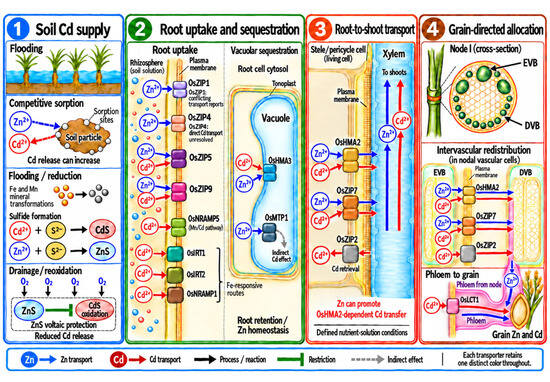
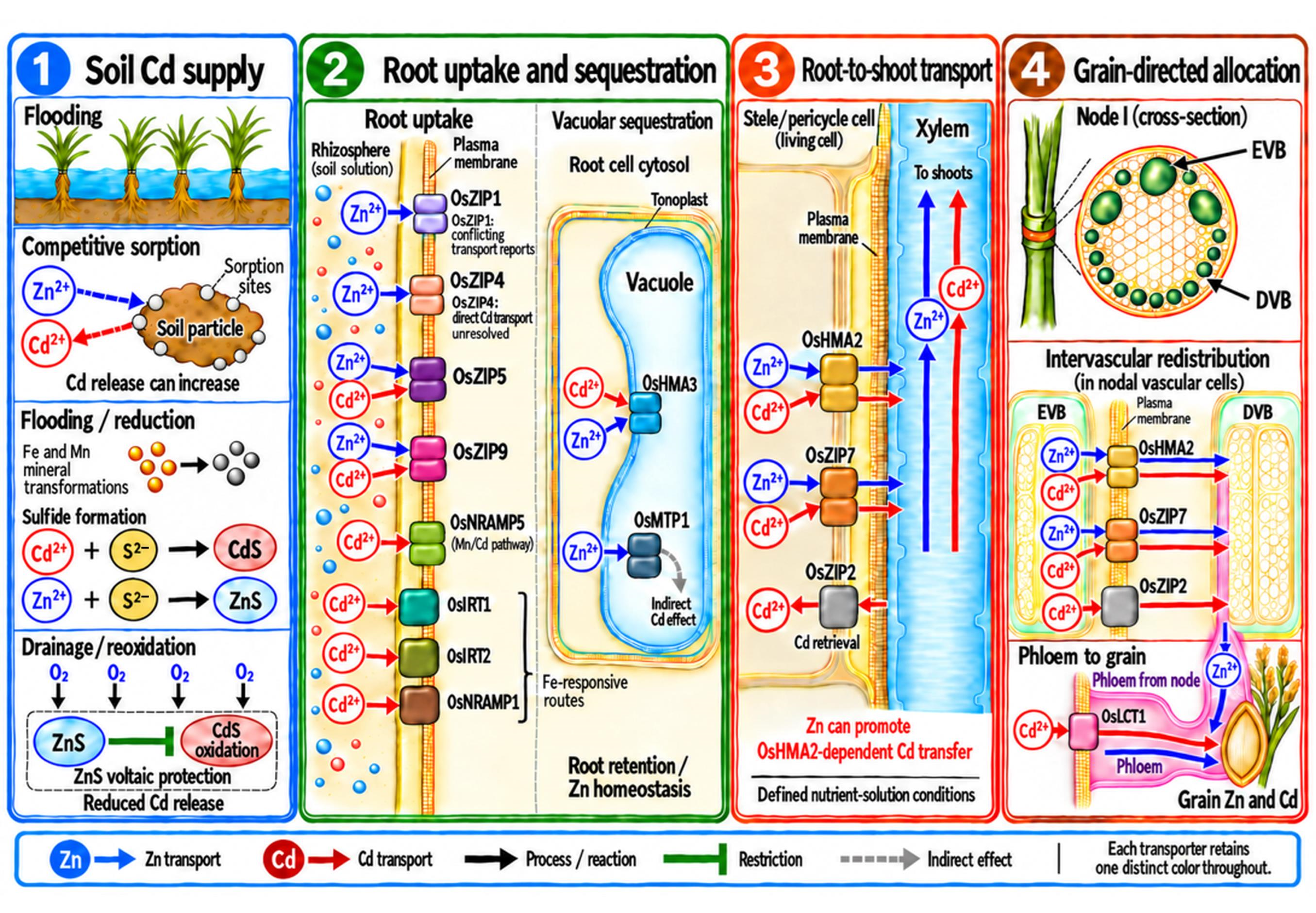
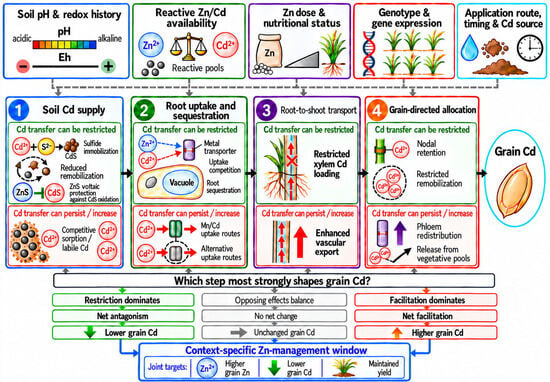
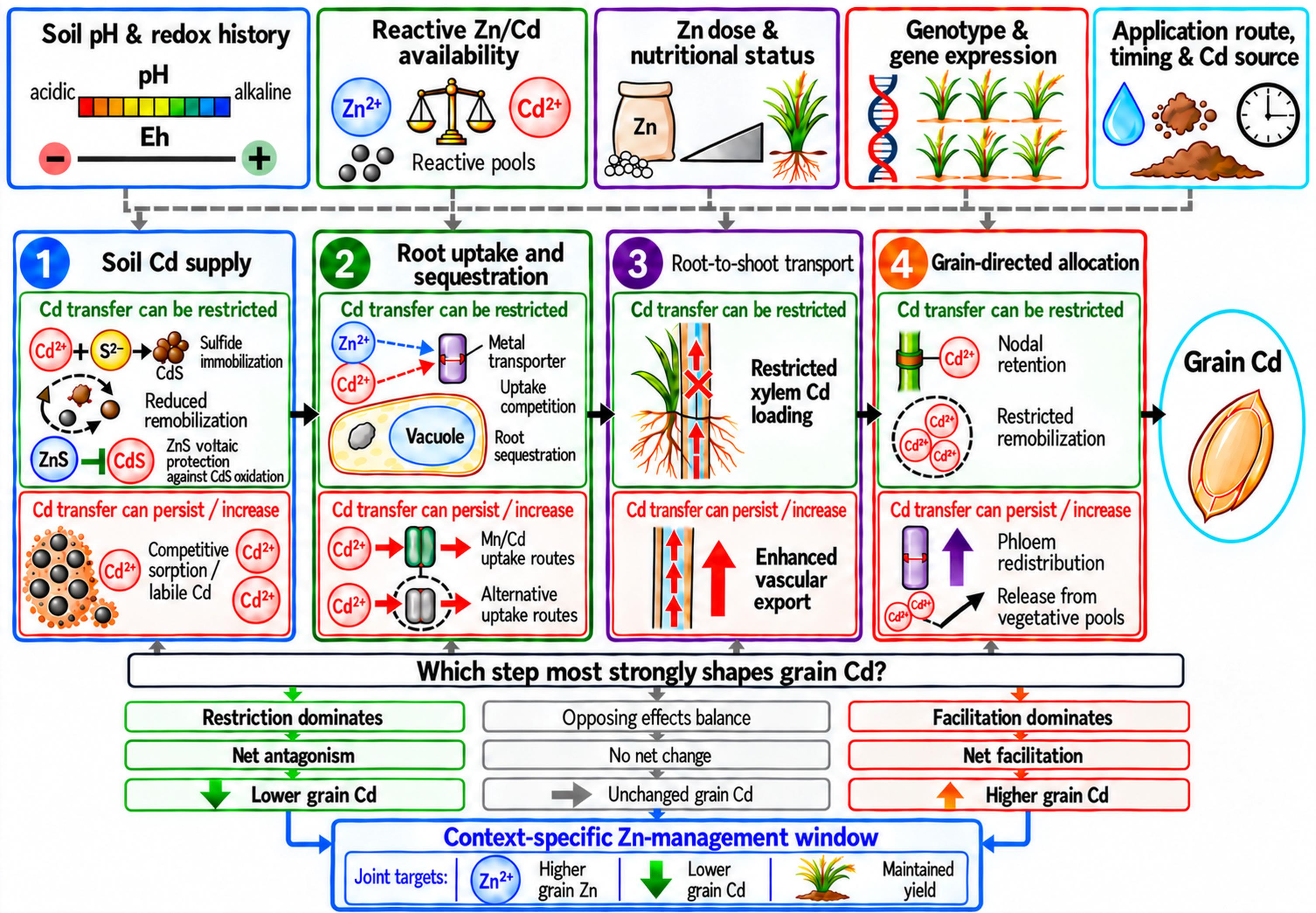

Disclaimer/Publisher’s Note: The statements, opinions and data contained in all publications are solely those of the individual author(s) and contributor(s) and not of MDPI and/or the editor(s). MDPI and/or the editor(s) disclaim responsibility for any injury to people or property resulting from any ideas, methods, instructions or products referred to in the content. |
© 2026 by the authors. Licensee MDPI, Basel, Switzerland. This article is an open access article distributed under the terms and conditions of the Creative Commons Attribution (CC BY) license.