


Abstract
Uncaria rhynchophylla is an important medicinal plant widely used for treating neurological and cardiovascular diseases. However, current utilization primarily focuses on its hooked stems (Uncariae Ramulus cum Uncis), while its by-products remain underutilized. A systematic understanding of its cultivation and whole-plant utilization is lacking, limiting its industrial and ecological potential. We comprehensively evaluated the cultivation, processing, by-product utilization, and ecological value of U. rhynchophylla within an industrial crop framework. This review synthesizes recent advances in agronomic practices, phytochemical composition, environmental influences, and product development strategies by integrating findings from experimental and applied studies. The hooked stems are rich in alkaloids such as rhynchophylline, while other plant parts contain valuable active compounds suitable for bio-based products, including functional foods and medicinal materials. Environmental factors (light, soil, altitude) and cultivation strategies significantly influence yield and active compound accumulation. Whole-plant utilization and by-product valorization can enhance resource-use efficiency and economic returns. U. rhynchophylla has significant potential as an industrial medicinal crop. Integrating optimized cultivation, processing technologies, and by-product utilization strategies supports sustainable production and rural development. However, limitations include standardization and limited large-scale validation. Future research should focus on mechanistic studies, industrial-scale processing, and development of high-value products to promote a circular bioeconomy.
1. Introduction
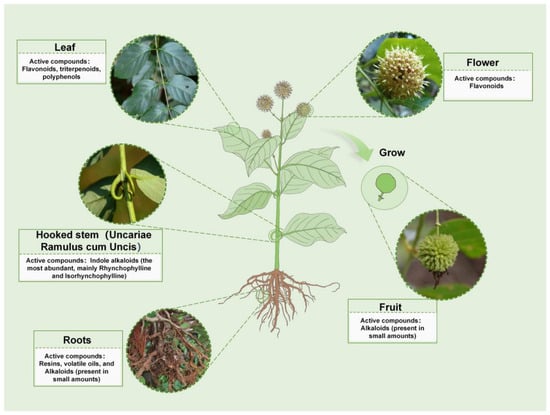
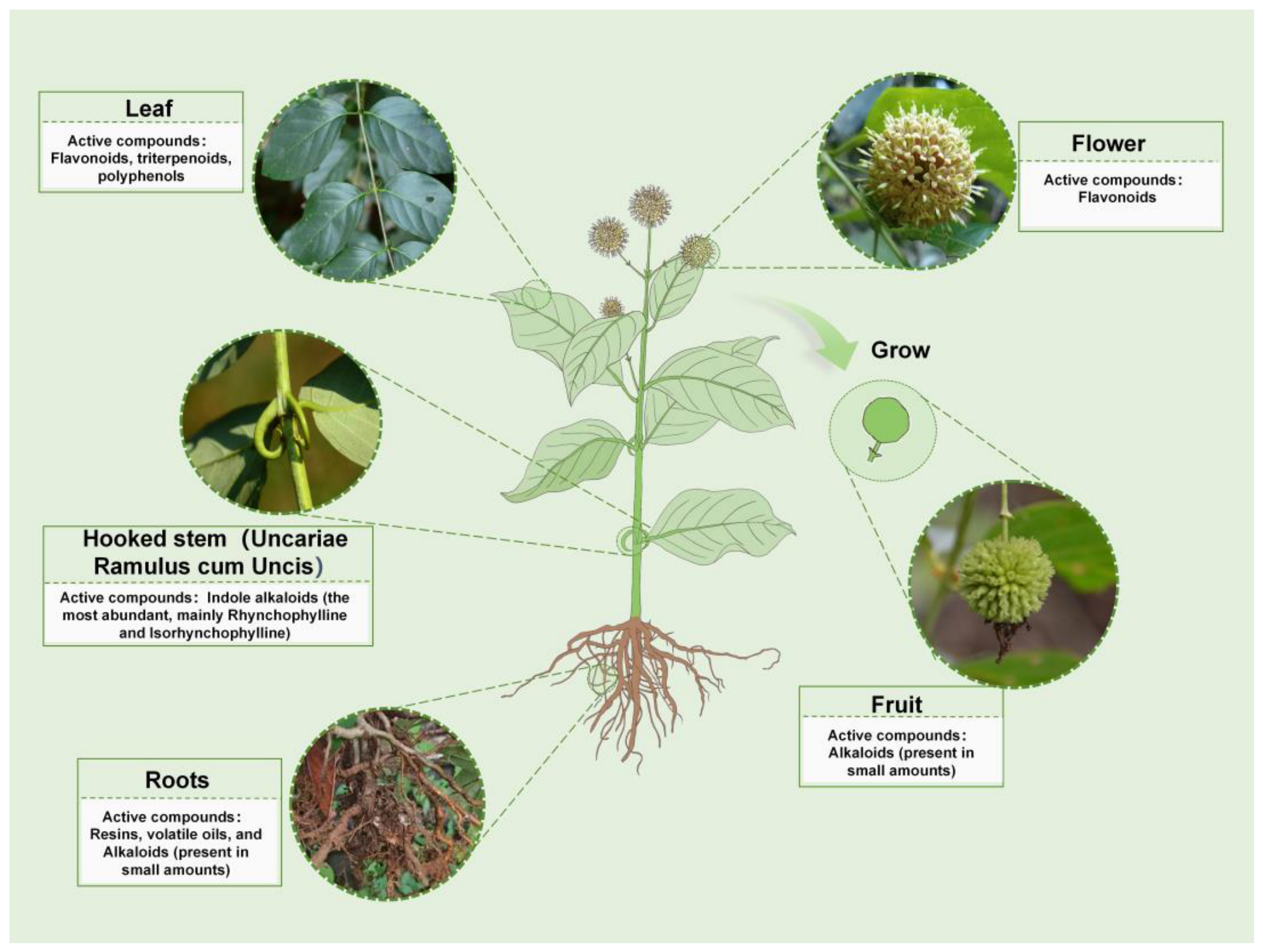
Uncaria rhynchophylla (UR) (Miq.) Miq. ex Havil. is an evergreen woody vine belonging to the genus Uncaria in the Rubiaceae family. Medicinal Uncaria species have been extensively studied both domestically and internationally [1]. More than 400 compounds, primarily alkaloids, flavonoids, and triterpenoids, have been isolated and identified from Uncaria species. Among these, monoterpenoid indole alkaloids are the most extensively investigated active compounds. The main herbal raw material of Uncaria rhynchophylla is the stems with hooks (Uncariae Ramulus cum Uncis). In traditional Chinese medicine, it is described as slightly cold and sweet in nature, associated with the liver and pericardial meridians, and possessing effects such as calming the liver and extinguishing wind (Figure 1). It is commonly used to treat conditions such as febrile convulsions, headaches, dizziness, epilepsy, and hypertension [2].
Figure 1.
Active compound distribution in parts of Uncaria rhynchophylla.
Currently, research on the pharmacological effects of UR is relatively mature, with abundant findings. Clinical studies have shown that formulations such as Tianma Gouteng Decoction (a classic compound formula of traditional Chinese herbal raw materials mainly composed of Uncariae Ramulus cum Uncis and Gastrodia elata rhizome) exhibit significant efficacy in treating tic disorders in children, with better tolerance than the most commonly used single-agent Western medicines for tic disorders. Adverse reactions are generally mild, primarily involving gastrointestinal discomfort, and recurrence rates are significantly reduced. With advances in modern medicine and deeper investigation of UR bioactive components, an increasing number of compounds have been shown to treat tic disorders through multiple mechanisms [3]. However, the specific molecular targets of UR remain incompletely defined and require further investigation.
The major alkaloids in UR exert therapeutic effects across various diseases by acting on multiple targets and pathways. For example, rhynchophylline (Rhy) can inhibit proliferation, migration, and invasion of gastric cancer cells while inducing apoptosis. Its mechanism may involve promoting the expression of mesencephalic astrocyte-derived neurotrophic factor and inhibiting NF-kB transcription activity, suggesting its potential as an anticancer agent. Two recent comprehensive review studies have systematically summarized the current research status of UR, covering traditional medicinal functions, phytochemical profiles, pharmacological mechanisms, and clinical transformation bottlenecks [4,5]. These state-of-the-art reviews consolidate the existing medicinal research achievements and provide a fundamental theoretical framework for UR pharmacological exploration. Nevertheless, these studies have not paid attention to the technical optimization of UR rapid propagation systems, the exogenous regulatory mechanism of active compound accumulation, and the unique ecological and industrial value of UR in degraded barren habitats.
Uncariae Ramulus cum Uncis is often used in combination with other herbal raw materials to enhance therapeutic efficacy and broaden its treatment scope. Common herbal pairings include Gastrodia elata, chrysanthemum, Prunella vulgaris, Panax ginseng, and Eucommia ulmoides. These combinations exhibit multi-component, multi-target, and multi-channel synergistic effects, providing a more reliable basis for clinical application [6]. Active compounds are also present in other parts of UR, in addition to their high concentrations in the hooked stems (Figure 1). For example, in vitro anticancer activity is positively correlated with total oxindole alkaloid content, and preparations with higher alkaloid levels exhibit stronger anticancer effects. However, anticancer activity does not solely rely on alkaloids; non-alkaloid components may also exert important synergistic effects [7]. Despite this, the utilization of other by-products (e.g., leaves, branches, and roots) of UR remains limited, leading to the waste of biological resources. UR has strong market demand within the Chinese herbal medicine industry. This species is easy to cultivate, requires low production input, produces consistently high yields, and offers substantial economic benefits [8]. The plant can be harvested after three years of cultivation. Initial investments include seedlings, land preparation, fertilizers, pesticides, and labor for management and protection. During the second and third years, management and maintenance costs are approximately 3330–4440 USD per hectare annually. During the peak production period (from the third year onward), the annual output value can reach approximately 11,090–13,310 USD per hectare, and harvesting can continue for more than 20 years.
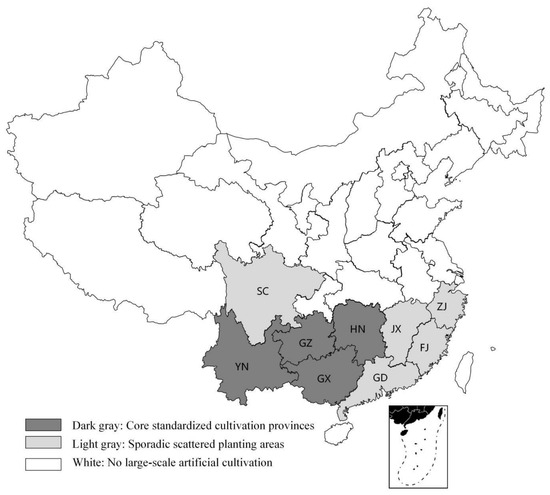
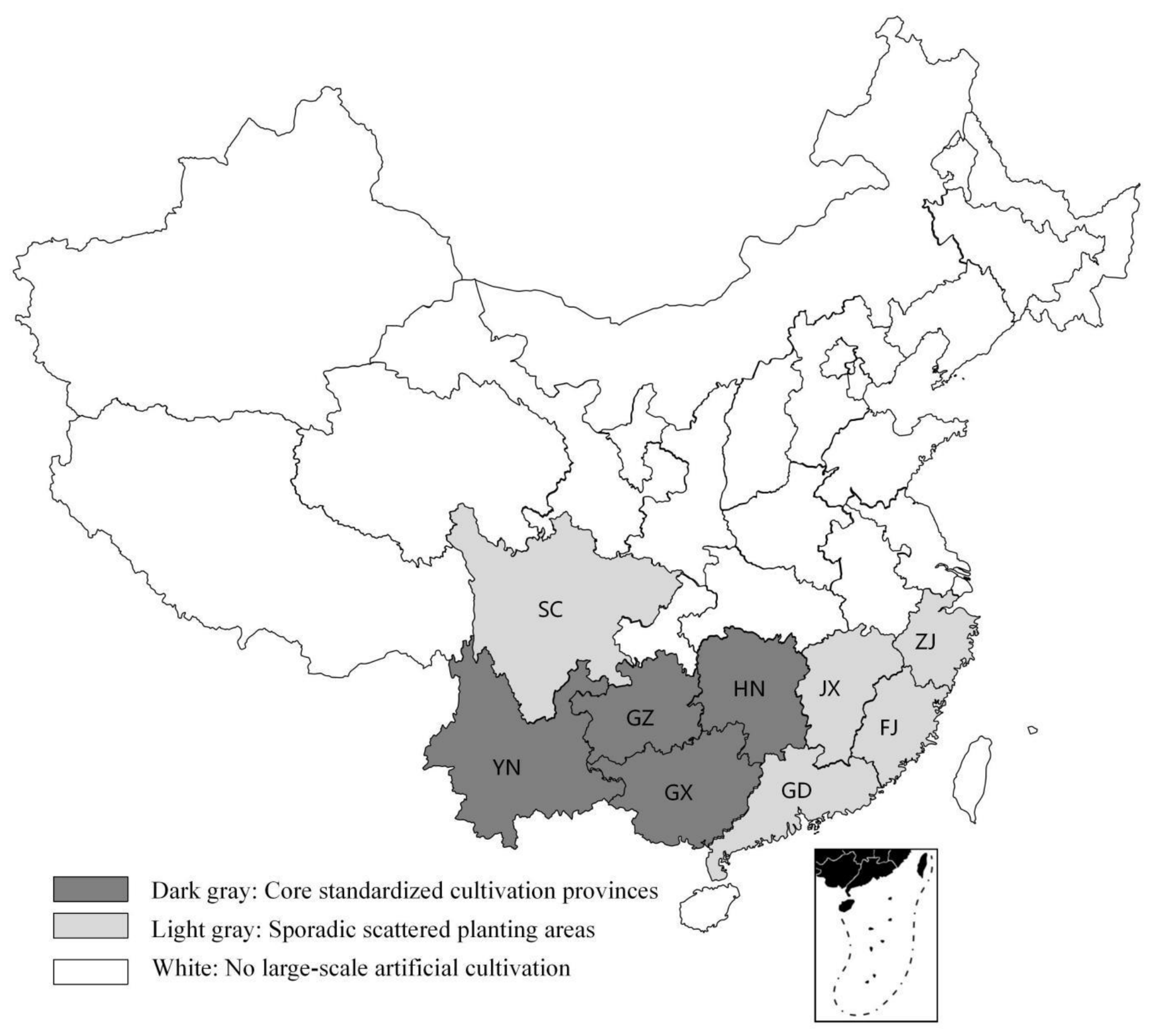
UR is naturally distributed in the southern mountainous regions of China and is mainly produced in nine provinces, including Hunan, Guizhou, Yunnan, and Guangxi Zhuang Autonomous Region, where large-scale artificial planting bases have been developed. Jiangxi, Guangdong, Zhejiang, Fujian, Sichuan and other areas are sporadic planting regions (Figure 2). However, although traditional Chinese medicine cultivation contributes to increasing farmers’ income in mountainous areas, further innovation in efficient cultivation technology for UR is still required. In particular, more research is needed to clarify how site conditions, such as altitude, soil type, and light intensity, affect plant growth and the accumulation of active compounds. Loose, fertile, and slightly acidic soils can enhance root development and nutrient uptake, while moderate shading conditions can optimize vine growth. These insights can provide a scientific basis for improving cultivation practices. By optimizing planting strategies, such as selecting suitable varieties for different altitudes, applying precise fertilization based on soil conditions, and constructing shading systems according to light requirements, issues such as unstable yield and low levels of active compounds in traditional cultivation can be effectively addressed. This approach can simultaneously improve both yield and quality. Moreover, it can reduce production costs, enhance resource-utilization efficiency, and improve the market competitiveness of UR, thereby promoting farmers’ incomes, supporting regional development of the traditional Chinese medicine industry, and contributing to rural revitalization and high-quality agricultural development.
Figure 2.
Main cultivation regional distribution map of Uncaria rhynchophylla. Note: HN (Hunan Province); GZ (Guizhou Province); GX (Guangxi Zhuang Autonomous Region); YN (Yunnan Province); JX (Jiangxi Province); FJ (Fujian Province); ZJ (Zhejiang Province); GD (Guangdong Province); SC (Sichuan Province).
Modern scientific and technological approaches also provide new directions for UR research. Visualization analysis methods can be used to construct scientific knowledge maps, enabling the identification of research hotspots and prediction of future trends. For example, modern techniques such as artificial intelligence, molecular docking, and molecular dynamics simulations are increasingly being applied to explore molecular mechanisms underlying the treatment of neurodegenerative diseases (particularly Alzheimer’s disease) and anti-tumor activity. Meanwhile, advances in biotechnology, smart agriculture, and processing technologies offer important opportunities to improve cultivation efficiency, product quality, and batch stability of UR [9]. These perspectives are consistent with the findings of this review and further illustrate the agricultural and ecological value of UR.
Therefore, the present study addresses a gap in the optimization of UR propagation technology and the ecologically sustainable utilization of its resources by focusing on the comprehensive processing and utilization of Uncaria by-products. It develops strategies for the efficient utilization of these by-products and proposes innovative cultivation and processing technologies supported by diversified utilization pathways to maximize their value-added potential. Based on the whole-plant utilization and ecological–economic cycle of UR, this review is organized in two parts: (1) the active compounds of the herbal raw material (stems with hook), the utilization and exploration of by-products (leaves, stems, and roots), and advances in cultivation and processing technologies, and (2) the ecological value and applications of UR. The purpose of this study is to provide guidance for the efficient utilization of UR.
2. Materials and Methods
2.1. Overview of Medicinal Value of UR
Ancient materia medica pharmacopoeias have extensively documented the herbal raw material and effects of UR, with applications dating back to the Northern and Southern Dynasties. Over time, medical practitioners have continuously refined their understanding of its properties and efficacy. Mingyi Bielu records that UR “mainly treats infantile fever and twelve types of convulsions,” representing the earliest extant pharmacopoeia to explicitly describe its medicinal effects. Ben Cao Shi Yi further states that UR “mainly treats infantile convulsions, spasms, and heat accumulation,” and notes that “the double-hook variety is superior in efficacy.” Ben Cao Tu Jing describes its morphology as having hook-like thorns on the stem and leaves resembling gentian. Ben Cao Gang Mu records that UR originates from Jianping and Yizhou and is used for its hooked stems. Ben Cao Beiyao emphasizes that long-term decoction reduces efficacy and reiterates the superiority of the double-hook variety. Depei Bencao records its contraindication—this herb should not be administered to patients without wind-heat or excess fire patterns.
Currently, UR is widely used in clinical practice to treat diseases such as Alzheimer’s disease and hypertension. It exhibits significant neuroprotective effects against Parkinson’s disease and Alzheimer’s disease through mechanisms including autophagy, anti-inflammatory and antioxidant activity, and inhibition of pathological protein aggregation. Key active compounds include Rhy, isorhynchophylline (IRN), corynoxine, and corynoxine B [10].
The antihypertensive effect of UR is characterized by an initial decrease in blood pressure, followed by a transient increase and then a sustained decline [11]. Its antihypertensive action involves the central nervous system, peripheral nerves, heart, and blood vessels [12]. Rhy has been shown to attenuate angiotensin II-induced senescence of endothelial progenitor cells, enhance autophagy, and protect these cells via the AMP-activated protein kinase signaling pathway [13]. Among traditional prescriptions, Tianma Gouteng Yin is the most extensively studied formula containing UR. Its antihypertensive effects may involve reducing vascular endothelial damage, delaying disease progression, and protecting target organs [14]. In addition, UR antihypertensive tablets and combinations with saiga horn have attracted research attention [15].
Beyond hypertension, UR has shown potential in treating Alzheimer’s disease and cancer. Recent studies have explored mechanisms such as inhibition of neuroinflammation, lipid peroxidation, neuronal apoptosis, and glutamate excitotoxicity, as well as regulation of synaptic plasticity and reduction of amyloid-β aggregation and phosphorylated tau expression [16]. Rhy and corynoxeine are considered key active compounds responsible for anti-Alzheimer’s effects, as they inhibit Aβ/tau aggregation and promote disassembly of existing aggregates [17].
UR has also shown efficacy in the treatment of tic disorders, providing new insights into its pharmacological mechanisms [18]. Gene ontology enrichment analysis has further clarified the relationship between UR alkaloid targets and neurological diseases such as Parkinson’s disease, Alzheimer’s disease, and epilepsy [19]. Overall, research on the pharmacological effects of UR is relatively mature, and it is widely used in both traditional Chinese and Western medicine. Future studies should focus on elucidating the mechanisms of action and synergistic effects of its active compounds for medical and healthcare applications.
2.2. Analysis of Main Chemical Constituents in Uncaria
Although many species of Uncaria exist, their chemical compositions are broadly similar. Research on these constituents has progressed rapidly, with hundreds of compounds identified [20]. However, the mechanisms of action of these active compounds vary. For example, UR and Uncaria tomentosa share similar chemical compositions and comparable anti-Alzheimer’s disease effects [7]. Both improve cognition and alleviate key pathological features through inhibition of tau hyperphosphorylation, reduction of oxidative stress, and suppression of neuroinflammation. In addition, natural inhibitors of human carboxylesterase 2 have been identified in Uncaria species [21].
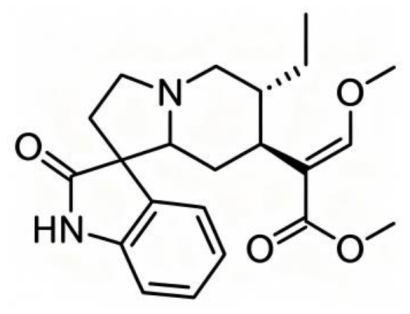
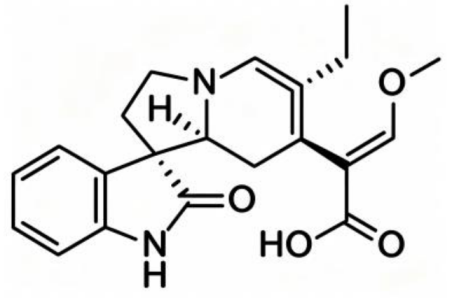
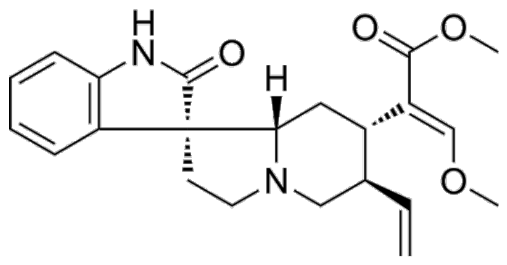
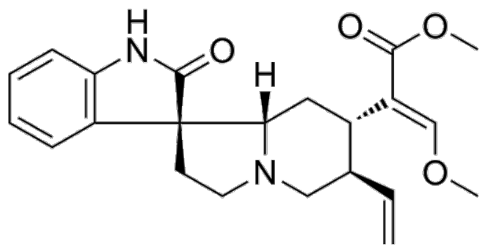
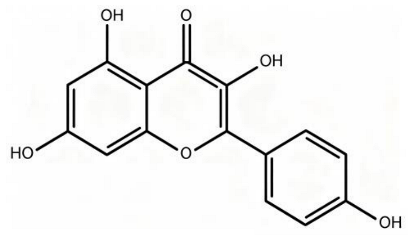
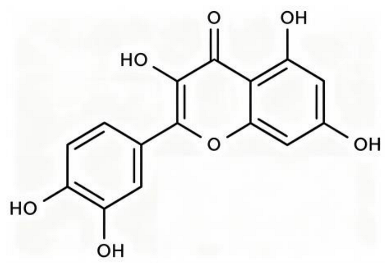
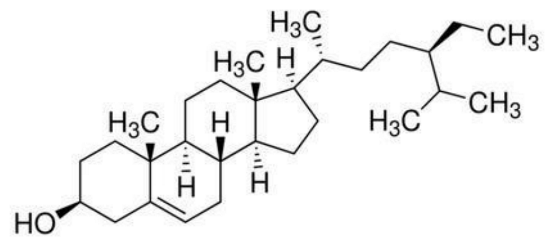
The main active compounds (Table 1) include alkaloids, flavonoids, and terpenes, which exhibit therapeutic effects on neurological disorders, cardiovascular diseases, and inflammation. For instance, Rhy regulates oxidative stress markers and reduces α-synuclein deposition; corynoxine B promotes the autophagic clearance of α-synuclein; and IRN improves metabolic abnormalities and helps prevent hypertension. Flavonoids such as quercetin reduce oxidative stress and myocardial fibrosis, while chlorogenic acid shows potential in treating rheumatoid arthritis [22]. Alkaloids are the primary active compounds of UR. They can be classified into non-oxidized indole alkaloids, oxidized indole alkaloids, Rhy-type alkaloids, and dehydrogenated derivatives. Rhy accounts for ~28.9% of total alkaloids, while IRN accounts for about 14.7%, together exceeding 40%. In addition, approximately ten flavonoids and various phenolic compounds have been identified.
The growth of medicinal plants depends on soil-derived nutrients, which influence elemental composition and secondary metabolite accumulation, thereby affecting quality. Both phenolic and alkaloid fractions are important for preventing and treating neurodegenerative diseases [23]. However, most current studies focus on single compounds, and the basis for synergistic effects among multiple components remains unclear [24]. Therefore, systematic analysis of the chemical constituents of UR and their mechanisms of action is essential for drug development.
Compounds have been isolated from hooked stems using ethanol extraction, silica gel column chromatography, and preparative high-performance liquid chromatography and characterized by means of HRESIMS and nuclear magnetic resonance spectroscopy. Their inhibitory activity against human carboxylesterase 2 has been evaluated using fluorescent probes, and molecular docking has been used to analyze binding mechanisms [21]. Additionally, ultra-performance liquid chromatography-mass spectrometry combined with multivariate analysis has enabled the identification of numerous compounds, including alkaloids, flavonoids, and terpenes. Trace elements in different plant parts have been determined using inductively coupled plasma mass spectrometry [25].
Table 1.
Main Chemical Constituents of Uncaria.
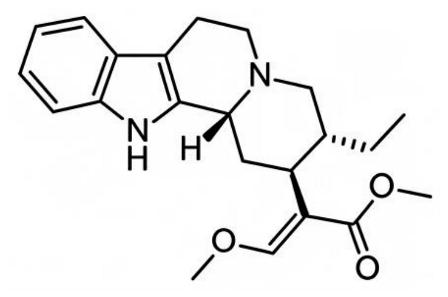
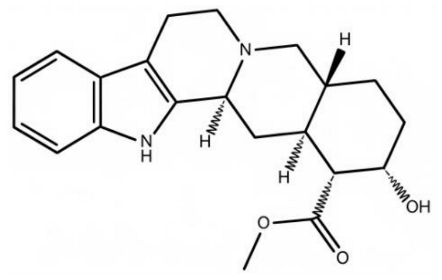
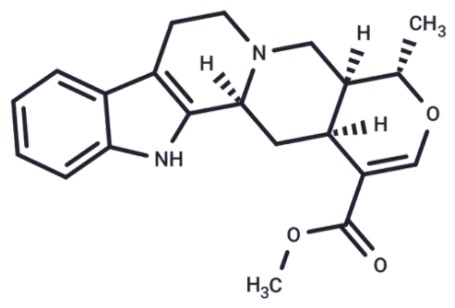
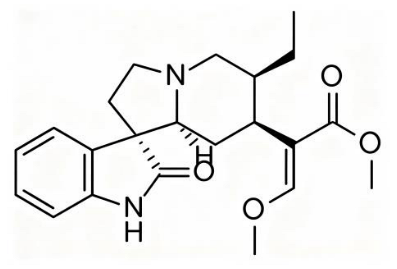
2.3. Alkaloids
In the early nineteenth century, Meisner coined the term “alkaloid” to describe basic, alkali-like compounds [29]. Studies on alkaloid biosynthesis indicate that the main alkaloids in UR are terpenoid indole alkaloids [30]. Approximately 80 alkaloids have been identified in UR, most of which are indole alkaloids [22]. Total alkaloids from UR are considered potential natural neuroprotective agents for Parkinson’s disease. Their core mechanisms involve regulation of the PI3K/Akt/mTOR signaling pathway, inhibition of apoptosis, and protection of dopaminergic neurons [31]. Rhy and IRN are the most abundant medicinal compounds, while other alkaloids include corynoxine, dehydroerynchophylline, and isodehydroerynchophylline (Table 1) [27].
UR and its main alkaloids exert neuroprotective effects through multiple pathways, including antioxidant, anti-inflammatory, neurotransmitter-regulating, anti-apoptotic, and autophagy-related mechanisms. They show potential in treating central nervous system disorders such as Alzheimer’s disease, Parkinson’s disease, epilepsy, depression, and cerebral ischemia. However, most studies remain at the experimental stage, and further clinical evidence is required [32].
Rhy and IRN act primarily through calcium channel blockade. They lower blood pressure, exhibit antiarrhythmic activity, and provide sedative, anticonvulsant, and neuroprotective effects [26]. Other alkaloids, including IRN, isocorynoxeine, Rhy, hirsuteine, and hirsutine, protect against glutamate-induced neuronal damage by inhibiting Ca2+ influx [23]. Recent studies have identified five indole alkaloids (Rhynchines A–E) with unique structures. These compounds exhibit Cav3.1 calcium channel-blocking activity, providing potential lead compounds for the treatment of epilepsy, arrhythmia, neuropathic pain, and hypertension [28]. The composition and regulatory mechanisms of Rhy remain important topics for future research.
2.4. Other Chemical Components with Medicinal Value in UR
Although alkaloids have been widely studied, fewer studies have focused on flavonoids in UR. Flavonoids are important active compounds with antioxidant, antibacterial, antiviral, and anti-tumor activities [19]. To date, approximately ten flavonoids have been identified, including homosophoricin, kaempferol, quercetin, hypericin, rutin, montmorillonite, and alfoniflorin (Table 1) [22]. Optimization of flavonoid extraction has been explored using orthogonal design and ultrasonic ethanol extraction combined with spectrophotometric analysis, providing a basis for further development. Terpenoids are structurally diverse natural products widely distributed in plants, microorganisms, and marine organisms. Several triterpenoids have been isolated from UR, including oleanolane- and ursane-type compounds. Ursolic acid has shown inhibitory effects on tumor cell proliferation and exhibits antimutagenic activity.
In summary, the organ-specific accumulation of alkaloids and other abundant active compounds in UR enables different plant organs to exert distinct multi-target pharmacological effects (Figure 1). The differences in the content of active compounds among hooks, stems, and leaves not only support the differentiated comprehensive utilization of the whole plant but also provide guidance for the standardized cultivation and metabolic regulation of this medicinal plant.
3. Results and Discussion
3.1. Efficient Utilization Strategy of UR
UR is a plant with both medicinal and ecological value. Its roots, stems, leaves, and hooks (stems and branches with hooks) contain alkaloids (such as Rhy and IRN), flavonoids, terpenes, and other active compounds with developmental potential. Currently, the development of Uncaria products mainly focuses on pharmacological effects. It is often combined with other Chinese medicinal materials as a raw material for Chinese patent medicines, such as Uncaria hypotensive tablets, Xiaoer Lingyang powder, and Gastrodia elata–Uncaria granules.
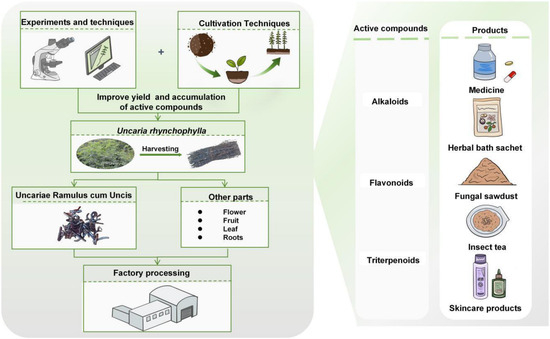
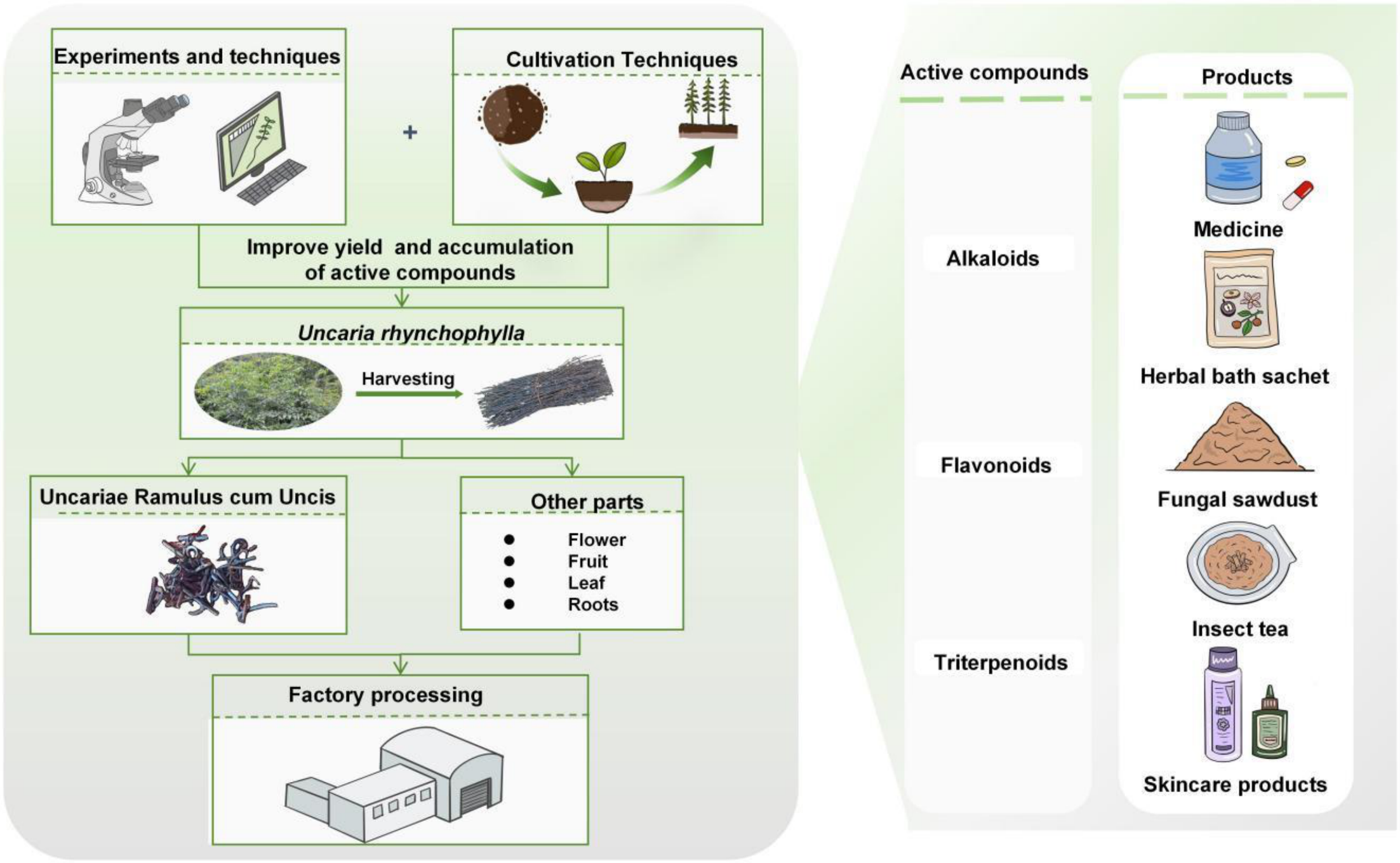
All alkaloids exhibit rapid absorption, fast brain entry, hepatic metabolism, and dual-channel excretion. However, differences in pharmacokinetics between pure compounds and compound preparations, as well as effects of food, intestinal metabolism, and metabolite activity, require further investigation [33]. Under traditional processing modes, the utilization rate of the whole UR plant is low. The main processed part is the hooked stem, while other parts are often discarded. Large quantities of leaves and stems rich in active compounds are burned or wasted, leading to the loss of potential value and possible environmental problems. Therefore, establishing efficient utilization strategies for UR (Figure 3) can boost economic returns and drive industrial upgrading, thereby facilitating the shift from single utilization of medicinal hooked stems to comprehensive whole-plant exploitation. Targeted cultivation supported by modern analytical techniques and standardized cultivation regimes improves plant productivity and promotes the accumulation of active compounds. Post-harvest materials are sorted into canonical medicinal hooked stems and residual parts, which include leaves, flowers, fruits, and roots. After industrial processing, major phytochemicals extracted from various plant parts, including alkaloids, flavonoids, and triterpenoids, can be converted into diversified products such as pharmaceuticals, herbal healthcare materials, insect tea, and skincare raw materials. Such a whole-plant utilization strategy maximizes resource value and extends the industrial chain of UR.
Figure 3.
Efficient utilization strategies for Uncaria rhynchophylla.
Accurately understanding the compositional differences and distribution of active compounds in different plant parts is essential for efficient utilization. The chemical profiles of different parts show clear specificity. Hooks and stems mainly contain pentacyclic heteroyohimbine- and cadambine-type alkaloids; fruits are rich in tetracyclic oxindole alkaloids; and leaves contain D-seco pentacyclic heteroyohimbine-type alkaloids. Traditionally, hooks are the main medicinal part associated with 5-HT receptor-related activity. Leaves, although not traditionally used, exhibit activity on receptors associated with sedative and hypnotic effects, indicating potential for new medicinal applications [34].
Hooked stems accumulate the highest levels of rhynchophylline, and they are therefore prioritized as raw materials for high-grade medicinal preparations. Leaves are rich in flavonoids and can be utilized in skincare products because of their antioxidant and anti-inflammatory properties [19]. Triterpene esters, particularly cis-ursane-type p-coumaric acid esters, show strong inhibitory activity against HIV-1 protease, indicating potential for the development of low-toxicity anti-HIV drugs [35].
UR can also be used to develop functional foods, such as leaf tea and powder, contributing to dietary fiber intake. Stems, which have a high cellulose content, can be used for biomass utilization, including environmentally friendly boards and biofuels. Residual roots can be applied for heavy metal adsorption in soil through chelation by polysaccharides and alkaloids. Plant residues can also be used as substrates for producing edible fungi, medicinal bath products, and insect tea.
Recent studies have explored comprehensive utilization strategies. For example, cultivation experiments have used residual stems as substrates for edible and medicinal fungi [36], and ecological cultivation systems have been developed for selenium-enriched insect tea [37]. Pilot practices have been implemented in regions such as Hunan and Guizhou [38]. However, challenges remain, including uneven germplasm quality, low natural seed germination rate, and inconsistent accumulation of medicinal alkaloids under variable field conditions. These cultivation obstacles constrain the standardization and industrialization of UR medicinal material production, and addressing these issues may unlock significant potential for the UR industry.
3.2. Research on Efficient Cultivation Technology Based on Full-Plant Application Strategy
Due to the high medicinal value of UR, wild populations have been overharvested and have become endangered in some regions [39]. This has led to a mismatch between supply and demand in the current market. Therefore, urgent efforts are needed to develop, conserve, and optimize artificial cultivation technologies for UR. Improving and innovating cultivation techniques to increase yield is a priority.
In recent years, the success of UR cultivation has been closely related to seedling quality [40]. Technical planting guidelines have been developed to achieve high yield and stable quality [41]. Practices such as topping and transplanting can promote root development and lignification, thereby improving survival rates. The application of compound fertilizers and double-row planting modes can further increase yield per unit area [34].
Studies on land selection, propagation methods, field management, pest control, harvesting, and processing have identified suitable soil and environmental conditions. Optimization measures, including efficient propagation techniques, scientific field management, and environmentally friendly pest control methods, have also been proposed [42].
3.2.1. UR Interplanting Mode Can Realize Effective Utilization of Forest Land
Because of the high medicinal value of UR, wild populations have been extensively harvested and have become endangered in some regions [39]. This has led to a significant imbalance between supply and demand in the current market. Therefore, cultivation, conservation, and optimization of artificial planting technologies for UR are urgently needed. Improving and innovating cultivation techniques to increase yield remains a priority.
As an efficient and eco-friendly agronomic planting strategy, interplanting/intercropping can fully utilize idle understory space; optimize the utilization of light, water, and nutrient resources; and alleviate the conflict between medicinal plant cultivation and cultivated land scarcity. This approach is therefore of great significance for achieving efficient forest land utilization and sustainable UR production. At present, research on UR intercropping technology is still in the preliminary exploratory and experimental stage. Compared with research on mature single cropping cultivation, systematic field verification and published literature on UR compound interplanting modes remain limited. The publicly available and highly relevant studies specifically focusing on UR intercropping systems are summarized in Table 2 to facilitate comparison of intercropping effects, existing limitations, and current research progress. As shown in Table 2, existing exploratory experiments have demonstrated the feasibility of UR interplanting cultivation, which can effectively improve forest land utilization efficiency and overcome the limitations of traditional monoculture systems. However, the existing research on UR intercropping has obvious deficiencies; specifically, most interplanting modes only exhibit growth-promoting effects at the seedling stage, with limited improvement in key medicinal traits (such as hook stalk quality and double hook rate). Moreover, the supporting standardized cultivation technology system remains incomplete, and the stability and applicability of intercropping benefits need further in-depth research.
In addition to exploratory interplanting attempts, the stable yield and quality of UR cultivation are fundamentally guaranteed by standardized agronomic management techniques. In recent years, successful UR cultivation in different regions has been closely associated with seedling quality [40]. Technical planting guidelines have been developed to achieve high yield and stable quality [41]. Practices such as topping and transplanting seedlings can promote root development and lignification, thereby improving survival rates; additionally, the rational application of compound fertilizers supplies balanced macronutrients and micronutrients to sustain robust plant growth. Furthermore, the double-row planting method optimizes field spatial structure, improves light interception and ventilation efficiency, and reduces intraspecific competition. These integrated agronomic practices effectively promote biomass accumulation and further increase the unit-area yield of UR plantations [34]. Studies on land selection and preparation, propagation methods, field management, pest control, harvesting, and processing have identified soil and planting conditions. Optimization measures, including efficient propagation techniques, scientific field management, and environmentally friendly pest control methods, have also been proposed [42].
Due to regional differences in climate, terrain, and soil conditions, cultivation techniques vary accordingly. In the future, a standardized cultivation system for UR that is applicable across regions should be developed. Based on ecological suitability in different production areas, key parameters such as variety selection, propagation methods, planting density, water and fertilizer management, and pest control strategies should be defined, and standardized operation procedures established. Multi-site trials should be conducted to verify adaptability and optimize regional cultivation schemes, thereby improving resource-use efficiency as well as yield and quality. This will provide technical support for the stable supply of medicinal raw materials and promote the high-quality development of the UR industry.
Table 2.
Effects and evaluation of interplanting with Uncaria rhynchophylla.
3.2.2. Different Environmental Factors Have Significant Effects on the Growth and Quality of UR
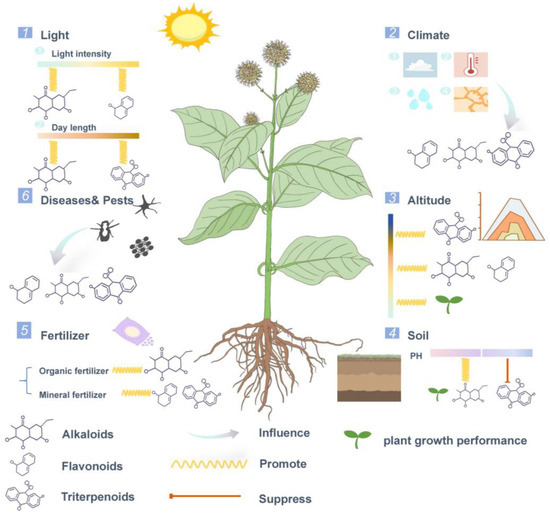
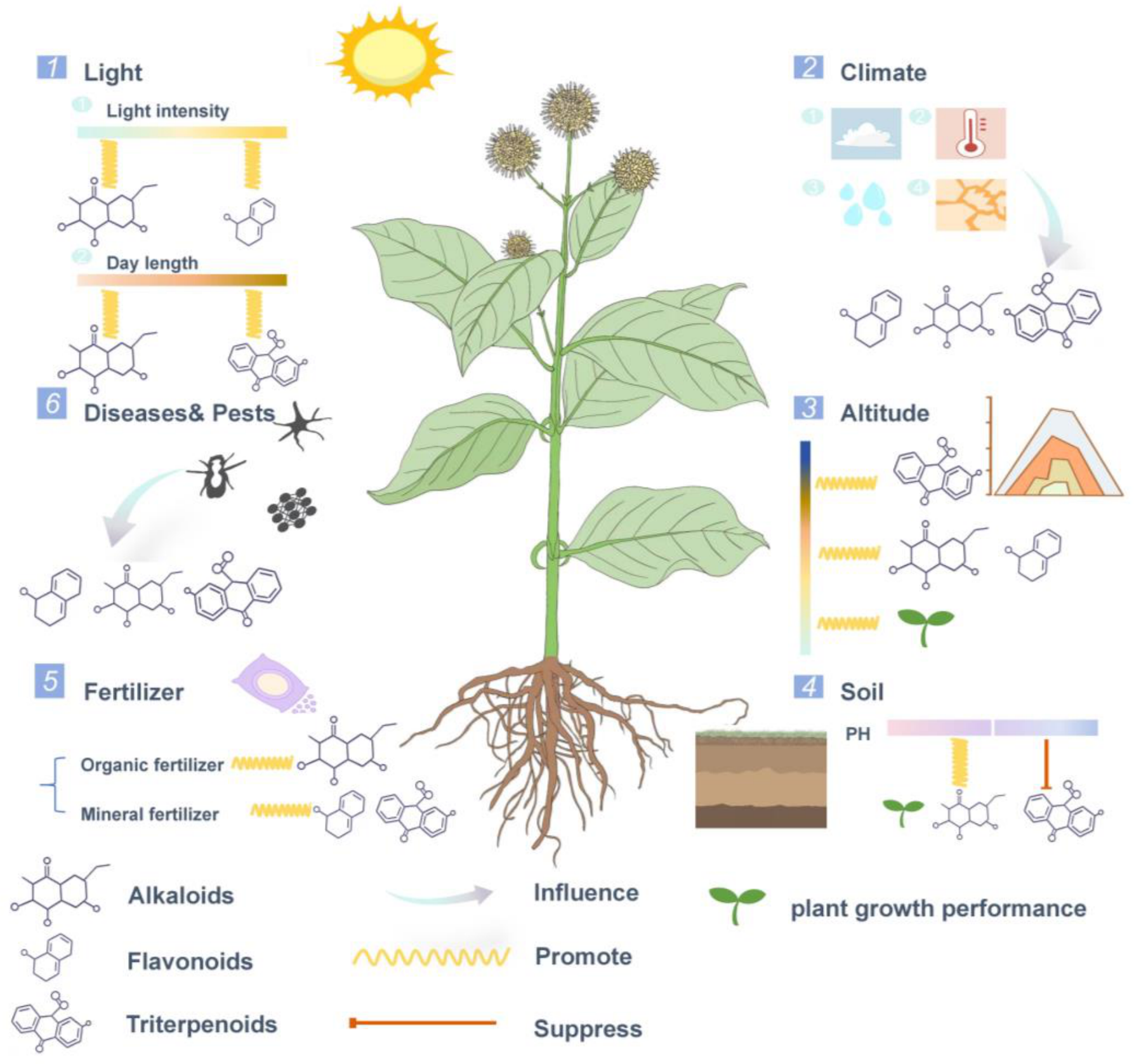
Currently, research on the effects of site conditions on UR growth and development remains limited. This review summarizes the influence of various external factors on UR growth (Figure 4). Light regimes, climate conditions, elevation, soil properties, fertilization regimes, and pathogen infection exert distinct effects on plant development and the accumulation of alkaloids, flavonoids, and triterpenoids (Table 3). In recent years, improper planting practices, environmental pollution, excessive chemical fertilizer input, excessive chemical fertilizer input, and pesticide residues have increasingly affected soil conditions, thereby impacting UR production and quality.
Figure 4.
Effects of external factors on the accumulation of active compounds in Uncaria rhynchophylla.
Different land-use patterns significantly affect soil physical properties in UR-producing areas. Compared with forest land and wasteland, artificial UR planting bases can reduce soil bulk density, increase capillary porosity and water content, and create a rhizosphere environment more conducive to root water absorption and nutrient utilization, providing a basis for standardized cultivation and soil improvement [46]. Selecting appropriate land conditions can therefore improve UR quality, and understanding differences among land-use types can help address low planting efficiency in poor soils.
Heavy metal stress in UR planting areas can inhibit microbial growth and enzyme activity. Land-use patterns influence the distribution of soil heavy metals and enzyme activity, and anthropogenic activities may increase heavy metal content while reducing soil enzyme activity [47]. UR has a relatively stable nitrogen requirement, which is essential for plant growth and alkaloid synthesis. Phosphorus content varies according to soil conditions and fertilization practices, while potassium, copper, manganese, and zinc regulate alkaloid metabolism. Thus, UR quality is jointly influenced by environmental conditions and cultivation management [48].
Combining green manure with reduced nitrogen application can alleviate soil acidification, enhance soil enzyme activity, and optimize microbial communities. A 30% reduction in nitrogen combined with green manure has been shown to improve soil nitrification and yield [49]. Soil conditioners, such as biomass ash derived from agricultural and forestry waste, can further improve soil quality and microbial activity and are cost-effective and environmentally friendly [2]. Reducing chemical fertilizer use, prioritizing organic amendment inputs, and intercropping with hyperaccumulator plants can mitigate soil Cd risks, while wastelands can be prioritized for standardized cultivation to ensure the safety of medicinal materials [50].
Light also plays a key role in plant growth and metabolite accumulation. Appropriate shading promotes the accumulation of secondary metabolites. Higher shading levels generally increase alkaloid content, although prolonged shading may reduce accumulation and inhibit hook formation. Light intensities of 70–75% favor seedling growth and biomass accumulation, whereas 30–35% light promotes the accumulation of Rhy and IRN. In practice, higher light intensity is recommended during early growth, followed by lower intensity to enhance active compound synthesis [51].
Response surface methodology and high-performance liquid chromatography analysis have identified light intensity, altitude, and soil nutrients as key factors influencing alkaloid accumulation. Moderate shading, low altitude, and fertile soil can significantly increase active compound accumulation [52]. Compared with 100% natural light, shading at 20% light intensity for 7 and 21 days significantly increased the content of Rhy and IRN in UR leaves by 55–69%. Short-term shading did not affect biomass and only slightly altered plant morphology. Low light promotes the accumulation of RHY and IRN by regulating the HY5/PIFs module through photoreceptors and upregulating key genes in the TIA pathway. These findings provide molecular support for protected cultivation, forest planting, and quality improvement of UR.
In addition to soil and light, altitude, climate, and diseases are other important factors affecting the growth and active compound accumulation of UR. Photosynthesis in alpine plants is influenced by strong radiation, low temperatures, and arid conditions [53]. Three groups were established at different altitudes (780, 1080, and 1380 m). The results showed that altitude significantly affects the alkaloid content and yield of UR leaves, stems, and hooks. Morphological characteristics, biomass allocation, photosynthetic pigments, photosynthesis, alkaloid content, and yield all exhibit adaptive changes, with response patterns showing both common trends and specific differences [54].
Altitude influences the growth and accumulation of medicinal components in UR by altering temperature and light conditions. As altitude increases, temperature decreases while light intensity and ultraviolet radiation increase, which may inhibit growth and reduce total alkaloid accumulation [55]. Common diseases and pests of Uncaria in Jianhe County have been documented, along with corresponding control measures [56]. UR generally has relatively few diseases, with root rot and leaf spot being the most common. Major pests include aphids, lepidopterans, scarabs, and longicorn beetles [57], and pesticides have shown effective control of anthracnose.
Overall, environmental factors such as altitude, temperature, and light influence photosynthesis and the accumulation of active compounds in UR (Figure 4). Future studies should further investigate the mechanisms and potential applications of both biotic and abiotic factors affecting the synthesis of active compounds to improve yield and quality.
Table 3.
Major environmental and agronomic factors regulating plant growth and accumulation of active compounds in Uncaria rhynchophylla.
3.2.3. Tissue Culture Technology for Sustainable Utilization of UR Resources
In recent years, wild UR resources have declined because of overharvesting, while traditional propagation methods have limitations such as low survival rates and genetic degradation. Tissue culture technology offers advantages including rapid propagation, genetic stability, and controlled regulation of secondary metabolism [60]. UR relies on cross-pollination for seed production, and its seeds are tolerant to desiccation and low temperatures. Efficient seedling production and long-term germplasm preservation can be achieved through artificial cross-pollination combined with dry, low-temperature storage. Mixed planting of multiple genotypes is required for natural seed set in Uncaria cultivation, whereas clonal planting of a single genotype fails to produce seeds. Flowering branches are homologous to hooked medicinal branches; therefore, some branches must be retained during harvest to enable flowering and fruiting [61]. This traditional cultivation and breeding mode cannot meet the large-scale and standardized production demands of the current UR medicinal industry.
Elicitation technology can significantly increase alkaloid yield because of its simplicity, environmental friendliness, and low cost. However, most studies are based on hairy root cultures, limiting industrial application. Therefore, optimization of bioreactors and development of stable production processes are required. Future research should focus on elucidating signaling networks, developing combined elicitation strategies, and achieving precise metabolic regulation [62]. Selection of the culture medium is critical for successful tissue culture. WPM supplemented with 20 g/L sucrose is suitable for UR seedling growth and alkaloid accumulation and can reduce vitrification. The optimal hormone combination is 3 mg/L IAA + 1 mg/L NAA [63]. Different hormone concentrations affect shoot induction, seedling growth, and rooting. Seeds were sterilized with 0.1% HgCl2 for 8 min, and orthogonal experiments using NAA, 6-BA, and IBA were conducted to optimize regeneration and rooting conditions [64]. These findings provide a foundation for cultivating high-quality UR seedlings and studying the metabolic synthesis of active compounds. Low concentrations of ethylene increase yield by activating biosynthetic pathways and maintaining photosynthetic carbon supply, whereas high concentrations inhibit biosynthetic genes and induce senescence, thereby reducing alkaloid content [48]. These targeted optimization strategies can effectively overcome the technical bottlenecks restricting the industrialization of UR tissue culture technology.
Multi-omics approaches have identified key enzymes involved in alkaloid biosynthesis. Three upstream enzymes associated with tetracyclic oxindole alkaloids were identified and validated, providing targets for metabolic engineering [65]. A multi-tissue transcriptome confirmed that UrSTR is a key entry enzyme in indole alkaloid biosynthesis and identified candidate CYP450/FMO genes involved in the pathways of Rhy and IRN [47]. This study integrated metabolomics, transcriptomics, and gene co-expression networks to systematically dissect the monoterpenoid indole alkaloid biosynthetic pathway in UR for the first time and identified two key strictosidine synthases, UrSTR1 and UrSTR5 [66]. The integration of multi-omics and co-expression network analysis represents an efficient strategy for rapidly identifying secondary metabolite genes in medicinal plants and is likely to become a focus of future research. Additionally, it can bridge the gap between basic molecular research and industrial tissue culture application of UR.
A total of 25 UrGATA transcription factors in UR exhibit light-responsive properties and show evolutionary conservation with functional differentiation. Red light and low light intensity can upregulate the terpenoid indole alkaloid biosynthetic pathway by activating UrGATA genes, thereby increasing alkaloid yield. This provides target genes and a theoretical basis for quality regulation, protected cultivation, and molecular breeding of UR [67]. Genome-wide identification and characterization of 26 TCP transcription factors confirmed that UrTCP4 participates in TIA biosynthesis by binding to and regulating UrLAMT and Ur7-DLH, providing a basis for understanding the molecular regulation and metabolic engineering of alkaloid biosynthesis in UR [2]. UrGES is a functional geraniol synthase in UR that catalyzes geraniol formation in the upstream biosynthesis of terpenoid indole alkaloids and is positively regulated by MeJA, providing a key genetic target for improving alkaloid yield through metabolic engineering [19].
Sterile, virus-free UR seedlings can stably synthesize monoterpenoid indole alkaloids and serve as ideal models for studying their biosynthetic pathways. Their stems can replace wild hooked stems in studies of component mechanisms, quality control, and metabolic regulation. Sugahara et al. [68] established a complete seed-derived sterile culture system of UR, which addresses the limitations of wild materials, including unstable metabolite composition and complex genetic background. Further hierarchical cluster analysis and quantitative alkaloid detection verified that the shoot apex is the dominant part for MIA biosynthesis and accumulation, while oxindole alkaloids and indole alkaloids exhibit distinct part-specific distribution patterns across leaves, stems, and roots. This sterile culture system provides a standardized and controllable research model for elucidating the biosynthetic pathways of UR active compounds; moreover, it offers theoretical support for breeding high-quality uniform seedlings and artificially regulating the accumulation of target alkaloids. Despite these advances, several challenges remain. First, tissue culture systems vary among Uncaria species and lack standardized protocols, requiring further integration and optimization. Second, regulation of secondary metabolites remains insufficient, and the production efficiency of Rhy remains too low for industrial application. Third, the survival rate of tissue-cultured seedlings needs improvement, necessitating optimization of acclimatization and transplantation techniques.
3.2.4. UR Has Significant Ecological Value in Poor Soil Areas
Rocky desertification regions are characterized by barren soil, sparse vegetation, and extensive bedrock exposure, which greatly limit the cultivation of conventional high-value crops. Nevertheless, such harsh degraded habitats are suitable for stress-tolerant medicinal plants, enabling synergistic ecological restoration and resource utilization [12]. In Yunnan Province, the Chinese medicinal plant industry has become an important driver of rural revitalization, with more than one million mu under cultivation for species such as Panax notoginseng, Paris polyphylla, and Amomum villosum. These practices deliver stable economic income for local residents while effectively mitigating land degradation in karst barren areas.
Quantitative monitoring data have verified the tangible soil restoration capacity of UR cultivation in rocky desertification lands. Compared with abandoned wasteland and conventional grassland, long-term UR plantations reduce soil bulk density by 8.2–11.5% and increase total soil porosity by 9.6–13.2%, effectively ameliorating soil compaction and improving soil water retention and aeration conditions [46]. The accumulation of active compounds in medicinal plants varies considerably with soil conditions. For example, total flavonoid content of Artemisia frigida differs across habitats and is highest in desert steppe and sandy soils, indicating that relatively poor soils may favor the accumulation of certain active compounds [69]. This reflects the stress adaptability of medicinal plants. Similarly, flavonoids in UR contribute to its strong resistance to adverse environmental conditions. Studies have shown that in karst rocky desertification areas, UR can reduce water loss by decreasing stomatal conductance, increasing osmotic adjustment substances, and improving water retention capacity. Moderate levels of environmental stress are most conducive to the accumulation of key alkaloids, including Rhy and IRN. Under continuous but moderate drought conditions, seedlings can maintain growth by increasing root-to-shoot ratios and enhancing antioxidant activity. At the same time, such stress conditions promote the accumulation of secondary metabolites, providing a basis for further research on their regulatory mechanisms [58,59]. Conventional high-value medicinal species, including Panax notoginseng and Paris polyphylla, require fertile, loose, and well-fertilized soil conditions; their large-scale monoculture frequently induces severe continuous cropping obstacles and secondary soil degradation, limiting their cultivation in barren karst terrains. Conversely, UR exhibits exceptional phenotypic plasticity and stress tolerance in low-nutrient, drought-prone, and rocky habitats. Unlike most medicinal plants, which exhibit reduced biomass production and diminished active compound quality under nutrient deficiency, moderate karst stress significantly enhances UR alkaloid accumulation, suggesting a unique stress-adaptive mechanism for quality improvement [2].
To conclude, moderate habitat stress effectively enhances the secondary metabolite accumulation and medicinal quality of UR. Cultivating UR in rocky desertification areas provides dual benefits by promoting ecological restoration and improving the economic conditions of local communities. With its quantified soil remediation capacity, unique adaptive advantages over other medicinal plants in degraded habitats, and reliable economic potential, UR is a promising pioneer medicinal plant for ecological restoration and green industrial development in barren and degraded karst lands.
4. Conclusions and Prospects
UR is an important traditional Chinese medicinal plant. Its active compounds, particularly alkaloids, have long played significant pharmacological roles in the treatment of cardiovascular, cerebrovascular, and neurological diseases. Through extensive cultivation, processing, and value exploration, UR has developed economic and ecological value beyond its medicinal applications.
Currently, utilization mainly focuses on the hooked stems and branches, which are the primary herbal raw material. However, other by-products (e.g., leaves, lateral branches, and main stems without hooks) are increasingly being explored for value-added applications such as mushroom substrates, medicinal bath materials, and insect tea, thereby reducing resource waste.
By integrating knowledge of the plant’s growth cycle and environmental conditions (e.g., altitude, soil, and climate), the variation patterns of active compounds across different plant parts can be determined. This allows optimization of harvest timing and utilization strategies, minimizing losses caused by premature or delayed harvesting. Despite these advances, challenges remain in improving cultivation and processing technologies and developing market-accepted innovative products. Future efforts should focus on whole-plant utilization and the development of differentiated, high-value products tailored to specific plant parts, thereby promoting the comprehensive utilization of by-products. In addition, interplanting systems can enhance land-use efficiency and economic returns, increasing farmers’ willingness to cultivate Uncaria and supporting local economic development. Furthermore, greater attention should be given to its ecological functions, particularly in improving soil conditions. Ultimately, achieving a balance between economic benefits and ecological sustainability will be key to the future development of UR cultivation.
Author Contributions
Conceptualization, X.T., X.F., and J.L.; methodology, X.T. and X.F.; validation, Y.S., B.Y., and L.Z. (Lu Zhu); investigation, L.Z. (Lu Zhu), G.L., C.L., X.L. (Xiangpeng Li), H.L., L.Z. (Lan Zhou), and X.L. (Xin Li); resources, L.Z. (Lu Zhu), G.X., G.L., C.L., X.L. (Xiangpeng Li), X.L. (Xin Li), and L.Z. (Lan Zhou); data curation, X.T., X.F., J.L., Y.S., B.Y., and L.Z. (Lan Zhou); writing—original draft preparation, X.T., G.X.; writing—review and editing, X.T., J.L., and Y.S.; visualization, X.T., B.Y., H.L., and Y.S.; supervision, X.F. and J.L.; project administration, J.L.; funding acquisition, X.T., X.F., and J.L. All authors have read and agreed to the published version of the manuscript.
Funding
This work was supported by the Hunan Provincial Forestry Science and Technology Innovation Program [grant numbers XLK202510].
Data Availability Statement
The original contributions presented in this study are included in the article. Further inquiries can be directed to the corresponding authors.
Conflicts of Interest
The authors declare no conflicts of interest.
References
- Chinese Pharmacopoeia Commission. Pharmacopoeia of the People’s Republic of China; Part I, 2020 ed.; China Medical Science Press: Beijing, China, 2020. [Google Scholar]
- Liu, Q.; Cui, H.; Yang, W.; Wang, F.; Liao, H.; Zhu, Q.; Qin, S.; Lu, P. Soil conditioners improved soil properties, regulated microbial communities, and increased the yield and quality of Uncaria rhynchophylla plants. Sci. Rep. 2024, 14, 13398. [Google Scholar] [CrossRef] [Scilit] [PubMed]
- Geetha, R.G.; Ramachandran, S. Recent advances in the anti-inflammatory activity of plant-derived alkaloid rhynchophylline in neurological and cardiovascular diseases. Pharmaceutics 2021, 13, 1170. [Google Scholar] [CrossRef] [Scilit] [PubMed]
- Kumar, V.; Arora, S.; Gupta, J.; Alam, S.; Kumar, S.; Saha, S.; Agrawal, M. Uncaria rhynchophylla: A Comprehensive Review of Its Traditional Uses and Modern Applications in Chinese Medicine. Curr. Tradit. Med. 2026, 12, e22150838411915. [Google Scholar] [CrossRef] [Scilit]
- Liu, T.; Ren, W.; Geng, X.; Liu, C. Uncaria rhynchophylla: An ethnopharmacological review integrating traditional Chinese medicine uses with phytochemical and pharmacological evidence. Front. Pharmacol. 2026, 17, 1723499. [Google Scholar] [CrossRef] [Scilit] [PubMed]
- Yin, L.; Song, C.; Ma, J.; Wang, H. Research progress on Uncaria rhynchophylla and its herb pairs. Chin. Arch. Tradit. Chin. Med. 2025, 1–11. Available online: https://kns.cnki.net/kcms2/article/abstract?v=GB7hzhCfPWiBWVWaRe_pMn3NCpoLnMK4S-t9Hd4AaEm0JKI1PhlYhLe9RoOIc7RDDk_SrZS_AOhHFmN-mtjowaks-RX59KLl6Z_892139jmn_DSgQPYIPucaeMhw5nV3VrIMcQrA7t3YtAWIHUG0J3-tPLjZU9cWC7ThJ1-yGs2hcBp-x85BLw==&uniplatform=NZKPT&language=CHS (accessed on 4 July 2025).
- Pilarski, R.; Filip, B.; Wietrzyk, J.; Kuraś, M.; Gulewicz, K. Anticancer activity of the Uncaria tomentosa (Willd.) DC. preparations with different oxindole alkaloid composition. Phytomedicine 2010, 17, 1133–1139. [Google Scholar] [CrossRef] [Scilit] [PubMed]
- Luo, J.; Li, M.; Gan, M. Key points for high-efficiency cultivation techniques for Uncaria rhynchophylla. Tillage Cultiv. 2022, 42, 135–137. [Google Scholar] [CrossRef]
- Shen, J.; Li, Y.; Liang, W.; Yang, C.; Feng, C.; Liang, L.; Qin, Y.; Gui, L.; Wan, L.; Wei, S. Construction and visualization of a scientific knowledge map for Uncaria research. Agric. Res. Appl. 2025, 38, 603–617. [Google Scholar] [CrossRef]
- Chen, L.; Liu, Y.; Xie, J. The beneficial pharmacological effects of Uncaria rhynchophylla in neurodegenerative diseases: Focus on alkaloids. Front. Pharmacol. 2024, 15, 1436481. [Google Scholar] [CrossRef] [Scilit] [PubMed]
- Yao, J.M.; Yang, H.Y.; Yang, Y.S.; Zhang, C.; Zhang, D.; Shi, Y.Y.; Chen, Y.S.; Yang, B.; Zhong, G.W. Tianma Gouteng Decoction regulates MFN2 expression to delay vascular aging in spontaneously hypertensive rats. Chin. J. Chin. Mater. Med. 2022, 47, 3844–3852. [Google Scholar] [CrossRef] [Scilit] [PubMed]
- Wan, C. Sustainable development of the traditional Chinese medicine industry in the rocky desertification areas of Yunnan after poverty alleviation. Econ. Res. Guide 2022, 33, 54–56. Available online: https://kns.cnki.net/kcms2/article/abstract?v=YwS3ffssB6isas4AM9aC6TKOMopUGSKbBQKfjA2p8N0jpsPUeriS0Sqj784-42MM2HquMIdMGf_fsWip_SUE5xXrm7fgSfqM3ONvXrdE4SZxn-6rrX2mbds7etPV5fSksVzRAPuyKcmEZdvlk4XsrYtu8IeOJrTRlCsSSHytndo=&uniplatform=NZKPT (accessed on 21 December 2022).
- Lin, L.; Zhang, L.; Li, X.T.; Ji, J.K.; Chen, X.Q.; Li, Y.L.; Li, C. Rhynchophylline attenuates senescence of endothelial progenitor cells by enhancing autophagy. Front. Pharmacol. 2020, 10, 1617. eCollection. [Google Scholar] [CrossRef] [Scilit] [PubMed]
- Li, N.C.; Du, Y.W.; Zhang, H.X.; Zhao, F.Y.; Yi, L.F.; Wang, X.Z.; Liu, Z.W. Mechanisms of Tianma Gouteng Yin in treating hypertension-associated vascular cognitive impairment: Insights from experiments, network pharmacology, and molecular docking. Chin. J. Integr. Med. 2026, 32, 525–535. [Google Scholar] [CrossRef] [Scilit] [PubMed]
- Tan, G.; Wan, L.; Zhang, K.; Peng, F.; Wei, S. Research progress on the pharmacological effects and clinical applications of Uncaria rhynchophylla. Guangxi Sci. 2024, 31, 1–8. [Google Scholar] [CrossRef]
- Zeng, Q.; Li, L.; Zeng, Y.; Cao, M.; Ma, M.; Wu, Z. Overview on pharmacological mechanism of Tianma-Gouteng herb pair in prevention and treatment of Alzheimer’s disease. Liaoning J. Tradit. Chin. Med. 2019, 46, 1995–1998. [Google Scholar] [CrossRef]
- Kim, S.; Nam, Y.; Shin, S.J.; Prajapati, R.; Shin, S.M.; Kim, M.J.; Kim, H.S.; Leem, S.H.; Kim, T.J.; Park, Y.H.; et al. Dual modulators of aggregation and dissociation of amyloid beta and tau: In vitro, in vivo, and in silico studies of Uncaria rhynchophylla and its bioactive components. Biomed. Pharmacother. 2022, 156, 113865. [Google Scholar] [CrossRef] [Scilit] [PubMed]
- Wang, J.; Zheng, P.; Li, S.; Chen, F. Research progress on the treatment of tic disorders using Uncaria rhynchophylla and its active components. Chin. J. Exp. Tradit. Med. Formulae 2025, 32, 1–14. [Google Scholar] [CrossRef]
- Liu, X.; Chen, W.; Li, L.; Mu, D.; Wilson, I.W.; Huang, X.; Xiang, Y.; Zhu, L.; Pan, L.; Qiu, D.; et al. Identification and functional characterization of geraniol synthase UrGES from Uncaria rhynchophylla. Plants 2025, 14, 2273. [Google Scholar] [CrossRef] [Scilit] [PubMed]
- Gong, S. Anti-Inflammatory Chemical Constituents of Callicarpa cathayana and Uncaria rhynchophylla. Ph.D. Thesis, Yunnan University, Kunming, China, 2021. [Google Scholar] [CrossRef]
- Wang, Y.L.; Dong, P.P.; Liang, J.H.; Li, N.; Sun, C.P.; Tian, X.G.; Huo, X.K.; Zhang, B.J.; Ma, X.C.; Lv, C.Z. Phytochemical constituents from Uncaria rhynchophylla in human carboxylesterase 2 inhibition: Kinetics and interaction mechanism merged with docking simulations. Phytomedicine 2018, 51, 120–127. [Google Scholar] [CrossRef] [Scilit] [PubMed]
- Zhang, X.; Zuo, D.; Yu, S. Research progress on chemical constituents and pharmacological effects of Uncaria rhynchophylla. Inf. Tradit. Chin. Med. 2024, 41, 81–86. [Google Scholar] [CrossRef]
- Shimada, Y.; Yokoyama, K.; Goto, H.; Sakakibara, I.; Sekiya, N.; Mantani, N.; Sakai, S.; Terasawa, K. Protective effect of the hooks and stems of Uncaria sinensis against nitric oxide donor-induced neuronal death in cultured cerebellar granule cells. Doctoral Dissertation, University of Toyama, Toyama, Japan, 2002. [Google Scholar]
- Zhang, W.; Zhang, C.; Han, L.; Liu, W. Research progress on multi-target effect value of Uncaria rhynchophylla based on network pharmacology. J. China Pharm. Univ. 2025, 56, 376–381. Available online: https://kns.cnki.net/kcms2/article/abstract?v=YwS3ffssB6g11_9L5222ty30JZMTl9yLTYdS1pOWczjzGiR-OUF4UIlJ_fweWJK4a9R6VgHDa1hldeWqAWTR4VeL0kZN1SeBS_b5vwjIyLdozd99P0hLqyr3KcqsxOobH8ktmmkzJv3wkZrNbKf-WsF5-UaMSTAwEfs6zlsdllE=&uniplatform=NZKPT (accessed on 1 April 2025).
- Liu, H.; Zhang, Q.; Lin, S.; Zhao, L.; Lin, C. Determination of trace elements in different parts of Uncaria rhynchophylla using high-pressure sealed-digestion ICP-MS. Guizhou Sci. 2013, 31, 34–38. Available online: https://kns.cnki.net/kcms2/article/abstract?v=GB7hzhCfPWjD9MGCJ5E0r3Qm21N4rjJ_yM6S4pg2jWPV0P8-D7yY6hHKz9Cg7SLHe-R1_uAaCB1zj3XE9e8yQ8WXPdhFKaEhVYpW1pq53v-btx5DmVH0HXCpImvthdUte4j3PHPIN36XSf0-D4221OI_jkY622e-WsgRwBSbW49sPiK91lu2Tw==&uniplatform=NZKPT&language=CHS (accessed on 6 January 2014).
- Shi, J.; Yu, J.; Chen, X.; Xu, R. Pharmacological effects of the total alkaloids, rhynchophylline, and isorhynchophylline from Uncaria rhynchophylla. Acta Pharmacol. Sin. 2003, 2, 97–101. Available online: https://kns.cnki.net/kcms2/article/abstract?v=YwS3ffssB6jQkmx-Nm29Xa1Ax67G7SXV6TDM0Z255lsgtc7qbjNYVXnhgFsb3BcC8bAqMiAsmZ4CVzR9LUfw1sTlbuuPrgvwtmHG9scCCVH4i5cgKZGvMDajjXw3LwNKRqbeZiF7QQV6dm-yhWPWR7vXz3txjw_q&uniplatform=NZKPT (accessed on 18 October 2007).
- Qin, N.; Lu, X.; Liu, Y.; Qiao, Y.; Qu, W.; Feng, F.; Sun, H. Recent research progress of Uncaria spp. based on alkaloids: Phytochemistry, pharmacology and structural chemistry. Eur. J. Med. Chem. 2020, 210, 112960. [Google Scholar] [CrossRef] [Scilit] [PubMed]
- Zhou, H.F.; Li, W.Y.; Peng, L.Y.; Li, X.N.; Zuo, Z.L.; Zhao, Q.S. Rhynchines A–E: Cav3.1 calcium channel blockers from Uncaria rhynchophylla. Org. Lett. 2021, 23, 9463–9467. [Google Scholar] [CrossRef] [Scilit] [PubMed]
- Ga, T.A.F.A. Phytochemical, Analgesic and Acute Toxicity Studies of Uncaria attenuata (Korth.) Leaf Extract. Doctoral Dissertation, Universiti Sains Malaysia, Penang, Malaysia, 2023. [Google Scholar]
- Cordell, G.A. Fifty years of alkaloid biosynthesis in Phytochemistry. Phytochemistry 2013, 91, 29–51. [Google Scholar] [CrossRef] [Scilit] [PubMed]
- Zheng, M.; Chen, M.; Liu, C.; Fan, Y.; Shi, D. Alkaloids extracted from Uncaria rhynchophylla demonstrate neuroprotective effects in MPTP-induced experimental parkinsonism by regulating the PI3K/Akt/mTOR signaling pathway. J. Ethnopharmacol. 2021, 266, 113451. [Google Scholar] [CrossRef] [Scilit] [PubMed]
- Yang, W.; Ip, S.P.; Liu, L.; Xian, Y.F.; Lin, Z.X. Uncaria rhynchophylla and its major constituents on central nervous system: A review on their pharmacological actions. Curr. Vasc. Pharmacol. 2020, 18, 346–357. [Google Scholar] [CrossRef] [Scilit] [PubMed]
- Kushida, H.; Matsumoto, T.; Ikarashi, Y. Properties, pharmacology, and pharmacokinetics of active indole and oxindole alkaloids from Uncaria hook. Front. Pharmacol. 2021, 12, 688670. [Google Scholar] [CrossRef] [Scilit] [PubMed]
- Ji, X.J.; Liu, J.; Zhao, Y.B. Analysis of Total Alkaloid Contents in Different Medicinal Parts of Uncaria rhynchophylla Stems and Branches. J. Clin. Ration. Drug Use 2018, 11, 50–51. [Google Scholar] [CrossRef]
- Lee, J. Triterpene esters from Uncaria rhynchophylla hooks as potent HIV-1 protease inhibitors and their molecular docking study. Sci. Rep. 2024, 14, 31576. [Google Scholar] [CrossRef] [Scilit] [PubMed]
- Yuan, C.; Li, C.; Xiang, H.; Tang, J.; She, H. Preliminary report on cultivation of edible and medicinal fungi with Uncaria rhynchophylla stalk substrate. Green Sci. Technol. 2025, 27, 54–58. [Google Scholar] [CrossRef]
- Feng, S.; Wei, Y.; Jiang, N.; Huang, H.; Wei, Y.; Dou, Y. Research and Development of Ecological Planting of Characteristic Medicinal Materials Hook Vine and Selenium-Rich Worm Tea. Available online: https://kns.cnki.net/kcms2/article/abstract?v=olK-MAP09vf8CKKGKAdBaOAJ31rzC4lbjT5_V9Gv5_rbvJF82UaKjNxMJkFLuE3gYEB-zjoYMMZTqz4qpmSpwZ-ZCjbDTBvr-WStxBMs_0G2rgxwqt7XqH-WFybfaYD2nEh43YdMOowjdhdQdHAuFaMf3QDkXyUXV73OLrTaPuy5A6yhJqlH5g==&uniplatform=NZKPT&languag (accessed on 9 October 2022).
- Luo, X.; Lu, A.; Lu, S. Giving play to the advantages and highlighting characteristics to promote leapfrog development in the insect tea industry. For. Ecol. 2023, 7, 32–33. [Google Scholar] [CrossRef]
- Zhu, S.; Li, Q.; Chen, S.; Wang, Y.; Zhou, L.; Zeng, C.; Dong, J. Phylogenetic analysis of Uncaria species based on internal transcribed spacer (ITS) region and ITS2 secondary structure. Pharm. Biol. 2018, 56, 548–558. [Google Scholar] [CrossRef] [Scilit] [PubMed]
- Wei, Q.; Deng, W.; Yang, D. Key points of two-stage seedling raising technology for Uncaria rhynchophylla. South China Agric. 2019, 13, 3–4. [Google Scholar] [CrossRef]
- Liang, Y.; Yang, F.; Long, H.; Yang, C.; Wu, T.; Wei, S. Code of practice for cultivating Uncaria rhynchophylla in Sanjiang, Guangxi. Chin. J. Trop. Agric. 2022, 42, 29–32. Available online: https://kns.cnki.net/kcms2/article/abstract?v=YwS3ffssB6hP7-DmGyUf8Q9NCZRnT9FJdBI6LYHGsZ-4pFxtbEFCdRI_NbybNygfODDlO67xyKsBVL3BD9tacg-_jwyYqRJGb6DYoqnG0hWYCe63hDj2_9u_VkfY7tQpGRQq8MmJ7tOaupmtFJbLhmXqF7dIKQwgrycNEhe4_l0=&uniplatform=NZKPT (accessed on 9 December 2022).
- Zhao, J.; Wang, L.; Xiang, Y.; Zhang, D.; Li, L.; Zhang, R.; Sun, Q. Optimization and popularization of artificial cultivation techniques for Uncaria rhynchophylla. Agric. Technol. 2025, 45, 58–61. [Google Scholar] [CrossRef]
- Yang, L.; Yang, P.; Luo, M.; Liu, H.; Yang, L.; Wu, M. Research on the benefits of hook vine interplanting and heavy buildings. Agric. Technol. Serv. 2017, 34, 32–33. Available online: https://kns.cnki.net/kcms2/article/abstract?v=GB7hzhCfPWjTjQJ29Vzel1sECZ5jvV785BGM4WOvgRUl_F8hfDAajxzGeSDVbPaE5gZ54y9G64PcinovqKvYDXZaDHnnlcVtZ-Lh9w-sp0aHKUng9fE0Z8Y2kMsJvhaYh8EIuMjXZJ-TAYQHyQLjigV3a1gEoFRzYZJLhkjy4ewiwfAMtgji0NyD_azDThkyPPHnm2gPZl8&uniplatform=NZKPT&captchaId=a18fbf76-64c5-43fd-8ffc-097f7e9100f1 (accessed on 26 September 2017).
- Yang, P.; Wu, M.; Luo, M.; Song, Z.; Liu, H.; Li, J.; Peng, Z. Research on the benefits of hook vine interplanting board blue root. Agric. Technol. Serv. 2017, 34, 26–27. Available online: https://kns.cnki.net/kcms2/article/abstract?v=GB7hzhCfPWgTCUD47G3sc3j1tHSsvBKOPouQh6vIV8E156doeVFwP0NlCgmRKdQQhosk-pqHaklYU0aDesE2hvS9K-o05txBqdDQOgoKV54KLpYukrHlg8FM4rh5cFHIz6K6X_y6qULCn8ZE-5ppaXmLSANWsQLnmQtG7ggfmp4z2o_ZOLZaxmFQAZWGvijxf763cpfHRb0&uniplatform=NZKPT&captchaId=19f56926-9cc9-449c-adc5-88c471698951 (accessed on 26 September 2017).
- Yang, J.; Huo, K.; Yang, Z.; Liu, H. Preliminary report on intercropping experiment of different rapeseed varieties with Uncaria rhynchophylla. Tillage Cultiv. 2014, 3, 23–24. Available online: https://kns.cnki.net/kcms2/article/abstract?v=GB7hzhCfPWjELmu_jRUbhZeIZxGoXl4A9tZd2OI4tLT0Sp8Q2Gj0NcRXQvAYN3sES8_1xuR8n78530TbCrllZq6cX8EfjQEpSaeZgRh3J6sbZeiWDhfwrYCKhgruMHri8EA_3OVlWf8mYxRtANqnv8KR_YwOoGo_TRC58ZqfsBKGwqHq7iRvTXR2Rfu8AGCG&uniplatform=NZKPT&captchaId=57ebd652-7315-4b59-9e09-865da8d4cd34 (accessed on 17 September 2014).
- Wu, L.; Zhang, Z.; Sun, C.; Xu, D. Study on soil physical properties in Uncaria rhynchophylla-producing areas under different land use patterns. Pol. J. Environ. Stud. 2023, 32, 2925–2934. [Google Scholar] [CrossRef] [Scilit] [PubMed]
- Yang, M.; Yao, B.; Lin, R. Profiles of Metabolic Genes in Uncaria rhynchophylla and characterization of the critical enzyme involved in the biosynthesis of bioactive compounds-(iso)Rhynchophylline. Biomolecules 2022, 12, 1790. [Google Scholar] [CrossRef] [Scilit] [PubMed]
- Li, X.; Wang, X.H.; Qiang, W.; Zheng, H.J.; ShangGuan, L.Y.; Zhang, M.S. Transcriptome analysis revealing the dual regulatory mechanism of ethylene on rhynchophylline and isorhynchophylline in Uncaria rhynchophylla. J. Plant Res. 2022, 135, 485–500. [Google Scholar] [CrossRef] [Scilit] [PubMed]
- Yang, W.; Cui, H.; Liu, Q.; Wang, F.; Liao, H.; Lu, P.; Qin, S. Effect of nitrogen reduction by chemical fertilization with green manure (Vicia sativa L.) on soil microbial community, nitrogen metabolism and yield of Uncaria rhynchophylla by metagenomics. Arch. Microbiol. 2024, 206, 106. [Google Scholar] [CrossRef] [Scilit] [PubMed]
- Gong, Y.; Zhang, Z.; Zeng, X. Distribution of heavy metal contents in soil producing Uncaria rhynchophylla (Miq.) Miq. ex Havil. in Guizhou: Driven by land use patterns. Pol. J. Environ. Stud. 2023, 32, 3113–3123. [Google Scholar] [CrossRef] [Scilit] [PubMed]
- Wang, J.; Ji, L.; Deng, X.; Lyu, L.T.; Yu, L.F.; Guan, P. Effects of light intensity on growth and content of active components of Uncaria rhynchophylla. Chin. J. Chin. Mater. Med. 2019, 44, 5118–5123. [Google Scholar] [CrossRef] [PubMed]
- Xu, J. Study on suitable conditions for accumulation of main medicinal components in Uncaria rhynchophylla. Master’s Thesis, Guizhou University, Guiyang, China, 2018. Available online: https://kns.cnki.net/kcms2/article/abstract?v=YwS3ffssB6jSn2fkzze7PFXmvd7aXC-F85Y_TyMGvQEIsRsdJGM_COi68I8MXW6aMXgeqWMY6iA1J2e_yh6iutmfROxFQ4lZmX9m32m1WdshUE2EIDfDPd1TPwiBRzZn_TDL5JlK4cy-ewoaMfnsE2WF8WdhJO-Mrb5J0ARxSvE=&uniplatform=NZKPT (accessed on 16 April 2019).
- Cai, J.; Xue, L. Advances in photosynthetic characteristics of alpine plants. Chin. J. Ecol. 2018, 37, 245–254. [Google Scholar] [CrossRef]
- Deng, X.; Ji, L.; Xiong, L.; Wang, J. Effects of altitude on the growth and alkaloid content of Uncaria rhynchophylla. Plant Physiol. J. 2020, 56, 2095–2102. Available online: https://kns.cnki.net/kcms2/article/abstract?v=GB7hzhCfPWjmuo_SRaBMyCsqdT0B5G02LPIEsMaFLszp2r4VxDydMYoYROrF-Dtm56jUgnCBlfCch20jm7gvKgRkssUX6aUYmoAPW-KAKMX8tRH8Om0l8cv0J9XJ-jtLGomNA6D4KR0NViqBTnDVinrMVpObBEZ3yz32SzVBIbSCJ5vdNVDd3Q==&uniplatform=NZKPT&language=CHS (accessed on 11 November 2020).
- Li, J.; Zhao, Z.; Long, A.; Wu, C.; Liu, H.; Wang, H.; Luo, C.; Huang, M.; Luo, F. Investigation of the growth environment of wild Uncaria rhynchophylla in Guizhou. Chin. Wild Plant Resour. 2013, 32, 58–60. [Google Scholar] [CrossRef]
- Chen, X.; Chen, W.; Huang, L.; Yang, Q.; Long, M.; Ren, X.; Mo, Z.; He, H.; Wu, S. Main diseases and insect pests of Uncaria rhynchophylla in Jianhe, Guizhou, and integrated control. Jiangsu Agric. Sci. 2020, 48, 84–87. [Google Scholar] [CrossRef]
- Deng, J. Preliminary Study on Green Control Technology of Anthracnose of Uncaria rhynchophylla. Master’s Thesis, Guizhou University, Guiyang, China, 2021. [Google Scholar] [CrossRef]
- Zhang, Z. Effects of karst plateau rocky desertification stress on growth and main medicinal components of Uncaria rhynchophylla. Master’s Thesis, Guizhou University, Guiyang, China, 2020. [Google Scholar] [CrossRef]
- Zhang, Z.; Wang, X.; Li, X.; Zhang, M. Effects of natural soil drought on growth, physiological characteristics and accumulation of main medicinal components of Uncaria rhynchophylla. Acta Bot. Boreal.-Occident. Sin. 2020, 40, 658–666. Available online: https://kns.cnki.net/kcms2/article/abstract?v=YwS3ffssB6ghQCDo_ihPyqLtGmf5CB5SshWf-TGGOyxr3JJvOXZC1n4NNskzsOmo19C-zgPyrpBP3HZjGkm4-aRqu_VJbvQUNACj1cz27gtdxwlUujvQ0ot2Su5ZQJuaxdaKqTcU9szfj1U-klOHeqTc6oDqIk2uZ_-V9jWQK2o=&uniplatform=NZKPT (accessed on 29 May 2020).
- Zhou, F.; Xu, L.; Shi, C.; Yang, S. Research progress in efficient plant genetic transformation systems. J. Nanjing For. Univ. (Nat. Sci. Ed.) 2025, 1–28. Available online: https://kns.cnki.net/kcms2/article/abstract?v=GB7hzhCfPWj5Z-VqAgplqmDiqE_DnZX8wRlvOWGUD4qGjiJTU0eMoadjT0LWdkpX141MIHB_THLTY4EeL6C5DLal2xlu2Q5rl-uzLAAHopAsQ9bz2g5o_az55Yka2WxNi0R4XVc-KDv61G38vYrhW-7XOSdSejciD2MzRiztM0xm0UAEwMwk0w==&uniplatform=NZKPT&language=CHS (accessed on 4 August 2025). [CrossRef] [Scilit]
- Endoh, K.; Konagaya, K.I.; Matsushita, M.; Taniguchi, T. Seed set by artificial pollination and storage under cryogenic, freezing, and dry conditions in the medicinal plant Uncaria rhynchophylla. Plant Genet. Resour. 2025, 23, 100–105. [Google Scholar] [CrossRef] [Scilit]
- Wen, Y.; Liao, Y.; Tang, Y.; Zhang, H.; Zhang, J.; Liao, Z. Metabolic effects of elicitors on the biosynthesis of tropane alkaloids in medicinal plants. Plants 2023, 12, 3050. [Google Scholar] [CrossRef] [Scilit] [PubMed]
- Jia, N. Research on tissue culture and genetic transformation conditions of hook vine. Master’s Thesis, Guizhou University, Guiyang, China, 2021. [Google Scholar] [CrossRef]
- Wang, X.H.; Li, X.; Qiang, W.; Yu, X.S.; Zheng, H.J.; Zhang, M.S. Comparative transcriptome analysis revealed the molecular mechanism of the effect of light intensity on the accumulation of rhynchophylline and isorhynchophylline in Uncaria rhynchophylla. Physiol. Mol. Biol. Plants 2022, 28, 315–331. [Google Scholar] [CrossRef] [Scilit] [PubMed]
- Guo, E.; Yuan, M.; Xu, L.; Ren, Q.; Wang, Z.; Li, Z.; Wu, Z.; Liu, W.; Zhao, Y.; Feng, F.; et al. Identification of the three key enzymes involved in tetracyclic oxindole alkaloid biosynthesis in Uncaria rhynchophylla. Bioorg. Chem. 2023, 136, 106545. [Google Scholar] [CrossRef] [Scilit] [PubMed]
- Jiang, C.X.; Yu, J.X.; Fei, X.; Pan, X.J.; Zhu, N.N.; Lin, C.L.; Zhou, D.; Zhu, H.R.; Qi, Y.; Wu, Z.G. Gene coexpression networks allow the discovery of two strictosidine synthases underlying monoterpene indole alkaloid biosynthesis in Uncaria rhynchophylla. Int. J. Biol. Macromol. 2023, 226, 1360–1373. [Google Scholar] [CrossRef] [Scilit] [PubMed]
- Shao, Y.; Zhou, Y.; Yang, L.; Mu, D.; Wilson, I.W.; Zhang, Y.; Zhu, L.; Liu, X.; Luo, L.; He, J.; et al. Genome-wide identification of the GATA transcription factor family and effect of different light qualities on the accumulation of terpenoid indole alkaloids in Uncaria rhynchophylla. Plant Mol. Biol. 2024, 114, 15. [Google Scholar] [CrossRef] [Scilit] [PubMed]
- Sugahara, T.; Sugiyama, R.; Sudo, H.; Koseki, Y.; Aoki, K.; Yamazaki, M. A sterile Uncaria rhynchophylla plant culture system was used as a monoterpenoid indole alkaloid biosynthetic model. Plant Biotechnol. 2025, 42, 145–154. [Google Scholar] [CrossRef] [Scilit] [PubMed]
- Mu, D.; Wang, T.; Jin, K.; Jia, X.; Cao, Y.; Xue, Y. Effects of soil elements in different habitats on the active ingredients of Artemisia frigida. Chin. Tradit. Pat. Med. 2024, 46, 1089–1092. Available online: https://kns.cnki.net/kcms2/article/abstract?v=YwS3ffssB6gPAG-axIRqG8cCrXTse5pP0Oi2QD3bY-QCxnwTXC5AzbxHF_hZfFk1j_ByZHbAx7SNLnIY9draBLNfw9C5LcYpJnBDLbkY_alCaH2Syu82VUisjnh6O85ncpEDI1nwfaV4iI9r0JhamiNJeQ19w33LI5fDfSX8868=&uniplatform=NZKPT (accessed on 23 April 2024).
Disclaimer/Publisher’s Note: The statements, opinions and data contained in all publications are solely those of the individual author(s) and contributor(s) and not of MDPI and/or the editor(s). MDPI and/or the editor(s) disclaim responsibility for any injury to people or property resulting from any ideas, methods, instructions or products referred to in the content. |
© 2026 by the authors. Licensee MDPI, Basel, Switzerland. This article is an open access article distributed under the terms and conditions of the Creative Commons Attribution (CC BY) license.