


Abstract
Microorganisms respond to changes in habitat resources by regulating their community structure. However, the variation in characteristics of microbial communities in soils with citrus cultivating for different durations remains unclear. We investigated the effects of the duration (3–5, 5–10, 10–15 and >15 years) of continuous citrus cultivation on the diversity and composition of bacterial and fungal communities, and the co-occurrence patterns of generalists and specialists in the orchard soils. The cultivation duration had no significant effect on fungal alpha diversity, but it increased the dissimilarity levels in both bacterial and fungal communities between the minimal 3–5-year duration and each subsequent duration. The top three most abundant generalists identified in the soils were Gammaproteobacteria, Subgroup_2 and Bradyrhizobium, for the bacteria, and Tremellales, Fusarium and Kernia, for the fungi. In total, 17–21% of generalists (e.g., Subgroup_2 and Candidatus_Nitrosotalea) and none of the specialists were found in bacterial networks, and 12–14% of generalists (e.g., Fusarium and Kernia) and 1.1–2.9% of specialists (e.g., Mortierella and Trechispora) were observed in fungal networks. The results highlighted that resource availability and environmental factors played a crucial role in shaping microbial communities. Our results provide insights into the roles of specific microbes in maintaining the stability of microbial co-occurrence networks and contribute to the exploration of microbial resources for the management of citrus orchard soils.
1. Introduction
Citrus is an important crop with a long-life cycle, and its members are extensively cultivated worldwide [1]. According to data from the Jiangxi Provincial Bureau of Statistics, the cultivating area of citrus in 2022 was 0.35 million hectares, with an annual output of 4.6 million tons [2]. Fertilization, cover crop cultivation and other orchard management practices throughout the annual cycle enable citrus to develop unique eco-physiological properties [3,4], which in turn affect soil biochemical processes. Therefore, the duration of continuous citrus cultivation may greatly affect soil properties in the orchard.
Bacteria and fungi are dominant microbial taxa inhabiting soils, and they are influenced by root exudates, plant development stage and soil properties [5]. Soil microorganisms are key components of subsurface ecosystems. They affect a variety of processes, including nutrient cycling, carbon transformation and sequestration, soil aggregate buildup and breakdown, that further impact plant growth [6]. Dynamic interactions between soil and plant roots cause changes in soil physical, chemical and biological properties [7], which may affect the diversity and functions of bacterial and fungal communities in citrus orchard soils. Studying the key driving factors of microbial community variation and the potential microbial effects on plant growth can increase our understanding of the underlying citrus mechanisms of resistance to biological and abiotic stresses, and then improve citrus orchard management. Biochar application significantly increased the richness, evenness and diversity of soil bacteria, but decreased the evenness of fungi in citrus orchards [8]. Li et al. (2023) found that perennial ryegrass covering significantly increased soil bacterial and fungal Shannon index in the citrus orchard [4]. However, it remains largely unexplored how the duration of continuous citrus cultivation affects soil bacterial and fungal community structures in citrus agro-systems.
A few microbial taxa exist in a wide range of habitats and can be ubiquitous. In contrast, other taxonomic groups only survive in very specific habitats and have a low tolerance for environmental disturbance. Thus, microbial species can be assigned to generalists (low affinity) or specialists (high affinity) based on their affinities for specific habitats [9]. Microbial generalists and specialists have considerable effects on soil bacterial and fungal community dynamics. For example, generalists are key components that shape fungal community structure and greatly influence the fungal coexistence pattern in cropland soils across a 2200 km environmental gradient in eastern China [10]. Wong et al. (2023) found that vegetation coverage drives the distribution of microbial generalists, which in turn shapes the overall bacterial community structure in the low Arctic tundra through structural equation modeling [11]. Fungal and bacterial specialist species contribute more to sustaining microbial ecosystem functions than the intermediate or generalist taxa in Chinese near-urban agricultural soils [12]. Exploring the distributions of generalists and specialists provides insights into microbe tolerances and responses to environmental changes. However, the relative importance of the generalist and specialist taxa in shaping the co-occurrence patterns of bacterial and fungal communities in citrus orchard soils cultivated for different periods remains unaddressed.
Microorganisms respond to changes in environmentally accessible resources by regulating their community structures and functions, as well as their dominant lifestyle strategies. The physical and chemical properties of citrus orchard soils and fruit yield and quality have been well studied [13,14,15]. However, the microbial characteristics and succession processes of citrus orchard soils under continuously cultivated for different durations are still unclear. Due to cooperation or competition among microbial species, as well as their different adaptabilities to the environment, there are differences in community assembly between taxonomic groups, which in turn regulate the functions of agro-ecosystems [16]. Microbial co-occurrence networks can elucidate complex microbial interactions in ecosystems and reveal the relationships between microbial community assembly, niche preference and environmental suitability [17]. For instance, the results of a co-occurrence network analysis indicate that generalists and specialists have a similar connectivity and simultaneously contribute to species interactions [18]. However, there is currently a lack of information on the influence of the duration of continuous citrus cultivation on the bacterial/fungal generalist and specialist taxa, as well as on the impacts of environmental factors on generalist and specialist communities in citrus orchard soils.
In this study, we investigated the change patterns of bacterial and fungal communities in soils of orchards having continuously cultivated citrus for different durations using high-throughput sequencing. We hypothesized that (i) bacterial and fungal diversity and community structure would differ significantly along the gradient of the years that citrus had been cultivated, and (ii) generalists, rather than specialists, would play a crucial role in sustaining the stability of microbial co-occurrence networks. Specifically, we aimed to (i) compare the diversity and community composition of bacterial and fungal communities in soils of citrus orchards having been cultivated for different durations; (ii) identify the taxa of generalists and specialists and their roles in constructing co-occurrence networks of bacteria and fungi in citrus orchard soils.
2. Materials and Methods
2.1. Experimental Soil Collection
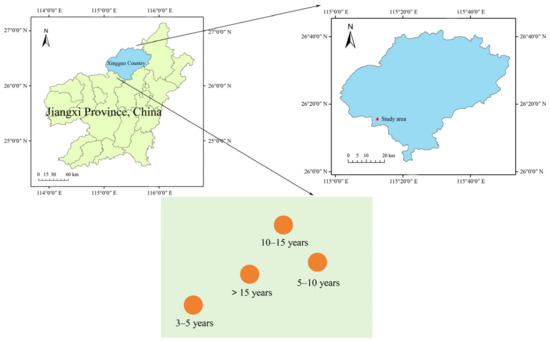
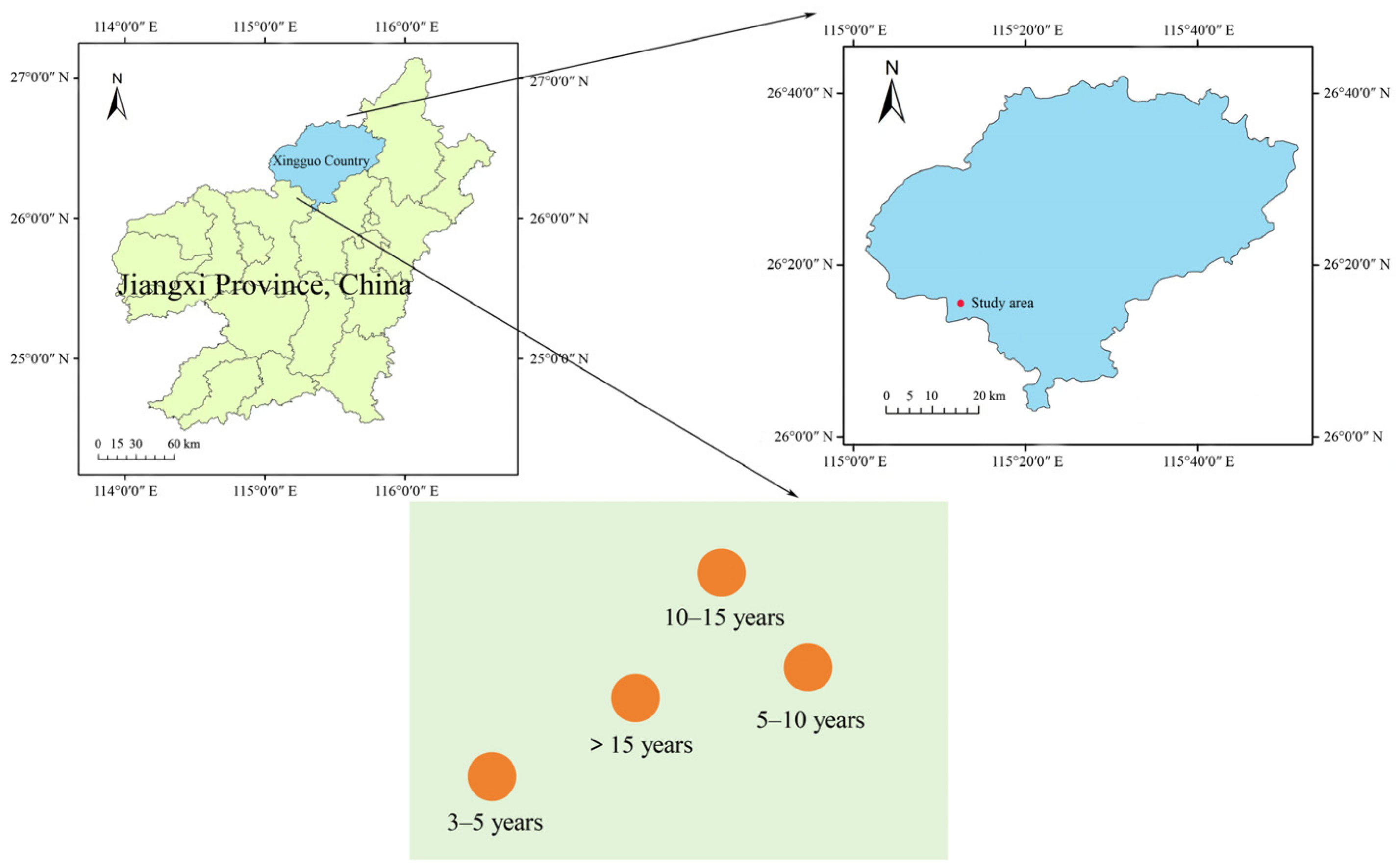
To minimize the confounding effects of macro-environmental heterogeneity, the experimental soils were collected from citrus (Citrus junos) orchards with different cultivation durations (3–5, 5–10, 10–15 and >15 years) in Tangbei Soil and Water Conservation Science Park, Xingguo County, Jiangxi Province, China (Figure 1). The specific ages of these plantations were categorized into four intervals: 3–5 years (3 < age ≤ 5 years), 5–10 years (5 < age ≤ 10 years), 10–15 years (10 < age ≤ 15 years) and >15 years (age > 15 years). These age intervals were established based on self-reported planting times provided by the orchard owners during field interviews. To prevent cross-contamination via runoff or lateral nutrient movement, the orchards of different ages were separated by paths and managed as independent blocks. The fertilization measures for orchards of each cultivation duration are similar, that is, applying 1050 kg ha−1 year−1 of compound fertilizer (providing 157.5 kg ha−1 year−1 each of N, P2O5 and K2O) within the canopy drip line during the fruiting period, and applying 1000 kg ha−1 year−1 of rapeseed cake and compound manure during the fruit swelling period. Four plots were systematically established by dividing each plantation into equal quadrants, with soil samples collected at three depths [0–10 cm (0 < depth ≤ 10 cm), 0–20 cm (10 < depth ≤ 20 cm) and 20–40 cm (20 < depth ≤ 40 cm)] from each. All soil samples were collected away from the boundaries to avoid edge effects. Five cores were mixed at the same soil depth to form one composite sample, totaling 48 soil samples. The soils were classified as red soil (Ultisol) developed from granite parent material. The collected fresh soil samples were sieved (<2 mm) after removing roots, gravel and other debris. Part of the fresh samples were stored at –80 °C for microbial DNA extraction, part of them was stored at –20 °C for microbial biomass measurement, and the remaining soil was air-dried for soil physicochemical properties determination.
Figure 1.
The location of the study area and a schematic layout map showing the relative spatial arrangement of the four orchards within the park.
2.2. Soil Property Analyses
Soil pH was measured using a pH meter with a soil-to-water ratio of 1:2.5. Dissolved organic carbon (C) was extracted with 0.5 M K2SO4 (1:10 w/v) and determined by the TOC analyzer (Ciqui TOCII, Hanau, Germany). Available nitrogen (N) was measured by the alkali-diffusion method. Available phosphorus (P) was extracted with 0.5 M NaHCO3 (1:20 w/v) and measured using molybdenum blue method [19]. Total C and N contents were quantified by the elemental analyzer (Elementar vario MACRO cube, Hanau, Germany). Total P concentration was determined by molybdenum blue method after soil digested with H2SO4-HClO4. Microbial biomass C, N and P were determined using chloroform fumigation method [20].
2.3. Microbial DNA Extraction and Amplicon Sequencing
Microbial DNA was extracted from 0.5 g fresh soil samples using MoBio PowerSoil® DNA kit (MoBio Laboratories, Carlsbad, CA, USA) according to the instructions, and then the purity and concentration of extracted DNA was detected by NanoDrop™ One (Thermo Fisher Scientific, Waltham, MA, USA). Bacterial V4–V5 and fungal ITS1 regions were amplified with primers 515F (5′-GTGCCAGCMGCCGCGGTAA-3′)/907R (5′-CCGTCAATTCCTTT GAGTTT-3′) [21] and ITS5F (5′-GGAAGTAAAAGTCGTAACAAGG-3′)/ITS2R (5′-GCTGCGTTCTTCATCGATGC-3′) [22], respectively. The amplification conditions were as follows: 5 min at 94 °C; 30 cycle of 30 s at 94 °C, 30 s at 52 °C, 30 s at 72 °C; 10 min at 72 °C [23]. The purified amplified products were sequenced on Illumina Nova 6000 platform with PE250 strategy (Guangdong Magigene Biotechnology Co., Ltd. Guangzhou, China). The raw reads reported in this paper have been deposited in the Genome Sequence Archive (GSA) database (identification number CRA016460) that are publicly accessible at https://ngdc.cncb.ac.cn/gsa.
2.4. Sequencing Data Processing
Paired-end raw reads were filtered, including removing barcodes, primers, reads with low quality and short sequences (<200 bp), to obtain paired-end clean reads. Obtained clean reads were merged, quality filtered and de-replicated using USEARCH v10.0. The remaining sequences were clustered into operational taxonomic units (OTUs) with 97% similarity using UPARSE algorithm [24]. Then representative sequences of each bacterial and fungal OTU were respectively annotated with the SILVA v138.2 [25] and UNITE v10.0 [26] database to obtain taxa information.
2.5. Statistical Analyses
Microbial alpha diversity (i.e., Shannon index and richness) and Bray–Curtis distance were calculated using “vegan” package and plotted using “ggplot2” package in R v4.2.1. The differences in bacterial and fungal community composition among soils with citrus cultivating for different durations were evaluated using “adonis” function, and performed by non-metric multidimensional scaling (NMDS) based on Bray–Curtis distance. Microbial generalists (OTUs that occurred in all 12 treatments), specialists (OTUs that occurred in only one treatment) and neutralists (OTUs that occurred in 2–11 treatments) were identified at the OTU level based on their occurrence frequency in environmental habitats [9]. Redundancy analysis (RDA) was performed using “vegan” package to reveal relationships between soil properties and microbial generalist and specialist community. Genera with more than two-fold changes in relative abundance were identified using the “DESeq2” package. Bacterial (r > 0.9 and p < 0.05) and fungal (r > 0.6 and p < 0.05) co-occurrence networks of soils with citrus cultivating for 3–5, 5–10, 10–15 and >15 years were constructed based on Spearman correlation with “igraph” package and visualized in Gephi 0.9.2. To evaluate the correlation between microbial generalist, neutralist and specialist community composition and soil properties, a Mantel test was performed using Spearman’s rank correlation coefficient with 999 permutations to assess statistical significance. The Spearman correlation between microorganisms, biochemical properties, and network topological parameters were calculated and displayed using “psych” and “corrplot” package, respectively.
3. Results
3.1. Bacterial and Fungal Alpha and Beta Diversity
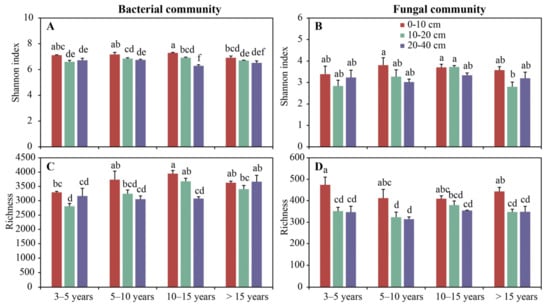
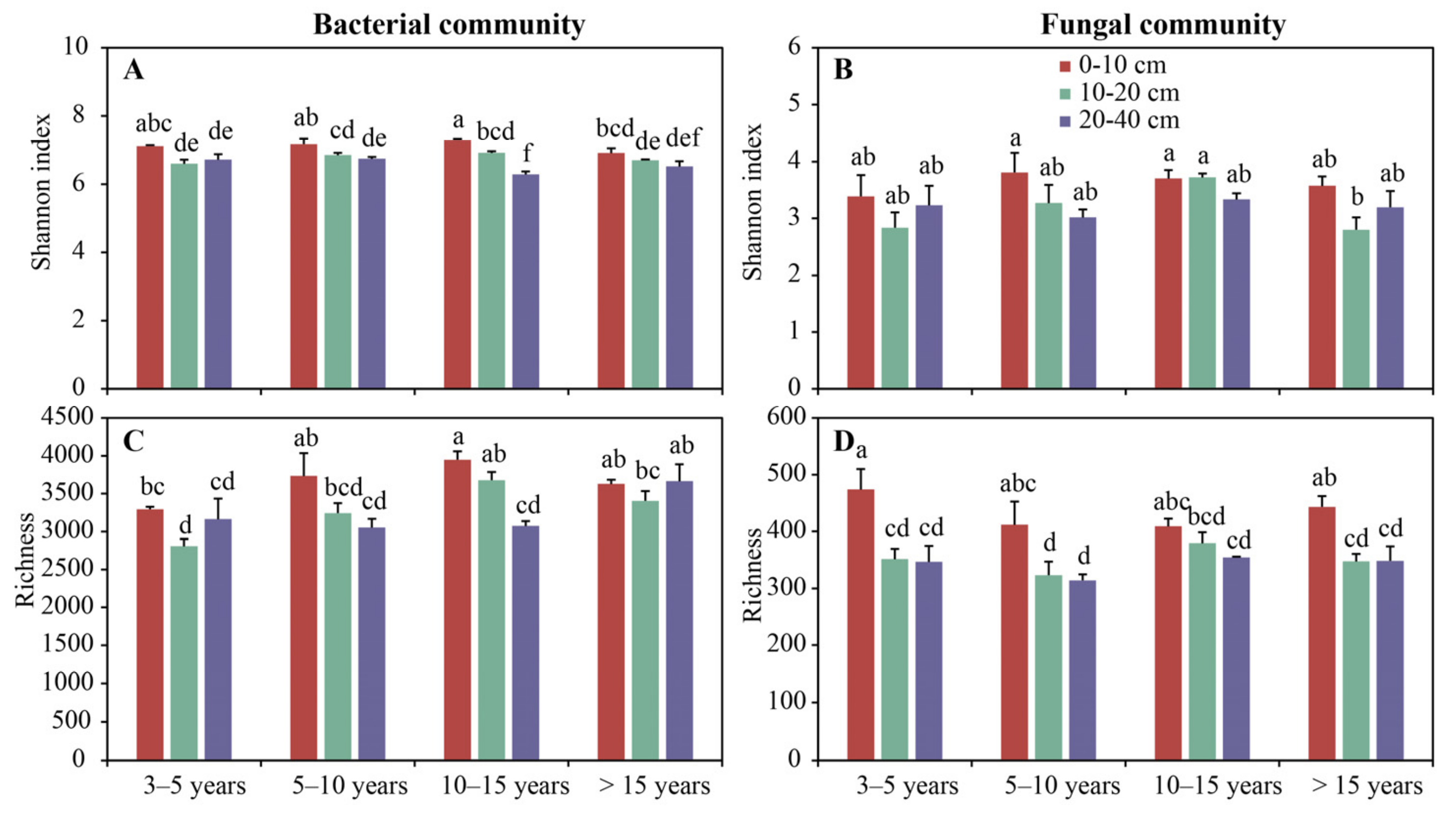
For alpha diversity, bacterial Shannon index and richness were 6.04–7.41 and 2619–4395, respectively, while those of fungal communities were 2.34–4.28 and 270–573, respectively (Figure 2). Higher Shannon index of bacterial community was observed at 0–10 cm than that at 10–40 cm (p < 0.05, except >15-year treatment), but not for fungal community in soils with citrus cultivating for different durations (p > 0.05, Figure 2A,B). Compared with 3–5-year treatment, bacterial community richness was significantly higher in the 10–15-year treatment at 10–20 cm and >15-year treatment at 10–40 cm, and fungal richness was significantly (p < 0.05) higher at 0–10 cm than 10–40 cm in soils with citrus cultivating for 3–5, 5–10 and >15 years (Figure 2C,D).
Figure 2.
Shannon index (A,B) and richness (C,D) of bacterial (left) and fungal (right) community in soils with citrus cultivating for 3–5, 5–10, 10–15 and >15 years. Error bars indicate the standard error (n = 4). Different letters indicate significant differences among treatments based on two-way analysis of variance (p < 0.05).
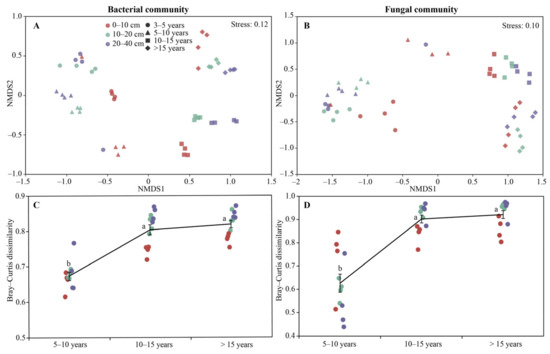
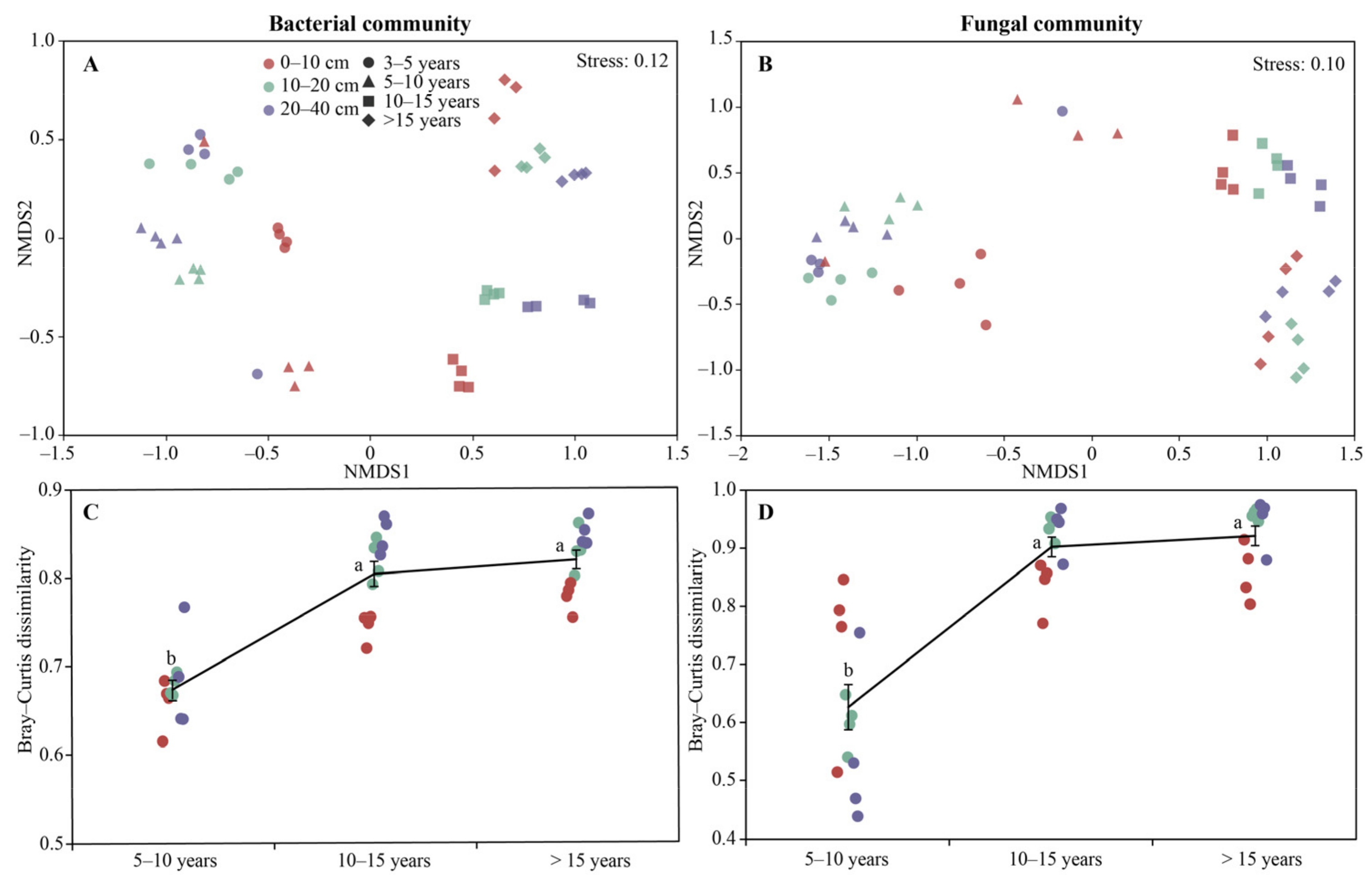
For beta diversity, significant (p < 0.05) differences were observed in bacterial and fungal community structure between each pair of treatments at 0–40 cm (except 3–5- vs 5–10-year treatments of fungal community at 0–10 cm and 20–40 cm) (Figure 3A,B and Table S1). In both bacterial and fungal communities, the dissimilarity between each treatment and 3–5-years treatment was as follows: 5–10-year < 10–15-year = >15-year (Figure 3C,D).
Figure 3.
Non-metric multidimensional scaling (NMDS) analysis based on Bray–Curtis distance (A,B) and Bray–Curtis dissimilarity of each treatment compared with 3–5-year treatment (C,D) of bacterial (left) and fungal (right) community in soils with citrus cultivating for 3–5, 5–10, 10–15 and >15 years. Error bars indicate the standard error. Different letters indicate significant differences among treatments based on Wilcox test (p < 0.05).
3.2. Classification and Relative Abundance of Bacteria and Fungi
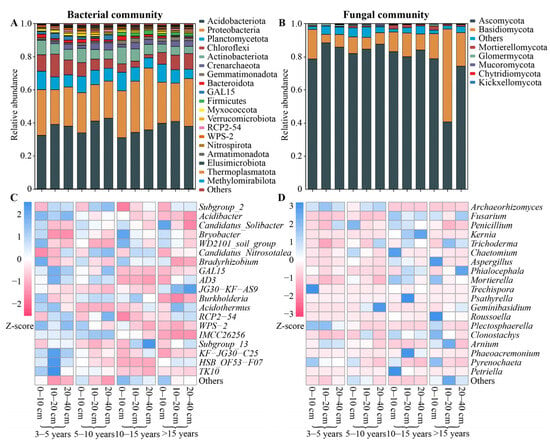
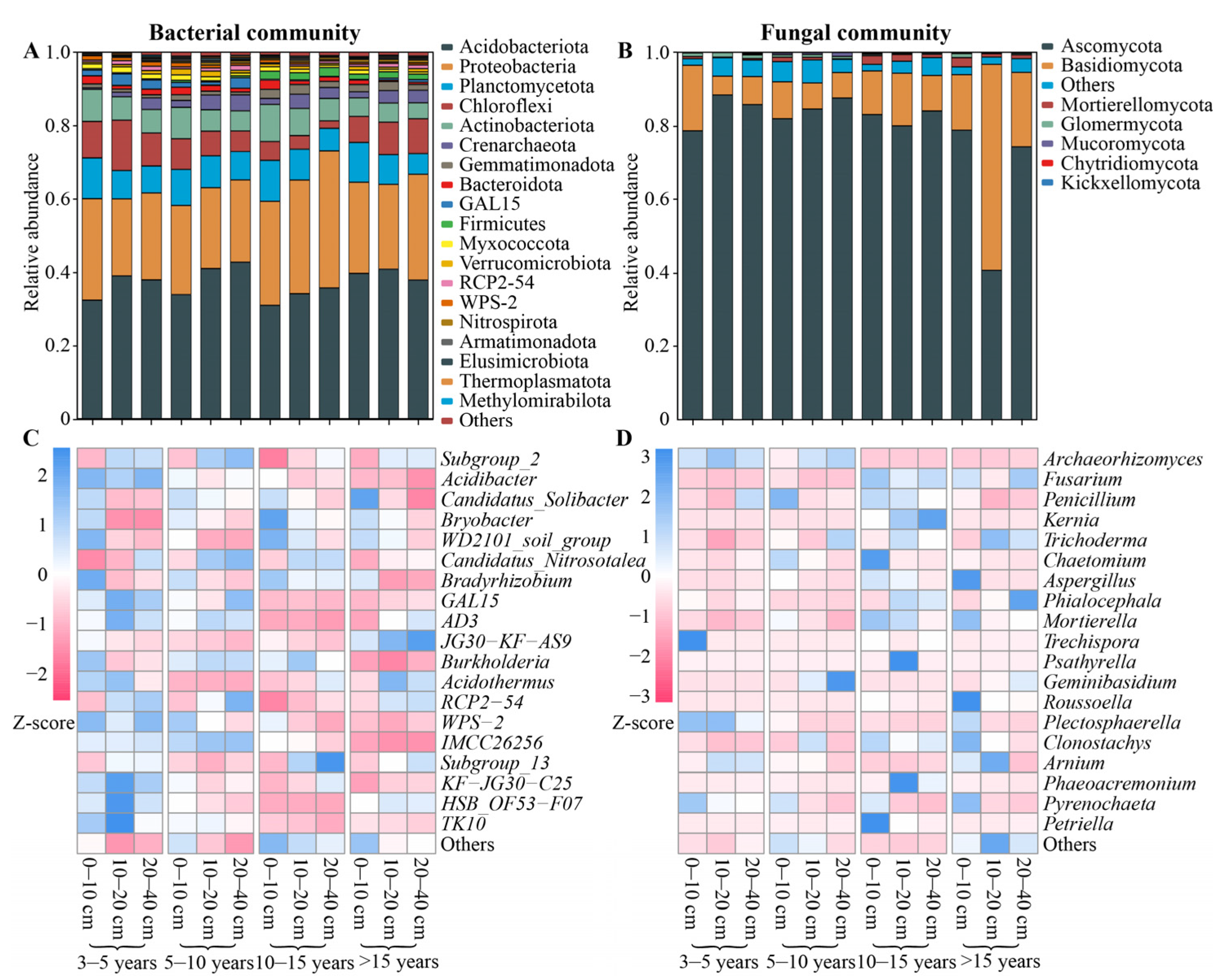
At the phylum level of bacterial community, Acidobacteriota (31–43%), Proteobacteria (21–37%), Planctomycetota (5.6–11%), Chloroflexi (2.0–14%) and Actinobacteriota (4.4–10%) were dominant phyla in soils (Figure 4A). Compared with the 3–5-year treatment, the relative abundances of Proteobacteria and Planctomycetota increased and the relative abundance of Chloroflexi decreased in soils with citrus cultivating for 5–10, 10–15 and >15 years at 0–20 cm. In the fungal community, Ascomycota (41–88%) and Basidiomycota (5.0–56%) were dominant phyla in all habitats (Figure 4B). The 5–10-, 10–15- and >15-year treatments increased the relative abundance of Ascomycota and decreased the relative abundance of Basidiomycota compared to the 3–5-year treatment at 0–10 cm.
Figure 4.
Relative abundance of bacterial (left) and fungal (right) communities at the phylum (A,B) and genus levels (standardized relative abundance of top 20 genera) (C,D) in soils with citrus cultivating for 3–5, 5–10, 10–15 and >15 years.
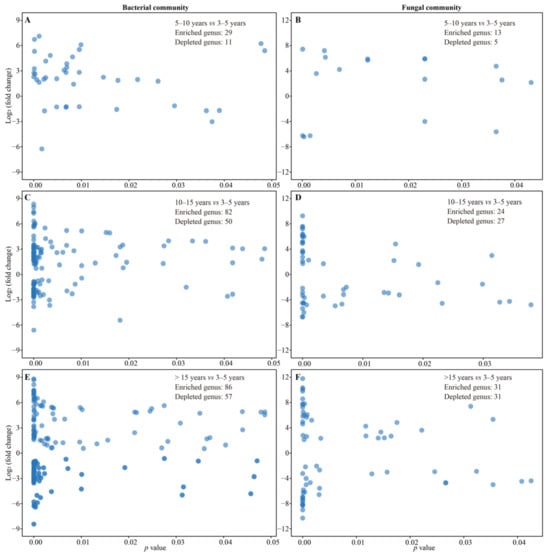
At the genus level, lower relative abundances of Subgroup_2, Acidibacter and KF-JG30-C25 at 0–40 cm, and higher relative abundances of Candidatus_Solibacter and Bryobacter at 10–20 cm were observed in 5–10-, 10–15- and >15-year treatments than the 3–5-year treatment (Figure 4C). We found increased relative abundances of Fusarium and decreased relative abundances of Archaeorhizomyces in both soils with citrus cultivating for 10–15 and >15 years compared to 3–5-year treatment at 0–40 cm (Figure 4D). As the extension of cultivation durations, the number (5–10 years = 40/18, 10–15 years = 132/51, >15 years =143/62 for bacteria/fungi, respectively) of responding genera (with ≥2-fold change of relative abundance, p < 0.05) in soils at 0–10 cm gradually increased, whether in bacterial or fungal communities (Figure 5).
Figure 5.
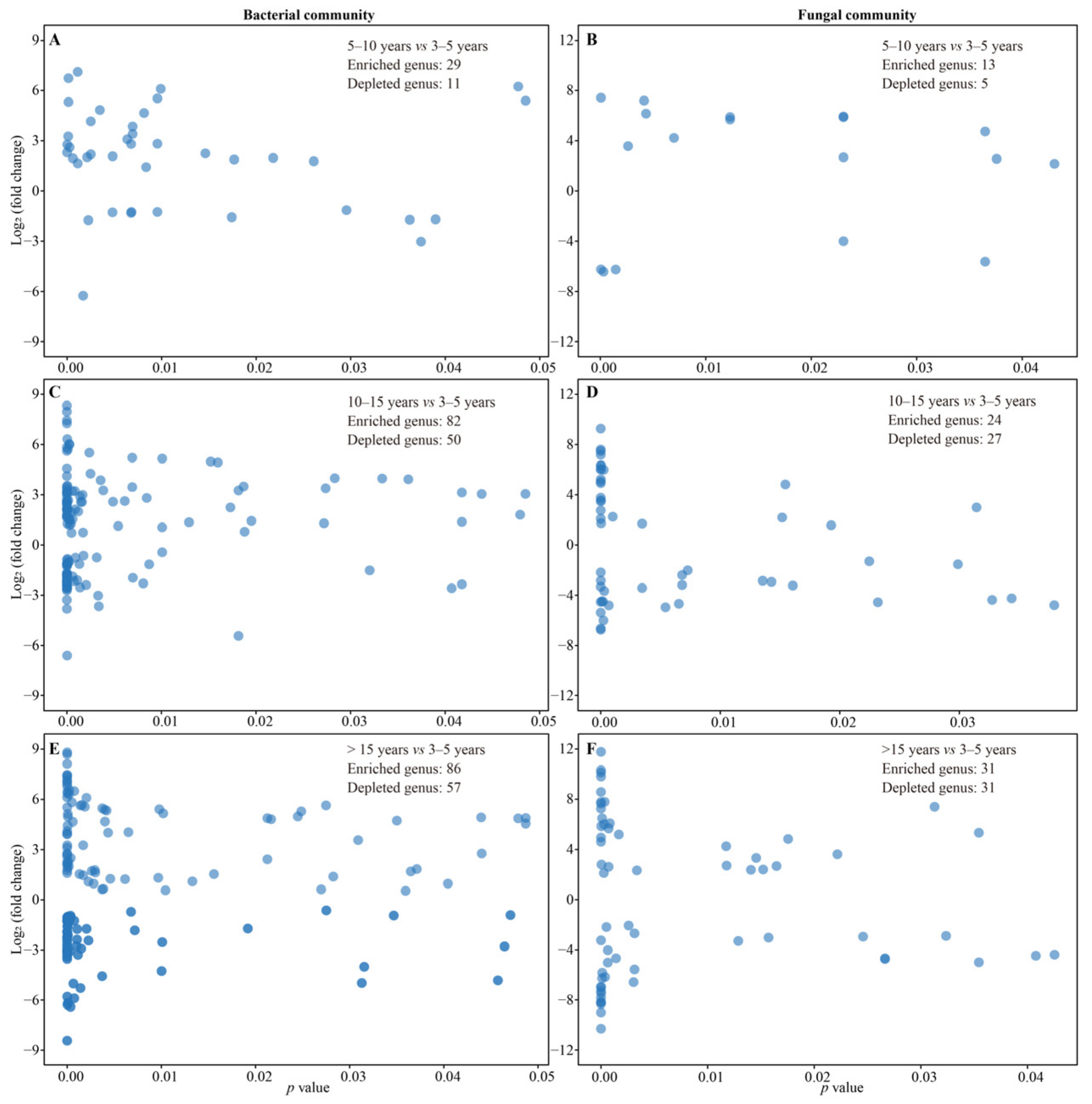
The enriched and depleted bacterial (left) and fungal (right) genera (with ≥2-fold change of relative abundance, p < 0.05) in soils with citrus cultivating for 5–10 (A,B), 10–15 (C,D) and >15 years (E,F) compared to the 3–5-year treatment at 0–10 cm.
3.3. Bacterial and Fungal Generalists and Specialists
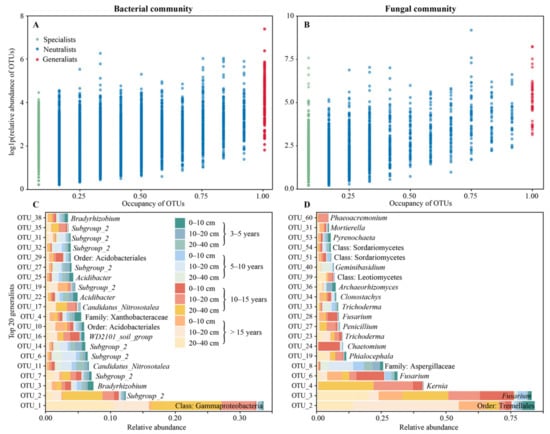
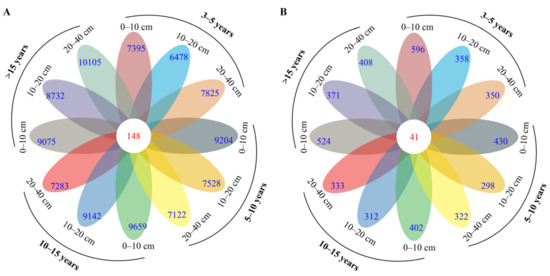
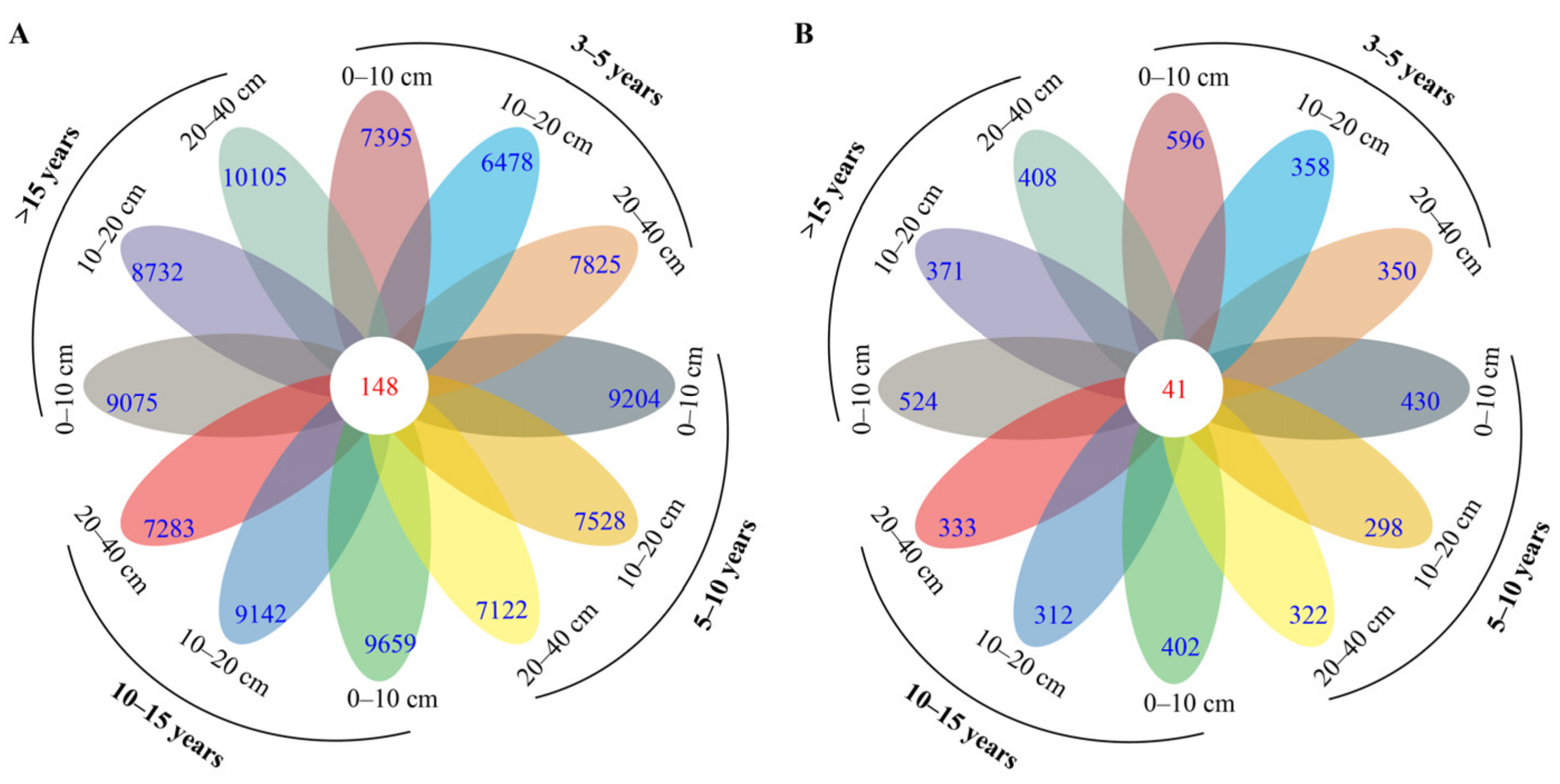
We identified 189 (148 bacterial and 41 fungal) generalist taxa, 104,252 (99,548 bacterial and 4704 fungal) specialist taxa and 9665 (8144 bacterial and 1521 fungal) neutralist taxa in soils with citrus cultivating for 3–5, 5–10, 10–15 and >15 years (Figure 6A,B). The taxonomy of the top 20 generalists of bacterial and fungal communities are listed in Tables S2 and S3, respectively. The dominant bacterial and fungal generalists differed obviously in different habitats (Figure 6C,D). The top 3 bacterial and fungal generalists by relative abundances are respectively as follows: OUT_1 (Gammaproteobacteria), OTU_2 (Subgroup_2), OTU_3 (Bradyrhizobium); OTU_2 (Tremellales), OTU_3 (Fusarium), OTU_4 (Kernia). The number of bacterial specialists increased 16–41% and fungal specialists decreased 13–33% in both 5–10 and 10–15-year treatments than 3–5-year treatment at 0–20 cm (Figure 7). We found larger numbers of bacterial and fungal specialists at 0–10 cm than that at 10–20 cm in all four experimental soils (Figure 7).
Figure 6.
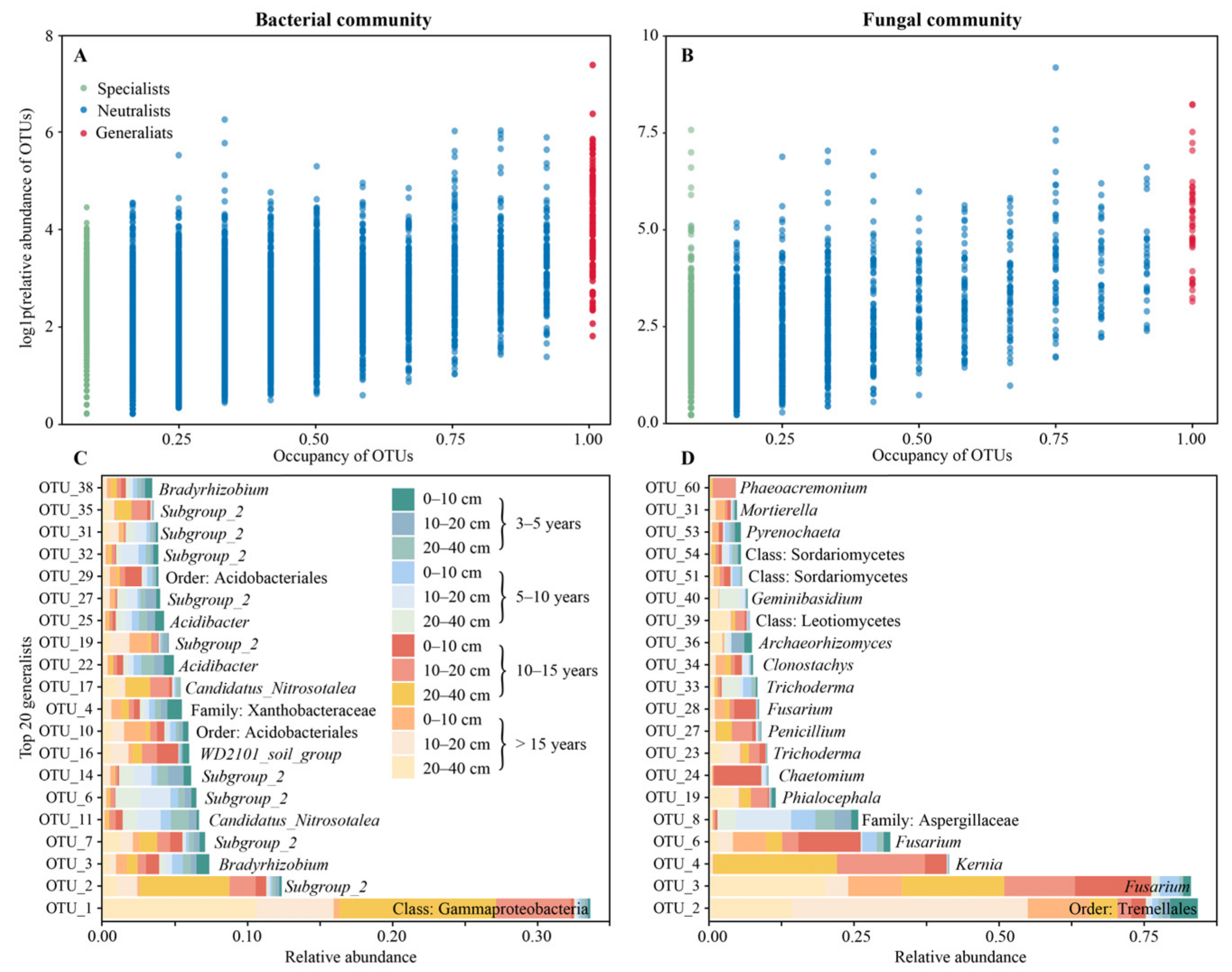
Generalists, specialists and neutralists at the operational taxonomic unit (OTU) level (A,B), and the relative abundance of the top 20 generalists (C,D) of bacterial (left) and fungal (right) communities in soils with citrus cultivating for 3–5, 5–10, 10–15 and >15 years.
Figure 7.
The number of generalists (text in red) and specialists (text in blue) at the OTU level of bacterial (A) and fungal (B) communities in soils with citrus cultivating for 3–5, 5–10, 10–15 and >15 years.
3.4. Bacterial and Fungal Co-Occurrence Networks
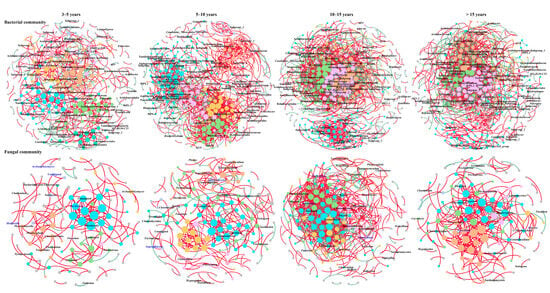
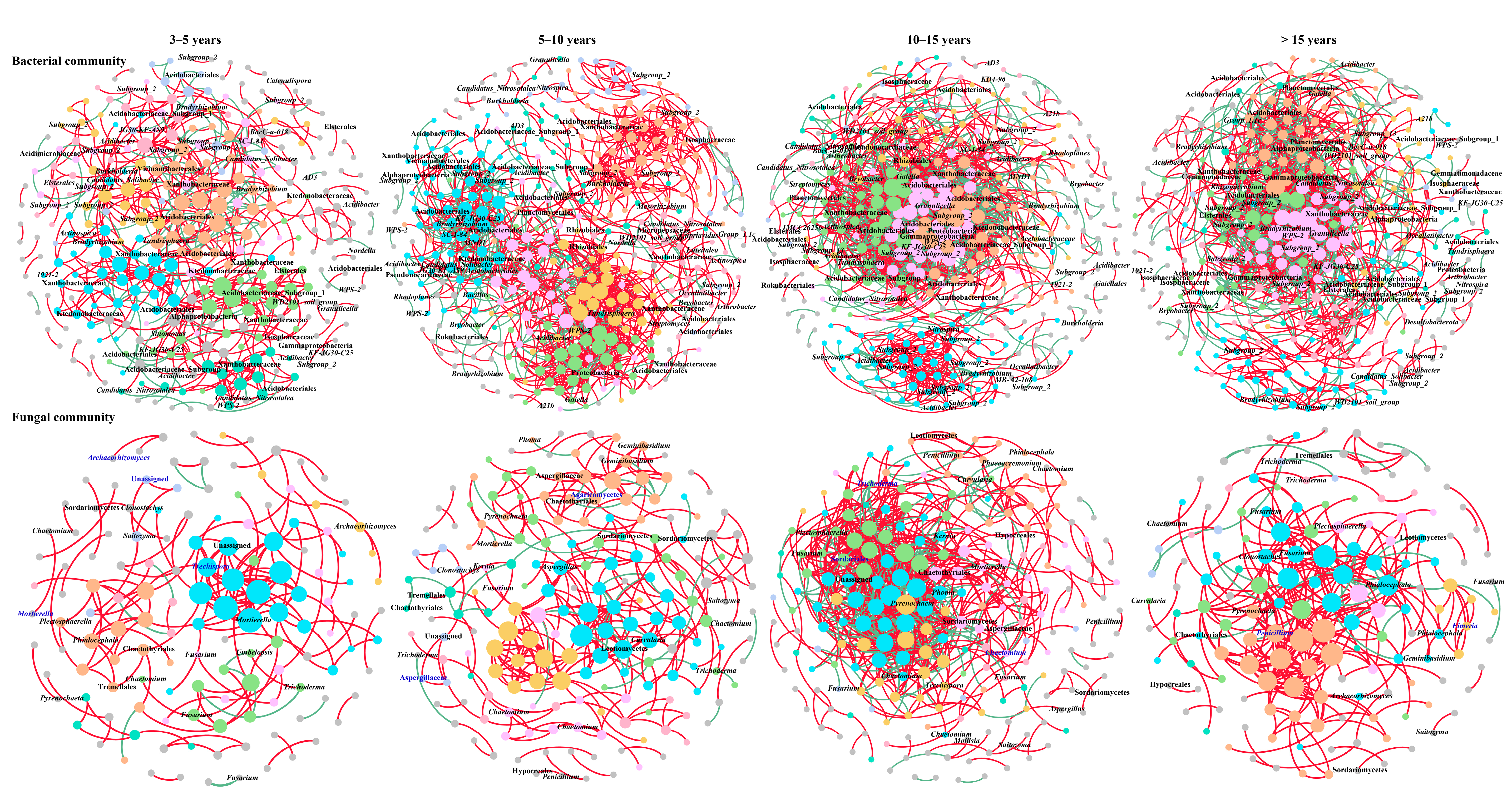
In order to clarify microbial interactions in bacterial and fungal communities in soils with citrus cultivating for 3–5, 5–10, 10–15 and >15 years, co-occurrence networks were constructed based on Spearman correlations between OTUs (Figure 8). The number of nodes and edges and negative edges proportion in bacterial and fungal networks increased for 5–10-, 10–15- and >15-year treatments compared to the 3–5-year treatment (Table 1). The average degree of networks increased gradually at 3–15 years, and the betweenness centrality was significantly (p < 0.05) higher in the 10–15-year treatment than in the 3–5-year treatment in both bacterial and fungal communities (Figure S1). We observed 17–21% generalists and no specialists appearing in the bacterial networks, 12–14% generalists and 1.1–2.9% specialists appearing in the fungal networks (Figure 8 and Table 1). OTU_2 (Subgroup_2), OTU_4 (Xanthobacteraceae), OTU_17 (Candidatus_Nitrosotalea), OTU_22 (Acidibacter) and OTU_35 (Subgroup_2) significantly influenced the average degree and betweenness centrality of bacterial networks, and 10 generalist OTUs significantly (p < 0.05) influenced the average degree and betweenness centrality of fungal networks (Figure S2). It is worth noting that generalist and neutralist communities, rather than specialist communities, are more closely associated with network topological parameters, whether in bacterial or fungal networks.
Figure 8.
Co-occurrence networks of bacterial (up) and fungal (down) communities in soils with citrus cultivating for 3–5, 5–10, 10–15 and >15 years. Node size indicated average degree, labels on node indicated generalists (black letters) and specialists (blue letters), node color indicated different modules. Edges colored red and green indicated positive and negative correlations, respectively.
Table 1.
Topological properties of co-occurrence networks for bacterial and fungal communities in soils with citrus cultivating for 3–5, 5–10, 10–15 and >15 years.
3.5. Key Factors Regulating Changes in Bacterial and Fungal Communities
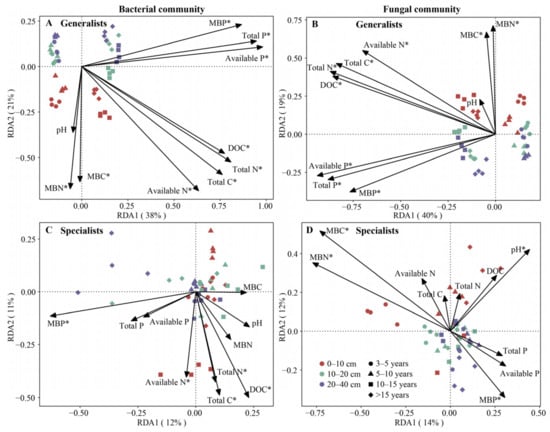
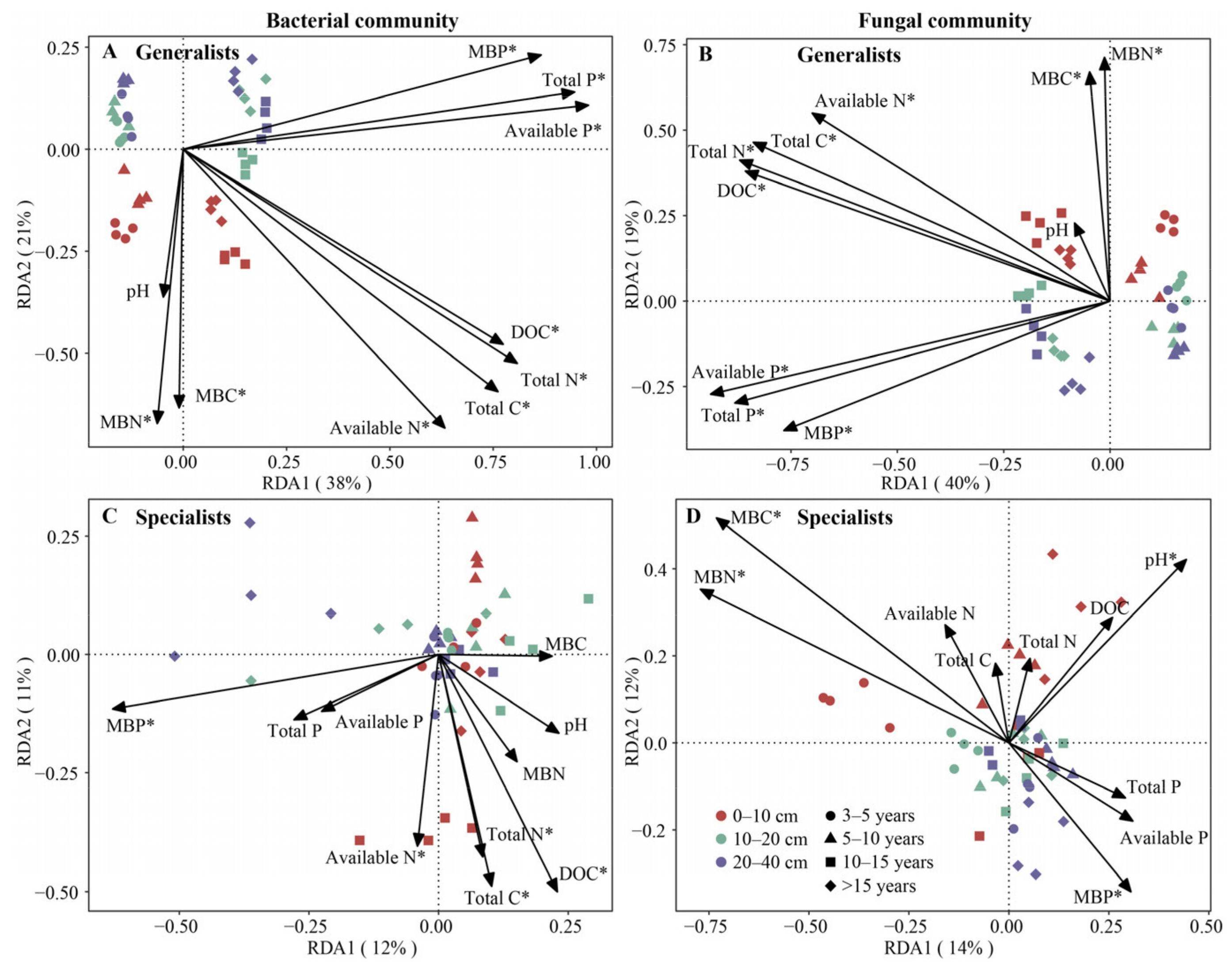
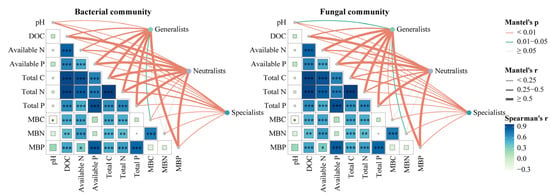
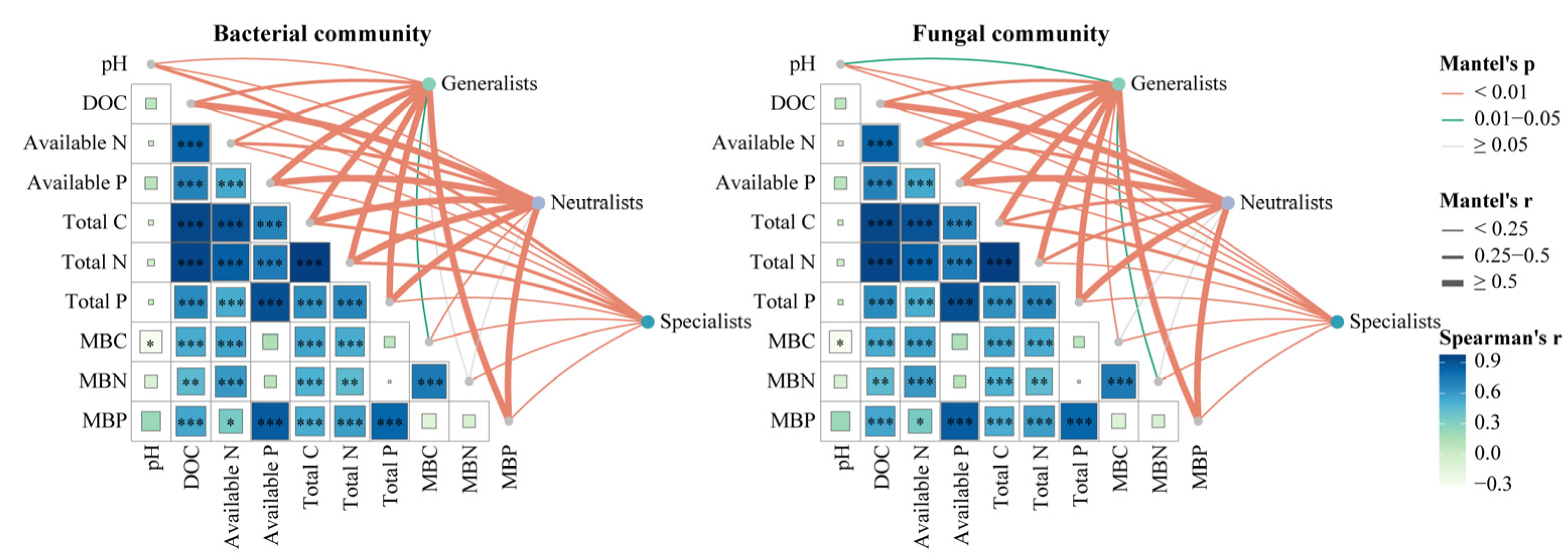
Redundancy analysis (RDA) showed that dissolved organic C, available N and P, total C, N and P, microbial biomass C, N and P were significant (p < 0.05) factors explaining the composition of bacterial and fungal generalist communities in the soil (Figure 9A,B). Seven bacterial (e.g., OTU_1, OTU_2, OTU_7) and twelve fungal (e.g., OTU_2, OTU_3, OTU_4) generalists positively correlated with soil DOC, available N and P, total C, N and P and MBP; six bacterial (e.g., OTU_6, OTU_11, OTU_14) and one fungal (i.e., OTU_8) generalist negatively correlated with those factors (Figure S3). For the specialists, DOC, available N, total C and N, microbial biomass P significantly (p < 0.05) accounted for the variation in bacterial communities, pH, microbial biomass C, N and P significantly (p < 0.05) accounted for the variation in fungal communities (Figure 9C,D). In both bacterial and fungal communities, the relationships between dissolved organic C, available N, available P, total N, total P, microbial biomass P and generalists were closer compared to those with specialists (Figure 10).
Figure 9.
Redundancy analysis (RDA) revealed relationships between soil properties and generalists (A,B) and specialists (C,D) of bacterial (left) and fungal (right) community composition in soils with citrus cultivating for 3–5, 5–10, 10–15 and >15 years. DOC, dissolved organic C; MBC, microbial biomass C; MBN, microbial biomass N; MBP, microbial biomass P. * p < 0.05.
Figure 10.
Mantel test revealed relationships between microbial generalist, neutralist and specialist community composition and soil properties. * p < 0.05, ** p < 0.01, *** p < 0.001. DOC, dissolved organic C; MBC, microbial biomass C; MBN, microbial biomass N; MBP, microbial biomass P.
4. Discussion
4.1. Effects of Cultivation Duration on Bacterial and Fungal Diversity
Cultivation duration have negligible effects on fungal alpha diversity at the same sampling depth (p > 0.05, Figure 2). The alteration of soil nutrients concentrations leads to an increase or decrease in microbial alpha diversity [27,28]. However, the adaptability of microbial communities to environmental disturbances allows them to maintain a constant alpha diversity [29]. The adaptation of fungi to nutrient changes may partly explain our results. The response of bacterial and fungal Shannon indices to soil depth was different. The bacterial Shannon index was higher at 0–10 cm than that at 10–40 cm (Figure 2A), which can be explained by the richer nutrients (e.g., dissolved organic C, available N) in the topsoil (Table S4). Since the formation of fungal mycelia and the presence of viable spores, fungi may be more resistant to environmental changes than bacteria [30]. Therefore, the fungal Shannon index may not be affected by the soil depth (Figure 2B).
For soil microbial beta diversity, the dissimilarity levels of bacterial and fungal communities between other treatments and 3–5-year treatment increased with the increased cultivation durations (Figure 3), suggesting an ongoing effect of cultivation durations on the composition of microbial communities. Reference [31] also found that species composition varies with environmental changes, but species alpha diversity stays relatively stable. Agricultural cultivation has been reported to affect the relative abundances of specific microbial taxa in the soil [32], thereby altering the soil microbial community composition (Figure 4 and Table S1). This is also supported by the increase in the number of responding genera with increased cultivation durations (Figure 5). Proteobacteria and Chloroflexi are respectively copiotrophic and oligotrophic bacteria, and they are both major players in soil biogeochemical cycles [33,34]. The observed higher and lower proportions of Proteobacteria and Chloroflexi at 0–20 cm, respectively, in 5–10-, 10–15- and >15-year treatments relative to 3–5-year treatment (Figure 4A), suggests that the extension of cultivation durations benefit the growth of taxa that preferred nutrient-rich environments. Candidatus_Solibacter and Bryobacter are superior at degrading complex organic compounds [35], thus their relative abundance increased at 10–20 cm as citrus grows. For the fungal taxa, Ascomycota and Basidiomycota dominated in all habitats (Figure 4B). This finding was consistent with many previous studies [28,36,37]. Ascomycota and Basidiomycota play an important role in degrading plant residues, lignin and cellulose, and promoting carbon and nitrogen cycling [38,39]. The increased proportion of Fusarium in 10–15 and >15-year treatment is attributed to their ability to decompose various complex carbohydrates and proteins, as well as their resistance to adverse environmental conditions [40].
4.2. Effects of Cultivation Duration on Microbial Generalists and Specialists
In this study, we found obvious differences in the distribution patterns of bacterial and fungal generalists, neutralists and specialists in soils with citrus cultivating for 3–5, 5–10, 10–15 and >15 years. Most microbial taxa were neutralists and specialists, while the number of observed bacterial and fungal generalists was limited (Figure 6A,B). This may be due to their different preferences to soil properties, since many studies have reported the influence of abiotic factors (e.g., pH, C availability, available P concentration) on the microbiome [41,42,43]. Gammaproteobacteria is a chemoautotrophic bacterium that plays an important role in utilizing soil organic C for respiration [44] and fixing CO2 through the Calvin–Benson–Bassham cycle [45]. This is also supported by the positive correlation between the relative abundance of OTU1 (Gammaproteobacteria) and dissolved organic C and total C concentrations (Figure S3). The higher concentrations of dissolved organic C and total C in 10–15- and >15-year treatments could explain the enriched OTU_1 (Gammaproteobacteria) compared to that in 3–5- and 5–10-year treatments (Table S4 and Figure 6C). Acidobacteriota is prevalent in a variety of environments (e.g., soils and sediments, hot springs, peat bogs, acidic mining lakes), and prefers to live in oligotrophic acidic soils [46]. However, Naether et al. (2012) found that members of the Acidobacteriota subgroups have high relative abundances in soils with high nutrient availability [47]. Our experimental soil has a pH of 4.6–5.2 (Table S4), which is ideal for the growth of Acidobacteriota. Nine OTUs affiliated to the Subgroup_2 (Acidobacteriota phylum) were observed in the top 20 generalist OTUs (Figure 6C), indicating that Subgroup_2 plays an important role in the biogeochemical processes and broad metabolic versatility of citrus orchard soils. The relative abundance of OTU_3 (Bradyrhizobium) was relatively high in all treatments (Figure 6C), and its relative abundance was significantly (p < 0.05) positively associated with dissolved organic C, available N, total C and N contents (Figure S3). Bradyrhizobium is a cbbL (C-fixing gene)- and nifH (N-fixing gene)-harboring aerobic anoxygenic photosynthesis bacteria, and has active roles in soil C and N cycling [48,49,50].
For fungal generalists, several members of Fusarium are plant pathogens that can cause diseases in many crops, including citrus [51]. The enrichment of Fusarium in 10–15- and >15-year treatments (Figure 6D) indicated that long-term monoculture of citrus facilitated the growth of pathogenic fungi, which may reduce plant resistance and cause fruit tree diseases. This is consistent with previous results [52,53,54]. Furthermore, we observed a positive correlation between Fusarium and soil available N and P concentrations (p < 0.05, Figure S3), suggesting that the accumulation of available nutrients in aging orchards may promote the proliferation of these pathogens. Network analysis indicated that Fusarium played a crucial role in maintaining the stability of the fungal community (Figure 8 and Figure S2). This suggests that Fusarium can exacerbate soil diseases by influencing the activities of other microorganisms. More work needs to be done to verify whether disrupting this nutrient–pathogen link can improve soil health. Tremellales and Kernia are both biodegradation fungi associated with the decomposition of organic compounds, such as tannins and lignin [52,55]. Due to the accumulation of a large amount of organic compounds (Table S4) through artificial fertilization, the soil of the aged citrus orchard (i.e., 10–15- and >15-year treatments) needs more decomposition-associated fungi to participate in the degradation of organic matter. This can explain the increased relative abundance of OTU_2 (Tremellales) and OTU_4 (Kernia) in 10–15- and >15-year treatments compared to that in 3–5- and 5–10-year treatments (Figure 6D). Overall, these generalists can be valuable for obtaining nutrients in harsh environments and fighting citrus diseases.
Compared to generalists, specialists are more sensitive to nutrient availability and less adaptable to environmental changes [56]. This is supported by our findings that the composition of specialist communities was influenced only by specific environmental factors (Figure 9). The smallest number of bacterial specialists found in the 3–5-year treatment at 0–20 cm suggests that insufficient supply of C and nutrients (e.g., N and P) can lead to the disappearance of some specific species. Most of the bio-indicator taxa found in different land-use systems (forests, pastures, croplands, etc.) are identified as specialists at the species level [57]. In the future, it is necessary to verify which specific factors (e.g., available nutrient contents, C:N:P stoichiometric ratio) are crucial for the survival and metabolic activities of these specialists. Although specialists are sensitive to environmental changes, their specific functional role remains to be elucidated. Future metagenomic or metatranscriptomic analyses should target these specialist taxa to identify the functional genes they harbored. This will clarify whether their disappearance leads to a functional loss in specific nutrient cycling pathways (e.g., nitrification or cellulose degradation) or if generalists functionally compensate for their absence.
4.3. Microbial Interactions in Soils from Citrus Orchard with Different Cultivation Durations
More nodes and edges were observed in the co-occurrence networks of 5–10-, 10–15- and >15-year treatments than 3–5-year treatments (Table 1), indicating that citrus cultivation is beneficial for increasing the complexity of microbial co-occurrence networks. There were more abundant resources in orchard soils that had been cultivated with citrus for longer durations, and the strengthened cooperation and competition among microorganisms facilitates the acquisition and utilization of resources [58]. Although there were more specialists than generalists in our experimental soils, a co-occurrence network analysis revealed that generalists (e.g., Subgroup_2, Xanthobacteraceae, Fusarium and Kernia), rather than specialists, play important roles in bacterial and fungal co-occurrence networks (Figure 5 and Figure S2). This is in line with previous findings [59,60]. Generalists can adapt to a wide range of ecological environments and are not prone to extinction when habitat conditions change; therefore, they play essential roles in maintaining ecosystem stability. Consistently, Liu et al. (2022) reported that communities with more specialists have simpler co-occurrence patterns and weaker resistance in wetland soil [61].
Among the microbial generalists that positively correlated with the average degree, betweenness centrality, graph density and degree centralization of the co-occurrence networks (Figure S2), OTU_2 and OTU_35 are both affiliated with Subgroup_2 and are members of Acidobacteriota, which has a wide distribution range and a diverse metabolic capacity [46]. OTU_17, which is classified into Candidatus_Nitrosotalea, is an ammonia oxidizer and closely involved with N metabolism [62]. Among fungal generalists, OTU_4 (Kernia) and OTU_27 (Penicillium) both contribute to the decomposition of complex organic compounds [63,64]. Moreover, Penicillium can increase the release of nutrients (e.g., P, potassium and calcium) from minerals, further promoting plant growth [65]. OTU_23 (Trichoderma) may be an important contributor to plant material decomposition and antagonism against pathogenic fungi, because Trichoderma can produce cellulase and antibiotics [66]. OTU_3, OTU_6 and OTU_28, which were affiliated to Fusarium, are pathogenic fungal species that compete with other fungi. In summary, different generalists play different roles in the network to maintain ecosystem functions.
The above-mentioned generalists were all significantly (p < 0.05) affected by DOC, available P and total C, N and P (Figure S3). The positive effects of C and P additions on microbial activities have been reported [67,68,69,70]. Carbon can provide energy for microorganisms, and P is an essential element for the growth of living organisms [71]. In our study, continuous citrus cultivation affected the roles of generalists in network stability by influencing the accumulation and transformation of C and nutrients (e.g., N and P) in the soil.
5. Conclusions
The duration of citrus cultivation had negligible effects on fungal alpha diversity, but changed the composition of microbial communities. We observed a large number of neutralists and specialists, but a small number of generalists, in both bacterial and fungal communities. The co-occurrence network analysis showed that generalists (e.g., Subgroup_2, Candidatus_Nitrosotalea, Fusarium and Kernia), rather than specialists, play key roles in sustaining the stabilization of the bacterial and fungal community functions. The cultivation of citrus changed the roles of generalists in maintaining the stability of microbial co-occurrence networks by affecting the accumulation and transformation of soil C and nutrients (such as N and P). Our findings provide a new perspective on the nutrient management of citrus orchard soil through microbial community regulation. Future research needs to identify specific functional genes (e.g., genes related to recalcitrant C degradation) of the generalists taxa, so that they can drive soil C and nutrient transformation in citrus cultivation to improve soil fertility; determine the appropriate nutrient concentrations to maximize the abundance of beneficial generalists (e.g., Subgroup_2) while inhibiting potential pathogens (e.g., Fusarium); construct synthetic microbial communities that include these identified key generalists, then conduct inoculation experiments using these synthetic microorganisms in citrus orchards to verify their causal effects on improving soil fertility and network stability, and provide a potential microbial strategy to mitigate the negative impacts of long-term monoculture.
Supplementary Materials
The following supporting information can be downloaded at: https://www.mdpi.com/article/10.3390/agriculture16151572/s1, Figure S1: Average degree and betweenness centrality of bacterial (left) and fungal (right) co-occurrence networks in soils with citrus cultivating for 3–5, 5–10, 10–15 and >15 years. Error bars indicate the standard error. Different letters indicate significant differences among treatments based on Wilcox test (p < 0.05); Figure S2: Spearman correlations between the top 20 abundant bacterial and fungal generalists and topological properties of co-occurrence networks (p < 0.05); Figure S3: Spearman correlations between the top 20 abundant bacterial and fungal generalists and soil properties (p < 0.05). DOC, dissolved organic C; MBC, microbial biomass C; MBN, microbial biomass N; MBP, microbial biomass P; Table S1: Permutational multivariate analysis of variance (PERMANOVA) for bacterial and fungal community composition in soils with citrus cultivating for 3–5, 5–10, 10–15 and >15 years; Table S2: The taxonomy of the top 20 generalists of bacterial community in soils with citrus cultivating for 3–5, 5–10, 10–15 and >15 years; Table S3: The taxonomy of the top 20 generalists of fungal community in soils with citrus cultivating for 3–5, 5–10, 10–15 and >15 years; Table S4: Properties of soils with citrus cultivating for 3–5, 5–10, 10–15 and >15 years. The values in parentheses indicate the standard error (n = 4). Different letters indicate significant differences among treatments based on two-way analysis of variance (p < 0.05).
Author Contributions
Conceptualization, Y.H.; methodology, Y.H.; software, Y.H.; validation, Y.H. and L.X.; formal analysis, Y.H. and L.X.; investigation, Y.H. and L.X.; resources, Z.W., L.W. and J.W.; data curation, Y.H.; writing—original draft preparation, Y.H.; writing—review and editing, Z.W., X.H., L.W. and J.W.; visualization, Y.H.; supervision, Y.H. and J.W.; project administration, Y.H., L.W. and J.W.; funding acquisition, Y.H. and L.W. All authors have read and agreed to the published version of the manuscript.
Funding
This study was supported by the Natural Science Foundation of Jiangxi Province (No. 20232BAB213092), Department of Education Project of Jiangxi Province (No. GJJ2200417) and Department of Agriculture and Rural Affairs of Jiangxi Province (No. FXNY2026).
Data Availability Statement
The original contributions presented in this study are included in the article. Further inquiries can be directed to the corresponding author.
Conflicts of Interest
The authors declare no conflicts of interest.
References
- Ollitrault, P.; Curkb, F.; Krueger, R. Citrus taxonomy. In The Genus Citrus; Talon, M., Caruso, M., Fred, G., Gmitter, F.G., Eds.; Woodhead Publishing Elsevier: London, UK, 2020; pp. 57–81. [Google Scholar] [CrossRef] [Scilit]
- Jiangxi Statistical Yearbook. Available online: https://tjj.jiangxi.gov.cn/resource/nj/2024CD/zk/indexch.htm (accessed on 24 June 2025).
- Martínez-Alcántara, B.; Martínez-Cuenca, M.; Bermejo, A.; Legaz, F.; Quiñones, A. Liquid organic fertilizers for sustainable agriculture: Nutrient uptake of organic versus mineral fertilizers in citrus trees. PLoS ONE 2016, 11, e0161619. [Google Scholar] [CrossRef] [Scilit] [PubMed]
- Li, H.; Wang, X.; Li, Y.; Hou, Y.H.; Zhao, Z.M.; Meng, L.; Liu, J.; Wang, J.; Xiong, B.; Wang, Z.H. Cover crops control weed and improve soil qualities in citrus orchard. J. Soil Sci. Plant Nutr. 2023, 23, 6827–6837. [Google Scholar] [CrossRef] [Scilit]
- Philippot, L.; Chenu, C.; Kappler, A.; Rillig, M.C.; Fierer, N. The interplay between microbial communities and soil properties. Nat. Rev. Microbiol. 2024, 22, 226–239. [Google Scholar] [CrossRef] [Scilit] [PubMed]
- Trivedi, P.; Leach, J.E.; Tringe, S.G.; Sa, T.M.; Singh, B.K. Plant microbiome interactions: From community assembly to plant health. Nat. Rev. Microbiol. 2020, 18, 607–621. [Google Scholar] [CrossRef] [Scilit] [PubMed]
- Cherni, M.; Ferjani, R.; Mapelli, F.; Boudabous, A.; Borin, S.; Ouzari, H.I. Soil parameters drive the diversity of Citrus sinensis rhizosphere microbiota which exhibits a potential in plant drought stress alleviation. Appl. Soil Ecol. 2019, 135, 182–193. [Google Scholar] [CrossRef] [Scilit]
- Zhang, M.Y.; Zhang, L.; Riaz, M.; Xia, H.; Jiang, C.C. Biochar amendment improved fruit quality and soil properties and microbial communities at different depths in citrus production. J. Clean. Prod. 2021, 292, 126062. [Google Scholar] [CrossRef] [Scilit]
- Chazdon, R.L.; Chao, A.; Colwell, R.K.; Lin, S.; Norden, N.; Letcher, S.G.; Clark, D.B.; Finegan, B.; Arroyo, J.P. A novel statistical method for classifying habitat generalists and specialists. Ecology 2011, 92, 1332–1343. [Google Scholar] [CrossRef] [Scilit] [PubMed]
- Wang, J.T.; Shen, J.P.; Zhang, L.M.; Singh, B.K.; Delgado-Baquerizo, M.; Hu, H.W.; Han, L.L.; Wei, W.X.; Fang, Y.T.; He, J.Z. Generalist taxa shape fungal community structure in cropping ecosystems. Front. Microbiol. 2021, 12, 678290. [Google Scholar] [CrossRef] [Scilit] [PubMed]
- Wong, S.K.; Cui, Y.; Chun, S.J.; Kaneko, R.; Masumoto, S.; Kitagawa, R.; Mori, A.S.; Lim, A.S.; Uchida, M. Vegetation as a key driver of the distribution of microbial generalists that in turn shapes the overall microbial community structure in the low Arctic tundra. Environ. Microbiome 2023, 18, 41. [Google Scholar] [CrossRef] [Scilit] [PubMed]
- Ren, Y.L.; Ge, W.; Dong, C.B.; Wang, H.Y.; Zhao, S.; Li, C.L.; Xu, J.H.; Liang, Z.Q.; Han, Y.F. Specialist species of fungi and bacteria are more important than the intermediate and generalist species in near-urban agricultural soils. Appl. Soil Ecol. 2023, 188, 104894. [Google Scholar] [CrossRef] [Scilit]
- Cheng, J.J.; Ding, C.F.; Li, X.G.; Zhang, T.L.; Wang, X.X. Soil quality evaluation for citrus production systems in central subtropical China. Soil Tillage Res. 2016, 155, 225–232. [Google Scholar] [CrossRef] [Scilit]
- Yao, F.X.; Wen, L.; Chen, R.; Du, C.; Su, S.M.; Yan, M.M.; Yang, Z.L. Enrichment characteristics and dietary evaluation of selenium in citrus fruit from the largest citrus-producing area in China (southern Jiangxi). Front. Plant Sci. 2020, 13, 881098. [Google Scholar] [CrossRef] [Scilit] [PubMed]
- Ejraei, A.; Ghehsareh, A.M.; Hodaji, M. A new approach to develop nitrogen fertilizer recommendation: A case study for Washington Citrus cultivar. J. Plant Nutr. 2023, 46, 3715–3725. [Google Scholar] [CrossRef] [Scilit]
- Fuhrman, J.A. Microbial community structure and its functional implications. Nature 2009, 459, 193–199. [Google Scholar] [CrossRef] [Scilit] [PubMed]
- Faust, K.; Raes, J. Microbial interactions: From networks to models. Nat. Rev. Microbiol. 2012, 10, 538–550. [Google Scholar] [CrossRef] [Scilit] [PubMed]
- Xu, Q.C.; Vandenkoornhuyse, P.; Li, L.; Guo, J.J.; Zhu, C.; Guo, S.W.; Ling, N.; Shen, Q.R. Microbial generalists and specialists differently contribute to the community diversity in farmland soils. J. Adv. Res. 2022, 40, 17–27. [Google Scholar] [CrossRef] [Scilit] [PubMed]
- Murphy, J.; Riley, J.P. A modified single solution method for determination of phosphate in natural waters. Anal. Chim. Acta 1962, 26, 31–36. [Google Scholar] [CrossRef] [Scilit]
- Brookes, P.C.; Powlson, D.S.; Jenkinson, D.S. Measurement of microbial biomass phosphorus in soil. Soil Biol. Biochem. 1982, 14, 319–329. [Google Scholar] [CrossRef] [Scilit]
- Ye, J.F.; Song, Z.F.; Wang, L.; Zhu, J. Metagenomic analysis of microbiota structure evolution in phytoremediation of a swine lagoon wastewater. Bioresour. Technol. 2016, 219, 439–444. [Google Scholar] [CrossRef] [Scilit] [PubMed]
- Zhang, L.L.; Zhang, H.Q.; Wang, Z.H.; Chen, G.J.; Wang, L.S. Dynamic changes of the dominant functioning microbial community in the compost of a 90-m3 aerobic solid state fermentor revealed by integrated meta-omics. Bioresour. Technol. 2016, 203, 1–10. [Google Scholar] [CrossRef] [Scilit] [PubMed]
- Lane, D.J. 16S/23S rRNA sequencing. In Nucleic Acid Techniques in Bacterial Systematics; Stackebrandt, E., Goodfellow, M., Eds.; John Wiley & Sons: New York, NY, USA, 1991; pp. 115–175. [Google Scholar] [CrossRef] [Scilit]
- Edgar, R.C. UPARSE: Highly accurate OTU sequences from microbial amplicon reads. Nat. Methods 2013, 10, 996–998. [Google Scholar] [CrossRef] [Scilit] [PubMed]
- Quast, C.; Pruesse, E.; Yilmaz, P.; Gerken, J.; Schweer, T.; Yarza, P.; Peplies, J.; Glöckner, F.O. The SILVA ribosomal RNA gene database project: Improved data processing and web-based tools. Nucleic Acids Res. 2013, 41, D590–D596. [Google Scholar] [CrossRef] [Scilit] [PubMed]
- Köljalg, U.; Nilsson, R.H.; Abarenkov, K.; Tedersoo, L.; Taylor, A.F.S.; Bahram, M.; Bates, S.T.; Bruns, T.D.; Bengtsson-Palme, J.; Callaghan, T.M. Towards a unified paradigm for sequence-based identification of fungi. Mol. Ecol. 2013, 22, 5271–5277. [Google Scholar] [CrossRef] [Scilit] [PubMed]
- Deng, L.; Peng, C.H.; Huang, C.B.; Wang, K.B.; Liu, Q.Y.; Liu, Y.L.; Hai, X.Y.; Shangguan, Z.P. Drivers of soil microbial metabolic limitation changes along a vegetation restoration gradient on the Loess Plateau, China. Geoderma 2019, 353, 188–200. [Google Scholar] [CrossRef] [Scilit]
- Gong, X.Q.; Jarvie, S.; Wen, J.; Su, N.R.; Yan, Y.Z.; Liu, Q.F.; Zhang, Q. Compared with soil fungal diversity and microbial network complexity, soil bacterial diversity drives soil multifunctionality during the restoration process. J. Environ. Manag. 2024, 354, 120379. [Google Scholar] [CrossRef] [Scilit] [PubMed]
- Brown, S.P.; Jumpponen, A. Phylogenetic diversity analyses reveal disparity between fungal and bacterial communities during microbial primary succession. Soil Biol. Biochem. 2015, 89, 52–60. [Google Scholar] [CrossRef] [Scilit]
- Sun, S.; Li, S.; Avera, B.N.; Strahm, B.D.; Badgley, B.D. Soil bacterial and fungal communities show distinct recovery patterns during forest ecosystem restoration. Appl. Environ. Microbiol. 2017, 83, e00966-17. [Google Scholar] [CrossRef] [Scilit] [PubMed]
- Brown, J.H.; Ernest, S.K.M.; Parody, J.M.; Haskell, J.P. Regulation of diversity: Maintenance of species richness in changing environments. Oecologia 2001, 126, 321–332. [Google Scholar] [CrossRef] [Scilit] [PubMed]
- Lee, S.A.; Kim, J.M.; Kim, Y.; Joa, J.H.; Kang, S.S.; Ahn, J.H.; Kim, M.; Song, J.; Weon, H.Y. Different types of agricultural land use drive distinct soil bacterial communities. Sci. Rep. 2020, 10, 17418. [Google Scholar] [CrossRef] [Scilit] [PubMed]
- Sorokin, D.Y.; Lücker, S.; Vejmelkova, D.; Kostrikina, N.A.; Kleerebezem, R.; Rijpstra, W.I.C.; Damste, J.S.S.; Le Paslier, D.; Muyzer, G.; Wagner, M.; et al. Nitrification expanded, discovery, physiology and genomics of a nitrite-oxidizing bacterium from the phylum chloroflexi. ISME J. 2012, 6, 2245–2256. [Google Scholar] [CrossRef] [Scilit] [PubMed]
- Waite, D.W.; Vanwonterghem, I.; Rinke, C.; Parks, D.H.; Zhang, Y.; Takai, K.; Sievert, S.M.; Simon, J.; Campbell, B.J.; Hanson, T.E.; et al. Comparative genomic analysis of the class Epsilonproteobacteria and proposed reclassification to Epsilonbacteraeota (phyl. nov.). Front. Microbiol. 2017, 8, 00682. [Google Scholar] [CrossRef] [Scilit] [PubMed]
- Rime, T.; Hartmann, M.; Brunner, I.; Widmer, F.; Zeyer, J.; Frey, B. Vertical distribution of the soil microbiota along a successional gradient in a glacier forefield. Mol. Ecol. 2015, 24, 1091–1108. [Google Scholar] [CrossRef] [Scilit] [PubMed]
- Wang, S.K.; Zuo, X.A.; Zhao, X.Y.; Li, Y.Q.; Zhou, X.; Lv, P.; Luo, Y.Q.; Yun, J.Y. Responses of soil fungal community to the sandy grassland restoration in Horqin Sandy Land, northern China. Environ. Monit. Assess. 2016, 188, 21. [Google Scholar] [CrossRef] [Scilit] [PubMed]
- Guo, Z.B.; Liu, C.A.; Hua, K.K.; Wang, D.Z.; Wan, S.X.; He, C.L.; Zhan, L.C. Temporal variation of management effects on soil microbial communities. Geoderma 2022, 418, 115828. [Google Scholar] [CrossRef] [Scilit]
- Challacombe, J.F.; Hesse, C.N.; Bramer, L.M.; McCue, L.A.; Lipton, M.; Purvine, S.; Nicora, C.; Gallegos-Graves, L.V.; Porras-Alfaro, A.; Kuske, C.R. Genomes and secretomes of Ascomycota fungi reveal diverse functions in plant biomass decomposition and pathogenesis. BMC Genom. 2019, 20, 976. [Google Scholar] [CrossRef] [Scilit] [PubMed]
- Manici, L.M.; Caputo, F.; de Sabata, D.; Fornasier, F. The enzyme patterns of Ascomycota and Basidiomycota fungi reveal their different functions in soil. Appl. Soil Ecol. 2024, 196, 105323. [Google Scholar] [CrossRef] [Scilit]
- Al-Hatmi, A.M.S.; Meis, J.F.; de Hoog, G.S. Fusarium: Molecular diversity and intrinsic drug resistance. PLoS Pathog. 2016, 12, e1005464. [Google Scholar] [CrossRef] [Scilit] [PubMed]
- Huang, Y.L.; Dai, Z.M.; Lin, J.H.; Li, D.M.; Ye, H.C.; Dahlgren, R.A.; Xu, J.M. Labile carbon facilitated phosphorus solubilization as regulated by bacterial and fungal communities in Zea mays. Soil Biol. Biochem. 2021, 163, 108465. [Google Scholar] [CrossRef] [Scilit]
- Liu, H.; Li, S.S.; Qiang, R.W.; Lu, E.J.; Li, C.L.; Zhang, J.J.; Gao, Q. Response of soil microbial community structure to phosphate fertilizer reduction and combinations of microbial fertilizer. Front. Environ. Sci. 2022, 10, 899727. [Google Scholar] [CrossRef] [Scilit]
- Huang, Y.L.; Dai, Z.M.; Tang, C.X.; Xu, J.M. Labile and recalcitrant carbon inputs differ in their effects on microbial phosphorus transformation in a flooded paddy soil with rice (Oryza sativa L.). Appl. Soil Ecol. 2024, 198, 105372. [Google Scholar] [CrossRef] [Scilit]
- Fierer, N.; Bradford, M.A.; Jackson, R.B. Toward an ecological classification of soil bacteria. Ecology 2007, 88, 1354–1364. [Google Scholar] [CrossRef] [Scilit] [PubMed]
- Shi, M.; Li, J.Y.; Gao, R.A.; Song, X.Z.; Wang, G.B.; Gao, Y.; Yan, S.H. Contrasting effects of elevated CO2 on autotrophic prokaryotes with different CO2 fixation strategies in tea plantation soil. Biol. Fertil. Soils 2023, 59, 205–215. [Google Scholar] [CrossRef] [Scilit]
- Ward, N.L.; Challacombe, J.F.; Janssen, P.H.; Henrissat, B.; Coutinho, P.M.; Wu, M.; Xie, G.; Haft, D.H.; Sait, M.; Badger, J.; et al. Three genomes from the phylum Acidobacteria provide insight into the lifestyles of these microorganisms in soils. Appl. Environ. Microbiol. 2009, 75, 2046–2056. [Google Scholar] [CrossRef] [Scilit] [PubMed]
- Naether, A.; Foesel, B.U.; Naegele, V.; Wüst, P.K.; Weinert, J.; Bonkowski, M.; Alt, F.; Oelmann, Y.; Polle, A.; Lohaus, G.; et al. Environmental factors affect Acidobacterial communities below the subgroup level in grassland and forest soils. Appl. Environ. Microbiol. 2012, 78, 7398–7406. [Google Scholar] [CrossRef] [Scilit] [PubMed]
- Yao, Y.; Wang, R.; Lu, J.K.; Sui, X.H.; Wang, E.T.; Chen, W.X. Genetic diversity and evolution of Bradyrhizobium populations nodulating Erythrophleum fordii, an evergreen tree indigenous to the southern subtropical region of China. Appl. Environ. Microbiol. 2014, 80, 6184–6194. [Google Scholar] [CrossRef] [Scilit] [PubMed]
- Wang, C.; Xiao, R.; Guo, Y.T.; Wang, Q.; Cui, Y.; Xiu, Y.J.; Ma, Z.W.; Zhang, M.X. Changes in soil microbial community composition during Phragmites australis straw decomposition in salt marshes with freshwater pumping. Sci. Total Environ. 2021, 762, 143996. [Google Scholar] [CrossRef] [Scilit] [PubMed]
- Favero, V.O.; de Carvalho, R.H.; Leite, A.B.C.; dos Santos, D.M.T.; de Freitas, K.M.; Boddey, R.M.; Xavier, G.R.; Rumjanek, N.G.; Urquiaga, S. Bradyrhizobium strains from Brazilian tropical soils promote increases in nodulation, growth and nitrogen fixation in mung bean. Appl. Soil Ecol. 2022, 175, 104461. [Google Scholar] [CrossRef] [Scilit]
- Burgess, L.W.; Bryden, W.L. Fusarium: A ubiquitous fungus of global importance. Microbiol. Aust. 2012, 33, 22–25. [Google Scholar] [CrossRef] [Scilit]
- Li, W.H.; Liu, Q.Z. Changes in fungal community and diversity in strawberry rhizosphere soil after 12 years in the greenhouse. J. Integr. Agric. 2019, 18, 199–209. [Google Scholar] [CrossRef] [Scilit]
- Pervaiz, Z.H.; Iqbal, J.; Zhang, Q.M.; Chen, D.M.; Wei, H.; Saleem, M. Continuous cropping alters multiple biotic and abiotic indicators of soil health. Soil Syst. 2020, 4, 59. [Google Scholar] [CrossRef] [Scilit]
- Xu, X.; Jiang, W.T.; Wang, G.S.; Ding, F.X.; Li, Q.J.; Wang, R.L.; Chen, X.S.; Shen, X.; Yin, C.M.; Mao, Z.Q. Analysis of soil fungal community in aged apple orchards in Luochuan County, Shaanxi Province. Agriculture 2023, 13, 63. [Google Scholar] [CrossRef] [Scilit]
- Kuramae, E.E.; Hillekens, R.H.E.; de Hollander, M.; van der Heijden, M.G.A.; van den Berg, M.; van Straalen, N.M.; Kowalchuk, G.A. Structural and functional variation in soil fungal communities associated with litter bags containing maize leaf. FEMS Microbiol. Ecol. 2013, 84, 519–531. [Google Scholar] [CrossRef] [Scilit] [PubMed]
- Clavel, J.; Julliard, R.; Devictor, V. Worldwide decline of specialist species: Toward a global functional homogenization? Front. Ecol. Environ. 2011, 9, 222–228. [Google Scholar] [CrossRef] [Scilit]
- Nahmani, J.; Lavelle, P.; Rossi, J.P. Does changing the taxonomical resolution alter the value of soil macroinvertebrates as bioindicators of metal pollution? Soil Biol. Biochem. 2006, 38, 385–396. [Google Scholar] [CrossRef] [Scilit]
- Mooshammer, M.; Wanek, W.; Zechmeister-Boltenstern, S.; Richter, A. Stoichiometric imbalances between terrestrial decomposer communities and their resources: Mechanisms and implications of microbial adaptations to their resources. Front. Microbiol. 2014, 5, 22. [Google Scholar] [CrossRef] [Scilit] [PubMed]
- Qi, Q.; Hu, C.X.; Lin, J.H.; Wang, X.H.; Tang, C.X.; Dai, Z.M.; Xu, J.M. Contamination with multiple heavy metals decreases microbial diversity and favors generalists as the keystones in microbial occurrence networks. Environ. Pollut. 2022, 306, 119406. [Google Scholar] [CrossRef] [Scilit] [PubMed]
- Zheng, W.; Feng, G.L.; Liang, K.L.; Wang, T.T.; Lv, F.L.; Zhang, X.C.; Li, Z.Y.; Zhai, B.N. SOC mediates the contribution of generalists and specialists to changes in soil nirK bacterial diversity: Evidence from apple orchards in main production areas of China. Appl. Soil Ecol. 2023, 182, 104713. [Google Scholar] [CrossRef] [Scilit]
- Liu, C.; Li, X.Z.; Mansoldo, F.R.P.; An, J.X.; Kou, Y.P.; Zhang, X.; Zeng, J.X.; Vermelho, A.B.; Wang, J.M.; Yao, M.J. Microbial habitat specificity largely affects microbial co-occurrence patterns and functional profiles in wetland soils. Geoderma 2022, 418, 115866. [Google Scholar] [CrossRef] [Scilit]
- Herbold, C.W.; Lehtovirta-Morley, L.E.; Jung, M.Y.; Jehmlich, N.; Hausmann, B.; Han, P.; Loy, A.; Pester, M.; Sayavedra-Soto, L.A.; Rhee, S.K.; et al. Ammonia-oxidising archaea living at low pH: Insights from comparative genomics. Environ. Microbiol. 2017, 19, 4939–4952. [Google Scholar] [CrossRef] [Scilit] [PubMed]
- Gao, L.; Wang, F.H.; Gao, F.; Wang, L.S.; Zhao, J.; Qu, Y.B. Purification and characterization of a novel cellobiohydrolase (PdCel6A) from Penicillium decumbens JU-A10 for bioethanol production. Bioresour. Technol. 2011, 102, 8339–8342. [Google Scholar] [CrossRef] [Scilit] [PubMed]
- Li, X.J.; Li, Y.; Zhao, X.D.; Zhang, X.L.; Zhao, Q.; Wang, X.; Li, Y.T. Restructured fungal community diversity and biological interactions promote metolachlor biodegradation in soil microbial fuel cells. Chemosphere 2019, 221, 735–749. [Google Scholar] [CrossRef] [Scilit] [PubMed]
- Zhuang, J.Y.; Liu, C.; Wang, X.X.; Xu, T.X.; Yang, H. Penicillium simplicissimum NL-Z1 induced an imposed effect to promote the leguminous plant growth. Front. Microbiol. 2021, 12, 738734. [Google Scholar] [CrossRef] [Scilit] [PubMed]
- Rahnama, N.; Foo, H.L.; Rahman, N.A.A.; Ariff, A.; Shah, U.K.M. Saccharification of rice straw by cellulase from a local Trichoderma harzianum SNRS3 for biobutanol production. BMC Biotechnol. 2014, 14, 103. [Google Scholar] [CrossRef] [Scilit] [PubMed]
- Yang, K.; Zhu, J.J. The effects of N and P additions on soil microbial properties in paired stands of temperate secondary forests and adjacent larch plantations in Northeast China. Soil Biol. Biochem. 2015, 90, 80–86. [Google Scholar] [CrossRef] [Scilit]
- Luu, A.T.; Hoang, N.T.; Dinh, V.M.; Bui, M.H.; Grandy, S.; Hoang, D.T.T. Effects of carbon input quality and timing on soil microbe mediated processes. Geoderma 2022, 409, 115605. [Google Scholar] [CrossRef] [Scilit]
- Liu, L.; Gao, Z.Y.; Yang, Y.; Gao, Y.; Mahmood, M.; Jiao, H.J.; Wang, Z.H.; Liu, J.S. Long-term high-P fertilizer input shifts soil P cycle genes and microorganism communities in dryland wheat production systems. Agric. Ecosyst. Environ. 2023, 342, 108226. [Google Scholar] [CrossRef] [Scilit]
- Peng, X.Y.; Gao, S.H.; Ma, S.L.; Liao, H.; Liu, Y.R.; Chen, W.L.; Huang, Q.Y.; Hao, X.L. Repeated labile carbon inputs trigger soil microbial necromass decomposition through increasing microbial diversity and hierarchical interactions. Soil Biol. Biochem. 2024, 191, 109344. [Google Scholar] [CrossRef] [Scilit]
- Vitousek, P.M.; Porder, S.; Houlton, B.Z.; Chadwick, O.A. Terrestrial phosphorus limitation: Mechanisms, implications, and nitrogen-phosphorus interactions. Ecol. Appl. 2010, 20, 5–15. [Google Scholar] [CrossRef] [Scilit] [PubMed]

Disclaimer/Publisher’s Note: The statements, opinions and data contained in all publications are solely those of the individual author(s) and contributor(s) and not of MDPI and/or the editor(s). MDPI and/or the editor(s) disclaim responsibility for any injury to people or property resulting from any ideas, methods, instructions or products referred to in the content. |
© 2026 by the authors. Licensee MDPI, Basel, Switzerland. This article is an open access article distributed under the terms and conditions of the Creative Commons Attribution (CC BY) license.