


Abstract
Stable and uniform pesticide application is essential for precision crop protection, input-use efficiency, and the reduction of off-target losses in large-scale farming systems. Large boom sprayers are important agricultural machines for high-efficiency crop protection, but their wide and flexible booms are highly sensitive to terrain-induced excitation, chassis motion, liquid sloshing, and hydraulic nonlinearities. These disturbances can cause roll, yaw, vertical oscillation, and boom-end height variation, thereby reducing spray uniformity, increasing drift risk, and threatening operational safety. Hybrid active–passive boom suspension systems have therefore become a key enabling technology for modern precision spraying. This review summarizes research progress in the structural design, dynamic modeling, sensing, and control of boom suspension systems for large-scale agricultural sprayers. Mainstream commercial machines commonly use double-pendulum active–passive suspension architectures, in which passive components attenuate high-frequency vibration and active subsystems improve low-frequency terrain-following performance. Recent studies have advanced electro-hydraulic actuation, disturbance compensation, adaptive control, multi-sensor fusion, and field evaluation methods; however, a unified framework for coupling boom dynamics, spray quality, sensing accuracy, and whole-machine operation remains incomplete. Key challenges include rigid–flexible–hydraulic coupling, underactuated control, uncertain parameters, external disturbances, and posture estimation errors caused by boom elastic deformation and sensor noise. Future research should emphasize rigid–flexible–fluid-coupled modeling, adaptive output-feedback control with disturbance and resonance suppression, terrain-preview and multi-source perception, and coordinated chassis–boom-spray control. These developments can support more stable, efficient, and environmentally responsible spraying operations in modern precision agriculture.
1. Introduction
The transformation of agricultural production toward larger operational scales and higher levels of precision has substantially increased the demand for high-performance plant protection equipment. Conventional knapsack sprayers and small boom sprayers are no longer sufficient to meet the requirements of modern crop production in terms of field efficiency, input-use efficiency, and environmental protection. In this context, large boom sprayers, especially high-clearance and self-propelled types, have become essential equipment for disease, pest, and weed management in large-scale cropping systems because of their advantages in operational efficiency, spray uniformity, and adaptability to field operations [1]. However, wide booms are typically large-span, flexible, weakly damped truss structures. Under field operating conditions, the boom with large span is a highly flexible and weakly damped truss structure. During field operations, it is affected by various uncertain factors such as random ground excitation, vehicle speed variations, and spray-liquid sloshing, resulting in irregular motion and vibration, primarily including boom tilting, yawing, and horizontal oscillation [2,3,4]. Extensive research indicates that boom tilting can cause pesticide “miss-spraying” and “overlapping spraying” phenomena (as shown in Figure 1), leading to increased droplet deposition variability and significantly impacting application quality [5,6,7]. Additionally, tilting boom may contact crop canopies or even break upon impact with the ground. To enhance application quality and operational safety, large-scale sprayers urgently require spray boom suspension systems. Nevertheless, the mechanisms governing the dynamics of large flexible booms remain insufficiently understood, and the design methods and control theories for hybrid active–passive suspensions are still incomplete. These issues have become one of the key bottlenecks restricting the development of large-scale boom sprayers.
Figure 1.
Uneven spray distribution caused by boom roll motion. Adapted from Ref. [4].
To improve boom stability and maintain an appropriate boom working height, active–passive suspension systems have gradually been adopted in advanced large boom sprayers. These systems combine the high-frequency vibration isolation capability of passive suspension with the low-frequency terrain-following capability of active control, thereby providing a relatively stable platform for uniform spraying [8]. The objective is to maintain a near-constant nozzle-to-target distance under varying terrain and chassis disturbance conditions while avoiding boom contact with the crop canopy or soil surface.
Although hybrid active–passive suspension systems have been widely adopted in commercial practice, systematic research on the design and control theory of active boom suspension systems remains relatively limited. Recent studies have gradually focused on improving boom attitude regulation and control strategies. For example, one study designed a nonlinear robust control algorithm based on a disturbance observer. This method can effectively estimate and compensate for model uncertainties and external disturbances in hydraulic systems, thereby improving the attitude-tracking performance of active suspension systems under parameter variations and disturbance conditions [9]. Another study on a double-pendulum structure proposed the use of particle swarm optimization (PSO) to optimize the parameters of a fuzzy PID controller. The validation results showed that, compared with conventional PID or fuzzy PID control, this algorithm could reduce overshoot and shorten settling time, while achieving high-frequency vehicle disturbance isolation and low-frequency terrain tracking [10]. These findings indicate that advanced control strategies can significantly enhance the dynamic response and stability of active boom suspension systems, thereby contributing to improved spray uniformity and operational safety in practical applications.
The complexity of this dynamic problem mainly arises from the following aspects. First, the boom suspension system itself is a strongly coupled mechanical–hydraulic–electrical system. Second, large-span booms exhibit significant flexible deformation, which is highly coupled with chassis motion and the suspension mechanism. Third, the hydraulic servo system introduces nonlinear factors such as flow gain variation, friction, oil compressibility, and leakage, which pose additional challenges to control system design. Finally, under complex field terrain and canopy conditions, accurate boom attitude measurement is difficult to achieve because of sensor noise and uncertainty. These factors together make the coordinated control of passive high-frequency vibration suppression and active low-frequency disturbance tracking an important and challenging scientific and engineering problem.
1.1. Review Contribution
Against this background, a comprehensive review of the dynamic characteristics and control methods of active suspension systems for large-scale spray booms is of great significance. This paper aims to summarize research progress in boom dynamics, passive suspension design, active–passive suspension control, and electro-hydraulic servo control. It also focuses on analyzing the major limitations of current research and discusses future trends toward more robust, intelligent, and integrated boom stabilization systems.
Unlike previous review articles that mainly focused on spray technologies, boom dynamics, agricultural machinery, or individual control algorithms, this review specifically concentrates on hybrid active–passive suspension systems for large spray booms from an integrated engineering perspective. Existing reviews generally discuss boom vibration, spray application, sensing technologies, or agricultural machinery separately, whereas the coupling relationships among chassis dynamics, suspension mechanisms, boom structural flexibility, sensing systems, electro-hydraulic actuation, control strategies, and spray quality have received limited systematic attention.
1.2. Review Methodology
This review follows a narrative review methodology. Relevant literature was collected primarily from the Web of Science, Scopus, Google Scholar, IEEE Xplore, and CNKI. The search covered publications from approximately 1990 to 2026 using combinations of keywords including “spray boom”, “boom suspension”, “active suspension”, “hybrid suspension”, “electro-hydraulic control”, “spray quality”, “terrain following”, and “precision agriculture”. Commercial products, international standards, and representative studies were selected based on their technical influence, citation frequency, engineering relevance, and contribution to boom stabilization technologies.
2. Current Research Status and Analysis
Internationally recognized agricultural machinery manufacturers, such as John Deere, AMAZONE, HARDI, Agrifac, CNH, and AGCO, have developed boom sprayers with increasingly larger working widths (exceeding 50 m in some models). Large size, intelligence, and high efficiency are the dominant trends. Boom stabilization is predominantly achieved using double-pendulum suspension architectures. Specifically, based on pendulum-type passive suspension, a sensing system and an electro-hydraulic servo control system are added to form a two-stage pendulum mechanism integrating active and passive functions [11], as illustrated in Figure 2.
Figure 2.
Boom sprayers equipped with hybrid active–passive suspensions in commercial products: (a) AMAZONE Pantera series; (b) Agrifac Condor series; (c) HARDI COMMANDER series; (d) John Deere R4140 series. Adapted from the official websites of AMAZONE, Agrifac, HARDI, and John Deere, respectively (accessed on 15 May 2026).
A summary of representative manufacturers, model series, boom widths, and suspension types is given in Table 1. Most of these products adopt double-pendulum hybrid active–passive suspensions. These companies were established earlier and have accumulated long-term technical expertise in wide-boom suspension technologies.
Table 1.
Suspension types of boom systems in representative sprayers.
Although crop protection machinery enterprises and research institutes in China have increasingly focused on large high-end boom sprayers, a complete theoretical framework for the design of hybrid active–passive boom suspension systems has not yet been established. Investigating the dynamic behavior mechanisms and control methods of spray booms under double-pendulum hybrid suspensions is therefore crucial for identifying effective approaches to improve spraying quality. The basic structure and principle of a pendulum-type hybrid suspension are shown in Figure 3. The boom is connected to the sprayer chassis via the suspension device. The first-stage pendulum is hinged to the chassis, and the second-stage pendulum is hinged to the first-stage pendulum. The relative angle between the two pendulum links is adjusted by a hydraulic cylinder driven by a proportional valve.
Figure 3.
Schematic of a double-pendulum hybrid active–passive suspension: (a) 3D view; (b) simplified schematic diagram. Adapted from Ref. [5].
2.1. Dynamic Characteristics of Large Booms and Passive Suspension Research
The dynamic behavior of wide spray booms has long been recognized as a critical factor affecting spraying quality. As the boom width increases, even small vehicle roll motions or terrain disturbances can cause significant vertical displacements at the boom ends. For this reason, passive suspension systems were first introduced to isolate vibration and improve boom stability. Research on boom dynamic mechanisms mainly includes: (i) mechanisms by which boom dynamics affect spray performance [12]; (ii) modeling of boom suspension dynamic characteristics [13]; (iii) suspension design methodologies [14]; and (iv) field measurement methods for boom vibration [15,16].
Early studies focused primarily on modeling the dynamic response of passive suspension systems. Frost A. R. et al. [17] were among the first to establish a mathematical model for the dynamic behavior of a trapezoidal passive boom suspension system. By considering roll and yaw excitation inputs, they accurately predicted boom motion behavior, and the experimentally obtained natural frequency and response characteristics of the suspension agreed well with model predictions. The passive suspension automatically balances itself through changes in the spray boom’s center of gravity, primarily composed of a pendulum mechanism, auxiliary linkages, springs, and dampers, functioning solely to isolate high-frequency vibrations. The research of the rod-piston trapezoidal passive suspension started early, and the design theory and method are perfect, which has a good reference significance for the study of the dynamic behavior mechanism of the double-pendulum active and passive suspension. Anthonis J. et al. performed analytical modeling of the roll dynamics of a pendulum-type passive suspension used in a 39 m boom of a John Deere sprayer and conducted simulation-based parameter optimization for the installation locations of springs and dampers in the suspension model [18]. However, these parameter optimization studies generally treated the boom as a rigid body and did not explicitly consider boom elastic deformation and uncertain external disturbances.
The passive suspension of a boom sprayer usually consists of pendulum mechanisms, auxiliary links, springs, and dampers. Its principal role is to isolate high-frequency vibration and provide self-balancing behavior according to changes in the boom center of gravity. Among different passive suspension forms, trapezoidal suspensions, pendulum suspensions, cable suspensions, and universal-joint suspensions have all been investigated. Their design theories and methods have become relatively mature for medium-width booms, and these studies provide useful references for the development of more advanced large-boom suspension systems.
Cui et al. [19] established a dynamic model of a 28 m large boom and its pendulum-type passive suspension system, analyzed the influences of the passive suspension natural frequency, damping ratio, and geometric parameters on dynamic characteristics, and conducted model-based suspension parameter optimization, thereby improving passive suspension design theory. The team also developed a suspension system test platform with a rated load of 2000 kg, capable of testing large booms up to 30 m in width [20]. For the design of large wide-span flexible booms, the team validated a finite element model via modal testing and then performed size optimization under a first-order natural frequency constraint to reduce boom mass [21].
Although existing studies have provided useful insights into the dynamic behavior of passive suspension systems, several limitations remain. First, most suspension models simplify the boom as a rigid body, which becomes increasingly inaccurate as boom width increases and flexible deformation becomes more pronounced. Second, the interaction among chassis motion, suspension dynamics, boom flexibility, and fluid loading is rarely considered in an integrated manner. Third, the frequency-domain coordination between passive vibration isolation and active control has not been sufficiently addressed, especially for double-pendulum active–passive systems. Therefore, future research should move beyond isolated passive suspension analysis toward coupled dynamic modeling of the chassis–suspension–boom system and should optimize passive suspension parameters in coordination with active control design to prevent resonance and improve boom stability over a wide operating range.
2.2. Research Progress in Active-Passive Boom Suspension Control
As boom width and operating speed increase, passive suspension alone is often insufficient to maintain stable boom posture under complex field conditions. For this reason, active–passive boom suspension systems have been increasingly introduced. Such systems generally consist of hydraulic actuators, sensors, a power source, and an electronic control unit. By adjusting actuator output continuously, the active subsystem can regulate boom posture so that the boom remains approximately parallel to the target surface while maintaining a relatively constant nozzle-to-target distance. This is essential for reducing spray drift, improving deposition uniformity, and reducing operator workload.
Research on active–passive suspension control began relatively early in Europe. Frost A. R. et al. [22] established a mathematical model for a hybrid trapezoidal suspension and improved the low-frequency tracking performance of a passive suspension by adding an active actuator. Feedback control was applied to the active control of trapezoidal boom suspensions. They derived the suspension transfer function and state-space dynamic equations and conducted experimental studies using optimal control and pole placement. However, improved control accuracy and disturbance rejection required higher feedback gains, which increased sensitivity to sensor noise; thus, careful filter design was necessary.
Deprez K. et al. [23] developed a cable-based active–passive suspension system in which boom roll motion was corrected by a motor-driven pulley mechanism. They established a model using mathematical description and experimental identification, designed active controllers for the cable suspension, and conducted simulations and frequency-sweep experiments on a six-degree-of-freedom vibration test bench. Field tests after system integration showed that a low-power 70 W actuator could achieve low-frequency terrain-following control for a 600 kg boom. Nevertheless, due to limited output torque and large volume, motors (or electric cylinders) are not suitable for active control of large-boom suspensions. Even so, the theoretical and experimental research on trapezoidal and cable-based hybrid suspensions provides valuable insights for developing control methods for double-pendulum hybrid suspensions.
In China, most existing studies on boom control have focused on boom height regulation and lateral balance control for relatively short and medium-width booms. For instance, Yang Xuejun et al. [24] designed an expert-control-based boom height adjustment system. Using prior knowledge and experience, the system measured the attitude of the sprayer and the height of the spray boom, and the expert control inference engine output control commands for the actuators. Wei Xinhua et al. [25] developed an online regulation system for spray boom height and balance of boom sprayers. Ultrasonic ranging sensors were adopted to detect the distance from both ends of the spray boom to the ground, and the boom height and balance were adjusted in real time via a PID controller. Li Jinyang et al. [26] developed an automatic boom height adjustment system and a trapezoidal active suspension for a 3W-1200 mounted boom sprayer provided by Sino-Agri FengMao Plant Protection Machinery Co., Ltd. (Tianjin, China) using an FPID controller to improve terrain-following accuracy. Zhai et al. [27] designed an automatic height adjustment system based on ultrasonic sensors and GPS and conducted spray deposition distribution experiments. Tan et al. [28] developed a boom height feedback control system composed of height detection sensors, a hydraulic regulation system, and control hardware/software. Notably, these studies primarily employed PID controllers, and the booms considered were typically 24 m or less.
In summary, the commonly used control methods for spray boom suspensions worldwide mainly include PID control, optimal control, state-feedback pole-placement control, etc. These methods are relatively simple and practical and may perform adequately in systems with limited boom width, weak external disturbance, and modest dynamic requirements. However, for large-scale boom sprayers, boom flexibility, random terrain excitation, chassis coupling, and hydraulic nonlinearities become much more pronounced. Under these conditions, control performance cannot be ensured merely by increasing feedback gain. In fact, high-gain control may amplify measurement noise and even excite undesirable dynamic modes. Consequently, the limitations of conventional controllers become increasingly evident in large boom applications.
Therefore, a growing body of research has emphasized the need for advanced control strategies capable of explicitly accounting for disturbance, parameter uncertainty, and system nonlinearity. In particular, large boom active suspension control should not be regarded as a simple height adjustment problem, but rather as a strongly coupled, underactuated, and disturbance-sensitive dynamic regulation problem. This understanding has motivated the development of more sophisticated nonlinear control approaches for electro-hydraulic suspension systems.
2.3. Research Status of Electro-Hydraulic Servo Control Theory for Active–Passive Suspensions
Electro-hydraulic servo systems are widely used in agricultural machinery, engineering vehicles, and aerospace systems because they offer high force output, fast dynamic response, and strong load adaptability. These features make them particularly suitable for active boom suspension systems in large sprayers. However, hydraulic servo systems also introduce significant control challenges, including time-varying parameters, external disturbance, unmodeled dynamics, friction, oil compressibility, valve nonlinearities, and leakage. These factors can significantly degrade control accuracy if not properly addressed.
To cope with such issues, researchers have proposed a range of advanced nonlinear control methods, including adaptive control, robust control, neural-network-based control, sliding-mode control, and disturbance-observer-based control. Since large boom active–passive suspension systems simultaneously exhibit parameter uncertainty and nonlinear behavior, linear models are generally insufficient to capture their actual dynamics. For systems with uncertain parameters, adaptive control is often adopted to estimate unknown parameters online and compensate for their influence. For uncertain nonlinearities and unmodeled dynamics, nonlinear robust control, fuzzy logic, and neural network methods have also been explored.
For example, Xue et al. [29] designed an adaptive fuzzy sliding-mode control algorithm and conducted prototype tests for a trapezoidal suspension of a high-clearance self-propelled boom sprayer, which avoided the chattering phenomenon of the sliding mode algorithm. However, the study did not explicitly consider uncertainties arising from chassis-coupled disturbance, boom elastic deformation, or sensor measurement noise. Li et al. [30,31] used robust control and other methods for spray boom motion control, but the existing robust control algorithms still cannot effectively deal with the uncertainty of model parameters.
To address the coexistence of parameter uncertainty and nonlinearities in electro-hydraulic suspension systems, Yao et al. [32] proposed an adaptive robust control (ARC), which integrates adaptive strategies for parametric uncertainty with nonlinear robust control for unmodeled nonlinearities. Cui et al. [33,34] designed a nonlinear adaptive robust control algorithm and high-performance controller hardware, and developed controlled parameter adaptive laws for unknown parameters in the boom suspension system such as spring stiffness, damping, Coulomb friction, and leakage. The nonlinear adaptive controller was verified successively on a 6-DOF motion simulation platform (NIAM, Nanjing, China) and a large self-propelled boom sprayer, and its steady-state performance indices were all superior to those of conventional controllers such as PID. When a boom sprayer operates in the field, the suspension system is not only subject to its inherent uncertainties and nonlinearities, but also continuously exposed to time-varying disturbances caused by uneven ground and elastic deformation of the spray boom. However, the adaptive robust control law adopts the idea of bounded suppression of robust control via a saturation function, which prevents it from achieving asymptotic tracking control under various random disturbances.
However, active boom suspension systems in field operation are influenced not only by internal uncertainties but also by persistent time-varying disturbance arising from uneven terrain, boom elastic deformation, and external excitation. In many adaptive robust control formulations, the robust term is implemented using bounded saturation-type compensation, which improves bounded tracking performance but does not necessarily guarantee asymptotic tracking under random disturbance. To improve disturbance rejection capability, researchers have increasingly incorporated disturbance-observer-based methods into hydraulic control systems.
Aiming at the problem of random disturbances in electro-hydraulic servo suspension systems, Won D. et al. [35] designed a high-gain disturbance observer capable of handling both matched and mismatched disturbances. However, because unknown pressure dynamics were used, accurate disturbance estimation could not be guaranteed theoretically. Razmjooei H. et al. [36] proposed an adaptive fast finite-time extended state observer (AFFT-ESO) for nonlinear hydraulic servo systems, which can estimate system states and uncertainties without requiring bounds on uncertainties and their derivatives. The observer ensures the estimation error converges within a finite time to a small neighborhood around zero and improves convergence rates both near and far from equilibrium. Cui et al. [9] incorporated finite-time disturbance observers into nonlinear robust controller design, proposing two nonlinear control algorithms for large boom suspensions based on disturbance estimation. The observers estimated both matched and mismatched disturbances online and compensated them via feedforward terms, significantly improving disturbance rejection. Although state observers can estimate unknown states and matched unmodeled uncertainties, observer design often involves many tunable parameters and requires complex calibration. To comprehensively address parametric uncertainty, unknown disturbances, and motion constraints in hydraulic servo systems, many composite control methods have been developed, integrating neural networks, reinforcement learning, and adaptive control [37,38,39].
Despite these advances, a major practical limitation remains: many high-performance nonlinear control methods rely on full-state feedback, meaning that the controller requires access not only to position signals but also to velocity and pressure signals. However, in practical applications, due to constraints on cost, size/weight, and mechanical layout, many agricultural machines are not equipped with velocity and pressure sensors. In addition, even if various sensors are installed, measurements may be accompanied by strong measurement noise, which degrades the performance of the designed state-feedback controllers. These practical engineering problems restrict the application of many advanced nonlinear control methods in practice. Linear PID control cannot meet the control requirements of highly dynamic, strongly disturbed and nonlinear systems such as electro-hydraulic active suspensions. Therefore, future research should focus more strongly on output-feedback control methods that require only a limited number of measurable signals while still being capable of handling parameter uncertainty, matched and mismatched disturbance, and resonance-related constraints. Such output-feedback strategies are more compatible with practical large-scale boom sprayer applications.To facilitate comparison of the representative control strategies discussed above, their key characteristics, advantages, limitations, and typical application scenarios are summarized in Table 2.
Table 2.
Comparison of representative control strategies for active–passive boom suspensions.
Compared with conventional PID control, adaptive control improves the ability to accommodate parameter variations but remains less effective in suppressing unpredictable external disturbances. Robust control enhances stability against bounded uncertainties, whereas sliding-mode control provides stronger disturbance rejection at the expense of possible control chattering. Adaptive robust control combines the advantages of adaptive estimation and nonlinear robust compensation, making it particularly suitable for electro-hydraulic boom suspension systems with uncertain parameters. More recently, disturbance-observer-based methods have attracted increasing attention because they enable real-time estimation and compensation of matched and mismatched disturbances without requiring excessively conservative controller gains. Nevertheless, many advanced controllers rely on full-state feedback and therefore require additional sensors, increasing system cost and implementation complexity.
Overall, future research should move beyond improving individual control algorithms and instead pursue integrated control frameworks capable of simultaneously handling rigid–flexible coupling, hydraulic nonlinearities, multi-source perception uncertainty, and spray-quality optimization. In particular, output-feedback control combined with disturbance observers, multi-sensor fusion, and data-driven adaptive techniques appears to be one of the most promising research directions for next-generation hybrid active–passive boom suspension systems.
3. Performance Evaluation and Experimental Validation Methods for Active–Passive Boom Suspension Systems
The ultimate objective of an active–passive boom suspension system is not only to reduce the vibration amplitude of the boom, but also to ensure stable boom attitude, a constant nozzle-to-target distance, and uniform spray deposition distribution. Therefore, the evaluation of such systems should not be limited to a single displacement error or angular error. Instead, a comprehensive evaluation framework should be established, covering dynamic response, control accuracy, hydraulic actuation performance, spray quality, and field adaptability. Early studies on the influence of boom motion on spray distribution have shown that boom roll, yaw, and vertical motion can all alter the spray coverage pattern and lead to uneven ground deposition. Therefore, suspension performance evaluation should be combined with spray quality assessment [40].
3.1. Performance Evaluation Index System
The performance evaluation indices of boom suspension systems can be divided into five categories: boom attitude stability indices, control performance indices, spray quality indices, engineering applicability indices, and the relationship between boom motion and spray performance.
Boom attitude stability mainly includes boom roll angle, yaw angle, vertical displacement at the boom end, vibration acceleration, peak-to-peak vibration amplitude, root-mean-square response, and settling time. For large-span booms, even a small roll angle near the central section of the boom may be amplified into a significant height variation at the boom end. Therefore, boom-end displacement and boom-end acceleration should be regarded as important indices for evaluating the performance of large boom suspension systems. Existing studies have established boom motion–spray distribution models and proposed the use of the coefficient of variation and the proportion of effective sprayed area to evaluate the influence of suspension motion on spray uniformity. This provides a methodological basis for extending suspension performance evaluation from “mechanical response” to “operation quality”.
Control performance indices mainly include tracking error, response time, regulation time, overshoot, phase lag, low-frequency terrain-following capability, high-frequency vibration isolation capability, and disturbance rejection performance. For electro-hydraulic active suspensions, additional attention should be paid to hydraulic cylinder displacement, valve control input, pressure fluctuation, actuator saturation, energy consumption, and system temperature rise. In recent years, fuzzy evaluation models have also been applied to the performance assessment of boom stabilization systems. By converting boom-end displacement and stability indices into linguistic variables, such methods can allow for online evaluation of boom stability, providing a new approach for real-time performance assessment under complex field conditions [41]. Since boom-end displacement is a key input for stability assessment, a representative field measurement system for recording boom displacement from the equilibrium position is shown in Figure 4. The measured displacement signals can be further used to construct stability indices and fuzzy evaluation models for boom stabilization performance.
Figure 4.
Measurement system for evaluating sprayer boom displacement from the equilibrium position. (a) General view of the boom displacement measurement system; (b) support arms equipped with reel spools and cable tension springs; (c) loop screws used for attaching the measuring cables. Adapted from Ref. [42].
Spray quality indices mainly include the coefficient of variation of spray deposition distribution, coverage uniformity, missing-spray area, overlapping-spray area, drift risk, and nozzle-to-target distance deviation. The international standard ISO 5682-2:2017 specifies test methods for assessing the horizontal transverse distribution of hydraulic sprayers, providing a fundamental basis for evaluating the spray quality of boom suspension systems [42]. In addition, ISO 16122-2:2024 specifies inspection requirements and test methods for horizontal boom sprayers in use, emphasizing the relationship between sprayer condition, environmental risk, and application performance. It can therefore serve as an important reference for engineering evaluation of suspension systems under field application conditions [43].
Engineering applicability indices mainly include system cost, sensor reliability, actuator service life, ease of installation and maintenance, and adaptability to different crops and terrain conditions. Since spray quality is also affected by nozzle droplet spectrum characteristics, ANSI/ASABE S572.3 standardizes the classification of nozzle droplet spectra and can be used to analyze the relationship between suspension motion, nozzle height variation, and drift risk [44]. Therefore, the evaluation of future active–passive boom suspension systems should gradually shift from a single mechanical vibration assessment toward a comprehensive evaluation mode integrating “attitude stability–control performance–spray quality–engineering applicability.”
The relationship between boom motion and spray performance is a fundamental consideration in evaluating hybrid active–passive boom suspension systems. The ultimate purpose of boom stabilization is to improve spray deposition quality rather than merely reducing mechanical vibration. Boom roll directly changes nozzle height across the boom width, resulting in uneven spray overlap and deposition variation. Boom-end displacement increases nozzle-to-target distance deviation, thereby altering droplet trajectory, impact velocity, and canopy penetration. Vertical oscillation and yaw motion further increase spray drift potential under crosswind conditions. Consequently, boom dynamic indices such as roll angle, boom-end displacement, and nozzle-height variation should be evaluated together with operational indices including deposition coefficient of variation, drift percentage, effective sprayed area, and crop coverage, establishing a direct linkage between suspension dynamics and spraying performance.
3.2. Simulation Evaluation and Co-Simulation Methods
Simulation evaluation is an important part of the design and optimization of active–passive boom suspension systems. Traditional simulation methods usually simplify the boom as a rigid body and establish low-order dynamic models to analyze the effects of boom roll motion, suspension natural frequency, and damping parameters on system response. Such models have simple structures and are convenient for controller design and parameter sensitivity analysis. However, they are unable to accurately describe the elastic deformation and modal vibration of large-span flexible booms, as well as their coupling interactions with the vehicle body and hydraulic system.
For large boom sprayers, a co-simulation approach integrating multibody dynamics, finite element modal analysis, electro-hydraulic system modeling, and control system simulation should be further adopted. Multibody dynamic models can be used to describe chassis motion, suspension geometry, and overall boom attitude. Finite element or modal reduction methods can be used to characterize boom flexible deformation. Hydraulic simulation models can be used to describe valve flow, hydraulic cylinder dynamics, oil compressibility, and leakage. Control system models can be used to verify the response capability of different control algorithms under random disturbances and parameter uncertainty. Recent studies on modal testing and finite element updating of boom trusses have shown that calibrating finite element models through modal tests can improve the reliability of boom dynamic simulation and reduce the cost of structural optimization and experimental validation [45]. The finite element updating procedure for a sprayer boom truss is illustrated in Figure 5, which shows the general workflow from structural modeling and experimental modal analysis to model matching, parameter updating, and validation. This workflow highlights that finite element updating is not merely a numerical correction process, but an important bridge between experimental modal analysis and high-fidelity dynamic simulation of large flexible spray booms.
Figure 5.
Finite element updating procedure for a sprayer boom truss. The procedure includes structural modeling, experimental modal analysis, model matching, correlation judgment, parameter selection, and iterative finite element model updating to obtain a reliable finite element model. Reproduced from Ref. [45].
Terrain excitation modeling is also a key issue in simulation evaluation. Common inputs include sinusoidal excitation, step excitation, random road spectra, measured terrain elevation data, and chassis attitude signals. By setting excitations with different frequencies and amplitudes, it is possible to analyze whether the active control system can achieve terrain following in the low-frequency range while avoiding excitation of the natural modes of the boom or suspension. For large boom systems, combined time-domain and frequency-domain evaluations should also be carried out to determine whether coupled amplification or resonance risks exist among the active control, passive vibration isolation, and flexible modes.
3.3. Laboratory Bench Testing and Hardware-in-the-Loop Validation
Laboratory bench testing can evaluate the performance of boom suspension systems under controllable and repeatable conditions. Compared with field tests, bench tests can accurately set excitation frequency, amplitude, waveform, and number of repetitions, making it easier to compare the performance differences among different suspension structures and control algorithms. Commonly used platforms include single-axis or multi-axis vibration tables, six-degree-of-freedom motion simulation platforms, hydraulic actuator test benches, and integrated boom suspension test platforms.
For active–passive suspension systems, six-degree-of-freedom motion simulation platforms have high application value. Such platforms can simulate chassis roll, pitch, yaw, and vertical vibration, thereby reproducing the motion state of sprayers operating on complex terrain. Hardware-in-the-loop testing can connect real controllers, sensors, hydraulic valves, and actuators to a real-time simulation environment, allowing the stability, real-time performance, and robustness of control algorithms to be verified without relying entirely on full-machine field tests. Studies on air-spring boom suspensions have shown that by combining transient excitation, sinusoidal excitation, and field testing, the effects of elastic components, additional air chamber volume, and damping parameters on boom vibration suppression can be systematically evaluated [46].
Bench validation of electro-hydraulic active suspensions should also record parameters such as hydraulic cylinder displacement, pressures in the two chambers, proportional valve input, oil temperature, and actuator response delay. Evaluating control performance only based on boom angle error is insufficient, because excessive control input, frequent valve switching, or pressure fluctuation may reduce system service life and affect long-term reliability in field operation. Therefore, bench validation should focus simultaneously on control accuracy and actuator operating conditions, so as to form a comprehensive evaluation method oriented toward engineering application.
3.4. Field Tests and Spray Quality Evaluation
Field tests are essential for evaluating the actual operational performance of active–passive boom suspension systems. Under field conditions, factors such as irregular terrain, travel speed fluctuation, differences in soil firmness, crop canopy variation, liquid sloshing, and ambient wind are present. These factors are difficult to fully reproduce on indoor test benches. Therefore, the final performance of active–passive boom suspension systems must be verified through field experiments.
Field tests should be carried out under different travel speeds, boom heights, terrain slopes, and crop canopy conditions. The measured parameters should include chassis attitude, boom roll angle, boom-end height, hydraulic cylinder displacement, pressure fluctuation, sensor output, and control input. For boom height detection systems, special attention should be paid to the ranging stability of sensors under crop canopy, bare-ground, and different travel speed conditions. Existing studies have used ultrasonic sensors to detect boom height over wheat canopies and analyzed the effects of operating speed and detection medium on ultrasonic height measurement, providing a reference for field perception evaluation of boom height control systems [47].
Since boom vibration directly affects the measurement values of height sensors, field validation should also consider the interference of boom oscillation with perception data. For boom height detection during the whole growth cycle of wheat, related studies established an ultrasonic-sensor-based boom height detection model, which improved the detection reliability of low-cost ultrasonic sensors under different growth stages [48]. Further studies considered the influence of three-section boom oscillation on dynamic height detection. By introducing boom oscillation correction parameters, the fluctuation of height detection values was reduced, providing a detection method closer to practical application requirements for boom height control under dynamic operating conditions [49].
Spray quality evaluation should be carried out simultaneously with boom motion testing. Water-sensitive paper, deposition collectors, fluorescent tracers, or image analysis methods can be used to measure spray deposition distribution, and the coefficient of variation of deposition, coverage rate, and missing-spray/overlapping-spray areas can be calculated. For high-clearance sprayers, studies on boom structure optimization and spraying device optimization have shown that boom vibration and elastic deformation affect spraying performance. Therefore, spray quality evaluation should be analyzed together with boom dynamic response [50]. Future field tests should place greater emphasis on the quantitative relationship among “boom attitude–nozzle height–droplet deposition–operation quality,” rather than merely verifying whether the controller can reduce attitude error.
3.5. Limitations of Existing Evaluation Methods and Future Development Directions
Existing evaluation methods for boom suspension systems still have several limitations. First, the evaluation index system has not yet been unified. Different studies adopt different boom widths, test terrains, travel speeds, excitation forms, and evaluation indices, making it difficult to compare different suspension structures and control algorithms horizontally. Second, many studies mainly focus on boom displacement, angle, or control error, while insufficient attention is paid to spray deposition distribution, missing-spray and overlapping-spray risks, and drift risk. Third, there remains a gap between simulation models and real field conditions, especially because boom flexible deformation, liquid sloshing, hydraulic nonlinearities, sensor noise, and crop canopy disturbance have not yet been sufficiently coupled. Fourth, although bench tests have the advantages of good repeatability and strong controllability, they cannot fully reproduce random disturbances and multi-factor coupling effects under complex field environments.
Therefore, a standardized evaluation framework for large-scale boom active–passive suspension systems should be established in future research. On the one hand, evaluation indices for boom attitude stability, control performance, hydraulic actuation performance, and spray quality should be unified. On the other hand, simulation, indoor bench testing, hardware-in-the-loop validation, and field experiments should be organically integrated to form a multi-level evaluation process from model prediction to engineering verification. Only by linking suspension dynamic performance with final spray quality can the actual contribution of active–passive boom suspension systems to the operational quality and safety of large boom sprayers be more accurately evaluated.
4. Key Enabling Technologies and System Integration of Active–Passive Boom Suspension Systems
An active–passive boom suspension system is not a single mechanical vibration isolation device, but a mechatronic–hydraulic integrated system composed of sensors, actuators, controllers, hydraulic or electric drive systems, communication buses, and the spraying operation system. With the continuous increase in boom width, operating speed, and control accuracy requirements, relying solely on suspension structure optimization or a single control algorithm is no longer sufficient to meet the stable operation requirements of large boom sprayers under complex field conditions. Therefore, it is necessary to further analyze the development of active–passive boom suspension systems from the perspectives of key enabling technologies and system integration.
4.1. Boom Motion Perception and Multi-Sensor Fusion Technologies
Boom motion perception is the basis of closed-loop control for active–passive suspension systems. During field operation, the boom usually exhibits multiple forms of motion simultaneously, including roll, yaw, vertical vibration, and elastic deformation. Relying on a single sensor alone makes it difficult to accurately reflect the actual boom attitude. Early studies attempted to integrate radar velocity sensors, three-axis dynamic measurement units, ultrasonic sensors, and acceleration sensors into boom systems. Through sensor data fusion, these methods distinguished boom yaw motion, impact motion, and structural deformation, providing an important reference for multi-degree-of-freedom boom motion measurement [51].
Horizontal boom motion also affects longitudinal spray distribution. Related studies measured boom motion in the field and analyzed dye deposition distribution, demonstrating that horizontal boom oscillation can cause uneven longitudinal spray coverage. They also proposed that boom motion measurements could partially replace large-scale spray distribution tests, thereby reducing the difficulty of field evaluation [52]. In addition, dynamic response tests on self-propelled sprayers showed a clear relationship between boom height, acceleration, and spray deposition distribution, indicating that boom attitude perception systems should serve both suspension control and spray quality evaluation [53].
For large boom sprayers, vehicle body attitude estimation is also an important input for boom control. Existing studies have fused digital elevation models, RTK-GPS, terrain compensation modules, and inertial sensors, and used discrete Kalman filtering to improve the estimation accuracy of roll and pitch angles for self-propelled sprayers [54]. Such methods provide useful insights for active boom suspensions: future boom attitude estimation should not focus only on boom-end height, but should integrate chassis attitude, terrain information, local boom deformation, and sensor noise into a unified state estimation framework.
4.2. Height Detection and Terrain/Canopy Perception Technologies
The nozzle-to-target distance is an important factor affecting spray uniformity and drift risk. Therefore, boom height detection technology has always been a research focus in active suspension systems. At present, ultrasonic sensors are widely used in both commercial and experimental systems. However, their measurements are easily affected by crop canopy density, ground surface roughness, travel speed, and boom vibration. To establish a more objective test method for automatic boom height control, some studies have proposed a static-bench-based test protocol for automatic boom height control systems. By setting different target surface profiles to simulate ground or canopy variations and using statistical parameters to evaluate control accuracy, this protocol provides a basis for standardized evaluation of boom height control systems [55].
In recent years, LiDAR sensors have begun to be used for boom height detection. A related study developed a low-cost single-point LiDAR-based height detection method and validated its performance through step-height detection, field ground-surface detection, and wheat-stubble height detection. The results showed that LiDAR can be used for boom height detection, but its recognition characteristics for canopy interiors and stubble differ from those of ultrasonic sensors, requiring signal processing and classification algorithms for interpretation [56]. This indicates that future boom height detection systems should shift from single-point ranging to multi-source perception. Such systems should not only measure the current boom height, but also distinguish between ground surface, crop canopy, obstacles, and boom vibration.
In terms of attitude monitoring for agricultural equipment, the fusion of inertial sensors and BeiDou/GNSS information also has application potential. Multi-source information fusion methods based on inertial sensors and BeiDou navigation can improve the accuracy of roll angle acquisition for agricultural equipment. This provides useful reference for chassis attitude compensation, boom-end height conversion, and terrain-adaptive control of wide-boom sprayers [57]. Therefore, in large-scale active–passive boom suspension systems, height detection should not rely solely on end-mounted ultrasonic or laser ranging sensors, but should be integrated with chassis attitude, boom inclination, boom deformation, and terrain-preview information.
4.3. Controller Hardware, Bus Communication, and System Real-Time Performance
Active–passive boom suspension systems usually include multiple sensing nodes, actuation nodes, and control nodes. System real-time performance and communication reliability directly affect control effectiveness. For large booms, sensors are distributed over a wide range, and the response chain of actuators is relatively long. Within each control cycle, data acquisition, filtering, state estimation, control calculation, and execution command transmission must be completed. Therefore, the control system should not only have strong algorithmic capability, but also stable bus communication and anti-interference capability.
In precision spraying equipment, ISO11783/ISOBUS and CAN bus have become important technical approaches for interconnection among tractors, sprayers, controllers, and sensors. Existing studies have developed ISO11783 communication algorithms for machine vision and boom sprayers, enabling visual recognition results to be converted into nozzle control commands for real-time sensor-based spot spraying [58]. Although such studies mainly focus on nozzle on/off control, their communication architecture can also provide a reference for boom suspension systems. Specifically, boom attitude control, variable-rate spraying control, and operation status monitoring can be integrated into a unified implement communication network.
For wide-boom sprayers, data synchronization between multiple vision systems and multiple nozzle control channels becomes more prominent. Recent research has developed an ISOBUS-compliant machine vision communication node, enabling hybrid communication between Ethernet and CAN bus. This system can integrate multiple vision systems and dozens of nozzle control channels on a wide boom [59]. This indicates that future active–passive boom suspension systems should also evolve from single-controller closed-loop systems toward distributed control systems, so that boom attitude perception, actuator control, spraying control, and human–machine interaction can operate collaboratively within a unified communication framework.
4.4. Visual Measurement and Dynamic Reconstruction of Boom Motion
Traditional boom attitude measurement mainly relies on inclination sensors, ultrasonic sensors, acceleration sensors, or displacement sensors. Although these sensors have relatively fast response speeds, their measurement points are limited, making it difficult to fully describe the spatial deformation of large-span flexible booms. With the development of machine vision and deep learning technologies, vision-based dynamic measurement of boom motion has become a new research direction. Recent studies have used YOLO-series neural network models to track targets at the boom end, enabling automatic quantification of vertical and lateral boom displacement under field operating conditions. The visual measurement results were also validated using inclination sensors [60].
The advantage of visual measurement technology lies in its ability to obtain boom motion images in a non-contact manner and analyze multi-point boom motion through target detection, feature tracking, and attitude reconstruction methods. For large flexible booms, vision systems can serve as an important supplement to traditional point-type sensors, helping to identify large-amplitude boom-end oscillation, local elastic deformation, and abnormal vibration. In the future, integrating visual measurement with IMU, LiDAR, and ultrasonic sensors could further establish a spatial boom attitude reconstruction system, providing more comprehensive state feedback for active suspension control.
4.5. Actuator and Drive System Integration
Common actuators used in active–passive boom suspension systems include hydraulic cylinders, electric linear actuators, electro-hydraulic servo valves, proportional valves, and related drive units. Hydraulic actuators have the advantages of large output force, fast dynamic response, and strong load adaptability, making them suitable for large-span and heavy booms. However, they also involve problems such as valve port nonlinearity, oil compressibility, leakage, friction, and pressure fluctuation. Electric actuators have relatively simple structures and are easy to install and control, but their adaptability under heavy load, high-frequency response, and harsh field environments still requires further verification.
Existing studies have developed a CAN bus-based control system for double-pendulum active boom suspensions. The system consists of a main control node, ranging nodes, a vehicle inclination detection node, and actuation nodes, and uses a particle-swarm-optimization-based fuzzy PID method to improve control response [10]. The structural configuration of the double-pendulum suspension and the corresponding CAN bus-based control hardware architecture are illustrated in Figure 6, which shows the integration of the suspension mechanism, distance measurement circuit, and actuator drive circuit. This indicates that actuator design should not be considered separately from the control system. Instead, it should be jointly optimized with suspension dynamics, sensor layout, communication cycle, and control algorithms. For large booms, the actuator should also have sufficient stroke, force margin, and response bandwidth, while avoiding excessively high control frequencies that may excite the structural modes of the boom.
Figure 6.
Structure of the double-pendulum active boom suspension system and CAN bus-based control hardware architecture. (a) Structure of the double-pendulum suspension system: 1—ground, 2—frame, 3—boom, 4—actuator, 5—second pendulum rod, 6—damper, 7—spring, 8—first pendulum rod, 9—ranging sensor. (b) Circuits for distance measurement and actuator drive: 10—first CAN bus connector, 11—terminal resistor, 12—first CAN bus conversion module, 13—first microcomputer system, 14—ultrasonic sensor, 15—motor drive module, 16—second microcomputer system, 17—second CAN bus conversion module, 18—electric linear actuator, 19—second CAN bus connector. Adapted from Ref. [10].
Experimental studies on active–passive pendulum suspensions have also shown that the rotational damping, rotational stiffness, and active adjustment parameters of the passive suspension all affect boom transient response and stability [61]. Therefore, during actuator system integration, the matching relationship between passive components and active actuators should be considered simultaneously. The passive part mainly undertakes high-frequency vibration isolation and safety support functions, while the active part mainly undertakes low-frequency terrain following and attitude correction functions. Only when the two parts are coordinated in terms of frequency division and parameter matching can mutual interference between control action and structural dynamics be avoided.
4.6. Coordination Among Liquid Sloshing, Spraying System, and Suspension Control
During field operation of large sprayers, liquid sloshing in the tank is transmitted to the boom system through the vehicle body and supporting structure, becoming one of the external excitations affecting boom stability. Especially during turning, braking, acceleration, and driving on uneven terrain, liquid sloshing changes the vehicle mass distribution and inertial load, thereby influencing chassis attitude and boom vibration. Recent studies on liquid sloshing and boom stability in field sprayers have shown that tank-liquid sloshing, boom joint stiffness, and nozzle jet force are coupled with each other, and may induce amplification of boom vibration within specific frequency ranges [62].
This indicates that an active–passive boom suspension system should not be regarded only as a local boom stabilization device, but should be designed in coordination with whole-machine dynamics and the spraying system. On the one hand, the suspension controller should be able to identify different disturbance sources caused by terrain excitation, vehicle attitude variation, and liquid sloshing. On the other hand, nozzle on/off control, pulse-width modulation, pressure variation, and spray rate adjustment in the spraying system may also affect boom loading and operation quality. In the future, a coupled “chassis–tank liquid–suspension–boom–spray” model should be further established, and coordinated optimization of boom attitude stabilization, spray parameter adjustment, and operating speed control should be realized at the control level.
Overall, the engineering development of active–passive boom suspension systems will show trends toward multi-source perception, distributed control, bus interconnection, and spraying coordination. To achieve stable spraying under complex field conditions, future system integration should focus on the following aspects. First, a multi-source perception system composed of ultrasonic sensors, LiDAR, IMU, vision sensors, and displacement sensors should be constructed to improve the acquisition capability of boom attitude and terrain information. Second, state estimation methods suitable for large-span flexible booms should be established to allow for online reconstruction of overall boom attitude and local deformation. Third, distributed control architectures based on CAN, ISOBUS, or Ethernet should be developed to improve real-time coordination among sensing, control, and actuation. Fourth, system-level integration of suspension control with variable-rate spraying, nozzle control, operating speed control, and path planning should be promoted.
Therefore, future active–passive boom suspension systems should not aim only to “reduce boom vibration,” but should develop toward integrated systems that “stabilize boom attitude, maintain nozzle height, ensure spray quality, and improve whole-machine intelligence.” This system integration perspective also provides a necessary foundation for the next section, which analyzes the dynamic coupling, control nonlinearity, perception errors, and engineering applicability challenges faced by large boom suspension systems.
5. Challenges and Future Research Directions
Large boom active–passive suspension systems have achieved considerable progress in structural design, sensing technologies, dynamic modeling, and control strategies. However, several challenges remain before these technologies can be widely applied in next-generation intelligent boom sprayers. Based on the existing studies reviewed above, the future research directions are discussed as follows.
5.1. Dynamic Modeling of Large Boom Hybrid Suspension Systems
The dynamic response of a large boom suspension system is affected by many interacting factors, including chassis motion, suspension geometry, actuator dynamics, boom flexibility, and external disturbance. However, the physical mechanisms governing these interactions remain insufficiently understood. In particular, the suspension, boom, and chassis are often modeled separately, while the actual system behaves as a coupled dynamic whole.
Future studies should establish integrated dynamic models of the chassis–double-pendulum suspension–boom system and use these models to guide both passive parameter matching and active controller design. Most existing studies simplify the boom as a rigid-link system, which is reasonable for small- to medium-width booms. However, when the spray boom width exceeds 30 m, the flexible deformation and modal vibration of the truss structure become significantly pronounced under the combined effects of self-weight, terrain excitation, and liquid load, which have become the dominant factors affecting the attitude stability of the spray boom and the control accuracy of spray height. Consequently, rigid–flexible–fluid coupled dynamic modeling methods integrating multibody dynamics, finite element analysis, and electro-hydraulic system simulation should be further developed to provide a more accurate basis for suspension parameter optimization and controller design.
5.2. Control Under Strong Disturbance and Parameter Uncertainty
Existing boom suspension controllers, including PID, LQG/LTR, and H∞ controllers. These controllers are relatively easy to implement and stable, and they are suitable for boom sprayers with widths below 24 m operating on flat terrain at low speeds. However, large sprayer booms feature long spans and high flexibility. Random ground excitations, liquid sloshing, and elastic deformation can induce large tip oscillations, leading to crop damage or even ground strikes. Conventional control methods cannot satisfy the operational requirements for safety, efficiency, and spray uniformity for large booms exceeding 24 m.
Therefore, future studies should investigate nonlinear adaptive output-feedback control methods with disturbance compensation and resonance suppression. Extended state observers (ESO) and nonlinear disturbance observer-based (NDOB) methods can be employed to estimate and compensate for terrain excitation, boom deformation, and liquid sloshing disturbances in real time. Meanwhile, adaptive and robust control strategies should be further integrated to address parameter variations and operating-condition uncertainties. In addition, machine learning approaches, such as neural networks and reinforcement learning, may provide new opportunities for online performance optimization, particularly in highly nonlinear and uncertain operating environments. Nevertheless, these intelligent approaches should be combined with physically interpretable models and stability-guaranteed control frameworks to ensure reliability and safety in agricultural field applications.
5.3. Boom Attitude Perception and Multi-Source Sensing
Most current studies still treat the boom as a rigid body and neglect the unknown effects caused by boom modal deformation. In practice, flexible deflection at the boom ends can significantly alter the effective nozzle height and boom attitude, thereby leading to control errors if not properly considered. Furthermore, boom-end distance sensors in current sprayers are often ultrasonic sensors, which are strongly affected by uneven terrain, variable crop height, and signal noise. Their relatively low sampling frequency also limits their suitability for high-dynamic motion control when used alone.
Future research should therefore develop multi-source sensing systems by integrating ultrasonic sensors, inertial measurement units (IMU), LiDAR, millimeter-wave radar, and vision sensors. Combined with information-fusion methods such as extended Kalman filtering (EKF), these sensors can reconstruct boom spatial posture at higher frequency and with greater robustness. Moreover, by using cameras or LiDAR to identify upcoming terrain undulations in advance, the suspension controller can shift from purely reactive feedback to predictive feedforward–feedback regulation. This may significantly improve the system’s capacity to cope with abrupt terrain changes and increase the control margin for large boom stabilization.
5.4. Development from Component-Level Optimization to Coordinated Chassis–Boom-Spray Control
Traditional research has often focused on improving the vibration isolation capability of the suspension as an isolated subsystem. However, the performance of a boom sprayer ultimately depends on the coupled interaction among chassis motion, boom dynamics, and spray deposition. Therefore, future development should move toward coordinated optimization of the entire chassis–boom-spray system.
At the control level, multi-degree-of-freedom coordinated control should be developed to regulate boom roll, yaw, and vertical motion simultaneously, thereby reducing overlap errors and local over- or under-application caused by boom attitude fluctuation. At the system level, coupled models linking chassis state, suspension response, boom posture, and spray quality should be established. Such models would enable real-time adjustment of suspension equivalent stiffness, actuator response, and spray parameters according to travel speed, terrain slope, and field conditions. Such system-level optimization is expected to further improve spray uniformity, operational efficiency, and field adaptability.
Author Contributions
Conceptualization, F.L., T.S. and L.C.; methodology, F.L. and L.C.; formal analysis, F.L., F.Y. and S.H.; investigation, F.L. and T.S.; resources, L.C. and X.X.; writing—original draft preparation, F.L., T.S. and L.C.; writing—review and editing, F.L., T.S., L.C. and X.X.; visualization, F.L. and T.S.; supervision, L.C. and X.X.; project administration, L.C. and X.X.; funding acquisition, L.C. and X.X. All authors have read and agreed to the published version of the manuscript.
Funding
This work was funded by the National Key R&D Program of China (No. 2022YFD2000700), the Institute-level Project of the Fundamental Research Funds for the Chinese Academy of Agricultural Sciences (No. S202408), the Innovation Program of the Chinese Academy of Agricultural Sciences (No. CAAS-SAE-202301), and Jiangsu Provincial Frontier Technology Research and Development Program (No. BF2025312).
Institutional Review Board Statement
Not applicable.
Informed Consent Statement
Not applicable.
Data Availability Statement
No new data were created or analyzed in this study. Data sharing is not applicable to this article.
Acknowledgments
ChatGPT (GPT-5.5, OpenAI, San Francisco, CA, USA) was used solely to assist with English translation and language editing of scientific content originally prepared by the authors, with the aim of improving clarity and readability. The tool was not used to generate research data, results, analyses, interpretations, or scientific conclusions. All AI-assisted output was reviewed, verified, and revised by the authors, who take full responsibility for the content of the manuscript.
Conflicts of Interest
Authors Feixiang Li, Tao Sun and Xinyu Xue were employed by the company Sino-USA Pesticide Application Technology Cooperative Laboratory. The remaining authors declare that the research was conducted in the absence of any commercial or financial relationships that could be construed as a potential conflict of interest.
References
- He, X.K. Research status and development suggestions of precision pesticide application technology and equipment in China. Smart Agric. 2020, 2, 133–146. [Google Scholar]
- Fu, L.; Du, Y.F.; Lou, X.H.; Mao, E.R.; Li, M.F. Design and finite element analysis of spray booms for large high-clearance sprayers. J. Agric. Mech. Res. 2023, 45, 27–35. [Google Scholar]
- Zhuang, T.F.; Yang, X.J.; Dong, X.; Zhang, T.; Yan, H.R.; Wang, Z.D. Modal analysis and experimental study of spray booms for large high-clearance sprayers. Agric. Eng. 2020, 10, 85–92. [Google Scholar]
- Cui, L.F.; Mao, H.P.; Xue, X.Y. Hydraulic-drive roll movement control of a spray boom using adaptive robust control strategy. Adv. Mech. Eng. 2019, 11, 1–11. [Google Scholar] [CrossRef]
- Precipito, L.M.B.; Ferreira, L.A.I.; Paduan, N.A.; Lima, J.S.d.S.; Oliveira, R.B.d. Use of the test bench for spray drift assessment under subtropical climate conditions. Rev. Bras. Eng. Agríc. Ambient. 2022, 27, 223–229. [Google Scholar]
- Zwertvaegher, I.; Lamare, A.; Douzals, J.P.; Balsari, P.; Marucco, P.; Grella, M.; Caffini, A.; Mylonas, N.; Dekeyser, D.; Foqué, D.; et al. Boom sprayer optimizations for bed-grown carrots at different growth stages based on spray distribution and droplet characteristics. Pest Manag. Sci. 2022, 78, 1729–1739. [Google Scholar] [CrossRef] [PubMed]
- Bayat, A.; İtmeç, M.; Özlüoymak, Ö.B. Development and assessment of a novel servo-controlled spraying system for real-time adjustment of the orientation angle of the nozzles of a boom sprayer. Pest Manag. Sci. 2023, 79, 4439–4450. [Google Scholar] [CrossRef] [PubMed]
- Cui, L.F.; Xue, X.Y.; Le, F.X.; Ding, S.M. Adaptive robust control of a pendulum-type hybrid active-passive suspension for large boom sprayers. Trans. Chin. Soc. Agric. Mach. 2020, 51, 130–141. [Google Scholar] [CrossRef]
- Cui, L.F.; Xue, X.Y.; Ding, S.M.; Kong, W.; Gu, W.; Le, F.X. Design and implementation of a nonlinear robust controller based on the disturbance observer for the active spray boom suspension. Int. J. Agric. Biol. Eng. 2023, 16, 153–161. [Google Scholar] [CrossRef]
- Li, F.; Bai, X.H.; Su, Z.X.; Tang, S.S.; Wang, Z.X.; Li, F.; Yu, H.L. Development of a control system for double-pendulum active spray boom suspension based on PSO and fuzzy PID. Agriculture 2023, 13, 1660. [Google Scholar] [CrossRef]
- Cui, L.F.; Mao, H.P.; Xue, X.Y.; Ding, S.M.; Qiao, B.Y. Optimized design and test for a pendulum suspension of the crop spray boom under dynamic conditions based on a six DOF motion simulator. Int. J. Agric. Biol. Eng. 2018, 11, 76–85. [Google Scholar] [CrossRef]
- Cui, L.F.; Xue, X.Y.; Le, F.X.; Ding, S.M. Experimental study on the relationship between boom motion and coefficient of variation of spray deposition distribution. J. Agric. Mech. Res. 2019, 41, 169–174. [Google Scholar]
- Deprez, K.; Anthonis, J.; Ramon, H.; Brussel, H.V. Development of a slow active suspension for stabilizing the roll of spray booms, Part 1: Hybrid modelling. Biosyst. Eng. 2002, 81, 185–191. [Google Scholar]
- Chen, J.C.; Zhang, X.K.; Wen, H.J.; Zhang, H.; Wang, G.L.; Ji, C. Simulation analysis of load-sensing hydraulic system for boom sprayer suspension. Hydraul. Pneum. 2022, 46, 24–30. [Google Scholar]
- Kaliniewicz, Z.; Lipiński, A.; Markowski, P.; Szczyglak, P.; Lipiński, S. A new system for measuring boom displacement in a field crop sprayer. Measurement 2023, 222, 113594. [Google Scholar] [CrossRef]
- Kaliniewicz, Z.; Lipiński, A.; Markowski, P.; Szczyglak, P.; Lipiński, S. The influence of selected operating parameters of a field sprayer on boom stability. Comput. Electron. Agric. 2024, 219, 108787. [Google Scholar] [CrossRef]
- Frost, A.R.; O’Sullivan, J.A. Verification of a mathematical model for a passive spray boom suspension. J. Agric. Eng. Res. 1986, 34, 245–255. [Google Scholar] [CrossRef]
- Anthonis, J.; Audenaert, J.; Ramon, H. Design optimization for the vertical suspension of a crop sprayer boom. Biosyst. Eng. 2005, 90, 153–160. [Google Scholar] [CrossRef]
- Cui, L.F.; Xue, X.Y.; Ding, S.M.; Gu, W.; Chen, C.; Le, F.X. Dynamic simulation and experimental study of a double-pendulum hybrid suspension for large boom sprayers. Trans. Chin. Soc. Agric. Mach. 2017, 48, 82–90. [Google Scholar]
- Cui, L.F.; Xue, X.Y.; Le, F.X.; Ding, S.M. Design and evaluation of a test platform for large spray boom suspension systems. Trans. Chin. Soc. Agric. Eng. 2019, 35, 23–31. [Google Scholar]
- Qiao, B.Y.; Ding, S.M.; Xue, X.Y.; Cui, L.F.; Gu, W.; Chen, C. Finite element modal analysis and experimental verification of sprayer booms. J. Agric. Mech. Res. 2019, 41, 30–36. [Google Scholar]
- Frost, A.R. Simulation of an active spray boom suspension. J. Agric. Eng. Res. 1984, 30, 313–325. [Google Scholar] [CrossRef]
- Deprez, K.; Anthonis, J.; Ramon, H. System for vertical boom corrections on hilly fields. J. Sound Vib. 2003, 266, 613–624. [Google Scholar] [CrossRef]
- Sun, X.; Yang, X.J.; Dong, X.; Zhang, T.; Yan, H.R.; Wang, Z.D. Intelligent boom height adjustment system based on expert control. Trans. Chin. Soc. Agric. Mach. 2020, 51, 275–282. [Google Scholar]
- Wei, X.H.; Shao, J.; Miao, D.D.; Li, L.; Xie, X.W. Online control system for boom height and balance of boom sprayers. Trans. Chin. Soc. Agric. Mach. 2015, 46, 66–71. [Google Scholar]
- Li, J.Y.; Nie, Z.Y.; Chen, Y.F.; Ge, D.Q.; Li, M.Q. Development of boom posture adjustment and control system for wide spray booms. Agriculture 2023, 13, 2162. [Google Scholar] [CrossRef]
- Dou, H.J.; Zhai, C.Y.; Chen, L.P.; Wang, S.L.; Wang, X. Field variation characteristics of sprayer boom height using a newly designed boom height detection system. IEEE Access 2021, 9, 17148–17160. [Google Scholar] [CrossRef]
- Tan, H.R.; Dou, H.J.; Zhai, C.Y.; Li, Y.K.; Yang, S.; Chen, L.P. Design and experiment of boom height control system for boom sprayers. J. Agric. Mech. Res. 2021, 43, 156–160. [Google Scholar]
- Xue, T.; Li, W.; Du, Y.F.; Mao, E.R.; Wen, H.J. Adaptive fuzzy sliding-mode control for active boom suspension of large high-clearance sprayers. Trans. Chin. Soc. Agric. Eng. 2018, 34, 47–56. [Google Scholar]
- Cui, Q.G.; Li, S.J.; Wang, X.D. Design and implementation of a boom position controller for plant protection machinery. Electron. Des. Eng. 2019, 27, 180–183. [Google Scholar] [CrossRef]
- Lu, Z.Y.; Li, S.J.; Wang, X.D. Asymptotic tracking control of sprayer boom posture considering position uncertainty. Appl. Math. Mech. 2022, 43, 132–141. [Google Scholar] [CrossRef]
- Yao, J.Y.; Jiao, Z.X.; Yao, B. High bandwidth adaptive robust control for hydraulic rotary actuators. In Proceedings of the International Conference on Fluid Power and Mechatronics, Beijing, China, 17–20 August 2011; pp. 81–85. [Google Scholar]
- Cui, L.F.; Xue, X.Y.; Ding, S.M.; Le, F.X. Development of a DSP-based electronic control system for the active spray boom suspension. Comput. Electron. Agric. 2019, 166, 105012. [Google Scholar] [CrossRef]
- Cui, L.F.; Xue, X.Y.; Le, F.X. Adaptive robust precision control of an active spray boom suspension with disturbance estimation. J. Vib. Control 2023, 29, 925–941. [Google Scholar]
- Won, D.; Kim, W.; Shin, D.; Chung, C.C. High-gain disturbance observer-based backstepping control with output tracking error constraint for electro-hydraulic systems. IEEE Trans. Control Syst. Technol. 2015, 23, 787–795. [Google Scholar] [CrossRef]
- Razmjooei, H.; Palli, G.; Abdi, E. Continuous finite-time extended state observer design for electro-hydraulic systems. J. Frankl. Inst. 2022, 359, 5036–5055. [Google Scholar] [CrossRef]
- Yao, Z.K.; Xu, F.Y.; Jiang, G.P.; Yao, J.Y. Data-driven control of hydraulic manipulators by reinforcement learning. IEEE/ASME Trans. Mechatron. 2023, 28, 2673–2684. [Google Scholar] [CrossRef]
- Xu, Z.B.; Deng, W.X.; Shen, H.; Yao, J.Y. Extended-state-observer-based adaptive prescribed performance control for hydraulic systems with full-state constraints. IEEE/ASME Trans. Mechatron. 2022, 27, 5615–5625. [Google Scholar] [CrossRef]
- Deng, W.X.; Zhou, H.; Zhou, J.; Yao, J.Y. Neural-network-based adaptive asymptotic prescribed performance tracking control of hydraulic manipulators. IEEE Trans. Syst. Man Cybern. Syst. 2023, 53, 285–295. [Google Scholar] [CrossRef]
- Lardoux, Y.; Sinfort, C.; Enfält, P.; Sevila, F. Test method for boom suspension influence on spray distribution, Part I: Experimental study of pesticide application under a moving boom. Biosyst. Eng. 2007, 96, 29–39. [Google Scholar] [CrossRef][Green Version]
- Kaliniewicz, Z.; Szczyglak, P.; Lipiński, A.; Markowski, P.; Lipiński, S. The use of a Mamdani-type fuzzy model for assessing the performance of a boom stabilization systems in a field sprayer. Sci. Rep. 2023, 13, 18591. [Google Scholar] [CrossRef] [PubMed]
- ISO 5682-2:2017; Equipment for Crop Protection—Spraying Equipment—Part 2: Test Methods to Assess the Horizontal Transverse Distribution for Hydraulic Sprayers. International Organization for Standardization: Geneva, Switzerland, 2017.
- ISO 16122-2:2024; Agricultural and Forestry Machinery—Inspection of Sprayers in Use—Part 2: Horizontal Boom Sprayers. International Organization for Standardization: Geneva, Switzerland, 2024.
- ASABE. ANSI/ASAE S572.3 FEB2020 (R2025): Spray Nozzle Classification by Droplet Spectra; American Society of Agricultural and Biological Engineers: St. Joseph, MI, USA, 2025. [Google Scholar]
- Chen, Q.; Zhou, S.H.; Xiao, Y.F.; Chen, L.F.; Zhou, Y.; Zhang, L.H. Modal test and finite element updating of sprayer boom truss. Sci. Rep. 2024, 14, 22860. [Google Scholar] [CrossRef] [PubMed]
- Qiu, W.; Yao, X.Y.; Zhu, Y.; Sun, H.; Zhou, L.F.; Xiao, M.H. Analysis of factors influencing vibration suppression of spray boom-air suspension for medium and small-scale high-clearance sprayers. Sensors 2021, 21, 6753. [Google Scholar] [CrossRef] [PubMed]
- Zhao, X.G.; Zhai, C.Y.; Wang, S.L.; Dou, H.J.; Yang, S.; Wang, X.; Chen, L.P. Sprayer boom height measurement in wheat field using ultrasonic sensor: An exploratory study. Front. Plant Sci. 2022, 13, 1008122. [Google Scholar] [CrossRef] [PubMed]
- Wu, J.G.; Li, C.Q.; Pan, X.Y.; Wang, X.; Zhao, X.G.; Gao, Y.Y.; Yang, S.; Zhai, C.Y. Model for detecting boom height based on an ultrasonic sensor for the whole growth cycle of wheat. Agriculture 2023, 14, 21. [Google Scholar] [CrossRef]
- Wu, J.G.; Yang, S.; Gao, Y.Y.; Pan, X.Y.; Zou, W.; Wei, Y.B.; Zhai, C.Y.; Chen, L.P. Optimization of a boom height ultrasonic detecting model for the whole growth cycle of wheat: Affected by the oscillation of the three-section boom of the sprayer. Agriculture 2024, 14, 1733. [Google Scholar] [CrossRef]
- Zhang, C.K.; Gong, J.L.; Zhang, Y.F. Optimization design and experimental analysis of spraying device for high ground clearance plant protection machine. J. Inst. Eng. Ser. A 2024, 105, 1029–1039. [Google Scholar] [CrossRef]
- Ooms, D.; Lebeau, F.; Ruter, R.; Destain, M.F. Measurements of the horizontal sprayer boom movements by sensor data fusion. Comput. Electron. Agric. 2002, 33, 139–162. [Google Scholar] [CrossRef]
- Ooms, D.; Ruter, R.; Lebeau, F.; Destain, M.-F. Impact of the horizontal movements of a sprayer boom on the longitudinal spray distribution in field conditions. Crop Prot. 2003, 22, 813–820. [Google Scholar] [CrossRef]
- Jeon, H.Y.; Womac, A.R.; Gunn, J. Sprayer boom dynamic effects on application uniformity. Trans. ASAE 2004, 47, 647–658. [Google Scholar] [CrossRef]
- Khot, L.R.; Tang, L.; Steward, B.L.; Han, S. Sensor fusion for improving the estimation of roll and pitch for an agricultural sprayer. Biosyst. Eng. 2008, 101, 13–20. [Google Scholar] [CrossRef]
- Herbst, A.; Osteroth, H.J.; Stendel, H. A novel method for testing automatic systems for controlling the spray boom height. Biosyst. Eng. 2018, 174, 115–125. [Google Scholar] [CrossRef]
- Dou, H.J.; Wang, S.L.; Zhai, C.Y.; Chen, L.P.; Wang, X.; Zhao, X.G. A LiDAR sensor-based spray boom height detection method and the corresponding experimental validation. Sensors 2021, 21, 2107. [Google Scholar] [CrossRef] [PubMed]
- Li, Y.; Jia, H.L.; Qi, J.T.; Sun, H.B.; Tian, X.L.; Liu, H.L.; Fan, X.H. An acquisition method of agricultural equipment roll angle based on multi-source information fusion. Sensors 2020, 20, 2082. [Google Scholar] [CrossRef] [PubMed]
- Al-Mallahi, A.; Natarajan, M.; Shirzadifar, A. Development of robust communication algorithm between machine vision and boom sprayer for spot application via ISO 11783. Smart Agric. Technol. 2023, 4, 100212. [Google Scholar] [CrossRef]
- Motalab, M.B.; Al-Mallahi, A.; Martynenko, A.; Al-Tamimi, K. Development of an ISOBUS-compliant communication node for multiple machine vision systems on wide boom sprayers for nozzle control in spot application schemes. Smart Agric. Technol. 2025, 10, 100815. [Google Scholar] [CrossRef]
- Dalal, A.S.; Rai, S.; Singh, R.; Kaloya, T.S.; Cheppally, R.H.; Sharda, A. Computer vision based automated quantification of agricultural sprayers boom displacement. Comput. Electron. Agric. 2026, 243, 111341. [Google Scholar] [CrossRef]
- Li, F.; Bai, X.H. Experimental Research on the Stability of a Spray Boom with an Active and Passive Pendulum Suspension. INMATEH Agric. Eng. 2024, 72, 525–536. [Google Scholar] [CrossRef]
- Wang, S.Z.; Zhang, Z.D.; Wang, G.P.; Zhou, X.H.; Li, J.J. Unveiling Tank-Liquid Sloshing Effect on Joint Boom Stability of a Field Sprayer Under Different Running Process. Electronics 2025, 15, 111. [Google Scholar] [CrossRef]
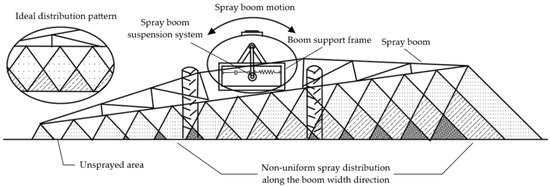
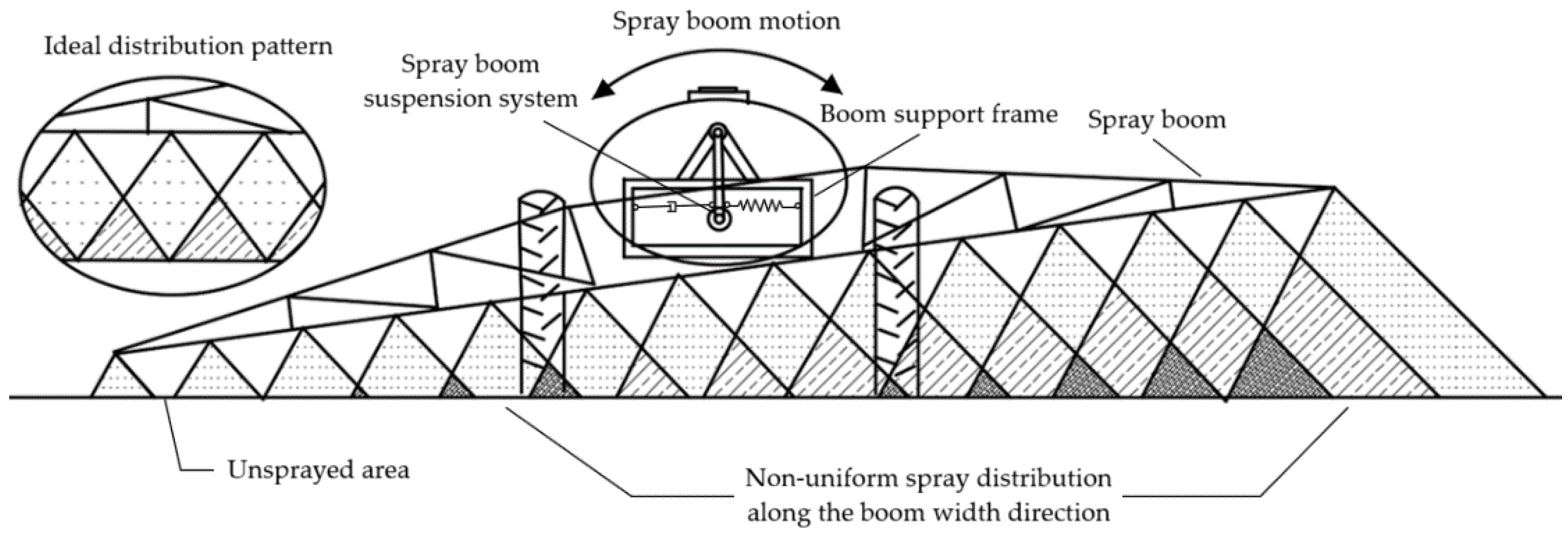
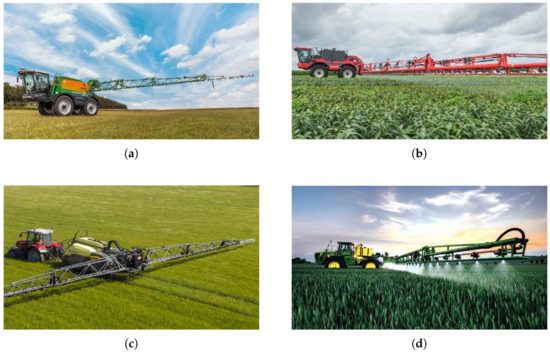
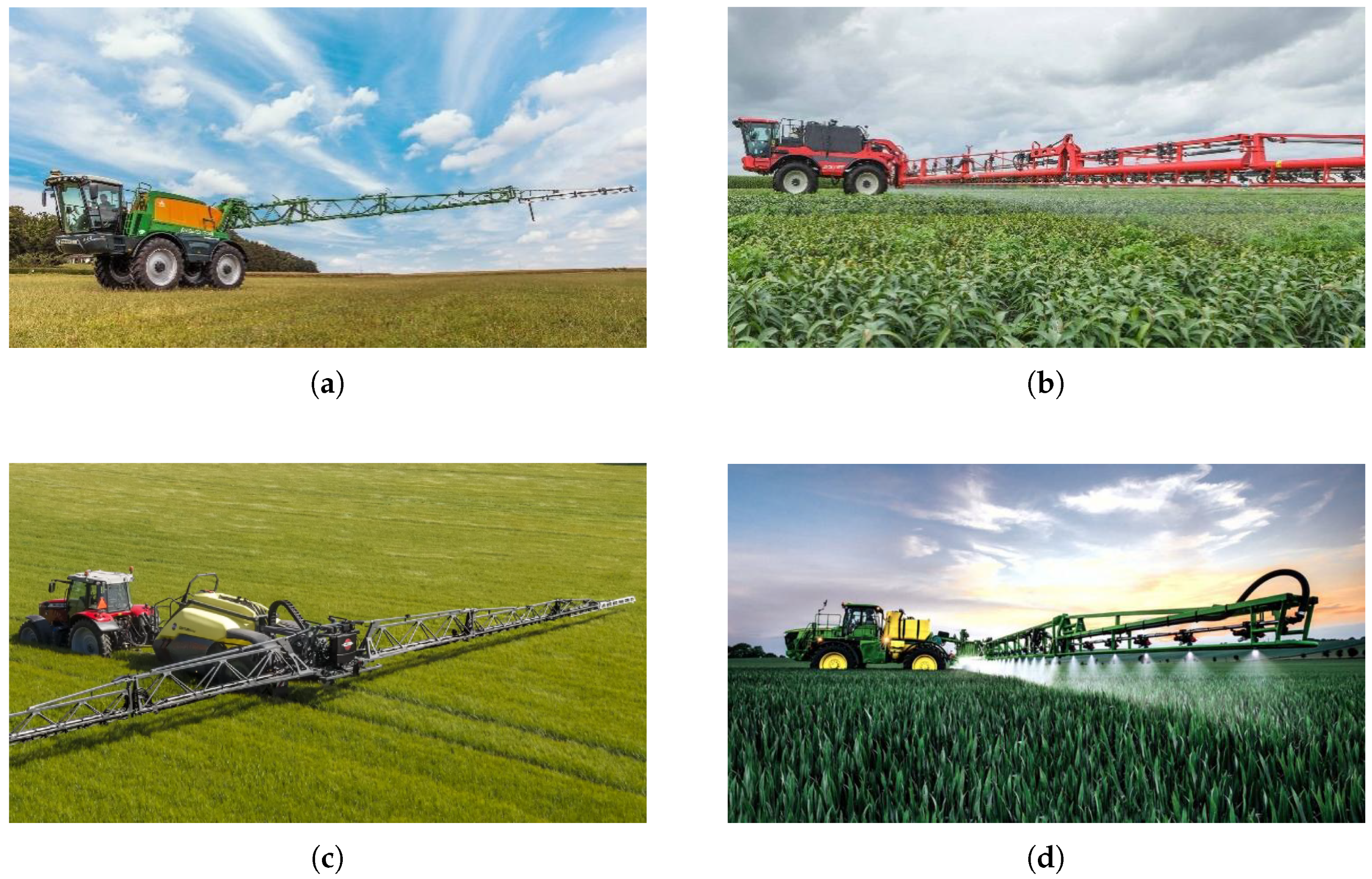
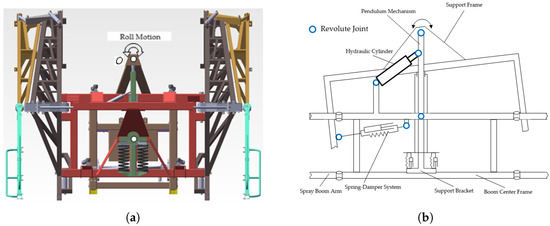
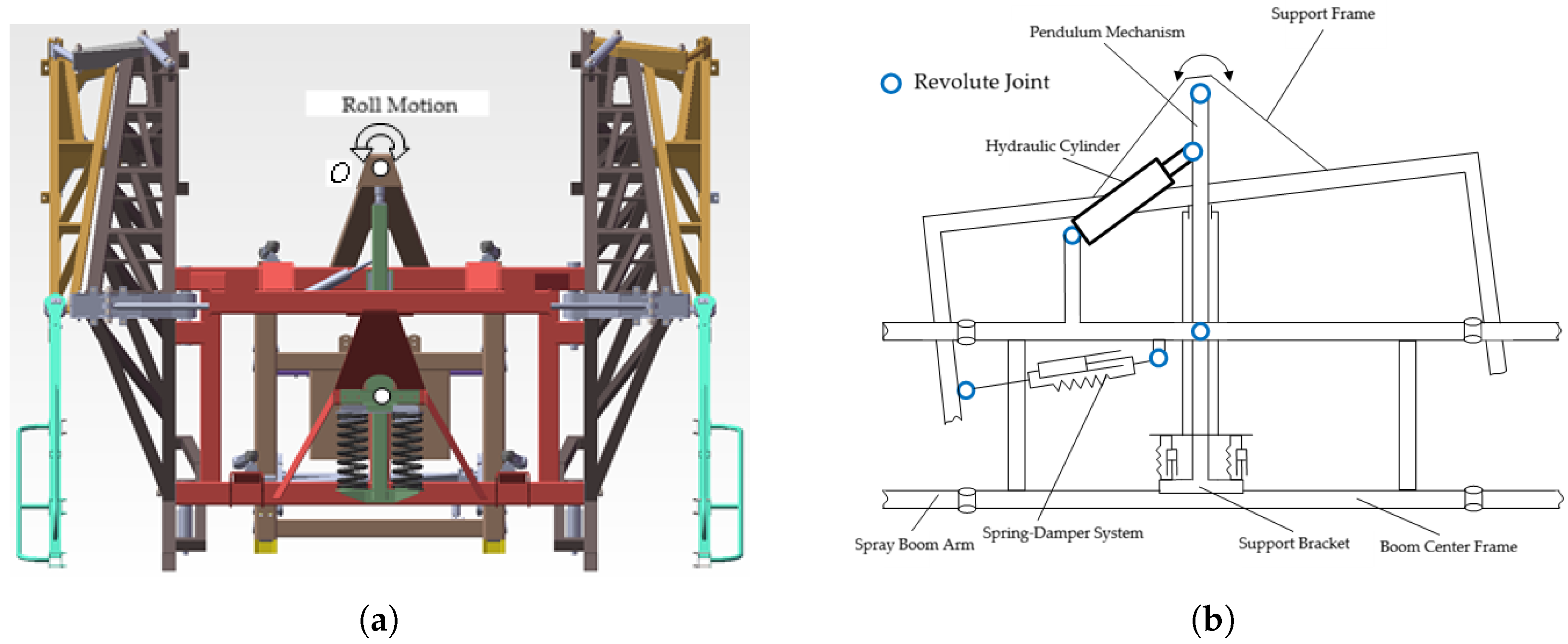
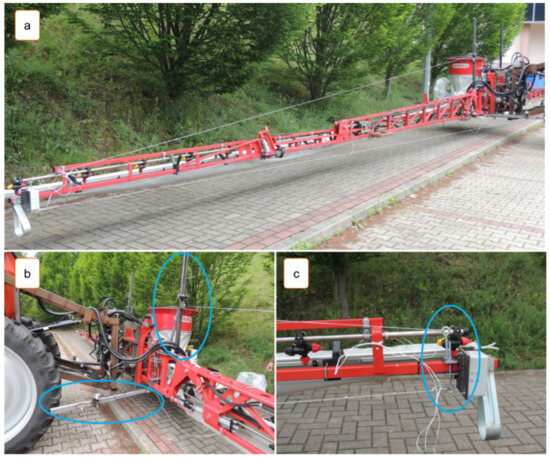
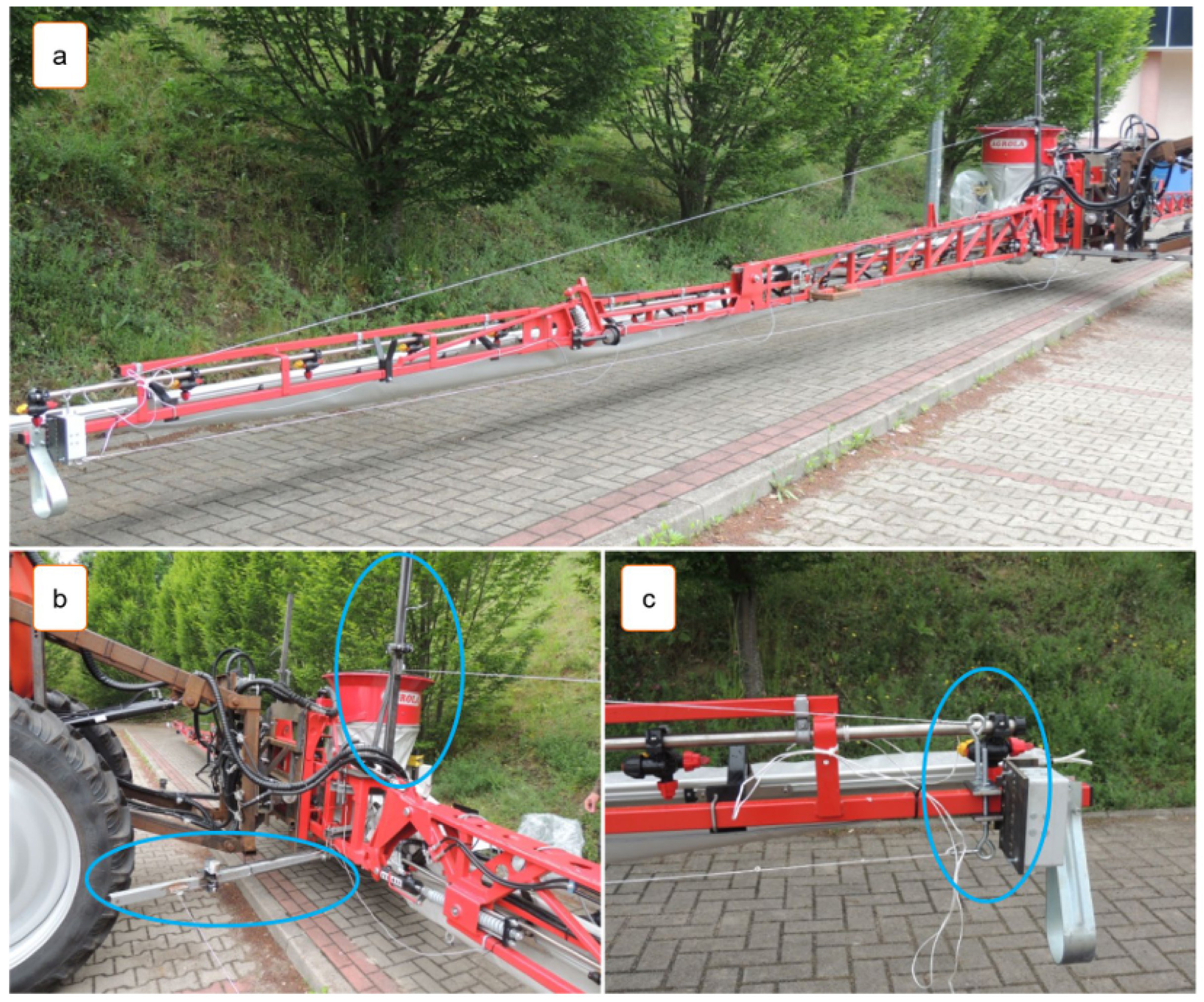
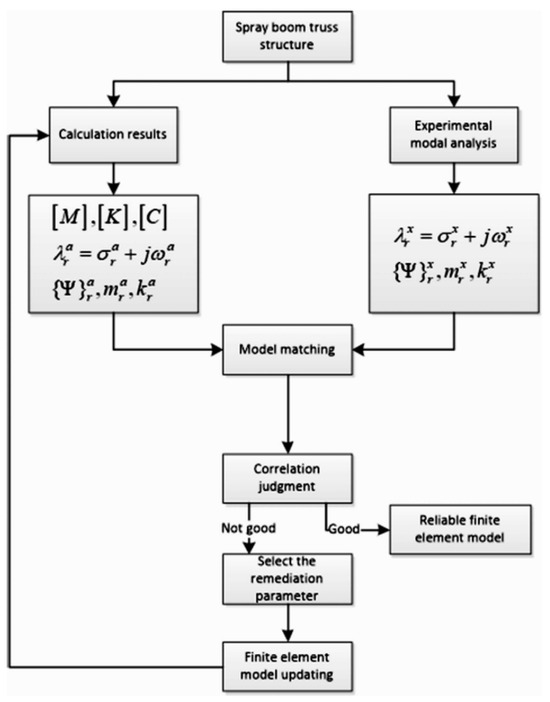
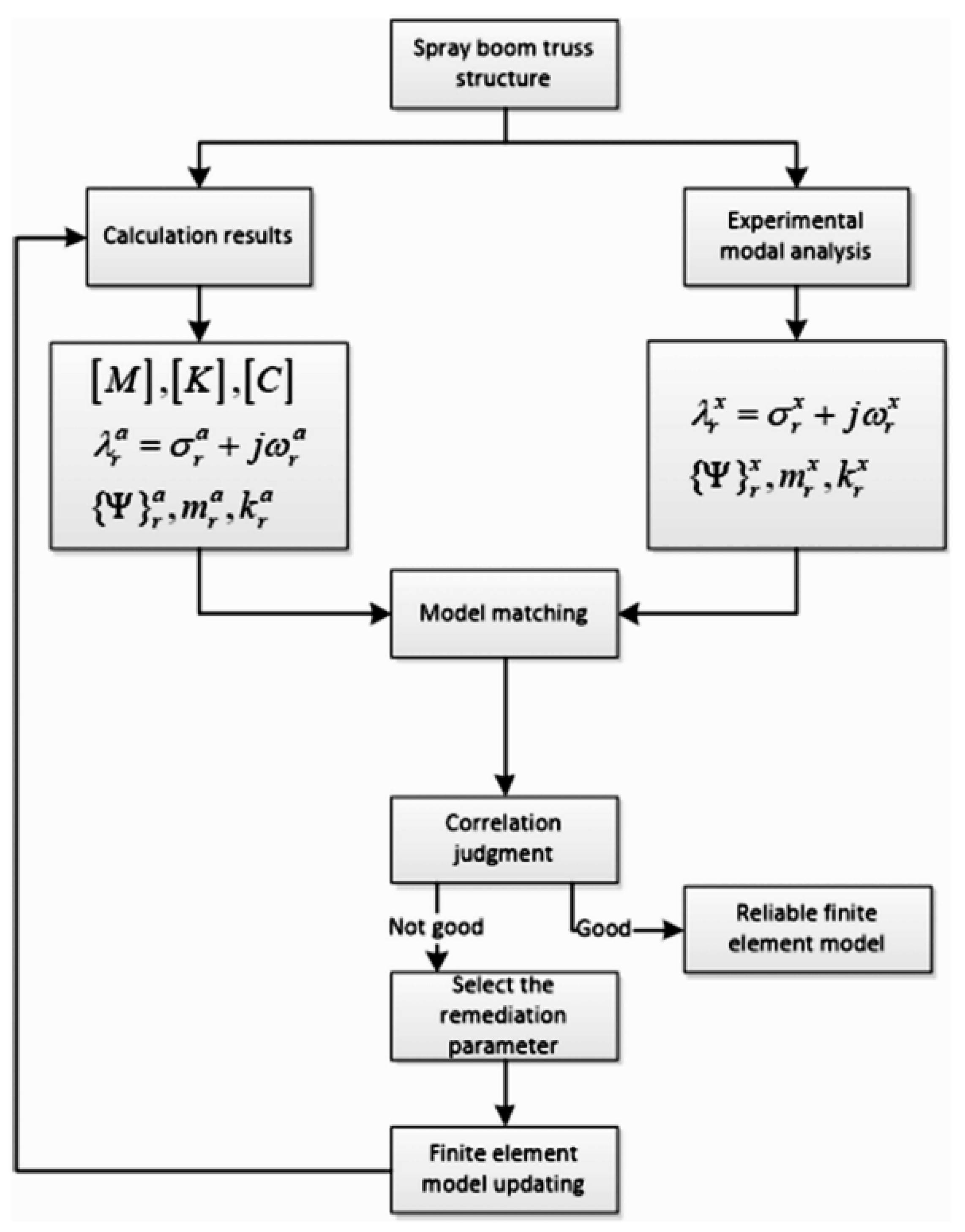
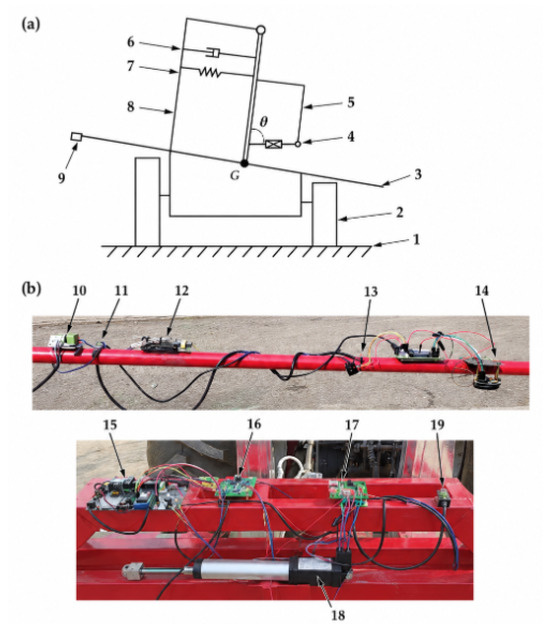
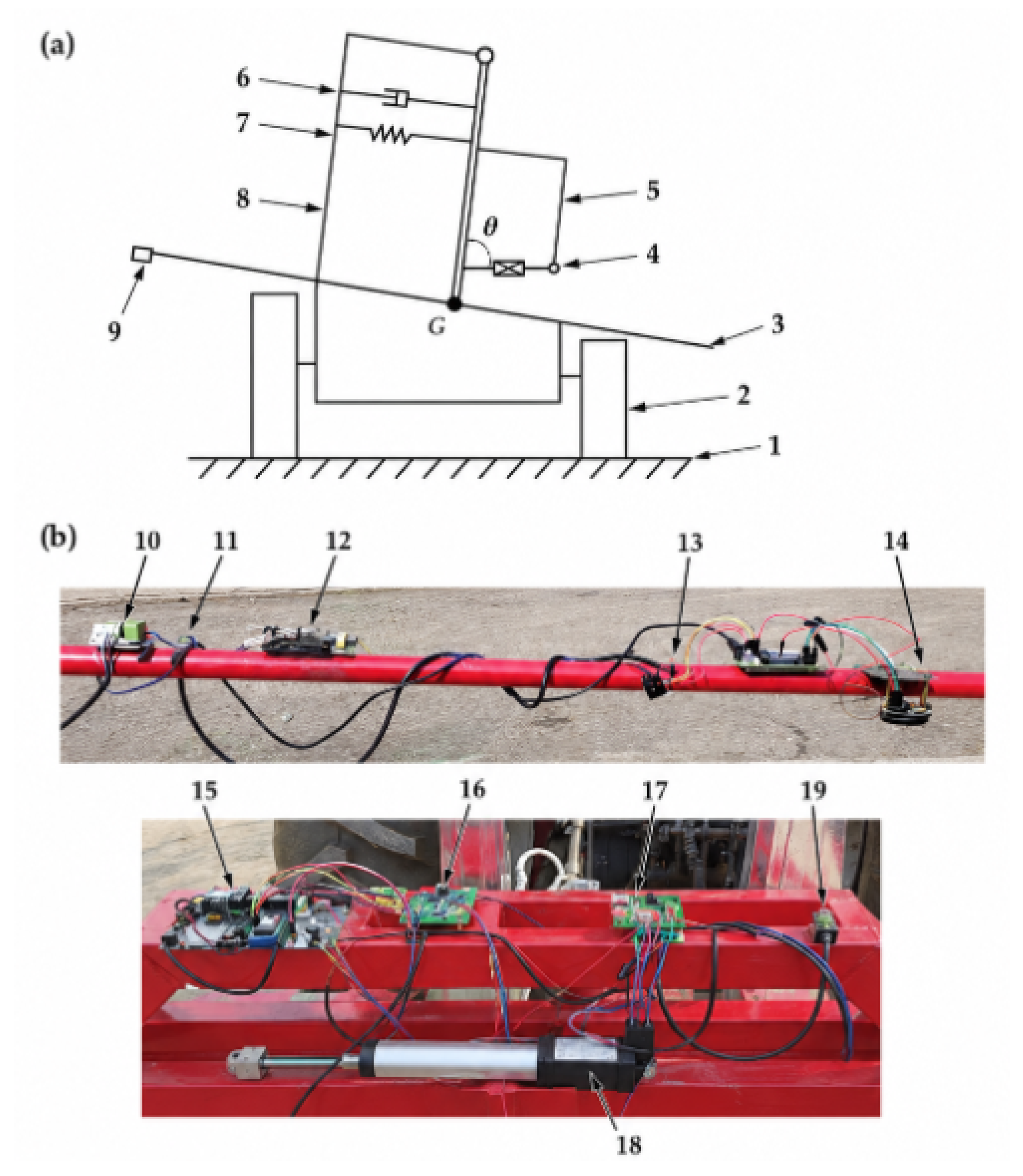

Disclaimer/Publisher’s Note: The statements, opinions and data contained in all publications are solely those of the individual author(s) and contributor(s) and not of MDPI and/or the editor(s). MDPI and/or the editor(s) disclaim responsibility for any injury to people or property resulting from any ideas, methods, instructions or products referred to in the content. |
© 2026 by the authors. Licensee MDPI, Basel, Switzerland. This article is an open access article distributed under the terms and conditions of the Creative Commons Attribution (CC BY) license.