


Abstract
Nitrogen (N) plays an important role in the growth and development of potatoes, but overapplication of the nutrient compromises environmental systems’ sustainability and limits tuber productivity and quality. A two-season study was carried out in 2022 and 2023 at Ofcolaco in the Mopane District of South Africa to determine the influence of N and nano micronutrients on tuber bulking rate (TBR), crop growth rate (CGR), and stomatal activities. A Randomized Complete Block Design (RCBD) fitted into a split-split plot arrangement with four replications was employed with the hypothesis that N and nano micronutrients applications will not have an effect on growth, stomatal activity, and bulking rate of potato cultivars. The main-plot factor was N rates (0, 80, 160, and 240) kg Nha−1; the sub-plot factor was nano-zinc (Zn) and copper (Cu) micronutrients, while cultivar, Mondial, and Valor were the sub-sub-plot factors. The application of N and nano Zn and Cu significantly influenced dry matter accumulation, TBR, CGR, and stomatal activities of both Mondial and Valor cultivars. From our study, the application of 160 kg Nha−1 in conjunction with nano micronutrients resulted in an increase in dry matter in the two cultivars, in comparison with the application of 240 kg Nha−1 without nano micronutrients. This observation was consistent in TBR and CGR in Mondial during the 2023 season. In 2022, the CGR under 160 kg Nha−1, along with nano micronutrients in Valor, achieved 90% of the CGC of sole 240 kg Nha−1. The physiological and plant growth parameters’ response to treatment in the two cultivars were generally optimized, when nano micronutrients were applied in conjunction with higher N rates of 160 and 240 kg Nha−1. Significant principal component factors influencing variability in growth and physiological parameters varied between seasons. The findings generally demonstrated that 160 kg Nha−1, in conjunction with micronutrients, has the potential to downsize N application in potato growth and development.
1. Introduction
Potato (Solanum tuberosum L.) is a major tuber crop that contains important nutritional components [1]. Outside of wheat, maize, and rice, it is the most widely consumed crop in developing countries [2]. Its production and consumption have tripled over the past decade [3] due to the application of nitrogen (N) fertilizers [4,5,6,7]. Nitrogen (N) fertilizer influences photosynthetic processes, leaf area index, dry matter production, and the absorption of other minerals [8,9,10,11,12]. It is also responsible for all the metabolic processes throughout plant growth and development, making it vital and unavoidable in crop production [8,13,14]. By promoting cellular multiplication, apical growth, concentration of chlorophyll, and photosynthesis process, the N in the form of nitrate enhances the number of leaves and rejuvenation of buds for new growth in plants [15]. This therefore implies that the element enhances processes integral to crop growth and tuber bulking in potatoes. Several scholars have found that N influences crop growth rate (CGR) and tuber bulking rate (TBR), which are important in modulating dry matter accumulation [16,17,18]. Additionally, Wen et al. [19] noted that N plays a role in the expansion of leaves, which contributes to CGR. Furthermore, N is responsible for the translocation of sugars from the canopy to tubers, which act as a sink for sucrose and starch synthesis, which contribute to TBR [20]. Tuber bulking rate (TBR) is one of the most important variables used to observe the gradual expansion and development of tubers over time, and it is an important determinant in potato yield [21]. However, the advantages of N are transient, resulting from the mobility, volatilization, and leaching properties of nitrogen-based fertilizers. The issue is exacerbated by excessive application, which does not reliably improve yield or quality. Hence, the integration of nano fertilizers, identified as a significant advancement in sustainable fertilizer application, is essential [22]. Nanoparticle fertilizers are reported to be highly reactive, readily bioavailable, and bioactive, which makes them effectively adhere to and increase surface areas [23]. Defined as modified compound fertilizers aimed at improving crop productivity and soil fertility, their minute particle size (<100 nm) renders them effective in nutrient use efficiency [24,25,26,27]. The utilization of nano Zn and Cu based micronutrients has a dual function in crop production, whereby the nano micronutrients operate as anti-disease agents and micronutrient fertilizers [28,29,30,31]. The elevation of defense mechanisms in crops by the incorporation of nano Zn and Cu micronutrients, may imply that the crop does not require utilization of N to combat abiotic and biotic stresses, which therefore allows the crop to channel the use of N effectively in growth and concentration of carbohydrates in leaves [32]. The concentration of carbohydrates in the form of sucrose or starch in potato production is observed to decrease because of translocation from leaves to tubers [19] which the process forms as an important part of tuber bulking. Furthermore, the two nano micronutrients, Zn and Cu, play vital roles in biochemical pathways, respiration, and photosynthesis of crops [33,34] and they have antifungal properties [31], rendering them essential in agricultural crop production [35]. The micronutrients enhance the development of plant roots, leaves, and the concentration of chlorophyll, which promotes assimilation of N. This process leads to an increase in canopy cover, tuber growth, and bulking. The combination of nano micronutrient fertilizers with straight conventional fertilizers has been documented to improve crop growth and development [36,37,38]. Hence, the study was conducted to evaluate the influence of N fertilizer in combination with nano Zn and Cu micronutrients on CGR, stomatal activities, and TBR of potato cultivars and the relationship among these variables.
2. Materials and Methods
2.1. Study Site
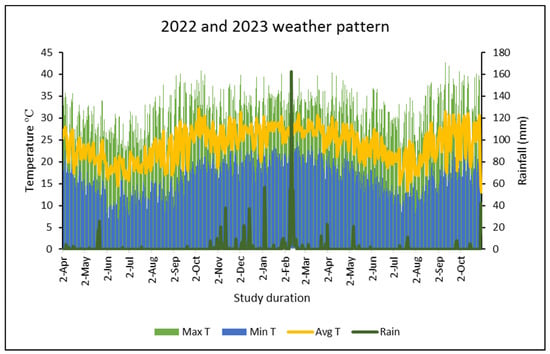
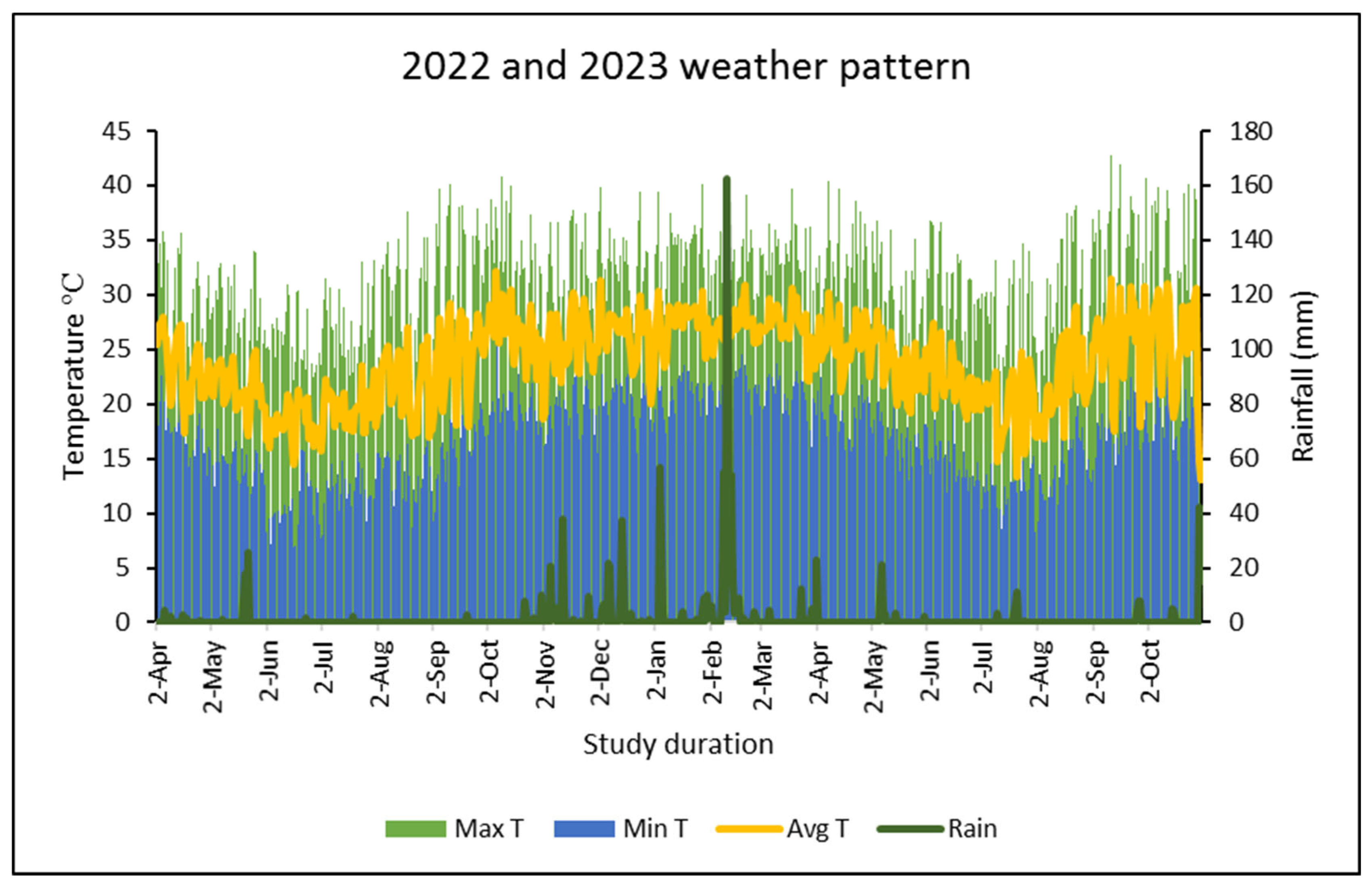
The study was carried out in the 2022 and 2023 cropping seasons, at the Itemeleng Bamakhutja co-operative farm (Ofcolaco) located in the Mopani district of the Limpopo province, South Africa. The Ofcolaco area experiences hot and rainy summers and warm winters, with temperatures ranging between 10 °C and 45 °C and an average annual rainfall of approximately 650 mm to 700 mm between October and April. Figure 1 demonstrates the weather data observed during the study period at Ofcolaco.
Figure 1.
Rainfall and temperature during the 2022 and 2023 cropping seasons. (The trial was established on the 31st of May in both the 2022 and 2023 cropping seasons, and final harvest was conducted in October from both cropping seasons).
2.2. Soil Analysis
Soil pH was determined using the electrode method by [39], and organic carbon was determined following the potassium dichromate method by Walkley and Black [40]. The ammonium concentration was determined using a spectrophotometer after the development of a blue color using a salicylate–nitroprusside colorimetric method [41]. Phosphorus (P) was extracted by adding 50 mL of Bray-1 solution to 6.67 g of the soil sample, following the method of Bray and Kurtz [42]. The micronutrients were extracted using 0.25 M ethylene diamine tetraacetic acid (EDTA) [43] and analyzed using an ICP—9000 emissions. Table 1 presents the initial soil chemical properties for the 2022 and 2023 cropping seasons.
Table 1.
Initial soil chemical results for the 2022 and 2023 cropping seasons.
2.3. Trial Establishment and Management
The study was established on the 31 May 2022 and 2023 as a Randomized Complete Block Design (RCBD) in a split-split plot treatment design with four replications. The main-plot factor was nitrogen (N) rates 0 kg Nha−1, 80 kg Nha−1, 160 kg Nha−1, and 240 kg Nha−1, the sub-plot treatment was a combined nano-Zn and Cu micronutrient treatment (nano− = no nano micronutrient application and nano+ = nano micronutrient applied), and the sub-sub-plot treatment was two commercial potato cultivars [Mondial (M) and Valor (V)]. Nitrogen fertilizer was assigned to the main plot to prevent cross-contamination among experimental units.
A tractor with a disk plow was used to till the soil, followed by leveling and disking with hand hoes and rakes to prepare seedbeds and demarcate experimental units. The sub-sub-plot size was 4 m by 3 m, with inter-row spacing of 0.9 m and intra-row spacing of 0.2 m, resulting in 80 potato seed tubers per plot. Potato seed tubers were planted at a depth of 10 cm. The first split of the N fertilizer rate was applied at planting in each row and the second split at 60 days after emergence (DAE). Phosphorus was applied as a recommended dose of the fertilizer, which was consistent across the establishment at 60 kg Pha−1. Nano Zn and Cu micronutrient concentration of 20 mL was diluted in a 100 L tank and allowed to sit for an hour. From the diluted solution, 8 L was foliar applied to the foliage per experimental unit using a 16 L knapsack calibrated with a flat-fan nozzle. The non-nano micronutrient treatment plots also receive the same quantity of plain water for consistency. This treatment was first applied at 90% emergence, approximately 4 weeks after planting, and then at two-week intervals until 80DAE which was within the four month period used to run the study from emergence until harvesting time. Prior to seedling emergence, the potato seeds were irrigated with plain water at a rate of 8 L per experimental unit.
2.4. Data Collection
Three potato plants were randomly selected from the two middle rows in each experimental unit for non-destructive bi-weekly data collection, from 90% seedling emergence to physiological maturity. The variables collected were measured from fully developed and exposed leaves between 09:00 and 15:30 h on each day of data collection. Chlorophyll content was collected using CCM 200; LAI was measured with LI-3100 Area Meter (LICOR, Inc., Lincoln, NE, USA); NDVI was collected with GreenSeeker Handheld Crop Sensor; and the LCi-SD Ultra-Compact Photosynthesis System (ADC Bio Scientific, Hoddesdon, UK) was used on fully developed leaves to collect stomatal conductance (gs), photosynthetic rate (A), and transpiration rate (E) from 9 a.m. to 3 p.m. [44]. For destructive purposes, 3 plants were selected for biomass assessment, crop growth rate (CGR) and tuber bulking rate (TBR) were determined at 20, 40, 60, and 80 days after emergence (DAE). Dry matter accumulation from the 80DAE per plot was obtained from the aboveground combined weight of leaves and stems, which were oven-dried at 65 °C until a consistent weight was achieved. The following equations were utilized:
- Intercepted Photosynthetic Active Radiation (Ipar):
- Crop Growth Rate (Cgr):
- Tuber Bulking Rate (Tbr):
2.5. Data Analysis
Data was analyzed using statistical analysis software (SAS, version 9.4). The difference among treatment means was assessed using the standard analysis of variance (ANOVA). Tukey’s HSD test at an alpha level of (p ≤ 0.05) was used to compare the difference between the treatment means. Normality and homogeneity tests were carried out using skewness and kurtosis as well as Levene’s test for equality of variance. Principal component analysis (PCA) and regressions were used to determine the extent of the relationship between physiological parameters with tuber bulking rate.
3. Results
3.1. Treatment Effect on Dry Matter Accumulation
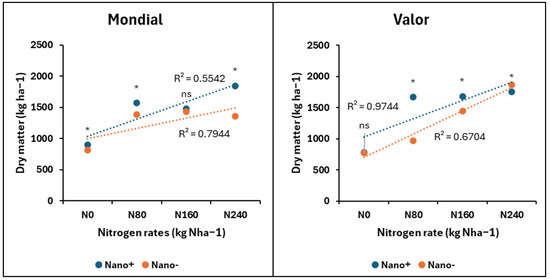
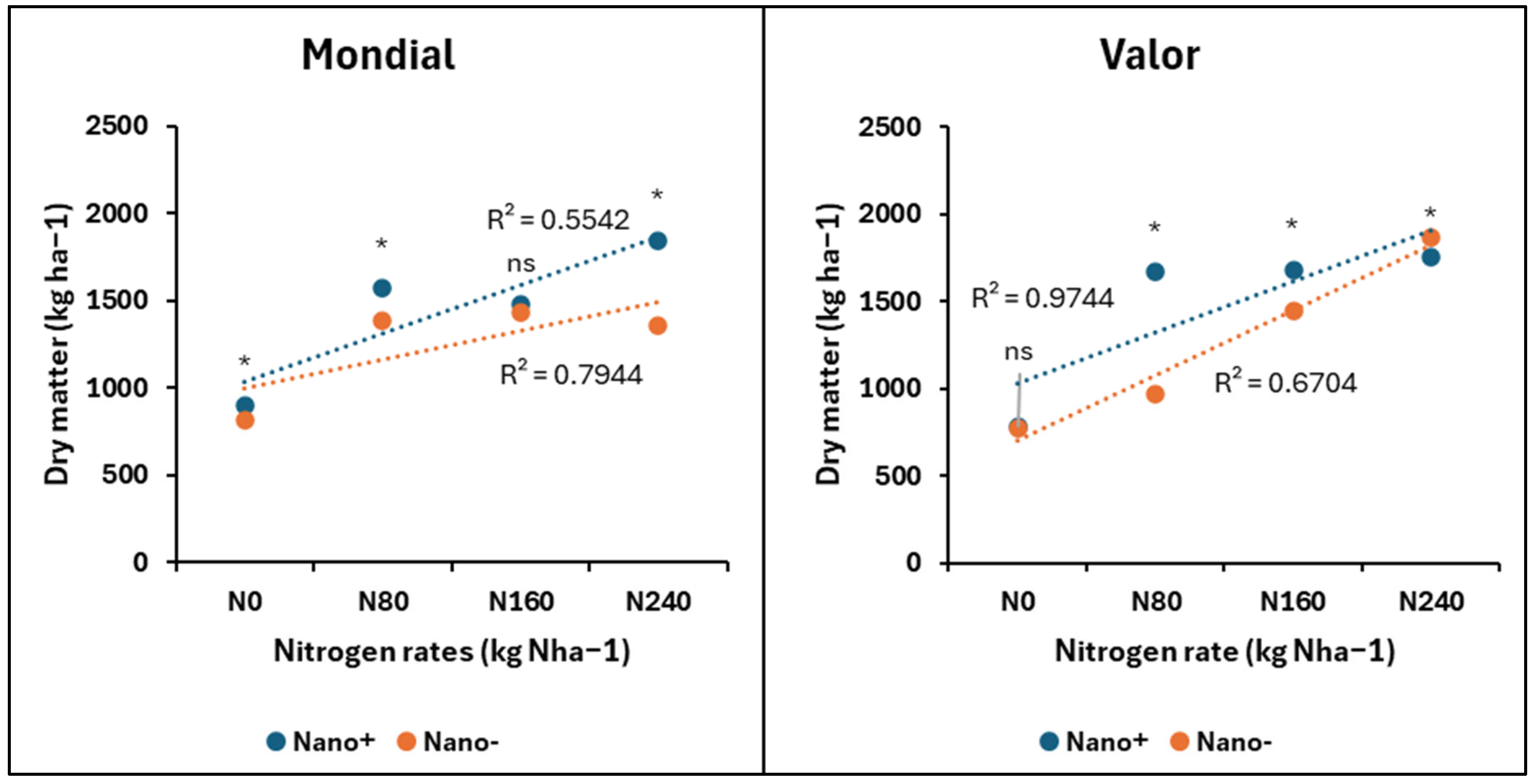
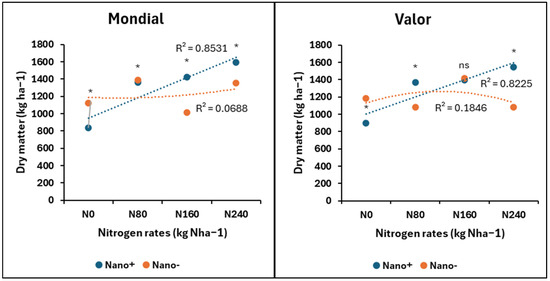
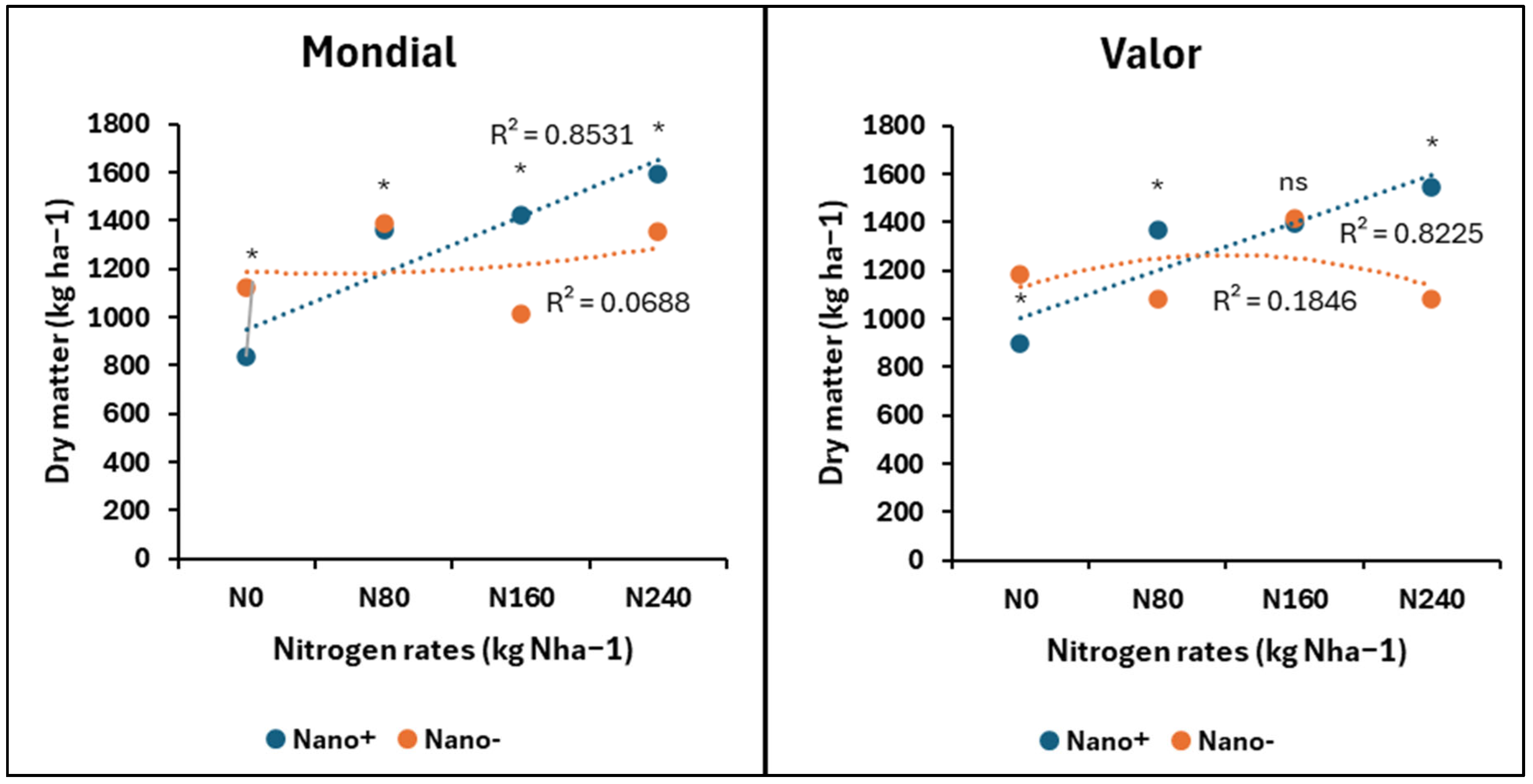
The results showed that nitrogen (N) fertilizer, nano Zn, and Cu micronutrients, cultivar, and their respective interactions significantly affected dry matter accumulation in both the 2022 and 2023 cropping seasons (Figure 2 and Figure 3). Furthermore, dry matter accumulation increased with N rates, with a more pronounced increase recorded when nano micronutrients were applied in both cultivars over the two seasons.
Figure 2.
Treatment effect on dry matter at 80DAE in 2022. (Nano− = without nano micronutrient application; Nano+ = with nano micronutrient application; * = significance; ns = non-significant).
Figure 3.
Treatment effect on dry matter at 80DAE in 2023. (Nano− = without nano micronutrient application; Nano+ = with nano micronutrient application; * = significance; ns = non-significant).
In 2022, differences in dry matter yield were observed among the nano micronutrient-treated plants at all N application rates, except at 160 kg Nha−1 in Mondial, demonstrating an increasing linear relationship within the nano micronutrient treatment (Figure 2). The results indicated that, in Mondial, the combination of nano micronutrients with nitrogen at 80 kg Nha−1, 160 kg Nha−1, and 240 kg Nha−1 led to increases in dry matter of 74.7%, 64.6%, and 105.2%, respectively, when compared to the unfertilized plants. With the application of nano micronutrients, a modest increase of 5.4% in dry matter accumulation was measured at 160 kg Nha−1 in comparison to 240 kg Nha−1 in the same cultivar. Without the micronutrients, the increase was 9.3% (Figure 2). In the cultivar, Valor, differences in dry matter yield of the micronutrient-treated plants were observed only when nitrogen fertilizer was applied, ranging from 1669.0 kg ha−1 to 1752.3 kg ha−1. In comparing the dry matter yield of Valor plants treated with nano zinc and copper at a nitrogen application rate of 160 kg Nha−1 to those receiving 240 kg Nha−1 without micronutrients, the former achieved approximately 90.2% of the dry matter yield of the latter, indicating the potential for decreased nitrogen application when utilizing nano micronutrients in this cultivar (Figure 2).
During the 2023 cropping season, variations in dry matter yield, attributable to nano micronutrient application, were evident across all nitrogen application rates, revealing a linear nitrogen effect with micronutrient application and a quadratic relationship in the absence of nano micronutrient application in the two cultivars (Figure 3). Dry matter accumulation ranged from 1366.7 kg ha−1 to 1542.6 kg ha−1 when N treatments were combined with nano micronutrients. The peak dry matter yield under no micronutrients occurred at 80 kg Nha−1 application in Mondial and at 160 kg Nha−1 rates in Valor. There was no positive effect of nano micronutrient application in both cultivars. In Mondial, a marginal decrease of 2.0% occurred with nano micronutrient application at 80 kg Nha−1 rate, but at 160 and 240 kg Nha−1 rates, nano micronutrient application increased dry matter yield by 40.3% and 17.6%, respectively. In Valor, nano micronutrient application increased dry matter yield by 26.2% and 30.0% at 80 kg Nha−1 and 240 kg Nha−1, respectively. From the results, it was also observed that the dry matter yield of plants treated with nano zinc and copper at a nitrogen application rate of 160 kg Nha−1 was 5.0% higher than those receiving 240 kg Nha−1 without micronutrients in Mondial and 29.3% higher in Valor.
3.2. Treatment Effect on Tuber Bulking Rate (TBR)
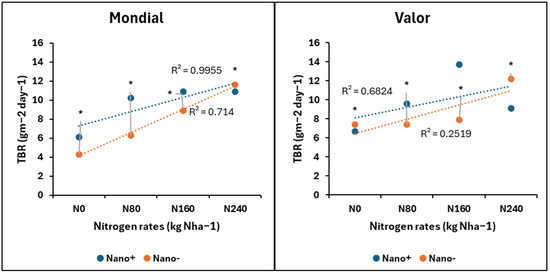
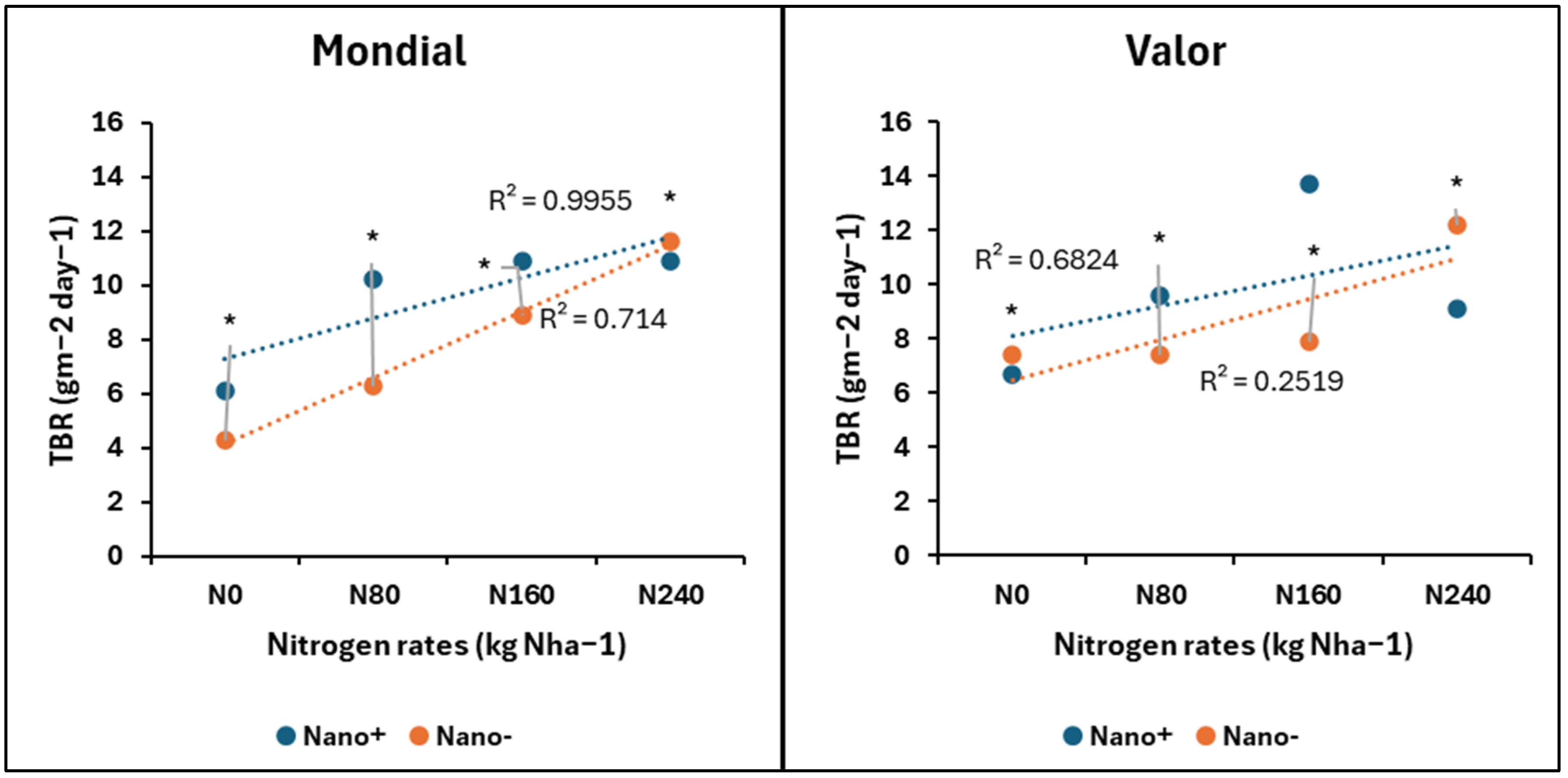
Tuber bulking rate (TBR) is an important parameter in potato production, with a significant impact on growth rate, dry matter accumulation, and tuber yield. TBR was measured from 40 to 80 days after emergence (DAE) in both cultivars and seasons in this study. Generally, the three treatment factors and their interactions significantly influenced the TBR of potato in both the 2022 and 2023 cropping seasons. The tuber bulking rate generally increased linearly with N rates in the two cultivars, irrespective of nano Zn and Cu micronutrients application across sampling dates in the two seasons (Figure 4).
Figure 4.
Nitrogen and nano micronutrients effect on tuber bulking rate in 2022. (Nano− = without nano micronutrient; Nano+ = with nano micronutrient; * = significance; ns = non-significant).
In 2022, the N rates of 80 kg Nha−1 to 240 kg Nha−1, combined with nano micronutrients, resulted in TBR ranging between 10.2 and 10.9 gm−2 day−1 in the Mondial cultivar (Figure 4). While N treatments without nano micronutrients showed that 240 kg Nha−1 rate had the highest TBR of 11.6 gm−2 day−1, followed by 160 kg Nha−1 with 8.9 gm−2 day−1 in the same cultivar. The N control treatment recorded the lowest TBR of 4.3 gm−2 day−1 in Mondial. The 160 kg Nha−1 combined with nano micronutrients treatment showed a 94.0% of bulking rate, when contrasted with the sole 240 kg Nha−1 rate in Mondial.
Treatments applied with nano micronutrients showed that the highest N treatment and 80 kg Nha−1 rate, recorded the second highest TBR with 9.1 and 9.6 gm−2 day−1 in the Valor cultivar, respectively. While, the second highest N rate recorded the highest TBR of 13.7 gm−2 day−1 in the same cultivar. Sole N treatments recorded a TBR range of 7.4–7.9 gm−2 day−1 between 0 and 160 kg Nha−1 fertilizer rates. The 240 kg Nha−1 rate recorded a TBR of 12.2 gm−2 day−1 in Valor. However, the contrast between 160 kg Nha−1 combined with nano micronutrients showed a 12.2% increase compared to sole 240 kg Nha−1 rate in Valor (Figure 4).
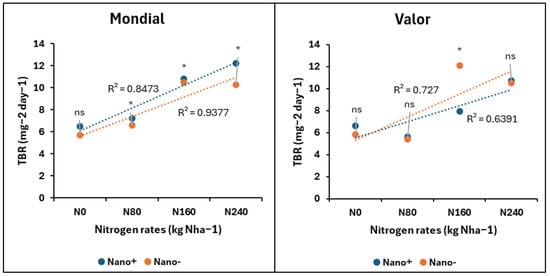
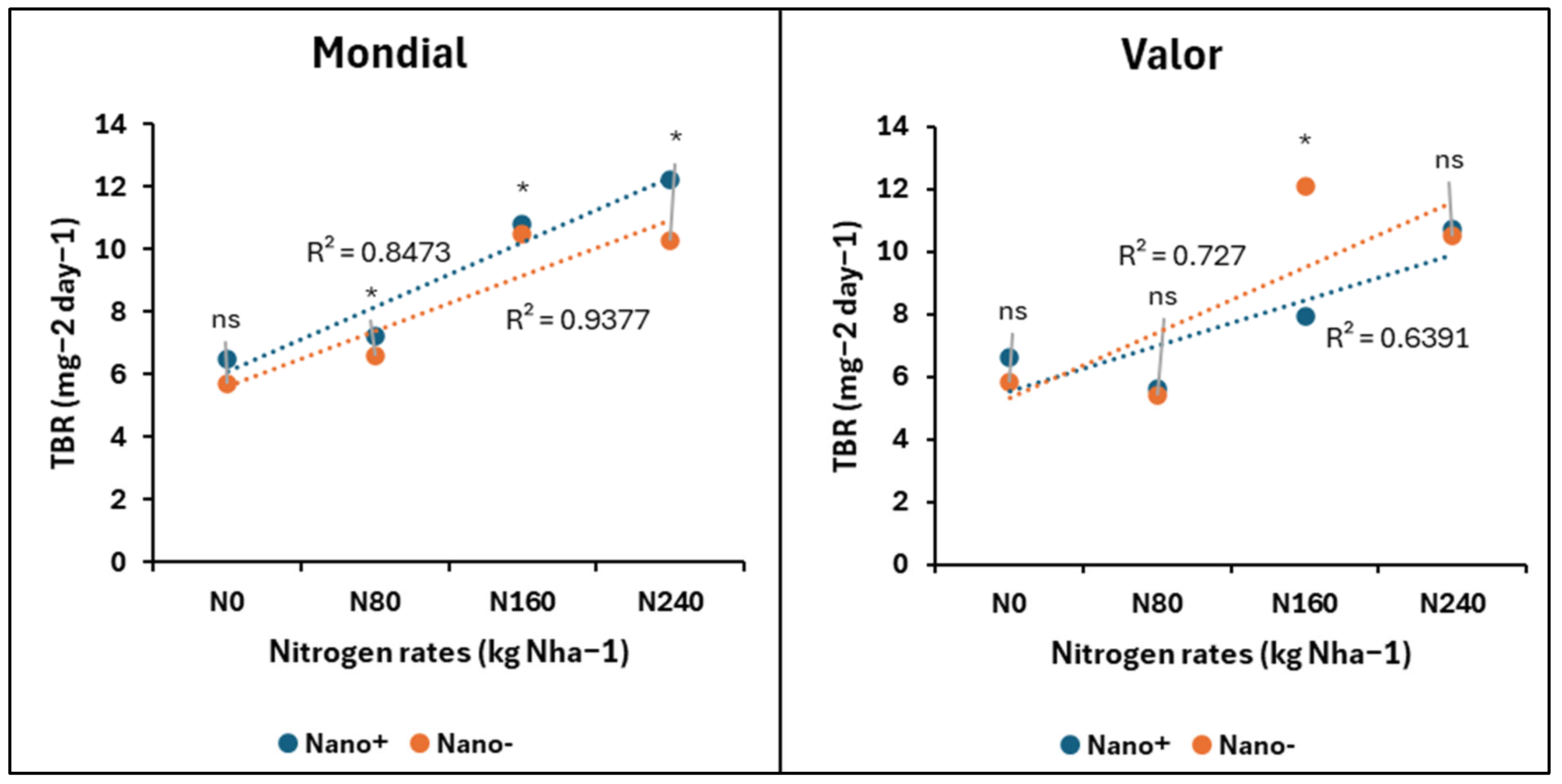
During the 2023 cropping season, the effect of nano micronutrient on TBR in Mondial was observed under N fertilized plants but not in the unfertilized control treatment (Figure 5). The 240 kg Nha−1 and 160 kg Nha−1 rates, combined with nano micronutrients, recorded the highest TBR values of 12.2 and 10.8 gm−2 day−1, respectively, compared to 6.5 gm−2 day−1 under 0 kg Nha−1 in Mondial. A similar pattern was noted under N treatments without nano micronutrients, whereby 240 kg Nha−1 and 160 kg Nha−1 recorded the highest TBR of 10.3 and 10.5 gm−2 day−1 in Mondial, respectively. The 160 kg Nha−1 rate in combination with nano micronutrients recorded a 5.0% TBR increase compared to sole 240 kg Nha−1 rate in Mondial.
Figure 5.
Nitrogen and nano micronutrients effect on tuber bulking rate in 2023. (Nano− = without nano micronutrient; Nano+ = with nano micronutrient; * = significance; ns = non-significant).
In the Valor cultivars, no significant effect of nano micronutrients was observed except under 160 kg Nha−1 application rate, where TBR was significantly reduced (75.2%) with nano micronutrient application.
3.3. Treatment Impact on Crop Growth Rate (CGR)
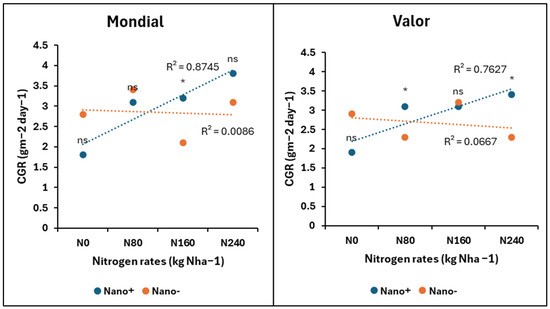
Nitrogen fertilizer, nano Zn and Cu micronutrients, and cultivar significantly influenced crop growth rate (CGR) in both the 2022 and 2023 cropping seasons. The interaction effects among the treatments were also observed. The results showed an increase in CGR with the increase in N fertilizer rates and the application of nano Zn and Cu micronutrients in both cultivars and seasons (Figure 6 and Figure 7).
Figure 6.
Effect of nitrogen and nano micronutrients on crop growth rate at 80DAE in 2022. (Nano− = without nano micronutrient; Nano+ = with nano micronutrient; * = significance; ns = non-significant).
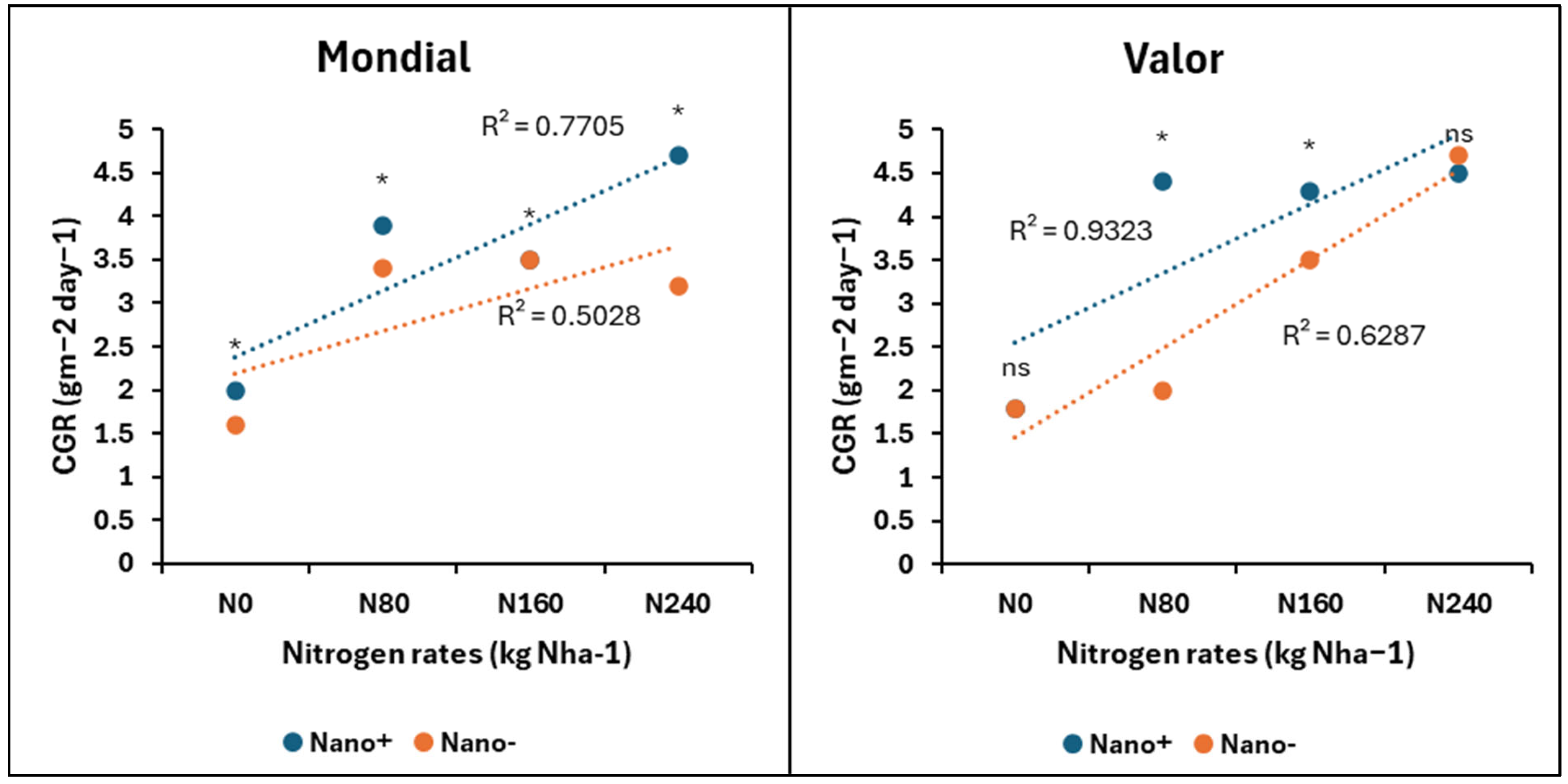
Figure 7.
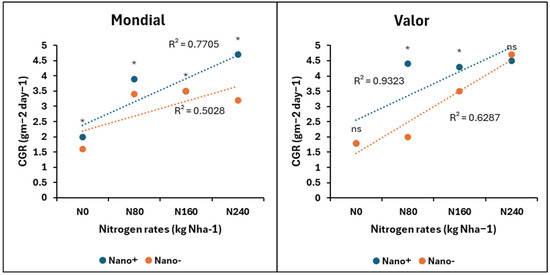
Effect of nitrogen and nano micronutrients on crop growth rate at 80DAE in 2023. (Nano− = without nano micronutrient; Nano+ = with nano micronutrient; * = significance; ns = non-significant).
In the 2022 season, the effect of nano Zn and Cu micronutrients on CGR in Mondial was observed at all N rates except at the 160 kg Nha−1 rate (Figure 6). CGR ranged from 3.9 to 4.7 gm−2 day−1 in N treatments combined with nano micronutrients in Mondial, and from 3.2 to 3.5 gm−2 day−1 without nano micronutrients in the same cultivar. It was also observed that the plant CGR at 160 kg Nha−1 rate, combined with nano micronutrients, was increased by 9.0% compared to 240 kg Nha−1 rate without nano micronutrients in the Mondial cultivar.
In the Valor cultivar, a significant nano micronutrient effect was observed only in plants that received 80 kg Nha−1 and 160 kg Nha−1 rates, in combination with nano micronutrients, recording 120.0% and 22.8% increase, respectively, compared to the respective treatments without micronutrients (Figure 6). CGR in Valor with micronutrients ranged from 4.3 to 4.5 gm−2 day−1 under 80 kg Nha−1 to 240 kg Nha−1 fertilizer rates, while without micronutrients, the range was 2.0 to 4.7 gm−2 day−1 under the same fertilizer rates. The 160 kg Nha−1 rate with nano micronutrients recorded a marginal decrease of 8.5% compared to the sole 240 kg Nha−1 rate (Figure 6).
In the 2023 cropping season, no significant difference in CGR was observed between plants that received nano micronutrients and those without under the 0 kg Nha−1, 80 kg Nha−1, and 240 kg Nha−1 treatment rates in the Mondial Cultivar (Figure 7). A similar observation was also made under 0 kg Nha−1 and 160 kg Nha−1 in the Valor cultivar. Under 160 kg Nha−1 in Mondial, the application of nano micronutrient increased CGR by 52.0% compared to those without. In the Valor cultivar, the increase with micronutrient application was 34.7% at 80 kg Nha−1.
CGR ranged from 1.8 to 3.8 gm−2 day−1 under treatments applied with micronutrients, and from 2.1 to 3.4 mg−2 day−1 without nano micronutrients in Mondial. While in Valor CGR ranged from 1.9 to 3.4 gm−2 day−1 with micronutrients, and from 2.3 to 3.2 gm−2 day−1 without micronutrients (Figure 7).
3.4. Treatment Effect on Leave Chlorophyll Content and Normalized Difference Vegetative Index (NDVI)
Leaf chlorophyll content and NDVI are two critical indicators used in agriculture and plant science to assess crop health, growth, and productivity. Chlorophyll content gives direct insight into a plant’s photosynthetic capacity and nitrogen status, whereas NDVI provides a quick view of crop health based on greenness and vigor. Nitrogen, nano Zn and Cu micronutrients, and cultivar significantly influenced both leaf chlorophyll content and normal difference vegetative index (NDVI) in the 2022 and 2023 cropping seasons (Table 2). The interaction effects of these treatments were also observed. Generally, chlorophyll content and NDVI increased with N fertilizer and nano Zn and Cu micronutrients application in both Mondial and Valor cultivars in the two seasons. In 2022, it was observed that the leaf chlorophyll content measured under 240 kg Nha−1, in combination with nano Zn and Cu, increased chlorophyll content by 17.1% and 24.2% in Mondial and Valor, compared to the unfertilized N plot. The least chlorophyll content of 42.7 mg g−1 and 43.2 mg g−1 in Mondial and Valor, respectively, was recorded in unfertilized nitrogen plants (Table 2). Regarding NDVI, the results showed that the sole 240 kg Nha−1 recorded the highest NDVI in both cultivars (Table 2). However, when 160 kg Nha−1 was combined with nano Zn and Cu micronutrients in the Mondial cultivar, the NDVI was equivalent to that of plants receiving 240 kg Nha−1. It was also observed that the application of nano Zn and Cu micronutrients without N fertilizer application resulted in the lowest NDVI of 0.56 and 0.59 in the Mondial and Valor cultivars, respectively.
Table 2.
The interaction of nitrogen, nano Zn and Cu micronutrients, and cultivar on CHL and NDVI at 60DAE in 2022 and 2023.
In the 2023 cropping season, the 240 kg Nha−1 combined with nano Zn and Cu micronutrients recorded the highest chlorophyll content of 47.9 mg g−1 and 48.8 mg g−1 in Mondial and Valor cultivars, respectively (Table 2). Plants receiving 240 kg Nha−1 without nano micronutrients exhibited similar results. The least chlorophyll content was recorded under unfertilized nitrogen plots with 42.7 mg g−1 and 43.2 mg g−1 for Mondial and Valor, respectively (Table 2). The NDVI had a similar trend, whereby 240 kg Nha−1 combined with nano Zn and Cu micronutrients recorded 47.9 mg g−1 and 48.8 mg g−1, followed by sole 240 kg Nha−1 with 0.76 and 0.78 for both cultivars. The least NDVI was similarly recorded under control treatment with 0.57 and 0.60 in Mondial and Valor cultivars, respectively (Table 2).
3.5. Treatment Effect on Leaf Area Index (LAI) and Intercepted Photosynthetic Active Radiation (IPAR) in 2022 and 2023
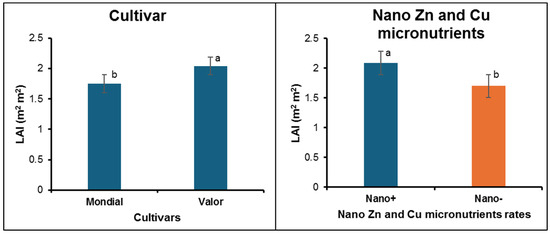
There were significant effects of N fertilizer, nano Zn and Cu micronutrients, and cultivar and their interactions on leaf area index (LAI) and intercepted photosynthetic active radiation (IPAR) in the 2022 and 2023 seasons (Table 3). However, this observation was not evident with LAI in 2022. The Valor cultivar had the highest LAI of 2.04 m2 m2 compared to Mondial with 1.75 m2 m2 in 2022 (Figure 8). It was also found that the nano Zn and Cu micronutrient-treated plants produced the highest LAI of 2.09 m2 m2 (Figure 8).
Table 3.
Interaction effect of nitrogen, nano Zn and Cu micronutrients, and cultivar on LAI, and IPAR in 2022 and 2023.
Figure 8.
The effect of cultivar and nano Zn and Cu micronutrients on leaf area index (LAI) in 2022. (Different alphabets shows the significant difference of means).
The results showed that when the 240 kg Nha−1 and 160 kg Nha−1 application rates were combined with nano Zn and Cu micronutrient treatments, higher IPAR values of 538.5 µmol m−2 s−1 and 577.7 µmol m−2 s−1 were recorded in Mondial and Valor, respectively, in 2022 (Table 3). The results further showed that the mean IPAR under different N rates with and without nano micronutrients were not different from each other.
In the 2023 cropping season, it was observed that the application of 240 kg Nha−1 combined with nano Zn and Cu micronutrients recorded the highest LAI of 2.69 m2 m2 and 3.12 m2 m2 in Mondial and Valor cultivars (Table 3). This was followed by 2.48 m2 m2 and 2.53 m2 m2 which were recorded under the sole 240 kg Nha−1 in the two cultivars. The lowest LAI was recorded under the unfertilized N plots, reaching 1.25 m2 m2 and 1.41 m2 m2 in Mondial and Valor cultivars, respectively (Table 3). A similar pattern was observed with IPAR, where the 240 kg Nha−1, combined with nano Zn and Cu micronutrients treatment, recorded the highest IPAR of 991.2 µmol m−2 s−1 and 1125.8 µmol m−2 s−1 in Mondial and Valor cultivar. This was followed by 240 kg Nha−1 with 964.2 µmol m−2 s−1 and 983.2 µmol m−2 s−1 in both cultivars without nano micronutrients. Furthermore, it was observed that 160 kg Nha−1 combined with nano Zn and Cu micronutrients recorded an IPAR which were 94.9% and 95.1% of the values recorded under 240 kg Nha−1 rate when nano micronutrients in Mondial and Valor, respectively. The least IPAR was recorded under unfertilized N plots in both cultivars (Table 3).
3.6. Treatment Effect on Stomatal Activities
Stomatal activities, including stomatal conductance (gs), photosynthesis (A), and transpiration (E) responded to nitrogen and nano micronutrients in the Mondial and Valor cultivars in both the 2022 and 2023 cropping seasons, together with some interaction effects (Table 4). However, on average, the stomatal responses were inconsistent across the N rates in both cultivars (Table 4).
Table 4.
The interaction influence of nitrogen, nano Zn and Cu micronutrients, and cultivar on stomatal activities in 2022 and 2023.
3.6.1. Stomatal Conductance
In 2022, at 240 kg Nha−1, no difference between sole N and combined application was recorded in Mondial. However, the conductance was observed to be higher compared to lower N rates. When combined with nano micronutrients, higher stomatal conductance was only recorded in plants receiving 80 kg Nha−1, compared to those without nano micronutrients in the Mondial cultivar. The Valor cultivar recorded a higher stomatal conductance under 160 kg Nha−1, when combined with nano micronutrients, compared to 240 kg Nha−1 in conjunction with nano micronutrients. However, the observation under 160 kg Nha−1 was not significantly different from the sole 240 kg Nha−1 rate. In 2023, both Mondial and Valor plants exhibited higher stomatal conductance when supplied with sole nitrogen, with the exception of the 160 kg Nha−1 treatment, where the response was comparable. In the Valor cultivar, higher stomatal conductance was recorded in plants without nano micronutrients at all fertilizer rates except for 160 kg Nha−1 in 2023 (Table 4).
3.6.2. Transpiration
The transpiration rate (E) varied with N levels and nano micronutrients in the two potato cultivars during the 2022 growing season (Table 4). Enhanced transpiration was observed with the combined application of nano micronutrients and 160 kg Nha−1, compared to sole N application in Mondial. In contrast, the transpiration response in Valor was higher at sole 80 kg Nha−1 and 240 kg Nha−1 compared to the combined application. However, with the combined application of 160 kg Nha−1 and nano micronutrients, the transpiration rate was higher than that of sole N in the same cultivar. In 2023, the transpiration rate in Mondial was significant under 0 kg Nha−1 and 240 kg Nha−1, when combined with micronutrients, while the sole 240 kg Nha−1 rate showed no difference compared to 160 kg Nha−1 combined with nano micronutrients (Table 4). Differences in transpiration rate under 80 kg Nha−1 and 240 kg Nha−1 without micronutrients were recorded Valor. At 160 kg Nha−1, the incorporation of nano micronutrients enhanced transpiration. Furthermore, the same treatment was observed not to be significantly different from sole 240 kg Nha−1, but higher than 240 kg Nha−1 with micronutrients (Table 4).
3.6.3. Photosynthesis
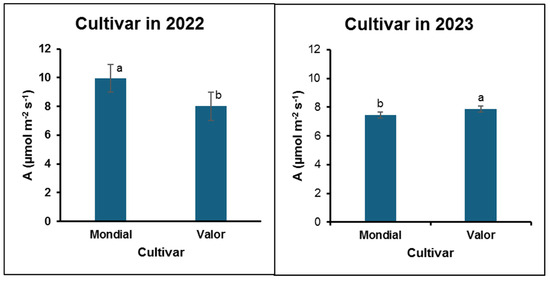
Cultivar difference had an influence on the rate of photosynthesis. It was recorded that in 2022 Mondial had a relatively higher photosynthetic rate of 9.96 compared to 8.01 in Valor, while in 2023 Valor had an increased photosynthetic rate of 7.9 compared to 7.4 in Mondial (Figure 9).
Figure 9.
Effect of cultivar on photosynthetic rate in 2022 and 2023. (Different alphabets shows the significant difference of means).
The effect of sole N and its combined application with nano micronutrients on plant photosynthetic rates differed between the two cultivars in 2023 (Table 4). In Mondial, photosynthetic rates were higher at sole applications of 0 kg Nha−1 and 80 kg Nha−1; however, at 240 kg Nha−1, the combined application showed superior results. In the Valor cultivar, a higher rate was observed at a sole application of 160 kg Nha−1, while the combined application was greater at 240 kg Nha−1.
3.7. Principal Component Analysis of Growth and Physiological Variables in 2022 and 2023 Cropping Seasons
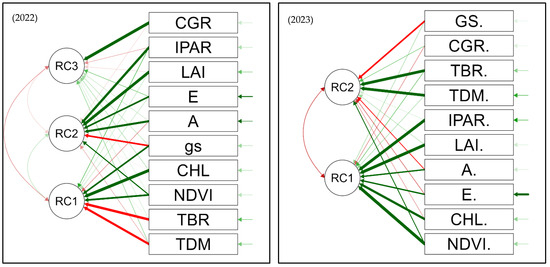
Results from the two cropping seasons revealed that in 2022, three significant principal components were important factors influencing variability in the growth and physiological variables, accounting for 77.2% of the total variance, while in 2023, two principal components were observed with 77.1% variance (Figure 10). During the 2022 cropping season, it was observed that strong positive loadings were recorded in stomatal conductance, chlorophyll content, and NDVI in RC1, whereas for RC2, strong positive loadings were recorded in IPAR, LAI, transpiration rate, and photosynthetic rate. The RC3 only recorded a strong positive loading for CGR. Negative, yet strong, loadings were recorded in RC1 for TBR and TDM (Figure 10). RC1 in the 2023 cropping season showed a strong positive loading for IPAR, LAI, photosynthetic rate, transpiration rate, chlorophyll content, and NDVI, while RC2 recorded strong positive loadings for TBR and TDM (Figure 10).
Figure 10.
Principal component analysis of growth and physiological variables in 2022 and 2023 cropping seasons. (Thick green lines—strong positive relationship; Thin green lines—weak positive lines; Thick red lines—strong positive relationship; Thin red lines—weak positive lines.)
4. Discussion
4.1. Effect of Nitrogen, Nano Zn and Cu, and Cultivar on Growth, Physiological Variables, and Yield
Nitrogen (N) fertilizer is crucial for the growth and development of crops [8,46]. Treatment influence on the physiological and yield variables in the two potato cultivars in the studies was observed during the 2022 and 2023 cropping seasons. Potato crop is classified as a heavy feeder, and production guidelines indicate that N fertilization is implemented at a higher dosage to improve the utilization of other nutrient minerals and yield increase [11,47,48]. The positive effects of the combination of N rates with nano Zn and Cu micronutrients on physiological and yield variables have been reported primarily due to an increase in surface area, and rapid accessibility of nano fertilizers by crops, contributing to effective assimilation of nitrogen and micronutrients [49,50]. From our study, positive effects of combined nitrogen and nano micronutrient application were found, which align with [51], who found that soil and foliar application of Zn in combination with farmyard manure and NPK significantly influenced the growth and development of green gram. Zinc micronutrient has been reported to play a crucial role in tryptophan production, which is associated with the auxin growth hormone, essential for plant growth [31,52]. This leads to beneficial systems that facilitate N metabolism, as well as the growth and development of crops. Furthermore, Zn is essential for enzyme function and protein synthesis, while Cu is involved in photosynthesis and electron transport. These functions are pertinent to the findings of this research. Nitrogen, zinc, and copper are essential for crop development and growth [8,53,54].
4.2. Dry Matter
Dry matter accumulation through the assimilation of photosynthates is necessary for the growth and development of potatoes, as it also negates tuber development and bulking [55,56]. According to Sandhu et al. [57], N is critical for the development of biomass, which results in increased dry matter. The Mondial and Valor cultivars exhibited a significant change in dry matter accumulation when N was applied in conjunction with nano Zn and Cu (Figure 2 and Figure 3). Sole N rates also significantly influenced dry matter accumulation, with the highest N rate recording higher dry matter in both cultivars. From our study, the application of 160 kg Nha−1 in conjunction with nano micronutrients resulted in an increase in dry matter in the two cultivars, in comparison to the application of 240 kg Nha−1 without nano micronutrients. This demonstrates the potential for reducing nitrogen application in potatoes by promoting moderate rates in conjunction with nano zinc and copper micronutrients. This observation may be due to potato cultivars efficiently accessing nitrogen, thereby facilitating cellular multiplication and resulting in increased shoot growth and development. This observation aligns with the findings of [8,53,54], which indicate that the simultaneous application of nitrogen, zinc, and copper is critical for crop growth and development. Najm [47] also reported that increased N application has the potential to increase leaf number and expansion, which leads to increased dry matter accumulation. Overall, the accumulation of crop biomass is directly associated with nitrogen availability. The results from the study imply that the application of nano Zn and Cu on cultivars may enhance the absorption and utilization of N, evidenced by the positive effect of N and nano zinc and copper in both cultivars.
4.3. Tuber Bulking Rate (Tbr)
The potato crop undergoes extensive biochemical processes and metabolic pathways in order to establish tubers, and the success of these processes is also reliant on the effective hormonal and molecular signaling in the crop [58,59]. Hence, tuber bulking profile is regarded as a useful concept for determining the optimum time to harvest tubers in potato production [18]. This concept therefore necessitates the need to supply nutrients, including N, Zn, and Cu, throughout the growth stages, particularly following tuber initiation in order to promote tuber initiation and growth. According to Koch et al. [9] N fertilizer plays a vital role in tuber formation and expansion. The current study demonstrated a gradual increase in TBR in the two cultivars over the growth periods in both the 2022 and 2023 seasons, with higher TBR achieved through increased N application in combination with nano micronutrients (Figure 4 and Figure 5). Furthermore, the study revealed that higher N rates generally resulted in high TBR in the cultivars studied, regardless of nano micronutrient application. From the study, the application of 160 kg Nha−1, combined with nano micronutrients, recorded a TBR of 70.0% to 90.0%, comparable to the 240 kg Nha−1 rate without micronutrients in both cultivars. The observed outcome shows that N was critical in the expansion of tubers, especially in combination with nano micronutrients. Furthermore, it could be argued that the split application of N could have facilitated the gradual variation in tubers in different N rates. Hence, the initial N application at planting could have assisted the crop to grow, develop, and commence with tuber initiation. Fertilizer application provided sufficient energy over time for the crops’ cellular multiplication and elongation, resulting in the initiation and expansion of tubers in Mondial and Valor. According to Mihovilovich et al. [60], TBR relates to the linear progression of tubers over time, leading to an increase in tuber weight. This process necessitates the potato crop to allocate energy from the leaves to the roots, thereby enhancing tuber size and quantity. The study by Howlader and Hoque [18] found that the application of N can increase in tuber size of potatoes, which was also in agreement with Abewoy [61]. Furthermore, the triple factor of the environmental, physiological, and genetic make-up of potato cultivars could have enhanced tuber bulking rate of cultivars. Hence, Hancock [62] and Lehretz et al. [63] submitted that the interaction of the trio plays a critical role in the triggering of signals responsible for tuber initiation.
4.4. Crop Growth Rate
Howlader et al. [18] reported variables such as crop growth rate (CGR) and tuber bulking rate (TBR) as important determinants in monitoring crop development over time. This process of crop monitoring is an essential constituent that contributes to increased quality dry matter and tuber yield [17]. It was observed that both Mondial and Valor recorded an increase in CGR across N fertilizer rates and nano micronutrients. However, this increase was only clearly established under N rates starting from 80 kg Nha−1 to 240 kg Nha−1 compared to the 0 kg Nha−1 rate in both cultivars (Figure 6 and Figure 7), demonstrating that the introduction of N in combination with nano micronutrients was essential in crop growth. Additionally, it could be mentioned that the genetic variability played a role in the accumulation of biomass over the season. López-Moreno et al. [64] and Awasthi et al. [65], reported that the application of nano Zn in maize and wheat improved crop shoot and root growth. This was in line with the findings of the current study, where we postulate that the absorption of nano Zn and Cu could have promoted the development of leaves and stems of the potato crop. Furthermore, according to Esfahai et al. [66] leaf shading and leaf reduction are some of the factors affecting CGR, which could be the reason why, generally, in the current study, highest N rate did not result in the highest CGR of potato cultivars.
4.5. Treatment Effect on Chlorophyll Content and Ndvi of Potato Cultivars
Nitrogen plays an essential role in promoting metabolic activities that enable a crop’s chloroplast to produce chlorophyll, which captures light for the process of photosynthesis [15,67]. Chlorophyll content is one of the determinants used to assess the extent of crop health and utilization of N. The current study revealed that the application of nitrogen alongside nano micronutrients resulted in increased chlorophyll content and NDVI in Mondial and Valor in 2022, compared to the treatment without nano micronutrient application. Nitrogen is a primary compound for chlorophyll production, and it can be argued that the nano Zn and Cu application could have assisted the crop in accessing the N applied. Nano fertilizers possess a larger surface area, facilitating their accessibility and rapid uptake by plants. Consistent with our findings, Shrestha et al. [68] observed that chlorophyll levels rose with increased nitrogen application, leading to enhanced canopy cover [69]. The increase in canopy cover may have contributed to the rise in NDVI observed in treatments with nitrogen application in this study. Ziadi et al. [70] provided additional evidence, demonstrating significantly higher chlorophyll levels in nitrogen treatments relative to control groups. Salehi et al. [71] documented that the application of nano Zn promotes chlorophyll production in crops, which may contribute to the observed increase in chlorophyll in treatments involving nano Zn and Cu. The foliar application of micronutrients zinc (Zn), copper (Cu), and boron (B) significantly influenced chlorophyll content.
4.6. The Effect on Lai and Ipar of Potato Cultivars
The application of nitrogen increases the capacity and ability of crops to produce more stems and leaves, which results in an increase in canopy cover in potato production. The Mondial and Valor cultivars demonstrated a significant response to LAI IPAR due to N fertilizer and nano Zn and Cu. However, the response in 2022 was not consistent across N rates, with or without nano Zn and Cu in the cultivars. In 2023, both cultivars clearly showed that LAI increased with the increase in N fertilizer rates. Furthermore, it was observed that high LAI and IPAR were recorded under 160 kg and 240 kg Nha−1, combined with nano Zn and Cu, and compared to the lower rates in the two seasons. The increasing LAI and IPAR could be related to increased canopy cover in the canopy, which prompts the plant to photosynthesize at a higher rate. Increase in canopy activity may have led to an increase in leaf area index (LAI). Man et al. [72] and Qu et al. [73] demonstrated that plant biomass is associated with the leaf area index due to its influence on light capture, which can enhance IPAR. The increase in cover rate can be attributed to nitrogen’s role in promoting plant growth and height, leading to the development of additional nodes and internodes, which subsequently result in greater leaf production. This agreed with [74,75,76], who found that N fertilization significantly increased the canopy development, promoting organogenesis and growth of the aerial parts, especially leaves.
4.7. Leaf Gaseous Parameters
Nitrogen availability promotes leaf formation, thus increases the rate of photosynthesis, which leads to increased yield. This study indicates that the application of N fertilizer and nano Zn and Cu in 2022 and 2023 (Table 3) generally influenced leaf gaseous variables. The Mondial and Valor cultivars exhibited significant variability in stomatal conductance (gs), transpiration rate (E), and photosynthetic rate (A) as nitrogen fertilizer rates increased. The gs of both Mondial and Valor were higher under 240 kg Nha−1 and 160 kg Nha−1, regardless of nano Zn and Cu, and higher A in the two cultivars was recorded under 240 kg Nha−1 without nano Zn and Cu (Table 3). The observed results may be ascribed to varying weather patterns, particularly the rise in temperature throughout the data collection period (Figure 1). Fang et al. [77] reckons that the potato crop grows optimally with a temperature range of 15–25 °C. While Lazarević et al. [78] notes that higher temperatures exceeding 30 °C tend to compromise stomatal conductance and photosynthetic and transpiration rate in potato crops. Similarly, in the study the higher temperatures ranging between 30 °C and 36 °C could have attributed to the low gs and E observed in both cropping seasons. However, A was observed to be higher, which could have been as a result of the crop being able to acclimate to the environmental temperature which is in agreement with Lazarević et al. [78] and Yamori et al. [79], who found that crops increased A under higher temperatures. Photosynthesis is the critical source of biomass in plants. Improved photosynthetic performance in crops, resulting from the application of N and nano fertilizers, has been reported [80,81]. Plants obtain carbon through stomata, but it is carried out in such a way that it complements transpiration. Thus, how efficiently the process is carried out is cultivar-driven. According to Nasab et al. [82] gs increases with the increase in N application. This could occur because N promotes the growth of leaves, which increases the number of stomata. This observation is similar to the findings of the current study. The application of nano fertilizers could have elevated stomatal activities due to increased N utilization [83]. Several studies have reported that nano Zn and nano Cu significantly affect leaf gas exchange attributes such as A, E, and gs [84,85,86,87,88,89]. However, this is not without recognition of hormonal and metabolic activities influenced by temperature, moisture, and health of the crop.
4.8. Principal Component Analysis on Stomatal Activities and Physiological Variables
Principal component analysis (PCA) is classified as a multivariate statistical methodology used to transform original data into smaller linearly uncorrelated variables [90,91]. The collective variation observed can be attributed to factors limited not only to the environment, soil, treatment, or management practices. In the study, it was documented that three and two principal components were significant in 2022 and 2023, and accounted for 77.2% and 77.1% total variance, respectively (Figure 10). The PCA generally showed that selected variables had a positive relation with RC1 up to RC3 (Figure 10), which demonstrates a positive correlation that can be linked to treatments or other external factors including environmental factors. These findings were in line with Fang et al. [92] who found that N rates influenced conditions of plant growth.
5. Conclusions
The current study was conducted to evaluate the influence of nitrogen fertilizer and nano Zn and Cu micronutrients on dry matter production, tuber bulking rate, CGR, TBR, and stomatal activities of two potato cultivars, Mondial and Valor, and the relationship among these variables. The crop variables studied, including dry matter, CGR, TBR, and physiological variables, were positively influenced by N and nano Zn and Cu micronutrients in the cultivars. Results from the study generally demonstrated an increasing linear relationship with increasing N application rates. High values were recorded when N fertilizer rates of 160 kg Nha−1 and 240 kg Nha−1 were applied in combination with nano Zn and Cu micronutrients. The application of 160 kg Nha−1 in conjunction with nano micronutrients produced results that were 90% to over 100% comparable to the application rate of 240 kg N ha−1 without micronutrients in dry matter and some of the parameters studied, indicating the potential for decreased nitrogen application when utilizing nano micronutrients. This, however, was dependent on the cultivar and the season. Further studies to explore this outcome will be beneficial in promoting the sustainable use of nitrogen in potato production. Principal component analysis accounted for 77.0% of the variance observed in growth and physiological variables. Our results highlighted the significance of the relationship between micro and macronutrients in potato production. Thus, further studies have to be conducted to observe the effect of nano, macro, and micro fertilizers in sustainable agriculture, which aims to promote efficient utilization of nutrient resources through nano technology, taking cognizance of the integrity of agroecosystems.
Author Contributions
Conceptualization, M.P.P. and K.K.A.; methodology, M.P.P. and K.K.A.; software, M.P.P.; validation, M.P.P.; formal analysis, M.P.P. and K.K.A.; investigation, M.P.P., K.K.A., M.A.K. and L.M.; resources, M.P.P. and K.K.A.; data curation, M.P.P. and K.K.A.; writing—original draft preparation, M.P.P., K.K.A., M.A.K. and L.M.; writing—review and editing, M.P.P., K.K.A., M.A.K. and L.M.; visualization, M.P.P., K.K.A., M.A.K. and L.M.; supervision, K.K.A., M.A.K. and L.M.; project administration, M.P.P., K.K.A., M.A.K. and L.M.; funding acquisition, K.K.A. All authors have read and agreed to the published version of the manuscript.
Funding
This research was funded by the Department of Science and Innovation (DSI) and the National Research Foundation (NRF), via the center for global change.
Data Availability Statement
The data presented in this study are available on request from the corresponding author due to privacy restrictions.
Acknowledgments
The University of Limpopo and farmers at Ofcolaco for providing the study sites. The contribution of time, labor, data collection, data analysis, and motivation by the CGC team.
Conflicts of Interest
The authors declare no conflicts of interest.
References
- Om, S.; Mishra, D.P.; Rajbhar, P.; Singh, D.; Singh, R.K.; Mishra, S.K. Effect of Different Levels of Nitrogen on Growth and Yield in Potato (Solanum tuberosum L.) CV. Kufri Khyati. Int. J. Curr. Microbiol. Appl. Sci. 2017, 6, 1456–1460. [Google Scholar] [CrossRef] [Scilit]
- Zhang, H.; Xu, F.; Wu, Y.; Hu, H.; Dai, X. Progress of Potato Staple Food Research and Industry Development in China. J. Integr. Agric. 2017, 16, 2924–2932. [Google Scholar] [CrossRef] [Scilit]
- Campos, H.; Ortiz, O. (Eds.) The Potato Crop: Its Agricultural, Nutritional and Social Contribution to Humankind; Springer International Publishing: Cham, Switzerland, 2020; ISBN 978-3-030-28682-8. [Google Scholar]
- Grzebisz, W.; Szczepaniak, W.; Bocianowski, J. Potassium Fertilization as a Driver of Sustainable Management of Nitrogen in Potato (Solanum tuberosum L.). Field Crops Res. 2020, 254, 107824. [Google Scholar] [CrossRef] [Scilit]
- Plauborg, F.; Motarjemi, S.K.; Nagy, D.; Zhou, Z. Analysing Potato Response to Subsurface Drip Irrigation and Nitrogen Fertigation Regimes in a Temperate Environment Using the Daisy Model. Field Crops Res. 2022, 276, 108367. [Google Scholar] [CrossRef] [Scilit]
- He, Y.; Luo, S.; Zha, Y.; Jiang, X.; Wang, X.; Chen, H.; Han, S. Impacts of Multi-Strategy Nitrogen Fertilizer Management on Potato Yield and Economic Gains in Northeast China. Agronomy 2023, 13, 2920. [Google Scholar] [CrossRef] [Scilit]
- Yin, J.; Song, Z.; Guo, X.; Ding, F.; Shen, Y.; Zhang, J.; Zhao, C.; Liu, T.; Ma, X. Adjusting the Fertilizer Application Structure for Nutrient Saving and Yield Increase in Potato. Int. J. Plant Prod. 2023, 17, 379–387. [Google Scholar] [CrossRef] [Scilit]
- Leghari, S.J.; Ahmed, N.; Mustafa Bhabhan, G.; Hussain, K.; Lashari, A.A.; Laghari, G.M. Role of Nitrogen for Plant Growth and Development: A Review. Adv. Environ. Biol. 2016, 10, 209–219. [Google Scholar]
- Koch, M.; Naumann, M.; Pawelzik, E.; Gransee, A.; Thiel, H. The Importance of Nutrient Management for Potato Production Part I: Plant Nutrition and Yield. Potato Res. 2020, 63, 97–119. [Google Scholar] [CrossRef] [Scilit]
- Chandio, A.A.; Shah, M.I.; Sethi, N.; Mushtaq, Z. Assessing the Effect of Climate Change and Financial Development on Agricultural Production in ASEAN-4: The Role of Renewable Energy, Institutional Quality, and Human Capital as Moderators. Environ. Sci. Pollut. Res. 2022, 29, 13211–13225. [Google Scholar] [CrossRef] [Scilit]
- Kahsay, W.S. Effects of Nitrogen and Phosphorus on Potatoes Production in Ethiopia: A Review. Cogent Food Agric. 2019, 5, 1572985. [Google Scholar] [CrossRef] [Scilit]
- Fayera, W.N. Yield and Yield Components of Potato (Solanum tuberosum L.) as Influenced by Planting Density and Rate of Nitrogen Application at Holeta, West Oromia Region of Ethiopia. Afr. J. Agric. Res. 2017, 12, 2242–2254. [Google Scholar] [CrossRef] [Scilit]
- Wang, C.; Peng, F.; Chen, S.; Zhao, Q.; Gao, J.; Zhang, G.; Zhou, L.; Shao, M. Nitrogen Fertilizer Fate and Plant Nitrogen Uptake Characteristics in Waxy Sorghum-Soybean Intercropping System. Field Crops Res. 2025, 326, 109862. [Google Scholar] [CrossRef] [Scilit]
- Ali, A.; Jabeen, N.; Farruhbek, R.; Chachar, Z.; Laghari, A.A.; Chachar, S.; Ahmed, N.; Ahmed, S.; Yang, Z. Enhancing Nitrogen Use Efficiency in Agriculture by Integrating Agronomic Practices and Genetic Advances. Front. Plant Sci. 2025, 16, 1543714. [Google Scholar] [CrossRef] [Scilit] [PubMed]
- Fathi, A. Role of Nitrogen (N) in Plant Growth, Photosynthesis Pigments, and N Use Efficiency: A Review. Agrisost 2022, 28, 1–8. [Google Scholar] [CrossRef]
- Singh, U.; Bihari, C.; Panda, J.; Kumawat, P. Growth Analysis Indices for Horticultural Crops. Agric. Mag. 2024, 3, 405–408. [Google Scholar]
- Mbah, E.U.; Okoro, O.E. Relationship Between Some Growth Parameters, Dry Matter Content and Yield of Some Sweet Potato Genotypes Grown under Rainfed Weathered Ultisols in the Humid Tropics. J. Agron. 2015, 14, 121–129. [Google Scholar] [CrossRef] [Scilit]
- Howlader, O.; Hoque, M. Growth Analysis and Yield Performance of Four Potato (Solanum tuberosum L.) Varieties. Bangladesh J. Agric. Res. 2018, 43, 267–280. [Google Scholar] [CrossRef] [Scilit]
- Wen, G.; Cambouris, A.N.; Bertrand, A.; Ziadi, N.; Li, H.; Khelifi, M. Nitrogen Fertilization Effects on the Leaf Chemical Concentrations in Russet Burbank Potato. Field Crops Res. 2019, 232, 40–48. [Google Scholar] [CrossRef] [Scilit]
- Kumar, D.; Singh, B.P.; Kumar, P. An Overview of the Factors Affecting Sugar Content of Potatoes. Ann. Appl. Biol. 2004, 145, 247–256. [Google Scholar] [CrossRef] [Scilit]
- Högy, P.; Fangmeier, A. Atmospheric CO2 Enrichment Affects Potatoes: 1. Aboveground Biomass Production and Tuber Yield. Eur. J. Agron. 2009, 30, 78–84. [Google Scholar] [CrossRef] [Scilit]
- Al-Juthery, H.W.A.; Lahmod, N.R.; Al-Taee, R.A.H.G. Intelligent, Nano-Fertilizers: A New Technology for Improvement Nutrient Use Efficiency (Article Review). IOP Conf. Ser. Earth Environ. Sci. 2021, 735, 012086. [Google Scholar] [CrossRef] [Scilit]
- Gutiérrez, F.J.; Mussons, M.L.; Gatón, P.; Rojo, R. Nanotechnology and Food Industry. Sci. Health Soc. Asp. Food Ind. 2011, 6, 95–128. [Google Scholar]
- Qureshi, A.; Singh, D.K.; Dwivedi, S. Nano-Fertilizers: A Novel Way for Enhancing Nutrient Use Efficiency and Crop Productivity. Int. J. Curr. Microbiol. Appl. Sci. 2018, 7, 3325–3335. [Google Scholar] [CrossRef] [Scilit]
- Al-juthery, H.W.A.; Al-Maamouri, E.H.O. Effect of Urea and Nano-Nitrogen Fertigation and Foliar Application of Nano-Boron and Molybdenum on Some Growth and Yield Parameters of Potato. Agric. Food Sci. 2020, 10, 253–263. [Google Scholar] [CrossRef] [Scilit]
- Brunner, T.J.; Wick, P.; Manser, P.; Spohn, P.; Grass, R.N.; Limbach, L.K.; Bruinink, A.; Stark, W.J. In Vitro Cytotoxicity of Oxide Nanoparticles: Comparison to Asbestos, Silica, and the Effect of Particle Solubility. Environ. Sci. Technol. 2006, 40, 4374–4381. [Google Scholar] [CrossRef] [Scilit]
- Hafeez, B. Role of Zinc in Plant Nutrition—A Review. Am. J. Exp. Agric. 2013, 3, 374–391. [Google Scholar] [CrossRef] [Scilit]
- Saharan, V.; Sharma, G.; Yadav, M.; Choudhary, M.K.; Sharma, S.S.; Pal, A.; Raliya, R.; Biswas, P. Synthesis and in Vitro Antifungal Efficacy of Cu–Chitosan Nanoparticles against Pathogenic Fungi of Tomato. Int. J. Biol. Macromol. 2015, 75, 346–353. [Google Scholar] [CrossRef] [Scilit]
- AlHarethi, A.A.; Abdullah, Q.Y.; AlJobory, H.J.; Anam, A.M.; Arafa, R.A.; Farroh, K.Y. Zinc Oxide and Copper Oxide Nanoparticles as a Potential Solution for Controlling Phytophthora Infestans, the Late Blight Disease of Potatoes. Discov. Nano 2024, 19, 105. [Google Scholar] [CrossRef] [Scilit]
- Mahawar, L.; Živčák, M.; Barboricova, M.; Kovár, M.; Filaček, A.; Ferencova, J.; Vysoká, D.M.; Brestič, M. Effect of Copper Oxide and Zinc Oxide Nanoparticles on Photosynthesis and Physiology of Raphanus sativus L. under Salinity Stress. Plant Physiol. Biochem. 2024, 206, 108281. [Google Scholar] [CrossRef] [Scilit]
- Zhu, L.; Hou, M.; Sun, H.; Zhang, Y.; Zhang, K.; Bai, Z.; Li, A.; Dong, H.; Liu, L.; Li, C. Zinc Oxide Nanoparticles Conferring Resistance to Verticillium Wilt in Cotton. Ind. Crops Prod. 2025, 225, 120523. [Google Scholar] [CrossRef] [Scilit]
- Braun, H.; Fontes, P.C.R.; Silva, T.P.D.; Finger, F.L.; Cecon, P.R.; Ferreira, A.P.S. Carbohydrates Concentration in Leaves of Potato Plants Affected by Nitrogen Fertilization Rates. Rev. Ceres 2016, 63, 241–248. [Google Scholar] [CrossRef] [Scilit]
- Mahanta, N.; Dambale, A.; Rajkhowa, M. Nutrient Use Efficiency through Nano Fertilizers. Int. J. Chem. Stud. 2019, 7, 2839–2842. [Google Scholar]
- Marschner, H. Marschner’s Mineral Nutrition of Higher Plants; Academic Press: Cambridge, MA, USA, 2011. [Google Scholar]
- Tripathi, D.K.; Singh, S.; Singh, S.; Mishra, S.; Chauhan, D.K.; Dubey, N.K. Micronutrients and Their Diverse Role in Agricultural Crops: Advances and Future Prospective. Acta Physiol. Plant 2015, 37, 139. [Google Scholar] [CrossRef] [Scilit]
- Benzon, H.R.L.; Rubenecia, M.R.U.; Ultra, V.U.; Lee, C. Nano-Fertilizer Affects the Growth, Development, and Chemical Properties of Rice. Int. J. Agron. Agric. Res. 2015, 7, 105–117. [Google Scholar]
- Upadhyay, P.K.; Singh, V.K.; Rajanna, G.A.; Dwivedi, B.S.; Dey, A.; Singh, R.K.; Rathore, S.S.; Shekhawat, K.; Babu, S.; Singh, T.; et al. Unveiling the Combined Effect of Nano Fertilizers and Conventional Fertilizers on Crop Productivity, Profitability, and Soil Well-Being. Front. Sustain. Food Syst. 2023, 7, 1260178. [Google Scholar] [CrossRef] [Scilit]
- Gopinath, K.A.; Kumari, V.V.; Singh, V.K.; Shanker, A.K.; Reddy, K.S.; Kundu, S.; Bhargavi, B.; Rajkumar, B.; Lavanya, N.; Chandana, P.; et al. Impact of Conventional and Nano Fertilizers on Rainfed Maize Yield, Profitability and Soil Nitrogen. Front. Nanotechnol. 2025, 7, 1617500. [Google Scholar] [CrossRef] [Scilit]
- Thomas, G.W. Soil pH and Soil Acidity. In Methods of Soil Analysis: Part 3 Chemical Methods, 5.3; SSSA Book Series; Sparks, D.L., Page, A.L., Helmke, P.A., Loeppert, R.H., Soltanpour, P.N., Tabatabai, M.A., Johnston, C.T., Sumner, M.E., Eds.; Wiley: Hoboken, NJ, USA, 1996; Volume 5, pp. 475–490. ISBN 978-0-89118-825-4. [Google Scholar]
- Nelson, D.W.; Sommers, L.E. A Rapid and Accurate Method for Estimating Organic Carbon in Soil. Proc. Indiana Acad. Sci. 1975, 456–462. [Google Scholar]
- Okalebo, J.R.; Gathua, K.W.; Woomer, P.L. Laboratory Methods of Soil and Plant Analysis: A Working Manual Second Edition; Sacred Africa: Nairobi, Kenya, 2002. [Google Scholar]
- Bray, R.H.; Kurtz, L.T. Determination of Total, Organic and Available Forms of Phosphorus in Soils. Soil. Sci. 1945, 1, 39–46. [Google Scholar] [CrossRef] [Scilit]
- Garcia, D.; Cegarra, J.; Bernal, M.P.; Navarro, A. Comparative Evaluation of Methods Employing Alkali and Sodium Pyrophosphate to Extract Humic Substances from Peat. Commun. Soil. Sci. Plant Anal. 1993, 24, 1481–1494. [Google Scholar] [CrossRef] [Scilit]
- Mogale, T.E. Grain Sorghum-Cowpea Intercrop: A Climate Smart Approach for Enhanced Productivity, Physiological Responses and Carbon Dynamics under Planted and Simulated No Till Conditions. Ph.D. Thesis, University of Limpopo, Polokwane, South Africa, 2022. [Google Scholar]
- Pandey, P.; Raghav, M.; Bajeli, J.; Tripathi, A. Effect of Nitrogen Scheduling on Growth and Yield Performance of Potato (Solanum tuberosum L.). J. Pharmacogn. Phytochem. 2018, 7, 785–789. [Google Scholar]
- Wang, Q.; Li, S.; Li, J.; Huang, D. The Utilization and Roles of Nitrogen in Plants. Forests 2024, 15, 1191. [Google Scholar] [CrossRef] [Scilit]
- Najm, A.A. Effect of Utilization of Organic and Inorganic Nitrogen Source on the Potato Shoots Dry Matter, Leaf Area Index and Plant Height, During Middle Stage of Growth. Int. J. Agric. Biol. Sci. 2010, 1, 26–29. [Google Scholar]
- Muleta, H.D.; Aga, M.C. Role of Nitrogen on Potato Production: A Review. J. Plant Sci. 2019, 7, 36–42. [Google Scholar]
- Ayenew, B.M.; Satheesh, N.; Zegeye, Z.B.; Kassie, D.A. A Review on the Production of Nanofertilizers and Its Application in Agriculture. Heliyon 2025, 11, e41243. [Google Scholar] [CrossRef] [Scilit]
- Kekeli, M.A.; Wang, Q.; Rui, Y. The Role of Nano-Fertilizers in Sustainable Agriculture: Boosting Crop Yields and Enhancing Quality. Plants 2025, 14, 554. [Google Scholar] [CrossRef] [Scilit]
- Vinodkumar, H.V.; Channakeshava, S.; Basavaraja, B.; Kumar, A. Effect of Soil and Foliar Application of Zinc on Growth and Yield of Greengram (Vigna radiate L.). Int. J. Curr. Microbiol. Appl. Sci. 2020, 9, 501–512. [Google Scholar] [CrossRef] [Scilit]
- Umair Hassan, M.; Aamer, M.; Umer Chattha, M.; Haiying, T.; Shahzad, B.; Barbanti, L.; Nawaz, M.; Rasheed, A.; Afzal, A.; Liu, Y.; et al. The Critical Role of Zinc in Plants Facing the Drought Stress. Agriculture 2020, 10, 396. [Google Scholar] [CrossRef] [Scilit]
- Chen, G.; Li, J.; Han, H.; Du, R.; Wang, X. Physiological and Molecular Mechanisms of Plant Responses to Copper Stress. Int. J. Mol. Sci. 2022, 23, 12950. [Google Scholar] [CrossRef] [Scilit]
- Hamzah Saleem, M.; Usman, K.; Rizwan, M.; Al Jabri, H.; Alsafran, M. Functions and Strategies for Enhancing Zinc Availability in Plants for Sustainable Agriculture. Front. Plant Sci. 2022, 13, 1033092. [Google Scholar] [CrossRef] [Scilit]
- Alva, A.K.; Ren, H.; Moore, A.D. Water and Nitrogen Management Effects on Biomass Accumulation and Partitioning in Two Potato Cultivars. Am. J. Plant Sci. 2012, 3, 164–170. [Google Scholar] [CrossRef]
- Silva, J.G.; França, M.G.C.; Gomide, F.T.F.; Magalhaes, J.R. Different Nitrogen Sources Affect Biomass Partitioning and Quality of Potato Production in a Hydroponic System. Am. J. Potato Res. 2013, 90, 179–185. [Google Scholar] [CrossRef] [Scilit]
- Sandhu, A.S.; Sharma, S.P.; Bhutani, R.D.; Khurana, S.C. Effects of Planting Date and Fertilizer Dose on Plant Growth Attributes and Nutrient Uptake of Potato (Solanum tuberosum L.). Int. J. Agric. Sci. 2014, 4, 196–202. [Google Scholar]
- Dutt, S.; Manjul, A.S.; Raigond, P.; Singh, B.; Siddappa, S.; Bhardwaj, V.; Kawar, P.G.; Patil, V.U.; Kardile, H.B. Key Players Associated with Tuberization in Potato: Potential Candidates for Genetic Engineering. Crit. Rev. Biotechnol. 2017, 37, 942–957. [Google Scholar] [CrossRef] [Scilit] [PubMed]
- Singh, B.; Kukreja, S.; Goutam, U. Impact of Heat Stress on Potato (Solanum tuberosum L.): Present Scenario and Future Opportunities. J. Hortic. Sci. Biotechnol. 2020, 95, 407–424. [Google Scholar] [CrossRef] [Scilit]
- Mihovilovich, E.; Carli, C.; De Mendiburu, F.; Hualla, V.; Bonierbale, M. Protocol for Tuber Bulking Maturity Assessment of Elite and Advanced Potato Clones; International Potato Center: Lima, Peru, 2014. [Google Scholar]
- Abewoy, D. Plant Spacing and Nitrogen Fertilizer Effect on Potato (Solanum Tuberosum) Growth, Yield and Quality: Review. Glob. Acad. J. Agric. Biosci. 2024, 6, 8–14. [Google Scholar] [CrossRef] [Scilit]
- Hancock, R.D.; Morris, W.L.; Ducreux, L.J.M.; Morris, J.A.; Usman, M.; Verrall, S.R.; Fuller, J.; Simpson, C.G.; Zhang, R.; Hedley, P.E.; et al. Physiological, Biochemical and Molecular Responses of the Potato (Solanum tuberosum L.) Plant to Moderately Elevated Temperature. Plant Cell Environ. 2014, 37, 439–450. [Google Scholar] [CrossRef] [Scilit]
- Lehretz, G.G.; Sonnewald, S.; Hornyik, C.; Corral, J.M.; Sonnewald, U. Post-Transcriptional Regulation of FLOWERING LOCUS T Modulates Heat-Dependent Source-Sink Development in Potato. Curr. Biol. 2019, 29, 1614–1624.e3. [Google Scholar] [CrossRef] [Scilit]
- López-Moreno, M.L.; De La Rosa, G.; Cruz-Jiménez, G.; Castellano, L.; Peralta-Videa, J.R.; Gardea-Torresdey, J.L. Effect of ZnO Nanoparticles on Corn Seedlings at Different Temperatures; X-Ray Absorption Spectroscopy and ICP/OES Studies. Microchem. J. 2017, 134, 54–61. [Google Scholar] [CrossRef] [Scilit]
- Awasthi, A.; Bansal, S.; Jangir, L.K.; Awasthi, G.; Awasthi, K.K.; Awasthi, K. Effect of ZnO Nanoparticles on Germination of Triticum aestivum Seeds. Macromol. Symp. 2017, 376, 1700043. [Google Scholar] [CrossRef] [Scilit]
- Esfahai, M.N.; Pour, M.R.; Pazoki, A. Analysis of Genetical Diversity of Some of the Tetraploides Potato Cultivars Grown in Iran. Am. J. Plant Sci. 2012, 3, 1770–1778. [Google Scholar] [CrossRef]
- Zhang, H.; Zhao, Q.; Wang, Z.; Wang, L.; Li, X.; Fan, Z.; Zhang, Y.; Li, J.; Gao, X.; Shi, J.; et al. Effects of Nitrogen Fertilizer on Photosynthetic Characteristics, Biomass, and Yield of Wheat under Different Shading Conditions. Agronomy 2021, 11, 1989. [Google Scholar] [CrossRef] [Scilit]
- Shrestha, B.; Stringam, B.L.; Darapuneni, M.K.; Lombard, K.A.; Sanogo, S.; Higgins, C.; Djaman, K. Effect of Irrigation and Nitrogen Management on Potato Growth, Yield, and Water and Nitrogen Use Efficiencies. Agronomy 2024, 14, 560. [Google Scholar] [CrossRef] [Scilit]
- Zaeen, A.A.; Sharma, L.K.; Jasim, A.; Bali, S.; Buzza, A.; Alyokhin, A. Yield and Quality of Three Potato Cultivars under Series of Nitrogen Rates. Agrosyst. Geosci. Environ. 2020, 3, e20062. [Google Scholar] [CrossRef] [Scilit]
- Ziadi, N.; Grant, C.; Samson, N.; Nyiraneza, J.; Bélanger, G.; Parent, L. Efficiency of Controlled-Release Urea for a Potato Production System in Quebec, Canada. Agron. J. 2011, 103, 60–66. [Google Scholar] [CrossRef] [Scilit]
- Salehi, H.; Chehregani Rad, A.; Sharifan, H.; Raza, A.; Varshney, R.K. Aerially Applied Zinc Oxide Nanoparticle Affects Reproductive Components and Seed Quality in Fully Grown Bean Plants (Phaseolus vulgaris L.). Front. Plant Sci. 2022, 12, 808141. [Google Scholar] [CrossRef] [Scilit]
- Man, J.; Shi, Y.; Yu, Z.; Zhang, Y. Dry Matter Production, Photosynthesis of Flag Leaves and Water Use in Winter Wheat Are Affected by Supplemental Irrigation in the Huang-Huai-Hai Plain of China. PLoS ONE 2015, 10, e0137274. [Google Scholar] [CrossRef] [Scilit]
- Qu, M.; Zheng, G.; Hamdani, S.; Essemine, J.; Song, Q.; Wang, H.; Chu, C.; Sirault, X.; Zhu, X.-G. Leaf Photosynthetic Parameters Related to Biomass Accumulation in a Global Rice Diversity Survey. Plant Physiol. 2017, 175, 248–258. [Google Scholar] [CrossRef] [Scilit]
- Harrison, P.J.; Hurd, C.L. Nutrient Physiology of Seaweeds: Application of Concepts to Aquaculture. Cah. Biol. Mar. 2001, 42, 71–82. [Google Scholar]
- Sh, J.S.; Tobeh, A.; Hassanzadeh, M.; Hokmalipour, S.; Zabihi Mahmoodabad, R. Effects of Plant Density and Nitrogen Fertilizer on Nitrogen Uptake from Soil and Nitrate Pollution in Potato Tuber. Res. J. Environ. Sci. 2009, 3, 122–126. [Google Scholar] [CrossRef] [Scilit]
- Yuan, F.; Arain, M.A.; Black, T.A.; Morgenstern, K. Energy and Water Exchanges Modulated by Soil–Plant Nitrogen Cycling in a Temperate Pacific Northwest Conifer Forest. Ecol. Model. 2007, 201, 331–347. [Google Scholar] [CrossRef] [Scilit]
- Fang, G.; Yang, S.; Ruan, B.; Ye, G.; He, M.; Su, W.; Zhou, Y.; Wang, J.; Yang, S. Research Progress on Physiological, Biochemical, and Molecular Mechanisms of Potato in Response to Drought and High Temperature. Horticulturae 2024, 10, 827. [Google Scholar] [CrossRef] [Scilit]
- Lazarević, B.; Carović-Stanko, K.; Safner, T.; Poljak, M. Study of High-Temperature-Induced Morphological and Physiological Changes in Potato Using Nondestructive Plant Phenotyping. Plants 2022, 11, 3534. [Google Scholar] [CrossRef] [Scilit] [PubMed]
- Yamori, W.; Hikosaka, K.; Way, D.A. Temperature Response of Photosynthesis in C3, C4, and CAM Plants: Temperature Acclimation and Temperature Adaptation. Photosynth. Res. 2014, 119, 101–117. [Google Scholar] [CrossRef] [Scilit] [PubMed]
- Yu, J.; Wu, J. The Sustainability of Agricultural Development in China: The Agriculture–Environment Nexus. Sustainability 2018, 10, 1776. [Google Scholar] [CrossRef] [Scilit]
- Al-Selwey, W.A.; Alsadon, A.A.; Ibrahim, A.A.; Labis, J.P.; Seleiman, M.F. Effects of Zinc Oxide and Silicon Dioxide Nanoparticles on Physiological, Yield, and Water Use Efficiency Traits of Potato Grown under Water Deficit. Plants 2023, 12, 218. [Google Scholar] [CrossRef] [Scilit]
- Nasab, H.M.; Siadat, S.A.; Naderi, A.; Lack, S.; Modhej, A. The Effect of Drought Stress and Nitrogen Levels on Yield, Stomatal Conductance and Temperature Stability of Rapeseed (Canola) Genotypes. Adv. Environ. Biol. 2014, 1239. [Google Scholar]
- Ilyas, A.; Ashraf, M.Y.; Hussain, M.; Ashraf, M.; Ahmed, R.; Kamal, A. Effect of Micronutrients (Zn, Cu, B) on Photosynthetic and Fruit Yield Attributes of Citrus Reticulatablnco Variety Kinnov. Pak. J. Bot. 2015, 47, 1241–1247. [Google Scholar]
- Ahmed, S.; Khan, M.T.; Abbasi, A.; Haq, I.U.; Hina, A.; Mohiuddin, M.; Tariq, M.A.U.R.; Afzal, M.Z.; Zaman, Q.U.; Ng, A.W.M.; et al. Characterizing Stomatal Attributes and Photosynthetic Induction in Relation to Biochemical Changes in Coriandrum sativum L. by Foliar-Applied Zinc Oxide Nanoparticles under Drought Conditions. Front. Plant Sci. 2023, 13, 1079283. [Google Scholar] [CrossRef] [Scilit]
- Sierla, M.; Waszczak, C.; Vahisalu, T.; Kangasjärvi, J. Reactive Oxygen Species in the Regulation of Stomatal Movements. Plant Physiol. 2016, 171, 1569–1580. [Google Scholar] [CrossRef] [Scilit]
- López-Valdez, F.; Miranda-Arámbula, M.; Ríos-Cortés, A.M.; Fernández-Luqueño, F.; de-la-Luz, V. Nanofertilizers and Their Controlled Delivery of Nutrients. In Agricultural Nanobiotechnology; López-Valdez, F., Fernández-Luqueño, F., Eds.; Springer International Publishing: Cham, Switzerland, 2018; pp. 35–48. ISBN 978-3-319-96718-9. [Google Scholar]
- Alabdallah, N.M.; Hasan, M.M.; Hammami, I.; Alghamdi, A.I.; Alshehri, D.; Alatawi, H.A. Green Synthesized Metal Oxide Nanoparticles Mediate Growth Regulation and Physiology of Crop Plants under Drought Stress. Plants 2021, 10, 1730. [Google Scholar] [CrossRef] [Scilit]
- Faraz, A.; Faizan, M.; Hayat, S.; Alam, P. Foliar Application of Copper Oxide Nanoparticles Increases the Photosynthetic Efficiency and Antioxidant Activity in Brassica Juncea. J. Food Qual. 2022, 2022, 5535100. [Google Scholar] [CrossRef] [Scilit]
- Van Nguyen, D.; Nguyen, H.M.; Le, N.T.; Nguyen, K.H.; Nguyen, H.T.; Le, H.M.; Nguyen, A.T.; Dinh, N.T.T.; Hoang, S.A.; Van Ha, C. Copper Nanoparticle Application Enhances Plant Growth and Grain Yield in Maize Under Drought Stress Conditions. J. Plant Growth Regul. 2022, 41, 364–375. [Google Scholar] [CrossRef] [Scilit]
- McKenzie, J.S.; Donarski, J.A.; Wilson, J.C.; Charlton, A.J. Analysis of Complex Mixtures Using High-Resolution Nuclear Magnetic Resonance Spectroscopy and Chemometrics. Progress Nucl. Magn. Reson. Spectrosc. 2011, 59, 336–359. [Google Scholar] [CrossRef] [Scilit] [PubMed]
- Cruz, A.A.C.; Carneiro, S.V.; Pontes, S.M.A.; Oliveira, J.J.P.; Lima, J.P.O.; Costa, V.M.; Fechine, L.M.U.D.; Clemente, C.S.; Freire, R.M.; Fechine, P.B.A. Sensing Materials: Optical Sensing Based on Carbon Quantum Dots. In Encyclopedia of Sensors and Biosensors; Elsevier: Amsterdam, The Netherlands, 2023; pp. 542–559. ISBN 978-0-12-822549-3. [Google Scholar]
- Fang, X.; Xiang, Z.; Ma, H.; Wang, F.; Wang, Q.; Li, P.; Zheng, S. Effect of N Fertilizer Dosage and Base/Topdressing Ratio on Potato Growth Characteristics and Yield. Agronomy 2023, 13, 909. [Google Scholar] [CrossRef] [Scilit]

Disclaimer/Publisher’s Note: The statements, opinions and data contained in all publications are solely those of the individual author(s) and contributor(s) and not of MDPI and/or the editor(s). MDPI and/or the editor(s) disclaim responsibility for any injury to people or property resulting from any ideas, methods, instructions or products referred to in the content. |
© 2026 by the authors. Licensee MDPI, Basel, Switzerland. This article is an open access article distributed under the terms and conditions of the Creative Commons Attribution (CC BY) license.