


Abstract
Accurate and efficient tomato ripeness estimation is crucial for robotic harvesting and supply chain grading in smart agriculture. However, manual visual inspection is subjective, slow and difficult to scale, while existing vision models often struggle with cluttered field backgrounds, small targets and limited throughput. To overcome these limitations, we introduce TSE-YOLO, an improved real-time detector tailored for tomato ripeness estimation with joint detection and segmentation. In the TSE-YOLO model, three key enhancements are introduced. The C2PSA module is improved with ConvGLU, adapted from TransNeXt, to strengthen feature extraction within tomato regions. A novel segmentation head is designed to accelerate ripeness-aware segmentation and improve recall. Additionally, the C3k2 module is augmented with partial and frequency-dynamic convolutions, enhancing feature representation under complex planting conditions. These components enable precise instance-level localization and pixel-wise segmentation of tomatoes at three ripeness stages: verde, semi-ripe (semi-maduro), and ripe. Experiments on a self-constructed tomato ripeness dataset demonstrate that TSE-YOLO achieves 92.5% mAP@0.5 for detection and 92.2% mAP@0.5 for segmentation with only 9.8 GFLOPs. Deployed on Android via Ncnn Convolutional Neural Network (NCNN), the model runs at 30 fps on Dimensity 9300, offering a practical solution for automated tomato harvesting and grading that accelerates smart agriculture’s industrial adoption.
1. Introduction
Amid the wave of intelligent and precision agriculture development, accurate detection of fruit and vegetable ripeness serves as a core component for controlling harvest timing, post-harvest quality grading, and supply chain optimization. This practice holds significant importance for enhancing the added value of agricultural products and reducing losses [1,2]. Manual, sense-based checks have been the default for identifying early tomato ripeness; however, because judgments vary across workers and deteriorate with fatigue, this approach cannot deliver the speed and accuracy required for large-scale production [3]. With the evolution of computer vision technology, breakthroughs from traditional machine learning to deep learning have provided automated solutions for tomato ripeness detection. Precise segmentation of tomato ripeness, as a critical component of the detection task, directly impacts the accuracy of subsequent harvesting robot operations and sorting system decisions, making it one of the key research directions today.
Machine learning approaches offer an early technical pathway for tomato ripeness detection by combining artificially designed features with classification models. Their exploration of visual characteristics such as color and texture provides valuable reference for feature design in subsequent segmentation tasks. This approach utilizes image data to achieve preliminary separation of fruit from background and maturity assessment through targeted feature extraction. Indriani et al. [4] achieved more than 85% accuracy in tomato ripeness classification by training a K-Nearest Neighbors model on features that fused GLCM-based texture metrics with HSV color cues. This demonstrated the core value of color and texture features in distinguishing ripeness levels and provided insights for feature selection in fruit region segmentation tasks. However, machine learning methods heavily rely on the rationality of manually designed features. When confronted with complex scenarios such as tomato occlusion and leaf interference, they struggle to achieve pixel-level precise segmentation. This inability to meet the operational demands of high-precision agricultural automation equipment underscores the urgent need for more robust feature learning and segmentation capabilities [5,6].
The rise of deep learning technologies, particularly the development of object detection and segmentation frameworks exemplified by the YOLO series, has overcome the limitations of manually designed features, providing an end-to-end solution for pixel-level precise segmentation of tomato ripeness [7]. Current research focuses on enhancing the YOLO series models, continuously improving the accuracy and robustness of tomato ripeness segmentation through multi-scale feature fusion, loss function optimization, and scene adaptation.
Li et al. [8] developed a greenhouse tomato ripeness recognition model based on an enhanced YOLOv5 network. They improved small object detection performance through Mosaic data augmentation and optimized bounding box regression using Efficient Intersection over Union (EIoU) loss. The final detection accuracy reached 95.58%, and a mean average precision (mAP) of 97.42%. Their adaptation strategies for greenhouse scenarios and loss function optimization provide valuable insights for segmentation models tackling complex backgrounds in enclosed environments. The NVW-YOLOv8s network developed by Wang et al. [9] integrates Variable Focus Loss (VFL) with Wise-IoU regression loss, enabling real-time detection of tomatoes at different maturity stages while simultaneously addressing segmentation requirements. It achieves an mAP@0.5 of 91.4%. Its loss function optimization approach provides valuable insights for enhancing bounding box regression accuracy and pixel-level classification precision in segmentation tasks. The AITP-YOLO model proposed by Huang et al. [10] enhances feature capture capabilities for small tomatoes through a small object detection head and multi-scale feature fusion strategy. It demonstrates strong generalization performance in multi-crop detection. Its optimization approach for fruit size variations holds significant implications for adapting TSE-YOLO to segmentation requirements across different maturity stages—specifically during the small fruit stage and maturity stage of tomatoes. Li et al. [11] proposed the lightweight D3-YOLOv10 algorithm for facility scenarios. By employing adaptive convolutional kernels to capture effective features of tomatoes of varying sizes, it achieves detection speeds of up to 80.1 FPS while maintaining accuracy.
Overall, while the aforementioned models have achieved significant improvements in segmentation accuracy and real-time performance, they still exhibit limitations in adaptability to complex natural scenes, edge segmentation accuracy for small objects, and balancing model lightweighting with generalization capabilities. These areas provide further directions for optimization in subsequent research.
Moreover, the integration of deep learning with real-world production scenarios further highlights the practical value of segmentation tasks. Kim et al. [12] developed a tomato harvesting robot system based on Deep-ToMaToS, utilizing a deep learning network to perform 6D pose estimation on tomatoes classified by ripeness. The accuracy of this pose estimation relies entirely on pixel-level boundary localization from prior tomato segmentation, confirming the critical impact of segmentation precision on automated operations. Chen et al. [13] developed the MTD-YOLO, a multi-task deep convolutional neural network, tailored for accurately identifying the ripeness of cherry tomato clusters. It can simultaneously handle detection tasks across multiple ripeness stages, significantly improving detection robustness and mAP. Its multi-task learning architecture provides a reference for integrating segmentation and ripeness classification tasks in TSE-YOLO. Ko et al. [14] integrated multi-stream convolutional neural networks to construct a Stochastic Decision Fusion (SDF) model. After training on a large-scale dataset comprising 2712 tomato samples, it achieved a detection accuracy of 96%. This high-precision detection requirement for sorting scenarios indirectly underscores the critical importance of accurate segmentation tasks for precise fruit region extraction.
These studies indicate that deep learning-driven tomato ripeness segmentation technology has become a crucial link connecting detection tasks with practical agricultural applications. However, existing models still have room for improvement in areas such as segmentation robustness under complex scenarios, dense fruit clusters, and extreme lighting conditions, as well as segmentation accuracy for small target tomatoes.
In response to the challenges outlined above, this study introduces the TSE-YOLO model, highlighting the following key contributions:
(1) This study proposes a lightweight, high-precision unified tomato detection and segmentation model to overcome the weak robustness of traditional methods in complex backgrounds and the low accuracy for small-object recognition. The model achieves accurate identification and pixel-level segmentation of three tomato ripeness stages: verde, semi-ripe (semi-maduro), and ripe. It incorporates the Cross Stage Partial with Pyramid Squeeze Attention_Convolutional Gated Linear Unit (C2PSA_CGLU) module to strengthen regional feature extraction, a lightweight Multi-Scale Detail-Aware Segmentation (LMSD-Seg) head to improve efficiency and classification accuracy, and the C3k2 Partial-Frequency Dynamic Convolution (C3k2_PFDConv) module to enhance feature representation in complex scenes. These designs jointly achieve a favorable trade-off between accuracy and inference speed and provide a new paradigm for visual inspection of fruits and vegetables.
(2) The improved model combines high accuracy with strong real-time performance and can be efficiently deployed on embedded terminals and picking robots. It provides core intelligent perception support for automated tomato harvesting and supply chain grading, significantly enhancing the level of automation and intelligence in agricultural production, promoting the upgrading of production modes, and showing strong potential for practical engineering applications.
(3) To address data scarcity caused by imbalanced sample distribution and complex scenes in tomato ripeness detection, this study constructs a high-quality in-house tomato dataset that covers multiple ripeness stages, illumination conditions, and camera viewpoints. This dataset offers a reliable basis for training and validating the TSE-YOLO model, improves its generalization and stability in complex agricultural environments, and serves as a standardized data resource that supports subsequent research on tomato detection and grading.
2. Materials and Methods
2.1. Data Collection
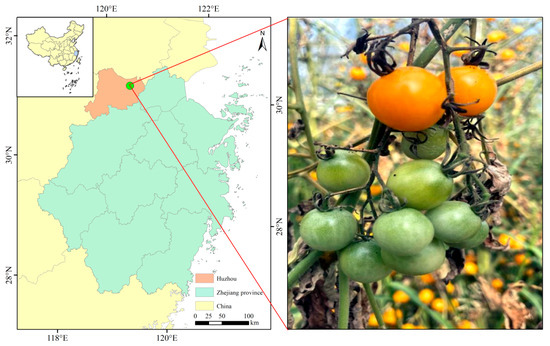
This study conducted experiments on tomato varieties with red mature fruits. The experimental site was established in the open-field cultivation area of the Experimental Base of the Wuxing District Academy of Agricultural and Forestry Sciences in Huzhou City, Zhejiang Province, with geographical coordinates of 120.1985889° E, 30.8151789° N. The tomato varieties tested were selected based on the actual cultivation types at the base and the experimental requirements. The image acquisition process utilized the vivo ×100 smartphone as the capture device, manufactured by vivo Mobile Communication Co., Ltd., Dongguan, China, with image resolution set to 1920 × 1080 pixels and JPEG format for storage. To ensure accuracy in capturing fruit morphology, the distance between the smartphone and tomato fruits was strictly maintained between 0.5 and 1 m during shooting. Additionally, excessive tilt angles were avoided to prevent distortion of fruit contours. Image collection focused on the critical growth period of tomatoes, A total of 2659 images were captured between June and August. The data collection environment is illustrated through photographs of the open-air cultivation area at the shooting site, resulting in each image containing fruits at various maturity stages and quantities. Specific details regarding the dataset division method are elaborated upon in Section 3.2. Figure 1 shows the coordinates of the actual collection site.
Figure 1.
Map of Actual Sampling Site Coordinates.
To eliminate interference from fluctuating light conditions in open-air environments on the extraction of tomato fruit color characteristics, the experiment was conducted in Wuxing District, Huzhou City, from June to August, taking into account the local climate. Data collection was carried out under various weather conditions—sunny, overcast, and partly cloudy—with a focus on periods of relatively stable light intensity: 9:00 a.m. to 11:00 a.m. and 3:00 p.m. to 5:00 p.m. This avoided the intense direct sunlight at midday and the overly weak light in the evening, minimizing the impact of drastic light changes on image quality. Additionally, to address issues such as fruit being obscured by foliage and overlapping fruits between adjacent plants in open-field cultivation, the experiment captured images from three key angles: front, 45° side, and top view. This approach ensures coverage of fruits at different growth stages—upper, middle, and lower plant sections—thereby enriching the input image diversity with varied scenarios. This provides more comprehensive open-field adaptation data while also capturing fruits at different growth positions—upper, middle, and lower parts of the plant. This approach enriches the diversity of input images, providing more comprehensive data adapted to open-field environments for subsequent model training. It improves the model’s ability to adapt to challenging open-field growing conditions.
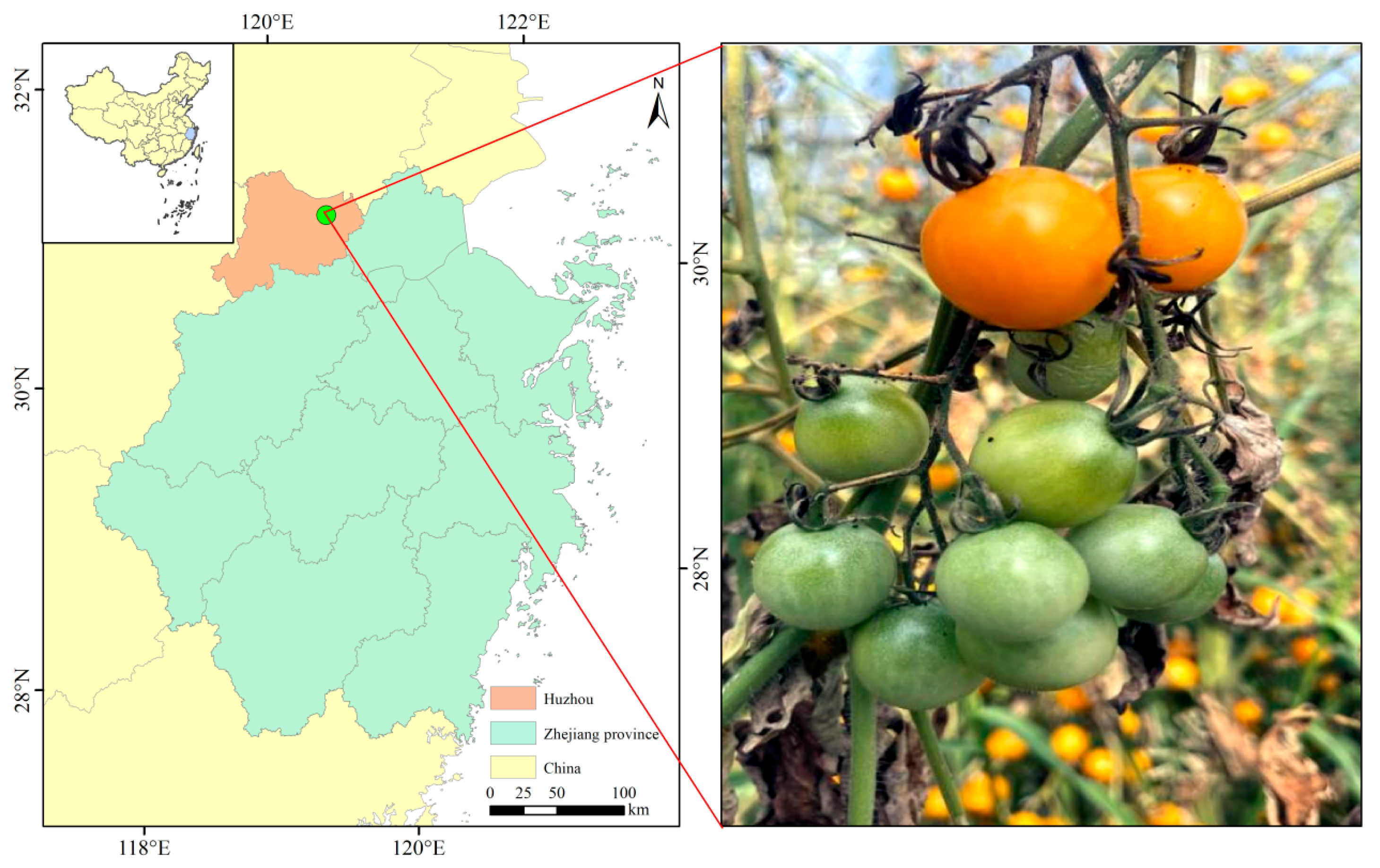
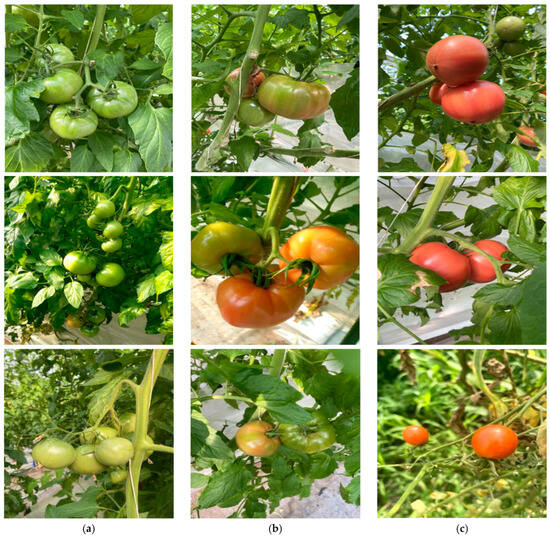
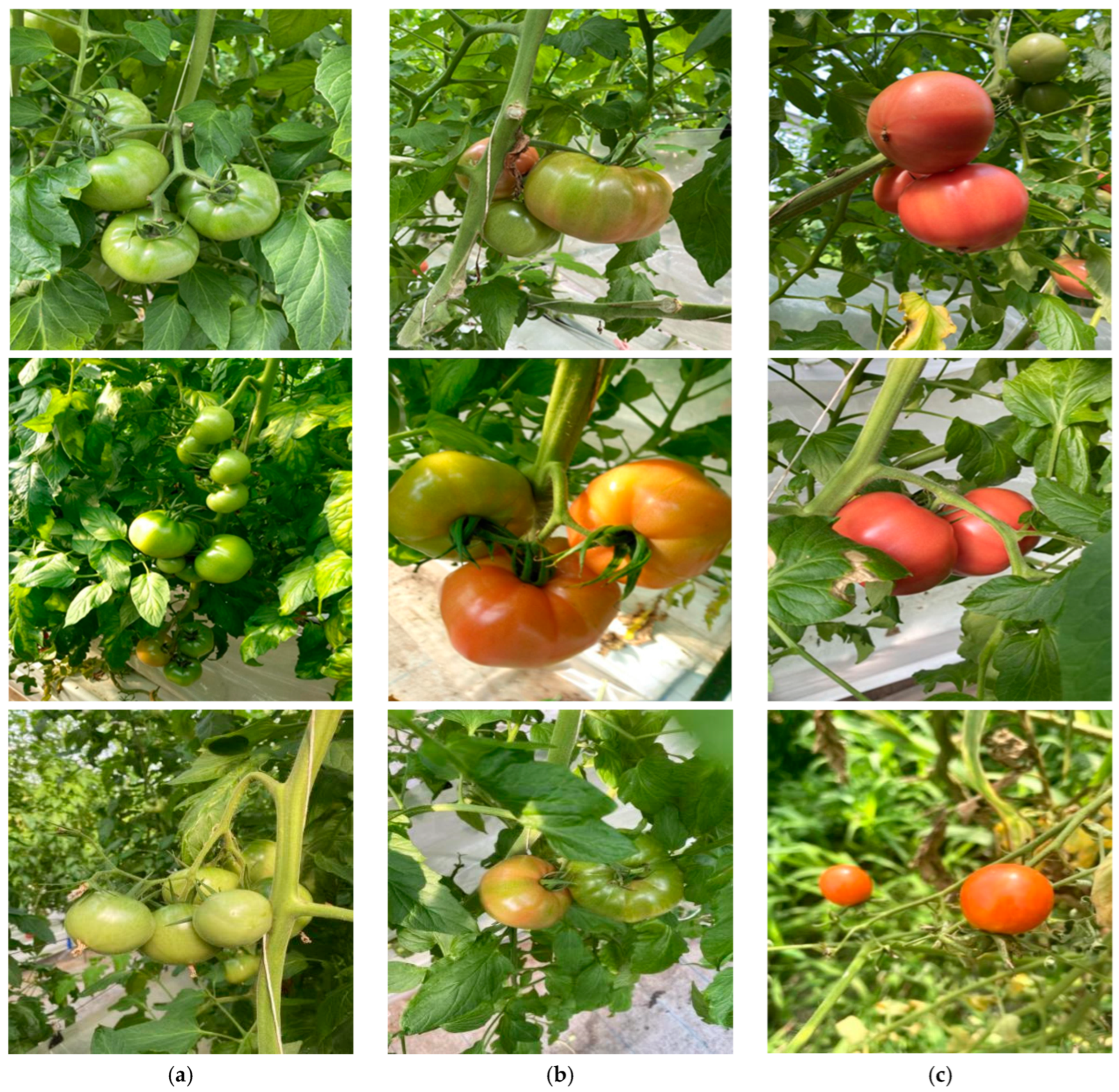
This study categorizes tomato fruit maturity into three stages based on morphological and textural changes during ripening: verde, semi-ripe (semi-maduro), and ripe. Clear criteria define each stage: verde fruit exhibits complete fruit set with uniformly green, glossy surfaces. Upon cutting, seeds appear fully developed and tightly encased in a transparent gelatinous substance. The semi-ripe (semi-maduro) stage is characterized by partial reddening of the fruit, with the red area covering less than half of the total surface. Tactile sensation reveals the flesh beginning to soften slightly. The ripe stage is marked by extensive reddening covering over half of the fruit’s surface. The flesh exhibits moderate softening, with texture and flavor approaching the optimal state for direct consumption. Figure 2 shows tomato samples at different stages of ripeness: (a) Verde; (b) Semi-ripe (semi-maduro); (c) Ripe.
Figure 2.
Tomato samples at different stages of ripeness. (a) Verde; (b) Semi-ripe (Semi-maduro); (c) Ripe.
2.2. Cross Stage Partial with Pyramid Squeeze Attention_Convolutional Gated Linear Unit (C2PSA_CGLU)
C2PSA, fully known as Cross Stage Partial with Pyramid Squeeze Attention, is the core feature enhancement module in the YOLOv11 architecture [15]. This module synergistically optimizes feature extraction efficiency and discriminative power by deeply integrating the Cross Stage Partial architecture with the Pyramid Squeeze Attention mechanism. Its core logic employs a segmented processing strategy: the input feature map is divided into two parallel branches. One branch preserves original features to prevent information loss, while the other enhances feature quality through the pyramid squeeze attention mechanism. On one hand, it simultaneously captures target features at multiple scales through 3 × 3, 5 × 5, and 7 × 7 convolutional kernels, thereby adapting to the diverse shapes of objects in complex scenes. On the other hand, it dynamically weights channel features via the Squeeze-and-Excitation mechanism [16], emphasizing the response of feature channels critical to the detection task. The aforementioned design inherits the cross-stage partial structural lightweight characteristics, reducing computational load by 50%, while enhancing the model’s perception of occluded objects and fine-grained details through attention mechanisms. This provides YOLOv11 with more robust feature representations for object detection tasks, effectively supporting precise detection in complex scenarios.
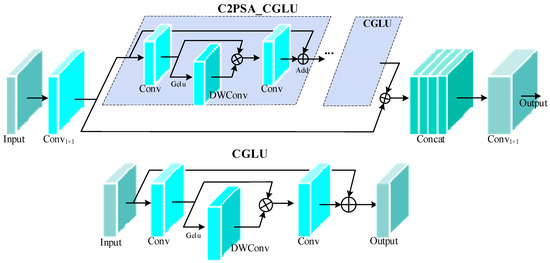
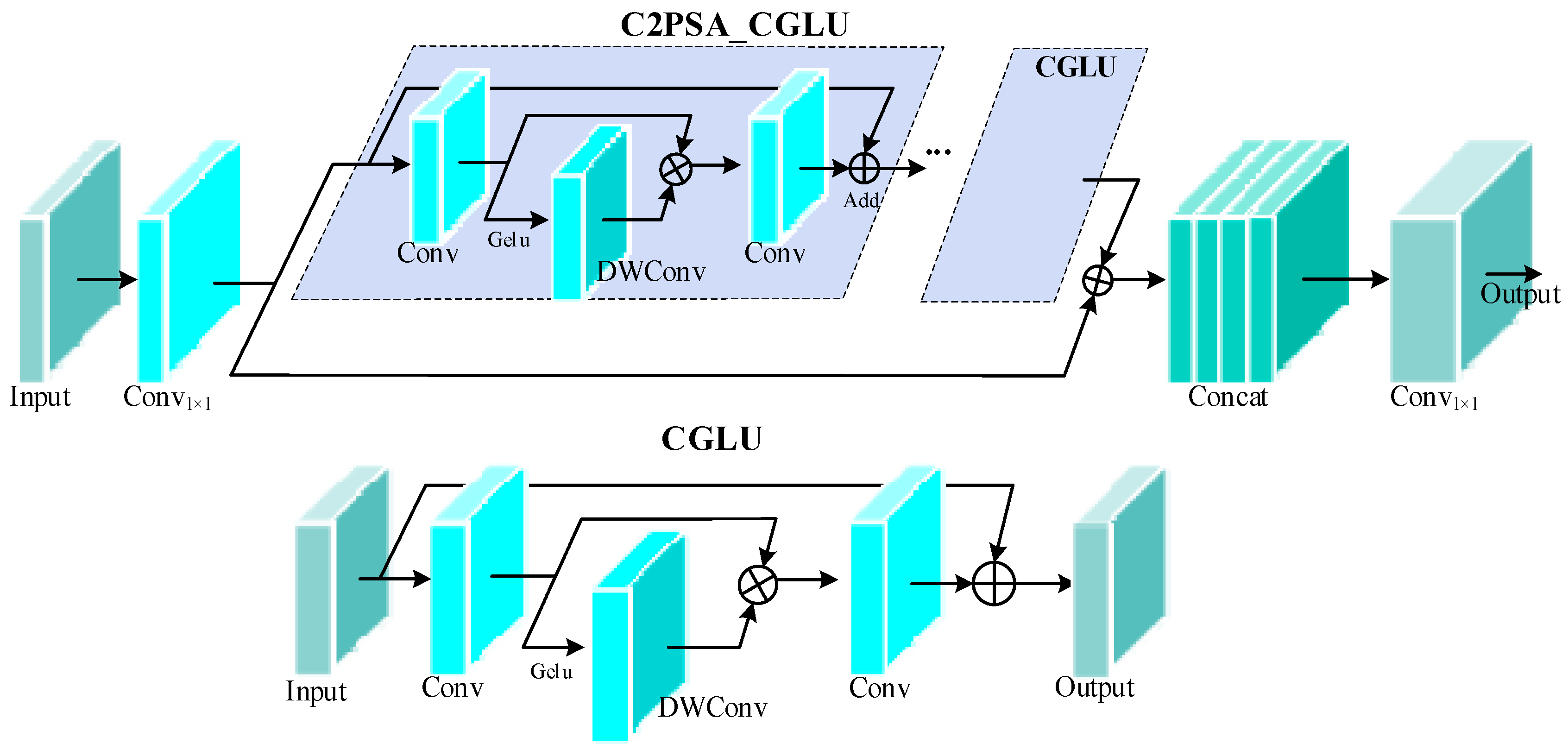
C2PSA_CGLU is a targeted enhancement module built upon C2PSA. Its core innovation lies in replacing the feature transformation component within C2PSA’s reinforcement branch with the Convolutional GLU (ConvGLU) derived from TransNeXt [17]. This forms a composite architecture comprising a “CSP segmented framework + PSA base logic + ConvGLU feature enhancement”. Structurally, C2PSA_CGLU retains the dual-branch design of C2PSA, where feature maps remain divided into a directly transmitted retention branch and a processing-required enhancement branch. However, within the enhancement branch, the module originally used for feature transformation has been replaced by ConvGLU. ConvGLU adheres to the fundamental paradigm of GLU (generating gate and value branches via linear projection, then performing element-wise multiplication for feature selection). Its key innovation lies in introducing a 3 × 3 depthwise convolution before the gate branch activation function, thereby upgrading it to a gate channel attention mechanism with localized spatial awareness. In principle, the introduction of ConvGLU delivers three core benefits to C2PSA_CGLU: First, 3 × 3 depthwise convolutions inject fine-grained feature information from neighboring pixels into the gating signal, addressing the coarse feature granularity caused by SE’s global average pooling and enhancing the precision of channel selection; Second, deep convolutions inherently encode local positional dependencies, compensating for potential positional information gaps in YOLOv11 and strengthening perception of spatial layout features (e.g., edges, textures). Third, the value branch maintains the same depth as MLP/GLU to ensure smooth backpropagation gradients. Notably, this component replacement design reuses the existing feature transformation slot without adding new branches or layers. ConvGLU’s 3 × 3 depthwise convolution performs channel-wise independent computation without fully connected expansion. Its parameter scale and computational load are comparable to those of the original component. This design enhances regional feature extraction and improves detection and segmentation accuracy as validated by subsequent ablation experiments without causing substantial overhead. Ultimately, C2PSA_CGLU retains multi-scale feature extraction capabilities while further improving its ability to capture and select fine-grained object features.
In the tomato ripeness segmentation task, the C2PSA_CGLU module significantly enhances segmentation accuracy and reliability in ripeness classification through its precise capture of fine-grained features and integration of multi-scale characteristics. It is particularly well-suited for extracting differentiated features across the verde, semi-ripe, and ripe stages, as these three maturity levels are primarily distinguished by localized color gradients, texture details, and edge contours—from the greenish hue of verde tomatoes and the green-to-red transition in semi-ripe ones to the red-dominated appearance with gloss changes in ripe fruit. The 3 × 3 deep convolutional layer within the C2PSA_CGLU convolutional gated linear unit precisely extracts these fine-grained features. Its gating mechanism amplifies ripeness-related color channel responses, suppressing background interference, while its multi-scale capability adapts to fruit size and occlusion to capture features of obscured or large fruit clusters and prevent misclassification. Its lightweight design ensures real-time segmentation, meeting the demand for rapid batch maturity detection in cultivation scenarios. This provides precise pixel-level segmentation for subsequent harvest decisions and quality grading. The C2PSA_CGLU module structure is illustrated in Figure 3.
Figure 3.
C2PSA_CGLU Overall Structure Diagram.
2.3. Lightweight Multi-Scale Detail-Aware Segmentation Head (LMSD-Seg)
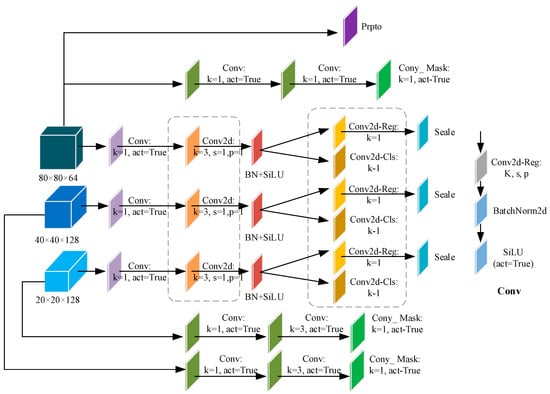
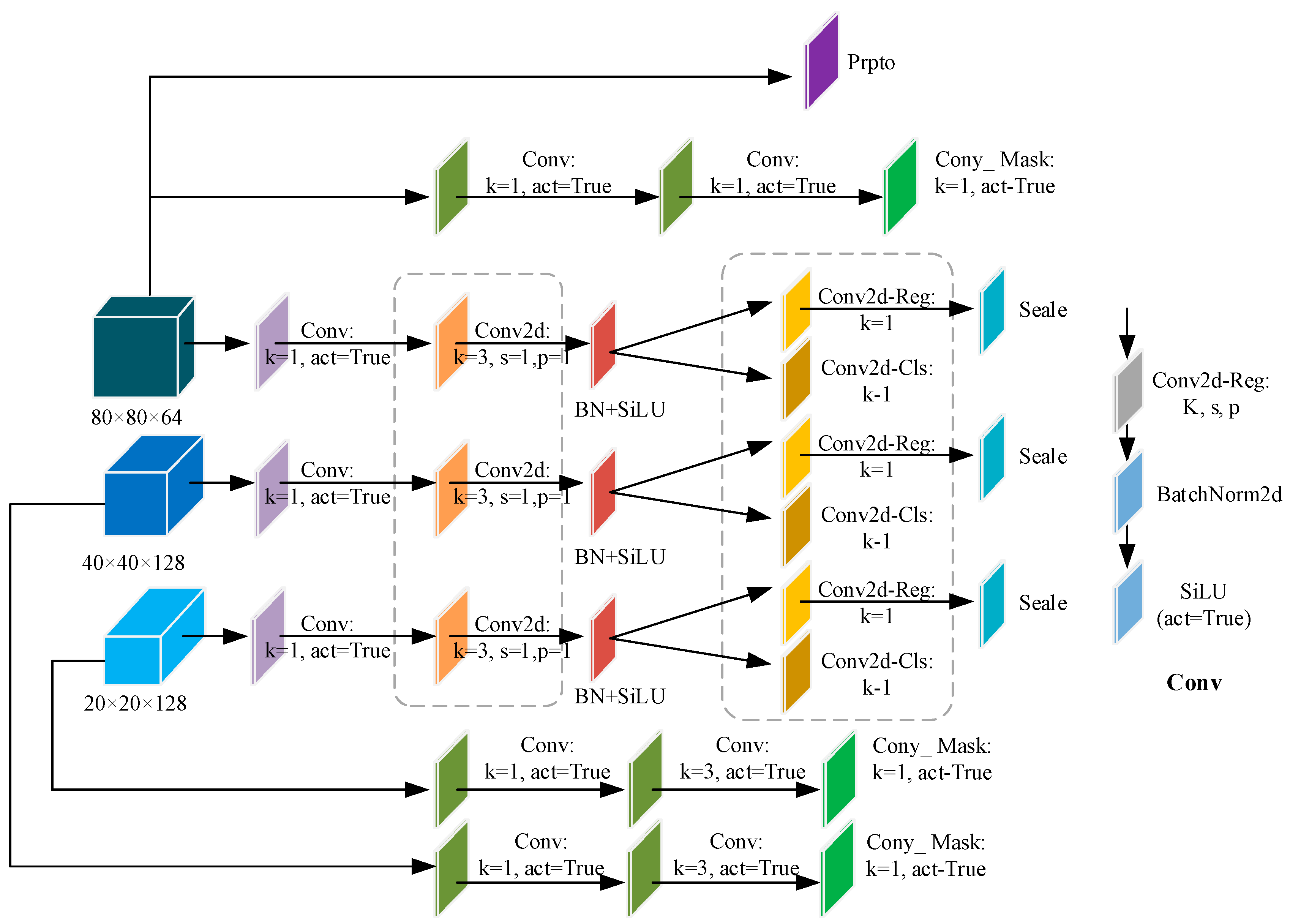
LMSD-Seg Segmentation Head Design and Performance Optimization As the core module of its integrated detection-segmentation framework, the original YOLOv11 segmentation head adopts a “multi-scale independent branches + mask generation in parallel” architecture design. Specifically, it constructs foundational segmentation features through a mask prototype generation module. For backbone-derived multi-scale feature maps each scale branch employs a dedicated three-stage conv sequence two 3 × 3 and one 1 × 1 with feature concatenation generating mask coefficients for pixel-level segmentation. While this architecture improves general segmentation using multi-scale features, its design has key limitations for outdoor tomato ripeness segmentation. First, redundant convolutional structures across branches increase computational costs and hinder real-time inference, especially under diverse field conditions. Second, the head lacks adaptability to fruit size and occlusion, often causing blurry small-fruit edges and confusion between semi-ripe color transitions and leaf backgrounds. These details are precisely the key criteria for distinguishing the three stages of verde, semi-ripe (semi-maduro), and ripe. Furthermore, its default shared normalization strategy fails to align with tomato characteristics in open-field settings. Significant variations in fruit color statistics under different lighting conditions cause shifts in normalized feature distributions. Switching to alternative normalization methods risks increased computational load or reduced training stability, ultimately compromising the accuracy of distinguishing fruits with similar ripeness levels.
To address the aforementioned issues, this study integrates the core design principles from three seminal works: FCOS [18], NAS-FPN [19], and DEA-Net [20]. Through lightweight architecture design, multi-scale adaptive enhancement, and precise detail feature capture, LMSD-Seg achieves targeted improvements in open-field tomato ripeness segmentation performance. In the lightweight restructuring of the core architecture, drawing inspiration from the “shared convolution for parameter and computational efficiency” design philosophy proposed by Tian et al. [18] in FCOS, LMSD-Seg abandons the original segmentation head’s multi-branch independent convolution structure. Instead, it adopts a “1 × 1 convolution channel unification + shared convolution block” design: First, 1 × 1 convolutions standardize the number of feature map channels from the backbone network to a consistent dimension, eliminating channel differences across scales. Subsequently, a shared 3 × 3 convolutional block performs feature extraction and fusion. This design not only significantly reduces redundant parameters and computational overhead caused by repeated convolutions but also leverages the global feature integration capability of shared convolutions. It enhances the consistency of tomato features across different shooting angles and growth positions, effectively meeting the real-time processing demands of conventional hardware. At the level of multi-scale and scene adaptation optimization, drawing inspiration from Ghiasi et al.’s [19] approach in NAS-FPN to “dynamically adjust feature responses for multi-scale target adaptation,” LMSD-Seg designs a learnable Scale layer. By dynamically assigning scale adaptation coefficients, it flexibly matches the size variations in tomatoes—from smaller fruits at the bottom to larger ones at the top in open-field settings—ensuring precise localization of fruits of different dimensions. Simultaneously, to address illumination variability in open-field scenarios, a separate normalization layer is constructed. This layer configures independent mean and variance parameters for feature maps under different lighting conditions, preventing shifts in fruit color feature distributions caused by illumination differences. Furthermore, incorporating the conclusion from FCOS that “group normalization enhances localization accuracy,” a lightweight group normalization module is embedded to strengthen feature robustness. In the detail feature capture stage, we incorporate the Detail-Enhancing Convolution (DEConv) structure proposed by Chen et al. [20] in DEA-Net. This integrates key prior information for tomato ripeness grading—such as the glossy edge texture of verde ripe fruits and the red-green boundary gradient of semi-ripe (semi-maduro) fruits—into the convolution kernel design, thereby strengthening the representation of detail features that critically determine segmentation accuracy. Simultaneously, the reparameterization technique from DEA-Net is adopted. During training, a multi-branch architecture thoroughly learns fine-grained details. At inference, DEConv is equivalently converted to standard 3 × 3 convolutions. This approach effectively resolves feature incompleteness caused by leaf occlusion without adding extra parameters or computational overhead. It achieves precise segmentation of fruit region boundaries, providing reliable pixel-level support for efficiently distinguishing the three stages of open-field tomatoes: verde, semi-ripe (semi-maduro), and ripe. The LMSD-Seg structure is shown in Figure 4.
Figure 4.
LMSD-Seg Overall Structure Diagram.
2.4. C3k2 Partial-Frequency Dynamic Convolution Module (C3k2_PFDConv)
The C3k2 module serves as an efficient feature extraction unit, built on the Cross-Stage Partial (CSP) architecture. Its core design objective is to achieve a dynamic balance between feature representation capability and computational efficiency within deep learning models, making it widely applicable to computer vision tasks such as object detection and semantic segmentation [21]. This module follows a three-stage operational logic: feature diversion, parallel processing, and fusion enhancement. Initially, the input feature map (denoted as , where is the number of input channels and refer to the height and width of the feature map) is processed using a convolution to reduce the channel dimension. This step aims to minimize redundant computational load in subsequent processing. Next, compressed features split into parallel branches: a shortcut branch retains original low-level features, while a processing branch extracts deep semantics via stacked bottlenecks. Finally, outputs are merged through element-wise addition or channel concatenation to integrate high- and low-level information. The output is a feature map with dimensions .
To accommodate varying computational resources and task requirements, the C3k2 module supports multi-dimensional parameter configuration: Adjusting the number of module repetitions controls the depth of feature extraction, while the group convolution parameter optimizes inter-channel information exchange efficiency. The channel compression rate e (typically ranging from 0.25 to 1.0) balances computational cost with feature representation capability. Among these, the channel compression ratio e directly determines the number of intermediate feature channels in the processing branch. Its calculation formula is:
In the formula, denotes the number of output channels of the module, and represents the floor operation. This formula ensures that the number of intermediate feature channels remains an integer. By flexibly adjusting the value of , C3k2 achieves robust feature representation through high channel counts on high-performance hardware while meeting lightweight requirements on mobile devices via low channel counts. This approach balances multi-scale target feature learning capabilities with hardware adaptability.
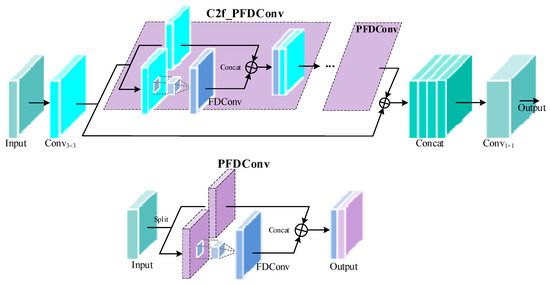
The C3k2_PFDConv module is an innovative enhancement unit built upon C3k2, integrating partial convolutions with frequency-dynamic convolutions. Its design draws inspiration from the partial convolution concept in FasterNet [22] and the frequency-dynamic convolution mechanism in FDConv [23]. The core breakthrough of this module lies in replacing the traditional convolution in the processing branch with a partial-frequency dynamic convolution component that integrates two technologies. While preserving the C3k2 parallel branch architecture, it achieves dual optimization of the convolution branch:
On one hand, by adopting a partially convolved channel splitting mechanism, only (default ) of the input channels undergo convolution operations, while the remaining channels pass through directly. This approach significantly reduces computational complexity and memory access overhead. At this stage, the convolutional layer has the following number of channels:
This design effectively enhances model inference efficiency by reducing redundant computations, addressing the latency issues caused by frequent memory access in traditional lightweight convolutions.
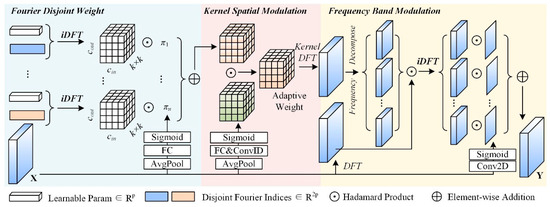
On the other hand, the core mechanism of introducing frequency-dynamic convolution generates frequency-diverse convolution kernels through Fourier-domain grouping within the convolutional branch. By combining kernel-space modulation with frequency-band modulation, it dynamically adjusts the frequency response at different spatial locations—such as enhancing high-frequency edge details and suppressing background noise. This design overcomes the limitations of traditional dynamic convolutional weights’ frequency response homogeneity, enhancing feature expression richness with minimal parameter increments.
This design offers significant advantages for tomato segmentation tasks: First, the efficient computational properties of partial convolutions enable rapid processing of high-resolution agricultural images, with computational complexity reduced to (default ) compared to traditional convolutions, meeting real-time segmentation requirements. Second, the frequency-adaptive capability of frequency-dynamic convolutions precisely distinguishes tomato edge features from complex backgrounds, enhancing segmentation mask integrity. Third, the complementary high-to-low-level features preserved by parallel branches enable both global fruit localization and local detail recognition, making it suitable for multiscale, high-density tomato segmentation. The complete structural diagram of the C3k2_PFDConv module is presented in Figure 5. The detailed structure of FDConv is shown in Figure 6.
Figure 5.
C3k2_PFDConv Overall Structure Diagram.
Figure 6.
FDConv Overall Structure Diagram.
2.5. Overall Network Architecture
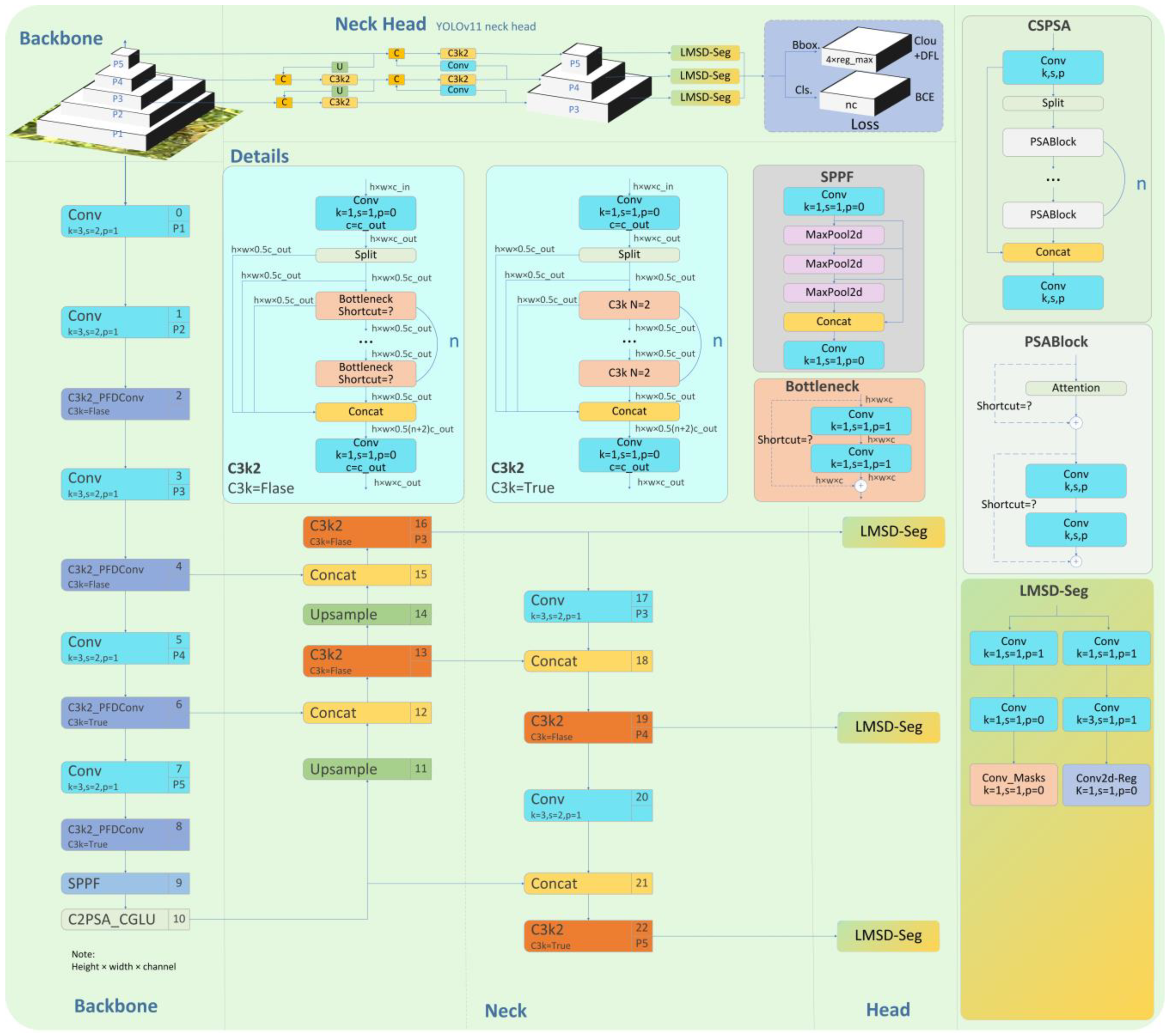
The TSE-YOLO algorithm builds upon the YOLOv11-n [24] framework, specifically tailored for tomato segmentation tasks. It addresses unique requirements such as multi-scale fruit feature capture, interference resistance in complex field backgrounds, and lightweight deployment adaptability. Performance optimization is achieved through customized module design, with the functional positioning and collaborative logic of its core modules outlined below.
To address the challenges of significant morphological variation and scale changes in tomato fruits across different growth stages, coupled with inadequate feature extraction in complex backgrounds, this paper introduces the C3k2_PFDConv module as the core feature processing unit within the backbone network. This module performs dual functions: efficient feature fusion and dimensionality reduction. This module employs a cross-stage partially connected architecture. Through a channel splitting strategy, input features are divided at a 1:3 ratio into convolutional branches and identity branches, performing convolutional operations on only 25% of the channels. This reduces computational load to 1/16th of traditional convolutions. While strictly controlling parameter size and computational cost, the identity branches preserve low-level details of the original features, including tomato skin texture and stem scar contours. More crucially, its frequency-dynamic convolution generates diverse frequency-aware kernels via Fourier-domain grouping. Combined with kernel-space and frequency-band modulation, it dynamically enhances response to tomato’s multi-morphological features, boosting feature expression and robustness for identifying diverse fruit shapes.
To address the instability in feature extraction caused by reflections, shadows, and background interference under complex lighting conditions during tomato imaging, this paper introduces the C2PSA_CGLU module as a feature enhancement unit within the network. By integrating object-aware channel attention with spatial attention mechanisms, it achieves precise focusing on key tomato features. This module first dynamically allocates feature channel weights through a channel attention branch, enhancing responses in color channels associated with tomatoes—including the red channel for ripe fruit and the green channel for verde fruit—while simultaneously suppressing background noise interference from soil and foliage. The spatial attention branch captures the spatial position information of the fruit through local feature interactions, highlighting the contour features of the fruit region. By incorporating the nonlinear characteristics introduced through the GELU activation function, this module can more efficiently learn the nonlinear mapping relationships of tomato features. Even in complex scenarios such as direct sunlight or shadow occlusion, the model can stably extract the fruit’s discriminative features, significantly enhancing its recognition robustness in natural environments.
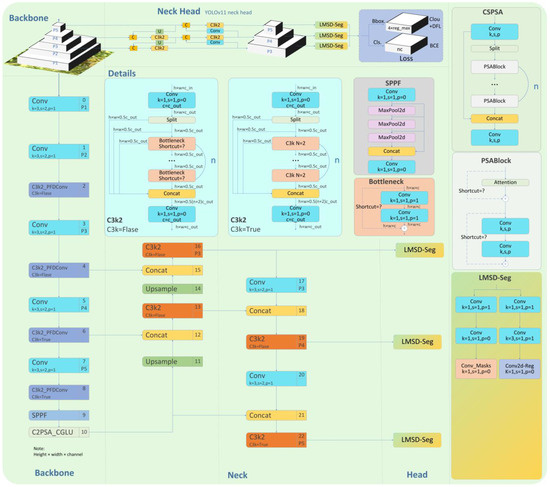
To address incomplete segmentation and blurred boundaries in tomatoes grown outdoors due to overlapping fruits, foliage obstruction, and uneven lighting, this paper designs the LMSD_Seg module as a dedicated detection head unit tailored for tomato segmentation tasks. It focuses on multi-scale feature integration and fine detail capture. This module adopts a feature pyramid architecture to fuse the P3, P4, and P5 features from the backbone network. Through upsampling and concatenation, it bridges semantic gaps across scales, enabling balanced recognition of small, medium, and large fruits across different plant sections. To further enhance segmentation, the module incorporates edge-aware convolutions to capture color transition boundaries of semi-ripe (semi-maduro) fruits and uses a context correlation module to reconstruct edges fragmented by occlusions. The resulting segmentation mask precisely delineates the fruit’s pixel-level contours. This design significantly enhances the segmentation integrity and precision of the model under natural lighting and complex background conditions, providing a high-quality image foundation for subsequent maturity grading and yield assessment. The complete structure of the network model is illustrated in Figure 7.
Figure 7.
TSE-YOLO Overall Network Architecture.
3. Results
3.1. Training Settings
YOLOv11-n [24] is adopted as the baseline model in this study, with its balanced performance between lightweight design and segmentation accuracy making it well-suited for real-time outdoor tomato ripeness segmentation. Aligning with the official implementation, the baseline model’s core configurations are consistent, and to ensure fair comparison, it shares identical training hyperparameters with the proposed TSE-YOLO across all experiments, including ablation studies and comparative tests. All training and evaluation experiments for the YOLOv11-seg model are conducted in an Ubuntu 22.04 operating system environment. The model was developed with the PyTorch 2.2 deep learning framework, utilizing Python 3.8 as the programming language. The computational platform configuration comprised an Intel Xeon E5-2699 v4 CPU (base frequency 2.2 GHz), 128 GB system memory, and a single NVIDIA RTX 4090 GPU (24 GB VRAM). The software stack relied on the CUDA 12.1 parallel computing architecture and the cuDNN 8.2 deep learning acceleration library, offering hardware-level computational support for the experiments. The training phase employed a fixed input resolution of 640 × 640 with a batch size of 128. The total number of training epochs was set to 200. The SGD optimizer was selected with the following key hyperparameters: Initial learning rate: 0.01, momentum: 0.937, weight decay: 5 × 10⁻⁴. To enhance convergence stability and model generalization, a learning rate scheduling strategy combining short-cycle warmup (≈3 epochs) with cosine annealing was employed. Additionally, AutoMixed Precision (AMP) training technology was enabled to reduce single-card memory consumption and improve training efficiency while maintaining accuracy. Data augmentation employs the YOLO series’ medium-intensity scheme (including color perturbation, multi-scale scaling, and horizontal flipping), with Mosaic augmentation disabled during late training to prevent sample distribution drift. The segmentation branch enables the overlap mask mechanism and default downsampling ratio to ensure precision in segmentation mask boundary details. The validation phase maintains input specifications consistent with training (640 × 640 resolution) and employs standard non-maximum suppression (NMS) for evaluation. The final hardware/software configuration and training strategy achieve a balance between convergence speed, detection-segmentation accuracy, and experimental reproducibility without additional computational overhead, providing a reliable foundation for model performance validation. Specific metrics are detailed in Table 1.
Table 1.
Hyperparameters of the Soccer-YOLO Model.
3.2. Dataset Split
This tomato ripeness detection dataset comprises 2659 images, covering samples from various growth stages, multiple lighting conditions, and diverse field environments, ensuring comprehensive diversity and representativeness. For the purpose of maintaining model training stability, validation consistency, and testing objectivity, the dataset was divided randomly into three parts with an 8:1:1 split. 80% of the data, consisting of 2127 images, was allocated for training to help the model learn and refine its parameters. 10% of the dataset, or 266 images, is designated as the validation set, which is used for adjusting hyperparameters and monitoring overfitting during the training process. The remaining 10% of the dataset, comprising 266 images, constitutes the test set for independently evaluating the model’s generalization performance and detection accuracy. The random shuffling strategy employed during data partitioning effectively mitigates the impact of sample distribution bias on experimental outcomes. Following partitioning, all data retain the integrity of original image annotation information, providing robust and reliable data support for constructing and validating tomato ripeness detection models.
3.3. Convergence Analysis
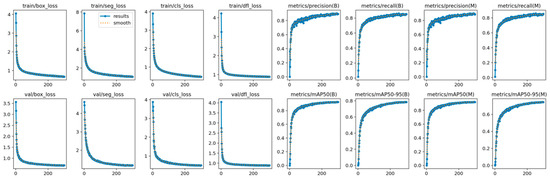
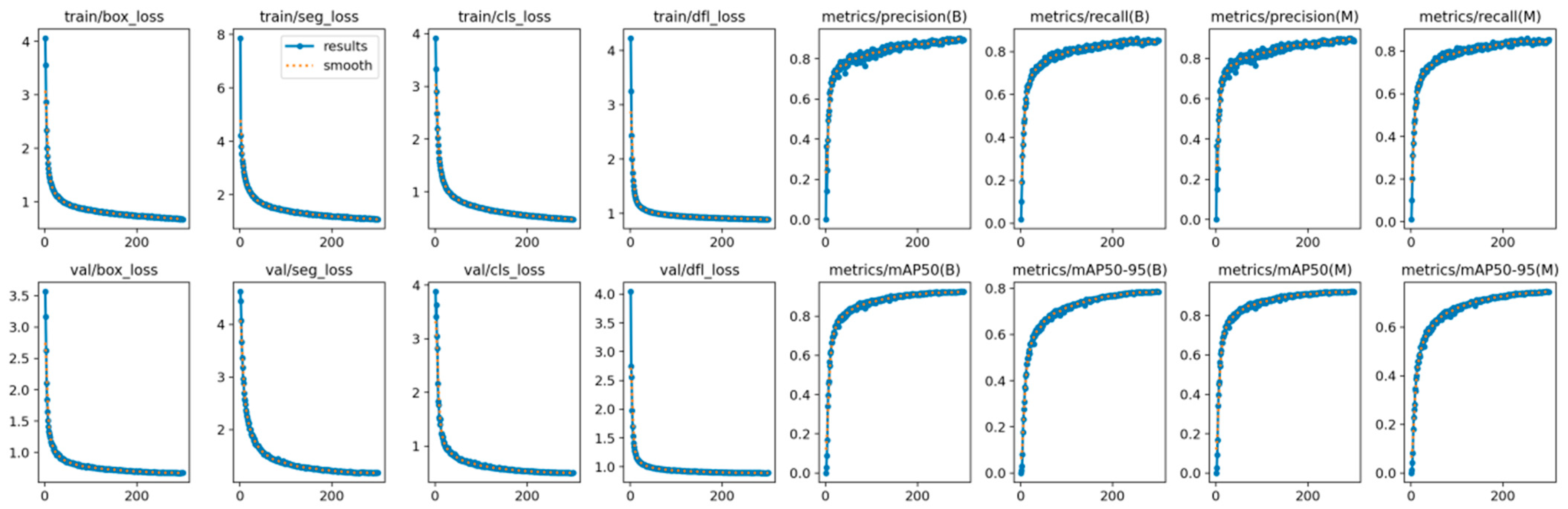
Convergence analysis serves to systematically evaluate the stability and efficiency of optimization processes, determine whether models have approached their upper limits of usable performance, and identify risks such as overfitting and underfitting at an early stage. This supports interpretable and reproducible training decisions [25,26]. By quantitatively characterizing the evolutionary features of loss terms and performance metrics, convergence analysis provides actionable trigger conditions for early stopping thresholds, learning rate scheduling, and momentum settings. It also offers guidance for tuning hyperparameters such as batch size, data augmentation intensity, and regularization strength. Figure 8 illustrates the curve diagram of the model proposed in this paper.
Figure 8.
Model Convergence Analysis Chart.
The multi-subgraph curves throughout the training process reveal that the model exhibits stable and typical convergence characteristics: the localization loss, object-specific loss, and category loss in the training and validation phases decay rapidly in the early stages, maintain an approximately linear decline in the middle phase, and collectively enter a plateau region with a slope approaching zero in the later phase. The smooth trajectories align well with the original scatter plot, showing no high-frequency oscillations or prolonged stagnation, indicating numerically stable optimization, smooth gradient propagation, and well-matched learning rate scheduling. Corresponding performance metrics—precision, recall, mAP@0.5, and mAP@0.5:0.95—monotonically improve with iterations before plateauing in the final stage. This indicates that the synergistic enhancement of localization and classification capabilities is largely complete, maintaining robust performance even under stricter thresholds. The training and validation curves maintained consistent direction and similar magnitudes throughout, with no upward divergence on the validation side or metric divergence, indicating controlled generalization gaps and no significant overfitting signs. The temporal sequence of loss components reflects the dynamic pattern common in object detection—where localization stabilizes before classification refinement—aligning with the high plateau observed in mAP@0.5:0.95. Collectively, this indicates that the current model configuration and data conditions have reached an expected performance ceiling, demonstrating robust generalization reliability and reproducible training.
3.4. Ablation Studies
To clarify the specific contributions of each innovative module in the TSE-YOLO model to its performance and validate the design’s effectiveness, this study conducted ablation experiments on core innovative components. The focus was on the C2PSA_CGLU module in the feature extraction layer, the lightweight enhanced segmentation detector LMSD-Seg in the detection branch, the integrated segmentation mechanism, and the C3k2_PFDConv module in the feature fusion layer. The training and testing were carried out using a custom-built dataset, with the primary evaluation metrics including parameters, precision, recall, mAP@0.5, and computational cost (measured in GFLOPs). Four control groups were established: (A) Baseline group uses the original YOLOv11n-seg model, (B) Replacement group 1 substitutes the C2PSA module in YOLOv11n-seg with C2PSA_CGLU, (C) Replacement group 2 retains the baseline model’s feature layer while replacing the original detector head with the lightweight enhanced segmentation detector LMSD-Seg, (D) Replacement Group 3 replaces the C3k2 module in the baseline model with C3k2_PFDConv. Detailed ablation experiment results are presented in Table 2, Table 3 and Table 4.
Table 2.
Model Ablation Experiment Parameter Performance Table.
Table 3.
Target Detection Ablation Experiment Table.
Table 4.
Example Segmentation Ablation Experiment Table.
As presented in Table 2, the final model introduced in this study excels at achieving a balance between parameter size and computational efficiency. In contrast to the original YOLOv11n-seg model, it makes significant advancements in both “lightweight design” and “performance preservation,” working in tandem to enhance overall efficiency. Specifically, when only the C2PSA_CGLU module was introduced to the original model, the number of parameters remained essentially on par with the original YOLOv11n-seg, without generating additional parameter redundancy. This validates the module’s parameter efficiency during feature enhancement. By incorporating the LMSD-Seg segmentation head and the C3k2_PFDConv module, the final model’s parameter count was reduced to 2.44 million, which is just 85% of the original model’s parameters, resulting in a 15% reduction in the parameter size. At the same time, the computational complexity, measured in GFLOPs, was reduced by 0.6 GFLOPs compared to the original model, leading to a notable improvement in computational efficiency. This result demonstrates that the module combination designed in this paper (C2PSA_CGLU + LMSD-Seg + C3k2_PFDConv) effectively mitigates the negative impact of lightweight design on model representation capabilities while reducing redundant parameters and computational overhead. It provides a hardware-adaptive foundation for enhancing the real-time performance and accuracy of subsequent open-field tomato ripeness segmentation tasks.
An examination of the quantitative results in Table 3 and Table 4 shows that the TSE-YOLO model substantially exceeds the performance of the original YOLOv11n-seg baseline model in both object detection and semantic segmentation tasks. Additionally, each novel module plays a unique role in improving the overall performance. With the standalone introduction of the C2PSA_CGLU module in the feature-extraction stage, the model’s detection mAP@0.5 increases by 0.3 percentage points and its segmentation mAP@0.5 by 0.4 pp. Replacing only the detection branch with a LMSD-Seg yields a 0.7 pp improvement in both detection and segmentation mAP@0.5. Moreover, substituting the C3k2 module in the feature-fusion stage with C3k2_PFDConv improves detection mAP@0.5 by 1.1 pp and segmentation mAP@0.5 by 1.2 pp over the baseline; among these variants, C3k2_PFDConv delivers the most substantial dual-task gains, confirming its effectiveness in optimizing frequency response and computational efficiency during feature fusion.
A thorough assessment of the complete experimental data presented in Table 2, Table 3 and Table 4 shows that the TSE-YOLO model, tailored for tomato segmentation tasks, achieves balanced optimization across multiple performance dimensions by integrating three core innovative modules: C2PSA_CGLU, LMSD-Seg, and C3k2_PFDConv. It maintains lightweight advantages in inference speed with significantly reduced model parameters, while simultaneously enhancing detection and segmentation accuracy. This creates a synergistic characteristic of “high efficiency, lightweight design, and high precision”. This outcome thoroughly confirms the task adaptability of each module’s design and the effectiveness of multi-module collaborative optimization, successfully addressing the dual requirements for real-time performance, deployment flexibility, and segmentation accuracy in tomato segmentation tasks.
3.5. Comparative Experiments
3.5.1. TSE-YOLO vs. YOLOv11 Model Training Performance Comparison
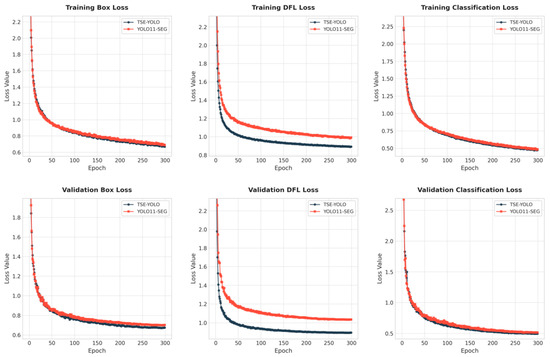
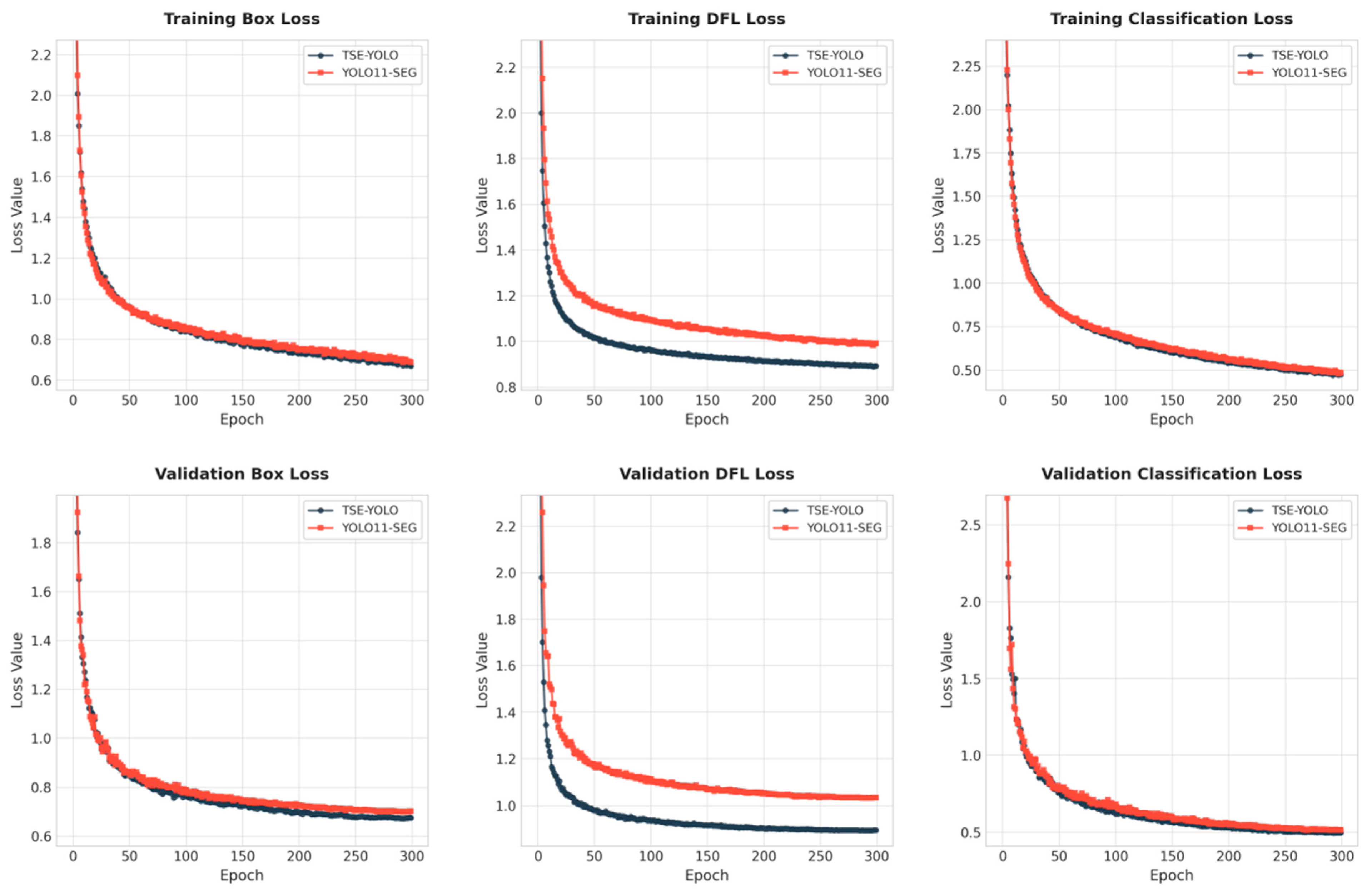
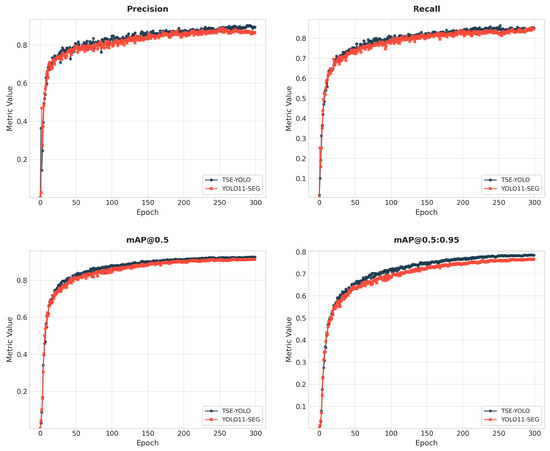
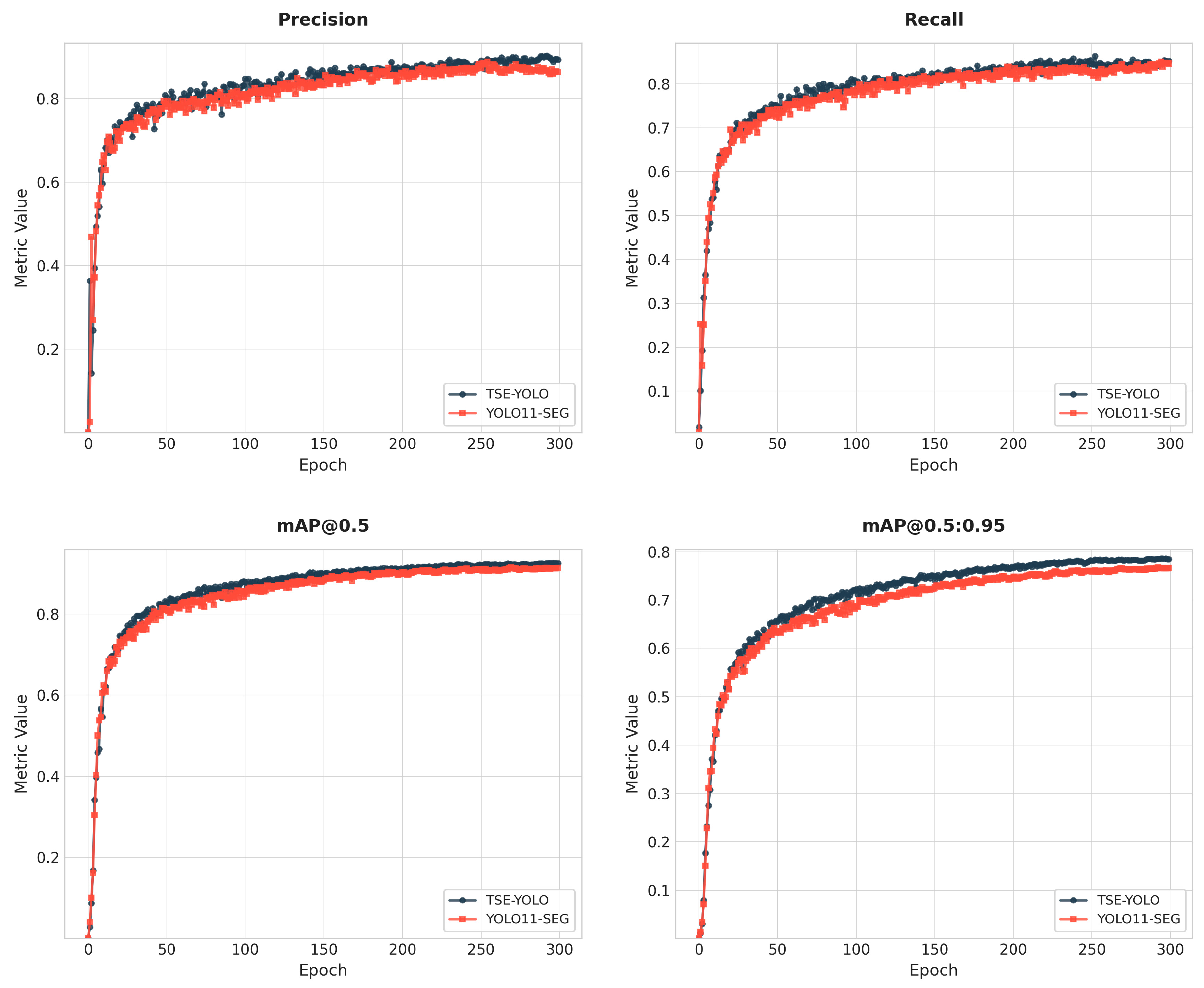
This experiment compares the YOLOv11-SEG model with the TSE-YOLO model proposed in this paper. The comparison results between the two models are shown in Figure 9 and Figure 10.
Figure 9.
YOLOv11-SEG vs. TSE-YOLO Loss Comparison Chart.
Figure 10.
YOLOv11-SEG vs. TSE-YOLO Experimental Results Comparison Chart.
As illustrated in Figure 9, TSE-YOLO exhibits steeper decline curves for both training bounding box loss and DFL (Distribution Focal Loss, used for learning bounding box distribution), ultimately reaching lower stable values. This indicates more efficient convergence in learning features relevant to target localization, enabling more precise fitting of target box positions and bounding box distribution patterns. Concurrently, training classification loss decreases faster to lower stable values, demonstrating more accurate learning of features distinguishing target categories. In terms of validation performance, TSE-YOLO exhibits significantly lower validation bounding box loss, validation DFL loss, and validation classification loss compared to YOLOv11-SEG, with smoother curves. This indicates stronger feature representation generalization, better adaptation to new data, effective mitigation of overfitting, and superior performance in object detection across new scenarios.
As shown in the training curve comparison in Figure 10, TSE-YOLO significantly outperforms YOLOv11-SEG across all four evaluation metrics—Precision, Recall, mAP@0.5, and mAP@0.5:0.95—while also demonstrating a more stable and rapid convergence process, thereby validating the overall enhancement in both accuracy and training efficiency achieved through the proposed architectural improvements.
3.5.2. Performance Comparison Between Different Models
This experiment compared the performance of YOLOv5 [27], v8 [28], v10 [29], v11 [15], v12 [30], v13 [31], and the proposed TSE-YOLO for tomato ripeness detection. Since v5 and v10 lack segmentation capabilities, only detection performance was evaluated. The experimental results are shown in Table 5, which compares detection performance, and Table 6, which compares segmentation performance.
Table 5.
A Comparison of Detection Performance Across Various Models.
Table 6.
A Comparison of Segmentation Performance Across Various Models.
As shown in Table 5 and Table 6, among all compared models, YOLOv11-seg consistently achieves the highest mAP@0.5 except for our proposed improved model. This demonstrates that the chosen baseline model is highly competitive and comparable within its class, providing a solid foundation for subsequent enhancements.
On the object detection task, TSE-YOLO demonstrates strong performance, achieving an mAP@0.5 of 92.5% and an mAP@0.5:0.95 of 78.6%. Compared to the top-performing baseline, it shows absolute improvements of 1.1 percentage points in mAP@0.5 and 1.9 percentage points in mAP@0.5:0.95. The model also attains a recall of 84.6%, placing it among the top tier of high-performance detectors. It is noteworthy that although YOLOv5 exhibits slightly higher precision than TSE-YOLO, its recall and mAP@0.5:0.95 are significantly lower. This comparison shows that TSE-YOLO consistently delivers stable object localization accuracy and strong category recognition, even as the Intersection over Union IoU thresholds increase from 0.5 to 0.95, effectively reducing performance degradation associated with higher IoU thresholds.
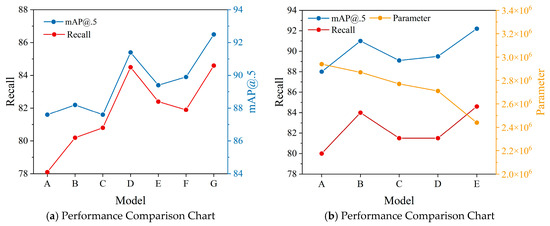
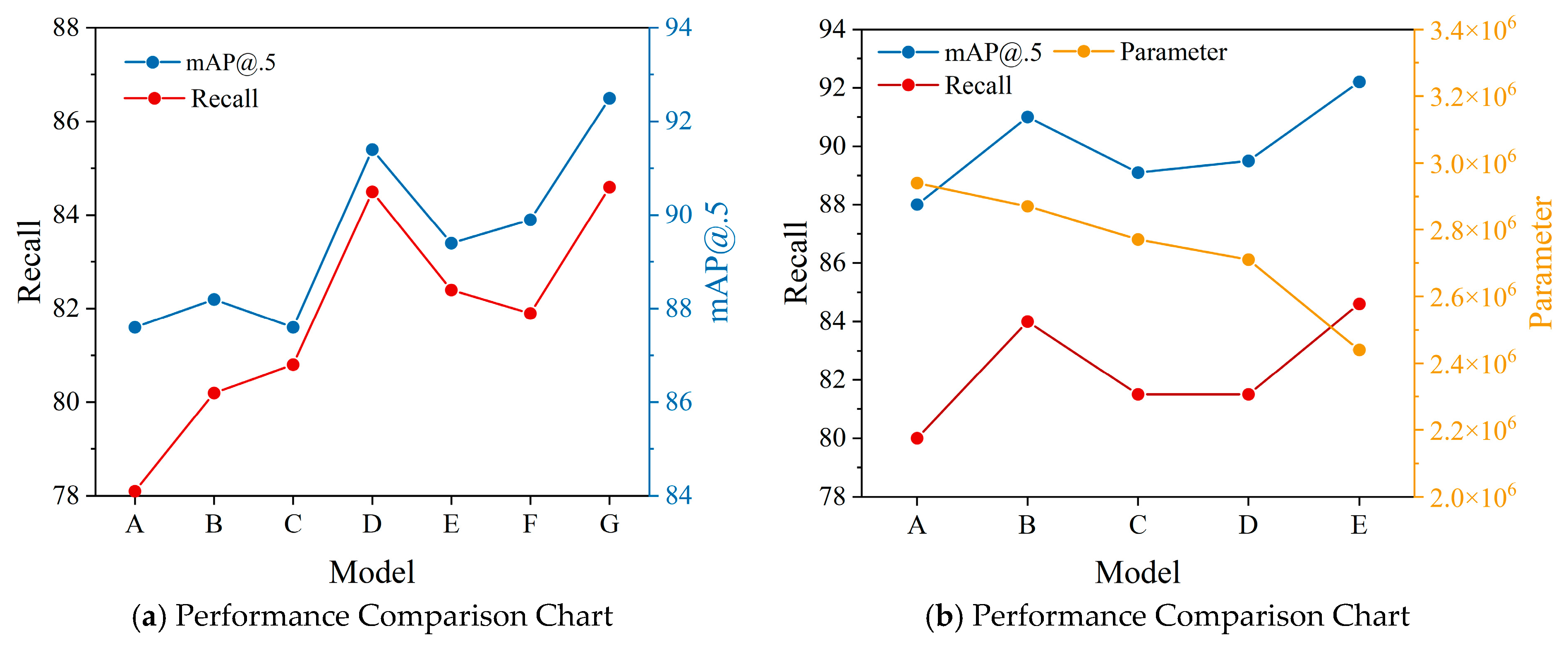
In semantic segmentation tasks, TSE-YOLO further demonstrates its performance advantages, achieving precision and recall rates of 89.6% and 84.6%, respectively. Its mAP@0.5 and mAP rates at 0.5 and 0.95 reach 92.2% and 74.5%, with all four core metrics ranking first among all compared models. Particularly in the dimension of mAP@0.5:0.95, TSE-YOLO demonstrates a more pronounced advantage over the baseline model YOLOv11-seg. This validates its superior capability in capturing object edge details and object contours within complex backgrounds during segmentation tasks, enabling it to consistently produce high-quality segmentation results across multiple IoU threshold evaluation scenarios. Visual performance comparison chart, as shown in Figure 11, corresponds to Table 5 and Table 6.
Figure 11.
Performance Comparison Chart of Different Models for Detection and Segmentation.
3.6. Experimental Results
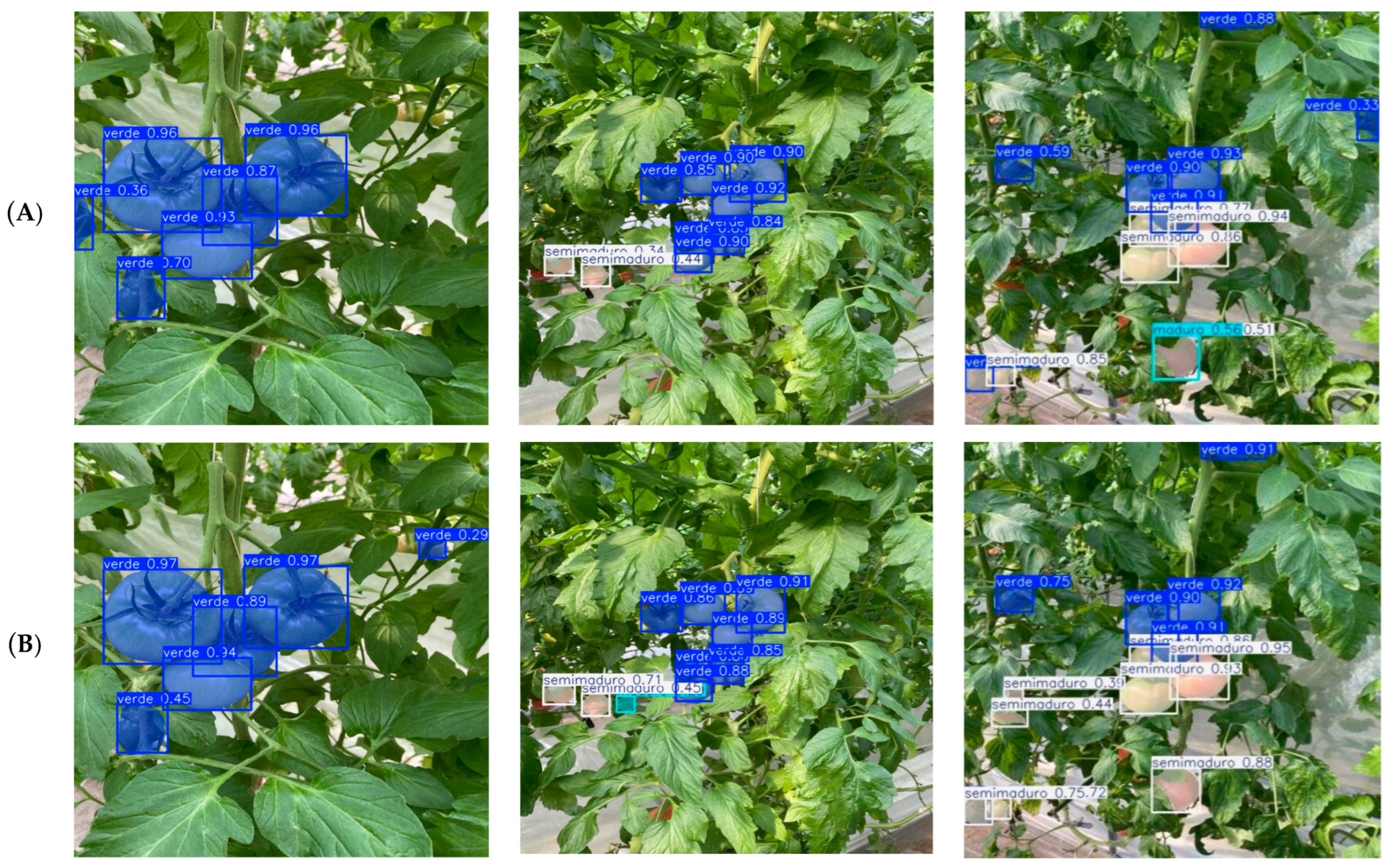
This experiment employed both the original YOLOv11 model and the TSE-YOLO model in practical application scenarios, with results presented in Figure 12. Figure 12A presents the detection results from YOLOv11, whereas Figure 12B illustrates the detection results from TSE-YOLO.
Figure 12.
Actual Test Results Comparison Chart. (A) presents the detection results from YOLOv11; (B) illustrates the detection results from TSE-YOLO.
In the target recognition comparison, within the left image group, both Figure 12A,B achieved superior recognition results. However, Figure 12B demonstrated superior small target detection capability, accurately identifying verde tomatoes that are difficult to distinguish within the human visual range. The middle image group exhibited a similar pattern: compared to Figure 12A, Figure 12B successfully captured smaller ripe tomato targets, further validating its advantage in small target recognition tasks. The right image group highlighted the recognition flaws in Figure 12A. On one hand, it exhibited significant misclassification in background areas. On the other hand, it made category errors during the transitional stage of tomato ripeness (semi-ripe (semi-maduro) state), incorrectly categorizing semi-ripe (semi-maduro) tomatoes—which are in the subtle transition phase from verde to ripe—as verde tomatoes. Figure 12B did not exhibit such issues, demonstrating superior overall recognition accuracy sand robustness.
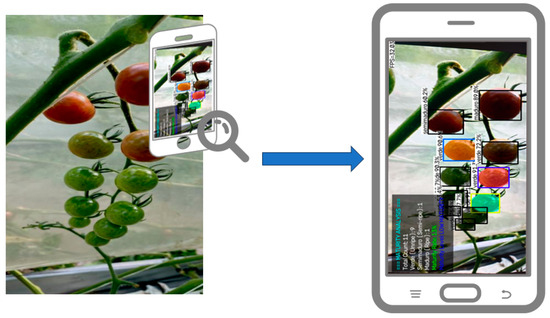
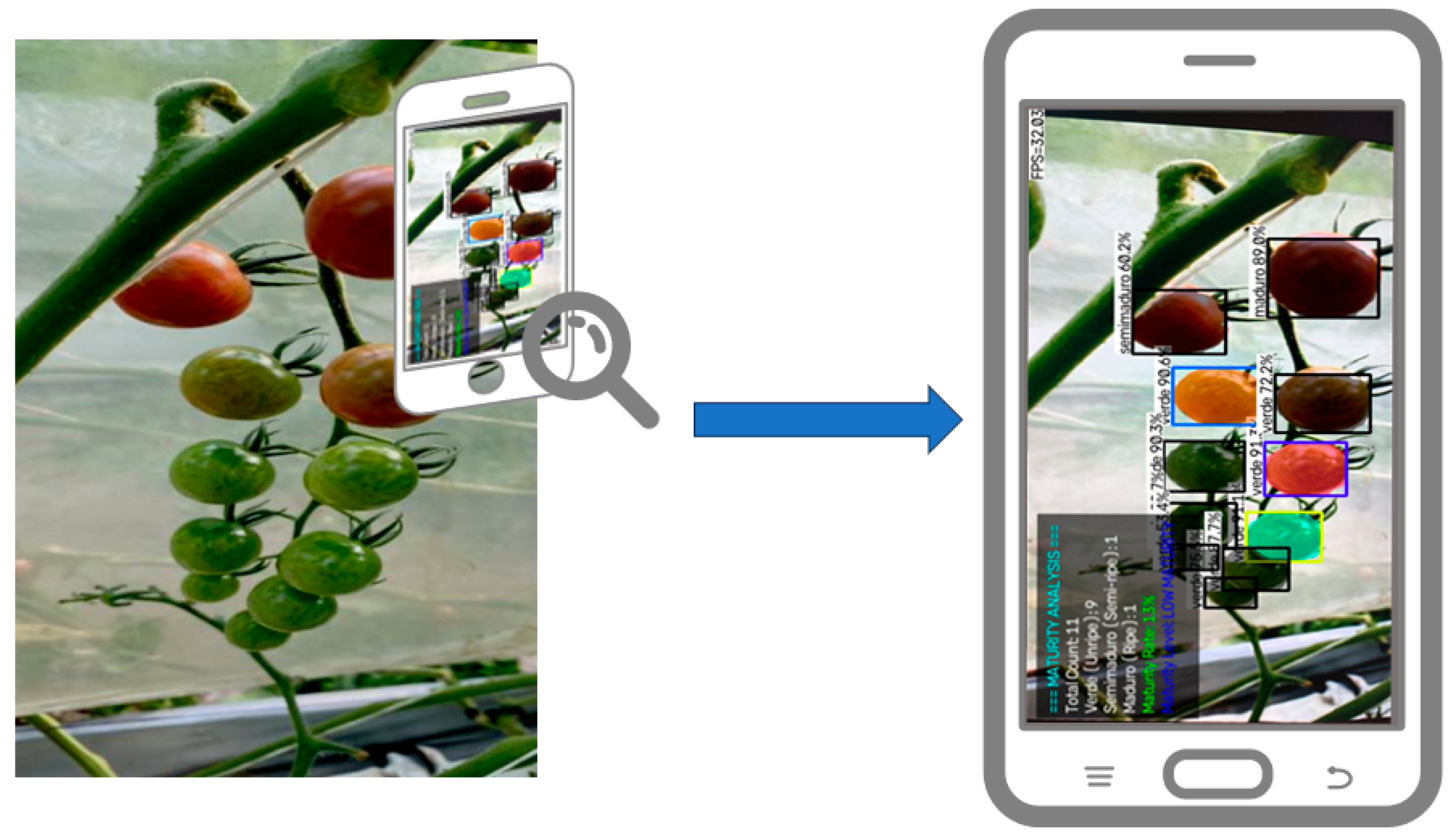
This study successfully deployed the proposed detection algorithm into an Android mobile application. After applying model compression and acceleration optimization tailored for mobile platforms through the NCNN inference framework, the system achieves high detection accuracy and real-time responsiveness on mobile hardware. The algorithm was deployed on a device powered by the Dimensity 9300 processor, which delivers up to 48 TOPS of compute performance, enabling the model to attain a stable detection speed of 30–40 FPS in real-world scenarios. The system can visually output detection boxes, category labels, and confidence scores directly on real-time camera previews. The mobile application effect is shown in Figure 13.
Figure 13.
Mobile Device Detection Effect Diagram.
4. Discussion
The TSE-YOLO model precisely addresses the core challenge of detecting tomato ripeness in agricultural production by integrating the synergistic effects of three innovative modules: C2PSA_CGLU, LMSD-Seg, and C3k2_PFDConv. In real-world cultivation scenarios with leaf obstruction and fluctuating light conditions, this model reliably captures subtle fruit characteristics, achieving 92.5% detection accuracy and 92.2% segmentation accuracy. Compared with existing studies, such as the improved YOLOv5 model by Li et al. [8]—which enhances detection accuracy in greenhouse settings through data augmentation and EIoU loss optimization but is limited to bounding-box detection—and the NVW-YOLOv8s network by Wang et al. [9] that integrates multi-scale loss functions and achieves progress in joint detection and segmentation, yet still under controlled greenhouse conditions, our TSE-YOLO model is specifically designed for open-field environments and extends the task to fine-grained pixel-level ripeness segmentation. This allows for more precise delineation of fruit boundaries and color transition regions. Furthermore, our model is trained and evaluated on a real-world outdoor dataset with significantly greater environmental diversity than indoor or greenhouse settings, thereby demonstrating stronger adaptability and robustness under practical challenges such as varying illumination and foliage occlusion. It empowers growers to schedule harvest timing based on precise ripeness data, effectively preventing economic losses from premature or delayed picking. Compared to manual inspection, it significantly reduces detection time, substantially lowering labor costs while boosting inspection efficiency. This enables agricultural products to reach the market faster, enhancing their competitiveness. Additionally, this model demonstrates excellent scalability, enabling its parameters to be fine-tuned for application in detecting the ripeness of other fruits and vegetables such as apples. It offers a comprehensive and efficient technical solution for agricultural product quality inspection, significantly promoting the intelligent transformation of agriculture.
Although the TSE-YOLO model has demonstrated significant value in tomato ripeness detection and agricultural production applications, it still faces notable limitations in practical field deployment and multi-scenario adaptation. The current model’s training data is limited to tomatoes from specific regions and varieties, resulting in narrow coverage. When applied to different tomato varieties or those grown in extreme climates (such as high-temperature, high-light areas or regions with heavy rainfall and low light), the model’s detection performance may fluctuate. For instance, in failure cases involving fruits under intense direct sunlight or completely obscured by dense foliage, the model exhibited noticeable misclassifications and missed detections, highlighting its reduced robustness under such extreme environmental interference. This directly compromises the reliability of field detection and fails to meet the precise detection demands of complex cultivation scenarios.
To address the shortcomings identified in practical applications, future improvements should focus on enhancing model utility and expanding application boundaries to ensure the technology better aligns with agricultural production needs. First, larger and more diverse datasets must be constructed, incorporating tomato images from different varieties, climatic zones, and soil conditions. Additionally, detection data for other fruits and vegetables should be supplemented to enable the model to learn broader features, addressing performance fluctuations across varying scenarios. Second, technical solutions require further optimization. Through the incorporation of technologies like multi-scale feature fusion and attention mechanisms, the model’s ability to handle extreme lighting and heavy occlusion is improved, minimizing misclassifications and false negatives during real-world detection. Building on this foundation, the model should be extended to quality inspection of additional agricultural products like grain crops and cash crops, covering a broader range of agricultural production scenarios. Finally, exploring integration with other agricultural technologies is advisable—such as combining with agricultural robots to achieve integrated “ripeness detection-automated harvesting,” or linking with IoT technology for real-time growth environment monitoring and detection data synchronization. This will further elevate the automation and intelligence of agricultural production, enabling technology to genuinely serve the enhancement of agricultural quality and efficiency.
5. Conclusions
In the era of accelerating agricultural modernization, precise and efficient agricultural product quality inspection technologies are crucial for enhancing industrial competitiveness and ensuring food safety. The TSE-YOLO model proposed in this study achieves a major breakthrough in tomato ripeness detection. It effectively addresses the limitations of existing machine vision models in complex cultivation scenarios, substantially enhancing model robustness, small object detection accuracy, and inference speed. In real-world agricultural production scenarios, this model demonstrates remarkable adaptability and exceptional detection performance when confronted with complex conditions such as dense foliage obstruction and fluctuating light levels, providing reliable support for harvesting decisions. Furthermore, its lightweight design and efficient detection capabilities allow for its further development and deployment on field robotic dogs or unmanned aerial vehicles, enabling functions such as field yield estimation and thereby further advancing the development of smart agriculture.
Author Contributions
Conceptualization, Y.W. and G.G.; methodology, X.Y. and L.J.; software, T.W.; validation, X.Y., Z.C. and X.W.; formal analysis, L.G. and X.W.; investigation, L.J. and Z.C.; resources, L.G.; data curation, Y.W.; writing—original draft, X.Y.; writing—review and editing, X.Y. and T.W.; visualization, L.G.; supervision, G.G.; project administration, X.Y. and T.W.; funding acquisition, L.J. All authors have read and agreed to the published version of the manuscript.
Funding
This research was funded by the Huzhou Key R&D Project (2021ZD2003); the Zhejiang Province’ “Three Rural Areas and Nine Parties” Science and Technology Cooperation Project (2024SNJF007); the Jiaxing Agricultural Science Research Institute and Jiashan Agricultural Science Research Institute (H20220562).
Institutional Review Board Statement
Not applicable.
Data Availability Statement
The datasets presented in this article are not readily available because the data are part of an ongoing study. Requests to access the datasets should be directed to the author (X.Y.).
Conflicts of Interest
The authors declare that they have no known competing financial interests or personal relationships that could have appeared to influence the work reported in this paper.
References
- Chen, R.; Zhu, Z.; Shen, B.; Zeng, J.; Yang, Z.; Yang, X.; Yao, L. CloudCropFuture: Intelligent Monitoring Platform for Greenhouse Crops with Enhanced Agricultural Vision Models. Appl. Sci. 2025, 15, 9767. [Google Scholar] [CrossRef] [Scilit]
- Mohyuddin, G.; Khan, M.A.; Haseeb, A.; Mahpara, S.; Waseem, M.; Saleh, A.M. Evaluation of Machine Learning Approaches for Precision Farming in Smart Agriculture System: A Comprehensive Review. IEEE Access 2024, 12, 60155–60184. [Google Scholar] [CrossRef] [Scilit]
- Zhu, X.; Ren, L.; Yang, M.; Zhang, Y.; Zhang, C.; Cui, J.; Liu, J. A Systematic Review of Deep Learning-Based Object Detection Methods for Crop Grading. CABI Agric. Biosci. 2025, 6, 0060. [Google Scholar] [CrossRef] [Scilit]
- Indriani, O.R.; Kusuma, E.J.; Sari, C.A.; Rachmawanto, E.H.; Setiadi, D.R.I.M. Tomatoes classification using K-NN based on GLCM and HSV color space. In Proceedings of the 2017 International Conference on Innovative and Creative Information Technology (ICITech), Salatiga, Indonesia, 2–4 November 2017; pp. 1–6. [Google Scholar]
- Vazquez, D.V.; Spetale, F.E.; Nankar, A.N.; Grozeva, S.; Rodríguez, G.R. Machine Learning-Based Tomato Fruit Shape Classification System. Plants 2024, 13, 2357. [Google Scholar] [CrossRef] [Scilit] [PubMed]
- Kamale, K.; Karale, A.; Thoutam, N.; Patil, B.K. Automated Tomato Quality Assessment Using Transfer Learning and Machine Learning Classifiers. Int. J. Adv. Res. Multidiscip. Trends (IJARMT) 2025, 2, 260–270. [Google Scholar]
- Xu, Z.; Zhao, H.; Liu, P.; Wang, L.; Zhang, G.; Chai, Y. SRTSOD-YOLO: Stronger Real-Time Small Object Detection Algorithm Based on Improved YOLO11 for UAV Imageries. Remote Sens. 2025, 17, 3414. [Google Scholar] [CrossRef] [Scilit]
- Li, R.; Ji, Z.; Hu, S.; Huang, X.; Yang, J.; Li, W. Tomato Maturity Recognition Model Based on Improved YOLOv5 in Greenhouse. Agronomy 2023, 13, 603. [Google Scholar] [CrossRef] [Scilit]
- Wang, A.; Qian, W.; Li, A.; Xu, Y.; Hu, J.; Xie, Y.; Zhang, L. NVW-YOLOv8s: An Improved YOLOv8s Network for Real-Time Detection and Segmentation of Tomato Fruits at Different Ripeness Stages. Comput. Electron. Agric. 2024, 219, 108833. [Google Scholar] [CrossRef] [Scilit]
- Huang, W.; Liao, Y.; Wang, P.; Chen, Z.; Yang, Z.; Xu, L.; Mu, J. AITP-YOLO: Improved Tomato Ripeness Detection Model Based on Multiple Strategies. Front. Plant Sci. 2025, 16, 1596739. [Google Scholar] [CrossRef] [Scilit]
- Li, A.; Wang, C.; Ji, T.; Wang, Q.; Zhang, T. D3-YOLOv10: Improved YOLOv10-Based Lightweight Tomato Detection Algorithm Under Facility Scenario. Agriculture 2024, 14, 2268. [Google Scholar] [CrossRef] [Scilit]
- Kim, J.; Pyo, H.; Jang, I.; Kang, J.; Ju, B.; Ko, K. Tomato Harvesting Robotic System Based on Deep-ToMaToS: Deep Learning Network Using Transformation Loss for 6D Pose Estimation of Maturity Classified Tomatoes with Side-Stem. Comput. Electron. Agric. 2022, 201, 107300. [Google Scholar] [CrossRef] [Scilit]
- Chen, W.; Liu, M.; Zhao, C.; Li, X.; Wang, Y. MTD-YOLO: Multi-Task Deep Convolutional Neural Network for Cherry Tomato Fruit Bunch Maturity Detection. Comput. Electron. Agric. 2024, 216, 108533. [Google Scholar] [CrossRef] [Scilit]
- Ko, K.; Jang, I.; Choi, J.H.; Lim, J.H.; Lee, D.U. Stochastic Decision Fusion of Convolutional Neural Networks for Tomato Ripeness Detection in Agricultural Sorting Systems. Sensors 2021, 21, 917. [Google Scholar] [CrossRef] [Scilit]
- Li, S. SNAT-YOLO: Efficient Cross-Layer Aggregation Network for Edge-Oriented Gangue Detection. arXiv 2025, arXiv:2502.05988. [Google Scholar] [CrossRef] [Scilit]
- Hu, J.; Shen, L.; Sun, G. Squeeze-and-excitation networks. In Proceedings of the IEEE Conference on Computer Vision and Pattern Recognition, Salt Lake City, UT, USA, 18–23 June 2018; pp. 7132–7141. [Google Scholar]
- Shi, D. Transnext: Robust foveal visual perception for vision transformers. In Proceedings of the IEEE/CVF Conference on Computer Vision and Pattern Recognition, Seattle, WA, USA, 16–22 June 2024; pp. 17773–17783. [Google Scholar]
- Tian, Z.; Shen, C.; Chen, H.; He, T. Fcos: Fully convolutional one-stage object detection. In Proceedings of the IEEE/CVF International Conference on Computer Vision, Seoul, Republic of Korea, 27 October–2 November 2019; pp. 9627–9636. [Google Scholar]
- Ghiasi, G.; Lin, T.Y.; Le, Q.V. Nas-FPN: Learning scalable feature pyramid architecture for object detection. In Proceedings of the IEEE/CVF Conference on Computer Vision and Pattern Recognition, Long Beach, CA, USA, 15–20 June 2019; pp. 7036–7045. [Google Scholar]
- Chen, Z.; He, Z.; Lu, Z.-M. DEA-Net: Single Image Dehazing Based on Detail-Enhanced Convolution and Content-Guided Attention. IEEE Trans. Image Process. 2024, 33, 1002–1015. [Google Scholar] [CrossRef] [Scilit]
- Chen, X.; Jiang, N.; Yu, Z.; Qian, W.; Huang, T. Citrus Leaf Disease Detection Based on Improved YOLO11 with C3K2. In Proceedings of the International Conference on Computer Graphics, Artificial Intelligence, and Data Processing (ICCAID 2024), Nanchang, China, 10 April 2025; Volume 13560, pp. 746–751. [Google Scholar]
- Chen, J.; Kao, S.-H.; He, H.; Zhuo, W.; Wen, S.; Lee, C.-H.; Chan, S.-H.G. Run, don’t walk: Chasing higher FLOPS for faster neural networks. In Proceedings of the IEEE/CVF Conference on Computer Vision and Pattern Recognition, Vancouver, BC, Canada, 17–24 June 2023; pp. 12021–12031. [Google Scholar]
- Chen, L.; Gu, L.; Li, L.; Yan, C.; Fu, Y. Frequency Dynamic Convolution for Dense Image Prediction. In Proceedings of the Computer Vision and Pattern Recognition Conference, Nashville, TN, USA, 11–15 June 2025; pp. 30178–30188. [Google Scholar]
- Khanam, R.; Hussain, M. Yolov11: An overview of the key architectural enhancements. arXiv 2024, arXiv:2410.17725. [Google Scholar] [CrossRef] [Scilit]
- Naeem, K.; Bukhari, A.; Daud, A.; Alsahfi, T.; Alshemaimri, B.; Alhajlah, M. Machine Learning and Deep Learning Optimization Algorithms for Unconstrained Convex Optimization Problem. IEEE Access 2025, 13, 1817–1833. [Google Scholar] [CrossRef] [Scilit]
- Haji, S.H.; Abdulazeez, A.M. Comparison of Optimization Techniques Based on Gradient Descent Algorithm: A Review. PalArch’s J. Archaeol. Egypt/Egyptol. 2021, 18, 2715–2743. [Google Scholar]
- Jing, J.; Li, S.; Qiao, C.; Li, K.; Zhu, X.; Zhang, L. A Tomato Disease Identification Method Based on Leaf Image Automatic Labeling Algorithm and Improved YOLOv5 Model. J. Sci. Food Agric. 2023, 103, 7070–7082. [Google Scholar] [CrossRef] [Scilit]
- Yang, G.; Wang, J.; Nie, Z.; Yang, H.; Yu, S. A Lightweight YOLOv8 Tomato Detection Algorithm Combining Feature Enhancement and Attention. Agronomy 2023, 13, 1824. [Google Scholar] [CrossRef] [Scilit]
- Wang, A.; Chen, H.; Liu, L.; Chen, K.; Lin, Z.; Han, J.; Ding, G. YOLOv10: Real-Time End-to-End Object Detection. Adv. Neural Inf. Process. Syst. 2024, 37, 107984–108011. [Google Scholar] [CrossRef] [Scilit]
- Tian, Y.; Ye, Q.; Doermann, D. Yolov12: Attention-centric real-time object detectors. arXiv 2023, arXiv:2502.12524. [Google Scholar]
- Lei, M.; Li, S.; Wu, Y.; Hu, H.; Zhou, Y.; Zheng, X.; Ding, G.; Du, S.; Wu, Z.; Gao, Y. YOLOv13: Real-Time Object Detection with Hypergraph-Enhanced Adaptive Visual Perception. arXiv 2025, arXiv:2506.17733. [Google Scholar]

Disclaimer/Publisher’s Note: The statements, opinions and data contained in all publications are solely those of the individual author(s) and contributor(s) and not of MDPI and/or the editor(s). MDPI and/or the editor(s) disclaim responsibility for any injury to people or property resulting from any ideas, methods, instructions or products referred to in the content. |
© 2025 by the authors. Licensee MDPI, Basel, Switzerland. This article is an open access article distributed under the terms and conditions of the Creative Commons Attribution (CC BY) license.