Article

A Numerical Model for Simulating Force-Induced Damage in Korla Fragrant Pears at Different Maturity Stages

1
College of Mechanical and Electronic Engineering, Tarim University, Alaer 843300, China
2
Modern Agricultural Engineering Key Laboratory at Universities of Education Department of Xinjiang Uygur Autonomous Region, Alaer 843300, China
3
Xinjiang Production and Construction Corps Key Laboratory of Utilization and Equipment of Special Agricultural and Forestry Products in Southern Xinjiang, Alaer 843300, China
*
Author to whom correspondence should be addressed.
These authors contributed equally to this work and should be considered co-first authors.
Agriculture 2025, 15(15), 1611; https://doi.org/10.3390/agriculture15151611
Submission received: 20 May 2025 / Revised: 21 July 2025 / Accepted: 22 July 2025 / Published: 25 July 2025
(This article belongs to the Section Agricultural Technology)

Abstract

The maturity of Korla fragrant pears directly influences their harvesting, packaging, transportation, and storage. Investigating the mechanical properties of fragrant pears at various maturity stages can help minimize damage during postharvest handling. This study employs micro-CT technology combined with reverse model scanning to develop a numerical model for force damage across different maturity stages, supported by experimental validation. The results demonstrate that both rupture force and rupture strain progressively decrease as the maturity of Korla fragrant pears increases, exhibiting a sudden transition. Simultaneously, the fruit’s microstructure shifts from distinct cellular organization to an irregular, collapsed state. The proposed numerical model, which accounts for this abrupt change, provides a better fit than models based on a single physical parameter, with the R2 value improving from 0.7922 to 0.9665. Furthermore, this model accurately quantifies the mechanical properties of fragrant pears at all stages of maturity. These findings offer technical support for reducing postharvest losses and serve as a reference for developing damage prediction models for other fruits and vegetables.

1. Introduction

Korla fragrant pear is a specialty fruit from Xinjiang, China [1], renowned for its exceptional quality and is often referred to as both the “Queen of Pears” and the “King of Fruits” [2]. The significant differences in the mechanical properties of Korla fragrant pears at various maturity stages directly influence handling methods during supply chain processes, such as harvesting, grading, packaging, and transportation [3,4]. Investigating the mechanical properties and damage evolution of fragrant pears at different maturity stages is essential for understanding how external forces cause fruit damage. Research on damage to Korla fragrant pears mainly relies on destructive tests, such as uniaxial compression and impact testing [5], which are limited in their ability to capture the damage evolution process and internal damage mechanisms. Constructing a numerical model for force-induced damage offers an effective solution to this challenge. However, modelling pears at different maturity stages typically requires individual calibration for specific postharvest conditions, resulting in numerous models that consume significant time and resources. Therefore, there is an urgent need for a simplified and universal modelling approach that can accommodate all maturity stages, providing technical research support aimed at reducing damage during various postharvest processing conditions.
The maturity of fruits and vegetables under external loads significantly influences their mechanical properties. Understanding the relationship between maturity and mechanical properties is an effective approach to developing numerical models for force-induced damage. Several scholars have explored this relationship in various fruits and vegetables. For example, studies on strawberries [6] have shown that their mechanical properties differ significantly at different maturity stages, with notable variations in damage behavior. Research on tomatoes [7] indicated that the compressive strength and rupture characteristics of tomato skin and pulp change with maturity. Studies on oranges have shown that rupture is influenced not only by maturity but also by peel thickness [8]. Investigations on kiwifruits have revealed that their mechanical properties change significantly at higher maturity stages [9]. Similar findings have been reported in apples and peaches [10,11], where significant differences in mechanical properties were observed across maturity stages. In the case of bananas, it was noted that the peel gradually softens and collision damage intensifies as the maturity increases [12,13]. Additionally, Lan et al. [14] found that after harvesting, the hardness, soluble solids, chlorophyll, and vitamin C content of fragrant pears exhibit a sudden change. The results of this study similarly show that both the mechanical response and microstructure of Korla fragrant pears undergo an abrupt transition as maturity increases. These studies have contributed to the improvement of postharvest processing quality and reduction of losses, inspiring this research. However, most existing studies tend to use average values when applying mechanical properties to guide postharvest processing and construct numerical models. In summary, the mechanical properties of fruits and vegetables change abruptly with increasing maturity; numerical models that accurately reflect these properties across all maturity stages are urgently needed.
With the continuous advancement of computer science, the finite element–discrete element method (FDEM) has been widely applied to the study of material damage in fruits, vegetables, nuts, and rocks. FDEM combines the finite element method (FEM) and the discrete element method (DEM), offering unique advantages in modelling the transition from continuity to fracture in materials. It can precisely simulate the brittle fracture, crack formation, and propagation, achieving the transition from FEM to DEM, which is particularly important for the simulation of brittle fruits, such as sweet pears. The transition from FEM to DEM is critical, as it simultaneously accounts for both the continuous deformation and fracture behavior of the material. This transition is represented through the failure-induced separation of mesh elements and the rupture of cohesive elements, thereby ensuring data continuity during simulation—particularly at key stages of material fracture. The incorporation of a cohesive zone model and fracture criteria, such as critical displacement or stress thresholds, further contributes to maintaining the physical and numerical consistency of the model throughout the transition process. For example, FDEM has been widely used in rock crack simulation and the mechanical behavior analysis of frozen soil [15,16,17,18,19,20,21], delivering better results than traditional methods in simulating fruit damage. Moreover, FDEM has been applied in agricultural research, providing a sound basis for its application in the study of sweet pears [22,23,24]. This method enables accurate simulation of crack initiation and propagation during the failure process, which is one of its key advantages over traditional FEM and DEM approaches. Conventional FEM often struggles to model the abrupt transition from continuous deformation to discrete crack formation, while DEM is more suitable for simulating crack propagation but cannot capture the continuous mechanical behavior prior to failure. The hybrid nature of FDEM effectively addresses this limitation, making it particularly suitable for simulating the mechanical behavior of Korla fragrant pears at different maturity stages, especially in scenarios involving fruit cracking and fragmentation. In contrast, traditional FEM and DEM methods often fail to handle such discontinuities effectively. Specifically, FEM typically cannot simulate crack formation, whereas DEM requires precise force–displacement matching to achieve reliable model accuracy. Matching fracture points and displacement or fitting the overall curve trend forms the basis for successful model calibration. Specifically, researchers, including Han et al., Zhang et al., Jiang et al., Cai et al., Li et al., Zhang et al., and Yan et al., have successfully established models for brittle materials, such as nuts and rocks [25,26,27,28,29,30,31], using fracture force and displacement as key criteria and achieving high accuracy. However, in biological materials such as fruits and vegetables, the complex properties and significant influence of maturity make this challenging. Relying solely on transient force values or displacement for calibration often leads to inconsistent force change trends, limiting the choice of a single factor for model development. Existing methods require the combination of multiple numerical simulation parameters, necessitating large data sets and extensive experimental validation, which consume considerable time, energy, and resources. A reasonable combination of physical parameters, such as Poisson’s ratio, density, and Young’s modulus, can more accurately reflect the changes in the mechanical properties of fruits and vegetables, playing a key role in model accuracy and construction.
This study focuses on Korla fragrant pears at different maturity stages and analyzes how their mechanical properties vary with maturity based on changes in the mechanical characteristics of the pears. A numerical model for predicting the effects of force-induced damage in Korla fragrant pears across different maturity stages was established by applying the FDEM in combination with cohesive elements and micro-CT technology and using the SOLIDWORKS and HyperMesh platforms. A modelling approach suitable for various maturity stages is proposed. This method holds significant practical value in enhancing the protection of fruit and vegetable quality, reducing damage, and promoting smart agricultural management.

2. Materials and Methods

2.1. Material Preparation

The Korla fragrant pears used in this study were harvested from the pear orchard of Tarim University in Aral City, First Division of the Xinjiang Production and Construction Corps. The selected pear trees were 15 years old. To ensure experiment consistency and data reliability, Korla fragrant pears with similar shapes, uniform coloration, and no mechanical damage were selected for the study. The harvested pears were grouped according to different picking times, with specific details provided in Table 1. The picking period spanned from 31 August 2024 to 25 September 2024 (D1–D26) [32], during which nine batches of Korla fragrant pears were collected. Six batches were used for the experimental set, and three batches were used for the validation set for random validation. The primary objective of the experimental set is to investigate the mechanical response of Korla fragrant pears at different maturity stages, thereby providing essential data for model development. To ensure the representativeness and comprehensiveness of the data, a larger sample size was required. The validation set, in contrast, is used to assess the accuracy of the established model and to verify the applicability of the proposed two-stage modeling approach. To ensure the scientific rigor and representativeness of the validation process, random sampling was conducted within the target maturity range. Specifically, 120 fruit samples were selected for the experimental set, and 40 samples were used for the validation set, which is sufficient to evaluate the model’s generalization capability and predictive accuracy. Division of harvesting time for Korla fragrant pears after picking is presented in Table 1.

2.2. Determination of Korla Fragrant Pear Maturity

In this study, the firmness of the harvested Korla fragrant pears was measured using a digital fruit hardness tester (Beijing Sunshine Yishi Yi Co., Ltd., Beijing, China). The measurement points were selected at four locations on the opposite sides of the fruit’s equator, and the hardness tests were conducted after peeling the fruit. The experimental results are based on the average values obtained from each measurement point. According to the experimental data, the hardness of Korla fragrant pears ranged from 4.1 to 9.9 kg/cm2. The maturity of the pears was calculated using the maturity formula (Equation (1)), and the results are presented in Table 1.
M i = y i y 1 y 2 y 1 × 100 %
In the equation, Mi represents the maturity at point yi during the maturation period, y1 represents the initial value of the maturation stage, and y2 represents the stable endpoint value of the maturation stage.

2.3. Determination of the Geometric Mean Diameter of Korla Fragrant Pears

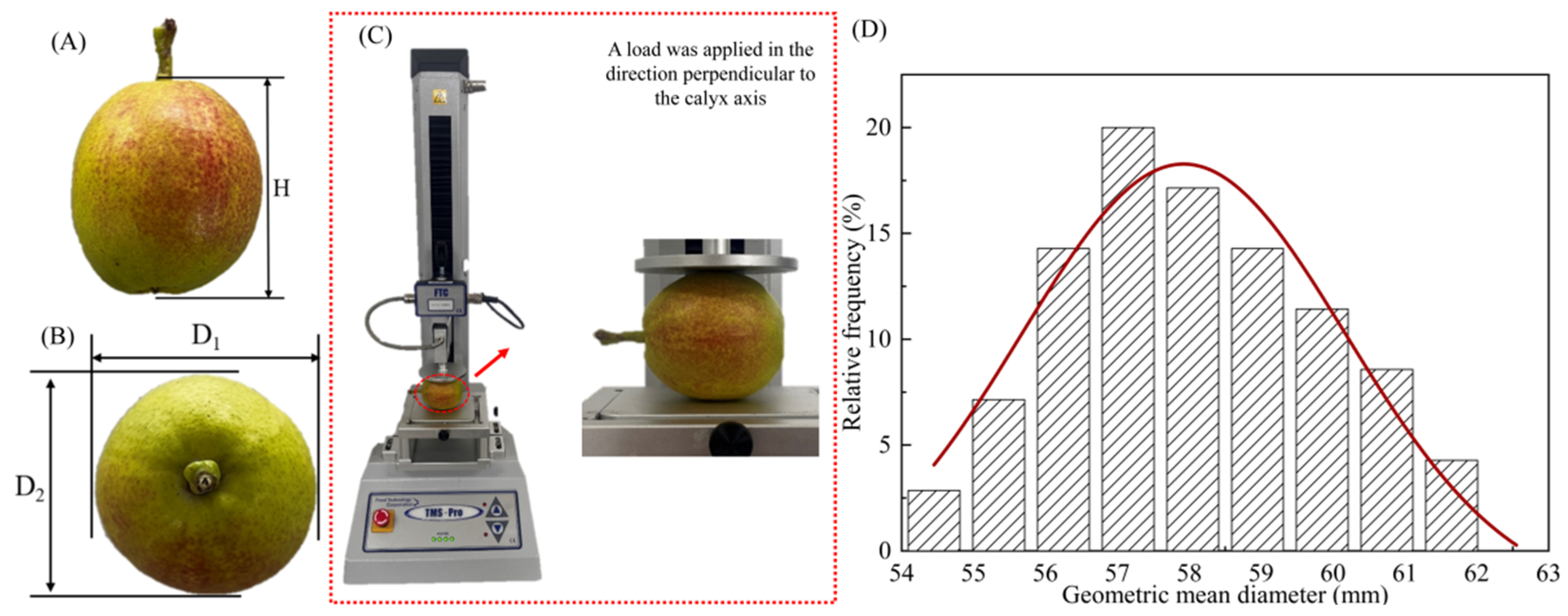
The harvested Korla fragrant pears were positioned with the pedicel and calyx axes parallel to the surface of the table. A vernier caliper (model: DL311150, manufacturer: Ying Shang Xingyuan Technology Development Co., Ltd., Shenzhen, China) and an electronic balance (model: CZ2003, manufacturer: Shanghai Yaoxin Electronics Technology Co., Ltd., Shanghai, China) were used to measure the longitudinal height (H), large diameter (D1), and small diameter (D2) of the fruit. The specific measurement procedure is illustrated in Figure 1A,B. The geometric mean diameter of the Korla fragrant pears was calculated using Equation (2). As shown in Figure 1D, the geometric mean diameter of the harvested Korla fragrant pears ranged from 54 to 64 mm. To ensure the representativeness and reliability of the research subjects, Korla fragrant pears with a size of 57 mm, showing the highest frequency and concentration, were selected as the base size for numerical modelling in this study.
G M D = ( H D 1 D 2 ) 1 / 3
In the equation, GMD represents the geometric mean diameter of the fruit (mm); H represents the longitudinal height of the fruit (mm); and D1 and D2 represent the major and minor diameters of the fruit in the equatorial cross-section (mm), respectively.

2.4. Determination of Mechanical Properties of Korla Fragrant Pears

The experimental results showed significant variations when different parts of the Korla fragrant pears were subjected to loading. This study applied lateral loads perpendicular to the pedicel–calyx axis during the experimental phase to ensure the comparability and consistency of the data. The specific loading method is illustrated in Figure 1C. Uniaxial compression tests were performed using a texture analyzer, with the loading speed set to 10 mm/s following the method described by Saeidi et al. [33]. The force–displacement curve was recorded for each Korla fragrant pear sample.

2.5. Determination of Physical Parameters of Korla Fragrant Pears

The physical parameters of Korla fragrant pears at different maturity stages show significant variations. The density, Young’s modulus, and Poisson’s ratio of Korla fragrant pears at maturity stages C1 to C6 were measured following the methods described by Li et al. [34] and Zhao et al. [35].

2.6. Construction and Theory of the Force Damage Numerical Model for Korla Fragrant Pears

2.6.1. Establishment of the 3D Model of Korla Fragrant Pears

This study used micro-CT three-dimensional scanning reconstruction technology [36,37,38] along with numerical computation software, SOLIDWORKS 2022 and HyperMesh 2022, to construct a numerical model for force-induced damage in Korla fragrant pears.
(1) Sample Selection: Based on the geometric mean diameter measurements of Korla fragrant pears in Section 2.3, samples were selected to ensure the representativeness and consistency of the experimental set.
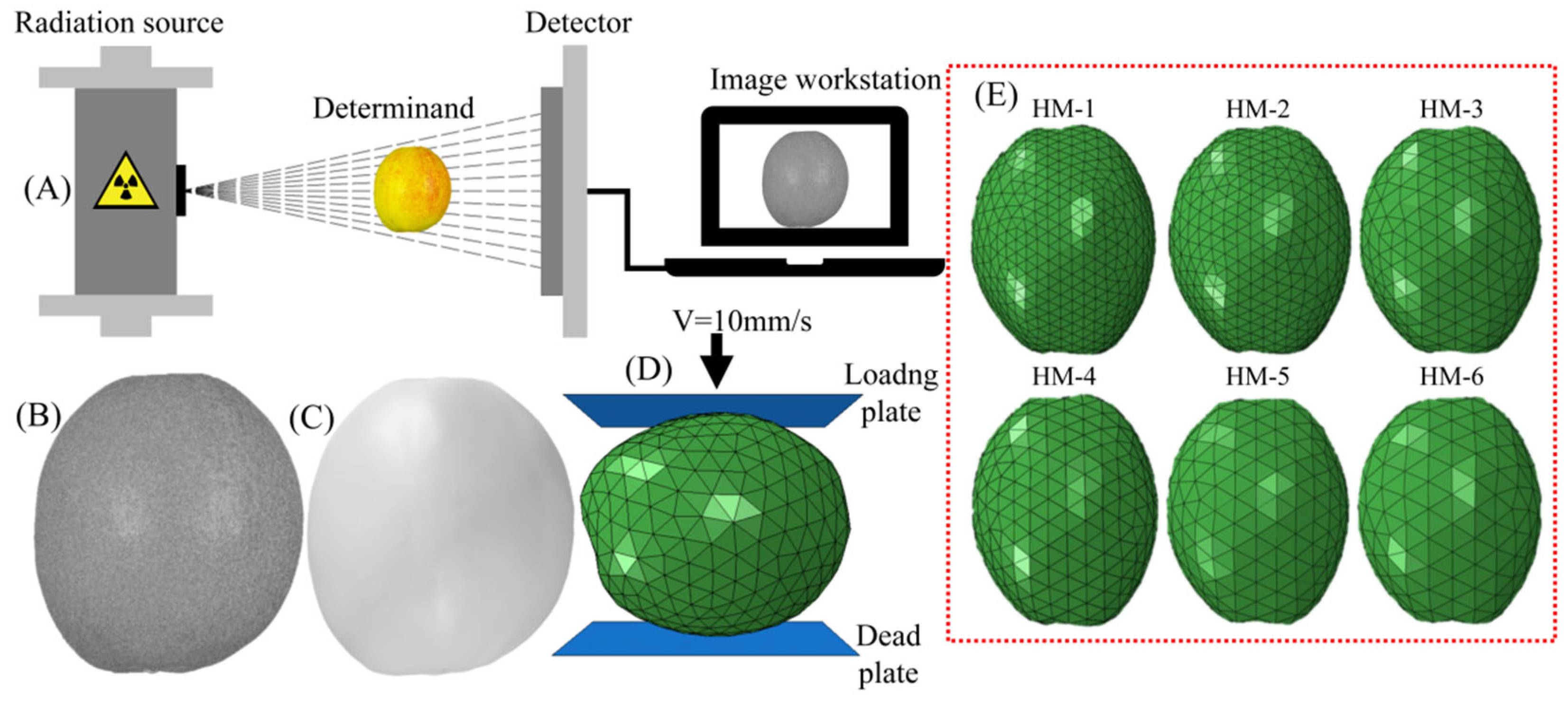
(2) Application of 3D Reconstruction Technology: Using micro-CT 3D scanning reconstruction technology (working principle shown in Figure 2A), both the surface and internal structure of Korla fragrant pears were reconstructed in 3D. (a) The pear sample was positioned on the test platform, and a transmission scan was performed using an X-ray source and detector from multiple angles to capture complete structural information. (b) Using computer reconstruction algorithms, the 3D structure of Korla fragrant pears was rebuilt using inverse modelling based on the variable attenuation of X-rays as they pass through the sample.
The reconstructed model is shown in Figure 2B. At this stage, the generated model is a large point cloud model that cannot be directly used for FEM and DEM analysis.
(3) Point Cloud Model Conversion: The 3D point cloud model of Korla fragrant pears was imported into SOLIDWORKS, where the “slicing” function was applied at 0.1 mm intervals along the plane parallel to the pedicel–calyx axis. The “Convert Solid Reference” function was then used to transform the point cloud into an editable solid model. The converted Korla fragrant pear model is shown in Figure 2C.
(4) Mesh Division and Discretization: The solid model was imported into HyperMesh, where the “solid map” function was used for mesh division. C3D8 mesh elements were selected for discretization to meet the numerical accuracy required, using six different mesh sizes. The meshing results are shown in Figure 2E.
(5) Insertion and Simulation of Cohesive Elements: The meshed model was imported into Abaqus 2021, and cohesive elements were used to simulate the connections between solid elements. Using Abaqus’ secondary development module, a Python 3.10-based automatic insertion program was used to introduce zero-thickness cohesive elements between all solid elements. These elements accurately represent complex fracture behavior and morphological changes during material fracture, providing reliable support for subsequent numerical simulations.

2.6.2. Simulated Boundary Conditions

The uniaxial compression process of Korla fragrant pears was numerically simulated using Abaqus. Figure 2D shows the boundary conditions applied during the parameter calibration phase. The loading speed was set to 10 mm/s to ensure consistency between the numerical simulation and the actual experiment, matching that used in the texture analyzer tests. In Abaqus, the ‘General Contact’ algorithm was used for contact processing, as it is well-suited to nonlinear large deformation problems, particularly in damage modelling of flexible materials such as fruits and vegetables. The explicit dynamics method, along with the maximum nominal stress criterion and the fracture process zone (FPZ) model, was employed. Additionally, a hard contact algorithm was adopted to ensure that no interpenetration occurs between mesh elements was selected for the calculation to enable accurate simulation of crack propagation. Additionally, mass scaling was disabled throughout the process to prevent calculation errors caused by artificial mass adjustments, thereby enhancing the physical realism of the simulation results. The numerical simulations were conducted on a high-performance computing platform equipped with a 40-core processor operating at a base frequency of 2.1 GHz and 512 GB of DDR4 3000 MHz memory. This advanced computing environment ensured the accuracy and efficiency of the numerical simulations, providing a reliable computational foundation for the mechanical performance analysis of Korla fragrant pears.

2.6.3. Selection of Damage Criteria

During the external loading process, the cohesive units within the material’s internal structure are subjected to stress or strain. When this stress or strain reaches the predefined initial critical damage threshold, the material begins to degrade, marking the onset of damage initiation. Based on the six initial damage criteria provided by Abaqus, this study adopts the traction–separation damage criterion and selects the Maxs damage nominal stress criterion for damage simulation, with its mathematical expression presented in Equation (3).
m a x t n t n 0 , t s t s 0 , t t t t 0 = 1
In the equation, t n 0 ,   t s 0 , and t t 0 represent the maximum nominal stress for pure failure, respectively. In addition, < > denotes the Macaulay bracket, which accounts for the fact that normal compressive forces do not influence initial damage. Numerical simulation studies by Han et al. (2023) [25] have shown that the maximum nominal stress damage criterion rarely leads to convergence issues in simulating damage in flexible biological materials such as fruits and vegetables. Therefore, this study adopts the maximum nominal stress criterion, as expressed in Equation (3), as the initial damage description method for the cohesive units, accurately capturing the initiation stage of material stiffness degradation while ensuring the computational stability and reliability of the numerical model.

2.7. Scanning Electron Microscopy

A scanning electron microscope (model: Apreo-S, manufacturer: Thermo Fisher Scientific, Waltham, MA, USA) was used to observe the microstructure of Korla fragrant pears. A damaged area of the Korla fragrant pear was selected, and the skin was carefully removed using a scalpel. Flesh samples measuring 1 cm in length and width and 0.1 cm in height were then cut. The samples were immersed in a 2.5% glutaraldehyde solution and stored at 4 °C for 24 h to achieve fixation. Subsequently, the samples were dehydrated through a graded ethanol series to ensure complete replacement of internal moisture with ethanol. The dehydrated samples were then transferred from 100% ethanol to a critical point dryer to prevent morphological changes during drying. After drying, the samples were metal-coated to improve their surface conductivity. Finally, the microstructure was observed using a scanning electron microscope, and the corresponding image data were preserved for subsequent analysis to define and validate the initiation and propagation of cracks.

3. Results and Discussion

3.1. Mesh Sensitivity Analysis of the Numerical Model

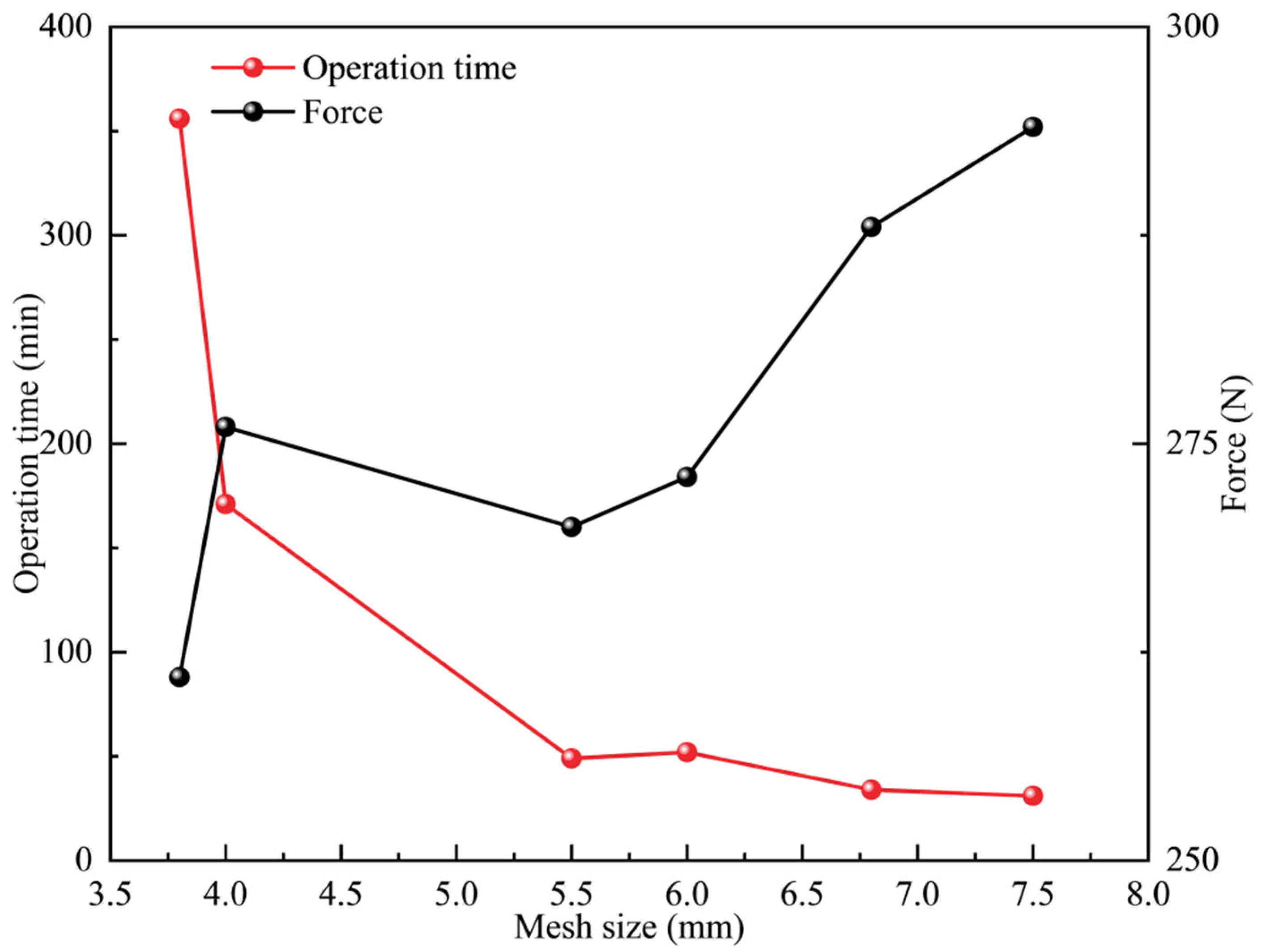
In numerical simulations, the grid size significantly impacts computational results (Figure 3). Smaller grids can be used to simulate crack propagation paths with greater accuracy, but they increase computational cost and time. This study tested six different grid sizes, with the results showing that the H-M4 grid performed best, featuring an average element size of 6 mm, consisting of 698 nodes and 3714 elements. Using this grid, the force–displacement curve remains stable, accurately reflecting the mechanical properties of the material. Furthermore, the computation time is significantly reduced without any loss of accuracy. The H-M4 grid offers an effective balance between computational efficiency and accuracy, making it an optimal choice for subsequent studies (Table 2).

3.2. Sensitivity Analysis of the Loading Speed of the Numerical Model

Load rate sensitivity analysis is a key step in ensuring the accuracy of the force damage numerical model for Korla fragrant pears. Variations in the load rate significantly influence the material’s fracture strength and the dynamic behavior of the fracture process.
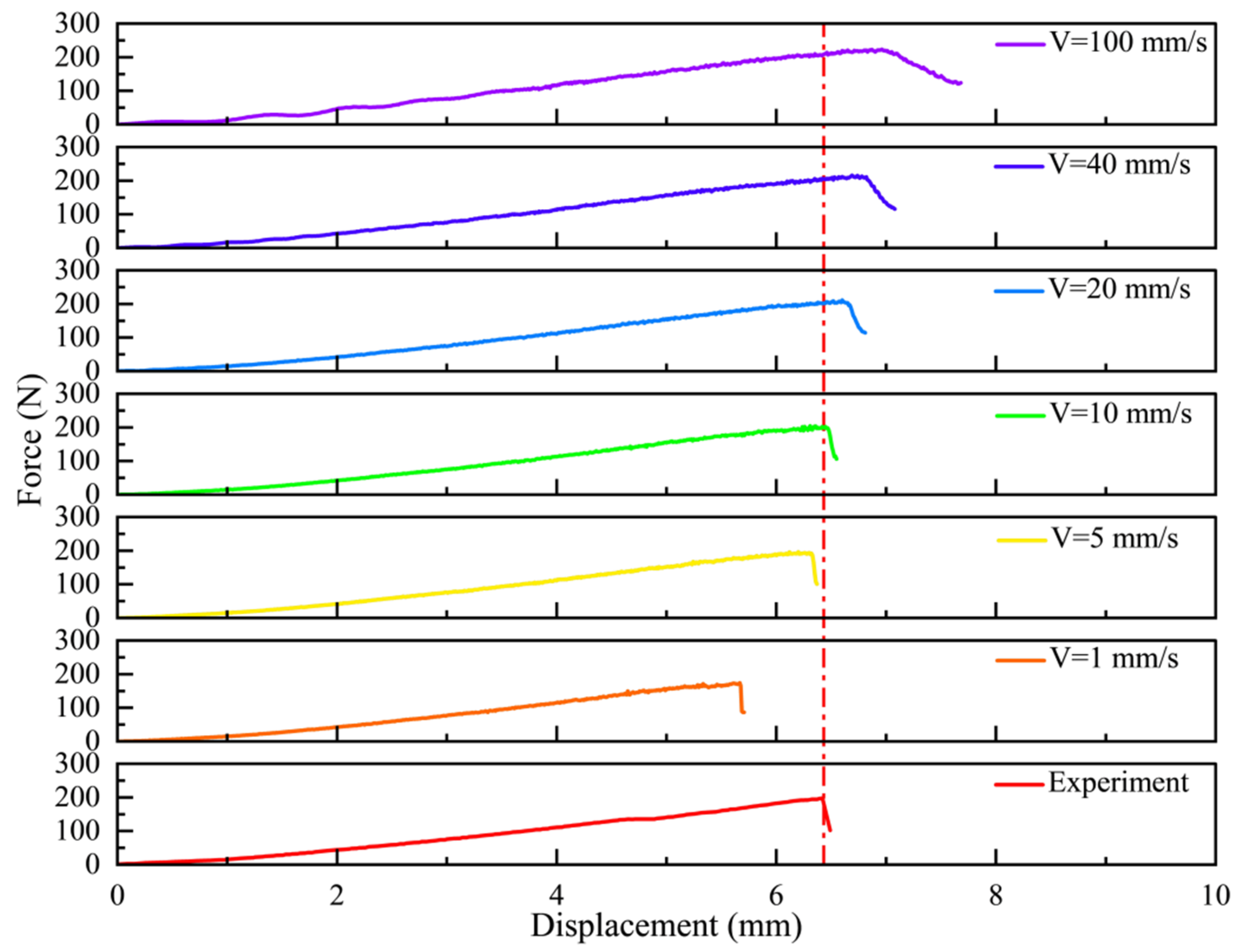
Figure 4 presents the results of the Korla fragrant pear crushing experiment conducted at different loading speeds. By analyzing the effects of six loading speeds (1, 5, 10, 20, 40, and 100 mm/s) on the force-displacement curves, the red dashed line represents the marker indicating the critical point of fracture force and displacement in the experiment. it was found that at lower loading speeds (1, 5, and 10 mm/s), the curves remained smooth, and the crushing process was stable and controllable. The curves display significant oscillations as the loading speed increases (20, 40, and 100 mm/s), reflecting dynamic effects. High loading speeds place a greater demand on the equipment, potentially affecting the stability and repeatability of the experiment. A comprehensive analysis indicates that a loading speed of 10 mm/s is optimal in terms of stability, repeatability, and operability. The corresponding force–displacement curve shows no significant oscillations, making it suitable for numerical simulations and reducing computational resource consumption. Therefore, it has been selected as the standard.

3.3. Analysis of Single-Set Physical Parameter Modelling Method

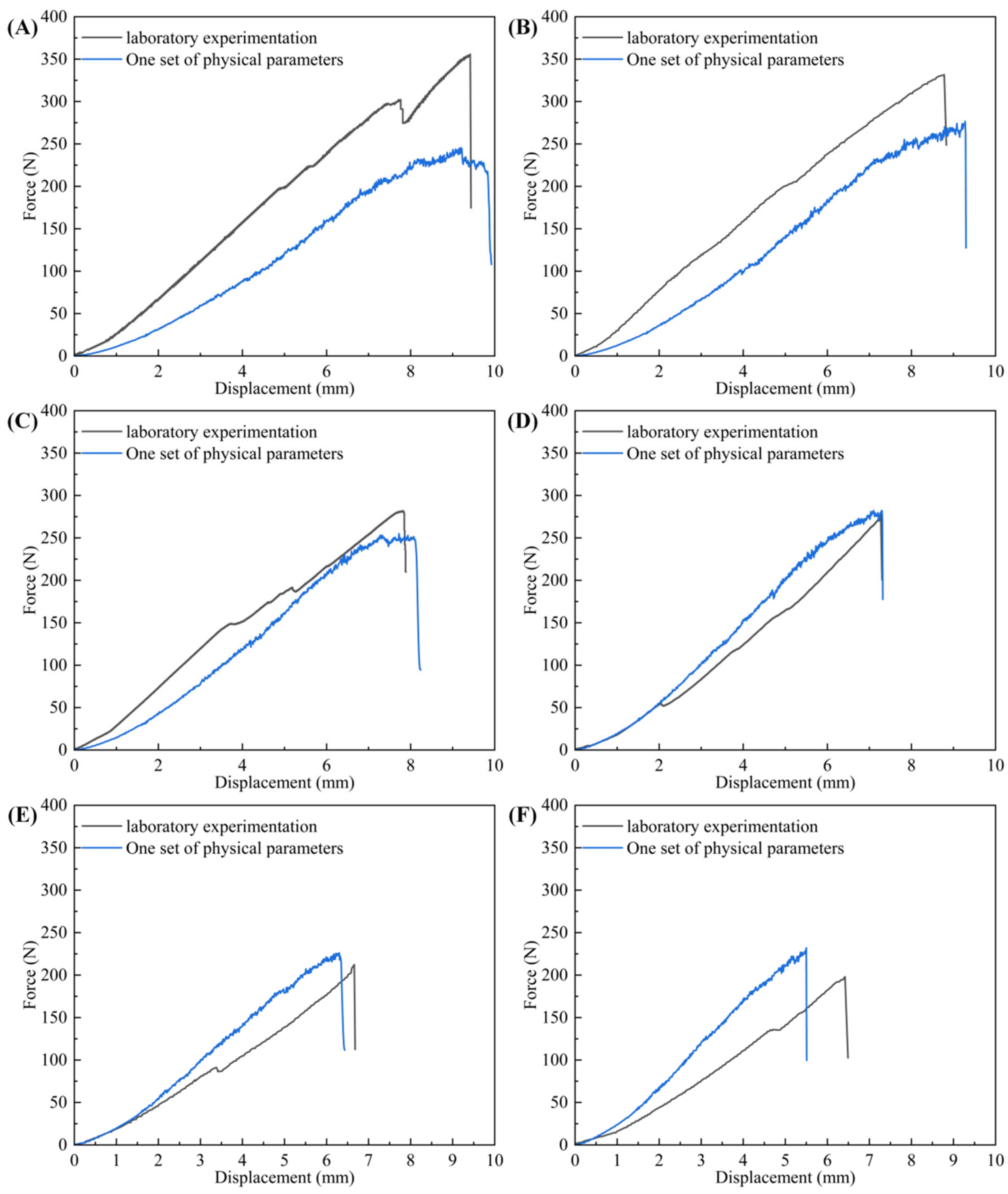
Figure 5 presents a comparison between the force–damage numerical model of the Korla fragrant pear, constructed using the average physical parameters of the fruit at six different maturity levels (Poisson’s ratio 0.354, density 0.9 × 10⁻³ g/mm3, Young’s modulus 2.31 MPa), and the corresponding experimental curves for those maturity levels. As maturity changes, the fit between the simulation curve and the experimental curves shifts from a large error to a generally good match, followed by an increased error at higher maturity levels, as shown in the figure. This highlights the significant impact of maturity on the modelling of the mechanical properties of the fragrant pear. The effects of maturity variation must be considered to improve the applicability and computational accuracy of the model across different maturity levels.
Figure 5A–C correspond to C1 to C3 maturity levels. As maturity increases, the agreement between the damage numerical model and the experimental data gradually improves. The crushing displacement error at C3 decreases to 2.93%, while the R2 value increases to 0.9061, indicating that the model has reasonable applicability for early-stage fruits. Figure 5E,F show the comparison for fruits at maturity levels C5 and C6. As the fruit softens further, the force–displacement curve flattens, with both the maximum force and crushing displacement decreasing significantly. At maturity level C5, the crushing displacement error in the numerical simulation is 5.4%, the crushing force error is 6.6%, and the goodness of fit is 0.8972. At maturity level C6, the crushing displacement and force errors increase to 14.48% and 17.77%, respectively, while the goodness-of-fit error decreases to 0.8326. These results suggest that a force–damage numerical model calibrated using a single set of physical parameters cannot adequately represent the mechanical characteristics of the fragrant pear across all maturity stages.

3.4. Mechanical Properties and Microstructure Analysis of Korla Fragrant Pear

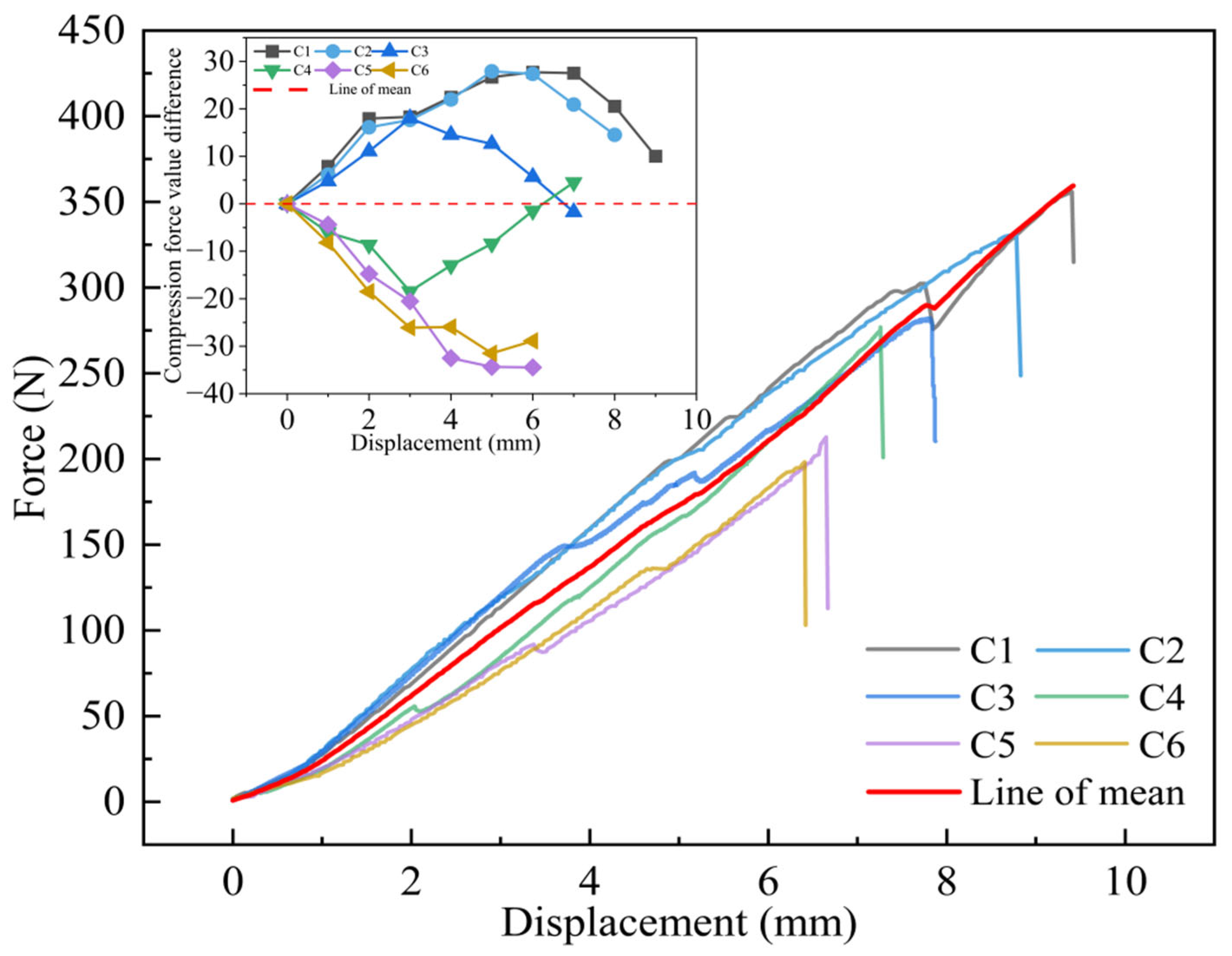
Figure 6 presents the force–displacement curves for different maturity levels from C1 to C6, with the red curve representing the mean force–displacement curve for each maturity level. As maturity progresses from C1 to C6, the mechanical properties of the fruit undergo significant changes. The mean curve illustrates the overall trend of compressive force across the maturity stages, showing that as maturity increases, the fruit’s compressive force gradually decreases in a nonlinear manner. Moreover, among the six maturity curves, those for C3 and C4 align more closely with the mean curve, whereas the curves for C1 and C6 increasingly deviate from it as maturity changes. These patterns highlight the variations in the mechanical properties of the fruit at different maturity stages.
The top-left corner of Figure 6 shows that the graph illustrates the variation in the difference between the force–displacement curves at different maturity levels and the mean force–displacement curve across all maturity stages. The difference curves for maturity levels C1 to C3 are relatively concentrated and predominantly positive, as shown in the figure. Similarly, for maturity levels C4 to C6, the differences are also concentrated but mostly negative. In both cases, the curves initially deviate from zero and then gradually return to zero. These results indicate that as maturity increases, the force–displacement curve exhibits a jump phenomenon, reflecting substantial differences in the properties of the fragrant pear. This further confirms that developing a numerical model using a single parameter set is insufficient to capture the mechanical variations of the fragrant pear across all maturity stages. From a physiological perspective, Lan et al. (2015) [14] reported that the fragrant pear exhibits significant changes in hardness, soluble solid content, chlorophyll levels, and vitamin C levels following harvest. They initially proposed that increasing maturity causes substantial alterations in the microscopic structure, resulting in the observed mechanical response jump phenomenon. To further validate this hypothesis and provide a reference for numerical model construction, the microscopic structure of the fragrant pears at different maturity stages was examined.
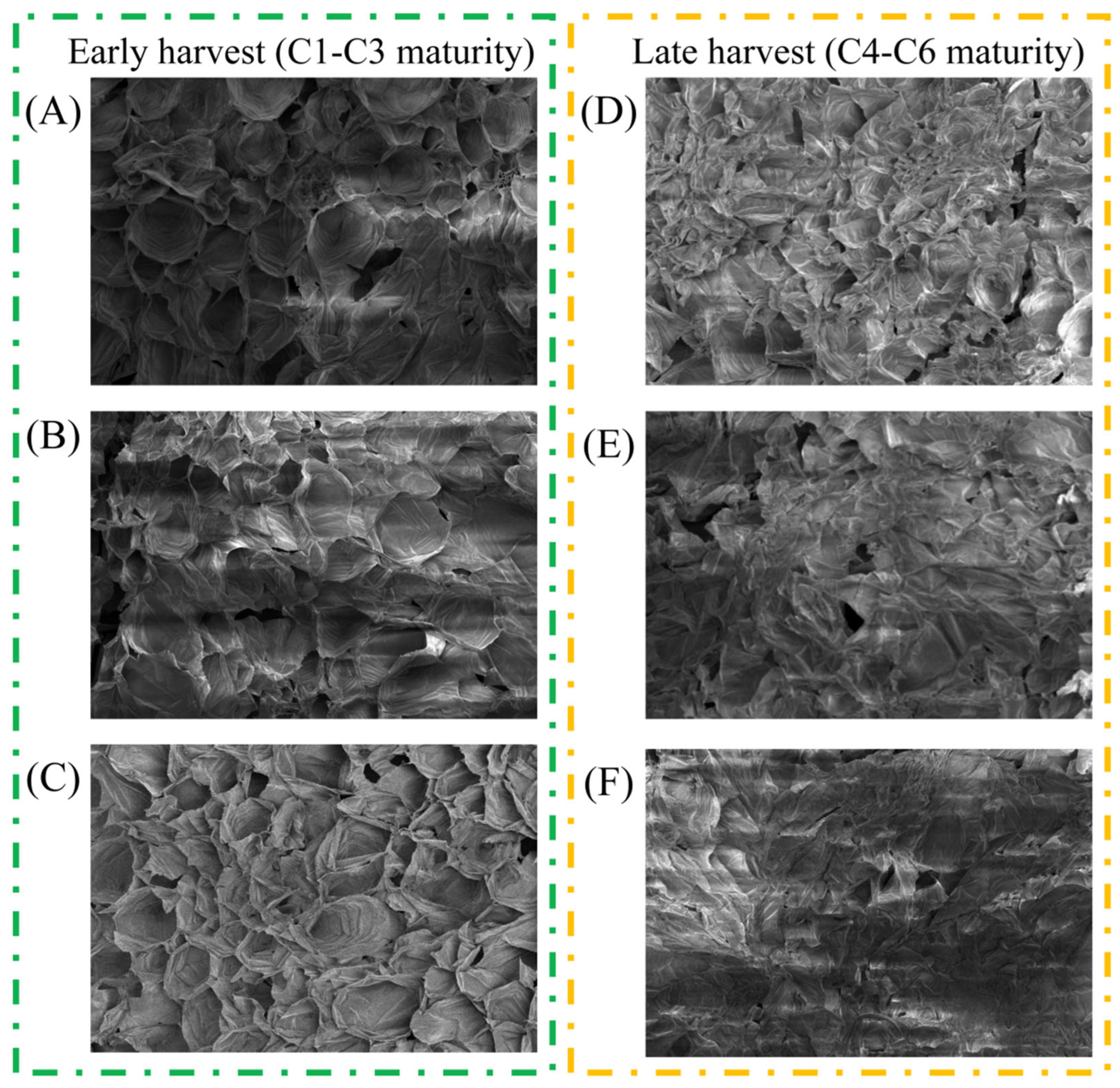
Figure 7 presents electron microscope images of fragrant pear fruit at different maturity stages. The images reveal that as maturity increases, the fruit’s microscopic structure gradually collapses from a distinct honeycomb shape, with a notable change observed between C3 and C4. Before C3 maturity, the microscopic structure, though partially collapsed, largely retains its honeycomb form, whereas the microscopic structure completely collapses at maturity levels C4 to C6. These results indicate that increasing maturity leads to a jump phenomenon in the microscopic structure, which is consistent with the earlier hypothesis. Thus, whether considering mechanical response or microscopic structure, this jump phenomenon must be accounted for when constructing numerical models of fragrant pears across different maturity stages.
Comprehensive analysis of the results from Figure 6 and Figure 7 demonstrates that significant differences in the properties of the fragrant pear occur before and after the jump phenomenon. Before the jump, the variations in property between different maturity stages are minimal, whereas after the jump, the differences between maturity stages remain limited. A two-stage numerical model is required to characterize the mechanical response across all maturity stages. Consequently, further exploration of a two-stage modelling approach is warranted.

3.5. Analysis of Multi-Parameter Physical Modelling Methods

The force–damage numerical model developed using a single set of physical parameters has certain limitations in characterizing the mechanical properties of fruits at different maturity stages, particularly during the transitional phase between early harvesting (C1–C3 group) and late harvesting (C4–C6 group), where the model’s accuracy and general applicability are reduced. Based on previous research findings, a Young’s modulus of 2.38 MPa, a density of 0.932 × 10⁻³ g/mm3, and a Poisson’s ratio of 0.359 were adopted for early harvesting (C1–C3 group), while a Young’s modulus of 2.27 MPa, a density of 0.869 × 10⁻³ g/mm3, and a Poisson’s ratio of 0.342 were selected for late harvesting (C4–C6 group). A two-stage modelling approach was applied to calibrate the force–damage numerical model for the Korla fragrant pear across different maturity stages, thereby enhancing the model’s capacity to characterize the mechanical properties of fruits at various maturity levels.
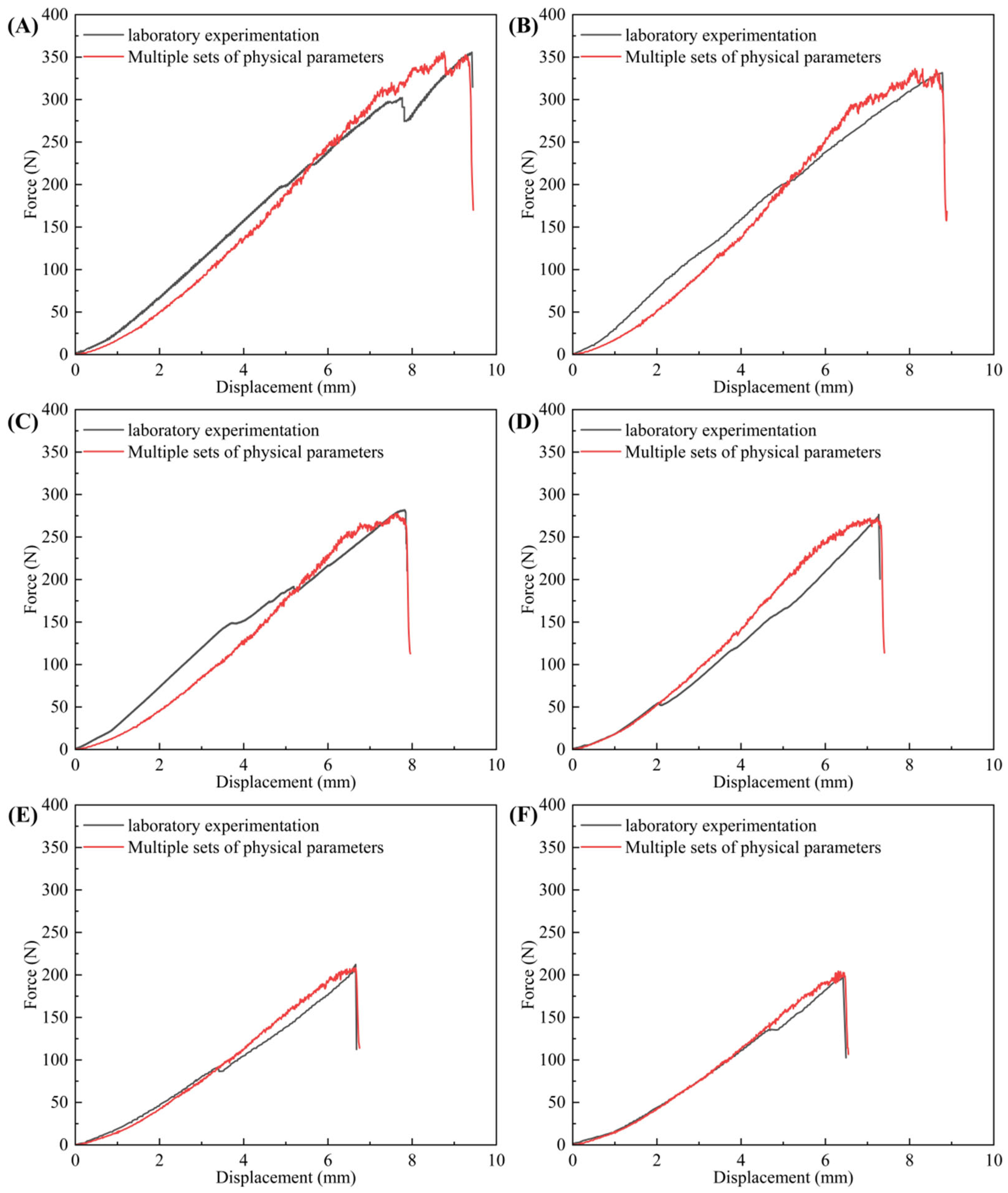
Figure 8 presents a comparison between the experimental force–displacement curves and the numerical simulation results for the Korla fragrant pear at different maturity levels using the two-stage modelling approach. Fruit hardness gradually decreases as maturity increases, and the numerical simulations align well with the experimental data, with the rupture point and force values closely matching the experimental results. Notably, the model effectively captures the mechanical changes at the lower and higher maturity levels of C1 and C6, demonstrating high accuracy and general applicability. Overall, the results validate the earlier hypothesis and confirm the successful construction of a numerical model capable of representing the mechanical response across all maturity stages.
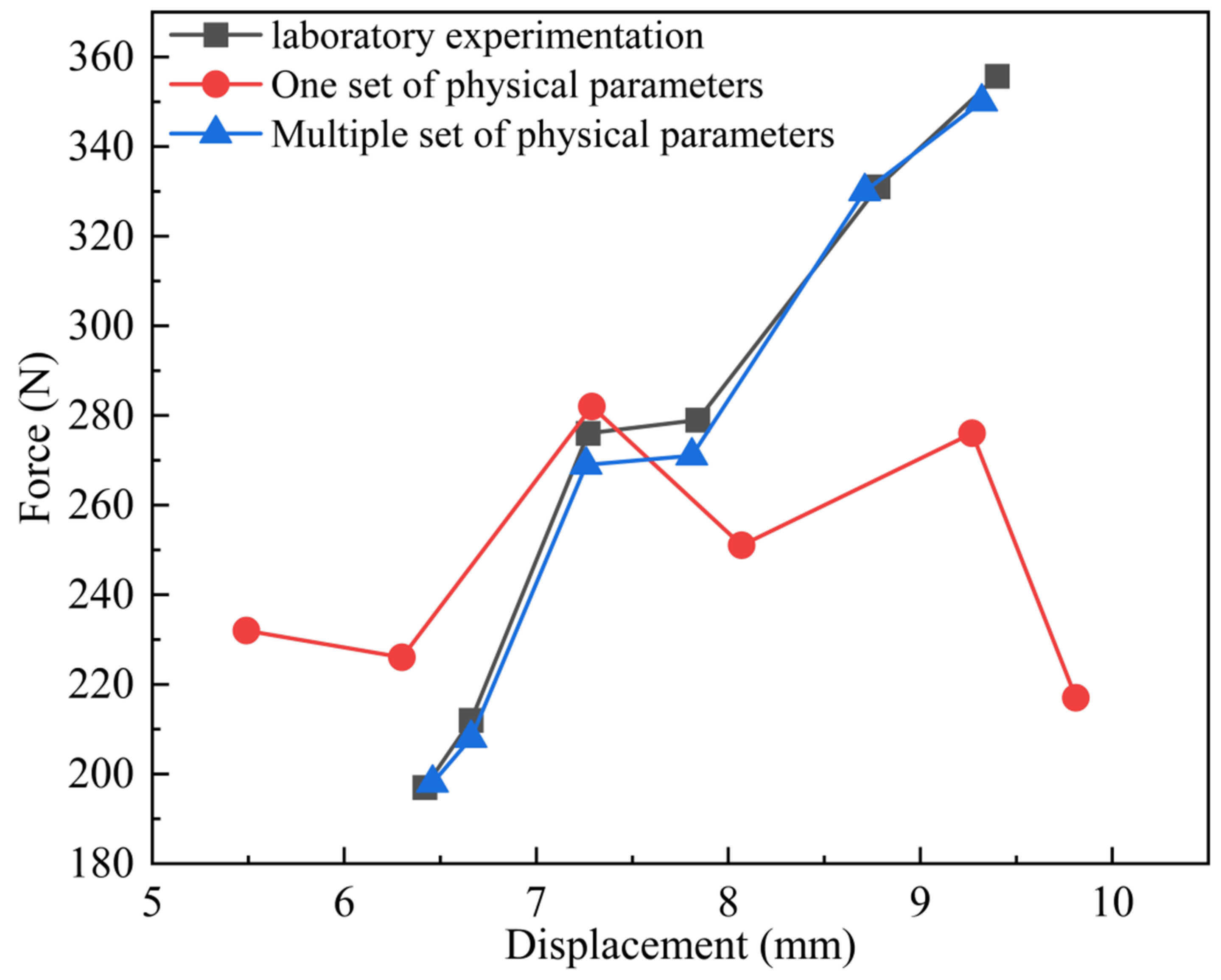
A comparative analysis of Figure 8 and Table 3 shows that the force–damage numerical model based on multiple sets of physical parameters more accurately reflects changes in the mechanical properties of the Korla fragrant pear across the C1 to C6 maturity stages. Compared with the single-parameter model, the goodness of fit of the two-parameter model improved significantly, increasing from 0.7922 to 0.9665. Notably, at maturity stages C2 and C5, R2 values reached 0.977 and 0.9769, respectively, with all other maturity stages exceeding 0.96, indicating that the model can more accurately reflect the mechanical behavior across different maturity levels. The comparison in Figure 9 further demonstrates that the two-parameter model provides a more accurate representation of both the rupture point displacement and the instantaneous damage force values.
In conclusion, a numerical model has been developed to characterize the damage behavior of Korla fragrant pears across all maturity stages by introducing two sets of physical parameters, effectively simulating and predicting the fruit’s damage characteristics under varying operating conditions. The improved model demonstrates enhanced accuracy and broader applicability in describing the mechanical response and damage behavior of Korla fragrant pears at different maturity stages, providing valuable support for the optimization and refined management of the postharvest supply chain.
The relevant parameters of the Korla fragrant pear force–damage numerical model for the Korla fragrant pear, constructed using two sets of physical parameters, are presented in Table 4. The experimental and the numerical simulation curves show a high degree of consistency in the rupture displacement and crushing force values, with the simulation curve accurately replicating the overall trend of the laboratory uniaxial compression test curve. Validation using the data from six maturity stage tests, combined with the physical parameters of the Korla fragrant pear at different maturity levels to develop six maturity stage force–damage numerical models, yields a goodness of fit (R2) exceeding 0.9665 between the simulation and experimental results. This demonstrates that the force–damage numerical model based on multiple sets of physical parameters enhances both general applicability and accuracy while significantly reducing the effort required to construct separate models for different operating conditions. As a result, it provides an efficient numerical simulation tool, offering reliable support for fruit damage prediction and postharvest supply chain optimization.

3.6. Application and Verification of the Numerical Model

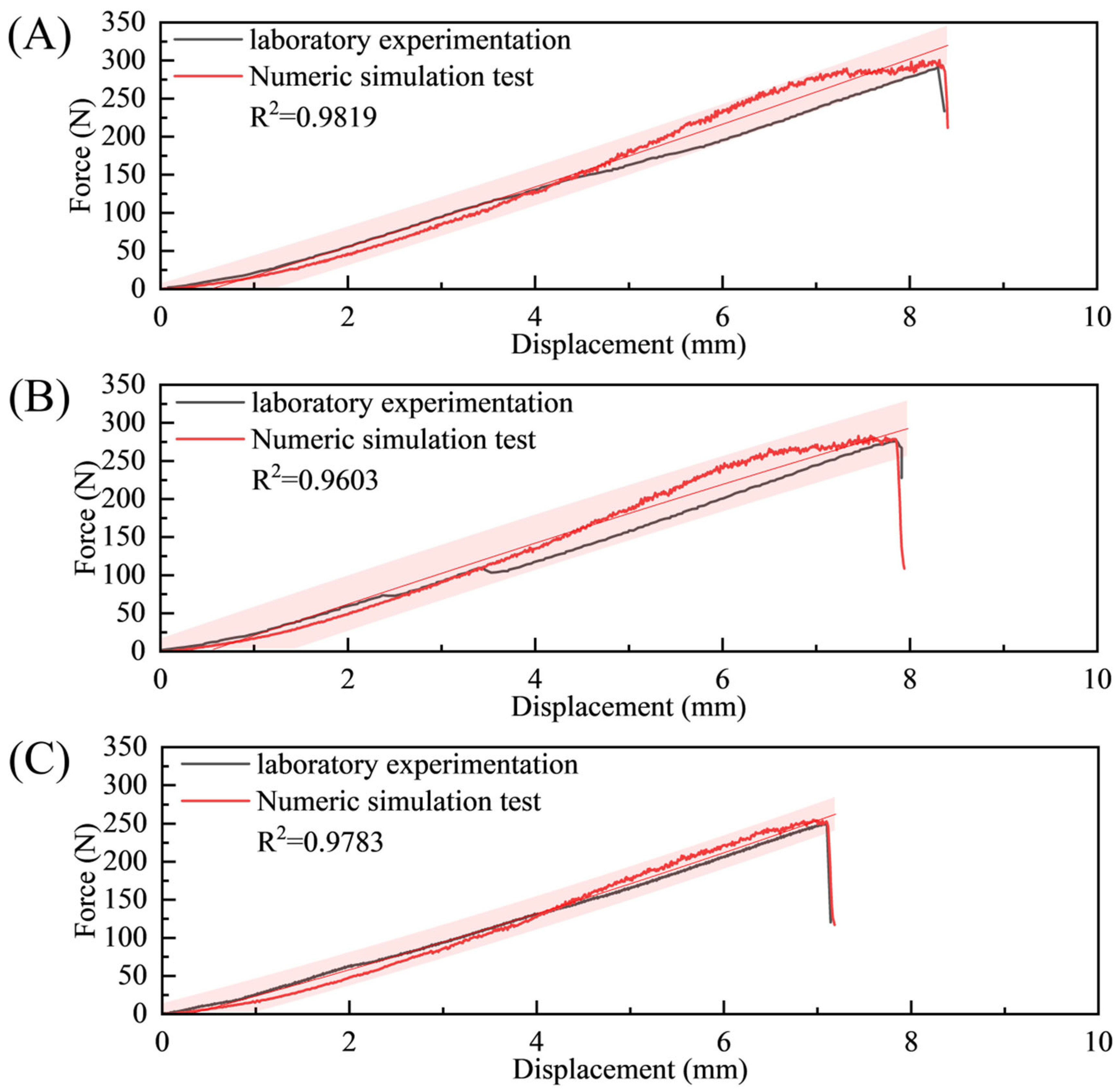
Figure 10A–C illustrate the comparison between experimental results from uniaxial compression tests and numerical simulations for Korla fragrant pears at maturity levels of 47.93%, 54.48%, and 57.41%, respectively. The constitutive and numerical model parameters used in the simulations are provided in Table 5. The red and black curves represent the numerical simulation results and experimental data. The light red spline curve represents the 95% confidence interval, and the thin red line represents the fitting line for the two data curves. The comparison reveals a high degree of consistency between the numerical simulation and experimental data regarding the crushing force and displacement values, with goodness-of-fit (R2) values of 0.9819, 0.9603, and 0.9783, respectively. These findings confirm that the numerical model accurately reflects the variations in the mechanical properties of the fruit across different maturity stages. The mechanical response of the Korla fragrant pear changes notably with increasing maturity, as crushing force and displacement values exhibit distinct trends. Such changes can be effectively predicted using the constructed numerical model.
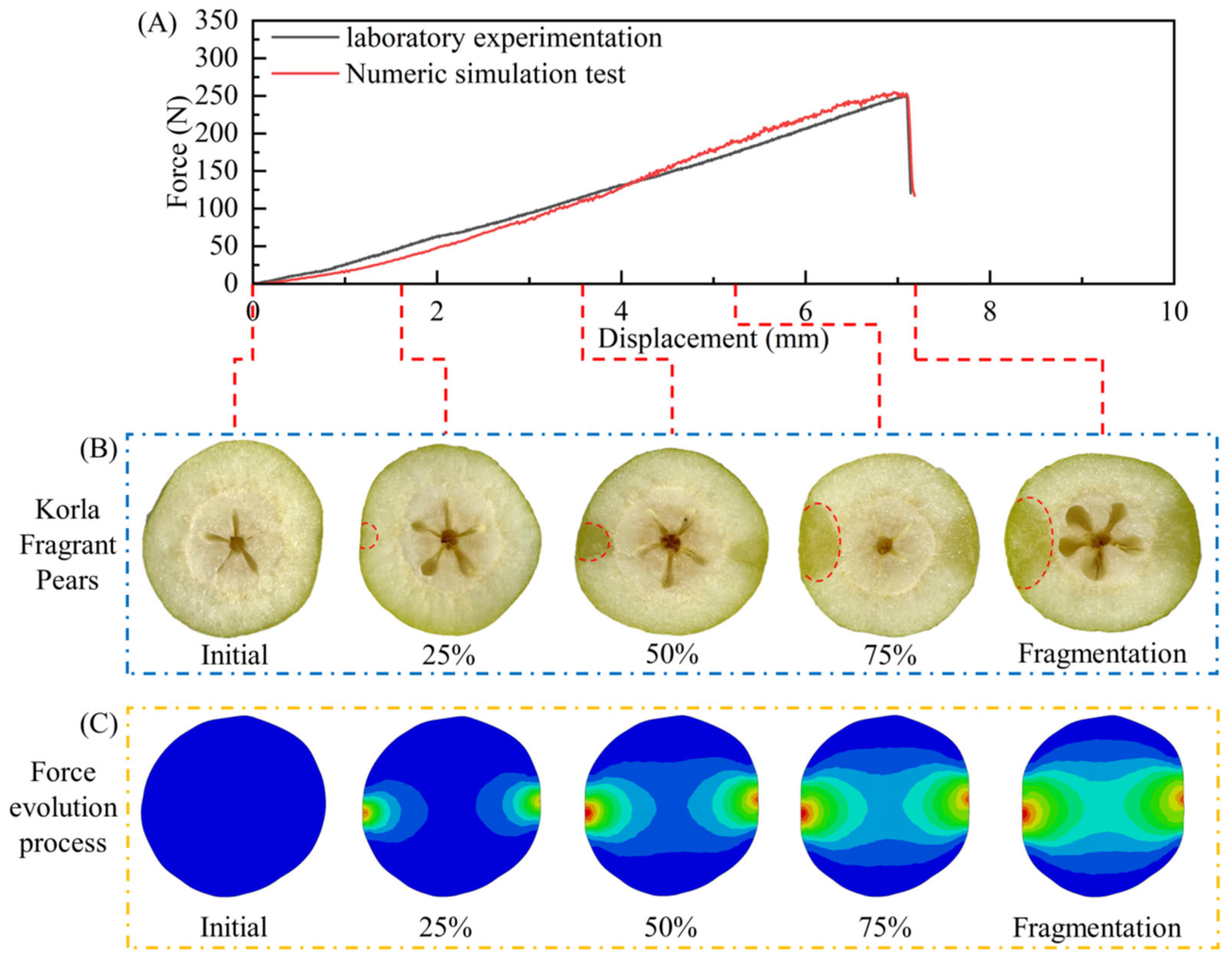
Figure 11 illustrates the force–displacement curve and the damage evolution process of the Korla fragrant pear during the laboratory uniaxial compression test. In Figure 11A, the black curve represents the experimental data, whereas the red curve shows the numerical simulation results, demonstrating a high degree of consistency between the two curves in the early stage of compression. Figure 11B shows the internal damage patterns of the cross-section of the Korla fragrant pear at different compression stages (0%, 25%, 50%, 75%, and 100%) with five pears of the same maturity, similar shape, and approximate size and color. The red circles highlight the stress concentration areas, which indicate local deformation and stress concentration phenomena in the fruit, serving as rupture precursors. Figure 11C shows the stress distribution map corresponding to Figure 11B. The internal stress of the fruit gradually concentrates as the compression level increases, with the color transitioning from blue (low-stress areas) to red (high-stress areas). The numerical simulation results indicate that the stress transfer and concentration are the key factors leading to the fruit’s eventual rupture or deformation.
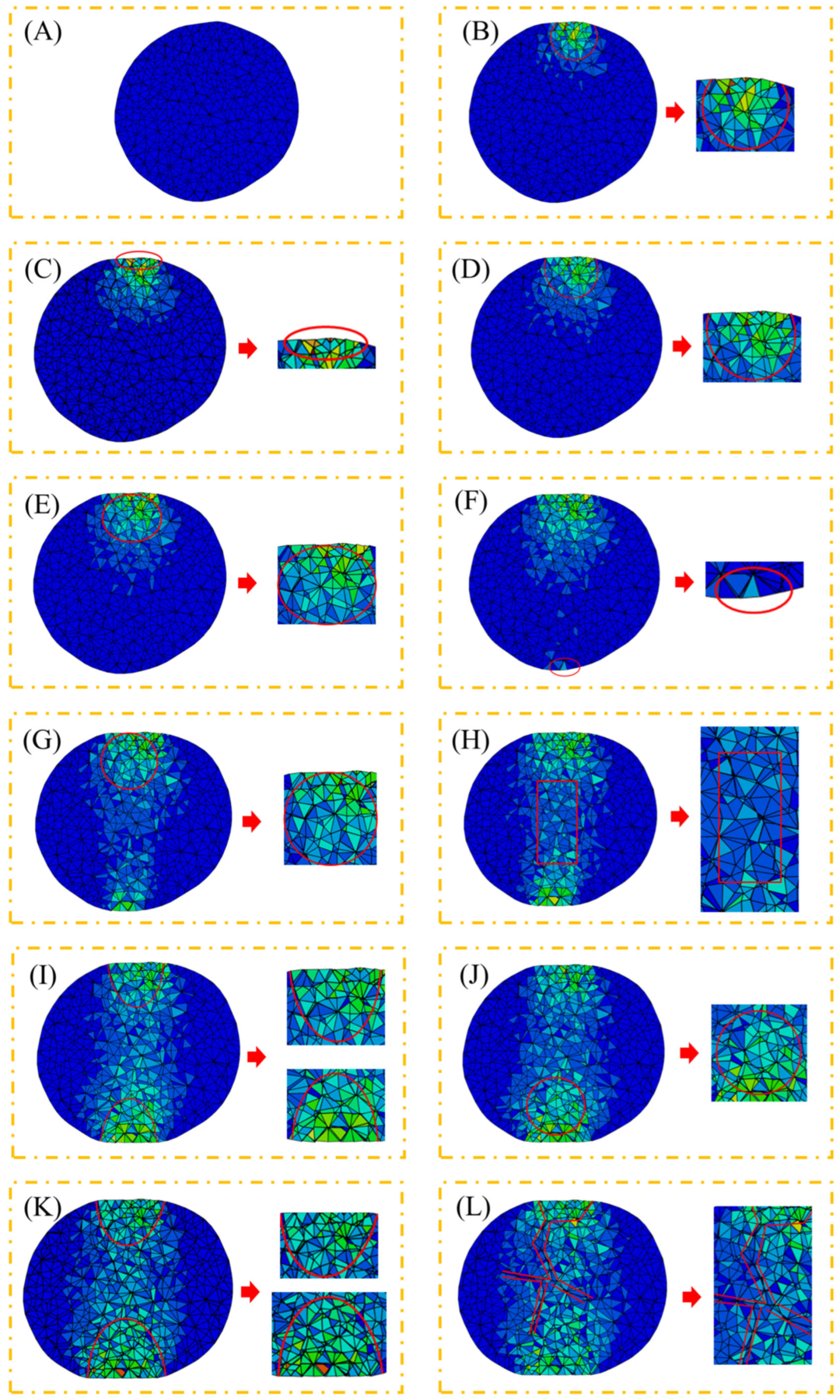
Figure 12 shows the key stages of the Korla fragrant pear force–damage numerical model during the compression process. The damage evolution of the fruit from the initial intact state to the final rupture can be observed through analysis of the model under lateral loading. As the loading force is applied, stress concentration occurs in local areas, leading to mesh deformation and failure. As shown by the red broken line in Figure 12, the development of stress dissipation and the failure region of the mesh clearly characterizes the crack propagation. The crack gradually expands within the stress concentration zone, eventually leading to rupture. The images at each stage provide valuable information on stress distribution, crack development, and biological yield rupture, thereby validating the effectiveness of the model construction method. This process is essential for understanding the damage mechanisms of fruit-like vegetables, such as fragrant pears, pumpkins, eggplants, and potatoes, under different stress conditions.
Using laboratory uniaxial compression tests and the stress transfer and stress distribution maps of the force–damage numerical model, this study provides an intuitive understanding of the damage evolution process of Korla fragrant pears during uniaxial compression. The results of the analysis validate the reliability and accuracy of the proposed force–damage numerical model construction method, establishing a solid theoretical foundation for further exploration of the damage evolution and mechanisms of Korla fragrant pears. The findings demonstrate that the force–damage numerical model of Korla fragrant pears, constructed using two sets of physical parameters, exhibits high accuracy and reliability [39]. Furthermore, these results confirm the effectiveness of the multi-maturity force–damage numerical model of Korla fragrant pears, particularly in the context where the mechanical properties of fruit materials are significantly influenced by maturity [40,41]. This modelling approach offers new perspectives and valuable reference points for studying the mechanical behavior of fruit materials. In addition, the effectiveness and accuracy of the constructed force–damage numerical model of Korla fragrant pears have been thoroughly verified, indicating that the model can accurately describe changes in the mechanical properties of Korla fragrant pears at different maturity stages and provide reliable theoretical support for further research on fruit damage mechanisms and evolutionary processes. Therefore, the modelling method based on two sets of physical parameters demonstrates considerable application potential in the study of fruit mechanics, with significant scientific value and broad application prospects.
In summary, the developed multi-maturity force–damage numerical model for Korla fragrant pears effectively reveals the damage evolution of the mechanical properties and microstructure of the pears under external load. It successfully simulated the mechanical behavior across the full maturity range. This model overcomes the limitations of conventional single-parameter models while reducing modelling time and costs. However, due to the challenge of accurately obtaining the geometric parameters of the fruit core during the construction of the geometric model, the pear is treated as a whole without considering the core. In practice, damage to fruits and vegetables during harvesting, packaging, and transportation under external loads similar to fragrant pears (such as apples, strawberries, kiwifruits, pumpkins, eggplants, and potatoes) rarely involves the core. Therefore, this model can be applied to related operating conditions to reveal the mechanism of the fruit damage and provide technical support for optimizing relevant equipment.

4. Conclusions

This study focuses on Korla fragrant pears at different maturity stages as the research object, analyzing the changes in mechanical properties concerning maturity based on variations in the mechanical characteristics of pears at different maturity levels. The finite element-discrete element coupling (FDEM) method, combined with cohesive elements and micro-CT technology, was used to construct and validate the force–damage numerical model of Korla fragrant pears across different maturity stages. The specific research conclusions are as follows:
  • The results show that the mechanical response and microstructure of Korla fragrant pears exhibit a phenomenon resembling a jump transition as maturity increases. The fracture displacement of the fruit decreases from 9.4 to 7.84 mm, and the fracture force decreases from 355.7 to 279 N. For late-harvested (C4–C6) fruit, the fracture displacement decreased from 7.27 to 6.42 mm, while the fracture force decreased from 276 to 197 N. The microstructure changes from a clear cellular organization to an irregular collapse.
  • The numerical model constructed to address this attribute jump phenomenon demonstrates significant improvements in fracture displacement, force values, and curve trends compared with the model built using a single set of physical parameters. The goodness-of-fit (R2) between the numerical simulation and the experimental curves improved from 0.7922 to 0.9665.
  • The goodness-of-fit (R2) between the numerical simulation and experimental data verification results was 0.9819, 0.9603, and 0.9783, respectively. The stress distribution pattern of the constructed force–damage numerical model for Korla fragrant pears is highly consistent with the distribution of damage areas observed in physical experiments. The model reveals the damage evolution and propagation patterns.
This study constructs a numerical model for fragrant pears based on the FDEM, which can effectively simulate the mechanical response and damage evolution of fragrant pears under external load. However, the model was developed solely from standard uniaxial compression tests. To enhance the quality of fragrant pears during the production process, revealing the damage mechanism under actual loading conditions is essential. Therefore, to reduce the damage rate of fragrant pears during production, future research will use this model as a foundation to explore their damage mechanism under multiple dynamic loading conditions.

Author Contributions

Resources, H.L.; writing—original draft preparation, C.D. and P.C.; writing—review and editing, L.L. and S.C.; data curation, X.Y. and G.G.; visualization, K.L. and X.W.; supervision, H.L. and J.L.; funding acquisition, H.L. and Y.L. All authors have read and agreed to the published version of the manuscript.

Funding

This work has been financially supported and encouraged by the National Natural Science Foundation of China-Youth Fund Program (32202139 and 32260618).

Institutional Review Board Statement

Not applicable.

Data Availability Statement

The data presented in this study are available on request from the corresponding author.

Acknowledgments

The authors are grateful to the anonymous reviewers for their comments.

Conflicts of Interest

The authors declare no conflicts of interest.

Correction Statement

This article has been republished with a minor correction to the affiliations of the authors. This change does not affect the scientific content of the article.

References

  1. Yu, S.; Liu, Y.; Tang, Y.; Li, X.; Li, W.; Li, C.; Zhang, Y.; Lan, H. Non-Destructive Quality Assessment Method for Korla Fragrant Pears Based on Electrical Properties and Adaptive Neural-Fuzzy Inference System. Comput. Electron. Agric. 2022, 203, 107492. [Google Scholar] [CrossRef]
  2. Li, C.; Li, Z.; Wang, X.; Li, W.; Lan, H.; Liu, Y.; Xu, X.; Tang, Y. Using the Equivalent Static Pressure Method to Assess Free Fall Damage of the Korla Fragrant Pear. Horticulturae 2023, 9, 993. [Google Scholar] [CrossRef]
  3. Wang, L.-J.; Zhang, Q.; Song, H.; Wang, Z.-W. Mechanical Damage of ‘Huangguan’ Pear Using Different Packaging under Random Vibration. Postharvest Biol. Technol. 2022, 187, 111847. [Google Scholar] [CrossRef]
  4. Hussein, Z.; Fawole, O.A.; Opara, U.L. Bruise Damage Susceptibility of Pomegranates (Punica granatum, L.) and Impact on Fruit Physiological Response during Short Term Storage. Sci. Hortic. 2019, 246, 664–674. [Google Scholar] [CrossRef]
  5. Liu, Y.; Niu, X.; Tang, Y.; Li, S.; Lan, H.; Niu, H. Internal Quality Prediction Method of Damaged Korla Fragrant Pears during Storage. Horticulturae 2023, 9, 666. [Google Scholar] [CrossRef]
  6. Guo, J.; Liu, Y.; Karkee, M.; Feng, X.; Huang, Z.; Wang, Y.; Zhang, W.; Li, X.; He, Y. Determination and Quantitative Evaluation of Early Postharvest Hidden Damage in Fresh Strawberry Fruit Based on Coupling of Dynamic Finite Element Method and Response Surface Methodology. Comput. Electron. Agric. 2024, 227, 109588. [Google Scholar] [CrossRef]
  7. Li, Z.; Wang, Y. A Multiscale Finite Element Model for Mechanical Response of Tomato Fruits. Postharvest Biol. Technol. 2016, 121, 19–26. [Google Scholar] [CrossRef]
  8. Namdari Gharaghani, B.; Maghsoudi, H. Free Fall Analysis of Orange Fruit Using Numerical and Experimental Methods. Int. J. Food Prop. 2018, 21, 484–495. [Google Scholar] [CrossRef]
  9. Zhu, Y.; Zhu, L.; Guo, W.; Han, Z.; Wang, R.; Zhang, W.; Yuan, Y.; Gao, J.; Liu, S. Multiscale Static Compressive Damage Characteristics of Kiwifruit Based on the Finite Element Method. Foods 2024, 13, 785. [Google Scholar] [CrossRef] [PubMed]
  10. Xu, C.; Liu, J.; Huang, X.; Li, Y. Formation and Evolution of Apple (Malus pumila Mill.) Bruising Based on High-Speed Camera Verification and Finite Element Method. Comput. Electron. Agric. 2024, 221, 109024. [Google Scholar] [CrossRef]
  11. Kabas, O.; Vladut, V. Determination of Drop-Test Behavior of a Sample Peach Using Finite Element Method. Int. J. Food Prop. 2015, 18, 2584–2592. [Google Scholar] [CrossRef]
  12. Guo, J.; Yang, Z.; Karkee, M.; Han, X.; Duan, J.; He, Y. Dynamic Finite Element Simulation of the Collision Behavior and Multi-Parameter Quantitative Characterization of the Damage Degree of Banana Fruit in the Post-Harvest Operations. Postharvest Biol. Technol. 2025, 219, 113284. [Google Scholar] [CrossRef]
  13. Fernando, I.; Fei, J.; Stanley, R.; Enshaei, H.; Rouillard, V. Developing an Accelerated Vibration Simulation Test for Packaged Bananas. Postharvest Biol. Technol. 2021, 173, 111400. [Google Scholar] [CrossRef]
  14. Lan, H.; Jia, F.; Tang, Y.; Zhang, Q.; Han, Y.; Liu, Y. Quantity Evaluation Method of Maturity for Korla Fragrant Pear. Trans. Chin. Soc. Agric. Eng. 2015, 31, 325–330. [Google Scholar]
  15. Ding, C.; Liu, Z.; Mei, X.; Ouyang, S. Size-Dependent Mechanical Properties and Excavation Responses of Basalt with Hidden Cracks at Baihetan Hydropower Station through DFN–FDEM Modeling. Appl. Sci. 2024, 14, 9069. [Google Scholar] [CrossRef]
  16. Martinelli, D.; Insana, A. Application of a Finite-Discrete Element Method Code for Modelling Rock Spalling in Tunnels: The Case of the Lyon-Turin Base Tunnel. Appl. Sci. 2024, 14, 591. [Google Scholar] [CrossRef]
  17. Liu, H.; Shao, Z.; Lin, Q.; Lei, Y.; Du, C.; Pan, Y. Resultant Normal Contact Force-Based Contact Friction Model for the Combined Finite-Discrete Element Method and Its Validation. Mathematics 2023, 11, 4197. [Google Scholar] [CrossRef]
  18. Han, D.; Fan, H.; Yan, C.; Wang, T.; Yang, Y.; Ali, S.; Wang, G. Heat Conduction and Cracking of Functionally Graded Materials Using an FDEM-Based Thermo-Mechanical Coupling Model. Appl. Sci. 2022, 12, 12279. [Google Scholar] [CrossRef]
  19. Zhu, C.; Li, Z.; Bao, Y.; Ning, P.; Zhou, X.; Wang, M.; Wang, H.; Shi, W.; Chen, B. Dynamic Analysis of a Long Run-Out Rockslide Considering Dynamic Fragmentation Behavior in Jichang Town: Insights from the Three-Dimensional Coupled Finite-Discrete Element Method. Remote Sens. 2023, 15, 5708. [Google Scholar] [CrossRef]
  20. Wang, Y.; Ma, B.; Hua, W.; Wang, W.; Ma, L.; Wang, B.; Mei, Z. Application of the FDEM Based on the CZM in Simulating Three-Point Bending Test of Frozen Soil. Atmosphere 2022, 13, 2083. [Google Scholar] [CrossRef]
  21. Tang, Y.; Zhang, H.; Liang, Q.; Xia, Y.; Che, J.; Liu, Y. Non-Destructive Testing of the Internal Quality of Korla Fragrant Pears Based on Dielectric Properties. Horticulturae 2024, 10, 572. [Google Scholar] [CrossRef]
  22. Jiang, Y.; Chen, J.; Wang, Z.; Hu, G. Research Progress and Trend Analysis of Picking Technology for Korla Fragrant Pear. Horticulturae 2025, 11, 90. [Google Scholar] [CrossRef]
  23. Liu, J.; Sun, J.; Wang, Y.; Liu, X.; Zhang, Y.; Fu, H. Non-Destructive Detection of Fruit Quality: Technologies, Applications and Prospects. Foods 2025, 14, 2137. [Google Scholar] [CrossRef] [PubMed]
  24. Xia, Y.; Liu, Y.; Zhang, H.; Che, J.; Liang, Q. Study on Color Detection of Korla Fragrant Pears by Near-Infrared Spectroscopy Combined with PLSR. Horticulturae 2025, 11, 352. [Google Scholar] [CrossRef]
  25. Han, B.; Su, G.; Zeng, Y.; Yang, J.; Fan, X.; Zhang, Y.; Zhang, H.; Wang, J. FDEM Investigation on the Crack Propagation Characteristics of Walnut Shell under Multi-Contact Loadings. Front. Mater. 2023, 10, 1293683. [Google Scholar] [CrossRef]
  26. Zhang, Z.F.; Zhang, H.; Shen, B.L.; Inoue, A.; Eckert, J. Shear Fracture and Fragmentation Mechanisms of Bulk Metallic Glasses. Philos. Mag. Lett. 2006, 86, 643–650. [Google Scholar] [CrossRef]
  27. Jiang, H.; Cai, Z.; Zhao, H. Numerical Study of Hard Rock Breakage under Indenter Impact by the Hybrid FDEM. Eng. Fract. Mech. 2020, 233, 107068. [Google Scholar] [CrossRef]
  28. Cai, W.; Gao, K.; Ai, S.; Wang, M.; Feng, Y.T. Implementation of Extrinsic Cohesive Zone Model (ECZM) in 2D Finite-Discrete Element Method (FDEM) Using Node Binding Scheme. Comput. Geotech. 2023, 159, 105470. [Google Scholar] [CrossRef]
  29. Li, D.; Qi, H.; Li, C.; Li, C. Investigating the Effect of Initial Cracks on the Mudstone Mechanical Behavior under Uniaxial Compression Using FDEM. Acta Mech. Sin. 2023, 39, 422421. [Google Scholar] [CrossRef]
  30. Zhang, S.; Qiu, S.; Jiang, Q.; Yan, C.; Zhou, L.; Li, X. Modeling Damage Evolution in Granite under Temperature Using a Thermo-Mechanical Grain-Based FDEM Model. Comput. Geotech. 2024, 169, 106198. [Google Scholar] [CrossRef]
  31. Yan, C.; Zheng, Y.; Ke, W.; Wang, G. A FDEM 3D Moisture Migration-Fracture Model for Simulation of Soil Shrinkage and Desiccation Cracking. Comput. Geotech. 2021, 140, 104425. [Google Scholar] [CrossRef]
  32. Yu, S.; Lan, H.; Li, X.; Zhang, H.; Zeng, Y.; Niu, H.; Niu, X.; Xiao, A.; Liu, Y. Prediction Method of Shelf Life of Damaged Korla Fragrant Pears. J. Food Process Eng. 2021, 44, e13902. [Google Scholar] [CrossRef]
  33. Saeidi, F.; Yahyaei, M.; Powell, M.; Tavares, L.M. Investigating the Effect of Applied Strain Rate in a Single Breakage Event. Miner. Eng. 2017, 100, 211–222. [Google Scholar] [CrossRef]
  34. Li, Y.; Zhuo, P.; Jiao, H.; Wang, P.; Wang, L.; Li, C.; Niu, Q. Construction of Constitutive Model and Parameter Determination of Green Sichuan Pepper (Zanthoxylum armatum) Branches. Biosyst. Eng. 2023, 227, 147–160. [Google Scholar] [CrossRef]
  35. Zhao, W.; Chen, M.; Xie, J.; Cao, S.; Wu, A.; Wang, Z. Discrete Element Modeling and Physical Experiment Research on the Biomechanical Properties of Cotton Stalk. Comput. Electron. Agric. 2023, 204, 107502. [Google Scholar] [CrossRef]
  36. Wang, X.; Yin, Z.; Zhang, J.; Xiong, H.; Su, D. Three-Dimensional Reconstruction of Realistic Stone-Based Materials with Controllable Stone Inclusion Geometries. Constr. Build. Mater. 2021, 305, 124240. [Google Scholar] [CrossRef]
  37. Song, J.-Y.; Qin, Z.-S.; Xue, C.-W.; Bian, L.-F.; Yang, C. Fruit Grading System by Reconstructed 3D Hyperspectral Full-Surface Images. Postharvest Biol. Technol. 2024, 212, 112898. [Google Scholar] [CrossRef]
  38. Baek, I.; Cho, B.-K.; Gadsden, S.A.; Eggleton, C.; Oh, M.; Mo, C.; Kim, M.S. A Novel Hyperspectral Line-Scan Imaging Method for Whole Surfaces of Round Shaped Agricultural Products. Biosyst. Eng. 2019, 188, 57–66. [Google Scholar] [CrossRef]
  39. Ebrahimi, G.R.; Momeni, A.; Ezatpour, H.R.; Jahazi, M.; Bocher, P. Dynamic Recrystallization in Monel400 Ni-Cu Alloy: Mechanism and Role of Twinning. Mater. Sci. Eng. A 2019, 744, 376–385. [Google Scholar] [CrossRef]
  40. Håkansson, A. An Investigation of Uncertainties in Determining Convective Heat Transfer during Immersion Frying Using the General Uncertainty Management Framework. J. Food Eng. 2019, 263, 424–436. [Google Scholar] [CrossRef]
  41. De Oliveira Júnior, A.J.; de Souza, S.R.L.; da Cruz, V.F.; Vicentin, T.A.; Glavina, A.S.G. Development of an Android APP to Calculate Thermal Comfort Indexes on Animals and People. Comput. Electron. Agric. 2018, 151, 175–184. [Google Scholar] [CrossRef]
Figure 1. (A) Schematic of the height measurement of Korla fragrant pears. (B) Schematic of the major and minor diameter measurements of Korla fragrant pears. (C) Schematic of the uniaxial compression loading of Korla fragrant pears. (D) Distribution of size and frequency of the harvested Korla fragrant pears.
Agriculture 15 01611 g001
Figure 2. (A) Three-dimensional reconstruction of the Korla fragrant pear. (B) Reconstructed model of the Korla fragrant pear. (C) Solid converted model of the Korla fragrant pear. (D) Boundary conditions for parameter calibration. (E) Numerical model of the Korla fragrant pear with six different mesh sizes.
Agriculture 15 01611 g002
Figure 3. Analysis of mesh size sensitivity.
Agriculture 15 01611 g003
Figure 4. Sensitivity to speed.
Agriculture 15 01611 g004
Figure 5. Comparison between simulated and experimental results at six ripeness levels C1–C6 (AF) based on a numerical model constructed with a common set of physical parameters.
Agriculture 15 01611 g005
Figure 6. Analysis of the force–displacement curves and mean curve of Korla fragrant pears at maturity stages C1–C6.
Agriculture 15 01611 g006
Figure 7. Representative electron microscopy images showing the microstructural characteristics of compression fractures in Korla fragrant pears at six ripeness levels ranging from C1–C6 (AF).
Agriculture 15 01611 g007
Figure 8. Comparison of simulated and experimental results at six maturity levels C1–C6 (AF) based on two physical-parameter-based numerical models.
Agriculture 15 01611 g008
Figure 9. Comparison of displacement and force values at the breaking point across six maturity experiments using single- and multiple-group numerical simulation curves.
Agriculture 15 01611 g009
Figure 10. Model validation and comparison of curve fitting.
Agriculture 15 01611 g010
Figure 11. Comparison of damage levels between uniaxial compression tests and numerical simulation at different compression stages.
Agriculture 15 01611 g011
Figure 12. (AL) Key fracture stages in the Korla fragrant pear numerical simulation.
Agriculture 15 01611 g012
Table 1. Division of harvesting time for Korla fragrant pears after picking.
Harvest DatePurposeMaturityPicking Time/DaySample Size
31 August (C1)Experimental Set31.03%D1120
5 September (C2)Experimental Set41.38%D6120
8 SeptemberValidation Set47.93%D840
10 September (C3)Experimental Set48.28%D11120
14 SeptemberValidation Set54.48%D1440
15 September (C4)Experimental Set55.17%D16120
19 SeptemberValidation Set57.41%D1940
21 September (C5)Experimental Set58.62%D22120
25 September (C6)Experimental Set68.97%D26120
Table 2. Sensitivity analysis of the uniaxial compression grid.
GroupAverage
Element Size
Number of NodesNumber of
Elements
Fracture Point
Displacement
Force ValueCalculation Time
H-M03.8234611,3259.21261356
H-M14181485788.7276171
H-M25.587146627.5727049
H-M3669837147.2827352
H-M46.855123027.628834
H-M57.539515836.429431
Table 3. Comparison of test curves with single- and multiple-group numerical simulation curves.
RipenessLaboratory ExperimentSingle Set of Physical
Parameter Calibration Model
Multiple Sets of Physical Parameter
Calibration Model
Fracture
Displacement/(mm)
Fracture Force/(N)Fracture
Displacement/(mm)
Fracture Force/(N)R2Fracture
Displacement/(mm)
Fracture Force/(N)R2
C19.40355.79.812170.79229.323500.9665
C28.783319.272760.86278.713300.977
C37.842798.072510.90617.812710.992
C47.272767.292820.95327.262690.9851
C56.662126.32260.89726.662080.9769
C66.421975.492320.83266.461980.9764
Table 4. Parameters of the six ripeness test sets.
RipenessNumerical Simulation ParametersConstitutive Parameters
Nominal Stress (MPa)Fracture
Energy (mJ)
Elasticity (N)Young’s
Modulus (MPa)
Density (g/mm3)Poisson’s Ratio
C10.1250.040.32.380.932 × 10−30.359
C20.120.0370.33
C30.070.0350.4
C40.0610.0330.592.270.869 × 10−30.342
C50.0420.0310.74
C60.0410.0290.75
Table 5. Fitting of the numerical simulation and elasticity for D1–D26.
RipenessNumerical Simulation ParametersConstitutive Parameters
Nominal Stress (MPa)Fracture
Energy (mJ)
Elasticity (N)Young’s
Modulus (MPa)
Density (g/mm3)Poisson’s Ratio
47.93%0.0930.0360.352.380.932 × 10−30.359
54.48%0.0650.0340.49
57.41%0.0520.0320.652.270.869 × 10−30.342
Disclaimer/Publisher’s Note: The statements, opinions and data contained in all publications are solely those of the individual author(s) and contributor(s) and not of MDPI and/or the editor(s). MDPI and/or the editor(s) disclaim responsibility for any injury to people or property resulting from any ideas, methods, instructions or products referred to in the content.