


Abstract
Background/Objectives: Recent studies suggest Metformin could be a potential anti-tumoral agent. This review aims to understand the biological anti-tumoral mechanisms of Metformin in head and neck cancer squamous cell carcinomas (HNSCC) both in vitro and in vivo. Methods: Two investigators screened publications on the biological anti-tumoral effects of Metformin in HNSCC. The literature search was conducted on PubMed, Cochrane Library, and Scopus using PICOTS and PRISMA statements. Results: A total of 30 papers were identified, including 18 studies exploring the effect of Metformin alone and 12 studies exploring its effect in association with another drug or therapy for HNSCC lines. The results suggest that Metformin decreases the proliferation rate of HNSCC through inhibition of cell proliferation by the induction of G0/G1 cell cycle arrest and activation of apoptosis, by regulating proteins involved in carcinogenesis pathways, and also affects the tumor microenvironment by switching the metabolism and activating immune cells. In addition, Metformin can potentiate the efficiency and/or sensibility of other anti-tumoral treatments. The present systematic review highlights the biological anti-tumoral effects of Metformin used alone or in combination with traditional therapies for HNSCC. Conclusions: This review of the literature summarizes the biological anti-tumoral effects associated with Metformin alone or in combination with other therapies. While the molecular effects of Metformin on signaling pathways are different when used alone than in combination, they converge in a decreased proliferation of tumor cells and/or a sensitization of HNSCC to other anti-cancer therapies.
1. Introduction
Head and neck cancer squamous cell carcinomas (HNSCC) are one of the sixth most common types of cancer diagnosed worldwide [1,2,3,4]. The main therapeutic options for HNSCC include surgery, radiation therapy, and/or chemotherapy. Despite advances in these treatments, the five-year survival rate remains low [5,6,7,8,9]. Current treatments induce many adverse effects with significant long-term toxicity and morbidity. Therefore, alternative, effective, and less toxic therapies should be investigated [10].
The association between diabetes mellitus (DM) and an increased risk of cancer, such as colorectal, breast, uterine, bladder, endometrial, liver, and pancreatic cancers has been demonstrated [11,12]. Recently, Metformin has received attention as a potential anti-cancer agent. Its use in the diabetic population has been associated with decreased cancer incidence and mortality, with limited adverse effects (overall incidence) [13].
Metformin, a biguanide class compound, is the most widely prescribed and well-tolerated drug for type II diabetes [13,14]. Interestingly, diabetic patients treated with Metformin showed a 34% lower incidence of HNSCC [15]. Metformin has many pharmacologic effects. The primary direct mechanism of Metformin’s antineoplastic activity is the activation of AMPK activity, which downregulates the mTOR pathway. It also regulates phosphoinositide 3 kinase (PI3K) and mammalian target of rapamycin complex 1 (mTORC1) [16,17,18,19,20,21]. Moreover, by downregulating the mTOR pathway, Metformin acts as a negative regulator of the Warburg effect, a common metabolic characteristic of malignant cells for proliferation and resistance to drugs [14,22,23,24]. Metformin also has a direct effect on cell cycling and apoptosis [14].
Since the interactions between cancer and several biological mechanisms of Metformin have been documented, it is important to understand the molecular mechanisms of Metformin in cancer prevention and therapy, especially in HNSCC, which has limited therapy strategies and poor prognosis.
After conducting a literature review focused on the preventive and therapeutic effects of Metformin [25], the authors conducted a second literature review to describe the biological mechanisms that could explain these effects described in the literature. The present study is the first to review the biological mechanisms of the anti-tumoral effects of Metformin on HNSCC demonstrated in both in vitro and in vivo studies.
2. Materials and Methods
2.1. Type of Studies
The present systematic review included studies that assessed the biological effects of Metformin, either alone or in combination with other therapies, on HNSCC. We collected experimental studies, including both in vitro and in vivo assays, concerning the use of Metformin in HNSCC. All tumoral sites of HNSCC were included, except nasopharyngeal tumors, as they present different cancer etiology, epidemiology, and therapeutic options.
2.2. Exclusion Criteria
Studies were excluded for the following reasons: (1) studies that did not research the effect of Metformin in cancer cell therapy; (2) studies that did not investigate the impact of Metformin on HNSCC treatment; (3) reviews, personal opinions, letters, conference abstracts, and book chapters; (4) full text not available or not written in English, public communications or posters.
2.3. Outcomes
The aim of the study was to define, based on preclinical data, the biological mechanisms explaining the preventive and therapeutic effects of Metformin in head and neck cancers. The results are presented in four categories: in vitro studies with Metformin as the sole treatment, in vivo studies with Metformin as the sole treatment, in vitro studies with Metformin as an adjuvant therapy, and in vivo studies with Metformin as an adjuvant therapy.
2.4. Search Strategy
Two independent authors (B.T. and Y.A.) searched on PubMed, Cochrane Library, and Scopus to identify articles published between 1 January 2010, and 1 January 2023, evaluating the biological anti-tumoral mechanisms of Metformin in HNSCC. The following search terms were used: “Metformin” and “head and neck squamous cell carcinoma”, and were employed in every possible spelling, as well as synonyms, acronyms, and key or text words. The Boolean operator used was AND. The PubMed search included Mesh terms such as Mouth Neoplasms OR Squamous Cell Carcinoma of Head and Neck OR Head and Neck Neoplasms OR Carcinoma, Squamous Cell AND Metformin.
2.5. Study Selection
The criteria for consideration of study inclusion were based on the Population, Intervention, Comparison, Outcome, Timing, and Setting (PICOTS) framework [26]. Three authors (B.T., Y.A., and B.C.) independently reviewed and extracted data from studies, adhering to the PRISMA checklist for systematic reviews [27]. The three authors analyzed the full texts of selected studies. The search strategy results were reviewed for relevance, and the reference lists of these publications were examined for additional pertinent studies. There were no discrepancies in synthesized data among the three authors.
2.6. Data Collection Process and Data Items
One principal author (B.T.) collected all the required information from the selected articles, including authors’ names, years of publication, country, study design, assays performed, cell line or in vivo model on animals used, treatment used, results, and conclusions. A second author (Y.A.) verified the collected data.
3. Results
3.1. Article Selection
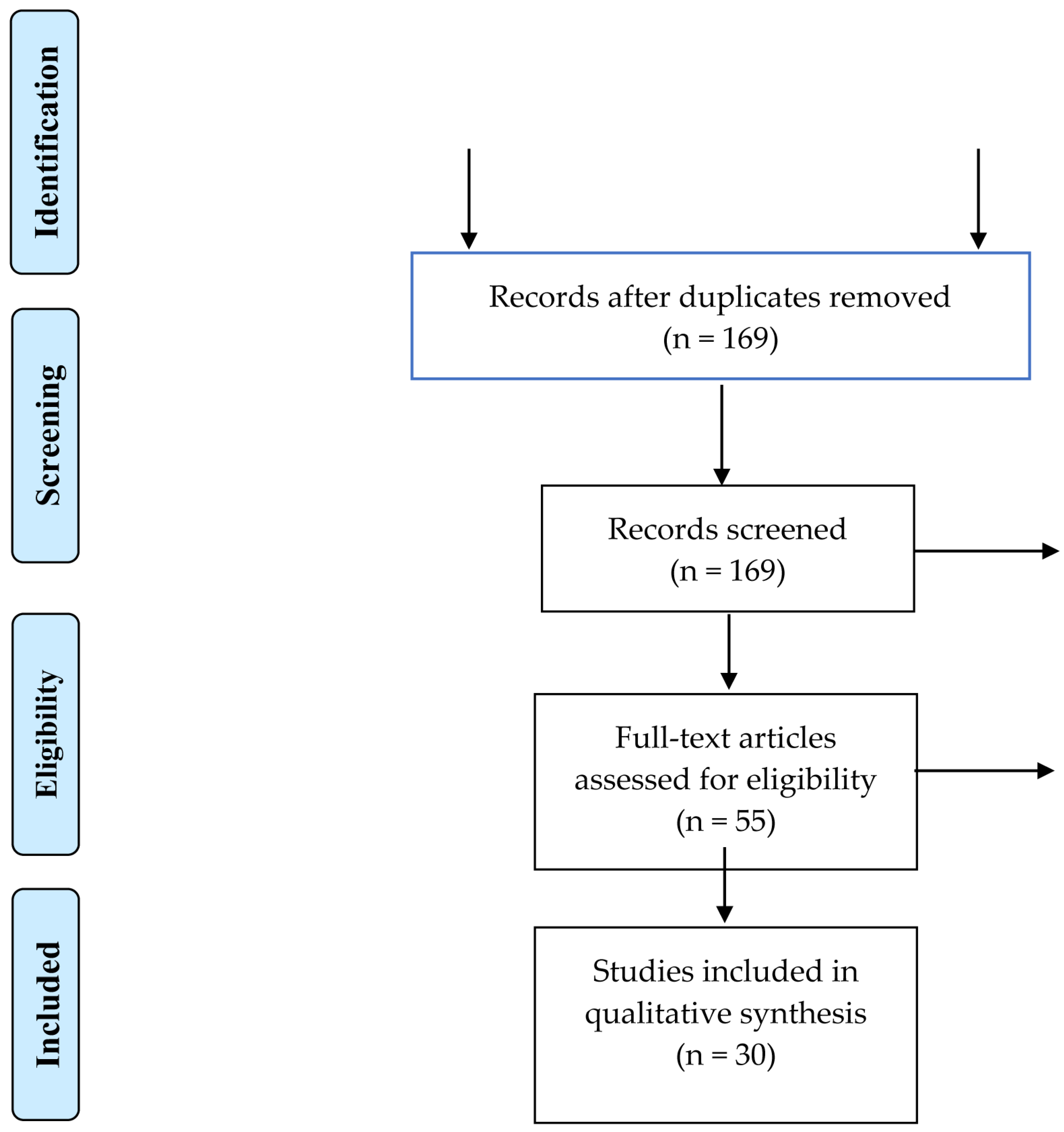
After the initial selection step, 169 articles were identified, and 114 articles were excluded based on critical reading. Following the revision process and a full-text review, 25 papers did not meet the inclusion criteria, as illustrated in the PRISMA diagram flowchart (Figure 1). Ultimately, 30 articles published in English between January 2012 and January 2023 were selected. The studies represented various world regions: China (n = 14), United States (n = 8), Taiwan (n = 2), Canada (n= 1), Korea (n = 1), India (n = 1), Brazil (n = 1), Japan (n = 1), and Saudi Arabia (n = 1). The majority of the studies (n =18) explored the effect of Metformin alone in the treatment of HNSCC, with eight studies conducting in vitro assays (Table 1) and ten performing in vivo assays (Table 2). Additionally, 12 studies evaluated the effect of Metformin in combination with another therapy, with three studies conducting in vitro assays (Table 3), while nine studies were performed in vivo (Table 4).
Figure 1.
Prisma flow diagram.
3.2. Metformin Used Alone
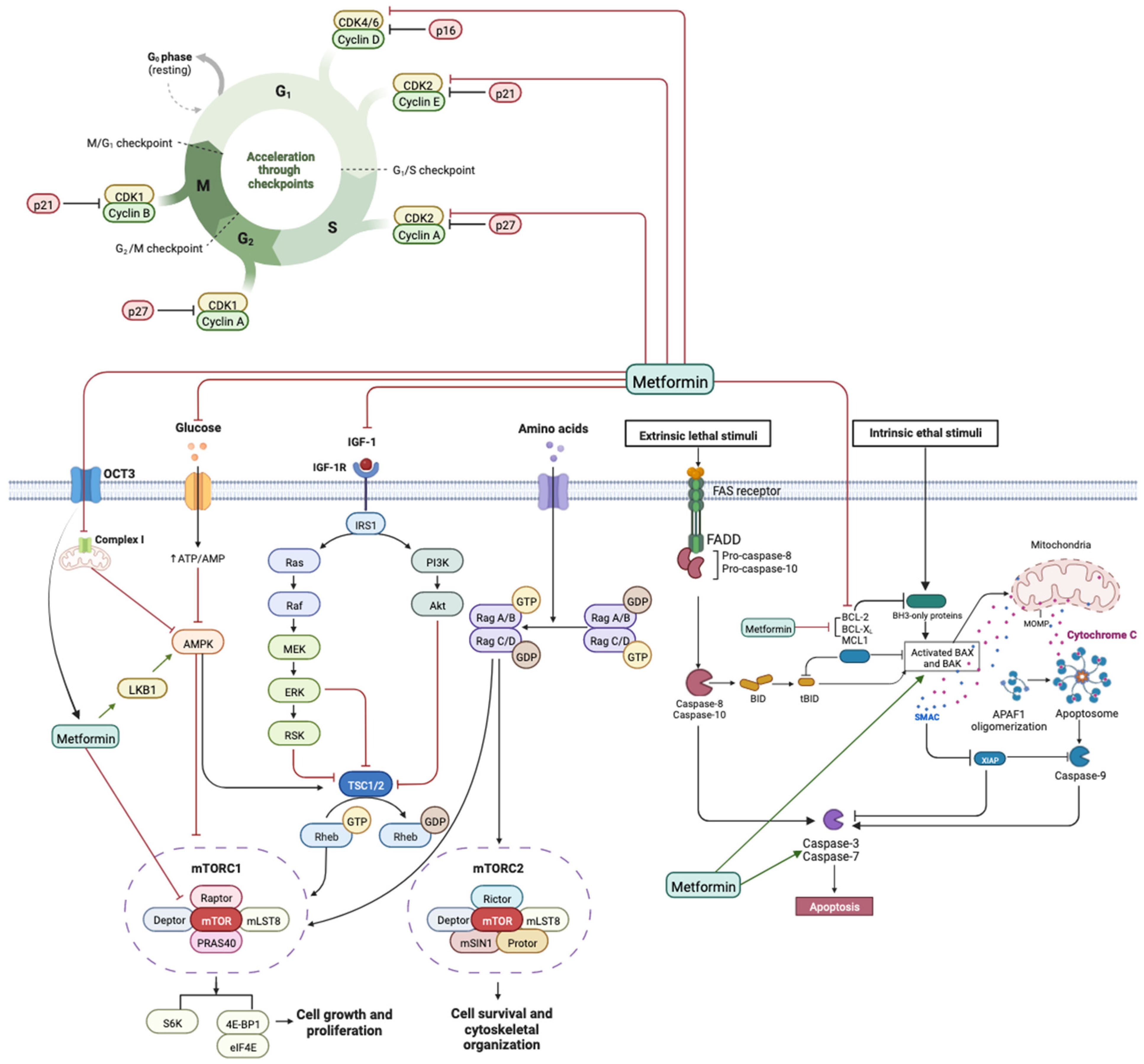
All studies (n = 18) examining the biological mechanisms of Metformin alone reported a decrease in the proliferation rate of head and neck squamous cell carcinoma (HNSCC) (Table 1 and Table 2) [28,29,30,31,32,33,34,35,36,37,38,39,40,41,42,43,44]. Among the eight in vitro studies [30,33,34,35,36,37,39,40,41,42] (Table 1), the main mechanisms of action attributed to Metformin in HNSCC included inhibition of cell proliferation and induction of apoptosis [12,31,35,36,42]. Several molecular pathways were involved in these effects. Notably, the inhibition of the mTOR signaling pathway was highlighted in multiple studies [36,38,41] (Figure 2). This inhibition was shown to be linked to the expression of organic cation transporter 3 (OCT-3), which facilitates Metformin uptake and mediates its effect on mTOR signaling [35]. Conversely, in studies where OCT-3 was downregulated, Metformin failed to activate AMP-activated protein kinase (AMPK) and subsequently did not inhibit the mTORC1 pathway [38], underlining the importance of OCT-3 in Metformin responsiveness.
Figure 2.
Effects of Metformin on cell cycle regulation in cancer, the mammalian target of rapamycin (mTOR) signaling pathway, and its role in apoptosis through extrinsic and intrinsic pathways. By BioRender.com (2022). Retrieved from https://app.biorender.com/biorender-templates, accessed on 1 June 2022.
Table 1.
In vitro studies exploring the effect of Metformin alone.
Table 2.
In vitro and in vivo studies exploring effect of Metformin alone.
Additionally, Metformin was reported to suppress the proteolytic cleavage of nerve growth factor receptor (NGFR), a transmembrane protein implicated in cancer cell proliferation and metastasis, thereby contributing to apoptosis in HNSCC cells [12]. Another proposed mechanism involved the reduction in Yes-associated protein (YAP), a known oncogenic effector, which was associated with downstream inhibition of c-Myc and mTOR, ultimately leading to decreased cell proliferation and increased apoptosis [42].
Ten in vivo studies investigating the biological effects of Metformin alone supported its anti-tumoral properties (Table 2) [28,29,31,32,36,38,43,44,45]. Metformin has also been shown to exert antitumor activity in thyroid cancers, suggesting its potential role as an adjuvant therapeutic agent [46,47,48]. Metformin was shown to activate AMPK and inhibit mTOR signaling by targeting mitochondrial complex I in HNSCC cells [29]. Furthermore, Wu et al. [29] reported that Metformin could suppress the expression of the long noncoding RNA SNHG7 through the activation of S-adenosylhomocysteine hydrolase (SAHH), contributing to inhibited proliferation in FaDu cell-derived tumors.
In a study by Tassone et al. [32], treatment with Metformin led to a 45% reduction in tumor volume, a 1.8-fold increase in apoptotic cells, and a 28% decrease in monocarboxylate transporter 1 (MCT1) expression—an importer of lactate associated with the reverse Warburg effect. While these findings suggest altered tumor metabolism, the authors noted that further studies are required to establish direct causality between observed transporter expression changes and metabolic reprogramming. Similarly, Zhang et al. [30] reported increased hemoglobin oxygen saturation in Metformin-treated tumors, suggesting a possible effect on the tumor microenvironment, although no direct mechanistic link was confirmed.
Chen et al. [43] identified the inhibition by Metformin of LSF/Aurora-A signaling, a pathway known to be involved in tumor cell proliferation and mitotic regulation in HNSCC. Other studies reported reduced levels of S6 kinase, cyclin D1, CDK4, and CDK6, as well as a downregulation of anti-apoptotic proteins Bcl-2 and Bcl-xL and upregulation of the pro-apoptotic protein Bax [36]. These molecular alterations were associated with reduced tumor progression and lesion size [38].
Curry et al. [44] also described changes in the HNSCC tumor microenvironment upon Metformin treatment, including increased markers of senescence and catabolism in stromal cells, as well as increased apoptosis in carcinoma cells. While suggestive of metabolic modulation, these findings were associative and require further functional validation. In addition, Metformin was reported to influence immune cell infiltration, with an increased presence of CD8+ effector T cells and FoxP3+ regulatory T cells at the invasive tumor margin of lymph nodes with extracapsular extension [45], suggesting potential immune modulation, although the functional consequences of this altered immune profile remain to be fully elucidated.
3.3. Metformin in Combination
Among the 30 selected studies, 12 investigated the combinatory effects of Metformin with another therapeutic agent, demonstrating an adjuvant or synergistic action (Table 3 and Table 4) [9,20,24,49,50,51,52,53,54,55,56]. However, most of these studies lacked detailed quantitative comparisons between the effects of Metformin alone, the second drug alone, and the combination. Such data are essential for evaluating whether the observed effects are additive, synergistic, or merely overlapping.
Table 3.
In vitro studies exploring the effects of Metformin as an adjuvant therapy.
Table 4.
In vitro and in vivo studies exploring the effects of Metformin as an adjuvant therapy.
Only one study [56] explored the effects of the combination both in vitro and in vivo using C1632, a LIN28 inhibitor. This study showed that Metformin enhanced the anti-tumor effect of C1632 through amplified inhibition of the AMPK signaling pathway, suggesting a synergistic interaction.
Regarding the combination with curcumin, Metformin significantly enhanced curcumin’s pro-apoptotic and anti-proliferative effects in HPV-positive cell lines [49,57]. However, the study did not explicitly detail whether the interaction was synergistic or additive, nor did it quantify the extent of enhancement. Thus, while Metformin appears to potentiate curcumin’s known biological effects, the precise mode of interaction remains insufficiently described and requires further elucidation.
Across nine studies involving both in vitro and in vivo models, the co-administration of Metformin with various agents led to enhanced tumor control. For example, He et al. [12] demonstrated that Metformin combined with domatinostat tosylate (4SC-202), a selective class I HDAC inhibitor, significantly inhibited cell proliferation and promoted intrinsic apoptosis in OSCC both in vitro and in vivo.
In studies by Yin et al. [51,52], Metformin increased the effectiveness of the EGFR inhibitor gefitinib, enhancing tumor suppression in vitro and in vivo. The combination inhibited CCL15 expression in M2 tumor-associated macrophages and suppressed CCR1 expression on HNSCC cells, suggesting a cooperative immunomodulatory mechanism.
When combined with 5-fluorouracil (5-FU), Metformin enhanced anti-tumoral effects in OSCC cell lines by promoting cell growth inhibition and apoptosis through an independent pathway [24]. Similarly, Qi et al. [54] reported that Metformin augmented cisplatin cytotoxicity and reduced chemoresistance both in vitro and in vivo.
Further, in combination with curcumin, Metformin not only reduced tumor volume but also improved overall survival in treated models [53]. However, quantitative comparisons between monotherapies and combination therapy are not consistently presented, which limits interpretation of the strength of interaction.
Metformin was also shown to enhance Dasatinib-induced apoptosis via AMPK activation, promoting ER stress and EGFR degradation [59]. The combinatory inhibition of tumor progression was also observed with C1632, reinforcing the notion that Metformin may act as a metabolic sensitizer that enhances the effect of other targeted therapies [56].
3.4. Risk of Bias Across Studies
While the selected studies for this review were focused on head and neck cancer, they are highly heterogeneous in terms of reported data, study objectives, and outcome measures, making a meta-analysis unfeasible. Furthermore, several studies present a potential risk of bias due to limitations such as small sample sizes, lack of randomization or blinding, and inconsistent reporting of methodologies, which further undermines the comparability and overall reliability of the results.
4. Discussion
After sixty years of clinical experience and research, Metformin has exhibited no significant clinical adverse effects in diabetic patients. Clinical data suggest it may improve loco-regional tumor control, disease-free survival, and overall outcomes in head and neck tumors. While the clinical impact of Metformin in HNSCC is increasingly being demonstrated [60], the biological mechanisms underlying this anti-cancer effect are still not fully understood [61]. The two main proposed mechanisms involve an indirect effect through modulation of insulin resistance—by reducing insulin IGF1 (Insulin like Growth Factor) signaling and controlling hyperglycemia—as well as a direct effect on cell cycling and apoptosis. Hence, one may speculate that both indirect and direct mechanisms of Metformin may act in synergy.
The present systematic review provides the first comprehensive overview of in vitro and in vivo studies discussing the effects and the biological mechanisms of action of Metformin in HNSCC, updating the results published in 2017 by Rego et al.
The mTOR signaling pathway plays a key role in controlling cell metabolism, survival, growth, and proliferation. It is regulated, among others, by the IGF 1/PI3K/AKT signaling pathway, which is frequently dysregulated in human cancers. Several studies highlight that AMPK activation by Metformin downregulates the mTOR pathway through inhibition of mTOR complex 1 (mTORC1) in HNSCC. Madara et al. demonstrated anti-tumoral effects of Metformin, such as inhibition of mTOR signaling through expression of OCT3, a Metformin uptake transporter. Inhibition of OCT3 activity may interrupt AMPK activation and mTORC1 pathway inhibition. Metformin also inhibits mitochondrial complex I activity, which may lead to AMPK activation and mTOR inhibition. Inhibiting AMPK resulted in the loss of Metformin-induced AMPK activation and reduced initiation of apoptosis, highlighting the likely key role of AMPK in Metformin-induced apoptosis. YAP, a tumor promoter, enhances the proliferation rate of cells and reduces apoptosis in OSCC. Alteration of YAP by Metformin may provoke inhibition of mTOR and c Myc expression, suggesting a potential anti-tumoral effect by reducing cell proliferation and promoting apoptosis in OSCC. Studies in thyroid tumors suggest that Metformin increases p AMPK, reduces mTOR phosphorylation, downregulates S6K1/S6 signaling, and inhibits cyclin D1 and c MYC via the mTOR pathway. The analysis of these observations in the literature suggests a consistent phenomenon, even if the precise stages observed are different.
The effect of Metformin alone on proliferation has also been described in association with other drugs, especially with curcumin, 4SC 202, 5 FU, BPTES, or C1632. Those combinations may suppress tumor cell proliferation and may extend overall survival in animal xenograft models. Comparable effects are observed when combining Metformin with curcumin in prostate cancer cell lines [62].; this combination may lead to increased apoptosis, cytotoxicity, and expression of the Bax gene.
The combination of Metformin with 4SC 202, a selective class I histone deacetylase inhibitor, may suppress proliferation and promote intrinsic apoptosis of OSCC cells in vitro and in vivo through accelerated ubiquitin mediated degradation of ΔNp63. ΔNp63 is a homolog of p53 overexpressed in epithelial cancers and has oncogenic properties. Combined use with CDK4/6 inhibitors suggests Metformin may synergistically inhibit HNSCC by inducing cell cycle arrest. [58].
Another main effect attributed to Metformin is reported through regulation and arrest of the cell cycle. Cancer progression is caused by multiple genetic changes that induce dysregulation of the G1 to S transition. In prostate cancer, a similar effect was observed, showing Metformin’s capacity to reduce cell viability and to arrest at the G1 phase. During the cell cycle, the G1 phase is controlled by interactions among cyclins D and E, CDKs 2, 4, and 6, and CDK inhibitors. Sikka et al. showed that Metformin provoked a G1 arrest concomitant with reductions in protein levels of CDK2, 4, 6, cyclins D and E, and certain CDK inhibitors (p15, p16, p18, p27), but no change in others (p19 and p21), as well as de-creases in oncogenic proteins Skp2 and β TrCP, ultimately leading to arrest at the G0/G1 phase. These effects on the G0/G1 phase were also observed by Luo et al. in OSCC cells, although without effect on p21 and p27 expression.
Moreover, in vitro inhibition of cancer/metastasis development by Metformin via Late SV40 Factor (LSF)/Aurora A signaling has been reported. Metformin may decrease expression of Aurora A by blocking LSF, which is important in cell cycle progression, thereby impairing LSF/Aurora A signaling. Metformin also appears to exert anti-tumor effects by inhibiting proteolysis of NGFR, a transmembrane protein involved in cell proliferation and metastasis in prostate cancer and HNSCC.
In addition, Wu et al. observed sensitization of FaDu cells to Taxol and radiotherapy with Metformin treatment via modulation of IGF 1, leading to decreased SNHG7 expression. SNHG7 is a pro-oncogene that regulates the cell cycle by targeting GALNT1, cyclin D1, FAIM2, p15, and p16. Its expression level is a negative prognostic factor in terms of overall survival in patients with hypopharyngeal cancer.
Apoptosis induction is another major effect of Metformin treatment on HNSCC cells. Apoptosis is a key cellular mechanism controlling cell survival and death, with caspases playing a central role, active via extrinsic or intrinsic signals. In this context, Yang et al. showed that the association of the glutaminase inhibitor BPTES and Metformin may induce apoptosis by stimulating cleavage of pro-caspase 3 to its active form. An increase in caspase 3 transcription was also reported by Guimarães et al. A high Bax/Bcl 2 ratio is essential to favor the penetration of Bax into mitochondria and the subsequent release of cytochrome C. The intrinsic apoptosis pathway depends on cytochrome C release from mitochondria. In addition, Metformin-induced downregulation of anti-apoptotic proteins Bcl 2 and Bcl xL, and overexpression of the pro-apoptotic protein Bax. Similarly, Zhang et al. observed that Metformin may modulate the Bcl 2/Bax axis, further inducing apoptosome assembly and caspase 9 activation, leading to apoptosis. Also, Sun et al. demonstrated that in a dose and time dependent manner Metformin significantly inhibited FaDu cell proliferation and downregulated miR 21 5p while upregulating the mRNA and protein expression of its downstream target gene Programmed Cell Death 4, a pro-apoptotic tumor suppressor gene.
Furthermore, Metformin may foster tumor cell apoptosis through alterations of the immune tumor microenvironment.
All of these factors result in a decreased tumor proliferation rate. Patil demonstrated that the efficacy of Metformin in decreasing CD44 expression may depend on its concentration. Moreover, Metformin co-cultured with normal oral fibroblasts may initiate autophagy in OSCC. A senostatic effect of Metformin was also reported, showing its ability to modulate the profile of the senescence-associated secretory phenotype elicited by LY2835219, a CDK4/6 inhibitor in HNSCC, by inhibiting the mTOR and STAT3 pathways.
Metformin also shows metabolic effects on HNSCC. Under hypoxic conditions, it may promote anti-tumoral effects by increasing pyruvate dehydrogenase (PDH) levels and reducing hypoxia-inducible factor 1 alpha (HIF 1α) mRNA, a key regulator in adaptation to hypoxia. It appears to downregulate HIF 1α expression and inhibit activation of NF κB, which directly modulates HIF 1α under hypoxic conditions. Metformin also induces a significant reduction in MCT1, which acts as a lactate importer in cancer, thereby potentially impeding higher cancer cell proliferation through the reverse Warburg effect.
Notwithstanding, Metformin has garnered significant interest for its potential anti-tumor effects [63]. One retrospective study reported that, among diabetic patients with HNSCC of the larynx and oropharynx, those treated with Metformin exhibited significantly improved outcomes after a five year follow up: the Metformin group showed higher overall survival (72.7% vs. 34.7%, p < 0.038) and a much lower incidence of distant metastasis (18.1% vs. 82.6%, p < 0.001). However, it is important to note that the control group in that study was not clearly defined. It remains unclear whether these patients were also diabetic but untreated with Metformin, or whether they represented a broader HNSCC population irrespective of diabetic status. If the latter, the extremely high metastasis rate (82.6%) raises concerns and warrants cautious interpretation of the data.
Beyond HNSCC, Metformin also appears to improve prognosis in a range of other malignancies, including lung, colorectal, prostate, breast, kidney, and pancreatic cancers. Currently, several clinical trials are underway (Clinical-Trials.gov) to evaluate both its therapeutic and preventive potential. These include studies on chemoprevention in oral potentially malignant lesions (NCT03684707), premalignant lesions (NCT02581137, NCT05237960), and Metformin in combination with surgery plus either doxycycline (NCT03076281) or durvalumab (NCT03618654) [64,65,66,67,68]. However, while preliminary data are promising, clinical evidence supporting a survival benefit of Metformin in patients with HNSCC remains inconsistent and requires further investigation through well-designed prospective trials.
Limitations: The present review has several methodological limitations, the most significant being the near-total absence of quantitative data across the included studies. This gap limits the ability to identify the most promising drug combinations involving Metformin in terms of maximizing anti-tumor efficacy while minimizing adverse effects. A structured presentation of the available data—such as effective concentrations, IC50 values, and toxicity profiles—is essential to inform the rational use of Metformin in systemic or local combination therapies, as well as in chemoprevention or tertiary prevention strategies following primary treatment. Nevertheless, the review’s primary strength lies in its com-prehensive description of experimental studies evaluating Metformin’s role when combined with other agents. We also provide a detailed synthesis of numerous in vitro and in vivo investigations exploring Metformin’s anti-cancer mechanisms in head and neck squamous cell carcinoma.
5. Conclusions
Metformin has emerged as a clinically actionable adjuvant therapy in head and neck squamous cell carcinoma (HNSCC), offering a low-cost and well-tolerated option to enhance treatment efficacy. From a clinical standpoint, Metformin has demonstrated multiple benefits not only as a monotherapy but more notably as an adjunct to existing treatments. It has shown the ability to potentiate the effects of various chemotherapeutic agents, including gefitinib [51,52], BPTES [20], 4SC-202 [59], 5-fluorouracil (5-FU) [24], curcumin [53], and dasatinib [55]. Positive outcomes have also been reported with Taxol [29], although data on its combination with cisplatin remain somewhat inconsistent—yet overall suggest a beneficial adjuvant effect [50,54].
The mechanisms underlying these effects are diverse, primarily involving modulation of the mTOR signaling pathway, leading to reduced tumor cell proliferation, cell cycle arrest, enhanced apoptosis, metabolic reprogramming of the tumor microenvironment, suppression of immune tolerance, and improved cytotoxic immune responses.
These findings suggest that Metformin holds strong potential as a synergistic partner in combination regimens for HNSCC. Given its favorable safety profile and low cost, it prompts an important discussion on its potential off-label use in non-diabetic patients. Could HNSCC outcomes be significantly improved without increasing treatment-related toxicity? If so, should health insurance providers support its use based on a favorable cost–benefit ratio?
These questions are particularly relevant in the current context of value-based care and precision oncology. Addressing them will require further in vitro studies and well-designed clinical trials to validate these findings, identify optimal therapeutic combinations, and define the patient populations most likely to benefit
Author Contributions
T.B.: Study design, data collection, data analysis, study conduct, manuscript draft, A.Y.: Data collection, data analysis, manuscript draft, M.G.: Data analysis, manuscript draft, manuscript revision, C.B.: Data analysis, manuscript draft, manuscript revision, X.V.E.: Data collection, data analysis, manuscript draft, R.J.: Manuscript revision, I.L.: Manuscript revision, J.R.L.: Manuscript revision, E.B.: Manuscript revision, S.S.: Study design, data collection, manuscript revision, D.D.: Manuscript revision, manuscript content approval, responsible for the integrity of the data analysis. All authors have read and agreed to the published version of the manuscript.
Funding
This research received no external funding.
Institutional Review Board Statement
Not applicable.
Informed Consent Statement
Not applicable.
Data Availability Statement
The data is available at the Maxillofacial Surgery Secretariat at CHU Saint Pierre in Brussels, Belgium.
Conflicts of Interest
The authors declare no conflicts of interest.
References
- Rivera, C. Essentials of oral cancer. Int. J. Clin. Exp. Pathol. 2015, 8, 11884–11894. [Google Scholar]
- Sarode, G.; Maniyar, N.; Sarode, S.C.; Jafer, M.; Patil, S.; Awan, K.H. Epidemiologic aspects of oral cancer. Disease-a-Month 2020, 66, 100988. [Google Scholar] [CrossRef] [Scilit]
- Vigneswaran, N.; Williams, M.D. Epidemiologic trends in head and neck cancer and aids in diagnosis. Oral Maxillofac. Surg. Clin. N. Am. 2014, 26, 123–141. [Google Scholar] [CrossRef] [Scilit] [PubMed]
- Warnakulasuriya, S. Global epidemiology of oral and oropharyngeal cancer. Oral Oncol. 2009, 45, 309–316. [Google Scholar] [CrossRef] [Scilit] [PubMed]
- Leoncini, E.; Vukovic, V.; Cadoni, G.; Pastorino, R.; Arzani, D.; Bosetti, C.; Canova, C.; Garavello, W.; La Vecchia, C.; Maule, M.; et al. Clinical features and prognostic factors in patients with head and neck cancer: Results from a multicentric study. Cancer Epidemiol. 2015, 39, 367–374. [Google Scholar] [CrossRef] [Scilit] [PubMed]
- Lardinois, I.; Dequanter, D.; Lechien, J.R.; Bouland, C.; Javadian, R.; Rodriguez, A.; Loeb, I.; Journe, F.; Saussez, S. Survival and treatment outcome of head and neck cancer patients with pulmonary oligometastases. Clin. Otolaryngol. 2021, 46, 311–317. [Google Scholar] [CrossRef] [Scilit]
- Bouland, C.; Dequanter, D.; Lechien, J.R.; Hanssens, C.; De Saint Aubain, N.; Digonnet, A.; Javadian, R.; Yanni, A.; Rodriguez, A.; Loeb, I.; et al. Prognostic Significance of a Scoring System Combining p16, Smoking, and Drinking Status in a Series of 131 Patients with Oropharyngeal Cancers. Int. J. Otolaryngol. 2021, 2021, 8020826. [Google Scholar] [CrossRef] [Scilit]
- Yanni, A.; Buset, T.; Bouland, C.; Loeb, I.; Lechien, J.R.; Rodriguez, A.; Journe, F.; Saussez, S.; Dequanter, D. Neutrophil-to-lymphocyte ratio as a prognostic marker for head and neck cancer with lung metastasis: A retrospective study. Eur. Arch. Oto-Rhino-Laryngol. 2022, 279, 4103–4111. [Google Scholar] [CrossRef] [Scilit]
- He, Y.; Tai, S.; Deng, M.; Fan, Z.; Ping, F.; He, L.; Zhang, C.; Huang, Y.; Cheng, B.; Xia, J. Metformin and 4SC-202 synergistically promote intrinsic cell apoptosis by accelerating ΔNp63 ubiquitination and degradation in oral squamous cell carcinoma. Cancer Med. 2019, 8, 3479–3490. [Google Scholar] [CrossRef] [Scilit]
- Miyauchi, S.; Kim, S.S.; Pang, J.; Gold, K.A.; Gutkind, J.S.; Califano, J.A.; Mell, L.K.; Cohen, E.E.; Sharabi, A.B. Immune Modulation of Head and Neck Squamous Cell Carcinoma and the Tumor Microenvironment by Conventional Therapeutics. Clin. Cancer Res. 2019, 25, 4211–4223. [Google Scholar] [CrossRef] [Scilit]
- de Oliveira Figueiredo, R.A.; Weiderpass, E.; Tajara, E.H.; Ström, P.; Carvalho, A.L.; de Carvalho, M.B.; Kanda, J.L.; Moyses, R.A.; Wünsch-Filho, V. Diabetes mellitus, metformin and head and neck cancer. Oral Oncol. 2016, 61, 47–54. [Google Scholar] [CrossRef] [Scilit] [PubMed]
- Wang, X.; Wang, H.; Zhang, T.; Cai, L.; Dai, E.; He, J. Diabetes and its Potential Impact on Head and Neck Oncogenesis. J. Cancer 2020, 11, 583–591. [Google Scholar] [CrossRef] [Scilit] [PubMed]
- Bailey, C.J. Metformin: Historical overview. Diabetologia 2017, 60, 1566–1576. [Google Scholar] [CrossRef] [Scilit] [PubMed]
- Rêgo, D.F.; Elias, S.T.; Amato, A.A.; Canto, G.D.L.; Guerra, E.N.S. Anti-tumor effects of metformin on head and neck carcinoma cell lines: A systematic review. Oncol. Lett. 2017, 13, 554–566. [Google Scholar] [CrossRef] [Scilit]
- Yen, Y.C.; Lin, C.; Lin, S.W.; Lin, Y.S.; Weng, S.F. Effect of metformin on the incidence of head and neck cancer in diabetics. Head Neck 2015, 37, 1268–1273. [Google Scholar] [CrossRef] [Scilit]
- Rêgo, D.F.; Pavan, L.M.C.; Elias, S.T.; De Luca Canto, G.; Guerra, E.N.S. Effects of metformin on head and neck cancer: A systematic review. Oral Oncol. 2015, 51, 416–422. [Google Scholar] [CrossRef] [Scilit]
- Saka Herrán, C.; Jané-Salas, E.; Estrugo Devesa, A.; López-López, J. Protective effects of metformin, statins and anti-inflammatory drugs on head and neck cancer: A systematic review. Oral Oncol. 2018, 85, 68–81. [Google Scholar] [CrossRef] [Scilit] [PubMed]
- Pollak, M. Insulin and insulin-like growth factor signalling in neoplasia. Nat. Rev. Cancer 2008, 8, 915–928. [Google Scholar] [CrossRef] [Scilit] [PubMed]
- Madiraju, A.K.; Erion, D.M.; Rahimi, Y.; Zhang, X.M.; Braddock, D.T.; Albright, R.A.; Prigaro, B.J.; Wood, J.L.; Bhanot, S.; MacDonald, M.J.; et al. Metformin suppresses gluconeogenesis by inhibiting mitochondrial glycerophosphate dehydrogenase. Nature 2014, 510, 542–546. [Google Scholar] [CrossRef] [Scilit] [PubMed]
- Yang, J.; Guo, Y.; Seo, W.; Zhang, R.; Lu, C.; Wang, Y.; Luo, L.; Paul, B.; Yan, W.; Saxena, D.; et al. Targeting cellular metabolism to reduce head and neck cancer growth. Sci. Rep. 2019, 9, 4995. [Google Scholar] [CrossRef] [Scilit]
- Morale, M.G.; Tamura, R.E.; Rubio, I.G.S. Metformin and Cancer Hallmarks: Molecular Mechanisms in Thyroid, Prostate and Head and Neck Cancer Models. Biomolecules 2022, 12, 357. [Google Scholar] [CrossRef] [Scilit]
- Shaw, R.J.; Cantley, L.C. Ras, PI(3)K and mTOR signalling controls tumour cell growth. Nature 2006, 441, 424–430. [Google Scholar] [CrossRef] [Scilit] [PubMed]
- Faubert, B.; Boily, G.; Izreig, S.; Griss, T.; Samborska, B.; Dong, Z.; Dupuy, F.; Chambers, C.; Fuerth, B.J.; Viollet, B.; et al. AMPK is a negative regulator of the Warburg effect and suppresses tumor growth in vivo. Cell Metab. 2013, 17, 113–124. [Google Scholar] [CrossRef] [Scilit] [PubMed]
- Harada, K.; Ferdous, T.; Harada, T.; Ueyama, Y. Metformin in combination with 5-fluorouracil suppresses tumor growth by inhibiting the Warburg effect in human oral squamous cell carcinoma. Int. J. Oncol. 2016, 49, 276–284. [Google Scholar] [CrossRef] [Scilit]
- Bouland, C.; Xavier Vanden Eynden, X.; Lalmand, M.; Buset, T.; Yanni, A.; Javadian, R.; Rodriguez, A.; Loeb, I.; Lechien, J.R.; Journe, F.; et al. Dequanter D Preventive and Therapeutic Effect of Metformin in Head and Neck Cancer: A Concise Review. J. Clin. Med. 2023, 12, 6195. [Google Scholar] [CrossRef] [Scilit]
- Thompson, M.; Tiwari, A.; Fu, R.; Moe, E.; Buckley, D.I. A Framework to Facilitate the Use of Systematic Reviews and Meta-Analyses in the Design of Primary Research Studies [Internet]; Agency for Healthcare Research and Quality (US): Rockville, MD, USA, 2012. Available online: http://www.ncbi.nlm.nih.gov/books/NBK83621/ (accessed on 1 December 2024).
- McInnes, M.D.F.; Moher, D.; Thombs, B.D.; McGrath, T.A.; Bossuyt, P.M.; the PRISMA-DTA Group. Preferred Reporting Items for a Systematic Review and Meta-analysis of Diagnostic Test Accuracy Studies: The PRISMA-DTA Statement. JAMA 2018, 319, 388–396. [Google Scholar] [CrossRef] [Scilit] [PubMed]
- Wu, X.; Yeerna, H.; Goto, Y.; Ando, T.; Wu, V.H.; Zhang, X.; Wang, Z.; Amornphimoltham, P.; Murphy, A.N.; Tamayo, P.; et al. Metformin Inhibits Progression of Head and Neck Squamous Cell Carcinoma by Acting Directly on Carcinoma-Initiating Cells. Cancer Res. 2019, 79, 4360–4370. [Google Scholar] [CrossRef] [Scilit] [PubMed]
- Wu, P.; Tang, Y.; Fang, X.; Xie, C.; Zeng, J.; Wang, W.; Zhao, S. Metformin Suppresses Hypopharyngeal Cancer Growth by Epigenetically Silencing Long Non-coding RNA SNHG7 in FaDu Cells. Front. Pharmacol. 2019, 10, 143. [Google Scholar] [CrossRef] [Scilit]
- Zhang, Z.; Liang, X.; Fan, Y.; Gao, Z.; Bindoff, L.A.; Costea, D.E.; Li, L. Fibroblasts rescue oral squamous cancer cell from metformin-induced apoptosis via alleviating metabolic disbalance and inhibiting AMPK pathway. Cell Cycle 2019, 18, 949–962. [Google Scholar] [CrossRef] [Scilit]
- Verma, A.; Rich, L.J.; Vincent-Chong, V.K.; Seshadri, M. Visualizing the effects of metformin on tumor growth, vascularity, and metabolism in head and neck cancer. J. Oral Pathol. Med. 2018, 47, 484–491. [Google Scholar] [CrossRef] [Scilit]
- Tassone, P.; Domingo-Vidal, M.; Whitaker-Menezes, D.; Lin, Z.; Roche, M.; Tuluc, M.; Martinez-Outschoorn, U.; Curry, J. Metformin Effects on Metabolic Coupling and Tumor Growth in Oral Cavity Squamous Cell Carcinoma Coinjection Xenografts. Otolaryngol. Head Neck Surg. 2018, 158, 867–877. [Google Scholar] [CrossRef] [Scilit]
- Sun, R.; Ma, X.; Cai, X.; Pan, X.; Liu, D. The effect and mechanism of action of metformin on in vitro FaDu cell proliferation. J. Int. Med. Res. 2016, 44, 1049–1054. [Google Scholar] [CrossRef] [Scilit]
- Guimarães, T.A.; Farias, L.C.; Santos, E.S.; de Carvalho Fraga, C.A.; Orsini, L.A.; de Freitas Teles, L.; Feltenberger, J.D.; De Jesus, S.F.; De Souza, M.G.; Santos, S.H.S.; et al. Metformin increases PDH and suppresses HIF-1α under hypoxic conditions and induces cell death in oral squamous cell carcinoma. Oncotarget 2016, 7, 55057–55068. [Google Scholar] [CrossRef] [Scilit] [PubMed]
- Madera, D.; Vitale-Cross, L.; Martin, D.; Schneider, A.; Molinolo, A.A.; Gangane, N.; Carey, T.E.; McHugh, J.B.; Komarck, C.M.; Walline, H.M.; et al. Prevention of tumor growth driven by PIK3CA and HPV oncogenes by targeting mTOR signaling with metformin in oral squamous carcinomas expressing OCT3. Cancer Prev. Res. 2015, 8, 197–207. [Google Scholar] [CrossRef] [Scilit] [PubMed]
- Luo, Q.; Hu, D.; Hu, S.; Yan, M.; Sun, Z.; Chen, F. In vitro and in vivo anti-tumor effect of metformin as a novel therapeutic agent in human oral squamous cell carcinoma. BMC Cancer 2012, 12, 517. [Google Scholar] [CrossRef] [Scilit] [PubMed]
- Patel, H.; Younis, R.H.; Ord, R.A.; Basile, J.R.; Schneider, A. Differential expression of organic cation transporter OCT-3 in oral premalignant and malignant lesions: Potential implications in the antineoplastic effects of metformin. J. Oral Pathol. Med. 2013, 42, 250–256. [Google Scholar] [CrossRef] [Scilit]
- Vitale-Cross, L.; Molinolo, A.A.; Martin, D.; Younis, R.H.; Maruyama, T.; Patel, V.; Chen, W.; Schneider, A.; Gutkind, J.S. Metformin prevents the development of oral squamous cell carcinomas from carcinogen-induced premalignant lesions. Cancer Prev. Res. 2012, 5, 562–573. [Google Scholar] [CrossRef] [Scilit]
- Sikka, A.; Kaur, M.; Agarwal, C.; Deep, G.; Agarwal, R. Metformin suppresses growth of human head and neck squamous cell carcinoma via global inhibition of protein translation. Cell Cycle 2012, 11, 1374–1382. [Google Scholar] [CrossRef] [Scilit]
- Patil, S. Metformin treatment decreases the expression of cancer stem cell marker CD44 and stemness related gene expression in primary oral cancer cells. Arch. Oral Biol. 2020, 113, 104710. [Google Scholar] [CrossRef] [Scilit]
- Wei, J.; Huang, J.; Kuang, Y.; Li, Y.; Zhong, D.; Song, J. Metformin inhibits proliferation of oral squamous cell carcinoma cells by suppressing proteolysis of nerve growth factor receptor. Arch. Oral Biol. 2021, 121, 104971. [Google Scholar] [CrossRef] [Scilit]
- Chen, C.H.; Tsai, H.T.; Chuang, H.C.; Shiu, L.Y.; Su, L.J.; Chiu, T.J.; Luo, S.D.; Fang, F.M.; Huang, C.C.; Chien, C.Y. Metformin disrupts malignant behavior of oral squamous cell carcinoma via a novel signaling involving Late SV40 factor/Aurora-A. Sci. Rep. 2017, 7, 1358. [Google Scholar] [CrossRef] [Scilit]
- Curry, J.; Johnson, J.; Tassone, P.; Vidal, M.D.; Menezes, D.W.; Sprandio, J.; Mollaee, M.; Cotzia, P.; Birbe, R.; Lin, Z.; et al. Metformin effects on head and neck squamous carcinoma microenvironment: Window of opportunity trial. Laryngoscope 2017, 127, 1808–1815. [Google Scholar] [CrossRef] [Scilit] [PubMed]
- Curry, J.M.; Johnson, J.; Mollaee, M.; Tassone, P.; Amin, D.; Knops, A.; Whitaker-Menezes, D.; Mahoney, M.G.; South, A.; Rodeck, U.; et al. Metformin Clinical Trial in HPV+ and HPV- Head and Neck Squamous Cell Carcinoma: Impact on Cancer Cell Apoptosis and Immune Infiltrate. Front. Oncol. 2018, 8, 436. [Google Scholar] [CrossRef] [Scilit] [PubMed]
- Chen, G.; Xu, S.; Renko, K.; Derwahl, M. Metformin inhibits growth of thyroid carcinoma cells, suppresses self-renewal of derived cancer stem cells, and potentiates the effect of chemotherapeutic agents. J. Clin. Endocrinol. Metab. 2012, 97, E510–E520. [Google Scholar] [CrossRef] [Scilit]
- Klubo-Gwiezdzinska, J.; Costello, J., Jr.; Patel, A.; Bauer, A.; Jensen, K.; Mete, M.; Burman, K.D.; Wartofsky, L.; Vasko, V. Treatment With Metformin Is Associated With Higher Remission Rate in Diabetic Patients With Thyroid Cancer. J. Clin. Endocrinol. Metab. 2013, 98, 3269–3279. [Google Scholar] [CrossRef] [Scilit]
- Han, B.; Cui, H.; Kang, L.; Zhang, X.; Jin, Z.; Lu, L.; Fan, Z. Metformin inhibits thyroid cancer cell growth, migration, and EMT through the mTOR pathway. Tumor Biol. 2015, 36, 6295–6304. [Google Scholar] [CrossRef] [Scilit]
- Bikas, A.; Jensen, K.; Patel, A.; Costello, J.; McDaniel, D.; Klubo-Gwiezdzinska, J.; Larin, O.; Hoperia, V.; Burman, K.D.; Boyle, L.; et al. Glucose-deprivation increases thyroid cancer cells sensitivity to metformin. Endocr. Relat. Cancer 2015, 22, 919–932. [Google Scholar] [CrossRef] [Scilit]
- Kuo, S.Z.; Honda, C.O.; Li, W.T.; Honda, T.K.; Kim, E.; Altuna, X.; Abhold, E.; Wang-Rodriguez, J.; Ongkeko, W.M. Metformin Results in Diametrically Opposed Effects by Targeting Non-Stem Cancer Cells but Protecting Cancer Stem Cells in Head and Neck Squamous Cell Carcinoma. Int. J. Mol. Sci. 2019, 20, 193. [Google Scholar] [CrossRef] [Scilit]
- Yin, X.; Han, S.; Song, C.; Zou, H.; Wei, Z.; Xu, W.; Ran, J.; Tang, C.; Wang, Y.; Cai, Y.; et al. Metformin enhances gefitinib efficacy by interfering with interactions between tumor-associated macrophages and head and neck squamous cell carcinoma cells. Cell Oncol. 2019, 42, 459–475. [Google Scholar] [CrossRef] [Scilit]
- Yin, X.; Wei, Z.; Song, C.; Tang, C.; Xu, W.; Wang, Y.; Xie, J.; Lin, Z.; Han, W. Metformin sensitizes hypoxia-induced gefitinib treatment resistance of HNSCC via cell cycle regulation and EMT reversal. Cancer Manag. Res. 2018, 10, 5785–5798. [Google Scholar] [CrossRef] [Scilit]
- Siddappa, G.; Kulsum, S.; Ravindra, D.R.; Kumar, V.V.; Raju, N.; Raghavan, N.; Sudheendra, H.V.; Sharma, A.; Sunny, S.P.; Jacob, T.; et al. Curcumin and metformin-mediated chemoprevention of oral cancer is associated with inhibition of cancer stem cells. Mol. Carcinog. 2017, 56, 2446–2460. [Google Scholar] [CrossRef] [Scilit]
- Qi, X.; Xu, W.; Xie, J.; Wang, Y.; Han, S.; Wei, Z.; Ni, Y.; Dong, Y.; Han, W. Metformin sensitizes the response of oral squamous cell carcinoma to cisplatin treatment through inhibition of NF-κB/HIF-1α signal axis. Sci. Rep. 2016, 6, 35788. [Google Scholar] [CrossRef] [Scilit] [PubMed]
- Lin, Y.C.; Wu, M.H.; Wei, T.T.; Lin, Y.C.; Huang, W.C.; Huang, L.Y.; Lin, Y.T.; Chen, C.C. Metformin sensitizes anticancer effect of dasatinib in head and neck squamous cell carcinoma cells through AMPK-dependent ER stress. Oncotarget 2014, 5, 298–308. [Google Scholar] [CrossRef] [Scilit] [PubMed]
- Chen, H.; Sa, G.; Li, L.; He, S.; Wu, T. In vitro and in vivo synergistic anti-tumor effect of LIN28 inhibitor and metformin in oral squamous cell carcinoma. Eur. J. Pharmacol. 2021, 891, 173757. [Google Scholar] [CrossRef] [Scilit] [PubMed]
- Flory, J.; Lipska, K. Metformin in 2019. JAMA 2019, 321, 1926–1927. [Google Scholar] [CrossRef] [Scilit] [PubMed]
- Lindsay, C.; Kostiuk, M.; Conrad, D.; O’Connell, D.A.; Harris, J.; Seikaly, H.; Biron, V.L. Antitumour effects of metformin and curcumin in human papillomavirus positive and negative head and neck cancer cells. Mol. Carcinog. 2019, 58, 1946–1959. [Google Scholar] [CrossRef] [Scilit] [PubMed]
- Hu, Q.; Peng, J.; Jiang, L.; Li, W.; Su, Q.; Zhang, J.; Li, H.; Song, M.; Cheng, B.; Xia, J.; et al. Metformin as a senostatic drug enhances the anticancer efficacy of CDK4/6 inhibitor in head and neck squamous cell carcinoma. Cell Death Dis. 2020, 11, 925. [Google Scholar] [CrossRef] [Scilit] [PubMed]
- D’Arcy, M.S. Cell death: A review of the major forms of apoptosis, necrosis and autophagy. Cell Biol. Int. 2019, 43, 582–592. [Google Scholar] [CrossRef] [Scilit]
- Lam, T.G.; Jeong, Y.S.; Kim, S.A.; Ahn, S.G. New metformin derivative HL156A prevents oral cancer progression by inhibiting the insulin-like growth factor/AKT/mammalian target of rapamycin pathways. Cancer Sci. 2018, 109, 699–709. [Google Scholar] [CrossRef] [Scilit]
- Wu, X.Y.; Xu, W.W.; Huan, X.K.; Wu, G.N.; Li, G.; Zhou, Y.H.; Najafi, M. Mechanisms of cancer cell killing by metformin: A review on different cell death pathways. Mol. Cell Biochem. 2023, 478, 197–214. [Google Scholar] [CrossRef] [Scilit]
- Eslami, S.S.; Jafari, D.; Montazeri, H.; Sadeghizadeh, M.; Tarighi, P. Combination of Curcumin and Metformin Inhibits Cell Growth and Induces Apoptosis without Affecting the Cell Cycle in LNCaP Prostate Cancer Cell Line. Nutr. Cancer 2021, 73, 1026–1039. [Google Scholar] [CrossRef] [Scilit]
- Ogunsakin, A.; Infield, J.; Zuber, J.; Solomon, S.S. Metformin Associated with Improved Outcomes in Diabetic Patients with Laryngeal and Oropharyngeal Carcinoma. Am. J. Med. Sci. 2018, 356, 574–575. [Google Scholar] [CrossRef] [Scilit]
- ClinicalTrials. Cancer Chemoprevention by Metformin Hydrochloride Compared to Placebo in Oral Potentially Malignant Lesions—Full Text View. Available online: https://clinicaltrials.gov/ct2/show/NCT03684707 (accessed on 27 April 2023).
- ClinicalTrials. Metformin Hydrochloride in Preventing Oral Cancer in Patients with an Oral Premalignant Lesion—Full Text View. Available online: https://clinicaltrials.gov/ct2/show/NCT02581137 (accessed on 27 April 2023).
- ClinicalTrials. Metformin for the Prevention of Oral Cancer in Patients with Oral Leukoplakia or Erythroplakia—Full Text View. Available online: https://clinicaltrials.gov/ct2/show/NCT05237960 (accessed on 27 April 2023).
- ClinicalTrials. Metformin Hydrochloride and Doxycycline in Treating Patients with Head and Neck Squamous Cell Carcinoma That Can Be Removed by Surgery—Full Text View. Available online: https://clinicaltrials.gov/ct2/show/NCT03076281 (accessed on 27 April 2023).
- ClinicalTrials. Durvalumab With or Without Metformin in Treating Participants with Head and Neck Squamous Cell Carcinoma—Full Text View. Available online: https://clinicaltrials.gov/ct2/show/NCT03618654 (accessed on 27 April 2023).


Disclaimer/Publisher’s Note: The statements, opinions and data contained in all publications are solely those of the individual author(s) and contributor(s) and not of MDPI and/or the editor(s). MDPI and/or the editor(s) disclaim responsibility for any injury to people or property resulting from any ideas, methods, instructions or products referred to in the content. |
© 2025 by the authors. Licensee MDPI, Basel, Switzerland. This article is an open access article distributed under the terms and conditions of the Creative Commons Attribution (CC BY) license (https://creativecommons.org/licenses/by/4.0/).