


Abstract
Background: This study aimed to summarize the current status of research on ultrasound-guided acupuncture and dry-needling treatment and the specific treatment methods applied to patients. Methods: A scoping review was conducted, surveying three English databases (PubMed, Embase, and the Cochrane Library) for studies published up to May 2024. All studies related to ultrasound-guided acupuncture and dry-needling treatment were considered. Literature was selected using selection and exclusion criteria, and extracted and organized using EndNote. Results: A total of 107 eligible studies were included. Among the 107 studies, non-comparative studies accounted for the largest proportion (n = 47, 43.9%), followed by randomized controlled trials (RCTs; n = 41, 38.3%). Diseases of the musculoskeletal system or connective tissue (15 diseases of the musculoskeletal system or connective tissue) accounted for most (n = 48, 55.8%) of the 86 diseases studied, followed by symptoms, signs, or clinical conditions not otherwise classified (n = 17, 19.8%). Conclusions: Ultrasound-guided acupuncture and dry-needling have been actively studied and applied for the treatment of various diseases. However, higher-quality studies are needed for further applications in research and clinical practice.
Keywords:
acupuncture; dry-needling; needle knife; acupotomy; pharmacopuncture; ultrasound; ultrasound-guided 1. Introduction
Acupuncture originated in Chinese medicine; traditionally, its main purpose is to stimulate specific points called “acupuncture points” along meridians to restore qi flow and activate metabolism. Today, the term has been expanded to include dry-needling, which is applied locally to areas where trigger points (TrPs) exist and myofascial pain. Referred pain, also known as secondary hyperalgesia, is commonly associated with TrPs and occurs when pain is experienced in a different region than its source, a phenomenon frequently observed in nearly all myofascial pain syndromes [1]. At medical institutions, patient complaints are followed by a series of tests, and clinician experience is used to diagnose and treat the disease.
However, the commonly used treatment methods of acupuncture and dry-needling are invasive, and the needling process is largely dependent on the practitioner’s senses. Variations in age, sex, body type, and anatomy exist among patients; thus the stability of needle depth and direction and the reproducibility of treatment according to the skill of the practitioner must be studied [2]. Ultrasound imaging (ultrasonography) utilizes unique acoustic impedance differences between the internal tissues of the body to transmit a constant pulse wave into the body, and the reflected signal is amplified and converted into a computerized image [3]. Ultrasound devices are used as diagnostic and therapeutic aids to improve the accuracy and precision of treatment for non-palpable areas because they can help identify the location of lesions and morbidity [4,5]. Therefore, research has been conducted on techniques that combine ultrasound-guided acupuncture and dry-needling to improve the accuracy and precision of existing acupuncture and dry-needling techniques.
Until now, most studies combining acupuncture and dry-needle therapy with ultrasound imaging devices have focused on the treatment of a single disease in patients. Therefore, studies are lacking regarding the overall research status and possibilities of ultrasound-guided acupuncture and dry-needle therapy for researchers and clinical practitioners.
Therefore, in this scoping review, we systematically searched for and analyzed studies related to ultrasound-guided acupuncture (acupuncture, acupotomy, and pharmacopuncture) and dry-needling applications to investigate the current state of research on ultrasound-guided acupuncture and dry-needling. We aimed to identify specific methods of ultrasound-guided acupuncture and dry-needling according to the disease and site, and explore the possibility of further applications to provide reference materials for clinicians.
2. Materials and Methods
A scoping review was conducted to identify research trends in ultrasound-guided acupuncture and dry-needling. By broadening the scope of the question, the following research questions were set to identify areas where clinical research on ultrasound-guided acupuncture and dry-needling is insufficient.
- What are the research trends in ultrasound-guided acupuncture and dry-needling? (Publication year, research design, etc.)
- For what specific diseases or symptoms are ultrasound-guided acupuncture and dry-needling used?
- What are the future research directions for ultrasound-guided acupuncture and dry-needling?
Based on Arksey and O’Malley’s five steps [6], the authors drafted this study under the guidance of the Preferred Reporting Items for Systematic Reviews and Meta-Analyses (PRISMA) [7] extension of the scoping review checklist and Supplementary Materials.
2.1. Database Selection and Search
A literature search was conducted using the PubMed (https://pubmed.ncbi.nlm.nih.gov), EMBASE (www.embase.com), and Cochrane Library (www.cochranelibrary.com) databases. Until 30 May 2024, we searched for articles reported, using terms such as “ultrasound”, “ultrasound-guided”, “sonography”, “ultrasonogram”, “ultrasonogram”, and “echography” for ultrasound-related terms and “acupuncture” and “acupuncture therapy” for acupuncture and dry-needling-related terms. Term such as “shonishin”, “needling”, “electroacupuncture”, “acupotomy”, “acupotome”, “dry-needling”, “needle knife”, “miniscalpel needle” [8], “pharmacopuncture”, and “herb acupuncture” were combined to search for articles containing these words in the title/abstracts. Two researchers (SHW, HWB) independently searched databases. The full search strategy for the database is provided in Appendix S1.
2.2. Inclusion and Exclusion Criteria
We included studies that met the following criteria
- Journal articles related to ultrasound-guided acupuncture among the retrieved studies
- Articles that included ultrasound and acupuncture-related keywords in the title or abstract
- Systematic reviews, meta-analyses, randomized controlled trials (RCT), case reports, case series, non-RCTs, non-comparative studies, reviews, cohort studies, and cross-sectional studies
Studies that met the following criteria were excluded
- Studies that used ultrasound only in the diagnostic process of a disease
- Studies that did not involve human subjects: methodological studies, literature reviews, etc. (except systematic reviews of clinical studies)
- Studies whose full text could not be verified
- Conference presentations, research protocols, commentaries, letters, and editorials
2.3. Study Selection and Data Extraction Analysis
The bibliographic program Endnote x9 (Clarvate Analytics, Philadelphia, PA, USA) was used to search and organize the data, while Microsoft Excel 2016 (Microsoft, Redmond, WA, USA) was used to record the data. Study selection was based on the inclusion and exclusion criteria established in a meeting of the researchers. Titles were reviewed to exclude irrelevant studies, and abstracts were reviewed for the final selection. The search was not restricted by the country in which the study was conducted or by the age, sex, or language of the participants. Two researchers independently reviewed the literature; if any disagreement arose regarding the process and results of evaluating the literature, a third researcher was consulted to reconcile their opinions.
The researchers determined the data items to be extracted as the main items related to the initial research questions, such as year of publication, author, study type, intervention method, target disease, number of experimental/control groups, treatment site, evaluation indicators, and outcomes. Two researchers independently conducted data extraction, and finally, a third researcher reviewed the data and recorded the agreement after exchanging opinions and discussions.
2.4. Data Analysis, Summarization, and Reporting of Results
The overall trends of analytics school research in terms of publication year, academic discipline, and research design were recorded. This study aimed to provide the main information and results related to this research topic, wherein the scope of application of the concept of ultrasound-guided acupuncture and dry-needling treatment was analyzed based on the process of the intervention and the clinical symptoms of the subjects. The main findings are described using PRISMA diagrams and are presented in the tables and figures [9].
3. Results
3.1. Article Search and Selection Results
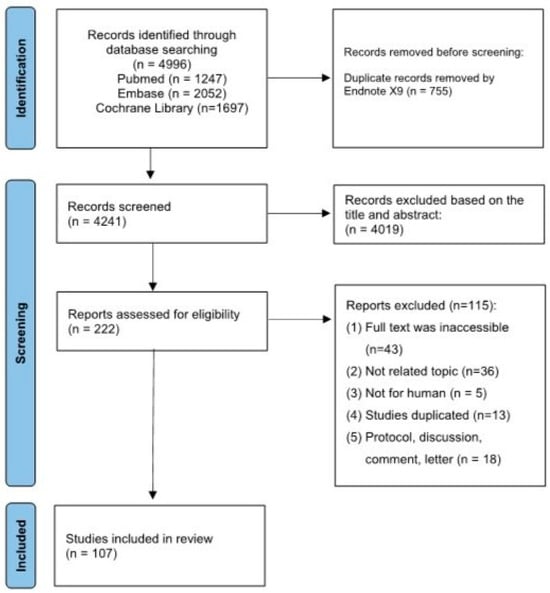
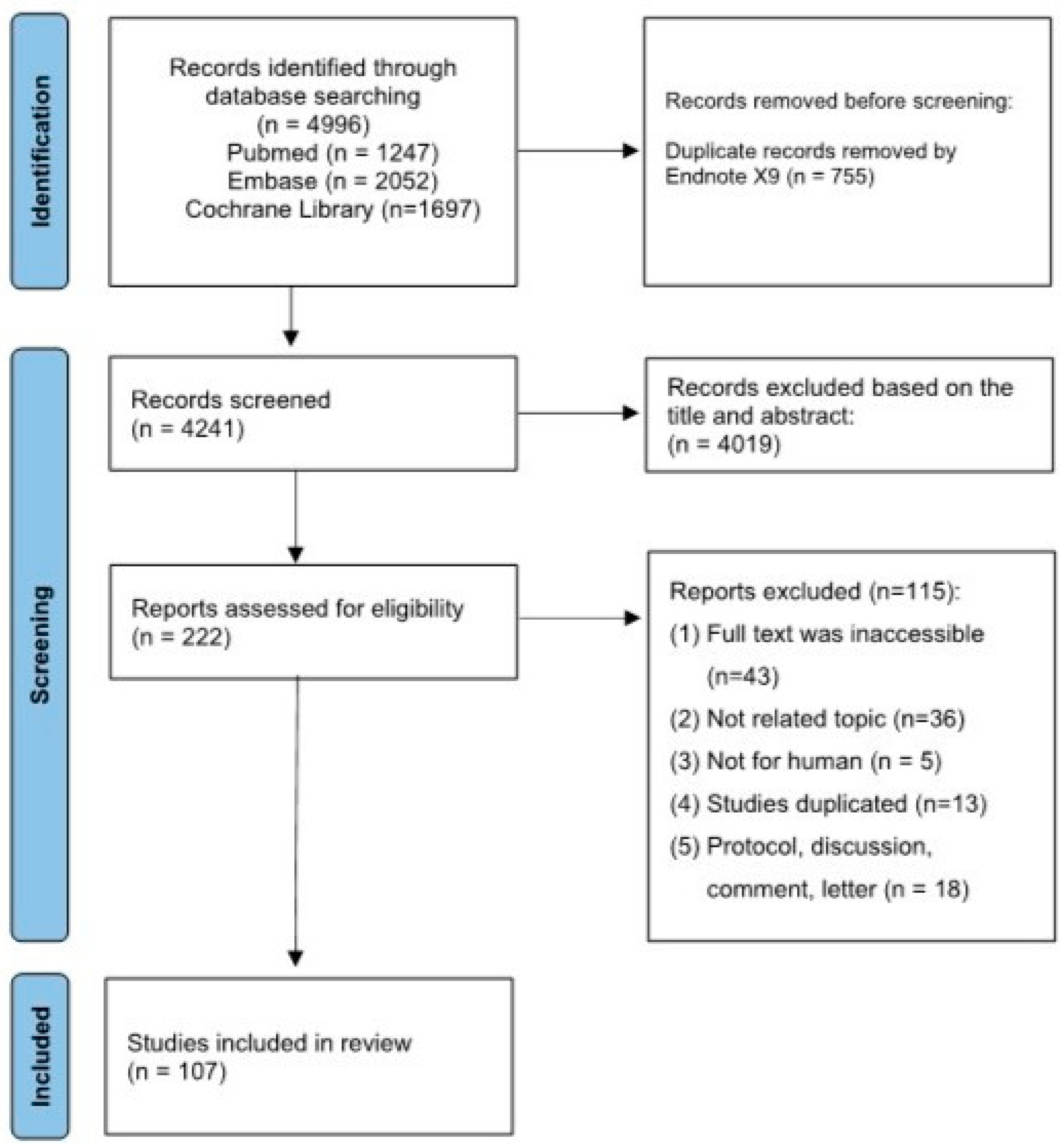
Of the 4996 articles retrieved from the database, 107 were selected for scoping review (Figure 1).
Figure 1.
Flowchart of the study selection process.
3.2. Research Trends
3.2.1. Year of Publication
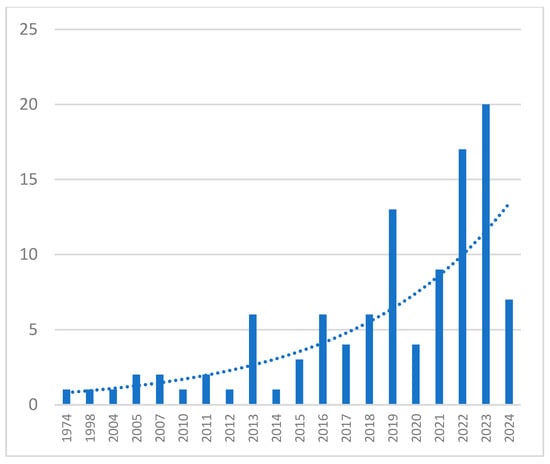
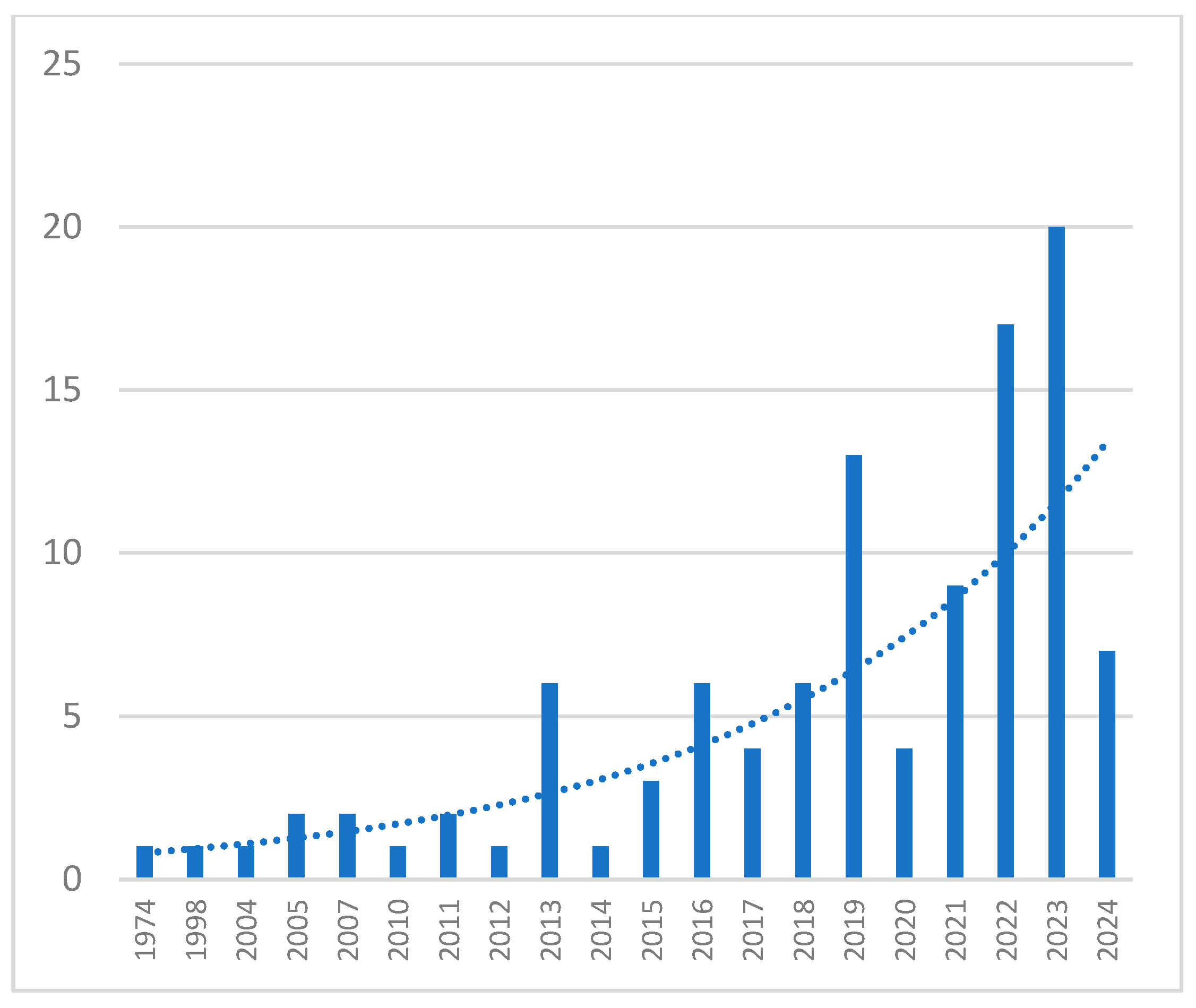
To identify trends in the volume and content of research over time, the years of publication of ultrasound-guided acupuncture-related studies were analyzed. Since 1974, 2023 was the most active year, with 20 studies (18.7%), followed by 2022, with 17 studies (15.9%) (Figure 2).
Figure 2.
The number of studies published in each year.
3.2.2. Study Design
The study design was based on the clinical research literature classification tool DAMI (version 2.0; Health Insurance Review and Assessment Institute, Seoul, Korea) [10], which involved reviewing the abstracts and full texts. Of the 107 studies, non-comparative studies accounted for the largest proportion (n = 47, 43.9%), followed by randomized controlled trials (RCTs), (n = 41, 38.9%). This was followed by four cross-sectional studies and reviews (3.7%), three meta-analyses and non-randomized controlled trials (nRCTs) (2.8%), two prospective cohort studies (1.9%), and one systematic review, pilot study, and reliability study each (0.9%) (Table 1).
Table 1.
Study design of selected studies.
3.2.3. Disease Analysis
The diseases studied were categorized according to the ICD-11 criteria. Four reviews of clinical studies [11,12,13,14], one systematic review [15], and three meta-analyses [16,17,18] were excluded because of possible duplications in the analysis of target diseases. Furthermore, 28 studies that were not disease specific, such as those on the safety of needle depth, anatomical approaches, and needle pain or sensation, were excluded. A total of 71 papers were analyzed, and when more than one disease classification was present within a study, each disease or symptom was counted separately. Of the 86 disease categories, category 15, “Diseases of the musculoskeletal system or connective tissue” was reported in 48 (55.8%) cases, followed by category 21, “Symptoms, signs, or clinical findings not classified elsewhere” being observed in 17 (19.8%) cases. Among diseases of the musculoskeletal system or connective tissue, FA01, “Osteoarthritis of knee”, was the most common, with 6 (7.0%) cases For 21, (“Symptoms, signs, or clinical findings not otherwise specified”) MG30.01, “Chronic widespread pain”, was the most common with 10 (11.6%) cases, followed by MG30.02, “Chronic primary musculoskeletal pain” with 3 (3.5%) cases (Appendix S3).
3.3. Analysis by Study Type
3.3.1. RCTs and Non-RCTs
A total of forty-one RCTs and three non-RCTs were retrieved, with the following results. For RCTs, the most common study design (13 studies) [19,20,21,22,23,24,25,26,27,28,29,30,31] involved the experimental group receiving ultrasound-guided acupuncture or dry-needling and the control group receiving treatments other than acupuncture or dry-needling (e.g., surgery [19], high-energy extracorporeal shock wave [20,32]), followed by studies (11 studies [27,33,34,35,36,37,38,39,40,41,42]) that compared the effects of ultrasound-guided acupuncture or dry-needling in the experimental group and the same treatment but without ultrasound guidance in the control group. Nine studies [32,41,43,44,45,46,47,48] used the same treatment in both the experimental and control groups, with the addition of ultrasound-guided acupuncture or dry-needling in the experimental group only, while nine studies [49,50,51,52,53,54,55,56,57] used ultrasound-guided acupuncture or dry-needling in both the experimental and control groups, but with subtle differences. One non-RCT compared an experimental group that received localized intense stimulation electroacupuncture using B-ultrasonography with two control groups that received medication and conventional acupuncture, respectively [58]. Other non-RCTs compared the result of ultrasound-guided needling in the experimental group and the same intervention but without ultrasound guidance in the control group [59,60].
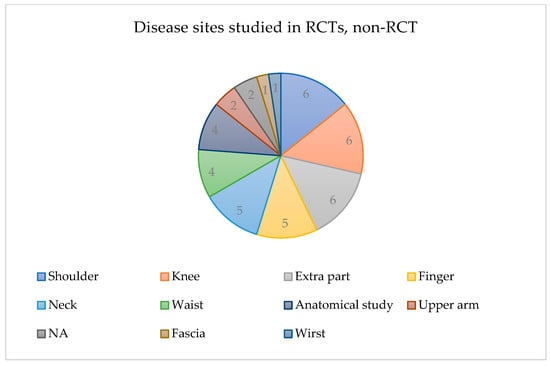
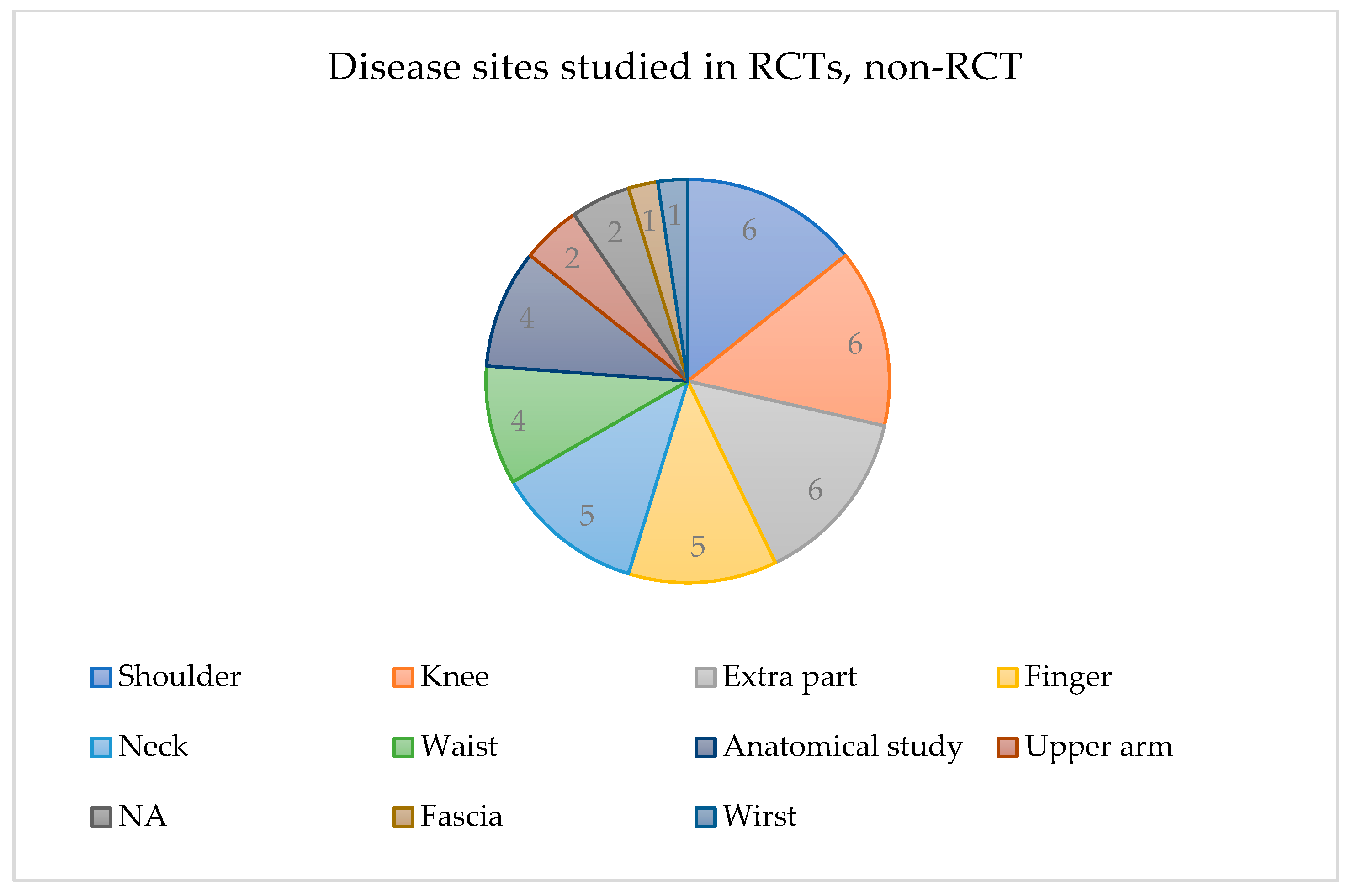
The specific interventions applied in the RCTs were mainly ultrasound-guided acupuncture and dry-needling. Involved in ultrasound-guided dry-needling studies were lidocaine [33,34], intrathecal injections [43], extracorporeal shock waves [44], juanbi-decoction [51], steroid injections [47], drug injections [61], and hydrodilatation [48], dry-needling combined with extracorporeal shock wave treatment [20,32], percutaneous electrotherapy [22], physical therapy [45,46], and the Mulligan technique [25]. Studies also exist regarding electroacupuncture [30] and embedding acupuncture [49,50]. Studies have also compared ultrasound-guided intervention with conventional treatments, such as one comparing ultrasound-guided acupotomy with unguided electroacupuncture (EA) [21]. The shoulder, knee were the most common morbidities studied in RCTs (six each), followed by the neck, finger. (five). The lower back, fasciae, upper arms, wrists, and other anatomical structures were also examined (Figure 3). The evaluation of treatment outcomes was mainly based on the Visual Analog Scale (VAS) and Numeric Rating Scale (NRS). Patients’ VAS and NRS scores decreased before and after ultrasound-guided acupuncture or dry-needling treatment, and functional aspects assessed using the Shoulder Pain and Disability Index (SPADI) [44], Knee Injury and Osteoarthritis Outcome Score (KOOS) [29,45,46], Neck Disability Index (NDI) [50,57], and American Orthopedic Foot and Ankle Society Ankle–Hindfoot scoring system (AOFAS) [34] also improved before and after treatment (Table 2).
Figure 3.
Disease sites studied in RCTs and non-RCT.
Table 2.
The Information of included RCT and nRCT.
3.3.2. Systematic Review and Meta-Analysis
One systematic review was retrieved which included a total of 12 RCTs and 481 participants [15]. The experimental group received percutaneous ultrasound-guided tendonectomy, and the control group received an alternative treatment (surgical tendonectomy, platelet-rich plasma injection, steroid injection). Percutaneous ultrasound-guided needle tenotomy was effective in maintaining improvement after treatment of chronic tendinopathy compared to other alternative treatments.
A total of 3 meta-analyses were retrieved, which included a total of 3205 participants [16,17,18]. In study of ultrasound-guided acupotomy for osteoarthritis, the experimental group that received ultrasound-guided acupotomy showed a reduction in VAS, improvement in knee function on the Lysholm knee score, and a relatively better clinical effectiveness rate compared to the control group. Ultrasound-guided acupotomy was also associated with a lower incidence of adverse events compared to conventional acupuncture (odds ratio = 0.27). In study of ultrasound-guided acupotomy for trigger finger, overall clinical effectiveness (OR = 4.83; 95% CI 2.49–9.37; I2 = 73.1%; p < 0.001) in the experimental group was significantly better than that of the control group (Appendix S4).
3.3.3. Non-Comparative Study
A total of 47 non-comparative studies were retrieved, including 14 case reports of ultrasound-guided acupuncture and dry-needling treatments in one patient and 9 case series with multiple patients. Further, 24 clinical trials existed that were not studies on patient treatment with ultrasound-guided acupuncture or dry-needling but on pain sensation or needle sensation, anatomical studies, and others.
Case Reports and Case Series
In total, 14 case reports and 9 case series were retrieved. The ultrasound-guided intervention methods studied were dry-needling in 17 cases [63,64,65,66,67,68,69,70,71,72,73,74,75,76,77,78,79], electroacupuncture in 4 cases [80,81,82,83], and acupotomy in 2 case [84,85]. Dry-needling in patients has been studied in isolation [63,64,65,67,68,69,70,71,72,73,74,76,77,78,79,83], in combination with therapeutic exercise [66], and as an intervention after neurointervention [75]. For electroacupuncture, there have been studies of ultrasound-guided electroacupuncture alone [81,82,83] and in combination with training [80], and for acupotomy, there have been studied in isolation [85], in combination with perineural injections [84]. The diseases studied were mainly pain-related [17,63,65,66,68,69,70,71,72,73,74,75,76,78,79,80,83,84]. The indicators studied in each article were Range of Movement (ROM) [64,66,68,69,81], VAS [63,65,70,71,79,83,84], Symptoms [66,67,72,74,80,82,85], NRS [68,73,75,81], or Symptom Score [69,75,77,78,80].All studies showed some level of effectiveness, with no adverse effects reported (Table 3).
Table 3.
Information regarding included case reports and case series.
Clinical Trial
A total of 24 clinical trials were reviewed. Studies have been conducted on various topics involving ultrasound-guided acupuncture and dry-needling. Differences in patient-perceived sensations depending on needle depth have also been evaluated [86,87]. Studies have also assessed the anatomical characteristics of the treatment area [88,89,90,91,92], changes that occur inside the body after acupuncture treatment [93,94], needle displacement in typical acupuncture cases [95], the usefulness of ultrasound application in acupuncture treatment [96,97], the methodological aspects of the treatment technique [98], the efficacy of ultrasound-guided dry-needling [99,100,101,102], the safety and efficacy of existing dry-needling treatment procedures [103,104,105,106], disease mechanisms [107], and new treatment techniques [108]. Studies using cadavers have also been found [98,102,105,106,109] (Appendix S5).
3.3.4. Prospective Cohort Study
Two cohort studies were included in the scoping review (Appendix S6). In a study of ultrasound-guided tendon needling combined with autologous blood injections in 47 cases of patellar tendinopathy in 44 patients [110], patients’ Victoria Institute of Sport Assessment scores (VISA) improved significantly when pre- and post-treatment outcomes were followed up for a mean of 14.8 months. In a study of ultrasound-guided dry-needling and percutaneous high-dose stripping for Achilles tendinopathy in 64 patients, significant improvements in pain scales and high patient satisfaction were observed [111].
4. Discussion
Acupuncture is a therapeutic technique with proven applicability and effectiveness in various diseases, and several studies have been conducted worldwide. Currently, acupuncture is practiced in various ways—including needle knife, pharmacopuncture, and embedding needles—depending on the patient’s symptoms and location. However, given its invasive nature, the reproducibility and safety of the treatment has been questioned since the basic process relies on the practitioner’s facilitation. Although most acupuncture treatments are highly effective and have minimal or no side effects, differences exist in the amount of stimulation to the patient depending on the depth of needling [112,113]. Setting and entering the correct needle point without displacing the needle is essential for quality treatment. As such, studies combining needling techniques with various imaging devices have been actively conducted in foreign countries. However, no study has systematically summarized these techniques or presented them specifically to researchers and clinical practitioners. Therefore, the present study conducted a scoping review to analyze the research trends in ultrasound-guided acupuncture treatment, main applied diseases, specific application methods, and research results, and to suggest future research directions and applications in medical institutions.
Three databases were searched for studies on ultrasound-guided acupuncture and dry-needling. For ultrasound-related terms, we used “ultrasound” and “ultrasound-guided.” For acupuncture and dry-needling-related terms, we used a combination of “acupuncture”, “acupotomy”, “dry-needling”, “needle knife”, “miniscalpel needle [8]”, and “pharmacopuncture” to identify the research status of acupuncture treatments in as many fields as possible. Of the 4996 articles retrieved from the database, 107 were selected for scoping review. Studies have been published every year since 1974, and as of May, 7 studies have already been published in 2024, indicating that research remains active. The study design was categorized based on the DAMI version 2.0, which was developed by the Health Insurance Portability and Accountability Institute in 2013. Of the 107 studies, 47 were categorized as non-comparative studies (43.9%), including 24 clinical trials, 14 single-case reports, and 9 case series. RCTs accounted for 41 studies (38.3%). The high proportion of non-comparative studies and RCTs may be because ultrasound-guided acupuncture and dry-needling are new treatment modalities that have not been widely used; therefore, further research on this technique is needed. Six articles that did not specify the sample size of the clinical study were excluded.
In terms of disease classification, 48 studies (55.8%) focused on diseases of the musculoskeletal system or connective tissues. In terms of site classification, most studies focused on joints such as the shoulders and knees. This may be due not only to the fact that acupuncture and dry-needling are gaining attention as nonpharmacologic treatments for pain management, especially in the musculoskeletal system, but also because their effectiveness has been demonstrated, leading to further research in this area. In addition, studies have been conducted on patients treated with ultrasound-guided acupuncture and dry-needling for a variety of conditions, including certain infectious or parasitic diseases, neoplasms, endocrine disorders, nutritional metabolic disorders, neurological disorders, respiratory disorders, genitourinary disorders, and the consequences of trauma or poisoning, with excellent results. These findings suggest that ultrasound-guided acupuncture and dry-needling are not merely limited to musculoskeletal disorders and pain, but can also be applied to a wide range of other conditions.
As for RCTs, 13 studies were conducted wherein the experimental group was treated with ultrasound-guided acupuncture and dry-needling and the control group was treated with modalities other than acupuncture and dry-needling. The next most common experimental and control group design was found in 11 studies, in which the experimental group was treated with ultrasound-guided acupuncture and dry-needling, and the control group was treated with the same acupuncture and dry-needling modalities but without ultrasound guidance. These research trends are primarily driven by studies aimed at confirming the inherent safety of ultrasound-guided acupuncture and dry-needling techniques, as well as exploring the efficacy of adding ultrasound guidance to existing techniques. The results of the RCTs showed that the ultrasound-guided acupuncture and dry-needling treatment groups were relatively more effective than the control group in terms of cure rate, pain reduction, and functional improvement in the between-group comparison. This enhanced efficacy highlights the advantage of ultrasound-guided treatment, which allows for more precise targeting of invisible areas within the body and concentrated treatment directly at the lesion site, compared to traditional acupuncture techniques.
Case reports and case series have reported no adverse effects of ultrasound-guided acupuncture, thus confirming the safety and efficacy of ultrasound-guided acupuncture and dry-needling. Additionally, these techniques have been shown to be effective in improving symptoms and the function of the affected area.
In addition, clinical trials have compared the differences in patient perception of needle depth using ultrasound-guided acupuncture and dry-needling [86,87] and have analyzed the anatomical characteristics of the treatment area [88,89,90,91,92], the changes that occur inside the body after acupuncture treatment [93,94], needle displacement in typical acupuncture cases [95], the usefulness of ultrasound in acupuncture [96,97], the methodological aspects of the treatment technique [98], the efficacy of ultrasound-guided acupuncture and dry-needling [99,100,101,102], the safety and efficacy of conventional acupuncture procedures [103,104,105,106], disease mechanisms [107], and new treatment techniques [108]. This indicates that ultrasound-guided acupuncture and dry-needling are not only valuable as treatment modalities but also, in addition to enhancing conventional methods, serve as a foundation for developing new clinical procedures based on existing practices that can be applied to patients.
In these studies, ultrasound-guided acupuncture, dry-needling, acupotomy, pharmacopuncture, and embedding needling were performed alone and in combination with various modalities, such as high-energy shock wave therapy [20,32], physical therapy [45,46], joint mobilization therapy [25], and Chinese herbal prescriptions [51], with good therapeutic effects. These findings demonstrate that existing procedures in medical institutions can be expanded in multiple directions, highlighting the potential for these techniques to offer diverse treatment options for clinicians and be applied effectively to patients.
5. Limitations
This scoping study was limited by the fact that the types of studies included were mainly non-comparative, and there was a lack of systematic reviews and meta-analyses. By May 2024, one systematic review [15] and three meta-analyses [16,17,18] had been published, while three protocols for studies had been published, which is not a large number in absolute terms. Larger, more formal studies are needed, but few have been conducted in Korean medical centers, where acupuncture is commonly used. In addition, international studies may differ in terminology [8] or technique, and the interventions in these studies may differ from commonly used acupuncture and dry-needle treatments. Therefore, more high-quality multicenter clinical trials with larger sample sizes are needed to examine the efficacy and safety of ultrasound-guided acupuncture more closely. Second, this study did not include studies wherein ultrasound was only used to diagnose disease; therefore, the results may represent only a small portion of the quality of treatment with ultrasound devices used in real-world clinical practice, which may not represent the full range of applications of ultrasound devices in TCM clinics. Third, the researchers in the included studies did not have the same level of experience, and the ultrasound devices used in the studies were not uniform; therefore, the over or understatement of the results of the pre- and post-treatment processes cannot be excluded.
Nevertheless, this study is significant, since it is the first scoping review to extensively examine the entire spectrum of ultrasound-guided acupuncture treatments. It also provides a baseline for future researchers and clinical practitioners who wish to implement ultrasound-guided acupuncture in healthcare settings, by presenting the clinical conditions and symptoms for which ultrasound-guided acupuncture can be applied, specific methods of application, their effects, and various numerical outcome indicators that can be used to evaluate them. In particular, this study suggests practical applications of various techniques such as acupotomy, pharmacopuncture, and embedding needle.
6. Suggestions for Further Research
As such, this study provides two suggestions for future research on the clinical application of ultrasound-guided acupuncture. The first is to conduct research on various topics that can be applied to ultrasound in acupuncture and dry-needle therapy. This study was a scoping review only of articles that used ultrasound guidance for acupuncture and dry-needling, but a search of the database revealed various studies that used ultrasound guidance for acupuncture and dry-needling, including the diagnosis of diseases, evaluation, and comparison of treatment processes. Further research on this topic will expand the possibilities of combining ultrasound with acupuncture and dry-needling in healthcare organizations. Second, ultrasound-guided acupuncture treatments should be standardized. Currently, in the specific method of acupuncture treatment, the terminology is confusing, and the application of acupuncture varies depending on the discretion of the practitioner. Therefore, it would be beneficial for clinical researchers and practitioners to conduct standardized studies on the various aspects of ultrasound-guided acupuncture, such as the use of ultrasound devices.
7. Conclusions
Using a scoping review, this study analyzed 107 studies of ultrasound-guided acupuncture published through May 2024 and arrived at the following conclusions.
- Research on ultrasound-guided acupuncture and dry-needling has been the subject of increasing interest. Various types of studies were conducted, and non-comparative studies were the most common with a total count of 47 (43.9%) comprised of 24 clinical trials, 14 case reports, and 9 case series; RCTs were the most common, with 41 (38.3%) as a single study design.
- After categorizing diseases based on ICD-11, ultrasound-guided acupuncture and dry-needling is a reliable and effective treatment technique that can be applied to a variety of diseases. Among the total disease classifications of the papers included in the study, 48 (55.8%) were for diseases of the musculoskeletal system or connective tissue, and the most common sites were the shoulders and knees.
- The application of ultrasound-guided acupuncture and dry-needling techniques varied depending on the research objectives and the conditions being treated, either as a standalone procedure or as a combined treatment.
- Additional studies that confirm the effectiveness, statistical significance, and safety of ultrasound-guided acupuncture and dry-needling would provide a concrete evidence base for the use of ultrasound-guided acupuncture and dry-needling as stand-alone or combined treatment modalities in healthcare organizations.
Supplementary Materials
The following supporting information can be downloaded at: https://www.mdpi.com/article/10.3390/jcm13164962/s1, Appendix S1: Search Expressions (DOCX); Appendix S2: PRISMA ScR Checklist (DOCX); Appendix S3: Disease Categories Based on ICD-11 Classifications; Appendix S4: The information of included Systematic Review and Meta-analysis; Appendix S5: The information of included Clinical Trial; Appendix S6: The Information of included cohort study; Appendix S7: The Information of included RCT and nRCT.
Author Contributions
Conceptualization: H.S.; Methodology: W.H.; Validation: W.H.; Formal analysis: H.S., W.H.; Investigation: H.S., W.H.; Resources: H.S.; Data curation: H.S., W.H.; Writing—original draft: H.S.; Writing—review and editing: H.W., Y.H., S.C., J.J., S.J.; Supervision: W.H.; Project administration: J.L.; Funding acquisition: J.L. All authors have read and agreed to the published version of the manuscript.
Funding
This research was funded by the EsamBio Inc. and Ilwon Inc.
Conflicts of Interest
The authors declare no conflict of interest.
References
- Travell, J.G.; Simons, D.G.; Donnelly, J.M.; Fernández-de-Las-Peñas, C.; Finnegan, M.; Freeman, J.L. Myofascial Pain and Dysfunction: The Trigger Point Manual, 3rd ed.; LWW: Philadelphia, PA, USA, 2018; pp. 99–100. [Google Scholar]
- Kim, S.Y. Review on Intraperitoneal Acupuncture and Needling Depth. Korean J. Acupunct. 2023, 40, 55–61. [Google Scholar] [CrossRef] [Scilit]
- Bianchi, S.; Martinoli, C. Ultrasound of the Musculoskeletal System; Springer: Berlin/Heidelberg, Germany, 2007; pp. 3–16. [Google Scholar]
- You, J.K.; Kim, E.K.; Kim, M.H.; Kwak, J.Y.; Oh, K.K.; Park, B.W.; Lee, K.S. The Usefullness of Ultrasound-Guided core Needle Biopsy for Non-Palpable Breast Lesion. J. Korean Radiol. Soc. 2002, 46, 601–606. [Google Scholar] [CrossRef] [Scilit]
- Heo, S.B.; Won, J.H.; Kim, J.O.; Kim, J.Y.; Joe, H.B. Efficacy and Safety of Ultrasound-Guided Supraclavicular Brachial Plexus Block during Angioplasty of Dysfunctional Arteriovenous Access: A Prospective, Randomized Single-Center Clinical Trial. J. Vasc. Interv. Radiol. 2020, 31, 236–240. [Google Scholar] [CrossRef] [Scilit]
- Arksey, H.; O’Malley, L. Scoping studies: Towards a methodological framework. Int. J. Soc. Res. Methodol. 2005, 8, 19–32. [Google Scholar] [CrossRef] [Scilit]
- Tricco, A.C.; Lillie, E.; Zarin, W.; O’Brien, K.K.; Colquhoun, H.; Levac, D.; Moher, D.; Peters, M.D.; Horsley, T.; Weeks, L.; et al. PRISMA Extension for scoping reviews (PRISMA-ScR): Checklist and explanation. Ann. Intern. Med. 2018, 169, 467–473. [Google Scholar] [CrossRef] [Scilit] [PubMed]
- Yoon, S.H.; Kim, Y.S.; Jo, H.G.; Kwon, C.Y. Current Usage of Terminologies Related to Acupotomy: A Literature Research and Standardization Suggestion. Chin. J. Integr. Med. 2019, 25, 147–150. [Google Scholar] [CrossRef] [Scilit] [PubMed]
- Peters, M.D.J.; Marnie, C.; Tricco, A.C.; Pollock, D.; Munn, Z.; Alexander, L.; McInerney, P.; Godfrey, C.M.; Khalil, H. Updated methodological guidance for the conduct of scoping reviews. JBI Evid. Synth. 2020, 18, 2119–2126. [Google Scholar] [CrossRef] [Scilit]
- Seo, H.J.; Kim, S.Y.; Lee, Y.J.; Jang, B.H.; Park, J.E.; Sheen, S.S.; Hahn, S.K. A newly developed tool for classifying study designs in systematic reviews of interventions and exposures showed substantial reliability and validity. J. Clin. Epidemiol. 2016, 70, 200–205. [Google Scholar] [CrossRef] [Scilit]
- Liu, X.; Li, S.S.; Mi, Y.Q. Application and research progress of ultrasound in acupuncture treatment. Zhongguo Zhen Jiu 2023, 43, 119–122. (In Chinese) [Google Scholar]
- Rossman, M.L.; Wexler, J.; Oyle, I. The use of sonopuncture in some common clinical syndromes. Am. J. Chin. Med. 1974, 2, 199–201. [Google Scholar] [CrossRef] [Scilit]
- Chiavaras, M.M.; Jacobson, J.A. Ultrasound-guided tendon fenestration. Semin. Musculoskelet. Radiol. 2013, 17, 85–90. [Google Scholar] [PubMed]
- Qiu, M.; Wu, Q.; Tao, J.; Song, Z.; Yuan, X.; Li, J. Application and thinking of musculoskeletal ultrasound in diagnosis and treatment of musculoskeletal diseases with acupuncture and moxibustion. Zhongguo Zhen Jiu 2023, 44, 39–42. (In Chinese) [Google Scholar]
- Shomal Zadeh, F.; Shafiei, M.; Hosseini, N.; Alipour, E.; Cheung, H.; Chalian, M. The effectiveness of percutaneous ultrasound-guided needle tenotomy compared to alternative treatments for chronic tendinopathy: A systematic review. Skelet. Radiol. 2023, 52, 875–888. [Google Scholar] [CrossRef] [Scilit] [PubMed]
- Lin, S.; Lai, C.; Wang, J.; Lin, Y.; Tu, Y.; Yang, Y.; Zhang, R. Efficacy of ultrasound-guided acupotomy for knee osteoarthritis: A systematic review and meta-analysis of randomized controlled trials. Medicine 2023, 102, e32663. [Google Scholar] [CrossRef] [Scilit]
- Shomal Zadeh, F.; Shafiei, M.; Shomalzadeh, M.; Pierce, J.; Thurlow, P.C.; Chalian, M. Percutaneous ultrasound-guided needle tenotomy for treatment of chronic tendinopathy and fasciopathy: A meta-analysis. Eur. Radiol. 2023, 33, 7303–7320. [Google Scholar] [CrossRef] [Scilit] [PubMed]
- Liang, Y.S.; Chen, L.Y.; Cui, Y.Y.; Du, C.X.; Xu, Y.X.; Yin, L.H. Ultrasound-guided acupotomy for trigger finger: A systematic review and meta-analysis. J. Orthop. Surg. Res. 2023, 18, 678. [Google Scholar] [CrossRef] [Scilit]
- Lan, X.; Xiao, L.; Chen, B.; Xiong, Y.; Zou, L.; Luo, J. A Comparison of the Outcomes of Open Trigger Release versus Ultrasound-Guided Modified Small Needle-Knife Percutaneous Release for Treatment of Trigger Digits. J. Hand Surg. Asian Pac. Vol. 2023, 28, 69–74. [Google Scholar] [CrossRef] [Scilit]
- Bubnov, R.; Kalika, L. Comparative Study of Dry Needling under Ultrasound Guidance and Extracorporeal Shock Wave Therapy for Myofascial Pain and Spasticity Management. Mov. Disord. 2019, 34, S557. [Google Scholar]
- Ding, Y.; Wang, Y.; Shi, X.; Luo, Y.; Gao, Y.; Pan, J. Effect of ultrasound-guided acupotomy vs electro-acupuncture on knee osteoarthritis: A randomized controlled study. J. Tradit. Chin. Med. 2016, 36, 450–455. [Google Scholar]
- Benito-de-Pedro, A.I.; Becerro-de-Bengoa-Vallejo, R.; Losa-Iglesias, M.E.; Rodríguez-Sanz, D.; Calvo-Lobo, C.; Benito-de-Pedro, M. Efficacy of Deep Dry Needling versus Percutaneous Electrolysis in Ultrasound-Guided Treatment of Active Myofascial Trigger Points of the Levator Scapulae in Short-Term: A Randomized Controlled Trial. Life 2023, 13, 939. [Google Scholar] [CrossRef] [Scilit]
- Qin, X.; Zhang, B.; Feng, Y.; Gao, X.; Liu, Z.; Yang, Y.; Liu, Q. Outcomes of Visualized Puncture Needle and Small Needle-Knife Therapy in Primary Frozen Shoulder Based on Multimodal Ultrasound Imaging. J. Healthc. Eng. 2022, 2022, 1076112. [Google Scholar] [CrossRef] [Scilit]
- Bureau, N.J.; Tétreault, P.; Grondin, P.; Freire, V.; Desmeules, F.; Cloutier, G.; Julien, A.S.; Choinière, M. Treatment of chronic lateral epicondylosis: A randomized trial comparing the efficacy of ultrasound-guided tendon dry needling and open-release surgery. Eur. Radiol. 2022, 32, 7612–7622. [Google Scholar] [CrossRef] [Scilit] [PubMed]
- Samiei, S.M.; Aminian, F.A.; Paknazar, F. Ultra-sonographic study of the effect of dry needling of extensor muscles combined with Mulligan mobilization technique on extensor muscle tendon thickness, pain and upper limb function in patients with lateral epicondylitis: A double-blinded randomized clinical trial. Koomesh 2021, 23, 730–740. [Google Scholar]
- De Boer, F.A.; Mocking, F.; Nelissen, E.M.; Van Kampen, P.M.; Huijsmans, P.E. Ultrasound guided Needling vs Radial Shockwave Therapy in calcific tendinitis of the shoulder: A prospective randomized trial. J. Orthop. 2017, 14, 466–469. [Google Scholar] [CrossRef] [Scilit]
- Xie, N. Ultrasound-guided dry needling for myofascial trigger points in treatment of plantar fasciitis. Chin. J. Med. Imaging Technol. 2019, 12, 1128–1132. [Google Scholar]
- Huang, Y.; Gao, M.; Li, Q.; Zhang, X.; Chen, H.; Li, X.; Hu, P.; Zeng, Q. Ultrasound-Guided Dry Needling for Trigger Point Inactivation in the Treatment of Postherpetic Neuralgia Mixed with Myofascial Pain Syndrome: A Prospective and Controlled Clinical Study. Pain Res. Manag. 2022, 2022, 2984942. [Google Scholar] [CrossRef] [Scilit]
- Pang, J.C.Y.; Fu, A.S.N.; Lam, S.K.H.; Peng, B.; Fu, A.C.L. Ultrasound-guided dry needling versus traditional dry needling for patients with knee osteoarthritis: A double-blind randomized controlled trial. PLoS ONE 2022, 17, e0274990. [Google Scholar] [CrossRef] [Scilit]
- Jin, H.P.; Wang, Y.; Ye, Q.J.; Xie, L.; Li, X.L. Ultrasound-guided electroacupuncture at suprahyoid muscle group for pharyngeal dysphagia after stroke: A randomized controlled trial. Zhongguo Zhen Jiu 2022, 42, 251–256. (In Chinese) [Google Scholar]
- Guner, D.; Ozcete, Z.A. Evaluation of the Efficacy of Ultrasound-Guided Dry Needling Therapy and Exercise in Piriformis Muscle Syndrome. Cureus 2023, 15, e43804. [Google Scholar] [CrossRef] [Scilit]
- Krasny, C.; Enenkel, M.; Aigner, N.; Wlk, M.; Landsiedl, F. Ultrasound-guided needling combined with shock-wave therapy for the treatment of calcifying tendonitis of the shoulder. J. Bone Jt. Surg. Br. 2005, 87, 501–507. [Google Scholar] [CrossRef] [Scilit]
- Ding, Y.; Wang, Y.X.; Shi, X. Controlled study of ultrasound-guided acupotomy on spinal and articular diseases. Zhongguo Zhen Jiu 2013, 33, 1028–1032. (In Chinese) [Google Scholar]
- Duan, H.; Chen, S.Y. Observations on efficacy of small needle scalpel under ultraosonography guidance in plantar fasciitis. Zhongguo Gu Shang 2016, 29, 1092–1096. (In Chinese) [Google Scholar] [PubMed]
- Bubnov, R.V.; Wang, J. Clinical comparative study for ultrasound-guided trigger-point needling for myofascial pain. Med. Acupunct. 2013, 25, 437–443. [Google Scholar] [CrossRef] [Scilit]
- Liu, J.Y.; Hu, X.X.; Guo, L.Z. Effect of ultrasound-guided acupoint electrical stimulation on diaphragmatic dysfunction associated with mechanical ventilation. Zhongguo Zhen Jiu 2019, 39, 913–917. (In Chinese) [Google Scholar] [PubMed]
- Shen, Y.; Zhou, Q.; Sun, X.; Li, S.; Zhang, W. Percutaneous Release of the First Extensor Tendon Compartment in De Quervain’s Disease by Acupotomy with US-Guidance: A Cadaveric Study. J. Pain Res. 2022, 15, 3995–4005. [Google Scholar] [CrossRef] [Scilit]
- Bubnov, R. Trigger point dry needling under ultrasound guidance: A new approach for myofascial pain management. J. Neurol. 2011, 258, 270. [Google Scholar]
- Pan, M.; Sheng, S.; Fan, Z.; Lu, H.; Yang, H.; Yan, F.; E, Z. Ultrasound-Guided Percutaneous Release of A1 Pulley by Using a Needle Knife: A Prospective Study of 41 Cases. Front. Pharmacol. 2019, 10, 267. [Google Scholar] [CrossRef] [Scilit]
- Zhou, Q.; Shen, Y.; Zhu, X.; Sun, X.; Qiu, Z.; Li, S.; Zhang, W. Ultrasound-guided percutaneous release procedures in the transverse carpal ligament by acupotomy: A cadaveric study. Front. Surg. 2023, 9, 906109. [Google Scholar] [CrossRef] [Scilit] [PubMed]
- Qiu, Z.; Li, H.; Shen, Y.; Jia, Y.; Sun, X.; Zhou, Q.; Li, S.; Zhang, W. Safety and efficacy of ultrasound-guided percutaneous A1 pulley release using a needle knife: An anatomical study. Front. Surg. 2022, 9, 967400. [Google Scholar] [CrossRef] [Scilit]
- Zhu, X.; Tao, Y.; Huang, P.; Li, D. A randomized controlled trial of acupuncture at Jiaji points for treatment of lumbar disc herniation under ultrasonic guidance. Chin. J. Tissue Eng. Res. 2024, 28, 5852. [Google Scholar]
- Zhang, W.B.; Yao, D.W.; Wu, W.X. Ultrasound-guided needle-knife for trigger finger. Zhongguo Zhen Jiu 2019, 39, 867–870. (In Chinese) [Google Scholar]
- Cao, X.Y.; Zhao, H.Y. A pilot study of ultrasound-guided acupotomy for the treatment of frozen shoulder. Medicine 2019, 98, e17632. [Google Scholar] [CrossRef] [Scilit] [PubMed]
- Sharif, F.; Ahmad, A.; Gilani, S.A. Effectiveness of ultrasound guided dry needling in management of jumper’s knee: A randomized controlled trial. Sci. Rep. 2023, 13, 4736. [Google Scholar] [CrossRef] [Scilit]
- Sharif, F.; Ahmad, A.; Gilani, S.A.; Bacha, R.; Hanif, A.; Arif, M.A. Efficacy of ultrasound guided dry needling as an adjunct to conventional physical therapy for patients with jumper’s knee: A randomized controlled trial. Front. Surg. 2022, 9, 1023902. [Google Scholar] [CrossRef] [Scilit]
- Zhang, S.; Wang, F.; Ke, S.; Lin, C.; Liu, C.; Xin, W.; Wu, S.; Ma, C. The Effectiveness of Ultrasound-Guided Steroid Injection Combined with Miniscalpel-Needle Release in the Treatment of Carpal Tunnel Syndrome vs. Steroid Injection Alone: A Randomized Controlled Study. Biomed Res. Int. 2019, 2019, 9498656. [Google Scholar] [CrossRef] [Scilit]
- Xu, H.; Zhang, Y.; Wang, C. Ultrasound-guided hydrodilatation of glenohumeral joint combined with acupotomy for treatment of frozen shoulder. J. Back Musculoskelet. Rehabil. 2022, 35, 1153–1160. [Google Scholar] [CrossRef] [Scilit]
- Chen, T.; Wan, Y.J.; Sun, D.H.; Tao, T.; Xu, L.H.; Fang, Z.Q.; Jiang, X.M.; Jiang, X.C.; Jiang, W.X. Preliminary research of deqi and the tissue depth of acupoint thread embedding therapy on weight reduction under ultrasonic guidance. Zhongguo Zhen Jiu 2021, 41, 628–632. (In Chinese) [Google Scholar] [PubMed]
- Sun, W.; Chu, N.; Ma, Y.; Wang, Y.; Wang, H.; Jiang, G. Effective anatomic structures of ultrasound-guide acupoint embedding therapy for cervical spondylosis. Zhongguo Zhen Jiu 2015, 35, 1001–1004. (In Chinese) [Google Scholar]
- Wang, Y.H.; Zhou, Y.; Xie, Y.Z.; Fan, X.H.; Liang, W.Q.; Wei, X.; Zhao, M.D.; Huo, Y.X.; Zhang, T.; Yin, Y. The effect of ultrasound-guided acupotomy and Juanbi decoction on lumbar disc herniation: A randomized controlled trial. Medicine 2023, 102, e32622. [Google Scholar] [CrossRef] [Scilit] [PubMed]
- Bubnov, R.V. FRI0541 Trigger Points Dry Needling Under Ultrasound Guidance for Low Back Pain Therapy. Comparative Study. Ann. Rheum. Dis. 2015, 74, 624. [Google Scholar] [CrossRef] [Scilit]
- Zheng, Y.; Shi, D.; Wu, X.; Gu, M.; Ai, Z.; Tang, K.; Ye, L.; Wang, X. Ultrasound-Guided Miniscalpel-Needle Release versus Dry Needling for Chronic Neck Pain: A Randomized Controlled Trial. Evid. Based Complement. Altern. Med. 2014, 2014, 235817. [Google Scholar] [CrossRef] [Scilit] [PubMed]
- Lin, S.; Wang, D.; Yan, J.; Wang, H. Clinical Efficacy of Ultrasound-Guided Acupuncture in the Treatment of Chronic Subjective Dizziness. Altern. Ther. Health Med. 2024, 10145. [Google Scholar]
- Wang, C.; Xu, Q.; Shen, Q.; Cai, W.; Niu, F.; Shao, Q. Clinical effect of needle knife therapy of knee osteoarthritis under musculoskeletal ultrasound and analysis of effect on patients’ joint soft tissue. Arch. Clin. Psychiatry 2023, 50, 58–63. [Google Scholar]
- Dai, J.; Zhang, X.; Lian, F.; Li, H.; Tu, J.; Chen, Y.; Jin, Z. Clinical study on improving the function of female bladder in controlling urine by acupuncture Zhibian (BL54) under ultrasound guidance. World J. Urol. 2024, 42, 300. [Google Scholar] [CrossRef] [Scilit]
- Pu, J.; Cao, W.; Chen, Y.; Fan, Y.; Cao, Y. Ultrasound-guided injection acupotomy as a minimally invasive intervention therapy for cervical spondylotic radiculopathy: A randomized control trial. Ann. Med. 2023, 55, 2233556. [Google Scholar] [CrossRef] [Scilit]
- Lin, Q.; Li, X.; Han, J.; Leng, J. Electro-acupuncture treatment for the upper segment ureterolithiasis under B-ultrasonography. J. Tradit. Chin. Med. 2005, 25, 13–15. [Google Scholar]
- Arias-Buría, J.L.; Borrella-Andrés, S.; Rodríguez-Sanz, J.; López-de-Celis, C.; Malo-Urriés, M.; Fernández-de-Las-Peñas, C.; Gallego-Sendarrubias, G.M.; González-Rueda, V.; Pérez-Bellmunt, A.; Albarova-Corral, I. Precision and Safety of Ultrasound-Guided versus Palpation-Guided Needle Placement on the Patellar Tendon: A Cadaveric Study. Life 2023, 13, 2060. [Google Scholar] [CrossRef] [Scilit] [PubMed]
- Malo-Urriés, M.; Borrella-Andrés, S.; López-de-Celis, C.; Fernández-de-Las-Peñas, C.; Pérez-Bellmunt, A.; Arias-Buría, J.L.; Albarova-Corral, I.; Rodríguez-Sanz, J. The Precision and Safety of Ultrasound-Guided versus Palpation-Guided Needle Placement on the Plantar Fascia and Flexor Digitorum Brevis Interface: An Anatomical Study. Healthcare 2024, 12, 1000. [Google Scholar] [CrossRef] [Scilit]
- Zhu, T.; Jiang, W.; Wang, K.; Yin, S. Ultrasound-guided drug injection and acupotomy in treatment of De Quervain disease. Chin. J. Interv. Imaging Ther. 2018, 15, 465–468. [Google Scholar]
- Tabatabaiee, A.; Takamjani, I.E.; Sarrafzadeh, J.; Salehi, R.; Ahmadi, M. Ultrasound-guided dry needling decreases pain in patients with piriformis syndrome. Muscle Nerve 2019, 60, 558–565. [Google Scholar] [CrossRef] [Scilit]
- Bağcıer, F.; Tufanoğlu, F.H. A new treatment modality in piriformis syndrome: Ultrasound guided dry needling treatment. Agri 2020, 32, 175–176. [Google Scholar] [CrossRef] [Scilit] [PubMed]
- Zenita, Y.; Kobayashi, T. A single ultrasound-guided acupuncture session for abnormal fascia improved chronic mandibular numbness for 6 years after orthodontic surgery: A case report. J. Bodyw. Mov. Ther. 2018, 22, 866–867. [Google Scholar] [CrossRef] [Scilit]
- Fusco, P.; Celniku, M.; Ciaschi, W.; Angelucci, F.; Marinangeli, F. 74 Can the ultrasound-guided dry-needling associated with elastosonographic evaluation improve the treatment of the myofascial trigger points? Reg. Anesth. Pain Med. 2021, 70 (Suppl. 1), A39–A40. [Google Scholar]
- Settergren, R. Treatment of supraspinatus tendinopathy with ultrasound guided dry needling. J. Chiropr. Med. 2013, 12, 26–29. [Google Scholar] [CrossRef] [Scilit] [PubMed]
- Jia, Y.; Qiu, Z.; Sun, X.; Shen, Y.; Zhou, Q.; Zhu, X.; Li, S. Ultrasound-guided acupuncture of the sphenopalatine ganglion for the treatment of vasomotor rhinitis: A case report. Acupunct. Med. 2020, 38, 361–363. [Google Scholar] [CrossRef] [Scilit]
- Kurosawa, A.; Kobayashi, T.; Namiki, H. Ultrasound-Guided Dry Needling for Abnormal Fascia Between the Deltoid Muscle and the Supraspinatus Tendon. Pain Med. 2019, 21, 863–864. [Google Scholar] [CrossRef] [Scilit]
- Pai, R.S.; Vas, L. Ultrasound-Guided Intra-articular Injection of the Radio-ulnar and Radio-humeral Joints and Ultrasound-Guided Dry Needling of the Affected Limb Muscles to Relieve Fixed Pronation Deformity and Myofascial Issues around the Shoulder, in a Case of Complex Regional Pain Syndrome Type 1. Pain Pract. 2018, 18, 273–282. [Google Scholar]
- Temel, M.H.; Bağcıer, F. Ultrasound-guided dry needling for chronic low back pain: A case report targeting the quadratus lumborum muscle. Turk. J. Phys. Med. Rehabil. 2024, 70, 154–156. [Google Scholar]
- Hemani, J.; Vas, L. Wasnik AB378 Ultrasound guided dry needling as a specific treatment to relieve the chronic pain and disability from the myofascial component of postlaminectomy pain syndrome with spondylodiscitis. Reg. Anesth. Pain Med. 2022, 47, A264–A265. [Google Scholar]
- Malik, D.; Sahu, A.; Ali, H.; Barlow, R.; Thakker, C.; Bhatti, Y. Percutaneous ultrasound-guided dry needling (+/− injection) for varying musculoskeletal problems. Clin. Radiol. 2016, 71, S27. [Google Scholar] [CrossRef] [Scilit]
- Vas, L.; Phanse, S.; Pawar, K.S.; Pai, R.; Pattnaik, M. Ultrasound-guided dry needling of masticatory muscles in trigeminal neuralgia—A case series of 35 patients. J. Postgrad. Med. 2023, 69, 11–20. [Google Scholar] [CrossRef] [Scilit] [PubMed]
- Fusco, P.; Di Carlo, S.; Scimia, P.; Degan, G.; Petrucci, E.; Marinangeli, F. Ultrasound-guided Dry Needling Treatment of Myofascial Trigger Points for Piriformis Syndrome Management: A Case Series. J. Chiropr. Med. 2018, 17, 198–200. [Google Scholar] [CrossRef] [Scilit] [PubMed]
- Vas, L.; Pai, R. Ultrasound-Guided Dry Needling As a Treatment For Postmastectomy Pain Syndrome—A Case Series of Twenty Patients. Indian J. Palliat. Care 2019, 25, 93–102. [Google Scholar] [PubMed]
- Bubnov, R.V. The use of trigger point “dry” needling under ultrasound guidance for the treatment of myofascial pain (technological innovation and literature review). Likars’ka Sprava 2010, 5–6, 56–64. [Google Scholar]
- Kamble, S.N.; Gohil, D.; Pisudde, P.M.; Telang-Chaudhari, S.; Baxi, G.D.; Palekar, T.J. Immediate Effect of Ultrasound-Guided Dry Needling on Soleus Muscle Spasticity in Stroke Survivors. Cureus 2024, 16, e62251. [Google Scholar] [CrossRef] [Scilit]
- Bubnov, R. Ultrasound-guided dry needling effects on the architecture of multifidus muscles in the lumbar region: A prospective study. J. Neurol. Sci. 2023, 455, 122192. [Google Scholar] [CrossRef] [Scilit]
- Bubnov, R.; Kalika, L.; Pilecki, G.; Pilecki, Z. Ultrasound-guided dry needling for combat nerve injuries and neuropathic pain: A case series. J. Neurol. Sci. 2023, 455, 122698. [Google Scholar] [CrossRef] [Scilit]
- Song, X.Z.; Chu, X.L.; Liu, T.; Cao, Y.T.; Li, R.X.; Gao, M.W.; Li, Q.W.; Gu, X.S.; Ming, D. Case report: Ultrasound-guided multi-site electroacupuncture stimulation for a patient with spinal cord injury. Front. Neurol. 2022, 13, 903207. [Google Scholar] [CrossRef] [Scilit]
- Afonso, J.; Carvalho, T.; Cruz, L.; Cardoso, H. Ultrasound-Guided Electroacupuncture for Thoracic Myofascial Pain Syndrome: A Case Report. Cureus 2023, 15, e36973. [Google Scholar] [CrossRef] [Scilit]
- Stewman, C.G. Ultrasound-Guided Electroacupuncture Treatment for Rotator Cuff Tendinopathy: Proposing an Effective Alternative to Nonoperative Medical Treatments. Med. Acupunct. 2023, 35, 257–261. [Google Scholar] [CrossRef] [Scilit]
- Parthasarathy, S. Ultrasound Guided Acupuncture: A Case Series. J. Clin. Diagn. Res. 2022, 16, KR01–KR03. [Google Scholar] [CrossRef] [Scilit]
- Rao, Y.; Hou, F.; Huang, H.; Xiao, X. The combined treatment of entrapped Infrapatellar Branch of the Saphenous Nerve after ACL reconstruction: Ultrasound-guided perineural injection and acupotomy. J. Back Musculoskelet. Rehabil. 2022, 35, 479–483. [Google Scholar] [CrossRef] [Scilit] [PubMed]
- Ou, Y.Y.; Li, Y.N.; Sun, X.J.; Li, S.L. Ultrasound-guided acupotomy release for treating common peroneal nerve entrapment syndrome: A case description. Quant. Imaging Med. Surg. 2024, 14, 2704–2707. [Google Scholar] [CrossRef] [Scilit]
- Sun, W.; Chu, N.; Feng, Y.; Wang, Y.; Ma, Y.; Jiang, G. Preliminary study on depth of embedded catgut and qi arrival at cervical Jiaji (EX-B 2) under ultrasound guidance. Zhongguo Zhen Jiu 2015, 35, 931–934. (In Chinese) [Google Scholar]
- Park, J.J.; Akazawa, M.; Ahn, J.; Beckman-Harned, S.; Lin, F.C.; Lee, K.; Fine, J.; Davis, R.T.; Langevin, H. Acupuncture sensation during ultrasound guided acupuncture needling. Acupunct. Med. 2011, 29, 257–265. [Google Scholar] [CrossRef] [Scilit]
- Liu, J.; Xiu, Z.B.; Lin, Q.X.; Lu, L.M.; Guo, Z.X.; Gong, Y.R. Ultrasound anatomy and needle-knife insertion approach of common tendon lesions in knee osteoarthritis based on meridian sinew theory. Zhongguo Zhen Jiu 2021, 41, 892–896. (In Chinese) [Google Scholar]
- Chen, X.; Sun, X.; Liu, N.; Wang, M.; Tang, W.; Jiang, Y.; Bryan, M.; Cai, Y. Analysis of Human Acupoint Biological Information and Neural Electric Activity Based on Ultrasonographic Image. World Neurosurg. 2021, 149, 481–491. [Google Scholar] [CrossRef] [Scilit] [PubMed]
- Streitberger, K.; Eichenberger, U.; Schneider, A.; Witte, S.; Greher, M. Ultrasound measurements of the distance between acupuncture needle tip at P6 and the median nerve. J. Altern. Complement. Med. 2007, 13, 585–591. [Google Scholar] [CrossRef] [Scilit] [PubMed]
- Tang, C.T.; Cheng, A.L. Ultrasound Visualization of Radial Nerve Excursion During Acupuncture. Med. Acupunct. 2019, 31, 185–188. [Google Scholar] [CrossRef] [Scilit] [PubMed]
- Chen, H.N.; Chang, C.Y.; Chen, L.Z.; Chang, Y.J.; Lin, J.G. Using Ultrasonography Measurements to Determine the Depth of the GB 21 Acupoint to Prevent Pneumothorax. J. Acupunct. Meridian Stud. 2018, 11, 355–360. [Google Scholar] [CrossRef] [Scilit]
- Leow, M.Q.H.; Lee, S.H.E.; Mohamed Shah, M.T.B.; Cao, T.; Cui, S.L.; Tay, S.C.; Ooi, C.C. Exploring the physiological and physical effects of acupuncture using ultrasound. Acupunct. Med. 2017, 35, 231–233. [Google Scholar] [CrossRef] [Scilit]
- Litscher, G.; Schwarz, G.; Sandner-Kiesling, A.; Hadolt, I. Robotic transcranial Doppler sonography probes and acupuncture. Int. J. Neurosci. 1998, 95, 1–15. [Google Scholar] [CrossRef] [Scilit] [PubMed]
- Langevin, H.M.; Konofagou, E.E.; Badger, G.J.; Churchill, D.L.; Fox, J.R.; Ophir, J.; Garra, B.S. Tissue displacements during acupuncture using ultrasound elastography techniques. Ultrasound Med. Biol. 2004, 30, 1173–1183. [Google Scholar] [CrossRef] [Scilit] [PubMed]
- Leow, M.Q.; Cao, T.; Lee, S.H.; Cui, S.L.; Tay, S.C.; Ooi, C.C. Ultrasonography in acupuncture: Potential uses for education and research. Acupunct. Med. 2016, 34, 320–322. [Google Scholar] [CrossRef] [Scilit] [PubMed]
- Leow, M.Q.H.; Cui, S.L.; Mohamed Shah, M.T.B.; Cao, T.; Tay, S.C.; Tay, P.K.C.; Ooi, C.C. Ultrasonography in Acupuncture-Uses in Education and Research. J. Acupunct. Meridian Stud. 2017, 10, 216–219. [Google Scholar] [CrossRef] [Scilit]
- Zhu, X.; Shen, Y.; Liu, Z.; Gu, P.; Li, S.; Zhang, W. Ultrasound-Guided Percutaneous Release Procedures in the Lumbar Ligamentum Flavum by Acupotomy: A Cadaveric study. Evid. Based Complement. Alternat. Med. 2019, 2019, 2807901. [Google Scholar] [CrossRef] [Scilit]
- Ding, Y.; Wang, Y.X.; Shi, X. Preliminary study on the visualization of ultrasound-guided acupotomy manipulation. Zhongguo Zhen Jiu 2012, 32, 341–344. (In Chinese) [Google Scholar]
- Bubnov, R.; Kalika, L. AB0910 Effective Restoring Motion and Effective Treatment of Myofascial and Neuropathic Low Back Pain by Targated Dry Needling Using Ultrasound Guidance. Ann. Rheum. Dis. 2019, 78, 1921–1922. [Google Scholar]
- Maher, R.M.; Hayes, D.M.; Shinohara, M. Quantification of dry needling and posture effects on myofascial trigger points using ultrasound shear-wave elastography. Arch. Phys. Med. Rehabil. 2013, 94, 2146–2150. [Google Scholar] [CrossRef] [Scilit]
- Yang, J.; Ma, B.; Zhong, H.; Zhang, Y.; Zhu, J.; Ni, Y. Ultrasound-Guided Percutaneous A1 Pulley Release by Acupotomy (Needle-Knife): A Cadaveric Study of Safety and Efficacy. J. Pain Res. 2022, 15, 413–422. [Google Scholar] [CrossRef] [Scilit]
- Gascon-Garcia, J.; Bagur-Calafat, C.; Girabent-Farrés, M.; Balius, R. Validation of the range of dry needling with the fascial winding technique in the carpal tunnel using ultrasound. J. Bodyw. Mov. Ther. 2018, 22, 348–353. [Google Scholar] [CrossRef] [Scilit]
- Wang-Price, S.S.; Etibo, K.N.; Short, A.P.; Brizzolara, K.J.; Zafereo, J.A. Validity and reliability of dry needle placement in the deep lumbar multifidus muscle using ultrasound imaging: An in-vivo study. J. Man. Manip. Ther. 2022, 30, 284–291. [Google Scholar] [CrossRef] [Scilit] [PubMed]
- Shen, Y.; Zhou, Q.; Sun, X.; Qiu, Z.; Jia, Y.; Li, S.; Zhang, W. Safe needling depth at abdominal traditional acupuncture points: A ultrasonographic study of cadavers. Acupunct. Med. 2021, 39, 156–158. [Google Scholar] [CrossRef] [Scilit] [PubMed]
- Fernández-de-Las-Peñas, C.; Mesa-Jiménez, J.A.; Paredes-Mancilla, J.A.; Koppenhaver, S.L.; Fernández-Carnero, S. Cadaveric and Ultrasonographic Validation of Needling Placement in the Cervical Multifidus Muscle. J Manip. Physiol Ther. 2017, 40, 365–370. [Google Scholar] [CrossRef] [Scilit] [PubMed]
- Hemani, J.V.; Vas, L.; Wasnik, A.; Patel, K. Treatment of Trigeminal Neuralgia (TGN) Using Pulsed Radiofrequency (PRF) Treatment of Terminal Branches of Trigeminal Nerve Followed by Ultrasound Guided Dry Needling (USGDN). Neuromodulation 2023, 26, S10. [Google Scholar] [CrossRef] [Scilit]
- Yeo, A.; Kendall, N.; Jayaraman, S. Ultrasound-guided dry needling with percutaneous paratenon decompression for chronic Achilles tendinopathy. Knee Surg. Sports Traumatol. Arthrosc. 2016, 24, 2112–2118. [Google Scholar] [CrossRef] [Scilit]
- Fernández-de-Las-Peñas, C.; Mesa-Jiménez, J.A.; Lopez-Davis, A.; Koppenhaver, S.L.; Arias-Buría, J.L. Cadaveric and ultrasonographic validation of needling placement in the obliquus capitis inferior muscle. Musculoskelet. Sci. Pract. 2020, 45, 102075. [Google Scholar] [CrossRef] [Scilit]
- James, S.L.; Ali, K.; Pocock, C.; Robertson, C.; Walter, J.; Bell, J.; Connell, D. Ultrasound guided dry needling and autologous blood injection for patellar tendinosis. Br. J. Sports Med. 2007, 41, 518–521; discussion 522. [Google Scholar] [CrossRef] [Scilit]
- Hameed, M.; Sahu, A.; Barlow, R.; Noory, G.; Malhotra, P.; Johnson, M. Ultrasound-guided dry needling and high volume stripping for Achilles tendinopathy: Outcomes for our cohort. Clin. Radiol. 2016, 71, S6. [Google Scholar] [CrossRef] [Scilit]
- Byun, H.; Kang, M.J.; Jung, C.Y.; Park, I.S.; Jo, H.S.; Kim, G.H.; Lee, S.D.; Kim, K.S. Determination of Safe Needling Depth via X-ray at TE17 (Yifeng) and ST7 (Xiaguan). J. Korean Acupunct. Moxibustion Med. 2007, 24, 69–73. [Google Scholar]
- Maeng, Y.S.; Kwon, S.K.; Jin, Y.J.; Kim, D.I. A Research of the Needling Depth for Gaining Deqi and Quality of Those Sensation-In Chung-wan(CV12) and Kwan-wan(CV4) Loci, Often Used in Ob&Gy Treatment. J. Orient. Gynecol. 2009, 22, 191–202. [Google Scholar]

Disclaimer/Publisher’s Note: The statements, opinions and data contained in all publications are solely those of the individual author(s) and contributor(s) and not of MDPI and/or the editor(s). MDPI and/or the editor(s) disclaim responsibility for any injury to people or property resulting from any ideas, methods, instructions or products referred to in the content. |
© 2024 by the authors. Licensee MDPI, Basel, Switzerland. This article is an open access article distributed under the terms and conditions of the Creative Commons Attribution (CC BY) license (https://creativecommons.org/licenses/by/4.0/).