Review

Achieving the IA2030 Coverage and Equity Goals through a Renewed Focus on Urban Immunization

by
Ibrahim Dadari
1,2,*,
Rachel V. Belt
3,
Ananya Iyengar
1,4,
Arindam Ray
5,
Iqbal Hossain
6,
Daniel Ali
4,
Niklas Danielsson
1,
Samir V. Sodha
7 and
The Global Urban Immunization Working Group
1
Coverage & Equity Unit, Immunization Section, PG-Health, UNICEF Headquarters, 3 UN Plaza, New York, NY 10017, USA
2
College of Public Health, University of South Florida, Tampa, FL 33612, USA
3
Nuffield Department of Women’s and Reproductive Health, University of Oxford, 75 George Street, Oxford OX1 2JD, UK
4
Johns Hopkins Bloomberg School of Public Health, International Vaccine Access Center (IVAC), Baltimore, MD 21231, USA
5
New Vaccines and Immunization Systems, Bill and Melinda Gates Foundation, New Delhi 110067, India
6
John Snow, Inc., 2733 Crystal Drive, Arlington, VA 22202, USA
7
Department of Immunization Vaccines and Biologicals, WHO Headquarters, Avenue Appia 20, 1211 Geneva, Switzerland
*
Author to whom correspondence should be addressed.
N.B. This Paper was written through the Global Urban Immunization Working Group.
Vaccines 2023, 11(4), 809; https://doi.org/10.3390/vaccines11040809

Submission received: 25 February 2023 / Revised: 24 March 2023 / Accepted: 3 April 2023 / Published: 6 April 2023
(This article belongs to the Special Issue Inequality in Immunization 2023)

Abstract

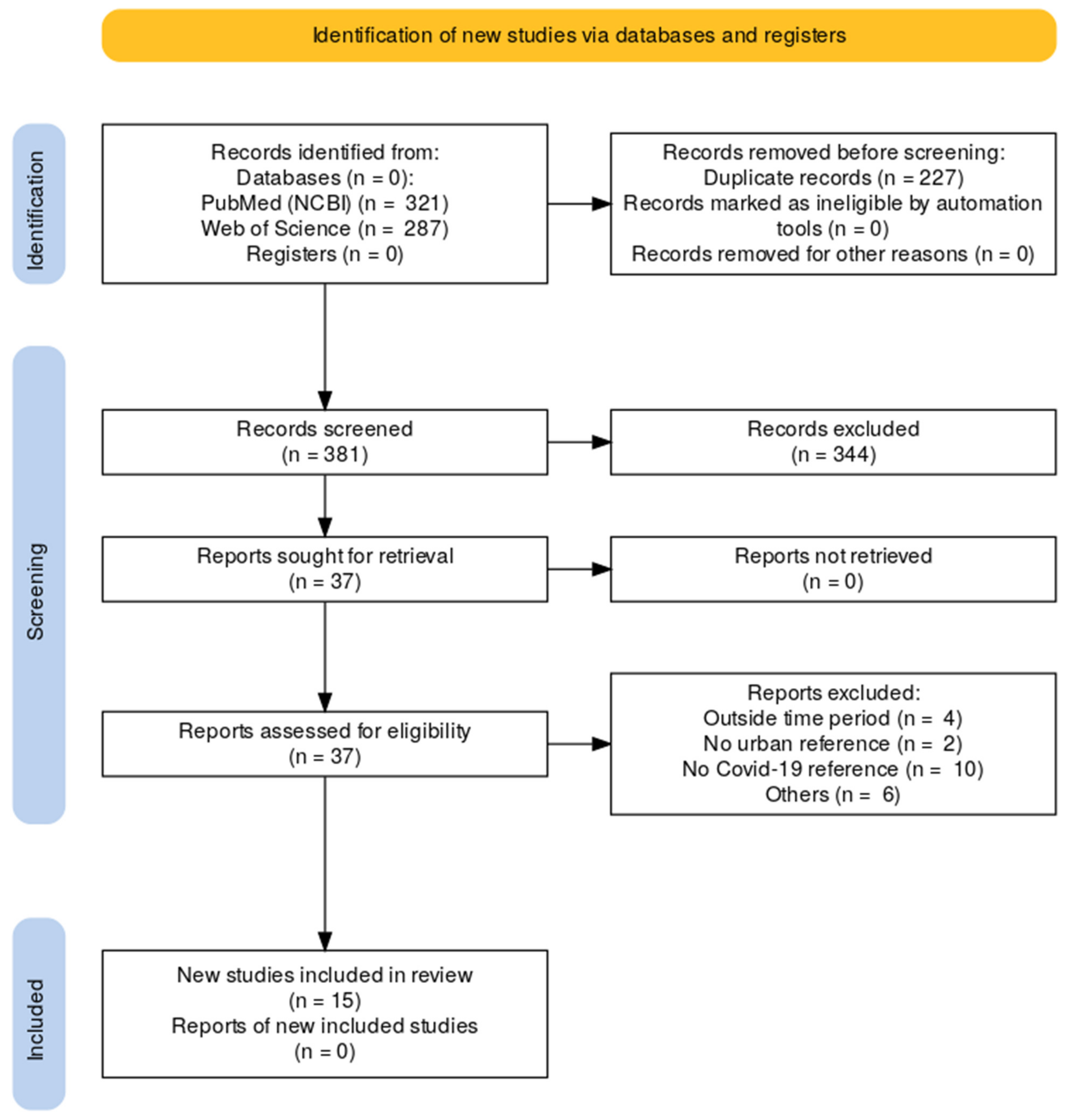
The 2021 WHO and UNICEF Estimates of National Immunization Coverage (WUENIC) reported approximately 25 million under-vaccinated children in 2021, out of which 18 million were zero-dose children who did not receive even the first dose of a diphtheria-tetanus-pertussis-(DPT) containing vaccine. The number of zero-dose children increased by six million between 2019, the pre-pandemic year, and 2021. A total of 20 countries with the highest number of zero-dose children and home to over 75% of these children in 2021 were prioritized for this review. Several of these countries have substantial urbanization with accompanying challenges. This review paper summarizes routine immunization backsliding following the COVID-19 pandemic and predictors of coverage and identifies pro-equity strategies in urban and peri-urban settings through a systematic search of the published literature. Two databases, PubMed and Web of Science, were exhaustively searched using search terms and synonyms, resulting in 608 identified peer-reviewed papers. Based on the inclusion criteria, 15 papers were included in the final review. The inclusion criteria included papers published between March 2020 and January 2023 and references to urban settings and COVID-19 in the papers. Several studies clearly documented a backsliding of coverage in urban and peri-urban settings, with some predictors or challenges to optimum coverage as well as some pro-equity strategies deployed or recommended in these studies. This emphasizes the need to focus on context-specific routine immunization catch-up and recovery strategies to suit the peculiarities of urban areas to get countries back on track toward achieving the targets of the IA2030. While more evidence is needed around the impact of the pandemic in urban areas, utilizing tools and platforms created to support advancing the equity agenda is pivotal. We posit that a renewed focus on urban immunization is critical if we are to achieve the IA2030 targets.
Keywords: zero-dose; urban immunization; catch-up and recovery; un-immunized; under-immunization; routine immunization zero-dose; urban immunization; catch-up and recovery; un-immunized; under-immunization; routine immunization