Salivary Oxidative Stress and Antioxidant Markers in Oral Leukoplakia: A Systematic Review and Meta-Analysis

 , , ,
, , ,
Abstract
1. Introduction
2. Materials and Methods
2.1. Search Strategy, Eligibility Criteria and Data Extraction
- For PubMed: (leukoplak* OR leucoplak* OR oral leukoplakia OR OLK OR OL) AND (saliv* OR oral fluid* OR whole saliva OR oral secretion* OR mouthrinse OR oral rinse OR oral wash OR oral swab OR oral mucosal transudate) AND (oxidat* OR antioxid* OR redox OR oxidative stress OR oxidation-reduction OR oxidant* OR prooxidant* OR reactive oxygen species OR ROS OR reactive nitrogen species OR RNS OR nitrosat* OR superoxide OR hydrogen peroxide OR peroxide* OR lipid peroxidation OR isoprostane* OR 8-iso-prostaglandin F2alpha OR malondialdehyde OR MDA OR TBARS OR 4-hydroxynonenal OR 4-HNE OR protein carbonyl* OR advanced oxidation protein products OR AOPP OR total antioxidant capacity OR TAC OR FRAP OR TEAC OR CUPRAC OR ABTS OR DPPH OR ORAC OR TRAP OR total oxidant status OR TOS OR oxidative stress index OR OSI OR d-ROMs OR derivatives of reactive oxygen metabolites OR 8-OHdG OR 8-hydroxy-2′-deoxyguanosine OR 8-oxodG OR 8-oxo-2′-deoxyguanosine OR nitrotyrosine OR NOx OR nitric oxide OR SOD OR superoxide dismutase OR catalase OR CAT OR GPx OR glutathione peroxidase OR peroxidase OR MPO OR myeloperoxidase OR PON1 OR paraoxonase OR GR OR glutathione reductase OR GST OR glutathione S-transferase OR glutathione OR GSH OR GSSG OR uric acid OR ascorbate OR vitamin C OR tocopherol OR vitamin E OR carotenoid* OR biomarker* OR marker*)
- For Scopus: TITLE-ABS-KEY ((leukoplak* OR leucoplak* OR “oral leukoplakia” OR OLK OR OL) AND (saliv* OR “oral fluid*” OR “whole saliva” OR “oral secretion*” OR mouthrinse OR “oral rinse” OR “oral wash” OR “oral swab” OR “oral mucosal transudate”) AND (oxidat* OR antioxid* OR redox OR “oxidative stress” OR “oxidation-reduction” OR oxidant* OR prooxidant* OR “reactive oxygen species” OR ROS OR “reactive nitrogen species” OR RNS OR nitrosat* OR superoxide OR “hydrogen peroxide” OR peroxide* OR “lipid peroxidation” OR isoprostane* OR “8-iso-prostaglandin F2alpha” OR malondialdehyde OR MDA OR TBARS OR “4-hydroxynonenal” OR 4-HNE OR “protein carbonyl*” OR “advanced oxidation protein products” OR AOPP OR “total antioxidant capacity” OR TAC OR FRAP OR TEAC OR CUPRAC OR ABTS OR DPPH OR ORAC OR TRAP OR “total oxidant status” OR TOS OR “oxidative stress index” OR OSI OR “d-ROMs” OR “derivatives of reactive oxygen metabolites” OR 8-OHdG OR “8-hydroxy-2′-deoxyguanosine” OR 8-oxodG OR “8-oxo-2′-deoxyguanosine” OR nitrotyrosine OR NOx OR “nitric oxide” OR SOD OR “superoxide dismutase” OR catalase OR CAT OR GPx OR “glutathione peroxidase” OR peroxidase OR MPO OR myeloperoxidase OR PON1 OR paraoxonase OR GR OR “glutathione reductase” OR GST OR “glutathione S-transferase” OR glutathione OR GSH OR GSSG OR “uric acid” OR ascorbate OR “vitamin C” OR tocopherol OR “vitamin E” OR carotenoid* OR biomarker* OR marker*))
- For Web of Science: TS = ((leukoplak* OR leucoplak* OR “oral leukoplakia” OR OLK OR OL) AND (saliv* OR “oral fluid*” OR “whole saliva” OR “oral secretion*” OR mouthrinse OR “oral rinse” OR “oral wash” OR “oral swab” OR “oral mucosal transudate”) AND (oxidat* OR antioxid* OR redox OR “oxidative stress” OR “oxidation-reduction” OR oxidant* OR prooxidant* OR “reactive oxygen species” OR ROS OR “reactive nitrogen species” OR RNS OR nitrosat* OR superoxide OR “hydrogen peroxide” OR peroxide* OR “lipid peroxidation” OR isoprostane* OR “8-iso-prostaglandin F2alpha” OR malondialdehyde OR MDA OR TBARS OR “4-hydroxynonenal” OR 4-HNE OR “protein carbonyl*” OR “advanced oxidation protein products” OR AOPP OR “total antioxidant capacity” OR TAC OR FRAP OR TEAC OR CUPRAC OR ABTS OR DPPH OR ORAC OR TRAP OR “total oxidant status” OR TOS OR “oxidative stress index” OR OSI OR “d-ROMs” OR “derivatives of reactive oxygen metabolites” OR 8-OHdG OR “8-hydroxy-2′-deoxyguanosine” OR 8-oxodG OR “8-oxo-2′-deoxyguanosine” OR nitrotyrosine OR NOx OR “nitric oxide” OR SOD OR “superoxide dismutase” OR catalase OR CAT OR GPx OR “glutathione peroxidase” OR peroxidase OR MPO OR myeloperoxidase OR PON1 OR paraoxonase OR GR OR “glutathione reductase” OR GST OR “glutathione S-transferase” OR glutathione OR GSH OR GSSG OR “uric acid” OR ascorbate OR “vitamin C” OR tocopherol OR “vitamin E” OR carotenoid* OR biomarker* OR marker*))
- Article-level information—first author, year of publication, country, journal, study design, and sample size;
- Participant characteristics—age and sex;
- Outcome data—salivary oxidative stress and antioxidant biomarkers reported as mean ± SD or median with IQR for both leukoplakia patients and controls, sample sizes, and details of the saliva collection protocol and analytical methods.
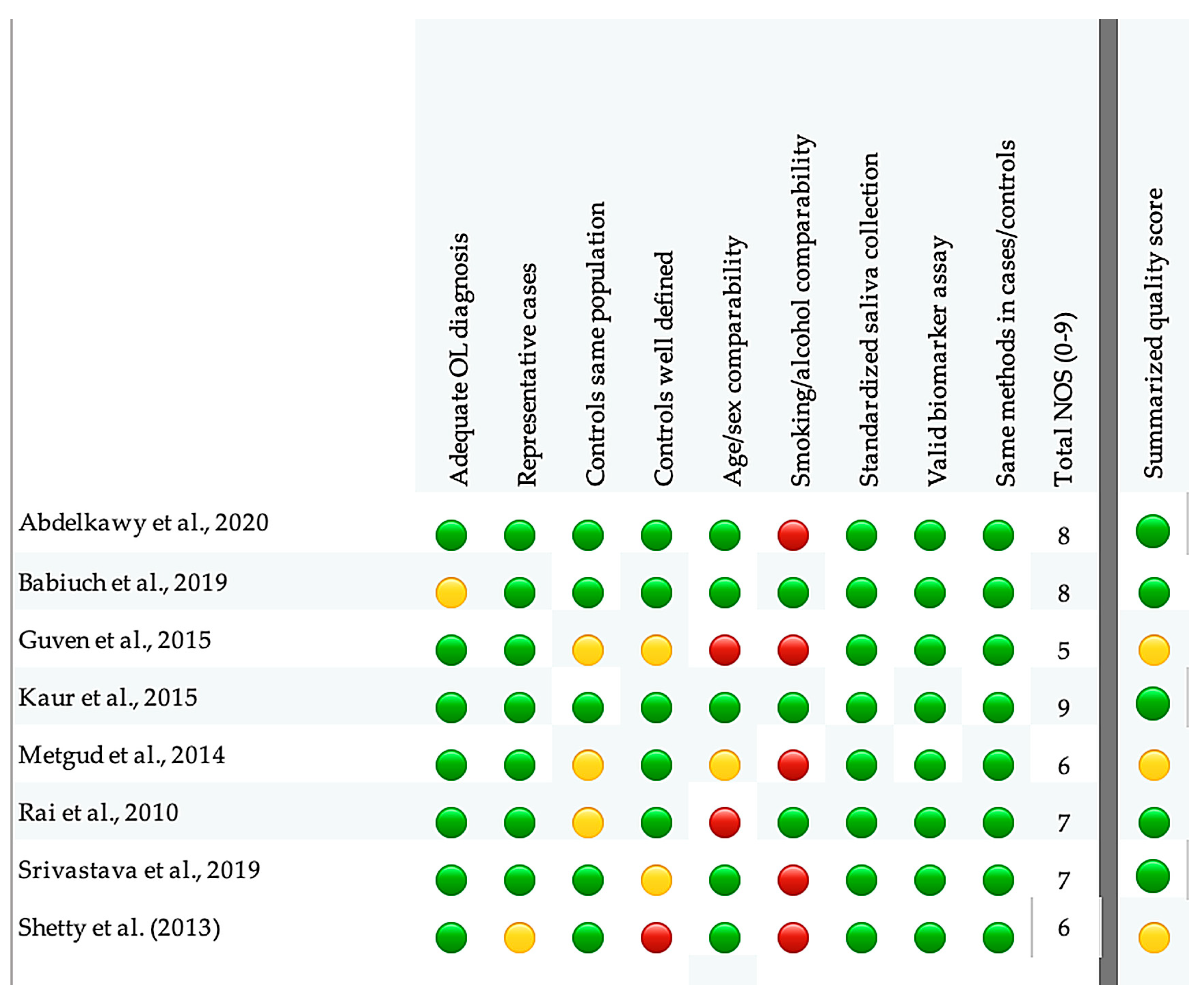
2.2. Quality Assessment
2.3. Statistical Analysis
3. Results
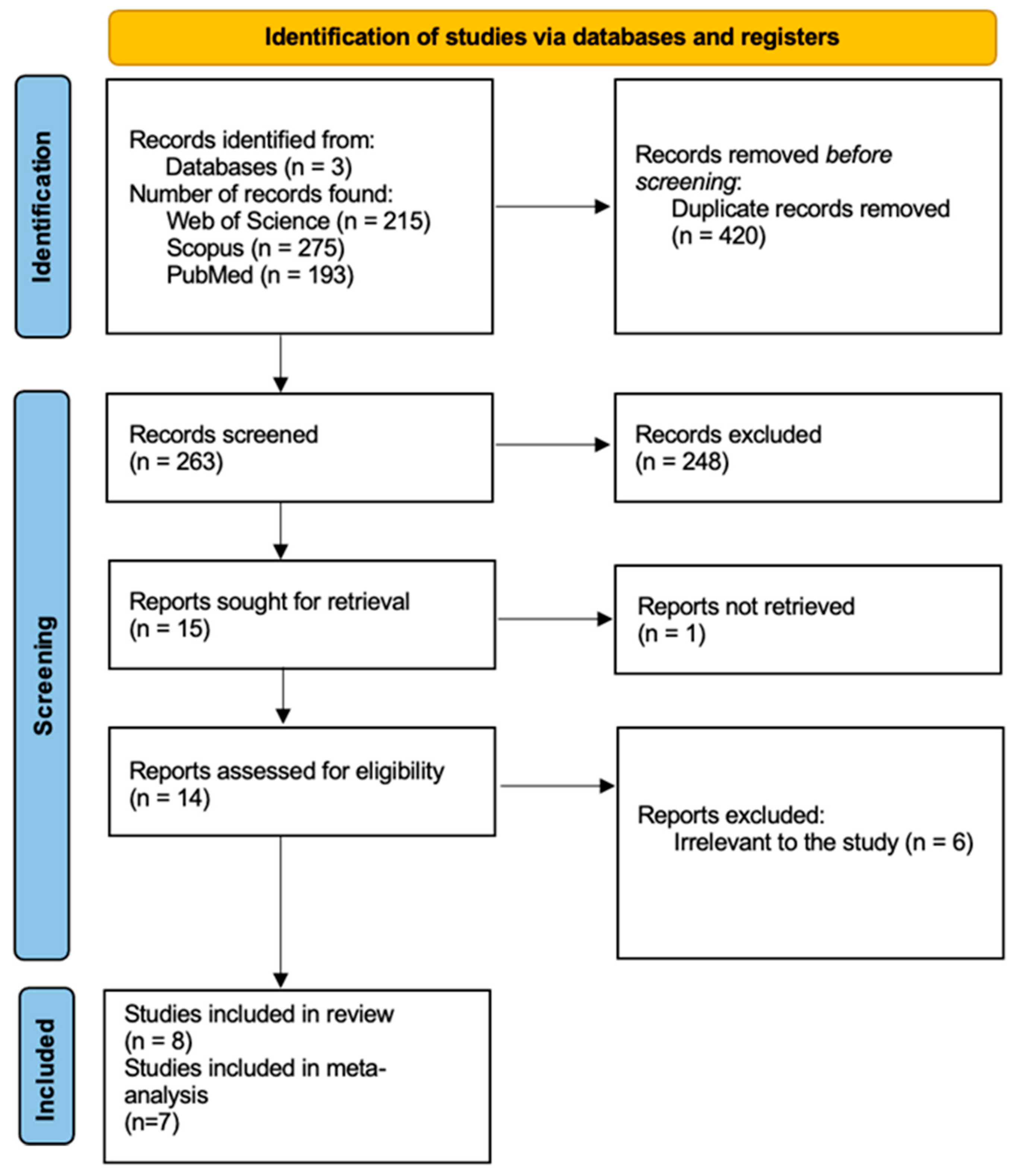
3.1. Literature Searches
3.2. Study Characteristics
3.3. Oxidative Stress Markers in OL
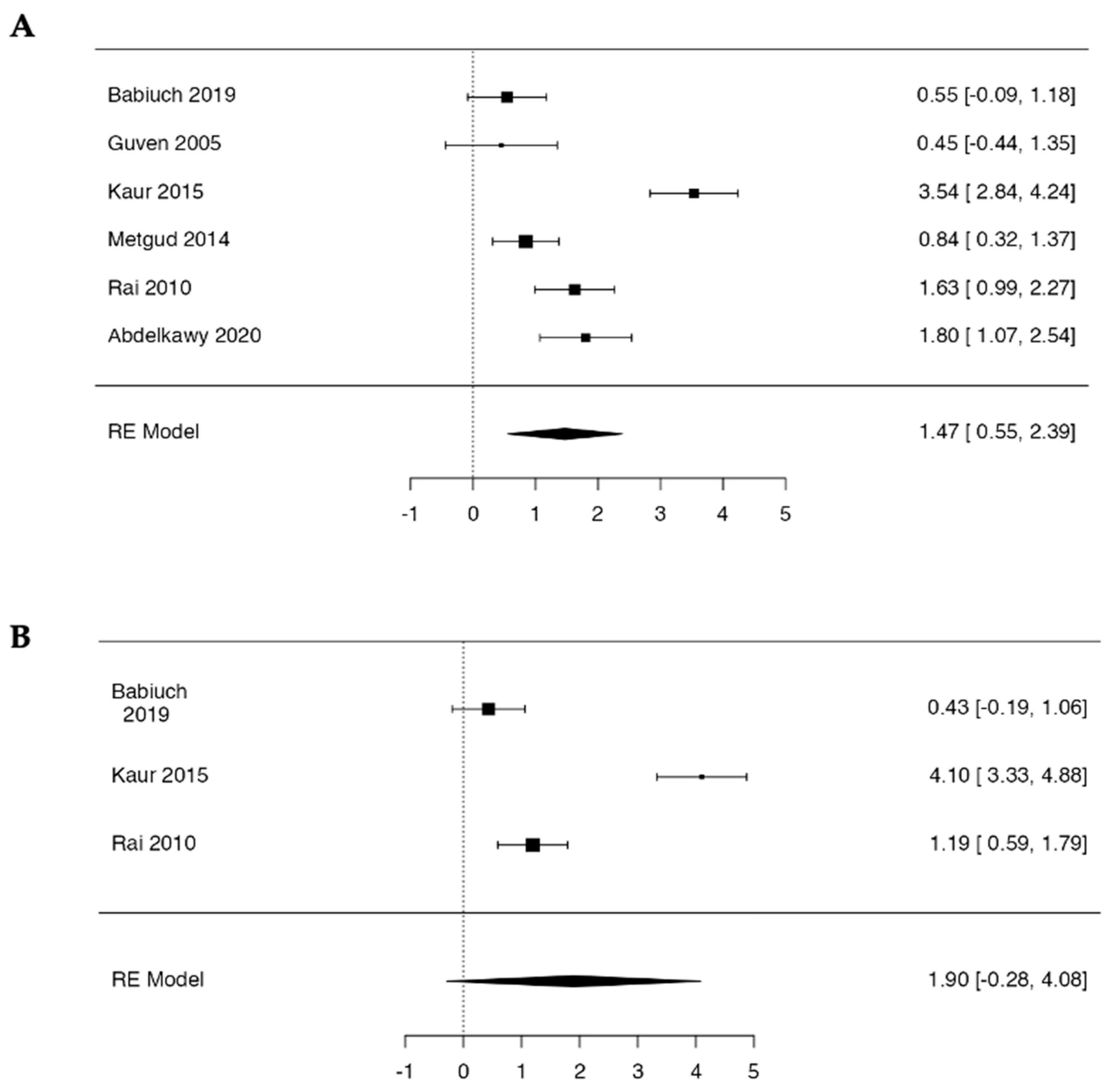
3.3.1. Malondialdehyde (MDA)
3.3.2. 8-Hydroxy-2′-deoxyguanosine (8-OHdG)
3.3.3. Others
3.4. Antioxidants Activity
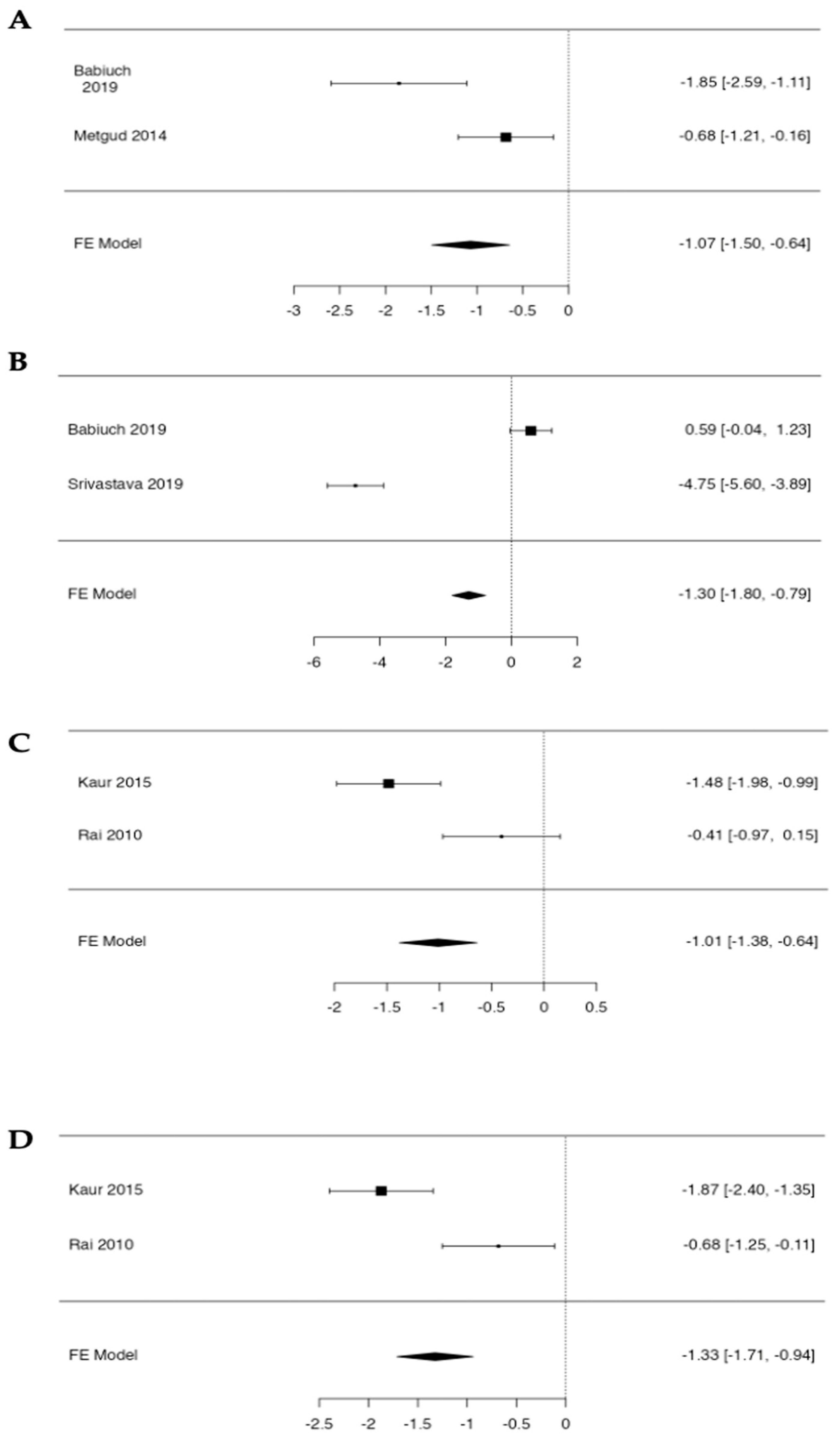
3.4.1. Reduced Glutathione (GSH)
3.4.2. Uric Acid (UA)
3.4.3. Vitamin C
3.4.4. Vitamin E
3.4.5. Others
3.5. Salivary Redox Markers in Relations to OL Severity
3.6. Subgroup Analysis
3.7. Sensitivity Analysis
3.8. Certainty of Evidence (GRADE Assessment)
3.9. Summary of the Findings
4. Discussion
4.1. Limitations
4.2. Future Directions
5. Conclusions
Supplementary Materials
Author Contributions
Funding
Institutional Review Board Statement
Informed Consent Statement
Data Availability Statement
Conflicts of Interest
References
- Aguirre-Urizar, J.M. Oral Leukoplakia: Still an Enigmatic Disorder. Med. Oral Patol. Oral Y Cir. Bucal 2025, 30, e730–e735. [Google Scholar] [CrossRef]
- Pietrobon, G.; Tagliabue, M.; Stringa, L.M.; De Berardinis, R.; Chu, F.; Zocchi, J.; Carlotto, E.; Chiocca, S.; Ansarin, M. Leukoplakia in the Oral Cavity and Oral Microbiota: A Comprehensive Review. Cancers 2021, 13, 4439. [Google Scholar] [CrossRef]
- Warnakulasuriya, S. Clinical Features and Presentation of Oral Potentially Malignant Disorders. Oral Surg. Oral Med. Oral Pathol. Oral Radiol. 2018, 125, 582–590. [Google Scholar] [CrossRef]
- Speight, P.M.; Khurram, S.A.; Kujan, O. Oral Potentially Malignant Disorders: Risk of Progression to Malignancy. Oral Surg. Oral Med. Oral Pathol. Oral Radiol. 2018, 125, 612–627. [Google Scholar] [CrossRef]
- Warnakulasuriya, S.; Kujan, O.; Aguirre-Urizar, J.M.; Bagan, J.V.; González-Moles, M.Á.; Kerr, A.R.; Lodi, G.; Mello, F.W.; Monteiro, L.; Ogden, G.R.; et al. Oral Potentially Malignant Disorders: A Consensus Report from an International Seminar on Nomenclature and Classification, Convened by the WHO Collaborating Centre for Oral Cancer. Oral Dis. 2021, 27, 1862–1880. [Google Scholar] [CrossRef] [PubMed]
- Zhang, C.; Li, B.; Zeng, X.; Hu, X.; Hua, H. The Global Prevalence of Oral Leukoplakia: A Systematic Review and Meta-Analysis from 1996 to 2022. BMC Oral Health 2023, 23, 645. [Google Scholar] [CrossRef]
- Cheung, V.K.Y.; Hulme, K.; Schifter, M.; Palme, C.; Low, T.-H.; Clark, J.; Gupta, R. Oral Epithelial Dysplasia: A Review of Diagnostic Criteria for Anatomic Pathologists. Adv. Anat. Pathol. 2022, 29, 227–240. [Google Scholar] [CrossRef]
- Warnakulasuriya, S. Oral Potentially Malignant Disorders: A Comprehensive Review on Clinical Aspects and Management. Oral Oncol. 2020, 102, 104550. [Google Scholar] [CrossRef]
- Peng, J.; Xu, Z.; Dan, H.; Li, J.; Wang, J.; Luo, X.; Xu, H.; Zeng, X.; Chen, Q. Oral Epithelial Dysplasia Detection and Grading in Oral Leukoplakia Using Deep Learning. BMC Oral Health 2024, 24, 434. [Google Scholar] [CrossRef] [PubMed]
- Pimenta-Barros, L.A.; Ramos-García, P.; González-Moles, M.Á.; Aguirre-Urizar, J.M.; Warnakulasuriya, S. Malignant Transformation of Oral Leukoplakia: Systematic Review and Comprehensive Meta-Analysis. Oral Dis. 2025, 31, 69–80. [Google Scholar] [CrossRef] [PubMed]
- Tan, Y.; Wang, Z.; Xu, M.; Li, B.; Huang, Z.; Qin, S.; Nice, E.C.; Tang, J.; Huang, C. Oral Squamous Cell Carcinomas: State of the Field and Emerging Directions. Int. J. Oral Sci. 2023, 15, 44. [Google Scholar] [CrossRef]
- Lodi, G.; Franchini, R.; Warnakulasuriya, S.; Varoni, E.M.; Sardella, A.; Kerr, A.R.; Carrassi, A.; MacDonald, L.C.; Worthington, H.V. Interventions for Treating Oral Leukoplakia to Prevent Oral Cancer. Cochrane Database Syst. Rev. 2016, 2016, CD001829. [Google Scholar] [CrossRef] [PubMed]
- Reuter, S.; Gupta, S.C.; Chaturvedi, M.M.; Aggarwal, B.B. Oxidative Stress, Inflammation, and Cancer: How Are They Linked? Free Radic. Biol. Med. 2010, 49, 1603–1616. [Google Scholar]
- Su, L.-J.; Zhang, J.-H.; Gomez, H.; Murugan, R.; Hong, X.; Xu, D.; Jiang, F.; Peng, Z.-Y. Reactive Oxygen Species-Induced Lipid Peroxidation in Apoptosis, Autophagy, and Ferroptosis. Oxidative Med. Cell. Longev. 2019, 2019, 5080843. [Google Scholar] [CrossRef]
- Pizzino, G.; Irrera, N.; Cucinotta, M.; Pallio, G.; Mannino, F.; Arcoraci, V.; Squadrito, F.; Altavilla, D.; Bitto, A. Oxidative Stress: Harms and Benefits for Human Health. Oxidative Med. Cell. Longev. 2017, 2017, 8416763. [Google Scholar] [CrossRef]
- Maciejczyk, M.; Szulimowska, J.; Skutnik, A.; Taranta-Janusz, K.; Wasilewska, A.; Wiśniewska, N.; Zalewska, A. Salivary Biomarkers of Oxidative Stress in Children with Chronic Kidney Disease. J. Clin. Med. 2018, 7, 209. [Google Scholar] [CrossRef] [PubMed]
- Viglianisi, G.; Tartaglia, G.M.; Santonocito, S.; Amato, M.; Polizzi, A.; Mascitti, M.; Isola, G. The Emerging Role of Salivary Oxidative Stress Biomarkers as Prognostic Markers of Periodontitis: New Insights for a Personalized Approach in Dentistry. J. Pers. Med. 2023, 13, 166. [Google Scholar] [CrossRef]
- Popa, P.Ș.; Popa, G.V.; Earar, K.; Popa-Cazacu, C.E.; Matei, M.N. Salivary Oxidative Stress Biomarkers in Peri-Implant Disease: A Systematic Review and Meta-Analysis. Int. J. Mol. Sci. 2025, 26, 11269. [Google Scholar] [CrossRef] [PubMed]
- Alarcón-Sánchez, M.A.; Escoto-Vasquez, L.-S.; Heboyan, A. Salivary 8-hydroxy-2′-deoxyguanosine levels in patients with oral cancer: A systematic review and meta-analysis. BMC Cancer 2024, 24, 960. [Google Scholar] [CrossRef]
- Vlková, B.; Stanko, P.; Minárik, G.; Tóthová, Ľ.; Szemes, T.; Baňasová, L.; Novotňáková, D.; Hodosy, J.; Celec, P. Salivary Markers of Oxidative Stress in Patients with Oral Premalignant Lesions. Arch. Oral Biol. 2012, 57, 1651–1656. [Google Scholar] [CrossRef]
- Zięba, S.; Maciejczyk, M.; Zalewska, A. Ethanol- and Cigarette Smoke-Related Alternations in Oral Redox Homeostasis. Front. Physiol. 2022, 12, 793028. [Google Scholar] [CrossRef] [PubMed]
- Imdad, B.; Abbas, U.; Kumar, P.; Kamran, D.S.; Khan, M.; Hussain, N.; Khalid, M.U. Higher Reactive Oxygen Species and Cellular Aging in Oral Mucosal Cells of Young Smokers: A Comparative Analytical Study. Front. Oral Health 2025, 6, 1372494. [Google Scholar] [CrossRef]
- Nagini, S. Oxidative Stress–Based Biomarkers in Oral Carcinogenesis: How Far Have We Gone? Curr. Med. Chem. 2012, 19, 397–404. [Google Scholar]
- Juneja, S.; Rathore, A.S.; Sharma, K.; Shetty, D.; Jain, A. Antioxidant-Oxidant Index as a Biomarker in Oral Potentially Malignant Disorders and Oral Squamous Cell Carcinoma: A Biochemical Study. J. Clin. Diagn. Res. 2017, 11, ZC05–ZC08. [Google Scholar] [CrossRef]
- Goto, T.; Kishimoto, T.; Iwawaki, Y.; Fujimoto, K.; Ishida, Y.; Watanabe, M.; Nagao, K.; Ichikawa, T. Reliability of Screening Methods to Diagnose Oral Dryness and Evaluate Saliva Secretion. Dent. J. 2020, 8, 102. [Google Scholar] [CrossRef]
- Wang, J.; Schipper, H.M.; Velly, A.M.; Mohit, S.; Gornitsky, M. Salivary Biomarkers of Oxidative Stress: A Critical Review. Free Radic. Biol. Med. 2015, 85, 95–104. [Google Scholar] [CrossRef]
- Proctor, G.B. The Physiology of Salivary Secretion. Periodontol. 2000 2016, 70, 11–25. [Google Scholar] [CrossRef]
- Tóthová, L.; Kamodyová, N.; Červenka, T.; Celec, P. Salivary Markers of Oxidative Stress in Oral Diseases. Front. Cell. Infect. Microbiol. 2015, 5, 73. [Google Scholar] [CrossRef]
- Malamud, D.; Rodriguez-Chavez, I.R. Saliva as a Diagnostic Fluid. Dent. Clin. N. Am. 2011, 55, 159–178. [Google Scholar] [CrossRef]
- Buczko, P.; Zalewska, A.; Szarmach, I. Saliva and Oxidative Stress in Oral Cavity and in Some Systemic Disorders. J. Physiol. Pharmacol. 2015, 66, 3–9. [Google Scholar]
- Hassan, S.; Salem, B.; Omar, A.; Alwaseef, M.; Gouda, A.; Darwish, A.; Elwahab, M.; Said, S.; Alrowaithy, N.; Abdul Mawla, N.; et al. Evaluation of Oxidative Stress Indicators, Specifically 8-Hydroxydeoxyguanosine and Malondialdehyde, Alongside Total Antioxidant Capacity in Patients with Chronic Renal Disease Who Are Tobacco Smokers: Case-Control Study. Clin. Ther. 2025, 176, 796–802. [Google Scholar]
- Ghonimi, N.A.M.; Elsharkawi, K.A.; Khyal, D.S.M.; Abdelghani, A.A. Serum Malondialdehyde as a Lipid Peroxidation Marker in Multiple Sclerosis Patients and Its Relation to Disease Characteristics. Mult. Scler. Relat. Disord. 2021, 51, 102941. [Google Scholar] [CrossRef]
- Aguilar Diaz De Leon, J.; Borges, C.R. Evaluation of Oxidative Stress in Biological Samples Using the Thiobarbituric Acid Reactive Substances Assay. J. Vis. Exp. 2020, 61122. [Google Scholar] [CrossRef]
- Metgud, R.; Bajaj, S. Evaluation of Salivary and Serum Lipid Peroxidation, and Glutathione in Oral Leukoplakia and Oral Squamous Cell Carcinoma. J. Oral Sci. 2014, 56, 135–142. [Google Scholar] [CrossRef]
- Muthu, K.; Narayanan, M. Recognizing the Salivary Panomics for the Clinical Application in Oral Potentially Malignant Disorders. J. Oral Maxillofac. Pathol. 2021, 25, 332–345. [Google Scholar] [CrossRef]
- Babiuch, K.; Bednarczyk, A.; Gawlik, K.; Pawlica-Gosiewska, D.; Kęsek, B.; Darczuk, D.; Stępień, P.; Chomyszyn-Gajewska, M.; Kaczmarzyk, T. Evaluation of Enzymatic and Non-Enzymatic Antioxidant Status and Biomarkers of Oxidative Stress in Saliva of Patients with Oral Squamous Cell Carcinoma and Oral Leukoplakia: A Pilot Study. Acta Odontol. Scand. 2019, 77, 408–418. [Google Scholar] [CrossRef]
- Bhat, S.; Gogineni Babu, S.; Bhat, S.K.; Castelino, R.L.; Rao, K.; Madi, M. Status of Serum and Salivary Ascorbic Acid in Oral Potentially Malignant Disorders and Oral Cancer. Indian J. Med. Paediatr. Oncol. 2017, 38, 306–310. [Google Scholar] [CrossRef]
- Kaur, J.; Politis, C.; Jacobs, R. Salivary 8-Hydroxy-2-Deoxyguanosine, Malondialdehyde, Vitamin C, and Vitamin E in Oral Pre-Cancer and Cancer: Diagnostic Value and Free Radical Mechanism of Action. Clin. Oral Investig. 2016, 20, 315–319. [Google Scholar] [CrossRef]
- Srivastava, K.C. Comparative Evaluation of Saliva’s Oxidant-Antioxidant Status in Patients with Different Clinicopathological Types of Oral Leukoplakia. J. Int. Soc. Prev. Community Dent. 2019, 9, 396–402. [Google Scholar] [CrossRef]
- Abdelkawy, M.; El Refai, S.; Shaker, O.; Elbattawy, W. Malondialdehyde and Nitrous Oxide as Salivary Biomarkers for Malignant and Premalignant Oral Lesions. Adv. Dent. J. 2020, 2, 117–128. [Google Scholar] [CrossRef]
- Güven, Y.; Ünür, M.; Bektaş, K.; Uslu, E.; Belce, A.; Demirez, E.; Can, S. Salivary Malondialdehyde Levels in Patients with Oral Leukoplakia. Turk. J. Med. Sci. 2005, 35, 329–332. [Google Scholar]
- Rai, B.; Kaur, J.; Jacobs, R.; Singh, J. Possible Action Mechanism for Curcumin in Pre-Cancerous Lesions Based on Serum and Salivary Markers of Oxidative Stress. J. Oral Sci. 2010, 52, 251–256. [Google Scholar] [CrossRef]
- Shetty, S.R.; Babu, S.G.; Kumari, S.; Karikal, A.; Shetty, P.; Hegde, S. Salivary Superoxide Dismutase Levels in Oral Leukoplakia and Oral Squamous Cell Carcinoma: A Clinicopathological Study. Oxid. Antioxid. Med. Sci. 2013, 2, 69–71. [Google Scholar] [CrossRef]
- Higgins, J.P.T.; Thomas, J.; Chandler, J.; Cumpston, M.; Li, T.; Page, M.; Welch, V.; Flemyng, E. Cochrane Handbook for Systematic Reviews of Interventions, Version 6.2; Cochrane: London, UK, 2021. [Google Scholar]
- Liberati, A.; Altman, D.G.; Tetzlaff, J.; Mulrow, C.; Gotzche, P.C.; Ioannidis, J.P.A.; Clarke, M.; Devereaux, P.J.; Kleijnen, J.; Moher, D. The PRISMA Statement for Reporting Systematic Reviews and Meta-Analyses of Studies That Evaluate Healthcare Interventions: Explanation and Elaboration. BMJ 2009, 339, b2700. [Google Scholar] [CrossRef]
- Stang, A. Critical Evaluation of the Newcastle-Ottawa Scale for the Assessment of the Quality of Nonrandomized Studies in Meta-Analyses. Eur. J. Epidemiol. 2010, 25, 603–605. [Google Scholar] [CrossRef]
- Wan, X.; Wang, W.; Liu, J.; Tong, T. Estimating the Sample Mean and Standard Deviation from the Sample Size, Median, Range and/or Interquartile Range. BMC Med. Res. Methodol. 2014, 14, 135. [Google Scholar] [CrossRef]
- Luo, D.; Wan, X.; Liu, J.; Tong, T. Optimally Estimating the Sample Mean from the Sample Size, Median, Mid-Range, and/or Mid-Quartile Range. Stat. Methods Med. Res. 2018, 27, 1785–1805. [Google Scholar] [CrossRef]
- Ioannidis, J.P.A.; Trikalinos, T.A. The Appropriateness of Asymmetry Tests for Publication Bias in Meta-Analyses: A Large Survey. CMAJ 2007, 176, 1091–1096. [Google Scholar] [CrossRef]
- Guyatt, G.H.; Oxman, A.D.; Vist, G.E.; Kunz, R.; Falck-Ytter, Y.; Alonso-Coello, P.; Schünemann, H.J. GRADE: An emerging consensus on rating quality of evidence and strength of recommendations. BMJ 2008, 336, 924–926. [Google Scholar] [CrossRef]
- Barros, C.C.D.S.; Freitas, R.D.A.; Miguel, M.C.D.C.; Silveira, É.J.D. DNA Damage Through Oxidative Stress Is an Important Event in Oral Leukoplakia. Arch. Oral Biol. 2022, 135, 105359. [Google Scholar] [CrossRef]
- Sardaro, N.; Della Vella, F.; Incalza, M.A.; DI Stasio, D.; Lucchese, A.; Contaldo, M.; Laudadio, C.; Petruzzi, M. Oxidative Stress and Oral Mucosal Diseases: An Overview. In Vivo 2019, 33, 289–296. [Google Scholar] [CrossRef]
- Kesarwala, A.H.; Krishna, M.C.; Mitchell, J.B. Oxidative Stress in Oral Diseases. Oral Dis. 2016, 22, 9–18. [Google Scholar] [CrossRef]
- Senghore, T.; Li, Y.-F.; Sung, F.-C.; Tsai, M.-H.; Hua, C.-H.; Liu, C.-S.; Huang, R.-J.; Yeh, C.-C. Biomarkers of Oxidative Stress Associated with the Risk of Potentially Malignant Oral Disorders. Anticancer Res. 2018, 38, 5211–5216. [Google Scholar] [CrossRef]
- Migdal, C.; Serres, M. Reactive Oxygen Species and Oxidative Stress. Med. Sci. 2011, 27, 405–412. [Google Scholar]
- Ionescu, C.; Kamal, F.Z.; Ciobica, A.; Halitchi, G.; Burlui, V.; Petroaie, A.D. Oxidative Stress in the Pathogenesis of Oral Cancer. Biomedicines 2024, 12, 1150. [Google Scholar] [CrossRef]
- Hussain, S.P.; Harris, C.C. Inflammation and Cancer: An Ancient Link with Novel Potentials. Int. J. Cancer 2007, 121, 2373–2380. [Google Scholar] [CrossRef]
- Morgan, M.J.; Liu, Z.-G. Crosstalk of Reactive Oxygen Species and NF-κB Signaling. Cell Res. 2011, 21, 103–115. [Google Scholar] [CrossRef] [PubMed]
- Son, Y.; Cheong, Y.-K.; Kim, N.-H.; Chung, H.-T.; Kang, D.-G.; Pae, H.-O. Mitogen-Activated Protein Kinases and Reactive Oxygen Species: How Can ROS Activate MAPK Pathways? J. Signal Transduct. 2011, 2011, 792639. [Google Scholar] [CrossRef]
- Andrés, C.M.C.; Pérez de la Lastra, J.M.; Juan, C.A.; Plou, F.J.; Pérez-Lebeña, E. The Role of Reactive Species on Innate Immunity. Vaccines 2022, 10, 1735. [Google Scholar] [CrossRef]
- Asehnoune, K.; Strassheim, D.; Mitra, S.; Kim, J.Y.; Abraham, E. Involvement of Reactive Oxygen Species in Toll-Like Receptor 4-Dependent Activation of NF-κB. J. Immunol. 2004, 172, 2522–2529. [Google Scholar] [CrossRef]
- Grivennikov, S.I.; Greten, F.R.; Karin, M. Immunity, Inflammation, and Cancer. Cell 2010, 140, 883–899. [Google Scholar] [CrossRef]
- Rembiałkowska, N.; Kocik, Z.; Kłosińska, A.; Kübler, M.; Pałkiewicz, A.; Rozmus, W.; Sędzik, M.; Wojciechowska, H.; Gajewska-Naryniecka, A. Inflammation-Driven Genomic Instability: A Pathway to Cancer Development and Therapy Resistance. Pharmaceuticals 2025, 18, 1406. [Google Scholar] [CrossRef]
- Kundu, J.K.; Surh, Y.-J. Inflammation: Gearing the Journey to Cancer. Mutat. Res. 2008, 659, 15–30. [Google Scholar] [CrossRef]
- Wu, Y.; Antony, S.; Meitzler, J.L.; Doroshow, J.H. Molecular Mechanisms Underlying Chronic Inflammation-Associated Cancers. Cancer Lett. 2014, 345, 164–173. [Google Scholar] [CrossRef]
- Nishida, A.; Andoh, A. The Role of Inflammation in Cancer: Mechanisms of Tumor Initiation, Progression, and Metastasis. Cells 2025, 14, 488. [Google Scholar] [CrossRef]
- Ahmed, S.; Nasib, U.; Khan, M.K.; Ali, M.; Ur Rahman, O.; Qureshi, N.A. Oxidative Stress Markers as a Diagnostic Tool in Oral Cancer and Premalignant Lesions: A Systematic Review. J. Dent. Res. Dent. Clin. Dent. Prospect. 2025, 19, 139–145. [Google Scholar] [CrossRef]
- Ayala, A.; Muñoz, M.F.; Argüelles, S. Lipid Peroxidation: Production, Metabolism, and Signaling Mechanisms of Malondialdehyde and 4-Hydroxy-2-Nonenal. Oxid. Med. Cell. Longev. 2014, 2014, 360438. [Google Scholar] [CrossRef] [PubMed]
- Perluigi, M.; Coccia, R.; Butterfield, D.A. 4-Hydroxy-2-Nonenal, a Reactive Product of Lipid Peroxidation, and Neurodegenerative Diseases: A Toxic Combination Illuminated by Redox Proteomics Studies. Antioxid. Redox Signal. 2012, 17, 1590–1609. [Google Scholar] [CrossRef] [PubMed]
- Esterbauer, H.; Schaur, R.J.; Zollner, H. Chemistry and Biochemistry of 4-Hydroxynonenal, Malonaldehyde and Related Aldehydes. Free Radic. Biol. Med. 1991, 11, 81–128. [Google Scholar] [CrossRef] [PubMed]
- Uchida, K. 4-Hydroxy-2-Nonenal: A Product and Mediator of Oxidative Stress. Prog. Lipid Res. 2003, 42, 318–343. [Google Scholar] [CrossRef]
- Mohideen, K.; Sudhakar, U.; Balakrishnan, T.; Almasri, M.A.; Al-Ahmari, M.M.; Al Dira, H.S.; Suhluli, M.; Dubey, A.; Mujoo, S.; Khurshid, Z.; et al. Malondialdehyde, an Oxidative Stress Marker in Oral Squamous Cell Carcinoma—A Systematic Review and Meta-Analysis. Curr. Issues Mol. Biol. 2021, 43, 1019–1035. [Google Scholar] [CrossRef] [PubMed]
- Shamsi, S.; Rai, A.; Manjhi, L.; Mahuli, S.A.; Shree, P.; Haque, Z.U.; Kumari, S. Oxidative Stress Enzyme as Markers in Oral Potentially Malignant Disorders and Oral Squamous Cell Carcinoma Patients. Indian J. Otolaryngol. Head Neck Surg. 2023, 75, 3757–3764. [Google Scholar] [CrossRef] [PubMed]
- Jelic, M.D.; Mandic, A.D.; Maricic, S.M.; Srdjenovic, B.U. Oxidative Stress and Its Role in Cancer. J. Cancer Res. Ther. 2021, 17, 22–28. [Google Scholar] [CrossRef]
- Tsikas, D. Malondialdehyde-Induced Post-Translational Modification of Human Hemoglobin. J. Proteome Res. 2023, 22, 2141–2143. [Google Scholar] [CrossRef]
- Celec, P.; Hodosy, J.; Celecová, V.; Vodrázka, J.; Cervenka, T.; Halcák, L.; Bozek, P.; Kopáni, M.; Kúdela, M. Salivary Thiobarbituric Acid Reacting Substances and Malondialdehyde—Their Relationship to Reported Smoking and to Parodontal Status Described by the Papillary Bleeding Index. Dis. Markers 2005, 21, 133–137. [Google Scholar] [CrossRef]
- Sabitha, S.; Hegde, S.V.; Agarwal, S.V.; Ns, D.; Pillai, A.; Shah, S.N.; Ramjeela, S. Biomarkers of Oxidative Stress and Their Clinical Relevance in Type 2 Diabetes Mellitus Patients: A Systematic Review. Cureus 2024, 16, e66570. [Google Scholar] [CrossRef]
- Gentile, F.; Arcaro, A.; Pizzimenti, S.; Daga, M.; Cetrangolo, G.P.; Dianzani, C.; Lepore, A.; Graf, M.; Ames, P.R.J.; Barrera, G. DNA Damage by Lipid Peroxidation Products: Implications in Cancer, Inflammation and Autoimmunity. AIMS Genet. 2017, 4, 103–137. [Google Scholar] [CrossRef]
- Del Rio, D.; Stewart, A.J.; Pellegrini, N. A Review of Recent Studies on Malondialdehyde as Toxic Molecule and Biological Marker of Oxidative Stress. Nutr. Metab. Cardiovasc. Dis. 2005, 15, 316–328. [Google Scholar] [CrossRef]
- Houglum, K.; Filip, M.; Witztum, J.L.; Chojkier, M. Malondialdehyde and 4-Hydroxynonenal Protein Adducts in Plasma and Liver of Rats with Iron Overload. J. Clin. Investig. 1990, 86, 1991–1998. [Google Scholar] [CrossRef]
- Iliadis, S.; Papanikolaou, N.A. Reactive Oxygen Species Mechanisms That Regulate Protein-Protein Interactions in Cancer. Int. J. Mol. Sci. 2024, 25, 9255. [Google Scholar] [CrossRef] [PubMed]
- Marnett, L.J. Lipid Peroxidation-DNA Damage by Malondialdehyde. Mutat. Res. 1999, 424, 83–95. [Google Scholar] [CrossRef] [PubMed]
- Niedernhofer, L.J.; Daniels, J.S.; Rouzer, C.A.; Greene, R.E.; Marnett, L.J. Malondialdehyde, a Product of Lipid Peroxidation, Is Mutagenic in Human Cells. J. Biol. Chem. 2003, 278, 31426–31433. [Google Scholar] [CrossRef] [PubMed]
- Prasad, A.; Rossi, C.; Manoharan, R.R.; Sedlářová, M.; Cangeloni, L.; Rathi, D.; Tamasi, G.; Pospíšil, P.; Consumi, M. Bioactive Compounds and Their Impact on Protein Modification in Human Cells. Int. J. Mol. Sci. 2022, 23, 7424. [Google Scholar] [CrossRef]
- Koh, Y.H.; Park, Y.S.; Takahashi, M.; Suzuki, K.; Taniguchi, N. Aldehyde Reductase Gene Expression by Lipid Peroxidation End Products, MDA and HNE. Free Radic. Res. 2000, 33, 739–746. [Google Scholar] [CrossRef]
- Feng, Z.; Hu, W.; Marnett, L.J.; Tang, M.S. Malondialdehyde, a Major Endogenous Lipid Peroxidation Product, Sensitizes Human Cells to UV- and BPDE-Induced Killing and Mutagenesis through Inhibition of Nucleotide Excision Repair. Mutat. Res. 2006, 601, 125–136. [Google Scholar] [CrossRef]
- Gulcin, İ. Antioxidants: A Comprehensive Review. Arch. Toxicol. 2025, 99, 1893–1997. [Google Scholar] [CrossRef]
- Ohkawa, H.; Ohishi, N.; Yagi, K. Assay for Lipid Peroxides in Animal Tissues by Thiobarbituric Acid Reaction. Anal. Biochem. 1979, 95, 351–358. [Google Scholar] [CrossRef]
- Lefèvre, G.; Beljean-Leymarie, M.; Beyerle, F.; Bonnefont-Rousselot, D.; Cristol, J.P.; Thérond, P.; Torreilles, J. Evaluation of Lipid Peroxidation by Measuring Thiobarbituric Acid Reactive Substances. Ann. Biol. Clin. 1998, 56, 305–319. [Google Scholar]
- Valavanidis, A.; Vlachogianni, T.; Fiotakis, C. 8-Hydroxy-2′-Deoxyguanosine (8-OHdG): A Critical Biomarker of Oxidative Stress and Carcinogenesis. J. Environ. Sci. Health Part C 2009, 27, 120–139. [Google Scholar] [CrossRef]
- Omari Shekaftik, S.; Nasirzadeh, N. 8-Hydroxy-2′-Deoxyguanosine (8-OHdG) as a Biomarker of Oxidative DNA Damage Induced by Occupational Exposure to Nanomaterials: A Systematic Review. Nanotoxicology 2021, 15, 850–864. [Google Scholar] [CrossRef]
- Paredes-Sánchez, E.; Montiel-Company, J.M.; Iranzo-Cortés, J.E.; Almerich-Torres, T.; Bellot-Arcís, C.; Almerich-Silla, J.M. Meta-Analysis of the Use of 8-OHdG in Saliva as a Marker of Periodontal Disease. Dis. Markers 2018, 2018, 7916578. [Google Scholar] [CrossRef]
- Wu, L.L.; Chiou, C.C.; Chang, P.Y.; Wu, J.T. Urinary 8-OHdG: A Marker of Oxidative Stress to DNA and a Risk Factor for Cancer, Atherosclerosis and Diabetes. Clin. Chim. Acta 2004, 339, 1–9. [Google Scholar] [CrossRef]
- Radak, Z.; Boldogh, I. 8-Oxo-7,8-dihydroguanine: Links to Gene Expression, Aging, and Defense against Oxidative Stress. Free Radic. Biol. Med. 2010, 49, 587–596. [Google Scholar] [CrossRef] [PubMed]
- Krokan, H.E.; Bjørås, M. Base Excision Repair. Cold Spring Harb. Perspect. Biol. 2013, 5, a012583. [Google Scholar]
- Chiorcea-Paquim, A.-M. 8-oxoguanine and 8-oxodeoxyguanosine Biomarkers of Oxidative DNA Damage: A Review on HPLC-ECD Determination. Molecules 2022, 27, 1620. [Google Scholar] [CrossRef] [PubMed]
- Suzuki, T.; Kamiya, H. Mutations Induced by 8-Hydroxyguanine (8-oxo-7,8-dihydroguanine), a Representative Oxidized Base, in Mammalian Cells. Genes Environ. 2016, 39, 2, Erratum in Genes Environ. 2016, 39, 20. https://doi.org/10.1186/s41021-017-0080-1. [Google Scholar] [CrossRef]
- Deslee, G.; Adair-Kirk, T.L.; Betsuyaku, T.; Woods, J.C.; Moore, C.H.; Gierada, D.S.; Conradi, S.H.; Atkinson, J.J.; Toennies, H.M.; Battaile, J.T.; et al. Cigarette Smoke Induces Nucleic-Acid Oxidation in Lung Fibroblasts. Am. J. Respir. Cell Mol. Biol. 2010, 43, 576–584. [Google Scholar] [CrossRef]
- Li, C.; Xue, Y.; Ba, X.; Wang, R. The Role of 8-oxoG Repair Systems in Tumorigenesis and Cancer Therapy. Cells 2022, 11, 3798. [Google Scholar] [CrossRef]
- Kino, K.; Hirao-Suzuki, M.; Morikawa, M.; Sakaga, A.; Miyazawa, H. Generation, Repair and Replication of Guanine Oxidation Products. Genes Environ. 2017, 39, 21. [Google Scholar] [CrossRef]
- Ohno, M.; Miura, T.; Furuichi, M.; Tominaga, Y.; Tsuchimoto, D.; Sakumi, K.; Nakabeppu, Y. A Genome-Wide Distribution of 8-Oxoguanine Correlates with the Preferred Regions for Recombination and Single Nucleotide Polymorphism in the Human Genome. Genome Res. 2006, 16, 567–575. [Google Scholar] [CrossRef]
- Nakabeppu, Y. Cellular Levels of 8-Oxoguanine in Either DNA or the Nucleotide Pool Play Pivotal Roles in Carcinogenesis and Survival of Cancer Cells. Int. J. Mol. Sci. 2014, 15, 12543–12557. [Google Scholar] [CrossRef]
- Zhao, Y.; Wang, C.-X.; Yang, T.-M.; Li, C.-S.; Zhang, L.-H.; Du, D.-N.; Wang, R.-X.; Wang, J.; Wei, M.; Ba, X.-Q. Linking Oxidative DNA Lesion 8-OxoG to Tumor Development and Progression. Hereditas 2022, 44, 466–477. [Google Scholar]
- Hahm, J.Y.; Park, J.; Jang, E.-S.; Chi, S.W. 8-Oxoguanine: From Oxidative Damage to Epigenetic and Epitranscriptional Modification. Exp. Mol. Med. 2022, 54, 1626–1642. [Google Scholar] [CrossRef]
- David, S.S.; O’Shea, V.L.; Kundu, S. Base-Excision Repair of Oxidative DNA Damage. Nature 2007, 447, 941–950. [Google Scholar] [CrossRef]
- Blokhina, O.; Virolainen, E.; Fagerstedt, K.V. Antioxidants, oxidative damage and oxygen deprivation stress: A review. Ann. Bot. 2003, 91, 179–194. [Google Scholar] [CrossRef] [PubMed]
- Averill-Bates, D.A. The antioxidant glutathione. Vitam. Horm. 2023, 121, 109–141. [Google Scholar] [PubMed]
- Lubos, E.; Loscalzo, J.; Handy, D.E. Glutathione peroxidase-1 in health and disease: From molecular mechanisms to therapeutic opportunities. Antioxid. Redox Signal. 2011, 15, 1957–1997. [Google Scholar] [CrossRef]
- Chai, Y.C.; Mieyal, J.J. Glutathione and Glutaredoxin-Key Players in Cellular Redox Homeostasis and Signaling. Antioxidants 2023, 12, 1553. [Google Scholar] [CrossRef] [PubMed]
- Biswas, S.K.; Rahman, I. Environmental toxicity, redox signaling and lung inflammation: The role of glutathione. Mol. Asp. Med. 2009, 30, 60–76. [Google Scholar] [CrossRef]
- Kennedy, L.; Sandhu, J.K.; Harper, M.E.; Cuperlovic-Culf, M. Role of Glutathione in Cancer: From Mechanisms to Therapies. Biomolecules 2020, 10, 1429. [Google Scholar] [CrossRef]
- Haseena, P.A.; Diwakar, L.; Ravindranath, V. Protein Glutathionylation and Glutaredoxin: Role in Neurodegenerative Diseases. Antioxidants 2022, 11, 2334. [Google Scholar] [CrossRef]
- Schafer, F.Q.; Buettner, G.R. Redox environment of the cell as viewed through the redox state of the glutathione disulfide/glutathione couple. Free Radic. Biol. Med. 2001, 30, 1191–1212. [Google Scholar] [CrossRef]
- Bellezza, I.; Giambanco, I.; Minelli, A.; Donato, R. Nrf2-Keap1 signaling in oxidative and reductive stress. Biochim. Biophys. Acta (BBA)—Mol. Cell Res. 2018, 1865, 721–733. [Google Scholar] [CrossRef] [PubMed]
- Lau, A.; Villeneuve, N.F.; Sun, Z.; Wong, P.K.; Zhang, D.D. Dual roles of Nrf2 in cancer. Pharmacol. Res. 2008, 58, 262–270. [Google Scholar] [CrossRef]
- Zimta, A.; Cenariu, D.; Irimie, A.; Magdo, L.; Nabavi, S.M.; Atanasov, A.G.; Berindan-Neagoe, I. The role of Nrf2 activity in cancer development and progression. Cancers 2019, 11, 1755. [Google Scholar] [CrossRef] [PubMed]
- Selvaraj, R.N.; Nandan, D.; Nair, G.B.; Nair, A.V.; Venugopal, P.; Aradhya, R. Oxidative stress and redox imbalance: Common mechanisms in cancer stem cells and neurodegenerative diseases. Cells 2025, 14, 511. [Google Scholar] [CrossRef] [PubMed]
- Wang, Y.; Branicky, R.; Noë, A.; Hekimi, S. Superoxide dismutases: Dual roles in controlling ROS damage and regulating ROS signaling. J. Cell Biol. 2018, 217, 1915–1928. [Google Scholar] [CrossRef]
- Fukai, T.; Ushio-Fukai, M. Superoxide dismutases: Role in redox signaling, vascular function, and diseases. Antioxid. Redox Signal. 2011, 15, 1583–1606. [Google Scholar] [CrossRef]
- Liu, T.; Shang, J.; Chen, Q. Superoxide dismutases in immune regulation and infectious diseases. Antioxidants 2025, 14, 809. [Google Scholar] [CrossRef]
- Rubino, V.; Palatucci, A.T.; La Rosa, G.; Giovazzino, A.; Aruta, F.; Damiano, S.; Carriero, F.; Santillo, M.; Iodice, R.; Mondola, P.; et al. Superoxide dismutase-1 intracellular content in T lymphocytes associates with increased regulatory T cell level in multiple sclerosis subjects undergoing immune-modulating treatment. Antioxidants 2021, 10, 1940. [Google Scholar] [CrossRef]
- Kim, M.B.; Park, S.M.; Lim, G.H.; Oh, Y.-H.; Seo, K.-W.; Youn, H.-Y. Neuroprotective and immunomodulatory effects of superoxide dismutase on SH-SY5Y neuroblastoma cells and RAW264.7 macrophages. PLoS ONE 2024, 19, e0303136. [Google Scholar] [CrossRef]
- Afonso, V.; Champy, R.; Mitrovic, D.; Collin, P.; Lomri, A. Reactive oxygen species and superoxide dismutases: Role in joint diseases. Jt. Bone Spine 2007, 74, 324–329. [Google Scholar] [CrossRef]
- Indo, H.P.; Yen, H.C.; Nakanishi, I.; Matsumoto, K.-I.; Tamura, M.; Nagano, Y.; Matsui, H.; Gusev, O.; Cornette, R.; Okuda, T.; et al. A mitochondrial superoxide theory for oxidative stress diseases and aging. J. Clin. Biochem. Nutr. 2015, 56, 1–7. [Google Scholar] [CrossRef] [PubMed]
- Lebiedzinska-Arciszewska, M.; Suski, J.; Bonora, M.; Pakula, B.; Pinton, P.; Duszynski, J.; Jakubek-Olszewska, P.; Wieckowski, M.R. The relation between mitochondrial membrane potential and reactive oxygen species formation. Methods Mol. Biol. 2025, 2878, 133–162. [Google Scholar]
- Guo, C.; Sun, L.; Chen, X.; Zhang, D. Oxidative stress, mitochondrial damage and neurodegenerative diseases. Neural Regen. Res. 2013, 8, 2003–2014. [Google Scholar] [PubMed]
- Xu, X.; Pang, Y.; Fan, X. Mitochondria in Oxidative Stress, Inflammation and Aging: From Mechanisms to Therapeutic Advances. Signal Transduct. Target. Ther. 2025, 10, 190. [Google Scholar] [CrossRef]
- MacMillan-Crow, L.A.; Crow, J.P.; Thompson, J.A. Peroxynitrite-mediated inactivation of manganese superoxide dismutase involves nitration and oxidation of critical tyrosine residues. Biochemistry 1998, 37, 1613–1622. [Google Scholar] [CrossRef] [PubMed]
- Uchida, K.; Kawakishi, S. Identification of oxidized histidine generated at the active site of Cu,Zn-superoxide dismutase exposed to H2O2: Selective generation of 2-oxo-histidine at histidine 118. J. Biol. Chem. 1994, 269, 2405–2410. [Google Scholar] [CrossRef]
- Petrov, D.; Daura, X.; Zagrovic, B. Effect of oxidative damage on the stability and dimerization of superoxide dismutase 1. Biophys. J. 2016, 110, 1499–1509. [Google Scholar] [CrossRef]
- Liu, S.; Liu, J.; Wang, Y.; Deng, F.; Deng, Z. Oxidative Stress: Signaling Pathways, Biological Functions, and Disease. MedComm 2025, 6, e70268. [Google Scholar] [CrossRef]
- Schieber, M.; Chandel, N.S. ROS function in redox signaling and oxidative stress. Curr. Biol. 2014, 24, R453–R462. [Google Scholar] [CrossRef] [PubMed]
- Meyer, M.; Pahl, H.L.; Baeuerle, P.A. Regulation of the transcription factors NF-κB and AP-1 by redox changes. Chem. Biol. Interact. 1994, 91, 91–100. [Google Scholar] [CrossRef]
- Dhar, A.; Young, M.R.; Colburn, N.H. The role of AP-1, NF-κB and ROS/NOS in skin carcinogenesis: The JB6 model is predictive. Mol. Cell. Biochem. 2002, 234–235, 185–193. [Google Scholar] [CrossRef] [PubMed]
- Karin, M. NF- B as a Critical Link Between Inflammation and Cancer. Cold Spring Harb. Perspect. Biol. 2009, 1, a000141. [Google Scholar] [CrossRef] [PubMed]
- Liu, T.; Zhang, L.; Joo, D.; Sun, S.-C. NF-κB Signaling in Inflammation. Signal Transduct. Target. Ther. 2017, 2, 17023. [Google Scholar] [CrossRef]
- Birben, E.; Sahiner, U.M.; Sackesen, C.; Erzurum, S.; Kalayci, O. Oxidative Stress and Antioxidant Defense. World Allergy Organ. J. 2012, 5, 9–19. [Google Scholar] [CrossRef]
- Jenkins, T.; Gouge, J. Nrf2 in Cancer, Detoxifying Enzymes and Cell Death Programs. Antioxidants 2021, 10, 1030. [Google Scholar] [CrossRef]
- Hayes, J.D.; Dinkova-Kostova, A.T.; Tew, K.D. Oxidative stress in cancer. Cancer Cell 2020, 38, 167–197. [Google Scholar] [CrossRef]
- Hayes, J.D.; Dinkova-Kostova, A.T. The Nrf2 regulatory network provides an interface between redox and intermediary metabolism. Trends Biochem. Sci. 2014, 39, 199–218. [Google Scholar] [CrossRef]
- Rojo de la Vega, M.; Chapman, E.; Zhang, D.D. NRF2 and the hallmarks of cancer. Cancer Cell 2018, 34, 21–43. [Google Scholar] [CrossRef]
- Reczek, C.R.; Chandel, N.S. The two faces of reactive oxygen species in cancer. Annu. Rev. Cancer Biol. 2017, 1, 79–98. [Google Scholar] [CrossRef]
- Wang, R.; Liang, L.; Matsumoto, M.; Iwata, K.; Umemura, A.; He, F. Reactive Oxygen Species and NRF2 Signaling, Friends or Foes in Cancer? Biomolecules 2023, 13, 353. [Google Scholar] [CrossRef]
- Gomes, C.C.; Fonseca-Silva, T.; Galvão, C.F.; Friedman, E.; De Marco, L.; Gomez, R.S. Inter- and Intra-Lesional Molecular Heterogeneity of Oral Leukoplakia. Oral Oncol. 2015, 51, 178–181. [Google Scholar] [CrossRef]
- Maciejczyk, M.; Zalewska, A.; Ładny, J.R. Salivary Antioxidant Barrier, Redox Status, and Oxidative Damage to Proteins and Lipids in Healthy Children, Adults, and the Elderly. Oxidative Med. Cell. Longev. 2019, 2019, 4393460. [Google Scholar] [CrossRef]
- Ginsburg, I.; Kohen, R.; Shalish, M.; Varon, D.; Shai, E.; Koren, E. The Oxidant-Scavenging Abilities in the Oral Cavity May Be Regulated by a Collaboration among Antioxidants in Saliva, Microorganisms, Blood Cells and Polyphenols: A Chemiluminescence-Based Study. PLoS ONE 2013, 8, e63062. [Google Scholar] [CrossRef]
- Zhitkovich, A. Ascorbate: Antioxidant and Biochemical Activities and Their Importance for in Vitro Models. Arch. Toxicol. 2021, 95, 3623–3631. [Google Scholar] [CrossRef] [PubMed]
- Nowak, M.; Tryniszewski, W.; Sarniak, A.; Wlodarczyk, A.; Nowak, P.J.; Nowak, D. Effect of physiological concentrations of vitamin C on inhibition of hydroxyl radicals and other ROS in vitro. Molecules 2021, 26, 1993. [Google Scholar] [CrossRef] [PubMed]
- Wołonciej, M.; Milewska, E.; Roszkowska-Jakimiec, W. Trace Elements as an Activator of Antioxidant Enzymes. Postep. Hig. Med. Dosw. 2016, 70, 1483–1498. [Google Scholar] [CrossRef] [PubMed]
- Padayatty, S.J.; Katz, A.; Wang, Y.; Eck, P.; Kwon, O.; Lee, J.-H.; Chen, S.; Corpe, C.; Dutta, A.; Dutta, S.K.; et al. Vitamin C as an antioxidant: Evaluation of its role in disease prevention. J. Am. Coll. Nutr. 2003, 22, 18–35. [Google Scholar] [CrossRef]
- Carr, A.C.; Maggini, S. Vitamin C and immune function. Nutrients 2017, 9, 1211. [Google Scholar] [CrossRef]
- Pullar, J.M.; Carr, A.C.; Vissers, M.C.M. The roles of vitamin C in skin health. Nutrients 2017, 9, 866. [Google Scholar] [CrossRef]
- Blaschke, K.; Ebata, K.T.; Karimi, M.M.; Zepeda-Martínez, J.A.; Goyal, P.; Mahapatra, S.; Tam, A.; Laird, D.J.; Hirst, M.; Rao, A.; et al. Vitamin C induces Tet-dependent DNA demethylation and a blastocyst-like state in ES cells. Nature 2013, 500, 222–226. [Google Scholar] [CrossRef]
- Guz, J.; Oliński, R. The Role of Vitamin C in Epigenetic Regulation. Postep. Hig. Med. Dosw. 2017, 71, 747–760. [Google Scholar] [CrossRef] [PubMed]
- Cimmino, L.; Dolgalev, I.; Wang, Y.; Yoshimi, A.; Martin, G.H.; Wang, J.; Ng, V.; Xia, B.; Witkowski, M.T.; Mitchell-Flack, M.; et al. Restoration of TET2 function blocks aberrant self-renewal and leukemia progression. Cell 2018, 172, 1075–1090. [Google Scholar] [CrossRef] [PubMed]
- Brigelius-Flohé, R.; Traber, M.G. Vitamin E: Function and metabolism. FASEB J. 1999, 13, 1145–1155. [Google Scholar] [CrossRef]
- Traber, M.G.; Atkinson, J. Vitamin E, antioxidant and nothing more. Free Radic. Biol. Med. 2007, 43, 4–15. [Google Scholar] [CrossRef] [PubMed]
- Yadav, U.C.; Ramana, K.V. Regulation of NF-κB-Induced Inflammatory Signaling by Lipid Peroxidation-Derived Aldehydes. Oxidative Med. Cell. Longev. 2013, 2013, 690545. [Google Scholar] [CrossRef]
- Schaur, R.J.; Siems, W.; Bresgen, N.; Eckl, P.M. 4-Hydroxy-nonenal-A bioactive lipid peroxidation product. Biomolecules 2015, 5, 2247–2337. [Google Scholar] [CrossRef]
- Royack, G.A.; Nguyen, M.P.; Tong, D.C.; Poot, M.; Oda, D. Response of Human Oral Epithelial Cells to Oxidative Damage and the Effect of Vitamin E. Oral Oncol. 2000, 36, 37–41. [Google Scholar] [CrossRef]
- Brabson, J.P.; Leesang, T.; Mohammad, S.; Cimmino, L. Epigenetic Regulation of Genomic Stability by Vitamin C. Front. Genet. 2021, 12, 675780. [Google Scholar] [CrossRef]
- Jaiswal, A.; Madaan, S.; Acharya, N.; Kumar, S.; Talwar, D.; Dewani, D. Salivary Uric Acid: A Noninvasive Wonder for Clinicians? Cureus 2021, 13, e19649. [Google Scholar] [CrossRef]
- González-Hernández, J.M.; Franco, L.; Colomer-Poveda, D.; Martinez-Subiela, S.; Cugat, R.; Cerón, J.J.; Márquez, G.; Martínez-Aranda, L.M.; Jimenez-Reyes, P.; Tvarijonaviciute, A. Influence of Sampling Conditions, Salivary Flow, and Total Protein Content in Uric Acid Measurements in Saliva. Antioxidants 2019, 8, 389. [Google Scholar] [CrossRef] [PubMed]
- Čižmárová, B.; Tomečková, V.; Hubková, B.; Hurajtová, A.; Ohlasová, J.; Birková, A. Salivary Redox Homeostasis in Human Health and Disease. Int. J. Mol. Sci. 2022, 23, 10076. [Google Scholar] [CrossRef]
- Pinz, M.P.; Medeiros, I.; Carvalho, L.A.D.C.; Meotti, F.C. Is Uric Acid a True Antioxidant? Identification of Uric Acid Oxidation Products and Their Biological Effects. Redox Rep. 2025, 30, 2498105. [Google Scholar] [CrossRef]
- Jomova, K.; Valko, M. Advances in Metal-Induced Oxidative Stress and Human Disease. Toxicology 2011, 283, 65–87. [Google Scholar] [CrossRef]
- Wang, M.; Xiao, Y.; Miao, J.; Zhang, X.; Liu, M.; Zhu, L.; Liu, H.; Shen, X.; Wang, J.; Xie, B.; et al. Oxidative Stress and Inflammation: Drivers of Tumorigenesis and Therapeutic Opportunities. Antioxidants 2025, 14, 735. [Google Scholar] [CrossRef] [PubMed]
- Kay, J.; Thadhani, E.; Samson, L.; Engelward, B. Inflammation-Induced DNA Damage, Mutations and Cancer. DNA Repair 2019, 83, 102673. [Google Scholar] [CrossRef] [PubMed]
- Klaunig, J.E.; Xu, Y.; Isenberg, J.S.; Bachowski, S.; Kolaja, K.L.; Jiang, J.; Stevenson, D.E.; Walborg, E.F. The Role of Oxidative Stress in Chemical Carcinogenesis. Environ. Health Perspect. 1998, 106, 289–295. [Google Scholar]
- Yadav, K.D.; Patil, B.A.; Raheel, S.A.; Abuderman, A.; Patil, S.; Gaballah, K.; Kujan, O. Serum Uric Acid Levels in Patients with Oral Cancer, Leukoplakia and Submucous Fibrosis: A Cross-Sectional Study. Transl. Cancer Res. 2020, 9, 3084–3091. [Google Scholar] [CrossRef]
- Liew, Y.X.; Kadir, K.; Phan, C.W.; Leong, K.H.; Kallarakkal, T.G.; Tilakaratne, W.M. Salivary biomarkers: Effective diagnostic tool for oral leukoplakia and oral squamous cell carcinoma. Oral Dis. 2024, 30, 3591–3599. [Google Scholar] [CrossRef]
- Ponnampalam, E.N.; Kiani, A.; Santhiravel, S.; Holman, B.W.B.; Lauridsen, C.; Dunshea, F.R. The Importance of Dietary Antioxidants on Oxidative Stress, Meat and Milk Production, and Their Preservative Aspects in Farm Animals: Antioxidant Action, Animal Health, and Product Quality—Invited Review. Animals 2022, 12, 3279. [Google Scholar] [CrossRef] [PubMed]
- Sitar, M.E.; Aydin, S.; Cakatay, U. Human Serum Albumin and Its Relation with Oxidative Stress. Clin. Lab. 2013, 59, 945–952. [Google Scholar] [CrossRef]
- Taba, M., Jr.; Kinney, J.; Kim, A.S.; Giannobile, W.V. Diagnostic biomarkers for oral and periodontal diseases. Dent. Clin. N. Am. 2005, 49, 551–571. [Google Scholar] [CrossRef]
- Aboodi, G.M.; Sima, C.; Moffa, E.B.; Crosara, K.T.; Xiao, Y.; Siqueira, W.L.; Glogauer, M. Salivary Cytoprotective Proteins in Inflammation and Resolution During Experimental Gingivitis—A Pilot Study. Front. Cell. Infect. Microbiol. 2016, 5, 92. [Google Scholar] [CrossRef]
- Nguyen, G.T.; Green, E.R.; Mecsas, J. Neutrophils to the ROScue: Mechanisms of NADPH Oxidase Activation and Bacterial Resistance. Front. Cell. Infect. Microbiol. 2017, 7, 373. [Google Scholar] [CrossRef] [PubMed]
- Dickinson, D.A.; Moellering, D.R.; Iles, K.E.; Patel, R.P.; Levonen, A.L.; Wigley, A.; Darley-Usmar, V.M.; Forman, H.J. Cytoprotection against oxidative stress and the regulation of glutathione synthesis. Biol. Chem. 2003, 384, 527–537. [Google Scholar] [CrossRef] [PubMed]
- Mittal, M.; Siddiqui, M.R.; Tran, K.; Reddy, S.P.; Malik, A.B. Reactive oxygen species in inflammation and tissue injury. Antioxid. Redox Signal. 2014, 20, 1126–1167. [Google Scholar] [CrossRef]
- Walker, J.; Winhusen, T.; Storkson, J.M.; Lewis, D.; Pariza, M.W.; Somoza, E.; Somoza, V. Total antioxidant capacity is significantly lower in cocaine-dependent and methamphetamine-dependent patients relative to normal controls: Results from a preliminary study. Hum. Psychopharmacol. 2014, 29, 537–543. [Google Scholar] [CrossRef]
- Bartosz, G. Non-enzymatic antioxidant capacity assays: Limitations of use in biomedicine. Free Radic. Res. 2010, 44, 711–720. [Google Scholar] [CrossRef]
- Sautin, Y.Y.; Johnson, R.J. Uric acid: The oxidant-antioxidant paradox. Nucleosides Nucleotides Nucleic Acids 2008, 27, 608–619. [Google Scholar] [CrossRef]
- Dröge, W. Free radicals in the physiological control of cell function. Physiol. Rev. 2002, 82, 47–95. [Google Scholar] [CrossRef]
- Traverso, N.; Ricciarelli, R.; Nitti, M.; Marengo, B.; Furfaro, A.L.; Pronzato, M.A.; Marinari, U.M.; Domenicotti, C. Role of glutathione in cancer progression and chemoresistance. Oxidative Med. Cell. Longev. 2013, 2013, 972913. [Google Scholar] [CrossRef]
- Ahmadi-Motamayel, F.; Falsafi, P.; Abolsamadi, H.; Goodarzi, M.T.; Poorolajal, J. Evaluation of Salivary Antioxidants and Oxidative Stress Markers in Male Smokers. Comb. Chem. High Throughput Screen. 2019, 22, 496–501. [Google Scholar] [CrossRef] [PubMed]
- Bakhtiari, S.; Azimi, S.; Mehdipour, M.; Amini, S.; Elmi, Z.; Namazi, Z. Effect of Cigarette Smoke on Salivary Total Antioxidant Capacity. J. Dent. Res. Dent. Clin. Dent. Prospect. 2015, 9, 281–284. [Google Scholar] [CrossRef] [PubMed]
- Valavanidis, A.; Vlachogianni, T.; Fiotakis, K. Tobacco smoke: Involvement of reactive oxygen species and stable free radicals in mechanisms of oxidative damage, carcinogenesis and synergistic effects with other respirable particles. Int. J. Environ. Res. Public Health 2009, 6, 445–462. [Google Scholar] [CrossRef] [PubMed]
- Dikalov, S.; Itani, H.; Richmond, B.; Vergeade, A.; Rahman, S.M.J.; Boutaud, O.; Blackwell, T.; Massion, P.P.; Harrison, D.G.; Dikalova, A. Tobacco smoking induces cardiovascular mitochondrial oxidative stress, promotes endothelial dysfunction, and enhances hypertension. Am. J. Physiol. Heart Circ. Physiol. 2019, 316, H639–H646. [Google Scholar] [CrossRef]
- Altuntaş, I.; Dane, S.; Gümüştekin, K. Effects of cigarette smoking on lipid peroxidation. J. Basic Clin. Physiol. Pharmacol. 2002, 13, 69–72. [Google Scholar] [CrossRef]
- Isik, B.; Ceylan, A.; Isik, R. Oxidative stress in smokers and non-smokers. Inhal. Toxicol. 2007, 19, 767–769. [Google Scholar] [CrossRef]
- Shetty, S.R.; Babu, S.; Kumari, S.; Shetty, P.; Hegde, S.; Castelino, R. Status of Salivary Lipid Peroxidation in Oral Cancer and Precancer. Indian J. Med. Paediatr. Oncol. 2014, 35, 156–158. [Google Scholar] [CrossRef]
- Villa, A.; Celentano, A.; Glurich, I.; Borgnakke, W.S.; Jensen, S.B.; Peterson, D.E.; Delli, K.; Ojeda, D.; Vissink, A.; Farah, C.S. World Workshop on Oral Medicine VII: Prognostic Biomarkers in Oral Leukoplakia: A Systematic Review of Longitudinal Studies. Oral Dis. 2019, 25, 64–78. [Google Scholar] [CrossRef]
- Bose, S.C.; Singh, M.; Vyas, P.; Singh, M. Plasma Zinc, Antioxidant Vitamins, Glutathione Levels and Total Antioxidant Activity in Oral Leukoplakia. Dent. Res. J. 2012, 9, 158–161. [Google Scholar] [CrossRef] [PubMed]
- Wiśniewski, P.; Sulewska, M.; Tomaszuk, J.; Zalewska, A.; Zięba, S.; Pietruska, A.; Szymańska, E.; Winnicka, K.; Maciejczyk, M.; Żendzian-Piotrowska, M.; et al. Time-Dependent Changes in Salivary Antioxidants after 5-ALA Photodynamic Therapy vs. Clobetasol in Oral Lichen Planus. Int. J. Mol. Sci. 2025, 26, 11232. [Google Scholar] [CrossRef] [PubMed]
- Wiśniewski, P.; Sulewska, M.; Tomaszuk, J.; Zalewska, A.; Zięba, S.; Pietruska, A.; Szymańska, E.; Winnicka, K.; Maciejczyk, M.; Żendzian-Piotrowska, M.; et al. Effects of Photodynamic Therapy and Glucocorticosteroids on Salivary Oxidative Stress in Oral Lichen Planus: A Randomized Clinical Trial. Antioxidants 2025, 14, 1017. [Google Scholar] [CrossRef]
- Page, M.J.; McKenzie, J.E.; Bossuyt, P.M.; Boutron, I.; Hoffmann, T.C.; Mulrow, C.D.; Shamseer, L.; Tetzlaff, J.M.; Akl, E.A.; Brennan, S.E.; et al. The PRISMA 2020 statement: An updated guideline for reporting systematic reviews. BMJ 2021, 372, n71. [Google Scholar] [CrossRef] [PubMed]



| Parameter | Inclusion Criteria | Exclusion Criteria |
|---|---|---|
| Population (P) | Patients of any age or gender | - |
| Exposure (E) | Presence of at least one OL lesion in the oral cavity | Studies not reporting OL lesions. |
| Comparison (C) | Systemically healthy controls without any OPMD’s lesion | Studies without healthy controls. |
| Outcomes (O) | Salivary oxidative stress and/or antioxidant biomarkers | Studies assessing only non-salivary samples (serum, plasma, tissue, gingival crevicular fluid); studies without oxidative stress or antioxidant outcomes; purely qualitative results or data insufficient for effect size calculation. |
| Study Design | Case–control or cross-sectional studies with both leukoplakia and control groups | Systematic reviews, narrative reviews, meta-analyses, case reports/series, conference abstracts, editorials, letters, theses; non-comparative designs; works not published in English; non-human or in vitro studies. |
| Sample Size (M/F) | SD; Years) | |||||||
|---|---|---|---|---|---|---|---|---|
| Author | Country | Study Design | OL | HC | OL | HC | Markers | Quality Score |
| Abdelkawy et al. (2020) [40] | Egypt | CC | 20 (11/9) | 20 (4/16) | 7.7 | MDA | 8 | |
| Babiuch et al. (2019) [36] | Poland | CC | 20 (11/9) | 20 (9/11) | 10.52 | 11.99 | MDA, 8-OHdG, UA, GSH, GSSG, tGSH, GR, GPx, SOD, TAC | 8 |
| Guven et al. (2005) [41] | Turkey | CC | 9 (6/3) | 11 (ND) | 42 | 34 | MDA | 5 |
| Kaur et al. (2015) [38] | USA | CC | 40 (20/20) | 40 (20/20) | 5.9 | 7 | MDA, 8-OHdG, Vit. C, Vit. E | 9 |
| Metgud et al. (2014) [34] | India | CC | 30 (ND) | 30 (ND) | 51.7 | 48.3 | MDA, GSH | 6 |
| Rai et al. (2010) [42] | Belgium | CC | 25 (13/12) | 25 (ND) | ND | ND | MDA, 8-OHdG, Vit. C, Vit. E | 7 |
| Srivastava et al. (2019) [39] | Saudi Arabia | CC | 40 (30/10) | 40 (30/10) | 11.01 | 9.11 | TBARS, GST, UA | 7 |
| Shetty et al. (2013) [43] | India | CC | 25 (ND) | 25 (ND) | ND | ND | SOD | 6 |
| Author | OL Group Characteristics | Smoking Status | Smoking Duration | Dysplasia | Lesion Site | ||||||
|---|---|---|---|---|---|---|---|---|---|---|---|
| No | Mild | Moderate | Severe | Buccal | Alveolar | Vestibular | Lingual | ||||
| Abdelkawy et al. (2020) [40] | NPT NSD | ND | ND | ND | ND | ||||||
| Babiuch et al. (2019) [36] | NPT NSD | NS = 4 CS = 11 FS = 5 | ND | 17 | 2 | 1 | 0 | 12 | 7 | 0 | 1 |
| Guven et al. (2005) [41] | NPT | ND | >6 lat | 9 | 0 | 0 | 0 | 5 | 0 | 0 | 4 |
| Kaur et al. (2015) [38] | NPT NM | 17.2 ± 3.2 | ND | ND | ND | ||||||
| Metgud et al. (2014) [34] | NPT NSD | ND | ND | 0 | 13 | 9 | 8 | 12 | 8 | 5 | 5 |
| Rai et al. (2010) [42] | NPT NSD | NS | NA | ND | ND | ||||||
| Srivastava et al. (2019) [39] | NPT NSD | ND | 20.8 ± 10.47 | 0 | 10 | 14 | 16 | 30 | 2 | 4 | 4 |
| Shetty et al. (2013) [43] | NPT NSD | ND | ND | ND | ND | ||||||
| Author | Saliva | Time | Sampling Method | Sample Volume | Sample Preparation |
|---|---|---|---|---|---|
| Abdelkawy et al. (2020) [40] | US | ND | Spitting | ND | Frozen to −20 °C |
| Babiuch et al. (2019) [36] | US | 9:00–12:00 a.m. | Spitting | 3 mL | Frozen to −80 °C |
| Guven et al. (2005) [41] | US | ND | ND | ND | Centrifuged at 4 °C for 10 min at 1200 rpm, then frozen at −20 °C |
| Kaur et al. (2015) [38] | US | ND | ND | ND | Centrifuged for 25 min at 3500 rpm, then frozen at −20 °C |
| Metgud et al. (2014) [34] | US | ND | Spitting | ND | ND |
| Rai et al. (2010) [42] | US | ND | Spitting | 3 mL | Centrifuged at 4 °C for 5 min at 3000 rpm, then frozen at −80 °C |
| Srivastava et al. (2019) [39] | US | 8:00–11:00 a.m. | Spitting | 2 mL | Centrifuged at 4 °C for 10 min at 800 rpm |
| Shetty et al. (2013) [43] | US | ND | Spitting | ND | Centrifuged for 15 min at 10.000 rpm |
| Effect Size (OL vs. HC) | Heterogeneity | |||||||||
|---|---|---|---|---|---|---|---|---|---|---|
| Marker | n of Studies | n OL | n HC | SMD (95% Cl) | Z | p | Chi2 | df | p | I2 (%) |
| MDA | 6 | 144 | 146 | 1.47 [0.55, 2.39] | 3.13 | 0.002 | 52.858 | 5.00 | <0.001 | 91.13 |
| 8-OHdG | 3 | 85 | 85 | 1.9 [−0.28, 4.08] | 1.71 | 0.088 | 32.5 | 2 | <0.001 | 96.92 |
| GSH | 2 | 50 | 50 | −1.07 [−1.497, −0.645] | −4.93 | <0.001 | 6.391 | 1 | 0.011 | 84.35 |
| UA | 2 | 60 | 60 | −1.3 [−1.805, −0.786] | −4.99 | <0.001 | 96.549 | 1 | <0.001 | 98.96 |
| Vitamin C | 2 | 65 | 65 | −1.01 [−1.381, −0.64] | −5.34 | <0.001 | 7.981 | 1 | 0.005 | 87.47 |
| Vitamin E | 2 | 65 | 65 | −1.33 [−1.712, −0.939] | −6.72 | <0.001 | 9.034 | 1 | 0.003 | 88.93 |
| Subgroup | N | SMD [95% CI] | P-Heterogeneity | I2 (%) | p-Interaction | |
|---|---|---|---|---|---|---|
| Assay method | TBARS | 4 | 1.62 [0.34, 2.90] | <0.001 | 93.0 | 0.676 |
| ELISA | 2 | 1.16 [−0.07, 2.39] | 0.012 | 84.4 |
| Deleted Article | I2 (%) | p Value | SMD [95% CI] |
|---|---|---|---|
| Babiuch et al. (2019) [36] | 90.86 | 0.001 | 1.66 [0.65, 2.67] |
| Guven et al. (2005) [41] | 91.65 | 0.001 | 1.66 [0.67, 2.65] |
| Kaur et al. (2015) [38] | 66.43 | <0.001 | 1.06 [0.55, 1.58] |
| Metgud et al. (2014) [34] | 91.41 | 0.004 | 1.60 [0.52, 2.68] |
| Rai et al. (2010) [42] | 92.36 | 0.010 | 1.44 [0.34, 2.54] |
| Abdelkawy et al. (2020) [40] | 92.26 | 0.010 | 1.40 [0.34, 2.47] |
| Biomarker | Direction of Change in OL vs. HC | Type of Evidence |
|---|---|---|
| MDA | Increased | Meta-analysis |
| 8-OHdG | Trend toward increase | Meta-analysis |
| TBARS | Increased | Qualitative |
| GSH | Decreased | Meta-analysis |
| UA | Decreased | Meta-analysis |
| Vitamin C | Decreased | Meta-analysis |
| Vitamin E | Decreased | Meta-analysis |
| SOD | Inconsistent | Qualitative |
| TAC | Mixed/Increased with lesion size | Qualitative |
Disclaimer/Publisher’s Note: The statements, opinions and data contained in all publications are solely those of the individual author(s) and contributor(s) and not of MDPI and/or the editor(s). MDPI and/or the editor(s) disclaim responsibility for any injury to people or property resulting from any ideas, methods, instructions or products referred to in the content. |
© 2026 by the authors. Licensee MDPI, Basel, Switzerland. This article is an open access article distributed under the terms and conditions of the Creative Commons Attribution (CC BY) license.
Share and Cite
Wiśniewski, P.; Sulewska, M.; Rybaczek, Z.; Szymańska, K.; Nowakowska, J.; Chrobot, M.; Podedworna, M.; Doroszczyk, K.; Murtaś, P.; Pietruska, M. Salivary Oxidative Stress and Antioxidant Markers in Oral Leukoplakia: A Systematic Review and Meta-Analysis. Antioxidants 2026, 15, 218. https://doi.org/10.3390/antiox15020218
Wiśniewski P, Sulewska M, Rybaczek Z, Szymańska K, Nowakowska J, Chrobot M, Podedworna M, Doroszczyk K, Murtaś P, Pietruska M. Salivary Oxidative Stress and Antioxidant Markers in Oral Leukoplakia: A Systematic Review and Meta-Analysis. Antioxidants. 2026; 15(2):218. https://doi.org/10.3390/antiox15020218
Chicago/Turabian StyleWiśniewski, Patryk, Magdalena Sulewska, Zuzanna Rybaczek, Kornelia Szymańska, Julia Nowakowska, Marcel Chrobot, Maja Podedworna, Karolina Doroszczyk, Paulina Murtaś, and Małgorzata Pietruska. 2026. "Salivary Oxidative Stress and Antioxidant Markers in Oral Leukoplakia: A Systematic Review and Meta-Analysis" Antioxidants 15, no. 2: 218. https://doi.org/10.3390/antiox15020218
APA StyleWiśniewski, P., Sulewska, M., Rybaczek, Z., Szymańska, K., Nowakowska, J., Chrobot, M., Podedworna, M., Doroszczyk, K., Murtaś, P., & Pietruska, M. (2026). Salivary Oxidative Stress and Antioxidant Markers in Oral Leukoplakia: A Systematic Review and Meta-Analysis. Antioxidants, 15(2), 218. https://doi.org/10.3390/antiox15020218