


Abstract
Background: Substance use disorders (SUDs) are highly prevalent, affecting over 48.5 million Americans. Available treatments for SUD remain insufficient, and many patients do not respond to existing interventions despite adequate adherence to treatments. While novel therapies for SUD are urgently needed, the use of psychedelic drugs for the treatment of SUDs has shown promise. Objectives: This overview of systematic reviews summarizes existing evidence on hallucinogens—serotonergic psychedelics and ketamine—for the treatment of SUD. Methods: A comprehensive search of the literature was conducted to identify relevant evidence for using serotonergic and non-serotonergic psychedelics for the treatment of SUDs. After initial screening (n = 468 studies), 62 studies were retrieved and assessed for eligibility, and a total of 16 systematic reviews were included. Conclusions: Although preliminary, evidence suggests that the use of serotonergic and non-serotonergic psychedelics for the treatment of SUD may provide advantages over traditional therapeutics, and these compounds may eventually become part of the next generation of treatments for SUD under specific circumstances. Research with these drugs has faced significant challenges, though, and caution when interpreting results is warranted, given high risk of bias and several other methodological limitations from the studies to date. Furthermore, risks associated with these drugs are not negligible. For now, the use of psychedelic drugs for the treatment of SUDs remains experimental, and existing evidence is insufficient to support its use in clinical practice.
1. Introduction
Substance use disorders (SUDs) continue to pose a major public health challenge, contributing to substantial morbidity, disability, and premature mortality in the US and worldwide [1,2,3,4]. SUDs are highly prevalent, affecting over 48.5 million individuals, 17.1% of the US population, according to the National Survey of Drug Use and Health (NSDUH) [2,5]. Importantly, alcohol and opioids remain leading causes of preventable death, disproportionately affecting young individuals and, altogether, claiming nearly 300,000 lives in the US in 2021 alone [6]. Problematic alcohol use is implicated in 18.5% of emergency department visits each year, 20% of prescription opioid overdose fatalities, whereas 21% of suicide decedents have blood alcohol concentrations of 0.1% or higher [7,8,9]. SUDs are also associated with significant personal and societal burdens greatly attributed to health-related costs, disability and loss of productivity, and valuation of loss of quality of life and life lost due to fatal drug overdoses [1,10,11].
While existing treatments have helped many individuals experiencing SUDs, available interventions remain limited to a few Food and Drug Administration (FDA)-approved medications, often used as stand-alone or in combination with other interventions. To date, no approved pharmacotherapies exist outside of alcohol, nicotine, and opioid use disorder treatments, adding complexity to already challenging clinical scenarios [12]. Furthermore, available treatments for SUD remain insufficient, and many individuals only experience modest benefits despite adequate adherence to treatment [12]. Consequently, many persons suffering from SUD and other addictions remain highly symptomatic, untreated or undertreated. Relapse rates in SUD are unsurprisingly high, and a sizable number of affected individuals will eventually experience illness progression, treatment refractoriness, neuropsychiatric and other medical complications, non-fatal overdoses, and, ultimately, disability or even death [5,13,14].
In recent years, interventional and procedural approaches in psychiatry have expanded. Neuromodulatory treatments, such as repetitive transcranial magnetic stimulation (rTMS), transcranial direct current stimulation (tDCS), and deep brain stimulation (DBS) have become more widely applied to psychiatric conditions, whereas ketamine treatment has been more extensively prescribed [15,16,17]. While rTMS FDA-approval for smoking cessation represents one of the most significant advances in SUD treatment in recent years, novel therapies for SUD and other addictions are urgently needed, and the use of hallucinogens, particularly classic psychedelics and ketamine, has shown promise [18,19]. It is important to note that the literature on psychedelic drugs for SUDs, although expanding, remains diffuse, spread across multiple reviews with varying methodological rigor, inconsistent interventions, and substance-specific focus, making it difficult to appraise where evidence converges and how best to inform practice and future research [20,21]. Thus, this overview of systematic reviews aims to consolidate existing syntheses on the benefits of hallucinogens—serotonergic or classical psychedelics, ketamine, and (3,4-Methylenedioxymethamphetamine) MDMA—for the treatment of SUDs. The goal is to highlight the potential benefits of these drugs along with gaps and key limitations across studies, identifying priority areas for future investigation, clinical and translational research.
2. Materials and Methods
2.1. Psychedelic Classification
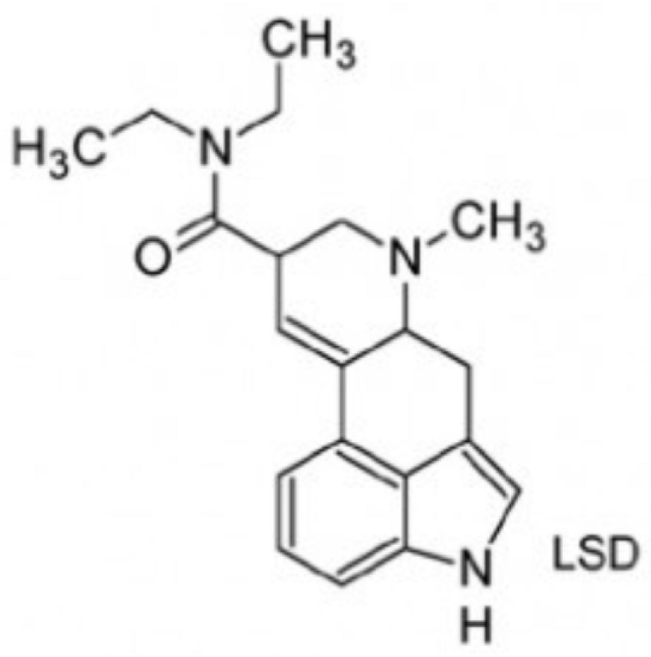
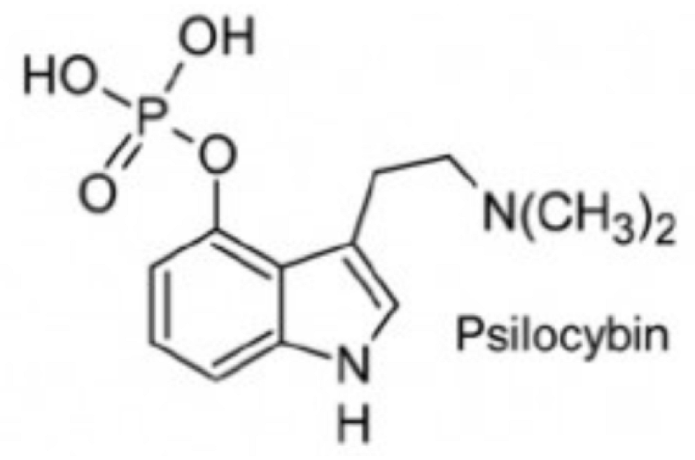
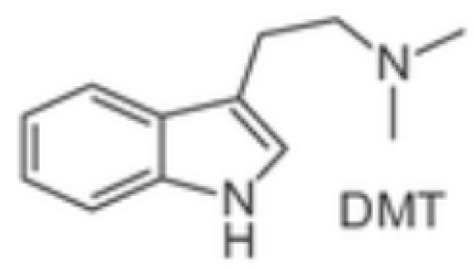
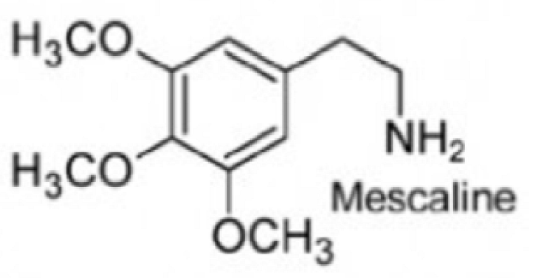
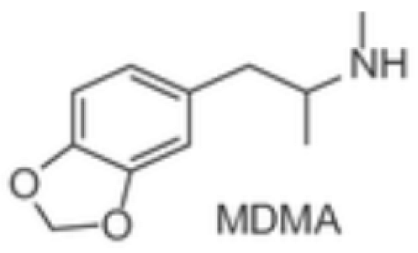
From a pharmacological perspective, hallucinogens are classified into the following: serotonergic or classical psychedelics, which exert their primary effects via agonism at serotonin 5-HT2A receptors (e.g., lysergic acid diethylamide [LSD], psilocybin, and N,N-dimethyltryptamine [DMT]), non-serotonergic compounds, such as ketamine and phencyclidine (PCP), which act primarily as N-methyl-D-aspartate (NMDA) receptor antagonists, and atypical agents, such as MDMA, a synthetic empathogen with a complex pharmacology and both stimulant and hallucinogenic effects further classified as phenylethylamine [21,22,23,24,25] (Table 1).
Table 1.
Basic pharmacology and classification of hallucinogens.
While the precise neurobiological mechanisms of these compounds remain incompletely understood, accumulating evidence suggests complex psychopharmacology and distinctive effects on perception, cognition, and consciousness [21,22,23,24,25]. Substances such as mescaline, ayahuasca, and psilocybin are naturally occurring examples of psychedelics, some of which have been used for millennia in religious and spiritual ceremonies [26,27]. while ketamine has been used in human and veterinarian medicine as a dissociative anesthetic for several decades [28,29,30,31,32].
Besides serotonergic effects, psychedelic drugs seem to engage dopamine D2 receptors, kappa opioid receptors, and monoamine oxidase enzymes, and influence monoamine transmission via modulation of serotonergic, dopaminergic, and noradrenergic transporters [24,33]. These broad and complex mechanisms are believed to contribute to both their acute subjective effects besides their more pervasive modulation of neural circuits implicated in mood, cognition, and reward, pharmacological effects particularly relevant in substance use and addictions.
Ketamine, although not a classical serotonergic hallucinogen, shares the clinical and pharmacological features of psychedelics, thus classified as a hallucinogen drug [34]. Ketamine acts primarily as a non-competitive NMDA receptor antagonist; however, it also modulates glutamatergic neurotransmission and influences dopaminergic and serotonergic circuits through effects on GABAergic interneurons [5,6,7]. Clinically, this manifests as a dissociative anesthetic, characterized by preserved respiratory drive, hemodynamic stability, and altered states of consciousness [8,9,10]. Interestingly, recent evidence suggests that ketamine may also exert its pharmacological effects though modulation of opioid pathways and signaling, as evidenced by attenuation of its rapid antidepressant effects by opioid receptor antagonism, which seems to be independent of its dissociative effects [35,36]. Famula et al. critically examined the neurobiological underpinnings of ketamine’s potential therapeutic effects in SUD, highlighting its impact on glutamatergic neurotransmission, neuroplasticity, and reward pathways, providing insights into potential mechanisms that may contribute to its effectiveness in treating SUDs [37].
While psychedelic drugs are currently classified as class I substances, denoting no current accepted medical use and high potential for abuse, ketamine falls into a class III drug classification by the US Drug Enforcement Agency (DEA), denoting moderate to low potential for abuse, while its medical use is recognized [38,39]. Throughout the years, ketamine’s clinical applications have expanded into chronic pain management, rapid-acting antidepressant and anti-suicidal effects, post-traumatic stress disorder (PTSD), bipolar disorder, obsessive–compulsive disorder (OCD), and anxiety disorders [21]. Emerging evidence also suggests ketamine’s efficacy in managing SUDs, such as alcohol, cannabis, cocaine, and opioid use disorders [40,41,42,43].
2.2. Search Strategy and Methods
Overview of Systematic Reviews
A comprehensive search of the literature was conducted to identify relevant evidence on hallucinogens—psychedelics and ketamine—for the treatment of SUDs (please refer to “Supplementary Materials” for a detailed search strategy report).
This study is reported in accordance with the PRISMA-S, an extension to the PRISMA statement for reporting literature searches in systematic reviews [44]. A medical librarian (MM) deployed the search strategy in consultation with the research team. Studies were identified from searches of the databases Embase, MEDLINE, Cochrane Central Register of Controlled Trials (CENTRAL), and the Cochrane Database of Systematic Reviews (CDSR), and PsycInfo—all via the Wolters Kluwer Ovid interface; Scopus; Science Citation Index Expanded (SCI-Expanded) and Emerging Sources Citation Index (ESCI)—both via the Clarivate Analytics Web of Science interface. The Embase search was manually translated across all resources using syntax, controlled vocabulary, and search fields. MeSH thesaurus terms from MEDLINE, EMTREE thesaurus terms from Embase, Thesaurus of Psychological Index Terms, and free and text words were used for search concepts.
Inclusion criteria: The literature time range encompassed studies from 1946 to 2024. English-language database limits were applied as available or built into searches whenever possible. An unpublished filter was used to limit the study design to systematic reviews with or without meta-analysis on interventions of interest—serotonergic and non-serotonergic drugs for the treatment of SUDs. Conference abstracts and conference reviews were excluded.
Titles and abstracts were initially screened for relevance by two independent reviewers, then full-text reviews were conducted for final inclusion. Disagreements were resolved by discussion, with a third-party tiebreaker activated if needed. All records were downloaded or manually added to EndNote 20 Desktop version.
3. Results
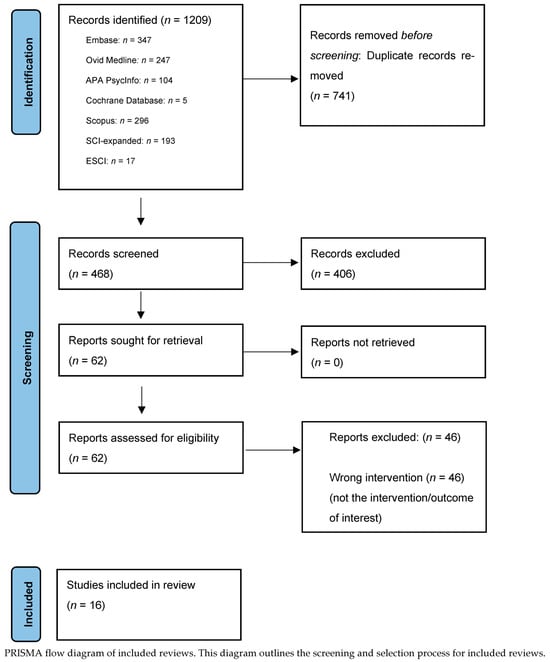
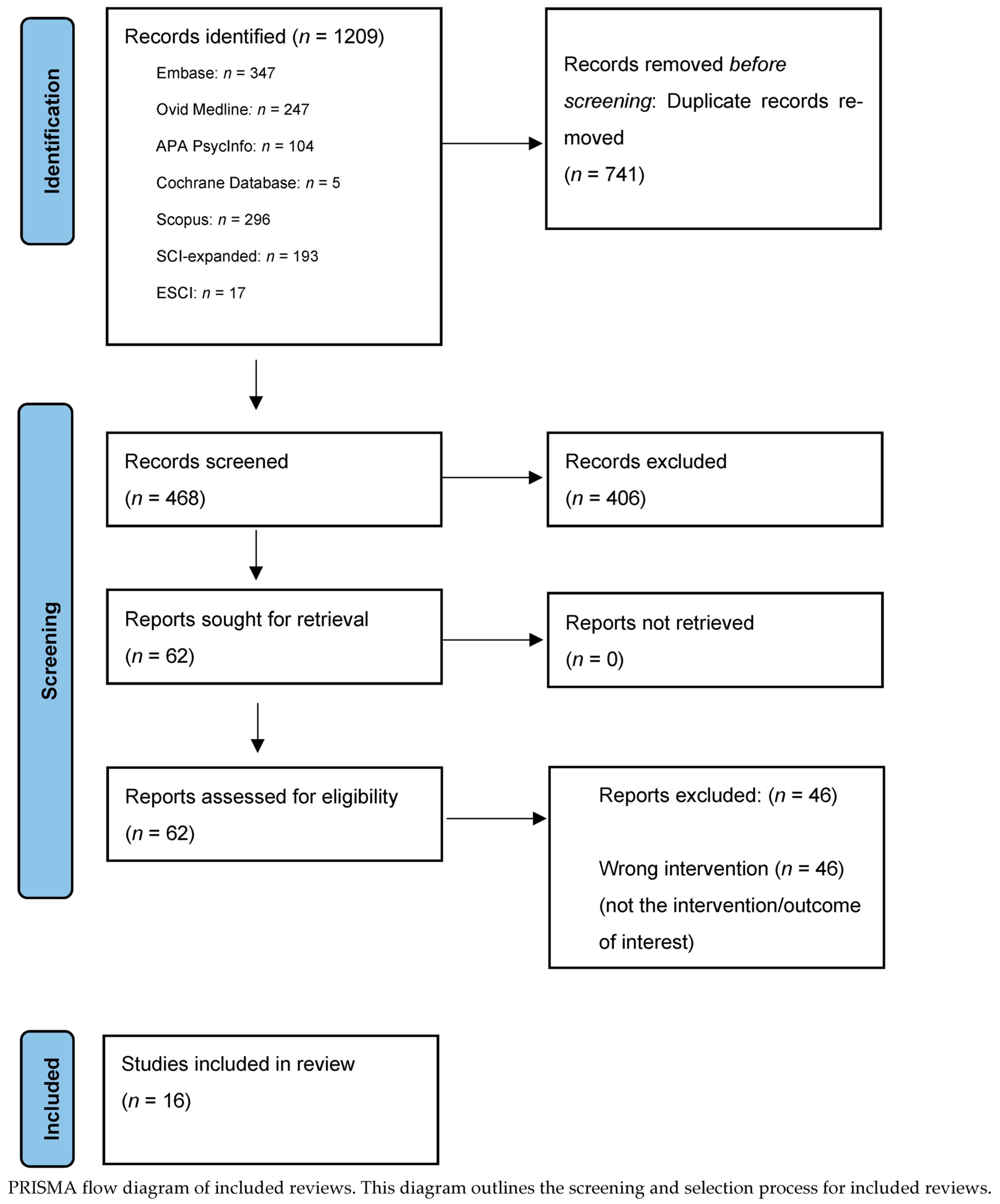
Initial database searches (Figure 1—PRISMA flow diagram) were performed on n = 1209 studies; 741 duplicates were identified and removed, resulting in 468 studies for initial screening, out of which 406 studies were excluded. Sixty-two studies were retrieved and assessed for eligibility, and a total of 16 systematic reviews that examined the therapeutic use of hallucinogens for SUD treatment were identified: 10 reviews focused on serotonergic psychedelics, including LSD, psilocybin, MDMA, ayahuasca, mescaline, and ibogaine (Table 2) [45,46,47,48,49,50,51,52,53,54], while 6 systematic reviews specifically investigated the use of ketamine for the treatment of SUDs (Table 3) [41,55,56,57,58,59].
Figure 1.
PRISMA flow diagram.
Table 2.
Psychedelics and serotonergic hallucinogens.
Table 3.
Ketamine.
3.1. Psychedelic Drugs—Psilocybin, LSD, Ayahuasca, Ibogaine, MDMA, Mescaline
Across the 10 included reviews [45,46,47,48,49,50,51,52,53,54], psychedelics were evaluated for their effects on various substance use outcomes such as abstinence, relapse rates, cravings, withdrawal symptoms, and other substance-related behaviors. Preliminary evidence suggests that psychedelic drugs may hold promise in the treatment of SUD with varying levels of efficacy across substances and conditions. Importantly, the strength and consistency of evidence varied by SUD and compound (Table 2).
Interestingly, the therapeutic benefits of psychedelic drugs were frequently associated with or attributed to the “psychedelic” or “mind manifesting” and “mystical” experiences, with participants reporting shifts in self-awareness, emotional processing, and well-being. Notably, in the 1950s, Alcoholic Anonymous (AA) founder Bill Wilson experimented with LSD in a controlled, medically supervised setting after being introduced to it by British psychiatrist Dr. Humphry Osmond, a pioneer in psychedelic therapy [60]. Wilson believed LSD could help “alcoholics” achieve the “spiritual awakening” necessary for recovery. He felt that LSD temporarily removed the ego barrier and allowed a sense of connectedness, which mirrored the “spiritual experience” described in AA’s 12th Step. Unsurprisingly, the majority of AA’s leadership and membership at the time were opposed to Wilson’s interest in LSD, viewing it as inconsistent with AA’s principle of sobriety [61,62,63].
For alcohol use disorder (AUD), LSD demonstrated greater reductions in alcohol-induced subjective effects compared to psilocybin, with one study finding that 83% of participants no longer met the criteria for AUD following an LSD-induced psychedelic experience [50]. Mescaline showed a contrasting pattern, being linked to increased alcohol consumption in youth (adolescents and college students), while 76% of adults with past AUD reported improvements in alcohol use outcomes following mescaline use in naturalistic settings [45]. Psilocybin for AUD has shown mixed results. Calleja-Conde et al. examined the relationship between classic psychedelics and alcohol consumption. They identified 27 studies, 20 of which were human studies, suggesting that classic psychedelics could help reduce alcohol consumption. The authors identified methodological concerns, such as a small number of participants, lack of control groups, and difficulty in isolating the effect of classic psychedelics [45]. Similarly, Sicignano et al. found that at the first recorded follow-up, LSD [n = 3, Odds Ratio (OR) 1.99 (95% Confidence interval (CI): 1.10 to 3.61)] and any psychedelic drugs [n = 4, OR 2.16 (95%CI: 1.26 to 3.69)] enhanced the odds of participants achieving abstinence or a substantial reduction in alcohol consumption versus placebo in randomized, double-blind, placebo-controlled trials [46]. When the inclusion criteria were relaxed to include controlled trials without double-blinding or placebo control, LSD [n = 5, OR 1.79 (95%CI: 1.36 to 2.34)] and any psychedelic therapy [n = 6, OR 1.89 (95%CI: 1.42 to 2.50)] still enhanced the odds of patients achieving abstinence or a substantial reduction in drinking alcohol [46]. However, 4 of 6 trials had high risk of bias and other methodological issues [46].
In a mixed methods systematic review, Sharma et al. reviewed evidence from 10 papers and 7 studies investigating the use of psilocybin, ibogaine, and ayahuasca, alone or adjunctive to psychotherapy for a wide range of addictions [53]. Measures of abstinence, substance use, psychological and psychosocial outcomes, craving, and withdrawal reported promising results [53]. However, the authors underscored insufficient evidence to suggest the effectiveness of any of the psychedelics on any specific SUD or misuse besides methodological limitations across studies [53].
Van der Meer et al. identified one RCT and three small clinical trials assessing the efficacy of psilocybin combined with some form of psychotherapy for alcohol and tobacco use disorder. While all four clinical trials indicated the positive effects of psilocybin-assisted therapy, authors concluded that larger studies are needed. Notably, the percentage of heavy drinking days during the 32-week double-blind period was significantly lower for psilocybin compared to placebo (mean difference of 13.9, 95% CI = 3.0–24.7, p = 0.01) in a RCT included. For tobacco use disorder, in a pilot study (n = 15) included, the 7-day point prevalence of smoking abstinence at 26 weeks was 80% (12/15), and at 52 weeks 67% (10/15) [52]. Rodrigues et al., examining the effects of ayahuasca and its alkaloids on SUD, found that ayahuasca was associated with lower alcohol consumption, reduced prevalence of AUD and tobacco and significant decrease in dependency [49]. Lastly, Mosca, A. et al. examined the efficacy of ibogaine/noribogaine for the treatment of SUDs and found short-term benefits, including improved mood, reduced cravings, and alcohol and other drug use cessation; however, cardiotoxicity (QTc prolongation, Torsade de Pointes, arrhythmias) and mortality were of significant concern [47].
The evidence on the efficacy of psychedelics for other SUDs seems sparse. For opioid use disorder (OUD), ibogaine has demonstrated mixed results, with research participants reporting reduced withdrawal symptoms and sustained remission from opioid use for extended periods of time [47]. Phan, A. N. and G. E. Terry systematically reviewed the effects of ketamine, MDMA, lorcaserin, and LSD on cannabis use and use disorder (CUD) and found no significant impact on cannabis use with MDMA, while LSD seemed to be associated with reduced cannabis use [51]. Spoelstra, S. K. et al. found that the majority of studies on psychedelics for the treatment of tobacco use disorder focused on psilocybin, although studies have also been conducted on ayahuasca, mescaline, peyote, LSD, lysergic acid amide (LSA) and dimethyltryptamine (DMT) for smoking cessation [48]. The authors concluded that there is evidence that psychedelics, in particular psilocybin, may offer a potential avenue for the treatment of tobacco use disorder, but the evidence for these psychedelics is too small to draw definitive conclusions [48].
3.2. Ketamine
Kelson et al. conducted a systematic review of 11 studies with 854 patients total evaluating ketamine as a treatment for AUD [55]. Combination therapy with ketamine and psychotherapy yielded the highest abstinence rates, with up to 70% of patients maintaining abstinence. While ketamine’s impact on withdrawal symptoms was mixed, there is evidence suggesting a favorable impact on benzodiazepine dose requirement, ICU (5.7 versus 11.2 days), decreased likelihood of intubation and shorter length of hospital stay [12]. Most patients also reported significant reductions in alcohol cravings, though results varied based on treatment protocol [55]. Similarly, Garel et al. analyzed 634 patients with AUD across eight studies and found that ketamine, either monotherapy or combined with psychotherapy, reduced both short-term (10 days) and long-term (up to 3 years) outcomes of alcohol consumption, namely abstinence, time to relapse, heavy/binge drinking [57]. However, the effects on cravings were inconsistent.
Jones et al. reviewed seven studies on ketamine’s role across multiple SUDs, including AUD, and found that ketamine was associated with abstinence, in some cases up to two years post a single ketamine infusion [41]. Moreover, ketamine was linked to lower relapse rates, enhanced motivation for sobriety, and reduced compulsive alcohol-seeking behaviors. In this study, the authors hypothesized that ketamine’s glutamatergic modulation and neuroplasticity effects may help brain connectivity and “rewire” maladaptive drinking patterns. While some studies suggested that ketamine alleviates severe withdrawal symptoms like delirium tremens, its impact on general withdrawal symptoms remains unclear. Moreover, in this review, Jones et al. also examined the effects of ketamine on opioid, cocaine, and cannabis use disorders [41]. Two clinical studies on cocaine use disorder (total of n = 28 participants; first study: n = 8 non-treatment and non-abstinence seeking adults; second study: n = 20 non-treatment seeking) found that ketamine treatment helped individuals reduce cocaine consumption, with effects observed as early as the same day and lasting up to four weeks at follow-up [41]. Additionally, patients with cocaine use disorder reported increased motivation to abstain from drug use. Notably, small sample sizes and other methodological challenges limit the generalizability of these findings [41]. Furthermore, ketamine for OUD has shown promising outcomes, with higher ketamine doses seeming to be more effective. However, various included studies lacked control groups and did not integrate medication for opioid use disorders (MOUD) and standardized treatments, such as buprenorphine or methadone, for comparison making it difficult to assess ketamine’s relative effectiveness to well established treatments for OUD [41,59]. Following these encouraging but limited findings, clinical trials investigating ketamine use for cannabis use disorder and cannabis withdrawal symptoms have been initiated, although its efficacy is yet to be determined [41].
4. Discussion
Also known as “umbrella review,” “review of reviews,” and “metareview,” an overview of systematic reviews is a relatively new method of evidence synthesis that collates and organizes information from multiple systematic reviews with the goal to summarize, compare and contrast evidence that can guide clinical and research endeavors, identifying gaps in the literature and areas for future research [64]. It is a systematic approach that can be particularly useful when there is significant heterogeneity in the literature.
Through this novel approach, this overview of systematic reviews consolidates existing syntheses on psychedelic drugs—serotonergic psychedelics and ketamine—for the treatment of SUDs. The goal was to highlight the potential benefits of these drugs along with key limitations across studies, identifying priority areas for future investigation, clinical and translational research. Overall, the reviews presented here underscore the therapeutic potential of both serotonergic and non-serotonergic psychedelics particularly for alcohol use disorder, while evidence is much sparser for other SUDs.
The mechanisms of action underlying the therapeutic benefits of hallucinogens for SUD and other mental health conditions remain poorly understood, in part due to its heterogeneity and complex psychopharmacology. While preclinical studies have provided significant insights into mechanisms of action, isolating biological markers and translating these findings into more refined drug development and clinical application remain a challenge.
While advantages of psychedelic drugs and ketamine over treatment as usual may include single-dose interventions over complex treatment regimens, rapid onset of action and more sustained clinical benefits, evidence to date remains equivocal due to multiple methodological limitations, such as small sample sizes, study designs, risk of bias, including masking interventions, and lack of comparisons with established treatments and standards of care. However, if preliminary findings are consistently replicated by methodologically sound studies, these drugs may eventually represent alternatives to traditional medications or be used adjunctive to existing pharmacological and non-pharmacological treatments for optimal outcomes and enhanced treatment response.
Importantly, it is also possible to consider these interventions as alternatives or adjunctive strategies in more severe and refractory conditions, particularly in the setting of co-occurring disorders. For instance, while contemporary research with MDMA has shown significant reduction in PTSD symptoms, granting MDMA FDA “breakthrough therapy” designation for PTSD in 2017, little is known about the effects of MDMA-AT on alcohol consumption in this population. Considering the high co-occurrence of PTSD-AUD and preliminary evidence on the benefits of psychedelics also for SUD, secondary analysis from a phase 3 trial has demonstrated that, compared to placebo + therapy, MDMA-AT was associated with a significantly greater reduction in mean AUDIT score changes [65]. Thus, future research on the effects of MDMA-AT as an integrated treatment for co-occurring PTSD-AUD is warranted. Similarly, it remains unclear whether alcohol and other substance use outcomes would vary for individuals with co-occurring treatment-resistant depression and SUD receiving ketamine therapy, and future research should explore these questions. Unfortunately, to date, most clinical trials, whether on interventions for SUD or other psychiatric conditions, almost invariably exclude comorbid conditions, limiting our understanding on the impact of interventions for individuals suffering from co-occurring disorders.
While promising, much is yet to be performed. As aforementioned, significant methodological limitations remain an area of great concern, limiting the interpretation of results and generalizability of findings. Given the unique and profound psychoactive effects of these drugs, masking interventions remains a challenge. Heterogeneity of treatment protocols and psychosocial interventions also limit outcomes and appraisal of results. Most trials have incorporated adjunctive behavioral/psychotherapeutic interventions, making it difficult to isolate the “hallucinogenic effects.” The absence of reliable active placebos further complicates the interpretation of findings, as both research participants and investigators are often able to accurately predict treatment allocation. Thus, high risk of bias from included studies besides low-quality level of evidence to support hallucinogen therapies for SUD should not be ignored. Finally, ensuring fair subject selection and equitable study participation are critical for ethical human research and generalizability of findings.
Safety concerns, including autonomic instability, cardiovascular and respiratory side effects, anxiety, agitation, dysphoria, confusion, perceptual disturbances and dissociative symptoms have been extensively reported, although claimed to be dose-dependent and not life-threatening, somewhat contrary to findings from studies on ibogaine and noribogaine [47]. Challenges related to real life situations, such as elucidating drug–drug interactions, risks of serotonin syndrome, neurodevelopmental consequences, and the use of ketamine and psychedelic-assisted therapy in special populations, such as individuals with psychotic disorders, polypharmacy, older adults and geriatric populations, and safety in individuals with SUD, are yet to be clarified. Long-term effects and potential negative consequences are too to be determined. Misuse potential, particularly of ketamine, has been extensively reported since ketamine has been used for medical purposes, initially constrained to healthcare professionals and individuals with access to this drug, although non-medical ketamine has reached the streets over the decades, now. Medical complications from non-medical ketamine use and chronic exposure, such as cardiovascular disease, uropathy (ulcerative cystitis, hydronephrosis, chronic kidney disease and renal failure), neurocognitive impairment, unintentional accidents and injuries, and deaths have been reported.
Notably, non-medical use of ketamine has dramatically increased in recent years, particularly in Eastern Europe, The United Kingdom, Australia, South and East Asia, but also in the US. Ketamine-related ER visits and post-mortem toxicology reports are an area of concern. Deaths attributed to ketamine and other hallucinogens have been reported, including high profile cases in media outlets. The co-ingestion of ketamine and other drugs (e.g., MDMA, cocaine, and gamma-hydroxybutyrate—GHB) is also common, particularly in specific settings (e.g., night clubs and raves) and among specific populations, which poses even higher risks of toxicity and multiple medical complications than ketamine alone. Available formulations—powder, liquid, or capsules, most commonly used by nasal insufflation—are relatively inexpensive and have become more easily accessible in recent years under the street names of “Cat Tranquilizer, Cat Valium, Jet K, Kit Kat, Purple, Special K, Special La Coke, Super Acid, Super K, Vitamin K,” according to the DEA [56,66,67,68,69,70,71,72,73,74,75,76,77,78,79].
Thus, while the benefits of hallucinogens for psychiatric conditions, including SUD treatment, are promising, risks and potential harm should not be ignored. The medical use of scheduled drugs, such as cannabis, psychedelics, and ketamine has historically lowered the public’s perception of harm from these drugs, leading to substantial increase in its consumption in unsupervised medical settings and for non-medical purposes. As importantly, predatorial and careless ketamine clinics, retreats, and “medical” practices have proliferated in recent years. Finally, the devaluation or demonization of FDA-approved psychotropic medications has caused a great disservice to the larger public.
To our knowledge, this overview of systematic reviews is the first study to integrate and synthesize evidence from both serotonergic (psychedelics) and non-serotonergic (ketamine) hallucinogens for SUD treatment. It highlights results from multiple studies on potential clinical benefits of hallucinogens for SUDs and underscores gaps in the existing literature and areas for future research implementation, such as study design and methodology. Similarly to other reviews on these topics, the heterogeneity of studies, small sample sizes, and high risk of bias still represent limitations not only of this study but also the evidence to date. It is also important to note that the effects of psychotherapeutic interventions for SUD have been understudied, particularly in the setting of psychedelic- and ketamine-assisted psychotherapy. The disentangling effects of pharmacological from behavioral interventions is complex yet warranted. Hopefully, the results presented here will be further investigated by larger and methodologically sound clinical trials, involving broader and more representative patient populations, besides assessing real-life situations before these drugs are considered ready for prime time.
5. Conclusions
As the pursuit of novel and more effective treatments for SUD continues, findings from pre-clinical and human studies with hallucinogens have shown promise. The scientific value of psychedelics and ketamine as novel strategies for the treatment of addictions seems compelling, and the advantages of these drugs over treatment as usual may include single-dose interventions over complex pharmacological regimens, likely enhancing efficacy and adherence. Nonetheless, research with these compounds has faced significant challenges, and the many risks associated with these drugs are not negligible. Great caution when interpreting results is warranted, given the high risk of bias and several methodological limitations from studies to date. These limitations highlight the need for more rigorous clinical trials to further elucidate treatment response, efficacy and the long-term safety of hallucinogens, particularly for individuals with SUDs. Unarguably, the results of psychedelic-assisted therapy, particularly for the treatment of alcohol use disorder and smoking cessation, have shown remarkable short- and long-term effects, some unparallelled with traditional pharmacological interventions. While several trials are underway, if preliminary results are reliably replicated, psychedelic drugs and ketamine may become part of the next generation of treatments for SUDs. For now, the use of psychedelic drugs and ketamine for the treatment of SUDs remains experimental, and existing evidence is insufficient to support its use in clinical practice.
Supplementary Materials
The following supporting information can be downloaded at https://www.mdpi.com/article/10.3390/brainsci15101056/s1, Search Strategy.
Author Contributions
Conceptualization: M.S.G. and T.R.; methodology and data extraction: T.O., M.T.M., and S.A.V.-T.; writing—original draft preparation: S.C.d.C., N.L.B., T.O. and S.A.V.-T.; writing—review and editing: M.-F.H., M.S.G., and T.R. All authors have read and agreed to the published version of the manuscript.
Funding
This research received no external funding.
Institutional Review Board Statement
Ethical review and approval were waived for this study because it is a review of published literature and did not involve any human or animal subjects.
Informed Consent Statement
Not applicable.
Data Availability Statement
The data presented in this study are derived from previously published articles and are publicly available in the respective publications cited throughout the manuscript.
Conflicts of Interest
The authors declare no conflicts of interest.
References
- Whiteford, H.A.; Degenhardt, L.; Rehm, J.; Baxter, A.J.; Ferrari, A.J.; Erskine, H.E.; Charlson, F.J.; Norman, R.E.; Flaxman, A.D.; Johns, N.; et al. Global burden of disease attributable to mental and substance use disorders: Findings from the Global Burden of Disease Study 2010. Lancet 2013, 382, 1575–1586. [Google Scholar] [CrossRef] [Scilit]
- SAMHSA. Substance Abuse and Mental Health Services Administration: Results from the 2020 National Survey on Drug Use and Health: Detailed Tables; SAMHSA: Rockville, MD, USA, 2021. [Google Scholar]
- Mokdad, A.H.; Marks, J.S.; Stroup, D.F.; Gerberding, J.L. Actual causes of death in the United States, 2000. J. Am. Med. Assoc. 2004, 291, 1238–1245. [Google Scholar] [CrossRef] [Scilit]
- Murray, C.J.L.; Mokdad, A.H.; Ballestros, K.; Echko, M.; Glenn, S.; Olsen, H.E.; Mullany, E.; Lee, A.; Khan, A.R.; Ahmadi, A.; et al. The state of US health, 1990-2016: Burden of diseases, injuries, and risk factors among US states. J. Am. Med. Assoc. 2018, 319, 1444–1472. [Google Scholar] [CrossRef] [Scilit]
- Adrian, M.; Barry, S.J. Physical and Mental Health Problems Associated with the Use of Alcohol and Drugs. Subst. Use Misuse 2003, 38, 1575–1614. [Google Scholar] [CrossRef] [Scilit] [PubMed]
- Volkow, N.D.; Blanco, C. The changing opioid crisis: Development, challenges and opportunities. Mol. Psychiatry 2021, 26, 218–233. [Google Scholar] [CrossRef] [Scilit] [PubMed]
- Substance Abuse and Mental Health Services Administration. Key Substance Use and Mental Health Indicators in the United States: Results from the 2023 National Survey on Drug Use and Health (HHS Publication No. PEP24-07-021, NSDUH Series H-59); Center for Behavioral Health Statistics and Quality, Substance Abuse and Mental Health Services Administration: Rockville, MD, USA, 2024.
- Esser, M.B.; Leung, G.; Sherk, A.; Bohm, M.K.; Liu, Y.; Lu, H.; Naimi, T.S. Estimated Deaths Attributable to Excessive Alcohol Use Among US Adults Aged 20 to 64 Years, 2015 to 2019. JAMA Netw. Open 2022, 5, e2239485. [Google Scholar] [CrossRef] [Scilit]
- Esser, M.B.; Sherk, A.; Liu, Y.; Naimi, T.S. Deaths from Excessive Alcohol Use—United States, 2016–2021. Morb. Mortal. Wkly. Rep. 2024, 73, 154–161. [Google Scholar] [CrossRef] [Scilit]
- Rehm, J.R.; Mathers, C.; Popova, S.; Thavorncharoensap, M.; Teerawattananon, Y.; Patra, J. Global burden of disease and injury and economic cost attributable to alcohol use and alcohol-use disorders. Lancet 2009, 373, 2223–2233. [Google Scholar] [CrossRef] [Scilit]
- Sacks, J.J.; Gonzales, K.R.; Bouchery, E.E.; Tomedi, L.E.; Brewer, R.D. 2010 National and State Costs of Excessive Alcohol Consumption. Am. J. Prev. Med. 2015, 49, e73–e79. [Google Scholar] [CrossRef] [Scilit]
- Volkow, N.D.; Blanco, C. Substance use disorders: A comprehensive update of classification, epidemiology, neurobiology, clinical aspects, treatment and prevention. World Psychiatry 2023, 22, 203–229. [Google Scholar] [CrossRef] [Scilit]
- Bormann, N.L.; Burson, J.R.; Burson, E.M.; McGinnis, M.; Karpyak, V.; Coombes, B.J.; Gold, M.; Oesterle, T.S. How Treatment-Refractory Addiction Is Defined: A Scoping Review. J. Addict. Med. 2025, 10–1097. [Google Scholar] [CrossRef] [Scilit]
- Case, A.; Deaton, A. Rising morbidity and mortality in midlife among white non-Hispanic Americans in the 21st century. Proc. Natl. Acad. Sci. USA 2015, 112, 15078–15083. [Google Scholar] [CrossRef] [Scilit] [PubMed]
- Aksu, S.; Soyata, A.Z.; Şeker, S.; Akkaya, G.; Yılmaz, Y.; Kafalı, T.; Evren, C.; Umut, G. Transcranial direct current stimulation combined with cognitive training improves decision making and executive functions in opioid use disorder: A triple-blind sham-controlled pilot study. J. Addict. Dis. 2024, 42, 154–165. [Google Scholar] [CrossRef] [Scilit]
- Wang, Y.; Shen, Y.; Cao, X.; Shan, C.; Pan, J.; He, H.; Ma, Y.; Yuan, T.F. Transcranial direct current stimulation of the frontal-parietal-temporal area attenuates cue-induced craving for heroin. J. Psychiatr. Res. 2016, 79, 1–3. [Google Scholar] [CrossRef] [Scilit] [PubMed]
- Bormann, N.L.; Oesterle, T.S.; Arndt, S.; Karpyak, V.M.; Croarkin, P.E. Systematic review and meta-analysis: Combining transcranial magnetic stimulation or direct current stimulation with pharmacotherapy for treatment of substance use disorders. Am. J. Addict. 2024, 33, 269–282. [Google Scholar] [CrossRef] [Scilit] [PubMed]
- Tang, V.M.; Goud, R.; Zawertailo, L.; Selby, P.; Coroiu, A.; Sloan, M.E.; Chenoweth, M.J.; Buchman, D.; Ibrahim, C.; Blumberger, D.M.; et al. Repetitive transcranial magnetic stimulation for smoking cessation: Next steps for translation and implementation into clinical practice. Psychiatry Res. 2023, 326, 115340. [Google Scholar] [CrossRef] [Scilit]
- Li, S.; Jiang, A.; Ma, X.; Yang, B.; Ni, H.; Zheng, Y.; Wang, Z.; Dong, G.H. Repetitive transcranial magnetic stimulation reduces smoking cravings by decreasing cerebral blood flow in the dorsolateral prefrontal cortex. Brain Commun. 2025, 7, fcaf101. [Google Scholar] [CrossRef] [Scilit]
- Garcia-Romeu, A.; Davis, A.K.; Erowid, E.; Erowid, F.; Griffiths, R.R.; Johnson, M.W. Persisting Reductions in Cannabis, Opioid, and Stimulant Misuse After Naturalistic Psychedelic Use: An Online Survey. Front. Psychiatry 2020, 10, 995. [Google Scholar] [CrossRef] [Scilit]
- da Costa, S.C.; Oesterle, T.; Rummans, T.A.; Richelson, E.; Gold, M. Psychedelic drugs for psychiatric disorders. J. Neurol. Sci. 2022, 440, 120332. [Google Scholar] [CrossRef] [Scilit]
- Carhart-Harris, R.L. How do psychedelics work? Curr. Opin. Psychiatry 2019, 32, 16–21. [Google Scholar] [CrossRef] [Scilit]
- Carhart-Harris, R.L.; Erritzoe, D.; Williams, T.; Stone, J.M.; Reed, L.J.; Colasanti, A.; Tyacke, R.J.; Leech, R.; Malizia, A.L.; Murphy, K.; et al. Neural correlates of the psychedelic state as determined by fMRI studies with psilocybin. Proc. Natl. Acad. Sci. USA 2012, 109, 2138–2143. [Google Scholar] [CrossRef] [Scilit]
- Nichols, D.E. Psychedelics. Pharmacol. Rev. 2016, 68, 264–355. [Google Scholar] [CrossRef] [Scilit]
- Carhart-Harris, R.L.; Goodwin, G.M. The Therapeutic Potential of Psychedelic Drugs: Past, Present, and Future. Neuropsychopharmacology 2017, 42, 2105–2113. [Google Scholar] [CrossRef] [Scilit] [PubMed]
- Schultes, R.E.; Hofmann, A.; Rätsch, C. Plants of the Gods: Their Sacred, Healing, and Hallucinogenic Powes; Healing Arts Press: Rochester, VT, USA, 2001. [Google Scholar]
- Metzner, R. Entheogenic rituals, shamanism and green psychology. Eur. J. Ecopsychol. 2013, 4, 64–77. [Google Scholar]
- Zarate, C.A. Do the dissociative side effects of ketamine mediate its antidepressant effects? J. Affect. Disord. 2014, 159, 56–61. [Google Scholar] [CrossRef] [Scilit]
- Newport, D.J.; Carpenter, L.L.; McDonald, W.M.; Potash, J.B.; Tohen, M.; Nemeroff, C.B. Ketamine and other NMDA antagonists: Early clinical trials and possible mechanisms in depression. Am. J. Psychiatry 2015, 172, 950–966. [Google Scholar] [CrossRef] [Scilit]
- Zunszain, P.A.; Horowitz, M.A.; Cattaneo, A.; Lupi, M.M.; Pariante, C.M. Ketamine: Synaptogenesis, immunomodulation and glycogen synthase kinase-3 as underlying mechanisms of its antidepressant properties. Mol. Psychiatry 2013, 18, 1236–1241. [Google Scholar] [CrossRef] [Scilit]
- Zanos, P.; Moaddel, R.; Morris, P.J.; Georgiou, P.; Fischell, J.; Elmer, G.I.; Alkondon, M.; Yuan, P.; Pribut, H.J.; Singh, N.S.; et al. NMDAR inhibition-independent antidepressant actions of ketamine metabolites. Nature 2016, 533, 481–486. [Google Scholar] [CrossRef] [Scilit]
- Cornwell, B.R.; Salvadore, G.; Furey, M.; Marquardt, C.A.; Brutsche, N.E.; Grillon, C.; Zarate, C.A. Synaptic potentiation is critical for rapid antidepressant response to ketamine in treatment-resistant major depression. Biol. Psychiatry 2012, 72, 555–561. [Google Scholar] [CrossRef] [Scilit] [PubMed]
- Vollenweider, F.X.; Kometer, M. The neurobiology of psychedelic drugs: Implications for the treatment of mood disorders. Nat. Rev. Neurosci. 2010, 11, 642–651. [Google Scholar] [CrossRef] [Scilit] [PubMed]
- American Psychiatric Association. DSM 5; American Psychiatric Publishing, Inc.: Washington, DC, USA, 2013; p. 991. [Google Scholar]
- Williams, N.R.; Heifets, B.D.; Bentzley, B.S.; Blasey, C.; Sudheimer, K.D.; Hawkins, J.; Lyons, D.M.; Schatzberg, A.F. Attenuation of antidepressant and antisuicidal effects of ketamine by opioid receptor antagonism. Mol. Psychiatry 2019, 24, 1779–1786. [Google Scholar] [CrossRef] [Scilit]
- Williams, N.R.; Heifets, B.D.; Blasey, C.; Sudheimer, K.; Pannu, J.; Pankow, H.; Hawkins, J.; Birnbaum, J.; Lyons, D.M.; Rodriguez, C.I.; et al. Attenuation of Antidepressant Effects of Ketamine by Opioid Receptor Antagonism. Am. J. Psychiatry 2018, 175, 1205–1215. [Google Scholar] [CrossRef] [Scilit]
- Famula, A.; Radoszewski, J.; Czerwiec, T.; Sobis, J.; Wieckiewicz, G. Ketamine in Substance Use Disorder Treatment: A Narrative Review. Alpha Psychiatry 2024, 25, 206–211. [Google Scholar] [CrossRef] [Scilit] [PubMed]
- Drug Enforcement Administration. Title 21 United States Code (USC) Controlled Substances Act—Section 801; Office of Diversion Control. United States Department of Justice: Springfield, VA, USA, 1970.
- Johnson, M.W.; Griffiths, R.R.; Hendricks, P.S.; Henningfield, J.E. The abuse potential of medical psilocybin according to the 8 factors of the Controlled Substances Act. Neuropharmacology 2018, 142, 143–166. [Google Scholar] [CrossRef] [Scilit]
- Janssen-Aguilar, R.; Meshkat, S.; Demchenko, I.; Zhang, Y.; Greenshaw, A.; Dunn, W.; Tanguay, R.; Mayo, L.M.; Swainson, J.; Jetly, R.; et al. Role of ketamine in the treatment of substance use disorders: A systematic review. J. Subst. Use Addict. Treat. 2025, 175, 209705. [Google Scholar] [CrossRef] [Scilit]
- Jones, J.L.; Mateus, C.F.; Malcolm, R.J.; Brady, K.T.; Back, S.E. Efficacy of Ketamine in the Treatment of Substance Use Disorders: A Systematic Review. Front. Psychiatry 2018, 9, 277. [Google Scholar] [CrossRef] [Scilit]
- Martinotti, G.; Chiappini, S.; Pettorruso, M.; Mosca, A.; Miuli, A.; Di Carlo, F.; D’Andrea, G.; Collevecchio, R.; Di Muzio, I.; Sensi, S.L.; et al. Therapeutic Potentials of Ketamine and Esketamine in Obsessive-Compulsive Disorder (OCD), Substance Use Disorders (SUD) and Eating Disorders (ED): A Review of the Current Literature. Brain Sci. 2021, 11, 856. [Google Scholar] [CrossRef] [Scilit]
- Walsh, Z.; Mollaahmetoglu, O.M.; Rootman, J.; Golsof, S.; Keeler, J.; Marsh, B.; Nutt, D.J.; Morgan, C.J.A. Ketamine for the treatment of mental health and substance use disorders: Comprehensive systematic review. BJPsych Open 2021, 8, e19. [Google Scholar] [CrossRef] [Scilit]
- Rethlefsen, M.L.; Kirtley, S.; Waffenschmidt, S.; Ayala, A.P.; Moher, D.; Page, M.J.; Koffel, J.B.; Group, P.-S. PRISMA-S: An extension to the PRISMA Statement for Reporting Literature Searches in Systematic Reviews. Syst. Rev. 2021, 10, 39. [Google Scholar] [CrossRef] [Scilit]
- Calleja-Conde, J.; Morales-Garcia, J.A.; Echeverry-Alzate, V.; Buhler, K.M.; Gine, E.; Lopez-Moreno, J.A. Classic psychedelics and alcohol use disorders: A systematic review of human and animal studies. Addict. Biol. 2022, 27, e13229. [Google Scholar] [CrossRef] [Scilit] [PubMed]
- Sicignano, D.; Hernandez, A.V.; Schiff, B.; Elmahy, N.; White, C.M. The impact of psychedelics on patients with alcohol use disorder: A systematic review with meta-analysis. Curr. Med. Res. Opin. 2024, 40, 293–302. [Google Scholar] [CrossRef] [Scilit]
- Mosca, A.; Chiappini, S.; Miuli, A.; Mancusi, G.; Santovito, M.C.; Di Carlo, F.; Pettorruso, M.; Corkery, J.M.; Canessa, C.; Martinotti, G.; et al. Ibogaine/Noribogaine in the Treatment of Substance Use Disorders: A Systematic Review of the Current Literature. Curr. Neuropharmacol. 2023, 21, 2178–2194. [Google Scholar] [CrossRef] [Scilit]
- Spoelstra, S.K.; Schoevers, R.A.; Venema, S.D.; Knegtering, H. Psychedelics as a potential treatment for tobacco use disorder: A systematic review. Discov. Ment. Health 2024, 4, 37. [Google Scholar] [CrossRef] [Scilit]
- Rodrigues, L.S.; Rossi, G.N.; Rocha, J.M.; LOsório, F.; Bouso, J.C.; Hallak, J.E.C.; Dos Santos, R.G. Effects of ayahuasca and its alkaloids on substance use disorders: An updated (2016–2020) systematic review of preclinical and human studies. Eur. Arch. Psychiatry Clin. Neurosci. 2022, 272, 541–556. [Google Scholar] [CrossRef] [Scilit] [PubMed]
- Fuentes, J.J.; Fonseca, F.; Elices, M.; Farre, M.; Torrens, M. Therapeutic Use of LSD in Psychiatry: A Systematic Review of Randomized-Controlled Clinical Trials. Front. Psychiatry 2019, 10, 943. [Google Scholar] [CrossRef] [Scilit] [PubMed]
- Phan, A.N.; Terry, G.E. Systematic review and rationale of using psychedelics in the treatment of cannabis use disorder. Front. Psychiatry 2023, 14, 1144276. [Google Scholar] [CrossRef] [Scilit] [PubMed]
- van der Meer, P.B.; Fuentes, J.J.; Kaptein, A.A.; Schoones, J.W.; de Waal, M.M.; Goudriaan, A.E.; Kramers, K.; Schellekens, A.; Somers, M.; Bossong, M.G.; et al. Therapeutic effect of psilocybin in addiction: A systematic review. Front. Psychiatry 2023, 14, 1134454. [Google Scholar] [CrossRef] [Scilit]
- Sharma, R.; Batchelor, R.; Sin, J. Psychedelic Treatments for Substance Use Disorder and Substance Misuse: A Mixed Methods Systematic Review. J. Psychoact. Drugs 2023, 55, 612–630. [Google Scholar] [CrossRef] [Scilit]
- Trope, A.; Anderson, B.T.; Hooker, A.R.; Glick, G.; Stauffer, C.; Woolley, J.D. Psychedelic-Assisted Group Therapy: A Systematic Review. J. Psychoact. Drugs 2019, 51, 174–188. [Google Scholar] [CrossRef] [Scilit]
- Kelson, M.; Burnett, J.M.; Matthews, A.; Juneja, T. Ketamine Treatment for Alcohol Use Disorder: A Systematic Review. Cureus 2023, 15, e38498. [Google Scholar] [CrossRef] [Scilit]
- Drozdz, S.J.; Goel, A.; McGarr, M.W.; Katz, J.; Ritvo, P.; Mattina, G.F.; Bhat, V.; Diep, C.; Ladha, K.S. Ketamine Assisted Psychotherapy: A Systematic Narrative Review of the Literature. J. Pain. Res. 2022, 15, 1691–1706. [Google Scholar] [CrossRef] [Scilit]
- Garel, N.; McAnulty, C.; Greenway, K.T.; Lesperance, P.; Miron, J.P.; Rej, S.; Richard-Devantoy, S.; Jutras-Aswad, D. Efficacy of ketamine intervention to decrease alcohol use, cravings, and withdrawal symptoms in adults with problematic alcohol use or alcohol use disorder: A systematic review and comprehensive analysis of mechanism of actions. Drug Alcohol. Depend. 2022, 239, 109606. [Google Scholar] [CrossRef] [Scilit] [PubMed]
- Kew, B.M.; Porter, R.J.; Douglas, K.M.; Glue, P.; Mentzel, C.L.; Beaglehole, B. Ketamine and psychotherapy for the treatment of psychiatric disorders: Systematic review. BJPsych Open 2023, 9, e79. [Google Scholar] [CrossRef] [Scilit] [PubMed]
- Walsh, Z.; Mollaahmetoglu, O.M.; Rootman, J.; Golsof, S.; Keeler, J.; Marsh, B.; Nutt, D.J.; Morgan, C.J.A. Ketamine for the treatment of mental health and substance use disorders: Comprehensive systematic review—CORRIGENDUM. BJPsych Open 2022, 8, e29. [Google Scholar] [CrossRef] [Scilit]
- Osmond, H. A review of the clinical effects of psychotomimetic agents. Ann. N. Y. Acad. Sci. 1957, 66, 418–434. [Google Scholar] [CrossRef] [Scilit]
- Kelly, J.F.; Magill, M.; Stout, R.L. How do people recover from alcohol dependence? A systematic review of the research on mechanisms of behavior change in Alcoholics Anonymous. Addict. Res. 2009, 17, 236–259. [Google Scholar] [CrossRef] [Scilit]
- William, W. The Society of Alcoholics Anonymous. Am. J. Psychiatry 1949, 106, 370–375. [Google Scholar] [CrossRef] [Scilit]
- Kinnell, H.G.; Glatt, M.M. Alcoholics Anonymous. Lancet 1978, 311, 714–715. [Google Scholar] [CrossRef] [Scilit]
- Hunt, H.; Pollock, A.; Campbell, P.; Estcourt, L.; Brunton, G. An introduction to overviews of reviews: Planning a relevant research question and objective for an overview. Syst. Rev. 2018, 7, 39. [Google Scholar] [CrossRef] [Scilit]
- Nicholas, C.R.; Wang, J.B.; Coker, A.; Mitchell, J.M.; Klaire, S.S.; Yazar-Klosinski, B.; Emerson, A.; Brown, R.T.; Doblin, R. The effects of MDMA-assisted therapy on alcohol and substance use in a phase 3 trial for treatment of severe PTSD. Drug Alcohol. Depend. 2022, 233, 109356. [Google Scholar] [CrossRef] [Scilit]
- de Lima, J.; Beggs, S.; Howard, R. Neural toxicity of ketamine and othe NMDA antagonists. Pain 2000, 88, 311–312. [Google Scholar] [CrossRef] [Scilit]
- Kalsi, S.S.; Wood, D.M.; Dargan, P.I. The epidemiology and patterns of acute and chronic toxicity associated with recreational ketamine use. Emerg. Health Threat. J. 2011, 4, 7107. [Google Scholar] [CrossRef] [Scilit] [PubMed]
- Ng, J.; Lui, L.M.W.; Rosenblat, J.D.; Teopiz, K.M.; Lipsitz, O.; Cha, D.S.; Xiong, J.; Nasri, F.; Lee, Y.; Kratiuk, K.; et al. Ketamine-induced urological toxicity: Potential mechanisms and translation for adults with mood disorders receiving ketamine treatment. Psychopharmacology 2021, 238, 917–926. [Google Scholar] [CrossRef] [Scilit]
- Orhurhu, V.J.; Vashisht, R.; Claus, L.E.; Cohen, S.P. Ketamine Toxicity; StatPearls: Treasure Island, FL, USA, 2025. [Google Scholar]
- Slikker, W., Jr.; Liu, F.; Rainosek, S.W.; Patterson, T.A.; Sadovova, N.; Hanig, J.P.; Paule, M.G.; Wang, C. Ketamine-Induced Toxicity in Neurons Differentiated from Neural Stem Cells. Mol. Neurobiol. 2015, 52, 959–969. [Google Scholar] [CrossRef] [Scilit]
- Yiu-Cheung, C. Acute and chronic toxicity pattern in ketamine abusers in Hong Kong. J. Med. Toxicol. 2012, 8, 267–270. [Google Scholar] [CrossRef] [Scilit]
- Ahmed, S.N.; Petchkovsky, L. Abuse of ketamine. Br. J. Psychiatry 1980, 137, 303. [Google Scholar] [CrossRef] [Scilit] [PubMed]
- Bobo, W.V.; Miller, S.C. Ketamine as a preferred substance of abuse. Am. J. Addict. 2002, 11, 332–334. [Google Scholar] [CrossRef] [Scilit]
- Bokor, G.; Anderson, P.D. Ketamine: An update on its abuse. J. Pharm. Pract. 2014, 27, 582–586. [Google Scholar] [CrossRef] [Scilit]
- Corkery, J.M.; Hung, W.C.; Claridge, H.; Goodair, C.; Copeland, C.S.; Schifano, F. Recreational ketamine-related deaths notified to the National Programme on Substance Abuse Deaths, England, 1997–2019. J. Psychopharmacol. 2021, 35, 1324–1348. [Google Scholar] [CrossRef] [Scilit]
- Lu, Y.Y.; Lin, C.H.; Lane, H.Y. Mania following ketamine abuse. Neuropsychiatr. Dis. Treat. 2016, 12, 237–239. [Google Scholar] [CrossRef] [Scilit] [PubMed]
- Nomiya, A.; Nishimatsu, H.; Homma, Y. Interstitial cystitis symptoms associated with ketamine abuse: The first Japanese case. Int. J. Urol. 2011, 18, 735. [Google Scholar] [CrossRef] [Scilit] [PubMed]
- Pappachan, J.M.; Raj, B.; Thomas, S.; Hanna, F.W. Multiorgan dysfunction related to chronic ketamine abuse. In Baylor University Medical Center Proceedings; Taylor & Francis: Oxfordshire, UK, 2014; Volume 27, pp. 223–225. [Google Scholar] [CrossRef] [Scilit]
- Sassano-Higgins, S.; Baron, D.; Juarez, G.; Esmaili, N.; Gold, M. A Review of Ketamine Abuse and Diversion. Depress. Anxiety 2016, 33, 718–727. [Google Scholar] [CrossRef] [Scilit] [PubMed]

Disclaimer/Publisher’s Note: The statements, opinions and data contained in all publications are solely those of the individual author(s) and contributor(s) and not of MDPI and/or the editor(s). MDPI and/or the editor(s) disclaim responsibility for any injury to people or property resulting from any ideas, methods, instructions or products referred to in the content. |
© 2025 by the authors. Licensee MDPI, Basel, Switzerland. This article is an open access article distributed under the terms and conditions of the Creative Commons Attribution (CC BY) license (https://creativecommons.org/licenses/by/4.0/).