Stabilization Performance and Mechanism of the Gravelly Soil Stabilizer Prepared from Waste Foam Concrete

Abstract
1. Introduction
2. Materials and Methods
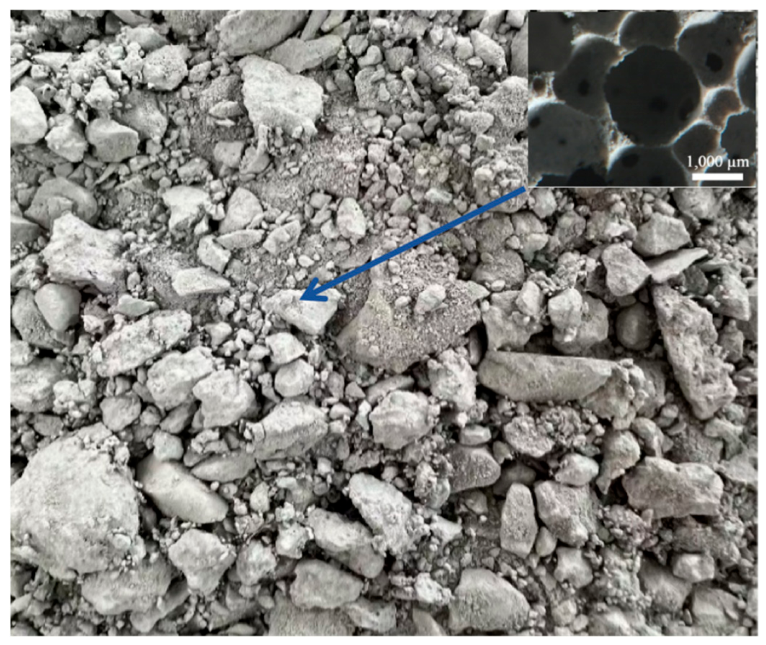
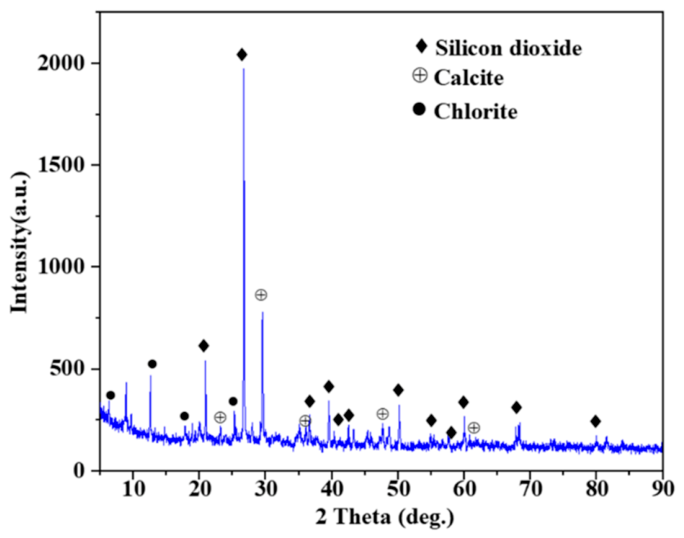
2.1. Raw Materials
2.2. Methods
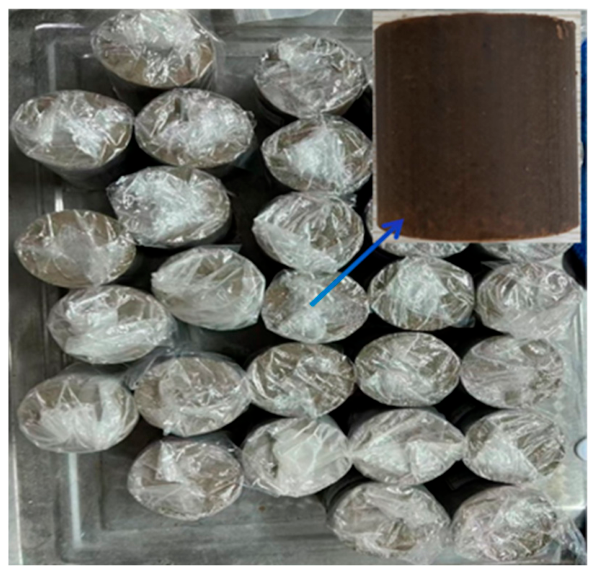
2.2.1. Mix Proportion Design, Molding, and Curing of Stabilized Soil
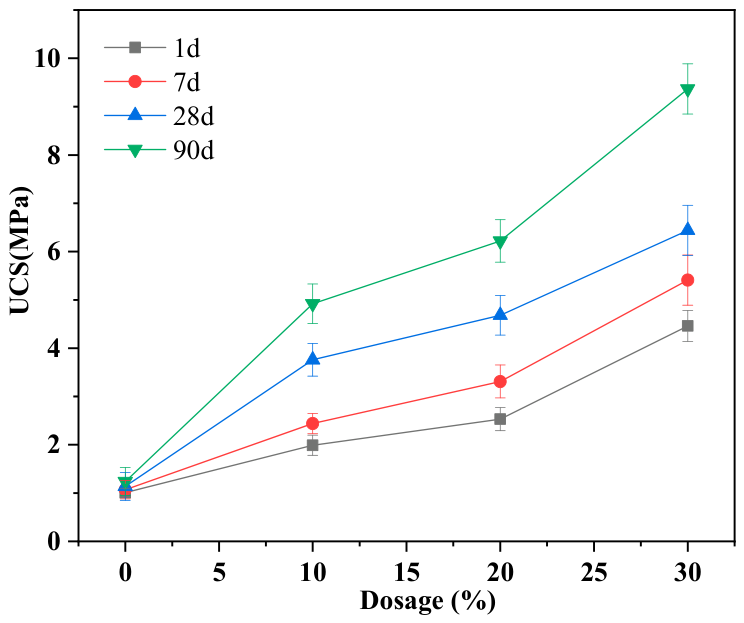
2.2.2. Unconfined Compressive Strength (UCS) Test
2.2.3. Water Stability Test
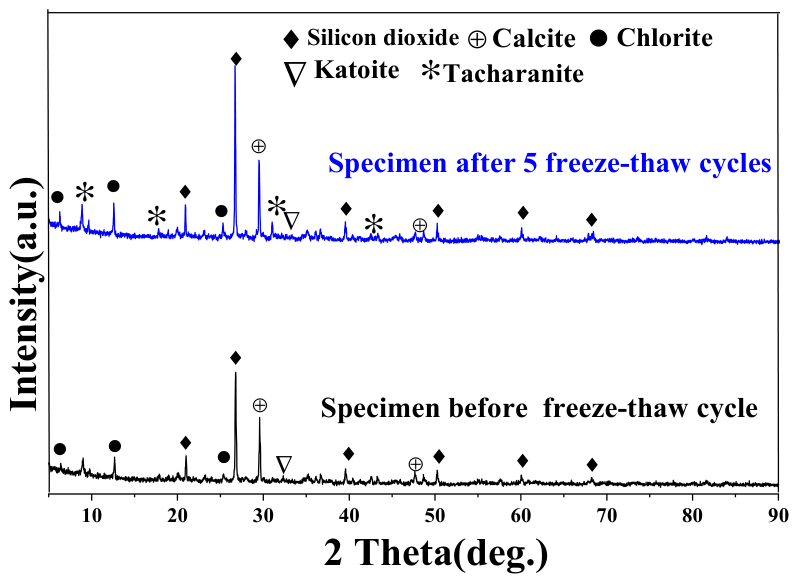
2.2.4. Freeze–Thaw Cycle Test
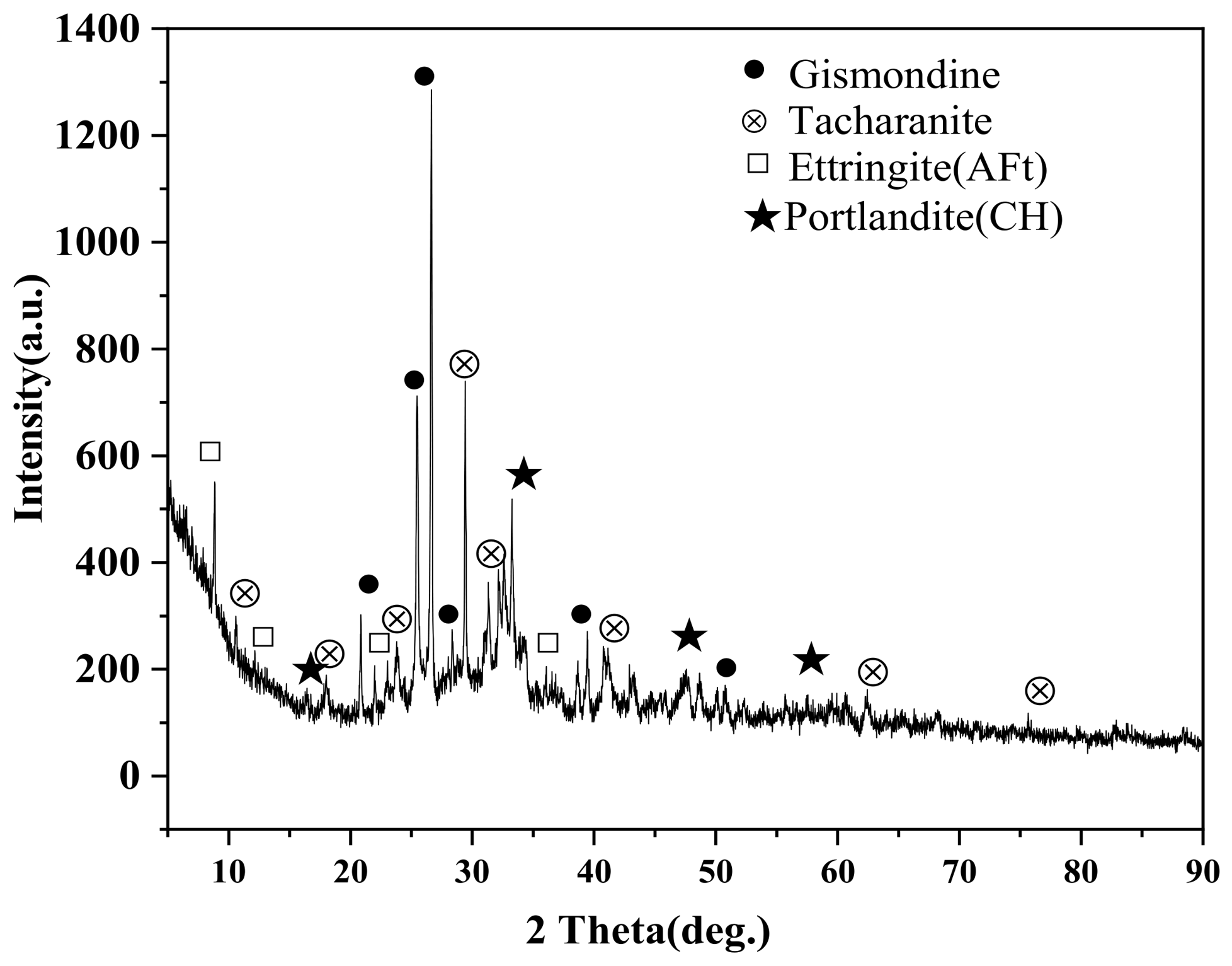
2.2.5. Material Analytical Methods
3. Results and Discussion
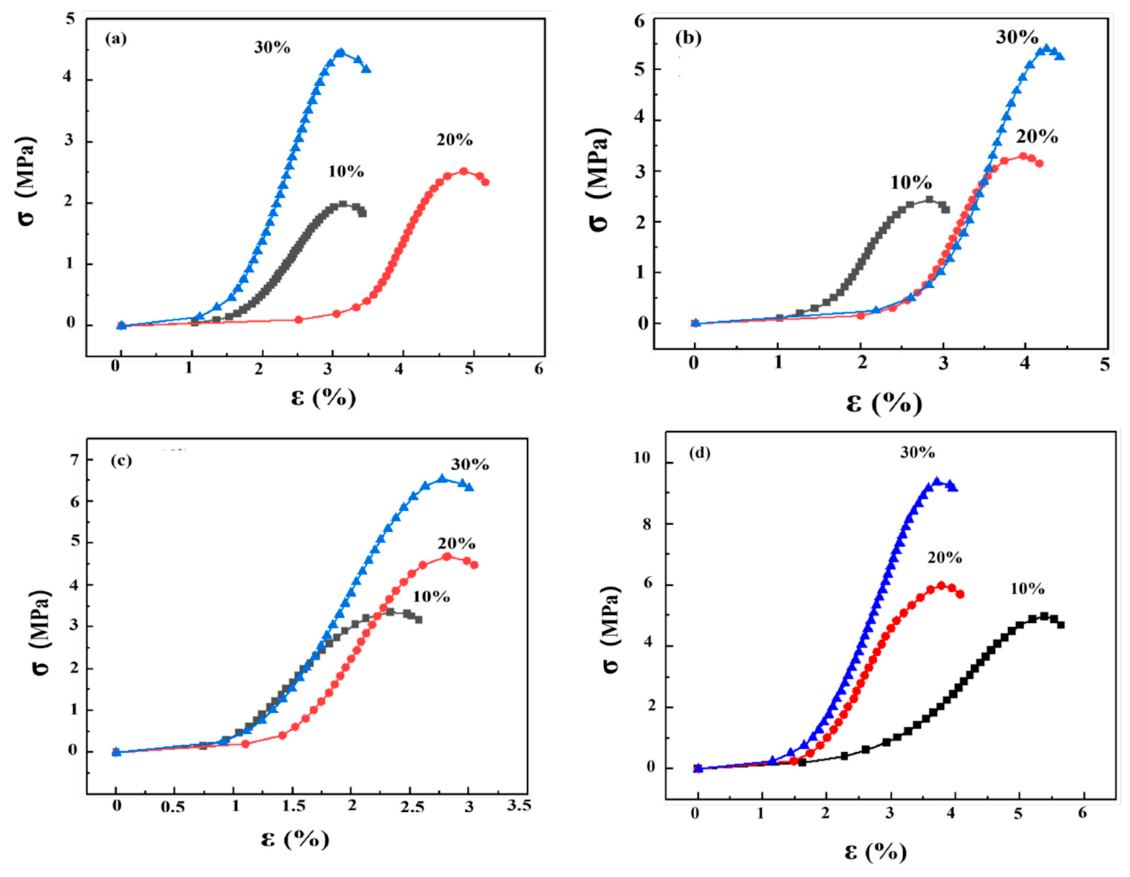
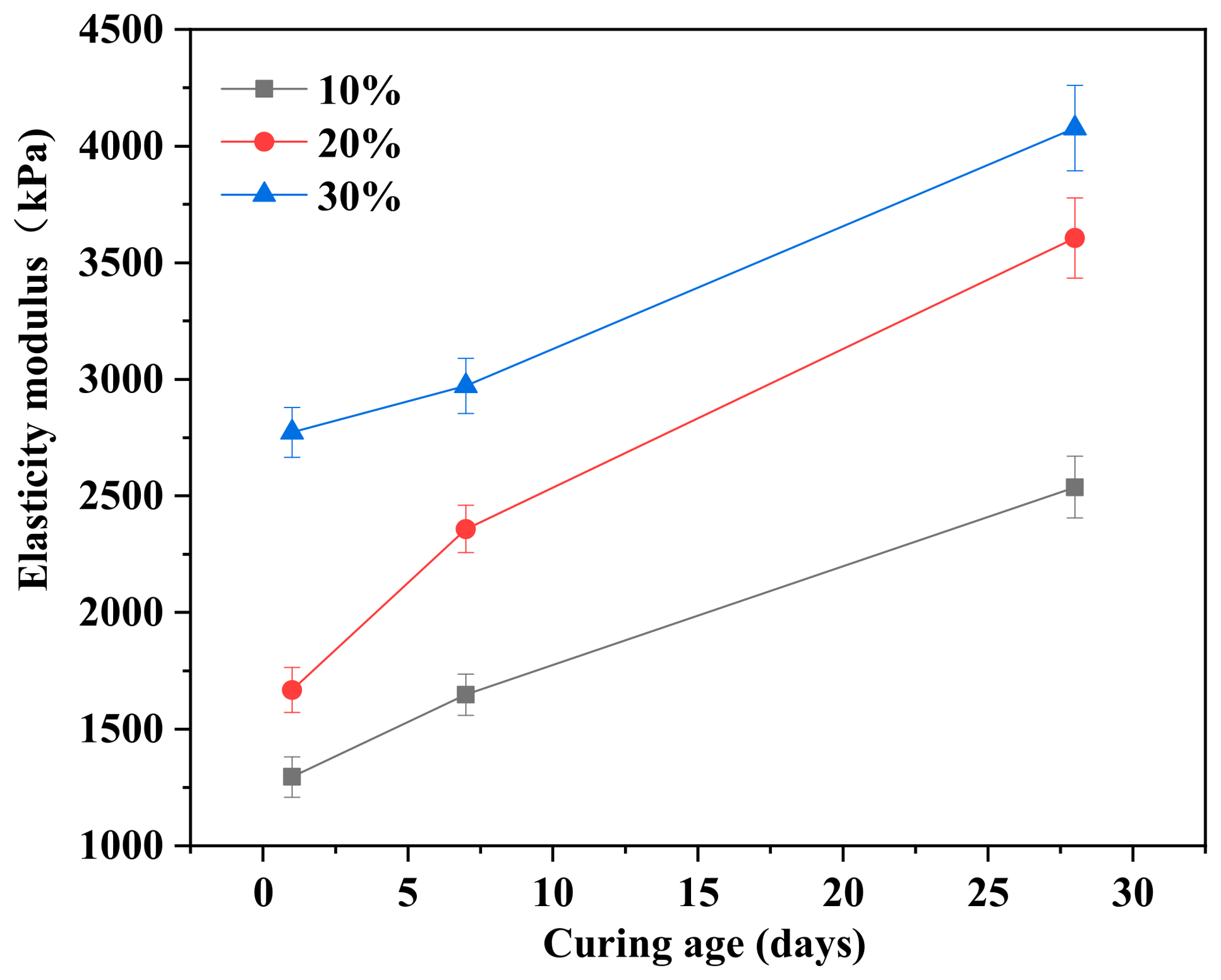
3.1. The Effect of Soil Stabilizer on the Mechanical Properties of Stabilized Gravelly Soil
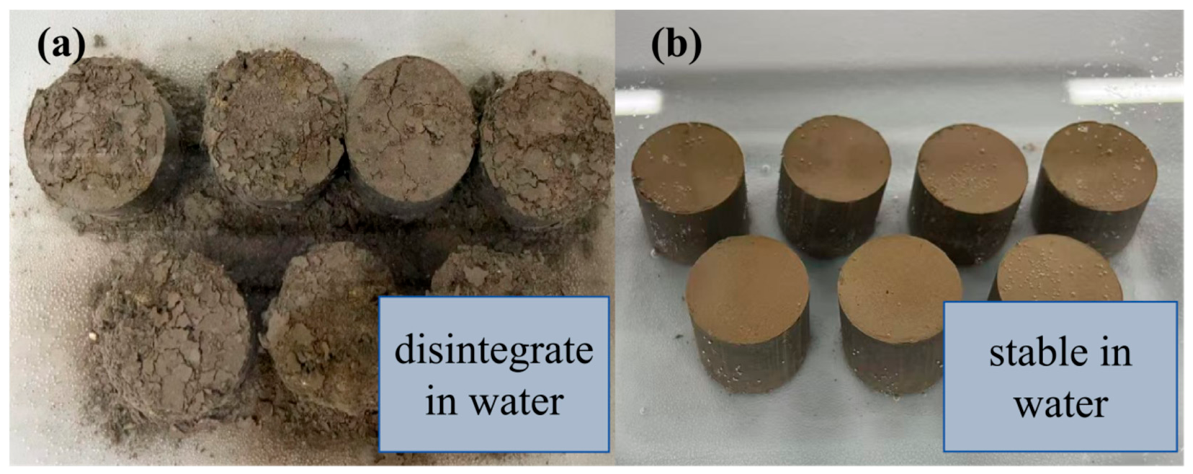
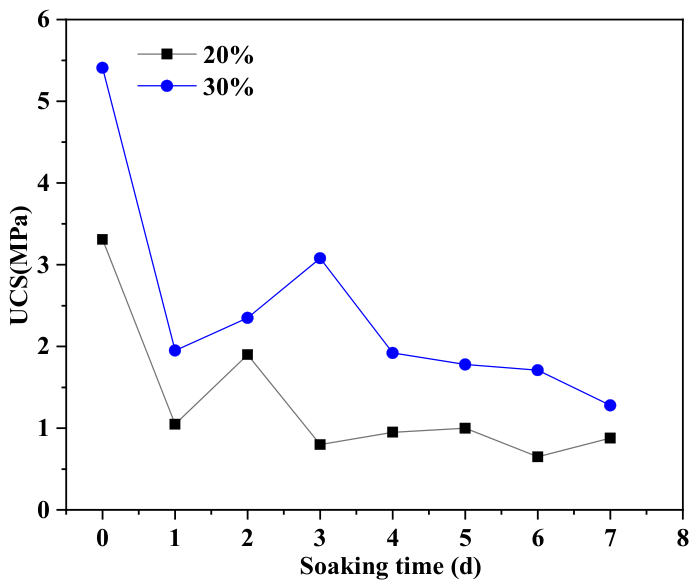
3.2. The Effect of Soil Stabilizer on the Water Stability of Stabilized Gravelly Soil
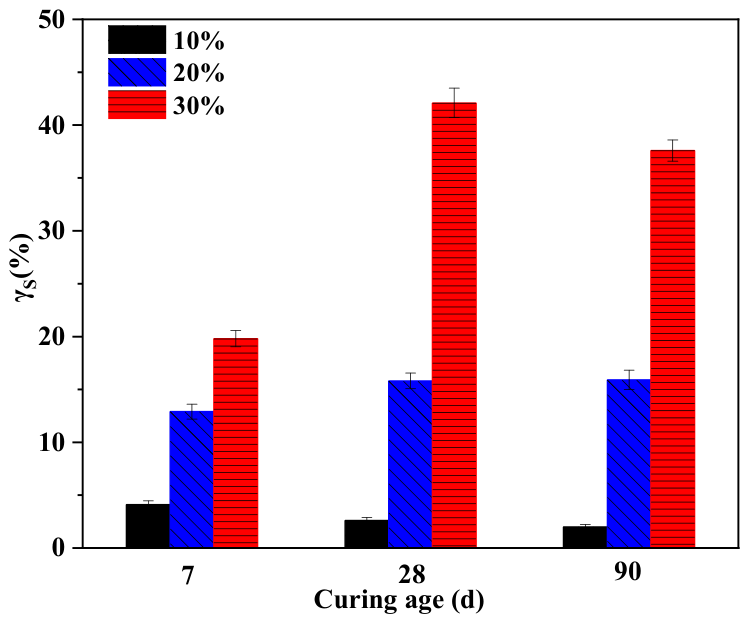
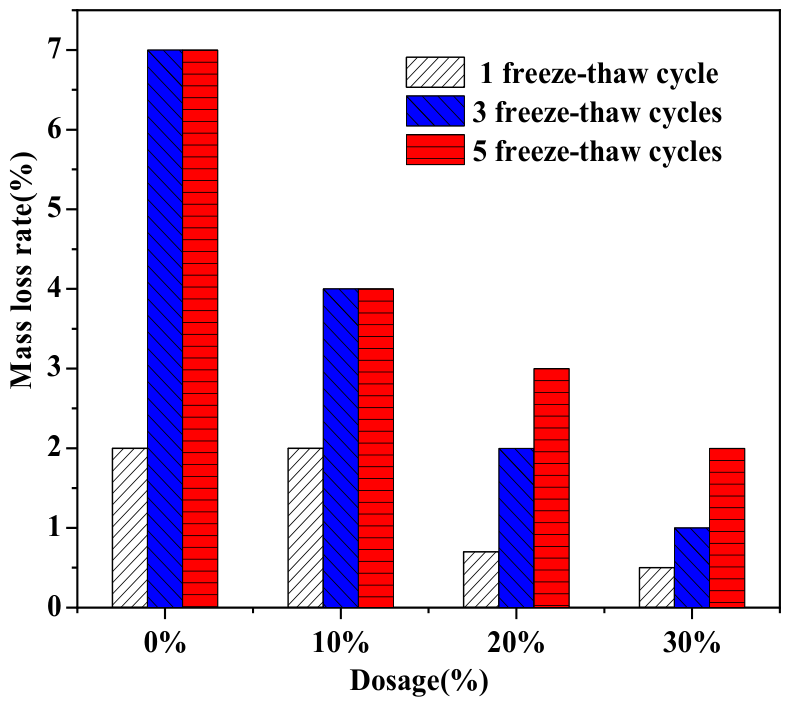
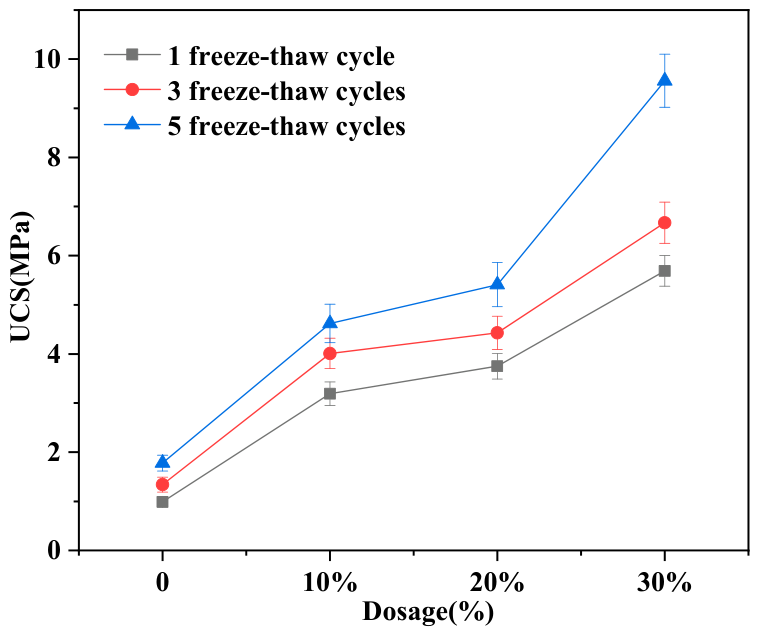
3.3. The Effect of Soil Stabilizer on the Freeze–Thaw Resistance of Stabilized Gravelly Soil
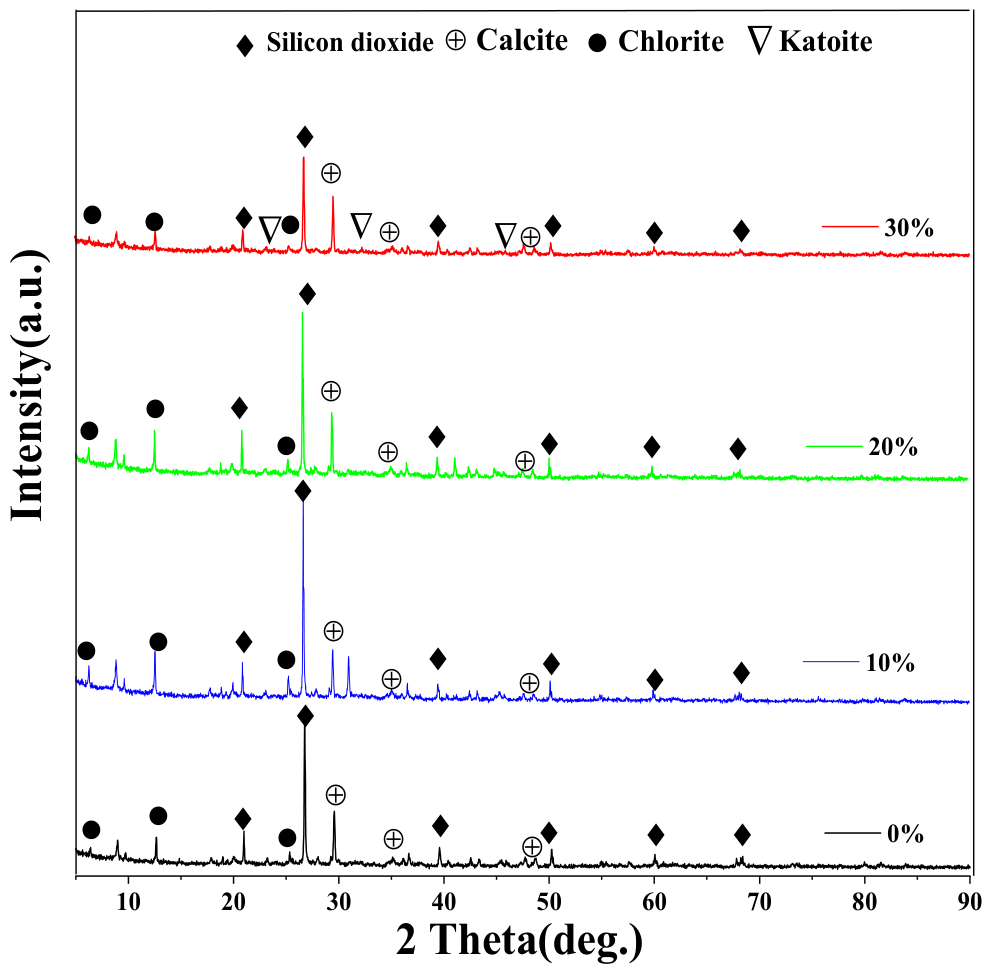
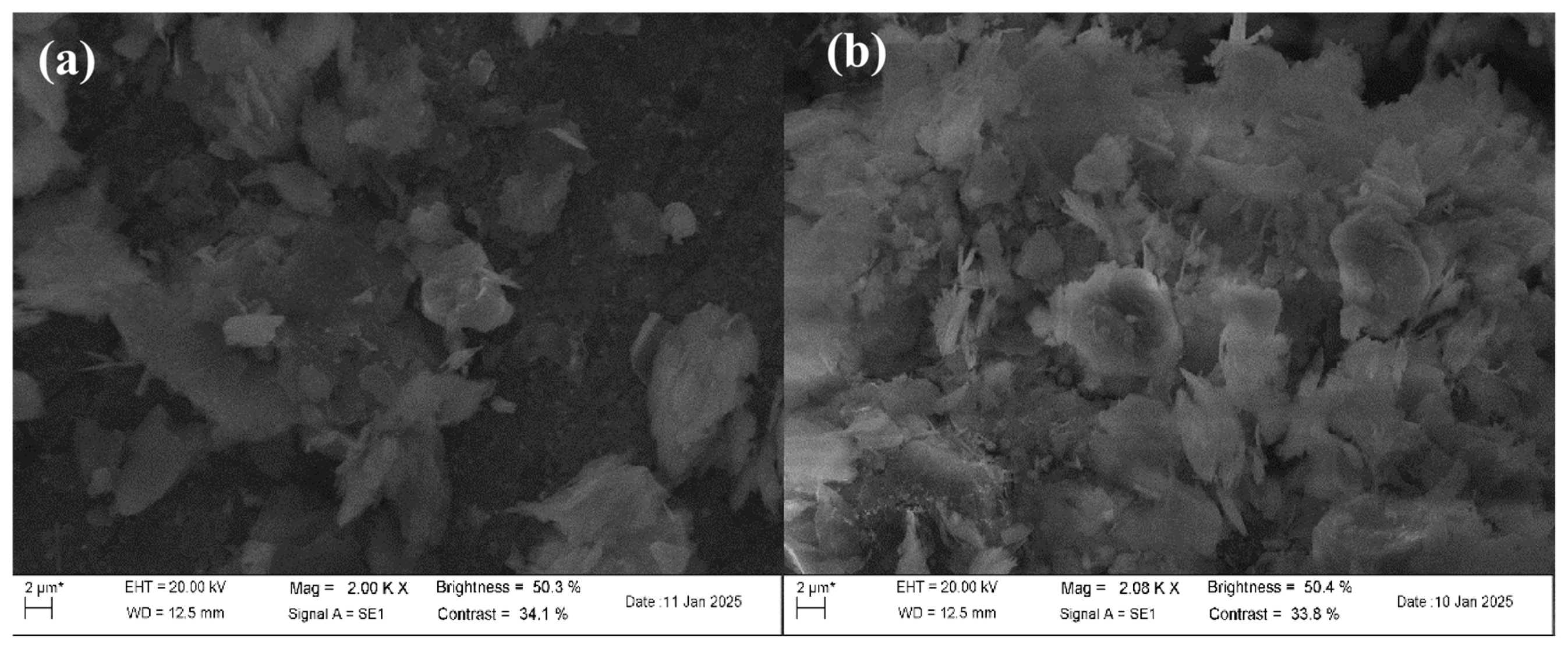
3.4. Discussion on the Mechanism of the Soil Stabilizer on Gravelly Soil Stabilization
3.5. Comparative Analysis with Traditional Stabilizers
4. Conclusions
Author Contributions
Funding
Institutional Review Board Statement
Informed Consent Statement
Data Availability Statement
Conflicts of Interest
References
- Zhao, M.Z.; Liu, G.; Deng, L.X.; Li, Y. Optimizing the compaction characteristics and strength properties of gravelly soils in terms of fine contents. Adv. Mater. Sci. Eng. 2021, 2021, 6634237. [Google Scholar] [CrossRef] [Scilit]
- Wang, T.; Yue, Z.R. Influence of fines content on frost heaving properties of coarse grained soil. Rock Soil Mech. 2013, 34, 359–363. [Google Scholar]
- Pastor, J.L.; Chai, J.; Sánchez, I. Strength and microstructure of a clayey soil stabilized with natural stone industry waste and lime or cement. Appl. Sci. 2023, 13, 2583. [Google Scholar] [CrossRef] [Scilit]
- Onyelowe, K.C.; Moghal, A.A.B.; Ebid, A.; Rehman, A.U.; Hanandeh, S.; Priyan, V. Estimating the strength of soil stabilized with cement and lime at optimal compaction using ensemble-based multiple machine learning. Sci. Rep. 2024, 14, 15308. [Google Scholar] [CrossRef] [Scilit] [PubMed]
- Zhuang, S.; Xie, H.; Ling, J. Study on the performance of cement-lime stabilized soil for road subgrade. J. Highw. Transp. Res. Dev. 2001, 18, 25–29. [Google Scholar]
- Boaventura, N.F.; Sousa, T.F.D.P.; Casagrande, M.D.T. The application of an eco-friendly synthetic polymer as a sandy soil stabilizer. Polymers 2023, 15, 4626. [Google Scholar] [CrossRef] [Scilit]
- Li, H.; Jia, J.; Lu, X.; Cheng, X.; Zhu, J.; Zhang, L.; Guo, P.; Zhai, G. The effect of ionic soil stabilizer on cement and cement-stabilized iron tailings soil: Hydration difference and mechanical properties. Materials 2025, 18, 1444. [Google Scholar] [CrossRef] [Scilit]
- Wu, Y.; Liu, X.; Yang, J.; Liu, Q. Influence of the wide range cement content on the properties of cement–treated marine soft soil and bound method of semi–solidified soil. Case Stud. Constr. Mater. 2024, 20, 03180. [Google Scholar] [CrossRef] [Scilit]
- Wang, J.; Li, X.; Wen, H. Shrinkage cracking model for cementitiously stabilized layers for use in the mechanistic-empirical pavement design guide. Constr. Build. Mater. 2020, 260, 119–130. [Google Scholar] [CrossRef] [Scilit]
- Sahlabadi, S.H.; Bayat, M.; Mousivand, M.; Saadat, M. Freeze–thaw durability of cement-stabilized soil reinforced with polypropylene/basalt fibers. J. Mater. Civ. Eng. 2021, 33, 04021232. [Google Scholar] [CrossRef] [Scilit]
- Shibi, T.; Kamei, T. Effect of freeze–thaw cycles on the strength and physical properties of cement-stabilised soil containing recycled bassanite and coal ash. Cold Reg. Sci. Technol. 2014, 106, 36–45. [Google Scholar] [CrossRef] [Scilit]
- Laveglia, A.; Sambataro, L.; Ukrainczyk, N.; De Belie, N.; Koenders, E. Hydrated lime life-cycle assessment: Current and future scenarios in four EU countries. J. Clean. Prod. 2022, 369, 133224. [Google Scholar] [CrossRef] [Scilit]
- Kogbara, R.B.; Masad, E.A.; Little, D.N.; Huang, J.; Hariharan, N. A state-of-the-art review of polymers used in soil stabilization. Constr. Build. Mater. 2021, 305, 124685. [Google Scholar]
- Liu, Y.; Zhao, Z.; Amin, M.N.; Ahmed, B.; Khan, K.; Arifeen, S.U.; Althoey, F. Foam concrete for lightweight construction applications: A comprehensive review of the research development and material characteristics. Rev. Adv. Mater. Sci. 2024, 63, 20240022. [Google Scholar] [CrossRef] [Scilit]
- Liu, J.; Liu, Y.; Ma, X.; Xu, H.; Wu, X.; Liu, M.; Zhuge, Y. Thermal performance optimisation of foam concrete for energy-efficient construction: A state-of-the-art review. J. Build. Eng. 2025, 112, 113899. [Google Scholar] [CrossRef] [Scilit]
- Fu, Y.; Wang, X.; Wang, L.; Li, Y. Foam concrete: A state-of-the-art and state-of-the-practice review. Adv. Mater. Sci. Eng. 2020, 2020, 6153602. [Google Scholar] [CrossRef] [Scilit]
- Just, A.; Middendorf, B. Microstructure of high-strength foam concrete. Mater. Charact. 2009, 60, 741–748. [Google Scholar] [CrossRef] [Scilit]
- Huang, W.; Liu, J.; Shi, Q.; Niu, W. Mechanical and pore properties of foam concrete under salt erosion environment. Materials 2025, 18, 2810. [Google Scholar] [CrossRef] [Scilit] [PubMed]
- Huang, B.; Wang, X.; Kua, H.W.; Geng, Y.; Ren, J. Construction and demolition waste management: China’s lessons. Resour. Conserv. Recycl. 2018, 129, 36–44. [Google Scholar] [CrossRef] [Scilit]
- Diotti, A.; Plizzari, G.; Sorlini, S. Leaching behaviour of construction and demolition wastes and recycled aggregates: Statistical analysis applied to the release of contaminants. Appl. Sci. 2021, 11, 6265. [Google Scholar] [CrossRef] [Scilit]
- Chen, Z.; Feng, Q.; Yue, R.; Chen, Z.; Moselhi, O.; Soliman, A.; Hammad, A.; An, C. Construction, renovation, and demolition waste in landfill: A review of waste characteristics, environmental impacts, and mitigation measures. Environ. Sci. Pollut. Res. 2022, 29, 46509–46526. [Google Scholar] [CrossRef] [Scilit]
- Zuheir, B.; Al-Mulali, M.Z. An innovative approach on recycle foam concrete as a sustainable alternative with the addition of nano titanium dioxide TiO2 on the properties of foam concrete. Eng. Technol. Appl. Sci. Res. 2025, 15, 19196–19199. [Google Scholar] [CrossRef] [Scilit]
- Turkey, F.A.; Beddu, S.; Al-Hubboubi, S.K.; Basri, H.B.; Sidek, L.M.; Ahmed, A.N. Recycled foam concrete masonry and porcelanite rocks-based lightweight geo-polymer concrete at elevated temperatures. Alex. Eng. J. 2024, 105, 171–180. [Google Scholar] [CrossRef] [Scilit]
- Zuhair, B.; Ameer, M.Z.A. Innovative approach to foam concrete production by utilizing recycled foam concrete as a sustainable alternative. J. Eng. 2025, 31, 159–174. [Google Scholar] [CrossRef] [Scilit]
- Gołaszewski, J.; Cygan, G.; Gołaszewska, M.; Klemczak, B.; Jonkers, H.; Zhilyaev, D.; Koenders, E.A.B. Utilization of recycled foam concrete powder with phase-change material as a cement or sand replacement: Impact on mortar properties and superplasticizer performance. Sustainability 2025, 18, 1004. [Google Scholar] [CrossRef] [Scilit]
- Song, Y.; Lange, D. Crushing performance of ultra-lightweight foam concrete with fine particle inclusions. Appl. Sci. 2019, 9, 876. [Google Scholar] [CrossRef] [Scilit]
- Pizoń, J. Fresh, mechanical, and thermal properties of cement composites containing recycled foam concrete as partial replacement of cement and fine aggregate. Materials 2023, 16, 7169. [Google Scholar] [CrossRef] [Scilit]
- Sachdevan, N.; Shrivastava, N. Sustainable use of solid waste as additives in soil stabilization: A state-of-art review. Evergreen 2023, 10, 2536–2558. [Google Scholar] [CrossRef] [Scilit]
- Soltanijigheh, H. Compressibility and shearing behavior of clayey soil reinforced by plastic waste. Int. J. Civ. Eng. 2016, 14, 479–489. [Google Scholar] [CrossRef] [Scilit]
- Maity, J.; Chattopadhyay, B.C.; Mukherjee, S.P. Improvement of characteristics of clayey soil mixed with randomly distributed natural fibers. J. Inst. Eng. (India) Ser. A 2018, 99, 55–65. [Google Scholar] [CrossRef] [Scilit]
- Guo, S.L.; Li, Q.; Li, X.; Zhao, Y.L.; Wang, X.G. Effects of mushroom waste on improvement of reclaimed soil quality in coal mining areas. J. Coal Sci. Eng. 2013, 19, 237–242. [Google Scholar] [CrossRef] [Scilit]
- Liang, S.; Chen, J.; Guo, M.; Feng, D.; Liu, L.; Qi, T. Utilization of pretreated municipal solid waste incineration fly ash for cement-stabilized soil. Waste Manag. 2020, 105, 425–432. [Google Scholar] [CrossRef] [Scilit]
- HJ/T 20-1998; Technical specifications for sampling and sample preparation of industrial solid waste. State Environmental Protection Administration: Beijing, China, 1998.
- Ohemeng, E.A.; Ekolu, S.O. A review on the reactivation of hardened cement paste and treatment of recycled aggregates. Mag. Concr. Res. 2020, 72, 526–539. [Google Scholar] [CrossRef] [Scilit]
- Cunha, S.; Kaptan, K.; Hardy, E.; Aguiar, J. Assessment of the efficiency of mechanical grinding and calcination processes for construction and demolition waste as binder replacement in cement pastes: Mechanical properties evaluation. Sustainability 2025, 17, 5248. [Google Scholar] [CrossRef] [Scilit]
- Stepkowska, E.T.; Blanes, J.M.; Franco, F.; Real, C.; Pérez-Rodríguez, J. Phase transformation on heating of an aged cement paste. Thermochim. Acta 2004, 420, 79–87. [Google Scholar] [CrossRef] [Scilit]
- Ji, X.; Ji, D.; Yang, Z.; Wang, G.; Huang, X.; Ma, S.; Li, W. Study on the phase composition and structure of hardened cement paste during heat treatment. Constr. Build. Mater. 2021, 310, 125267. [Google Scholar] [CrossRef] [Scilit]
- Hasanin, T.H.A.; Alsahli, S.A.; Altalleb, H.A.; Alshammari, B.H.; Tantawy, M.A. Hydration characteristics of cement blended with thermally reactivated recycled concrete demolition waste. Sci. Rep. 2026, 16, 1499. [Google Scholar] [CrossRef] [Scilit] [PubMed]
- Pacheco, A.A.L.; Nobre, T.R.S.; Maciel, M.H.; Santilli, C.V.; Coelho, A.C.V.; Angulo, S.C. Rehydration of katoite as a layered double hydroxide: An in situ study. RILEM Tech. Lett. 2021, 6, 8–16. [Google Scholar] [CrossRef] [Scilit]
- Xi, X.; Zheng, Y.; Du, C.; Zhang, P.; Sun, M. Study on the hydration characteristics, mechanical properties, and microstructure of thermally activated low-carbon recycled cement. Constr. Build. Mater. 2024, 447, 138042. [Google Scholar] [CrossRef] [Scilit]
- Xu, R.; Xie, Y.; Chen, Y.; Li, Z. Mechanical properties and micro-mechanisms of soft soil stabilized with rice husk ash and multi-source solid waste-based cementitious materials. Front. Built Environ. 2025, 11, 1759978. [Google Scholar] [CrossRef] [Scilit]
- Zhuang, S.; Wang, Q.; Luo, T. Effect of C12A7 in steel slag on the early-age hydration of cement. Cem. Concr. Res. 2022, 162, 107010. [Google Scholar] [CrossRef] [Scilit]
- Jiang, N.; Wang, C.; Wang, Z.; Li, B.; Liu, Y.-A. Strength characteristics and microstructure of cement stabilized soft soil admixed with silica fume. Materials 2021, 14, 1929. [Google Scholar] [CrossRef] [Scilit] [PubMed]
- Lai, Z.; Chen, Y. Enhancing the mechanical and environmental performance of solidified soil using construction waste and glass micro-powder. Heliyon 2024, 10, e40187. [Google Scholar] [CrossRef] [Scilit] [PubMed]
- Zhang, W.; Mu, F.Y.; Xue, Q.; Li, J.-S. Solidification/stabilization mechanisms of uncalcined waste concrete powder and ground granulated blast slag on lead-contaminated soil: From nanoscale to macroscale. J. Environ. Chem. Eng. 2025, 13, 117776. [Google Scholar] [CrossRef] [Scilit]
- Noorzad, R.; Mirmoradi, S.H. Laboratory evaluation of the behavior of a geotextile reinforced clay. Geotext. Geomembr. 2010, 28, 386–392. [Google Scholar] [CrossRef] [Scilit]
- Tian, H.; Wei, C.; Tan, L. Effect of freezing-thawing cycles on the microstructure of soils: A two-dimensional NMR relaxation analysis. Cold Reg. Sci. Technol. 2019, 158, 106–116. [Google Scholar] [CrossRef] [Scilit]
- Ren, H.; Zhang, D.; Zhang, L.; Zhang, X.; He, H.; Liu, W.; Guo, Y.; Zhao, J. Research advances in the freeze–thaw resistance of cement-stabilized soils. J. Cold Reg. Eng. 2026, 40, 03126001. [Google Scholar] [CrossRef] [Scilit]
- Archibong, G.A.; Sunday, E.U.; Akudike, J.C.; Okeke, O.C.; Amadi, C. A review of the principles and methods of soil stabilization. Int. J. Adv. Acad. Res.|Sci. 2020, 6, 2488–9849. [Google Scholar]
- Anburuvel, A. The engineering behind soil stabilization with additives: A state-of-the-art review. Geotech. Geol. Eng. 2024, 42, 1–42. [Google Scholar] [CrossRef] [Scilit]






| Natural Moisture Content (%) | Maximum Dry Density (g·cm−3) | Optimum Moisture Content (%) | Coefficient of Uniformity (Cu) | Coefficient of Curvature (Cc) |
|---|---|---|---|---|
| 11.5 | 2.22 | 10.6 | 8.37 | 1.21 |
| Particle size range (mm) | (0.25, 0.5) | (0.5, 10) | (1, 2) | (2, 5) | (5, 10) | (10, 20) | (20, 40) |
| Particle content (%) | 1.2 | 13.8 | 8.5 | 28.2 | 22.0 | 16.3 | 10.0 |
| Samples | Dosage of Stabilizer (%) | Maximum Dry Density (g/cm3) | Optimum Moisture Content (%) |
|---|---|---|---|
| SGS0 | 0 | 2.22 | 10.60 |
| SGS10 | 10 | 1.98 | 10.01 |
| SGS20 | 20 | 1.80 | 10.32 |
| SGS30 | 30 | 1.83 | 10.77 |
| Dosage of Soil Stabilizer (%) | Soaking Time (d) | ||||||
|---|---|---|---|---|---|---|---|
| 1 d | 2 d | 3 d | 4 d | 5 d | 6 d | 7 d | |
| 0 | disintegrate | — | — | — | — | — | — |
| 10 | disintegrate | — | — | — | — | — | — |
| 20 | stable | stable | stable | stable | stable | stable | stable |
| 30 | stable | stable | stable | stable | stable | stable | stable |
| Stabilizer Type | Typical Dosage | 28-Days UCS (MPa) | Environmental Impact |
|---|---|---|---|
| Cement [49,50] | 2–10% | 2.0–8.0 | High CO2 emission, |
| Lime [49,50] | 2–10% | 0.5–3.0 | High carbon emission, |
| Polymers [13] | 0.1–1% | 1.0–10.0 | High cost, complex process |
| Stabilizer (This study) | 30% | 6.5 | Low-carbon, solid waste utilization |
Disclaimer/Publisher’s Note: The statements, opinions and data contained in all publications are solely those of the individual author(s) and contributor(s) and not of MDPI and/or the editor(s). MDPI and/or the editor(s) disclaim responsibility for any injury to people or property resulting from any ideas, methods, instructions or products referred to in the content. |
© 2026 by the authors. Licensee MDPI, Basel, Switzerland. This article is an open access article distributed under the terms and conditions of the Creative Commons Attribution (CC BY) license.
Share and Cite
Gan, J.; Liang, X.; Song, Y.; Chen, B.; Liu, D.; Cao, W.; Chen, D. Stabilization Performance and Mechanism of the Gravelly Soil Stabilizer Prepared from Waste Foam Concrete. Appl. Sci. 2026, 16, 4490. https://doi.org/10.3390/app16094490
Gan J, Liang X, Song Y, Chen B, Liu D, Cao W, Chen D. Stabilization Performance and Mechanism of the Gravelly Soil Stabilizer Prepared from Waste Foam Concrete. Applied Sciences. 2026; 16(9):4490. https://doi.org/10.3390/app16094490
Chicago/Turabian StyleGan, Jizhong, Xiantao Liang, Yang Song, Bingxu Chen, Dongsheng Liu, Wanzhi Cao, and Danhua Chen. 2026. "Stabilization Performance and Mechanism of the Gravelly Soil Stabilizer Prepared from Waste Foam Concrete" Applied Sciences 16, no. 9: 4490. https://doi.org/10.3390/app16094490
APA StyleGan, J., Liang, X., Song, Y., Chen, B., Liu, D., Cao, W., & Chen, D. (2026). Stabilization Performance and Mechanism of the Gravelly Soil Stabilizer Prepared from Waste Foam Concrete. Applied Sciences, 16(9), 4490. https://doi.org/10.3390/app16094490