


Abstract
Upper Northern Thailand continues to face a protracted structural crisis from fine-particulate matter (PM2.5), primarily driven by biomass burning and wildfires. Conventional mechanical capture systems, such as cyclones, often suffer a drastic efficiency drop when treating sub-micron particles. This study introduces an innovative Evaporative Condensation Growth Scrubber (ECGS) designed to bridge this technological gap by promoting the growth of fine particles through heterogeneous nucleation. Experimental testing across 10 different nozzle configurations was conducted to optimize the system’s performance. The results revealed that the ECGS system significantly outperformed the dry cyclone (Baseline) across all nine testing configurations. While the Baseline showed inherent limitations in capturing sub-micron particles, the ECGS demonstrated relative efficiency improvements ranging from 39.53% to 83.23% for PM2.5, and 26.10% to 61.50% for PM10 compared to the baseline. Optimal performance was achieved using a 90-degree injection angle and a 10 cm distance, which created a complete spray curtain and maximized collision probability. Under these conditions, the outlet PM2.5 concentration stabilized at 11.81 µg/m3 within 180 s of water injection. Crucially, despite sensor interference caused by high relative humidity, the system’s effectiveness was confirmed by a significant difference in performance in PM10 and PM2.5 removal. The PM10 collection efficiency outperformed that of PM2.5 by 28.82%, providing empirical evidence that PM2.5 particles successfully acted as nuclei for condensation and grew into the larger PM10 size range. This particle growth enabled more effective centrifugal separation, demonstrating that the ECGS system offers a viable and efficient solution for fine particle removal in highly polluted environments.
1. Introduction
For over a decade, the Upper Northern region of Thailand has been trapped in a recurring cycle of severe fine particulate matter (PM2.5) pollution, a structural crisis that intensifies each year. Ambient air quality data reveals that pollutants often reach hazardous concentrations, frequently ranking cities like Chiang Mai among the most polluted in the world. This environmental degradation poses a profound threat to public health, particularly to the respiratory system and overall well-being [1]. According to the data from the Ministry of Public Health, over one million cases of health issues were attributed to smog and airborne dust in early 2016 alone. Data from the Pollution Control Department (PCD) and Greenpeace further highlight that this “structural crisis” is exacerbated by the region’s basin-like topography, which traps pollutants during the dry season, creating a persistent environmental hazard. The origin of these particulates is primarily traced to sources such as the burning of maize agricultural residues, forest fires, and natural wildfires. Despite various mitigation strategies, addressing the root causes of these emissions remains a complex socio-technical challenge that continues to evade effective resolution [2].
In terms of indoor air quality management, most buildings rely on mechanical ventilation or natural openings like doors and windows to prevent the accumulation of stale air. However, under current conditions, these pathways act as conduits for ambient fine dust to infiltrate indoor environments [3]. While various capture techniques exist to filter pollutants while maintaining air exchange, traditional mechanical filtration faces significant drawbacks, including increased heat loads from incoming warm air and high maintenance costs related to filter replacement. Furthermore, conventional technologies like scrubbers and cyclones are effective, achieving approximately 75% efficiency for particles larger than 5 microns. However, their performance drops drastically to near 10% when dealing with sub-micron particles smaller than 2.5 microns (PM2.5) [4]. Recent advancements in pre-conditioning technology (2022–2025) have further refined the understanding of these condensation-growth mechanisms. For instance, Wang et al. [5] utilized a coupled CFD-DEM approach to demonstrate how supersaturated vapor creates liquid bridges that facilitate particle agglomeration, offering high-precision growth control despite its computational complexity. Similarly, Xu et al. [6] achieved high-efficiency removal of PM2.5 through supersonic separation under high-pressure conditions, highlighting a superior effectiveness in industrial environments, though at the cost of significant energy consumption. Furthermore, recent reviews by Thangavel et al. [7] emphasize the persistent trade-off between energy efficiency and high collection rates in modern scrubbers.
The development of the Evaporative Condensation Growth Particle Scrubber (ECGS) is grounded in three core research domains: particle growth kinetics, atomization technology, and thermodynamic influence on particle capture. The potential for using phase-change phenomena to address the limitations of mechanical filtration has been well documented. Early research by Liu et al. [8] and Yoshida [9] proved that sub-micron pollutants could be effectively managed by inducing a saturated state, which shifts the particle size distribution toward a more collectible range. While these studies focused on large-scale industrial exhaust, subsequent research moved toward optimizing the physical parameters of the growth environment. For instance, Tammaro et al. [10] and Xu et al. [11] demonstrated that residence time and the specific geometry of growth sections (e.g., the implementation of recirculation tubes) play a vital role in maximizing final particle diameter. These experimental findings are further supported by the numerical models of Fan [12], which highlight the sensitivity of the enlargement process to the saturation ratio and interfacial contact angles.
In terms of wet scrubbing, the efficiency of particle-droplet collision is highly dependent on atomization quality. Investigations by Klenk [13] and Swanson [14] established that the “droplet-to-particle size ratio” is a primary determinant of collection performance, favoring finer mist for sub-micron capture. Furthermore, Hoffmann [15], Guo et al. [16], and Qingxin Ma et al. [17] explored the use of high-pressure and air-atomizing nozzles to achieve ultra-fine mists, noting that stable aerosol distribution is essential for preventing droplet drift and ensuring uniform treatment of the gas stream. Thermodynamic factors also significantly alter capture kinetics. Pilat [18] and Ardon-Dryer [19] identified that thermophoresis and electrostatic effects, driven by temperature differences between the liquid and gas phases, can drastically improve the removal of micrometer-sized particles. Additionally, Rafidi [20] suggested that optimizing the Liquid-to-Gas (L/G) ratio is a practical strategy for enhancing the overall performance of spray-based systems.
While these studies demonstrate the efficacy of external steam injections or complex recirculation for particle growth, there remains a technological gap in creating a self- contained, internally regulated supersaturation environment. This research introduces the ECGS system, which utilizes a unique internal pressure modulation cycle to achieve adiabatic cooling and condensation without the need for external vapor sources. The current study focuses on the optimization of nozzle configuration, specifically evaluating various injection angles and separation distances to maximize particle-droplet interaction and enhance the condensation-growth process. By integrating these theoretical principles into a singular, streamlined chamber, this study aims to provide a more sustainable and efficient solution for PM2.5 mitigation, particularly for the environmental conditions found in Northern Thailand.
2. Experimental and Methods
A comprehensive description of the experimental methodology and design of the Evaporative Condensation Growth Particle Scrubber. The following sections describe the design rationale of the three functional stages (i.e., evaporation, condensation, and separation) along with the instrumentation, experimental matrix, and the mathematical framework used to evaluate the system’s collection efficiency (shown in Appendix A).
2.1. System Overview and Design Rationale
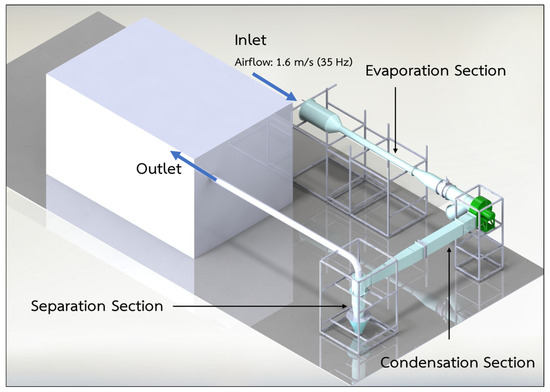
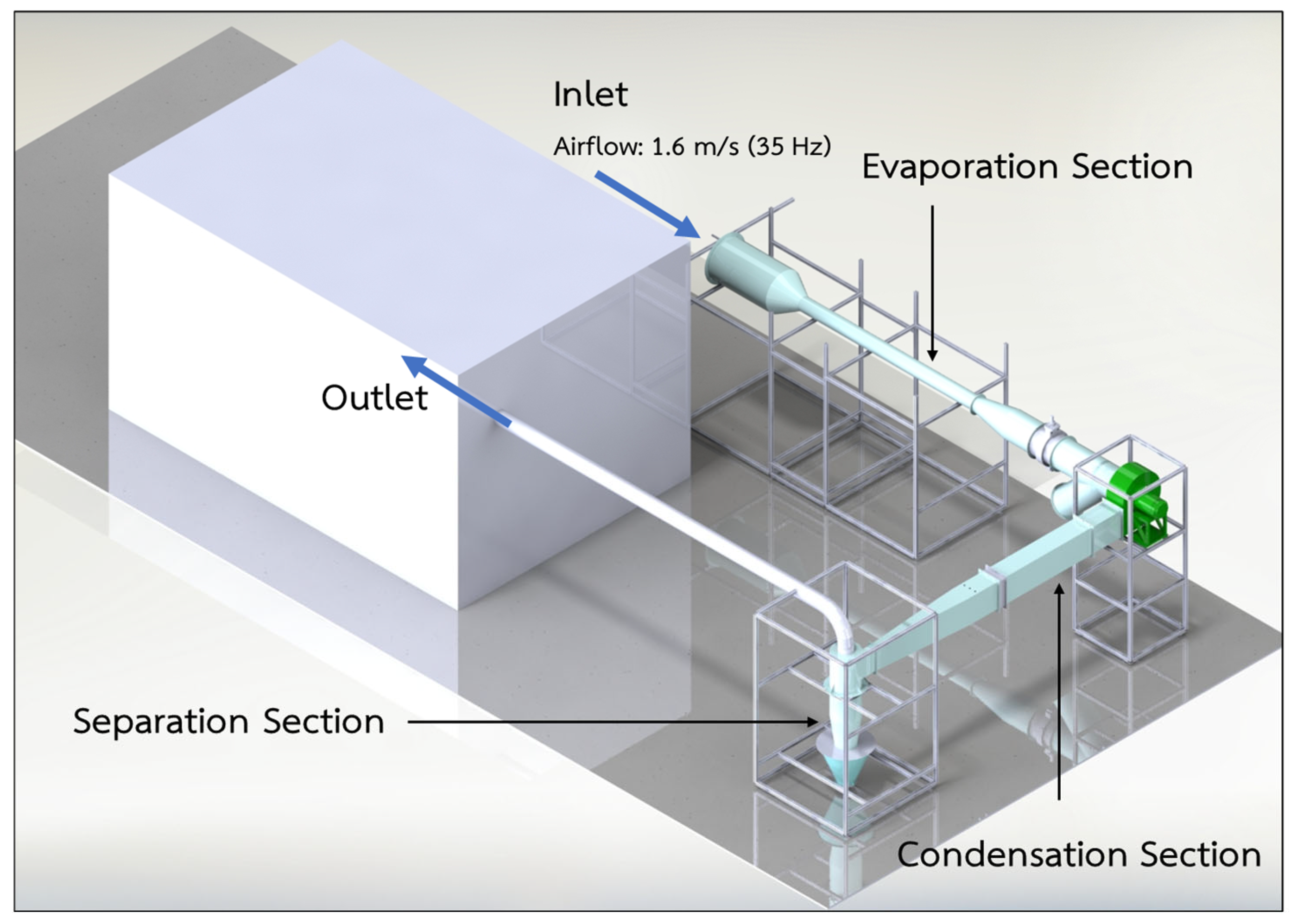
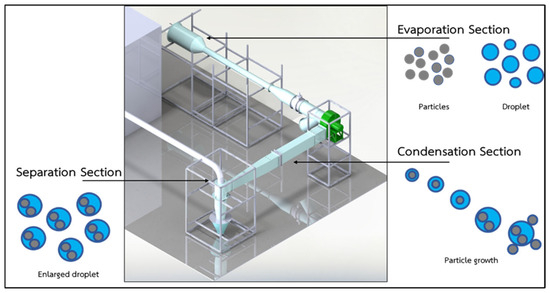
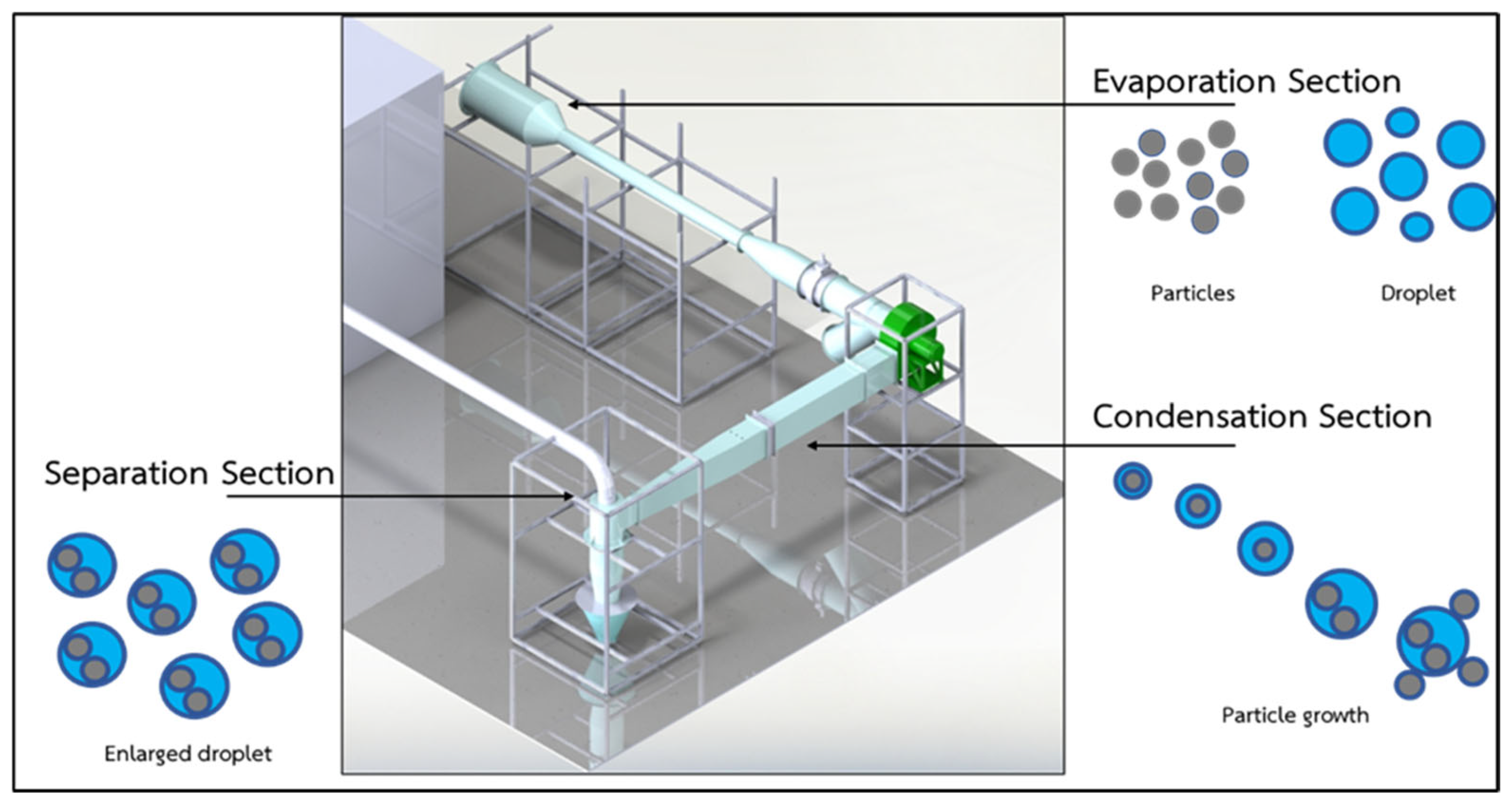
The experimental apparatus was developed as a continuous-flow system engineered to investigate the synergic effects of evaporative cooling and heterogeneous condensation on sub-micron particle removal. The system architecture is strategically divided into three interconnected functional stages: (i) moisture introduction and saturation; (ii) particle enlargement via condensation; and (iii) high-efficiency centrifugal separation. The comprehensive configuration of the integrated system, illustrating the flow path from the inlet to the final exhaust, is shown in Figure 1.
Figure 1.
Schematic diagram of the experiment setup.
2.2. Dimensions and Descriptions
2.2.1. Dimensions and Descriptions Phase I: Evaporation Section
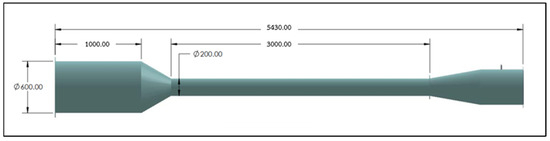
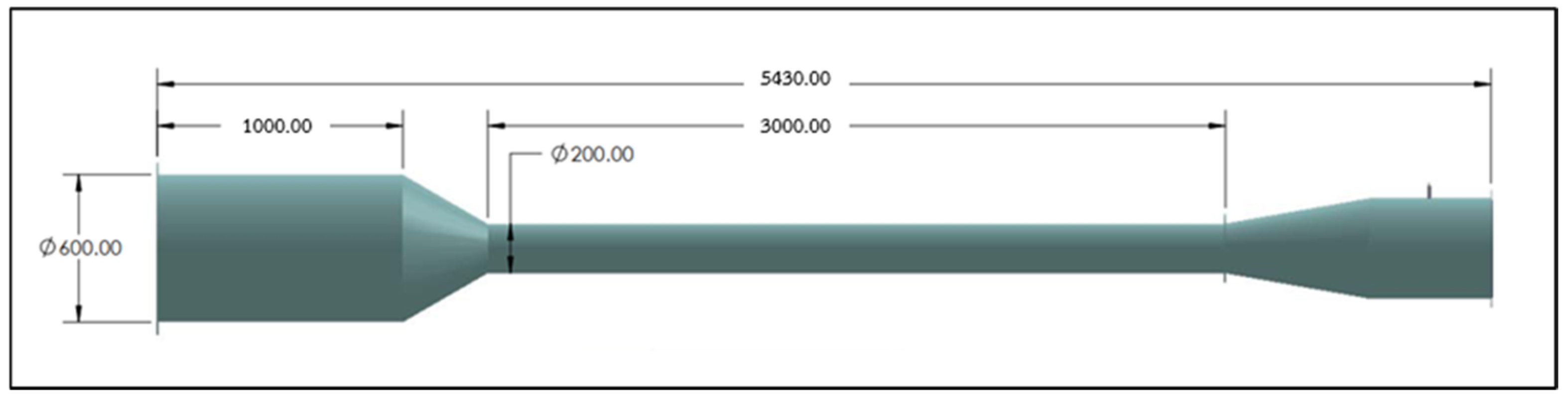
The initial stage focuses on transforming the contaminated air stream into a saturated state. The structural dimensions and aerodynamic features of the Venturi unit are shown in Figure 2. The unit comprises a primary inlet duct (Ø 600 mm) with a length of 1000 mm, converging into a Venturi throat (Ø 200 mm). Based on the continuity equation (A1V1 = A2V2), the significant reduction in the cross-sectional area forces the air stream to accelerate as it passes through the throat. Consequently, according to Bernoulli’s principle, this increase in fluid velocity leads to a simultaneous drop in static pressure. This mechanism generates a high-turbulence zone essential for the interaction between water droplets and fine particulate matter.
Figure 2.
Detailed view of the evaporation section.
The total length of the mixing zone (3000 mm) and the operating inlet velocity (1.6 m/s) were strategically engineered based on droplet lifetime calculations. This ensures a calculated residence time of approximately 1.88 s, which is sufficient for the phase transition, specifically the evaporation of fine mist and subsequent condensation-growth to occur before the particles reach the separation stage. This design ensures that PM2.5 particles have adequate time to enlarge to a size that can be effectively captured by centrifugal force.
The relationship between the fluid velocity and the duct geometry is defined by the continuity equation
where A represents the cross-sectional area, and V is the fluid velocity. The subsequent pressure change is then governed by the Bernoulli equation
A1V1 = A2V2
Nozzle Integration and Water Supply System: To generate the required fine mist (20–50 µm), a water supply system was integrated using a diaphragm booster pump (Model RY24-50G, Jor Jaroen, Bangkok, Thailand) capable of maintaining a consistent working pressure of 72 PSI (4.97 bar). This system delivered water to two low-pressure stainless-steel nozzles, which were positioned in a counterflow configuration to maximize the collision frequency between mist droplets and fine particulate matter. The specific orientation and internal arrangement of these evaporation sections within the 3000 mm mixing zone are detailed in the experimental workflow.
2.2.2. Dimensions and Descriptions Phase II: Condensation and Particle Growth Chamber
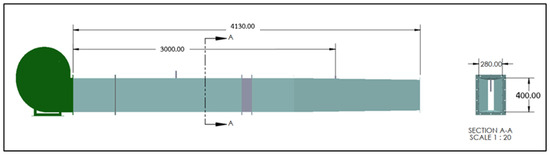
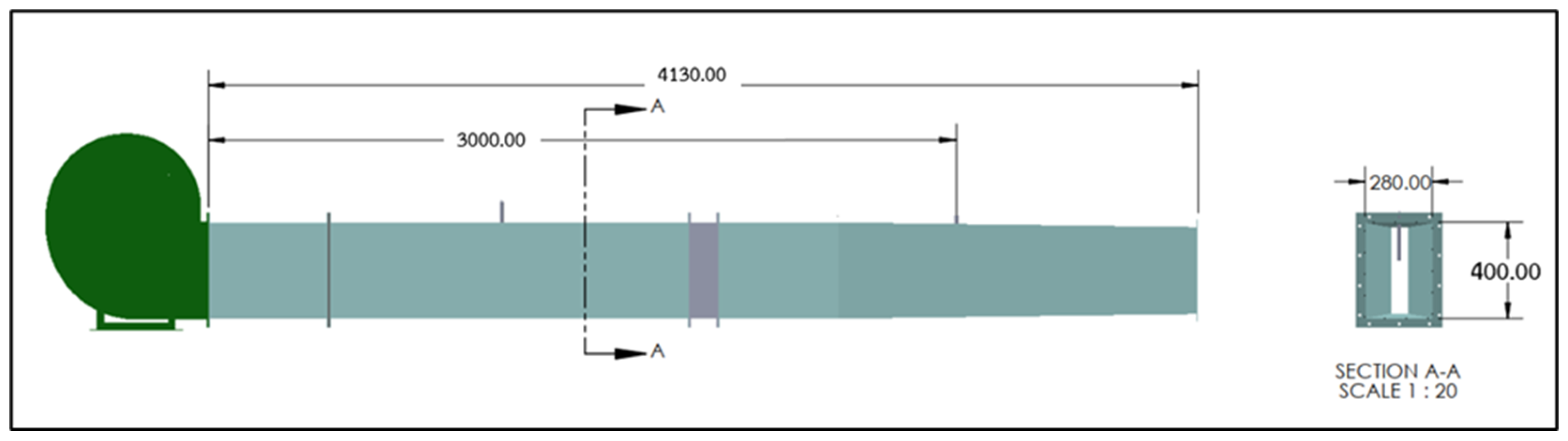
The growth chamber facilitates heterogeneous condensation, where water vapor nucleates onto sub-micron particles to increase their aerodynamic diameter. The architectural layout of this section is shown in Figure 3.
Figure 3.
Schematic of the condensation and particle growth chamber.
Residence Time Optimization: The 3000 mm rectangular growth duct (400 mm × 280 mm) was designed based on the calculated Evaporation Time (t) to ensure a stable supersaturated environment and sufficient growth time before separation:
2.2.3. Dimensions and Descriptions Phase III: High-Efficiency Centrifugal Separation
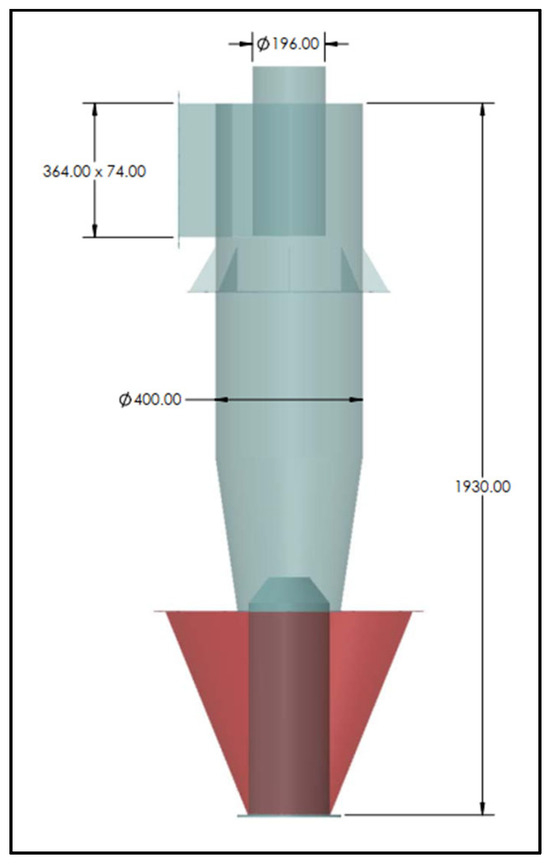
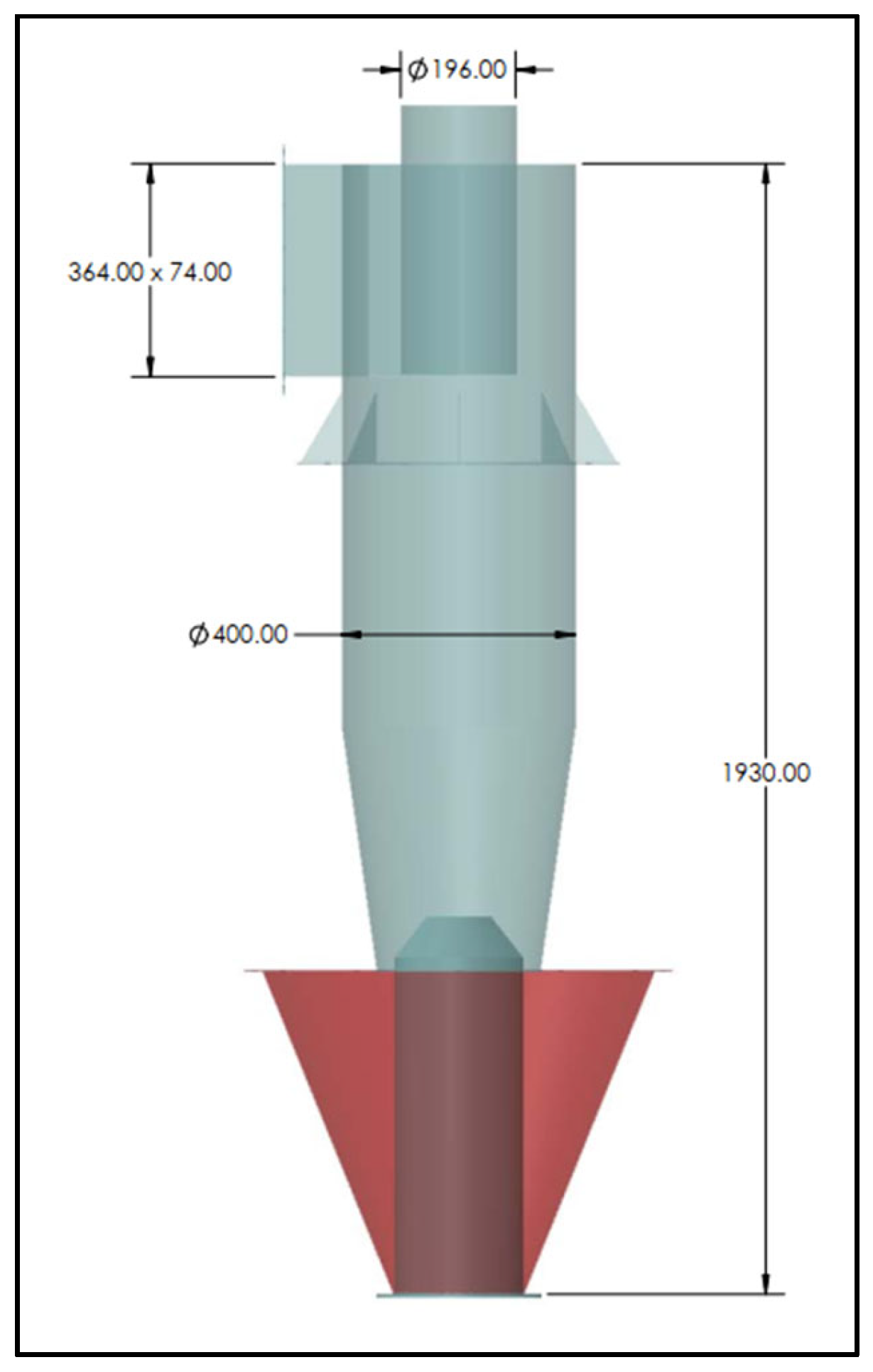
The final stage of the process utilizes a tangential cyclone separator (Ø 400 mm, height 1930 mm) specifically designed to capture the enlarged particles. As the particle-laden air enters through the rectangular tangential inlet (364 mm × 74 mm), it generates a high-velocity inner vortex that spirals downward toward the conical section. The centrifugal force generated by this rotation projects the enlarged particles, now possessing increased mass due to condensation against the inner walls. These particles subsequently lose kinetic energy and descend into the collection hopper (shown in red at the base). Conversely, the cleaned air stream, freed from the heavier particulates, reverses direction at the bottom to form an upward-spinning inner vortex, exiting the system through the central vortex finder (Ø 196 mm) at the top (shown in Figure 4).
Figure 4.
Schematic of the high-efficiency centrifugal separator.
2.3. Instrumentation and Process Monitoring
To ensure high data fidelity, the system was equipped with industrial-grade sensors for real-time data acquisition.
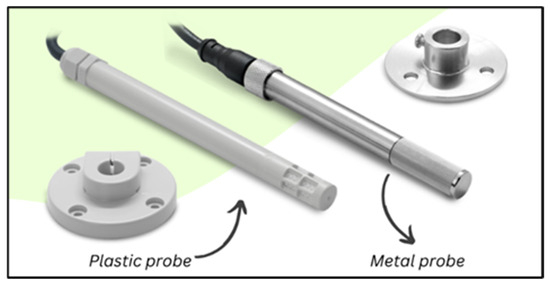
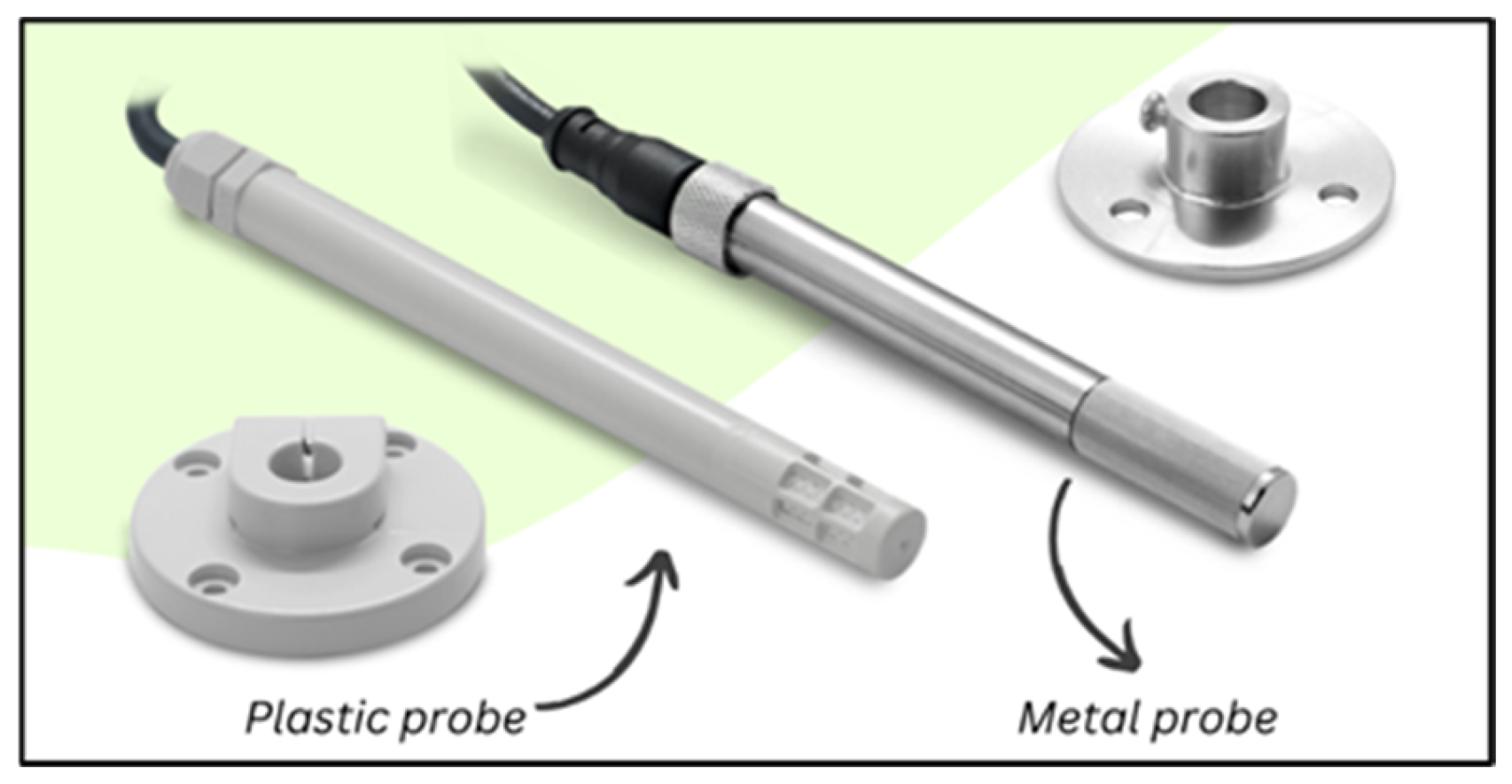
Physical Parameters: Thermal and humidity variations were monitored using EYC-129 tech THS17 sensors (eYc-tech, New Taipei City, Taiwan) to observe the moisture transition, as shown in Figure 5.
Figure 5.
EYC-Tech THS17 sensors for temperature and humidity monitoring.
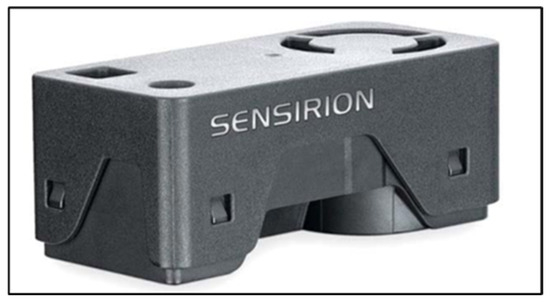
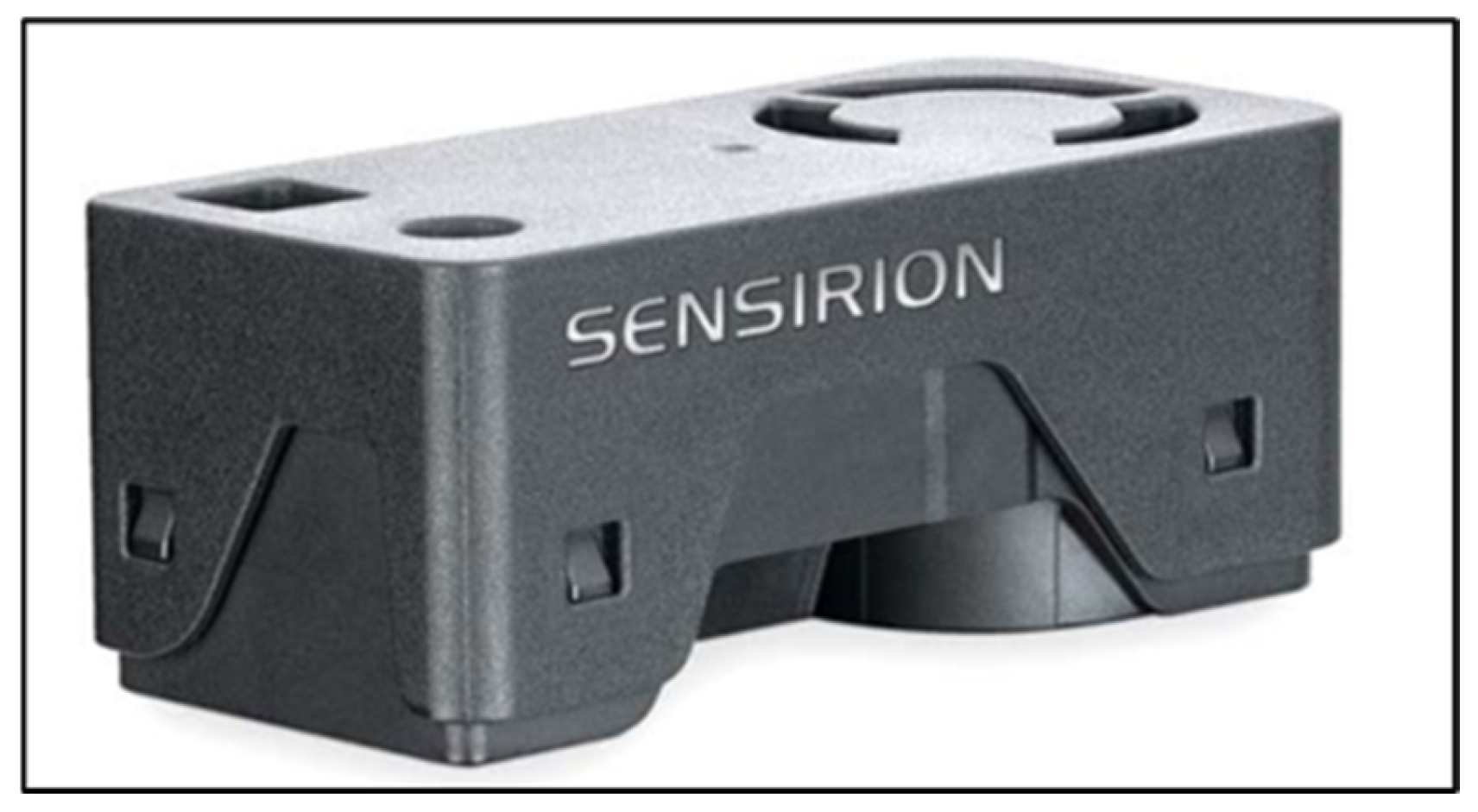
Particulate Analysis: Real-time concentration measurements for PM1.0, PM2.5, and PM10 were obtained using Sensirion SEN66 laser-scattering sensors (Sensirion AG, Stäfa, Switzerland), as shown in Figure 6.
Figure 6.
Sensirion SEN66 particulate matter (PM) sensor.
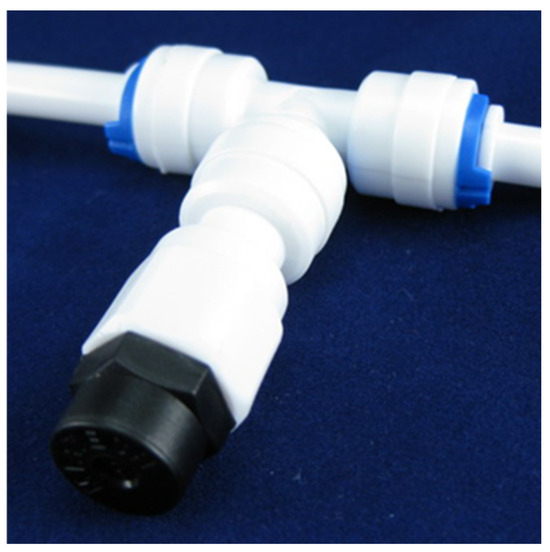
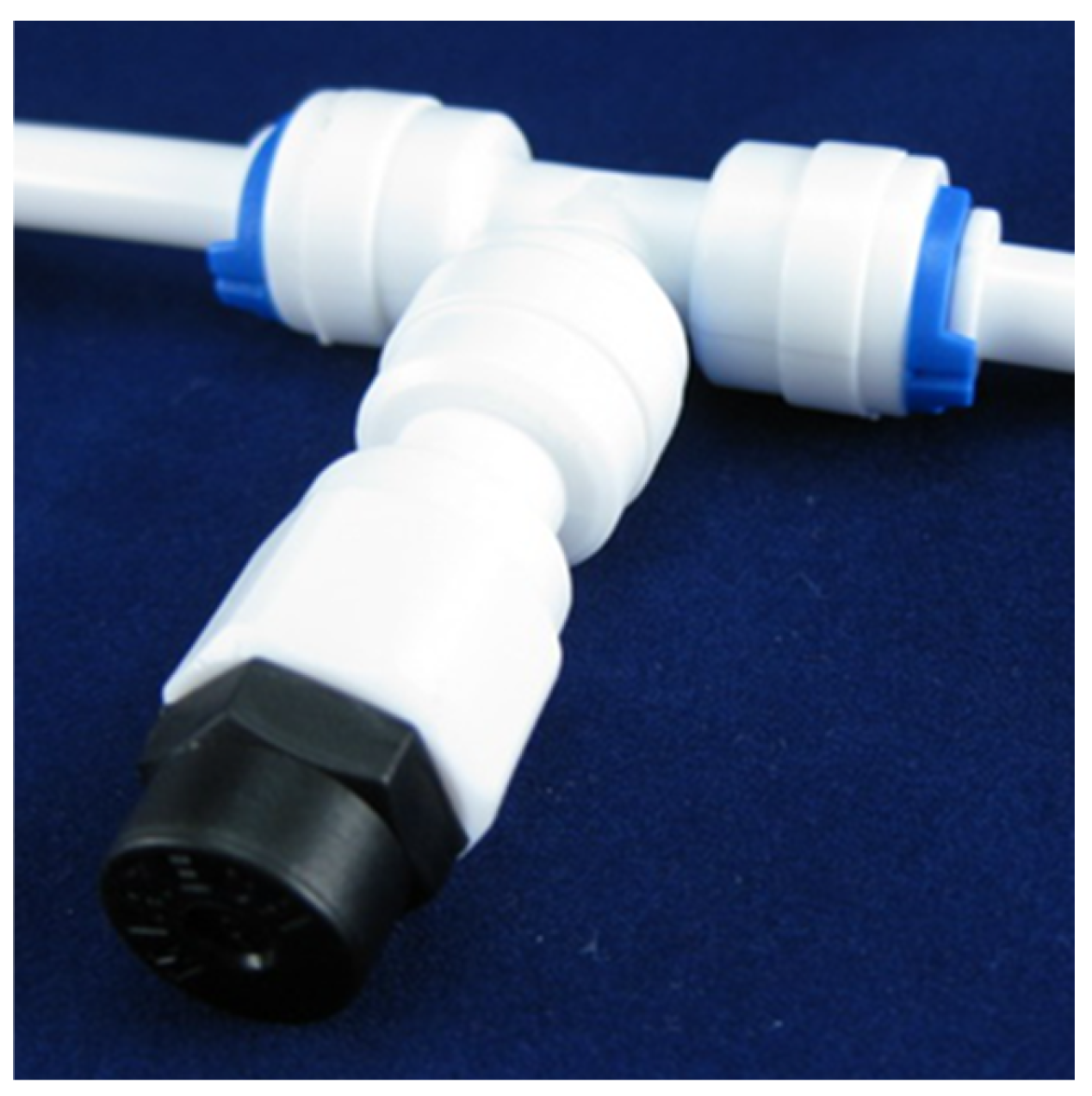
Low-Pressure Fine-Mist Nozzle: High-quality stainless-steel nozzles (Mistec, Dongguan, China) were utilized to generate fine mist (20–50 microns) under low-pressure conditions, Diaphragm Booster Pump (Jor Jaroen, Bangkok, Thailand). This droplet size maximizes the interfacial surface area, enhancing the collision and capture efficiency of fine particles. The nozzles feature anti-drip valves for consistent mist quality and are strategically positioned to ensure uniform coverage across the test chamber’s cross-section, as shown in Figure 7.
Figure 7.
Low-pressure stainless-steel nozzles with anti-drip valves.
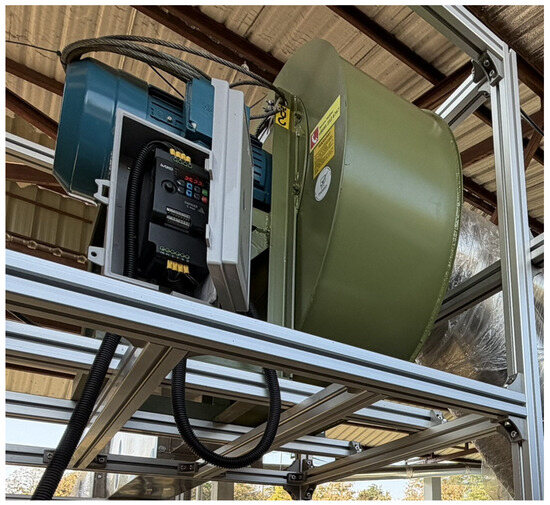
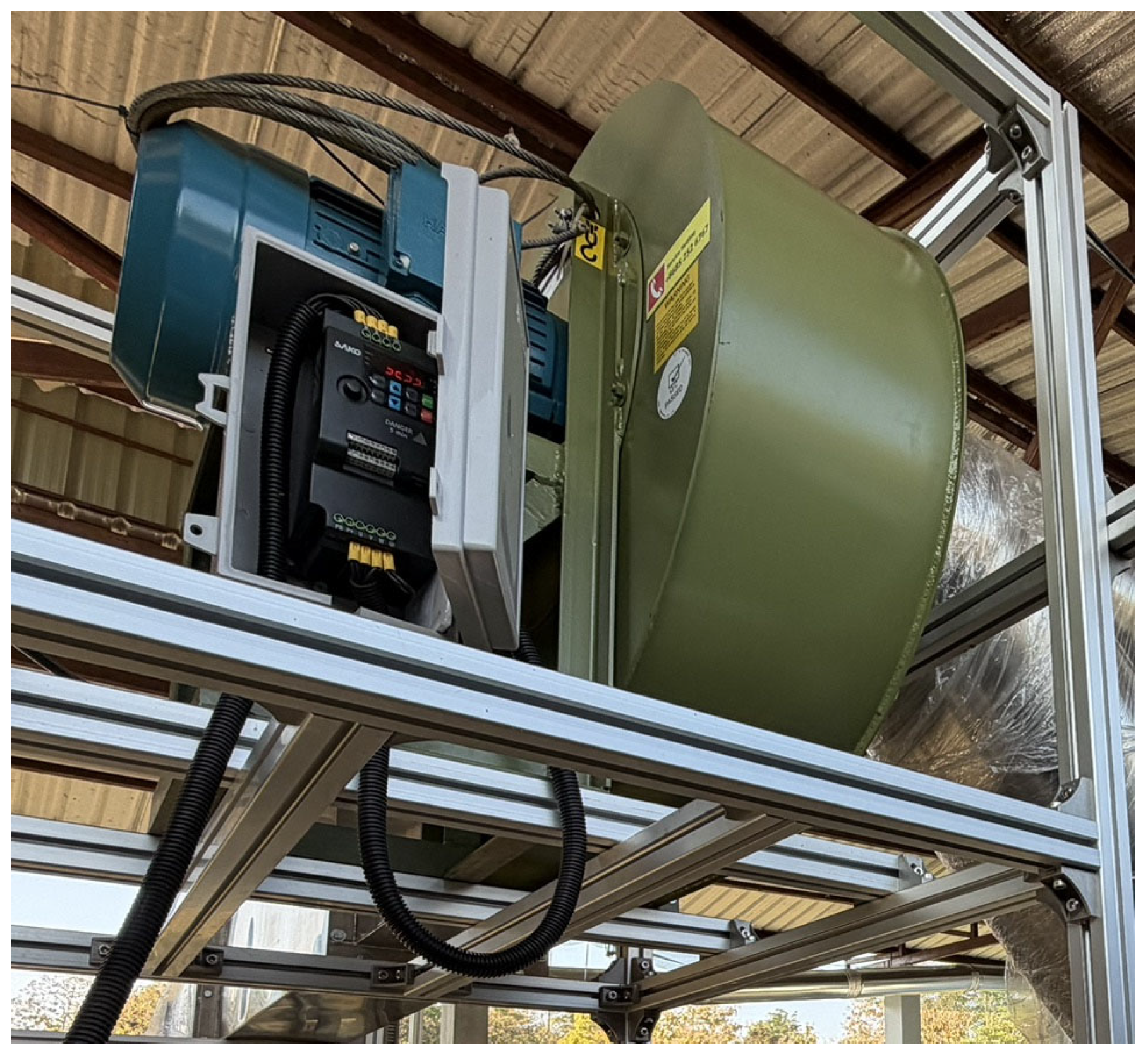
Centrifugal Blower: A 5.5 kW blower maintained stable velocity (Model LN 401B, Eurovent Blower Co., Ltd., Samut Prakan, Thailand), regulated by a SAKO SKI780 inverter at 35 Hz (Zhejiang Sako Electrical Co., Ltd., Wenzhou, China). The blower and control interface assembly is shown in Figure 8. The blower capacity accounts for the calculated Total Head Loss
Figure 8.
Centrifugal blower and SAKO SKI780 inverter control interface.
2.4. Experimental Procedure and Data Analysis
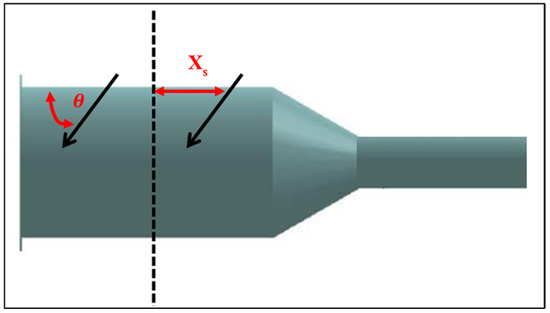
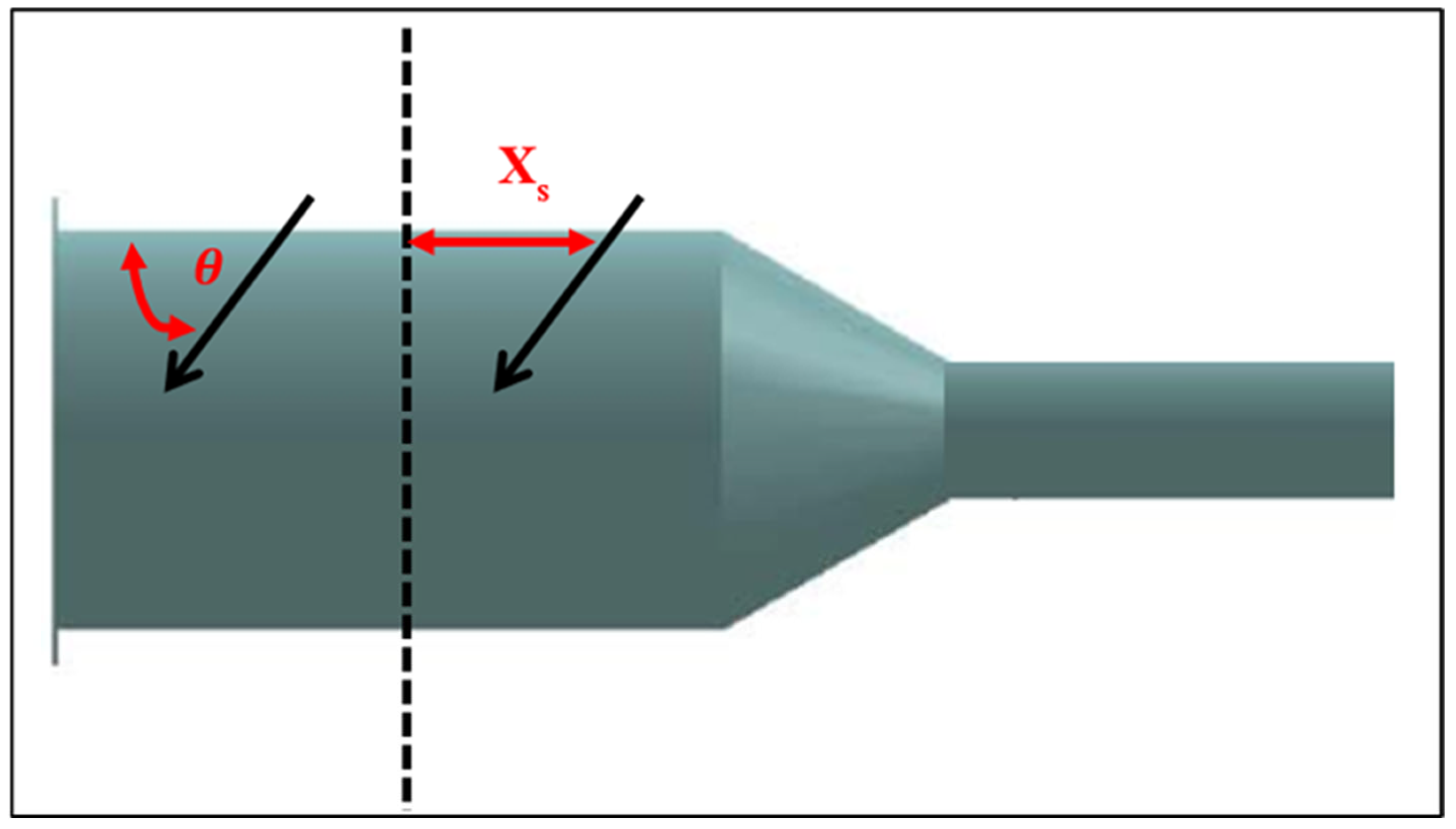
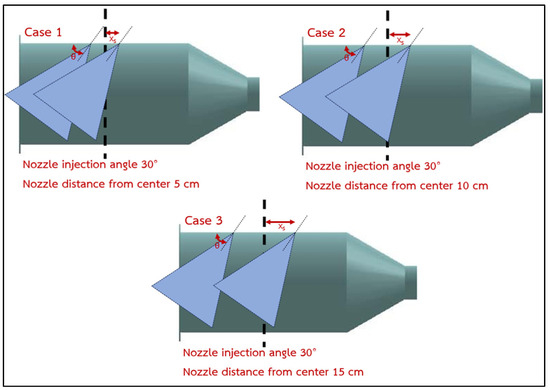
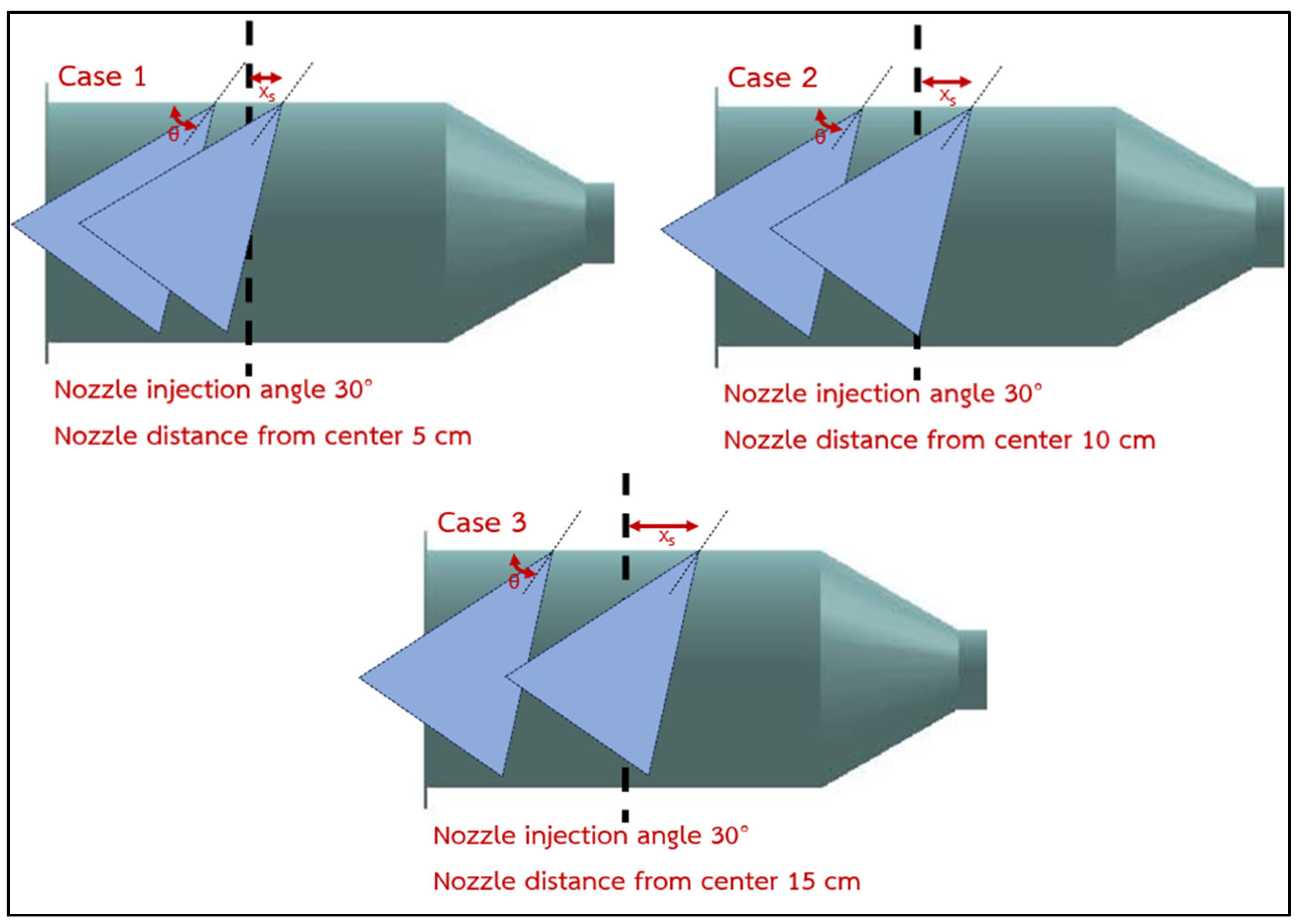
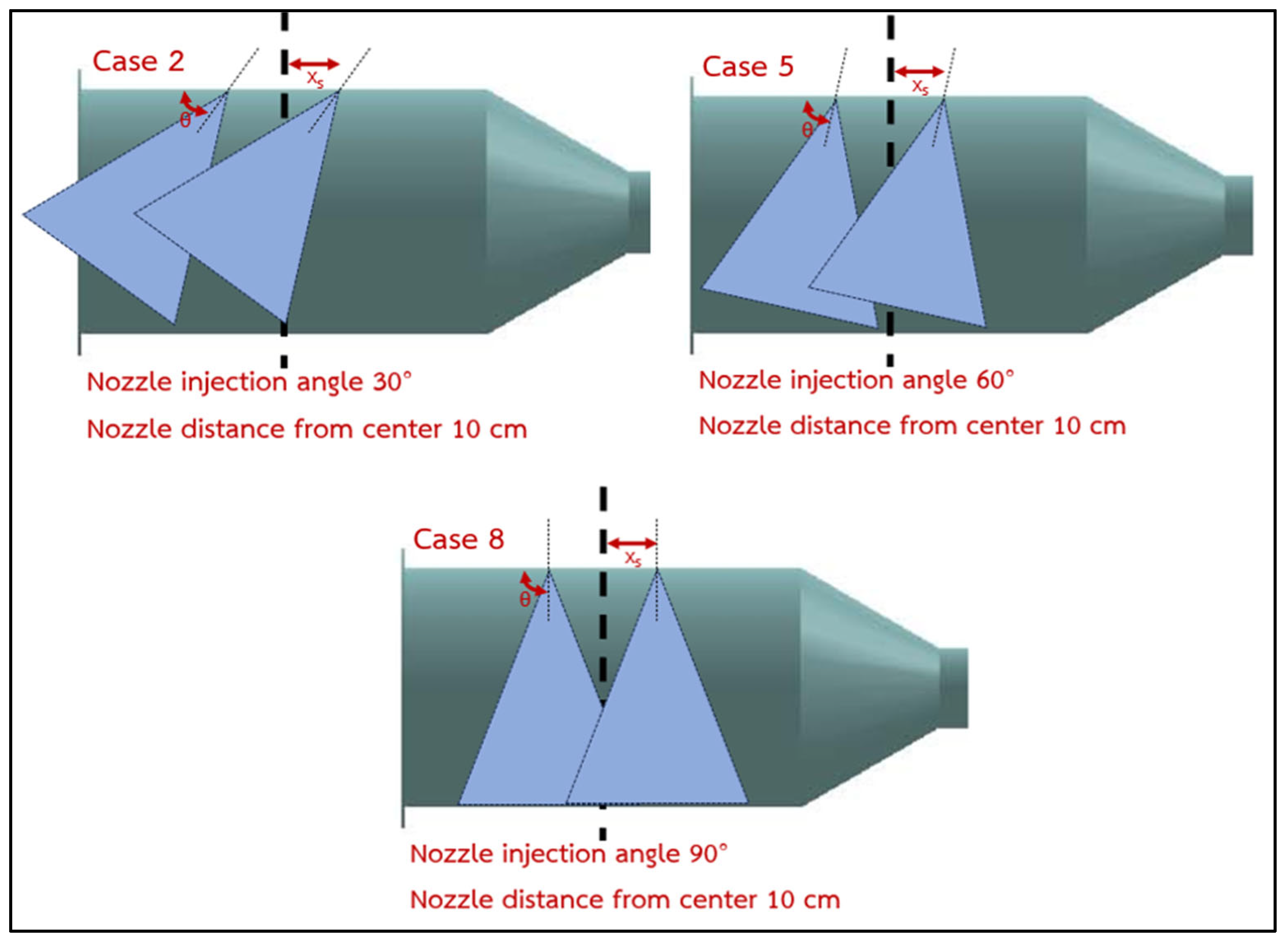
The study investigated the influence of the nozzle injection angle (θ) and the nozzle separation distance (Xs). The systematic workflow of the experimental campaign, from system stabilization to data recording, is shown in Figure 9.
Figure 9.
Experimental workflow and definition of independent variables: Xs and θ.
Injection Angle (θ): A counter-flow injection strategy was employed to enhance turbulence and mixing. Three angles (i.e., 30°, 60°, and 90°) were evaluated to determine the optimal configuration for maximizing particulate-vapor contact.
Nozzle Separation Distance (Xs): The mist distribution was varied by adjusting the distance between two symmetrical nozzles. Each nozzle was positioned at 5, 10, and 15 cm from the center of the Venturi tube, resulting in total separation distances (Xs) of 10, 20, and 30 cm. These configurations aimed to investigate the influence of spray cone overlaps on saturation uniformity and sub-micron particle enlargement.
To systematically evaluate the performance of the evaporation section, the experimental parameters were categorized into independent, dependent, and controlled variables. A summary of the experimental design, including the specific treatments and parameter combinations, is presented in Table 1.
Table 1.
Summary of experimental parameters and design variables.
- System Preparation: The blower was activated and adjusted to the target velocity for 10–15 min until thermal and airflow stability are achieved.
- Baseline Measurement: Initial PM concentrations were recorded at both the inlet and outlet (Case 0) before activating the spray system.
- Nozzle Setup: Nozzles were adjusted to the specified distance (Xs) and angle (θ) with the water pump providing constant pressure to maintain a 20–200 µm droplet range.
- Data Acquisition: Particle concentration data were logged continuously for 10 min per run, capturing the transition from dry to saturated states.
- Repeated Trials: Each case was performed in triplicate to ensure repeatability, with dry air purging between trials to remove residual moisture.
- Data Recording: All parameters (T, RH, and PM) were automatically logged for subsequent collection efficiency analysis.
The Collection Efficiency (η) was quantified as a percentage using the following equation:
where Cinlet and Ccyclone_out represent the particulate concentrations measured at the system entry and the cyclone exit, respectively. The collection efficiency for each case was calculated using Equation (5). Case 0 was designated as the baseline to account for inherent particle deposition within the system, while the results from the subsequent cases were compared to this baseline to evaluate the relative improvement provided by the nozzle integration strategy.
To improve efficiency, the system utilizes a three-step process: evaporation for humidification, condensation for particle growth (converting sub-micron particles to droplets) and centrifugal separation for final removal, as shown in Figure 10.
Figure 10.
Mechanism of sub-micron particle transformation through the evaporative condensation growth process.
The particulate matter (PM) evaluated in this study was categorized based on aerodynamic diameter into three fractions: PM10 (coarse particles with a diameter of 10 µm or less), PM2.5 (fine particles with a diameter of 2.5 µm or less), and PM1.0 (sub-micron particles with a diameter of 1 µm or less). These classifications are essential for analyzing the size-dependent collection efficiency of the evaporation section.
3. Results
3.1. Baseline Performance (Case 0)
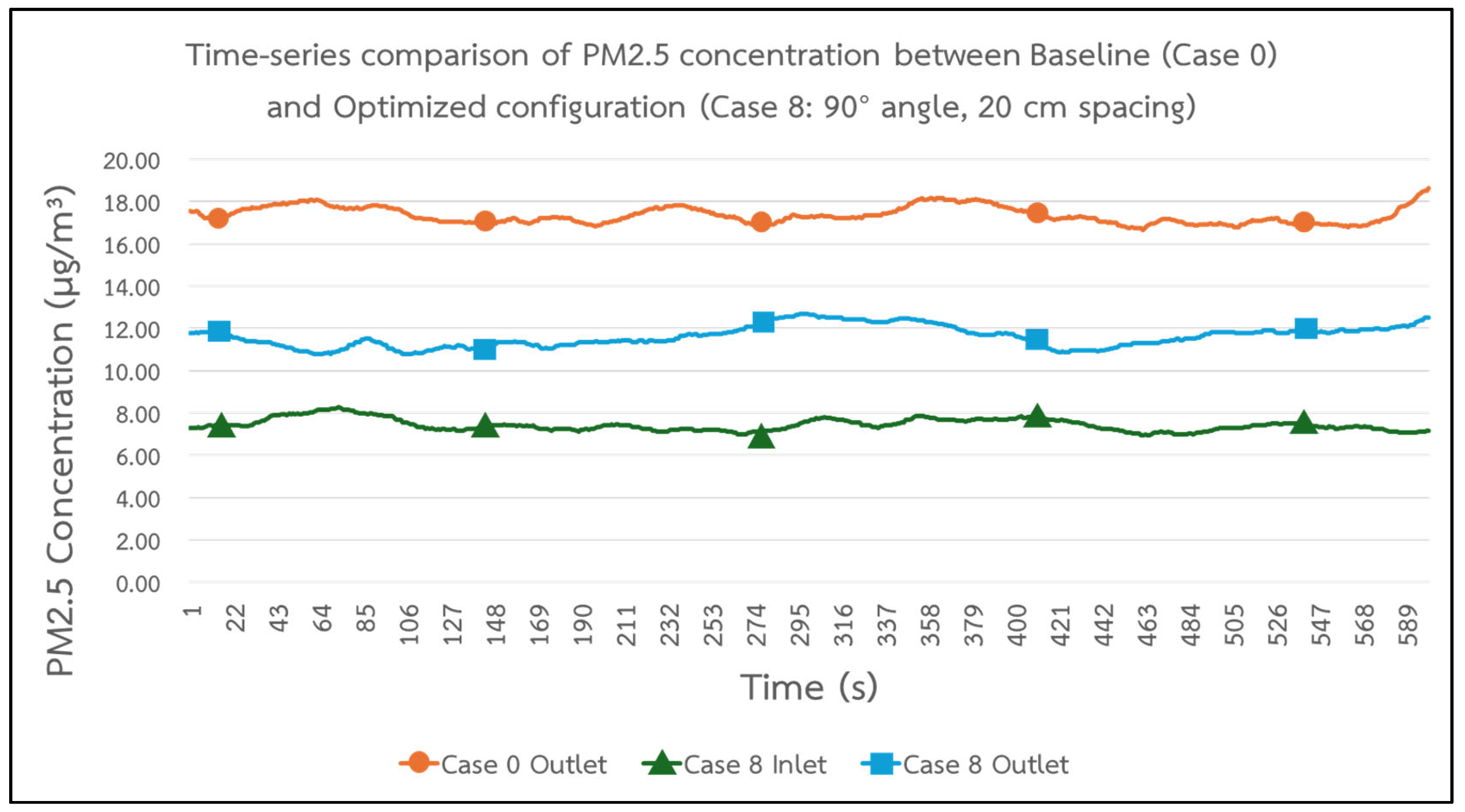
Baseline evaluation (Case 0) revealed a significant limitation of the dry cyclone in capturing fine particles, yielding a negative PM2.5 collection efficiency of −19.59% due to residual dust accumulation. In contrast, Case 8 represents the optimized experimental condition within the nine tested cases, utilizing a specific the 90 degree injection angle, distance 10 cm to maximize particle growth.
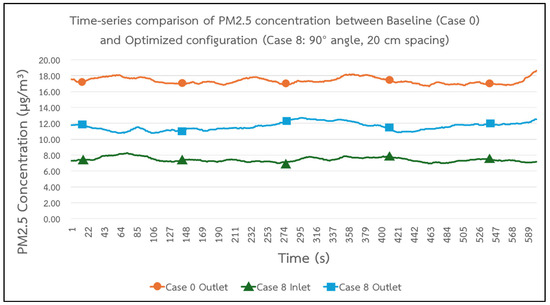
Under these conditions (Case 8), the system demonstrated a clear performance enhancement; following water injection at 120 s, the outlet PM2.5 concentration declined steadily and stabilized at 11.81 µg/m3 within 180 s. This dynamic behavior, shown in Figure 11, confirms that the particle growth mechanism effectively overcomes the limitations of dry systems and significantly improves air purification capacity.
Figure 11.
Temporal profiles of PM2.5 mass concentration for Cases 1–4.
3.2. Grouping Analysis of Independent Variables
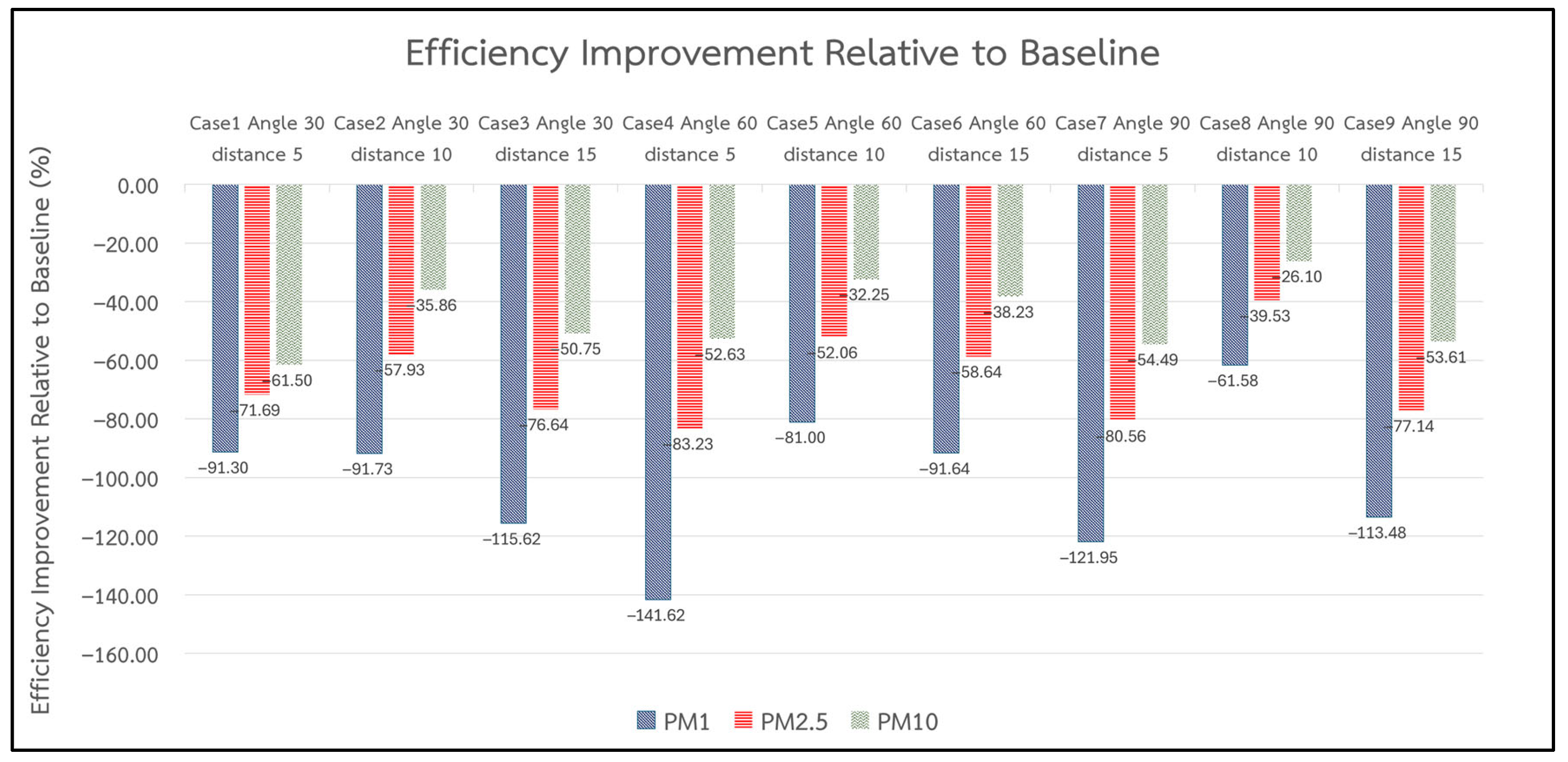
To understand the influence of nozzle spacing (Xs) and injection angle (θ) on mist formation and particle capture, the analysis is categorized into three groups based on the injection angle, as shown in Figure 12: Improvement relative to baseline.
Figure 12.
PM2.5 collection efficiency improvement relative to baseline for different nozzle configurations.
From Figure 12, the results can be described as follows.
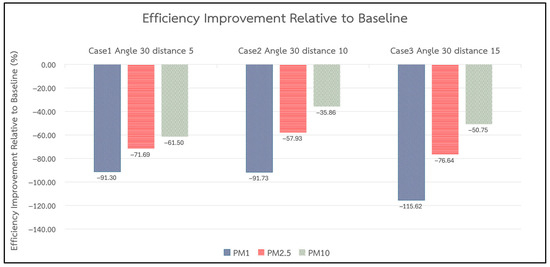
3.2.1. Injection Angle of 30 Degrees (Cases 1, 2, and 3)
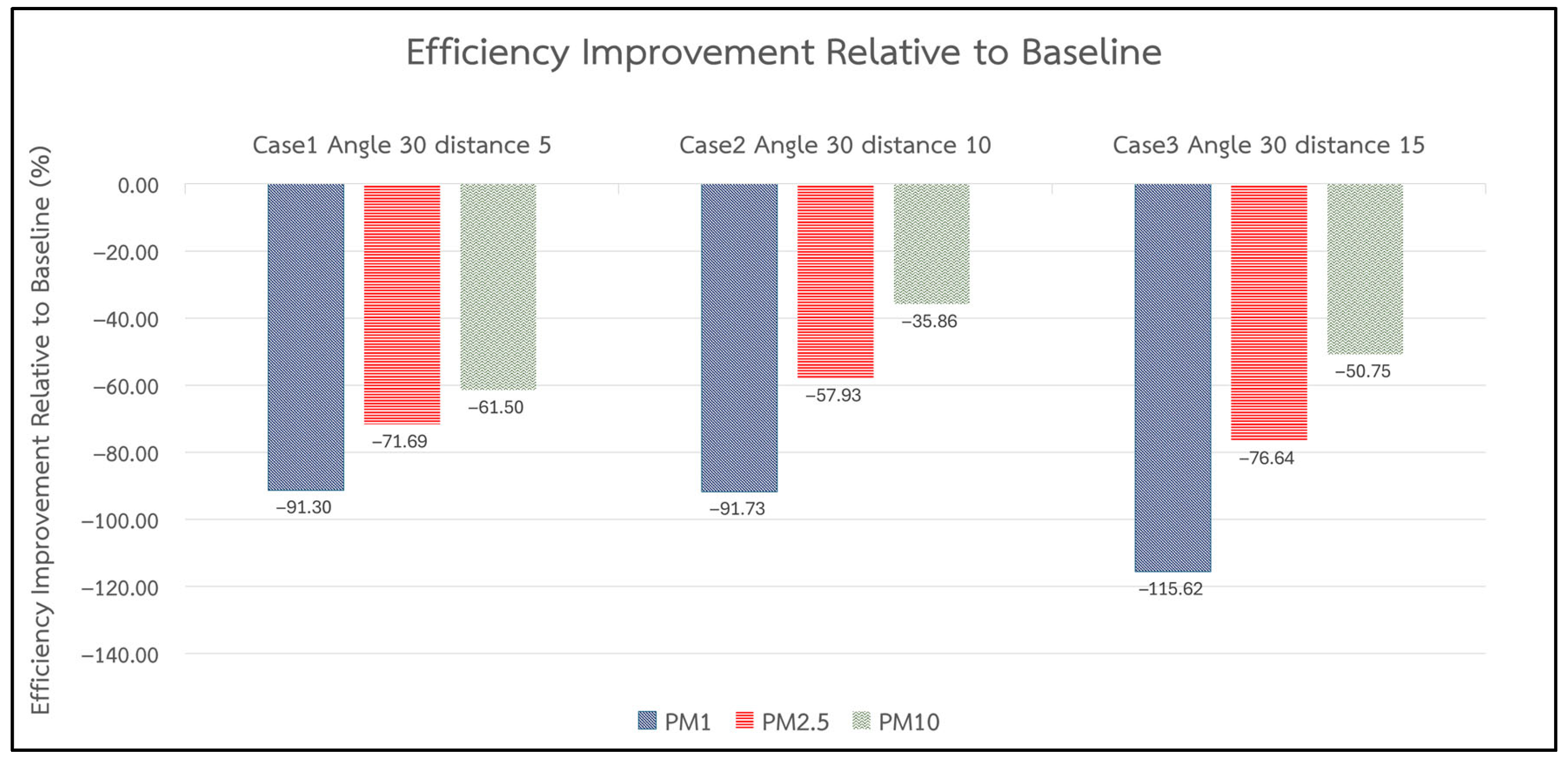
Experimental results indicate that a spacing of 20 cm (Case 2) yielded the best performance in this group, as shown in Figure 13. Although the collection efficiency remained negative at −57.93%, it represents a significant improvement compared to Case 1 (−71.69%) and Case 3 (−76.64%). In this context, a “less negative” value signifies a closer approach to positive efficiency, directly reflecting a lower concentration of PM2.5 at the outlet. This reduction indicates that the 20 cm spacing provided the optimal environment for particle enlargement via evaporative condensation, successfully growing a portion of the fine particles to a size that could be captured by the cyclone, thereby minimizing the net emission of residual dust.
Figure 13.
Improvement relative to baseline for the 30° injection angle group (Cases 1, 2, and 3).
It is important to note that the negative efficiency values observed are identified as sensor artifacts resulting from the use of laser-scattering PM2.5 sensors under saturated conditions. High-density water mist produced by the nozzles interferes with the optical detection path, causing the sensors to register droplets as solid particles. While this leads to an apparent increase in outlet concentration (and thus negative efficiency), it does not represent an actual increase in dust emissions. The authors acknowledge this as a technical limitation of the current sensor setup. In future designs, an inline moisture filtration system or a high-efficiency dehumidifier will be integrated upstream of the outlet sensor. This pre-conditioning step will ensure that only dry particulate matter enters the optical detection chamber, thereby eliminating ‘phantom’ concentration readings caused by water droplets and providing a more reliable efficiency baseline.
In Figure 14, the 10 cm nozzle spacing (Case 1) performed poorly because the nozzles were too close, causing droplets to coalesce and thereby reducing their capture efficiency. In contrast, the 30 cm spacing (Case 3) was too wide, leaving gaps near the chamber walls where dust could bypass the spray curtain. The 20 cm spacing (Case 2) provided optimal performance, delivering a steady and even mist that was well-matched with the spray angle.
Figure 14.
Performance comparison for the 30° injection angle group (Cases 1, 2, and 3).
3.2.2. Injection Angle of 60 Degrees (Cases 4, 5, and 6)
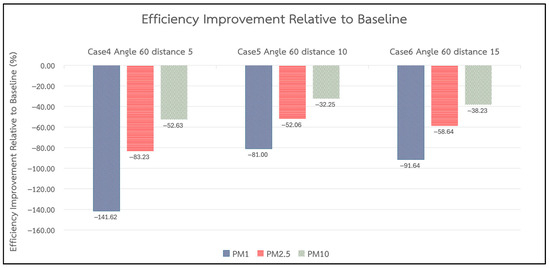
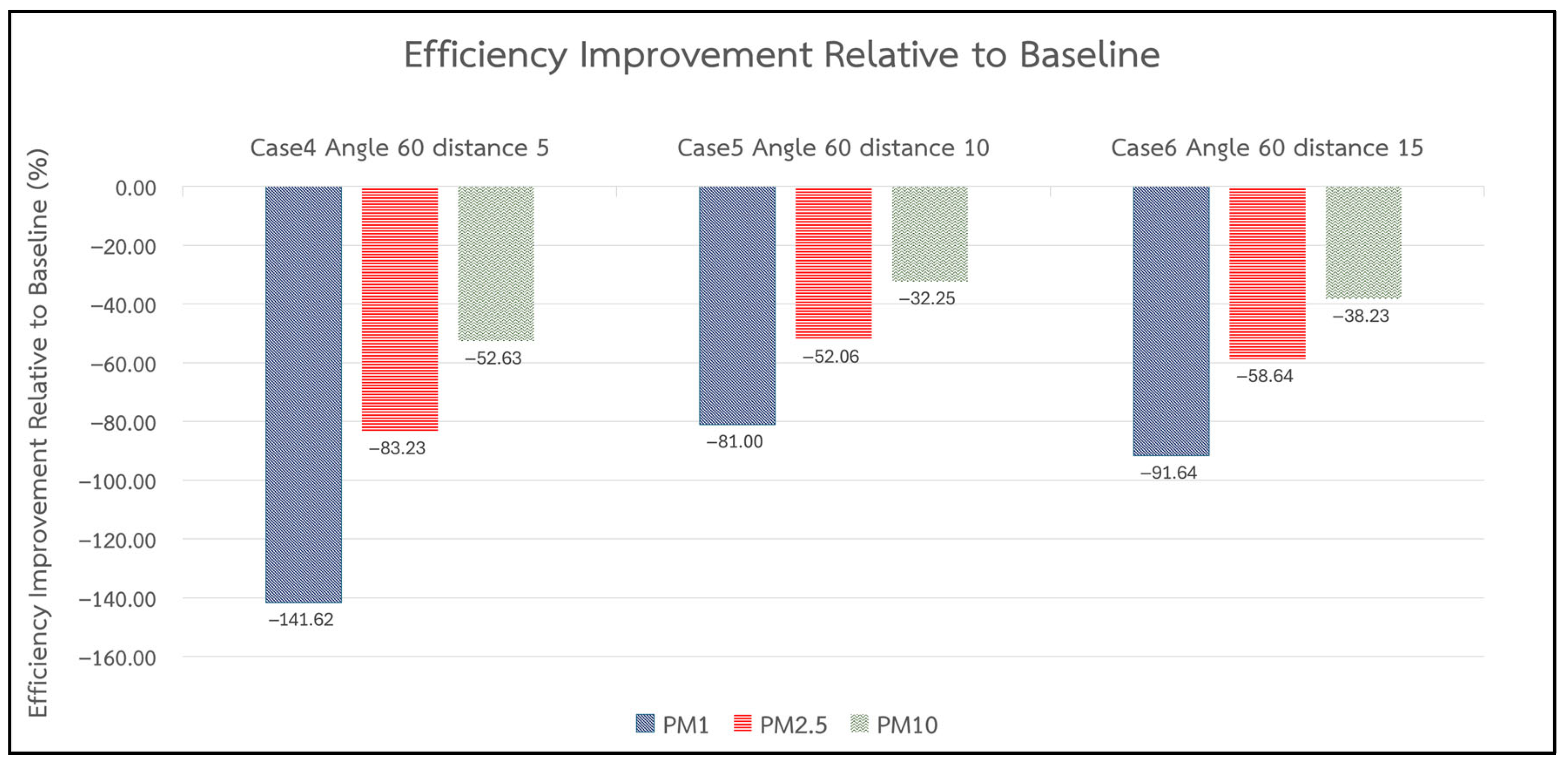
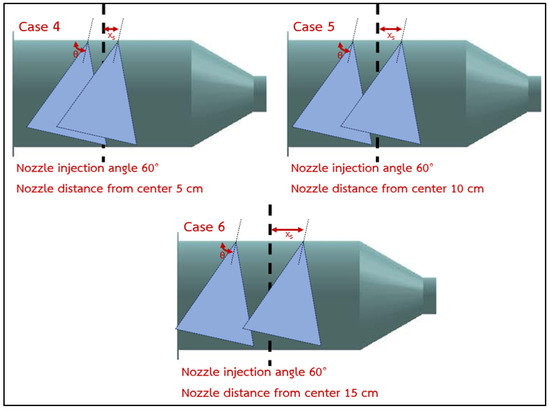
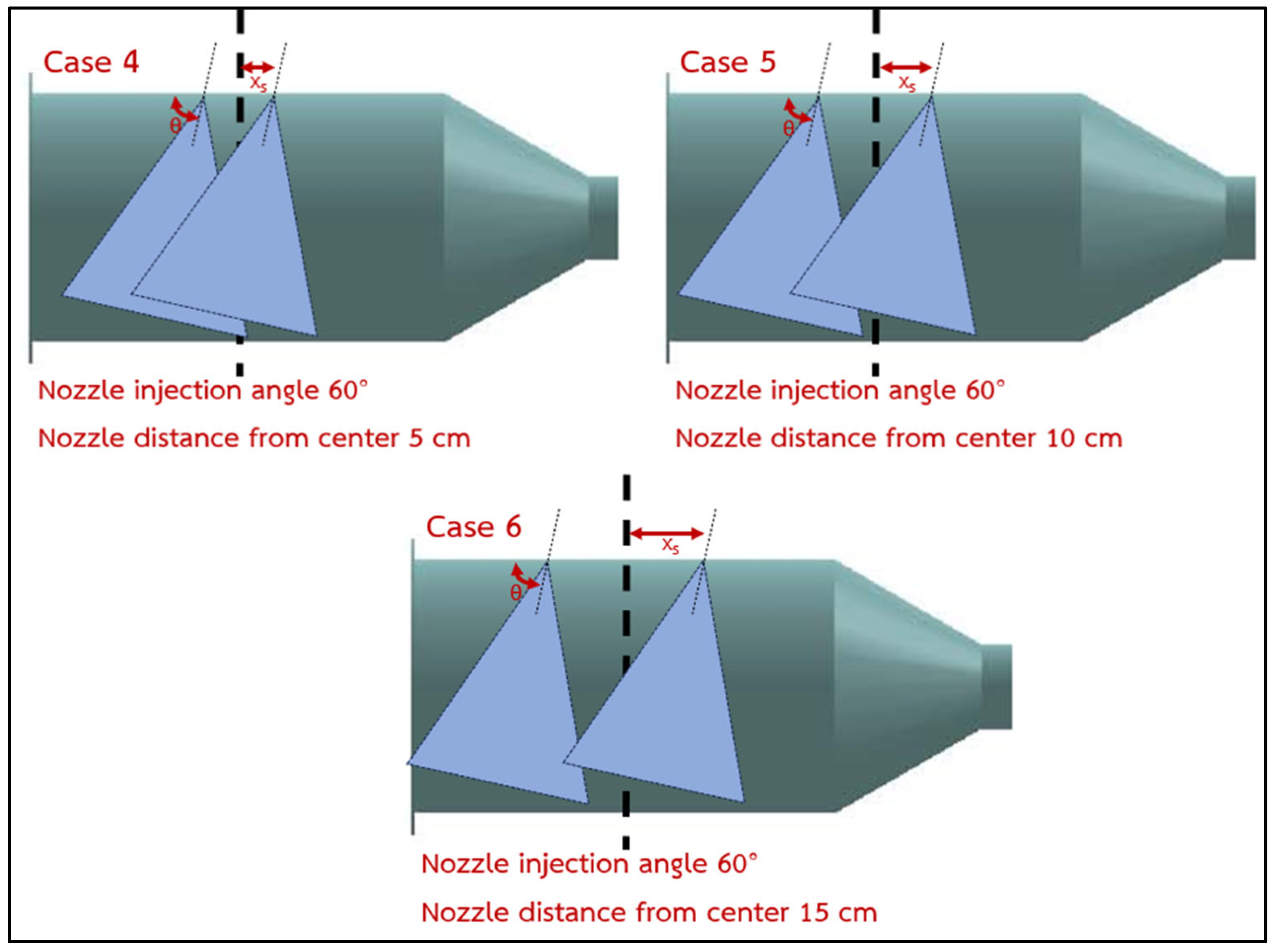
In this group, the 20 cm spacing (Case 5) continued to perform best, with an efficiency of −52.06%, compared to Case 4 (−83.23%) and Case 6 (−58.64%). These results are shown in Figure 15.
Figure 15.
Improvement relative to baseline for the 60° injection angle group (Cases 4, 5, and 6).
The negative efficiency spike of −83.23% in Case 4 indicates a fine mist re-entrainment phenomenon. The 60° injection angle combined with a proximity of 10 cm created excessive turbulence within the Venturi throat, allowing fine mist to escape and interfere with sensor readings, particularly at the narrow injection angle, as shown in Figure 16.
Figure 16.
Performance comparison for the 60° injection angle group (Cases 4, 5, and 6).
3.2.3. Injection Angle of 90 Degrees (Cases 7, 8, and 9)
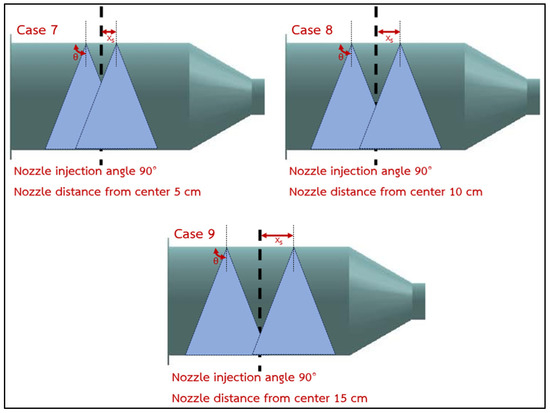
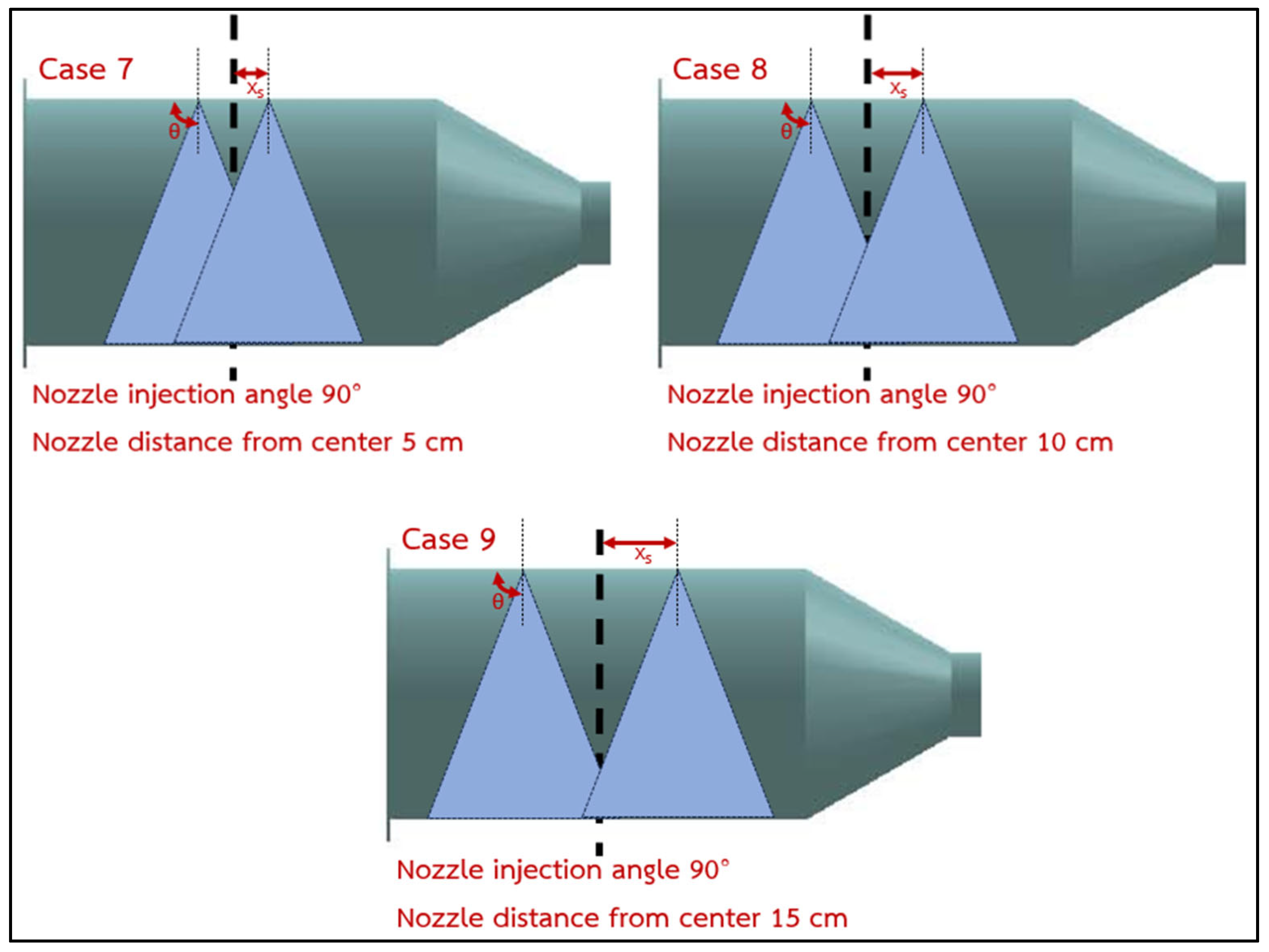
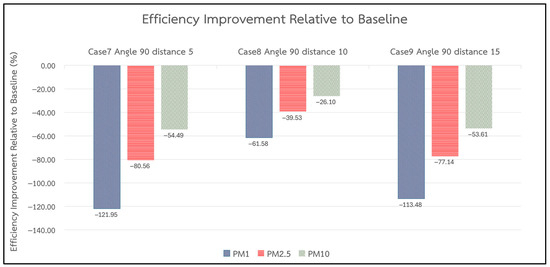
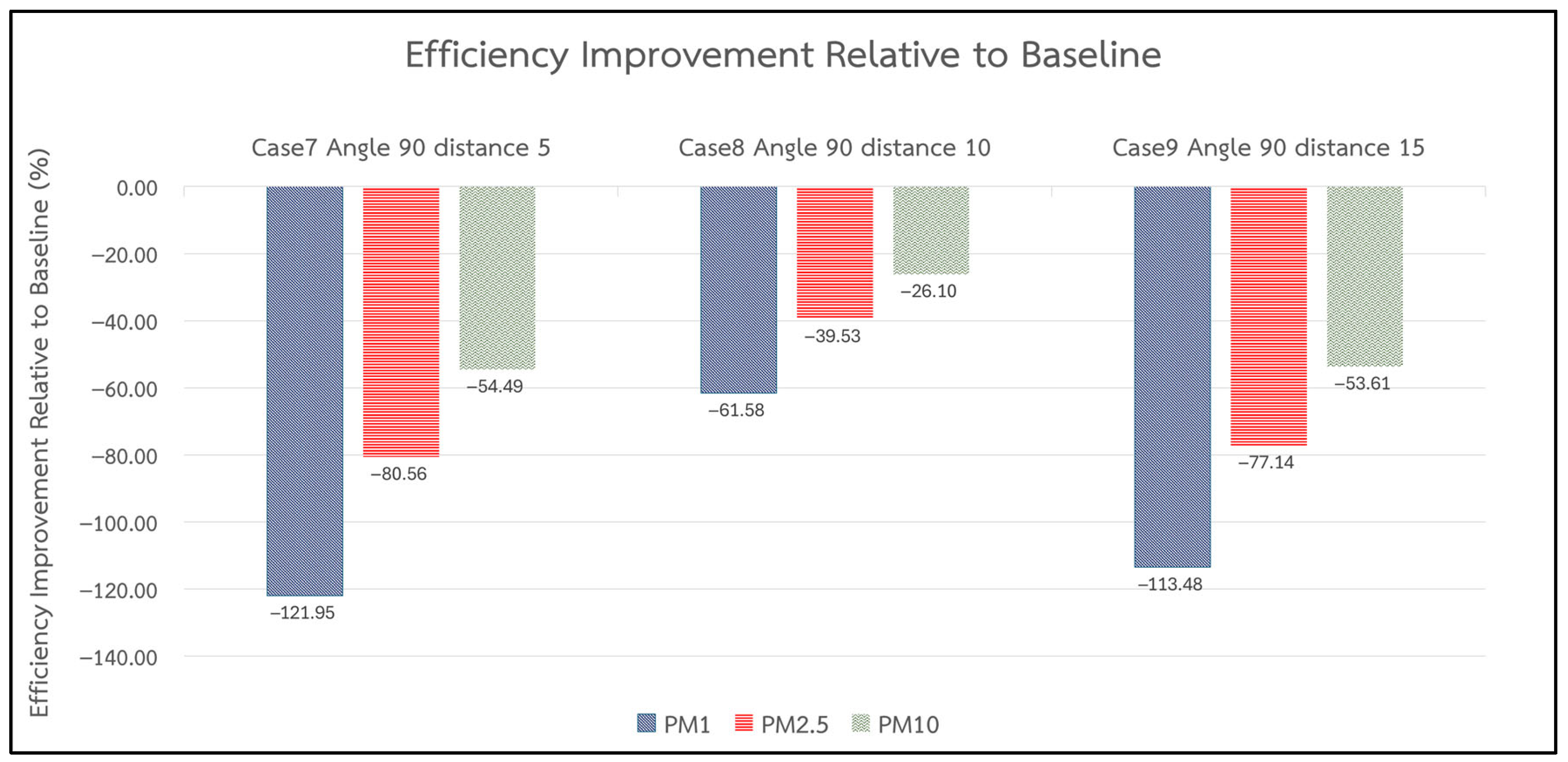
From Figure 17, the most effective group in this study was the 90-degree angle group with Case 8 (20 cm spacing) identified as the optimized condition. It achieved a PM2.5 efficiency of −39.53% and a PM10 efficiency of −26.10%, as shown in Figure 18, which represent the closest values to the break-even point for particle capture among all experimental cases.
Figure 17.
Performance comparison for the 90° injection angle group (Cases 7, 8, and 9).
Figure 18.
Improvement relative to baseline for the 90° injection angle group (Cases 7, 8, and 9).
3.2.4. Inter-Group Comparison of Optimized Conditions
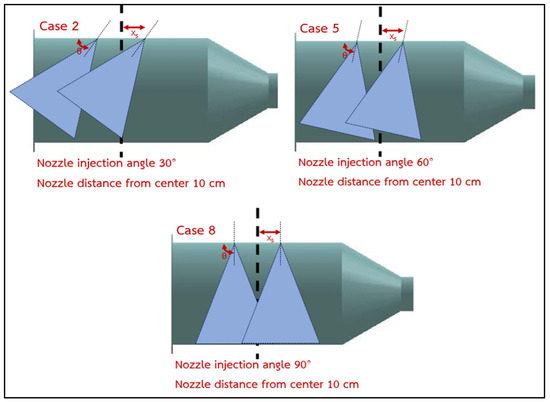
When comparing the best performers from each group, i.e., Case 2 (30°), Case 5 (60°), and Case 8 (90°), their performance is illustrated in Figure 12 (improvement relative to baseline) and Figure 19 (effect of the narrow injection angle).
Figure 19.
Performance comparison of optimized cases (Cases 2, 5, and 8) under narrow injection angle conditions.
Prior to analyzing the results, the experimental conditions applied across all 9 cases and the baseline are defined. To ensure consistency, the centrifugal blower was operated at a fixed frequency of 35 Hz using the VFD controller, resulting in a steady inlet air velocity of 1.6 m/s measured at the entrance of the venturi section. Additionally, the water supply system maintained a constant operating pressure of 72 PSI (4.97 bar) as specified in the pump characteristics (Section 2.2.1). These uniform parameters provided a stable baseline for evaluating particle enlargement efficiency across the nine experimental cases summarized in Table 2.
Table 2.
Summary of experimental results for all nine cases.
Based on the results of all 9 cases in Table 2, the 90-degree injection angle (Case 8) performed the best because its crossflow spray creates a complete water curtain across the Venturi throat. This setup increases the speed and impact between dust and water, making it much easier to trap particles. Additionally, a 20 cm nozzle spacing was found to be the ideal distance for all groups. It allows the mist to overlap perfectly, covering the entire area without letting droplets clump together or leaving gaps for dust to bypass the system.
4. Discussion
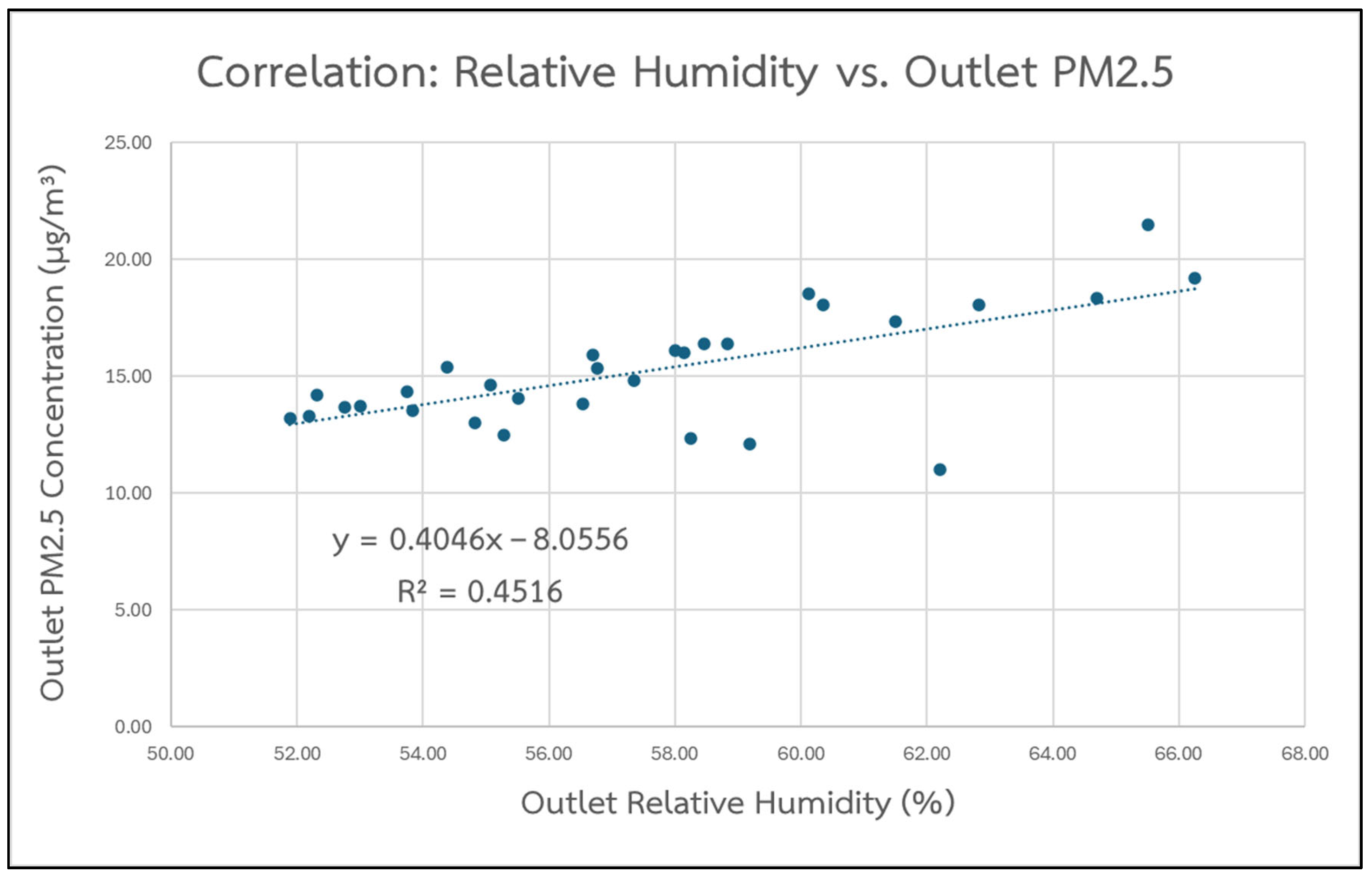
The primary cause of the negative efficiency values observed in the calculations is evidenced by the statistical data presented in Figure 20 (Correlation between Relative Humidity (RH) and Outlet PM2.5 concentration). The findings are analyzed below.
Figure 20.
Comparison of PM2.5 and PM10 collection efficiencies across all nine test cases.
From Figure 20, the results can be described as follows.
Relationship Between Humidity and PM2.5 (Regression Analysis): Analysis of 30 experimental runs shows a clear positive trend (R2 = 0.41516), indicating that outlet PM2.5 readings are directly influenced by relative humidity levels.
Impact of Humidity on Sensor Accuracy (Interference): When humidity exceeds 60%, as observed in Cases 1 and 4, PM2.5 readings spike to 19–21 µg/m3. This happens because the laser sensors cannot distinguish between real dust and fine water mist, leading to a positive bias or falsely elevated readings.
Evidence of Particle Growth in Case 8: Although calculated efficiencies appear negative due to sensor limitations, Case 8 provides evidence that the system is functioning as designed. PM10 collection efficiency (−30.30%) outperformed PM2.5 collection efficiency (−59.12%) by nearly 50%, demonstrating that PM2.5 particles acted as nuclei for water vapor to condense and grow. This increased their size and mass, allowing the cyclone to remove them more effectively than in dry conditions
The observation that PM10 collection efficiency outperformed that of PM2.5 and PM1.0 is physically consistent with the principles of inertial impaction. According to the classic filtration and scrubbing theories established by Pilat et al. (1976) [18], the efficiency of particle-droplet collisions is a function of the Stokes number, which decreases significantly for sub-micron particles. Particles with larger aerodynamic diameters, such as PM10, possess greater momentum and are less likely to follow the air streamlines around a water droplet, leading to more frequent collisions and subsequent removal. Furthermore, these findings align with the results reported by Ardon-Dryer et al. (2015) [19], which highlighted the challenges of capturing fine aerosol fractions compared to coarser ones in wet-scrubbing environments. The relatively lower efficiency for PM1.0 in this study reinforces the necessity of the phase transition (condensation-growth) mechanism. By acting as condensation nuclei, these fine particles must increase their effective mass to overcome the inherent physical limitations of inertial impaction in the sub-micron range.
5. Conclusions
Experimental testing across 10 different configurations revealed that the traditional dry cyclone system (Case 0) has significant limitations, achieving a PM2.5 collection efficiency of only −19.59%. This negative value confirms that centrifugal force alone is insufficient to capture low-mass sub-micron particles and highlights the common challenge of residual dust accumulation within closed systems. However, the system’s performance improved substantially in the optimized configuration of Case 8, which utilized a 90-degree injection angle and 20 cm nozzle spacing. This specific setup creates a complete spray curtain across the airflow cross-section, maximizing the collision probability between water droplets and dust particles.
Regarding the particle growth mechanism, Case 8 provided strong empirical evidence of the system’s effectiveness despite the technical challenges of sensor interference. While high relative humidity caused a positive bias in the laser-scattering sensors, making absolute efficiency appear negative, the significant gap between PM10 and PM2.5 efficiency serves as a critical performance index. The PM10 efficiency −30.30% outperformed PM2.5 −59.12% by 28.82%, representing a nearly 50% relative improvement. This difference confirms that the condensation process successfully transformed PM2.5 particles into the larger PM10 size range through heterogeneous nucleation, allowing the cyclone separator to remove them far more effectively.
Finally, the system demonstrated a remarkable dynamic response during the transition from dry to wet conditions. Following the initiation of water injection at the 120 s mark, the outlet PM2.5 concentration began a steady decline, reaching a stable steady state level of 11.81 µg/m3 within approximately 180 s. This rapid stabilization and the significant reduction in particle concentration compared to the baseline confirm that the evaporative condensation-growth mechanism successfully enhances the air-purification capacity of the system, offering a viable solution for fine-particle removal.
Author Contributions
Conceptualization, P.S., P.C., A.H., W.T., M.S., and W.M.; methodology, P.S.; validation, A.H., W.T., M.S., and W.M.; formal analysis, P.S.; investigation, P.S. and P.C.; resources, A.H., W.T., M.S., and W.M.; data curation, P.S.; writing—original draft preparation, P.S.; writing—review and editing, P.S., A.H., W.T., M.S., and W.M.; visualization, P.S.; supervision, A.H., W.T., M.S., and W.M.; project administration, P.S. All authors have read and agreed to the published version of the manuscript.
Funding
This study was supported by the Fundamental Fund of Chiang Mai University (grant number 4710136).
Institutional Review Board Statement
Not applicable.
Informed Consent Statement
Not applicable.
Data Availability Statement
The data presented in this study is available on request from the corresponding author.
Conflicts of Interest
The authors declare no conflicts of interest.
Abbreviations
The following abbreviations are used in this manuscript:
| ECGP | Evaporator condensation-growth particle scrubber |
| PM | Particulate matter |
| PM1.0 | Particulate matter with a diameter of 1.0 micrometers or less |
| PM2.5 | Particulate matter with a diameter of 2.5 micrometers or less |
| PM10 | Particulate matter with a diameter of 10 micrometers or less |
| RH | Relative humidity |
| T | Temperature |
| θ | Nozzle injection angle |
| Xs | Nozzle separation distance |
| η | Collection efficiency |
| Cinlet | Particulate concentration at the system entry |
| Ccyclone_out | Particulate concentration at the cyclone exit |
| L/G | Liquid-to-gas ratio |
| R2 | Coefficient of determination (statistical correlation) |
| PCD | Pollution Control Department |
| µg/m3 | Micrograms per cubic meter |
| µm | Micrometer |
Appendix A
Figure A1.
Installation of the inlet particulate matter (PM) sensor: (a) side view showing the sensor placement relative to the inlet duct; (b) perspective view of the sampling point; and (c) close-up view of the PM sensor unit and real-time monitoring display.
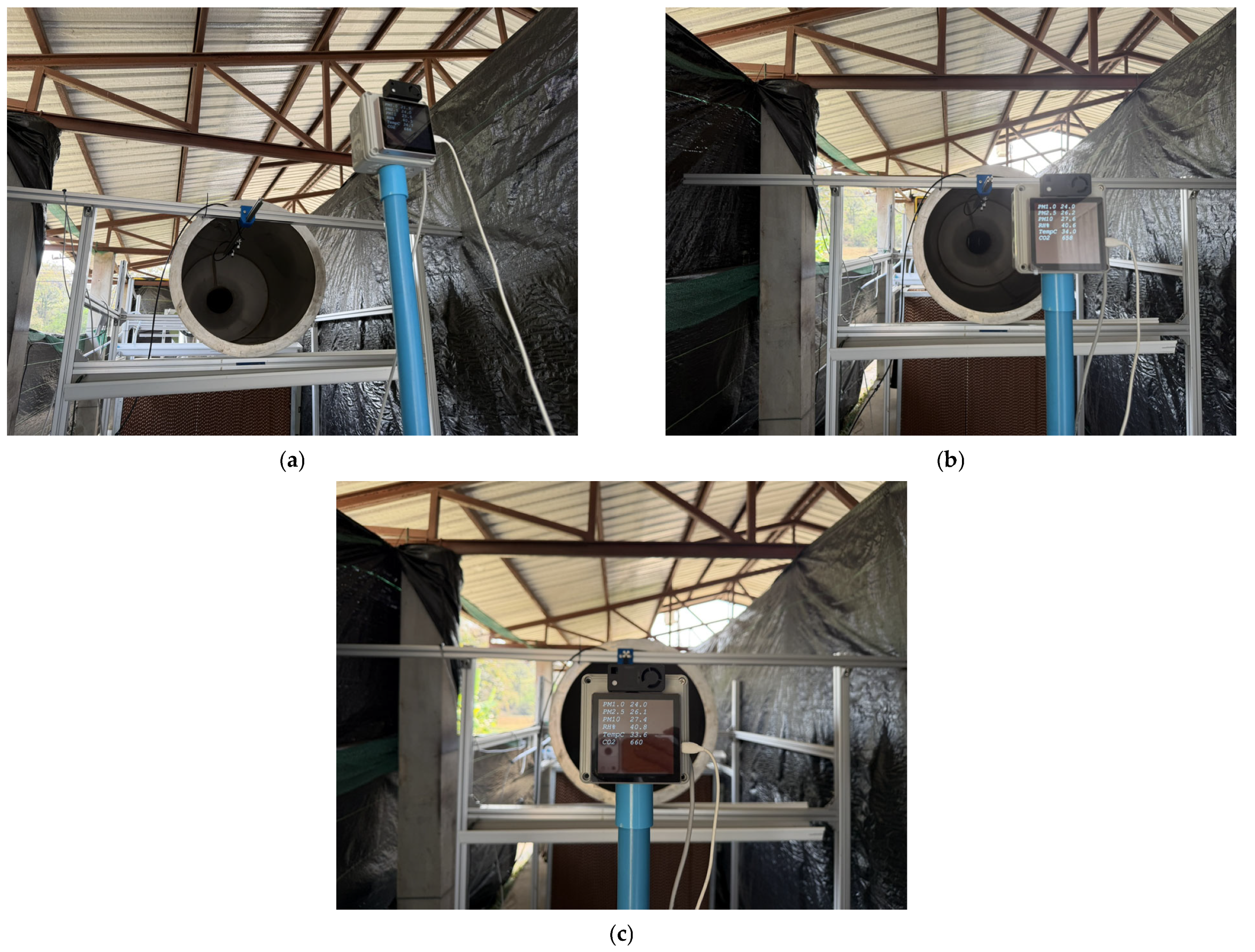
Figure A2.
Installation of the outlet particulate matter (PM) sensor: (a) perspective view of the measurement chamber showing the air flow direction from left to right; (b) close-up view of the inlet pipe connected from the cyclone outlet; (c) external view of the enclosed chamber ensuring proper testing conditions; and (d) close-up view of the PM sensor unit and real-time monitoring display.
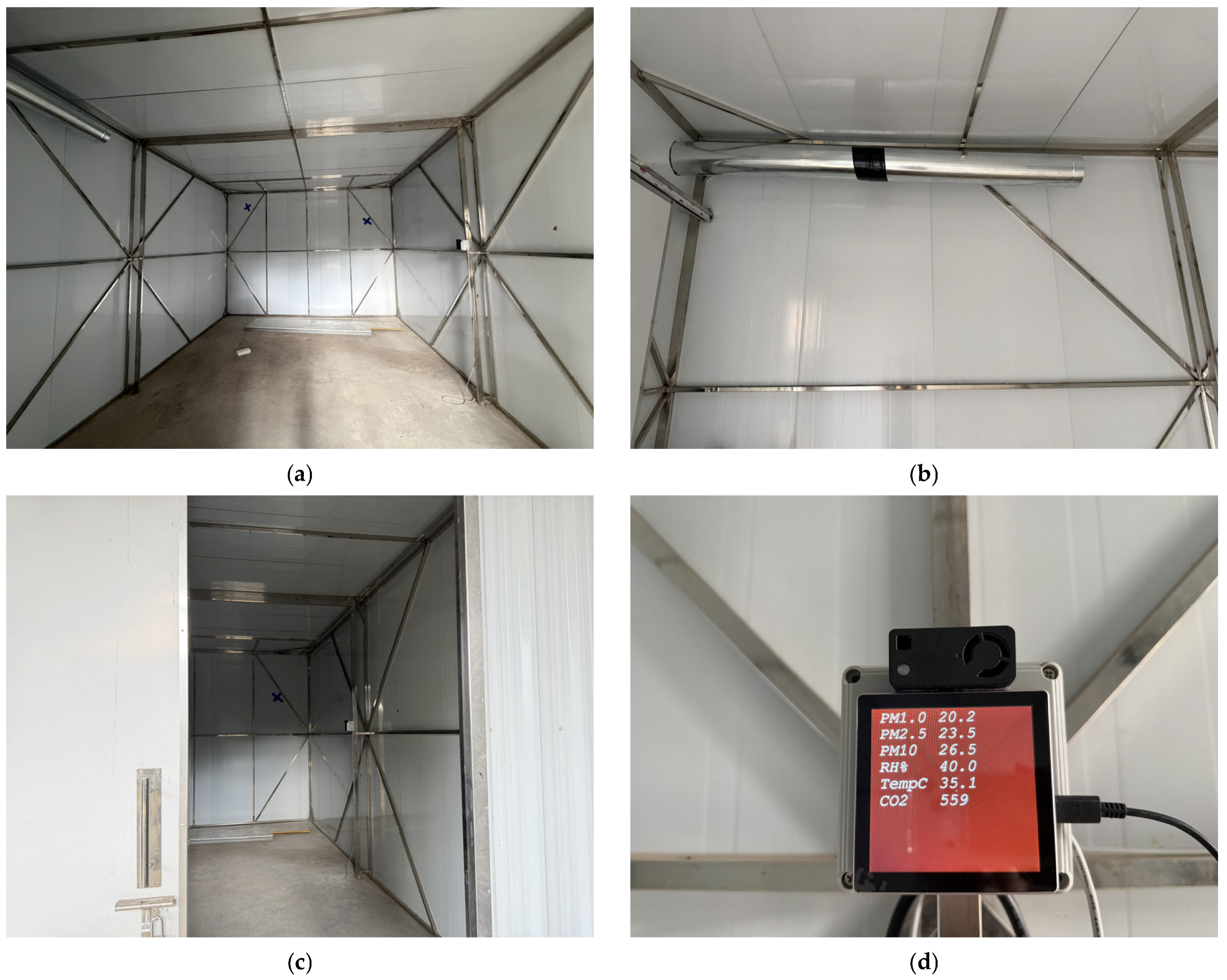
Figure A3.
Nozzle installation within the system: (a) close-up view showing the dual-nozzle configuration; and (b) perspective view illustrating the nozzle placement at the entrance of the Venturi tube.
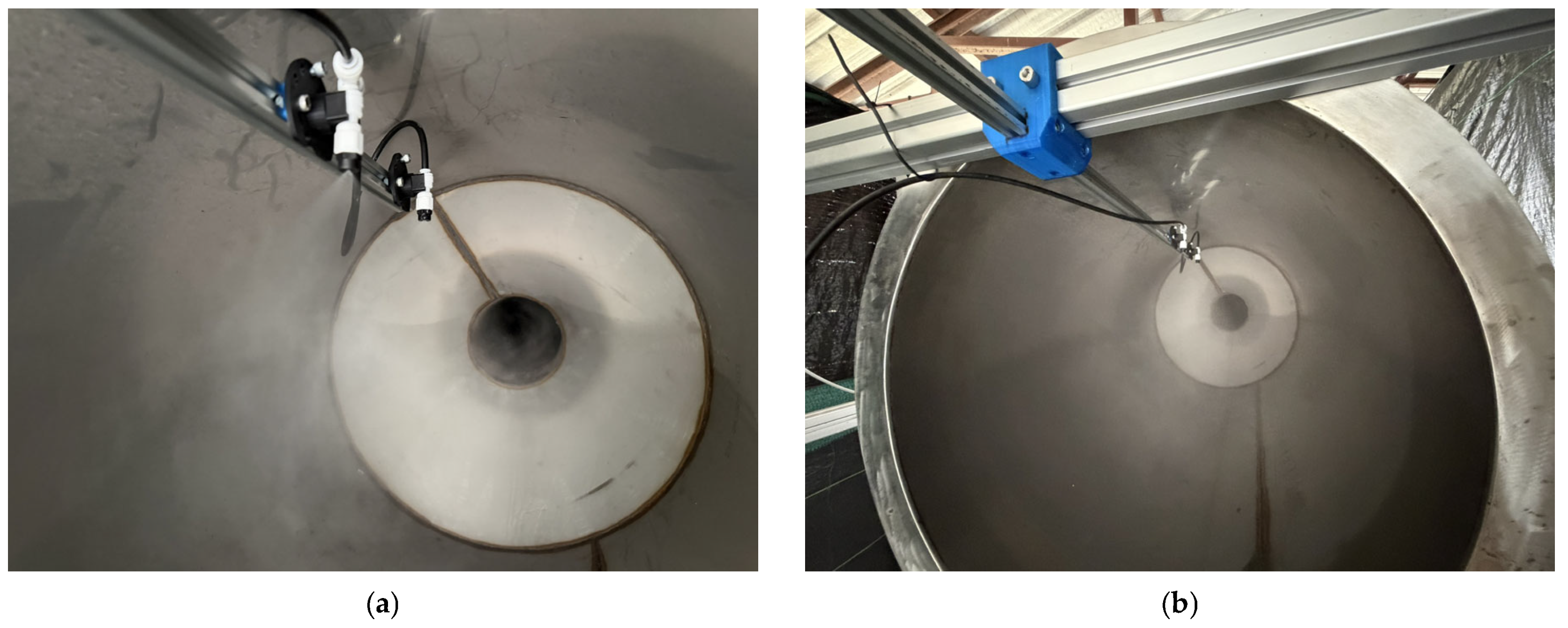
Figure A4.
Evaporation section of the system: (a) front view showing the inlet of the Venturi tube; and (b) perspective view illustrating the overall length and the structure of the Venturi assembly.
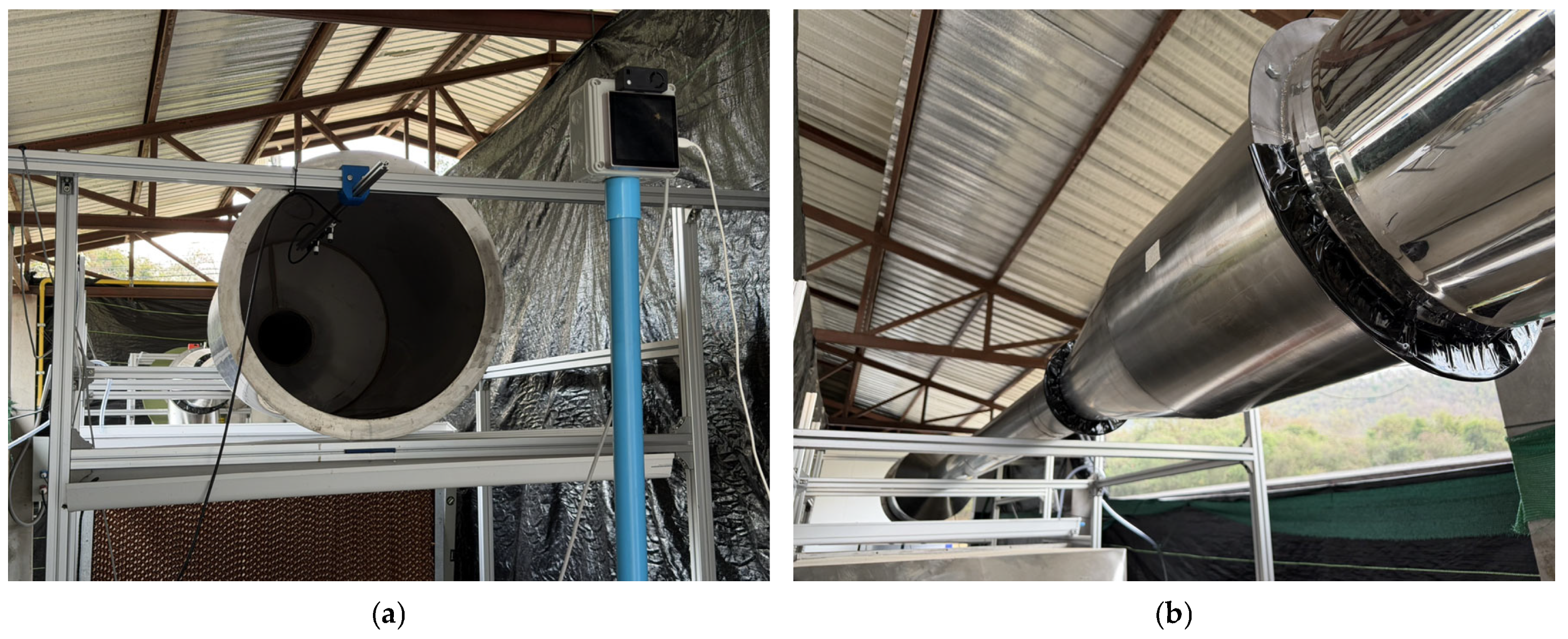
Figure A5.
Condensation section of the system.
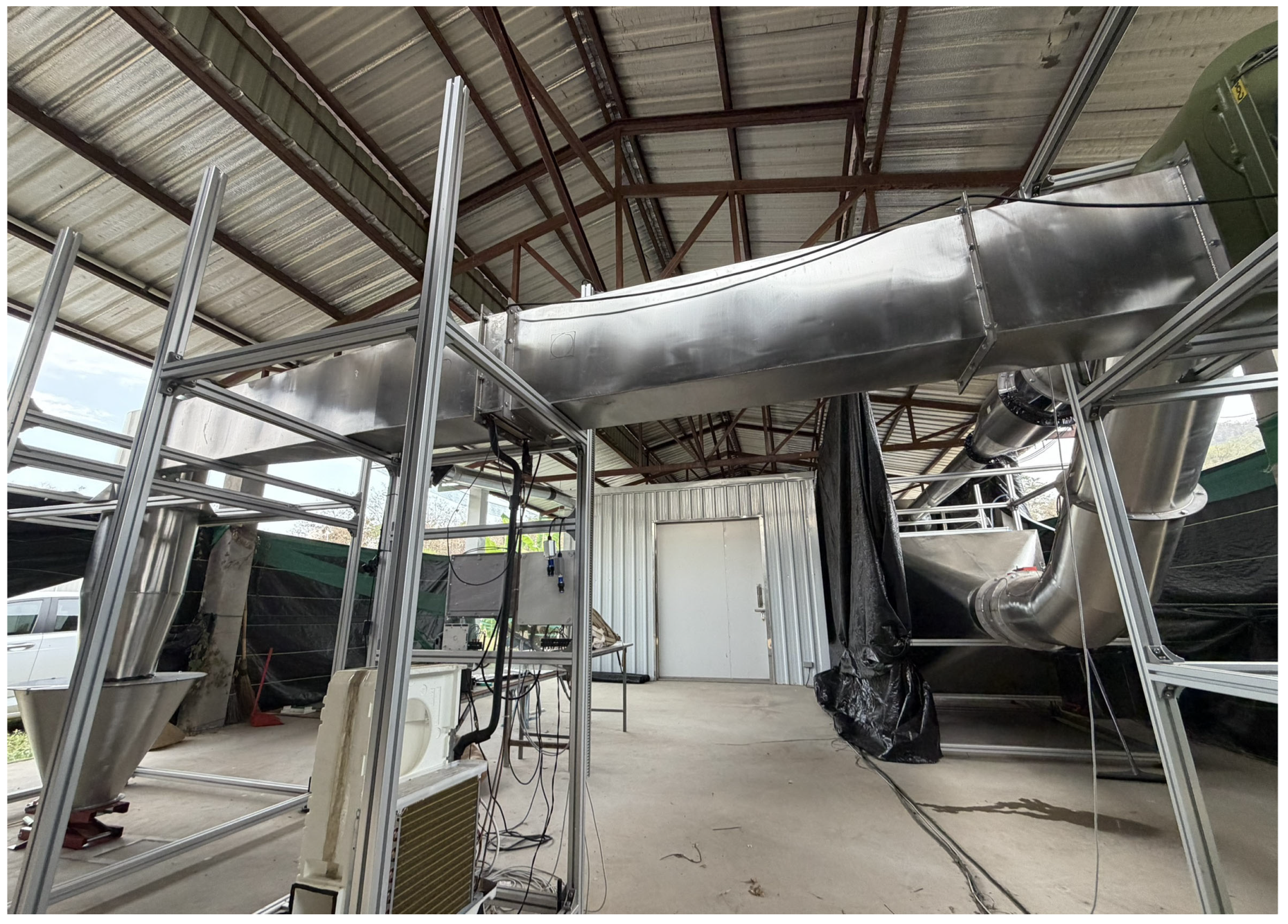
Figure A6.
Separation section of the system.
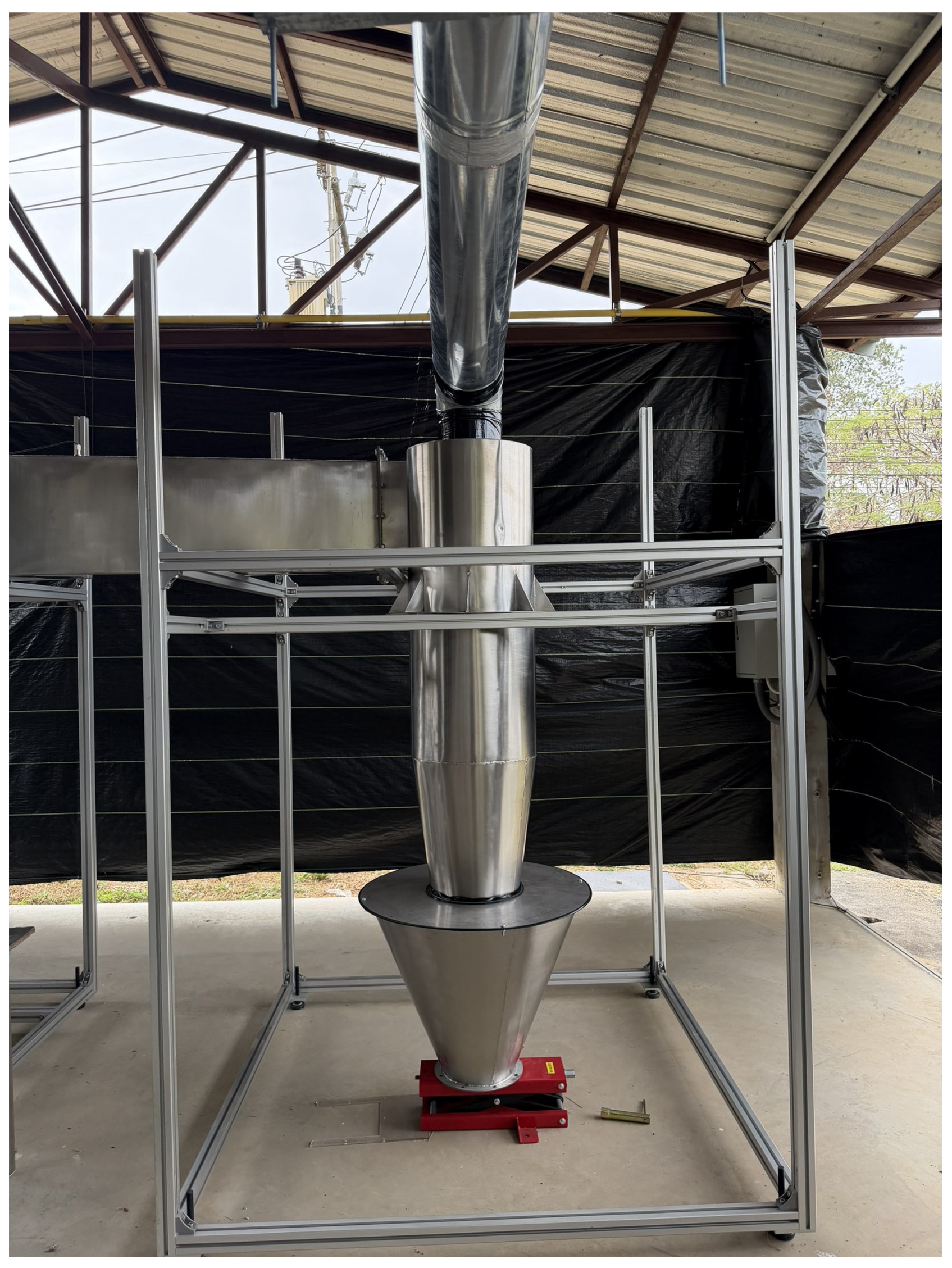
Figure A7.
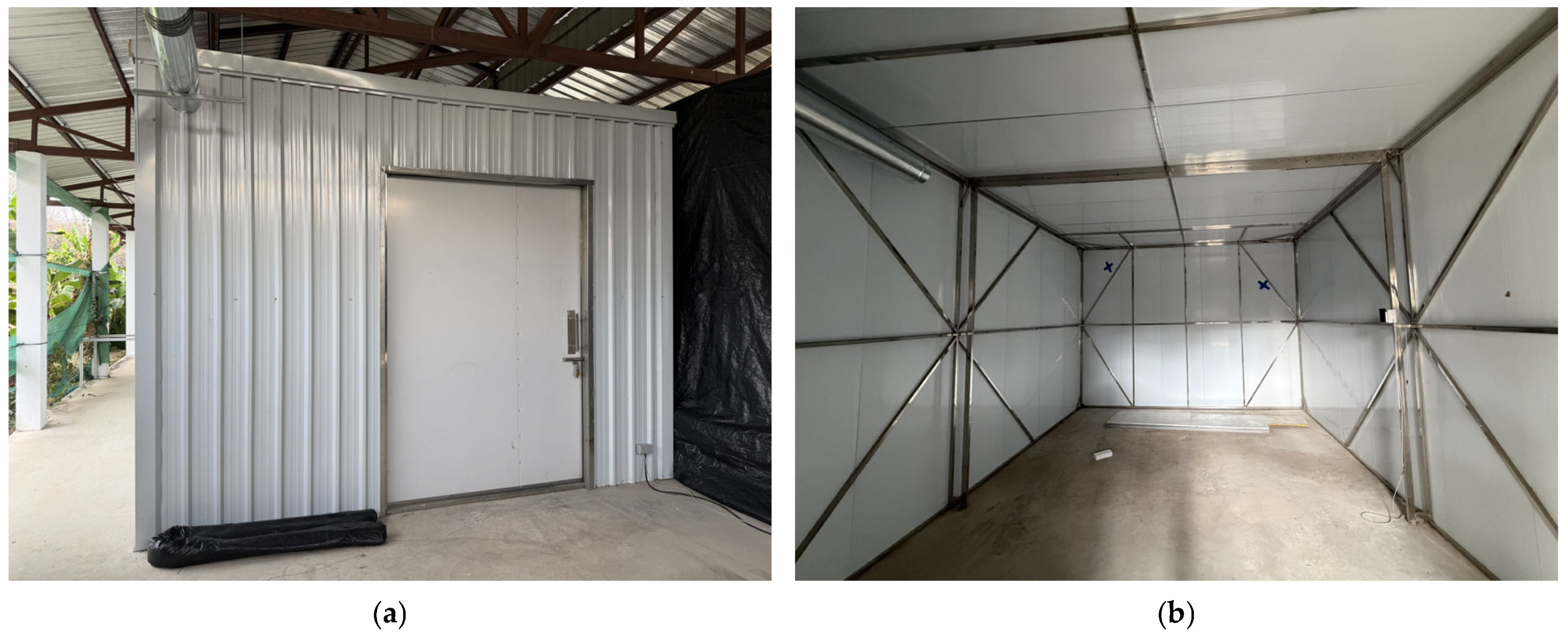
Dust sensing chamber structure: (a) external view showing the enclosed rectangular structure with a secured door; and (b) internal view illustrating the measurement area and structure configuration.
References
- Greenpeace Thailand. Under the Smog: PM2.5 in Northern Thailand; Greenpeace Thailand: Bangkok, Thailand, 2019. [Google Scholar]
- Pollution Control Department (PCD). Action Plan for Prevention and Resolution of Smog Problems in Northern Thailand; Ministry of Natural Resources and Environment, Pollution Control Department (PCD): Bangkok, Thailand, 2017.
- Daikin Thailand. Expert Ventilation Methods for Buildings and Offices; Daikin Thailand: Chonburi, Thailand, 2015. [Google Scholar]
- William Licht. Air Pollution Control Engineering: Basic Calculations for Particulate Collection, 2nd ed.; Marcel Dekker: New York, NY, USA, 1988. [Google Scholar]
- Wang, H.; Bu, A.; Jin, R.; Liang, J.; Zhang, Y.; Dong, K.; Wang, B. Numerical investigation of condensation-enhanced agglomeration of fine particles using a coupled CFD-DEM approach. Fuel 2026, 408, 137766. [Google Scholar] [CrossRef] [Scilit]
- Xu, J.; Zhang, Z.; Lv, L.; Wang, M.; Li, F.; Chu, H. Study on water vapor condensation on particles’ surface under high pressure for simultaneous removal of moisture and fine particles via supersonic separation. Fuel 2025, 389, 134616. [Google Scholar] [CrossRef] [Scilit]
- Thangavel, P.; Park, D.; Lee, Y.C. Recent Insights into Particulate Matter (PM2.5)-Mediated Toxicity in Humans: An Overview. Int. J. Environ. Res. Public Health 2022, 19, 7511. [Google Scholar] [CrossRef] [Scilit] [PubMed]
- Liu, B.Y.H.; McMurry, P.H.; Sun, J. Condensation-Growth Particle Scrubber. U.S. Patent US5176723A, 5 January 1993. [Google Scholar]
- Yoshida, T. Application of Particle Enlargement by Condensation to Industrial Dust Collection. J. Chem. Eng. 1978, 2, 469–475. [Google Scholar] [CrossRef] [Scilit]
- Tammaro, M.; Di Natale, F.; Salluzzo, A.; Lancia, A. Heterogeneous Condensation of Submicron Particles in a Growth-Tube. J. Chem. Eng. 2012, 74, 124–134. [Google Scholar] [CrossRef] [Scilit]
- Xu, J.; Yu, Y.; Zhang, J. Heterogeneous Condensation on Fine Particle of Water Vapor in a Moderated Growth Tube. Energy Procedia 2017, 118, 201–209. [Google Scholar] [CrossRef] [Scilit]
- Fan, F.; Zhang, S.; Wang, W.; Yan, J.; Su, M. Numerical Investigation of PM 2.5 Size Enlargement by Heterogeneous Condensation for Particulate Abatement. Process Saf. Environ. Prot. 2019, 125, 197–206. [Google Scholar] [CrossRef] [Scilit]
- Klenk, U.I. Use of Water Droplets and Additives for Dust Control. In Proceedings of the BulkSolids Europe, Berlin, Germany, 11 October 2012; Vogel Business Media: Würzburg, Germany, 2012; Volume 1. [Google Scholar]
- Swanson, J.-G.; Langefeld, O. Fundamental Research in Water Spray Systems for Dust Control. Miner. Min. 2015, 124, 78–82. [Google Scholar] [CrossRef] [Scilit]
- Clint Hoffmann, W. Spray Drift Reduction Evaluations of Spray Nozzles Using a Standardized Testing Protocol. ASTM Int. 2009, 7, 1–8. [Google Scholar]
- Guo, C.; Nie, W.; Xu, C.; Peng, H.; Zhang, C.; Li, S.; Yue, N.; Liu, Z.; Yang, S.; Ma, Q.; et al. A Study of the Spray Atomization and Suppression of Tunnel Dust Pollution Based on a CFD-based Simulation. J. Clean. Prod. 2020, 276, 123632. [Google Scholar] [CrossRef] [Scilit]
- Ma, Q.; Nie, W.; Yang, S.; Xu, C.; Peng, H.; Liu, Z.; Guo, C.; Cai, X. Effect of Spraying on Coal Dust Diffusion in a Coal Mine Based on a Numerical Simulation. Environ. Pollut. 2020, 264, 114717. [Google Scholar] [CrossRef] [Scilit] [PubMed]
- Pilat, M.J.; Prem, A. Calculated Particle Collection Efficiencies of Single Droplets Including Inertial Impaction, Brownian Diffusion, Diffusiophoresis and Thermophoresis. Atmos. Environ. 1976, 10, 13–19. [Google Scholar] [CrossRef] [Scilit]
- Ardon-Dryer, K.; Huang, Y.-W.; Cziczo, D.J. Laboratory Studies of Collection Efficiency of Sub-micrometer Aerosol Particles by Cloud Droplets on a Single-droplet Basis. Atmos. Chem. Phys. 2015, 15, 9159–9171. [Google Scholar] [CrossRef] [Scilit]
- Rafidi, N.; Brogaard, F.; Chen, L.; Håkansson, R.; Tabikh, A. CFD and Experimental Studies on Capture of Fine Particles by Liquid Droplets in Open Spray Towers. Sustain. Environ. Res. 2018, 28, 382–388. [Google Scholar] [CrossRef] [Scilit]

Disclaimer/Publisher’s Note: The statements, opinions and data contained in all publications are solely those of the individual author(s) and contributor(s) and not of MDPI and/or the editor(s). MDPI and/or the editor(s) disclaim responsibility for any injury to people or property resulting from any ideas, methods, instructions or products referred to in the content. |
© 2026 by the authors. Licensee MDPI, Basel, Switzerland. This article is an open access article distributed under the terms and conditions of the Creative Commons Attribution (CC BY) license.