


Abstract
Sustainable sourcing of bioactive ingredients is an important direction in the development of topical formulations. Fruit by-products generated during food processing such as apple pomace, represent a promising resource for skincare applications. The aim of this study was to evaluate the safety, effectiveness, and consumer perception of a three-step facial skincare regimen consisting of a cleansing gel, serum, and face cream containing upcycled apple pomace extract. Unlike most cosmetic studies focusing on single products, this research assessed a complete skincare routine to better reflect real-life usage conditions. All formulations underwent dermatological safety evaluation prior to the in vivo study. The clinical assessment was conducted on 30 healthy female volunteers aged 25–55 years. Skin hydration, pH, transepidermal water loss, sebum level, and skin gloss were measured on untreated skin, after the first use, and after four weeks. User perception was assessed using a questionnaire completed by 58 participants. Short-term changes in skin parameters were observed after application, while four weeks of use maintained them within physiological ranges. Skin gloss increased significantly by 4.2%, and no adverse reactions were reported. These results indicate that the tested skincare regimen containing apple pomace extract was well-tolerated and cosmetically acceptable under the study conditions.
1. Introduction
Topical formulations intended for daily facial care are commonly used as part of multi-step skincare routines rather than as single, isolated formulations [1]. In everyday practice, cleansing, targeted treatment, and skin care products are applied sequentially, and their combined effect determines both immediate skin response and the overall skin condition during regular use [2]. Despite this, many cosmetic studies continue to focus on the evaluation of individual products, often neglecting the cumulative impact of complete skincare regimens under real-life conditions [1].
From a formulation and research perspective, the performance of cosmetic products is determined not only by their composition, but also by their interaction with the skin during repeated use [3]. Contemporary topical formulation development therefore requires the integration of functional efficacy, skin compatibility, and sensory acceptance, supported by objective in vivo evaluation [2]. Non-invasive instrumental methods, combined with dermatological assessment and subjective user feedback, play a central role in verifying whether cosmetic formulations maintain skin homeostasis while delivering the intended cosmetic benefits [4,5].
In parallel with these methodological considerations, increasing attention has been directed toward the use of raw materials derived from secondary production streams [6]. Such ingredients are no longer viewed solely through the lens of sustainability, but also as a functional group of cosmetic raw materials offering reproducible quality and bioactive potential [7,8,9]. Their incorporation into cosmetic formulations responds to the growing demand for products that combine effective performance with a high proportion of naturally derived ingredients [10,11,12,13,14].
Apple pomace, a by-product of apple juice and cider production, represents a particularly promising example of this group of raw materials [15,16]. It is rich in polyphenols, flavonoids, organic acids, and other bioactive compounds associated with antioxidant and skin-conditioning properties [17,18]. While apple pomace has been extensively studied in food science and nutrition [19], its application in cosmetic formulations remains relatively limited, especially regarding in vivo studies assessing its effects on human skin [20,21]. According to Nanashima et al., in vitro studies conducted on human skin fibroblasts have demonstrated that apple pomace stimulates fibroblast proliferation and enhances the production of key skin anti-aging factors, including type I collagen and hyaluronan [22]. Furthermore, the moisturizing properties of cosmetic formulations have been associated with the presence of organic acids and carbohydrates naturally occurring in apple pomace [23].
Importantly, existing topical formulations studies investigating fruit by-products frequently assess isolated ingredients or single formulations, often under short-term or laboratory-controlled conditions. However, such approaches do not fully reflect everyday skincare practice, where products are applied repeatedly and as part of multi-step routines. The evaluation of complete skincare routines is therefore essential to better understand the real-life performance and tolerability of cosmetic products [24].
In this context, the aim of this study was to evaluate a three-step facial skincare regimen consisting of a cleansing gel, serum, and face cream containing an upcycled apple pomace extract. The assessment focused on skin physiological parameters, overall effectiveness, user subjective perception, and percentage of natural ingredients [25]. Prior to application in human subjects, all formulations underwent dermatological evaluation to confirm their safety.
This study introduces an apple pomace extract incorporated into a complete three-step facial skincare regimen under real-life conditions. Unlike previous reports focused on isolated ingredients or single apple pomace product assessment, the present work emphasizes the unique development of a complementary skincare routine with upcycled apple pomace extract [20,23,26].
To the best of our knowledge, this is one of the first studies to apply an integrated, multi-level assessment strategy combining instrumental in vivo measurements, dermatological safety testing, Natural Origin Index calculation, and consumer-based performance evaluation of three-step cosmetic formulations containing apple pomace extract.
2. Materials and Methods
The studies were conducted on a three-step skincare routine composed of cosmetic formulations enriched with apple pomace extract as an agro-industrial waste-derived ingredient [27]. Each formulation contained a different concentration of the active ingredient: cleansing gel—1%, facial cream—2%, and serum—3%. Together, the three products constituted a complete skincare routine and were evaluated as a complementary set, applied sequentially (cleansing gel, serum, and face cream) once daily over a four-week home-use period.
The study involving human subjects was conducted in accordance with the guidelines set forth in the Declaration of Helsinki (1964) and its subsequent amendments [28]. The study was approved by the local Bioethical Committee (Poznan University of Medical Sciences, no. 350/24, approved on 9 May 2024, Poznan, Poland), and written informed consent was obtained from all participants. The study was carried out in compliance with Regulation (EC) No. 1223/2009 of the European Parliament and of the Council on cosmetic products and Regulation (EC) No. 655/2013 on cosmetic product claims [29,30,31].
2.1. Materials
In this study, a commercial apple pomace extract (Pomarage) provided by Provital (Poznan, Poland) was employed. According to the producer’s specification, the apple pomace extract is standardized for polyphenol content (minimum 300 ppm, expressed as gallic acid equivalents) and sugar content (min. 1% total sugars). The cosmetic formulations contained the following ingredients: Apriglu CG-GO 400v2 (Stockmeier, Neuss, Germany), cetyl alcohol and shea butter (Zarzeccy, Sieradz, Poland), citric acid (Brenntag, Essen, Germany), Coco glucoside AC818 (HSH, Hamburg, Germany), Euxyl K712 (Barentz, Hoofddorp, Holland), Euxyl K903 (Barentz, Hoofddorp, Holland), Euxyl PE9010 (Barentz, Hoofddorp, Holland), fragrance (Arcon, Warsaw, Poland). Glycerine (Brenntag, Essen, Germany), grape seed oil (Aurum Chemicals, Katowice, Poland), Hyaluron DHA/BA 3 (Mabelle, Vitória, Brasil), Jolee 775 (Surfachem, Leeds, UK), Leraamph CAB 35 (Stockmeier), N-Hance 3196 (Barentz), Olivem 1000 (HSH, Hamburg, Germany), Panthenol 75 (Enzym, Koszalin, Poland), purified water (meeting cosmetic-grade requirements), sodium gluconate (Brenntag, Essen, Germany), Tegin M Pellets (Adara, Warsaw, Poland), and xanthan gum (Brenntag, Essen, Germany). All substances were stored in accordance with the manufacturers’ recommendations until the formulation process.
2.2. Preparation of Formulations for the Three-Step Skincare Regimen
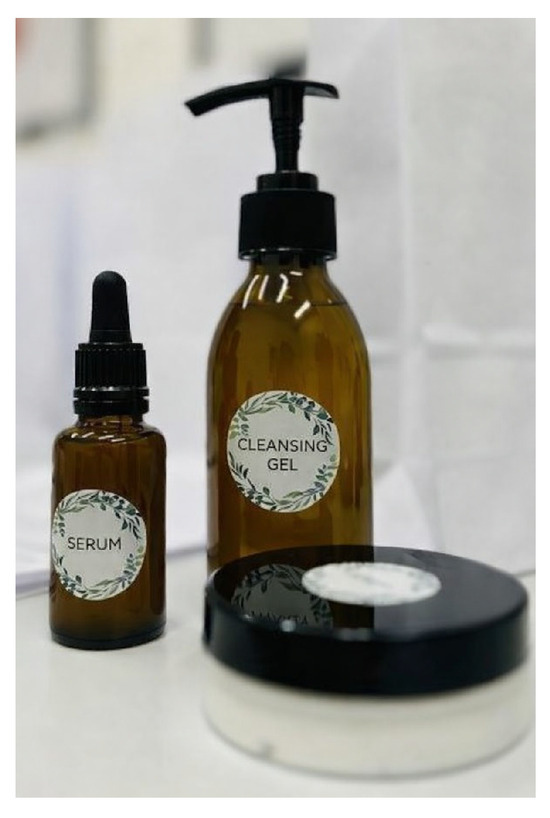
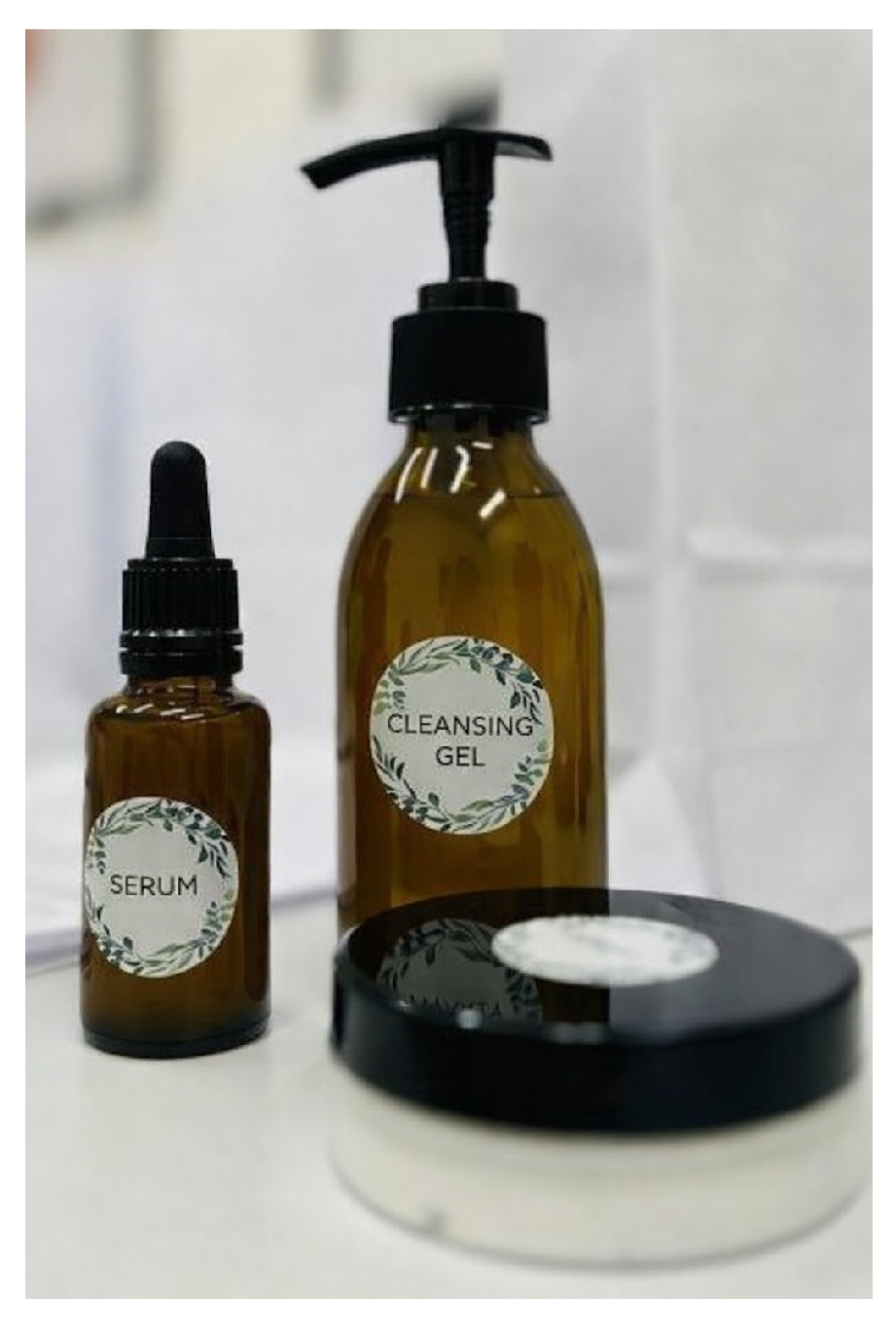
The cosmetic products were prepared according to the formulations described below, with detailed ingredient lists provided in Table 1, Table 2 and Table 3, and were subsequently packaged in cosmetic containers, as shown in Figure 1.
Table 1.
Chemical composition of the cleansing gel.
Table 2.
Chemical composition of the serum.
Table 3.
Chemical composition of the face cream.
Figure 1.
Products of the 3-step cosmetic skincare regimen.
2.2.1. Cleansing Gel—First Skincare Step
Sodium gluconate (2) was first dissolved in distilled water (1). Subsequently, glycerine (3) and N-Hance 3196 (4) were incorporated. In the following step, ingredients 5–10 were gradually introduced. Citric acid (11) was then added to adjust the pH to 5.2. Throughout the entire process, the mixture was continuously stirred using an automatic stirrer (Table 1).
2.2.2. Serum—Second Skincare Step
The components were dissolved in distilled water (1) in the sequence of 2–9, with constant stirring by an automatic mixer. Citric acid (10) was then added to reach a pH of 5.2 (Table 2).
2.2.3. Face Cream—Third Skincare Step
Distilled water (1) was heated to 70 °C, after which sodium gluconate (2), Euxyl K712 (3), and Euxyl K903 (4) were added. Simultaneously, the oil-phase ingredients (5–10) were heated to 70 °C. Once the oil phase had fully melted, the aqueous phase was slowly incorporated and homogenized. The emulsion was then cooled to below 40 °C, followed by the addition of active ingredients (11–14) and subsequent homogenization. Finally, citric acid was added to achieve a pH of 5.2, and mixing continued until the formulation reached its final viscosity (Table 3).
2.3. Natural Origin Index
To quantitatively assess the natural origin of cosmetic formulations, the Natural Origin Index (NOI) was calculated in accordance with the ISO 16128-1:2016 and ISO 16128-2:2017 guidelines [32,33]. The NOI of each product was determined based on the percentage concentration of individual ingredients in the total formulation, considering their natural origin index values (ranging from 0 to 1) provided by raw material suppliers. Water was considered 100% natural (NOI = 1.00), in accordance with ISO 16128 [25,32,33,34].
The formula used for calculating the NOI of the finished product is expressed as follows:
where:
- Ci is the concentration (%) of ingredient i in the total formulation,
- NOIi is the Natural Origin Index of ingredient i,
- n is the total number of ingredients in the formulation.
2.4. Study Groups
The study involved healthy women aged 25–55 years of European origin, of II and III skin phototype in [35,36], who actively care for their skin. This relatively homogeneous group was selected to reduce inter-individual variability in this in vivo evaluation. Selected participants represent female adults with fully developed skin with early to moderate age-related changes. The volunteers were in good health and had no dermatological diseases. A total of 58 healthy female volunteers participated in the overall product use study and completed the subjective evaluation questionnaire after the application period. Among them, a subgroup of 30 participants underwent instrumental measurements of skin physicochemical parameters. In addition, preliminary dermatological patch testing was carried out in a separate group of 5 individuals as an initial safety screening step prior to the in vivo use study. Before the study, volunteers were instructed to refrain from applying any facial cosmetics for at least eight hours. On the day of testing, participants were asked to stay in the testing room for at least 15 min prior to measurements, allowing their skin to acclimate to the environmental conditions. The study focused on facial skin, with all measurements performed specifically on the cheeks. Additionally, participants were also instructed not to introduce any new skincare products or undergo facial cosmetic or aesthetic procedures during the test period. The detailed study population and assessment scheme are shown in the Supplementary Materials as Table S1.
2.5. Protocol of Three-Step Skin Regimen
During the study period, volunteers followed a standardized skincare protocol applied once daily to the designated test area.
Step 1. Cleansing gel
The facial skin was cleansed using a cleansing gel (approximately 0.5–1.0 mL). The gel was gently massaged onto slightly moistened skin for 30 s, then rinsed with lukewarm water, and the skin was dried with a disposable paper towel. After cleansing, a 5-minute equilibration period was allowed.
Step 2. Serum application
The serum was applied at a standardized dose of approximately 2 mg/cm2 and evenly distributed over the designated test area.
Step 3. Cream application
After a serum absorption period of 3–5 min, a face cream was applied to the same area at approximately 2 mg/cm2. Participants followed this routine once daily (in the morning) throughout the study period and were instructed to avoid using any additional cosmetic or topical products on the test area.
2.6. Dermatological Tests (Patch Test)
A semi-occlusive patch test was performed as a preliminary dermatological safety screening in a small cohort (n = 5) to evaluate the potential for irritation and sensitization. Serum and cream were tested at 100% concentration, while the cleansing gel (a rinse-off product) was diluted to 10%. Products were applied to 12 mm filter paper discs (SmartPractice, Phoenix, AZ, USA) and placed on the upper arm or interscapular area using adhesive tape. Two control sites (blank and water) were included. Patches were removed after 48 h, with dermatological assessments performed at 48- and 72-h post-application [37,38].
2.7. Measurement of the Skin Parameters
The effects of the cosmetic skincare daily routine were evaluated and measured on the facial skin (cheeks) of the volunteers: (1) untreated skin—before the application of the tested products (control), (2) skin after 20 min of the first application, and (3) skin after four weeks of daily at-home use [39].
All skin assessments were performed under controlled environmental conditions (temperature 22–25 °C, relative humidity ~50%) [35]. Before each measurement, participants remained in the testing room for at least 15 min to allow their skin to acclimate. The designated measurement site was the left cheek, where the tested products (cleansing gel, serum, cream) were applied following a standardized protocol.
Non-invasive biophysical methods were used to evaluate skin parameters. Measurements were performed three times for each parameter, and the mean value was calculated for statistical analysis. The following probes (Courage + Khazaka MPA system, Cologne, Germany) were used: Corneometer® CM 825 (skin hydration), Sebumeter® SM 815 (sebum content), Tewameter® TM 300 (transepidermal water loss), Skin-pH-Meter® PH 905 (skin surface pH), and Skin-Glossymeter® GL 200 (skin surface gloss/shine) [5,40].
2.8. Subjective Formulations Evaluation Questionnaire
A total of 58 volunteers who used the tested skincare routine completed an online questionnaire at the end of the application period. The survey included 55 questions and covered three main areas: evaluation of physicochemical and usability properties, subjective impressions of product performance, and overall perception. Participants evaluated the products using a 5-point Likert scale, where 5 = very good, 4 = good, 3 = moderate, 2 = poor, and 1 = very poor. For subjective product performance, the percentages of positive responses (ratings 4 or 5 on the Likert scale) were calculated [41,42].
2.9. Statistical Analysis
Statistical analysis of instrumental skin measurements was performed using tests for repeated-measures data. Differences between measurements obtained at three time points (untreated skin (control), 20 min after application, and after four weeks of use) were analyzed using the Friedman test. When statistically significant differences were observed, post hoc pairwise comparisons were conducted using Dunn’s test with Bonferroni correction. For parameters fulfilling the assumptions of parametric analysis, one-way repeated-measures analysis of variance (ANOVA) followed by Tukey’s HSD post hoc test was applied. Results are presented as mean values ± standard deviation (SD). Statistical significance was accepted at p < 0.05.
Statistical analysis of the distribution of responses did not reveal statistically significant differences between the evaluated preference categories for any of the tested products (p > 0.05). However, a trend toward a higher frequency of positive responses (“strongly like” vs. “neutral”) was observed for the serum (p = 0.0914) and the face cream (p = 0.0813).
3. Results and Discussion
3.1. Natural Origin Index
The obtained NOI values for all three products were above 0.95 (cleansing gel 0.98, serum 0.97 and face cream 0.97) which confirms the very high content of natural origin ingredients in each of the three formulations. Among them, the cleansing gel exhibited the highest overall NOI value of 0.9823. The observed differences in NOI between products are primarily due to the presence of synthetic ingredients such as preservatives like Euxyl PE9010 (phenoxyethanol, ethylhexylglycerin) and Euxyl K903 (benzyl alcohol, benzoic acid, dehydroacetic acid, tocopherol) used in serum and cream or panthenol used in serum and cream. It should also be noted that the high NOI values were influenced by the high-water content typical of gel and emulsion formulations, since water was assigned an NOI value of 1.0 according to ISO 16128.
The high Natural Origin Index values observed in all formulations are consistent with current trends in cosmetic product development, where both regulatory frameworks and consumer expectations increasingly emphasize transparency and natural origin of ingredients. Previous reports indicate that formulations with a high proportion of naturally derived components are more likely to be perceived as safer and more environmentally friendly, although this perception does not necessarily correlate with objective efficacy [25,43]. In this context, the present results demonstrate that a high NOI can be achieved without compromising formulation stability, safety, or consumer acceptance.
3.2. Dermatological Test
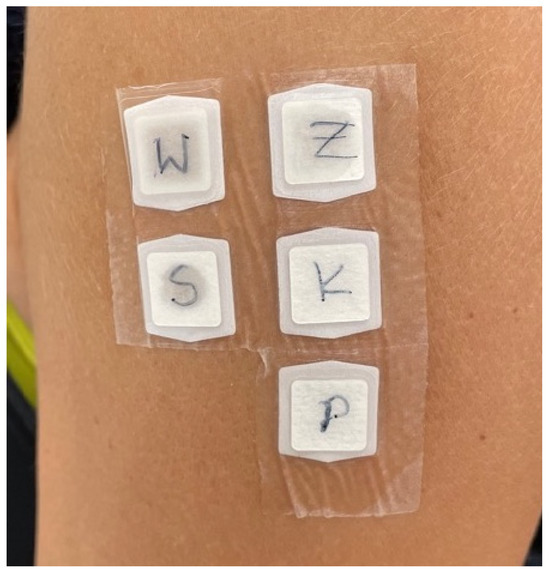
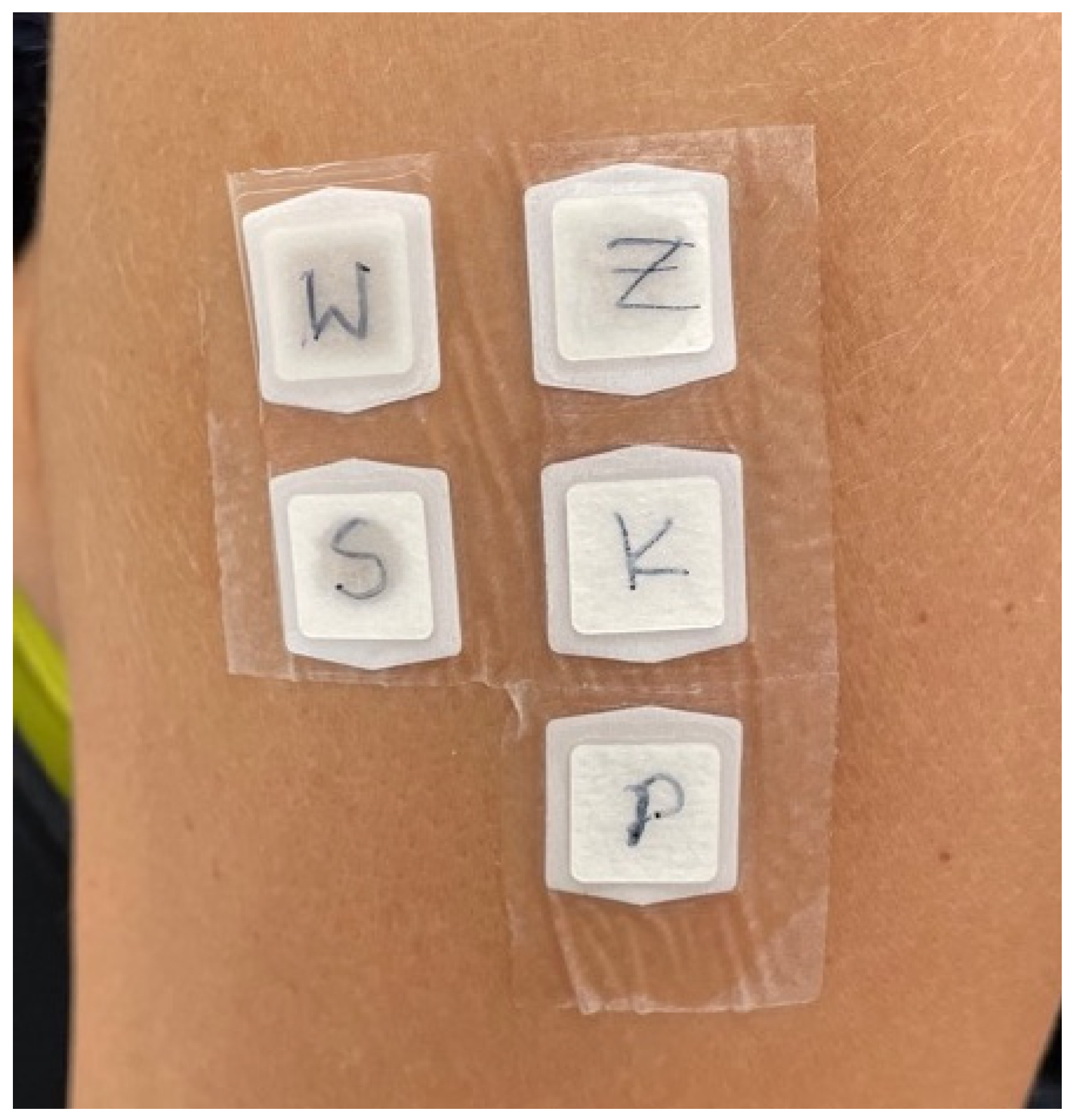
Dermatological assessments confirmed that all tested formulations exhibited good skin compatibility under the study conditions (Figure 2). Throughout the semi-occlusive patch test, no signs of irritation, sensitization, erythema, or other adverse dermatological reactions were observed at any application site. These findings indicate that the formulations were well-tolerated by the skin in this preliminary screening, including both leave-on and rinse-off products in this study. Although apple pomace extract contains bioactive compounds, including organic acids and phenolic constituents with potential irritant activity, its use at the tested concentrations did not result in visible intolerance reactions in the evaluated group. These observations are consistent with previous reports on plant-derived cosmetic ingredients demonstrating good skin tolerability when appropriately formulated [44,45,46,47,48].
Figure 2.
Patch test application on the skin (W—distilled water, Z—cleansing gel, S—serum, K—facial cream, P—blank).
3.3. Skin Parameters
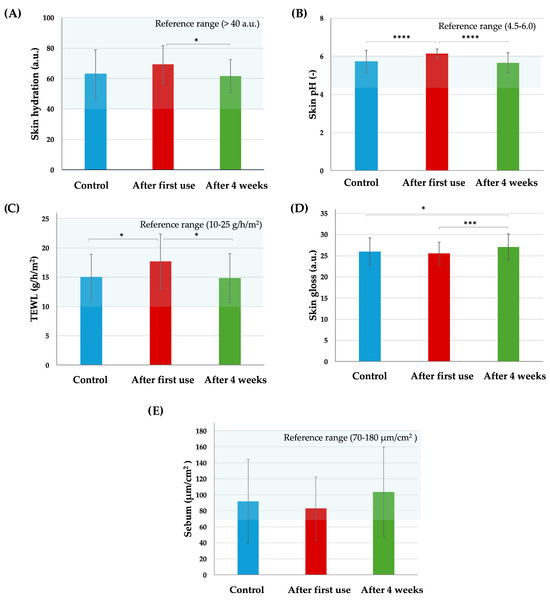
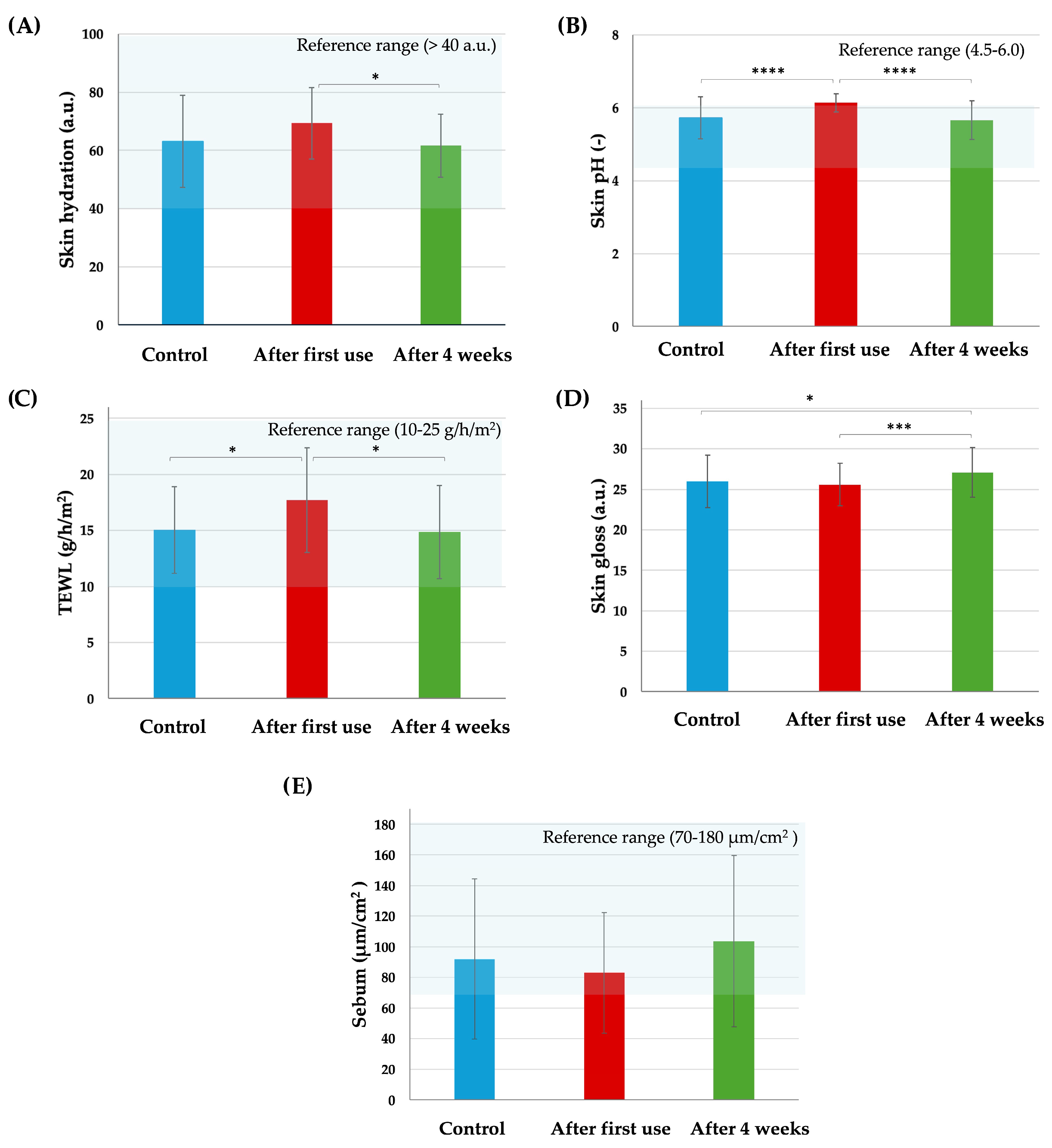
Instrumental assessment of skin parameters revealed both responses following the first application (after 20 min) and effects after four weeks of daily use of the skincare routine enriched with apple pomace extract. While several parameters showed transient fluctuations, these changes are consistent with normal physiological reactions to topical product application and remained within the manufacturer-defined reference ranges, indicating preserved skin homeostasis. Results are presented in Table 4 and Figure 3. Figure 3 is intended to facilitate visual interpretation of the measured changes against the reference ranges provided by the probe manufacturers, while detailed numerical values and statistical analyses are provided in Table 4. It should be noted that the observed effects reflect the performance of the complete formulation regimen rather than the isolated contribution of apple pomace extract.
Table 4.
Skin parameters.
Figure 3.
Instrumental skin parameter values (mean ± SD) presented in relation to the reference ranges provided by the probe manufacturers: (A) Skin hydration, (B) Skin pH, (C) TEWL, (D) Skin gloss—No reference range was available according to the manufacturer’s information, (E) Sebum (* p < 0.05; *** p < 0.001; **** p < 0.0001).
3.3.1. Skin Hydration
Skin hydration, measured with a Corneometer, increased significantly 20 min after the first application indicating a short-term moisturizing effect (Friedman test, p = 0.0239). This immediate rise reflects the humectant action of glycerine and other hydrophilic components, which attract water into the upper layers of the stratum corneum. This observation is consistent with previous reports on moisturizing formulations, where humectants such as glycerine produce rapid increases in stratum corneum hydration [5,35]. After four weeks, hydration values were comparable to baseline (control) and remained within the reference range for adequately moisturized skin (>40 a.u.) according to the device manufacturer (Figure 3A). Therefore, the results suggest maintenance of physiological hydration status rather than a sustained increase in skin hydration over time.
3.3.2. Skin pH
Skin pH showed a comparable pattern, with a short-term elevation after the initial application (Friedman test, p < 0.0001). Such temporary increases are commonly observed for emulsions and aqueous formulations and result from short-lived interactions between product components and the acid mantle. Importantly, all pH values remained within the acceptable physiological range for female facial skin (pH = 4.5–6.0), and by week four returned toward the baseline, demonstrating that four weeks daily use did not disturb the acid–base equilibrium. Maintaining skin pH within the physiological range is essential for preserving skin barrier function and microbiome balance [35,40,41,42].
3.3.3. Transepidermal Water Loss
A transient increase in transepidermal water loss (TEWL), measured with a Tewameter, was also observed 20 min after first application (Friedman test, p = 0.0072). This effect likely reflects brief evaporation-related shifts accompanying product spreading, as well as the modulation of superficial hydration gradients. TEWL values subsequently decreased at four weeks and remained within the normal manufacturer-defined range (10–25 g/h/m2), indicating that the formulation did not impair epidermal barrier integrity. Similar transient increases in TEWL have been described as a short-term physiological response rather than an indication of barrier impairment [35,39].
3.3.4. Skin Gloss
Skin gloss, assessed using a Glossymeter, remained stable shortly after the first application but increased significantly by 4.2% after four weeks (ANOVA, p = 0.0005). The increase in skin gloss observed after four weeks indicates a measurable change in skin surface optical properties. Its clinical relevance should nevertheless be interpreted cautiously. This finding may reflect improved surface optical characteristics associated with routine product use. Because all physiological parameters remained within the normal reference limits, the observed increase in gloss may be considered a cosmetic effect rather than a sign of barrier disturbance [17,23,49].
3.3.5. Sebum
Sebum levels measured with a Sebumeter showed no significant changes over time (Friedman test, p = 0.2907). Values remained within the normal range for the cheek area (according to the manufacturer’s reference values) throughout the study, indicating that the regimen did not disrupt sebaceous activity.
Overall, although short-term fluctuations occurred immediately after application, which is an expected and well-documented response to topical cosmetic products, the skin returned to stable values within physiological ranges. The facial routine maintained hydration, pH, TEWL, and sebum levels within the manufacturer-recommended limits while improving surface gloss, supporting its compatibility with skin physiology and its suitability for daily use. A limitation of this study is the absence of a vehicle-control group or comparator formulations without apple pomace extract. Therefore, the observed effects cannot be attributed specifically to the extract itself but should be interpreted as the performance of the complete three-step skincare regimen. Since the formulations also contained established moisturizing and skin-conditioning ingredients, such as glycerine, panthenol, and hyaluronic acid, their contribution to the measured outcomes cannot be separated under the present study design. In addition, the tested regimen combined three products containing different concentrations of apple pomace extract (1%, 2%, and 3%), selected in accordance with the supplier’s raw material specification, which makes it impossible to determine which formulation step or concentration contributed most to the observed effects. Although apple pomace is known to contain polyphenols and other bioactive constituents with reported antioxidant and skin-conditioning potential, no mechanistic biomarkers, biochemical endpoints, or dose–response relationships were assessed in the present study. Therefore, any mechanistic interpretation remains hypothetical and should be treated as supportive background rather than direct evidence. Another limitation of the study is that it included only healthy women aged 25–55 years with Fitzpatrick phototypes II–III. Therefore, the findings should not be directly generalized to broader populations.
3.4. Subjective Evaluation Questionnaire
Subjective evaluation was conducted to complement the instrumental measurements and to capture the participants’ perceptions of the tested skincare routine under real-life conditions. The questionnaire-based assessment focused on sensory attributes, perceived cosmetic performance, and overall user acceptance after four weeks of regular use.
3.4.1. Evaluation of Physicochemical and Usability Properties
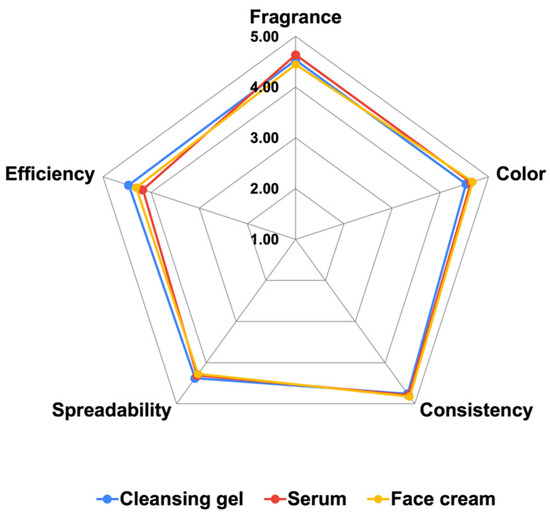
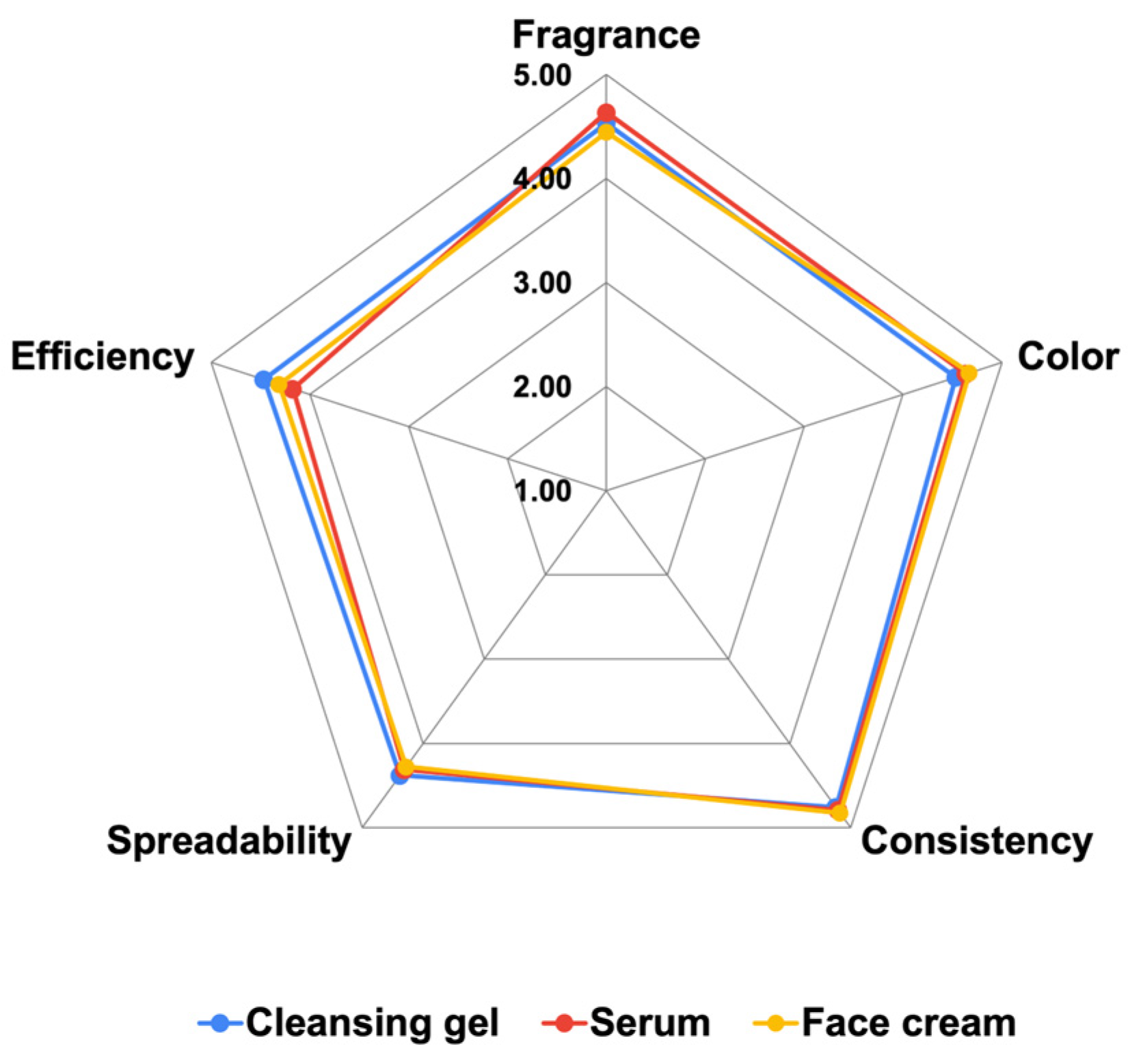
Subjective evaluation of the physicochemical and usability properties of the three-step facial routine was performed using a 5-point Likert scale, and the results are presented in Figure 4. All products achieved high mean scores across all assessed sensory attributes and perceived efficacy parameters, with values ranging from 4.17 to 4.83, indicating very good user acceptance. Fragrance and color were rated favorably for all formulations, with mean scores between 4.45 and 4.67. Consistency received the highest ratings among the evaluated attributes, particularly for the serum and face cream, with mean values of 4.79 and 4.83, respectively. Spreadability was also rated positively across all products, with mean scores ranging from 4.28 to 4.38. Perceived efficacy achieved high scores for each step of the regimen, with mean values between 4.17 and 4.47. The relatively symmetrical shape of the radar chart reflects balanced sensory and functional performance, with no parameter rated substantially lower than others.
Figure 4.
Scores of sensory attributes (fragrance, color, consistency, spreadability) and perceived efficacy of the cleansing gel, serum, and face cream, as assessed by the participants using a 5-point scale (mean values).
3.4.2. Subjective Impressions of Product Performance
Subjective impressions of product performance were evaluated using declarative statements describing both desirable cosmetic effects and potential adverse sensations. Participants rated their agreement with each statement using a 5-point Likert scale, and responses rated as 4 (good) or 5 (very good) were considered positive. As summarized in Table 5, Table 6 and Table 7, high percentages of positive responses were recorded for statements related to skin hydration, comfort, smoothness, and overall skin feel. In contrast, lower percentages of positive responses were observed for statements describing undesirable sensations, such as skin tightness after cleansing or a greasy film after cream application, suggesting that these effects were generally not perceived by most users. Overall, the subjective evaluation indicates favorable user perceptions of the cleansing gel, serum, and face cream, with low reporting of negative sensory effects.
Table 5.
Performance-related statements for the cleansing gel based on subjective evaluation.
Table 6.
Performance-related statements for the serum based on subjective evaluation.
Table 7.
Performance-related statements for the face cream based on subjective evaluation.
3.4.3. Overall Perception of the Products
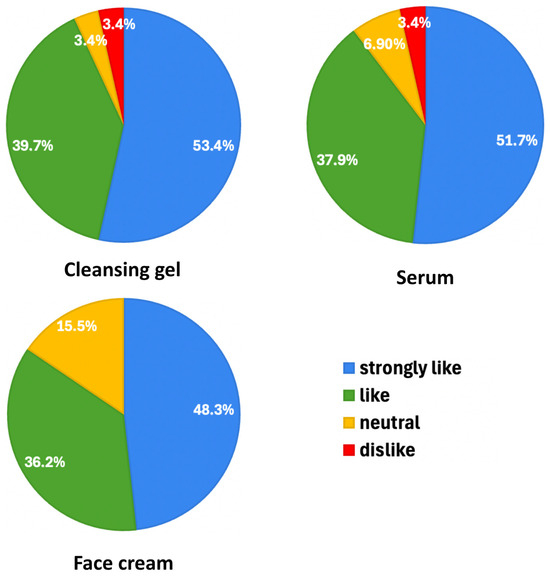
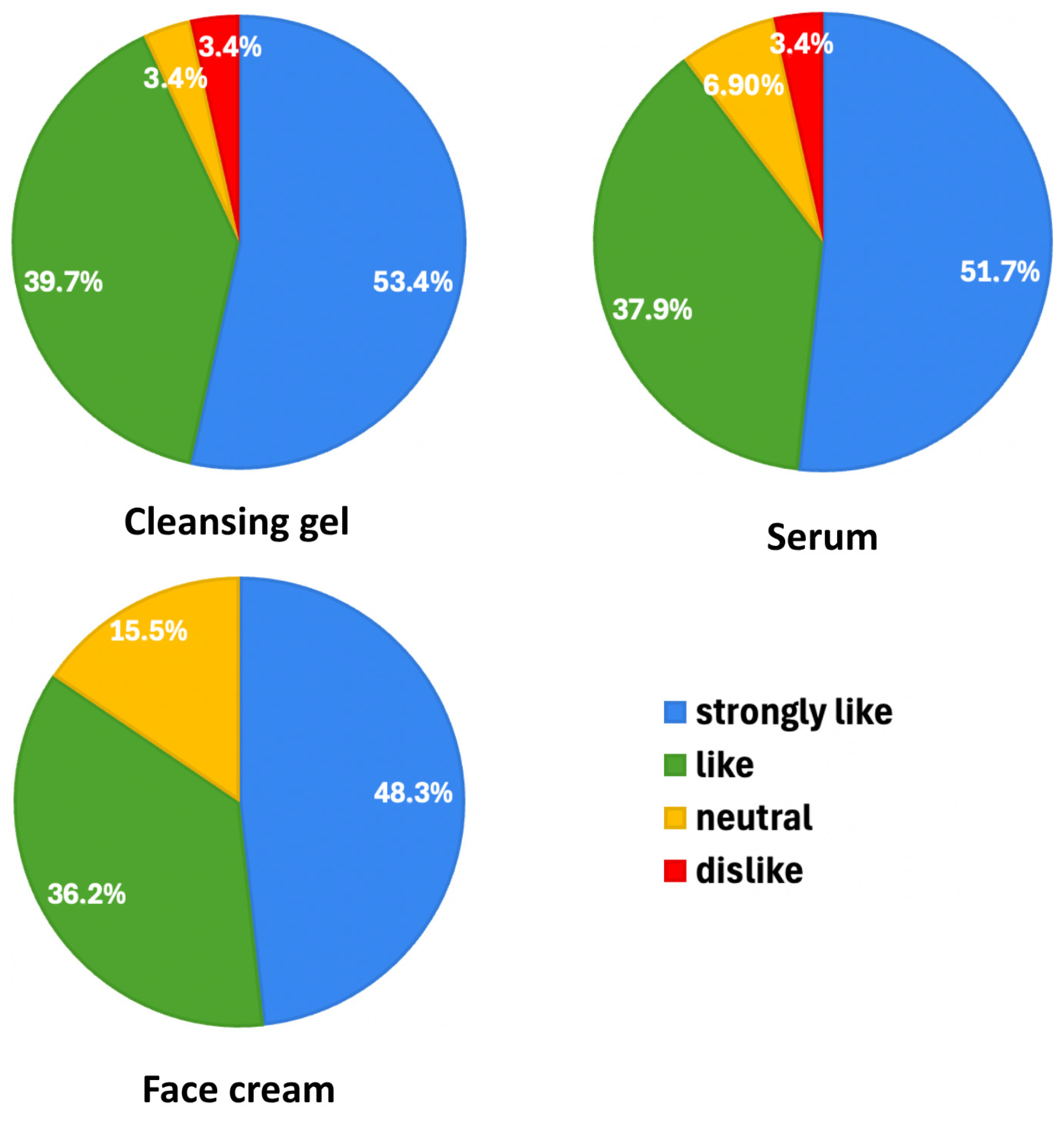
The overall perception of the products is presented in Figure 5. All three formulations were evaluated positively by most participants. The highest proportion of strongly like responses was observed for the cleansing gel (53.4%), followed by the serum (51.7%) and the face cream (48.3%). When strongly like and like responses were considered jointly, positive overall evaluations exceeded 85% for each product.
Figure 5.
Overall perception of the products after 4 weeks of use (no responses for the “strongly dislike” category). No statistically significant differences between response categories were observed (p > 0.05); however, trends toward higher frequencies of positive responses (“strongly like” vs. “neutral”) were noted for the serum and face cream (p ≈ 0.09).
Neutral responses accounted for a minor proportion of answers, with the highest share observed for the face cream (15.5%), while negative evaluations (dislike and strongly dislike) were reported only sporadically across all formulations. These results indicate a high level of user acceptance and confirm that the tested products were perceived favorably under real-life conditions. Detailed results of the subjective perception of the products are provided in the Supplementary Materials (Tables S2–S4). The agreement between instrumental measurements and subjective perception is consistent with previous studies indicating that perceived skin improvements often correlate with measurable biophysical changes [41,42].
4. Conclusions
The present study demonstrates that apple pomace extract, an upcycled by-product of the food industry, can be successfully incorporated into a three-step skincare regimen and evaluated under real-life conditions. The investigated facial skincare regimen (a cleansing gel, serum, and face cream) exhibited good skin tolerance in the preliminary dermatological assessment. No visible irritation reactions were observed during patch testing in this study.
Instrumental assessments revealed only transient, short-term changes in the selected skin parameters following the first application, which represents a typical physiological response to topical cosmetic products. Importantly, after four weeks of regular use, skin hydration, pH, transepidermal water loss, and sebum levels remained within the physiological reference ranges, indicating preserved skin homeostasis. At the same time, a significant increase in skin gloss was observed, reflecting an improvement in surface optical properties without compromising epidermal barrier function.
Subjective evaluation further supported the instrumental findings. The tested products were rated highly in terms of sensory attributes, usability, and perceived cosmetic performance. High percentages of positive responses were recorded for most performance-related statements, while negative sensations such as skin tightness after cleansing or a greasy film after cream application were reported infrequently. Overall perception data confirmed high user acceptance and a favorable reception of the skincare regimen under everyday use conditions.
It should be noted that the observed effects reflect the performance of the complete formulation regimen rather than the isolated contribution of apple pomace extract.
Taken together, the results indicate that the tested three-step skincare regimen containing apple pomace extract was safe, well-accepted, and compatible with skin physiology under the conditions of this study. However, the contribution of the extract itself cannot be distinguished from that of the complete formulations. The high Natural Origin Index of all formulations further supports their relevance in the context of increasing consumer expectations for natural and transparent products. This approach extends previous studies by evaluating a complete multi-step skincare regimen under real-life conditions rather than isolated formulations. The findings also demonstrate the practical potential of agro-industrial waste valorization as a source of functional cosmetic ingredients.
Supplementary Materials
The following supporting information can be downloaded at: https://www.mdpi.com/article/10.3390/app16094088/s1, Table S1. Study population and assessment scheme.; Table S2. Cleansing gel—overall perception; Table S3. Serum—overall perception; Table S4. Face cream—overall perception.
Author Contributions
Conceptualization, K.C., M.U. and K.L.; methodology, K.C., M.U., K.L. and M.M.; software, K.C., M.U., M.R. and D.K.; validation, K.C., M.U., A.S.-J. and K.K.; formal analysis, A.S.-J. and K.K.; investigation, K.C., M.U., M.R., D.K. and M.M.; resources, K.C., M.U., K.L. and M.M.; data curation, K.C.; writing—original draft preparation, K.C., M.U., M.M., M.R. and D.K.; writing—review and editing, K.K., A.O., A.S.-J., J.G.-P. and K.L.; visualization, K.C. and A.O.; supervision, K.K.; M.U. and J.G.-P.; project administration, K.C. All authors have read and agreed to the published version of the manuscript.
Funding
This research received no external funding.
Institutional Review Board Statement
The study was conducted in accordance with the Declaration of Helsinki and approved by Ethics Committee of Poznan University of Medical Sciences (protocol 350/24, approved on 9 May 2024).
Informed Consent Statement
Informed consent was obtained from all subjects involved in the study. Written informed consent was obtained from the participants to publish this paper.
Data Availability Statement
The data presented in this study are available on request from the corresponding author.
Acknowledgments
The authors acknowledge Provital Poland for providing the apple pomace extract used in this research. The graphical abstract was created with BioRender.com.
Conflicts of Interest
Authors Karolina Latanowicz and Magdalena Majcher were employed by the company Latech Company. The remaining authors declare that the research was conducted in the absence of any commercial or financial relationships that could be construed as a potential conflict of interest.
References
- Rodan, K.; Fields, K.; Majewski, G.; Falla, T. Skincare Bootcamp: The Evolving Role of Skincare. Plast. Reconstr. Surg. Glob. Open 2016, 4, e1152. [Google Scholar] [CrossRef] [Scilit]
- Marque, C.; Pensé-Lhéritier, A.M.; Bacle, I. 9—Sensory methods for cosmetics evaluation. In Nonfood Sensory Practices; Pensé-Lhéritier, A.M., Bacle, I., Delarue, J., Eds.; Woodhead Publishing: Cambridge, UK, 2022; pp. 169–196. [Google Scholar] [CrossRef] [Scilit]
- Spence, C.; Zhang, T. Multisensory contributions to skin-cosmetic product interactions. Int. J. Cosmet. Sci. 2024, 46, 833–849. [Google Scholar] [CrossRef] [Scilit]
- Olejnik, A.; Gornowicz-Porowska, J.; Gościańska, J.; Zakład, K.I.; Praktycznej, K.; Skóry, P.C. Metody analityczne badania preparatów kosmetycznych-wczoraj i dziś. Analitical methods for testing cosmetic products-in the past and nowadays. Wiadomości Chem. 2022, 76, 7–8. [Google Scholar] [CrossRef] [Scilit]
- Ezerskaia, A.; Pereira, S.; Urbach, H.; Verhagen, R.; Varghese, B. Quantitative and simultaneous non-invasive measurement of skin hydration and sebum levels. Biomed. Opt. Express 2016, 7, 2311–2320. [Google Scholar] [CrossRef] [Scilit] [PubMed]
- Barbulova, A.; Colucci, G.; Apone, F. New trends in cosmetics: By-products of plant origin and their potential use as cosmetic active ingredients. Cosmetics 2015, 2, 82–92. [Google Scholar] [CrossRef] [Scilit]
- Kandemir, K.; Piskin, E.; Xiao, J.; Tomas, M.; Capanoglu, E. Fruit Juice Industry Wastes as a Source of Bioactives. J. Agric. Food Chem. 2022, 70, 6805–6832. [Google Scholar] [CrossRef] [Scilit] [PubMed]
- Cobb, D.T. Polyphenols: Food Sources, Bioactive Properties and Antioxidant Effects; Nova Science Publishers: New York, NY, USA, 2014. [Google Scholar]
- Rodriguez-Varillas, S.; Murru, C.; Elena Diaz-Garcia, M.; Badia-Laino, R. Green Carbon Dots as Additives of Biopolymer Films for Preserving from Oxidation of Oil-Based Products. Antioxidants 2022, 11, 2193. [Google Scholar] [CrossRef] [Scilit]
- Zahid, A.; Khedkar, R. Valorisation of Fruit & Vegetable Wastes: A Review. Curr. Nutr. Food Sci. 2022, 18, 315–328. [Google Scholar] [CrossRef] [Scilit]
- Banerjee, J.; Singh, R.; Vijayaraghavan, R.; MacFarlane, D.; Patti, A.F.; Arora, A. Bioactives from fruit processing wastes: Green approaches to valuable chemicals. Food Chem. 2017, 225, 10–22. [Google Scholar] [CrossRef] [Scilit]
- Cai, H.; You, S.; Xu, Z.; Li, Z.; Guo, J.; Ren, Z.; Fu, C. Novel extraction methods and potential applications of polyphenols in fruit waste: A review. J. Food Meas. Charact. 2021, 15, 3250–3261. [Google Scholar] [CrossRef] [Scilit]
- Coman, V.; Teleky, B.E.; Mitrea, L.; Martău, G.A.; Szabo, K.; Călinoiu, L.F.; Vodnar, D.C. Bioactive potential of fruit and vegetable wastes. Adv. Food Nutr. Res. 2020, 91, 157–225. [Google Scholar] [CrossRef] [Scilit]
- Barreira, J.C.M.; Arraibi, A.A.; Ferreira, I.C.F.R. Bioactive and functional compounds in apple pomace from juice and cider manufacturing: Potential use in dermal formulations. Trends Food Sci. Technol. 2019, 90, 76–87. [Google Scholar] [CrossRef] [Scilit]
- Pinto, D.; Cádiz-Gurrea Mde la, L.; Silva, A.M.; Delerue-Matos, C.; Rodrigues, F. Cosmetics—Food waste recovery. In Food Waste Recovery; Elsevier: Amsterdam, The Netherlands, 2021; pp. 503–528. [Google Scholar] [CrossRef] [Scilit]
- Kaleem, M. Recovery optimization of plant waste derived antioxidants and their incorporation in cosmetic creams to enhance antioxidant potential: A cost-effective approach Soa Nosheen Lahore college for women university. J. Chem. Eng. 2023, 2, 472–491. [Google Scholar] [CrossRef] [Scilit]
- Xavier, L.; Pisani, J.; Meghirditchian, G.; de Mattos, R.; Vieitez, I.; Barrenengoa, M.; Zecchi, B. Extraction of phenolic compounds from apple pomace, process modeling and antioxidant potential evaluation of extracts. Int. J. Food Eng. 2022, 18, 547–558. [Google Scholar] [CrossRef] [Scilit]
- Hernández-Carranza, P.; Ávila-Sosa, R.; Guerrero-Beltrán, J.A.; Navarro-Cruz, A.R.; Corona-Jiménez, E.; Ochoa-Velasco, C.E. Optimization of Antioxidant Compounds Extraction from Fruit By-Products: Apple Pomace, Orange and Banana Peel. J. Food Process Preserv. 2016, 40, 103–115. [Google Scholar] [CrossRef] [Scilit]
- Gołębiewska, E.; Kalinowska, M.; Yildiz, G. Sustainable Use of Apple Pomace (AP) in Different Industrial Sectors. Materials 2022, 15, 1788. [Google Scholar] [CrossRef] [Scilit]
- Zahra, A.; Lim, S.K.; Seong, H.A.; Shin, S.J. Nano-processing of Apple Pomace for Cosmetics Ingredients. Palpu Chongi Gisul/J. Korea Tech. Assoc. Pulp Pap. Ind. 2022, 54, 68–77. [Google Scholar] [CrossRef] [Scilit]
- Arraibi, A.A.; Liberal, Â.; Dias, M.I.; Alves, M.J.; Ferreira, I.C.; Barros, L.; Barreira, J.C. Chemical and bioactive characterization of spanish and belgian apple pomace for its potential use as a novel dermocosmetic formulation. Foods 2021, 10, 1949. [Google Scholar] [CrossRef] [Scilit] [PubMed]
- Nanashima, N.; Maeda, H.; Nakajima, A.; Nishizuka, M.; Narumi, T.; Ichita, J.; Itoku, K. Apple Pomace Extract Induces Cell Proliferation and Increases Type I Collagen and Hyaluronan Production in Human Skin Fibroblasts In Vitro. Plant Foods Hum. Nutr. 2024, 79, 693–699. [Google Scholar] [CrossRef] [Scilit] [PubMed]
- Vandorou, M.; Plakidis, C.; Tsompanidou, I.M.; Adamantidi, T.; Panagopoulou, E.A.; Tsoupras, A. A Review on Apple Pomace Bioactives for Natural Functional Food and Cosmetic Products with Therapeutic Health-Promoting Properties. Int. J. Mol. Sci. 2024, 25, 856. [Google Scholar] [CrossRef] [Scilit]
- Jairoun, A.A.; Al-Hemyari, S.S.; Shahwan, M.; El-Dahiyat, F.; Zyoud, S.E.; Jairoun, O.; Shayeb, M.A. Development and Validation of an Instrument to Appraise the Tolerability, Safety of Use, and Pleasantness of a Cosmetic Product. Cosmetics 2023, 10, 15. [Google Scholar] [CrossRef] [Scilit]
- Lee, J.; Kwon, K.H. Future perspective safe cosmetics: Focused on associated with ISO natural organic index. J. Cosmet. Dermatol. 2022, 21, 6619–6627. [Google Scholar] [CrossRef] [Scilit]
- Arraibi, A.A.; Carlos, J.; Barreira, M.; Fernandes, I.C.; Ferreira, R. Cosmeceutical Potential of Apple Pomace Phenolic Compounds: Development of a Natural-Based Dermal Hydrogel as Proof of Concept. PhD. Thesis, University of Salamanca, Salamanca, Spain, 2018. [Google Scholar]
- Korol, M.; Sikora, E. Apple pomace. Alternative applications of plant extracts. Przem. Chem. 2023, 102, 900–905. [Google Scholar] [CrossRef] [Scilit]
- Association, W.M. World Medical Association Declaration of Helsinki: Ethical Principles for Medical Research Involving Human Subjects. JAMA 2013, 310, 2191–2194. [Google Scholar] [CrossRef] [Scilit]
- Gautam, P.; Ganghas, D.; Mittal, P.; Gupta, V.; Dhiman, K. Regulatory framework of cosmetic in the European Union. Toxicol. Commun. 2022, 4, 13. [Google Scholar] [CrossRef] [Scilit]
- Bumberger, E.; Burkhard, A.; Keck-Wilhelm, A.; Huber, B.; Ibel, M. Explanations on the EU Claim Regulation 655/2013. SOFW J. 2016, 11, 38–42. [Google Scholar]
- Malinowska, P. Claims used in relation to cosmetic products. Pol. J. Cosmetol. 2013, 16, 277–279. [Google Scholar]
- ISO 16128-1:2016; Guidelines on Technical Definitions and Criteria for Natural and Organic Cosmetic Ingredients and Products—Part 1: Definitions for Ingredients. International Organization for Standardization: Geneva, Switzerland, 2016.
- ISO 16128-2:2017/Amd 1:2022; Cosmetics—Guidelines on Technical Definitions and Criteria for Natural and Organic Cosmetic Ingredients—Part 2: Criteria for Ingredients and Products—Amendment 1. International Organization for Standardization: Geneva, Switzerland, 2022.
- Tabari, M.R.; Osterwalder, U. Standardization: ISO and Cosmetics. In Handbook of Cosmetic Science and Technology; CRC Press: Boca Raton, FL, USA, 2022; pp. 419–425. [Google Scholar]
- Constantin, M.M.; Poenaru, E.; Poenaru, C.; Constantin, T. Skin Hydration Assessment through Modern Non-Invasive Bioengineering Technologies. Maedica 2014, 9, 33–38. Available online: http://www.ncbi.nlm.nih.gov/pubmed/25553123 (accessed on 15 April 2026). [PubMed]
- Fitzpatrick, T.B. Soleil et peau. J. Med. Esthet. 1975, 2, 33–34. [Google Scholar]
- Pruksaeakanan, C.; Sukakul, T.; Kanokrungsee, S.; Kumpangsin, T.; Thumrongtharadol, J.; Boonchai, W. The Importance of Patch Testing with Patients’ Own Cosmetics in Suspected Cosmetic Contact Allergy Patients. Dermatitis 2025, 36, e296–e300. [Google Scholar] [PubMed]
- Kumari, N.; Kumar, M.; Rais, N.; Puri, S.; Sharma, K.; Natta, S.; Dhumal, S.; Damale, R.D.; Kumar, S.; Senapathy, M.; et al. Exploring apple pectic polysaccharides: Extraction, characterization, and biological activities—A comprehensive review. Int. J. Biol. Macromol. 2024, 255, 128011. [Google Scholar] [CrossRef] [Scilit]
- Langeveld, M.; van de Lande, L.S.; O’Sullivan, E.; van der Lei, B.; van Dongen, J.A. Skin measurement devices to assess skin quality: A systematic review on reliability and validity. Ski. Res. Technol. 2022, 28, 212–224. [Google Scholar] [CrossRef] [Scilit] [PubMed]
- Firooz, A.; Sadr, B.; Babakoohi, S.; Sarraf-Yazdy, M.; Fanian, F.; Kazerouni-Timsar, A.; Nassiri-Kashani, M.; Naghizadeh, M.M.; Dowlati, Y. Variation of biophysical parameters of the skin with age, gender, and body region. Sci. World J. 2012, 2012, 386936. [Google Scholar] [CrossRef] [Scilit] [PubMed]
- Segot-Chicq, E.; Compan-Zaouati, D.; Wolkenstein, P.; Consoli, S.; Rodary, C.; Delvigne, V.; Guillou, V.; Poli, F. Development and validation of a questionnaire to evaluate how a cosmetic product for oily skin is able to improve well-being in women. J. Eur. Acad. Dermatol. Venereol. 2007, 21, 1181–1186. [Google Scholar]
- Ferrillo, M.; Vastarella, M.; Cantelli, M.; Mazzella, C.; Fabbrocini, G. Instrumental, clinical and subjective evaluation of the efficacy of a cosmetic treatment for home use. J. Cosmet. Laser Ther. 2019, 21, 190–195. [Google Scholar] [CrossRef] [Scilit]
- Barbulova, A.; Apone, F.; Colucci, G. Plant cell cultures as source of cosmetic active ingredients. Cosmetics 2014, 1, 94–104. [Google Scholar] [CrossRef] [Scilit]
- Rodrigues, F.; Pimentel, F.B.; Oliveira, M.B.P.P. Olive by-products: Challenge application in cosmetic industry. Ind. Crops Prod. 2015, 70, 116–124. [Google Scholar] [CrossRef] [Scilit]
- Plainfossé, H.; Trinel, M.; Verger-Dubois, G.; Azoulay, S.; Burger, P.; Fernandez, X. Valorisation of Ribes nigrum L. Pomace, an agri-food by-product to design a new cosmetic active. Cosmetics 2020, 7, 56. [Google Scholar] [CrossRef] [Scilit]
- Ziemlewska, A.; Nizioł-łukaszewska, Z.; Zagórska-Dziok, M.; Bujak, T.; Wójciak, M.; Sowa, I. Evaluation of Cosmetic and Dermatological Properties of Kombucha-Fermented Berry Leaf Extracts Considered to Be By-Products. Molecules 2022, 27, 2345. [Google Scholar] [CrossRef] [Scilit]
- Barreto, S.M.A.G.; Maia, M.S.; Benicá, A.M.; de Assis, H.R.; Leite-Silva, V.R.; da Rocha-Filho, P.A.; de Negreiros, M.M.; de Oliveira Rocha, H.A.; Ostrosky, E.A.; Lopes, P.S.; et al. Evaluation of in vitro and in vivo safety of the by-product of Agave sisalana as a new cosmetic raw material: Development and clinical evaluation of a nanoemulsion to improve skin moisturizing. Ind. Crops Prod. 2017, 108, 470–479. [Google Scholar] [CrossRef] [Scilit]
- Manful, M.E.; Ahmed, L.; Barry-Ryan, C. Cosmetic Formulations from Natural Sources: Safety Considerations and Legislative Frameworks in the European Union. Cosmetics 2024, 11, 72. [Google Scholar] [CrossRef] [Scilit]
- Asma, U.; Morozova, K.; Ferrentino, G.; Scampicchio, M. Apples and Apple By-Products: Antioxidant Properties and Food Applications. Antioxidants 2023, 12, 1456. [Google Scholar] [CrossRef] [Scilit] [PubMed]

Disclaimer/Publisher’s Note: The statements, opinions and data contained in all publications are solely those of the individual author(s) and contributor(s) and not of MDPI and/or the editor(s). MDPI and/or the editor(s) disclaim responsibility for any injury to people or property resulting from any ideas, methods, instructions or products referred to in the content. |
© 2026 by the authors. Licensee MDPI, Basel, Switzerland. This article is an open access article distributed under the terms and conditions of the Creative Commons Attribution (CC BY) license.