


Abstract
The depletion of global reserves of high-quality sulfide nickel deposits, coupled with the steady growth of nickel demand, has led to increased interest in the processing of oxidized (lateritic) nickel ores, including deposits with significant resource potential in the Republic of Kazakhstan. This paper provides an overview of global nickel ore reserves and their distribution, as well as the major nickel deposits in Kazakhstan, which are primarily located in the Aktobe, East Kazakhstan, Kostanay, and Pavlodar regions. Pyrometallurgical processing routes for lateritic nickel ores are also considered. Conventional production technologies, including the Rotary Kiln–Electric Furnace (RKEF), Krupp–Renn process, blast furnace smelting, Vaniukov process, and ISASMELT process, are reviewed, and their process flow diagrams are presented. These methods typically process lateritic nickel ores containing more than 1.2% Ni, whereas Kazakhstan ores are characterized by lower nickel grades, generally in the range of 0.75–1.1%. The advantages and limitations of conventional processing routes are analyzed, and the factors limiting the effective beneficiation of lateritic nickel ores using traditional methods are identified. The present study substantiates the feasibility of producing nickel-containing alloys from lateritic nickel ores using a metallothermic reduction approach. This method is based on the reduction of nickel and iron oxides using metallic reductants, which enables more selective extraction of target components and the formation of alloys with controlled composition. Metallothermic reduction is of particular interest for the processing of low-grade lateritic ores, as it allows the production of nickel-containing alloys without prior beneficiation, at lower energy consumption, and with reduced sensitivity to variations in the chemical and mineralogical composition of the raw materials. Therefore, this approach is considered a promising direction for the processing of lateritic nickel ores in Kazakhstan.
1. Introduction
Recent years have witnessed rapid development in high-technology sectors, including nuclear energy, electronics, aerospace engineering, electric vehicles, and un-manned aerial systems, which has significantly increased the demand for advanced materials, including those used in metallurgy. Lithium-ion batteries, characterized by high specific energy and long service life, have become the dominant energy storage technology [1]. In particular, cathode materials with high nickel content, such as nickel–cobalt–manganese and nickel–cobalt–aluminum systems, offer improved durability and thermal stability [2]. The development and implementation of such technologies require materials with enhanced physicochemical properties, including high strength, heat resistance, corrosion resistance, and chemical stability. Nickel-containing alloys, including ferroalloys, play a key role in meeting these requirements.
Under current industrial conditions, the efficient utilization of mineral resources, improvement of metallurgical product quality, and advancement of processing technologies are of critical importance. These principles are particularly relevant to the electrometallurgical production of nickel-containing ferroalloys.
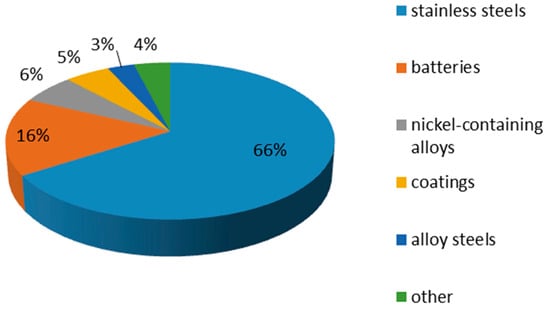
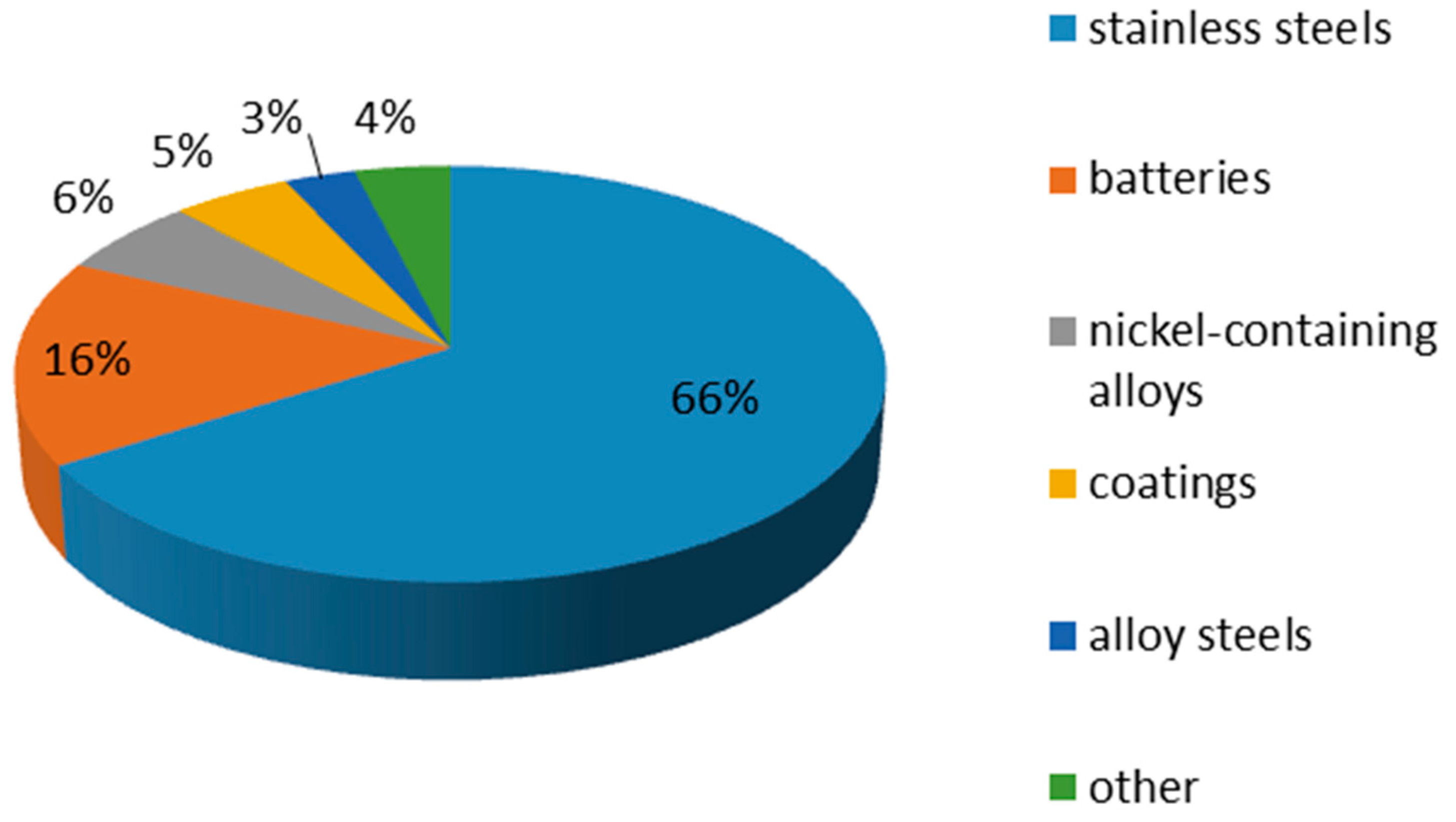
Nickel is a critical industrial metal and, according to the Nickel Institute, is widely used in the production of stainless steel (66%), batteries (16%), nickel-containing alloys (6%), coatings (5%), alloy steels (3%), and other applications (4%), (Figure 1) [3].
Figure 1.
Nickel consumption area in 2024.
The addition of nickel to steel enhances corrosion resistance, improves mechanical properties, increases impact toughness, and enhances weldability and heat resistance [4,5,6].
The Republic of Kazakhstan possesses significant reserves of lateritic nickel resources and ranks among the top twenty countries worldwide in terms of nickel reserves, estimated at over 1.5 million tons [7,8].
Kazakhstan’s lateritic ores are characterized by relatively low nickel content, typically ranging from 0.75 to 1.1%. These ores contain iron-bearing phases such as hematite, magnetite, and iron hydroxides, as well as silicate minerals including quartz, fayalite, anorthite, and serpentine. Nickel is predominantly present as an isomorphic impurity within hydrated magnesium, aluminum, and iron silicates [9].
At present, the production of nickel-containing ferroalloys in Kazakhstan remains underdeveloped due to the lack of efficient technologies for processing lateritic ores.
The depletion of sulfide ore reserves, combined with the growing demand for nickel in metallurgical and high-tech industries, makes the development of lateritic resources increasingly important and strategically significant [10,11,12,13,14]. Although lateritic ores represent a major source of nickel, their processing—particularly for low-grade materials—remains technologically challenging [15,16,17].
Currently, nickel ores are processed using both pyrometallurgical routes (Rotary Kiln–Electric Furnace (RKEF), Krupp–Renn, blast furnace smelting, the Vaniukov process, and the ISASMELT process) and hydrometallurgical methods (atmospheric acid leaching (AAL), high-pressure acid leaching (HPAL), heap and in situ leaching, and the Caron process).
Hydrometallurgical processing of lateritic nickel ores involves a range of techniques for extracting nickel and associated metals using aqueous chemical solutions. Despite its widespread application, this approach has several significant limitations. The most efficient method, HPAL, requires operation in autoclaves at temperatures of 240–270 °C and pressures up to 3–5 MPa, resulting in high capital costs and increased process complexity. In addition, hydrometallurgical processes are characterized by substantial sulfuric acid consumption (typically 200–400 kg per ton of ore or higher), particularly when processing magnesium-rich ores, where magnesium and aluminum significantly increase acid demand. Heap and in situ leaching methods result in the formation of solutions with low nickel concentrations (approximately 1 g/L) and high levels of impurities (Fe, Mg, Al, Si), complicating downstream purification and reducing overall process efficiency. Additional challenges include silica gel formation, poor filtration due to the presence of clay minerals, long leaching times, and low nickel recovery from silicate phases. Another major drawback of hydrometallurgical processing is the generation of large volumes of liquid and solid wastes (acidic effluents, gypsum, and magnesium-rich residues), which require complex neutralization and strict environmental control. Furthermore, the efficiency of these processes decreases significantly when treating saprolitic laterites with high MgO and SiO2 contents [18,19,20,21,22,23].
In contrast, pyrometallurgical routes exhibit greater tolerance to variations in feed composition and do not require large volumes of chemical reagents. These processes enable efficient treatment of both limonitic and saprolitic ores without prior beneficiation and allow the direct production of nickel-containing alloys within the metallurgical process.
Analysis of the mineralogical characteristics of raw materials, identification of processing limitations, and comparison of modern global approaches to nickel extraction provide a scientifically sound basis for the selection and optimization of processing technologies. The results of this study aim to strengthen the resource base and improve the efficiency of nickel resource development in Kazakhstan through the implementation of sustainable and economically viable metallurgical technologies.
The objective of this study is to review pyrometallurgical methods for processing nickel-containing lateritic ores and to assess their applicability to nickel deposits in Kazakhstan.
2. World Nickel Reserves
The importance, industrial relevance, and development potential of different types of deposits are directly determined by the level of global economic development and scientific and technological progress. Nickel resources are predominantly represented by oxide (lateritic) ores, which account for approximately 60% of global reserves, while sulfide ores comprise about 40% [24,25].
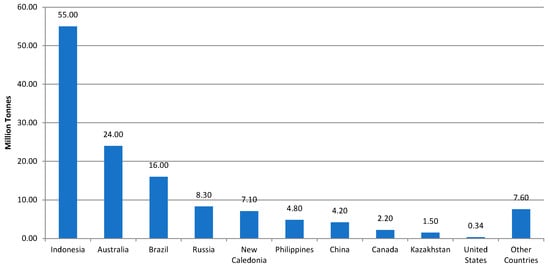
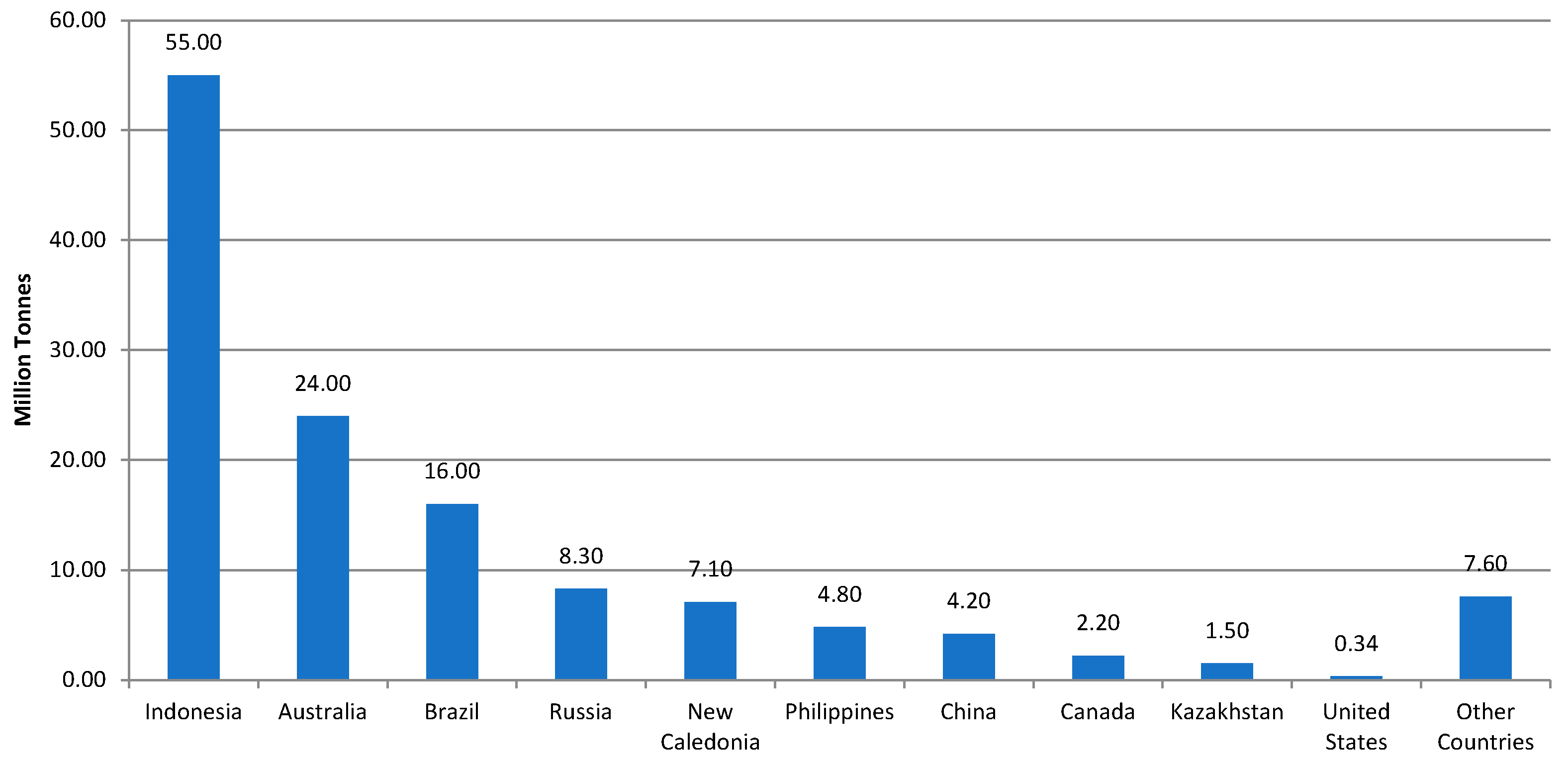
The global distribution of nickel reserves is highly uneven (Figure 2), with the largest shares located in Indonesia (42%), Australia (18.3%), Brazil (12.2%), Russia (6.3%), New Caledonia (5.4%), the Philippines (3.7%), China (3.2%), Canada (1.7%), Kazakhstan (1.1%) and the United States (0.3%) [26,27,28].
Figure 2.
World Nickel Reserves Estimation.
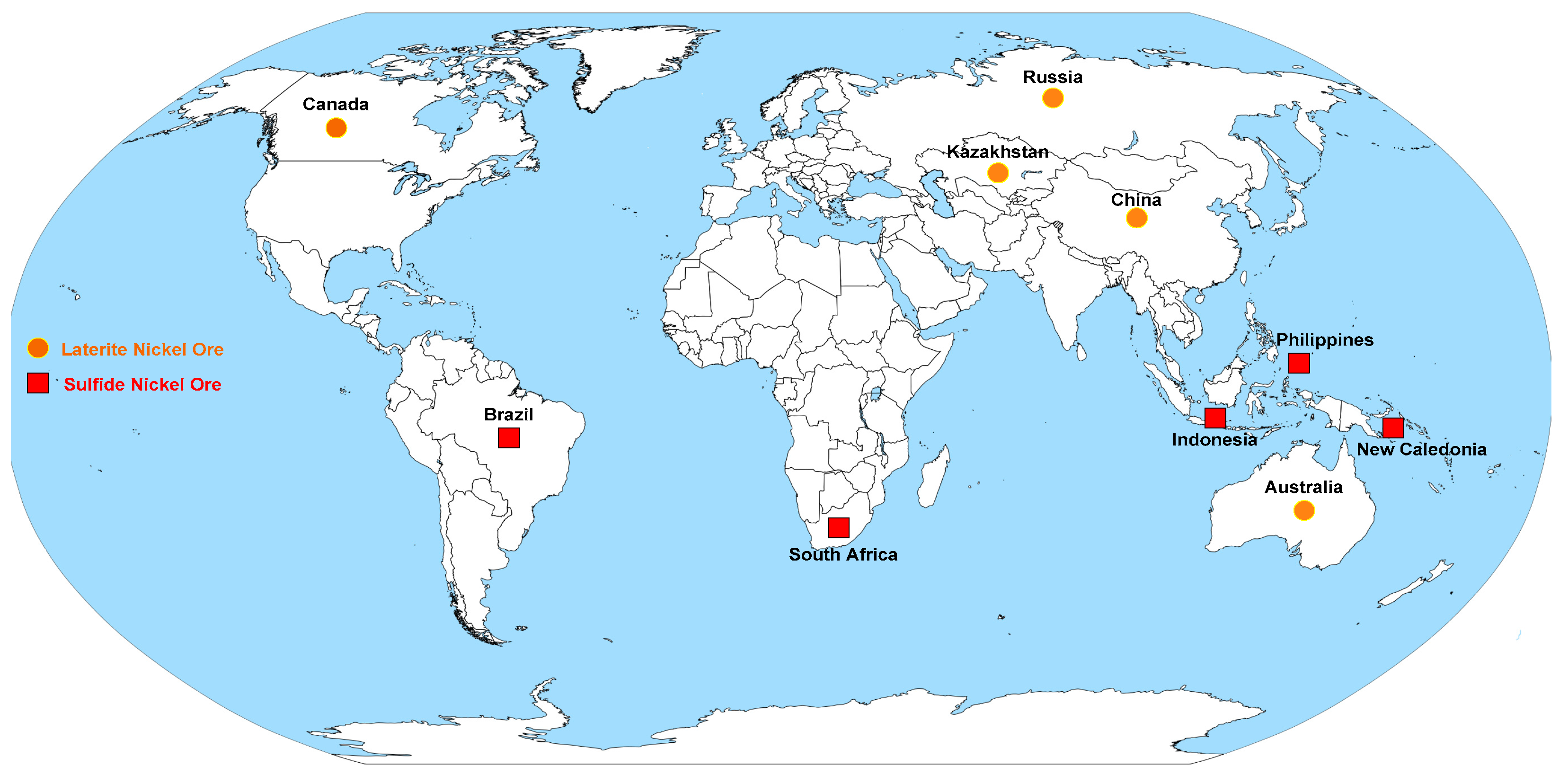
Figure 3 shows that the majority of nickel sulfide deposits are concentrated in New Caledonia, Indonesia, the Philippines, Brazil and South Africa. In contrast, laterite deposits constitute the primary mineral resource base for the nickel industry in Canada, Russia, Australia, China and Kazakhstan [29].
Figure 3.
Global Nickel Ore Reserves Distribution.
Oxidized (lateritic) nickel ores are characterized by a complex mineral composition, in which nickel is predominantly present in the form of silicates, oxides, and hydroxides with a finely dispersed, often amorphous-crystalline distribution, which significantly complicates its extraction. These ores are porous and brittle, highly hygroscopic, and exhibit low bulk density. They are not amenable to conventional beneficiation methods and are therefore typically processed directly by metallurgical routes.
Lateritic nickel ores are supergene formations that develop as a result of prolonged and intensive chemical weathering of ultramafic rocks, such as dunites, peridotites, and serpentinites. During the lateritization process, significant redistribution of chemical elements occurs: magnesium and silicon are partially leached, iron becomes relatively enriched, and nickel undergoes secondary concentration.
Nickel, initially incorporated isomorphically into the crystal lattice of primary silicates (olivine and pyroxenes, particularly enstatite), is released during their structural breakdown and subsequently incorporated into secondary mineral phases [15].
Despite variations in geological structure and regional climatic conditions, lateritic ores exhibit broadly similar weathering profiles. Depending on the dominant mineralogy and modes of nickel occurrence, laterite deposits are classified into three main types: limonitic (oxide), smectitic (clay), and saprolitic (silicate).
Limonite laterites occur in the upper part of the weathering profile. Their principal minerals are goethite and hematite, in which nickel is present either as an isomorphic substitution or adsorbed on particle surfaces. Associated phases include spinels, relict serpentinite minerals, talc, and amphiboles. This type is characterized by high iron content (40–50%), with relatively low nickel (0.8–1.5%), magnesium (0–5%), and silica (0–10%) contents [19]. More than half of the world’s lateritic nickel resources are concentrated in limonitic ores. Their relatively loose structure and low crystallinity favor efficient hydrometallurgical processing [15].
Clay-type (smectitic) laterites typically form under moderately dry climatic conditions and reduced weathering rates. The principal nickel-bearing minerals include smectites (nontronite, saponite, and related varieties), as well as various garnierite phases. In these ores, nickel is predominantly associated with layered aluminosilicates, which complicates its extraction. In the global resource distribution, their proportion is significantly lower than that of limonitic and saprolitic ores [30].
Saprolitic (silicate) laterites occur in the lower part of the weathering profile, closer to the bedrock, and often retain the textural features of the parent ultramafic rocks. The principal nickel-bearing minerals include serpentine, montmorillonite, and chlorite. Saprolitic ores are characterized by higher contents of nickel (1.8–3.5%), magnesium (15–25%), and silicon (30–50%), along with lower concentrations of iron (10–25%). Their chemical and mineralogical composition is often highly heterogeneous, both with depth and across the deposit [25,31,32].
The content of nickel and associated elements (Fe, Si, Mg, etc.) varies significantly not only among different types of laterites but also within individual deposits [33]. Climatic and geographic factors play an important role in this variability. Laterites in humid regions (e.g., Indonesia and New Caledonia) are generally characterized by higher nickel contents, a lower proportion of clay minerals, a simpler mineralogical structure, more favorable processing conditions, and a thinner overburden. In contrast, laterites in more arid regions (e.g., Western Australia) exhibit lower nickel contents, higher clay mineral abundance, and a more complex and variable mineral composition, which complicates processing [34].
Lateritic nickel ores are generally characterized by relatively low nickel content and pronounced mineralogical heterogeneity. Unlike sulfide ores, they are not amenable to conventional beneficiation methods such as gravity separation, magnetic separation, and flotation. Therefore, nickel products are predominantly obtained through metallurgical processing.
Limonitic ores, owing to their high iron and cobalt contents and relatively low Mg and Si concentrations, are more suitable for hydrometallurgical processing [35,36]. In contrast, saprolitic ores, characterized by elevated magnesium and silica contents and higher nickel grades, are more effectively processed using pyrometallurgical methods [37,38,39]. Thus, no universal processing approach exists for lateritic nickel ores, and the selection of an appropriate technological flowsheet must be based on the mineralogical characteristics of a specific deposit.
The nickel content of lateritic ores is generally lower than that of sulfide ores. In particular, the average nickel content of ores in Kazakhstan (0.75–1.1%) is lower than that in countries with major nickel reserves. For example, average nickel grades in deposits in Indonesia, the Philippines, New Caledonia, Cuba, the Dominican Republic, Brazil, Australia and Russia range from 1.4 to 1.75% (Table 1).
Table 1.
Content of iron and nickel in lateritic nickel ores of countries.
3. Nickel Deposits of Kazakhstan
As noted above, the presence of large laterite deposits places the Republic of Kazakhstan among the top twenty countries in terms of proven nickel reserves, with nearly 100% of nickel resources associated with oxide (lateritic) ores.
Nickel deposits in Kazakhstan are mainly located in the northern regions and are concentrated in the Kempirsai (Aktobe Region), Gornostaevskoye (East Kazakhstan Region), as well as the Shevchenkovskoye (Kostanay Region), and Ekibastuz-Shidertinsky (Pavlodar Region) groups of deposits (Table 2). The depth of the ore bodies ranges from 0.3 to 45 m.
Table 2.
Nickel content in nickel deposits of the main regions of Kazakhstan.
One of the key regional clusters is the Aktobe region, which hosts the Kempirsai group of silicate nickel and nickel–cobalt deposits, including Batamsha, Nikeltau, Rozhdestvenskoye, and Kokpektinskoye. These deposits, along with several smaller occurrences, have explored balance reserves of up to 423.5 thousand tons [40], and represent a promising raw material base for metallurgical processing and the development of the mining industry.
In Eastern Kazakhstan, significant deposits include the Gornostayevskoye cobalt–nickel deposit. According to estimates by CSA Global [41], mineral resources exceed 169.4 thousand tons of ore, containing more than 1 thousand tons of nickel, which highlights the region’s importance as part of the national raw material base for metallurgy.
The Kostanay region comprises a large nickel-bearing district within the Western Turgay Trough, including deposits such as Shevchenkovskoye, Kundybayskoye, Podolskoye, Zhitikarinskoye, Akkarginskoye, and Milyutinskoye. According to state balance data, the total resources exceed 1075 thousand tons [42], indicating the region’s significant resource potential.
The Pavlodar region hosts major deposits, including Ekibastuz–Shidertinskoye, Adilbekskoye, and Angrensorskoye, with total nickel ore resources of approximately 800 thousand tons.
The presence of substantial nickel ore reserves across multiple regions forms a solid raw material base for the further development of Kazakhstan’s nickel industry. Given this resource potential, Kazakhstan can be considered a promising center for the production of nickel-containing ferroalloys, oriented toward both domestic demand and export markets for high value-added products.
4. Pyrometallurgical Methods for Processing Oxidized (Lateritic) Nickel Ores
In 2020, global primary nickel production reached 2430.7 thousand tons, of which 69% was derived from lateritic ores and 31% from sulfide ores. Of the nickel produced from lateritic raw materials, 87.7% was obtained via pyrometallurgical routes, while hydrometallurgical processes accounted for 12.3% [43]. Most large-scale operations processing lateritic nickel ores by pyrometallurgical methods utilize high-grade feedstocks with nickel contents exceeding 1.2% (Table 3) [42].
Table 3.
Nickel plants processing lateritic nickel ores using pyrometallurgical methods.
Pyrometallurgical extraction of nickel from lateritic ores involves the high-temperature reduction of nickel-bearing compounds to produce ferronickel or nickel alloys. The principal pyrometallurgical processing routes include the Rotary Kiln-Electric Furnace (RKEF) process, Krupp-Renn process, blast furnace smelting, Vaniukov furnace smelting, and the ISASMELT process.
4.1. Rotary Kiln-Electric Furnace (RKEF) Technology
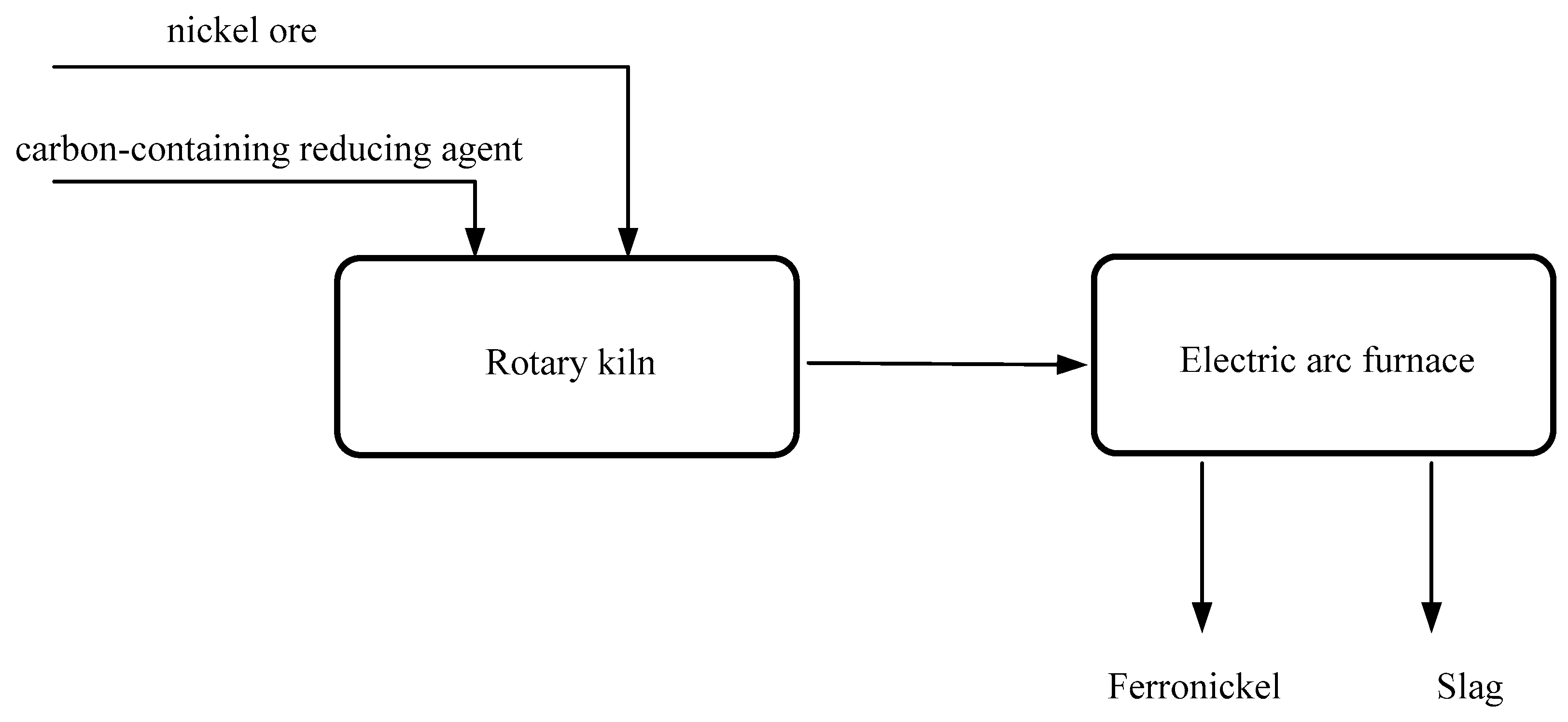
RKEF technology is the most widely applied pyrometallurgical process for smelting saprolitic laterites, typically with nickel contents exceeding 1.5%. In the RKEF process (Figure 4), the ore undergoes a sequence of thermal treatment stages. Initially, the laterite is dried to remove free moisture and improve material handling properties. It is then fed into a rotary kiln, where partial reduction of iron and nickel oxides occurs at temperatures of approximately 800–900 °C using a carbonaceous reductant. The pre-reduced material is subsequently transferred to an electric arc furnace, where final reduction and smelting take place, resulting in the production of ferronickel and the separation of the slag phase.
Figure 4.
Flowsheet of the ferronickel smelting process using the RKEF method.
The primary product is nickel-containing ferronickel suitable for use in the steel industry [44,45,46].
4.2. Krupp–Renn Technology
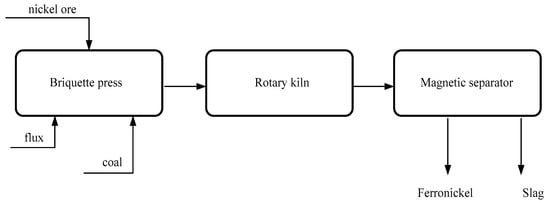
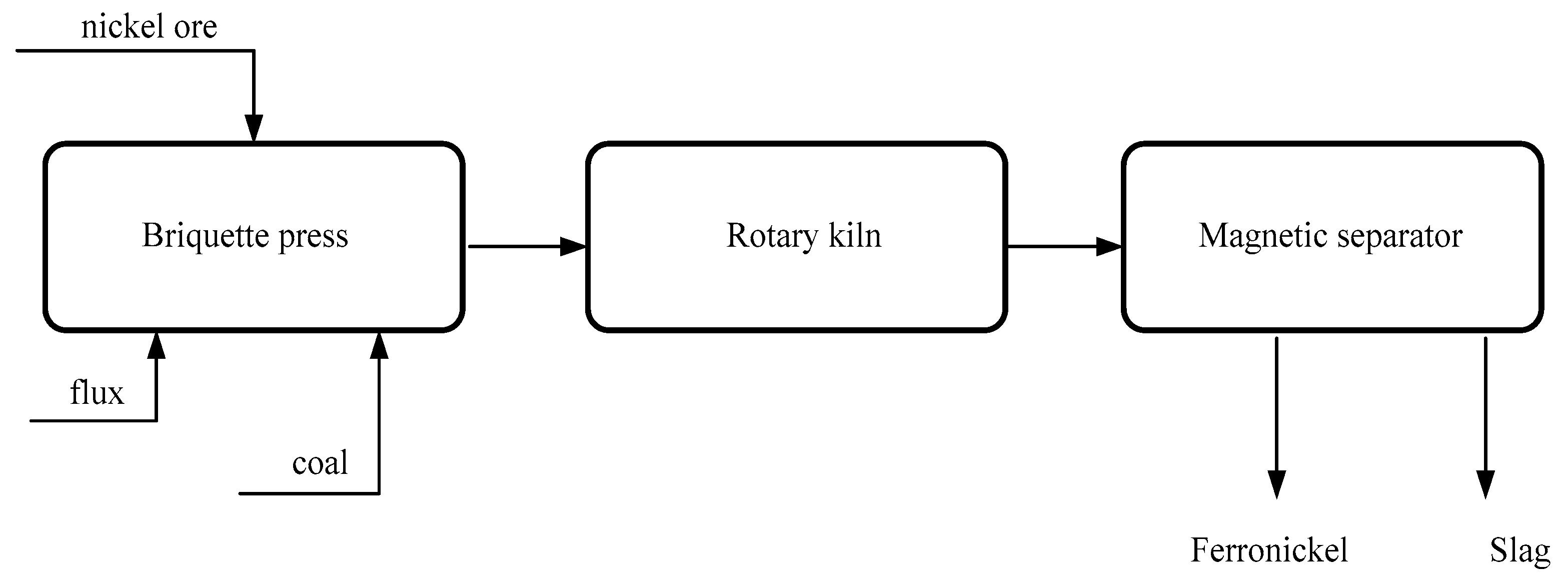
The Krupp–Renn process is a pyrometallurgical route involving direct reduction and partial smelting of ore materials in rotary kilns. It was originally developed for processing low-grade iron ores and later adapted for lateritic nickel ores to produce coarse, porous ferronickel particles. Reduction is carried out using coal at temperatures of 900–1200 °C, while ferronickel particle growth occurs at 1300–1400 °C (Figure 5) [47,48,49]. Saprolitic laterite with nickel contents typically exceeding 2.2% is used as the feed material. During raw material preparation, the ore is crushed and mixed with coal and flux. Limestone is added to regulate moisture content, and the mixture is briquetted. The briquettes are subsequently dried, calcined, and reduced, followed by discharge and separation using gravity and magnetic methods to obtain ferronickel. The resulting ferronickel is produced in the form of particles approximately 2–3 mm in diameter, containing 18–22% Ni, and can be directly used as a feedstock for stainless steel production without further refining. The most well-known industrial variant of this method is the Oheyama process, implemented at the Nippon Yakin plant in Japan. In this process, technological improvements have increased nickel recovery to approximately 95%, with an annual production of about 9585 t Ni and an energy consumption of around 5000 kWh/t Ni [50].
Figure 5.
Krupp–Renn process flowsheet.
4.3. Blast Furnace Smelting
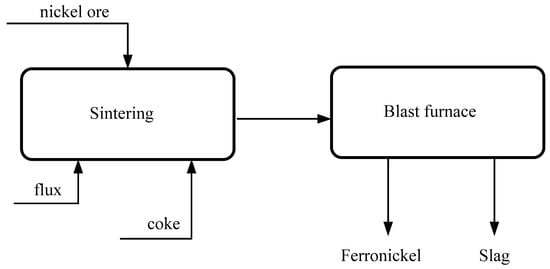
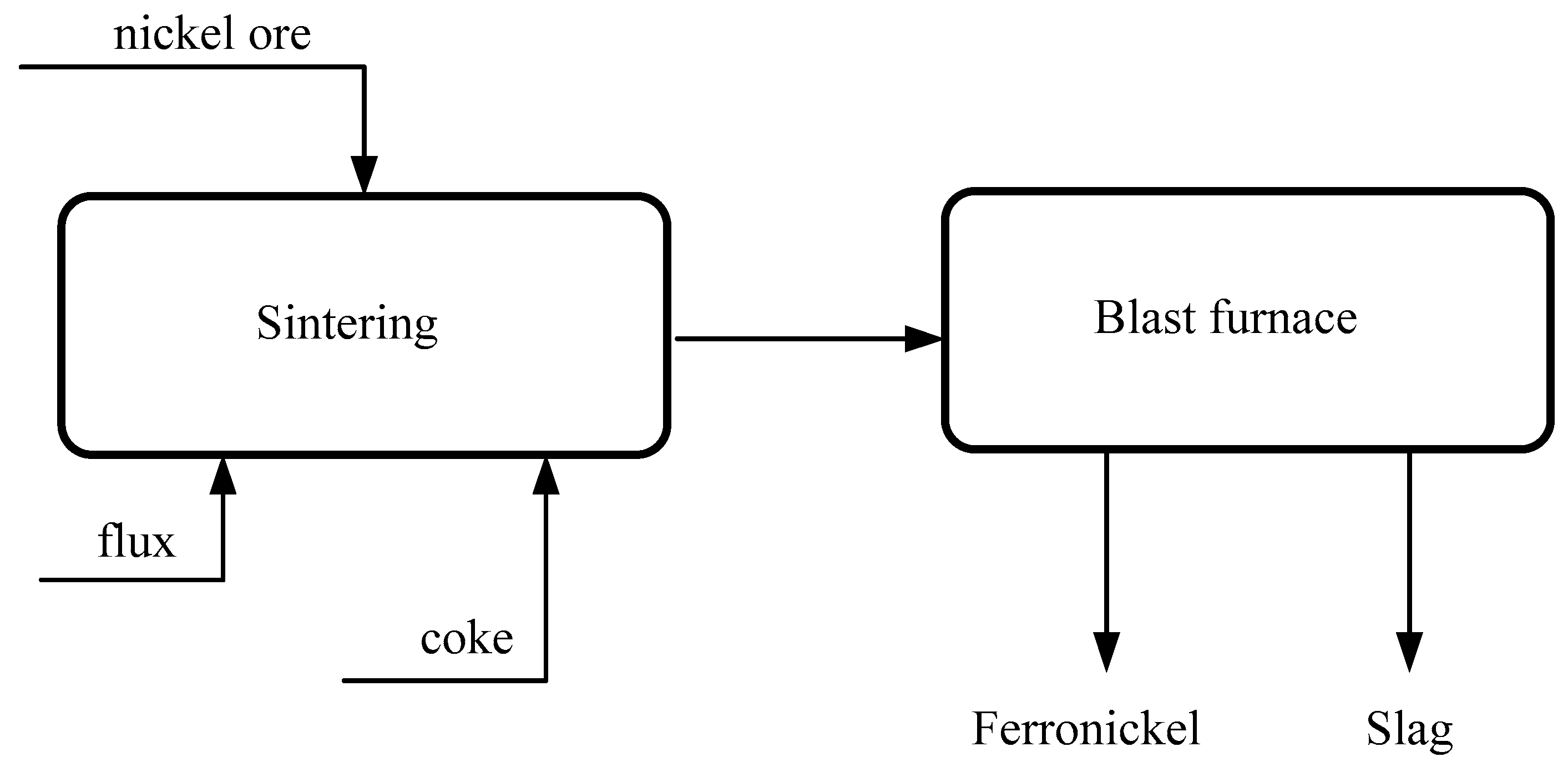
Blast furnace smelting is a conventional pyrometallurgical route for processing oxide ores and, in the context of nickel materials, is used to produce low-grade nickel–iron alloys (low-grade ferronickel) through the smelting of a mixture of nickel ore agglomerates, fluxes, and reductants in a blast furnace (Figure 6). In this process, crushed nickel ore and sintered agglomerates are charged into the blast furnace together with coke to create a reducing gas atmosphere in the melting zone. Under the combined action of air injection and the coke bed within the furnace, iron and nickel oxides are reduced and subsequently fused into a molten metallic phase. This results in the formation of low-grade ferronickel containing 1–8% Ni [50].
Figure 6.
Flowsheet of ferronickel smelting in a blast furnace.
4.4. The Vaniukov Process
The Vaniukov process, developed by Professor A. V. Vaniukov at the Moscow State Institute of Steel and Alloys in 1949, is a metallurgical technology based on the continuous smelting and oxidation of molten sulfide materials in a slag bath [51,52]. The bath is intensively sparged with oxygen-enriched air, and the matte formed during smelting is continuously withdrawn through a siphon located at the bottom of the slag bath. This process was subsequently adapted for the treatment of copper, nickel, and iron ores.
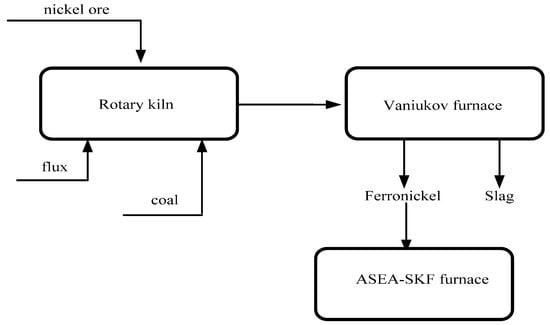
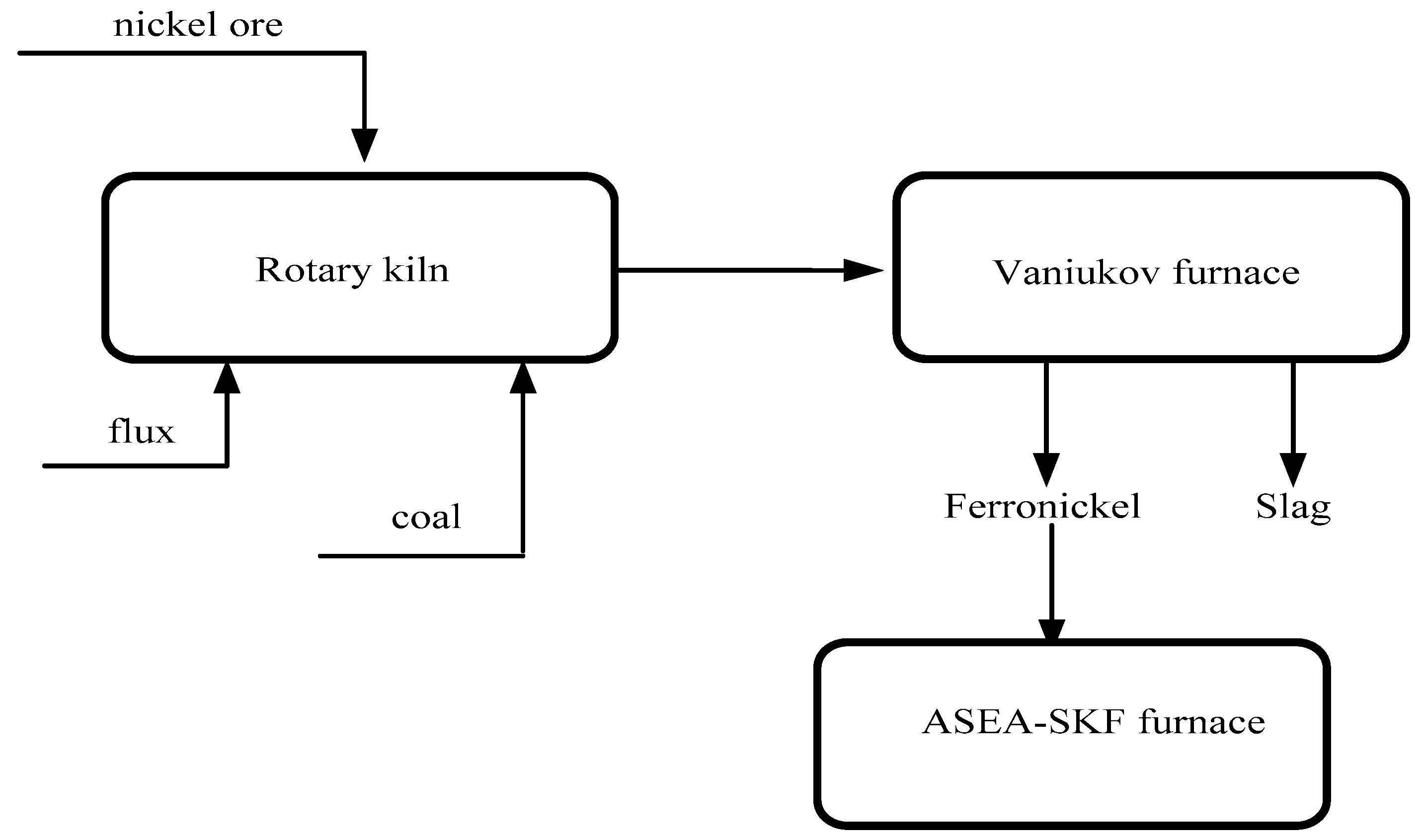
Prior to furnace feeding, oxide nickel ores are subjected to pre-roasting in a rotary kiln at approximately 900 °C. The Vaniukov furnace is divided into two functional zones: smelting and reduction. In the smelting zone, a mixture of roasted ore, fluxes, and coal is introduced, while off-gases are removed. In the reduction zone, additional carbon is supplied to control the oxygen potential and ensure the formation of ferronickel with the desired composition. In both zones, hydrocarbons and oxygen-enriched air are injected into the melt through side tuyeres, promoting intensive mixing as well as enhanced heat and mass transfer. The produced ferronickel is tapped into ladles and transferred for further refining in an ASEA–SKF furnace, while the slag is granulated with water and removed from the process [53,54,55]. The process flowsheet for the treatment of lateritic ores in a Vaniukov furnace is shown in Figure 7.
Figure 7.
Flowsheet of ferronickel smelting in a Vaniukov furnace.
4.5. The ISASMELT Process
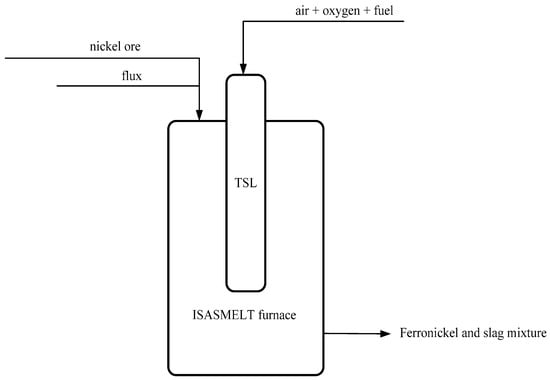
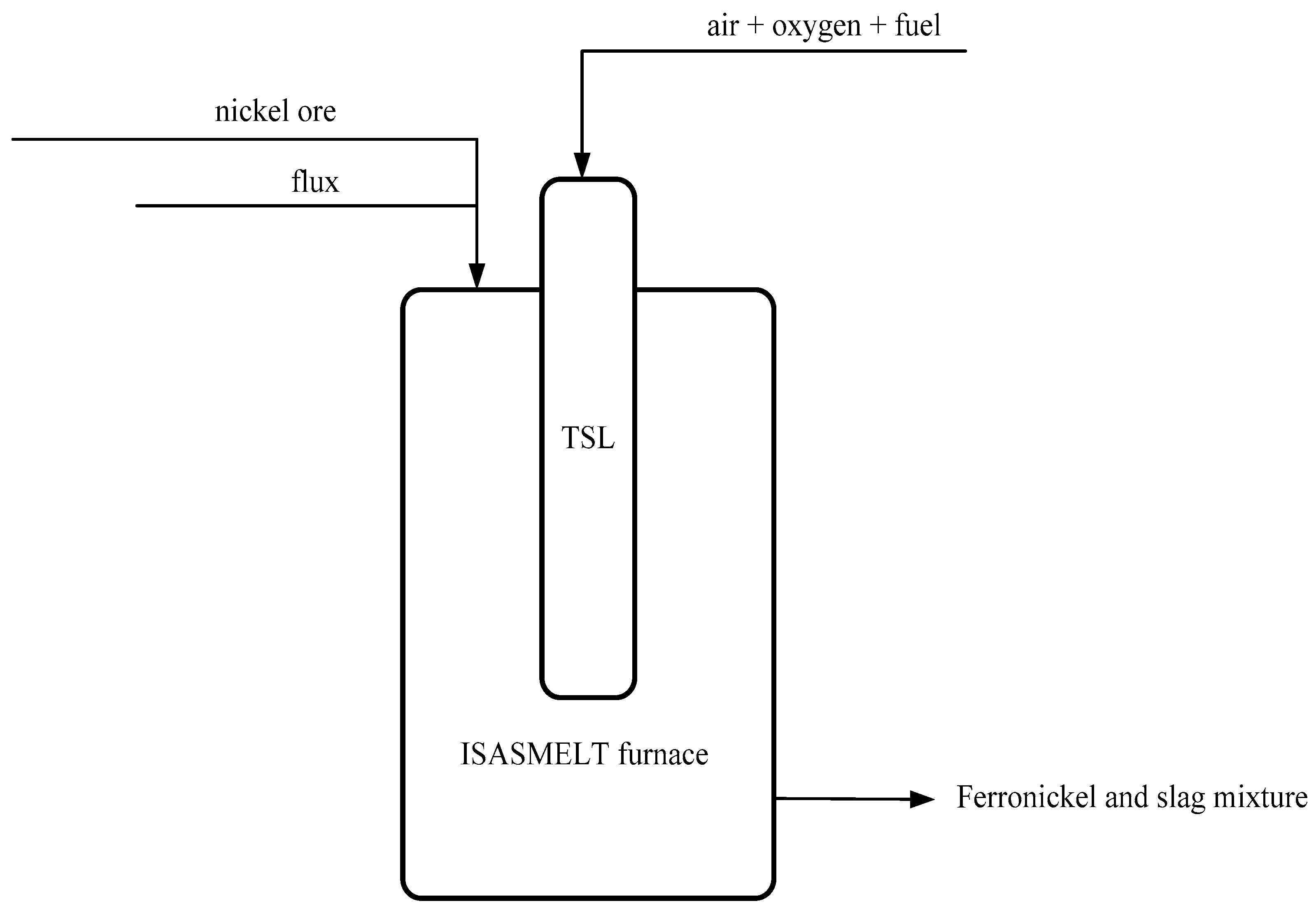
The ISASMEL process is a bath smelting technology based on the Top Submerged Lance (TSL) principle, originally developed in the early 1990s for the industrial processing of copper and lead concentrates. The ISASMELT furnace is a vertically oriented cylindrical reactor equipped with a top-submerged lance, through which oxygen-enriched air and fuel are injected directly into the molten bath.
Feed materials, including lateritic nickel ore, reductants, and fluxes, are continuously introduced through the upper part of the reactor. Gas and fuel injection through the submerged lance generates vigorous bath agitation, significantly enhancing heat and mass transfer and accelerating reduction and smelting reactions.
During the process, nickel oxides present in lateritic ores are reduced and transferred to the metallic phase, forming a ferronickel alloy, while gangue components are incorporated into the slag. The off-gases generated during smelting are collected and directed to a waste heat boiler and gas-cleaning system. In many cases, the molten products discharged from the furnace consist of a mixture of metal/alloy and slag, requiring an additional settling or slag-cleaning furnace to achieve effective phase separation. The process flowsheet for laterite ore treatment using the ISASMELT process is shown in Figure 8. Laboratory and pilot-scale studies [56,57,58] have demonstrated that processing nickel ores with a SiO2/MgO ratio of 1.2:3.1 and an Fe/Ni ratio of 10–20 yields ferronickel alloys containing 15–40% Ni. At the pilot scale, higher-grade alloys with nickel contents of 60–85% have been obtained.
Figure 8.
Flowsheet of laterite nickel ore processing by ISASMELT method.
As shown in Table 4, the RKEF, Krupp-Rennes, and ISASMELT processes achieve higher nickel recovery rates and are primarily applied to relatively high-grade ores suitable for the production of high-grade ferronickel. In contrast, blast furnace smelting and Vaniukov furnace smelting are typically used for the production of low-grade ferronickel with nickel contents below 15%.
Table 4.
Indicators of pyrometallurgical methods for processing lateritic nickel ores.
5. The Metallothermic Reduction Approach on the Low-Grade Oxidized Nickel Ore
Currently, the RKEF process occupies a leading position among pyrometallurgical routes used for smelting saprolitic laterite ores. However, this method is associated with several significant technological limitations.
First, lateritic nickel ores in Kazakhstan are characterized by elevated iron content, which leads to the simultaneous reduction of Fe together with Ni under carbothermic conditions. This results in dilution of the metallic phase and the formation of ferronickel with low nickel content, thereby reducing product quality and increasing the amount of material to be processed.
Second, the high content of magnesium (MgO) and silica (SiO2) promotes the formation of highly viscous slags with elevated melting temperatures. This complicates the smelting process, increases flux and energy consumption, and reduces the efficiency of metal-slag separation.
Third, Kazakhstan ores exhibit a complex mineralogical composition dominated by silicate phases, in which nickel is present in an isomorphically bound form. Under RKEF conditions, this requires more severe reduction conditions and higher temperatures, further increasing energy consumption and decreasing the selectivity of nickel extraction.
Fourth, processing of such ores in the RKEF process is associated with increased specific consumption of electrical energy and reductants, as a significant portion of the energy is expended on heating and melting the gangue rather than on extracting the target metal.
Thus, the limited applicability of the RKEF process to Kazakhstan’s lateritic nickel ores can be attributed to a combination of factors, including high iron content, elevated MgO and SiO2 levels, and a complex silicate mineral structure. These characteristics lead to increased energy consumption and reduced process efficiency. Consequently, conventional carbothermic approaches are less effective for this type of raw material, thereby justifying the development of alternative processing methods [64].
The modified Krupp–Renn process, implemented at the Nippon Yakin Oheyama plant for ferronickel production, is a direct pyrometallurgical route based on a modification of the conventional Krupp–Renn process. It utilizes a rotary kiln and a solid reductant (coal) to produce Fe–Ni alloys.
This process offers several advantages, including reduced energy consumption compared to the conventional RKEF process and relatively high ferronickel quality when processing high-grade saprolitic laterites. These benefits are associated with efficient particle aggregation and improved separation of the metallic phase from the slag at temperatures of approximately 1300–1350 °C.
During the reductive roasting of laterite ores, significant amounts of refractory silicate phases with high melting points are formed. At lower temperatures, mass transfer and coalescence of ferronickel particles proceed slowly, which limits their growth. Therefore, the formation of partially molten agglomerates, required for effective particle aggregation, necessitates maintaining elevated temperatures in the range of 1300–1350 °C.
However, operation within this temperature range increases the risk of process instability, including furnace freezing and material sticking [65]. Additional technological limitations arise from the tendency to form ring deposits on the inner surface of the furnace, which negatively affects operational stability.
Therefore, strict control of the temperature regime and charge composition is required to ensure stable and continuous process operation.
In recent years, blast furnace technology for processing lateritic nickel ores has undergone significant development in China, driven by nickel shortages and the need to utilize alternative raw material sources. Blast furnace smelting is based on well-established technological solutions and makes use of existing metallurgical infrastructure, enabling the production of nickel pig iron with nickel contents of approximately 1–8%.
However, this process has several significant limitations, including relatively low productivity, high specific coke consumption during agglomeration, and difficulties in separating slag from molten metal [66]. In addition, the resulting ferronickel is often characterized by elevated sulfur and phosphorus contents, which necessitate subsequent refining and decarburization [44].
A key limitation of the Vaniukov process is the inability to raise the tuyeres above the melt level for routine maintenance or rapid response in emergency situations, such as blower shutdown. This complicates operation and represents one of the factors limiting the widespread industrial adoption of this technology.
Despite the technological advantages of the ISASMELT process, several constraints limit its application in processing lateritic nickel ores. First, industrial experience with ISASMELT technology for laterite processing remains limited, with most studies restricted to laboratory and pilot-scale investigations [56,57]. Second, in many configurations, the molten products discharged from the ISASMELT furnace consist of a mixture of metal and slag, requiring an additional settling or slag-cleaning furnace for effective phase separation, thereby increasing capital and operating costs [67].
Another important limitation is related to the mineralogical characteristics of lateritic ores, particularly their high MgO and SiO2 contents, which promote the formation of highly viscous and refractory slags. These slags hinder metal–slag separation and increase nickel losses to the slag phase [68]. Furthermore, efficient processing of lateritic ores in TSL reactors often requires prior drying or calcination of the feed material, adding an additional step to the process flowsheet.
With the steady growth in global demand for nickel alloys, there is an increasing need to reconsider approaches to the processing of lateritic nickel ores, particularly those with low nickel content. Traditional pyrometallurgical routes, such as carbothermic reduction, are generally inefficient for low-grade ores and, combined with high energy consumption, limit their practical application.
In this context, growing attention has been directed toward metallothermic reduction methods based on the use of silicon and aluminum as reductants [69,70], which enable the production of novel nickel-containing alloys.
Zayakin [71] reported the results of experimental smelting of ferronickel from low-grade oxidized nickel ores using aluminum slag, a by-product of aluminum production, as a reductant. The aluminum slag contained approximately 21% Al and 1.5% Si. The reductant consumption ranged from 5 to 30% of the mass of the processed ore. The process was carried out at temperatures of 1450–1550 °C, where nickel recovery to the metallic phase reached 85–92%. Pilot-scale tests confirmed the feasibility of ferronickel production via the aluminothermic method, yielding alloys with nickel contents of 15–20%.
A recent study [72] demonstrated that the use of a complex reductant containing silicon and aluminum for processing lateritic nickel ores enables the production of nickel-containing ferroalloys with compositions of up to 15% Ni, 70% Fe, 6.0% Cr, and 7.0% Si. It was established that optimal nickel reduction conditions are achieved at a reductant consumption of 20% and a temperature of 1600 °C. Under these conditions, nickel recovery to the metallic phase approaches 100%. These results confirm the potential of the metallothermic approach for processing low-grade ores and support its broader practical application.
For the aluminosilicothermic reduction of lateritic nickel ores, the literature provides thermodynamic data confirming the feasibility of this process. In particular, thermodynamic modeling of silicothermic reduction in the CaO-SiO2-MgO-Al2O3-FeO-NiO-P2O5 system has shown that, when silicon is used as a reductant, the degree of nickel reduction reaches 99.7–99.8%, while silicon utilization ranges from 92.1 to 94.5%, indicating its high reducing capacity for nickel [73,74].
For complex reductants containing both aluminum and silicon, studies on lateritic nickel ores have demonstrated that, within the temperature range of 500–1700 °C, the maximum degree of nickel reduction is achieved at approximately 1500 °C [72].
A key justification for the use of aluminum and silicon as reductants lies in their high chemical affinity for oxygen and the significant heat release associated with reduction reactions [75,76]. As reported in [77], aluminothermic reactions exhibit more negative Gibbs free energy (ΔG) values than silicothermic reactions, indicating greater thermodynamic favorability and stronger reducing capability. Moreover, the substantial heat generated during these reactions enables autothermal operation and allows temperatures sufficient for melting both metallic and slag phases to be achieved without external energy input.
In contrast, silicon exhibits a lower thermodynamic driving force; however, it provides greater flexibility in controlling alloy composition and enables effective alloying, which is particularly important for the production of complex ferroalloys. The combined use of aluminum and silicon therefore integrates the high reducing power of aluminum with the technological versatility of silicon, ensuring efficient nickel extraction and the formation of alloys with controlled compositions.
Thus, the available data confirm the scientific validity of using aluminum- and silicon-containing reductants for nickel extraction.
The development and implementation of metallothermic processing methods for lateritic nickel ores in the Republic of Kazakhstan are driven by the specific characteristics of its mineral resource base. Lateritic ores in Kazakhstan are characterized by low nickel content (0.75–1.1%), high concentrations of iron, magnesium, and silica, as well as a complex mineralogical composition dominated by silicate phases. These features significantly limit the efficiency of conventional carbothermic processes.
Under these conditions, metallothermic reduction can be considered an alternative approach offering several distinct advantages. These include lower process temperatures due to the high reducing capacity of metals such as aluminum and silicon, resulting in reduced energy consumption.
In addition, higher selectivity of nickel extraction can be achieved owing to differences in the thermodynamic stability of nickel and iron oxides. This approach also enables the processing of low-grade and difficult-to-beneficiate ores without prior enrichment, as well as a reduction in the formation of gaseous products (CO, CO2) and the associated carbon footprint.
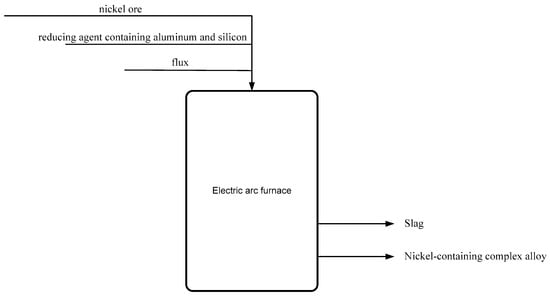
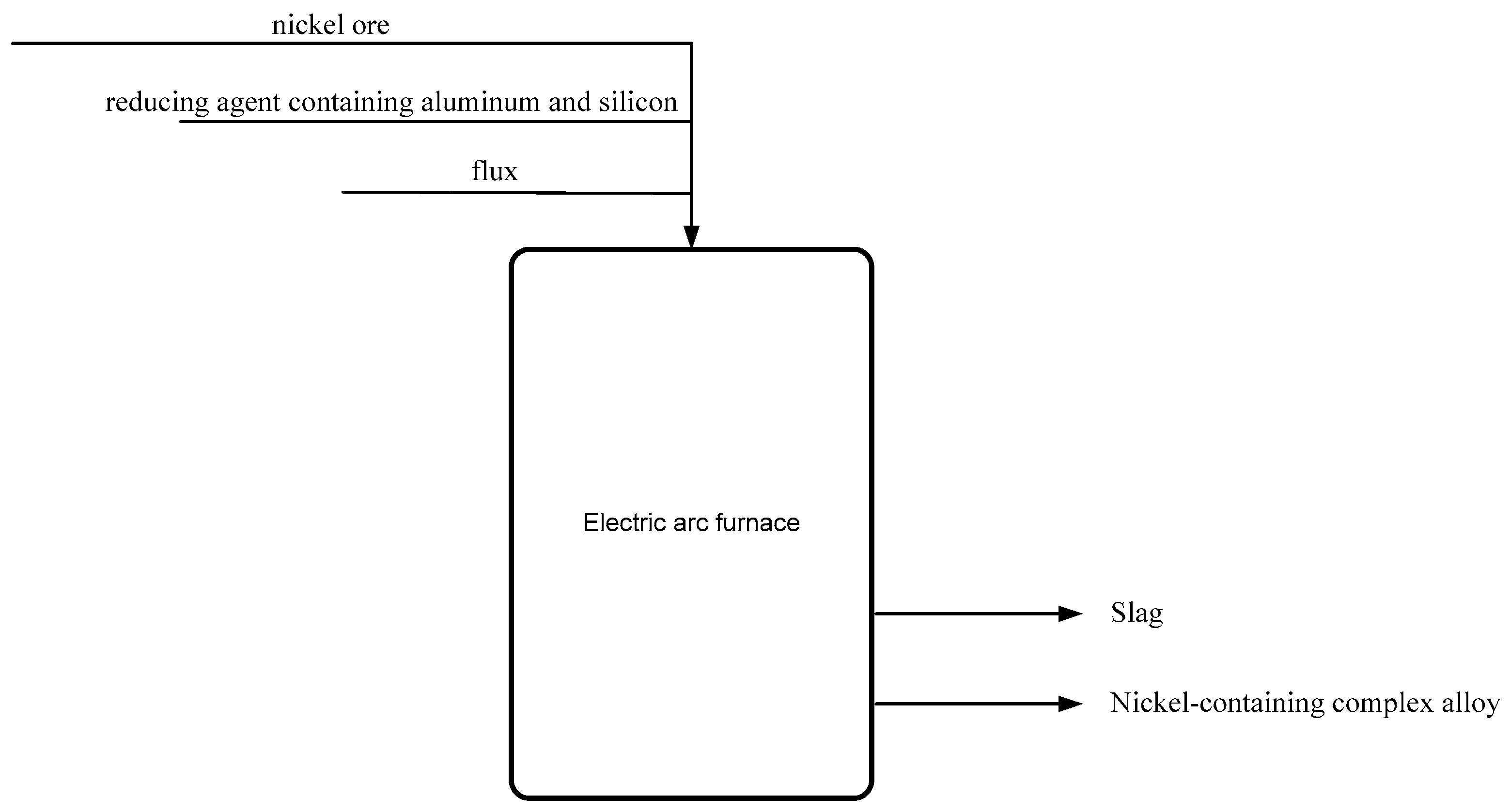
A generalized flowsheet for the metallothermic processing of lateritic nickel ores (Figure 9) includes stages of raw material preparation, mixing with reductants and fluxes, and thermal reduction leading to the formation of metallic and slag phases.
Figure 9.
Flowsheet of lateritic nickel ore processing by metallothermic method.
Compared with carbothermic technologies, which use carbon as the reductant and require high temperatures for effective nickel reduction, the aluminosilicothermic method provides more favorable thermodynamic conditions. The use of aluminum and silicon, which exhibit a higher affinity for oxygen in nickel and iron oxides, enables operation at lower effective temperatures and over a broader stability range. This reduces the formation of stable intermediate oxide phases and promotes more complete transfer of nickel to the metallic phase.
Furthermore, the aluminosilicothermic approach enables the simultaneous reduction of multiple oxides within the system, increasing the overall degree of metallization and promoting coalescence of the metallic phase. This reduces nickel losses to the slag, enhances recovery of the target component, and improves the quality of the resulting ferroalloy.
The selection of aluminosilicothermic reduction for processing lateritic nickel ores in Kazakhstan is determined not only by the low nickel content but also by the specific mineralogical characteristics of the ore matrix. Kazakhstan laterites are dominated by silicate phases, primarily represented by serpentine and anorthite, along with significant amounts of iron and magnesium oxides. In such ores, nickel is predominantly isomorphically incorporated within the structure of magnesium–iron silicates, which significantly complicates its extraction using conventional methods.
Under carbothermic reduction conditions, the presence of MgO and SiO2 leads to the formation of highly viscous silicate slags and stable mineral phases (e.g., olivine and pyroxenes), which hinder reductant diffusion and reduce nickel recovery. In addition, iron is readily reduced, resulting in the formation of an excessive metallic phase and decreased process selectivity.
In contrast, the use of aluminum and silicon provides a fundamentally different interaction mechanism with the silicate matrix. Aluminum, owing to its high affinity for oxygen, effectively reduces nickel and iron oxides even when they are incorporated within complex silicate structures, thereby disrupting the crystal lattice and releasing the metals into the metallic state. The formation of thermodynamically stable Al2O3 is accompanied by significant heat release, which promotes local temperature increases and intensifies the breakdown of the silicate structure.
Silicon, in turn, interacts with the oxide component of the ore to form SiO2, contributing to slag formation and enabling control over its composition and basicity. This is particularly important in systems with high MgO content, where the formation of an optimal slag system (CaO-SiO2-MgO-Al2O3) reduces melt viscosity and improves metal–slag separation. The combined use of aluminum and silicon therefore produces a synergistic effect: aluminum acts as the primary reductant, while silicon stabilizes the slag phase and enables control over the chemical composition of the resulting alloy.
Recent studies indicate that the use of aluminum and silicon as reductants not only ensures a high degree of nickel recovery but also reduces overall process costs.
Unlike carbothermic processes, which generate CO and CO2 as a result of carbon oxidation, aluminosilicothermic reduction proceeds without the formation of carbon-containing gases, as oxygen is bound within oxide phases. According to recent studies, the use of aluminum as a reductant can significantly reduce direct CO2 emissions and the overall carbon footprint of the process compared to conventional carbothermic technologies [78].
This makes aluminosilicothermic reduction attractive from an environmental perspective and represents an important economic advantage, as it reduces the need for gas treatment and associated costs [79].
Similarly, silicate reductants are characterized by high nickel reduction efficiency (up to 99%) and high reductant utilization (above 90%), which reduces specific reagent consumption and metal losses [80].
Recent reviews on laterite ore processing emphasize that the key factor governing economic efficiency is the reduction in energy consumption and the simplification of the process flowsheet [26,81]. In this context, the use of complex aluminosilicate reductants with high chemical reactivity enables operation at lower temperatures, resulting in reduced energy consumption and lower processing costs.
According to [82], the application of complex aluminosilicate reductants contributes to a reduction in the overall cost of the final product. Thus, their use can be considered an economically justified approach that reduces the cost of metallurgical production compared to conventional technologies.
During the production of nickel-based complex alloys from lateritic ores, slags containing oxides of silicon, aluminum, iron, and calcium are formed. According to Kim et al. [83], ferronickel slags, in combination with other industrial by-products (gold tailings, limestone, and red mud), can be effectively utilized for the production of continuous glass fibers.
These glass fibers exhibit mechanical properties comparable to those of industrial basalt fibers, including an elastic modulus of approximately 60–80 GPa. Moreover, the thermal and rheological properties of the melt are suitable for conventional fiber-drawing technologies, confirming the technological feasibility of such slag-based systems.
Thus, the utilization of slags as a raw material for glass fiber production not only expands their potential industrial applications but also contributes to reducing environmental impact through the recycling of industrial waste.
6. Discussion
With the rapid development of the energy sector, nickel has become a strategically important metal. Against the backdrop of declining reserves of sulfide nickel ores and shifting global demand, laterite deposits are increasingly becoming the primary source of nickel production. However, lateritic ores are characterized by low nickel content, complex mineralogical and chemical composition, and significant technological challenges in beneficiation and component separation.
The processing of lateritic nickel ores in Kazakhstan represents one of the most important directions of metallurgical research, particularly in the context of growing demand for stainless steel.
Traditional pyrometallurgical methods for processing lateritic nickel ores exhibit several significant drawbacks [84,85,86,87]:
- -
- High energy consumption;
- -
- Reliance on carbon-based reductants;
- -
- Unstable furnace operation.
A key limitation of the existing technologies is their focus on ores with nickel contents exceeding 1.2%, which is both technologically and economically unsuitable for Kazakhstan’s lateritic resources. Therefore, the development of efficient methods for nickel extraction from low-grade lateritic ores in Kazakhstan is of particular importance, especially in the context of the transition to a low-carbon economy and the increasing demand for sustainable raw material supply.
Aluminosilicothermic reduction of lateritic nickel ores remains a relatively understudied area compared with conventional carbothermic technologies, with limited available data. The scarcity of systematic studies and industrially validated solutions highlights the need for further investigation of thermodynamic behavior, process kinetics, and phase transformations. This creates opportunities for the development of more energy-efficient and selective methods for processing low-grade nickel ores.
Overall, the present review demonstrates that aluminosilicothermic reduction of nickel from lateritic ores has significant potential; however, further systematic research is required to support its technological implementation.
Further research should focus on the following directions:
- Comprehensive thermodynamic modeling of the «lateritic ore-reductant-metal-slag» system to determine optimal temperature and phase conditions for nickel reduction;
- Optimization of the composition of complex aluminosilicate reducing agents to enhance the selectivity of nickel extraction and minimize iron reduction;
- Investigation of the influence of the mineralogical composition of Kazakhstan ores (serpentine, garnierite, and iron-bearing phases) on reduction mechanisms and slag formation;
- Development of a process flowsheet with experimental validation of operating parameters.
Thus, the systematic advancement of these research directions will provide a scientific basis for the technological feasibility and competitiveness of aluminosilicothermic processing of lateritic nickel ores in Kazakhstan.
7. Conclusions
This study demonstrates the feasibility and scientific validity of producing nickel-containing alloys from lateritic nickel ores using a metallothermic reduction approach. The use of aluminum- and silicon-based reductants enables selective reduction of nickel and iron oxides, resulting in efficient extraction of target components and the formation of alloys with controlled chemical composition.
The proposed method is particularly suitable for low-grade lateritic ores, as it eliminates the need for prior beneficiation, reduces energy consumption, and shows reduced sensitivity to variations in ore composition. These features make the approach especially relevant for the processing of Kazakhstan’s lateritic nickel resources.
Therefore, metallothermic reduction can be considered a promising and technologically viable pathway for the development of energy-efficient and sustainable processing routes for low-grade nickel ores.
Author Contributions
Conceptualization, M.J., Y.S. and A.Z.; methodology, Y.Z., M.J. and B.O.; software, A.S. and R.A.; validation, Y.Z., A.Z. and Y.S.; formal analysis, M.J., Y.S. and A.S.; investigation, M.J. and B.O.; resources, M.J., Y.S. and A.Z.; data curation, Y.Z., B.O. and R.A.; writing—original draft preparation, M.J. and Y.S.; writing—review and editing, Y.Z. and A.Z.; visualization, Y.S. and A.S.; supervision, A.Z.; project administration, Y.Z. and Y.S.; funding acquisition, Y.S. All authors have read and agreed to the published version of the manuscript.
Funding
This research is funded by the Science Committee of the Ministry of Science and Higher Education of the Republic of Kazakhstan (Grant No. BR24992882).
Institutional Review Board Statement
Not applicable.
Informed Consent Statement
Not applicable.
Data Availability Statement
No new data were created or analyzed in this study. Data sharing is not applicable to this article.
Conflicts of Interest
The authors declare no conflicts of interest.
References
- Meng, F.; Xiong, X.; Tan, L.; Yuan, B.; Hu, R. Strategies for improving electrochemical reaction kinetics of cathode materials for subzero-temperature Li-ion batteries: A review. Energy Storage Mater. 2022, 44, 390–407. [Google Scholar] [CrossRef] [Scilit]
- Jamil, S.; Wang, G.; Fasehullah, M.; Xu, M.; Zhang, Y.; Liu, X.; Zhao, Y. Challenges and Prospects of Nickel-Rich Layered Oxide Cathode Material. J. Alloys Compd. 2022, 931, 164727. [Google Scholar] [CrossRef] [Scilit]
- Nickel Institute. Nickel Institute—Official Website. Available online: https://www.nickelinstitute.org (accessed on 5 February 2026).
- Zhan, Z.; Shi, Z.; Wang, Z.; Lu, W.; Chen, Z.; Zhang, D.; Chai, F.; Luo, X. Effect of Manganese on the Strength–Toughness Relationship of Low-Carbon Copper and Nickel-Containing Hull Steel. Materials 2024, 17, 1012. [Google Scholar] [CrossRef] [Scilit] [PubMed]
- Li, D.L.; Fu, G.Q.; Zhu, M.Y.; Li, Q.; Yin, C.X. Effect of Ni on the corrosion resistance of bridge steel in a simulated hot and humid coastal-industrial atmosphere. Int. J. Miner. Metall. Mater. 2018, 25, 325–338. [Google Scholar] [CrossRef] [Scilit]
- Pilhagen, J.; Sandström, R. Influence of Nickel on the Toughness of Lean Duplex Stainless Steel Welds. Mater. Sci. Eng. A 2014, 602, 49–57. [Google Scholar] [CrossRef] [Scilit]
- Wang, F.; Liu, F.; Elliott, R.; Rezaei, S.; Khajavi, L.T.; Barati, M. Solid State Extraction of Nickel from Nickel Sulfide Concentrates. J. Alloys Compd. 2020, 822, 153582. [Google Scholar] [CrossRef] [Scilit]
- Kelamanov, B.; Yessengaliyev, D.; Sariev, O.; Akuov, A. Technological Analysis of the Production of Nickel-Containing Composite Materials. J. Compos. Sci. 2024, 8, 179. [Google Scholar] [CrossRef] [Scilit]
- Esengaliev, D.; Kelamanov, B.; Sariev, O.; Kuanalin, Y. Investigation of Thermal Analysis of Nickel Ore and Its Mixtures with Carbon-Containing Reducing Agents by Non-Isothermal Method. Metalurgija 2024, 63, 344–346. [Google Scholar]
- Yessengaliev, D.; Mukhametkhan, M.; Mukhametkhan, Y.; Zhabalova, G.; Kelamanov, B.; Kolesnikova, O.; Shyngysbayev, B.; Aikozova, L.; Kaskataeva, K.; Kuatbay, Y. Studies of the Possibility of Improving the Quality of Iron Ores and Processing of Technogenic Composite Iron-Containing Waste of Metallurgical Production. J. Compos. Sci. 2023, 7, 501. [Google Scholar] [CrossRef] [Scilit]
- Thorne, R.L.; Roberts, S.; Herrington, R. Climate Change and the Formation of Nickel Laterites. Geology 2012, 40, 331–334. [Google Scholar] [CrossRef] [Scilit]
- Quast, K.; Connor, J.N.; Skinner, W.; Robinson, D.J.; Addai-Mensah, J. Preconcentration strategies in the processing of nickel laterite ores Part 1: Literature review. Miner. Eng. 2015, 79, 261–268. [Google Scholar] [CrossRef] [Scilit]
- Wang, Z.; Chu, M.; Liu, Z.; Wang, H.; Zhao, W.; Gao, L. Preparing ferro-nickel alloy from low-grade laterite nickel ore based on metallized reduction–magnetic separation. Metals 2017, 7, 313. [Google Scholar] [CrossRef] [Scilit]
- Farrokhpay, S.; Filippov, L.; Fornasiero, D. Pre-concentration of nickel in laterite ores using physical separation methods. Miner. Eng. 2019, 141, 105892. [Google Scholar] [CrossRef] [Scilit]
- Hui, S.; Li, B.; Zhou, S.; Wei, Y. Extraction of Ferronickel Concentrate from Laterite Nickel Ore by Reduction Roasting–Magnetic Separation Using Spent Cathode Carbon. Miner. Eng. 2023, 201, 108194. [Google Scholar] [CrossRef] [Scilit]
- Pandey, N.; Tripathy, S.K.; Patra, S.K.; Jha, G. Recent Progress in Hydrometallurgical Processing of Nickel Lateritic Ore. Trans. Indian Inst. Met. 2023, 76, 11–30. [Google Scholar] [CrossRef] [Scilit]
- Mudd, G.M. Global Trends and Environmental Issues in Nickel Mining: Sulfides versus Laterites. Ore Geol. Rev. 2010, 38, 9–26. [Google Scholar] [CrossRef] [Scilit]
- Stanković, S.; Mihajlović, I.; Strbac, N.; Živković, D. Options for Hydrometallurgical Treatment of Ni–Co Lateritic Ores. Metals 2022, 12, 807. [Google Scholar] [CrossRef] [Scilit]
- Xiong, X.; Li, J.; Zhang, Y.; Chen, L. Hydrometallurgical Process and Recovery of Valuable Elements from Limonitic Laterite Ores: A Review. Trans. Nonferrous Met. Soc. China 2024, 34, 1234–1248. [Google Scholar] [CrossRef] [Scilit]
- Çoban, B.; Yıldırım, M.; Kaya, M. HPAL of a Lateritic Nickel Ore: An Investigation on Acid Consumption and Scale Formation. Hydrometallurgy 2024, 224, 106154. [Google Scholar] [CrossRef] [Scilit]
- Merkibayev, Y.; Urazgaliyev, R.; Sadykov, A. Review on Hydrometallurgical Processing Technology of Lateritic Nickel Ores. Non-Ferr. Met. 2024, 1, 13–21. [Google Scholar]
- Msumange, D.A.; Kayo, S.; Mwanga, A.; Nyembe, I.A.; Mweene, R.; Lubaba, N.K.; Mambwe, M.; Simukanga, S. A Review of Nickel and Cobalt Extraction from Laterite Ores. Min. Metall. Explor. 2025, 42, 1038–1069. [Google Scholar]
- Nguyen, K.T.; Pham, H.T.; Tran, V.H. Research on Treating Processes of Nickel Laterite Ores. J. Min. Earth Sci. 2021, 62, 45–52. [Google Scholar] [CrossRef] [Scilit] [PubMed]
- Oxley, A.; Smith, M.E.; Caceres, O. Why heap leach nickel laterites? Miner. Eng. 2016, 88, 53–60. [Google Scholar] [CrossRef] [Scilit]
- Bureau of Best Available Techniques. Information and Technical Reference Book ITS 12-2019; Production of Nickel and Cobalt; Approved by Order of Rosstandart No. 2978 of 12 December 2019; Bureau of Best Available Techniques: Moscow, Russia, 2019; Available online: https://meganorm.ru/Data2/1/4293724/4293724313.pdf (accessed on 24 January 2026).
- Zhang, Z.-F.; Zhang, W.-B.; Zhang, Z.-G.; Chen, X.-F. Nickel Extraction from Nickel Laterites: Processes, Resources, Environment and Cost. China Geol. 2025, 8, 187–213. [Google Scholar] [CrossRef] [Scilit]
- U.S. Geological Survey (USGS). Mineral Commodity Summaries 2025; U.S. Geological Survey: Reston, VA, USA, 2025. Available online: https://pubs.usgs.gov/publication/mcs2025 (accessed on 10 February 2026).
- Schodde, R.; Guj, P. Nickel: A Tale of Two Cities. Geosyst. Geoenviron. 2025, 4, 100356. [Google Scholar] [CrossRef] [Scilit]
- International Nickel Study Group (INSG). The World Nickel Factbook 2024; International Nickel Study Group: Lisbon, Portugal, 2024; Available online: https://www.insg.org (accessed on 10 February 2026).
- Tauler, E.; Proenza, J.A.; Aiglsperger, T.; Zaccarini, F.; Lewis, J.F.; Longo, F. Geochemistry and Mineralogy of the Clay-Type Ni-Laterite Deposit of San Felipe (Camagüey, Cuba). Minerals 2023, 13, 1281. [Google Scholar] [CrossRef] [Scilit]
- König, U. Nickel Laterites—Mineralogical Monitoring for Grade Definition and Process Optimization. Minerals 2021, 11, 1178. [Google Scholar] [CrossRef] [Scilit]
- Stanković, S.; Stopić, S.; Sokić, M.; Marković, B.; Friedrich, B. Review of the Past, Present, and Future of the Hydrometallurgical Production of Nickel and Cobalt from Lateritic Ores. Metall. Mater. Eng. 2020, 26, 199–208. [Google Scholar] [CrossRef] [Scilit]
- Soh Tamehe, L.; Zhao, Y.; Xu, W.; Gao, J. Ni(Co) Laterite Deposits of Southeast Asia: A Review and Perspective. Minerals 2024, 14, 134. [Google Scholar] [CrossRef] [Scilit]
- Putzolu, F.; Balassone, G.; Mondillo, N.; Boni, M.; Santoro, L. Parent Rock and Climatic Evolution Control on the Genesis of Ni-Bearing Clays in Ni-Co Laterites: New Inferences from the Wingellina Ni–Co Deposit (Western Australia). Ore Geology Reviews 2021, 134, 104144. [Google Scholar] [CrossRef] [Scilit]
- Wang, C.Y.; Cao, Z.H.; Ma, B.Z.; Chen, Y.Q. Nitric Acid Pressure Leaching of Laterite Ores. Chin. J. Process Eng. 2019, 19, 51–57. [Google Scholar]
- Zhao, D.; Ma, B.Z.; Wang, C.Y.; Chen, Y.Q. Research Progress of Limonitic Laterite Hydrometallurgy. J. Cent. South Univ. (Sci. Technol.) 2023, 54, 401–414. [Google Scholar] [CrossRef]
- Wang, S.; Jiang, Y.; Zheng, F.Q.; Chen, F.; Yang, L.Z.; Guo, Y.F. Development of Pyrometallurgical Technology of Laterite Nickel Ore. China Metall. 2021, 31, 1–7. [Google Scholar] [CrossRef]
- Nurjaman, F.; Astuti, W.; Bahfie, F.; Suharno, B. Study of Selective Reduction in Lateritic Nickel Ore: Saprolite versus Limonite. Mater. Today Proc. 2021, 44, 1488–1494. [Google Scholar] [CrossRef] [Scilit]
- Tsuji, H. Behavior of Reduction and Growth of Metal in Smelting of Saprolite Ni-Ore in a Rotary Kiln for Production of Ferro-Nickel Alloy. ISIJ Int. 2012, 52, 1000–1009. [Google Scholar] [CrossRef] [Scilit]
- Ospanov, N.I.; Bajsanov, A.S.; Bajsanov, S.O.; Tolymbekov, M.Z.; Kelamanov, B.S. Investigation of Reducibility and Possibility of Roasting-Magnetic Concentration of Oxidized Nickel Ore of the “Belogorsk” Deposit [Electronic Resource]. In Proceedings of the International Scientific and Practical Conference Dedicated to the 90th Anniversary of E.A. Buketov, Karaganda, Kazakhstan, 27–28 March 2015; Volume 1, pp. 407–411. Available online: https://rep.ksu.kz/bitstream/handle/data/495/BAISANOV.pdf?sequence=3 (accessed on 28 January 2026).
- CSA Global. Report no. R270.2019 of 24 June 2019. Report Referenced on the KAZNICKEL Website. 2019. Available online: https://www.kaznickel.kz/About-company/Resources-deposits/ (accessed on 16 February 2026).
- Tauakelov, C.A.; Rakhimbayev, B.S.; Yskak, A.; Valiev, K.K.; Tastanov, Y.A.; Ibrayev, M.K.; Bulaev, A.G.; Daribayeva, S.A.; Kazbekova, K.A.; Joldassov, A.A. Treatment of Refractory Oxidized Nickel Ores (ONOs) from the Shevchenkovskoye Ore Deposit. Metals 2025, 15, 876. [Google Scholar] [CrossRef] [Scilit]
- Zevgolis, E.N.; Daskalakis, K.A. The Nickel Production Methods from Laterites and the Greek Ferronickel Production among Them. Mater. Proc. 2021, 5, 104. [Google Scholar] [CrossRef] [Scilit]
- Sudaryanto, S.; Sukamto, U.; Nugroho, I.C. Proses Produksi Feronikel dari Bijih Nikel Laterit dengan Metode Rotary Kiln—Electric Furnace (RKEF). J. Penelit. Rumpun Ilmu Tek. (JUPRIT) 2023, 2, 187–197. [Google Scholar] [CrossRef] [Scilit]
- Romero, J.M.; Pardo, Y.S.; Parra, M.; De J. Castillo, A.; Maury, H.; Corredor, L.; Sánchez, I.; Rueda, B.; Gonzalez-Quiroga, A. Improving the Rotary Kiln-Electric Furnace Process for Ferronickel Production: Data Analytics-Based Assessment of Dust In-sufflation into the Rotary Kiln Flame. Arab. J. Geosci. 2022, 61, 3215–3228. [Google Scholar] [CrossRef] [Scilit]
- Rong, W.; Li, B.; Liu, P.; Qi, F. Exergy Assessment of a Rotary Kiln-Electric Furnace Smelting of Ferronickel Alloy. Energy 2017, 138, 942–953. [Google Scholar] [CrossRef] [Scilit]
- Li, G.; Luo, J.; Peng, Z.; Zhang, Y.; Rao, M.; Jiang, T. Effect of Quaternary Basicity on Melting Behavior and Ferronickel Particles Growth of Saprolitic Laterite Ores in the Krupp–Renn Process. ISIJ Int. 2015, 55, 1828–1833. [Google Scholar] [CrossRef] [Scilit]
- Pintowantoro, S.; Panggabean, P.C.; Setiyorini, Y.; Abdul, F. Smelting and Selective Reduction of Limonic Laterite Ore in Mini Blast Furnace. J. Inst. Eng. (India) Ser. D 2022, 103, 591–600. [Google Scholar] [CrossRef] [Scilit]
- Wang, S.; Jiang, Y.; Guo, Y.; Yang, Z.; Chen, F.; Li, G.; Yang, L. Behavior of Chromium in the Reduction and Smelting of High Alumina Nickel Laterite in Blast Furnace. J. Mater. Res. Technol. 2023, 22, 2275–2283. [Google Scholar] [CrossRef] [Scilit]
- Pintowantoro, S.; Abdul, F. Selective Reduction of Laterite Nickel Ore. Mater. Trans. 2019, 60, 2245–2254. [Google Scholar] [CrossRef] [Scilit]
- Schlesinger, M.E.; King, M.J.; Sole, K.C.; Davenport, W.G. Extractive Metallurgy of Copper, 5th ed.; Elsevier: Oxford, UK, 2011. [Google Scholar] [CrossRef] [Scilit]
- Jak, E.; Tsymbulov, L.B. Development of the continuous copper converting using two-zone Vaniukov converter. In Proceedings of Copper 2010, Vol. 2: Pyrometallurgy I; GDMB: Clausthal-Zellerfeld, Germany, 2010; pp. 793–810. Available online: https://www.scribd.com/document/353822599/Copper-2010-Vol-1-7 (accessed on 10 February 2026).
- Abdirashit, A.; Kelamanov, B.; Sariyev, O.; Yessengaliyev, D.; Abilberikova, A.; Zhuniskaliyev, T.; Kuatbay, Y.; Naurazbayev, M.; Nazargali, A. Study of Nickel-Chromium-Containing Ferroalloy Production. Processes 2025, 13, 1258. [Google Scholar] [CrossRef] [Scilit]
- Tsymbulov, L.B.; Kongoli, F. New method of laterite ore processing: Smelting in two-zone Vaniukov furnace to ferro-nickel. In Proceedings of the Sustainable Industrial Processing Summit, Cancún, Mexico, 29 June–4 July 2014; pp. 319–320. [Google Scholar]
- Keskinkilic, E. Nickel Laterite Smelting Processes and Some Examples of Recent Possible Modifications to the Conventional Route. Metals 2019, 9, 974. [Google Scholar] [CrossRef] [Scilit]
- Bakker, M.L.; Mackey, P.J. ISASMELT™ Technology for Non-Ferrous Metal Smelting. Miner. Eng. 2010, 23, 912–920. [Google Scholar] [CrossRef] [Scilit]
- Bakker, M.L.; Nikolic, S.; Mackey, P.J. ISASMELT™ TSL—Applications for nickel. Miner. Eng. 2011, 24, 610–619. [Google Scholar] [CrossRef] [Scilit]
- Diaz, C.M.; Parra, R.; Jiménez, J.A. Alternative Smelting Technologies for Nickel Laterite Processing. JOM 2015, 67, 240–247. [Google Scholar]
- Warner, A.E.M.; Díaz, C.M.; Dalvi, A.D.; Mackey, P.J.; Tarasov, A.V. JOM world nonferrous smelter survey, part III: Nickel: Laterite. JOM 2006, 58, 11–20. [Google Scholar] [CrossRef] [Scilit]
- Solar, M.Y.; Candy, I.; Wasmund, B. Selection of Optimum Ferronickel Grade for Smelting Nickel Laterites. CIM Bull. 2008, 101, 1–8. Available online: https://www.scribd.com/document/481726343/Selection-of-Optimum-Ferronickel-Grade (accessed on 16 February 2026).
- Lv, W.; Makuza, B.; Wang, F.; Marcuson, S.; Barati, M. A Review of Direct Reduction–Magnetic Separation Process for Ferro-nickel Production from Nickel Laterite. J. Sustain. Metall. 2025, 11, 3–28. [Google Scholar] [CrossRef] [Scilit]
- Rao, M.; Li, G.; Jiang, T.; Luo, J.; Zhang, Y.; Fan, X. Carbothermic Reduction of Nickeliferous Laterite Ores for Nickel Pig Iron Production in China: A Review. JOM 2013, 65, 1573–1583. [Google Scholar] [CrossRef] [Scilit]
- Tsymbulov, L.B.; Knyazev, M.V.; Tsemekhman, L.S. Oxide Nickel Ores Smelting of Ferro-Nickel in Two-Zone Vaniukov Fur-nace. Can. Metall. Q. 2011, 50, 135–144. Available online: https://www.researchgate.net/publication/272309392_Oxide_nickel_ores_smelting_of_ferronickel_in_two-zone_Vaniukov_Furnace (accessed on 21 February 2026). [CrossRef] [Scilit]
- Crundwell, F.K.; Moats, M.S.; Ramachandran, V.; Robinson, T.G.; Davenport, W.G. Extractive Metallurgy of Nickel, Cobalt and Platinum-Group Metals; Elsevier: Oxford, UK, 2011; pp. 49–83. [Google Scholar]
- Tsuji, H.; Tachino, N. Ring Formation in the Smelting of Saprolite Ni-Ore in a Rotary Kiln for Production of Ferro-Nickel Alloy: Mechanism. ISIJ Int. 2012, 52, 1724–1729. [Google Scholar] [CrossRef] [Scilit]
- Lv, X.; Bai, C.; He, S.; Huang, Q. Mineral Change of Philippine and Indonesian Nickel Lateritic Ore during Sintering and Mineralogy of Their Sinter. ISIJ Int. 2010, 50, 380–385. [Google Scholar] [CrossRef] [Scilit]
- Kandalam, A.; Reuter, M.A.; Stelter, M.; Reinmöller, M.; Gräbner, M.; Richter, A.; Charitos, A. A Review of Top-Submerged Lance (TSL) Processing—Part I: Plant and Reactor Engineering. Metals 2023, 13, 1728. [Google Scholar] [CrossRef] [Scilit]
- Kandalam, A.; Reuter, M.A.; Stelter, M.; Reinmöller, M.; Gräbner, M.; Richter, A.; Charitos, A. A Review of Top-Submerged Lance (TSL) Processing—Part II: Thermodynamics, Slag Chemistry and Plant Flowsheets. Metals 2023, 13, 1742. [Google Scholar] [CrossRef] [Scilit]
- Shabanov, E.Z.H.; Baisanov, S.O.; Isagulov, A.Z.; Baisanov, A.S.; Chekimbaev, A.F. Fabrication of a Complex Aluminosilicochrome Alloy by a Slag-Free Method. Russ. Metall. (Met.) 2014, 5, 11–14. [Google Scholar] [CrossRef] [Scilit]
- Mekhtiev, A.; Shabanov, E.; Issagulov, A.; Baissanov, S.; Baissanov, A.; Issagulova, D. Development of Technology of Complex Aluminum–Silicon–Chrome Alloy with Utilization of Off-Grade Raw Materials. Metalurgija 2015, 54, 157–160. [Google Scholar]
- Zayakin, O.V. Development of Rational Composition and Technology for Production of Nickel-Containing Ferroalloys from Low-Grade Oxidized Nickel Ores. Ph.D. Thesis, Institute of Metallurgy, Ural Branch of the Russian Academy of Sciences, Ye-katerinburg, Russia, 2002. [Google Scholar]
- Abdirashit, A.; Yessengaliyev, D.; Kelamanov, B.; Sariyev, O.; Abikenova, G.; Nurgali, N.; Almagambetov, M.; Zhuniskaliyev, T.; Kuatbay, Y.; Abylay, Z. Investigation of the Possibility of Obtaining Nickel-Containing Ferroalloys from Lateritic Nickel Ores by a Metallothermic Method. Metals 2025, 15, 428. [Google Scholar] [CrossRef] [Scilit]
- Kelamanov, B.; Yessengaliyev, D.; Sariev, O.; Nurzhanov, A. Thermodynamic Modeling of the Process of Reduction of Nickel and Iron by a Silicothermal Process. Eng. J. Satbayev Univ. 2023, 145, 18–24. [Google Scholar] [CrossRef] [Scilit]
- Salina, V.; Zhuchkov, V.I.; Zayakin, O.V. A Study of Nickel and Iron Reduction by a Silicothermic Process Using Thermodynamic Simulation. Mater. Sci. Forum 2020, 989, 511–516. [Google Scholar] [CrossRef] [Scilit]
- Shabanov, E.Z.; Baisanova, A.M.; Grigorovich, K.V.; Toleukadyr, R.T.; Inkarbekova, I.S.; Samuratov, E.K. Phase Transitions on Heating a Mixture of Chromium Ore with Aluminosilicochrome as a New Reducing Agent. Russ. Metall. (Met.) 2020, 6, 634–639. [Google Scholar] [CrossRef] [Scilit]
- Shabanov Ye Baisanov, S.; Grigorovich, K.; Baisanova, A.; Tuleukadyr, R.; Saulebek, Z.H. Recovery of low-carbon ferrochrome with multi-component aluminum-silicon-chrome (Al-Si-Cr) alloy. Metalurgija 2020, 59, 514–516. [Google Scholar]
- Biakhmet, A.Z.H.; Yessengaliyev, D.A. Metallothermic Production of Chromium–Nickel Ferroalloys: Opportunities, Advantages and Technological Features. Vestn. Aktobe Reg. Univ. K. Zhubanov 2025, 4, 202–212. [Google Scholar] [CrossRef] [Scilit]
- Pastor-Vallés, E.; Abadías Llamas, A.; Pettersen, J.B. Carbon-Neutral Silicon via Aluminothermic Reduction: Exploring Industrial Symbiosis through Life Cycle Assessment. ACS Sustain. Chem. Eng. 2025, 13, 4666–4678. [Google Scholar] [CrossRef] [Scilit] [PubMed]
- Avarmaa, K.; Taskinen, P.; Klemettinen, L. Utilization of Scrap Metals as Reductants for Improved Ni and Cu Recovery. Min. Metall. Explor. 2022, 8, 1915–1931. [Google Scholar] [CrossRef] [Scilit]
- Salina, V.; Zhuchkov, V.I.; Zayakin, O. A Study of Nickel and Iron Reduction by Silicon-Containing Reductants. Mater. Sci. Forum 2020, 989, 513–520. [Google Scholar] [CrossRef] [Scilit]
- Wang, X.; Zhu, D.; Guo, Z.; Pan, J.; Lv, T.; Yang, C.; Li, S. Efficient Utilization of Limonite Nickel Laterite to Prepare Ferronickel by Selective Reduction Smelting. Sustainability 2023, 15, 7147. [Google Scholar] [CrossRef] [Scilit]
- Yessengaliyev, D.A. Development of Technology for Smelting Refined Ferromanganese Using High-Basicity Manganese Ores and Special Complex Alloys. Ph.D. Thesis, Karaganda Technical University, Karaganda, Kazakhstan, 2020. Available online: https://www.kstu.kz/wp-content/uploads/2020/11/Esengaliev-D.A.-Dissertatsiya.pdf (accessed on 27 February 2026).
- Kim, Y.; Kim, M.; Sohn, J.; Park, H. Applicability of gold tailings, waste limestone, red mud, and ferronickel slag for producing glass fibers. J. Clean. Prod. 2018, 203, 957–965. [Google Scholar] [CrossRef] [Scilit]
- Sari, Y.; Manaf, A.; Astuti, W.; Nurjaman, F.; Susanti, D.; Sipahutar, W.S.; Bahfie, F. Nickel recovery in ferronickel concentrate by green selective reduction of nickel laterite. Metals 2024, 14, 101798. [Google Scholar] [CrossRef] [Scilit]
- Reznik, I.; Ermakov, G.; Schneerson, Y. Nickel; Nauka i Tekhnologii: Moscow, Russia, 2003; Volume 3. [Google Scholar]
- Taylor, A. Review of Nickel–Cobalt Laterite Processing. In Proceedings of the Nickel–Cobalt 6 Technical Sessions; Alta Metallurgical Services: Perth, Australia, 2000. [Google Scholar]
- Bergman, R.A. Nickel Production from Low-Iron Laterite Ores: Process Description. CIM Bull. 2003, 96, 127–138. [Google Scholar]

Disclaimer/Publisher’s Note: The statements, opinions and data contained in all publications are solely those of the individual author(s) and contributor(s) and not of MDPI and/or the editor(s). MDPI and/or the editor(s) disclaim responsibility for any injury to people or property resulting from any ideas, methods, instructions or products referred to in the content. |
© 2026 by the authors. Licensee MDPI, Basel, Switzerland. This article is an open access article distributed under the terms and conditions of the Creative Commons Attribution (CC BY) license.