


Abstract
The use of agricultural-grade ammonium nitrate without fuel oil as an explosive has been empirically observed in underground artisanal mining in Ecuador. Despite its practical adoption, the explosive behaviour of this material has not been adequately characterized through experimental measurements. This study presents an experimental evaluation of agricultural ammonium nitrate used as an explosive in underground artisanal mining, with velocity of detonation (VOD) employed as the main control variable. Field-scale experiments were conducted under confined conditions and through in situ measurements in underground production tunnels, using configurations involving ammonium nitrate and commercial emulsion explosives. VOD measurements were performed using a high-sensitivity recording system suitable for short charge lengths. The results show that the emulsion explosive detonated reliably, whereas detonation transferred to the ammonium nitrate column rapidly weakened and collapsed. Detonation propagation within the ammonium nitrate was limited to short distances or extinguished entirely, indicating a non-ideal detonation regime in which sustained propagation cannot be maintained under underground artisanal mining conditions. The study provides rare field-scale data on the physical limits of detonation in low-sensitivity energetic materials, obtained under realistic underground artisanal mining conditions.
1. Introduction
Artisanal mining represents an important segment of mineral production in several developing countries. In Ecuador, it plays an important role in the economy and in the livelihoods of many communities [1,2]. This type of mining provides employment for thousands of people [3], especially in rural and remote areas where job opportunities are limited, and enables many families to generate income [4,5]. The operation is typically characterised by limited financial resources, low levels of mechanisation, and restricted access to advanced mining technologies [6,7]. Mining activities are commonly carried out using simple equipment, reduced capital investment, and a strong reliance on manual labour [8].
As emphasised by [9], technical design, planning, and operational decisions are predominantly guided by accumulated field experience and empirical knowledge, rather than by formal engineering design or standardised blasting practices. In addition to technical constraints, the institutional and regulatory context of ASM operations is heterogeneous and complex [10,11,12,13]. As a result, operational methods in ASM are frequently maintained through continuity of practice, with techniques and procedures being applied largely because they have proven workable in past experience rather than being formally optimised or redesigned.
Drilling and blasting constitute the primary methods for rock excavation and tunnel advance. Ammonium nitrate–fuel oil (ANFO) is a widely employed industrial explosive [14], composed of ammonium nitrate (AN) as an oxidiser and fuel oil (FO) as a fuel component. Owing to its relatively low cost, ease of manufacture, and satisfactory explosive performance, ANFO has become the standard column charge in underground mining operations worldwide, including artisanal and small-scale contexts.
In underground artisanal mining, blasting practices are not primarily driven by formal explosive design criteria but by continuity of practice and accumulated operational experience. Methods are commonly applied because they have proven workable under local conditions, rather than because they follow established engineering models. In this context, blasting practices tend to be reproduced and adapted through trial, observation, and repetition, with limited incorporation of external technical knowledge. As a result, charging configurations and explosive selection are frequently maintained or modified based on perceived effectiveness in daily operations, rather than on predictive design or performance optimisation.
In the Andes region of Ecuador, field observations have documented an alternative charging practice in underground artisanal mining consisting of the use of agricultural-/fertiliser-grade ammonium nitrate as a column charge without the addition of fuel oil, combined with a commercial explosive (e.g., an emulsion or dynamite cartridge) as an initiating charge. The first documented observation of AN used without FO was reported in [15] at the R-Nivel mine, Zaruma, El Oro Province, Ecuador. The authors report: “The F.O. was eliminated in the preparation of the charges when the miners empirically observed the consequences of the very negative oxygen balance of poorly mixed ANFO. In order to reduce the [time of] ventilation shifts […] to ensure the evacuation of blasting fumes and the substitution of exhausted air”. This observation indicates that the elimination of fuel oil was not motivated by an attempt to enhance explosive performance, but rather by operational considerations related to underground air quality. Although the relationship between explosive formulation and ventilation requirements was not established through formal measurements or modelling, field observations indicated shorter post-blast re-entry times when AN was used without FO, and this charging configuration was adopted pragmatically based on miners’ experience to reduce ventilation demands and improve underground working conditions. Independent air quality monitoring conducted in the same mining district under same underground operating conditions [15] reported that concentrations of nitrogen dioxide (NO2) and sulfur dioxide (SO2) remained within occupational exposure limits during standard working shifts, even in zones located near active exploitation stopes.
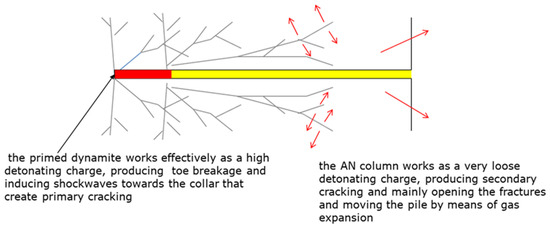
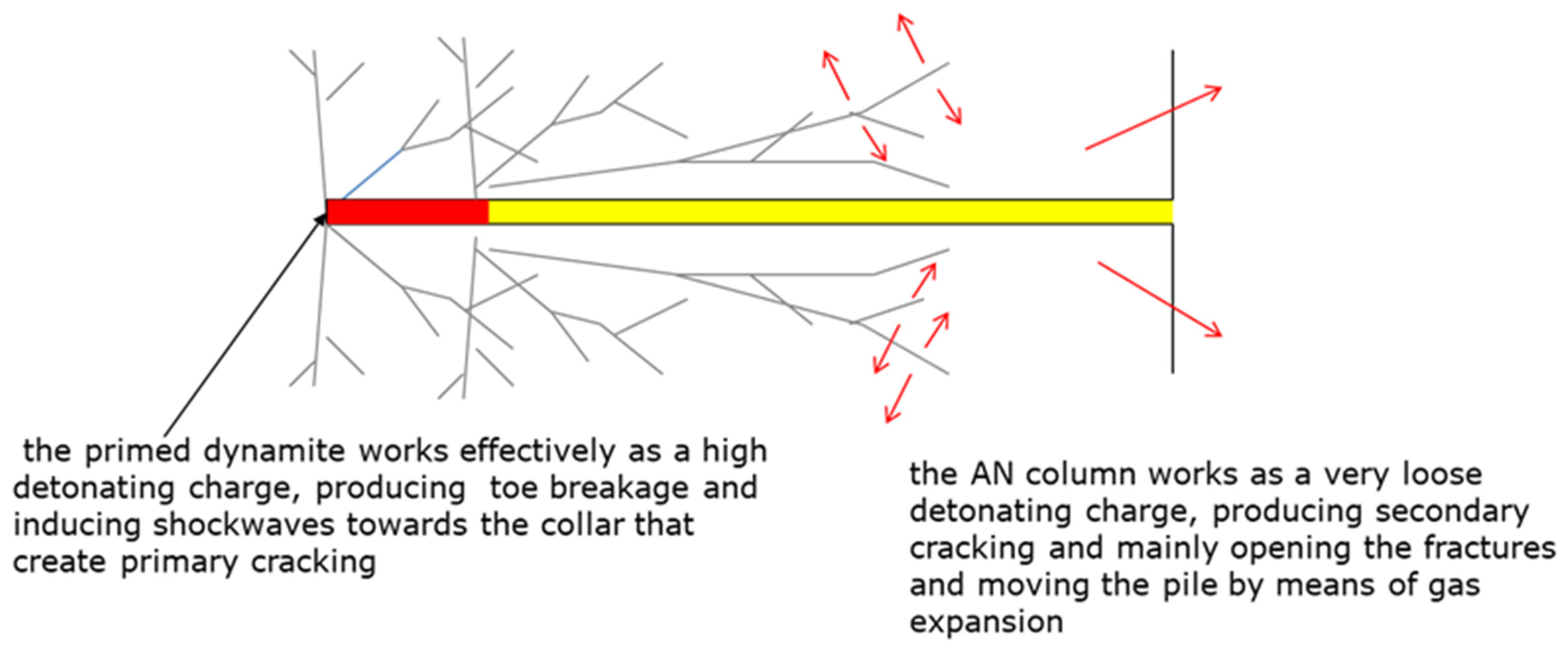
In [16], the same practice was recorded at the Golden Minera Comunitaria mine, also located in Zaruma. In both cases, AN was used as the column charge and was initiated using a high-explosive cartridge and conventional initiation components. In [15], the authors propose a hypothesis to explain the behaviour of a blasthole charged with a bottom primer consisting of a dynamite cartridge and a column charge of AN: “the primed dynamite works effectively as a high detonating charge, producing toe breakage and inducing shockwaves toward the collar that create primary cracking; the AN column works as a very loose detonating charge, producing secondary cracking and mainly opening the fractures and moving the pile by means of gas expansion”. The conceptual rock-breaking mechanism proposed for this charge configuration is summarised in Figure 1.
Figure 1.
Hypothesis on the rock breaking mechanism of a hole charged with a bottom charge made of a dynamite cartridge and a column charge of AN. (Adapted from [17]).
Despite the growing number of field observations reporting the use of AN without FO in underground artisanal mining, its behaviour as an explosive remains insufficiently quantified from a technical standpoint. In particular, there is a lack of experimental data regarding its ability to sustain detonation and its velocity of detonation, as well as the mechanisms by which energy is transferred to the rock mass when initiated by a high-explosive primer. From an explosives engineering perspective, agricultural-grade AN is intentionally manufactured to exhibit low sensitivity to mechanical stimuli and to resist accidental initiation [18]. Its ability to sustain detonation depends strongly on confinement, charge diameter, initiation strength, and material properties, and previous studies report that AN without FO may be initiated under specific conditions but typically operates near the lower limit of detonation sustainability and exhibits non-ideal detonation behaviour [18,19,20,21,22,23].
Quantitative measurements reported by [23] for fertiliser-grade AN under controlled laboratory conditions (UN gap tests) indicate detonation velocities of approximately 1.5–1.8 km/s for pure AN charges, with an average of 1.77 km/s for mechanically mixed AN at a density of about 0.90 g/cm3, consistent with a non-ideal regime near critical propagation conditions. Experimental studies on ANFO manufactured with agricultural-grade AN further show that, under comparable charge diameters and confinement conditions, detonation velocities typically range between 1.6 and 2.7 km/s, strongly depending on prill porosity, particle size, and charge density [24]. This overlap highlights that AN without FO may operate within the lower bound of ANFO detonation performance, supporting its technical relevance for investigation in underground artisanal mining.
Ammonium nitrate has long been recognised as a material capable of undergoing rapid energetic decomposition under specific confinement and initiation conditions. Large-scale accidental events, such as the Beirut explosion analysed by Pasman et al. [22], have highlighted that even agricultural-grade ammonium nitrate can transition from a stable oxidiser to a highly energetic reactive system when exposed to external stimuli, contamination, or confinement effects. Rather than behaving as a conventional high explosive, ammonium nitrate often exhibits non-ideal detonation characteristics, in which the reaction regime depends strongly on density, charge diameter, and initiation strength. These observations reinforce the importance of evaluating ammonium nitrate behaviour under realistic field conditions, particularly in underground blasting configurations where confinement and initiation geometry differ substantially from laboratory-scale assumptions.
In blasting engineering, the velocity of detonation (VOD) is a fundamental parameter used to characterise explosive performance because it represents the speed at which the detonation front propagates along an explosive column and is directly related to energy release rate, shock intensity, and gas generation. Previous experimental studies [25] conducted in underground artisanal and small-scale mining in southern Ecuador have demonstrated that variations in explosive type, charging configuration, and initiation system are reflected in measurable changes in VOD, which correlate with differences in fragmentation, vibration, and overall blasting performance. In this context, VOD is adopted in the present study as the primary control variable for the technical evaluation of AN used without fuel oil. One must note that Being AN not commonly used as a high, detonating explosive, there is no indication of a specific critical diameter. 51 mm is already sub-optimal for standard ANFO. Nevertheless, there is room to hypothesize that AN is also diameter-dependent in relation to its VOD. Future research will address this point.
The objective of this study is therefore to provide a purely technical evaluation of agricultural-grade ammonium nitrate used without fuel oil as a blasting agent in underground artisanal mining, based on controlled experiments and in situ measurements under real underground conditions. Social, regulatory, and normative aspects are beyond the scope of this work, which focuses exclusively on the explosive performance and detonation characteristics of AN without FO under typical artisanal conditions. The present study was carried out at the Pinta Brava mine, Chinapintza, Zamora Chinchipe Province, eastern Ecuador, where the practice of charging blastholes with ammonium nitrate without fuel oil (AN without FO) is commonly used.
2. Materials and Methods
2.1. Experimental Configuration
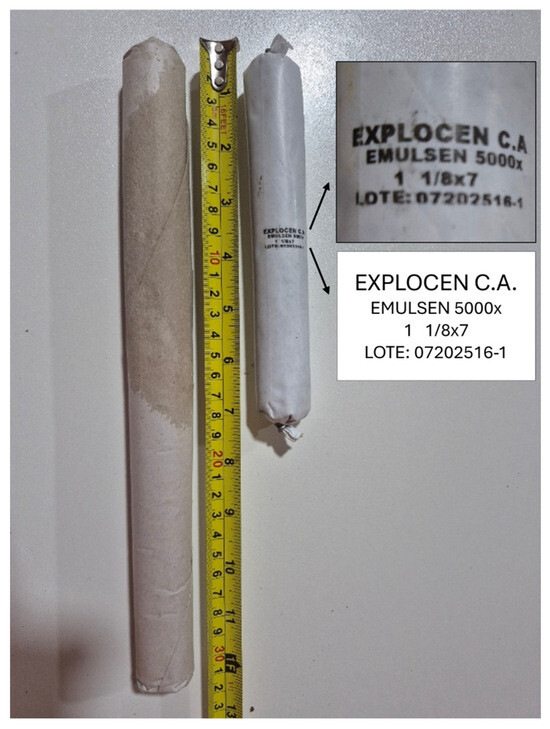
Local underground artisanal mining practice commonly employs a mixed charging configuration consisting of a commercial explosive cartridge (EXPLOCEN; Saquisilí, Equador; Emulsen 5000X, nominal size 1 1/8 in diameter × 7 in length; Figure 2, right-hand cartridge) combined with agricultural-grade ammonium nitrate (AN) placed in hand-made paper cartridges (Figure 2 and Figure 3).
Figure 2.
Artisanal paper cartridge filled with agricultural-grade ammonium nitrate (AN) and industrial emulsion cartridge (technical characteristics given in Appendix A). The paper cartridge appears wet due to incidental contact with water during handling for photographic documentation; wet AN does not react and such cartridges are not used for charging.
Figure 3.
Pre-prepared hand-made paper cartridges, shown empty prior to loading with agricultural-grade ammonium nitrate (AN).
The ammonium nitrate used in this study corresponds to a commercial agricultural-grade fertilizer (34-0-0) imported by Ferpacific S.A., Guayaquil, Ecuador (Appendix B).
According to the manufacturer’s technical specification, the material is supplied as a granular solid with a particle size distribution between 1 and 4 mm and a total nitrogen content of 34%. The product is highly water soluble (≤95%) and contains no phosphorus or potassium additives.
The technical sheet does not specify parameters commonly reported for explosive-grade ammonium nitrate, such as bulk density, prill porosity, oil absorption capacity, or surface coating composition. As an agricultural fertilizer, the product is not manufactured or characterized for detonating applications. Therefore, the explosive behavior observed in this study reflects the use of commercially available fertilizer-grade AN under practical mining conditions rather than engineered explosive-grade material.
The experimental programme was designed to reproduce the field charging configuration and to quantify the detonation behaviour of AN without fuel oil under field-scale conditions. Experiments were conducted in two test environments:
- in open air, using steel tubes charged with ammonium nitrate (AN) and initiated by an emulsion cartridge;
- in drilled blastholes in underground production tunnels, also charged with a column of AN and initiated by an emulsion cartridge.
A total of nine velocity of detonation (VOD) tests were carried out, including three steel-tube tests with bulk AN, four steel-tube tests using hand-made AN paper cartridges, and two in situ tests conducted in underground production tunnels (Table 1).
Table 1.
Summary of velocity of detonation (VOD) tests performed under different experimental configurations, including steel tube experiments and in situ measurements in underground production tunnels.
2.1.1. Steel Tube Test Setup
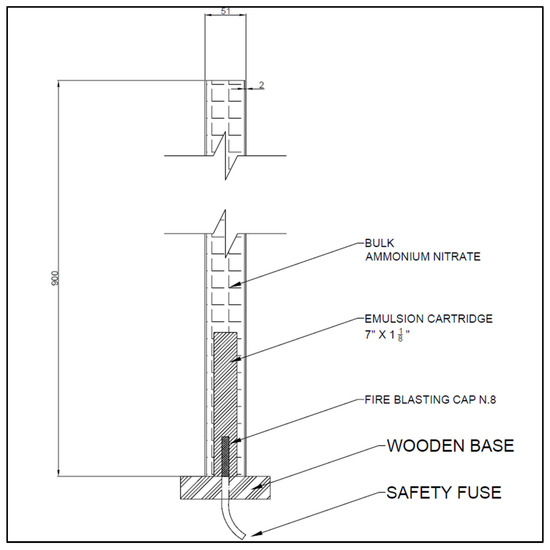
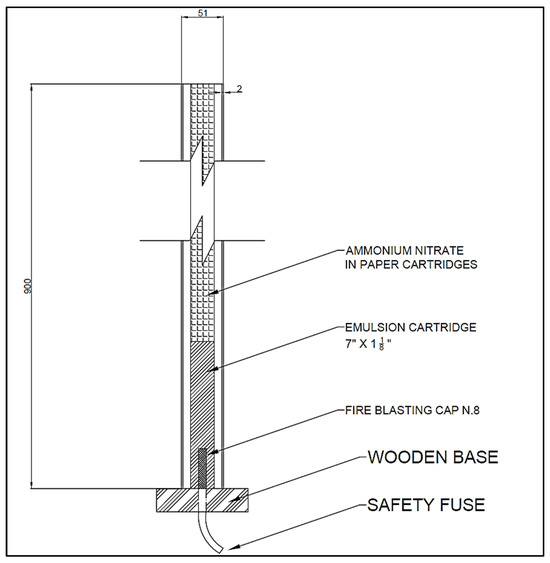
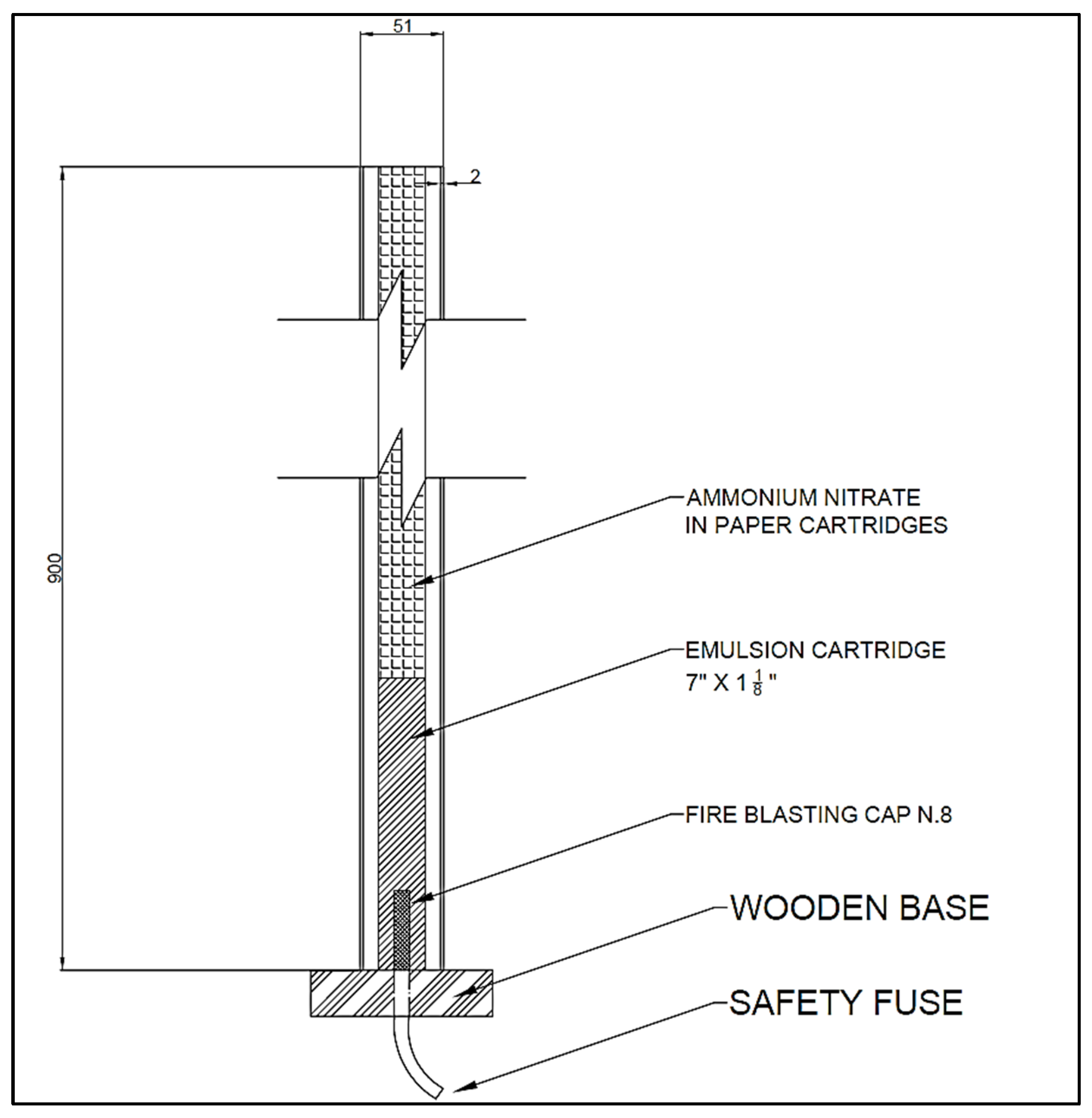
Steel tubes with an internal diameter of 51 mm were cut to a length of 90 cm, corresponding to the typical tunnel advance per blast in the case-study operation, and used as confinement for the AN charges. Each tube was primed at the bottom with a single commercial emulsion cartridge, while the remaining length was loaded with ammonium nitrate. A wooden base was installed at the bottom of the tube to allow proper stemming of the AN charge. The emulsion cartridge was initiated using a safety fuse and detonator, with the fuse passing through a hole drilled in the wooden base (Figure 4 and Figure 5).
Figure 4.
Experimental setting of steel tubes loaded with bulk ammonium nitrate (AN).
Figure 5.
Experimental setting of steel tubes loaded with AN paper cartridge. Note: during loading the AN cartridges were tamped, therefore breaking the paper and adhering better to the steel tube.
Two different AN loading configurations were tested:
These configurations were selected to distinguish between an experimental bulk-AN loading configuration and the artisanal paper-cartridge preparation that reflects actual underground artisanal mining practice.
2.1.2. Production Tunnel Test Setup
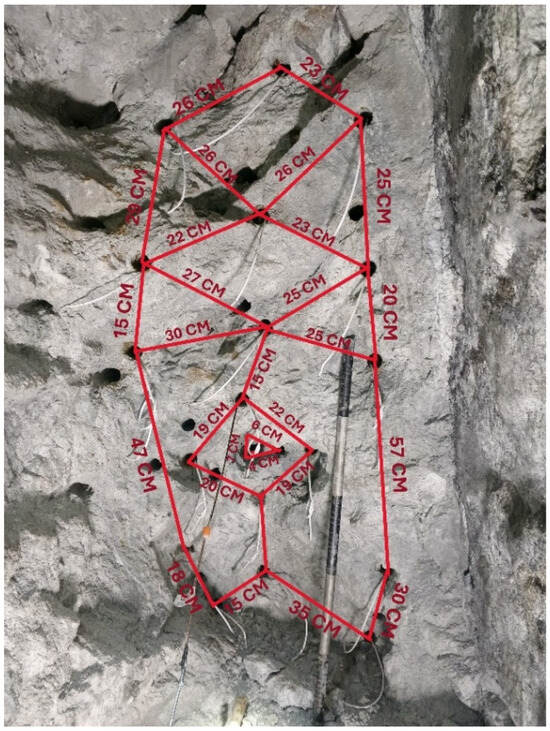
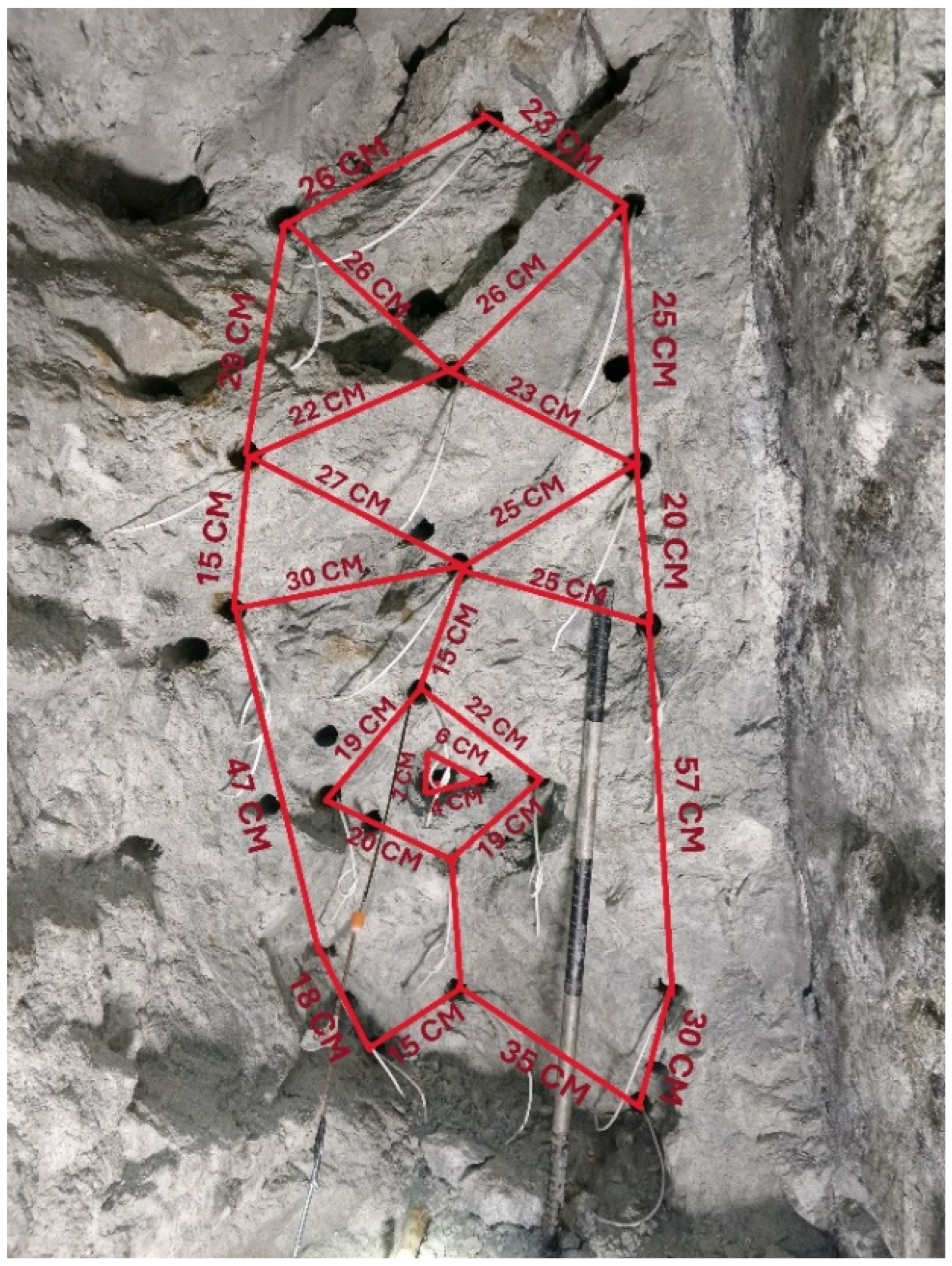
Field tests were conducted in underground production tunnels with an approximately rectangular cross section, with average dimensions of 1.75 m in height and 0.90 m in width. A total of 21 drill holes were drilled for the test blast, of which three were left uncharged and used as empty relief holes. The drill-hole layout and spatial distribution are shown in Figure 6, while the charging configuration is illustrated in Figure 7.
Figure 6.
Drill-hole layout and spatial distribution used in the underground production tunnel tests.
Figure 7.
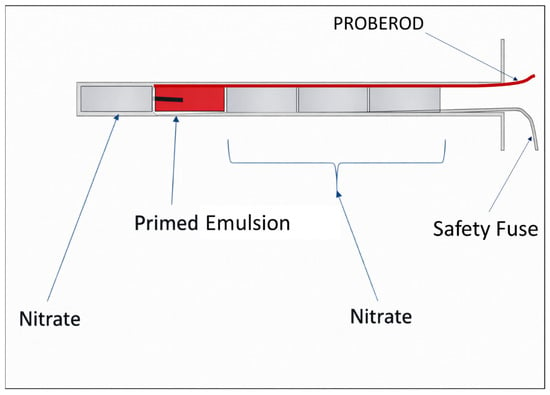
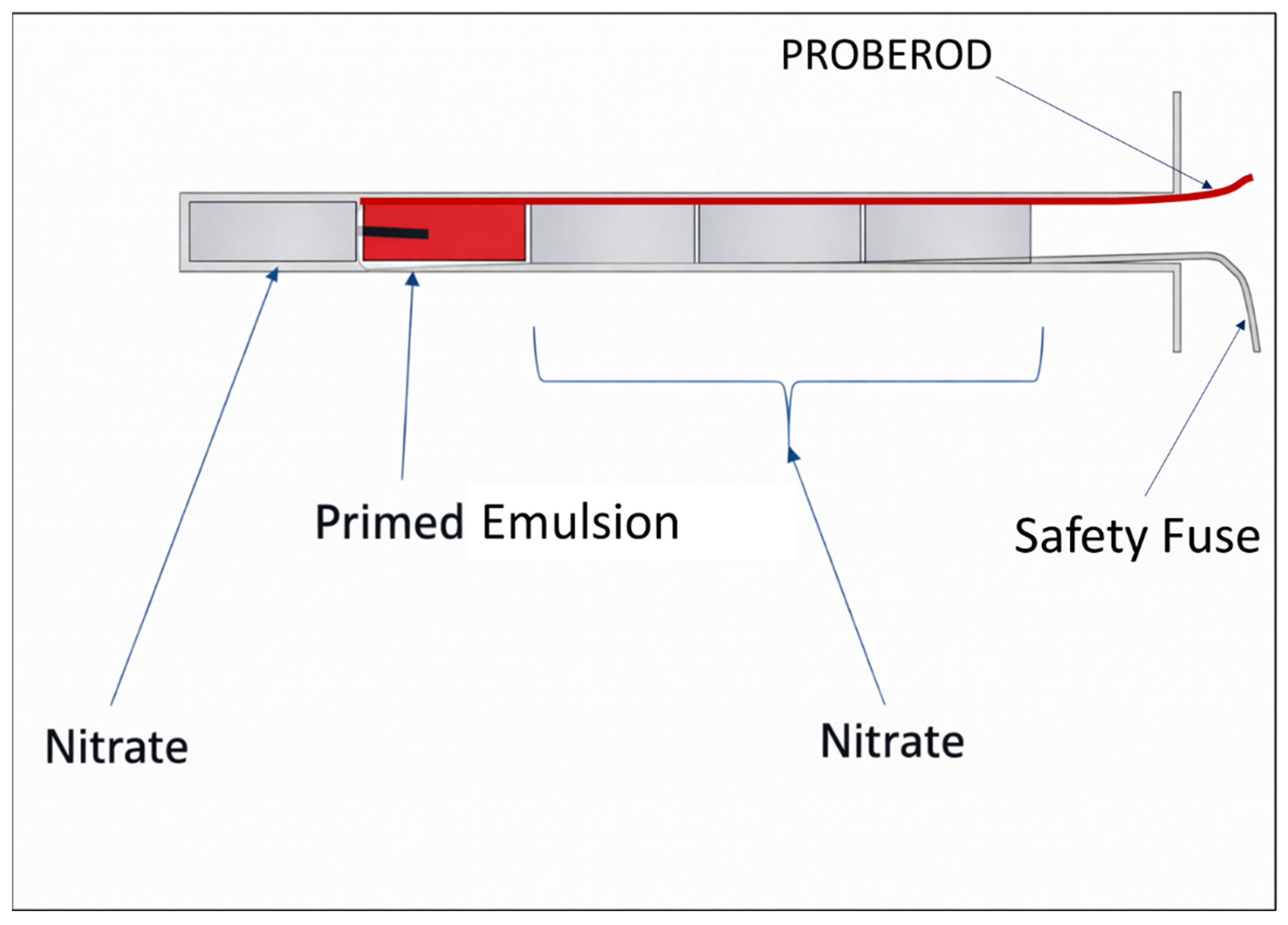
Field-observed non-conventional charging configuration in underground artisanal mining, showing primer placement above an initial ammonium nitrate (AN) charge at the blasthole toe (adapted from [16]).
The underground production tunnel where the in situ tests were conducted is developed within polymetallic hydrothermal veins of the Chinapintza mining district, Zamora Chinchipe Province, Ecuador. Previous mineralogical and petrographic characterization of this district [26] indicates that the mineralization is hosted in quartz-rich hydrothermal rock containing significant sulfide assemblages, predominantly pyrite (≈43%), sphalerite (≈13%), and minor galena and tetrahedrite, accompanied by alunite-type clays. The silica-rich matrix and sulfide-dominated assemblage are typical of intermediate- to low-sulfidation epithermal systems.
Before each in situ detonation test, a geomechanical characterization of the blast face was performed. Rock mass quality was evaluated using the Bieniawski (1989) [27] Rock Mass Rating (RMR) system. The uniaxial compressive strength (UCS) of the intact rock was estimated from Schmidt hammer rebound values following ASTM D5873 [28], yielding average UCS values of approximately 110 MPa. Wall-RQD was determined according to Priest and Hudson (1976) [29] and yielded values around 98%.
Discontinuity spacing ranged between 0.03 and 0.30 m. Joints exhibited no significant aperture or infilling, slight alteration, and generally rough surfaces. Groundwater conditions were dry during testing. After applying the standard orientation correction relative to the tunnel axis (−5), the resulting RMR values ranged between 72 and 75, corresponding to Class II (good rock).
Velocity of detonation (VOD) measurements were obtained from the first blasthole initiated in the firing sequence, in order to avoid interference from stress waves, vibration, or gas expansion generated by neighbouring blastholes, which could affect the recorded signals.
During the tunnel tests, miners assisting with the blasting operations insisted on employing a non-conventional primer positioning, in which the emulsion or dynamite cartridge was placed above an initial AN charge at the toe of the blasthole (Figure 7). From an explosives engineering perspective, this configuration is technically suboptimal, as it provides limited shock energy at the toe, where confinement is highest and rock breakage is most critical. This charging practice has previously been documented in similar operations [16] and was consistently observed by the authors during fieldwork. As the tests were conducted within an active artisanal mine and executed by the mine’s own operators, the experimental configuration necessarily followed the established local practice. When questioned, miners stated that alternative, technically conventional charging configurations were avoided because, in their experience, “otherwise it does not go off.” Attempts to modify this practice were therefore unsuccessful. To preserve the representativeness of the field conditions, the PROBEROD sensor was inserted only from the primed cartridge up to the collar of the hole. One must note that the “reverse priming” (AN-emulsion-AN) can produce partially non detonated charges. This event has never been detected, as normal measurements only show remaining depths of unbroken holes but where the charge reacted and dissipated. Nevertheless, the rick of a partial misfire is present. We address now this in the text.
2.2. Velocity of Detonation Measurements
Velocity of detonation (VOD) measurements were performed using a HandiTrap II system manufactured by MREL. Owing to the limited drill-hole lengths typically employed in underground artisanal mining, with maximum depths of approximately 1.20 m, a PROBEROD-HS sensor was used instead of a conventional probe cable. The PROBEROD-HS was selected because it provides higher sensitivity and lower signal noise, which is critical for reliable VOD measurements in short blastholes. However, the effective measuring length of the PROBEROD-HS is limited to 0.90 m.
The recorded signals were subsequently processed and interpreted using the MREL Data Acquisition Suite software. The output of the data acquisition software consists of a distance–time record of the detonation front along the explosive column. The instantaneous velocity of detonation (VOD) corresponds to the slope of this curve [25,30]. Under ideal conditions, a steady detonation regime is represented by a linear distance–time relationship with constant slope. In practical blasting configurations involving mixed explosive charges, the distance–time curve is expected to exhibit three distinct zones: an initial segment influenced by the detonator and priming explosive; a linear segment corresponding to the stable detonation velocity of the industrial explosive; and a subsequent inflection characterised by a reduced slope, reflecting the lower reaction velocity of the ammonium nitrate column compared with the industrial explosive.
2.3. Rock Fragmentation Analysis
Immediately after each blast, visual documentation of the muck pile was performed without material disturbance. Fragmentation analysis was conducted using digital photographs processed with WipFrag software version 3.14. Images were taken from multiple angles to ensure full coverage of the muck pile surface, and a reference scale was included in each image to calibrate particle size.
3. Results
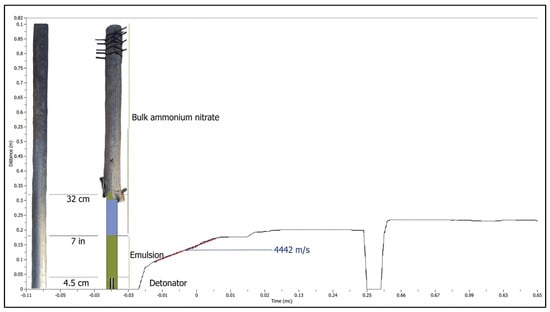
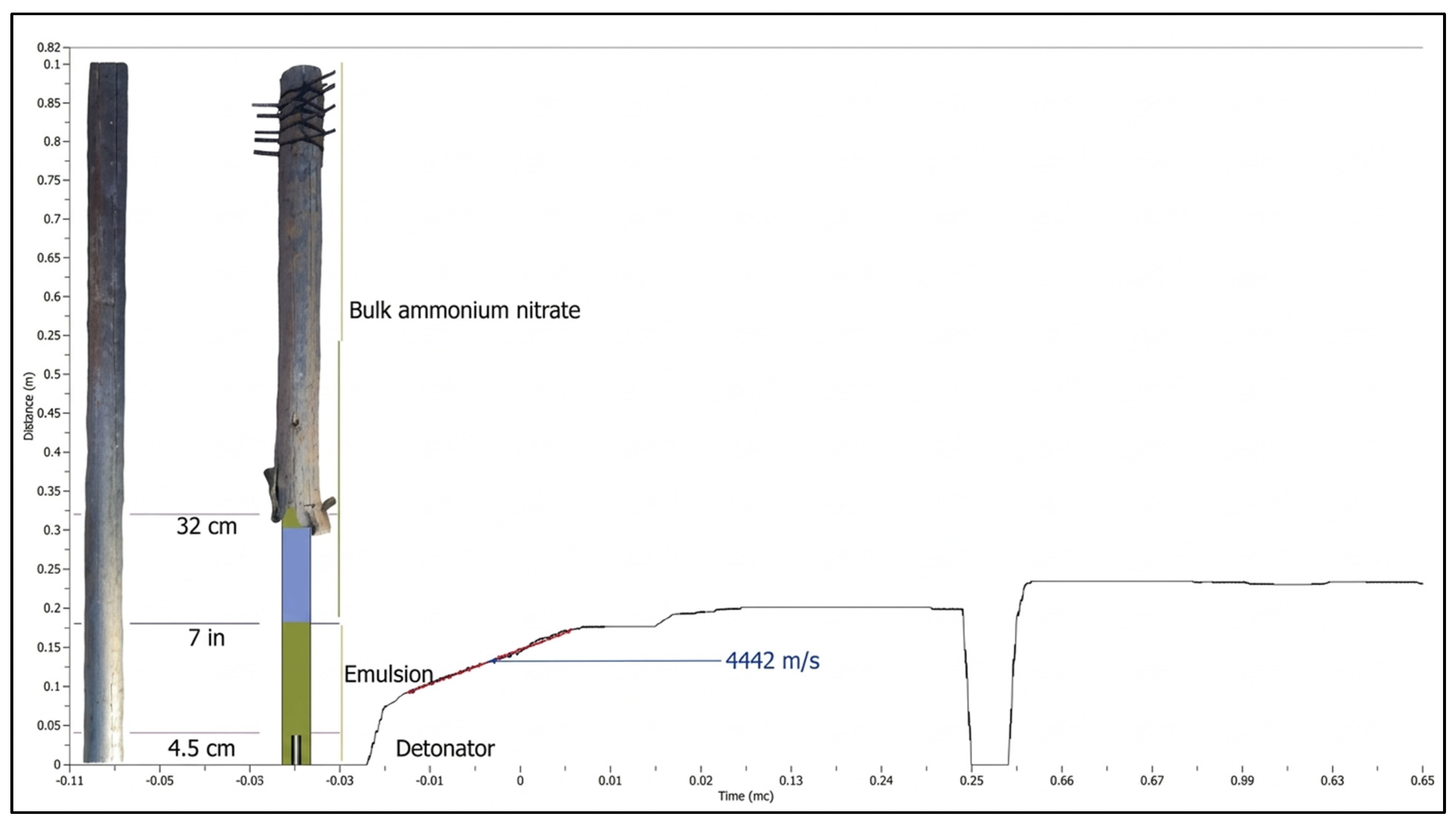
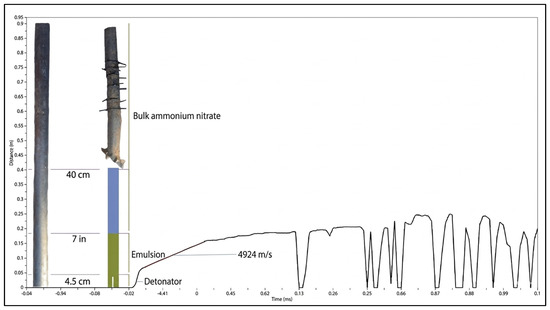
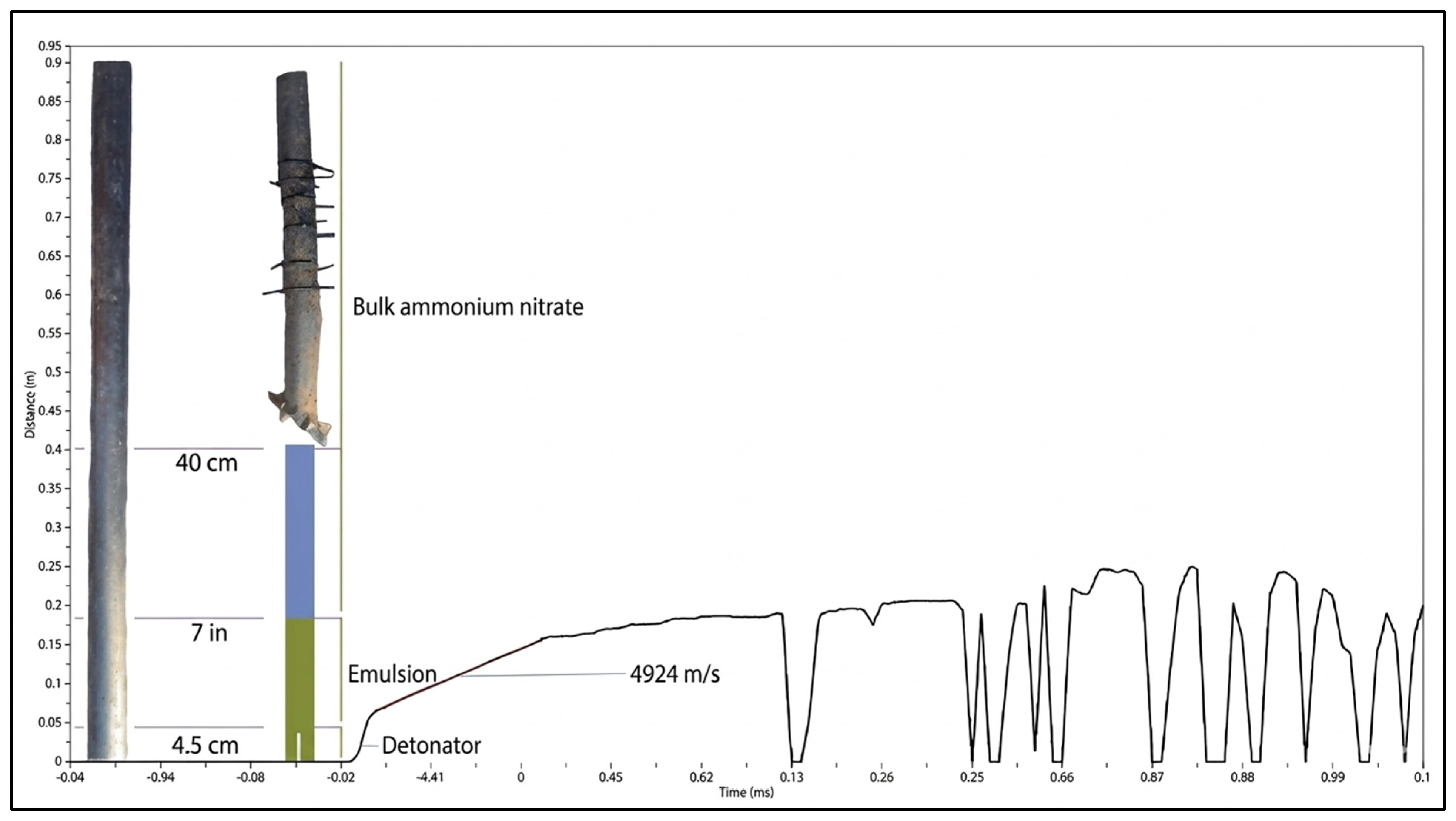
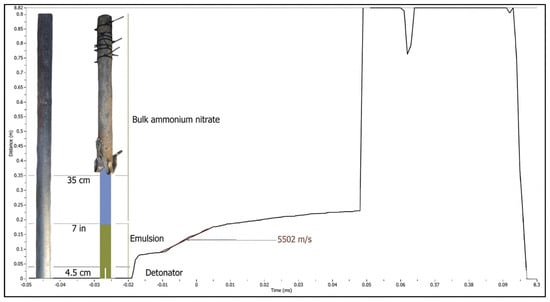
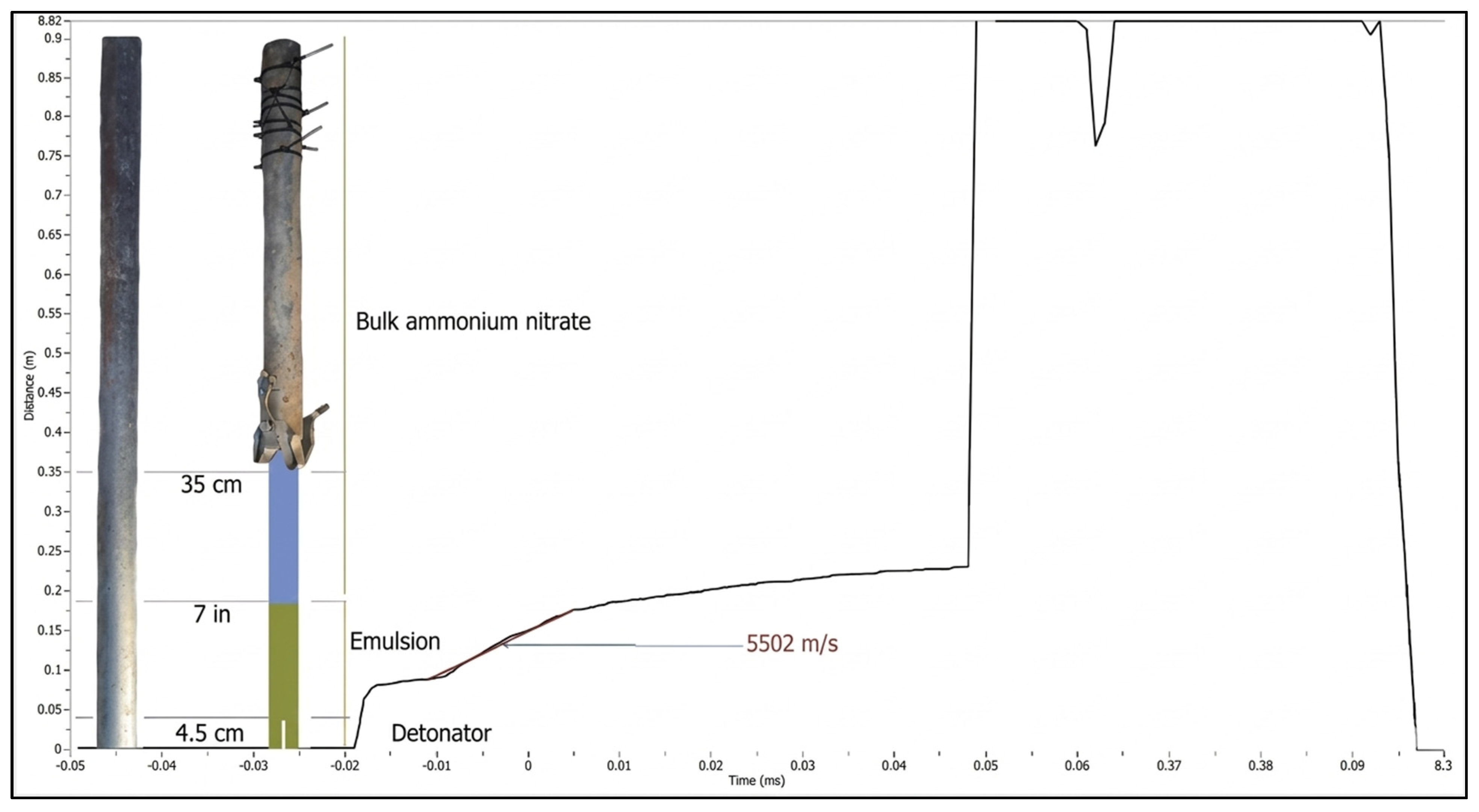
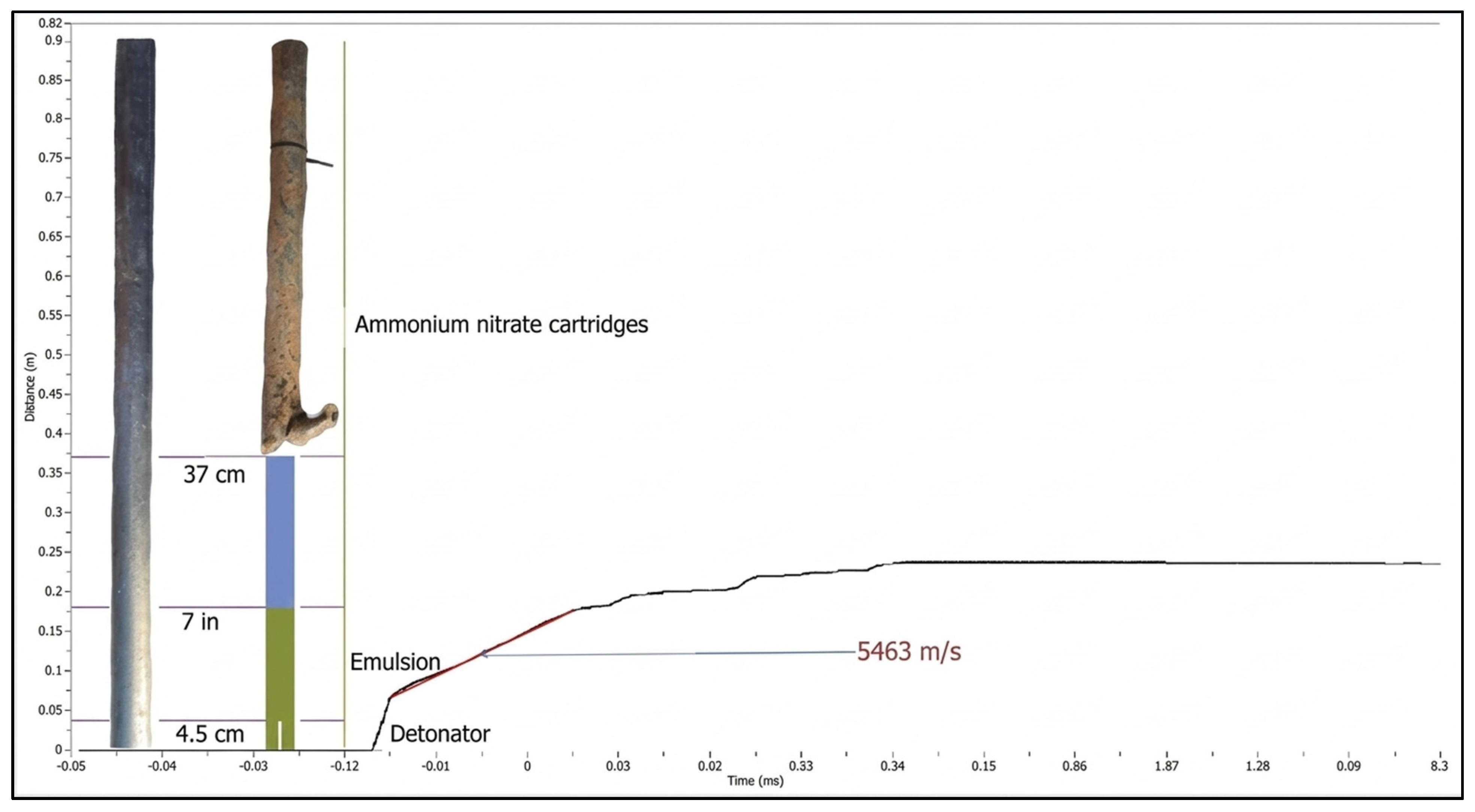
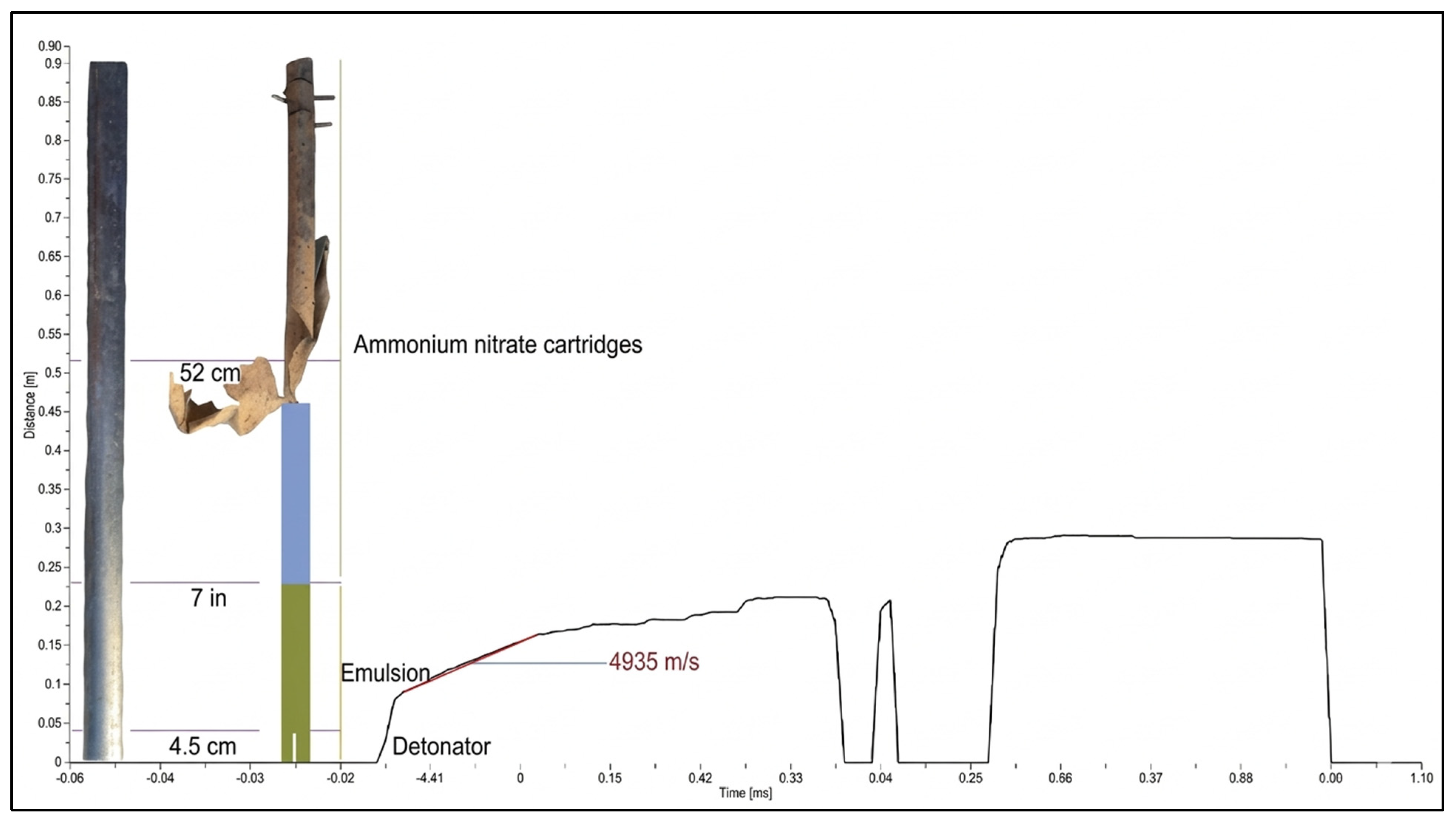
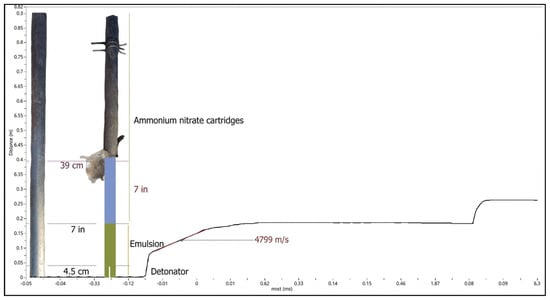
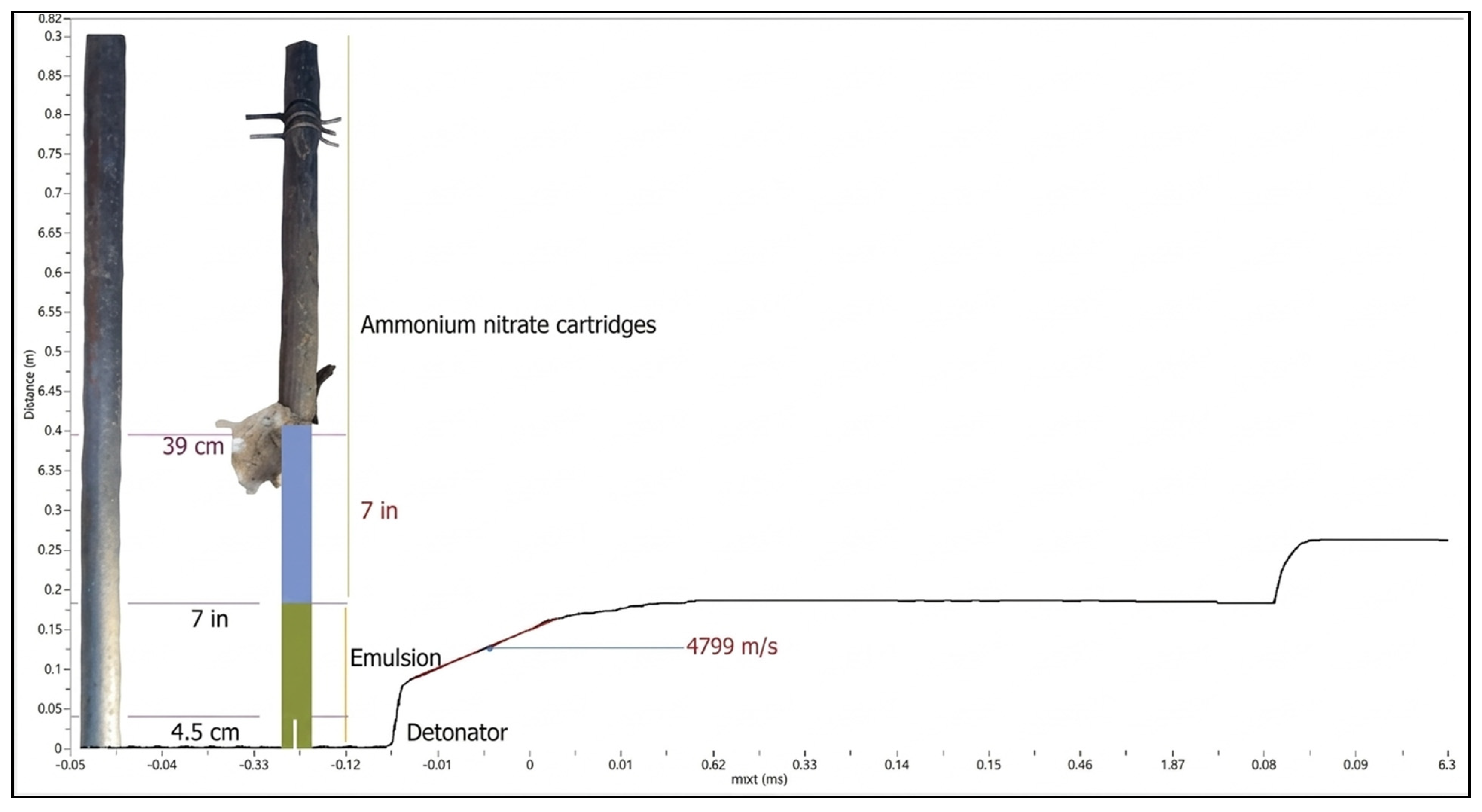
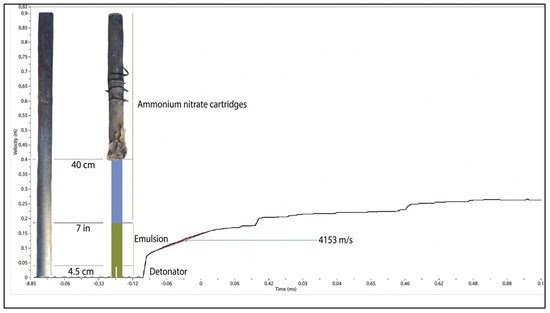
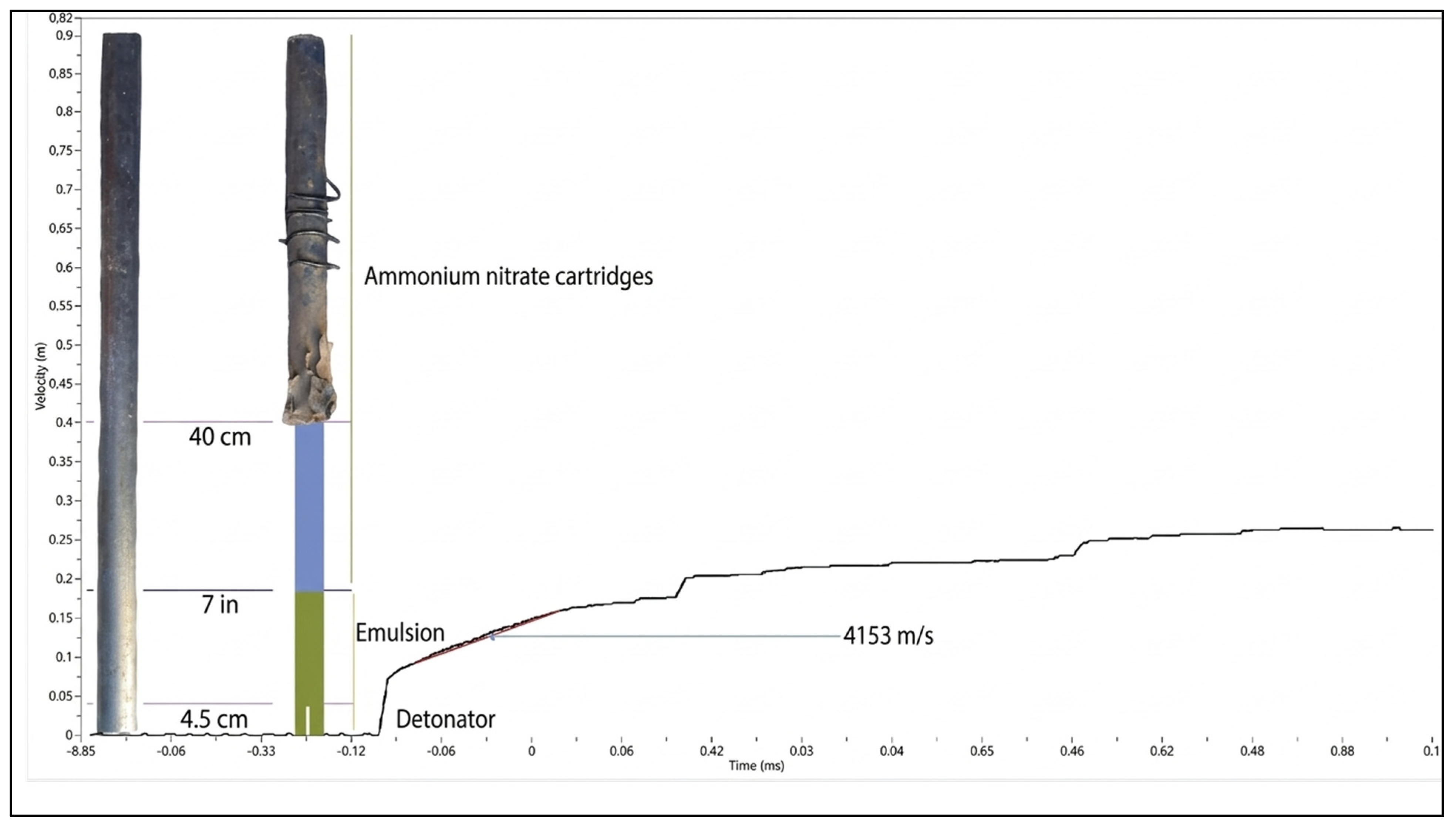
The results presented in this section are based on the output of the MREL data acquisition software described in Section “Velocity of detonation measurements”. In the tube tests, the figures include three elements: the steel tube or blasthole prior to detonation, the post-test condition of the tube (showing the point of breakage and the damage) or hole after blasting, and the corresponding distance–time record of the detonation.
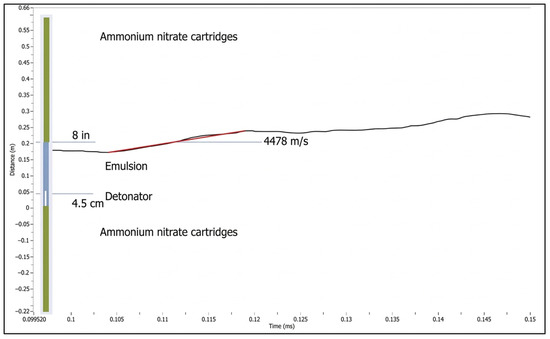
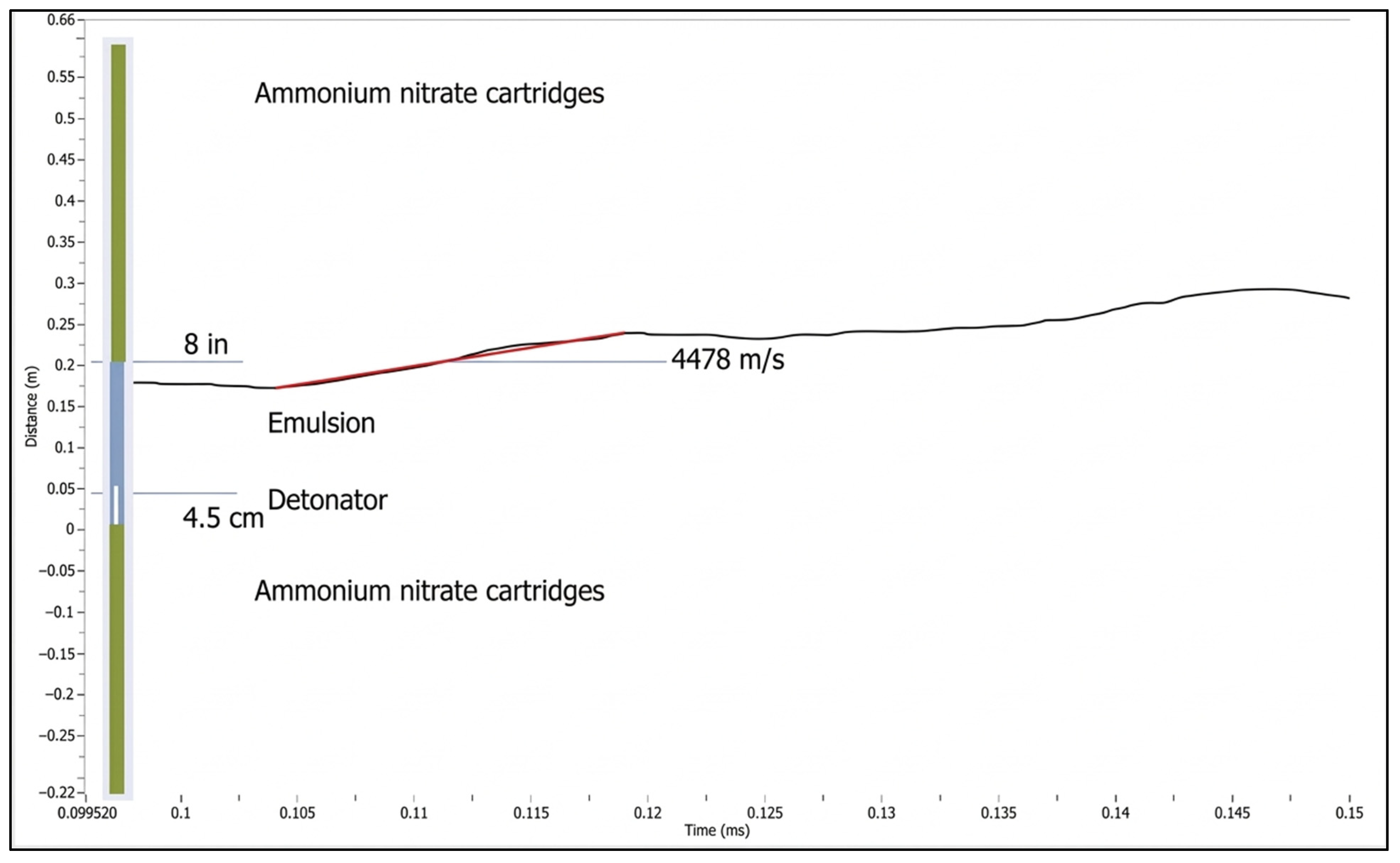
In the figures, the coloured bars represent the original charging configuration: the green segment corresponds to the industrial emulsion cartridge, whereas the blue segment corresponds to the ammonium nitrate (AN) column. In all experiments, the steel tubes and blastholes were fully charged, consisting of an industrial emulsion cartridge followed by ammonium nitrate (AN) along the remaining length.
Some distance–time records exhibit measurement anomalies, such as isolated distance values resetting to zero after initiation or highly irregular fluctuations, which were not considered to represent physically meaningful detonation propagation.
3.1. Steel Tube Test Outcomes
The results of the steel tube tests are presented according to the AN loading configuration: bulk AN (Figure 8, Figure 9 and Figure 10) and AN in hand-made paper cartridges (Figure 11, Figure 12, Figure 13 and Figure 14). The steel tube results are presented following the format described at the beginning of this section, distinguishing between bulk AN loading and AN loaded in hand-made paper cartridges.
Figure 8.
Steel tube test B1 with bulk ammonium nitrate (AN): intact tube prior to detonation, post-test condition after blasting, and corresponding distance–time record of the detonation.
Figure 9.
Steel tube test B2 with bulk ammonium nitrate (AN), showing the post-test damage pattern and the corresponding distance–time record of detonation propagation.
Figure 10.
Steel tube test B3 with bulk ammonium nitrate (AN), illustrating the extent of detonation propagation and the associated distance–time record.
Figure 11.
Steel tube test P1 with ammonium nitrate (AN) loaded in hand-made paper cartridges: intact tube, post-test condition, and corresponding distance–time record of the detonation.
Figure 12.
Steel tube test P2 with ammonium nitrate (AN) in hand-made paper cartridges, showing the post-test condition and the corresponding distance–time record.
Figure 13.
Steel tube test P3 with ammonium nitrate (AN) loaded in hand-made paper cartridges, illustrating limited detonation propagation along the charge.
Figure 14.
Steel tube test P4 with ammonium nitrate (AN) in hand-made paper cartridges and corresponding distance–time record of the detonation front.
3.2. Production Tunnel Test Outcomes
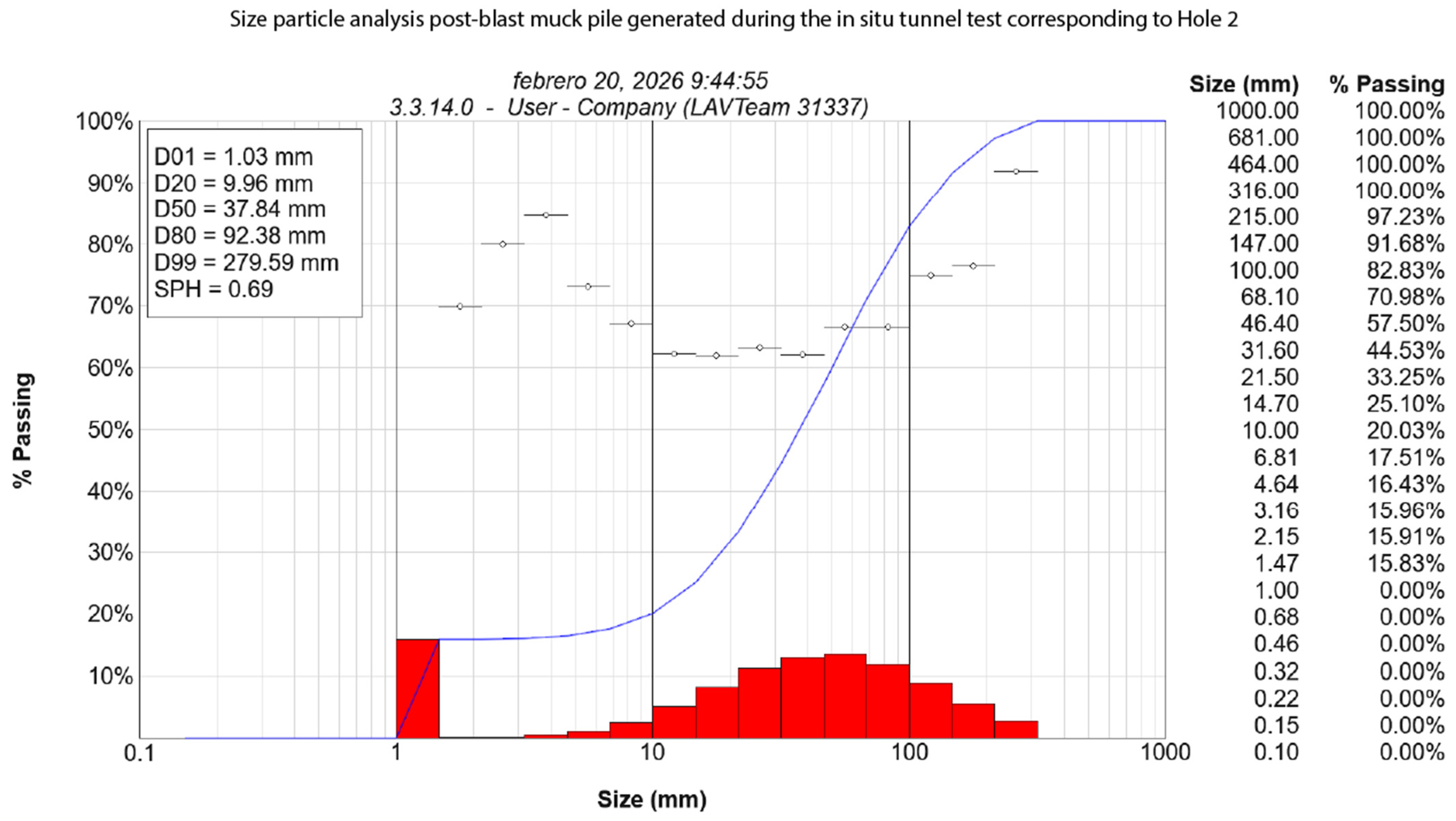
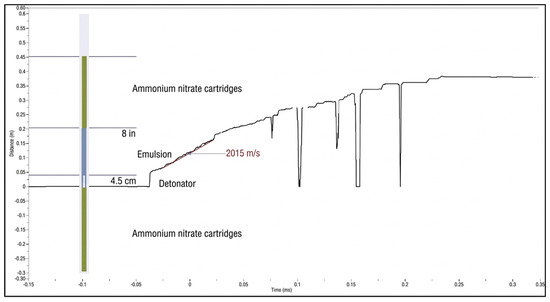
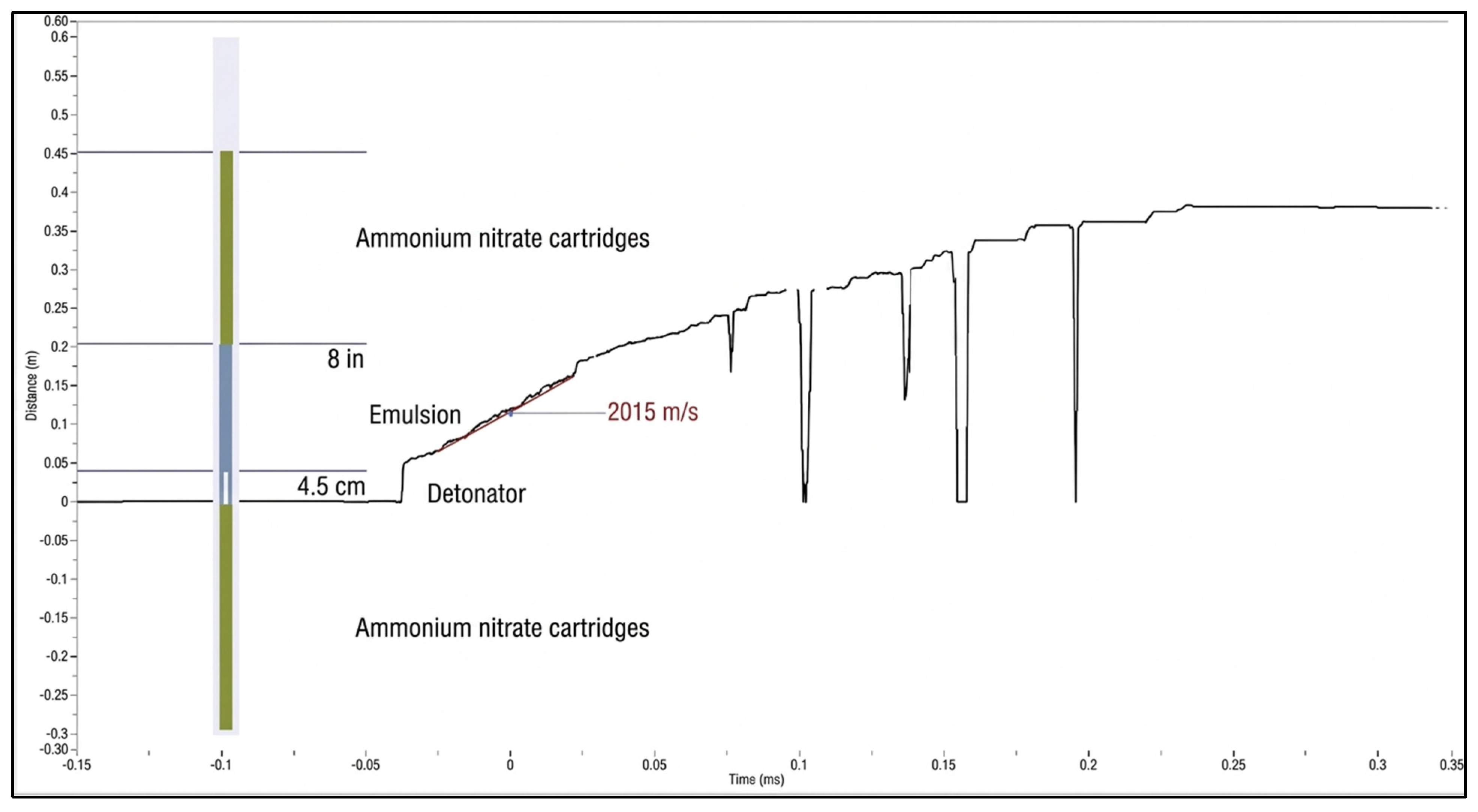
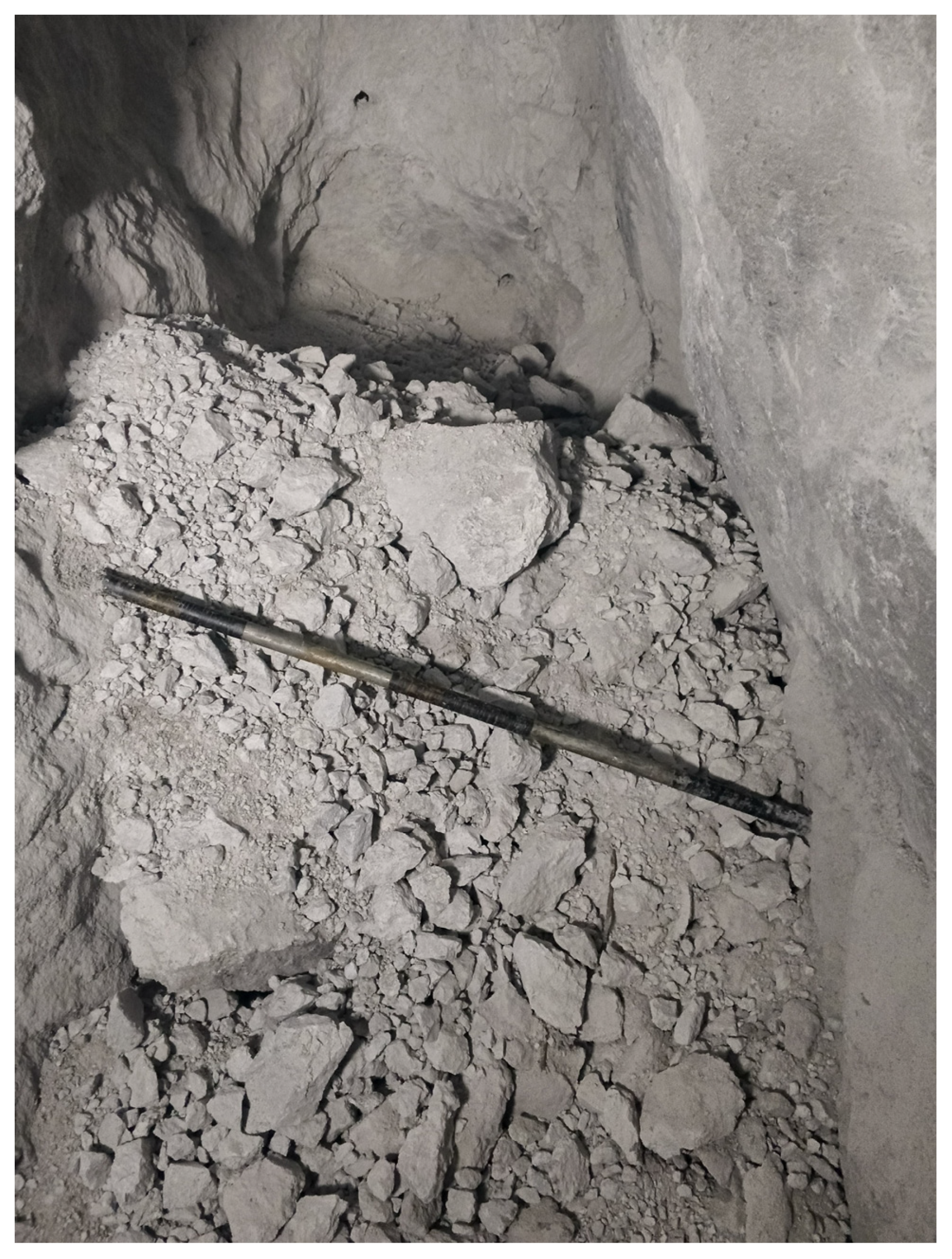
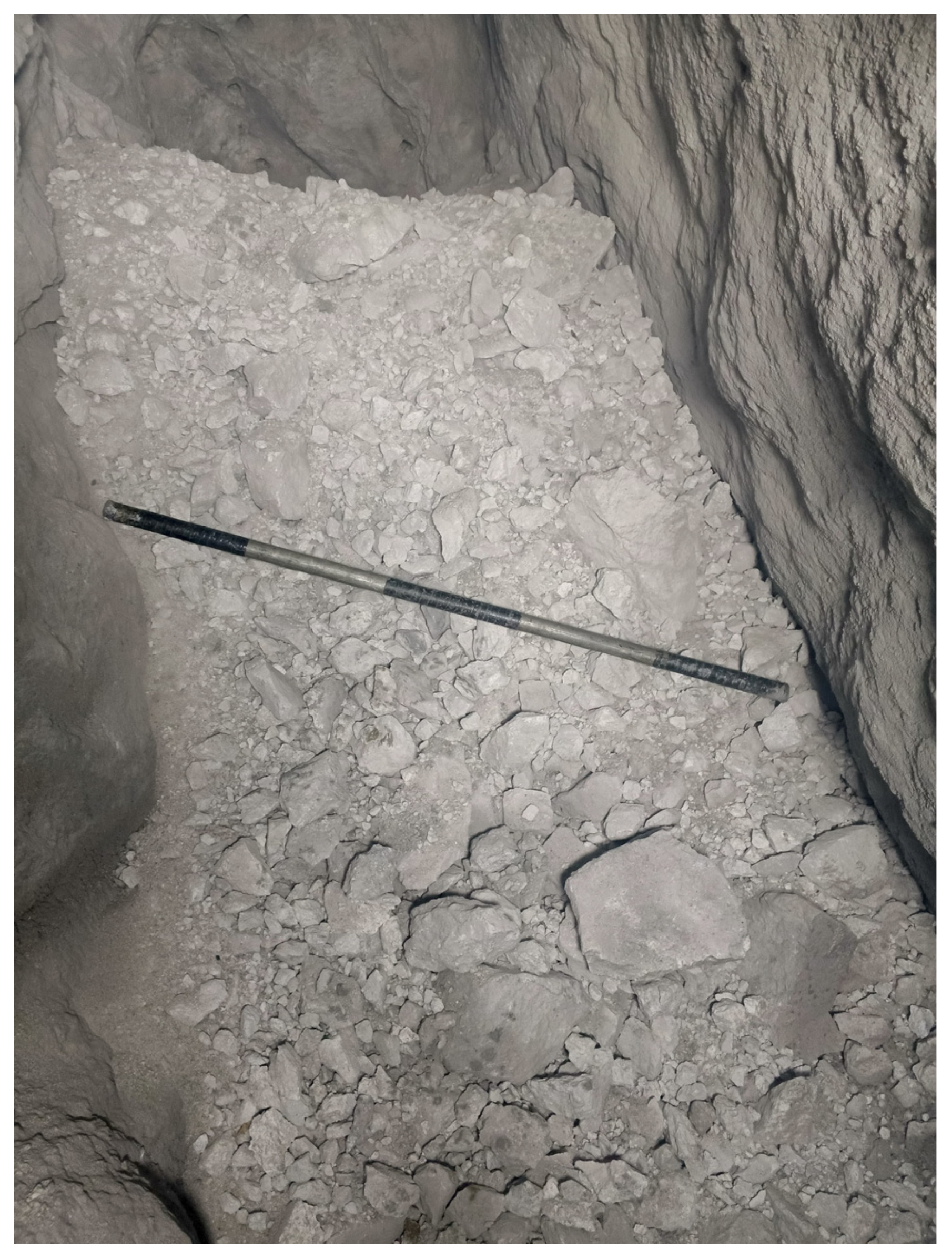
As discussed previously, miners consistently maintained the AN–emulsion–AN charging configuration based on their operational experience. The results of the in situ tunnel tests are presented in Figure 15 and Figure 16, which illustrate the charging configuration employed in the blastholes and the corresponding velocity of detonation (VOD) distance–time records. Figure 17 and Figure 18 show the muck pile conditions following the blasts, while Appendix C present the particle size analysis and the resulting particle size distributions.
Figure 15.
In situ tunnel blast test, Hole 1, with an AN–emulsion–AN charging configuration and corresponding distance–time record of the detonation front.
Figure 16.
In situ tunnel blast test, Hole 2, with an AN–emulsion–AN charging configuration and corresponding distance–time record of the detonation front.
Figure 17.
Post-blast muck pile generated during the in situ tunnel test corresponding to Hole 1.
Figure 18.
Post-blast muck pile generated during the in situ tunnel test corresponding to Hole 2.
The results indicate that the blasts produced predominantly coarse fragmentation. Representative analyses show median fragment sizes (P50) between 29.96 and 37.84 mm and P80 values between 71.62 and 92.38 mm. The cumulative size distribution curves demonstrate a wide spread of particle sizes, indicating a heterogeneous fragmentation pattern across the muck pile.
3.3. Summary of Experimental Observations
All experimental records consistently indicate the effective detonation of the priming emulsion cartridge in all test configurations. The recorded velocity of detonation (VOD) values associated with the primer are in agreement with the expected performance of the commercial emulsion explosive. Following primer detonation, the reaction is transmitted to the ammonium nitrate (AN) column charge; however, in all tests the detonation propagation along the AN column was weak, unstable, or not sustained.
In most cases, the detonation wave rapidly loses intensity after entering the AN column and dissipates over a short distance. Once the detonation front collapses, the AN no longer reacts as a detonating explosive. Instead, the subsequent reaction within the AN column may correspond to one of the following behaviors:
- deflagration,
- slow combustion, or
- absence of observable reaction.
The breakage of the steel tubes beyond the level of the primer (from about ¼ to about ½ length of the AN charge) demonstrates that some high pressure is exerted by the AN, therefore excluding the latter behavior. Due to the absence of temperature or pressure sensors, it was not possible to determine the exact nature of the reaction occurring in the AN column after the dissipation of the detonation front. Consequently, the classification of the post-detonation behavior is based exclusively on VOD records and visual inspection of the test outcomes.
3.3.1. Tests in Steel Tubes Observations
For tests conducted in steel tubes, two distinct behaviors were observed:
- Tests P2, B2, B1, and P3: detonation wave dissipated immediately after the detonation of the emulsion cartridge, with no measurable propagation into the AN column.
- Tests P1, B3, and P4: the detonation wave propagated a short distance—on the order of a few centimeters—into the AN column before rapidly dissipating. Beyond this point, no sustained detonation was recorded.
3.3.2. Tests in Production Tunnels
Similar behavior was observed under operational tunnel conditions:
- Hole 1: The detonation wave dissipated immediately after the detonation of the priming emulsion cartridge, with no measurable propagation along the AN column.
- Hole 2: The detonation wave propagated partially into the AN column; however, the recorded propagation velocity (~2015 m/s) was significantly lower than the nominal steady-state detonation velocity of the emulsion explosive. Although detonation occurred, the measured velocity indicates a non-ideal propagation regime, potentially associated with transient velocity deficit or near-critical confinement conditions. The recorded signal is therefore interpreted as incomplete or unstable detonation propagation rather than sustained steady-state detonation.
Overall, the experimental results demonstrate that, under the tested conditions, ammonium nitrate without fuel oil does not sustain a stable detonation along the column charge, despite reliable initiation of the priming explosive.
Table 2 summarizes the measured velocity of detonation (VOD) of the priming emulsion cartridge and the corresponding distance over which detonation was observed to propagate along the ammonium nitrate (AN) column for each test configuration.
Table 2.
Emulsion primer VOD and measured detonation propagation distance along the ammonium nitrate (AN) column for all tests.
4. Discussion
The experimental results confirm that ammonium nitrate without fuel oil does not sustain a stable detonation under the conditions tested. Although the priming emulsion cartridge consistently detonated with velocities close to its nominal technical specifications, the detonation transferred to the ammonium nitrate (AN) column rapidly weakened and collapsed. This behavior is consistent with a non-ideal detonation regime, in which AN is unable to maintain a self-sustained detonation front over extended distances.
The measured velocity of detonation (VOD) of the emulsion primer was generally close to the manufacturer’s nominal value of approximately 5.0 km/s. However, the recorded values exhibit a larger variability than typically expected for a cap-sensitive emulsion explosive (5.0 ± 0.3 km/s). This variability may reflect the influence of test geometry, confinement conditions, sensor placement, and short charge lengths, particularly in field-scale and in situ tunnel tests. Despite this variability, all primer VOD measurements confirm reliable initiation and effective transfer of a high-energy shock into the AN column.
A key contribution of this study lies in the fact that the experiments were conducted using real materials and diameters and under real underground artisanal mining conditions, rather than in small-scale laboratory tests. Field-scale testing introduces inherent variability related to confinement, hole geometry, stemming quality, providing a more realistic representation of the operational behavior of explosives in underground artisanal gold mining. As a result, the observed detonation behavior of AN without fuel oil reflects practical conditions encountered in active mining operations, rather than idealized laboratory scenarios.
Although the number of tests conducted in this study may appear limited when compared with laboratory-scale investigations in other fields, it is important to note that field-scale blasting experiments involve significant logistical, safety, and operational constraints. In the context of underground blasting, particularly under artisanal mining conditions, a dataset of nine instrumented detonations represents a substantial and meaningful experimental effort. Each test reflects real materials, realistic charge diameters, and actual confinement conditions, providing a level of representativeness that cannot be achieved in small-scale laboratory experiments.
The distance–time behavior observed in the VOD records corresponds to the instantaneous velocity of the explosive reaction. Under ideal detonation conditions, the slope would tend to stabilize, indicating a steady propagation regime. In the present case, however, the curve progressively approaches a plateau, corresponding to a reduction in the slope toward zero. This plateau represents the loss of sustained detonation along the AN column, after which the material no longer behaves as a detonating explosive.
This behavior is consistent with experimental distance–time measurements reported in [25,30], where the initial propagation is strongly influenced by the primer, followed by a transition zone and eventual decay of the detonation front in low-sensitivity or non-ideal explosives. In the present study, this transition is particularly evident due to the use of a high-performance emulsion primer coupled with a column charge of fertilizer-grade ammonium nitrate without fuel oil, resulting in two distinct energetic regimes within the same charge.
Although specific data on ammonium nitrate without fuel oil are limited in the literature, extensive studies on ANFO demonstrate a pronounced dependence of detonation velocity on charge diameter. Rate-stick experiments conducted on prilled ANFO indicate that near a diameter of 77 mm the explosive approaches failure conditions, exhibiting severe velocity deficit [31]. Furthermore, technical guidelines report that ANFO can hardly detonate in holes smaller than 50 mm and typically requires a booster for reliable initiation [32].
In the present study, drill-hole diameters were smaller than 30 mm. Under these small-diameter conditions, fertilizer-grade AN without fuel oil did not exhibit stable detonation propagation. This behavior is consistent with subcritical geometric effects and may also reflect the intrinsically low shock sensitivity of the material, both of which limit its ability to sustain a self-propagating detonation wave in small underground blastholes.
The reduced velocity observed in Hole 2 may be influenced by non-ideal geometric configuration. In the tested arrangement, the primer was not positioned at the base of the blasthole but located between AN cartridges, potentially limiting effective shock reinforcement. Furthermore, stemming and tamping procedures in artisanal operations are not standardized, introducing variability in confinement conditions. Such factors may prevent the explosive from reaching steady-state detonation velocity under small-diameter field conditions.
Overall, the results indicates that, although ammonium nitrate without fuel oil can be initiated by a high-explosive primer, it does not sustain detonation over practical column lengths under underground artisanal mining conditions. The observed behavior reinforces the importance of considering non-ideal detonation regimes when interpreting VOD measurements and highlights the limitations of ammonium nitrate without fuel oil as a primary detonating explosive in such applications.
5. Conclusions
This study provides a technical evaluation of the explosive behavior of fertilizer-grade ammonium nitrate used without fuel oil (AN without FO) in underground artisanal gold mining, addressing a practice that has been repeatedly observed in field conditions but remains poorly quantified from an engineering standpoint. The investigation was conducted through controlled experiments in steel tubes and in situ measurements in production tunnels, using velocity of detonation (VOD) as the primary control variable.
The experimental results demonstrate that AN without fuel oil does not sustain stable detonation under the tested conditions. In all test configurations, the priming explosive—either an emulsion cartridge or dynamite—detonated effectively, generating a high-energy shock that was reliably transferred to the AN column. However, detonation propagation within the AN column was weak, unstable, and rapidly dissipated, with measured behavior ranging from very short detonation penetration to complete loss of detonation immediately after the primer. Beyond this point, the AN no longer behaved as a detonating explosive.
The measured VOD values of the priming emulsion were generally consistent with the manufacturer’s technical specifications, although a higher variability than expected was observed. This variability reflects the influence of short charge lengths, confinement conditions, and field-scale testing geometry, highlighting the importance of real-scale experiments when evaluating explosive performance in underground artisanal mining environments.
The distance–time behavior derived from VOD measurements is consistent with a non-ideal detonation regime. The initial propagation of the detonation front is dominated by the high-performance primer, followed by a rapid transition toward a regime in which the slope of the distance–time curve decreases and approaches zero. This plateau corresponds to the loss of sustained detonation along the AN column and confirms that AN without fuel oil operates near or below the critical conditions required for stable detonation.
The VOD measurements were conducted using a ProbeRod HS system with coaxial cable transmission, specifically suited for short explosive columns. The vertical drops and zero-reset segments observed in several traces are interpreted as instrumentation artifacts caused by transient loss of electrical continuity due to probe disturbance, cable strain, or post-detonation mechanical effects. The assessment of detonation stability is therefore based on the progressive reduction in propagation slope rather than on the reset events themselves.
Despite the absence of sustained detonation, the results help explain why the use of AN without fuel oil has been empirically adopted by miners in underground artisanal operations. The explosive behavior observed is dominated by gas expansion rather than shock energy, which is consistent with field observations reporting acceptable rock breakage combined with reduced post-blast fumes and shorter re-entry times. While these operational benefits were not quantified in this study, the technical characterization presented here provides a framework for understanding the underlying explosive behavior.
Overall, this work demonstrates that ammonium nitrate without fuel oil, when initiated by a high-explosive primer, does not function as a conventional detonating explosive under underground artisanal mining conditions. Instead, it exhibits a non-ideal, low-velocity, and unsustained reaction regime. These findings contribute experimental evidence to a practice previously supported mainly by empirical observation and highlight the need for further studies addressing fragmentation efficiency, gas generation, and ventilation impacts to fully assess the operational implications of this blasting method.
Author Contributions
Conceptualization, J.S. and C.O.G.; methodology, J.S. and C.O.G.; software, C.O.G.; validation, J.S., C.O.G. and T.M.; formal analysis, J.S., C.O.G. and T.M.; investigation, J.S. and C.O.G.; resources, C.O.G., P.M.R., E.R.C. and L.D.A.R.; data curation, J.S., C.O.G. and T.M.; writing—original draft preparation, J.S., C.O.G. and T.M.; writing—review and editing, J.S. and T.M.; visualization, J.S. and C.O.G.; supervision, J.S. and C.O.G.; project administration, C.O.G., P.M.R., E.R.C. and L.D.A.R.; funding acquisition, C.O.G., P.M.R., E.R.C. and L.D.A.R. All authors have read and agreed to the published version of the manuscript.
Funding
This research was jointly funded by the Escuela Superior Politécnica de Chimborazo (ESPOCH) and La Zamorana Mine through research project DIPI-052.
Data Availability Statement
The raw data supporting the conclusions of this article will be made available by the authors on request.
Acknowledgments
Many thanks to the mining company Pinta Brava and its owner Luis Diaz for the precious support during field tests. In preparing this manuscript, artificial intelligence (AI) tools were employed solely to assist in language editing and stylistic refinement. Specifically, GPT-5 (OpenAI) and Microsoft 365 Copilot (GPT-5 chat model) were used to improve clarity, grammar, and readability. No AI tools were used for data analysis, interpretation, or generation of scientific content. All AI-assisted outputs were critically reviewed and edited by the authors to ensure accuracy and consistency with the study’s methodology and findings. The authors accept full responsibility for the content of this publication.
Conflicts of Interest
The authors declare no conflicts of interest.
Appendix A
Table A1.
Technical characteristics of the commercial emulsion explosive.
Appendix B
Table A2.
Technical characteristics of the agricultural-grade ammonium nitrate used in this study.
Appendix C
Figure A1.
Particle Size Distribution from Tunnel Test—Hole 1.
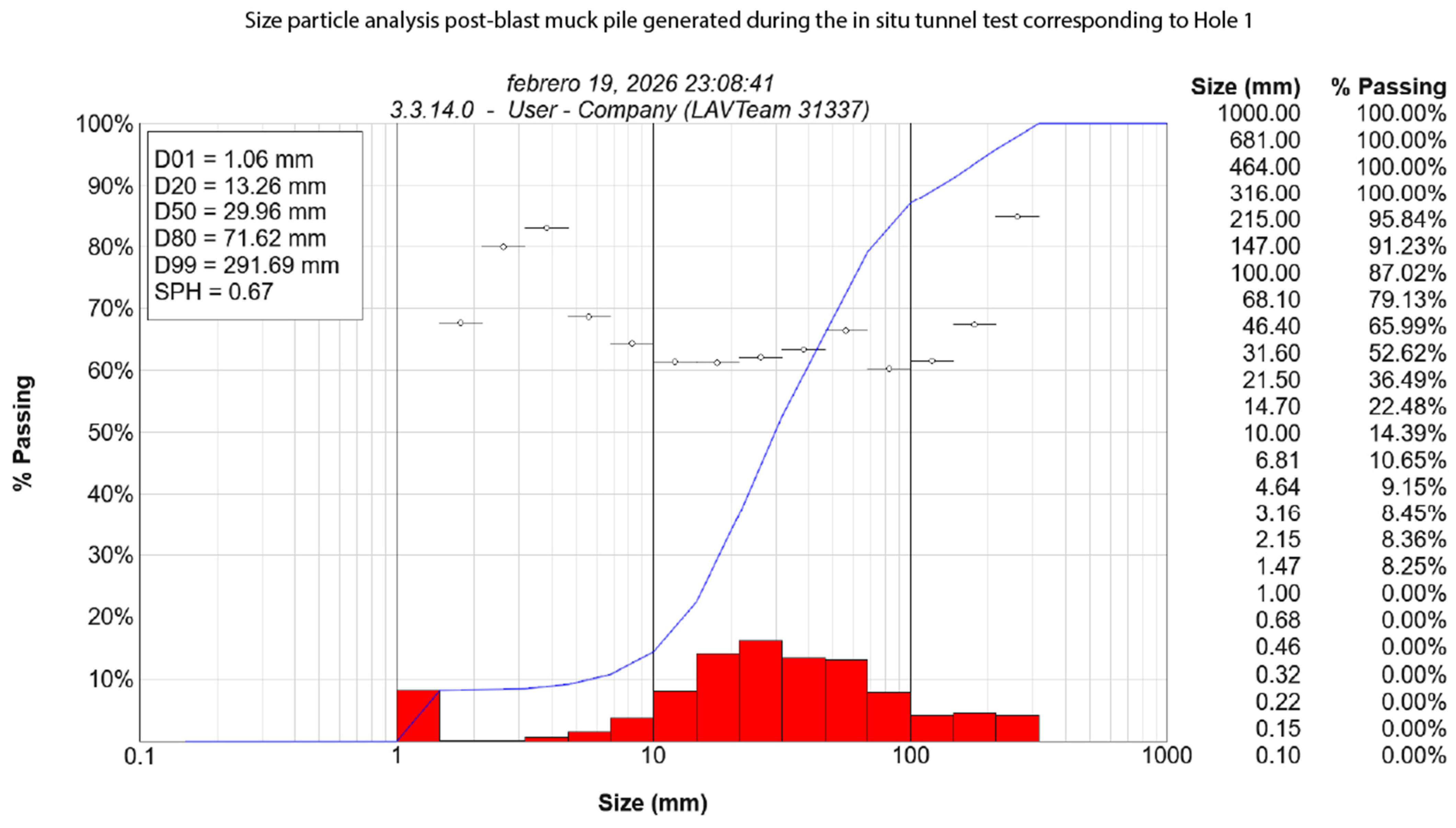
Figure A2.
Particle Size Distribution from Tunnel Test—Hole 2.
References
- Mestanza-Ramón, C.; Cuenca-Cumbicus, J.; D’Orio, G.; Flores-Toala, J.; Segovia-Cáceres, S.; Bonilla-Bonilla, A.; Straface, S. Gold mining in the Amazon region of Ecuador: History and a review of its socio-environmental impacts. Land 2022, 11, 221. [Google Scholar] [CrossRef] [Scilit]
- Mestanza-Ramón, C.; Ordonez-Alcivar, R.; Arguello-Guadalupe, C.; Carrera-Silva, K.; D’Orio, G.; Straface, S. History, socioeconomic problems and environmental impacts of gold mining in the Andean region of Ecuador. Int. J. Environ. Res. Public Health 2022, 19, 1190. [Google Scholar] [CrossRef] [Scilit]
- Sandoval, F. Small-scale mining in Ecuador. Environ. Soc. Found. 2001, 75, 28. [Google Scholar]
- Vangsnes, G.F. The meanings of mining: A perspective on the regulation of artisanal and small-scale gold mining in southern Ecuador. Extr. Ind. Soc. 2018, 5, 825–832. [Google Scholar] [CrossRef] [Scilit]
- Zvarivadza, T. Artisanal and small-scale mining as a challenge and possible contributor to sustainable development. Resour. Policy 2018, 56, 49–58. [Google Scholar] [CrossRef] [Scilit]
- McKay, S. Entering the critical era: A review of contemporary research on artisanal and small-scale mining. Extr. Ind. Soc. 2025, 21, 101590. [Google Scholar] [CrossRef] [Scilit]
- Hentschel, T.; Hruschka, F.; Priester, M. Global Report on Artisanal and Small-Scale Mining; Mining, Minerals and Sustainable Development: London, UK, 2002; p. 70. [Google Scholar]
- Veiga, M.M.; Anene, N.C.; Silva, E.M. Four decades of efforts to reduce or eliminate mercury pollution in artisanal gold mining. Minerals 2025, 15, 376. [Google Scholar] [CrossRef] [Scilit]
- Marin, T.; Seccatore, J.; De Tomi, G.; Veiga, M. Economic feasibility of responsible small-scale gold mining. J. Clean. Prod. 2016, 129, 531–536. [Google Scholar] [CrossRef] [Scilit]
- Hilson, G.; Hilson, A.; Bartels, E. Does formalization facilitate environmental improvements in the artisanal and small-scale mining sector? Bus. Strategy Environ. 2025, 34, 10962–10976. [Google Scholar] [CrossRef] [Scilit]
- Ofosu, G.; Siaw, D.; Asante, S.; Adusei Peasah, K. Formalization as a strategy of ASM “sanitization”: So far, how far? Strategy Leadersh. 2025, 54, 141–159. [Google Scholar] [CrossRef] [Scilit]
- Orozco, Z.T.; Arce, M. Informal, legal, or illegal? Varieties of artisanal mining in the Global South. World Polit. 2024, 76, 697–734. [Google Scholar] [CrossRef] [Scilit]
- Mestanza-Ramón, C.; Mora-Silva, D.; D’Orio, G.; Tapia-Segarra, E.; Gaibor, I.D.; Esparza-Parra, J.F.; Straface, S. Artisanal and small-scale gold mining (ASGM): Management and socioenvironmental impacts in the northern Amazon of Ecuador. Sustainability 2022, 14, 6854. [Google Scholar] [CrossRef] [Scilit]
- Fabin, M.; Jarosz, T. Improving ANFO: Effect of additives and ammonium nitrate morphology on detonation parameters. Materials 2021, 14, 5745. [Google Scholar] [CrossRef] [Scilit] [PubMed]
- Seccatore, J.; Magny, L.; De Tomi, G. Technical and operational aspects of tunnel rounds in artisanal underground mining. REM—Rev. Esc. Minas 2014, 67, 303–310. [Google Scholar] [CrossRef] [Scilit]
- Seccatore, J.; Gonzalez, P.; Herrera, M. Peculiarities of drilling and blasting in underground small-scale mines. REM Int. Eng. J. 2020, 73, 387–394. [Google Scholar] [CrossRef] [Scilit]
- Seccatore, J. Technical and operational aspects of tunnel rounds in artisanal underground mining. In Proceedings of the First ISEE Brazilian Chapter Workshop, Porto Alegre, Brazil, 24 October 2013. [Google Scholar]
- Shah, K.D. Ammonium nitrate—Decomposition, fire and explosive behaviour. Loss Prev. Bull. 2018, 263, 3. [Google Scholar]
- Oommen, C.; Jain, S.R. Ammonium nitrate: A promising rocket propellant oxidizer. J. Hazard. Mater. 1999, 67, 253–281. [Google Scholar] [CrossRef] [Scilit] [PubMed]
- Oxley, J.C.; Smith, J.L.; Rogers, E.; Yu, M. Ammonium nitrate: Thermal stability and explosivity modifiers. Thermochim. Acta 2002, 384, 23–45. [Google Scholar] [CrossRef] [Scilit]
- Zygmunt, B.; Buczkowski, D. Agriculture-grade ammonium nitrate as the basic ingredient of massive explosive charges. Propellants Explos. Pyrotech. 2012, 37, 685–690. [Google Scholar] [CrossRef] [Scilit]
- Pasman, H.J.; Fouchier, C.; Park, S.; Quddus, N.; Laboureur, D. Beirut ammonium nitrate explosion: Are we really learning anything? Process Saf. Prog. 2020, 39, e12203. [Google Scholar] [CrossRef] [Scilit]
- Tan, L.; Xia, L.H.; Wu, Q.J.; Xu, S.; Liu, D.B. Detonation characteristics of ammonium nitrate and activated fertilizer mixtures. Combust. Explos. Shock Waves 2016, 52, 354–360. [Google Scholar] [CrossRef] [Scilit]
- Rosero-Padilla, C.A.; Fernández Suárez, L.G.; Idrovo-Palomeque, J.P. Comportamiento de VOD, vibración y ruido al duplicar la sección de perforación en pequeña minería. FIGEMPA Investig. Desarro. 2025, 20, e7714. [Google Scholar] [CrossRef] [Scilit]
- Mertuszka, P.; Cenian, B.; Kramarczyk, B.; Pytel, W. Influence of explosive charge diameter on the detonation velocity based on Emulinit 7L and 8L bulk emulsion explosives. Cent. Eur. J. Energ. Mater. 2018, 15, 351–363. [Google Scholar] [CrossRef] [Scilit]
- Carranco, A.; Ordóñez, C.; Ureta, E.; Curay, C.; Ojeda, F. Mineral associations in small-scale mining in Southern Ecuador using x-ray and petrographic analysis. AIP Conf. Proc. 2025, 3268, 040043. [Google Scholar] [CrossRef] [Scilit]
- Bieniawski, Z.T. Engineering Rock Mass Classifications: A Complete Manual for Engineers and Geologists in Mining, Civil, and Petroleum Engineering; John Wiley & Sons: New York, NY, USA, 1989. [Google Scholar]
- ASTM D5873; Standard Test Method for Determination of Rock Hardness by Rebound Hammer Method. ASTM International: West Conshohocken, PA, USA, 2023.
- Priest, S.D.; Hudson, J.A. Discontinuity spacings in rock. Int. J. Rock Mech. Min. Sci. Geomech. Abstr. 1976, 13, 135–148. [Google Scholar] [CrossRef] [Scilit]
- Kononenko, M.M.; Khomenko, O.Y.; Kovalenko, I.L.; Savchenko, M.V. Control of density and velocity of emulsion explosives detonation for ore breaking. Nauk. Visnyk Natsionalnoho Hirnychoho Universytetu 2021, 2, 69–75. [Google Scholar] [CrossRef] [Scilit]
- Catanach, R.A.; Hill, L.G. Diameter effect curve and detonation front curvature measurements for ANFO. In Proceedings of the 12th APS Topical Conference, Atlanta, GA, USA, 24–29 June 2001; AIP Publishing: Melville, NY, USA, 2002; Volume 620, pp. 906–909. [Google Scholar] [CrossRef] [Scilit]
- Cardu, M.; Martinelli, D.; Todaro, C. Industrial Explosives and Their Applications for Rock Excavation, 1st ed.; Chapter 4; CRC Press: Boca Raton, FL, USA, 2024. [Google Scholar] [CrossRef] [Scilit]



Disclaimer/Publisher’s Note: The statements, opinions and data contained in all publications are solely those of the individual author(s) and contributor(s) and not of MDPI and/or the editor(s). MDPI and/or the editor(s) disclaim responsibility for any injury to people or property resulting from any ideas, methods, instructions or products referred to in the content. |
© 2026 by the authors. Licensee MDPI, Basel, Switzerland. This article is an open access article distributed under the terms and conditions of the Creative Commons Attribution (CC BY) license.