


Abstract
Four probiotic strains were used to ferment germinated highland barley, and the Lactobacillus acidophilus and Saccharomyces boulardii, which exhibited the highest viability after fermentation, were selected. Subsequently, a response surface test was applied to identify taste-enhancing additives, including concentrated orange juice, erythritol, and flaxseed oil. The optimal concentrations of these additives were 3.01%, 4.19%, and 0.52%, respectively. The stabilizing effects of β-glucan and four protein sources (whey, rice, pea, and soybean proteins) were assessed based on emulsion stability, and the combination of β-glucan and whey protein was identified as the most effective. Based on particle size and zeta potential analysis, the optimal β-glucan-to-whey protein ratio was determined to be 2:1. On this basis, a germinated highland barley probiotic beverage was developed. The results indicated that the total colony counts after simulated gastrointestinal digestion remained above 6 log CFU/mL, and the beverage was rich in dietary fiber and other nutrients.
1. Introduction
Highland barley (HB, Hordeum vulgare L. var. nudum Hook. f) belongs to the Gramineae (Poaceae) family, commonly referred to as hull-less or naked barley [1]. It is rich in a wide range of nutrients and bioactive compounds, including β-glucan, arabinoxylan, and polyphenols, which are associated with various health benefits. β-glucan, a polysaccharide composed of glucopyranose units, is primarily located in the endosperm cell wall and aleurone layer of barley grains. Previous studies have demonstrated that β-glucan has diverse physiological functions, including immune modulation, anti-tumor activity, and beneficial effects in the management of type 2 diabetes [2]. Germination is a simple, non-chemical technique widely used to enhance the bioavailability of essential nutrients [3]. During germination, numerous enzymes are generated or activated, thereby enabling the degradation or production of valuable constituents. Compared with ungerminated highland barley, germinated highland barley exhibits a marked increase in phenolic compounds and a slight reduction in β-glucan content [4].
Functional beverages are formulated to incorporate health-promoting ingredients while reducing or eliminating undesirable constituents, such as fat and added sugars. These beverages can meet the fundamental health needs of diverse lifestyles, age groups, and individuals of different genders and confer multiple health benefits [5]. Recent advancements in functional food research have increasingly focused on products containing probiotics and prebiotics, which enhance the composition and activity of beneficial intestinal microbiota. There is a growing body of scientific evidence demonstrating that live microorganisms, when administered in adequate amounts, confer health benefits to the host by improving intestinal microbial balance. Increasing dietary prebiotic intake can further promote and sustain healthy gut microbiota composition and activity. Certain food products may inherently contain prebiotics that enhance the functional efficacy of probiotics. Additionally, foods can be fortified with prebiotics during processing to further enhance probiotic efficacy [6].
In recent years, the consumption of cereal-based probiotic beverages has increased substantially. Commonly used probiotic strains include Bifidobacterium spp. and lactic acid bacteria [7]. Saccharomyces boulardii, a probiotic yeast, exhibits several advantages, including its natural origin, non-toxicity, safety, and absence of residues. Studies have demonstrated that Saccharomyces boulardii can be added to cashew juice to produce probiotic functional beverages [8]. Similarly, symbiotic ice cream formulated with Saccharomyces boulardii and inulin demonstrates promising functional potential [9]. Lactobacillus acidophilus is a predominant commensal bacterium in the human gut. Many strains of this species have been reported to inhibit the growth of pathogenic microbes, regulate intestinal flora, mitigate obesity, and support host health [10]. Furthermore, studies have shown that some Lactobacillus acidophilus strains exhibit antimicrobial effects against strains of E. coli isolated from patients with urinary tract infections [11].
Beverage stability is typically enhanced through the addition of stabilizers, such as hydrophilic colloids (e.g., carboxymethyl cellulose, xanthan gum, and carrageenan) or natural macromolecules, including polysaccharides and proteins. In systems containing only polysaccharides and proteins, ionic polysaccharides can increase beverage viscosity. In addition, these polysaccharides can bind to charged protein groups via electrostatic interactions, thereby strengthening the protein network and reducing precipitation [12]. Although germination partially degrades β-glucan [13], its controlled incorporation into formulations can improve beverage structure and functionality. The novelty of β-glucan as a stabilizer lies in its dual functionality, providing both physical stabilization and prebiotic health benefits. Moreover, β-glucan acts as a prebiotic, enhancing nutritional value by promoting gut health, a synergistic benefit not offered by traditional stabilizers such as carboxymethyl cellulose or xanthan gum [14].
However, existing research has primarily focused on germinated highland barley as a standalone ingredient, fermentation using single probiotic strains, or the dietary fiber functionality of β-glucan alone. Notably, few studies have integrated germinated highland barley pulp as a composite substrate for synergistic fermentation with specific probiotic combinations, followed by a systematic evaluation of sensory quality, physical stability, and gastrointestinal tolerance. In particular, the dual strategy of utilizing inherent β-glucan from the fermented matrix as both a prebiotic and a natural stabilizer remains underexplored, and optimization strategies for such systems have not yet been fully established.
Therefore, to address these gaps, this study aimed to develop a novel beverage based on germinated highland barley. Germinated highland barley grains were processed into barley pulp and subsequently fermented with Saccharomyces boulardii and Lactobacillus acidophilus to produce a fermented barley matrix. Erythritol, concentrated orange juice, and flaxseed oil were then incorporated to improve sensory properties. Sensory scores were used as response variables to optimize the formulation of the probiotic fermented beverage using a response surface methodology. Furthermore, the effects of β-glucan and protein-based stabilizers on beverage stability were systematically investigated.
2. Materials and Methods
2.1. Materials
Highland barley (Kunlun 15) was provided by Qinghai Xin Dingxiang Grain and Oil Technology Co., Ltd. (Xining, China). Lactobacillus acidophilus (LA), laboratory preservation. Long-term cryopreservation of LA was performed using the glycerol stock method. Briefly, actively growing cultures were harvested at the late exponential phase via centrifugation. The cell pellet was resuspended in fresh sterile broth containing 25% (v/v) glycerol, which served as a cryoprotective agent. Aliquots of 1–2 mL were dispensed into sterile cryogenic vials. The vials were immediately stored in an ultra-low-temperature freezer at −80 °C. For revival, frozen stock vials were rapidly thawed under aseptic conditions, and aliquots were inoculated into fresh growth medium. Bacillus coagulans (BC) and Lactobacillus reuteri (LR) were purchased from Guangdong Microbial Strain Conservation Center (Guangzhou, China). Saccharomyces boulardii (SB) was purchased from Mom’s Garden GmbH (Saarbrücken, Saarland, Germany). Thermoresistantα-Amylase was purchased from Ningxia Sunson Industry Group Co., Ltd. (Beijing, China).
Fermented highland barley slurry was prepared in the laboratory. Soybean protein isolate (SPI, 85%), pea protein isolate (PP, 90%), rice protein (RP, 85%), and whey protein (WP, 90%), all food grade, were purchased from Shandong Yibaolai Food Ingredients Co., Ltd. (Jinan, China). β-glucan was supplied by Fufeng Snoot Biotechnology Co., Ltd. (Baoji, China). Linseed oil was obtained from Inner Mongolia Fengjimiao Agricultural Product Technology Development Co., Ltd. (Hohhot, China). Erythritol and orange juice concentrate were purchased from a local supermarket (Zhengzhou, China). All other chemicals and reagents were of analytical grade.
2.2. Preparation of Germinated Highland Barley Slurry
Highland barley grains were disinfected by soaking in 5% sodium hypochlorite for 30 min and then thoroughly rinsed with distilled water. The grains were then immersed in a humidity-controlled incubator at 30 °C at a material-to-water ratio of 1:4 (g/mL) for 12 h. The soaked grains were transferred to a moistened, shaded container and germinated at 25 °C and 95% relative humidity for 10 h. The germinated grains were dried at 40 °C for 12 h. The dried germinated barley was roasted at 150 °C for 10 min to enhance flavor development. The roasted grains were mixed with water (1:8, g/mL) and blended into a slurry. Gelatinization was performed at 80 °C for 40 min with continuous stirring. After gelatinization, thermoresistant α-amylase was added at 40 U/mL. Enzymatic hydrolysis was conducted at 90 °C for 40 min to liquefy starch. The hydrolyzed slurry was pasteurized at 65 °C for 30 min, cooled to room temperature in a cold-water bath, and stored at 4 °C until further use.
2.3. Preparation of Probiotic Suspensions
For LA, the frozen glycerol stock was aseptically thawed to obtain the initial microbial suspension. For SB, BC, and LR, a small amount of each lyophilized culture was used for activation. LA and LR were inoculated into MRS broth, SB into YPD broth, and BC into TSB broth (5 mL each), followed by incubation at 37 °C for 12 h under their respective cultivation conditions. LA and LR were incubated under sealed static conditions, whereas SB and BC were cultured at 150 rpm. This activation step was performed twice. Subsequently, each culture was streaked onto the corresponding solid medium and incubated at 37 °C for 12 h. After two successive streakings, single colonies were transferred into the corresponding sterile liquid media to obtain expanded microbial suspensions. The activated cultures were then subcultured twice in a mixture of the respective broth medium and germinated barley pulp supernatant at 37 °C to facilitate gradual adaptation to the barley-based substrate. The acclimated cultures were centrifuged, the supernatant was discarded, and the cell pellets were retained. The pellets were washed twice with sterile 0.9% (w/v) saline solution and resuspended in sterile saline to obtain the final microbial suspensions. The optical density (OD) was measured at 600 nm, and the suspension was adjusted to an OD600 of 1.0 and stored at 4 °C in a refrigerator for later use. All procedures were conducted under aseptic conditions.
2.4. Selection of Probiotic Strains
2.4.1. Determination of the Combination of Mixed Strains
Ten starter cultures were prepared, including four single-strain cultures (BC, LR, LA and SB) and six mixed-strain cultures. The mixed starter cultures consisted of BC and LR (KB1), BC and LA (KB2), BC and SB (KB3), LR and LA (KB4), LR and SB (KB5), and LA and SB (KB6). Mixed starter cultures were prepared by combining microbial suspensions (Section 2.3) at a 1:1 ratio. Each starter culture was inoculated into germinated barley pulp (Section 2.2) at 8% (v/v). Viable counts of LAB were determined on MRS agar, SB on YPD agar, and BC on TSA agar using the plate count method and expressed as CFU/mL. The strain combination exhibiting the highest total viable count under the tested conditions was selected for subsequent experiments.
2.4.2. Screening of Probiotic Mix Ratio
Based on the results of Section 2.4.1, SB and LA were co-inoculated into the germinated barley pulp at ratios of 1:0, 3:1, 2:1, 1:1, 1:2, 1:3, and 0:1, respectively, and incubated at 37 °C for 24 h. The optimal inoculation ratio was determined based on the highest total viable counts of LA (on MRS agar) and SB (on YPD agar), expressed as CFU/mL.
2.5. Preparation of Fermented Germinated Highland Barley Slurry
The mixed starter culture was prepared by combining SB and LA at a ratio of 1:2. The starter culture was inoculated into germinated highland barley pulp at 8% (v/v) and fermented at 37 °C for 24 h using a substrate-to-water ratio of 1:8 (w/v), yielding fermented germinated highland barley slurry.
2.6. Production of Probiotic Fermented Highland Barley Beverages
Orange juice concentrate, erythritol, and flaxseed oil were added to germinated highland barley pulp (sored at 4 °C) to enhance flavor, whereas β-glucan and protein were incorporated to improve physical stability. The mixture was homogenized using a high-pressure homogenizer at 40 MPa for two cycles. Following heat treatment at 80 °C for 5 min and cooling to room temperature, the mixture was inoculated with probiotics at 8% (v/v) and fermented at 37 °C for 24 h with shaking at 140 rpm. The flavor profile was evaluated by descriptive sensory analysis (Section 2.7) to assess the effects of each additive.
2.6.1. Single-Factor Experiment on Optimization of the Formula of Fermented Highland Barley Beverage with Probiotics
Erythritol (2%, 4%, 6%, 8%, 10%), flaxseed oil (0.1%, 0.3%, 0.5%, 0.7%, 0.9%), and orange juice concentrate (1%, 3%, 5%, 7%, 9%) were individually added to fermented highland barley pulp at different levels. Sensory evaluation was conducted to determine the optimal addition level of each component.
2.6.2. Formulation Optimization Experiment Based on the Response Surface Method
Based on the single-factor experiments, a Box–Behnken design was applied with erythritol (A), orange juice concentrate (B), and flaxseed oil (C) as independent variables. Sensory scores were used as response variables across three factors and three levels (Table 1).
Table 1.
Formula optimization response surface test factors and levels.
2.7. Sensory Evaluation
The sensory characteristics of the fermented highland barley beverage were evaluated by a panel of ten trained assessors (5 men and 5 women) with prior experience in beverage sensory analysis [15]. Quantitative descriptive analysis was performed according to the criteria listed in Table 2, focusing on four attributes: flavor, taste, organizational state (mouthfeel/texture), and color.
Table 2.
Detailed sensory evaluation rules for functional probiotic beverages made from highland barley.
Before formal evaluation, a training session was conducted to familiarize the assessors with the evaluation form, attribute definitions, and the scoring scale (1–25 points per attribute). During this session, reference samples were evaluated and ratings were discussed to ensure a consistent understanding and application of the scale. For the formal evaluation, coded samples (approximately 30 mL) were served in clear, odorless plastic cups at room temperature (25 ± 1 °C). Samples were presented in a randomized order to minimize bias, and room-temperature water was provided for palate cleansing between samples. All sensory evaluations were conducted in a dedicated sensory booth under controlled lighting conditions [16].
2.8. Selection of an Emulsifier for Germinated Highland Barley Probiotic Beverage
2.8.1. Preparation of Composite Emulsifiers
Composite emulsifiers were prepared according to Sun [17] with slight modifications. β-Glucan and four proteins (whey, rice, pea, and soybean) were separately dissolved in deionized water at a ratio of 1:6 (w/v). The polysaccharide and protein solutions were mixed at different dry-weight ratios (1:0, 3:1, 2:1, 1:1, 1:2, 1:3, 0:1). The mixtures were stirred and hydrated at 25 °C for 4 h.
2.8.2. Screening and Optimization Procedure
- 1.
- Screening of protein type
Each composite emulsifier (Section 2.8.1) was added to the barley slurry at a final concentration of 1% (w/v). The mixture was homogenized at 10,000 rpm for 2 min to obtain an emulsion. Emulsion stability was evaluated using a Turbiscan LAB analyzer (Formulaction, Toulouse, France). Samples (20 mL) were scanned at 25 °C for 30 min, and the Turbiscan Stability Index (TSI) was calculated using the instrument’s software.
- 2.
- Optimization of the β-Glucan-to-Protein ratio
Using the selected protein, emulsions with different β-glucan-to-protein ratios were prepared and homogenized as described above to evaluate stability, particle size, and zeta potential. Emulsion stability was quantified using TSI, as described in Section 2.8.2(1). Particle size was measured using a laser particle size analyzer, based on Ren [18]. Briefly, 1 mL of the sample was diluted 100-fold with deionized water before measurement. Zeta potential was determined with slight modifications according to Liu [19]. At room temperature, 1 mL of the sample was diluted 100-fold with deionized water. Particle size and zeta potential were determined using a Zetasizer Nano-ZS90 laser particle size analyzer (Malvern Panalytical, Malvern, UK).
2.9. Microrheological Properties
The Rheolaser Lab rheometer (Beijing Langdisen Technology Co., Ltd., Beijing, China) uses dynamic light scattering (DLS) based on diffusion spectroscopy (DWS). Seven Polysaccharide-protein emulsion samples with different ratios were analyzed for 30 min at 25 °C. Brownian motion was expressed as the root mean square displacement (RMSD) versus time.
2.10. Electron Scanning Microscope
The fermented highland barley slurry was pre-frozen for 20 min and freeze-dried for 12 h. The freeze-dried highland barley emulsion was crushed, and small amounts of the sample were glued to cotton sticks and affixed to the scanning electron microscope (SEM, Hitachi, Ltd., Tokyo, Japan) sample table with double-sided conductive adhesive so that the samples were evenly distributed on the conductive tape, and the washing ear ball removed the excess samples. The microstructure was observed using a SEM after gold spraying. SEM working conditions: high voltage 10 kV, beam 5 × 10⁻⁹ mA, working distance 15 mm.
2.11. Nutrient Composition of Highland Barley Functional Beverage
Basic nutrient composition was determined according to Chinese national standard methods. Protein content was determined using the Kjeldahl method according to GB 5009.5-2025 [20]. Fat content was analyzed using the acid hydrolysis method specified in GB 5009.6-2016 [21]. Total dietary fiber (TDF), insoluble dietary fiber (IDF), and soluble dietary fiber (SDF) were quantified using the enzymatic-gravimetric method described in GB 5009.88-2023 [22]. β-glucan content was determined using the enzymatic procedure outlined in AOAC 995.16 [23]. All analyses were performed in triplicate.
Determination of protein content: A 10.0 g aliquot of beverage sample was digested with 0.4 g copper sulfate, 6 g potassium sulfate, and 20 mL concentrated sulfuric acid in a digestion furnace. Digestion was continued until the solution became clear and greenish and was maintained for at least 1 h after reaching 420 °C. The digested solution was analyzed using an automatic Kjeldahl nitrogen analyzer (MGH Industries & Company, Hongkkng, China). Total nitrogen content was obtained through automated distillation, absorption, and titration using 0.05 mol/L hydrochloric acid. Crude protein content was calculated by multiplying total nitrogen by a conversion factor of 6.25.
Determination of Fat Content: A 10.0 g aliquot of the beverage sample was mixed with approximately 20 g quartz sand in an evaporation dish. The mixture was dried on a boiling water bath and further dried in an oven at 100 ± 5 °C for 30 min. The dried residue was ground thoroughly and transferred entirely into a filter paper cartridge. Fat was extracted with anhydrous diethyl ether in a Soxhlet extractor (C. Gerhardt GmbH & Co. KG, Königswinter, Germany) for 10 h. After extraction, the solvent was recovered, and the flask was dried at 100 ± 5 °C to constant weight. Fat content was calculated based on the mass increase in the extraction flask.
Determination of dietary fiber content: Fermented highland barley beverage samples were homogenized prior to analysis. Due to the liquid nature and potential high sugar content, a defatting step was performed using 85% ethanol to reduce viscosity. The treated samples were enzymatically digested with thermostable α-amylase, amyloglucosidase, and protease to remove starch and protein. The digest was filtered through a pre-weighed crucible. The residue was washed, dried, and weighed to obtain IDF. The filtrate was treated with four volumes of 95% ethanol to precipitate the soluble fraction, which was collected, washed, dried, and weighed to obtain SDF. The protein and ash contents in both the IDF and SDF residues were determined and subtracted. The TDF content was calculated as the sum of IDF and SDF.
The β-glucan content was determined using the enzymatic method according to AOAC Official Method 995.16. Briefly, samples were incubated with lichenase enzyme to hydrolyze β-glucan into oligosaccharides, which were subsequently broken down to glucose by β-glucosidase. Released glucose was quantified using a glucose oxidase/peroxidase reagent system and measured colorimetrically. The absorbance was read at 510 nm, and the β-glucan concentration was calculated based on a D-glucose standard curve. Results are expressed as grams of β-glucan per 100 g of sample.
2.12. Determination of Tolerance of Probiotics to Simulated In Vitro Gastrointestinal Digestion
2.12.1. Determination of Tolerance of Probiotics to Simulated Gastric Juice in Fermented Highland Barley Beverage
Simulated gastric juice was prepared by dissolving 0.1 g bovine serum protein, 0.25 g pepsin, and 0.3 g mucin in 0.5 mL hydrochloric acid (37 g/L) and 1.8 mLCaCl2 (22.2 g/L). After mixing, the pH was adjusted to 2.5 ± 0.1, and the solution was sterilized by filtration through a 0.22 μm membrane. A 1 mL sample of fermented barley beverage was mixed with 9 mL of simulated gastric juice and incubated at 37 °C with shaking at 140 rpm. Samples were collected at 5, 30, 60, 120, and 180 min [24]. After 180 min of gastric digestion, the remaining mixture was immediately used as the starting material for the subsequent intestinal tolerance test (Section 2.12.2). Total colony counts were determined using the plate count method and expressed as CFU/mL.
2.12.2. Determination of Tolerance of Probiotics to Simulated Intestinal Fluid
Simulated intestinal fluid was prepared by dissolving 0.1 g bovine serum protein, 0.9 g pancreatic enzyme and 0.15 g lipase in 0.6 mL KCl (37 g/L), 1.0 mL CaCl2 (22.2 g/L) and 1.5 mL bile salt solution (3 g/L). After mixing, the pH was adjusted to 8.0 ± 0.1, and the solution was sterilized through a 0.22 μm filter. Then, 1 mL of gastric digest was mixed with 9 mL of the simulated intestinal fluid and incubated at 37 °C with shaking at 140 rpm. Samples were collected at 5, 30, 60, 120, and 180 min. Total colony counts were determined by plate count and expressed as CFU/mL.
2.13. Statistical Methods
All experiments were performed in triplicate. Design Expert 10.0.1 was used for response surface design and data analysis. Analysis of variance (ANOVA) was applied to evaluate the significance of the regression model and its terms. GraphPad Prism 8.0.2 was used for data visualization. Statistical significance was defined as p < 0.05, whereas p < 0.01 was considered highly significant.
3. Results and Analysis
3.1. Determination of Probiotics
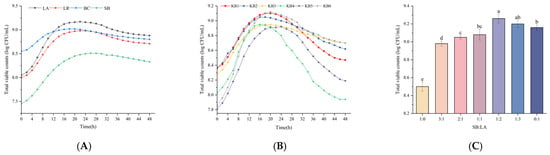
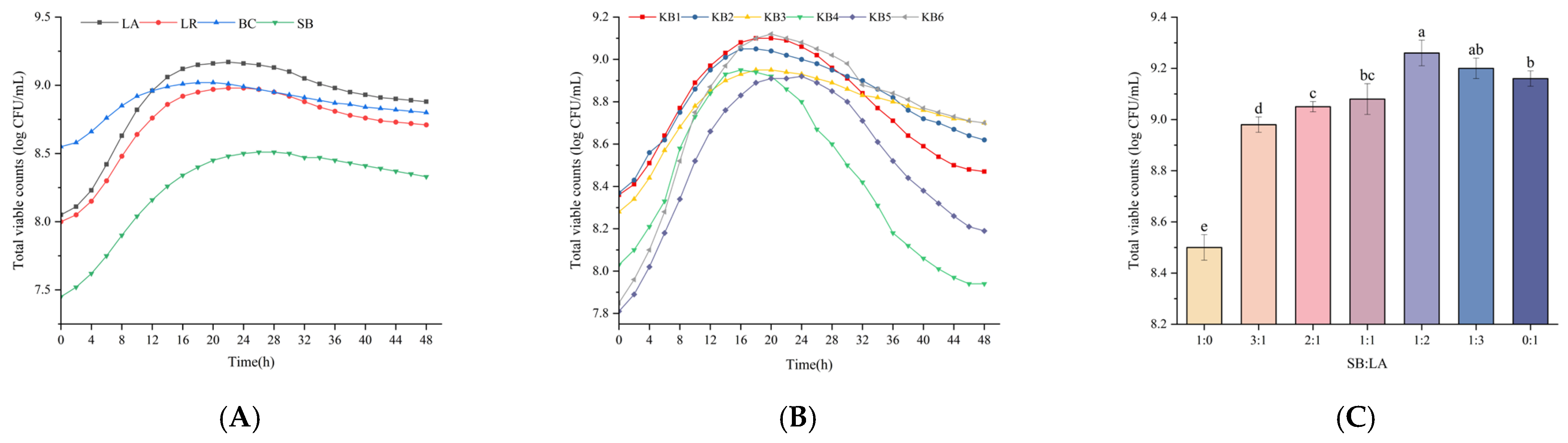
Viable counts were used in this study to quantify microbial growth over the course of fermentation. Higher viable counts were interpreted as greater survival and proliferation under the tested fermentation conditions. As shown in Figure 1A, LA exhibited the highest viable counts, followed by BC and LR. All strains increased rapidly during the initial phase, then approached a plateau, and subsequently declined gradually after reaching peak values.
Figure 1.
(A,B): Growth curve of highland barley slurry fermented by probiotics, (C): Total colony counts of highland barley beverage fermented by different proportions of SB and LA. Different lowercase letters indicate significant differences (p < 0.05). Note: (A) is the growth curve of highland barley slurry fermented by four probiotics; (B) is the growth curve of highland barley slurry fermented by compound probiotics. LA: Lactobacillus acidophilus; BC: Bacillus coagulans; LR: Lactobacillus reuteri; SB: Saccharomyces boulardii. KB1: BC and LR. KB2: BC and LA, KB3: BC and SB, KB4: LR and LA, KB5: LR and SB, KB6: LA and SB.
Notably, Figure 1B shows that KB6 (LA + SB) exhibited higher total viable counts than several other mixed cultures over 48 h, suggesting that this pairing performed well under the tested fermentation conditions. Although the underlying interaction could not be determined from viable-count data alone, this result is consistent with reports that yeasts can coexist with lactic acid bacteria in fermented matrices [25]. Therefore, KB6 was selected for subsequent experiments because it ranked among the better-performing combinations with respect to total viability and provided a practical LAB–yeast pairing for further optimization. Figure 1C further demonstrates that the SB-to-LA inoculation ratio affected total viability after 24 h, with an SB:LA ratio of 1:2 yielding the highest total viable count (p < 0.05). These results suggest that an LA-dominant inoculum (SB:LA = 1:2) may be advantageous for maximizing total viable counts at 24 h under the tested conditions.
3.2. Optimization Experiment of the Formula of Germinated Highland Barley Pulp Fermented Beverage Based on the Response Surface Method
3.2.1. Single-Factor Experiment of Fermented Beverage of Germinated Highland Barley Pulp
Erythritol is a natural sweetener widely used in low-calorie and sugar-free food products. Previous studies have shown that erythritol exhibits antioxidant activity in vivo by scavenging hydroxyl radicals and supporting glycemic control [26]. Orange juice concentrate enhances the beverage’s unique flavor, whereas flaxseed oil, rich in α-linolenic acid, contributes potential cardiovascular benefits.
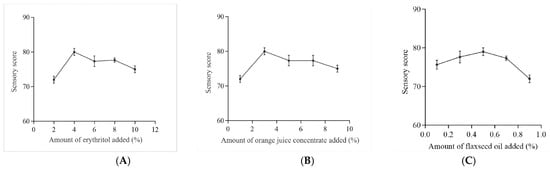
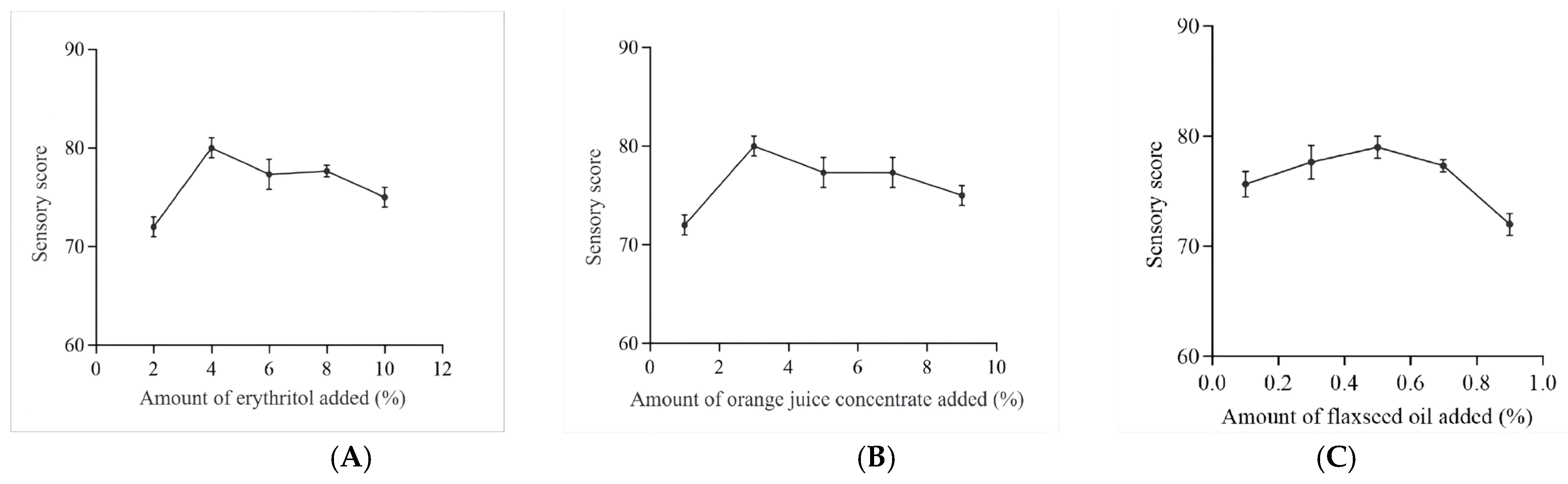
Overall sensory scores were calculated as the sum of four attributes (flavor, taste, texture, color), each rated on a 25-point scale. Scores ranged from 60 to 90 (maximum: 100), indicating that all formulations were generally acceptable but exhibited discernible sensory differences. As shown in Figure 2, sensory scores peaked at an erythritol concentration of 4% (Figure 2A), indicating optimal sweetness and palatability. Similarly, the optimal orange juice concentration level was 3% (Figure 2B), and the optimal flaxseed oil level was observed at 0.5% (Figure 2C).
Figure 2.
Effect of adding orange juice, erythritol and flaxseed oil on sensory score of highland barley beverage. (A) The effect of the amount of added erythritol on the sensory score; (B) the effect of the added amount of concentrated juice on the sensory score; (C) effect of flaxseed oil addition on sensory score.
3.2.2. Response Surface Test
To optimize the formulation for the fermented highland barley beverage, regression analysis was performed using sensory score as the response variable. The experimental design matrix and corresponding results are presented in Table 3.
Table 3.
Experimental design and results of formulation optimization response surface.
3.2.3. Establishment of Regression Model and Variance Analysis
Data were analyzed using Design Expert 8.0.6, and the response surface regression simulation equation of each factor on the sensory score of the sample was obtained as follows: Y = 86.6 + 0.63A + 0.13B + 0.5C − 1.25AB + 0.5BC − 3.18A2 − 2.67B2 − 3.43C2. As shown in Table 4, the model was highly significant (p < 0.0001), whereas the lack-of-fit term was not significant (p > 0.05), indicating good agreement with the experimental data. The coefficient of determination (R2) was 0.9838, and the adjusted R2 is 0.9629, demonstrating strong predictive capability for sensory evaluation. Based on F-values, erythritol had the greatest influence on sensory quality, followed by flaxseed oil and orange juice concentrate.
Table 4.
Analysis of variance and significance test of regression model.
3.2.4. Analysis of the Interaction Between Factors
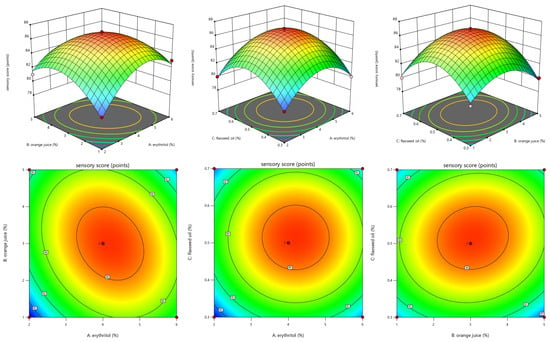
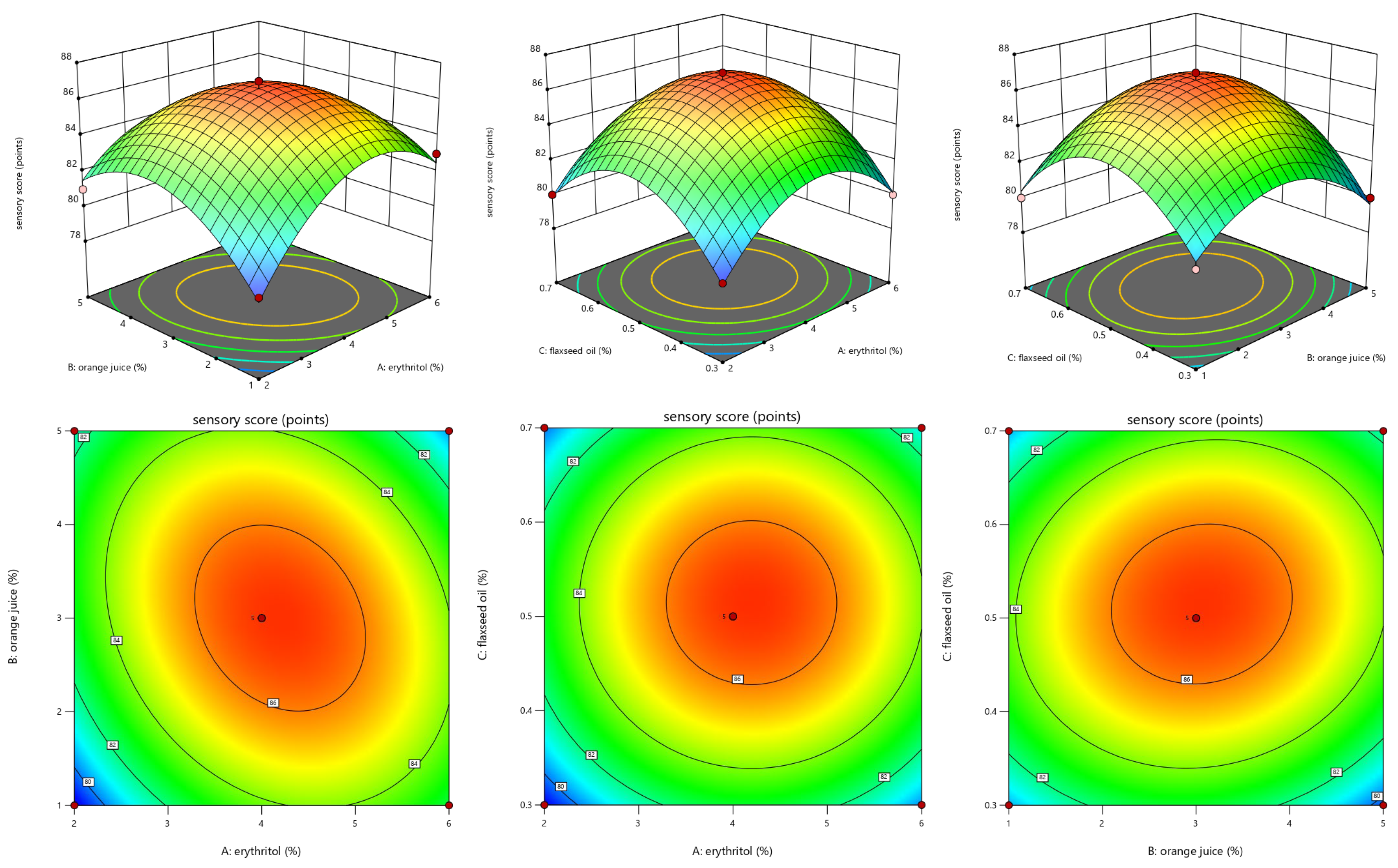
The pairwise interactions among erythritol, orange juice concentrate, and flaxseed oil were analyzed using response surface methodology, and the results are shown in Figure 3. The response surface plots illustrate the individual and interactive effects of these variables on the sensory score of the fermented highland barley beverage. When flaxseed oil was held constant, the sensory score initially increased and then declined as erythritol and orange juice concentrate levels increased. The steep response surface and elliptical contour lines indicate a significant interaction between these two factors. When orange juice concentrate was held constant, a similar trend was observed with increasing flaxseed oil and erythritol. The steeper slope and denser contours along the flaxseed oil axis suggest that flaxseed oil exerted a stronger influence on sensory score than erythritol. When erythritol was held constant, the sensory score also showed an initial increase followed by a decrease with increasing flaxseed oil and orange juice concentrate. Contour lines were more concentrated along the flaxseed oil axis, indicating that flaxseed oil had the strongest effect on the response among the three factors.
Figure 3.
Response surface and contour plots of the effects of various factors’ interactions on the sensory scores of fermented highland barley beverage. The color gradient represents the predicted response values, contour lines indicate response levels, and the dots represent the experimental data points.
Optimization using Design-Expert 8.0.6 indicated that the optimal formulation contained 4.19% erythritol, 3.01% orange juice concentrate, and 0.52% flaxseed oil, with a predicted sensory score of 86.65. To validate the model, the optimized formulation was prepared under identical conditions and subjucted to sensory evaluation. Three independent replicates yielded sensory scores of 85, 89, and 88, with an average of 87.3, which closely agreed with the predicted value, confirming the accuracy and reliability of the regression model.
3.3. Determination of Emulsifiers
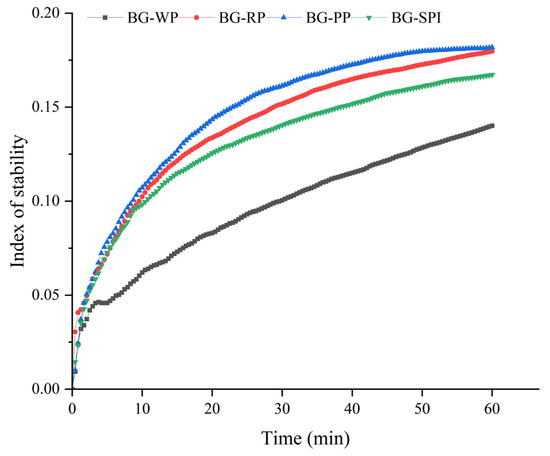
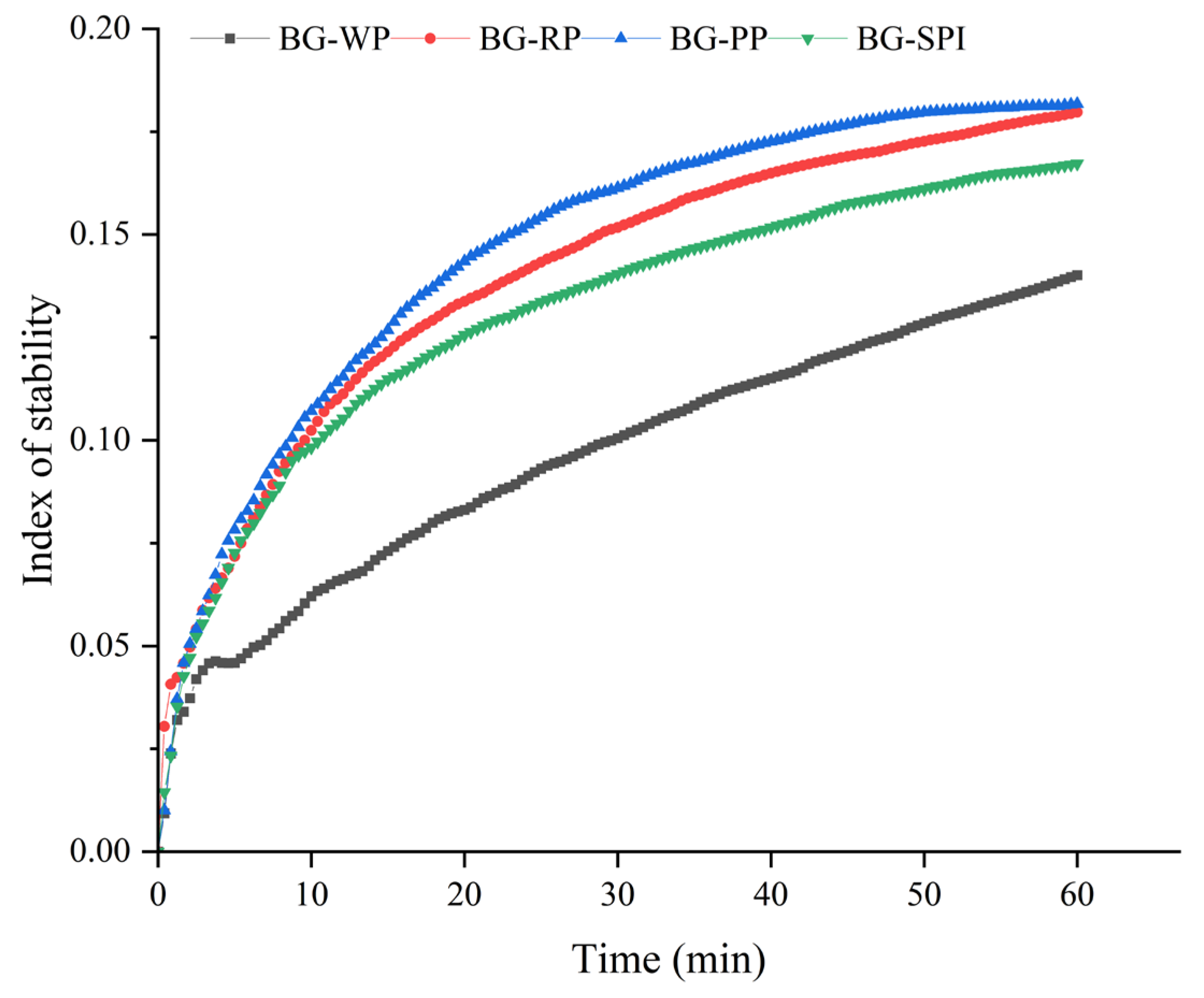
The stability of individual biopolymers, such as proteins, can be enhanced through covalent bonding with polysaccharides, thereby improving resistance to destabilizing processing conditions such as heat, low pH, or salt exposure [27]. Other weak molecular forces, such as hydrogen bonds, van der Waals forces, and hydrophobic interactions, may also mediate interactions between proteins and polysaccharides together. Neutral polysaccharides primarily enhance protein stability, primarily by increasing the beverage viscosity [28]. In this study, β-glucan was combined with four different proteins, and the stability of emulsions prepared with β-glucan–whey protein (BG-WP), β-glucan-rice protein (BG-RP), β-glucan-pea protein (BG-PP) and β-glucan-soybean protein (BG-SPI) was evaluated using a Turbiscan backscattering technique. As shown in Figure 4, the TSI (a dimensionless parameter) of the emulsions initially increased and subsequently reached a plateau. After 60 min, the TSI values followed the order BG–PP > BG–SPI > BG–RP > BG–WP. The stability of the BG-SPI and BG-RP groups did not differ significantly (p > 0.05), and the BG-PP group exhibited the highest TSI, indicating the poorest stability. In contrast, BG-WP showed a significantly lower TSI than the other groups, indicating the highest stability. Therefore, whey protein was selected as the optimal protein component, and β-glucan was employed as the stabilizing polysaccharide. Whey proteins, including β-lactoglobulin, α-lactalbumin, and bovine serum albumin, are globular proteins derived from the whey fraction of milk. Whey proteins are used as functional ingredients in a broad range of applications. Peptides derived from whey proteins have been linked to various potentially beneficial biological activities, including antihypertensive, antioxidant, and cholesterol-lowering properties, thereby making them suitable as health-promoting food ingredients [29]. Moreover, whey protein can interact synergistically with polysaccharides to enhance emulsion stability.
Figure 4.
Effect of Polysaccharide and Different Protein Mixtures on the Stability of the Emulsion. BG-WP: β-glucan–whey protein; BG-RP: β-glucan-rice protein; BG-PP: β-glucan-pea protein; BG-SPI: β-glucan-soybean protein.
3.4. Particle Size, Potential and TSI of Emulsions
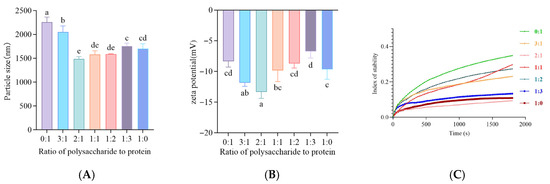
Emulsion particle size is a key indicator of system stability, with smaller droplet sizes generally associated with enhanced stability [30]. As shown in Figure 5A, the ratio of polysaccharide-to-protein had a significant effect on the particle size of the emulsion (p < 0.05). When polysaccharide alone (0:1) was used, the emulsion exhibited the largest particle size, which was significantly higher than those of all other formulations. With the incorporation of whey protein, the particle size decreased markedly. Notably, the emulsion prepared at a polysaccharide-to-protein ratio of 2:1 exhibited the smallest particle size, which was significantly lower than those of the other ratios (p < 0.05), indicating a more compact and stable emulsion structure.
Figure 5.
(A,B): Particle size and zeta potential of highland barley emulsion with different ratios of BG-WP; (C): Stability of highland barley emulsion with different ratio of BG-WP. BG-WP: β-glucan–whey protein. Note: Different lowercase letters above the bars indicate statistically significant differences among samples (p < 0.05).
The ζ-potential results further supported the particle size observations (Figure 5B). The emulsion at a polysaccharide-to-protein ratio of 2:1 showed the highest absolute ζ-potential value, which was significantly greater than those of the other formulations (p < 0.05). The increased surface charge enhances electrostatic repulsion between droplets, thereby reducing droplet aggregation and contributing to improved emulsion stability. In contrast, emulsions stabilized with polysaccharide or protein alone exhibited lower absolute ζ-potential values, suggesting weaker electrostatic stabilization.
The time-dependent stability of the emulsions was further evaluated using the index of stability (Figure 5C). For all formulations, the stability index increased gradually with time, indicating progressive destabilization processes. However, clear differences were observed among the different ratios. Emulsions stabilized with polysaccharide or protein alone showed a rapid increase in the stability index and reached higher final values, reflecting poorer stability. In contrast, emulsions containing combined polysaccharide–protein stabilizers exhibited slower increases in the stability index. Among them, the 2:1 polysaccharide-to-protein formulation consistently maintained the lowest stability index throughout the entire measurement period, demonstrating superior resistance to time-dependent destabilization. These results indicate that an appropriate polysaccharide–protein ratio promotes the formation of a robust interfacial network, effectively suppressing droplet aggregation and enhancing emulsion stability, which is consistent with previous reports on polysaccharide–protein complex-stabilized emulsions [31,32].
3.5. Microrheological Properties of Emulsion
Root mean square displacement (MSD) describes the mean square displacement of tracer particles over a given lag time and is commonly used to characterize the Brownian motion of particles within complex systems [33]. When the slope of the MSD curve approximates 1, particle motion is dominated by free diffusion, indicating that the emulsion droplets are freely dispersed and that the system exhibits Newtonian fluid behavior [34]. In contrast, in viscoelastic systems, particle motion is constrained by a structural network formed through interparticle interactions, thereby imparting elastic properties to the material. Based on observation of particle trajectories across different de-correlation time regimes, particle motion can be divided into three distinct stages. During the initial de-correlation regime, particles move freely within the medium and are influenced primarily by solvent viscosity, resulting in a linear increase in MSD with time. In the intermediate regime, particle motion becomes increasingly restricted by the network structure of the system; elastic effects dominate, particle mobility decreases, and the slope of the MSD curve is reduced, approaching a plateau. In the final regime, particle motion is mainly governed by the macroscopic viscosity of the emulsion, and the MSD again increases linearly with time.
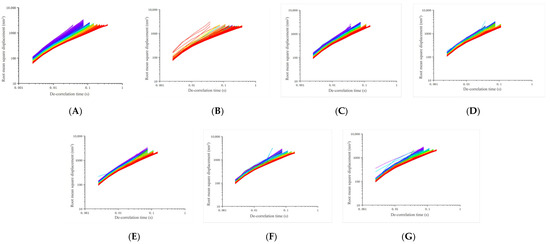
As shown in Figure 6, particle motion trajectories differed markedly among emulsion with different polysaccharide-to-protein ratios. Notably, sample B exhibited the lowest MSD slope, indicating the highest macroscopic viscosity among the tested formulations.
Figure 6.
MSD curve of highland barley emulsion with different ratio of BG-WP, (A–G) is represented as 0:1, 1:0, 1:3, 1:2, 1:1, 2:1, and 3:1. MSD: Root mean square displacement. BG-WP: β-glucan–whey protein. Different colored lines represent the trajectories of individual particles.
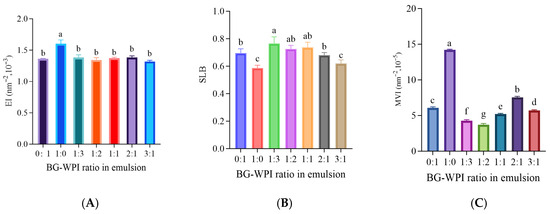
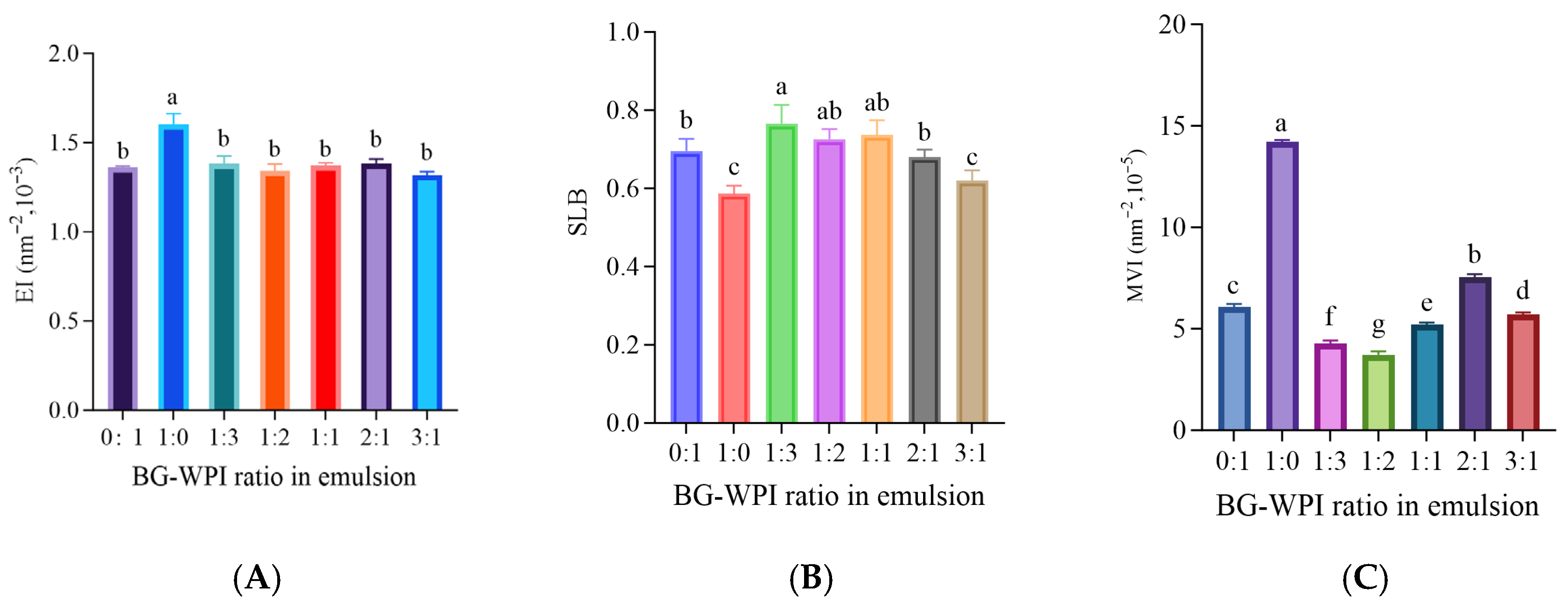
The Elasticity Index (EI) is defined as the reciprocal of the plateau height of the MSD curve, and the plateau height reflects the elastic characteristics of the product. A gradual reduction in the plateau height indicates further development of the internal network structure and an increase in the elasticity of the system [35]. Similarly, the Macroscopic Viscosity Index (MVI), defined as the reciprocal of the terminal slope of the MSD curve, is used to represent the macroscopic viscosity of the system. A lower terminal slope corresponds to reduced particle displacement and higher viscosity [36]. The Solid–Liquid Balance (SLB) value represents the relative contributions of solid-like and liquid-like properties in the system and is derived from the slope of the MSD plateau region. A lower SLB value indicates slower particle mobility and more pronounced solid-like behavior, whereas a higher SLB value reflects faster particle motion and greater liquid-like characteristics. Specifically, SLB values between 0 and 0.5 denote a solid-like state, while values between 0.5 and 1 indicate a liquid-like state [37]. As shown in Figure 7, emulsions containing only β-glucan exhibited the highest overall EI values, indicating more pronounced solid-like characteristics compared with the other formulations. When the β-glucan-to-whey protein isolate (BG:WPI) ratio was 2:1, the EI remained relatively high, suggesting the formation of a dense interfacial protein–polysaccharide network that effectively limits droplet aggregation and enhances emulsion stability [38].
Figure 7.
(A): EI of highland barley emulsion with different polysaccharide–protein ratios; (B): SLB of highland barley emulsion with different polysaccharide–protein ratio; (C): MVI of highland barley lotion with different polysaccharide–protein ratios. EI: the reciprocal of the height of the MSD platform area. MVI: Macroscopic Viscosity Index. SLB: the slope of the MSD curve platform area. MSD: Root mean square displacement. BG-WP: β-glucan–whey protein. Note: Different lowercase letters above the bars indicate statistically significant differences among samples (p < 0.05).
3.6. Scanning Electron Microscope
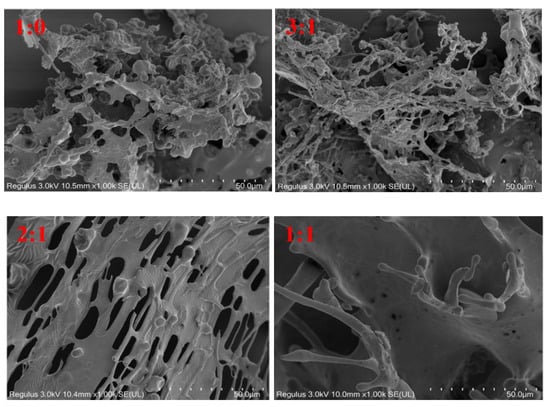
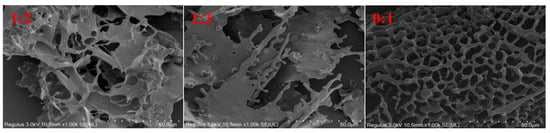
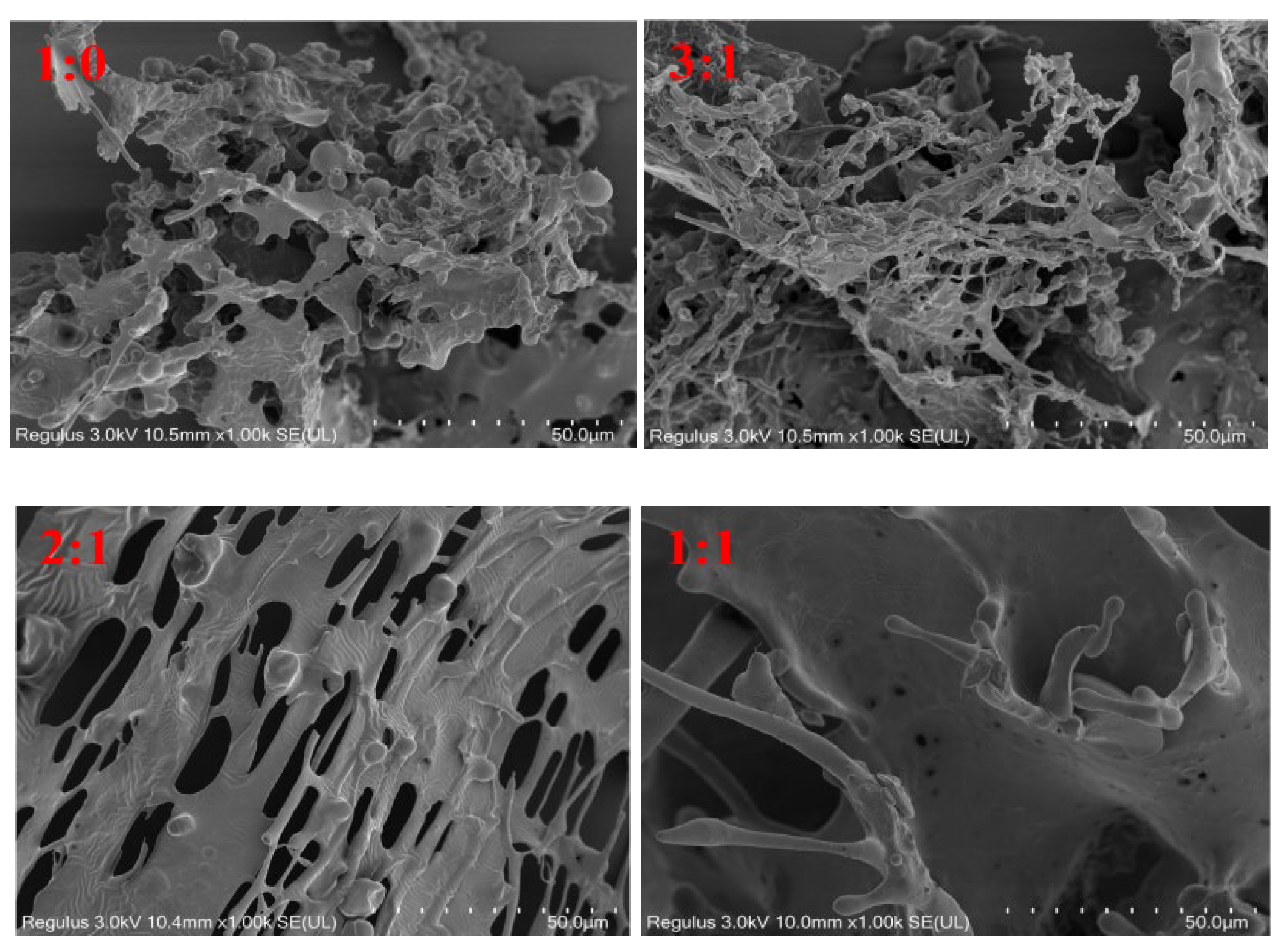
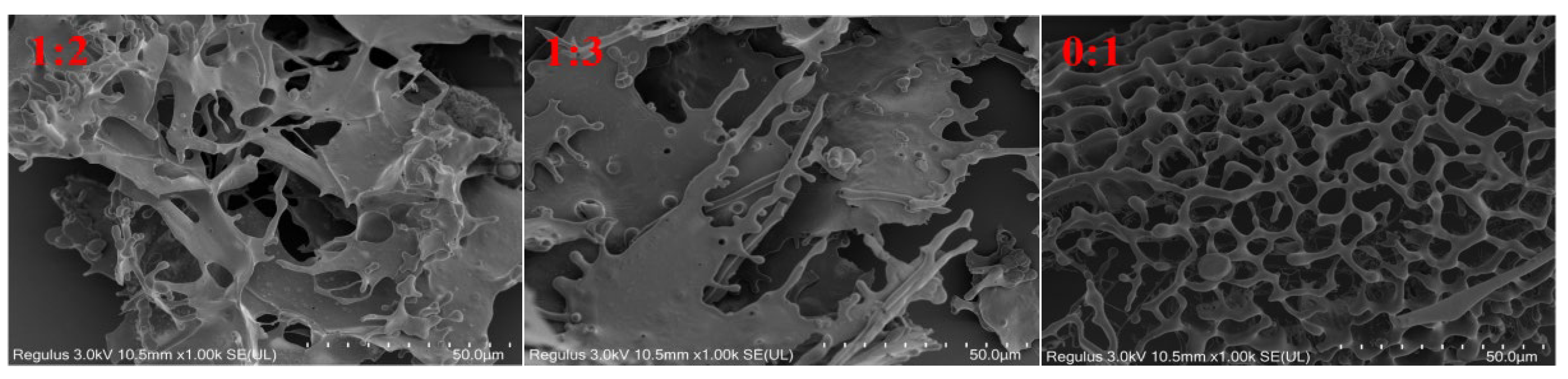
The SEMs of barley emulsions with different proportions of β-glucan-to-whey-protein are shown in Figure 8. Compared with emulsions stabilized by β-glucan or whey protein alone, the composite β-glucan–whey protein complex significantly enhanced the structural integrity and physical stability of the system. At the optimal β-glucan-to-whey protein ratio of 2:1, a compact and well-organized network structure was observed, indicating enhanced interfacial stability. β-glucan increases the viscosity of the aqueous phase and can interact with hydrophobic residues and polar groups in whey protein, thereby forming an ordered network that inhibits droplet aggregation and enhances emulsin stability. These results are consistent with those of Liu [39], who reported that whey protein–chlorogenic acid–glucan conjugates prepared via dry heating and alkaline grafting improved the oxidative, thermal, and storage stability of emulsions.
Figure 8.
SEM Diagram of emulsion with different proportions of BG-WP.BG-WP: β-glucan–whey protein.
3.7. Nutrient Composition of Highland Barley Probiotic Beverage
The nutritional composition and microbial characteristics of the highland barley-based probiotic beverage were determined, and its overall quality was evaluated. Detailed results are presented in Table 5. These results indicate that the developed beverage is a nutritionally balanced, ready-to-consume functional beverage with high protein content, low fat levels, and substantial dietary fiber, which contribute to its overall health-promoting potential.
Table 5.
Nutritional index of highland barley functional probiotic beverage.
3.8. The Tolerance of Probiotics to Simulated Gastric Fluid and Intestinal Fluid
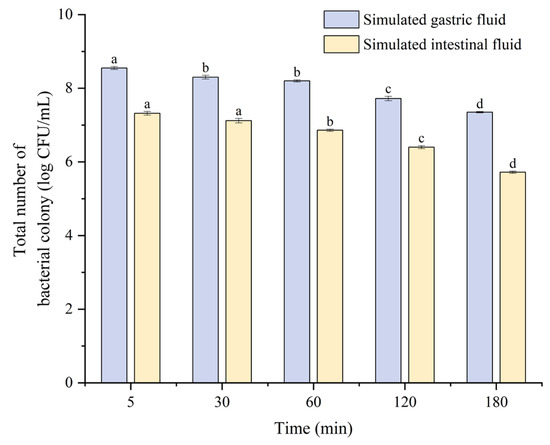
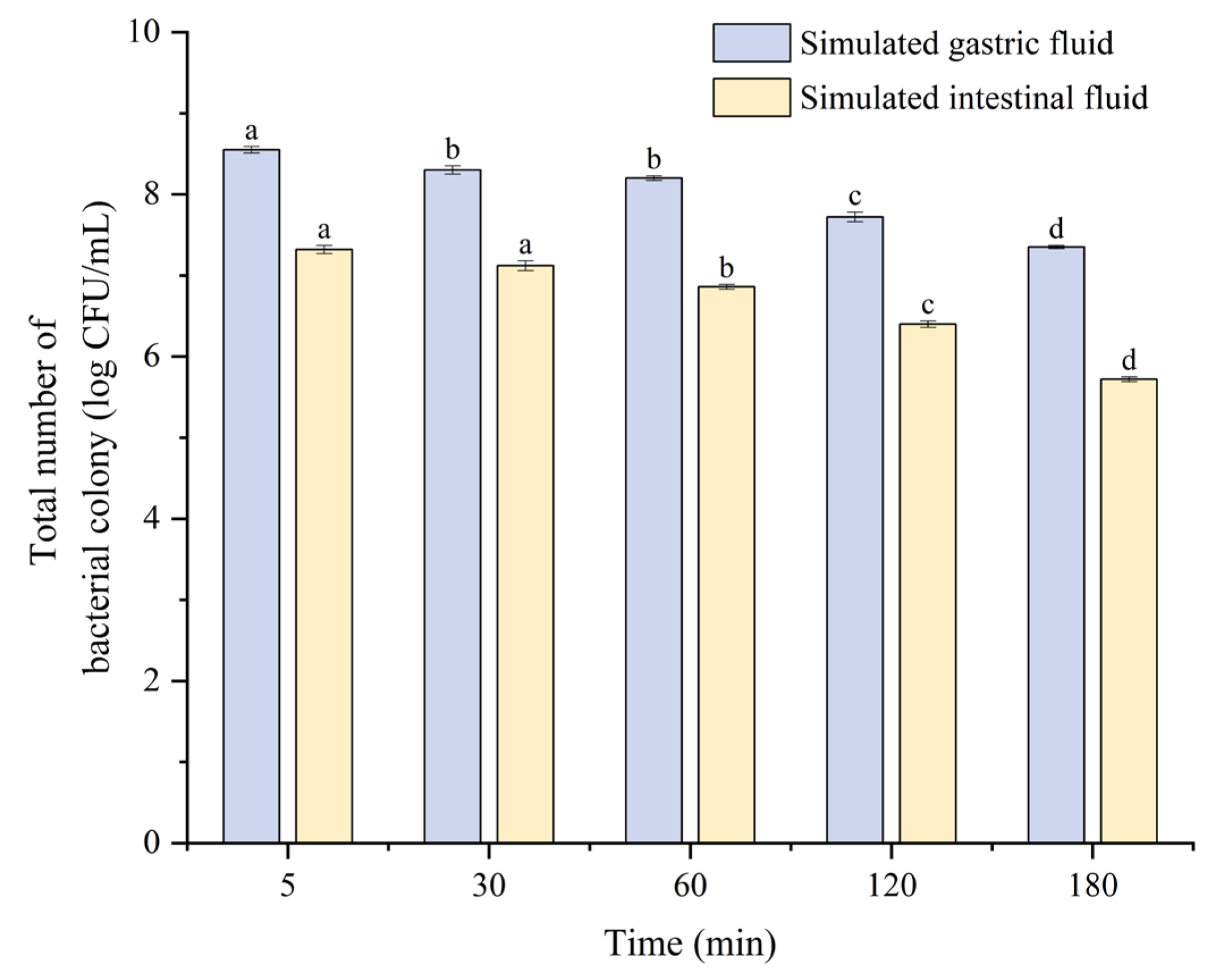
For probiotic foods to exert functional benefits, at least 106–107 CFU/mL of viable cells should reach the small intestine [40]. Therefore, tolerance to gastric acid and bile salts is a key determinant of probiotic efficacy. Previous studies suggest that probiotic products should contain approximately 108–109 CFU/mL prior to consumption, as a portion of viable cells is inevitably lost during gastrointestinal transit. [41]. As shown in Figure 9, different letters above the bars indicate significant differences among time points within the same digestion fluid (p < 0.05), and the total colony counts were 8.55 log CFU/mL after 5 min of simulated gastric digestion, corresponding to a survival rate of approximately 95%. After 180 min of gastric exposure, the counts decreased slightly to 7.35 log CFU/mL (82% survival). During simulated intestinal digestion, the counts remained 7.32 log CFU/mL after 5 min (81% survival) and 6.4 log CFU/mL after 120 min (64% survival). Overall, the colony counts remained above the minimum functional threshold of 6 log CFU/mL throughout simulated digestion, indicating that the probiotic population maintained potential viability and activity in vivo.
Figure 9.
Tolerance of probiotics to a simulated gastrointestinal fluid environment. Note: Different letters indicate significant differences among time points within the same simulated digestion fluid (p < 0.05).
4. Conclusions
This study proposes a novel strategy for developing a symbiotic beverage based on germinated highland barley. By integrating mixed-culture fermentation with a natural stabilizer system, key challenges in functional beverage development were addressed, including palatability, physical stability, and the retention of probiotic colony counts during simulated digestion. The novelty of this work lies in the dual functionality of inherent β-glucan, which acts as both a prebiotic component and a natural stabilizer, providing a clean-label alternative to conventional additives. The optimized beverage exhibited favorable sensory properties and maintained total colony counts above the functional threshold (6 log CFU/mL) throughout simulated gastrointestinal digestion under the applied cultivation condition. Overall, this study provides a scientifically grounded framework for the development of grain-based probiotic beverages with improved stability and potential health benefits.
The optimal formulation of the highland barley probiotic beverage was developed using fermented barley pulp supplemented with erythritol, orange juice concentrate, and linseed oil. The effects of polysaccharides and proteins on system stability were evaluated using the TSI stability index, and the optimal stabilizing combination was identified among four combinations: BG-WP, BG-RP, BG-PP, and BG-SPI. The influence of different BG-WP ratios on beverage stability was analyzed using a multiple light scattering instrument, while the microrheological properties of the system were further characterized using the Rheolaser Lab microrheological analyzer. The results demonstrated that the highest sensory scores were obtained when 4% erythritol, 3% orange juice concentrate and 0.5% flaxseed oil were added. In addition, the lowest TSI value was observed when the BG-WP ratio was 2 to 1, indicating optimal physical stability of the beverage.
Using a highland barley probiotic functional beverage as the test system, the tolerance of probiotics to simulated gastrointestinal conditions was evaluated. After 3 h of exposure to simulated gastric fluid, the total colony counts remained at 7.35 log CFU/mL, corresponding to a survival rate was 82%. Following 2 h of digestion in simulated intestinal fluid, the viable probiotic count remained as high as 6.4 log CFU/mL, with a survival rate was 64%, which satisfies the minimum viable cell requirement (>6 log CFU/mL) for probiotic products. Nutritional evaluation further indicated that the germinated highland barley probiotic beverage is a low-fat, high-fiber functional grain beverage with favorable nutritional quality and health-promoting potential.
Author Contributions
Conceptualization, J.D.; methodology, R.X.; software, Q.M. and Y.Z.; validation, J.D., and R.X.; formal analysis, Q.M.; investigation, R.X.; resources, R.S.; data curation, Q.M. and Y.Z.; writing—original draft preparation, R.X.; writing—review and editing, J.D. and Y.Z.; visualization, R.X.; supervision, R.S.; project administration, R.S.; funding acquisition, R.S. All authors have read and agreed to the published version of the manuscript.
Funding
This work was supported by the Natural Science Foundation of Henan Province (20250313212836).
Institutional Review Board Statement
Not applicable.
Informed Consent Statement
Not applicable.
Data Availability Statement
The original contributions presented in this study are included in the article. Further inquiries can be directed to the corresponding authors.
Acknowledgments
The authors are grateful to the editors and reviewers for their helpful comments.
Conflicts of Interest
The authors declare no conflicts of interest.
References
- Obadi, M.; Qi, Y.; Xu, B. Highland barley starch (Qingke): Structures, properties, modifications, and applications. Int. J. Biol. Macromol. 2021, 185, 725–738. [Google Scholar] [CrossRef] [Scilit]
- Dong, J.; Cai, F.; Shen, R.; Liu, Y. Hypoglycaemic effects and inhibitory effect on intestinal disaccharidases of oat beta-glucan in streptozotocin-induced diabetic mice. Food Chem. 2011, 129, 1066–1071. [Google Scholar] [CrossRef] [Scilit] [PubMed]
- Huang, L.; Dong, J.-L.; Zhang, K.-Y.; Zhu, Y.-Y.; Shen, R.-L.; Qu, L.-B. Thermal processing influences the physicochemical properties, in vitro digestibility and prebiotics potential of germinated highland barley. LWT 2021, 140, 110814. [Google Scholar] [CrossRef] [Scilit]
- Al-Ansi, W.; Mahdi, A.A.; Al-Maqtari, Q.A.; Mushtaq, B.S.; Ahmed, A.; Karrar, E.; Mohammed, J.K.; Fan, M.; Li, Y.; Qian, H.; et al. The potential improvements of naked barley pretreatments on GABA, β-glucan, and antioxidant properties. LWT 2020, 130, 109698. [Google Scholar] [CrossRef] [Scilit]
- Al-Ansi, W.; Zhang, Y.; Alkawry, T.A.A.; Al-Adeeb, A.; Mahdi, A.A.; Al-Maqtari, Q.A.; Ahmed, A.; Mushtaq, B.S.; Fan, M.; Li, Y.; et al. Influence of germination on bread-making behaviors, functional and shelf-life properties, and overall quality of highland barley bread. LWT 2022, 159, 113200. [Google Scholar] [CrossRef] [Scilit]
- Gupta, A.; Sanwal, N.; Bareen, M.A.; Barua, S.; Sharma, N.; Joshua Olatunji, O.; Prakash Nirmal, N.; Sahu, J.K. Trends in functional beverages: Functional ingredients, processing technologies, stability, health benefits, and consumer perspective. Food Res. Int. 2023, 170, 113046. [Google Scholar] [CrossRef] [Scilit]
- Chavan, M.; Gat, Y.; Harmalkar, M.; Waghmare, R. Development of non-dairy fermented probiotic drink based on germinated and ungerminated cereals and legume. LWT 2018, 91, 339–344. [Google Scholar] [CrossRef] [Scilit]
- Santana, R.V.; dos Santos, D.C.; Santana, A.C.A.; Oliveira Filho, J.G.d.; de Almeida, A.B.; de Lima, T.M.; Silva, F.G.; Egea, M.B. Quality parameters and sensorial profile of clarified “Cerrado” cashew juice supplemented with Sacharomyces boulardii and different sweeteners. LWT 2020, 128, 109319. [Google Scholar] [CrossRef] [Scilit]
- Zhou, Z.; Sarwar, A.; Xue, R.; Hu, G.; Wu, J.; Aziz, T.; Alasmari, A.F.; Yang, Z.; Yang, Z. Metabolomics analysis of potential functional metabolites in synbiotic ice cream made with probiotic Saccharomyces cerevisiae var. boulardii CNCM I-745 and prebiotic inulin. Food Chem. 2024, 454, 139839. [Google Scholar] [CrossRef] [Scilit]
- Kang, Y.; Kang, X.; Yang, H.; Liu, H.; Yang, X.; Liu, Q.; Tian, H.; Xue, Y.; Ren, P.; Kuang, X.; et al. Lactobacillus acidophilus ameliorates obesity in mice through modulation of gut microbiota dysbiosis and intestinal permeability. Pharmacol. Res. 2022, 175, 106020. [Google Scholar] [CrossRef] [Scilit]
- Bimbatti, K.d.F.; Rocha, R.d.S.; Braido, I.Z.; Lima, I.d.C.; Benoso, P.; Thomazini, M.; Sobral, P.J.d.A.; Faleiros, F.; Favaro-Trindade, C.S. Development and evaluation of fermented milk with Lactobacillus acidophilus added to concentrated cranberry (Vaccinium macrocarpon) juice with the potential to minimize the recurrence of urinary tract infections. Food Res. Int. 2024, 195, 114997. [Google Scholar] [CrossRef] [Scilit]
- Marco-Molés, R.; Hernando, I.; Llorca, E.; Pérez-Munuera, I. Influence of high pressure homogenization (HPH) on the structural stability of an egg/dairy emulsion. J. Food Eng. 2012, 109, 652–658. [Google Scholar] [CrossRef] [Scilit]
- Hübner, F.; Arendt, E.K. Germination of Cereal Grains as a Way to Improve the Nutritional Value: A Review. Crit. Rev. Food Sci. Nutr. 2013, 53, 853–861. [Google Scholar] [CrossRef] [Scilit] [PubMed]
- Zhang, Z.; Yang, Y.; Huang, X.; Jin, Z.; Jiao, A. Stabilization of a collagen peptide-cranberry juice by three functional polysaccharides with different charge characteristics. Food Hydrocoll. 2023, 139, 108518. [Google Scholar] [CrossRef] [Scilit]
- Abdeldaiem, A.M.; Ali, A.H.; Shah, N.; Ayyash, M.; Mousa, A.H. Physicochemical analysis, rheological properties, and sensory evaluation of yogurt drink supplemented with roasted barley powder. LWT 2023, 173, 114319. [Google Scholar] [CrossRef] [Scilit]
- Kütt, M.-L.; Orgusaar, K.; Stulova, I.; Priidik, R.; Pismennõi, D.; Vaikma, H.; Kallastu, A.; Zhogoleva, A.; Morell, I.; Kriščiunaite, T. Starter culture growth dynamics and sensory properties of fermented oat drink. Heliyon 2023, 9, e15627. [Google Scholar] [CrossRef] [Scilit]
- Sun, C.; Wu, T.; Liu, R.; Liang, B.; Tian, Z.; Zhang, E.; Zhang, M. Effects of superfine grinding and microparticulation on the surface hydrophobicity of whey protein concentrate and its relation to emulsions stability. Food Hydrocoll. 2015, 51, 512–518. [Google Scholar] [CrossRef] [Scilit]
- Ren, Z.; Chen, Z.; Zhang, Y.; Lin, X.; Li, B. Characteristics and rheological behavior of Pickering emulsions stabilized by tea water-insoluble protein nanoparticles via high-pressure homogenization. Int. J. Biol. Macromol. 2020, 151, 247–256. [Google Scholar] [CrossRef] [Scilit]
- Liu, Z.; Cao, Z.; Zhao, M.; Zhang, H.; Wang, J.; Sun, B. Synergistic influence of protein particles and low-molecular-weight emulsifiers on the stability of a milk fat-based whippable oil-in-water emulsion. Food Hydrocoll. 2022, 127, 107520. [Google Scholar] [CrossRef] [Scilit]
- GB 5009.5-2025; National Food Safety Standard—Determination of Protein in Foods. National Health Commission of the People’s Republic of China: Beijing, China, 2025.
- GB 5009.6-2016; National Food Safety Standard—Determination of Fat in Foods. National Health Commission of the People’s Republic of China: Beijing, China, 2016.
- GB 5009.88-2023; National Food Safety Standard—Determination of Dietary Fiber in Foods. National Health Commission of the People’s Republic of China: Beijing, China, 2023.
- AOAC Official Method 995.16; Dietary Fiber in Foods—Enzymatic-Gravimetric Method. AOAC International: Rockville, MD, USA, 1995.
- Rocha-Arriaga, C.; Cruz-Ramirez, A. Yeast and nonyeast fungi: The hidden allies in pulque fermentation. Curr. Opin. Food Sci. 2022, 47, 100878. [Google Scholar] [CrossRef] [Scilit]
- Kyereh, E.; Sathivel, S. Viability of Lactobacillus plantarum NCIMB 8826 immobilized in a cereal-legume complementary food “weanimix” with simulated gastrointestinal conditions. Food Biosci. 2021, 40, 100848. [Google Scholar] [CrossRef] [Scilit]
- Yan, Z.; Liu, J.; Cao, S.; Wang, Z.; Li, C.; Ren, J.; Zhang, R.; Zhang, M.; Liu, X. Substitution of sucrose by erythritol in angel cake: Effect on protein foaming, baking performance and digestion properties. Int. J. Biol. Macromol. 2023, 253, 126759. [Google Scholar] [CrossRef] [Scilit] [PubMed]
- Wijaya, W.; Patel, A.R.; Setiowati, A.D.; Van der Meeren, P. Functional colloids from proteins and polysaccharides for food applications. Trends Food Sci. Technol. 2017, 68, 56–69. [Google Scholar] [CrossRef] [Scilit]
- Wei, Y.; Cai, Z.; Wu, M.; Guo, Y.; Tao, R.; Li, R.; Wang, P.; Ma, A.; Zhang, H. Comparative studies on the stabilization of pea protein dispersions by using various polysaccharides. Food Hydrocoll. 2020, 98, 105233. [Google Scholar] [CrossRef] [Scilit]
- Baba, W.N.; McClements, D.J.; Maqsood, S. Whey protein–polyphenol conjugates and complexes: Production, characterization, and applications. Food Chem. 2021, 365, 130455. [Google Scholar] [CrossRef] [Scilit]
- Yang, X.; Nisar, T.; Hou, Y.; Gou, X.; Sun, L.; Guo, Y. Pomegranate peel pectin can be used as an effective emulsifier. Food Hydrocoll. 2018, 85, 30–38. [Google Scholar] [CrossRef] [Scilit]
- Dima, C.; Assadpour, E.; Dima, S.; Jafari, S.M. Bioavailability of nutraceuticals: Role of the food matrix, processing conditions, the gastrointestinal tract, and nanodelivery systems. Compr. Rev. Food Sci. Food Saf. 2020, 19, 954–994. [Google Scholar] [CrossRef] [Scilit]
- Mousazadeh, M.; Mousavi, M.; Askari, G.; Kiani, H.; Adt, I.; Gharsallaoui, A. Thermodynamic and physiochemical insights into chickpea protein-Persian gum interactions and environmental effects. Int. J. Biol. Macromol. 2018, 119, 1052–1058. [Google Scholar] [CrossRef] [Scilit]
- Jukkola, A.; Partanen, R.; Xiang, W.; Heino, A.; Rojas, O.J. Food emulsifiers based on milk fat globule membranes and their interactions with calcium and casein phosphoproteins. Food Hydrocoll. 2019, 94, 30–37. [Google Scholar] [CrossRef] [Scilit]
- Badruddoza, A.Z.M.; MacWilliams, S.V.; Sebben, D.A.; Krasowska, M.; Beattie, D.; Durian, D.J.; Ferri, J.K. Diffusing wave spectroscopy (DWS) methods applied to double emulsions. Curr. Opin. Colloid Interface Sci. 2018, 37, 74–87. [Google Scholar] [CrossRef] [Scilit]
- Li, X.; Wang, X.; Xu, D.; Cao, Y.; Wang, S.; Wang, B.; Sun, B.; Yuan, F.; Gao, Y. Enhancing physicochemical properties of emulsions by heteroaggregation of oppositely charged lactoferrin coated lutein droplets and whey protein isolate coated DHA droplets. Food Chem. 2018, 239, 75–85. [Google Scholar] [CrossRef] [Scilit]
- Mason, T.G. Estimating the viscoelastic moduli of complex fluids using the generalized Stokes–Einstein equation. Rheol. Acta 2000, 39, 371–378. [Google Scholar] [CrossRef] [Scilit]
- Moschakis, T.; Murray, B.S.; Dickinson, E. On the kinetics of acid sodium caseinate gelation using particle tracking to probe the microrheology. J. Colloid Interface Sci. 2010, 345, 278–285. [Google Scholar] [CrossRef] [Scilit]
- Hebishy, E.; Buffa, M.; Guamis, B.; Blasco-Moreno, A.; Trujillo, A.-J. Physical and oxidative stability of whey protein oil-in-water emulsions produced by conventional and ultra high-pressure homogenization: Effects of pressure and protein concentration on emulsion characteristics. Innov. Food Sci. Emerg. Technol. 2015, 32, 79–90. [Google Scholar] [CrossRef] [Scilit]
- Liu, C.; Jin, H.; Yu, Y.; Sun, J.; Zheng, H.; Zhang, Y.; Xu, J.; Zhu, X. The Improvement of Nanoemulsion Stability and Antioxidation via Protein-Chlorogenic Acid-Dextran Conjugates as Emulsifiers. Nanomaterials 2020, 10, 1094. [Google Scholar] [CrossRef] [Scilit]
- Hill, C.; Guarner, F.; Reid, G.; Gibson, G.R.; Merenstein, D.J.; Pot, B.; Morelli, L.; Canani, R.B.; Flint, H.J.; Salminen, S.; et al. The International Scientific Association for Probiotics and Prebiotics consensus statement on the scope and appropriate use of the term probiotic. Nat. Rev. Gastroenterol. Hepatol. 2014, 11, 506–514. [Google Scholar] [CrossRef] [Scilit]
- Grom, L.C.; Coutinho, N.M.; Guimarães, J.T.; Balthazar, C.F.; Silva, R.; Rocha, R.S.; Freitas, M.Q.; Duarte, M.C.K.H.; Pimentel, T.C.; Esmerino, E.A.; et al. Probiotic dairy foods and postprandial glycemia: A mini-review. Trends Food Sci. Technol. 2020, 101, 165–171. [Google Scholar] [CrossRef] [Scilit]

Disclaimer/Publisher’s Note: The statements, opinions and data contained in all publications are solely those of the individual author(s) and contributor(s) and not of MDPI and/or the editor(s). MDPI and/or the editor(s) disclaim responsibility for any injury to people or property resulting from any ideas, methods, instructions or products referred to in the content. |
© 2026 by the authors. Licensee MDPI, Basel, Switzerland. This article is an open access article distributed under the terms and conditions of the Creative Commons Attribution (CC BY) license.