


Abstract
This study’s primary objective is to determine how boron-containing wastes from the stripping areas of the Emet–Bigadiç (Türkiye) boron deposits affect the mechanical performance of cement-based mortars and the effectiveness of weak soil improvement. The Bigadiç samples contain colemanite, calcite, dolomite, and quartz minerals, whereas the Emet samples predominantly comprise calcite. The wastes were incorporated into the cement matrix in two different forms: (i) solid-phase cement replacement and (ii) boron waste solution additive. Experimental findings demonstrated that replacing 10% of cement with a 4% Bigadiç-origin boron waste solution resulted in a compressive strength of 55.37 MPa after 7 days of curing, which is higher than that of the reference mixture. Also, the study revealed that the addition of 15% boron waste to weak soils increased the soil density to 1728 kg/m3 by filling micro-voids and enhancing intergranular interlocking. Due to this physical filling and chemical bridging effect, CBR value increased from an initial 4 to 6, providing a significant improvement in the soil’s deformation modulus and bearing capacity. Consequently, used boron wastes not only provide high mechanical performance in cement-based systems but also offer potential as an alternative additive material for sustainable and cost-effective soil stabilization applications.
1. Introduction
Türkiye possesses approximately 73% of the world’s boron reserves. In this context, Türkiye holds strategic importance in boron exportation. Boron mineral deposits located in Emet (Kütahya), Kırka (Eskişehir), Bigadiç (Balıkesir), and Kestelek (Bursa) are operated by ETİMADEN Enterprises. The most abundant boron minerals in Türkiye in terms of reserves are tincal (borax) and colemanite. The chemical composition of borax is Na2[B4O5(OH)4]·8H2O, while that of colemanite is 2CaO·3B2O3·5H2O. The element boron is widely used in the construction sector, including cement, glass, building and insulation materials, polymers, adhesives, and ceramics. Moreover, it is utilized in many other fields such as the pharmaceutical and cosmetic industries, the defense industry, the paper industry, wood preservation, the agriculture and healthcare sectors, and the automotive industry [1]. In Türkiye, studies related to the production of boron-modified innovative building materials for the construction sector have increased over the last twenty-five years. Generally, research has focused on their use in the production of brick and lightweight concrete as building materials [2,3,4,5]. In these studies, boron was used either as a direct additive or as waste boron resulting from production processes [6,7,8,9,10]. The samples were prepared by mixing boron waste with pumice sand in certain proportions for brick production. Shaping, drying, and firing tests were applied to the samples, and compressive strength, water absorption, frost resistance, unit volume weight, porosity, etc., tests were performed on the fired samples. It was determined that lightweight and porous building blocks can be produced by mixing pumice sand with boron waste at a ratio of 50% by weight and firing at 900 °C [11]. However, in research on the feasibility of producing pumice bricks using boron, boron minerals (borax, colemanite) and boron waste were used as an additive material. It was determined that bricks produced with boron and pumice are usable in the construction sector in terms of strength values, thermal conductivity coefficient, water absorption, moisture content, porosity values, and firing temperature [12]. Also, in the study on the physical and mechanical properties of perlite bricks containing sodium borate and potassium borate, it was confirmed that the usability of boron-added perlite bricks in buildings to provide high insulation, save energy, and reduce the self-weight or dead load of the structure [13,14,15].
In recent years, the use of boron in cement production has been considered by numerous researchers, and various experimental studies have been conducted. In these studies, boron and/or boron wastes have been added to cement in varying weight ratios, and strength and durability tests have been applied to the prepared blended cements. It has been determined that boron minerals (colemanite) and boron wastes may be suitable for cement production [16,17,18,19]. Özdemir and Öztürk [20] investigated the utilization of clay wastes (CW) containing boron as cement additives by comparing with Portland cement. The effect of CW on the mechanical and chemical properties of cement prepared by adding CW to clinker and gypsum was determined. The authors suggested that CW1 (w/w % 22.48 B2O3) and CW2 (w/w % 8.23 B2O3) can be used as cement additives up to 5% and 10%, respectively. Özdemir and Uğurlu [21] reported the evaluation of clay wastes (CW) containing boron additives in mortar. CW grounds were added to ordinary Portland Cement (OPC) at different proportions (0–20%) and compared with those of control samples and Turkish Standards (TS). The strength values of all specimens containing 1.5% of CW were higher than those of the control sample, whereas CW affected the durability negatively at a low level due to the weight losses of samples exposed to NaCl solution and MgSO4 solution. Also, the role of borogypsum as an alternative supplementary cementitious material in cement production has been discussed. According to the test results, 5% and 10% replacement of borogypsum with cement resulted in increases in compressive and tensile strengths of the mortars [22]. In the study conducted on the usability of boron aggregates in mortar for neutron shielding in structures, experimental tests were performed to evaluate the effect of boron aggregates (colemanite, ulexite, borax, boron carbide) and nanosilica on the setting time and hydration heat of cement in mortars using isothermal calorimetry. The observed linear relationship between the hydration heat generated and compressive strength, and the logical effects of the delay in initial and final setting times, allow for the isothermal calorimetry method to be used as a compatibility assessment tool for boron-containing aggregates [23]. Also, heat-treated boron-containing wastes having three different particle size distributions were used as Portland cement replacements by 25 wt%. The smaller median particle size of boron-containing wastes compared to cement decreased the strength of mortars because of lower packing density. However, applicable cement mortars can be produced by slightly broadening the particle size distributions of non-reactive fillers as cement replacements thanks to their contribution to packing density [24].
Concrete produced with boron-containing cement has been stated to exhibit lower permeability and higher resistance to external effects, as well as reduced water absorption and chloride permeability [25]. The study aimed to produce lightweight concrete using pumice stone aggregate and boron waste as substitute materials in different proportions (1%, 3%, 5%, 7%, and 9%). In the first stage, lightweight concrete was produced using 90% pumice stone aggregate and 10% sand (reference sample). In the second stage, a modified lightweight concrete sample was produced using boron waste in proportions of 1%, 3%, 5%, 7%, and 9% instead of pumice stone aggregate. It was stated that the best results in terms of physical (specific gravity, saturated unit weight, porosity, and capillary water absorption) and mechanical properties (tensile strength and compressive strength) were obtained with the 9% boron waste substitution [26]. Topçu and Boga [27] investigated the effect of boron-containing clay waste (CW) on the mechanical properties of concrete. CW was added to the concrete as a cement additive in different proportions. It was shown that the addition of CW had a small effect on the workability of the concrete, but a significant effect on the reduction in its strength. The authors defined that when no more than 10% CW was used instead of cement, the strength values were quite close to those of the control concrete. They said that even though the mechanical properties decreased with increasing CW content, some improvements in durability properties were achieved. However, the study investigates the usability of boron-containing waste material as a filler in asphalt concrete. For this purpose, asphalt concrete samples were produced using mineral fillers containing 4–8% boron waste. Marshall Design tests and creep tests were applied to the asphalt concrete samples. It was stated that boron waste can be used as a filler in the wearing courses of asphalt concrete road pavements with medium and low traffic density [28,29]. Boron waste has been reused as an additive to road base material. Lime and cement were used to stabilize the waste mixture. Studies have shown that when the lime content exceeds 8%, the mechanical strength of the lime-stabilized boron waste mixture (LSB) meets the road base requirements. However, it can only be applied in non-frozen regions due to its poor frost resistance [30].
Accordingly, it has been emphasized that boron waste utilization can not only eliminate environmental problems but also provide economic benefits for the country [16,31]. It has been stated that the use of boron mineral (colemanite) and/or boron waste in cement production reduces the amount of carbon dioxide released into the atmosphere by 25–30%, thus emphasizing the possibility of producing green cement [16].
Cement and lime stabilization is the most common stabilization method used in soil improvement. Cement stabilization provides good compressive strength and is preferred for sandy or silty sand soils, i.e., cohesionless to moderately cohesive soils, but it loses its effectiveness in plastic clay soils. Lime stabilization is a suitable method for plastic clays; however, it has proven ineffective in sulfate-rich clays. Therefore, much research has been conducted on the use of solid waste to address and overcome the problems encountered in soil stabilization methods. After 15 years of research, Avcı and Mollamahmutoğlu [32,33] developed a boron-modified injection material aimed at improving soil liquefaction in affected areas, thereby making them more earthquake-resistant. They conducted their first application in the Gemlik Kurşunlu Coastal Region, a high-risk area located along fault lines, as a pilot project. Following experiments and applications, they determined that this method was more effective in preventing soil liquefaction compared to other methods. It was found to be approximately 80% more economical than pile-supported soil improvement methods and approximately 50% more economical than jet injection techniques (a consolidation method where a cement–water mixture is injected into the soil under high pressure to create columns). However, it has been stated that in the improvement of loose soils, the addition of polymer and fly ash in various proportions as additives in cement stabilization results in strengths of 7.2–18.4 MPa with cement alone, while strengths of 17.3–19.2 MPa are achieved with composite reinforcement [34].
In Türkiye, destructive earthquakes with high moment magnitude (>6.5 Mw) have occurred in the last 25 years, including the 1999 Gölcük, 1999 Düzce, and 2023 Kahramanmaraş earthquakes. These destructive natural disasters highlight the critical importance of soil conditions and ground improvement methods in structural construction. Soil improvement through the use of cement dates back to applications on state highways in the United States in the 1920s. With increasing traffic loads, transportation infrastructures, particularly airports, have been stabilized using cement.
The soil types that benefit the most from cement stabilization include sandy and silty soils as well as low-plasticity clays. When the water within the soil pores comes into contact with cement, rapid hydration of the cement occurs. During the hardening process resulting from hydration, cement particles coat and bind adjacent soil grains, forming a hardened skeletal structure and leading to a significant increase in soil strength. The method is time-dependent and has a pronounced effect on the long-term strength of the soil–cement mixture [35].
Within the scope of this study, the usability of boron-containing waste materials obtained from the boron mineral deposits in Emet (Kütahya) and Bigadiç (Balıkesir), operated by ETİMADEN Enterprises, was investigated for soil improvement applications through their incorporation as additives to cement.
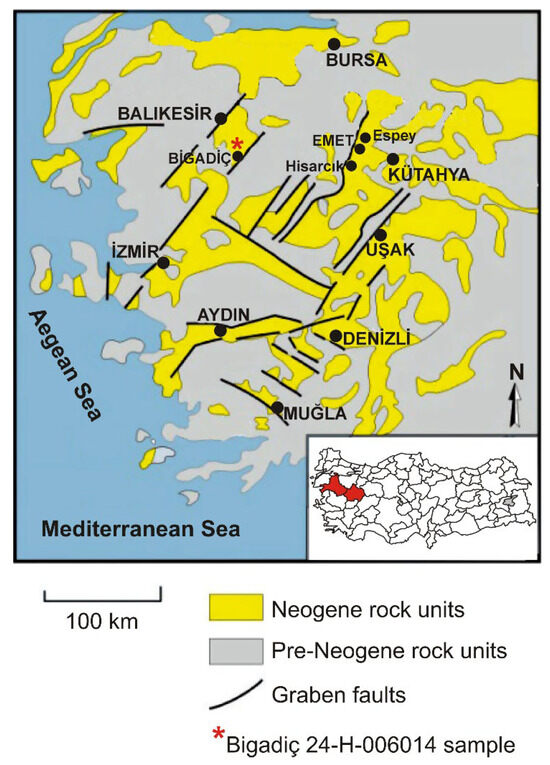
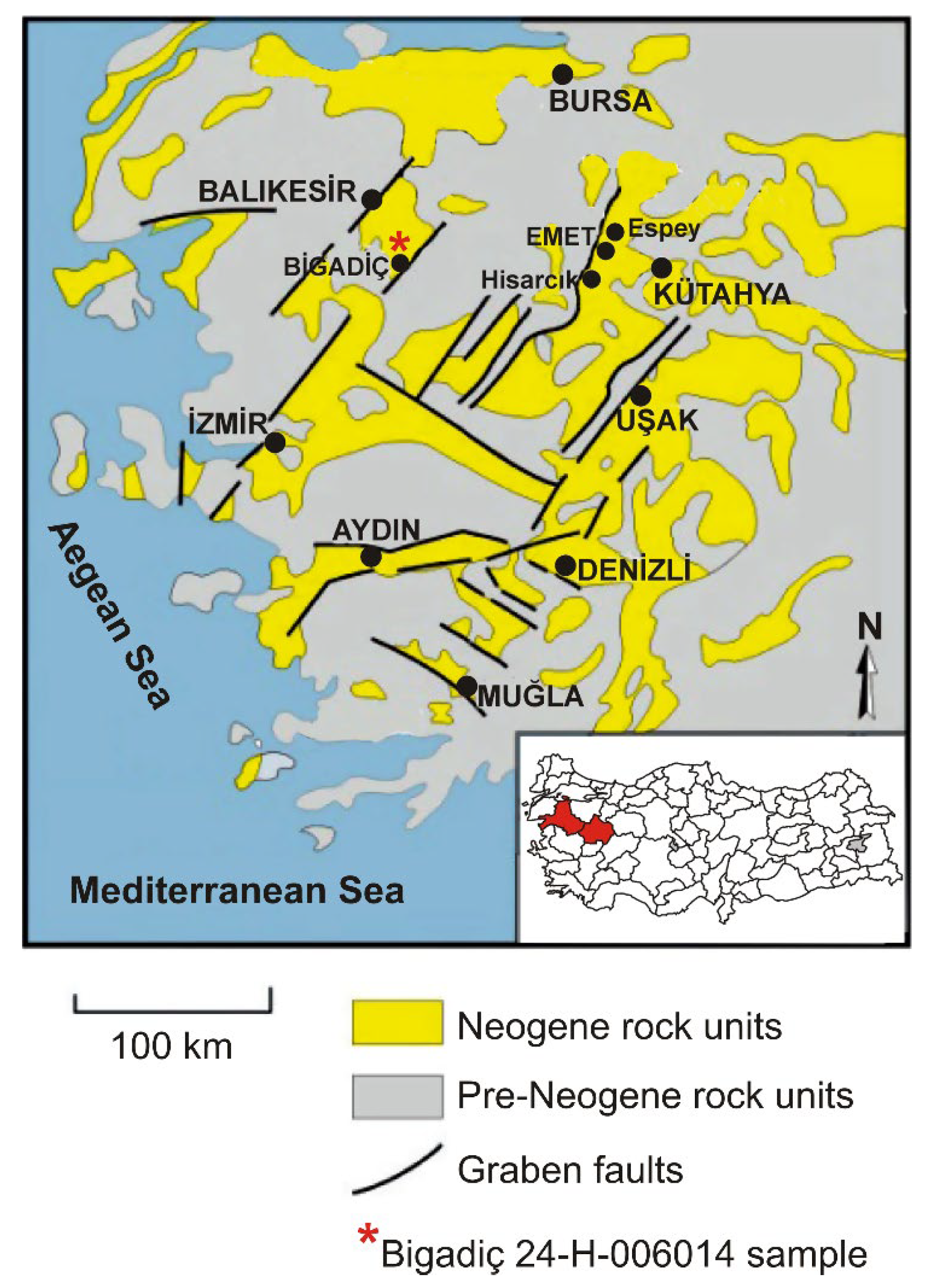
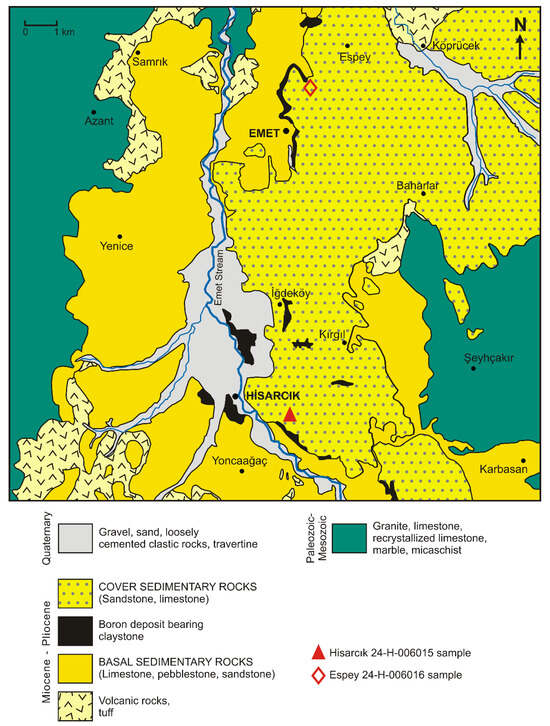
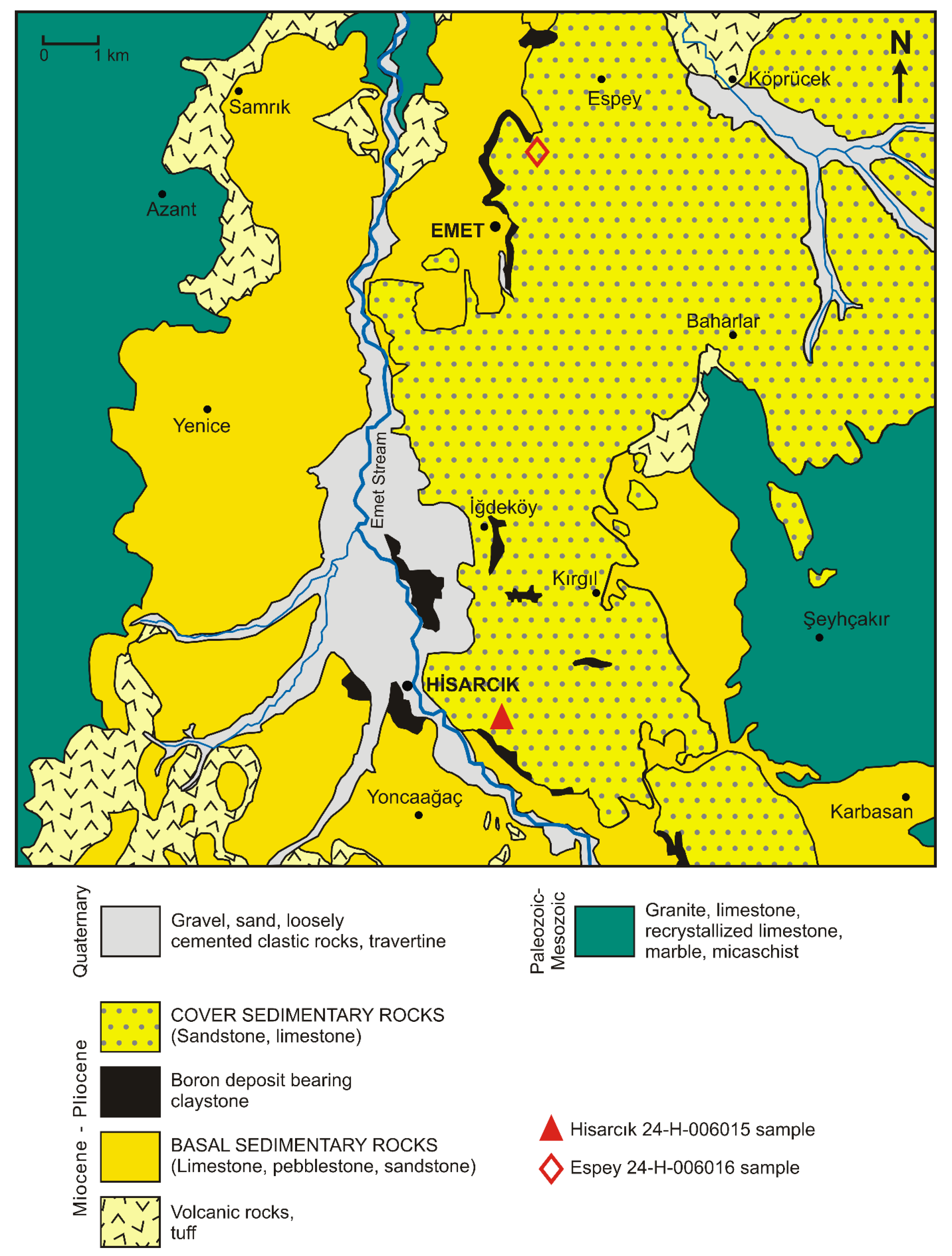
Boron deposits in Türkiye are located within Neogene volcano sedimentary sequences. They occur in association with conglomerate, sandstone, mudstone, claystone, marl, limestone, tuff, and tuffite. Borate deposits, which form alternating bands with these sedimentary rocks, are observed as interbedded levels, lenticular bodies, thin bands, or lateral wedge-shaped geometries [36]. The geological units of the study area and the regional distribution of the Neogene sedimentary succession are presented in Figure 1 and Figure 2, respectively. The Bigadiç borate deposits consist of boron minerals accumulated in Neogene continental lacustrine basins in western Anatolia. These deposits commonly contain colemanite- and ulexite-rich ores that are economically important and are situated within a lacustrine depositional environment characterized by alternations of saline–alkaline lake sediments and volcanic products [37,38]. Stratigraphically, basaltic rocks and tuffs occur at the base, whereas thinly bedded limestone, claystone, and marl units are present in the upper parts. These features indicate that sedimentation and volcanic processes developed contemporaneously during the Neogene (Miocene) period in the region [37,38,39]. The fundamental geological framework of the Bigadiç basin is interpreted as siliceous–claystone interbedded sediments within which borate zones developed; this reflects a genetic process related to the precipitation of boron minerals from evaporating lake waters [37,38,39].
Figure 1.
Distribution of Neogene units containing boron deposits in western Anatolia (Türkiye) [37,38].
Figure 2.
Geological map of the Emet–Hisarcık (Kütahya) area (simplified from [40]).
Similarly, the borate deposits in the Kütahya–Hisarcık–Espey region are products of a Neogene lacustrine basin. In these areas, borate minerals typically alternate with claystone, marl, thin-bedded limestone, and tuff levels, and the deposits display lenticular (lens-shaped) geometries parallel to central lacustrine sediments [40,41,42]. In the Emet basin, borate accumulations were precipitated under chemical conditions controlled by evaporation during former lacustrine cycles and by alluvial inputs, while the transport of boron-bearing components to the lake system was influenced by the weathering of volcanic rocks in the region. The borate levels within the lacustrine sedimentary succession commonly occur in conjunction with carbonate and clay minerals, indicating the physicochemical heterogeneity of the depositional environment [40,41,42,43].
2. Materials and Methods
2.1. Waste Sample Collection from the Stripping Zones of Boron Ore Deposits
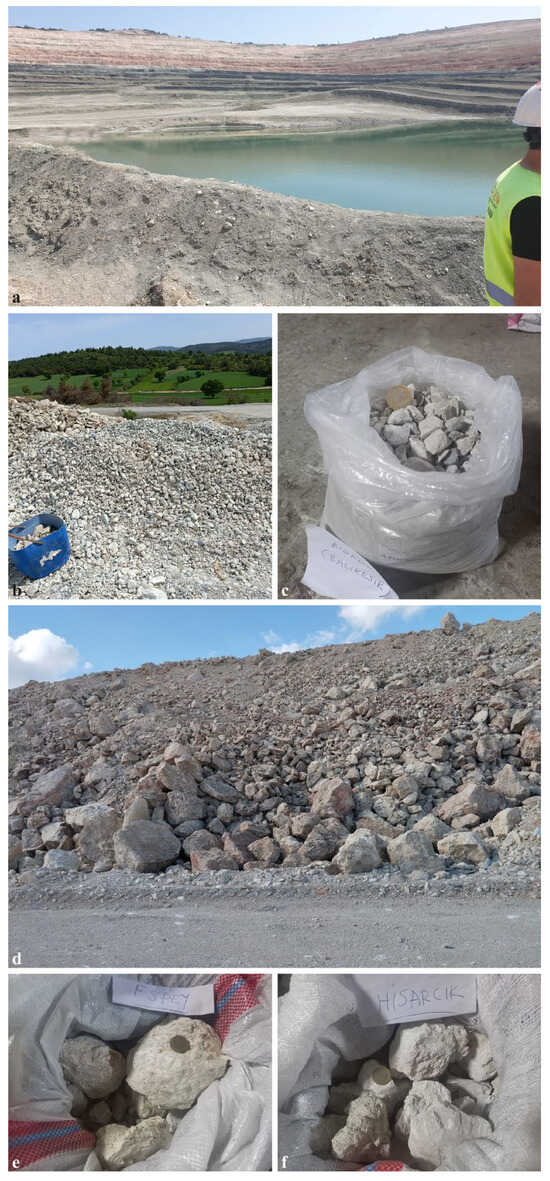
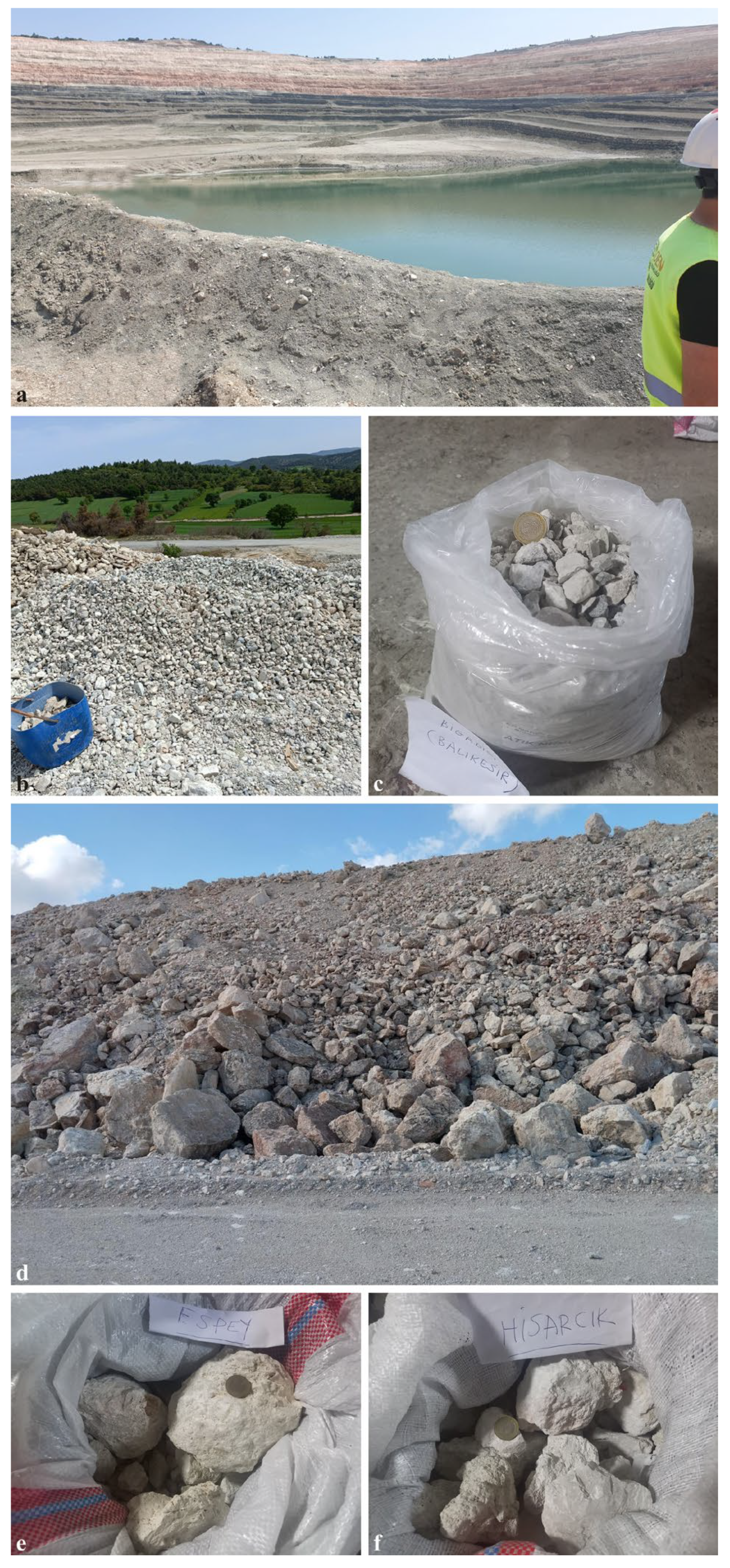
Boron-containing waste samples were collected from the stripping areas of the Bigadiç Open-Pit Mine operated by ETİMADEN Balıkesir Boron Operations, and additional samples were obtained from the surface of the stripping areas of the Hisarcık–Espey (Emet, Kütahya) boron deposits (Figure 3). In open-pit mining, the removal and transportation of unwanted material overlying the ore to designated disposal areas is referred to as stripping (overburden removal) [44]. The geographic coordinates of the samples are as follows: Bigadiç (Balıkesir): 39.46686° N, 28.13627° E; Espey (Emet): 39.37426° N, 29.27438° E; Hisarcık (Emet): 39.24585° N, 29.25618° E.
Figure 3.
(a) Emet Boron deposit; (b) Bigadiç (Balıkesir) boron waste site; (c) Bigadiç boron waste sample; (d) Emet (Kütahya) boron waste site; (e) Espey boron waste sample; (f) Hisarcık boron waste sample.
2.2. Laboratory Investigations
2.2.1. Chemical Characterization
Boron-containing waste samples sent by the General Directorate of ETİMADEN Enterprises, originating from the stripping areas of the Hisarcık and Espey Open-Pit Operations under the Emet Boron Operations Directorate, and those from the stripping area of the Bigadiç Open-Pit Operation under the Bigadiç Boron Operations Directorate were first ground in the laboratories of the General Directorate of Mineral Research and Exploration (MTA), Department of Mineral Analyses and Technology. Then, chemical analyses were conducted on the samples in the laboratories of the Technology Development Department of the General Directorate of ETİMADEN Enterprises, followed by lithium (Li) analyses in the laboratories of the General Directorate of Mineral Research and Exploration (MTA), Department of Mineral Analyses and Technology (Table 1).
Table 1.
(a) Chemical composition of the Bigadiç (Balıkesir) open-pit stripping area sample (Sample ID: Bigadiç 24-H-006014). (b) Chemical analysis results of the samples collected from the stripping areas of Hisarcık and Espey (Kütahya) (Sample IDs: Hisarcık 24-H-006015 and Espey 24-H-006016).
Major element analyses were performed using X-ray fluorescence (XRF). For XRF analyses, samples were dried in a 105 °C oven for 2 h. Later, the samples were pressed into 40 mm diameter pellets formed by grinding 12 g samples with 0.3 g wax (used as binder). The homogeneous mixture obtained was compressed into pellet form at 30 MPa. The prepared samples were analysed using a BRUKER brand S8 TIGER model XRF spectrometer made in Bremen, Germany. For B2O3 analysis, the titrimetric method (considering B2O3 concentration) was applied. The test sample is weighed at 0.300–1.000 g (considering the B2O3 concentration) and transferred to a 250–400 mL beaker. 50–100 mL of boiled distilled water and 5 mL of concentrated hydrochloric acid solution are added. The beakers are covered with a watch glass and kept on a heated plate at a temperature of 130–150 °C for approximately 25–30 min. It is then subjected to gentle boiling at a plate temperature of 200–300 °C for 5–10 min. Approximately 8–10 drops of methylred indicator are added to the solution (the color will turn pink). After precipitation with 6N NaOH solution, the pH of the solution is adjusted to 5.4–6.2 using a pH meter or indicator with 0.5N NaOH and 0.5N HCl solutions. The solution is kept on a heating plate at 65–95 °C for 10–15 min. If the solution is slightly light yellow at this stage, 0.5N HCl is added (until the color turns pink). The solution is cooled to room temperature. It is neutralized using 0.5N HCl and 0.5N NaOH. Sodium hydroxide solution is added until the experimental solution is slightly light yellow. 8–10 drops of phenolphthalein and 10–15 g of mannitol are added to the solution and titrated with 0.5N NaOH with a factor. When the pH reaches the range of 8.3–8.6, the color of phenolphthalein, which is the onion peel color in acidic medium, becomes visible. Mannitol is added again, and if the color does not change, the titration is stopped, and the consumption is recorded.
Procedures applied in loss of ignition measurement: the porcelain crucible and its lid are kept in a furnace at 950 ± 50 °C until they reach a constant weight at the test temperature. It is then transferred to a desiccator and cooled to room temperature, and the crucible (m1) with its lid is weighed. The test sample is weighed into the crucible at a rate of 1–2 g (m2) with an accuracy of 0.0001, and the crucible with its lid closed is placed in a room-temperature muffle furnace. When the muffle furnace reaches 950 ± 50 °C, it is kept at this temperature for 30 min. At the end of this time, the furnace is turned off and allowed to cool for a while. Then the crucible is removed from the furnace, cooled to room temperature in a desiccator, and weighed (m3).
XRD analyses of the samples were performed using a RIGAKU D/MAX-2200 Ultima+/PC model X-ray diffraction (XRD) device made in Wilmington, MA, USA. The samples were ground to a size below 2 microns. Two grams of the powdered sample were taken and placed in a holder. Then, the X-ray beam from the device was directed at the sample. The diffracted X-rays were collected by the device’s X-ray detector. The analysis results obtained from the X-ray diffraction technique of the powdered sample were obtained as a graph. The peaks in the graph were compared with the peaks of the mineral in the prepared catalogs, and the mineral to which it belongs was determined. For trace-element (Li) analysis, the triple acid solution method was used, and measurements were performed using ICP-MS in an Analytical Jena-Plasma Quant-Elite model made in Jena, Germany.
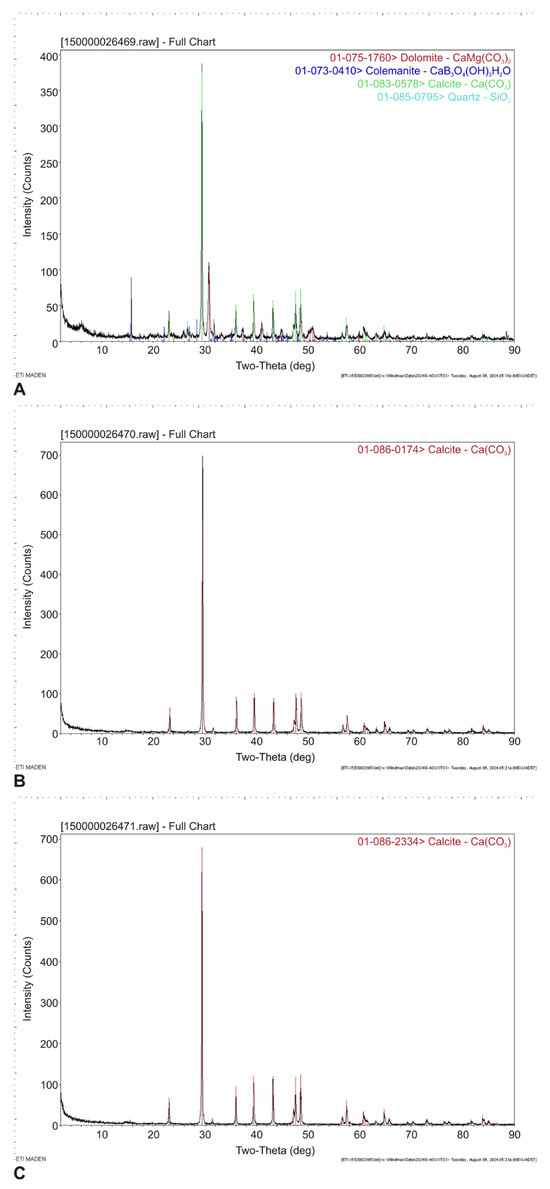
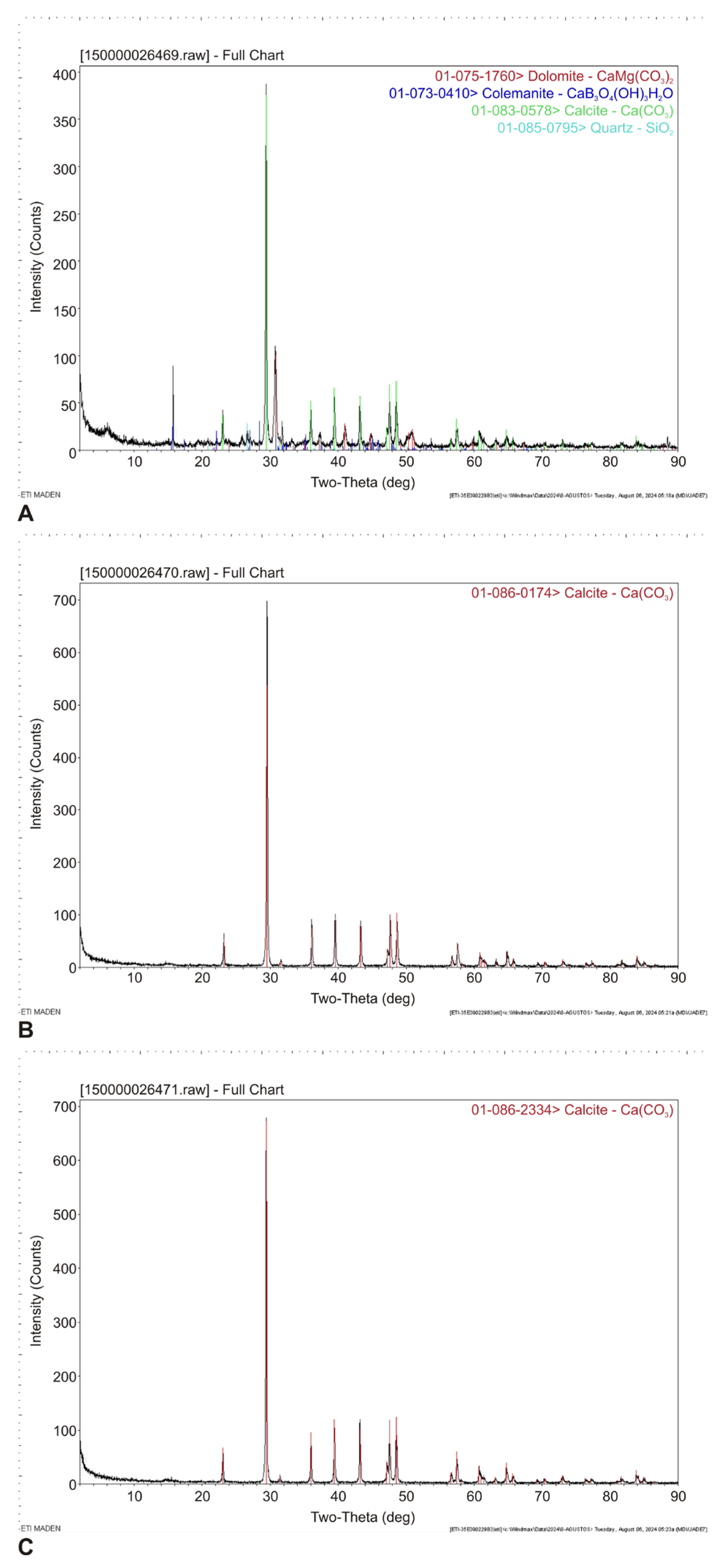
In addition, X-ray diffraction (XRD) analyses were performed on samples collected from the stripping areas of the boron deposits in all three regions (Bigadiç, Espey, and Hisarcık), The results of the analysis revealed the presence of boron minerals (colemanite), calcite, dolomite, and quartz in the boron-containing Bigadiç-origin waste sample, whereas only calcite was identified in the Espey and Hisarcık samples (Figure 4).
Figure 4.
XRD analyses performed on samples taken from the stripping area of the boron deposits in the Bigadiç (A), Espey (B), and Hisarcık (C) regions.
2.2.2. Los Angeles Test
The Los Angeles abrasion test is a standard laboratory method used to determine the mechanical strength of aggregates and their resistance to impact and abrasion. As defined in the ASTM C131 (USA, 2016) and TS EN 1097-2 (Türkiye, 2010) standards, this test is employed to quantitatively evaluate the abrasion resistance of aggregates. In this study, the test was conducted in the laboratory of the 15th Regional Directorate of Highways, as the laboratory is equipped with the necessary technical infrastructure to perform high-precision material testing and serves engineering applications requiring a high level of accuracy and reliability. Following the Los Angeles abrasion test, the resulting crushed fragments were sieved, and the obtained fine fractions were utilized in the mixtures. The use of these fine-grained materials produced through mechanical abrasion aims to increase the specific surface area, thereby promoting a more robust interaction with the cement matrix and achieving a denser structure for soil stabilization.
2.2.3. Sieve Analysis
In this study, material with a particle size range between 90 and 80 µm was selected and used in the mixtures. The main reasons for choosing this particle size range are to maximize the specific surface area and increase the reactive surfaces, to increase the binder-raw material interaction of fine particles in the mixture, and to increase the matrix density by filling micro-voids during cement hydration, thanks to the narrow particle size range. Thus, a positive contribution to impermeability and mechanical strength was achieved through the ‘filler’ effect [45,46]. In addition, a more homogeneous mixture was obtained by sieving larger particles, and the stability of the cement–boron waste interaction was ensured.
2.2.4. Compressive Strength Testing
In this study, the mechanical behavior and strength development of the material associated with the hydration process were investigated. For this purpose, compressive strength tests were performed on specimens cured under moist conditions in a curing tank, and strength values were determined after curing periods of 3 and 7 days. Specimens were prepared at a room temperature of 18 ± 2 °C and blended in a mechanical mixer for 1.5 min to ensure homogeneity. Vibration was applied during casting to eliminate entrapped air. After 24 h, the cube samples were demolded and kept in a curing tank under standard conditions (20 ± 2 °C and 95% relative humidity) until the testing dates.
Table 2 presents the mix proportions of the different material constituents in detail. Each proportion represents the mass- or volume-based contribution of the respective component to the total mixture and was defined as a fundamental design parameter for optimizing material performance. These data are of critical importance for achieving a homogeneous mixture during production and for determining the mechanical and chemical properties of the final product.
Table 2.
The mixing ratios of boron waste, cement, and water.
In this study, Portland cement (TS EN 197-1, CEM IV/B (P) 32.5, Türkiye, 2012) and tap water, as the mix water, were used. Boron waste was incorporated as an additive at replacement levels of 5% and 10%. The materials were mixed homogeneously in a mixer for 1.5 min in accordance with predetermined parameters. During this process, complete dispersion of the constituents within the mixer was ensured to achieve the desired consistency. The mixer speed and mixing duration were optimized depending on the viscosity, density, and other functional properties of the material. As a result, the obtained mixture exhibited a consistent texture and was prepared in a condition suitable for our application.
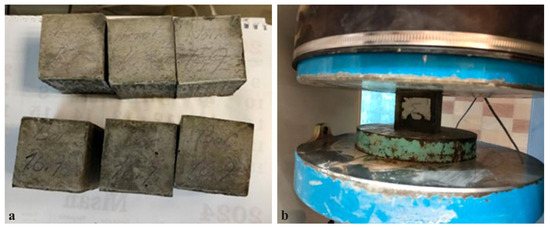
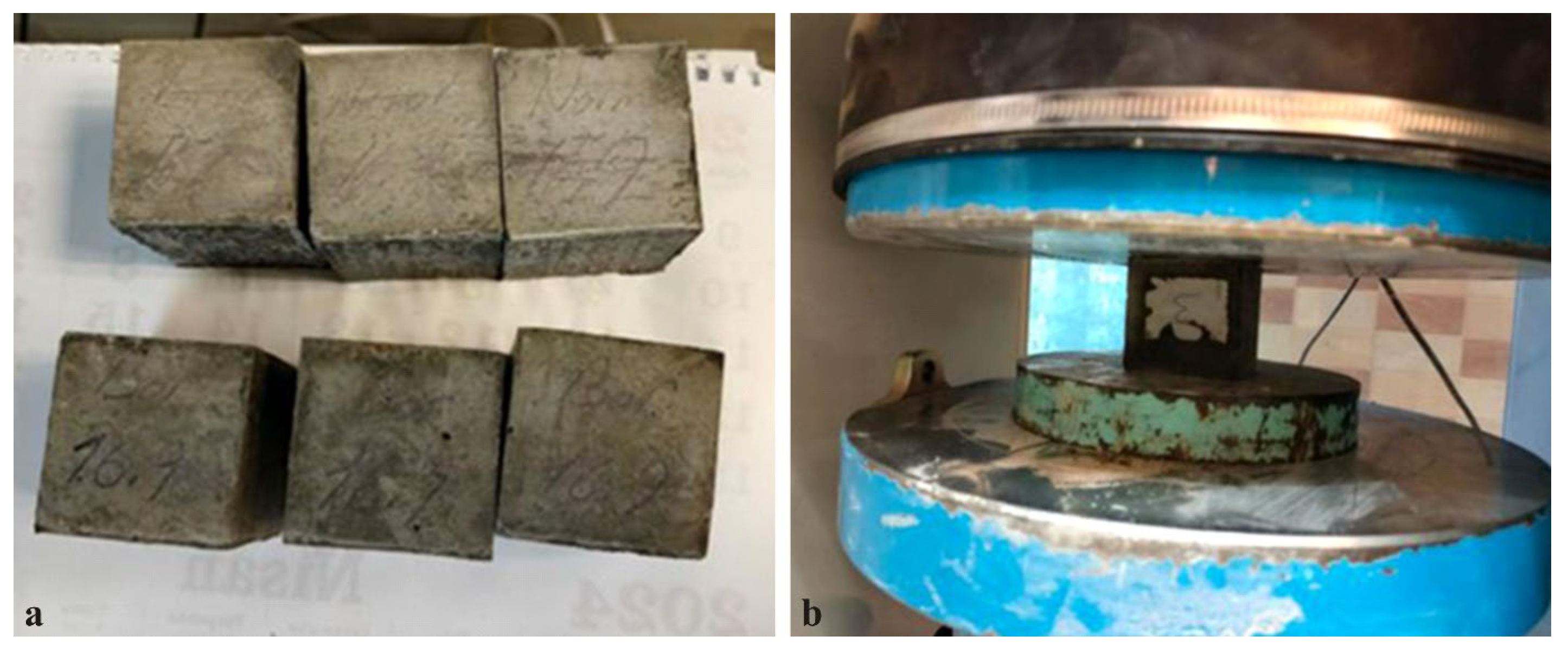
Cube specimens with dimensions of 5 cm × 5 cm × 5 cm were used in this study. During casting, the mixture was uniformly distributed into each mold to ensure full penetration throughout the specimen and to systematically eliminate entrapped air bubbles. Consequently, each cube specimen was filled in a manner that would ensure the desired mechanical and physical properties. In addition, three cube specimens were produced for each mix proportion (Figure 5) and subjected to curing periods of 3 and 7 days, respectively.
Figure 5.
(a) Samples that have completed the curing process; (b) these samples subjected to compressive strength testing in the laboratory.
2.3. Boron Waste Solution–Cement Mixture
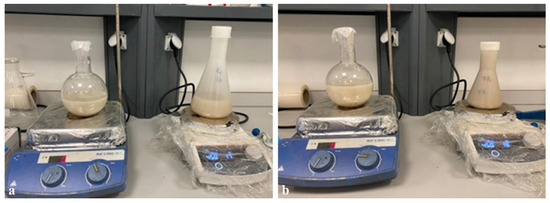
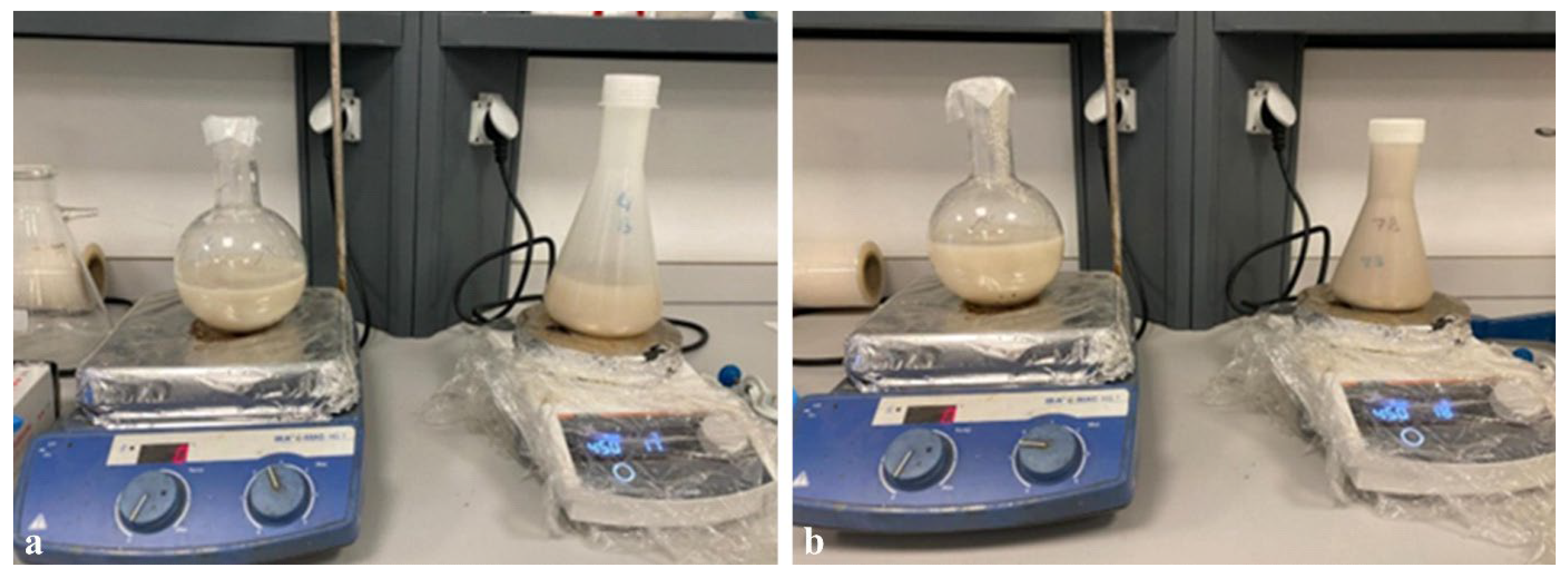
In this mixing method, instead of replacing cement with boron waste, an aqueous solution containing boron waste was prepared, and this solution was mixed with cement to produce cube specimens. The prepared mix proportions are presented in Table 3. To prepare the boron waste-modified aqueous solution, the procedure was carried out at room temperature (17–18 °C) in a transparent glass laboratory flask (Erlenmeyer flask) equipped with a magnetic stirring bar, for approximately one hour, with the magnetic stirrer operating at a speed of 450 rpm until a homogeneous mixture was obtained (Figure 6).
Table 3.
Mix proportions of cement with boron waste-based solution.
Figure 6.
The images show how solutions with (a) a 4% boron waste additive and (b) a 7% boron waste additive are prepared, with the Emet–Hisarcık (Kütahya) sample on the left and the Bigadiç (Balıkesir) sample on the right.
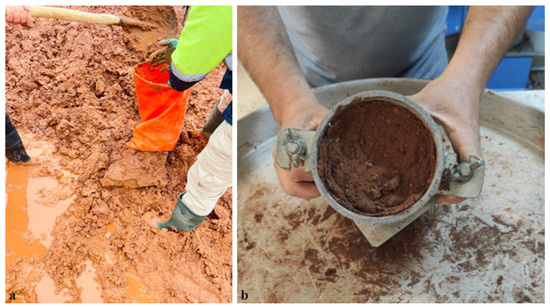
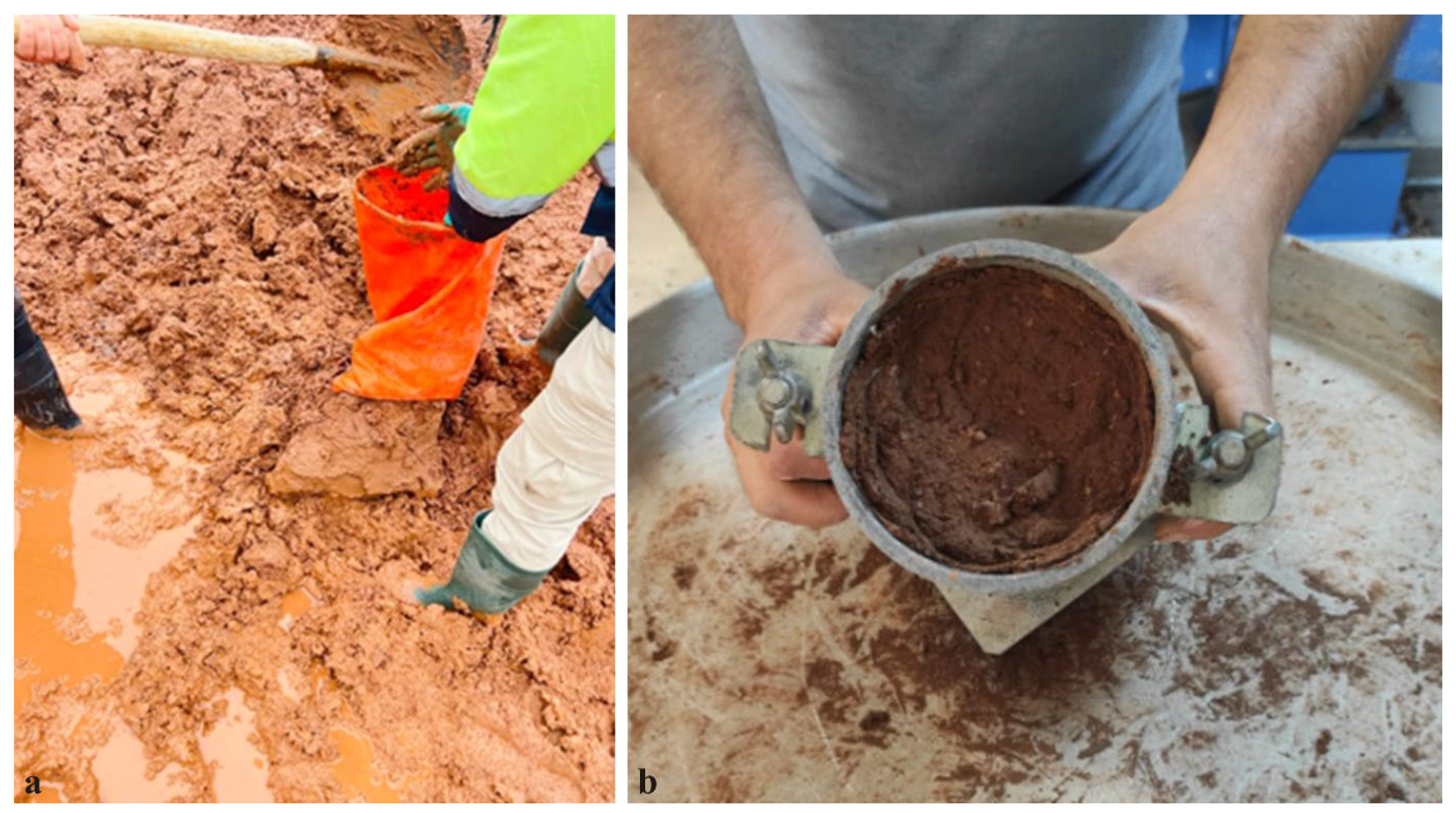
2.4. Determination of the Densities of Weak Soil and Boron Waste-Stabilized Weak Soil Samples
In this part of the study, weak soil samples were collected from the Amasra (Bartın) region to evaluate the area’s soil structure and bearing capacity (Figure 7). Laboratory analyses of the weak soil samples obtained from the Amasra (Bartın) region yielded a liquid limit (LL) of 30% and a plasticity index (PI) of 14.6%. Based on these values, the soil is classified as CL (low plasticity clay) according to the USCS (Unified Soil Classification System). These parameters confirm that the soil provides a suitable, moderately compressible fine-grained matrix for stabilization experiments using boron waste.
Figure 7.
(a) Collection of weak soil (CL-type) samples from the Amasra (Bartın) region; (b) samples being tested in the laboratory.
The bearing capacity and strength characteristics of the soils were analyzed using various methods, including the California Bearing Ratio (CBR) test. The laboratory tests indicated that the density of the weak soil samples was 1650 kg/m3. For soil samples stabilized with 5% boron waste, the density increased to 1692 kg/m3, while that of soil samples stabilized with 10% boron waste reached 1728 kg/m3. This increase suggests that boron may contribute to microstructural modifications within the soil and improve its mechanical properties. The optimum moisture content of the untreated weak soil was 18.8%, whereas the 5% and 10% boron waste-stabilized soil samples had moisture contents of 15.9% and 15.7%, respectively. This indicates that boron addition reduces the soil’s water retention capacity, leading to a more stable structure. Moreover, the comparison between 5% and 10% boron-stabilized samples shows that higher boron content further decreases moisture content and enhances the mechanical properties of the soil. All three soil samples were classified as CL (Clayey Lean) soils. According to the USCS, CL soils are defined as low-plasticity clays with moderate compressibility and bearing capacity. These soils consist of fine-grained materials containing silt and sand and are sensitive to moisture content, as an increase in water content can reduce bearing capacity, whereas compaction at the optimum moisture content can lead to a stable soil structure.
2.5. California Bearing Ratio (CBR) Test
Laboratory tests showed that the CBR value of the weak soil sample was 4. This value indicates that the bearing capacity of the weak soil is very low and emphasizes the need for careful evaluation of such soils in engineering applications (Figure 7). The weak soil samples were stabilized with 5%, 10%, and 15% boron waste, and the contribution of increasing boron content to the improvement in the bearing capacity of the soils was investigated.
3. Results
3.1. Compressive Strength Results of Cement–Water–Boron Waste Mixtures
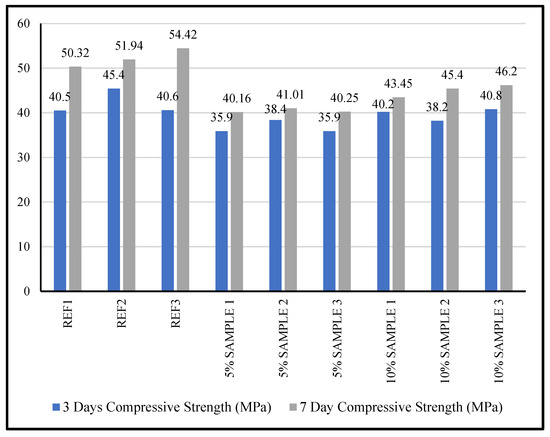
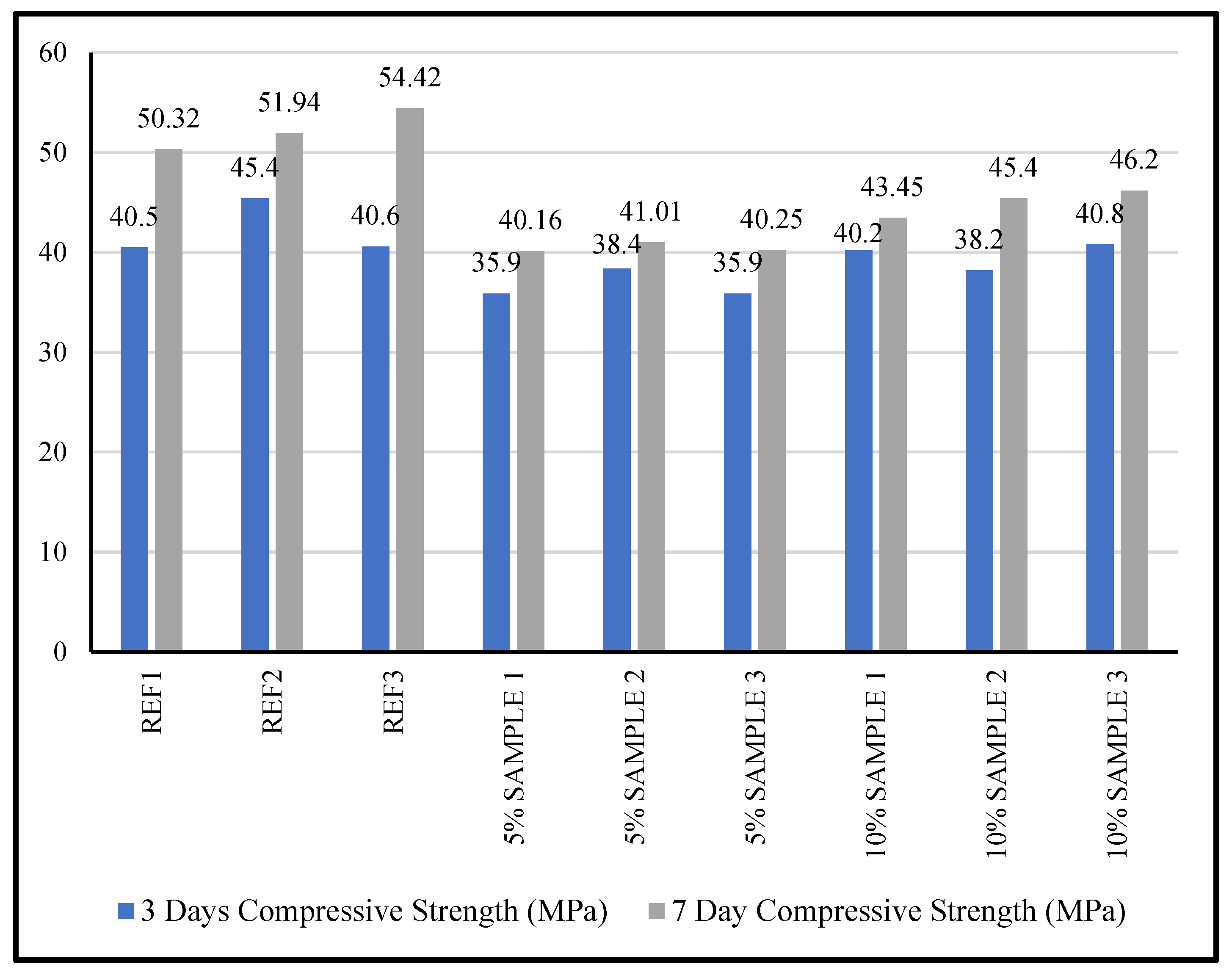
In this study, the effect of mixtures containing different boron waste proportions on compressive strength was investigated. As shown in Table 4, compared to the reference samples (within the scope of the experimental study, three samples coded REF1, REF2, and REF3 were collected from the same batch to determine the mechanical performance and homogeneity of the fresh concrete mix; these specimens were defined as a conjugate set representing the casting lot), specimens with 5% boron waste exhibited a noticeable decrease in compressive strength at both 3 and 7 days. For mixtures containing 10% boron waste, the 3-day strength values were close to those of the reference, with some samples showing an increasing trend. Similarly, the 7-day compressive strength results indicate that the 10% boron addition produced more favorable outcomes than the 5% addition (Figure 8). These findings indicate that the use of boron waste at appropriate proportions can be favorable in cement-based mixtures without compromising strength. Overall, the results imply that partially replacing cement with boron waste up to a certain level can be evaluated as a potential additive material without significantly reducing compressive strength.
Table 4.
Compressive strength results of cement–water–boron waste mixtures.
Figure 8.
Compressive strength test results of cement–water–boron waste mixtures.
3.2. Strength Results for Samples Prepared with Boron Waste–Modified Solution
The compressive strength results of the control (boron-free) samples are presented in Table 5. After 3 days of curing, the strength values ranged from 44.2 MPa to 44.8 MPa, while for the 7-day specimens, the values ranged from 46.9 MPa to 57 MPa. On average, the 3-day compressive strength of the control mixtures was approximately 45.3 MPa, and the 7-day strength was 54.57 MPa. These data indicate that the mechanical strength of the standard mixture without additives increases significantly over time, providing a reliable baseline for comparison.
Table 5.
Compressive strength results of reference (mixture without boron waste addition) samples, prepared as the baseline for the solution-based mixtures.
The compressive strength results of the samples in which 5% of cement was replaced with a 4% Bigadiç boron waste-modified solution are presented in Table 6. These samples were also prepared using the liquid solution. After 3 days of curing, the compressive strength values ranged from 49.2 MPa to 50.5 MPa, with an average of approximately 49.67 MPa, and the values, with an average of 54.87 MPa, ranged from 54.4 MPa to 55.3 MPa after 7 days of curing. These results indicate that incorporating a 4% Bigadiç solution at a 5% replacement level into the mixture increases the compressive strength at both early and later ages compared to the control samples, demonstrating a positive mechanical effect.
Table 6.
Compressive strength of samples with 5% cement replacement using 4% Bigadiç boron waste solution.
Table 7 presents the compressive strength results of the samples prepared by replacing 10% of the cement with a 4% Bigadiç boron waste-modified solution using the liquid solution method. After 3 days of curing, the compressive strength values ranged from 50.7 MPa to 53.2 MPa, with an average of 51.9 MPa, while that for the 7-day specimens ranged from 54.1 MPa to 56.7 MPa, with an average of 55.37 MPa. These results indicate that a 10% replacement level provides higher compressive strength at both early and later ages compared to the control samples, demonstrating that the Bigadiç solution positively enhances the mechanical properties of the mixture.
Table 7.
Compressive strength results of samples prepared by mixing 10% cement with 4% Bigadiç boron waste–modified solution.
In Table 8, the compressive strength results of the specimens in which a solution containing 7% Bigadiç boron waste was incorporated into the cement at a 5% ratio are presented. These specimens were cured for 3 and 7 days, and measurements were taken at the end of each curing period. Following 3 days of curing, the measured compressive strengths ranged between 44.8 MPa and 47.8 MPa, with an average value of approximately 46.4 MPa. This indicates that the strength obtained within the first 3 days of incorporating the solution is generally high, although slight variations are observed between specimens. By the 7th day, the measured compressive strength reached higher levels, with values of 52.7 MPa, 49 MPa, and 51 MPa being obtained. These results demonstrate that the strength of the mixture increases over time and that by the 7th day, a significant improvement in compressive strength is achieved.
Table 8.
Compressive strength of samples with 5% cement replacement using 7% Bigadiç boron waste solution.
Table 9 presents the 3-day and 7-day compressive strength results of the samples prepared by incorporating 10% cement with the 7% Bigadiç boron waste-modified solution. After 3 days of curing, the highest compressive strength of 54.8 MPa was observed in Sample 1. However, the strengths of the other samples were lower, with Sample 2 measuring 48.3 MPa and Sample 3 measuring 46.5 MPa. This indicates that, for samples prepared with 10% cement replacement using the 7% Bigadiç solution, the 3-day compressive strength shows considerable variability, with some samples exhibiting high strength while others display lower values.
Table 9.
Compressive strength of samples with 10% cement replacement using 7% Bigadiç boron waste solution.
On the 7th day, a decrease in compressive strength was observed. Sample 4 exhibited a value of 52.9 MPa; Sample 5 showed a value of 50.8 MPa, and Sample 6 measured 47 MPa. Compared to the highest strength obtained on the 3rd day (54.8 MPa), a notable reduction in strength occurred by the 7th day. This indicates that the solution’s compressive strength decreased after the 3rd day. Therefore, replacement levels above 10% were not tested.
Table 10 presents the compressive strength results of the samples prepared by incorporating 5% cement with the 4% Kütahya boron waste-modified solution. The samples were tested after 3 and 7 days of curing. On the 3rd day, the lowest compressive strength was measured at 42.8 MPa for Sample 1, while Sample 2 and Sample 3 exhibited higher values of 44.7 MPa and 45.2 MPa, respectively. This indicates that the strengths on the 3rd day were relatively close and that the 5% incorporation of the 4% Kütahya solution did not result in significant variations in compressive strength. On the 7th day, the highest strength of 49.3 MPa was observed in Sample 4, while Samples 5 and 6 maintained values around 44.9 MPa. This shows that, although higher strengths were generally observed on the 7th day, some samples did not exhibit significant improvement. The strength value recorded in Sample 4 (49.3 MPa) is notably higher than that of the 3-day measurements, indicating that the strength of the Kütahya solution increased over time, albeit limited in other samples. Comparatively, samples prepared with 5% cement replacement using the 4% Bigadiç solution demonstrated higher compressive strengths at both curing periods than those prepared with the 4% Kütahya solution. In particular, the Bigadiç solution provided a significant increase in strength on the 7th day, whereas the Kütahya solution only showed a limited improvement. These results indicate that the 4% Bigadiç solution exhibits stronger performance and is more effective in enhancing compressive strength than the 4% Kütahya solution when incorporated at a 5% replacement level.
Table 10.
Compressive strength of samples with 5% cement replacement using 4% Kütahya boron waste solution.
Table 11 presents the 3-day and 7-day compressive strength values of the samples prepared by incorporating 10% cement with the 4% Kütahya solution. For the samples cured for 3 days, the compressive strengths were measured as 29.49 MPa, 26.03 MPa, and 19.51 MPa, respectively. After 7 days of curing, the strengths were determined to be 32.94 MPa, 27.79 MPa, and 28.48 MPa. The data indicate a general increase in compressive strength with extended curing time.
Table 11.
Compressive strength of samples with 10% cement replacement using 4% Kütahya boron waste solution.
Table 12 presents the 3-day and 7-day compressive strength values of the samples prepared with 4% Kütahya solution and 15% additive. For the samples cured for 3 days, the compressive strengths were 21.74 MPa, 20.14 MPa, and 34.88 MPa, respectively. After 7 days of curing, the strengths were measured as 31.96 MPa, 32.02 MPa, and 24.26 MPa.
Table 12.
Compressive strength of samples with 15% cement replacement using 4% Kütahya boron waste solution.
According to Table 13, the samples prepared by incorporating 5% cement with the 4% Bigadiç solution exhibited higher compressive strengths on both the 3rd and 7th days compared to those prepared with 5% cement and the 7% Bigadiç solution. The samples prepared with the 4% Kütahya solution showed the lowest strength values at both curing periods. These results indicate that the samples obtained using the 4% Bigadiç solution with 10% cement replacement demonstrated the best performance at both ages, making them particularly suitable for mixtures aimed at achieving enhanced compressive strength.
Table 13.
Average compressive strength results.
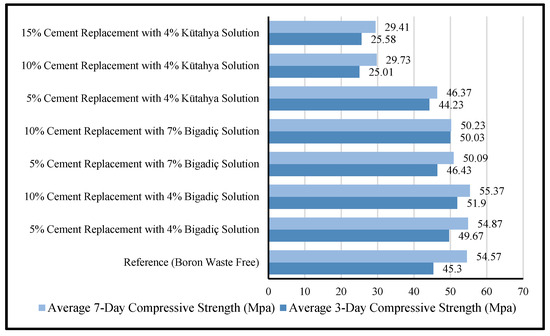
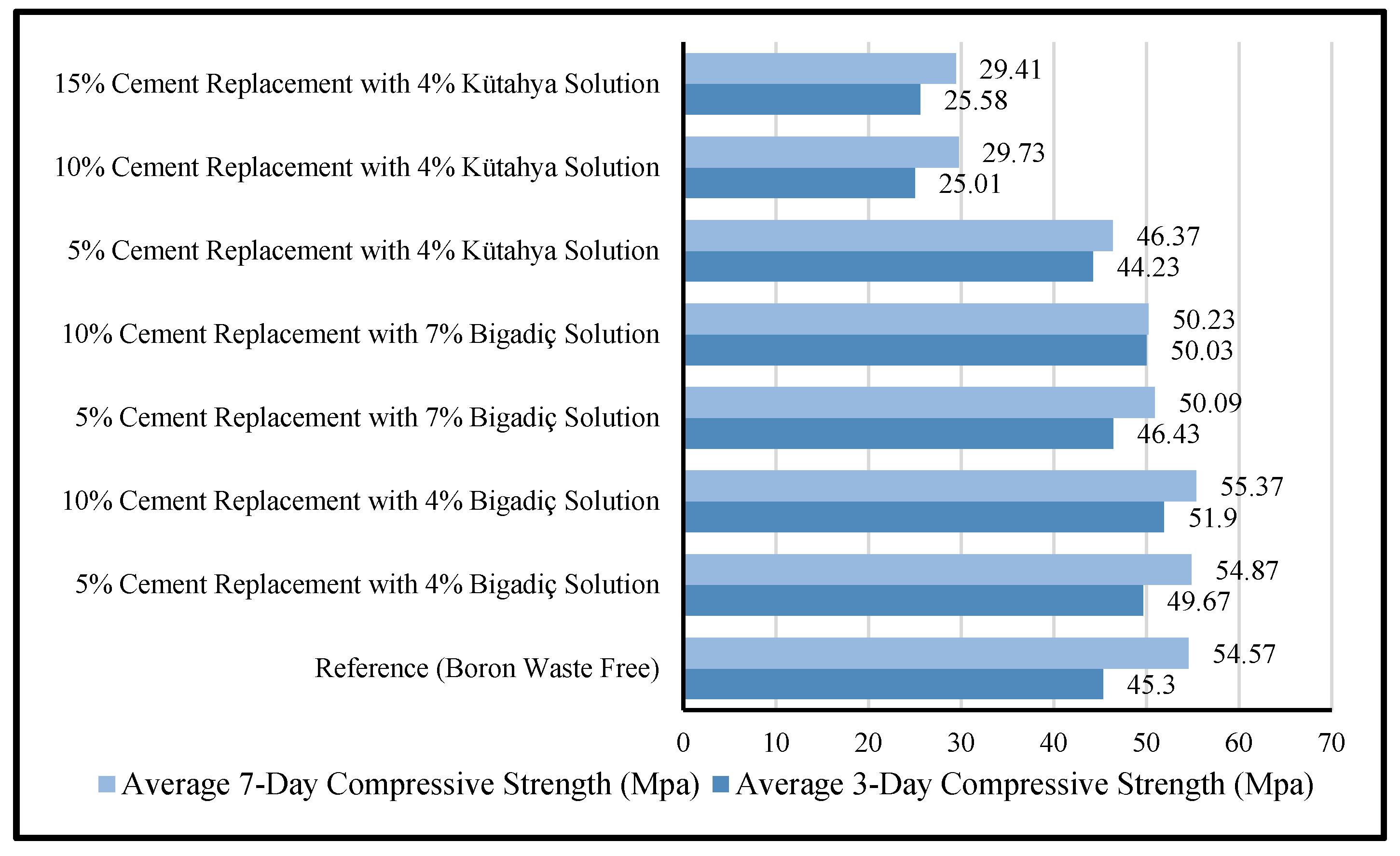
In conclusion, the 4% Bigadiç boron waste solution incorporated at a 10% cement replacement ratio exhibited the highest compressive strength. According to XRD analyses, the higher boron content in this mixture explains the elevated strength observed. These findings indicate that the addition of boron waste positively influences compressive strength when used as an additive. In contrast, for mixtures prepared with 4% Kütahya boron waste, an increase in the replacement ratio led to a significant reduction in compressive strength. Specifically, the 3-day average compressive strength decreased from 44.23 MPa at 5% replacement to 25.01 MPa and 25.58 MPa at 10% and 15% replacement, respectively. This trend persisted in the 7-day results, where the average strength of 46.37 MPa at 5% replacement dropped to 29.73 MPa and 29.41 MPa at 10% and 15% replacement, respectively. These results suggest that high proportions of Kütahya-origin boron waste can adversely affect the cement matrix, particularly impacting early-age strength (Figure 9).
Figure 9.
Compressive strength test results of boron waste-modified solutions.
3.3. Comparison of California Bearing Ratio (CBR) Results
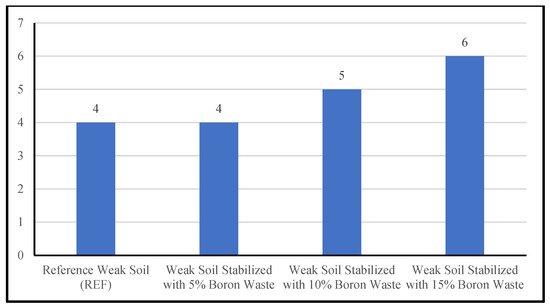
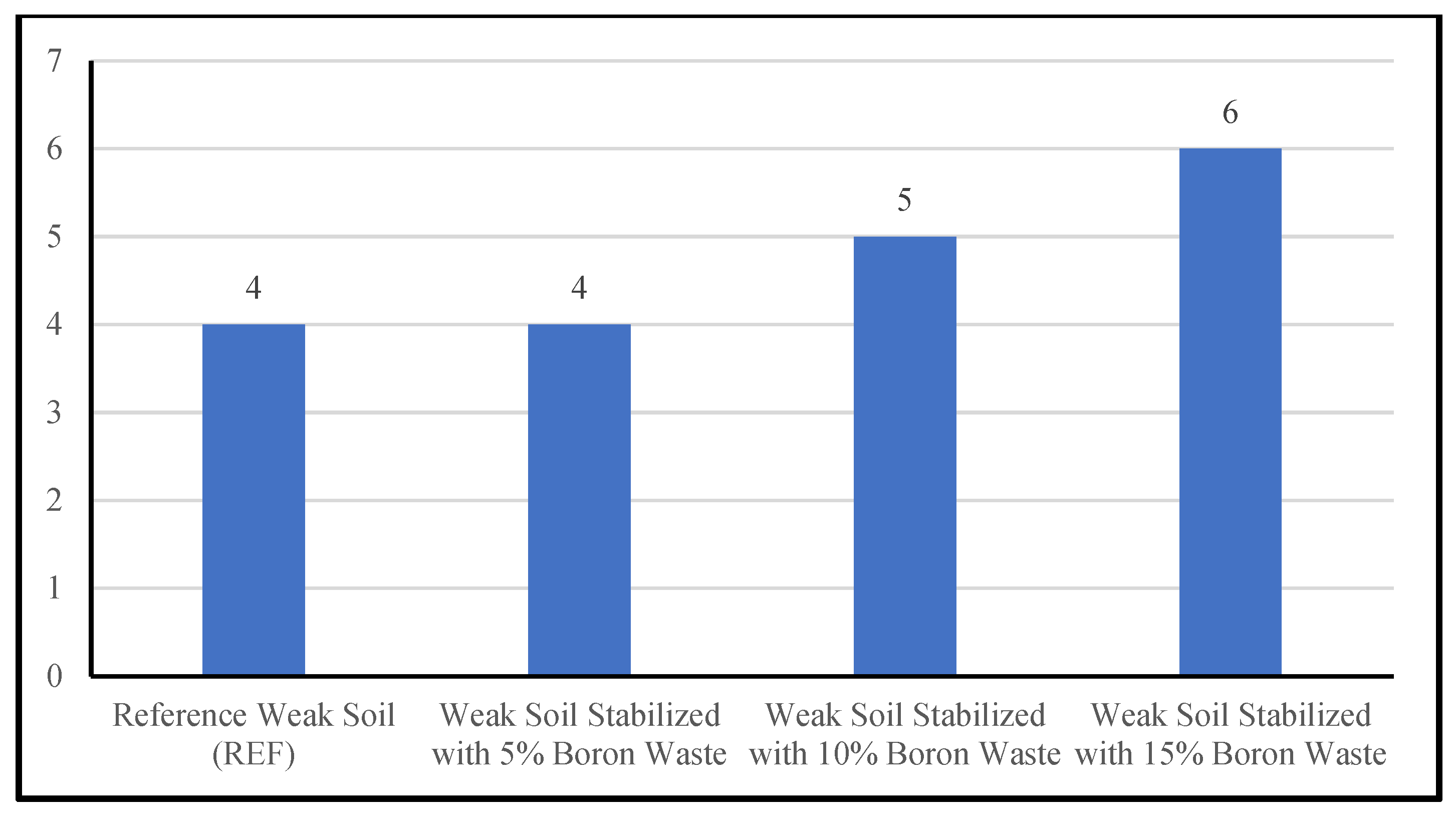
Reference (REF): The initial CBR (California Bearing Ratio) value is four. Weak Soil with 5% Boron Waste: In this mixture, the CBR value remained at four, indicating that the addition of 5% boron waste did not significantly improve soil strength. Weak Soil with 10% Boron Waste: Increasing the boron waste content to 10% raised the CBR value to five, demonstrating an improvement in soil strength. Weak Soil with 15% Boron Waste: When the boron waste content was increased to 15%, the CBR value reached six, indicating that higher boron waste proportions further enhanced soil strength.
In the tests conducted, the reason why the use of 5% boron waste did not increase the CBR value is that the additive at this ratio remained below the threshold value required to establish a continuous bond between soil grains and fill micro-voids. However, when the replacement ratio was increased to 10% and 15%, the reactive components within the boron waste (especially borates linked to colemanite in Bigadiç samples) combined with cement and soil moisture to form more hydration products.
Overall, increasing the boron waste content from 5% to 15% led to a progressive improvement in the soil’s bearing capacity. These results suggest that boron waste has potential as an additive for soil stabilization (Figure 10). While low addition levels such as 5% remain insufficient, increasing the ratio to 15% allows the fine structure (80–90 µm) of the boron waste to settle into the micro-voids of the soil like a filler material. Thanks to this physical filling, the soil density surged to 1728 kg/m3, causing the grains to interlock more tightly. Chemically, the boron minerals combine with the soil moisture to form tiny bridges between the grains, making the soil more rigid and enhancing its bearing capacity.
Figure 10.
CBR experiment results.
4. Discussion
In this study, the compressive strength and soil stabilization performance of cement mixtures incorporating boron waste from Emet (Kütahya) and Bigadiç (Balıkesir) were investigated. The experimental data reveal the effects of different additive ratios on both the cement matrix and soil strength.
In terms of compressive strength, the 3-day average strength of the additive-free reference samples was measured as 45.3 MPa, while the 7-day average strength was 54.57 MPa. These values indicate that the cement matrix exhibits a significant gain in strength over time and provide a reliable reference for comparison.
The addition of Bigadiç-origin boron waste, particularly in mixtures where the 4% solution replaced 10% of the cement, yielded the highest compressive strengths (3 days: 51.9 MPa; 7 days: 55.37 MPa). These results indicate that Bigadiç-origin boron supports the hydration processes in the cement matrix, enhancing both early- and mid-term strength. When the XRD analysis results and compressive strength data are evaluated together, the decisive impact of material mineralogy on mechanical performance becomes clearly evident. To interpret and correlate these findings, the colemanite content in the Bigadiç waste facilitated the release of reactive borates during cement hydration, supporting the formation of a denser crystalline structure within the matrix and consequently leading to higher compressive strength. In contrast, the high calcite content and the absence of reactive boron minerals in the Emet samples caused this waste to act more as an inert (passive) filler within the cement matrix. This lack of reactivity resulted in limited mechanical strength or a decrease in performance, particularly at higher replacement levels. Similarly, mixtures incorporating the 4% Bigadiç solution at a 5% replacement ratio also exhibited increased strength compared to the additive-free reference samples. This finding confirms that boron addition, when used at appropriate proportions, provides a positive mechanical contribution to the cement matrix.
Moreover, the addition of Kütahya-origin boron waste, particularly at the 10% and 15% replacement levels, resulted in a significant reduction in compressive strength. For example, the 3-day average strength of the 4% Kütahya solution at 10% replacement was measured as 25.01 MPa, and at 15% replacement, it was 25.58 MPa. The 7-day strengths remained similarly low. These results suggest that high proportions of Kütahya-origin boron may adversely affect hydration and bonding processes within the cement matrix. Therefore, the use of boron from Kütahya in cement mixtures should be optimized considering both the replacement ratio and the source.
The CBR (California Bearing Ratio) results demonstrate the effect of boron addition on soil stabilization. While the reference soil samples exhibited a CBR value of four, the inclusion of 10% boron increased it to five, and 15% boron raised it to six. These findings indicate that boron waste has a potential reinforcing effect on soil strength, with higher additive ratios progressively improving the soil’s bearing capacity.
These findings indicate that boron wastes can be utilized to both improve the mechanical strength of cement matrices and enhance soil stabilization performance. In particular, Bigadiç-origin boron waste, when used at appropriate proportions, can serve as an environmentally and economically beneficial additive.
In terms of economic sustainability, the integration of boron waste into the cement matrix holds the potential to offer a strategic advantage in production costs by optimizing the amount of conventional binder required. From an environmental perspective, this approach minimizes the storage pressure on the ecosystem by transforming vast stocks of waste lying idle at mining sites into value-added industrial raw materials. Furthermore, the ability to reduce carbon emissions in production processes by 25–30% through cement clinker substitution places this study in a critical position within the framework of ‘green cement’ technologies and global decarbonization goals. Consequently, boron waste is not merely a byproduct but an innovative solution partner that simultaneously ensures cost-effectiveness and environmental circularity in the construction sector.
The short-term mechanical data obtained in this study clearly demonstrate the potential of boron wastes in soil stabilization and cement matrices. However, to fully comprehend the reliability of such advanced composite materials in infrastructure projects, supporting experimental findings with numerical modeling techniques is a critical step [47]. Future studies that analyze the long-term environmental durability and behavior of these stabilized matrices under various service loads through computer simulations will provide a vital perspective in translating laboratory data into field performance. Such an integrated approach will facilitate a broader application range for boron-containing mixtures in sustainable infrastructure projects.
5. Conclusions
- Source-Dependent Performance: The study reveals that the impact of boron waste on cementitious matrices and soil stabilization is governed not only by the replacement ratio but significantly by the mineralogical origin (Bigadiç vs. Emet) of the waste.
- Strength Enhancement (Bigadiç): Bigadiç-origin waste demonstrates superior performance; at a 10% cement replacement level, it increased 3-day compressive strength to 51.9 MPa and 7-day strength to 55.37 MPa, effectively matching or exceeding reference standards.
- Microstructural Mechanism: The presence of colemanite in Bigadiç waste facilitates the release of reactive borate species, promoting the formation of dense Calcium Silicate Hydrate (C-S-H) phases and refining the pore structure for higher macroscopic strength.
- Inert Behavior (Emet): In contrast, Emet-origin waste acted primarily as an inert filler due to high calcite content and a lack of reactive boron minerals. This led to a significant strength reduction (approx. 25 MPa at 10–15% replacement) by diluting the binder content and interrupting hydration continuity.
- Soil Stabilization (CBR): Boron addition consistently improved soil bearing capacity, raising the California Bearing Ratio (CBR) value from a reference of 4 to 6 (at 15% addition) by enhancing interparticle bonding and frictional resistance.
- Sustainability and Decarbonization: Substituting cement clinker with boron waste offers a dual benefit: it transforms industrial byproducts into value-added materials and has the potential to reduce carbon emissions by 25–30%.
- Future Research: While boron waste is a viable functional additive for low-carbon construction, future studies should focus on long-term durability assessments and numerical modeling of hydration kinetics to correlate microstructural evolution with field-scale performance.
- This study includes preliminary studies on the mechanical properties for curing periods of 3 and 7 days of boron waste used in cement-based mortars from the Emet (Kütahya)–Bigadiç (Balıkesir) mining areas in Türkiye. Further studies, using 28-day mechanical performance data, will provide a better understanding of the contribution of boron-modified waste to the mechanical properties of cement and soil stabilization.
Author Contributions
Methodology, C.Y.G. and M.C.G.; formal analysis, C.Y.G.; investigation, C.Y.G., E.S. and E.Y.; data curation, M.C.G.; writing—original draft preparation, C.Y.G.; writing—review and editing, E.S. and E.Y.; supervision, E.S.; project administration, E.S.; funding acquisition, E.S. All authors have read and agreed to the published version of the manuscript.
Funding
This research was funded by TÜBİTAK, grant number 1919B012323530 (2209-A University Students Research Projects Support Program).
Data Availability Statement
The original contributions presented in this study are included in the article. Further inquiries can be directed to the corresponding author.
Acknowledgments
The authors gratefully acknowledge the 15th Regional Directorate of Highways for providing access to laboratory facilities and for their kind support and collaboration during the execution of the experimental work.
Conflicts of Interest
The authors declare no conflicts of interest. The funders had no role in the design of the study; in the collection, analyses, or interpretation of data; in the writing of the manuscript; or in the decision to publish the results.
Abbreviations
The following abbreviations are used in this manuscript:
| CBR | California Bearing Ratio |
| XRD | X-ray diffraction |
| MTA | General Directorate of Mineral Research and Exploration (Geological Survey of Türkiye) |
| USCS | Unified Soil Classification System |
| ETİMADEN | ETİMADEN General Directorate of Operations |
| TÜBİTAK | Scientific and Technological Research Council of Türkiye |
References
- Acarkan, N. Boron Products and Their Use. In Proceedings of the I. International Boron Symposium, Kütahya, Türkiye, 4–5 October 2002. [Google Scholar]
- Oruç, F.; Sabah, E.; Erkan, Z.E. Evaluation Strategies of Boron Tailings according to Sector. In Proceedings of the II. International Boron Symposium, Eskişehir, Türkiye, 23–25 September 2004. [Google Scholar]
- Sur, H.; Yaman, C.; Pişkin, S. Bor Atıklarının İnşaat Tuğlası Üretiminde Kullanılması [Utilization of Boron Waste in Construction Brick Production]. In Proceedings of the VIII. National Clay Symposium; Clay Science Society: Kütahya, Türkiye, 1997; pp. 555–556. [Google Scholar]
- Demir, İ.; Orhan, M. Utilisation of Boron Waste in the Production Construction Materials. In Proceedings of the I. International Boron Symposium, Kütahya, Türkiye, 4–5 October 2002. [Google Scholar]
- Muñoz Velasco, P.; Morales Ortíz, M.P.; Mendívil Giró, M.A.; Muñoz Velasco, L. Fired clay bricks manufactured by adding wastes as sustainable construction material—A review. Constr. Build. Mater. 2014, 63, 97–107. [Google Scholar] [CrossRef] [Scilit]
- Elbeyli, İ.Y.; Kalpaklı, Y.K.; Gülen, J.; Pişkin, M.; Pişkin, Ş. Utilization of borax waste as an additive in building brick production. In Proceedings of the II. International Boron Symposium, Eskişehir, Türkiye, 23–25 September 2004. [Google Scholar]
- Çelik, A.G. Bor Katkılı Perlit Karışımlardan Hafif Tuğla Üretimi ve Teknolojik Özelliklerinin Belirlenmesi [Production of Lightweight Bricks from Boron-Added Perlite Mixtures and Determination of Their Technological Properties]. Ph.D. Thesis, Institute of Science, Çukurova University, Adana, Türkiye, 2010; 317p. [Google Scholar]
- İnce, A.S. Investigation of the Use of Coal Residue and Boron in Brick Production. Master’s Thesis, Kütahya Dumlupınar University, Kütahya, Türkiye, 2019. (In Turkish with English abstract). [Google Scholar]
- Uslu, T.; Arol, A.I. Use of boron waste as an additive in red bricks. Waste Manag. 2004, 24, 217–220. [Google Scholar] [CrossRef] [Scilit] [PubMed]
- Evcin, A.; Ersoy, B.; Çiftçi, H. Utilization of marble and boron waste in brick products. Int. J. Comput. Exp. Sci. Eng. 2019, 5, 19–22. [Google Scholar] [CrossRef] [Scilit]
- Gencel, O. Characteristics of fired clay bricks with pumice additive. Energy Build. 2015, 102, 217–224. [Google Scholar] [CrossRef] [Scilit]
- Çelik, A.G.; Yörükoğlu, A.; Sürdem, S.; Türker, A.; Erdoğan, Y. Bor katkılı pomza tuğla üretimi, fizikomekanik ve kimyasal özelliklerinin belirlenmesi [Production of boron-modified pumice bricks, determination of their physicomechanical and chemical properties]. Bor Derg. 2019, 4, 107–118, (In Turkish with English abstract). [Google Scholar]
- Çelik, A.G. Investigation on characteristic properties of potassium borate and sodium borate blended perlite bricks. J. Clean. Prod. 2015, 102, 88–95. [Google Scholar] [CrossRef] [Scilit]
- Celik, A.G.; Depci, T.; Kılıc, A.M. New lightweight colemanite-added perlite brick and comparison of its physicomechanical properties with other commercial lightweight materials. Constr. Build. Mater. 2014, 62, 59–66. [Google Scholar] [CrossRef] [Scilit]
- Çimen, S. Determination of Physical and Mechanical Properties of Bricks Produced with Boron Waste and Perlite Additives. Master’s Thesis, Institute of Science, Kastamonu University, Kastamonu, Türkiye, 2019. [Google Scholar]
- Demirel, B.; Nasıroğlu, S. Strategies for the use of boron minerals and wastes in the cement. Sci. Eng. J. Fırat Univ. 2017, 29, 95–100. [Google Scholar]
- Erdoğan, Y.; Zeybek, M.S.; Demirbaş, A. Cement mixes containing colemanite from concentrator wastes. Cem. Concr. Res. 1998, 28, 605–609. [Google Scholar] [CrossRef] [Scilit]
- Boncukcuoğlu, R.; Kocakerim, M.M.; Tosunoğlu, V. Utilization of Industrial Boron Wastes in Cement Production for Stabilization. Energy Educ. Sci. Technol. 1999, 1, 45–54. [Google Scholar]
- Eyyüboğlu, S. Kolemanit Konsantratör Atıklarının Çimento Üretiminde Değerlendirilmesi [Utilization of Colemanite Concentrator Waste in Cement Production]. Master’s Thesis, Balıkesir University, Institute of Science, Balıkesir, Türkiye, 2013; 130p. [Google Scholar]
- Özdemir, M.; Öztürk, N.U. Utilization of clay wastes containing boron as cement additives. Cem. Concr. Res. 2003, 33, 1659–1661. [Google Scholar] [CrossRef] [Scilit]
- Özdemir, M.; Uğurlu, A. Evaluation of Boron Containing Clay Wastes in Cement Production. Mater. Manuf. Process. 2011, 26, 1130–1135. [Google Scholar] [CrossRef] [Scilit]
- Sevim, U.K.; Ozturk, M.; Onturk, S.; Bankir, M.B. Utilization of boron waste borogypsum in mortar. J. Build. Eng. 2019, 22, 496–503. [Google Scholar] [CrossRef] [Scilit]
- Glinicki, M.A.; Antolik, A.; Gawlicki, M. Evaluation of compatibility of neutron-shielding boron aggregates with Portland cement in mortar. Constr. Build. Mater. 2019, 22, 496–503. [Google Scholar] [CrossRef] [Scilit]
- Koroglu, L.; Kaman, D.O.; Erhan Ayas, E. Optimizing the particle size distribution of heat-treated boron derivative wastes in cement mortars as portland cement replacements. Constr. Build. Mater. 2021, 282, 122640. [Google Scholar] [CrossRef] [Scilit]
- Şahin, M.; Yıldırım, M.K. Borlu Çimento. CemenTürk Dergisi, 2016.
- Aldakshe, A.; Çağlar, H.; Çağlar, A.; Avan, Ç. The Investigation of Use as Aggregate in Lightweight Concrete Production of Boron Wastes. Civ. Eng. J. 2020, 6, 1328–1335. [Google Scholar] [CrossRef] [Scilit]
- Topçu, İ.B.; Boga, A.R. Effect of boron waste on the properties of mortar and concrete. Waste Manag. Res. J. A Sustain. Circ. Econ. 2009, 28, 626–633. [Google Scholar] [CrossRef] [Scilit]
- Keskin, M.; Karacasu, M. Effect of boron containing additives on asphalt performance and sustainability perspective. Constr. Build. Mater. 2019, 218, 434–447. [Google Scholar] [CrossRef] [Scilit]
- Gürer, C.; Selman, G.Ş. Investigation of Properties of Asphalt Concrete Containing Boron Waste as Mineral Filler. Mater. Sci. (Medžiagotyra) 2016, 22, 118–125. [Google Scholar] [CrossRef] [Scilit]
- Zhang, Y.; Guo, Q.; Li, L.; Jiang, P.; Jiao, Y.; Cheng, Y. Reuse of Boron Waste as an Additive in Road Base Material. Materials 2016, 9, 416. [Google Scholar] [CrossRef] [Scilit]
- Yetis Goren, C.; Sarifakioglu, E.; Yurdakul, E.; Goren, M.C.; Ismael, Y.I. Boron-Containing Waste Utilization in Cement and Soil Stabilization. In Proceedings of the 5th International Symposium on Characterization (ISC’25), Cappadocia, Türkiye, 27–29 August 2025. [Google Scholar]
- Avcı, E.; Mollamahmutoğlu, M. BTÜ’den Patentli Bor Katkılı Enjeksiyon Malzemesi [Patented Boron-Modified Injection Material from BTU]. 2021. Available online: https://btu.edu.tr/tr/haber/detay/5399/bt%C3%BCden-patentli-bor-katk%C4%B1l%C4%B1-enjeksiyon-malzemesi (accessed on 10 November 2023).
- Avcı, E. Binaların Sıvılaşan Zeminleri ‘Bor’ Katkılı Formül Enjekte Edilerek Depreme Karşı Güçlendiriliyor [Buildings with Liquefied Soils Are Strengthened Against Earthquakes by Injecting a Boron-Modified Formula]. 2026. Available online: https://www.haberler.com/amp/binalarin-sivilasan-zeminleri-bor-katkili-formul-19560099-haberi/ (accessed on 10 November 2023).
- Tosun, Y.İ. Co-Polymer-Fly Ash Cementing for Weak Foundations and Weak Constructions: The Case for Şirnak Urban Reconstruction. In Proceedings of the Chemical Admixtures on Structures 5th International Symposium and Exhibition, Ankara, Türkiye, 19–20 October 2017. [Google Scholar]
- Winterkorn, H.F. Soil Stabilisation. In Foundation Engineering Handbook; Winterkorn, H.F., Fang, K.-Y., Eds.; Van Nostrand Reinhold: New York, NY, USA, 1975; Chapter 8; pp. 312–336. [Google Scholar]
- Helvacı, C. Bor Yataklarının Mineral ve Kimyası Yönünden Genel Değerlendirilmesi ve Gelecek Öngörüsü [General Evaluation of Boron Deposits from a Mineral and Chemical Perspective and Future Projections]. In Proceedings of the Mining Expo Turkey, Istanbul, Türkiye, 27–29 August 2015. [Google Scholar]
- Helvacı, C. Stratigraphy, mineralogy, and genesis of the Bigadiç borate deposits, western Turkey. Econ. Geol. 1995, 90, 1237–1260. [Google Scholar] [CrossRef] [Scilit]
- MTA. 1/500 000 Scale Geological Map of Türkiye; The General Directorate of Mineral Research and Exploration: Ankara, Türkiye, 2001.
- Koçak, İ.; Koç, Ş. Major and trace element geochemistry of the Bigadiç borate deposit, Balıkesir, Turkey. Geochem. Int. 2012, 50, 439–457. [Google Scholar] [CrossRef] [Scilit]
- Özkul, C.; Çiftçi, E.; Tokel, S.; Savaş, M. Boron as an exploration tool for terrestrial borate deposits: A soil geochemical study in the Neogene Emet–Hisarcık Basin, western Turkey. J. Geochem. Explor. 2017, 176, 1–15. [Google Scholar]
- Koçak, İ.; Koç, Ş. Geochemical characteristics of the Emet (Espey–Hisarcık) borate deposits, Kütahya, Turkey. J. Afr. Earth Sci. 2018, 140, 64–78. [Google Scholar] [CrossRef] [Scilit]
- Helvacı, C. Review of the occurrence of two new minerals in the emet borate deposit, Turkey: Emetite, Ca7Na3K(SO4)9, and Fontarnauite, Na2Sr(SO4)[B5O8(OH)] (H2O)2. Bull. Miner. Res. Explor. 2015, 151, 269–283. [Google Scholar] [CrossRef] [Scilit]
- Gören, M.C. Bor Atiklarin Zemin İyileştirmede Değerlendirilmesi [Utilization of Boron Waste in Soil Improvement]; 2209/A University Students Research Projects Support Program, Final Report; The Scientific and Technological Research Council of Türkiye (TÜBİTAK): Ankara, Türkiye, 2024; 39p.
- Saban, M. Accounting and Reporting for the Stripping Costs in the Surface Mining Entities. Int. J. Manag. Econ. Bus. 2016, 12, 30. [Google Scholar]
- Neville, A.M. Properties of Concrete, 5th ed.; Pearson Education: London, UK, 2011. [Google Scholar]
- Mehta, P.K.; Monteiro, P.J.M. Concrete: Microstructure, Properties, and Materials, 4th ed.; McGraw-Hill Education: New York, NY, USA, 2013. [Google Scholar]
- Wang, Z.; Shen, S.-L.; Zhou, A. Performance of composite EPDM gaskets for underground structures: Experimental and numerical investigation. Constr. Build. Mater. 2025, 500, 143951. [Google Scholar] [CrossRef] [Scilit]

Disclaimer/Publisher’s Note: The statements, opinions and data contained in all publications are solely those of the individual author(s) and contributor(s) and not of MDPI and/or the editor(s). MDPI and/or the editor(s) disclaim responsibility for any injury to people or property resulting from any ideas, methods, instructions or products referred to in the content. |
© 2026 by the authors. Licensee MDPI, Basel, Switzerland. This article is an open access article distributed under the terms and conditions of the Creative Commons Attribution (CC BY) license.