


Abstract
The growing need for effective air pollution control technologies has prompted significant interest in innovative flue gas treatment methods. This study investigates the plasma–chemical mechanisms and pollutant abatement performance of a pilot-scale microwave-assisted plasma reactor operating at 915 MHz and up to 75 kW for simultaneous removal of sulfur dioxide (SO2), nitrogen oxides (NOx), and carbon dioxide (CO2) from combustion flue gas. Plasma treatment induced radical-driven oxidation of nitric oxide (NO), substantially enhancing the aqueous solubility of nitrogen oxides and thereby improving ammonia scrubbing efficiency. However, excessive plasma power resulted in thermal NOx formation, governed by local gas temperature, highlighting the critical need for optimized specific energy input. A logarithmic correlation between plasma power and NOx concentration was derived, enabling estimation of power thresholds necessary to suppress thermal NO formation. Complete or near-complete SO2 removal and high CO2 capture efficiency (50–100%) were achieved, demonstrating the synergistic coupling of plasma activation with alkaline scrubbing. These findings demonstrate the viability of microwave-assisted plasma technology as a flexible and efficient solution for integrated flue gas pollutant control with potential for industrial-scale deployment in coal-fired power plants and other combustion facilities.
1. Introduction
Sulfur dioxide (SO2) and nitrogen oxides (NOx) are major pollutants emitted from coal-fired power plants, contributing to respiratory illnesses, cardiovascular impacts, and overall deterioration of air quality [1,2,3]. Beyond their direct health effects, SO2 and NOx act as precursors to acid rain, eutrophication, and the formation of secondary particulate matter and photochemical smog [4,5,6]. These environmental and health concerns have driven increasingly stringent emission regulations worldwide.
In the European Union, the Industrial Emissions Directive (IED) and the Large Combustion Plant Best Available Techniques Reference Document (LCP BREF) set strict requirements for coal-fired units, with typical emission limit values in the range of 130–200 mg/Nm3 for SO2 and 85–200 mg/Nm3 for NOx, depending on plant size and commissioning year [7]. Similarly, the United States Environmental Protection Agency (EPA) has established stringent standards under the Clean Air Act, while China’s ultra-low emission standards require SO2 concentrations below 35 mg/Nm3 and NOx concentrations below 50 mg/Nm3 for coal-fired power plants [8,9].
To comply with these strict environmental standards, a wide range of air-pollution control technologies have been developed. For NOx reduction, techniques such as selective catalytic reduction (SCR), selective non-catalytic reduction (SNCR), and adsorption are commonly employed [10,11,12,13,14,15,16], while flue gas desulfurization (FGD) and various scrubbing methods (wet, dry, or semi-dry) are widely used for SOx control [17,18].
Although these technologies are effective in removing SO2 and NOx, they present several drawbacks, including the following :
- Complex system design requiring substantial capital investment;
- Large spatial footprint and infrastructure requirements;
- High operating costs, particularly for catalyst replacement and reagent consumption;
- Generation of considerable secondary waste streams requiring disposal;
- Formation of deposits (e.g., CaSO4, (NH4)2SO3) leading to equipment fouling;
- Accelerated corrosion in heat exchangers and downstream equipment;
- Production of secondary pollutants including gypsum, wastewater, CO2, and spent catalyst materials [19,20,21,22,23,24].
To overcome the limitation of conventional methods, intensive research efforts have focused on developing alternative techniques such as pulse corona discharge, microwave discharge, dielectric barrier discharge, and electron beam (EB) irradiation [25,26,27,28,29,30,31]. Among these advanced technologies, microwave-assisted plasma technology is regarded as one of the most promising methods for removing SO2 and NOx, due to several key advantages:
- High energy efficiency: Microwave energy can be efficiently coupled to generate reactive plasma species [27];
- Scalability: Microwave systems can be scaled from laboratory to industrial applications [32];
- Simultaneous multi-pollutant removal: Single-stage treatment of multiple pollutants [33];
- Reduced secondary waste: Minimized formation of unwanted by-products [30];
- Operational flexibility: Adjustable power levels and treatment conditions [27].
Microwave energy-based flue gas treatment technology has been developed from laboratory-scale to pilot-scale facilities in recent years, driven by various research efforts [34]. The reliability of the microwave-assisted technique has been demonstrated by its enhanced efficiency in the removal of SO2 and NOx from flue gases in coal and oil-fired boilers [33]. Moreover, it is a process that enables high removal efficiency through proper process control, while facilitating waste-free operation with valuable by-products such as fertilizers [35].
Despite significant laboratory-scale progress, several critical knowledge gaps remain regarding the practical implementation of microwave plasma technology for flue gas treatment:
- Thermal NOx formation: The relationship between plasma power input and unintended thermal NOx generation requires quantification;
- Optimal operating parameters: Systematic investigation of power thresholds and specific energy input requirements at pilot scale;
- Plasma-scrubber integration: Understanding synergistic effects between plasma activation and conventional scrubbing systems;
- Scale-up considerations: Validation of plasma–chemical mechanisms and performance at pilot scale relevant to industrial deployment.
To address these gaps, this study investigates a pilot-scale microwave-assisted plasma reactor (915 MHz, up to 75 kW) with the following specific objectives:
- Characterize the plasma-chemical mechanisms governing NOx and SO2 conversion and removal;
- Quantify the relationship between plasma power input and thermal NOx formation;
- Determine optimal specific energy input ranges to maximize pollutant removal while minimizing undesired by-product formation;
- Evaluate the synergistic integration of plasma activation with alkaline scrubbing for simultaneous multi-pollutant removal;
- Assess the technical and economic viability for industrial-scale deployment.
The findings from this pilot-scale investigation provide critical insights for the design and optimization of industrial-scale microwave plasma systems for integrated flue gas treatment.
In recent years, advancements in plasma-based flue gas treatment technologies have greatly extended their potential applicability.
Over the past decade, extensive research has validated the effectiveness and efficiency of non-thermal and plasma technologies based on microwave excitation for the improvement in oxidation efficiency from NO into more water-soluble NO2 and higher NOx for efficient absorption in wet pollution scrubbing systems [36,37,38,39,40]. Recent research has emphasized the need for controlling plasma conditions, such as specific energy input and gas temperature, for efficient pollutant conversion efficiency and avoidance of thermal formation of NOx [41,42,43].
Furthermore, there is a growing trend towards pilot-scale and demonstration-scale studies on plasma-scrubber hybrids, given their perceived capability to treat a range of pollutants, generate less secondary waste, and incorporate flexibility in operation compared to other technologies [44,45,46,47].
Thus, all of the above developments point to increasing maturity with regard to plasma-assisted technologies that could find application within the context of meeting ultra-low emission specifications from coal-fired plant and related industries.
Beyond demonstrating performance under a specific experimental configuration, this study aims to extract generalizable insights relevant to industrial flue gas treatment. By operating at pilot scale under realistic flow rates and energy densities, the results provide guidance on plasma–scrubber integration, optimal energy windows, and limitations associated with thermal effects. In this respect, the present work complements recent laboratory-scale plasma studies by bridging the gap between fundamental plasma chemistry and industrially relevant operating conditions.
Unlike most previous studies, which are predominantly limited to laboratory-scale reactors or focus solely on pollutant removal efficiency, the present work provides a systematic pilot-scale investigation of microwave-assisted plasma treatment under industrially relevant flow rates and energy densities. In particular, this study quantitatively demonstrates the transition from non-thermal plasma-driven oxidation to temperature-induced thermal NOx formation and identifies an optimized specific energy input window that maximizes pollutant removal while minimizing undesired NOx generation.
2. Materials and Methods
2.1. System Overview
A pilot-scale flue gas treatment system was used to evaluate the performance of microwave-assisted plasma for the simultaneous removal of SO2, NOx, and CO2 from coal combustion exhaust. The system consisted of five major components arranged sequentially:
- (i)
- Flue gas extraction blower;
- (ii)
- Pre-washing column;
- (iii)
- 915 MHz microwave plasma reactor;
- (iv)
- Ammonia scrubbing column;
- (v)
- Final water-washing (polishing) column.
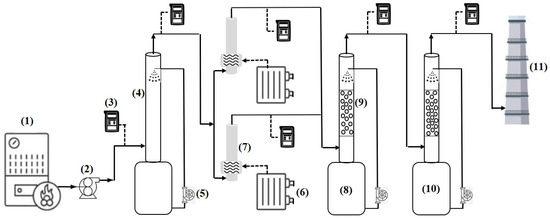
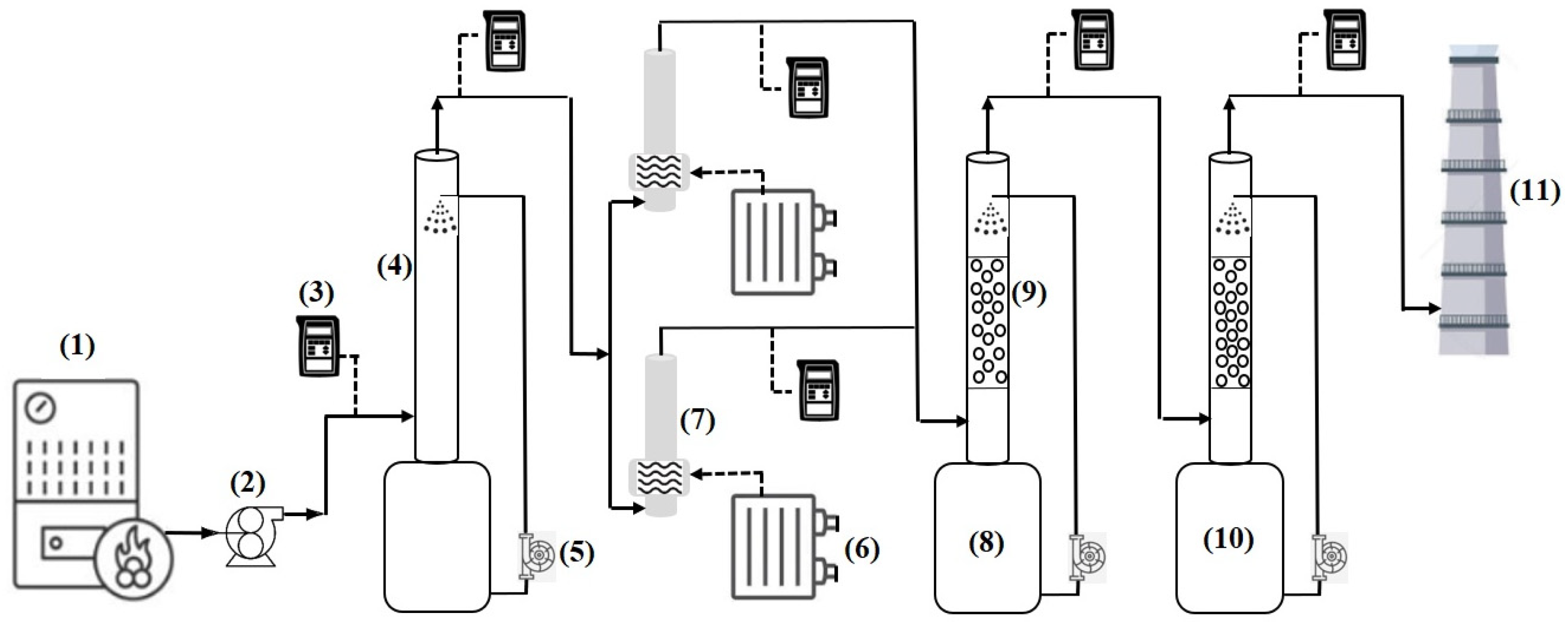
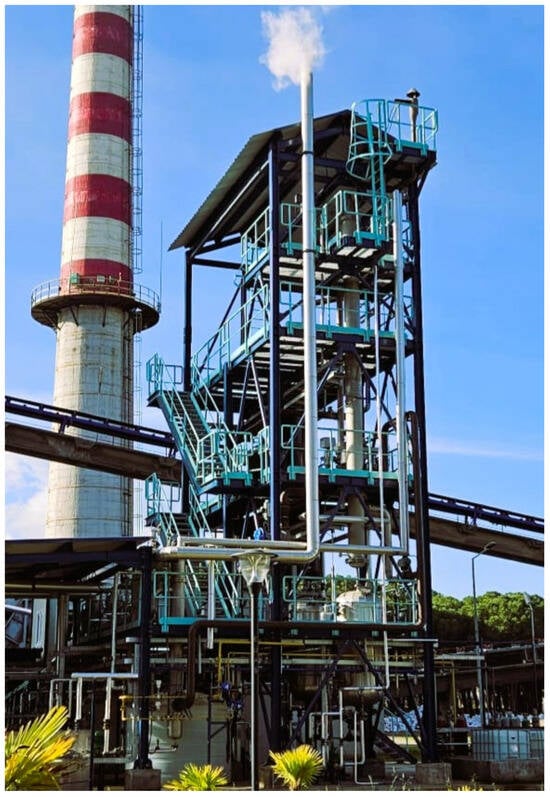
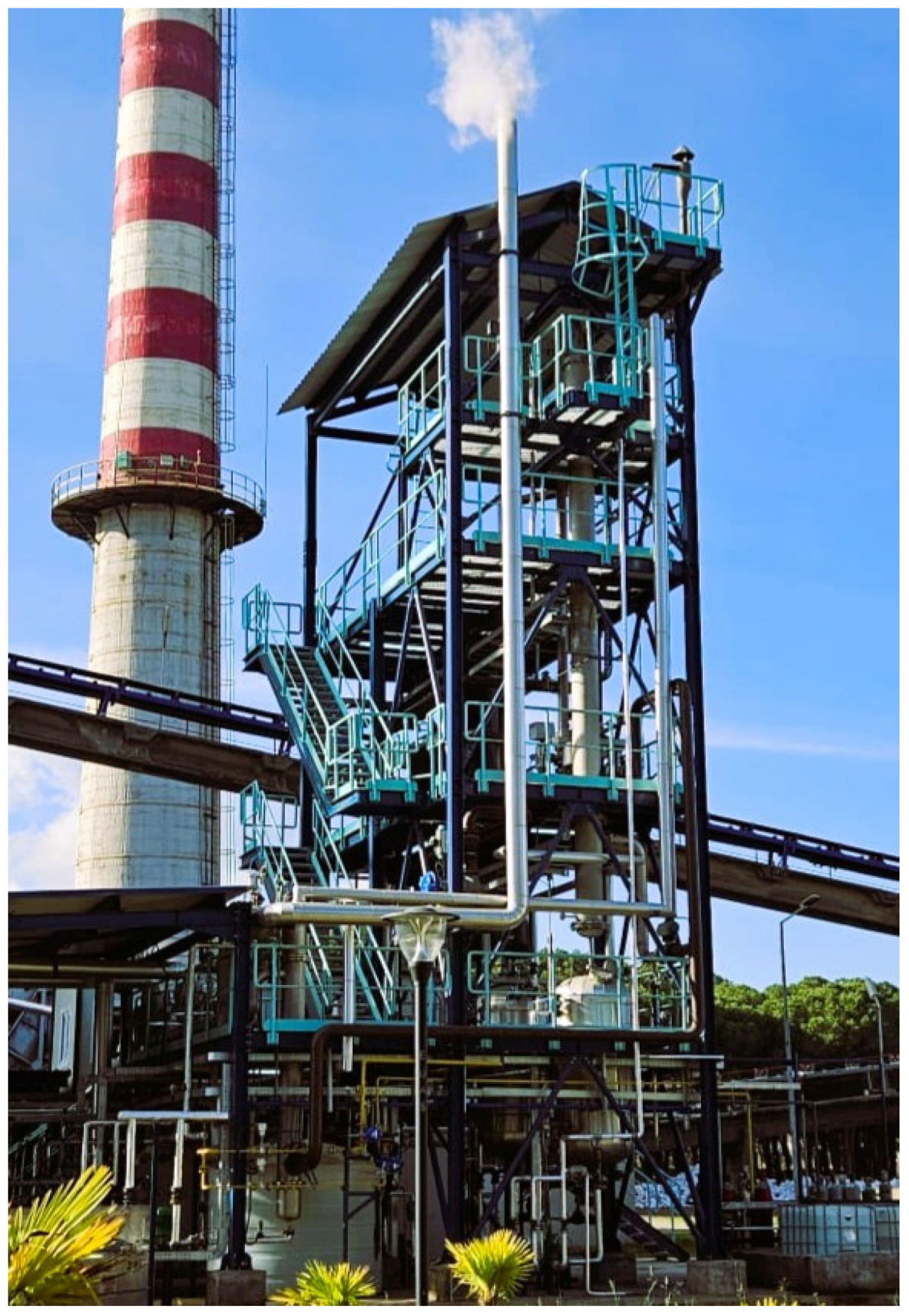
Real-time gas monitoring was conducted at multiple points to quantify pollutant concentrations and evaluate removal efficiencies. A schematic representation of the process is provided in Figure 1, the pilot plant is seen in Figure 2, and the main operational and design parameters of the system are summarized in Table 1.
Figure 1.
Schematic diagram of the pilot system: (1) boiler, (2) blower, (3) gas analysis port, (4) spray tower, (5) centrifugal pump, (6) microwave plasma source, (7) plasma reactor, (8) ammonia–water tank, (9) packed bed scrubber, (10) demi water tank, (11) stack.
Figure 2.
The pilot plant (left: the chimney of the flue gas source, right: integrated plasma-scrubbing pollutant removal facility).
Table 1.
System and operational parameters of the pilot plant.
2.2. Microwave–Plasma System
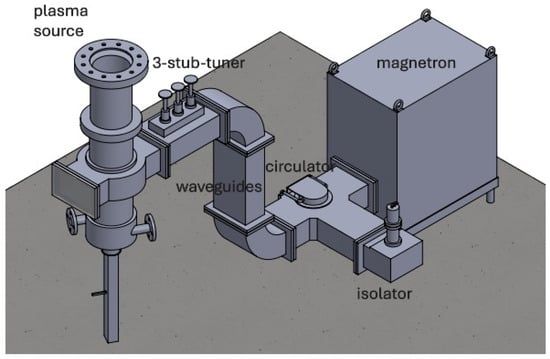
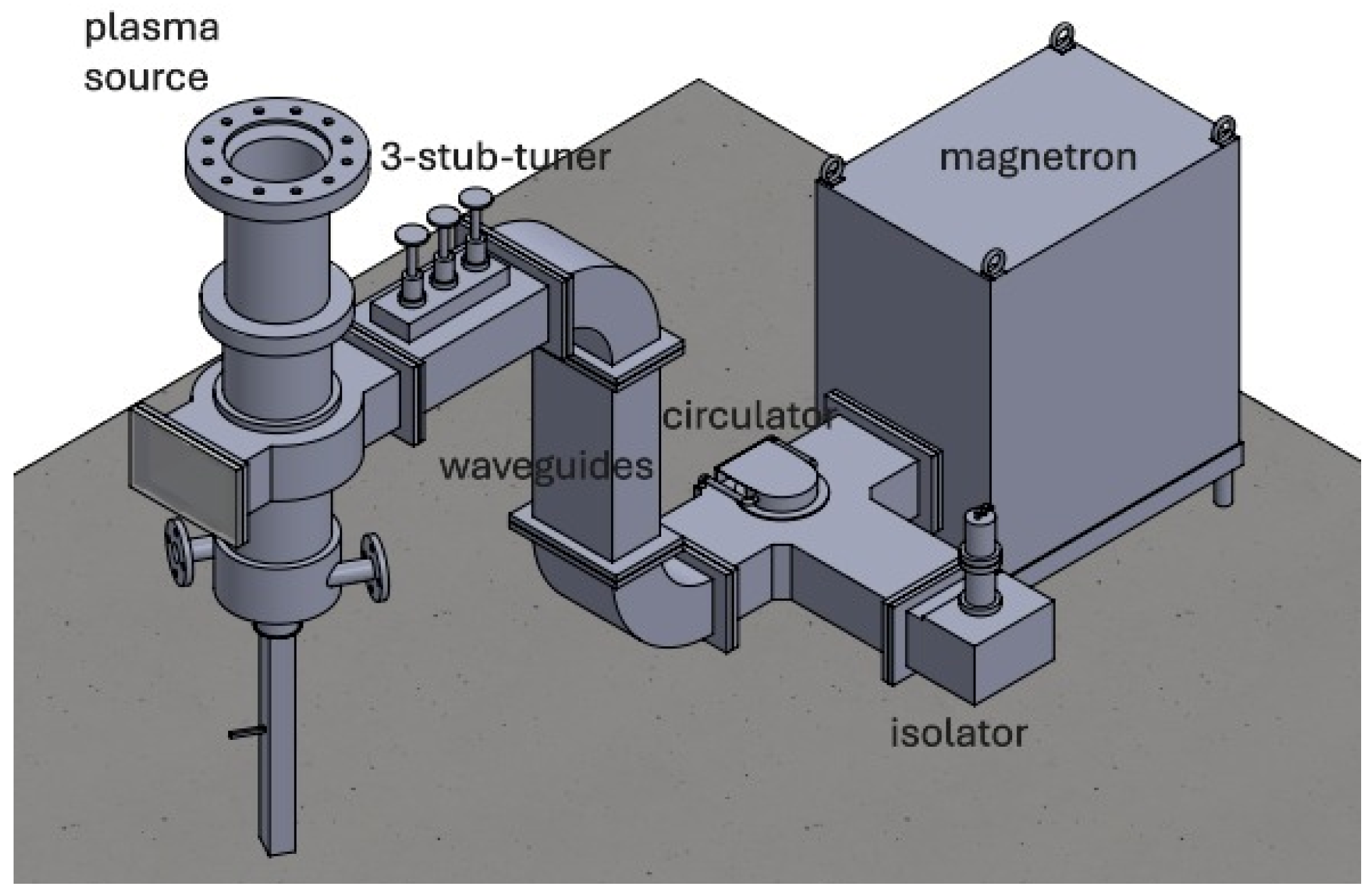
The flue gas was treated using an industrial 915 MHz microwave plasma system rated at 75 kW (Muegge GmbH, Reichelsheim, Germany). The system consisted of a high-power microwave generator and magnetron head, a WR-975 waveguide network with impedance-matching components, and an atmospheric-pressure plasma resonance chamber designed for continuous operation. Microwave power was supplied by a 75-kW generator and delivered through a WR-975 transmission line incorporating a circulator, water-load, and three-stub tuner for protection and reflection minimization. Waveguide sections, E-bends, and a protection window were used to route and isolate the microwave energy within the pilot-scale installation. Microwaves were delivered to a 915 MHz atmospheric quartz plasma chamber (diameter: 100 mm) to produce a high-temperature plasma zone. The system allowed for the adjustment of plasma power between 10 and 75 kW, enabling the investigation of specific energy input effects on pollutant transformation. The integration scheme is illustrated in Figure 3.
Figure 3.
Microwave plasma system integration scheme.
The microwave frequency of 915 MHz was selected instead of the commonly used 2450 MHz due to its greater penetration depth and improved energy coupling in large-volume plasma systems. This frequency enables more uniform plasma generation and stable operation at higher power levels, which is particularly advantageous for pilot-scale and industrial applications involving high gas flow rates.
Flue gas exiting the pre-washing column entered the plasma reactor under laminar-to-transitional flow conditions. Plasma-induced oxidation and thermal reactions were primarily responsible for modifying SO2 and NOx speciation prior to scrubbing.
2.3. Scrubbing System
2.3.1. Pre-Washing Column
A counter-current spray tower (diameter: 840 mm, height: 5 m) was used to remove particulate matter and cool the gas stream before plasma treatment. Water was circulated at 5 m3/h using a centrifugal pump. This step, in addition to particulate removal, prevented overheating and reduced fouling of downstream components.
2.3.2. Ammonia Scrubbing Column
Following plasma treatment, the gas passed through a packed-bed scrubber (diameter: 400 mm, height: 6 m) operating in counter-current mode. Aqueous ammonia was supplied at flow rates between 12.5–35 L/h, depending on the experimental condition. This unit removed NOx by absorption and reaction with ammonia, particularly targeting oxidized nitrogen species (NO2, HNO2, HNO3).
2.3.3. Water Polishing Column
A final water-washing stage was used to remove any remaining soluble species, specifically ammonia. Demineralized water was circulated at 60–90 L/h.
2.4. Flue Gas Handling and Sampling
Flue gas originating from coal combustion in the furnace was extracted using a variable-speed blower and introduced into the treatment line at controlled flow rates between 300 and 1000 m3/h. After extraction, the gas passed sequentially through each unit of the pilot system—pre-washing, microwave plasma reactor, ammonia scrubber and final water-washing column—allowing for the evolution of pollutant concentrations to be tracked throughout the entire process.
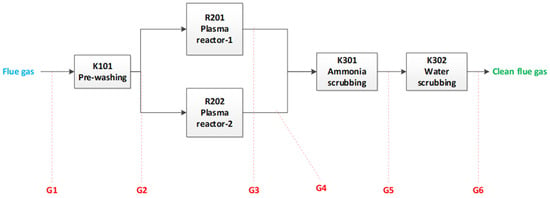
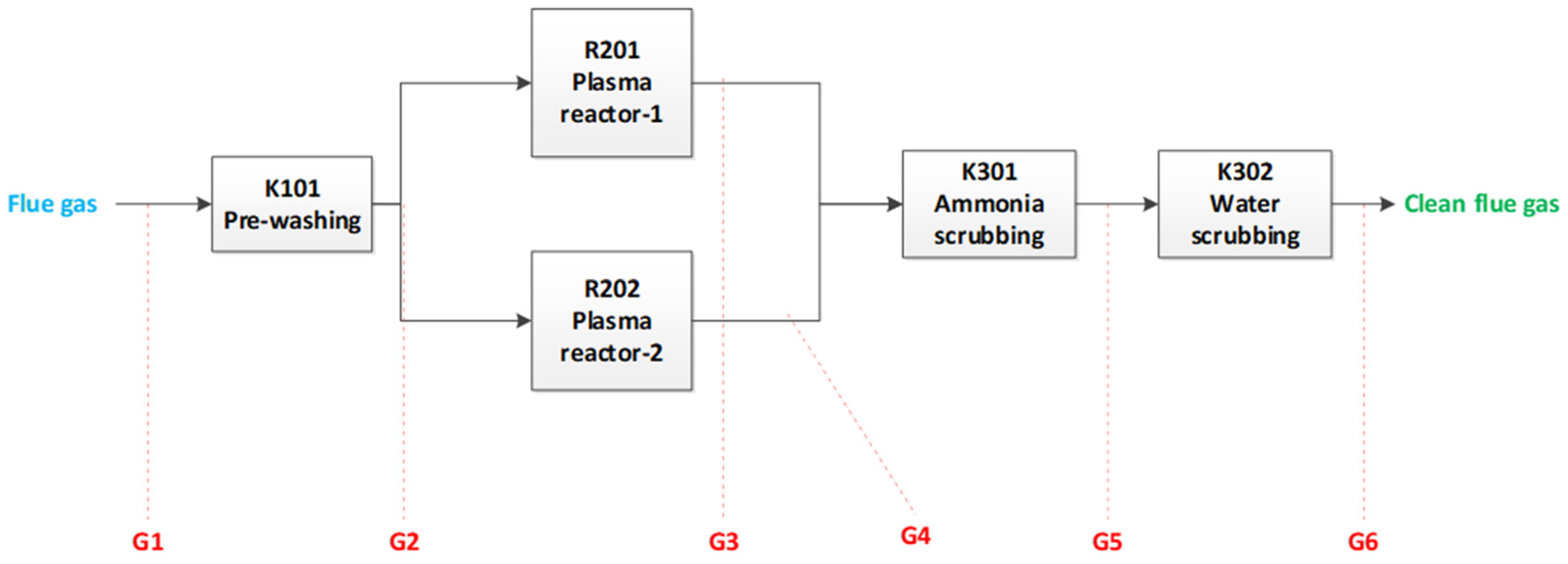
To enable detailed analysis of pollutant behavior at each stage, the flue gas was sampled at five dedicated measurement points (G1–G5), positioned along the gas path (Figure 4):
Figure 4.
Schematic diagram of the pilot-scale plasma-based flue gas treatment system and gas sampling locations. The system consists of a pre-washing unit (K101), two parallel plasma reactors (R201 and R202), an ammonia scrubbing unit (K301), and a final water scrubbing unit (K302). Gas sampling points G1–G6 indicate the locations where flue gas composition was measured along the treatment train.
- G1: Furnace outlet (system inlet): raw flue gas composition baseline;
- G2: Pre-washing outlet: effect of particulate removal and gas cooling;
- G3: Plasma reactor outlet: plasma-induced chemical transformation of SO2 and NOx;
- G4: Ammonia scrubber outlet: absorption and reduction of oxidized nitrogen species;
- G5: Water scrubber outlet (stack): final treated gas quality.
Continuous measurement of SO2, NO, NO2, and CO2 concentrations throughout the process was carried out using an integrated, industrial-grade gas analysis system specifically designed for high-temperature flue gas applications. The system consisted of heated sampling probes, heated transfer lines, multi-channel gas conditioning units, and analytical modules (ABB EL3020, (ABB, Zürich, Switzerland) and AO2020 (ABB, Zürich, Switzerland) housed within a dedicated analyzer cabinet.
Each sampling point included an electrically heated AGT-PSG probe equipped with 0.3 μm ceramic filters and a PT100-controlled heater (ABB, Zürich, Switzerland) capable of maintaining probe temperatures up to 180 °C. This ensured that acid gases, water vapor, and aerosol-bound pollutants remained in the gas phase without condensation or line losses. The gas was delivered to the conditioning system via heated PTFE transfer lines (up to 200 °C), preventing condensation during transport.
Before entering the analyzers, the gas was conditioned using Bühler EGK 4S gas coolers (Bühler Technologies, Ratingen, Germany), which provided constant outlet temperatures of 3–5 °C, enabling controlled condensation removal. Condensate pumps, filters, pressure regulators, and flow meters ensured stable gas flow and removal of particulates and residual moisture, while PLC-HMI control and automated solenoid valve switching for line selection ensured effective data acquisition.
This configuration ensured accurate, condensation-free, multi-point monitoring of flue gas composition throughout the plasma-scrubbing process, enabling real-time assessment of pollutant transformations and removal efficiencies.
2.5. Experimental Procedure
A series of parametric experiments was conducted to evaluate the effects of the following:
- Microwave power (25–75 kW);
- Flue gas flow rate (300–1000 m3/h);
- Ammonia solution flow rate (12.5–35 L/h);
- Water flow rate (60–90 L/h).
Where the ultimate aim was to maximize the removal efficiency of SO2 and NOx. Particular focus was placed on the applied plasma power, the flow rate values used, and the resulting changes in SO2 and NOx levels.
For each condition, baseline inlet concentrations were recorded at G1, followed by sequential measurements at G2–G5. SO2, NO, NO2, and CO2 removal efficiencies were calculated using the following:
where η is the removal efficiency (%) of species i, and and are, respectively, inlet and outlet concentrations of species i in mg/Nm3.
Experiments were performed after reaching steady-state operation, typically requiring 10–15 min of stabilization at each power/flow setting. All reported concentrations represent time-averaged values obtained under steady-state operation. For each operating condition, measurements were recorded over a minimum period of 3 min following stabilization, corresponding to multiple analyzer readings. Reported values represent the average of these measurements.
2.6. Data Processing and Statistical Treatment
SO2 and NOx conversion in the plasma reactor was analyzed with respect to applied microwave power.
For each plasma power level, at least three steady-state data sets were obtained. The uncertainty in measured concentrations was evaluated based on the standard deviation of these repeated measurements.
A logarithmic regression model (MS Excel 2019) was fitted to experimental data to quantify the relationship between power input and plasma-generated NOx concentrations.
3. Results and Discussion
3.1. SO2 Removal and Plasma–Chemical Mechanisms
Complete or near-complete SO2 removal (>95%) was consistently achieved across all experimental conditions, demonstrating the robust performance of the integrated plasma-scrubbing system for sulfur dioxide abatement. The high removal efficiency is mainly attributed to plasma-enhanced oxidation, where SO2 is oxidized to SO3 by plasma-generated radicals, while alkaline scrubbing ensures complete removal since SO3 and remaining SO2 are efficiently captured by alkaline solution. The overall mechanism can be described as follows:
Generation of reactive species by microwave energy: short-lived radicals (O·, OH·) and longer-lived molecular oxidants such as ozone (O3)
Oxidation [48]:
Scrubbing:
The formation of ammonium salts as stable end products, the formation of which is proved via ammonium analysis in aqueous discharge stream, facilitates easy removal and potential recovery for agricultural applications, addressing one of the major drawbacks of conventional FGD systems that generate large quantities of gypsum waste.
The proposed plasma-enhanced SO2 oxidation mechanism is strongly supported by the experimental observations obtained at pilot scale. As shown by the gas analysis results, SO2 concentrations measured at the plasma reactor outlet (G3) and downstream of the ammonia scrubber (G4–G5) consistently decreased to near-zero levels under all investigated operating conditions, independent of plasma power and gas flow rate. This behavior indicates that SO2 conversion is not limited by mass transfer in the scrubber but is initiated upstream by plasma-induced chemical activation. The absence of residual SO2 after scrubbing further confirms that plasma treatment promotes the formation of highly water-soluble sulfur species, such as SO3 and sulfuric acid, which are efficiently captured by the alkaline scrubbing solution. Moreover, control experiments conducted without plasma application showed that SO2 removal remained effective, but without evidence of plasma-driven oxidation enhancement, supporting the conclusion that plasma primarily accelerates SO2 oxidation kinetics rather than acting as a sole removal step.
3.2. NOx Removal and Plasma–Chemical Mechanisms
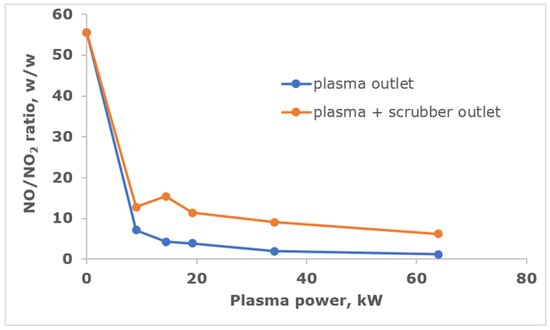
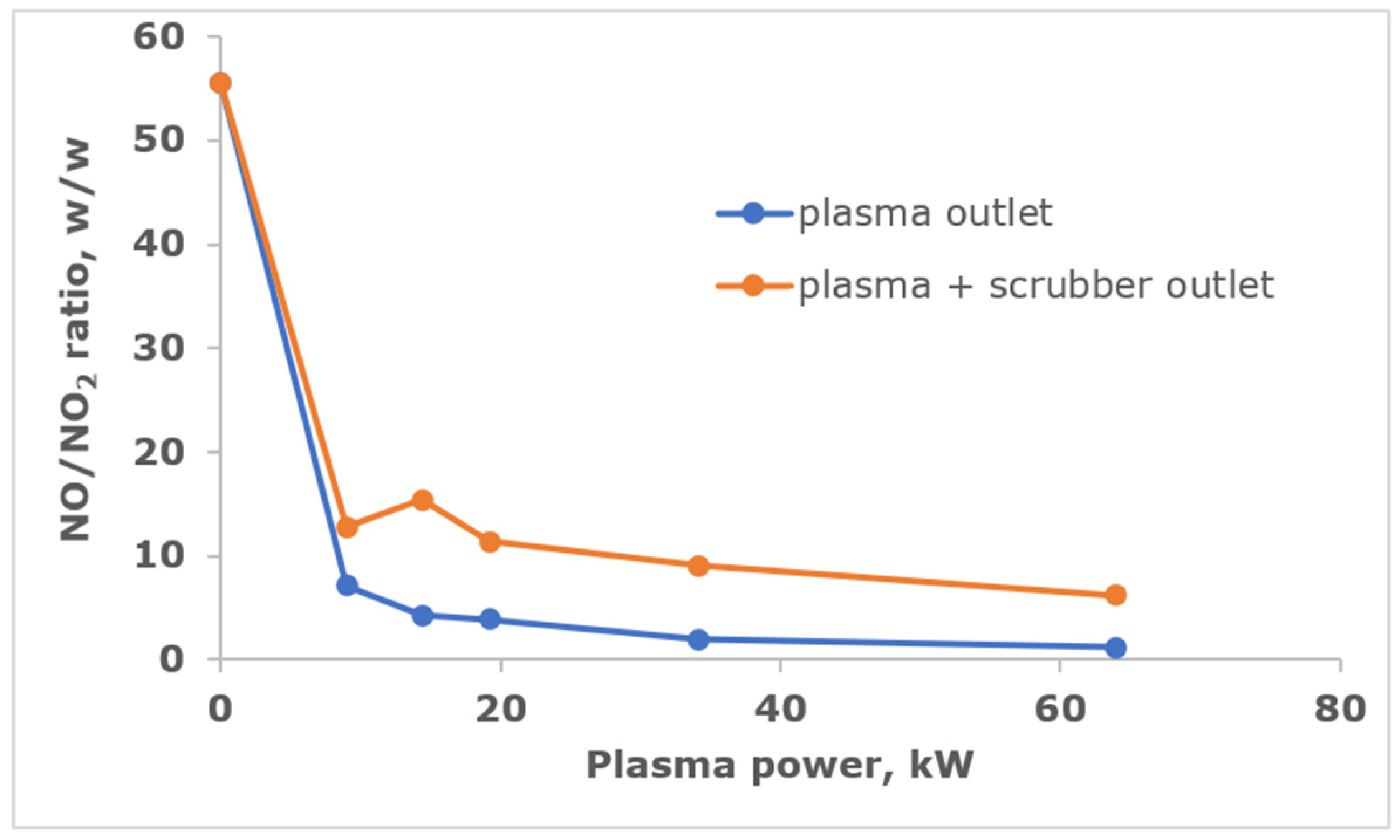
Despite the high performance in SO2 removal, an increase in NOx levels occurs at the plasma outlet. In fact, applying plasma to flue gas can facilitate the removal of NOx from the gas phase based on the principle of forming higher oxides that are more easily soluble in water. This effect of plasma is shown in Figure 5, where the NO/NO2 ratio, which was around 50 before plasma treatment, significantly decreased to around 10 due to the formation of NO2 under the influence of plasma. This mechanism is consistent with findings from other plasma-based studies. For instance, Adwek et al. (2019) reported NO oxidation conversion of 93% using DBD combined with a catalyst, demonstrating the effectiveness of radical-driven oxidation across different plasma technologies [49].
Figure 5.
Variation of the NO/NO2 concentration ratio at the plasma reactor outlet and after the combined plasma + scrubber system as a function of applied plasma power. The NO/NO2 ratio is calculated based on concentrations measured by the gas analyzer at the corresponding sampling locations.
The slight increase of this ratio at the plasma + scrubber outlet (Figure 5) is due to the fact that higher oxides more readily transfer to the aqueous phase and are thus removed during the scrubbing process.
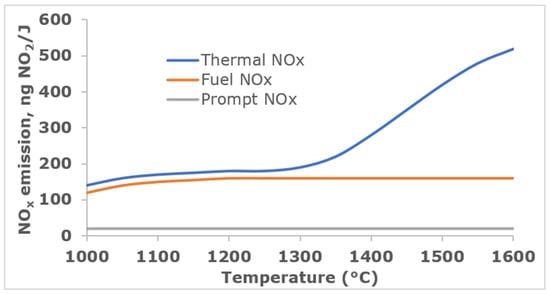
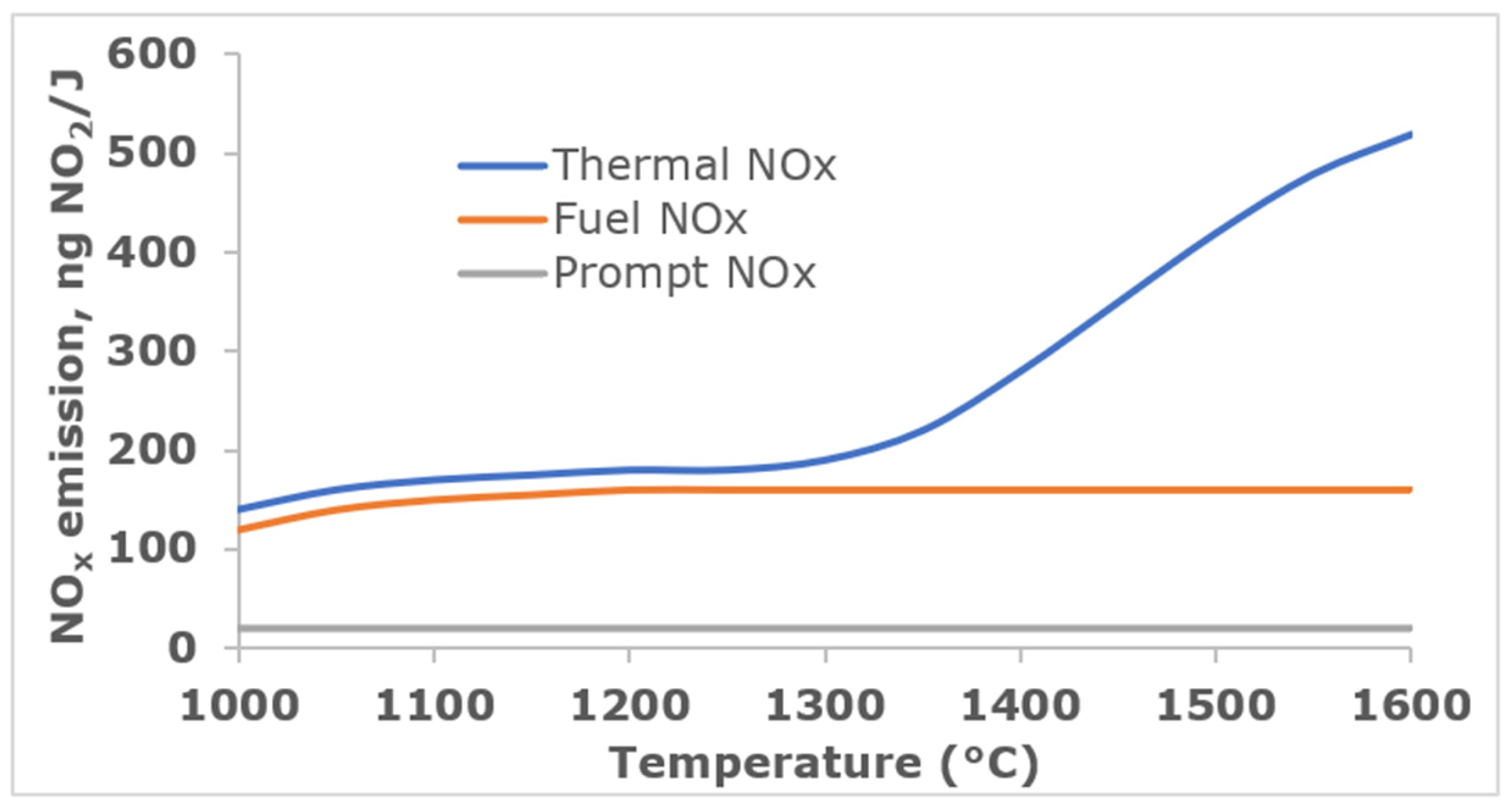
However, contrary to expectations (i.e., NOx removal), the observed increase in NO2 following plasma application is due to the operation of the plasma system at high power/flow rate values. In other words, application of power at very high levels leads to high temperatures, which in turn causes the formation of thermal NOx. As shown in Figure 6 [50], thermal NOx is formed as a function of temperature and so decreases geometrically when the temperature drops to around 1200 °C, and does not form below this threshold.
Figure 6.
Contributions of thermal, fuel, and prompt NOx formation mechanisms as a function of temperature, expressed as NOx emission (ng NO2/J) (adapted from [50]).
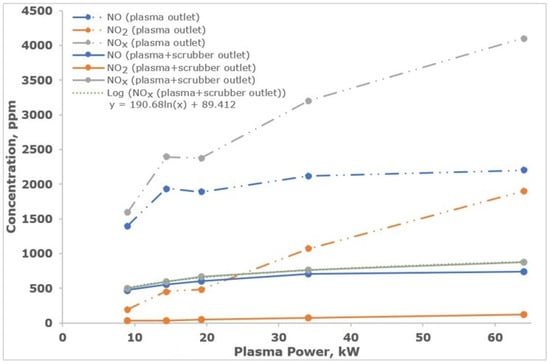
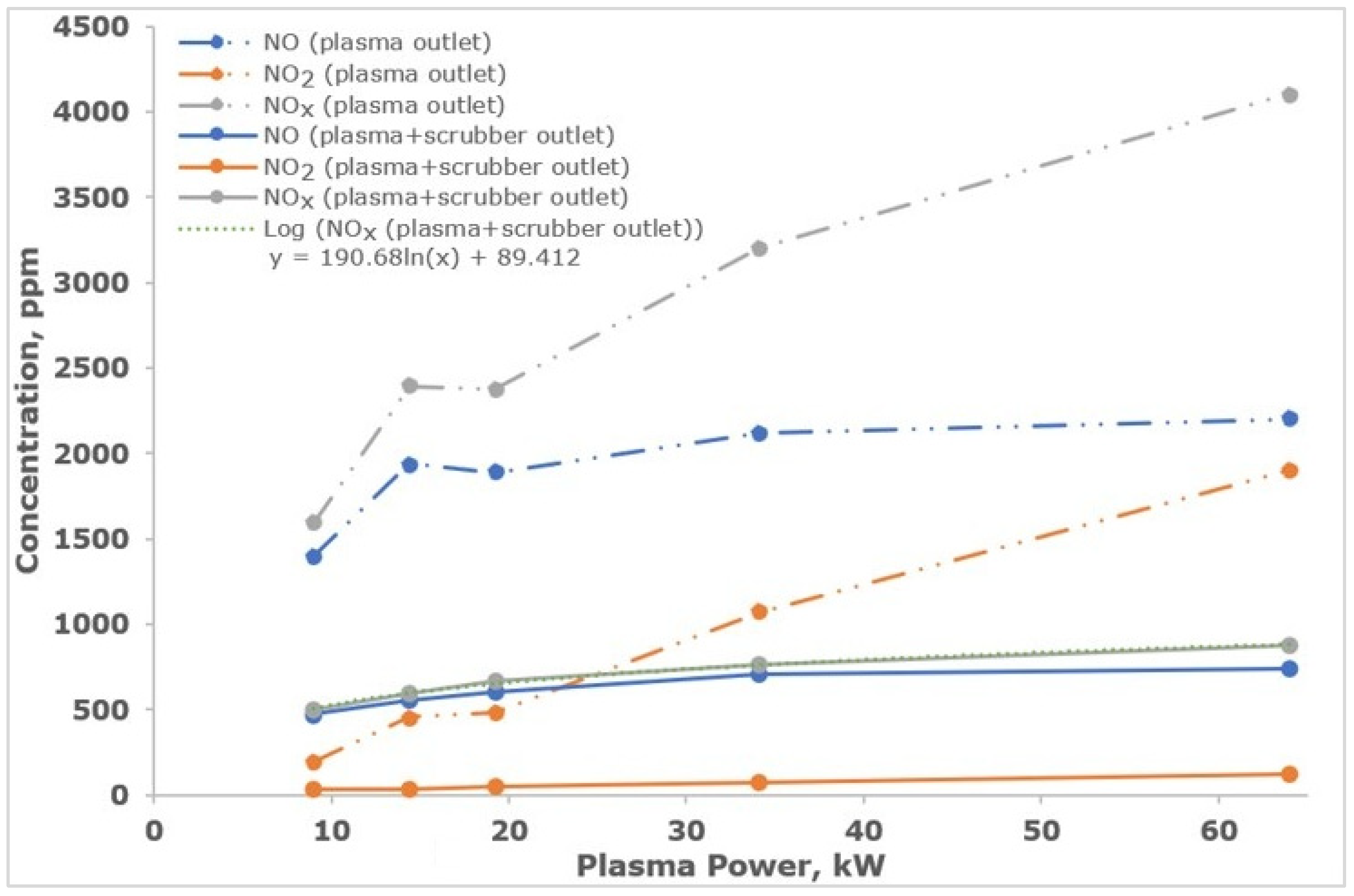
To better illustrate the relationship in question (plasma power vs. NOx formation), the results of experiments conducted at different power levels have been compiled into a single graph. Figure 7 shows the NOx values at the plasma outlet and plasma + scrubber outlet, respectively, depending on plasma power. A logarithmic decrease is observed as the power decreases, particularly with the latter one (plasma + scrubber). To quantify this observation, a regression analysis was performed, resulting in a representative logarithmic equation with a very high correlation coefficient (R2 = 0.9954).
Figure 7.
NO, NO2, and total NOx concentrations measured at the plasma reactor outlet and after the combined plasma + ammonia scrubbing stage as a function of applied plasma power. The dotted line represents a logarithmic fit to the NOx concentration measured after the plasma + scrubber system. NOx concentrations are reported in ppm as measured by the gas analyzer; conversion to mg/Nm3 was applied where required for efficiency calculations.
As explained in the thermal NOx formation mechanism above, when the power drops below a certain threshold, the flue gas temperature also decreases, and thermal NOx formation becomes negligible. However, due to operational constraints of the microwave plasma system, it cannot be operated below a certain power level (approximately 10 kW). Therefore, to represent the overall system trend with the examination of <10 kW levels, too, the correlation equation identified (Figure 7) was used:
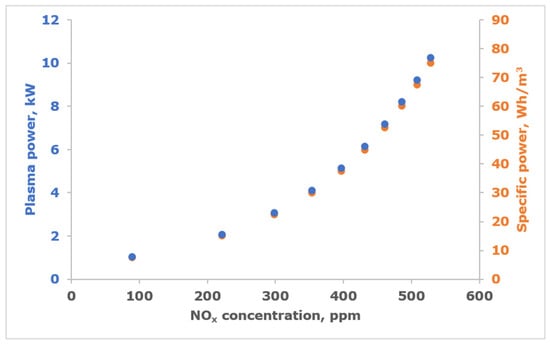
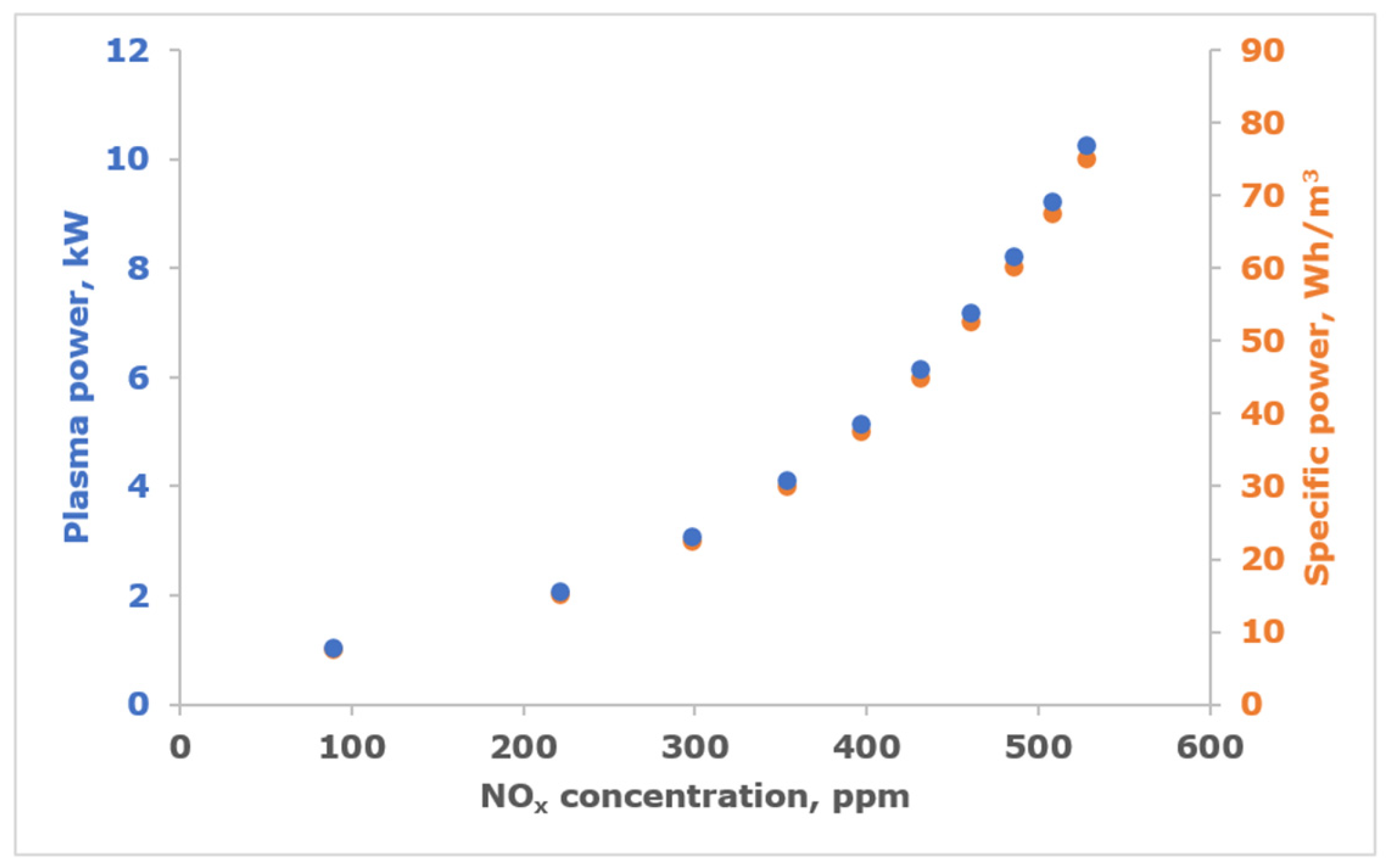
where y is NOx concentration (ppm), and x is the applied plasma power (kW). When this correlation is extrapolated to power levels below 10 kW, the relationship shown in Figure 8 is obtained. According to this relationship, as plasma power and consequently the specific energy input (i.e., energy applied per unit gas flow, Wh/m3) decreases, thermal NOx formation is reduced to a negligible level. At first glance, the increase in NOx concentration with increasing plasma power shown in Figure 8 may appear counterintuitive, as plasma processes are often associated with enhanced NO oxidation and removal. However, this behavior is explained by the transition from a predominantly non-thermal plasma regime to a thermal regime at high specific energy inputs. At elevated microwave power levels, the local gas temperature in the plasma zone increases significantly, activating thermal NOx formation pathways via the Zeldovich mechanism. Under these conditions, the rate of NO formation from N2 and O2 exceeds the rate of radical driven NO oxidation, resulting in a net increase in total NOx concentration. At lower plasma power and specific energy input, radical mediated oxidation dominates, improving NO solubility and subsequent removal by ammonia scrubbing. Therefore, the reverse trend observed in Figure 8 is a direct consequence of temperature driven thermal NOx formation rather than a limitation of plasma induced oxidation. For the flow rate under consideration, it can be predicted that thermal NOx formation would not occur if the power level is reduced to less than ca. 3 kW (19 Wh/m3).
y = 190.68 ln (x) + 89.412
Figure 8.
Relationship between NOx concentration and energy input, expressed as plasma power (left axis) and specific power consumption (right axis). Specific energy input is calculated based on applied plasma power and flue gas flow rate.
As noted above, the experimental results demonstrate that plasma treatment induces radical-driven oxidation of NO, substantially enhancing the aqueous solubility of NOx. The plasma-generated radicals (e.g., •OH) oxidize NO to NO2 and higher NOx, which exhibit significantly greater water solubility than NO, thereby improving the efficiency of downstream ammonia scrubbing [51].
The primary pathways can be represented as follows:
Generation of reactive species by microwave energy: short-lived radicals (O·, OH·) and longer-lived molecular oxidants such as ozone (O3)
Thermal NOx formation via the following:
Zeldovich mechanism [52]:
NO Oxidation [48]:
Enhanced Scrubbing:
This multi-step oxidation mechanism significantly improves NOx removal efficiency compared to direct ammonia scrubbing of untreated flue gas, where the low water solubility of NO limits removal.
In the Zeldovich mechanism, O and N denote atomic oxygen and atomic nitrogen species, which are generated under high-temperature conditions through the dissociation of O2 and N2. Such atomic species are responsible for thermal NO formation in high-temperature zones.
The reported temperature of approximately 1200 °C does not represent the bulk gas temperature, but rather an estimated local effective temperature within the plasma-active region, where energetic electrons and microwave energy promote molecular dissociation. This temperature was inferred from power input, reactor geometry, and literature-reported correlations for microwave plasma systems, rather than from direct gas-phase thermocouple measurements.
It should be noted that the temperature within the plasma is spatially non-uniform, and the actual bulk gas temperature is expected to be significantly lower. Therefore, the reported value should be regarded as an estimated local plasma temperature with inherent uncertainty.
3.3. Effect of Flow Rate
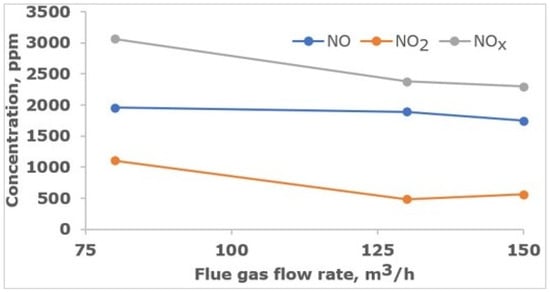
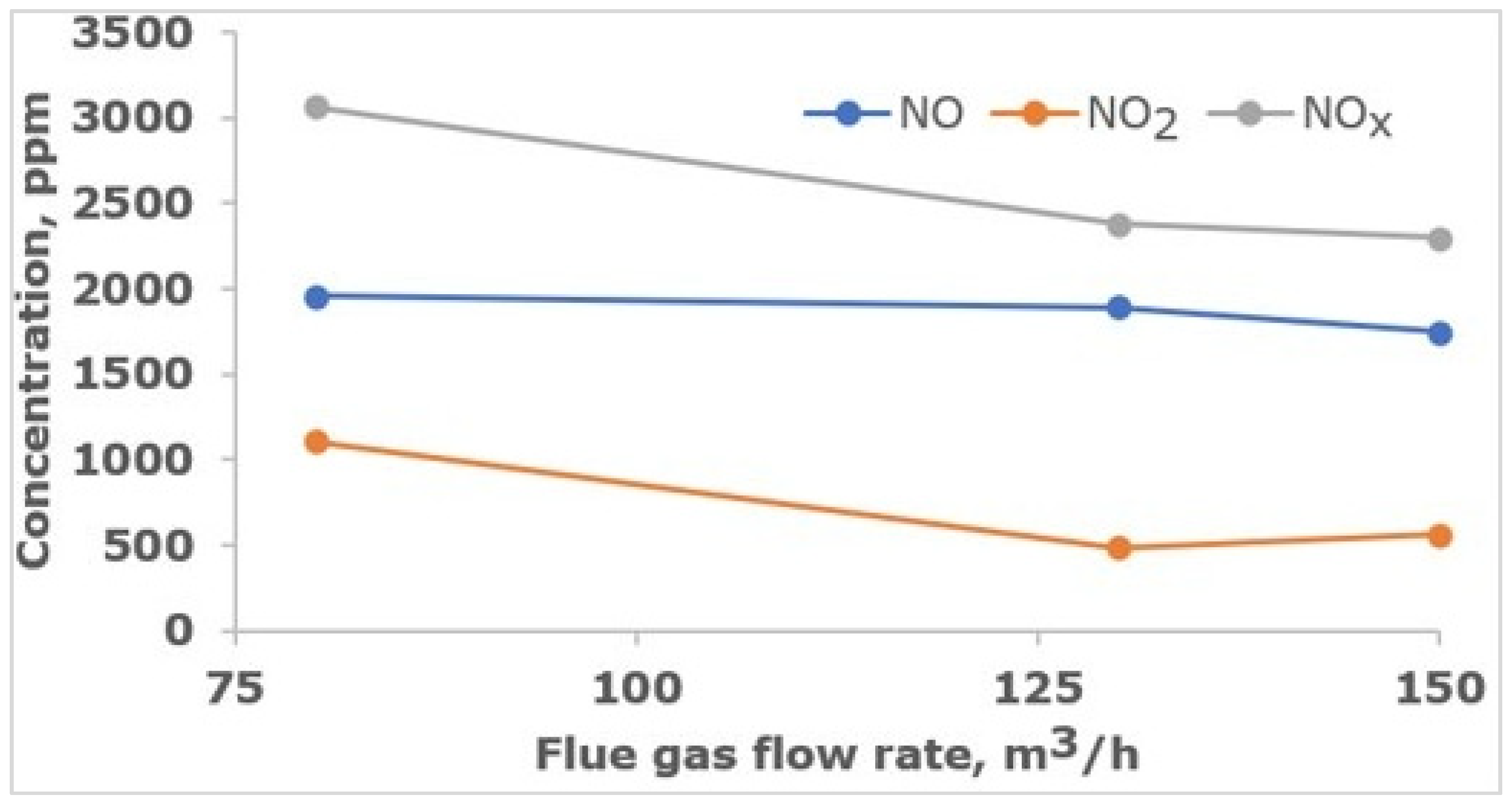
As a result of experiments conducted at different flow rates but at the same power level, the changes in NOx values shown in Figure 9 were obtained. The decrease in NOx values with increasing flow rate, as also observed in the analysis of the experiments presented under Section 3.2, is due to the reduction in the power applied per unit flue gas flow rate.
Figure 9.
Variation in NO, NO2, and total NOx concentrations (ppm) as a function of flue gas flow rate, measured at the outlet of the plasma + scrubbing system.
3.4. Effect of Plasma Assistance in Combination with Wet Scrubbing
As a result of experimental studies in which plasma was applied to flue gas followed by ammonia scrubbing of the treated gas, the following general observations were made:
- -
- The SO2 content was completely removed;
- -
- The amount of NOx increased after plasma treatment, but approximately 75% of the resulting NOx were reduced through ammonia scrubbing.
To assess the specific contribution of the plasma process to the overall removal efficiency, a control experiment was conducted “utilizing only ammonia scrubbing and without plasma application”. In this case,
- -
- The SO2 content was removed (100%), but there was no significant reduction in NOx content (<10%).
This indicates that the chemical structure of the flue gas altered by plasma treatment (e.g., formation of active radicals) has a beneficial effect on the subsequent scrubbing process, facilitating a greater transfer of NOx into the aqueous phase.
3.5. CO2 Removal
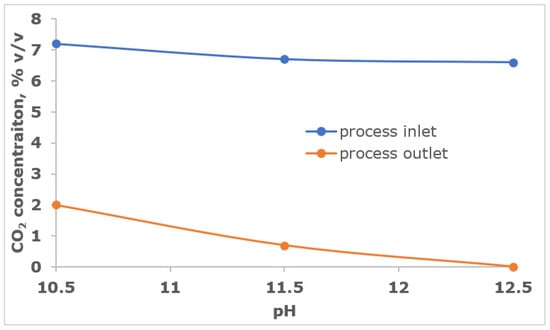
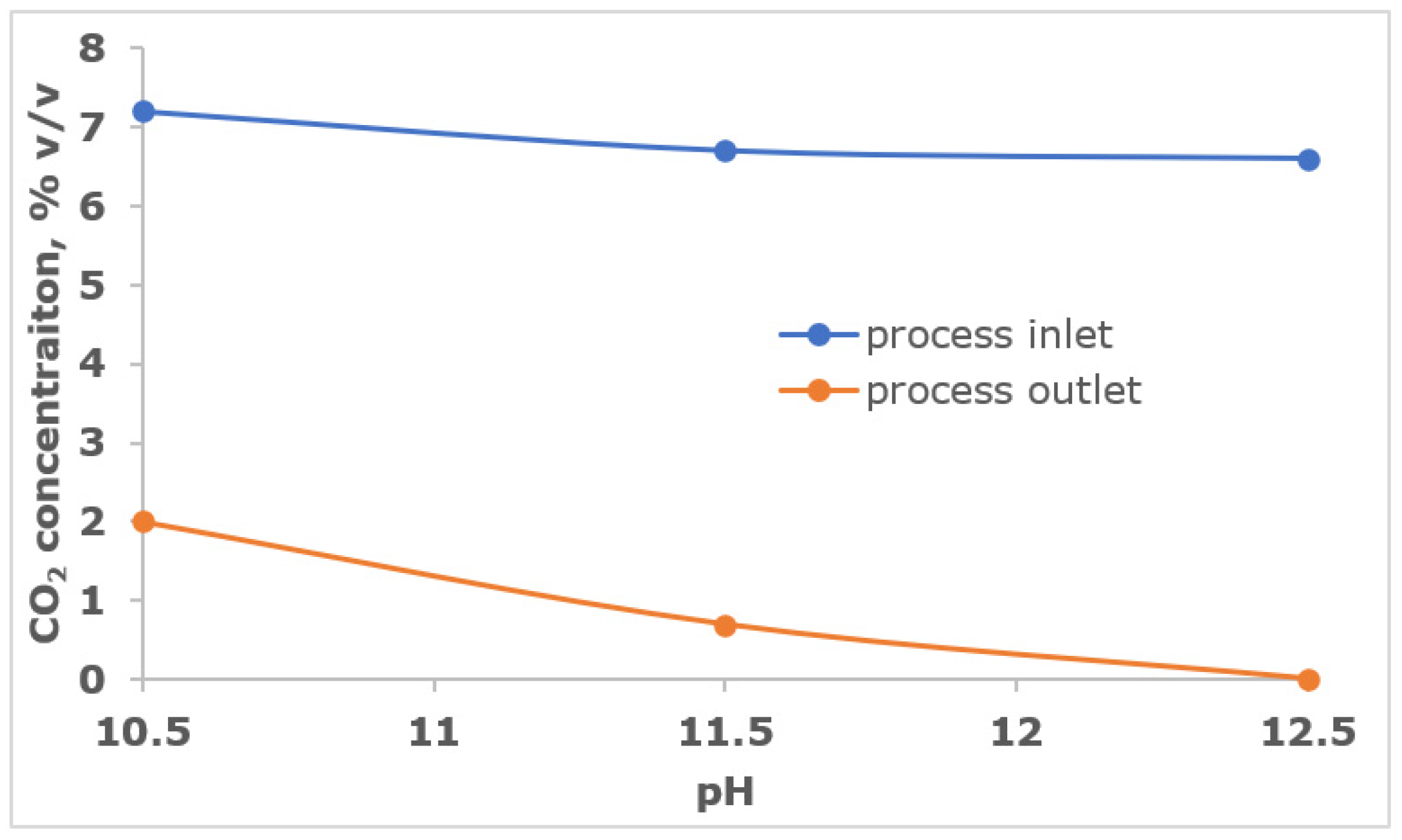
During the parametric experiments, CO2 removal also occurred as a result of alkaline scrubbing. To analyse the extent of this removal, additional parametric studies were conducted. These experiments were carried out by adjusting the pH of the scrubbing solution. The pH values were set at 10.5, 11.5, and 12.5. The results of these experiments are presented in Figure 10. Upon examining the results, it was observed that CO2 was captured in significantly higher amounts, particularly at a pH level of 12.5. As high as a 70% level of removal was able to be achieved.
Figure 10.
Variation in CO2 concentration at the process inlet and outlet (% v/v) as a function of scrubbing solution pH.
It should be emphasized that the near-zero outlet CO2 concentrations observed at high pH values represent instantaneous minimum values under specific operating conditions. The reported removal efficiencies (approximately 70%) are calculated based on averaged inlet and outlet concentrations over the full experimental duration and therefore reflect the overall CO2 capture performance of the system rather than peak removal at a single operating point.
3.6. Summary of Discussions
Overall, the integrated plasma-scrubbing process delivered complete removal of SO2 across all operating conditions, while the behavior of NOx was strongly influenced by plasma power and gas-phase chemistry. Plasma treatment consistently increased the NO2 fraction at the reactor outlet, confirming that the plasma promotes oxidation of NO into higher oxides that are more soluble in aqueous media. This oxidation effect, demonstrated in the parametric experiments, is essential because NO, being poorly soluble, can be removed efficiently by scrubbing alone.
However, alongside this beneficial oxidation, a substantial increase in total NOx was observed at high plasma power levels. This increase is attributed to thermal NOx formation, which becomes significant when the plasma applies excessive energy per unit flue gas flow. As the plasma gas temperature exceeds ≈1200 °C, thermal reactions between N2 and O2 are activated, generating additional NO. Once the gas temperature falls below this threshold, thermal NOx formation decreases sharply.
The NOx behavior observed here aligns directly with the nitrogen-chemistry framework described by Kim et al. (2025), who show that plasma systems transition from non-thermal oxidation to thermal NO formation once gas temperatures exceed 1100–1300 °C [52]. Similarly, in this study, at lower specific plasma power, radicals oxidize NO to more soluble species. However, increasing microwave power causes the Zeldovich mechanism to be dominant, leading NOx levels’ increase. This temperature-driven shift fully explains the measured logarithmic increase in NOx with power and confirms that controlling gas temperature is essential for effective NOx mitigation. In his study, Wu (2016) reported high SO2 removal efficiencies (ca. 99%) using a microwave plasma reactor operated at very high specific energy input, which strongly promotes oxidation of SO2 to SO3 [53]. However, because the authors did not report NO or NO2 concentrations, it might be argued that high specific energy input will likely lead to high gas temperatures, ultimately resulting in the formation of thermal NOx at significant amounts, as observed in this very study.
Following the ammonia scrubbing stage, a pronounced reduction in NOx concentrations was achieved, typically around 75%, demonstrating the strong synergy between plasma-induced oxidation and chemical absorption. The combined process also achieved high CO2 removal (50–100%), depending on the scrubbing solution pH.
To determine whether ammonia scrubbing alone could achieve similar results, control experiments without plasma were conducted. In these cases, although SO2 and CO2 were effectively absorbed, NOx removal remained negligible, confirming that plasma activation is essential to convert NO into absorbable species. The marked improvement in NOx capture after plasma treatment indicates that changes to the chemical structure of the gas—particularly the formation of NO2, HNO2, and related oxidized species—play a key role in enabling efficient scrubbing.
As predicted by the thermal NOx mechanism, reducing plasma power lowers gas temperature and suppresses thermal NO formation. Although the system could not be operated below ≈10 kW due to technical constraints, the experimentally derived logarithmic correlation allowed extrapolation to lower power levels. This analysis suggests that for a flow rate of 130 m3/h, thermal NOx formation would become negligible at an applied power of approximately 2.5 kW, corresponding to a significantly lower specific energy input (19 Wh/m3).
Balachandran et al. (2016) conducted a similar microwave-plasma study for marine diesel emission control [35] and reported high NOx and SO2 abatement efficiencies, attributing performance changes to the formation of different plasma modes; specifically, the transition between “purple” and “yellow” plasmas. Although the mechanistic interpretation differs from the present work (their explanation being rooted in non-thermal radical pathways, while ours emphasizes the onset of thermal NO formation), the operating conditions in their system closely match those examined here. In particular, their reactor operated at a comparable specific energy input of approximately 25 Wh/m3 (calculated from 1.8 kW total microwave power and 20 L/s gas flow rate [35]), which falls within the same range where our logarithmic correlation predicts an optimum operating window that avoids significant thermal NOx formation. This alignment in effective energy density—and the associated performance trends—provides independent support for the conclusions of this study regarding the critical importance of specific plasma power in determining NOx/SO2 behavior and the transition between beneficial oxidation and undesired thermal NO formation. Moreover, the findings of the present study identify an important design target for future low-energy or multi-stage microwave plasma reactors.
From an energy perspective, the results highlight that the industrial relevance of microwave-assisted plasma technology strongly depends on operating within an optimized specific energy input window. While high plasma power intensifies radical formation and oxidation reactions, excessive energy input leads to elevated gas temperatures and undesired thermal NOx formation, reducing overall process efficiency. The experimentally derived logarithmic relationship between plasma power and NOx concentration indicates that effective pollutant transformation can be achieved at relatively low specific energy inputs (on the order of 20 Wh/m3), where thermal NOx formation becomes negligible. This suggests that, when properly optimized, microwave plasma systems can operate at energy densities compatible with industrial flue gas treatment, particularly when combined with downstream scrubbing that capitalizes on plasma-induced chemical activation. Consequently, energy-efficient operation rather than maximum power application emerges as the key design principle for industrial-scale implementation.
The performance of the presented microwave-assisted plasma–scrubber system is sensitive to variations in flue gas composition, as changes in SO2, NOx, CO2, O2, and H2O concentrations directly influence plasma chemistry and absorption behavior. Variations in gas composition affect the generation and consumption of reactive species (e.g., O·, OH·, O3), reaction pathways, and overall removal efficiency. However, the system is inherently adaptable, as key operating parameters including microwave power, gas flow rate, residence time, scrubbing solution pH, and liquid-to-gas ratio can be adjusted to accommodate different flue gas compositions. This flexibility supports the applicability of the proposed system to a wide range of industrial flue gas conditions.
Finally, changes in flue gas flow rate also influenced pollutant behavior. Lower flow rates increased the residence time within the plasma zone, enhancing pollutant transformation but at the expense of throughput and energy efficiency. Conversely, higher flow rates reduced residence time and specific energy input, resulting in lower thermal NOx formation but also limiting oxidation. These trade-offs highlight the need for optimized operating windows balancing energy input, temperature control, and pollutant removal performance.
3.7. Implications of Pilot Scale Results for Industrial Applications
The pilot scale demonstration provides critical insights into the feasibility and design considerations for industrial implementation of microwave-assisted plasma systems for flue gas treatment. Unlike laboratory scale studies, the present pilot-scale configuration captures realistic gas residence times, flow rates, and energy densities relevant to industrial exhaust streams. The results demonstrate that effective SO2 and CO2 removal can be achieved at moderate plasma power levels, while excessive energy input leads to elevated gas temperatures and undesired thermal NOx formation.
These findings highlight the importance of operating within an optimized specific energy input window rather than maximizing plasma power. The observed logarithmic relationship between plasma power and NOx concentration suggests that plasma assisted oxidation is most effective at low to moderate energy densities, where chemical activation dominates over thermal effects. Additionally, the strong synergy between plasma activation and downstream wet scrubbing indicates that plasma systems should be designed as integrated hybrid processes rather than standalone treatment units.
From a scale-up perspective, the pilot results suggest that industrial application should focus on modular plasma reactors, precise power control, and flexible operation to accommodate variations in flue gas composition and flow rate. Overall, the pilot-scale data serve as a practical guideline for transitioning microwave plasma technology from experimental setups to industrial flue gas treatment systems.
While the results are specific to the tested gas composition and reactor geometry, the identified trends regarding energy efficiency, thermal NOx formation, and plasma–scrubber synergy are expected to be transferable to similar industrial flue gas treatment systems.
4. Conclusions
This work demonstrates the performance of a pilot-scale microwave-assisted plasma based system under realistic coal-derived flue gas conditions and defines an effective operating energy window for NOx control.
The present results demonstrate that a microwave-assisted plasma reactor, when integrated with ammonia and water scrubbing, can effectively achieve simultaneous SO2, NOx, and CO2 removal from coal-derived flue gas at pilot scale. SO2 was completely removed under all operating conditions, while CO2 absorption reached 50–100% depending on scrubbing solution pH. Plasma treatment substantially altered the chemical speciation of NOx by oxidizing NO to more soluble higher-order species, enabling ammonia scrubbing to achieve around 75% NOx reduction. Control experiments confirmed that scrubbing alone is unable to remove NOx, underscoring the critical role of plasma-induced oxidation in enabling downstream capture.
However, the results also showed that plasma operation at high specific energy inputs leads to significant thermal NOx formation. The experimentally derived logarithmic correlation between plasma power and NOx concentration revealed that thermal NO formation becomes negligible at specific energy inputs near 19 Wh/m3, corresponding to an estimated 2.5 kW for the tested flow rate. Flow rate effects further emphasized the balance required between residence time, oxidation efficiency, and thermal NO generation.
Overall, the findings highlight a clear synergy between microwave plasma activation and ammonia scrubbing, enabling multi-pollutant removal in a single integrated system. While promising for industrial applications, further work should focus on optimizing reactor design to minimize thermal NOx formation, improving energy efficiency at scale, and exploring multi-stage or low-temperature plasma configurations to expand operational flexibility.
Author Contributions
Conceptualization, U.T. and E.Ü.; methodology, A.Z.T.; software, U.T.; validation, U.T., E.Ü. and A.Z.T.; formal analysis, U.T.; investigation, A.Z.T.; resources, G.S.; data curation, A.Z.T.; writing—original draft preparation, G.S.; writing—review and editing, U.T.; visualization, A.Z.T.; supervision, E.Ü.; project administration, E.Ü.; funding acquisition, E.Ü. All authors have read and agreed to the published version of the manuscript.
Funding
This research has been supported by the EÜAŞ (Electricity Generation Company Ankara, Türkiye) and TUBITAK MAM (The Scientific and Technological Research Council of Turkey, Marmara Research Center, Kocaeli, Türkiye), and has been financed under the contract signed between these two institutions on 9 February 2021 (Contract code: 5202103).
Institutional Review Board Statement
Not applicable.
Informed Consent Statement
Not applicable.
Data Availability Statement
The original contributions presented in the study are included in the article, further inquiries can be directed to the corresponding author.
Acknowledgments
The authors would like to thank to TÜBİTAK Marmara Research Center and the staff of the Soma A Thermal Power Plant for their technical support provided within the scope of this project.
Conflicts of Interest
The authors declare that this study received funding from Electricity Generation Company Ankara. The funder was not involved in the study design, collection, analysis, interpretation of data, the writing of this article or the decision to submit it for publication.
Abbreviations
| SO2 | Sulfur dioxide |
| CO2 | Carbon dioxide |
| NOx | Nitrogen oxide |
| NO | Nitrogen monoxide |
| IED | Industrial emissions directive |
| LCP BREF | Large Combustion Plant Best Available Techniques Reference Document |
| EPA | Environmental Protection Agency |
| SCR | Selective catalytic reduction |
| SNCR | Selective non-catalytic reduction |
| FGD | Flue gas desulfurization |
| CaSO4 | Calcium sulfate |
| (NH4)2SO3 | Ammonium sulfite |
| EB | Electron beam |
| HNO2 | Nitrous acid |
| HNO3 | Nitric acid |
| PTFE | Politetrafloroetilen |
| PLC-HMI | Programmable Logic Controller-Human Machine Interface |
| DBD | Dielectric barrier discharge |
References
- Von Stackelberg, K. Power Generation and Human Health. In Encyclopedia of Environmental Health; Elsevier: Amsterdam, The Netherlands, 2011; Volume 4, pp. 640–647. [Google Scholar]
- Piersanti, A.; Adani, M.; Briganti, G.; Cappelletti, A.; Ciancarella, L.; Cremona, G.; D’Isidoro, M.; Lombardi, C.; Pacchierotti, F.; Russo, F.; et al. Air quality modeling and inhalation health risk assessment for a new generation coal-fired power plant in Central Italy. Sci. Total Environ. 2018, 644, 884–898. [Google Scholar] [CrossRef] [Scilit] [PubMed]
- World Health Organization. WHO Global Air Quality Guidelines: Particulate Matter (PM2.5 and PM10), Ozone, Nitrogen Dioxide, Sulfur Dioxide and Carbon Monoxide; World Health Organization: Geneva, Switzerland, 2021; pp. 1–360. [Google Scholar]
- Tzimas, E.; Mercier, A.; Cormos, C.C.; Peteves, S.D. Trade-off in emissions of acid gas pollutants and carbon dioxide in fossil fuel power plants with carbon capture. Energy Policy 2007, 35, 3991–3998. [Google Scholar] [CrossRef] [Scilit]
- Park, H.W.; Uhm, S. Various technologies for simultaneous removal of NOx and SO2 from flue gas. Appl. Chem. Eng. 2017, 28, 607–618. [Google Scholar]
- Fowler, D.; Coyle, M.; Skiba, U.; Sutton, M.A.; Cape, J.N.; Reis, S.; Sheppard, L.J.; Jenkins, A.; Grizzetti, B.; Galloway, J.N.; et al. The global nitrogen cycle in the twenty-first century. Philos. Trans. R. Soc. B 2013, 368, 20130164. [Google Scholar] [CrossRef] [Scilit]
- European Commission. Best Available Techniques (BAT) Reference Document for Large Combustion Plants; Publications Office of the European Union: Brussels, Belgium, 2017; Available online: https://publications.jrc.ec.europa.eu/repository/handle/JRC107769 (accessed on 1 December 2017).
- U.S. Environmental Protection Agency. National Ambient Air Quality Standards for Ozone; U.S. EPA: Washington, DC, USA, 2015. Available online: https://www.nrc.gov/docs/ml1224/ml12240a237.pdf (accessed on 28 December 2015).
- Chinese Ministry of Ecology and Environment. Emission Standard of Air Pollutants for Thermal Power Plants; Ministry of Ecology and Environment of China: Beijing, China, 2012. Available online: https://english.mee.gov.cn/Resources/standards/Air_Environment/Emission_standard1/201201/t20120106_222242.shtml (accessed on 1 January 2012).
- Skalska, K.; Miller, J.S.; Ledakowicz, S. Trends in NOx abatement: A review. Sci. Total Environ. 2010, 408, 3976–3989. [Google Scholar] [CrossRef] [Scilit]
- Luck, F.; Roiron, J. Selective catalytic reduction of NOx emitted by nitric acid plants. Catal. Today 1989, 4, 205–218. [Google Scholar] [CrossRef] [Scilit]
- Brüggemann, T.C.; Keil, F.J. Theoretical investigation of the mechanism of the selective catalytic reduction of nitric oxide with ammonia on H-form zeolites. J. Phys. Chem. C 2008, 112, 17378–17387. [Google Scholar] [CrossRef] [Scilit]
- Gómez-García, M.A.; Pitchon, V.; Kiennemann, A. Pollution by nitrogen oxides: An approach to NOx abatement using sorbing catalytic materials. Environ. Int. 2005, 31, 445–467. [Google Scholar] [CrossRef] [Scilit]
- Zheng, Y.; Jensen, A.D.; Windelin, C.; Jensen, F. Review of technologies for mercury removal from flue gas from cement production processes. Prog. Energy Combust. Sci. 2012, 38, 599–629. [Google Scholar] [CrossRef] [Scilit]
- Olsson, L.; Sjövall, H.; Blint, R.J. Detailed kinetic modeling of NOx adsorption and NO oxidation over Cu-ZSM-5. Appl. Catal. B 2009, 87, 200–210. [Google Scholar] [CrossRef] [Scilit]
- Zhao, H.; Wu, T.; He, J.; Kingman, S.; Shi, K.; Shen, D.; Zhang, Y. Simultaneous removal of SOx and NOx in flue gas over a Cu/Na-13X zeolite catalyst. Adv. Mater. Res. 2013, 650, 125–129. [Google Scholar] [CrossRef] [Scilit]
- Philip, L.; Deshusses, M.A. Sulfur dioxide treatment from flue gases using a biotrickling filter. Environ. Sci. Technol. 2003, 37, 1978–1982. [Google Scholar] [CrossRef] [Scilit] [PubMed]
- Srivastava, R.K.; Jozewicz, W.; Singer, C. SO2 scrubbing technologies: A review. Environ. Prog. 2001, 20, 219–228. [Google Scholar] [CrossRef] [Scilit]
- Kampa, M.; Castanas, E. Human health effects of air pollution. Environ. Pollut. 2008, 151, 362–367. [Google Scholar] [CrossRef] [Scilit] [PubMed]
- Bae, S.W.; Roh, S.A.; Kim, S.D. NO removal by reducing agents and additives in the SNCR process. Chemosphere 2006, 65, 170–175. [Google Scholar] [CrossRef] [Scilit]
- Zwolińska, E.; Gogulancea, V.; Sun, Y.; Lavric, V.; Chmielewski, A. Kinetic sensitivity analysis for SO2 and NOx removal using electron beam technology. Radiat. Phys. Chem. 2017, 138, 29–36. [Google Scholar] [CrossRef] [Scilit]
- Hedges, S.W.; Pennline, H.W. Selective catalytic reduction of nitric oxide over copper and cerium oxide catalysts. Int. J. Environ. Pollut. 2002, 17, 44–65. [Google Scholar] [CrossRef] [Scilit]
- Pekney, N.J.; Veloski, G.; Reeder, M.; Tamilia, J.; Rupp, E.; Wetzel, A. Measurement of atmospheric pollutants associated with oil and gas activities. J. Air Waste Manag. Assoc. 2014, 64, 1062–1072. [Google Scholar] [CrossRef] [Scilit]
- Basfar, A.A.; Fageeha, O.I.; Kunnummal, N.; Al-Ghamdi, S.; Chmielewski, A.G.; Licki, J.; Pawelec, A.; Tymiński, B.; Zimek, Z. Electron beam flue gas treatment for SO2 and NOx removal. Fuel 2008, 87, 1446–1452. [Google Scholar] [CrossRef] [Scilit]
- Subrahmanyam, C.; Renken, A.; Kiwi-Minsker, L. Catalytic non-thermal plasma reactor for toluene abatement. Chem. Eng. J. 2010, 160, 677–682. [Google Scholar] [CrossRef] [Scilit]
- Mok, Y.S.; Ravi, V.; Kang, H.C.; Rajanikanth, B.S. Abatement of nitrogen oxides in plasma-enhanced catalytic reactors. IEEE Trans. Plasma Sci. 2003, 31, 157–165. [Google Scholar]
- Potts, H.; Hugill, J. Studies of high-pressure partially ionized plasma generated by microwaves. Plasma Sources Sci. Technol. 2000, 9, 18–24. [Google Scholar] [CrossRef] [Scilit]
- Vandenbroucke, A.M.; Morent, R.; De Geyter, N.; Leys, C. Decomposition of trichloroethylene by plasma-catalysis. J. Adv. Oxid. Technol. 2011, 14, 165–173. [Google Scholar] [CrossRef] [Scilit]
- Penetrante, B.M.; Bardsley, J.N.; Hsiao, M.C. Kinetic analysis of non-thermal plasmas for pollution control. Jpn. J. Appl. Phys. 1997, 36, 5007–5017. [Google Scholar] [CrossRef] [Scilit]
- McAdams, R. Prospects for non-thermal atmospheric plasmas for pollution abatement. J. Phys. D Appl. Phys. 2001, 34, 2810–2821. [Google Scholar] [CrossRef] [Scilit]
- Wang, W.; Zhao, Z.; Liu, F.; Wang, S. Study of NO/NOx removal from flue gas contained fly ash and water vapor by pulsed corona discharge. J. Electrost. 2005, 63, 155–164. [Google Scholar] [CrossRef] [Scilit]
- Balachandran, W.; Finst, P.; Manivannan, N.; Beleca, R.; Abbod, M. Reduction of NOx and PM using microwave plasma. J. Phys. Conf. Ser. 2015, 646, 012053. [Google Scholar] [CrossRef] [Scilit]
- Wei, Z.S.; Zeng, G.H.; Xie, Z.R.; Ma, C.Y.; Liu, X.H.; Sun, J.L.; Liu, L.H. Microwave catalytic NOx and SO2 removal using FeCu/zeolite. Fuel 2011, 90, 1599–1603. [Google Scholar] [CrossRef] [Scilit]
- Martin, D.; Ighigeanu, D.; Oproiu, C.; Cirstea, E.; Craciun, G.; Macarie, R.; Zissulescu, E.; Calinescu, I.; Iovu, H. Pilot plant for flue gas cleaning by non-thermal plasma. In 12th National Conference of the Romanian Physical Society ‘Trends in Physics’ Abstracts; International Nuclear Information System (INIS): Vienna, Austria, 2002. [Google Scholar]
- Balachandran, W.; Manivannan, N.; Beleca, R.; Abbod, M.F.; Brennen, D.; Alozie, N.S.; Ganippa, L.C. Nonthermal plasma system for marine diesel engine emission control. IEEE Trans. Ind. Appl. 2016, 52, 2496–2505. [Google Scholar] [CrossRef] [Scilit]
- Radvan, A.M.; Paul, M.C. Plasma assisted NH3 combustion and NOx reduction technologies: Principles, challenges and prospective. Int. J. Hydrogen Energy 2024, 52, 819–833. [Google Scholar]
- Mei, K.; Chen, S.; Yang, W.; Chen, G.F.; Ding, L.X.; Wang, H. Carbon dioxide mixed air promoting plasma-driven nitrogen oxidation conversion. Chem. Eng. Sci. 2025, 301, 120759. [Google Scholar] [CrossRef] [Scilit]
- Kim, M.R.; Jeon, W.; Kim, S. Non-thermal plasma coupled with a wet scrubber for removing odorous VOC. Chemosphere 2023, 332, 138870. [Google Scholar] [CrossRef] [Scilit]
- Li, Y.; Wang, Y.; Wu, P.; Liu, Y.; Xu, H.; Zhao, Y. Application of plasma technology in Hg0 removal from flue gas: Recent advances and future perspectives. Sep. Purif. Technol. 2024, 336, 126259. [Google Scholar] [CrossRef] [Scilit]
- Yang, G.W.; Lee, H.; Song, J.S.; Jung, S.; Ahn, G.R.; Chun, S.M.; Kim, K.; Lim, J.S.; Hong, Y.C. Atmospheric-pressure microwave plasma torch for energy-efficient NOx generation and direct production of high-concentration plasma-activated water for on-site fertilizer. Chem. Eng. J. Adv. 2026, 26, 101063. [Google Scholar] [CrossRef] [Scilit]
- Moradi, H.; Vanlalhmingmawia, C.; Kim, D.S.; Yang, J.K. Plasma-catalytic remediation of pharmaceutical-contaminated wastewater: Catalyst design and mechanistic insights from DFT. J. Environ. Manag. 2025, 381, 125281. [Google Scholar] [CrossRef] [Scilit]
- Saoud, W.A.; Belkessa, N.; Azzaz, A.A.; Rochas, V.; Mezino, V.; Presset, M.A.; Lechevin, S.; Genouel, A.; Rouxel, S.; Monsimert, D.; et al. Pilot scale investigation of DBD-Plasma photocatalysis for industrial application in livestock building air: Elimination of chemical pollutants and odors. Chem. Eng. J. 2023, 468, 143710. [Google Scholar] [CrossRef] [Scilit]
- Li, S.; Medrano, J.A.; Hessel, V.; Galluci, F. Recent Progress of Plasma-Assisted Nitrogen Fixation Research: A Review. Processes 2018, 6, 248. [Google Scholar] [CrossRef] [Scilit]
- Chen, R.; Zhang, T.; Guo, Y.; Wang, J.; Wei, J.; Yu, Q. Recent advances in simultaneous removal of SO2 and NOx from exhaust gases: Removal process, mechanism and kinetics. Chem. Eng. J. 2021, 420, 127588. [Google Scholar] [CrossRef] [Scilit]
- Rouwenhorst, K.H.R.; Tabak, S.; Lefferts, L. Improving the energy yield of plasma-based NOx synthesis with in situ adsorption. React. Chem. Eng. 2024, 9, 528–531. [Google Scholar] [CrossRef] [Scilit]
- Ong, M.Y.; Nomanbhay, S.; Kusumo, F.; Show, P.L. Application of microwave plasma technology to convert carbon dioxide (CO2) into high value products: A review. J. Clean. Prod. 2022, 336, 130447. [Google Scholar] [CrossRef] [Scilit]
- Mohamed, R.Y.A.; Kumarachari, R.K.; Bukke, S.P.N.; Neerugatti, D.; Mekasha, Y.T.; Bandarapalle, K. Plasma catalysis for sustainable industry: Lab-scale studies and pathways to upscaling. Discov. Appl. Sci. 2025, 7, 271. [Google Scholar] [CrossRef] [Scilit]
- Obradović, B.M.; Sretenović, G.B.; Kuraica, M.M. Dual-use of DBD plasma for NOx and SO2 removal. J. Hazard. Mater. 2011, 185, 1280–1286. [Google Scholar] [CrossRef] [Scilit]
- Adwek, G.; Shen, B.; Yang, J.; Siagi, Z.; Wang, J.; Cicilia, K.M.; Arowo, M.; Julius, G.; Kang, D. Efficient NO conversion using CeO2/TiO2 and plasma. IOP Conf. Ser. Earth Environ. Sci. 2019, 227, 062007. [Google Scholar] [CrossRef] [Scilit]
- CITEPA. Technical Reference on the Efficiency of Industrial Installations (TFTEI). Reduction of NOx Emissions; CITEPA: Paris, France, 2018. [Google Scholar]
- Wang, Y.; Liu, Y.; Shi, S. Removal of nitric oxide using microwave-activated oxidants. Chem. Eng. J. 2020, 393, 124754. [Google Scholar] [CrossRef] [Scilit]
- Kim, H.H.; Abdelaziz, A.A.; Komuro, A.; Teramoto, Y. Plasma nitrogen chemistry from NOx removal to nitrogen fixation. J. Electrost. 2025, 137, 104123. [Google Scholar] [CrossRef] [Scilit]
- Wu, Y. Application of microwave plasma in desulfurization. In Proceedings of the 4th International Conference on Sustainable Energy and Environmental Engineering; Atlantis Press: Dordrecht, The Netherlands, 2016; pp. 600–604. [Google Scholar]

Disclaimer/Publisher’s Note: The statements, opinions and data contained in all publications are solely those of the individual author(s) and contributor(s) and not of MDPI and/or the editor(s). MDPI and/or the editor(s) disclaim responsibility for any injury to people or property resulting from any ideas, methods, instructions or products referred to in the content. |
© 2026 by the authors. Licensee MDPI, Basel, Switzerland. This article is an open access article distributed under the terms and conditions of the Creative Commons Attribution (CC BY) license.