


Abstract
Head injuries remain one of the major health concerns in contact sports such as boxing. Despite the widespread use of protective gloves and helmets, their biomechanical effectiveness in mitigating head acceleration and reducing brain injury risk remains uncertain. This study aims to biomechanically assess available boxing equipment solutions and identify the brain–skull system’s response to physical forces from a boxing punch. A dedicated experimental setup was developed using mini triaxial accelerometers and a high-speed camera to measure head accelerations in a Primus unbreakable dummy. Tests were performed using gloves of different masses (0 oz, 10 oz, and 16 oz) and three head protection configurations: no helmet, rugby helmet, and boxing helmet. The resultant accelerations were analyzed and compared across test conditions. Peak wrist accelerations ranged from 195.00 to 271.77 m/s2, while head accelerations did not exceed biomechanical injury thresholds. The boxing helmet, composed of multilayer polyurethane foam, did not consistently decrease acceleration; in some cases, it produced higher overloads due to increased head mass and moment of inertia. A rugby helmet made of open-cell EVA (ethylene vinyl acetate) foam with lower density exhibited more favorable energy-dissipation characteristics under low-impact conditions. Glove mass also influenced acceleration differently between male and female participants, likely due to variations in punch velocity and force generation. This work is a pilot study using two trained adult volunteers to validate the combined IMU–video measurement framework. The results serve as hypothesis-generating mechanistic observations rather than population-level effect estimates. Protective effectiveness in boxing depends on a complex interaction between material properties, geometry, and user biomechanics. Optimal equipment design should balance energy absorption and mass to minimize both linear and rotational accelerations. Future studies should integrate advanced material modeling and finite element simulations to support the development of adaptive, lightweight protective systems.
1. Introduction
Traumatic brain injuries constitute a significant economic and social burden. It is estimated that sixty-nine million people worldwide suffer from traumatic brain injury (TBI) [1], of which approximately 75% are mild traumatic brain injuries (mTBI) [2]. Seemingly minor brain injuries disrupt brain function. Literature reports indicate that, in the long term, the most dangerous are repetitive minor head injuries. These sorts of injuries can cause changes in neurotransmitter systems, which play a crucial role in maintaining homeostasis in behavioral and cognitive functions. Specific brain regions, such as the frontal cortex, white matter of the prefrontal region, rostral brainstem, and temporal lobes with the hippocampus, are particularly susceptible to damage [3]. The studied research shows that frequent brain injuries lead to the accumulation of tau protein in the brain, which is strongly associated with dementia syndromes [4]. Consequently, head injuries are a compelling risk factor for the development of neurodegenerative diseases, including Alzheimer’s disease [5,6], Parkinson’s disease, and chronic traumatic encephalopathy [7].
Considering psychological aspects, it should be noted that mechanical injuries can cause numerous cognitive dysfunctions. The disorders may appear immediately after injury or be chronic. Frontal lobe damage, responsible for executive functions such as problem-solving, attention shifting, impulse control, and self-monitoring, is common [8,9]. Other frequently affected functions include concentration [10,11], short-term memory, learning [9,12,13,14], information processing speed [15], and speech and language functions [16,17,18,19,20]. Research indicates that individuals with traumatic brain injuries often experience emotional control disorders and personality changes, manifesting as impulsivity, irritability, affective instability, and apathy due to motivational behavior deficits [21]. Moreover, literature descriptions suggest that brain injuries increase the relative risk of psychiatric disorders, such as mood disorders, anxiety, substance abuse, and psychotic syndromes [22,23,24].
According to data available from the Centers for Disease Control and Prevention (2023), approximately 3.8 million brain injuries occur annually in the United States, 10% of which result from sports and recreational activities. Among American children and adolescents, these activities account for over 21% of all brain injuries [25,26]. However, it is essential to highlight that the estimated incidence of this phenomenon is based solely on hospitalized patients and does not account for injured individuals who do not seek medical assistance or lack access to healthcare services.
One of the primary causes of brain structure damage is mechanical overload [27,28]. The high risk of developing long-term neurological dysfunctions due to frequent micro-injuries to brain tissue is most common among athletes practicing contact sports [29,30]. High-risk sports include combat sports such as boxing [31]. This issue was first highlighted in 1928 by Harrison Martland [32], who described a case of a boxer suffering from cognitive disorders due to repeated head blows and episodes of concussions sustained in fights. Another example is Muhammad Ali, who was diagnosed with speech and movement retardation [33]. According to the Boxing-Related Head Injuries data, between 1732 and November 2007, 1465 boxers died from traumatic brain injuries [34].
Despite the high risk of brain injury, boxing has several benefits for the nervous system. During fights, quick thinking, decision-making, and strategy are crucial, helping to develop cognitive skills such as concentration, visual–motor coordination, and psychomotor reactions. Due to its high-intensity training, boxing can improve blood flow to the brain, supporting cognitive function [30,35]. Additionally, it enhances overall fitness and offers various health benefits, including stress reduction [36]. Consequently, boxing has become increasingly popular, attracting more amateur participants each year. Statistical data published by the Statista Research Department, based on an analysis conducted in the USA between 2018 and 2023, indicate that approximately 8.4 million people over the age of six practice boxing, with about 3.4 million participating in boxing as a recreational activity [37].
The safety of contact sports athletes is primarily influenced by sports equipment [38,39,40,41]. Therefore, the development of protective elements and systems is crucial. Since 1904, boxing gloves have been the primary protective equipment used in amateur and Olympic boxing to absorb and disperse part of the impact energy exchanged between boxers. Theoretically, boxing gloves significantly reduce punch intensity, protecting the athletes’ hands [42,43]. However, in boxing, the athletes’ brains undergo rapid accelerations, causing the brain to collide with the skull [36,44,45]. Repeated occurrences of this mechanism over the long term result in numerous neurological consequences [46,47].
Despite the ubiquitous use of boxing gloves and headgear in both training and competition, their actual biomechanical effectiveness in attenuating head loading remains insufficiently quantified. In particular, there is a lack of experimental data examining how gloves and headgear interact and how their protective performance depends on striker-specific biomechanics, such as punch execution characteristics and individual force-generation capacity. This knowledge gap is especially relevant given the wide variability in equipment design, material properties, and user behavior, which may substantially influence head kinematics and injury risk.
The current literature contains few studies on boxing gloves and their ability to absorb impact energy. Most research was conducted three decades ago [48,49,50]. At that time, glove padding consisted of a layer of horsehair sandwiched between two layers of low-density foam, covered with natural leather [48]. Given this, available studies provide limited information on energy absorption capacity since glove manufacturing processes and materials have evolved significantly over the years. Selecting appropriate glove materials is crucial for protecting athletes’ health. Walilko et al. demonstrated that adequate boxing glove padding significantly reduces peak impact force values [50].
A boxing helmet is an essential piece of protective equipment for combat sports athletes, designed to reduce the risk of head injuries during training and competition. Their primary function is to absorb the kinetic energy of impact and protect the cranial and cerebral structures from direct contact with an opponent. Various types of helmets are used in sports, from training models that cover the entire face to amateur helmets used in competitions that leave part of the face exposed [39]. Despite their widespread use, scientific evidence indicates that protective headgear provides only partial protection and does not fully prevent concussive injury. Some studies confirm that helmets reduce the risk of superficial injuries, such as cuts and bruises [51], but their impact on concussion prevention remains inconclusive [52]. Some studies even indicate that helmets may increase the risk of brain injury due to changes in distance perception and increased head moment of inertia [53].
The effectiveness of a helmet’s impact is broadly determined by its structure, layering, and the properties of the impact-absorbing materials [54]. A typical boxing helmet consists of several layers: a synthetic plastic layer (e.g., polyurethane or synthetic leather), a closed-cell foam (most often EVA—ethylene vinyl acetate or PU—polyurethane foam), and a layer to prevent perspiration. Biomechanical studies have shown that elastic-damping effects are side effects resulting from the use of simultaneously accelerated linear and rotational heads, which pose a major risk to the brain [50,55]. In recent years, new materials have also been developed, such as variable frequency power supplies, thermoplastic elastomers (TPEs), and shape memory composite structures that better adapt to different impact powers [56].
According to Hoshizaki et al., so-called multi-impact helmet liners that absorb impact energy—such as vinyl nitrile (VN) or expanded polypropylene (EPP)—dissipate the impact energy by undergoing elastic deformation and then returning to their original shape [57]. However, EPP is more resistant to higher-energy impacts than VN, but it degrades faster than VN under such loading [57]. The energy-absorption capacity of these helmets is influenced by the foam’s thickness and density [57]. The higher the foam material’s density, the greater its ability to withstand high-energy impacts. In addition, when dissipating the impact energy absorbed by the helmet, not only does the material type matter, but also its stiffness and geometry [58,59].
The average impact forces of novice boxers are on the order of several kilonewtons [60]. Impacts of this magnitude significantly exceed or are comparable to the biomechanical tolerance of various facial bone regions, such as the nasal bone (0.5 kN), the maxilla (0.7–1.5 kN), the mandible (1.4 kN), the lateral part of the skull (2.0–3.6 kN), or the temporo-parietal region (2.5–5.2 kN) [61]. Boxing punches involve a transfer of kinetic energy and a change in momentum, governed by the relationship between impact force (F), duration (Δt), and the target mass (m). The energy transferred during the impact is partially dissipated within the helmet and partially contributes to its deformation (Δx). For novice boxers, striking at velocities of approximately 5 m/s [61], punch power (P) can exceed 11 kW [60]. The resulting deformation of the protective layers is determined by the portion of the impact energy that is not dissipated through the material’s internal damping mechanisms [59].
Several scientific articles have been published examining the reduction in acceleration provided by a rugby helmet ([62,63,64,65], but almost all of them focus exclusively on linear kinematics. These studies demonstrated that the rugby helmet significantly reduced the peak linear acceleration (PLA) observed during laboratory impacts. The helmet meets the attenuation criteria if the PLA is greater than 200 g. In addition, the helmet has strict thickness and density limits: 10 ± 2 mm and 45 kg/m3, respectively. There are several other conditions that must be met for a helmet to be approved by World Rugby, including the strength and effectiveness of the retention system and obstruction of the field of vision [66,67].
This study aims to biomechanically assess available boxing equipment solutions and identify the brain–skull system’s response to physical forces from a boxing punch. This study involved the development of a specialized measurement setup using acceleration sensors and a high-speed camera to record the physical response of human head tissues to a biologically delivered punch. We state the following: the use of head protection reduces peak head acceleration compared with no protection; increased helmet mass may lead to higher selected kinematic responses due to increased moment of inertia; glove mass modifies head acceleration depending on punch biomechanics and performer characteristics.
2. Materials and Methods
This study was designed as a controlled pilot biomechanical experiment. To achieve the intended research objective, a dedicated experimental setup was developed, combining proprietary technical solutions with human-delivered impacts and the use of a biofidelic anthropomorphic dummy. Specialized measurement equipment was employed, including synchronized inertial measurement units (IMUs) [68] and a high-speed camera system, and the experiment was conducted under laboratory conditions, enabling controlled and repeatable impacts. Commercially available boxing equipment was used, including gloves of different masses and various head-protection configurations, allowing comparison of the effects of mass, structural design, and material properties on the biomechanical response of the head–neck system. Two adult participants with amateur boxing experience were recruited to deliver standardized punches under controlled conditions. Head motion and acceleration were recorded using sensors mounted inside the dummy’s head, and the experimental protocol was designed to ensure participant safety, measurement repeatability, and the reliability of the acquired kinematic data.
2.1. Data Preparation
Each accelerometer measured the change in acceleration over time during the test, for 3 different planes. Due to the number of degrees of freedom and the nature of the impact, a resultant acceleration value was calculated for each sample (1).
Then, for the sensor data from the phantom skull, the arithmetic mean was calculated to improve accuracy and reduce individual errors (2).
To better illustrate the results and compare the waveforms with the WSTC curve, the resultant acceleration was presented in overload units, equal to the acceleration of gravity (3).
2.2. Description of the Measuring Station and Accelerometers
Head and wrist accelerations were recorded using wireless ProMove-mini inertial measurement units (Inertia Technology, Enschede, The Netherlands) [68]. Each node integrates triaxial low-g accelerometers, triaxial gyroscopes, triaxial magnetometers, a high-g accelerometer (up to ~400 g), and a barometric sensor, providing 10-DOF inertial data. The network supports sub-microsecond synchronized sampling across multiple nodes with sampling rates up to 1 kHz; data can be logged to on-board flash memory and/or streamed via a 2.4 GHz gateway to Inertia Studio for real-time visualization and export [69]. Devices are battery-powered and housed in an ergonomic casing that enables stable strap or surface mounting. The geometry and mounting method were designed for simple and accurate attachment. The set includes dedicated software for real-time data observation and recording.
2.3. Primus Unbreakable Dummy
The analyzed punches were delivered to a dummy produced by CTS Dummy–Solution (CTS Dummy-Solution GmbH, Münster, Germany) [70]. This study used an artificial head mounted on a movable neck. Due to its construction and materials, this product closely replicates human body parameters. The manufacturer provides dummies in various mass, height, and build configurations. For this study, a three-degree-of-freedom artificial head was used, mounted on a movable neck attached to a steel plate. The model is characterized by high durability and repeatability.
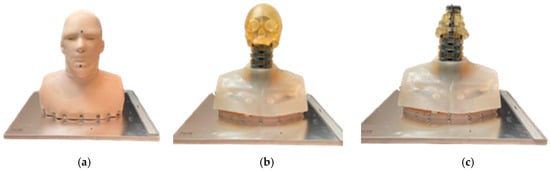
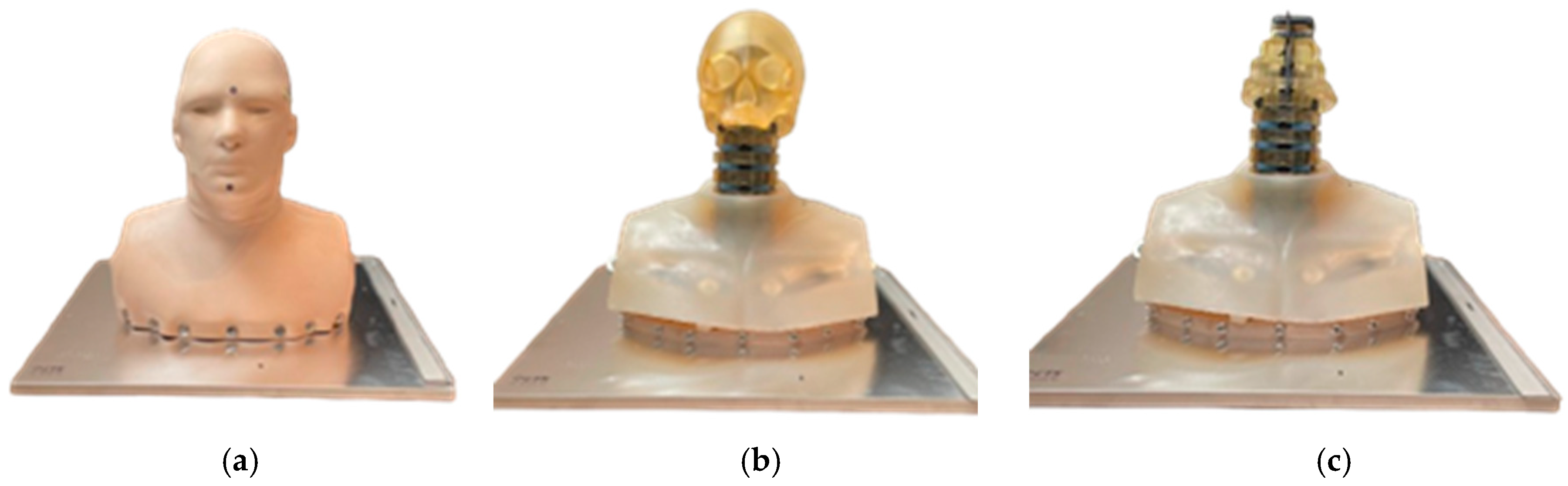
Figure 1 shows the structure and mounting locations of the accelerometers used to measure accelerations during impacts.
Figure 1.
The structure of the PRIMUS unbreakable dummy: (a) model with artificial skin applied, (b) internal structure of the head with the skull, (c) base neck with mounted acceleration sensors.
2.4. Protective Equipment
2.4.1. Boxing Gloves
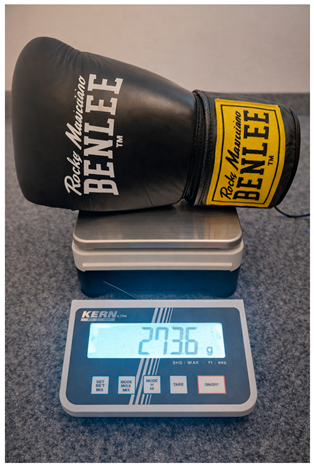
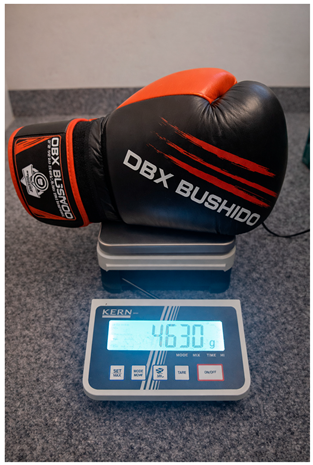
To study the impact of personal protective equipment on brain injury risk, two pairs of standardized boxing gloves were used. The gloves’ weights were measured before the tests and are presented in Table 1. Both pairs had an outer layer of natural leather and a damping core made of polyurethane (PU) foam, along with an inner comfort layer (synthetic fabric). The inner material responsible for cushioning and hand fit was foam; in both cases, a large, adjustable Velcro strap ensured proper fit and stability.
Table 1.
Mass of the used boxing gloves.
The boxing gloves used in this study were commercially available models intended for training and amateur competition. The 10 oz gloves (Benlee, Neuss, Germany) are classified as amateur-standard gloves and are commonly used in amateur boxing bouts, where glove mass is regulated at approximately 284 g. The measured mass of the tested 10 oz gloves was 273.6 g, which is within the acceptable manufacturing tolerance for amateur equipment. The 16 oz gloves (DBX Bushido, Żędowice, Poland) are training gloves designed primarily for sparring and technical training rather than official competition. Their measured mass was 463.0 g, which exceeds professional bout standards (typically 12 oz ≈ 340 g) but is consistent with widely accepted training practice. The use of 16 oz gloves was intentionally selected to represent a higher-mass glove configuration commonly employed during training sessions to reduce superficial injuries and distribute impact forces over a larger contact area. Including 16 oz gloves allowed assessment of how increased glove mass and padding thickness influence head acceleration and impact biomechanics, despite such gloves not being used in official amateur or professional bouts, where 10–12 oz gloves are standard.
Polyurethane foams are characterized by high elastic deformation capacity and good fatigue durability. Their damping properties depend on thickness (typically 30–40 mm) and density (approx. 60–80 kg/m3). Research by the authors of [49] showed that properly designed gloves can reduce peak impact forces by up to 40%, although their effectiveness decreases as the kinetic energy of the impact increases [49].
2.4.2. Boxing Helmet
An A-size L boxing helmet was used to protect the head. A crucial parameter for brain protection is the additional mass of the protective equipment, its fit to the user’s head, and compliance with EU regulations. The tested helmet weighed 290.0 g. The boxing helmet used in this study was a commercially available training helmet (DBX Bushido, Żędowice, Poland), intended primarily for training and sparring rather than for official amateur or professional competition. This model is not approved by the International Boxing Association (AIBA) for competition use, unlike certified competition helmets manufactured by companies such as Green Hill (Tostedt, Germany), Adidas (Herzogenaurach, Germany), Everlast (New York, United States). The headgear was selected as a representative example of training headgear commonly used in daily practice, characterized by extended coverage and a multilayer foam structure designed to increase contact time and distribute impact forces during repeated impacts. The choice of training headgear rather than an AIBA-approved competition model was deliberate. Competition helmets are subject to strict regulations regarding mass, thickness, and field of vision, which limit their energy-absorption capacity and prioritize performance and visibility during bouts. In contrast, training headgear typically employs thicker, more compliant padding to reduce superficial injuries and attenuate repeated sub-concussive impacts. The selected headgear, therefore, enabled evaluation of how increased padding thickness and additional head mass influence head acceleration and kinematic response, which is particularly relevant under training conditions where helmets are used extensively.
The boxing helmet used in this study consisted of several functional layers:
- Outer layer: synthetic leather (PU– polyurethane or PVC—polyvinyl chloride) with hydrophobic properties and high abrasion resistance.
- Middle layer: closed-cell foam (EVA—ethylene vinyl acetate—or PU); the primary function of this layer is to absorb impact energy by compressing the enclosed air cells.
- Inner layer: soft comfort foam responsible for fit and moisture management.
EVA foams exhibit an elastic modulus of 0.5–1.5 MPa and good resistance to elastic deformation; however, their energy-damping capacity may decrease after repeated high-force impacts. Studies by Hoshizaki et al. indicate that, in multilayer sports helmets, the maximum reduction in peak linear acceleration (PLA) is approximately 30–40% compared to no protection [57]. In practice, foams with a density of 45–70 kg/m3 used in boxing helmets provide a compromise between weight and energy absorption capacity. However, increased material thickness and stiffness can negatively affect an athlete’s spatial perception and may increase the risk of distance misjudgment, which can indirectly contribute to injury [52]. In recent years, foams with variable density and open-cell structures have also been developed, enabling improved dissipation of impact energy across different impact force levels.
2.4.3. Rugby Helmet
In contact sports such as rugby, a helmet is not required equipment because of the game’s dynamic nature and the rules governing set pieces (e.g., scrums and throw-ins). Any head protection must remain small and lightweight to reduce the risk of serious injuries during contact. A throw-in is formed at the place where the ball is put back into play after the captain has determined the number of players taking part; then, a line player throws the ball into a perpendicular tunnel between the two formations. In this context, the primary role of a rugby helmet is to protect against cuts, abrasions, and ear injuries rather than to prevent concussion from high-energy impacts.
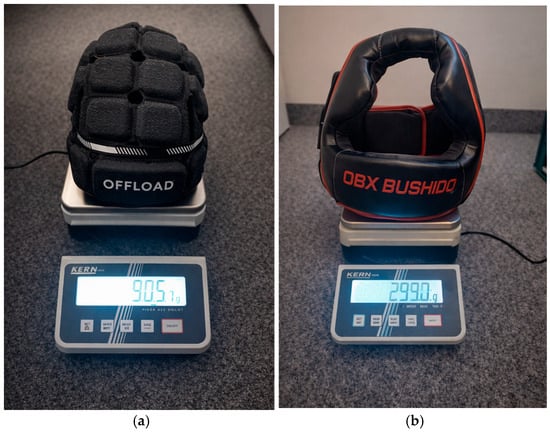
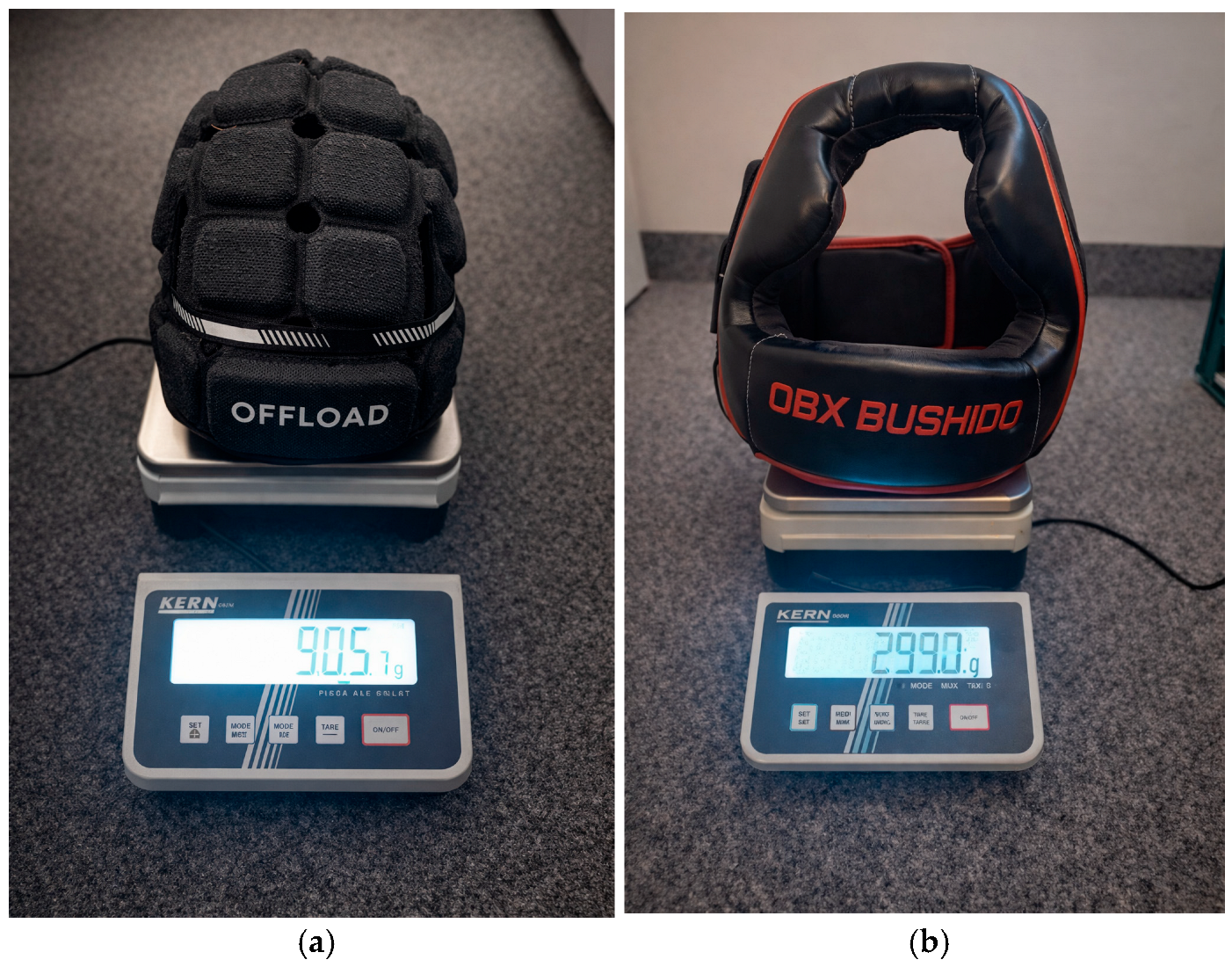
The rugby helmet used in the present study was a commercially available soft-shell headgear (Canterbury, Auckland, New Zealand), size L. This model complies with the World Rugby Regulation 12, which specifies requirements for headgear used in official rugby competition, including limits on thickness, density, mass, and material stiffness. This helmet is approved by World Rugby for use in match play and training and represents a standard example of a competition-legal rugby helmet. The rugby helmet used in the present study weighed 90.5 g (≈90 g) (Figure 2) and featured a relatively thin foam layer, consisting of an outer polyurethane (PU) textile shell and a core of open-cell EVA foam with a density of 45 kg/m3. Open-cell foams exhibit higher viscoelasticity and can dissipate energy through airflow between pores, thereby increasing contact duration and reducing peak acceleration [62]. This type of helmet can reduce peak linear accelerations by up to 50% under laboratory conditions. At the same time, the low mass of this design limits any increase in the head’s moment of inertia, making it more effective at attenuating lower-energy impacts but less effective for high-force, localized (point) impacts.
Figure 2.
Measuring the mass of (a) a rugby helmet and (b) a boxing helmet.
2.5. Experimental Procedure
This study was reviewed and approved by the Ethics Committee of Wrocław University of Science and Technology (Approval O-24-51, 24 October 2024). Two volunteers with amateur boxing backgrounds participated in the study. The female participant (36 years, 168 cm, 54 kg) had two years of training experience, practicing 2–3 times per week in technical drills, coordination exercises, and controlled sparring. The male participant (25 years, 174 cm, 72 kg) had three years of amateur boxing experience, training 3–4 times per week and regularly engaging in technical–tactical drills, endurance conditioning, strength exercises, and sparring. Both individuals were purposively recruited from a local boxing club, were fully informed about the study procedures, and provided written informed consent in accordance with the mentioned ethical approval. Basic anthropometric measurements (body mass and height) were obtained using standard laboratory procedures with an accuracy of 0.1 kg and 0.5 cm, performed in light sportswear, without shoes, and in a resting state. Both were familiarized with the protocol to deliver seated straight punches with a neutral wrist at a fixed distance. Basic anthropometry (stature and body mass) was recorded to contextualize punch mechanics; given the pilot design (n = 2), no normalization or inferential analysis by anthropometry was performed. Each performer executed at least nine valid impacts per equipment condition. A trial was repeated if off-axis contact, wrist rotation, or camera/IMU desynchronization was observed. To minimize the influence of shoulder girdle rotation during the punch, the individuals delivering punches were seated at a distance ensuring that the end of the punch’s range extended approximately 5 mm beyond the dummy (Figure 3). This setup reduced the introduction of shear accelerations and allowed for focused examination of protective systems. Before each session, IMUs were zeroed and time-synchronized; camera scale was verified using a rigid calibration object; marker visibility was checked across the impact arc. Trials with tracking loss, off-axis contact, or IMU dropouts were repeated immediately.
Figure 3.
Maximum forearm range during the impact.
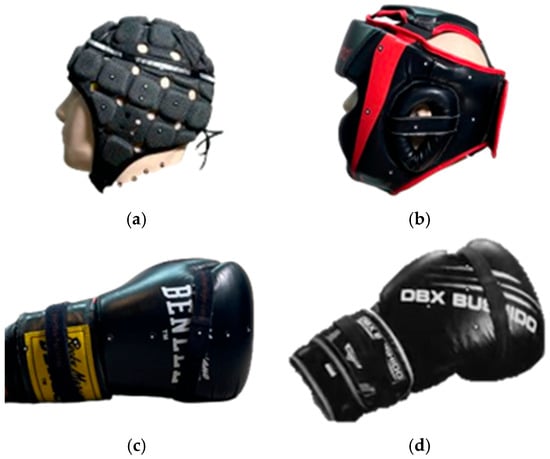
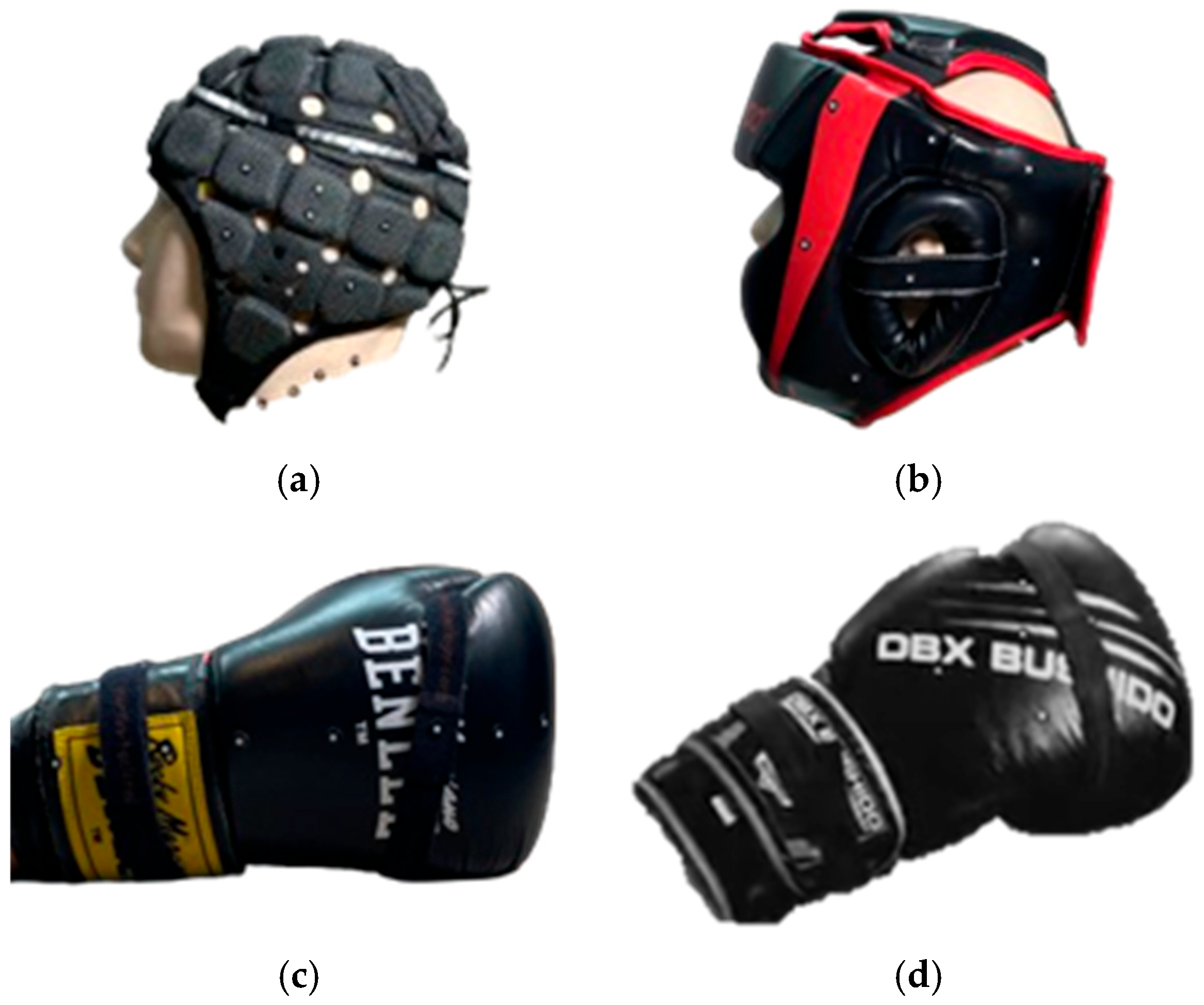
High-speed cameras were positioned perpendicularly to the test area before motion tracking. To facilitate video analysis and acceleration assessment, special white markers on a black background were applied to the gloves, helmets, and dummy (Figure 4).
Figure 4.
Marker placement on (a) rugby helmet, (b) boxing helmet, (c) 10 oz glove, and (d) 16 oz glove.
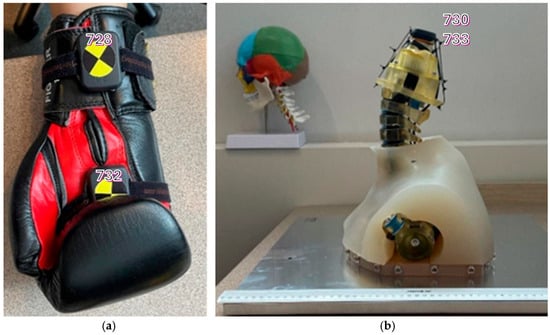
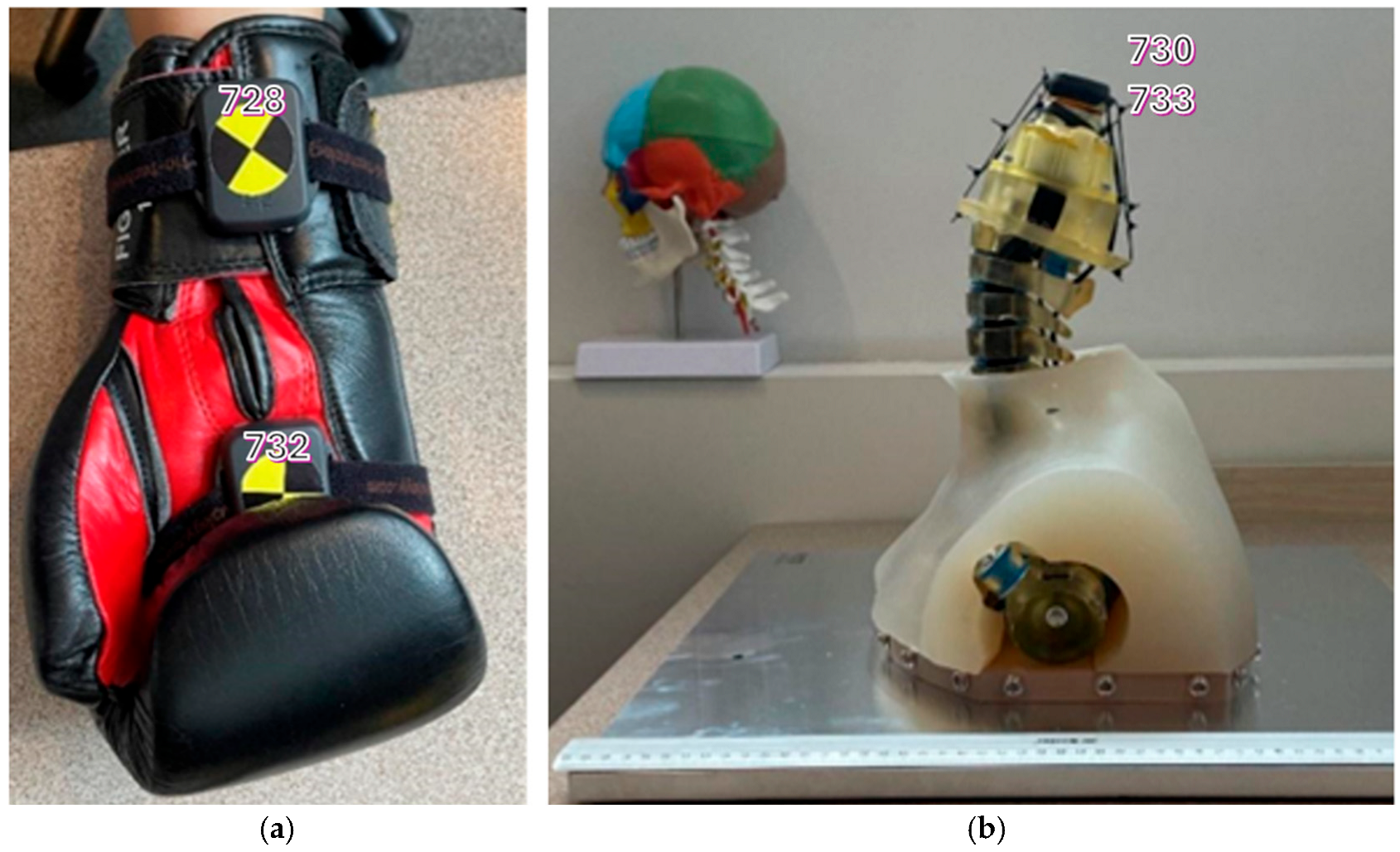
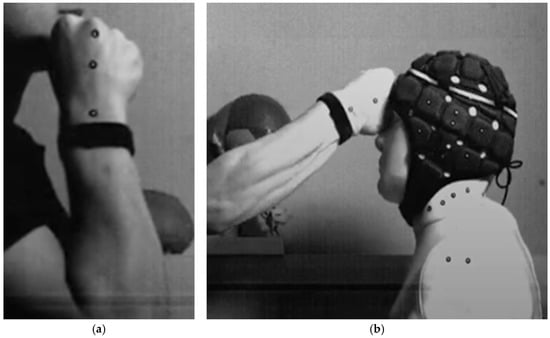
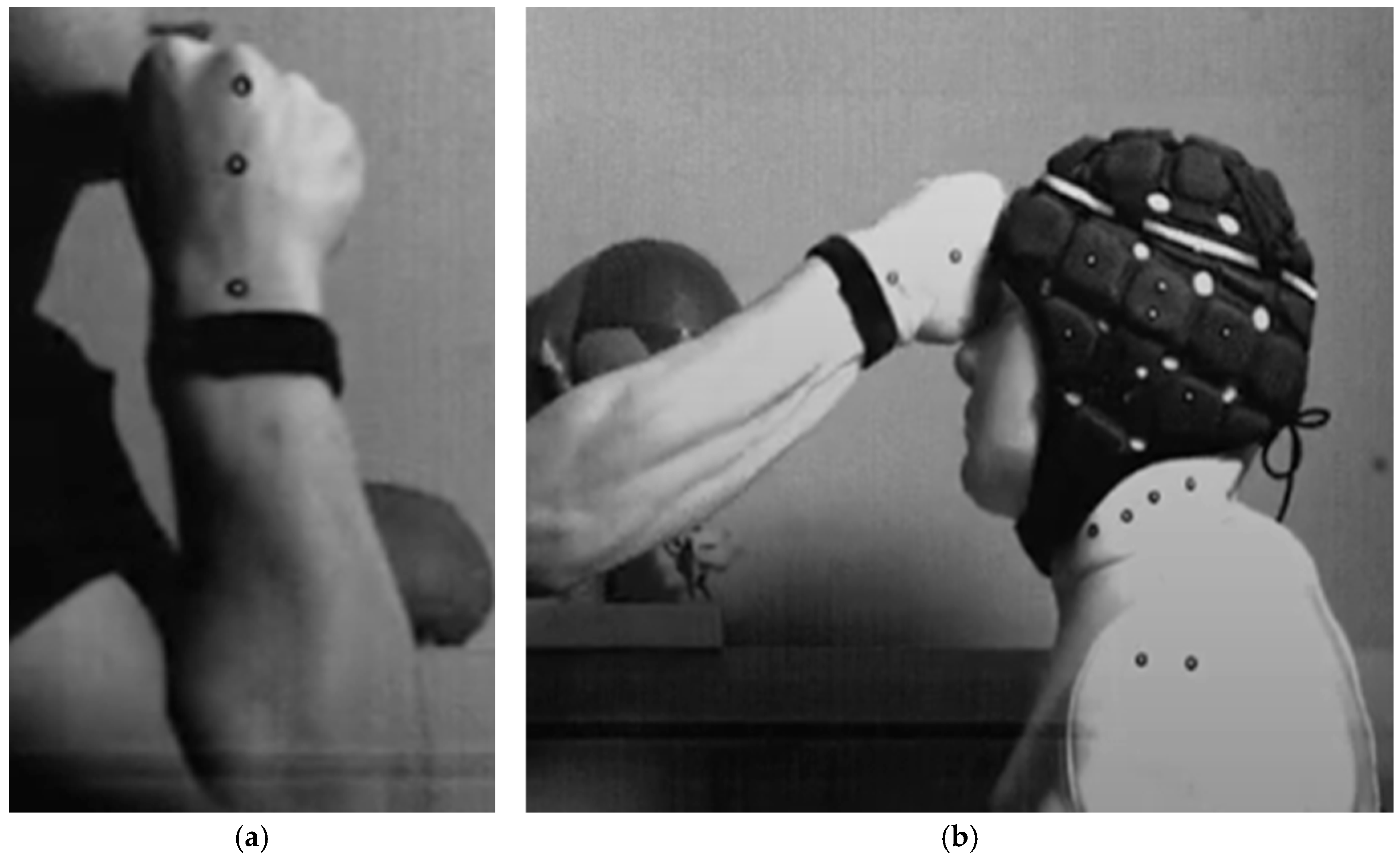
One IMU was secured to the athlete’s wrist using factory straps to record hand kinematics (Figure 5). Two additional IMUs were mounted inside the dummy’s skull to capture head accelerations (Figure 5); redundant mounting was used to reduce noise and asymmetry. A glove-internal sensor was piloted but excluded from analysis due to compression-induced displacement and noise. Mounting positions and device IDs are summarized in Table 2.
Figure 5.
Location of accelerometers on the wrist cavity (a) and of mounting accelerometers relative to the neck (b).
Table 2.
The accelerometer number depends on the mounting location.
2.6. Data Processing
Each accelerometer measured acceleration changes over time in three different planes. Due to the degrees of freedom and nature of the impact, the resultant acceleration value was calculated for each sample. The arithmetic mean of the accelerations recorded inside the dummy’s skull was computed to increase accuracy and exclude individual errors.
2.7. The Course of the Study
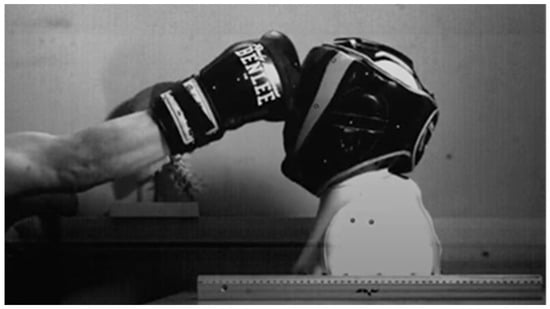
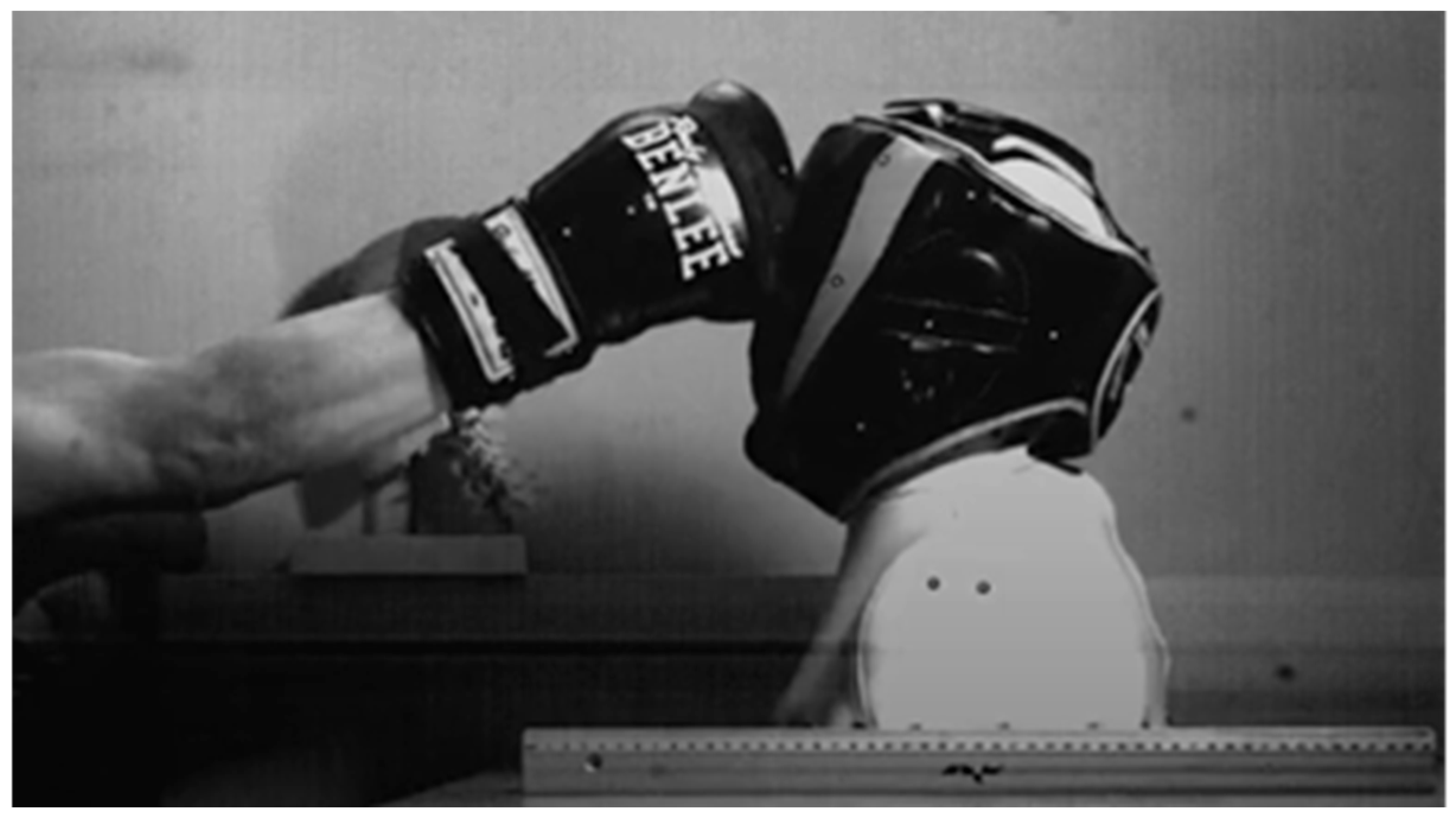
The analysis covered translational acceleration, which attains its maximum value in frontal, so-called simple impacts. The movement started with the hand positioned at the jaw, parallel to the body axis (Figure 6); then, a perpendicular impact was delivered to the dummy’s head axis without wrist rotation. After the hand contacted the head, the initial phase was returned. Punches were delivered by two participants (one male and one female) from a seated position at a fixed distance from the dummy. For each test configuration, multiple punches were performed, and only impacts consistent with the prescribed technique were included in the analysis.
Figure 6.
The initial phase of the impact (a) and the final phase of the impact (b).
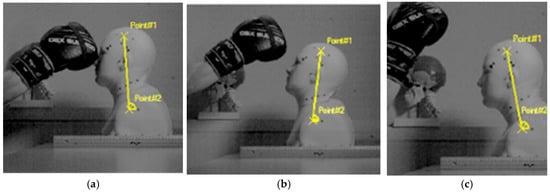
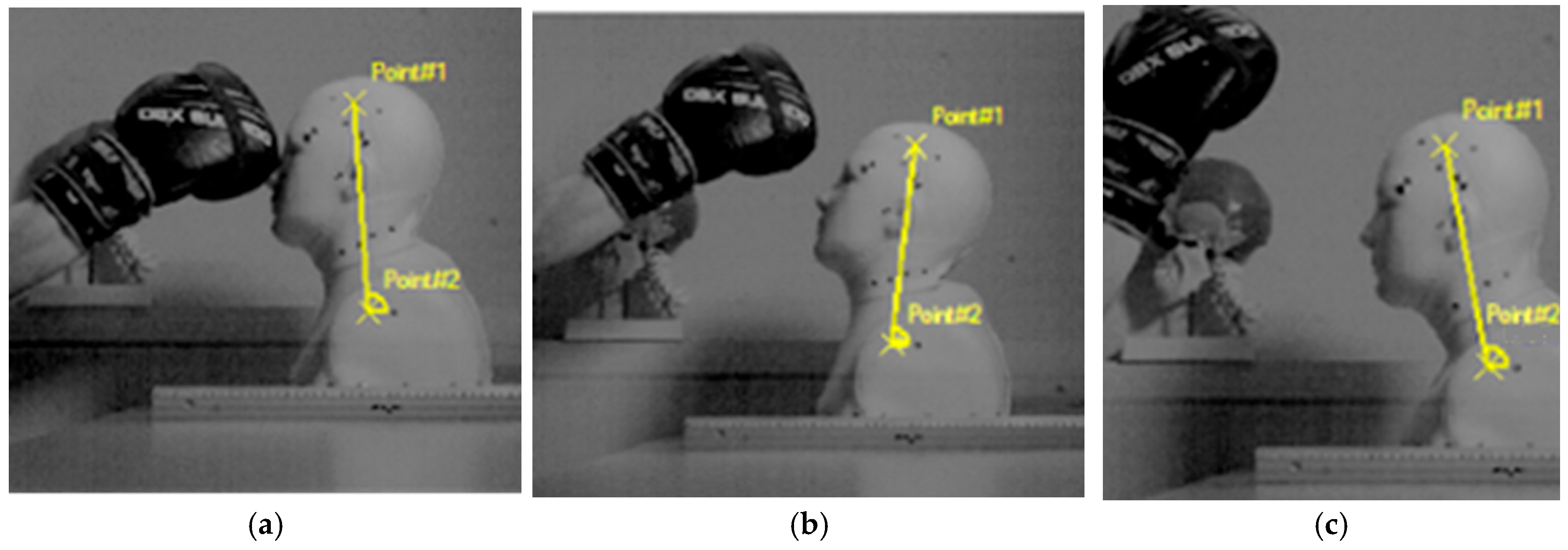
After the impact, sensor data were recorded and analyzed using Microsoft Excel and MATLAB 2025a. During the tests, the actual change in the acceleration values was observed in the Inertia Studio program. In Figure 7, we can see the impact’s course across three frames, with a 100 [ms] gap between them.
Figure 7.
Impact course: (a) 0 ms, (b) 100 ms, and (c) 200 ms.
3. Results
3.1. Acceleration Achieved
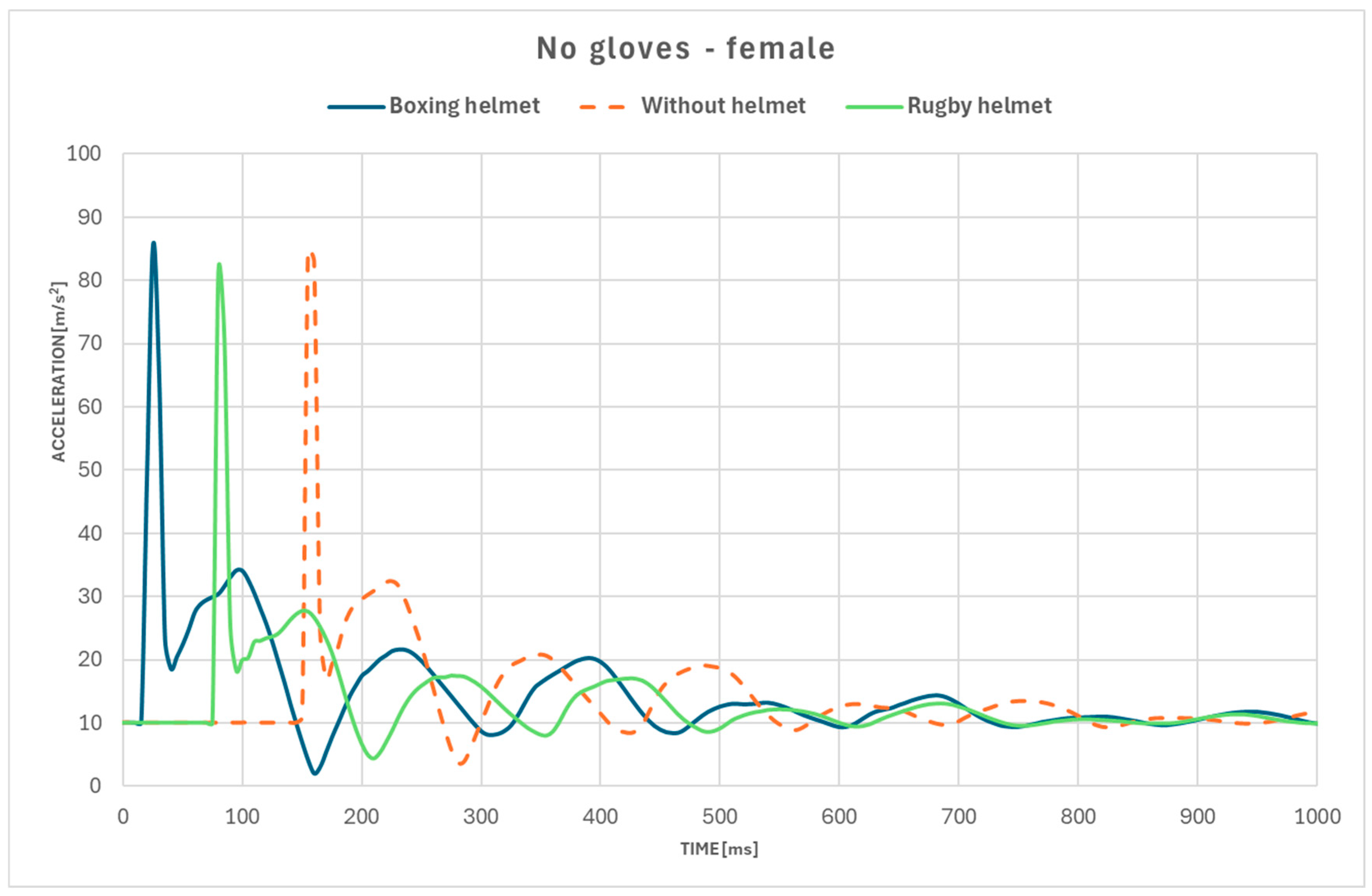
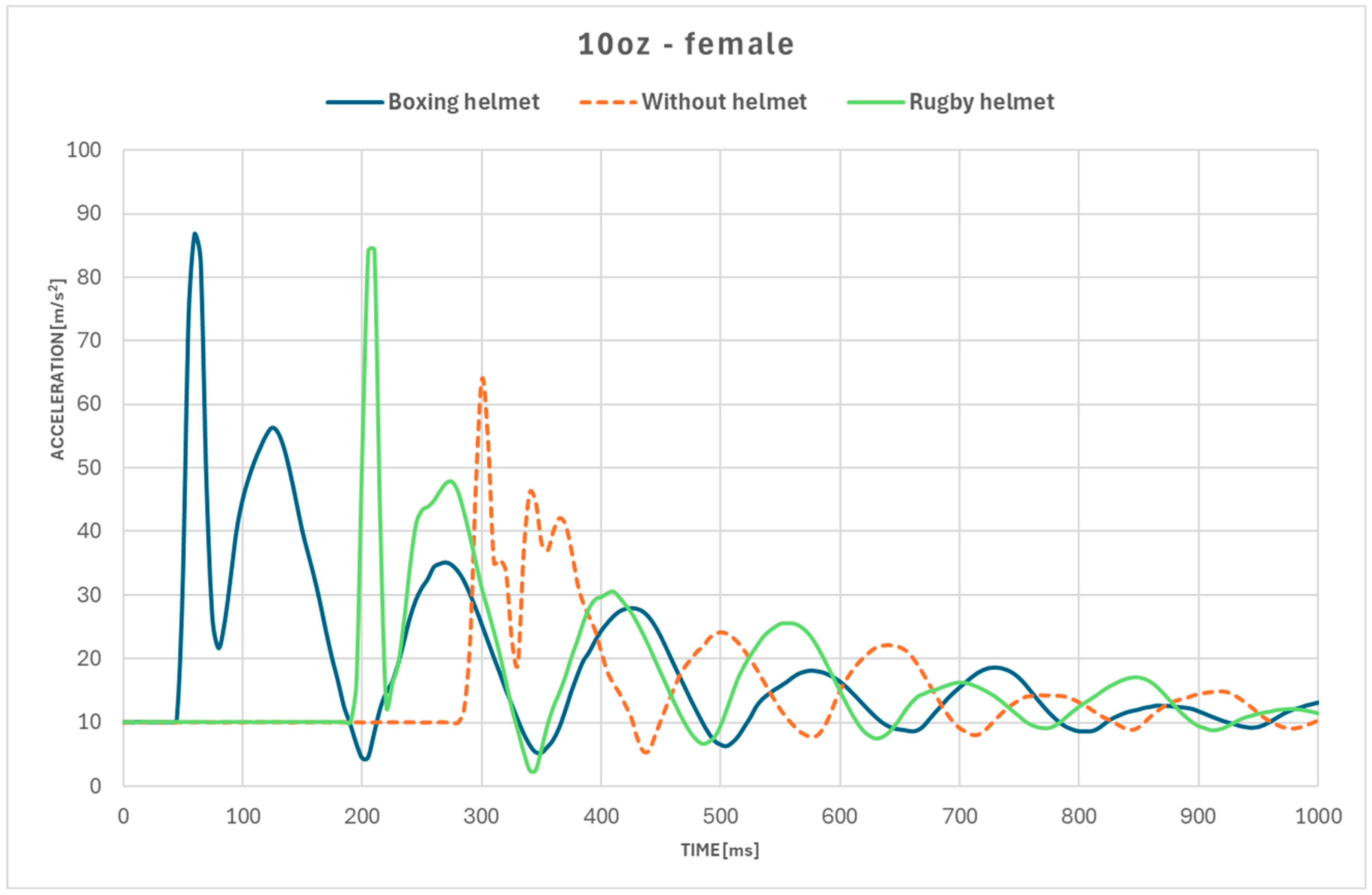
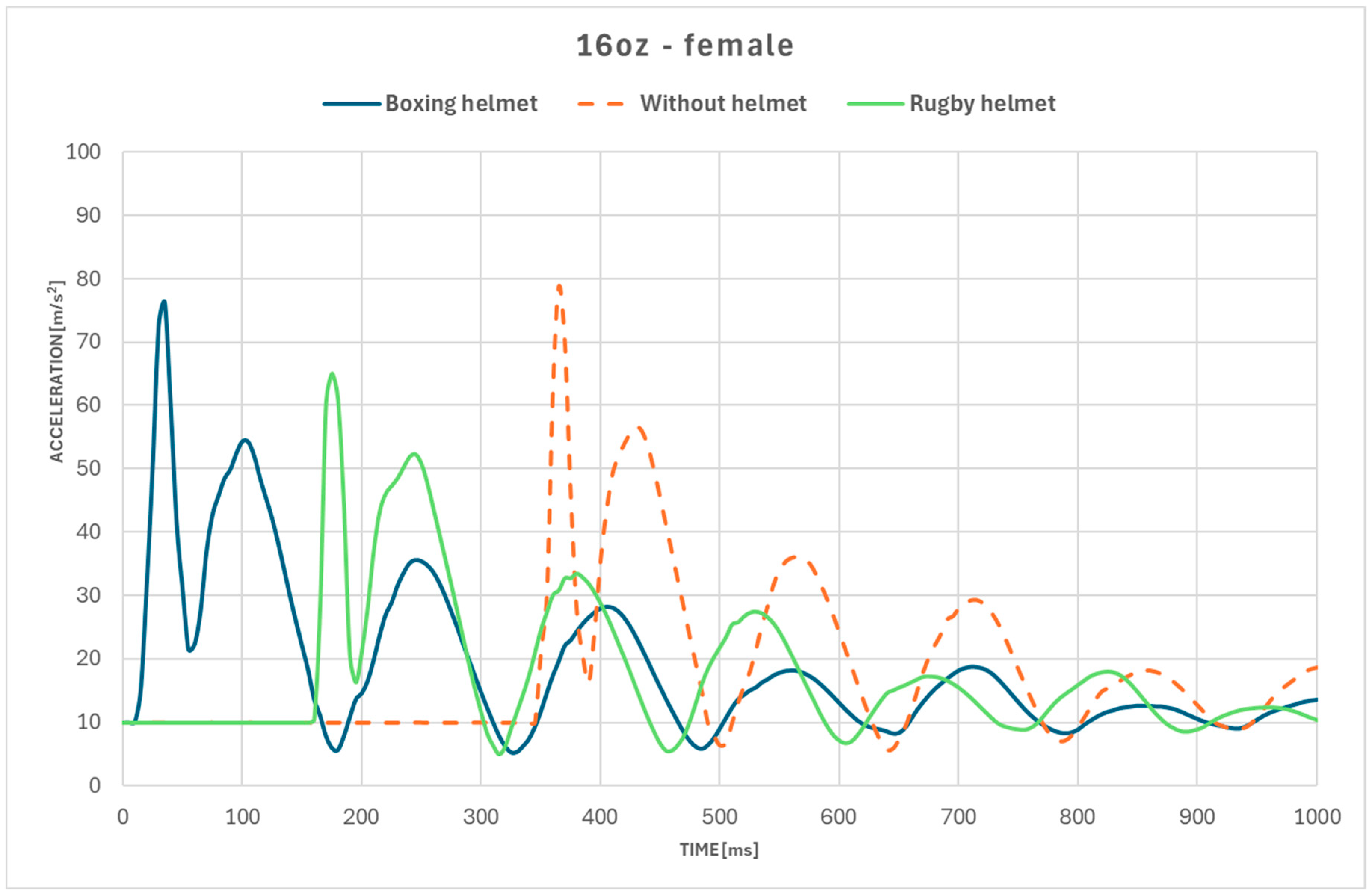
Based on the obtained graphs and results, the maximum and minimum acceleration values were analyzed, and the course of the head returning to its initial state was also taken into account. The graphs were grouped for fixed protective equipment on the striker’s hands and the variable dummy PPE.
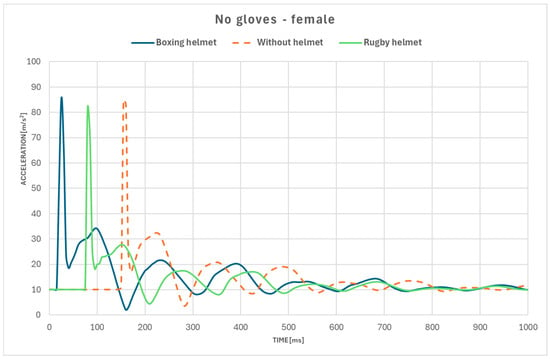
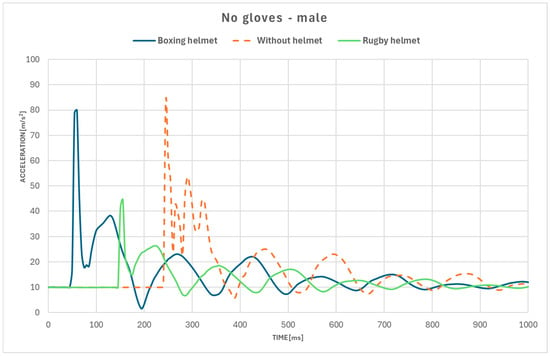
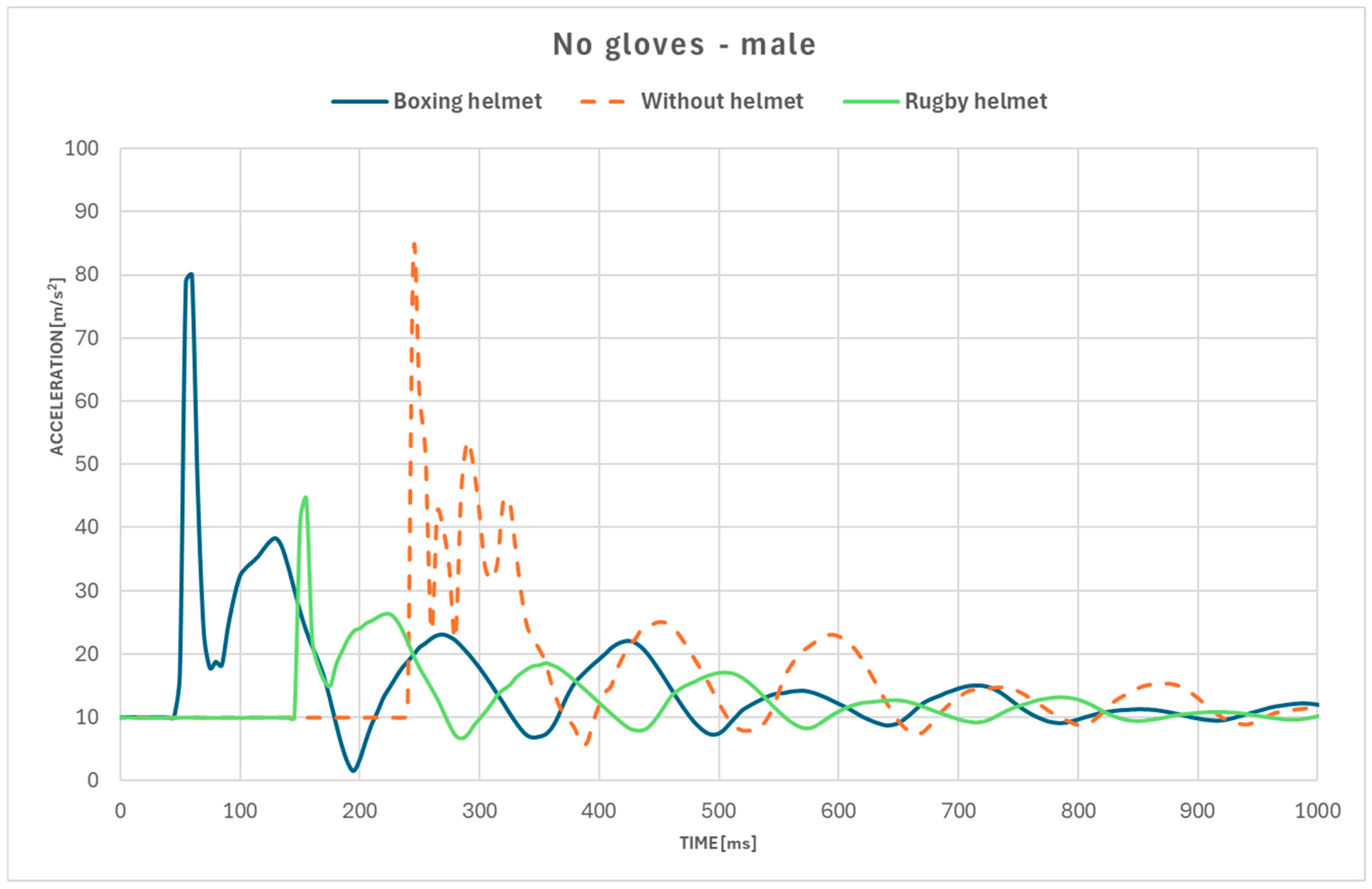
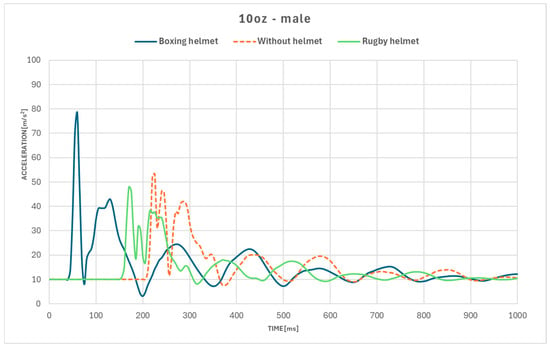
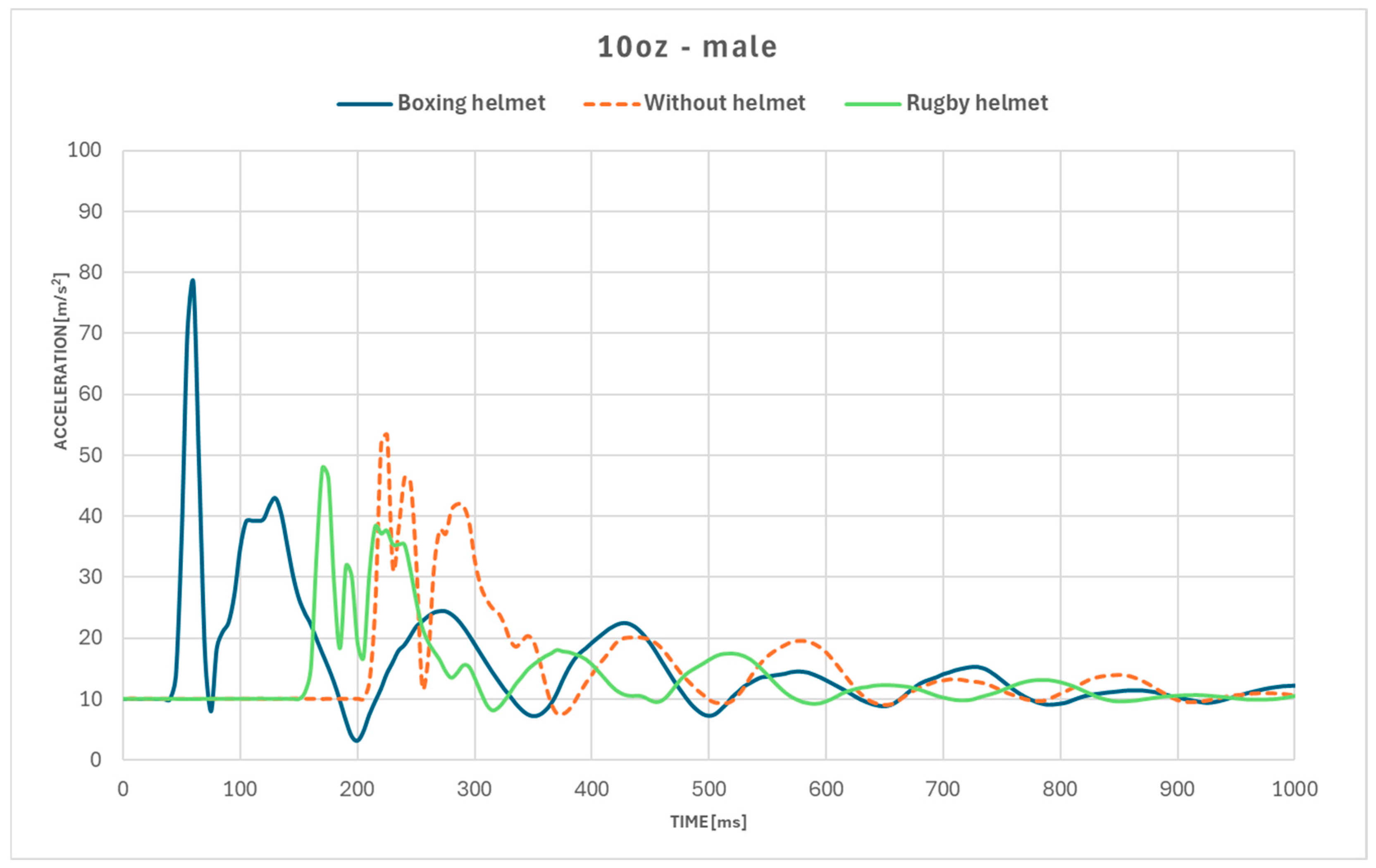
Figure 8 shows a graph of a woman punching a dummy without gloves or protective equipment. The following graphs (Figure 9, Figure 10, Figure 11, Figure 12 and Figure 13) and tables (Table 3, Table 4, Table 5, Table 6, Table 7 and Table 8) show the results for the remaining tests, with boxing gloves on.
Figure 8.
Head acceleration values for impacts by a woman without gloves.
Figure 9.
Head acceleration curves for impacts by a woman wearing 10 oz gloves.
Figure 10.
Head acceleration curves for impacts by a woman wearing 16 oz gloves.
Figure 11.
Head acceleration values for impacts by a man without gloves.
Figure 12.
Head acceleration curves for impacts by a man wearing 10 oz gloves.
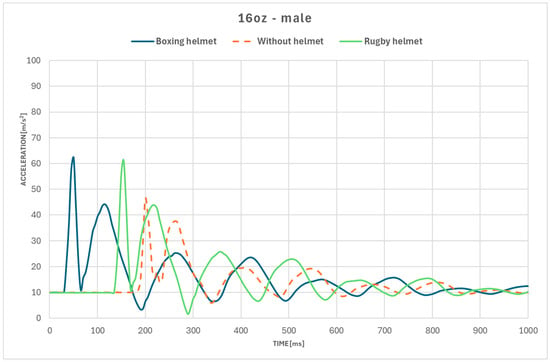
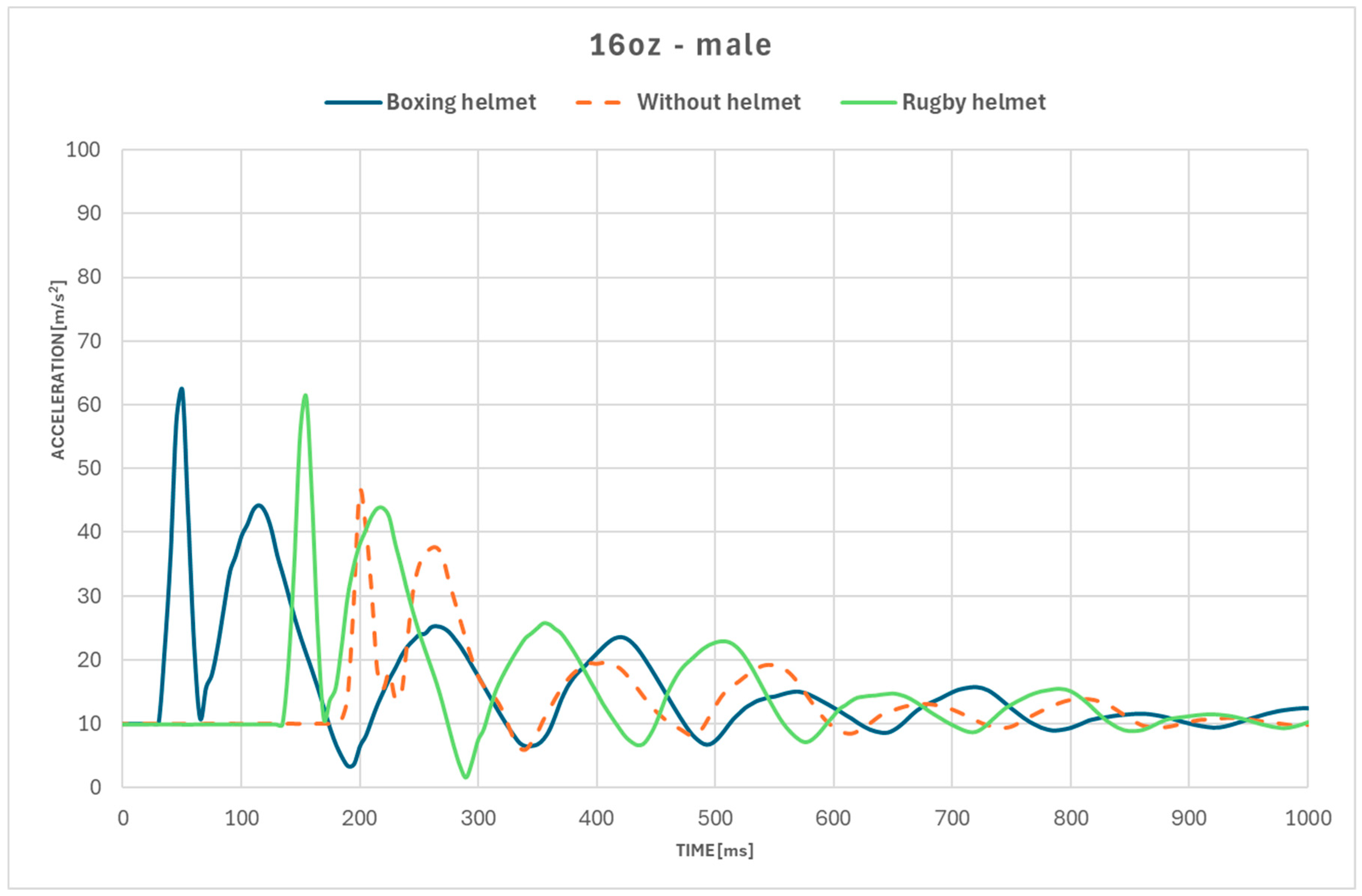
Figure 13.
Head acceleration curves for impacts by a man wearing 16 oz gloves.
Table 3.
Summary of results for punching women, without gloves.
Table 4.
Summary of results for women’s punches with 10 oz gloves.
Table 5.
Summary of results for women’s punches with 16 oz gloves.
Table 6.
Summary of results for men’s punches, without gloves.
Table 7.
Summary of results for men’s punches, 10 oz gloves.
Table 8.
Summary of results for men’s punches, 16 oz gloves.
The wrist acceleration values showed a rapid increase at impact, followed by a return to baseline. The peak acceleration values ranged from 195.00 to 271.77 m/s2, indicating a significant force applied during the punch. The accelerations recorded inside the dummy’s head were lower due to the cushioning effect of the gloves and helmet.
The subsequent results were obtained for punches performed by the man; the graphs and tables are presented in the same order as the previous results.
3.2. Neck Swing Range
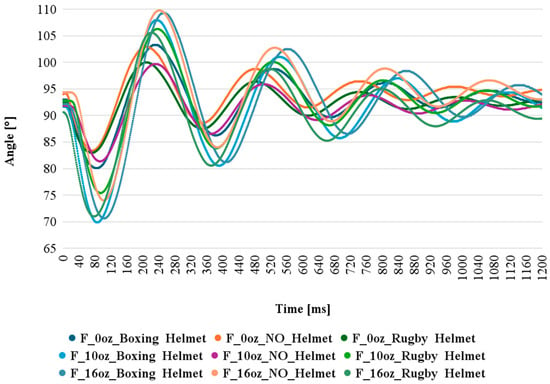
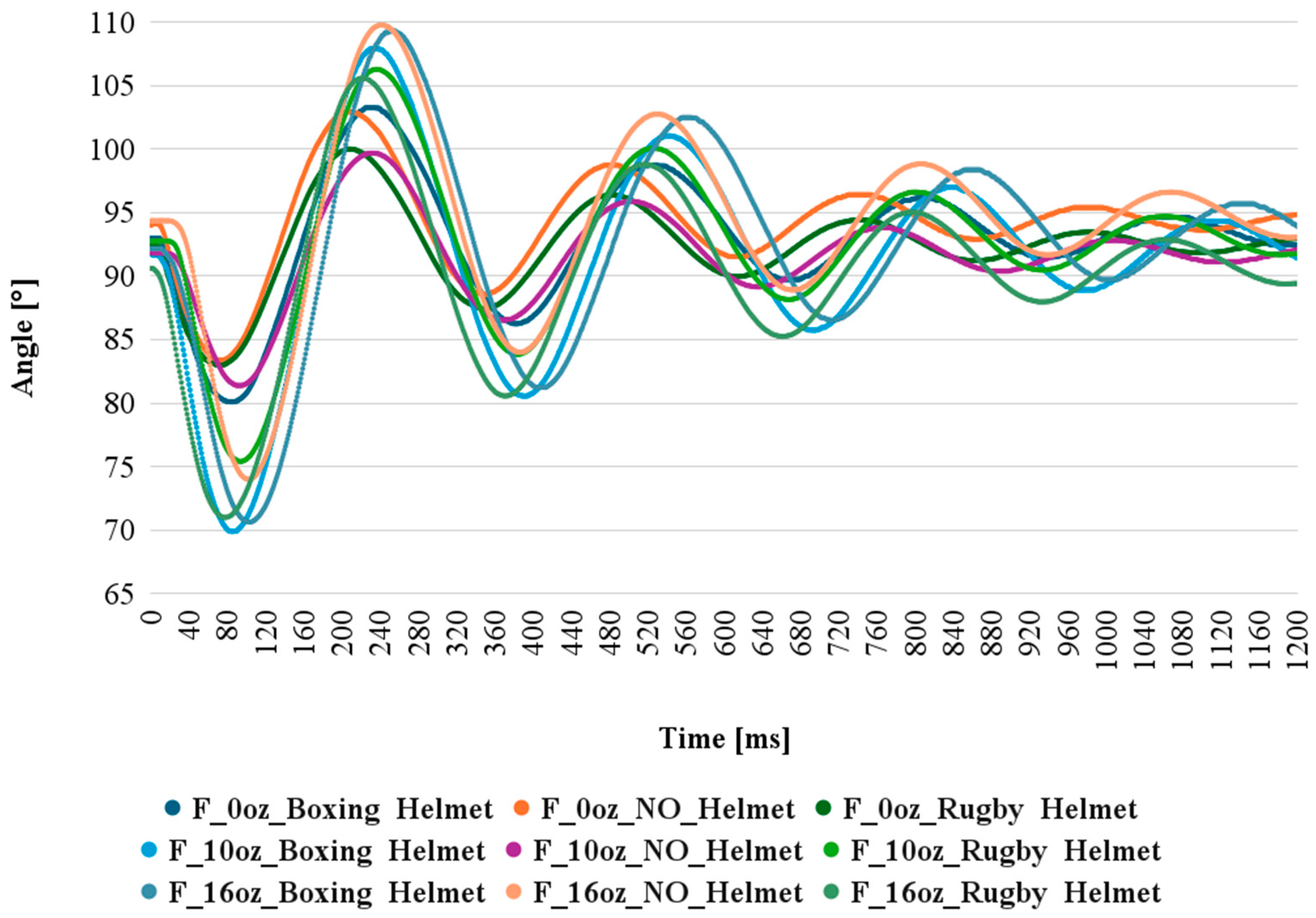
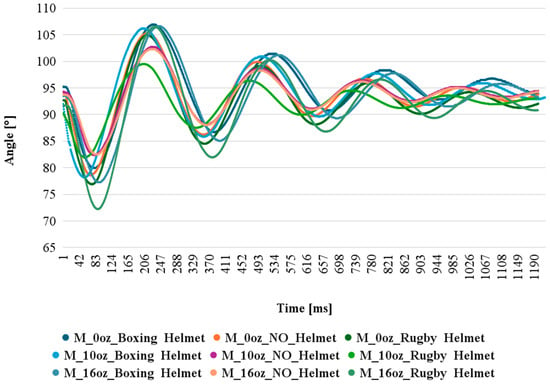
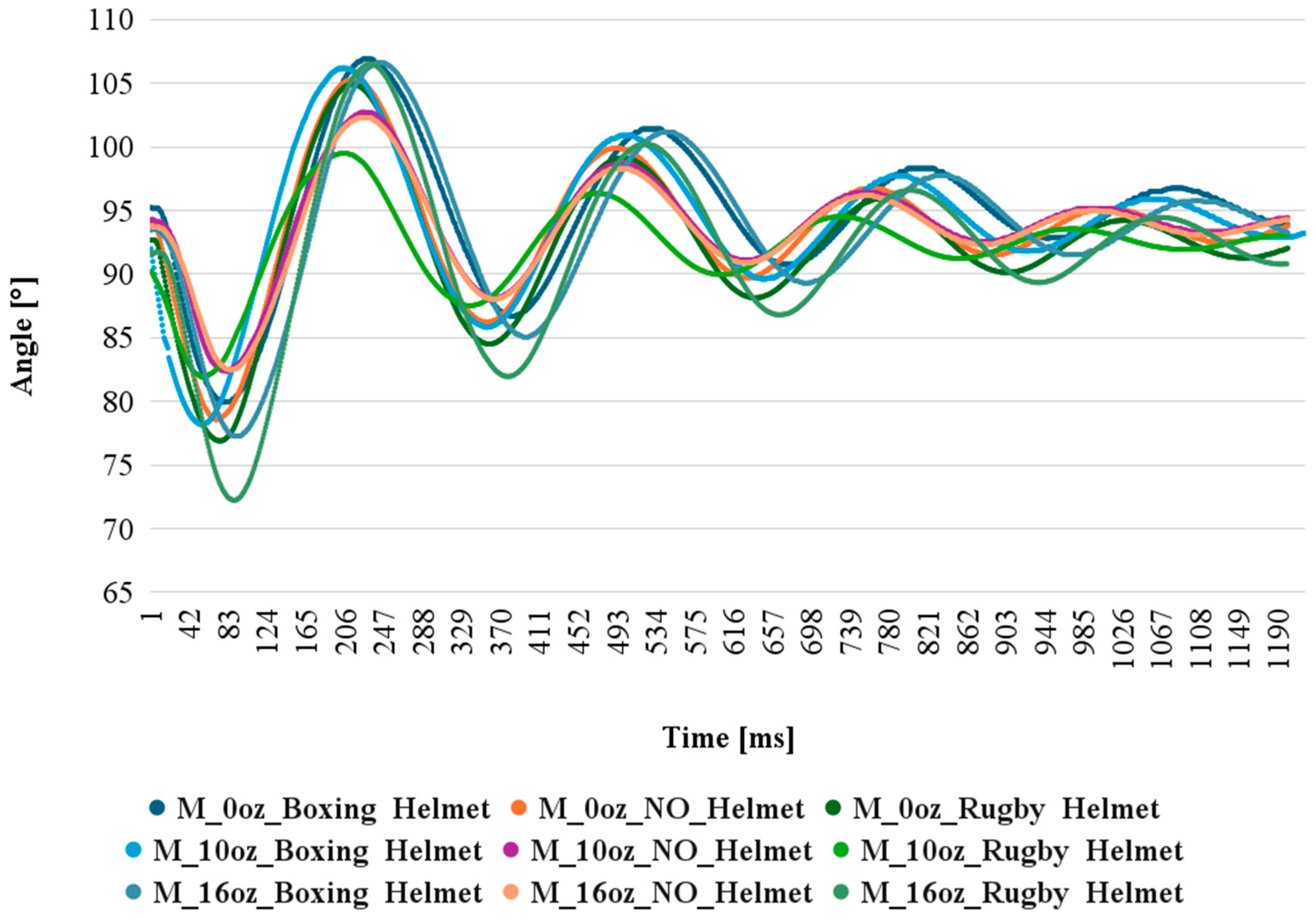
Thanks to video image analysis in TEMA Motion 3.4 (Image Systems Motion Analysis, Linköping, Sweden), the course of changes in the dummy’s head deflection during impacts was obtained. The results were presented separately for the impacts delivered by a woman (Figure 14) and a man (Figure 15).
Figure 14.
Recorded the change in head tilt angle during the woman’s impact.
Figure 15.
Recorded the change in head tilt angle during the man’s impact.
3.3. Energy Absorption and Protective Performance of Helmet
Despite advances in material design, helmet performance declines proportionally with increasing impact energy due to limitations in foam deformation capacity. This highlights the need to optimize density, thickness, and geometric configuration, as well as to explore novel materials, such as metamaterials or 3D-printed structures, that could offer tailored protection while minimizing mass and bulk.
The performance of the helmet is evaluated through metrics such as the Head Injury Criterion (HIC). The HIC is calculated using the standard method based on the resultant acceleration of the head’s center of gravity over a specific time interval [39] (Table 9). This metric provides a composite measure of injury risk, where values exceeding 1000 indicate a high likelihood of life-threatening trauma. Protective helmet aims to maintain PLA below critical thresholds (e.g., 300 g) and HIC within safe limits, accounting for impact duration.
Table 9.
Head Injury Criterion calculated for the impact matrix.
4. Discussion
The human brain is the most important organ and requires the greatest protection. In contact sports, we can identify several methods to reduce the risk of head injuries, including personal protective equipment such as gloves or helmets. The aim of this study was to biomechanically evaluate available boxing equipment and to determine the response of the cranial–cerebral system to the physical forces generated by a boxing punch. This objective was achieved, and the predefined hypotheses were partially confirmed: head protection reduced peak linear acceleration in several configurations; increased helmet mass was associated with higher kinematic responses in selected cases; and glove mass influenced head loading depending on punch biomechanics. Given the pilot nature of the work (n = 2), these findings should be interpreted as mechanistic observations rather than population-level estimates.
Across conditions, the dummy exhibited a damped oscillatory head tilt response, with the largest angular excursions occurring after ungloved impacts. Increasing glove mass reduced head tilt amplitude, and both helmets attenuated rotational motion, with the boxing helmet showing the greatest damping effect, followed by the rugby headguard. Peak head acceleration values consistently clustered within a range across several glove–headgear combinations, indicating that equipment-related differences at these impact energies are modest. Notably, HIC values remained similar across all test configurations, underscoring the limited sensitivity of the HIC to moderate variations in protective-equipment design and highlighting the importance of including rotational metrics in injury risk assessment.
This study also revealed characteristic differences between the two headgear types. The boxing helmet occasionally generated higher linear accelerations, due to its greater mass and the resulting increase in rotational inertia, whereas the lighter open-cell rugby headguard dissipated low-energy impacts more effectively. No consistent relationship was observed between glove mass and head acceleration across participants, reflecting the influence of individual biomechanics and striking technique.
Beyond these findings, this study provides four methodological contributions: (a) a dual-modality measurement framework combining IMUs with high-speed video, enabling simultaneous analysis of linear and rotational head responses; (b) empirical demonstration of HIC insensitivity in low-to-moderate boxing-like impacts; (c) the first controlled comparison of training boxing headgear and competition-approved rugby headgear under identical conditions; and (d) a repeatable laboratory protocol that balances controlled posture and punch trajectory with human-generated impacts, suitable for future larger-scale studies. Overall, the results illustrate the multifactorial nature of head-impact mitigation and emphasize that evaluating protective equipment requires attention not only to peak linear acceleration but also to rotational dynamics and the interaction between equipment mass, material properties, and user biomechanics.
Biomechanical studies have shown that the elastic-damping properties of the foam are crucial for reducing both linear and rotational head acceleration, which are major risk factors for brain injury [50]. In recent years, new materials have also been developed, such as variable-density foams, thermoplastic elastomers (TPEs), and shape-memory composite structures, which better adapt to varying levels of impact force. Additionally, the use of numerical simulation technologies (e.g., finite element methods) allows for more precise analysis of force distribution within the head and optimization of helmet designs to minimize brain acceleration [56]. Advances in polymer materials and safety engineering have enabled power supplies to be activated by adaptive adapters to various impact signals and to be captured by the rotational energy transferred to the control system [71,72]. This research has implications not only for boxing but also for the broader context of safety in contact sports.
Our results indicate that the protective effectiveness of these elements is not unambiguous and depends on a range of physical, structural, and psychological factors. The use of a boxing helmet was intended to reduce the loads acting on the head by increasing contact time and dispersing the impact energy. In practice, however, cases were observed in which head acceleration values increased compared to the situation without protection. This effect can be attributed to the increased mass of the head–helmet system, which leads to a higher moment of inertia and the generation of greater rotational accelerations—a key factor in the mechanisms underlying concussion [73,74,75,76].
The test results also indicate that heavier gloves (16 oz) do not always reduce head acceleration. In men, heavier gloves led to higher loads, likely due to greater punch kinetic energy. In women, the opposite relationship was observed, which may result from reduced hand speed and muscle force under greater load. The load values did not exceed injury threshold levels (according to the WSTC curve), suggesting that single impacts do not cause direct brain damage. However, frequent, repeated microtraumas may lead to structural damage of neural tissue and the accumulation of tau protein, characteristic of chronic traumatic encephalopathy (CTE) [7].
The overload occurring during the tests was significantly lower than the values presented in the WSTC tolerance curve. In such a situation, a single blow should not result in brain contusion, but one should remember the frequency of blows to the face during a boxing fight. Minor injuries, occurring frequently or systematically, may lead to complications and increase the risk of Parkinsonism or Boxer’s encephalopathy. The accuracy of measurements may still depend on external factors, such as the stability of the measuring equipment, predispositions, and differences in striking technique.
An additional important aspect in protecting the central nervous system is neck injuries. In a 2010 CMAJ article by Kelly Russell, MSc, and Josh Christie, BHSc, over 10 studies were reviewed regarding the effect of helmets on the increased risk of whiplash injuries in winter sports. Based on these studies, there was no association between wearing a helmet and an increased risk of neck injuries, which confirms the safety of helmets [59,77,78]. The protocol and dataset can serve as a screening/benchmarking tool for protective-equipment R&D, highlighting that HIC may remain insensitive under low-to-moderate impacts while angular kinematics change—supporting the routine inclusion of rotational metrics in design verification. The controlled human-delivered setup provides parameters for calibrating mechanical impact rigs and for validating computational models (e.g., finite element method), and it informs design choices that balance mass distribution and damping without assuming that higher mass is protective.
Many articles, scientific papers, and expert opinions on injuries in contact sports agree that education and awareness of the consequences are important factors influencing athletes’ safety. In the Olympic formula, a boxing match lasts 9 min (3 × 3 min), and the average number of blows to the head is 33.4. In contrast, for taekwondo, the fight lasts 6 min (3 × 2 min), and the number of blows to the face is 7.32. Despite the differences related to the rules, scoring system, or motor preparation, both disciplines are burdened with a high risk of injuries, such as a concussion. Much of the technology used in boxing and American football is not available in lesser-known disciplines, which reduces the ability to protect athletes. It should also be emphasized that the regulations specifying the forms of contact and permitted punches are important [31,79].
5. Limitations
The protective effectiveness of personal protective equipment in boxing is influenced by multiple interacting factors, including material properties, structural design, individual biomechanics, and the broader training environment. This study should be interpreted as a pilot methodological investigation based on two volunteers (n = 2), intended to validate a synchronized IMU–video measurement framework rather than to provide population-level estimates; thus, the findings cannot be generalized or used for sex-based inference. Although punch execution was standardized through a fixed posture, predefined trajectory, and high-speed video oversight, natural variability in human movement could not be completely eliminated, and small differences in punch velocity may have affected recorded accelerations. The use of a biofidelic dummy ensured mechanical repeatability but cannot fully reproduce the neuromuscular responses, soft-tissue deformation, or adaptive behavior of the human head–neck complex during real impacts. The analysis was restricted to selected models of boxing gloves and headgear; differences in construction, padding geometry, and certification standards across commercially available products may yield different biomechanical responses. Observed trends in head acceleration patterns reflected equipment mass, material stiffness, and changes in head dynamics, but these effects should be interpreted cautiously due to the limited sample size. Ultimately, while the experimental system demonstrated good repeatability, future work should incorporate controlled impact-delivery mechanisms and a broader range of equipment designs to enhance reproducibility, support numerical model validation (such as a finite element approach), and improve the translational relevance of laboratory findings to real-world training and competition scenarios.
6. Conclusions
This pilot biomechanical study examined the performance of selected personal protective-equipment configurations during controlled boxing punching delivered to an anthropomorphic dummy. Using a synchronized IMU–video framework, we quantified both linear head acceleration and rotational head tilt kinematics for a boxing helmet, a rugby headguard, and gloves of different masses under standardized conditions. The measurement system proved effective, and the study’s hypotheses were partially confirmed: head protection reduced peak linear acceleration in several configurations; higher headgear mass was associated with increased kinematic responses in selected cases; and glove mass influenced head loading depending on punch biomechanics. These findings are exploratory and should not be generalized due to the pilot study design.
The lighter, open-cell rugby headguard provided more favorable attenuation at low-to-moderate impact energies than the heavier boxing helmet, while glove mass effects varied between participants, reflecting individual striking mechanics. Rotational responses were further reduced by head protection, and no substantial sex-related differences were observed under comparable conditions, suggesting that equipment characteristics played a more dominant role than striker sex in this context. Overall, the results highlight that effective head protection depends on balancing energy absorption with mass distribution to limit both linear and rotational accelerations.
Ultimately, athlete safety is determined not only by protective-equipment design but also by correct and consistent equipment use, appropriate fitting, regulatory oversight, and awareness of the long-term neurological risks associated with repeated sub-concussive impacts. The validated measurement protocol provides a foundation for future, larger-scale studies and for the development and testing of enhanced protective systems in combat sports.
Author Contributions
Conceptualization, M.P., M.R. and D.L.; methodology, M.R., M.P. and D.L.; software, M.R. and D.L.; validation, M.R., D.L. and R.K.; formal analysis, M.R. and D.L.; investigation, M.R., D.L. and R.K.; resources, M.P.; data curation, M.R., C.S. and D.L.; writing—original draft preparation, M.R. and D.L.; writing—review and editing, M.P., M.R. and C.S.; visualization, M.R. and D.L.; supervision, M.P.; project administration, M.P.; funding acquisition, M.P. All authors have read and agreed to the published version of the manuscript.
Funding
This research received no external funding.
Institutional Review Board Statement
This study was reviewed and approved by the Ethics Committee for Scientific Research at Wroclaw University of Science and Technology (Approval No. O-24-51, dated 24 October 2024). All research procedures involving human participants were conducted in accordance with applicable ethical standards and regulations.
Informed Consent Statement
Informed consent was obtained from all subjects involved in the study.
Data Availability Statement
The data presented in this study are not publicly available due to ethical and privacy restrictions related to human participant data. Access to the datasets may be granted upon reasonable request to the corresponding author, subject to approval by the Ethics Committee of Wroclaw University of Science and Technology and in accordance with applicable ethical and legal regulations.
Conflicts of Interest
The authors declare no conflicts of interest.
Abbreviations
The following abbreviations are used in this manuscript:
| TBI | Traumatic Brain Injury |
| mTBI | Mild Traumatic Brain Injury |
| CTE | Chronic Traumatic Encephalopathy |
| HIC | Head Injury Criterion |
| HIC15 | Head Injury Criterion calculated over a 15 ms interval |
| HIC36 | Head Injury Criterion calculated over a 36 ms interval |
| PLA | Peak Linear Acceleration |
| PRA | Peak Rotational Acceleration |
| PPE | Personal Protective Equipment |
| EVA | Ethylene Vinyl Acetate |
| PU | Polyurethane |
| PVC | Polyvinyl chloride |
| TPE | Thermoplastic Elastomer |
| FEA | Finite Element Analysis |
| WSTC | Wayne State Tolerance Curve |
References
- Dewan, M.C.; Rattani, A.; Gupta, S.; Baticulon, R.E.; Hung, Y.C.; Punchak, M.; Agrawal, A.; Adeleye, A.O.; Shrime, M.G.; Rubiano, A.M.; et al. Estimating the Global Incidence of Traumatic Brain Injury. J. Neurosurg. 2018, 130, 1080–1097. [Google Scholar] [CrossRef] [Scilit]
- Laker, S.R. Epidemiology of Concussion and Mild Traumatic Brain Injury. PM R 2011, 3, S354–S358. [Google Scholar] [CrossRef] [Scilit]
- Fernandes, F.A.O.; Alves de Sousa, R.J.; Ptak, M. Head Injury Simulation in Road Traffic Accidents; Springer Briefs in Applied Sciences and Technology; Springer International Publishing: Cham, Switzerland, 2018. [Google Scholar] [CrossRef] [Scilit]
- Johnson, V.E.; Stewart, W.; Smith, D.H. Widespread Tau and Amyloid-Beta Pathology Many Years After a Single Traumatic Brain Injury in Humans. Brain Pathol. 2012, 22, 142–149. [Google Scholar] [CrossRef] [Scilit]
- Heuve van ven, C.; Thornton, E.; Vink, R. Traumatic Brain Injury and Alzheimer’s Disease: A Review. Prog. Brain Res. 2007, 161, 303–316. [Google Scholar] [CrossRef] [Scilit]
- McAllister, T.W. Neurobehavioral Sequelae of Traumatic Brain Injury: Evaluation and Management. World Psychiatry 2008, 7, 3–10. [Google Scholar] [CrossRef] [Scilit] [PubMed]
- de Antunes e Sousa, G.J.; Sá, R.A.; Gomes, M.A.S.M.; Edwards, G.A.; Moreno-González, I.; Alves de Sousa, R.J. Deep Learning-Based Classification of Temporal Stages of AT8-Labeled Tau Pathology After Experimental Traumatic Brain Injury. Neuroinformatics 2026, 24, 7. [Google Scholar] [CrossRef] [Scilit] [PubMed]
- Lehtonen, S.; Stringer, A.Y.; Millis, S.; Boake, C.; Englander, J.; Hart, T.; High, W.; Macciocchi, S.; Meythaler, J.; Novack, T.; et al. Neuropsychological Outcome and Community Re-Integration Following Traumatic Brain Injury: The Impact of Frontal and Non-Frontal Lesions. Brain Inj. 2005, 19, 239–256. [Google Scholar]
- Mattson, A.J.; Levin, H.S. Frontal Lobe Dysfunction Following Closed Head Injury. A Review of the Literature. J. Nerv. Ment. Dis. 1990, 178, 282–291. [Google Scholar] [CrossRef] [Scilit]
- Hart, T.; Whyte, J.; Millis, S.; Bode, R.; Malec, J.; Richardson, R.N.; Hammond, F. Dimensions of Disordered Attention in Traumatic Brain Injury: Further Validation of the Moss Attention Rating Scale. Arch. Phys. Med. Rehabil. 2006, 87, 647–655. [Google Scholar] [CrossRef] [Scilit] [PubMed]
- Mathias, J.L.; Wheaton, P. Changes in Attention and Information-Processing Speed Following Severe Traumatic Brain Injury: A Meta-Analytic Review. Neuropsychology 2007, 21, 212–223. [Google Scholar] [CrossRef] [Scilit]
- McMillan, T.M.; Glucksman, E.E. The Neuropsychology of Moderate Head Injury. J. Neurol. Neurosurg. Psychiatry 1987, 50, 393–397. [Google Scholar] [CrossRef] [Scilit]
- Stuss, D.T.; Ely, P.; Hugenholtz, H.; Richard, M.T.; LaRochelle, S.; Poirier, C.A.; Bell, I. Subtle Neuropsychological Deficits in Patients with Good Recovery after Closed Head Injury. Neurosurgery 1985, 17, 41–47. [Google Scholar]
- Vakil, E. The Effect of Moderate to Severe Traumatic Brain Injury (TBI) on Different Aspects of Memory: A Selective Review. J. Clin. Exp. Neuropsychol. 2005, 27, 977–1021. [Google Scholar] [CrossRef] [Scilit]
- Rassovsky, Y.; Satz, P.; Alfano, M.S.; Light, R.K.; Zaucha, K.; McArthur, D.L.; Hovda, D. Functional Outcome in TBI II: Verbal Memory and Information Processing Speed Mediators. J. Clin. Exp. Neuropsychol. 2006, 28, 581–591. [Google Scholar] [CrossRef] [Scilit]
- Jackson, H.F.; Moffat, N.J. Impaired Emotional Recognition Following Severe Head Injury. Cortex 1987, 23, 293–300. [Google Scholar] [CrossRef] [Scilit] [PubMed]
- Ewing-Cobbs, L.; Barnes, M. Linguistic Outcomes Following Traumatic Brain Injury in Children. Semin. Pediatr. Neurol. 2002, 9, 209–217. [Google Scholar] [CrossRef] [Scilit] [PubMed]
- McDonald, B.C.; Flashman, L.A.; Saykin, A.J. Executive Dysfunction Following Traumatic Brain Injury: Neural Substrates and Treatment Strategies. NeuroRehabilitation 2002, 17, 333–344. [Google Scholar] [CrossRef] [Scilit] [PubMed]
- Ross, E.D.; Rush, A.J. Diagnosis and Neuroanatomical Correlates of Depression in Brain-Damaged Patients. Implications for a Neurology of Depression. Arch. Gen. Psychiatry 1981, 38, 1344–1354. [Google Scholar]
- Weintraub, S.; Mesulam, M.M.; Kramer, L. Disturbances in Prosody. A Right-Hemisphere Contribution to Language. Arch. Neurol. 1981, 38, 742–744. [Google Scholar] [CrossRef] [Scilit]
- Marin, R.S. Apathy: A Neuropsychiatric Syndrome. J. Neuropsychiatry Clin. Neurosci. 1991, 3, 243–254. [Google Scholar] [CrossRef] [Scilit]
- Deb, S.; Lyons, I.; Koutzoukis, C. Neuropsychiatric Sequelae One Year after a Minor Head Injury. J. Neurol. Neurosurg. Psychiatry 1998, 65, 899–902. [Google Scholar] [CrossRef] [Scilit]
- Hibbard, M.R.; Uysal, S.; Kepler, K.; Bogdany, J.; Silver, J. Axis I Psychopathology in Individuals with Traumatic Brain Injury. J. Head Trauma Rehabil. 1998, 13, 24–39. [Google Scholar] [CrossRef] [Scilit]
- Koponen, S.; Taiminen, T.; Portin, R.; Himanen, L.; Isoniemi, H.; Heinonen, H.; Hinkka, S.; Tenovuo, O. Axis I and II Psychiatric Disorders After Traumatic Brain Injury: A 30-Year Follow-Up Study. Am. J. Psychiatry 2002, 159, 1315–1321. [Google Scholar] [CrossRef] [Scilit]
- Taylor, C.A.; Bell, J.M.; Breiding, M.J.; Xu, L. Traumatic Brain Injury–Related Emergency Department Visits, Hospitalizations, and Deaths—United States, 2007 and 2013. MMWR Surveill. Summ. 2017, 66, 1–16. [Google Scholar] [CrossRef] [Scilit] [PubMed]
- National Center for Injury Prevention and Control. Surveillance Report of Traumatic Brain Injury-Related Emergency Department Visits, Hospitalizations, and Deaths—United States, 2014–2019; National Center for Injury Prevention and Control: Atlanta, GA, USA, 2023.
- Sbriglio, C.; Ptak, M.; Kwiatkowski, A. Advances in Computational Modelling of Head Injury Biomechanics—A Comprehensive Review. In Archives of Computational Methods in Engineering; Springer: Berlin/Heidelberg, Germany, 2025. [Google Scholar] [CrossRef] [Scilit]
- Obst, M.; Rzepczyk, S.; Głowiński, S.; Żaba, C. Motorbike Protective Helmets, Construction, Testing and Its Influence on the Type and Severity of Injuries of Motorbike Accident Casualties: A Literature Review. Vib. Phys. Syst. 2023, 34, 2023118. [Google Scholar] [CrossRef]
- Donnelly, R.R.; Ugbolue, U.C.; Gao, Y.; Gu, Y.; Dutheil, F.; Baker, J.S. A Systematic Review and Meta-Analysis Investigating Head Trauma in Boxing. Clin. J. Sport Med. 2023, 33, 658–674. [Google Scholar] [CrossRef] [Scilit]
- Suleman, I.; Duhe, E.D.P.; Pomalango, Z.B.; Ibrahim, N. Identification of Injuries in Amateur Boxing Athletes in Gorontalo City: Study for Developing Prevention and Treatment Strategies. Int. J. Public Health Excell. 2024, 4, 091–096. [Google Scholar] [CrossRef] [Scilit]
- Stewart, C.; Cornett, R.; Baker, J.S.; Gu, Y.; Dutheil, F.; Ugbolue, U.C. The Role of Lower Limb Kinetics in Boxing Punches and the Impact of Fatigue on Biomechanical Performance. Bioengineering 2025, 12, 1355. [Google Scholar] [CrossRef] [Scilit]
- Martland, H.S. Punch drunk. J. Am. Med. Assoc. 1928, 91, 1103–1107. [Google Scholar] [CrossRef] [Scilit]
- Kalat, J.W. Biologiczne Podstawy Psychologii; Wydawnictwo Naukowe PWN: Warszawa, Poland, 2006. [Google Scholar]
- Jayarao, M.; Chin, L.S.; Cantu, R.C. Boxing-Related Head Injuries. Phys. Sportsmed. 2010, 38, 18–26. [Google Scholar] [CrossRef] [Scilit]
- Boroushak, N.; Khoshnoodi, H.; Rostami, M.; Sarang, R. An Analysis the Effect of Head and Neck Orientation on Biomechanical Parameters of Head Injury in Boxing. Sci. J. Rehabil. Med. 2021, 10, 908–921. [Google Scholar] [CrossRef] [Scilit]
- Edwards, E.; Bond, B.; Holsgrove, T.P.; Hill, J.; Baker, R.; Williams, G.K.R. Stirred Not Shaken: A Longitudinal Pilot Study of Head Kinematics and Cognitive Changes in Horseracing. Vibration 2024, 7, 1171–1189. [Google Scholar] [CrossRef] [Scilit]
- Statista Research Department. Number of People Participating in Boxing or Mixed Martial Arts (MMA) in the United States from 2018 to 2024. Available online: https://www.statista.com/statistics/191905/participants-in-boxing-in-the-us-since-2006/?srsltid=AfmBOop2ldLflSsKtDz2FTtRE11WgFFVt8P_1i07p4p9SjRTnPLJGotk (accessed on 10 February 2026).
- Dymek, M.; Ptak, M.; Fernandes, F.A.O. Design and Virtual Testing of American Football Helmets—A Review. Arch. Comput. Methods Eng. 2021, 29, 1277–1289. [Google Scholar] [CrossRef] [Scilit]
- Dymek, M.; Ptak, M.; Ratajczak, M.; Fernandes, F.A.O.; Kwiatkowski, A.; Wilhelm, J. Analysis of Hic and Hydrostatic Pressure in the Human Head during Nocsae Tests of American Football Helmets. Brain Sci. 2021, 11, 287. [Google Scholar] [CrossRef] [Scilit]
- Schneider, R.C. Football Head and Neck Injury. Surg. Neurol. 1987, 27, 507–508. [Google Scholar] [CrossRef] [Scilit] [PubMed]
- Ferreira Serra, G.; Fernandes, F.A.O.; J. Alves de Sousa, R.; Noronha, E.; Ptak, M. New Hybrid Cork-STF (Shear Thickening Fluid) Polymeric Composites to Enhance Head Safety in Micro-Mobility Accidents. Compos. Struct. 2022, 301, 116138. [Google Scholar] [CrossRef] [Scilit]
- Girodet, P.; Durand, F.; Vaslin, P.; Lacouture, P. Damping Characteristics of Nine Samples of French Boxing Gloves. Comput. Methods Biomech. Biomed. Eng. 2009, 12, 127–128. [Google Scholar] [CrossRef] [Scilit]
- Lee, B.; McGill, S.M. Striking Dynamics and Kinetic Properties of Boxing and MMA Gloves. Rev. Artes Marciales Asiáticas 2014, 9, 106. [Google Scholar] [CrossRef] [Scilit]
- Hodges, T.; Jones, A.; del Olmo, L.P.; Mishra, A.; Caulfield, B.; Kechadi, T.; MacManus, D.; Gilchrist, M.D. Computational Modelling of Protected and Unprotected Head Impacts in Rugby. Bioengineering 2025, 12, 361. [Google Scholar] [CrossRef] [Scilit]
- Harmukh, A.; Ganpule, S.G. Evaluation of Snowboarding Helmets in Mitigation of the Biomechanical Responses of Head Surrogate. Appl. Sci. 2024, 14, 11460. [Google Scholar] [CrossRef] [Scilit]
- Carmo, G.P.; Szumiejko, A.; Fernandes, F.A.O.; Alves de Sousa, R.J.; MacManus, D.B. A Computational Study on the Effect of Age and Sex on Arterial Wall Biomechanics. J. Mech. Behav. Biomed. Mater. 2025, 169, 107073. [Google Scholar] [CrossRef] [Scilit]
- MacManus, D.B.; Ghajari, M. Material Properties of Human Brain Tissue Suitable for Modelling Traumatic Brain Injury. Brain Multiphys. 2022, 3, 100059. [Google Scholar] [CrossRef] [Scilit]
- Smith, P.K. The karate, boxing, and thumbless boxing glove as a function of velocity. In Proceedings of the IV International Symposium on Biomechanics in Sports, Halifax, NS, Canada, 26 June 1986. [Google Scholar]
- Therrien, R.G.; Dessureault, J. Deterioration with Use of Boxing Gloves Absorption Characteristics. In Proceedings of the I International Symposium on Biomechanics in Sports, San Diego, CA, USA, 7 May 1983; pp. 137–142. [Google Scholar]
- Walilko, T.J.; Viano, D.C.; Viano, D.C. Biomechanics of the Head for Olympic Boxer Punches to the Face. Br. J. Sports Med. 2005, 39, 710–719. [Google Scholar] [CrossRef] [Scilit]
- McIntosh, T.K. Neurochemical Sequelae of Traumatic Brain Injury: Therapeutic Implications. Cerebrovasc. Brain Metab. Rev. 1994, 6, 109–162. [Google Scholar] [PubMed]
- Loosemore, M.; Knowles, C.H.; Whyte, G.P. Amateur Boxing and Risk of Chronic Traumatic Brain Injury: Systematic Review of Observational Studies. BMJ 2007, 335, 809. [Google Scholar] [CrossRef] [Scilit] [PubMed]
- Zazryn, T.R.; McCrory, P.R.; Cameron, P.A. Neurologic Injuries in Boxing and Other Combat Sports. Phys. Med. Rehabil. Clin. N. Am. 2009, 20, 227–239. [Google Scholar] [CrossRef] [Scilit] [PubMed]
- Sybilski, K.; Małachowski, J. Impact of Disabled Driver’s Mass Center Location on Biomechanical Parameters during Crash. Appl. Sci. 2021, 11, 1427. [Google Scholar] [CrossRef] [Scilit]
- Ptak, M.; Ratajczak, M.; Kwiatkowski, A.; Sawicki, M.; Wilhelm, J.; Fernandes, F.A.O.; Druszcz, A. Investigation of Biomechanics of Skull Structures Damages Caused by Dynamic Loads. Acta Bioeng. Biomech. 2018, 20, 143–150. [Google Scholar] [CrossRef] [Scilit]
- Kroeker, S.G.; Ozkul, M.; DeMarco, A.L.; Bonin, S.J.; Siegmund, G.P. Density Variation in the Expanded Polystyrene Foam of Bicycle Helmets and Its Influence on Impact Performance. J. Biomech. Eng. 2020, 142, 041012. [Google Scholar] [CrossRef] [Scilit]
- Hoshizaki, T.B.; Post, A.; Oeur, R.A.; Brien, S.E. Current and Future Concepts in Helmet and Sports Injury Prevention. Neurosurgery 2014, 75, S136–S148. [Google Scholar] [CrossRef] [Scilit]
- Ptak, M.; Dymek, M.; Wdowicz, D.; Szumiejko, A.; Kwiatkowski, A. Energy-Absorbing Limitations of Hard Hat Safety Helmets in Mitigating Trauma from Falling Objects. Arch. Civ. Mech. Eng. 2024, 24, 199. [Google Scholar] [CrossRef] [Scilit]
- Fernandes, F.A.O.; Alves de Sousa, R.J.; Ptak, M.; Wilhelm, J. Certified Motorcycle Helmets: Computational Evaluation of the Efficacy of Standard Requirements with Finite Element Models. Math. Comput. Appl. 2020, 25, 12. [Google Scholar] [CrossRef] [Scilit]
- Jovanovski, A.; Stappenbelt, B. Measuring the Boxing Punch: Development and Calibration of a Non-Embedded In-Glove Piezo-Resistive Sensor. Proceedings 2020, 49, 13. [Google Scholar] [CrossRef] [Scilit]
- Beránek, V.; Votápek, P.; Stastny, P. Force and Velocity of Impact during Upper Limb Strikes in Combat Sports: A Systematic Review and Meta-Analysis. Sports Biomech. 2023, 22, 921–939. [Google Scholar] [CrossRef] [Scilit]
- Draper, N.; Kabaliuk, N.; Stitt, D.; Alexander, K. Potential of Soft-Shelled Rugby Headgear to Reduce Linear Impact Accelerations. J. Healthc. Eng. 2021, 2021, 4045709. [Google Scholar] [CrossRef] [Scilit]
- Ganly, M.; McMahon, J.M. New Generation of Headgear for Rugby: Impact Reduction of Linear and Rotational Forces by a Viscoelastic Material-Based Rugby Head Guard. BMJ Open Sport Exerc. Med. 2018, 4, 000464. [Google Scholar] [CrossRef] [Scilit] [PubMed]
- Knouse, C.L.; Gould, T.E.; Caswell, S.V.; Deivert, R.G. Efficacy of Rugby Headgear in Attenuating Repetitive Linear Impact Forces. J. Athl. Train. 2003, 38, 330. [Google Scholar] [PubMed]
- McIntosh, A.; McCrory, P.; Finch, C.F. Performance Enhanced Headgear: A Scientific Approach to the Development of Protective Headgear. Br. J. Sports Med. 2004, 38, 46–49. [Google Scholar] [CrossRef] [Scilit]
- Tierney, G.J.; Simms, C. Predictive Capacity of the MADYMO Multibody Human Body Model Applied to Head Kinematics During Rugby Union Tackles. Appl. Sci. 2019, 9, 726. [Google Scholar] [CrossRef] [Scilit]
- Caprioli, L.; Romagnoli, C.; Campoli, F.; Edriss, S.; Padua, E.; Bonaiuto, V.; Annino, G. Reliability of an Inertial Measurement System Applied to the Technical Assessment of Forehand and Serve in Amateur Tennis Players. Bioengineering 2025, 12, 30. [Google Scholar] [CrossRef] [Scilit] [PubMed]
- Inertia Technology ProMove MINI. Available online: https://inertia-technology.com/product/motion-capture-promove-mini/ (accessed on 10 June 2021).
- Parrington, L.; Phillips, E.; Wong, A.; Finch, M.; Wain, E.; MacMahon, C. Validation of inertial measurement units for tracking 100 m sprint data. In Proceedings of the 34rd International Conference on Biomechanics in Sports, Tsukuba, Japan, 18–22 July 2016. [Google Scholar]
- Wdowicz, D.; Ptak, M. Numerical Approaches to Pedestrian Impact Simulation with Human Body Models: A Review. Arch. Comput. Methods Eng. 2023, 30, 4687–4709. [Google Scholar] [CrossRef] [Scilit]
- Karpiński, R.; Syta, A.; Machrowska, A.; Krakowski, P.; Maciejewski, M.; Jonak, J. Application of Nonlinear Properties of Acoustic Signals for Diagnosing Knee Joint Damage. Biomed. Signal Process. Control 2026, 116, 109497. [Google Scholar] [CrossRef] [Scilit]
- Machrowska, A.; Karpiński, R.; Maciejewski, M.; Jonak, J.; Krakowski, P.; Syta, A. Application of Recurrence Quantification Analysis in the Detection of Osteoarthritis of the Knee with the Use of Vibroarthrography. Adv. Sci. Technol. Res. J. 2024, 18, 19–31. [Google Scholar] [CrossRef] [Scilit]
- Champagne, A.A.; Coverdale, N.S.; Fernandez-Ruiz, J.; Mark, C.I.; Cook, D.J. Compromised Resting Cerebral Metabolism after Sport-Related Concussion: A Calibrated MRI Study. Brain Imaging Behav. 2020, 15, 133–146. [Google Scholar] [CrossRef] [Scilit]
- Sone, J.Y.; Kondziolka, D.; Huang, J.H.; Samadani, U. Helmet Efficacy against Concussion and Traumatic Brain Injury: A Review. J. Neurosurg. 2017, 126, 768–781. [Google Scholar] [CrossRef] [Scilit] [PubMed]
- Rowson, S.; Duma, S.M.; Beckwith, J.G.; Chu, J.J.; Greenwald, R.M.; Crisco, J.J.; Brolinson, P.G.; Duhaime, A.-C.; McAllister, T.W.; Maerlender, A.C. Rotational Head Kinematics in Football Impacts: An Injury Risk Function for Concussion. Ann. Biomed. Eng. 2012, 40, 1–13. [Google Scholar] [CrossRef] [Scilit] [PubMed]
- Jamroziak, K.; Bajkowski, M.; Bocian, M.; Polak, S.; Magier, M.; Kosobudzki, M.; Stepien, R. Ballistic Head Protection in the Light of Injury Criteria in the Case of the Wz.93 Combat Helmet. Appl. Sci. 2019, 9, 2702. [Google Scholar] [CrossRef] [Scilit]
- Fernandes, F.A.O.; Alves de Sousa, R.J. Motorcycle Helmets–A State of the Art Review. Accid. Anal. Prev. 2013, 56, 1–21. [Google Scholar] [CrossRef] [Scilit]
- Newman, J.A. Design and Testing of Sports Helmets: Biomechanical and Practical Considerations. In Accidental Injury; Springer: New York, NY, USA, 2015; pp. 755–768. [Google Scholar]
- Toma, M.; Chan-Akeley, R.; Lipari, C.; Kuo, S.-H. Mechanism of Coup and Contrecoup Injuries Induced by a Knock-Out Punch. Math. Comput. Appl. 2020, 25, 22. [Google Scholar] [CrossRef] [Scilit]

Disclaimer/Publisher’s Note: The statements, opinions and data contained in all publications are solely those of the individual author(s) and contributor(s) and not of MDPI and/or the editor(s). MDPI and/or the editor(s) disclaim responsibility for any injury to people or property resulting from any ideas, methods, instructions or products referred to in the content. |
© 2026 by the authors. Licensee MDPI, Basel, Switzerland. This article is an open access article distributed under the terms and conditions of the Creative Commons Attribution (CC BY) license.