


Featured Application
Spent coffee grounds can be converted into a functional protein ingredient for sustainable aquafeeds, supporting fishmeal reduction and offering a scalable circular bioeconomy solution for feed manufacturers.
Abstract
Spent coffee grounds (SCGs) represent a globally abundant agro-industrial byproduct with underexploited potential in circular bioeconomy applications. This study investigates the extraction, characterization and functional integration of SCG protein concentrate into aquafeed formulations for common carp (Cyprinus carpio). Protein was recovered through alkaline extraction followed by isoelectric precipitation, yielding a concentrate incorporated at 5% into a mixed plant and fishmeal diet produced by cold pelletizing. Compositional analysis performed by FT-NIR showed 33.6% crude protein, 7.24% lipids and 7.85% fiber, while ICP-OES confirmed substantial levels of essential minerals including Ca, P, K and Mg (15.3, 8.4, 10.4 and 2.3 g/kg). SCGs contributed bioactive compounds, with total polyphenols reaching 1.521 ± 0.065 mg GAE/g DM and an antioxidant capacity of 3.35 ± 0.03 mg TE/g DM. Pellets exhibited high water stability (91.8% retention after 30 min), and a short-term feeding test demonstrated strong acceptance by juvenile carp (91.2 ± 2.1%) consumption. Residual caffeine levels remained low (3.5 mg per g dry weight) and within safe exposure margins for freshwater fish. The results demonstrate the technical feasibility of incorporating SCG protein concentrate into compound aquafeeds without compromising pellet integrity or short-term palatability, while increasing feed-level antioxidant potential. However, the findings represent a proof-of-concept evaluation. Further research involving longer-term feeding trials, digestibility assessment, and amino acid profiling of complete diets is required to validate nutritional performance and optimize inclusion strategies for sustainable aquaculture.
1. Introduction
Aquaculture is one of the fastest growing food production sectors and plays a central role in global food security, resource efficiency and economic development. The continued expansion of aquaculture is challenged by population growth, overexploitation of wild stocks and climate-related pressures, which increase the need for sustainable production systems [1]. To support long-term sustainability, current strategies focus on circular resource use and the development of alternative protein sources that can reduce dependence on traditional feed ingredients. Agro-industrial byproducts are of particular interest because they can lower the environmental footprint of feed production, diversify protein inputs and support waste reduction [2]. The gradual replacement of fishmeal and fish oil with sustainable ingredients has become essential for the economic and environmental viability of the sector [3]. Several alternative protein sources have been evaluated for aquafeeds, including plant derived meals such as soybean, pea and rapeseed [4], microbial proteins from yeasts, methanotrophic bacteria and microalgae [5,6,7,8], insect meals such as Hermetia illucens [9,10], and a range of agro-industrial residues including wheat bran, whey, grape pomace and spent coffee grounds [11,12]. These materials offer relevant macronutrients and align with circular economy principles by converting waste streams into usable feed components [12,13]. Coffee is one of the most widely consumed beverages worldwide, with global production exceeding 10 million tonnes of green coffee beans annually. During brewing and industrial processing, spent coffee grounds (SCGs) are generated in large quantities, typically representing 45–50% of the original coffee mass. Based on global consumption patterns, this corresponds to an estimated 6–8 million tonnes of SCG produced annually worldwide, the majority of which is currently disposed of as waste or used in low-value applications [14]. At the regional level, Europe alone is estimated to generate more than 1.5 million tonnes of SCG per year, reflecting the high per capita consumption of coffee. The large volume and continuous generation of SCG underline the importance of developing sustainable valorization pathways that enable recovery of nutrients and functional compounds within circular bioeconomy frameworks [15].
Among these byproducts, spent coffee grounds (SCGs) represent a widely available residue produced in large quantities from the food industry. SCGs contain substantial levels of proteins, fibers, lipids and bioactive compounds that can be recovered for nutritional applications [16]. Their use in aquafeeds supports nutrient loop closure, reduces environmental burdens and adds value to a resource that is otherwise discarded [17]. SCGs typically contain 15–20% protein on a dry weight basis [17,18], along with phenolic compounds and antioxidant components. Global SCG generation is estimated at 6 to 10 million tonnes per year, which provides a stable supply for potential feed applications [16]. Despite these benefits, SCGs contain bioactive and antinutritional compounds, including caffeine and phenolic compounds, which at elevated dietary levels may influence fish behavior, stress physiology, or nutrient digestibility, depending on species and inclusion rate [18]. Processing technologies such as solvent extraction, fermentation or enzymatic treatment can reduce these compounds and improve bioavailability [19,20]. Research on SCG use in animal nutrition is still emerging. Studies in poultry and swine show partial digestibility and possible antioxidant benefits at moderate inclusion levels, while early aquaculture trials suggest that processed SCG ingredients can partially replace conventional proteins with acceptable growth and feed utilization [17].
Given their wide availability, low cost and valuable nutrient profile, SCGs represent a promising candidate for use as a sustainable ingredient in aquaculture feeds. Their practical application requires further work to refine extraction and processing conditions, assess long-term physiological responses in fish and establish consistent quality across production batches. Integrating SCG into aquafeed formulations supports waste valorization, lowers environmental pressures associated with feed production and aligns with circular bioeconomy objectives. The present study evaluates the feasibility of using SCG as a partial replacement for conventional protein sources in carp diets, with emphasis on reducing dependence on fishmeal. This includes a detailed assessment of the chemical composition, nutritional contribution and potential physiological implications of SCG on feed performance and fish response. Through this approach, the study links agro-industrial byproduct utilization with sustainable feed development, providing both environmental and practical benefits within modern aquaculture systems.
Despite increasing interest in spent coffee grounds as an alternative feed ingredient, limited data are available that isolate their functional contribution within compound aquafeeds produced under controlled conditions. Comparative evaluation against a matched control diet is essential to distinguish effects attributable to SCG inclusion from those arising from formulation or processing. Therefore, the present study evaluates an SCG-based diet relative to a control formulation produced under identical conditions, focusing on compositional, technological, and short-term acceptance parameters.
2. Materials and Methods
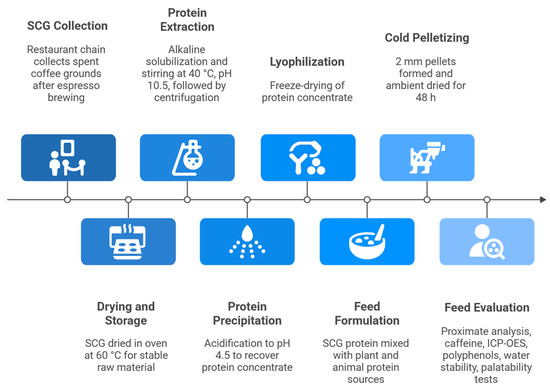
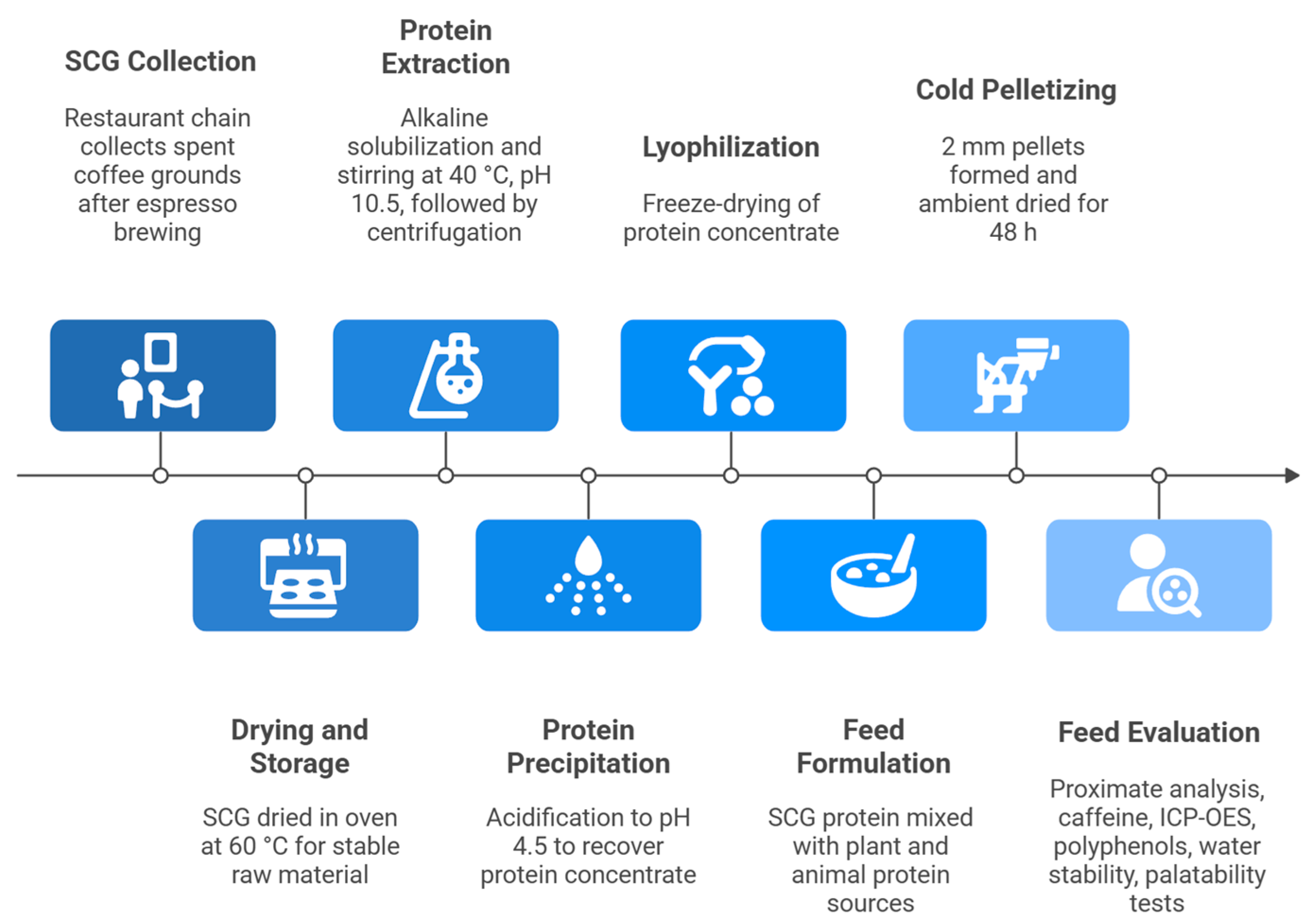
The experimental workflow followed in this study is summarized in Figure 1, which illustrates the main steps involved in the valorisation of SCG for aquafeed development. The process includes SCG collection, protein extraction, feed formulation, pelletization, and subsequent evaluation of the resulting feed. Each stage was designed to assess the nutritional and functional potential of SCG as an alternative protein source in aquaculture, while ensuring technological feasibility and compatibility with the dietary needs of C. carpio.
Figure 1.
Schematic overview of spent coffee ground valorization for aquafeed development.
2.1. Materials
Reagents: All solvents were HPLC grade from VWR (Darmstadt, Germany), with ultrapure water obtained using the ULTRACLEAR UV UF EVOQUA Purification system (Pittsburgh, PA, USA); ACL Kit from Analitk Jena (Jena, Germania); and sodium hydroxide CS reagent, ≥97.0%, pellets, Folin–Ciocalteu′s phenol reagent 1.9–2.1 N, gallic acid monohydrate ACS reagent, ≥98.0%, L-Ascorbic acid BioXtra, ≥99.0%, crystalline, and caffeine standard 99% from Sigma-Aldrich (Saint Louis, MO, USA).
Raw Material: Spent Coffee Grounds (SCGs)
Spent coffee grounds were collected from a local restaurant chain following espresso preparation, using a commercial-grade brewing machine. The collected SCG were immediately dried in a laboratory oven at 60 °C to constant weight and stored in airtight containers until further use. Prior to protein extraction, the pooled SCGs were air-dried under controlled conditions until reaching constant weight, followed by milling to obtain a uniform particle size. The material was then thoroughly homogenized by mechanical mixing to ensure sample uniformity. All subsequent extraction and analytical procedures were performed on subsamples taken from this homogenized batch, ensuring reproducibility and consistency across experiments.
2.2. Protein Extraction Process
Protein extraction was performed using an alkaline-assisted stirring method [17]. Dried SCG (100 g) was mixed with 500 mL of distilled water, and the pH was adjusted to 10.5 using a 10% NaOH solution (approximately 2.5 M). The mixture was stirred at 400 rpm for 20 min at 40 °C. After extraction, the slurry was centrifuged at 6000 rpm for 20 min. The supernatant containing solubilized proteins was collected, and protein precipitation was induced by adding 10 g of ascorbic acid (99%), reducing the pH to 3.5–4. The resulting protein precipitate was separated by centrifugation (Megafuge 16, Thermo Fisher Scientific, Waltham, MA, USA) at 3500 RPM, 20 °C for 15 min, then freeze-dried (lyophilized, (BK-FD18T, Biobase, Jinan, China)), and stored at −20 °C for further analysis and incorporation into feed formulations.
2.3. Feed Formulation and Pelletizing
Experimental feed was formulated to include protein concentrate from spent coffee grounds as a partial replacement for traditional protein sources. The formulation aimed to meet the nutritional requirements of omnivorous freshwater fish species, specifically C. carpio, while also evaluating the performance and palatability of this agro-industrial byproduct.
The composition of the SCG-based experimental feed is presented in Table 1. The control diet was formulated to be iso-nitrogenous and closely matched in lipid content to the SCG-based diet. All ingredients, moisture content, mixing time, pellet diameter, drying conditions, and storage procedures were identical for both diets. This design allowed isolation of the effects associated with SCG inclusion.
Table 1.
Composition of the SCG-based experimental feed.
All ingredients were weighed and thoroughly homogenized in a mixing unit to ensure uniform distribution. An AGF-150M machine (Agrofortel, Prague, Czech Republic) was used for the cold extrusion process, producing pellets with a diameter of approximately 2 mm. The freshly formed pellets were dried at ambient temperature for 48 h to reduce moisture content and ensure storage stability. After drying, the pellets reached a final moisture content below 5% (corresponding to >96% dry matter) and were stored at room temperature (22 ± 1 °C). Finished feeds were stored in airtight containers at room temperature, protected from light and humidity until further use.
2.4. Fish and Experimental Design
Juvenile common carp (Cyprinus carpio) were used for the feed palatability test owing to their omnivorous feeding behavior and broad relevance to freshwater aquaculture. Fish were sourced from a certified hatchery and transported to the research facility in oxygenated containers to minimize handling stress. Before testing, fish were acclimated for 14 days on a standard commercial juvenile carp diet, Aller Classic 2 mm (Aller Aqua, Christiansfeld, Denmark), and monitored for normal swimming and feeding behavior, ensuring physiological stabilization before the assay. At the start of the trial, fish had an average body weight of 12.4 ± 1.8 g and a total length of 7.8 ± 0.6 cm. A total of 90 fish were included, distributed into 6 polyethylene tanks (150 L/tank), with 15 fish per tank, so that each tank represented an independent biological replicate. All fish were visually screened before the experiment and showed no lesions, deformities, or signs of parasitic infection.
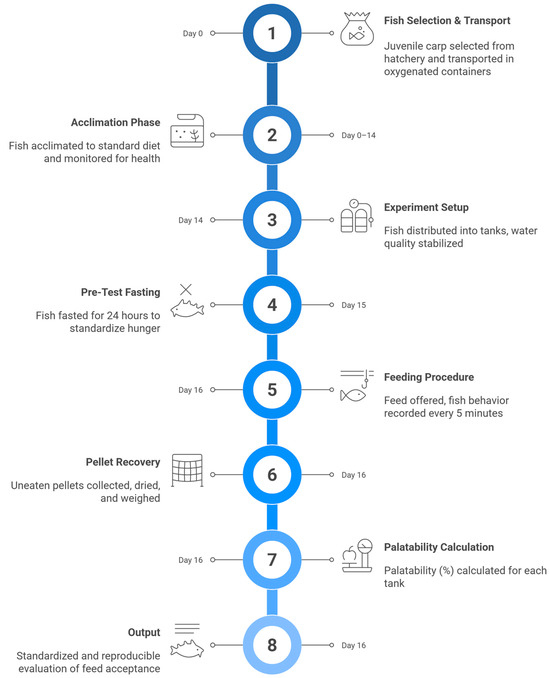
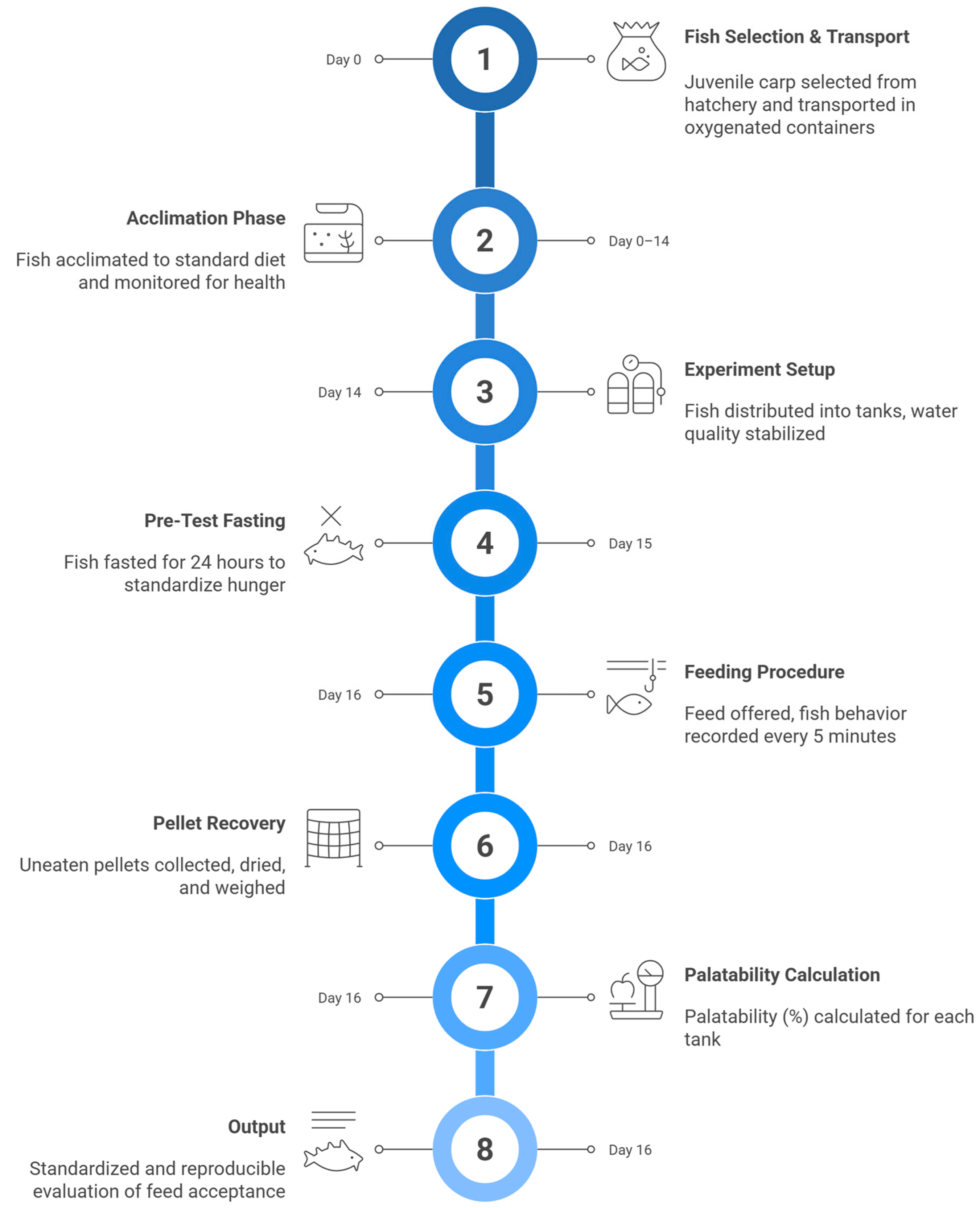
Tanks were continuously aerated, and key water quality parameters were monitored daily with handheld probes and colorimetric kits. Conditions were maintained within optimal ranges for juvenile carp: temperature at 22 ± 1 °C, dissolved oxygen above 6 mg/L, and pH between 7.4 and 7.8. Total ammonia nitrogen (TAN) and nitrites remained below detection limits throughout the trial, owing to partial daily water exchange (10%) and constant aeration. A 12 h light: 12 h dark photoperiod was applied to stabilize diurnal feeding rhythms. To standardize hunger levels, fish were fasted for 24 h before the palatability test. Fish were randomly assigned to two dietary treatments, receiving either the control diet or the SCG-based diet.at 3% of the measured tank biomass (average biomass 186 ± 12 g per tank), evenly broadcast at four opposite quadrants of each tank to reduce feeding bias. Each diet was tested in three independent tanks (n = 3), with 15 fish per tank. Fish feeding responses were recorded every 5 min over 30 min, scoring the latency to first bite, the number of fish actively feeding, and overall feeding intensity. Uneaten pellets were recovered after 30 min with 0.5 mm mesh nets, briefly rinsed, dried in a desiccator to constant weight, and weighed. Palatability was expressed as the percentage of consumed feed relative to the offered mass, treating each tank as an independent replicate for statistical analysis. This design ensured internally consistent, controlled, and reproducible determination of short-term feed acceptance in C. carpio (Figure 2).
Figure 2.
Experimental design for feed palatability test.
2.5. Analytical Methods
Proximate Composition (FT-NIR)
The nutritional composition of SCGs and the experimental feed was determined using Fourier Transform Near-Infrared Spectroscopy (FT-NIR, Tango Bruker, Ettlingen, Germany) [21]. For each sample, a sufficient quantity of material (approximately 100 g) was placed in a glass Petri dish, ensuring a uniform surface. Spectral range: approximately 12,000–4000 cm−1, spectral resolution: ~8 cm−1, number of scans per sample: 64. The device was pre-calibrated for crude protein, crude fat, moisture, and fiber. Samples were analyzed in triplicate, and values were reported as g/100 g (dry basis).
Residual Caffeine Analysis (HPLC)
The caffeine content of SCG was determined following a modified version of ISO 20481 (Coffee and coffee products, Determination of caffeine by HPLC) [22]. Approximately 1.0 g of oven-dried, homogenized SCG sample was extracted with 200 mL of distilled water in the presence of 5 g magnesium oxide. The mixture was heated in a water bath at 90 °C for 20 min, cooled to room temperature, and made up to volume in a 250 mL flask with ultrapure water. The extract was allowed to settle and subsequently filtered through a 0.45 μm cellulose membrane prior to analysis.
Chromatographic analysis was performed using a Vanquish UHPLC system (Thermo Fisher Scientific, Waltham, MA, USA) equipped with a UV–Vis detector set at 272 nm. Separation was achieved on a Hypersil Gold C18 column (150 × 4.6 mm, 5 μm particle size) under isocratic elution with a mobile phase consisting of methanol and ultrapure water (24:76, v/v). The flow rate was maintained at 1.0 mL/min, with an injection volume of 10 μL, and the column temperature was held constant at 25 °C. The analytical procedure was aligned with the international standard method for caffeine quantification in coffee products [22]. Quantification was carried out using external calibration with caffeine analytical standards prepared in the range of 5–25 mg/L. Calibration curves were linear across this range (R2 > 0.999). Results were expressed as milligrams of caffeine per gram of dry sample (mg/g DW).
Elemental Analysis (ICP-OES)
The elemental composition of the experimental feed, including macro elements (Ca, Mg, Na, K, P, S) and trace elements (Fe, Mn, Zn, Cu, Li, Ba), was determined using Inductively Coupled Plasma–Optical Emission Spectrometry (ICP-OES) with the Optima 5300 DV (Perkin Elmer, Shelton, CT, USA). The method was adapted after a method by Vezzulli et al. [23].
For sample preparation, the feed pellets were first dried at 105 °C and ground to a fine powder. Accurately weighed 0.5 g portions of each powdered sample were transferred to Berzelius beakers. A volume of 6 mL of concentrated nitric acid (HNO3, 65% p.a.) and 2 mL of hydrogen peroxide (H2O2, 30% p.a.) was added to each sample. The mixtures were allowed to pre-digest at room temperature for 16 h, followed by heating on a sand bath at 120 °C for 2 h to ensure complete mineralization.
After digestion, the samples were filtered through a 0.45 µm filter paper into 50 mL volumetric flasks and diluted to volume with ultrapure water. The resulting solutions were analyzed using ICP-OES (Optima 5300 DV, Perkin Elmer, Shelton, CT, USA), operating in both axial and radial viewing modes, with an argon flow rate of 17 L·min−1. Calibration curves were generated using a six-point standard range (0–10 mg·L−1) from a multielement ICP standard solution (Etalon IV, Merck, Darmstadt, Germany).
This method enabled the precise quantification of essential minerals required for fish nutrition and supported the comparison of elemental profiles between the two feed formulations. The results are reported in mg/kg dry weight.
Total polyphenols (Folin–Ciocalteu)
The presence of bioactive compounds such as polyphenols in SCG is of particular interest due to their potential antioxidant activity and associated health benefits in aquaculture, including oxidative stress reduction, immune stimulation, and feed preservation.
Total polyphenolic content was determined using the Folin–Ciocalteu colorimetric method after an adapted method from Bobková et al. [24]. For extraction, 0.5 g of ground sample was mixed with 1 mL of methanol and subjected to ultrasonic extraction for 20 min at room temperature using a SONOREX RK 103H ultrasonic bath (Bandelin, Berlin, Germany). The mixture was then centrifuged at 11,000 rpm for 2 min (Hettich D-78532, Kirchlengern, Germany), and the supernatant was filtered through a 0.45 µm cellulose membrane.
For the analysis, 5 mL of distilled water, 1.5 mL of 10% sodium carbonate solution, 0.5 mL of methanolic extract, and 0.5 mL of Folin–Ciocalteu reagent were added to a 15 mL centrifuge tube. The samples were incubated in the dark at room temperature for 45 min. Absorbance was measured at 765 nm using a UV-Vis spectrophotometer (Lambda 25, Perkin Elmer, Waltham, MA, USA). Results were expressed as mg gallic acid equivalents (GAE) per gram of dry sample, based on a gallic acid calibration curve (mg GAE/g DM). All measurements were conducted in triplicate.
Antioxidant capacity
Antioxidant capacity was assessed using the PHOTOCHEM chemiluminescence analyzer (Analytik Jena, Jena, Germany) and the ACL assay kit. For extraction, 0.5 g of ground sample was treated with 1 mL of methanol, followed by ultrasonic extraction for 20 min at room temperature. After extraction, the sample was centrifuged at 11,000 rpm for 2 min, and the resulting supernatant was filtered through a 0.45 µm cellulose membrane.
The filtered methanolic extract was directly injected into the analyzer. The antioxidant capacity was quantified based on the scavenging activity against superoxide radicals and expressed as mg Trolox equivalents per gram of dry sample (mg TE/g DM). Each sample was analyzed in triplicate to ensure reproducibility.
Water Stability Testing of Pellets
Pellet stability was assessed gravimetrically. Approximately 5 g of dried pellets were immersed in 500 mL of water at 20 °C for 30 min [25]. The pellets were then removed, gently blotted, dried to constant weight in a desiccator, and reweighed. Water stability was calculated as presented in the following equation:
Short-term Feed Acceptance Test
A preliminary feed acceptance evaluation was conducted to assess the immediate palatability of the SCG-based formulation. The method was adapted after Carlberg et al. [26]. Juvenile common carp with an average initial weight of 12.4 ± 1.8 g were used for the trial.
Experimental Design:
- −
- Six replicate tanks per feed type (150 L capacity each);
- −
- Fifteen fish per tank (stocking density: 1.24 kg/m3);
- −
- A 24 h fasting period before testing;
- −
- Water parameters: Temperature 22 ± 1 °C, DO > 6 mg/L, pH 7.2–7.8.
Testing Protocol:
Feed was offered at a rate of 3% of the total tank biomass, distributed manually over the water surface. The following parameters were recorded over a 30 min observation period:
- Latency to first feeding response (seconds);
- Number of fish actively feeding (visual count every 5 min);
- Feed consumption rate (pellets consumed vs. offered);
- Behavioral observations (acceptance, rejection, hesitation).
After 30 min, uneaten pellets were collected using a fine-mesh net (0.5 mm), rinsed briefly with distilled water, dried in a desiccator to constant weight (48 h), and weighed. The acceptance rate was calculated using the following equation:
Note: This test provides preliminary data on short-term feed acceptance and does not substitute for comprehensive feeding trials evaluating growth performance, which are planned as a follow-up study.
Throughout the feeding trial, water quality parameters remained stable. Water temperature and dissolved oxygen levels were maintained within recommended ranges for juvenile Cyprinus carpio, and no abnormal fluctuations were observed during the experimental period.
2.6. In Vitro Gastrointestinal Digestion and Digestibility Calculation
A static in vitro gastrointestinal digestion model was applied, adapted from the INFOGEST consensus protocols, including sequential oral, gastric, and intestinal phases under controlled temperature and agitation [27]. The practical workflow was adapted from our laboratory static protocol (oral, gastric, intestinal phases; 37 °C; constant agitation; phase-specific pH adjustment) [28]. For each assay, 0.5 g of finely ground feed sample (control diet and SCG-based diet) was incubated at 37 °C under constant agitation (100 rpm), with phase-specific pH adjustment and addition of the corresponding simulated digestive fluids. In the oral phase, the sample was mixed with 2.5 mL simulated salivary fluid (SSF, pH ~7.0) and incubated for 2 min; the gastric phase was initiated by adding simulated gastric fluid (SGF, pH 3.0) and incubating for 2 h; the intestinal phase was completed by adding simulated intestinal fluid (SIF, pH 7.0) and incubating for 2 h. At the end of digestion, enzyme activity was stopped by cooling in an ice bath for 10 min, followed by centrifugation at 4500 rpm for 30 min to separate the liquid fraction from the undigested residue; blank digestion (without a sample) was run in parallel under identical conditions. The solid residue was collected for the determination of undigested dry matter and residual crude protein, and in vitro dry matter digestibility (IVDMD, %) and in vitro crude protein digestibility (IVCPD, %) were calculated as the proportional loss of dry matter and crude protein from the initial sample to the post-digestion residue.
2.7. Estimated Amino Acid Profile of the SCG-Based Diet
To approximate the amino acid composition of the final SCG-based feed, an indirect calculation was performed based on the inclusion rates of each protein-rich ingredient in the formulation and their respective amino acid profiles from the peer-reviewed literature. The main protein sources in the SCG diet were: soybean meal (25%), fishmeal (20%), corn gluten (5%), and SCG protein concentrate (10%). The amino acid profiles (expressed as g/100 g protein) for each ingredient, were sourced from standard nutritional databases and published studies [29,30,31,32,33].
2.8. Statistical Methods
All analytical determinations (proximate composition, polyphenol content, antioxidant capacity, elemental analysis, and caffeine concentration) were performed in triplicate, and results are expressed as mean ± standard deviation (SD). Before comparative analysis, data were checked for normality using the Shapiro–Wilk test and for homogeneity of variances using Levene’s test. Differences between the control and SCG-based diets were evaluated using one-way ANOVA, with diet as the fixed factor. When assumptions of normality and homogeneity were met, post hoc comparisons were conducted using Tukey’s HSD test. For palatability, tank-level consumption (%) was treated as the experimental unit. For water stability testing, percentage mass loss was analyzed descriptively and compared to the accepted technological threshold (≤15%). For the short-term palatability test, the acceptance rate (%) from each tank was treated as an independent replicate. Behavioral observations (latency to first bite, number of feeding fish) were treated descriptively, as the study was not designed for inferential testing of behavioral endpoints. All statistical analyses were performed using Minitab 14. The level of significance was set at α = 0.05.
3. Results
3.1. Nutritional Composition
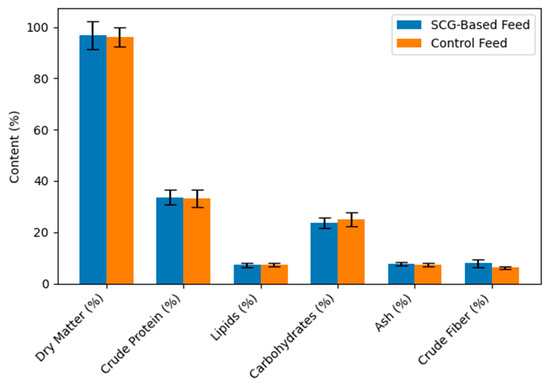
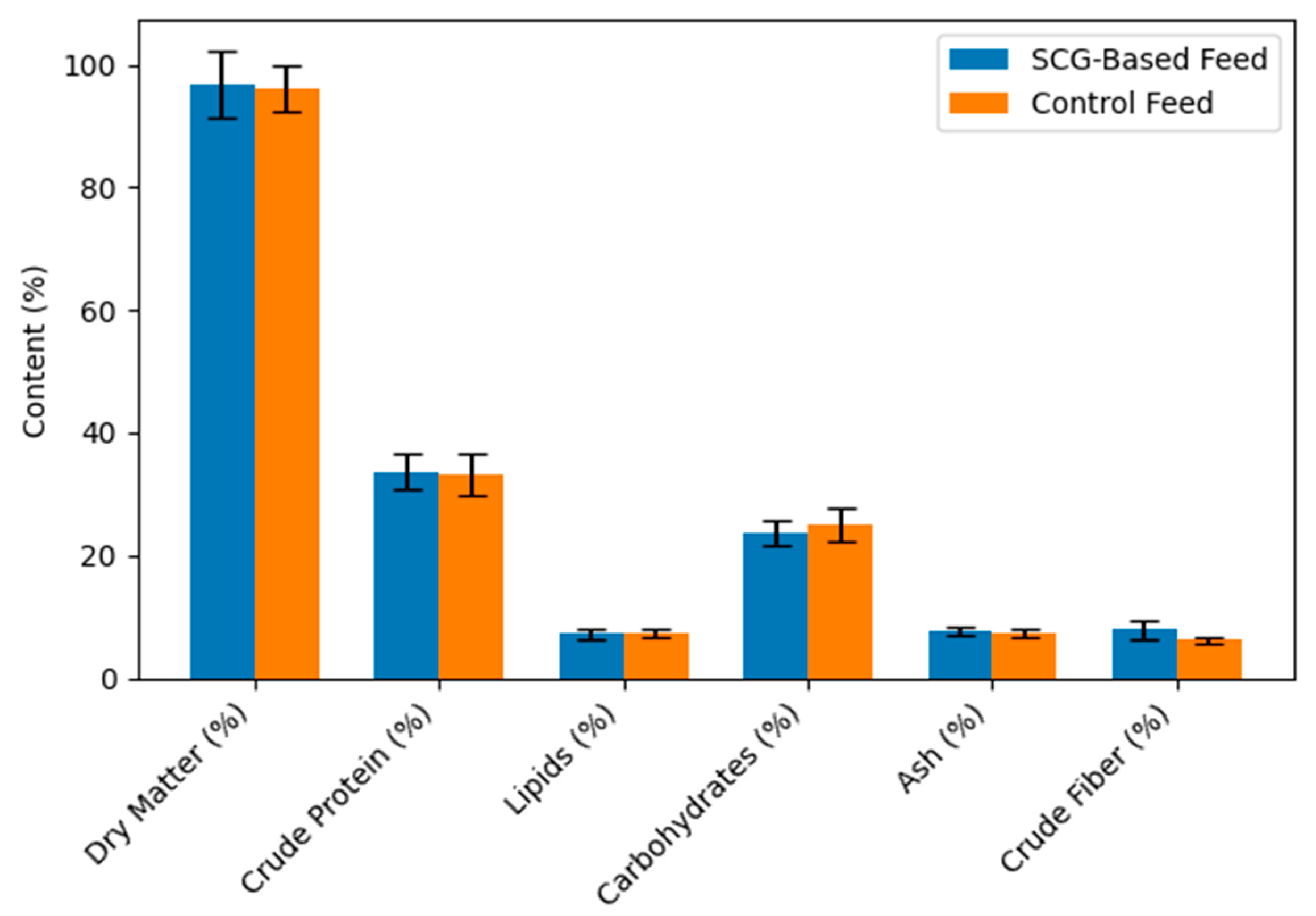
The proximate composition of the SCG-based feed was determined using FT NIR spectroscopy (Tango, Bruker) calibrated for compound feed analysis. The method provided rapid and reliable measurements of the main nutritional components. The analytical values obtained are presented in Figure 3.
Figure 3.
Comparison of nutritional composition: SCG-based feed vs. control feed.
The feed contained 33.6% crude protein, which fits the recommended nutritional range for omnivorous freshwater species such as C. carpio. Lipid content was measured at 7.24%, while carbohydrates accounted for 23.7% of the formulation. The ash content reached 7.64%. Crude fiber was measured at 7.85%. The dry matter level of 96.71% indicates a low moisture content and good storage stability.
3.2. Residual Caffeine in SCG and Its Relevance
Residual caffeine content in SCG was quantified by HPLC UV and averaged 3.5 mg per g dry weight. Triplicate measurements showed a relative standard deviation below 3%. At a dietary inclusion level of 5% SCG, the calculated caffeine concentration in the final feed was approximately 175 mg per kg.
3.3. Caffeine Exposure Assessment in Fish
Daily caffeine intake was estimated based on a feeding rate of 3% body weight per day for juvenile carp. For an average fish weight of 50 g, the expected feed intake was 1.5 g per day. At a feed caffeine concentration of 175 mg per kg, the calculated daily caffeine intake per fish was 0.26 mg. The intake per kilogram body weight was 5.25 mg per kg per day.
3.4. Elemental Composition
Macro and microelements of the SCG-based feed were quantified using ICP OES. The measured concentrations are presented in Table 2. All values are expressed as mean ± standard deviation (SD) of three analytical replicates (n = 3) on a dry matter basis.
Table 2.
Elemental composition of the SCG-based feed.
The elemental analysis revealed that the SCG-based feed contained substantial levels of nutritionally relevant macroelements. Calcium and phosphorus were the dominant minerals, with concentrations of 15,327 mg/kg and 8405 mg/kg, respectively, resulting in a Ca:P ratio of approximately 1.82:1, which falls within the recommended range for freshwater fish diets. Potassium was also present at a high level (10,450 mg/kg), followed by sodium (3142 mg/kg) and magnesium (2317 mg/kg).
3.5. Pellet Stability in Water
Pellet stability was evaluated by immersion for 30 min under controlled conditions. The average mass loss recorded was 8.21%. Variation among replicates was low, with standard deviation values below 0.4%. Pellet mass loss did not differ significantly between diets (p > 0.05), indicating that SCG inclusion at 5% did not impair water stability.
3.6. Short-Term Feed Acceptance
Feed acceptance was measured over a 30 min feeding period in six replicate tanks containing 15 fish each. The acceptance rate reached 91.2 ± 2.1%. Feeding behavior was recorded at 5 min intervals and pellets were recovered, dried and weighed to determine consumption (Figure 1). Feed acceptance did not differ significantly between diets, indicating that SCG inclusion did not negatively affect short-term feeding response.
3.7. Total Polyphenol Content
The SCG-based diet exhibited a total polyphenol concentration of 1.521 ± 0.065 mg GAE/g DM, whereas the control diet showed a substantially lower value of 0.548 ± 0.029 mg GAE/g DM. The difference between diets was statistically significant (p < 0.05). Analytical repeatability was satisfactory, with relative standard deviation values below 5% for all measurements.
3.8. Antioxidant Capacity
The SCG-based diet showed a markedly higher antioxidant capacity (3.35 ± SD mg TE/g) compared with the control diet (0.74 ± 0.002 mg TE/g), corresponding to an approximately 4.5-fold increase (p < 0.05). Replicate analyses demonstrated good analytical precision, with standard deviation values below 0.01 mg TE/g.
3.9. In Vitro Digestibility of Control and SCG-Based Diets
In vitro gastrointestinal digestion was performed to evaluate the potential impact of the crude fiber level (7.85%) on nutrient availability in the SCG-based diet. Using a static enzymatic digestion model, the in vitro dry matter digestibility (IVDMD) of the control diet was 76.2 ± 3.1%, whereas the SCG-based diet showed a significantly lower value of 71.3 ± 2.2% (p < 0.05). Similarly, the in vitro crude protein digestibility (IVCPD) was 87.6 ± 1.3% for the control diet and 81.2 ± 2.7% for the SCG-based diet, with the difference reaching statistical significance (p < 0.01). These results suggest that incorporation of SCG protein concentrate moderately reduces nutrient hydrolysis under simulated gastrointestinal conditions.
3.10. Estimated Amino Acid Profile
The estimated amino acid content of the compound diet was calculated using a weighted average based on the protein contribution of each source. Selected essential amino acids are presented in Table 3.
Table 3.
Estimated amino acid profile of SCG-based feed.
The estimated amino acid profile of the SCG-based diet indicates that most essential amino acids met or exceeded the requirements for C. carpio when expressed on a g/100 g protein basis. Valine, leucine, isoleucine, phenylalanine, arginine, and histidine were present at levels equal to or higher than the NRC reference values. In contrast, lysine (4.7 vs. 5.1 g/100 g protein), methionine (1.9 vs. 2.2 g/100 g protein), and threonine (3.4 vs. 3.7 g/100 g protein) were slightly below the recommended levels. The estimated amino acid composition of the SCG-based diet indicates a generally balanced profile that meets or exceeds the NRC-recommended requirements for Cyprinus carpio in most essential amino acids [34].
4. Discussion
4.1. Nutritional Profile of the SCG-Based Feed
The proximate composition of the SCG-based formulation shows that the feed provides a balanced supply of protein, lipids and carbohydrates suitable for omnivorous freshwater species such as C. carpio. The crude protein level of 33.6% falls within the recommended nutritional range for juvenile carp, which typically requires 28 to 38% dietary protein during growth phases [33,34]. Slight deficiencies were observed in lysine and methionine, two amino acids commonly limiting in plant-based formulations [35]. These could be further corrected by dietary supplementation or reformulation, especially if aiming to support fast growth or stress resilience. The lipid level of 7.24% also fits accepted standards for carp nutrition and supports an adequate energy supply without exceeding upper limits associated with reduced digestibility in SCG-enriched diets [16]. Carbohydrates accounted for 23.7% of the formulation, which is compatible with the known ability of carp to utilize dietary carbohydrates more efficiently than carnivorous species [36]. The ash content was within expected limits for plant-enriched aquafeeds, while the measured crude fiber content reflected the structural contribution of SCG and other plant-derived ingredients used in the formulation.
The nutritional values of the SCG-based feed were compared with reference ranges for juvenile C. carpio as reported in the literature. Protein content measured 33.6%, lipid content reached 7.24% and ash content was 7.64%. Carbohydrates totaled 23.7% and crude fiber reached 7.85%. The calcium to phosphorus ratio was calculated at 1.82 to 1 based on ICP OES data. Statistical comparison with NRC ranges indicated that protein, lipid, ash, and carbohydrate contents were within expected intervals (p > 0.05), whereas crude fiber was significantly higher than recommended levels for omnivorous cyprinids (p < 0.05) [34]. A summary of the comparison is provided in Table 4.
Table 4.
Nutritional comparison of SCG-based feed vs. NRC requirements *.
4.2. SCG Compared with Other Alternative Protein Sources
The nutritional profile and functional role of spent coffee ground (SCG) protein concentrate observed in the present study should be interpreted in the context of other alternative protein ingredients evaluated for aquaculture feeds. Plant-derived protein sources such as soybean, pea, and rapeseed meals have been extensively investigated for common carp diets, where their inclusion is often constrained by amino acid imbalance and antinutritional factors rather than crude protein level alone [4,35,36]. From a compositional standpoint, commonly used soybean meal grades typically contain ~44–48% crude protein depending on dehulling and extraction method, with corresponding differences in crude fiber (about ~6.0% for 44% CP meals vs. ~2.8% for 48% CP meals) [12]. Pea meal is generally a lower-protein ingredient (~22–24% crude protein) and is frequently described as limited in key essential amino acids (notably lysine and methionine) unless processing or supplementation is applied [6]. Rapeseed (canola) meal is typically reported to have around ~38% crude protein (DM basis), with a comparatively high crude fiber fraction (about ~14% DM, depending on type and processing), which is one reason inclusion levels must be managed carefully in practical fish feeds [4]. In comparison, the SCG-based formulation in the present study delivered 33.6% crude protein at the diet level (FT-NIR) with crude fiber of 7.85%, while also providing measurable bioactive potential (total polyphenols 1.521 ± 0.065 mg GAE/g DM; antioxidant capacity 3.35 ± 0.03 mg TE/g DM). These attributes position SCG protein concentrate as a moderate protein contributor that may increase structural carbohydrates and antioxidant potential relative to many conventional plant meals, thereby differentiating its functional role within compound feeds. Microbial proteins, including yeasts, methanotrophic bacteria, and microalgae, generally show strong potential due to their relatively favorable amino acid patterns and, in some cases, high inclusion feasibility, but their production relies on controlled fermentation systems with higher capital and operational costs [5,6,7,8]. In terms of digestibility, single-cell ingredient performance can be strongly influenced by cell-wall disruption and processing, and published examples report protein digestibility values for microalgal ingredients that may cluster in the ~69–73% range across different fish species in some datasets (e.g., Nannochloropsis), emphasizing that processing intensity can be as important as the organism source [28]. Insect meals, particularly Hermetia illucens, have demonstrated strong potential as fishmeal substitutes due to their nutrient density and comparatively balanced amino acid profile [8,9,36]. Reported composition ranges for black soldier fly larvae products vary with substrate and defatting, but are frequently cited in the range of ~32–48% crude protein (DM) with ~12–42% lipid, while some broader summaries cite typical ranges of ~40–60% crude protein and ~20–35% fat for insect biomass products depending on processing [8,9]. These wide ranges highlight the importance of standardization and quality control for novel proteins, similarly relevant to SCG-derived concentrates. In contrast, SCGs represent a readily available agro-industrial byproduct with a stable supply chain linked to global coffee consumption, supporting their consideration primarily as a complementary ingredient integrated into multi-ingredient formulations rather than as a primary protein replacement. Studies evaluating agro-industrial residues such as wheat bran, grape pomace, or fermented byproducts have highlighted their dual nutritional and functional contributions, particularly through dietary fiber and antioxidant compounds, and have also shown that inclusion levels and processing determine whether the net effect is beneficial or neutral [10,11,36,37,38,39]. For example, grape-derived ingredients have been used in common carp feeds at inclusion levels on the order of ~5–10% in controlled studies, with outcomes depending on form (pomace, extract), dose, and trial duration [11]. In this context, SCG protein concentrate aligns with this class of ingredients by contributing both nutrients and bioactive compounds, while requiring careful formulation to manage fiber content and amino acid balance. The present formulation strategy, which combines SCG protein with fishmeal and multiple plant proteins, reflects a pragmatic mixed-protein approach consistent with current aquafeed development trends, where ingredients are selected not only for crude protein but also for digestibility constraints, functional fractions, and technological performance [40,41].
4.3. Digestibility and Fiber Implications in SCG-Enriched Feeds
Dietary fiber is a critical determinant of nutrient utilization in aquafeeds, particularly for omnivorous species such as Cyprinus carpio. The crude fiber content of the SCG-based diet in the present study (7.85 ± 1.5%) was higher than that of the control diet, but remained within the upper range commonly reported for juvenile carp diets (approximately 3–8%), as summarized by the National Research Council and discussed by Zhu et al. in grape-pomace-based carp feeds [34,38]. Comparable fiber levels have been reported in carp diets containing wheat bran or plant by-products, where moderate inclusion did not impair short-term feed acceptance or technological quality [10,38].
The in vitro digestibility values obtained in this study are consistent with those reported for compound feeds formulated with mixed plant and animal protein sources. According to Minekus et al. and Dordai et al., in vitro dry matter digestibility values for such feeds typically range between 70 and 85%, while in vitro crude protein digestibility frequently exceeds 80%, depending on ingredient composition and processing [29,37,38]. The modest reduction in both IVDMD and IVCPD observed for the SCG-based diet relative to the control therefore falls within the variability reported for fiber-containing formulations.
Compared with feeds incorporating raw or minimally processed spent coffee grounds, which have been reported to contain crude fiber levels exceeding 14% and to negatively affect nutrient digestibility and growth performance, particularly in carnivorous species, the present formulation achieved substantially lower fiber content. For example, Phinrub et al. and Roslan et al. reported reduced growth performance and altered physiological responses in tilapia and African catfish, respectively, when unprocessed or fermented SCG were included at higher dietary levels [16,40]. The lower fiber content in the present study can be attributed to the applied protein extraction process, which reduced the proportion of lignocellulosic material incorporated into the final feed.
Although common carp exhibit greater tolerance to dietary fiber than carnivorous fish due to their longer digestive tract and omnivorous feeding strategy, prolonged exposure to elevated fiber levels has been associated with reduced feed conversion efficiency and growth performance in long-term trials, as emphasized by Tacon et al. and Glencross and Seiliez [41,42]. Consequently, further optimization strategies, including enzymatic supplementation, microbial fermentation, or additional fractionation of SCG protein concentrates, should be considered to enhance nutrient availability and support sustained performance during extended feeding periods.
4.4. Technological Performance and Pellet Quality
Pellet water stability is a key technological parameter influencing feed intake, nutrient leaching, and water quality in aquaculture systems. The SCG-based pellets produced in the present study showed a mass loss of only 8.21% after 30 min of immersion, which is well below the commonly accepted threshold of 15% for freshwater aquafeeds, as discussed by Olaniran et al. [25]. Comparable or slightly higher water stability values have been reported for pellets formulated with plant-based and agro-industrial byproducts when appropriate formulation and processing conditions are applied, including studies by Olaniran et al. (2022) and Carlberg et al. [25,26].
In contrast to studies relying on high-temperature extrusion, the cold pelletizing approach applied here preserved pellet integrity while minimizing thermal stress on heat-sensitive components. Similar technological performance has been reported for feeds incorporating fermented wheat bran or grape pomace, where mild processing conditions supported adequate pellet cohesion and limited nutrient losses, as shown by Hardy et al. and Zhu et al. [12,38]. The high dry matter content achieved in the present study (>96%) further supports the suitability of the pellets for storage and handling, aligning with values reported for commercial compound aquafeeds.
The absence of significant differences in water stability between the control and SCG-based diets indicates that SCG protein concentrate, at the inclusion level tested, did not impair pellet structure. This observation is consistent with previous reports where SCG-derived ingredients were included at moderate levels and combined with other protein sources and cereals to maintain pellet cohesion, including studies by Phinrub et al. and Roslan et al. [16,40]. Overall, the technological performance observed in this study confirms that SCG protein concentrate can be incorporated into compound aquafeeds without compromising key physical quality parameters when applied within a balanced formulation strategy.
4.5. Functional Role of Bioactive Compounds in SCG-Based Diets
Spent coffee grounds are known to contain phenolic compounds, including chlorogenic acids and related derivatives, which contribute to antioxidant activity, as documented by Bobková et al. and reviewed by Kotsou et al. [20,24]. In the present study, the SCG-based diet exhibited significantly higher total polyphenol content and antioxidant capacity compared with the control diet, confirming that a fraction of these bioactive compounds was retained through protein extraction and cold pelletizing. Comparable enrichment of antioxidant potential has been reported in aquafeeds incorporating grape pomace or fermented plant byproducts, including studies by Mahmoodi et al. and Flefil et al., where dietary polyphenols contributed to increased feed-level antioxidant capacity [10,11].
Several studies have linked dietary antioxidants to improved oxidative status, immune modulation, or stress resistance in fish; however, such effects are typically demonstrated in long-term feeding trials combined with biomarker or histological assessments. For example, Zhang et al. reported enhanced antioxidant capacity and immune responses in coho salmon fed fermented soybean meal, while Aragão et al. emphasized that functional effects of alternative proteins extend beyond growth only when supported by physiological endpoints [7,28]. In the present study, the functional role of SCG-derived bioactive compounds cannot be directly associated with biological outcomes, as no oxidative stress markers, immune parameters, or histological endpoints were evaluated. Consequently, the observed increase in feed-level antioxidant capacity should be interpreted as an indicator of functional potential, rather than demonstrated biological efficacy.
Compared with studies using fermented SCG or higher inclusion levels, which have reported both beneficial and adverse physiological effects depending on fish species and dietary dose, the moderate inclusion level applied in this study appears suitable for maintaining feed acceptance and technological quality. Specifically, Phinrub et al. reported species-dependent biological responses in Nile tilapia fed SCG-based diets, while Roslan et al. observed altered blood biochemistry and intestinal morphology in African catfish at higher inclusion levels of fermented SCG [16,40]. Within this context, the retention of SCG-derived bioactive compounds at a 5% inclusion level may offer added value in future formulations, particularly when combined with targeted biological assessments to establish their relevance under production conditions.
4.6. Safety and Caffeine Considerations
Residual caffeine in SCG represents a potential safety concern for fish, as caffeine and related alkaloids can influence physiological responses. The caffeine content measured in SCG for this study was 3.5 mg per g dry weight, aligning with previously reported concentrations ranging from 0.5 to 11.5 mg per g depending on coffee source and processing conditions [43,44,45]. At the 5% inclusion level used in the formulation, the resulting feed contained approximately 175 mg caffeine per kg. The estimated daily intake for juvenile carp was 5.25 mg caffeine per kg body weight per day, which is below the levels linked to adverse physiological changes in earlier studies on fish species [43,44,45]. Additionally, the 96 h LC50 for dissolved caffeine in C. carpio is reported at 4.4 mg per L [43], suggesting a wide safety margin relative to expected exposure from feed use. The high water stability of the pellets also limits leaching, which further reduces environmental exposure to caffeine in culture systems.
Beyond safety and compositional aspects, practical implementation of SCG-based aquafeeds also requires consideration of economic feasibility and processing constraints. From an economic perspective, the valorization of spent coffee grounds has been more extensively explored in applications such as ruminant feed, bioenergy production, and general byproduct utilization, where SCG are treated as low- or negative-cost residues. In aquafeed applications, economic assessments remain limited, largely due to additional processing requirements such as drying, extraction, and stabilization. Nevertheless, the use of low-energy processing approaches, such as cold pelletizing and mild extraction conditions, may partially offset processing costs and improve feasibility at small or decentralized scales. In this context, the present study focuses on technical and nutritional feasibility, while recognizing that dedicated techno-economic analyses are required to evaluate large-scale applicability of SCG-based aquafeed ingredients.
4.7. Limitations
Despite the encouraging compositional and technological results obtained in this study, several limitations should be acknowledged. Although the crude fiber content of the SCG-based diet was maintained within the upper range reported for juvenile carp diets, further nutritional optimization remains warranted, particularly in the context of long-term feeding and nutrient utilization. This reflects the well-established principle that a feed is only as good as its ingredients, and that careful evaluation and optimization of each component are essential for successful aquafeed development [39,40]. While an amino acid profile of the SCG protein concentrate was presented in a related publication [17], the present study did not experimentally determine the amino acid composition of the final compounded diets. Direct quantification of amino acids in the complete feed would enable calculation of indices such as the essential amino acid index (EAAI) and a more precise comparison with the ideal protein profile for common carp, further strengthening conclusions about protein quality and balance in the test formulations.
It should also be noted that the Folin–Ciocalteu assay provides an estimate of total reducing capacity rather than a compound-specific phenolic profile, and the photochemiluminescence (ACL) assay reflects integrated antioxidant capacity without identifying individual constituents. Consequently, the reported values should be interpreted as a screening-level assessment of feed-level bioactive potential rather than definitive quantification of specific antioxidant compounds.
From a biological perspective, the feeding trial was limited to a short-term feed acceptance test, which provides useful information on palatability and immediate feeding response but does not predict long-term voluntary intake, growth performance, or physiological adaptation. Key zootechnical indicators such as specific growth rate, feed conversion ratio, protein efficiency ratio, survival, and body composition were not evaluated. Additionally, no cellular, histological, hematological, or oxidative stress biomarkers were assessed, limiting conclusions regarding metabolic effects, gut health, or systemic responses to SCG inclusion.
Apparent digestibility coefficients for protein, lipid, and energy were not determined, and no economic assessment of SCG processing or protein extraction costs was performed. These aspects are critical for evaluating the practical applicability and scalability of SCG-based ingredients in commercial aquafeed production and should be addressed in future studies.
5. Conclusions
This study shows that spent coffee grounds (SCGs) can be technically integrated into aquafeed formulations for C. carpio at the tested inclusion level. The SCG-based diet achieved a balanced macronutrient profile, strong physical performance reflected by 91.8% pellet mass retention after 30 min, and high short-term feed acceptance (91.2 ± 2.1%). The mineral composition and retained bioactive compounds indicate a potential contribution to oxidative balance, although biological effects were not directly assessed. The cold pelletizing process functioned efficiently, demonstrating that low-energy, small-scale production of SCG-enriched feed is technically feasible.
The findings support the role of SCG as a complementary ingredient within realistic multi-component aquafeed formulations rather than as a standalone protein source. At the inclusion level tested, SCG did not compromise pellet stability or short-term palatability; however, further optimization is required to fully assess nutritional performance.
Future research should focus on longer-term feeding trials of 60 to 90 days using multiple SCG inclusion levels to evaluate growth performance, feed conversion efficiency, nutrient digestibility, and physiological responses under realistic farming conditions. Additional analyses, including amino acid profiling of complete diets, determination of apparent digestibility coefficients using marker-based methods, and targeted strategies to further optimize fiber content, will be essential. Broader biological assessments, including immune and metabolic indicators, as well as storage stability studies, will also be necessary before practical applications can be considered.
The outcomes of this study provide a solid basis for the valorization of SCG as a sustainable aquafeed ingredient, contributing to diversification of protein sources, reduced reliance on traditional raw materials, and strengthened circular bioeconomy strategies in aquaculture.
Author Contributions
Conceptualization, A.B. and P.U.; methodology, A.B., A.V.T. and D.S.; software, A.B. and L.D.; validation, A.B., P.U. and A.V.T.; formal analysis A.B., L.D., A.V.T. and D.S.; investigation, A.B. and P.U.; resources, A.B.; data curation, A.B. and L.D.; writing—original draft preparation, P.U. and L.D.; writing—review and editing, A.B. and A.V.T.; visualization, A.B.; supervision, A.B.; project administration, A.B.; funding acquisition, A.B. All authors have read and agreed to the published version of the manuscript.
Funding
This work was carried out through the Core Program within the National Research Development and Innovation Plan 2022–2027, with the support of MCID, project no. PN 23 05. This paper was co-financed by the European Regional Development Fund (ERDF) through the Smart Growth, Digitization and Financial Instruments Program (PoCIDIF), call PCID-IF/144/PCIDIF_P1/OP1/RSO1.1/PCIDIF_A3, Project SMIS number 309287, acronym METRO-FOOD-RO Evolve.
Institutional Review Board Statement
The Bioethics Commission of the University of Agriculture and Veterinary Medicine of Cluj-Napoca, Romania, approved this study through Decision No. 401 of 21.09.2023.
Data Availability Statement
The original contributions presented in the study are included in the article.
Conflicts of Interest
The authors declare no conflicts of interest.
References
- Rossi, S. Fishing and overfishing—Sustainable harvest of the sea. In SDG 14: Life Below Water; Springer: Cham, Switzerland, 2022; pp. 207–325. [Google Scholar] [CrossRef] [Scilit]
- Muntean, G.C.; Simedru, D.; Uiuiu, P.; Tanaselia, C.; Cadar, O.; Becze, A.; Coroian, A. Evaluation of Alternative Sources of Proteins and Other Nutrients with Potential Applications in Fish Nutrition. Molecules 2024, 29, 2332. [Google Scholar] [CrossRef] [Scilit]
- Tacon, A.G.; Metian, M. Feed matters: Satisfying the feed demand of aquaculture. Rev. Fish. Sci. Aquac. 2015, 23, 1–10. [Google Scholar] [CrossRef] [Scilit]
- Kaiser, F.; Harbach, H.; Schulz, C. Rapeseed proteins as fishmeal alternatives: A review. Rev. Aquac. 2022, 14, 1887–1911. [Google Scholar] [CrossRef] [Scilit]
- Kleckner, A.S.; Culakova, E.; Kleckner, I.R.; Belcher, E.K.; Demark-Wahnefried, W.; Parker, E.A.; Padula, G.D.A.; Ontko, M.; Janelsins, M.C.; Mustian, K.M.; et al. Nutritional status predicts fatty acid uptake from fish and soybean oil supplements for treatment of cancer-related fatigue: Results from a phase II nationwide study. Nutrients 2021, 14, 184. [Google Scholar] [CrossRef] [Scilit] [PubMed]
- Magbanua, T.O.; Ragaza, J.A. Growth and whole-body composition of Oreochromis niloticus fed pea meal: A meta-analysis. Front. Sustain. Food Syst. 2023, 7, 1103263. [Google Scholar] [CrossRef] [Scilit]
- Zhang, Q.; Guo, M.; Li, F.; Qin, M.; Yang, Q.; Yu, H.; Xu, J.; Liu, Y.; Tong, T. Evaluation of fermented soybean meal to replace a portion fish meal on growth performance, antioxidant capacity, immunity, and mTOR signaling pathway of coho salmon (Oncorhynchus kisutch). Aquac. Nutr. 2023, 2023, 2558173. [Google Scholar] [CrossRef] [Scilit]
- Gougbedji, A.; Detilleux, J.; Lalèyè, P.A.; Francis, F.; Caparros Megido, R. Can insect meal replace fishmeal? A meta-analysis. Animals 2022, 12, 1700. [Google Scholar] [CrossRef] [Scilit]
- Hua, K. A meta-analysis of the effects of replacing fish meals with insect meals on fish growth. Aquaculture 2021, 530, 735732. [Google Scholar] [CrossRef] [Scilit]
- Flefil, N.S.; Ezzat, A.; Aboseif, A.M.; El-Dein, A.N. Lactobacillus-fermented wheat bran, as an economic fish feed ingredient, enhanced dephytinization, micronutrients bioavailability, and tilapia performance in a biofloc system. Biocatal. Agric. Biotechnol. 2022, 45, 102521. [Google Scholar] [CrossRef] [Scilit]
- Mahmoodi, B.; Aberoumand, A.; Ziaei-Nejad, S.; Seyyedi, S. Effects of diets containing grape pomace on the growth, nutrition indices, and the quality traits of common carp (Cyprinus carpio). Food Sci. Nutr. 2023, 11, 6660–6669. [Google Scholar] [CrossRef] [Scilit] [PubMed]
- Hardy, R.W. Utilization of plant proteins in fish diets: Utilization of plant proteins in fish diets: Effects of global demand and supplies of fishmeal. Aquac. Res. 2010, 41, 770–776. [Google Scholar] [CrossRef] [Scilit]
- Gatlin, D.M.; Barrows, F.T.; Brown, P.; Dabrowski, K.; Gaylord, T.G.; Hardy, R.W.; Herman, E.; Hu, G.; Krogdahl, Å.; Nelson, R.; et al. Expanding the utilization of sustainable plant products in aquafeeds: A review. Aquac. Res. 2007, 38, 551–579. [Google Scholar] [CrossRef] [Scilit]
- International Coffee Organization (ICO). Coffee Market Report. 2019. Available online: http://www.ico.org/documents/cy2018-19/cmr-0719-e.pdf (accessed on 27 December 2025).
- Czarniecka-Skubina, E.; Pielak, M.; Sałek, P.; Korzeniowska-Ginter, R.; Owczarek, T. Consumer Choices and Habits Related to Coffee Consumption by Poles. Int. J. Environ. Res. Public Health 2021, 18, 3948. [Google Scholar] [CrossRef] [Scilit]
- Phinrub, W.; Sookying, S.; Srisuttha, P.; Sutthi, N.; Panase, P. Exploring the Nutritional Potential of Spent Coffee Grounds as a Substitute for Rice Bran in Feeds for Nile tilapia, Oreochromis niloticus: An Evaluation of Growth Performance and Biological Indices. Aquac. Nutr. 2024, 2024, 4858465. [Google Scholar] [CrossRef] [Scilit]
- Becze, A.; Simedru, D.; Barta, D.-G.; Senila, L.; Varaticeanu, C.; Blaga, T. Sustainable valorisation of coffee waste as a protein source, mycelium-based packaging material and renewable energy pellet. Molecules 2024, 29, 4983. [Google Scholar] [CrossRef] [Scilit] [PubMed]
- Adedeji, A.A. Agri-food waste reduction and utilization: A sustainability perspective. J. ASABE 2022, 65, 471–479. [Google Scholar] [CrossRef] [Scilit]
- Álvarez-Castillo, E.; Felix, M.; Bengoechea, C.; Guerrero, A. Proteins from agri-food industrial biowastes or co-products and their applications as green materials. Foods 2021, 10, 981. [Google Scholar] [CrossRef] [Scilit]
- Kotsou, K.; Chatzimitakos, T.; Athanasiadis, V.; Bozinou, E.; Athanassiou, C.G.; Lalas, S.I. Utilization of spent coffee grounds as a feed additive for enhancing the nutritional value of Tenebrio molitor Larvae. Sustainability 2023, 15, 16224. [Google Scholar] [CrossRef] [Scilit]
- Application Note AN N287, BRUKER. Available online: https://www.optikinstruments.si/runtime/cache/an-n287-feed-en-89bf3db4fe122d3168b8e287c4269e00.pdf (accessed on 27 December 2025).
- ISO 20481:2008; Coffee and Coffee Products—Determination of Caffeine by HPLC. ISO: Geneva, Switzerland, 2008. Available online: https://cdn.standards.iteh.ai/samples/34185/f45a2f4c6a754966bd6e7aeac3f434f4/ISO-20481-2008.pdf (accessed on 27 December 2025).
- Vezzulli, F.; Fontanella, M.C.; Lambri, M.; Beone, G.M. Specialty and high-quality coffee: Discrimination through elemental characterization via ICP-OES, ICP-MS, and ICP-MS/MS of origin, species, and variety. J. Sci. Food Agric. 2023, 103, 4303–4316. [Google Scholar] [CrossRef] [Scilit]
- Bobková, A.; Hudáček, M.; Jakabová, S.; Belej, Ľ.; Capcarová, M.; Čurlej, J.; Bobko, M.; Árvay, J.; Jakab, I.; Čapla, J.; et al. The effect of roasting on the total polyphenols and antioxidant activity of coffee. J. Environ. Sci. Health 2020, 55, 495–500. [Google Scholar] [CrossRef] [Scilit]
- Olaniran, J.A.; Adebayo, A.O.; Afonja, A.B. Effect of Some Machine Parameters on Floatability and Water Stability of Fish Feed Pellets. J. Agric. Eng. Technol. 2022, 27, 43–53. [Google Scholar]
- Carlberg, H.; Cheng, K.; Lundh, T.; Brännäs, E. Using self-selection to evaluate the acceptance of a new diet formulation by farmed fish. Appl. Anim. Behav. Sci. 2015, 171, 226–232. [Google Scholar] [CrossRef] [Scilit]
- Minekus, M.; Alminger, M.; Alvito, P.; Balance, S.; Bohn, T.O.; Bourlieu, C.; Carrière, F.; Boutrou, R.; Corredig, M.; Dupont, D.; et al. A standardised static in vitro digestion method suitable for food–an international consensus. Food Funct. 2014, 5, 1113–1124. [Google Scholar] [CrossRef] [Scilit]
- Aragão, C.; Gonçalves, A.T.; Costas, B.; Azeredo, R.; Xavier, M.J.; Engrola, S. Alternative proteins for fish diets: Implications beyond growth. Animals 2022, 12, 1211. [Google Scholar] [CrossRef] [Scilit] [PubMed]
- Kaushik, S.J.; Seiliez, I. Protein and amino acid nutrition and metabolism in fish: Current knowledge and future needs. Aquac. Res. 2010, 41, 322–332. [Google Scholar] [CrossRef] [Scilit]
- Dordai, L.; Simedru, D.; Cadar, O.; Becze, A. Simulated Gastrointestinal Digestion of Nutritive Raw Bars: Assessment of Nutrient Bioavailability. Foods 2023, 12, 2300. [Google Scholar] [CrossRef] [Scilit] [PubMed]
- EFSA Food Composition Database. Available online: https://www.efsa.europa.eu/en/microstrategy/food-composition-data (accessed on 23 January 2026).
- Haytowitz, D.B.; Ahuja, J.K.C.; Wu, X.; Somanchi, M.; Nickle, M.; Nguyen, Q.A.; Roseland, J.M.; Williams, J.R.; Patterson, K.Y.; Li, Y.; et al. USDA National Nutrient Database for Standard Reference, Legacy Release; 2019 Dataset; Nutrient Data Laboratory, Beltsville Human Nutrition Research Center, ARS, USDA: Washington, DC, USA, 2019. [CrossRef]
- USDA FoodData Central. Available online: https://fdc.nal.usda.gov/ (accessed on 23 January 2026).
- National Research Council (NRC). Nutrient Requirements of Fish and Shrimp; National Academies Press: Washington, DC, USA, 2011; pp. 102–145. [CrossRef] [Scilit]
- Melenchón, F.; de Mercado, E.; Pula, H.J.; Cardenete, G.; Barroso, F.G.; Fabrikov, D.; Lourenço, H.M.; Pessoa, M.F.; Lagos, L.; Weththasinghe, P.; et al. Fishmeal dietary replacement up to 50%: A comparative study of two insect meals for rainbow trout (Oncorhynchus mykiss). Animals 2022, 12, 179. [Google Scholar] [CrossRef] [Scilit]
- Murugu, D.K.; Onyango, A.N.; Ndiritu, A.K.; Nyangena, D.N.; Osuga, I.M.; Cheseto, X.; Subramanian, S.; Ekesi, S.; Tanga, C.M. Physicochemical properties of edible cricket oils: Implications for use in pharmaceutical and food industries. Future Foods 2024, 9, 100316. [Google Scholar] [CrossRef] [Scilit]
- Nowacka, M.; Trusinska, M.; Chraniuk, P.; Piatkowska, J.; Pakulska, A.; Wisniewska, K.; Wierzbicka, A.; Rybak, K.; Pobiega, K. Plant-Based Fish Analogs—A Review. Appl. Sci. 2023, 13, 4509. [Google Scholar] [CrossRef] [Scilit]
- Zhu, X.; Wang, L.; Zhang, Z.; Ding, L.; Hang, S. Combination of fiber-degrading enzymatic hydrolysis and lactobacilli fermentation enhances utilization of fiber and protein in rapeseed meal as revealed in simulated pig digestion and fermentation in vitro. Anim. Feed Sci. Technol. 2021, 278, 115001. [Google Scholar] [CrossRef] [Scilit]
- Rodrigues, S.; Alves, R.S.; Antunes, S.C. Impact of caffeine on aquatic ecosystems. J. Xenobiotics 2025, 15, 86. [Google Scholar] [CrossRef] [Scilit]
- Roslan, N.A.; Sukri, S.A.M.; Wei, L.S.; Shahjahan, M.; Rohani, M.F.; Yea, C.S.; Kabir, M.A.; Guru, A.; Goh, K.W.; Kallem, P.; et al. Replacement of fishmeal by fermented spent coffee ground: Effects on growth performance, feed stability, blood biochemistry, liver, and intestinal morphology of African catfish (Clarias gariepinus). Aquac. Rep. 2024, 36, 102073. [Google Scholar] [CrossRef] [Scilit]
- Tacon, A.G.J.; Metian, M.; Hasan, M.R. Feed ingredients and fertilizers for farmed aquatic animals: Sources and composition. In FAO Fisheries and Aquaculture Technical Paper; Food and Agriculture Organization of the United Nations: Rome, Italy, 2011; Volume 540, pp. 1–209. [Google Scholar]
- Glencross, B.D.; Booth, M.; Allan, G.L. A feed is only as good as its ingredients—A review of ingredient evaluation strategies for aquaculture feeds. Aquac. Nutr. 2007, 13, 17–34. [Google Scholar] [CrossRef] [Scilit]
- Vandeponseele, A.; Draye, M.; Piot, C.; Chatel, G. Study of influential parameters influencing caffeine extraction from spent coffee grounds. Clean Technol. 2021, 3, 335–350. [Google Scholar] [CrossRef] [Scilit]
- Li, S.; Wen, J.; He, B.; Wang, J.; Hu, X.; Liu, J. Occurrence of caffeine in the freshwater environment. Environ. Pollut. 2020, 263, 114371. [Google Scholar] [CrossRef] [Scilit] [PubMed]
- Diogo, B.S.; Antunes, S.C.; Pinto, I.; Amorim, J.; Teixeira, C.; Teles, L.O.; Golovko, O.; Žlábek, V.; Carvalho, A.P.; Rodrigues, S. Insights into environmental caffeine contamination in ecotoxicological biomarkers and potential health effects of Danio rerio. Heliyon 2023, 9, e19875. [Google Scholar] [CrossRef] [Scilit] [PubMed]

Disclaimer/Publisher’s Note: The statements, opinions and data contained in all publications are solely those of the individual author(s) and contributor(s) and not of MDPI and/or the editor(s). MDPI and/or the editor(s) disclaim responsibility for any injury to people or property resulting from any ideas, methods, instructions or products referred to in the content. |
© 2026 by the authors. Licensee MDPI, Basel, Switzerland. This article is an open access article distributed under the terms and conditions of the Creative Commons Attribution (CC BY) license.