


Abstract
Background and Objectives: Fibromyalgia is a chronic condition characterized by widespread pain, reduced quality of life, and impaired physical function. Given that physical activity is a primary treatment for musculoskeletal health and overall well-being, VR-based active exercise may offer an innovative way to engage individuals with fibromyalgia in therapeutic movement. Methods: A Systematic Review and meta-analysis were conducted following PRISMA guidelines. Randomized controlled trials including adult patients with fibromyalgia undergoing active VR-based exercise interventions were included. Databases searched were PubMed, Scopus, Web of Science, CENTRAL, and PEDro from inception up to 18 July 2025. Primary outcomes were pain intensity, fatigue, and symptom severity. Secondary outcomes included depression, anxiety, kinesiophobia, aerobic capacity, muscle strength, and balance. Risk of bias was assessed using Cochrane’s Risk of Bias 2 tool, and certainty of evidence was evaluated using GRADE. Results: Ten randomized controlled trials (203 participants) were included. Active VR interventions significantly reduced pain (SMD = −0.51), fatigue (SMD = −0.53), and symptom severity (MD = −8.41). Moderate effects were found for depression (SMD = −0.51) and anxiety (SMD = −0.41). Non-significant improvements were also observed in aerobic capacity (SMD = 0.28), and muscle strength (SMD = 0.33), while balance slightly favored control group (SMD = −0.19). The overall certainty of evidence for main outcomes was rated low. Subgroup analyses showed VR was superior to both no intervention and other isolated therapies. Conclusions: Active virtual reality-based exercise interventions appear effective for improving physical and psychological outcomes in fibromyalgia, although findings should be interpreted cautiously due to low certainty of evidence.
1. Introduction
Fibromyalgia is a chronic, non-inflammatory rheumatic condition that significantly impairs quality of life and affects approximately 2–3% of the global population [1]. Its hallmark symptoms include widespread pain, and fatigue, though psychological disturbances such as depression, anxiety, and kinesiophobia are also highly prevalent [2,3].
Management of these symptoms often proves resistant to standard treatment approaches [4]. Physical activity is widely recognized as a key component in the management of fibromyalgia, as it consistently demonstrates benefits in reducing core symptoms such as pain, fatigue, anxiety or depression [5,6,7,8]. For this reason, major clinical guidelines for fibromyalgia recommend physical activity as a core treatment, as it improves physical function and is associated with a low incidence of adverse effects [4,9,10], and since 2024 it should be considered as a first-line intervention in individuals with chronic pain [11]. Despite these benefits, many individuals with fibromyalgia struggle to maintain adequate levels of physical activity due to their symptoms, resulting in marked cardiorespiratory and neuromuscular deconditioning [12,13]. Notably, only about 62% of patients meet the recommended 150 min per week of moderate-intensity physical activity, and they spend approximately 39 fewer minutes per day engaged in movement compared to healthy individuals [14]. These challenges highlight the need for innovative strategies tailored to the specific characteristics of the condition.
In this context, virtual reality (VR) has emerged as a promising therapeutic tool. VR is a digital technology that generates a sense of presence within a computer-simulated, three-dimensional, interactive environment. Depending on the degree of immersion, users interact to a greater (immersive VR) or lesser extent (non-immersive VR) with digital environments superimposed on the real world or as independent virtual environments [15,16].
In recent years, numerous studies have demonstrated the efficacy of VR-based active interventions in neurological [17,18,19] and musculoskeletal conditions [20,21], as well as in pain management [22,23,24], with encouraging results. The observed benefits of VR-based active interventions in pain reduction are believed to stem primarily from active distraction (via visual, auditory, and tactile stimulation) and from immediate, continuous feedback incorporating motivational and emotionally engaging elements. These mechanisms may reduce pain perception and alter central pain processing pathways, thereby lessening the subjective experience of pain [25].
Regarding fibromyalgia, previous systematic reviews have suggested that VR-based active interventions can reduce the impact of the disease on patients’ lives [26,27]. However, the most recent review was published in 2025, but its database searches were completed in January 2023, indicating the need for an updated synthesis of current evidence. In contrast to prior reviews, the present study focuses exclusively on VR-based active interventions involving physical exercise, thereby excluding passive VR modalities. Furthermore, some earlier reviews included interventions such as telerehabilitation, which do not meet standard definitions of VR, potentially leading to conceptual inconsistencies. Notably, this review also includes the effect of VR-based active interventions on muscle strength—a variable not examined in prior meta-analyses but one closely associated with improvements in other symptoms [28].
This systematic review and meta-analysis aimed to evaluate the effectiveness of virtual reality-based active interventions in individuals with fibromyalgia. The primary outcomes of interest were pain intensity, symptom severity, and fatigue. Secondary outcomes encompassed psychological factors (anxiety, depression, and kinesiophobia) and physical function (aerobic capacity, strength, and balance).
2. Materials and Methods
This review was prospectively registered in the PROSPERO (Prospective Register of Systematic Reviews) database under registration number CRD420251087798. The review was conducted in accordance with the PRISMA (Preferred Reporting Items for Systematic Reviews and Meta-Analyses) guidelines [29] and the methodological standards recommended by the Cochrane Collaboration [30].
2.1. Search Strategy
Two reviewers (R.A.-F. and J.B.-A.) independently searched five electronic databases, MEDLINE (via PubMed), Web of Science, Scopus, CENTRAL (Cochrane Central Register of Controlled Trials), and PEDro, from inception to 18 July 2025. The search aimed to identify RCTs evaluating VR-based active interventions in patients with fibromyalgia.
Search terms were formulated using the PICO framework (Population, Intervention, Comparator, Outcome) and included the following: fibromyalgia, virtual reality, exergame, pain, fatigue, severity, quality of life, depression, anxiety, kinesiophobia, psychol*, mobility skills, aerobic capacity, balance, and strength. Boolean operators (AND/OR) and both free-text and MeSH terms were applied where appropriate. The full search strategy is provided in Supplementary Material S1.
A manual search of the reference lists of included studies and relevant prior reviews was also conducted to ensure comprehensive identification of eligible articles.
2.2. Inclusion and Exclusion Criteria
Studies had to meet the following criteria to be considered eligible for this meta-analysis: (1) population: subjects diagnosed with fibromyalgia; (2) intervention: VR-based active interventions; (3) comparator: other physical therapy treatment or no intervention; (4) study outcomes: pain, symptoms severity and fatigue as primary variables, and psychological aspects (anxiety, depression and kinesiophobia) and motor abilities (aerobic capacity, strength and balance) as secondary variables; and (5) study design: RCT. No language restriction was applied.
Exclusion criteria were (1) studies with quasi-experimental and case-crossover design; (2) studies only available in abstract or conference papers; and (3) studies without sufficient data for quantitative analysis.
Titles, abstracts, and full texts were independently screened by two reviewers (R.A.-F. and J.B.-A.). Disagreements were resolved by a third author (I.T.-C.).
2.3. Data Extraction
Data extraction was performed by two reviewers (J.A.-G., J.B.-A.) using a standardized spreadsheet (Microsoft Excel 2021, Redmond, WA, USA) and independently verified by a second reviewer (R.A.-F.). Extracted data included first author, year of publication, country, sample size, mean age, disease duration, type of intervention, intervention parameters, outcome measures, and number of dropouts.
2.4. Risk of Bias Assessment
The Cochrane Risk of Bias 2 (RoB2) tool was used to assess the methodological quality of included studies [31]. This tool evaluates five domains: randomization process, deviations from intended interventions, missing outcome data, outcome measurement, and selection of reported results. Each domain and the overall risk were rated as “low risk”, “some concerns,” or “high risk”.
The Grades of Recommendation Assessment Development and Evaluation (GRADE) [32] was used to assess the certainty of evidence. Two independent investigators (J.B.-A. and R.A.-F.) conducted the assessments, and disagreements were resolved by consensus.
2.5. Data Analysis
All outcomes were analyzed using the inverse variance method. Heterogeneity was evaluated via the Chi-square test (p < 0.10) and quantified with the I2 statistic [30].
Depending on heterogeneity, either a random-effects model (I2 > 50%) or a fixed-effects model (I2 ≤ 50%) was applied. Outcomes measured using the same scale were synthesized using mean differences (MDs), whereas standardized mean differences (SMDs) were used for outcomes reported on different scales. All results were presented with 95% confidence intervals (CIs). Post-intervention values were prioritized over change scores.
When studies included more than two intervention arms, shared control groups were split to prevent double-counting [30]. Subgroup analyses were performed based on the type of control group (no intervention or other techniques) for outcomes with at least two studies per subgroup. All analyses were conducted using Review Manager version 5.4.1 (Copenhagen, Denmark).
Assessment of publication bias was not performed because it is not recommended when fewer than ten studies are available for the same outcome in a meta-analysis [33].
2.6. Deviations from Protocol
This systematic review deviated from the original protocol in two specific aspects. First, the outcome kinesiophobia could not be included in the meta-analysis due to an insufficient number of studies. Second, the fatigue outcome could not be analyzed by subgroups as planned, since one of the subgroups contained only a single study.
3. Results
3.1. Study Selection
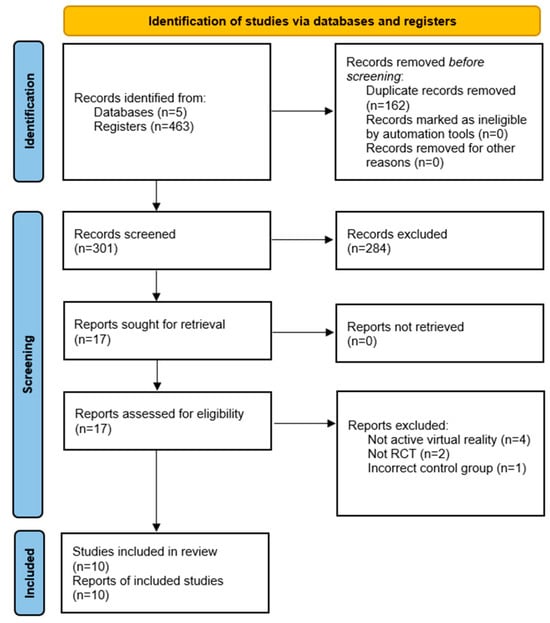
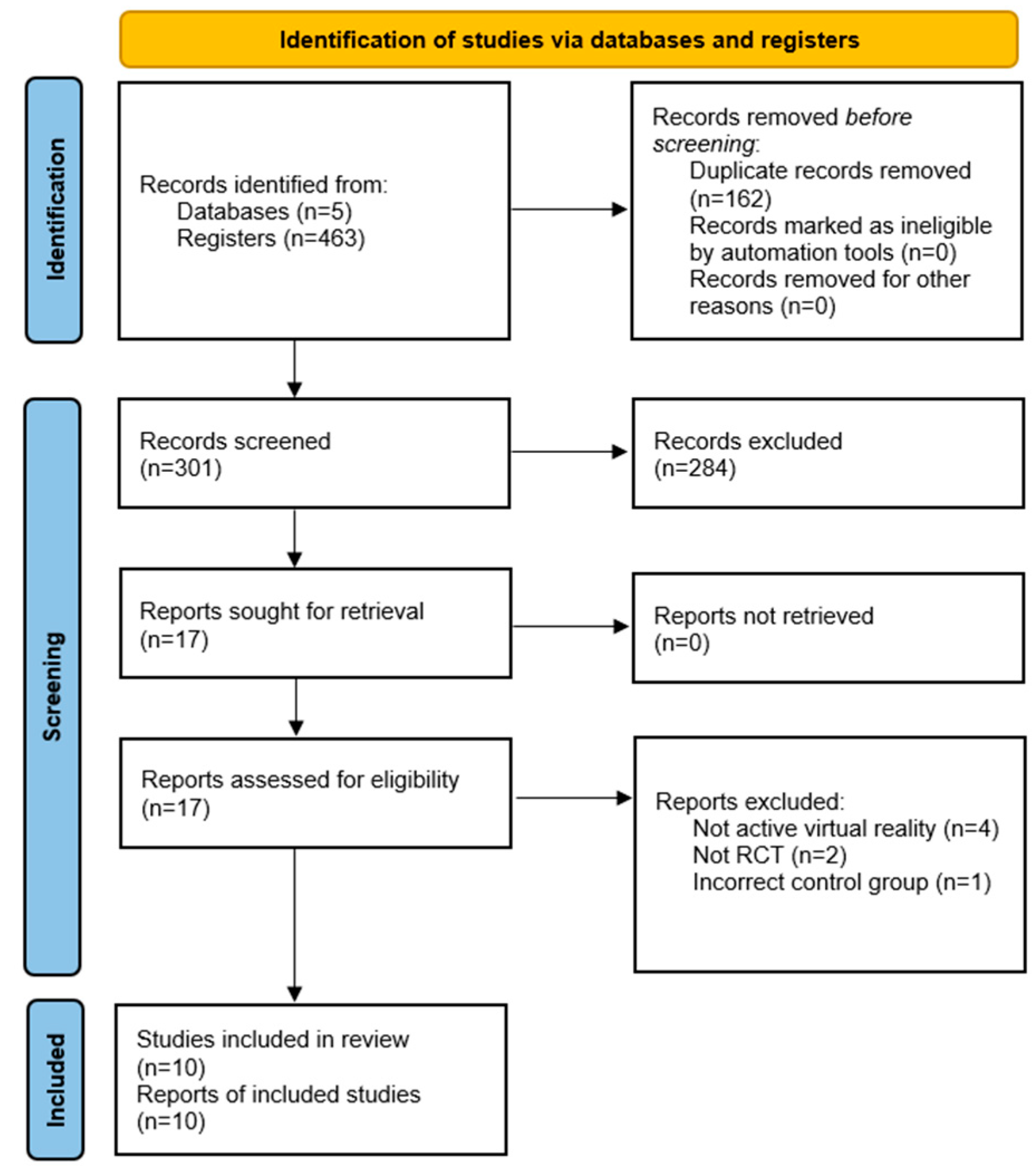
The PRISMA flow chart (Figure 1) presents the selection process of the studies included. The initial database search identified 463 articles. After removing duplicates, 301 records remained for screening. Following title and abstract screening, 284 articles were excluded, leaving 17 full-text articles for eligibility assessment. Ultimately, 10 studies met the inclusion criteria and were included in the systematic review and meta-analysis [34,35,36,37,38,39,40,41,42,43].
Figure 1.
Flow diagram.
3.2. Characteristics of Included Studies
Table 1 summarizes the characteristics of the included studies. The studies were published between 2015 and 2021, conducted across three countries: Spain, Turkey, and Brazil. A total of 203 participants were analyzed, 104 in the intervention group and 99 in the control groups. The mean age of participants across studies ranged between 38 and 55 years.
Table 1.
Study characteristics.
Importantly, some studies represent multiple publications derived from a single intervention protocol. Specifically, Silva et al. published two studies based on the same protocol [41,42]; Collado-Mateo et al. also contributed two studies from a single protocol [36,38]; and Villafaina, Martín-Martínez and León-Llamas et al. published four studies from one protocol [34,35,37,40].
These repeated analyses of overlapping samples and interventions were carefully considered during data extraction and synthesis to avoid inflating the weight of these protocols in the meta-analysis.
All the studies included were two-arm RCTs. Most used a control group was no intervention [34,35,36,37,38,40], while others applied an active control involving conventional treatment [39,41,42,43]. The VR-based active interventions were exclusively non-immersive, delivered via Xbox® [34,35,36,37,38,40,43] or Nintendo Wii® [41,42]. Only the study by Gulsen et al. [39] utilized a hybrid setup involving a computer, Xbox®, and a head-mounted display, and was the only one to integrate pain education alongside physical activity.
Regarding intervention content, VR-based active intervention protocols generally combined aerobic exercise, strength training, postural control, balance, and mobility tasks. Protocol durations varied: four studies implemented six-month programs [34,35,37,40], while the remainder ranged from 1 to 3 months. The most common session frequency was twice per week, though three studies used three sessions per week [41,42,43].
3.3. Risk of Bias
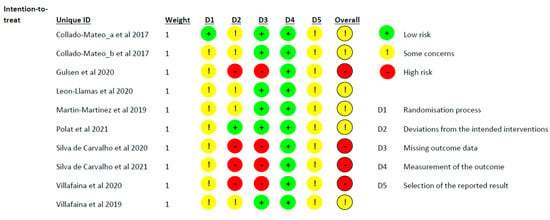
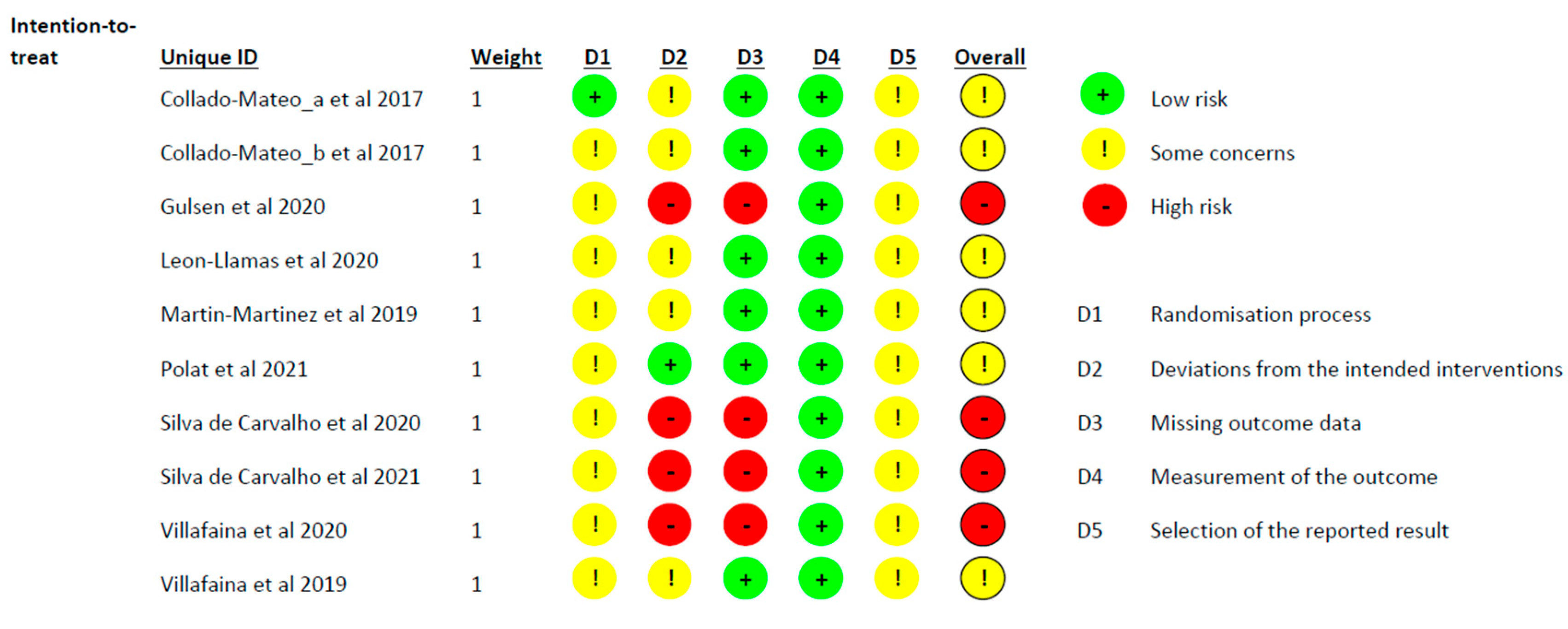
The agreement rate between the two authors conducting the risk of bias analysis was 80%. Disagreements between authors were resolved by a third author (H.B.-A). Risk of bias assessment of included studies is shown in Figure 2.
Figure 2.
Risk of bias analysis for each included study according to the authors’ judgment [34,35,36,37,38,39,40,41,42,43].
The main sources of risk of bias were related to the lack of intention-to-treat analysis, and missing outcome data [35,39,41,42].
3.4. Quantitative Analysis of the Included Studies
3.4.1. Primary Outcomes: Pain, Fatigue, and Symptoms Severity
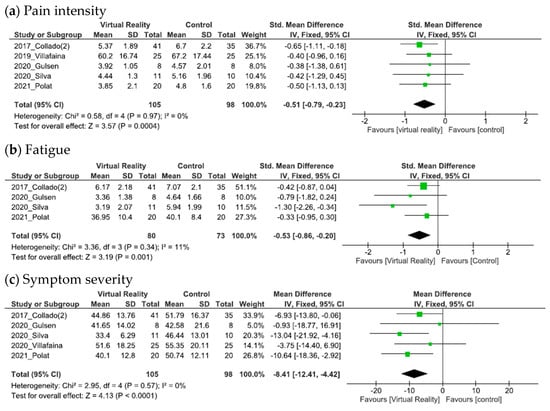
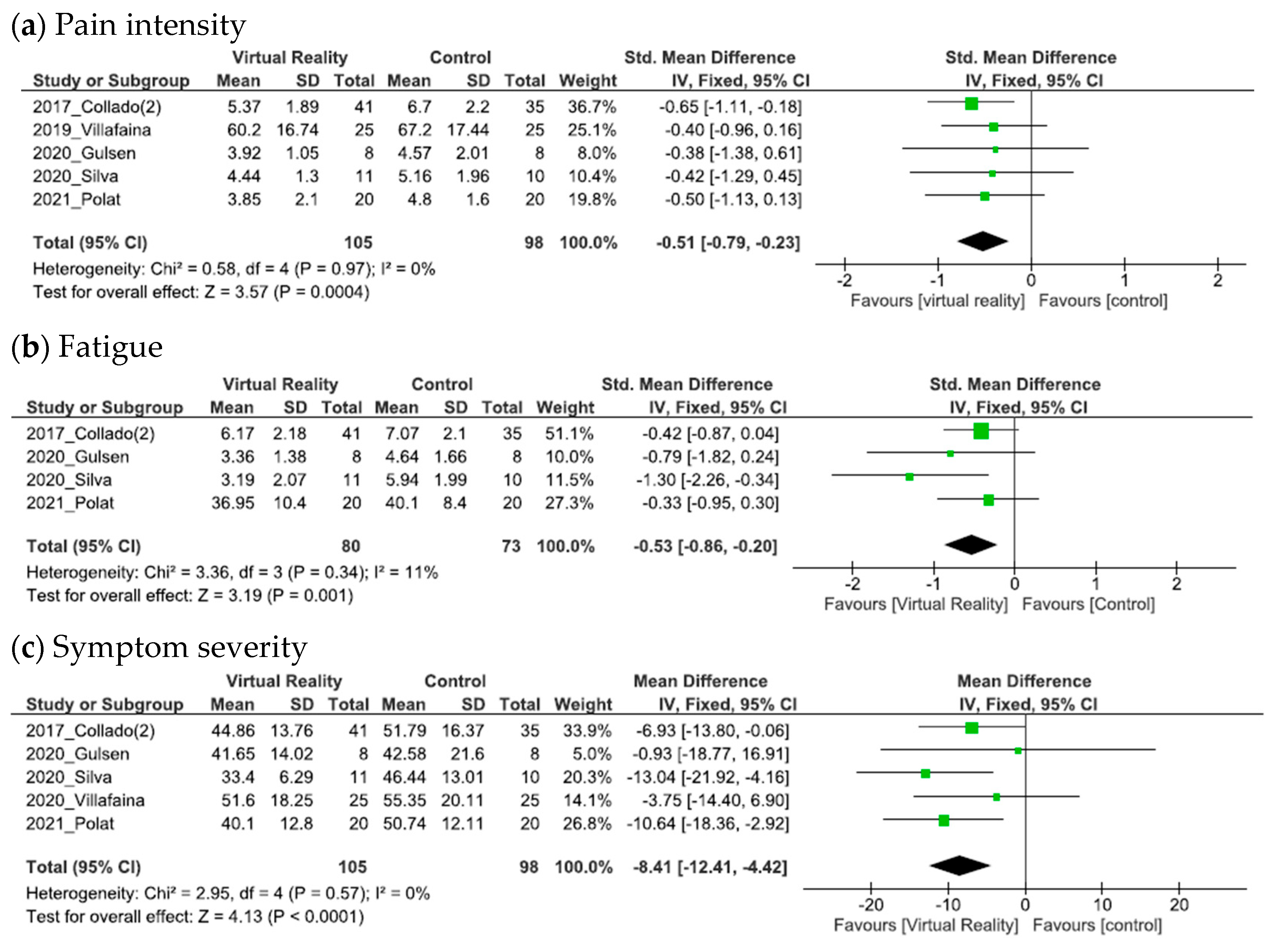
Five studies assessed the effect of VR-based active interventions on pain intensity (Figure 3a), using either a Visual Analog Scale (VAS) [37,39,43] or the pain subscale of the Fibromyalgia Impact Questionnaire (FIQ) [38,42]. Overall, VR showed a greater effect than control interventions (n = 203, SMD = −0.51; 95% CI: −0.79 to −0.23) with no heterogeneity detected (I2 = 0%, p = 0.97). According to GRADE, the certainty of the evidence for this outcome was low (Table 2). Sensitivity analysis showed no change in the direction of the effect when studies were removed one at a time.
Figure 3.
(a) Pain intensity forest plot; (b) Fatigue forest plot; (c) Symptom severity forest plot. The green dots and black horizontal lines show the mean and standard deviation, respectively [35,37,38,39,42,43].
Table 2.
Assessment of evidence according to GRADE.
Four studies evaluated the effect of VR-based active interventions on fatigue (Figure 3b), using the fatigue domain of the FIQ [38,42] and the FSS (Fatigue Severity Scale) [39,43]. Meta-analysis showed a significantly greater effect in favor of VR (n = 153, SMD = −0.53; 95% CI: −0.86 to −0.20) with low heterogeneity (I2 = 11%, p = 0.34). GRADE rated the certainty of the evidence as low (Table 2). Sensitivity analysis confirmed the stability of results.
Five studies assessed symptoms severity using the FIQ total score [35,36,39,42,43] (Figure 3c). Results indicated that VR-based active interventions were significantly more effective than control (n = 203, MD = −8.41; 95% CI: −12.41 to −4.42) with no heterogeneity (I2 = 0%, p = 0.57). GRADE rated the certainty of this outcome as low (Table 2). Sensitivity analysis supported the robustness of the findings.
3.4.2. Secondary Outcomes
Psychological Variables: Depression, Anxiety, and Kinesiophobia
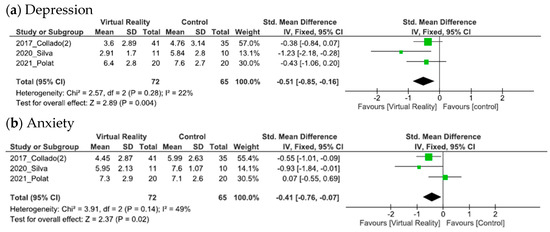
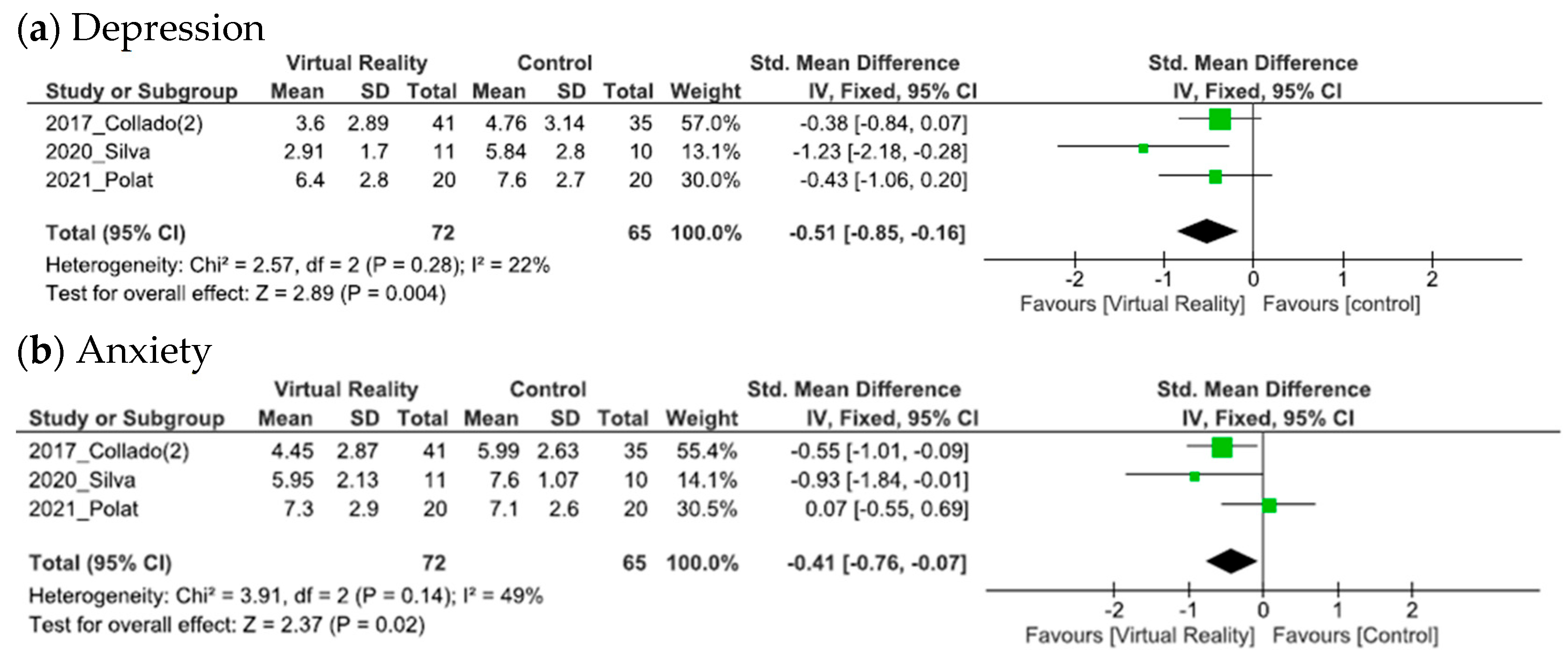
Three studies evaluated depression, one of them using the HADS (Hospital Anxiety and Depression Scale) depression subscale [43], and the other studies used the FIQ depression item [38,42] (Figure 4a). VR-based active interventions were associated with a significant improvement compared to control (n = 137, SMD = −0.51; 95% CI: −0.85 to −0.16) with low heterogeneity (I2 = 22%, p = 0.28). Sensitivity analysis confirmed the stability of results.
Figure 4.
(a) Depression forest plot; (b) Anxiety forest plot. The green dots and black horizontal lines show the mean and standard deviation, respectively [38,42,43].
The same studies also assessed anxiety, one of them using the HADS anxiety subscale [43] and the other studies used the FIQ anxiety item [38,42] (Figure 4b). VR-based active interventions were more effective than control (n = 137, SMD = −0.41; 95% CI: −0.76 to −0.07) with moderate heterogeneity (I2 = 49%, p = 0.14).
Only the study by Gulsen et al. [39] evaluated kinesiophobia, and therefore, a meta-analysis for this outcome could not be performed. This study reported no significant differences between the intervention and control groups (p = 0.598).
Motor Skills: Aerobic Capacity, Muscle Strength and Balance
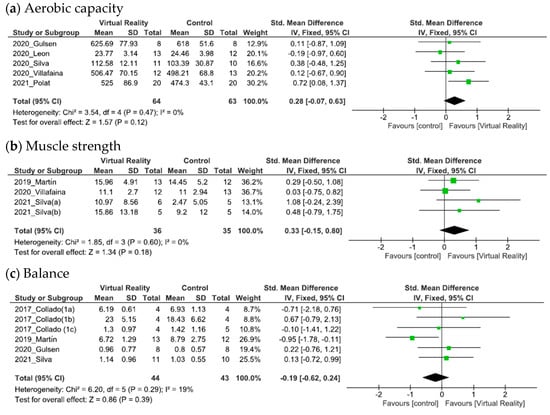
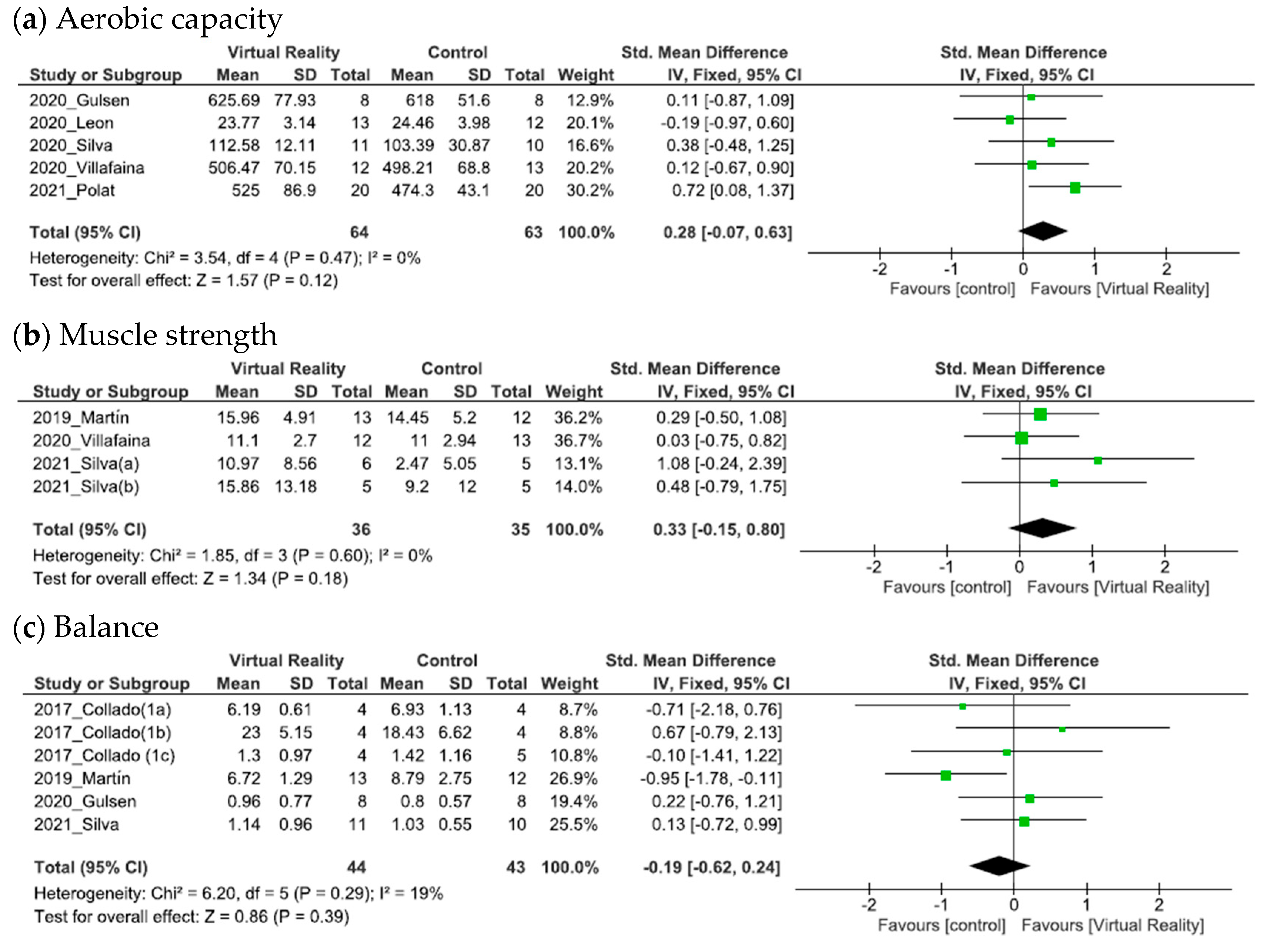
Aerobic capacity was evaluated in five studies using the 6-Minute Walk Test (6MWT) [35,39,40,43] and a step-test [42] (Figure 5a). No significant differences were observed between VR-based active interventions and control (n = 127, SMD = 0.28; 95% CI: −0.07 to 0.63) with no heterogeneity (I2 = 0%, p = 0.47).
Figure 5.
(a) Aerobic capacity forest plot; (b) Muscle strength forest plot; (c) Balance forest plot. The green dots and black horizontal lines show the mean and standard deviation, respectively [34,35,36,39,40,41,42,43].
Muscle strength was assessed in three studies using functional strength tests [34,35] and dynamometry [41] (Figure 5b). VR-based active interventions showed a non-significant trend toward improvement (n = 71, SMD = 0.33; 95% CI: −0.15 to 0.80) with no heterogeneity (I2 = 0%, p = 0.60).
Balance was measured in four RCTs using both static balance tests [36,39,41] and dynamic balance tasks [34,36] (Figure 5c). No significant global improvement was found (n = 87, SMD = −0.19; 95% CI: −0.62 to 0.24) with low heterogeneity (I2 = 19%, p = 0.29).
3.4.3. Subgroup Analysis
Subgroup analysis by type of control group showed that VR-based active interventions were significantly more effective than both no intervention (p = 0.003) and other techniques (p = 0.05) for pain intensity, with no heterogeneity in either case (Supplementary Material S2).
Regarding symptoms severity, subgroup analysis also confirmed the superiority of VR-based active interventions over no intervention (p = 0.04) and other therapies (p = 0.0002) (Supplementary Material S2). The effects on pain intensity and symptom severity are summarized in Table 3.
Table 3.
Subgroup analysis.
4. Discussion
This systematic review and meta-analysis evaluated the effects of VR-based active interventions on core symptoms, psychological variables, and motor function in individuals with fibromyalgia. Our findings suggest that VR-based active interventions may be effective in reducing pain, fatigue, and symptom severity in individuals with fibromyalgia, and may also benefit psychological variables and motor function. However, these findings are supported by low-certainty evidence, according to GRADE criteria. Subgroup analyses showed that VR-based active interventions had greater effects on pain and symptom severity reduction when compared to no intervention and to other active treatments.
These results are consistent with previous meta-analyses [8,26,27]. Unlike earlier reviews, this study included only RCTs involving VR-based active interventions, aiming to increase protocol uniformity and minimize heterogeneity across quantitative analyses. Notably, this review introduces muscle strength as a novel outcome of interest, a key contribution given that strength training has been shown to be an important factor in improving both core symptoms and psychological variables in individuals with fibromyalgia [28].
International clinical practice guidelines strongly recommend therapeutic exercise for treating fibromyalgia [9,44]. However, a large proportion of individuals with fibromyalgia lead sedentary lifestyles, largely due to pain, fatigue, and associated psycho-emotional challenges. These factors are compounded by the abnormal exercise response in this population, which often leads to exercise-induced hyperalgesia rather than relief [12]. The introduction of VR has enabled the design of exercise programs that include high levels of distraction and motivation, enhanced by real-time feedback and progressive difficulty, helping to reduce or overcome these barriers [25].
In this meta-analysis, VR-based active interventions showed a moderate effect size in reducing pain intensity (SMD = −0.51). These findings are consistent with a recent network meta-analysis reporting that virtual reality is an effective short-term strategy for reducing pain intensity [8] Although VR-based active programs yielded favorable outcomes, improvements were also observed in comparison groups. In fact, three studies achieved the minimally clinically important difference (MCID) of a 2-point reduction in pain intensity [45] in both groups [39,42,43]. Only the trials by Villafaina et al. (2019) and Collado et al. (2017) failed to reach this threshold in either group [35,38].
However, it is important to acknowledge that evaluating therapeutic outcomes in chronic pain solely based on pain intensity may provide an incomplete assessment [46]. Unlike acute pain, chronic pain should be assessed using a biopsychosocial model, rather than a purely biomedical approach, given the substantial influence of psychological, emotional, social, familial, occupational, and even spiritual factors on pain perception and management [47]. This consideration is particularly relevant in fibromyalgia, where individuals frequently experience significant intraday variability in pain intensity, which may affect the reliability and clinical meaningfulness of single-point pain assessments [48].
Fatigue is frequently reported by individuals with fibromyalgia as a more impactful symptom than pain in terms of quality of life [49]. This meta-analysis showed that VR-based active interventions had a moderate effect in reducing fatigue (SMD = −0.53). The reductions observed in both pain and fatigue likely contributed to the improvement in overall disease impact and severity (MD = −8.41). While VR-based active interventions produced the most favorable outcomes, positive changes were also evident in both the control and experimental groups. Three studies achieved the MCID of 14% [50] in symptom severity for both groups [39,42,43]. Only the trials by Villafaina et al. (2020) and Collado et al. (2017) did not reach this threshold in either group, although the experimental arm in Collado et al. (2017) approached clinical significance [35,38].
Regarding psychological variables, VR-based active interventions demonstrated moderate effect on depression (SMD = −0.51) and anxiety (SMD = −0.41), which are closely related to symptoms such as pain or fatigue.
The sedentary lifestyle common among individuals with fibromyalgia contributes to overall physical deconditioning [12], and VR-based active interventions offer engaging exercise formats that target aerobic capacity, muscular strength, and balance/postural control within a more motivating and interactive environment. This meta-analysis showed improvements with VR-based active interventions in aerobic capacity (SMD = 0.28), muscle strength (SMD = 0.33), although they were not significant p > 0.05, while balance outcomes slightly favored the control groups (SMD = −0.19), although these differences did not reach statistical significance.
The absence of statistically significant improvements in aerobic capacity and muscle strength, despite small effect sizes, may be partly explained by methodological and intervention-related factors. Although most interventions lasted longer than four weeks, with an average frequency of two sessions per week and session durations of approximately one hour, the total training load may still have been insufficient to elicit measurable physiological adaptations in individuals with fibromyalgia. Furthermore, while the overall structure of the exercise programs was relatively consistent across studies, variability in the type of VR games used may have influenced the specific motor and metabolic demands imposed on participants [51].
Importantly, none of the included studies reported serious adverse events. VR represents a safe, low-cost, and accessible technology, which can be used at home by patients with the option of remote monitoring and supervision by healthcare professionals.
Regarding cultural and healthcare context, the generalizability of our findings is limited by the geographical concentration of the included trials, as all randomized controlled studies were conducted in only three countries (Spain, Turkey, and Brazil). Differences in healthcare systems, cultural perceptions of pain and technology, and access to these devices may influence both intervention adherence and treatment response. In addition, participant overlap across studies further constrains external validity, as the eight included trials were derived from only three original research protocols. This clustering raises concerns regarding overrepresentation and potential publication bias. However, a formal assessment of publication bias was not conducted, as fewer than ten studies evaluated the same outcome, which is below the threshold recommended by the Cochrane Handbook [30].
Additionally, the inclusion of multiple outcomes assessed from the same participant samples should be interpreted with caution, as this approach can increase the risk of false-positive results and requires careful consideration, as emphasized by Cochrane methodological guidelines [30].
Another significant limitation is the moderate to high risk of bias detected across all included studies, primarily attributed to the absence of intention-to-treat analyses and issues related to data availability. These methodological concerns may affect the reliability and generalizability of the reported findings.
Future research priorities should include conducting larger, high-quality randomized controlled robust methodological designs to minimize bias and strengthen the evidence base. Additionally, comparative effectiveness studies examining immersive versus non-immersive VR formats would provide valuable insights into optimal intervention delivery methods. Further investigation into dose–response relationships, long-term sustainability of effects, and cost-effectiveness analyses would also enhance our understanding of VR-based interventions in fibromyalgia management.
5. Conclusions
This meta-analysis highlights the potential of VR-based active interventions to address the multidimensional impact of fibromyalgia. The most consistent and clinically relevant benefits were observed in pain intensity, overall symptom severity, and psychological outcomes, particularly depression and anxiety, suggesting that VR-based exercise may be especially promising for domains closely related to pain perception and emotional well-being. Although these findings support the therapeutic potential of VR-based active interventions, the overall certainty of evidence was rated as low according to GRADE criteria. Therefore, conclusions should be interpreted with caution, and further high-quality, adequately powered trials are required to clarify their effectiveness, particularly for physical performance outcomes.
Supplementary Materials
The following supporting information can be downloaded at: https://www.mdpi.com/article/10.3390/app16041687/s1, S1: Search strategy; S2: Subgroup analysis forest plot.
Author Contributions
Conceptualization, J.B.-A., R.A.-F. and J.A.-G.; methodology, H.B.-A., I.T.-C. and R.A.-F.; formal analysis, J.B.-A. and R.A.-F.; data curation, J.B.-A. and I.T.-C.; writing—original draft preparation, J.B.-A. and R.A.-F.; writing—review and editing, J.B.-A., I.T.-C., J.A.-G., H.B.-A. and R.A.-F.; visualization, J.B.-A.; supervision, H.B.-A. and R.A.-F.; project administration, R.A.-F. All authors have read and agreed to the published version of the manuscript.
Funding
Part of J.B.-A.’s and I.T.-C.’s salaries were financed by the European Social Fund Plus (2024-PRED-21926) and (2025-UNIVERS-12844).
Data Availability Statement
No new data were created or analyzed in this study. Data sharing is not applicable to this article.
Conflicts of Interest
The authors declare no conflicts of interest.
Abbreviations
The following abbreviations are used in this manuscript:
| VR | Virtual Reality |
References
- Kocyigit, B.F.; Akyol, A. Fibromyalgia syndrome: Epidemiology, diagnosis and treatment. Reumatologia 2022, 60, 413. [Google Scholar] [CrossRef] [Scilit]
- Bernard, A.L.; Prince, A.; Edsall, P. Quality of Life Issues for Fibromyalgia Patients. Arth. Care Res. 2000, 13, 42–50. [Google Scholar] [CrossRef]
- Fietta, P.; Fietta, P.; Manganelli, P. Fibromyalgia and psychiatric disorders. Acta Biomed. L’ateneo Parm. 2007, 78, 88–95. [Google Scholar]
- Fitzcharles, M.A.; Ste-Marie, P.A.; Goldenberg, D.L.; Pereira, J.X.; Abbey, S.; Choinière, M.; Ko, G.; E Moulin, D.; Panopalis, P.; Proulx, J.; et al. 2012 Canadian Guidelines for the diagnosis and management of fibromyalgia syndrome: Executive summary. Pain Res. Manag. 2013, 18, 119. [Google Scholar] [CrossRef] [Scilit]
- Estévez-López, F.; Maestre-Cascales, C.; Russell, D.; Álvarez-Gallardo, I.C.; Rodriguez-Ayllon, M.; Hughes, C.M.; Davison, G.W.; Sañudo, B.; McVeigh, J.G. Effectiveness of Exercise on Fatigue and Sleep Quality in Fibromyalgia: A Systematic Review and Meta-analysis of Randomized Trials. Arch. Phys. Med. Rehabil. 2021, 102, 752–761. [Google Scholar] [CrossRef] [Scilit] [PubMed]
- Albuquerque, M.L.L.; Monteiro, D.; Marinho, D.A.; Vilarino, G.T.; Andrade, A.; Neiva, H.P. Effects of different protocols of physical exercise on fibromyalgia syndrome treatment: Systematic review and meta-analysis of randomized controlled trials. Rheumatol. Int. 2022, 42, 1893–1908. [Google Scholar] [CrossRef] [Scilit] [PubMed]
- Andrade, A.; Dominski, F.H.; Sieczkowska, S.M. What we already know about the effects of exercise in patients with fibromyalgia: An umbrella review. Semin. Arth. Rheum. 2020, 50, 1465–1480. [Google Scholar] [CrossRef] [Scilit] [PubMed]
- Rodríguez-Domínguez, Á.J.; Rebollo-Salas, M.; Chillón-Martínez, R.; Rosales-Tristancho, A.; Villa-del-Pino, I.; Jiménez-Rejano, J.J. The most effective therapeutic exercises for pain intensity in women with fibromyalgia: A systematic review and network meta-analysis. Braz J. Phys. Ther. 2025, 29, 101226. [Google Scholar] [CrossRef] [Scilit]
- Thieme, K.; Mathys, M.; Turk, D.C. Evidenced-Based Guidelines on the Treatment of Fibromyalgia Patients: Are They Consistent and If Not, Why Not? Have Effective Psychological Treatments Been Overlooked? J. Pain 2017, 18, 747–756. [Google Scholar] [CrossRef] [Scilit]
- Macfarlane, G.J.; Kronisch, C.; Dean, L.E.; Atzeni, F.; Häuser, W.; Flub, E.; Choy, E.; Kosek, E.; Amris, K.; Branco, J.; et al. EULAR revised recommendations for the management of fibromyalgia. Ann. Rheum. Dis. 2017, 76, 318–328. [Google Scholar] [CrossRef] [Scilit]
- Vaegter, H.B.; Kinnunen, M.; Verbrugghe, J.; Cunningham, C.; Meeus, M.; Armijo-Olivo, S.; Bandholm, T.; Fullen, B.M.; Wittink, H.; Morlion, B.; et al. Physical activity should be the primary intervention for individuals living with chronic pain A position paper from the European Pain Federation (EFIC) “On the Move” Task Force. Eur. J. Pain 2024, 28, 1249–1256. [Google Scholar] [CrossRef] [Scilit] [PubMed]
- Gutiérrez, L.; Écija, C.; Catalá, P.; Peñacoba, C. Sedentary Behavior and Pain after Physical Activity in Women with Fibromyalgia-The Influence of Pain-Avoidance Goals and Catastrophizing. Biomedicines 2023, 11, 154. [Google Scholar] [CrossRef] [Scilit] [PubMed]
- Góes, S.M.; Leite, N.; Shay, B.L.; Homann, D.; Stefanello, J.M.F.; Rodacki, A.L.F. Functional capacity, muscle strength and falls in women with fibromyalgia. Clin. Biomech. 2012, 27, 578–583. [Google Scholar] [CrossRef] [Scilit] [PubMed]
- Vancampfort, D.; Van Damme, T.; McGrath, R.L.; Machado, V.A.; Schuch, F. Physical activity levels among people with fibromyalgia: A systematic review and meta-analysis. Musculoskelet. Care 2023, 21, 623–632. [Google Scholar] [CrossRef] [Scilit]
- Palacios-Navarro, G.; Hogan, N. Head-Mounted Display-Based Therapies for Adults Post-Stroke: A Systematic Review and Meta-Analysis. Sensors 2021, 21, 1111. [Google Scholar] [CrossRef] [Scilit]
- Milgram, P.; Takemura, H.; Utsumi, A.; Kishino, F. Augmented Reality: A class of displays on the reality-virtuality continuum. In Telemanipulator and Telepresence Technologies; International Society for Optics and Photonics: Bellingham, WA, USA, 1994; Volume 2351. [Google Scholar]
- Khokale, R.; Mathew, G.S.; Ahmed, S.; Maheen, S.; Fawad, M.; Bandaru, P.; Zerin, A.; Nazir, Z.; Khawaja, I.; Sharif, I.; et al. Virtual and Augmented Reality in Post-stroke Rehabilitation: A Narrative Review. Cureus 2023, 15, e37559. [Google Scholar] [CrossRef] [Scilit]
- Wang, L.; Zhang, H.; Ai, H.; Liu, Y. Effects of virtual reality rehabilitation after spinal cord injury: A systematic review and meta-analysis. J. Neuroeng. Rehabil. 2024, 21, 191. [Google Scholar] [CrossRef] [Scilit]
- Cortés-Pérez, I.; Osuna-Pérez, M.C.; Montoro-Cárdenas, D.; Lomas-Vega, R.; Obrero-Gaitán, E.; Nieto-Escamez, F.A. Virtual reality-based therapy improves balance and reduces fear of falling in patients with multiple sclerosis. a systematic review and meta-analysis of randomized controlled trials. J. Neuroeng. Rehabil. 2023, 20, 42. [Google Scholar] [CrossRef] [Scilit]
- Wei, W.; Tang, H.; Luo, Y.; Yan, S.; Ji, Q.; Liu, Z.; Li, H.; Wu, F.; Yang, S.; Yang, X. Efficacy of virtual reality exercise in knee osteoarthritis rehabilitation: A systematic review and meta-analysis. Front. Physiol. 2024, 15, 1424815. [Google Scholar] [CrossRef] [Scilit]
- Longo, U.G.; Carnevale, A.; Andreoli, F.; Mannocchi, I.; Bravi, M.; Sassi, M.S.H.; Santacaterina, F.; Carli, M.; Schena, E.; Papalia, R. Immersive virtual reality for shoulder rehabilitation: Evaluation of a physical therapy program executed with oculus quest 2. BMC Musculoskelet. Disord. 2023, 24, 859. [Google Scholar] [CrossRef] [Scilit]
- Guo, Q.; Zhang, L.; Gui, C.; Chen, G.; Chen, Y.; Tan, H.; Su, W.; Zhang, R.; Gao, Q. Virtual Reality Intervention for Patients With Neck Pain: Systematic Review and Meta-analysis of Randomized Controlled Trials. J. Med. Internet Res. 2023, 25, e38256. [Google Scholar] [CrossRef] [Scilit]
- Li, R.; Li, Y.; Kong, Y.; Li, H.; Hu, D.; Fu, C.; Wei, Q. Virtual Reality-Based Training in Chronic Low Back Pain: Systematic Review and Meta-Analysis of Randomized Controlled Trials. J. Med. Internet Res. 2024, 26, e45406. [Google Scholar] [CrossRef] [Scilit] [PubMed]
- Austin, P.D.; Siddall, P.J. Virtual reality for the treatment of neuropathic pain in people with spinal cord injuries: A scoping review. J. Spinal Cord Med. 2021, 44, 8–18. [Google Scholar] [CrossRef] [Scilit] [PubMed]
- Gupta, A.; Scott, K.; Dukewich, M. Innovative Technology Using Virtual Reality in the Treatment of Pain: Does It Reduce Pain via Distraction, or Is There More to It? Pain Med. 2018, 19, 151–159. [Google Scholar] [CrossRef] [Scilit] [PubMed]
- Cortés-Pérez, I.; Zagalaz-Anula, N.; Ibancos-Losada, M.D.R.; Nieto-Escámez, F.A.; Obrero-Gaitán, E.; Osuna-Pérez, M.C. Virtual Reality-Based Therapy Reduces the Disabling Impact of Fibromyalgia Syndrome in Women: Systematic Review with Meta-Analysis of Randomized Controlled Trials. J. Pers. Med. 2021, 11, 1167. [Google Scholar] [CrossRef] [Scilit]
- Brea-Gómez, B.; Pérez-Gisbert, L.; Fernández-Castro, I.; Valenza, M.C.; Torres-Sánchez, I. Effects of Virtual Reality-Based Rehabilitation in the Treatment of Patients with Fibromyalgia Syndrome: A Systematic Review and Meta-Analysis of Randomized Clinical Trials. Games Health J. 2025, 14, 79–102. [Google Scholar] [CrossRef] [Scilit]
- Andrade, A.; de Azevedo Klumb Steffens, R.; Sieczkowska, S.M.; Peyré Tartaruga, L.A.; Torres Vilarino, G. A systematic review of the effects of strength training in patients with fibromyalgia: Clinical outcomes and design considerations. Adv. Rheumatol. 2018, 58, 36. [Google Scholar] [CrossRef] [Scilit]
- Page, M.J.; McKenzie, J.E.; Bossuyt, P.M.; Boutron, I.; Hoffmann, T.C.; Mulrow, C.D.; Shamseer, L.; Tetzlaff, J.M.; Akl, E.A.; Brennan, S.E.; et al. The PRISMA 2020 statement: An updated guideline for reporting systematic reviews. BMJ 2021, 372, 71. [Google Scholar] [CrossRef] [Scilit]
- Higgins, J.; Green, S. Cochrane Handbook for Systematic Reviews of Interventions. Cochrane Collab. 2011, 15, 123–125. [Google Scholar]
- Sterne, J.A.C.; Savović, J.; Page, M.J.; Elbers, R.G.; Blencowe, N.S.; Boutron, I.; Cates, C.J.; Cheng, H.Y.; Corbett, M.S.; Eldridge, S.M.; et al. RoB 2: A revised tool for assessing risk of bias in randomised trials. BMJ 2019, 366, l4898. [Google Scholar] [CrossRef] [Scilit]
- Guyatt, G.; Oxman, A.D.; Akl, E.A.; Kunz, R.; Vist, G.; Brozek, J.; Norris, S.; Falck-Ytter, Y.; Glasziou, P.; DeBeer, H.; et al. GRADE guidelines: 1. Introduction—GRADE evidence profiles and summary of findings tables. J. Clin. Epidemiol. 2011, 64, 383–394. [Google Scholar] [CrossRef] [Scilit]
- Xu, J.; Gao, Y.; Tian, J. Evaluating Tools for Assessing Bias in a Meta-Analysis of Clinical Trials on Race and RAS Blockade. JAMA 2024, 332, 1485–1486. [Google Scholar] [CrossRef] [Scilit] [PubMed]
- Martín-Martínez, J.P.; Villafaina, S.; Collado-Mateo, D.; Pérez-Gómez, J.; Gusi, N. Effects of 24-week exergame intervention on physical function under single- and dual-task conditions in fibromyalgia: A randomized controlled trial. Scand J. Med. Sci. Sports 2019, 29, 1610–1617. [Google Scholar] [CrossRef] [Scilit] [PubMed]
- Villafaina, S.; Borrega-Mouquinho, Y.; Fuentes-garcía, J.P.; Collado-Mateo, D.; Gusi, N. Effect of Exergame Training and Detraining on Lower-Body Strength, Agility, and Cardiorespiratory Fitness in Women with Fibromyalgia: Single-Blinded Randomized Controlled Trial. Int. J. Environ. Res. Public Health 2019, 17, 161. [Google Scholar] [CrossRef] [Scilit] [PubMed]
- Collado-Mateo, D.; Dominguez-Muñoz, F.J.; Adsuar, J.C.; Merellano-Navarro, E.; Gusi, N. Exergames for women with fibromyalgia: A randomised controlled trial to evaluate the effects on mobility skills, balance and fear of falling. PeerJ 2017, 5, e3211. [Google Scholar] [CrossRef] [Scilit]
- Villafaina, S.; Collado-Mateo, D.; Domínguez-Muñoz, F.J.; Fuentes-García, J.P.; Gusi, N. Benefits of 24-Week Exergame Intervention on Health-Related Quality of Life and Pain in Women with Fibromyalgia: A Single-Blind, Randomized Controlled Trial. Games Health J. 2019, 8, 380–386. [Google Scholar] [CrossRef] [Scilit]
- Collado-Mateo, D.; Dominguez-Muñoz, F.J.; Adsuar, J.C.; Garcia-Gordillo, M.A.; Gusi, N. Effects of Exergames on Quality of Life, Pain, and Disease Effect in Women With Fibromyalgia: A Randomized Controlled Trial. Arch. Phys. Med. Rehabil. 2017, 98, 1725–1731. [Google Scholar] [CrossRef] [Scilit]
- Gulsen, C.; Soke, F.; Eldemir, K.; Apaydin, Y.; Ozkul, C.; Guclu-Gunduz, A.; Akcali, D.T. Effect of fully immersive virtual reality treatment combined with exercise in fibromyalgia patients: A randomized controlled trial. Assist. Technol. 2022, 34, 256–263. [Google Scholar] [CrossRef] [Scilit]
- Leon-Llamas, J.L.; Villafaina, S.; Murillo-Garcia, A.; Dominguez-Muñoz, F.J.; Gusi, N. Effects of 24-Week Exergame Intervention on the Gray Matter Volume of Different Brain Structures in Women with Fibromyalgia: A Single-Blind, Randomized Controlled Trial. J. Clin. Med. 2020, 9, 2436. [Google Scholar] [CrossRef] [Scilit]
- De Carvalho, M.S.; Carvalho, L.C.; Alves, R.D.S.; Menezes, F.D.S.; Gomes, E.D.C.; Frazin, A.; Iunes, D.H. Analysis of the Muscular Activity, Peak Torque in the Lower Limbs, and Static Balance after Virtual Rehabilitation in Women with Fibromyalgia: A Randomized Controlled Study. Games Health J. 2021, 10, 190–197. [Google Scholar] [CrossRef] [Scilit]
- De Carvalho, M.S.; Carvalho, L.C.; Menezes, F.D.S.; Frazin, A.; Gomes, E.D.C.; Iunes, D.H. Effects of Exergames in Women with Fibromyalgia: A Randomized Controlled Study. Games Health J. 2020, 9, 358–367. [Google Scholar] [CrossRef] [Scilit] [PubMed]
- Polat, M.; Kahveci, A.; Muci, B.; Günendi, Z.; Karataş, G.K. The Effect of Virtual Reality Exercises on Pain, Functionality, Cardiopulmonary Capacity, and Quality of Life in Fibromyalgia Syndrome: A Randomized Controlled Study. Games Health J. 2021, 10, 165–173. [Google Scholar] [CrossRef] [Scilit] [PubMed]
- Couto, N.; Monteiro, D.; Cid, L.; Bento, T. Effect of different types of exercise in adult subjects with fibromyalgia: A systematic review and meta-analysis of randomised clinical trials. Sci. Rep. 2022, 12, 10391. [Google Scholar] [CrossRef] [Scilit]
- Ostelo, R.W.J.G.; de Vet, H.C.W. Clinically important outcomes in low back pain. Best Pract. Res. Clin. Rheumatol. 2005, 19, 593–607. [Google Scholar] [CrossRef] [Scilit] [PubMed]
- Levy, N.; Sturgess, J.; Mills, P. Pain as the fifth vital sign” and dependence on the “numerical pain scale” is being abandoned in the US: Why? Br. J. Anaesth. 2018, 120, 435–438. [Google Scholar] [CrossRef] [Scilit]
- Noe-Steinmüller, N.; Scherbakov, D.; Zhuravlyova, A.; Wager, T.D.; Goldstein, P.; Tesarz, J. Defining suffering in pain: A systematic review on pain-related suffering using natural language processing. Pain 2024, 165, 1434–1449. [Google Scholar] [CrossRef] [Scilit]
- Mularski, R.A.; White-Chu, F.; Overbay, D.; Miller, L.; Asch, S.M.; Ganzini, L. Measuring pain as the 5th vital sign does not improve quality of pain management. J. Gen. Intern. Med. 2006, 21, 607–612. [Google Scholar] [CrossRef] [Scilit]
- McToal, M.; McVeigh, R.C.; McVeigh, J.G. The impact of fatigue on people with Fibromyalgia Syndrome: A survey. Musculoskelet. Care 2023, 21, 1175–1181. [Google Scholar] [CrossRef] [Scilit]
- Bennett, R.M.; Bushmakin, A.G.; Cappelleri, J.C.; Zlateva, G.; Sadosky, A.B. Minimal clinically important difference in the fibromyalgia impact questionnaire. J. Rheumatol. 2009, 36, 1304–1311. [Google Scholar] [CrossRef] [Scilit]
- Herrmann, S.D.; Willis, E.A.; Ainsworth, B.E.; Barreira, T.V.; Hastert, M.; Kracht, C.L.; Schuna, J.M.; Cai, Z.; Quan, M.; Tudor-Locke, C.; et al. 2024 Adult Compendium of Physical Activities: A third update of the energy costs of human activities. J. Sport Health Sci. 2024, 13, 6–12. [Google Scholar] [CrossRef] [Scilit]

Disclaimer/Publisher’s Note: The statements, opinions and data contained in all publications are solely those of the individual author(s) and contributor(s) and not of MDPI and/or the editor(s). MDPI and/or the editor(s) disclaim responsibility for any injury to people or property resulting from any ideas, methods, instructions or products referred to in the content. |
© 2026 by the authors. Licensee MDPI, Basel, Switzerland. This article is an open access article distributed under the terms and conditions of the Creative Commons Attribution (CC BY) license.