


Abstract
The reuse of waste generated in various sectors has become a sustainable alternative. Advances in research highlight its potential as a secondary raw material to produce construction materials, contributing to the reduction in waste disposal while mitigating the intensive exploitation of natural resources. Tempered glass is rarely used in recycling and in the production of new materials. Therefore, this study evaluated the applicability of using it, after glass crushing, as a partial replacement for natural sand in the production of cement products. Thus, natural sand was replaced by 25% and 50% with sand resulting from glass crushing, and the mechanical properties (mechanical strength) and porosity (water absorption and void index) of the cementitious mixtures (mortars) were evaluated at 28 days, as well as their chemical properties and CO2 emissions. Glass powder (a result of crushing glass) was added to the mixtures to maximize the use of residual materials and improve the performance of the composite. The results demonstrate gains of approximately 10% in the studied properties with the substitution of natural sand with crushed tempered glass sand, and above 24% for the addition of glass powder, i.e., the addition of 20% powder glass tends to contribute favorably to the performance of cementitious mixtures, supporting the production of more sustainable building materials and making it an appropriate strategy for the circular economy.
1. Introduction
The circular economy is a production and consumption model that reduces waste and maximizes reuse. It aligns with sustainable development by stimulating the reuse and recycling of waste [1,2]. This system allows for the regeneration of nature and the minimization of waste generation, since products and materials are kept in circulation for as long as possible through processes such as maintenance, reuse, and recycling, among others [3,4].
The adoption of the circular economy concept promotes technological innovation in the construction industry. This results in sustainable products that incorporate environmental principles and offer economic benefits to the sector. Several studies [5,6,7,8,9] show that recycled building materials can achieve properties similar to or better than conventional materials. They also offer lower costs compared to those that use natural resources.
In this context, the glass industry has improved and developed multiple strategies for managing its waste, such as high-tech recovery, which even employs artificial intelligence and collaborative robots to characterize and recover special glass sheets (e.g., smartphone screens) [3], as well as the development of public policies that promote the circular economy, such as specific legislation on the subject, which includes economic incentives [10], waste reuse, efficient waste management [11], among others [12].
In Brazil, a majority of the 7350 tons/day of float glass produced is derived from special glass, such as “safety glass” (59% tempered, 15% laminated). In the case of tempered glass, this results in a 35% waste in civil construction, such as pieces and shavings, leftovers from cutting products (such as doors and windows) [13]. It should be noted that tempered glass, due to the production process and its different chemical composition, is rarely used in recycling.
The addition of waste (crushing tempered glass) into concrete and mortar production, especially as a partial or complete replacement for aggregates, tends to minimize the negative impacts of waste [14], providing an efficient approach to industrial waste management [15], as well as providing benefits to the physical, chemical, and mechanical properties of cementitious composites [16,17]. Some researchers [18,19] have investigated the inclusion of this waste as coarse aggregate in conventional concrete production. However, one of the drawbacks of crushing tempered glass is the shape of the grains, as smooth particles (low surface roughness) [20] require a greater amount of Portland cement due to the increased void coefficient [21].
Therefore, the procedure adopted in this research consists of two stages: the incorporation of glass powder (resulting from crushing) as a supplementary cementitious material [22,23], resulting in eco-efficiency gains (both environmental and economic) in the mixtures [24], as well as the partial replacement of sand by crushed tempered glass, where the efficiency of including glass powder in the densification of the composite and in the performance of the mixtures was evaluated [25].
The experimental program is presented below, where the mechanical properties (compressive strength and diametral compression tensile strength), absorption, and chemical properties in mortar mixtures with/without tempered glass crushing were investigated.
The EMMA (Elkem Materials Mixture Analyzer) computational tool was used to determine the optimal ratio between the materials, i.e., a more efficient composition of the mortar constituents [26,27]. This procedure allows for the proper proportioning of particulate materials, so that larger voids are filled with smaller particles, which are then refilled with even smaller particles, and so on, successively [28,29].
In practice, an ideal (theoretical) particle size distribution curve is adopted through particle packing models, seeking a combination of the particles of the available materials that approximates this ideal curve as closely as possible [26,27]. This is a computational procedure that uses the granular system constituting the mixture [29].
Motivation and Contribution of This Research
- (i)
- Partial replacement of natural sand with crushed tempered glass contributes to more sustainable solutions and minimizes environmental impacts.
- (ii)
- Effective incorporation of waste in the mortar mixture, including crushed powder, contributes to its mechanical properties [8] and intrinsic characteristics of the composite [30,31].
- (iii)
- Employment of the “grain packing” concept through the specific particle size of each material.
- (iv)
- Strengthening the principles of the circular economy by minimizing the extraction of natural materials (i.e., natural sand) and enabling technically viable and environmentally responsible cementitious matrices.
The highlight of this research is the reuse of so-called specialty tempered glass waste, investigating various aspects that address the interaction between the components. This approach also shows promise for applications in other cementitious composites, including fiber-reinforced systems.
2. Materials and Methods
2.1. Materials
- Portland cement (C) (type: CPV [32]).
- Sand produced by the Technological Research Institute (IPT/Brazil) [33] (S), (γ = 2.65 kg/dm3, maximum diameter = 2.36 mm).
- Sand from crushed tempered glass (same grain size S) (G), (γ = 2.70 kg/dm3, maximum diameter = 2.36 mm).
- Silica fume (SF) (% SiO2 > 90%, γR= 2.22 kg/dm3, Ømax = 200 nm–1 μm).
- Tempered glass powder (P), (γ = 2.70/dm3, Ømax = 200 nm–1 μm).
- Additive (superplasticizer): MC-PowerFlow 4001, MC-Bauchemie (γ = 1.12 kg/L).
- Water.
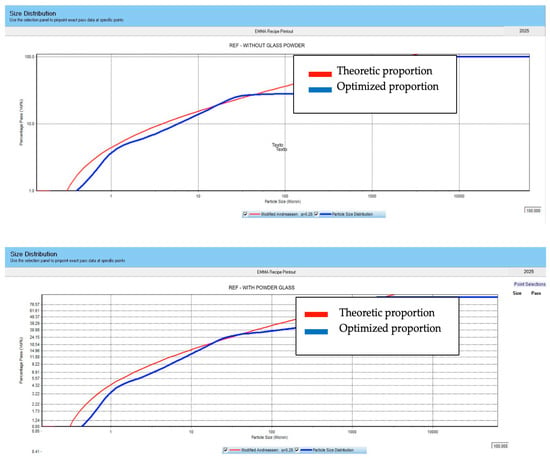
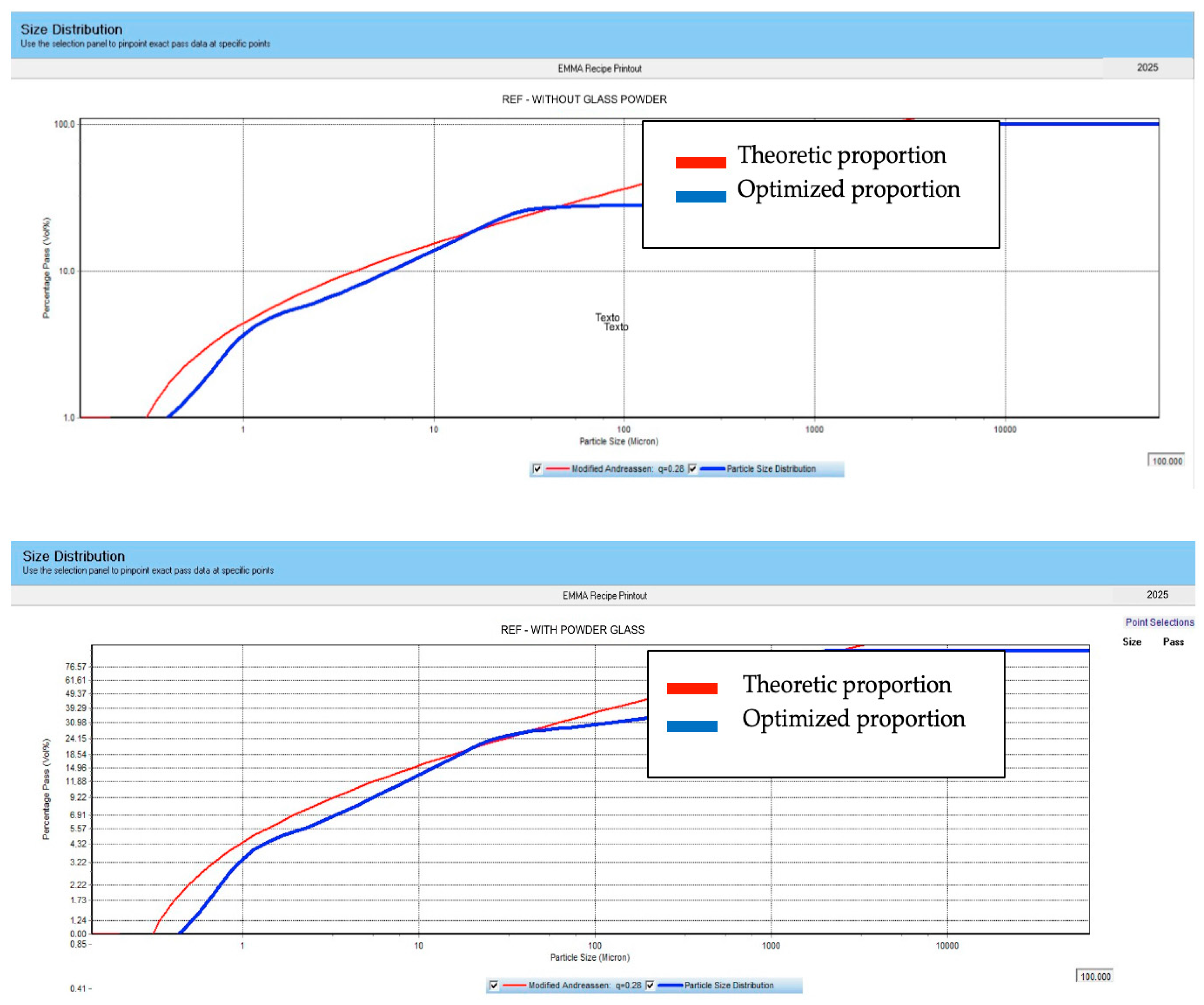
The Elkem Materials Mixture Analyzer (EMMA) computational tool was used to determine the proportion of materials used in the mortar to achieve a more efficient arrangement between material grains, based on data relating to the particle size of the materials and their density [26,27]. The mix proportion reference, by weight, was 1:3:0.25:0.37:0.02 (cement: sand: silica fume: water/cement ratio: superplasticizer additive) (see Figure 1). Table 1 presents the mixture proportions and their nomenclature.
Figure 1.
Optimized mix proportion.
Table 1.
Nomenclature and mix proportion (weight) research.
As shown in Table 1, the reference mixture proportion (REF) was studied, and natural sand was partially replaced with sand resulting from the crushing of tempered glass at levels of 25% and 50%, i.e., REF25 and REF50, respectively. It should be noted that the particle size distribution of the crushed tempered glass is the same as that of natural sand. Subsequently, 20% glass powder (resulting from crushing) was added relative to the amount of cement (REFP). This level was adopted as the maximum limit to avoid compromising the mechanical properties of the composite [34]. The addition of glass powder aims to increase the consumption of waste and densify the aggregate/cement paste transition zone, since the shape and texture of the grains obtained in the crushing of tempered glass (low surface roughness) tend to impair the performance of the mixture and/or increase cement consumption [20,21]. The consistency of the mixtures was set at 270 + 10 mm, which was determined according to Brazilian standards through the flow table [35].
2.2. Methods
The six specimen tests (10 cm × 5 cm—high × diameter) were made for each investigated property. They were subjected to curing in a humid chamber according to Brazilian standards (temperature = 21 °C and air humidity = 95%) [36]. After curing for 28 days, many tests were carried out, including compressive strength (fc) [37], diametral compression tensile strength (fct,sd) [38], void index (Iv), and immersion absorption (A) [39].
For chemical analyses, a Perkin Elmer FTIR spectrometer (PerkinElmer, Waltham, MA, USA) was used in the region of 4000–400 cm−1, with a resolution of 4 cm−1, an average of 64 scans, and using a KBr tablet. The samples were dried in an oven at 110 °C for 24 h before obtaining the spectra to minimize the influence of water absorbed by the samples.
3. Results and Discussion
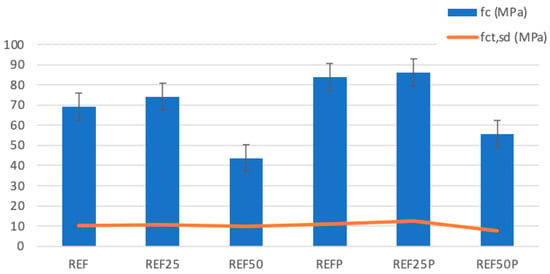
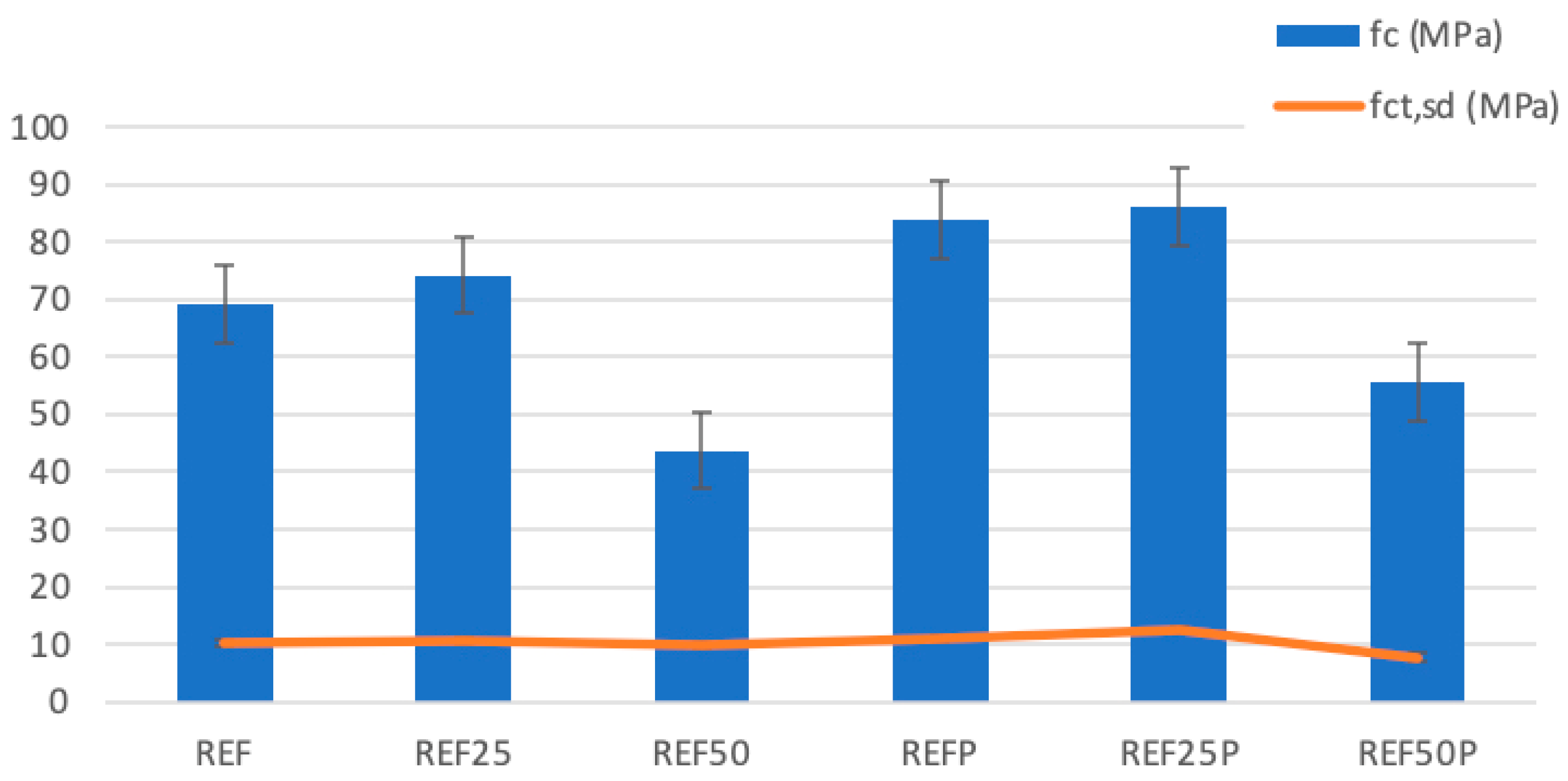
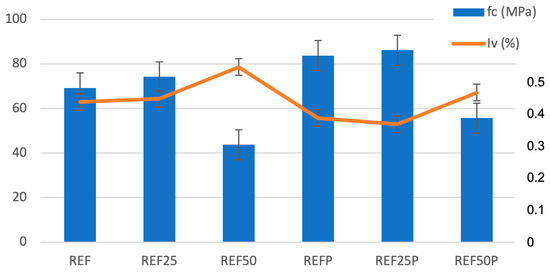
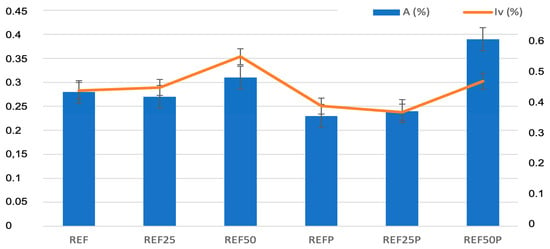
Table 2 and Figure 2, Figure 3 and Figure 4 show the average results of the properties along with the variation coefficient (CV). This procedure is used when you want to compare the variability of several samples with their average value; if the CV value is less than 25%, the sample will be accepted.
Table 2.
Average result properties in a mixed proportion.
Figure 2.
Compressive strength (MPa) × diametral compression tensile strength (MPa).
Figure 3.
Compressive strength (MPa) × void index (%).
Figure 4.
Absorption (%) × void index (%).
The roughness of the surface of the aggregate influences the mechanical properties. As the level of replacement of natural sand with artificial sand (crushed glass) increases, the strength tends to reduce, as this material, when fragmented, does not generate irregularities (the so-called “sharp edges”) on the surface of the aggregate, which impairs the adhesion of the cement paste with the aggregate, interfering with the binder/aggregate transition zone. Therefore, one of the possible solutions to be adopted is the “reinforcement” of the mixture, either by increasing the consumption of binder or by using an additional material that allows densification of the transition zone, which in this research consists of the use of glass powder.
The replacement of natural sand with crushing glass has been investigated in other research, resulting in improvements in mortar properties, where it was found that 15% replacement of sand with crushing glass results in gains in mixture properties of above 10%, (compressive strength, absorption, among others) [40] as also observed in this study (see Table 2).
Furthermore, the combined use of glass powder and silica fume shows promise, making it possible to reduce cement consumption; that is, the waste is used as a supplementary material, benefiting the properties of cement mixtures, as well as reducing cement consumption, a fact evidenced in the results, as well as in other research [41] even contributing to the reduction in voids in the mixtures studied.
It is noted that as the replacement level of natural sand with glass sand increases, there are losses in mixture properties due to the weakening of the transition zone, caused by the lack of irregularity on the surface of the aggregate, i.e., the mix REF50 proportion, which has a high level of natural aggregate replacement, does not present satisfactory performance of the mixture, presenting a marked loss of properties and little gains from the inclusion of glass powder. Therefore, this mixture was discarded due to the damage caused to the mortar properties.
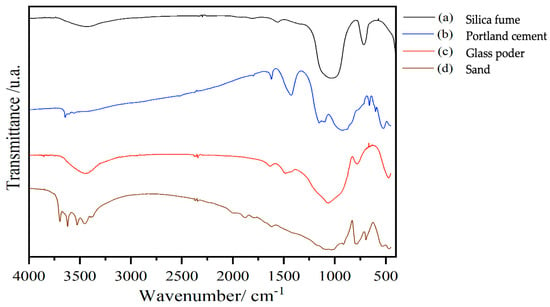
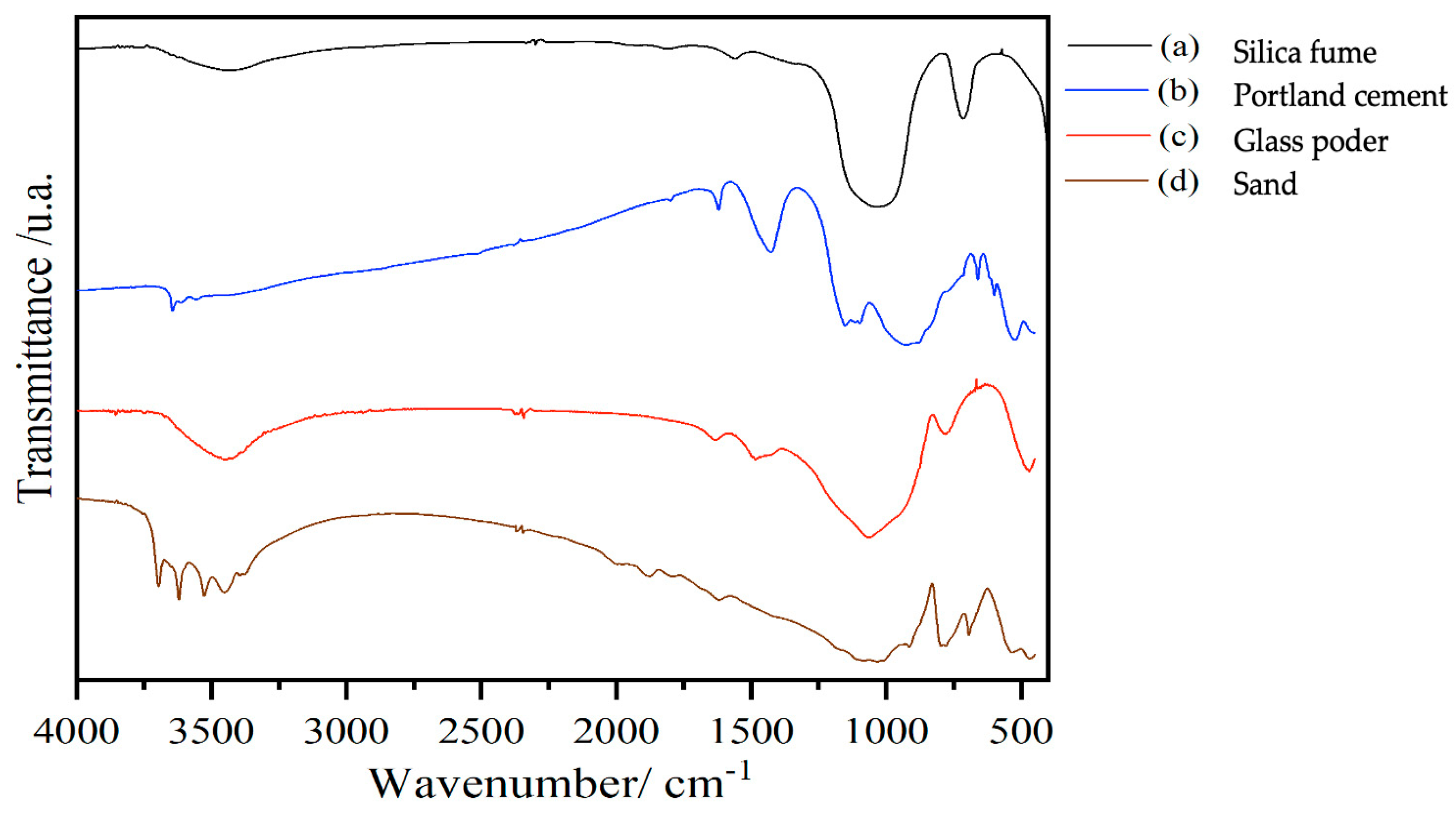
Figure 5 shows the infrared absorption spectra of the compounds used to obtain the test specimens. Table 3 describes the attempted assignment of cement bands in accordance with the literature [42,43].
Figure 5.
Infrared absorption spectrum.
Table 3.
Assignment of the main infrared absorption bands (cm−1).
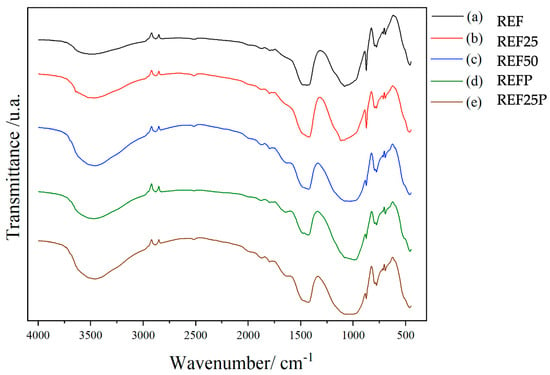
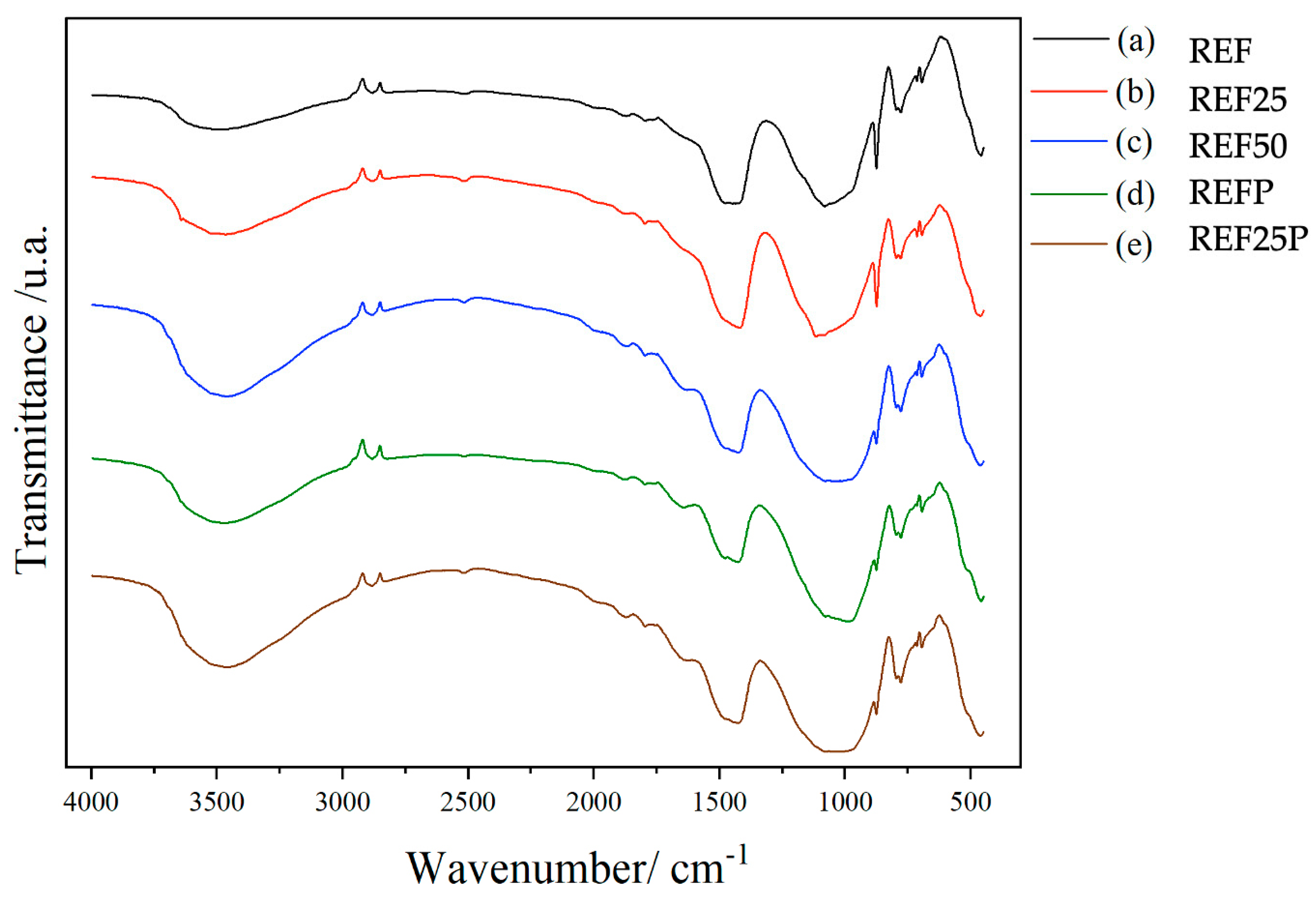
Figure 6 shows the infrared absorption spectra of the specimens that were obtained from Portland cement, and by comparing them, it is possible to observe spectral differences that indicate the hydration process of the samples [44]. The band at 922 cm−1 in unhydrated cement refers to ν3 (Si-O); however, during hydration, a polymerization process occurs, which tends to shift to higher wave numbers and become wider, due to the formation of hydrated calcium silicate (CSH). Therefore, this band can be used to evaluate the degree of hydration [45].
Figure 6.
Infrared absorption spectrum.
In relation to the samples, it is observed that REF50, REFP, and REF25P present a band shift from 922 cm−1 to the region of 1130 cm−1 with greater relative intensity, indicating a greater hydration. The REF and REF25 samples present more similar spectra in relation to this spectral region; therefore, similar hydration stages are expected for both samples. The band at 525 cm−1 can also be used to analyze the hydration process, as its intensity decreases during this process [46]. Thus, by analyzing the spectra, it is observed that this band appears in the form of a shoulder that is not very intense in all analyzed samples.
Calcium carbonate is added to cement by the manufacturer, and as hydration progresses, it is consumed due to its reaction with aluminates, which forms less crystalline phases (carboxyaluminates) [46]. Therefore, the bands corresponding to this compound are expected to decrease in intensity as hydration progresses [47]. Thus, the bands corresponding to carbonates at 1428 and 877 cm−1 are observed to be less intense in samples REF 50, REFP, and REF 25P, indicating a higher degree of hydration for these samples.
The spectral data indicate that replacing 25% of the sand with glass sand (REF25) does not alter hydration and therefore does not negatively impact the mechanical properties of the specimens. This is consistent with the mechanical strength data, as samples REF and REF25 present similar results. Replacing 50% of the sand with glass sand (REF50) resulted in a spectral profile of a specimen with a higher degree of hydration; however, this did not result in a sample with greater mechanical strength. This can be explained by the lower roughness of the glass sand, which reduces adhesion between the particles that make up the mortar and, consequently, reduces mechanical strength. Finally, the addition of glass powder (REFP) and the replacement of sand with 25% glass sand with glass powder addition (REFP25) resulted in samples with a higher degree of hydration and, therefore, better mechanical properties, as observed in the results presented.
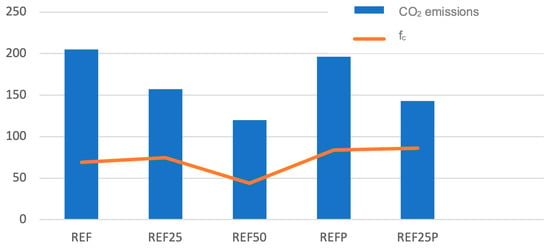
Considering the results obtained, it is also important to evaluate the CO2 emissions of the new product to contribute to sustainable development [48]. In this sense, the carbon footprint seeks to quantify the amount of equivalent carbon dioxide generated during a process, service, or product. The calculation of total carbon dioxide emissions (Equation (1)) considers the emissions from each unit operation carried out in the process [49].
where CO = CO2 emissions; Mi—material consumption in unit i; and Fi—carbon emission factor per unit weight of each construction material.
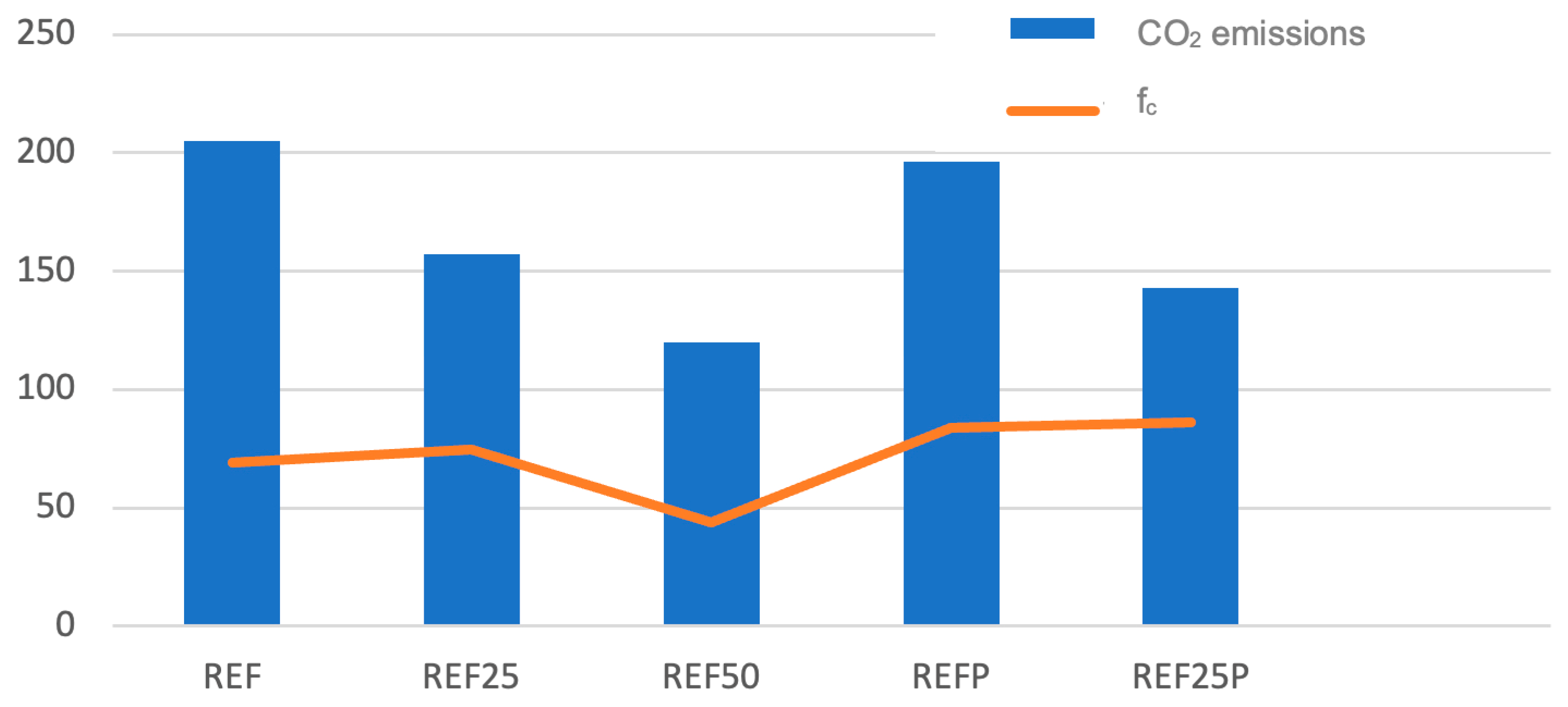
The emissions from the mixtures were based on the Brazilian database, see Figure 7, where the addition of supplementary materials contributes to minimizing carbon emissions; however, mechanical properties must be ensured, with a balance between mechanical and environmental contributions. Thus, waste must contribute effectively to a sustainable built environment and the circular economy, while also ensuring the performance of the product.
Figure 7.
CO2 emissions (kgCO2/m3) × compressive strength (MPa).
4. Conclusions
The research, supported by particle packing analyses, experimental testing, and chemical characterization, confirmed the technical feasibility of using crushed tempered glass waste as a partial substitute—up to 25%—for natural sand in the production of cement mortars. The incorporation of glass powder enhanced the densification of the interfacial transition zone between the recycled aggregate and the cement paste, contributing to improved microstructural compactness, reduced carbon emissions, and the promotion of more sustainable building materials.
Regarding mechanical and durability performance, the mixtures exhibited increased compressive strength and durability, demonstrating the potential of this waste material to support the development of more efficient and sustainable construction solutions, in alignment with international guidelines aimed at advancing low-impact and resource-efficient building practices. Finally, further studies are suggested regarding possible alkali–aggregate reactions.
Author Contributions
Conceptualization, M.T.G.B., M.C.d.P.C. and N.L.G.D.d.S.; methodology, M.T.G.B. and M.C.d.P.C.; formal analysis, M.T.G.B., M.C.d.P.C. and N.L.G.D.d.S.; investigation, M.T.G.B., M.C.d.P.C. and N.L.G.D.d.S.; resources, M.T.G.B., M.C.d.P.C. and N.L.G.D.d.S.; writing—original draft preparation, M.T.G.B., M.C.d.P.C. and N.L.G.D.d.S.; writing—review and editing, M.T.G.B.; visualization, M.C.d.P.C. and N.L.G.D.d.S.; supervision, M.T.G.B., M.C.d.P.C. and N.L.G.D.d.S.; project administration, M.T.G.B. All authors have read and agreed to the published version of the manuscript.
Funding
This research received no external funding.
Institutional Review Board Statement
Not applicable.
Informed Consent Statement
Not applicable.
Data Availability Statement
The original contributions presented in this study are included in the article. Further inquiries can be directed to the corresponding author.
Acknowledgments
The Federal University of Juiz de Fora, the Federal University of Tocantins, FAPEMIG (Foundation for Support and Development of Education, Science, and Technology of Minas Gerais), CAPES (Coordination for the Improvement of Higher Education Personnel), and CNPq (Brazilian National Council for Scientific and Technological Development).
Conflicts of Interest
The authors declare no conflicts of interest.
References
- Nikolova-Minkova, V. The Reuse of Waste Materials in the Context of the Circular Economy. In Unitech—Selected Papers; Technical University of Gabrovo: Gabrovo, Bulgaria, 2024. [Google Scholar] [CrossRef] [Scilit]
- Okeke, N.K. Na Investigation of how the circular economy’s up-cicling, repair, reuse and recycling strategies might increase resource efficiency and reduce fabric waste Generation on Nigeria. J. Des. Studio 2025, 7, 113–130. [Google Scholar] [CrossRef] [Scilit]
- Delbari, S.A.; Hof, L. Glass waste circular economy—Advancing high value glass sheets recovery using industry 4.0 and 5.0 technologies. J. Clean. Prod. 2024, 462, 142629. [Google Scholar] [CrossRef] [Scilit]
- Sancheta, L.N.; Chaves, G.L.D.; Siman, R.R. The use of system dynamics on urban solid waste management: A liter-ature analysis. Gestão Produção 2021, 28, e5336. [Google Scholar] [CrossRef] [Scilit]
- Marques, H.F.; Ribeiro, C.; Oliveira, D.; Bamberg, P.; Almeida, M. Reuse of construction waste: The practice of a recycling plant in the state of Paraná. Braz. J. Dev. 2020, 6, 21912–21930. [Google Scholar] [CrossRef] [Scilit]
- Kabirifar, K.; Mojtahedi, M.; Wang, C.; Tam, V. Construction and demolition waste management contributing factors coupled with reduce, reuse, and recycle strategies for effective waste management: A review. J. Clean. Prod. 2020, 263, 121265. [Google Scholar] [CrossRef] [Scilit]
- Soares Filho, J.; Aurich, J.; Sousa, F.; Nascimento, R.; Paskocimas, C.; Silva, A. Polishing Performance of eco-friendly porcelain stoneware tiles reusing bricks and roof tiles wastes. J. Clean. Prod. 2020, 256, 120362. [Google Scholar] [CrossRef] [Scilit]
- Almada, L.S.; Melo, D.; Bubani, L.; Silva, G.; Santos, W.; Aguilar, M.T. Influence of the heterogeneity of waste from wet processing of ornamental stones on the performance of Portland cement composites. Constr. Build. Mater. 2020, 262, 120036. [Google Scholar] [CrossRef] [Scilit]
- Chien, C.; Aviso, K.; Tseng, M.; Fujii, M.; Lim, M.K. Solid waste management in emerging economies: Opportunities and challenges for reuse and recycling. Resour. Conserv. Recycl. 2023, 188, 106635. [Google Scholar] [CrossRef] [Scilit]
- Wei, K.; Teoh, W.; Xu, X.; Huang, B.; Geng, Y. A review of glass recycling policies in Stockholm, Hong Kong SAR and Shanghai from a circular economy perspective. J. Clean. Prod. 2023, 434, 140068. [Google Scholar] [CrossRef] [Scilit]
- Veja, D.; Bautista-Rodriguez, S. The impact of circular economy strategies on municipal waste management: A system dynamics approach. Clean. Eng. Technol. 2024, 21, 100761. [Google Scholar] [CrossRef] [Scilit]
- Megavand, B.; Cao, W.; Maio, F.; Rem, P. Circularity in practice: Review of main current approaches and strategic propositions for an efficient circular economy of materials. Sustainability 2022, 14, 962. [Google Scholar] [CrossRef] [Scilit]
- Silva, W.; Filgueiras, C. Glass and its importance in life and chemistry. Chem. New 2023, 46, 491–501. [Google Scholar] [CrossRef] [Scilit]
- Moreno, A.; Ponce, C.; Múzquiz, E.; Avalos, F. Marble residues in construction materials: A review of the marble dust in mortars, concrete, and bricks. Rev. ALCONPAT 2022, 12, 162–183. [Google Scholar] [CrossRef] [Scilit]
- Anitha, S.D.; Dinesh, A.; Sarath, B.V. Investigation of waste marble powder in the development of sustainable concrete. Mater. Today Proc. 2021, 44, 4223–4226. [Google Scholar] [CrossRef] [Scilit]
- Singhal, V.; Nagar, R.; Agrawal, V. Use of marble slurry powder and fly ash to obtain sustainable concrete. Mater. Today Proc. 2021, 44, 4387–4392. [Google Scholar] [CrossRef] [Scilit]
- Mirouzi, G.; Houda, A. Effect of mineral additions on the mechanical behavior of polymer concretes. World J. Eng. 2023, 21, 851–861. [Google Scholar] [CrossRef] [Scilit]
- Tretin, P.O.; Manica, J.; Vanzetto, S.C.; Marangoni, B.; Zaleski, A. Partial replacement of small aggregate by ground glass residue in the production of mortar. Matéria 2020, 25. [Google Scholar] [CrossRef] [Scilit]
- Assis, K.; Trindade, J.; Reis, M.J.; Reis, J.C.; Sanjulião, L.; Reis, F. Partial replacement of fine aggregate with ground glass residue in the production of concrete and its interference in compressive strength. Rev. Bras. Gestão Amb. Sust. 2023, 10, 1495–1505. [Google Scholar] [CrossRef]
- Pour-Moghaddam, N. Experimental Investigations into the fragmentation of tempered glass. In On the Fracture Behaviour and the Fracture Pattern Morphology of Tempered Soda-Lime Glass; Mechanik, Werkstoffe und Konstruktion im Bauwesen; Springer: Wiesbaden, Germany, 2020; Volume 54. [Google Scholar] [CrossRef] [Scilit]
- Hussain, S.; Moiz, S. An overview of tempered glass load bearing capability and mechanical behavior. ENG Trans. 2022, 3, 1–9. [Google Scholar] [CrossRef] [Scilit]
- Habert, G.; Miller, S.; John, V.; Provis, A.; Favier, A.; Horvath, K.L. Environmental impacts and decarbonization strategies in the cement and concrete industries. Nat. Rev. Earth Environ. 2020, 1, 559–573. [Google Scholar] [CrossRef] [Scilit]
- Costa, M.C.; Barbosa, M.T.; Sá, R.R.; Sousa, C.D.; Souza, N.L.; Rivelli, L.I. Analysis of the efficiency of adding silica, glass powder, Amazon chestnuts, and biopolymer on the mortar performance. J. Build. Pathol. Rehabil. 2024, 9, 115. [Google Scholar] [CrossRef] [Scilit]
- Anjos, M.; Camões, P.; Campos, G.; Azeredo, G.; Ferreira, R. Effect of high-volume fly ash and metakaolin with and without hydrated lime on the properties of self-compacting concrete. J. Build. Eng. 2020, 27, 100985. [Google Scholar] [CrossRef] [Scilit]
- Campos, H.; Klein, N.; Marques Filho, M.; Bianchini, M. Low-cement high-strength concrete with partial replacement of Portland cement with stone powder and silica fume designed by particle packing optimization. J. Clean. Prod. 2020, 261, 121228. [Google Scholar] [CrossRef] [Scilit]
- Oliveira, S.; Soranço, L.; Pereira, T.; Games, B.; Ferreira, C.; Barbosa, M.T. Research of the addition of N95 facial mask fibers, silica fume, and marble powder in high-performance mortar. Matéria 2023, 28, e20230042. [Google Scholar] [CrossRef] [Scilit]
- Oliveira, S.; Sá, R.; Barbosa, M.T.; Garcia, D.; Costa, M.C.; Souza, N.; Ludwig, Z. Investigation of the influence of the addition of graphene oxide nanoparticles in mortars made with the addition of silica fume, marble powder and fibers from the crushing of the N95 face masks. Case Stud. Constr. Mater. 2024, 21, e03843. [Google Scholar] [CrossRef] [Scilit]
- Pinto, F.; Martins, M.; Werdine, D.; Santos, V.; Gonçlaves, P.; Barros, R.; Mello, M. Mixture design for self-compacting concrete using a virtual particle packing method. Braz. J. Dev. 2021, 7, 50029–50049. [Google Scholar] [CrossRef] [Scilit]
- Lopes, H.; Peçanha, A.; Castro, A. Considerations on the efficiency of Portland cement concrete mixtures based on the particle packing concept. Matéria 2020, 25. [Google Scholar] [CrossRef] [Scilit]
- Janani, R.; Kaveri, V. A critical literature review on reuse and recycling of construction waste in the construction industry. Mater. Today Proc. 2021, 37, 3077–3081. [Google Scholar] [CrossRef] [Scilit]
- Ghaffar, S.; Burman, M.; Braimah, N. Pathways to circular construction: An integrated management of construction and demolition waste for resource recovery. J. Clean. Prod. 2020, 244, 118710. [Google Scholar] [CrossRef] [Scilit]
- NBR 16697; Portland Cement—Requirements. Brazilian Standard (ABNT): Rio de Janeiro, Brazil, 2018.
- NBR 7214; Sand for Cement Testing—Specifications. Brazilian Standard (ABNT): Rio de Janeiro, Brazil, 2015.
- Zanwar, A.B.; Patil, Y.D. Enhancement of sustainable mortar by using fine glass powder. In Advances in Sustainable Construction Materials and Geotechnical Engineering; Shukla, S., Barai, S., Mehta, A., Eds.; Lecture Notes in Civil Engineering; Springer: Singapore, 2020; Volume 35. [Google Scholar] [CrossRef] [Scilit]
- NBR 13276; Consistency Index Determination. Brazilian Standard (ABNT): Rio de Janeiro, Brazil, 2002.
- NBR 9479; Curing Mortar and Concrete Specimens. Brazilian Standard (ABNT): Rio de Janeiro, Brazil, 2006.
- NBR 7215; Cement Portland—Determination of Compressive Strength. Brazilian Standard (ABNT): Rio de Janeiro, Brazil, 2025.
- NBR 7222; Cement Portland—Determination of Diametric Tensile Strength. Brazilian Standard (ABNT): Rio de Janeiro, Brazil, 2011.
- NBR 9778; Mortar and Concrete—Determination of Water Absorption of Immersion. Brazilian Standard (ABNT): Rio de Janeiro, Brazil, 2009.
- Jamellodin, Z.; Yi, L.; Lafit, Q.; Algaifi, H.; Hamdam, R.; Al-Gheethi, A. Evaluation of fresh and hardened concrete properties incorporating glass waste as partial replacement of fine aggregate. Sustainability 2022, 14, 15895. [Google Scholar] [CrossRef] [Scilit]
- Tyrer, M.; Holmes, N.; Yio, M.; Wong, H. Predicting the hydration of ground granulated blast furnace slag and recycled glass blended cement. Appl. Sci. 2025, 15, 6872. [Google Scholar] [CrossRef] [Scilit]
- Barbosa, M.T.; Innocencio, C.R.; Salzani, L.; Pereira, T.; Souza, N.L.; Oliveira, L.F. Lime-based mortars with added silica fume and bioproducts for restoration and preservation of heritage buildings. J. Build. Pathol. Rehabil. 2023, 8, 37. [Google Scholar] [CrossRef] [Scilit]
- Feitosa, L.; Costa Filho, J.; Sousa, C.; Martins, W.; Barbosa, M.T.; Cavallini, G.; Oliveira, L.F.; Souza, N.L. Crude Glycerin, a By-product of Biodiesel, as Admixture for Concrete Pieces. Iran. J. Sci. Technol. Trans. Civ. Eng. 2023, 47, 863–872. [Google Scholar] [CrossRef] [Scilit]
- Li, Z.; Corr, D.; Han, B.; Shah, P. Investigating the effect of carbon nanotube on early age hydration of cementitious composites with isothermal calorimetry and Fourier transform infrared spectroscopy. Cem. Concr. Compos. 2020, 107, 103513. [Google Scholar] [CrossRef] [Scilit]
- He, S.; Yu, P.; Zou, F. Effect of lime mud under wet grinding on the compressive strength and hydration of cement mortar. Cem. Concr. Compos. 2023, 140, 105067. [Google Scholar] [CrossRef] [Scilit]
- Tararushkin, E.; Shchelokova, T.; Kudryavtseva, V. A study of strength fluctuations of Portland cement by FTIR spectroscopy. IOP Conf. Ser. Mater. Sci. Eng. 2020, 919, 022017. [Google Scholar] [CrossRef] [Scilit]
- Wilinska, I.; Pacewska, B.; Antonovic, V. Hydration Processes of Four-Component Binders Containing a Low Amount of Cement. Materials 2022, 15, 2192. [Google Scholar] [CrossRef] [Scilit]
- Wan, O.; Zhao, X.; Liu, H.; Dinçer, H.; Yüksel, S. Assessing the New Product Development Process for the Industrial Decarbonization of Sustainable Economies. SAGE Open 2022, 12, 1–20. [Google Scholar] [CrossRef] [Scilit]
- Cardona, Y.; Ramos, W.; Perez, O. Estimating CO2 emissions of concrete containing waste glass. Politec. J. 2022, 18, 52–70. [Google Scholar] [CrossRef] [Scilit]

Disclaimer/Publisher’s Note: The statements, opinions and data contained in all publications are solely those of the individual author(s) and contributor(s) and not of MDPI and/or the editor(s). MDPI and/or the editor(s) disclaim responsibility for any injury to people or property resulting from any ideas, methods, instructions or products referred to in the content. |
© 2026 by the authors. Licensee MDPI, Basel, Switzerland. This article is an open access article distributed under the terms and conditions of the Creative Commons Attribution (CC BY) license.