1. Introduction
Technological evolution has followed rapid and continuous progress in recent years, leading to the transformation of society and production methods in today’s manufacturing contexts. In this regard, Industry 5.0 represents the technological transition that introduces the new role of modern industry in society and provides for the combination of digital technologies and human capabilities. This new vision highlights how technological innovations can shape the economic, social and cultural scenarios in which we operate [
1].
In this context, the use of new wearable devices, which enable greater levels of human–machine interaction, takes on strategic importance.
In particular, the widespread use of technologies has been paired with their persistent miniaturisation, with the aim of creating smaller and less invasive devices. Human-Augmentation [
2,
3] is defined as an approach that uses technologies to improve human productivity or capacity, or that adds to the human body or mind.
The study presents the technological evolution that has favoured design and dissemination of increasingly intelligent and connected devices in industrial contexts, including smart wearable devices aimed at increasing operator safety. Furthermore, the introduction of innovative interaction models integrated with Artificial Intelligence systems, Big Data and 5G networks have facilitated connections, dissemination and monitoring of environments. In this scenario, wearable and interactive technologies are the perfect synthesis for the integration of physical and digital worlds, enabling the enhancement of human capabilities and skills. In fact, the development of these devices has contributed significantly to improving quality and safety at work.
The aim of the manuscript is to classify the types of wearable devices, starting from taxonomies present in the literature, analysing the main functionalities and the different configurations for positioning on the body. With this procedure, it is possible to outline the factors necessary for the human-centred design of new devices for Human-Augmentation Industry 5.0.
This study is structured as follows:
Section 2 provides a brief overview of the field of research, while
Section 3 presents the selected taxonomy for wearable devices classification;
Section 4 presents the materials and methods used to collect information on the topic.
Section 5 presents the discussion of this research, including a definition of taxonomies, functionalities and types of wearable devices, followed by a wearable device’s classification, the identification of types of wearable devices categorised by body part and the ethical challenges and privacy in wearable technology.
Section 6 presents challenges and research gaps, while
Section 7 presents the conclusions of the article.
The wearable device market has grown exponentially in recent years, with an expected growth rate of over 20% per annum [
4], as shown in the Wearable Technology Market Size Report 2020–2027 [
5]. In this context, by analysing the taxonomies, functionalities and types of devices currently in use, it is possible to classify technological and functional models. In addition to outlining the reference scenario and identifying wearable devices, the research introduces a matrix that systematically integrates various metrics and parameters, identifying critical issues and opportunities offered by current wearables devices technologies to be transferred to manufacturing contexts. This design discipline approach differs from studies identified in the literature, which tend to focus on one or two specific aspects, thus limiting the scope of the analyses carried out. The matrix developed, on the other hand, provides a broader vision for defining future prospects oriented towards the design of advanced technological solutions. This enhances the central role of humans in the innovation process, in line with the current complexity of contemporary contexts and the principles of Industry 5.0.
2. Human–Machine Interaction Technologies and Systems
Human–machine interaction [HMI] is an interdisciplinary field of study that has taken on an increasingly central role in the era of digitalisation. With the growing spread of digital devices, intelligent interfaces, Artificial Intelligence systems and advanced automation, the quality of interaction is a fundamental factor in determining the effectiveness of systems and user satisfaction, making it a key strategic area. For example, integrated interfaces with ICT technologies provide multidimensional modes of interaction through tactile–visual, vocal–auditory or mixed systems.
Tools such as biometric, facial and gesture recognition enable biometric tracking and measurement for HMI; text, image and video recognition enable data interpretation and the creation of associations that can expand analytical activities and foster new advanced applications for interaction and vision [
6]. Interactive devices equipped with input peripherals allow text to be entered using common tools such as keyboards or through devices such as voice recognition or optical scanning systems, barcodes and QR codes or RFID radio scanning systems.
In today’s advanced contexts, tools are also used to detect biometric and/or physiological parameters. For example, there are tools for HR, BR or ECG detection and other related psycho-physiological factors, as well as tools for blood oxygenation analysis, EMG or EEG systems and Brain–Computer Interfaces [BCI] [
7]. Output peripherals, on the other hand, involve the sensory channels through displays for viewing 2D and 3D images and text or through sound reproduction, which may have natural language content or serve as audio feedback to support visual communication, reducing visual sensory overload and conveying the user’s attention [
8]. Haptic and tactile feedback from devices integrated with vibro-tactile actuators, on the other hand, allow for feedback generated by the simulation of tactile sensations.
Today, ICTs associated with emerging technologies, such as Artificial Intelligence, facilitate the definition of work processes that are transformed into complex, dynamic, and adaptable systems. These technologies facilitate the transformation of work activities, turning repetitive, strenuous, and dangerous tasks into tasks for robots. Advancements in Artificial Intelligence are driving profound changes in workplaces, automating and optimising processes to enhance efficiency, while also enabling new forms of Human–Machine Collaboration aimed at creating safer working environments [
9].
Human-Augmentation is an interdisciplinary and relatively new but rapidly growing field of research that studies human–computer integration products designed to enhance human capabilities [
10].
Advances in technology have led to the configuration of numerous systems that can be classified as Human-Augmentation devices. Moore (2008) [
11] defines Human-Augmentation as ‘any attempt to temporarily or permanently overcome the current limitations of the human body through natural or artificial ways’.
In this regard, Human-Augmentation encompasses various disciplines, from electrical or mechanical engineering to genetics, concerns the extension and enhancement of the senses through the integration and implementation of the user’s multisensory information. Augmented action occurs through the mapping of human actions in virtual, real or remote environments. The augmentation of human cognition is achieved by detecting the user’s cognitive state with tools capable of interpreting and adapting to the user’s current needs or predictive expectations.
According to Raisamo et al. (2019) [
3], wearable technologies are essential tools for enhancing human capabilities as they offer seamless integration between the physical and digital worlds. Furthermore, they provide users with non-invasive and easy-to-use extensions for interacting with smart objects and augmented information in the hybrid physical–virtual world of the future.
Therefore, wearable devices can be considered human enhancement products [
10].
Furthermore, according to De Boeck et al. (2024) [
10], the term “human augmentation” refers to the ability to amplify and enhance human capabilities in performing a task with technological extensions. These extensions can be used by anyone, including users facing temporary or permanent disabilities, but also healthy users who wish to improve their abilities.
Starting from the reference application context and the complexity of the technologies involved, a more user-centred vision is emerging, in which technology adapts to human needs and requirements and promotes more fluid and natural interaction.
3. Selected Taxonomy for Wearable Devices Classification
The taxonomy proposed by Park et al. (2014) [
12] was selected for the classification of wearable devices identified in this research.
The choice of this taxonomy proved fundamental for classifying the wearable devices available based on operational constraints, and for identifying opportunities for the design and development of new wearable devices with advanced performance attributes.
In particular, the selected taxonomy is divided into six functional categories:
Functionality: single-function or multi-function;
Deployment mode: invasive—i.e., sensors whose use requires invasive and/or medical procedures and mostly need to be inserted into the body—or non-invasive;
Type: active—i.e., requiring power—or passive, depending on whether or not they need power to operate;
Communication mode: wired or wireless signal transmission modes for data processing;
Usage: disposable and reusable;
Field of application: health, public safety, entertainment, military, information processing, acoustic sensing, pressure sensing, moisture sensing, position tracking.
4. Materials and Methods
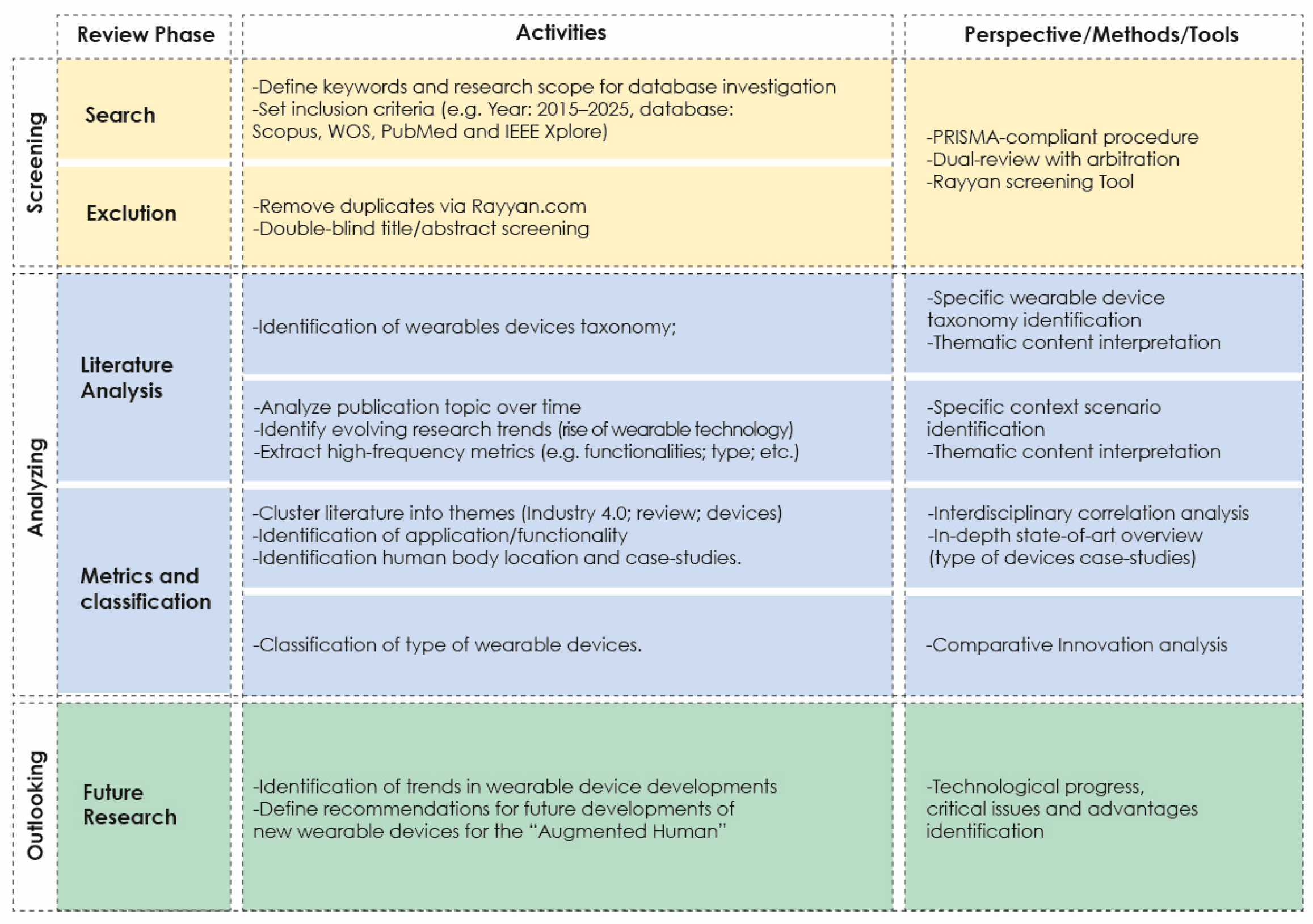
This study adopts a systematic literature review methodology to explore developments in the field of wearable device design (
Figure 1). To ensure methodological rigour, the article complies with the PRISMA (Preferred Reporting Items for Systematic Reviews and Meta-Analyses) 2020 guidelines [
13].
This methodological approach helps to clarify the research objectives of the article, to define key concepts and the boundaries of the scope of investigation, and identify, select and analyse the most relevant scientific contributions [
13].
Finally, it provides insights into the current state-of-the-art research to identify trends in wearable device developments and make recommendations for future advancements.
The research proposes an analysis of the main HMI technologies, starting with a critical–analytical review of case studies relating to state-of-the-art systems, devices and solutions to increase user skills in the industrial sector.
The selection of case studies was conducted following a systematic procedure aimed at ensuring relevance, reliability and consistency with the research objectives. The main sources of reference in the literature were identified by consulting various scientific and academic databases, such as Scopus, Web of Science, PubMed and IEEE Xplore. The case studies included in the study were chosen based on the relevance of the topic to the research aims and the relevance of the sources, selecting articles published between 2015 and 2025. Among the sources identified, non-academic studies and studies that were not characterised by critical and comparative analysis were also excluded.
In the first phase of source research, the following keywords were used: (‘wearable devices’ OR ‘smart wearables’ OR ‘wearable technology’ OR ‘industrial wearables’ OR ‘wearable sensors’ AND ‘industry’ OR ‘work environment’ OR ‘lifestyle’ OR ‘health care’ AND ‘interaction’ AND ‘functionality’ OR ‘efficiency’ OR ‘experience’ AND “classification” OR ‘comparison’).
Specifically, the final collection of acceptable studies was then selected through a comprehensive review of the articles. The variables to be extracted were decided using a data extraction form. The following elements were included: article identifiers (authors, year of publication); study identifiers (context, technologies, applications); parameters included for analysis (scoping review; trials; comparison and classification). From the qualitative analysis of the studies identified, the main wearable devices used in industrial contexts were selected and classified by functionality and type.
Systematic Review Screening
Articles screening was conducted using the Rayyan online platform (
www.rayyan.com—accessed on 10 December 2025) by two authors [
14,
15].
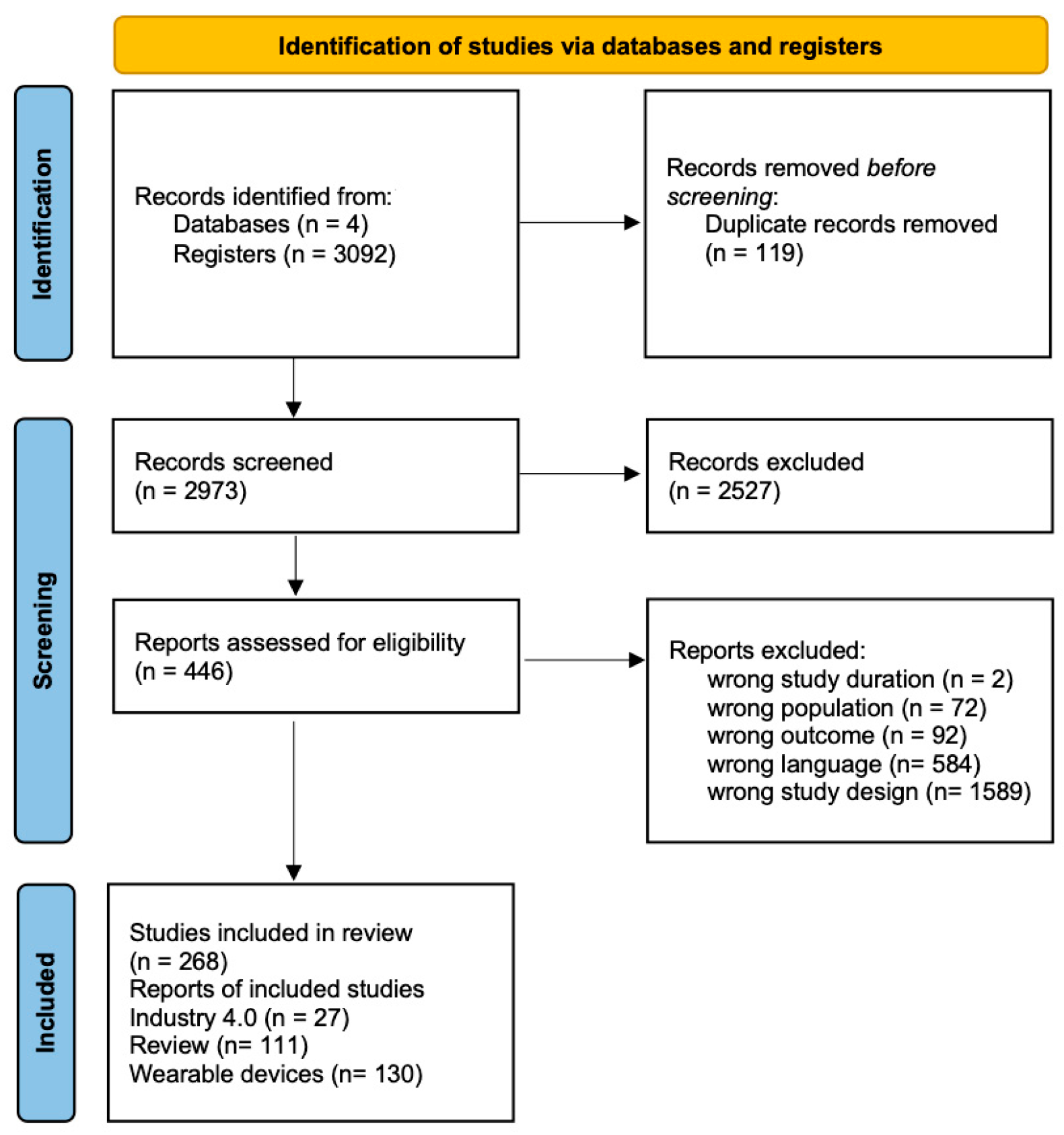
In the first selection phase, the titles and abstracts retrieved from all sources were independently reviewed by both reviewers. Duplicates have been excluded.
Discussions with the other authors helped to settle disagreements. It was decided which variables to extract. The following items were included: article identifiers (authors, year of publication); study characteristics (setting, technologies, design); and the parameters included in the analysis. Exclusion criteria were applied (wrong study design; wrong population; wrong outcome; wrong publication type; wrong language; and wrong study duration).
The final set of eligible studies was then selected through a full-text review. In particular, papers involving new device development, device reviews or Industry 4.0 device applications were included in the final screening. The review process is illustrated in the diagram below (
Figure 2).
5. Discussion
Recent technological developments include wearable devices, exoskeletons and new interfaces integrated with gesture technology, brain–computer interfaces that allow control via brain waves, tactile technology and voice recognition software [
16]. The possibilities offered by Wearable Technologies (Wireless Sensing), fully integrated into the new production paradigms of Industry 5.0, will provide operational tools for collecting and using enormous amounts of data. In particular, they will support the management of maintenance, control and supervision activities for the most complex systems and introduce new diagnostic methods for safety operations.
The main advantages of using these devices in Industry 5.0 include greater safety for workers through health monitoring and real-time alerts in case of risk. They allow processes to be optimised through ergonomic risk assessment and improve efficiency and productivity through human–machine collaboration, the reduction in repetitive tasks, and the ability to collect data in real time. The latter aspect allows for predictive maintenance through ad hoc interventions before certain problems occur.
The integration of Ubiquitous Computing, VR, AR, Extended Reality [XR], Internet of Things [IoT] and Robotics technologies in the industrial sector introduces the 5.0 dimension with the design of intelligent environments as a scenario for interaction between humans and advanced computational systems.
All components involved in the 4.0 production process are present in a “virtual image”, i.e., online like cloud databases—thanks to Information Technology (IT)—capable of providing information about the components and status of the real world.
Devices such as Virtual Wearables can integrate and interact with the user through immaterial interfaces that do not require controllers. These interfaces, thanks to the use of Leap Motion technologies for motion detection and AR/VR technologies, generate new modes of HMI.
Although wearable devices offer enormous potential, their widespread use in the context of Industry 5.0 faces significant obstacles that need to be overcome. In fact, the implementation of such devices shows limitations related to technological innovation, such as battery type and autonomy, sensor accuracy levels, factors related to usability and comfort for operator acceptance, interoperability with other systems, and data privacy issues. Furthermore, at present, the costs associated with staff training and technology implementation are additional limiting factors.
Starting with the identified scenario and with an interdisciplinary approach, through the integration of skills in the design discipline, engineering, and technology fields, the survey highlights as these systems aim to enhance user skills and reflect current technological trends.
Firstly, we conducted a survey of taxonomies, functionalities and types of wearable devices. We then classified wearable devices according to their position on the body. The analysis conducted led to the identification of advantages and critical issues in the adoption and use of wearable devices, to define the state-of-the-art and future directions for the integration of interaction systems in the industrial context that meet user needs and requirements.
5.1. Classification Metrics: Taxonomy, Functionality and Types of Wearable Devices
The major impact of new ICT technologies and the increasing use of smart systems have enabled developers to focus on a completely new market segment related to ‘human-worn’ devices.
Wearable devices—also known as wearable technology—are electronic and mobile systems that can be worn on the human body and provide various monitoring and scanning functions or additional physiological and sensory functions related to biometrics [
4]. However, applications of this technology are rare and fragmented, focusing mainly on devices such as AR/VR-based smart glasses and smart gloves [
17].
Wearable devices are used to provide a range of value-added services such as indoor location and navigation, physical and mental health monitoring, and sports and medical analysis [
18].
Actually, research has just recently begun to examine the application of wearable technology to monitor employee health and safety and, as a result, boost productivity [
19]. Wearable health monitoring devices are increasingly recognised as important tools for telemedicine and personalised, preventive care. Despite technical limitations, such as sensor performance and reliability, wearable health monitoring devices are revolutionising healthcare, but their implementation presents ethical and legal challenges [
20].
Khakurel et al. [
21], for example, address the main functionalities related to the use of wearable devices in the workplace, such as monitoring that allows the detection and limitation of causes of stress, the identification of general sensations in the environment and the control of physical changes in the body, in order to detect diseases and identify appropriate treatments before they advance. Wearable technologies can provide long-term effects in terms of monitoring psychological and physiological factors to promote worker safety and health [
22].
The classification of wearable devices started from the examination of the state-of-the-art in the literature and applying three of the functional attributes of Park et al. (2014) [
12,
23] taxonomy and in detail: Deployment mode (invasive, non-invasive); Type (active, passive) and Usage (disposable and reusable).
Particular attention was paid, also, to the body location classification carried out by Ometov et al. [
4] as it provides a broad and varied description of wearable devices based on several factors; the study identifies 12 types of application/functionality and 27 types of devices.
This classification was subsequently supplemented with additional classifications identified in the literature [
21,
24,
25,
26] in order to broaden the field of research.
In their analysis of wearable technology used in the workplace, Khakurel et al. [
21] suggest a classification based on device categories and the various body parts that the devices are placed on, resulting in five modes of use: monitoring, support, enhancement, tracking and distribution of content.
Svertoka et al. [
24], on the other hand, compare wearable devices applied to the industrial sector, identifying seven categories and five functionalities. Subsequently, Svertoka et al. [
25] examine the use of industrial wearable devices to ensure workplace safety, classifying them into four functions: monitoring, support, training and tracking. Benefits and costs of implementation, key communication technologies, and challenges for the future were explored.
Finally, Patel et al. [
26] examine recent trends in commercial wearable technologies and connected solutions for workers applied to different work environments. This study presents a survey of some devices used to monitor production activities and analysed in relation to their applications.
The scientific references cited have enabled the identification of 15 types of application-functionalities for wearable devices and, in particular, the following applications/functions were analysed:
Communication function (C) [
4,
21,
24], i.e., devices that communicate with the user, such as audio systems;
Health/medical function (M) [
4,
23,
26], i.e., devices that support and monitor the user’s physical and physiological condition, such as implantable and ingestible systems;
Tracking function (T) [
4,
21,
23,
24,
25,
26], i.e., wearable devices used to monitor the position and orientation of the user, such as head-mounted devices, or selected parts of the body, such as smart rings;
Notification transmission function (N) [
4,
26], i.e., smart devices that include features for generating, receiving and displaying information sent by other services/devices, as in the case of smart devices that provide notification messages to users;
Safety and security function (S) [
4,
26], i.e., devices that integrate systems designed to improve user safety levels, such as emergency panic button solutions integrated into workwear or wearable solutions;
Monitoring function (Mo) [
4,
21,
24,
25,
26], i.e., devices used to monitor the user, such as smartwatches for sleep monitoring or neural interfaces for stress factor detection;
Physical support function (Ps) [
24], i.e., devices that support the user’s body, such as exoskeletons for biomechanical support and robotic prostheses;
Augmentative function (Af) [
21,
24], i.e., devices that integrate the user’s space, such as augmented reality smart glasses;
Assistance function (A) [
21,
25,
26], i.e., devices that provide assistance to the user, such as skin patches;
Education and sports application function (Sp) [
4], such as devices for detecting physiological factors, such as fitness trackers or chest bands integrated with heart rate monitors;
Entertainment application function (E) [
4,
23,
26], i.e., devices that enable entertainment features such as gaming with virtual reality headsets or smart running shoes;
Hands-free input–output function (H) [
4,
26], i.e., devices that allow information/communications to be received and sent without using the hands, but, for example, with voice commands, as in the case of controllers using EMG signals;
Real-time input function (I) [
4,
26], i.e., devices that send and receive data in real time, such as wearable systems for monitoring or acquiring physiological and cognitive data;
Display function (D) [
26], i.e., devices that include components for displaying data, such as smartwatches and VR glasses;
Training function (Tr) [
25], i.e., devices such as AR and VR headsets that train the user and verify the correctness of the user’s actions.
Depending on their specific applications and functions, wearable devices can be used on different parts of the human body and therefore have different shapes [
27].
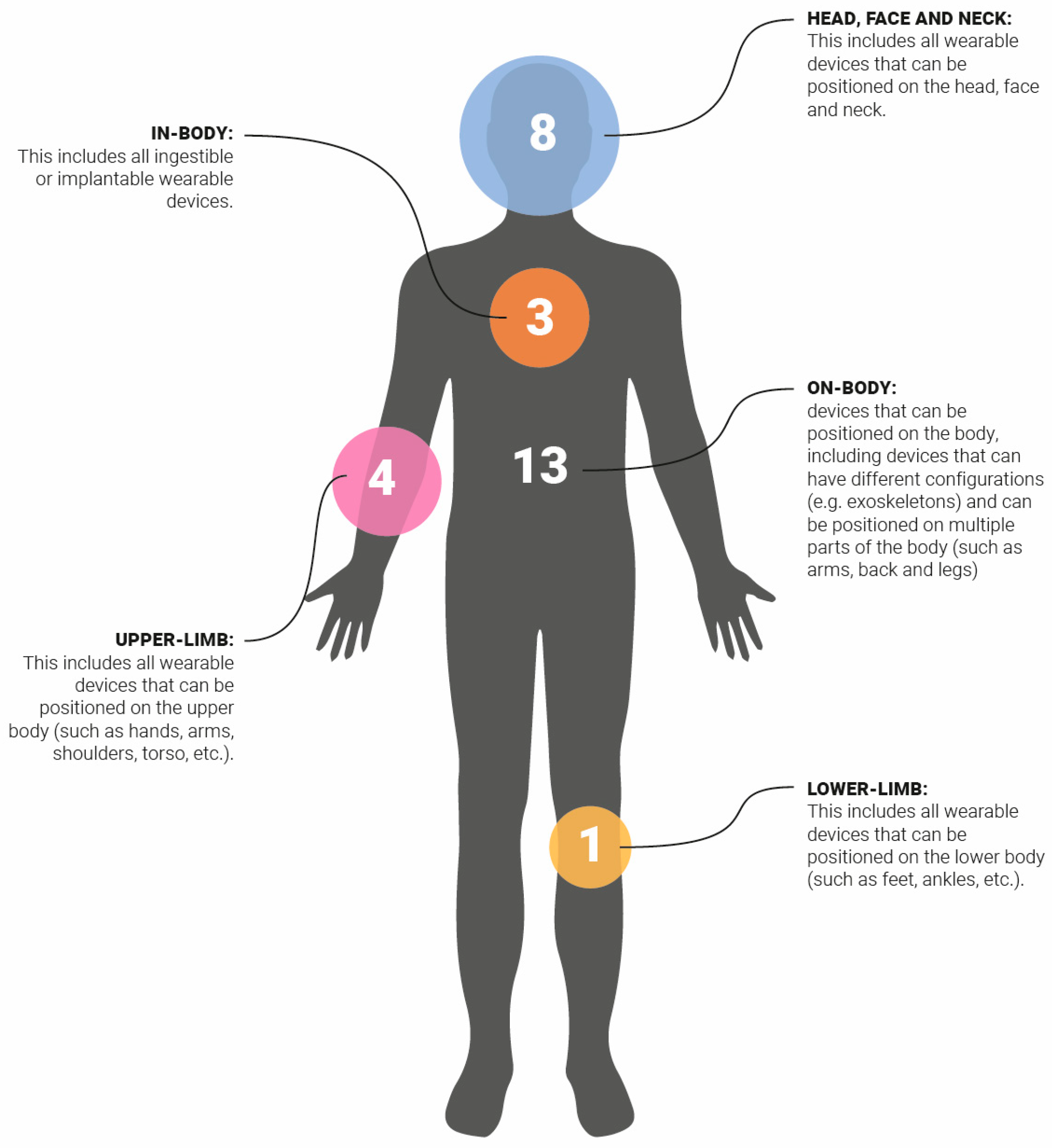
Starting from Ometov et al. [
4] classification, it was possible to recognise five categories of human body location: Head, face and neck mounted, In-body, On Body, Upper-Limp, Lower-Limb (
Figure 3). However, there is also a growing trend towards the development of smaller devices that can be placed directly inside the human body, even voluntarily, without surgery and in a removable manner [
28].
5.2. Identification of Types of Wearable Devices Categorised by Body Part
In this section, we have proposed an analysis aimed at identifying the main types of wearable devices, classified according to the different parts of the body on which they are applied. The following classification provides a structured overview of wearables, highlighting their main features, methods of use and main areas of application.
5.2.1. Wearable Devices: Head, Face and Neck
Wearable devices that can be positioned on the head, face and neck represent a versatile category that includes different technologies used, for example, to improve sight and hearing or for cognitive support and motor rehabilitation.
These include augmented reality devices, audio systems, head-mounted devices, neural interfaces, relaxation masks, VR/XR/MR headsets, smart glasses and smart necklaces. Research in this field is constantly expanding, as demonstrated by the many scientific references that provide an overview of technological developments in the field of wearable devices.
The research of Douibi et al. [
29] analyses the potential use of BCI technologies in Industry 4.0 as they can optimise cognitive load, facilitate human–robot interactions and improve safety. However, challenges in developing applications outside optimal laboratory conditions remain. In this context, the BCI was created as a tool for acquiring human emotions, commands and other emotional states. Today, this information allows users to control machines that respond and adapt to their needs with little mental effort [
30].
NextMind (Snap Inc., Santa Monica, CA, USA), unveiled at CES 2020, is the world’s first brain-detection device that simultaneously controls augmented reality or virtual reality headsets. The device is positioned at the back of the head and connects to any AR/VR device, allowing interaction with virtual environments directly through brain control. NextMind has a control system that captures neurophysiological signals and transforms them into data to create real-time neuro-control capabilities. The device incorporates Artificial Intelligence-based technologies that decode the user’s intention and translate neural signals into digital commands, transmitted via Bluetooth technology. NextMind is made from a conductive elastomeric polymer to achieve dry electrodes capable of measuring high-quality brain signals without compromising user comfort.
DynaEdge DE-100 Smart Glasses (Toshiba Corp., Tokyo, Japan) are glasses with integrated augmented reality technology, display and camera, where human perception is enhanced by the ability to receive or transmit information. In particular, it is possible to receive necessary information in real time and simultaneously transmit their activity to other remotely connected operators, who can provide assistance and training thanks to the instantaneous transmission of data to the device.
The integration of cutting-edge interfaces increases efficiency levels, with operators benefiting from receiving physical feedback from tactile technologies, wearable devices or tools such as AR glasses [
31] that allow hands-free working and ensure greater concentration on the task at hand. The use of virtual, augmented or mixed reality allows total or partial user immersion, adding information to the scenario in which they are located. In fact, the review by Brunetti et al. [
32] demonstrates that VR technologies can be useful in the context of smart factory, especially when it comes to planning and improving collaboration. Technologies such as virtual reality enable constant communication between individuals located in different space-time contexts. In these settings, the user perceives the presence of other users, and their perception of the environment is mediated by automatic and controlled mental processes.
To support the hybrid world, new concepts of “reality” have been defined over the years. Extended Reality (XR) refers to immersive technologies—such as augmented reality (AR), virtual reality (VR) and mixed reality (MR)—from real and virtual environments to technology-generated human–machine interactions and wearable devices that amplify reality by merging virtual and “real” spaces and creating a completely immersive experience [
33].
These technologies have been adopted by manufacturing companies and integrated not only into the production phases, but also to improve training and digital prototyping.
It is now commonplace to “simulate” the behaviour of objects based on digital models before producing them in the real world: simulated objects and vehicles will return enormous amounts of data that can be used to perform “predictive” maintenance and provide feedback to improve design [
34].
5.2.2. Wearable Devices: On Body
All types of devices that are worn on one or more parts of the body can be classified as on-body devices. This category includes tactile suits; location devices; personal notification devices; safety buttons; smart tattoos; wearable cameras; body movement monitoring/tracking sensors; wearable robots; e-Skin and smart patches; smart textiles; sensors for monitoring physiological factors; performance monitors; and human behaviour trackers.
In the industrial sector, wearable devices such as occupational exoskeletons have long been in use as assistive solutions designed to reduce musculoskeletal strain and provide structural support to different areas of the body [
35]. These devices are increasingly recognised as a potential solution for the prevention of work-related musculoskeletal disorders (MSDs), particularly in sectors where workers are frequently exposed to repetitive tasks, unnatural postures and heavy lifting [
36]. Classifying passive or active, exoskeletal devices require different approaches to meet requirements such as usability, workplace acceptability and potential safety issues [
37].
Numerous examples exist of exoskeletons already being used in industrial contexts, particularly in assembly phases, where the biomechanical load on operators is particularly high. An important example is that of Volkswagen, which has begun experimenting with the Laevo exoskeleton in order to reduce stress on the chest and shoulders during operations performed with raised arms. Hyundai, on the other hand, has developed the VEX exoskeleton vest to provide arm support for activities performed in elevated positions, helping to reduce fatigue and improve operator comfort.
However, technological advances have enabled the development of increasingly smaller and more integrated user support devices, such as smart suits and e-textiles that allow user monitoring. Furthermore, the integration of sensors into clothing improves the user’s acceptance of the device.
Among the devices that can be applied to the body are miniaturised sensors, such as those for monitoring physiological factors, and nanosensors integrated into e-patches. Phan et al. [
38] demonstrated the feasibility of a flexible biosensor patch that interfaces with the skin and connects wirelessly to a healthcare platform for monitoring vital signs and body responses. This patch was designed to have high levels of mechanical elasticity to improve wearability and ensure constant monitoring even outside clinical settings.
5.2.3. Wearable Devices: In-Body
Devices that are used primarily in the medical and healthcare sector, such as ingestible, insertable, implantable and smart contact lenses, are classified as in-body devices. These devices may require more or less invasive procedures. For example, in 2014, Google and Novartis developed Google Contact Lens, contact lenses for monitoring glucose levels in tears [
39], which can be worn like normal contact lenses but contain a tiny wireless chip and a miniaturised glucose sensor.
In a different way, in 2019, Elon Musk and the tech start-up Neuralink presented a project involving implants that connect the human brain to computer interfaces, combining health science, neurology and Artificial Intelligence [
40]. This approach allows users with disabilities to control devices such as phones or computers. The implant also enables Human–Artificial Intelligence symbiosis, achieving what Musk calls “superhuman intelligence”. The N1 sensor, implanted inside the skull, is equipped with tiny cables smaller in diameter than a human hair and can detect neural activity.
Other solutions, which require more invasive procedures, are implantable devices such as the EYE (Enhance your eye) bionic eye prototype by MHOX [
41], based on the idea of extending the sense of sight by integrating the eye’s functions with others currently managed by different parts of the body or external devices. The EYE HEAL device can replace the standard functions of the eye for those with visual impairments due to disease and/or trauma. EYE ENHANCE boosts visual capabilities up to 15/10 thanks to its hyper-retina, and by ingesting special pills, it is possible to activate filters on the visual signal. The EYE ADVANCE device allows users to record and share their visual experience and is supported by Wi-Fi communication for connection to external devices.
5.2.4. Wearable Devices: Upper-Limb
Wearable devices for the upper limbs include smart bracelets, smartwatches, smart rings and smart gloves. Among these, smartwatches are the most widespread and integrated with technologies that are also commonly used. This is illustrated in the study by Saheb et al. [
42], which examines the risks and benefits of smartwatches. Among the advantages of these devices is connectivity and real-time data transmission, which at the same time introduces new issues related to data privacy.
The Bioservo Ironhand (Skelex BV) soft exoskeleton glove is another important upper-limb device, particularly for the hands. It is a system that can strengthen the hand’s grasp with minimal force. The glove is equipped with sensors in the fingers that regulate the force applied and the balance between the fingers, reducing strain injuries and fatigue during activities involving intensive gripping actions. For the same purpose, the National Aeronautics and Space Administration [NASA] and General Motors have designed the RoboGlove system, a wearable robotic grip assistance technology used to help operators on assembly lines who work long hours and perform repetitive tasks [
26].
5.2.5. Wearable Devices: Lower-Limb
Devices that are only applied to the lower-limbs are some of the least common wearables. The main devices that are applied to the lower limbs are exoskeletons for biomechanical support (see
Section 5.2) and smart footwear. As early as 1984, Adidas launched the “Micropacer” shoe, which represented a technological breakthrough in the world of running shoes, capable of measuring the runner’s distance, speed and calorie consumption. In addition, this device allowed the total distance covered to be stored [
43]. Furthermore, this device is widely used in the medical and healthcare sector for monitoring diseases and assessing posture [
44].
A recent example of a Smart Shoe is the study conducted by Tarmizi et al. [
45], who developed a portable and inexpensive gait monitoring system that uses an inertial measurement unit (IMU) and a microcontroller to capture ankle angle data.
5.3. Wearable Devices Classification
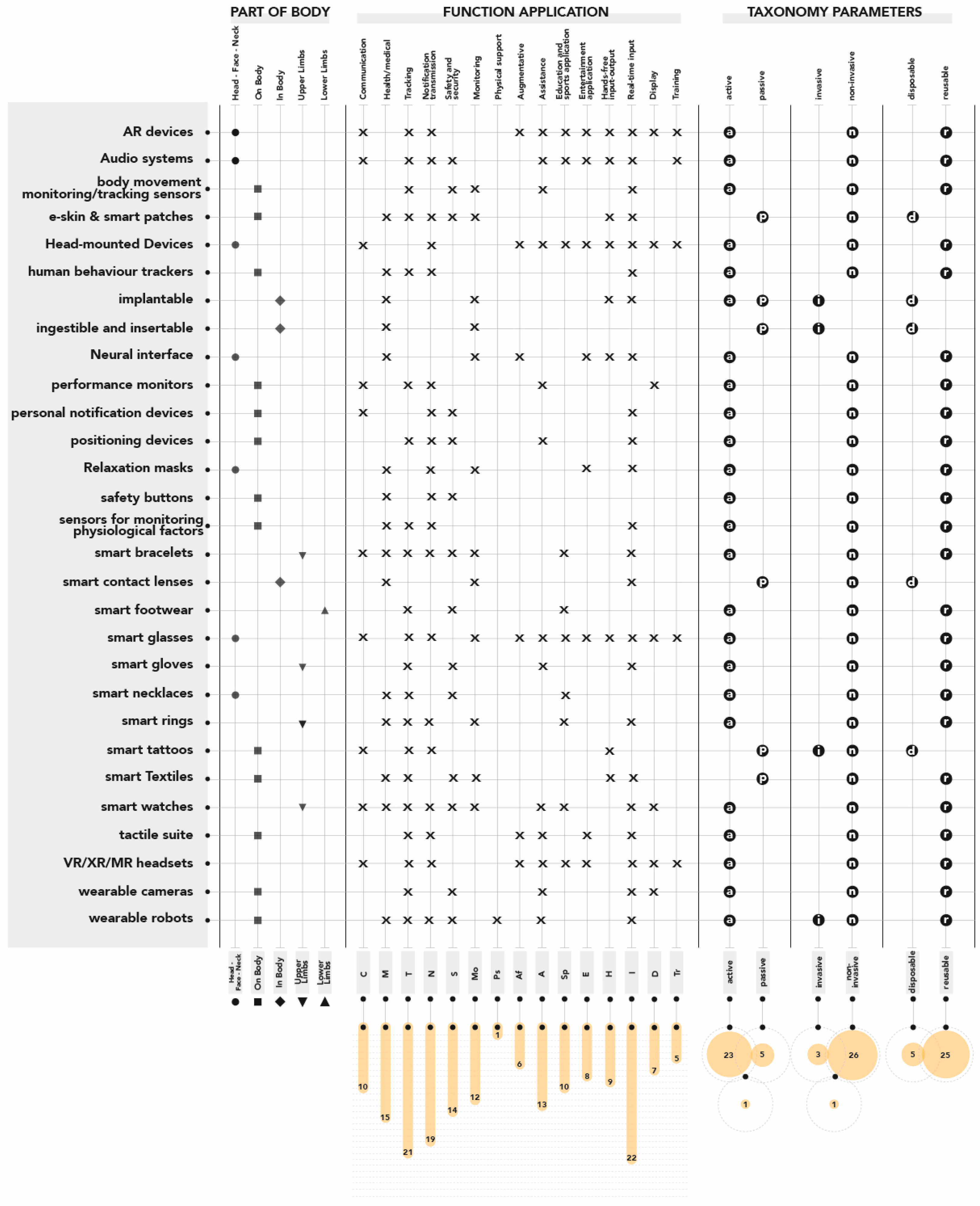
Based on an analysis of the literature, 29 types of devices have been identified, divided according to the parts of the body on which they are commonly applied, namely: head, face and neck; on-body; in-body; upper-limb; lower-limb.
From studies by Ometov et al. [
4] and Khakurel et al. [
21], the functions and applications that each device fulfils have been identified. They are classified according to functional attributes of Park et al. (2014) [
12] taxonomy, namely: active/passive, invasive/non-invasive and disposable/reusable (
Figure 4).
Instead, the following parameters were excluded: “single-functional or multi-functional”, as only types of wearable devices applicable to at least more than one function have been classified; the mode of signal transmission for data processing “wired or wireless”, as many of the selected device types can have both configurations and for this reason it is not a useful parameter for this classification; and finally, the field of application is excluded as wearable device types applicable to different fields have been classified, but always also to the industrial sector, which is the field of interest of the research.
This analysis revealed that, in the current scenario, most wearable devices can be applied, in various configurations, to multiple parts of the body, such as exoskeletons, e-patches, etc.; or their use affects multiple points of the body, as in the case of smart clothing. Another widespread configuration involves the application of wearable devices mounted on the head. In this case, AR/VR glasses and headsets, head-mounted display [HMD], headphones and neural interfaces are mainly used. Head-mounted devices are also among those that find the widest application because they integrate numerous functionalities. However, in the case of VR/AR/MR devices, applications are useful when it comes to dynamically providing information to operators on production lines, as well as interactive manuals for use in assembly and maintenance areas, but privacy issues remain [
32].
Similarly, the configurations of devices that integrate BCI systems could be significantly improved by addressing issues of long-term wearability, durability and ease of maintenance, while maintaining adaptability to a variety of use cases. In fact, there are currently no configurations on the market that satisfy usability requirements identified for the design of neuroimaging systems that can be used in different fields, such as industry [
46].
Head-mounted devices offer interesting opportunities for detection activities because, when equipped with a multitude of sensors, they allow the measurement of various parameters (physiological, neural, movement, etc.). Compared to other wearable configurations, head-mounted devices offer greater stability and reduced sensitivity to movement noise [
47].
Due to their similarities and/or adoption in daily situations, smartwatches and wristbands are among the devices that find the most use since they incorporate more features. They are also among the most popular among users. However, usability analysis conducted on various smartwatches by Alshamari and Althobaiti [
48] using different usability assessment methods shows that these devices still have usability issues, particularly in terms of ease of use, flexibility and efficiency.
Also, the survey shows that despite the trend towards technological and formal miniaturisation of devices, and the prevalence of non-invasive and reusable solutions, most devices do not have autonomy and require power. Moreover, the devices are almost always multifunctional, and among these, the integration of user tracking and real-time input transmission functions almost always stands out. This implies that the use of the devices is constrained by energy consumption. The constant monitoring present in many wearable solutions will negatively affect the operating time between battery charging/replacement and memory capacity [
49]. However, to overcome these critical issues, large memory units would need to be adopted, making the worn device less practical and more cumbersome, thereby compromising usability and wearability. Devices that do not incorporate adequate levels of wearability can, in fact, affect the use of and interaction with the device, leading to increased risk in the workplace [
50].
5.4. Ethical Challenges and Privacy in Wearable Technology
The use of smart wearable devices raises many concerns in terms of privacy and data security. In the European context, with regard to data and starting from Regulation (EU) 2016/679 [
4] or the General Data Protection Regulation (GDPR), guidelines have been established in the area of personal protection, thus witnessing a paradigm shift that, through a proactive approach, determines the accurate analysis of risks to people’s rights and freedoms. The GDPR mentions the principles of “privacy by design” and “privacy by default.” Specifically, the principle of “privacy by design” defines the approach that establishes that data protection begins with the design of a product/service/process in accordance with the GDPR, while “privacy by default” considers the need to protect users as a default setting through a selective approach to data. In this regard, it is necessary, both in Europe and internationally, to set the goal of strengthening research to ensure both security and fundamental rights.
Considering the use of Artificial Intelligence (AI) to support the manufacturing sector, ethics, working conditions and privacy are the main issues that need to be resolved for human progress [
51]. Although regulatory frameworks and standardisation efforts are fundamental steps, there are several challenges and opportunities ahead. In this regard, a comprehensive regulatory architecture is being put in place at the European and international level to ensure the safe and efficient use of AI. The spread of AI systems, based on data fusion and sharing and the automation of decision-making processes, can lead to specific risks and harmful practices or misuse. This involves “imposing” strict ethical standards for the development and operation of technology, aligning with international data privacy standards in an increasingly interconnected world [
52].
Increasingly, countries are working towards systematic regulation of this technology [
53]. European Union organisations have been reflecting for years on the topic of AI and the necessary steps to develop and regulate it. Similarly, the ISO—International Organization for Standardization, together with the International Electrotechnical Commission, specialised committees, and a global network of experts, are actively developing standards and guidelines covering various aspects of the development, validation, and use of AI, machine learning, use cases, reliability and other procedures for implementing AI systems and models [
54].
In particular, in Europe, the new European Regulation 2024/1689, AI-Act—Artificial Intelligence Act, represents the future of Artificial Intelligence with the aim of regulating the development, marketing, and use of Artificial Intelligence systems. This Regulation refers to modern, reliable, human-centred AI systems to ensure high levels of protection of health, safety and fundamental rights. The AI law is set to become a global benchmark, influencing AI governance frameworks around the world [
55].
6. Challenges and Research Gaps
This article, through a systemic analysis of keywords, identifies content related to (i) functional attributes and (ii) types of wearable devices to be applied to different parts of the body. This survey has been integrated with the taxonomy adopted for the definition of a classification of available wearable devices. The aim of this classification is to support the identification of the main design constraints and opportunities useful for the development of new wearable devices.
It should be noted that the technical aspects of the case studies reported in the section ‘Identification of types of wearable devices divided by body parts’ have not been addressed, as these have been selected and illustrated exclusively for the purpose of describing the selected metrics. The review of the case studies is not intended to evaluate the technical performance of commercial or prototype devices, but rather to analyse and classify the types of wearable devices that exist from a comparative perspective.
Future research activities will include an in-depth analysis of wearable devices, starting with the main human factor requirements, with the aim of guiding the design of wearable devices that are usable and suited to the needs of the industrial sector.
These are challenges that include, for example, ensuring the accuracy and reliability of data collected by wearable devices, and therefore related to data privacy and security [
21]; resolving possible issues in terms of interoperability between devices and platforms; and the correct integration of technology into industrial contexts. The use of such devices brings with it challenges related to the development of new regulatory standards that will evolve in step with the rapid evolution of wearable technology [
56].
7. Conclusions
In industrial contexts, there has been a substantial increase in wearable technologies characterised by various functionalities, such as real-time data collection, wireless connectivity, Artificial Intelligence processing and integration with broader industrial control systems [
57].
From the case studies reviewed, it is clear that future developments in wearable system design will focus primarily on the configuration of multifunctional devices, with particular emphasis on user tracking and continuous real-time input exchange, and ongoing technological and formal miniaturisation.
Technological developments have led to substantial improvements in the design of wearable devices, which have evolved from bulky, heavy solutions with limited functionality to lighter, more comfortable devices with greater functionality. As a result, research into user acceptance and adoption of wearable devices has attracted considerable interest, particularly in the industrial context [
58].
To increase user acceptance levels, these measurement tools must not only be valid and reliable, but also easy to use, promoting positive user experience. Therefore, according to Houghton et al. [
59], measurement capability and usability are the two pillars for creating a device that will excel in the industry.
Although wearable technology offers immense potential, there are various challenges that will need to be addressed in the near future, particularly concerns about accuracy and comfort, which currently remain the main obstacles to their widespread adoption.
Despite the numerous obstacles to overcome, it is evident that wearable technology will become more sophisticated and integrated into industrial processes, and that its use will result in a safer and more connected workplace of the future.
With the contribution of new nanotechnologies and bionics, it will be possible to define new abilities for the “Augmented Human” through the digitisation of humans by artificial vision, exoskeletons, perceptual augmentation and physiological parameter monitoring [
60,
61]. This hybridisation between man and machine, between body and technology, will define new design paradigms for the creation of safe and interconnected working environments.
Future wearable devices will stand out for their increasingly advanced sensor integration, which will enable miniaturisation and integration into lighter and more comfortable devices. Sensor accuracy will also improve through the use of innovative materials and the implementation of machine learning algorithms that will offer more accurate measurements even in variable conditions.
Furthermore, with a view to developing more efficient devices, future research in this field will focus on the development of new battery technologies that will have to meet important requirements in terms of biocompatibility, safety and sustainability [
62].
A further innovative perspective in the use of wearable devices is provided by integration with Digital Twins, which, through virtual simulations, are radically changing the way safety, efficiency and ergonomics are managed in industrial environments. Digital Twins will become one of the most representative forms of digital transformation and, consequently, a strategic lever for competitiveness in the manufacturing sector as an enabling technology for smart production [
63]. In particular, continuous monitoring based on Wearable Devices and Digital Twins will introduce a new paradigm in which the user becomes an integral part of the cyber–physical system and is able to learn, predict and adapt in real time.




 ,
,