


Abstract
The stabilization of clayey soils constitutes an important challenge in civil engineering due to their high plasticity, low strength, volumetric instability, and sensitivity to moisture changes. Although cement and lime have been widely used to improve their behavior, these materials generate environmental impacts associated with CO2 emissions and chemical alterations of the soil. This systematic review analyzes the effectiveness of natural-origin biopolymers as a sustainable alternative for stabilizing clayey soils. The research was conducted under PRISMA 2020 guidelines, using the Scopus database and considering publications between 2022 and 2026. Of 453 records initially identified, 45 articles were selected for final synthesis, according to defined inclusion and exclusion criteria. The results show that biopolymers such as xanthan gum, guar gum, chitosan, alginate, cellulose, and lignin improve unconfined compressive strength, cohesion, bearing capacity, Atterberg limits, durability, and soil microstructure. These effects are mainly related to hydrogel formation, particle coating, physico–chemical bonds, and porosity reduction. It is concluded that biopolymers represent a promising and environmentally compatible alternative, although greater field validation, durability studies, and standardized design protocols are required.
1. Introduction
Population growth and urban expansion have forced civil engineering to work on sites with unfavorable geotechnical properties, such as clayey and expansive soils [1,2,3,4]. Historically, the stabilization of these soils has been based on inorganic binders such as Portland cement and lime [5,6,7]. However, the cement industry is responsible for approximately 8% of global carbon dioxide (CO2) emissions, releasing almost one ton of gas for each ton produced [1,8,9]. In addition to their high carbon footprint, these stabilizers permanently alter the pH of soil and groundwater, inhibiting vegetation growth and degrading local biodiversity ASTM D2166, BS 1377, IS 2720 [10,11,12]. Given this situation, it is imperative to develop sustainable and carbon-neutral alternatives that ensure mechanical stability without compromising the environment [10,13,14].
In this context, biopolymers, polymers of natural origin derived from plants, microorganisms, or animals, have emerged as an avant-garde biogenic solution [13,15,16,17]. Materials such as xanthan gum (XG), guar gum (GG), chitosan, and alginate stand out for their renewability and low toxicity [14,18,19,20]. These ecological additives facilitate the transition toward green geotechnical engineering, offering a high capacity to interact with soil particles through physico–chemical bonds [8,13,17,21]. Various investigations have demonstrated their effectiveness in increasing unconfined compressive strength (UCS), improving consistency, and reducing erodibility of marginal soils [10,11,22,23]. The versatility of these polysaccharides allows their application in a wide range of infrastructures, from road subgrades to desertification control [4,24,25,26].
The strengthening mechanism is based on the formation of three-dimensional networks of hydrogels three-dimensional hydrogel networks when interacting with pore water [10,15,19,26]. These hydrogels encapsulate soil grains through hydrogen bonds, electrostatic forces, and ionic interactions, creating cationic bridges with the charged surfaces of clay minerals [10,15,23,27]. During curing, the dehydration of the polymer facilitates a transition from a gummy to a vitreous state, substantially increasing intergranular cohesion and the stiffness of the matrix [9,10,17]. Structural analyses using Scanning Electron Microscopy (SEM) and Energy-Dispersive X-ray Spectroscopy (EDS) confirm that this process reduces porosity and densifies the internal structure of the modified soil [7,8,10,12]. However, mechanical performance is highly sensitive to factors such as dosage, moisture content, and mineralogy type [5,8,28,29].
Despite increases in strength, soils stabilized exclusively with biopolymers often exhibit a brittle post-peak behavior [1,2,16,17,30]. To mitigate this brittleness and improve ductility, the incorporation of natural fibers (luffa, jute, coconut, flax) or synthetic (polypropylene) fibers randomly distributed has been investigated [3,5,31,32,33]. These hybrid systems establish crack-bridging mechanisms and mechanical interlocking that significantly increase energy absorption and residual strength [2,30,31]. The synergistic combination of fibers and biopolymers not only improves the toughness of the composite, but also provides a more stable mechanical response under dynamic loads and environmental variations [2,4,8,13,31]. This integration represents a critical step for the implementation of geomaterials in surface layers subjected to low confinement [2,30].
From a sustainability perspective, the shift toward biopoly stabilizers allows for meric stabilizers enables a potential reduction in greenhouse gas emissions of up to 99% compared with conventional binders [10,16,33]. Unlike cement, whose environmental footprint is irreversible, the CO2 released by the eventual biodegradation of biopolymers is reabsorbed by the surrounding flora, maintaining carbon neutrality [10,13,14,15,16]. Likewise, these materials act as moisture retainers, promoting seed germination and ecological restoration on slopes and embankments [1,15,24,28,34]. Life cycle analysis shows that the use of biogenics can reduce total costs by optimizing local resources and eliminating energy-intensive industrial processes.
Despite the potential of biopolymers, the existing literature reveals unresolved controversies rather than a unified consensus. First, strength-improvement figures are reported inconsistently across studies, with peak values from hybrid fiber–biopolymer systems (up to 1100%) sometimes generalized as representative of biopolymers as a class, obscuring the more modest and variable gains (120–850%) achieved by individual biopolymers. Second, reported durability outcomes under wetting–drying and freeze–thaw cycles are contradictory, ranging from near-total strength retention to losses exceeding 75%, without agreement on the underlying causes. Third, the prior literature presents a fragmented and mostly qualitative knowledge base, omitting precise metrics on the variability of UCS, CBR, and stiffness across different mineralogies [14,30]. These unresolved discrepancies motivate the present systematic review, which addresses this gap by analyzing strength gains of up to 1100% and validating, via SEM, a reduction in macroporosity of up to 38% [3,35]. By using the porosity/binder index as a predictive framework, this study goes beyond empirical observation, consolidating a technical model that unifies stiffness and volumetric stability [3,4,35]. Overcoming this lack of coordination is imperative to establish standardized design protocols in sustainable road geotechnics.
Regarding cost–benefit feasibility, financial uncertainties persist; despite the fact that biopolymers such as xanthan gum have reduced their price drastically, the lack of standardized design protocols and dependence on soil mineralogy hinder large-scale industrial adoption [23,25,30,36]. Leading authors such as Baldovino et al. [30] emphasize that knowledge is fragmented, identifying a shortage of data on long-term performance and micro-to-macro integration [7,8,19,30]. Consequently, the absence of a unified regulatory framework prevents these biogenic technologies from consolidating as profitable and predictable alternatives for contemporary civil engineering [33].
The stabilization of clay soils using biopolymers and natural materials offers a sustainable alternative to traditional methods. The use of lignin, either alone or in combination with cement, lime, or sodium sulfate, significantly improves compressive strength and reduces permeability in clays [37,38,39,40]. Furthermore, natural fibers such as sawdust, rice husks, or Diss fibers, even when treated with citric acid, optimize the geotechnical properties of expansive soils and pavements [41,42]. Finally, advanced biopolymers such as ammonium alginate, reinforced with montmorillonite clay and tannic acid, demonstrate high mechanical performance and fire resistance [43]. These eco-friendly solutions effectively mitigate the environmental impact of modern construction [37,41].
This systematic review addresses the existing gap through a comprehensive analysis of the mechanical and microstructural effectiveness of biopolymers in clay soils. The novelty of this work lies in synthesizing recent advances on hybrid reinforcement systems and cross-linking techniques to improve insolubility and stability under saturated conditions [5,10,19,21,28,30]. The field is advanced with a unified assessment of performance within a predictive porosity–binder framework, enabling direct comparison of the efficiency of biological systems versus traditional chemicals [4,8,30]. Finally, this study provides a technical roadmap to overcome durability barriers, consolidating biopolymers as a viable and superior alternative for the development of sustainable and resilient infrastructure [3,4,11,26,30].
2. Materials and Methods
This research is based on a systematic review of the scientific literature, employing an analytical approach for the critical review of background research on the use of natural biopolymers in geotechnical engineering.
2.1. Protocol and Registration
To ensure maximum transparency, reproducibility, and scientific rigor, the design and execution of this systematic review were strictly aligned with the PRISMA 2020 standards (Preferred Reporting Items for Systematic Reviews and Meta-Analyses) [44]. The development of the research was guided by a prospective protocol under PRISMA-P guidelines.
2.2. Research Question
The central problem was structured using the adapted PICO/TiO format (Population, Intervention, Comparison, Outcomes/Time, Environment). The guiding question was defined as follows:
What is the current state of scientific knowledge regarding the effectiveness of natural-origin biopolymers in improving the geotechnical and microstructural properties of clay soils, in comparison with traditional binders such as cement and lime, and how does this alternative influence mechanical strength, durability, and environmental sustainability?
2.3. Search Strategy
The information retrieval process was conducted during April 2026, centralizing the inquiry in the Scopus scientific database. The search string applied to the fields TITLE-ABS-KEY was as follows:
TITLE-ABS-KEY((biopolymer* OR “natural polymer*” OR “biopolímero natural” OR cellulose OR lignin OR starch OR xanthan OR carrageenan OR alginate OR pectin OR chitosan OR “natural fiber*”) AND (stabiliz* OR “soil improvement” OR “soiltreatment” OR “ground improvement”) AND (cohesion OR “shear strength” OR” mechanical properties” OR “CBR” OR “bearing capacity”) AND (clay OR clayey OR” expansive clay” OR “cohesive soil” OR bentonite OR montmorillonite)).
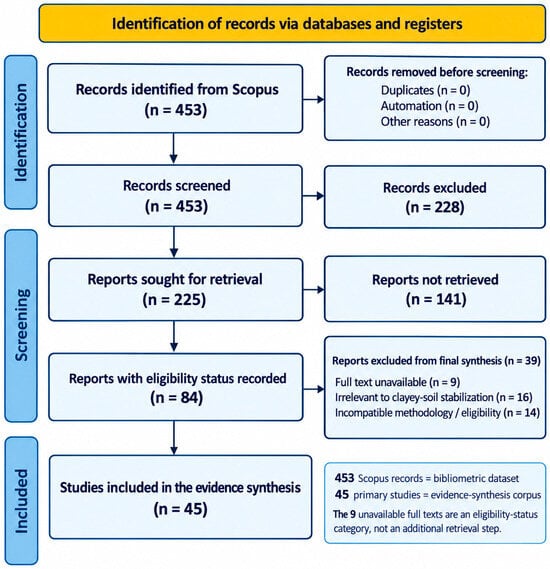
The preliminary search yielded 453 Scopus records. These records constitute the bibliometric dataset used to characterize publication trends, geographic distribution, and keyword co-occurrence. They were not treated as the evidence-synthesis samples. After deduplication, title/abstract screening, retrieval attempts, and full-text eligibility assessment, 45 studies were retained for the evidence synthesis. The search was conducted in April 2026; therefore, the evidence-synthesis inclusion window is 2022–2026, whereas the bibliometric record set may contain publications outside that window.
The single-database search is acknowledged as a retrieval limitation. In addition, the distinction between the bibliometric dataset (453 Scopus records) and the evidence-synthesis corpus (45 eligible studies) is maintained throughout the manuscript. Records outside 2022–2026 were not counted among the 45 studies used for the substantive synthesis.
Theoretical Evolution and Foundational Studies Prior to 2022
To provide adequate historical context for the 2022–2026 synthesis, it is necessary to acknowledge the theoretical evolution established by the seminal pre-2022 literature. Between 2015 and 2019, the conceptual framework of Biopolymer-Based Soil Treatment (BPST) was established, demonstrating that gellan gum and xanthan gum could substantially increase soil unconfined compressive strength through hydrogel matrix formation and ionic inter-particle bonding. Similarly, early studies highlighted the moisture sensitivity of biopolymers and suggested initial cross-linking approaches. These seminal studies shifted the paradigm from purely inorganic cementitious hydration toward surface-charge interaction and polymer hydrogel vitreous transformation during drying, setting the stage for the recent advances in cationic cross-linking and fiber hybridization evaluated in this review.
2.4. Inclusion and Exclusion Criteria
Eligibility criteria were applied to original peer-reviewed studies published in English between 2022 and 2026. Reviews, PRISMA guidance, gray literature, unindexed conference abstracts, and studies lacking standardized geotechnical testing frameworks were treated as supporting or methodological material rather than as part of the 45-study evidence-synthesis corpus. The 45 included primary studies correspond to references [1,2,3,4,5,6,7,8,9,10,11,12,13,14,15,16,17,18,19,20,21,22,23,24,25,26,27,28,29,30,31,32,33,34,35,36,37,38,39,40,41,42,43,45,46]; reference [44] is the PRISMA 2020 methodological guideline and is not counted as an included study.
2.5. Screening Matrix
To document screening, deduplication, retrieval, and selection, a complete screening matrix was prepared. The screening record is: 453 records identified; 228 excluded at title/abstract screening; 225 reports sought for retrieval; 141 reports not retrieved; 84 reports with an eligibility status recorded; 39 reports excluded from the final synthesis (9 full texts unavailable, 16 irrelevant to clayey-soil stabilization, and 14 incompatible with the eligibility criteria); and 45 studies included. The 9 unavailable full texts are therefore reported as an eligibility-status category within the 84 records, not as an additional retrieval count. The selection matrix and supplementary data are hosted on Zenodo and were published on 22 May 2026; the access link is https://zenodo.org/records/20314145 (accessed on 21 September 2026).
2.6. Data Extraction
Data extraction captured study design, soil classification and mineralogy, biopolymer type, treatment dosage, curing duration, moisture state, test method, and performance metrics (UCS, Atterberg limits, CBR, SEM/EDS). To prevent double counting, original experimental studies were separated from the methodological/background literature, and pure biopolymer treatments were distinguished from biopolymer–fiber and biopolymer–conventional-binder systems. Internal validity was assessed using a JBI-adapted experimental checklist. Because of substantial heterogeneity across soil mineralogies, treatment chemistries, curing protocols, and test conditions, findings were integrated through narrative and structured synthesis rather than pooled as if they were equivalent materials. The resulting classification of the primary studies is presented in Table 1.
Table 1.
Classification of the 45 primary studies included in the evidence synthesis.
3. Results
3.1. Selection of Study Data
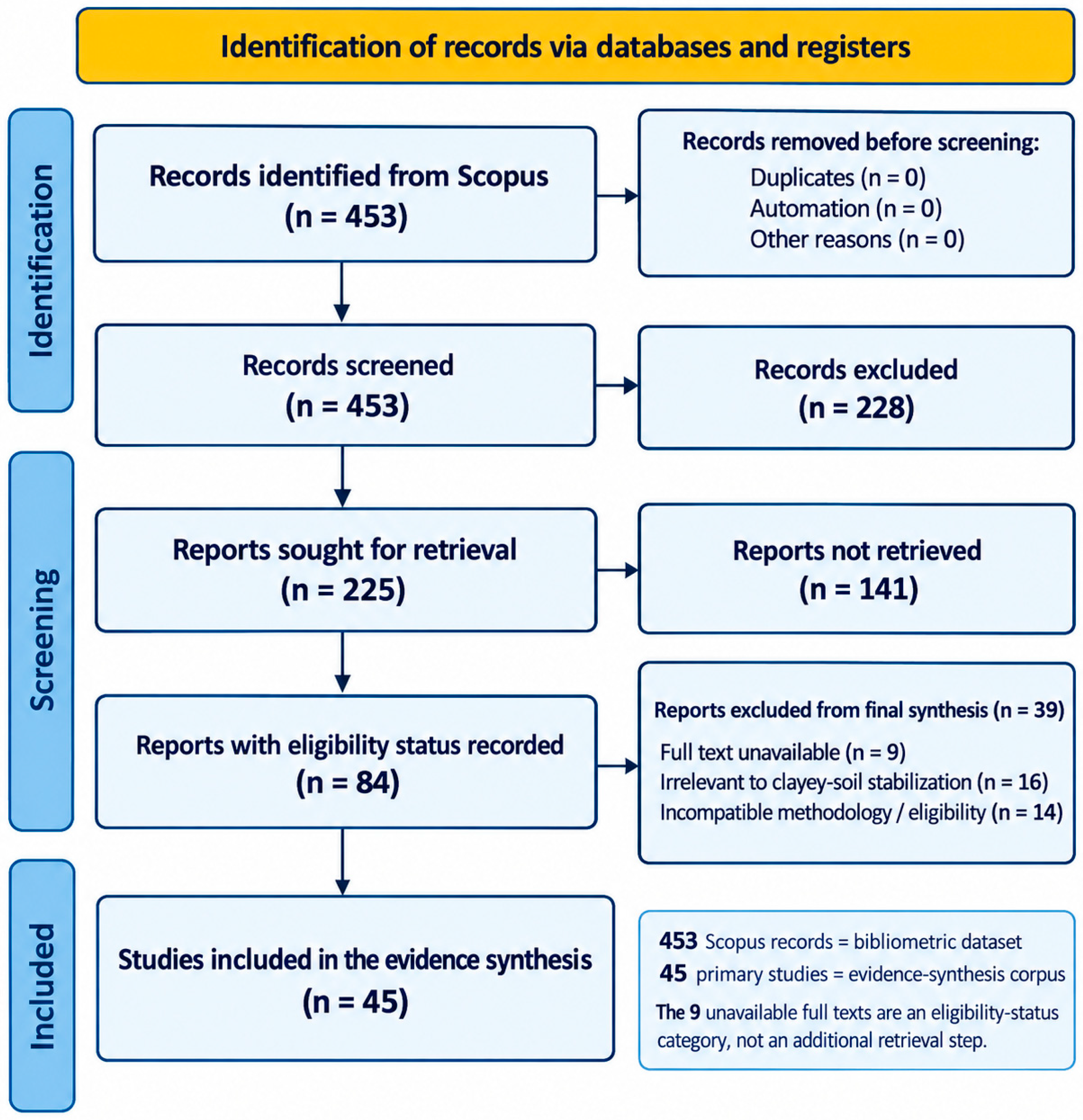
As observed in Figure 1, the process for selecting the literature corpus was documented systematically through the four fundamental phases of the PRISMA 2020 flow diagram: identification, screening, eligibility, and final inclusion. The preliminary inquiry found a total of 453 potential records. During automated and manual screening, duplicates were removed, and titles and abstracts were evaluated, discarding irrelevant studies. In the eligibility phase, the full text of the remaining articles was analyzed, applying the exclusion criteria detailed above. This thorough scrutiny resulted in the consolidation of a final sample of 45 articles of high technical relevance for the qualitative and quantitative synthesis. The complete screening process and the exact flow of records are visually summarized in the PRISMA 2020 flow diagram (Figure 1; Supplementary File S1).
Figure 1.
PRISMA flow manually prepared at https://estech.shinyapps.io/prisma_flowdiagram/. (accessed on 26 May 2026).
3.2. Bibliometric Analysis and Cross-Cutting Interpretation
3.2.1. Temporal Evolution and Technical Drivers
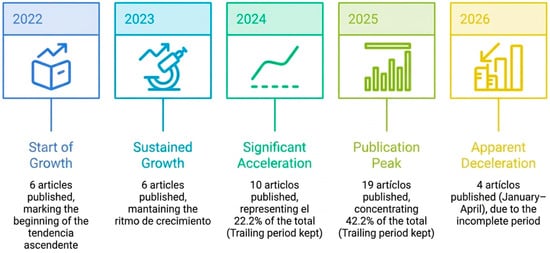
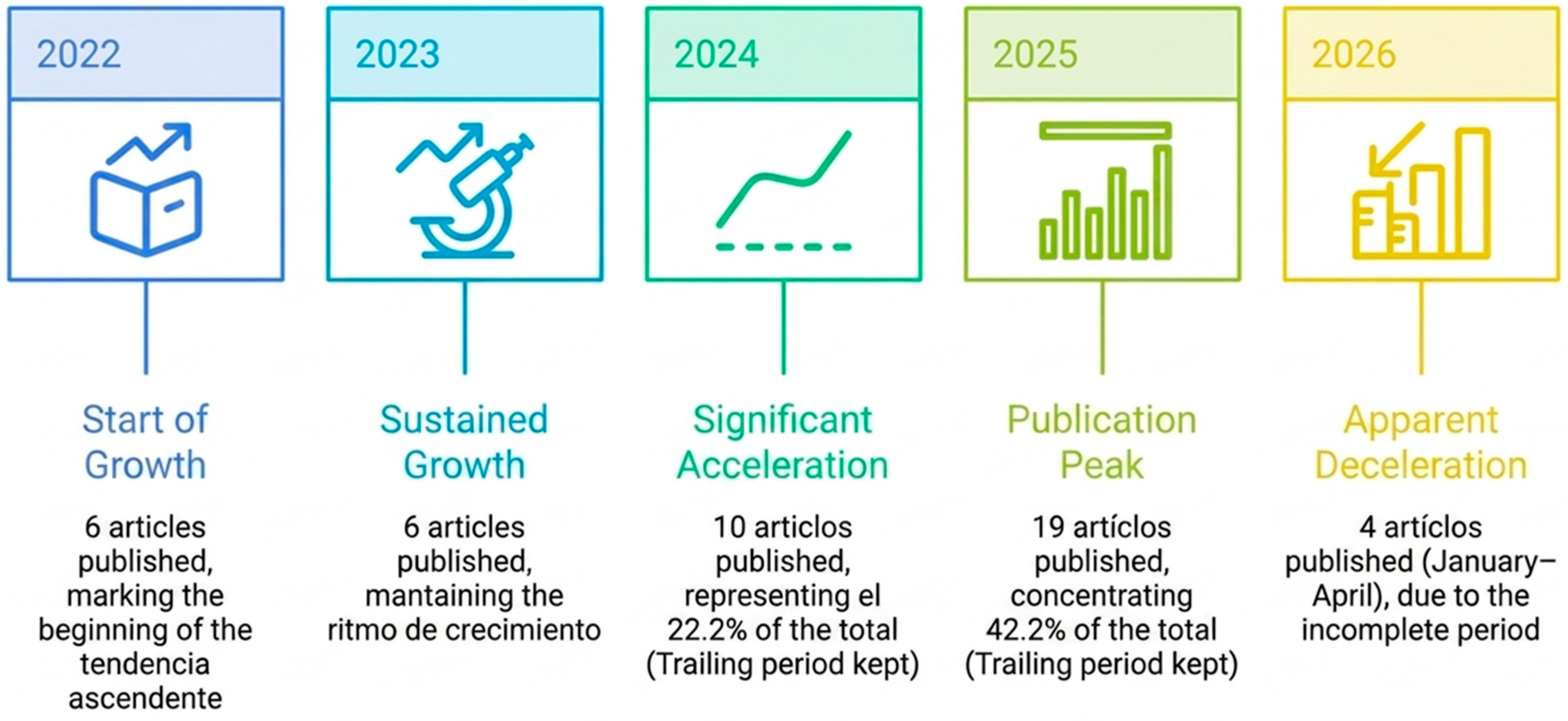
The temporal distribution of the 45 included studies (2022: 6; 2023: 6; 2024: 10; 2025: 19; 2026: 4) shows a sharp rise in scientific output starting in 2024. This surge (concentrating 64.4% of total publications in 2024–2025) is not merely quantitative; it directly reflects major technical breakthroughs in biopolymer modification. Bibliometric analyses based on the broader Scopus retrieval are reported separately and are not used to infer the characteristics of the 45-study engineering evidence base. The annual distribution of the selected primary studies is presented in Table 2.
Table 2.
Table of the number of articles by selected year.
3.2.2. Temporal Trend Chart
The analysis of the time trend of publications reveals sustained growth and almost exponential growth in the field of biopolymer stabilization between 2022 and 2025, with an apparent deceleration in 2026 attributable exclusively to the period of incomplete publication at the time of the search (January-April 2026). The years 2024 and 2025 concentrate 64.4% of the total included publications (29 out of 45 articles). This trend is consistent with the global rise in green geotechnical engineering and with the increasing availability of industrial biopolymers at competitive prices.
Figure 2 shows the temporal graph of publications on the use of biopolymers in geotechnics for the stabilization of clay soils (2022–2026). It shows an incidence of investigations in the years 2024 and 2025 regarding the use of biopolymers; growth presents a notable inflection from 2023, which coincides with the publication of seminal studies [8] that established the efficacy of xanthan gum and guar gum as viable alternatives to cement.
Figure 2.
Temporal trend of publications on biopolymers.
3.2.3. Cross-Country Comparison of Research Focus
The authorship analysis of the selected corpus identifies a core of researchers with recurring production in the field of biogenic stabilization. In Table 3, the authors with greater visibility and publication frequency during the analyzed period accumulate two to four articles each within the reviewed corpus, reflecting sustained thematic leadership. Consolidated groups in India, South Korea, China, Australia, and Brazil are identified as having the highest collaborative and interdisciplinary activity.
Table 3.
Selected recurring authors and research focus within the included evidence-synthesis corpus.
Geographic mapping reveals distinct regional research strategies driven by local geotechnical challenges:
South Korea (13% of corpus): Leads research on micro-to-macro stiffness, dynamic shear modulus (G0), cationic cross-linking, and durability under severe climatic freeze–thaw cycles.
India (27% of corpus): Focuses heavily on practical transport infrastructure, road subgrade stabilization using low-cost biopolymers (guar gum, cellulose), and CBR improvements.
Latin America (Brazil and Colombia, 9%): Centers on high-plasticity tropical expansive clays, utilizing the porosity/binder ratio (n/Biv) to formulate predictive design equations for tropical road embankments.
Australia and China (27% combined): Focus on marine biopolymers (carrageenan, chitosan) and deep soil mixing applications.
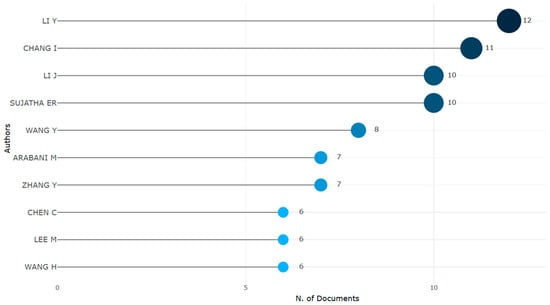
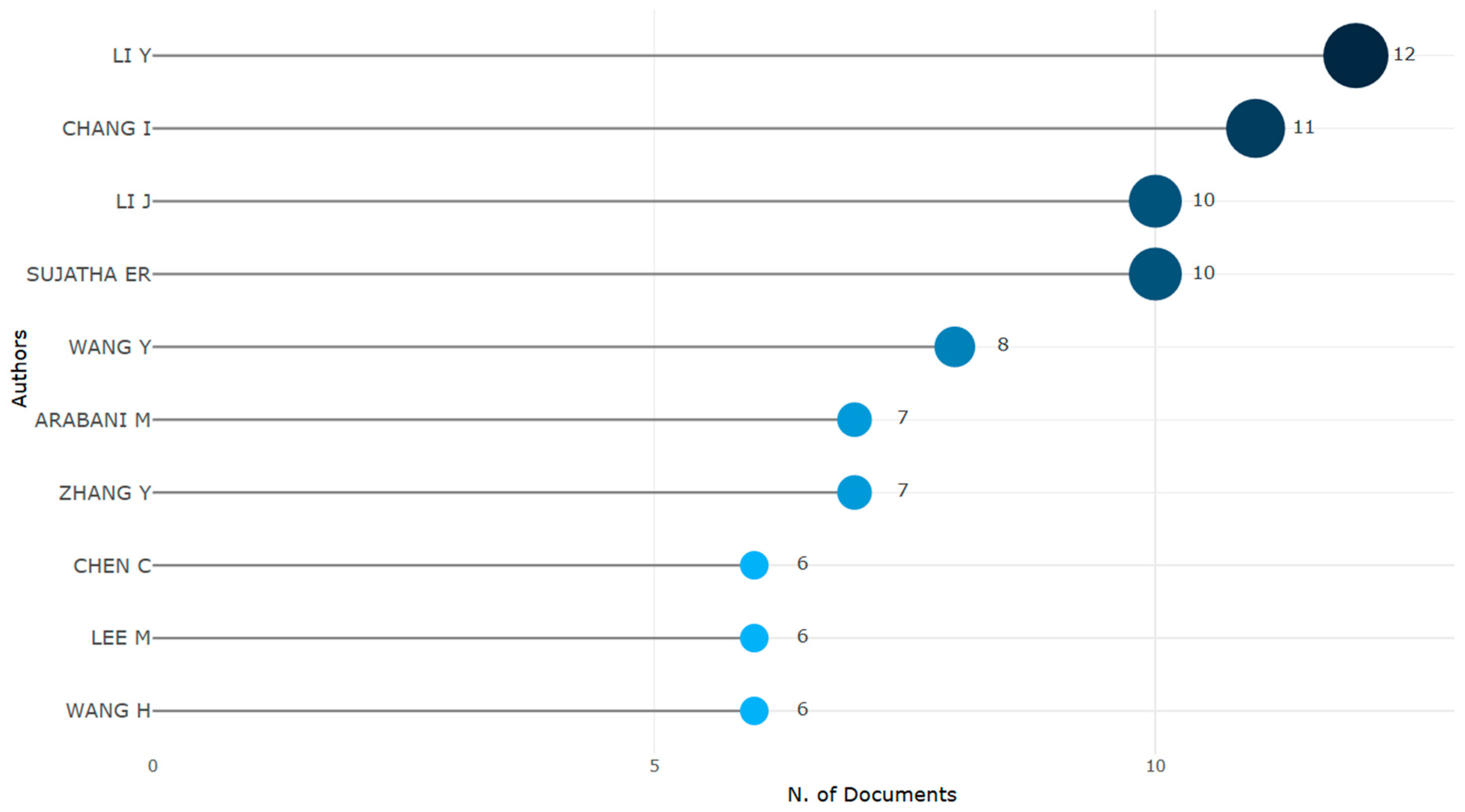
Figure 3 shows that, according to the bibliometric analysis of the entire base of 453 articles, there are 10 most cited authors, the most frequent of these with a count of 12 times, which helps us understand the characteristic rise and the relevance that these investigations focused on stabilizing clayey soils through the use of biopolymers have.
Figure 3.
Scientific productivity of the leading authors in biopolymer-based geotechnical research.
3.2.4. Keyword Co-Occurrence Network
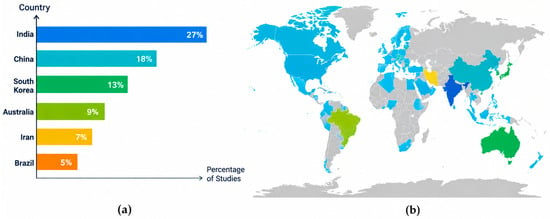
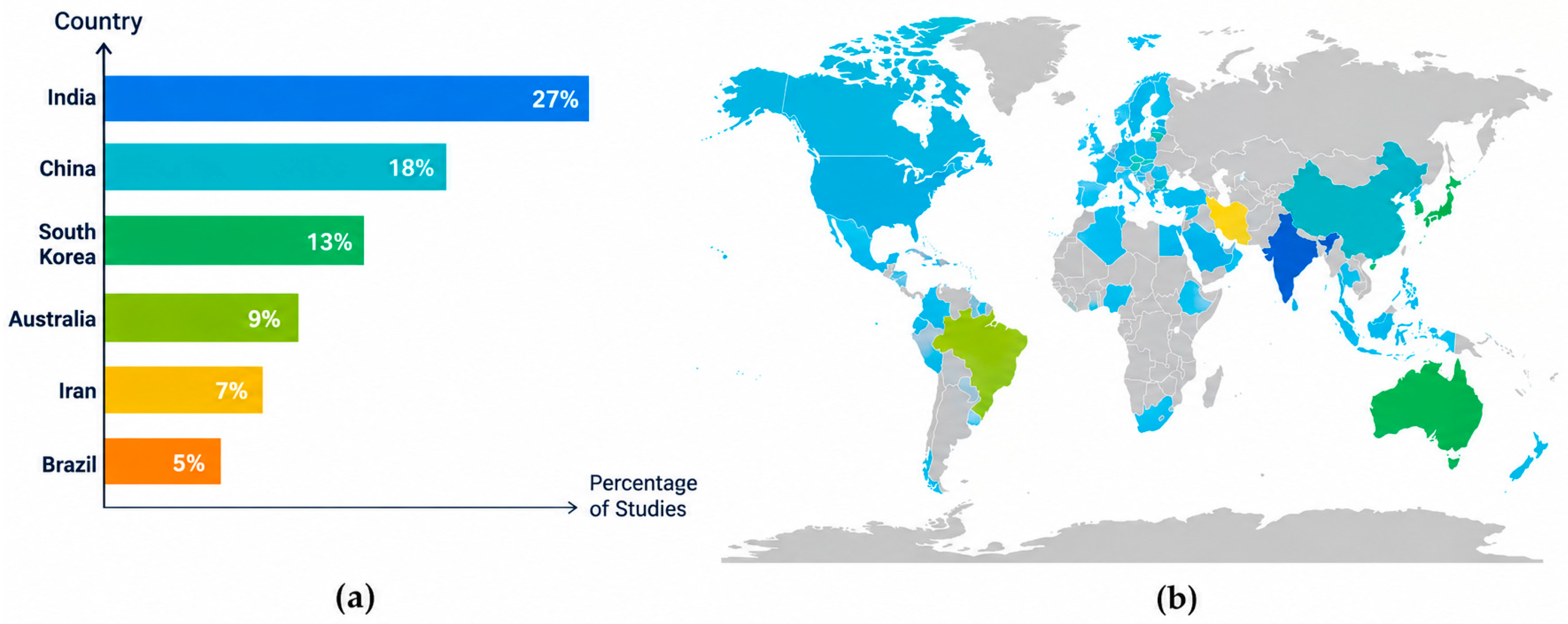
The geographic mapping of the 45 included studies shows that India leads the global scientific production in geomaterials biopolymers, contributing approximately 27% of the corpus (12 articles), followed by China (18%), South Korea (13%), Australia (9%), and Iran (7%). In Latin America, Brazil emerges as the main representative, with contributions related to the use of biopolymers in tropical soils of high plasticity. In Figure 4, this distribution reflects that the research is led by countries with extensive regions of problematic clayey soils or high seismic activity, where the need for sustainable stabilization is critical.
Figure 4.
(a) Percentage distribution of studies by leading countries; (b) Global geographic distribution of selected research activity.
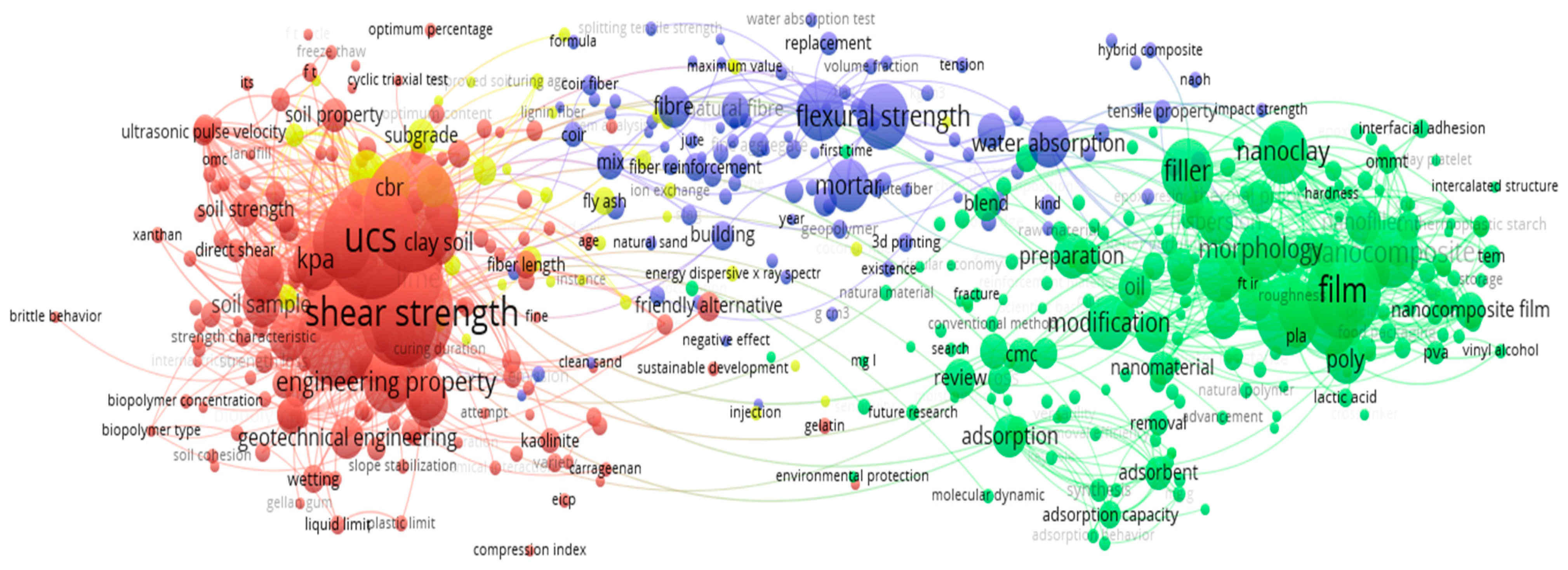
The keyword co-occurrence analysis using VOSviewer v.1.6.20, applied to the total number of records retrieved from Scopus (n = 453), makes it possible to identify the terms with the highest impact and frequency in the specialized literature. Four main thematic clusters are identified: (1) biopolymers and specific types: xanthan gum, guar gum, chitosan, alginate, biopolymer; (2) mechanical properties of the soil: unconfined compressive strength (UCS), CBR, shear strength, Plasticity Index; (3) microstructural analysis: SEM, XRD, FTIR, microstructure, pore structure; and (4) sustainability: carbon footprint, life cycle assessment, green geotechnics, sustainable stabilization.
The terms “xanthan gum” and “clay stabilization” show the highest frequency of occurrence (n > 85 co-occurrences), followed by “unconfined compressive strength” (n > 70) and “biopolymer” (n > 65). The high centrality of “microstructure” and “SEM” in the network confirms the importance of microstructural analysis as the dominant complementary methodology in the reviewed primary studies.
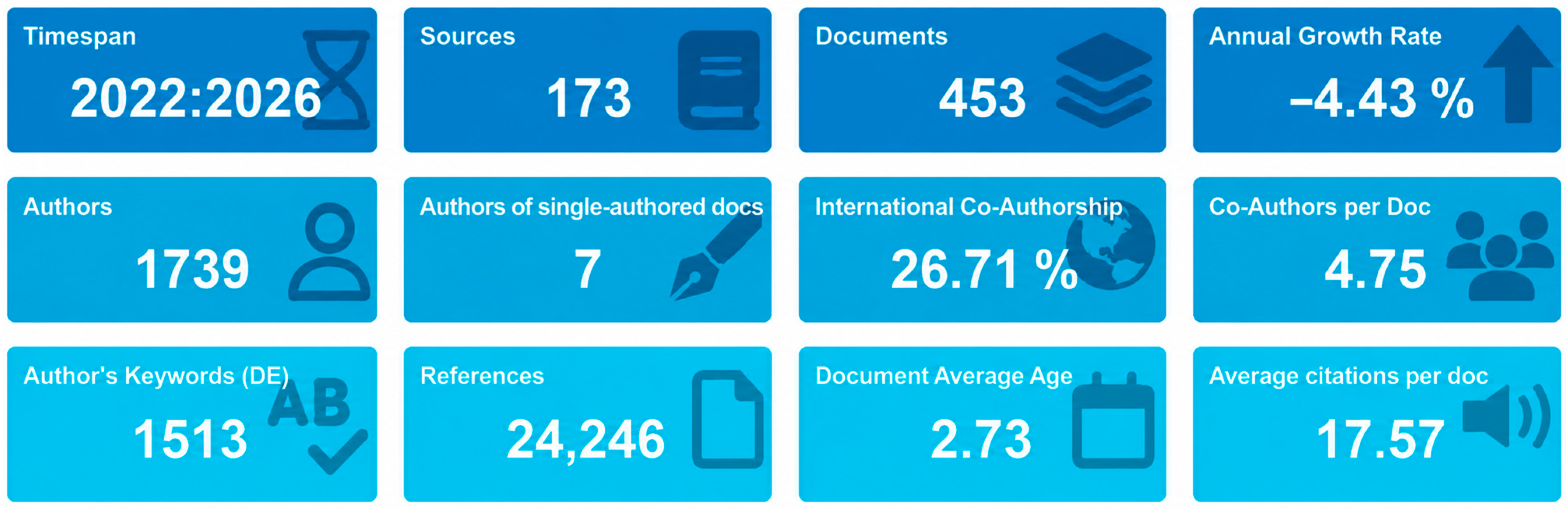
Figure 5 shows the co-occurrence network of keywords in the literature on biopolymers in geotechnics (2022–2026), generated with VOSviewer v.1.6.20 from the 453 Scopus records. The nodes represent frequent terms; the thickness of the links indicates the strength of co-occurrence between term pairs. The colors identify thematic clusters: red = mechanical properties; blue = types of biopolymers; green = microstructure; yellow = environmental sustainability. Unlike the evidence synthesis based on the 45 primary experimental studies, this bibliometric assessment encompasses the broader Scopus corpus and is therefore used to describe research trends rather than to quantify engineering performance. The main results of the Bibliometrix analysis are presented in Figure 6.
Figure 5.
Co-occurrence network according to VOSviewer.
Figure 6.
Bibliometric analysis according to Bibliometrix.
3.3. Differentiated Mechanistic Discussion by Biopolymer Category
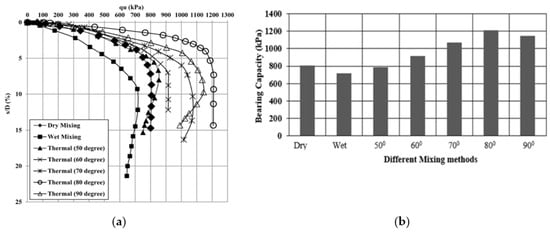
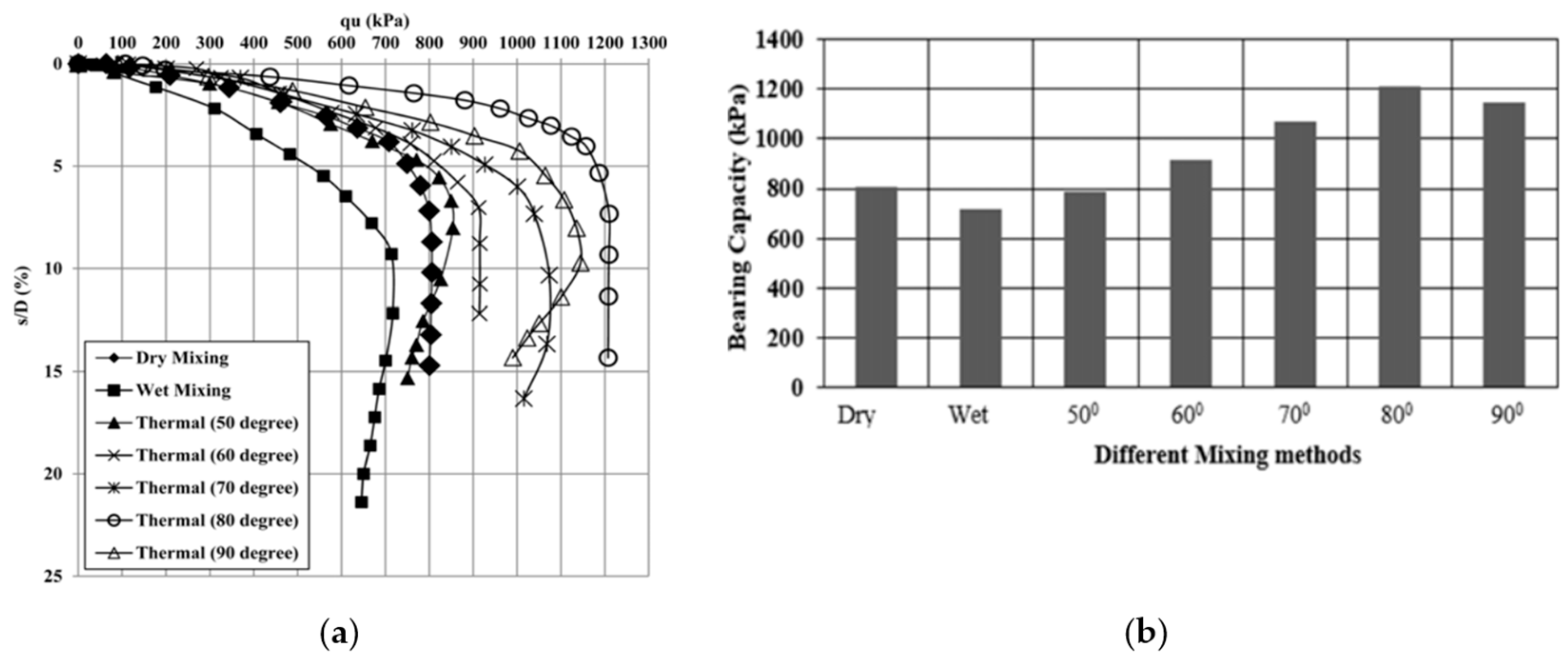
The literature distinguishes two main routes for integrating biopolymers into clayey soils: dry mixing and wet mixing [10]. In dry mixing, the biopolymeric powder is mechanically homogenized with the soil before adding the compaction water [11]. By contrast, wet mixing involves previously dissolving the biopolymer in water to create a viscous solution or hydrogel before applying it to the soil.
The dry mixing method usually reports higher compressive strength and a more homogeneous distribution in laboratory tests [1,11]. Several authors note that this technique is more feasible for field applications, since it avoids the complex thermal treatment of the solvent required in wet methods for biopolymers such as chitosan or alginate [1,27]. In addition, it prevents workability problems arising from the high initial viscosity [10].
In Figure 7, advanced research compares dry, wet, and thermal mixtures, highlighting that heating the solvent (70–80 °C) maximizes the solubility and coating capacity of clay particles [20,36]. The graphs show that the bearing capacity of thermal mixing at 80 °C significantly outperforms that of conventional dry and wet mixing methods at room temperature [36].
Figure 7.
Thermal blends in relation to bearing capacity: (a) load–settlement curves for dry, wet, and thermal mixing at different temperatures; (b) bearing capacity for different mixing methods [36].
3.3.1. Neutral and Anionic Polysaccharides (Xanthan Gum, Guar Gum, Alginate)
Anionic and neutral polysaccharides stabilize clay primarily through hydrogel network encapsulation and hydrogen bonding between biopolymer hydroxyl/carboxyl groups and clay surface oxygen atoms. During short-term curing (1–3 days), hydrated biopolymers form viscous hydrogels filling macropores. During long-term curing (7–28 days), progressive moisture loss transforms the hydrogel into a rigid vitreous matrix, increasing intergranular cohesion. However, under saturated conditions, re-hydration can induce hydrogel softening unless cross-linked with multivalent cations.
3.3.2. Cationic Biopolymers (Chitosan)
Chitosan possesses protonated amine groups in acidic media, allowing direct electrostatic attraction to negatively charged clay mineral surfaces (montmorillonite, kaolinite). This induces rapid clay particle flocculation and strong cationic bridging, providing high immediate shear strength. Long-term performance relies on the low water solubility of chitosan at neutral/alkaline pH, rendering it more water-resistant than pure xanthan gum.
3.3.3. Lignin and Lipid-Based Biopolymers
Lignin acts as a charge-neutralizing surfactant. Its hydrophobic aromatic ring structure reduces the diffuse double layer thickness of clay particles, promoting aggregation and reducing plasticity. Unlike polysaccharides, lignin does not form expanding hydrogels, providing superior moisture stability but lower absolute peak UCS gains.
3.3.4. Protein-Based Biopolymers (Gelatin)
Gelatin forms thermos-reversible polypeptide gel networks that bind clay grains upon cooling and drying. While achieving high early strength and CBR gains, proteinaceous networks are highly susceptible to microbial biodegradation over extended curing periods in non-sterile field soils.
3.4. Effect of Biopolymer Dosage on Atterberg Limits
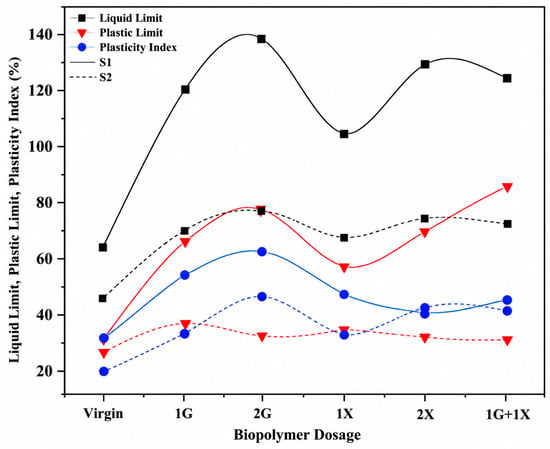
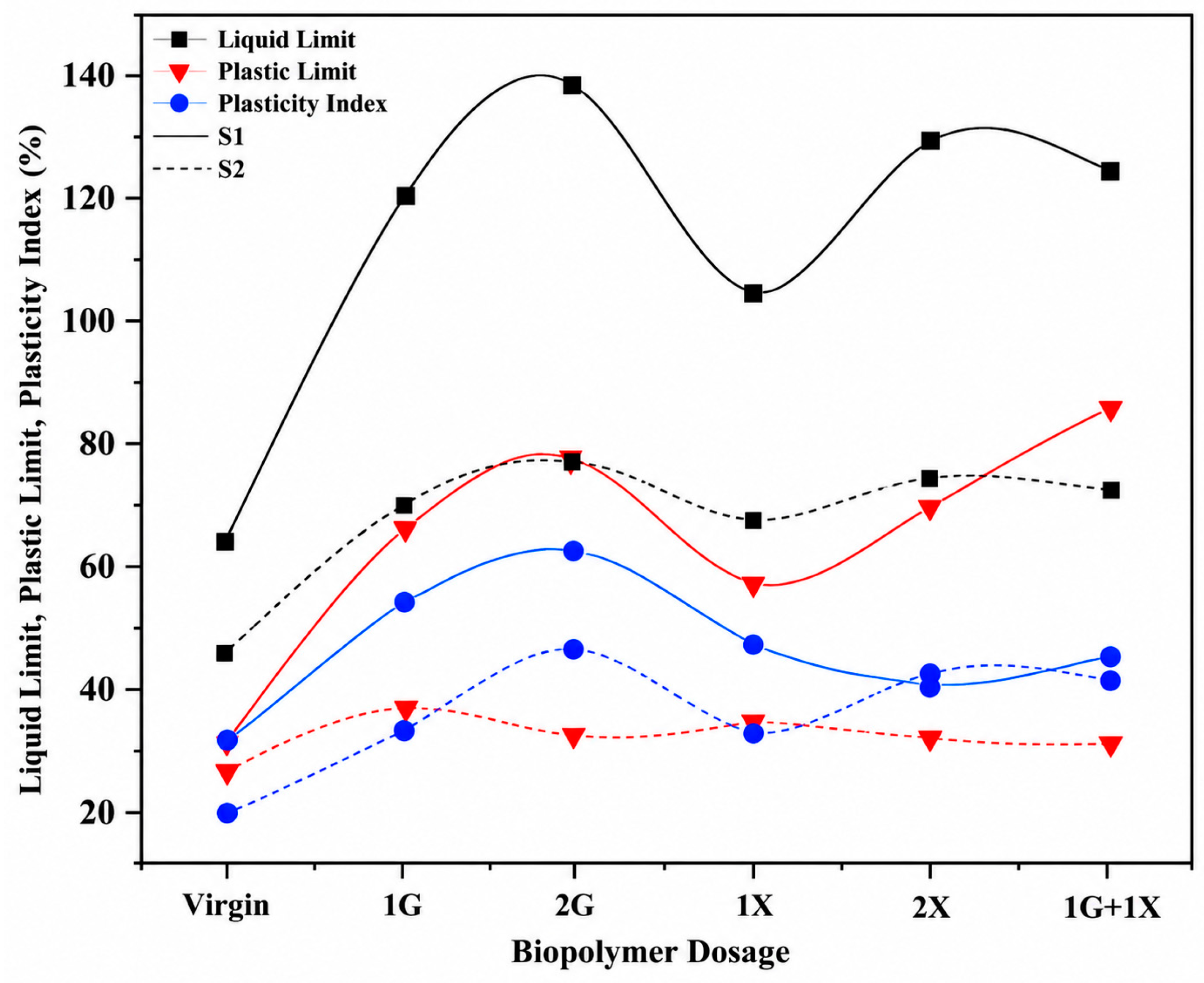
The addition of biopolymers such as xanthan gum, guar gum, and gelatin generally increases the Liquid Limit (LL) and the Plastic Limit (LP) of clayey soils [10,16]. This phenomenon is attributed to their hydrophilic nature and to the formation of hydrogel networks that absorb water within the soil matrix [10,13,16]. For example, using 2% gelatin can increase the LL of a soil from 25% to 44% [16].
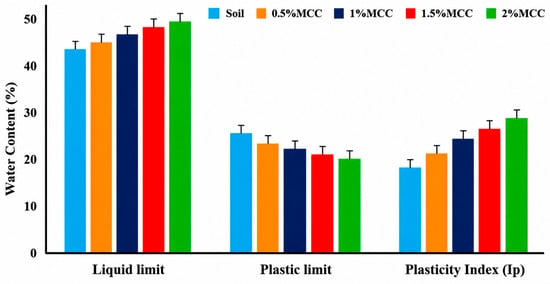
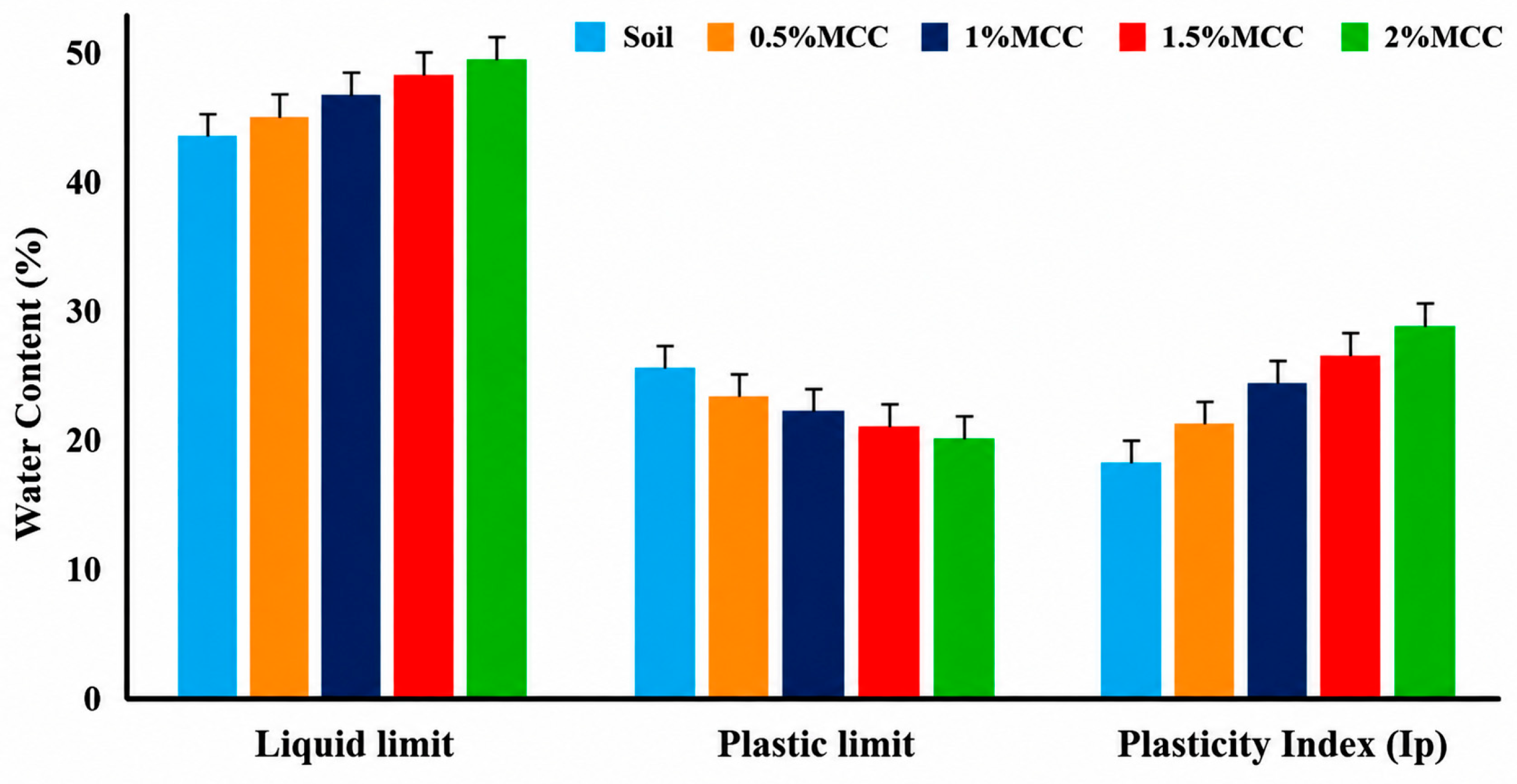
Figure 8 illustrates graphically how LL increases up to 90% with guar gum [10]. Likewise, crystalline microcellulose (MCC) marginally raises LL but increases the Plasticity Index (IP) by 74% [23]. This trend is observed in Figure 9 [23].
Figure 8.
Influence of guar gum on the Liquid Limit [10].
Figure 9.
Influence of MCC on the soil Plasticity Index [23].
But in Figure 9, contrary to polysaccharides, biopolymers such as lignin can cause a slight reduction in LL due to the flocculation of clay particles and the neutralization of surface charges [22,45].
3.5. Most Reported Mechanical and Performance Parameters
The analysis of the selected corpus shows that the validation of the effectiveness of the biopolymers is based on a hierarchy of standardized geotechnical tests. The Unconfined Compressive Strength is the predominant parameter, reported in 82.2% of the studies, due to its simplicity for quantifying the immediate mechanical improvement. Additionally, the Atterberg Limits and the compaction characteristics (OMC and MDD) are frequently reported to assess changes in workability and density [10,11,17].
Table 4 summarizes the principal engineering performance indicators identified in the literature and their specific interpretation in the context of biopolymer-treated soils.
Table 4.
Engineering performance indicators used to characterize biopolymer-treated soils and their specific interpretation.
Recent studies link results of the shear modulus (G) with the index porosity/binder (η/Biv), providing a robust predictive framework for the resistance and stiffness in various types of tropical and expansive clays [4,30].
In Table 4, long-term performance parameters focus on durability against adverse environmental conditions, such as wetting–drying (W–D) and freeze–thaw (F–T) cycles [9,17,30]. For transport infrastructure applications, the California Bearing Ratio (CBR) and the resilience modulus (Mr) are the critical indicators to assess the suitability of stabilized subgrade [10,45,46].
3.6. Range of Values Found for the Increase in Mechanical Strength and Reduction in Ductility
The increases in unconfined compressive strength (UCS) fluctuate drastically depending on the biopolymer, with improvements ranging from 120% to 850% for xanthan gum (XG) and up to 1100% in hybrid systems that incorporate natural or synthetic fibers. Specific values have been documented where chitosan reaches 4500 kPa, multiplying the initial strength by ten, while gelatin increases the UCS 5.03 times after 28 days of curing, and pectin achieves improvements of up to 137 times in sandy soils [13,16,25,27].
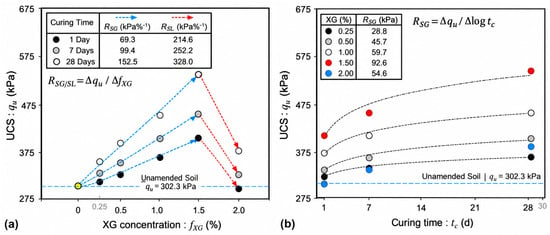
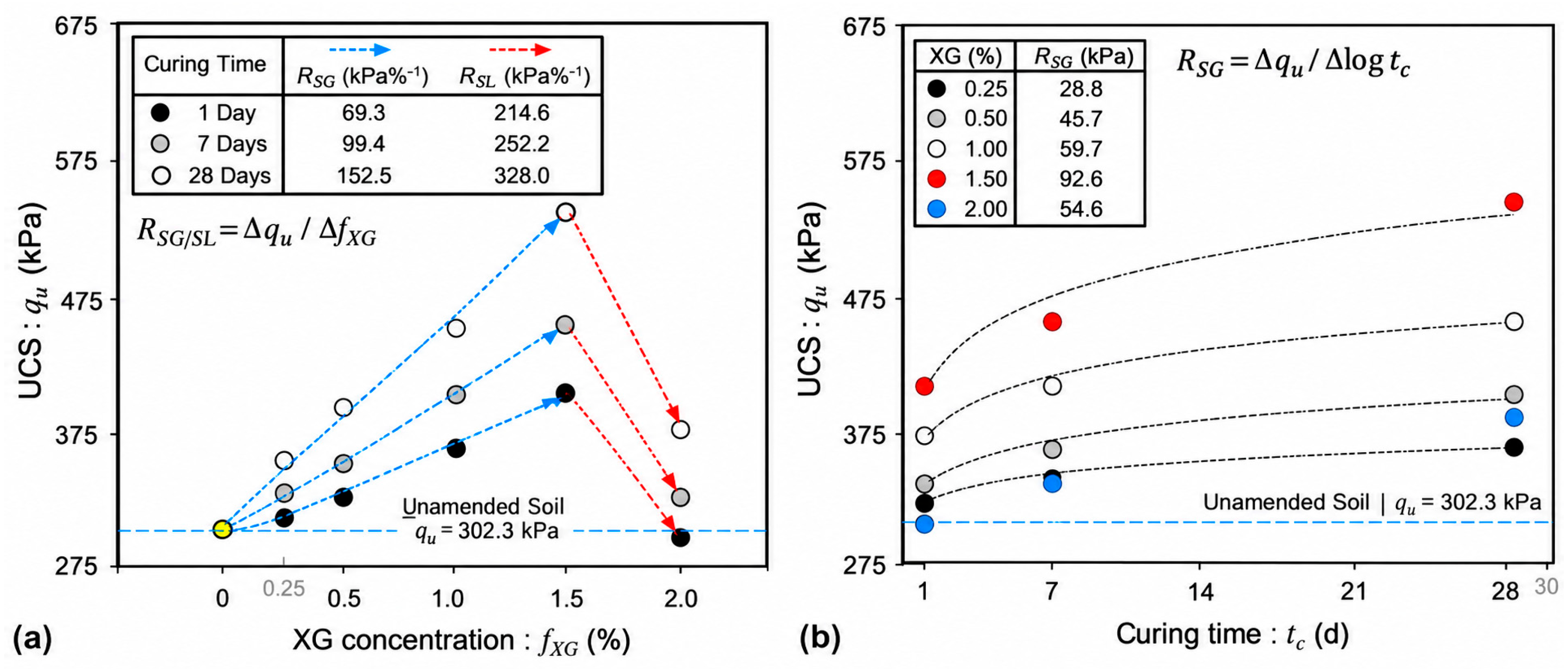
As observed in Figure 10, According to Azimi et al. [33] the UCS exhibits a rise-fall response with increasing XG concentration, reaching its maximum at 1.5% XG before declining at 2.0%. The yellow marker represents the unamended soil (0% XG), with a reference UCS of 302.3 kPa obtained under Standard Proctor compaction. In Figure 10b, the UCS increases logarithmically with curing time (1-28 days), indicating progressive strength development at all XG concentrations. The highest strength gain rate (RSG= 92.6 kPa) occurs at 1.5% XG, whereas it decreases to 54.6 kPa at 2.0%, further confirming the existence of an optimum polymer concentration. Beyond this threshold, excess XG accumulates within aggregate voids, potentially reducing interaggregate friction through lubrication effects and promoting electrostatic repulsion, which may generate localized weak regions within the soil matrix [11,27].
Figure 10.
Loss and gain of strength according to XG dosage: (a) variation of UCS with XG concentration for different curing times; (b) variation of UCS with curing time for different XG contents [33].
Regarding consistency, the addition of biogenic stabilizers allows a reduction in the Plasticity Index (PI) by between 8% and 50% in various types of clay. Materials such as lignin reduce the PI by up to 22% by neutralizing surface charges and promoting flocculation, while luffa fibers decrease plasticity from 35.60 to 29.78 with only 1% content [5,22,45]. These findings highlight the variability of the mechanical response according to the treatment and testing context. To provide a more detailed and traceable synthesis of the reported evidence, Table 5 compiles study-specific mechanical results, including the type and dosage of treatment, soil classification, testing conditions, and corresponding references.
Table 5.
Study-specific mechanical evidence with treatment, soil type, testing context, and traceable reference.
3.7. Performance Against Durability Factors
Environmental durability is evaluated separately from short-term strength. The evidence includes wetting–drying, freeze–thaw, and erosion studies, but the protocols differ in soil type, polymer concentration, number of cycles, moisture state, and response metric. Accordingly, Table 5 reports study-specific contexts and avoids treating retention percentages from different protocols as directly interchangeable. Mechanistically, prolonged water exposure or wetting cycles tend to soften the biopolymer hydrogel matrix and temporarily weaken hydrogen bonds within the soil structure; however, subsequent dehydration often allows a partial recovery of stiffness due to matrix re-desiccation [20,27].
It is important to emphasize that durability protocols vary in cycle duration, moisture saturation, temperature limits, polymer dosage, soil mineralogy, and specimen geometry. Consequently, percentage strength loss cannot be pooled directly across studies. Table 6 reports the experimental context for each representative observation and separates pure biopolymer evidence from hybrid systems.
Table 6.
Study-specific durability evidence; percentages are not treated as standardized material constants.
3.8. Evolution of the Microstructure and Porosity Metrics
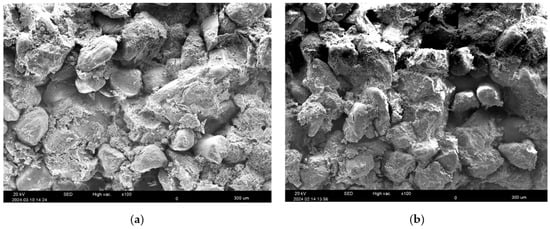
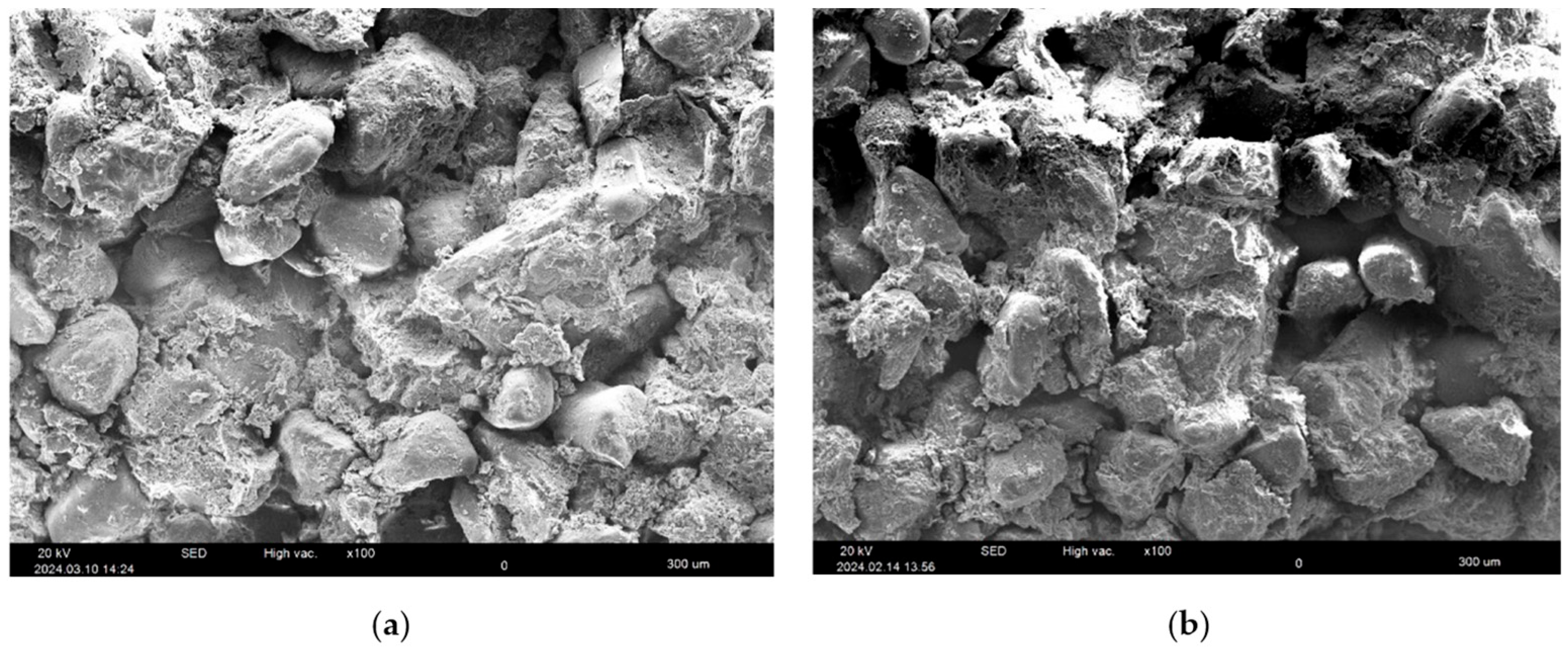
Microstructural analyses confirm that strengthening is not mineralogical, but rather physical-chemical through the formation of a hydrogel matrix. SEM micrographs reveal a densification process in which the biopolymer encapsulates the clay aggregates, reducing macroporosity by between 12% and 38% [7,8].
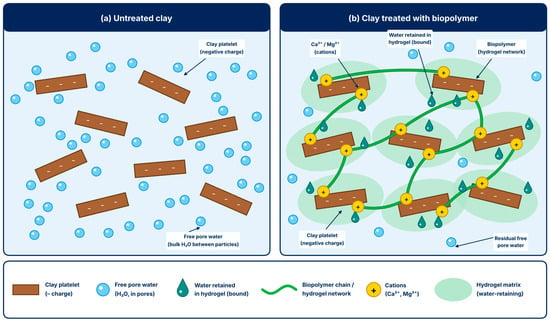
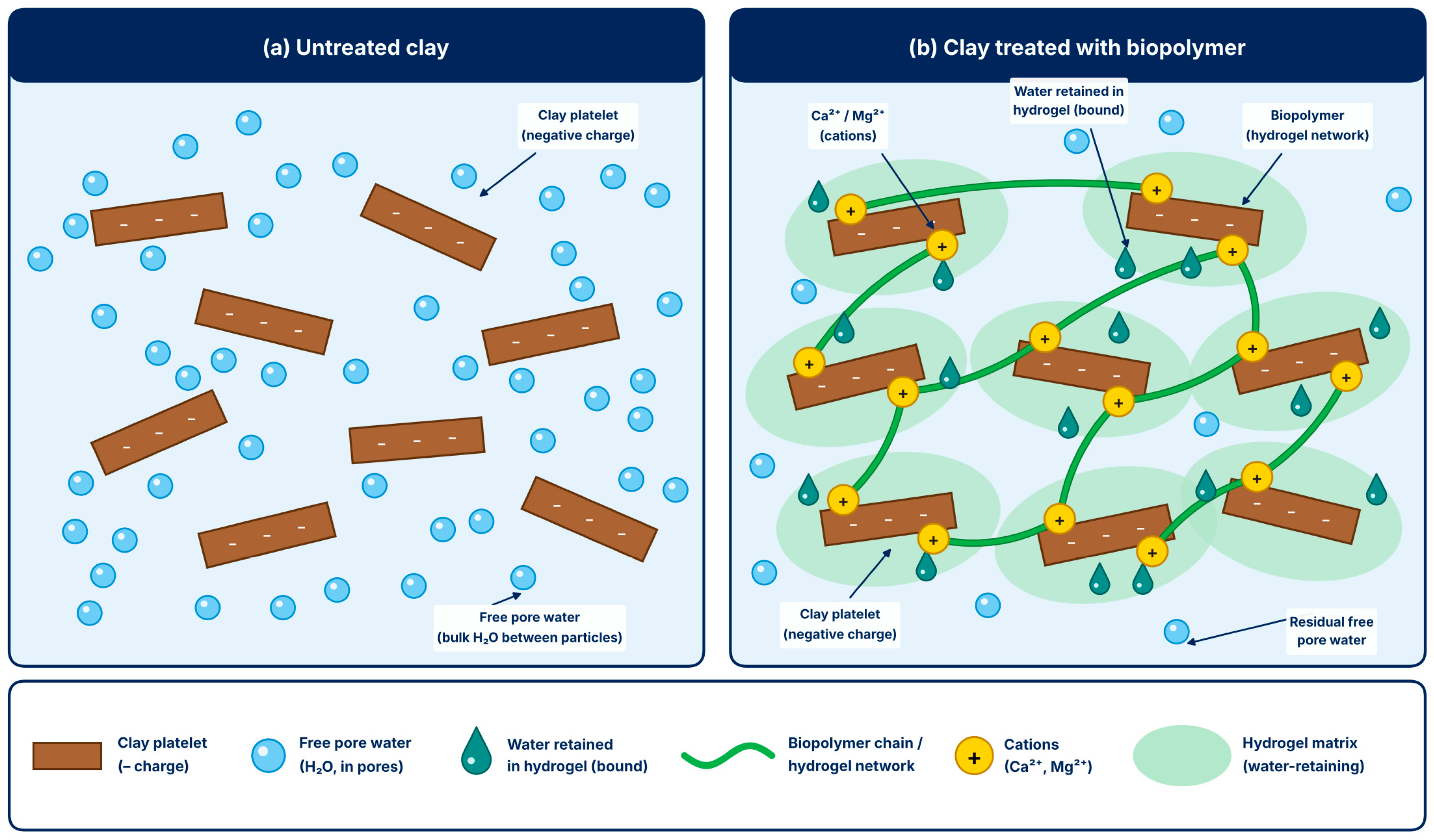
Combining SEM and EDS evidence across the corpus indicates that the applicability of each mechanism is soil- and condition-dependent: hydrogel encapsulation is most effective in low-to-medium plasticity kaolinitic clays with controlled curing moisture, ionic/cationic bridging is more pronounced in montmorillonitic and smectitic clays with higher cation-exchange capacity, and pore-filling densification is consistently reported across soil types but is markedly reduced under repeated wetting–drying cycles, where partial hydrogel dissolution reopens the pore network. These mechanism–soil-condition associations, however, remain qualitatively reported in most primary studies, underscoring the need for standardized quantitative SEM/EDS protocols. Microstructural analyses confirm that the strengthening is physical-chemical rather than mineralogical. Figure 11 and Figure 12 illustrate this transition: SEM micrographs reveal biopolymer encapsulation and pore-filling densification of clay aggregates, while the conceptual model depicts hydrogel networks, cationic bridging, and reduced macroporosity [7,8,10,15,23,27].
Figure 11.
SEM transition from porous soil to polymer-bonded matrix: (a) untreated soil; (b) biopolymer-treated soil [8].
Figure 12.
Conceptual model of biopolymer-clay particle interaction; mechanisms are interpreted according to the cited experimental and mechanistic evidence [10,15,23,27].
Figure 12 shows a conceptual illustration of the clay structure (a) before and (b) after biopolymer treatment. Brown platelets with “–” signs represent negatively charged clay particles. Light-blue circles denote free pore water, whereas dark-teal droplets denote water retained within the hydrogel. Green lines represent biopolymer chains forming a hydrogel network (light-green areas) that links adjacent platelets. Yellow circles represent Ca2+ and Mg2+ cations that may bridge polymer functional groups and negatively charged clay surfaces.
Treatment with biopolymers can transform the clay, changing it from a structure with loose connections to a more cohesive one. The hydrogel network can form bridges between neighboring platelets, partially displace the free interstitial water, and retain water within its matrix. Divalent cations, such as Ca2+ and Mg2+, can further strengthen these bonds by connecting the polymer’s functional groups to the negatively charged clay surfaces, thereby improving particle interconnection, cohesion, and structural stability.
3.9. Mechanical Behavior and Synergistic Mechanisms in Hybrid Systems
Hybrid systems, defined strictly in this review as the combination of a biopolymer with natural or synthetic discrete fibers, overcome the inherent brittleness and strain-softening limitations of purely biogenic soil treatments [2,3]. This concept is distinct from “combined systems,” in which biopolymers are paired with conventional hydraulic binders (e.g., cement or lime) to accelerate hardening [5]. The performance enhancement in hybrid systems relies on two coupled synergistic mechanisms:
Physical Synergy: At the mesostructure scale, discrete fibers act via mechanical interlocking, macro-pore filling, and crack-bridging. When the stabilized soil matrix undergoes tensile or shear strain, the distributed fibers bridge micro-cracks, delaying crack propagation and transferring internal stresses across failure planes [2,18]. This mechanical anchoring converts the typical brittle post-peak collapse of biopolymer-treated soil into a strain-hardening, ductile response with substantially higher energy absorption capacity [3].
Chemical Synergy: At the molecular interface, functional groups along the biopolymer chains, such as hydroxyl (-OH), carboxyl (-COOH), and amine (-NH) groups, interact directly with the chemical surface of the fibers. In natural lignocellulosic fibers, abundant surface hydroxyl groups form extensive hydrogen bonding networks with biopolymer hydrogels, creating a highly cohesive interfacial transition zone (ITZ).
Furthermore, multivalent cations present in the soil moisture (Ca2+, Al3+) can trigger ionic cross-linking between the biopolymer hydrogel and reactive surface sites on the fibers, significantly enhancing stress transfer efficiency across the interface.
The choice between natural and synthetic fibers introduces different durability considerations. Natural fibers may provide favorable interfacial bonding but can be affected by swelling, biodegradation, and chemical degradation. Synthetic fibers can provide stable mechanical reinforcement under some tested conditions, but their interfacial bonding may rely more strongly on friction and mechanical anchorage. These differences do not justify a universal long-term ranking. Table 7 summarizes only the mechanisms and durability observations directly supported by the cited studies.
Table 7.
Hybrid biopolymer–fiber systems: experimentally observed responses and mechanism-level interpretation.
3.10. Environmental Impact Metrics and Reduction in the Carbon Footprint
Biopolymers present a compelling ecological advantage over conventional hydraulic binders, such as Ordinary Portland Cement (OPC) and hydrated lime. From a Cradle-to-Gate Life Cycle Assessment (LCA) perspective, evaluating raw material extraction up to the factory gate per ton of manufactured binder, the production of OPC generates approximately 0.86–1.0 ton of CO2 per ton produced, primarily driven by limestone calcination and high-temperature clinker kilns [8,10,33]. In contrast, biopolymers possess biogenic carbon-neutral profiles or exceptionally low Cradle-to-Gate emission factors, achieving a 95% to 99% reduction in CO2-equivalent emissions per ton of binder relative to OPC [8,10,33].
However, a rigorous environmental appraisal requires contextualizing these LCA boundaries. While unrefined biopolymer feedstocks or agricultural side-streams carry minimal initial carbon burdens, a broader Cradle-to-Grave perspective must account for downstream processing steps. Energy-intensive stages, such as commercial crop cultivation, chemical extraction, purification, thermal drying, long-distance transport, and mechanical field mixing, can increase the net cradle-to-grave carbon footprint. Furthermore, when evaluated on a performance-based functional unit (e.g., carbon emissions per unit of strength achieved, kg CO2-eq/m3/kPa), the higher mass dosages occasionally required for biopolymers under aggressive moisture environments may moderate these nominal savings. Beyond greenhouse gas metrics, biopolymers promote eco-restoration by retaining moisture and supporting vegetative re-growth along stabilized slopes [15].
3.11. Systematic Identification of Statistical and Methodological Heterogeneity
A critical finding of this systematic review is the elevated level of statistical heterogeneity observed across primary studies, exemplified by an inconsistency index of I2 = 87.3% within the Xanthan Gum Unconfined Compressive Strength (XG-UCS) subgroup analysis. Rather than stemming from random measurement error, this variance originates from systematic methodological fragmentation. To rigorously delineate why a unified quantitative meta-analysis is unviable, limiting synthesis to a robust qualitative framework, the sources of heterogeneity are categorized into four fundamental domains (Table 8):
Soil Mineralogy and Geochemical Variabilities: Baseline soil properties exert a profound influence on biopolymer efficiency. Differences in clay mineralogy (e.g., high Cation Exchange Capacity [CEC] expansive montmorillonite vs. low CEC non-expansive kaolinite or illite), initial organic matter content, ambient soil pH, and specific surface area drastically alter the density of available surface binding sites.
Biopolymer Chemical Attributes and Dosage Conventions: High heterogeneity arises from unstandardized biopolymer characterization, including variations in molecular weight (MW), purity grade, degree of substitution, and liquid-state viscosity. Furthermore, the literature exhibits reporting discrepancies between dry-soil mass ratio (w/w%) and hydrogel liquid concentration (w/v%).
Specimen Preparation and Compaction Dynamics: Processing techniques vary widely between dry-powder soil blending followed by water addition versus pre-hydrated hydrogel dissolution prior to soil mixing. Additionally, compaction energy differs significantly across studies (e.g., Standard Proctor, Modified Proctor, or static hydraulic compaction), directly controlling initial dry density and interparticle void ratio.
Curing Environment and Testing Standards: Unstandardized laboratory environments (curing temperatures ranging from 20° to 40° and relative humidity [RH] spanning 40–90%), varied curing ages (7, 14, 28, or 90 days), and conflicting testing standards (e.g., ASTM D2166, BS 1377, IS 2720) introduce substantial variance in measured strength.
Table 8.
Sources of methodological heterogeneity that limit quantitative pooling.
4. Integrated Discussion and Critical Analysis
4.1. Summary of the Main Findings
This review indicates that natural-origin biopolymers can improve several measured engineering properties, but the magnitude and consistency of improvement vary substantially with soil, treatment, dosage, curing, and moisture conditions. The reported 120–850% UCS range is therefore retained only as a cross-study descriptive range, not as a universal expected performance. Hybrid systems are discussed separately because their response includes fiber reinforcement and cannot be treated as equivalent to pure biopolymer stabilization. Comparisons with cement and lime are presented only where the cited study used an appropriate experimental comparator [3,35]. Hybrid systems are discussed separately because their response includes fiber reinforcement and cannot be treated as equivalent to pure biopolymer stabilization [3,35]. The reported 120–850% UCS range is therefore retained only as a cross-study descriptive range, not as a universal expected performance [3,5,35].
Finally, environmental results are also reported as study- and boundary-dependent. The 95–99% reduction figure refers to reported cradle-to-gate comparisons in the cited studies and should not be interpreted as a universal cradle-to-grave carbon advantage [3,35]. Long-term durability and field validation remain unresolved, limiting direct conversion of laboratory results into design guidance [3,5,35].
4.2. Comparison with the Existing Evidence
The current findings are consistent with seminal studies by Chen et al. [37] who reported increases in unconfined compressive strength between 200% and 400% in clays. The analyzed body of evidence expands the upper end of this range to up to 850%, as a result of improvements to curing protocols and the development of cationic crosslinking techniques. Recent research on xanthan crosslinked with trivalent cations represents a critical qualitative advance, showing that chemical modification can overcome accelerated degradation in saturated soils [3,33]. These studies confirm that the formation of stable hydrogel networks substantially increases structural stiffness and volumetric stability, surpassing the historical limitations of conventional biopolymers under conditions of extreme moisture.
The current evidence does not establish a unified design code or validated field framework for biopolymer-stabilized subgrades. ASTM, Eurocode 7, and the Peruvian MTC road framework are not presented as approving a standardized biopolymer design method. Instead, the manuscript identifies the absence of a dedicated standardized protocol as a limitation that constrains transfer from laboratory evidence to field guidance [3,5,33]. Critical research highlights that the lack of unified quantitative metrics prevents large-scale adoption of these biogenic solutions, limiting their application to experimental projects despite their proven environmental superiority over traditional chemical binders.
A significant discrepancy is observed regarding durability in recent studies of the corpus. While previous reviews reported stability under cyclic moisture, current investigations document reductions in UCS between 15% and 75% after wetting–drying cycles. This finding is attributed to greater methodological rigor, using up to six severe cycles that simulate very wet climates of tropical or high mountain regions [3,33]. These findings have critical implications for risk assessment in high rainfall areas, such as the Amazonas region of Peru. Behavior under prolonged saturation shows that hydrogel swelling can weaken hydrogen bonds, requiring additional protection strategies to ensure structural integrity.
In the case of hybrid systems, current evidence surpasses and updates the reports of the decade. Recent studies show that the synergy between biopolymers and fibers generates emergent mechanical effects, such as crack bridging, stress redistribution, and higher post-peak residual strength. This interaction is not merely additive, but represents a conceptual advance where the biopolymer acts as a cohesive binder and the fibers as a three-dimensional reinforcement [3,33,35]. The integration of natural or synthetic fibers mitigates the intrinsic fragility of pure biopolymer matrices, providing a more stable mechanical response under dynamic loads. This synergistic approach consolidates a stabilization strategy that optimizes technical performance and sustainability.
4.3. Interpretation of Findings, Mechanisms, and Heterogeneity Constraints
The findings of this review can be coherently interpreted through the theoretical framework of interface geochemistry and composite materials mechanics. The central mechanism underlying the improvement provided by biopolymers in clay soils operates on different temporal and spatial scales, which are directly modulated by the identified systematic sources of heterogeneity.
The central mechanism of mechanical improvement of biopolymers in clay soils operates on two differentiated temporal and spatial scales. At the immediate microstructural scale, during the first 24 to 72 h post-mixing, the hydrated biopolymeric polysaccharides form three-dimensional networks of viscous hydrogels that fill the interparticle spaces of the clay matrix and establish cationic bridges with the negatively charged surfaces of clay minerals (montmorillonite, kaolinite, illite) through electrostatic interactions, hydrogen bonds, and Van der Waals forces [10,15,17,33].
This hypothesis is strongly supported by the convergence of SEM analyses, XRD, and FTIR in the corpus: 62.2% of the SEM studies confirm the formation of continuous biopolymeric films that encapsulate the clay aggregates and reduce macroporosity by between 12% and 38%, while the FTIR spectra show characteristic absorption bands of hydrogen bonds in the 1600–1700 cm−1 region for the XG and GG treatments [10,17,20]. At the medium- to long-term curing timescale, between 7 and 90 days, the progressive dehydration of the biopolymeric hydrogel induces a physical state transition from rubbery to glassy, substantially increasing the stiffness and cohesion of the composite matrix [1,10,20,26].
This process is analogous, in terms of mechanical outcome, to the hydration of the Portland cement, which also generates a gel (C-S-H) that binds the particles, but differs fundamentally in its partial reversibility: while hydrated cement paste is irreversibly rigid, the biopolymeric hydrogel can rehydrate and soften again when exposed to water, which explains the vulnerability to wetting–drying cycles documented in the corpus [19,20].
This reversibility constitutes the field’s main mechanistic challenge and has motivated the development of chemical cross-linking strategies (cationic cross-linking with Ca2+, Mg2+, or Al3+) to stabilize the hydrogel under saturated conditions, with promising results in the works of Park et al. (2025) and Bang et al. (2025) [19,28].
4.4. Strengths and Limitations
4.4.1. Strengths of the Review
This systematic review presents several methodological strengths that provide it with a high level of rigor and reliability. First, the search and selection process were strictly guided by the PRISMA 2020 guidelines, using a prospective protocol based on the PRISMA-P criteria, which minimized the risk of bias in study selection and ensured complete reproducibility of the review process. Second, the search strategy used a complex Boolean equation applied to the TITLE-ABS-KEY fields of Scopus, the leading database for coverage in the fields of Civil Engineering and Materials Science, which ensured high sensitivity and specificity in retrieving the relevant literature. Third, the critical quality appraisal of the studies was conducted with a JBI-adapted tool for experimental studies, providing a systematic and reproducible assessment of the risk of bias for 100% of the included corpus.
Finally, the narrative synthesis, structured by thematic subgroups, biopolymer type, hybrid system, durability, microstructure, and sustainability, enables an organization of evidence that facilitates comparison and the identification of knowledge gaps more precisely than previous non-systematic narrative reviews in the field.
4.4.2. Limitations of the Review
The first and most relevant limitation is language-based publication bias: by restricting the search to publications in English, it potentially excludes the relevant scientific literature published in Spanish, Portuguese, Chinese, or Arabic, the languages of countries with the highest output in the field (India, China, Brazil, Iran). This restriction could overestimate the favorable effect of biopolymers by excluding studies with null or negative results published in non-hegemonic languages.
The second limitation is the limited time window (2022–2026), which, while ensuring the timeliness of the state of the art, excludes seminal studies from the 2010s, such as the pioneering work conducted between 2015 and 2019 that established the field’s theoretical frameworks and standard methodologies. Excluding this historical literature may create the illusion that crosslinking techniques and hybrid systems are recent innovations, when in fact their conceptual development is earlier.
The third limitation is the exclusion of gray literature: the deliberate omission of theses, doctoral dissertations, industrial technical reports, and conference papers without rigorous indexing could conceal data from large-scale field applications or pilot projects that have not yet reached the publication threshold in high-impact journals, but that contain relevant information on the real behavior of biopolymeric materials under traffic and environmental exposure conditions.
The fourth limitation, of a methodological nature, is the high statistical heterogeneity of the corpus (I2 ≈ 87.3% for the XG-UCS subgroup), which prevents carrying out a quantitative meta-analysis and limits the conclusions to a structured narrative synthesis level. This heterogeneity reflects the lack of internationally standardized protocols for preparing biopolymeric samples and for conducting geotechnical tests with these materials, which in itself constitutes a structural problem in the field that this review highlights.
A fifth limitation concerns database coverage: the search was conducted exclusively in Scopus. Although Scopus provides broad, high-quality indexing in materials science and civil engineering, restricting the search to a single database—and excluding Web of Science, Google Scholar, and non-indexed conference proceedings—may have omitted influential engineering studies, including early seminal works and first reports of emerging techniques typically disseminated at conferences before appearing in indexed journals. Future updates of this review should incorporate multi-database searches and citation-chaining (backward/forward snowballing) to mitigate this source-coverage bias.
4.4.3. Limitations of the Included Studies
The primary studies of the corpus present three common limitations that reduce the overall confidence in the evidence. The first is the predominance of small sample sizes: 71.1% of the experimental studies report trials with fewer than 30 specimens per treatment group, which limits the statistical power of comparisons and increases the variability of results. The second is the widespread lack of blinding in treatment allocation (77.8% of studies), an intrinsic characteristic of experimental geotechnical research, but which introduces the risk of investigator bias in specimen preparation and in the interpretation of qualitative microstructural results (SEM). The third is the heterogeneous measurement of outcomes: the use of different standards for UCS tests (ASTM D2166, BS 1377, IS 2720) generates results not directly comparable between laboratories in different countries, preventing quantitative aggregation of reported effects.
4.5. Implications
4.5.1. For Geotechnical Engineering Practice
The available evidence can inform preliminary laboratory selection, but it is insufficient to establish a universal recommended dosage or exposure condition for field construction. Dosages such as 1.0–2.0% XG are reported as study-specific ranges in the cited experimental literature, not as normative design values. In high-moisture environments, the evidence is similarly conditional and should be interpreted through the tested durability protocols rather than as a general prescription [4,8,9,26].
For road infrastructure designers in developing regions, with access limited to industrial materials and with high availability of local agro-industrial by-products, this review provides a comparative performance catalog by type of biopolymer and soil type that can be used as a preselection tool. Guar gum stands out as the most suitable alternative in contexts of low cost and high availability (production costs between 8 and 25 kg CO2-eq/t), while xanthan gum is preferable when the greatest UCS increase is required and the budget allows [3,15]. Chitosan and sodium alginate show potential for specific applications in highly plastic soils, but their supply chain is less accessible, and their production cost is higher.
Regarding infrastructure public policy, the data on carbon footprint reduction of 95–99% relative to Portland cement-along with the possibility of valorizing local agro-industrial residues such as bagasse, cassava peel, or rice husk-position biopolymers as a strategic tool for developing countries to meet their climate commitments under the NDC (Nationally Determined Contributions) and their road expansion goals simultaneously. However, the lack of standardized technical regulations remains the most critical institutional obstacle for widespread adoption: it is recommended that ministries of transport and civil engineering associations in countries producing these biopolymers (India, Brazil, Peru) promote the creation of technical tables to develop practical design guides adapted to local conditions of mineralogy, climate, and material availability.
4.5.2. For Future Research
The knowledge gaps identified in this review allow outlining an agenda of specific and priority research for the field. First, the development of longitudinal field studies is recommended, with minimum observation periods of 12 to 24 months under real traffic, so as to validate the durability of biopolymeric subgrades against microbial biodegradation, seasonal climatic cycles, and accumulated dynamic loads. These studies should adopt a prospective cohort design with in situ geotechnical instrumentation (pore pressure sensors, load cells, extensometers) to capture the time evolution of the geomechanical parameters.
Specifically, field instrumentation should track UCS and stiffness retention across a minimum of seven wetting–drying cycles and seasonal freeze–thaw exposure where climatically relevant, in order to determine whether the partial strength recovery observed at the laboratory scale (up to 45% UCS retention at Cycle 7) holds under uncontrolled field moisture and temperature variation.
Second, comprehensive LCA (from raw material to end-of-life) should be applied exclusively to real-scale projects that have been previously validated through ML-predictive models and long-term field tests. The eight partial LCA studies in the corpus are insufficient to generalize carbon neutrality claims across different scales, mineralogies, and geographic contexts.
Third, develop AI/ML predictive protocols (CNN for SEM, supervised learning for UCS, [14,16]) based on diverse soil populations (tropical clays from Latin America, Sub-Saharan Africa, Southeast Asia), rigorous comparators (cement/lime), and standardized outcomes (k, erosion, Mr) for integration into pavement design models (AASHTO 2002, NCHRP).
Finally, as a first priority, future studies should adopt geographically diverse soil populations (tropical clays from Latin America, Sub-Saharan Africa, Southeast Asia), rigorous comparators (cement and lime under identical protocols), and standardized outcomes (hydraulic conductivity, erosion resistance, resilience modulus) to feed predictive ML models and enable integration into pavement design frameworks (AASHTO 2002, NCHRP).
5. Conclusions
This systematic review synthesizes 45 primary studies published between 2022 and 2026. The conclusions are deliberately limited to the evidence represented in those studies. Xanthan gum and other biopolymers show measurable laboratory-scale improvements under specified conditions, while hybrid systems require separate interpretation because fibers contribute an additional reinforcement mechanism. Reported dosages and durability outcomes are presented as experimental ranges rather than universal field recommendations. The evidence base remains insufficient for a validated field design protocol, and long-term exposure studies are required before laboratory findings can be generalized to infrastructure-scale practice.
For the field to move beyond laboratory and pilot-scale evidence, longitudinal field validation, standardized multi-database evidence synthesis, and dedicated design guidance are required. These are identified as research needs rather than as established engineering requirements or validated performance criteria.
Supplementary Materials
The supporting information is provided as Supplementary File S1 and is available for download at: https://www.mdpi.com/article/10.3390/app162211366/s1, Supplementary File S1: Prisma 2020 Checklist.
Author Contributions
Conceptualization, D.R.V.C. and J.M.G.C.; methodology, J.M.G.C.; software, J.M.G.C.; validation, S.P.M.P., J.M.G.C. and D.R.V.C.; formal analysis, D.R.V.C.; investigation, D.R.V.C.; resources, D.R.V.C.; data curation, J.M.G.C.; writing—original draft preparation, J.M.G.C.; writing—review and editing, J.M.G.C.; visualization, S.P.M.P.; supervision, J.M.G.C.; funding acquisition, S.P.M.P. All authors have read and agreed to the published version of the manuscript.
Funding
The authors gratefully acknowledge the financial support provided by the Universidad Nacional Toribio Rodríguez de Mendoza de Amazonas, Chachapoyas, Peru, for covering the Article Processing Charge (APC) associated with the publication of this manuscript.
Data Availability Statement
Information is available at the following link: https://zenodo.org/uploads/20314145 (accessed on 21 September 2026).
Conflicts of Interest
The authors declare no conflict of interest.
Abbreviations
The following abbreviations are used in this manuscript:
| XG | Xanthan gum |
| GG | Guar gum |
| UCS | Unconfined Compressive Strength |
| CBR | California Bearing Ratio |
| SEM | Scanning Electron Microscopy |
| EDS | Energy-Dispersive X-ray Spectroscopy |
References
- Lee, S.; Ryou, J.-E.; Kwon, T.-H.; Jung, J. Effect of Agar Gum on the Interparticle Bonding and Uniaxial Compressive Strength of Soils. Polym. Test. 2025, 148, 108828. [Google Scholar] [CrossRef] [Scilit]
- Abbasi, F.; Choobbasti, A.J.; Roushan, K. Enhancing Strength and Ductility of Xanthan Gum–Stabilized Clayey Sand: Impact of Polypropylene Fiber Content and Length. Case Stud. Constr. Mater. 2025, 23, e05667. [Google Scholar] [CrossRef] [Scilit]
- Gidebo, F.A.; Kinoshita, N.; Yasuhara, H. Optimization of Physical and Strength Performance of Cellulose-Based Fiber Additives Stabilized Expansive Soil. Case Stud. Constr. Mater. 2024, 20, e02851. [Google Scholar] [CrossRef] [Scilit]
- Baldovino, J.d.J.A.; Ortega, R.T.; de la Rosa, Y.E.N. Experimental Stabilization of Clay Soils in Cartagena de Indias Colombia: Influence of Porosity/Binder Index. Appl. Sci. 2025, 15, 5895. [Google Scholar] [CrossRef] [Scilit]
- Boudehene, M.; Rouaiguia, A.; Lafifi, B.; Kihal, R.; Lekoui, M.T. Sustainable Soil Stabilization: Enhancing Expansive Soil with Natural Luffa Fiber. Civ. Environ. Eng. 2026, 22, 536–557. [Google Scholar] [CrossRef] [Scilit]
- Çetin, M.Y.; Bağrıaçık, B.; Annagür, H.M.; Topoliński, S. Improvement of Geotechnical Properties of Clayey Soil Using Biopolymer and Ferrochromium Slag Additives. Polymers 2024, 16, 1306. [Google Scholar] [CrossRef] [Scilit] [PubMed]
- Anjaneyappa, A.G.; Srikanth, S.; Dey, S. Evaluation of Mechanical Properties and Micro Structural Behavior of Xanthan Gum Stabilized Micaceous Soils. Prog. Eng. Sci. 2026, 3, 100198. [Google Scholar] [CrossRef] [Scilit]
- Baldovino, J.d.J.A.; de la Rosa, Y.E.N.; Calabokis, O.P.; Vergara, J.A.A.; López, L.C.S. Geotechnical Behavior of Xanthan Gum-Stabilized Clay Reinforced with Polypropylene Fibers. Polymers 2025, 17, 363. [Google Scholar] [CrossRef] [Scilit] [PubMed]
- Bagheri, P.; Gratchev, I.; Rybachuk, M. Effects of Xanthan Gum Biopolymer on Soil Mechanical Properties. Appl. Sci. 2023, 13, 887. [Google Scholar] [CrossRef] [Scilit]
- Kumar, M.A.; Moghal, A.A.B.; Vydehi, K.V.; Almajed, A. Embodied Energy in the Production of Guar and Xanthan Biopolymers and Their Cross-Linking Effect in Enhancing the Geotechnical Properties of Cohesive Soil. Buildings 2023, 13, 2304. [Google Scholar] [CrossRef] [Scilit]
- Abbasi, F.; Choobbasti, A.J.; Roushan, K. Advanced Stabilization of Clayey Sand Using Xanthan Gum: Insights from Multiscale Evaluation and Ultrasonic Pulse Velocity Analysis. Results Eng. 2025, 25, 104419. [Google Scholar] [CrossRef] [Scilit]
- Bakhshizadeh, A.; Khayat, N.; Horpibulsuk, S. Surface Stabilization of Clay Using Sodium Alginate. Case Stud. Constr. Mater. 2022, 16, e01006. [Google Scholar] [CrossRef] [Scilit]
- Vishweshwaran, M.; Sujatha, E.R.; Baldovino, J.A. Freeze-Dried β-Glucan and Poly-γ-Glutamic Acid: An Efficient Stabilizer to Strengthen Subgrades of Low Compressible Fine-Grained Soils with Varying Curing Periods. Polymers 2024, 16, 1586. [Google Scholar] [CrossRef] [Scilit] [PubMed]
- Bocheńska, M.; Bujko, M.; Dyka, I.; Srokosz, P.; Ossowski, R. Effect of Chitosan Solution on Low-Cohesive Soil’s Shear Modulus G Determined through Resonant Column and Torsional Shearing Tests. Appl. Sci. 2022, 12, 5332. [Google Scholar] [CrossRef] [Scilit]
- Ouyang, M.; Zhang, H.; Wang, G.; Li, Y.; Song, J. Influence of Xanthan Gum on the Engineering Properties and Microstructure of Expansive Soils. Front. Mater. 2025, 12, 1598601. [Google Scholar] [CrossRef] [Scilit]
- Sujatha, E.R.; Pratheeba, V.R.; Baldovino, J.D.J.A.; de la Rosa, Y.E.N. Application of Gelatin for Sustainable Stabilization of Low-Compressible Silt–Clay Mixtures: Geotechnical Behavior and Carbon Emission Considerations. Polymers 2025, 17, 1954. [Google Scholar] [CrossRef] [Scilit] [PubMed]
- Fateh, S.; Mansourkiaei, Y.; Shalchian, M.M.; Arabani, M.; Payan, M.; Ranjbar, P.Z. A Comparison of Temperature and Freeze-Thaw Effects on High-Swelling and Low-Swelling Soils Stabilized with Xanthan Gum. Results Eng. 2025, 25, 103719. [Google Scholar] [CrossRef] [Scilit]
- Fu, H.-Y.; Yu, G.-T.; Gao, Q.-F.; Zeng, L.; Cao, S.-P. Crack Resistance and Strength Properties of Red Clay Modified with Lignocellulose and Guar Gum. KSCE J. Civ. Eng. 2023, 27, 4152–4162. [Google Scholar] [CrossRef] [Scilit]
- Park, D.Y.; Bang, J.U.; Lee, M.; Chang, I.; Cho, G.C. Small-Strain Stiffness and Deformation Behavior of Cation Cross-linked-Xanthan Gum Treated Sand. Geomech. Eng. 2025, 41, 199–207. [Google Scholar] [CrossRef]
- Fatehi, H.; Ong, D.E.L.; Yu, J.; Chang, I. Sustainable Soil Treatment: Investigating the Efficacy of Carrageenan Biopolymer on the Geotechnical Properties of Soil. Constr. Build. Mater. 2024, 411, 134627. [Google Scholar] [CrossRef] [Scilit]
- Ying, L.; Xu, M.; Luo, J.; Wang, W. Laboratory Investigation and Mechanical Evaluation on Xanthan Gum-Reinforced Clay: Unconfined Compression Test, Triaxial Shear Test, and Microstructure Characterization. Buildings 2025, 15, 2438. [Google Scholar] [CrossRef] [Scilit]
- Bagheri, P.; Gratchev, I.; Son, S.; Rybachuk, M. Durability, Strength, and Erosion Resistance Assessment of Lignin Biopolymer Treated Soil. Polymers 2023, 15, 1556. [Google Scholar] [CrossRef] [Scilit] [PubMed]
- Arun, L.; Sujatha, E.R.; Baldovino, J.A.; de la Rosa, Y.E.N. Microcrystalline Cellulose—A Green Alternative to Conventional Soil Stabilizers. Polymers 2024, 16, 2043. [Google Scholar] [CrossRef] [Scilit] [PubMed]
- Jiang, X.; Guo, J.; Yang, H.; Bao, S.; Wen, C.; Chen, J. Study on Stress–Strain Relationship of Coir Fiber-Reinforced Red Clay Based on Duncan–Chang Model. Appl. Sci. 2023, 13, 556. [Google Scholar] [CrossRef] [Scilit]
- Ojuri, O.O.; Ramdas, V.; Aderibigbe, E.A.; Williams, C.G.; Ramchuran, S.; Al-Nageim, H. Improving Strength and Hydraulic Characteristics of Regional Clayey Soils Using Biopolymers. Case Stud. Constr. Mater. 2022, 17, e01319. [Google Scholar] [CrossRef] [Scilit]
- Kabakuş, N.; Tarhan, Y. Investigation of Mechanical Properties and Microstructural Characteristics of Earth-Based Pavements Stabilised with Various Bio-Based Binders. Polymers 2025, 17, 864. [Google Scholar] [CrossRef] [Scilit] [PubMed]
- Wang, R.; Fatehi, H.; Ong, D.E.L.; Yu, J.; Chang, I.; Shabani, K. Sustainable Soil Improvement Using Marine-Derived Biopolymers: Strength and Durability Perspectives. Soils Found. 2026, 66, 101730. [Google Scholar] [CrossRef] [Scilit]
- Bang, J.U.; Lee, M.; Park, D.Y.; Cho, G.C. Shear Strength of Crosslinked Xanthan Gum Biopolymer Treated Sand-Clay Mixture. Geomech. Eng. 2025, 41, 115–127. [Google Scholar] [CrossRef]
- Soldo, A.; Miletic, M. Durability against Wetting-Drying Cycles of Sustainable Biopolymer-Treated Soil. Polymers 2022, 14, 4247. [Google Scholar] [CrossRef] [Scilit] [PubMed]
- Baldovino, J.A.; Coronado-Hernandez, O.E.; Calabokis, O.P. Comparative Evaluation of Lime–NaCl Catalyzed and Xanthan Gum–Fiber Reinforced Soil Stabilization: Experimental and Machine Learning Assessment of Strength and Stiffness. J. Compos. Sci. 2026, 10, 109. [Google Scholar] [CrossRef] [Scilit]
- Moayed, S.A.M.; Arabani, M.; Ahmadi, H. Strength Parameters of Kaolinite Clay Stabilized with Nano-Silica and Reinforced with Hemp Fibers under Freeze-Thaw Cycles: An Experimental Study. Int. J. Eng. 2026, 39, 639–657. [Google Scholar] [CrossRef] [Scilit]
- Lazorenko, G.; Kasprzhitskii, A.; Mischinenko, V.; Fedotov, A.; Kravchenko, E. Effect of Flax By-Products on the Mechanical and Cracking Behaviors of Expansive Soil. Materials 2024, 17, 5659. [Google Scholar] [CrossRef] [Scilit] [PubMed]
- Azimi, M.; Mirzababaei, M.; Soltani, A.; Jaksa, M.B. Reducing Lime Consumption Demand for Stabilizing High Plasticity Clay Using Xanthan Gum. Int. J. Geosynth. Ground Eng. 2025, 11, 42. [Google Scholar] [CrossRef] [Scilit]
- Aldie Firmansyah, D.; Krisnandi Somantri, A.; Verani Rouly Sihombing, A.; Zalbuin Mase, L.; Sundara, A. Mechanical Prop-erties of Soft Clay Soil Improved with Nanomaterials and Chitosan Biopolymer. Geotech. Eng. J. SEAGS AGSSEA 2024, 55, 31–37. [Google Scholar]
- Guo, S.; Jiang, X.; Zhang, Z.; Lu, Q.; Wang, Z.; Zhao, K. Optimizing Mechanical and Microstructural Properties of Sandy Clayey Silt Stabilized with Lignin Fiber and Cement Synergy. Polymers 2025, 17, 1584. [Google Scholar] [CrossRef] [Scilit] [PubMed]
- Bağrıaçık, B.; Mahmutluoğlu, B. Conducting Large-Scale Model Experiments on Xanthan Gum Treated Clay as an Eco-friendly Approach to Soil Improvement. KSCE J. Civ. Eng. 2023, 27, 1480–1489. [Google Scholar] [CrossRef] [Scilit]
- Chen, J.; Wei, X.; Huang, B.; Chen, A.; Shi, X.; Li, S.; Xiao, Y.; Liao, X.; Zhao, L. Research on Engineering Characteristics of Lignin–Cement-Stabilized Lead-Contaminated Lateritic Clay. Buildings 2025, 15, 4433. [Google Scholar] [CrossRef] [Scilit]
- Chen, W.; Xie, Z.; Chen, J.; Hong, M.; Wang, X.; Zhou, H.; Yang, B. Experimental Study on the Strength Characteristics of Modified Guilin Red Clay. Buildings 2025, 15, 2533. [Google Scholar] [CrossRef] [Scilit]
- Wang, L.; Na, B.; Chen, W. Synergistic Effects of Lignin Fiber and Sodium Sulfate on Mechanical Properties and Micro-Structure of Cement-Stabilized Soil. Materials 2025, 18, 3929. [Google Scholar] [CrossRef] [Scilit] [PubMed]
- Wang, T.; Wang, Y. Mechanical and Microstructural Changes in Expansive Soils Treated with Lime and Lignin Fiber from Paper Industry. Appl. Sci. 2024, 14, 3393. [Google Scholar] [CrossRef] [Scilit]
- Bekkouche, S.R.; Benzerara, M.; Zada, U.; Muhammad, G.; Ali, Z. Use of Eco-Friendly Materials in the Stabilization of Expansive Soils. Buildings 2022, 12, 1770. [Google Scholar] [CrossRef] [Scilit]
- Fadugba, O.G.; Ajokotola, F.J.; Oluyemi-Ayibiowu, B.D.; Omomomi, O.J.; Bodunrin, M.; Adetukasi, A.O. Evaluation of Citric Acid-Treated Natural Fibres as Sustainable Additives for Improving Expansive Soil Performance in Highway Construction. J. Eng. Res. 2025, 13, 1526–1539. [Google Scholar] [CrossRef] [Scilit]
- De la Cruz, L.G.; Abt, T.; León, N.; Sánchez-Soto, M. Radially and Axially Oriented Ammonium Alginate Aerogels Modified with Clay/Tannic Acid and Crosslinked with Glutaraldehyde. Gels 2024, 10, 526. [Google Scholar] [CrossRef] [Scilit] [PubMed]
- Page, M.J.; McKenzie, J.E.; Bossuyt, P.M.; Boutron, I.; Hoffmann, T.C.; Mulrow, C.D.; Shamseer, L.; Tetzlaff, J.M.; Akl, E.A.; Brennan, S.E.; et al. The PRISMA 2020 Statement: An Updated Guideline for Reporting Systematic Reviews. BMJ 2021, 372, n71. [Google Scholar] [CrossRef] [Scilit] [PubMed]
- Kong, X.; Wang, G.; Liang, Y.; Zhang, Z.; Cui, S. The Engineering Properties and Microscopic Characteristics of High-Liquid-Limit Soil Improved with Lignin. Coatings 2022, 12, 268. [Google Scholar] [CrossRef] [Scilit]
- Gücek, S.; Gürer, C.; Žlender, B.; Taciroğlu, M.V.; Korkmaz, B.E.; Gürkan, K.; Bračko, T.; Macuh, B.; Varga, R.; Jelušič, P. Use of Lignin, Waste Tire Rubber, and Waste Glass for Soil Stabilization. Appl. Sci. 2024, 14, 7532. [Google Scholar] [CrossRef] [Scilit]

Disclaimer/Publisher’s Note: The statements, opinions and data contained in all publications are solely those of the individual author(s) and contributor(s) and not of MDPI and/or the editor(s). MDPI and/or the editor(s) disclaim responsibility for any injury to people or property resulting from any ideas, methods, instructions or products referred to in the content. |
© 2026 by the authors. Licensee MDPI, Basel, Switzerland. This article is an open access article distributed under the terms and conditions of the Creative Commons Attribution (CC BY) license.