


Abstract
Methylxanthines are naturally occurring purine alkaloids widely present in cocoa-based products. Due to the relatively high fat content of these matrices and their complexity, appropriate sample preparation is an important step for their determination. This research examines the applicability of direct sonication with an ultrasonic probe as an alternative approach for defatting and extracting methylxanthines from cocoa-based samples. Three defatting procedures were compared: Soxhlet extraction, indirect ultrasound-assisted extraction using an ultrasonic bath, and direct ultrasound-assisted extraction using a probe. The percentage of extracted fat was 13.56 ± 0.52%, 8.94 ± 1.52%, and 18.46 ± 2.89%, respectively. A single 10 min probe sonication treatment with petroleum ether as solvent proved to be a promising and time-efficient alternative for defatting cocoa samples. For methylxanthine extraction, the method used by del Rosario Brunetto et al. was adapted by replacing 20 min water-bath extraction with 10 min direct probe sonication. The adapted procedure was applied to samples of cocoa powder, cocoa beans and 85% cocoa chocolate. Determined theobromine concentrations ranged from 15.61 ± 0.24 to 31.01 ± 0.91 mg/g, and caffeine concentrations from 1.64 ± 0.05 to 2.95 ± 0.07 mg/g. Theophylline concentrations in all samples were below the limit of quantification (LOQ), which is why the results were considered indicative of its presence rather than reliable quantitative values. The extraction yield of theobromine and caffeine from defatted cocoa powder was estimated by spike-recovery testing. Obtained mean recovery values were 112.31% for theobromine and 109.65% for caffeine. We assessed the greenness of the analytical procedure and sample preparation, including the defatting step, using AGREE and AGREEprep, with scores of 0.50 and 0.53, respectively. Assessment results indicate the possibility of further improving the greenness of the process. The results show that direct sonication with an ultrasound probe shortens defatting and methylxanthine extraction times and indicate the potential of this approach to simplify the preparation of complex cocoa-based samples.
1. Introduction
Methylxanthines are naturally occurring purine alkaloids present in a variety of plant-derived foods and beverages. Theobromine, caffeine, and theophylline are the main naturally occurring methylxanthines. They are present in formulations of dietary products and medicines. Although coffee, tea or chocolate are consumed because of their pleasant taste and the feelings they evoke in consumers [1], they also have numerous influences on consumers’ health. The observed adverse effects are on heart rate, elevated blood pressure, fertility problems, and insomnia [2]. However, their beneficial effects are more frequently reported. These effects are similar to their adverse effects, but the beneficial effects are dose-dependent [3,4,5,6,7,8].
The determination of methylxanthines in complex matrices such as cocoa-based products is challenging, particularly because of their high lipid content. Therefore, sample preparation is a critical step in minimizing matrix-related effects and achieving reliable extraction of the target compounds.
For lipid-rich cocoa-based samples, a defatting step is usually incorporated into the sample preparation procedure. Soxhlet extraction is a conventional approach to lipid removal that remains in use despite being time-consuming and requiring relatively large volumes of organic solvents [9,10]. In addition to Soxhlet extraction, use of simple solid–liquid extraction procedures [11,12,13], maceration [14] and indirect ultrasound (ultrasound bath) [15] are reported. Various solvents were used for the above-mentioned defatting procedures, with the most used being hexane, petroleum ether and ethyl ether. Soares et al. used a mixture of chloroform and methanol for the extraction of lipids from cocoa bean shells [16].
Although conventional procedures can provide effective lipid removal, they often require relatively long extraction times and consumption of large volumes of organic solvents. Therefore, the development of faster and less resource-intensive sample preparation procedures remains of interest for the analysis of lipid-rich cocoa matrices.
Ultrasound-assisted extraction (UAE) has been increasingly applied as an alternative to conventional extraction procedures. The formation, growth, and collapse of cavitation bubbles promote disruption of the sample matrix and expedite the release of target compounds. The effectiveness and environmental performance of UAE depend on several factors, including the ultrasound system, treatment conditions, extraction time, and the type and volume of solvent employed [17,18,19,20]. Although ultrasound-assisted extraction has several advantages, there are some limitations as well. In an ultrasonic bath, ultrasonic energy is transmitted through the bath medium and sample vessel. Control of bath temperature is difficult, and the efficiency of energy transfer is low. Probe sonication (direct ultrasound) delivers acoustic energy directly into the extraction medium. Probe sonication requires careful control of operating conditions because treatment intensity, temperature and energy delivery can influence extraction performance [21]. Regardless of the reported limitations, ultrasound-assisted extraction continues to be an effective approach.
Ultrasound-assisted approaches have previously been applied to cocoa and methylxanthine-containing matrices. Quiroz-Reyes et al. used indirect ultrasound-assisted extraction in continuous and pulsed mode for the extraction of antioxidants from cocoa beans [14]. Sereshti et al. used graphene-oxide-based ultrasound-assisted dispersive micro solid-phase extraction for the extraction of theobromine, theophylline and caffeine from tea samples [22]. Barreto et al. optimized indirect ultrasound for extraction of methylxanthines and flavonoids from guarana [23]. Direct probe sonication has also been used for the extraction of caffeine and theobromine from cocoa matrices [24,25,26], demonstrating its potential for rapid methylxanthine extraction. However, in such approaches, lipid removal has generally been performed separately, or conventional defatting procedures have been retained.
Although ultrasound-assisted extraction of methylxanthines has been investigated, considerably less attention has been paid to the application of probe sonication for defatting cocoa samples. To the best of our knowledge, the use of probe sonication for both defatting and subsequent methylxanthine extraction from cocoa-based products has not been systematically investigated. Such an approach could reduce the time required for sample preparation, while enabling, at the same time, the reliable determination of methylxanthines in cocoa-based samples and potentially improving the environmental profile of the overall process.
Therefore, the aim of this study was to evaluate the use of probe sonication for defatting and subsequent extraction of methylxanthines from cocoa-based samples. The influence of sonication time on both sample preparation steps was evaluated, and methylxanthines were determined by high-performance liquid chromatography (HPLC) according to a previously reported method by del Rosario Brunetto et al. [10]. The performance of the adapted sample preparation procedure was compared with the reference procedure reported by del Rosario Brunetto et al. [10], while the greenness of the adapted procedure was assessed using the AGREE and AGREEprep metrics. This study therefore investigates probe sonication as a rapid sample preparation approach for the determination of methylxanthines in complex lipid-rich cocoa-based matrices.
2. Materials and Methods
2.1. Chemicals and Reagents
Methanol (J.T. Baker, Gliwice, Poland) and Petroleum ether (Carlo Erba, Val-de-Reuil, France) were both HPLC grade; standards of theobromine, caffeine and theophylline (all Thermo Fisher Scientific, Braunschweig, Germany).
2.2. Instrumentation
For the preparation of samples, the following instrumentation was used: household grinder, analytical balance (Sartorius, Göttingen, Germany), Soxhlet extraction apparatus, ultrasonic bath with temperature regulator (Sonorex, Bandelin, Berlin, Germany), homogenizer (BANDELIN SONOPULS HD 3100, Bandelin, Berlin, Germany) with probe vs. 70 T and noise protection box (Bandelin Sonoplus, Bandelin, Berlin, Germany), centrifuge (Hettich, Rotina 380R, Hettich, Kirchlengern, Germany), ultrapure water system (Purelab Flex, Elga LabWater, High Wycombe, UK), rotary evaporator (Büchi, Rotavapor® R-300, Büchi, Flawil, Switzerland), laboratory drying oven (Instrumentalia, Zagreb, Croatia), and analytical balance (Sartorius, Göttingen, Germany). Chromatographic measurements were carried out using a Shimadzu (Kyoto, Japan) HPLC system Nexera X2 with UV-VIS detector (system controller CBM-20A, degasser DGU-20A5R, pumps LC30AD, UV-VIS detector SPD-20A, fluorescence detector RF-20A (Prominence), auto injector SIL-10AD VP, column oven CTO-20AC).
2.3. Chromatographic Procedure
For the separation, a Shimadzu (Japan) Shimpack GIST, 4.6 × 250 mm, 5 µm, C18 column was used. The mobile phase consisted of 20:80 (v/v) methanol/water. Separation was carried out with isocratic elution at 40 °C with a flow rate of 0.8 mL/min at 274 nm, and the volume of the sample injected into the HPLC system was 20 µL. The total analysis time was 20 min.
Identification of the chromatographic peaks was performed using LabSolutions software based on absolute retention time, with an identification window of 5% and selection of the closest peak. The same settings were used for all standards and samples.
2.4. Standard Solutions
Series of standard solutions of theobromine (10, 25, 50, 100, 150 mg/L), caffeine (2, 6, 8, 10, 20 mg/L) and theophylline (1, 2, 4, 6, 8 mg/L) were prepared by diluting stock solutions (theobromine 1000 mg/L, caffeine 100 mg/L, theophylline 500 mg/L). All solutions are prepared in ultrapure water (resistivity 18.2 MΩ cm). Prepared standard solutions were stable for two months when stored at 4 °C. Prior to use, all solutions were left to warm to room temperature. The concentrations of the standard solutions and dilution factors were selected based on the expected concentrations of the individual methylxanthines in cocoa-based samples, in which theobromine is the most abundant, followed by caffeine, and then theophylline.
2.5. Cocoa-Based Samples
Cocoa powder was produced in Croatia, while chocolate with 85% cocoa was produced in Germany. Both samples were purchased from local grocery stores in Croatia. Roasted cocoa beans were produced and purchased in Mexico. All samples were stored in the dark, at room temperature, until analysis.
Before HPLC analysis, all samples were filtered using 0.20 µm PES syringe filters (CHROMAFIL®, MACHEREY-NAGEL GmbH & Co. KG, Düren, Germany).
2.6. Sample Preparation
Roasted cocoa beans were ground using a household grinder and sieved on a sieve mesh with a 300 μm pore size. A sample of 85% cocoa chocolate was ground using a household grinder, and the cocoa powder sample was used in its native form.
2.6.1. Defatting of Samples
Three procedures for defatting the samples were compared: Soxhlet extraction and two ultrasound-assisted extraction procedures using an ultrasonic bath and an ultrasonic probe. In all procedures, the sample-to-solvent ratio was 1:25.
For Soxhlet extraction, the procedure was as follows: 6 g of sample was placed in a Soxhlet extractor, and 150 mL of petroleum ether was added to a round-bottom flask. The solvent was heated in a water bath at 70 °C. The total extraction time was 4 h.
For the ultrasound-assisted procedure using an ultrasonic bath, 1.6 g of the sample was weighed into a glass vial, and 40 mL of petroleum ether solvent was added. The glass vials were placed in the ultrasonic bath operated at 35 kHz. The total sonication time was 1.5 h.
In order to conduct an ultrasound-assisted procedure using an ultrasonic probe, a homogeniser equipped with a VS 70 T probe and a noise protection box was used. The ultrasound operating conditions were an amplitude of 70%, a frequency of 20 kHz, and a total sonication time of 10 min, with a 3 s impulse and a 2 s pause. In a glass vial, 1.6 g of the sample was weighed, and 40 mL of petroleum ether was added. The probe was placed in a vial approximately 2 cm from the top of the sample, and this distance was kept constant between extractions.
After the defatting procedures were completed, all samples were filtered, air-dried and stored in containers until further use.
After defatting and separation of defatted cocoa powder, quantification of extracted fat was carried out using gravimetric analysis. Petroleum ether was evaporated using a rotary evaporator at 40 °C under reduced pressure. The residual fats were dried in a drying oven at 40 °C until constant mass was achieved. Percentage of extracted fat was calculated as the ratio of mass of extracted mass and initial mass of cocoa powder.
All defatting analyses were performed on three independent replicates.
2.6.2. Extraction of Methylxanthines
Two extraction methods for the extraction of methylxanthines were compared.
As a standard method for this investigation, the method used by del Rosario Brunetto et al. was employed [10]. A mass of 0.01 g of defatted, dried and sieved sample was weighed into a polypropylene centrifuge tube, followed by the addition of 10 mL of ultrapure water preheated to 80 °C. The mixture was incubated in a water bath at 80 °C for 20 min. Following incubation, the sample was cooled to room temperature and centrifuged at 6000 rpm for 15 min. The resulting supernatant was filtered through a 0.20 μm syringe filter. An aliquot of 2 mL of this prepared sample was transferred into 2 mL vials and analyzed by HPLC. In the following text, the abbreviation SM will be used for this method.
In order to shorten the sample preparation time and enhance the extraction of methylxanthines from the samples, an ultrasound probe was used. The standard method was adapted by replacing incubation in a water bath with direct ultrasound-assisted extraction using an ultrasonic probe while keeping other parameters. A mass of 0.01 g of defatted, dried and sieved sample was weighed in a polypropylene centrifuge tube and 10 mL of ultrapure water preheated to 80 °C was added. Samples were exposed to ultrasound treatment for 10 or 30 min. The ultrasound program consisted of alternating 3 s pulses followed by 2 s pauses, with an amplitude set at 70%. The samples were prepared in the same manner as for the SM. The ultrasound probe was placed approximately 2 cm from the top of the sample, and the ultrasound was applied for a total of 10 or 30 min. Following a direct ultrasound-assisted extraction, the samples were centrifuged at 6000 rpm for 15 min. The resulting supernatant was filtered through a 0.20 μm syringe filter. A 2 mL aliquot of prepared sample was transferred into a 2 mL vial and analysed by HPLC. In the following text, the abbreviation used for this method will be AM.
Both analyses, SM and AM, were performed on five independent replicates each.
2.6.3. Assessment of Methylxanthine Extraction Recovery from Defatted Cocoa Powder
The assessment of methylxanthine extraction recovery from defatted samples was evaluated by comparing two parallel unspiked previously defatted samples of cocoa powder (S1 and S2) with spiked samples. Each sample was analysed both without standard addition and after the addition of standard solutions of methylxanthines. The standards were added before methylxanthine extraction, and the volumes added were small enough to have a negligible effect on the extraction volume. Concentrations of methylxanthines in spiked samples are: theobromine (50 mg/L), caffeine (8 mg/L), and theophylline (4 mg/L). Spiked and unspiked samples were prepared following the AM procedure. The extraction recovery (R) was calculated using Equation 1, where cspiked and cun-spiked represent the analyte concentrations measured in the spiked and unspiked samples, respectively, and cadded represents the equivalent concentration of the added standard.
Assessment of methylxanthine extraction recovery was performed on two parallel independent samples.
2.6.4. Greenness Assessment
The greenness of the applied analytical methods was assessed using the AGREE Version 0.5 (Analytical GREEnness Metric Approach) [27] and AGREEprep (Green Sample Preparation) [28] metric software. The AGREE software was used to estimate the environmental impact of the used analytical procedures on the environment according to the 12 principles of Green Analytical Chemistry (GAC). AGREEprep was used to assess the greenness of the sample preparation procedure following the 10 GAC principles.
The principles of Green Analytical Chemistry aim to minimize the environmental footprint of analytical methodologies while enhancing their sustainability. They promote reduced sample and waste volumes, the avoidance of derivatisation steps, and decreased consumption of energy and chemical reagents. In addition, these principles emphasise the use of direct and in situ analytical techniques, as well as automation, miniaturisation, and multiparametric analytical approaches. The use of nontoxic and renewable reagents, together with the assurance of operator safety, constitutes an essential component of these guidelines [27].
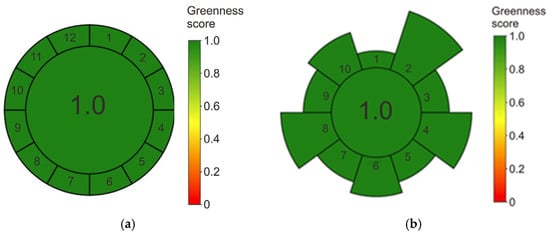
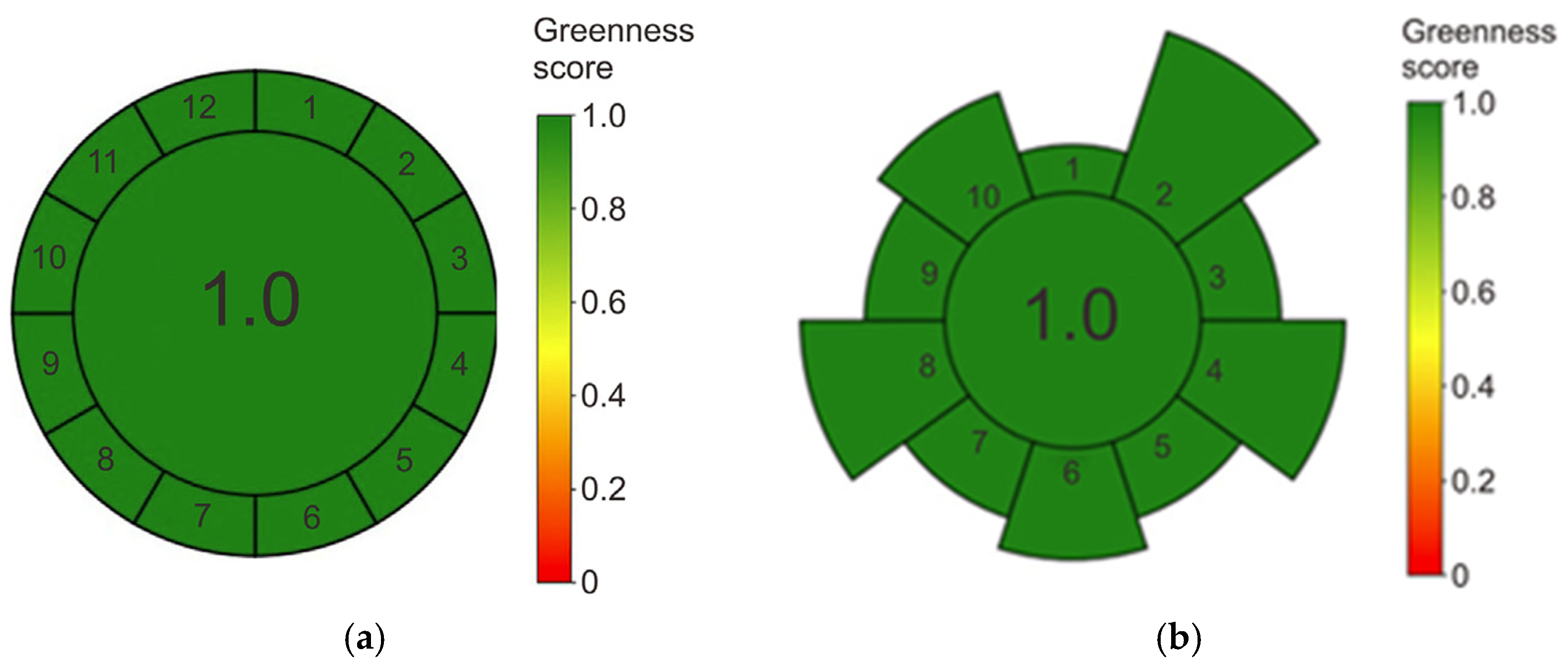
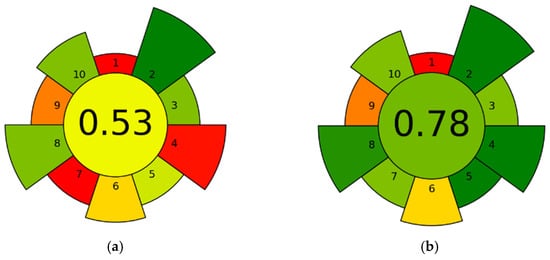
Both AGREE and AGREEprep tools evaluate and quantify compliance with each principle on a numerical scale ranging from 0 to 1. The final assessment is presented as a color-coded pictogram that displays the overall greenness score and the performance of each individual principle (Figure 1). A score close to 1 indicates good compliance with the greenness criteria.
Figure 1.
Typical output pictograms for (a) AGREE and (b) AGREEpep [29].
2.7. Statistical Analysis
The results obtained from this study are presented in tables and were processed using Microsoft Excel 365 for means and standard deviations. Statistical analysis was performed in JASP 0.98.1. developed by the University of Amsterdam. The Shapiro–Wilk test was used to assess the normality of the data distribution within each group. The Levene test was used to assess the homogeneity of variance between the compared groups. The Welch t-test for independent samples was used to determine statistically significant differences in the extracted amounts of theobromine and caffeine between the 10 min and 30 min ultrasound exposure times and between the standard method (SM) and the adapted method (AM). The Welch one-way analysis of variance (ANOVA) was used to determine statistically significant differences in the percentage of extracted fat between the three defatting methods: Soxhlet extraction, indirect ultrasound-assisted extraction (ultrasonic bath), and direct ultrasound-assisted extraction (ultrasonic probe). The Games–Howell post hoc test was used for pairwise comparisons between the three defatting methods to determine statistically significant differences between the individual methods, taking into account multiple comparisons.
3. Results and Discussion
All analyses performed prior to the analysis of 85% cocoa chocolate and cocoa bean samples were carried out using cocoa powder samples.
3.1. Calibration Curve
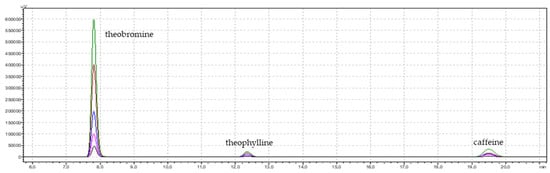
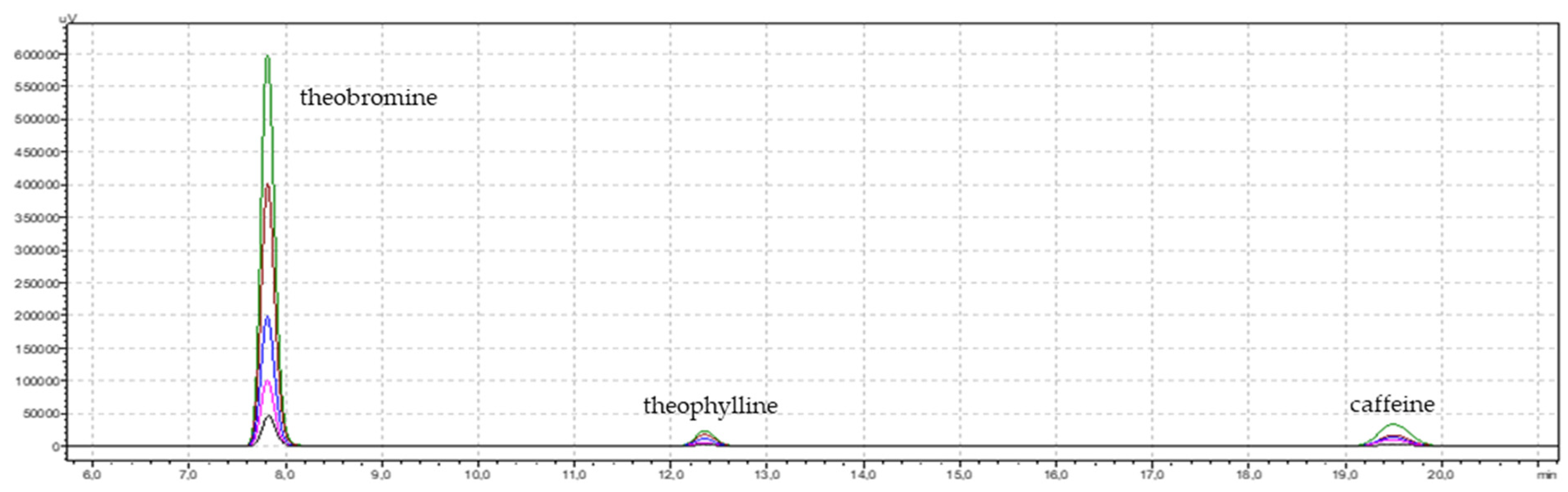
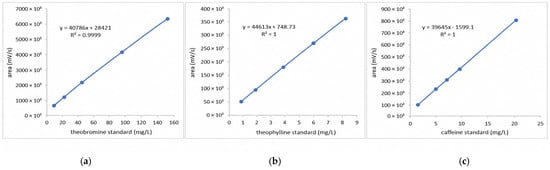
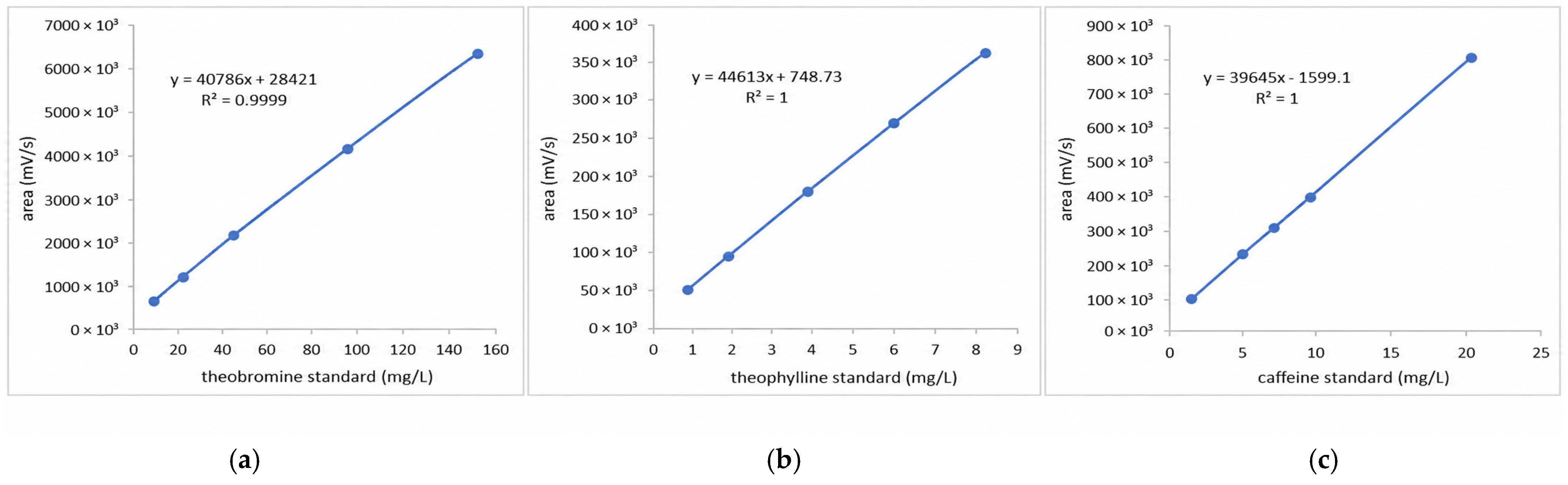
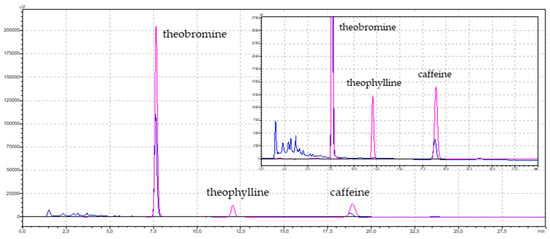
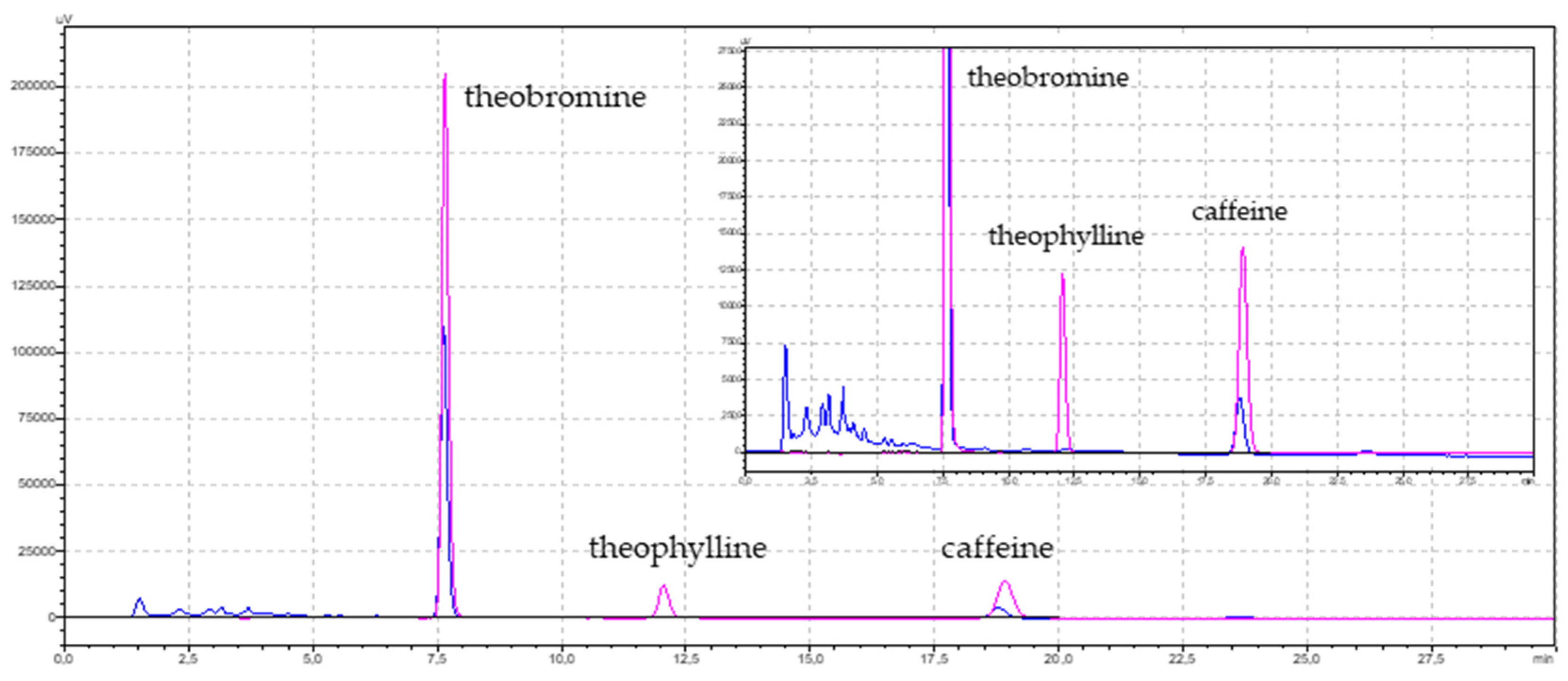
A calibration curve for theobromine, caffeine and theophylline was prepared prior to HPLC analysis using standard solutions prepared according to the procedure described in Section 2.4. The chromatographic procedure was carried out in accordance with the method detailed in Section 2.3. The chromatographic analysis exhibited a total run time of 20 min, with eluting at retention times: theobromine 7.8 min, theophylline 12.7 min and caffeine 19.5 min (Figure 2). Constructed calibration curves are shown in Figure 3a–c. Limit of detection (LOD) and limit of quantification (LOQ) were calculated using the standard deviation and slope of the calibration curve: LOD = (3.3 × standard deviation)/slope, and LOQ = (10 × standard deviation)/slope. The calculated LOD and LOQ values represent instrumental detection and quantification limits, as they were determined from calibration curves of standard solutions. Theobromine LOD is 2.48 mg/L and LOQ is 7.52 mg/L; caffeine LOD is 0.06 mg/L and LOQ is 0.17 mg/L; and theophylline LOD is 0.07 mg/L and LOQ is 0.21 mg/L.
Figure 2.
Calibration chromatograms obtained for theobromine, theophylline and caffeine standards.
Figure 3.
Calibration curves for (a) theobromine (theobromine concentrations γ = 10, 25, 50, 100, 150 mg/L). (b) Theophylline (theophylline concentrations γ = 1, 2, 4, 6, 8 mg/L). (c) Caffeine (caffeine concentrations γ = 2, 6, 8, 10, 20 mg/L).
3.2. Sample Preparation Procedure
3.2.1. Comparison of Defatting Procedures
Various procedures and solvents have previously been used for defatting cocoa-based samples. Conventional solvent-based procedures have commonly involved petroleum ether [30,31], hexane [11,12,13,14] or ethyl ether [32].
In this investigation, three defatting procedures were compared: Soxhlet extraction and two ultrasound-assisted extractions (direct sonication using an ultrasound probe and indirect sonication using an ultrasound bath). All procedures are previously described in Section 2.6.1. The obtained results are presented in Table 1.
Table 1.
Percentage of extracted fat in cocoa powder sample ().
The extraction method had a statistically significant effect on the percentage of extracted fat (Welch ANOVA, p = 0.029). Due to unequal variances and a small number of samples (n = 3), a subsequent comparison was performed using the Games–Howell post hoc test. The use of an ultrasonic probe achieved the highest percentage of extracted fat (18.46 ± 2.89%), which was statistically significantly higher than that of an ultrasonic bath (8.94 ± 1.52%; p = 0.030), while the difference compared to Soxhlet extraction (13.56 ± 0.52%) was not statistically significant (p = 0.169). The ultrasonic bath also extracted a statistically significantly lower percentage of fat than the Soxhlet extraction (p = 0.047). It should be noted that the percentages presented represent gravimetrically determined extraction yields under the conditions tested and do not reflect the proportion of total lipids removed from the samples. Since the content of residual lipids in the defatted samples was not determined, it is not possible to confirm their complete removal. However, considering that the extraction with the ultrasonic probe lasted only 10 min, compared to ultrasonic bath (90 min) and Soxhlet extraction (240 min), the results obtained suggest that direct sonication with the ultrasonic probe is a promising and time-efficient alternative for the defatting of cocoa samples.
Cocoa powder was used for the comparative evaluation of three defatting procedures, providing insight into the possibilities of applying direct sonication with an ultrasonic probe as a fast alternative to conventional procedures. Further studies of cocoa-based matrices with different lipid compositions could provide additional information on the applicability of this approach.
The use of ultrasound for defatting cocoa-based samples has been previously reported (Table 2). In reported procedures, hexane and heptane were used as solvents, an ultrasound bath was used as the extraction method, and extraction time was in the range from 10 to 45 min depending on the defatting procedure.
Table 2.
Ultrasound-assisted defatting procedures reported for cocoa-based samples.
Compared to previously described ultrasonic defatting procedures, the key difference in the present approach is not in the use of ultrasound but in the application of probe sonication rather than an ultrasonic bath.
3.2.2. Extraction of Methylxanthines
The results obtained by comparing 10 and 30 min of exposure to direct ultrasound are shown in Table 3. Water preheated to 80 °C was added to the vial containing cocoa powder. Direct sonication was performed with an ultrasonic probe in an open vial using pulsed mode (alternating periods of pulses (3 s) and pauses (2 s)), without temperature regulation. The temperatures measured after the end of the extraction varied from 66 to 70 °C after 10 min of sonication and from 65 to 69 °C after 30 min of sonication. The mentioned temperature values represent temperatures measured after extraction, not temperatures maintained during sonication.
Table 3.
Effect of sonication time on extraction of theobromine and caffeine ().
The results in Table 3 show that 10 min of ultrasound exposure resulted in a higher extracted amount of theobromine and caffeine (p < 0.001 and p = 0.001) compared with 30 min. Theophylline concentrations were below the LOQ. Statistical differences between the results obtained after 10 min and 30 min of ultrasound exposure were evaluated using Welch’s independent-samples t-test. The normality and homogeneity of variances were assessed using the Shapiro–Wilk and Levene’s tests, respectively. Statistically significant deviations from normality or differences in variances were not detected (p > 0.05). The detected differences were considered statistically significant at p < 0.05. No adjustment for multiple comparisons was applied, as each analyte was evaluated separately.
Previous investigations have shown that increasing the sonication time does not necessarily increase the extraction yield of methylxanthines from cocoa matrices [30,39]. Although ultrasonic cavitation enhances extraction, prolonged exposure to ultrasound may have a negative effect on certain bioactive compounds [40]. Such effects could contribute to the observed decrease in the extracted amounts of theobromine and caffeine, but the specific extraction mechanism was not determined in this study.
Since the significantly shorter extraction time of 10 min is more applicable, using AM for the extraction of methylxanthines for 10 min as the extraction method in further investigation was selected.
Two extraction methods are compared, and both are previously described in Section 2.6.2. Results obtained for SM and AM are shown in Table 4.
Table 4.
Comparison of the results obtained by standard method and adapted method ().
As per the results presented in Table 4, extraction of theobromine and caffeine is increased on average by 8% when AM is used. Normality and homogeneity of variances were assessed using the Shapiro–Wilk and Levene’s tests, respectively, with no statistically significant violations detected (p > 0.05). Statistical analysis confirmed significantly higher measured concentrations using AM for theobromine (p = 0.002) and caffeine (p = 0.009), supporting the effectiveness of AM under the investigated extraction conditions. Theophylline concentrations were below the LOQ; therefore, reliable quantitative assessment under the investigated conditions is not possible.
3.2.3. Assessment of Methylxanthine Extraction Recovery from Defatted Cocoa Powder
A spike-recovery experiment was used to assess the methylxanthine extraction recovery from a defatted cocoa powder sample. The protocol is described in Section 2.6.3 and calculations were carried out using Equation 1. The obtained results are presented in Table 5. The average spike recovery for theobromine and caffeine lies within the range of 80–120%, which is considered acceptable for complex matrices [41]. Although the recovery experiment was performed at a single spiking level using two independently prepared samples, the limited number of replicates and concentration levels does not allow a comprehensive assessment of recovery. Therefore, the obtained results should be considered as an estimate of methylxanthine recovery during extraction, and not as evidence of full validation of the analytical method.
Table 5.
Assessment of methylxanthine extraction recovery from defatted cocoa powder using adapted method.
Since measured values in spiked samples (S1 + spike and S2 + spike) for theophylline were above the LOQ and within the calibration range, the concentrations determined in the corresponding unspiked samples were below LOQ, so they can be considered only indicative but not reliable. These results provide a preliminary assessment of methylxanthine extraction recovery using the adapted method (AM).
Some authors reported extraction of methylxanthines in cocoa-based samples without a defatting procedure [42,43], so we analysed cocoa-based samples using AM without a defatting step. The obtained results are presented in Table 6.
Table 6.
Concentration of methylxanthines obtained by adapted method in non-defatted samples ().
Comparing results obtained for defatted (Table 7) and non-defatted samples using AM, the concentration of analytes decreased for all cocoa-based samples. Lower concentrations of theobromine and caffeine were determined in all non-defatted samples. The average decrease for theobromine and caffeine was 13.4%. For the cocoa bean sample, the average decrease for the same analytes was 40.3%. In samples of 85% cocoa chocolate, the decrease for theobromine and caffeine was 30.3%. This may be partly associated with the defatting procedure, potentially reducing matrix-related interferences [44]. In addition to fat, in general, measured concentrations of theobromine and caffeine can also be affected by sample preparation and handling procedures.
Table 7.
Concentration of methylxanthines obtained by using an adapted method in defatted samples ().
3.2.4. Analysis of Cocoa-Based Samples Using AM
The results of the concentration of methylxanthines obtained by the AM protocol described in Section 2.6.2 and the chromatographic procedure described in Section 2.3 are shown in Table 7. Measured concentrations of methylxanthines (theobromine and caffeine) are consistent with results from the literature.
As shown in Figure 4, there are no interferences or overlapping peaks from other analytes present in the sample, demonstrating that the applied defatting procedure, as well as the AM, were suitable for the determination of caffeine and theobromine in cocoa-based samples. Theobromine and caffeine in the samples were identified by comparing their retention times with those of the corresponding analytical standards. As shown in Table 8, the retention times of methylxanthines in cocoa-based samples were consistent with the retention times of the corresponding standards.
Figure 4.
Chromatograms obtained for the analysis of  cocoa powder,
 methylxanthine standards (theobromine γ = 50 mg/L, theophylline γ = 4 mg/L, caffeine γ = 8 mg/L), and
 mobile phase.
cocoa powder, methylxanthine standards (theobromine γ = 50 mg/L, theophylline γ = 4 mg/L, caffeine γ = 8 mg/L), and mobile phase.
Table 8.
Comparison of retention times of methylxanthine standard and analytes in cocoa-based samples ( ± sd).
The comparison with published studies is intended to contextualise the methylxanthine concentrations determined in this study within previously published ranges, rather than to establish direct quantitative agreement. Differences in cocoa origin, genotype, processing conditions, cocoa content, input, sample preparation, and reporting basis (dry weight or received) may affect the comparison. Since these factors are not reported consistently, the comparison provides a general context for interpreting the obtained results.
Various analytical techniques have been used for the determination of methylxanthine concentrations in cocoa-based products. Belščak et al. used HPLC with a photodiode array detector (HPLC-PDA) and determined theobromine and caffeine concentrations of 1.86 and 0.15 mg/g, respectively, in milk chocolate, while the higher concentrations were detected in cocoa powder and dark chocolate [12]. Lo Coco et al. used HPLC-UV–Vis to determine methylxanthines in cocoa beans and detected theobromine concentrations ranging from 33.00 to 59.90 mg/g, caffeine from 3.30 to 8.00 mg/g, and theophylline from 0.20 to 2.00 mg/g [45]. Hernández-Hernández et al. applied HPLC-MS to determine theobromine in cocoa samples of different genotypes and found concentrations ranging from 9.78 to 24.8 mg/g [13]. Srdjenovic et al. applied solid-phase extraction followed by HPLC analysis to determine methylxanthines in food and beverage samples, including chocolate milk [46]. Gomes Júnior et al. investigated the effect of cocoa bean fermentation on theobromine and caffeine concentrations using square wave voltammetry, with results consistent with HPLC analysis [11]. Other analytical approaches include UV–Vis spectrophotometry, with which Eren et al. determined theobromine concentrations of 2.7 ± 0.81 mg/g in chocolate spreads and 8.1 ± 1.01 mg/g in bitter dark chocolate [47], as well as a nanobiocomposite sensor developed by Peng et al. for the determination of theobromine in tea, coffee and chocolate, with a detection limit of 0.21 μM [48].
In addition to the analytical techniques used for the determination of methylxanthines, sample preparation has an important role in their extraction from cocoa-based samples. Therefore, different extraction procedures have been investigated with the aim of improving the extraction yield of methylxanthines. Jokić et al. applied subcritical water extraction to cocoa shells and determined theobromine concentration ranging from 1.63 to 4.77% (w/w) [49]. Okiyama et al. applied pressurised liquid extraction followed by UPLC-MS/MS analysis and determined 9.89 mg/g theobromine and 1.44 mg/g caffeine in dried cocoa shells [50]. Pagliari et al. reported a higher extraction efficiency of theobromine and caffeine using pressurised hot water compared to ultrasound-assisted liquid extraction [51]. Soares et al. investigated the simultaneous extraction of fat and bioactive compounds and showed that the solvent composition affected the extraction yield of different groups of compounds [16]. These studies demonstrate the applicability of alternative extraction techniques on cocoa-based samples, although differences in extraction conditions and sample composition limit a direct comparison of their efficiency. Among alternative extraction techniques, ultrasound-assisted extraction has been frequently investigated for the recovery of methylxanthines from cocoa-based materials. Huynh et al. investigated the influence of temperature and sonication time on the extraction of theobromine, caffeine and catechins from cocoa bean shells [9]. Pavlović et al. optimised the indirect ultrasound-assisted extraction using water and obtained concentrations of theobromine and caffeine of 5.916 and 0.726 mg/g, respectively, under different extraction conditions [52]. Carrillo-Hormaza et al. applied indirect ultrasound-assisted extraction to the determination of methylxanthines in cocoa products and reported theobromine concentrations ranging from 4.61 to 24.27 mg/g [53]. Ghoraba et al. investigated ultrasound-assisted extraction combined with preconcentration for the determination of caffeine and theophylline in cocoa powder and human serum [54].
Ultrasound-assisted extraction has been combined also with alternative extraction solvents. Nascimento et al. used a natural deep eutectic solvent based on glycerol and urea to extract methylxanthines from cocoa bean shells and found theobromine concentrations of 29.18 ± 0.07 mg/g dry matter and caffeine concentrations of 2.46 ± 0.04 mg/g dry matter [25]. Grujić-Letić et al. investigated ultrasound-assisted extraction using deep eutectic solvents and compared its efficiency with other extraction techniques [55]. The applicability of ultrasound-assisted extraction of methylxanthines has also been demonstrated on other plant matrices, including yellow tea [56] and guarana leaves [57].
In addition to indirect ultrasound-assisted extraction, direct sonication with an ultrasound probe has previously been applied to the extraction of methylxanthines from cocoa-based samples. Peralta-Jiménez et al. [30] applied an ultrasound probe for the extraction of theobromine and caffeine from cocoa seeds and chocolate products. Their procedure was applied by Ruiz-Santiago et al. [58] on cocoa samples. Ramos-Escudero et al. applied sonication with an ultrasound probe for the extraction of bioactive compounds from by-products of cocoa processing, and theobromine was identified in extracts of the husks of cocoa fruits [59].
Although previous studies have shown the applicability of ultrasonic probes for methylxanthine extraction, their application in other sample preparation steps, especially degreasing, has been much less investigated. The main novelty of this study is based on the application of direct sonication with an ultrasound probe in two successive steps of sample preparation: defatting and subsequent extraction of methylxanthine. As far as we know, the application of direct sonication with an ultrasonic probe for degreasing cocoa-based samples has not been previously described in the scientific literature. Therefore, the integration of both sample preparation steps using the same ultrasound technique represents the main methodological innovation of this study.
3.2.5. Greenness Assessment
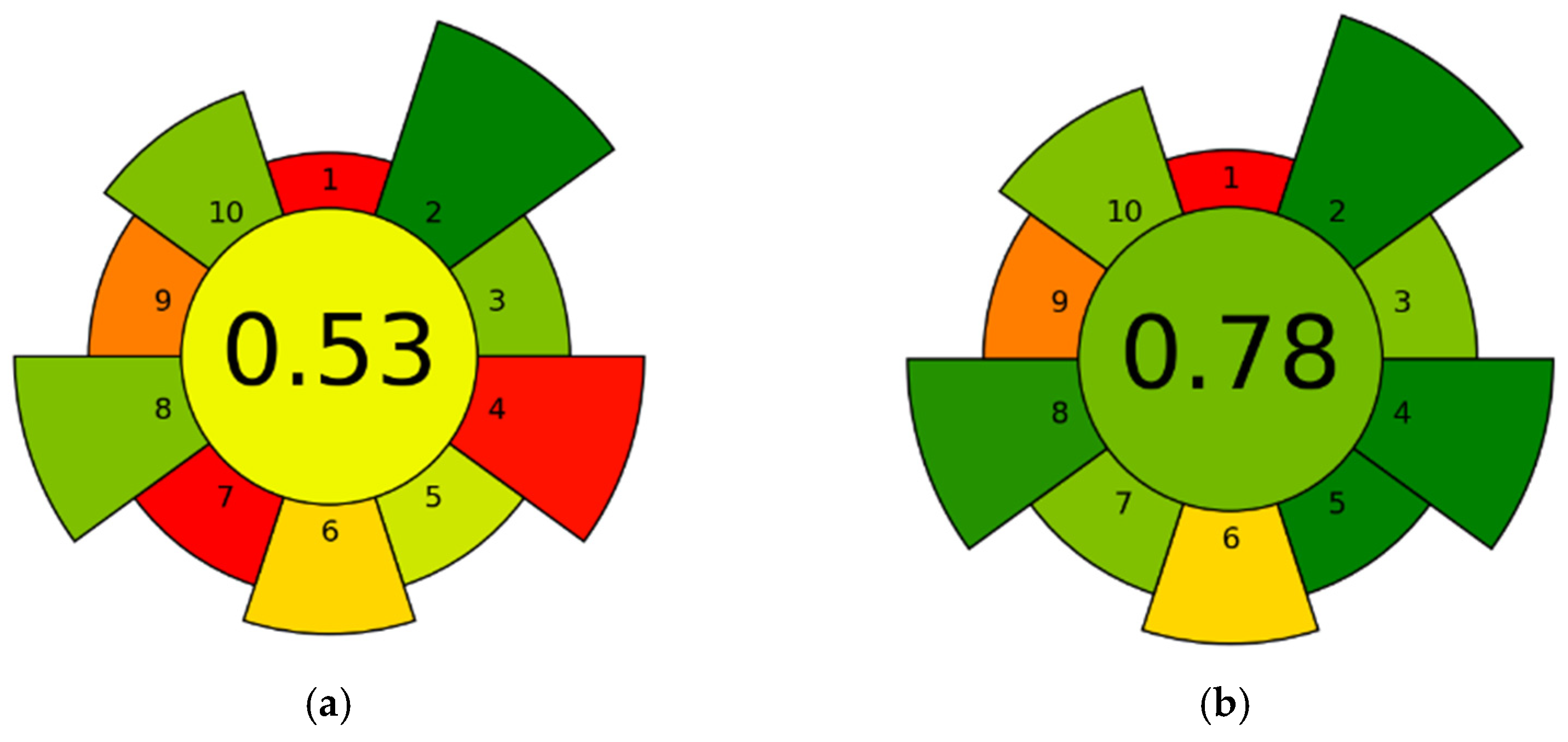
The environmental acceptability of the sample preparation procedure, which includes defatting and methylxanthine extraction, was evaluated using the AGREEprep software. The resulting pictograms are shown in Figure 5, where Figure 5a shows the procedure with defatting, and Figure 5b shows the procedure without the defatting step. In both procedures, the biggest shortcoming from the principle of green sample preparation was observed for sample preparation placement (1), since the preparation is carried out in the laboratory, not at the sampling location. Slightly smaller shortcomings were determined for sample throughput (6), due to the limited number of samples that can be prepared in a unit of time, and post-sample preparation configuration for analysis (9), due to the application of the HPLC-UV-Vis technique. In the defatting process, additional shortcomings were observed for waste (4), due to a larger amount of waste generated by the use of organic solvents, and integration and automation (7), due to additional non-automated preparation steps. The overall environmental acceptability score for the procedure without defatting was 0.78, while the inclusion of defatting reduced it to 0.53.
Figure 5.
AGREEprep pictograms obtained for sample preparation methods: (a) with sample defatting step, (b) without sample defatting step.
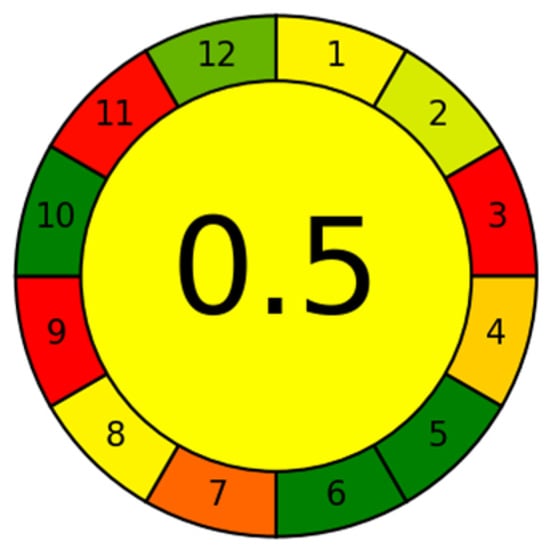
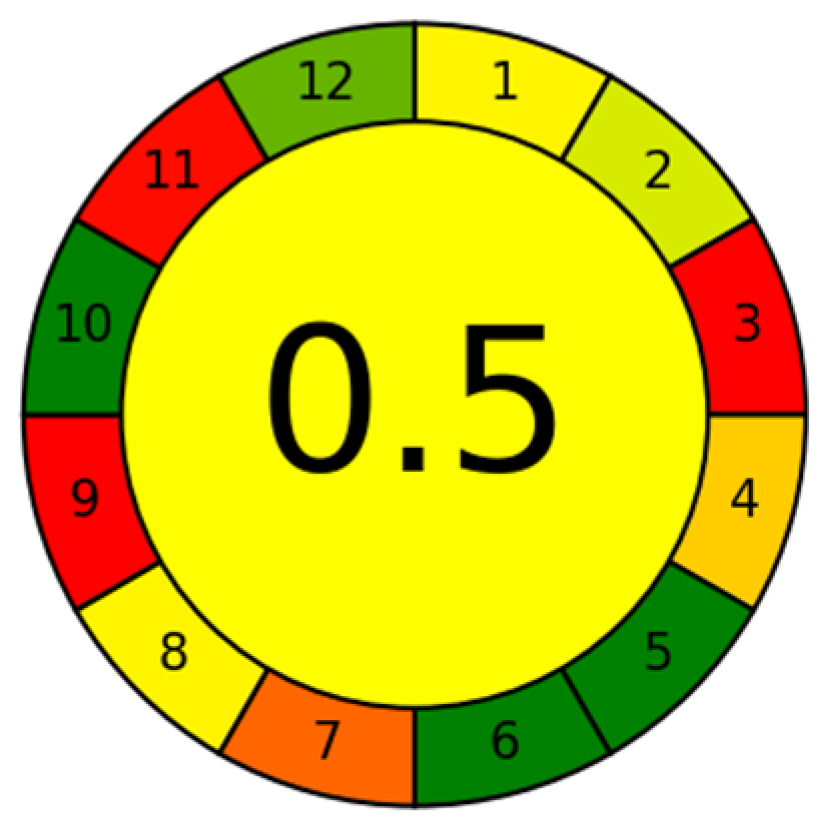
Figure 6 shows the pictogram obtained using the AGREE software, which assessed the environmental acceptability of the entire analytical method. The largest shortcomings were observed for the principles of in situ measurements (3), minimization of energy consumption (9) and elimination or replacement of toxic reagents (11), which are related to laboratory analysis, energy consumption and the use of organic solvents. Slightly smaller shortcomings were found for the principles related to the number of sample preparation steps (4) and the generation of analytical waste (7), while moderate deviations were observed for direct sample analysis (1) and simultaneous determination of multiple analytes (8). The overall environmental acceptability score for the method was 0.50. The overall score indicates a result that shows room for improvement in the environmental acceptability of this method.
Figure 6.
AGREE pictogram obtained for adapted method with defatting step.
Comparing the results of this study with previously published studies by Nascimento et al. [25,60], which assessed the environmental acceptability of methylxanthine extraction from cocoa bean shells without defatting, AM was found to have a slightly lower AGREE score (0.50 vs. 0.55) and AGREEprep score (0.53 vs. 0.67). However, the AGREEprep score for AM is higher than the value of 0.43, which the same authors obtained from the assessment of the Machado et al. method [61], while the AGREE score is the same (0.50). It is important to note that AM includes an additional defatting step, which increases solvent consumption and volume of waste. Its impact on environmental acceptability was confirmed by a comparative assessment of AGREEprep without defatting, where the score increased from 0.53 to 0.78. This comparison serves only to assess the impact of defatting, and not to compare the methods from the literature. The results obtained show that AM, despite the additional defatting step, achieves comparable environmental acceptability to previously published methods, with the ability to efficiently prepare fat-rich samples in a relatively short time.
4. Conclusions
In this study, the applicability of direct sonication with an ultrasonic probe as an alternative approach for the preparation of cocoa-based samples was investigated. Three defatting procedures were investigated: Soxhlet extraction, indirect ultrasound-assisted extraction using an ultrasonic bath, and direct ultrasound-assisted extraction using a probe. The obtained results indicate that direct sonication with an ultrasonic probe, using petroleum ether as a solvent and a treatment time of 10 min, represents a promising and time-efficient alternative for the defatting of cocoa samples.
Direct sonication with an ultrasonic probe was also applied for the extraction of methylxanthines by adapting the hot water extraction procedure described by del Rosario Brunetto et al. [10], which was used in this study as the standard method (SM). Under the conditions tested, the adapted method (AM) yielded statistically significantly higher measured concentrations of theobromine and caffeine compared to the standard method, while simultaneously shortening the extraction time. Theophylline was detected in the samples at concentrations lower than the limit of quantification (LOQ), which is why the obtained results were considered indicative of its presence and not reliable quantitative results. The use of direct sonication with an ultrasonic probe for defatting and subsequent extraction of methylxanthine indicates the possibility of simplifying the preparation of cocoa-based samples and shortening their preparation time. The assessments carried out using the AGREE and AGREEprep software provided insight into the greenness of the examined procedures and enabled the identification of aspects that can be further improved. However, the listed scores do not represent a comprehensive assessment of the method’s impact on the environment.
In conclusion, the obtained results suggest that direct sonication with an ultrasonic probe is a promising approach for the preparation of complex cocoa-based samples, although further research is needed to determine its wider applicability.
Author Contributions
Conceptualization, Investigation, Visualization, Methodology, Data Curation, Writing—Original Draft, Writing—Review and Editing, Formal Analysis, and Validation, O.G. Investigation, B.V. All authors have read and agreed to the published version of the manuscript.
Funding
This research received no external funding.
Data Availability Statement
The original contributions presented in this study are included in the article. Further inquiries can be directed to the corresponding author.
Acknowledgments
During the preparation of this manuscript, the authors used ChatGPT (GPT-6) (OpenAI) solely for grammar checking and improvement of the English language. The authors reviewed and edited the output and take full responsibility for the content of the publication.
Conflicts of Interest
The authors declare no conflicts of interest.
References
- Smit, H.J.; Gaffan, E.A.; Rogers, P.J. Methylxanthines Are the Psycho-Pharmacologically Active Constituents of Chocolate. Psychopharmacology 2004, 176, 412–419. [Google Scholar] [CrossRef] [Scilit] [PubMed]
- Raquel, M.; Briz, M.; Ruiz, B.S.; Bravo-Clemente, L. Methylxanthines: Dietary Sources, Bioavailability, and Health Benefits: Chemistry and Human Health, 2nd ed.; John Wiley & Sons, Inc.: Hoboken, NJ, USA, 2018. [Google Scholar] [CrossRef] [Scilit]
- Monteiro, J.P.; Alves, M.G.; Oliveira, P.F.; Silva, B.M. Structure-bioactivity relationships of methylxanthines: Trying to make sense of all the promises and the drawbacks. Molecules 2016, 21, 974. [Google Scholar] [CrossRef] [Scilit] [PubMed]
- Andreeva, E.Y.; Dmitrienko, S.G.; Zolotov, Y.A. Methylxanthines: Properties and Determination in Various Objects. Russ. Chem. Rev. 2012, 81, 397–414. [Google Scholar] [CrossRef] [Scilit]
- Oñatibia-Astibia, A.; Franco, R.; Martínez-Pinilla, E. Health Benefits of Methylxanthines in Neurodegenerative Diseases. Mol. Nutr. Food Res. 2017, 61, 1600670. [Google Scholar] [CrossRef] [Scilit] [PubMed]
- Zhang, M.; Zhang, H.; Jia, L.; Zhang, Y.; Qin, R.; Xu, S.; Mei, Y. Health Benefits and Mechanisms of Theobromine. J. Funct. Foods 2024, 115, 106126. [Google Scholar] [CrossRef] [Scilit]
- Franco, R.; Oñatibia-Astibia, A.; Martínez-Pinilla, E. Health Benefits of Methylxanthines in Cacao and Chocolate. Nutrients 2013, 5, 4159–4173. [Google Scholar] [CrossRef] [Scilit] [PubMed]
- Monteiro, J.; Alves, M.G.; Oliveira, P.F.; Silva, B.M. Pharmacological Potential of Methylxanthines: Retrospective Analysis and Future Expectations. Crit. Rev. Food Sci. Nutr. 2019, 59, 2597–2625. [Google Scholar] [CrossRef] [Scilit] [PubMed]
- Huynh, G.H.; Van Pham, H.; Hong Nguyen, H.V. Effects of Enzymatic and Ultrasonic-Assisted Extraction of Bioactive Compounds from Cocoa Bean Shells. J. Food Meas. Charact. 2023, 17, 4650–4660. [Google Scholar] [CrossRef] [Scilit]
- Brunetto, M.d.R.; Gutiérrez, L.; Delgado, Y.; Gallignani, M.; Zambrano, A.; Gómez, Á.; Ramos, G.; Romero, C. Determination of Theobromine, Theophylline and Caffeine in Cocoa Samples by a High-Performance Liquid Chromatographic Method with on-Line Sample Cleanup in a Switching-Column System. Food Chem. 2007, 100, 459–467. [Google Scholar] [CrossRef] [Scilit]
- Júnior, P.C.G.; dos Santos, V.B.; Lopes, A.S.; de Souza, J.P.I.; Pina, J.R.S.; Chagas Júnior, G.C.A.; Marinho, P.S.B. Determination of Theobromine and Caffeine in Fermented and Unfermented Amazonian Cocoa (Theobroma Cacao L.) Beans Using Square Wave Voltammetry after Chromatographic Separation. Food Control 2020, 108, 106887. [Google Scholar] [CrossRef] [Scilit]
- Belščak, A.; Komes, D.; Horžić, D.; Ganić, K.K.; Karlović, D. Comparative Study of Commercially Available Cocoa Products in Terms of Their Bioactive Composition. Food Res. Int. 2009, 42, 707–716. [Google Scholar] [CrossRef] [Scilit]
- Hernández-Hernández, C.; Viera-Alcaide, I.; Morales-Sillero, A.M.; Fernández-Bolaños, J.; Rodríguez-Gutiérrez, G. Bioactive Compounds in Mexican Genotypes of Cocoa Cotyledon and Husk. Food Chem. 2018, 240, 831–839. [Google Scholar] [CrossRef] [Scilit] [PubMed]
- Quiroz-Reyes, C.N.; Aguilar-Méndez, M.Á. Continuous Ultrasound and Pulsed Ultrasound: Selective Extraction Tools to Obtain Enriched Antioxidants Extracts from Cocoa Beans (Theobroma Cacao L.). Innov. Food Sci. Emerg. Technol. 2022, 80, 103095. [Google Scholar] [CrossRef] [Scilit]
- Razola-Díaz, M.d.C.; Aznar-Ramos, M.J.; Verardo, V.; Melgar-Locatelli, S.; Castilla-Ortega, E.; Rodríguez-Pérez, C. Exploring the Nutritional Composition and Bioactive Compounds in Different Cocoa Powders. Antioxidants 2023, 12, 716. [Google Scholar] [CrossRef] [Scilit] [PubMed]
- Soares, I.D.; Okiyama, D.C.G.; Rodrigues, C.E.d.C. Simultaneous Green Extraction of Fat and Bioactive Compounds of Cocoa Shell and Protein Fraction Functionalities Evaluation. Food Res. Int. 2020, 137, 109622. [Google Scholar] [CrossRef] [Scilit] [PubMed]
- Wu, Z.; Ferreira, D.F.; Crudo, D.; Bosco, V.; Stevanato, L.; Costale, A.; Cravotto, G. Plant and Biomass Extraction and Valorisation under Hydrodynamic Cavitation. Processes 2019, 7, 965. [Google Scholar] [CrossRef] [Scilit]
- Ojha, K.S.; Aznar, R.; O’Donnell, C.; Tiwari, B.K. Ultrasound Technology for the Extraction of Biologically Active Molecules from Plant, Animal and Marine Sources. TrAC—Trends Anal. Chem. 2020, 122, 115663. [Google Scholar] [CrossRef] [Scilit]
- Flores, E.M.M.; Cravotto, G.; Bizzi, C.A.; Santos, D.; Iop, G.D. Ultrasound-Assisted Biomass Valorization to Industrial Interesting Products: State-of-the-Art, Perspectives and Challenges. Ultrason. Sonochem. 2021, 72, 105455. [Google Scholar] [CrossRef] [Scilit] [PubMed]
- Fomo, G.; Madzimbamuto, T.N.; Ojumu, T.V. Applications of Nonconventional Green Extraction Technologies in Process Industries: Challenges, Limitations and Perspectives. Sustainability 2020, 12, 5244. [Google Scholar] [CrossRef] [Scilit]
- Carreira-Casais, A.; Otero, P.; Garcia-Perez, P.; Garcia-Oliveira, P.; Pereira, A.G.; Carpena, M.; Soria-Lopez, A.; Simal-Gandara, J.; Prieto, M.A. Benefits and Drawbacks of Ultrasound-Assisted Extraction for the Recovery of Bioactive Compounds from Marine Algae. Int. J. Environ. Res. Public Health 2021, 18, 9153. [Google Scholar] [CrossRef] [Scilit] [PubMed]
- Sereshti, H.; Khosraviani, M.; Samadi, S.; Amini-Fazl, M.S. Simultaneous Determination of Theophylline, Theobromine and Caffeine in Different Tea Beverages by Graphene-Oxide Based Ultrasonic-Assisted Dispersive Micro Solid-Phase Extraction Combined with HPLC-UV. RSC Adv. 2014, 4, 47114–47120. [Google Scholar] [CrossRef] [Scilit]
- Barreto, P.K.C.; da Silva, A.L.S.; de Jesus, R.M.; Coutinho, J.P.; Lôbo, I.P.; Santos, H.M.; de Jesus, R.M. Use of Design of Experiments to Optimize the Chromatographic Separation and Ultrasound-Assisted Extraction for Simultaneous Determination of Methylxanthines and Flavonoids in Guarana. Food Anal. Methods 2024, 17, 930–944. [Google Scholar] [CrossRef] [Scilit]
- Rivera-Manzorro, L.; Aliaño-González, M.J.; Barbero, G.F.; Chinchilla, N.; Macías, F.A.; Palma-Lovillo, M.; Carrera, C. Simulated Gastrointestinal Digestion of Cocoa Powder (INFOGEST): Methylxanthine Bioaccessibility and Antioxidant Properties. Food Funct. 2026, 17, 3657–3669. [Google Scholar] [CrossRef] [Scilit] [PubMed]
- Nascimento, L.L.; dos Santos, P.N.A.; Albuquerque, L.; Pita, B.L.d.M.; de Almeida, L.S.; de Oliveira, M.L.; Moreira, C.d.A.; Teixeira, F.R.P.; Caramão, E.B.; Dias, F.d.S.; et al. Ultrasound-Assisted Extraction of Methylxanthines from Cocoa Bean Shells Using Glycerol–Urea Natural Deep Eutectic Solvent (NADES): Optimization and Greenness Assessment. ACS Omega 2025, 10, 44064–44076. [Google Scholar] [CrossRef] [Scilit] [PubMed]
- Bragagnolo, F.S.; Strieder, M.M.; Sanches, V.L.; de Souza Mesquita, L.M.; Barroso, T.L.C.T.; Forster-Carneiro, T.; Rostagno, M.A. Stingless Bee Honeys As Natural and Edible Extraction Solvents: An Intensified Approach to Cocoa Bean Shell Valorization. ACS Sustain. Chem. Eng. 2025, 13, 15372–15382. [Google Scholar] [CrossRef] [Scilit]
- Pena-Pereira, F.; Wojnowski, W.; Tobiszewski, M. AGREE—Analytical GREEnness Metric Approach and Software. Anal. Chem. 2020, 92, 10076–10082. [Google Scholar] [CrossRef] [Scilit] [PubMed]
- Pena-Pereira, F.; Tobiszewski, M.; Wojnowski, W.; Psillakis, E. A Tutorial on AGREEprep an Analytical Greenness Metric for Sample Preparation. Adv. Sample Prep. 2022, 3, 100025, Corrigendum in Adv. Sample Prep. 2022, 4, 100045. https://doi.org/10.1016/j.sampre.2022.100045. [Google Scholar] [CrossRef] [Scilit]
- Yin, L.; Yu, L.; Guo, Y.; Wang, C.; Ge, Y.; Zheng, X.; Zhang, N.; You, J.; Zhang, Y.; Shi, M. Green Analytical Chemistry Metrics for Evaluating the Greenness of Analytical Procedures. J. Pharm. Anal. 2024, 14, 101013. [Google Scholar] [CrossRef] [Scilit] [PubMed]
- Peralta-Jiménez, L.; Cañizares-Macías, M.P. Ultrasound-Assisted Method for Extraction of Theobromine and Caffeine from Cacao Seeds and Chocolate Products. Food Bioproc. Tech. 2013, 6, 3522–3529. [Google Scholar] [CrossRef] [Scilit]
- Caudle, A.G.; Gu, Y.; Bell, L.N. Improved Analysis of Theobromine and Caffeine in Chocolate Food Products Formulated with Cocoa Powder. Food Res. Int. 2001, 34, 599–603. [Google Scholar] [CrossRef] [Scilit]
- Mladenovic, K.; Root, Y.; Ramanathan, D. UHPLC-HRMS Analysis of Theobromine in Theobroma Cacao and Its Products. J. Nutr. Food Sci. 2018, 8, 6. [Google Scholar] [CrossRef]
- Plaza, M.; Oliveira, D.; Nilsson, A.; Turner, C. Green and Efficient Extraction Method to Determine Polyphenols in Cocoa and Cocoa Products. Food Anal. Methods 2017, 10, 2677–2691. [Google Scholar] [CrossRef] [Scilit]
- Racine, K.C.; Lee, A.H.; Wiersema, B.D.; Huang, H.; Lambert, J.D.; Stewart, A.C.; Neilson, A.P. Development and Characterization of a Pilot-Scale Model Cocoa Fermentation System Suitable for Studying the Impact of Fermentation on Putative Bioactive Compounds and Bioactivity of Cocoa. Foods 2019, 8, 102. [Google Scholar] [CrossRef] [Scilit] [PubMed]
- Toro-Uribe, S.; Ibañez, E.; Decker, E.A.; Villamizar-Jaimes, A.R.; López-Giraldo, L.J. Food-Safe Process for High Recovery of Flavonoids from Cocoa Beans: Antioxidant aND HPLC-DAD-ESIMS/ MS Analysis. Antioxidants 2020, 9, 364. [Google Scholar] [CrossRef] [Scilit] [PubMed]
- Becerra, L.D.; Quintanilla-Carvajal, M.X.; Escobar, S.; Ruiz, R.Y. Correlation between Color Parameters and Bioactive Compound Content during Cocoa Seed Transformation under Controlled Process Conditions. Food Biosci. 2023, 53, 102526. [Google Scholar] [CrossRef] [Scilit]
- Hermund, D.B.; Larsen, L.K.; Trangbæk, S.R.; Madsen, Q.K.R.M.T.; Sørensen, A.D.M.; Kaya, J.; Jacobsen, C. Fate of Flavonoids and Theobromine in Cocoa Beans during Roasting: Effect of Time and Temperature. JAOCS J. Am. Oil Chem. Soc. 2025, 102, 35–45. [Google Scholar] [CrossRef] [Scilit]
- Senguler, B.; Kirkin, C. Valorisation of Cold Plasma-Treated Onion Skin Waste in Chocolate Production. Int. J. Food Sci. Technol. 2024, 59, 9368–9375. [Google Scholar] [CrossRef] [Scilit]
- Agudelo, C.; Bravo, K.; Ramírez-Atehortúa, A.; Torres, D.; Osorio, E.; Carrillo-Hormaza, L. Chemical and Skincare Property Characterization of the Main Cocoa Byproducts: Extraction Optimization by Rsm Approach for Development of Sustainable Ingredients. Molecules 2021, 26, 7429. [Google Scholar] [CrossRef] [Scilit] [PubMed]
- Shen, L.; Pang, S.; Zhong, M.; Sun, Y.; Qayum, A.; Liu, Y.; Rashid, A.; Xu, B.; Liang, Q.; Ma, H.; et al. A Comprehensive Review of Ultrasonic Assisted Extraction (UAE) for Bioactive Components: Principles, Advantages, Equipment, and Combined Technologies. Ultrason. Sonochem. 2023, 101, 106646. [Google Scholar] [CrossRef] [Scilit] [PubMed]
- AOAC (the Association of Official Agricultural Chemists). AOAC Guidelines for Single Laboratory Validation of Chemical Methods for Dietary Supplements and Botanicals. 2002. Available online: https://www.studocu.vn/vn/document/dai-hoc-y-duoc-thanh-pho-ho-chi-minh/pharmacist/d-aoac-guidelines-for-single-lab-validation-of-dietary-supplements/143627544?sid=6def908a-0f41-44be-a234-b3f27b5673461789117135 (accessed on 11 September 2026).
- Craig, W.J.; Nguyen, T.T. Caffeine and Theobromine Levels in Cocoa and Carob Products. J. Food Sci. 1984, 49, 302–305. [Google Scholar] [CrossRef] [Scilit]
- Risner, C.H. Simultaneous Determination of Theobromine, (+)-Catechin, Caffeine, and (–)-Epicatechin in Standard Reference Material Baking Chocolate 2384, Cocoa, Cocoa Beans, and Cocoa Butter. J. Chromatogr. Sci. 2008, 46, 892–899. [Google Scholar] [CrossRef] [Scilit] [PubMed]
- Altissimo, J.; Cardoso, I.; Araújo, B.Q.; Pereira, A.R.; Almeida, J.V.M.d.; Santos, N.A.d.; Costa, V.C.; Carneiro Lima, M.T.W.D. Chromatographic Profiling of Artisanal Chocolates: Volatile Composition and Methylxanthines as Markers of Cocoa Content. J. Food Sci. 2026, 91, e70979. [Google Scholar] [CrossRef] [Scilit] [PubMed]
- Lo Coco, F.; Lanuzza, F.; Micali, G.; Cappellano, G. Determination of Theobromine, Theophylline, and Caffeine in by-Products of Cupuacu and Cacao Seeds by High-Performance Liquid Chroma-tography. J. Chromatogr. Sci. 2007, 45, 273–275. [Google Scholar] [CrossRef] [Scilit] [PubMed]
- Srdjenovic, B.; Djordjevic-Milic, V.; Grujic, N.; Injac, R.; Lepojevic, Z. Simultaneous HPLC De-termination of Caffeine, Theobromine, and Theophylline in Food, Drinks, and Herbal Products. J. Chromatogr. Sci. 2008, 46, 144–149. [Google Scholar] [CrossRef] [Scilit] [PubMed]
- Eren, F.H.; Kabaran, S. Evaluation of Theobromine Content and the Relationship between Cocoa Percentages in Dark Chocolates. Funct. Foods Health Dis. 2023, 13, 520–532. [Google Scholar] [CrossRef] [Scilit]
- Peng, Y.; Zhang, W.; Chang, J.; Huang, Y.; Chen, L.; Deng, H.; Huang, Z.; Wen, Y. A Simple and Sensitive Method for the Voltammetric Analysis of Theobromine in Food Samples Using Nanobiocomposite Sensor. Food Anal. Methods 2017, 10, 3375–3384. [Google Scholar] [CrossRef] [Scilit]
- Jokić, S.; Gagić, T.; Knez, E.; Ubarić, D.; Kerget, M. Separation of Active Compounds from Food By-Product (Cocoa Shell) Using Subcritical Water Extraction. Molecules 2018, 23, 1408. [Google Scholar] [CrossRef] [Scilit] [PubMed]
- Okiyama, D.C.G.; Soares, I.D.; Cuevas, M.S.; Crevelin, E.J.; Moraes, L.A.B.; Melo, M.P.; Oliveira, A.L.; Rodrigues, C.E.C. Pressurized Liquid Extraction of Flavanols and Alkaloids from Cocoa Bean Shell Using Ethanol as Solvent. Food Res. Int. 2018, 114, 20–29. [Google Scholar] [CrossRef] [Scilit] [PubMed]
- Pagliari, S.; Celano, R.; Rastrelli, L.; Sacco, E.; Arlati, F.; Labra, M.; Campone, L. Extraction of Methylxanthines by Pressurized Hot Water Extraction from Cocoa Shell By-Product as Natural Source of Functional Ingredient. LWT 2022, 170, 114115. [Google Scholar] [CrossRef] [Scilit]
- Pavlović, N.; Jakovljević, M.; Molnar, M.; Jokić, S. Ultrasound-assisted extraction of active com-pounds from cocoa bean shell. Food Health Dis. Sci.-Prof. J. Nutr. Diet. 2021, 10, 77–88. Available online: https://hrcak.srce.hr/269618 (accessed on 24 November 2025).
- Carrillo-Hormaza, L.; Ramírez, A.M.; Osorio, E.; Gil, A. Optimization of Ultrasound-Assisted Extraction and Rapid Resolution Analysis of Flavanols and Methylxanthines for the Quality Control of Cocoa-Derived Products. Food Anal. Methods 2017, 10, 497–507. [Google Scholar] [CrossRef] [Scilit]
- Ghoraba, Z.; Aibaghi, B.; Soleymanpour, A. Ultrasound-Assisted Surfactant-Enhanced Emulsification Microextraction and Determination of Caffeine and Theophylline in Human Plasma and Cocoa Powder. Chem. Pap. 2022, 76, 5487–5496. [Google Scholar] [CrossRef] [Scilit]
- Grujić-Letić, N.; Teofilović, B.; Suvajdžić, L.; Gligorić, E. Green extraction of methylxanthine derivatives from food and beverages using deep eutectic solvents and in silico studies of neuroprotective potential. Maced. J. Chem. Chem. Eng. 2026, 44, 273–284. [Google Scholar] [CrossRef] [Scilit]
- Horžić, D.; Jambrak, A.R.; Belščak-Cvitanović, A.; Komes, D.; Lelas, V. Comparison of Conventional and Ultrasound Assisted Extraction Techniques of Yellow Tea and Bioactive Composition of Obtained Extracts. Food Bioproc. Tech. 2012, 5, 2858–2870. [Google Scholar] [CrossRef] [Scilit]
- Carciochi, R.A.; Dieu, V.; Vauchel, P.; Pradal, D.; Dimitrov, K. Reduction of Environmental Impacts of Caffeine Extraction from Guarana by Using Ultrasound Assistance. Food Bioprod. Process. 2021, 127, 266–275. [Google Scholar] [CrossRef] [Scilit]
- Ruiz-Santiago, F.L.; Márquez-Rocha, F.J.; García-Alamilla, P.; Carrera-Lanestosa, A.; Ramírez-López, C.; Ocaranza-Sánchez, E.; Jiménez-Rodríguez, D.J. Physicochemical and Biochemical Changes in Cocoa during the Fermentation Step. Fermentation 2024, 10, 405. [Google Scholar] [CrossRef] [Scilit]
- Ramos-Escudero, F.; Rojas-García, A.; Cádiz-Gurrea, M.d.l.L.; Segura-Carretero, A. High Potential Extracts from Cocoa Byproducts through Sonotrode Optimal Extraction and a Comprehensive Characterization. Ultrason. Sonochem. 2024, 106, 106887. [Google Scholar] [CrossRef] [Scilit] [PubMed]
- Lordêlo Nascimento, L.; Alves dos Santos, P.N.; Granja, H.S.; da Silveira Ferreira, L.; Ferreira Lima, J.V.; de Moura Pita, B.L.; dos Santos Polidoro, A.; dos Santos Freitas, L.; Caramão, E.B.; de Souza Dias, F.; et al. Mixture Design and Doehlert Matrix for Optimization of Energized Dispersive Guided Extraction (EDGE) of Theobromine and Caffeine from Cocoa Bean Shells. Foods 2025, 14, 740. [Google Scholar] [CrossRef] [Scilit] [PubMed]
- Machado, K.N.; Freitas, A.A.d.; Cunha, L.H.; Faraco, A.A.G.; Pádua, R.M.d.; Braga, F.C.; Vianna-Soares, C.D.; Castilho, R.O. A Rapid Simultaneous Determination of Methylxanthines and Proanthocyanidins in Brazilian Guaraná (Paullinia Cupana Kunth.). Food Chem. 2018, 239, 180–188. [Google Scholar] [CrossRef] [Scilit] [PubMed]

Disclaimer/Publisher’s Note: The statements, opinions and data contained in all publications are solely those of the individual author(s) and contributor(s) and not of MDPI and/or the editor(s). MDPI and/or the editor(s) disclaim responsibility for any injury to people or property resulting from any ideas, methods, instructions or products referred to in the content. |
© 2026 by the authors. Licensee MDPI, Basel, Switzerland. This article is an open access article distributed under the terms and conditions of the Creative Commons Attribution (CC BY) license.