


Abstract
Pediatric orofacial function is typically evaluated through clinical observation, caregiver reports, and device-based measurements when available. Without an organized framework, findings recorded by different examiners remain difficult to compare across visits or between clinicians. This review introduces a clinically available framework covering seven domains: mastication, breathing, tongue, lip, growth, posture, and swallowing (MBTL-GPS). Distinct from established instruments such as the protocol of Orofacial Myofunctional Evaluation with Scores (OMES) and the Nordic Orofacial Test-Screening (NOT-S), it incorporates physical growth and whole-body posture alongside intraoral findings, takes both airway and sleep into account, and quantifies occlusal force, tongue pressure, and lip closing strength on continuous scales. Each domain is detailed through its clinical and developmental background, specific assessment items, and relevant management. MBTL-GPS provides a standardized format for recording orofacial function at the chairside. It is a structured clinical workflow and not a validated diagnostic test. Its reliability has not yet been established, it does not provide an overall score, and reference values for several parameters derive from specific national cohorts. Whether the record is comparable between clinicians has not been tested. Determining inter-examiner and intra-examiner reliability is the next step.
1. Introduction
Health is what people ultimately live for. The World Health Organization defines it as a state of complete physical, mental and social well-being and not merely the absence of disease or infirmity [1]. Oral health belongs to that state, and it is closely tied to general health: oral and general diseases share risk factors and consequences across the life course [2]. The FDI World Dental Federation defines oral health as multifaceted and includes in it the ability to speak, smile, smell, taste, touch, chew, swallow and convey emotions through facial expressions [3]. Under this definition oral health is described by function as much as by the absence of caries or malocclusion. In children the functions named in that definition are not present at birth but are acquired, and oral health therefore begins with their acquisition.
Orofacial function comprises mastication, breathing and swallowing, and the resting postures and movements of the tongue and lips that carry them out. These functions mature alongside the dentition [4,5], they develop within the child’s physical growth and whole-body posture, and they operate as one system. The tongue, lips and masticatory muscles act in coordination [6,7], and adolescents who breathe through the mouth show lower tongue pressure and lower lip closing strength than those who breathe through the nose [8]. A finding in one domain therefore seldom stands alone.
The scope of what dentistry regards as orofacial function has widened over more than a century. Angle made the position of the teeth the object of diagnosis [9], and Rogers proposed exercises for the facial muscles, which is generally taken as the beginning of orofacial myofunctional therapy [10]. Moss and Salentijn formalized the functional matrix hypothesis, in which skeletal growth is a secondary response to the surrounding soft tissues and functional spaces [11,12], and functional appliance treatment in the European tradition applied that premise clinically by altering the muscular environment [13]. The airway was added next. Linder-Aronson linked nasal obstruction and facial morphology in children with adenoids and showed that the direction of mandibular growth changed after adenoidectomy [14,15], and Harvold et al. produced malocclusion in primates by inducing oral respiration [16]. Resting posture followed, as a determinant of tooth position [17] and as a target of treatment [18,19], and Guilleminault and colleagues described pediatric obstructive sleep apnea as a disorder of oral-facial growth [20,21]. In 2018, the Japanese Association for Dental Science defined developmental insufficiency of oral function in otherwise healthy children, and the condition was added to national health insurance coverage with a structured checklist [22]. By 2022 approximately 431,000 children had received the diagnosis [23]. Each step added a component that had not been examined before, and each drew attention to a different part of the same system.
The consequences of dysfunction extend beyond the occlusion. In a population-based cohort, symptoms of sleep-disordered breathing in early childhood predicted behavioral problems at 4 and 7 years of age [24], and in a randomized trial adenotonsillectomy for childhood sleep apnea improved behavior, quality of life and polysomnographic findings, although not the primary neuropsychological outcome [25]. Mouth breathing is associated with backward and downward rotation of the maxilla and mandible and a narrower pharyngeal airway [26], and with Class II division 1 malocclusion [27]. Two further observations argue for early assessment. The hard palate of infants with Down syndrome is normal at birth and begins to deviate from that of healthy infants within the first year of life [28], indicating that the period in which function shapes form opens early. Conversely, mandibular growth direction became more horizontal after adenoidectomy [15], indicating that restored function can redirect growth.
Dental diagnosis, however, has remained centered on the hard tissues. Occlusal classification, space analysis and cephalometric evaluation are established, whereas the functional findings that accompany them are recorded inconsistently, if at all. Structured instruments exist. The protocol of Orofacial Myofunctional Evaluation with Scores (OMES) and its expanded version (OMES-E) provide a detailed and validated profile of orofacial myofunctional status [29,30], and the Nordic Orofacial Test-Screening (NOT-S) offers a rapid validated screen [31]. Neither records physical growth, whole-body posture or sleep, and neither includes device-based measurement of occlusal force, tongue pressure or lip closing strength, parameters that change with age [32] and can be compared with age-specific reference values [22]. The Japanese checklist is tied to its own insurance framework and was not designed as a chairside record for pediatric dental settings elsewhere.
This review introduces a clinical framework covering mastication, breathing, tongue, lip, growth, posture and swallowing (MBTL-GPS), recorded on a single form in one chairside examination. The purpose is to describe, for each domain, the clinical and developmental background, the assessment items and their basis in the literature, and the management that follows. Section 2 describes how the literature was selected. Section 3 states the requirements of an orofacial function assessment tool and compares MBTL-GPS with OMES/OMES-E and NOT-S. Section 4 explains the selection of the seven domains and describes each of them, and Section 5 sets out the limitations of the framework and the studies needed to establish its reliability. MBTL-GPS is presented as a structured workflow rather than a validated diagnostic instrument.
2. Literature Selection
Searches were carried out between May 2025 and September 2026 in PubMed, Scopus, Web of Science and Google Scholar, and in J-Stage, KoreaMed and RISS for Japanese and Korean sources. Publications in English, Korean and Japanese were considered, without restriction on the year of publication.
Searches were run separately for each of the seven domains. The principal concepts combined the domain with the parameters recorded on the form. Mastication was combined with masticatory performance, occlusal force (bite force) and chewing. Breathing was combined with mouth breathing, nasal obstruction, tonsil size and sleep-disordered breathing. Tongue was combined with tongue pressure, tongue posture, range of motion and ankyloglossia. Lip was combined with lip closing strength, lip incompetence and lip seal. Growth was combined with preterm birth, oral habits and body mass index. Posture was combined with head posture and body posture. Swallowing was combined with swallowing pattern, tongue thrust and anterior open bite. Each concept was combined with terms for children, and the reference lists of the retrieved articles were checked for further sources.
Systematic reviews and meta-analyses were used in preference to individual studies where they were available, randomized trials in preference to observational studies, and recent evidence in preference to older evidence addressing the same question. Where findings conflicted, or where the certainty of the evidence was graded as low in the source, this is stated in the text. Reference values for the measured parameters were taken from studies reporting age-referenced data in children, and the cohort from which each value derives is named. Studies in children were used where they were available, and studies in adults were used only where the method or the parameter had not been reported in children, with the population named in the text.
3. Existing Assessment Tools
3.1. Requirements of an Orofacial Function Assessment Tool
Orofacial function is assessed through observation, caregiver report, and in some settings instrumented measurement. Without a defined structure, different examiners record different findings in the same child, and those findings cannot be compared across visits or across clinicians. Orofacial function assessment tool for clinical evaluation must satisfy three conditions.
First, it should describe the system as a whole. Orofacial functions are driven by the coordination of the tongue, lips, and masticatory muscles [6,7]. They function as part of an integrated system rather than individually, and a problem in one function is closely related to problems in others [8].
Second, it should be feasible in a clinical setting. An assessment that depends on specialized facilities and dedicated personnel is limited to where it can be performed and requires the child to be examined outside a familiar environment. This matters because orofacial function is expressed as habitual behavior. Resting lips and tongue posture, chewing pattern, and mode of breathing are typical daily functions in children.
Third, the record should be communicable. Orofacial function extends beyond dentistry. Breathing, swallowing, speech, and posture can also involve physicians, speech-language therapists, and physiotherapists [33], and the record should communicate findings clearly during multidisciplinary collaboration [31]. The caregiver should also understand which functions are affected and why intervention is needed. A structured record gives a shared vocabulary and makes change visible at follow-up.
3.2. OMES/OMES-E and NOT-S
Two structured instruments are in established use, OMES and NOT-S. Both assess several orofacial functions within a single structured protocol, and both have been tested for validity and reliability.
OMES is a detailed evaluation developed for children aged 6 to 12, used to document severity and describe the pattern of dysfunction [29]. It scores the appearance and posture of the lips, jaws, cheeks, face, tongue and palate, the mobility of the lips, tongue, jaws and cheeks, and the functions of respiration, deglutition and mastication. Mobility and the functions of mastication and deglutition are rated on a three-point scale, and the remaining observations are recorded as normal or altered. Respiration is judged by lip closure at rest, and mastication while the child chews a test food in the habitual manner, with the chewing type classified and the chewing time recorded. Jaw movement extension is measured in millimeters with a caliper. The OMES protocol showed a test–retest reliability of 0.99 and an inter-examiner reliability of 0.99 [29]. The extended version, with more items and a wider rating scale, was subsequently introduced and reported a mean sensitivity of 0.91 and specificity of 0.77 for orofacial myofunctional disorder [30].
NOT-S is a screening instrument developed for individuals aged three years and older presenting with speaking, chewing, or swallowing difficulties [31]. It comprises two parts with six domains each. The structured interview assesses sensory function, breathing, habits, chewing and swallowing, drooling, and dry mouth. The clinical examination evaluates the face at rest, nose breathing, facial expression, masticatory muscle and jaw function, oral motor function, and speech, with photographs illustrating each clinical task. Domains contain one to five items, and a positive finding on any item yields one point for that domain, producing a total score ranging from 0 to 12. Requiring no equipment beyond the illustrated manual and examination form, the assessment typically takes 5 to 13 min. In its initial validation, NOT-S showed an inter-examiner agreement of 83 percent and an intra-examiner agreement of 92 to 95 percent for domain scores, alongside kappa values of 0.42 to 0.44 for total score inter-examiner agreement. For detecting orofacial dysfunction, it demonstrated a sensitivity of 0.96 and a specificity of 0.63 [31].
3.3. Comparison with MBTL-GPS
MBTL-GPS, the approach described in this review, records seven domains of orofacial function. Table 1 compares it with OMES/OMES-E and NOT-S.
Table 1.
Comparison of OMES/OMES-E, NOT-S and MBTL-GPS.
The three differ in purpose. OMES describes the severity and the pattern of an orofacial myofunctional disorder in children between six and twelve years [29]. NOT-S screens, from three years of age, individuals who already have difficulty speaking, chewing or swallowing [31]. MBTL-GPS records orofacial function at the chairside in pediatric dental care, where growth, the airway and device-based measurement are already part of the examination.
Beyond existing instruments, MBTL-GPS incorporates physical growth and whole-body posture alongside orofacial parameters to interpret findings within a child’s developmental stage. Examiners assess body mass index for age given the reported links between masticatory performance, chewing behavior, and childhood obesity [34,35], while documenting posture because of its potential association with mouth breathing [36]. Additionally, device-based quantitative measurements yield continuous data that reduce dependence on examiner judgment and enable direct comparison with age-specific reference values [37,38]. Such objective tracking matters because orofacial functions follow distinct developmental trajectories. Lip closing strength remained almost unchanged between 5 and 20 years, while occlusal force, tongue pressure and masticatory performance increased [32]. Lastly, the framework evaluates the airway through tonsil grading, oropharyngeal visibility, and a validated sleep questionnaire. The mode of breathing is associated with craniofacial growth [26,27], and pediatric sleep-disordered breathing may indicate the need for medical evaluation or referral [39].
4. MBTL-GPS: A Practical Clinical Framework
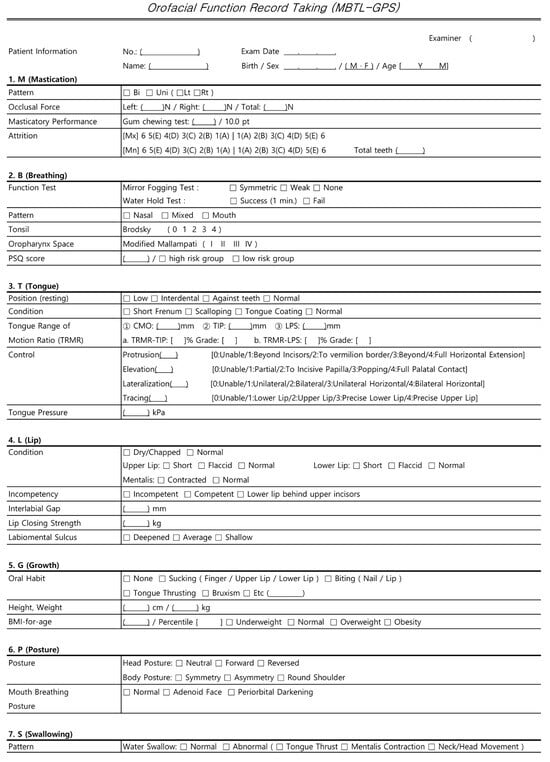
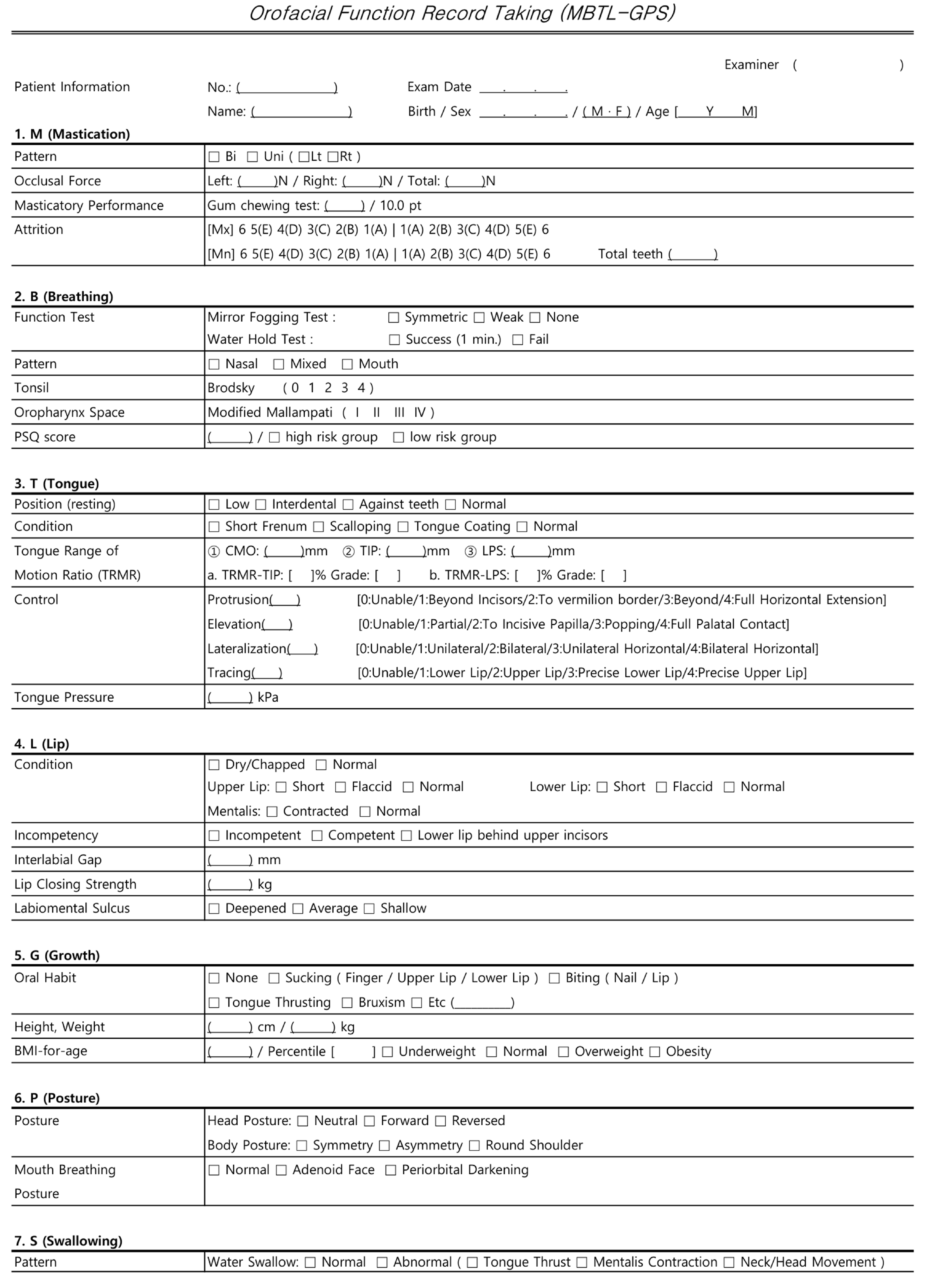
The form aims to document relevant findings comprehensively within a single clinical session, supporting the workflow from initial observation and screening to structured assessment, clinical interpretation, and intervention. The following sections describe each domain in the order of the acronym (Figure 1). The form is not completed in that order. Height, weight and posture are recorded first while the child is standing, the water hold test and the water swallow follow, the lips and the tongue are observed with the child seated and at rest, and the measurements that require a device are made last. Where a measurement is not performed as described, it is repeated and the repeated value is recorded. The framework does not require the particular models named. The reference values cited here were obtained with the same measurement method, so a value obtained with a different system is not interchangeable with them.
Figure 1.
Orofacial Function Record Taking form for the seven MBTL-GPS domains. Sections 1 to 7 correspond to mastication, breathing, tongue, lip, growth, posture and swallowing, and each lists the items recorded. The form is completed at the chairside in a single examination. Bi, bilateral; Uni, unilateral; Lt, left; Rt, right; Mx, maxilla; Mn, mandible; TRMR, tongue range of motion ratio; CMO, comfortable mouth opening; TIP, tip up to incisive papilla; LPS, lingual palatal suction; PSQ, Pediatric Sleep Questionnaire; BMI, body mass index.
4.1. Construct and Selection of the Seven Domains
In this review, orofacial function is taken to mean the coordinated activity of the oral and craniofacial structures that accomplishes feeding and breathing. A domain was included when it either forms part of that function or it is needed to interpret it, and when it can be observed or measured during a dental examination. All seven are connected to the occlusion and to craniofacial growth, which is why they are recorded in the dental setting.
Three domains are functions. Mastication, breathing and swallowing are performed by the child during the examination and are observed directly. Two domains are structures. The tongue and the lips carry out those functions, and their resting posture, mobility and force are accessible to examination and to measurement. Two domains provide the background. Physical growth and whole-body posture are not orofacial functions. The same finding carries a different meaning at a different stage of growth, and postural adaptation accompanies altered breathing and altered oral posture [36,40,41]. These two domains are used to interpret the other five, and they are not judged on their own.
Whole-body posture is recorded as an observation, because a dentist can note a postural deviation, while the diagnosis and treatment of a postural disorder belong to a physiotherapist or a physician. Speech is not recorded, although the checklist of the Japanese Association for Dental Science includes it [22] and NOT-S scores it [31]. Speech is not a background for the other domains in the way growth and posture are, and altered articulation does not always indicate an oral structural problem.
4.2. Intended Population
MBTL-GPS is intended for children from three years of age, in the primary and mixed dentitions and in the early permanent dentition, which corresponds approximately to ages three to twelve years. Three years is the age from which the tasks on the form can be followed, and it is also the lower limit of NOT-S [31]. The upper limit follows the reference values available for the recorded measurements, which cover preschool and school-age children [22,34,42,43,44] and extend to twenty years in one cohort [32].
The framework is written for children without craniofacial anomalies, including cleft lip and palate, and without neurodevelopmental or neuromuscular disorders affecting oral motor function, such as cerebral palsy. Children in those groups are assessed with instruments developed for them, such as NOT-S [31], and the reference values used here do not apply to them. Assessment is also deferred where the child cannot follow the instructions, and where an acute condition is present on the day of the examination, such as an upper respiratory infection, acute tonsillitis, oral ulceration, or recent trauma or surgery.
Reference values are not available for every item at every age. Occlusal force and tongue pressure are referenced to Japanese cohorts [22,32,37,38,45], and lip closing strength to the age- and sex-specific values reported for the method used here [22]. Where no value exists for the child’s age, sex, dentition stage or population, the measurement is recorded with the device and the unit, and it is not classified as normal or altered. The value is then read against the same child’s earlier measurements.
4.3. Mastication
4.3.1. Background
Mastication is the coordinated process of ingesting food, breaking it down, mixing it with saliva, forming a cohesive bolus, and transporting it posteriorly for swallowing. This function coordinates the teeth, jaws, and masticatory muscles alongside the tongue, lips, cheeks, salivary flow, and neural regulation [7]. In children, mastication matures progressively. Feeding patterns shift from suckling to munching and lateral tongue movements during the first year of life, although the timelines reported for this progression vary across studies [4]. Mature chewing behaviors develop across the transitional dentition stages [5]. Masticatory performance relies on craniofacial anatomy, neuromuscular coordination, and food consistency, though the precise age of functional maturity remains unestablished [46]. Quantitative parameters evolve with age, as occlusal contact area, maximum occlusal force, and masticatory performance all increase between 5 and 20 years [32]. Malocclusion may also involve altered function. A systematic review found reduced masticatory performance, lower occlusal force, and diminished muscle activity in children with malocclusion during the mixed and permanent dentitions, although the evidence was judged insufficient to confirm the association [47]. Beyond dental factors, masticatory performance also correlates with overweight and obesity in school-age populations [34,48].
4.3.2. Assessment
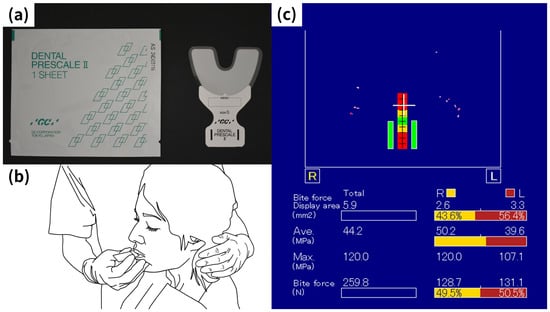
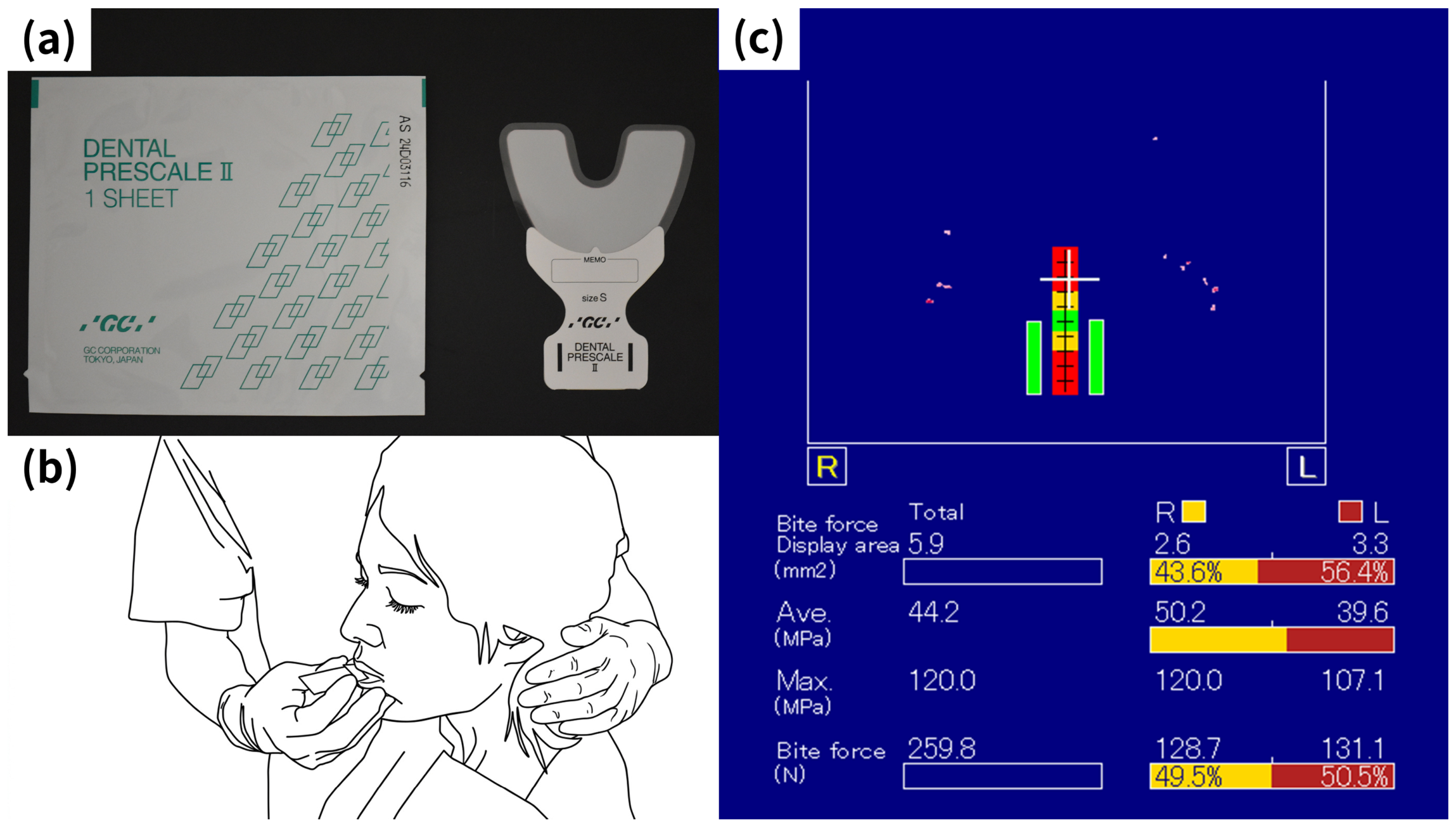
Examiners observe the chewing pattern during active mastication, with the masseter palpated on both sides, and record it as bilateral or unilateral, noting the dominant side when unilateral. For occlusal force, the child bites on a pressure-sensitive sheet in maximal intercuspation for about three seconds, after practicing with a quarter-sized piece of paper. One recording is made, and the left, right and total occlusal force are read from the analysis software (Figure 2) and compared with age-matched reference values, which derive from Japanese cohorts [38]. The values depend on whether the pressure filter of the software is applied, and the same setting is used at every visit. For masticatory performance, the child rinses with water for at least five seconds and then chews color-changeable gum 60 times at one chew per second, guided by the counter in the application, with one third of a piece used in preschool children. The gum is not used within thirty minutes of a meal or of toothbrushing, and a rest interval is allowed before any repeat use. The gum is then placed on the supplied chart and photographed, and the application returns a score on a 10-point scale [49]. The reliability of the color change was highest between 60 and 160 chewing strokes in an adult sample [50]. Currently, the literature recognizes no universal gold standard for assessing masticatory performance [51]. The gum score is read with the dentition stage, because masticatory performance may decline temporarily while the deciduous teeth are replaced [52]. Dental attrition is charted tooth by tooth across both arches in the primary and permanent dentitions, noting the total number of affected teeth.
Figure 2.
Occlusal force measurement with the Dental Prescale II (GC Corporation, Tokyo, Japan): (a) pressure-sensitive sheet; (b) measurement with the sheet placed between the dental arches; (c) analysis screen with Bite Force Analyzer (GC Corporation, Tokyo, Japan), with the right side in yellow and the left side in red. Display area, occlusal contact area (mm2); Ave., mean occlusal pressure (MPa); Max., maximum occlusal pressure (MPa); Bite force, occlusal force (N).
4.3.3. Management
A chewing pattern recorded as unilateral, or an occlusal force or a gum score below the values reported for the age, is interpreted together with the dentition stage and the findings in the other domains. A single measurement below a reference value is not in itself an indication for treatment. Where a unilateral pattern or a low occlusal force is explained by caries or by pain on one side, that cause is treated first. Management is otherwise considered where the caregiver reports slow or difficult eating, or where a low occlusal force appears together with an anterior open bite or a posterior crossbite.
Management begins with caregiver education and dietary adjustment. A soft diet limits the opportunity to chew, and a phased transition to firmer textures is advised. Children accept the textures they are able to manipulate, and early exposure to a range of textures supports later acceptance [46]. Orofacial myofunctional therapy directed at chewing on both sides is used where a unilateral pattern is recorded, and controlled evidence for this practice in children was not identified. Orthodontic treatment is considered where a crossbite, an open bite or a missing tooth is present and is judged to be related to the recorded finding. Because rapid maxillary expansion did not change the masticatory variables measured by videofluoroscopy in a prospective study of children with posterior crossbite [53], the indication rests on the occlusal problem, and a gain in masticatory function is not assumed. Reassessment follows the dentition stage, because masticatory performance changes as the dentition changes [52].
4.4. Breathing
4.4.1. Background
Breathing represents a primary orofacial function rather than an incidental background finding, intimately linked to airway stability, lip competence, tongue posture, and craniofacial growth. The oral and pharyngeal airway serves as a shared functional corridor for respiration, swallowing, and speech. Mouth breathing is not merely an oral habit. Compared to nasal breathers, children exhibiting mouth breathing habits demonstrate greater lower incisor proclination, an increased interlabial gap, and a more convex facial profile [54], with a higher prevalence of Class II division 1 malocclusion [27]. Breathing patterns may also influence craniofacial growth. A meta-analysis found that in mouth-breathing children the maxilla and mandible were rotated backward and downward, the occlusal plane was steeper, the upper incisors were more proclined and the pharyngeal airway was narrower [26]. Altered breathing has also been linked to whole-body postural alignment, though a systematic review of children aged 5 to 14 years judged the certainty of that evidence to be low [36]. These are associations, and the direction of the relationship has not been established. The clinical implications of these findings extend beyond the dental setting. Sleep-disordered breathing in children reflects increased upper airway resistance during sleep, and the obstruction behind it is commonly adenotonsillar hypertrophy or nasal obstruction [39].
4.4.2. Assessment
The assessment includes six clinical items. For the mirror fogging test, the examiner places a mirror beneath the nostrils to evaluate nasal airflow symmetry, recording condensation as symmetric, weak, or absent. During the water hold test, the child retains a mouthful of water with closed lips for one minute, with the outcome noted as either success or failure. The overall breathing pattern is assigned from the mirror fogging test and the water hold test together. It is recorded as nasal where condensation is symmetric and the water hold is successful, as mouth breathing where condensation is absent and the water hold fails, and as mixed where the two findings do not agree. Palatine tonsil size is graded using the Brodsky scale from 0 to 4 [55], while oropharyngeal airway visibility is evaluated via the modified Mallampati classification from Class I to IV [56]. Sleep symptoms are recorded with the pediatric sleep questionnaire, and a score of 0.33 or above indicates high risk of sleep-disordered breathing [57]. These items are screening observations. The mirror fogging test and the water hold test show whether the child can breathe through the nose and hold a lip seal at the time of the examination, and neither confirms nor excludes nasal or pharyngeal obstruction. Tonsil grading and the modified Mallampati classification describe the visible oropharynx, and the modified Mallampati classification was developed in adults to predict difficult tracheal intubation [56]. The questionnaire records reported symptoms. None of these items establishes obstructive sleep apnea, which is diagnosed by sleep study [58], and a finding on any of them is not read as the cause of the mouth breathing.
4.4.3. Management
Where mouth breathing is recorded, management aims to restore nasal breathing. A single item is not in itself an indication for treatment, and management is considered where the pattern is recorded as mouth or mixed breathing together with the airway items.
Where snoring and other symptoms are present, the child is referred for medical evaluation, because obstructive sleep apnea is diagnosed by polysomnography [58]. In children with obstructive sleep apnea and adenotonsillar hypertrophy, adenotonsillectomy is the recommended first-line treatment [58], and the child is referred to otolaryngology where the airway items point to hypertrophy.
Where no structural obstruction is found, orofacial myofunctional therapy can be used, working on nasal breathing, lip closure and resting tongue posture. In mixed-dentition children with lip incompetence who all performed daily lip and tongue training, prefabricated myofunctional appliances increased lip closing strength more than conventional early orthodontic appliances in a retrospective study [59]. An umbrella review of mandibular advancement devices in pediatric obstructive sleep apnea supports their use as an adjunct [60].
4.5. Tongue
4.5.1. Background
The tongue connects mastication, swallowing, breathing and craniofacial growth. Its resting posture holds clinical importance alongside active mobility, providing internal support against the hard palate while contributing to upper airway patency and dental arch development. The intrinsic and extrinsic musculature underlying these functions has been described in detail [61]. Tongue pressure develops with growth. In preschool populations, maximal tongue pressure rises markedly between ages 4 and 6, showing continued gains over 1-year follow-up intervals, particularly among children exhibiting normal occlusion, though occlusal classification alone did not achieve statistical significance [44]. Tongue pressure also relates to the mode of breathing. Among adolescents, mouth breathers demonstrate significantly lower tongue pressure than nasal breathers, representing the only objective orofacial function metric independently associated with mouth breathing [8]. Furthermore, tongue function interacts with specific malocclusion categories, as a cross-sectional comparison of children in the mixed dentition found that determinants influencing tongue pressure differ between children with Class I and Class II malocclusions [62]. Three-dimensional imaging shows a similar spatial relationship. On cone-beam computed tomography, tongue posture, hyoid bone positioning, and tongue volume associate with sagittal, vertical, and transverse skeletal patterns, although this was studied in non-growing subjects [63].
4.5.2. Assessment
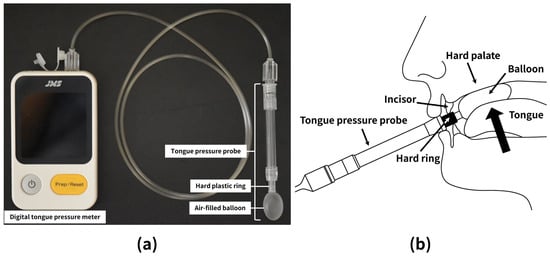
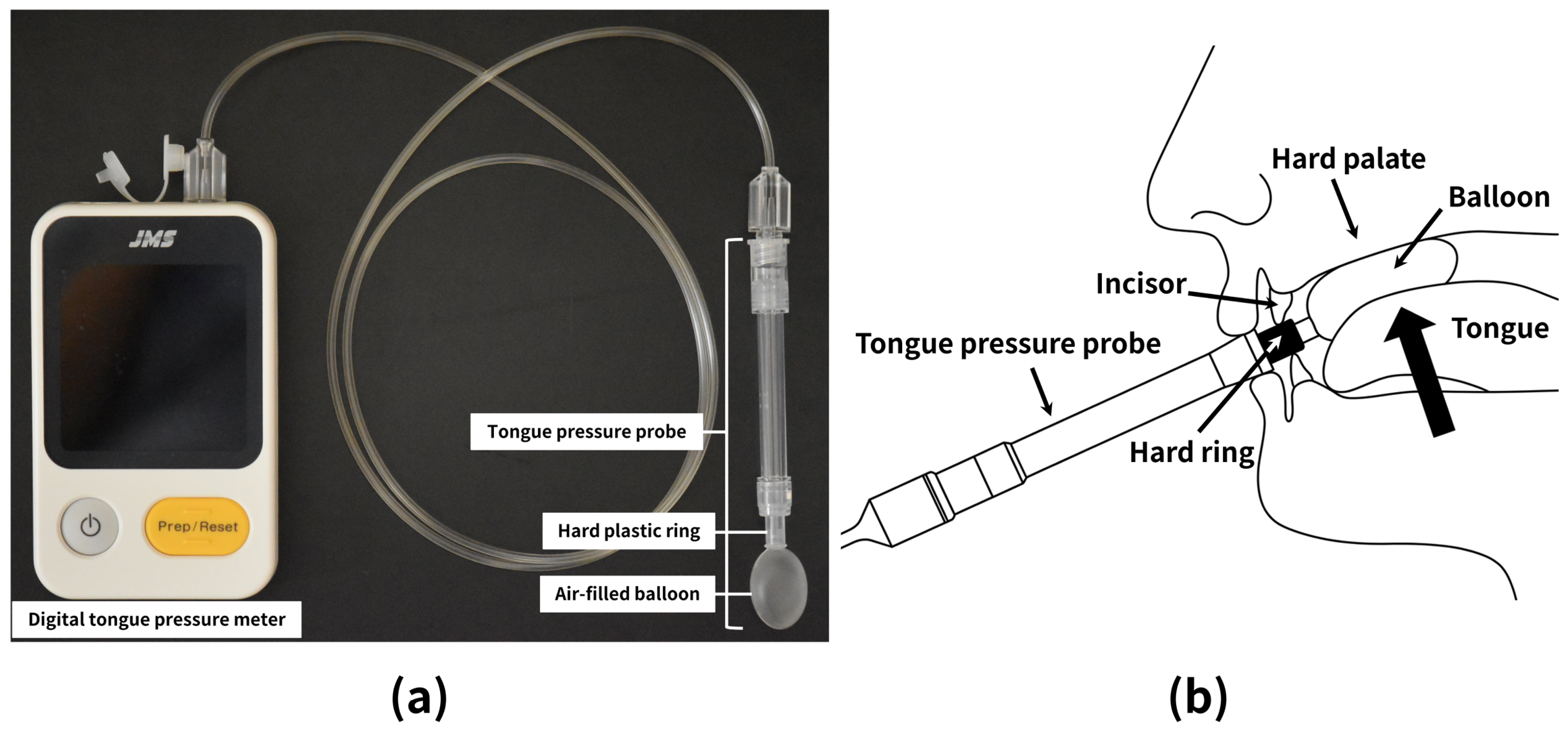
Clinicians document resting tongue posture as normal, low, interdental, or resting against the dentition. It is observed without any instruction to the child, so that the habitual posture is recorded. Physical inspection evaluates specific tissue characteristics, including short lingual frenum, lateral border scalloping, and dorsal tongue coating. Examiners quantify tongue mobility using the tongue range of motion ratio. The examiner records comfortable maximal mouth opening, followed by opening with the tongue tip positioned at the incisive papilla and subsequently with the entire tongue body held against the hard palate in lingual-palatal suction, expressing both measurements as percentages of maximal comfortable interincisal distance [64]. The ratios were derived from a general population sample aged 3 to 83 years, and no pediatric cut-off values have been established. The tongue range of motion ratio showed at least good intra- and inter-rater reliability in children aged 4 to 17 years [65]. To assess voluntary motor control, the child performs four active movement tasks comprising protrusion, elevation, lateralization, and tracing, with each task scored on a 5-point scale ranging from inability to full performance of the task [66]. Finally, clinicians quantify maximal tongue pressure. The child sits upright with the feet flat on the floor, and the procedure is demonstrated before measurement. The device adjusts the probe to its set internal pressure of 19.6 kPa with the probe outside the mouth before each assessment. The hard ring of the probe is held lightly between the incisors, and the child raises the tongue against the palate with maximum effort for about seven seconds, until the value no longer rises (Figure 3). Three trials are made, and the maximum value is recorded in kilopascals and compared with the age-specific values reported for children [22,37,45], which derive from Japanese cohorts. Cut-off values for Korean children have not been reported.
Figure 3.
Tongue pressure measurement with the JMS TPM-02 tongue pressure measurement device (JMS Co., Ltd., Hiroshima, Japan): (a) digital tongue pressure meter connected to a tongue pressure probe with a hard plastic ring and an air-filled balloon; (b) position of the probe, with the hard ring between the incisors and the balloon against the hard palate, compressed as the tongue is pressed upward. The maximum pressure is recorded as the tongue pressure in kilopascals (kPa).
4.5.3. Management
Resting posture, tissue condition, mobility and tongue pressure are read together, and they are read with the breathing and the lip findings. A tongue pressure below the age-specific cut-off is recognized as low tongue pressure [22], and a value that has not reached the standard range is not in itself abnormal [22]. A low resting posture, a reduced range of motion, a short frenum and a low tongue pressure often appear in the same child, and mouth breathers show lower tongue pressure than nasal breathers [8]. Management is considered where these findings combine, or where a single finding persists at reassessment.
Management begins with the resting posture. Orofacial myofunctional therapy follows the items that were recorded, working on elevation, protrusion, lateralization and tongue-to-palate contact, and on tongue pressure. A myofunctional appliance may be used alongside the exercises. In a retrospective study of children receiving rapid maxillary expansion for low tongue posture, adding myofunctional exercises increased postural normalization from 51 to 76 percent and also relieved nasal obstruction [67].
A short frenum recorded at examination is not in itself an indication for surgery. A task force appraisal found no data supporting a relationship between an altered lingual frenulum and dysphagia, orofacial alterations, malocclusion or obstructive sleep apnea in children [68]. A systematic review covering infants and children concluded that the data are insufficient to assess the effects of frenotomy on outcomes other than breastfeeding [69]. The evidence on the timing, the indication and the type of surgical intervention is limited, and frenulotomy or frenulectomy for functional limitation and symptomatic relief is considered on an individual basis, after other head and neck sources such as nasal or airway obstruction have been evaluated [70]. Of 89 statements put to an expert panel on ankyloglossia in children aged 0 to 18 years, 41 reached consensus, 17 were near consensus and 28 did not, which the panel attributed to gaps in the evidence [71]. In a randomized trial in children aged six to twelve years, adding isotonic tongue exercises after frenectomy improved the functional outcomes assessed more than frenectomy alone [72].
4.6. Lip
4.6.1. Background
The lips provide an essential anterior seal supporting physiological nasal breathing, swallowing, articulation, and anterior oral competence. Comprehensive assessment evaluates resting labial posture, lip closing strength, anatomical lip length, and perioral muscular compensation, not simply whether the lips meet. Clinical dysfunction manifests as lip incompetence, reduced sealing force, excessive mentalis strain, and an increased interlabial gap. Labial resting pressure is one determinant of incisor position, as anterior tooth alignment reflects the continuous mechanical equilibrium among the lips, cheeks, and tongue [17]. Lip incompetence occurs frequently during childhood and demonstrates minimal self-correction with age. In a nationwide survey of 3399 Japanese children aged 3 to 12 years, 30.7 percent exhibited an incompetent lip seal, with prevalence increasing across older age groups [73]. Furthermore, persistent lip incompetence is associated with habitual mouth breathing and orofacial morphology [73] and shows a significant correlation with malocclusion in preschool cohorts [74].
4.6.2. Assessment
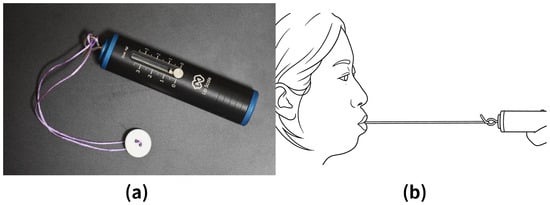
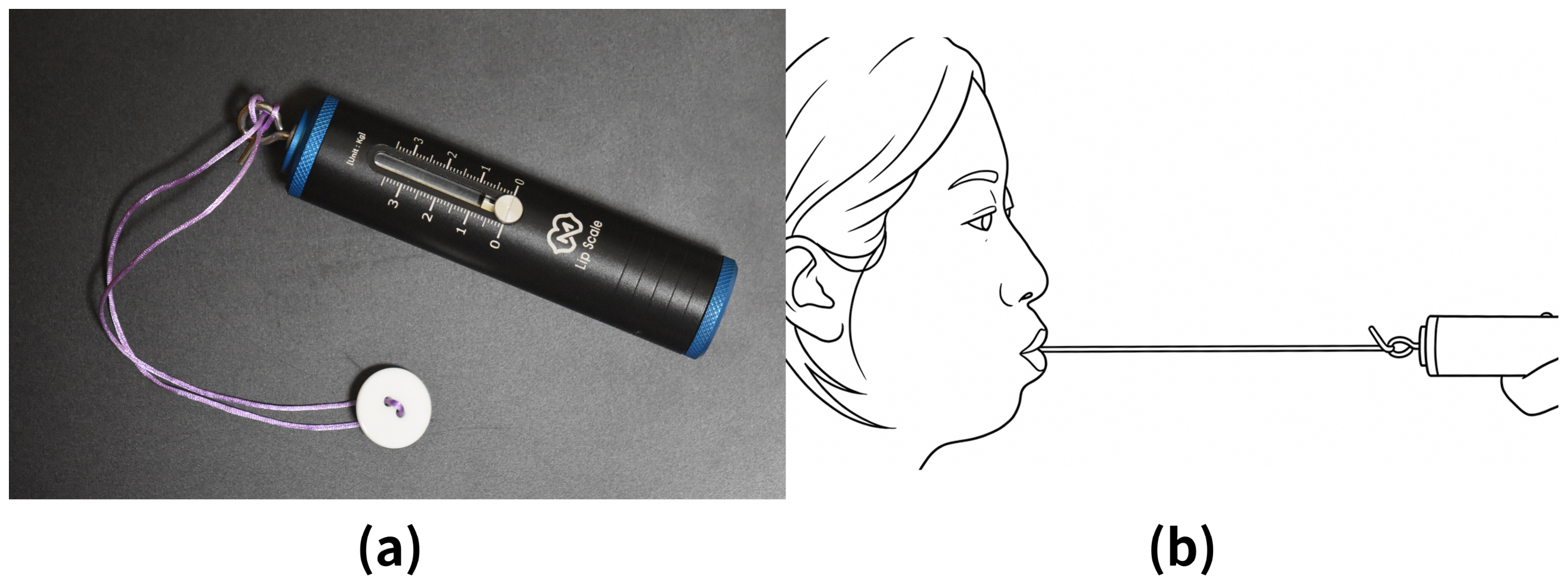
Physical evaluation documents the morphological condition of the lips, noting mucosal dryness, chapping, structural shortness, tissue flaccidity, and mentalis contraction. The lips, the interlabial gap and the labiomental sulcus are observed with the child seated and at rest. Clinicians assess resting lip posture as either competent or incompetent, while documenting whether the lower lip is trapped palatally behind the maxillary incisors. An interlabial gap is recorded where the upper and lower lips are not in contact at rest, including where the maxillary incisors are slightly visible, and it is measured in millimeters. For lip closing strength, the child sits upright, and a button attached to the gauge by a cord is placed in the labial vestibule between the maxillary central incisors and the lip. The child holds the button with the lips and not with the teeth, and the gauge is pulled horizontally until the button leaves the mouth (Figure 4). Three measurements are made and the mean is recorded in kilograms. Values are converted to newtons for comparison with the reported data (1 N = 0.102 kgf). The value is compared with the age- and sex-specific values reported for this method in children from three years of age [22]. The values reported for Korean children [42,43] were obtained with a device that measures lip closure on a sensor held between the lips, and they are not directly comparable. Finally, clinicians record the depth of the labiomental sulcus as deepened, average, or shallow, a feature that was deeper in mouth-breathing children with adenoid hypertrophy [54].
Figure 4.
Lip closing strength measurement with the Lip Scale (ROMT Company, Namyangju, Republic of Korea): (a) Lip Scale gauge and its measurement button, connected by a cord; (b) measurement with the button placed in the labial vestibule. The gauge is pulled horizontally, parallel to the floor, until the button is drawn out between the lips, and the reading at that moment is recorded as the lip closing strength in kilograms.
4.6.3. Management
Lip condition, resting competence, the interlabial gap and the closing strength are read together, and they are read with the tongue and the breathing domains. Incompetence is common in childhood, and its prevalence increases with age [73]. Insufficient lip closing strength is recognized where the strength is at or below one standard deviation under the age- and sex-specific mean, together with an absence of lip closure at rest or during eating, or with mouth breathing [22]. A value that has not reached the standard range is not in itself abnormal, and it is read within the child’s growth curve [22].
Incompetence at rest usually reflects more than one factor. The lips may be short or flaccid and the closing strength may be low. The tongue may rest low or interdentally. Nasal obstruction may keep the mouth open. Incompetent lip seal is associated with habitual mouth breathing [73], and mouth-breathing adolescents show lower lip closing strength and lower tongue pressure than nasal breathers [8]. These factors occur together more often than alone, and the findings are weighed together.
Management addresses the factors that are present in the child. Orofacial myofunctional therapy or a lip training device is used for the lips, and visual biofeedback with a handheld mirror helps the child reach a lip seal without mentalis strain. In a controlled study, a one-year lip and facial training program in three- and four-year-olds increased lip closing strength compared with controls [75]. Resting tongue posture work is carried out alongside, as described in Section 4.5. Where the airway items point to nasal obstruction, this is addressed through the breathing domain, including referral.
An appliance may be added where incompetence persists after training. In a retrospective study of children who all performed daily lip and tongue training, prefabricated myofunctional appliances produced greater gains in lip closing strength than conventional interceptive appliances, and they also produced a greater increase in lower incisor proclination [59]. The effect on the incisors is followed while an appliance is in use. Lip competence, mentalis strain, the interlabial gap and the closing strength are reassessed at follow-up [22].
4.7. Growth
4.7.1. Background
Orofacial function is interpreted within the frame of the child’s growth. Because orofacial function evolves dynamically, a clinical finding considered age-appropriate at one developmental stage may indicate dysfunction at another. Preterm birth is reflected in craniofacial form. Very-low-birth-weight preterm infants present with reduced facial dimensions and narrower facial widths compared to full-term peers, alongside a higher prevalence of an open bite relationship between the gum pads [76]. In addition, two or more malocclusion traits occurred significantly more often in children born prematurely than in full-term controls, affecting 83 percent of extremely preterm children and 73 percent of very preterm children compared with 51 percent of full-term children [77]. Non-nutritive oral habits act on the developing dentition. A review reports that persistent digit sucking, tongue thrusting, and habitual mouth breathing are associated with anterior open bite, maxillary incisor proclination, dental crowding, and posterior crossbite [78]. A systematic review with meta-analysis found that both thumb and pacifier sucking are associated with anterior open bite and posterior crossbite [79]. Body mass index for age is part of this frame. Masticatory performance and chewing habits are associated with obesity in school-age children, as described in Section 4.3 [34,35,48].
4.7.2. Assessment
Oral habits are recorded, covering sucking of a finger or of the upper or lower lip, biting of a nail or of the lip, tongue thrusting and bruxism. Height and weight are measured. Body mass index is calculated and read as a body mass index for age percentile, categorizing each child as underweight, normal weight, overweight, or obese [80]. Height, weight and the body mass index for age are screening measurements. They describe where the child sits on the growth chart at one visit [80], and they do not identify the cause of deviation.
4.7.3. Management
Oral habits and the body mass index for age are read as context for the other domains, and the same finding carries a different meaning at a different stage. A value outside the growth chart range is read together with the functional findings and with the child’s previous measurements. Non-nutritive sucking is considered normal in infants and young children [81], and anticipatory guidance is directed at cessation by about 36 months of age [81,82]. An anterior open bite is often resolved once the habit stops, although the certainty of that evidence was rated very low [83]. A habit is managed where it is affecting dentofacial development or the child’s health, or where it is likely to affect the developing permanent dentition [81].
Management begins with counseling of the child and the family, and with behavior modification. An appliance is not the first step. Where the habit continues and the occlusal change does not resolve, interceptive orthodontic treatment and orofacial myofunctional therapy are considered [81]. A meta-analysis of these protocols in the developing dentition rated the overall quality of the supporting evidence as questionable [84].
Where the values fall outside the normal range for age and the deviation persists across visits, referral for pediatric medical evaluation is considered [80]. Reassessment follows the growth stage, and the findings are read as a trajectory across visits.
4.8. Posture
4.8.1. Background
Posture provides a whole-body framework that supports airway patency and coordinated orofacial function. In pediatric populations, postural adaptations may emerge as compensatory mechanisms for upper airway compromise, altered resting oral posture, or muscular imbalance. A systematic review of 24 studies evaluating 6199 children identified strong evidence supporting an association between malocclusion and body posture, alongside moderate evidence for head posture alterations [40]. Compared with physiological nasal breathers, chronic mouth breathers demonstrate greater craniocervical extension, accompanied by reduced cervical lordosis, a lower hyoid bone position, and greater skeletal vertical divergence [41]. Nonetheless, evidence linking mouth breathing to whole-body postural deviation remains graded as low in certainty [36].
4.8.2. Assessment
Posture is recorded as a screening observation. The child is observed standing, from the front and from the side, and the observation is repeated with the child seated. Head posture is recorded as neutral, forward or reversed. Body posture is recorded as symmetrical, asymmetrical or showing a round shoulder. The facial signs that accompany mouth breathing are recorded, namely the adenoid face and periorbital darkening. These observations do not establish a postural disorder, and they do not identify its cause.
4.8.3. Management
Posture is recorded because it accompanies the other findings, and the scope of management in the dental setting is limited. An observation recorded at one visit is not a diagnosis, and it is read with the breathing, tongue, lip and swallowing findings.
Within the dental setting, caregivers are advised on desk and chair height and on the use of a footrest, and children are guided to avoid craniocervical hyperextension at mealtimes. Assessment and treatment of a postural disorder belong to a physiotherapist or a physician, and the child is referred for them.
Change in posture is not expected as a result of dental treatment. In children with Class II malocclusion, functional orthodontic appliance therapy improved skeletal and mandibular parameters without altering upper-body posture or postural control, although the baseline postural indices in that cohort were already within physiological limits [85].
4.9. Swallowing
4.9.1. Background
Swallowing is a finely coordinated sensorimotor sequence that propels saliva, liquids, and food boluses from the oral cavity into the pharynx and esophagus while safeguarding the airway [7]. Throughout childhood, swallowing mechanisms mature progressively from an infantile suckle-swallow pattern into a somatic swallow pattern, and clinicians interpret any functional finding alongside chronological age, dentition stage, and physical growth. Clinicians frequently attribute anterior open bite to an interdental tongue posture during swallowing or at rest. However, a review found it unclear whether the tongue causes the open bite, contributes to it, or adapts to it [86]. Children presenting with an anterior open bite often struggle to close the anterior part of the oral cavity during swallowing, prompting the tongue to interpose forward as a compensatory seal [86]. An atypical swallowing pattern is interpreted together with the occlusion, and it is not read as its cause.
4.9.2. Assessment
The child is asked to take a mouthful of water and to swallow, and the tongue, the lips and the perioral muscles are observed, together with any movement of the neck or head. The pattern is recorded as normal or abnormal, and where it is abnormal the signs are specified as tongue thrust, contraction of the mentalis, or movement of the neck or head. The observation describes the pattern at one visit, and it does not identify its cause.
4.9.3. Management
The swallowing pattern is read with the occlusion, the lip findings and the tongue findings. An abnormal pattern recorded at one visit is not in itself an indication for treatment. Management is considered where the pattern persists together with an anterior dentoalveolar change, an anterior open bite or an increased overjet, or with lip incompetence.
Management begins with orofacial myofunctional therapy directed at resting the tongue against the hard palate. A systematic review of orthodontic and myofunctional treatment in patients with atypical swallowing found the supporting evidence limited [87]. Intraoral appliances designed to restrain anterior thrusting may be added. In a randomized trial in children, a fixed palatal crib corrected the overbite, and adding brief myofunctional therapy did not change that outcome, although it moderated the increase in swallowing tongue pressure [88].
Reassessment follows the growth stage. Table 2 summarizes the physiological background, assessment protocols, and management strategies across all seven domains.
Table 2.
Summary of the seven MBTL-GPS domains.
5. Limitations and Further Directions
5.1. Limitations
The MBTL-GPS framework has several limitations. First, its reliability has not yet been formally established. Several assessment items, such as resting tongue posture, mode of breathing, and facial signs of mouth breathing, rely on subjective examiner judgment. Consequently, inter-examiner and intra-examiner reliability across visits remain to be determined. Second, it is not a quantitative scoring system. While an aggregate score could standardize findings, support communication between clinicians, and make change easier to follow over time, it would not by itself indicate treatment. Growth status, occlusal characteristics, and the concerns of the child and the caregiver remain part of that decision. Third, normative reference data remains incomplete and geographically heterogeneous. The values used for occlusal force, tongue pressure and lip closing strength come from Japanese cohorts [22,32,37,38,45]. The values reported for Korean children were obtained with a different measurement method for lip closing strength [42,43], and no Korean values exist for tongue pressure. Several of the measurement methods were established in adults, and the population of each source is stated where it is cited. Fourth, the posture domain rests on the weakest evidence in the framework and extends beyond the conventional dental scope. The domain is recorded as a screening observation followed by referral. Comprehensive postural evaluation belongs to a physiotherapist or a physician. Fifth, the points at which management is considered in each domain were set from clinical reasoning, except where a published criterion exists. Finally, speech is not evaluated. Its omission here represents a gap in capturing the full spectrum of orofacial function.
5.2. Further Directions
Inter- and intra-examiner testing of the current record form is the first step. Establishing inter-examiner concordance and intra-examiner consistency across repeated visits will determine the clinical reproducibility of these findings, with initial validation prioritizing parameters that rely heavily on subjective examiner judgment. The reproducibility of the three device-based measurements is tested in the same study, and agreement with the validated instruments, OMES/OMES-E and NOT-S, is examined in the same children. The examiner manual is reported with that study. Beyond a single center, multi-center validation would show whether the findings generalize between institutions and whether a summary score improves communication between practitioners and comparison across visits.
The form records a large number of items and several of them require a device, and an examination takes 25 to 30 min. A shorter version for the initial visit, with the device-based measurements added where the observations indicate them, could be considered. Which items belong in that shorter version is a question for the reliability study.
Although the existing literature associates individual domains with dental occlusion independently [44,47,62,74], no prior investigation has evaluated all seven functional domains concurrently within a single pediatric cohort. Comprehensive assessment stratified by dentition stage will clarify which specific functional parameters correlate with malocclusion types and identify which factors carry the greatest developmental influence across each dental stage.
6. Conclusions
Orofacial function in children has been approached from many directions over the past century, from occlusion and muscle training to the functional matrix, nasal respiration and sleep, and each approach has added a part that was not previously recorded. In the dental setting these parts are still commonly documented separately or not at all. MBTL-GPS brings mastication, breathing, tongue, lip, growth, posture and swallowing onto a single chairside record, combining observation and simple functional tests with measurement of occlusal force, tongue pressure and lip closing strength, and reading the findings against the child’s growth and posture.
The framework is a structured workflow and not a validated instrument. It produces no total score, its inter- and intra-examiner reliability has not been established, several of its reference values come from cohorts outside Korea, and speech is not included. Its value at present lies in providing a standardized format for recording functional findings, so that they can be read across visits and communicated between clinicians and to caregivers, and in identifying the child who needs referral. Whether the record is actually comparable between clinicians is not yet known. Testing the reliability of the record form is the next step. In the growing child, function precedes form; recording it alongside the dental and skeletal findings is where its management begins, and where oral health, as it is now defined, begins as well.
Author Contributions
Conceptualization, H.-S.L.; investigation, S.S. and H.-S.L.; writing—original draft preparation, S.S. and H.-S.L.; writing—review and editing, S.S. and H.-S.L.; visualization, S.S.; supervision, H.-S.L. All authors have read and agreed to the published version of the manuscript.
Funding
This research received no external funding.
Institutional Review Board Statement
Not applicable.
Informed Consent Statement
Not applicable.
Data Availability Statement
No new data were created or analyzed in this study. Data sharing is not applicable to this article.
Acknowledgments
During the preparation of this manuscript, the authors used Google Gemini 3.1 Flash-Lite Image (also known as Nano Banana 2 Lite, accessed on 9 September 2026) for the purposes of editing the line illustrations in Figure 2b, Figure 3b and Figure 4b. After using this tool, the authors checked each illustration for the accuracy of the device and its position and assembled the final figures. The photographs in Figure 2a, Figure 3a and Figure 4a, the analysis screen in Figure 2c and the record form in Figure 1 were not generated or altered with generative AI. The authors have reviewed and edited the output and take full responsibility for the content of this publication.
Conflicts of Interest
The authors declare no conflicts of interest.
Abbreviations
The following abbreviations are used in this manuscript:
| BMI | Body mass index |
| CMO | Comfortable mouth opening |
| LPS | Lingual palatal suction |
| MBTL-GPS | Mastication, breathing, tongue, lip, growth, posture and swallowing |
| NOT-S | Nordic Orofacial Test-Screening |
| OMES | Orofacial Myofunctional Evaluation with Scores |
| OMES-E | Expanded protocol of Orofacial Myofunctional Evaluation with Scores |
| PSQ | Pediatric sleep questionnaire |
| TIP | Tongue tip to incisive papilla |
| TRMR | Tongue range of motion ratio |
References
- World Health Organization. Constitution of the World Health Organization; World Health Organization: Geneva, Switzerland, 1948. [Google Scholar]
- Peres, M.A.; Macpherson, L.M.D.; Weyant, R.J.; Daly, B.; Venturelli, R.; Mathur, M.R.; Listl, S.; Celeste, R.K.; Guarnizo-Herreño, C.C.; Kearns, C.; et al. Oral diseases: A global public health challenge. Lancet 2019, 394, 249–260. [Google Scholar] [CrossRef] [Scilit]
- Glick, M.; Williams, D.M.; Kleinman, D.V.; Vujicic, M.; Watt, R.G.; Weyant, R.J. A new definition for oral health developed by the FDI World Dental Federation opens the door to a universal definition of oral health. J. Am. Dent. Assoc. 2016, 147, 915–917. [Google Scholar] [CrossRef] [Scilit]
- Delaney, A.L.; Flatt, A.; Koepp, H.; Fial, A.V.; Hustad, K.C. A Scoping Review of Oral Feeding Skill Development in Typically Developing Children Part I: Methodologies, Populations, and Normative Data. Am. J. Speech Lang. Pathol. 2025, 34, 2997–3016. [Google Scholar] [CrossRef] [Scilit]
- Almotairy, N.; Kumar, A.; Trulsson, M.; Grigoriadis, A. Development of the jaw sensorimotor control and chewing—A systematic review. Physiol. Behav. 2018, 194, 456–465. [Google Scholar] [CrossRef] [Scilit]
- Hori, K.; Ono, T.; Nokubi, T. Coordination of tongue pressure and jaw movement in mastication. J. Dent. Res. 2006, 85, 187–191. [Google Scholar] [CrossRef] [Scilit]
- Matsuo, K.; Palmer, J.B. Anatomy and physiology of feeding and swallowing: Normal and abnormal. Phys. Med. Rehabil. Clin. N. Am. 2008, 19, 691–707. [Google Scholar] [CrossRef] [Scilit]
- Masutomi, Y.; Goto, T.; Ichikawa, T. Mouth breathing reduces oral function in adolescence. Sci. Rep. 2024, 14, 3810. [Google Scholar] [CrossRef] [Scilit]
- Angle, E.H. Classification of malocclusion. Dent. Cosm. 1899, 41, 248–264, 350–357. [Google Scholar]
- Rogers, A.P. Exercises for the development of the muscles of the face with a view to increasing their functional activity. Dent. Cosm. 1918, 60, 857–876. [Google Scholar]
- Moss, M.L.; Salentijn, L. The primary role of functional matrices in facial growth. Am. J. Orthod. 1969, 55, 566–577. [Google Scholar] [CrossRef] [Scilit]
- Moss, M.L. The functional matrix hypothesis revisited. 1. The role of mechanotransduction. Am. J. Orthod. Dentofac. Orthop. 1997, 112, 8–11. [Google Scholar] [CrossRef] [Scilit]
- Fränkel, R. The theoretical concept underlying the treatment with function correctors. Rep. Congr. Eur. Orthod. Soc. 1966, 42, 233–254. [Google Scholar]
- Linder-Aronson, S. Adenoids. Their effect on mode of breathing and nasal airflow and their relationship to characteristics of the facial skeleton and the dentition. A biometric, rhino-manometric and cephalometro-radiographic study on children with and without adenoids. Acta Otolaryngol. Suppl. 1970, 265, 1–132. [Google Scholar]
- Linder-Aronson, S.; Woodside, D.G.; Lundström, A. Mandibular growth direction following adenoidectomy. Am. J. Orthod. 1986, 89, 273–284. [Google Scholar] [CrossRef] [Scilit]
- Harvold, E.P.; Tomer, B.S.; Vargervik, K.; Chierici, G. Primate experiments on oral respiration. Am. J. Orthod. 1981, 79, 359–372. [Google Scholar] [CrossRef] [Scilit]
- Proffit, W.R. Equilibrium theory revisited: Factors influencing position of the teeth. Angle Orthod. 1978, 48, 175–186. [Google Scholar] [CrossRef]
- Mew, J. Suggestions for forecasting and monitoring facial growth. Am. J. Orthod. Dentofac. Orthop. 1993, 104, 105–120. [Google Scholar] [CrossRef] [Scilit]
- Mew, J.R. The postural basis of malocclusion: A philosophical overview. Am. J. Orthod. Dentofac. Orthop. 2004, 126, 729–738. [Google Scholar] [CrossRef] [Scilit]
- Huang, Y.S.; Guilleminault, C. Pediatric obstructive sleep apnea and the critical role of oral-facial growth: Evidences. Front. Neurol. 2012, 3, 184. [Google Scholar] [CrossRef] [Scilit]
- Guilleminault, C.; Huang, Y.S. From oral facial dysfunction to dysmorphism and the onset of pediatric OSA. Sleep Med. Rev. 2018, 40, 203–214. [Google Scholar] [CrossRef] [Scilit]
- Japanese Association for Dental Science. Basic Concepts of Developmental Insufficiency of Oral Function; Japanese Association for Dental Science: Tokyo, Japan, 2024; (In Japanese). Available online: https://www.jads.jp/assets/pdf/basic/r06/document-240402-2.pdf (accessed on 9 September 2026).
- Yamada, H.; Tamura, F.; Kikutani, T. Number of children with developmental insufficiency of oral function: A study using Japan’s national database. Pediatr. Dent. J. 2025, 35, 100334. [Google Scholar] [CrossRef] [Scilit]
- Bonuck, K.; Freeman, K.; Chervin, R.D.; Xu, L. Sleep-disordered breathing in a population-based cohort: Behavioral outcomes at 4 and 7 years. Pediatrics 2012, 129, e857–e865. [Google Scholar] [CrossRef] [Scilit]
- Marcus, C.L.; Moore, R.H.; Rosen, C.L.; Giordani, B.; Garetz, S.L.; Taylor, H.G.; Mitchell, R.B.; Amin, R.; Katz, E.S.; Arens, R.; et al. A randomized trial of adenotonsillectomy for childhood sleep apnea. N. Engl. J. Med. 2013, 368, 2366–2376. [Google Scholar] [CrossRef] [Scilit]
- Zhao, Z.; Zheng, L.; Huang, X.; Li, C.; Liu, J.; Hu, Y. Effects of mouth breathing on facial skeletal development in children: A systematic review and meta-analysis. BMC Oral Health 2021, 21, 108. [Google Scholar] [CrossRef] [Scilit]
- Fraga, W.S.; Seixas, V.M.; Santos, J.C.; Paranhos, L.R.; César, C.P. Mouth breathing in children and its impact in dental malocclusion: A systematic review of observational studies. Minerva Stomatol. 2018, 67, 129–138. [Google Scholar] [CrossRef] [Scilit]
- Klingel, D.; Hohoff, A.; Kwiecien, R.; Wiechmann, D.; Stamm, T. Growth of the hard palate in infants with Down syndrome compared with healthy infants—A retrospective case control study. PLoS ONE 2017, 12, e0182728. [Google Scholar] [CrossRef] [Scilit]
- Felício, C.M.; Ferreira, C.L. Protocol of orofacial myofunctional evaluation with scores. Int. J. Pediatr. Otorhinolaryngol. 2008, 72, 367–375. [Google Scholar] [CrossRef] [Scilit]
- de Felício, C.M.; Folha, G.A.; Ferreira, C.L.; Medeiros, A.P. Expanded protocol of orofacial myofunctional evaluation with scores: Validity and reliability. Int. J. Pediatr. Otorhinolaryngol. 2010, 74, 1230–1239. [Google Scholar] [CrossRef] [Scilit]
- Bakke, M.; Bergendal, B.; McAllister, A.; Sjögreen, L.; Asten, P. Development and evaluation of a comprehensive screening for orofacial dysfunction. Swed. Dent. J. 2007, 31, 75–84. [Google Scholar]
- Mizokami, K.; Tohyama, S.; Kanzaki, H.; Sasaki, Y.; Katayama, M.; Seki, M.; Rikitake, H.; Ueda, S.; Sekiya, T.; Tomonari, H. Quantitative Comparison of Age-Related Development of Oral Functions During Growing Age. Clin. Exp. Dent. Res. 2024, 10, e70033. [Google Scholar] [CrossRef] [Scilit]
- Szuflak, K.; Gerreth, K.; Jankowski, M.; Malak, R.; Samborski, W.; Karlik, M. Nordic Orofacial Test-Screening Protocol as a Tool for Assessment of Orofacial Dysfunction in Pediatric and Adult Patients. Diagnostics 2025, 15, 1656. [Google Scholar] [CrossRef] [Scilit]
- Kosaka, T.; Hiramatsu, R.; Otsugu, M.; Yoshimatsu, M.; Nishimoto, T.; Sakanoshita, N.; Murotani, Y.; Nakano, K.; Ikebe, K. Chewing habits and masticatory performance are associated with obesity in 9- to 10-year-old children: A cross-sectional study from the Osaka MELON Study. J. Dent. 2025, 156, 105666. [Google Scholar] [CrossRef] [Scilit]
- Santos, R.E.A.; Leandro, C.G.; de França, K.E.X.; Barbosa, D.A.M.; Aragão, R.D.S.; Pinheiro, I.L.; Ferraz-Pereira, K.N. Mastication in overweight and obese children: A comparative cross-sectional study. J. Pediatr. 2023, 99, 154–160. [Google Scholar] [CrossRef] [Scilit]
- Neiva, P.D.; Kirkwood, R.N.; Mendes, P.L.; Zabjek, K.; Becker, H.G.; Mathur, S. Postural disorders in mouth breathing children: A systematic review. Braz. J. Phys. Ther. 2018, 22, 7–19. [Google Scholar] [CrossRef] [Scilit]
- Ichikawa, M.; Fujita, Y.; Hamaguchi, A.; Chaweewannakorn, W.; Maki, K. Association of tongue pressure with masticatory performance and dental conditions in Japanese children. Pediatr. Dent. J. 2016, 26, 51–59. [Google Scholar] [CrossRef] [Scilit]
- Kuroki, T.; Ishii, K.; Suzuki, Y.; Kuroe, S.; Miyazaki, J.; Murata, S.; Koyama, H.; Matsumoto, R.; Antsuki, N.; Heki, K.; et al. Establishing reference values for maximum occlusal force in Japanese children using an individual-tooth-type capacitive pressure distribution sensor. Pediatr. Dent. J. 2025, 35, 100352. [Google Scholar] [CrossRef] [Scilit]
- Katyal, V.; Kennedy, D.; Martin, J.; Dreyer, C.; Sampson, W. Paediatric sleep-disordered breathing due to upper airway obstruction in the orthodontic setting: A review. Aust. Orthod. J. 2013, 29, 184–192. [Google Scholar]
- Różańska-Perlińska, D.; Potocka-Mitan, M.; Rydzik, Ł.; Lipińska, P.; Perliński, J.; Javdaneh, N.; Jaszczur-Nowicki, J. The Correlation between Malocclusion and Body Posture and Cervical Vertebral, Podal System, and Gait Parameters in Children: A Systematic Review. J. Clin. Med. 2024, 13, 3463. [Google Scholar] [CrossRef] [Scilit]
- Cuccia, A.M.; Lotti, M.; Caradonna, D. Oral breathing and head posture. Angle Orthod. 2008, 78, 77–82. [Google Scholar] [CrossRef] [Scilit]
- Cho, N.; Kim, H.; Kim, J.; Baik, B.; Yang, Y. Bite Force and Lip Closing Force Measurement in Preschool Children. J. Korean Acad. Pediatr. Dent. 2015, 42, 233–241. [Google Scholar] [CrossRef] [Scilit]
- Lee, H.; Baek, K.; Kim, J.; Lee, D.; Yang, Y. Lip Closing Force and the Related Factors in Elementary School Children. J. Korean Acad. Pediatr. Dent. 2019, 46, 343–352. [Google Scholar] [CrossRef] [Scilit]
- Sasaki, Y.; Otsugu, M.; Sasaki, H.; Fujikawa, N.; Okawa, R.; Kato, T.; Nakano, K. Relationship between Dental Occlusion and Maximum Tongue Pressure in Preschool Children Aged 4–6 Years. Children 2022, 9, 141. [Google Scholar] [CrossRef] [Scilit]
- Asami, T.; Ishizaki, A.; Ogawa, A.; Kwon, H.; Kasama, K.; Tanaka, A.; Hironaka, S. Analysis of factors related to tongue pressure during childhood. Dent. Oral Craniofac. Res. 2017, 3, 1–7. [Google Scholar] [CrossRef]
- Le Révérend, B.J.; Edelson, L.R.; Loret, C. Anatomical, functional, physiological and behavioural aspects of the development of mastication in early childhood. Br. J. Nutr. 2014, 111, 403–414. [Google Scholar] [CrossRef] [Scilit]
- Alshammari, A.; Almotairy, N.; Kumar, A.; Grigoriadis, A. Effect of malocclusion on jaw motor function and chewing in children: A systematic review. Clin. Oral Investig. 2022, 26, 2335–2351. [Google Scholar] [CrossRef] [Scilit]
- Santos, R.E.A.; Silva, H.J.D.; da Silva, M.G.; Barbosa, D.A.M.; Silva, C.M.M.; Azevêdo, N.C.; Pinheiro, I.L.; Lopes, P.; da Silva Aragão, R.; Ferraz Pereira, K.N. Food consumption and masticatory performance of normal weight, overweight and obese children aged 7 to 12 years old. Physiol. Behav. 2023, 264, 114141. [Google Scholar] [CrossRef] [Scilit]
- Hama, Y.; Sasaki, Y.; Soeda, H.; Yamaguchi, K.; Okada, M.; Komagamine, Y.; Sakanoshita, N.; Hirota, Y.; Emura, K.; Minakuchi, S. Accuracy of newly developed color determination application for masticatory performance: Evaluating color-changeable chewing gum. J. Prosthodont. Res. 2024, 68, 650–657. [Google Scholar] [CrossRef] [Scilit]
- Hama, Y.; Kanazawa, M.; Minakuchi, S.; Uchida, T.; Sasaki, Y. Properties of a color-changeable chewing gum used to evaluate masticatory performance. J. Prosthodont. Res. 2014, 58, 102–106. [Google Scholar] [CrossRef] [Scilit]
- Elgestad Stjernfeldt, P.; Sjögren, P.; Wårdh, I.; Boström, A.M. Systematic review of measurement properties of methods for objectively assessing masticatory performance. Clin. Exp. Dent. Res. 2019, 5, 76–104. [Google Scholar] [CrossRef] [Scilit]
- Shiramizu, M.; Hasegawa, Y.; Yoneda, H.; Yoshimoto, T.; Ouchi, A.; Yamamoto, T.; Ono, T. Factors affecting masticatory performance during the mixed dentition period. J. Oral Rehabil. 2022, 49, 1144–1154. [Google Scholar] [CrossRef] [Scilit]
- Grechi, T.H.; Itikawa, C.E.; Gallarreta, F.W.M.; Anselmo-Lima, W.T.; Valera, F.C.P.; Trawitzki, L.V.V. Effect of rapid maxillary expansion on masticatory and swallowing functions in children with posterior crossbite. Braz. J. Otorhinolaryngol. 2023, 89, 101304. [Google Scholar] [CrossRef] [Scilit]
- Basheer, B.; Hegde, K.S.; Bhat, S.S.; Umar, D.; Baroudi, K. Influence of mouth breathing on the dentofacial growth of children: A cephalometric study. J. Int. Oral Health 2014, 6, 50–55. [Google Scholar]
- Brodsky, L. Modern assessment of tonsils and adenoids. Pediatr. Clin. N. Am. 1989, 36, 1551–1569. [Google Scholar] [CrossRef] [Scilit]
- Samsoon, G.L.; Young, J.R. Difficult tracheal intubation: A retrospective study. Anaesthesia 1987, 42, 487–490. [Google Scholar] [CrossRef] [Scilit]
- Chervin, R.D.; Hedger, K.; Dillon, J.E.; Pituch, K.J. Pediatric sleep questionnaire (PSQ): Validity and reliability of scales for sleep-disordered breathing, snoring, sleepiness, and behavioral problems. Sleep Med. 2000, 1, 21–32. [Google Scholar] [CrossRef] [Scilit]
- Marcus, C.L.; Brooks, L.J.; Draper, K.A.; Gozal, D.; Halbower, A.C.; Jones, J.; Schechter, M.S.; Sheldon, S.H.; Spruyt, K.; Ward, S.D.; et al. Diagnosis and management of childhood obstructive sleep apnea syndrome. Pediatrics 2012, 130, 576–584. [Google Scholar] [CrossRef] [Scilit]
- Yang, X.; Lai, G.; Wang, J. Effect of orofacial myofunctional therapy along with preformed appliances on patients with mixed dentition and lip incompetence. BMC Oral Health 2022, 22, 586. [Google Scholar] [CrossRef] [Scilit]
- Li, Y.; Zhao, T.; Lin, L.; Zhang, J.; Liu, S.; Wu, Y.; Flores-Mir, C.; Hua, F.; He, H. The effects of mandibular advancement devices on pediatric obstructive sleep apnea: An umbrella review. Sleep Med. Rev. 2025, 84, 102166. [Google Scholar] [CrossRef] [Scilit]
- Sanders, I.; Mu, L. A three-dimensional atlas of human tongue muscles. Anat. Rec. 2013, 296, 1102–1114. [Google Scholar] [CrossRef] [Scilit]
- Fujita, Y.; Ohno, Y.; Ohno, K.; Takeshima, T.; Maki, K. Differences in the factors associated with tongue pressure between children with class I and Class II malocclusions. BMC Pediatr. 2021, 21, 476. [Google Scholar] [CrossRef] [Scilit]
- Kang, J.H.; Kim, J.Y.; Jha, N.; Jung, S.K.; Lee, Y.S.; Kim, Y.J. Associations of tongue and hyoid position, tongue volume, and pharyngeal airway dimensions with various dentoskeletal growth patterns. PLoS ONE 2025, 20, e0326092. [Google Scholar] [CrossRef] [Scilit]
- Zaghi, S.; Shamtoob, S.; Peterson, C.; Christianson, L.; Valcu-Pinkerton, S.; Peeran, Z.; Fung, B.; Kwok-Keung Ng, D.; Jagomagi, T.; Archambault, N.; et al. Assessment of posterior tongue mobility using lingual-palatal suction: Progress towards a functional definition of ankyloglossia. J. Oral Rehabil. 2021, 48, 692–700. [Google Scholar] [CrossRef] [Scilit]
- Cnockaert, P.; Fondeur, A.; Gabillet, E.; Poncin, W. Intra- and Inter-Rater Reliability of Tongue Physical Function Assessments in Children. J. Oral Rehabil. 2026, 53, 1327–1336. [Google Scholar] [CrossRef] [Scilit]
- Ishino, Y.; Yamashita, Y.; Nemoto, K.; Niu, K.; Imai, S.; Suzuki, N.; Michi, K. Severity of Ankyloglossia and Functional Disorders. J. Jpn. Stomatol. Soc. 2001, 50, 26–34. (In Japanese) [Google Scholar] [CrossRef]
- Maeo, K.; Kitamura, T.; Kohira, W.; Suzuki, Y.; Yamakawa, Y.; Ueda, K.; Ishii, H.; Kanomi, R.; Iwasaki, T. Low Tongue Posture Improvement Effect of Orofacial Myofunctional Therapy Comprehensive Study of Nasal Ventilation Condition Using Computational Fluid Dynamics and Dental Arch Morphology. Orthod. Craniofac. Res. 2025, 28, 872–881. [Google Scholar] [CrossRef] [Scilit]
- Caixeta, J.A.S.; Pazinatto, D.B.; Padoin, R.C.P.K.; Lubianca Neto, J.F.; Avelino, M.A.G.; Chen, V.G.; Vazzoler, T.M.F.; Castellano, L.T.; Pirana, S.; Miura, C.S.; et al. Brazilian Academy of Paediatric Otorhinolaryngology Task Force—Lingual frenulum disorders in childhood—Evidence-based recommendations. Braz. J. Otorhinolaryngol. 2026, 92, 101762. [Google Scholar] [CrossRef] [Scilit]
- Chinnadurai, S.; Francis, D.O.; Epstein, R.A.; Morad, A.; Kohanim, S.; McPheeters, M. Treatment of ankyloglossia for reasons other than breastfeeding: A systematic review. Pediatrics 2015, 135, e1467–e1474. [Google Scholar] [CrossRef] [Scilit]
- American Academy of Pediatric Dentistry. Policy on management of the frenulum in pediatric patients. In The Reference Manual of Pediatric Dentistry; American Academy of Pediatric Dentistry: Chicago, IL, USA, 2025; pp. 80–85. [Google Scholar]
- Messner, A.H.; Walsh, J.; Rosenfeld, R.M.; Schwartz, S.R.; Ishman, S.L.; Baldassari, C.; Brietzke, S.E.; Darrow, D.H.; Goldstein, N.; Levi, J.; et al. Clinical Consensus Statement: Ankyloglossia in Children. Otolaryngol. Head Neck Surg. 2020, 162, 597–611. [Google Scholar] [CrossRef] [Scilit]
- Carminatti, M.; Nicoloso, G.F.; Miranda, P.P.; Gomes, E.; de Araujo, F.B. The Effectiveness of Lingual Frenectomy and Myofunctional Therapy for Children: A Randomized Controlled Clinical Trial. J. Dent. Child. 2022, 89, 3–10. [Google Scholar]
- Nogami, Y.; Saitoh, I.; Inada, E.; Murakami, D.; Iwase, Y.; Kubota, N.; Nakamura, Y.; Kimi, M.; Hayasaki, H.; Yamasaki, Y.; et al. Prevalence of an incompetent lip seal during growth periods throughout Japan: A large-scale, survey-based, cross-sectional study. Environ. Health Prev. Med. 2021, 26, 11. [Google Scholar] [CrossRef] [Scilit]
- Otsugu, M.; Sasaki, Y.; Mikasa, Y.; Kadono, M.; Sasaki, H.; Kato, T.; Nakano, K. Incompetent lip seal and nail biting as risk factors for malocclusion in Japanese preschool children aged 3–6 years. BMC Pediatr. 2023, 23, 532. [Google Scholar] [CrossRef] [Scilit]
- Inada, E.; Kaihara, Y.; Nogami, Y.; Murakami, D.; Kubota, N.; Tsujii, T.; Kiyokawa, Y.; Sawami, T.; Yamamoto, Y.; Ban, Y.; et al. Lip and facial training improves lip-closing strength and facial morphology. Arch. Oral Biol. 2023, 154, 105761. [Google Scholar] [CrossRef] [Scilit]
- Ruiz, D.R.; Diniz, E.M.A.; Krebs, V.L.J.; Carvalho, W.B. Orofacial characteristics of the very low-birth-weight preterm infants. J. Pediatr. 2021, 97, 96–102. [Google Scholar] [CrossRef] [Scilit]
- Paulsson, L.; Söderfeldt, B.; Bondemark, L. Malocclusion traits and orthodontic treatment needs in prematurely born children. Angle Orthod. 2008, 78, 786–792. [Google Scholar] [CrossRef] [Scilit]
- Katib, H.S.; Aljashash, A.A.; Albishri, A.F.; Alfaifi, A.H.; Alduhyaman, S.F.; Alotaibi, M.M.; Otayf, T.S.; Bashikh, R.A.; Almadani, J.A.; Thabet, A.M.; et al. Influence of Oral Habits on Pediatric Malocclusion: Etiology and Preventive Approaches. Cureus 2024, 16, e72995. [Google Scholar] [CrossRef] [Scilit]
- Faryad, A.; Muwaquet Rodriguez, S.; Hijazi Alsadi, T. The Role of Digit- and Pacifier-Sucking Habits on Malocclusion Development in Children: Anterior Open Bite and Posterior Crossbite—A Systematic Review & Meta-Analysis. Dent. J. 2026, 14, 55. [Google Scholar] [CrossRef] [Scilit]
- Kim, J.H.; Yun, S.; Hwang, S.S.; Shim, J.O.; Chae, H.W.; Lee, Y.J.; Lee, J.H.; Kim, S.C.; Lim, D.; Yang, S.W.; et al. The 2017 Korean National Growth Charts for children and adolescents: Development, improvement, and prospects. Korean J. Pediatr. 2018, 61, 135–149. [Google Scholar] [CrossRef] [Scilit]
- American Academy of Pediatric Dentistry. Management of the developing dentition and occlusion in pediatric dentistry. In The Reference Manual of Pediatric Dentistry; American Academy of Pediatric Dentistry: Chicago, IL, USA, 2025; pp. 497–515. [Google Scholar]
- American Academy of Pediatric Dentistry. Policy on pacifiers. In The Reference Manual of Pediatric Dentistry; American Academy of Pediatric Dentistry: Chicago, IL, USA, 2025; pp. 86–89. [Google Scholar]
- Adriano, L.Z.; Derech, C.D.; Massignan, C.; Flores-Mir, C.; Porporatti, A.L.; Canto, G.L.; Bolan, M. Anterior open bite self-correction after cessation of non-nutritive sucking habits: A systematic review. Eur. J. Orthod. 2023, 45, 235–243. [Google Scholar] [CrossRef] [Scilit]
- Koletsi, D.; Makou, M.; Pandis, N. Effect of orthodontic management and orofacial muscle training protocols on the correction of myofunctional and myoskeletal problems in developing dentition. A systematic review and meta-analysis. Orthod. Craniofac. Res. 2018, 21, 202–215. [Google Scholar] [CrossRef] [Scilit]
- Sommer, C.; Holzgreve, F.; Groneberg, D.A.; Erbe, C.; Ohlendorf, D. Influence of functional orthodontic therapy on body posture and postural control in children and adolescents with Class II malocclusion. BMC Oral Health 2025, 26, 212. [Google Scholar] [CrossRef] [Scilit]
- Bunta, O.; Filip, I.; Garba, C.; Colceriu-Simon, I.M.; Olteanu, C.; Festila, D.; Ghergie, M. Tongue Behavior in Anterior Open Bite—A Narrative Review. Diagnostics 2025, 15, 724. [Google Scholar] [CrossRef] [Scilit]
- Inchingolo, A.D.; Inchingolo, A.M.; Campanelli, M.; Carpentiere, V.; de Ruvo, E.; Ferrante, L.; Palermo, A.; Inchingolo, F.; Dipalma, G. Orthodontic treatment in patients with atypical swallowing and malocclusion: A systematic review. J. Clin. Pediatr. Dent. 2024, 48, 14–26. [Google Scholar] [CrossRef] [Scilit]
- Leal, T.Y.; Garib, D.; Eto, H.; Rosa, R.; Miranda, F.; Soares, A.; Fukushiro, A.P.; Berretin-Felix, G. Brief orofacial myofunctional therapy and tongue pressure as prediction factors for open bite correction: A randomized clinical trial. Clin. Oral Investig. 2025, 29, 407. [Google Scholar] [CrossRef] [Scilit]

Disclaimer/Publisher’s Note: The statements, opinions and data contained in all publications are solely those of the individual author(s) and contributor(s) and not of MDPI and/or the editor(s). MDPI and/or the editor(s) disclaim responsibility for any injury to people or property resulting from any ideas, methods, instructions or products referred to in the content. |
© 2026 by the authors. Licensee MDPI, Basel, Switzerland. This article is an open access article distributed under the terms and conditions of the Creative Commons Attribution (CC BY) license.