


Abstract
This study proposes a functional framework to enhance the efficiency and effectiveness of e-learning content creation by systematically integrating generative artificial intelligence (AI) technologies. While previous research on e-learning has primarily focused on systems and infrastructure, little attention has been given to content creation. To address this gap, we present a five-step methodology: (1) conducting a systematic literature review of existing e-learning development frameworks; (2) proposing a content-specific framework centered on instructors and technical support roles; (3) outlining a detailed task-based content creation process; (4) identifying and classifying commercial AI tools applicable to each functional unit; and (5) comparing the tools based on their strengths, limitations, and suitability. The proposed framework includes eight key functional stages, ranging from lesson planning to editing, automation, and final review. For each stage, AI tools such as ChatGPT, Synthesia, MidJourney, and Grammarly are evaluated and mapped to the corresponding workflow phase. The findings suggest that integrating AI tools into content creation can significantly reduce production time and cost, improve instructional quality, and lower e-learning sector entry barriers. This study contributes a conceptual model and practical strategies for leveraging AI in scalable, high-quality digital education environments.
1. Introduction
E-learning originated from computer-based training (CBT) and has evolved into an educational method that enables learning without temporal or spatial constraints, facilitated by advances in information and communication technologies (ICT). Consequently, e-learning has expanded and transformed in parallel with technological developments, being adopted not only in the formal education sectors, spanning elementary to higher education, but also in lifelong learning and workplace training environments. The global e-learning market is projected to reach USD 251.4 billion by 2024 and is expected to grow at a compound annual growth rate (CAGR) of 17.58% through 2033 [1].
As a field that applies ICT to education, e-learning differs fundamentally from traditional learning in that technological infrastructure serves as a central component, alongside e-learning stakeholders and activities [2]. Stoyanov et al. [3] emphasized that e-learning infrastructure must support the generation and interpretation of e-content and that these processes should interact dynamically with domain models, educator models, and learner models.
With rapid advances in artificial intelligence (AI), various studies have explored the application of AI technologies to e-learning platforms [4,5,6,7,8,9,10]. These studies range from proposing AI-driven solutions to enhance e-learning platforms to adaptive methods aimed at improving learner satisfaction and engagement [11,12,13,14]. Research focusing on AI integration into e-learning platforms has primarily targeted technical stakeholders and researchers. The main emphasis has been on leveraging learner profiling and data analytics to deliver personalized learning experiences [5,6]. More detailed studies have proposed concrete approaches to integrating AI technologies into learning management systems in a stepwise manner [7], while others have designed and modeled adaptive learning systems using AI (ALSAI) based on learning styles and incorporating deep learning, machine learning, and natural language processing [9]. In a different approach, Alnaqbi and Yassin [15] investigated the success factors for AI adoption in e-learning. They found that the most highly rated element was the ability of AI systems to collect and process big data for educational enhancement, followed by the ability to make learning more engaging [2]. Thus, research on the integration of AI into e-learning platforms spans diverse perspectives, from analytic methods and integration strategies to the identification of critical success factors.
Although the integration of artificial intelligence into e-learning platforms has been explored from various angles, including analytical approaches, implementation strategies, and key success factors, recent advancements have introduced a broader range of AI tools that support content creation, such as document generation, editing, and multimedia (audio and video) production and analysis. Nevertheless, the potential of these technologies remains insufficiently examined, particularly in the context of e-learning content creation.
The purpose of this study is to propose an approach for enhancing the efficiency of e-learning content creation, a process that has traditionally required substantial time and resources, through the integration of generative AI. Based on this objective, the following research questions are posed:
RQ1: How can an e-learning content creation framework be systematically designed around its essential components, key phases, and quality criteria?
RQ2: Which generative AI tools can be most effectively utilized in the e-learning content creation process based on the proposed framework?
To address these questions, this study structures the phases and quality criteria of e-learning content production, identifies the areas in which AI can be effectively applied, and highlights the characteristics of AI tools most appropriate for each phase. The objective of this approach is to identify specific points within the content creation workflow where AI tools can be utilized to enhance efficiency. By improving the ease of content production, we expect that this approach will lower entry barriers into the e-learning sector, encouraging participation from a broader range of stakeholders. Ultimately, this may lead to technological innovation and market diversification within the e-learning industry.
2. Previous Research on E-Learning and Development Frameworks
E-learning is defined as “the use of information and communication technologies to enhance or support learning” [15]. This definition encompasses not only fully online learning but also blended learning that integrates face-to-face instruction with ICT.
Scholars differ on the origins of e-learning. Zinn [16] identified the beginning of e-learning as the introduction of computer-assisted instruction (CAI) in 1955 as a means of problem-solving education. In contrast, Stoyanov et al. [3] considered CBT to be the starting point for the development of e-learning support tools.
In South Korea, the mid-1990s to early 2000s marked the period during which e-learning began to trigger significant changes in educational paradigms across schools and workplaces. This period also coincides with the rapid growth and broad application of ICT, which greatly facilitated the expansion of e-learning [17].
Different scholars have proposed the components and development frameworks of e-learning with varying structures and terminology. Phipps and Merisotis [18] proposed seven core categories and 24 detailed benchmarks to ensure the quality of internet-based distance education in higher education. These categories are institutional support, course development, teaching/learning process, course structure, student support, faculty support, and evaluation and assessment. Stoyanov et al. [3] argued that the two central processes in an e-learning environment are the creation and interpretation of e-content, which must be managed within the context of domain models, learner models, and pedagogical models.
Khan [19] proposed eight dimensions that must be considered during the instructional design of e-learning, with learners, instructors, and support personnel at the center. These dimensions include: institutional, management, technological, pedagogical, ethical, interface design, resource support, and evaluation. Hamdi and Hamtini [20] suggested that effective e-learning content development should be based on three major pillars: the learning environment (activities and assessment, interaction, integration with other software), user interface (learner control, simple navigation, appropriate color schemes, reduced cognitive overload), and instructional content (text, images/illustrations, animations, audio, video). Aparicio et al. [2] conducted an in-depth literature review to identify research directions and emerging trends in e-learning and proposed a theoretical framework composed of three primary dimensions: users, technology, and services. The user dimension includes all e-learning stakeholders such as students, customers, instructors, educational institutions, content providers, professional associations, special interest groups, education ministries, and industry representatives. The technology dimension encompasses content, communication, and collaboration, while the service dimension includes pedagogical models such as open learning, distributed learning, and learning communities, as well as contextualized instruction and instructional strategies [2].
As information technology evolves rapidly, various studies have proposed frameworks to incorporate new technologies into e-learning environments. Dahan et al. [21] proposed a novel framework tailored to educational and instructional systems to apply metaverse-based virtual environments to e-learning. Gupta et al. [22] emphasized the necessity of developing e-learning platforms that align with the needs of Industry 4.0 and Society 5.0. They identified key stakeholders—including policymakers, educators, academic administrators, industry leaders, and support staff—as essential to shaping such environments. Other studies have proposed AI-based frameworks for e-learning, including content recommendation systems [23], as well as decision-making frameworks that detect the emotional states of the learners to enhance learning outcomes [24]. Other studies proposing e-learning frameworks focused on specific educational domains or instructional approaches [25,26].
Although the terminology and dimensions emphasized in e-learning frameworks vary across scholars, most studies share several core components, including educational stakeholders and providers, institutional structures, learning activities, and enabling technologies. Continuous advancements in emerging technologies have further accelerated the development of both conceptual and technical models in the field of e-learning, and recent frameworks increasingly focus on specific instructional domains, pedagogical strategies, and methods for enhancing learning outcomes. However, despite this progress, research explicitly addressing the efficiency and practical implementation of e-learning content creation remains insufficient.
3. Research Methodology & Structure of the Phases for Content Development
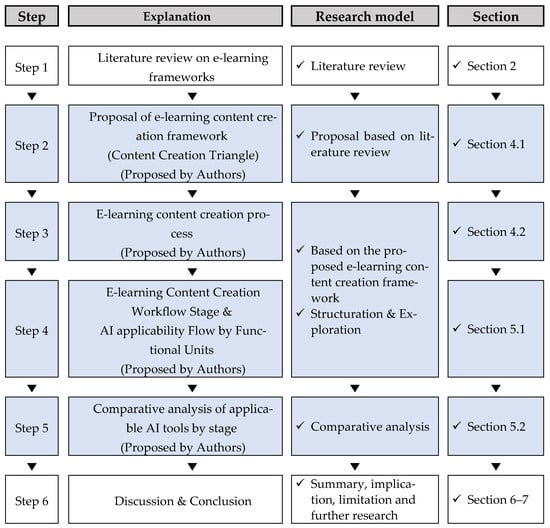
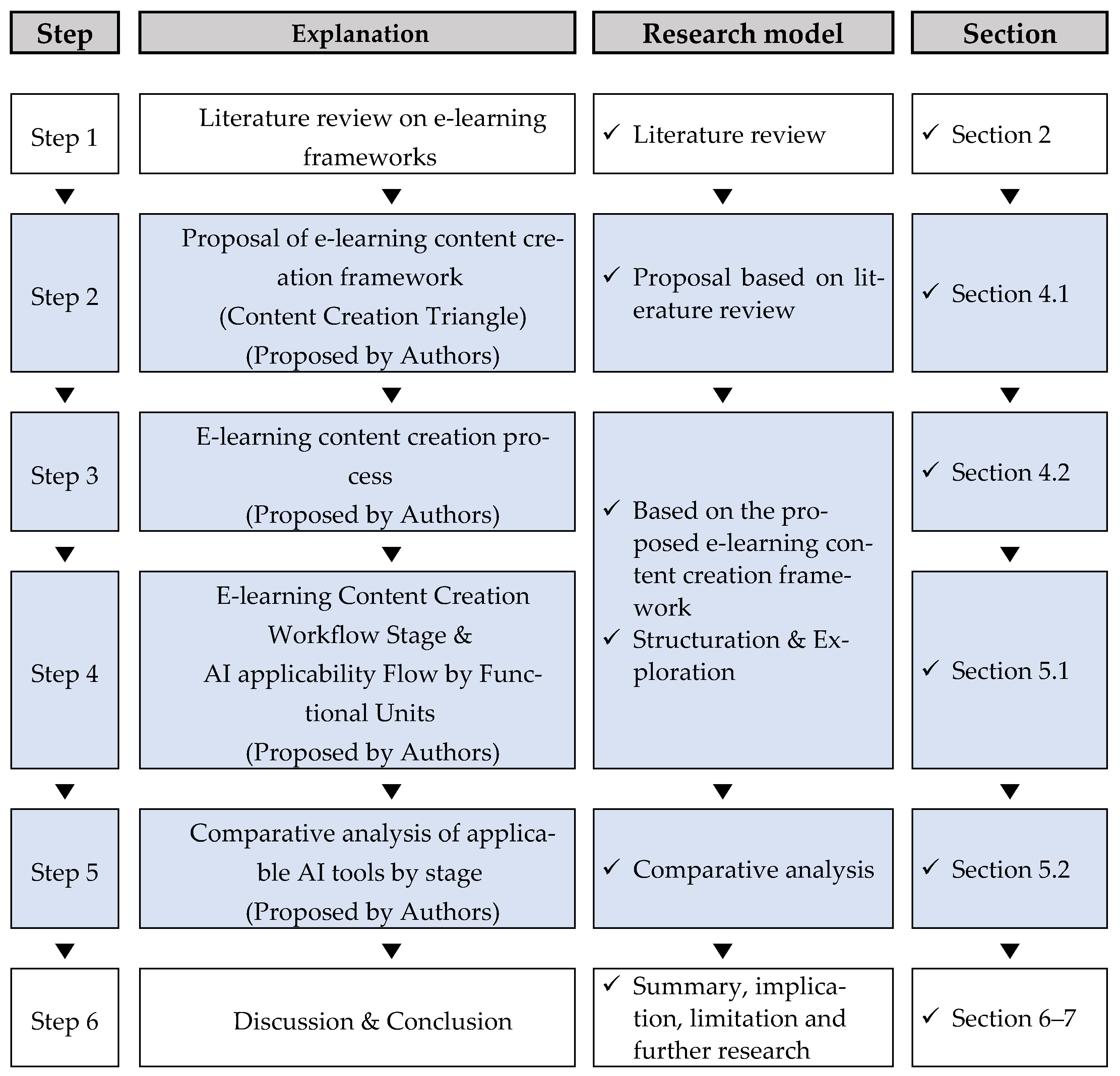
Figure 1 presents the overall structure of the phases for content development employed in this study. The structure consists of six steps, among which Steps 2 through 5 represent the core contributions of this research, describing the newly proposed e-learning content creation framework and workflow, as well as the characteristics of AI tools that can enhance the efficiency of the content development process.
Figure 1.
Structure of the phases for content development. The shaded sections represent the elements newly proposed by the authors.
Step 1 corresponds to Section 2 and involves a systematic review of prior studies on e-learning content frameworks. This step was conducted to establish the theoretical foundation for the proposed framework and to identify its distinction from existing e-learning content frameworks.
Step 2 moves beyond previous studies by proposing a new framework specifically tailored to e-learning content creation. To this end, the structure of the framework was reconstructed on the basis of theoretical foundations derived from existing e-learning content creation frameworks. The framework developed in this step serves as the foundation for all subsequent stages, and its detailed description is provided in Section 4.1.
Step 3 further elaborates the content creation process based on the proposed framework. In this step—corresponding to Section 4.2—the procedural stages, structural components, and role assignments are specified to enable a systematic and organized development of e-learning content.
Step 4 introduces the E-learning Content Creation Workflow Stage. To automate the content development process, this stage defines the roles of key actors across each phase and identifies AI solutions that can be applied at each stage. In addition, the process is mapped to appropriate AI tools based on functional units of content development to support practical applicability. This step corresponds to Section 5.1.
Step 5 compares and evaluates the identified AI tools not only in terms of functionality, efficiency, and applicability, but also with respect to their technical specifications and intended uses. By systematically analyzing the strengths and limitations of each tool, this stage provides a rationale for selecting appropriate AI tools in real production environments and lays the groundwork for future empirical investigations. This step corresponds to Section 5.2.
In summary, the originality of this study does not lie in reiterating existing frameworks, but rather in proposing a new framework specialized for e-learning content creation, establishing a corresponding development procedure, and systematically identifying the role of Generative AI technologies across all stages of content creation. Accordingly, Figure 1 visually highlights the key contributions of this study (Steps 2–5) and demonstrates their significance in advancing the field of e-learning content development.
4. Proposal for E-Learning Content Creation Framework & Creation Process
4.1. Content Creation Triangle as the Core Axis of the E-Learning Content Creation Framework
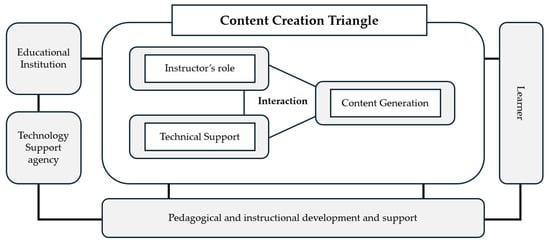
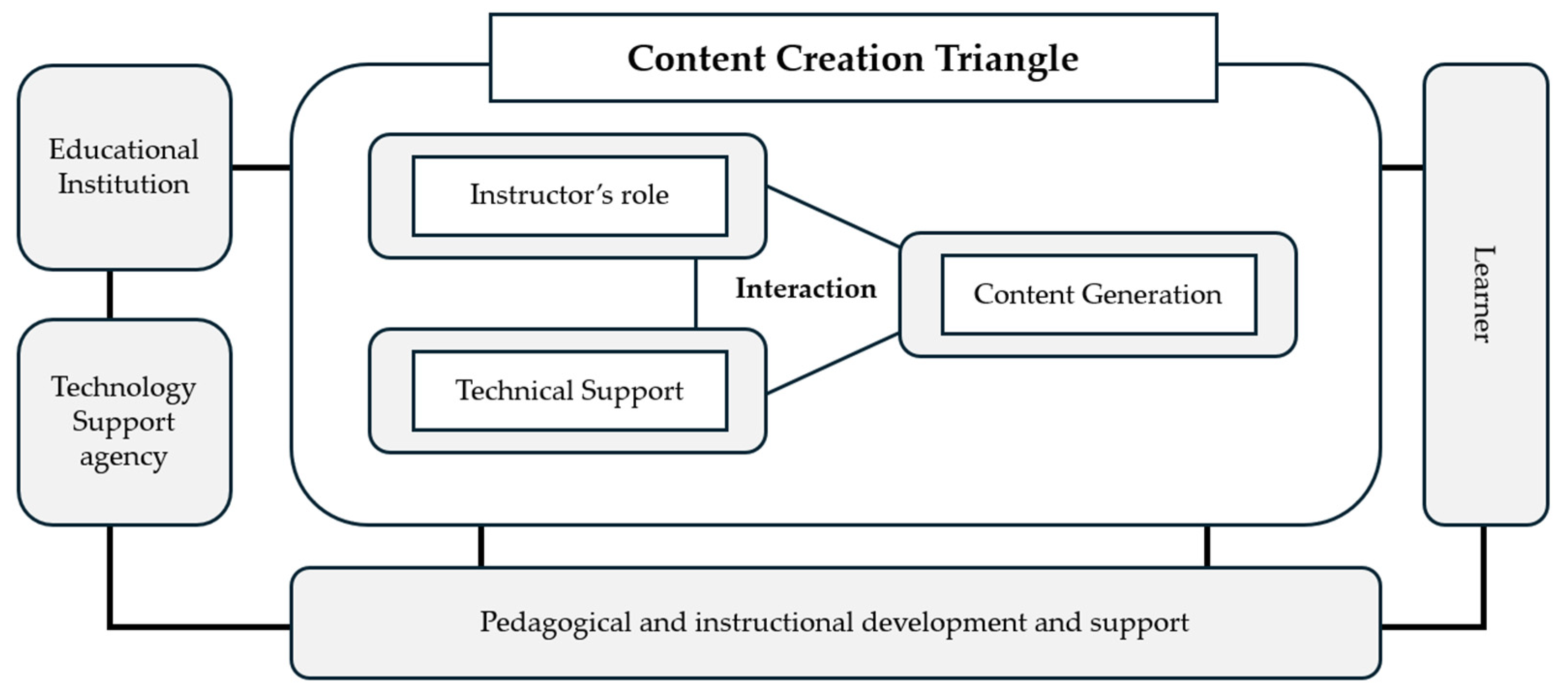
Figure 2 presents the framework proposed by the research team, which was specifically designed with a clear focus on e-learning content creation and developed on the basis of the literature review conducted in Section 2. The central axis of this framework is the content creation process, driven by two core components: the role of the instructor and technical support. These two elements interact through feedback and collaboration, providing the structural foundation for content generation. In this study, this central axis is referred to as the Content Creation Triangle.
Figure 2.
E-learning Content Creation Framework.
The Content Creation Triangle differs from conventional e-learning frameworks in that it explicitly centers on content generation. The production-oriented perspective of this model is supported by multiple strands of prior research. For instance, it aligns with the domain/instructional model proposed by Stoyanov et al. [3] and corresponds to the key areas of Internet-based distance education—course development, teaching–learning process, course structure, learner support, and instructor support—outlined by Phipps & Merisotis [20]. The framework also resonates with the critical components identified by Khan [21], including technology, instructional design, interface design, and resource support. Hamdi & Hamtini [23] further emphasize instructional content as a major element in e-learning frameworks. In addition, Aparicio et al. [2] identify instructors, technical support personnel, and content providers as essential stakeholders and present interaction and collaboration as core subcomponents of e-learning technologies.
Taken together, prior studies consistently highlight that e-learning content is generated through collaboration and feedback between instructors and technical support teams. Building on this accumulated foundation, the present study positions the Content Creation Triangle as the structural core of e-learning content development. In this model, instructors and technical support personnel serve as the primary stakeholders, whose collaboration and iterative feedback function as the driving force behind content generation, which is ultimately delivered to learners.
In the proposed framework, instructors and technical support teams play leading and facilitative roles in the content development process; therefore, related organizational entities—such as educational institutions, technical support organizations, and content providers—are placed on the left side of Figure 2. This corresponds to the institutional support, learner support, and faculty support categories identified by Phipps & Merisotis [19] and also aligns with the classifications of educational institutions, ministries of education, and technology providers described by Aparicio et al. [2]. By contrast, learners are positioned on the right side of the figure, as they constitute the direct beneficiaries and end-users of the generated content, using and evaluating the produced materials. Instructional design and pedagogical support are located at the bottom of the framework due to their indirect yet substantial influence on content development, which aligns with the pedagogical models and instructional strategies discussed by Aparicio et al. [2] within the broader scope of e-learning activities.
4.2. E-Learning Content Creation Process
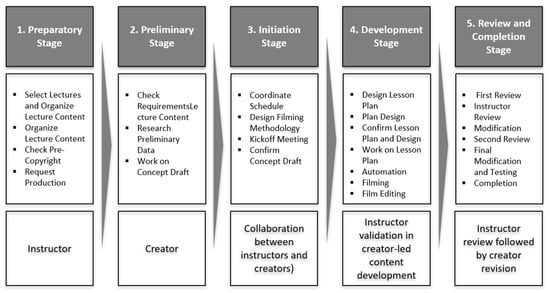
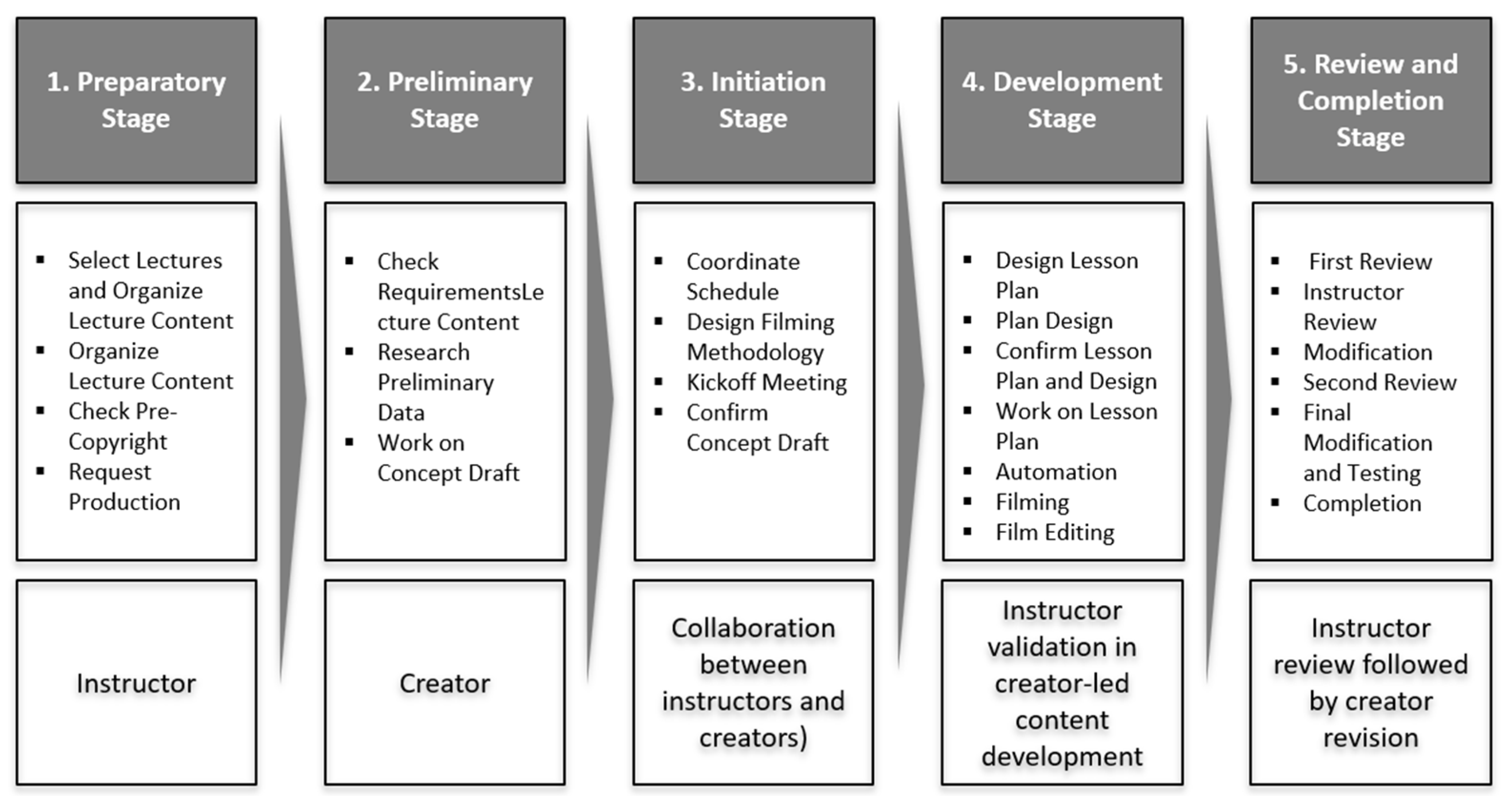
Figure 3 illustrates the process of e-learning content creation, providing a detailed operationalization of the ‘Content Creation’ component from the previously proposed e-learning content creation framework.
Figure 3.
E-learning Content Creation Process.
This process adopts a content production flow perspective and outlines the collaborative stages through which content is developed, primarily involving instructors and technical support personnel. It consists of five sequential stages:
- Preparatory Stage—Led by the instructor, this stage involves the following sub-processes:Select Lectures and Organize Lecture Content, Organize Lecture Content, Check Pre-Copyright, and Request Production.
- Preliminary Stage—Activities of this stage are performed by the technical support team, based on the materials and requirements provided by the instructor. Key tasks include:Check Requirements, Research Preliminary Data, and Work on Concept Draft.
- Initiation Stage—This is a collaborative phase where both the instructor and technical team jointly participate. Activities include:Coordinate Schedule, Design Filming Methodology, Kickoff Meeting, and Confirm Concept Draft.
- Development Stage—Although primarily led by the technical support team, this phase requires active collaboration with the instructor. It includes the following sequence: Design Lesson Plan and Plan Design (led by the technical team);Confirm Lesson Plan and Design (led by the instructor);Work on Lesson Plan and Automation (technical team);Filming (jointly conducted by the instructor and technical team);Film Editing (handled by the technical team).
- Review and Completion Stage—In this final phase, the content is reviewed and finalized. The technical team leads the process, while the instructor plays a key review and validation role. This stage comprises:First Review, Instructor Review, Modification, Second Review, Final Modification and Testing, and Completion.
5. Application of AI in E-Learning Content Creation
5.1. E-Learning Content Creation Workflow Stage
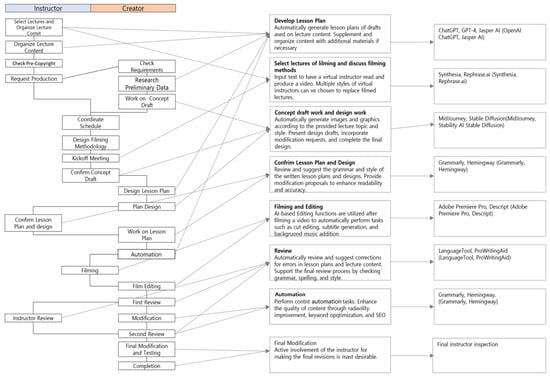
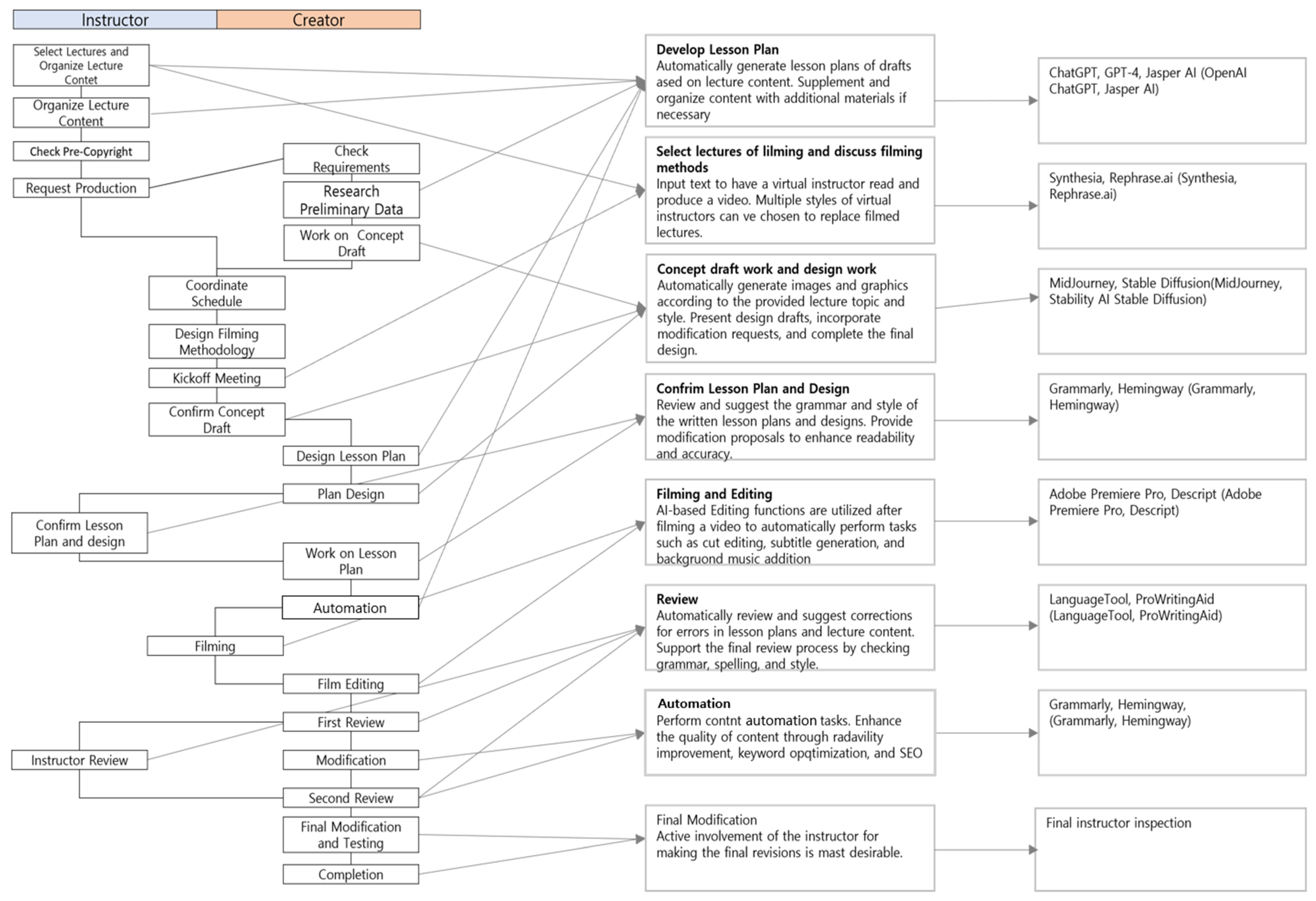
Figure 4 presents a restructured workflow of the e-learning content creation process, organized into functional units to facilitate the integration of AI-driven technologies. By segmenting the process into discrete functional stages, it becomes possible to identify appropriate AI applications tailored to each phase of development, thereby enhancing efficiency and scalability.
Figure 4.
Structure for Automating E-Learning Development with AI-Driven Solutions.
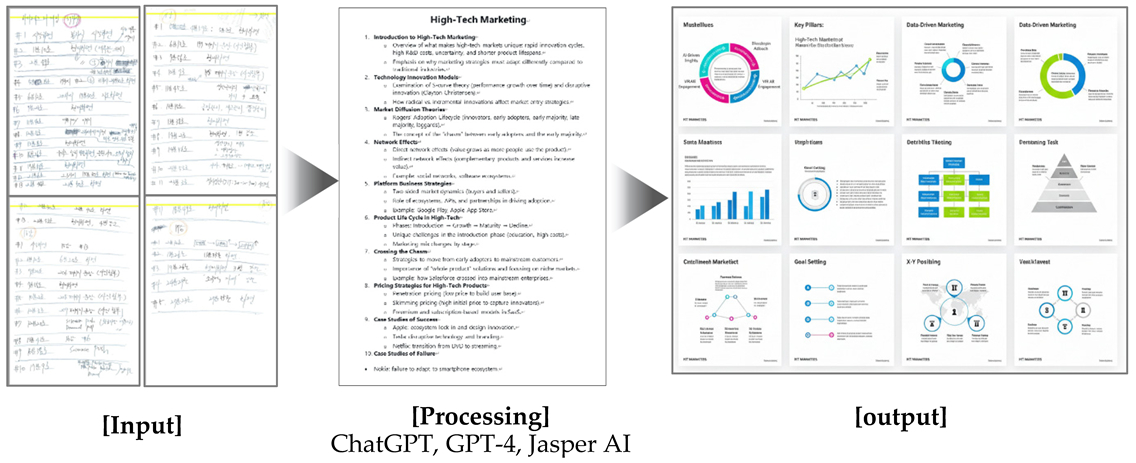
The first stage, “Develop Lesson Plan,” involves the automatic generation of initial lecture drafts and the supplementation of virtual lecture content. Additional instructional materials may be incorporated when necessary. This stage corresponds to the instructor-led activities of lecture selection and content organization, as well as the responsibilities of the creator in conducting preliminary research, designing lesson plans, and performing automation tasks.
The second stage, “Select Lectures for Filming and Discuss Filming Methods,” focuses on producing video content delivered by a virtual instructor. The most suitable filming method is selected from a variety of available options, such as chroma key or hybrid formats. This stage is primarily applied during the initial lecture selection phase and is implemented in collaborative settings, such as the “Kickoff Meeting” of the Initiation Stage.
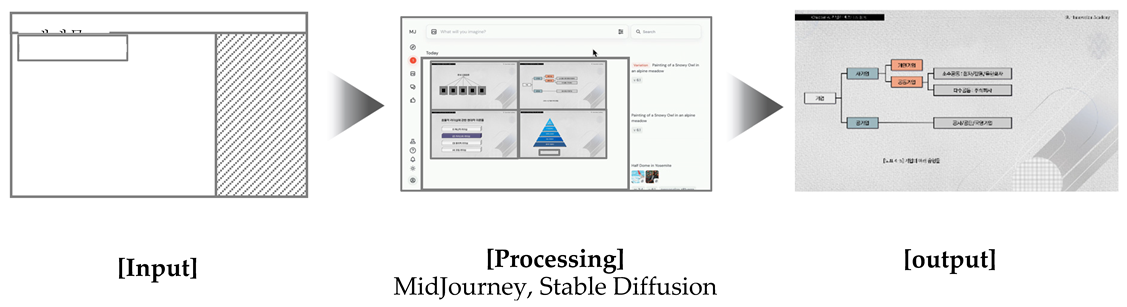
The third stage, “Concept Draft Work and Design Work,” automates the generation of visual content, including images and graphics, based on provided materials and design guidelines. Drafts are shared, feedback is incorporated, and the final design is completed. This stage aligns with the “Work on Concept Draft” in the Preliminary Stage, “Confirm Concept Draft” in the Initiation Stage, and “Plan Design” in the Development Stage of the content creation process.
The fourth stage, “Confirm Lesson Plan and Design,” involves reviewing the lesson plan and visual design to propose improvements in structure, style, and readability. This corresponds to both the instructor’s validation task in “Confirm Lesson Plan and Design” and the creator’s implementation work in “Work on Lesson Plan” under the Development Stage.
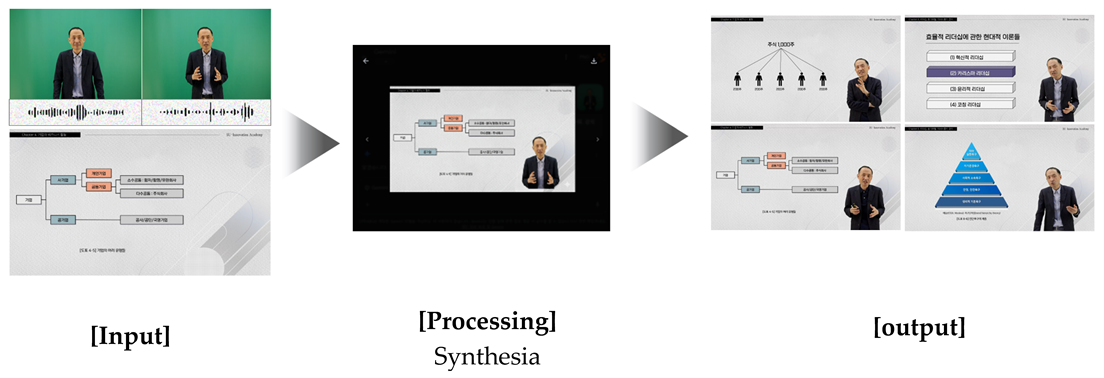
The fifth stage, “Filming and Editing,” utilizes AI-enabled tools to automate post-production processes, including subtitle generation, background music insertion, and video editing. This stage is mapped directly to the “Filming” and “Film Editing” steps in the Development Stage.
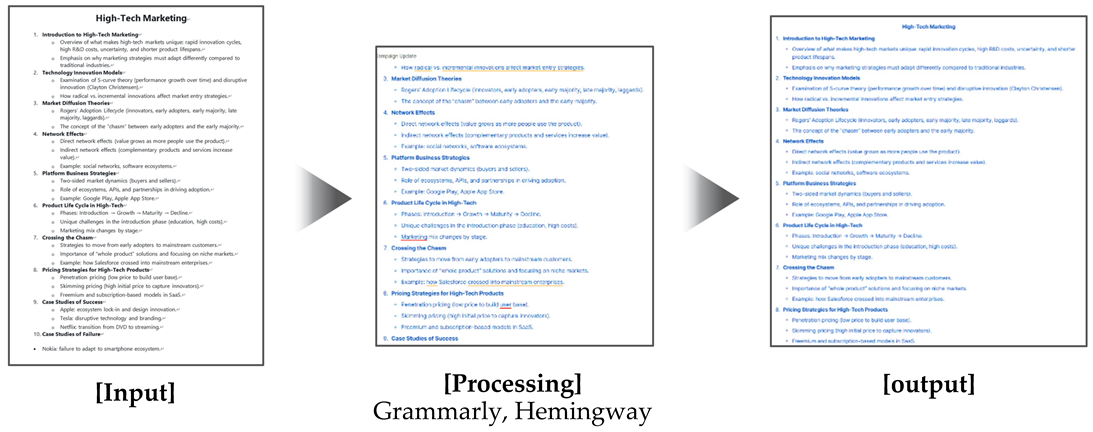
The sixth stage, “Review,” supports the evaluation of lesson content by automatically suggesting corrections in grammar, spelling, and style. This function facilitates the comprehensive review process, encompassing the “First Review,” “Instructor Review,” and “Second Review” phases within the Review and Completion Stage.
The seventh stage, “Automation,” enhances the final product by improving readability, refining keywords, and automating content for search engines (SEO). This phase corresponds to the “Modification” and “Second Review” steps, ensuring that the final output is more accessible and discoverable. Finally, the development process concludes with the “Final Modification” stage.
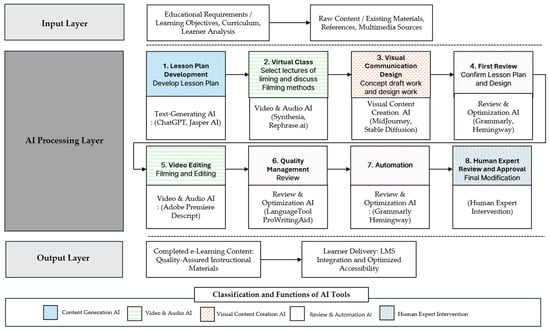
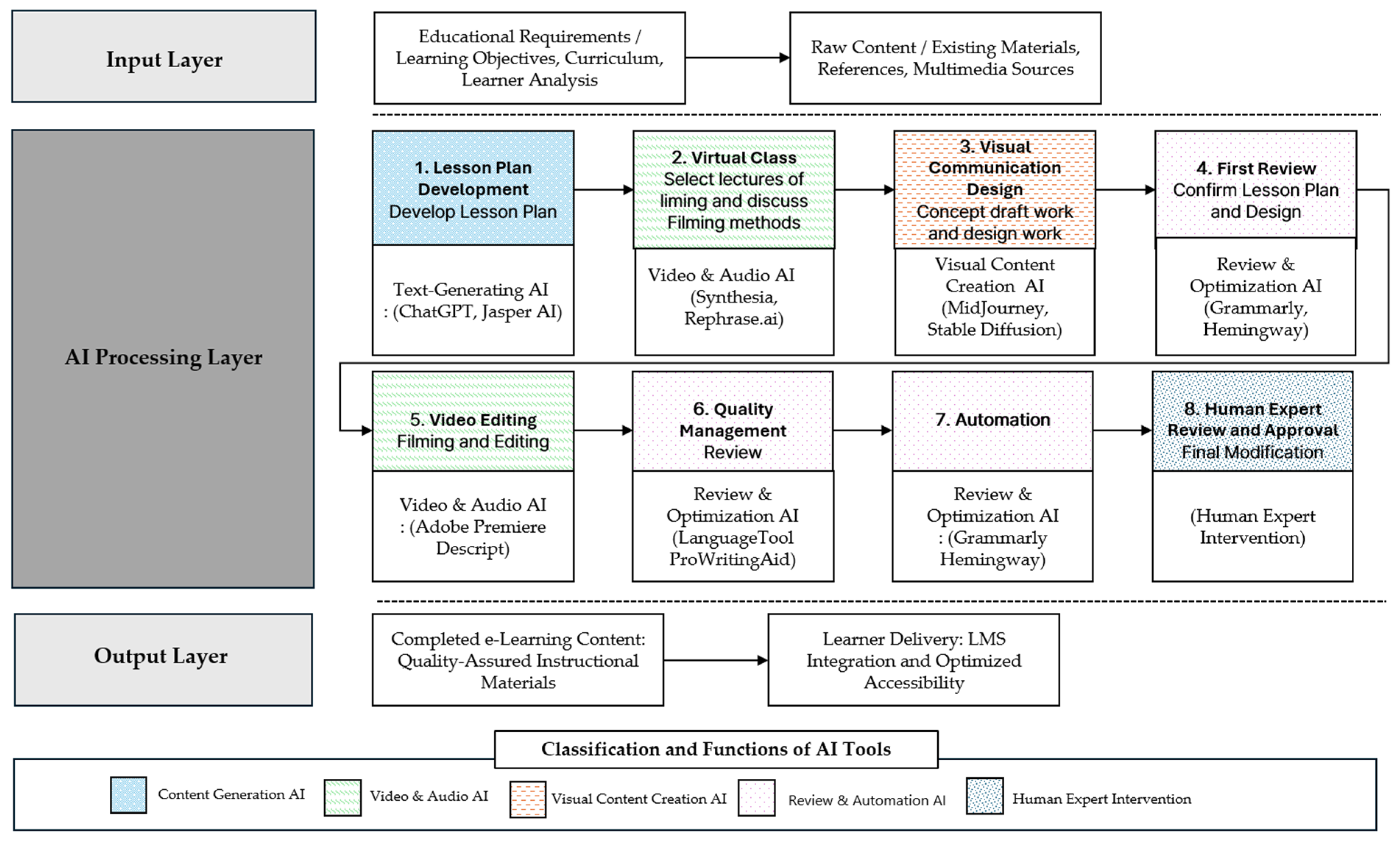
Figure 5 illustrates how AI applications are mapped across functional units in the e-learning content creation process. Building on the workflow stages presented in Figure 4, it provides an integrated overview of the entire production cycle—from instructional design to final content delivery—and identifies representative AI tools that are suitable for each task.
Figure 5.
AI Application Flow by Functional Units in E-Learning Content Creation.
The development pipeline is structured into three layers. The first is the Input Layer, in which learning objectives are defined and source materials are collected. The second is the AI Processing Layer, which consists of eight functional units: lesson planning, virtual lecture creation, visual communication, first review, video editing, quality management, content automation, and final expert approval. The third is the Output Layer, where finalized content is deployed within a Learning Management System (LMS).
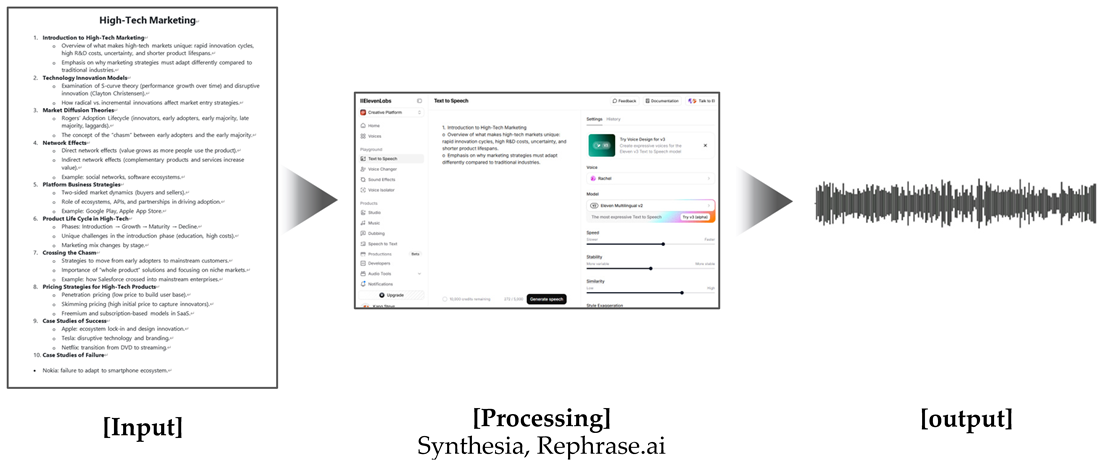
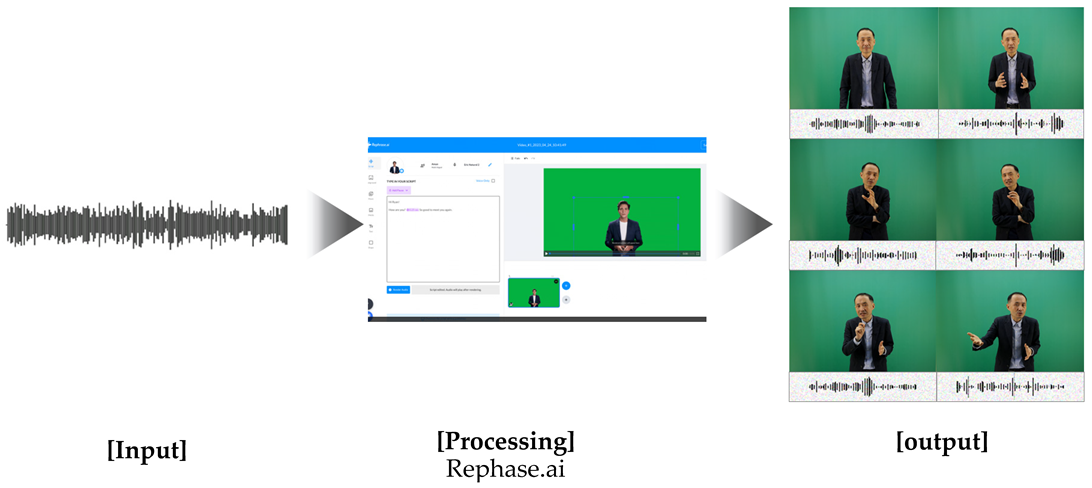
Representative AI tools are associated with each functional unit according to their core capabilities. Text-generation tools such as ChatGPT and Jasper support lesson plan development. Virtual instructor and text-to-speech platforms such as Synthesia and Rephrase.ai support virtual class configuration. Visual generation tools such as MidJourney and Stable Diffusion support graphic production. Quality refinement and automation tools such as Grammarly, Hemingway, and MarketMuse support linguistic enhancement and SEO-based improvements. Post-production and editing tasks can be performed using Adobe Premiere Pro or Descript, while the final review requires human experts to ensure contextual accuracy, instructional alignment, and compliance with institutional standards.
Overall, Figure 5 demonstrates how AI technologies can be systematically integrated throughout the content creation pipeline, highlighting the complementary relationship between AI-driven automation and human expertise.
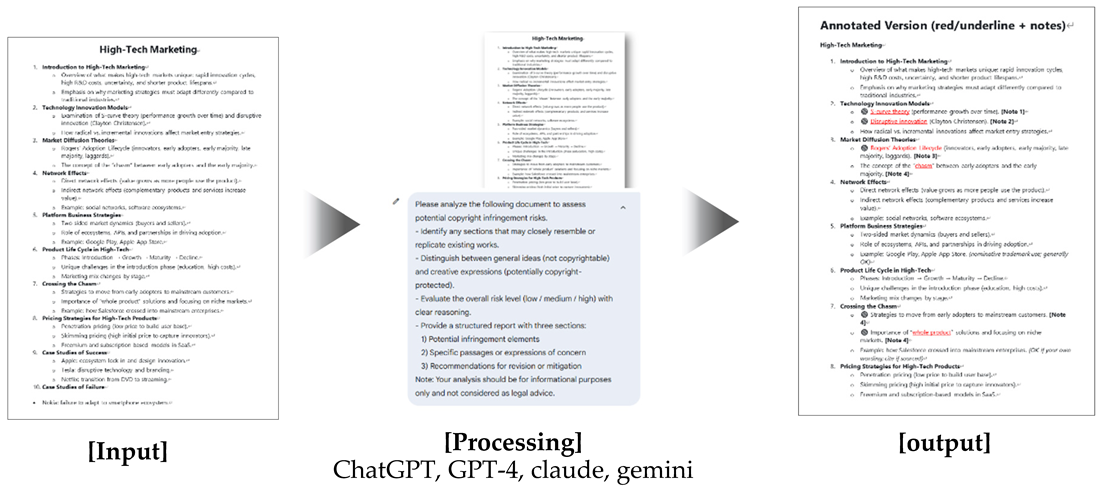
The Appendix A presents a practical implementation process based on the E-learning Content Creation Workflow shown in Figure 4 and the AI Application Flow illustrated in Figure 5. This serves to enhance understanding of the E-learning Content Creation framework and workflow proposed in this study, while also demonstrating the feasibility of the proposed approach. Furthermore, it functions as pilot material that illustrates how the outcomes of this study may be utilized in subsequent stages of empirical research.
5.2. Comparison of Applicable AI Tools by Workflow Stage
Building upon the integrative overview presented in Table 1, this section provides a comparative analysis of AI tools aligned with each stage of the e-learning content creation process. Rather than reiterating technical descriptions of individual applications, the discussion emphasizes their suitability for specific workflow stages and explains how they address deficiencies in earlier e-learning frameworks.
Table 1.
Comparative Analysis of AI Tools in E-Learning Content Creation: Strengths, Limitations, and Proposed Additions.
In the initial stage of e-learning content creation, text-generation tools such as ChatGPT and Jasper AI are employed to automate the creation of instructional outlines. Earlier frameworks assumed manual lesson planning, which often resulted in inconsistency, inefficiency, and limited scalability. By contrast, AI-driven planning reduces instructors’ cognitive load, ensures greater coherence across lesson designs, and facilitates alignment with institutional objectives and learner needs. As the process progresses from text to audiovisual delivery, AI-powered platforms such as Synthesia and Rephrase.ai enable the scalable production of lecture-style videos. Prior frameworks provided no systematic means of producing high-quality multimedia in a timely manner, thereby limiting learner engagement. These tools address this gap by bridging static instructional design with dynamic, immersive learning experiences, particularly in contexts where direct instructor availability is constrained.
The visualization phase benefits from tools such as MidJourney and DALL·E 2, which generate creative and contextually relevant imagery. Traditional approaches relied heavily on either manual graphic design or pre-existing resources, both of which restricted creativity and slowed development. By enabling rapid prototyping of customized visuals, AI reduces production bottlenecks and enhances both the aesthetic appeal and cognitive clarity of instructional materials. Subsequent stages focus on quality refinement. Applications such as Grammarly, Hemingway, and ProWritingAid provide grammar and readability support, while tools like MarketMuse and SurferSEO extend automation into digital discoverability. Earlier frameworks seldom incorporated systematic review or search automation, whereas the integration of these tools ensures linguistic precision, accessibility, and compliance with digital learning standards.
Post-production requires both technical sophistication and user accessibility. Professional-grade platforms such as Adobe Premiere Pro and more accessible alternatives like Descript play central roles in this phase. Previous frameworks often assumed manual or outsourced editing, which introduced both cost and expertise barriers. By combining advanced functionality with simplified, text-based editing solutions, AI-enabled editing democratizes production, balancing professional quality with broader usability. Quality assurance is further reinforced by tools such as LanguageTool and ProWritingAid, which provide multilingual grammar checking and comprehensive stylistic analysis. Earlier frameworks rarely embedded systematic QA mechanisms, leaving inconsistencies unresolved. AI integration, however, represents a methodological advance that incorporates quality assurance throughout the development cycle.
Automation extends beyond linguistic and structural refinement to include digital visibility. While Grammarly and Hemingway enhance clarity and stylistic consistency, MarketMuse and SurferSEO elevate automation through strategic keyword structuring and content analysis. Unlike earlier frameworks that neglected discoverability, this stage ensures that e-learning content achieves both pedagogical quality and relevance in digital environments. In the final stage, AI coding tools such as OpenAI Codex and GitHub Copilot accelerate the development of interactive and technically advanced learning modules. Previous frameworks assumed that programming tasks were to be completed entirely manually, thereby creating barriers for non-technical educators. By lowering these barriers and enhancing productivity, AI-supported coding broadens the feasibility of integrating interactive features into e-learning systems. Some applications—most notably Grammarly and Hemingway—demonstrate cross-stage utility by enhancing linguistic accuracy and readability across the entire workflow. Their cross-functional value ensures stylistic coherence and consistency throughout the development process.
Taken together, this comparative analysis demonstrates that the originality of the study lies not in cataloging AI applications, but in evaluating their appropriateness for distinct stages of content creation and in showing how they remediate structural limitations in earlier e-learning frameworks. By systematically aligning AI tools with functional stages of development, the framework provides actionable guidance for achieving efficiency, scalability, and pedagogical quality in e-learning content production.
6. Discussion
Unlike previous studies that primarily focused on learner outcomes and other result-oriented measures, this study directs attention to the process of e-learning content creation itself. Existing e-learning frameworks have largely remained at a conceptual or system-wide level, without adequately reflecting the concrete stages of content creation. To address this gap, the study proposes the E-learning Content Creation Triangle, which identifies the instructor’s role, technical support, and content creation as the three central pillars essential for achieving both efficiency and effectiveness in content creation.
Furthermore, the study analyzes the components and quality criteria of existing frameworks, selecting those elements directly relevant to content creation, and organizes them into a structured step-by-step process. At each stage, the potential application of generative AI tools is examined in terms of technical specifications, strengths and limitations, and intended purposes. In doing so, this research moves beyond a purely conceptual proposal and provides practical guidelines that may be applied in real-world development settings.
The findings carry both academic and practical implications. From an academic perspective, this study presents a systematic framework specifically tailored to content creation, thereby offering a structural foundation that accommodates diverse types of e-learning content. The framework also emphasizes the collaborative relationship between instructors and technical developers, providing a model that can improve interaction and communication during the creation process. In addition, the function-specific task units proposed in this study can serve as benchmarks for companies to assess their internal capabilities and quality standards, while also establishing criteria that may guide the future development of AI tools specialized for e-learning platforms.
From a practical standpoint, the proposed framework and process enable content developers to manage production systematically while utilizing AI tools suited to each stage of content creation, ultimately reducing both time and cost. Improved efficiency also lowers barriers to entry, making it possible for resource-constrained institutions or countries to more actively participate in e-learning content creation. For development companies, the structured process offers a tool for quality assurance and capacity building, allowing even firms with limited technological or human resources to secure competitiveness in the market. Ultimately, these changes expand learning opportunities and resources for learners, contributing to the broader activation of the e-learning industry.
Nevertheless, this study is subject to limitations in that it remains primarily conceptual in nature. The proposed framework, processes, and applications of AI tools have not yet been empirically examined in authentic educational settings. Accordingly, the findings of this study should be interpreted not as validated evidence of instructional effectiveness, but rather as a conceptual and methodological proposition. Future research should therefore evaluate the practical performance of the proposed model across diverse educational contexts and organizational environments, while also exploring concrete strategies for effectively integrating generative AI tools into existing e-learning platforms.
To partially address these limitations, the Appendix A presents illustrative implementation examples based on the e-learning content creation workflow shown in Figure 4 and the AI application flow depicted in Figure 5. These examples are intended to clarify the operational logic of the proposed framework and workflows, demonstrate their procedural feasibility, and serve as pilot materials that may inform subsequent stages of empirical research. As such follow-up studies accumulate, the operational efficiency and scalability of e-learning content creation are expected to be further enhanced.
7. Conclusions
This study proposed a framework specifically designed for e-learning content creation, distinguishing it from prior research that primarily addressed e-learning at a system-wide or conceptual level. By introducing the E-learning Content Creation Triangle and structuring a step-by-step development process, the study highlighted how generative AI tools can be strategically integrated to enhance efficiency and effectiveness throughout the development cycle. In doing so, the research contributes to the academic discourse on e-learning design while offering practical guidance for content developers and institutions.
The core contribution of this study lies in its dual significance from both academic and practical perspectives. Academically, the study extends the research domain by proposing a content-centered framework for e-learning development and by establishing reference criteria that may support future theoretical and technological advancements in the field. Practically, it demonstrates how generative AI tools can support specific content creation tasks, thereby reducing development time and costs, facilitating collaboration between instructors and technical staff, and lowering barriers to participation in e-learning. Importantly, the proposed framework does not assume automatic improvements in content quality; rather, qualitative enhancement and evaluation remain inherently dependent on expert judgment and pedagogical intent.
Rather than aiming to deliver a fully automated or mathematically formalized workflow model, this study focuses on providing a conceptual and functional foundation for future research. Building on this foundation, subsequent studies may seek to formalize the e-learning content creation process as an automation or decision-making problem and to develop mathematically explicit workflow models that incorporate transition conditions, constraints, and evaluation criteria across development stages. Such extensions would enhance both theoretical rigor and automation potential, thereby positioning the proposed framework as a scalable reference architecture for future research on AI-supported e-learning content creation.
Author Contributions
Conceptualization, S.-W.C. and B.K.; methodology, B.K. and Y.J.S., software, B.K.; validation, Y.J.S.; formal analysis, B.K., investigation, B.K.; resources, B.K.; data curation, B.K.; writing—original draft preparation, B.K. and Y.J.S.; writing—review and editing, Y.J.S.; visualization, Y.J.S.; supervision, S.-W.C.; project administration, S.-W.C.; funding acquisition, S.-W.C. All authors have read and agreed to the published version of the manuscript.
Funding
This study was supported by the Sahmyook University Research Fund in 2023.
Institutional Review Board Statement
Not applicable.
Informed Consent Statement
Not applicable.
Data Availability Statement
Data is contained within the article.
Conflicts of Interest
Author Bongsoo Kang was employed by the company OPENBUS Inc. The remaining authors declare that the research was conducted in the absence of any commercial or financial relationships that could be construed as a potential conflict of interest.
Appendix A
Appendix A.1. Drafting a Lecture Script for Class & Copyright Review

Appendix A.2. Speech Synthesis & Virtual Instructor Generation

Appendix A.3. Designing the Layout of Digital Lecture Materials

Appendix A.4. Review for Grammatical Accuracy and Consistency

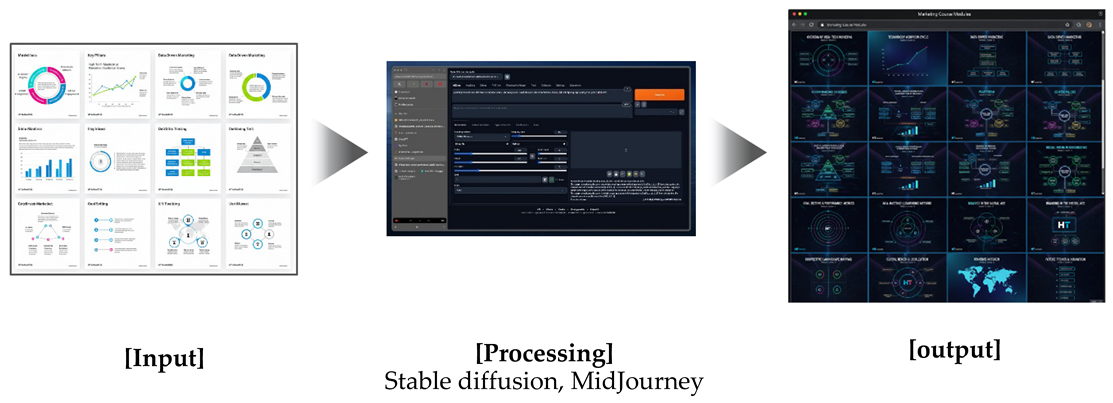
Appendix A.5. Filming and Editing & Speech-Driven Subtitle Generation

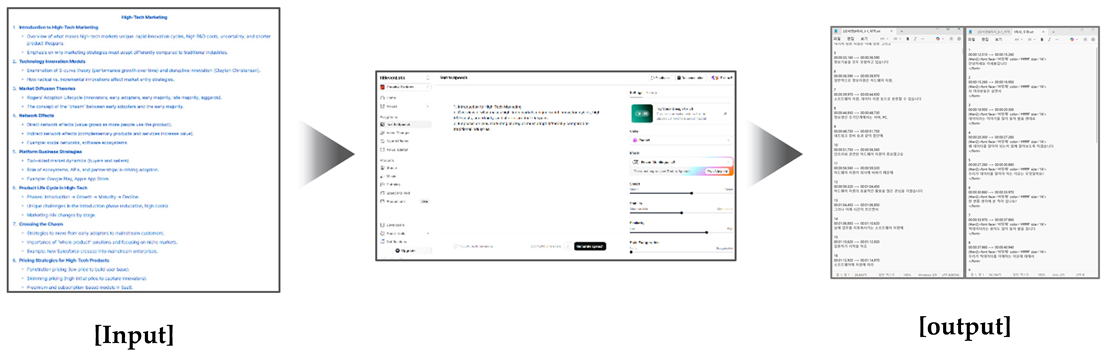
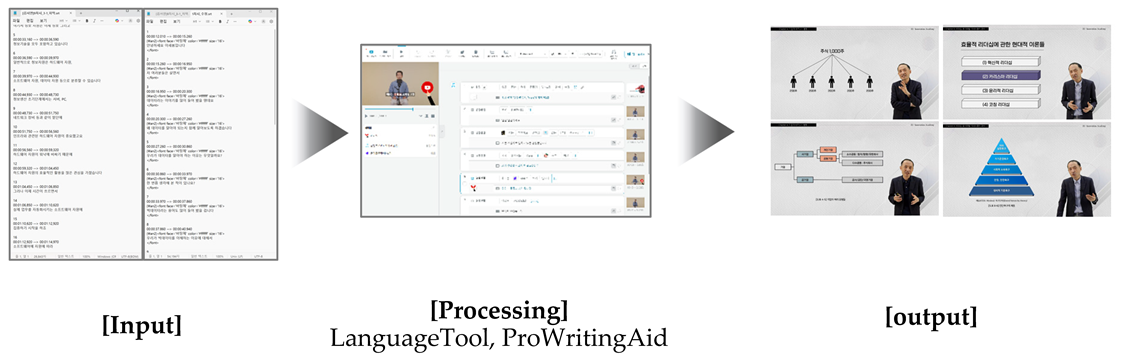
Appendix A.6. Review

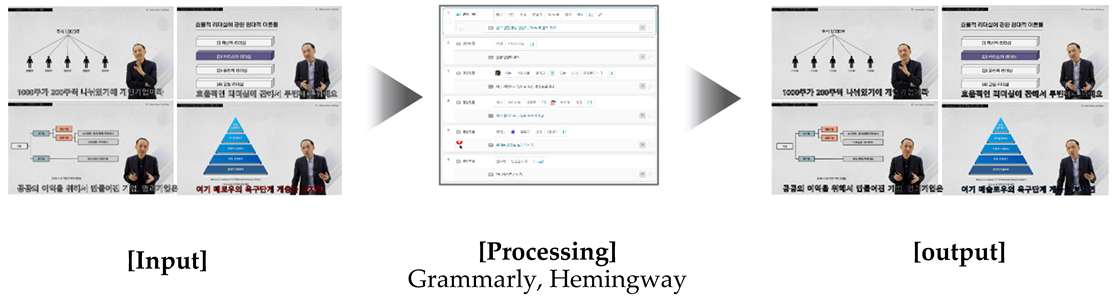
Appendix A.7. Final Modification

References
- SkyQuest. E-Learning Market Size, Share, and Growth Analysis, By Type, By Courses, By Learning Method, By Technology, By End Use, By Region—Industry Forecast 2025–2032, 2025. Available online: https://www.giikorea.co.kr/report/sky1690002-e-learning-market-size-share-growth-analysis-by.html (accessed on 20 June 2025).
- Aparicio, M.; Bacao, F.; Oliveira, T. An e-Learning Theoretical Framework. Educ. Technol. Soc. 2016, 19, 292–307. [Google Scholar]
- Stoyanov, S.; Ganchev, I.; Popchev, I.; O’Droma, M. From CBT to e-Learning. J. Inf. Technol. Control 2005, 3, 2–10. [Google Scholar]
- Gligorea, I.; Cioca, M.; Oancea, R.; Gorski, A.-T.; Gorski, H.; Tudorache, P. Adaptive Learning Using Artificial Intelligence in e-Learning: A Literature Review. Educ. Sci. 2023, 13, 1216. [Google Scholar] [CrossRef] [Scilit]
- Montebello, M. AI Injected E-Learning. Stud. Comput. Intell. 2018, 745, 86. [Google Scholar]
- Alnaqbi, A.M.A.; Yassin, A.M. Evaluation of Success Factors in Adopting Artificial Intelligence in E-Learning Environment. Int. J. Sustain. Constr. Eng. Technol. 2021, 12, 362–369. [Google Scholar] [CrossRef] [Scilit]
- Baker, R.S.; Inventado, P.S. Educational Data Mining and Learning Analytics. In Learning Analytics; Larusson, J., White, B., Eds.; Springer: New York, NY, USA, 2014. [Google Scholar]
- Fırat, M. Integrating AI Applications into Learning Management Systems to Enhance E-Learning. Instr. Technol. Lifelong Learn. 2023, 4, 1–14. [Google Scholar] [CrossRef] [Scilit]
- Kaouni, M.; Lakrami, F.; Labouidya, O. The Design of an Adaptive E-Learning Model Based on Artificial Intelligence for Enhancing Online Teaching. Int. J. Emerg. Technol. Learn. 2023, 18, 202. [Google Scholar] [CrossRef] [Scilit]
- El-Sabagh, H.A. Adaptive E-Learning Environment Based on Learning Styles and Its Impact on Development Students’ Engagement. Int. J. Educ. Technol. High. Educ. 2021, 18, 53. [Google Scholar] [CrossRef] [Scilit]
- Halkiopoulos, C.; Gkintoni, E. Leveraging AI in E-Learning: Personalized Learning and Adaptive Assessment through Cognitive Neuropsychology—A Systematic Analysis. Electronics 2024, 13, 3762. [Google Scholar] [CrossRef] [Scilit]
- Sayed, W.S.; Soliman, M.; El-Sayed, A.; Abdel-Aziz, M.; Abou El-Seoud, S. AI-Based Adaptive Personalized Content Presentation and Exercises Navigation for an Effective and Engaging E-Learning Platform. Multim. Tools Appl. 2023, 82, 3303–3333. [Google Scholar] [CrossRef] [Scilit] [PubMed]
- Tapalova, O.; Zhiyenbayeva, N. Artificial Intelligence in Education: AIED for Personalised Learning Pathways. Electron. J. e-Learn. 2022, 20, 639–653. [Google Scholar] [CrossRef] [Scilit]
- Kavitha, V.; Lohani, R. A Critical Study on the Use of Artificial Intelligence, E-Learning Technology and Tools to Enhance the Learners Experience. Cluster Comput. 2019, 22, 6985–6989. [Google Scholar] [CrossRef] [Scilit]
- OECD. E-Learning in Tertiary Education: Where Do We Stand? OECD Publishing: Paris, France, 2005. [Google Scholar]
- Zinn, K.L. Computer-Assisted Learning and Teaching. In Encyclopedia of Computer Science; Ralston, A., Reilly, E.D., Eds.; John Wiley and Sons Ltd.: Chichester, UK, 2000; pp. 328–336. Available online: http://dl.acm.org/citation.cfm?id=1074100.1074248 (accessed on 14 June 2025).
- National Archives of Korea. Policies to Promote E-Learning. 2024. Available online: https://www.archives.go.kr/next/newsearch/listSubjectDescription.do?id=009154&pageFlag=A&sitePage=1-2-1 (accessed on 20 June 2025).
- Phipps, R.; Merisotis, J. Quality on the Line: Benchmarks for Success in Internet-Based Distance Education; The Institute for Higher Education Policy: Washington, DC, USA, 2000. [Google Scholar]
- Khan, B.H. The Global E-Learning Framework. In E-Learning; IGI Global: Hershey, PA, USA, 2010; pp. 42–51. [Google Scholar]
- Hamdi, M.; Hamtini, T.M. Designing an Effective E-Content Development Framework for the Enhancement of Learning Programming. Int. J. Emerg. Technol. Learn. 2016, 11, 131. [Google Scholar] [CrossRef] [Scilit]
- Dahan, N.A.; Al-Razgan, M.; Al-Laith, A.; Alsoufi, M.A.; Al-Asaly, M.S.; Alfakih, T. Metaverse Framework: A Case Study on E-Learning Environment (ELEM). Electronics 2022, 11, 1616. [Google Scholar] [CrossRef] [Scilit]
- Gupta, A.K.; Singh, D.; Kumar, R.; Gupta, A.; Jain, V. Framework to Integrate Education 4.0 to Enhance the E-Learning Model for Industry 4.0 and Society 5.0. In The Role of Sustainability and Artificial Intelligence in Education Improvement; Chapman and Hall/CRC: Boca Raton, FL, USA, 2023; pp. 151–167. [Google Scholar]
- Amin, S.; Aziz, A.; Zaidi, S.M.A.; Rauf, H.T. Smart E-Learning Framework for Personalized Adaptive Learning and Sequential Path Recommendations Using Reinforcement Learning. IEEE Access 2023, 11, 89769–89790. [Google Scholar] [CrossRef] [Scilit]
- Sargazi Moghadam, T.; Darejeh, A.; Delaramifar, M.; Mashayekh, S. Toward an artificial intelligence-based decision framework for developing adaptive e-learning systems to impact learners’ emotions. Interact. Learn. Environ. 2024, 32, 3665–3685. [Google Scholar] [CrossRef] [Scilit]
- Mbombi, M.O.; Bopape, M.A.; Ravele, T.; Ntho, T.A.; Muthelo, L.; Phukubye, T.A.; Mothiba, T.M. Applying an E-Learning Framework to Explore Learner Nurses’ and Nurse Educators’ Perceptions about Technology Platforms in Nursing. PLoS ONE 2025, 20, e0312681. [Google Scholar] [CrossRef] [Scilit] [PubMed]
- Adeniyi, I.S.; Al Hamad, N.M.; Adewusi, O.E.; Unachukwu, C.C.; Osawaru, B.; Chilson, O.U.; Omolawal, S.A.; Aliu, A.O.; David, I.O. E-Learning Platforms in Higher Education: A Comparative Review of the USA and Africa. Int. J. Sci. Res. Arch. 2024, 11, 1686–1697. [Google Scholar] [CrossRef] [Scilit]

Disclaimer/Publisher’s Note: The statements, opinions and data contained in all publications are solely those of the individual author(s) and contributor(s) and not of MDPI and/or the editor(s). MDPI and/or the editor(s) disclaim responsibility for any injury to people or property resulting from any ideas, methods, instructions or products referred to in the content. |
© 2026 by the authors. Licensee MDPI, Basel, Switzerland. This article is an open access article distributed under the terms and conditions of the Creative Commons Attribution (CC BY) license.