


Abstract
This study evaluated wild Allium species as functional food ingredients and investigated the quality, antioxidant properties, and taste profiles of Cheongpomuk, a traditional Korean mung bean starch gel, supplemented with Allium spurium powder. A. spurium exhibited the highest total polyphenol content among the three species screened. Cheongpomuk samples were prepared with 0, 3, 6, 9, and 12% A. spurium powder and analyzed. Increasing the powder concentration raised moisture content and lowered pH. Lightness decreased, while greenness and yellowness increased. Texture analysis revealed reduced hardness, cohesiveness, chewiness, and gumminess and increased adhesiveness with increasing powder concentration. Antioxidant properties, including total polyphenol and flavonoid contents, ABTS and DPPH scavenging activities, increased in a concentration-dependent manner, with the highest values observed in the 12% treatment. Electronic tongue analysis indicated enhanced sourness, saltiness, and umami with increasing powder addition, while the 6% treatment exhibited a relatively balanced profile. Overall, A. spurium powder improved the antioxidant potential of Cheongpomuk but negatively affected texture at higher levels. The 6% treatment provided a formulation level that balances enhanced functionality with acceptable quality characteristics; however, further studies are warranted.
1. Introduction
The genus Allium comprises more than 1000 species worldwide, several of which are cultivated as economically important crops because of their value as food, medicinal, and ornamental plants [1,2]. Among these, 16 species, such as onion, garlic, Welsh onion, and chive are common vegetables in the Korean diet and are widely consumed [3]. In addition, Allium species have long been used in traditional medicine and have attracted increasing attention as functional materials because of their reported anticancer, antibacterial, antithrombotic, and cardioprotective activities. These properties have been attributed to various bioactive compounds such as sulfur-containing compounds, flavonoids, phenolic compounds, and saponins [2]. Allium species also exhibit strong antioxidant properties and may delay aging-related oxidative damage while reducing the risk of cardiovascular diseases and tumor formation [4]. Recent studies have confirmed the antioxidant and anti-obesity activities of wild Korean Allium species, suggesting their potential as functional food ingredients and medicinal resources [5].
Among Korean wild Allium taxa, A. spurium belongs to section Rhizirideum and was recently recorded in Cheongnyangsan, South Korea, which represents the disjunct southernmost limit of its known geographical distribution [6]. Despite this recent taxonomic characterization, much remains unknown about its phytochemical composition and direct application as a food ingredient. Wild Allium species are generally known to contain diverse bioactive constituents, including phenolic compounds, flavonoids, organosulfur compounds, and saponins, although their compositions and biological activities vary considerably among species [7]. A. senescens is an indigenous culinary herb [8], and its powder has been incorporated into noodles, resulting in changes in physicochemical, textural, sensory, and antioxidant properties [9]. More recently, phenolic and flavonoid contents have also been characterized in germinated shoots of A. dumebuchum, another Korean Allium species of section Rhizirideum [10]. In contrast, direct studies on the application of A. spurium as a food ingredient remain scarce, supporting the need to evaluate this underutilized wild Allium resource for food applications.
Recent food consumption trends reflect an increasing demand for healthier products free from synthetic additives [11]. In this context, plant-derived functional ingredients have attracted considerable attention as promising materials for improving both the quality and functionality of food products. They contain various bioactive compounds, such as polyphenols, flavonoids, carotenoids, vitamins, and dietary fiber, which may enhance storage stability, antioxidant capacity, and nutritional value [12]. The incorporation of plant-derived materials into food formulations has been widely applied to products such as bread, rice cakes, muk, and rice- or wheat-based processed foods [13], offering a practical strategy for improving the quality and functional properties of conventional foods [14]. In addition, this approach may promote the broader use of plant-derived functional ingredients as natural alternatives to synthetic additives [15].
Muk is a traditional Korean starch gel food prepared by gelatinizing plant-derived starch with water using heat, followed by gelation by cooling. Representative types include acorn muk, Cheongpomuk, and buckwheat muk. Cheongpomuk, which is prepared from mung bean starch, is characterized by a soft and elastic texture [16]. Owing to their high moisture content and relatively mild flavor, starch gel foods provide suitable matrices for incorporating various plant-derived functional ingredients. The addition of such ingredients can modify color, flavor, texture, syneresis, antioxidant activity, and sensory properties. In particular, phenolic compounds, including phenolic acids, interact with starch mainly through non-covalent interactions such as hydrogen bonding and hydrophobic interactions, thereby affecting starch granule swelling, pasting behavior, gelatinization, and retrogradation [17,18]. Phenolic acids can also compete with starch for available water, reducing starch swelling and altering gel formation during heating [18]. Furthermore, the incorporation of phenolic compounds can alter pasting behavior and gel properties [19]. Previous studies have reported that incorporating plant powders, including persimmon and ginkgo nut powders, into mung bean starch gels alters their antioxidant activity and quality characteristics [20,21]. Thus, muk may serve not only as a traditional food product but also as a useful matrix for evaluating the applicability of plant-derived functional ingredients and their quality-improving effects. Because the incorporation of plant-derived ingredients may also alter multiple taste attributes, objective characterization of taste profiles is important when evaluating new formulations. Electronic tongue systems use arrays of cross-sensitive sensors to characterize and discriminate taste patterns in foods and can therefore complement conventional physicochemical analyses [22].
Despite increasing interest in wild Allium resources and plant-derived functional ingredients, the application of A. spurium to starch-based foods such as Cheongpomuk remains poorly investigated. Therefore, a research gap remains regarding the utilization of wild Allium as a functional ingredient in traditional foods. Accordingly, this study aimed to evaluate the potential application of A. spurium as a functional food ingredient. Three wild Korean Allium species were initially compared for their antioxidant-related properties, and A. spurium was subsequently selected for incorporation into Cheongpomuk. The effects of A. spurium supplementation on the physicochemical and textural properties, antioxidant activity, and electronic tongue-based taste profiles of Cheongpomuk were then evaluated.
2. Materials and Methods
2.1. Plant Materials
The aerial parts of three Allium species (A. taquetii, A. dumebuchum, and A. spurium) were used as plant materials. The plants were obtained from the Forest Biological Resources Utilization Center of the Korea National Arboretum (collection site: A. taquetii; Jeju-si, Jeju-do, A. dumebuchum; Ulleung-gun, Gyeongsangbuk-do, and A. spurium; Andong-si, Gyeongsangbuk-do) and cultivated for 60 days in a glass greenhouse at Sunchon National University, Republic of Korea. After harvest, the aerial parts were stored at −80 °C in an ultra-low-temperature freezer (ULT-837; GMS Co., Dongducheon, Republic of Korea) and freeze-dried for 72 h at temperatures below −45 °C using a freeze dryer (EYELA FDU-1100; Tokyo Rikakikai Co., Tokyo, Japan). The freeze-dried samples were then pulverized using a tube mill (IKA Tube Mill 100 control; IKA, Staufen, Germany) at 20,000 rpm for 1 min 30 s.
2.2. Selection of Allium Species
2.2.1. Sample Extraction
Each Allium powder sample (1 g) was mixed with 50 mL of 70% ethanol and subjected to ultrasonic extraction for 30 min using an ultrasonicator (Power Sonic 410; Hwashin instrument Co., Ltd., Seoul, Republic of Korea). The resulting extracts were filtered using a filter flask connected to a vacuum filtration system (LAB300; Lab Touch, Taipei, Taiwan).
2.2.2. Analysis of Total Polyphenol and Flavonoid Contents
Total polyphenol content was determined using a modified Folin–Ciocalteu colorimetric method. Briefly, 0.1 mL of the extract was mixed with 2 mL of 2% Na2CO3 solution and allowed to react for 3 min. Subsequently, 0.1 mL of 50% Folin–Ciocalteu reagent was added, and the mixture was incubated at room temperature for 30 min. Absorbance was measured at 750 nm using a UV/visible spectrophotometer (Libra S22; Biochrom Ltd., Cambridge, UK). A calibration curve was generated using gallic acid as the standard, and total polyphenol content was expressed as gallic acid equivalent (GAE) per g of sample.
Total flavonoid content was determined using the diethylene glycol colorimetric method. Briefly, 0.2 mL of the extract was mixed with 2 mL of diethylene glycol and 0.2 mL of 1 N NaOH. The mixture was incubated in a water bath (NB-301; Hanbek Scientific Co., Bucheon, Republic of Korea) at 37 °C for 1 h. Absorbance was measured at 420 nm using a UV/visible spectrophotometer. A calibration curve was generated using quercetin as the standard, and total flavonoid content was expressed as quercetin equivalents (QE) per g of sample.
2.2.3. ABTS and DPPH Radical Scavenging Assay
ABTS radical scavenging activity was determined using a modified method of Re et al. [23]. Briefly, 50 mg of ABTS reagent [2,2′-azino-bis(3-ethylbenzothiazoline-6-sulfonic acid)] was mixed with 12.31 mL of 2.6 mM potassium persulfate solution and allowed to react in the dark for 24 h to generate the ABTS radical cation. The resulting ABTS solution was diluted until the absorbance reached 0.70 ± 0.03 at 732 nm. Subsequently, 0.05 mL of the extract at different concentrations was mixed with 0.95 mL of the diluted ABTS solution and incubated in the dark for 10 min. Absorbance was measured at 732 nm using a UV/visible spectrophotometer.
DPPH radical scavenging activity was determined using a modified method of Blois [24]. Briefly, 0.2 mL of the extract at different concentrations was mixed with 0.8 mL of diluted DPPH reagent (1,1-diphenyl-2-picrylhydrazyl) and incubated in the dark for 30 min. Absorbance was measured at 517 nm using a UV/visible spectrophotometer. Antioxidant activity was expressed as the RC50 value, defined as the sample concentration required to achieve 50% radical scavenging activity, and reported in mg·mL−1. RC50 values were used in the preliminary screening to compare the relative antioxidant potency of the three Allium extracts. In contrast, radical scavenging activity (%) was used for the Cheongpomuk samples to evaluate changes in antioxidant activity at a fixed extract concentration according to the supplementation level.
2.3. Preparation and Functional Characteristics of Cheongpomuk Supplemented with Allium spurium Powder
2.3.1. Proximate Composition of A. spurium Powder
Moisture content was determined by drying 3 g of A. spurium powder in a dry oven (Thermo Stable EOF-155; Daihan Scientific Co., Ltd., Wonju, Republic of Korea) using the atmospheric-pressure oven-drying method. All measurements were performed in triplicate, and the mean values were calculated. The proximate composition of A. spurium powder was analyzed according to the AOAC method [25]. Crude ash content was determined by incinerating the sample, and crude fat content was determined using the Soxhlet extraction method. For pH and soluble solids content measurements, 5 g of each sample was mixed with 45 mL of distilled water, homogenized, and centrifuged at 3000 rpm for 10 min, after which the supernatant was collected. The pH was measured using a pH meter (TOA HM-7E; TOA Electronic Ltd., Tokyo, Japan), and the soluble solids content was measured using a refractometer (Refractometer, Atago Co., Ltd., Tokyo, Japan). All measurements were performed in triplicate, and the mean values were calculated.
2.3.2. Preparation of Cheongpomuk Supplemented with Allium spurium Powder
Cheongpomuk samples were prepared by replacing Cheongpomuk powder with A. spurium powder at levels of 0% (CON), 3% (CA3), 6% (CA6), 9% (CA9), and 12% (CA12), while maintaining the total powder weight at 70 g, as shown in Table 1. Cheongpomuk powder, A. spurium powder, sea salt, and the designated amount of water were thoroughly mixed and allowed to stand at room temperature for approximately 10 min. The mixture was heated over high heat for 4 min until the center temperature reached approximately 80 °C, followed by heating over medium-low heat for 3 min with continuous stirring. The mixture was then held over low heat for an additional 3 min to complete gelatinization, resulting in a total heating time of 10 min. After heating, the designated amount of oil was added and mixed thoroughly. The gelatinized mixture was poured into a rectangular mold lightly wetted with cold water, cooled at room temperature for 1 h, and then refrigerated for approximately 2 h.
Table 1.
Formulation of Cheongpomuk supplemented with different levels of Allium spurium powder.
2.3.3. Moisture, pH, and Soluble Solids Content of Cheongpomuk
The moisture content of Cheongpomuk supplemented with A. spurium powder was determined by drying 3 g of each sample in a dry oven (Thermo Stable EOF-155; Daihan Scientific Co., Ltd., Wonju, Republic of Korea) using the atmospheric-pressure oven-drying method. For pH and soluble solids content measurements, 5 g of each sample was mixed with 45 mL of distilled water, homogenized, and centrifuged at 3000 rpm for 10 min, after which the supernatant was collected. The pH was measured using a pH meter (TOA HM-7E; TOA Electronic Ltd., Japan), and the soluble solids content was measured using a refractometer (Refractometer, Atago Co., Ltd., Tokyo, Japan). All measurements were performed in triplicate, and the mean values were calculated.
2.3.4. Color Values and Texture Properties of Cheongpomuk
The color values of each Cheongpomuk sample were measured using a colorimeter (Minolta CR-170; Konica Minolta, Tokyo, Japan). Lightness (L*), redness (a*), and yellowness (b*) were recorded. The standard white calibration plate (Calibration Plate CRA43; Konica Minolta) had calibration values of L* = 94.50, a* = 0.30, and b* = 0.31. Measurements were performed in triplicate, and the mean values were calculated.
The texture properties of Cheongpomuk supplemented with A. spurium powder were analyzed using a CTX Texture Analyzer (CTX, Ametek Brookfield, Middleboro, MA, USA) equipped with a 35-mm-diameter cylindrical plastic probe. The samples were cut into 30 mm × 30 mm × 30 mm cubes and subjected to texture profile analysis at a test speed of 1.0 mm·s−1, a trigger force of 10 g, and a compression distance of 15 mm. Hardness, springiness, cohesiveness, chewiness, gumminess, and adhesiveness were measured as texture parameters [26].
2.3.5. Total Polyphenol and Flavonoid Contents of Cheongpomuk
Each Cheongpomuk sample (3 g) was mixed with 30 mL of 70% ethanol and extracted in a shaking incubator at 25 °C and 150 rpm for 12 h. After extraction, the sample was centrifuged at 4000 rpm for 10 min, and the supernatant was used for analysis.
Total polyphenol content was determined using the Folin–Ciocalteu colorimetric method. Briefly, 0.4 mL of the pretreated supernatant was mixed with 0.4 mL of 50% Folin–Ciocalteu reagent and allowed to stand at room temperature for 5 min. Subsequently, 0.4 mL of 10% sodium carbonate solution was added, and the mixture was incubated in the dark for 30 min. Absorbance was measured at 750 nm using a spectrophotometer (SP2000UV; Woongiscience Co., Seoul, Republic of Korea).
Total flavonoid content was determined using the diethylene glycol colorimetric method. Briefly, 0.4 mL of the supernatant was mixed with 4 mL of diethylene glycol, followed by the addition of 0.04 mL of 1 N NaOH. The mixture was incubated in the dark at room temperature for 30 min, and absorbance was measured at 420 nm using a spectrophotometer.
2.3.6. ABTS and DPPH Radical Scavenging Activities of Cheongpomuk
For antioxidant activity analysis, 3 g of each Cheongpomuk sample was mixed with 30 mL of 70% ethanol. The mixture was extracted using a shaking incubator, and the supernatant obtained after centrifugation was used for analysis.
ABTS radical scavenging activity was determined using the ABTS colorimetric method. A 7.4 mM ABTS solution [2,2′-azino-bis(3-ethylbenzothiazoline-6-sulfonic acid)] and 2.7 mM potassium persulfate solution were mixed at a ratio of 1:1 and allowed to react in the dark for 24 h. The resulting ABTS radical solution was diluted with 95% ethanol until the absorbance reached 0.7–1.0 at 732 nm. Then, 1 mL of the pretreated supernatant was mixed with 1 mL of the diluted ABTS solution and allowed to react for 10 min. The absorbance was measured at 734 nm. ABTS radical scavenging activity was calculated using the following equation:
DPPH radical scavenging activity was determined by mixing 1 mL of the pretreated supernatant with 1 mL of 0.2 mM DPPH solution. The mixture was incubated in the dark for 30 min, and the absorbance was measured at 515 nm using a UV/visible spectrophotometer (UV mini-1240, Shimadzu, Tokyo, Japan). DPPH radical scavenging activity was calculated using the following equation:
2.3.7. Electronic Tongue Analysis of Cheongpomuk
The taste profile of Cheongpomuk supplemented with A. spurium powder was analyzed using an electronic tongue system (ASTREE II; Alpha MOS, Toulouse, France) equipped with seven manufacturer-designated ChemFET sensor channels. AHS, CTS, and NMS are primarily associated with sourness, saltiness, and umami, respectively, whereas PKS, CPS, ANS, and SCS are cross-selective general-purpose sensor channels responsive to complex mixtures of taste-related compounds.
Approximately 60 g of each sample was mixed with 200 mL of distilled water and homogenized using a blender to prepare a slurry. The slurry was filtered through a cheesecloth, transferred to sample vials, and analyzed using an autosampler. For analysis, 25 mL of each liquid sample was mixed with 25 mL of distilled water at a ratio of 1:1 to obtain a final volume of 50 mL. The acquisition duration was 120 s, and each sample was analyzed in triplicate. The data obtained were converted to relative sensor response values corresponding to the response range of each sensor. The sensor-response data were visualized as a taste screening chart and further analyzed by principal component analysis (PCA), with the discrimination index calculated using the electronic tongue software.
2.4. Statistical Analysis
All experimental results are expressed as the mean ± standard error (SE). Statistical analysis was performed using SAS version 9.4 (SAS Institute Inc., Cary, NC, USA). Differences among treatments were evaluated using one-way analysis of variance, followed by Duncan’s multiple range test. Statistical significance was set at p < 0.05.
3. Results
3.1. Selection of Wild Allium Species as Functional Materials
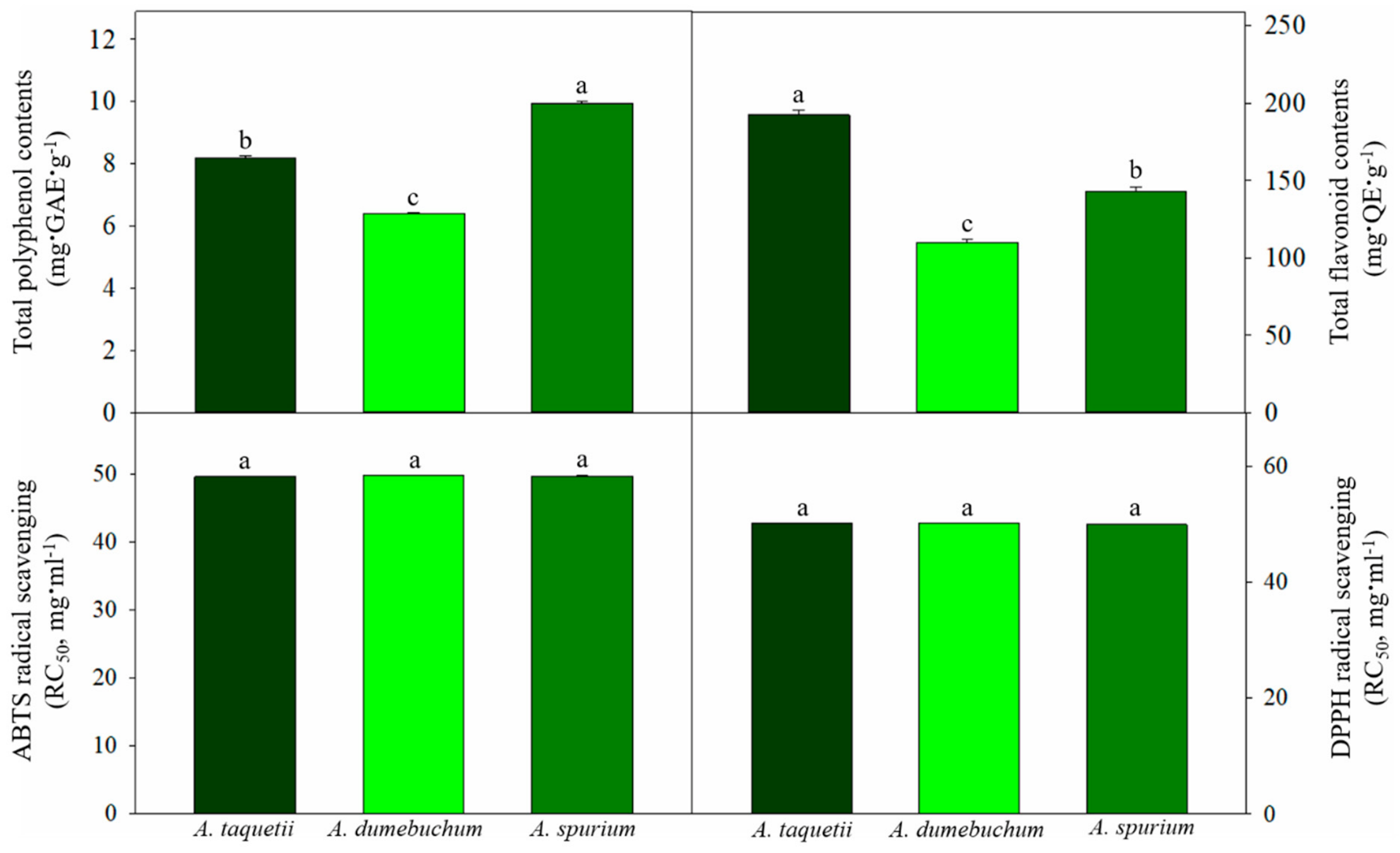
The total polyphenol content, total flavonoid content, and ABTS and DPPH radical scavenging activities of the three wild Allium species are shown in Figure 1. Among the tested species, A. spurium exhibited the highest total polyphenol content, with a value of 9.92 ± 0.08 mg·GAE·g−1. In contrast, A. taquetii exhibited the highest total flavonoid content, with a value of 192.31 ± 3.19 mg·QE·g−1. A. dumebuchum exhibited relatively lower total polyphenol and total flavonoid contents, with values of 6.40 ± 0.03 mg·GAE·g−1 and 109.90 ± 2.26 mg·QE·g−1, respectively.
Figure 1.
Total polyphenol content, total flavonoid content, and ABTS and DPPH radical scavenging activities of ultrasonic extracts from three Allium species. Different lowercase letters indicate significant differences according to Duncan’s multiple range test (p < 0.05).
The ABTS and DPPH radical scavenging activities ranged from 49.57 to 49.75 mg·mL−1 and from 49.24 to 50.13 mg·mL−1, respectively, indicating no marked differences in antioxidant activity among the three species. Based on these results, A. spurium, which exhibited the highest total polyphenol content while showing radical scavenging activity comparable to that of the other tested Allium species, was selected as a candidate material for Cheongpomuk preparation. The selected A. spurium powder had moisture, crude fat, crude ash, and soluble solids contents of 8.19 ± 0.03%, 0.45 ± 0.42%, 0.82 ± 0.05%, and 0.5 ± 0.02 °Brix, respectively (Table 2). The pH of this powder was 5.41 ± 0.05.
Table 2.
Proximate composition of Allium spurium powder.
3.2. Color Values and Visual Appearance of Cheongpomuk Supplemented with A. spurium Powder
The visual appearance and colorimetric values of Cheongpomuk samples prepared with different levels of A. spurium powder are shown in Figure 2 and Table 3. The lightness (L*) value was highest in the control sample (47.31 ± 3.90) and decreased with increasing levels of A. spurium powder. The redness (a*) value decreased from −4.11 ± 0.31 in the control to −8.35 ± 0.33 in CA12, indicating increased greenness. Conversely, the yellowness (b*) value increased from −3.70 ± 0.77 in the control to 12.98 ± 0.51 in CA12. These findings suggest that supplementation with A. spurium powder increased the greenish-yellow color of Cheongpomuk.
Figure 2.
Cheongpomuk supplemented with different levels of Allium spurium powder. CON, control without A. spurium powder; CA3, CA6, CA9, and CA12 indicate Cheongpomuk samples containing 3%, 6%, 9%, and 12% A. spsurium powder, respectively.
Table 3.
Hunter color values of Cheongpomuk supplemented with Allium spurium powder.
3.3. Moisture, pH, and Soluble Solids Content
The moisture, pH, and soluble solids contents of Cheongpomuk supplemented with A. spurium powder are presented in Table 4. The moisture content increased significantly from 83.76 ± 0.21% in the control to 85.92 ± 0.24% in CA12 with increasing levels of A. spurium powder. In contrast, the pH decreased significantly from 6.21 ± 0.02 in the control to 4.20 ± 0.02 in CA12 with increasing levels of A. spurium powder. The soluble solids content remained low, ranging from 0.0 to 0.1 °Brix, and did not differ significantly among the samples, although the supplemented samples exhibited slightly higher values than the control.
Table 4.
Moisture content, pH, and soluble solids content of Cheongpomuk supplemented with Allium spurium powder.
3.4. Texture Profile Analysis
The texture profile analysis of Cheongpomuk supplemented with A. spurium powder is presented in Table 5. Hardness was highest in CA3, with a value of 38.94 ± 0.13 g, but decreased with increasing levels of A. spurium powder beyond CA6, reaching the lowest value of 21.84 ± 1.39 g in CA12. Cohesiveness decreased from 0.76 ± 0.03 in the control to 0.43 ± 0.02 in CA12. Similarly, chewiness decreased markedly from 171.35 ± 7.59 mJ in the control to 59.32 ± 0.47 mJ in CA12. Gumminess was highest in the control sample at 29.24 ± 0.87 g and lowest in CA12 at 8.15 ± 1.96 g. In contrast, adhesiveness increased from 0.04 ± 0.01 mJ in the control to 0.15 ± 0.01 mJ in CA12. Springiness was higher in CA3 and CA6 than in the control but decreased at higher powder levels.
Table 5.
Texture properties of Cheongpomuk supplemented with Allium spurium powder.
3.5. Antioxidant-Related Compounds and Radical Scavenging Activities
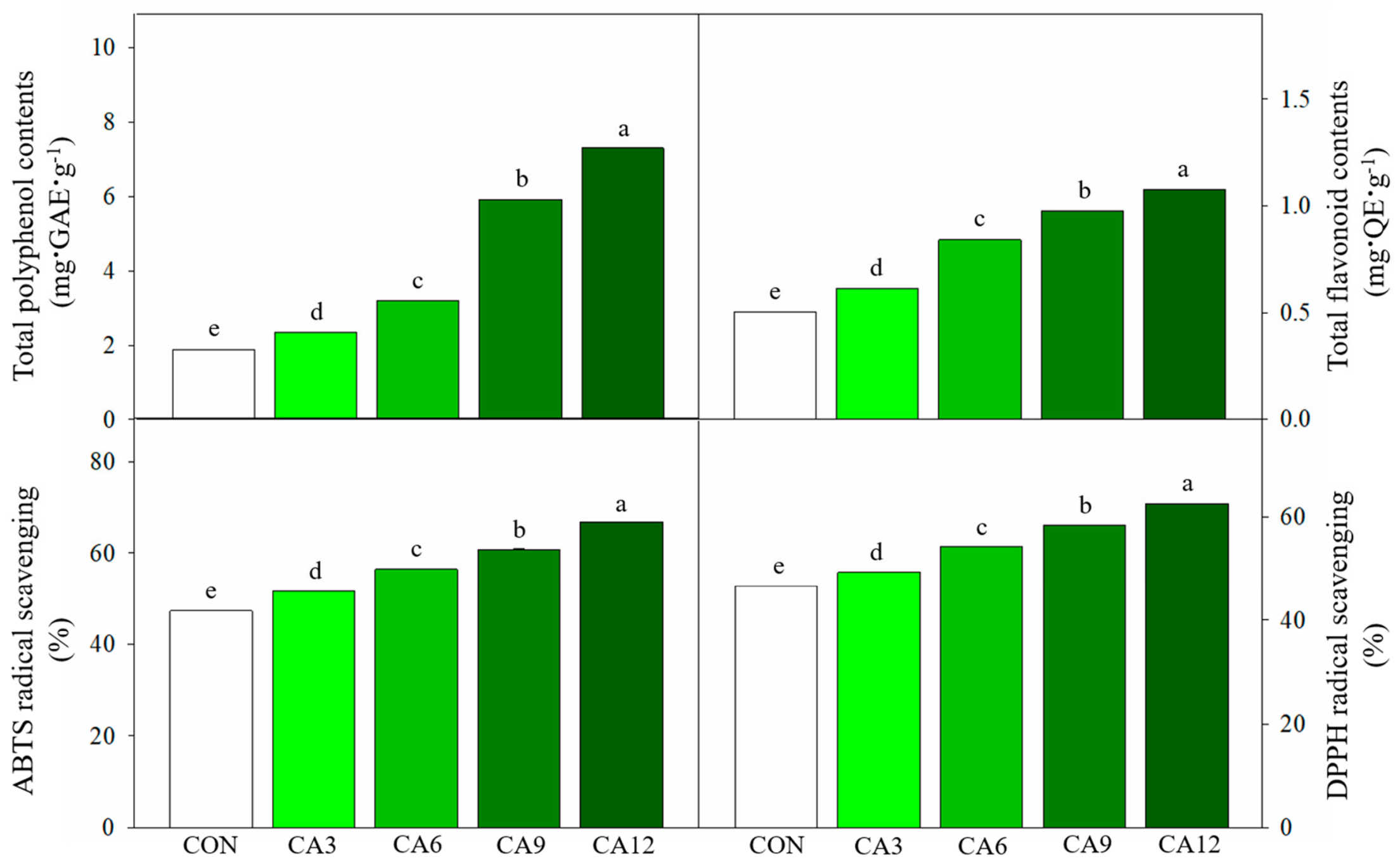
The total polyphenol and total flavonoid contents of Cheongpomuk increased with increasing levels of A. spurium powder, reaching the highest values in CA12 at 7.30 mg·GAE·g−1 and 1.07 mg·QE·g−1, respectively (Figure 3). Similarly, ABTS and DPPH radical scavenging activities were highest in the CA12 sample, at 66.81% and 62.62%, respectively. These results indicate that supplementation with A. spurium powder increased the antioxidant-related compound contents and the radical scavenging activities of Cheongpomuk.
Figure 3.
Total polyphenol content, total flavonoid content, and ABTS and DPPH radical scavenging activities of Cheongpomuk supplemented with different levels of Allium spurium powder. Different lowercase letters indicate significant differences according to Duncan’s multiple range test (p < 0.05). CON, control without A. spurium powder; CA3, CA6, CA9, and CA12 indicate Cheongpomuk samples containing 3%, 6%, 9%, and 12% A. spurium powder, respectively.
3.6. Electronic Tongue Analysis
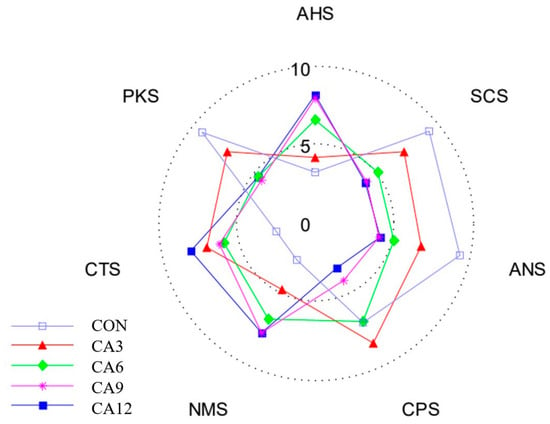
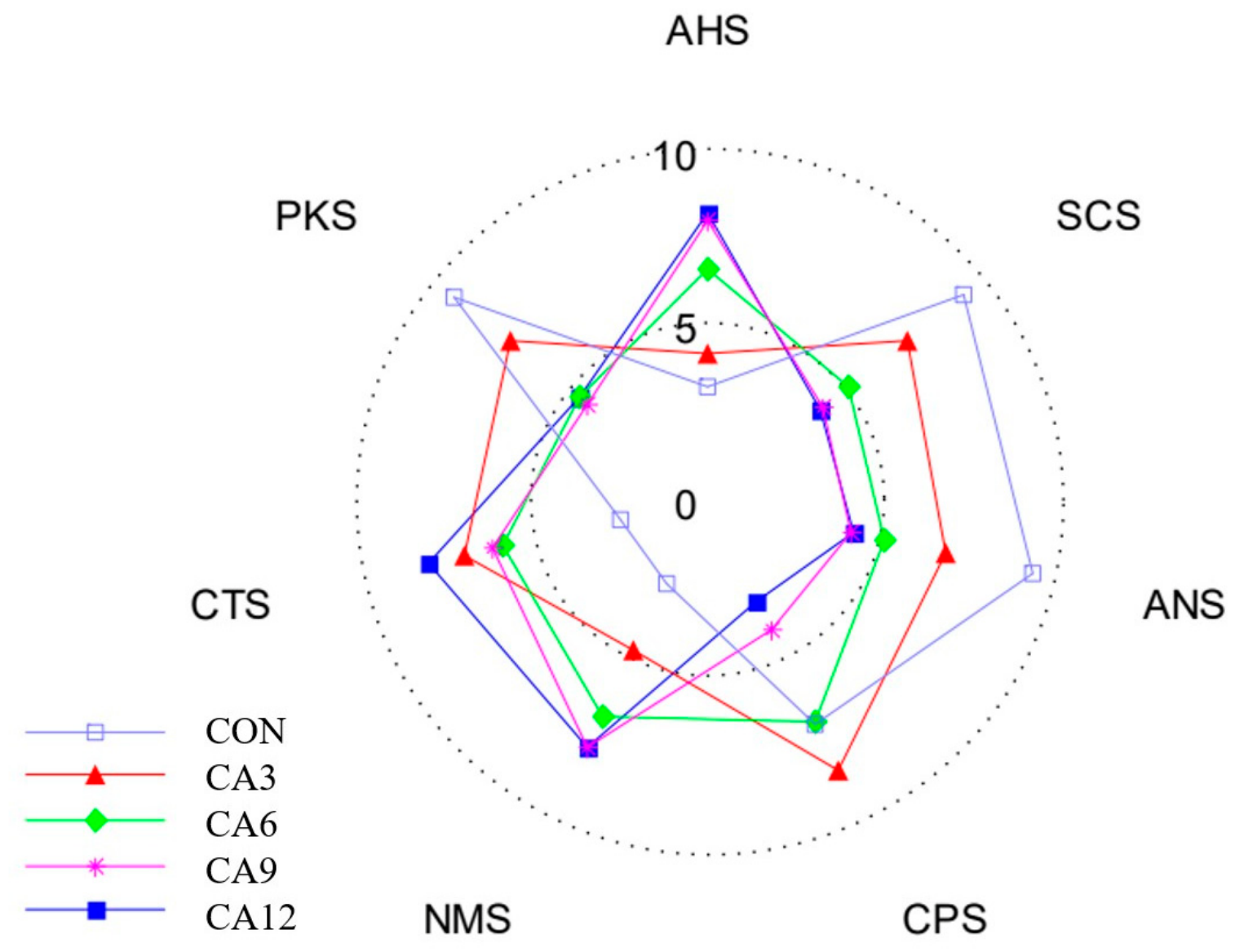
Electronic tongue analysis revealed supplementation-dependent changes in the sensor-response profiles of Cheongpomuk (Figure 4). The CTS (saltiness) and NMS (umami) responses were higher in the samples supplemented with A. spurium powder than in the control. CA12 exhibited the highest CTS response, whereas CA9 and CA12 showed relatively high NMS responses. The AHS (sourness) response was lower in CA3 than in the control but increased with further supplementation, reaching levels comparable to those of the control in CA9 and CA12. In contrast, the responses of the cross-selective general-purpose sensor channels PKS, SCS, and ANS generally decreased as the supplementation level increased, with the lowest responses observed in CA9 and CA12. The CPS response showed a different pattern, increasing in CA3 and subsequently decreasing in the samples containing higher levels of A. spurium powder. CA6 generally exhibited intermediate response values across the sensor array, whereas CA9 and CA12 displayed closely similar overall sensor-response profiles, although CA12 showed a higher CTS response.
Figure 4.
Relative electronic-tongue sensor-response profiles of Cheongpomuk supplemented with different levels of Allium spurium powder. CON, control without A. spurium powder; CA3, CA6, CA9, and CA12, Cheongpomuk samples formulated with 3%, 6%, 9%, and 12% A. spurium powder, respectively. AHS, CTS, and NMS are manufacturer-designated sensor channels primarily associated with sourness, saltiness, and umami, respectively, whereas PKS, CPS, ANS, and SCS are cross-selective general-purpose sensor channels responsive to complex mixtures of taste-related compounds. Values are presented as the means of triplicate measurements.
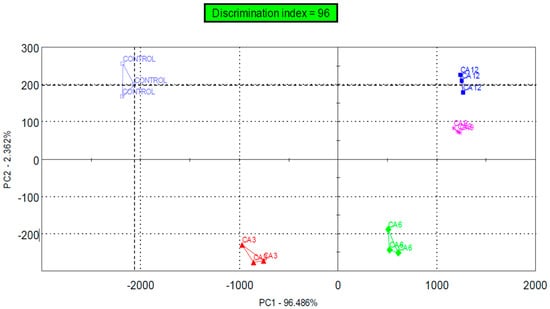
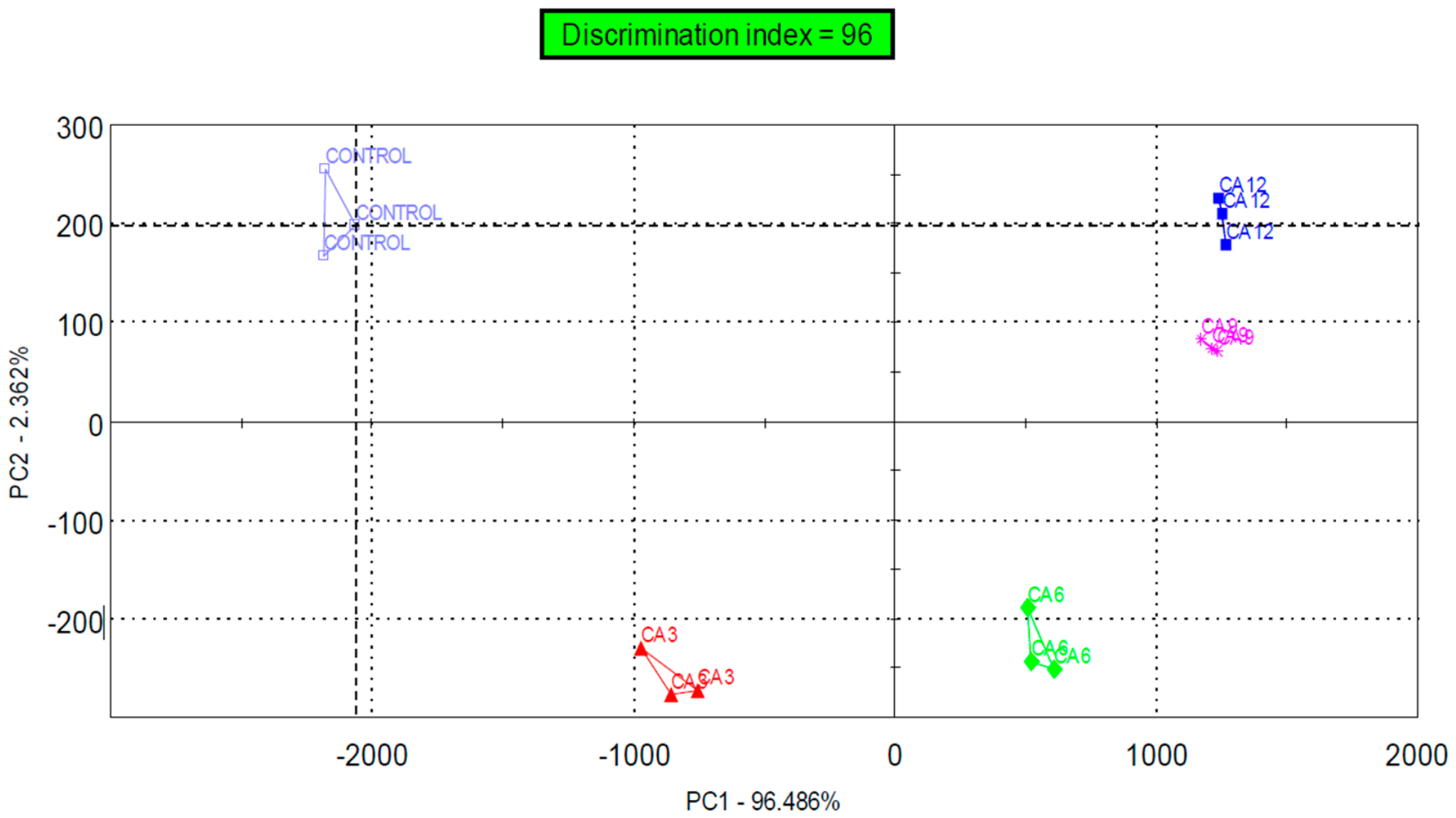
To further evaluate the overall differences in electronic-tongue responses among treatments, principal component analysis (PCA) was performed using the sensor-response data (Figure 5). PC1 and PC2 accounted for 96.486% and 2.362% of the total variance, respectively, with a cumulative explained variance of 98.848%. The PCA score plot showed clear separation among the treatment groups. The control samples were positioned at the negative end of PC1, whereas the A. spurium-supplemented samples shifted progressively toward the positive direction of PC1 with increasing supplementation levels. CA3 and CA6 formed distinct clusters between the control and the higher-supplementation treatments, while CA9 and CA12 were positioned relatively close to each other on PC1 but were further differentiated along PC2. The discrimination index was 96, indicating a high degree of discrimination among the sample groups. These PCA results support the sensor-response patterns shown in Figure 4 and demonstrate that A. spurium supplementation produced distinct changes in the overall electronic-tongue profile of Cheongpomuk.
Figure 5.
Principal component analysis (PCA) score plot of the electronic-tongue sensor responses of Cheongpomuk supplemented with different levels of Allium spurium powder. CON, control without A. spurium powder; CA3, CA6, CA9, and CA12, Cheongpomuk samples containing 3%, 6%, 9%, and 12% A. spurium powder, respectively. PC1 and PC2 accounted for 96.486% and 2.362% of the total variance, respectively.
4. Discussion
In this study, the potential application of functional powders derived from three wild Korean Allium species was evaluated by comparing their antioxidant-related properties. Based on this metric, A. spurium powder was selected and incorporated into Cheongpomuk to investigate its effects on quality characteristics, antioxidant capacity, and electronic tongue-based taste profiles. Since a previous study on wild Korean Allium spp. reported that A. tuberosum and A. sacculiferum exhibited high total phenolic contents as well as antioxidant and anti-obesity activities, this suggests that species-specific phenolic profiles may contribute to these functional differences [5]. Consistently, in the present study, A. spurium exhibited the highest total polyphenol content among the three wild Allium species, whereas A. taquetii exhibited the highest total flavonoid content. However, ABTS and DPPH radical scavenging activities did not differ markedly among the three species. In addition, A. spurium represents an underutilized wild Allium resource that has received limited investigation as a potential food material. Therefore, A. spurium should not be regarded as superior across all functional aspects; rather, it was considered a promising candidate material based on its relatively high total polyphenol content, antioxidant activity comparable to that of the other tested species, and potential value as an underutilized wild Allium resource.
Supplementation with A. spurium powder increased the moisture content and decreased the pH of Cheongpomuk from 6.21 in the control to 4.20 in CA12. This marked decrease may be associated, at least partly, with acidic constituents introduced by the A. spurium powder. Organic acids such as citric, malic, and succinic acids have been reported in other Allium species [27,28]. Therefore, increasing the level of A. spurium powder may have increased the contribution of acidic constituents to the gel system, thereby shifting its acid–base balance toward a lower pH. However, because individual organic acids and titratable acidity were not quantified in A. spurium or the Cheongpomuk samples, their specific contribution to the observed pH decrease cannot be confirmed. Cheongpomuk is a starch gel food formed through the gelatinization and cooling of mung bean starch, and its textural properties are strongly influenced by gel network formation and water distribution [16]. The decrease in pH may also have contributed to changes in starch gel characteristics. Aleixandre and Rosell [19] reported that phenolic acids and the resulting acidification affect the pasting behavior, final viscosity, and structural properties of starch gels. Thus, the increased moisture content and decreased pH observed with powder supplementation may have contributed to the subsequent changes in color, texture, and taste characteristics.
Color analysis showed that increasing the level of A. spurium powder supplementation decreased the L* value, further decreased the a* value, and increased the b* value. These changes may partly reflect the contribution of naturally occurring pigments introduced with the plant powder. Chlorophylls and carotenoids have been detected in several cultivated and wild Allium species [29,30] and could potentially contribute to the greenish-yellow color observed in the supplemented Cheongpomuk. However, because the pigment composition of A. spurium was not directly analyzed in the present study, the specific pigment responsible for the observed yellow coloration was not identified. Similarly, a previous study on Cheongpomuk supplemented with chlorella powder reported that increasing the level of powder supplementation altered color values, indicating that pigment compounds in green plant powders may influence the appearance of starch gel foods [31].
Texture profile analysis showed that increasing the level of A. spurium powder decreased hardness, cohesiveness, chewiness, and gumminess, whereas adhesiveness increased. The reductions in hardness and chewiness were consistent with those reported for mung bean starch gels supplemented with eggplant peel powder [32]. These changes may be attributed to insoluble particles and dietary fiber in the plant powder, which can alter the interactions between swollen starch granules and the continuous matrix. In addition, competition for water and the starch dilution effect may weaken the formation of the mung bean starch gel structure [33,34]. The quality of mung bean starch gels is known to be affected by starch gelatinization, amylose leaching, gelation during cooling, and structural stability during storage [16]. In the present study, although CA12 exhibited the highest antioxidant activity, it also exhibited marked reductions in hardness and chewiness, indicating that high levels of A. spurium powder may improve functional properties while compromising the textural quality of Cheongpomuk.
These findings are consistent with previous studies on Cheongpomuk and mung bean starch gels supplemented with plant powders. In a study on mung bean starch gels containing persimmon powder, chewiness, gumminess, and cohesiveness decreased significantly at the 9% supplementation level, whereas overall acceptability was highest at the 7% supplementation level [20]. Similarly, a study on Cheongpomuk supplemented with chlorella powder reported increased functional component contents and antioxidant activity but recommended an appropriate supplementation level based on both quality characteristics and sensory acceptability [31]. Collectively, these results indicate that the application of plant-derived functional powders to starch gel foods should be optimized by considering antioxidant capacity together with texture, color, and sensory acceptability.
The antioxidant-related properties of Cheongpomuk improved with increasing levels of A. spurium powder supplementation. Total polyphenol content, total flavonoid content, and ABTS and DPPH radical scavenging activities all increased as the level of powder supplementation increased, suggesting that the improved antioxidant capacity of Cheongpomuk may be associated with the increased phenolic compound and flavonoid contents resulting from A. spurium powder supplementation. Phenolic compounds are non-enzymatic antioxidants that scavenge free radicals through hydrogen or electron donation and are recognized as important natural functional compounds in the food, pharmaceutical, and cosmetic industries [5]. As antioxidant enzyme activities and antioxidant-related compounds, including flavonoids, carotenoids, and chlorophylls, have been identified in the leaves of various cultivated and wild Allium species, they may contribute to the antioxidant capacity of Allium plants [4,29].
However, the antioxidant properties of Allium species cannot be attributed to a single compound. Yin and Cheng [35] reported a weak correlation between allicin content and antioxidant activity, suggesting that compounds other than allicin also contribute to antioxidant activity. Therefore, although the enhanced antioxidant capacity observed in the present study appears to be associated with increased total polyphenol and flavonoid contents, further studies involving targeted quantitative analysis are needed to determine the contributions of individual bioactive compounds, including phenolic acids, flavonoids, and sulfur-containing compounds reported in Allium species.
Electronic tongue analysis showed that the sensor responses associated with sourness, saltiness, and umami tended to increase with increasing levels of A. spurium powder supplementation. The increase in sourness response was consistent with the progressive decrease in pH observed after powder supplementation. Changes in the other sensor responses may reflect alterations in the overall water-soluble chemical composition of Cheongpomuk following A. spurium supplementation. Organosulfur compounds are well-established flavor-active constituents of Allium species and contribute to their characteristic flavor and pungency [36,37]. However, because individual organic acids, free amino acids, minerals, and sulfur-containing compounds were not quantified in the present study, their specific contributions to the electronic tongue responses cannot be determined. PCA further supported the supplementation-dependent changes observed in the individual sensor responses. The first two principal components explained 98.848% of the total variance, with PC1 accounting for 96.486%, and the score plot showed a progressive separation of the samples according to the level of A. spurium supplementation. In particular, the relatively close positioning of CA9 and CA12 indicated greater similarity in their overall electronic-tongue response patterns at the higher supplementation levels, while their separation along PC2 suggested that some differentiation remained. Taken together, the individual sensor responses and PCA indicate that A. spurium supplementation produced a multivariate shift in the overall electronic tongue profile of Cheongpomuk rather than changes confined to individual sensor responses. The electronic tongue is a chemical sensor-based analytical tool [38]; however, it should be regarded as a supplementary tool for comparing relative taste profiles rather than as a direct quantification of taste [39]. Therefore, the electronic tongue results presented in this study represent relative sensor responses and changes in taste profiles among treatments.
Overall, supplementation with A. spurium powder effectively enhanced the antioxidant-related compound contents and radical scavenging activities of Cheongpomuk. However, the high-supplementation level CA12 was associated with a lower pH, reduced hardness and chewiness, and increased adhesiveness, indicating possible deterioration of the characteristic starch gel quality of Cheongpomuk. Therefore, the formulation with the highest antioxidant capacity is not necessarily the most suitable for product development. In this study, CA12 maximized antioxidant capacity, whereas CA6 may represent a promising supplementation level that balances functional improvement with quality maintenance. CA6 exhibited improved antioxidant capacity compared with the control, a relatively balanced taste profile in the electronic tongue analysis, and less severe textural deterioration than the high-addition treatments. Nevertheless, because sensory evaluation was not conducted in this study, CA6 should be proposed as a candidate supplementation level based on electronic tongue, texture, and antioxidant analyses rather than as a definitive optimum level. Further studies involving sensory evaluation and storage stability tests are needed to determine the final formulation, particularly within the CA6 to CA9 range.
5. Conclusions
This study demonstrated that increasing the level of A. spurium powder enhanced the total polyphenol and flavonoid contents and radical scavenging activities of Cheongpomuk, indicating that A. spurium powder has potential as a functional ingredient for Cheongpomuk development. However, although CA12 exhibited the highest antioxidant capacity, it also exhibited a lower pH, reduced hardness and chewiness, and increased adhesiveness, which may limit its applicability in terms of product quality. In contrast, CA6 exhibited improved antioxidant capacity compared with the control, a relatively balanced taste profile based on electronic tongue analysis, and less pronounced textural deterioration than the high-addition treatments. These findings suggest that CA6 represents a promising formulation for further evaluation rather than an optimal formulation. Because electronic tongue analysis does not replace conventional sensory evaluation, the overall consumer acceptability of CA6 remains to be determined. Further conventional sensory evaluation and storage stability studies are needed to confirm its practical applicability and establish an appropriate formulation for functional Cheongpomuk products.
Author Contributions
Conceptualization and methodology, K.T.J. and B.-K.J.; validation, formal analysis, investigation and data curation, J.L., B.S.L. and M.-S.Y.; writing—original draft preparation, review and editing, K.T.J. and B.-K.J. All authors have read and agreed to the published version of the manuscript.
Funding
This work was supported by the National Research Foundation of Korea (NRF) grant funded by the Korea government (MSIT) (RS-2024-00354362).
Data Availability Statement
The raw data supporting the conclusions of this article will be made available by the authors on request.
Acknowledgments
We are grateful to the Forest Biological Resources Utilization Center of the Korea National Arboretum for providing the seed and plant materials used in this study.
Conflicts of Interest
The authors declare no conflicts of interest.
References
- Harding, E.A.; Karbasi, A.; Fernie, A.R.; Bulut, M. Domestication and genome evolution in Allium crops: From hybrid origins to breeding perspectives. iScience 2026, 29, 114922. [Google Scholar] [CrossRef] [Scilit] [PubMed]
- Yang, P.; Yuan, Y.; Yan, C.; Jia, Y.; You, Q.; Da, L.; Lou, A.; Lv, B.; Zhang, Z.; Liu, Y. AlliumDB: A central portal for comparative and functional genomics in Allium. Hortic. Res. 2024, 11, uhad285. [Google Scholar] [CrossRef] [Scilit] [PubMed]
- Back, C.G.; Han, Y.K.; Dumin, W.B.; Park, J.H.; Han, J.W.; Bae, Y.S. Phylogenetic analysis and biological characterization of Stemphylium species isolated from Allium crops. Korean J. Agric. Sci. 2022, 49, 113–120. [Google Scholar] [CrossRef] [Scilit]
- Štajner, D.; Milić, N.; Čanadanović-Brunet, J.; Kapor, A.; Štajner, M.; Popović, B.M. Exploring Allium species as a source of potential medicinal agents. Phytother. Res. 2006, 20, 581–584. [Google Scholar] [CrossRef] [Scilit] [PubMed]
- Lee, J.Y.; Seo, K.H.; Lee, E.Y.; Ji, Y.-J.; Lee, Y.J.; Kang, M.H.; Seong, H.-A.; Kim, H.D. Antioxidant and anti-obesity potentials of Korean-native wild vegetables (Allium species). Horticulturae 2021, 7, 541. [Google Scholar] [CrossRef] [Scilit]
- Jang, J.E.; Park, J.-S.; Jung, J.-Y.; Kim, D.-K.; Yang, S.; Choi, H.J. Notes on Allium section Rhizirideum (Amaryllidaceae) in South Korea and northeastern China: With a new species from Ulleungdo Island. PhytoKeys 2021, 176, 1–19. [Google Scholar] [CrossRef] [Scilit] [PubMed]
- Petropoulos, S.A.; Di Gioia, F.; Polyzos, N.; Tzortzakis, N. Natural antioxidants, health effects and bioactive properties of wild Allium species. Curr. Pharm. Des. 2020, 26, 1816–1837. [Google Scholar] [CrossRef] [Scilit] [PubMed]
- Chung, M.S.; Lee, M.S. Chemical compositions & texture of Allium senescens. Korean J. Food Cook. Sci. 2001, 17, 60–64. [Google Scholar]
- Yang, E.-Y.; Han, Y.-S. Antioxidant activities and quality characteristics of noodles containing Allium senescens L. Korean J. Food Sci. Technol. 2020, 52, 156–161. [Google Scholar] [CrossRef]
- Kim, J.; Choi, C.H.; Lee, A.Y.; Lee, S. Antioxidant, anticancer, and neuroprotective activities and phytochemical analysis of germinated shoots. J. Food Biochem. 2023, 2023, 2074678. [Google Scholar] [CrossRef] [Scilit]
- Carocho, M.; Morales, P.; Ferreira, I.C.F.R. Natural food additives: Quo vadis? Trends Food Sci. Technol. 2015, 45, 284–295. [Google Scholar] [CrossRef] [Scilit]
- Parveen, B.; Rajinikanth, V.; Narayanan, M. Natural plant antioxidants for food preservation and emerging trends in nutraceutical applications. Discov. Appl. Sci. 2025, 7, 845. [Google Scholar] [CrossRef] [Scilit]
- Amoah, I.; Cairncross, C.; Osei, E.O.; Yeboah, J.A.; Cobbinah, J.C.; Rush, E. Bioactive properties of bread formulated with plant-based functional ingredients before consumption and possible links with health outcomes after consumption- A review. Plant Foods Hum. Nutr. 2022, 77, 329–339. [Google Scholar] [CrossRef] [Scilit] [PubMed]
- Tolve, R.; Simonato, B.; Rainero, G.; Bianchi, F.; Rizzi, C.; Cervini, M.; Giuberti, G. Wheat bread fortification by grape pomace powder: Nutritional, technological, antioxidant, and sensory properties. Foods 2021, 10, 75. [Google Scholar] [CrossRef] [Scilit] [PubMed]
- Nieto, G.; Martínez-Zamora, L.; Peñalver, R.; Marín-Iniesta, F.; Taboada-Rodríguez, A.; López-Gómez, A.; Martínez-Hernández, G.B. Applications of plant bioactive compounds as replacers of synthetic additives in the food industry. Foods 2023, 13, 47. [Google Scholar] [CrossRef] [Scilit] [PubMed]
- No, J.; Shin, M. Textural properties of mung bean starch gels prepared from whole seeds. Food Sci. Biotechnol. 2016, 25, 729–734. [Google Scholar] [CrossRef] [Scilit] [PubMed]
- Ngo, T.V.; Kusumawardani, S.; Kunyanee, K.; Luangsakul, N. Polyphenol-modified starches and their applications in the food industry: Recent updates and future directions. Foods 2022, 11, 3384. [Google Scholar] [CrossRef] [Scilit] [PubMed]
- Zheng, F.; Ren, F.; Zhu, X.; Han, Z.; Jia, Y.; Liu, X.; Chen, B.; Liu, H. The interaction between starch and phenolic acids: Effects on starch physicochemical properties, digestibility and phenolic acids stability. Food Funct. 2025, 16, 4202–4225. [Google Scholar] [CrossRef] [Scilit] [PubMed]
- Aleixandre, A.; Rosell, C.M. Starch gels enriched with phenolics: Effects on paste properties, structure and digestibility. LWT 2022, 161, 113350. [Google Scholar] [CrossRef] [Scilit]
- Choi, H.-Y. Antioxidant activity and quality characteristics of mung bean starch gel prepared with persimmon powder. Korean J. Food Nutr. 2013, 26, 638–645. [Google Scholar] [CrossRef] [Scilit][Green Version]
- Joo, S.-Y.; Choi, H.-Y. Antioxidant activity and quality characteristics of mung bean starch gel prepared with ginkgo nut powder. J. Korean Soc. Food Cult. 2014, 29, 84–90. [Google Scholar] [CrossRef] [Scilit][Green Version]
- Lu, L.; Hu, Z.; Hu, X.; Li, D.; Tian, S. Electronic tongue and electronic nose for food quality and safety. Food Res. Int. 2022, 162, 112214. [Google Scholar] [CrossRef] [Scilit] [PubMed]
- Re, R.; Pellegrini, N.; Proteggente, A.; Pannala, A.; Yang, M.; Rice-Evans, C. Antioxidant activity applying an improved ABTS radical cation decolorization assay. Free Radic. Biol. Med. 1999, 26, 1231–1237. [Google Scholar] [CrossRef] [Scilit] [PubMed]
- Blois, M.S. Antioxidant determinations by the use of a stable free radical. Nature 1958, 181, 1199–1200. [Google Scholar] [CrossRef] [Scilit]
- AOAC. Official Methods of Analysis, 15th ed.; Association of Official Analytical Chemists: Arlington, VA, USA, 1990. [Google Scholar]
- Baek, J.J.; Ryu, S.-Y.; Paik, J.K. Quality characteristics of citrus peel jelly. Prev. Nutr. Food Sci. 2023, 28, 79–82. [Google Scholar] [CrossRef] [Scilit] [PubMed]
- Sönmez, İ.; Erol, Ü.H.; Sarpkaya, K. Comprehensive morphological and biochemical characterization of garlic (Allium sativum L.) genotypes using multivariate analysis. BMC Plant Biol. 2025, 25, 856. [Google Scholar] [CrossRef] [Scilit] [PubMed]
- Rodríguez Galdón, B.; Tascón Rodríguez, C.; Rodríguez Rodríguez, E.; Díaz Romero, C. Organic acid contents in onion cultivars (Allium cepa L.). J. Agric. Food Chem. 2008, 56, 6512–6519. [Google Scholar] [CrossRef] [Scilit] [PubMed]
- Štajner, D.; Varga, I.S.I. An evaluation of the antioxidant abilities of Allium species. Acta Biol. Szeged. 2003, 47, 103–106. [Google Scholar]
- Żurawik, A.; Wesołowska, A.; Żurawik, P. Impact of plant part and age of Allium tuberosum Rottler ex Sprengel on antioxidant properties. Molecules 2026, 31, 332. [Google Scholar] [CrossRef] [Scilit] [PubMed]
- Choi, N.H.; Jeong, H.I.; Chung, N.Y.; Shin, M.H. Quality evaluation of Cheongpomuk added with chlorella powder. Korean J. Food Health Converg. 2023, 9, 1–10. [Google Scholar] [CrossRef]
- Zhang, Y.; Song, K.-Y.; O, H.; Kim, Y.-S. Quality characteristics and antioxidant activities of mung bean starch gel containing eggplant (Solarium melongena L.) peel powder. Prog. Nutr. 2017, 19, 312–322. [Google Scholar] [CrossRef] [Scilit]
- Hongsprabhas, P. On the gelation of mungbean starch and its composites. Int. J. Food Sci. Technol. 2007, 42, 658–668. [Google Scholar] [CrossRef] [Scilit]
- Yildiz, Ö.; Yurt, B.; Baştürk, A.; Toker, Ö.S.; Yilmaz, M.T.; Karaman, S.; Dağlıoğlu, O. Pasting properties, texture profile and stress–relaxation behavior of wheat starch/dietary fiber systems. Food Res. Int. 2013, 53, 278–290. [Google Scholar] [CrossRef] [Scilit]
- Yin, M.-C.; Cheng, W.-S. Antioxidant activity of several Allium members. J. Agric. Food Chem. 1998, 46, 4097–4101. [Google Scholar] [CrossRef] [Scilit]
- Lanzotti, V. The analysis of onion and garlic. J. Chromatogr. A 2006, 1112, 3–22. [Google Scholar] [CrossRef] [Scilit] [PubMed]
- Dai, X.; Azi, F.; Alnadari, F.; Yu, Z. Developing organosulfur compounds in Allium as the next-generation flavor and bioactive ingredients for food and medicine. Crit. Rev. Food Sci. Nutr. 2025, 65, 8406–8424. [Google Scholar] [CrossRef] [Scilit] [PubMed]
- Cho, S.; Moazzem, M.S. Recent applications of potentiometric electronic tongue and electronic nose in sensory evaluation. Prev. Nutr. Food Sci. 2022, 27, 354–364. [Google Scholar] [CrossRef] [Scilit] [PubMed]
- Ross, C.F. Considerations of the use of the electronic tongue in sensory science. Curr. Opin. Food Sci. 2021, 40, 87–93. [Google Scholar] [CrossRef] [Scilit]



Disclaimer/Publisher’s Note: The statements, opinions and data contained in all publications are solely those of the individual author(s) and contributor(s) and not of MDPI and/or the editor(s). MDPI and/or the editor(s) disclaim responsibility for any injury to people or property resulting from any ideas, methods, instructions or products referred to in the content. |
© 2026 by the authors. Licensee MDPI, Basel, Switzerland. This article is an open access article distributed under the terms and conditions of the Creative Commons Attribution (CC BY) license.