


Abstract
Protective gloves used by firefighters and other first responders may be stored for long periods in environments where radon and its decay products can accumulate. However, despite extensive research on the radiation ageing of elastomers, directly comparable data on the long-term response of finished nitrile rubber (NBR) and chloroprene rubber (CR) used as protective glove materials under radon chamber conditions remain limited. Accordingly, this study evaluated time-dependent changes in these two glove materials during up to six months of conditioning. The specimens were conditioned at an approximately constant 222Rn activity concentration of 540 kBq/m3, corresponding to a cumulative exposure of up to kBq/m3. Changes were evaluated using microhardness measurements, mechanical testing, Fourier-transform infrared spectroscopy (FTIR), scanning electron microscopy (SEM), and atomic force microscopy (AFM). NBR exhibited a non-monotonic microhardness response, with an initial increase followed by a gradual decrease during further conditioning; after six months, the microhardness remained higher than that of the reference material. Isolated microcracks became visible after six months. In contrast, CR showed a general decrease in microhardness and earlier surface changes, including increased roughness and micropore formation. Its tensile strength decreased from approximately 1.2 MPa to 0.8 MPa after six months, corresponding to a reduction of about 33%, although force at break partially recovered during the later conditioning period. FTIR analysis revealed only limited chemical changes. Overall, the two materials exhibited distinct time-dependent responses, with NBR retaining greater mechanical and morphological stability than CR under the investigated conditions. Although barrier performance was not assessed directly, the observed defects may increase susceptibility to damage during use, highlighting the importance of appropriate storage, stock rotation, and pre-use inspection.
1. Introduction
Ionizing radiation originates from both natural and anthropogenic sources. Natural sources remain the dominant contributors to public exposure worldwide, with radon, thoron, and their progeny representing a particularly important component of the natural radiation background [1,2,3].
Radon-222 (222Rn) is a radioactive inert gas produced in the uranium-238 decay series through the decay of radium-226 (226Ra). It decays by alpha emission. Owing to its gaseous form, radon may migrate from soil and building materials and accumulate in poorly ventilated enclosed spaces, including residential and occupational buildings, underground structures, tunnels, caves, and storage facilities [4,5,6,7]. The concentration of radon in indoor environments depends on several factors, including the geological characteristics of the site, the radium content and permeability of the construction materials, the ventilation conditions and the air exchange rate [6,7].
The short-lived decay products of 222Rn include polonium-218 (218Po) and polonium-214 (214Po), both of which emit alpha particles. Radon progeny may remain unattached or become associated with airborne aerosol particles and subsequently deposit on surrounding surfaces. Their deposition is affected by aerosol concentration and size distribution, air movement, ventilation, electrostatic conditions, and the physicochemical characteristics of the exposed surface [3,8]. Consequently, materials stored in a radon-containing atmosphere may be exposed not only to radon gas but also to alpha-emitting decay products deposited directly on their surfaces. This creates a specific long-term exposure scenario for polymeric protective materials stored in such environments.
In case of polymeric materials, ionizing radiation can generate excited states, ions, and free radicals that may initiate several reactions, primarily polymer-chain scission, crosslinking, oxidation, changes in unsaturation, and the formation or release of low-molecular-weight products [9,10,11,12,13]. Crosslinking generally increases molecular-network density and may initially result in increased hardness, stiffness, and mechanical strength. Excessive crosslinking may reduce flexibility and promote embrittlement. In contrast, polymer-chain scission decreases molecular weight and may lead to softening, loss of tensile strength, reduced elongation, and progressive structural deterioration. Crosslinking and chain scission frequently occur simultaneously, and the dominant response may change with increasing exposure [10,11,12,13].
Nitrile butadiene rubber (NBR) and chloroprene rubber (CR) investigated in this paper are elastomeric materials used in protective products (such as protective gloves) requiring flexibility, mechanical durability, and resistance to selected chemical agents. NBR is a copolymer of acrylonitrile and butadiene, and its properties depend strongly on the acrylonitrile content, curing agent, and composition of the rubber compound. Previous studies involving certain types of radiation have shown that irradiation of NBR may initially promote crosslinking and increase hardness or stiffness. At higher doses or during prolonged irradiation, oxidative degradation and polymer-chain scission may become increasingly important, resulting in deterioration of tensile properties and surface integrity [13]. Chloroprene rubber is a chlorine-containing unsaturated elastomer whose radiation response may also involve competing crosslinking and degradation processes. Comparative studies indicate that NBR and CR may exhibit different balances between crosslinking and degradation, even when exposed under the same irradiation conditions [14].
However, the radiation response observed for model elastomers cannot necessarily be directly extrapolated to finished protective gloves used and stored under real-life conditions. Protective gloves may be used by emergency-response personnel, including workers involved in operations presenting chemical or radiological hazards. Some types of protective gloves may remain in storage for prolonged periods before use and are expected to retain their mechanical integrity and protective properties throughout their intended service life. Studies involving irradiation of nitrile-based gloves and glove materials indicate that ionizing radiation may affect their chemical structure, surface condition, and tensile performance [15]. However, most available investigations have involved gamma radiation, electron beams, or accelerated ions at controlled absorbed doses and did not cover storage in radon-containing environments. Therefore, the effects observed under conventional irradiation conditions may not directly represent those occurring during prolonged storage in a radon-containing atmosphere. In contrast to conventional gamma- or electron-beam irradiation, exposure in a radon-containing atmosphere represents a prolonged environmental scenario in which radon decay products can deposit on the surfaces of the material and emit alpha particles in close proximity to the polymer. This specific exposure scenario has received considerably less attention in studies of polymer materials.
Despite the available knowledge concerning the radiation ageing of elastomers, information on the effects of prolonged exposure of NBR and CR materials used in protective gloves to radon and its decay products remains limited. In particular, there is a lack of directly comparable data describing changes in the surface morphology, chemical structure, microhardness, and mechanical strength of nitrile and chloroprene glove materials under controlled radon chamber conditions. Therefore, the aim of this study was to evaluate and compare changes in the mechanical and structural properties of nitrile and chloroprene rubber materials used in protective gloves following prolonged conditioning in a radon chamber. Samples were conditioned for periods ranging from one to six months and subsequently examined using nanoindentation, Fourier-transform infrared spectroscopy (FTIR), scanning electron microscopy (SEM), atomic force microscopy (AFM), and tensile parameters testing. This comparative, time-resolved approach was used to determine whether the two materials described in the study exhibit different ageing characteristics and to identify changes that may indicate the onset of structural or mechanical deterioration.
2. Materials and Methods
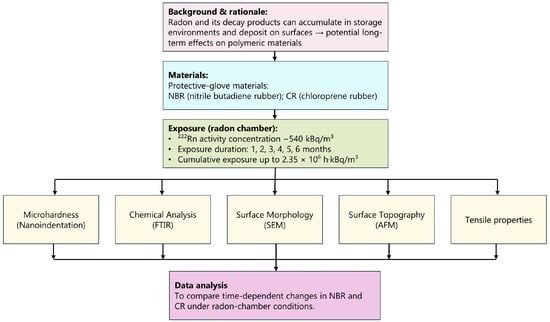
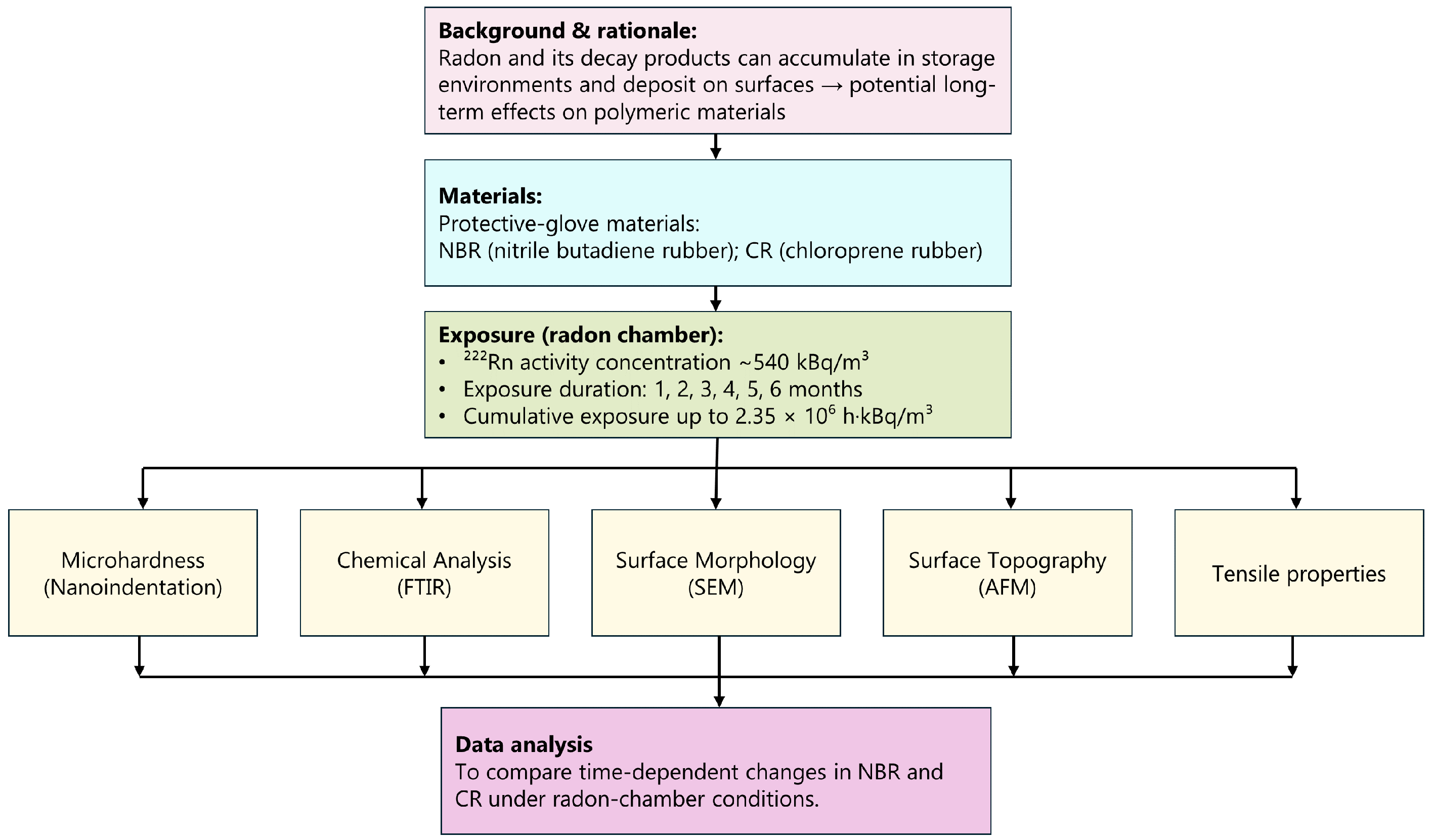
The experimental workflow of the study, including radon chamber conditioning and the subsequent mechanical, chemical, and surface characterization of the glove materials, is presented in Figure 1.
Figure 1.
Experimental workflow for the evaluation of NBR and CR protective glove materials during radon chamber conditioning.
2.1. Protective Gloves
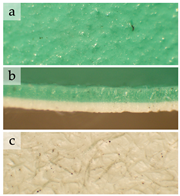
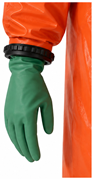
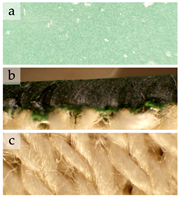
The study was conducted using protective gloves made from two elastomeric materials: nitrile butadiene rubber (NBR; left) and chloroprene rubber (CR; right). Both types of gloves are intended for use by emergency-response and firefighters, including during operations involving chemical and radiological hazards.
The investigated materials represent finished industrial elastomer compounds rather than laboratory-prepared model polymers. The exact quantitative formulation of rubber compounds was not available to the authors because this information constitutes proprietary manufacturer information. Consequently, the materials are identified in this study according to their principal elastomer type, NBR and CR, and the experimentally determined characteristics reported in Table 1.
Table 1.
Characteristics of the test materials.
Fourteen samples, each measuring 140 × 140 mm, were cut from the unknurled parts of both types of gloves (7 pcs. per one type of gloves) to provide an adequate amount of material for the subsequent preparation of test specimens in accordance with the dimensions required by the individual test methods. Unexposed specimens prepared from the same glove products were used as reference samples and were tested without conditioning in the radon chamber. The remaining specimens were conditioned in the radon chamber for subsequent evaluation of changes in their mechanical and structural properties.
2.2. Radon Chamber Exposure
The specimens were conditioned in a radon chamber located at the Nofer Institute of Occupational Medicine in Lodz, Poland. The chamber had an internal volume of 1 m3 and was supplied with a continuous radon source with an activity of 540 kBq. Under the applied experimental conditions, the 222Rn activity concentration in the chamber stabilised at approximately 540 kBq/m3. The environmental conditions inside the radon chamber were not actively controlled. The temperature in the room housing the chamber ranged from 20 to 23 °C; relative humidity and oxygen concentration were not monitored. The activity of radon decay products deposited on the specimen surfaces and the corresponding absorbed dose were not determined. Therefore, the reported concentration–time product should be regarded as a measure of radon exposure rather than absorbed radiation dose. The specimens were introduced into the chamber through an access hatch and exposed continuously for periods ranging from 1 to 6 months. The corresponding exposure times and cumulative radon exposures are presented in Table 2.
Table 2.
Conditioning duration, exposure time, and cumulative radon exposure.
Specimens withdrawn from the chamber after each respective conditioning period (1–6 months), as well as the unexposed reference specimens, were subsequently stored under the same ambient laboratory conditions until testing. Consequently, all specimens—including the reference—were tested at approximately the same total elapsed time (~6 months) from the start of the study, differing only in the proportion of that period spent inside the radon chamber.
2.3. Nanoindentation
The microhardness of the glove materials were evaluated using a NanoTest 600 nanoindentation system (Micro Materials Ltd., Wrexham, UK). Fourteen square specimens measuring approximately 5 × 5 mm were used for analysis. The measurements was performed using a diamond Berkovich indenter (a triangular pyramid with an equilateral triangle base and a vertex angle of 135°). The maximum measurement depth was set at 3500 nm, while the loading/unloading rate was set as (dP/dt) = 0.05 mN/s with the holding period of 10 s. The maximum force exerted by the indenter on the sample was 20 mN [16]. Measurements were performed at spatially separated points across the specimen surface, at a sufficient distance from one another to ensure that neighbouring indentations did not influence measurement values. The reported n = 10 corresponds to repeated, spatially separated measurements performed on the single specimen representing each conditioning time point. The test was conducted under controlled temperature and humidity conditions. The hardness and plastic deformation values were determined on the basis of the unloading curve in accordance with the method developed by Oliver and Pharr [17]. This method was originally developed for elastic-plastic materials, and its application to strongly viscoelastic elastomers may introduce systematic uncertainties associated with time-dependent deformation, creep, and viscoelastic recovery, particularly affecting the initial unloading slope used to compute contact stiffness [17]. To reduce, though not completely eliminate, the influence of viscoelastic creep, a 10 s holding period at maximum load was applied prior to unloading; no additional creep-rate correction was applied to the unloading curve. Consequently, the hardness values obtained should be treated as apparent/comparative indentation hardness rather than intrinsic hardness values. As all specimens were tested under identical loading, holding, and environmental conditions, this systematic bias is expected to affect all groups similarly, and the obtained values were therefore used primarily for comparative evaluation of changes in surface mechanical behaviour associated with radon chamber exposure, rather than as absolute hardness data.
2.4. FTIR Spectroscopy
The surface chemical structure of the glove materials was analysed using Fourier-transform infrared spectroscopy in attenuated total reflectance mode (FTIR). Spectra were recorded using a Nicolet 6700 FTIR spectrometer (Thermo Scientific, Waltham, MA, USA) equipped with an ATR accessory comprising a diamond crystal mounted on a ZnSe plate. Fourteen specimens measuring 40 × 40 mm were cut from the gloves and placed directly on the ATR crystal for analysis. Measurements were performed over the wavenumber range of 400–4000 cm−1 at a spectral resolution of 4 cm−1, with 64 scans collected for each spectrum.
2.5. SEM Analysis of Surface Morphology
The surface morphology of the glove materials was examined using an SU-8010 scanning electron microscope (Hitachi, Hitachi-shi, Japan) operated at an accelerating voltage of 5 kV and equipped with a Lower InLens detector. Fourteen square specimens measuring 10 × 10 mm were cut from the gloves and mounted on aluminium stubs using conductive carbon tape. Before imaging, the specimen surfaces were gently cleaned with ethyl alcohol using a lint-free tissue. The samples were subsequently sputter-coated with an approximately 7 nm-thick gold layer using a Q150 T high-vacuum sputter coater (Quorum Technologies Ltd., London, UK).
2.6. AFM Analysis of Surface Topography
The surface topography of the fourteen samples measuring 5 × 5 mm was investigated via atomic force microscopy (AFM) using a NaioAFM system (Nanosurf, Liestal, Switzerland). The scanning areas were square with side lengths of 75 µm. In each area, 256 lines were scanned, with a scan time of 0.5 s per line. The probe for contact mode (CSC12/Si3N4/50) operated at a resonance frequency of 13 kHz and has an elastic constant of 0.2 N/m, with a silicon nitride tip. Gwyddion software 2.45 (Czech Republic) was used for image analysis. Scanned areas were spatially separated across the specimen surface, at a sufficient distance from one another to ensure that neighbouring scans did not influence measurement values. The reported n = 4 corresponds to repeated, spatially separated measurements performed on the single specimen representing each conditioning time point. The profile baseline was determined by fitting a least-squares regression curve to the measured height data. The roughness parameter () was then calculated as the arithmetic mean of the absolute deviations of the detrended profile from the fitted curve, according to the standard definition.
where N is the number of points for which the height was measured and is the difference between a given point and the baseline. Differences in roughness between the reference and each conditioning time point were assessed using t-test, and an overall difference across all time points was assessed using one-way ANOVA.
2.7. Tensile Properties
The force at break of the glove materials was determined using a tensile testing machine compliant with ISO 7500-1:2018 [18], with an accuracy of at least class 2. The crosshead speed was set to 500 mm/min, the maximum force recorded during tensile loading was reported as the force at break. Elongation at break and tensile strength were also recorded. The seventy specimens were 115 mm long and had a maximum width of 25 mm, with a reduced test-section width of 6 mm. The centres of the upper and lower grips were aligned with the tensile axis, their front edges were perpendicular to the tensile direction, and the gripping surfaces were positioned in the same plane. The test was performed in accordance with EN 455-2:2015 [19]. The specimens were clamped in the grips at a pressure of 22 ± 5 kPa. Before testing, they were conditioned for 24 h at a temperature of 23 ± 2 °C and a relative humidity of 50 ± 5%. Differences between the reference and each conditioning time point were assessed using t-tests, and an overall difference across all time points was assessed using one-way ANOVA.
3. Results
3.1. Nanoindentation
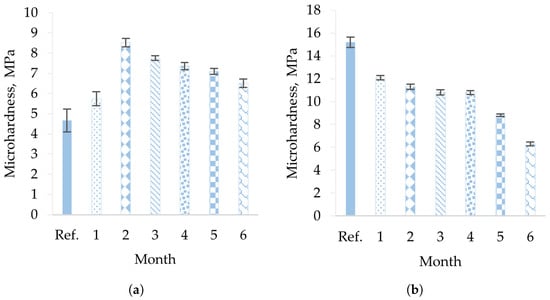
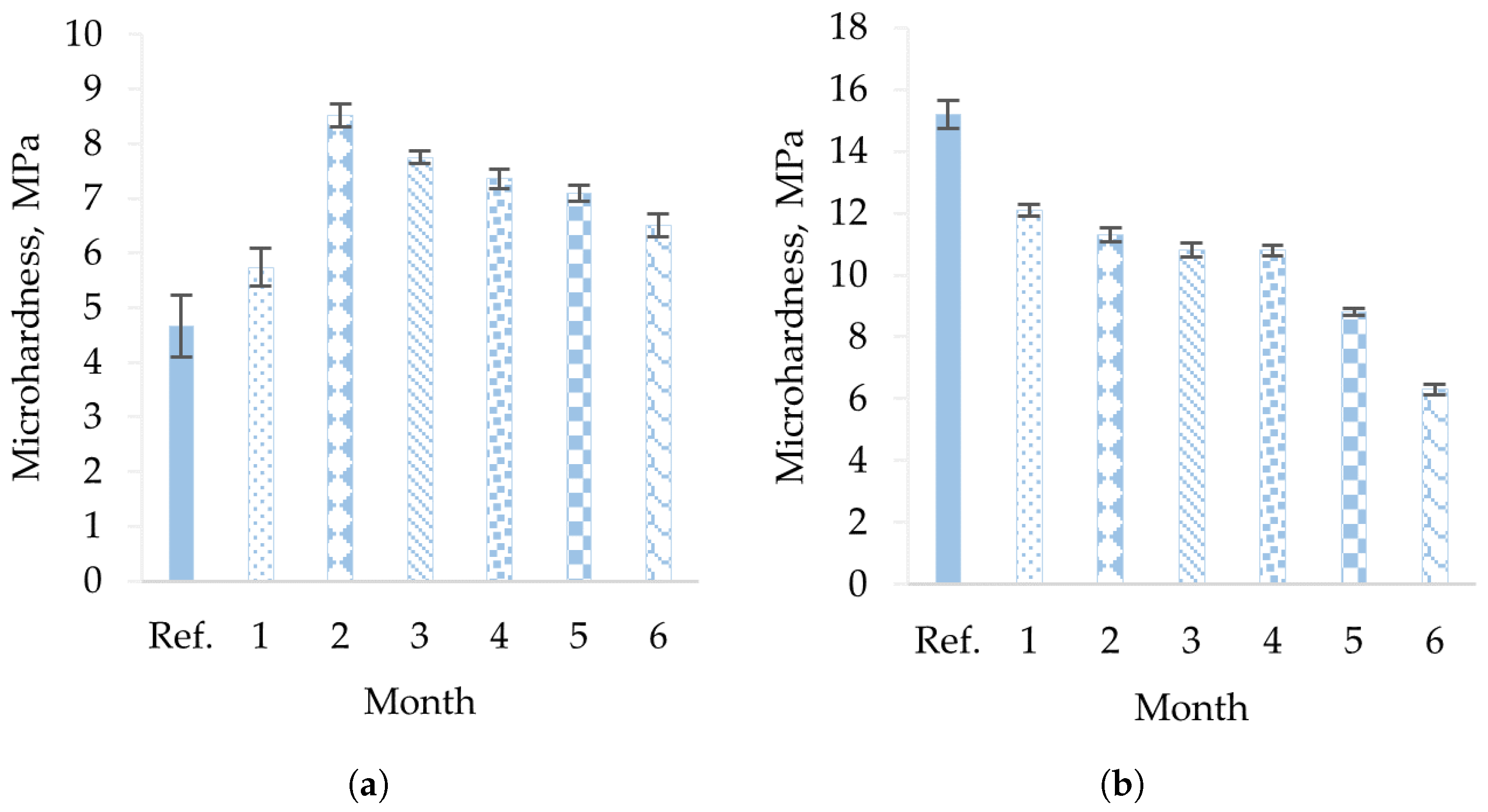
Figure 2 presents the microhardness of the NBR (a) and CR (b) samples after conditioning in the radon chamber. For NBR samples, microhardness increased relative to the reference sample during the initial exposure period and reached its highest value after two months. Interestingly after six months of exposure microhardness was still higher than that of the reference samples. During the subsequent conditioning periods, the microhardness values progressively decreased. For the CR samples, microhardness showed an overall decrease with increasing conditioning time. These values reflect technical replicates from a single specimen per time point rather than independent glove replicates.
Figure 2.
Microhardness of sample surfaces before and after radon chamber exposure for NBR gloves (a), for CR gloves (b). Data are presented as mean ± standard deviation (n = 10).
3.2. FTIR Spectroscopy
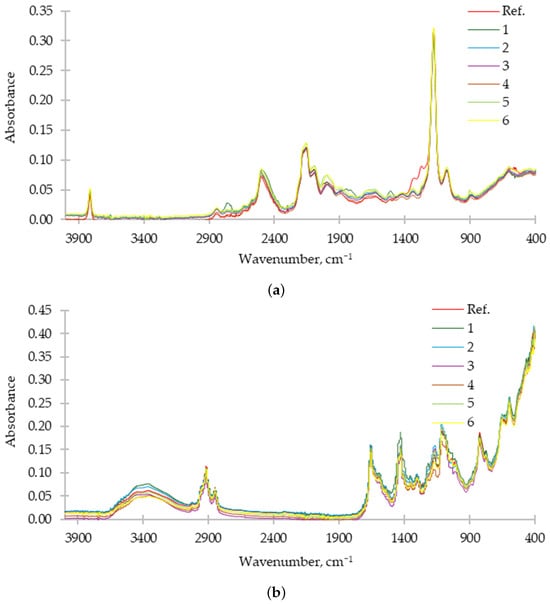
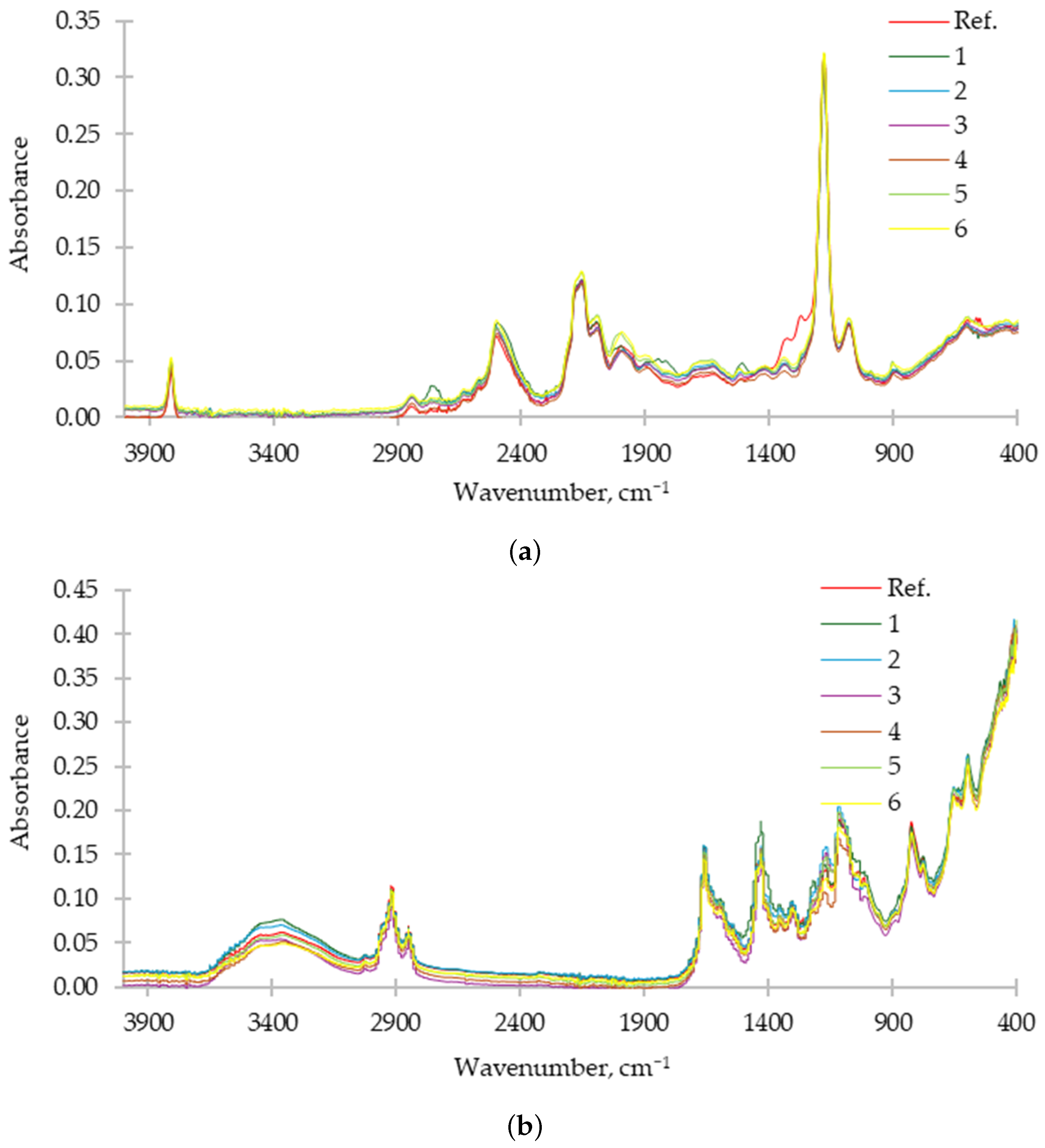
The FTIR spectra of the NBR and CR samples are presented in Figure 3.
Figure 3.
FTIR spectra for samples of NBR gloves (a) and CR gloves (b).
Based on the obtained spectra, it was found that the course of the curves is analogous for the examined nitrile glove samples (a). The presence of the band at 3800 results from O–H stretching vibrations associated with water bound within the material during manufacturing processes. The observed a slight peak 2849 corresponds to the symmetric stretching vibrations of group. The peak at 2236 is characteristic of the stretching vibration of the C≡N triple bond in nitrile groups. The band at 1012 can be attributed to C–C stretching vibrations and may also be associated with C–O-containing functional groups. A sharp peak was observed at 1177 , which may be associated with vibrations of butadiene units, while a slight band at 667 may be attributed to vibrations associated with cis-1,4-butadiene units. The shape of the curves for all nitrile samples is similar, indicating the preservation of a comparable structural profile of the material regardless of exposure conditions. Minor differences in intensity may suggest partial shortening of polymer chains or slight rearrangements in their ordering, although the observed deviations are minimal.
The analysis of the IR spectra for chloroprene rubber samples (b) revealed only characteristic peaks corresponding to the examined chemical structure. The band at 3300 corresponds to O–H stretching vibrations, associated with water incorporated into the material during production. The bands at 2916 and 2849 result from the asymmetric and symmetric stretching vibrations of groups, respectively. The characteristic peak at 1656 corresponds to C=C stretching vibrations present in the polymer structure. The bands at 1428 and 1173 correspond to deformation (bending) and deformation and C–O stretching vibrations, respectively. A sharp peak at 824 indicates CH rocking vibrations, while the band at 668 is characteristic of C–Cl stretching vibrations or symmetric deformation vibrations.
After irradiation, slight changes in the intensity of peaks associated with O–H groups were observed, which may result from variations in humidity. Additionally, changes in the intensity of band 1173 associated with groups were observed. Since groups are expected to occur predominantly at chain ends rather than as structural units of the main CR backbone, an increase in their relative intensity may be associated with chain scission and the formation of additional chain ends or surface rearrangements in the samples. However, it should be noted that these changes were not consistent across all samples, and no clear correlation with ageing time was observed.
3.3. SEM Analysis of Surface Morphology
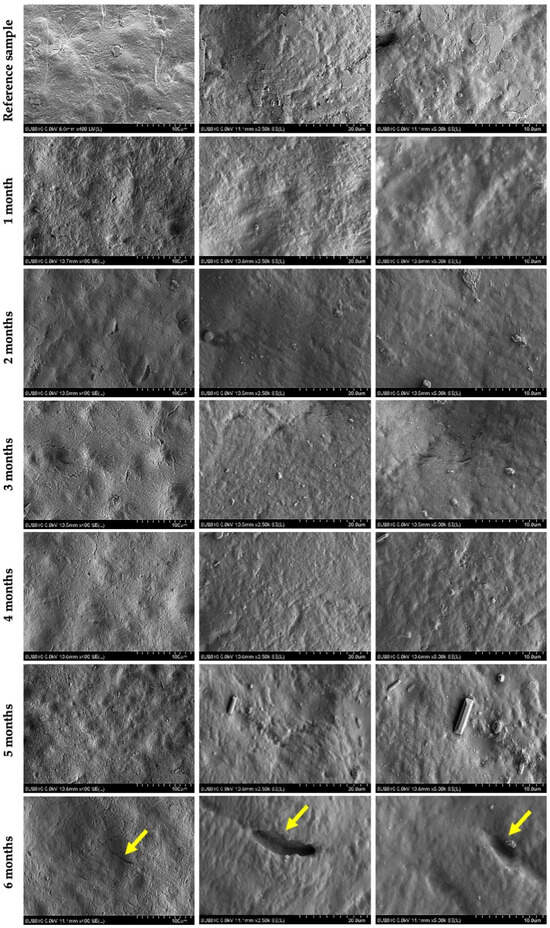
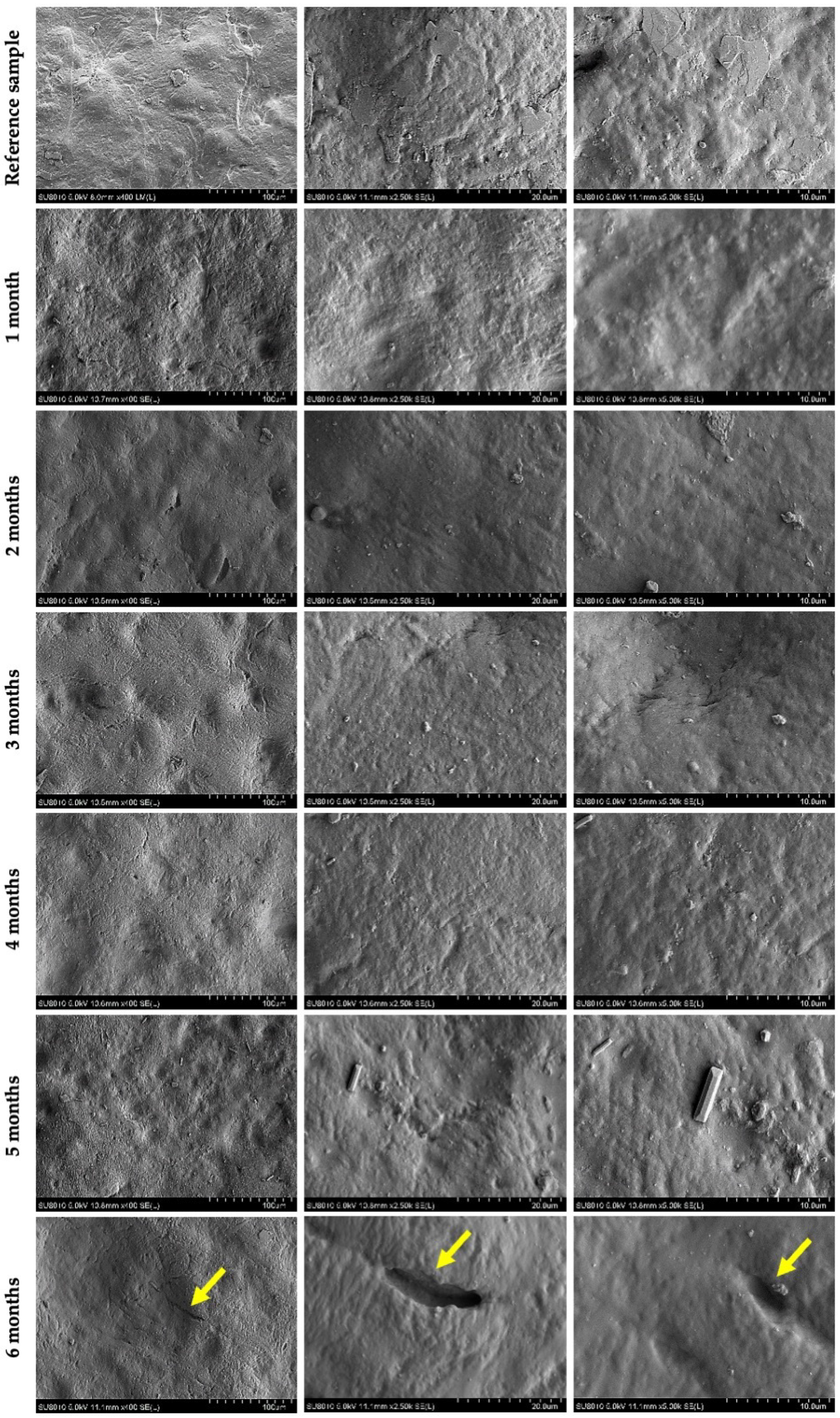
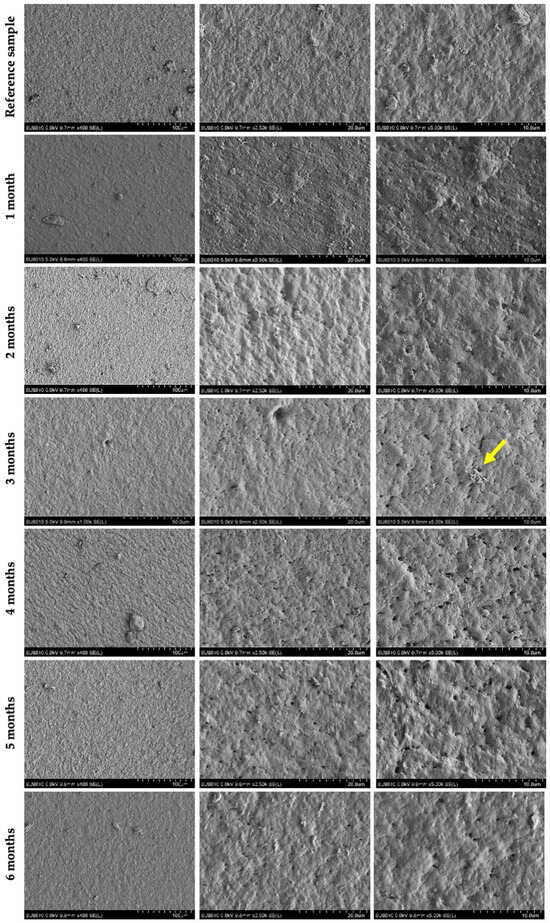
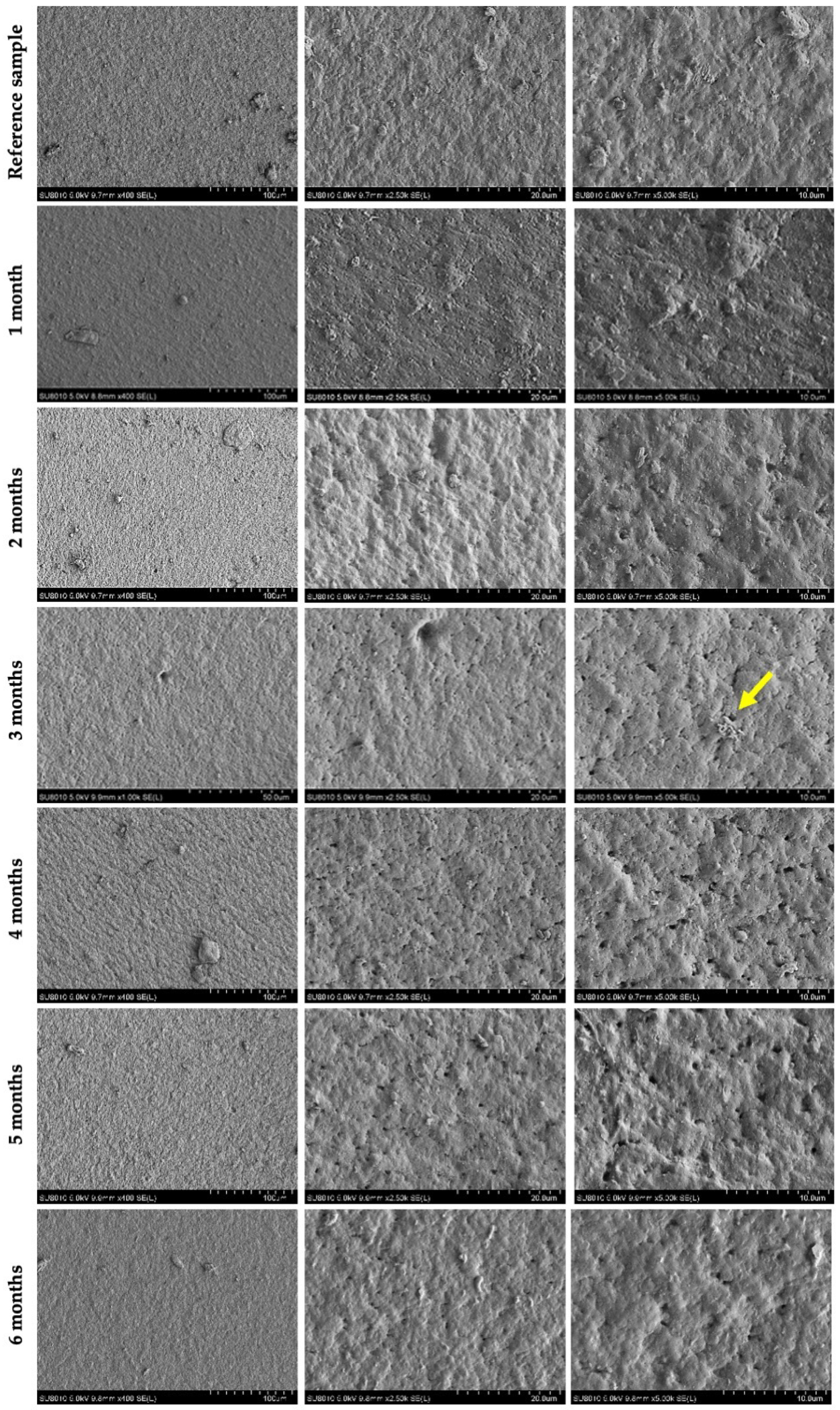
SEM was used to evaluate the surface morphology of glove materials exposed to the radon chamber environment with that of the corresponding unexposed reference samples. Representative SEM images of nitrile rubber (NBR) and chloroprene rubber (CR) before exposure and after different conditioning periods are presented in Figure 4 and Figure 5. The SEM image analysis was qualitative and focused on the assessment of visible changes in surface morphology, particularly the presence of microcracks, micropores, depressions, as well as changes in surface homogeneity and irregularity.
Figure 4.
Images of the surface of NBR gloves before and after conditioning in a radon chamber. Microcracks are marked with yellow arrow.
Figure 5.
Images of the surface of CR gloves before and after conditioning in a radon chamber. Microcracks are marked with yellow arrow.
For the NBR samples, the surface morphology remained mostly unchanged during the first 5 months of exposure. In the analyzed areas, the surface retained a relatively smooth, compact, and homogeneous appearance, with no clearly visible surface defects. After 6 months of exposure, isolated microcracks were observed. Their presence indicates the occurrence of localized changes in surface morphology.
In the case of the CR samples, more pronounced changes in surface morphology were observed with increasing conditioning time. During the first two months, the surface remained relatively smooth and homogeneous, with no clearly visible defects in the analyzed areas. At longer conditioning periods, visible surface changes appeared, including localized micropores, depressions, and increased irregularity. In subsequent stages, a more heterogeneous morphology was observed, characterized by a greater number of depressions and surface irregularities. Compared to NBR samples, morphological changes in CR were observed in earlier stages of conditioning and were more visually pronounced.
It should be emphasized that the SEM results presented here are qualitative and do not constitute a quantitative assessment of the degree of degradation of the investigated materials. The observed differences primarily concerned the nature of the surface morphology and the time at which visible changes emerged during conditioning. Based on the obtained images, it can be concluded that in the analyzed NBR samples, pronounced changes in surface morphology became visible only after the longest conditioning period, while in the CR samples, such changes appeared earlier and became increasingly pronounced with increasing exposure time.
3.4. AFM Analysis of Surface Topography
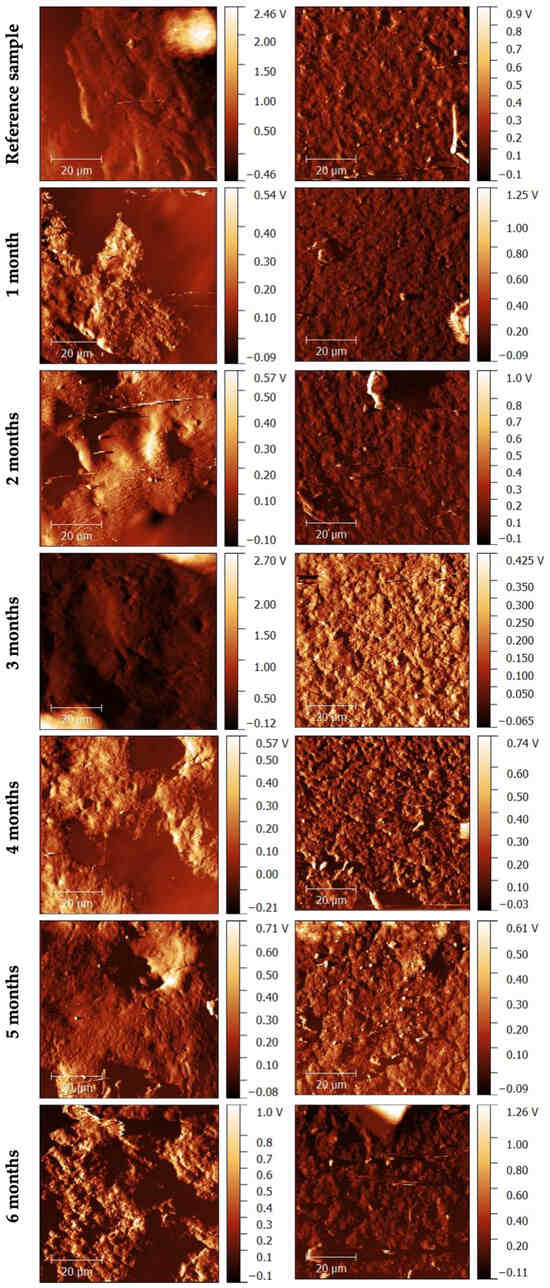
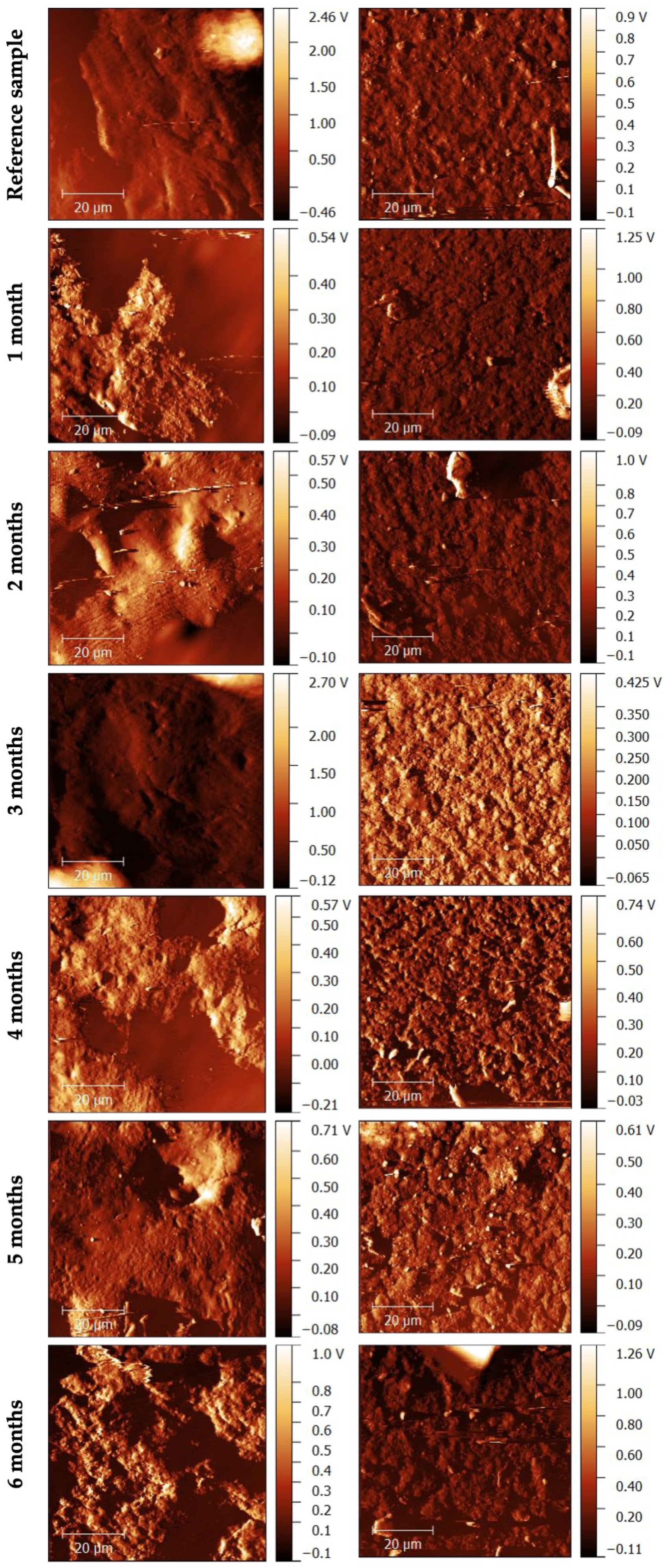
Atomic force microscopy was performed to examine the surface topography and to measure changing values of roughness due to conditioning in radon chamber. AFM surface images of nitrile rubber (NBR) and chloroprene rubber (CR) before exposure and after different conditioning periods are presented in Figure 6.
Figure 6.
AFM images of the surface topography of NBR gloves (left) and CR gloves (right) before and after conditioning in a radon chamber.
For the NBR samples, the most pronounced smoothing of the surface was observed after two months of conditioning, whereas the sample conditioned for six months exhibited the highest degree of surface roughness. The image obtained after three months of conditioning was characterized by the darkest overall contrast. This may be associated with the presence of deeper surface irregularities, such as microcracks or depressions, which resulted in greater variations in the recorded surface topography.
The relatively similar surface morphology was observed for the reference sample and those conditioned for one and two months of CR material. With increasing conditioning time, more pronounced changes in surface topography became visible. The sample conditioned for six months exhibited the most pronounced surface roughness, which also made it more difficult to obtain a suitable AFM image of the sample surface. These observations indicate progressive modifications of the surface morphology during prolonged conditioning in the radon chamber.
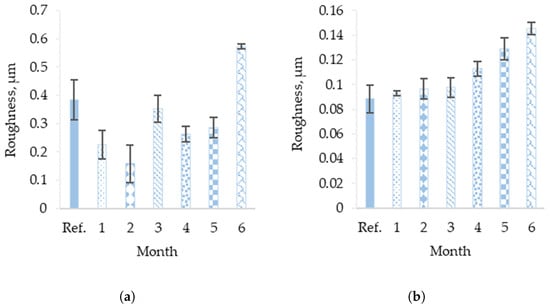
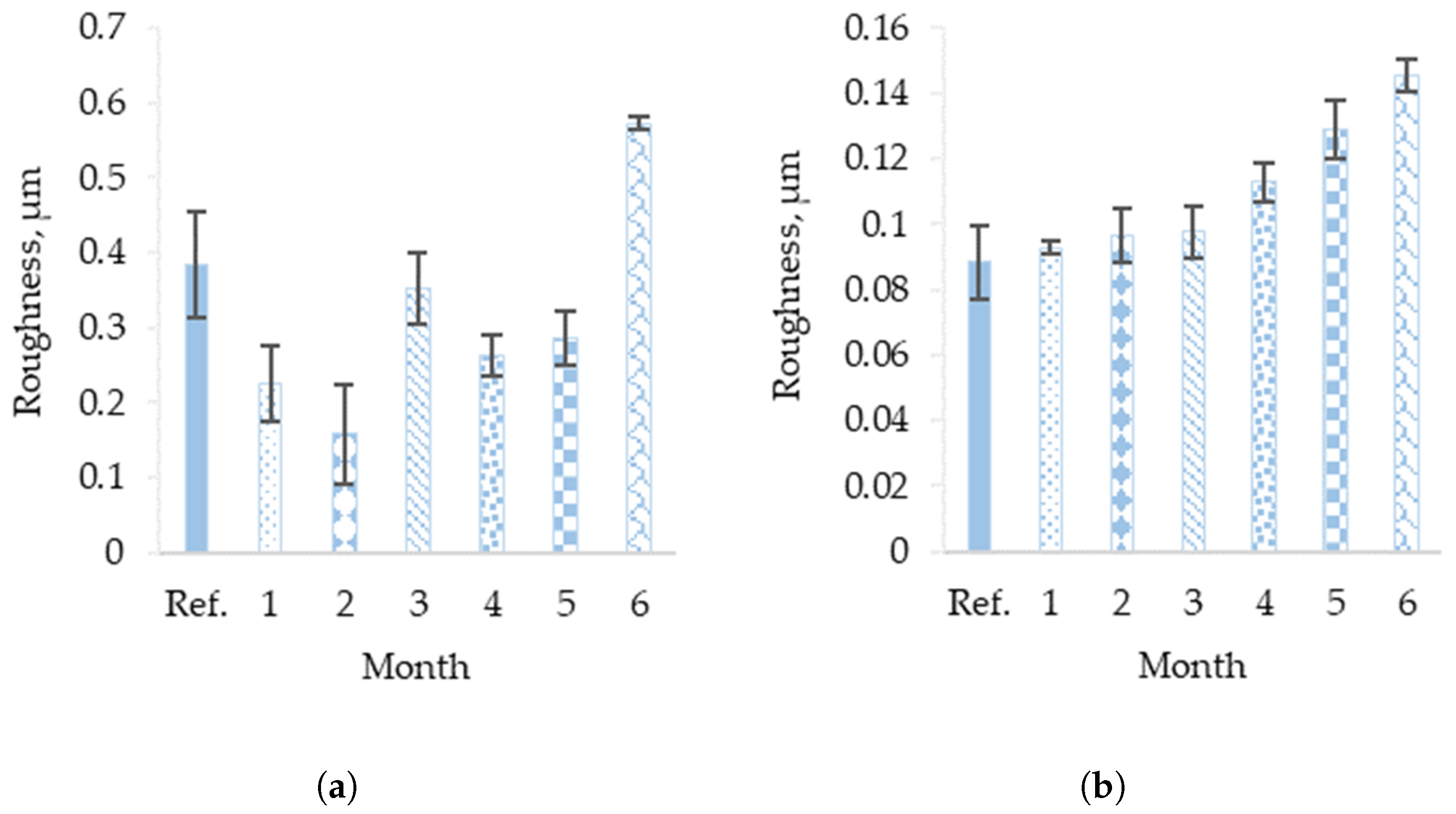
The results of the quantitative analysis are shown Figure 7.
Figure 7.
Roughness of sample surfaces before and after radon chamber exposure for NBR gloves (a), for CR gloves (b). Data are presented as mean ± standard deviation (n = 4).
The surface roughness of the NBR samples decreased during the first two months of conditioning, reaching its lowest value in the second month. After this point, the roughness gradually increased, with the maximum value recorded after six months of exposure. In contrast, the CR samples exhibited a more gradual and continuous increase in surface roughness with increasing exposure time in the radon chamber, also reaching the highest value after six months. These changes indicate a progressive modification of the surface morphology during conditioning. The quantitative results correspond to the AFM images shown above, which visually confirm the changes in surface roughness observed for both types of rubber.
An ANOVA across all seven conditions showed a statistically significant overall difference in roughness among the CR specimens examined (F = 6.61, p < 0.001), consistent with the general increase described above; pairwise comparisons with the reference specimen reached significance at five months (t = −3.32, p = 0.026) and six months (t = −4.56, p = 0.004), but not at earlier time points (p > 0.10). For NBR test samples, the overall difference across conditions approached but did not reach significance (F = 2.22, p = 0.082), and no individual time point differed significantly from the reference (p > 0.17), consistent with the non-monotonic pattern described above. These comparisons reflect technical replicates from a single specimen per time point rather than independent glove replicates.
3.5. Tensile Properties
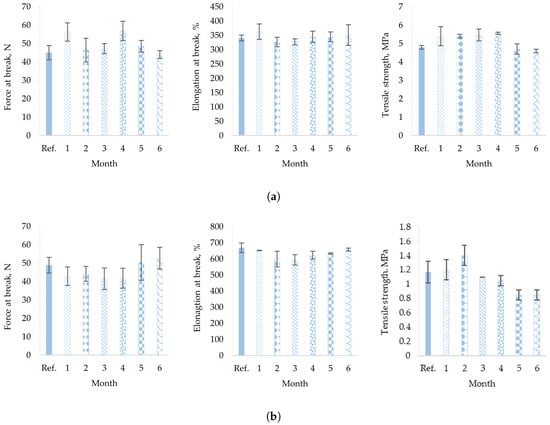
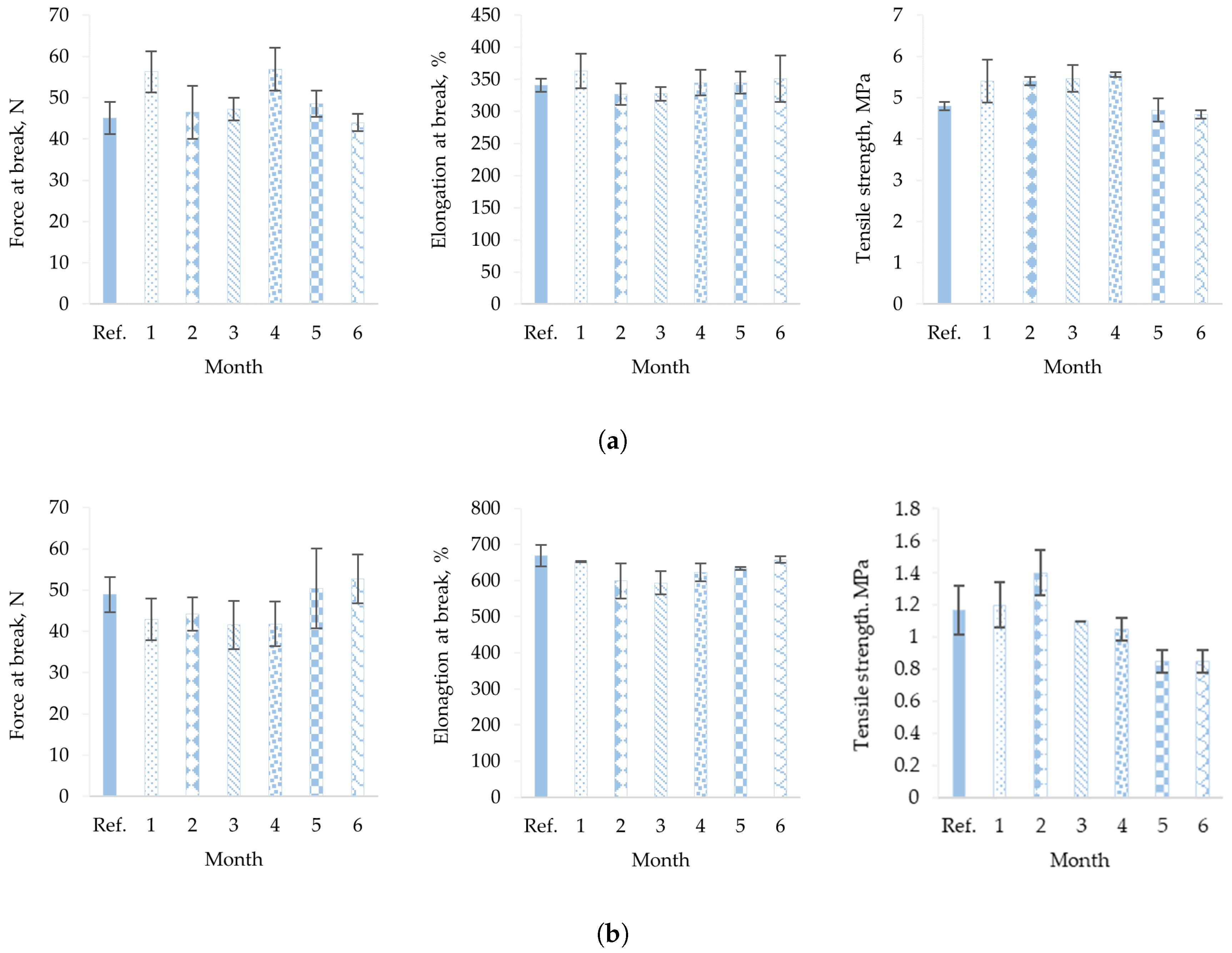
Force at break, elongation at break and tensile strength were determined to evaluate changes in tensile properties of the NBR and CR glove materials following conditioning in the radon chamber Figure 8.
Figure 8.
Force at break elongation at break, tensile strength of the investigated glove materials before and after radon chamber conditioning: NBR gloves (a) and CR gloves (b). Data are presented as mean ± standard deviation (n = 2 for CR; n = 3–6 for NBR.
For the NBR samples, the force at break, elongation at break, and tensile strength exhibit no distinct upward or downward trend with increasing radon chamber exposure time. The force at break reached its highest mean value after four months; subsequently, it decreased markedly after five months and reached its lowest value after six months of conditioning. The elongation at break increased after the first month of conditioning, followed by a gradual decrease in the subsequent months. At the later stages of conditioning, the elongation at break values approached a similar level for all samples, indicating that the differences in the deformability of the NBR samples became less pronounced with increasing conditioning time.
In contrast, the CR samples showed a slight but more consistent trend in their mechanical properties with increasing conditioning time. The force at break decreased during the first four months and subsequently increased, approaching the reference value after five months and slightly exceeding it after six months. The elongation at break showed a similar trend, although the observed changes were less pronounced. In contrast, tensile strength exhibited a clearer trend: a slight initial increase from approximately 1.2 to 1.4 MPa was observed in the second month, followed by a marked decrease, reaching approximately 0.8 MPa by the sixth month. This corresponds to a reduction of as much as 33% relative to the initial value.
This decrease in CR tensile strength was statistically significant among the specimens examined (one-way ANOVA, F = 7.38, p = 0.009); pairwise comparisons with the reference did not reach significance at individual months (all p > 0.13). For NBR, force at break showed a statistically significant difference across the specimens examined (F = 3.13, p = 0.028), with an increase at four months relative to the reference (p = 0.041); tensile strength showed a borderline overall difference (F = 2.41, p = 0.069). Elongation at break did not differ significantly across conditions for either material (all p > 0.21). These values reflect technical replicates from a single specimen per time point rather than independent glove replicates.
Thus, the two materials exhibited different responses to radon chamber conditioning. The NBR samples showed non-monotonic variations in their tensile properties without a consistent overall increase or decrease with conditioning time, whereas the CR samples exhibited more pronounced changes, particularly in tensile strength. These differences may indicate that the tensile properties of NBR are more stable than those of CR.
4. Discussion
The combined analysis of microhardness measurements, tensile properties, FTIR spectroscopy, SEM, and AFM provided complementary information on the mechanical response, chemical structure, surface morphology, and surface topography of the investigated materials.
The results indicate that the response observed during storage in the radon chamber was both time-dependent and material-specific. NBR retained a relatively stable surface morphology during most of the conditioning period, whereas CR exhibited earlier and more visible surface changes. At the same time, changes in mechanical properties suggest that exposure did not result in a single, continuously progressing degradation process.
This difference was particularly evident in the microhardness results. For NBR, microhardness initially increased and then gradually decreased with continued conditioning, but at the end of the conditioning period still remained higher than that of the reference material. In contrast, CR showed a general decrease in microhardness throughout the whole conditioning period. These contrasting trends may reflect differences in the chemistry, formulation, and relative contribution of competing structural processes [13,14].
For NBR, the initial increase in microhardness may be consistent with crosslinking-related hardening previously reported for nitrile-based elastomers exposed to ionizing radiation [13,14,20]. Crosslinking induced by ionizing radiation can restrict polymer-chain mobility and may consequently increase hardness, stiffness, and tensile strength. However, the mechanical response of commercial NBR formulations also depends on factors such as acrylonitrile content, curing system, and the type and amount of additives. Therefore, the present results are consistent with, but do not directly demonstrate, radiation-induced crosslinking.
Ionizing radiation can generate polymer radicals that subsequently undergo recombination, branching, or the formation of additional intermolecular bonds. An increase in the effective crosslink density restricts polymer-chain mobility and may therefore be reflected in increased hardness, stiffness, and tensile strength. Du et al. [14], who compared the response of NBR, CR, and other elastomers to gamma irradiation, reported that crosslinking was the dominant response of the investigated unsaturated rubbers, although its macroscopic effects differed depending on polymer structure and formulation. Luo et al. [13] likewise demonstrated that changes in the mechanical properties of irradiated NBR result from the combined effects of crosslinking, oxidation, and chain scission.
The subsequent decrease in NBR microhardness during prolonged conditioning was accompanied by an increase in surface roughness observed by AFM and, after six months, by the appearance of isolated microcracks in SEM images. These observations provide evidence of changes in the surface and near-surface region. CR exhibited a different response, with a general decrease in microhardness accompanied by progressively more apparent surface changes. This behaviour may be consistent with a greater contribution of degradation-related processes, although the underlying mechanisms cannot be distinguished directly from the present data. Previous studies have shown that ionizing radiation can induce oxidation, chain scission, and dehydrochlorination in CR, potentially affecting its network integrity and mechanical properties [14]. However, the possible contribution of other processes, including changes in the crosslinking system, polymer-network rearrangement, or additive-related effects, cannot be excluded.
The later increase in force at break observed for CR should not be interpreted as direct evidence of crosslinking or restoration of the material structure. Force-at-break testing reflects the response of a larger material volume, whereas SEM and AFM characterize the surface and nanoindentation probes the near-surface mechanical response. Therefore, an apparent recovery in force at break may coexist with continued surface changes. The observed increase should consequently be regarded as a change in one mechanical parameter rather than evidence of an overall improvement in material condition.
The gradual increase in surface roughness observed by AFM and formation of micropores observed SEM indicate progressive deterioration of the material structure. FTIR spectra revealed only subtle changes in bands associated with O–H and groups. These changes may reflect minor modifications in surface chemistry or moisture content; however, their interpretation should remain cautious because FTIR band intensities can also be affected by surface roughness, sample-crystal contact, and spectrum normalization.
The differences between the results obtained using individual methods are not necessarily contradictory. SEM, microhardness, and FTIR characterize the surface or near-surface region primarily, whereas mechanical tests reflect the response of a larger volume of material. Local surface degradation may therefore coexist with changes in the bulk polymer network that temporarily increase mechanical parameters. Pawełczyk et al. [21] used a similar multiparametric approach to evaluate radiation-induced changes in polymeric PPE visors. Although the materials and exposure conditions differed, both studies show that changes in PPE performance cannot be reliably assessed using a single parameter.
From the perspective of protective performance, increases in microhardness or mechanical parameters should not automatically be considered beneficial. Increased crosslinking can increase elasticity and limit resistance to repeated deformation, potentially affecting glove fit, dexterity, and comfort. Microcracks, pores, and cavities can also act as stress concentrators and propagate during stretching, gripping, abrasion, or repeated flexing. Previous studies have shown that simulated glove movement can affect both the integrity and chemical permeation of disposable gloves, although the extent of these effects depends on the glove material and a challenge substance [22,23,24].
Several limitations of the present study should be acknowledged. The reported radon concentration–time product represents cumulative exposure to the radon-containing atmosphere and should not be interpreted as an absorbed radiation dose. The deposition of radon decay products, equilibrium conditions, aerosol concentration, dose rate, and absorbed dose at the polymer surface were not measured. No time-matched control specimens were stored under environmental conditions identical to those inside the radon chamber, and humidity and oxygen concentration were not monitored in either the chamber or the storage environment. Consequently, the observed changes cannot be fully separated from natural ageing including oxidation, humidity variation, additive migration, or other storage-related effects. Addressing this limitation directly would require replicate, environmentally-monitored control specimens in a matched chamber without a radon source. The number of valid tensile specimens per condition was limited, particularly for CR (n = 2), due to the exclusion of specimens failing outside the gauge section, consistent with standard testing practice. Despite this, the overall decrease in CR tensile strength across conditioning time was statistically significant, though the small sample size limits the precision of pairwise comparisons at individual time points.
Further studies should include direct measurements of crosslink density, tear and puncture resistance, dynamic fatigue, quantitative surface-defect analysis, and whole-glove barrier testing, including leak proofness, penetration, and chemical permeation. Particular attention should be given to establishing quantitative relationships between the extent of surface degradation, including the size and density of microcracks, and changes in barrier performance. This would help determine whether threshold levels of surface damage associated with a measurable deterioration in protective performance can be identified and would allow the observed material changes to be linked to glove service life and protective performance.
5. Conclusions
This study showed time-dependent changes in the mechanical properties and surface morphology of nitrile rubber and chloroprene rubber during prolonged conditioning in a radon chamber. Under the investigated conditions, NBR showed greater stability, with visible microcracking occurring only after the longest exposure period. Its microhardness initially increased and then gradually decreased, but after six months remained higher than that of the reference material. CR exhibited earlier surface deterioration, including increased roughness and micropore formation. In addition, CR showed a general decrease in microhardness, while its tensile strength decreased substantially after six months of conditioning. The later increase in force at break observed for CR did not correspond to restoration of the surface structure and should not be interpreted as an overall improvement in material condition.
Overall, NBR and CR exhibited different time-dependent responses, with NBR retaining greater mechanical and morphological stability than CR under the investigated conditions. However, the observed surface and mechanical changes cannot be used to define an acceptable level of degradation or to establish loss of protective performance, because whole-glove integrity, penetration resistance, and chemical permeation were not assessed. Therefore, the present results do not allow a quantitative threshold for acceptable surface degradation to be established or the effect of the observed microcracking on barrier performance to be determined. The observed changes should therefore be interpreted as indicators of potential material deterioration rather than confirmed loss of protective performance.
These findings suggest that gloves stored in environments involving elevated radon exposure may be susceptible to surface and mechanical changes over time. As a precautionary measure, appropriate storage conditions, stock rotation, and pre-use inspection may be considered for protective gloves intended for prolonged storage in such environments.
Author Contributions
Conceptualization, E.T. and J.O.; methodology, E.T. and J.O.; formal analysis, E.T., M.O., K.M., E.I., K.H., M.P., T.G., K.K. and J.O.; investigation, E.T., K.H., M.P., T.G., K.K. and J.O.; data curation, E.T., K.H., M.P., T.G., K.K. and J.O.; writing—original draft, E.T., M.O. and J.O.; writing—review and editing, E.T., M.O., K.M., E.I., K.H., M.P., T.G., K.K. and J.O.; visualization, E.T. and M.P.; project administration, E.T. All authors have read and agreed to the published version of the manuscript.
Funding
This paper is based on the results of a research task carried out within the scope of the 6th stage of the National Programme “Governmental Programme for Improvement of Safety and Working Conditions”, funded by state services of the Ministry of Family, Labour and Social Policy (under the name of the Ministry of Family and Social Policy prior to 12 December 2023; task no. 1.ZS.07; entitled “Influence of ionising radiation on PPE durability”. The Central Institute for Labour Protection—National Research Institute is the Programme’s main co-ordinator.
Data Availability Statement
The original contributions presented in this study are included in the article. Further inquiries can be directed to the corresponding author.
Conflicts of Interest
The authors declare no conflicts of interest.
Abbreviations
The following abbreviations are used in this manuscript:
| CR | Chloroprene Rubber |
| FTIR | Fourier-Transform Infrared Spectroscopy |
| NBR | Nitrile Butadiene Rubber |
| PPE | Personal Protective Equipment |
| SEM | Scanning Electron Microscopy |
| AFM | Atomic Force Microscopy |
References
- Młynarkiewicz, Ł. Implementacja wybranych zasad bezpieczeństwa jądrowego i ochrony radiologicznej Międzynarodowej Agencji Energii Atomowej w polskim Prawie atomowym. Stud. Iurid. 2021, 87, 331–353. [Google Scholar] [CrossRef] [Scilit]
- United Nations Scientific Committee on the Effects of Atomic Radiation. UNSCEAR 2024 Report, Volume II: Scientific Annex B—Evaluation of Public Exposure to Ionizing Radiation; United Nations: Rome, Italy, 2024. [Google Scholar]
- Leung, J.K.C.; Ho, C.W.; Tso, M.Y.W. Deposition behaviour of 222Rn progeny on surfaces. Nucl. Instrum. Methods Phys. Res. Sect. A Accel. Spectrometers Detect. Assoc. Equip. 2000, 443, 546–556. [Google Scholar] [CrossRef] [Scilit]
- Marcinowski, F.; Yeager, W.M. National and regional distribution of airborne radon concentrations in US homes. Health Phys. 1994, 66, 699–707. [Google Scholar] [CrossRef] [Scilit] [PubMed]
- Al-Zoughool, M.; Krewski, D. Health effects of radon: A review of the literature. Int. J. Radiat. Biol. 2009, 85, 57–69. [Google Scholar] [CrossRef] [Scilit] [PubMed]
- Cecil, L.D.; Green, J.R. Environmental Tracers in Subsurface Hydrology; Springer: Boston, MA, USA, 2000; pp. 175–194. [Google Scholar]
- Keller, G.; Hoffmann, B.; Feigenspan, T.H. Radon permeability and radon exhalation of building materials. Sci. Total Environ. 2001, 272, 85–89. [Google Scholar] [CrossRef] [Scilit] [PubMed]
- Stein, M.; Bauer, D.A.; Bunker, R.A.; Calkins, R.; Cooley, J.; Loer, B.M.; Scorza, S. Radon daughter plate-out measurements at SNOLAB for polyethylene and copper. Nucl. Instrum. Methods Phys. Res. Sect. A Accel. Spectrometers Detect. Assoc. Equip. 2018, 880, 92–97. [Google Scholar] [CrossRef] [Scilit]
- El-Malawy, D.; Hassan, H.E.; El Ghazaly, M.; Samad, S.A.; Al-Abyad, M. Low-energy α-particle irradiation of polymeric-based nanofiller. Eur. Phys. J. Plus 2023, 138, 759. [Google Scholar] [CrossRef] [Scilit]
- Fisher, G.L.; Lakis, R.E.; Davis, C.C.; Szakal, C.; Swadener, J.G.; Wettel, C.J.; Winograd, N. Mechanical properties and the evolution of matrix molecules in PTFE upon irradiation with MeV alpha particles. Appl. Surf. Sci. 2006, 253, 1330–1342. [Google Scholar] [CrossRef] [Scilit]
- Azevedo, A.M.D.; da Silveira, P.H.P.M.; Lopes, T.J.; da Costa, O.L.B.; Monteiro, S.N.; Veiga-Júnior, V.F.; Figueiredo, A.B.H.D.S. Ionizing radiation and its effects on thermoplastic polymers: An overview. Polymers 2025, 17, 1110. [Google Scholar] [CrossRef] [Scilit] [PubMed]
- Kosińska, A.; Jagielski, J.; Bieliński, D.M.; Urbanek, O.; Wilczopolska, M.; Frelek-Kozak, M.; Zaborowska, A.; Wyszkowska, E.; Jóźwik, I. Structural and chemical changes in He+ bombarded polymers and related performance properties. J. Appl. Phys. 2022, 132, 074701. [Google Scholar] [CrossRef] [Scilit]
- Luo, R.; Kang, D.; Huang, C.; Yan, T.; Li, P.; Ren, H.; Zhang, Z. Mechanical properties, radiation resistance performances, and mechanism insights of nitrile butadiene rubber irradiated with high-dose gamma rays. Polymers 2023, 15, 3723. [Google Scholar] [CrossRef] [Scilit] [PubMed]
- Du, X.; Miao, C.; Sun, Q.; Shi, H.; Han, H.; Chu, L.; Zhang, G.; Pang, H. Gamma irradiation resistance of four elastomers for nuclear sealing applications. Polymers 2026, 18, 114. [Google Scholar] [CrossRef] [Scilit] [PubMed]
- Laohhapaiboon, P.; Lertsarawut, P.; Kongwut, O. Nitrile gloves enhanced with nanofibers: Comparing integrated reinforcement vs. surface coating for superior radiation resistance in medical and nuclear applications. Appl. Radiat. Isot. 2025, 225, 112016. [Google Scholar] [CrossRef] [Scilit] [PubMed]
- Gozdek, T.; Chudzik, J.; Imiela, M.; Bieliński, D.M. The influence of the addition of ionic liquids on the properties of rubber-coated fabrics filled with layered fillers. Polimery 2019, 64, 610–617. [Google Scholar] [CrossRef] [Scilit]
- Oliver, W.C.; Pharr, G.M. An improved technique for determining hardness and elastic modulus using load and displacement sensing indentation experiments. J. Mater. Res. 1992, 7, 1564–1583. [Google Scholar] [CrossRef] [Scilit]
- ISO 7500-1:2018; Metallic Materials. Calibration and Verification of Static Uniaxial Testing Machines. Part 1: Tension/Compression Testing Machines. Calibration and Verification of the Force-Measuring System. International Organization for Standardization, ISO: Geneva, Switzerland, 2018.
- EN 455-2:2015; Medical Gloves for Single Use—Part 2: Requirements and Testing for Physical Properties. European Committee for Standardization, CEN: Brussels, Belgium, 2015.
- Marković, G.; Marinović-Cincović, M.S.; Jovanović, V.; Samaržija-Jovanović, S.; Budinski-Simendić, J. Gamma irradiation aging of NBR/CSM rubber nanocomposites. Compos. Part B Eng. 2012, 43, 609–615. [Google Scholar] [CrossRef] [Scilit]
- Pawełczyk, E.; Gozdek, T.; Klajn, K.; Leszczyńska, M.; Płocińska, M.; Okrasa, M.; Majchrzycka, K. Wpływ promieniowania jonizującego na właściwości materiałów stosowanych jako wizjery środków ochrony indywidualnej. Przem. Chem. 2025, 104, 724–730. [Google Scholar]
- Phalen, R.N.; Wong, W.K. Integrity of disposable nitrile exam gloves exposed to simulated movement. J. Occup. Environ. Hyg. 2011, 8, 289–299. [Google Scholar] [CrossRef] [Scilit] [PubMed]
- Phalen, R.N.; Wong, W.K. Chemical resistance of disposable nitrile gloves exposed to simulated movement. J. Occup. Environ. Hyg. 2012, 9, 630–639. [Google Scholar] [CrossRef] [Scilit] [PubMed]
- Phalen, R.N.; Le, T.; Wong, W.K. Changes in chemical permeation of disposable latex, nitrile, and vinyl gloves exposed to simulated movement. J. Occup. Environ. Hyg. 2014, 11, 716–721. [Google Scholar] [CrossRef] [Scilit] [PubMed]


Disclaimer/Publisher’s Note: The statements, opinions and data contained in all publications are solely those of the individual author(s) and contributor(s) and not of MDPI and/or the editor(s). MDPI and/or the editor(s) disclaim responsibility for any injury to people or property resulting from any ideas, methods, instructions or products referred to in the content. |
© 2026 by the authors. Licensee MDPI, Basel, Switzerland. This article is an open access article distributed under the terms and conditions of the Creative Commons Attribution (CC BY) license.