


Abstract
The encapsulation of probiotic cultures is a promising method to enhance their survival during the production and storage of fermented dairy products. This study investigates the influence of design and operational parameters of an extrusion encapsulation setup on capsule size, mechanical strength, process productivity, and probiotic viability. The effect of the inner diameter of the injector (0.16–0.82 mm) on capsule diameter and spinneret reliability was quantified. The dependencies of the gel-forming mixture’s viscosity on temperature (20–50 °C) and peristaltic pump rotation speed (0.333–1.333 s−1), as well as their influence on productivity, were established. The mechanical properties of the obtained capsules were evaluated using a custom-built device based on a penetrometer principle, and an apparent stiffness coefficient (K_app) was defined. Probiotic viability remained above 108 CFU/g under all tested conditions. It was shown that the mixture’s temperature decisively influences the perceived hardness of the capsules (via K_app), while their diameter shows only a minor change (maximum difference 0.06 mm, ~2%). Based on a comprehensive data analysis, a rational operating mode is proposed for obtaining capsules with favourable strength and organoleptic characteristics while maintaining high viability. The findings contribute to the systematic engineering of extrusion-based encapsulation processes for probiotic delivery in food applications.
1. Introduction
The functional food sector represents one of the fastest-growing segments of the global food industry, driven by increasing consumer demand for products that promote health and well-being. Within this sector, probiotics occupy a central position: in 2023, the global probiotics market was valued at USD 87.7 billion and is projected to grow at a compound annual growth rate (CAGR) of approximately 7.5% through 2030 [1].
Probiotics, defined as live microorganisms that, when administered in adequate amounts, confer a health benefit on the host, have been associated with a wide range of physiological effects, including modulation of gut microbiota, improvement of digestive function, and enhancement of immune response [2,3,4]. However, the efficacy of probiotic-based products critically depends on the ability of microorganisms to remain viable throughout processing, storage, and gastrointestinal transit, and to reach the colon in sufficient numbers. A minimum viable concentration of approximately 106–107 CFU/mL or CFU/g in the final product is generally considered necessary; however, the effective dose depends on the strain, product matrix, serving size, and the specific health endpoint [5]. Maintaining this level of viability remains a significant technological challenge due to multiple stress factors encountered during three key stages: (i) processing, involving thermal, osmotic, mechanical, and oxidative stresses; (ii) storage, where temperature, humidity, and oxygen availability influence long-term stability; and (iii) gastrointestinal passage, where exposure to gastric acidity (pH 1.5–3.5), digestive enzymes, and bile salts can drastically reduce cell viability [6,7,8].
Encapsulation has emerged as an effective strategy to mitigate these challenges. By entrapping probiotic cells within a protective matrix, encapsulation provides a physical barrier against adverse environmental conditions and enables controlled release in the intestinal environment [9,10,11]. Among the available techniques—such as emulsification, spray drying, freeze drying, electrospraying, and coacervation—extrusion encapsulation (dripping method) is particularly suitable for food applications. This approach operates under mild conditions, avoids the use of organic solvents, and allows the use of food-grade polymers such as sodium alginate, thereby ensuring high cell viability and regulatory compatibility [12,13,14]. In this process, a probiotic-containing hydrocolloid solution is extruded through a spinneret into a calcium chloride bath, where droplets undergo ionic cross-linking to form gel beads.
The choice of wall materials is critical for encapsulation performance. Sodium alginate is widely used due to its biocompatibility, mild gelation conditions, and ability to form stable gels in the presence of divalent cations [15,16]. Gelatin is often added to improve the viscoelastic properties and provide additional protection during storage [17,18]. The alginate–gelatin combination has been shown to enhance cell viability and stability through synergistic interactions between the two polymers [19,20]. The selection of Propionibacterium freudenreichii as the model probiotic is justified by its documented health benefits, including modulation of gut microbiota and production of short-chain fatty acids, as well as its industrial relevance in dairy fermentations [21,22].
Despite its apparent simplicity, the extrusion encapsulation process is governed by a complex interplay of geometric, rheological, and operational parameters that collectively determine capsule characteristics and process performance. The inner diameter of the injector plays a key role in droplet formation and directly affects capsule size [23]. At the same time, excessively small diameters may increase the likelihood of clogging, particularly in systems containing micro-scale heterogeneities [24].
The rheological properties of the gel-forming mixture represent another critical factor. Alginate solutions typically exhibit non-Newtonian, shear-thinning behaviour, whereby viscosity decreases with increasing shear rate [25,26]. This behaviour affects flow stability, droplet detachment, size uniformity, and volumetric throughput. Importantly, viscosity is strongly dependent on temperature, which introduces an additional level of process sensitivity [27].
Operational parameters, particularly the rotation speed of the peristaltic pump, directly influence the applied shear rate and flow rate of the system. However, the relationship between pump speed, effective viscosity, and productivity is inherently coupled and non-linear, and therefore cannot be adequately described by varying these parameters independently [14,28].
An additional factor that has received comparatively limited attention is the temperature of the alginate solution prior to extrusion. The gelation of alginate is commonly described by the “egg-box” model, involving ionic cross-linking between guluronate residues and calcium ions [17,19]. However, previous studies suggest that gel network formation depends on thermal history: elevated temperatures can lead to less structured initial networks, whereas subsequent cooling promotes additional intermolecular interactions, resulting in increased mechanical strength [26,29,30]. Despite these insights, the quantitative influence of formation temperature on the mechanical behaviour of alginate–probiotic capsules remains insufficiently explored.
From an application perspective, the mechanical properties of capsules are directly relevant to consumer perception. For incorporation into food matrices, capsules must retain structural integrity during processing and storage, while maintaining a texture that does not negatively affect sensory acceptance. Excessively rigid particles may be perceived as undesirable; however, the relationship between mechanical properties and sensory perception remains insufficiently quantified [23,24].
Although numerous studies have investigated individual parameters influencing extrusion encapsulation—such as nozzle diameter, polymer concentration, or process conditions—these factors are typically examined in isolation. Recent systematic reviews confirm that most studies rely on one-factor-at-a-time approaches, limiting the ability to capture interactions between parameters [11,31,32]. To the best of our knowledge, a systematic experimental study that simultaneously integrates injector geometry, solution temperature, and pump speed, and quantitatively links these parameters to both process productivity and mechanical properties of probiotic capsules, remains lacking.
Accordingly, the objectives of this study were to: (i) quantify the effect of injector inner diameter (0.16–0.82 mm) on capsule size and clogging tendency; (ii) determine the combined influence of alginate solution temperature (20–50 °C) and peristaltic pump speed (0.333–1.333 s−1) on viscosity and process productivity; (iii) evaluate the apparent stiffness coefficient of the obtained capsules and link it to sensory attributes; and (iv) establish a rational operating regime that balances process efficiency with desirable mechanical properties relevant for food applications.
2. Materials and Methods
2.1. Experimental Setup and Materials
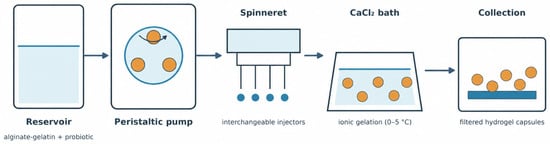
The research was conducted using a laboratory-scale extrusion system for hydrogel capsule production developed at Shakarim University (Semey, Kazakhstan) (patent of the Republic of Kazakhstan No. 3202). A schematic diagram of the experimental setup is provided in Figure 1. The system operates as follows: the gel-forming mixture is placed in a temperature-controlled reservoir (1), from which it is fed by a precision peristaltic pump (2) (model Masterflex L/S, Cole-Parmer, Vernon Hills, IL, USA, 20–80 rpm) through a hydraulic circuit to the spinneret (3). The spinneret is equipped with interchangeable injectors (inner diameters 0.16, 0.21, 0.29, 0.36, 0.43, 0.65 and 0.82 mm) arranged in a hexagonal packing pattern. Droplets formed at the injector tips fall into a crosslinking bath (4) containing 2% (w/w) calcium chloride (CaCl2) solution maintained at 0–5 °C. After ionic gelation, capsules are collected on a laboratory-made nylon mesh filter (5), washed with distilled water, and stored at 4 °C for further analysis. The distance between the injector tip and the surface of the CaCl2 solution was fixed at 5 cm.
Figure 1.
Schematic illustration of the experimental setup.
The gel-forming mixture was prepared by dissolving 1% (w/w) sodium alginate (Sigma-Aldrich, St. Louis, MO, USA, low viscosity grade) and 1% (w/w) gelatin (food grade, 250 Bloom, from porcine skin, Sigma-Aldrich, St. Louis, MO, USA) in distilled water. Gelatin was included to improve the viscoelastic properties of the mixture and to provide additional protection for probiotics during storage. The mixture was heated to 60 °C under continuous stirring using a magnetic stirrer with heating to ensure complete dissolution, then cooled to the required experimental temperature (20–50 °C). Before extrusion, the probiotic culture Propionibacterium freudenreichii subsp. shermanii KM-2 (obtained from the Kazakh Collection of Microorganisms, with its probiotic properties confirmed by in vitro tests: bile tolerance (0.3% w/v, 4 h), acid resistance (pH 2.5, 2 h), and adhesion to Caco-2 cells (>10%)) was added to the alginate–gelatin solution at a final concentration of 109 CFU/mL.
Capsules were formed by extruding the mixture dropwise into a crosslinking bath containing 2% (w/w) calcium chloride (CaCl2) in distilled water. The CaCl2 solution was maintained at 0–5 °C by placing the beaker in an ice bath. The residence time in the CaCl2 bath was 10 min, after which capsules were filtered through a nylon mesh, washed with distilled water, and stored at 4 °C for further analysis. This time was chosen based on preliminary experiments showing complete gelation within 5 min, and an additional 5 min to ensure uniformity. The distance between the injector tip and the surface of the CaCl2 solution was fixed at 5 cm.
To study multinozzle performance, two spinneret designs were used: one with 12 injectors (inner diameter 0.65 mm each) and another with 33 injectors (inner diameter 0.50 mm each). The injector arrangement followed a hexagonal packing pattern.
2.2. Determination of Viscosity and Process Productivity
The viscosity of the gel-forming mixture was measured using a Brookfield analogue rotational viscometer (Model LVT, spindle No. 4) according to the methodology described by Derkach et al. [25] and Draget et al. [15]. Measurements were performed at four temperatures (20, 30, 40, and 50 °C) and at rotor speeds of 0.067, 0.167, 0.333 and 0.833 s−1 (4, 10, 20 and 50 rpm). These measurements were used to characterise the non-Newtonian behaviour of the alginate–gelatin mixture. A conversion factor (F) supplied by the manufacturer was used to calculate dynamic viscosity.
For process productivity measurements, the peristaltic pump speed was varied from 0.333 to 1.333 s−1 (20–80 rpm). The pump speeds listed are the actual rotational speeds of the peristaltic pump. The viscosity values reported in Table 1 correspond to the measured viscosities at shear rates equivalent to the average shear rate inside the tubing at each pump speed, calculated from the flow rate and tube geometry. Productivity was defined as the number of capsules collected per minute under steady-state operation. All experiments were performed in triplicate using independently prepared batches. The relative standard deviation (RSD) was below 5% of the mean value for all entries.
Table 1.
Influence of temperature and peristaltic pump rotation speed on the viscosity of the gel-forming mixture and process productivity (mean ± SD, n = 3 independent batches).
2.3. Mechanical Characterisation of Capsules
The apparent stiffness coefficient (K_app) was determined using a custom-built uniaxial compression device as described by Krunic et al. [30] with modifications. The device consisted of a stationary lower plate and a movable upper plate connected to a loading platform. A single capsule was placed between the two plates, and a constant compressive load (P = 0.1403 N, equivalent to a mass of 14.3 g including the weight of the moving parts) was applied for 3 min. The initial height (h0) and the height after loading (h) were measured using an electronic calliper. The deformation (shortening) in the direction of the load was calculated as f = h0 − h. The loading area (S) was determined from the contact diameter measured from the imprint left on the compression plate, assuming a circular contact zone and using a Hertzian contact model to account for the change in contact area during deformation. The area changed with temperature because softer capsules deformed more, increasing the contact area.
The apparent stiffness coefficient was calculated according to the following equation:
where
- —compressive load (N),
- —initial capsule diameter (m),
- —loading area (m2),
- —shortening in the direction of the load (m).
For each temperature, 20 capsules were tested from 4 independent batches (5 capsules per batch), and the mean value of K_app was calculated.
2.4. Viability Assessment of Probiotics
The viability of P. freudenreichii after encapsulation was determined by the plate count method according to FAO/WHO guidelines [2] and Tripathi & Giri [5]. Freshly produced capsules (1 g) were dissolved in 9 mL of 0.1 M sodium citrate buffer (pH 7.0) to release the cells. After serial dilution, samples were plated on reinforced clostridial agar and incubated anaerobically at 30 °C for 72 h. Viability was expressed as log10 colony forming units per gram (log CFU/g) of capsules. The triplicate determinations were from three independent batches, each plated in triplicate (total 9 plates per temperature). The means and SDs represent batch-level variation. Pre-extrusion viability was also measured to calculate encapsulation efficiency.
2.5. Morphological and Compositional Analysis
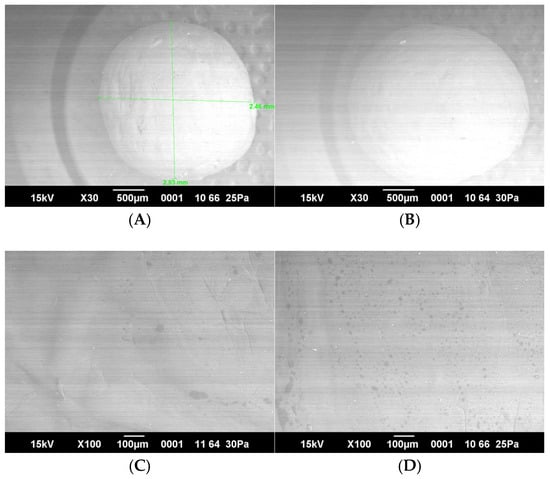
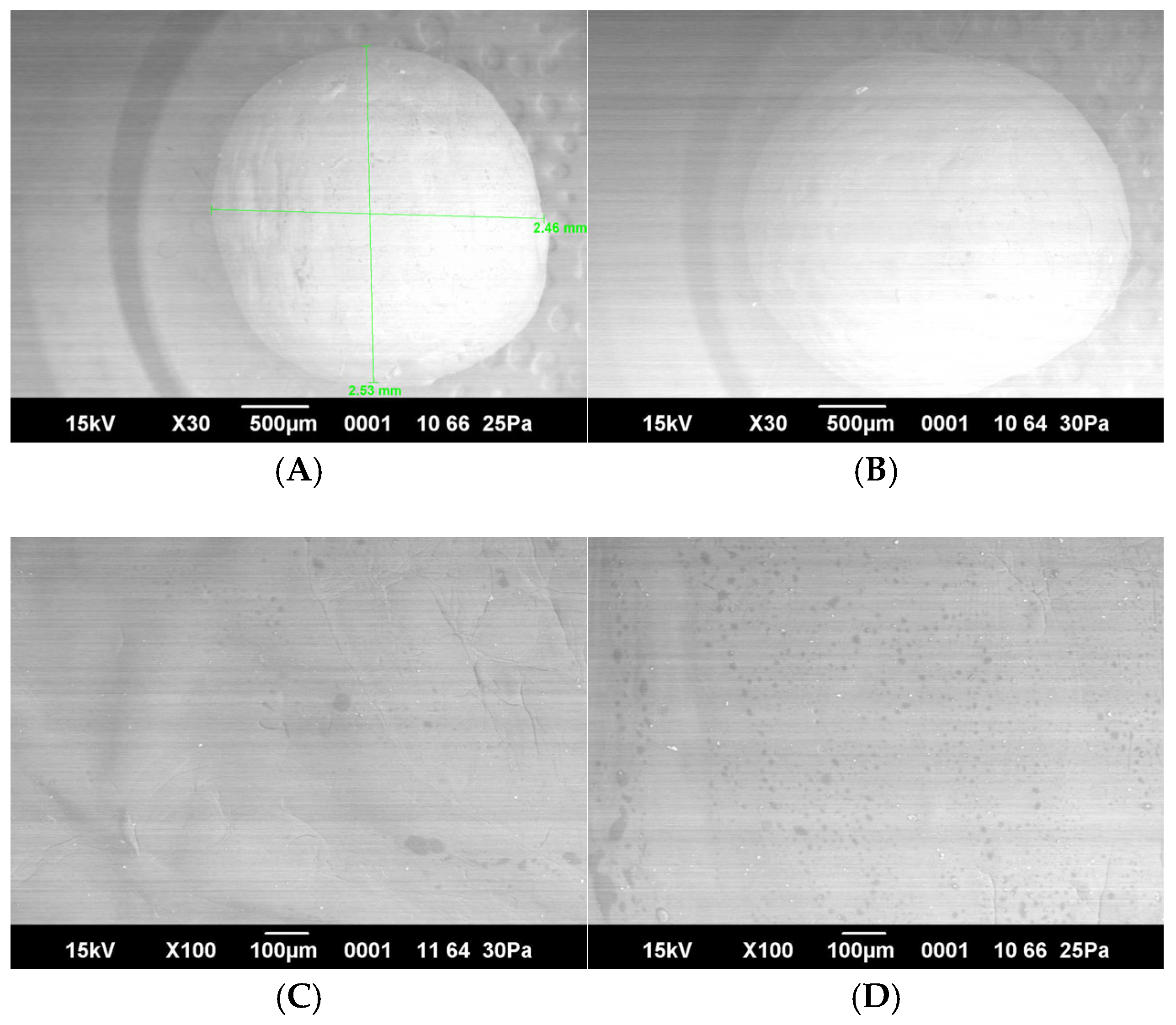
The microstructure of capsules was examined using a low vacuum analytical scanning electron microscope (JSM-6390LV, JEOL, Tokyo, Japan) equipped with an energy dispersive X-ray microanalysis system (INCA ENERGY 250, OXFORD INSTRUMENTS, Abingdon, UK). Capsule samples were prepared by sequential dehydration in isopropyl alcohol (30, 50, 70, and 100%) and tert-butyl alcohol, followed by freeze drying (JFD-320, JEOL, Tokyo, Japan) and sputter coating with carbon (JEE-420, JEOL, Tokyo, Japan). Images were acquired at an accelerating voltage of 20 kV. EDS spectra were collected to confirm calcium distribution and elemental composition.
The diameter of the capsules was measured using an optical microscope (Biolam R-11, LOMO, Saint Petersburg, Russia) equipped with a calibrated micrometre scale. For each temperature, 50 capsules from five independent batches were measured (10 capsules per batch).
2.6. Sensory Evaluation
A pilot sensory evaluation was conducted with 10 untrained panellists (aged 22–35, no known sensory impairments) to validate the relationship between K_app and perceived texture. The sensory study was approved by the Ethics Committee of Shakarim University (Semey, Kazakhstan) (protocol No. 12, 15.01.2026). All participants provided written informed consent and were informed they could withdraw at any time. Capsules formed at 20 °C and 40 °C (selected as low and high temperature representatives) were incorporated into plain yoghurt (3.5% fat) at a concentration of 5% (w/w). Samples were coded with three-digit random numbers and presented in random order. Panellists rated the perceived “hardness” and “grittiness” on a 5-point scale (1 = very soft/not gritty; 5 = very hard/very gritty). A 30 s rest with water rinsing was provided between samples. Differences between the two capsule types were assessed using the Wilcoxon signed rank test (p < 0.05). This evaluation was intended as a pilot study; a larger panel with trained assessors would be required for regulatory sensory claims.
2.7. Statistical Analysis
All data are presented as mean ± standard deviation (SD). Normality was checked using the Shapiro–Wilk test, and homogeneity of variances was assessed using Levene’s test. For mechanical data (K_app), normality and homogeneity of variances were confirmed (Shapiro–Wilk p > 0.05; Levene p > 0.05), allowing parametric ANOVA. For viability data, a log-transformation (log10 CFU/g) was applied prior to analysis to meet the assumption of normality. For capsule diameter and sensory data, where assumptions were violated, non-parametric alternatives (Kruskal–Wallis, Wilcoxon signed-rank) were used. One-way analysis of variance (ANOVA) followed by Tukey’s HSD post hoc test was used to compare capsule diameters and K_app values across different temperatures. Two-way ANOVA was applied to evaluate the interaction between temperature and pump speed on viscosity and productivity, with batch included as a random factor where appropriate. Differences were considered significant at p < 0.05. All statistical analyses were performed using OriginPro 2021 (OriginLab Corp., Northampton, MA, USA). The complete raw data and statistical analysis codes have been deposited in a public repository (Zenodo repository, CERN, Geneva, Switzerland, DOI: 10.5281/zenodo.22675176).
3. Results
3.1. Influence of Injector Inner Diameter on Capsule Size and Clogging
Analysis of the dependence of capsule diameter on the injector’s inner diameter showed the expected direct correlation: an increase in injector diameter led to an increase in droplet size and consequently in final capsule diameter (Table 2). However, during the experiments, injectors with small diameters (0.16–0.43 mm) were prone to frequent clogging. The clogging frequency and time to first blockage are presented in Table 2. This phenomenon was attributed to the presence of micro-aggregates in the gel-forming mixture and insufficient solution homogeneity, which reduced process stability and productivity.
Table 2.
Effect of injector inner diameter on capsule diameter and clogging tendency.
3.2. Influence of Temperature and Pump Speed on Viscosity and Productivity
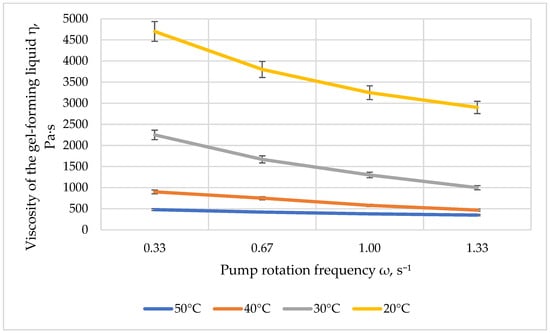
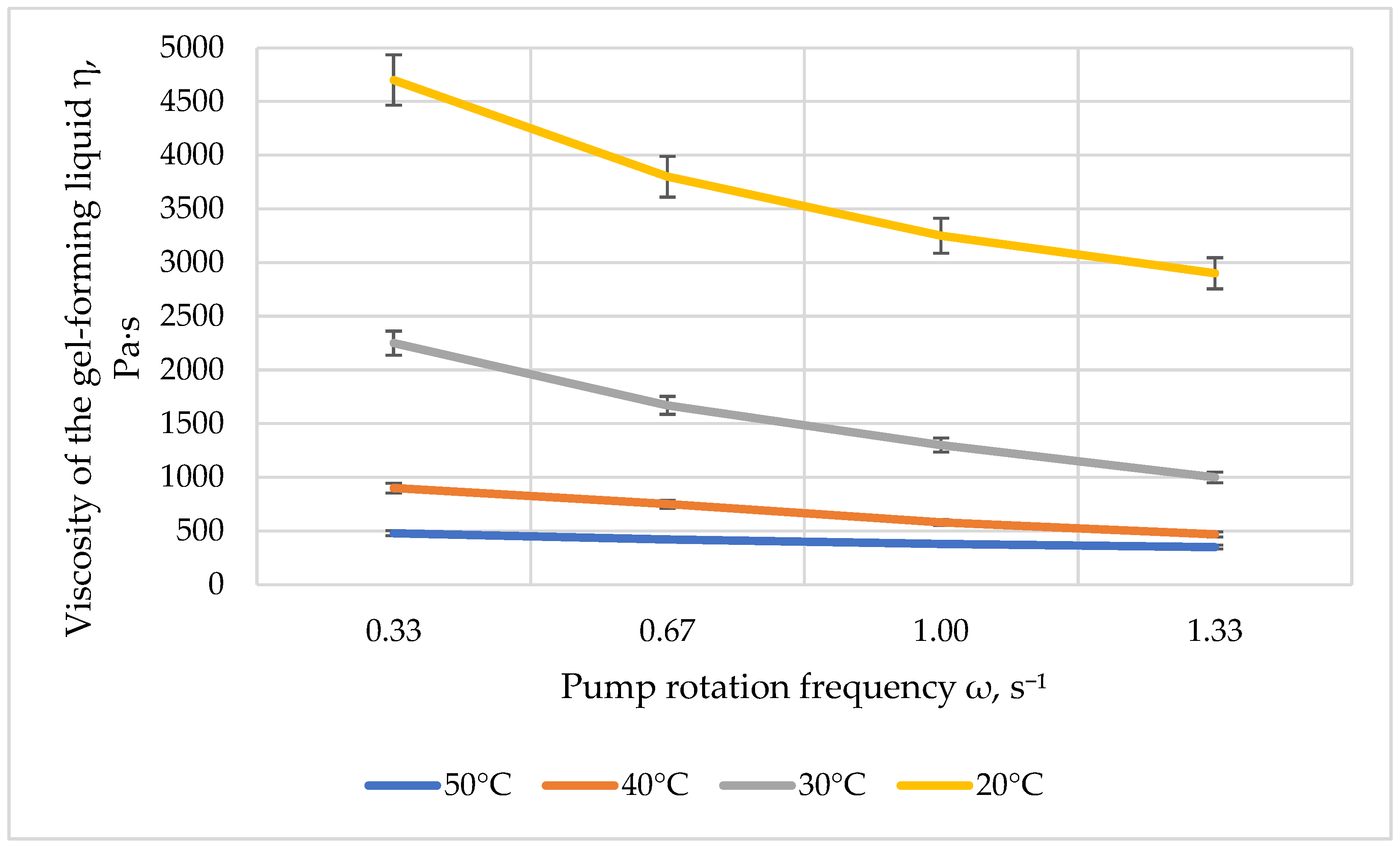
The experimental data presented in Table 1 clearly show the interrelationship of the studied parameters. Two-way ANOVA revealed that both temperature and pump speed, as well as their interaction, had significant effects on viscosity (p < 0.001 for all factors). Increasing the solution temperature from 20 to 50 °C at a fixed pump speed led to a sharp decrease in viscosity (e.g., from 4.75 to 0.48 Pa·s at ω = 0.333 s−1). The most intense viscosity drop was observed in the 20–30 °C range, while at 40–50 °C the viscosity changed only slightly (Figure 2). This suggests that the 40–50 °C range is preferable for stabilising the rheological properties of the mixture.
Figure 2.
Dependence of the viscosity of the gel-forming mixture on the temperature of the solution at different rotational speeds of the peristaltic pump. Error bars represent ±1 SD from batch-to-batch variation.
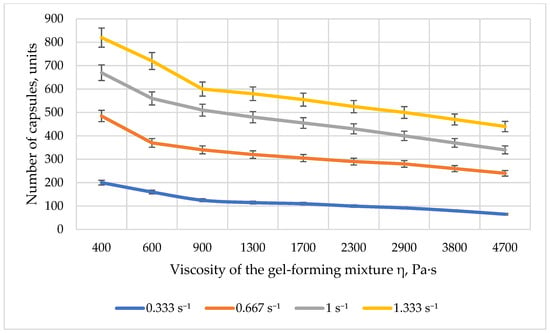
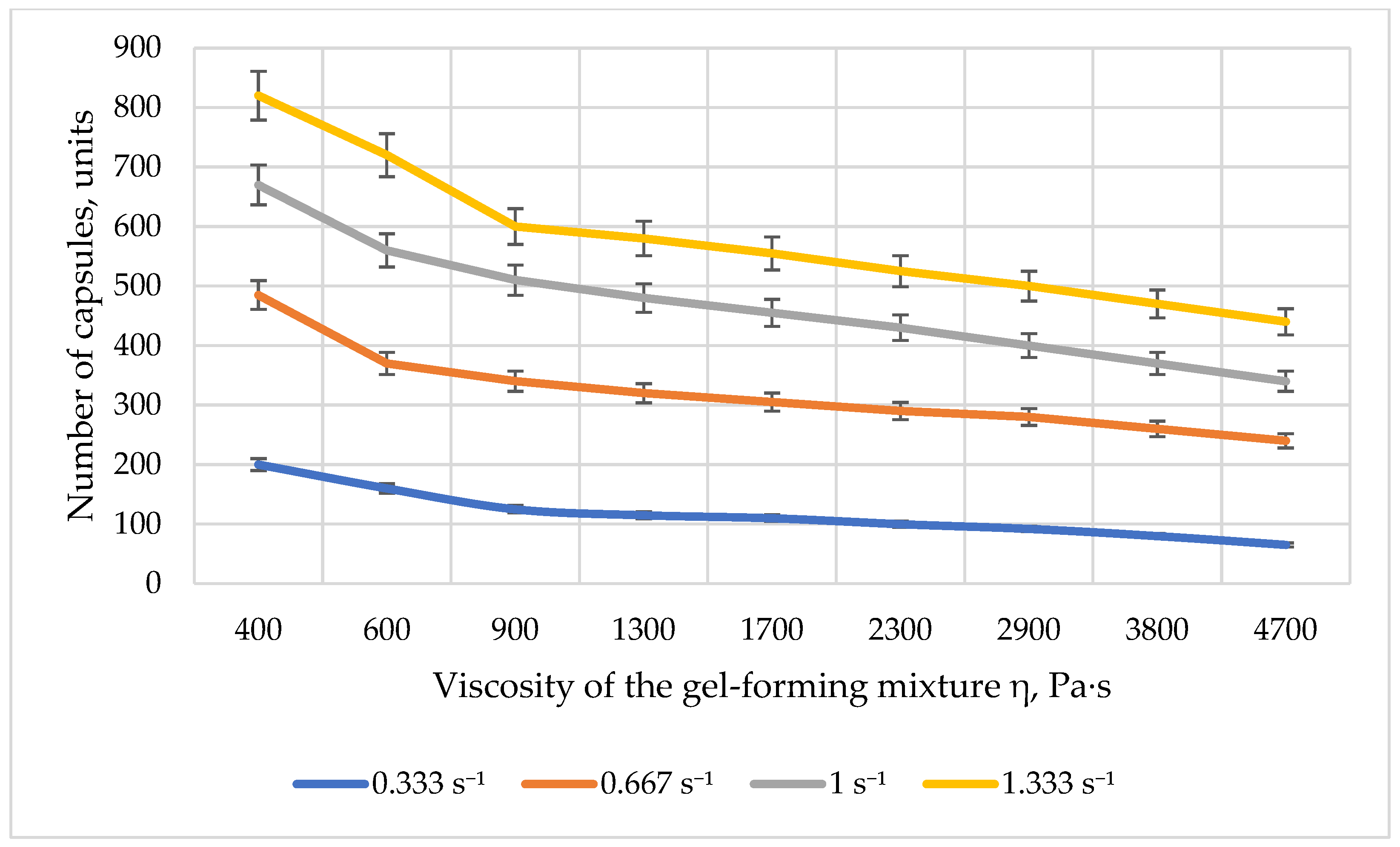
Productivity (number of capsules per minute) showed an inverse relationship with viscosity (Figure 3). However, it must be emphasised that productivity is directly governed by the volumetric flow rate, which is determined by pump speed and the hydraulic resistance of the spinneret. Viscosity mediates this relationship because higher viscosity at lower temperatures reduces the flow rate at a fixed pump speed. Hence, the observed “inverse relationship” is indirect; the direct control variable is pump speed, while temperature modulates viscosity and thus the effective throughput. A decrease in viscosity, caused by both temperature increase and higher shear rates (pump speed), increased the fluidity of the mixture and the volumetric flow rate through the injectors. Maximum productivity (820 capsules/min) was achieved at minimum viscosity (0.35 Pa·s), which corresponded to t = 50 °C and ω = 1.333 s−1.
Figure 3.
Dependence of the number of capsules produced per minute on the viscosity of the gel-forming mixture at different rotational speeds of the peristaltic pump. The relationship is not direct causation; both variables depend on temperature and pump speed. Error bars represent ±1 SD.
3.3. Mechanical Properties of Capsules
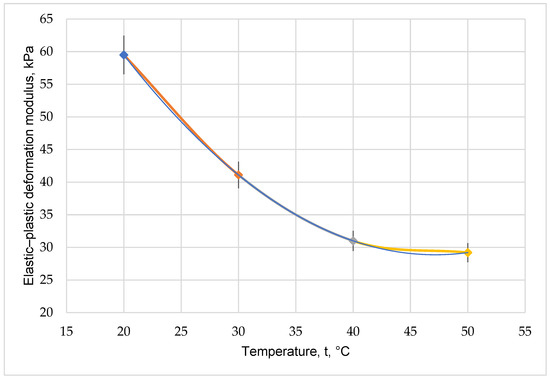
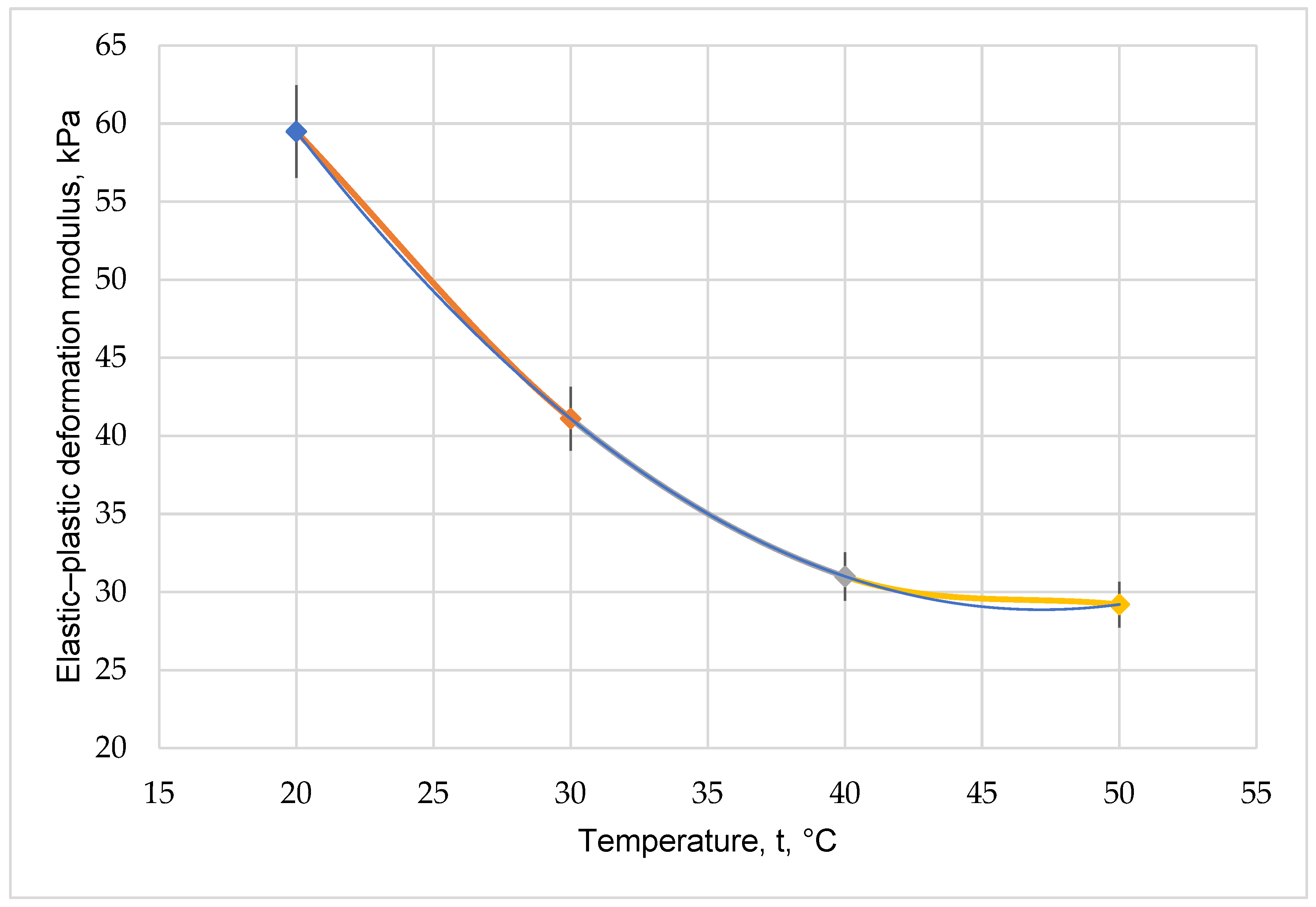
The results of the compression tests showed a significant dependence of the capsules’ mechanical properties on the forming temperature (Table 3, Figure 4). The apparent stiffness coefficient (K_app) for capsules obtained at 20 °C was 59.6 kPa, while increasing the temperature to 50 °C reduced it to 29.3 kPa. One-way ANOVA confirmed a significant effect of temperature (p < 0.001). Post hoc Tukey HSD showed that 20 °C differed significantly from 30, 40, and 50 °C (p < 0.01 for all), and 30 °C differed from 40 and 50 °C (p < 0.01). The difference between 40 °C and 50 °C was not significant (p = 0.08).
Table 3.
Apparent stiffness coefficient (K_app) of capsules formed at different gel-forming mixture temperatures (mean ± SD, n = 20 capsules from 4 independent batches).
Figure 4.
Dependence of the apparent stiffness coefficient (K_app) of capsules on the temperature of the gel-forming mixture. Colored diamond markers represent the mean values obtained at the corresponding formation temperatures; the colors are used only to distinguish the temperature conditions and do not indicate additional experimental groups. Error bars represent ±1 SD (n = 20).
Different superscript letters indicate significant differences (p < 0.05). The higher K_app values for capsules formed at low temperatures (20–30 °C) indicate the formation of a more rigid gel structure. From an organoleptic perspective, such capsules could be perceived as hard, foreign particles. Capsules obtained at elevated temperatures (40–50 °C) are characterised by a lower stiffness coefficient, correlating with the sensation of soft, elastic beads. It is worth noting that the temperature of the gel-forming mixture before extrusion may influence the initial network formation, but the cross-linking bath was maintained at 0–5 °C. Hence, the observed differences in mechanical properties reflect the thermal history of the alginate–gelatin solution prior to gelation, as the droplet cools rapidly upon contact with the cold CaCl2 solution. The initial temperature affects the polymer chain conformation and the kinetics of network formation.
3.4. Probiotic Viability
The viability of P. freudenreichii after encapsulation remained high under all tested conditions (Table 4). The highest viability (9.2 log CFU/g) was observed for capsules formed at 20 °C, while at 50 °C viability decreased slightly to 8.7 log CFU/g. One-way ANOVA showed no significant overall effect of temperature (p = 0.12). A pairwise comparison between 20 °C and 50 °C gave p = 0.04 without correction for multiple comparisons; however, after Tukey HSD correction, this difference was not statistically significant (p = 0.09). Therefore, all temperature groups share the same superscript letter (a), indicating no significant differences. All values exceeded the recommended minimum of 6–7 log CFU/g for functional probiotic products. Pre-extrusion viability was 10.1 ± 0.2 log CFU/g, giving encapsulation efficiencies of 85–92% depending on temperature. These results confirm that the extrusion process at 40–50 °C does not compromise probiotic viability to an unacceptable degree.
Table 4.
Viability of Propionibacterium freudenreichii in capsules formed at different temperatures (mean ± SD, n = 3 independent batches; pump speed 1.0 s−1). Values with the same superscript letter are not significantly different (p > 0.05).
3.5. Morphological Analysis
SEM images of capsule surfaces and cross-sections (Figure 5) revealed differences in microstructure between capsules formed at 20 °C and 40 °C. Capsules formed at 20 °C exhibited a more compact surface with fewer visible pores, while those formed at 40 °C showed a slightly more porous structure. EDS analysis confirmed the presence of calcium throughout the capsule matrix, indicating successful ionic cross-linking.
Figure 5.
SEM images of capsule surfaces (A,B) and cross-sections (C,D) for capsules formed at 20 °C (A,C) and 40 °C (B,D).
3.6. Correlation of Mechanical Properties with Sensory Perception
Sensory evaluation confirmed that the difference in K_app between capsules formed at 20 °C and 40 °C translates into a perceptible textural difference. Capsules formed at 20 °C (K_app ≈ 60 kPa) received a median hardness score of 4.0 (IQR: 3.5–4.5), while those formed at 40 °C (K_app ≈ 31 kPa) scored 2.0 (IQR: 1.5–2.5). The difference was statistically significant (Wilcoxon test, p = 0.005). Grittiness scores followed a similar pattern (4.0 vs. 2.0, p = 0.008). The Spearman correlation coefficient between K_app and perceived hardness was 0.89 (p < 0.001), supporting the use of K_app as an indicator of perceived hardness. These results justify the selection of 40 °C as the preferred forming temperature for food applications.
3.7. Selection of a Rational Regime for Capsule Production
Additional studies showed that the diameter of the obtained capsules changed only slightly with mixture temperature (Table 5). One-way ANOVA gave an overall p-value of 0.02; however, Tukey HSD post hoc showed no significant pairwise differences after correction (20 °C vs. 50 °C: p = 0.07). The maximum difference was only 0.06 mm (~2% of the mean diameter), which is technologically negligible. An equivalence test with a margin of 0.15 mm confirmed that the differences are practically negligible. Within the tested range, temperature can be used to adjust mechanical properties while keeping diameter nearly constant.
Table 5.
Dependence of capsule diameter on gel-forming mixture temperature (mean ± SD, n = 50 capsules from 5 independent batches). Values with the same superscript letter are not significantly different (p > 0.05).
Analysis of the productivity of spinnerets with different numbers of injectors (12 injectors of 0.65 mm diameter vs. 33 injectors of 0.50 mm diameter) revealed that the optimal spinneret depends on the operating speed range (Table 6). At low pump speeds (<0.67 s−1), the spinneret with fewer but larger-diameter injectors (12 × 0.65 mm) was more productive due to the high viscosity of the non-Newtonian mixture at low shear rates. At high rotation speeds (≥1.0 s−1), when the mixture viscosity decreases substantially, the spinneret with a larger number of injectors (33 × 0.50 mm) became more efficient because the limiting factor shifted from viscosity to the hydraulic resistance of individual channels. This behaviour is consistent with the rheological data presented in Table 1.
Table 6.
Productivity comparison of spinnerets with different nozzle configurations (mean ± SD, n = 3 independent runs).
3.8. Rational Operating Regime
Based on the comprehensive analysis, the following regime is recommended for obtaining probiotic capsules that combine high process productivity, desirable consumer properties, and good viability:
- Injector inner diameter: 0.65 mm (ensures stability and a compromise size).
- Gel-forming mixture temperature: 40 °C (provides acceptable viscosity for productivity, forms capsules with favourable “soft” elasticity, and maintains viability >9 log CFU/g).
- Pump rotation speed: ≥1.0 s−1 (to achieve high productivity, especially when using multi-channel spinnerets).
This regime was selected through a multi-criteria approach considering productivity, mechanical properties, viability, and stability, and represents a rational compromise rather than a statistically unique optimum.
4. Discussion
The results of this study demonstrate that the extrusion encapsulation process for probiotics is governed by a complex interplay of geometric, rheological, and operational parameters. The systematic integration of these factors provides new insights into process optimisation for food applications.
Injector diameter and clogging. The observed relationship between injector diameter and capsule size (Table 2) is consistent with previous reports on alginate bead production [23,24] and with prediction models for Ca-alginate macrobeads produced by extrusion–dripping [28], which relate bead size to nozzle diameter and operating conditions. However, our quantitative assessment of clogging tendency adds a practical dimension often overlooked in the literature. Injectors below 0.43 mm showed frequent blockages due to micro-aggregates in the gel-forming mixture, highlighting the importance of solution homogeneity and filter placement in industrial settings. The 0.65 mm injector provided the best compromise between capsule size (2.9 mm) and operational stability, in agreement with findings by Tashybayeva et al. [16] who reported stable operation with similar diameters.
Temperature and viscosity effects. The sharp decrease in viscosity with increasing temperature (Table 1, Figure 2) follows Arrhenius-type behaviour, consistent with the temperature-dependent rheology of alginate–gelatin mixtures reported by Derkach et al. [25] and Draget & Taylor [21]. Phase-behaviour studies of alginate–gelatin composite gels further confirm that the physical state of gelatin (liquid or gelled) strongly modulates the gelation kinetics and final network structure [26]. The 40–50 °C range exhibited the most stable rheological properties, which is advantageous for process control. The two-way ANOVA revealed significant interaction effects between temperature and pump speed (p < 0.001), confirming that these parameters cannot be optimised independently. This finding underscores the limitation of one-factor-at-a-time approaches commonly used in the literature [11,31,32].
Mechanical properties and thermal history. The significant reduction in K_app with increasing formation temperature (Table 3, Figure 4) cannot be attributed solely to the temperature of the CaCl2 bath (maintained at 0–5 °C for all samples). Instead, it reflects the thermal history of the alginate–gelatin solution prior to gelation. At higher temperatures, polymer chains are more extended and mobile, potentially leading to less ordered initial networks upon rapid cooling in the cold CaCl2 bath. This interpretation is supported by studies on temperature-induced self-healing in alginate–gelatin hydrogels [30] and the observation that alginate–gelatin mixtures exhibit temperature-dependent viscoelastic behaviour [22]. Compression testing of alginate beads has shown that the compressive modulus depends on formulation and deformation rate [29,33], which is consistent with our observation that K_app decreases as the forming temperature increases and the gel network becomes less rigid. The presence of gelatin adds further complexity, as it can form its own physical gel upon cooling [19].
Probiotic viability. The high viability (>8.5 log CFU/g) observed across all temperatures (Table 4) confirms the suitability of extrusion encapsulation for sensitive microorganisms. The mild reduction at 50 °C (from 9.2 to 8.7 log CFU/g) is consistent with the known thermotolerance of P. freudenreichii [1]. The encapsulation efficiency of 85–92% is comparable to or higher than values reported for other probiotic strains encapsulated by extrusion, including Lacticaseibacillus rhamnosus (94.15%) [34], Lactobacillus plantarum (97.7%) [35], and Enterococcus faecium (stability maintained over 12 months at 4 °C) [36]. However, as noted by Rodrigues et al. [31], post-process viability alone does not demonstrate protection during storage or gastrointestinal transit. Future studies should include storage stability and simulated digestion experiments.
Sensory correlation. The strong correlation between K_app and perceived hardness (Spearman ρ = 0.89) provides a quantitative link between engineering parameters and consumer perception. This addresses a gap identified by Krasaekoopt et al. [23] and Matalanis et al. [24], who noted that mechanical properties are often measured but rarely related to sensory outcomes. The pilot sensory study, while limited in scope, supports the selection of 40 °C as the preferred forming temperature for food applications, as capsules formed at this temperature were perceived as softer and less gritty than those formed at 20 °C.
Practical implications. The proposed rational regime (0.65 mm, 40 °C, ≥1.0 s−1) offers a practical compromise for industrial probiotic encapsulation. The use of 40 °C provides several advantages: (i) reduced viscosity for higher productivity, (ii) favourable mechanical properties for sensory acceptance, (iii) maintained high viability, and (iv) stable rheological behaviour. The pump speed should be selected based on the spinneret configuration, with higher speeds (>1.0 s−1) favouring multi-nozzle systems. In comparison, recent studies on extrusion encapsulation of probiotics report bead sizes of 2.2 ± 0.1 mm for cruciferin/alginate capsules and emphasise the importance of matrix composition and processing history for final capsule properties [27].
Limitations and future work. This study has several limitations. First, the viability assessment did not include storage stability or simulated gastrointestinal survival. Second, the sensory evaluation was a pilot study with a small panel; larger studies with trained assessors are needed. Third, the mechanistic interpretation of the temperature effect on gel structure would benefit from direct structural characterisation (e.g., pore size analysis, SAXS). Fourth, the study did not systematically vary alginate or gelatin concentrations. Future work should address these aspects and extend the findings to other probiotic strains and food matrices.
5. Conclusions
This study provides a systematic experimental integration of injector geometry, solution temperature, and pump speed for extrusion encapsulation of probiotics. The results show that an injector inner diameter of approximately 0.65 mm offers a favourable compromise between capsule size (~2.9 mm) and operational stability, while smaller diameters increase clogging tendency. The viscosity of the alginate–gelatin mixture is decisively influenced by temperature, with the 40–50 °C range providing stable rheological behaviour and high productivity when combined with increased pump speed. The forming temperature critically affects the mechanical properties of the capsules: capsules obtained at 40–50 °C possess a lower apparent stiffness coefficient (≈30 kPa) and more favourable perceived softness compared to capsules formed at room temperature (K_app ≈ 60 kPa). Probiotic viability remains high (>108 CFU/g) under all tested conditions, with only a mild reduction at 50 °C. The diameter of capsules changes only slightly with temperature (maximum difference 0.06 mm, ~2%), enabling adjustment of mechanical properties with minimal effect on size. The proposed rational regime (d_inj = 0.65 mm, t = 40 °C, ω ≥ 1.0 s−1) allows obtaining probiotic capsules with a favourable combination of strength, perceived texture, and high viability at high process productivity. These findings contribute to the systematic engineering of extrusion-based encapsulation processes for probiotic delivery in food applications.
6. Patent
The technical solution developed within this study is protected by the patent for utility model No. 9093, “Installation for the Production of Encapsulated Products” (Republic of Kazakhstan), application No. 2024/0365.2, filed on 7 March 2024. The utility model relates to the field of encapsulation technologies and is classified under IPC A23P 10/30. The patented installation is designed for the production of encapsulated products, including probiotic preparations, and can be applied in biotechnology, food, chemical, and related industries. The technical solution incorporates a centrifugal spray nozzle and a gear pump, which enables the production of microcapsules with controlled dimensions and shell thickness, while also facilitating visual quality control.
Note: The experimental system used in this study (patent No. 3202) is a laboratory-scale extrusion system with injectors and a peristaltic pump; patent No. 9093 is a separate industrial-scale device mentioned for disclosure purposes.
Patent: Tashybaeva M.M., Kakimov A.K., Mayorov A.A. et al. Installation for the Production of Encapsulated Products. Patent for Utility Model No. 9093, Republic of Kazakhstan, 2024. https://gosreestr.kazpatent.kz/Utilitymodel/Details?docNumber=393660 (accessed on 1 July 2026).
Supplementary Materials
The following supporting information can be downloaded at https://www.mdpi.com/article/10.3390/app16199492/s1, Figure S1: SEM images of capsule surfaces (A,B) and cross-sections (C,D) for capsules formed at 20 °C (A,C) and 40 °C (B,D); Table S1: Supplementary data.
Author Contributions
Conceptualization, G.Z. and A.B. (Anara Bakiyeva); methodology, G.Z., A.M. and M.J.; software, S.A. and A.A.; validation, G.Z.; formal analysis, A.K. and A.M.; investigation, G.Z. and A.M.; resources, A.S. and A.K.; data curation, A.K., A.S. and S.A.; writing—original draft preparation, G.Z. and A.B. (Assemgul Baikadamova); writing—review and editing, G.Z., A.M., A.K. and A.B. (Assemgul Baikadamova); visualisation, A.K. and A.S.; supervision, G.Z. and A.M.; project administration, A.B. (Anara Bakiyeva). All authors have read and agreed to the published version of the manuscript.
Funding
This research received no external funding.
Institutional Review Board Statement
The sensory evaluation was non-invasive and involved minimal risk. Participation was voluntary. All participants were competent adults, and written informed consent was obtained from each participar before the evaluation. Participants had no known sensory impairments. Samples were anonymized using three-digit codes, and participants could withdraw at any time. No personal identifying information is reported. On this basis, ethical review and approval were waived by the Ethics Committee of Shakarim University.
Informed Consent Statement
Informed consent was obtained from all subjects involved in the study.
Data Availability Statement
The data presented in this study are openly available in the Zenodo repository at https://doi.org/10.5281/zenodo.22675176. These include the statistical analysis code (statistical_analysis.R), supplementary data table (Supplementary data—Table S1), SEM images, and README file. Raw data for mechanical properties, viability, capsule diameter, spinneret comparison, and sensory evaluation are not publicly deposited because they are part of ongoing studies; however, they are available from the corresponding authors upon reasonable request.
Acknowledgments
During the preparation of this work the authors used DeepSeek-V4.1-Flash in order to translate the original text from Russian into English. After using this tool, the authors reviewed and edited the content as needed and take full responsibility for the content of the published article.
Conflicts of Interest
The authors declare no conflicts of interest.
Abbreviations
| ANOVA | Analysis of Variance |
| CFU | Colony Forming Units |
| EDS | Energy Dispersive X-ray Spectroscopy |
| FAO | Food and Agriculture Organization |
| GI | Gastrointestinal |
| K_app | Apparent Stiffness Coefficient |
| RSD | Relative Standard Deviation |
| SD | Standard Deviation |
| SEM | Scanning Electron Microscopy |
| WHO | World Health Organization |
References
- Marqual IT Solutions Pvt. Ltd. (KBV Research). Probiotics Market Size, Share & Trends Analysis Report by Ingredient (Bacteria, and Yeast), by Product, by End-Use (Human, and Animal), by Distribution Channel, by Regional Outlook and Forecast, 2023–2030; Marqual IT Solutions Pvt. Ltd. (KBV Research): Pune, India, 2024; p. 347. Available online: https://www.researchandmarkets.com/reports/5945729/probiotics-market-size-share-and-trends-analysis (accessed on 1 July 2026).
- FAO/WHO. Guidelines for the Evaluation of Probiotics in Food: Report of a Joint FAO/WHO Working Group on Drafting Guidelines for the Evaluation of Probiotics in Food; FAO: London, ON, Canada; WHO: London, ON, Canada, 2002; Available online: https://www.fao.org/3/a0512e/a0512e.pdf (accessed on 1 July 2026).
- Hill, C.; Guarner, F.; Reid, G.; Gibson, G.R.; Merenstein, D.J.; Pot, B.; Morelli, L.; Canani, R.B.; Flint, H.J.; Salminen, S.; et al. The International Scientific Association for Probiotics and Prebiotics consensus statement on the scope and appropriate use of the term probiotic. Nat. Rev. Gastroenterol. Hepatol. 2014, 11, 506–514. [Google Scholar] [CrossRef] [Scilit] [PubMed]
- Sanders, M.E.; Merenstein, D.J.; Reid, G.; Gibson, G.R.; Rastall, R.A. Probiotics and prebiotics in intestinal health and disease: From biology to the clinic. Nat. Rev. Gastroenterol. Hepatol. 2019, 16, 605–616. [Google Scholar] [CrossRef] [Scilit] [PubMed]
- Tripathi, M.K.; Giri, S.K. Probiotic functional foods: Survival of probiotics during processing and storage. J. Funct. Foods 2014, 9, 225–241. [Google Scholar] [CrossRef] [Scilit]
- Burgain, J.; Gaiani, C.; Linder, M.; Scher, J. Encapsulation of probiotic living cells: From laboratory scale to industrial applications. J. Food Eng. 2011, 104, 467–483. [Google Scholar] [CrossRef] [Scilit]
- Cook, M.T.; Tzortzis, G.; Charalampopoulos, D.; Khutoryanskiy, V.V. Microencapsulation of probiotics for gastrointestinal delivery. J. Control. Release 2012, 162, 56–67. [Google Scholar] [CrossRef] [Scilit] [PubMed]
- Gbassi, G.K.; Vandamme, T. Probiotic encapsulation technology: From microencapsulation to release into the gut. Pharmaceutics 2012, 4, 149–163. [Google Scholar] [CrossRef] [Scilit] [PubMed]
- Anal, A.K.; Singh, H. Recent advances in microencapsulation of probiotics for industrial applications and targeted delivery. Trends Food Sci. Technol. 2007, 18, 240–251. [Google Scholar] [CrossRef] [Scilit]
- de Vos, P.; Faas, M.M.; Spasojevic, M.; Sikkema, J. Encapsulation for preservation of functionality and targeted delivery of bioactive food components. Int. Dairy J. 2010, 20, 292–302. [Google Scholar] [CrossRef] [Scilit]
- Hua, Q.; Wang, Z.; Liu, S.; Hou, X.; Fang, Y. Engineering probiotics through tailored processing and encapsulation for superior viability and delivery: A review. Food Microbiol. 2026, 139, 105113. [Google Scholar] [CrossRef] [Scilit] [PubMed]
- Choudhury, N.; Meghwal, M.; Das, K. Microencapsulation: An overview on concepts, methods, properties and applications in foods. Food Front. 2021, 2, 426–442. [Google Scholar] [CrossRef] [Scilit]
- Lee, K.Y.; Mooney, D.J. Alginate: Properties and biomedical applications. Prog. Polym. Sci. 2012, 37, 106–126. [Google Scholar] [CrossRef] [Scilit] [PubMed]
- Prüsse, U.; Bilancetti, L.; Bučko, M.; Bugarski, B.; Bukowski, J.; Gemeiner, P.; Lewińska, D.; Manojlovic, V.; Massart, B.; Nastruzzi, C.; et al. Comparison of different technologies for alginate beads production. Chem. Pap. 2008, 62, 364–374. [Google Scholar] [CrossRef] [Scilit]
- Draget, K.I.; Smidsrød, O.; Skjåk-Bræk, G. Alginates from Algae. In Biopolymers Online; Vandamme, E.J., De Baets, S., Steinbüchel, A., Eds.; Wiley: Hoboken, NJ, USA, 2002. [Google Scholar] [CrossRef] [Scilit]
- Tashybayeva, M.; Kakimov, A.; Ibragimov, N.; Zhumadilova, G.; Muratbayev, A.; Jumazhanova, M.; Idyryshev, B.; Kapshakbayeva, Z.; Bepeyeva, A. Optimization of encapsulation parameters for sodium alginate capsules: A study on the effect of temperature and gear pump rotation speed on capsule production and quality. J. Food Process Eng. 2024, 47, e14687. [Google Scholar] [CrossRef] [Scilit]
- Grant, G.T.; Morris, E.R.; Rees, D.A.; Smith, P.J.C.; Thom, D. Biological interactions between polysaccharides and divalent cations: The egg-box model. FEBS Lett. 1973, 32, 195–198. [Google Scholar] [CrossRef] [Scilit]
- Wang, Y.; Zeng, T.; Li, H.; Wang, Y.; Wang, J.; Yuan, H. Structural Characterization and Hypoglycemic Function of Polysaccharides from Cordyceps cicadae. Molecules 2023, 28, 526. [Google Scholar] [CrossRef] [Scilit] [PubMed]
- Donati, I.; Paoletti, S. Material Properties of Alginates. In Alginates: Biology and Applications; Microbiology Monographs; Rehm, B.H.A., Ed.; Springer: Berlin/Heidelberg, Germany, 2009; Volume 13, pp. 1–53. [Google Scholar] [CrossRef] [Scilit]
- Zhumadilova, G.A.; Muratbayev, A.M.; Lobasenko, B.A.; Bazanova, A.K. Prospects for the Use of Probiotic Encapsulation Process. Bull. Shakarim Univ. Tech. Sci. 2024, 1, 39–44. [Google Scholar] [CrossRef] [Scilit] [PubMed]
- Draget, K.I.; Taylor, C. Chemical, physical and biological properties of alginates and their biomedical implications. Food Hydrocoll. 2011, 25, 251–256. [Google Scholar] [CrossRef] [Scilit]
- Li, D.; Wei, Z.; Xue, C. Alginate-based delivery systems for food bioactive ingredients: An overview of recent advances and future trends. Compr. Rev. Food Sci. Food Saf. 2021, 20, 5345–5369. [Google Scholar] [CrossRef] [Scilit] [PubMed]
- Krasaekoopt, W.; Bhandari, B.; Deeth, H. Evaluation of encapsulation techniques of probiotics for yoghurt. Int. Dairy J. 2003, 13, 3–13. [Google Scholar] [CrossRef] [Scilit]
- Matalanis, A.; Jones, O.G.; McClements, D.J. Structured biopolymer-based delivery systems for encapsulation, protection, and release of lipophilic compounds. Food Hydrocoll. 2011, 25, 1865–1880. [Google Scholar] [CrossRef] [Scilit]
- Derkach, S.R.; Voron’ko, N.G.; Sokolan, N.I.; Kolotova, D.S.; Kuchina, Y.A. Interactions between gelatin and sodium alginate: UV and FTIR studies. J. Dispers. Sci. Technol. 2020, 41, 690–698. [Google Scholar] [CrossRef] [Scilit]
- Liu, P.; Shen, H.; Zhi, Y.; Si, J.; Shi, J.; Guo, L.; Shen, S.G. 3D bioprinting and in vitro study of bilayered membranous construct with human cells-laden alginate/gelatin composite hydrogels. Colloids Surf. B Biointerfaces 2019, 181, 1026–1034. [Google Scholar] [CrossRef] [Scilit] [PubMed]
- Łabowska, M.B.; Skrodzka, M.; Sicińska, H.; Michalak, I.; Detyna, J. Influence of Cross-Linking Conditions on Drying Kinetics of Alginate Hydrogel. Gels 2023, 9, 63. [Google Scholar] [CrossRef] [Scilit] [PubMed]
- Jin, Y.; Zhao, D.; Huang, Y. Fabrication of Double-Layered Alginate Capsules Using Coaxial Nozzle. J. Micro Nano-Manuf. 2017, 5, 041007. [Google Scholar] [CrossRef] [Scilit]
- Kaygusuz, H.; Evingür, G.A.; Pekcan, Ö.; von Klitzing, R.; Erim, F.B. Surfactant and metal ion effects on the mechanical properties of alginate hydrogels. Int. J. Biol. Macromol. 2016, 92, 220–224. [Google Scholar] [CrossRef] [Scilit] [PubMed]
- Krunic, T.; Ilic, N.; Osmokrovic, A. Effect of Biopolymer Additives on Functional Properties of Alginate-Based Composite Hydrogels. Gels 2026, 12, 266. [Google Scholar] [CrossRef] [Scilit] [PubMed]
- Rodrigues, F.J.; Cedran, M.F.; Bicas, J.L.; Sato, H.H. Encapsulated probiotic cells: Relevant techniques, natural sources as encapsulating materials and food applications—A narrative review. Food Res. Int. 2020, 137, 109682. [Google Scholar] [CrossRef] [Scilit] [PubMed]
- Sun, C.; Wang, S.; Yang, L.; Song, H. Advances in probiotic encapsulation methods to improve bioactivity. Food Biosci. 2023, 52, 102476. [Google Scholar] [CrossRef] [Scilit]
- Liu, G.; Wei, X.; Li, J.; Zhai, Y.; Zhang, J.; Jin, M.; Guan, T.; Zhao, D. Hydrogel composition and mechanical stiffness of 3D bioprinted cell-loaded scaffolds promote cartilage regeneration. Front. Mater. 2024, 11, 1501505. [Google Scholar] [CrossRef] [Scilit]
- Machado, D.; Fonseca, M.; Vedor, R.; Sousa, S.; Barbosa, J.C.; Gomes, A.M. Akkermansia muciniphila Encapsulated in Calcium-Alginate Hydrogelated Matrix: Viability and Stability over Aerobic Storage and Simulated Gastrointestinal Conditions. Gels 2023, 9, 869. [Google Scholar] [CrossRef] [Scilit] [PubMed]
- Ni, F.; Luo, X.; Zhao, Z.; Yuan, J.; Song, Y.; Liu, C.; Huang, M.; Dong, L.; Xie, H.; Cai, L.; et al. Enhancing viability of Lactobacillus plantarum encapsulated by alginate-gelatin hydrogel beads during gastrointestinal digestion, storage and in the mimic beverage systems. Int. J. Biol. Macromol. 2023, 224, 94–104. [Google Scholar] [CrossRef] [Scilit] [PubMed]
- Wang, L.; Sun, Y.; Li, S.; Wang, K.; Liu, Y.; Cai, R.; Yue, T.; Yuan, Y.; Wang, J.; Wang, Z. Encapsulation of Enterococcus faecium in hyaluronic acid/gelatin/sodium alginate/protamine improves cell viability and stability. Int. J. Biol. Macromol. 2025, 309, 142948. [Google Scholar] [CrossRef] [Scilit] [PubMed]

Disclaimer/Publisher’s Note: The statements, opinions and data contained in all publications are solely those of the individual author(s) and contributor(s) and not of MDPI and/or the editor(s). MDPI and/or the editor(s) disclaim responsibility for any injury to people or property resulting from any ideas, methods, instructions or products referred to in the content. |
© 2026 by the authors. Licensee MDPI, Basel, Switzerland. This article is an open access article distributed under the terms and conditions of the Creative Commons Attribution (CC BY) license.