


Abstract
Three-dimensional scanning, additive manufacturing, and extended reality are now widely used in digital heritage, but they are often discussed as separate technical tools rather than as parts of a user-facing workflow. This review approaches them from the standpoint of user experience, asking how digital capture, model preparation, physical replication, immersive interpretation, and hybrid access affect the way heritage content is understood, used, and trusted. The paper develops a critical narrative discussion of recent work and design practices, without adopting a systematic review protocol. Particular attention is given to educational use, museum interpretation, accessibility, tactile interaction, XR navigation, perceived authenticity, and the evaluation of user experience. The discussion indicates that UX is shaped before the final interface appears: incomplete capture, opaque model editing, poorly readable replicas, or confusing XR layers can all weaken the cultural value of an otherwise advanced system. Recurring barriers include technical complexity, interoperability problems, limited staff training, institutional constraints, accessibility gaps, and uncertainty around automated reconstruction. The review argues that automated digital heritage workflows should be planned as human-centered systems, where efficiency is balanced with usability, inclusion, transparent interpretation, and user-based evaluation.
1. Introduction
Digital technologies have become increasingly important in the ways cultural heritage is documented, interpreted, taught, and experienced. Three-dimensional digitization, additive manufacturing, virtual museums, mixed reality, augmented reality, and extended reality environments now allow heritage objects and sites to be accessed beyond the physical limits of the museum, archive, classroom, or archaeological location [1,2,3,4]. This shift is not limited to the creation of attractive digital representations. It also reflects a broader change in how cultural information is produced, mediated, reused, and encountered by different audiences, including students, educators, museum visitors, cultural professionals, remote users, and people with disabilities [5,6,7].
Within this context, 3D scanning and photogrammetry provide the basis for the creation of accurate digital models of cultural objects, monuments, and spaces. These models can then be processed, archived, visualized, fabricated, or embedded into interactive environments [8,9]. Additive manufacturing adds a further layer to this workflow by translating selected digital models into physical replicas, scaled objects, tactile supports, or educational resources [10,11]. Extended reality technologies, including virtual reality, augmented reality, and mixed reality, can enrich this process by placing digital models inside immersive, contextual, or narrative environments [12,13,14]. As a result, digital heritage is increasingly shaped by combined workflows rather than isolated tools.
However, the effectiveness of such workflows cannot be assessed only through technical criteria such as geometric accuracy, visual realism, software capability, or hardware performance. These criteria remain essential, but they do not fully explain whether a digital heritage system is useful, understandable, accessible, or meaningful for its users. A highly detailed 3D model may have limited educational value if users cannot interpret it easily. An immersive XR application may attract attention but still produce cognitive overload, discomfort, or superficial engagement. Similarly, a 3D-printed replica may be physically accurate but insufficiently readable through touch if scale, texture, contrast, and handling conditions are not carefully considered [15,16,17]. For this reason, user experience has become a central issue in the design and evaluation of digital cultural applications.
User experience in digital heritage includes several interconnected dimensions. Usability concerns whether users can understand and operate a system without unnecessary effort. Accessibility concerns whether people with different abilities, sensory profiles, ages, or levels of digital familiarity can participate meaningfully. Engagement relates to attention, emotional involvement, curiosity, and willingness to continue interacting with the content. Cognitive load concerns the mental effort required to understand the information provided. Perceived authenticity refers to the extent to which users trust and accept digital reconstructions, replicas, and immersive representations as meaningful cultural mediations rather than as purely artificial substitutes [18,19]. These issues are especially important in educational and museum environments, where the objective is not only to display information, but also to support learning, interpretation, inclusion, and cultural participation.
Automation and semi-automation add another important dimension to this discussion. In many digital heritage workflows, automation appears in scan alignment, mesh repair, model simplification, metadata handling, digital archiving, slicing for 3D printing, XR asset preparation, navigation systems, interactive guidance, personalization, and feedback collection. These processes can reduce workload, improve repeatability, and make digital heritage production more scalable. At the same time, automation may introduce new risks if it prioritizes speed or technical standardization over interpretive quality, accessibility, and user needs. In heritage contexts, the question is therefore not simply how much of the workflow can be automated, but how automation can support human-centered access to cultural content [20].
This review examines automated and semi-automated digital heritage workflows from a user-experience perspective. The focus is placed on the integration of 3D scanning, digital model processing, additive manufacturing, and XR technologies for inclusive educational and cultural access. Educational use is considered here as one application context of digital heritage workflows, rather than as a separate review of imaging technologies for education or of digital pedagogy. The manuscript does not approach these technologies primarily as conservation tools, nor does it focus on surface degradation, coatings, or restoration practices. Instead, it considers them as parts of a user-facing system in which digital and physical outputs are designed, interpreted, and evaluated through human interaction.
The paper is conceived as a critical review article. It does not aim to provide a protocol-driven systematic mapping of the literature, a PRISMA-based review, or a bibliometric analysis. Rather, it brings together recent studies and concepts that are directly relevant to the design, implementation, and evaluation of user-centered digital heritage workflows. Particular attention is given to different user groups, including students, educators, museum visitors, cultural heritage professionals, remote audiences, and visually impaired users. By placing user experience at the center of the discussion, the review seeks to clarify how automation, digital fabrication, and immersive technologies can contribute not only to the reproduction or visualization of heritage, but also to more inclusive, usable, and meaningful forms of cultural engagement.
To make this critical review approach transparent, the literature was selected through an iterative and thematic search of publications related to digital heritage workflows, 3D digitization, additive manufacturing, XR technologies, museum interaction, accessibility, human-centered design, and UX evaluation. The search covered major academic databases and publisher platforms, including Scopus, Web of Science, Google Scholar, ScienceDirect, IEEE Xplore, ACM Digital Library, SpringerLink, and MDPI journals. Search terms included combinations of “digital heritage”, “cultural heritage”, “3D scanning”, “photogrammetry”, “3D model processing”, “additive manufacturing”, “3D printing”, “extended reality”, “virtual reality”, “augmented reality”, “museum user experience”, “accessibility”, “inclusive design”, “tactile replicas”, “human-centered design”, “human–computer interaction”, and “automated workflows”. The literature search covered publications available up to July 2026, with the final search and reference-list update performed during the revision stage in July 2026. Priority was given to recent peer-reviewed literature, especially studies published from 2020 onward, while earlier sources were considered when they provided useful conceptual or methodological background. The final reference set comprised 255 sources selected for their relevance to the review themes. Sources were included when they contributed directly to at least one of the main themes of the review, namely integrated digital heritage workflows, user groups and accessibility needs, UX implications of 3D scanning, model preparation, additive manufacturing or XR, evaluation methods, implementation barriers, and future directions for human-centered automation. Sources were excluded when they focused only on technical metrology, conservation chemistry, material degradation, or imaging performance without a clear connection to user-facing heritage applications, accessibility, interaction, or workflow design.
The present review also reflects the authors’ broader research background in digital heritage documentation, additive manufacturing, 3D imaging, and the translation of digital models into physical or interactive outputs. This background supports the perspective adopted in the present article, where 3D capture, model preparation, fabrication, and immersive or hybrid interaction are examined not only as technical operations, but also as stages that influence accessibility, interpretation, and user experience.
The novelty of this work does not lie in treating 3D digitization, additive manufacturing, XR, accessibility, or user experience as separate research areas, since each of these topics has already been discussed in previous digital heritage studies. Instead, the novelty lies in connecting them within a single workflow-oriented UX perspective. Compared with technology-centered surveys that mainly emphasize capture accuracy, reconstruction methods, visualization tools, fabrication processes, or immersive applications, the present review examines how decisions made at each stage of the workflow affect downstream user experience. It therefore extends prior conceptual discussions by linking technical stages with user groups, accessibility requirements, evaluation dimensions, institutional barriers, and implementation needs. This approach shifts the focus from what each technology can produce individually to how combined digital and physical heritage workflows can become understandable, inclusive, trustworthy, and usable in real educational, museum, and cultural-access contexts.
On this basis, the contribution of the paper is threefold. First, it frames 3D scanning, additive manufacturing, and XR as interconnected stages of an automated digital heritage workflow rather than as separate technological applications. Second, it identifies the main user-experience requirements that should guide the design of such workflows, including usability, accessibility, cognitive load, engagement, interaction quality, and perceived authenticity. Third, it discusses evaluation approaches and future directions for digital heritage systems that are not only technically advanced, but also educationally useful, socially inclusive, and responsive to real user needs.
2. Digital Heritage Workflows as Human-Centered Automated Systems
Digital heritage applications are increasingly moving from single-purpose tools toward integrated workflows in which capture, processing, visualization, fabrication, dissemination, and user interaction are connected within a broader digital system. In earlier applications, 3D scanning, photogrammetry, virtual reality, augmented reality, or 3D printing were often presented as separate technological solutions. More recent approaches, however, tend to treat these tools as complementary stages of a larger process, where data acquired from heritage objects or spaces can be cleaned, structured, reused, transformed into physical or digital outputs, and finally experienced by different user groups [21,22]. This shift is important because it changes the main design question. The issue is no longer only whether a technology can produce an accurate model, an immersive environment, or a printable file, but whether the complete workflow can support meaningful cultural interpretation, institutional use, educational value, and accessible interaction [23]. From this perspective, digital heritage workflows can be understood as human-centered automated or semi-automated systems. They include technical operations, such as scan alignment, model optimization, file conversion, digital archiving, XR asset preparation, and additive manufacturing preparation, but these operations ultimately serve public-facing or professional-facing forms of use. Automation can therefore improve efficiency, repeatability, and scalability, yet it should not remove the need for interpretation, curatorial judgment, pedagogical design, or accessibility planning. In cultural heritage, the value of automation depends on how well it supports human understanding rather than how much manual work it eliminates [24,25].
2.1. From Isolated Technologies to Integrated Workflows
The growing use of 3D digitization in cultural heritage has created a wide range of digital assets, including point clouds, polygon meshes, textured models, virtual scenes, digital twins, and interactive environments. These outputs are valuable in themselves, but their practical impact depends on how they are inserted into a coherent workflow. A 3D model may initially be produced for documentation, yet the same dataset can later support educational visualization, replica fabrication, XR interpretation, remote access, or inclusion-oriented museum activities [26,27]. In this sense, the digital object should not be treated as the final result of the process, but as a reusable resource that can move across different stages of interpretation, dissemination, and interaction.
This shift from isolated tools to integrated workflows is particularly important because cultural heritage institutions often need to serve multiple objectives at once. Documentation, preservation, education, accessibility, public communication, and visitor engagement are rarely separate concerns in practice. A model generated through photogrammetry or structured-light scanning may therefore need to be simplified for web use, adapted for real-time rendering, converted into a printable file, or linked with metadata and interpretive material. The workflow becomes more valuable when these possible uses are considered early, instead of being treated as unrelated outputs developed after the digitization stage [28].
An integrated digital heritage workflow usually begins with the selection of an object, site, or collection. It then moves through image- or sensor-based capture, data processing, correction, optimization, and preparation for one or more dissemination formats. Depending on the intended use, the processed digital asset may be archived, visualized online, imported into an XR environment, fabricated through additive manufacturing, or combined with audio, textual, or interactive content [29]. This process is rarely fully automatic, but it increasingly includes semi-automated operations that reduce repetitive work and improve the consistency of the final outputs.
The central issue is that different outputs require different design decisions. A model intended for expert documentation may need to preserve technical detail, while a model intended for public interpretation may need simplification, explanatory framing, or visual enhancement. A model prepared for tactile exploration may require changes in scale, thickness, relief, and surface emphasis. A model used in XR may require polygon reduction, texture optimization, and interaction design in order to remain usable and comfortable. Therefore, integration does not mean that a single digital file can automatically serve every purpose. Rather, it means that the workflow should anticipate different user scenarios and prepare digital assets in ways that remain flexible, traceable, and meaningful [30].
From a user-experience perspective, this is a crucial distinction. A technically successful digitization workflow may still fail if its outputs are difficult to reuse, inaccessible to non-experts, uncomfortable in immersive environments, or poorly aligned with educational needs. Integrated workflows should therefore be evaluated not only by the quality of the captured data, but also by their capacity to support interpretation, interaction, accessibility, and institutional adoption.
2.2. Automation and Semi-Automation in Digital Heritage Pipelines
Automation in digital heritage should not be understood as the complete replacement of human expertise. In most cultural heritage applications, automation appears in selected parts of a broader process that remains supervised by researchers, designers, educators, museum professionals, or technical staff. Examples include automatic image alignment in photogrammetry, point-cloud registration, mesh generation, hole filling, texture mapping, file conversion, metadata organization, slicing for additive manufacturing, and preparation of optimized assets for XR environments [31,32]. These operations can reduce the burden of repetitive technical work and make digital heritage workflows more feasible for institutions that do not have large specialized teams.
Recent developments in artificial intelligence are also expanding the scope of automation in digital heritage workflows. Generative AI, machine learning, computer vision, and natural-language processing can support tasks such as automated semantic annotation, object classification, metadata enrichment, reconstruction assistance, multilingual interpretation, adaptive storytelling, and personalized user guidance. Intelligent virtual assistants may also help visitors navigate digital collections, ask questions about objects, or receive context-sensitive explanations during web-based, mobile, or XR experiences. In addition, AI-driven personalization can adapt the level of detail, language, interaction pace, or accessibility support according to different user profiles. However, these possibilities also introduce important risks. AI-generated descriptions, reconstructions, or interpretive layers may contain errors, bias, unsupported assumptions, or unclear provenance. For this reason, AI-assisted digital heritage workflows require human oversight, documentation of automated decisions, transparency about reconstructed or inferred content, and careful evaluation of how AI-mediated interpretation affects user trust, accessibility, and cultural meaning.
Semi-automation is especially useful when the workflow has to deal with several outputs from the same original dataset. A captured object may need to be transformed into a high-detail archive model, a lightweight web model, a printable replica, and an XR-ready asset. Without some degree of automation, this process can become time-consuming and difficult to repeat. Automated or semi-automated processing can support more consistent results, reduce manual errors, and allow institutions to create digital heritage resources at a larger scale [33].
However, automation also introduces risks. Automated processing tools may remove details that are meaningful for interpretation, introduce geometric distortions, over-smooth surfaces, generate inaccurate textures, or produce files that are technically valid but unsuitable for specific user groups. For example, an algorithmically simplified model may perform well in a real-time XR environment but lose features that help users understand the object. Similarly, an automatically repaired mesh may be printable, but the repair may reconstruct missing areas in ways that are not historically or visually justified. In these cases, automation improves workflow efficiency but may weaken cultural or educational meaning [34].
For this reason, automation in digital heritage should be treated as a controlled process rather than as an unquestioned advantage. Human review remains necessary at key points, especially when decisions affect interpretation, accessibility, authenticity, or user interaction. A semi-automated workflow may therefore include several checkpoints: acquisition quality control, model inspection, output-specific optimization, accessibility review, and user-oriented testing. Such checkpoints help ensure that the workflow does not simply produce digital outputs quickly but produces outputs that are suitable for the intended cultural, educational, or inclusive purpose [35].
The role of automation is therefore best understood as supportive. It can make digital heritage workflows more efficient, repeatable, and scalable, but it cannot replace curatorial judgment, pedagogical planning, accessibility expertise, or user-centered evaluation. In the context of this review, automation is valuable when it helps digital heritage systems become easier to implement, easier to reuse, and more responsive to the needs of real users.
2.3. Human-Centered Workflow Design
A human-centered digital heritage workflow begins with the recognition that cultural technologies are used by different people for different reasons. Museum visitors may seek emotional engagement, clear narratives, and intuitive interaction. Students may need structured learning activities and understandable visual or tactile material. Educators may require resources that can be integrated into teaching. Museum professionals may need reliable workflows that fit institutional constraints. Visually impaired users may require tactile, auditory, and multimodal forms of interpretation. Older adults or users with limited digital experience may need interfaces that reduce complexity and provide clear guidance [36,37].
This diversity means that workflow design should not be guided only by technical capability. A system may include high-resolution 3D models, immersive XR environments, and interactive content, but still offer a weak experience if users do not understand how to navigate it, what to focus on, or why digital representation matters. Human-centered design therefore requires attention to usability, accessibility, cognitive load, engagement, perceived authenticity, and interpretive clarity from the earliest stages of development [38]. These criteria should influence not only the final interface, but also earlier decisions concerning model preparation, replica design, content structure, interaction modes, and evaluation methods.
Human-centered workflow design is also important because digital heritage often involves a balance between expert knowledge and public interpretation. Cultural professionals may be concerned with accuracy, provenance, documentation quality, and responsible representation. General audiences, however, may need contextual explanation, narrative guidance, and interaction cues. A successful workflow should not simply transfer expert data to the public. It should translate that data into forms of experience that are understandable, inclusive, and meaningful without distorting the cultural content [39].
Accessibility is a particularly important part of this design logic. Inclusive access cannot be added only at the end of the workflow, after the digital model, XR environment, or physical replica has already been produced. Instead, accessibility should shape the workflow from the beginning. Decisions about scale, contrast, texture, audio description, navigation, interaction pace, physical handling, and interface simplicity can determine whether a system is genuinely usable by a wider audience. For visually impaired users, for example, a tactile replica is not automatically accessible simply because it can be touched. It must be designed so that its form, details, and interpretive support can be understood through touch and complementary information [40].
In this sense, human-centered design connects the technical and social dimensions of automated digital heritage workflows. It ensures that scanning, processing, fabrication, XR development, and interaction design are not treated as separate tasks, but as linked decisions that affect the final user experience. The aim is not only to produce accurate digital or physical representations, but to create heritage experiences that people can understand, trust, explore, and use in educational and cultural contexts. The conceptual contribution of the proposed framework is that it does not treat digitization, fabrication, XR, and evaluation as separate or sequential technical outputs only. Instead, it positions user experience as a cross-cutting criterion that influences each stage of the workflow, from the definition of user needs and capture strategy to output preparation, accessibility review, and feedback-based refinement. To clarify this workflow logic, Figure 1 summarizes the proposed human-centered structure of automated digital heritage production. The diagram does not present a fixed technical protocol, but rather a conceptual sequence through which heritage objects or sites are transformed into reusable digital assets and then into user-facing physical, digital, or hybrid experiences. Importantly, the workflow includes UX evaluation and feedback as a recurrent step, indicating that usability, accessibility, learning value, engagement, and trust should inform the refinement of the system rather than be considered only after implementation.
Figure 1.
Human-centered automated digital heritage workflow.
3. User Groups and Experience Requirements in Digital Heritage Environments
Digital heritage workflows are not experienced by a single, uniform category of user. The same system may be approached by educators and students who need digital resources that support learning rather than simple visual display [41], or by museum professionals and heritage practitioners who evaluate the same workflow through criteria such as documentation reliability, institutional integration, training requirements, and long-term reusability [42]. General visitors and remote audiences may require clear navigation, controlled interaction pace, and accessible virtual environments, especially when digital heritage is accessed through online tours or 360° experiences outside the physical museum [43]. Other audiences introduce more specific accessibility needs. Users with learning disorders may require simplified interfaces, clearer audiovisual support, and interpretation strategies that reduce unnecessary cognitive barriers [44], while metaverse-based or immersive heritage environments need to be evaluated not only for engagement, but also for accessibility and user experience across different user profiles [45]. For this reason, user experience in automated digital heritage workflows should be understood as a situated and user-dependent quality, shaped by usability, accessibility, cognitive effort, emotional engagement, digital familiarity, perceived authenticity, and the cultural value users are able to extract from the interaction.
3.1. Students and Educators
For students and educators, automated digital heritage workflows can support selected learning activities by making cultural content more tangible, interactive, and easier to explore. In the present review, however, education is considered as one user context within digital heritage experience design, not as a separate field of educational imaging or pedagogy. Instead of relying only on images, lectures, or static museum displays, learners may interact with 3D models, reconstructed spaces, printed replicas, augmented reality activities, and virtual scenarios that support more active engagement with cultural content [46,47]. This is particularly relevant in higher education and interdisciplinary courses, where heritage can be connected with design, archaeology, engineering, digital fabrication, history, communication, and sustainability.
The educational value of these workflows depends strongly on how the experience is structured. Immersive or interactive tools do not automatically improve learning simply because they are technologically advanced. Students need clear tasks, appropriate scaffolding, and enough contextual information to understand what they are seeing or manipulating [48,49]. A virtual reconstruction, for example, may support spatial understanding, while a 3D-printed object may help learners compare form, scale, and material features. However, both outputs require careful pedagogical framing if they are to support knowledge construction rather than passive viewing.
Three-dimensional heritage artefacts can also support more practical forms of learning. Students may participate in scanning, model cleaning, reconstruction, digital storytelling, replica preparation, or XR content development, thereby understanding both the cultural object and the workflow through which it is transformed into a digital or physical educational resource [50,51]. Such activities can support inquiry-based learning because students are not only exposed to heritage content but also invited to question how digital representations are produced, simplified, interpreted, and reused.
For educators, the main requirement is not only technological availability, but also practical usability. Digital heritage resources should be adaptable to different teaching levels, compatible with classroom or laboratory constraints, and easy enough to implement without excessive technical preparation [52,53]. A workflow that requires too much specialized knowledge may remain impressive as a research demonstration but have limited value in real teaching contexts. Therefore, educational adoption depends on the balance between technical richness and pedagogical manageability.
Another important point is that digital heritage can support collaborative and design-oriented learning. Students can work in groups, evaluate alternative reconstructions, compare digital and physical outputs, or propose accessibility-oriented solutions for different audiences [54,55]. In this way, automated digital heritage workflows can promote not only cultural knowledge, but also digital skills, critical thinking, design reasoning, and awareness of inclusive cultural access.
3.2. Museum Visitors and General Audiences
Museum visitors and general audiences usually encounter digital heritage systems from a different perspective. They may not be interested in the technical process behind a 3D model, an XR application, or a digital archive. Instead, they expect the system to be understandable, engaging, emotionally meaningful, and easy to use within the limited time and attention span of a museum visit [56,57]. For this reason, user experience for general audiences depends heavily on interaction simplicity, interpretive clarity, and the degree to which the digital layer enhances rather than interrupts the cultural encounter.
Digital technologies can enrich visitor experience by revealing hidden details, reconstructing missing contexts, presenting alternative narratives, or allowing users to explore heritage objects and spaces that are fragile, inaccessible, or geographically distant [58,59]. Virtual museums, metaverse environments, mobile applications, interactive screens, and location-based AR systems can all expand the visitor’s access to cultural information. However, this expansion becomes meaningful only when the technology is integrated into a coherent interpretive experience.
A central challenge is to avoid treating engagement as mere technological attraction. Visitors may initially be drawn to immersive interfaces, gamified activities, or visually rich environments, but novelty does not necessarily lead to deeper understanding [60,61]. For digital heritage workflows, engagement should be connected with cultural interpretation. The system should help visitors notice important details, follow a narrative, compare viewpoints, or develop a stronger connection with the object, site, or historical context.
Usability is especially important for general audiences because visitors differ widely in age, background knowledge, digital familiarity, and motivation. Interfaces should therefore allow users to begin the experience easily, understand what actions are possible, recover from mistakes, and receive enough feedback to feel oriented [62,63]. A system that requires lengthy instructions or complex navigation may reduce attention to the heritage content itself. In visitor-facing applications, simplicity is not a weakness; it is often a condition for meaningful interpretation.
Digital storytelling also plays a significant role in shaping the visitor experience. Cultural heritage is rarely understood through data alone. It becomes meaningful when objects, places, people, and historical processes are connected through narrative structures that users can follow [64,65]. In this respect, automated digital workflows should not produce only digital assets. They should also support the creation of interpretive experiences that combine visual, textual, auditory, tactile, and interactive elements in ways that make cultural meaning accessible to non-specialist audiences.
3.3. Museum Professionals and Heritage Practitioners
Museum professionals and heritage practitioners form a particularly important user group because they are often responsible for selecting, operating, maintaining, and explaining digital heritage systems. Their experience is shaped by different criteria from those of visitors or students. They are concerned with documentation reliability, institutional feasibility, staff training, workflow transparency, data management, interpretive responsibility, and long-term sustainability [66,67]. A digital heritage workflow that works well in a research setting may still be difficult to adopt if it does not fit the everyday realities of museums and heritage institutions.
For these professionals, automation can be highly valuable when it reduces repetitive technical work and supports more consistent outputs. Semi-automated processes such as image alignment, mesh repair, metadata handling, file conversion, model optimization, or preparation of digital assets for web, XR, and additive manufacturing can make digital heritage production more manageable [68,69]. This is especially important for smaller institutions, where staff may not have the time or resources to develop separate technical pipelines for every digital initiative.
At the same time, professional users require control and transparency. Automated tools may accelerate production, but they can also obscure important decisions. A mesh may be repaired automatically, a reconstruction may be completed algorithmically, or a virtual environment may be generated quickly, yet professionals still need to understand what has been modified, simplified, or inferred [70,71]. In heritage contexts, such decisions are not purely technical. They influence authenticity, interpretation, documentation quality, and public trust.
Institutional adoption also depends on governance and strategic planning. Digital transformation in museums is not only a matter of acquiring new tools; it involves organizational priorities, staff roles, funding models, public engagement strategies, ethical frameworks, and long-term preservation planning [72,73]. If digital heritage workflows are introduced without institutional alignment, they may remain isolated projects rather than sustainable practices. Therefore, user experience for professionals includes the experience of managing the workflow over time, not only operating a specific interface.
Finally, heritage practitioners increasingly work in environments where participation, co-creation, and public-facing digital communication are expected. This requires workflows that can connect expert knowledge with accessible interpretation, while still preserving professional standards [74,75]. In this sense, automated digital heritage systems should support professional judgment rather than replace it. Their value lies in helping institutions produce reliable, reusable, and meaningful digital resources while retaining control over cultural interpretation and user access.
3.4. Older Adults, Remote Users, and Users with Different Levels of Digital Familiarity
Older adults, remote users, and people with different levels of digital familiarity introduce additional requirements for automated digital heritage workflows. These users may benefit greatly from virtual museums, online exhibitions, XR experiences, digital storytelling, and 3D visualizations, especially when physical museum access is limited by distance, mobility, health, time, or social circumstances [76,77]. At the same time, they may face barriers related to interface complexity, device availability, sensory comfort, navigation uncertainty, or lack of confidence with digital technologies.
For older adults, digital heritage can support learning, wellbeing, memory stimulation, and social participation. However, the experience must be designed with attention to comfort, readability, pace, and control [78,79]. Interfaces should avoid unnecessary complexity, small text, rapid visual transitions, confusing menus, and interaction patterns that assume gaming experience or high digital fluency. Users should be able to understand where they are in the system, what they can do next, and how to return to previous content.
Remote access changes the nature of heritage experience. When users are not physically present in the museum or heritage site, the digital environment must provide orientation, context, and a sense of meaningful progression [80,81]. Virtual tours, web-based 3D visualization platforms, and online exhibitions can support access, but they require careful design to avoid becoming a collection of disconnected images or models. Features such as guided navigation, layered information, audio support, and clear spatial cues can help remote users remain engaged and oriented.
Users with limited digital familiarity also need systems that reduce avoidable friction. This does not mean that digital heritage content should be simplified excessively. Rather, it means that interaction should be predictable, instructions should be visible when needed, and users should not be punished for hesitation or error [82,83]. In this context, accessibility is closely related to confidence. A user who feels lost or uncertain may abandon the experience even if the cultural content is valuable.
Different user profiles may also benefit from multimodal interaction. Some users may prefer visual exploration, others may respond better to audio narration, tactile supports, 3D printed materials, or simplified web-based interfaces [84,85]. Automated digital heritage workflows should therefore be flexible enough to support different levels of interaction. The aim is not to create one universal experience that works perfectly for everyone, but to design adaptable systems that allow different users to access cultural content in ways that are comfortable, understandable, and meaningful. The diversity of user groups discussed in this section shows that UX requirements in digital heritage workflows cannot be reduced to a single design criterion. Different audiences approach the same digital or physical outputs with different expectations, abilities, levels of expertise, and interaction needs. Table 1 summarizes these user groups, highlighting their main needs, potential UX risks, and corresponding design priorities.
Table 1.
User groups and UX requirements in digital heritage workflows.
Overall, the literature on user groups in digital heritage shows a clear convergence around the need for inclusive and user-sensitive design, but it also reveals important differences in emphasis. Studies focused on students and museum visitors often highlight engagement, motivation, and learning potential, while studies focused on professionals emphasize documentation reliability, workflow transparency, and institutional feasibility. Accessibility-oriented studies, by contrast, tend to focus on specific user groups, especially visually impaired users, and less often examine broader disability profiles or combined accessibility needs. As a result, the existing literature supports the value of user-centered digital heritage, but it does not always provide comparable evidence across user groups. This indicates a need for more balanced studies that evaluate the same workflow across different audiences, rather than treating engagement, accessibility, and professional usability as separate concerns.
4. User Experience Across the 3D Scanning–AM–XR Workflow
The user experience of a digital heritage system is shaped by the entire workflow, not only by the final application or interface. A visitor, student, educator, or museum professional may never see the technical steps behind a digital model, but those steps strongly influence what the user can understand, touch, explore, trust, or reuse. The quality of 3D capture affects the completeness and clarity of downstream outputs; model processing influences whether digital objects remain usable across platforms; additive manufacturing transforms selected digital information into physical interaction; and XR technologies introduce immersive, narrative, and multimodal layers of interpretation [86]. Recent work on digital heritage infrastructures has shown that 3D assets become more valuable when they are supported by appropriate metadata, preservation planning, and reuse strategies [87]. At the same time, studies on paradata and uncertainty indicate that users and professionals need to understand how digital heritage models are produced, modified, and interpreted [88]. In this sense, user experience should be considered across the whole 3D scanning–AM–XR workflow, from acquisition and preparation to physical interaction, immersive interpretation, and hybrid forms of access [89,90].
4.1. Three-Dimensional Scanning and Digital Capture
Three-dimensional scanning and digital capture form the first stage of many digital heritage workflows. From a technical perspective, this stage is usually discussed in terms of accuracy, resolution, completeness, texture quality, and repeatability. From a user-experience perspective, however, these parameters matter because they influence the usefulness and readability of all later outputs. A poorly captured model may be difficult to interpret, unsuitable for printing, visually confusing in XR, or unreliable as a teaching resource [91]. Conversely, a well-planned capture process can produce digital assets that support several user-facing applications, including online visualization, classroom use, tactile reproduction, and immersive interpretation [92].
The choice of capture method affects both the technical and experiential potential of the workflow. Structured-light scanning can produce high-resolution models of smaller objects, while photogrammetry offers flexibility and affordability, especially when institutions have limited resources [93]. Nevertheless, affordability should not be understood as the absence of a minimum resource threshold. Even a low-cost digital capture workflow requires basic equipment, appropriate lighting conditions, scale control, sufficient computing capacity, suitable processing software, storage space, and staff time for quality checking and documentation. In practical terms, a minimal acceptable threshold would include a capture device capable of producing sufficiently sharp and overlapping image data or scan data, a controlled acquisition setup, access to reliable reconstruction and mesh-processing software, and personnel able to assess whether the resulting model is complete, scaled, reusable, and appropriate for the intended output. Below this threshold, the workflow may still generate a digital model, but the model may be too noisy, incomplete, poorly scaled, or insufficiently documented to support trustworthy interpretation, tactile reproduction, XR use, or long-term reuse. Laser scanning and hybrid approaches may be more appropriate for larger heritage spaces, architectural elements, or complex spatial environments [94]. These differences are important because user experience is not served by maximum detail alone. The most suitable capture method is the one that produces data appropriate for the intended form of interaction.
Completeness is particularly important. Missing areas, noisy geometry, weak texture, poor alignment, or inconsistent scale can reduce user trust and make interpretation more difficult. In educational or museum contexts, users often assume that digital models represent the object faithfully, even when technical limitations have affected the result [95]. Therefore, capture quality indirectly influences perceived authenticity. If the user notices visual breaks, distorted geometry, or unclear features, attention may shift from the cultural content to the limitations of the technology.
Processing time and repeatability also affect user experience, especially from the perspective of museum professionals and educators. A capture workflow that is too slow, unstable, or dependent on highly specialized expertise may be difficult to integrate into institutional practice [96]. Repeatable procedures help institutions produce consistent digital resources and allow educators to reuse outputs across different activities. In this sense, acquisition is not only a technical stage; it is also an operational stage that determines whether digital heritage production can become sustainable.
Digital capture also influences accessibility. If the captured model does not preserve the forms that are meaningful for tactile interpretation, additive manufacturing may produce replicas that are difficult to read through touch [97]. If the model is too heavy or poorly optimized, it may not perform well in XR or web-based environments, limiting remote access [98]. For this reason, capture should be planned with downstream use in mind. The scanning stage should not simply ask how the object can be recorded, but how the resulting data will later support understanding, interaction, and inclusive access [99,100].
4.2. Digital Model Processing and Preparation
After capture, digital heritage assets usually require processing before they can be used in educational, museum, XR, or additive manufacturing contexts. This stage may include alignment, mesh generation, cleaning, hole filling, smoothing, segmentation, scaling, decimation, texture correction, metadata enrichment, and conversion into appropriate file formats. Although these operations appear technical, they have direct consequences for user experience because they determine what the final user can see, manipulate, print, or understand [101].
Mesh cleaning and repair are necessary when raw data contain gaps, artifacts, overlapping surfaces, or non-manifold geometry. However, repair operations should be handled carefully. A mesh that is automatically completed may become printable or visually smooth, but it may also include inferred geometry that users could mistake for documented evidence [102]. This is why transparency is important. When a digital object has been reconstructed, simplified, or altered, the workflow should preserve enough information for professionals and, where appropriate, users to understand what is original, what is processed, and what is interpretive [103].
Simplification is another key issue. High-resolution models may be valuable for documentation, but they are often too heavy for real-time XR, mobile applications, web platforms, or classroom use. Decimation and texture optimization can improve performance and reduce loading times, but excessive simplification may remove details that support interpretation [104]. The user-experience challenge is therefore to find an appropriate balance between fidelity and usability. A model does not need to contain every captured detail if the intended experience requires clarity, speed, or tactile readability. At the same time, simplification should not erase culturally meaningful features [105].
Scaling and segmentation also influence usability and accessibility. A small object may need to be enlarged for tactile exploration, while a large object may need to be divided into understandable parts for teaching or printing [106]. Segmentation can help users focus on specific components, compare alternatives, or understand complex forms gradually. In XR environments, segmentation may also support guided interaction, allowing users to explore layers, phases, or reconstructed elements step by step [107].
Metadata and paradata are equally important. Metadata describe the object, its origin, material, date, context, and digital file characteristics, while paradata document the decisions, uncertainties, and transformations involved in creating the digital model [108]. From a UX perspective, these forms of information help users and professionals trust, reuse, and interpret digital assets. Without them, a model may appear visually convincing but remain disconnected from context, provenance, and production history [109].
Preparation for printing or XR should therefore be treated as a user-centered design stage. For additive manufacturing, the model must be checked for scale, wall thickness, orientation, support needs, durability, and tactile clarity. For XR, it must be optimized for interaction, navigation, frame rate, lighting, and contextual explanation [110]. In both cases, the goal is not simply to make the model technically compatible with another platform, but to make it meaningful and usable for the intended audience.
4.3. Additive Manufacturing and Physical Interaction
Additive manufacturing introduces a physical dimension into digital heritage workflows. A 3D-printed replica is not only a material copy of a digital model; it is also a user-facing interface. It allows users to explore form, scale, volume, relief, and spatial relationships through direct handling. This is particularly important in educational contexts and for visitors who benefit from tactile or multisensory interpretation [111]. When designed appropriately, replicas can support learning, accessibility, and engagement by turning digital heritage into something that can be touched, compared, passed around, and discussed [112].
From a user-experience perspective, tactile readability is more important than technical reproduction alone. A highly accurate miniature may be difficult to understand through touch if the details are too small, fragile, crowded, or visually dependent. For visually impaired users, the meaningful features of an object may need to be enlarged, simplified, separated, or supported through audio and textual explanation [113]. This does not mean that the replica becomes less valuable. Rather, it means that the replica is designed for a specific form of interaction.
Scale is one of the most important design decisions. Small objects may need to be enlarged so that details become tactilely readable, while large objects may need to be reduced or divided into sections so that users can understand their structure [114]. The same object may therefore require different printed versions for different users or educational purposes. A replica intended for museum handling, for example, may prioritize durability and safe exploration, while a replica intended for technical study may preserve finer geometric detail [115].
Material choice also affects experience. Weight, texture, temperature, surface roughness, color, strength, and post-processing influence how users perceive and handle the replica. A material that is technically printable may not be suitable for repeated public handling, children’s workshops, or accessibility programs [116]. Safety is also important. Replicas should avoid sharp edges, fragile protrusions, toxic coatings, or surfaces that become uncomfortable during extended tactile exploration [117].
Durability and maintenance influence institutional usability. Museum professionals may be more likely to adopt 3D-printed replicas if they are robust, replaceable, easy to clean, and affordable to reproduce [118]. In classrooms, the ability to produce multiple copies can support group work and active learning. In museums, replicas can reduce handling risks for originals while allowing visitors to engage physically with forms that would otherwise remain behind glass [119].
Additive manufacturing therefore changes the relationship between digital representation and cultural access. It allows a digital model to become a physical learning object, accessibility tool, or interpretive support. However, the success of this stage depends on design choices that connect the replica with real users. The question is not only whether a heritage object can be printed, but whether the printed output can be safely, comfortably, and meaningfully experienced [120].
4.4. XR and Multimodal Interaction
Extended reality technologies add immersive and interactive layers to digital heritage workflows. Virtual reality can place users inside reconstructed environments, augmented reality can overlay digital information onto physical objects or sites, and mixed reality can combine real and virtual elements within shared interaction spaces [121]. These technologies are especially valuable when heritage objects are inaccessible, fragmented, remote, or difficult to contextualize through conventional display methods [122].
User experience in XR depends strongly on presence, navigation, interaction quality, and cognitive load. Immersion can help users feel closer to a historical place or object, but it can also create discomfort or confusion if the interface is poorly designed [123]. Users need to know where they are, what they can do, and how the digital environment relates to the cultural content. Without clear interaction design, XR may become visually impressive but interpretively weak [124].
Navigation is a major UX issue. In virtual museums and reconstructed heritage environments, users may become disoriented if spatial cues, movement options, or guidance systems are unclear [125]. This is especially important for users with limited gaming experience, older adults, or visitors who interact with the system only briefly. Guided paths, maps, visual anchors, audio cues, and progressive disclosure of information can help reduce cognitive effort and maintain attention on cultural interpretation [126].
Multimodality can strengthen XR-based heritage experiences. Text, audio narration, 3D models, animation, spatial sound, gesture interaction, haptic cues, and environmental storytelling can provide complementary channels of meaning [127]. However, multimodality should be designed carefully. Too much simultaneous information may overwhelm users, while poorly synchronized audio-visual content may reduce comprehension. The aim is not to add as many media layers as possible, but to combine them in ways that support understanding [128].
Accessibility remains a central concern. XR systems often depend heavily on vision, motion, and device familiarity. This can exclude users with visual impairments, vestibular discomfort, mobility limitations, or low digital confidence [129]. Accessible XR design should therefore consider adjustable interaction pace, alternative navigation methods, audio description, subtitles, simplified modes, seated experiences, and compatibility with different devices [130].
XR can also support remote cultural participation. Users who cannot visit a museum, archaeological site, or heritage building may still access a structured digital experience from another location [131]. Yet remote access should not be confused with simple digital availability. A successful XR experience should provide orientation, context, interaction, and narrative coherence. From a UX perspective, the quality of the experience depends on how effectively the system transforms digital heritage content into meaningful cultural encounter [132].
A critical comparison of XR-related studies also shows that positive findings on immersion and engagement are not always matched by equally strong evidence on usability, accessibility, or long-term learning value. Some studies emphasize presence, novelty, and emotional engagement, whereas others report challenges related to navigation, cognitive overload, motion discomfort, device dependence, and limited accessibility for users with sensory, motor, or vestibular difficulties. Methodological differences further complicate comparison, since XR applications are evaluated through diverse instruments, sample sizes, exposure times, and task scenarios. Therefore, XR should not be treated as inherently beneficial for digital heritage. Its value depends on whether immersive interaction is supported by clear orientation, accessible design, appropriate content density, and evaluation methods that go beyond immediate satisfaction or novelty effects.
4.5. Combining Physical and Digital Interaction
The strongest digital heritage experiences often emerge when physical and digital interaction are combined. A 3D-printed replica can provide tactile and spatial understanding, while XR, audio, mobile interfaces, QR codes, NFC tags, or guided activities can add context, narrative, and layered information [133]. In this hybrid approach, the replica is not an isolated object and the digital interface is not a separate screen-based experience. Instead, both become parts of the same interpretive system.
Hybrid interaction is particularly useful for accessibility. A visually impaired visitor may explore a tactile replica while receiving audio description through a mobile device or museum guide [134]. A student may scan a QR code on a replica to access an AR reconstruction, historical explanation, or comparative model. A museum visitor may handle a simplified object while an XR layer shows the original context, missing parts, or spatial placement [135]. Such combinations can help users move between touch, vision, sound, and narrative without depending on one single mode of engagement.
QR codes and NFC tags are simple but effective tools in this context. They can connect physical exhibits, printed replicas, labels, or educational material with digital content such as videos, audio narration, 3D models, web pages, or AR scenes [136]. Their value lies in their low cost and flexibility. However, they should be used thoughtfully. If the linked content is poorly structured, inaccessible, or too long, the hybrid experience may become fragmented rather than enriched [137,138].
Mobile applications can also connect physical and digital interpretation. They can provide multilingual content, guided tours, personalized routes, quizzes, accessibility options, and location-sensitive information [139]. In educational settings, mobile-supported interaction can help learners connect classroom activities with museum visits, heritage walks, or maker-based assignments. In museums, mobile tools can support different depths of engagement, allowing casual visitors and more motivated users to access different levels of information [140].
The design challenge is to avoid unnecessary complexity. Combining physical replicas, XR content, audio, QR codes, NFC tags, and mobile applications can produce a rich experience, but it can also create confusion if the interaction logic is unclear. Users should understand how each element contributes to the overall interpretation. Hybrid workflows should therefore be designed around coherent scenarios: touch to understand form, listen to receive context, view XR to reconstruct environment, and interact digitally to explore additional layers [141].
In this sense, hybrid physical–digital interaction offers a promising direction for inclusive digital heritage. It allows the same cultural object to be approached through multiple sensory and cognitive pathways. More importantly, it shifts attention from technology as display to technology as mediation. The goal is not only to present heritage in more formats, but to give different users more meaningful ways to access, understand, and participate in cultural interpretation. Taken together, the stages discussed in this section show that user experience is shaped progressively across the 3D scanning–AM–XR workflow. Digital capture affects model clarity and trust; model processing influences usability, performance, and transparency; additive manufacturing introduces tactile and physical interaction; XR adds immersion, navigation, and interpretive context; and hybrid physical–digital interaction supports multimodal access and inclusion. Figure 2 summarizes these workflow stages and the main UX implications associated with each of them.
Figure 2.
UX implications across the 3D scanning–AM–XR workflow.
While Figure 2 provides a visual overview of the workflow, Table 2 further specifies the typical outputs, UX contributions, and potential risks associated with each stage.
Table 2.
Workflow stages, outputs, and UX implications in automated digital heritage systems.
The added value of this workflow framework, compared with more technology-centered digital heritage models, is its emphasis on downstream UX consequences. Each stage is not presented only in terms of technical output, but also in terms of how it affects interpretation, accessibility, trust, performance, tactile or immersive interaction, and institutional reuse. In this sense, the framework extends existing digital heritage workflow models by connecting technical transformations with user-facing outcomes and evaluation requirements.
5. Evaluation of User Experience in Automated Digital Heritage Workflows
The evaluation of user experience is a necessary step if automated digital heritage workflows are to move beyond technical demonstration and become reliable cultural, educational, and museum-facing systems. A workflow may successfully produce a 3D model, a printed replica, or an XR environment, but these outputs still need to be assessed in relation to how users understand, navigate, trust, and benefit from them [142]. Evaluation is therefore not limited to measuring satisfaction after use. It may include usability, accessibility, task completion, error rate, comfort, learning effectiveness, interaction quality, cognitive load, engagement, perceived authenticity, inclusiveness, and willingness to reuse the system [143,144]. In museum and heritage contexts, these dimensions are particularly important because the user is not simply operating a tool but interacting with cultural meaning [145]. This section does not propose a formal systematic review protocol or a fixed evaluation model. Instead, it discusses representative evaluation approaches and design criteria that can support the assessment of user-centered automated digital heritage workflows [146].
In addition to general evaluation dimensions, standardized instruments from human–computer interaction research can support more comparable UX assessment in digital heritage workflows. The System Usability Scale (SUS) is useful for obtaining a rapid and widely comparable measure of perceived usability, especially after users interact with a web platform, XR application, mobile guide, or hybrid interface. The User Experience Questionnaire (UEQ) provides a broader view by distinguishing pragmatic qualities, such as efficiency and dependability, from hedonic qualities, such as stimulation and novelty. NASA-TLX can be used when the evaluation needs to capture perceived workload, cognitive effort, frustration, and task demand, which is particularly relevant for XR navigation, complex interfaces, or educational tasks. AttrakDiff can also support the assessment of pragmatic quality, hedonic quality, and overall attractiveness. These instruments do not replace qualitative observation, interviews, accessibility audits, or task-based testing, but they can make UX evaluation more structured and comparable across studies when selected according to the target users, workflow stage, and type of digital or physical output.
5.1. Usability and Interaction Quality
Usability is one of the most direct ways to evaluate whether a digital heritage system can be meaningfully used by its intended audience. In automated workflows that combine 3D models, digital interfaces, XR environments, mobile applications, or interactive installations, users should be able to understand what the system offers, how to begin, how to navigate, how to interact with content, and how to recover from mistakes [147]. A technically sophisticated system may still provide a weak experience if users are uncertain about controls, confused by navigation, or unable to complete basic tasks.
Interaction quality depends on clarity, consistency, feedback, responsiveness, and alignment between user expectations and system behavior. For example, a museum visitor using a mobile guide should receive clear indications of which object has been recognized, what information is available, and how to continue the experience [148]. In virtual or industrial heritage environments, interaction should support exploration without requiring users to learn complex control schemes before engaging with the cultural content [149]. Where virtual reconstructions are used, users should also be able to distinguish between navigation, interpretation, and interaction functions without unnecessary friction [150].
Task-based evaluation can be useful in this context. Users may be asked to locate an object, activate a digital layer, compare a replica with a digital model, complete a learning activity, identify a reconstructed feature, or follow a guided route. Task completion time, number of errors, requests for assistance, hesitation points, and user comments can reveal problems that a general satisfaction questionnaire may not capture [151]. Observation and think-aloud protocols can also help identify moments where users misunderstand the interface or fail to notice available options [152].
Standardized instruments, such as usability scales or user-experience questionnaires, can provide useful comparative data, especially when different versions of the same system are tested. However, such tools should not be used mechanically. In cultural heritage, usability is connected with interpretation, not only efficiency. A system should be easy enough to use, but it should also encourage attention, curiosity, and meaningful engagement with the heritage content [153]. Therefore, usability evaluation should combine quantitative indicators with qualitative feedback.
Interaction quality is also shaped by the degree of naturalness in the interface. Gesture-based systems, conversational agents, virtual humans, and AI-assisted guides may reduce barriers when they are well designed, but they may also introduce confusion if responses are unclear or if the interaction feels artificial [154,155]. For this reason, evaluation should examine whether interaction technologies genuinely support the user’s experience or simply add complexity. The central question is not whether the system is technologically advanced, but whether users can interact with it confidently, comfortably, and with a clear sense of purpose [156].
5.2. Accessibility and Inclusive Evaluation
Accessibility evaluation is essential because digital heritage workflows are often presented as tools for widening cultural access. This claim must be tested against the needs of different users, including visually impaired users, older adults, people with mobility limitations, users with learning disorders, and people with low digital confidence. A system cannot be considered inclusive simply because it is digital or interactive. It must be evaluated in relation to the barriers it removes and the new barriers it may introduce [157].
Accessibility in automated digital heritage workflows should be understood across a broad spectrum of user needs rather than being limited to visual impairment. In addition to blind and low-vision users, inclusive design should consider users with motor impairments, chronic fatigue, cognitive disabilities, psychiatric disabilities, neurodivergent profiles, older adults with combined sensory and mobility limitations, and users with low digital confidence. These groups may encounter different barriers at different workflow stages. For example, web-based 3D viewers and mobile interfaces should support keyboard navigation, screen-reader compatibility, sufficient contrast, captions, clear structure, and adjustable interaction pace, in line with standards such as WCAG 2.2 and ISO/IEC 40500 [158]. Public-sector or institution-facing digital services may also need to consider EN 301 549 [159], especially when digital content is delivered through websites, mobile applications, kiosks, or interactive systems. In XR environments, accessibility should be extended to alternative navigation modes, seated or low-motion options, subtitles, audio description, reduced sensory overload, and clear orientation cues. For additive manufacturing and tactile replicas, accessibility involves safe handling, tactile readability, appropriate scale, durable materials, and complementary audio or textual explanation. Therefore, standards-based accessibility should be mapped onto the whole workflow rather than treated only as a final interface requirement.
For visually impaired users, accessibility evaluation should consider whether information can be accessed through touch, audio, spatial guidance, or multimodal interaction. A tactile replica, for example, should not be assessed only as a printed object. It should be evaluated according to tactile readability, scale, clarity of form, safety of handling, audio support, and the user’s ability to understand the cultural meaning of the object [160]. Similarly, digital interfaces should be examined for screen-reader compatibility, contrast, navigation structure, and compatibility with assistive technologies [161].
Inclusive evaluation should also account for cognitive accessibility. Some users may need simplified navigation, reduced information density, repeated instructions, predictable interaction, or alternative explanations. These requirements are especially relevant in museum environments, where visitors have different levels of prior knowledge, attention span, and digital literacy [162]. Accessibility audits can therefore be combined with user testing involving participants from different groups, rather than relying only on general design guidelines.
Older adults and users with limited digital familiarity may experience barriers that are not always visible in technical evaluation. Small text, rapid transitions, complex menus, unfamiliar gestures, headset discomfort, or lack of clear guidance can reduce their ability to benefit from digital heritage experiences [163]. For this reason, inclusive evaluation should include measures of comfort, confidence, perceived control, and willingness to continue using the system. These factors are especially important for XR and web-based platforms, where interaction may be unfamiliar or physically demanding.
Accessibility should also be treated as a workflow-level issue. Barriers may appear during the final interface, but they may also originate earlier, in decisions about model scale, replica design, audio description, metadata, content hierarchy, or interaction mode [164,165]. Co-design and participatory evaluation can help reveal these issues early, especially when people with disabilities or accessibility professionals are involved in testing and interpretation [166,167]. In this sense, inclusive evaluation is not only a final quality check; it is part of the design process itself. Its aim is to ensure that digital heritage systems support meaningful participation rather than merely symbolic access [168].
5.3. Cognitive Load, Engagement, and Learning
Digital heritage experiences often combine visual content, spatial navigation, text, audio, interaction, storytelling, and sometimes physical or tactile elements. This richness can support learning, but it can also overload users if information is not structured carefully. Cognitive load is therefore a central evaluation dimension, especially in XR, AR, virtual museums, and interactive educational environments [169]. Users should not have to spend excessive mental effort understanding the interface at the expense of understanding the cultural content.
Cognitive load can be evaluated through questionnaires, observation, task performance, user comments, and learning outcomes. In immersive heritage environments, researchers may also examine attention, memory retention, navigation errors, and emotional engagement [170]. A well-designed system should help users focus on relevant information, follow a clear interpretive path, and connect digital content with cultural meaning. If users remember the technology but not the heritage message, the experience may have failed educationally even if it was engaging.
Engagement should therefore be interpreted carefully. A system may be engaging because it is novel, playful, immersive, or visually impressive, but this does not necessarily mean that it supports learning [171]. In educational and museum contexts, meaningful engagement should be connected with curiosity, interpretation, reflection, and knowledge construction. This can be evaluated through pre- and post-experience questions, interviews, learning tasks, group discussion, or analysis of how users explain what they experienced [172].
Augmented reality and virtual museum environments can support learning when they provide appropriate guidance, pacing, and contextualization [173,174]. However, they can also create split attention if users must constantly shift between the physical environment, the digital interface, instructions, and interpretive content. Evaluation should therefore examine whether digital layers clarify or complicate understanding. For example, an AR overlay should help users notice something important, not simply add visual decoration.
Interaction design also affects learning. Game-based elements, spatial exploration, quizzes, guided routes, or collaborative tasks can motivate users, but they should be aligned with learning objectives [175]. If the gamified layer dominates the cultural content, users may focus on completing the activity rather than understanding the heritage context. Similarly, immersive environments should support presence without causing disorientation, fatigue, or distraction [176].
The evaluation of learning in automated digital heritage workflows should therefore combine multiple indicators. These may include factual recall, spatial understanding, interpretive reasoning, emotional response, self-reported engagement, and ability to connect the experience with broader cultural themes [177]. Such evaluation does not need to be overly complex, but it should be intentional. The goal is to determine whether the system helps users understand heritage more clearly, not merely whether they enjoyed the technology [178].
5.4. Perceived Authenticity and Trust
Perceived authenticity is a particularly important evaluation dimension in digital heritage. Users often interact with replicas, reconstructions, virtual environments, or AI-assisted interpretations without fully knowing how these outputs were produced. They may assume that a digital model is an exact record, that a reconstruction is historically certain, or that a printed replica represents all meaningful aspects of the original object. For this reason, trust depends not only on visual quality, but also on transparency, explanation, and responsible interpretation [179].
Authenticity in digital heritage is not identical to material originality. A 3D-printed replica, a virtual museum, or an XR reconstruction can be meaningful even when it is not the original object. However, users should understand the status of what they are experiencing. Is the model directly scanned? Has it been repaired? Are missing parts reconstructed? Is the color original, estimated, or digitally enhanced? Are the spatial surroundings documented or interpretive? These questions affect how users trust the experience [180].
Evaluation can examine perceived authenticity through questionnaires, interviews, and qualitative feedback. Users may be asked whether they found the experience credible, whether they understood what was reconstructed, whether they trusted the digital representation, and whether explanatory information changed their perception [181]. Such feedback is valuable because users may respond differently to the same digital object depending on how reconstruction choices are presented.
Trust is also connected with institutional authority. Museum visitors may be more willing to accept a digital reconstruction if it is clearly framed by a trusted institution, curator, educator, or research team [182]. At the same time, excessive technological polish may create a false sense of certainty. A visually seamless reconstruction may hide uncertainty, while a more transparent representation may help users understand the interpretive nature of heritage work [183].
Perceived authenticity also influences satisfaction, emotional connection, and future behavioral intention. Studies in cultural and heritage tourism suggest that authenticity, attachment, perceived value, and trust can shape how users evaluate heritage experiences and whether they wish to revisit, recommend, or continue engaging with cultural content [184,185]. In digital heritage, similar dynamics may affect whether users accept virtual museums, digital replicas, or immersive reconstructions as legitimate forms of cultural access.
For automated workflows, this issue becomes even more important. AI-assisted reconstruction, automated model repair, generative content, and adaptive interpretation can improve efficiency and personalization, but they also increase the need for transparency [186,187]. Users and professionals should be able to understand when automation has contributed to the final representation and where human interpretation remains involved. Trustworthy digital heritage systems should therefore make their production logic visible enough to support confidence without overwhelming the user with technical detail [188]. Overall, the evaluation of automated digital heritage workflows requires attention to several complementary dimensions. Usability and interaction quality determine whether users can operate the system effectively; accessibility and inclusion examine whether different audiences can participate meaningfully; cognitive load and learning address whether the experience supports understanding rather than confusion; engagement and satisfaction reflect the affective quality of interaction; authenticity and trust concern how users interpret digital or reconstructed content; and comfort and task performance indicate whether the experience remains practical, safe, and usable in real settings. Figure 3 brings these dimensions together and links them with representative evaluation methods that can be used without implying a fixed or protocol-driven review framework.
Figure 3.
UX evaluation framework for automated digital heritage systems.
The evaluation dimensions discussed in this section can be translated into practical questions and assessment methods. This is important because UX evaluation in digital heritage should not remain a general statement of intent, but should be connected with observable user responses, interaction difficulties, accessibility barriers, learning outcomes, and trust-related perceptions. Table 3 summarizes key UX dimensions and links them with indicative questions and suitable methods that may be used in automated digital heritage contexts.
Table 3.
UX evaluation dimensions and suitable methods for automated digital heritage systems.
It should also be noted that the evaluation dimensions discussed above do not necessarily have the same weight in every digital heritage application. Their relative importance depends on the intended context of use, the user groups involved, the type of output, and the institutional objectives of the workflow. For example, in an XR-based museum experience, navigation, comfort, cognitive load, and interaction quality may be weighted more strongly, because disorientation or discomfort can directly affect participation. In a tactile-accessibility scenario, tactile readability, safe handling, audio support, and inclusiveness may become primary criteria. In educational settings, learning effectiveness, cognitive load, and engagement may be more important than visual realism alone. For museum professionals, transparency, documentation quality, metadata, paradata, and reusability may carry greater weight. Therefore, UX evaluation should be understood as a context-sensitive process. The dimensions proposed in this review can be used as a flexible evaluation framework, but their weighting should be adapted according to the target users, the purpose of the workflow, and the expected form of cultural interaction.
The reviewed evaluation literature also shows that UX assessment in digital heritage remains methodologically fragmented. Some studies rely mainly on satisfaction questionnaires or post-use impressions, while others examine usability, task performance, cognitive workload, accessibility, learning outcomes, or perceived authenticity. This diversity reflects the multidimensional nature of UX, but it also limits comparability across studies. Short-term evaluations may capture initial engagement but not sustained learning, repeated use, or long-term institutional adoption. Similarly, evaluations conducted with general visitors may not reveal accessibility barriers experienced by disabled users or older adults. Future evaluation studies should therefore combine quantitative and qualitative methods, report user profiles more clearly, and connect UX outcomes with specific workflow decisions, such as capture quality, model simplification, tactile design, XR navigation, and hybrid interaction.
6. Design Challenges and Implementation Barriers
This Although automated digital heritage workflows offer important opportunities for documentation, education, accessibility, and public engagement, their implementation remains complex. The integration of 3D scanning, digital model processing, additive manufacturing, XR, metadata systems, and user-facing interfaces requires technical coordination, institutional readiness, and human-centered design decisions. Recent work on heritage transformation shows that digital change should be understood as a systemic process rather than a simple technological upgrade [189]. Similarly, studies on AI, digital heritage, and immersive access highlight challenges related to governance, inclusiveness, platform interoperability, authenticity, and responsible interpretation [190,191]. These barriers are particularly visible when digital workflows are expected to serve both professional needs and public-facing user experiences. A technically efficient workflow may still fail if it is too expensive, too difficult to maintain, poorly integrated into museum practice, uncomfortable for users, or insufficiently accessible [192,193].
6.1. Technical and Workflow Barriers
One of the main barriers in automated digital heritage workflows is technical complexity. The full workflow may involve different capture systems, modelling software, mesh repair tools, file formats, slicing software, XR development environments, web platforms, metadata repositories, and display devices. Each stage may function well in isolation, but the connection between stages can become difficult to manage. A 3D model produced for documentation may not be immediately suitable for additive manufacturing, web visualization, or real-time XR interaction without further processing [194].
In practical museum and cultural-institution settings, the implementation of integrated digital heritage workflows is also constrained by operational factors that go beyond the availability of individual technologies. Financial cost remains a central limitation, since even relatively low-cost workflows may require capture devices, lighting equipment, computing resources, software licenses, storage infrastructure, maintenance, and staff time. Staff training is equally important, because 3D capture, model processing, metadata preparation, additive manufacturing, XR development, and UX evaluation require different technical and interpretive skills. Interoperability can also become problematic when models, metadata, textures, printing files, and XR assets must move across different software environments, file formats, and institutional platforms. Long-term maintenance further complicates adoption, as digital assets require version control, preservation planning, hardware updates, software compatibility checks, and clear responsibility for future reuse. These factors show that the feasibility of a human-centered digital heritage workflow depends not only on technical quality or user-facing design, but also on whether the institution can support the workflow financially, organizationally, and infrastructurally over time.
File compatibility remains a recurring issue. Heritage workflows often depend on different formats for point clouds, meshes, textures, metadata, printable models, and XR-ready assets. Converting between formats can lead to loss of information, texture errors, scale inconsistencies, or broken links between geometry and documentation [195]. These problems are not only technical; they also affect user experience. If models load slowly, appear incorrectly, or cannot be reused across platforms, the final application becomes less reliable for visitors, educators, and museum professionals.
Metadata and paradata management add another layer of difficulty. Digital heritage assets need contextual information, provenance records, processing history, authorship data, uncertainty notes, and reuse conditions. Without these elements, models may be visually attractive but weak as cultural or educational resources [196]. Semantic interoperability is therefore essential, especially when digital assets are expected to move between institutional repositories, HBIM environments, XR platforms, and public-facing applications [197].
Processing time is also a practical barrier. High-quality 3D capture, alignment, cleaning, segmentation, optimization, and output preparation can require considerable expertise and time. Even when some steps are automated, human supervision is still needed to check whether the output remains meaningful and appropriate for its intended use [198]. Automated simplification, for example, may improve performance but remove features that matter for interpretation. Similarly, automatic repair may make a model printable but introduce geometry that was not documented.
Another difficulty concerns scalability. A workflow that works for one object, one exhibition, or one research project may not be easy to scale to a full museum collection or a long-term institutional programme [199]. The larger the number of digital assets, the more important issues such as storage, naming conventions, metadata standards, repository structure, version control, and long-term preservation become [200]. These factors are often underestimated at the beginning of digital heritage projects, when attention is focused mainly on producing visible outputs.
The integration of 3D scanning, AM, and XR also requires careful planning. A model prepared for printing may need thickness, structural stability, and support considerations, while a model prepared for XR may need polygon reduction, texture optimization, lighting, and interaction design. A single “master model” is rarely sufficient for every purpose [201]. Institutions therefore need workflows that can generate different derivatives from the same source data while preserving traceability and documentation.
Cost is another limitation. Equipment, software licenses, storage infrastructure, maintenance, staff time, and specialist services can create barriers, particularly for smaller institutions or educational settings [202]. Open-source tools and web-based platforms can reduce costs, but they may still require technical knowledge and long-term support [203]. As a result, technical sustainability depends not only on choosing appropriate technologies, but also on designing workflows that institutions can realistically maintain.
6.2. Human and Institutional Barriers
Human and institutional barriers are often as significant as technical ones. Museums, schools, archives, and cultural organizations may recognize the value of digital heritage technologies, but still struggle to adopt them in everyday practice. Barriers may include limited staff time, lack of training, fragmented responsibilities, uncertain funding, insufficient digital strategy, and competing institutional priorities [204]. In many cases, digital heritage projects depend on temporary research funding, external collaborators, or individual enthusiasm, which makes long-term continuity difficult.
Training is a central issue. Museum professionals and educators may need to understand not only how to operate a specific device or software tool, but also how the workflow affects interpretation, accessibility, data management, and user experience. Without adequate training, digital technologies may be used superficially, or they may remain unused after the initial project phase [205]. Staff confidence is therefore important. A system that appears too complex may be avoided, even if it has strong technical potential.
Acceptance by heritage professionals also depends on whether the workflow respects curatorial and educational responsibilities. Automation can reduce repetitive work, but it may also create concern if professionals feel that interpretive decisions are being hidden inside software processes [206]. For example, automated reconstruction, AI-assisted content generation, or algorithmic metadata enrichment may raise questions about accuracy, authorship, and accountability. These issues can affect institutional trust in the workflow.
Resource limitations are particularly important for smaller museums and regional cultural organizations. Such institutions may have rich collections and strong community relevance, but limited budgets, staff, equipment, and technical infrastructure [207]. For them, the main question is not whether advanced digital heritage workflows are desirable, but whether they are feasible. Workflows that require high-end devices, constant software updates, or specialized staff may widen the gap between well-resourced and under-resourced institutions.
Institutional workflows can also be difficult to change. Existing practices for cataloguing, exhibition design, educational programming, conservation documentation, and public communication may not easily accommodate 3D models, XR applications, or additive manufacturing outputs [208]. Digital heritage implementation therefore requires coordination between departments and roles. Curators, educators, designers, IT staff, accessibility specialists, and external developers may need to work together from the beginning rather than treating digital production as a separate technical task.
Another barrier concerns the evaluation culture of institutions. Digital heritage projects are sometimes judged by whether they produce visible outputs, such as a virtual tour, an app, or a set of 3D models. However, fewer projects are systematically evaluated in terms of user experience, accessibility, learning value, maintenance needs, and long-term reuse [209]. Without evaluation, institutions may repeat the same design problems or invest in technologies that do not meaningfully serve users.
Digital literacy differences among users also affect institutional decisions. Museums and educational organizations serve audiences with different levels of comfort with digital tools, including children, older adults, visitors with disabilities, tourists, students, and remote users. A workflow that assumes high digital familiarity may exclude part of the intended audience [210]. This means that institutions must make careful decisions about interface simplicity, device choice, staff support, and alternative non-digital or low-tech access routes.
Finally, implementation depends on strategic alignment. Digital heritage should not be treated as an isolated innovation layer added to existing practice. It should be connected with the institution’s mission, audience development, accessibility policy, educational goals, and sustainability planning [211]. When this connection is weak, digital projects may remain impressive but temporary. When it is strong, automated workflows can become part of a more stable institutional approach to cultural access, education, and public engagement [212,213].
6.3. Accessibility and Ethical Barriers
Accessibility and ethics are central barriers in automated digital heritage workflows because these systems directly shape how cultural content is represented, mediated, and experienced. Digital technologies are often presented as tools that automatically widen access, but this assumption can be misleading. A virtual museum, XR application, or 3D-printed replica may still exclude users if it relies too heavily on vision, complex navigation, expensive devices, inaccessible interfaces, or unsupported interaction modes [214].
Overreliance on visual interfaces is one of the most persistent barriers. Many digital heritage systems prioritize visual realism, photorealistic rendering, or immersive display, while giving less attention to tactile, auditory, cognitive, and physical accessibility [215]. This can limit access for visually impaired users, older adults, people with cognitive disabilities, or users who experience discomfort in immersive environments. Inclusive design therefore requires more than adding subtitles or alternative text; it requires designing different routes into the same cultural content.
Ethical concerns also arise in relation to digital reconstruction and representation. When missing parts are reconstructed, colours are estimated, contexts are recreated, or historical figures are simulated through AI, users may not always understand which elements are documented and which are interpretive [216]. If this distinction is unclear, digital heritage systems may produce a false sense of certainty. Transparency about uncertainty, reconstruction choices, and automated processes is therefore essential for responsible interpretation.
Generative AI introduces further challenges. AI-supported tools can help produce interpretive texts, historical characters, reconstructions, and personalized guidance, but they may also introduce bias, hallucination, cultural simplification, or inaccurate representation [217]. In heritage contexts, these risks are particularly sensitive because they concern collective memory, identity, and cultural authority. AI should therefore support expert interpretation rather than replace it, and its outputs should be checked for accuracy, cultural sensitivity, and appropriateness.
Authenticity is another ethical issue. Digital replicas, virtual reconstructions, and AI-generated interpretations can enrich access, but they also change the relationship between users and original cultural objects. Users may value a digital experience emotionally, even when it is not materially authentic. This is not necessarily a problem, provided that the system clearly explains what kind of representation is being offered [218]. Ethical design should help users understand the status of the digital object without undermining its educational or experiential value.
Data governance and ownership also require attention. Digital heritage assets may include images, 3D models, metadata, community knowledge, intangible heritage, or culturally sensitive material. Decisions about storage, access, reuse, licensing, and platform dependency can affect who controls cultural data and how it is used [219]. These issues become more complex when commercial platforms, AI tools, or external developers are involved.
Accessibility is also linked with participation. Inclusive workflows should not only produce outputs for disabled users or underrepresented communities, but should involve them in design, testing, and interpretation whenever possible [220]. Participatory and co-design approaches can reveal barriers that may not be visible to technical teams or museum professionals. They can also help avoid symbolic inclusion, where accessibility is claimed but not meaningfully experienced by users.
Finally, ethical implementation requires balance. Digital heritage workflows must balance automation with human interpretation, openness with protection, engagement with accuracy, and innovation with cultural responsibility [221]. This balance is difficult, but necessary. Automated systems should make heritage more accessible and meaningful without weakening professional accountability or cultural sensitivity [222]. For this reason, the future of digital heritage should not be measured only by technical sophistication, but also by the degree to which systems are transparent, inclusive, sustainable, and respectful of the cultural meanings they mediate [223].
The challenges discussed in this section show that UX-oriented digital heritage workflows depend not only on the availability of advanced technologies, but also on their practical integration into institutional, educational, and museum contexts. Technical barriers, limited resources, accessibility gaps, and ethical uncertainties can all affect how users experience, trust, and benefit from automated systems. Table 4 summarizes the main barrier categories, their UX consequences, and possible mitigation strategies, while also preparing the transition toward future directions for more adaptive and inclusive digital heritage workflows.
Table 4.
Design challenges and mitigation strategies for UX-oriented automated digital heritage workflows.
7. Future Directions for UX-Oriented Automated Heritage Systems
Future digital heritage workflows should not be evaluated only by the degree to which they become more automated, visually realistic, or technically complex. Their real value will depend on whether automation can support more inclusive, adaptive, transparent, and meaningful cultural experiences. Emerging research on immersive heritage, digital participation, AI-supported cultural interpretation, and design-oriented heritage workflows suggests that the next stage of development should combine technical innovation with stronger attention to human needs [224,225]. In this context, future systems will need to move beyond one-size-fits-all interfaces and develop more flexible forms of interaction, personalization, and multimodal access [226]. At the same time, co-design, participatory evaluation, and responsible representation will become increasingly important, especially when digital heritage systems address diverse user groups and culturally sensitive content [227]. The future of automated heritage workflows should therefore be understood as a convergence of intelligent processing, inclusive design, sustainable implementation, and user-centered evaluation [228].
7.1. AI-Assisted and Adaptive Workflow Optimization
Artificial intelligence is likely to play an increasingly important role in digital heritage workflows. AI-assisted tools can support image classification, metadata enrichment, object recognition, semantic annotation, knowledge graph construction, content recommendation, reconstruction support, and user interaction. In automated workflows, these tools may reduce manual workload and help institutions manage larger volumes of cultural data [229,230]. However, the most promising direction is not simply faster processing. It is the development of adaptive workflows that can respond to different objects, platforms, user groups, and interpretive goals.
Knowledge graphs and semantic technologies can support this direction by connecting objects, narratives, metadata, historical information, user queries, and digital assets into more structured systems [231]. When combined with AI, such structures may enable more meaningful retrieval, contextualization, and personalization. For example, a visitor could receive explanations adapted to age, prior knowledge, language preference, or accessibility needs, while a museum professional could access provenance, paradata, and technical information through a more structured interface [232].
Large language models and multimodal models may also influence future digital heritage applications. They can support conversational guides, multilingual interpretation, educational dialogue, automated summaries, and contextual storytelling [233]. In archaeological and cultural heritage contexts, however, these models should be used with strong human supervision. Their ability to generate plausible explanations is valuable, but it also creates risks when uncertainty, cultural sensitivity, or historical accuracy are involved [234].
AI-assisted generation of cultural content is another area of future development. Generative tools can help produce visual concepts, reconstructions, patterns, educational narratives, and interactive scenarios [235]. Such tools may be useful in design-oriented heritage interpretation, especially when they are grounded in curated datasets and reviewed by domain experts. The challenge is to ensure that generated outputs do not replace documented evidence or present speculative material as fact.
Adaptive systems may also support more responsive user experiences. Instead of presenting the same content to every user, future digital heritage applications could adjust information depth, navigation support, interaction pace, or sensory modality according to user needs [236]. For example, a novice user might receive guided explanations and simplified navigation, while an expert user could access deeper metadata or comparative views. Similarly, users with accessibility requirements could activate audio-first, tactile-supported, low-motion, or simplified modes.
AI-supported recommendation systems could also help users navigate large digital collections. Rather than leaving users to search through disconnected objects, adaptive systems could suggest thematic paths, related artefacts, historical connections, or educational activities [237]. This would be particularly useful in virtual museums and digital repositories, where abundance of content can become a usability problem.
The same logic applies to digital twins and extended heritage models. Future systems may link geometric data, semantic information, interaction records, and institutional documentation into richer user-facing environments [238]. However, these systems should remain transparent. Users and professionals should be able to understand whether information comes from documentation, expert interpretation, automated inference, or generative reconstruction.
Human-in-the-loop design will therefore be essential. AI should assist the workflow, not remove expert responsibility. Museum professionals, educators, accessibility specialists, and users should remain involved in defining what is appropriate, meaningful, and culturally responsible [239]. Automated optimization should be evaluated not only by speed or efficiency, but also by interpretive quality, trustworthiness, inclusiveness, and user understanding [240].
Finally, future AI-supported workflows should include mechanisms for uncertainty communication. Missing data, reconstructed elements, inferred relationships, and AI-generated content should be clearly marked when they influence the user experience [241]. This will help preserve trust while still allowing digital heritage systems to benefit from intelligent automation.
7.2. Personalized, Multisensory, and Inclusive Interaction
A second important future direction concerns the development of more personalized and multisensory heritage experiences. Many current digital heritage systems remain strongly visual, even when they use advanced XR technologies. Future systems should move toward richer combinations of visual, auditory, tactile, spatial, gestural, and possibly olfactory interaction, especially when the goal is inclusive access [242]. Multisensory design can help users experience heritage through more than one channel and can support different abilities, learning preferences, and engagement styles.
Haptic interaction is likely to become increasingly relevant. Tactile replicas, tangible interfaces, vibration feedback, force feedback, and haptic controllers can help users understand form, texture, movement, and spatial relationships [243]. However, haptic design should be guided by function rather than technological novelty. High-fidelity haptic systems may increase immersion, but they may also increase cost, complexity, cognitive load, or discomfort if not carefully designed [244].
Personalization can also support accessibility. Users should be able to adjust text size, audio speed, interaction pace, navigation complexity, language, level of detail, and sensory modality. Such flexibility is especially important for older adults, visually impaired users, users with learning differences, children, and remote audiences [245]. A future-oriented heritage system should not assume a single ideal user. It should allow different users to approach the same cultural content through different routes.
Multimodal interaction can also improve learning. When users can see, hear, touch, move, and respond, they may develop stronger spatial and emotional connections with heritage content [246]. For example, an XR environment may provide visual context, while a physical replica supports tactile exploration and an audio layer explains historical meaning. This combination can help users connect abstract information with embodied experience.
Game-based and interactive approaches will likely continue to develop, especially for younger audiences and educational contexts. Serious games, cultural simulations, interactive challenges, and role-based experiences can motivate participation when they are linked with clear learning goals [247]. Future systems should avoid superficial gamification and instead use interactivity to support interpretation, reflection, and cultural understanding.
Future heritage experiences may also become more socially interactive. Multi-user XR environments, shared virtual spaces, collaborative museum games, and co-present digital tours can allow users to explore cultural content together [248]. This is important because heritage interpretation is often social. People discuss, compare, ask questions, and construct meaning collectively. Digital systems should therefore support not only individual immersion, but also shared engagement.
Inclusive game development and open platforms may also contribute to this direction. When diverse stakeholders participate in the creation of cultural games or XR experiences, the resulting systems may better reflect different needs, identities, and expectations [249]. Such approaches can help digital heritage move away from top-down dissemination and toward more participatory cultural interaction.
Mobile and location-based technologies will remain important because they are more accessible than many high-end XR systems. Smartphones, tablets, QR codes, NFC tags, and web-based tools can connect physical sites, printed replicas, and digital content at relatively low cost [250]. These tools may be especially useful for schools, small museums, regional heritage sites, and community-based cultural initiatives.
Future systems should also support continuity between physical and digital visits. Users may prepare for a museum visit online, interact with objects on site, and continue learning afterward through digital content [251]. This continuity can strengthen engagement and make heritage experiences less dependent on a single visit or device.
The overall direction should therefore be toward adaptive multimodality. Instead of designing one impressive interface, future digital heritage workflows should generate flexible experiences that combine physical, digital, tactile, immersive, and narrative layers according to user needs [252]. This is where automation can be particularly valuable: not by standardizing the same output for everyone, but by helping institutions manage multiple accessible versions of the same cultural content.
7.3. Co-Design, Evaluation Standards, and Sustainable Implementation
The future of UX-oriented automated heritage systems will also depend on stronger methods for co-design, evaluation, and sustainable implementation. Digital heritage projects often involve many stakeholders: curators, conservators, educators, designers, software developers, accessibility experts, community members, visitors, students, and policy actors. Future workflows should include these groups earlier and more systematically in the design process [253]. Co-design can help identify real needs, avoid assumptions, and create systems that are more likely to be accepted and used.
Participatory methods are especially important for accessibility. Users with disabilities, older adults, children, and underrepresented communities should not only be treated as final recipients of digital heritage systems. They should be involved as testers, advisors, co-creators, and interpreters where appropriate [254]. This can help reveal barriers that designers may overlook, such as confusing navigation, inadequate tactile information, inaccessible language, physical discomfort, or culturally inappropriate representation.
Future research should also move toward clearer evaluation standards. Many digital heritage projects report positive user responses, but the evaluation methods are often difficult to compare across studies [255]. More consistent reporting of user profiles, tasks, measures, devices, context of use, accessibility features, and limitations would make the field stronger. This does not mean that all projects need to follow the same evaluation protocol, but it does mean that studies should provide enough detail for others to understand what was tested and why.
Impact assessment will also become more important. Digital heritage systems should be evaluated not only immediately after use, but also in terms of long-term educational, social, institutional, and accessibility outcomes [256]. For example, a museum may need to know whether an XR application increases meaningful engagement, whether printed replicas improve inclusive access, or whether an online platform actually reaches new audiences. Such evaluation can support better decisions about future investment.
Sustainability is another key future direction. Automated digital heritage workflows should be designed so that institutions can maintain them after the initial project ends. This includes affordable tools, clear documentation, reusable assets, open or interoperable formats, staff training, and realistic maintenance plans [257]. Without sustainability planning, digital heritage projects may become temporary demonstrations rather than lasting resources.
Low-cost and frugal innovation approaches are also important. Not every institution can afford advanced scanners, head-mounted displays, custom XR development, or complex AI systems. Future workflows should therefore include scalable options, from high-end implementations to lightweight versions based on mobile devices, open-source software, web platforms, and affordable fabrication tools [258]. This is especially relevant for small museums, schools, community heritage organizations, and regional cultural institutions.
Standardization should also support reuse. Digital heritage assets should be easier to adapt across different outputs, such as web visualization, XR, additive manufacturing, educational material, and accessible interpretation. This requires better documentation of source files, processing decisions, metadata, paradata, and user-facing adaptations. Standardization should not reduce creativity; rather, it should make creative reuse more reliable.
Future systems should also address cultural and ethical sustainability. Digital heritage workflows should respect provenance, community values, cultural sensitivity, and responsible representation. Automated systems must be designed so that efficiency does not override context or meaning. In particular, AI-assisted tools should remain accountable to human expertise and community perspectives.
Finally, future digital heritage research should develop stronger bridges between technical development and real-world adoption. Many prototypes demonstrate what is possible, but fewer studies examine how systems are integrated into institutions over time. The next stage of the field should therefore focus on workflows that are not only innovative, but also usable, inclusive, maintainable, and meaningful in everyday museum and educational practice.
In this sense, the future of automated digital heritage is not only technological. It is organizational, educational, ethical, and social. The most successful systems will be those that use automation to support human interpretation, broaden participation, reduce barriers, and create cultural experiences that remain valuable beyond the moment of technological novelty.
Future research should move toward more systematic and comparable evaluation of integrated digital heritage workflows. Longitudinal UX studies are needed to examine whether engagement, learning, accessibility, and perceived authenticity remain stable beyond short-term demonstrations or first-use novelty effects. Cross-cultural evaluations would also be valuable, since users from different cultural, educational, linguistic, and institutional contexts may interpret digital replicas, XR reconstructions, and hybrid experiences differently. AI-assisted personalization represents another important research direction, particularly for adaptive guidance, multilingual interpretation, automated semantic annotation, and individualized accessibility support; however, such systems should be evaluated in relation to transparency, bias, provenance, and interpretive responsibility; however, such systems should be evaluated in relation to transparency, bias, provenance, and interpretive responsibility. Further work is also needed on multimodal accessibility assessment, including combined visual, auditory, tactile, motor, cognitive, and neurodivergent user needs. Finally, the field would benefit from standardized benchmarking frameworks that compare integrated workflows across usability, accessibility, cognitive load, engagement, trust, technical sustainability, and institutional feasibility.
7.4. Illustrative Application of the Proposed Workflow
To clarify the practical relevance of the proposed human-centered workflow, an illustrative application can be considered in the context of a small or medium-sized museum that wishes to improve access to a fragile cultural object that cannot be frequently handled by visitors. The workflow would begin with the selection of the object and the definition of target users, such as general visitors, students, older adults, visually impaired visitors, remote users, and museum professionals. Digital capture could then be performed through photogrammetry or structured-light scanning, depending on the object’s size, surface properties, available resources, and required level of detail. At this stage, acquisition quality, scale control, and documentation would be checked before the model is reused.
The captured model would then be processed into different outputs according to user needs. A high-detail version could be archived for documentation and professional reuse, while a simplified and optimized version could be prepared for web visualization or XR interaction. For physical access, the model could be adapted into a 3D-printed tactile replica, with scale, relief, durability, safe handling, and tactile readability adjusted according to accessibility requirements. The same object could also be linked to audio description, QR-based interpretive material, or an AR layer showing missing context, original placement, or alternative reconstructions.
UX evaluation would then be organized around the dimensions discussed in Section 5. For visitors, usability, engagement, comfort, and perceived authenticity would be central. For visually impaired or other disabled users, tactile readability, multimodal access, interaction pace, and assistive compatibility would be prioritized. For educators, learning effectiveness and cognitive load would be important, while museum professionals would evaluate documentation quality, transparency, maintenance effort, and long-term reuse. This example shows how the proposed framework can guide practical decision-making across capture, processing, fabrication, XR, hybrid access, and evaluation without imposing a single fixed technical protocol.
7.5. Limitations and Risks of Integrated Digital Heritage Workflows
Although integrated digital heritage workflows offer important opportunities for access, interpretation, and reuse, their limitations should also be recognized. Technological complexity can create dependence on specific hardware, software ecosystems, file formats, and vendor platforms, making long-term maintenance and interoperability difficult for museums and cultural institutions. XR applications may support immersion and remote access, but they can also introduce accessibility barriers related to visual dependence, motion discomfort, device weight, navigation complexity, sensory overload, and the exclusion of users who cannot comfortably use head-mounted displays or gesture-based interfaces. Digital preservation is another concern, since 3D models, textures, metadata, XR assets, and interactive applications require storage, version control, migration strategies, and documentation if they are to remain usable over time. There is also a risk that technological novelty may overshadow cultural interpretation, especially when visual realism, interactivity, or immersive effects become more prominent than provenance, context, uncertainty, and meaning. For this reason, integrated workflows should be evaluated not only by their technical sophistication, but also by their accessibility, sustainability, interpretive responsibility, and ability to support meaningful cultural engagement.
8. Conclusions
This work examined automated digital heritage workflows from the perspective of user experience, focusing on the way 3D scanning, digital model preparation, additive manufacturing, XR, and hybrid physical–digital interaction jointly affect cultural access. The main synthesis emerging from the discussion is that UX is not created only at the final interface stage. It is shaped progressively across the workflow. Capture quality affects model clarity and trust; processing decisions influence transparency, performance, and reuse; additive manufacturing determines whether digital information can become physically and tactilely meaningful; XR introduces immersion and contextual interpretation, but also risks related to navigation, comfort, cognitive load, accessibility, and hardware dependence.
The specific contribution of this review is therefore not the separate discussion of 3D digitization, additive manufacturing, or XR, since these topics have already been examined extensively in digital heritage literature. Its contribution lies in bringing these stages together under a human-centered workflow perspective and linking them with UX requirements, accessibility concerns, evaluation dimensions, and implementation barriers. This framing helps shift attention from technological capability alone toward the conditions under which digital heritage outputs can be understood, trusted, reused, and experienced by different user groups. In this sense, the review complements technically oriented studies by emphasizing the relationship between workflow decisions and user-facing cultural value.
Several practical implications follow from this synthesis. Digital heritage projects should define their target users and intended forms of interaction before capture and processing begin. Model preparation should preserve transparency about what has been recorded, repaired, simplified, or reconstructed. Tactile replicas should be designed for readability, safe handling, and interpretive support rather than for geometric reproduction alone. XR environments should prioritize orientation, comfort, interaction clarity, and cognitive manageability. Accessibility should be treated as a workflow requirement from the beginning, not as a late-stage adaptation. For practitioners, the implementation of such workflows should therefore be planned with attention to cost, staff training, interoperability, infrastructure, maintenance, accessibility, and long-term digital preservation, rather than focusing only on the production of visually impressive digital or physical outputs. Finally, UX evaluation should be context-sensitive: the relative weight of usability, accessibility, learning, engagement, trust, comfort, and task performance should vary according to the user group, institutional setting, and intended output.
The review also identifies research gaps that remain important for future work. More studies are needed that connect technical workflow decisions with actual user evaluation, especially across diverse groups including older adults, remote users, users with sensory or motor impairments, neurodivergent users, and users with limited digital familiarity. Further work is also needed on lightweight and sustainable workflows for smaller institutions, long-term digital preservation strategies, transparent AI-assisted processing and personalization, multimodal accessibility assessment, longitudinal and cross-cultural UX studies, standardized benchmarking frameworks, and methods for weighting UX dimensions in different heritage contexts. Future digital heritage systems should therefore be judged not only by how accurately they digitize, fabricate, or visualize cultural material, but by how responsibly and inclusively they mediate cultural meaning for real users.
Author Contributions
Conceptualization, E.A. and T.G.; methodology, E.A.; software, E.A.; validation, E.A., T.G. and A.K.; formal analysis, E.A.; investigation, E.A.; resources, E.A.; data curation, E.A.; writing—original draft preparation, E.A.; writing—review and editing, A.K.; visualization, E.A.; supervision, T.G.; project administration, T.G.; All authors have read and agreed to the published version of the manuscript.
Funding
This research received no external funding.
Institutional Review Board Statement
Not applicable.
Informed Consent Statement
Not applicable.
Data Availability Statement
No new data were created or analyzed in this study. Data sharing is not applicable to this article.
Conflicts of Interest
The authors declare no conflicts of interest.
Abbreviations
The following abbreviations are used in this manuscript:
| 3D | Three-Dimensional |
| AM | Additive Manufacturing |
| AR | Augmented Reality |
| MR | Mixed Reality |
| NFC | Near-Field Communication |
| PRISMA | Preferred Reporting Items for Systematic Reviews and Meta-Analyses |
| QR | Quick Response |
| UX | User Experience |
| VR | Virtual Reality |
| XR | Extended Reality |
References
- Kantaros, A.; Ganetsos, T.; Nakou, S.; Laskaris, N. Heritage 4.0: How Applied 3D Technologies and Digital Twins Are Redefining Cultural Preservation Beyond Replication. Heritage 2026, 9, 123. [Google Scholar] [CrossRef] [Scilit]
- Triviño-Tarradas, P.; García-Molina, D.F.; Rojas-Sola, J.I. Impact of 3D Digitising Technologies and Their Implementation. Technologies 2024, 12, 260. [Google Scholar] [CrossRef] [Scilit]
- Alabau, A.; Fabra, L.; Martí-Testón, A.; Muñoz, A.; Solanes, J.E.; Gracia, L. Enriching User-Visitor Experiences in Digital Museology: Combining Social and Virtual Interaction within a Metaverse Environment. Appl. Sci. 2024, 14, 3769. [Google Scholar] [CrossRef] [Scilit]
- Anastasovitis, E.; Georgiou, G.; Matinopoulou, E.; Nikolopoulos, S.; Kompatsiaris, I.; Roumeliotis, M. Enhanced Inclusion through Advanced Immersion in Cultural Heritage: A Holistic Framework in Virtual Museology. Electronics 2024, 13, 1396. [Google Scholar] [CrossRef] [Scilit]
- Del Vecchio, V.; Lazoi, M.; Marche, C.; Mettouris, C.; Montagud, M.; Specchia, G.; Ali, M.Z. Designing Innovative Digital Solutions in the Cultural Heritage and Tourism Industry: Best Practices for an Immersive User Experience. Appl. Sci. 2025, 15, 4935. [Google Scholar] [CrossRef] [Scilit]
- Cui, H.; Wu, J. Virtual Exhibitions of Cultural Heritage: Research Landscape and Future Directions. Appl. Sci. 2025, 15, 12287. [Google Scholar] [CrossRef] [Scilit]
- Meng, W.; Dolah, J. From Virtual Museum Experience Quality to Offline Visit Intention. Sustainability 2025, 17, 10664. [Google Scholar] [CrossRef] [Scilit]
- Clini, P.; Nespeca, R.; Ferretti, U.; Galazzi, F.; Bernacchia, M. Inclusive Museum Engagement: Multisensory Storytelling of Cagli Warriors’ Journey and the Via Flamina Landscape Through Interactive Tactile Experiences and Digital Replicas. Heritage 2025, 8, 61. [Google Scholar] [CrossRef] [Scilit]
- Bitelli, G.; Forte, A.; Tini, M.A.; Belfiori, F.; Tirincanti, A. High-Detail 3D Reconstruction and Digital Strategies for the Enhancements of Archaeological Properties in Museums. Heritage 2025, 8, 49. [Google Scholar] [CrossRef] [Scilit]
- Kantaros, A.; Ganetsos, T.; Piromalis, D. 3D and 4D Printing as Integrated Manufacturing Methods of Industry 4.0. Sustainability 2023, 15, 12689. [Google Scholar] [CrossRef] [Scilit]
- Huang, H.-Y.; Liem, C.C.S. Social Inclusion in Curated Contexts: Insights from Museum Practices. In Proceedings of the 2022 ACM Conference on Fairness, Accountability, and Transparency; ACM: New York, NY, USA, 2022. [Google Scholar]
- De Luca, V.; Barba, M.C.; D’Errico, G.; Nuzzo, B.L.; De Paolis, L.T. A user experience analysis for a mobile Mixed Reality application for cultural heritage. Virtual Real. 2023, 27, 2821–2837. [Google Scholar] [CrossRef] [Scilit]
- Tromp, J.; Schofield, D. Designing and Evaluating XR Cultural Heritage Applications Through Human–Computer Interaction Methods: Insights from Ten International Case Studies. Appl. Sci. 2025, 15, 7973. [Google Scholar] [CrossRef] [Scilit]
- Muñoz, A.; Climent-Ferrer, J.J.; Martí-Testón, A.; Solanes, J.E.; Gracia, L. Enhancing Cultural Heritage Engagement with Novel Interactive Extended-Reality Multisensory System. Electronics 2025, 14, 2039. [Google Scholar] [CrossRef] [Scilit]
- Nasser, T.Z.; Kuflik, T.; Danial-Saad, A. Empowering Independence for Visually Impaired Museum Visitors. Sensors 2025, 25, 4811. [Google Scholar] [CrossRef] [Scilit] [PubMed]
- Ceccacci, S.; Generosi, A.; Leopardi, A.; Mengoni, M.; Mandorli, F. The Role of Haptic Feedback and Gamification in Virtual Museum Systems. ACM J. Comput. Cult. Herit. 2021, 14, 31. [Google Scholar] [CrossRef] [Scilit]
- Zhang, Y.; Zhang, B.; Jang, W.; Pan, Y. Enhancing Spatial Cognition in Online Virtual Museum Environments: Integrating Game-Based Navigation Strategies for Improved User Experience. Appl. Sci. 2024, 14, 4163. [Google Scholar] [CrossRef] [Scilit]
- Sylaiou, S.; Dafiotis, P.; Fidas, C.; Vlachou, E.; Nomikou, V. Evaluating the Impact of XR on User Experience in the Tomato Industrial Museum “D. Nomikos”. Heritage 2024, 7, 1754–1768. [Google Scholar] [CrossRef] [Scilit]
- Xu, H.; Li, Y.; Tian, F. Contrasting Physical and Virtual Museum Experiences. Sensors 2025, 25, 4046. [Google Scholar] [CrossRef] [Scilit] [PubMed]
- Münster, S.; Maiwald, F.; di Lenardo, I.; Henriksson, J.; Isaac, A.; Graf, M.M.; Beck, C.; Oomen, J. Artificial Intelligence for Digital Heritage Innovation: Setting up a R&D Agenda for Europe. Heritage 2024, 7, 794–816. [Google Scholar] [CrossRef] [Scilit]
- Münster, S. Large-Scale Metadata Processing for 3D Cultural Heritage Objects. Land 2026, 15, 751. [Google Scholar] [CrossRef] [Scilit]
- Roggio, D.S.; Shokrollahi, S.; Forte, A.; Bitelli, G. Exploring Historical Changes to Architectural Heritage Through Reality-Based 3D Modeling and Virtual Reality: A Case Study. ISPRS Int. J. Geo-Inf. 2025, 14, 353. [Google Scholar] [CrossRef] [Scilit]
- Arthur, P.L.; Hearn, L.; Smith, I. Reviewing Crowdsourcing and Community Engagement in Museums. Publications 2026, 14, 6. [Google Scholar] [CrossRef] [Scilit]
- Sylaiou, S.; Dafiotis, P.; Antoniou, A.; Pavlidis, G.; Evangelidis, K. Unlocking Digital Heritage: Empowering Older Adults Through Extended Reality in Wellbeing, Inclusion and Learning. Heritage 2025, 8, 146. [Google Scholar] [CrossRef] [Scilit]
- Orzechowski, M.; Opioła, Ł.; Lamata Martínez, I. Cultural Heritage 3D Object Management with Integrated Automation Workflows. In Parallel Processing and Applied Mathematics; Springer: Cham, Switzerland, 2025; pp. 315–327. [Google Scholar] [CrossRef] [Scilit]
- Milosz, M.; Kęsik, J. Special Issue on 3D Information Technologies for Tangible and Intangible Cultural Heritage—Motivations, Overview of Published Works, and Perspectives for the Future. Appl. Sci. 2024, 14, 4853. [Google Scholar] [CrossRef] [Scilit]
- Lu, J.; García-Badell, G.; Rodriguez, J.B. Digital Heritage from a Socio-Technical Systems Perspective: Integrated Case Analysis and Framework Development. Heritage 2025, 8, 348. [Google Scholar] [CrossRef] [Scilit]
- Wacker, M.; Grellert, M.; Stille, W.; Bruschke, J.; Beck, D. IDOVIR—Infrastructure for Documentation of Virtual Reconstructions: Towards a Documentation Practice for Everyone. Heritage 2025, 8, 328. [Google Scholar] [CrossRef] [Scilit]
- Denni, M.; Spallazzo, D.; Ceconello, M.A. Investigating Spatial Augmented Reality Technology in the Cultural Heritage Sector: A Scoping Review. Electronics 2026, 15, 540. [Google Scholar] [CrossRef] [Scilit]
- Emma, O. Extended Reality in the Digital Age: A Literature Review on Technology-Driven Learning Environments. Comput. Educ. X Real. 2026, 8, 100127. [Google Scholar] [CrossRef] [Scilit]
- Kęsik, J.; Żyła, K.; Montusiewicz, J.; Miłosz, M.; Neamtu, C.; Juszczyk, M. A Methodical Approach to 3D Scanning of Heritage Objects Being under Continuous Display. Appl. Sci. 2023, 13, 441. [Google Scholar] [CrossRef] [Scilit]
- Homburg, T.; Ceylan, F.; Mara, H. Annotated 3D-Models of Cuneiform Tablets. J. Open Archaeol. Data 2022, 10, 7. [Google Scholar] [CrossRef] [Scilit]
- Cruz Franco, P.A.; Rueda Márquez de la Plata, A.; Pérez Sendín, M. Investigating a Workflow for Obtaining Physical Models from Digital Twins Obtained through Photogrammetry and TLS: New Ways for a Sustainable Dissemination of Heritage. Appl. Sci. 2023, 13, 1057. [Google Scholar] [CrossRef] [Scilit]
- Crisan, A.; Pepe, M.; Costantino, D.; Herban, S. From 3D Point Cloud to an Intelligent Model Set for Cultural Heritage Conservation. Heritage 2024, 7, 1419–1437. [Google Scholar] [CrossRef] [Scilit]
- Iakovaki, E.; Konstantakis, M.; Giaourtsakis, I.; Rentoumi, E.; Protopapas, D.; Psarras, C.; Koskeridou, E. When Reality Meets Practice: Challenges and Pitfalls in 3D Digitization Using Structured Light Scanning and Photogrammetry in Cultural Heritage. Information 2026, 17, 237. [Google Scholar] [CrossRef] [Scilit]
- Fang, W.-T.; Chen, R.; Guo, W.; Wang, S.; Wu, J.; Lin, R. Human-Centered Design Optimization of VR Museums for Bronze Wine Vessels. Appl. Sci. 2026, 16, 4908. [Google Scholar] [CrossRef] [Scilit]
- Chatsiopoulou, A.; Michailidis, P.D. Augmented Reality in Cultural Heritage: A Narrative Review of Design, Development and Evaluation Approaches. Heritage 2025, 8, 421. [Google Scholar] [CrossRef] [Scilit]
- Avlonitou, C.; Papadaki, E.; Apostolakis, A. A Human–AI Compass for Sustainable Art Museums: Navigating Opportunities and Challenges in Operations, Collections Management, and Visitor Engagement. Heritage 2025, 8, 422. [Google Scholar] [CrossRef] [Scilit]
- Song, Z.; Evans, L. Immersion as Convergence: How Storytelling, Interaction, and Sensory Design Co-Produce Museum Virtual Reality Experiences. Information 2026, 17, 75. [Google Scholar] [CrossRef] [Scilit]
- Kartal, A.N.; Kartal, H.B. The Multimodal Sensory Perception of Museum Environments: A Qualitative Case Study on the Visual and Haptic Museum Atmosphere in Istanbul. Buildings 2026, 16, 903. [Google Scholar] [CrossRef] [Scilit]
- Dordio, A.; Lancho, E.; Merchán, M.J.; Merchán, P. Cultural Heritage as a Didactic Resource through Extended Reality: A Systematic Review of the Literature. Multimodal Technol. Interact. 2024, 8, 58. [Google Scholar] [CrossRef] [Scilit]
- Sandriester, J.; Glinka, K.; Resig, J.; Dörk, M.; Götz, M. Digital Transformation in the Cultural Heritage Sector and Its Challenges for Small Heritage Institutions in Peripheral Settings. Sustainability 2025, 17, 6661. [Google Scholar] [CrossRef] [Scilit]
- Meier, C.; Morawski, M.; Blaschke, T.; Tiede, D. User Experience of Virtual Heritage Tours with 360° Photos: A Study of the Chapel of Dolores in Icod de los Vinos. Heritage 2024, 7, 2477–2490. [Google Scholar] [CrossRef] [Scilit]
- Materazzini, M.; Floresta, G.; Napoli, E.; Guglielmino, S.P.P.; Travaglini, D.; Calogero, G. Which Are the Needs of People with Learning Disorders for More Inclusive Museums? Appl. Sci. 2024, 14, 3711. [Google Scholar] [CrossRef] [Scilit]
- Žilak, M.; Car, Z.; Kudelić, R.; Ivanjko, E. Towards an Accessible Metaverse Experience: Evaluation of Accessibility and User Experience in a Technological Heritage Museum. Electronics 2025, 14, 1635. [Google Scholar] [CrossRef] [Scilit]
- Corrales-Serrano, M.; Merchán, P.; Merchán, M.J.; Pérez, E. Virtual Reality Applied to Heritage in Higher Education—Validation of a Statistical Data Collection Instrument. Heritage 2024, 7, 2792–2810. [Google Scholar] [CrossRef] [Scilit]
- Ferreira-Santos, J.; Pombo, L. The Art Nouveau Path: Integrating Cultural Heritage into a Mobile Augmented Reality Game to Promote Sustainability Competences Within a Digital Learning Ecosystem. Sustainability 2025, 17, 8150. [Google Scholar] [CrossRef] [Scilit]
- Lin, H.-C.K.; Lu, L.-W.; Lu, R.-S. Integrating Digital Technologies and Alternate Reality Games for Sustainable Education: Enhancing Cultural Heritage Awareness and Learning Engagement. Sustainability 2024, 16, 9451. [Google Scholar] [CrossRef] [Scilit]
- Camuñas-García, D.; Cáceres-Reche, M.P.; Cambil-Hernández, M.d.l.E.; Lorenzo-Martín, M.E. Digital Game-Based Heritage Education: Analyzing the Potential of Heritage-Based Video Games. Educ. Sci. 2024, 14, 396. [Google Scholar] [CrossRef] [Scilit]
- Żyła, K.; Kęsik, J.; Dakowicz, A.L. 3D Heritage Artefacts in Education—Enhancing Attractiveness of Computer Graphics Curriculum. Appl. Sci. 2025, 15, 8069. [Google Scholar] [CrossRef] [Scilit]
- Yu, Y.; Hu, W. Three-Dimensional Modeling and AI-Assisted Contextual Narratives in Digital Heritage Education: Course for Enhancing Design Skill, Cultural Awareness, and User Experience. Heritage 2025, 8, 280. [Google Scholar] [CrossRef] [Scilit]
- Zhang, J.; Peng, F. Co-Creation of Immersive Learning for Cultural Heritage Education: A Scoping Review. Heritage 2026, 9, 192. [Google Scholar] [CrossRef] [Scilit]
- Song, B.; Ren, J.; Wang, X.; Xie, X. College Students’ Views on Museum Learning: Evidence from Cultural Heritage Museums. Sustainability 2025, 17, 1097. [Google Scholar] [CrossRef] [Scilit]
- Villena-Taranilla, R.; Diago, P.D. Challenges and Implications of Virtual Reality in History Education: A Systematic Review. Appl. Sci. 2025, 15, 5589. [Google Scholar] [CrossRef] [Scilit]
- Grobelna, I.; Pławiak-Mowna, A. Motivation and Engagement of Students: A Case Study of Automatics and Robotics Projects. Electronics 2024, 13, 3997. [Google Scholar] [CrossRef] [Scilit]
- Zheng, F.; Wu, S.; Liu, R.; Bai, Y. What Influences User Continuous Intention of Digital Museum: Integrating Task-Technology Fit (TTF) and Unified Theory of Acceptance and Usage of Technology (UTAUT) Models. Herit. Sci. 2024, 12, 253. [Google Scholar] [CrossRef] [Scilit]
- Zhang, Y.; Papp-Váry, Á.; Szabó, Z. Digital Engagement and Visitor Satisfaction at World Heritage Sites. Adm. Sci. 2025, 15, 110. [Google Scholar] [CrossRef] [Scilit]
- Peng, W.; Gao, C.; Zhu, B.; Zhu, X.; Jing, Q. Visitor Behavioral Preferences at Cultural Heritage Museums: Evidence from Social Media Data. Buildings 2025, 15, 3756. [Google Scholar] [CrossRef] [Scilit]
- Gherheș, V.; Coman, C.; Bucs, A.; Dalban, M.; Bulz, D. Balancing Tradition and Digitalization: Enhancing Museum Experiences in the Post-Pandemic Era. Information 2025, 16, 711. [Google Scholar] [CrossRef] [Scilit]
- Liu, H.; Chen, M. Iconological Reconstruction and Complementarity in Chinese and Korean Museums in the Digital Age: A Comparative Study of the National Museum of Korea and the Palace Museum. Sustainability 2025, 17, 6042. [Google Scholar] [CrossRef] [Scilit]
- Kasemsarn, K.; Nickpour, F. Digital Storytelling in Cultural and Heritage Tourism: Toward Youth Engagement Through Social Media Platforms. Heritage 2025, 8, 200. [Google Scholar] [CrossRef] [Scilit]
- Lu, Y.; Mi, G.; Lu, H.; Wang, Y. Immersive Technologies in Built Heritage Spaces: Understanding Tourists’ Continuance Intention Toward Sustainable AR and VR Applications at the Terracotta Warriors Museum. Buildings 2025, 15, 3481. [Google Scholar] [CrossRef] [Scilit]
- Julrode, P.; Poollapalin, D.; Sangamuang, S.; Intawong, K.; Puritat, K. Can Location-Based Augmented Reality Support Cultural-Heritage Experience in Real-World Settings? Age-Related Engagement Patterns and a Field-Based Evaluation. Informatics 2026, 13, 12. [Google Scholar] [CrossRef] [Scilit]
- Meng, L.; Zhu, Z.-Y. How Does Digital Experience of Cultural Heritage Transform into Sustained Behavioral Intention? Assessing Perceived Value and Place Attachment Mechanisms Based on Value Adoption Model. Sustainability 2026, 18, 1470. [Google Scholar] [CrossRef] [Scilit]
- Molek, J.; Vela, R.C.; Olcese, G.; Siri, A. Accessibility as a Shared Cultural Responsibility: The Entre Luces Project at the Pablo Gargallo Museum. Heritage 2025, 8, 475. [Google Scholar] [CrossRef] [Scilit]
- Nikolaou, P. Museums and the Post-Digital: Revisiting Challenges in the Digital Transformation of Museums. Heritage 2024, 7, 1784–1800. [Google Scholar] [CrossRef] [Scilit]
- Uzelac, A.; Lovrinić Higgins, B. Assessing the Value of Cultural Heritage in the Digital Age. Heritage 2025, 8, 117. [Google Scholar] [CrossRef] [Scilit]
- Nespeca, R.; Capodaglio, E. From Digital Transition to Low-Impact Museums: A Strategic Planning Framework for Sustainable Museum Innovation. Heritage 2026, 9, 205. [Google Scholar] [CrossRef] [Scilit]
- Mazzanti, P.; Ferracani, A.; Bertini, M.; Principi, F. Reshaping Museum Experiences with AI: The ReInHerit Toolkit and Digital Museum Innovation. Heritage 2025, 8, 277. [Google Scholar] [CrossRef] [Scilit]
- Pepe, M.; Crisan, A.; Maravelakis, E.; Palumbo, D.; Dewedar, A.K.H.; Klapa, P. Mapping 3D Digital Heritage at Scale: A ChatGPT-Assisted Analysis of Sketchfab’s “Cultural Heritage & History” Models. Informatics 2026, 13, 36. [Google Scholar] [CrossRef] [Scilit]
- Guan, H.; Chen, P.; Kwon, C.L. Virtual Museums as Meaning-Modeling Systems in Digital Heritage. Heritage 2025, 8, 484. [Google Scholar] [CrossRef] [Scilit]
- Borda, A.; Bowen, J.P. Perspectives on Amplifying Participation in Museums Through Global Digital Citizenship. Heritage 2025, 8, 274. [Google Scholar] [CrossRef] [Scilit]
- Mendoza, H.M.; Talavera, A.S. Governance Strategies for the Management of Museums and Heritage Institutions. Heritage 2025, 8, 127. [Google Scholar] [CrossRef] [Scilit]
- Kleponė, D.; Šūmakaris, P.; Kovaitė, K.; Šūmakarienė, K. Socio-Economic Drivers of Cultural Heritage Digitization in the EU. Heritage 2026, 9, 17. [Google Scholar] [CrossRef] [Scilit]
- Ozdemir, G.; Zonah, S. Revolutionising Heritage Interpretation with Smart Technologies: A Blueprint for Sustainable Tourism. Sustainability 2025, 17, 4330. [Google Scholar] [CrossRef] [Scilit]
- Ai, L.; Phaholthep, C. Evaluating Older Adults’ Engagement with Digital Interpretation Exhibits in Museums: A Universal Design-Based Approach. Heritage 2025, 8, 229. [Google Scholar] [CrossRef] [Scilit]
- Kruczek, Z.; Gmyrek, K.; Ziżka, D.; Korbiel, K.; Nowak, K. Accessibility of Cultural Heritage Sites for People with Disabilities: The Case of Museums in Krakow. Sustainability 2023, 16, 318. [Google Scholar] [CrossRef] [Scilit]
- Kasemsarn, K.; Nickpour, F. Museum Presentations for Older Adults: A Review of Digital Storytelling, Inclusion, and Universal Design for Learning. Heritage 2025, 8, 189. [Google Scholar] [CrossRef] [Scilit]
- Bowden, J.; Woolrych, R.; Kennedy, C.J. Situating Place and Wellbeing Within Heritage Interactions for Older Adults. Heritage 2025, 8, 131. [Google Scholar] [CrossRef] [Scilit]
- Rattanarungrot, S.; White, M.; Chairungsee, S. Enhancing Cultural Heritage Accessibility Through Three-Dimensional Artifact Visualization on Web-Based Open Frameworks. Informatics 2025, 12, 37. [Google Scholar] [CrossRef] [Scilit]
- del Bosque, A.; Fernández-Arias, P.; Lampropoulos, G.; Vergara, D. Emerging Academic Research on the Integration of Virtual Reality Technologies in Heritage and Legacy: Bibliometric Analysis. Societies 2026, 16, 142. [Google Scholar] [CrossRef] [Scilit]
- Antoniou, A.; Vassilakis, C.; Kantianis, G.; Sylaiou, S.; Kolokithas, G. Virtual Cultural Experiences for the Elderly: Formative Studies and First Findings Regarding Cultural Content. Appl. Sci. 2025, 15, 1820. [Google Scholar] [CrossRef] [Scilit]
- Rubio, C.; Barriga, N.A.; Ingram, B.; Luna-García, H.; Besoain, F. Exploring Procedural Content Generation of Environments for Virtual Museums: A Mixed-Initiative Approach. Heritage 2025, 8, 134. [Google Scholar] [CrossRef] [Scilit]
- Komianos, V.; Tsipis, A.; Oikonomou, G.; Kavvadia, E.; Efraimidou, S.; Floros, A. Introducing Digitized Cultural Heritage to Wider Audiences by Employing Virtual and Augmented Reality Experiences: The Case of the v-Corfu Project. Technologies 2024, 12, 196. [Google Scholar] [CrossRef] [Scilit]
- Raynal, M.; Ducasse, J.; Macé, M.; Jouffrais, C. The FlexiBoard: Tangible and Tactile Graphics for People with Visual Impairments. Multimodal Technol. Interact. 2024, 8, 17. [Google Scholar] [CrossRef] [Scilit]
- Münster, S.; Maiwald, F.; Kröber, C.; Bruschke, J.; Niebling, F. Digital Visualization Infrastructures of 3D Models in a Cultural Heritage Context. Heritage 2026, 9, 59. [Google Scholar] [CrossRef] [Scilit]
- Chayani, M.; Granier, X.; Laroche, F. 3D Data Practices and Preservation for Humanities: A Decade of the Consortium “3D for Digital Humanities”. Heritage 2025, 8, 435. [Google Scholar] [CrossRef] [Scilit]
- Horkai, A. From Archives to 3D Models: Managing Uncertainty with Paradata in Virtual Heritage. Heritage 2025, 8, 441. [Google Scholar] [CrossRef] [Scilit]
- La Guardia, M.; Lo Turco, M.; Bocconcino, M.M. Digital Innovation for the Documentation, Management and Fruition of Cultural Heritage. Heritage 2025, 8, 292. [Google Scholar] [CrossRef] [Scilit]
- Tan, J.; Guo, X.; Huang, H. The Ontological Multiplicity of Digital Heritage Models. Buildings 2025, 15, 178. [Google Scholar] [CrossRef] [Scilit]
- Capolupo, A. Accuracy Assessment of Cultural Heritage Models Extracting 3D Point Cloud Geometric Features with RPAS SfM-MVS and TLS Techniques. Drones 2021, 5, 145. [Google Scholar] [CrossRef] [Scilit]
- Fassi, F.; Achille, C.; Mandelli, A.; Rechichi, F.; Parri, S. A New Idea of Bim System for Visualization, Web Sharing and Using Huge Complex 3d Models for Facility Management. ISPRS-Int. Arch. Photogramm. Remote Sens. Spat. Inf. Sci. 2015, XL-5/W4, 359–366. [Google Scholar] [CrossRef] [Scilit]
- Grilli, E.; Remondino, F. Classification of 3D Digital Heritage. Remote Sens. 2019, 11, 847. [Google Scholar] [CrossRef] [Scilit]
- Klapa, P.; Mitka, B.; Pędzich, P.; Wężyk, P. 3D Heritage Reconstruction Through HBIM and Multi-Source Geospatial Data Integration. Appl. Sci. 2025, 15, 8929. [Google Scholar] [CrossRef] [Scilit]
- Xing, Y.; Menges, A.; Li, M. A Scoping Review of Photogrammetry in Cultural Building Heritage. Electronics 2025, 14, 3666. [Google Scholar] [CrossRef] [Scilit]
- Liu, J.; Palomar, I.J.; Larsen, P.K.; Lerma, J.L. Developing a Practice-Based Guide to Terrestrial Laser Scanning and Photogrammetry for Heritage Documentation. Heritage 2025, 8, 313. [Google Scholar] [CrossRef] [Scilit]
- Giżyńska, J.; Komorowska, E.; Kowalczyk, M. The Comparison of Photogrammetric and Terrestrial Laser Scanning Methods in the Documentation of Small Cultural Heritage Object–Case Study. J. Mod. Technol. Cult. Herit. Preserv. 2022, 1. [Google Scholar] [CrossRef] [Scilit]
- Li, F.; Zhao, Y.; Wang, X.; Chen, L. The Application of Three-Dimensional Digital Technologies in Historic Garden Heritage: A Scoping Review. Heritage 2025, 8, 46. [Google Scholar] [CrossRef] [Scilit]
- Battina, S.; Jaganathan, S. AI and Digital Twin Applications in 3D Information Models for Heritage Buildings: A Systematic Review. Int. J. Eng. Technol. Manag. Sci. 2023, 7, 122–131. [Google Scholar] [CrossRef] [Scilit]
- Wei, H.; Zhang, L.; Chen, Y. Digital Cultural Heritage Dissemination and Experience Evaluation: A Case Study of the Shimen Thirteen Inscriptions. Appl. Sci. 2025, 15, 11510. [Google Scholar] [CrossRef] [Scilit]
- Merella, M.; Farina, S.; Scaglia, P.; Caneve, G.; Bernardini, G.; Pieri, A.; Collareta, A.; Bianucci, G. Structured-Light 3D Scanning as a Tool for Creating a Digital Collection of Modern and Fossil Cetacean Skeletons (Natural History Museum, University of Pisa). Heritage 2023, 6, 6762–6776. [Google Scholar] [CrossRef] [Scilit]
- Palčák, M.; Kudela, P.; Fandáková, M.; Kordek, J. Utilization of 3D Digital Technologies in the Documentation of Cultural Heritage: A Case Study of the Kunerad Mansion (Slovakia). Appl. Sci. 2022, 12, 4376. [Google Scholar] [CrossRef] [Scilit]
- Guillem, A.; Maillard, Y.; Fritsch, E.; Pitzalis, D. Bridging the Provenance Knowledge Gap Between 3D Digitization and Data Enrichment. Heritage 2025, 8, 476. [Google Scholar] [CrossRef] [Scilit]
- Fattore, C.; Lo Turco, M.; Bocconcino, M.M. A Comprehensive Overview of Heritage BIM Frameworks. Heritage 2025, 8, 247. [Google Scholar] [CrossRef] [Scilit]
- Yang, S.; Xu, S.; Huang, W. 3D Point Cloud for Cultural Heritage: A Scientometric Survey. Remote Sens. 2022, 14, 5542. [Google Scholar] [CrossRef] [Scilit]
- Montusiewicz, J.; Barszcz, M.; Korga, S. Preparation of 3D Models of Cultural Heritage Objects to Be Recognised by Touch by the Blind—Case Studies. Appl. Sci. 2022, 12, 11910. [Google Scholar] [CrossRef] [Scilit]
- Díaz-Mendoza, M.A.; Lezcano, L.; García, J.M.; Valencia-García, R. An Ontological Model for the Representation of Vallenato Cultural Heritage. Heritage 2023, 6, 297. [Google Scholar] [CrossRef] [Scilit]
- Koller, D.; Frischer, B.; Humphreys, G. Research Challenges for Digital Archives of 3D Cultural Heritage Models. J. Comput. Cult. Herit. 2009, 2, 1–17. [Google Scholar] [CrossRef] [Scilit]
- Apollonio, F.I.; Gaiani, M.; Sun, Z. A Reality Integrated BIM for Architectural Heritage Conservation. In Handbook of Research on Emerging Technologies for Architectural and Archaeological Heritage; Advances in Religious and Cultural Studies; IGI Global: Hershey, PA, USA, 2017; pp. 31–65. [Google Scholar]
- López, F.J.; Lerones, P.M.; Llamas, J.; Gómez-García-Bermejo, J.; Zalama, E. A Review of Heritage Building Information Modeling (H-BIM). Multimodal Technol. Interact. 2018, 2, 21. [Google Scholar] [CrossRef] [Scilit]
- Diz-Mellado, E.; Mascort-Albea, E.J.; Romero-Hernández, R.; Ruiz-Jaramillo, J.; Galán-Marín, C. Enhancing 3D-Printed Clay Models for Heritage Reconstruction. Appl. Sci. 2024, 14, 10898. [Google Scholar] [CrossRef] [Scilit]
- Barros, G.; Correia, W.; Teixeira, J.M. Towards the Effectiveness of 3D Printing on Tactile Content Creation for Visually Impaired Users. Polymers 2023, 15, 2180. [Google Scholar] [CrossRef] [Scilit] [PubMed]
- Lazna, R.; Brus, J.; Brychtova, A.; Fojtik, D.; Vozenilek, V. Creating a Haptic 3D Model of Wenceslas Hill in Olomouc. Appl. Sci. 2022, 12, 10817. [Google Scholar] [CrossRef] [Scilit]
- Garstki, K.J.; Larkee, C.; LaDisa, J. A Role for Immersive Visualization Experiences in Teaching Archaeology. Stud. Digit. Herit. 2019, 3, 46–59. [Google Scholar] [CrossRef] [Scilit]
- Shehade, M.; Stylianou-Lambert, T. Restitution and Replication: The Role of 3D Technology Replicas in Cultural Restitution Practices. Int. J. Herit. Stud. 2026, 32, 112–134. [Google Scholar] [CrossRef] [Scilit]
- Liu, B.; Zhang, F.; Sun, X.; Rushworth, A. Additive Manufacturing in Cultural Heritage Preservation and Product Design. In Springer Handbook of Additive Manufacturing; Springer International Publishing: Cham, Switzerland, 2023; pp. 923–940. [Google Scholar]
- Ballarin, M.; Balletti, C.; Vernier, P. Replicas in Cultural Heritage: 3d Printing and the Museum Experience. ISPRS-Int. Arch. Photogramm. Remote Sens. Spat. Inf. Sci. 2018, XLII–2, 55–62. [Google Scholar] [CrossRef] [Scilit]
- Zhou, L.; Tong, Y.; Shao, Q. Advancements in Ceramic Design through 3D Printing with Materials Processes and Experimental Validation. J. Adv. Manuf. Syst. 2026, 1–23. [Google Scholar] [CrossRef] [Scilit]
- Lee, P.-C. User Engagement in Digital Curation: A Systematic Review and Synthesis. J. Libr. Inf. Sci. 2026, 58, 5–22. [Google Scholar] [CrossRef] [Scilit]
- Wilson, P.F.; Stott, J.; Warnett, J.M.; Attridge, A.; Smith, M.P.; Williams, M.A. Evaluation of Touchable 3D-printed Replicas in Museums. Curator 2017, 60, 445–465. [Google Scholar] [CrossRef] [Scilit]
- Güner, S.; Yildirim, G.; Çakır, M. Evaluating Virtual Game Design for Cultural Heritage Interpretation. Heritage 2025, 8, 208. [Google Scholar] [CrossRef] [Scilit]
- Anastasovitis, E.; Roumeliotis, M. Enhanced and Combined Representations in Extended Reality through Creative Industries. Appl. Syst. Innov. 2024, 7, 55. [Google Scholar] [CrossRef] [Scilit]
- Nikolarakis, A.; Papadopoulos, G.A.; Antoniou, A.; Lepouras, G. Mobile AR Interaction Design Patterns for Storytelling in Cultural Heritage. Multimodal Technol. Interact. 2024, 8, 52. [Google Scholar] [CrossRef] [Scilit]
- Srdanović, P.; Jović, M.; Kaluđerović, N.; Jovanović, J. InHeritage—A Gamified Mobile Application with AR and Location-Based Technologies for Cultural Heritage. Appl. Sci. 2024, 15, 257. [Google Scholar] [CrossRef] [Scilit]
- Partarakis, N.; Zabulis, X.; Margetis, G.; Stephanidis, C. A Systematic Review of Extended Reality Applications in Cultural Heritage. Heritage 2026, 9, 215. [Google Scholar] [CrossRef] [Scilit]
- Comes, R.; Buna, Z.; Neamțu, C.; Popescu, D. Virtual Reality in Cultural Heritage: A Scientometric and Application-Oriented Review. Appl. Sci. 2026, 16, 1013. [Google Scholar] [CrossRef] [Scilit]
- Han, T.; Li, J.; Zhang, Y. Extended Reality Approaches to Cultural Representation. Heritage 2026, 9, 61. [Google Scholar] [CrossRef] [Scilit]
- Irigoyen, E.; Larrea, M.; Graña, M. A Narrative Review of Haptic Technologies and Their Value for Training, Rehabilitation, and the Education of Persons with Special Needs. Sensors 2024, 24, 6946. [Google Scholar] [CrossRef] [Scilit] [PubMed]
- Chen, S.; Wang, Y.; Liu, H. Technological Use from the Perspective of Cultural Heritage Tourism: Augmented Reality and Responsible Visitor Behaviour. Sustainability 2024, 16, 8261. [Google Scholar] [CrossRef] [Scilit]
- Meliones, A.; Sampson, D. Blind MuseumTourer: A System for Self-Guided Tours in Museums and Blind Indoor Navigation. Technologies 2018, 6, 4. [Google Scholar] [CrossRef] [Scilit]
- Li, J.; Wider, W.; Ochiai, Y.; Fauzi, M.A. A Bibliometric Analysis of Immersive Technology in Museum Exhibitions: Exploring User Experience. Front. Virtual Real. 2023, 4, 1240562. [Google Scholar] [CrossRef] [Scilit]
- Liu, S.; Zhao, Z.; Huang, X. Cultural Sustainability Through Heritage-Led Underground Development: The Case Study. Heritage 2025, 8, 449. [Google Scholar] [CrossRef] [Scilit]
- Díaz-Mendoza, M.A.; Lezcano, L.; García, J.M.; Valencia-García, R. Interactive Architecture Based on Contextual Awareness for Cultural Heritage Learning Environments. Heritage 2026, 9, 163. [Google Scholar] [CrossRef] [Scilit]
- Karaduman, H.; Alan, Ü.; Yiğit, E.Ö. Beyond “Do Not Touch”: The Experience of a Three-Dimensional Printed Artifacts Museum as an Alternative to Traditional Museums for Visitors Who Are Blind and Partially Sighted. Univers. Access Inf. Soc. 2022, 21, 811–824. [Google Scholar] [CrossRef] [Scilit] [PubMed]
- Ning, W. Innovative Frameworks for Protecting Intangible Cultural Heritage Using Advanced Multimedia Technology Drawing on Digital Twins and 3D Modeling. Intell. Decis. Technol. 2025, 19, 1023–1039. [Google Scholar] [CrossRef] [Scilit]
- Voutsakelis, G.; Dimkaros, I.; Tzimos, N.; Kokkonis, G.; Kontogiannis, S. Development and Evaluation of a Tool for Blind Users Utilizing AI Object Detection and Haptic Feedback. Machines 2025, 13, 398. [Google Scholar] [CrossRef] [Scilit]
- Ahtik, J.; Škerjanc, A.; Gabrijelčič Tomc, H.; Kočevar, T.N. 3D Reconstruction of Unrealised Monumental Heritage and Its Impact on Gallery Experience. Buildings 2025, 15, 2632. [Google Scholar] [CrossRef] [Scilit]
- Rahaman, H.; McMeekin, D.A.; Kerr, T.; Champion, E. Heritage Interpretation and Accessibility Through 360° Panoramic Tours: The Understory Art Trail and the Subiaco Hotel. Heritage 2025, 8, 378. [Google Scholar] [CrossRef] [Scilit]
- Ivanov, R.; Velkova, V. Analyzing Visitor Behavior to Enhance Personalized Experiences in Smart Museums: A Systematic Literature Review. Computers 2025, 14, 191. [Google Scholar] [CrossRef] [Scilit]
- Pietroni, E. Multisensory Museums, Hybrid Realities, Narration, and Technological Innovation: A Discussion Around New Perspectives in Experience Design and Sense of Authenticity. Heritage 2025, 8, 130. [Google Scholar] [CrossRef] [Scilit]
- Pastrakis, F.; Konstantakis, M.; Caridakis, G. Rethinking Cultural UX Evaluation: A Taxonomy for User Experience Assessment in Cultural Heritage Applications. Information 2026, 17, 472. [Google Scholar] [CrossRef] [Scilit]
- Thongthip, P.; Poollapalin, D.; Khanchai, S.; Ariya, P.; Julrode, P. Enabling Inclusive Access to Restricted Sacred Spaces: A Real-World Comparison of VR360 and AI-Driven Virtual Reality. Informatics 2026, 13, 59. [Google Scholar] [CrossRef] [Scilit]
- Zhang, J.; Wan Yahaya, W.A.J.; Sanmugam, M. The Impact of Immersive Technologies on Cultural Heritage: A Bibliometric Study of VR, AR, and MR Applications. Sustainability 2024, 16, 6446. [Google Scholar] [CrossRef] [Scilit]
- Ismaeel, D.A.; Al-Abdullatif, A.M. The Impact of an Interactive Virtual Museum on Students’ Attitudes Toward Cultural Heritage Education in the Region of Al Hassa, Saudi Arabia. Int. J. Emerg. Technol. Learn. 2016, 11, 32–39. [Google Scholar] [CrossRef] [Scilit]
- Drivas, I.; Vraimaki, E. Evaluating and Enhancing Museum Websites: Unlocking Insights for Accessibility, Usability, SEO, and Speed. Metrics 2025, 2, 1. [Google Scholar] [CrossRef] [Scilit]
- Egbariya, B.; Dror, R.; Kuflik, T.; Shimshoni, I. Image-Based POI Identification for Mobile Museum Guides: Design, Implementation, and User Evaluation. Heritage 2025, 8, 266. [Google Scholar] [CrossRef] [Scilit]
- Zhou, Q.; Wang, S.; Wang, J. Exploring User Experience in Virtual Industrial Heritage Environments. Buildings 2025, 15, 253. [Google Scholar] [CrossRef] [Scilit]
- Chen, G.; Tong, Y.; Wu, Y.; Wu, Y.; Liu, Z.; Huang, J. Reconstruction of Cultural Heritage in Virtual Space: Design, Usability, and Evaluation. Buildings 2025, 15, 2040. [Google Scholar] [CrossRef] [Scilit]
- Innocente, C.; Nonis, F.; Lo Faro, A.; Ruggieri, R.; Ulrich, L.; Vezzetti, E. A Metaverse Platform for Preserving and Promoting Cultural Heritage. Appl. Sci. 2024, 14, 3426. [Google Scholar] [CrossRef] [Scilit]
- González Vargas, J.C.; Fabregat, R.; Carrillo-Ramos, A.; Jové, T. Evaluation of Motiv-ARCHE in the Santa Clara Museum. Information 2025, 16, 165. [Google Scholar] [CrossRef] [Scilit]
- Apopei, A.I. Accessible Interface for Museum Geological Exhibitions: PETRA—A Gesture-Controlled Experience of Three-Dimensional Rocks and Minerals. Minerals 2025, 15, 775. [Google Scholar] [CrossRef] [Scilit]
- Tasiouli, G.; Konstantakis, M.; Heliades, G. Exploring the Usability and Interaction Experience of the Artsteps Virtual Exhibition Platform by Preschool Children. Electronics 2025, 14, 2690. [Google Scholar] [CrossRef] [Scilit]
- Sánchez-Berriel, I.; Pérez-Nava, F.; Pérez-Rosario, L. Natural Interaction in Virtual Heritage: Enhancing User Experience with Large Language Models. Electronics 2025, 14, 2478. [Google Scholar] [CrossRef] [Scilit]
- Grobelna, I.; Mailland, D.; Horwat, M. Design of Automotive HMI: New Challenges in Enhancing User Experience, Safety, and Security. Appl. Sci. 2025, 15, 5572. [Google Scholar] [CrossRef] [Scilit]
- Zhou, D.; Yuan, X.; Sun, Y.; Wu, Y. Current Status and Challenges in Usability Evaluation Research on Human–Machine Interaction in Intelligent Vehicles: A Systematic Review. Appl. Sci. 2025, 15, 9384. [Google Scholar] [CrossRef] [Scilit]
- Nourbakhsh, S.; Rehman, U.S.A.; Carbonneau, H.; Archambault, P.S. Development and Validation of Virtual Reality Scenarios to Raise Awareness of Museum Accessibility Barriers. Disabilities 2024, 4, 33. [Google Scholar] [CrossRef] [Scilit]
- Hamash, M.; Ghreir, H.; Tiernan, P. Breaking through Barriers: A Systematic Review of Extended Reality in Education for the Visually Impaired. Educ. Sci. 2024, 14, 365. [Google Scholar] [CrossRef] [Scilit]
- ISO/IEC 40500:2025; Web Content Accessibility Guidelines (WCAG) 2.2. International Organization for Standardization/International Electrotechnical Commission: Geneva, Switzerland, 2025.
- EN 301 549 V4.1.1:2026; Accessibility Requirements for ICT Products and Services. European Telecommunications Standards Institute (ETSI): Sophia Antipolis, France, 2026.
- Reda, M.A.; Chidiac, S.E. Impact of Research on the Evolution of Accessibility Standards. Sustainability 2025, 17, 8218. [Google Scholar] [CrossRef] [Scilit]
- Bogdanova, G.; Todorov, T.; Dochkova-Todorova, J.; Noev, N.; Sabev, N. Design and Development Model of a Web Accessibility Ecosystem. Information 2024, 15, 613. [Google Scholar] [CrossRef] [Scilit]
- Hong, T.; Zhang, H.; Wang, X.; Wang, J.; Zhao, J.; Zhao, X. Perceived Museum Accessibility as a Sequential Urban Experience: A Resident–Tourist Framework Across China’s Metropolitan Areas. Buildings 2026, 16, 1843. [Google Scholar] [CrossRef] [Scilit]
- World Wide Web Consortium (W3C). Web Content Accessibility Guidelines (WCAG) 2.2; W3C Recommendation: Cambridge, MA, USA, 2023; Available online: https://www.w3.org/TR/WCAG22/ (accessed on 30 June 2026).
- del Bosque, A.; Fernández-Arias, P.; Castro-López, P.; Nieto-Sobrino, M.; Vergara, D. Universal Accessibility to Cultural Heritage in Spain: A Bibliometric Review. Buildings 2025, 15, 1563. [Google Scholar] [CrossRef] [Scilit]
- Avni, Y.; Kuflik, T.; Danial-Saad, A. Enhancing Museum Accessibility for Blind and Low-Vision Visitors through Interactive Multimodal Tangible Interfaces. Int. J. Hum.–Comput. Stud. 2025, 198, 103469. [Google Scholar] [CrossRef] [Scilit]
- Avni, Y.; Kuflik, T.; Danial-Saad, A. Design for Inclusion: A Systematic Review of Technologies and Frameworks for Museum Accessibility for Blind and Low-Vision Visitors. Int. J. Hum.–Comput. Interact. 2026, 1–31. [Google Scholar] [CrossRef] [Scilit]
- EN 301 549 V3.2.1 (2021-03); Accessibility Requirements for ICT Products and Services. ETSI: Sophia Antipolis, France, 2021.
- ISO/IEC 40500:2012; Information Technology—W3C Web Content Accessibility Guidelines (WCAG) 2.0. ISO: Geneva, Switzerland, 2012.
- Raptis, G.E. Exploring Cognitive Variability in Interactive Museum Games. Heritage 2025, 8, 267. [Google Scholar] [CrossRef] [Scilit]
- Moser, S.; Lechner, M.; Lazarević, M.; Lewalter, D. Enhancing Informal Education Through Augmented Reality in Institutional Informal Learning Places. Educ. Sci. 2026, 16, 114. [Google Scholar] [CrossRef] [Scilit]
- Kazlaris, G.C.; Keramopoulos, E.; Bratsas, C.; Kokkonis, G. Augmented Reality in Education Through Collaborative Learning: A Systematic Literature Review. Multimodal Technol. Interact. 2025, 9, 94. [Google Scholar] [CrossRef] [Scilit]
- Evagelou, A.; Kleftodimos, A.; Grigoriou, M.; Lappas, G. Augmented Reality for Natural Heritage Education: A Design Framework for Enhancing Indoor Experiences. Heritage 2025, 8, 191. [Google Scholar] [CrossRef] [Scilit]
- Yang, C.; Jiang, S.; Yao, G.; Lam, C.-k.; Tan, T.; Sun, Y. Virtual Museums and Active Learning: Evidence from a Technology-Mediated Intervention. Future Internet 2026, 18, 186. [Google Scholar] [CrossRef] [Scilit]
- Li, L.; Li, P.; Liu, Y. Sustainable Cultural Heritage Experiences Through Spatial Augmented Reality: The Effects of Scene Interactivity on Presence, Mental Simulation, and Tourist Word-of-Mouth. Sustainability 2026, 18, 4441. [Google Scholar] [CrossRef] [Scilit]
- Ai, L.; Phaholthep, C. Evaluating Museum Environment Composition Containing Digital Media Interaction. Buildings 2025, 15, 1186. [Google Scholar] [CrossRef] [Scilit]
- Mestiri, M.; Khadhar, M.; Huftier, A.; Fergombe, A. Fostering Social Interaction Variability in the Metaverse: A Case Study of the Museum of L’Avesnois in Fourmies. Heritage 2025, 8, 171. [Google Scholar] [CrossRef] [Scilit]
- Xu, Z.; Liu, F.; Xia, G.; Wang, S.; Duan, Y.; Yu, L.; Zhao, S.; Li, M. Immersive HCI for Intangible Cultural Heritage in Tourism Contexts: A Narrative Review of Design and Evaluation. Sustainability 2026, 18, 153. [Google Scholar] [CrossRef] [Scilit]
- Manlee, N.; Kasemsarn, K. The Authenticity Challenge in Digital and Social Media in Cultural Tourism: A Systematic Literature Review. Heritage 2025, 8, 478. [Google Scholar] [CrossRef] [Scilit]
- Qiu, N.; Wu, J.; Li, H.; Pan, C.; Guo, J. Relationship Between Perceived Authenticity, Place Attachment, and Tourists’ Environmental Behavior in Industrial Heritage. Sustainability 2025, 17, 5152. [Google Scholar] [CrossRef] [Scilit]
- Fang, Q.; Ko, W. Beyond Satisfaction: Authenticity, Attachment, and Engagement in Shaping Revisit Intention of Palace Museum Visitors. Sustainability 2025, 17, 8803. [Google Scholar] [CrossRef] [Scilit]
- Yang, L.; Hu, X.; Lee, H.M.; Zhang, Y. The Impacts of Ecotourists’ Perceived Authenticity and Perceived Values on Their Behaviors: Evidence from Huangshan World Natural and Cultural Heritage Site. Sustainability 2023, 15, 1551. [Google Scholar] [CrossRef] [Scilit]
- Xiao, W.; Yu, B.; Zhang, H. Tourist Loyalty in Intangible Cultural Heritage Tourism: The Roles of Perceived Attributes, Involvement, and Cultural Identity. Sustainability 2025, 17, 8056. [Google Scholar] [CrossRef] [Scilit]
- Bakr, A.A.M.; Ali, E.R.; Aljurayyad, S.S.; Fathy, E.A.; Fouad, A.M. From Authenticity to Sustainability: The Role of Authentic Cultural and Consumer Knowledge in Shaping Green Consumerism and Behavioral Intention to Gastronomy in Heritage Restaurants in Hail, Saudi Arabia. Sustainability 2025, 17, 3530. [Google Scholar] [CrossRef] [Scilit]
- Li, R.; Song, Q.; Wang, Y.; Sun, B. Perceived Value and Behavioral Intentions of Cultural Heritage Visitors: A SEM Analysis Using Lingnan Classical Gardens as a Case Study. Buildings 2025, 15, 4070. [Google Scholar] [CrossRef] [Scilit]
- Cerjak, M.; Galić, G.; Antoniak, M.A. Cultural Heritage as a Driver of Sustainable Rural Tourism Development: A Case Study of Šibenik-Knin County. Sustainability 2026, 18, 1416. [Google Scholar] [CrossRef] [Scilit]
- Guo, W.; Bao, Q.; Lee, K.Y.; Guo, M. Promoting Sustainable Digital Cultural Heritage Preservation: A Study on Designers’ Satisfaction with a Digital Platform Using TAM, TTF, and ANN. Sustainability 2025, 17, 10554. [Google Scholar] [CrossRef] [Scilit]
- Liang, N.; Wang, X. Determinants of Digital Museum Users’ Continuance Intention—An Integrated Model Combining an Enhanced TAM3 and UTAUT. Sustainability 2026, 18, 492. [Google Scholar] [CrossRef] [Scilit]
- Ripp, M.; Jigyasu, R.; Gustafsson, C. Transformation Management of Heritage Systems. Heritage 2026, 9, 28. [Google Scholar] [CrossRef] [Scilit]
- Wang, H.; Gong, Y.; Zhang, Y.; Li, F. Artificial Intelligence for Sustainable Cultural Heritage: Practical Guidelines and Case-Based Evidence. Sustainability 2025, 17, 9192. [Google Scholar] [CrossRef] [Scilit]
- SLeka, E.; Aliti, A.; Lamani, L.; Hoxha, E. The Role of Artificial Intelligence in Transforming Tourism: Enhancing Personalization, Engagement, and Sustainability. In Proceedings of the 2025 MIPRO 48th ICT and Electronics Convention, Opatija, Croatia, 2–6 June 2025; IEEE: New York, NY, USA, 2025; pp. 1–8. [Google Scholar]
- Lasorella, M.; Rondinelli, M.F.L.; Guida, A.; Fatiguso, F. Integrated Digital Environments for the Knowledge and Management of Low-Accessible Cultural Heritage: A Multiscale Web-Based Framework. Heritage 2026, 9, 133. [Google Scholar] [CrossRef] [Scilit]
- Bao, H.; Bowen, J.P. From Material Conservation to Digital Presence: Reconstructing Visitors’ Heritage Experience and Meaning-Making Through Digital Dunhuang. Heritage 2025, 8, 534. [Google Scholar] [CrossRef] [Scilit]
- Sánchez-Martín, J.-M.; Guillén-Peñafiel, R.; Hernández-Carretero, A.-M. Artificial Intelligence in Heritage Tourism: Innovation, Accessibility, and Sustainability in the Digital Age. Heritage 2025, 8, 428. [Google Scholar] [CrossRef] [Scilit]
- Gaspari, F.; Barbieri, F.; Fascia, R.; Ioli, F.; Pinto, L. An Open-Source Web Platform for 3D Documentation and Storytelling of Hidden Cultural Heritage. Heritage 2024, 7, 517–536. [Google Scholar] [CrossRef] [Scilit]
- Lee, Y.; Seol, S.; Oh, J.; Lee, J. Semantic Collaborative Environment for Extended Digital Natural Heritage: Integrating Data, Metadata, and Paradata. Heritage 2025, 8, 507. [Google Scholar] [CrossRef] [Scilit]
- Argasiński, K.; Tomczak, A. Enhancing Semantic Interoperability of Heritage BIM-Based Asset Preservation. Heritage 2025, 8, 410. [Google Scholar] [CrossRef] [Scilit]
- Penjor, T.; Banihashemi, S.; Hajirasouli, A.; Golzad, H. Heritage Building Information Modeling (HBIM) for heritage conservation: Framework of challenges, gaps, and existing limitations of HBIM. Digit. Appl. Archaeol. Cult. Herit. 2024, 33, e00366. [Google Scholar] [CrossRef] [Scilit]
- Felicetti, A.; Niccolucci, F. Artificial Intelligence and Ontologies for the Management of Heritage Digital Twins Data. Data 2025, 10, 1. [Google Scholar] [CrossRef] [Scilit]
- Cortea, I.M. From FAIR Principles to Practice: A Case Study of FAIRification in a Heritage Science Data Service. Heritage 2026, 9, 228. [Google Scholar] [CrossRef] [Scilit]
- Kwiecien, K.; Chansanam, W.; Tuamsuk, K. Digital Cultural Heritage in Southeast Asia: Knowledge Structures and Resources in GLAM Institutions. Informatics 2025, 12, 96. [Google Scholar] [CrossRef] [Scilit]
- Lian, Y.; Xie, H. The Evolution of Digital Cultural Heritage Research. Sustainability 2024, 16, 7125. [Google Scholar] [CrossRef] [Scilit]
- Casadei, V.; Di Modica, G. Access to Digital Cultural Heritage: Exploring Future Perspectives Through Open Tools of Research. Eng. Proc. 2025, 96, 10. [Google Scholar] [CrossRef] [Scilit]
- Corona, L.; Crispí, M. Stored Collections and Accessibility: An Overview in New Zealand Museums. Heritage 2025, 8, 162. [Google Scholar] [CrossRef] [Scilit]
- Tesser, E.; Rosato, G.C. Museums as Safe Spaces: An Ethnography of Inclusion and Exclusion with Visitors with Down Syndrome. Societies 2026, 16, 49. [Google Scholar] [CrossRef] [Scilit]
- Todino, M.D.; Campitiello, L. Museum Education. Encyclopedia 2025, 5, 3. [Google Scholar] [CrossRef] [Scilit]
- Tousi, E.; Pancholi, S.; Rashid, M.M.; Khoo, C.K. Integrating Cultural Heritage into Smart City Development Through Place Making: A Systematic Review. Urban Sci. 2025, 9, 215. [Google Scholar] [CrossRef] [Scilit]
- Yi, D.-Y.; Sun, X.-D.; Wang, J.-H. From Screen to Scene: How Virtual Experiences Translate into Actual Destination Visits. Information 2026, 17, 530. [Google Scholar] [CrossRef] [Scilit]
- Witte, J.; Lee, E.; Brausem, L.; Shillabeer, V.; Bonacchi, C. Generative AI in Heritage Practice: Improving the Accessibility of Heritage Guidance. Heritage 2025, 8, 513. [Google Scholar] [CrossRef] [Scilit]
- Dai, J.; Fan, X.; Zhang, L.D. Digital Intelligence and the Inheritance of Traditional Culture: A Glocalized Model of Intelligent Heritage in Huangyan, China. Sustainability 2026, 18, 1062. [Google Scholar] [CrossRef] [Scilit]
- Flor-Unda, O.; Jácome, P.; Gomez, K.; Rivera, M.; Estrella, C.; Villao, F.; Toapanta, C.; Palacios-Cabrera, H. Reconstructing Archaeological Evidence with Digital Technologies: Emerging Trends, Challenges, and Prospects. Technologies 2026, 14, 152. [Google Scholar] [CrossRef] [Scilit]
- Anwar, M.S.; Yang, J.; Frnda, J.; Choi, A.; Baghaei, N.; Ali, M. Metaverse and XR for Cultural Heritage Education: Applications, Standards, Architecture, and Technological Insights for Enhanced Immersive Experience. Virtual Real. 2025, 29, 51. [Google Scholar] [CrossRef] [Scilit]
- Ammirati, L.; Watrous, B.; Ftaita, A.; Rigauts, T.; de Gruchy, M. Dive into Heritage: Paradata and Metadata in an Immersive Digital Heritage Experience. In 3D Research Challenges in Cultural Heritage V; Lecture Notes in Computer Science; Springer Nature: Cham, Switzerland, 2025; pp. 36–51. [Google Scholar]
- Lauria, A.; Ndreca, A. Rethinking Accessibility as a Cultural Generative Ecosystem. Urban Sci. 2025, 9, 478. [Google Scholar] [CrossRef] [Scilit]
- Li, C.; Ye, Z.; Wen, W.; Li, L.; Shao, J. Beyond Photorealism: An AIGC-Powered Framework for Stylized and Gamified Cultural Heritage Revitalization. Buildings 2025, 15, 3782. [Google Scholar] [CrossRef] [Scilit]
- DaCosta, B. Speaking with the Past: Constructing AI-Generated Historical Characters for Cultural Heritage and Learning. Heritage 2025, 8, 387. [Google Scholar] [CrossRef] [Scilit]
- Foka, A.; Griffin, G. AI, Cultural Heritage, and Bias: Some Key Queries That Arise from the Use of GenAI. Heritage 2024, 7, 6125–6136. [Google Scholar] [CrossRef] [Scilit]
- Bugarčić, M.; Vukolić, D.; Spasojević, A.; Mandarić, M.; Penić, M.; Drašković, B.; Vrbanac, M.; Bejatović, G.; Conić, M.; Milutinović, A.; et al. Artificial Intelligence in Gastronomic Heritage Preservation: Governance and Community Acceptance in Tourism Contexts. Heritage 2026, 9, 114. [Google Scholar] [CrossRef] [Scilit]
- Bianco, B.; Ferrara, M. Hands and Algorithms: Hybrid Intelligence for Posthuman Craft Ecologies. Heritage 2026, 9, 42. [Google Scholar] [CrossRef] [Scilit]
- Condorelli, F.; Berti, F. Creativity and Awareness in Co-Creation of Art Using Artificial Intelligence-Based Systems in Heritage Education. Heritage 2025, 8, 157. [Google Scholar] [CrossRef] [Scilit]
- Eyssette, J. Algorithmic Heritage and AI-Assisted Museums in Morocco and Egypt—From Clouded Coloniality to Techno-Cultural Empowerment. Heritage 2026, 9, 8. [Google Scholar] [CrossRef] [Scilit]
- Dragomir, O.E.; Dragomir, F. AI-Based Proactive Maintenance for Cultural Heritage Conservation: A Hybrid Neuro-Fuzzy Approach. Future Internet 2025, 17, 510. [Google Scholar] [CrossRef] [Scilit]
- Spennemann, D.H.R. What Might Be the Possible Conditions for Artificial Intelligence to Have Cultural Heritage? Heritage 2026, 9, 124. [Google Scholar] [CrossRef] [Scilit]
- Pescarin, S.; Città, G.; Spotti, S. Authenticity in Interactive Experiences. Heritage 2024, 7, 292. [Google Scholar] [CrossRef] [Scilit]
- Colitti, S.; Formia, E.; Gasparotto, S. Advanced Design Approaches to Missing Data in Digital Cultural Heritage. Heritage 2025, 8, 536. [Google Scholar] [CrossRef] [Scilit]
- Jiang, C.; Han, R.; Hui, X.; Yu, J.; Huang, S. Beyond Sights: A Configurational Analysis of Multisensory Pathways to Electronic Word-of-Mouth in VR Cultural Heritage Systems. Electronics 2026, 15, 2263. [Google Scholar] [CrossRef] [Scilit]
- Lakoud, M.; Morales, E.; Ruiz-Rodrigo, A.; Feillou, I.; Mathieu, S.; Riendeau, J.; Routhier, F. Preserving the Past, Embracing the Future: Co-Design Strategies for Achieving Harmony Between Heritage Sites and Accessibility Needs. Heritage 2025, 8, 19. [Google Scholar] [CrossRef] [Scilit]
- Kačerauskas, T.; Schinello, S. The Role of Digital Innovation in Fostering Sustainability: A Lithuanian Comparative Case Study of Public and Private Museums. Sustainability 2025, 17, 11297. [Google Scholar] [CrossRef] [Scilit]
- Antoniou, A.; Theodoropoulos, A.; Chaleplioglou, A.; Roinioti, E.; Dafiotis, P.; Lepouras, G.; Chalari, P.; Gujt, G.; Lamprou, I.; Sousa, C. AI-Enabled Cultural Experiences: A Comparison of Narrative Creation Across Different AI Models. Electronics 2025, 14, 4043. [Google Scholar] [CrossRef] [Scilit]
- Qi, X.; Wen, R. Large Language and Multimodal Models in Archaeological Science: A Review. Electronics 2025, 14, 4507. [Google Scholar] [CrossRef] [Scilit]
- Cho, Y.; Park, K.S. A Mobile Augmented Reality Integrating KCHDM-Based Ontologies with LLMs for Adaptive Q&A and Knowledge Testing in Urban Heritage. Electronics 2026, 15, 336. [Google Scholar] [CrossRef] [Scilit]
- Fragakis, N.; Trichopoulos, G.; Caridakis, G. Empowering Education with Intelligent Systems: Exploring Large Language Models and the NAO Robot for Information Retrieval. Electronics 2025, 14, 1210. [Google Scholar] [CrossRef] [Scilit]
- Bao, Q.; Zhao, J.; Liu, Z.; Liang, N. AI-Assisted Inheritance of Qinghua Porcelain Cultural Genes and Sustainable Design Using Low-Rank Adaptation and Stable Diffusion. Electronics 2025, 14, 725. [Google Scholar] [CrossRef] [Scilit]
- Han, Y.; Liu, D.; Ren, Y.; Lei, Z.; Sun, L.; Li, J. ChatCAS: A Multimodal Ceramic Multi-Agent Studio for Consultation, Image Analysis and Generation. Electronics 2025, 14, 3735. [Google Scholar] [CrossRef] [Scilit]
- Wang, K.; Yan, S.; Liu, Z.; Yuan, X.; Li, F.; Jiang, B.; Yang, S.; Deng, H. Knowledge-Driven 3D Content Generation: A Rule+LLM-Verify-Based Method for Constructing a Tibetan Cultural and Tourism Knowledge Graph. Electronics 2025, 14, 4138. [Google Scholar] [CrossRef] [Scilit]
- Li, X.; Lin, J.; Zhang, X. Dynamic Transmission and Innovative Transformation of Cultural Heritage: Generative Artificial Intelligence Practices Based on Cultural Cognitive Models. Appl. Sci. 2025, 15, 12651. [Google Scholar] [CrossRef] [Scilit]
- Karlović, R.; Rovis, M.; Smajić, A.; Sever, L.; Lorencin, I. Context-Aware Tourism Recommendations Using Retrieval-Augmented Large Language Models and Semantic Re-Ranking. Electronics 2025, 14, 4448. [Google Scholar] [CrossRef] [Scilit]
- Arsalan, H.; Heesom, D.; Moore, N. From Heritage Building Information Modelling Towards an ‘Echo-Based’ Heritage Digital Twin. Heritage 2025, 8, 33. [Google Scholar] [CrossRef] [Scilit]
- Konstantakis, M.; Iakovaki, E. ARIA: An AI-Supported Adaptive Augmented Reality Framework for Cultural Heritage. Information 2026, 17, 90. [Google Scholar] [CrossRef] [Scilit]
- Bernasconi, E.; Redavid, D.; Ferilli, S. Integrated Survey Classification and Trend Analysis via LLMs: An Ensemble Approach for Robust Literature Synthesis. Electronics 2025, 14, 3404. [Google Scholar] [CrossRef] [Scilit]
- Han, P.; Liang, G.; Wang, Y. A Zero-Shot Framework for Low-Resource Relation Extraction via Distant Supervision and Large Language Models. Electronics 2025, 14, 593. [Google Scholar] [CrossRef] [Scilit]
- Zhang, W.; Du, N. Multisensory Digital Heritage Spaces as Smart Environments in Sustainable Architectural Design. Buildings 2025, 15, 2181. [Google Scholar] [CrossRef] [Scilit]
- Jeong, Y.; Woo, T. The Haptic Fidelity Paradox in VR: Cognitive Load and User Satisfaction. Appl. Sci. 2026, 16, 3722. [Google Scholar] [CrossRef] [Scilit]
- Ojeda de Ocampo, F.; Hernández-Melgarejo, G.; Ramírez-Treviño, A.; Fuentes-Aguilar, R.Q. Presence Assessment in Virtual Reality: A Systematic Literature Review. Appl. Sci. 2026, 16, 3102. [Google Scholar] [CrossRef] [Scilit]
- Evagelou, A.; Kleftodimos, A.; Grigoriou, M.; Lappas, G. Experiential Approach to a Neolithic Lakeside Settlement Using Extended Reality (XR) Technologies. Electronics 2025, 14, 4870. [Google Scholar] [CrossRef] [Scilit]
- Zhao, J.; Zhang, X.; Ma, Y.; Liu, Y.; Huo, S.; Mu, X.; Xiao, Q.; Han, Y. A Performing Arts ICH-Driven Interaction Design Framework for Rehabilitation Games. Electronics 2025, 14, 3739. [Google Scholar] [CrossRef] [Scilit]
- Yang, G.; Cen, C.; Ma, X.; Wang, Y.; Guo, Z.; Jiang, T. Integrating Memetics and Gamified Virtual Reality for the Digital Preservation of Cultural Heritage: The Case of Mo Jia Quan. Heritage 2025, 8, 351. [Google Scholar] [CrossRef] [Scilit]
- Hjeij, M.; Montagud, M.; Rincón-Rivera, D.; Fernández Langa, S. Multimodal and Social Virtual Reality (VR): Exploring and Validating Shared Immersive Experiences. Appl. Sci. 2026, 16, 4002. [Google Scholar] [CrossRef] [Scilit]
- Kosti, M.V.; Diplaris, S.; Georgakopoulou, N.; Runnel, P.; Marini, C.; Rovatsos, N.; Barakli, A.; de Lera, E.; Vrochidis, S.; Kompatsiaris, I. i-Game: Redefining Cultural Heritage Through Inclusive Game Design and Advanced Technologies. Electronics 2025, 14, 1141. [Google Scholar] [CrossRef] [Scilit]
- Petrov, I.; Uzunova, Z.; Ivanov, D.; Chotrov, D.; Taneva, V. Procedural Mesh Manipulation for Virtual Pottery Simulation with Hand Tracking. Appl. Sci. 2026, 16, 5233. [Google Scholar] [CrossRef] [Scilit]
- Han, T.; Alvelos, H.; Sousa, J.P. Parametric Modular Aggregation for Mixed Reality Cultural Experiences: A Prototype. Appl. Sci. 2026, 16, 5579. [Google Scholar] [CrossRef] [Scilit]
- Ruan, C.; Qiu, S.; Yao, H. Enhancing Cultural Sustainability in Ethnographic Museums: A Multi-Dimensional Visitor Experience Framework Based on Analytic Hierarchy Process (AHP). Sustainability 2025, 17, 6915. [Google Scholar] [CrossRef] [Scilit]
- Quattrini, R.; Ferretti, M.; Di Leo, B. Combining Digital Heritage and Design Thinking: A Methodological Bridge Between Research and Practice. Heritage 2025, 8, 126. [Google Scholar] [CrossRef] [Scilit]
- Cesário, V. Co-Designing Heritage Futures: Teenagers and Traditional Crafts in Madeira Island. Heritage 2025, 8, 459. [Google Scholar] [CrossRef] [Scilit]
- Veggi, M.; von Gal, A.; Piccardi, L.; Pescarin, S.; Nori, R. How Much Do We Care About Cultural Heritage? A Rasch Scale Validation Study Among Young Adults. Heritage 2025, 8, 317. [Google Scholar] [CrossRef] [Scilit]
- Galera-Rodríguez, A.; Algarín-Comino, M.; Pinto-Puerto, F. A Multidisciplinary Methodological Framework for Underground Cultural Heritage Documentation and Interpretation. Heritage 2026, 9, 146. [Google Scholar] [CrossRef] [Scilit]
- Tsipi, L.; Vouyioukas, D.; Loumos, G.; Kargas, A.; Varoutas, D. Digital Repository as a Service (D-RaaS): Enhancing Access and Preservation of Cultural Heritage Artifacts. Heritage 2023, 6, 6881–6900. [Google Scholar] [CrossRef] [Scilit]
- Stjepandić, J.; Bašić, A.; Bilušić, M.; Majić, T. Sustainable Frugal Innovation in Cultural Heritage for the Production of Decorative Items by Adopting Digital Twin. World 2025, 6, 137. [Google Scholar] [CrossRef] [Scilit]
- Ai, Y.; Zhu, X.; Nohara, K. Sustainable Digital Innovation for Regional Museums Through Cost-Effective Digital Reconstruction and Exhibition Co-Design: A Case Study of the Ryushi Memorial Museum. Sustainability 2025, 17, 1598. [Google Scholar] [CrossRef] [Scilit]
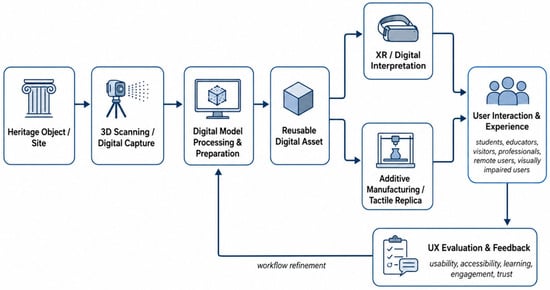
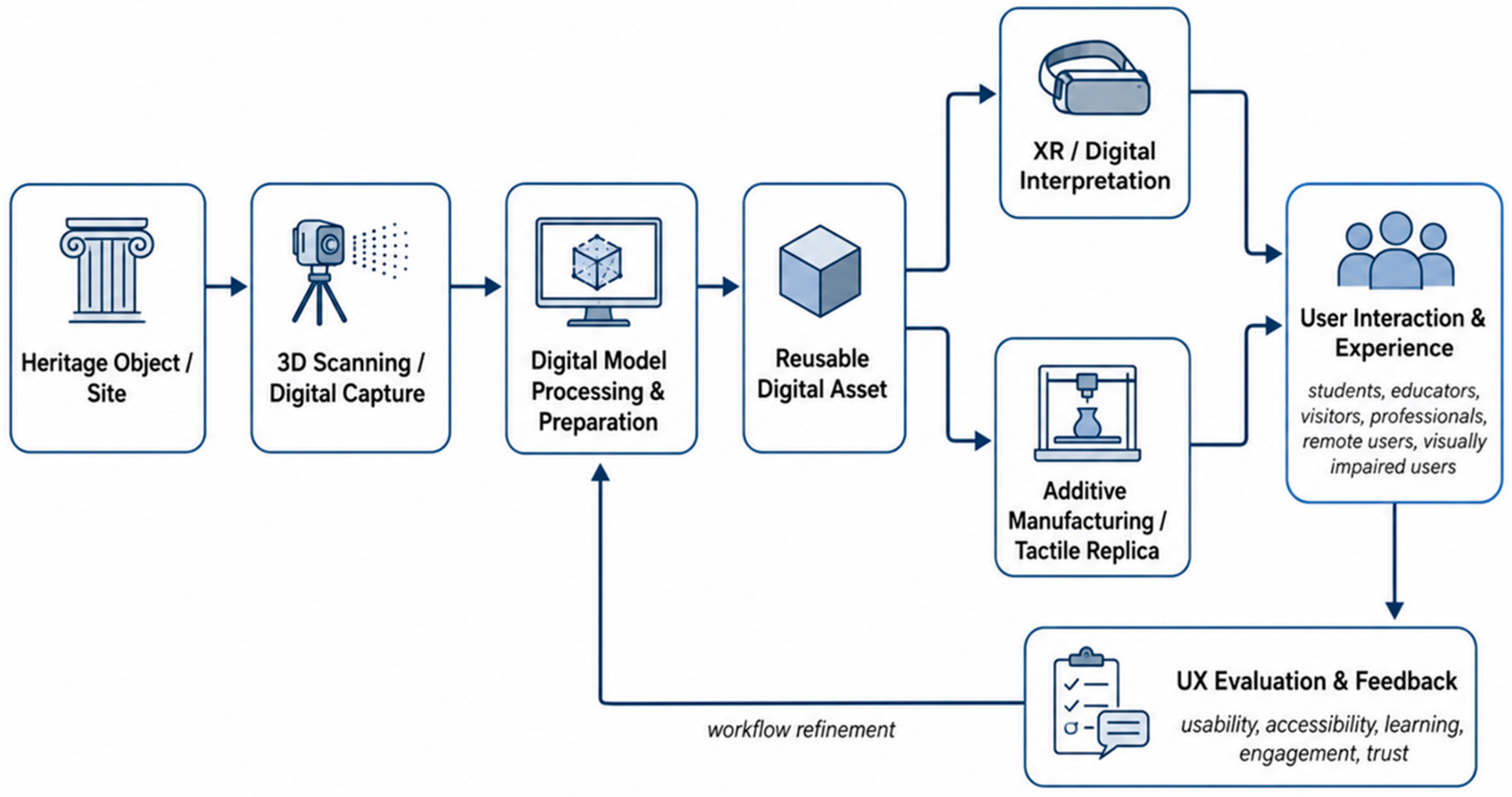
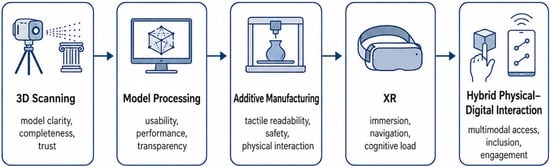
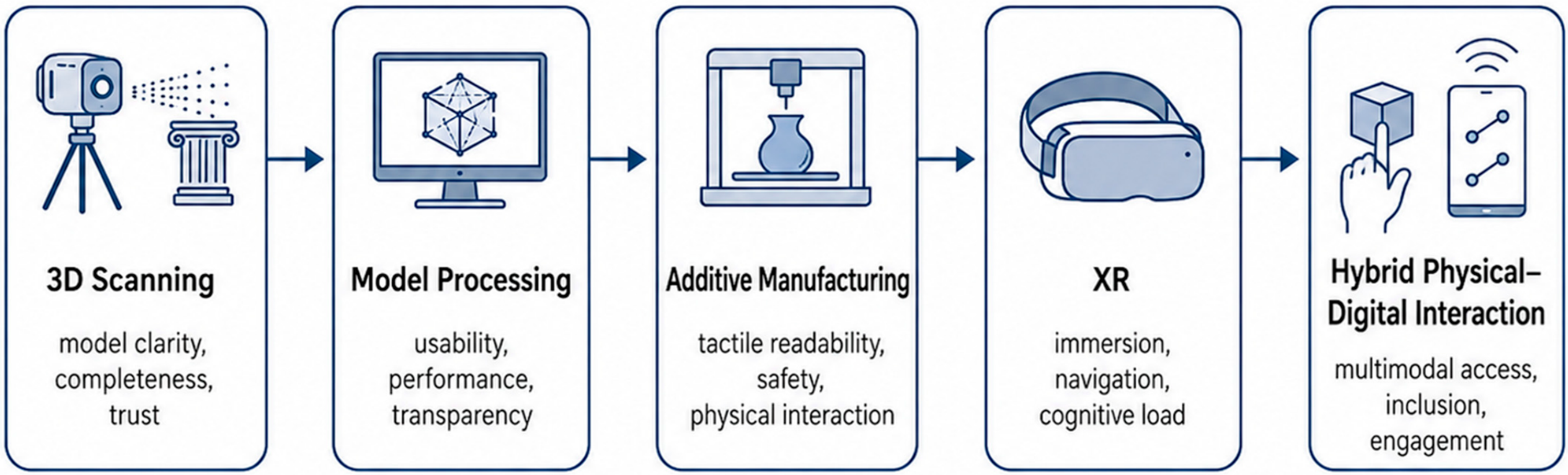
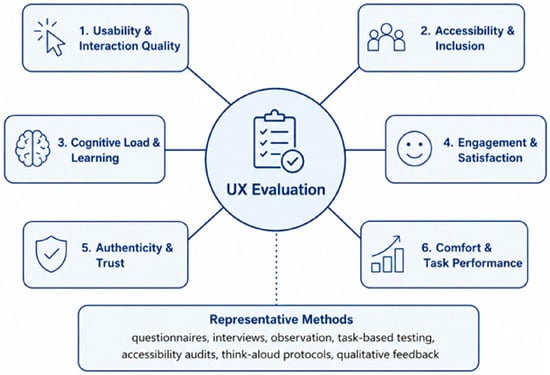

Disclaimer/Publisher’s Note: The statements, opinions and data contained in all publications are solely those of the individual author(s) and contributor(s) and not of MDPI and/or the editor(s). MDPI and/or the editor(s) disclaim responsibility for any injury to people or property resulting from any ideas, methods, instructions or products referred to in the content. |
© 2026 by the authors. Licensee MDPI, Basel, Switzerland. This article is an open access article distributed under the terms and conditions of the Creative Commons Attribution (CC BY) license.