


Abstract
Cellulose has been integral to a range of essential applications throughout history and remains relevant today. This research highlights an important topic: the study of cellulose-based and wood-derived supports in works by Portuguese artists from the twentieth century. Such an investigation is valuable for conservation and heritage science, as materials such as cardboard, plywood, hardboard, and particleboard are common in modern and contemporary artworks but are often not thoroughly characterized or discussed. Micro-infrared spectroscopy, when combined with reference materials, offers a promising means of identifying and analyzing these supports. The study focuses on works by Portuguese artists from 1915 to 1986. Applying principal component analysis to infrared data in the 1000–1200 cm−1 range enabled us to distinguish among the artists. For Pomar, Rodrigo, Vespeira, Calvet, and Hatherly, using hardboard in this range appears most suitable. For Salazar, Teles, and Pinheiro, particleboard is the optimal choice. Beech and eucalyptus plywood are preferable for Pires Vieira and Carlos Botelho. The effort to connect material knowledge with sustainable conservation practices is commendable. The research also aims to relate cellulose-based supports adhering to the European Union’s Sustainable Development Goals, fostering more sustainable and meaningful approaches to cultural preservation.
1. Introduction
1.1. Preamble
Throughout history, Egyptians made papyrus and linen from cellulose [1,2], and Arab civilization also employed this material for paper production [3]. In the Middle Ages, linen and cotton played a vital role in daily life [4,5,6,7]. This highlights the lasting importance of cellulose, which remains essential in many key applications today.
This paper addresses a significant topic relevant to conservation science, technical art history, and preventive conservation. It emphasizes cellulose-based supports in Portuguese twentieth-century artworks, which is especially important due to their prevalence in modern art and the limited research available on them. Consequently, this work has the potential to greatly enhance understanding of modern painting supports. Our focus is on the analysis of cellulose-based samples from Portuguese artists (1915–1986) using micro-infrared spectroscopy (microFTIR). This collection showcases engineered wood fiber products like plywood, particleboard, and hardboard. Plywood consists of thin wood veneers bonded together, often using lower-quality wood and waste materials. Using certified or recycled wood along with bio-based resins boosts sustainability, and its durability reduces environmental impact over time. Particleboard is made from wood particles that are mechanically pressed and glued together. Since natural lignin offers limited adhesion, incorporating recycled or sustainably sourced wood with eco-friendly resins can enhance the bonding sustainability. Hardboard is made through a wet process using bark-free wood residues. These are chipped and defibrated in water, activating lignin as the main binder. The fiber slurry is spread on a surface, water drains off, and a wet mat forms, which is then hot-pressed. Lignin’s thermoplastic nature bonds the fibers, creating a strong, smooth panel. Treatments like thermal tempering, sanding, resin impregnation, or water-resistant coatings can further improve strength, moisture resistance, and surface quality. Additional information on the production of hardboard in Portugal is available in Supplementary Material Section S1.
1.2. Novel Approaches and Other Relevant Conclusions for Cellulose-Based Composites
This section reviews key aspects of preparing cellulose-based composites and highlights emerging methods that emphasize their effects. We specifically focus on studies employing infrared spectroscopy. In Section 1.3, we examine the primary components of cellulose-based wood products and particleboard.
Nicole E. Zander and her team examined composites made from recycled cardboard and wood flour using solid-state shear pulverization. Their goal was to enhance recycled polypropylene by incorporating cellulose waste, aiming to develop a sustainable material suitable for extrusion-based 3D printing. They used Fourier transform infrared spectroscopy and thermogravimetric analysis to qualitatively assess the filler content in the 3D-printed samples. Findings showed that recycled polymer composites had a higher filler content in the printed parts compared to virgin polymers, as confirmed by thermogravimetric analysis [8].
The study by Mojgan Nejad, Tuo Wang, and their colleagues provides an in-depth evaluation of the development and structural analysis of eco-friendly phenolic resins, emphasizing lignin as a sustainable alternative to phenol. Infrared spectroscopy is crucial for detecting functional group modifications and monitoring chemical reactions. Their findings show that the infrared spectra of formaldehyde and glyoxal resins displayed consistent shifts, confirming the formation of methylene linkages [9].
Nicolas Brosse and colleagues show that current methods for recycling wood waste remain ineffective [10]. This research examined steam explosion as a way to remove urea-formaldehyde resin and produce clean fibers from medium-density particleboard (MDF). The team used near-infrared spectroscopy (NIRS), confocal laser scanning microscopy, and scanning electron microscopy (SEM) [10]. Principal component analysis (PCA) of NIRS data revealed clusters associated with nitrogen content and processing conditions. These findings suggest flexible, eco-friendly options for valorizing MDF waste. The study emphasizes the need to select MDF treatments based on reuse goals. Cascading recycling of wood waste is becoming more important. With increasing global MDF use over decades, steam explosion treatment might outperform hot water treatment by removing 83% of resin, allowing quick fiber breakdown, and reducing water consumption by one-third. The optimal treatment depends on the recycling pathway. PCA of NIRS spectra effectively distinguishes waste MDF from recovered fibers. These innovations could promote more sustainable MDF recycling methods [10].
1.3. The Relevance of Cellulose-Based Woods
These materials became more important in twentieth-century art, but we must also consider potential conservation issues or identification challenges they may present. While cardboard is not technically classified as a wood-based panel like MDF, plywood, or particleboard, it is still considered a lignocellulosic material because it primarily consists of plant fibers derived from wood. Typically, plywood, particleboard, and hardboard are categorized as wood-based panels or engineered wood products. We start with wood composites, then move on to lignin, and finally examine cellulose. Table 1 shows the ATR spectra of wood composites [11]. The authors highlight that infrared spectroscopy, when combined with multivariate data analysis, can effectively characterize the entire manufacturing process of wood-based fibers and particleboards, starting from raw forest materials. They used European beech and grand fir as innovative raw materials for wood panels and verified that the boards complied with European standards [11].
Lignin is a promising resource for producing renewable chemicals, materials, and energy [12]. Its complex and variable chemical structure, however, makes analysis challenging, requiring diverse analytical methods. This study demonstrates that ATR-FTIR analysis combined with principal component analysis (PCA) significantly improves the consistency of lignin measurements across labs, while also reducing time, costs, and equipment needs. We foresee this approach being widely useful in industry and academia. For example, as the lignin market grows, pulp mills and biorefineries will need to provide customers with detailed structural data on their lignin streams and uphold strict quality standards to ensure product consistency. Additionally, lignin is the second most common plant polymer, making up about 20–40% of wood [13]. In Table 1, we present the actual wavenumbers obtained from the infrared spectra. The author’s assignment work relies on G-DHP, with Φ representing the ring mode in Wilson/Varsanyi notation [13].
Table 1.
Infrared bands for wood composites by ATR and of lignin in wavenumbers (cm−1) by microFTIR. Obtained from works by Andrea Polle et al. [11] and Notburga Gierlinger [13].
Cellulose can be evaluated on Supplementary Material Section S3, Table S1, and Figure S2. Variations in the infrared spectra of lignin residue samples were noticed, influenced by biomass type (wheat straw, corn stover, or poplar) and pretreatment severity. These differences were especially evident in the absorbance bands at 1267 and 1032 cm−1, in contrast to the strong band near 1120 cm−1. Using estimates of carbon, hydrogen, and oxygen, and correcting for cellulose content, the average chemical formula of lignin is C9H10.2O3.4. This formula exhibits minor fluctuations depending on the biomass source and processing conditions, with a range from C9H9.5O2.8 to C9H11.1O3.6 [14,15].
1.4. Portuguese Artists’ Use of Cellulose Supports in Their Works
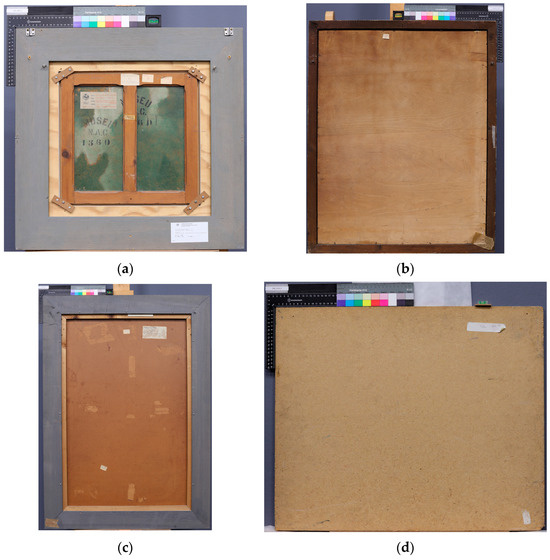
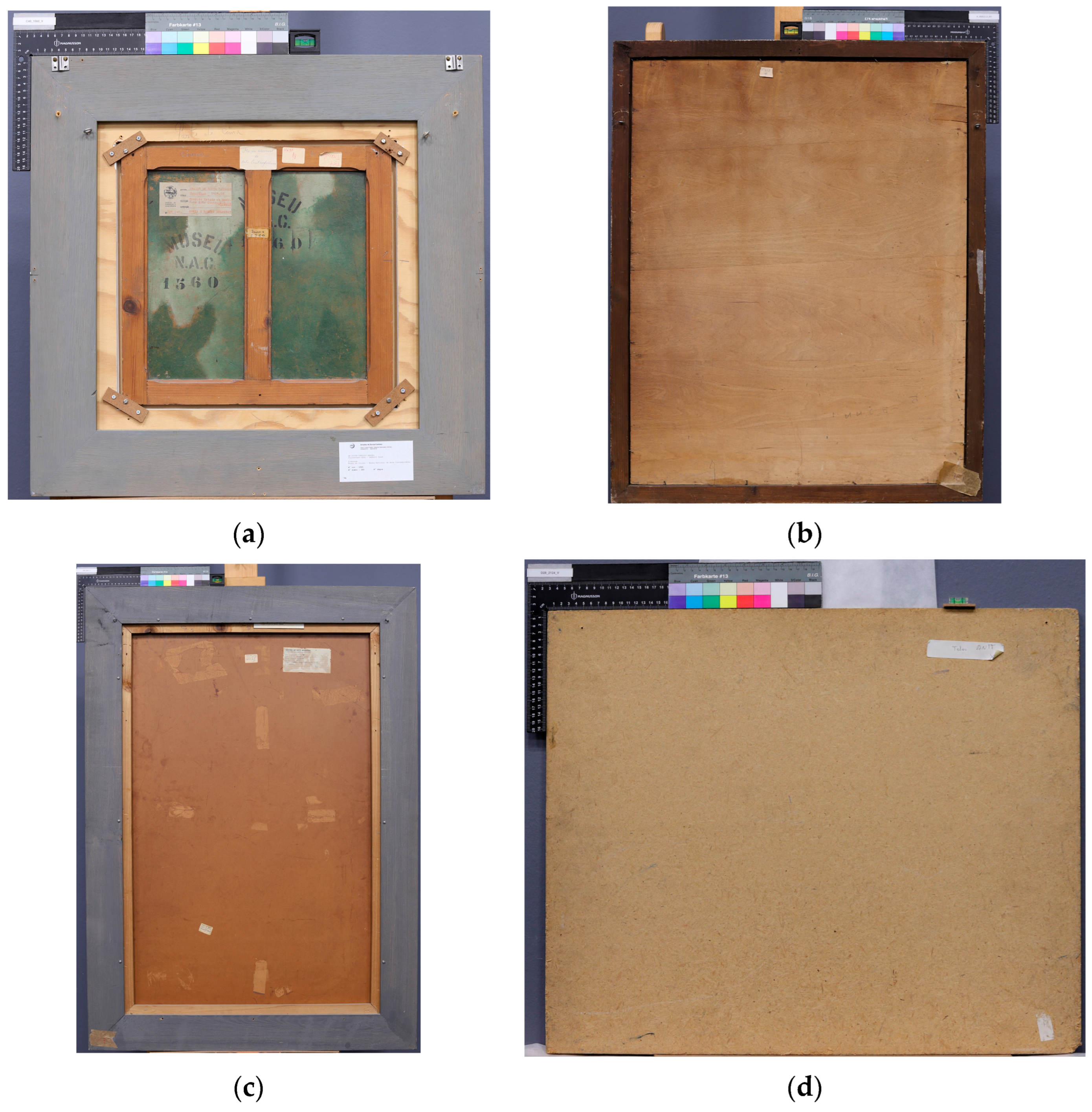
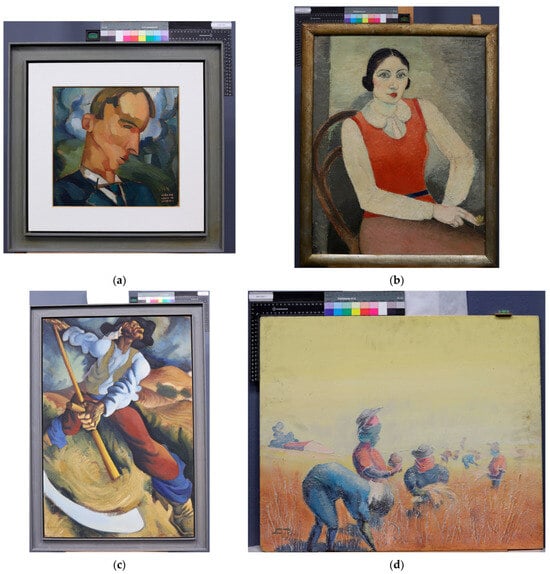
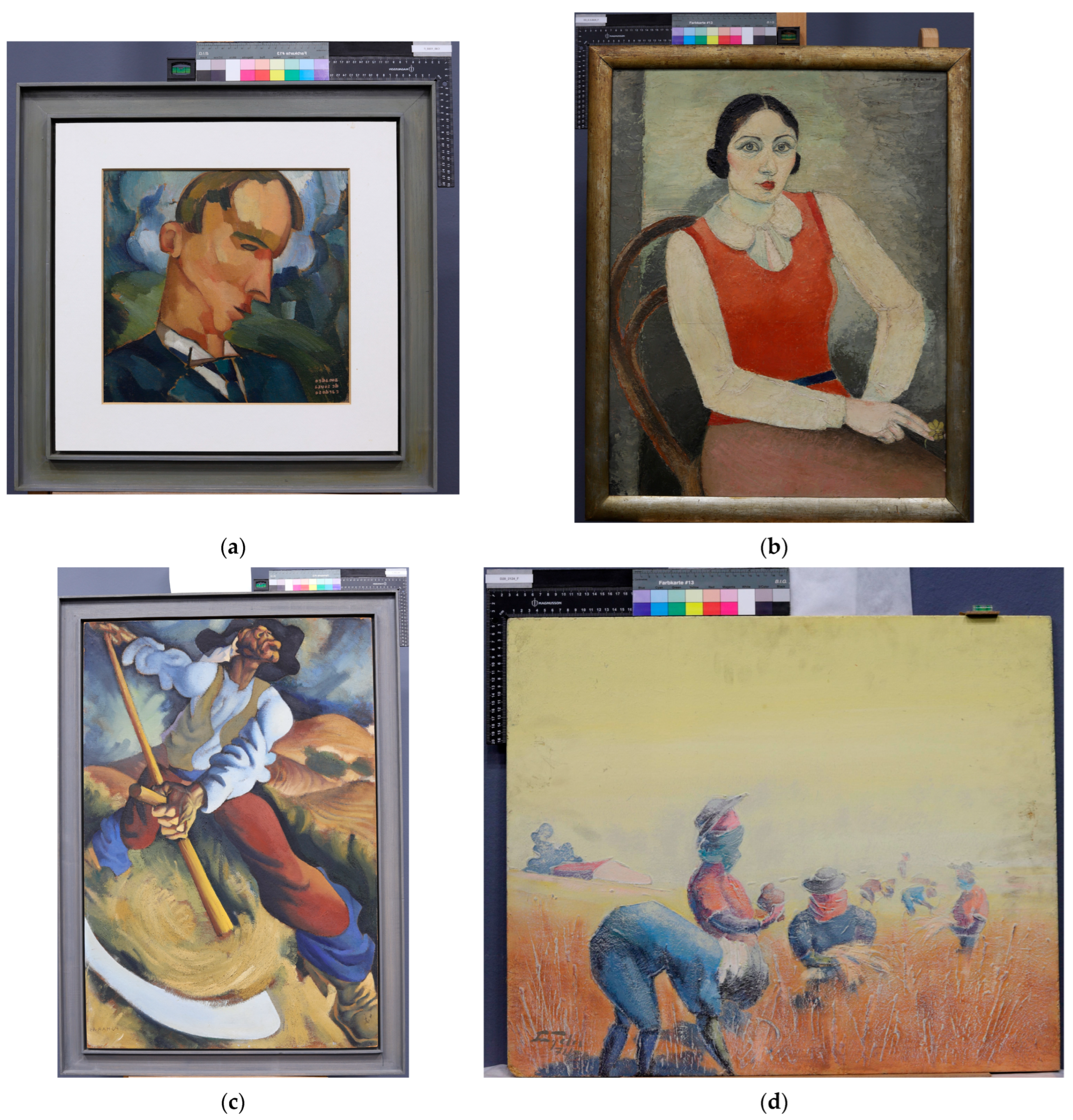
The conservation and technical analysis of painting supports, especially in twentieth-century artworks, starts by addressing particular conservation challenges. Identifying cellulose-based supports can aid in promoting environmentally sustainable conservation techniques. This study explores a collection of paintings on wood-derivative supports housed at the National Museum of Contemporary Art (Museu Nacional de Arte Contemporânea, MNAC), as shown in Figure 1 and Figure 2. It features Portuguese artists from the 20th century, including Amadeo de Souza-Cardoso (1887–1918), Carlos Botelho (1899–1982), Abel Salazar (1889–1946), Joaquim Rodrigo (1912–1997), Cândido Teles (1921–1999), Marcelino Vespeira (1925–2002), Júlio Pomar (1926–2018), Ana Hatherly (1929–2015), Jorge Pinheiro (1931–), and Pires Vieira (1950–) [16]—Tables S1 and S2. Although their artistic paths differ, they all use supports made of cellulose fibers, such as hardboard, plywood, and particleboard. For Amadeo de Souza-Cardoso, mounting was likely done on pressed cardboard. The collection of artworks, reference materials, and sampling points can be accessed through Supplementary Material Section S2, Table S1; Supplementary Material Section S2, Figure S1 and Table S2; Supplementary Material Section S4, Figures S4–S8.
Figure 1.
(a) Sadness, Head by Amadeo de Souza-Cardoso (1915), cardboard; (b) Portrait of Berta Mendes by Carlos Botelho (1932), plywood; (c) Reaper by Júlio Pomar (1945), hardboard; (d) Reapers by Cândido Teles (1974), particleboard. Photography by Susana Duarte.
Figure 2.
Original paintings: (a) Sadness, Head (Tristezas, Cabeça) by Amadeo de Souza-Cardoso (1915); (b) Portrait of Berta Mendes (Retrato de Berta Mendes) by Carlos Botelho (1932); (c) Reaper (Gadanheiro) by Júlio Pomar (1945); (d) Reapers (Ceifeiras) by Cândido Teles (1974). Photography: Susana Duarte.
This selection enables analysis of cost-effective lignocellulosic materials, enhancing resource efficiency and sustainability in line with the EU’s Sustainable Development Goals. Recognizing cellulose-based supports also promotes sustainable conservation practices. More detailed information, including timeline and materials, is available in the Supplementary Material (Section S2).
2. Materials and Methods
2.1. Sample Description
The study analyzed micro-samples taken from painting supports made of wood-based panels, such as plywood, particleboard, and hardboard, from the twentieth-century collection of the National Museum of Contemporary Art (Museu Nacional de Arte Contemporânea, MNAC). The reference materials based on hardboard, plywood, and particleboard are modern materials. Micro-samples of contemporary wood-based panels served as references for analysis. Further reference micro-samples of cardboard, cellulose-based paper, and wood flour were also included, see Supplementary Material Section S3.
A portable X-ray fluorescence device was used to examine the artwork samples, aiding material identification and comparison of results, see Supplementary Material Section S5. These on-site analyses were conducted in a museum setting, using a non-invasive method that aligns with best practices in cultural heritage research.
2.2. Microscopy
The micro-sampling was conducted under a Leica MZ16 stereomicroscope equipped with a Leica ICD digital camera and a fiber-optic light Leica system (Leica KI 1500 LCD, Leica Microsystems GmbH, Wetzlar, Germany). A set of 10× ocular lenses and objectives, ranging from 0.71× to 11.5× magnification, provided a total resolution of 7.1× to 115×.
The micro-samples are collected under the microscope using the following micro-tools from Ted Pella® (Redding, CA, USA): a micro chisel nº13603 attached to a micro graver oval nº13611.
2.3. Micro-Infrared Spectroscopy
Infrared analyses were performed using a Nicolet Nexus spectrophotometer coupled to a Continuum microscope (15× objective) with an MCT-A detector. The spectra were collected in transmission mode from 4000 to 650 cm−1, in 50 μm2 areas, which were subsequently converted to absorption; data acquisition was performed at 8 cm−1 and 128 scans, using a Thermo diamond anvil compression cell. CO2 may occasionally appear in the absorption spectra around 2400–2300 cm−1, but it was removed from the spectra unless the sample was in an upright position. The microFTIR device was manufactured by Thermo Nicolet in the USA (Waltham, MA, USA) and installed by Unicam Sistemas Analíticos Lda (Algés, Portugal).
For each reference material, three spectra were taken, and at least two measurements were made. The spectra with the best signal-to-noise ratio were chosen (see Supplementary Material Sections S3 and S4).
For the artists, the support was analyzed and at least two points were acquired in 50 μm2 areas, and the best spectra were selected (below 2).
2.4. Chemometrics
In Orange Data Mining, the infrared spectra were initially preprocessed using the “Normalize Spectra” option to minimize variability due to intensity differences among samples. Spectral variables were then chosen using the “Select Columns” widget, focusing on the fingerprint region from 1600 to 650 cm−1 (247 variables). Before conducting principal component analysis (PCA), samples were selected using the “Select Rows” widget. Finally, PCA was performed on the processed dataset using the default mean-centering method.
PCA was employed to extract complex information that univariate methods struggle to obtain. Using PCA results and assuming that signals can be linearly reconstructed from principal components, we compared the samples and visualized the differences, facilitating initial clustering and replicate analysis. The primary aim was to assess how similar the reconstructed infrared spectra are and to evaluate the consistency of the signals.
2.5. Portable X-Ray Fluorescence
In this study, analyses were initially carried out using portable X-ray fluorescence (pXRF), allowing in situ measurements and minimizing physical intervention on the artworks. The use of pXRF is consistent with sustainable and responsible research practices in the field of cultural heritage, in line with the principles promoted by the European Union’s Sustainable Development Goals.
The portable XRF system consisted of an X-ray generator (Mini-X, Rh target, 50 kV, 200 μA max., Amptek Inc., Bedford, MA, USA) coupled with a silicon PIN detector (XR-100CR, 7 mm2 detection area, 500 μm thickness, and a 12.5 μm Be window, Amptek Inc., Bedford, MA, USA). The angle between the incident and emitted beams was fixed at 90°, to reduce background contributions due to Compton scattering. The energy resolution of the system was 190 eV at 5.9 keV. Spectra were acquired using PocketMCA software, with the X-ray generator operated at 40 kV and 40 μA and an acquisition time of 120 s per measurement.
For more information on this spectrum, see Supplementary Material Section S5.
3. Results
3.1. Cellulose-Based Materials in Portuguese Artists
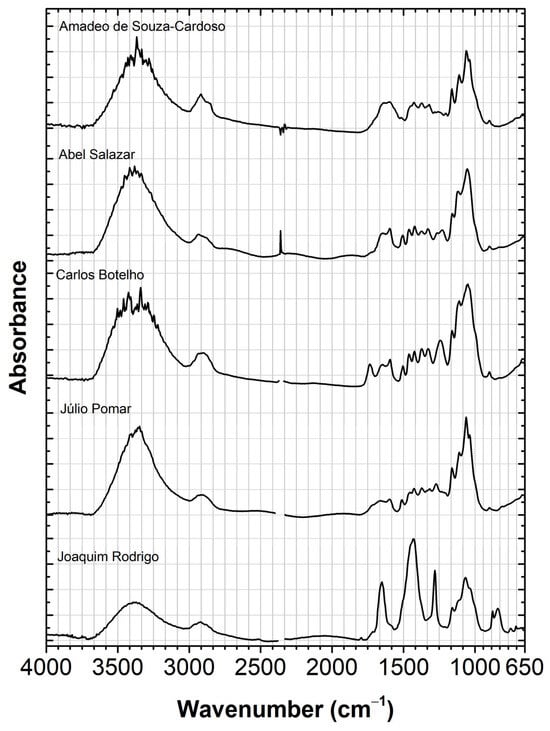
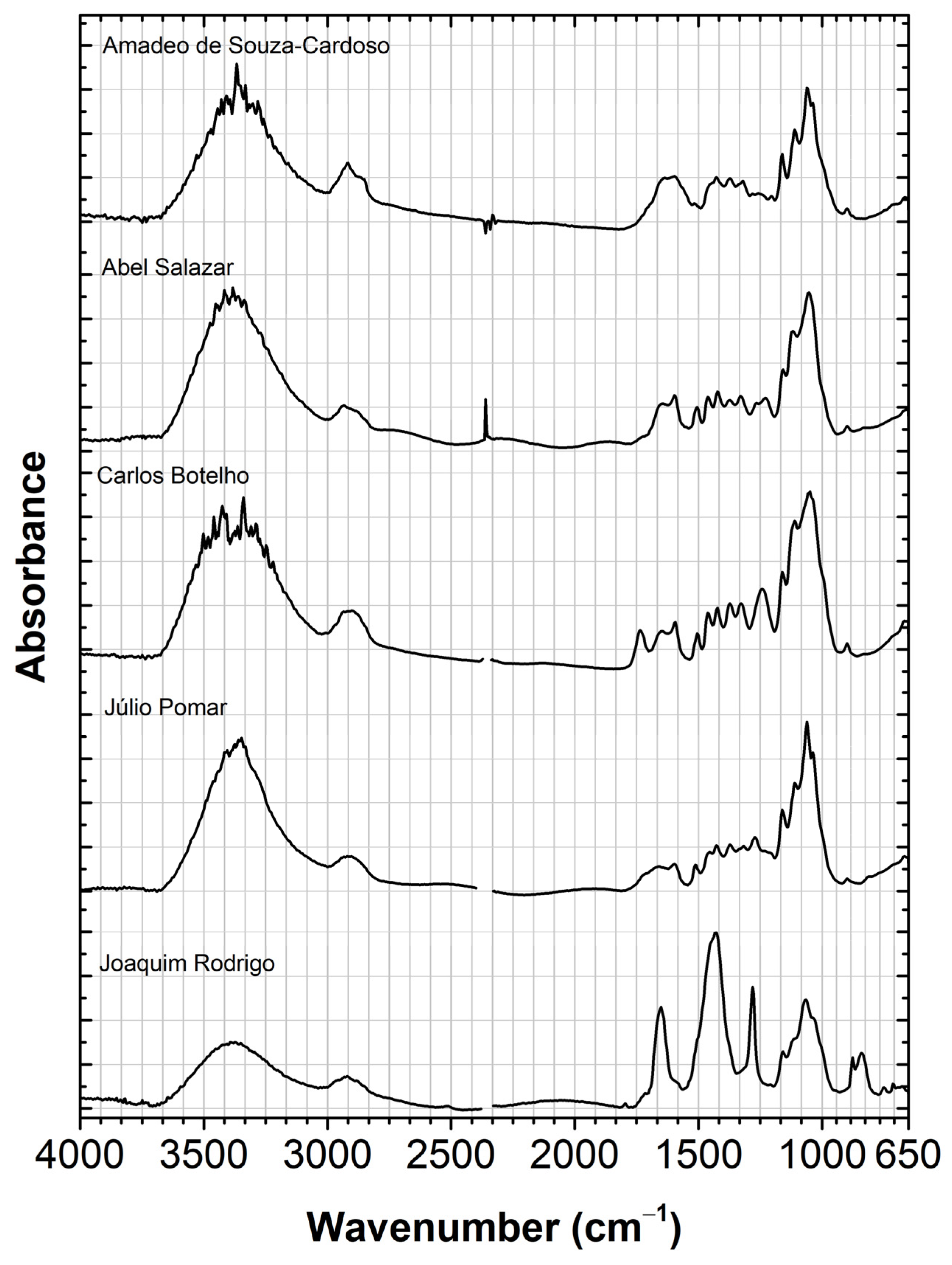
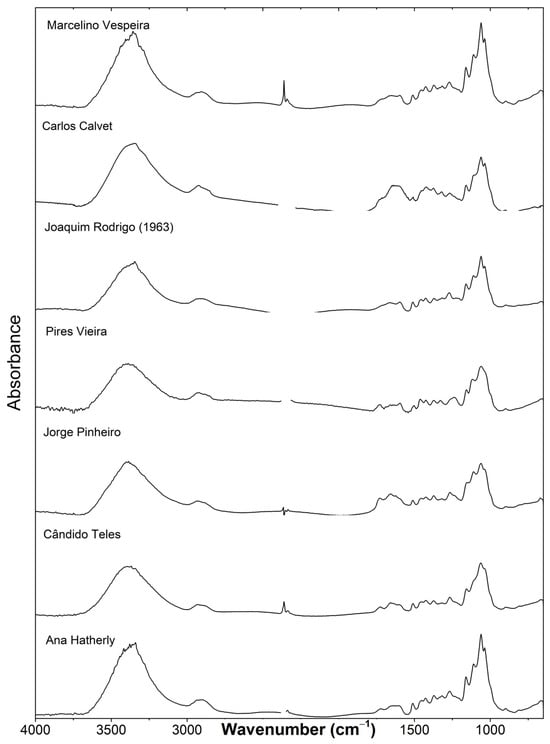
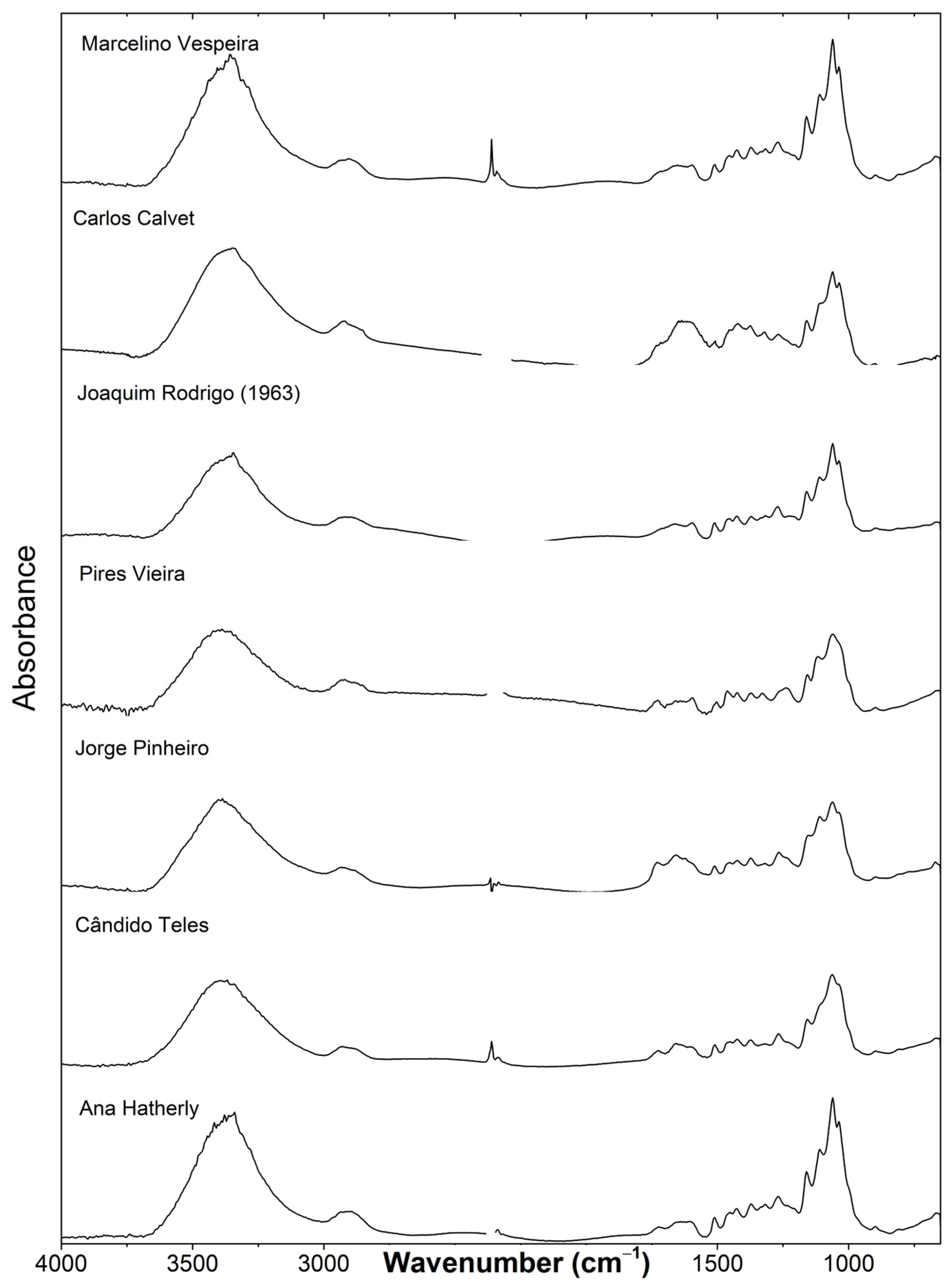
In this section, we analyze samples using micro-infrared spectroscopy (microFTIR), as described in Section 2.2 and Section 2.3. There are two main areas: the O-H region (4000–3000 cm−1) and the fingerprint region (1700–1000 cm−1). These are where the strongest signals appear. However, in the O-H region, the low signal-to-noise ratio makes analysis more difficult. The fingerprint region, with medium-to-low intensities, is also very interesting to exploit and contains lignin. In this fingerprint region, peak variations are complex, so we used principal component analysis (PCA) to better distinguish these areas (1600–650 cm−1). We will now discuss each artist individually, Figure 3 and Figure 4.
Figure 3.
Infrared spectra of Portuguese artists, Amadeo (1915), Abel Salazar (1930), Botelho (1932), Pomar (1945), Joaquim Rodrigo (1955). The absorbance for each artist is described next, from top to bottom: 0–2, 0–1.5, 0–2.4, 0–1.3, 0–0.9.
Figure 4.
Infrared spectra for Portuguese artists, Marcelino Vespeira (1956), Calvet (1959), Joaquim Rodrigo (1963), Pires Vieira (1969), Jorge Pinheiro (1969), Cândido Teles (1974), and Ana Hatherly (1986). The absorbance for each artist is next described, from top to bottom, 0–1.4, 0–0.4, 0–0.8, 0–0.64, 0–0.84, 0–0.84, 0–1.4.
For Amadeo de Souza-Cardoso, the best match is cardboard. Lignin is also present in the fingerprint region.
For Abel Salazar, the best match is wood flour, and possibly some plywood or hardboard.
For Carlos Botelho, we identified poly(vinyl acetate), which was more difficult to access. However, in Table 2, we obtained infrared spectra between 1700 and 650 cm−1, suggesting that plywood made from beach or eucalyptus could be a suitable option.
Table 2.
Infrared bands for Portuguese artists, Amadeo (1915), Salazar (1930), Botelho (1932), Pomar (1945), Rodrigo (1955). In the O-H region, the noise is higher. In the 1700–650 cm−1 fingerprint region, each reference shows different peak patterns. Strong and weak bands.
Júlio Pomar’s ideal match might be a particleboard or hardboard. Lignin is also detected in the fingerprint region.
For Joaquim Rodrigo, due to the new components in the fingerprint area—such as high levels of calcium carbonate—we focused our analysis on the cellulose region, Table 3. Joaquim Rodrigo frequently used calcium carbonate in his works.
Table 3.
Infrared bands for Portuguese artists, Marcelino Vespeira (1956), Carlos Calvet (1959), Joaquim Rodrigo (1963), Pires Vieira (1969), Jorge Pinheiro (1969), Cândido Teles (1974), Ana Hatherly (1986). In the O-H region, the noise is higher. In the 1700–650 cm−1 fingerprint region, each reference shows different peak patterns. Strong and weak bands.
We believe that hardboard is the most suitable match for Marcelino Vespeira. Lignin is also present in the fingerprint region.
Carlos Calvet’s infrared spectrum is best matched with cardboard or particleboard. Lignin is also present in the fingerprint region, and oxidation may be occurring there.
Joaquim Rodrigo’s infrared spectrum most likely matches a hardboard. Lignin is also found in the fingerprint region.
For Pires Vieira’s match likely includes partially oxidized new elements in the fingerprint region and could align well with plywood or hardboard.
For Jorge Pinheiro, the infrared spectrum is a suitable match for particleboard or hardboard. However, some oxidation products are found in the fingerprint region.
For Cândido Teles, we acquired clear spectra showing the presence of particleboard.
For Ana Hatherly, we obtained clear spectra showing the presence of hardboard or particleboard.
Overall, we observed several differences in the fingerprint region among all Portuguese artists, Figure 3 and Figure 4. In the following sections, we will examine woods and particleboards to support our interpretation of this data.
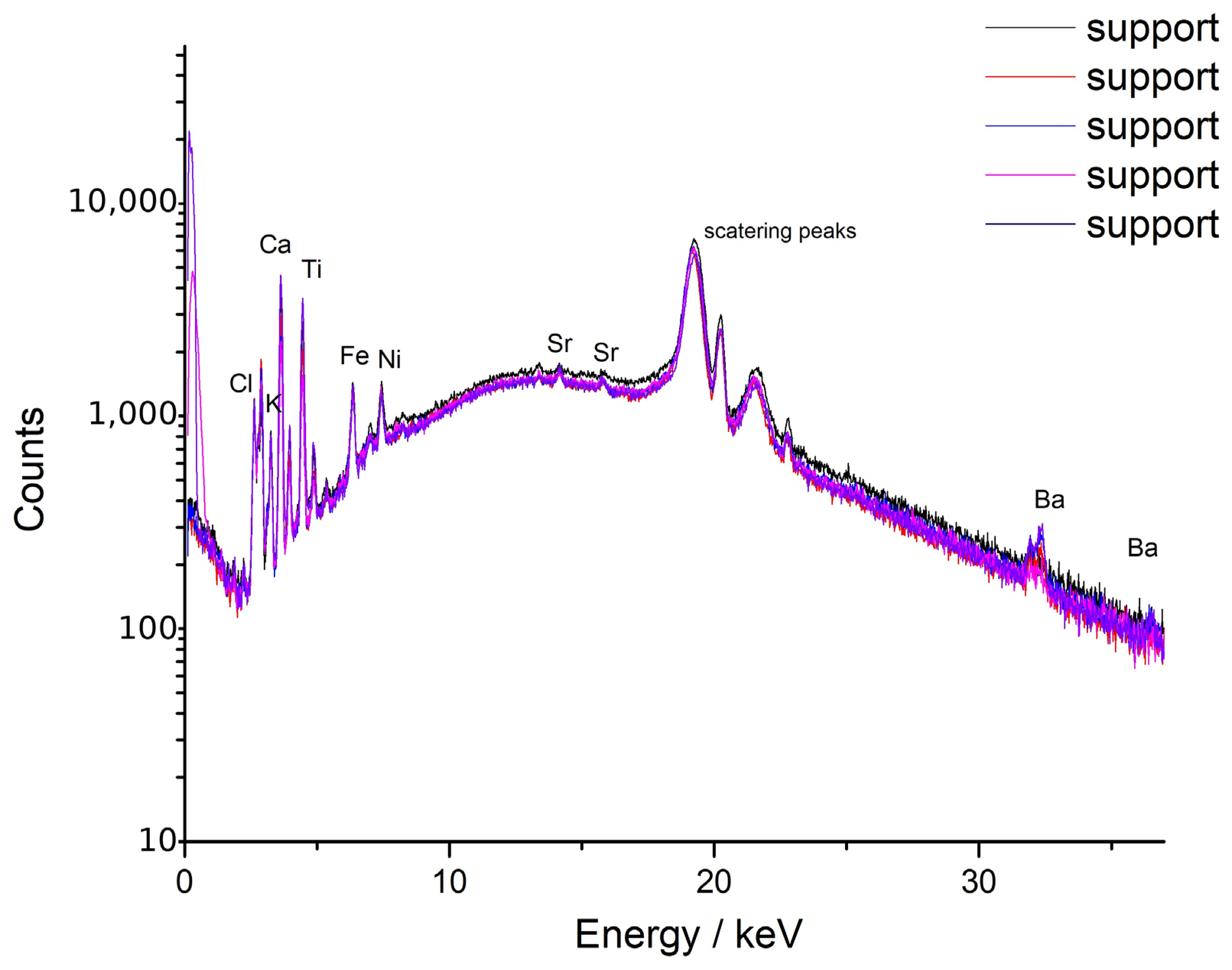
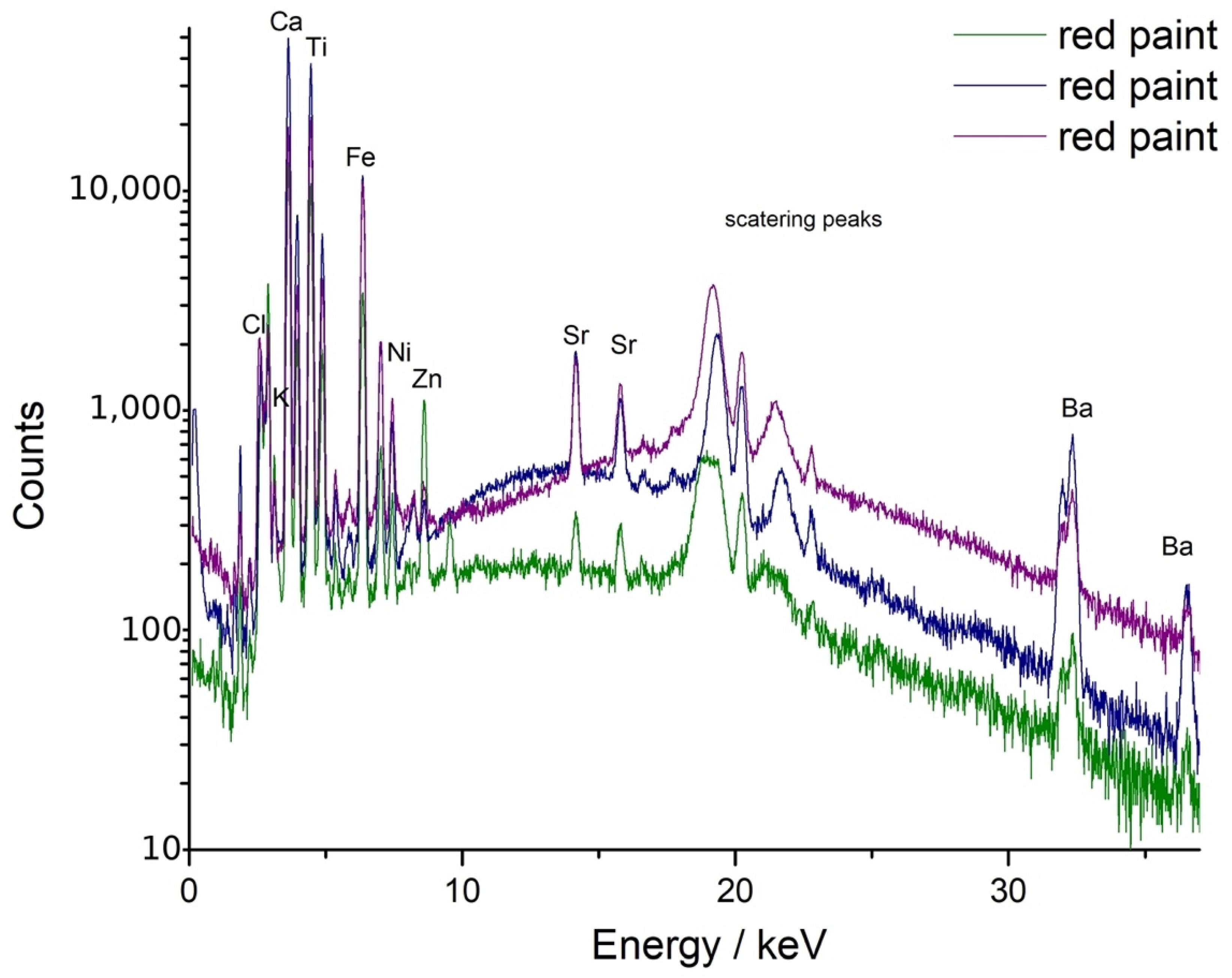
Figure 5 presents the obtained results for different EDXRF point analyses performed on the support of Pires Vieira’s (1969) painting, where the presence of Ba, Sr, Zn, Fe, Ti, and Ca is evident. Nevertheless, these signals are coming from the painted surface of the artwork—painting + preparation layer, merely being attenuated in the support, as can be seen in Figure 6 with the spot analysis of thepainted layer.
Figure 5.
EDXRF spectra obtained from the support of Pires Vieira’s (1969) painting.
Figure 6.
EDXRF spectra obtained from the painted surface of Pires Vieira’s (1969) painting.
Similar behavior was observed for the other paintings where, due to the penetration of the radiation, all layers of the paintings were probed and not just the cellulose-based support. For this reason, pXRF data is presented as contextual complimentary information rather than a direct method for characterization of organic supports. For more information on this spectrum, see Supplementary Material Section S5.
3.2. Infrared Spectra for Plywood, Cardboard, Hardboard and Particleboard
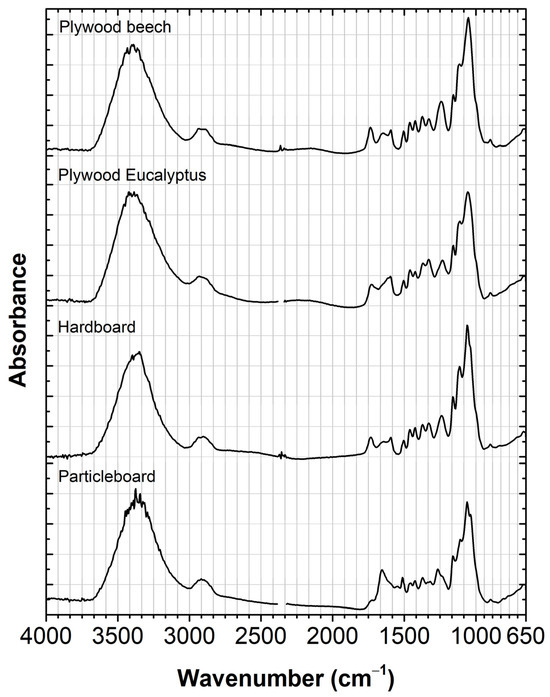
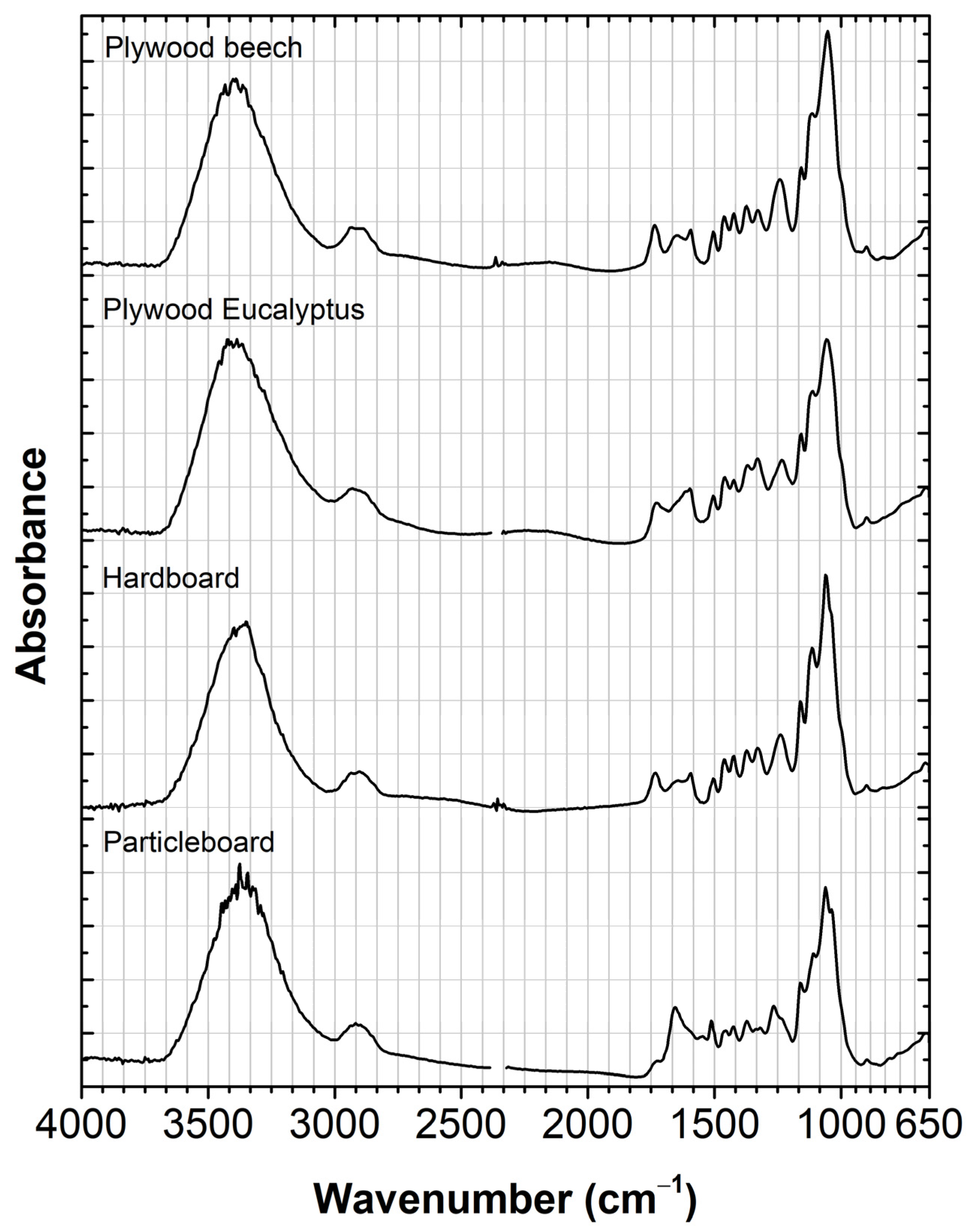
We will start by analyzing the infrared spectra in the region between 1700 and 1000 cm−1. In this region, the peaks for plywood beech are at 1114.12 and 1050.00 cm−1; for plywood eucalyptus at 1112.6 and 1055.52 cm−1; for hardboard at 1113.6 and 1059.1 cm−1; and particleboard at 1108.99 and 1060.27 cm−1. We also detected a peak for particleboard at 1037.6 cm−1. In the fingerprint region, the peaks assigned in Table 4 and Figure 7 show different intensities and assignments. In the first region of the spectra, the O-H region, the peaks for plywood, beech, and eucalyptus are similar (3398 and 3396 cm−1), but for hardboard it is between 3380 and 3387 cm−1, and for particleboard, it is at 3364 cm−1.
Table 4.
Infrared bands for plywood (beech and eucalyptus), hardboard, and particleboard. In the O-H region, the noise is higher. In the 1700–650 cm−1 fingerprint region, each reference shows different peak patterns. Strong and weak bands.
Figure 7.
Infrared spectra and absorbance for plywood beech (0–1.44), plywood eucalyptus (0–0.94), hardboard (0–0.9) and particleboard (0–1.8).
The hardboard, cardboard, and particleboard may be associated with the region 1200 and 1000 cm−1, which may be a good fit for artists such as Amadeo de Souza-Cardoso, Júlio Pomar, Joaquim Rodrigo, Marcelino Vespeira, Carlos Calvet, Jorge Pinheiro, Cândido Teles, and Ana Hatherly, Table 4 and Figure 7.
3.3. Infrared Spectra of Woods from Pine, Brown, Oak, and Beech
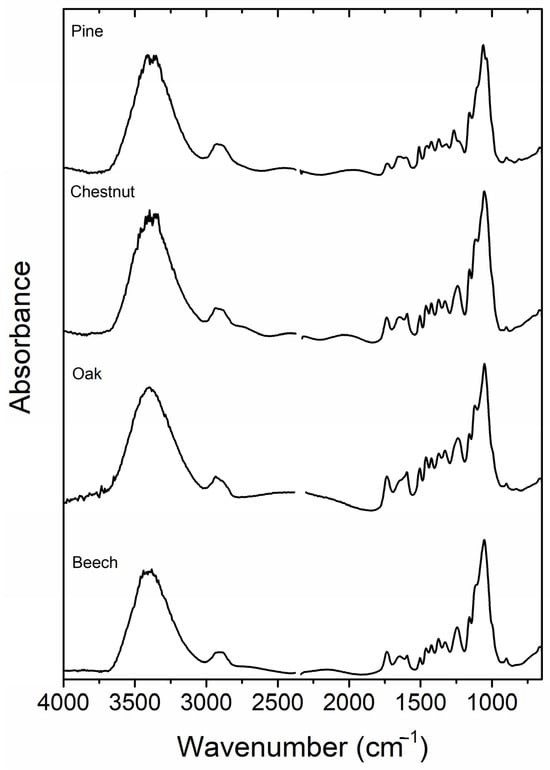
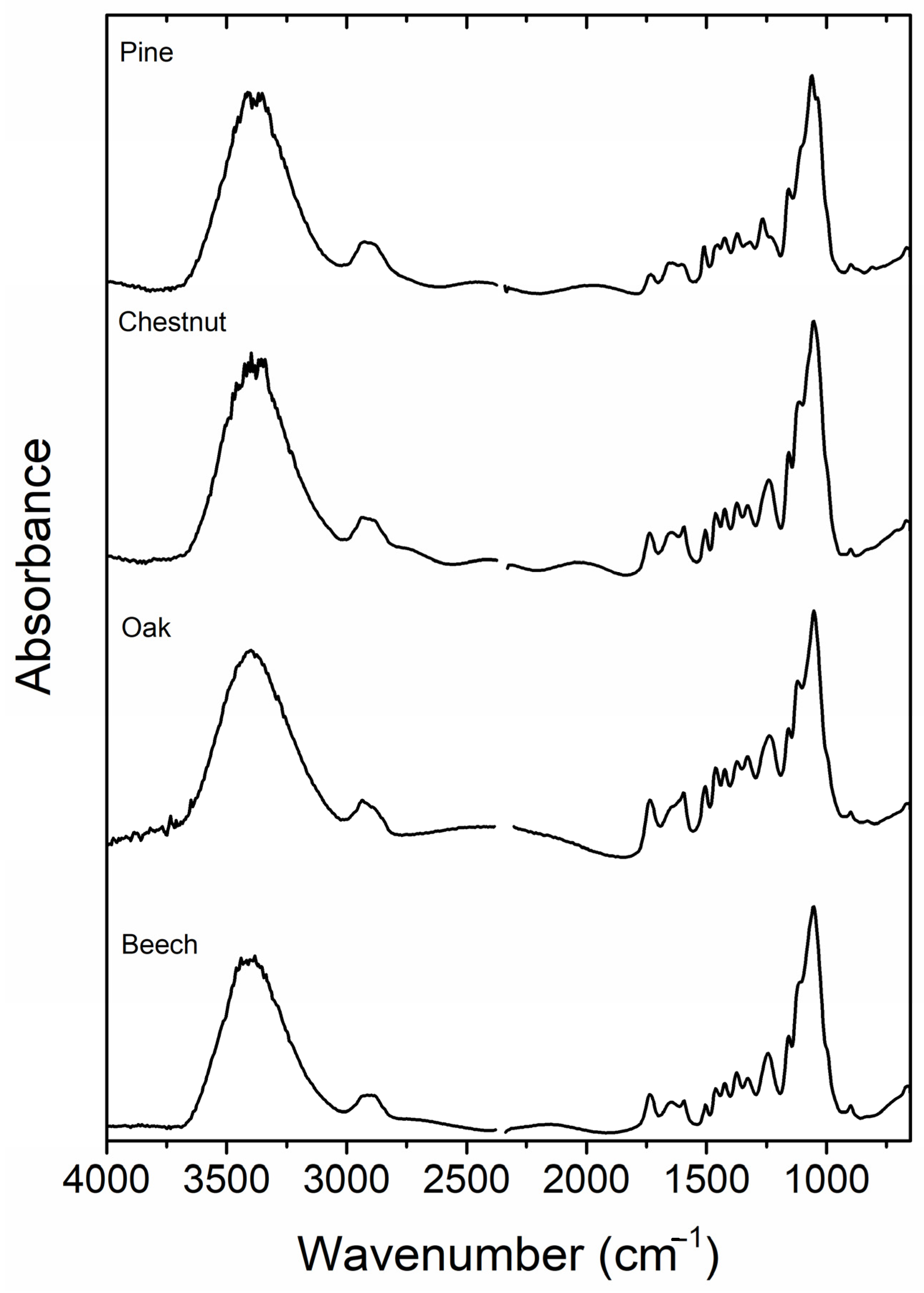
The infrared spectra of woods such as chestnut and oak in both the fingerprint and cellulose regions exhibit some similarities, although the peaks in the fingerprint region vary in intensity; see Table 5 and Figure 8 for details. For additional information, see Supplementary Material Sections S3 and S4. The wood pine also displays similarities, as shown in Table 5, although the wood beech presents minor variations in both regions.
Table 5.
Infrared bands for wood of pine, chestnut, oak, and beech. In the O-H region, the noise is higher. In the 1700–650 cm−1 fingerprint region, each reference shows different peak patterns. Strong and weak bands.
Figure 8.
Infrared spectra and absorbance for woods of pine (0–1.5), chestnut (0–1.6), oak (0–0.6) and beech (0–1.5).
We have analyzed these references considering their potential relevance to our studies of the artists.
4. Discussion and Principal Component Analysis
Since Amadeo’s painting was created in 1915, it was probably mounted on pressed cardboard rather than hardboard, which only became common in the 1920s [16].
Visual analysis shows that the works by Carlos Botelho and Pires Vieira are mounted on plywood, as evidenced by the visible wood layers at the edges, which confirms the microFTIR results. The supports for Júlio Pomar, Joaquim Rodrigo, Marcelino Vespeira, and Ana Hatherly seem to be made of hardboard, consistent with the analysis. Jorge Pinheiro’s and Cândido Teles’s paintings appear to be on particleboard, distinguished by wood particles bonded with synthetic resins—unlike hardboard, where lignin acts as the binder. For more information on the artists’ timeline, following Susana Duarte’s proposals, please see Supplementary Material Section S2.
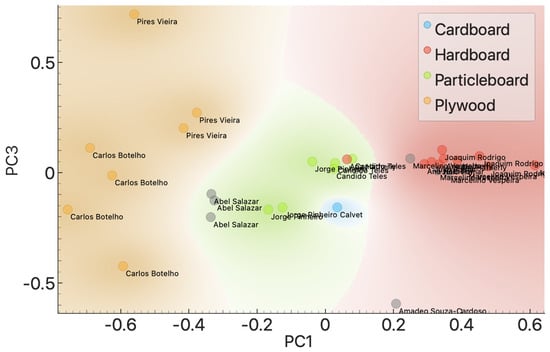
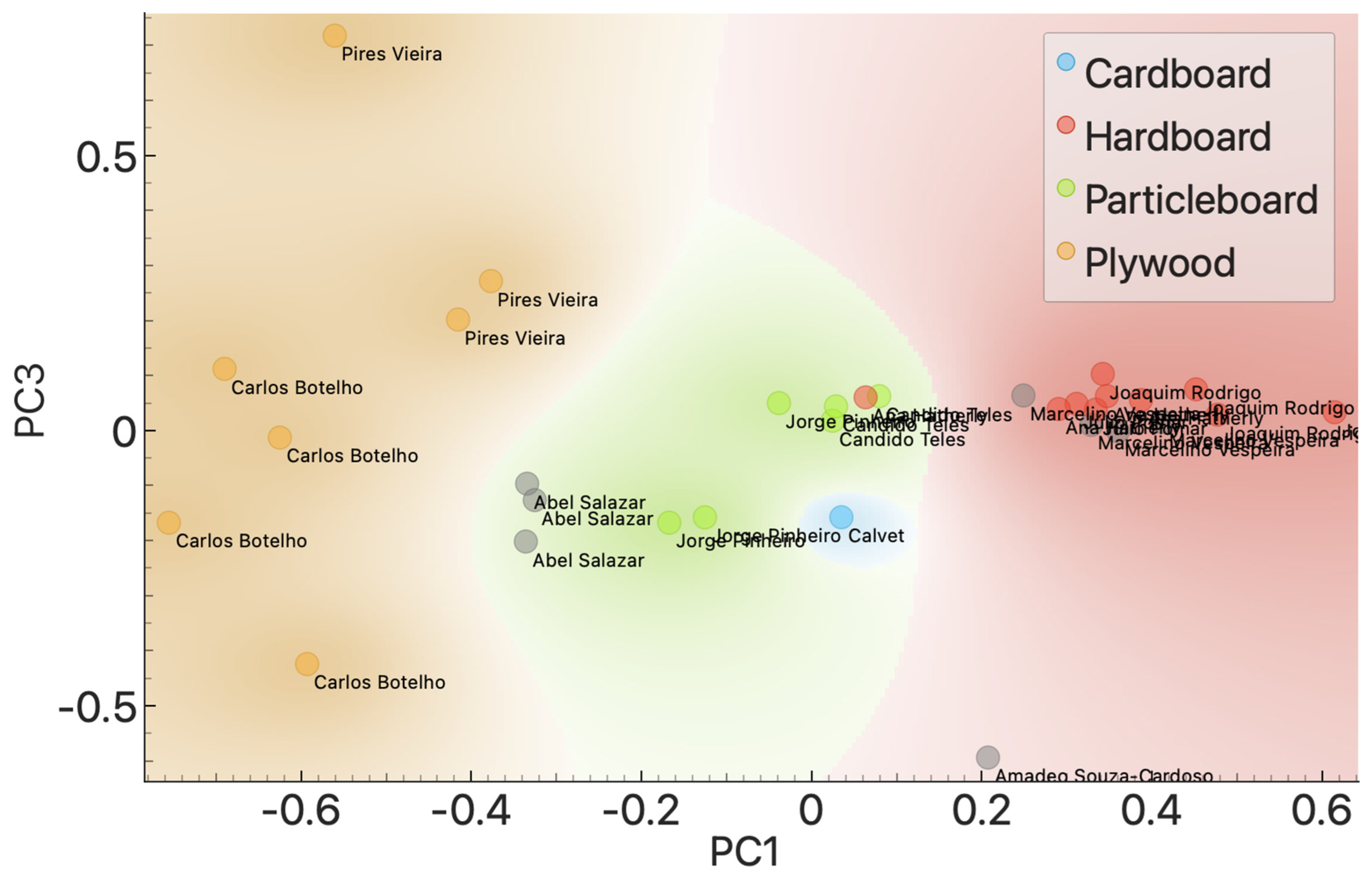
Principal component analysis, initially using reference materials such as cardboard, hardboard, false parchment (a cellulose-based paper), particleboard, and plywood, was then employed to further distinguish between artists—Figure 9. We analyzed the fingerprint region between 1600 and 650 cm−1.
Figure 9.
Principal component analysis. Cardboard, hardboard, and false parchment is a cellulose-based paper, particleboard and plywood, as compared with the Portuguese artists.
Regarding the artists Júlio Pomar, Joaquim Rodrigo, Marcelino Vespeira, and Ana Hatherly, the hardboard appears to be a suitable choice. Similarly, for Abel Salazar, Cândido Teles and Jorge Pinheiro the best match is particleboard. For Pires Vieira and Carlos Botelho the best match is plywood made from beech and eucalyptus is a closer match, Figure 9.
5. Conclusions
These topics are relevant and summarize the study’s main scientific findings. MicroFTIR was very effective (1700–650 cm−1 fingerprint region), with principal component analysis significantly helping to differentiate the artists (1600–650 cm−1). Artists like Júlio Pomar, Joaquim Rodrigo, Marcelino Vespeira, and Ana Hatherly tend to use hardboard. In contrast, Abel Salazar, Cândido Teles, and Jorge Pinheiro mostly prefer particleboard. Beech and eucalyptus plywood are more comparable to Pires Vieira and Carlos Botelho, as shown in Figure 9. The data gathered will support improvements in conservation methods.
This work aims to connect cellulose-based projects with the European Union’s Sustainable Development Goals, creating a more sustainable and meaningful way to preserve our cultural heritage. By exploring eco-friendly options, we can genuinely make a difference in tackling some of the industry’s biggest challenges. The incredible potential of EU initiatives, such as the European Green Deal, the Circular Economy Action Plan, and the European Industrial Strategy, offers exciting opportunities for meaningful positive change [17,18,19,20].
Supplementary Materials
The following supporting information can be downloaded at: https://www.mdpi.com/article/10.3390/app16136556/s1, Figure S1: Micro-samples from Vieira, Teles, Vespeira, Hatherly and Salazar; Figure S2: Infrared spectra of cellulose-based paper and wood flour, obtained by us; Figure S3: Hardboard, plywood and particleboard; Figure S4: Oak wood; Figure S5: Pine wood; Figure S6: Chestnut wood; Figure S7: Beech wood; Figure S8: XRF data for Portrait of Berta Mendes by Carlos Botelho (1932). All spectra are overwhelmed by the presence of Ba and Pb likely belonging to the preparation layer; Figure S9: XRF data for Portrait of Berta Mendes by Carlos Botelho (1932); Figure S10: XRF data for the support of Reapers by Cândido Teles (1974); Figure S11: XRF data for the painted regions of Reapers by Cândido Teles (1974); Figure S12: XRF data for the painted regions of Oil 97—Boat by Marcelino Vespeira (1956); Figure S13: XRF data for the support of Oil 97—Boat by Marcelino Vespeira (1956); Table S1. Wood-based supports of paintings by Portuguese artists: chronology and materials; Table S2: References from artists Amadeo, Botelho, Pomar, Rodrigo and Pinheiro; Table S3: Infrared bands for cellulose-based paper, wood flour and a hardboard reference using micro-infrared spectroscopy; Table S4: Infrared band assignments for bleached hardwood kraft pulp (HW) and bleached softwood kraft pulp (SW) by ATR FTIR, details by ref. [15] Zhiwen Chen et al.
Author Contributions
Conceptualization, M.J.M. and S.D.; methodology, S.D., S.P. and M.J.M.; investigation, S.D., J.L., M.J.M., P.N. and S.P.; writing—original draft preparation, M.J.M. and S.D.; writing—review and editing, M.J.M., S.D., J.L. and P.N.; supervision, S.P., A.L.G., C.C. and E.F. All authors have read and agreed to the published version of the manuscript.
Funding
This work was funded by national funds from FCT—Fundação para a Ciência e a Tecnologia, I.P., under the scope of the projects UID/50006/2025, UID/PRR/50006/2025 and LA/P/0008/2020 of the Associated Laboratory for Green Chemistry—LAQV REQUIMTE (https://doi.org/10.54499/UID/50006/2025, https://doi.org/10.54499/UID/PRR/50006/2025 and https://doi.org/10.54499/LA/P/0008/2020) as well as UID/04138/2025 (https://doi.org/10.54499/UID/04138/2025), and under the project “Wood-based Materials as Supports in Contemporary Painting—Their Conservation State at the National Museum of Contemporary Art” with grant number: 10.54499/PRT/BD/152877/2021. Project UID/50006/2023.
Data Availability Statement
Further research data may be provided by the authors Maria J. Melo and Susana Duarte.
Acknowledgments
The authors express their gratitude to the National Museum of Contemporary Art for supporting the study, especially in sample collection. They also acknowledge the José de Figueiredo Laboratory and Diana Conde for their technical assistance throughout the process.
Conflicts of Interest
The authors declare no conflicts of interest.
References
- Leach, B.; Tait, J. Papyrus. In Ancient Egyptian Materials and Technology, 1st ed.; Nicholson, P.T., Shaw, I., Eds.; Cambridge University Press: Cambridge, UK, 2000; Volume 1, pp. 227–253. [Google Scholar]
- Vogelsang-Eastwood, G. Textiles. In Ancient Egyptian Materials and Technology, 1st ed.; Nicholson, P.T., Shaw, I., Eds.; Cambridge University Press: Cambridge, UK, 2000; Volume 1, pp. 268–298. [Google Scholar]
- Constable, O.R. Trade and Traders in Muslim Spain. In The Commercial Realignment of the Iberian Peninsula, 900–1500, 1st ed.; Cambridge University Press: Cambridge, UK, 1996. [Google Scholar]
- Cardon, C. Natural Dyes, 1st ed.; Archetype Books: London, UK, 2007; pp. 1–47. [Google Scholar]
- Cardon, C. La Draperie au Moyen Âge. In Essor d’une Grande Industrie Européenne, 1st ed.; CNRS Éditions: Paris, France, 1999; pp. 9–24. [Google Scholar]
- Petroviciu, I.; Nabais, P.; Melo, M.J. Red Dyes from West to East in Medieval Europe: From Portuguese Manuscript Illuminations to Romanian Textiles. In Textile Crossroads: Exploring European Clothing, Identity, and Culture across Millennia, 1st ed.; Droß-Krüpe, K., Quillien, L., Sarri, K., Eds.; Anthology of COST Action “CA 19131—EuroWeb”; Zea Books: Lincoln, NE, USA, 2024; pp. 143–168. Available online: https://digitalcommons.unl.edu/texroads/6/ (accessed on 14 June 2026).
- Korten, M.; Kaczmarek, Z. Textiles, Dress and Politics: A Diachronic Perspective Through the Case Studies of Ancient Rome and Medieval Iceland. In Textile Crossroads: Exploring European Clothing, Identity, and Culture across Millennia, 1st ed.; Droß-Krüpe, K., Quillien, L., Sarri, K., Eds.; Anthology of COST Action “CA 19131—EuroWeb”; Zea Books: Lincoln, NE, USA, 2024; pp. 325–337. Available online: https://digitalcommons.unl.edu/texroads/18 (accessed on 14 June 2026).
- Zander, N.E.; Park, J.H.; Boelter, Z.R.; Gillan, M.A. Recycled Cellulose Polypropylene Composite Feedstocks for Material Extrusion Additive Manufacturing. ACS Omega 2019, 4, 13879–13888. [Google Scholar] [CrossRef] [Scilit] [PubMed]
- Siahkamari, M.; Debkumar, D.; Wang, T.; Nejad, M. A Fundamental Study of Lignin Reactions with Formaldehyde and Glyoxal. Green Chem. 2025, 27, 2342–2358. [Google Scholar] [CrossRef] [Scilit]
- Troilo, S.; Besserer, A.; Rose, C.; Saker, S.; Soufflet, L.; Brosse, N. Urea-Formaldehyde Resin Removal in Medium-Density Particleboards by Steam Explosion: Developing Nondestructive Analytical Tools. ACS Sustain. Chem. Eng. 2023, 11, 3603–3610. [Google Scholar] [CrossRef] [Scilit]
- Müller, G.; Schöpper, C.; Vos, H.; Kharazipour, A.; Polle, A. FTIR-ATR Spectroscopic Analyses of Changes in Wood Properties during Particle-and Fibreboard Production of Hard- and Softwood Trees. BioResource 2009, 4, 49–71. [Google Scholar]
- Lancefield, C.S.; Constant, S.; de Peinder, P.; Bruijnincx, P.C.A. Linkage Abundance and Molecular Weight Characteristics of Technical Lignins by Attenuated Total Reflection-FTIR Spectroscopy Combined with Multivariate Analysis. ChemSusChem 2019, 12, 1139–1146. [Google Scholar] [CrossRef] [Scilit] [PubMed]
- Bock, P.; Nousiainen, P.; Elder, T.; Blaukopf, M.; Amer, H.; Zirbs, R.; Potthast, A.; Gierlinger, N. Infrared and Raman Spectra of Lignin Substructures: Dibenzodioxocin. J. Raman Spectrosc. 2020, 51, 422–431. [Google Scholar] [CrossRef] [Scilit] [PubMed]
- Le, N.E.; Park, D.M.; Nielsen, A.D.; Sorensen, H.R.; Meyer, A.S. Characterisation of Authentic Lignin Biorefinery Samplesby Fourier Transform Infrared Spectroscopy and Determination of the Chemical Formula for Lignin. Bioener. Res. 2017, 10, 1025–1035. [Google Scholar] [CrossRef] [Scilit]
- Chen, Z.; Hu, T.Q.; Jang, H.F.; Grant, E. Multivariate Analysis of Hemicelluloses in Bleached Kraft Pulp Using Infrared Spectroscopy. Appl. Spectrosc. 2016, 70, 1981–1993. [Google Scholar] [CrossRef] [Scilit] [PubMed]
- Duarte, S.M.S. The Use of Wood-Based Panels as Supports for Contemporary Painting: Contributions to the Study of Hard Fibreboard Panels. Master’s Thesis, University of Lisbon, Lisboa, Portugal, 2019. Available online: https://repositorio.ul.pt/handle/10451/39614 (accessed on 14 June 2026).
- European Commission; United Nations. European Sustainable Development Framework and EU Policy Initiatives for Sustainable Development: European Green Deal, Circular Economy Action Plan, and European Industrial Strategy; Sustainable Development Goals; The European Commission: Brussels, Belgium; New York, NY, USA, 2015; Available online: https://www.un.org/sustainabledevelopment/development-goals/ (accessed on 29 January 2026).
- European Commission; United Nations. European Sustainable Development Framework and EU Policy Initiatives for Sustainable Development: European Green Deal, Circular Economy Action Plan, and European Industrial Strategy; European Green Deal (European Commission, 2019); The European Commission: Brussels, Belgium; New York, NY, USA, 2019; Available online: https://commission.europa.eu/strategy-and-policy/priorities-2019-2024/european-green-deal_en (accessed on 29 January 2026).
- European Commission; United Nations. European Sustainable Development Framework and EU Policy Initiatives for Sustainable Development: European Green Deal, Circular Economy Action Plan, and European Industrial Strategy; Circular Economy Action Plan (European Commission, 2020); The European Commission: Brussels, Belgium; New York, NY, USA, 2020; Available online: https://environment.ec.europa.eu/strategy/circular-economy_en (accessed on 29 January 2026).
- European Commission; United Nations. European Sustainable Development Framework and EU Policy Initiatives for Sustainable Development: European Green Deal, Circular Economy Action Plan, and European Industrial Strategy; European Industrial Strategy (European Commission, 2021); The European Commission: Brussels, Belgium; New York, NY, USA, 2021; Available online: https://single-market-economy.ec.europa.eu/industry/strategy_en (accessed on 29 January 2026).

Disclaimer/Publisher’s Note: The statements, opinions and data contained in all publications are solely those of the individual author(s) and contributor(s) and not of MDPI and/or the editor(s). MDPI and/or the editor(s) disclaim responsibility for any injury to people or property resulting from any ideas, methods, instructions or products referred to in the content. |
© 2026 by the authors. Licensee MDPI, Basel, Switzerland. This article is an open access article distributed under the terms and conditions of the Creative Commons Attribution (CC BY) license.