


Abstract
The work investigated the formation mechanisms, structure, and properties of the modified layer obtained during electrolytic-plasma nitroboriding of Steel 20 in the temperature range of 650–850 °C. A comprehensive approach, including numerical modeling and experimental methods, was applied to analyze diffusion processes, phase formation, and performance characteristics. A one-dimensional diffusion model was developed, taking into account the coupled transport of boron, nitrogen, and carbon, as well as the movement of phase boundaries. It was shown that a gradient layer is formed, characterized by boron enrichment in the near-surface zone, deeper nitrogen penetration, and carbon redistribution. The calculated layer thickness at 850 °C (~70–75 μm) is in good agreement with the SEM data (~73.4 μm, taking into account the transition zone). SEM and EDS analysis confirmed the formation of a multilayer structure with a pronounced transition region. A significant increase in microhardness up to ~950–1000 HV at 850 °C was established, with a gradual decrease to the matrix level (~200–250 HV) at a depth of 70–90 μm. Tribological tests showed a decrease in the coefficient of friction and an increase in wear resistance, with the best characteristics achieved at 850 °C.
1. Introduction
Structural carbon and alloy steels constitute the fundamental material base for modern mechanical engineering, the automotive industry, the aerospace sector, and the agro-industrial complex [1,2]. Due to the optimal combination of strength, manufacturability, and relatively low cost, they are widely used for the production of highly loaded components [3]. Despite their high bulk mechanical properties, the surfaces of components made of structural steels are subject to intensive degradation due to wear (abrasive and adhesive), fatigue spalling, and corrosive effects of the external environment [4,5]. Loss of serviceability of friction units in 70–80% of cases is associated precisely with surface failure [6].
For surface modification, various traditional methods are used: carburizing (carbon saturation), nitriding (nitrogen saturation), boriding (boron saturation), and their combinations—nitrocarburizing, carbonitriding, sulfocyanation, etc. [7]. Each method has its limitations. For example, carburizing provides high hardness (up to 697 HV) but requires quenching and tempering, which may lead to distortion. Nitriding (up to 1000 HV) does not require subsequent heat treatment, but the process is lengthy (up to 100 h) and forms a thin layer (0.1–0.5 mm) [8]. Boriding ensures exceptional hardness (up to 2000 HV) and wear resistance; however, boride layers (FeB, Fe2B) are brittle and prone to spalling. In addition, conventional boriding methods (in powders, pastes, and molten salts) are environmentally hazardous and energy-intensive [9]. Plasma methods (glow discharge, arc discharge) improve environmental friendliness and processing rate but require complex vacuum equipment and are not always applicable to components of complex shapes [10].
In recent decades, plasma and electrolytic-plasma treatment (EPT) methods have been actively developed [11]. EPT is characterized by a high heating rate (due to the energy of ions and microdischarges in the vapor-gas envelope), environmental friendliness (elimination of toxic molten salts), the possibility of local treatment of components with complex shapes, and high economic efficiency [12]. Electrolytic-plasma nitroboriding (anode/cathode EPNB,) combines the advantages of nitriding (formation of nitrogen solid solutions, improvement of fatigue strength and corrosion resistance) and boriding (formation of superhard FeB/Fe2B borides, extreme wear resistance). The process is carried out in aqueous electrolytes (with carbide, boric acid, ammonium chloride, etc.) at temperatures of 800–950 °C for 5–15 min, followed by quenching in the same electrolyte. This makes it possible to obtain gradient layers with a thickness of 20–150 μm, a hardness of 800–1800 HV, a reduced coefficient of friction (by 2–6 times), and reduced wear (by 10–20 times) [13]. Unlike gas or ion boriding, EPNB provides simultaneous surface polishing (reduction of Ra by 2–4 times) due to anodic dissolution and minimizes brittleness through a controlled phase composition (Fe2B + martensite + nitrides). Studies show that nitroboriding is especially effective for low- and medium-carbon steels (20, 45, 1020, Q235), increasing the service life of components by 3–15 times [14,15].
Modeling plays a key role in predicting layer thickness, element distribution (B, N, C), diffusion coefficients, and optimal temperature regimes. In the literature, diffusion growth models of layers based on are widely used [16,17]:
- -
- Steady-state diffusion (modified mass balance equations at the Fe2B/substrate interface, parabolic growth law);
- -
- The integral method (Goodman’s method, heat balance method);
- -
- Models accounting for the non-steady-state regime (Taylor series expansion for activation energy).
The diffusion coefficients of boron in Fe2B for structural steels (ASTM A36, A283, medium-carbon steels) are described by the Arrhenius equation: D = D0 exp(−Q/RT), where Q ≈ 168–180 kJ/mol. Temperature regimes of 850–950 °C produce a layer thickness of 30–110 μm within 5–10 min. The models take into account the competition between boron/nitrogen diffusion and oxidation, as well as the influence of the concentration of active ions in the plasma (N2+, B-containing particles) [18,19]. In electrolytic-plasma processes, modeling takes into account plasma parameters (electron density ~8.5 × 1018 cm−3, active species N I, Hα, O I), voltage (200–320 V), electrolyte composition, and time. The distribution of elements over depth has a gradient character: the maximum concentration of B/N is observed at the surface, with a sharp decrease in the transition zone [20].
The developed theoretical models require thorough experimental verification. Diagnostics of the hydrodynamic and electrophysical characteristics of the electrical discharge between the electrolytic anode (or cathode) and the metal at atmospheric pressure using high-speed cameras and optical spectrometers makes it possible to study in detail the nature of the plasma envelope and the mechanisms of generation of active species (N+ and B+ ions) [21,22]. Subsequent analysis of the treated samples by scanning electron microscopy (SEM) with energy-dispersive spectroscopy (EDS) confirms the calculation results [23,24]. Element distribution profiles show an exponential decrease in the concentration of alloying elements from the surface into the depth, which is in good agreement with the calculated curves [25].
The microstructure of steels after EPNB represents a multilayer composite [26]. A thin oxide-porous layer is formed on the very surface, which under industrial conditions is often removed by subsequent electrolytic-plasma polishing. Below it, there is a continuous phase consisting predominantly of high-hardness Fe2B borides and, less frequently, FeB, in whose lattice nitrogen is dissolved, as well as nitride inclusions of γ′-Fe4N and ε-Fe2–3N [27,28]. Beneath the diffusion layer, there is a heat-affected zone that undergoes martensitic transformation due to the high cooling rate in the electrolyte after the discharge is completed. This zone is characterized by an acicular martensitic morphology with precipitates of finely dispersed carbides and nitrides. Such a morphology radically changes the mechanical properties [29]. The microhardness of the surface of structural steels increases from 200–250 HV to 1200–1800 HV (depending on the fraction of the FeB phase). Tribological tests (using the “disk–block” or “ball–disk” scheme) demonstrate a 20–40% reduction in the coefficient of friction and a multiple (3–8-fold) increase in wear resistance under dry friction and abrasive wear conditions compared to the initial state of the material [30,31,32].
The aim of this work is to establish the regularities of formation of the structure, phase composition, and properties of the modified layer during electrolytic-plasma nitroboriding of Steel 20 in the temperature range of 650–850 °C based on a comprehensive approach including numerical modeling and experimental studies, as well as to develop a physically substantiated model that makes it possible to predict the distribution of boron, nitrogen, and carbon over depth, the thickness of the modified layer, and its performance characteristics depending on temperature and treatment conditions.
2. Materials and Methods
For electrolytic-plasma nitroboriding, structural Steel 20, whose equivalent grade is AISI 1020, was selected. The actual chemical composition of the steel, measured using an X-MET 8000 XRF metal analyzer (Hitachi, Shanghai, China), is presented in Table 1. The samples were prepared in the form of rectangular specimens measuring 20 × 20 × 15 mm. Before treatment, the samples were ground to a mirror finish, after which they were thoroughly washed with running water to remove residual abrasive materials and any contaminants.
Table 1.
Chemical composition of Steel 20.
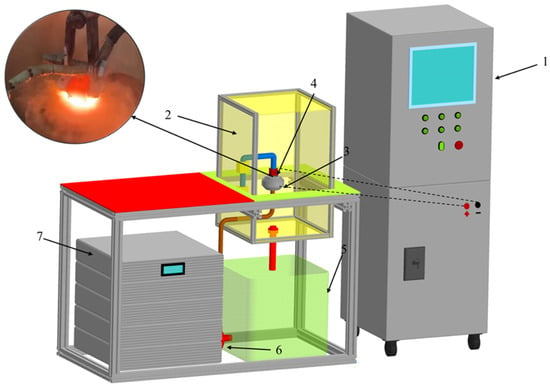
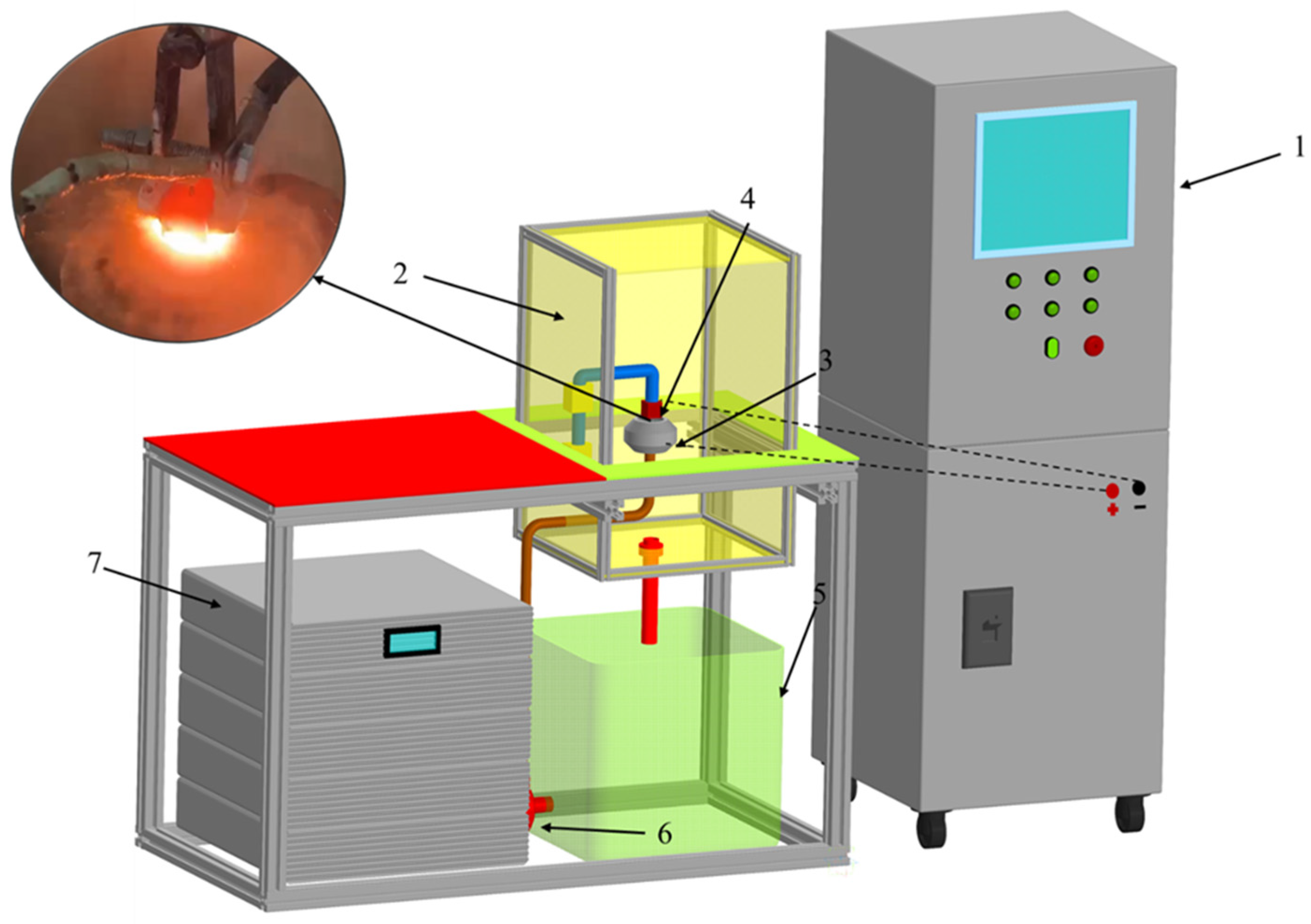
Electrolytic-plasma nitroboriding (EPNB) of the samples was carried out using a setup (Figure 1) for electrolytic-plasma treatment of materials, which was developed at the Research Center “Surface Engineering and Tribology.” The EPNB process of the samples was carried out as follows: the electrolyte, supplied to the working bath (5) by means of a chemical pump (6), was fed into the plasmatron (3) located inside the treatment chamber (2). After passing through the plasmatron, the electrolyte returned to the bath through the drain holes, ensuring continuous circulation of the liquid. The electrolyte flow rate was maintained within 4–7 L/min. To stabilize the electrolyte temperature in the range of 40–50 °C, a heat exchanger (7) was used.
Figure 1.
Setup for electrolytic-plasma treatment of materials.
The sample (4) was positioned so that the surface to be treated was located at a distance of 2–3 mm from the nozzle orifice of the plasmatron. Through this orifice, the electrolyte was supplied as a jet, simultaneously cooling the sample surface and helping to maintain the preset temperature. The anode was connected to the positive terminal of the power supply (1), whereas the sample, acting as the cathode, was connected to the negative terminal. To rapidly heat the surface to the saturation temperature, a voltage of 320 V was applied to the sample for 10 s, after which the voltage was reduced to 190 V, and the treatment continued for 15 min. The composition of the electrolyte used is presented in Table 2. The electrolyte composition was selected considering the functional role of each component in the electrolytic-plasma nitroboriding process. Na2CO3 acts as a conductive additive, increasing the ionic conductivity of the solution and promoting the formation of a stable electric discharge between the electrolyte and the metal cathode. The presence of Na2CO3 also contributes to the stabilization of the vapor–gas envelope, where plasma-chemical reactions occur and local heating of the specimen surface takes place.
Table 2.
Composition of the electrolyte and treatment temperature for electrolytic-plasma nitroboriding.
Borax Na2B4O7·10H2O and boric acid H3BO3 are used as boron-containing components of the electrolyte. Their combined use ensures the presence of active boron-containing species in the discharge zone and creates conditions for the diffusion saturation of the steel surface layer with boron. Carbamide CO(NH2)2 was introduced into the electrolyte as a nitrogen-containing component, which, under high-temperature plasma-electrolytic treatment conditions, may participate in the formation of active nitrogen-containing species that promote nitrogen saturation of the surface. The initial pH and electrical conductivity of the electrolyte were estimated to be approximately 10.0 and 100–120 mS/cm, respectively. Final values should be confirmed by direct measurements using a pH meter and conductivity meter.
The temperatures of 650 °C, 750 °C, and 850 °C were selected to systematically investigate the effect of temperature on the electrolytic-plasma nitroboriding process of Steel 20. This temperature range covers low-, intermediate-, and high-temperature treatment regimes, allowing the evaluation of changes in the diffusion rate of B and N, the thickness of the modified layer, microhardness, and wear resistance. A temperature of 650 °C represents the initial level of effective saturation, 750 °C corresponds to an intermediate regime, and 850 °C represents an intensive diffusion saturation regime and maximum surface hardening.
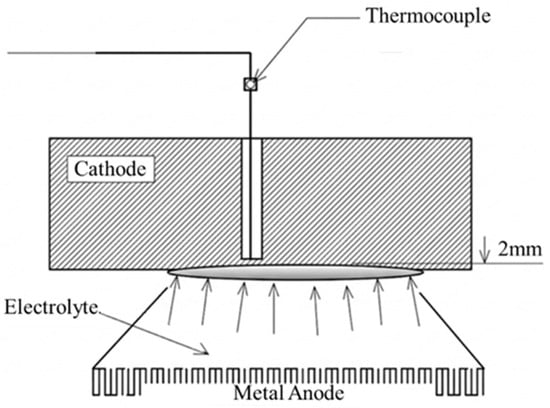
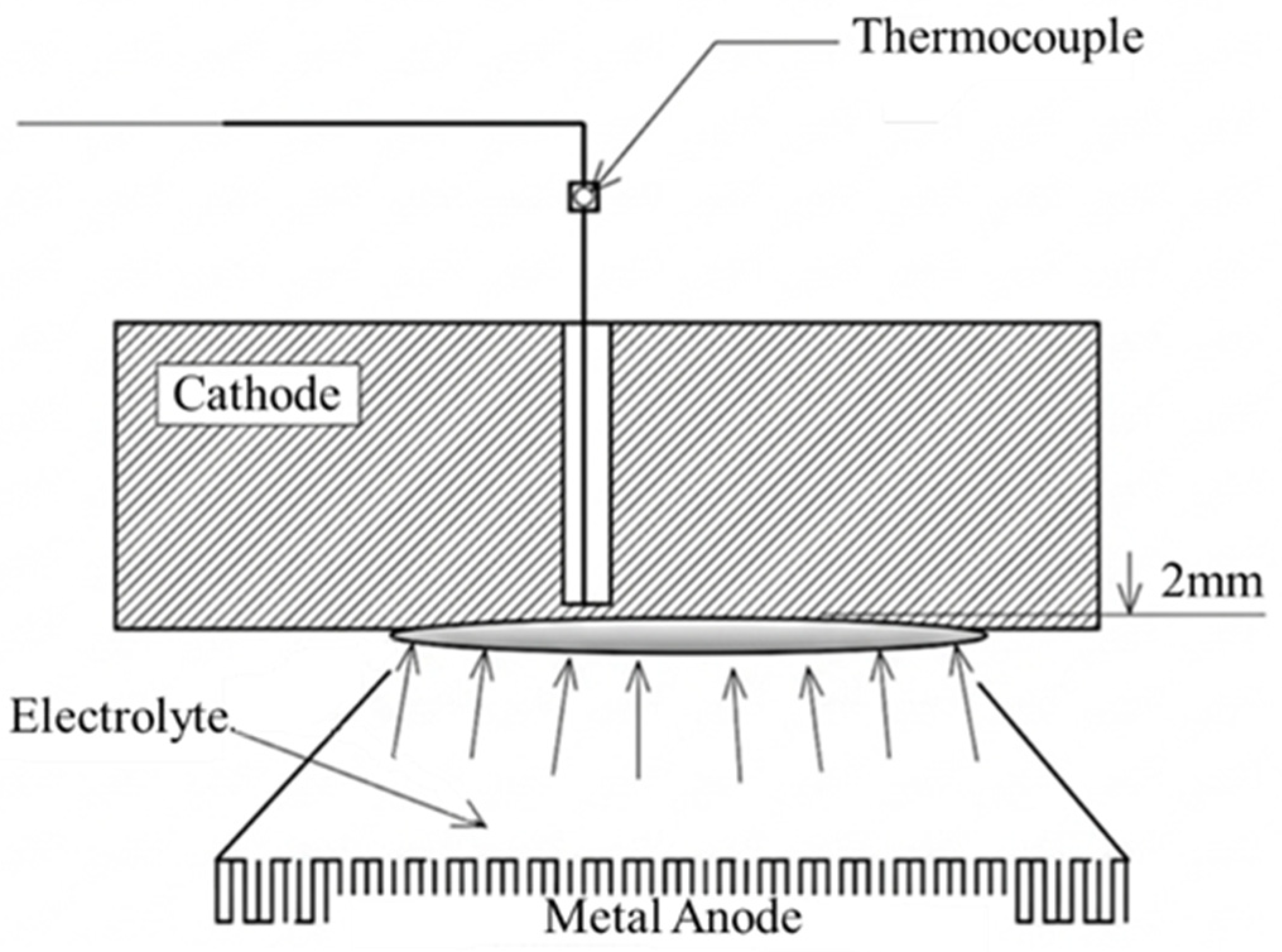
The sample temperature was monitored using a thermocouple installed in the sample at a depth of 2.0 mm from the heated surface. The arrangement is shown in Figure 2. When determining the surface temperature of the sample, it was assumed that the entire heat flux is directed from the surface into the depth of the specimen. It was assumed that the cross-sectional area of the heated layer was several times smaller than the heated area on the surface of the specimen, and the dissipation of the heat flux was neglected.
Figure 2.
Scheme of sample temperature measurement during electrolytic-plasma nitroboriding.
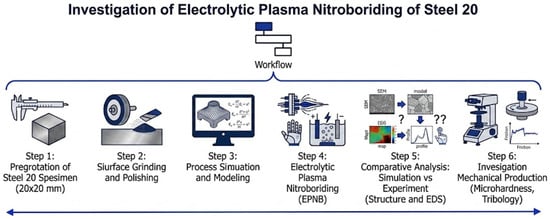
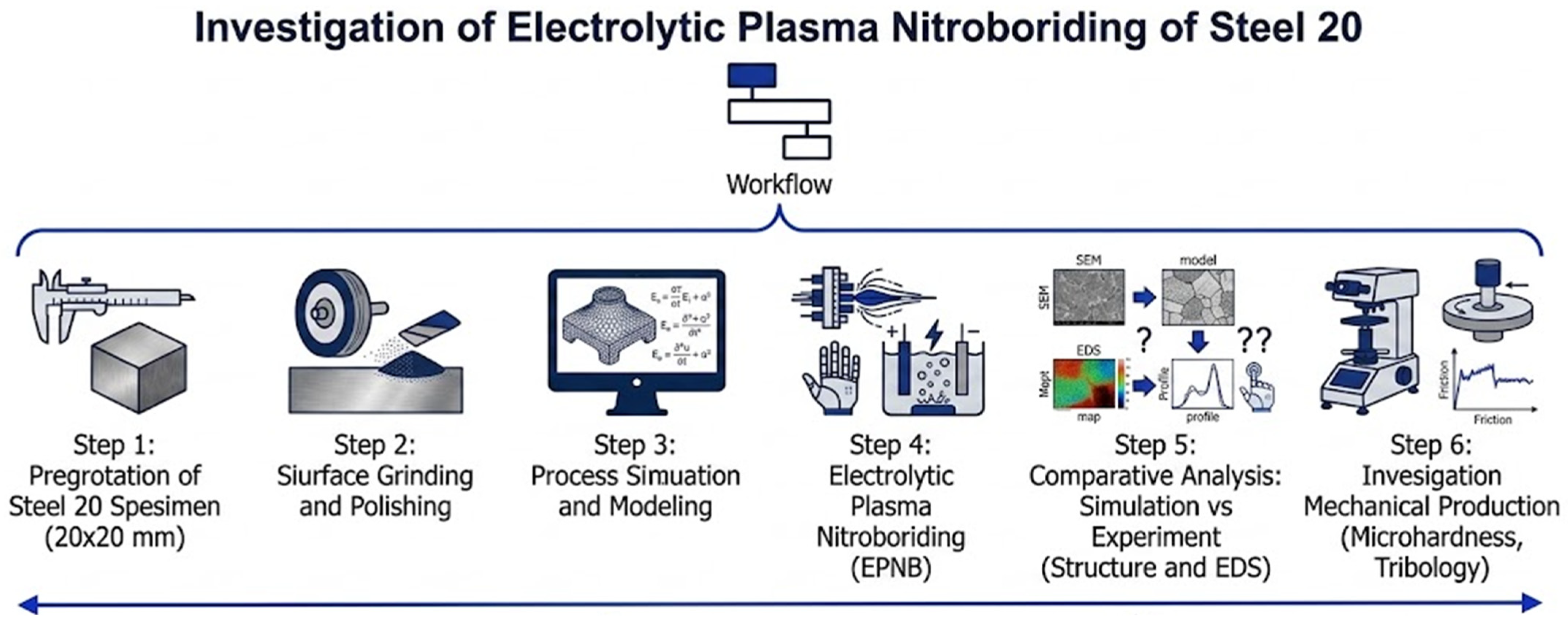
A structural scheme of the experimental workflow used for studying samples after electrolytic-plasma nitroboriding is shown in Figure 3. The microstructure and energy-dispersive analysis of the nitrocarburized samples were studied using an SEM3200 scanning electron microscope (CIQTEK Co., Ltd., Hefei, China) after etching in a 4% nitric acid solution. Hardness was measured using a FISCHERSCOPE HM2000 microhardness tester under a load of 100 mN (Helmut Fischer GmbH, Sindelfingen, Germany). The coefficient of friction was determined using a universal tribological setup TRB3 (Anton Paar, Graz, Austria) in accordance with the “ball-on-disk” method according to the ASTM G99 standard [33]. The tests were carried out under dry friction conditions at an ambient temperature of 25 ± 1 °C and a sliding speed of 0.05 m/s. The samples were in contact with a 100Cr6 steel counterbody under a vertical load of 10 N. The coefficient of friction values were recorded after the sample had traversed a friction distance of 100 m.
Figure 3.
Structural scheme of the workflow for studying samples after electrolytic-plasma nitroboriding.
To analyze the formation mechanisms of the modified layer during electrolytic-plasma nitroboriding of Steel 20, a one-dimensional numerical model was developed to describe the coupled diffusion of boron, nitrogen, and carbon in the near-surface region of the material. The model was designed to predict the depth distribution of the components, the formation of phase zones, and the thickness of the modified layer as a function of treatment temperature and time.
The numerical scheme was based on solving one-dimensional diffusion equations according to Fick’s second law for three components: boron, nitrogen, and carbon. The model determined the distribution functions , , and , where is the depth from the sample surface and is the treatment time. The diffusion coefficients were assumed to be temperature-dependent and were described by the Arrhenius equation:
where is the diffusion coefficient of the corresponding element, is the pre-exponential factor, is the activation energy, R is the universal gas constant, and T is the absolute temperature.
The following effective diffusion parameters (Table 3) corresponding to electrolytic-plasma nitroboriding conditions were used in the calculations: for boron, m2/s and kJ/mol; for nitrogen, m2/s and kJ/mol; and for carbon, m2/s and kJ/mol. These values were considered as effective mass-transfer parameters under electrolytic-plasma nitroboriding conditions rather than pure lattice diffusion coefficients, since the process involves plasma-assisted surface saturation, a non-stationary thermal regime, and local phase formation.
Table 3.
The calculated diffusion coefficients used in the simulations were as follows:
To more accurately describe the actual electrolytic-plasma nitroboriding regime, the model used a non-stationary temperature profile , which accounted for rapid heating during the initial high-voltage stage and subsequent approach to the target temperature during the main holding stage.
Boundary conditions were defined separately for the sample surface and for the internal boundary of the computational domain. At the sample surface , first-type boundary conditions were used for boron and nitrogen; that is, effective surface concentrations and were specified. These values were treated as effective concentration parameters representing the supply of boron and nitrogen from the electrolytic-plasma environment to the metal surface. They were determined taking into account the electrolyte composition, thermal regime, and electrical treatment conditions:
The effective surface concentrations of boron and nitrogen were calculated using dimensionless activity coefficients and , associated with the sources of saturating elements in the electrolyte. Borax and boric acid were considered the main boron sources, whereas urea was considered the nitrogen source. Sodium carbonate was taken into account as a component affecting the electrical conductivity of the electrolyte and discharge stability. The electrical treatment regime was considered through a surface saturation intensity coefficient: during the 320 V stage, this coefficient was taken to be higher, corresponding to the initial intensive heating and active mass transfer, whereas during the 190 V stage, it corresponded to the main holding regime. Thus, the surface boundary conditions were defined not as constant values but as effective functions of time, temperature, and treatment regime.
For carbon, a first-type boundary condition was also specified at the surface; however, it did not describe external carbon supply but rather its redistribution in the steel due to surface saturation with boron and nitrogen:
The surface carbon concentration varied depending on the local boron and nitrogen contents, reflecting carbon redistribution in the near-surface region during the formation of the boride–nitride-enriched zone. The initial carbon concentration in the bulk was set according to the carbon content of Steel 20.
At the internal boundary of the computational domain , located at a depth exceeding the expected thickness of the modified layer, a zero-flux condition was imposed for boron and nitrogen:
This condition means that beyond the computational domain, the concentration gradient of the saturating elements is absent and the effect of surface treatment at this depth is negligible. For carbon, the initial concentration corresponding to the Steel 20 matrix was maintained at the internal boundary:
This condition reflects the fact that, at the selected depth, the material retains its initial chemical composition and is not significantly affected by surface treatment. The choice of boundary conditions was determined by the physical nature of electrolytic-plasma nitroboriding. Since direct experimental measurement of boron and nitrogen fluxes at the plasma–metal interface is difficult, the surface conditions were specified as effective concentrations representing the combined influence of electrolyte composition, voltage, temperature, and discharge-zone activity. The effective parameter values were selected based on the electrolyte composition, treatment regime, and subsequent calibration against the experimentally measured thickness of the modified layer.
To describe the coupled redistribution of boron, nitrogen, and carbon, the diffusion equations were supplemented with effective sink and interaction terms:
In these equations, the first term on the right-hand side describes diffusive transport according to Fick’s second law. The terms and account for the partial immobilization of boron and nitrogen due to their incorporation into phase-related regions. The terms and describe the mutual interaction between boron and nitrogen during coupled diffusion. For carbon, the term limits unrealistic carbon accumulation above the initial matrix level, whereas the term describes carbon redistribution induced by the enrichment of the near-surface region with boron and nitrogen. This term is responsible for the formation of a local maximum in carbon concentration ahead of the boride–nitride-enriched zone in the calculated profiles. This effect should not be interpreted as external carbon supply but rather as local redistribution of carbon within the steel matrix during modified layer formation.
The following effective kinetic coefficients were used in the model: , , , , , and . These parameters were introduced as phenomenological coefficients to reproduce the experimentally observed gradient distribution of B, N, and C during electrolytic-plasma nitroboriding.
The mutual influence of the diffusing components was taken into account in the simulation. In particular, partial suppression of boron penetration in the presence of nitrogen, and vice versa, was considered. In addition, the model accounted for carbon redistribution induced by the enrichment of the near-surface region with boron and nitrogen. To account for the binding of some components in the forming phases, sink terms were used to describe a decrease in the fraction of freely diffusing atoms.
The computational domain represented a one-dimensional layer extending from the surface into the material. The spatial coordinate was discretized using the finite difference method. The equations were solved using an explicit finite difference scheme with time-step stability control. The calculated output parameters included B, N, and C depth distributions, the time evolution of the modified layer, and the position of phase boundaries.
The identification of phase-related and diffusion-modified zones was carried out based on concentration criteria. Regions associated with the formation of FeB and Fe2B were determined using threshold boron concentration values, whereas regions associated with ε- and γ′-nitride zones were determined using threshold nitrogen concentration values. The total thickness of the modified layer was defined as the depth at which the boron or nitrogen content exceeded the specified diffusion-saturation threshold. This approach made it possible to estimate not only compact phase zones but also the transition region formed as a result of diffusion saturation.
The modeling results were presented as concentration profiles with depth, plots of layer thickness as a function of time, dependencies of phase-zone thickness on temperature, and heat maps reflecting the evolution of component and phase distributions in the “time–depth” coordinates. The developed model is CALPHAD-informed and represents a physically based engineering model intended for process analysis and subsequent calibration against experimental data (Python version 3.14.5).
3. Results and Discussion
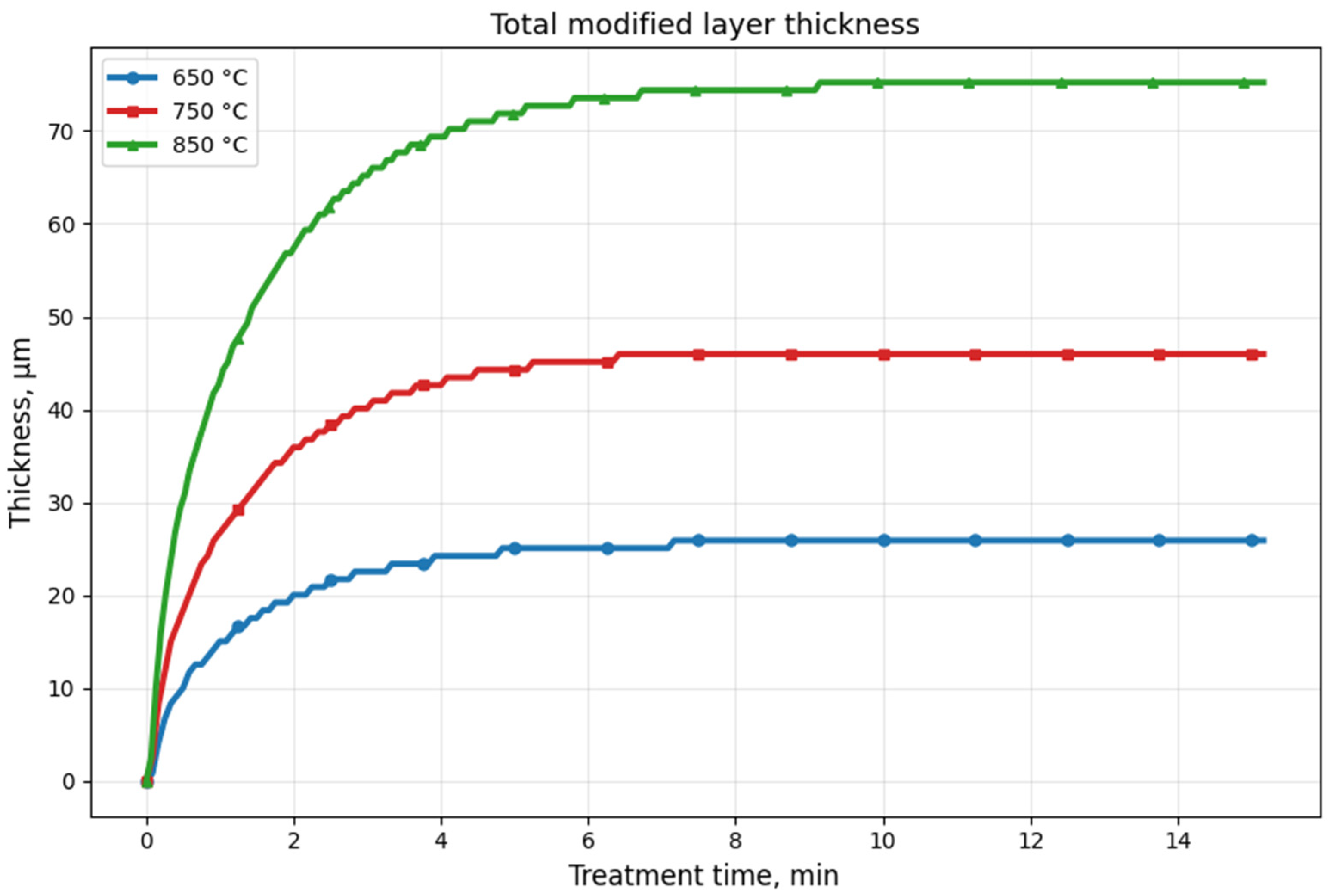
The kinetic curves presented in Figure 4 clearly demonstrate that the growth of the modified layer proceeds by a diffusion-controlled mechanism characterized by a nonlinear (parabolic) dependence of thickness on treatment time. At the initial stage of the process (within the first 1–2 min), an intensive increase in the layer thickness is observed. This behavior is caused by the high concentration gradient of the diffusing elements (boron and nitrogen) between the surface and the bulk of the material, as well as by the increased reactivity of the surface under electrolytic-plasma nitroboriding conditions.
Figure 4.
Results of modeling of the layer growth kinetics: variation of the total, thickness over time at temperatures of 650, 750, and 850 °C.
As the treatment time increases, the growth rate of the modified layer gradually decreases. This behavior reflects the transition from an initial stage of rapid surface saturation, characterized by steep concentration gradients, to a diffusion-limited growth regime. As the boride–nitride layer develops, the diffusion path increases and the concentration gradient decreases, thereby reducing the flux of boron and nitrogen into the substrate. Consequently, the further advancement of the modified layer is mainly governed by diffusion through the already formed layer.
A pronounced temperature dependence of the growth kinetics is observed. The total thickness of the modified layer increases from approximately 25–27 μm at 650 °C to 45–47 μm at 750 °C and reaches 70–75 μm at 850 °C. Such a significant increase is associated with the Arrhenius dependence of the diffusion coefficients, in which even a moderate increase in temperature leads to a sharp rise in atomic mobility. As a result, the rate of interphase boundary movement increases significantly. It should be noted that the overall growth kinetics retains a parabolic dependence, which is typical of diffusion-controlled processes accompanied by the formation of boride phases (Fe2B/FeB) and a nitrogen-enriched sublayer region. The observed tendency toward saturation with increasing treatment time further confirms that the rate-limiting stage of the process is diffusion through the forming layer rather than surface chemical reactions.
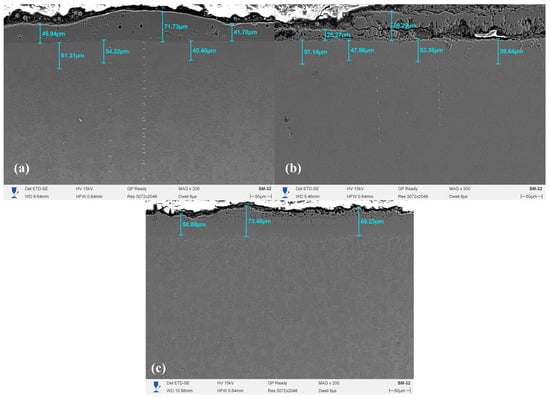
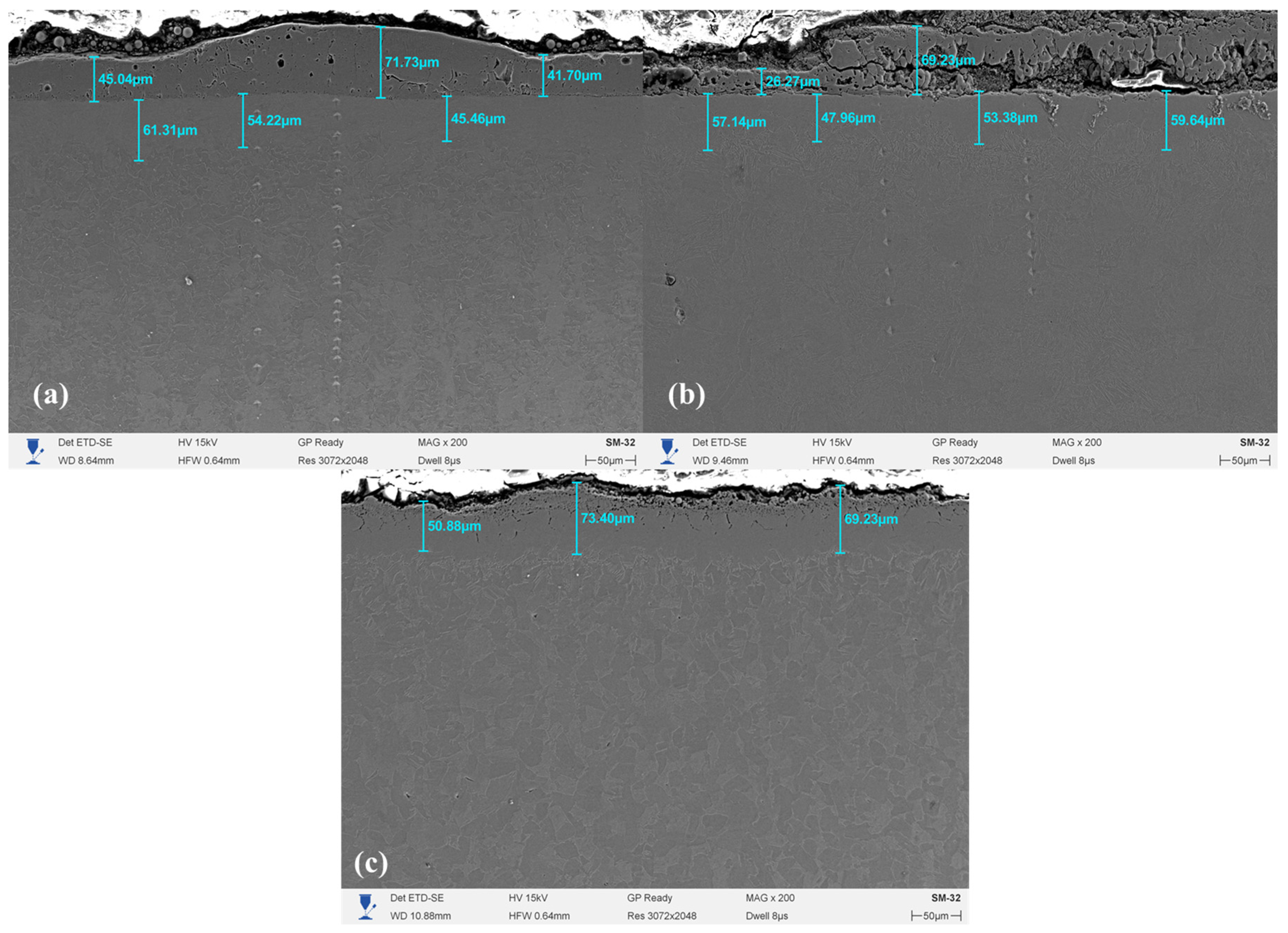
Comparison of the calculated layer growth dependences with experimental SEM data (Figure 5) shows that the model correctly reproduces the main kinetic trend: with an increase in temperature from 650 to 850 °C, a sequential increase in the total thickness of the modified layer occurs, and the kinetics exhibit a pronounced rapid initial growth followed by deceleration, i.e., behavior typical of diffusion-controlled formation of boride–nitride layers. Such a shape of the curves is consistent with the literature on boriding, where the growth of FeB/Fe2B layers is described by a parabolic law, and the layer thickness increases with temperature and treatment time. A similar agreement between calculation and experiment for boride layers is shown in the models of Delai et al. and Campos-Silva et al. [34,35].
Figure 5.
Dependence of the modified layer thickness on treatment temperature: (a) 650 °C, (b) 750 °C, (c) 850 °C.
According to the calculated curves, the total layer thickness reaches approximately 26 μm at 650 °C, 46 μm at 750 °C, and 75 μm at 850 °C. This sequence is in good agreement with the experimental microsections: SEM images also show an increase in thickness and a more pronounced development of the transition zone when moving from 650 to 850 °C. This corresponds to the general regularity of electrolytic-plasma nitroboriding of steel, according to which an increase in temperature sharply enhances the effective diffusion mobility of boron and nitrogen and also accelerates the formation of iron borides and the nitrogen-containing sublayer zone. In similar studies, the maximum thickness of the modified layer was also observed at higher temperatures, in particular around 850 °C [36].
The relatively defective and less uniform morphology observed after treatment at 750 °C can be attributed to the transitional character of this processing regime. At this temperature, the surface temperature and plasma activity are sufficient to initiate intensive boron and nitrogen incorporation; however, the diffusion rate is still not high enough to form a continuous and stable modified layer comparable to that obtained at 850 °C. As a result, local differences in heating, electrolyte–plasma interaction, gas evolution, and surface oxidation can lead to non-uniform layer growth. In addition, thermal stresses generated during rapid heating and cooling may promote the formation of microcracks and local discontinuities in the near-surface region. Therefore, the defective morphology at 750 °C is likely associated with the incomplete stabilization of the diffusion layer and local heterogeneity of the plasma-assisted mass transfer process. In contrast, at 850 °C, enhanced diffusion of boron and nitrogen promotes the formation of a more developed and continuous gradient layer, which is consistent with the SEM/EDS results, microhardness profile, and numerical modeling.
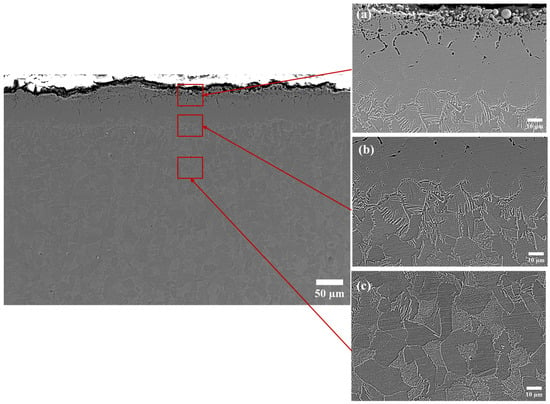
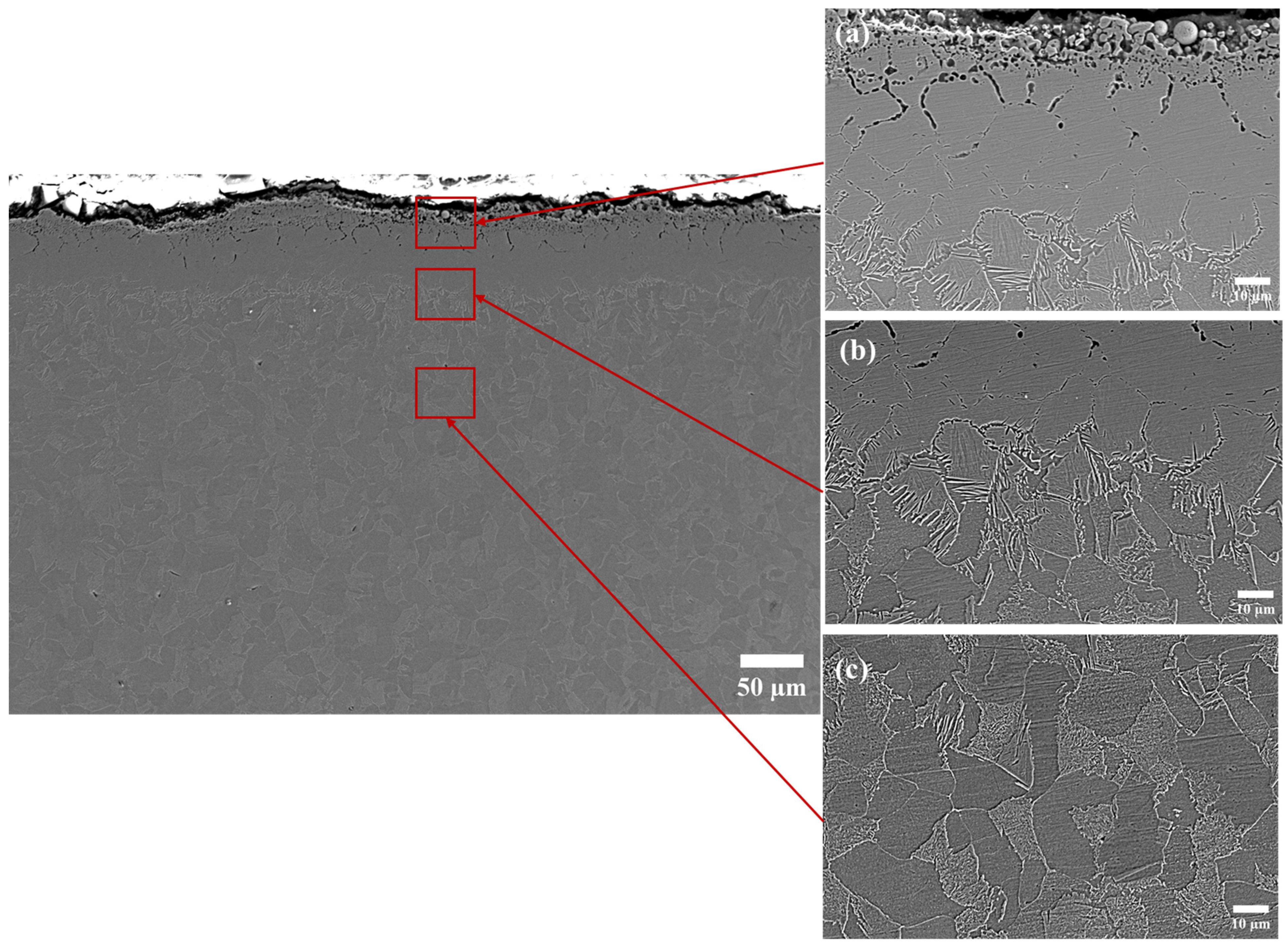
Cross-sectional SEM analysis of the sample treated at 850 °C (Figure 6) indicates the formation of a clearly pronounced multilayer structure, including a compact modified zone, a developed transition region, and the unchanged original substrate structure. The near-surface layer is characterized by high density, homogeneity, and the absence of visible porosity, which indicates the formation of a stable diffusion boride–nitride layer under conditions of intense electrolytic-plasma nitroboriding. The absence of a continuous oxide film on the surface, unlike at lower temperatures, is most likely associated with its thermal spallation during cooling due to the mismatch of thermal expansion coefficients and the accumulation of thermoelastic stresses. The transition zone is characterized by a heterogeneous morphology with the presence of needle-like and saw-toothed structures penetrating into the depth of the substrate, which is a typical feature of the anisotropic growth of the Fe2B boride phase and reflects the diffusion-controlled mechanism of layer formation. The gradual change in contrast in this region indicates the presence of a concentration gradient of boron and nitrogen, ensuring a smooth transition of properties between the hard surface layer and the more ductile substrate. In the deeper region, the original equiaxed grain structure of the steel is preserved without signs of diffusion influence, which indicates the limited penetration depth of active elements even at 850 °C. In general, the observed morphology, including the formation of a dense surface layer and a developed transition zone, is consistent with literature data on electrolytic-plasma boriding and nitroboriding, where it has been shown that increasing temperature enhances diffusion and leads to the formation of thicker and more compact layers.
Figure 6.
SEM image of the cross-section of Steel 20 after electrolytic-plasma nitroboriding at 850 °C, showing the modified layer and the transition zone: (a) modified layer, (b) transition zone, (c) original structure.
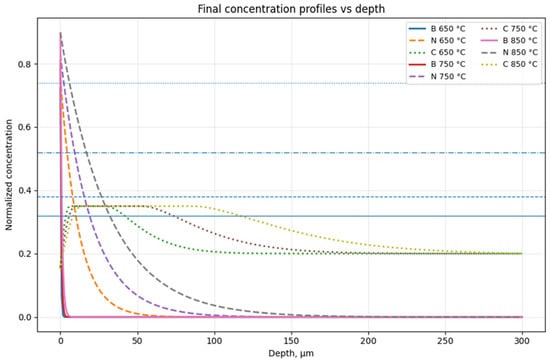
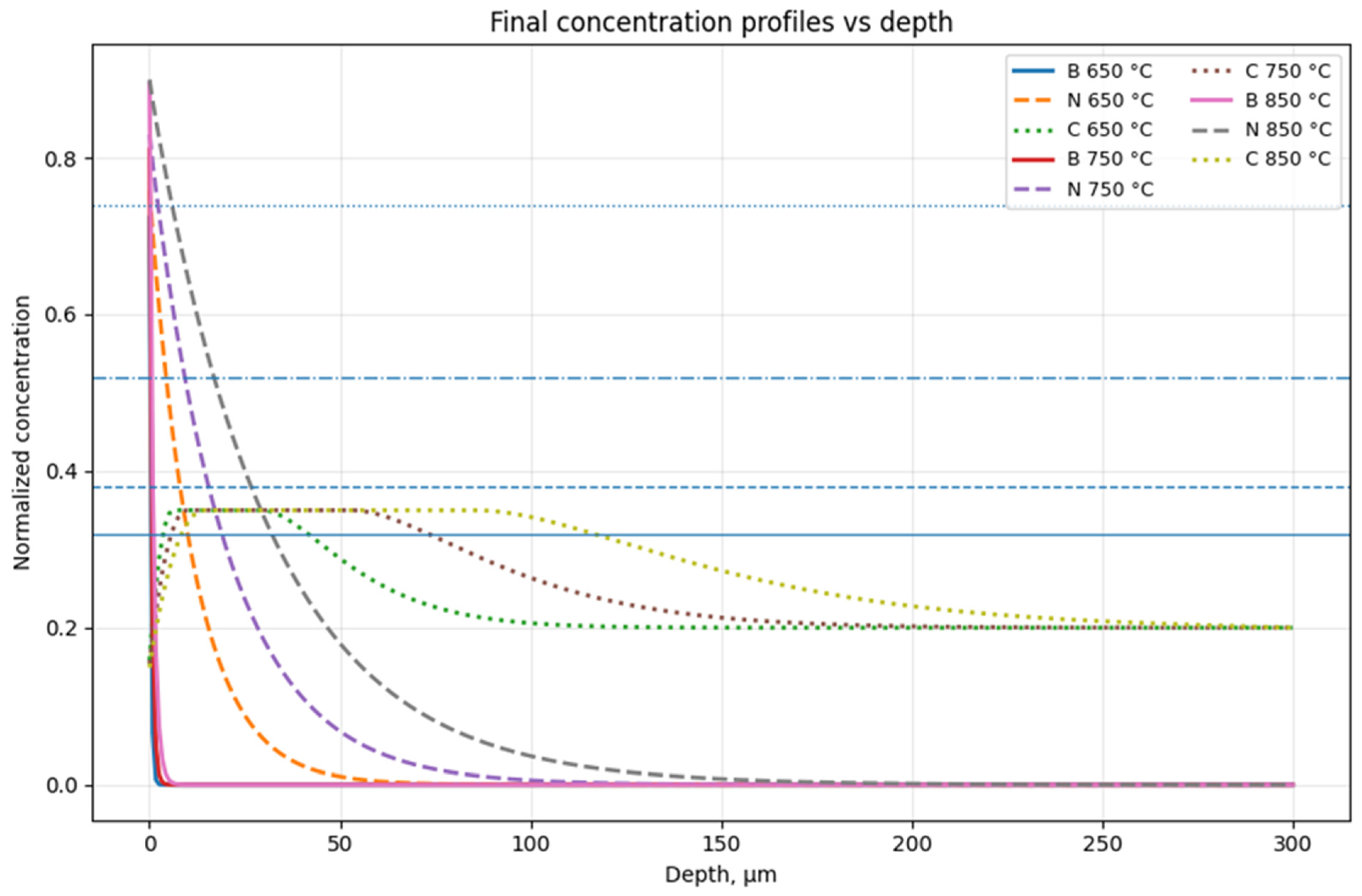
The depth distribution of normalized element concentrations obtained as a result of modeling (Figure 7) demonstrates a pronounced gradient nature of saturation during electrolytic-plasma treatment. Boron is characterized by a sharp decrease in concentration from the surface into the depth of the material, which indicates its preferential accumulation in the near-surface zone and the formation of a boride layer. At the same time, with increasing temperature (from 650 to 850 °C), an increase in the penetration depth of boron is observed, which is associated with an increase in the diffusion coefficient. Unlike boron, nitrogen penetrates significantly deeper, forming an extended diffusion region, while its concentration profile becomes more gradual with increasing temperature. Carbon demonstrates the opposite trend: in the near-surface zone, its concentration decreases due to displacement by boron and nitrogen, whereas at greater depth it returns to the initial level characteristic of Steel 20. Thus, the obtained results reflect the competitive nature of component diffusion and confirm the formation of a multilayer structure with a clearly pronounced gradient zone.
Figure 7.
Calculated depth profiles of B, N, and C after electrolytic-plasma nitroboriding at 650, 750, and 850 °C. The horizontal lines indicate the concentration thresholds used in the model to identify phase-related and diffusion-modified zones.
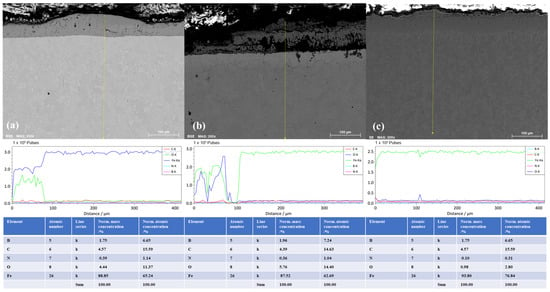
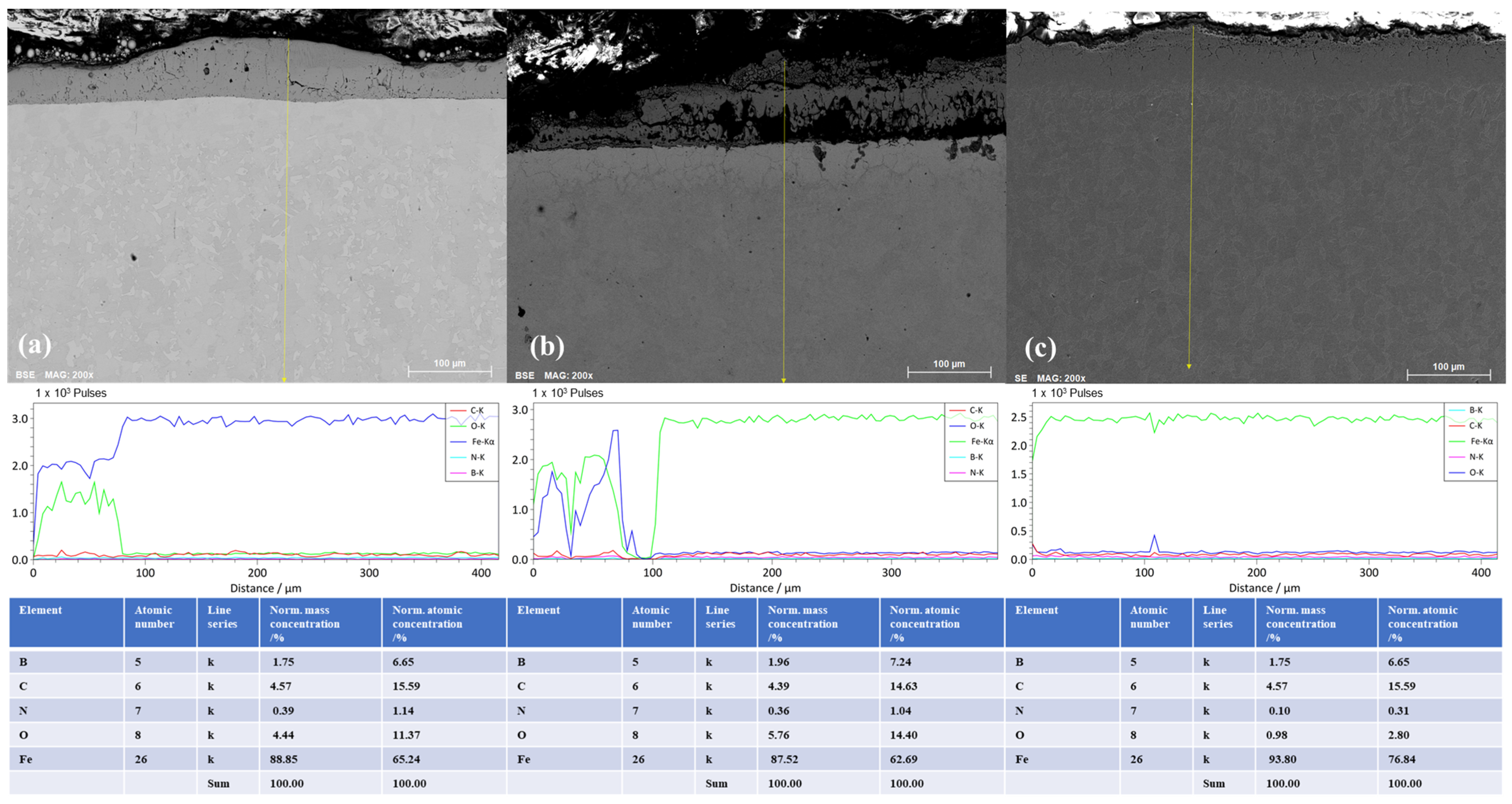
Comparison of the calculated and experimental (EDS) depth profiles of element distribution at 650, 750, and 850 °C (Figure 8) demonstrates their qualitative agreement. The model correctly reproduces the key regularities of the process: the sharp localization of boron in the near-surface zone, the deeper penetration of nitrogen, and the decrease in carbon concentration in the saturation region. At 650 °C, a limited diffusion depth is observed, which is confirmed by both calculated and experimental data. At 750 °C, the development of the transition zone and an increase in the penetration depth of the elements are observed. At 850 °C, an extended gradient region corresponding to the modified layer is formed, which is confirmed by EDS analysis. The increase in diffusion depth with temperature and the change in the shape of the concentration profiles are adequately reproduced by the model. The observed agreement confirms that the proposed approach correctly describes the diffusion-controlled mechanism of layer formation during electrolytic-plasma nitroboriding.
Figure 8.
Comparison of the calculated and experimental (EDS) depth profiles of element distribution at (a) 650 °C, (b) 750 °C, and (c) 850 °C.
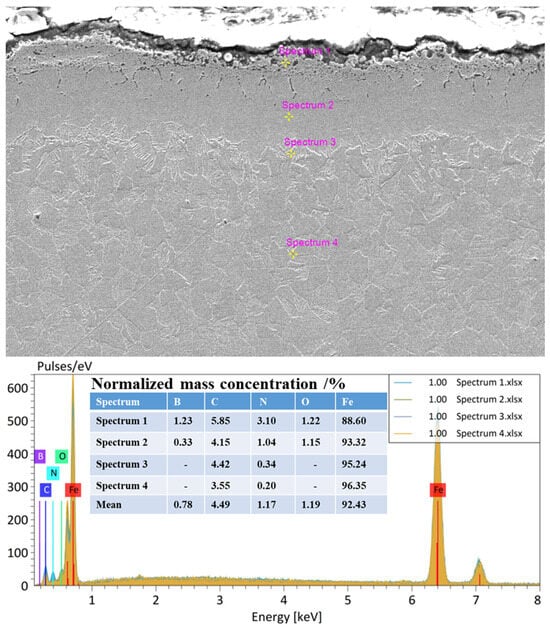
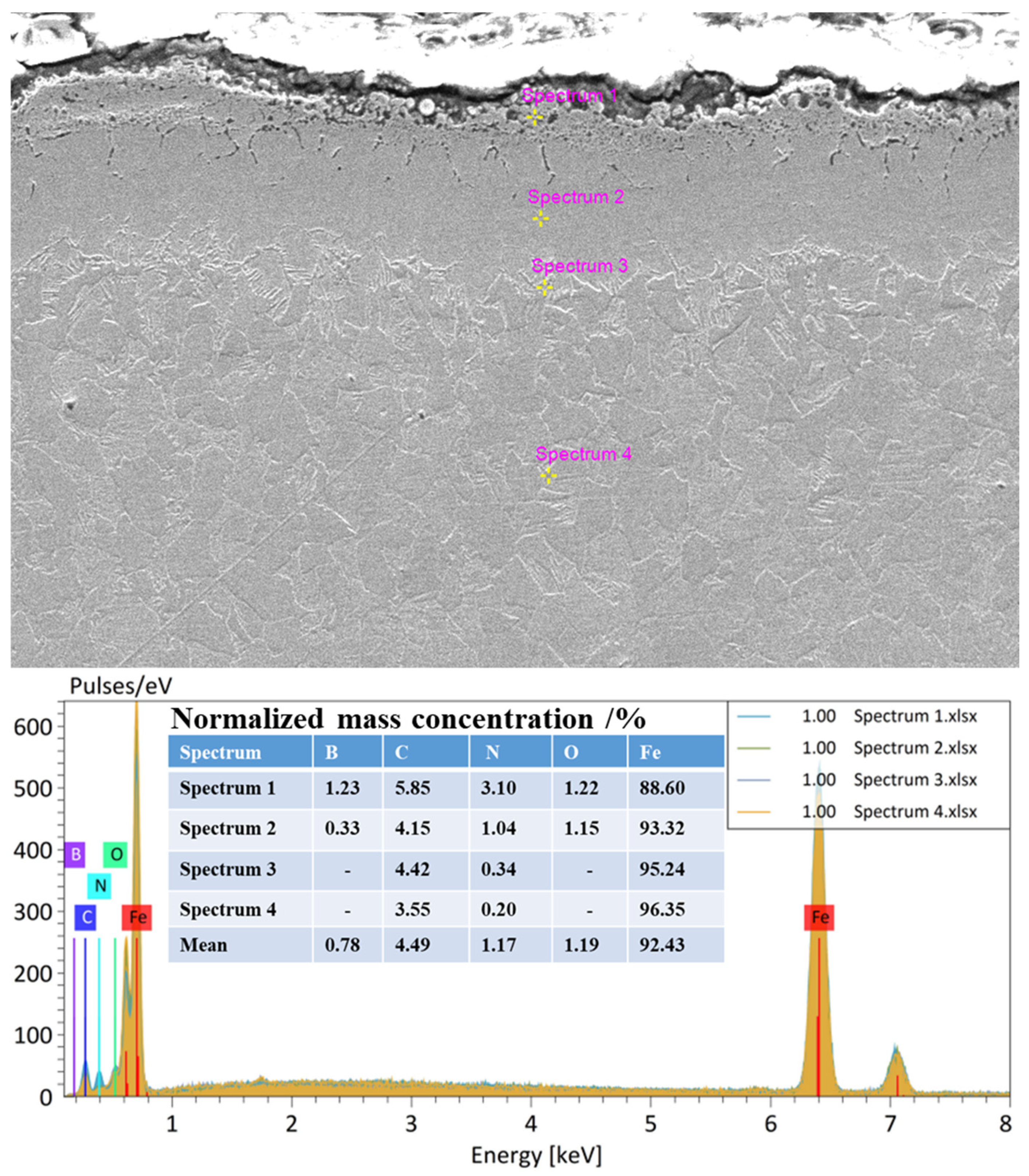
EDS analysis of the sample treated at 850 °C (Figure 9) confirms the formation of a gradient-modified zone. The highest boron and nitrogen contents are observed near the surface, where the concentrations reach 1.23 wt.% B and 3.10 wt.% N, respectively; thereafter, their contents decrease with increasing depth. At deeper points, boron is almost no longer detected, while the nitrogen content decreases to 0.34–0.20 wt.%, indicating a transition from the saturated zone to the steel matrix. This distribution behavior is consistent with the modeling results, according to which B and N exhibit maximum relative concentrations near the surface and gradually decrease with depth. It should be noted that the calculated profiles are presented in normalized units and reflect the relative distribution of elements, whereas the EDS data are expressed in wt.%. Therefore, the comparison was performed based on the distribution trend and the thickness of the modified zone. The experimentally determined layer thickness, including the transition zone, is approximately 73.4 μm, which is in good agreement with the calculated value of 70–75 μm.
Figure 9.
EDS analysis results of the sample treated at 850 °C.
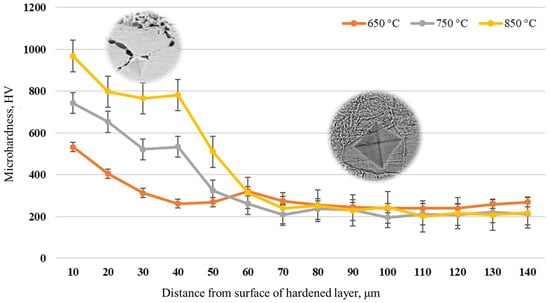
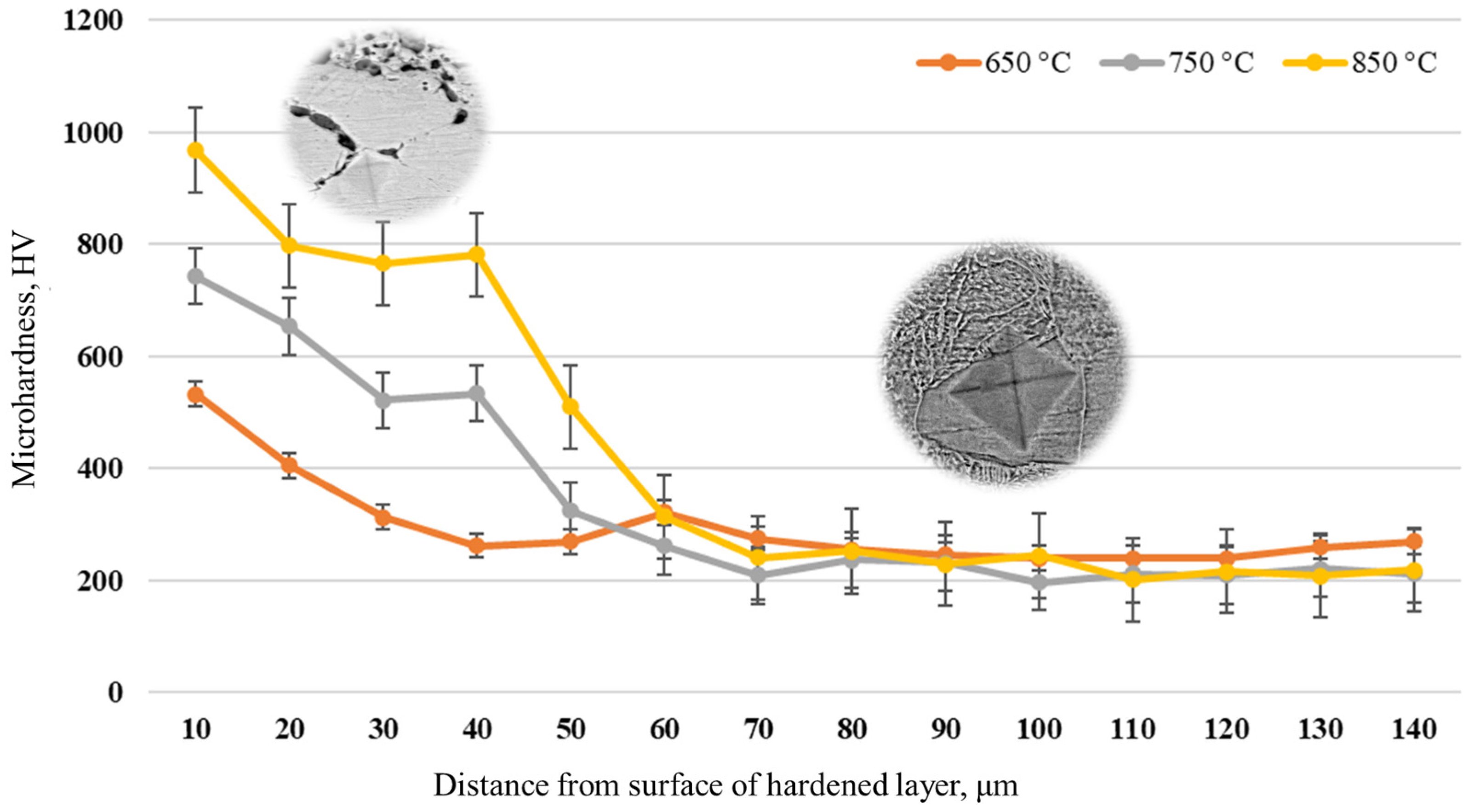
The microhardness depth profiles (Figure 10) confirm the formation of a gradient-hardened layer after electrolytic-plasma nitroboriding. The maximum microhardness is observed in the near-surface region and increases with increasing treatment temperature: approximately 532 HV at 650 °C, 743 HV at 750 °C, and 968 HV at 850 °C. With increasing depth, the microhardness decreases; however, the profile is not strictly monotonic due to the structural heterogeneity of the transition zone and local differences in phase composition. The most pronounced decrease in hardness occurs within the range of 40–70 μm, after which the values stabilize at approximately 200–250 HV, corresponding to the Steel 20 matrix. For the sample treated at 850 °C, the hardness drop region is consistent with the thickness of the modified layer determined by SEM analysis, including the transition zone (~73.4 μm), as well as with the numerical modeling results (~70–75 μm). This confirms that increasing the treatment temperature enhances both the degree of surface hardening and the depth of the modified zone.
Figure 10.
Depth distribution of microhardness for samples treated at 650 °C, 750 °C, and 850 °C.
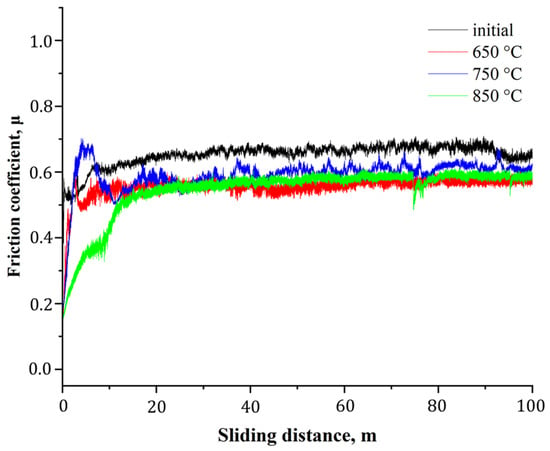
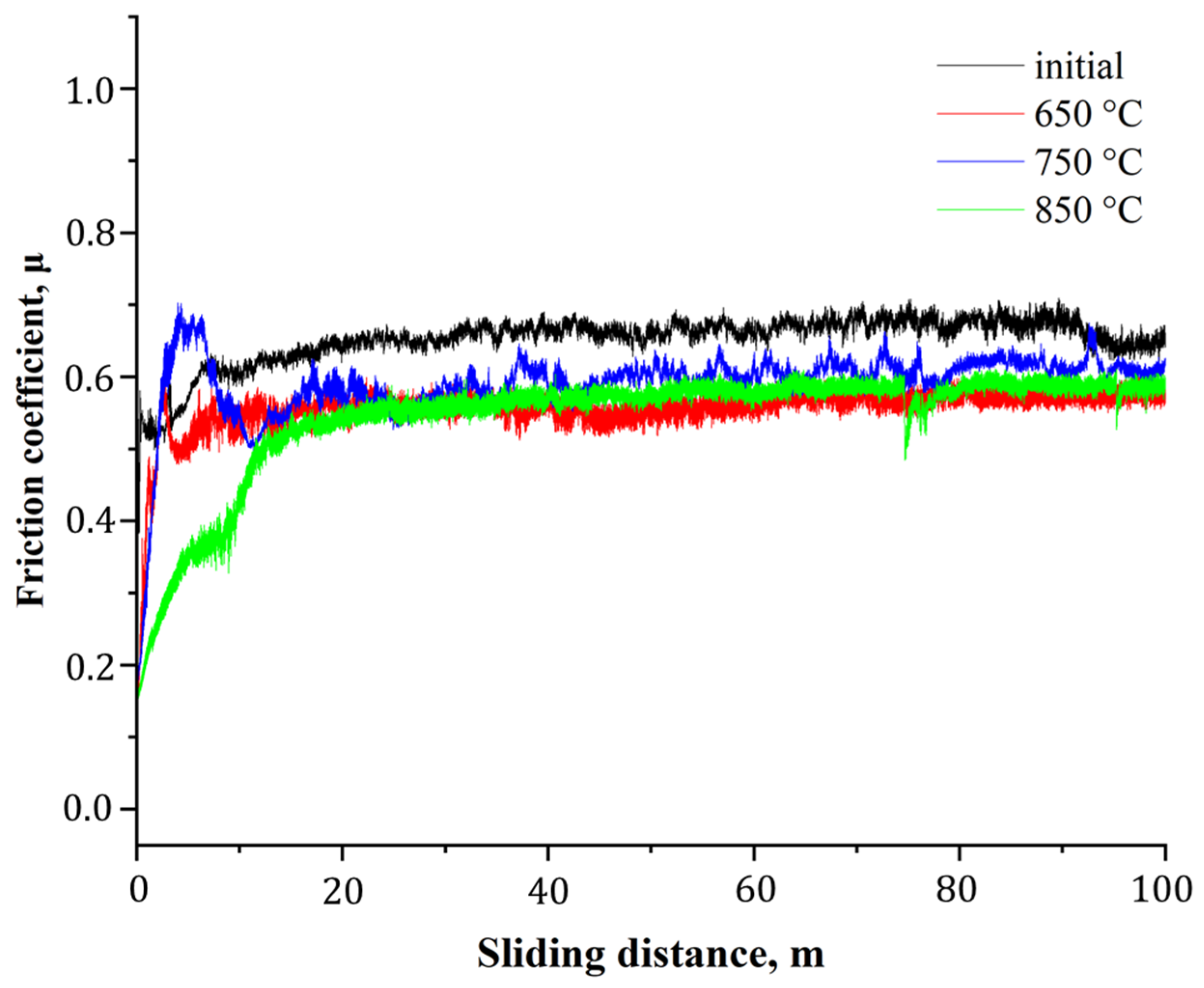
Figure 11 shows the evolution of the friction coefficient as a function of sliding distance for the initial and electrolytic-plasma-treated samples obtained at different treatment temperatures. The results of tribological tests showed that electrolytic-plasma treatment leads to a reduction in the coefficient of friction compared to the initial state. For the untreated sample, the coefficient of friction stabilizes at the level of ~0.65–0.70, whereas for the modified samples it decreases to ~0.55–0.62 depending on the treatment temperature. The lowest coefficient of friction values are observed for the sample treated at 650 °C (~0.55), whereas at 750 and 850 °C the coefficient of friction is slightly higher (~0.58–0.62), but still remains lower than that of the original material. At the initial stage of friction (running-in), fluctuations in the coefficient of friction are observed for all samples, after which the system reaches a steady-state regime. The sample treated at 850 °C is characterized by a longer running-in stage, which may be associated with the formation of a more developed and gradient layer structure. In general, the reduction in the coefficient of friction is associated with the formation of a hardened surface layer containing boride and nitride phases, which possess increased hardness and wear resistance.
Figure 11.
Dependence of the coefficient of friction on sliding distance for the initial and treated samples at different temperatures.
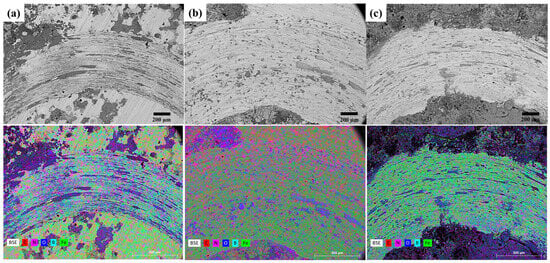
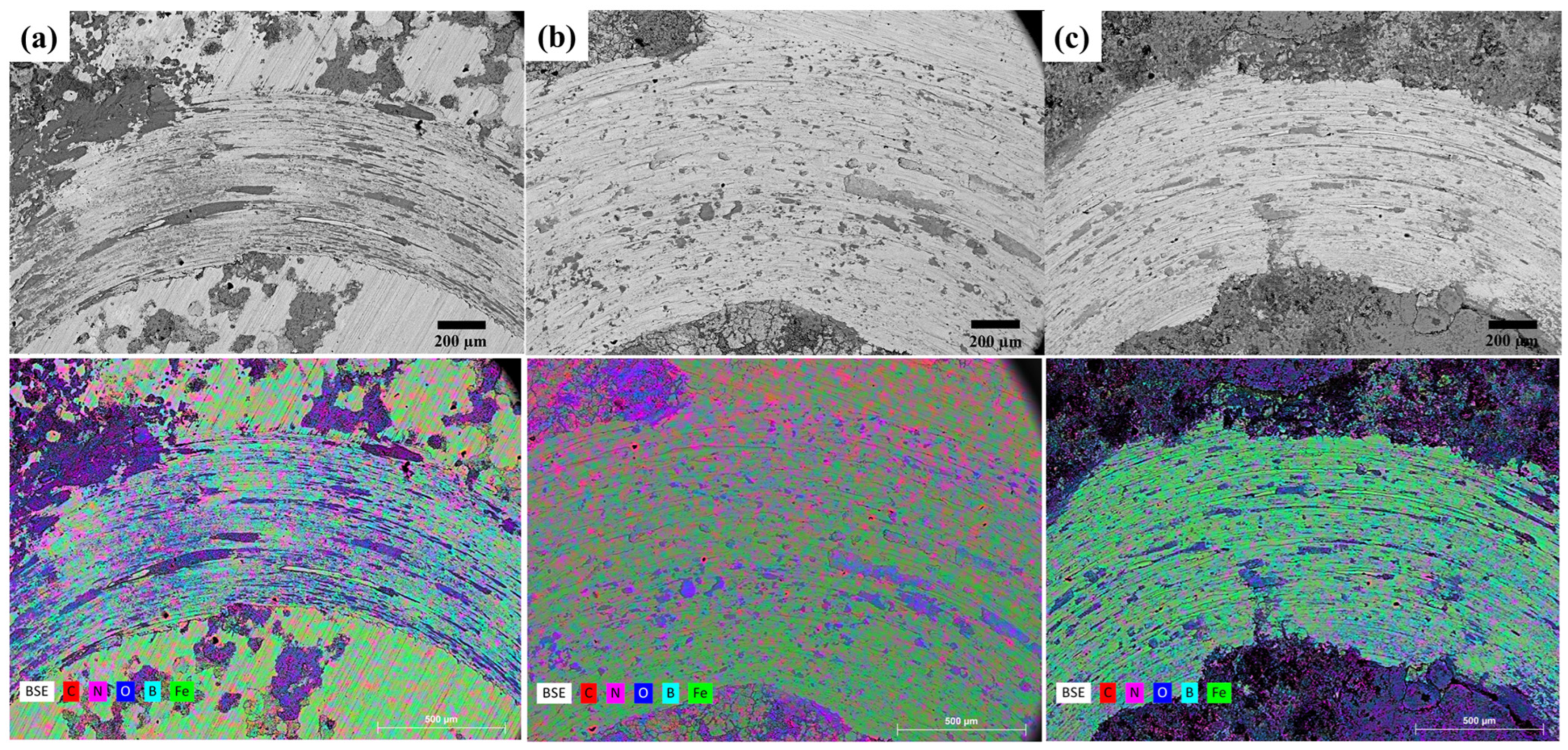
SEM analysis of the wear tracks indicates that electrolytic-plasma nitroboriding changes the wear mechanism of Steel 20 depending on the treatment temperature. After treatment at 650 °C (Figure 12a), the worn surface exhibits pronounced grooves, local damage areas, and accumulated wear debris. This morphology suggests that abrasive wear is dominant, with an additional contribution from adhesive damage. The observed damage is associated with the limited depth of diffusion saturation and the relatively thin hardened layer formed at this temperature. After treatment at 750 °C (Figure 12b), the wear track becomes more uniform; however, grooves, fine wear debris, and local defective regions are still observed. This indicates a mixed wear mechanism involving abrasive wear, local adhesive damage, and possible oxidative wear. Compared with the 650 °C condition, the wear damage is reduced due to the increased microhardness and greater thickness of the modified layer. Nevertheless, the layer formed after treatment at 750 °C may still contain local structural heterogeneities, since this temperature represents a transitional regime in which boron and nitrogen diffusion is activated but the modified layer has not yet reached the structural stability observed after treatment at 850 °C. The most stable wear behavior is observed for the sample treated at 850 °C (Figure 12c). The wear track shows a smoother morphology with less pronounced grooves, while elemental mapping indicates a more continuous distribution of components within the worn region. This improvement is attributed to the formation of a well-developed gradient-modified layer. The hard near-surface zone enriched with boron and nitrogen increases resistance to micro-cutting, whereas the transition zone reduces the tendency for brittle delamination by providing a gradual change in properties with depth. Therefore, the enhanced tribological performance after treatment at 850 °C is associated not only with increased surface hardness but also with the formation of a structurally stable gradient layer that effectively resists abrasive–adhesive wear.
Figure 12.
SEM images of wear tracks after tribological tests: (a) 650 °C, (b) 750 °C, and (c) 850 °C, with elemental mapping.
4. Conclusions
In this work, the regularities of a modified layer formation during electrolytic-plasma nitroboriding of Steel 20 in the temperature range of 650–850 °C were investigated using numerical modeling, SEM/EDS analysis, microhardness measurements, and tribological testing. A one-dimensional B–N–C diffusion model, taking into account the movement of phase boundaries, was developed to describe the formation of a gradient layer and to predict its thickness as a function of treatment temperature.
It was established that increasing the treatment temperature promotes a greater diffusion depth of boron and nitrogen, carbon redistribution, and the formation of a multilayer structure. At 850 °C, the calculated thickness of the modified layer was approximately 70–75 μm, which is in good agreement with the experimental value of ~73.4 μm, including the transition zone. SEM and EDS analyses confirmed the formation of a pronounced gradient structure consisting of a near-surface saturated zone and an extended transition region.
Microhardness measurements showed that the maximum surface hardness increased with treatment temperature: ~532 HV at 650 °C, ~743 HV at 750 °C, and ~968 HV at 850 °C. At a depth of 70–90 μm, the hardness values decreased to the level of the Steel 20 matrix, approximately ~200–250 HV.
Tribological tests demonstrated a reduction in the friction coefficient after treatment: for the untreated sample, it was ~0.65–0.70, whereas for the treated samples, it decreased to ~0.55–0.62. The most stable wear behavior was observed after treatment at 850 °C, which is associated with the formation of a well-developed gradient layer combining high surface hardness with a transition zone that reduces the tendency for local failure.
The 850 °C treatment regime was found to be the most effective among the investigated conditions, providing a modified layer thickness of ~73.4 μm, an increase in microhardness up to ~950–1000 HV, and improved tribological performance. The developed model can be used to predict the thickness and structure of the modified layer, as well as to optimize electrolytic-plasma nitroboriding regimes.
In future studies, the corrosion resistance, fatigue life, and behavior of nitroborided Steel 20 under cyclic loading are planned to be investigated, since these characteristics are critical for the practical application of structural steels.
Author Contributions
Conceptualization, L.S.; methodology, D.B. (Dastan Buitkenov).; software, A.M.; validation, L.S., A.M.; formal analysis, D.B. (Daryn Baizhan).; investigation, N.B.; resources, B.A.; data curation, D.B. (Daryn Baizhan).; writing—original draft preparation, A.M.; writing—review and editing, L.S.; visualization, D.B. (Daryn Baizhan).; supervision, D.B. (Dastan Buitkenov).; project administration, L.S.; funding acquisition, D.B. (Dastan Buitkenov). All authors have read and agreed to the published version of the manuscript.
Funding
This research has been funded by the Science Committee of the Ministry of Science and Higher Education of the Republic of Kazakhstan (Grant No. BR24992879).
Institutional Review Board Statement
Not applicable.
Informed Consent Statement
Not applicable.
Data Availability Statement
The original contributions presented in the study are included in this article; further inquiries can be directed to the corresponding author.
Conflicts of Interest
Author Almasbek Maulit was employed by the company PlasmaScience LLP. The remaining authors declare that the research was conducted in the absence of any commercial or financial relationships that could be construed as a potential conflict of interest.
References
- Davis, J.R. Surface Engineering for Corrosion and Wear Resistance; ASM International: Almere, The Netherlands, 2001. [Google Scholar]
- Totten, G.E. Steel Heat Treatment: Metallurgy and Technologies; CRC Press: Boca Raton, FL, USA, 2006. [Google Scholar]
- Kadyrbolat, N.E.; Kurmangaliyev, R.K.; Satbayeva, Z.A.; Shynarbek, A.B.; Zhasbolatov, D.M. The influence of electrolytic plasma hardening on the performance characteristics of working parts of agricultural machinery. Bull. Shakarim Univ. Tech. Sci. 2025, 1, 335–342. [Google Scholar] [CrossRef] [Scilit]
- Bhushan, B. Principles and Applications of Tribology; John Wiley & Sons: Hoboken, NJ, USA, 2013. [Google Scholar]
- Stachowiak, G.W.; Batchelor, A.W. Engineering Tribology; Butterworth-Heinemann: Oxford, UK, 2025. [Google Scholar]
- Holmberg, K.; Erdemir, A. Influence of tribology on global energy consumption, costs and emissions. Friction 2017, 5, 263–284. [Google Scholar] [CrossRef] [Scilit]
- Sulyubayeva, L.G.; Berdimuratov, N.E.; Alimbekuly, T. Study of the diffusion electrolyte plasma treatment effect on the tribological characteristics of 40Kh steel. Bull. Shakarim Univ. Tech. Sci. 2025, 3, 481–489. [Google Scholar] [CrossRef] [Scilit]
- Somers, M.A.; Christiansen, T.L. Thermochemical Surface Engineering of Steels; Woodhead Publishing: Oxford, UK, 2015; pp. 341–372. [Google Scholar]
- Kulka, M. Current Trends in Boriding; Springer: Berlin/Heidelberg, Germany, 2019. [Google Scholar]
- Fang, D.; Lu, J.; Dou, H.; Zhou, Z.; Yan, J.; Li, Y.; He, Y. Effect of post-plasma nitrocarburized treatment on mechanical properties of carburized and quenched 18Cr2Ni4WA steel. Lubricants 2024, 12, 153. [Google Scholar] [CrossRef] [Scilit]
- Belkin, P.N.; Kusmanov, S.A. Plasma electrolytic nitriding of steels. J. Surf. Investig. X-Ray Synchrotron Neutron Tech. 2017, 11, 767–789. [Google Scholar] [CrossRef] [Scilit]
- Yerokhin, A.L.; Nie, X.; Leyland, A.; Matthews, A.; Dowey, S.J. Plasma electrolysis for surface engineering. Surf. Coat. Technol. 1999, 122, 73–93. [Google Scholar] [CrossRef] [Scilit]
- Kusmanov, S.A.; Tambovskiy, I.V.; Sevostyanova, V.S.; Savushkina, S.V.; Belkin, P.N. Anode plasma electrolytic boriding of medium carbon steel. Surf. Coat. Technol. 2016, 291, 334–341. [Google Scholar] [CrossRef] [Scilit]
- Kusmanov, S.A.; Tambovskiy, I.V.; Naumov, A.R.; Dyakov, I.G.; Belkin, P.N. Anode plasma electrolytic boronitrocarburising of low-carbon steel. Surf. Eng. Appl. Electrochem. 2015, 51, 462–467. [Google Scholar] [CrossRef] [Scilit]
- Mathew, M.; Rajendrakumar, P.K. Optimization of process parameters of boro-carburized low carbon steel for tensile strength by Taguchi method with grey relational analysis. Mater. Des. 2011, 32, 3637–3644. [Google Scholar] [CrossRef] [Scilit]
- Ortiz-Domínguez, M.; Keddam, M. Fe2B layer growth kinetics on ASTM A307 steel evaluated by two diffusion models. Mater. Test. 2024, 66, 410–421. [Google Scholar] [CrossRef] [Scilit]
- Ortiz-Domínguez, M.; Keddam, M.; Morales-Robles, Á.J. Characterizations and boron diffusion modelling on the AISI H13 steel. J. Min. Metall. Sect. B Metall. 2024, 60, 353–365. [Google Scholar] [CrossRef] [Scilit]
- Ortiz-Domínguez, M.; Gómez-Vargas, O.A.; Ares de Parga, G.; Torres-Santiago, G.; Velázquez-Mancilla, R.; Castellanos-Escamilla, V.A.; Mendoza-Camargo, J.; Trujillo-Sánchez, R. Modeling of the growth kinetics of boride layers in powder-pack borided ASTM A36 steel based on two different approaches. Adv. Mater. Sci. Eng. 2019, 2019, 5985617. [Google Scholar] [CrossRef] [Scilit]
- Abdellah, Z.N.; Keddam, M.; Jurči, P. Simulation of boronizing kinetics of ASTM A36 steel with the alternative kinetic model and the integral method. Koroze Ochr. Mater. 2021, 65, 33–39. [Google Scholar] [CrossRef] [Scilit]
- Rakhadilov, B.; Satbayeva, Z.; Maulit, A.; Kozhanova, R.; Kurmangaliyev, R.; Rustemov, A. Comprehensive study of electrolytic plasma nitriding of austenitic stainless steels. Crystals 2025, 15, 456. [Google Scholar] [CrossRef] [Scilit]
- Yerokhin, A.; Mukaeva, V.R.; Parfenov, E.V.; Laugel, N.; Matthews, A. Charge transfer mechanisms underlying contact glow discharge electrolysis. Electrochim. Acta 2019, 312, 441–456. [Google Scholar] [CrossRef] [Scilit]
- Belkin, P.N.; Kusmanov, S.A.; Parfenov, E.V. Mechanism and technological opportunity of plasma electrolytic polishing of metals and alloys surfaces. Appl. Surf. Sci. Adv. 2020, 1, 100016. [Google Scholar] [CrossRef] [Scilit]
- Rakhadilov, B.; Kussainov, R.; Kalitova, A.; Satbayeva, Z.; Shynarbek, A. The impact of technological parameters of electrolytic-plasma treatment on the changes in the mechano-tribological properties of steel 45. AIMS Mater. Sci. 2024, 11, 666–683. [Google Scholar] [CrossRef] [Scilit]
- Satbayeva, Z.; Maulit, A.; Ispulov, N.; Baizhan, D.; Rakhadilov, B.; Kusainov, R. Electrolytic plasma nitriding of medium-carbon steel 45 for performance enhancement. Crystals 2024, 14, 895. [Google Scholar] [CrossRef] [Scilit]
- Taheri, P.; Dehghanian, C.; Aliofkhazraei, M.; Rouhaghdam, A.S. Nanocrystalline structure produced by complex surface treatments. Plasma Process. Polym. 2007, 4, S721–S727. [Google Scholar] [CrossRef] [Scilit]
- Rastkar, A.R.; Shokri, B. Surface modification and wear test of carbon steel by plasma electrolytic nitrocarburizing. Surf. Interface Anal. 2012, 44, 342–351. [Google Scholar] [CrossRef] [Scilit]
- Borisov, A.; Mukhacheva, T.; Kusmanov, S.; Suminov, I.; Podrabinnik, P.; Meleshkin, Y.; Grigoriev, S. The effect of plasma–electrolytic nitrocarburizing of a medium carbon steel surface on friction and wear in pair with tin–lead bronze. Metals 2023, 13, 1731. [Google Scholar] [CrossRef] [Scilit]
- Mukhacheva, T.L.; Belkin, P.N.; Dyakov, I.G.; Kusmanov, S.A. Wear mechanism of medium carbon steel after its plasma electrolytic nitrocarburising. Wear 2020, 462, 203516. [Google Scholar] [CrossRef] [Scilit]
- Wang, B.; Gao, C.; Jin, X.; Xu, C.; Du, J.; Xue, W. Microstructure and properties of B–C–N ternary hardening layers on Q235 steel prepared by plasma electrolysis. Surf. Coat. Technol. 2022, 440, 128505. [Google Scholar] [CrossRef] [Scilit]
- Kusmanov, S.A.; Belkin, V.; Kusmanova, I. Surface modification of steel by anodic plasma electrolytic boronitriding and polishing. Mater. Sci. Forum 2019, 972, 229–234. [Google Scholar]
- Belkin, P.N.; Kusmanov, S.A. Plasma electrolytic boriding of steels and titanium alloys. Surf. Eng. Appl. Electrochem. 2019, 55, 1–30. [Google Scholar] [CrossRef] [Scilit]
- Belkin, V.S.; Belkin, P.N.; Krit, B.L.; Morozova, N.V.; Silkin, S.A. Increasing wear resistance of low-carbon steel by anodic plasma-electrolytic nitroboriding. J. Mater. Eng. Perform. 2020, 29, 564–572. [Google Scholar] [CrossRef] [Scilit]
- ASTM G99; Standard Test Method for Wear Testing with a Pin-on-Disk Apparatus. ASTM International: West Conshohocken, PA, USA, 2016.
- Delai, O.; Xia, C.; Shiqiang, L. Growth kinetics of the FeB/Fe2B boride layer on 4Cr5MoSiV1 steel: Experiments and modelling. J. Mater. Res. Technol. 2021, 11, 1272–1280. [Google Scholar] [CrossRef] [Scilit]
- Campos-Silva, I.; Ortiz-Domínguez, M.; López-Perrusquia, N.; Meneses-Amador, A.; Escobar-Galindo, R.; Martínez-Trinidad, J. Characterization of AISI 4140 borided steels. Appl. Surf. Sci. 2010, 256, 2372–2379. [Google Scholar] [CrossRef] [Scilit]
- Jiang, Y.; Bao, Y.; Wang, M. Kinetic analysis of additive on plasma electrolytic boriding. Coatings 2017, 7, 61. [Google Scholar] [CrossRef] [Scilit]

Disclaimer/Publisher’s Note: The statements, opinions and data contained in all publications are solely those of the individual author(s) and contributor(s) and not of MDPI and/or the editor(s). MDPI and/or the editor(s) disclaim responsibility for any injury to people or property resulting from any ideas, methods, instructions or products referred to in the content. |
© 2026 by the authors. Licensee MDPI, Basel, Switzerland. This article is an open access article distributed under the terms and conditions of the Creative Commons Attribution (CC BY) license.