


Abstract
The limited availability of competent foundation soils in rapidly urbanizing regions makes construction on weak clayey deposits increasingly unavoidable. Such soils typically exhibit low shear strength, high compressibility, and pronounced deformation under undrained conditions, posing significant risks to structural safety and long-term serviceability. In this study, the effect of basalt fiber inclusion on the undrained shear behavior of clay soil obtained from the Kızılyer region of Eskişehir, Türkiye, was experimentally investigated using a ring shear apparatus. Initially, soil classification and index property tests were performed to characterize the material. Subsequently, clay specimens were reinforced with varying basalt fiber contents and subjected to large-strain shearing conditions. The evolution of peak and residual shear strength with increasing fiber dosage was systematically evaluated. The results indicate that basalt fiber reinforcement leads to a substantial enhancement in both peak and residual shear strength and contributes to improved post-peak ductility. The observed improvements are primarily attributed to fiber–soil interaction mechanisms, including tensile bridging and crack-arrest effects, which modify the failure process and delay shear localization. Overall, the findings demonstrate that basalt fiber represents an environmentally compatible and mechanically effective alternative for sustainable soil improvement applications, particularly in clayey soils subjected to undrained loading conditions.
1. Introduction
Improving the mechanical behavior of clayey soils particularly those characterized by low shear strength, high compressibility, and significant deformation under undrained conditions remains a fundamental challenge in geotechnical engineering. Such soils frequently cause stability problems for embankments, foundations, slopes, and underground structures, especially when subjected to large strains or cyclic loading. In recent decades, fiber-reinforced soil techniques have attracted growing attention as an effective means of enhancing strength and ductility while avoiding brittle failure and meeting the increasing demand for sustainable ground improvement solutions. When randomly distributed within the soil matrix, fibers modify the stress-transfer mechanism by bridging developing cracks, increasing tensile resistance, and delaying the formation of continuous shear planes, thereby improving both peak and post peak shear behavior [1,2,3].
A wide range of synthetic and natural fibers including polypropylene, polyester, glass, carbon, and basalt fibers have been investigated for soil reinforcement applications. Among these materials, basalt fibers have recently gained increasing interest due to their favorable combination of mechanical performance and environmental compatibility. Basalt fibers exhibit high tensile strength and elastic modulus, chemical inertness, low water absorption capacity, and excellent thermal stability compared with many commonly used synthetic fibers [4,5,6]. In addition, their production does not require chemical additives and allows recyclability, resulting in a comparatively lower environmental footprint over their lifecycle. The geometric characteristics of basalt fibers, particularly fiber diameter (typically in the range of 10–20 µm) and length, play a critical role in governing fiber soil interaction, frictional resistance, and load-transfer efficiency, and therefore significantly influence the overall reinforcement performance [7,8].
Recent experimental studies have demonstrated that basalt fiber inclusion can improve shear strength, ductility, residual strength, and strain capacity in soils with varying plasticity characteristics [9,10,11,12]. However, most existing investigations have been conducted using conventional direct shear or triaxial testing methods. These methods are inherently limited in their ability to capture large deformation behavior and the evolution of fully developed shear planes, particularly under undrained conditions. Consequently, the influence of basalt fiber reinforcement on peak strength, residual strength, and post-peak behavior of clay soils subjected to large strains remains insufficiently understood. Furthermore, systematic evaluations of different basalt fiber dosage levels under undrained loading conditions are still scarce in the literature, despite the dominant role of tensile fiber soil interaction in such conditions.
This gap highlights the need for experimental studies focusing on the large strain shear behavior of fiber-reinforced clays using testing techniques capable of simulating continuous shearing and capturing the transition from peak to residual strength. In this context, ring shear testing offers a distinct advantage by allowing unlimited shear displacement and direct assessment of post-peak and residual behavior under controlled normal stresses.
Therefore, the primary objective of this study is to experimentally investigate the effect of basalt fiber reinforcement at different addition ratios on the undrained shear behavior of clay soils under large deformation conditions using a ring shear apparatus. The study aims to quantitatively evaluate changes in peak shear strength, residual shear strength, ductility, and strain capacity associated with fiber inclusion. The underlying hypothesis is that basalt fibers owing to their tensile strength, anchorage capability, and crack-bridging mechanism enhance the undrained shear resistance of clay soils and promote more stable and ductile behavior up to an optimum fiber content [13,14,15]. By addressing a clearly identified research gap, this study provides new insights into the mechanical interaction between basalt fibers and clay soils and offers reference value for sustainable geotechnical reinforcement applications.
2. Materials and Methods
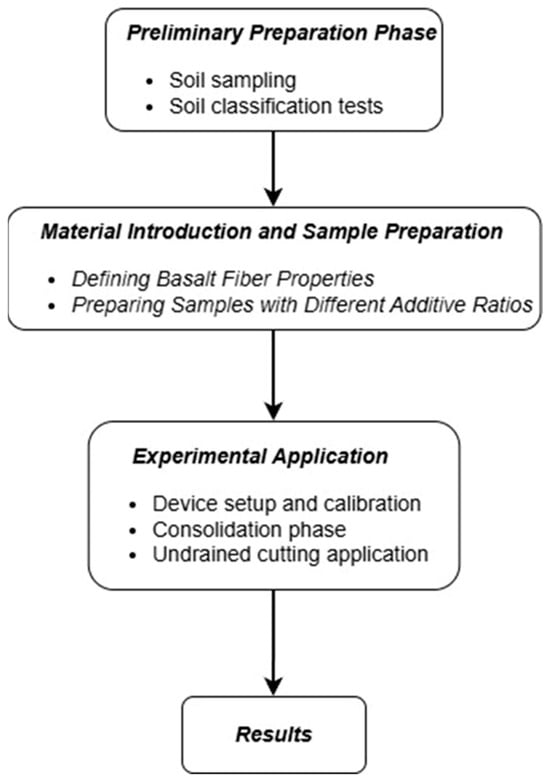
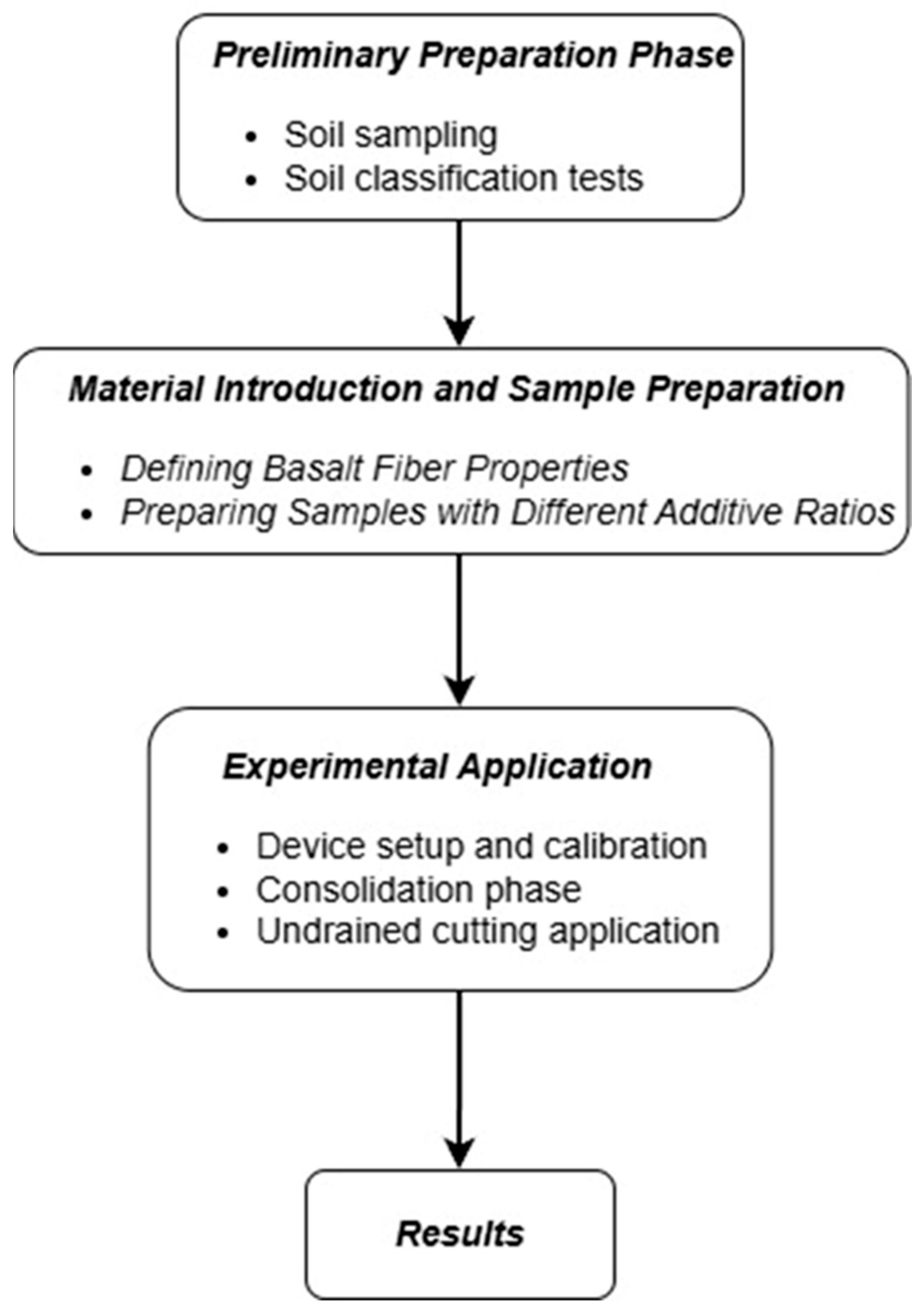
Within the scope of this study, clay samples representative of in situ field conditions were first collected to evaluate and improve the mechanical behavior of weak soils. Soil classification and index property tests were subsequently conducted. Thereafter, the physical, mechanical, and environmental properties of the basalt fiber used as a reinforcing additive were introduced. Test specimens were prepared by incorporating basalt fibers at different addition ratios. As part of the experimental program, ring shear tests were performed on both fiber-reinforced and control specimens, enabling a systematic evaluation of the effects of basalt fiber reinforcement on the undrained shear behavior of clay soils (Figure 1).
Figure 1.
Flow Chart of the study.
2.1. Study Area and Soil Characteristics
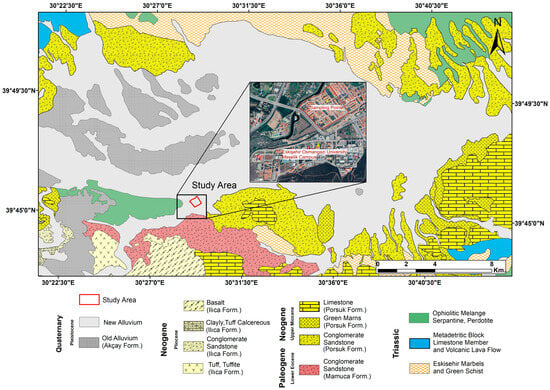
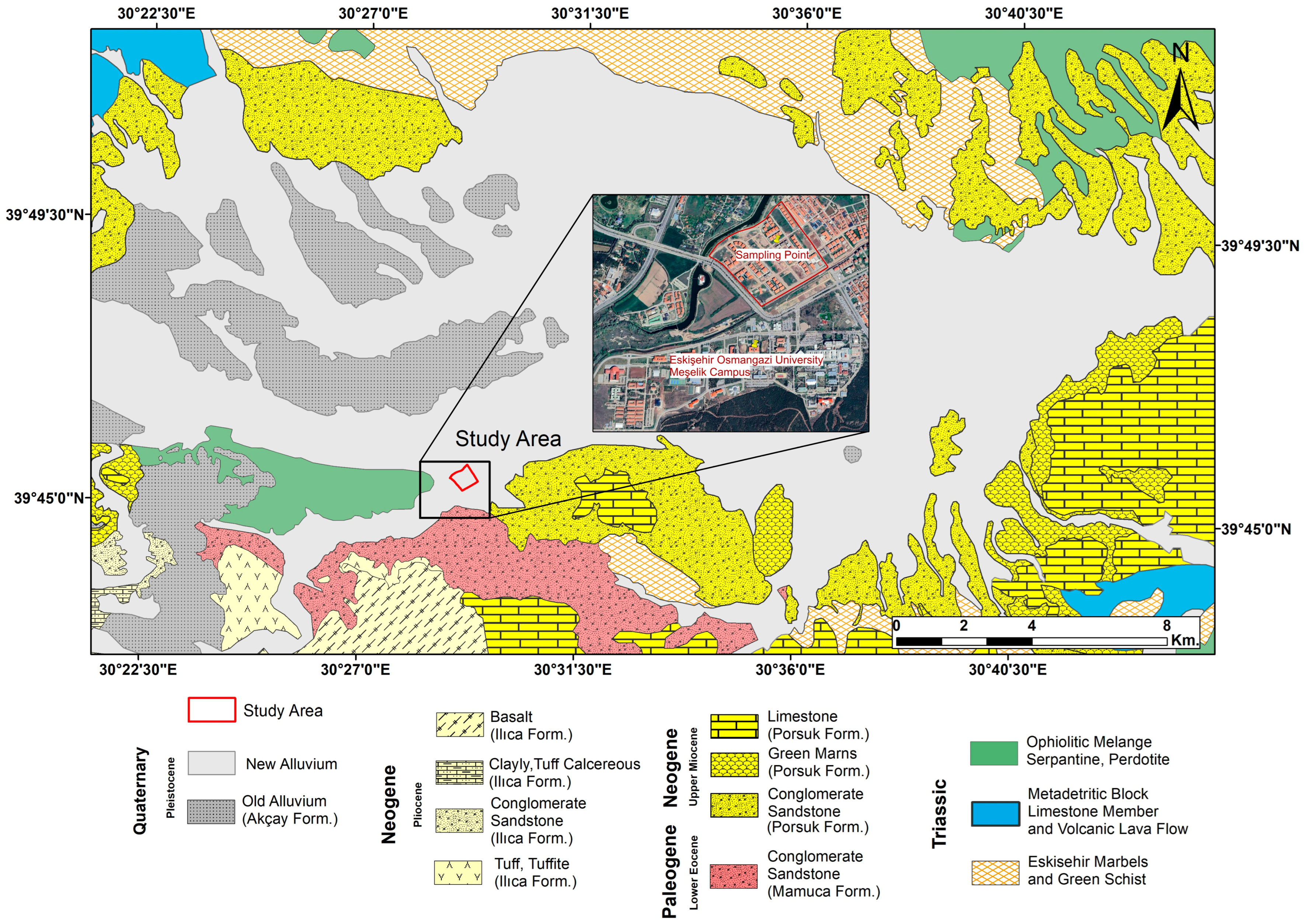
The study area is located within the Eskişehir Plain, which is predominantly composed of sedimentary units transported by the Porsuk and Sarısu rivers. The geological setting of the region is characterized by a wide range of lithological units with ages spanning from the Triassic to the Quaternary period. The oldest geological formations include Triassic-aged Eskişehir metamorphics (marbles), the Karkın Formation consisting of metadetritics, and ophiolitic units [16]. These units are overlain by younger Eocene, Miocene, Pliocene, and Pleistocene sedimentary and volcanic deposits. The youngest geological formations in the region consist of Quaternary-aged old and new alluvial deposits (Figure 2) [16,17,18,19,20,21].
Figure 2.
Geological map of Eskisehir and its surroundings (modified from [16,20,21]).
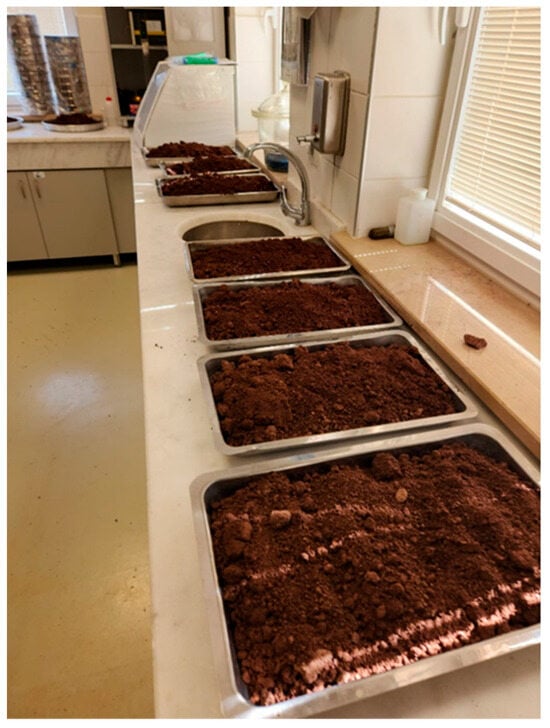
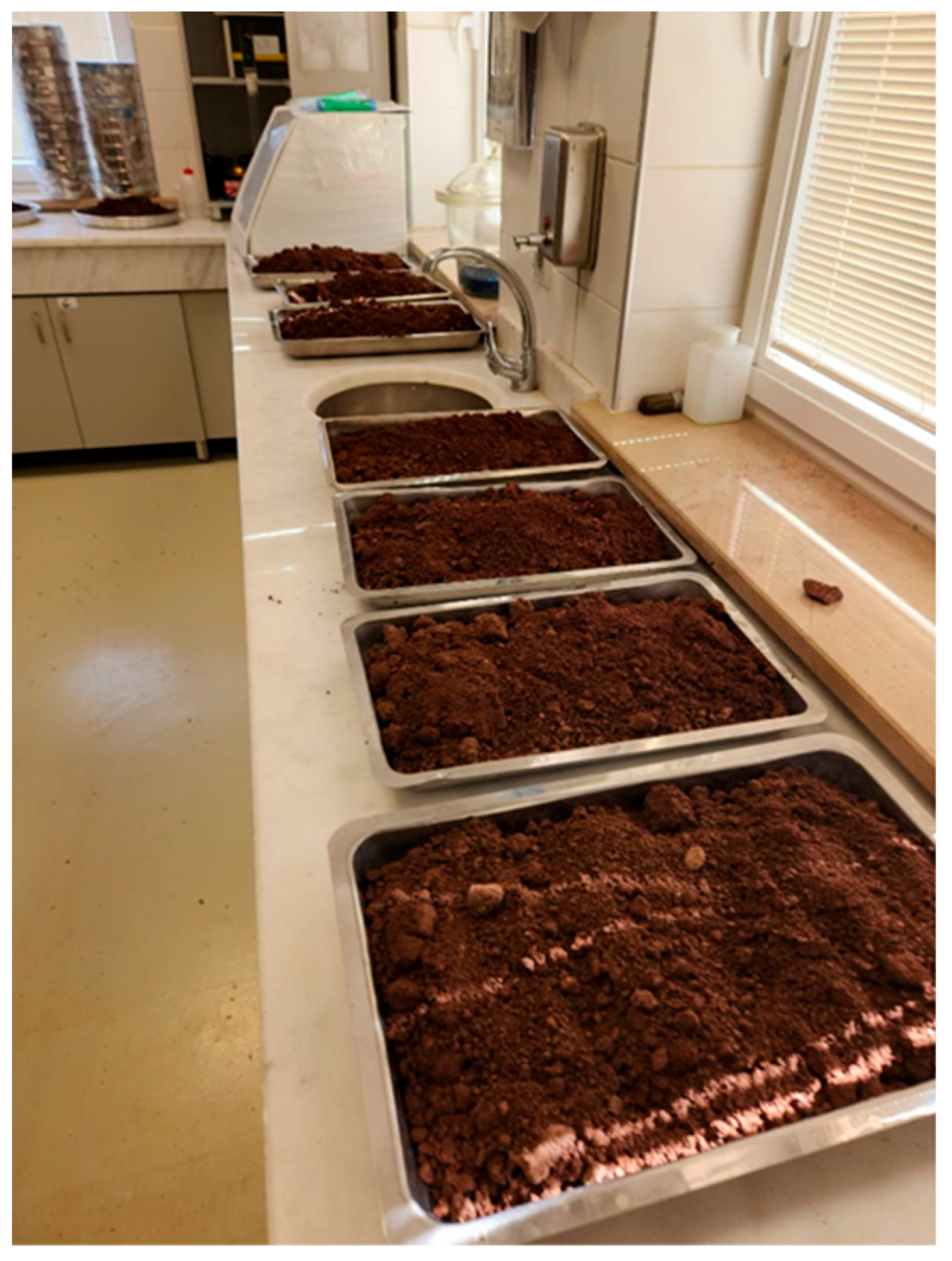
Clay soil samples were collected from the Kızılyer region of Eskişehir, located to the north of the Meşelik Campus of Eskişehir Osmangazi University. The area is characterized by Quaternary alluvial deposits with a high clay content and has experienced intensive construction activities in recent years. Disturbed soil samples were carefully extracted and transported to the laboratory, where they were air dried prior to testing (Figure 3). Laboratory tests, including liquid limit, plastic limit, and sieve analysis, were conducted at the Earth Sciences Laboratory of the Institute of Earth and Space Sciences, Eskişehir Technical University, to determine the soil classification and index properties of the material.
Figure 3.
Soil sample specimens.
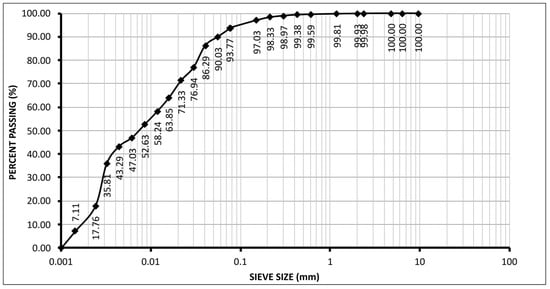
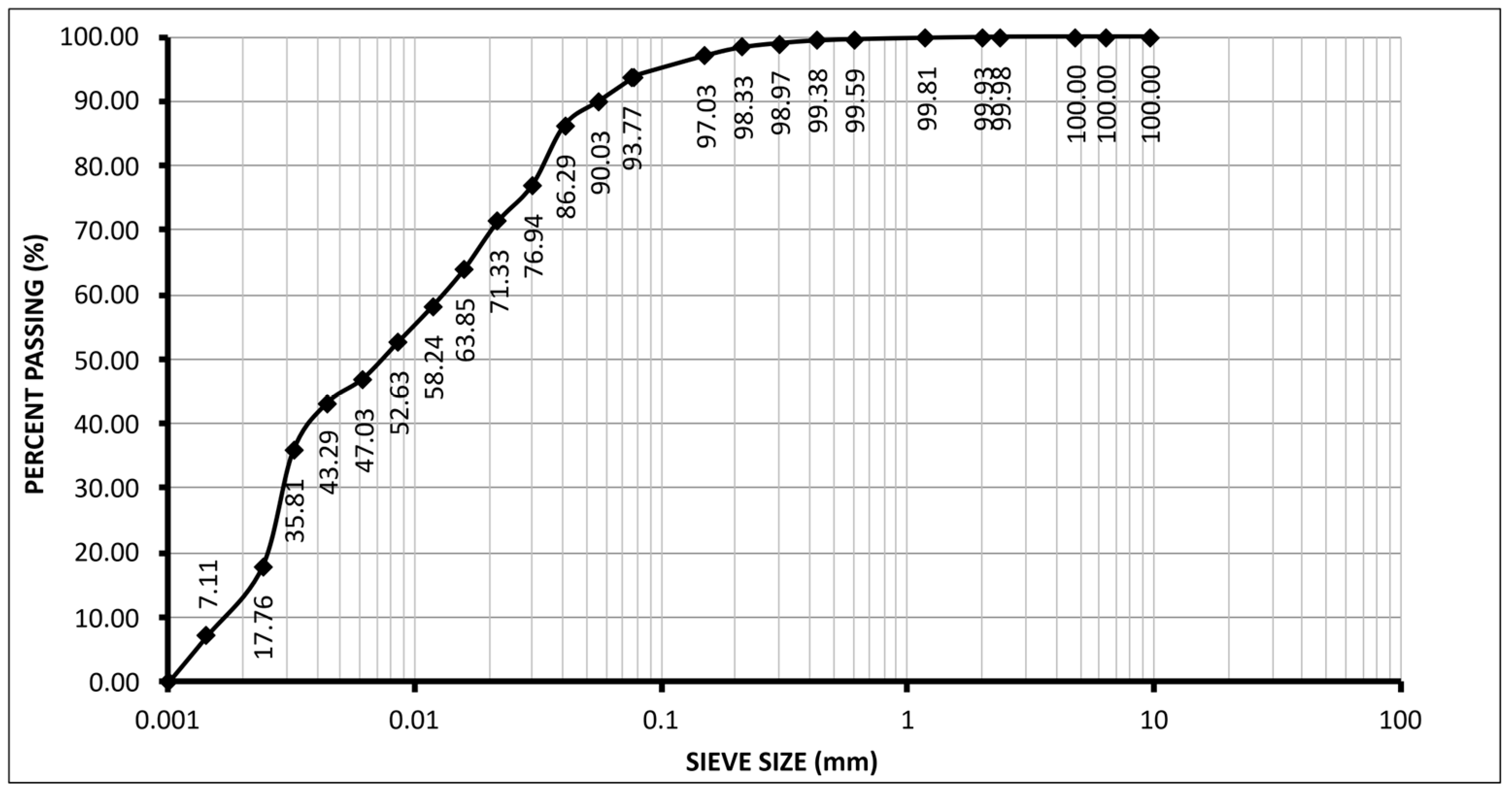
Atterberg limits and particle size distribution tests were conducted in accordance with ASTM D4318-17 [22]. The natural water content of the soil was determined as 24.3%, with a liquid limit (LL) of 60.17% and a plastic limit (PL) of 36.19%. Based on these results, the soil was classified as CH (high-plasticity clay) according to the Unified Soil Classification System (USCS). The granulometric curve obtained from sieve and hydrometer analyses is presented in Figure 4. Owing to its low drainage capacity and high deformation potential, this soil type was considered suitable for investigating fiber-reinforced soil improvement under undrained conditions.
Figure 4.
Granulometric curve of soil.
2.2. Properties of the Basalt Fiber Used
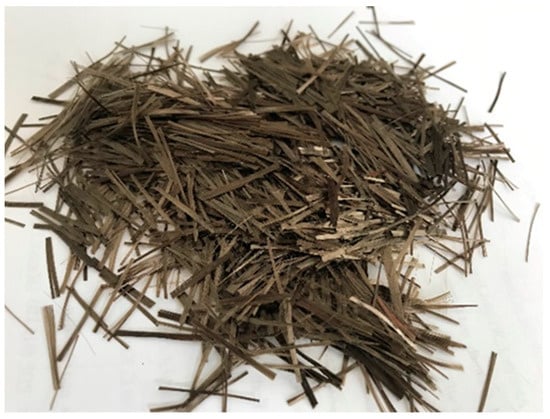
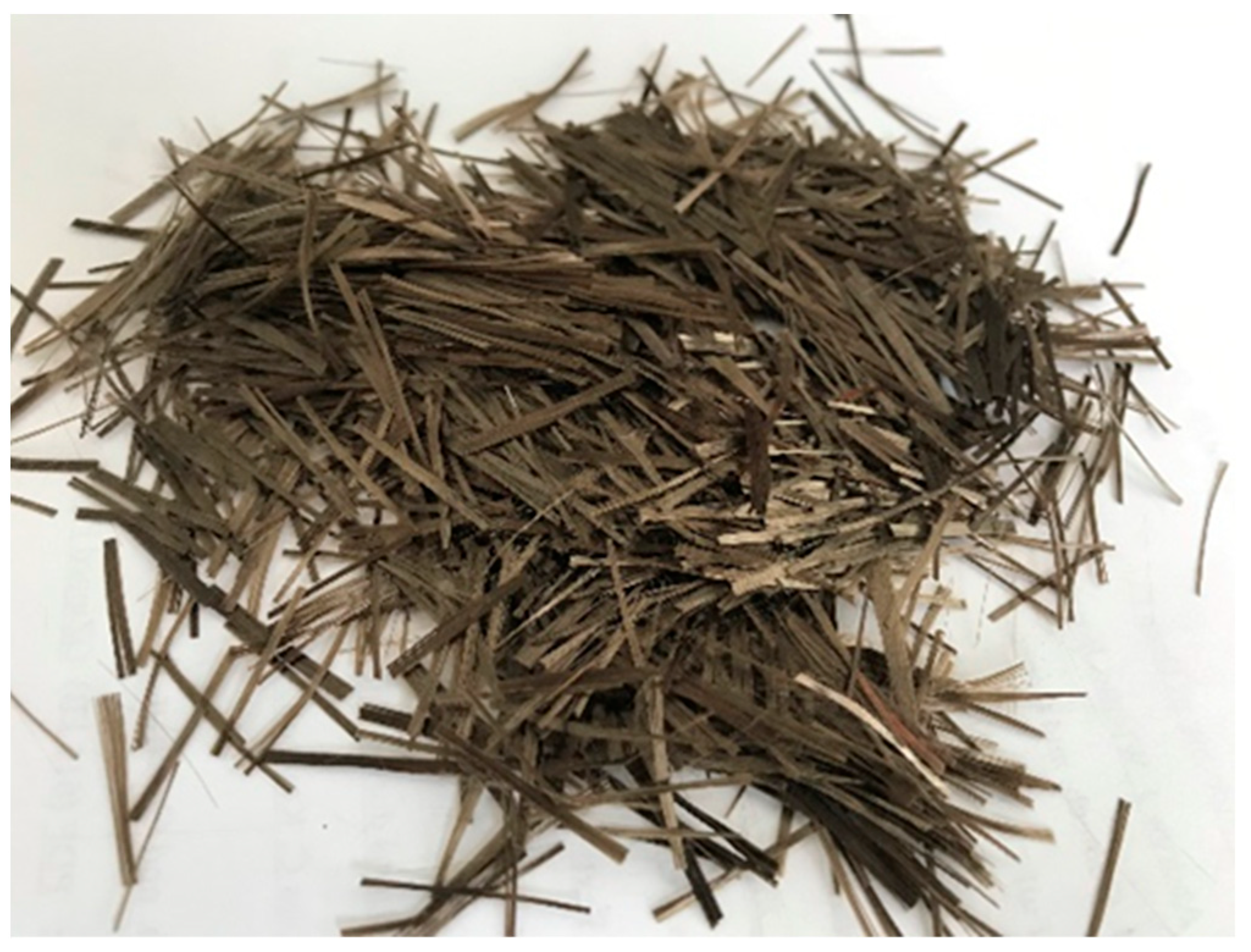
Basalt fibers are produced by melting volcanic basalt rock at temperatures of approximately 1450–1500 °C and extruding the molten material through fine nozzles. Although the production process requires high temperatures, basalt fibers do not involve polymerization or chemical curing agents, and their overall lifecycle environmental impact is generally lower than that of many synthetic polymer-based fibers (Figure 5). While the technology dates back to the 1950s, its widespread industrial application remained limited until the 1990s due to energy consumption and manufacturing constraints. Advances in melting and fiber-drawing technologies have since reduced production costs, enabling basalt fibers to emerge as a sustainable alternative for composite materials and soil improvement applications [23].
Figure 5.
Basalt fiber.
Basalt fibers primarily consist of SiO2, Al2O3, Fe2O3, MgO, and CaO, a mineral composition that provides excellent thermal stability and resistance to both alkaline and acidic environments. Their mechanical properties, including tensile strength ranging from 3000 to 4800 MPa, elastic modulus between 85 and 95 GPa, and low water absorption capacity (approximately 0.1–0.2%), make them particularly suitable for geotechnical applications [24,25]. These characteristics allow basalt fibers to actively participate in load transfer mechanisms within the soil matrix, forming effective crack-bridging and tensile reinforcement systems that contribute to improved undrained shear performance.
Beyond mechanical advantages, basalt fiber is preferred due to its environmental sustainability and cost effectiveness. Being naturally sourced, non-toxic, recyclable, and associated with a relatively low carbon footprint compared to synthetic fibers, basalt fiber represents an environmentally compatible solution for soil reinforcement. Moreover, its lower cost relative to glass and carbon fibers makes it an economically viable option for large-scale soil improvement projects [26].
Numerous studies have reported that basalt fiber reinforcement significantly enhances shear strength, ductility, post-peak resistance, and strain capacity of soils. Gao et al. [27] demonstrated that basalt fiber inclusion in clay soils increases undrained shear strength and delays sudden post-peak strength loss, resulting in more ductile behavior. Jia et al. [28] observed improved peak strength and more controlled stress–strain responses in silty clay soils reinforced with basalt fibers. Similarly, Song et al. [29] reported that increasing basalt fiber content improves soil microstructure, delays crack initiation, and enhances long-term engineering performance. These findings collectively indicate that basalt fiber reinforcement is an effective method for improving both strength and durability in cohesive and granular soils.
Considering its production technology, chemical and physical properties, environmental compatibility, and proven mechanical benefits, basalt fiber was selected as the reinforcing material in this study to investigate its effect on the undrained behavior of clay soils. The fibers used had a nominal length of 24 mm, a diameter range of 17–19 µm, a density of 2.65 g/cm3, and tensile strength between 3200 and 3400 MPa. These values were obtained from manufacturer technical datasheets and verified through random sampling (Table 1). Fibers were incorporated into the soil at mass ratios of 0.25%, 0.50%, and 0.75% by dry weight, ensuring reproducibility and facilitating comparison with existing studies.
Table 1.
Properties of basalt fiber.
The reasons for preferring basalt fiber in soil improvement are based not only on its high strength properties but also on non-engineering yet decisive factors such as environmental sustainability and cost effectiveness. Being a naturally sourced material, free of toxic content, and having a lower carbon footprint in the production process compared to synthetic fibers makes basalt fibers an environmentally compatible option for engineering projects. Furthermore, being less expensive than glass and carbon fibers in both supply and processing, it offers an economical alternative, particularly for large scale soil improvement applications [26].
Studies examining the mechanical behavior of basalt fiber-reinforced soils in the literature show that fiber reinforcement provides significant improvements in shear strength, ductility, post-peak strength, and unit strain capacity. Gao et al. [27] noted that basalt fiber reinforcement in clay soils increases undrained shear strength and delays sudden stress drop, resulting in more ductile behavior. Similarly, Jia et al. [28] reported an increase in peak strength and a more controlled stress–strain curve behavior in silty clay soils with fiber reinforcement. Song et al. [29], in their study on red killers, stated that an increase in the basalt fiber ratio resulted in an improvement in the microstructure of the soil matrix, a delay in crack formation, and an improvement in long term engineering behavior. These findings demonstrate that basalt fiber reinforcement is an effective improvement agent that increases shear resistance and durability in both cohesive and granular soils.
Considering all these evaluations, starting from the production technology of basalt fiber, its chemical and physical properties, environmental and economic suitability, and strength gains reported in the literature, it is seen that these fibers can be used to improve the undrained behavior of clay soils. The fibers used in this study had a nominal length of 24 mm and a diameter range of 17–19 µm. The density was 2.65 g/cm3, and the tensile strength ranged from 3200 to 3400 MPa. These parameters were determined from manufacturer technical datasheets and verified by random sampling (Table 1). Fibers were added to the soil at mass ratios of 0.25%, 0.50%, and 0.75% by dry weight of soil, which allows reproducibility and comparison with existing literature.
2.3. Ring Shear Test
Ring shear tests were conducted to investigate the large-strain undrained shear behavior of both unreinforced and basalt fiber-reinforced clay specimens. Unlike conventional triaxial tests, the ring shear method enables continuous shearing along a fully developed failure surface, allowing reliable determination of both peak and residual shear strength parameters. In this study, basalt fiber was incorporated as a reinforcing additive to improve the mechanical behavior of the clay soil, and its influence on shear strength characteristics was systematically evaluated. Shear strength parameters, namely cohesion (c) and internal friction angle (φ), are fundamental indicators in geotechnical engineering, as they directly govern soil bearing capacity and stability under static and dynamic loading conditions. The ring shear apparatus is particularly suitable for such investigations because it permits large deformations, uninterrupted shearing, and the formation of a permanent shear plane conditions that cannot be adequately reproduced by conventional UU triaxial tests. Since the primary focus of this study is on post-peak and residual behavior, the ring shear test was selected as the most appropriate experimental technique.
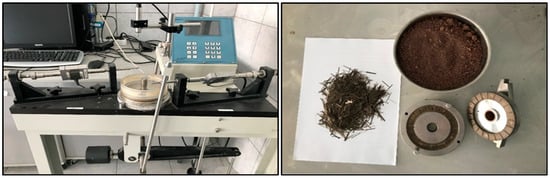
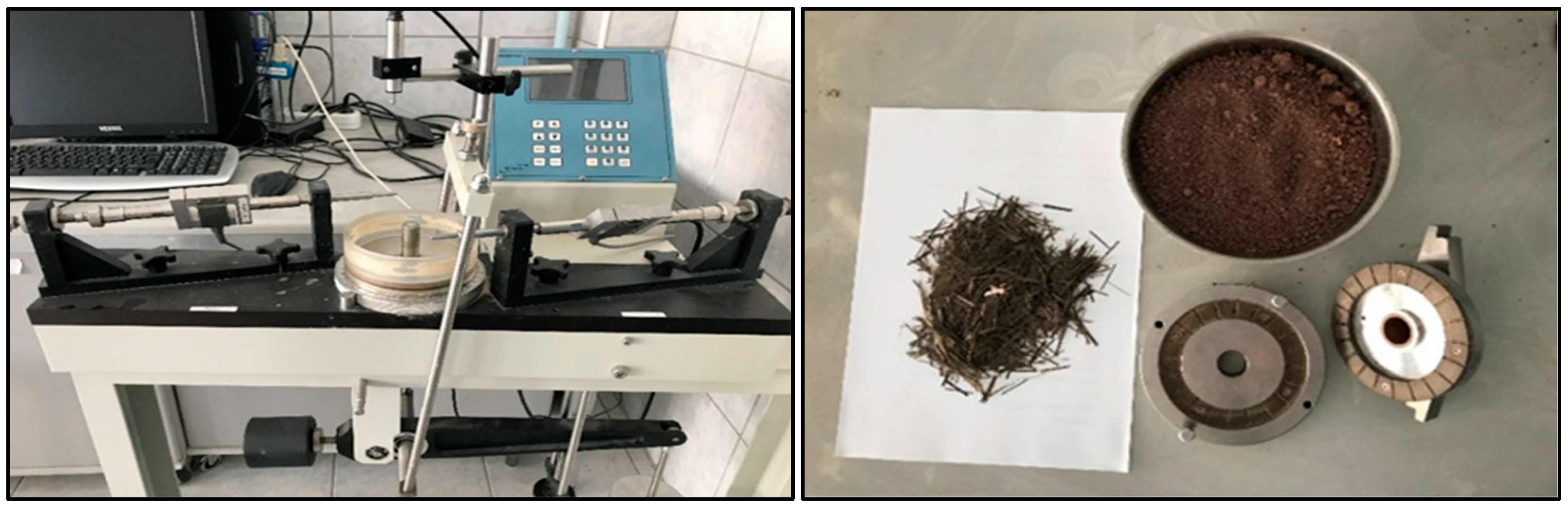
Specimen preparation involved dry mixing the required amount of basalt fibers with oven dried soil to ensure uniform fiber distribution. Subsequently, water was gradually added, and mixing was continued for a predetermined duration to achieve homogeneous moisture content and fiber dispersion. The prepared specimens were then placed into the ring shear device and consolidated under normal stress levels of 50 kPa, 100 kPa, and 200 kPa prior to shearing. The ring shear device applies controlled normal loading and circular shear displacement simultaneously, enabling continuous monitoring of shear stress throughout large deformation stages. The apparatus consists of concentric ring plates with known inner and outer radius, a normal loading system, a rotational shear mechanism, high-resolution load cells, and displacement transducers. The maximum normal stress capacity of the device is at least 500 kPa, with a torque capacity of ±200 Nm, a displacement resolution of 0.01 mm, and a data acquisition frequency ranging from 1 to 10 Hz. These features allow accurate and reliable measurement of both peak and residual shear strength under undrained conditions [1,27]. The ring shear specimens were prepared using a standard shear box with an internal diameter of 70 mm, outer diameter 100 mm and a specimen height of 2 mm (Figure 6).
Figure 6.
Ring shear test system.
The experimental procedure comprised three main stages: specimen preparation, consolidation, and shearing. In the specimen preparation stage, the clay soil was first air-dried, manually disaggregated, and adjusted to its predetermined natural water content under controlled laboratory conditions. Basalt fibers were then incorporated into the soil at predefined ratios (0.25%, 0.50%, and 0.75% by dry weight). Owing to their high tensile strength (3000–4800 MPa), high elastic modulus (85–95 GPa), and low water absorption capacity, basalt fibers provide effective reinforcement through enhanced soil fiber interaction, particularly under undrained conditions where tensile resistance and crack bridging mechanisms are dominant [30,31,32].
To ensure reliable and reproducible results, a standardized and systematic mixing procedure was adopted for all specimens. Initially, the required amount of basalt fibers was gradually distributed over the oven dried soil during a dry premixing stage to minimize fiber clustering. The soil fiber mixture was then blended using stepwise mechanical mixing to promote uniform fiber dispersion within the soil matrix. Particular care was taken to prevent fiber agglomeration, and mixing was continued until a visually homogeneous distribution was achieved. Subsequently, water was added incrementally, and the mixture was kneaded thoroughly to ensure uniform moisture distribution and adequate fiber soil bonding. The homogeneity of the mixture was verified by randomly inspecting fiber distribution prior to placement in the ring shear device. This preparation procedure was consistently applied to all specimens to maintain uniform density, water content, and fiber distribution throughout the experimental program.
In the consolidation stage, specimens were placed into the ring shear apparatus and subjected to normal stresses of 50 kPa, 100 kPa, and 200 kPa. These stress levels were selected to represent typical ranges encountered in geotechnical engineering practice and to allow evaluation of stress-dependent shear behavior, consistent with previous studies [27,28,29]. Consolidation was allowed to proceed until completion under controlled drainage conditions.
After consolidation was completed, the cutting stage was initiated under non-draining conditions. Shearing was applied under undrained conditions at a constant shear rate of 0.1 mm/s until large displacement levels were achieved. During the tests, shear stress, shear displacement, and normal displacement were continuously recorded. This allowed both the peak shear strength (τpeak) and residual shear strength (τres) to be obtained. The following parameters were continuously recorded throughout the experiment:
- (i)
- Shear force (Fs);
- (ii)
- Shear displacement (Δs);
- (iii)
- Normal displacement (Δn);
- (iv)
- Pore pressure (u) (if applicable);
- (v)
- Engineering parameters derived from stress–strain curves.
Shear stress is determined by the relationship τ = Fs/As based on the effective shear area calculated using the inner and outer radius of the device.
The test sets have been designed to analyze the effect of different fiber ratios (0.25%, 0.50%, 0.75% by weight) on behavior. Three repeat tests were conducted at the three selected normal stress levels. Thus, both statistical reliabilities have been ensured, and control of experimental variation has been made possible. To increase repeatability, sample preparation, mixing time, water content adjustment, device calibration, consolidation time, and cutting speed were kept constant in all experiments. Load cells and displacement sensors were calibrated before each experiment series; all experiments were conducted at the same laboratory temperature. To ensure the reliability and consistency of the experimental results, each testing stage was first carried out on preliminary specimens to verify the stability of the testing conditions and the performance of the ring shear device. After the verification phase, a full testing sequence was conducted in which each test condition was repeated three times. The repeated measurements were compared to confirm reproducibility, and only consistent datasets were used in the analysis. This multi-stage verification and repetition procedure ensured that the influence of specimen preparation variability, fiber distribution uniformity, and equipment sensitivity was minimized.
Current studies indicate that the addition of basalt fiber increases both peak and residual shear strength in soils, with the increase in residual strength playing a critical role in long-term stability [28,29]. A similar approach was adopted in this study; fiber-reinforced versus non reinforced comparisons were analyzed in terms of both strengths increase percentage and ductility change. Additionally, the effect of fiber reinforcement on soil ductility was evaluated by assessing shear rate and peak deformation values. A comprehensive assessment of not only strength but also deformation capacity was performed using the evaluated parameters.
In conclusion, this comprehensive test matrix prepared within the scope of the ring shear test procedure provides the necessary methodological basis for quantitatively determining the effects of basalt fiber reinforcement on the undrained shear strength and post-peak behavior of clay soils.
3. Results
Soil specimens with varying basalt fiber contents were prepared and tested using a ring shear apparatus to evaluate the influence of fiber inclusion on shear strength behavior. The fiber length was kept constant throughout the experimental program, and only the fiber content was varied to enable a systematic comparison of its effect on shear strength parameters. Basalt fibers with a nominal length of 24 mm were added to the clay soil at ratios of 0.25%, 0.50%, and 0.75% by dry weight. This approach allowed the isolated assessment of fiber dosage on soil behavior while eliminating the influence of fiber geometry.
The primary objective of the experimental analysis was to investigate how fiber content affects the shear strength parameters of clay soil. In cohesive soils, the shear strength parameter commonly referred to as cohesion is more appropriately described as cohesion resistance, which may arise from apparent cohesion associated with matric suction or from interparticle bonding caused by cementation agents such as Fe2O3, CaCO3, or soluble salts. These mechanisms increase shear resistance rather than representing true intrinsic cohesion. Apparent cohesion, in particular, is strongly dependent on soil moisture conditions and electrostatic forces, and its magnitude may vary significantly with changes in water content [33].
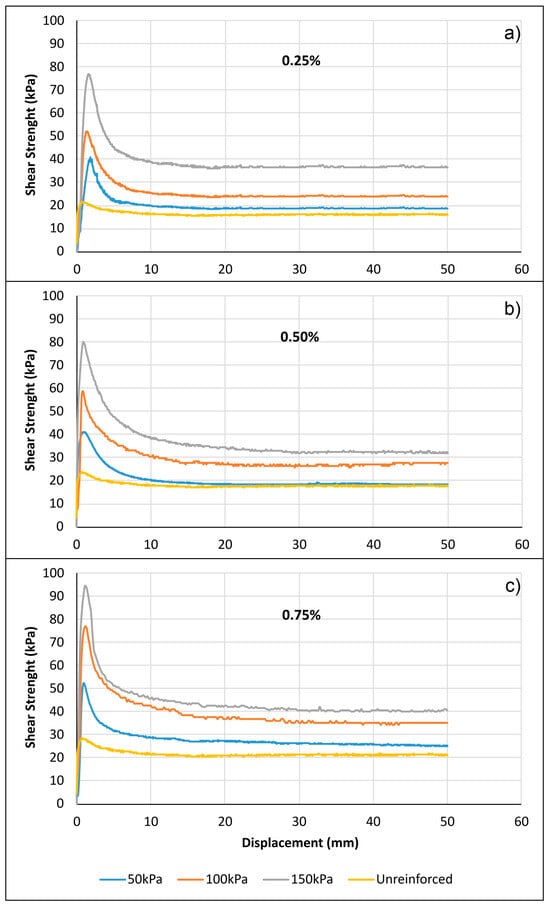
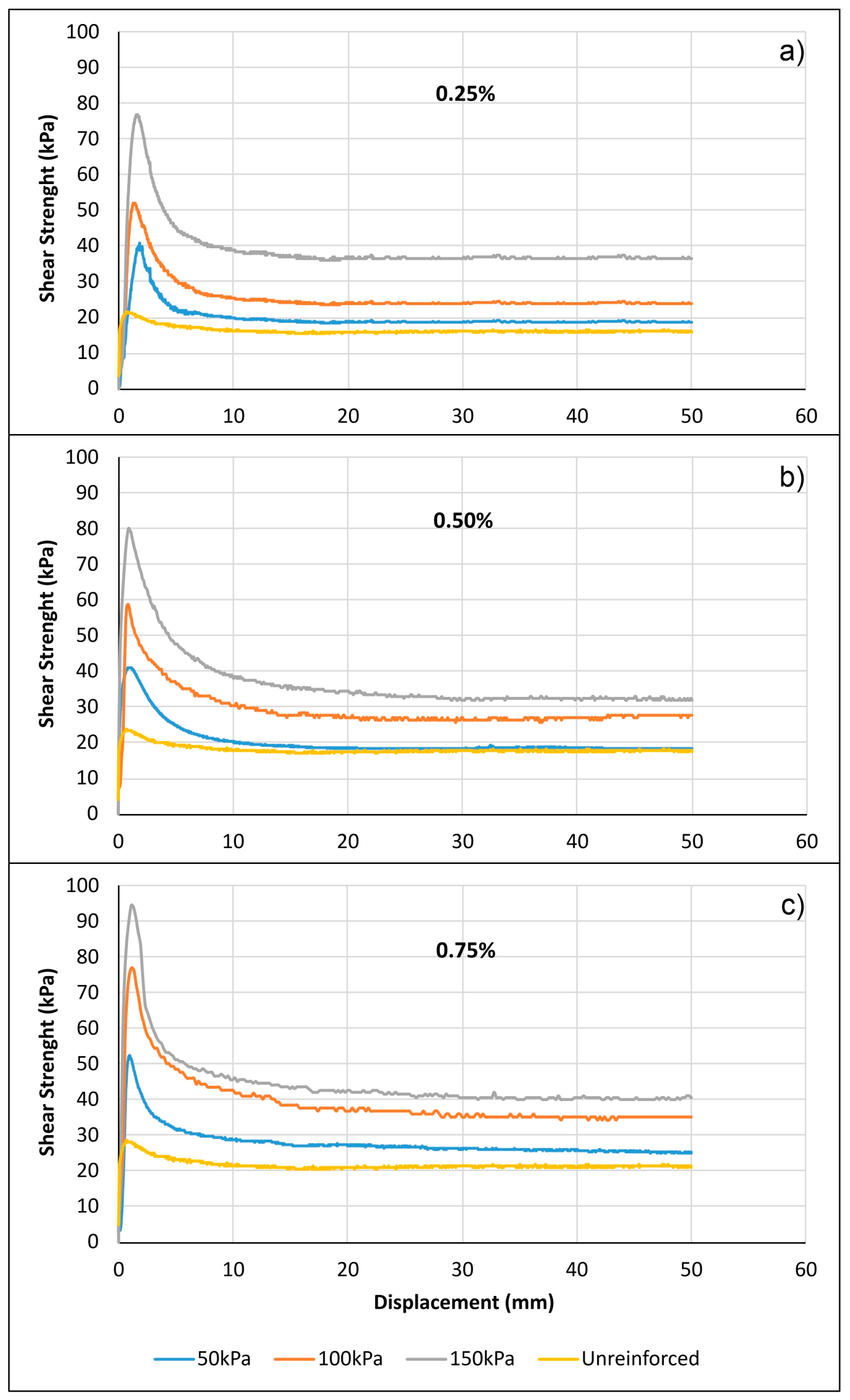
Considering the importance of soil behavior under seismic and large deformation conditions, the specimens were tested under three different normal stress levels (50, 100, and 150 kPa), as illustrated in Figure 7. Initially, specimens containing 0.25% basalt fiber were prepared and tested, and the experiments were continued up to large displacement levels to capture both peak and residual shear behavior.
Figure 7.
Shear strength test results of tested soil with different additions of basalt fibres: (a) 0.25%, (b) 0.50%, (c) 0.75%.
As summarized in Table 2, increasing the basalt fiber content resulted in a clear and systematic trend in shear strength parameters. Both cohesion and internal friction angle increased with fiber percentage, demonstrating the effectiveness of basalt fiber reinforcement in modifying the undrained shear behavior of the clay soil. The cohesion and friction angle values were derived from Mohr–Coulomb failure envelopes constructed using peak shear stress values obtained from ring shear tests.
Table 2.
Cohesion (c) and friction angle (φ) values for all fiber contents.
To further examine the effect of increasing fiber content, additional test series were conducted for fiber ratios of 0.50% and 0.75%. The results indicate that higher fiber contents led to increased elongation during shearing. This behavior is attributed to the resistance of basalt fibers against cutting and their subsequent tensile elongation, which resembles yield type elongation observed in ductile materials such as steel.
Ring shear tests performed under different normal stress levels (50, 100, and 150 kPa) revealed a pronounced increase in cohesion values with increasing fiber content. In specimens containing 0.25%, 0.50%, and 0.75% fiber, a notable increase in shear stress was observed at the initial stage of shearing, followed by stabilization of shear stress with increasing displacement. The highest cohesion values were consistently obtained in specimens containing 0.75% fiber at all normal stress levels, indicating the contribution of fiber reinforcement to enhanced cohesion resistance within the soil matrix.
The trends observed in the shear stress displacement curves also demonstrate that increasing fiber content positively influences the internal friction angle. While a rapid reduction in shear stress with displacement was observed under lower normal stress (50 kPa), this reduction was less pronounced under higher normal stress (150 kPa), with stabilized shear stress levels remaining significantly higher. This behavior suggests that fiber inclusion enhances frictional resistance through increased particle interlocking and improved soil–fiber interaction.
In terms of deformation characteristics, the results show that fiber reinforcement leads to significant changes in deformation behavior. In specimens exhibiting high initial shear stress, the stabilization of shear stress with increasing displacement indicates that fiber inclusion effectively controls deformation within the soil structure. Particularly for fiber contents of 0.50% and 0.75%, the maintenance of relatively stable shear stress at large displacements demonstrates an improvement in both elastic and plastic deformation capacity.
Overall, the experimental results confirm the effectiveness of basalt fiber reinforcement in improving the shear strength and deformation behavior of clay soils under large deformation conditions. The findings also highlight the suitability of ring shear testing as a reliable experimental technique for evaluating soil behavior beyond peak strength. Compared with conventional triaxial and direct shear tests, the ring shear test provides more realistic insights into soil response when permanent shear planes develop or when repetitive shear deformation occurs. Consequently, the use of ring shear testing enhances both the engineering relevance of the results and their comparability with existing studies in the literature [34].
4. Discussion
The experimental findings indicate that basalt fiber inclusion leads to a pronounced modification of the shear behavior of high-plasticity clay, particularly under large deformation conditions captured by the ring shear apparatus. The observed increases in both peak and residual shear strength are generally consistent with trends reported in previous studies [27,28,29]. However, the stress-dependent response of the reinforced soil and the formation of fully developed shear planes necessitate a detailed interpretation of the governing mechanisms.
4.1. Mechanisms of Strength Improvement and Shear Behavior
The enhancement of peak shear strength with increasing basalt fiber content (0.25%, 0.50%, and 0.75% by dry weight) can be attributed to a combination of interacting mechanisms related to fiber–soil interaction. First, basalt fibers act as tensile bridges across the developing shear band. During the initial stages of shearing, these fibers mobilize tensile resistance and delay the formation of a continuous failure surface, in agreement with tensile anchorage concepts reported by Consoli et al. [14] and Mirzababaei et al. [32]. Second, the relatively rough surface texture and high stiffness of basalt fibers promote micro-mechanical interlocking with clay aggregates. This effect becomes more pronounced at higher normal stresses (e.g., 150 kPa), where increased confinement enhances fiber–soil contact and frictional resistance. Third, the presence of fibers restricts the rearrangement and rotation of clay platelets during early deformation stages, contributing to higher resistance at peak conditions.
The Mohr–Coulomb failure envelopes derived from peak shear stresses demonstrate that fiber inclusion results in increases in both cohesion (c) and internal friction angle (φ). The increase in cohesion is more pronounced, which is consistent with theoretical expectations for fiber-reinforced cohesive soils [14,28]. This increase represents apparent cohesion, arising from fiber-induced tensile resistance across the shear zone and stabilization of the soil fabric. In contrast, the increase in the internal friction angle is comparatively moderate and can be attributed to additional friction generated by fiber–soil interlocking and enhanced particle interaction, particularly at larger displacements.
Ring shear testing further enables observation of fully developed shear planes, allowing the evaluation of post peak behavior. A key outcome of the experiments is the notable improvement in residual shear strength, especially for fiber contents of 0.50% and 0.75%. This behavior is primarily governed by continuous fiber pullout resistance, whereby fibers crossing the shear plane continue to mobilize frictional and adhesive forces even after large displacements, thereby preventing abrupt post-peak strength loss. Similar gradual post peak responses have been reported by Song et al. [29]. In addition, fiber-reinforced specimens tend to develop thicker and more distributed shear zones rather than sharp, localized shear bands. This diffused shear mechanism dissipates energy over a larger volume and delays strain localization. Consequently, the reinforced clay exhibits reduced brittleness and a transition toward more ductile behavior, as evidenced by stabilized shear stress at large displacements, consistent with observations reported by Gao et al. [27].
4.2. Optimum Fiber Content and Comparison with Literature
Although shear strength continues to increase with fiber content up to 0.75%, the rate of improvement decreases beyond 0.50%, indicating the presence of an optimum fiber content. This trend, commonly referred to as the “optimum fiber effect” has been widely reported in studies on fiber-reinforced soils [27,28]. Several factors contribute to this behavior. At higher dosages (0.75%), fiber agglomeration becomes more likely, leading to the formation of voids and disruption of the clay fabric, which reduces effective soil–fiber contact. Moreover, when fiber concentration exceeds a critical threshold, additional fibers do not contribute proportionally to tensile bridging, resulting in diminishing interfacial efficiency. Excess fibers may also interfere with the natural packing of clay aggregates, reducing matrix continuity and partially counteracting the benefits of reinforcement.
Despite these limitations, the specimens containing 0.75% fiber still exhibit improved strength compared with lower fiber contents, although with reduced efficiency per unit fiber beyond approximately 60 g. Overall, the findings of this study are in good agreement with previous studies on basalt fiber-reinforced cohesive soils. Some deviations from published results are observed, as summarized in Table 3, and can be attributed to differences in soil plasticity, testing methodology, and the ability of ring shear tests to capture fully developed residual behavior compared with conventional UU triaxial tests.
Table 3.
Comparison with studies in the literature.
4.3. Limitations of the Study
Although the experimental program was designed to ensure reliable and reproducible results, several limitations should be acknowledged. For each testing condition and fiber content, preliminary specimens were first prepared to verify the consistency of mixing procedures and the stability of the measurement setup. After these preliminary checks, three replicate specimens were prepared and tested for every fiber content and normal stress level, ensuring control of variability arising from sample preparation, fiber distribution, and device sensitivity. Despite the use of repeated tests, inherent variability in clay fabric, moisture distribution, and fiber orientation remains a potential source of uncertainty, as is typical for fiber-reinforced soils. Additionally, the ring shear device provides reliable measurements under large deformation; however, it may not fully represent all field loading paths or drainage conditions. The study is also limited to a single clay type and specific fiber dimensions, which may restrict the generalization of the results to other soil types or reinforcement configurations. Future studies should expand the testing program to include a broader range of soil classifications, fiber geometries, and loading conditions, as well as statistical analyses to quantify variability.
4.4. Engineering Implications
The findings of this study indicate that basalt fiber reinforcement can be effectively applied in practical geotechnical engineering applications, particularly in clayey soils subjected to undrained loading conditions.
The observed improvements in peak and residual shear strength suggest that this technique can enhance the stability of slopes, embankments, and foundation subgrades by reducing the risk of progressive failure and excessive deformation. The increase in ductility and post-peak resistance is especially relevant for applications involving cyclic or long-term loading. Moreover, the recyclable nature and chemical stability of basalt fibers provide an environmentally sustainable alternative to traditional chemical stabilization methods, offering both technical and ecological advantages in soil improvement practices.
5. Conclusions
This study demonstrates that basalt fiber reinforcement exerts a significant and quantifiable influence on the undrained shear strength behavior of high-plasticity clay soils. The inclusion of basalt fibers led to notable increases in both peak and residual shear strength, enhanced deformation capacity, and a transition toward a more ductile post-peak response. These improvements are primarily attributed to fiber–soil interaction mechanisms, including tensile bridging, crack-arresting effects, and increased mechanical interlocking within the soil matrix.
The principal conclusions of the study are summarized as follows:
The strength improvement ratios in this study are directly improve by comparisons with unreinforced control specimens (0% fiber). Based on the shear stress–displacement responses obtained from ring shear tests, the reference clay exhibited peak shear strengths of approximately 32–36 kPa and residual shear strengths of 24–26 kPa under the applied normal stresses. With the inclusion of basalt fibers at contents of 0.25%, 0.50%, and 0.75% by dry weight, peak shear strength increased to approximately 40–50 kPa, corresponding to an improvement of 25–40%, while residual shear strength increased to 28–35 kPa, representing a 15–35% enhancement.
An effective performance range was identified for fiber contents between 0.25% and 0.75% by weight. Although increasing fiber content generally improved strength and ductility, excessive fiber dosages may induce fiber agglomeration, negatively affecting soil homogeneity and limiting additional strength gains.
Basalt fiber reinforcement also resulted in substantial improvements in deformation behavior. Ring shear test results indicate that fiber-reinforced specimens exhibited delayed post-peak strength degradation, increased energy dissipation capacity, and enhanced ductility, which are critical characteristics for soils subjected to large deformations. Evaluation of Mohr–Coulomb strength parameters showed that cohesion increased from approximately 10–12 kPa to 26–28 kPa, while the internal friction angle increased from 14–16° to 20–22° following fiber reinforcement, confirming the measurable enhancement of shear strength parameters.
Ring shear testing proved to be a highly effective experimental method for evaluating fiber-reinforced soils. Its ability to capture both peak and residual shear strength under large displacement conditions provides a reliable framework for interpreting fiber–soil interaction mechanisms and post-peak behavior.
The experimental findings are consistent with studies in existing literature regarding strength enhancement, ductility improvement, and post peak behavior of fine-grained soils reinforced with basalt fibers. In this study results indicate that basalt fiber reinforcement can be effectively applied to slope stability improvement, subgrade and foundation soil enhancement, and the long-term performance improvement of weak clay layers. In particular, the observed increase in residual shear strength is for the stability of retaining structures, road embankments, and infrastructures subjected to cyclic or repetitive loading.
Furthermore, basalt fiber represents an environmentally sustainable reinforcement alternative. Its natural origin, absence of chemical additives, recyclability, and potential to partially replace cement-based stabilization techniques contribute to reduced carbon emissions and promote sustainable geotechnical practices.
Overall, basalt fiber reinforcement can be regarded as a sustainable, cost effective, and technically efficient method for improving the mechanical and deformation behavior of clay soils under undrained conditions. The enhanced peak and residual shear strengths obtained in this study confirm the strong potential of basalt fibers as reliable reinforcement materials for geotechnical engineering applications.
Author Contributions
Conceptualization, E.A.O., H.B.Ö. and E.G.; methodology, E.A.O.; software, E.G.; validation, E.A.O., H.B.Ö. and E.G.; formal analysis, E.A.O.; investigation, E.A.O.; resources, E.A.O.; data curation, E.G.; writing—original draft preparation, E.A.O.; writing—review and editing, H.B.Ö. and E.G.; visualization, E.G.; supervision, E.A.O.; project administration, E.A.O. All authors have read and agreed to the published version of the manuscript.
Funding
This study was supported by Eskisehir Technical University Scientific Research Projects Coordination Unit within the scope of project number 23GAP009.
Institutional Review Board Statement
Not applicable.
Informed Consent Statement
Not applicable.
Data Availability Statement
The raw data supporting the conclusions of this article will be made available by the authors on request.
Acknowledgments
We would like to thank Eskisehir Technical University, Institute of Earth and Space Sciences and Eskisehir Osmangazi University, Department of Civil Engineering and Geotechnics for their laboratory work. In preparing this manuscript, the authors utilized an artificial intelligence tool (ChatGPT-5 and ChatGPT4o) solely to enhance grammar, clarity of language, and readability. All scientific content, data analysis, result interpretation, and conclusions were produced entirely by the authors. After the AI-assisted language editing stage, the authors carefully reviewed, revised, and approved the final text. The authors take full responsibility for the accuracy and integrity of the manuscript.
Conflicts of Interest
The authors declare no conflicts of interest.
References
- Topçuoğlu, Y.A.; Gürocak, Z. Increasing Strength of Clay Soils with the Use of Basalt Fiber: An Experimental Study. Turk. J. Sci. Technol. 2024, 19, 87–96. [Google Scholar] [CrossRef] [Scilit]
- Kale, R.Y.; Dahake, N.D.; Sahu, S.M.; Gawande, G.A.; Wailker, P.J.; Patekar, V.R.; Pawar, C.R. Soil stabilization by using basalt fibers. Int. J. Sci. Res. Eng. Trends 2020, 6, 1931–1935. [Google Scholar]
- Wickramasuriya, B.Y.; Alahakoon, Y.; Krishantha, B.R.G.A.; Alawatugoda, J.; Ekanayake, I.U. Prediction of the strength characteristics of basalt fibre-reinforced concrete using explainable machine learning models. Discov. Appl. Sci. 2025, 7, 890. [Google Scholar] [CrossRef] [Scilit]
- Wu, T.; Yuan, J.; Wang, F.; He, Q.; Huang, B.; Kong, L.; Huang, Z. Basalt Fibers Versus Plant Fibers: The Effect of Fiber-Reinforced Red Clay on Shear Strength and Thermophysical Properties under Freeze—Thaw Conditions. Sustainability 2024, 16, 6440. [Google Scholar] [CrossRef] [Scilit]
- Chen, C.K.; Li, G.; Liu, J.; Xi, Y.; Nan, J.J. Shear strength characteristics of basalt fiber-reinforced loess. Sci. Rep. 2023, 13, 15923. [Google Scholar] [CrossRef] [Scilit]
- Fiore, V.; Scalici, T.; Bella, G.D.; Valenza, A. A review on basalt fibre and its composites. Compos. Part B Eng. 2015, 74, 74–94. [Google Scholar] [CrossRef] [Scilit]
- Taheri, F.; Chowdhury, S.A.; Ghiaskar, A. Comparison of the Performance of Basalt Fiber-Reinforced Composites Incorporating a Recyclable and a Conventional Epoxy Resin. Polymers 2025, 17, 1348. [Google Scholar] [CrossRef] [Scilit]
- Sim, J.; Park, C.; Moon, D.Y. Characteristics of basalt fiber as a strengthening material for concrete structures. Compos. Part B Eng. 2005, 36, 504–512. [Google Scholar] [CrossRef] [Scilit]
- Gisymol, P.G.; Ramya, K. A Study on the Effect of Basalt Fiber in Organic Soil. IOSR J. Mech. Civ. Eng. 2017, 14, 13–17. [Google Scholar]
- Tang, C.; Shi, B.; Gao, W.; Chen, F.; Cai, Y. Strength and mechanical behavior of short polypropylene fiber-reinforced and cement-stabilized clayey soil. Geotext. Geomembr. 2007, 25, 194–202. [Google Scholar] [CrossRef] [Scilit]
- Huang, M.; Liu, H.; Xiang, Q.; Gao, H. Improving dispersion of basalt fiber with polyethylene glycol and effect of coupling agent. Compos. Interfaces 2024, 31, 1309–1330. [Google Scholar] [CrossRef] [Scilit]
- Yan, Z.; Zhang, S.; Zhao, Y.; Xu, Q.; Jiang, M.; Liu, P.; Zhou, S. Roles of different organic-inorganic hybrid interfaces in enhancing the mechanical properties of continuous basalt fiber/epoxy composites. Compos. Interfaces 2024, 31, 457–484. [Google Scholar] [CrossRef] [Scilit]
- Amini, P.F. Energy-based evaluation of liquefaction of fiber-reinforced soils. Soil Dyn. Earthq. Eng. 2018, 104, 432–441. [Google Scholar] [CrossRef] [Scilit]
- Consoli, N.C.; Casagrande, M.D.T.; Coop, M.R. Performance of a fibre-reinforced sand at large shear strains. Géotechnique 2007, 57, 751–756. [Google Scholar] [CrossRef] [Scilit]
- Cao, Z.; Ma, Q.; Wang, H. Effect of Basalt Fiber Addition on Static-Dynamic Mechanical Behaviors and Microstructure of Stabilized Soil Compositing Cement and Fly Ash. Adv. Civ. Eng. 2019, 8214534. [Google Scholar] [CrossRef] [Scilit]
- Orhan, A.; Seyrek, E.; Tosun, H. A probabilistic approach for earthquake hazard assessment of the Province of Eskişehir, Turkey. Nat. Hazards Earth Syst. Sci. 2007, 7, 607–614. [Google Scholar] [CrossRef] [Scilit]
- Gözler, M.Z.; Cevher, F.; Küçükyaman, A.V. Eskisehir Civarının Jeolojisi ve Sıcak Su Kaynakları. MTA Derg. 1985, 103, 40–45. [Google Scholar]
- Gözler, M.Z.; Cevher, F.; Ergül, E.; Asutay, H.J.V. Orta Sakarya ve Güneyi’nin Jeolojisi; No. 9973; MTA Rapor: Ankara, Turkey, 1996. [Google Scholar]
- Tokay, F.; Altunel, E. Eskisehir fay zonunun inönü dodurga çevresinde neotektonik aktivitesi. MTA Derg. 2005, 130, 1–15. [Google Scholar]
- Güney, Y.; Ecevitoğlu, B.; Pekkan, E.; Avdan, U.; Tün, M.; Kaplan, O.; Akdeniz, E.; Alkış, A.; Şenel, H.G.; Nefeslioğlu, H.A.; et al. Eskisehir Yerleşim Yerinde, CBS Teknikleri Kullanılarak Geoteknik, Yapı ve Jeofizik Bilgi Sisteminin Oluşturulması. Anadolu Üniversitesi Bilimsel Araştırma Projesi, Proje 2013, 80240. Available online: https://libra.anadolu.edu.tr/projeler/2008/1034992.pdf (accessed on 13 December 2025).
- Pekkan, E.; Tun, M.; Guney, Y.; Mutlu, S. Integrated seismic risk analysis using simple weighting method: The case of residential Eskisehir, Turkey. Nat. Hazards Earth Syst. Sci. 2015, 15, 1123–1133. [Google Scholar] [CrossRef] [Scilit]
- ASTM D4318-17; Standard Test Methods for Liquid Limit, Plastic Limit, and Plasticity Index of Soils. ASTM International: West Conshohocken, PA, USA, 2017.
- Ndepete, C.P.; Sert, S. Use of Basalt Fibers for Soil Improvement. Acta Phys. Pol. A 2016, 130, 355–356. [Google Scholar] [CrossRef] [Scilit]
- Saran, O.; Demiröz, A. Investigation of basalt fiber and fly ash use in soil stabilization. Konya J. Eng. Sci. 2022, 10, 495–511. [Google Scholar] [CrossRef] [Scilit]
- Seidu, A.M.; Sun, S.; Alnur, A.O.S.; Li, S. Stabilization of expansive soil using high-calcium fly ash, lime, and basalt fiber blends. Geotech. Geol. Eng. 2025, 43, 377. [Google Scholar] [CrossRef] [Scilit]
- Pranita, S.D.; Shrikrishna, A.D.; Yashshree, S.D. Strength and durability prediction of sustainable concrete incorporating biomedical waste ash and fly ash. Sci. Rep. 2025, 15, 11493. [Google Scholar] [CrossRef] [Scilit]
- Gao, L.; Hu, G.; Xu, N.; Fu, J.; Xiang, C.; Yang, C. Experimental Study on Unconfined Compressive Strength of Basalt Fiber-Reinforced Clay Soil. Adv. Mater. Sci. Eng. 2015, 2015, 561293. [Google Scholar] [CrossRef] [Scilit]
- Jia, Y.; Zhang, J.S.; Wang, X.; Ding, Y.; Chen, X.B.; Liu, T. Experimental study on mechanical properties of basalt fibre-reinforced silty clay. J. Cent. South Univ. 2022, 29, 1945–1956. [Google Scholar] [CrossRef] [Scilit]
- Song, Y.; Geng, Y.; Dong, S.; Ding, S.; Xu, K.; Yan, R.; Liu, F. Study on Mechanical Properties and Microstructure of Basalt Fiber-Modified Red Clay. Sustainability 2023, 15, 4411. [Google Scholar] [CrossRef] [Scilit]
- Jamshaid, H.; Mishra, R. A green material from rock: Basalt fiber—A review. J. Text. Inst. 2015, 107, 923–937. [Google Scholar] [CrossRef] [Scilit]
- Zhou, H.; Jia, B.; Huang, H.; Mou, Y. Experimental Study on Basic Mechanical Properties of Basalt Fibre-Reinforced Concrete. Materials 2020, 13, 1362. [Google Scholar] [CrossRef] [Scilit]
- Mirzababaei, M.; Arulrajah, A.; Horpibulsuk, S. Shear strength of a fibre-reinforced clay at large shear displacement. Geotext. Geomembr. 2017, 45, 422–429. [Google Scholar] [CrossRef] [Scilit]
- Baker, R.; Frydman, S. Unsaturated soil mechanics: Critical review of physical foundations. Eng. Geol. 2009, 106, 26–39. [Google Scholar] [CrossRef] [Scilit]
- Amali, N.P.G.; Maduranga, H.R.; Weerasinghe, A.R.P. Experimental Study on Residual Shear Strength of Soil Using Undrained Ring Shear Apparatus. Prog. Landslide Res. Technol. 2024, 3, 387–395. [Google Scholar] [CrossRef] [Scilit]

Disclaimer/Publisher’s Note: The statements, opinions and data contained in all publications are solely those of the individual author(s) and contributor(s) and not of MDPI and/or the editor(s). MDPI and/or the editor(s) disclaim responsibility for any injury to people or property resulting from any ideas, methods, instructions or products referred to in the content. |
© 2025 by the authors. Licensee MDPI, Basel, Switzerland. This article is an open access article distributed under the terms and conditions of the Creative Commons Attribution (CC BY) license.