


Abstract
As prosthetic technologies become increasingly data-rich and embedded in care systems, traditional human-centred approaches often fall short of addressing evolving use realities. This paper contributes an applied computing framework that enables semantic reasoning and data-driven adaptation within prosthesis aftercare. We present an ontology-driven, cyber–physical prosthesis service system designed to enable personalised and adaptive care. Implemented through the Adaptive Prosthesis Life-Cycle Service System (adProLiSS) framework and demonstrated via a smart prosthesis prototype, the system treats the prosthesis as a semi-autonomous actor within an emotionally responsive and semantically mediated ecosystem. The proposed architecture integrates sensor data acquisition, ontology-based knowledge representation, and semantic reasoning to enable context-aware decision support and adaptive personalisation. A layered cyber–physical infrastructure, comprising embedded sensors, semantic reasoning, and user feedback through a digital twin interface, supports personalised aftercare, cross-disciplinary collaboration, and reflective design engagement. Evaluation with 26 participants across clinical, engineering, and user groups confirmed the system’s value in enhancing functionality, reducing downtime, and supporting emotional well-being. By positioning ontologies as both computational enablers and design support mechanisms, this research contributes a practical and scalable model for prosthetic service systems that adapt across bodily, emotional, and ecological dimensions, advancing more responsive and consequence-aware care practices.
1. Introduction
Prosthetic devices are evolving rapidly: driven by advances in digital sensing, semantic computing, and intelligent data analytics. Yet despite these advances, the day-to-day experiences of prosthesis users often remain fragmented, emotionally taxing, and poorly integrated into design and aftercare systems. Current models emphasise fit and function at the moment of fitting, but offer limited support for ongoing adaptation. Once deployed, the prosthesis tends to disappear from the design conversation, even as users’ bodies, routines, and emotional relationships to the device continue to evolve [1,2].
This paper argues that to design for real-world adaptability, computational and knowledge-engineering approaches must complement human-centred design to enable systems that can sense, interpret, and adapt to change. We must therefore rethink prosthesis not merely as devices or products, but also as participants in distributed, cyber–physical ecologies of care. Building on more-than-human-centred design [3,4,5] and pluriversal perspectives [6,7], we propose a reframing of prosthesis systems as dynamic, co-evolving constellations of material, human, and computational actors.
Our research centres around the Adaptive Prosthesis Life-Cycle Service System (adProLiSS) framework and ontological model, a service-oriented, cyber–physical system that connects the prosthesis, its user, embedded sensors, digital twin, and care stakeholders through shared semantic data and reasoning mechanisms. The smart prosthesis prototype, developed initially under the PREMIER project and subsequently enhanced through the PREMIERTOGO project, serves as the physical embodiment of this framework, enabling its semantic and consequence-aware mechanisms to be validated in real-world contexts. The framework enables context-aware decision support and fosters communication across disciplinary boundaries. The system also incorporates an emotionally aware interface, allowing users to log subjective experiences (such as discomfort, instability, or emotional fatigue) alongside real-time telemetry. The aim is not only to improve physical outcomes but to recognise and support affective and cognitive dimensions of prosthesis use [1,8].
We present this contribution through a layered computing-oriented design research methodology, involving prototype development, semantic modelling, and stakeholder engagement. Evaluation results confirm the framework’s potential to enhance aftercare, emotional confidence, cross-disciplinary collaboration, and data-informed decision-making in post-deployment design. In doing so, we offer a path toward designing prosthesis systems that are intelligent, consequence-aware, and adaptively responsive to experience.
This paper extends our previous work on prescriptive and adaptive prosthesis development frameworks [9,10,11] by introducing and demonstrating a fully ontology-driven, cyber–physical implementation of the Adaptive Prosthesis Life-Cycle Service System (adProLiSS). Whereas earlier publications focused on conceptual modelling and framework formulation, the current work advances three key scientific contributions:
- The integration of formal ontology-based reasoning within a functioning smart prosthesis prototype;
- The embedding of semantic logic for consequence-aware, personalised aftercare and reflective design support;
- The experimental evaluation of these capabilities through stakeholder-centred use cases.
These contributions collectively position this study as the first realisation of adProLiSS as an operational cyber–physical service system, bridging symbolic AI reasoning and adaptive healthcare practice. In doing so, the study contributes novel evidence on how ontology-mediated reasoning can be utilised within a real-time cyber–physical healthcare environment, addressing a long-standing gap between conceptual semantic frameworks and their applied implementation in assistive technology design.
2. Problem Background
Our research is based on both an understanding of current limitations surrounding prosthetic devices development as well as a related state-of-the-art review. This section situates the work within current challenges in prosthesis design, care integration, and intelligent system enablement, providing the technical and conceptual rationale for the proposed ontology-driven, cyber–physical service framework.
2.1. Limitations of a Human-Centred Prosthesis Design Approach
As reflected in [12], conventional prosthetic design has in recent years predominantly followed a human-centred paradigm, placing the individual user at the core of functionality, usability, and service provision. While this approach has yielded important advances in accessibility, comfort, and technical sophistication, it often isolates the device from the broader network of interactions that shape the amputee’s evolving life experience. The prosthesis is typically treated as a static object, prescribed and tuned during fitting, then only revisited if problems arise.
This reactive model provides little computational intelligence or semantic feedback to support continuous adaptation. Without integrated reasoning mechanisms, the system cannot detect or anticipate emerging user needs. Consequently, the model struggles to support the dynamic, adaptive nature of human physiology, behaviour, and environment over time. Moreover, current service models tend to priortise biomechanical performance and clinical metrics over user sentiment, emotional adaptation, or situated knowledge. The absence of shared data infrastructures and interoperable knowledge representations further perpetuates fragmentation between device makers, clinicians, and users, widening the gap between prosthetic design intent and real-world experience. Thus, the emphasis on the human-as-user, while foundational, is increasingly insufficient for designing healthcare systems that are responsive, co-evolving, and computationally aware.
2.2. Theoretical Foundation: More-than-Human and Pluriversal Design
Emerging design theories have begun to challenge the anthropocentric assumptions embedded in product and service development, as argued by [13]. More-than-human-centred design [5] reframes the role of non-human actors, such as machines, devices, algorithms, environments, and animals, as meaningful contributors to design ecosystems. Inspired by posthumanism, systems theory, and actor-network theory, this perspective sees technological devices like prostheses not merely as tools, but as semi-autonomous partners that participate in shaping care, intervention, and adaptation.
In parallel, pluriversal design [14] draws attention to the need for multiplicity of perspectives, bodies, values, and cultural logics in design practice. Coined in decolonial discourse and elaborated in design anthropology, pluriversality resists a singular, universal model of progress or functionality. In health and assistive technology contexts, this means accommodating not only technical diversity, but also emotional, sensory, and experiential pluralities.
Integrating these two frames with computing and information-system perspectives expands the design space toward intelligent and relational ecosystems. Here, prosthesis, user, and environment form an entangled, evolving ecology, one in which care emerges not from efficiency or control, but from listening, adaptation, and mutual responsiveness, qualities that can be computationally modelled through ontology-driven representations and data-mediated reasoning.
2.3. Designing with Adaptive, Cyber–Physical Ecosystems
Within the expanding field of smart prosthetics [15], advances in embedded sensing, machine learning, and digital twin architectures have made it possible to track gait, pressure, temperature, and performance in real time. However, without a design framework that structures how this data is interpreted and shared across stakeholders, these technical capabilities often remain siloed or underutilised. Most prosthetic systems lack meaningful integration between raw telemetry data and ongoing aftercare, limiting the ability of devices to respond dynamically to the evolving needs of amputees.
In this context, adaptive cyber–physical ecosystems offer a route toward continuous learning and decision support. Ontological modelling provides the semantic layer that allows data, context, and human input to interoperate intelligently. Originating in knowledge representation and systems design, ontologies define entities, attributes, and relationships within a domain. In healthcare, ontologies have been used to standardise terminology, enable AI-assisted diagnostics, and integrate complex data environments [16,17]. Yet their potential as tools for designing adaptive service systems, particularly those involving both human and non-human actors, such as a prosthesis, remains largely unexplored. Recent work in assistive robotics and smart product-service systems shows how ontology-driven knowledge networks enable full data-to-service pathways [18] and support human–machine collaboration in adaptive scenarios [19].
At the same time, digital twin frameworks have been demonstrated as foundational components of cyber–physical service ecosystems, offering real-time mirroring, adaptation, and stakeholder feedback loops [20]. Similar ontology-based integration strategies have been applied successfully in immersive and sensor-rich environments, demonstrating their flexibility across assistive-technology domains [18,21]. For example, Inoue et al. [22] developed a wrist-separated exoskeleton socket and myoelectric hand system, enabling residual function exploitation, and Kuroda et al. [23] reported long-term clinical outcomes of a multi-degree-of-freedom myoelectric prosthetic hand.
In this research, ontology becomes more than a static classification system. It serves as the underlying semantic framework that supports an AI-enabled, adaptive prosthesis service ecosystem, aligning sensor data, user input, and clinician expertise. By embedding semantic reasoning and context-aware logic within the service architecture, the system can infer appropriate responses and enable multi-stakeholder collaboration. This integration transforms prosthesis care from a reactive maintenance model into a proactive, consequence-aware service system capable of learning from user experience and environmental context.
Taken together, existing approaches demonstrate important advances in smart prosthetics, digital twin monitoring, and isolated applications of semantic modelling. However, these systems typically address individual aspects of the prosthesis ecosystem in isolation, focusing either on device-level sensing, clinical decision support, or design-phase optimisation. What remains largely unexplored is the integration of these elements into a unified, ontology-driven Product–Service System that spans multiple stakeholders and supports continuous, personalised adaptation across the full prosthesis life-cycle. The work presented in this paper addresses this gap by combining cyber–physical sensing, semantic reasoning, and multi-stakeholder feedback within a single service-oriented architecture, enabling a shift from reactive device maintenance to proactive, consequence-aware, and contextually adaptive prosthesis care.
3. Methodology
This research adopts a hybrid computing-oriented methodological stance, integrating the structured, hypothesis-driven design cycle articulated by [24] with principles from Constructive Design Research (CDR) [25,26]. While Duffy and O’Donnell’s model provides a systematic framework for problem framing, hypothesis formulation, and iterative evaluation in real-world contexts, CDR enables the artefact to act as both a computational testbed and an epistemic instrument through which knowledge is generated, tested, and evolved. This combination supports both the engineering of AI-enabled artefacts and the reflection-driven synthesis of human–system knowledge.
3.1. Artefact-Based Research Process
This combined approach was instrumental in shaping the development of the ontology-driven, cyber–physical prosthesis service system. The research unfolded over four years of design-led inquiry in which semantic modelling, ontological modelling, digital prototyping, and stakeholder engagement co-evolved through iterative cycles of making and reflection. Within this framework, three interlinked artefacts served as the foundation for the overall service system solution:
- The adProLiSS Framework [9], which articulates the broader cyber–physical and data-driven structure of care adaptation;
- The adProLiSS Ontological Model, which encodes semantic and reasoning relationships among system actors;
- A smart prosthesis prototype, a digitally augmented prosthesis that grounded the system in embodied, testable form.
Rather than being treated as discrete outputs, these artefacts were approached as co-evolving, practice-led inquiries. Each iteration linked semantic modelling to physical behaviour, allowing ontology updates to be validated through sensor feedback and user experience data. Design hypotheses emerged from clinical gaps, user frustrations, and insights generated through an empirical analysis of prosthesis service phases. This analysis guided the development of a prescriptive prosthesis life-cycle model [9], identifying points where computational, semantic, emotional, and system-level interventions were most needed.
This reflexive, artefact-centred method called for a rigorous yet situated design research methodology, one in which knowledge is actively constructed through iterative synthesis, evaluation, and reflection-in-action. Within this paradigm, the ontology acts as the computational backbone of the design process, linking human and machine understanding through structured semantic reasoning. Based on this foundation, this hypothesis posits that an ontology-driven prosthesis service system can enhance adaptive, emotion-centred, and pluriversal care practices, particularly by improving aftercare continuity, reducing prosthesis downtime, and strengthening interpretive feedback loops between amputees and key stakeholders such as prosthetists, physiotherapists, and clinicians.
This trajectory signals a broader paradigm shift in prosthesis design: from a linear, prosthetist-led design process to a semantically structured, computationally coordinated service system, as illustrated in Figure 1. As outlined, data and reasoning feedback arising from the ontology-based prosthesis can be used to provide an improved amputee aftercare service as well as design support.
Figure 1.
Paradigm shift from prosthetist-led to ontology-mediated prosthesis design and aftercare services.
To foster such a paradigm shift, we developed the adProLiSS Framework [9] (Figure 2), an adaptive cyber–physical and AI-enabled service model that reconceptualises prosthesis care as a responsive product–service system. Structured around three interdependent frames (standard sub-systems development, custom prosthesis development, and prosthesis adaptation), it enables continuous aftercare through modular intervention pathways and semantic feedback loops.
Figure 2.
The adProLiSS Framework [9].
Central to the framework is the ‘Inter- and Intra-Frame Information Flow’ highway, a dynamic communication architecture that supports real-time information exchange across stakeholders and digital systems. This semantic information flow highway laid the foundation for the adProLiSS Ontological Model, which formally encodes and puts into practice the system’s adaptive logic. Together, these artefacts establish a knowledge infrastructure that fuses engineering, healthcare, and experiential data into a coherent AI-supported decision space. A detailed account of the adProLiSS framework is provided in [11].
3.2. Stakeholder Engagement and Participatory Prototyping
Prosthesis users, clinicians, prosthetists, and technical designers were engaged throughout the research in semi-structured interviews and feedback sessions. Participants were invited to review early system maps, contribute to the design of the user and data dashboard, and see working demonstrations of physical prototypes. Particular emphasis was placed on capturing experiential insights not easily derived from telemetry alone, such as emotional fatigue, sensory discomfort, and unexpected mechanical behaviour (e.g., a squeaking prosthesis joint). This user feedback was not simply validation; it directly shaped the architecture of the ontology and the configuration of the service system interface. The inclusion of an emotionally aware reporting tool emerged directly from these sessions, underscoring the co-design ethos underpinning the methodology. Through this participatory approach, user experience became both a data source and a reasoning parameter within the adaptive service logic.
3.3. Ontology Development Methodology
The adProLiSS Ontological Model was developed as a semi-formal, domain-specific knowledge system, tailored to the early-stage design needs of an adaptive prosthesis service framework. Given the system’s current low Technology Readiness Level (TRL) and pre-commercial status, the ontology was designed to be transparent, explainable, and easily integrable with early prototypes, prioritising practical utility over full logical formalism.
To ensure that the ontology accurately reflected real prosthesis life-cycle practice, its development was grounded in the adapted design-research method proposed by Duffy and O’Donnell [24] (Figure 3). Their model structures design knowledge construction through iterative stages of problem analysis, hypothesis formation, solution synthesis, and evaluation. This methodological frame guided the derivation of core ontological entities, relationships, and reasoning rules.
Figure 3.
Adapted version of Duffy and O’Donnell’s design research method.
The initial development problem was characterised through a combined literature review and a multi-stakeholder analysis (prosthetists, physiotherapists, amputees, engineers), revealing gaps in communication, information flow, and consequence interpretation across the prosthesis life-cycle. These insights informed the creation of a descriptive Product–Service System model of traditional prosthesis development (outlined in [9]), which mapped existing actors, service touch-points, data exchanges, and material flows. This descriptive model served as the foundational empirical scaffold from which the ontology’s conceptual structure emerged.
Specifically, the identification of stakeholders (e.g., amputee, prosthetist, physiotherapist), artefacts (prosthesis components, digital records, sensor data), and service phases (consultation, design, fitting, aftercare) directly influenced the ontology’s entity hierarchy. Likewise, the documented information exchanges, such as assessment notes, fitting adjustments, gait observations, and user-reported discomfort, provided the basis for defining relational semantics such as caredBy, monitoredBy, partOf, and affects. The bottlenecks and failure points identified in the descriptive model (e.g., missing feedback loops, unshared experiential knowledge, delayed maintenance) motivated the inclusion of consequence-driven rules and service-trigger logic within the ontology.
By grounding the ontology in this systematically derived and empirically validated descriptive model, the adProLiSS Ontological Model inherits both conceptual completeness and real-world fidelity. This ensures that the semantic structure is not abstractly imposed, but rather reflects the true dynamics, responsibilities, and uncertainties of the prosthesis life-cycle ecosystem.
The core of the ontology is built using semantic networks and rule-based reasoning (if–then logic), which model system behaviour and service pathways across physical, digital, and experiential dimensions. Relational semantics such as “part of”, “connected to”, and “subsystem of” were used to represent dependencies between prosthetic components, user states, and stakeholder roles. These logical relationships were subsequently encoded into a reasoning engine capable of inferring adaptive service actions, such as alerting a clinician when sensor thresholds indicate abnormal loading or instability.
This provided both a conceptual structure and actionable logic for describing service triggers and adaptive decision flows. The ontology construction process involved the following:
- Entity Identification: Defining key prosthetic components, stakeholder roles, user conditions, and sensor-driven variables;
- Relational Mapping: Modelling how components and data interact (e.g., pressure sensor is part of socket; voltage drop triggers service alert);
- Use-Phase Contexts: Including contextual scenarios like walking uphill, residual limb discomfort, or user fatigue;
- Selective Standard Alignment: Exploring eventual interoperability with healthcare data standards such as SNOMED CT [27] without constraining expressiveness.
The ontology underwent a multi-stage validation process to ensure that its conceptual structure, semantic relationships, and reasoning behaviour accurately reflected the prosthesis service ecosystem. First, structural validation was performed through iterative internal reviews, ensuring that entities, relationships, and service pathways were complete, non-contradictory, and aligned with the descriptive prosthesis life-cycle model derived from the adapted Duffy development framework. Second, expert validation was carried out through discussions with prosthetists, clinicians, engineers, and amputees who had participated in the earlier stakeholder analysis. Their feedback was used to verify whether the proposed classes, relationships, and consequences corresponded to real-world clinical and service interactions, thereby confirming that the ontology was being developed in the correct direction prior to system evaluation. Third, functional validation was conducted by embedding the ontology within the smart-prosthesis prototype and examining reasoning outputs during lab-based, controlled demonstration scenarios. These scenarios focused on representative conditions, such as heat-induced pressure buildup, gait imbalance, and mechanical issues, allowing the research team to compare expected and actual inference outcomes. Although it was not feasible to test the full range of prosthetic issues, consistency between semantic rules and prototype behaviour provided evidence that the ontology captured the essential knowledge structures required for adaptive, cyber–physical prosthesis care. While more formal validation techniques (e.g., competency questions, automated consistency checking) remain future work, the combined structural, expert, and functional validation stages ensured that the ontology was sufficiently robust and dependable for the system’s current Technology Readiness Level.
Building on this development process, the following section presents the structure, reasoning logic, and computational role of the adProLiSS Ontological Model.
4. The adProLiSS Ontological Model
At the heart of the adaptive prosthesis service ecosystem lies the ontology-driven computing architecture of the adProLiSS framework, a modular semantic framework that enables coordination and reasoning across human and non-human actors. More than a static classification system, the ontology functions as a knowledge engine, powering the system’s capacity to adapt through structured data, context-aware inference, and consequence-aware inference.
4.1. Ontology Purpose and Scope
The adProLiSS Ontology was developed to serve three interconnected functions within the cyber–physical prosthesis system:
- Semantic Coherence: Establishing shared meaning between technical, clinical, and experiential data, so that sensors, user input, alerts, and design feedback are interoperable across platforms and stakeholders;
- Operational Adaptability: Enabling AI-assisted, context-sensitive inference and personalised service responses, such as predicting ulcer risk, detecting joint wear, or suggesting service actions based on multi-variable patterns;
- Design Reflexivity: Supporting iterative prosthesis improvement and cross-user learning by capturing and returning Life Cycle Consequence Knowledge, structured insights drawn from daily life experience, back to prosthesis design and development teams.
Ontology-based reasoning has been shown to strengthen trust and interoperability in cyber–physical systems by providing a formal basis for semantic interpretation [28].
This ontology powers both the Aftercare Health Service and the Reflective Design Support Service within the adProLiSS framework, enabling computationally consequence-aware support across use, care, and redesign. Central to this architecture is the concept of Life Cycle Consequence Knowledge (LCC), a layered, composite form of knowledge that draws from sensor data, user experience, environmental context, and temporal patterns to infer meaningful consequences from prosthesis use. This builds upon the foundational work on consequence knowledge by [29], where life-cycle feedback was explored as a driver of design synthesis, here extended into a semantic and AI-enabled infrastructure for adaptive care and prosthetic co-design.
4.2. Layered Ontology Structure
The adProLiSS Ontological Model is organised into two tiers:
- A Foundational Layer containing static, relational, and user-reported experiences;
- An Adaptive Layer for dynamic consequence interpretation, including LCC generation.
This two-tier configuration allows the system to blend persistent background knowledge with real-time input and semantic rules. Table 1 and Figure 4 outline the typology of knowledge types across both layers.
Table 1.
Knowledge Types Across adProLiSS Ontology Layers and LCC Reasoning.
Figure 4.
The two-tier adProLiSS Ontology linking foundational knowledge to consequence-driven adaptive intelligence.
4.2.1. Foundational Knowledge Layer
The foundational layer defines reusable knowledge elements across the prosthesis system. This includes the following:
- Declarative Knowledge: Patient demographics, prosthesis component properties, clinical codes;
- Structural Knowledge: Compositional relationships among physical and digital subsystems (e.g., sensors embedded in socket);
- Semantic/Relational Knowledge: Actor–entity relationships such as monitoredBy (DigitalTwin) or caredBy (Prosthetist);
- Emotional/Social Knowledge: User-submitted perceptions (e.g., discomfort, emotional confidence, social disruption).
Together, these types provide the context required for computational interpretation and data interoperability in the adaptive layer.
4.2.2. Adaptive Reasoning and Inference Layer
This dynamic layer enables the system to generate Life Cycle Consequence Knowledge (LCC) by interpreting observational signals through procedural, contextual, and temporal dimensions. It supports the following:
- Semantic inference for triggering alerts and recommendations;
- Feedback loops that inform both short-term care and long-term redesign;
- System learning through reuse of reflective knowledge derived from daily living experience.
By layering these dimensions, the ontology supports a form of reasoning that is not only real-time and personalised, but socially and contextually aware. This forms the AI-reasoning core of the adProLiSS system, enabling autonomous yet interpretable decision support across human and machine stakeholders.
4.3. Consequence-Driven Adaptive Intelligence and Service Pathways
The ontology activates consequence-driven intelligence, transforming prosthesis use episodes into adaptive service responses. Recent developments in knowledge representation for smart cyber–physical systems further validate this approach, highlighting how structured semantics can support context-aware diagnosis and system adaptation [30]. LCC generation supports two key operational pathways:
- (a)
- Aftercare Health Service. This layer enables anticipatory care actions by the following:
- Detecting risk conditions (e.g., elevated socket pressure + temperature suggesting ulcer);
- Recognising wear patterns over time (e.g., gradually increasing joint stiffness);
- Trigger personalised alerts (e.g., notify user and prosthetist with tailored messages);
- Suggesting context-aware, AI-supported interventions (e.g., gait adjustment, socket re-fit, liner changes).
- (b)
- Reflective Design Support. Consequences that persist or cross thresholds are also returned to the design process by:
- Identifying design-relevant consequences (e.g., repeated squeaking linked to specific joint configuration);
- Aggregate cross-user patterns (e.g., 70% of alloy failures occur after 1000 km);
- Prompt design iteration (e.g., suggest geometry or material revision).
These pathways converge via the ontology, which enables shared, machine-interpretable semantics across users, systems, and professionals. It functions as a shared knowledge integration layer by translating daily amputee experience into structured, actionable semantics.
4.4. adProLiSS Ontology Adaptation and Co-Evolution
As an amputee’s experience evolves and new technical or emotional factors emerge, the adProLiSS Ontological Model can be extended by adding new entities, rules, or relationships to reflect changing care realities. This modularity enables incremental learning and the assimilation of new sensor data or behavioural patterns without redesigning the entire system. This capacity ensures the model remains responsive not only to individual variation but to collective insights and emerging contexts over time. Through its modular and adaptable structure, the ontology supports updates prompted by user feedback, evolving clinical needs, or the integration of new sensing capabilities. In computational terms, the ontology provides a maintainable knowledge base that can evolve alongside the cyber–physical infrastructure, facilitating long-term scalability and explainable AI reasoning. These refinements enable the semantic system to co-evolve with the distributed care ecosystem it serves. In this way, the ontology functions not only as a technical enabler but also as a design-and-intelligence interface, shaped by daily experience and enriched through continuous use. By supporting flexible relationships between human and non-human actors, it embodies the principles of more-than-human design, enabling prosthetic systems to participate meaningfully in adaptive, situated care.
5. A Smart Prosthesis Prototype of the adProLiSS Framework
Building on the ontology and service structure described in Section 4, this section details how the adProLiSS Framework was computationally embodied through a smart above-knee prosthesis prototype. The aim of the implementation was to demonstrate and evaluate how semantic knowledge structures, AI-reasoning mechanisms, and consequence-aware logic can be materially embedded into a working system comprising sensors, microcontrollers, rule-based inference, and user-facing interfaces.
In accordance with the architectural structure defined by the adProLiSS Framework, the prototype implements three core functional layers (Figure 5). These layers originate conceptually within the framework, and the prototype adopts them as its organisational structure:
Figure 5.
Smart Prosthesis Prototype’s functional layers.
- Prosthesis Service Application Layer: User- and clinician-facing interfaces that enable interaction with aftercare and design-support services;
- Knowledge Layer: The ontology-driven reasoning and rule-based inference mechanisms that interpret sensor and user data;
- Physical Layer: The hardware substrate, including the prosthesis mechanics, embedded sensors, and microcontroller electronics.
This alignment ensures that the prototype does not merely serve as a hardware demonstrator, but as a direct instantiation of the framework’s multi-layered architecture, enabling evaluation of both system behaviour and the underlying ontology-mediated service model.
5.1. Prosthesis Service Application Layer
The Prosthesis Service Application Layer provides the amputee-facing and stakeholder-facing interface of the smart prosthesis prototype. Built as a lightweight mobile and web-based dashboard and integrated with the backend knowledge base, this layer allows the following:
- Amputees to log subjective feedback (e.g., “feels unstable in heat,” “socket squeaking”) through a structured interface;
- Clinicians to receive alerts triggered by real-time reasoning (e.g., pressure–temperature thresholds indicating 80% ulcer risk);
- Custom service messages to be generated and delivered to prosthetists, administrators, and users, tailored to their roles and responsibilities.
These interactions are semantically structured using metadata tags aligned with the ontology introduced in Section 4. Every recorded input is annotated with context-aware labels (e.g., device state, environmental factor, emotional index), enabling machine-readable integration with the reasoning engine. The dashboard functions both as a reporting interface and as an active link between user input and system intelligence.
5.2. Embedding the Ontology in the Smart Prosthesis Prototype
While the service application layer enables amputee and stakeholder interaction, the underlying intelligence of the prosthesis system stems from how the adProLiSS Ontology is computationally instantiated and executed. To translate the ontology into an executable system, we embedded its knowledge structures using Python (3.13)-based frameworks for semantic networks and a production-rule inference engine. While Section 4 introduced the ontology conceptually, this section focuses on how it was realised within the software environment. The Knowledge Layer is composed of three interconnected subcomponents that collectively perform reasoning, knowledge retrieval, and consequence detection.
5.2.1. Patient Healthcare Service Semantic Network
This module models amputee-related elements within the broader healthcare system, such as outpatient status, prosthetist relationships, and IT infrastructure. These relationships are represented using semantic triples (e.g., amputee → caredBy → prosthetist). Rather than mapping the entire healthcare ecosystem, we focused on after-amputation services that directly connect to the smart prosthesis system, including device configuration, service coordination, and feedback processing. This network ensures interoperability with existing health-record structures and forms the basis for later AI-driven care analytics.
5.2.2. Amputee Adaptation Relational Network
This sub-network represents the semantic and procedural coupling between the prosthesis, patient profiles, and the healthcare services ecosystem. It maps how real-time use data and logged feedback intersect with stakeholder roles (e.g., who receives which alerts), prosthesis type (standard or smart prosthesis), and downstream care pathways. When an amputee’s file is accessed, system logic retrieves prosthesis data and recent experience logs, contextualising them through the ontology’s reasoning layer to determine appropriate actions, from notifying clinicians to initiating a design review. This network effectively encodes stakeholder decision pathways and governs the adaptive behaviour of the service system.
5.2.3. The Smart Prosthesis Twin Model and Knowledge Reasoning Engine
The smart prosthesis digital twin (Figure 6) mirrors the physical prosthesis, capturing component layout, sensor mappings, and telemetry flow. This digital twin configuration aligns with current approaches to collaborative cyber–physical systems, in which virtual replicas mediate adaptation and coordination between human and machine actors [31]. Sensor data (e.g., socket pressure, gait asymmetry) is routed to a Raspberry Pi-based Microcontroller Unit (MCU), where it is formatted into structured “facts”. These facts are processed by the adProLiSS Intelligent System, by rules providing logical inferences such as:
Figure 6.
Smart prosthesis digital twin model with Patient-Prosthesis Management System and Design Support Service.
IF socket_pressure > threshold AND ambient_temp > 30 °C THEN risk_of_ulcer = 80%
Beyond these numerical conditions, semantic rules are also applied at the knowledge-representation level. For example, a typical ontological reasoning statement can be formalised as:
PressureReading (?p) ^ hasValue (?p, ?v) ^ greaterThan (?v, 45 kPa) ^ linkedTo (?p, SocketInterface) ^ recordedDuring (?p, WalkingActivity) ^ hasDuration (?p, “prolonged”) → triggersAlert (?p, UlcerRisk) ^ notifiesStakeholder (?p, Clinician)
Interpretation: If a pressure reading exceeds 45 kPa for a prolonged period during walking, the system infers an ulcer-risk condition and notifies the clinician for intervention.
To manage conflicting or ambiguous data inputs, such as transient spikes in pressure or temperature, the reasoning engine employs a two-stage consistency strategy. First, when abnormal values are detected, the system automatically acquires a short burst of repeated readings (e.g., a sliding window of 10 samples) and computes an averaged and noise-filtered value. This ensures that inference is based on stable trends rather than single-sample anomalies. If inconsistency persists after re-sampling, the reasoning engine raises an ambiguity flag and routes the event to the PPMS for clinician review. This safeguard ensures that uncertain or low-confidence inferences do not trigger inappropriate automated actions and that clinical oversight is retained when interpretive ambiguity arises.
This SWRL-style example demonstrates how symbolic reasoning integrates quantitative sensor data, contextual semantics, and service actions, bridging human expertise, device behaviour, and adaptive system intelligence within the adProLiSS architecture.
Machine learning techniques may eventually enhance this logic, but at present, rules are transparent and explainable to ensure traceability and ease of iteration. This rule-based reasoning engine represents a form of symbolic AI, deliberately chosen to ensure explainability and clinical accountability at an early Technology Readiness Level. Its transparent logic enables domain experts to trace inference outcomes, fostering trust among clinicians and users alike. This dual-layer reasoning approach, combining quantitative thresholds with ontological logic, illustrates how the system integrates symbolic AI principles within a cyber–physical prosthesis environment. Future iterations of the system are expected to integrate hybrid reasoning, combining symbolic and statistical AI, to balance interpretability with adaptive learning capacity. This emphasis on explainability aligns the system with current trends in interpretable AI for healthcare [32]. The inference outcome, depending on the case, is transmitted to the Patient-Prosthesis Management System (PPMS) for user-side visualisation or to the Design Support Service for engineering analysis. This pipeline demonstrates how symbolic reasoning and real-time sensing can be integrated into a hybrid human–AI feedback loop.
5.2.4. Types of Ontological Rules and Their Activation Mechanisms
To support adaptive prosthesis care across multiple service pathways, the ontology incorporates several categories of reasoning rules that reflect the different knowledge domains within the adProLiSS ecosystem. First, prosthesis-state rules describe conditions emerging from the physical device itself, such as abnormal joint stiffness, repetitive squeaking, battery degradation, or component breakdown, and are primarily triggered by sensor streams processed through the digital twin. Second, amputee-condition rules relate to physiological and experiential aspects of the user (e.g., residual-limb discomfort, instability, perceived heat, fatigue or excessive socket pressure). These rules are activated either by sensors or by explicit user feedback logged through the PPMS interface, enabling the system to couple objective measurements with subjective experience. Third, maintenance-oriented rules detect patterns that warrant technical intervention, such as calibration, tuning, or replacement of worn components. These rules are typically activated when recurring deviations exceed predefined thresholds or when temporal patterns (e.g., drift in gait symmetry) accumulate over time. Finally, the ontology contains design-level rules, which operate when persistent consequences emerge that hold engineering relevance. These are triggered when multi-day or cross-scenario patterns indicate deeper design issues, such as repeated high-pressure zones across users or repeated fault signals associated with the same component class, thus routing the inferred knowledge to the Reflective Design Support Service rather than the Aftercare Health Service.
Collectively, these rule categories are intentionally structured to map onto the two primary service layers of the framework. Rules concerned with immediate user well-being, device operation, or short-term corrective needs feed into the Aftercare Health Service, supporting timely clinical and user-side interventions. In contrast, rules that reveal structural, repetitive, or cross-user consequences feed into the Reflective Design Support Service, where they contribute to longer-term engineering insight, material revision, and iterative re-design.
This separation ensures that the ontology not only reacts intelligently to momentary events, but also accumulates deeper long-term consequence knowledge, enabling both short-term adaptation and long-term design evolution. In this way, the ontology provides a dual-timescale reasoning strategy, balancing immediate adaptive care with strategic design improvement. By structuring rules in this layered manner, the ontology provides a coherent reasoning backbone linking sensor-derived facts, user feedback, and multi-stakeholder decision logic in a unified, adaptive cyber–physical ecosystem.
To illustrate how such rules operate within the cyber–physical system, Figure 7 presents an example of a dual-pathway inference triggered by real-time sensor readings and contextual thresholds. Here, elevated socket pressure combined with high socket temperature activates an ulcer-risk rule, which simultaneously supports the Aftercare Health Service by notifying the amputee and clinician via the PPMS interface, and the Reflective Design Support Service by logging the event as a design-relevant consequence for future engineering analysis. This example visualises how ontology-mediated rules unify sensor data, semantic logic, and service pathways into a coherent adaptive feedback mechanism.
Figure 7.
Example of ontology-driven rule activation within the adaptive prosthesis ecosystem.
5.3. Physical Layer: The Smart Prosthesis Hardware
The Physical Layer consists of a custom-built prototype smart prosthesis, developed by the research team using 3D printing, modular hardware, and embedded sensing components (Figure 6). Its features include the following:
- Embedded sensors: For capturing socket pressure, gait rhythm, tilt angles, and environmental variables;
- Raspberry Pi MCU: For local data processing and wireless transmission;
- Modular part design: Enabling component swaps and real-time hardware adaptation.
Complementing the higher-level semantic reasoning described in Section 5.2.3, this layer supports in situ inference, whereby certain reasoning tasks (e.g., fault detection or gait imbalance correction) occur locally before data is pushed to the cloud for higher-order logic. The Inter- and Intra-Frame Information Flow Highway manages continuous communication between the hardware, user dashboard, and knowledge engine, ensuring that time-sensitive signals (such as heat build-up or load spikes) can trigger immediate responses without full-system synchronisation.
In computational terms, the Physical Layer constitutes the cyber–physical substrate of the adProLiSS architecture, the tangible environment where sensing, actuation, and semantic reasoning converge. It performs the first stage of the human–AI feedback loop by fusing sensor data, performing lightweight reasoning, and generating structured knowledge packets that feed into the ontology-driven intelligence layer. The smart prosthesis, therefore, acts not only as a mechanical limb but as an active computational agent, embodying the principles of adaptive, personalised prosthesis care and providing a testbed for evaluating ontology-based reasoning and stakeholder interaction in real-world use scenarios.
6. Evaluation and Use Case Scenarios
To illustrate the functioning and value of the adaptive prosthesis service system, this section presents three representative use cases derived from prototyping, stakeholder feedback, and envisioned clinical application flows. Each scenario demonstrates how the adProLiSS framework utilises its ontology-driven reasoning architecture, translating sensor data, semantic modelling, and user-reported feedback into intelligent, adaptive care responses. While several additional cases were explored during development, this section focuses on three that best exemplify the framework’s capacity for anticipatory intervention, biomechanical adaptation, and reflective design learning, collectively showcasing how cyber–physical intelligence supports continuous, personalised prosthesis care.
To ensure consistency across sessions, all participants were shown the same sequence of controlled demonstration scenarios. Each scenario represented a distinct condition, such as simulated socket ulcer formation or weight imbalance, and was designed to illustrate a specific pathway of the ontology-driven reasoning process. For every scenario, participants first observed real-time sensor readings captured directly from the smart prosthesis. These data streams were then visualised within the digital twin, allowing participants to see how raw telemetry was mapped onto semantic entities and contextual relationships within the ontology.
Once the predefined condition for each scenario was met (e.g., elevated pressure and temperature thresholds indicating an ulcer-risk event), the reasoning engine processed the sensor-derived facts and generated the corresponding inference. Participants were shown how these inferences were immediately transformed into intelligible outputs within the Patient-Prosthesis Management System (PPMS), including risk indicators, alerts, and recommended actions, demonstrating the interpretability of the AI-generated decisions.
In parallel, participants also observed how the same inferred consequence was routed to the Reflective Design Support Service (DSS) when it carried design relevance, such as repeated component instability or persistent thermal-pressure patterns. This dual-pathway demonstration highlighted how a single reasoning event simultaneously supports short-term aftercare adaptation and long-term design improvement. By visualising each stage of the workflow, from sensing and digital twin mapping, to semantic reasoning, to stakeholder-facing interfaces, the demonstration provided participants with a transparent understanding of how user feedback and sensor data are converted into actionable, ontology-mediated intelligence.
6.1. Evaluation Method
To assess the perceived value and applicability of the proposed ontology-driven service system, a stakeholder evaluation was conducted involving 24 participants across five key groups: amputees (5), prosthetists (7), physiotherapists (5), rehabilitation specialists (1), and engineers (6). Participants were introduced to the framework and digital tools through guided demonstration sessions.
To evaluate the effectiveness of the ontology-driven service system, a mixed before–after assessment protocol was employed. For clinical stakeholders and amputees, those actively involved in traditional prosthesis delivery service, a pre-evaluation questionnaire was administered prior to the demonstration. This baseline instrument captured participants’ perceptions of current prosthesis aftercare, communication quality, design feedback mechanisms, and decision-making limitations. These baseline responses were later compared with their post-demonstration evaluations to assess changes in understanding and perceived value of the ontology-driven service system. Engineers were not included in the pre-evaluation phase because they do not form part of the traditional prosthesis delivery services. However, engineers fully participated in the demonstration-based evaluation to assess the system’s design-support capabilities.
Effectiveness was assessed through a combination of structured questionnaires, scenario-based demonstrations, and open-ended debriefs, with evaluation criteria including interpretability of reasoning outputs, aftercare adaptability, cross-stakeholder communication, emotional support, and perceived benefit to the design process. This multi-modal evaluation approach enabled triangulation of system performance from technical, clinical, and experiential perspectives.
Participants were recruited through a purposive sampling strategy designed to ensure diversity across the prosthesis life-cycle. Four explicit criteria were employed for participant diversity:
- Role diversity: Inclusion of all major stakeholder groups influencing prosthesis life-cycle;
- Experience diversity: Representation from early-career to senior professionals (ranging from 3 to 25 years of practice);
- Use-experience diversity among amputees (2–8 years of prosthesis use, different activity levels and daily living contexts);
- Domain diversity across both clinical and technical disciplines, reflecting the multi-stakeholder nature of prosthesis care and design.
Inclusion criteria required a minimum of three years of experience in the participant’s respective domain to ensure familiarity with real-world practice, user needs, and healthcare technology integration. Amputee participants were experienced lower-limb prosthesis users, while clinicians (prosthetists, physiotherapists, rehabilitation specialists) had between four and twenty-five years of practice. Engineers were drawn from academic and industry roles in medical product or assistive-technology development. This composition ensured representation across the full range of perspectives that shape prosthesis design, use, and aftercare.
Participants then provided structured feedback through a questionnaire covering design goals such as functionality, aftercare quality, user empowerment, emotional impact, and cross-disciplinary collaboration. Both quantitative ratings and qualitative remarks were collected to triangulate the system’s effectiveness and compiled into an internal technical report [33]. These four criteria ensured that the 24-person sample captured the minimum diversity required for validating an early-stage, ontology-mediated prosthesis service system spanning clinical, technical, and lived-experience expertise.
Although the evaluation involved a modest number of participants, this reflects the practical constraints of the Maltese prosthetics community, where the population of specialised clinicians and amputees is inherently limited. In design-oriented and prototype-driven research, such sample sizes are widely recognised as sufficient for generating credible and context-rich insights, particularly when the goal is to evaluate system behaviour, usability, and stakeholder perceptions rather than to produce statistically generalisable outcomes [34,35,36]. The use of mixed-method triangulation, combining quantitative ratings, qualitative commentary, and direct observation during demonstrations, further enhances the validity and trustworthiness of the findings [37,38].
The evaluation was derived from insights gathered during a series of preliminary stakeholder interviews conducted earlier in the research. Feedback from these interviews shaped both the thematic structure and the wording of the questionnaire items, ensuring that the evaluation dimensions reflected the lived realities and decision priorities of each stakeholder group. This iterative, expert-informed design process effectively served to validate the content and face validity of the evaluation protocol, ensuring that the constructs measured, such as functionality, emotional comfort, and aftercare quality, were grounded in stakeholder experience and interpretation.
This evaluation focused not only on technical performance but also on how well the system supported AI-driven reasoning, participatory feedback, and adaptive decision logic across use and aftercare contexts. By grounding the assessment in real-world interaction rather than simulation, the study validated the feasibility of ontology-based reasoning in a human-centred prosthesis ecosystem.
To illustrate the specific types of reasoning that were evaluated, Figure 8 summarises how the ontology transforms sensor readings and user feedback into life-cycle consequence knowledge and how these inferred consequences activate either the Aftercare Health Service or the Reflective Design Support pathway. This visualisation clarifies the dual-pathway logic assessed during the stakeholder demonstrations, showing how immediate clinical responses and longer-term design insights are both generated through the same adaptive reasoning process.
Figure 8.
Ontology-mediated (a) aftercare service and (b) reflective design support service.
6.1.1. Anticipatory Intervention: Ulcer Risk Prediction
Pressure and humidity sensors embedded within the smart socket detect microclimatic changes in the prosthesis–skin interface. These data streams are monitored by the digital twin and interpreted using the ontology’s reasoning engine, which maps the readings against contextual variables (e.g., activity level, time of day, gait rhythm). If threshold values associated with early skin breakdown are exceeded, the system triggers a notification (Figure 8a) to both the user and clinician. An early-stage intervention, such as socket adjustment or usage modification, can thus be swiftly coordinated. This AI-assisted aftercare loop reduces the need for reactive clinical visits, supports long-term skin integrity, and positions the prosthesis as a co-monitor of well-being, capable of semantic reasoning and anticipatory action.
6.1.2. Gait Rebalancing and Adaptive Configuration
Through real-time accelerometry and ground reaction force sensing, the prosthesis detects subtle imbalances in gait, such as unequal weight distribution or asymmetrical step timing. These biomechanical patterns are analysed against the user’s baseline and historical behaviour via the ontology. Clinicians or system logic are then prompted to suggest configuration changes (e.g., stiffness tuning, shock absorber adjustment) or to schedule recalibration. The user may confirm proposed changes through the dashboard or request a consultation. Here, the prosthesis acts as a kinetic informant and reasoning agent, initiating a service reconfiguration that anticipates long-term musculoskeletal strain. This demonstrates the ontology’s capacity for closed-loop adaptation through computational feedback and context-aware decision support.
6.1.3. Emotionally Aware Feedback and Reflective Design Triggers
Recognising that not all relevant inputs are machine-sensed, the system enables amputees to submit real-time feedback through a dedicated smartphone portal. These entries can include physical anomalies (e.g., “knee joint squeaking”), localised discomfort (“pressure near lateral socket edge”), and subjective states (“feeling unstable on slopes”). Once submitted, each feedback entry is automatically uploaded to the Patient-Prosthesis Management System (PPMS), where it becomes part of the patient’s longitudinal history. This ensures that prosthetists and physiotherapists can review these observations during routine aftercare and during future design or adjustment consultations, thereby strengthening communication and continuity.
These entries are semantically categorised within the ontology, which maps the feedback to the appropriate category of condition (e.g., instability, friction, excessive heat) and evaluates it alongside contextual sensor data and recent use patterns. When a reported issue aligns with an existing rule (e.g., instability and high pressure), the system can generate an immediate adaptive recommendation or prompt the clinician to investigate further. If the feedback reflects a device-level anomaly, such as repeated squeaking of a specific knee joint model, the ontology routes the event to the Reflective Design Support Service (Figure 8b), where it is archived as potential design-relevant consequence knowledge.
This mechanism enables the system to detect and surface emerging trends across users. For example, if multiple amputees report that a specific knee joint model begins to loosen after approximately 1000 steps, the system aggregates these repeated consequences and flags the component for engineering review. During the design phase for a new patient, prosthetists and designers can consult this cross-user history and avoid selecting components known to exhibit recurrent degradation. In this way, lived experience becomes structured, semantic knowledge that informs both immediate aftercare and future design decisions.
Through this dual-pathway integration, direct clinical relevance through the PPMS and long-term design insight through the Reflective Design Support Service, the system transforms subjective reports into actionable intelligence. This demonstrates how user feedback is utilised as part of a continuous, AI-supported consequence-learning loop that connects human experience, semantic reasoning, and prosthesis evolution.
6.2. Evaluation of the Ontology-Mediated Prosthesis Service System
To strengthen the reliability of the results, the outcomes of this evaluation were qualitatively compared with findings from our earlier framework-oriented studies [39,40]. The ICED25 paper [39] established the conceptual foundations of the ontology-driven, multi-stakeholder service system, while the EPDE25 paper [40] validated key aspects of the consequence-reasoning logic through controlled simulation. In contrast, the present study represents the first empirical assessment using a physical smart-prosthesis prototype, real sensor data, and live stakeholder interaction. Compared with these earlier conceptual and simulation-based evaluations, participants in the current study consistently reported clearer consequence visibility, stronger interpretability of reasoning outputs, and greater perceived benefit for both aftercare and design-support processes. This progression from conceptual (ICED25) to simulation (EPDE25) to physical-prototype evaluation demonstrates increasing system maturity and provides convergent evidence that the ontology-mediated approach enhances understanding, communication, and consequence-driven decision-making across the prosthesis life-cycle. While no directly comparable ontology-mediated prosthesis service systems exist in the current literature, the evaluation structure used here aligns with established methods for early-stage cyber–physical healthcare systems. This convergence across multiple evaluation modalities also enhances the reliability of the findings at this early stage of system development.
Stakeholder feedback from the smart prosthesis prototype confirms the potential of an ontology-mediated approach to deliver distinct yet interlinked services. Specifically, two core service modes emerged: (1) the Aftercare Health Service, focused on supporting post-deployment well-being and evolving user needs; and (2) the Design Support Service, intended to capture daily amputee use data for reflective design and prosthetic innovation. The following sub-sections report results according to this conceptual distinction.
6.2.1. Aftercare Health Service: Supporting Adaptive, Emotionally Aware Care
This service layer is achieved through what is termed the Patient-Prosthesis Management System (PPMS), a semantic and computational dashboard (see Figure 6) that integrates real-time prosthesis data with subjective amputee feedback to support clinicians and users in aftercare. The PPMS enables health practitioners and amputees to monitor emotional and physical well-being over time, adjust prosthesis settings, and respond to shifting needs in daily life. Stakeholders responded strongly to features that reflect this semantic integration:
- Early ulcer detection and functionality monitoring received full endorsement (24/24 responses marked Very High or High), affirming the prosthesis’ capacity to preempt clinical complications;
- Imbalance alert systems were rated positively by 22 out of 24 participants, demonstrating perceived value in real-time physiological correction and movement safety;
- The integration of emotional feedback into the dashboard was endorsed by 79% of respondents, confirming the system’s potential to support affect-driven adaptation, particularly when users experience discomfort, anxiety, or prosthesis disuse;
- Stakeholders also supported the framework’s ability to accommodate evolving user needs, with 23 of 24 respondents agreeing that the system was well-positioned to track and respond to changes in physical condition or usage routines over time.
One clinician noted, “The fact that the system lets us visualise pressure data alongside how the patient is feeling, this enables more responsive support than relying only on checkups.” This testimonial reinforces the premise that aftercare is not static but dynamically managed through human–AI co-reflection between system, user, and care team.
6.2.2. Design Support Service (DSS): Translating Daily Prosthesis Use into Reflective Design Insight
This supports ongoing reflection, iterative refinement, and more inclusive, consequence-aware design practice. Three evaluation questions directly illustrate this design-support layer:
- A total of 92% of respondents (22/24) agreed that the system helped them clearly visualise the consequences of design decisions, such as how socket geometry or material choices affected comfort and performance downstream;
- A total of 88% (21/24) reported that the PPMS supported consequence-driven learning, allowing stakeholders to extract lessons from previous decisions and apply them to future configurations;
- A total of 83% (20/24) affirmed the tool’s value in visualising how early-stage choices (e.g., component positioning) affect real-world use, including user experience and emotional resonance.
While Figure 8 illustrates the reasoning pathways, Figure 9 shows how stakeholders rated these capabilities. These insights (Figure 9) position our smart prosthesis prototype not merely as a tool for aftercare, but as part of a computational design knowledge repository enabled by the ontology-mediated framework, capturing emotional, physiological, and contextual consequences of prosthesis use that would otherwise be lost by traditional approaches. As one designer put it: “Being able to search and compare past emotional data with design changes across users, that’s like giving us a map we never had before.” This affirms alignment with reflection-in-action and demonstrates how semantic data and user emotion can jointly shape adaptive design reasoning.
Figure 9.
Summary of key evaluation results.
6.2.3. Synthesis: Bridging Real-World Use and Reflective Design
Though operationally distinct, the Aftercare Health and Design Support services are semantically and computationally interlinked through the ontology-mediated structure implemented in our smart prosthesis prototype. The prototype served to demonstrate how data captured during daily prosthesis use, when structured through the ontology, becomes context-rich intelligence for both users and designers. Prosthesis sensing informs care decisions, while emotionally and contextually tagged histories support reflective design intelligence. The stakeholder evaluations presented here reflect not just impressions of the prototype itself, but provide evidence for the conceptual and computational viability of the underlying framework and ontology. This distinction is important, as the system was not evaluated as a finalised product but as a research artefact designed to explore the potential of an ontology-mediated reasoning for post-deployment care and design support. These findings confirm the prototype’s effectiveness in fostering a layered, AI-augmented, semantically mediated service model capable of fostering adaptive, more-than-human ecologies of care and design. One layer supports the user’s evolving relationship with their prosthesis; the other supports a design ecosystem that draws on the consequences of daily prosthesis use, iterates through knowledge reasoning, and reflects plural experiences.
7. Conclusions
This research has presented an ontology-driven, AI-enabled framework for adaptive prosthesis care, demonstrated through the smart prosthesis prototype and grounded in a more-than-human and pluriversal design perspective. By integrating semantic modelling, explainable reasoning, emotional feedback, and real-time sensing, the system reconceptualises prosthesis design not as a discrete event, but as an ongoing service ecology in which devices, users, and systems co-adapt over time. The adProLiSS Framework demonstrated clear strengths, particularly in enabling anticipatory aftercare, consequence-aware reasoning, and emotionally grounded reflection-in-action.
Unlike our earlier conceptual and simulation-based studies, this paper provides the first verifiable evidence of ontology-driven reasoning operating within a functioning cyber–physical prosthesis prototype. The evaluation results, derived from real sensor data, live reasoning outputs, and multi-stakeholder interaction, demonstrate empirically that the ontology can detect consequences, trigger adaptive service pathways, and support reflective design insight. This represents a substantive advancement beyond prior descriptive frameworks by offering traceable, reproducible, and stakeholder-validated system behaviour.
Evaluation results show strong endorsement from a sample of stakeholders across amputee, clinical, and engineering domains, confirming the value of integrating subjective, contextual, and physiological data within adaptive service pathways. Nonetheless, limitations remain. The study’s small-scale evaluation, though multi-disciplinary, restricts generalisability. The ontology’s scope, while intentionally modular, requires further expansion to accommodate broader sociotechnical and cultural, as well as cross-domain interoperability with standardised health data platforms (e.g., SNOMED CT), and also remains exploratory. Technical integration with external data infrastructures and AI model pipelines remains in a formative stage. The current symbolic-AI foundation thus provides a transparent and traceable decision-support layer that can later evolve toward hybrid or neuro-symbolic architectures, allowing the system to incorporate probabilistic learning while maintaining semantic explainability. As noted in previous ontology-based CPS research, such semantic infrastructures can also underpin trustworthiness and explainability in autonomous systems [28].
Finally, ongoing attention is needed to ensure that affective and behavioural data tracking respects user privacy and autonomy, an important consideration within the ethics of affective computing and data-sensitive system design.
Future work will involve piloting the system across larger, more diverse cohorts, refining ontological categories through daily user engagement, and exploring adaptation across related assistive technologies. Scaling the framework to accommodate multiple rehabilitation artefacts may further reveal how consequence-driven intelligence can support mutual adaptation, continuous learning, and interoperability across complex care ecosystems.
Translating such an ontology-driven service system into traditional healthcare settings presents several practical challenges. First, integrating semantic reasoning tools with existing electronic health record (EHR) systems and clinical data infrastructures requires interoperability standards, structured data governance, and alignment with health-IT policies. Second, clinical adoption demands new forms of multidisciplinary collaboration, extending conventional prosthesis services to include semantic engineers, data analysts, and AI-augmented design teams. Third, the system’s training requirement, supporting clinicians, amputees, and designers in interpreting AI-generated insights, necessitates training pathways and usability protocols to ensure trust and correct interpretation. Finally, embedding real-time physiological and affective feedback within an aftercare ecosystem introduces important GDPR-related considerations, particularly regarding data minimisation, consent management, and the ethical handling of emotional or behavioural data. Addressing these organisational, technical, and regulatory challenges will be essential for scaling the approach beyond prototype settings and supporting sustainable clinical integration.
To conclude, this work contributes a practical and extensible architecture for ontology-driven, cyber–physical prosthesis aftercare service, one that unifies sensing, semantic reasoning, and multi-stakeholder participation in a single adaptive service system. The proposed framework goes beyond existing smart-prosthesis approaches by combining Life-Cycle Consequence Knowledge, semantically structured user feedback, and explainable AI reasoning to support both immediate Aftercare Health Service needs and long-term Reflective Design Support. This dual capability positions the prosthesis as an active, knowledge-generating agent rather than a static device, enabling continuous, experience-driven adaptation across its life-cycle.
More broadly, the framework advances prosthesis research by realising a product–service system model enriched with semantic interoperability and consequence-aware reasoning, elements not simultaneously integrated in the previous literature. By bridging engineering rigour with emotional intelligence and human-centred aftercare principles, this research establishes a computational and conceptual pathway for future prosthesis ecosystems in which devices, clinicians, designers, and users co-evolve through shared meaning and adaptive intelligence.
Author Contributions
Conceptualisation: N.P.; Methodology: N.P.; Validation: N.P.; Formal Analysis: N.P.; Investigation: N.P. and A.M.; Data Curation: N.P. and A.M.; Writing—original draft preparation: N.P. and J.B.; Writing—review and editing: N.P. and J.B.; Supervision: J.B., P.F., A.G. and O.C.; Project Administration: P.F. All authors have read and agreed to the published version of the manuscript.
Funding
This research received funding from: (a) the PREMIER Project (ERFD.01.124), funded through Transdisciplinary Research and Knowledge Exchange Complex (TRAKE); (b) and the PREMIERTOGO Project (R&I-2024-013L), funded through FUSION R&I Technology Development Programme, LITE, Xjenza Malta.
Institutional Review Board Statement
The Faculty Research Ethics Committee, Faculty of Engineering, University of Malta, has provided ethical approval, reference number ENG—8507_23042021.
Informed Consent Statement
Informed consent was obtained from all subjects involved in the study.
Data Availability Statement
The data used for this article was submitted to the Faculty of Engineering, University of Malta as an internal report: N. Patiniott, “A ‘Prosthesis Life-Cycle Ontology’—Based Service System Framework to Cater for Amputees’ Evolving Needs: Compiled evaluation responses and raw data (Internal Report No CERU/ITR/01/2025),” 2025.
Acknowledgments
The research presented in this paper was supported by two complementary initiatives. The first, PREMIER—Development of a Low-Cost Product–Service System for a Smart & Modular, Emotionally Pleasing Above-Knee Prosthesis (ERDF.01.124), was funded through the European Regional Development Fund (ERDF). The second, PREMIERTOGO—An AI-Based Prosthesis Fostering an Adaptive Amputee Healthcare Service (FUSION R&I Technology Development Programme, LITE R&I-2024-013L), further advanced the work through the integration of intelligent reasoning and adaptive service capabilities. The authors gratefully acknowledge the financial and collaborative support provided under both projects, which jointly enabled the design, implementation, and evaluation of the smart prosthesis prototype and its supporting service framework.
Conflicts of Interest
The authors declare no conflict of interest.
References
- Ramstrand, N.; Riveiro, M.; Eriksson, L.; Ceder, M. Designing feelings into lower-limb prostheses—A kansei engineering approach to understand lower-limb prosthetic cosmeses. J. Rehabil. Assist. Technol. Eng. 2024, 11, 20556683241289936. [Google Scholar] [CrossRef] [Scilit] [PubMed]
- Vlachaki, A. Emotionally-Driven Prostheses: Exploring the Effects on Users’ Lives and Societies’ Attitudes in the UK and Greece. Ph.D. Thesis, Loughborough University, Loughborough, UK, 2020. [Google Scholar] [CrossRef]
- Giaccardi, E.; Redström, J. Technology and More-Than-Human Design. Des. Issues 2020, 36, 33–44. [Google Scholar] [CrossRef] [Scilit]
- Yoo, D.; Bekker, T.; Dalsgaard, P.; Eriksson, E.; Fougt, S.S.; Frauenberger, C.; Friedman, B.; Giaccardi, E.; Hansen, A.-M.; Light, A.; et al. More-Than-Human Perspectives and Values in Human-Computer Interaction. In Proceedings of the Conference on Human Factors in Computing Systems, Hamburg, Germany, 23–28 April 2023. [Google Scholar] [CrossRef] [Scilit]
- Rosén, A.P.; Normark, M.; Wiberg, M. Towards More-Than-Human-Centred Design: Learning from Gardening. Int. J. Des. 2022, 16, 21–36. [Google Scholar] [CrossRef]
- Escobar, A. Designs for the Pluriverse: Radical Interdependence, Autonomy, and the Making of Worlds; Duke University Press: Durham, NC, USA, 2018; Available online: https://www.researchgate.net/publication/324812401_Designs_for_the_Pluriverse_Radical_Interdependence_Autonomy_and_the_Making_of_Worlds (accessed on 16 October 2025).
- Leitao, R.; Noel, L.-A.; Rogal, M.; Torretta, N.; Montalvan, J.; Beniwal, S.; Braga, M.F.; Onafuwa, D.; Ibarra, M.C. Pluriversal Design as a Paradigm. In Proceedings of the DRS Biennial Conference Series, Boston, MA, USA, 24–28 June 2024. [Google Scholar] [CrossRef] [Scilit]
- Sansoni, S.; Wodehouse, A.; Buis, A. The Aesthetics of Prosthetic Design: From Theory to Practice. 2014. Available online: https://www.pixeldiva.co.uk (accessed on 13 August 2025).
- Patiniott, N.; Borg, J.C.; Francalanza, E.; Zammit, J.P.; Vella, P.C.; Gatt, A.; Paetzold, K. Elements of a Prescriptive and Adaptive Prosthesis Development Service Framework. Proc. Des. Soc. 2023, 3, 1605–1614. [Google Scholar] [CrossRef] [Scilit]
- Patiniott, N.; Borg, J.C.; Francalanza, E.; Zammit, J.P.; Vella, P.; Gatt, A.; Byhain, K.P. An AI-based prosthesis framework fostering an adaptive amputee healthcare service. Proc. Des. Soc. 2024, 4, 2187–2196. [Google Scholar] [CrossRef] [Scilit]
- Patiniott, N.; Vella, P.; Borg, J.C.; Gatt, A.; Francalanza, E.; Paetzold-Byhain, K.; Zammit, J.P. Towards an Ontology for a Smart and Adaptive Prosthesis Service System Framework. In Proceedings of the International Conference on Integrated Systems in Medical Technologies, ISMT 2023, Erlangen, Germany, 14–15 September 2023. [Google Scholar]
- Alluhydan, K.; Siddiqui, M.I.H.; Elkanani, H. Functionality and Comfort Design of Lower-Limb Prosthetics: A Review. J. Disabil. Res. 2023, 2, 10–23. [Google Scholar] [CrossRef] [Scilit]
- Acosta, G.G.; Romeva, C.R. From anthropocentric design to ecospheric design: Questioning design epicentre. In Proceedings of the International Design Conference, Dubrovnik, Croatia, 17–20 May 2010; Available online: https://www.researchgate.net/publication/289724464_From_anthropocentric_design_to_ecospheric_design_Questioning_design_epicentre (accessed on 16 October 2025).
- van Zeeland, E. Design principles of the pluriversal design paradigm. In Proceedings of the DRS Biennial Conference Series, Boston, MA, USA, 24–28 June 2024. [Google Scholar] [CrossRef] [Scilit]
- AlQahtani, N.J.; Al-Naib, I.; Althobaiti, M. Recent progress on smart lower prosthetic limbs: A comprehensive review on using EEG and fNIRS devices in rehabilitation. Front. Bioeng. Biotechnol. 2024, 12, 1454262. [Google Scholar] [CrossRef] [Scilit] [PubMed]
- Demoly, F.; Kim, K.Y.; Horváth, I. Ontological engineering for supporting semantic reasoning in design: Deriving models based on ontologies for supporting engineering design. J. Eng. Des. 2019, 30, 405–416. [Google Scholar] [CrossRef] [Scilit]
- Chatterjee, A.; Prinz, A.; Gerdes, M.; Martinez, S. An automatic ontology-based approach to support logical representation of observable and measurable data for healthy lifestyle management: Proof-of-concept study. J. Med. Internet Res. 2021, 23, e24656. [Google Scholar] [CrossRef] [Scilit] [PubMed]
- Asprino, L.; Gangemi, A.; Nuzzolese, A.G.; Presutti, V.; Recupero, D.R.; Russo, A. Ontology-Based Knowledge Management for Comprehensive Geriatric Assessment and Reminiscence Therapy on Social Robots. In Data Science for Healthcare: Methodologies and Applications; Springer: Berlin/Heidelberg, Germany, 2019; pp. 173–193. [Google Scholar] [CrossRef] [Scilit]
- Olivares-Alarcos, A.; Foix, S.; Borgo, S.; Alenyà, G. OCRA—An ontology for collaborative robotics and adaptation. Comput. Ind. 2022, 138, 103627. [Google Scholar] [CrossRef] [Scilit]
- Tekinerdogan, B.; Mittal, R.; Al-Ali, R.; Iacono, M.; Navarro-López, E.; Bandyopadhyay, S.; Vanherpen, K.; Barišić, A.; Taveter, K. A feature-based ontology for cyber-physical systems. In Multi-Paradigm Modelling Approaches for Cyber-Physical Systems; Elsevier: Amsterdam, The Netherlands, 2020; pp. 45–65. [Google Scholar] [CrossRef] [Scilit]
- Mohamad, U.H.; Ahmad, M.N.; Benferdia, Y.; Shapi’i, A.; Bajuri, M.Y. An Overview of Ontologies in Virtual Reality-Based Training for Healthcare Domain. Front. Med. 2021, 8, 698855. [Google Scholar] [CrossRef] [Scilit] [PubMed]
- Inoue, Y.; Kuroda, Y.; Yamanoi, Y.; Yabuki, Y.; Yokoi, H. Development of Wrist Separated Exoskeleton Socket of Myoelectric Prosthesis Hand for Symbrachydactyly. Cyborg Bionic Syst. 2024, 5, 0141. [Google Scholar] [CrossRef] [Scilit] [PubMed]
- Kuroda, Y.; Yamanoi, Y.; Jiang, H.; Yabuki, Y.; Inoue, Y.; Bai, D.; Jiang, Y.; Zhu, J.; Yokoi, H. Toward Cyborg: Exploring Long-Term Clinical Outcomes of a Multi-Degree-of-Freedom Myoelectric Prosthetic Hand. Cyborg Bionic Syst. 2025, 6, 0195. [Google Scholar] [CrossRef] [Scilit] [PubMed]
- Duffy, A.; O’Donnell, F.J. A Design Research Approach. Available online: https://www.researchgate.net/publication/2824982_A_Design_Research_Approach (accessed on 6 July 2023).
- Koskinen, I.; Zimmerman, J.; Binder, T.; Redstrom, J.; Wensveen, S. Design Research Through Practice: From the Lab, Field, and Showroom. IEEE Trans. Prof. Commun. 2011, 56, 262–263. [Google Scholar] [CrossRef] [Scilit]
- Bang, A.L.; Krogh, P.G.; Ludvigsen, M.; Markussen, T. The Role of Hypothesis in Constructive Design Research. In Proceedings of the The Art of Research, Helsinki, Finland, 28–29 November 2012; Available online: https://www.researchgate.net/publication/276264315_The_Role_of_Hypothesis_in_Constructive_Design_Research (accessed on 16 October 2025).
- Elkin, P.L. Terminology, Ontology and Their Implementations, 2nd ed.; Health Informatics; Springer International Publishing: Cham, Switzerland, 2023. [Google Scholar] [CrossRef] [Scilit]
- Balduccini, M.; Griffor, E.; Huth, M.; Vishik, C.; Burns, M.; Wollman, D. Ontology-Based Reasoning about the Trustworthiness of Cyber-Physical Systems. In Proceedings of the Living in the Internet of Things: Cybersecurity of the IoT–2018, London, UK, 28–29 March 2018; Volume 2018. [Google Scholar] [CrossRef] [Scilit]
- Borg, J.C. Design Synthesis for Multi-X-A ‘Life-Cycle Consequence Knowledge’ Approach. Ph.D. Thesis, University of Strathclyde, Glasgow, UK, 1999. [Google Scholar]
- Pour, A.N.; Kruit, B.; Chen, J.; Webers, G.; Kruizinga, P.; Schlobach, S. Knowledge Representation and Engineering for Smart Diagnosis of Cyber Physical Systems. 2024. Available online: https://github.com/Ameneh71 (accessed on 16 October 2025).
- Nazarenko, A.A.; Camarinha-Matos, L.M. The Role of Digital Twins in Collaborative Cyber-Physical Systems. IFIP Adv. Inf. Commun. Technol. 2020, 577, 191–205. [Google Scholar] [CrossRef] [Scilit]
- Zhang, P.; Boulos, M.N.K. Generative AI in Medicine and Healthcare: Promises, Opportunities and Challenges. Future Internet 2023, 15, 286. [Google Scholar] [CrossRef] [Scilit]
- Patiniott, N. A ‘Prosthesis Life-Cycle Ontology’—Based Service System Framework to Cater for Amputees’ Evolving Needs: Compiled Evaluation Responses and Raw Data (Internal Report No CERU/ITR/01/2025); CERU, University of Malta: Msida, Malta, 2025; Available online: https://drive.google.com/file/d/1dZuRS3DIaQj17wF3qg4rFKpsAsVGhq0O/view?usp=drive_link (accessed on 16 October 2025).
- Creswell, J.W. Qualitative Inquiry & Research Design. Choosing Among Five Approaches; Sage Publications: Thousand Oaks, CA, USA, 2013; Volume 3. [Google Scholar]
- Tipton, E.; Hallberg, K.; Hedges, L.V.; Chan, W. Implications of Small Samples for Generalization: Adjustments and Rules of Thumb. Eval. Rev. 2017, 41, 472–505. [Google Scholar] [CrossRef] [Scilit] [PubMed]
- Vasileiou, K.; Barnett, J.; Thorpe, S.; Young, T. Characterising and justifying sample size sufficiency in interview-based studies: Systematic analysis of qualitative health research over a 15-year period. BMC Med. Res. Methodol. 2018, 18, 148. [Google Scholar] [CrossRef] [Scilit] [PubMed]
- Blessing, L.T.M.; Chakrabarti, A. DRM: A Design Reseach Methodology; Springer: Berlin/Heidelberg, Germany, 2009; pp. 13–42. [Google Scholar] [CrossRef] [Scilit]
- Indrayan, A.; Mishra, A. The importance of small samples in medical research. J. Postgrad. Med. 2021, 67, 219–223. [Google Scholar] [CrossRef] [Scilit] [PubMed]
- Patiniott, N.; Borg, J.C. Advancing Prosthesis Design: Ontology Driven Multi-Disciplinary Framework for Evolving Amputee Needs. In Proceedings of the Design Society ICED25, Dallas, TX, USA, 11–14 August 2025. [Google Scholar]
- Patiniott, N.; Borg, J.C. Ontological Modelling for Consequence-Driven Learning: A Human-Centred Simulation Approach to Smart Prosthesis Design and Education. In Proceedings of the International Conference on Engineering and Product Design Education (E&PDE 2025), Msida, Malta, 11–12 September 2025. [Google Scholar]
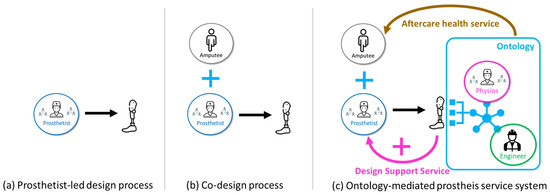
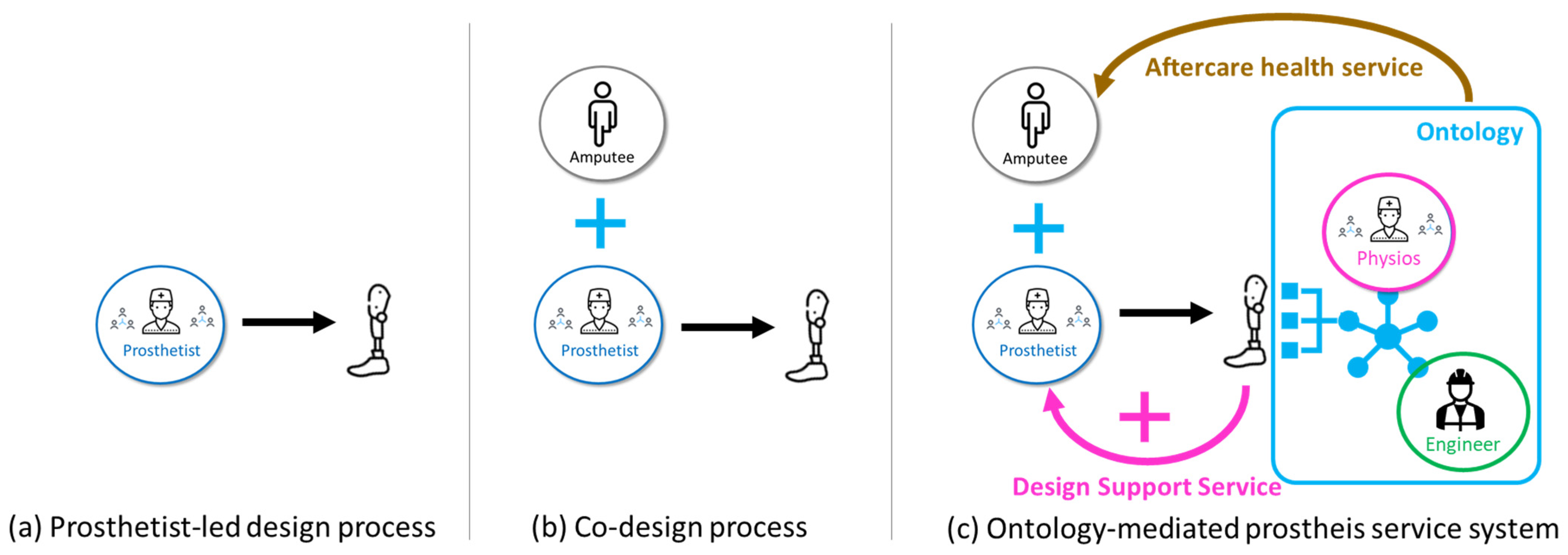
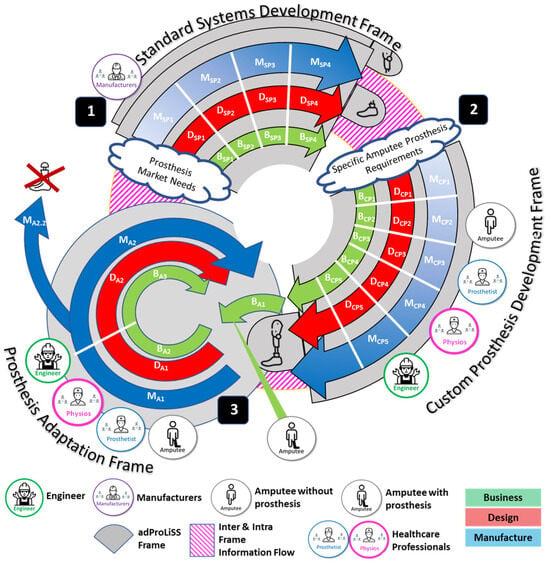
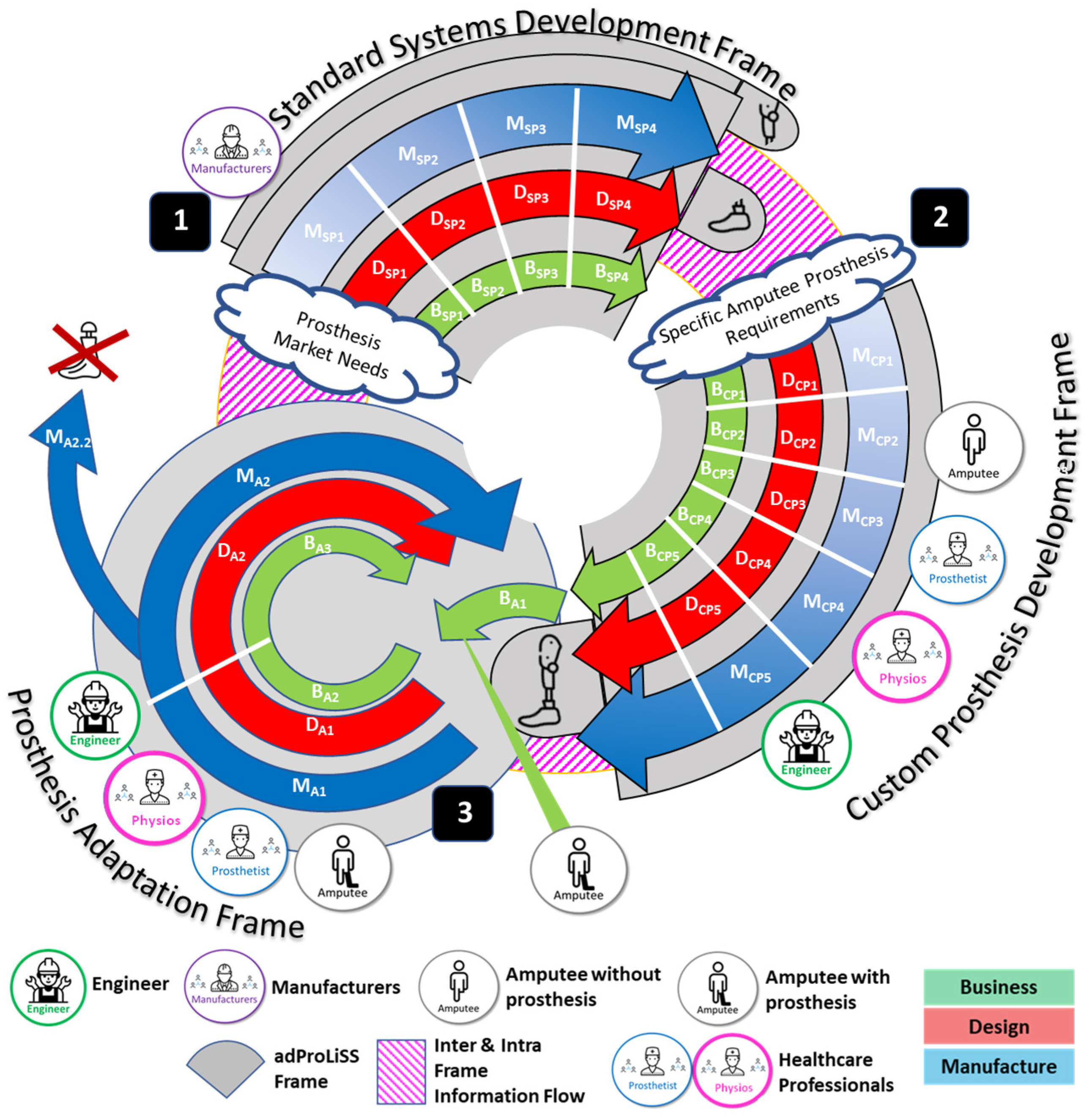
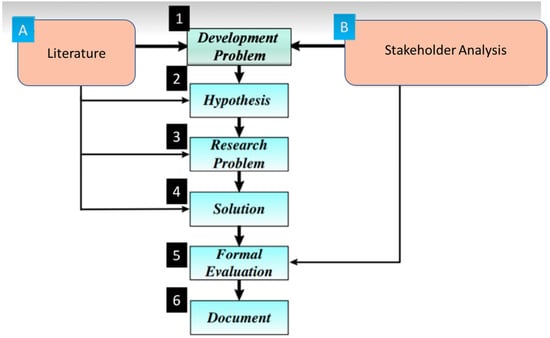
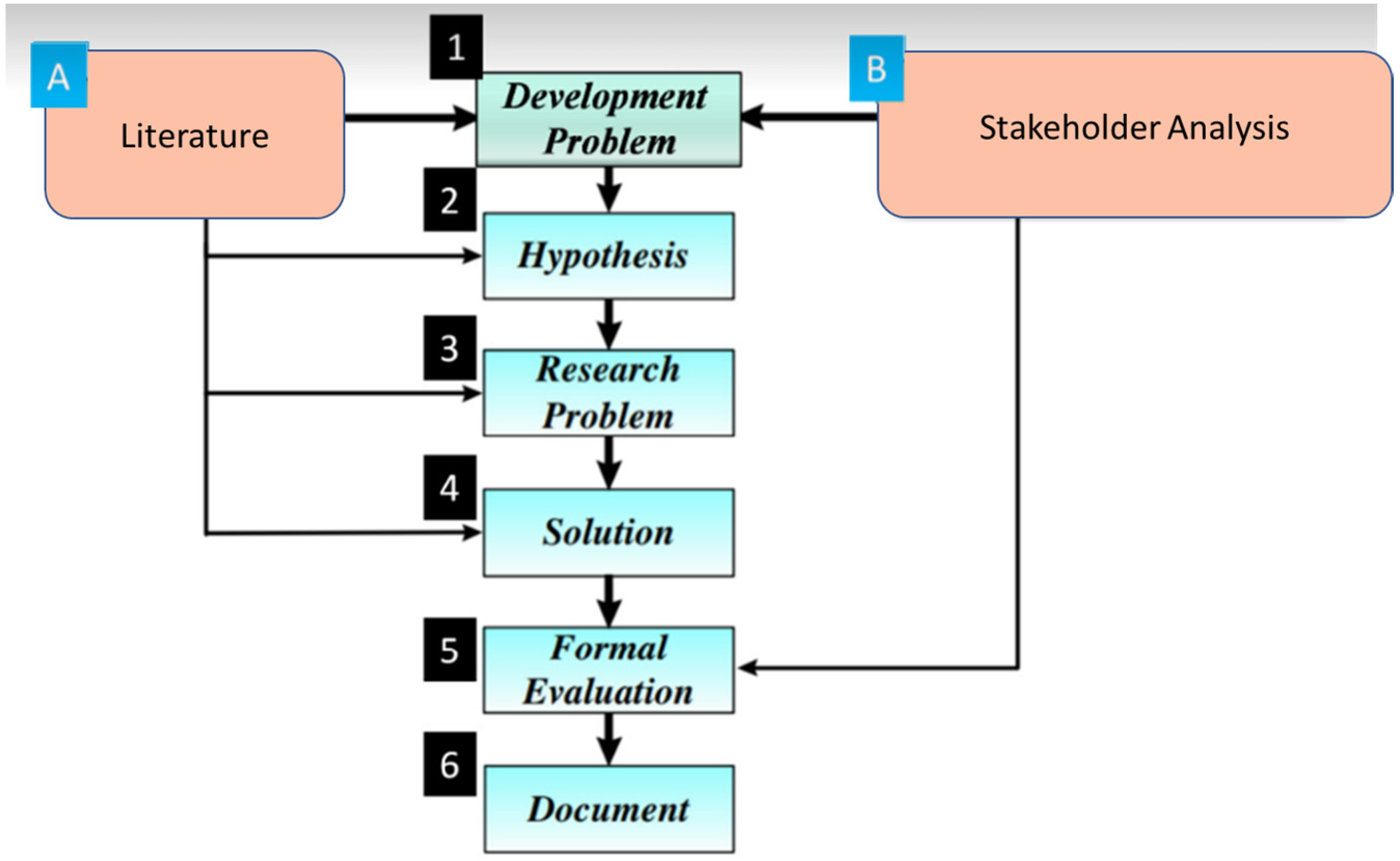
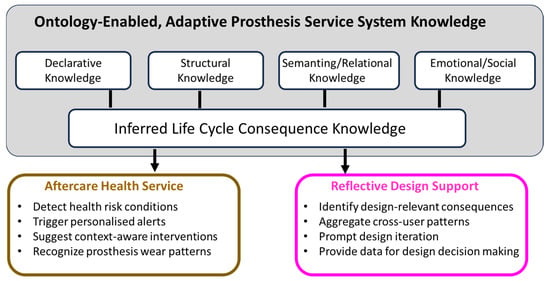
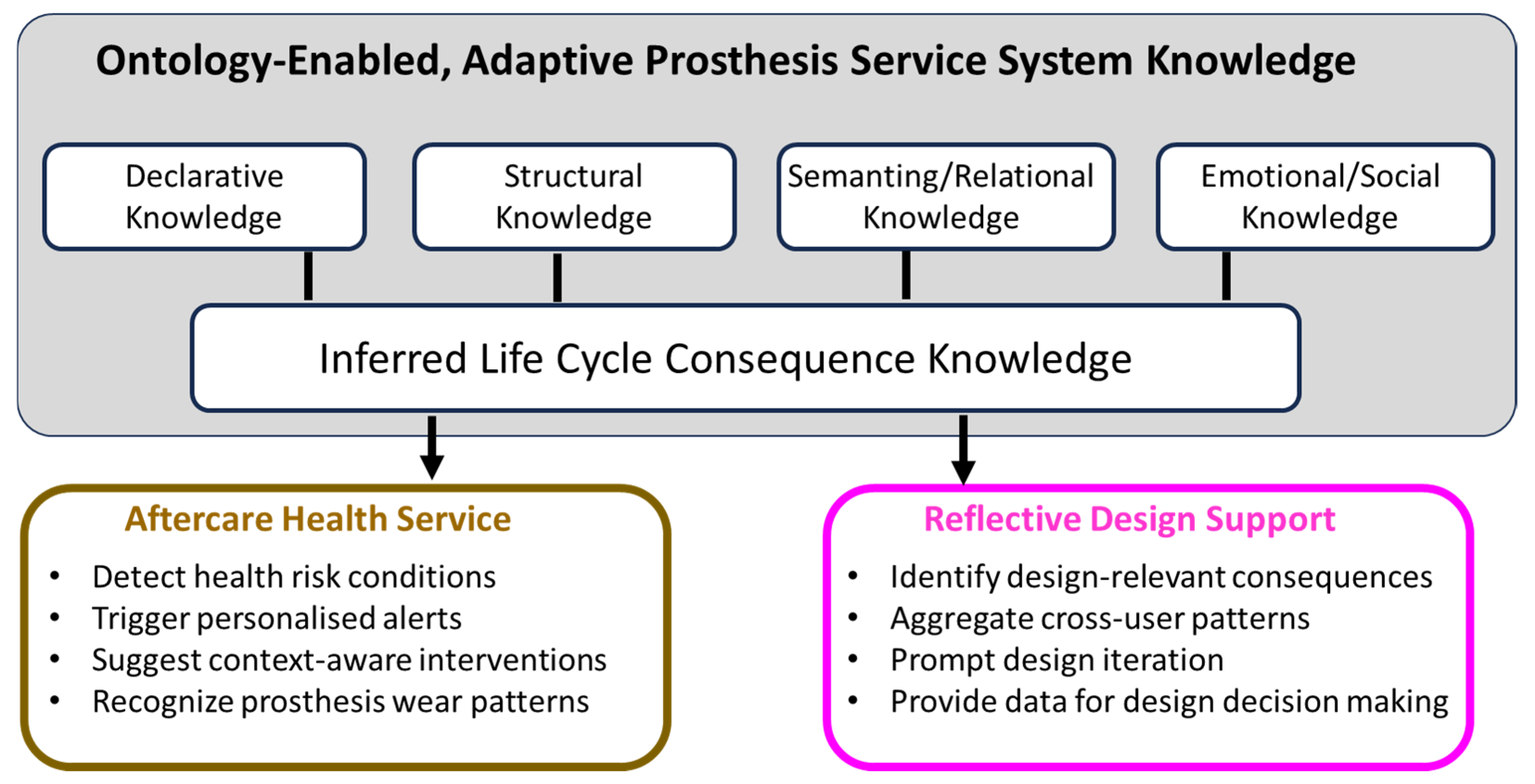
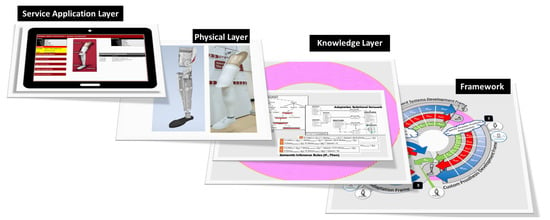
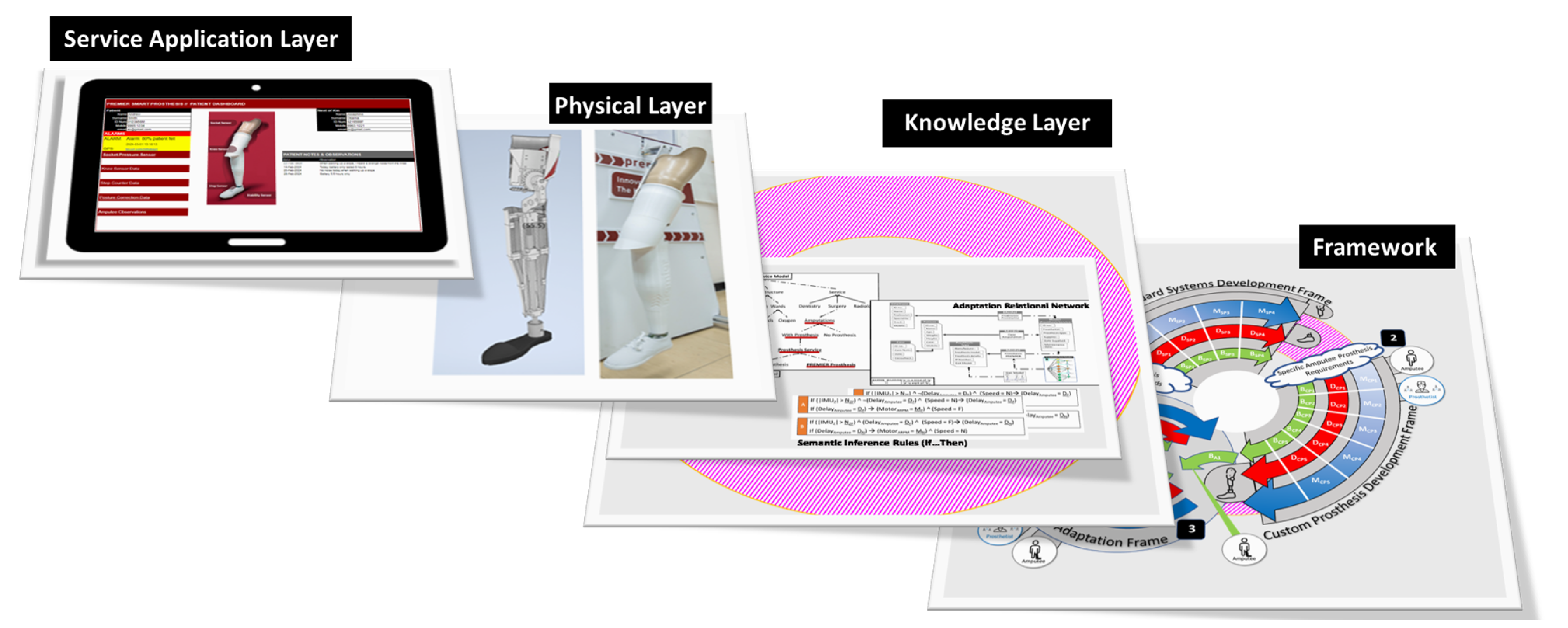
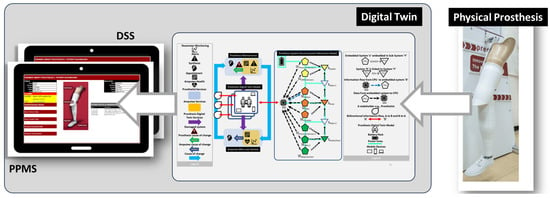
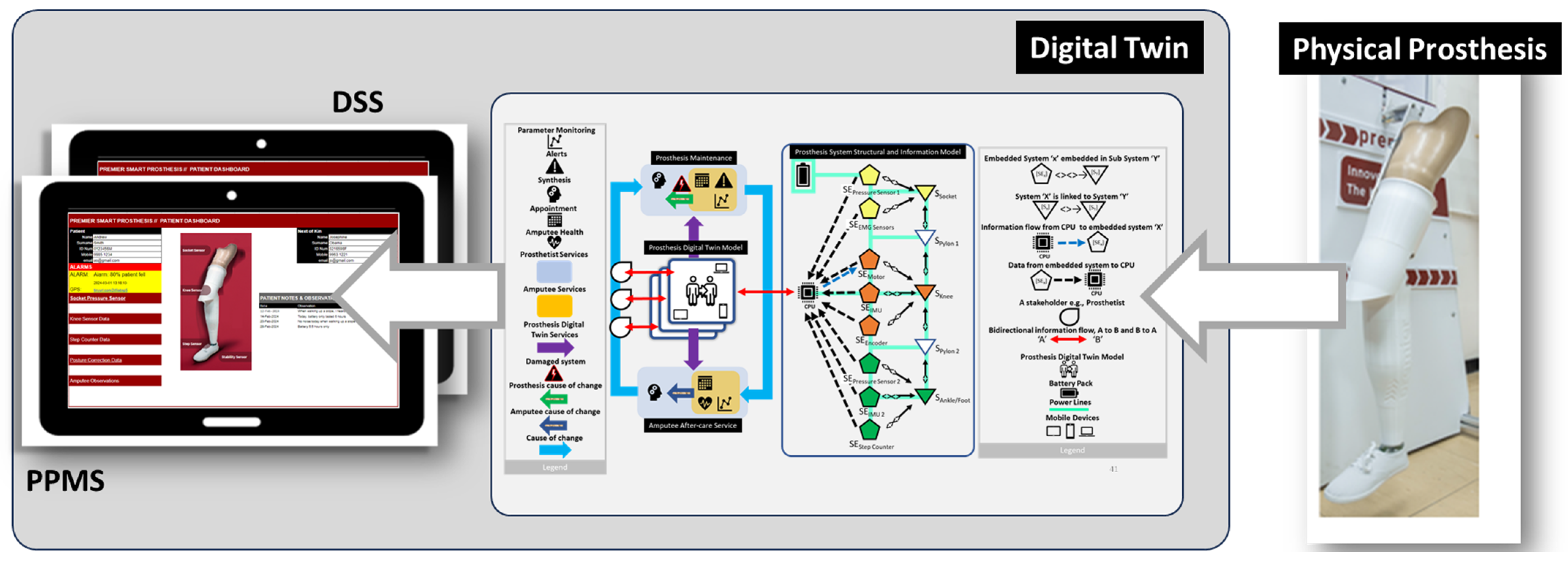
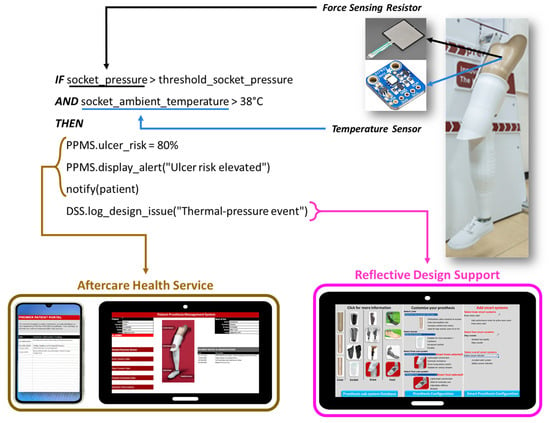
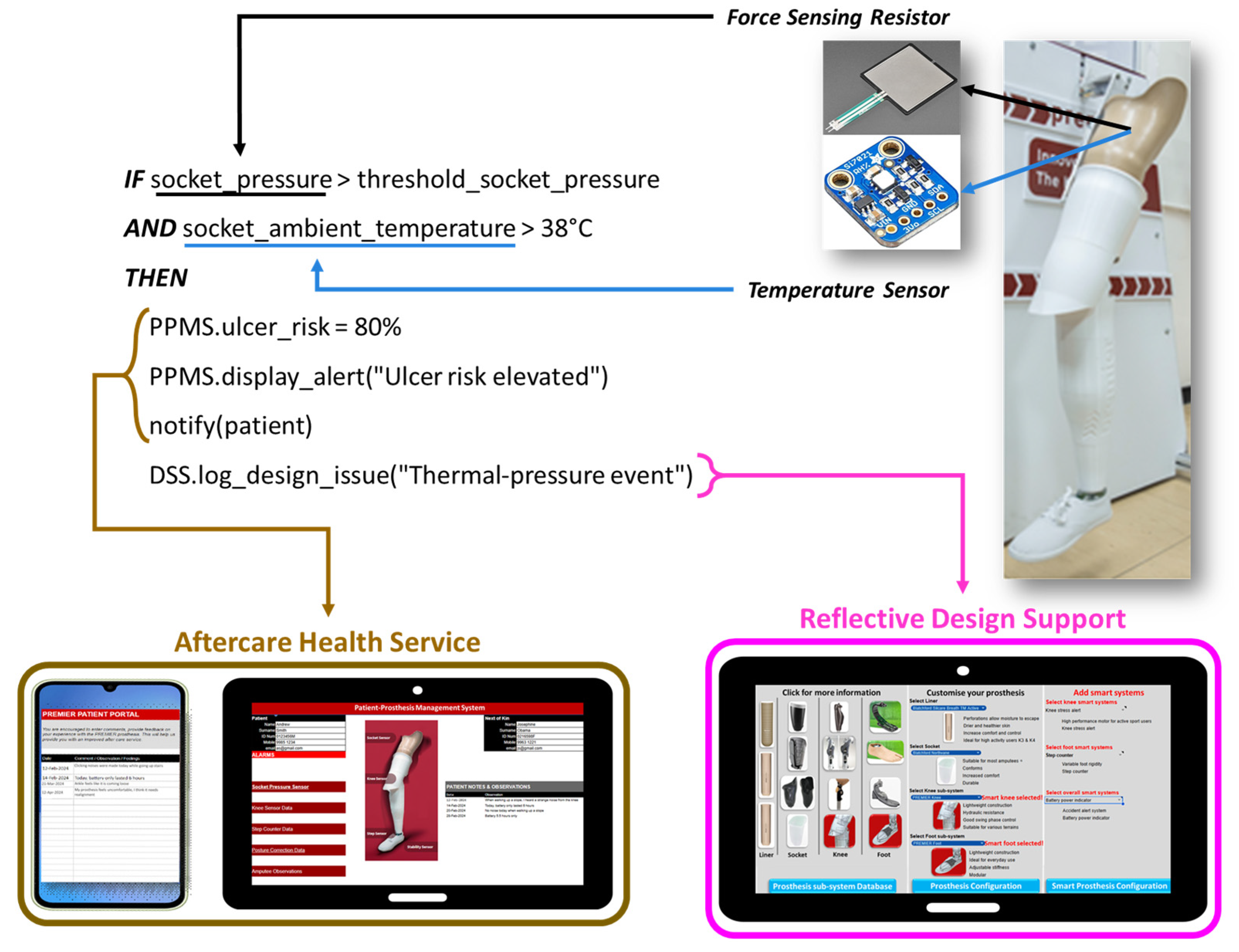
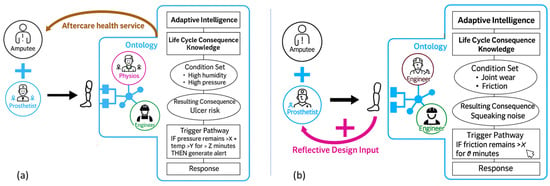
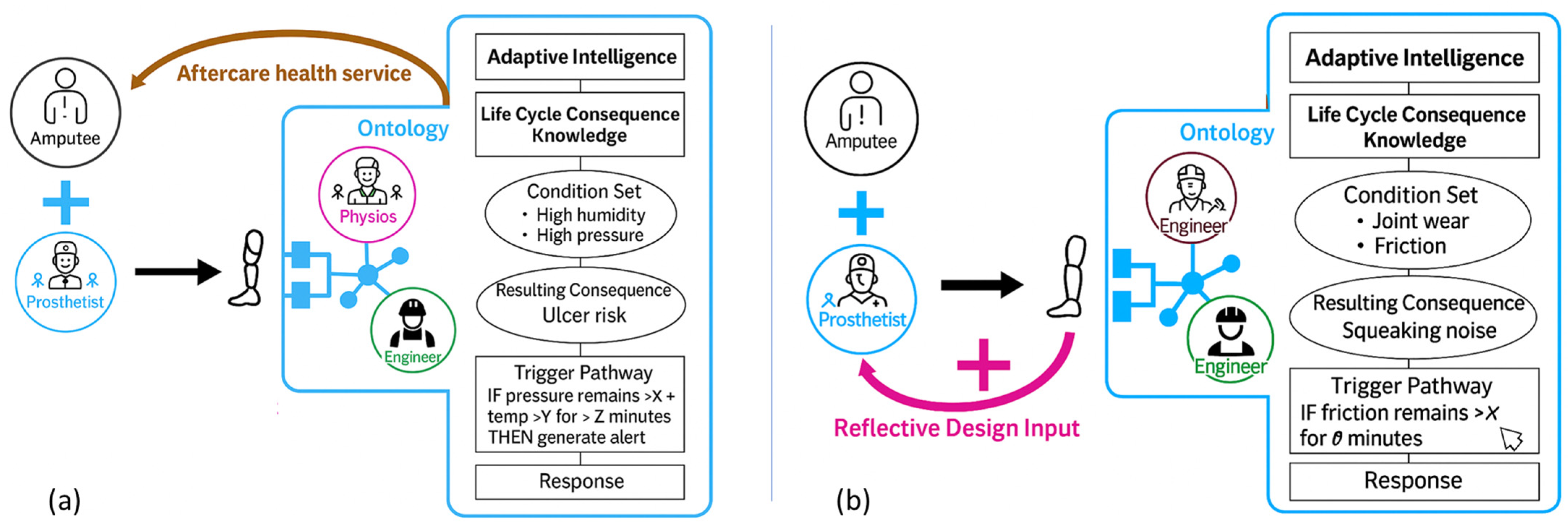
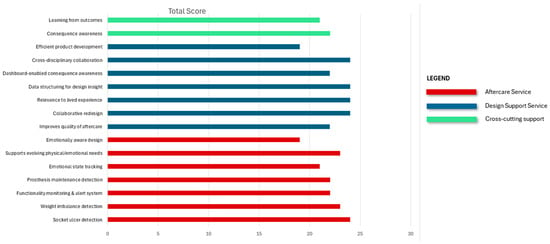
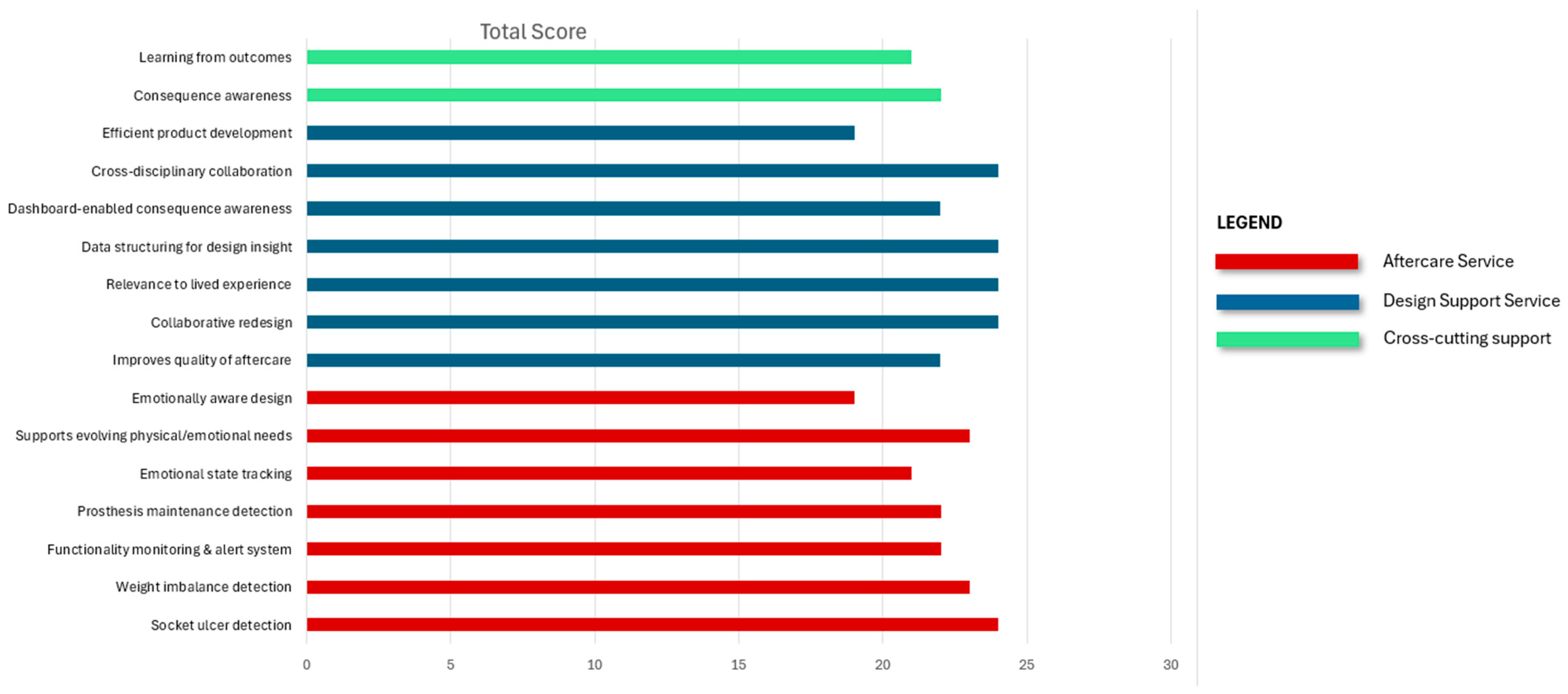

Disclaimer/Publisher’s Note: The statements, opinions and data contained in all publications are solely those of the individual author(s) and contributor(s) and not of MDPI and/or the editor(s). MDPI and/or the editor(s) disclaim responsibility for any injury to people or property resulting from any ideas, methods, instructions or products referred to in the content. |
© 2025 by the authors. Licensee MDPI, Basel, Switzerland. This article is an open access article distributed under the terms and conditions of the Creative Commons Attribution (CC BY) license (https://creativecommons.org/licenses/by/4.0/).