Review

Digital Workflow in Maxillofacial Prosthodontics—An Update on Defect Data Acquisition, Editing and Design Using Open-Source and Commercial Available Software


by
Corina Marilena Cristache
1,*,†,
Ioana Tudor
1,2,†,
Liliana Moraru
3,4,*,†,
Gheorghe Cristache
5,
Alessandro Lanza
6 and
Mihai Burlibasa
1
1
Department of Dental Techniques, Faculty of Midwifery and Medical Assisting (FMAM), “Carol Davila” University of Medicine and Pharmacy, 8, Eroilor Sanitari Blvd, 050474 Bucharest, Romania
2
Smart Biomaterials and Applications Master Program, Faculty of Medical Engineering, University Politehnica of Bucharest, 1-7 Gh. Polizu Street, 011061 Bucharest, Romania
3
Faculty of Dental Medicine, “Titu Maiorescu” University, 67A Gheorghe Petrascu Street, 040051 Bucharest, Romania
4
Oral and Maxillofacial Surgery Department, “Carol Davila” Central Military Emergency Hospital, 134 Plevnei Ave., 010825 Bucharest, Romania
5
ENT Department, Batistei Medical Center, 28 Tudor Arghezi Street, 020947 Bucharest, Romania
6
Department of Medical, Surgical and Oral Sciences, Campania University Luigi Vanvitelli (ex Second University of Naples), 6 Via Luigi De Crecchio, 80138 Napoli, Italy
*
Authors to whom correspondence should be addressed.
These three authors contributed equally to this work.
Appl. Sci. 2021, 11(3), 973; https://doi.org/10.3390/app11030973
Submission received: 4 January 2021 / Revised: 18 January 2021 / Accepted: 19 January 2021 / Published: 21 January 2021
(This article belongs to the Special Issue Advances in Dental Materials: A Look inside Digital Workflows)

Abstract

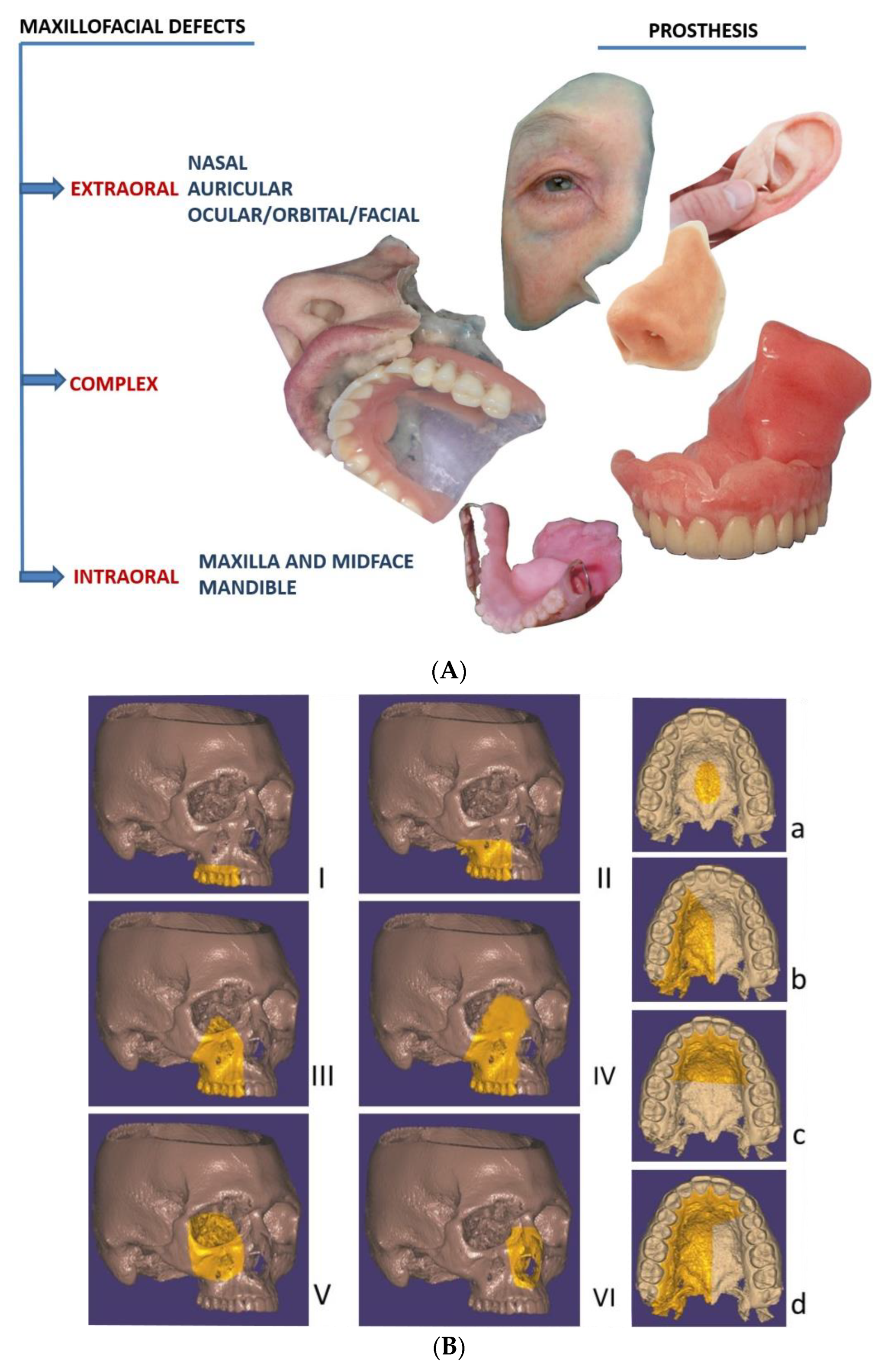
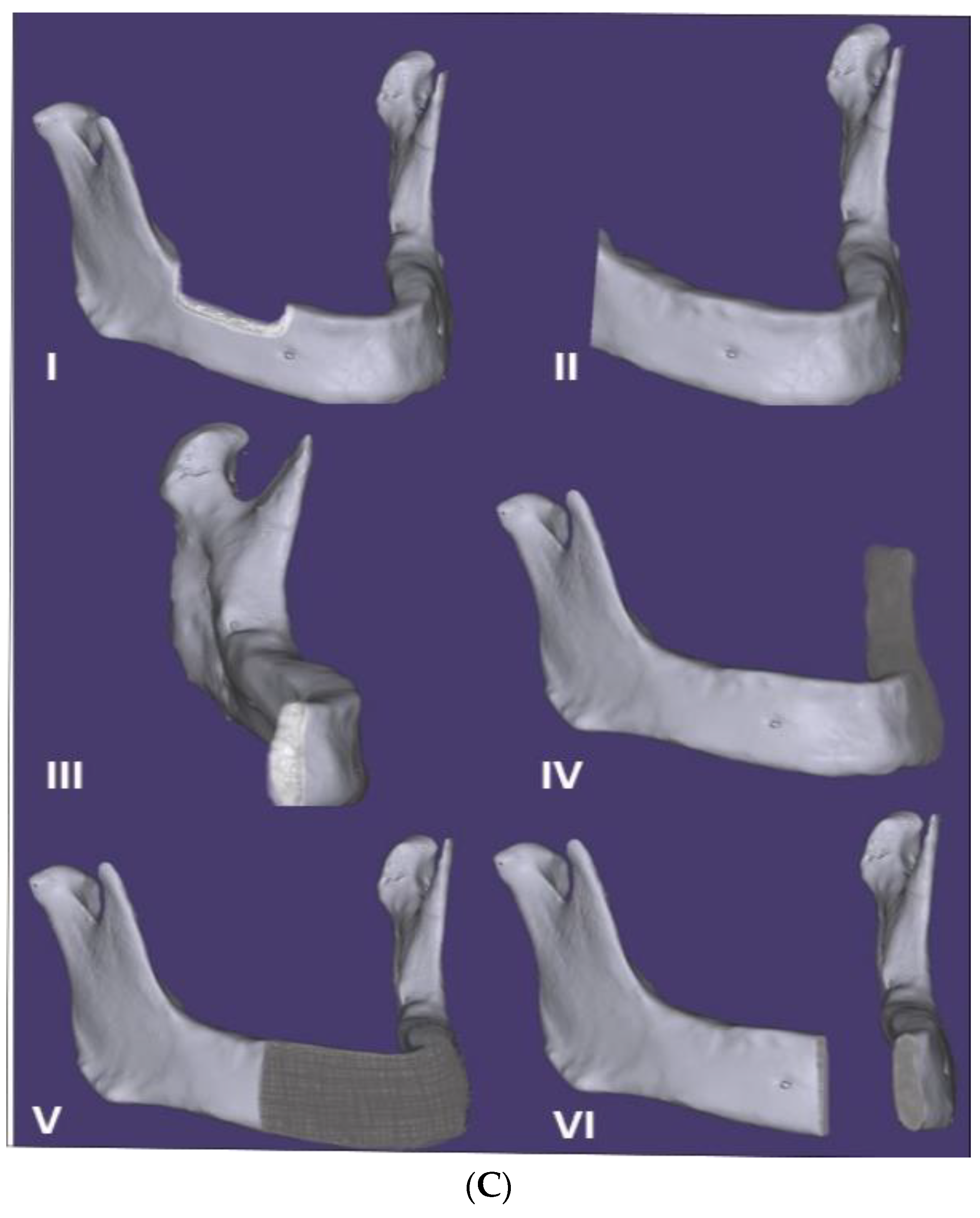
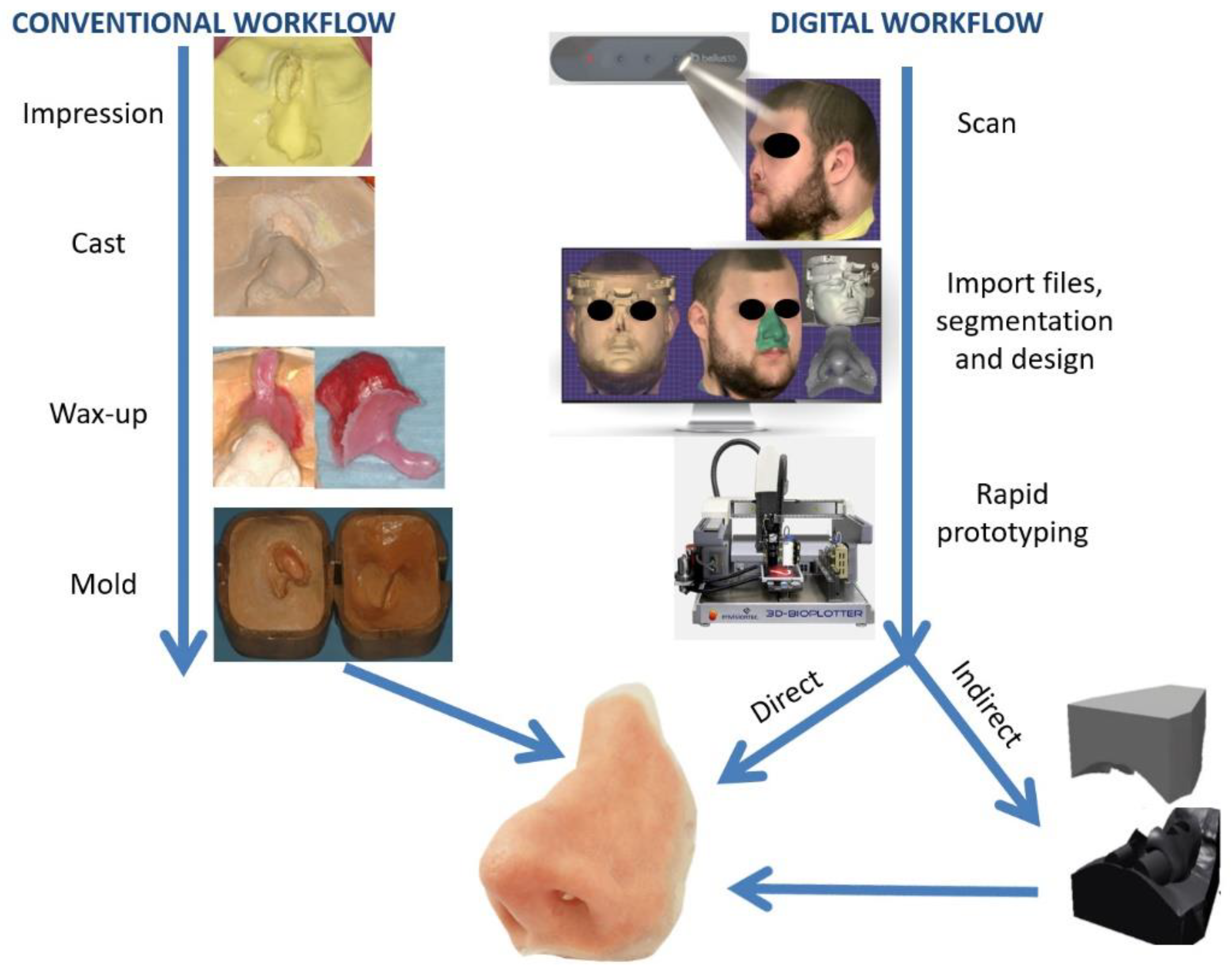
Background: A maxillofacial prosthesis, an alternative to surgery for the rehabilitation of patients with facial disabilities (congenital or acquired due to malignant disease or trauma), are meant to replace parts of the face or missing areas of bone and soft tissue and restore oral functions such as swallowing, speech and chewing, with the main goal being to improve the quality of life of the patients. The conventional procedures for maxillofacial prosthesis manufacturing involve several complex steps, are very traumatic for the patient and rely on the skills of the maxillofacial team. Computer-aided design and computer-aided manufacturing have opened a new approach to the fabrication of maxillofacial prostheses. Our review aimed to perform an update on the digital design of a maxillofacial prosthesis, emphasizing the available methods of data acquisition for the extraoral, intraoral and complex defects in the maxillofacial region and assessing the software used for data processing and part design. Methods: A search in the PubMed and Scopus databases was done using the predefined MeSH terms. Results: Partially and complete digital workflows were successfully applied for extraoral and intraoral prosthesis manufacturing. Conclusions: To date, the software and interface used to process and design maxillofacial prostheses are expensive, not typical for this purpose and accessible only to very skilled dental professionals or to computer-aided design (CAD) engineers. As the demand for a digital approach to maxillofacial rehabilitation increases, more support from the software designer or manufacturer will be necessary to create user-friendly and accessible modules similar to those used in dental laboratories.
Keywords: maxillofacial prosthodontics; anaplastology; maxillary obturator; CAD; CAM; design software maxillofacial prosthodontics; anaplastology; maxillary obturator; CAD; CAM; design software