Article

Kidney Boundary Detection Algorithm Based on Extended Maxima Transformations for Computed Tomography Diagnosis


1
Faculty of Electrical Engineering, Warsaw University of Technology, Pl. Politechniki 1, 00-661 Warsaw, Poland
2
Military Institute of Medicine, 128 Szaserow St., 04-141 Warsaw, Poland
*
Author to whom correspondence should be addressed.
Appl. Sci. 2020, 10(21), 7512; https://doi.org/10.3390/app10217512
Submission received: 30 September 2020 / Revised: 20 October 2020 / Accepted: 22 October 2020 / Published: 26 October 2020
(This article belongs to the Special Issue Artificial Intelligence for Medical Image Analysis)

Abstract

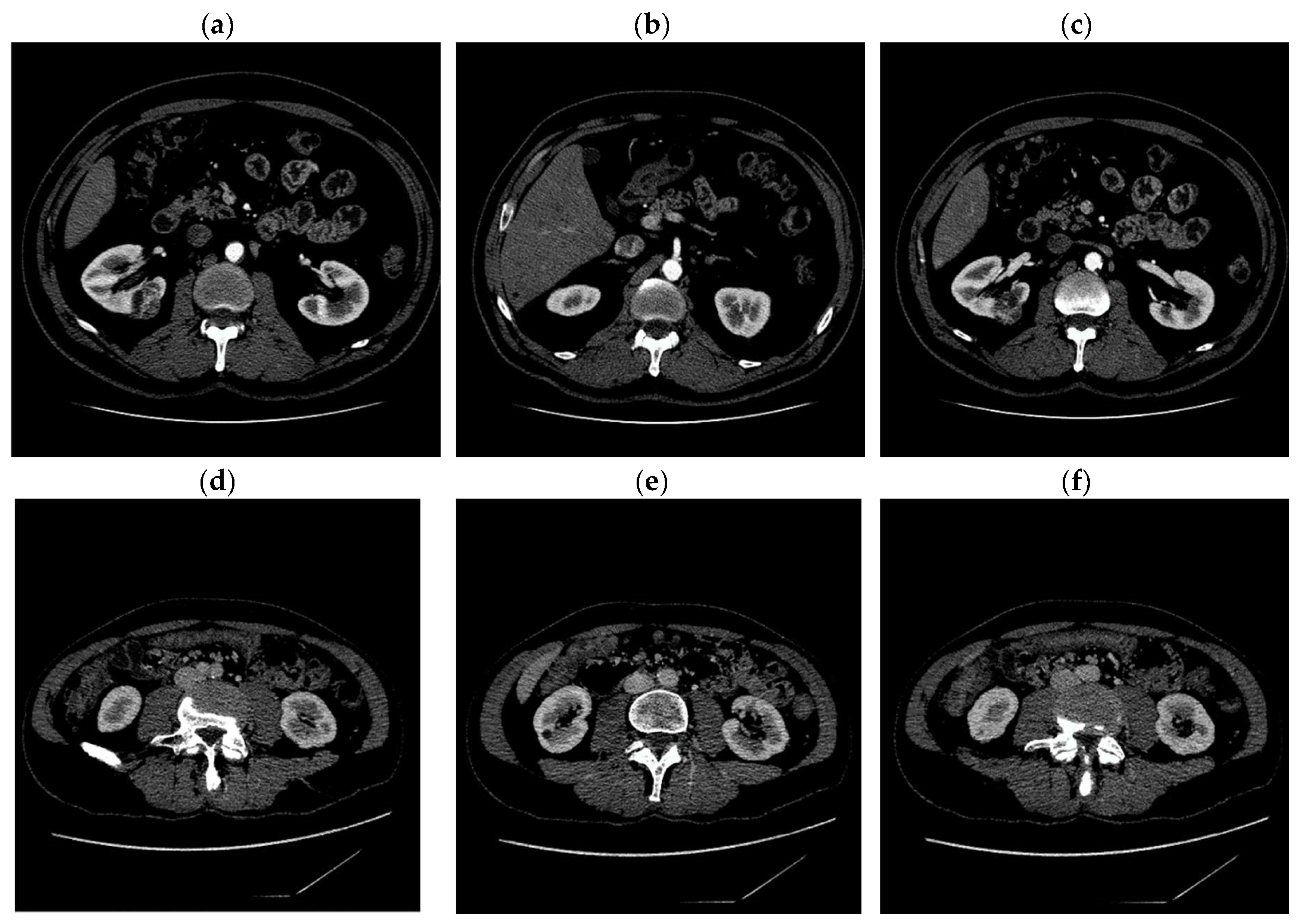
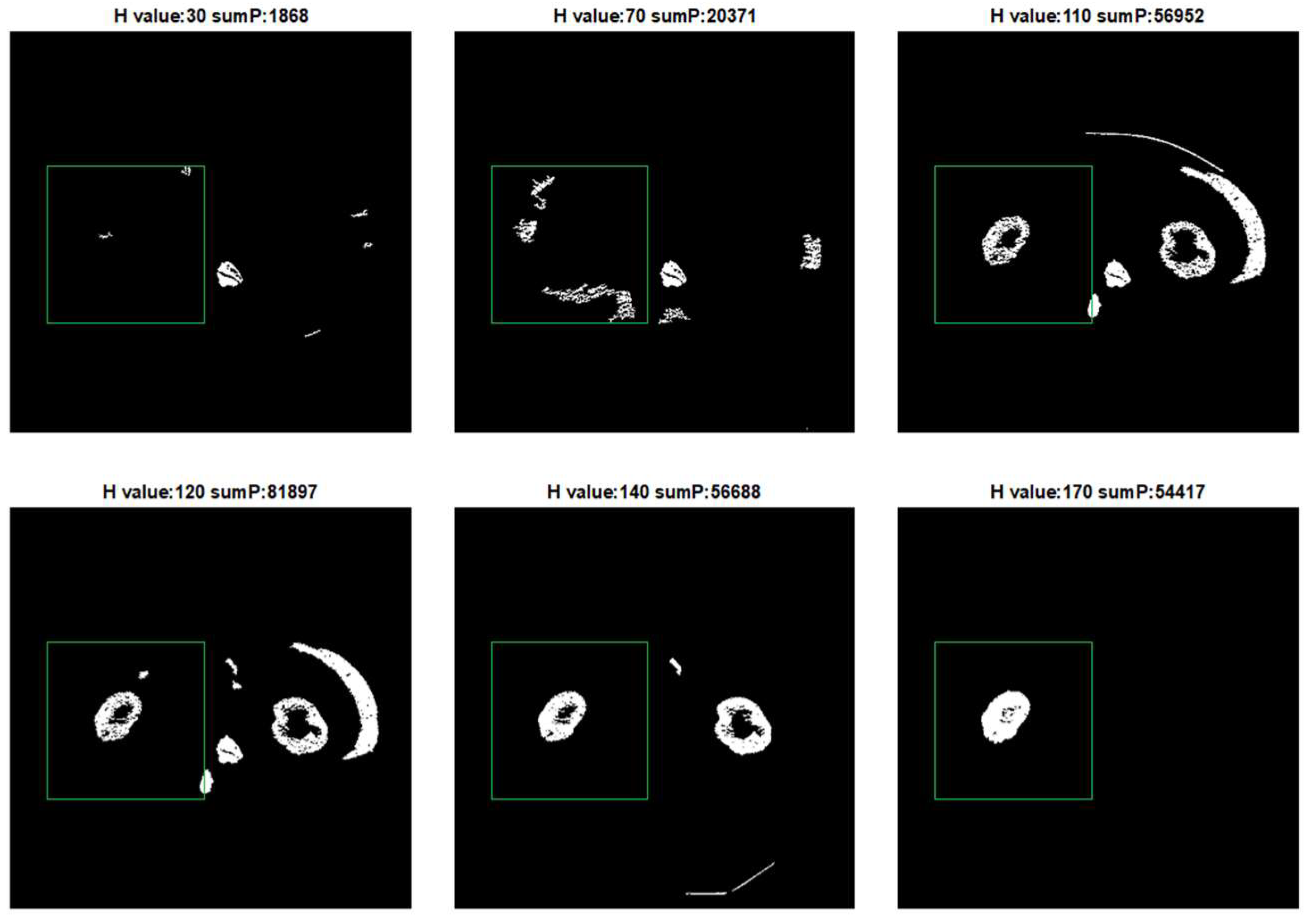
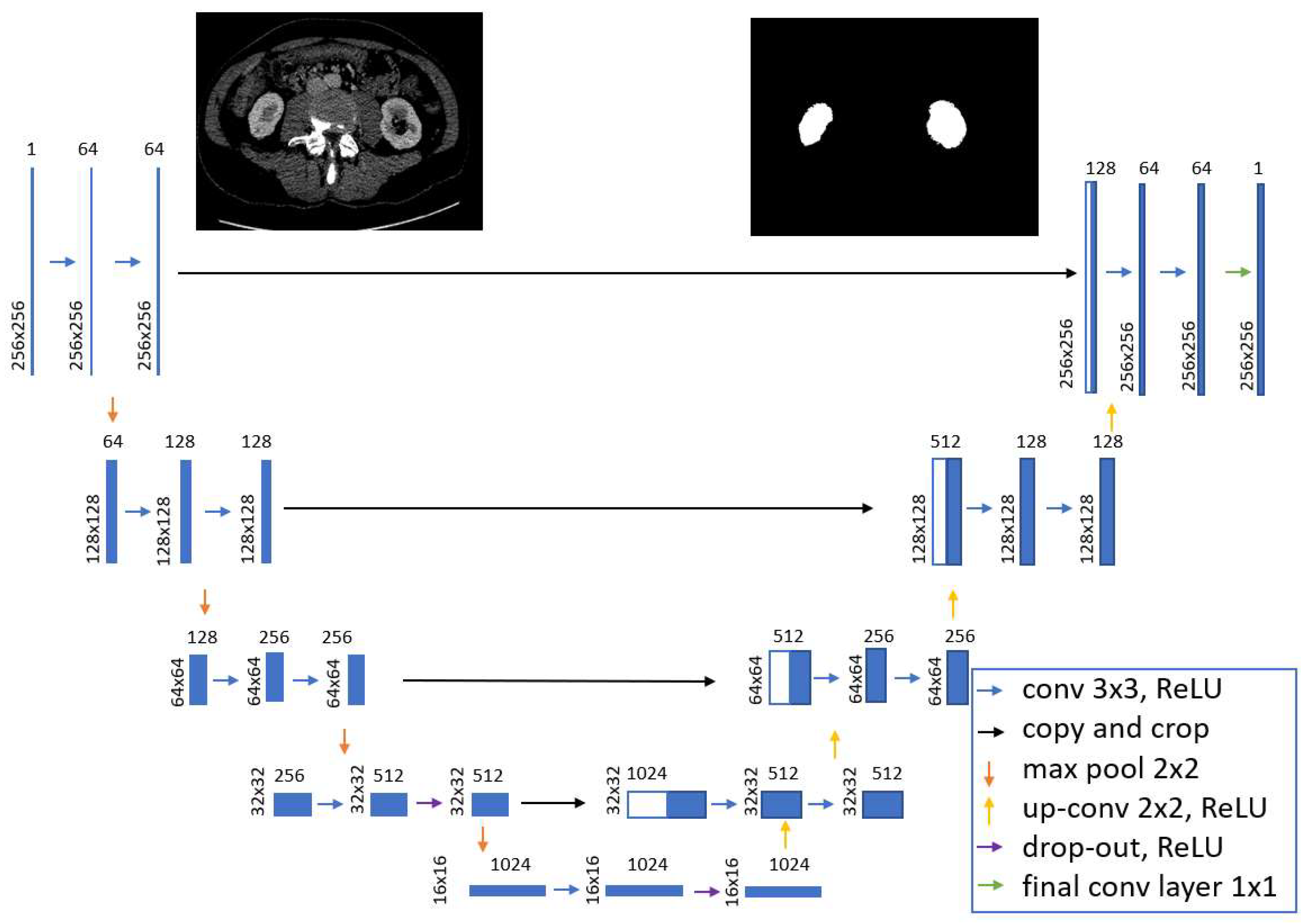
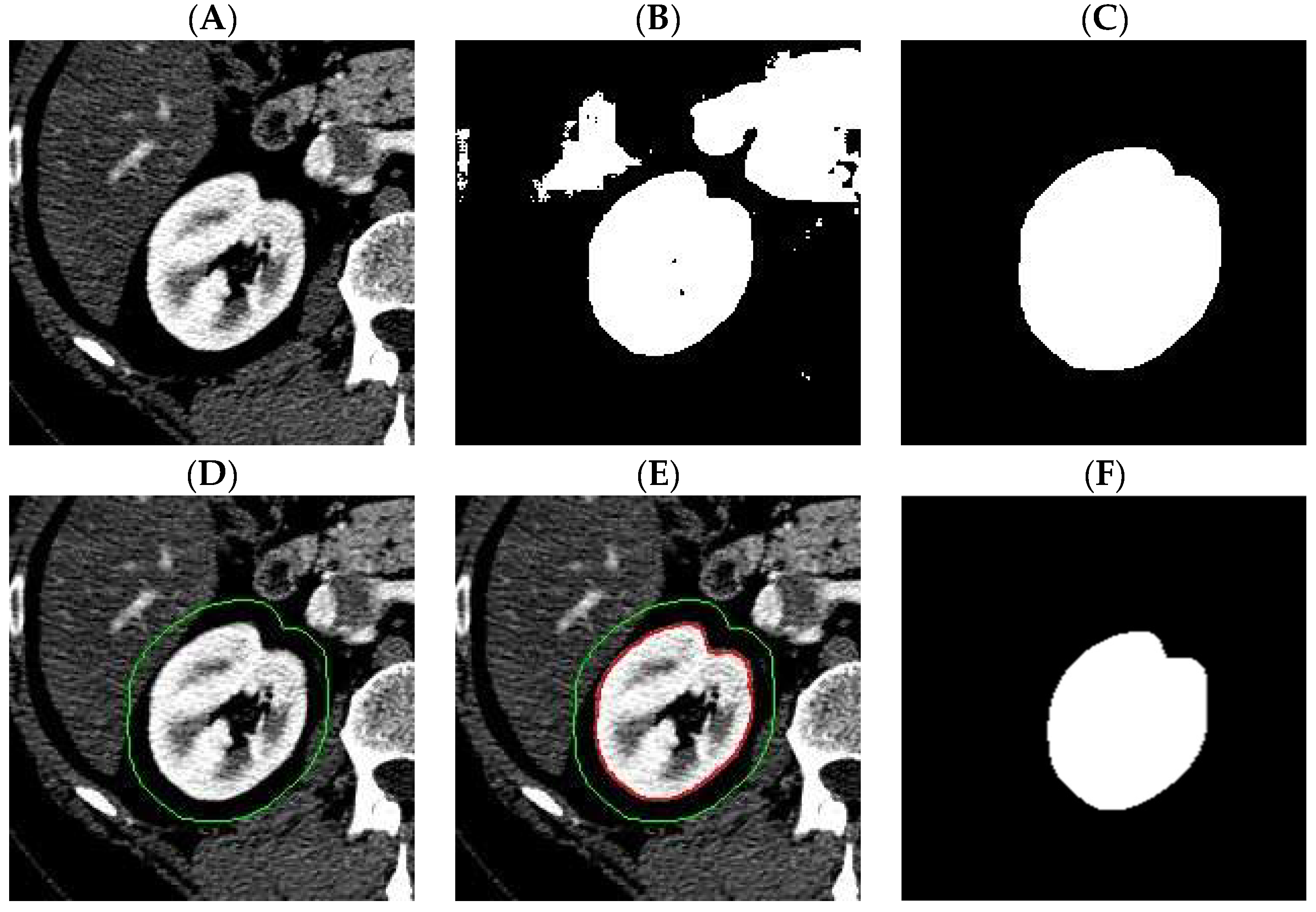
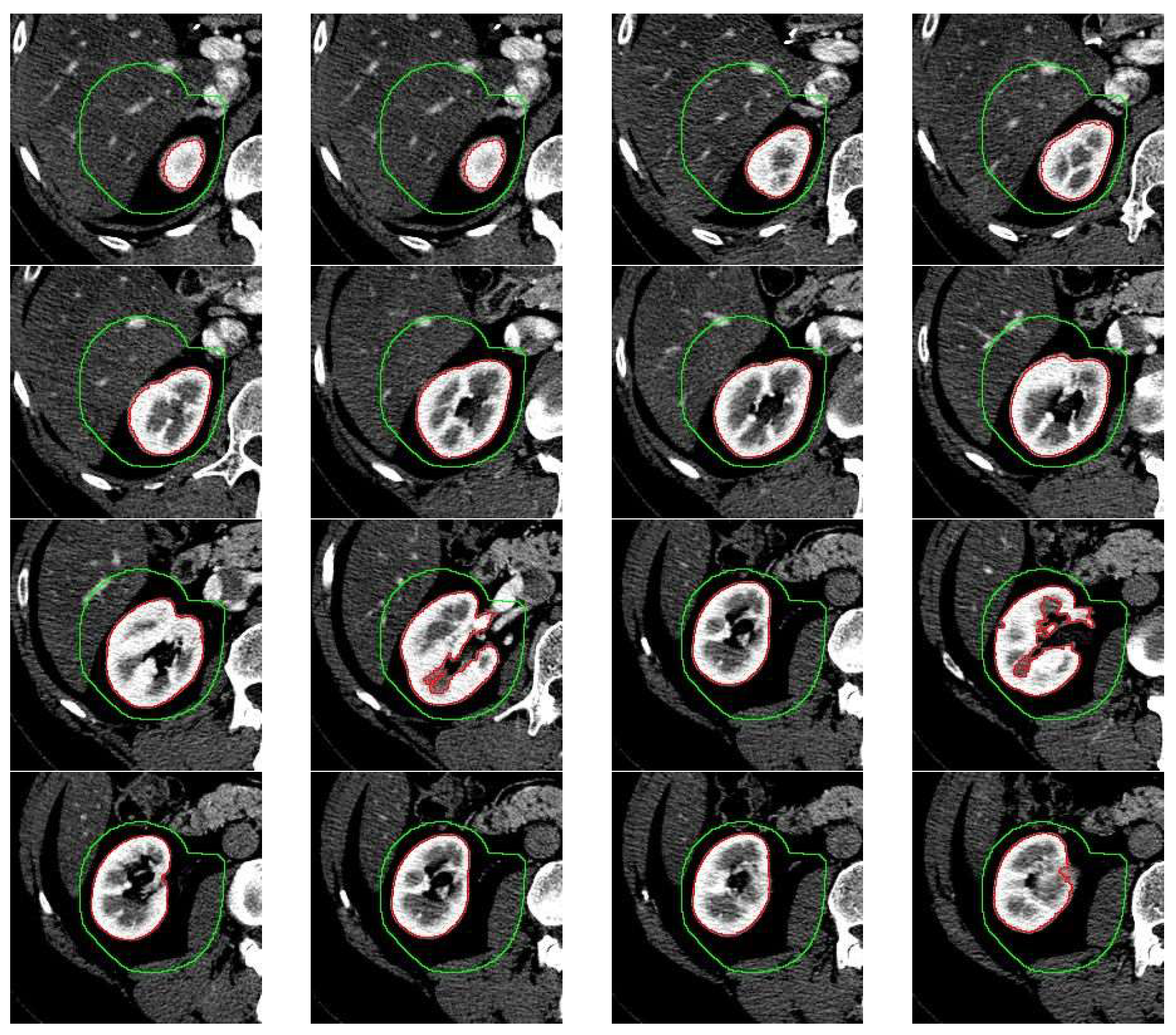
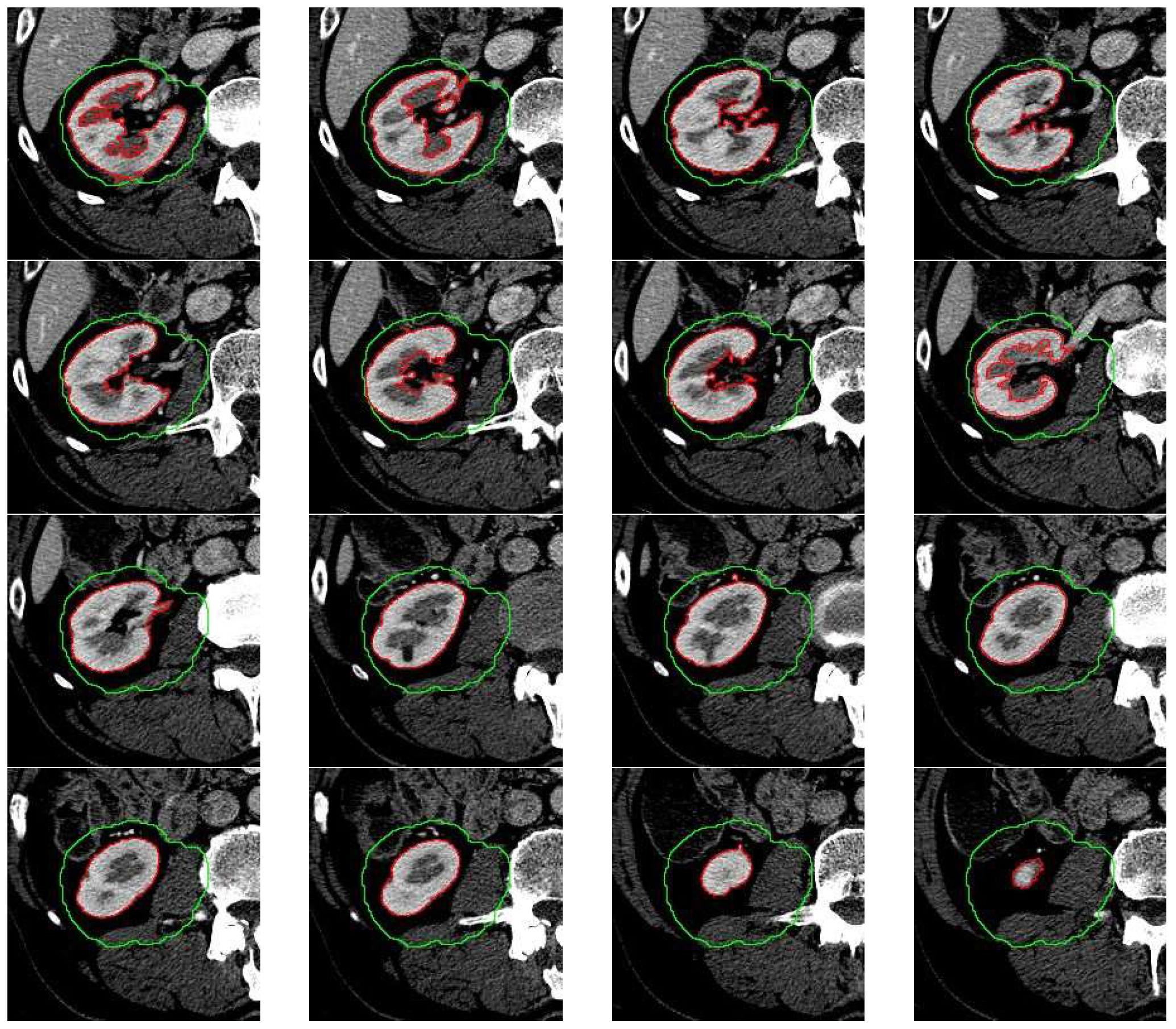
This article describes the automated computed tomography (CT) image processing technique supporting kidney detection. The main goal of the study is a fully automatic generation of a kidney boundary for each slice in the set of slices obtained in the computed tomography examination. This work describes three main tasks in the process of automatic kidney identification: the initial location of the kidneys using the U-Net convolutional neural network, the generation of an accurate kidney boundary using extended maxima transformation, and the application of the slice scanning algorithm supporting the process of generating the result for the next slice, using the result of the previous one. To assess the quality of the proposed technique of medical image analysis, automatic numerical tests were performed. In the test section, we presented numerical results, calculating the F1-score of kidney boundary detection by an automatic system, compared to the kidneys boundaries manually generated by a human expert from a medical center. The influence of the use of U-Net support in the initial detection of the kidney on the final F1-score of generating the kidney outline was also evaluated. The F1-score achieved by the automated system is 84% ± 10% for the system without U-Net support and 89% ± 9% for the system with U-Net support. Performance tests show that the presented technique can generate the kidney boundary up to 3 times faster than raw U-Net-based network. The proposed kidney recognition system can be successfully used in systems that require a very fast image processing time. The measurable effect of the developed techniques is a practical help for doctors, specialists from medical centers dealing with the analysis and description of medical image data.
Keywords: computer-aided diagnosis; image segmentation; artificial intelligence; kidney disease diagnosis computer-aided diagnosis; image segmentation; artificial intelligence; kidney disease diagnosis