Article

A Challenge: Support of Standing Balance in Assistive Robotic Devices

1
Fachgebiet Regelungssysteme, Technische Universität Berlin, Einsteinufer 17, D-10587 Berlin, Germany
2
Neurological Clinic at the University of Freiburg, Breisacher Str. 64, 79106 Freiburg im Breisgau, Germany
*
Author to whom correspondence should be addressed.
Appl. Sci. 2020, 10(15), 5240; https://doi.org/10.3390/app10155240
Submission received: 16 June 2020 / Revised: 23 July 2020 / Accepted: 25 July 2020 / Published: 29 July 2020
(This article belongs to the Special Issue Biorobotics: Challenges, Technologies, and Trends)

Abstract

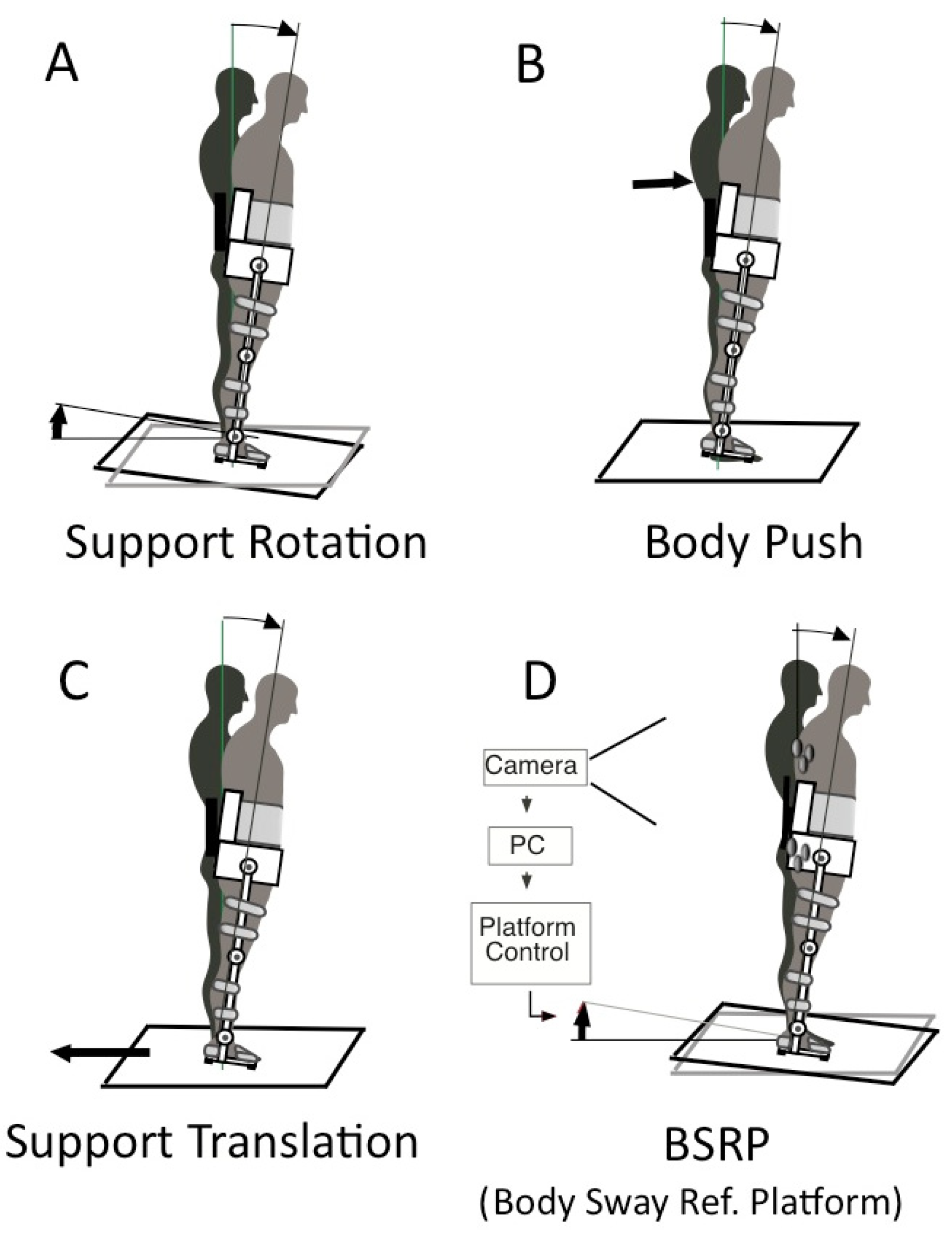
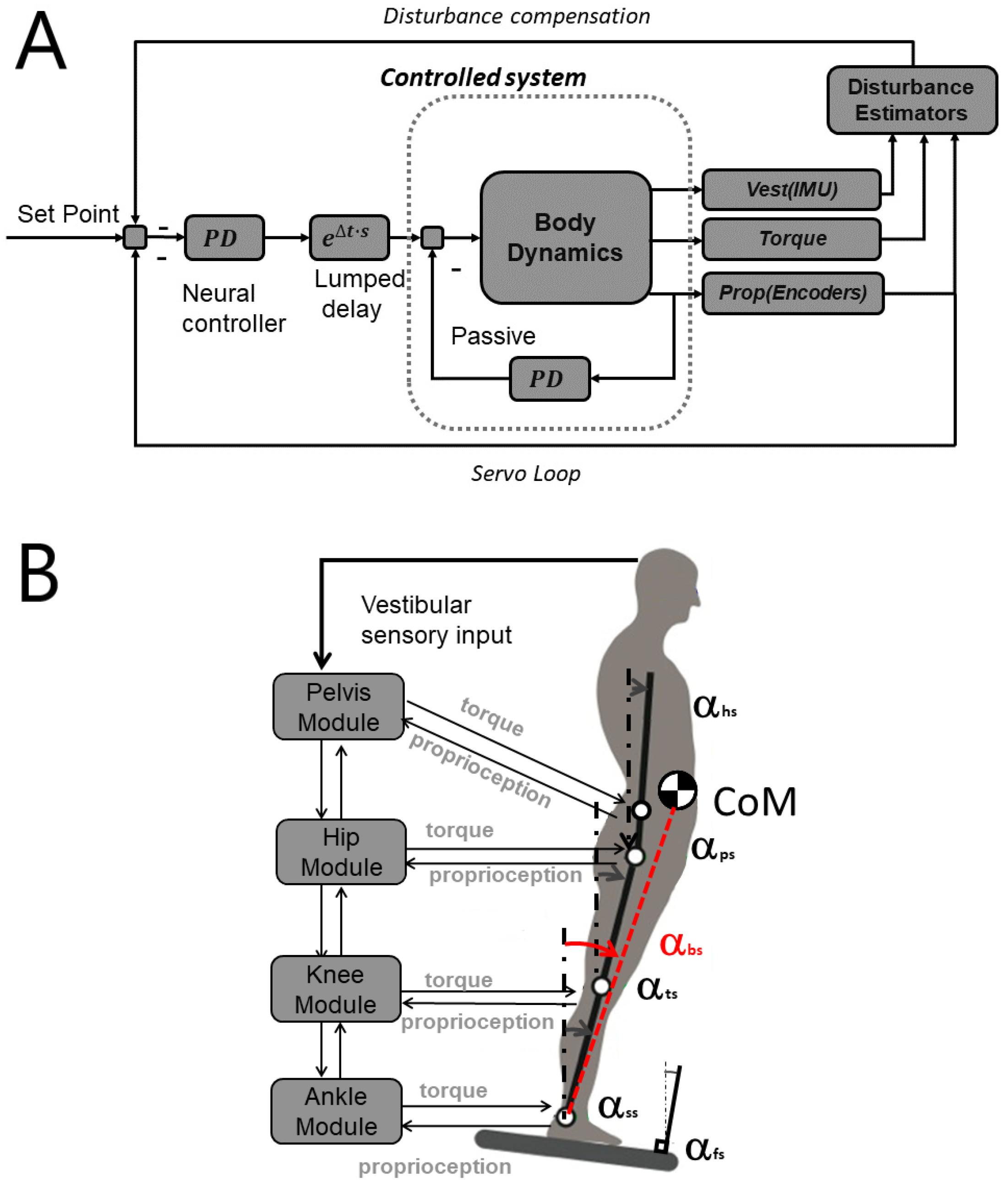
Neurological patients using a powered lower-body exoskeleton for rehabilitation of standing and walking skills in an upright body pose face the safety challenge of postural instability and fall. Current research, therefore, develops exoskeletons with self-balancing functions. This study suggests basing the exoskeleton’s stabilization of standing posture on a human-derived postural control mechanism. A corresponding control system has previously been successfully tested with specific balancing tasks in humanoid robots. Here, we provide a short introduction into the control method and, using a lightweight robot, present as a test of the balancing an experimental shift in the body weight distribution (as if, e.g., a human exoskeleton user was raising an arm or leaning the upper body or lifting an external weight). An overview of other specific balancing tests previously already investigated in humans and humanoids is also briefly mentioned. Overall, the tests will allow the quantification of the capabilities of self-balancing exoskeletons developed for patients with partial paralysis of lower body sensorimotor functions.
Keywords: exoskeleton; standing balancing; human-inspired balancing control method; tests of balancing abilities exoskeleton; standing balancing; human-inspired balancing control method; tests of balancing abilities