


Abstract
Generative AI is increasingly integrated into organizational communication workflows, but organizations still have limited empirical evidence on how recipients evaluate AI-supported communication content when its source is not disclosed. This study examines how AI-generated organizational communication content becomes a decision alternative under hidden-source conditions and what this means for communication management. An exploratory mixed-method eye-tracking experiment was conducted with 20 participants, who evaluated six pairs of organizational communication stimuli, including text-based, image-based, and image-plus-text materials. Each pair contained one AI-generated and one human-created alternative, while the source remained concealed during the initial choice task. Data were collected through paired content-choice tasks, AOI-based eye-tracking with a Tobii Pro Spark 60 Hz screen-based eye tracker, an AI-identification task, and semi-structured post-experiment interviews. Within this six-pair exploratory stimulus set, AI-generated alternatives were selected in 66.7% of participant-by-task decisions, indicating that these specific AI-generated items were not automatically disadvantaged when their origin was hidden. Eye-tracking results showed broadly similar visual attention toward AI-generated and human-created content, while selected alternatives received higher attention than non-selected ones. Interviews revealed that participants evaluated content mainly through perceived quality, structure, professionalism, authenticity, and communicative suitability. The study contributes to research on AI-supported organizational communication by showing that responsible AI use requires human oversight, editorial control, and clear organizational guidelines.
1. Introduction
Generative artificial intelligence (GenAI) has become one of the defining technologies in digital content creation in recent years, as it is capable of rapidly generating natural-language text, images, and multimodal communication materials. For organizations, this represents not only technological innovation but also a transformation of communication workflows, content evaluation, and decision-making processes. Generative AI can therefore increasingly be understood as a socio-technical system in which human evaluation, technological output, and organizational context interact to shape decisions (Feuerriegel et al., 2024).
Organizations increasingly use generative AI to support communication tasks such as social media content creation, internal communication, recruitment messages, employer branding, and visual communication. The key managerial challenge is not only whether AI can produce high-quality content, but how recipients evaluate such content and under what conditions it can be responsibly integrated into communication workflows. Organizational messages convey information, but they also represent professionalism, credibility, and a human touch. Recipient evaluation therefore involves linguistic, visual, trust-related, and normative considerations. This raises a central question: how do people evaluate organizational communication content that appears similar to human-created material, but whose origin is not necessarily known (Dwivedi et al., 2023).
Knowing or concealing the source of content is a central issue in the study of AI-generated communication, as AI disclosure and labeling can shape how recipients evaluate credibility, authenticity, and risk. Prior research shows that disclosing the AI source may influence message evaluation even when the ranking of preferences does not necessarily change (Lim & Schmälzle, 2024). Transparency may also have ambivalent effects: although AI disclosure can be ethically justified, it may reduce trust in individuals or organizations using AI, creating a “transparency dilemma” in communication contexts (Schilke & Reimann, 2025). AI labels can therefore function not only as neutral source information, but also as interpretive cues that influence perceptions of reliability, credibility, and potential risk (Wittenberg et al., 2025). This issue is further complicated by recipients’ limited ability to identify AI-generated content. People often rely on flawed heuristics when trying to distinguish AI-generated and human-created messages (Jakesch et al., 2023), and in hidden-source contexts they may infer content origin from linguistic, visual, and structural characteristics rather than from explicit labels (Chein et al., 2024). Such evaluations are rarely purely rational, as decisions may involve both rapid intuitive impressions and more deliberate analytical processing (Kahneman, 2011). For this reason, visual attention is also relevant: eye-tracking can show which content elements recipients examine, how attention is distributed between alternatives, and how attention relates to choice behavior (Orquin & Mueller Loose, 2013). Recent research further suggests that gaze patterns can support the analysis of information processing and preference formation before the final decision is made (Ting & Gluth, 2024).
Based on the reviewed literature, the research gap addressed in this study is threefold. First, existing research on generative AI in communication has mainly examined explicit attitudes toward AI, trust in algorithms, AI disclosure, labeling effects, or people’s ability to recognize AI-generated content. These studies provide important insights, but they do not fully explain how recipients evaluate AI-generated communication content when the source is not disclosed at the moment of choice. Second, organizational communication research has paid limited empirical attention to recipient-side evaluation of AI-generated and human-created communication materials in concrete communication tasks, such as recruitment messages, social media posts, internal invitations, or visual communication materials. Third, previous studies have often relied on self-reported evaluations, while less is known about how behavioral choice, overt visual attention, AI-identification judgments, and post-experiment interpretations jointly explain content evaluation under source uncertainty.
This gap is important for both theoretical and managerial reasons. In many organizational communication situations, recipients encounter messages, social media posts, recruitment materials, internal invitations, or visual content without reliable information about whether the material was produced by a human, by AI, or through human–AI collaboration. If the source is disclosed in advance, recipients’ evaluations may be shaped by pre-existing attitudes toward AI, algorithm aversion, transparency effects, or AI-labeling cues. However, when the source is not disclosed, recipients must evaluate the content primarily on the basis of observable communicative qualities, such as clarity, structure, professionalism, authenticity, visual presentation, and contextual fit.
Studying hidden-source evaluation helps distinguish content-based evaluation from label-based evaluation. The hidden-source design is not intended as a Turing-test-like assessment of whether participants can reliably detect AI-generated content. Instead, it examines how recipients evaluate organizational communication materials when source information is unavailable and judgments are based on perceived quality, authenticity, professionalism, and communicative fit. This is managerially relevant because organizations increasingly use generative AI in communication workflows, but still need evidence on how recipients respond to AI-supported content before making decisions about quality control, human oversight, disclosure, data protection, and responsible use. The aim of the present study is not to make broad generalizations about all AI-generated communication, but to provide preliminary empirical evidence on how recipients evaluate a specific set of AI-generated and human-created organizational communication stimuli under hidden-source conditions. To address this gap, the study applies an exploratory mixed-method design in which participants choose between paired organizational communication materials, each consisting of one AI-generated and one human-created alternative. The source of the content is concealed during the initial choice task, allowing the study to examine recipient evaluation under hidden-source conditions rather than explicit AI attitudes or label effects. The design combines four complementary data sources: behavioral choice data show which alternative participants selected; AOI-based eye-tracking indicators show how overt visual attention was distributed between alternatives; the AI-identification task provides a complementary indication of how participants perceived the possible AI origin of the content; and post-experiment interviews explain the subjective considerations, trust-related concerns, authenticity judgments, and AI-detection cues behind the choices. This integrated design allows the study to examine not only the final decision outcome, but also the visual-attentional and interpretive processes that accompany content evaluation.
The study offers three main contributions. First, it contributes to research on AI-supported organizational communication by shifting attention from general attitudes toward AI to content choices under hidden-source conditions. Second, it contributes methodologically by combining behavioral choice data, AOI-based eye-tracking indicators, AI-identification results, and post-experiment interviews within one exploratory mixed-method framework. Third, it contributes to communication management research by showing how recipient-side evaluation of AI-generated content can inform preliminary discussions about content quality, human oversight, disclosure, and responsible AI-supported communication workflows.
Given the exploratory nature of the study, the research questions are formulated to examine descriptive choice patterns, visual attention indicators, AI-identification outcomes, and qualitative interpretations rather than to test population-level causal effects.
- RQ1: How do participants choose between AI-generated and human-created organizational communication content when the source of the content is not disclosed?
- RQ2: How do visual attention patterns, AI-identification outcomes, and post-experiment interview interpretations help explain participants’ choices between AI-generated and human-created organizational communication content?
- RQ3: What do these findings imply for the organizational use, governance, and human oversight of generative AI in communication workflows?
Together, these research questions examine AI-generated organizational communication not only as a technological output, but as a communication resource evaluated under source uncertainty. By combining behavioral choice data, eye-tracking indicators, AI-identification results, and qualitative interview insights, the study captures both observable decision outcomes and participants’ interpretive processes. The research also considers preliminary implications for content quality, human oversight, responsible AI use, and the governance of AI-supported communication workflows.
2. Theoretical Framework
2.1. Generative AI and the Transformation of Organizational Communication Management
The emergence of GenAI in organizational communication represents more than the introduction of a new technological tool. It changes how communication content is created, evaluated, controlled, and managed. Traditional digital communication technologies mainly supported the transmission, storage, or distribution of messages, whereas GenAI intervenes directly in the message-creation process. Hancock et al. describe this shift through the concept of AI-mediated communication, where an intelligent system modifies, supplements, or creates a message on behalf of, or in collaboration with, a human communicator to achieve a communication goal (Hancock et al., 2020). From an organizational perspective, GenAI therefore becomes part of the communication workflow rather than a purely external support tool.
This shift is particularly significant in the context of organizational communication, as messages issued by organizations not only convey information but also represent the organization’s identity, professionalism, values, and credibility. The use of generative AI cannot therefore be limited to a matter of operational efficiency, as the technology can also influence how recipients interpret the organization’s communicative intentions, how authentic they perceive the messages to be, and to what extent they attribute human authorship to the content. From this perspective, the theoretical approach to AI-mediated communication is important because it highlights that AI does not function as an external tool but rather as a transformer of communicative agency and authorship (Hancock et al., 2020).
The relevance of GenAI to organizational and marketing communication is further reinforced by the fact that the technology is no longer limited to generating text-based content. Modern generative systems are also capable of creating images, videos, visual concepts, and multimodal communication materials, which is particularly important in organizational areas such as social media communication, employer branding, internal communication, and campaign planning. According to Grewal et al., GenAI could significantly transform the way companies communicate with their customers, create marketing content, and develop new product and service ideas over the next decade (Grewal et al., 2025). However, in organizational communication, the central managerial question is not only whether GenAI can produce content efficiently, but whether such content is perceived as credible, authentic, and appropriate by recipients.
GenAI is also significant from an organizational perspective because it creates a new division of labor between humans and machines. Feuerriegel and colleagues interpret GenAI as a socio-technical system consisting of models, systems, and application contexts, whose effects can only be understood by taking human use, organizational processes, and technological constraints into account collectively (Feuerriegel et al., 2024). This is relevant because AI-generated content rarely becomes organizational communication automatically. Thus, the organizational value of GenAI depends not only on the quality of the generated output, but also on how effectively organizations integrate AI into human-in-the-loop communication workflows.
Research on communication management shows that AI adoption depends not only on technological capability, but also on knowledge, competence, and governance. Zerfass et al. found that European communication professionals perceived AI as having a stronger impact on the communication profession than on their own organizations or work (Zerfass et al., 2020). This indicates that AI adoption affects professional identity, accountability, and control over communication. Yue et al. further show that AI can support internal communication by improving information flow, employee listening, and personalization, while also raising concerns about credibility, authenticity, bias, and job security (Yue et al., 2024). These tensions reflect the broader automation–augmentation paradox, where organizations need to balance efficiency-oriented automation with human-centered augmentation (Raisch & Krakowski, 2021; Holmström & Carroll, 2025).
Prior research suggests that GenAI can enhance organizational efficiency in communication-related tasks. However, productivity gains alone do not resolve the communication management challenge. Faster and cheaper content production does not automatically lead to more credible, authentic, or stakeholder-appropriate communication. This creates a communication management paradox: GenAI can produce professional-looking text, image, and multimodal materials quickly, but organizational communication is evaluated not only by clarity or visual quality, but also by authenticity, human involvement, contextual appropriateness, and trust. Brüns and Meißner found that GenAI use in social media content creation may undermine perceived brand authenticity, especially when recipients believe that AI replaces human creative work (Brüns & Meißner, 2024). The managerial challenge is therefore not simply whether organizations should use GenAI, but under what conditions AI-supported content can be used responsibly and credibly.
Consequently, the transformation of organizational communication management points to the need for appropriate practices for AI-supported content creation. These include defining which communication tasks are suitable for AI support, establishing quality control mechanisms, training employees in prompt literacy and responsible AI use, clarifying disclosure policies, and ensuring human oversight before publication. In this context, recipient evaluation of AI-generated communication content becomes a central organizational issue.
2.2. Trust, Authenticity, and Source Uncertainty in AI-Supported Communication
The evaluation of AI-generated content depends not only on its objective quality, but also on the source, authorship, and intent that recipients attribute to it. Trust in AI is therefore not a general attitude toward technology, but a situation-specific assessment of competence, predictability, and communicative appropriateness (Glikson & Woolley, 2020). This view is consistent with the human–automation literature, where trust refers to the extent to which a user is willing to rely on an automated system under uncertainty and potential risk (Lee & See, 2004). In the case of GenAI communication content, recipients often do not observe the production process directly. They form trust mainly through the perceived credibility, naturalness, and contextual suitability of the final output.
Research on algorithmic decision support shows that attitudes toward AI and algorithms are ambivalent. Algorithm aversion refers to the tendency to reject algorithmic recommendations, especially after observing errors (Dietvorst et al., 2015). In the context of GenAI content, recipients may therefore interpret machine-generated origin as a negative cue. However, algorithm appreciation shows that people may also prefer algorithmic outputs when they perceive them as more objective, consistent, or efficient than human judgment (Logg et al., 2019). In organizational communication, acceptance may depend on whether the task is perceived as creative and human-sensitive or as more technical and standardized. This task-dependent interpretation is supported by research showing that people are less accepting of algorithms in tasks perceived as subjective, taste-based, or requiring human intuition (Castelo et al., 2019).
The preference for human origin can be stronger when a task is perceived to require human experience, empathy, or contextual sensitivity. Longoni et al. found that people may reject AI when they believe it cannot account for individual characteristics (Longoni et al., 2019). Although organizational communication is a lower-risk context, a similar mechanism may appear when recipients view human authorship as a sign of personalization, credibility, or organizational sensitivity. Transparency can also have paradoxical effects. In professional contexts, AI disclosure may be justified for ethical and accountability reasons, but it can also trigger negative social evaluations. Schilke and Reimann show that disclosing AI use can reduce trust in the individuals or organizations using AI (Schilke & Reimann, 2025). This transparency dilemma is relevant for organizational communication because disclosure may increase ethical legitimacy while reducing the perceived human credibility of the content.
AI labeling affects not only trust, but also the cognitive interpretation of content. Wittenberg et al. show that labeling AI-generated media can influence whether users perceive content as credible, shareable, or problematic (Wittenberg et al., 2025). The AI label is therefore not neutral information, but a cue that may activate associations related to artificiality, manipulation, quality, or ethical risk. This matters in organizational communication because recipients often evaluate messages quickly and with limited source information. Recipient evaluation is further complicated by limited AI-detection ability. Jakesch et al. show that people often rely on flawed heuristics when trying to distinguish AI-generated from human-written texts (Jakesch et al., 2023). For example, they may associate personification or naturalness with human authorship, even though these features can also be produced by generative models. Chein et al. further suggest that the ability to distinguish AI-generated from human-written texts may depend on individual cognitive differences and digital behavior patterns (Chein et al., 2024). In the present study, AI recognition is therefore treated as a supplementary dimension that supports the interpretation of content evaluation and decision-making, rather than as a primary research focus.
2.3. Organizational Readiness, Human Oversight, and AI Governance
The organizational use of generative AI in communication cannot be understood only as a question of technological adoption or content quality. It also requires organizational readiness, human oversight, and governance mechanisms that define how AI-supported communication should be created, reviewed, approved, and disclosed. From a management perspective, generative AI creates new responsibilities for organizations because AI-generated content may influence credibility, stakeholder trust, employer image, and the perceived authenticity of organizational messages (Brüns & Meißner, 2024; Yue et al., 2024).
Organizational readiness refers to the extent to which an organization has the necessary competencies, rules, workflows, and control mechanisms to use AI responsibly. In the context of communication management, this includes employee training, prompt literacy, editorial review, fact-checking, data protection awareness, and clear decisions about which communication tasks are appropriate for AI support. Previous research on AI in communication management shows that AI adoption depends not only on technological availability, but also on professional knowledge, organizational capabilities, accountability structures, and perceived risks (Zerfass et al., 2020; Yue et al., 2024). Without such conditions, AI-generated content may create risks related to factual inaccuracy, inconsistent tone of voice, reputational damage, or inappropriate use of sensitive information (Dwivedi et al., 2023; Feuerriegel et al., 2024).
Human oversight is therefore a central element of AI-supported organizational communication. Rather than treating GenAI as an autonomous content producer, organizations may need to integrate it into human-in-the-loop workflows. In such workflows, AI can support drafting, idea generation, text structuring, and visual concept development, while human actors remain responsible for final judgment, contextual adaptation, ethical evaluation, and alignment with organizational values. This logic is consistent with the automation–augmentation perspective, according to which organizations need to balance efficiency-oriented automation with human-centered augmentation (Raisch & Krakowski, 2021; Holmström & Carroll, 2025). This is especially important in communication formats such as recruitment messages, employer branding, internal communication, and social media content, where credibility and authenticity are central to stakeholder evaluation (Yue et al., 2024).
AI governance provides the broader framework for these practices. In organizational communication, governance refers to the policies, responsibilities, and quality assurance mechanisms that regulate how AI tools are used in content production. This includes defining disclosure practices, establishing approval procedures, differentiating between low-risk and high-risk content types, and ensuring that employees understand both the opportunities and limitations of generative AI. Prior research on AI disclosure and labeling shows that transparency can influence trust, credibility, and audience interpretation, but its effects may be ambiguous and context-dependent (Schilke & Reimann, 2025; Wittenberg et al., 2025). Therefore, the present study treats recipient evaluation of AI-generated content not only as a behavioral outcome, but also as evidence that can inform organizational decisions about responsible AI-supported communication.
2.4. The Methodological Role of Eye-Tracking in the Study of Visual Attention and Decision-Making Processes
Eye-tracking is useful for studying decision-making because it allows researchers to examine not only final choices, but also the distribution of visual attention during the evaluation process. Eye-tracking data make it possible to analyze the order in which participants examine decision alternatives, as well as the duration and intensity of their attention (Orquin & Mueller Loose, 2013). The relationship between visual attention and decision-making has become a central issue in decision research. According to eye-tracking research, fixations, gaze duration, saccades, and visual search patterns are indicators of overt visual attention that can provide information about how participants visually inspect and compare alternatives during decision-making. According to Ting and Gluth, eye-tracking data allow us to interpret decision-making as a process of evidence gathering, in which visual inputs not only accompany but also partially shape the formation of preferences (Ting & Gluth, 2024).
Eye-tracking is also relevant for organizational and communication research. Meißner and Oll highlight its value for linking attentional processes, behavioral data, and decision contexts in organizational research (Meißner & Oll, 2019). In the present study, this is relevant because participants evaluated organizational communication content under source uncertainty. Their decisions were not only about visual appeal or textual clarity, but also about perceived professionalism, credibility, and communicative suitability. Communication and marketing research has similarly used eye-tracking to examine how recipients attend to visual and textual elements. Pieters and Wedel showed that the distribution of visual attention can influence which elements of an advertisement are noticed and remembered (Pieters & Wedel, 2004).
Content type is also relevant for the present study because text, images, and multimodal materials may guide attention in different ways. In text-based content, participants may focus more on wording, structure, argumentation, and specific information. In image-based content, attention may be directed more toward visual quality, composition, colors, and formal consistency. In multimodal content, attention may be distributed between textual and visual components, such as headings, images, short descriptions, and call-to-action elements. Visual marketing research shows that such elements can attract and redirect attention within communication materials (Wedel & Pieters, 2008). In this study, eye-tracking is therefore used as a descriptive method for examining how recipients visually attend to organizational communication content under source uncertainty. The gaze data are interpreted as indicators of overt visual attention and are considered together with behavioral choices, AI-identification results, and post-experiment interviews.
2.5. Theoretical Synthesis, Research Gap, and Conceptual Framework
The reviewed literature suggests that the evaluation of AI-generated organizational communication content cannot be reduced to a simple comparison between human and machine output. Instead, it is shaped by several interrelated mechanisms. Trust in AI is situation-specific and depends on perceived competence, predictability, reliability, and communicative appropriateness (Lee & See, 2004; Glikson & Woolley, 2020). Recipients’ responses to algorithmic output are also ambivalent: algorithm aversion may lead individuals to reject machine-generated recommendations after observing errors, whereas algorithm appreciation suggests that people may prefer algorithmic output when it appears objective, consistent, or efficient (Dietvorst et al., 2015; Logg et al., 2019). Acceptance also depends on task characteristics, as people tend to be less accepting of algorithms in tasks perceived as subjective, creative, or requiring human intuition and empathy (Castelo et al., 2019; Longoni et al., 2019).
Transparency and AI labeling further shape this evaluation process. Disclosing AI use can increase ethical legitimacy and accountability, but it may also reduce trust or trigger negative social evaluations, a phenomenon referred to as the transparency dilemma (Schilke & Reimann, 2025). Similarly, AI labels do not function as neutral pieces of information. They can activate associations related to artificiality, manipulation, risk, or reduced credibility, thereby shaping how recipients interpret the same content (Wittenberg et al., 2025). This is especially important because many real-life organizational communication encounters occur under conditions of partial or absent source information. Recipients often evaluate content without knowing whether it was produced by a human, AI, or a human–AI collaboration.
Based on these theoretical considerations, the present study conceptualizes the evaluation of AI-generated organizational communication content as a multi-stage process. As shown in Figure 1, recipients first encounter competing communication alternatives, which may be AI-generated or human-created. Their evaluation is shaped by overt visual attention, subjective interpretation, trust-related assessment, perceived content quality, and uncertainty about AI origin. These processes together influence the final decision outcome, including whether participants prefer AI-generated or human-created content and whether they are able to recognize the AI-generated alternative.
Figure 1.
Linking Literature, Eye-Tracking, and Choice Behavior in the Evaluation of AI-Generated Organizational Communication Content (Source: Authors’ own elaboration based on Glikson and Woolley (2020), Lee and See (2004), Dietvorst et al. (2015), Logg et al. (2019), Castelo et al. (2019), Longoni et al. (2019), Schilke and Reimann (2025), Wittenberg et al. (2025), Jakesch et al. (2023) and Chein et al. (2024). Note. The figure summarizes how the main theoretical drivers identified in the literature are connected to the empirical design of the present study. Trust in AI, ambivalent algorithm attitudes, task-dependent acceptance, transparency effects, and recognition uncertainty shape the recipient evaluation process. In the present study, this process is examined through eye-tracking indicators, behavioral choice data, an AI-identification task, and post-experiment interviews.
The figure also illustrates the methodological logic of the study. Behavioral choice data indicate which content participants selected under hidden-source conditions. AOI-based eye-tracking indicators show how overt visual attention was distributed between AI-generated and human-created alternatives during the evaluation process. The AI-identification task provides complementary insight into how participants perceived the possible AI origin of the content after the initial choice. Post-experiment interviews help interpret the subjective considerations behind the observed behavior, including perceived quality, usefulness, trust, authenticity, modality-specific concerns, and AI-related cues. The combination of these data sources makes it possible to examine not only what participants chose, but also how visual attention was distributed across the alternatives and how participants interpreted their own decisions.
The synthesis of the reviewed literature points to an integration gap rather than to the absence of research on AI-generated content in general. Prior studies have examined AI trust, algorithm aversion and appreciation, AI disclosure and labeling, recognition uncertainty, and visual attention in decision-making. However, these perspectives are often studied separately. Less is known about how these mechanisms jointly shape the evaluation of AI-generated and human-created organizational communication content when the source is hidden at the moment of choice. This is particularly relevant for organizational communication, where recipients may evaluate recruitment messages, social media posts, internal invitations, or visual materials without knowing whether they were produced by a human, by AI, or through human–AI collaboration.
The present study responds to this integration gap by adopting an exploratory mixed-method eye-tracking design. It compares participants’ choices between AI-generated and human-created organizational communication content across text, image, and image-plus-text stimuli under hidden-source conditions. By combining behavioral choice data, AOI-based eye-tracking indicators, AI-identification results, and post-experiment interviews, the study connects content evaluation, overt visual attention, source uncertainty, and qualitative interpretation within a single empirical framework. The central contribution of the study therefore lies in integrating four perspectives that are often examined separately: AI trust and content evaluation, source uncertainty in organizational communication, eye-tracking-based indicators of visual attention, and practice-oriented implications for AI-supported communication workflows. The following methodology section presents the research design developed to examine this conceptual framework descriptively and exploratorily.
3. Materials and Methods
During the preparation of this manuscript, the authors used ChatGPT (GPT-5.5 Thinking, OpenAI, San Francisco, CA, USA) to support language editing, improve readability and academic style, restructure selected sentences for clarity, and assist with the editing of selected figures. The authors have reviewed, verified, and edited the output and take full responsibility for the content of this publication.
3.1. Research Design
The study employed an exploratory, experimental design using a mixed-methods approach, in which behavioral choice data, eye-tracking-based visual attention metrics, and post-experiment interviews were used collectively to interpret decision-making processes. The central objective of the study was to explore how participants evaluate and choose between AI-generated and human-created organizational communication content in a situation where the source of the content is unknown to them at the moment of decision-making. The starting point of the research design was the premise that the impact of generative AI can be examined not only through explicit attitudes or self-reports but also in specific decision-making situations. Accordingly, participants were not asked to evaluate AI in general terms, but rather to choose, from among two organizational communication alternatives, the version they considered more appropriate, more credible, or more appealing.
Each decision-making scenario presented one AI-generated and one human-created content item. Participants were asked to select the alternative they considered more suitable, credible, professional, or appealing for the given organizational communication purpose. Because the source was concealed during this phase, the design made it possible to examine content evaluation under hidden-source conditions rather than explicit AI preference or AI aversion.
Methodologically, the study focused on adult recipients of organizational communication content and used a convenience sample of 20 participants. The main stimulus-related factors were content source, distinguishing AI-generated and human-created alternatives, and content type, distinguishing text-based, image-based, and image-plus-text materials. The main outcome indicators were participants’ selected alternatives, AOI-based eye-tracking indicators, AI-identification accuracy and decision time, and qualitative interview themes. The following subsections describe the sample, stimuli, eye-tracking procedure, interview protocol, and data analysis in detail.
3.2. Participants
A total of 20 participants took part in the experiment. Participants were recruited using convenience sampling. Given the exploratory pilot nature of the study, the aim was not population-level generalization, but the preliminary examination of decision-making and visual attention patterns. Before the study began, all participants were informed about the research procedure, the purpose of the eye-tracking measurements, and the anonymous handling of data. During the first phase of the experiment, participants were not told that, for each pair of content items, one was AI-generated and the other was human-created. This was necessary because the primary focus of the study was not to measure the effect of the “AI” label, but rather to examine content evaluation under hidden-source conditions. In a later phase of the experiment, however, participants were also asked to complete an identification task in which they had to indicate which piece of content they believed was created with the help of AI.
3.3. Experimental Stimuli, Stimulus Development, and Decision-Making Tasks
The stimuli represented typical organizational communication situations, including recruitment-related messaging, social media communication, internal invitations, and visual communication materials. These scenarios were selected because they reflect communication tasks in which organizations are increasingly likely to use generative AI support. The experimental stimuli consisted of organizational communication content (e.g., emails, social media posts). Participants were presented with content pairs in a total of 6 decision-making scenarios. The six stimulus pairs covered three content types: two text-based contents, two image-based contents, and two communication materials consisting of a combination of images and text. Accordingly, content source and content type were treated as the two main stimulus-related factors in the experimental design. This design allowed us to examine whether content type influences the evaluation of AI-generated and human-created content, and whether different visual attention patterns emerge for text-based, visual, and multimodal stimuli.
For the development of the stimuli, a fictitious company profile was created and used consistently across the experimental tasks. The fictitious company, DunaLogic Ltd., Győr, Hungary (Hungarian name: DunaLogik Kft.), was defined as a medium-sized data and business analytics company with approximately 60–90 employees, operating in Győr and Budapest with a hybrid working model. Its services included data integration, reporting and dashboard solutions, and decision-support analytics for business planning and operational optimization. The company’s client base was defined as B2B, including service, commercial, and manufacturing firms. This company profile was provided as background information for both the AI-generated and the human-created materials.
The AI-generated stimuli were produced using the subscription-based OpenAI ChatGPT model 5.2 for both text and image generation. For each stimulus, a task-specific prompt was prepared that included the fictitious company profile, the communication goal, the required format, the target audience, and the key content requirements. Depending on the task, the required format included, for example, an email, a Facebook post, a recruitment post, or a Christmas greeting card. For text-based stimuli, approximate length requirements were also specified. In the case of recruitment-related content, additional information was provided, such as the job position, work location, hybrid work arrangement, contract type, and other basic job-related details.
The human-created stimuli were prepared by the authors with the assistance of a marketing professional. The same fictitious company profile and the same task-specific instructions were provided for the human-created versions as for the AI-generated versions. After production, all stimuli were reviewed for clarity, task relevance, approximate length, format, and communicative purpose. Minor adjustments were made only to improve readability, correct typographical or formatting inconsistencies, and ensure that the alternatives could be presented side by side in the experimental interface. Although the authors aimed to make the AI-generated and human-created alternatives comparable in terms of communication purpose, format, and basic content requirements, no independent pre-test or external validation of stimulus equivalence was conducted. Therefore, stimulus comparability should be interpreted as an author-controlled design effort rather than as independently validated equivalence.
In each decision scenario, two alternatives appeared side by side on the screen. One alternative was AI-generated content, and the other was a human-created version. The AI-generated and human-created alternatives were developed according to the same organizational communication briefs and were reviewed by the authors for approximate similarity in communicative purpose, length, format, and task relevance. However, no independent pre-test or external validation of stimulus equivalence was conducted; therefore, the comparability of the stimuli should be interpreted as an author-controlled design effort rather than as independently validated equivalence. The AI-generated and human-created versions were positioned on the screen in a balanced manner so that their placement on the left or right side would not cause systematic selection bias.
Participants had to make decisions in a total of two tasks. In the first task, they were instructed to select the content they considered more suitable for the given organizational communication goal. The decision-making questions were tailored to the nature of the content; for example, they focused on which version appeared more professional, more credible, more persuasive, or more suitable for organizational communication. In the second phase, participants completed an AI-identification task in which they indicated which alternative they believed had been generated by AI.
3.4. Eye-Tracking Procedure
The eye-tracking experiment was conducted individually in a separate, quiet room equipped with a desk and chair. The primary eye-tracking data collection instrument was a Tobii Pro Spark 60 Hz (Tobii AB, Stockholm, Sweden) screen-based eye tracker connected to a laptop. The experiment was designed, administered, and recorded in Tobii Pro Lab 25.19. Before participation, all participants received information about the study procedure, the recording of eye movements, and the anonymous handling of data. They then signed an informed consent form. Each participant completed two eye-tracking tasks. The two tasks served different purposes. In the first task, participants made a content-choice decision between alternatives A and B. In the second task, participants completed an AI-identification task, where the response options were A is AI-generated, B is AI-generated, both are AI-generated, or neither is AI-generated. In the first task, participants chose between pairs of organizational communication content, each consisting of one AI-generated and one human-created alternative. At this stage, the source of the content was not disclosed. In the second task, participants were asked to identify which alternative they believed had been generated by AI. After the eye-tracking tasks, a short post-experiment interview was conducted. The full session lasted approximately 30 min per participant.
Before the eye-tracking tasks, each participant completed the built-in calibration procedure in Tobii Pro Lab. Calibration was successfully completed for all participants before data recording began. The experiment was conducted under standardized conditions, using the same instructions, screen layout, and task sequence for all participants. The eye-tracking recordings were screened for data quality before the AOI-based analysis. All participants produced usable gaze recordings, and no participant-by-task observations were excluded from the eye-tracking dataset. Therefore, all valid recordings were retained for the descriptive AOI-based analysis. Fixations were identified in Tobii Pro Lab 25.19 using the software’s default fixation detection settings. The same fixation detection and processing settings were applied consistently across all participants and all stimulus trials. For the eye-tracking analysis, relevant content areas were manually defined as Areas of Interest (AOIs). In text-based stimuli, one AOI was created for the AI-generated text and one AOI for the human-created text. In image-based stimuli, one AOI was created for the AI-generated image and one AOI for the human-created image. In image-plus-text stimuli, four AOIs were defined within each decision task: one AOI for the AI-generated text, one AOI for the AI-generated image, one AOI for the human-created text, and one AOI for the human-created image. For alternative-level analysis, the text and image AOIs belonging to the same alternative were aggregated. Thus, in multimodal stimuli, the AI-text and AI-image AOIs were combined for the AI-generated alternative, while the human-text and human-image AOIs were combined for the human-created alternative. Only the relevant stimulus content areas were included in the AOIs; empty screen areas and response buttons were not included in the content AOIs. The main eye-tracking indicators included total fixation duration, fixation count, dwell time or total visit duration, visit count, and first fixation duration. These measures were used as indicators of overt visual attention toward the competing alternatives. Because eye-tracking captures visual attention rather than cognition directly, the gaze data were interpreted together with behavioral choice data, AI-identification results, and post-experiment interview responses.
3.5. Post-Experimental Interview
Following the eye-tracking experiment, semi-structured interviews were conducted to gain deeper insight into participants’ interpretations of the decision tasks. The interviews were audio-recorded with the participants’ consent. The audio recordings were transcribed using the web-based Transkriptor speech-to-text platform, an AI-assisted transcription service in March 2026. The resulting transcripts were reviewed by the authors for clarity and obvious transcription errors, anonymized, and then used as the basis for the thematic analysis.
The interview protocol consisted of four thematic blocks. The first block explored participants’ general attitudes toward generative AI, including prior experience, perceived usefulness, ease of use, trust, and perceived risk. The second block focused on the organizational context of AI use, including perceived strategic value, organizational readiness, stakeholder reactions, and the future role of AI in organizational communication. The third block addressed modality-specific perceptions of AI-generated content, with particular attention to differences between text, image, and multimodal content. The fourth block focused on the AI-identification task, asking participants to reflect on the cues, heuristics, and uncertainties they relied on when judging whether a given content item was AI-generated.
The interview material was analyzed using a thematic analysis approach. The analysis followed a combined deductive and inductive logic. The deductive component was guided by the interview protocol and the theoretical framework, including concepts such as perceived usefulness, ease of use, trust, perceived risk, organizational readiness, authenticity, and AI-detection cues. At the same time, the analysis also allowed inductive themes to emerge from participants’ responses, such as prompt literacy, conditional trust, modality-specific concerns, human oversight, and the importance of organizational rules for AI use. The coding process was carried out in several steps. First, the interview material was read several times to become familiar with the responses. Second, relevant meaning units were identified and assigned initial codes. Third, similar codes were grouped into broader thematic categories. Fourth, the emerging themes were reviewed in relation to the full interview material and the research questions. The first author conducted the initial coding, and the second author reviewed the coding structure and the resulting themes. Differences in interpretation were discussed until agreement was reached. This procedure was used to improve the transparency and trustworthiness of the qualitative component.
The interview data were used to complement the behavioral and eye-tracking data. While the choice data indicated which content participants selected and the eye-tracking metrics captured how visual attention was distributed across the alternatives, the interviews provided explanatory insight into participants’ perceived authenticity, trust, uncertainty, organizational expectations, and AI-detection strategies. Thus, the interviews supported the interpretation of participants’ content evaluation processes under source uncertainty. Table 1 shows the interview guide.
Table 1.
Semi-structured interview guide.
3.6. Data Analysis
The data analysis was conducted descriptively, in line with the exploratory pilot design and the repeated-measures structure of the data. Each of the 20 participants completed six decision-making tasks; therefore, the 120 recorded decisions represent participant-by-task observations rather than 120 fully independent observations. For this reason, the quantitative results are presented as descriptive frequencies, percentages, and AOI-based mean values, and no inferential statistical tests or population-level claims are reported.
Because the study used only six fixed stimulus pairs, no item-level or mixed-effects model was estimated. Such models would require a larger number of independently produced stimuli and sufficient stimulus replication. Accordingly, the present analysis reports descriptive participant-by-task and task-level patterns only.
First, based on the selection data, we can examine the proportions in which participants chose AI-generated and human-created content. This can be analyzed at the aggregate level, by content type, and by task. Since the sample size is small, the results should primarily be interpreted as descriptive and exploratory.
In the second step, the eye-tracking data is analyzed. Comparing fixation metrics, gaze duration, and gaze shifts for AI-generated and human-created content provides an opportunity to uncover the visual attention patterns underlying these choices. It is particularly important to examine whether the chosen alternative received longer attention, and whether attention conflict or uncertainty may arise in the case of content that was not selected but was viewed for a longer duration. For the eye-tracking results, AOI-based mean values were calculated descriptively. No inferential statistical tests, statistical equivalence tests, confidence intervals, or effect sizes were calculated for the eye-tracking comparisons. Therefore, differences and similarities in visual attention are interpreted as descriptive patterns rather than as statistically tested effects or evidence of equivalence.
In the third step, the post-experiment interviews were analyzed thematically to interpret the behavioral and eye-tracking findings. The thematic analysis followed a combined deductive and inductive logic: the initial coding was informed by the interview guide and the theoretical framework, while additional themes were allowed to emerge from participants’ responses. The coding focused on recurring patterns related to perceived usefulness, ease of use, trust, perceived risk, authenticity, modality-specific concerns, AI-detection cues, prompt literacy, organizational readiness, and human oversight. The final themes were reviewed in relation to the full interview material and then used as an interpretive layer for explaining the quantitative findings. A thematic analysis of the interview responses identifies recurring themes that may underlie the decisions, such as perceived authenticity, naturalness, artificiality, professionalism, visual quality, or trust. The combined interpretation of the three data sources—behavioral choice data, eye-tracking metrics, and interviews—enables a more complex examination of the implicit influence of generative AI on the evaluation of organizational communication content. No inferential statistical tests were conducted; therefore, the quantitative findings are interpreted as descriptive and exploratory rather than as evidence of population-level effects.
4. Results
4.1. Demographic Characteristics of the Participants and Their Attitudes Towards GenAI
Before presenting the choice experiment and eye-tracking results, we describe the participants’ basic demographic characteristics and their prior attitudes toward generative AI. These data provide context for interpreting the results, as prior experience with AI and attitudes toward AI-based tools may influence content evaluation and decision-making patterns.
Table 2 summarizes the demographic characteristics of the 20 participants. The sample was relatively young: the average age was 29.6 years, the median age was 26 years, and 60% of participants belonged to Generation Z. The sample included more female participants than male participants, and most participants had completed secondary education with a school-leaving examination. These characteristics should be considered when interpreting the findings, as the study was designed as a small-scale exploratory eye-tracking experiment rather than as a population-level survey.
Table 2.
Demographic characteristics of the participants.
Figure 2 summarizes participants’ prior use of AI-based chatbots and their general attitudes toward these tools. All participants had used at least one AI-based chatbot, and ChatGPT was the most frequently used tool. The average attitude score toward AI chatbots was 7.30 on a 10-point scale, indicating a generally positive evaluation. This provides relevant context for the experiment, as participants were familiar with generative AI tools and did not approach the tasks as complete novices.
Figure 2.
AI Chatbot Use and Attitudes Among Participants (Source: Authors’ own elaboration based on the experimental data).
4.2. Choice Behavior: Selection of AI-Generated and Human-Created Content
The first level of analysis focused on participants’ choice behavior under source uncertainty. This section reports how often participants selected AI-generated versus human-created organizational communication content when the source of the content was not disclosed. Because no AI label was shown during the initial choice task, participants made their decisions based on perceived quality, credibility, visual appearance, and communicative suitability rather than explicit source information. During the experiment, a total of 120 participant-by-task decisions were recorded, as each of the 20 participants completed six decision-making tasks. These observations are therefore interpreted descriptively and not as fully independent cases. Each task presented two alternatives: one AI-generated content item and one human-created content item. The six tasks were fixed stimulus pairs and covered three content types: two text-based tasks, two image-based tasks, and two image-plus-text tasks. Table 3 reports the selection results at the task level in order to show both the pooled pattern and the variation across the six specific stimulus pairs.
Table 3.
Task-level choices between AI-generated and human-created content.
Table 3 reports the task-level distribution of choices between AI-generated and human-created alternatives. The results show substantial variation across the six fixed stimulus pairs. AI-selection rates ranged from 30% in Task 6 to 90% in Tasks 2 and 5. This variation indicates that the pooled 67% AI-selection rate should not be interpreted as a uniform preference for AI-generated content. Rather, it reflects the aggregate outcome of six specific stimulus comparisons, where selection may have been influenced by the wording, layout, visual design, structure, quality, and communicative fit of each individual item. Accordingly, the overall AI-selection rate indicates how participants evaluated the specific six AI-generated and six human-created stimuli used in this exploratory study, rather than demonstrating a generalizable AI-generation effect.
From an organizational communication perspective, these descriptive findings indicate that, within this exploratory six-pair stimulus set, some AI-generated alternatives were selected when they appeared clear, structured, professional, visually appealing, and communicatively appropriate. However, this interpretation is limited to the specific stimuli used in the study. The results should therefore be understood as descriptive evidence of content evaluation under source uncertainty, rather than as evidence of a statistically generalizable preference for AI-generated organizational communication content.
4.3. Visual Attention Patterns During Content Evaluation
The purpose of the eye-tracking analysis was to explore how participants distributed overt visual attention between AI-generated and human-created organizational communication content during the choice tasks. Areas of Interest (AOIs) were defined separately for the AI-generated and human-created alternatives within each stimulus. This made it possible to examine visual attention at the level of each content alternative rather than only across the full screen.
During the analysis, the average values of key eye-tracking metrics for the AOIs were compared between AI-generated and human-created content. For multimodal stimuli combining image and text, the AOIs belonging to the same alternative were first aggregated, and then the average attention indicators for AI-generated and human-created alternatives were calculated. This was necessary because, in the case of multimodal content, participants’ attention was not focused on a single AOI but was distributed across multiple related visual and textual elements. Table 4 shows the eye-tracking metrics for both the AI-generated and the human-created content.
Table 4.
Eye-tracking indicators for AI-generated and human-created content.
Based on the descriptive results, visual attention toward AI-generated and human-created content showed broadly comparable patterns. The average total fixation duration was 4.91 s for AI-generated content and 5.05 s for human-created content, while fixation count, dwell time, and first fixation duration also showed only small descriptive differences. These results should not be interpreted as evidence of statistical equivalence, as no equivalence test was conducted. Rather, they indicate that, within this exploratory stimulus set, there was no clear descriptive pattern of visual avoidance of AI-generated content. The only slight descriptive difference was observed in visit count, where AI-generated content received somewhat more repeated visits than human-created content. This may reflect repeated checking or comparison, although the metric alone cannot determine whether these repeated visits reflected interest, uncertainty, verification, or another interpretation process. Therefore, the eye-tracking results are interpreted as indicators of overt visual attention and are considered together with the behavioral choice data and interview findings.
In addition to the numerical AOI-based metrics, heatmaps illustrate how participants’ attention was distributed between AI-generated and human-created alternatives. These figures are not presented as standalone statistical evidence, but as visual illustrations supporting the descriptive eye-tracking results. They show that participants did not focus exclusively on a single content element, but visually attended to multiple areas of information during the decision-making process.
Figure 3 show that, in both examples, visual attention was distributed among several content elements. In the image-plus-text task, attention was distributed among the structural units of the textual content, the visual element, and the social media post, while in the image-only task, participants focused primarily on central visual elements, such as the people, the performance setting, and the visual composition. This is consistent with the Interpretation that participants visually attended to both AI-generated and human-created alternatives as meaningful decision options. The broadly comparable visual attention directed toward AI-generated and human-created content indicates that, within this exploratory stimulus set, AI-generated alternatives were not visually marginalized. Rather, they were attended to as relevant decision options alongside the corresponding human-created alternatives.
Figure 3.
Representative Heatmaps of Visual Attention in Image-Plus-Text and Image-Based Choice Tasks (Source: Authors’ own elaboration based on Tobii Pro Lab eye-tracking data). Note. The figure presents representative heatmap visualizations from two decision tasks. Panel (A) shows an image-plus-text social media post comparison, while Panel (B) shows an image-based workshop-photo comparison. Warmer areas indicate stronger visual concentration. The heatmaps illustrate that participants’ attention was distributed across both alternatives, with higher concentration around semantically informative elements such as headings, text blocks, faces, images, and central visual details. The labels “Kép A” and “Kép B” were part of the original experimental stimuli shown to participants; “Kép” means “Image” in Hungarian.
4.4. Relationship Between Visual Attention and Final Choice
In this subsection, the analysis focuses on the final choice. The goal was to examine whether the alternatives selected by the participants received greater visual attention than the content they ultimately did not select. This comparison helps describe the relationship between final choice and overt visual attention in the exploratory dataset.
During the analysis, for each participant-task observation, the AOI-based eye-tracking metrics were recoded based on the choice response. If the participant chose alternative A, the values of the AOIs associated with A were placed in the “selected alternative” category, while the AOIs associated with alternative B were placed in the “non-selected alternative” category. If alternative B was chosen, the coding was reversed. For multimodal stimuli consisting of a combination of images and text, the values of the image and text AOIs associated with the same alternative were first combined, and then the selected and non-selected alternatives were compared based on these combined values.
Table 5 shows visual attention toward selected and non-selected alternatives. Descriptively, the selected alternatives showed higher average values for all examined eye-tracking indicators than the non-selected alternatives. The average total fixation duration for the selected content was 5.71 s, while for the non-selected alternatives it was 5.00 s. This indicates that, in the present exploratory dataset, participants tended to spend more overt visual attention on the content they ultimately selected. However, this pattern should be interpreted descriptively and should not be treated as evidence of a statistically tested attentional effect.
Table 5.
Visual attention toward selected and non-selected alternatives.
A similar descriptive pattern can be observed in fixation count. Selected alternatives received an average of 19.63 fixations, compared with 17.49 fixations for non-selected alternatives. A higher fixation count may indicate that participants returned more frequently to the selected alternatives during the decision-making process, but it should not be interpreted as a direct measure of cognitive processing. Rather, it suggests that selected alternatives received somewhat more repeated visual inspection within the specific stimulus set used in this study. Dwell time or total visit duration also showed a descriptive difference in the same direction. Selected alternatives had an average dwell time of 6.56 s, compared with 5.92 s for non-selected alternatives. Similarly, selected alternatives received a higher average visit count than non-selected alternatives, with 4.33 visits compared with 3.64 visits. This descriptive attentional pattern may reflect repeated visual comparison before the final choice, although the eye-tracking data alone cannot determine whether these returns reflected confirmation, uncertainty, interest, perceived appeal, or another interpretation process. The smallest descriptive difference was observed for first fixation duration, where selected alternatives showed an average value of 0.23 s and non-selected alternatives 0.21 s. This suggests that the duration of the first fixation alone did not clearly distinguish selected from non-selected alternatives. Instead, the overall pattern appears more visible in cumulative indicators such as total fixation duration, fixation count, dwell time, and visit count.
Overall, the descriptive results suggest that participants tended to allocate somewhat more overt visual attention to the alternatives they eventually selected. This pattern is consistent with literature linking gaze and choice during decision-making. However, because no inferential statistical tests were conducted, these findings should be interpreted as exploratory indicators of visual attention rather than as statistically tested evidence of attentional differences or direct cognitive processing.
In addition to comparing the selected and unselected alternatives, the scanpath diagram showing the order of fixation also illustrates that the decision-making process did not consist of a single, linear viewing. In several instances, participants’ gaze returned to key elements of the two alternatives, suggesting a process of comparative evaluation. This provides a visual illustration of the relationship between choice and attention, as repeated fixations may reflect comparison, checking, or deliberation.
Based on Figure 4 (scanpath diagram), the participant’s attention was not focused exclusively on a single alternative, but shifted between the two text passages on multiple occasions. This pattern aligns well with the results in Section 4.4, which showed that the selected alternatives generally exhibited higher values for total fixation duration, fixation count, dwell time, and visit count. The scanpath therefore illustrates that participants visually compared the alternatives in an iterative manner before making their final choice.
Figure 4.
Representative Scanpath in a Text-Based Choice Task (Source: Authors’ own elaboration based on Tobii Pro Lab eye-tracking data). Note. The figure shows a representative scanpath visualization from a text-based choice task. Numbered circles indicate the sequence of fixations, while larger circles represent longer fixation durations. The connecting lines show transitions between fixations. The scanpath illustrates iterative comparison between the two text alternatives, supporting the interpretation that final choice was preceded by repeated visual inspection and comparison of the available options. The labels “Szöveg A” and “Szöveg B” were part of the original experimental stimuli shown to participants; “Szöveg” means “Text” in Hungarian.
4.5. Perceived AI Origin and AI Identification as a Complementary Result
The AI-identification task was included only as a complementary check to contextualize the choice and eye-tracking results, rather than as a separate research focus. The aim was not to conduct a Turing-test-like assessment, but to examine participants’ perceived AI origin after the initial choice and to assess whether the frequent selection of AI-generated content could be explained by conscious recognition of AI authorship. After the decision-making tasks, participants viewed the same six content pairs again and indicated which alternative they believed was AI-generated. Since 20 participants completed six tasks, a total of 120 participant-by-task AI-identification observations were recorded across text-based, image-based, and image-plus-text content.
For the descriptive accuracy summary, the four response options were recoded into a binary correct/incorrect variable. Because each stimulus pair contained exactly one AI-generated and one human-created alternative, a response was coded as correct only when the participant selected the alternative that was actually AI-generated. Responses indicating “both” or “neither” were coded as incorrect, because they did not identify the actual AI-generated alternative.
Table 6 summarizes the descriptive AI-identification accuracy results after recoding the four response options into a binary correct/incorrect variable. Participants correctly identified the AI-generated content in 69 cases, corresponding to 57.5% of the 120 participant-by-task identification observations, while incorrect identification occurred in 51 cases, corresponding to 42.5%. These results are interpreted descriptively only, because each participant completed six identification tasks and no inferential or chance-level test was conducted. The results suggest that participants’ choices cannot be explained simply by conscious recognition of AI-generated content. Although AI-generated alternatives were selected in 66.7% of the initial choice decisions, AI-identification accuracy was modest and participants often appeared uncertain about the source of the content. For this reason, AI identification is treated only as a complementary interpretive result within the broader analysis of content evaluation under source uncertainty.
Table 6.
Descriptive AI-Identification Accuracy by Content Type.
4.6. Post-Experiment Interview Findings: Organizational Readiness, Human Oversight, and AI Governance
The purpose of the post-experiment interviews was to provide interpretive context for the choice and eye-tracking results. While the behavioral data showed which content participants selected and the eye-tracking indicators described how overt visual attention was distributed, the interviews helped explain how participants interpreted AI-generated content in organizational communication. The thematic analysis identified recurring patterns related to perceived usefulness, prompt literacy, conditional trust, organizational readiness, human oversight, authenticity, modality-specific concerns, and AI-detection cues. These themes are used below as an interpretive layer for understanding content evaluation under source uncertainty.
4.6.1. Perceived Usefulness, Prompt Literacy, and Organizational Readiness
The first thematic unit of the post-experimental interviews examined how participants relate to generative AI tools, for what purposes they use them, how useful and easy to use they find them, and under what conditions they consider the use of AI in organizational communication to be acceptable. This subsection therefore primarily presents findings related to individual technology acceptance and organizational readiness.
Table 7 summarizes the main themes from the interviews that relate to participants’ general perceptions of generative AI use and the conditions for its organizational adoption. The interpretations associated with each theme reveal the theoretical dimensions along which participants evaluated AI use and how these findings help interpret the experimental choice situation.
Table 7.
Interview themes related to generative AI use and organizational readiness.
The interviews showed that participants approached generative AI in a pragmatic and task-oriented way. They mainly associated AI with time savings, idea generation, text structuring, translation, summarization, and the preparation of initial communication drafts. This helps contextualize the choice results, as participants generally did not approach AI-supported content creation with a strongly negative prior attitude. At the same time, participants emphasized that effective AI use depends on user competence. Although AI tools were seen as accessible and easy to use, high-quality outputs were linked to precise instructions, detailed prompts, and the ability to guide the system appropriately. This finding supports the relevance of prompt literacy as an organizational capability. Trust in AI was conditional rather than unconditional. Participants noted that AI-generated outputs may contain factual errors, weak sources, stylistic problems, or privacy-related risks. For this reason, they associated responsible organizational AI use with verification, human review, and data protection awareness.
Overall, the interview findings indicate that participants viewed GenAI as a potentially useful support tool for organizational communication, but not as an autonomous substitute for human communication work. Its organizational value was linked to human oversight, quality assurance, internal rules, and responsible integration into communication workflows.
4.6.2. Authenticity, AI Cues, and Practice-Oriented Interpretation
This subsection presents those parts of the interview results that are directly related to the interpretation of the experimental content choices.
Figure 5 summarizes the results of the post-experimental interviews within an interpretive model that is directly linked to the choice and eye-tracking results. The central finding is that participants did not simply evaluate the content based on whether it was AI- or human-generated; rather, their decisions were shaped by a combination of factors: perceived usefulness, prompting experience, conditional trust, organizational applicability, authenticity and modality, as well as recognition cues indicating AI. The figure therefore illustrates how the interview results help explain why AI-generated content was not automatically disadvantaged and why it received visual attention comparable to that of human-created content during the experiment.
Figure 5.
Key Post-Experiment Interview Findings (Source: Authors’ own elaboration based on the thematic analysis of the post-experiment interviews).
Participants described generative AI primarily as a practical tool for saving time and improving efficiency. They associated AI use mainly with routine tasks, text composition, emails, social media posts, summaries, and idea generation. Several participants emphasized that AI “speeds up processes” and makes everyday or work-related tasks easier. This indicates that participants did not view AI as inherently artificial or alien, but rather as a tool that can provide tangible value in specific communication tasks.
Regarding usability and prompt competence, participants generally found AI tools accessible and user-friendly. However, they also emphasized that good results require precise questions, detailed instructions, and well-formulated prompts. As one participant noted, users have to ask AI “as specifically as possible.” This suggests that acceptance depends not only on ease of access, but also on the user’s ability to guide the generated output. It also helps explain why more experienced users were able to recognize formal AI-like patterns, such as lists, bolded text, or formulaic structures.
Participants’ trust in AI-generated content was conditional. They noted that AI can make factual errors, provide inaccurate information, generate nonexistent sources, or create misleading outputs. Data privacy and the sharing of sensitive information were also recurring concerns. Participants therefore viewed AI as useful, but only when combined with human oversight, correction, and responsible use. This conditional trust helps explain why AI-generated content could be appealing in the choice tasks, while still being associated with uncertainty and risk.
In organizational communication, participants generally considered GenAI useful for preparing posts, emails, advertising copy, and visual materials. However, they emphasized that AI-generated content should not be published without human review. Several responses pointed to the need for training, internal guidelines, and editorial control. This indicates that organizational acceptance depends not only on the use of AI itself, but on whether the organization can integrate it into communication workflows in a professional and controlled manner.
Participants also evaluated AI-generated content differently across modalities. Text was generally seen as the most acceptable format because it can be corrected, edited, and adapted to a more human tone. Images were evaluated more conditionally: high-quality visuals were acceptable, but distortions, incorrect accents, or poorly generated text reduced credibility. Videos were perceived as more problematic because of manipulation risks and ethical concerns. This suggests that the acceptance of AI depends strongly on communication format and visible content quality.
Finally, participants identified possible AI origin mainly through formal and visual cues. In texts, they mentioned bullet points, bold formatting, keyword emphasis, structured layouts, and emojis. In images, spelling errors, unusual accents, distorted details, and unnatural visual elements served as cues. Importantly, perceived AI origin did not automatically lead to rejection. In some cases, participants preferred content they suspected to be AI-generated because it appeared clearer, more structured, or more visually appealing. This supports the interpretation that content quality and communicative suitability mattered more than perceived source alone.
Based on the integrated interpretation of the choice results, eye-tracking findings, AI-identification task, and interviews, Table 8 distinguishes between direct empirical findings, the authors’ interpretations, and broader practice-oriented considerations for AI-supported organizational communication. The third column should be read as preliminary practice-oriented guidance derived from the exploratory findings, rather than as direct empirical evidence or prescriptive recommendations.
Table 8.
Empirical Findings, Authors’ Interpretations, and Practice-Oriented Considerations for AI-Supported Organizational Communication.
Table 8 summarizes how the exploratory empirical findings may inform organizational communication practice. The table does not present the practice-oriented considerations as direct causal conclusions, but as cautious interpretations derived from the combined choice, eye-tracking, AI-identification, and interview results. Overall, the findings point to areas that organizations may consider when integrating generative AI into communication workflows, including human review, prompt literacy, content quality standards, data protection awareness, and modality-specific quality checks.
From a communication management perspective, the interview findings suggest that AI-supported communication is not only a content-production issue, but also a governance issue. AI can support communication work, but its organizational value depends on human-in-the-loop processes, quality assurance, and responsible use. Text-based AI content may require editorial review and tone adaptation, while visual and video-based AI content may require stricter checks because authenticity concerns and perceived manipulation risks are more salient. These implications should be interpreted as preliminary, practice-oriented considerations rather than as prescriptive managerial conclusions.
5. Discussion
The aim of this study was to examine how participants evaluated and selected AI-generated and human-created organizational communication content when the source of the content was not disclosed at the moment of decision-making. Unlike studies that focus on general attitudes toward AI or explicit reactions to AI labels, the present study examined content evaluation under hidden-source conditions. The findings are discussed in relation to previous research on algorithm aversion and appreciation, AI disclosure and labeling, visual attention in decision-making, AI-content recognition, workplace productivity, and trust in AI.
Regarding RQ1, the pooled descriptive results showed that AI-generated alternatives were selected in 66.7% of the participant-by-task decisions. Within the specific six-pair stimulus set used in this exploratory study, this indicates that these AI-generated items were not automatically disadvantaged under hidden-source conditions. However, this result should not be interpreted as evidence of a generalizable AI-generation effect. The task-level results showed substantial variation, with AI-selection rates ranging from 30.0% to 90.0%. This variation indicates that the choices were likely shaped by the specific wording, structure, layout, visual quality, and communicative fit of each stimulus pair, rather than by AI authorship alone. This finding adds nuance to prior research on algorithm aversion and algorithm appreciation. Algorithm aversion suggests that people may reject algorithmic outputs, especially after observing errors or when tasks are perceived to require human judgment (Dietvorst et al., 2015). In contrast, algorithm appreciation suggests that people may prefer algorithmic outputs when they appear objective, consistent, or efficient (Logg et al., 2019). The present results are closer to the latter perspective in the sense that the AI-generated alternatives were often selected. However, the hidden-source design is important: participants did not know which alternative was AI-generated during the initial choice task. Therefore, the higher AI-selection rate cannot be interpreted as explicit preference for AI. Rather, it indicates that some AI-generated organizational communication materials can function as competitive alternatives when they meet recipients’ expectations regarding clarity, structure, professionalism, visual appeal, and communicative suitability.
The task-dependent nature of the results is also consistent with prior research showing that acceptance of algorithmic or AI-supported output varies across contexts and task types. People tend to be less accepting of algorithms in tasks perceived as subjective, creative, or requiring human intuition (Castelo et al., 2019), and resistance to AI may increase when recipients believe that a task requires individual sensitivity or human understanding (Longoni et al., 2019). In the present study, this helps explain why AI-generated content was not selected uniformly across all tasks. Some AI-generated alternatives may have appeared more structured, visually polished, or communicatively clear, while in other tasks the human-created alternative may have better matched expectations of authenticity, tone, or contextual appropriateness. The findings also relate to prior research on AI disclosure and labeling. Source disclosure can influence how AI-generated messages are evaluated, even when the content itself remains unchanged (Lim & Schmälzle, 2024). At the same time, disclosure may create a transparency dilemma, because it can be ethically justified while also reducing trust in the individual or organization using AI (Schilke & Reimann, 2025). AI labels may therefore operate as interpretive cues rather than neutral information, activating associations related to artificiality, manipulation, risk, or reduced credibility (Wittenberg et al., 2025). The present study does not test disclosure effects directly, but it shows that when no AI label is provided, participants appear to evaluate organizational communication content primarily through observable communicative qualities. This supports the relevance of studying hidden-source evaluation as distinct from explicit AI-label evaluation.
Regarding RQ2, the eye-tracking results provide descriptive evidence on how participants distributed overt visual attention between AI-generated and human-created alternatives. The AOI-based indicators showed broadly comparable attention toward AI-generated and human-created content. This should not be interpreted as evidence of statistical equivalence, because no equivalence test or inferential statistical test was conducted. Rather, the results indicate that, within this exploratory stimulus set, there was no clear descriptive pattern of visual avoidance of AI-generated content. AI-generated alternatives were visually attended to as relevant decision options alongside the corresponding human-created alternatives. The comparison between selected and non-selected alternatives further showed that selected content received higher average values across the main eye-tracking indicators. This pattern is consistent with research linking gaze and choice during decision-making (Orquin & Mueller Loose, 2013). Prior studies have shown that visual fixations may be related to value comparison and preference formation (Krajbich et al., 2010; Shimojo et al., 2003). In the present study, however, these gaze indicators should be interpreted only as descriptive indicators of overt visual attention. Longer or repeated attention may reflect interest, comparison, verification, uncertainty, or perceived relevance. The results therefore suggest that visual attention was more closely related to decision relevance and communicative suitability than to the AI or human origin of the content itself. The AI-identification task provides a complementary interpretation of the choice results. Participants correctly identified the AI-generated content in 57.5% of the participant-by-task identification observations. This result is interpreted descriptively only, without comparison to a chance benchmark or inferential testing. The moderate accuracy rate indicates that participants’ choices cannot be explained simply by conscious recognition of AI authorship. This is consistent with previous research showing that people often rely on imperfect heuristics when trying to identify AI-generated language (Jakesch et al., 2023), and that the ability to distinguish AI-generated from human-written texts may depend on individual differences, digital experience, and cognitive factors (Chein et al., 2024). In the present study, perceived AI origin did not automatically lead to rejection. Interview responses indicated that participants sometimes selected content they suspected to be AI-generated because it appeared clearer, more structured, or more visually appealing.
The post-experiment interviews further contextualize these findings. Participants generally described GenAI as useful for routine, preparatory, and text-based communication tasks, including drafting emails, preparing social media posts, generating ideas, summarizing information, and structuring texts. This aligns with research showing that GenAI can support writing-based work and improve productivity in organizational tasks (Noy & Zhang, 2023; Brynjolfsson et al., 2025). However, the interviews also showed that productivity alone does not determine acceptance. Participants evaluated AI-generated content through perceived usefulness, clarity, professionalism, authenticity, data sensitivity, and the need for human review. Trust in AI was conditional rather than unconditional. Participants recognized the practical value of AI-generated content, but they also emphasized factual errors, hallucinated sources, data protection risks, and the need for verification. This is consistent with the broader trust literature, which treats trust in AI as a context-dependent assessment of competence, reliability, predictability, and risk rather than as a general attitude toward technology (Lee & See, 2004; Glikson & Woolley, 2020). The interview findings therefore help explain why AI-generated content could be selected under hidden-source conditions while still being associated with uncertainty and the need for human oversight.
Regarding RQ3, the findings offer preliminary, practice-oriented implications for AI-supported organizational communication. These implications should not be read as direct causal conclusions or prescriptive managerial recommendations. Rather, they are cautious interpretations derived from the combined choice, eye-tracking, AI-identification, and interview results. The findings indicate that organizations may consider GenAI as a support tool for drafting, structuring, and preparing communication content, but not as an autonomous substitute for human communication work. This interpretation is consistent with research on AI in communication management, which emphasizes the importance of professional competence, credibility, authenticity, and organizational control (Zerfass et al., 2020; Yue et al., 2024). The results also support the view that GenAI should be integrated into communication workflows through human-in-the-loop processes. AI may assist with content production, but human actors remain responsible for contextual adaptation, editorial review, ethical evaluation, data protection, and alignment with organizational tone and stakeholder expectations. This interpretation is consistent with the automation–augmentation perspective, which emphasizes the need to balance efficiency-oriented automation with human-centered augmentation (Raisch & Krakowski, 2021; Holmström & Carroll, 2025). In this sense, the organizational use of GenAI is not only a content-production issue, but also a governance issue.
The interview findings further indicate that AI-supported communication requires modality-specific quality control. Text-based AI content may be easier to edit, correct, and adapt to a human tone, whereas image- and video-based content may require stricter review because visual distortions, authenticity concerns, and perceived manipulation risks are more salient. This is consistent with prior work suggesting that AI-generated content can create both productivity opportunities and reputational risks, especially when audiences perceive that AI replaces human creative input (Brüns & Meißner, 2024). Therefore, organizations may need differentiated review standards for text, image, and video content rather than a single uniform AI-use policy.
Overall, the study contributes to research on AI-supported organizational communication by showing that recipient evaluation under source uncertainty depends on the interaction of content quality, visual attention, perceived AI origin, trust, and organizational expectations. Its contribution is exploratory and integrative rather than confirmatory. The findings do not establish a general AI-generation effect, but they show that, within a specific six-pair stimulus set, AI-generated organizational communication content was not automatically disadvantaged. Future research should build on this pilot design by using larger and more diverse samples, multiple independently produced AI-generated and human-created stimuli, validated stimulus equivalence procedures, and statistical models that account for participant- and item-level variation. Such research could further examine how explicit disclosure, perceived AI origin, content modality, and organizational context jointly shape recipient evaluation of AI-supported communication.
6. Conclusions
The aim of this study was to explore how organizational communication content is evaluated under source uncertainty, when recipients do not know whether the content was created by a human, by AI, or through human–AI collaboration. Within the specific six-pair stimulus set used in this exploratory study, the AI-generated alternatives were not automatically disadvantaged under hidden-source conditions. In several decision situations, these specific AI-generated items were selected as competitive communication alternatives. Taken together, the findings indicate that, within this exploratory six-pair design, AI-generated organizational communication content could function as a competitive communication alternative under hidden-source conditions when it appeared high-quality, authentic, professional, and communicatively suitable.
The study contributes to existing knowledge on AI-supported organizational communication in three main ways. First, it shows that AI-generated communication content should not be evaluated only through explicit attitudes toward AI, because recipients may assess such content differently when the source is not disclosed. Second, it highlights the role of source uncertainty in organizational communication by showing that participants based their choices primarily on observable content characteristics, such as clarity, structure, professionalism, visual appearance, and communicative fit. Third, the study provides methodological value by combining behavioral choice data, AOI-based eye-tracking indicators, AI-identification results, and post-experiment interviews to examine both decision outcomes and the interpretation processes behind them.
From a communication management perspective, the exploratory findings suggest that generative AI may be most appropriately understood as a support tool within controlled communication workflows rather than as an autonomous content producer. The results do not provide prescriptive evidence for specific governance models, but they point to areas that organizations may consider when developing AI-supported communication practices. These areas include human oversight, editorial review, fact-checking, prompt literacy, data protection awareness, and quality assurance before publication. Such considerations may be particularly relevant for employer branding, recruitment communication, internal communication, social media content, and other stakeholder-facing messages where credibility and authenticity are central. These considerations are relevant for communication managers, HR and employer-branding professionals, marketing and social media teams, and organizational AI governance actors when defining quality-control, disclosure, data protection, and human-in-the-loop review practices.
This study has several limitations. First, as an exploratory pilot study with 20 participants, the findings cannot be generalized to a broader population. The sample was relatively young and familiar with AI chatbots, which may have influenced both openness toward AI-generated content and the ability to recognize AI-related cues. Second, the data have a repeated-measures structure. Each participant completed six decision-making tasks; therefore, the 120 decisions represent repeated participant-by-task observations rather than fully independent cases. Accordingly, the pooled choice percentages and AI-identification results should be interpreted as descriptive participant-by-task patterns, not as inferential statistical evidence. No inferential tests, mixed-effects models, or chance-level tests were conducted. Third, the eye-tracking analysis was descriptive. The study reports AOI-based mean values without confidence intervals, effect sizes, inferential statistical tests, or equivalence testing. The eye-tracking findings should therefore be interpreted as exploratory indicators of overt visual attention rather than as statistically tested evidence of attentional differences, equivalence, or cognitive processing. Fourth, the study used a limited set of six fixed stimulus pairs across three content types. Although the AI-generated and human-created alternatives were developed using the same fictitious company profile, communication goals, task-specific instructions, and format requirements, no independent pre-test or external validation of stimulus equivalence was conducted. Complete equivalence in quality, wording, layout, visual style, editing, and communicative appeal therefore cannot be guaranteed.
Finally, because each task compared one specific AI-generated item with one specific human-created item, AI authorship cannot be fully separated from stimulus-specific characteristics. The observed choices may partly reflect differences in wording, visual design, structure, quality, or communicative style rather than a general effect of AI authorship. Accordingly, the overall AI-selection rate should be interpreted as evidence of how participants evaluated the specific six AI-generated and six human-created stimuli used in this exploratory study, rather than as a generalizable AI-generation effect. Broader claims about AI-generated organizational communication should therefore be understood as preliminary, context-bound interpretations. Similarly, the practical implications and managerial recommendations should be interpreted as authors’ interpretations based on exploratory evidence rather than as direct empirical findings, causal conclusions, or generalizable prescriptions. Future research should include a wider range of organizational communication formats, industries, stakeholder groups, message objectives, and independently developed AI-generated and human-created stimuli. Overall, the study shows that the organizational use of generative AI in communication is not only a technological issue, but also a managerial and governance challenge. Within the exploratory context of this study, AI-generated content was more likely to be selected when it appeared clear, professional, contextually appropriate, and visually credible. However, this finding should be interpreted as a context-bound pattern based on the specific stimuli used in the study, rather than as a general conclusion about AI-generated organizational communication. The findings suggest that the integration of generative AI into organizational communication may benefit from managerial attention to oversight, quality, trust, and responsible implementation.
Author Contributions
Conceptualization, R.K. and B.E.B.; Methodology, R.K.; Software, R.K.; Validation, B.E.B.; Formal analysis, R.K.; Investigation, R.K.; Resources, R.K.; Data curation, B.E.B.; Writing—original draft, R.K.; Writing—review & editing, B.E.B.; Visualization, R.K.; Supervision, B.E.B.; Project administration, B.E.B.; Funding acquisition, R.K. All authors have read and agreed to the published version of the manuscript.
Funding
This research received no external funding.
Institutional Review Board Statement
The study was conducted in accordance with the Declaration of Helsinki and approved by the Science Ethics Committee of the Scientific Advisory Board of Széchenyi István University (Decision No. SZE/ETT-4/2026 (I.26.), approved on 26 January 2026).
Informed Consent Statement
Informed consent was obtained from all subjects involved in the study.
Data Availability Statement
The data supporting the findings of this study are not publicly available due to privacy and ethical restrictions. The raw eye-tracking data and post-experiment interview materials may contain potentially identifiable information, and participants provided consent only for the use of anonymized and aggregated results. Further information may be obtained from the corresponding author upon reasonable request.
Acknowledgments
During the preparation of this manuscript, the authors used ChatGPT (GPT-5.5 Thinking, OpenAI) to support language editing, improve readability and academic style, restructure selected sentences for clarity, and assist with the editing of selected figures. The authors have reviewed, verified, and edited the output and take full responsibility for the content of this publication. Supported by the EKÖP-25 university research fellowship program of the Ministry for Culture and Innovation from the source of the National Research, Development and Innovation Fund.
Conflicts of Interest
The authors declare no conflicts of interest.
References
- Brüns, J. D., & Meißner, M. (2024). Do you create your content yourself? Using generative artificial intelligence for social media content creation diminishes perceived brand authenticity. Journal of Retailing and Consumer Services, 79, 103790. [Google Scholar] [CrossRef] [Scilit]
- Brynjolfsson, E., Li, D., & Raymond, L. R. (2025). Generative AI at work. The Quarterly Journal of Economics, 140(2), 889–942. [Google Scholar] [CrossRef] [Scilit]
- Castelo, N., Bos, M. W., & Lehmann, D. R. (2019). Task-dependent algorithm aversion. Journal of Marketing Research, 56(5), 809–825. [Google Scholar] [CrossRef] [Scilit]
- Chein, J. M., Martinez, S. A., & Barone, A. R. (2024). Human intelligence can safeguard against artificial intelligence: Individual differences in the discernment of human from AI texts. Scientific Reports, 14, 25517. [Google Scholar] [CrossRef] [Scilit] [PubMed]
- Dietvorst, B. J., Simmons, J. P., & Massey, C. (2015). Algorithm aversion: People erroneously avoid algorithms after seeing them err. Journal of Experimental Psychology: General, 144(1), 114–126. [Google Scholar] [CrossRef] [Scilit] [PubMed]
- Dwivedi, Y. K., Kshetri, N., Hughes, L., Slade, E. L., Jeyaraj, A., Kar, A. K., Baabdullah, A. M., Koohang, A., Raghavan, V., Ahuja, M., Albanna, H., Albashrawi, M. A., Al-Busaidi, A. S., Balakrishnan, J., Barlette, Y., Basu, S., Bose, I., Brooks, L., Buhalis, D., … Wright, R. (2023). Opinion paper: “So what if ChatGPT wrote it?” Multidisciplinary perspectives on opportunities, challenges and implications of generative conversational AI for research, practice and policy. International Journal of Information Management, 71, 102642. [Google Scholar] [CrossRef] [Scilit]
- Feuerriegel, S., Hartmann, J., Janiesch, C., & Zschech, P. (2024). Generative AI. Business & Information Systems Engineering, 66(1), 111–126. [Google Scholar] [CrossRef] [Scilit]
- Glikson, E., & Woolley, A. W. (2020). Human trust in artificial intelligence: Review of empirical research. Academy of Management Annals, 14(2), 627–660. [Google Scholar] [CrossRef] [Scilit]
- Grewal, D., Satornino, C. B., Davenport, T., & Guha, A. (2025). How generative AI is shaping the future of marketing. Journal of the Academy of Marketing Science, 53(3), 702–722. [Google Scholar] [CrossRef] [Scilit]
- Hancock, J. T., Naaman, M., & Levy, K. (2020). AI-mediated communication: Definition, research agenda, and ethical considerations. Journal of Computer-Mediated Communication, 25(1), 89–100. [Google Scholar] [CrossRef] [Scilit]
- Holmström, J., & Carroll, N. (2025). How organizations can innovate with generative AI. Business Horizons, 68(5), 559–573. [Google Scholar] [CrossRef] [Scilit]
- Jakesch, M., Hancock, J. T., & Naaman, M. (2023). Human heuristics for AI-generated language are flawed. Proceedings of the National Academy of Sciences of the United States of America, 120(11), e2208839120. [Google Scholar] [CrossRef] [Scilit] [PubMed]
- Kahneman, D. (2011). Thinking, fast and slow. Farrar, Straus and Giroux. [Google Scholar]
- Krajbich, I., Armel, C., & Rangel, A. (2010). Visual fixations and the computation and comparison of value in simple choice. Nature Neuroscience, 13(10), 1292–1298. [Google Scholar] [CrossRef] [Scilit] [PubMed]
- Lee, J. D., & See, K. A. (2004). Trust in automation: Designing for appropriate reliance. Human Factors, 46(1), 50–80. [Google Scholar] [CrossRef] [Scilit] [PubMed]
- Lim, S., & Schmälzle, R. (2024). The effect of source disclosure on evaluation of AI-generated messages: A two-part study. Computers in Human Behavior: Artificial Humans, 2(2), 100058. [Google Scholar] [CrossRef] [Scilit]
- Logg, J. M., Minson, J. A., & Moore, D. A. (2019). Algorithm appreciation: People prefer algorithmic to human judgment. Organizational Behavior and Human Decision Processes, 151, 90–103. [Google Scholar] [CrossRef] [Scilit]
- Longoni, C., Bonezzi, A., & Morewedge, C. K. (2019). Resistance to medical artificial intelligence. Journal of Consumer Research, 46(4), 629–650. [Google Scholar] [CrossRef] [Scilit]
- Meißner, M., & Oll, J. (2019). The promise of eye-tracking methodology in organizational research: A taxonomy, review, and future avenues. Organizational Research Methods, 22(2), 590–617. [Google Scholar] [CrossRef] [Scilit]
- Noy, S., & Zhang, W. (2023). Experimental evidence on the productivity effects of generative artificial intelligence. Science, 381(6654), 187–192. [Google Scholar] [CrossRef] [Scilit] [PubMed]
- Orquin, J. L., & Mueller Loose, S. (2013). Attention and choice: A review on eye movements in decision making. Acta Psychologica, 144(1), 190–206. [Google Scholar] [CrossRef] [Scilit] [PubMed]
- Pieters, R., & Wedel, M. (2004). Attention capture and transfer in advertising: Brand, pictorial, and text-size effects. Journal of Marketing, 68(2), 36–50. [Google Scholar] [CrossRef] [Scilit]
- Raisch, S., & Krakowski, S. (2021). Artificial intelligence and management: The automation–augmentation paradox. Academy of Management Review, 46(1), 192–210. [Google Scholar] [CrossRef] [Scilit]
- Schilke, O., & Reimann, M. (2025). The transparency dilemma: How AI disclosure erodes trust. Organizational Behavior and Human Decision Processes, 188, 104405. [Google Scholar] [CrossRef] [Scilit]
- Shimojo, S., Simion, C., Shimojo, E., & Scheier, C. (2003). Gaze bias both reflects and influences preference. Nature Neuroscience, 6(12), 1317–1322. [Google Scholar] [CrossRef] [Scilit] [PubMed]
- Ting, C.-C., & Gluth, S. (2024). Unraveling information processes of decision-making with eye-tracking data. Frontiers in Behavioral Economics, 3, 1384713. [Google Scholar] [CrossRef] [Scilit]
- Wedel, M., & Pieters, R. (2008). A review of eye-tracking research in marketing. In N. K. Malhotra (Ed.), Review of marketing research (Vol. 4, pp. 123–147). Emerald Group Publishing. [Google Scholar] [CrossRef] [Scilit]
- Wittenberg, C., Epstein, Z., Péloquin-Skulski, G., Berinsky, A. J., & Rand, D. G. (2025). Labeling AI-generated media online. PNAS Nexus, 4(6), pgaf170. [Google Scholar] [CrossRef] [Scilit] [PubMed]
- Yue, C. A., Men, L. R., Mitson, R., Davis, D. Z., & Zhou, A. (2024). Artificial intelligence for internal communication: Strategies, challenges, and implications. Public Relations Review, 50(5), 102515. [Google Scholar] [CrossRef] [Scilit]
- Zerfass, A., Hagelstein, J., & Tench, R. (2020). Artificial intelligence in communication management: A cross-national study on adoption and knowledge, impact, challenges and risks. Journal of Communication Management, 24(4), 377–389. [Google Scholar] [CrossRef] [Scilit]
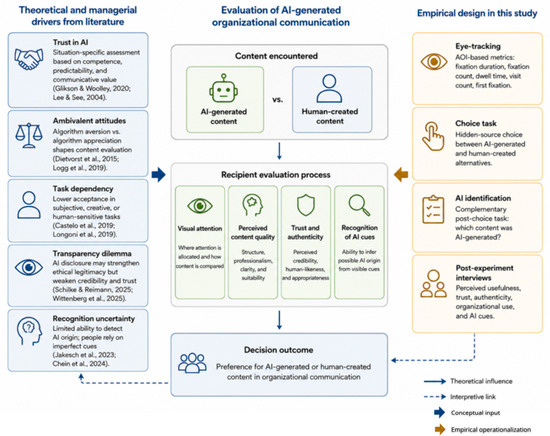
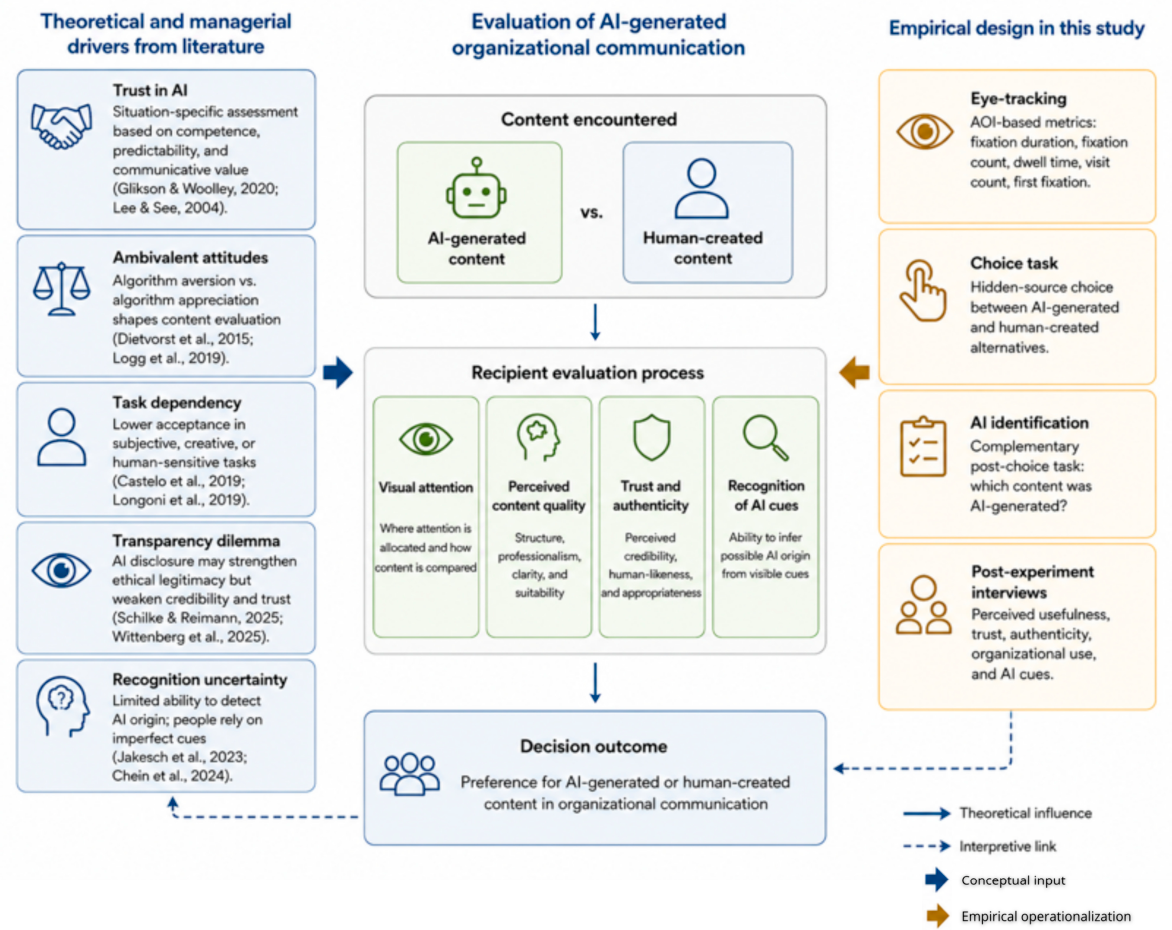
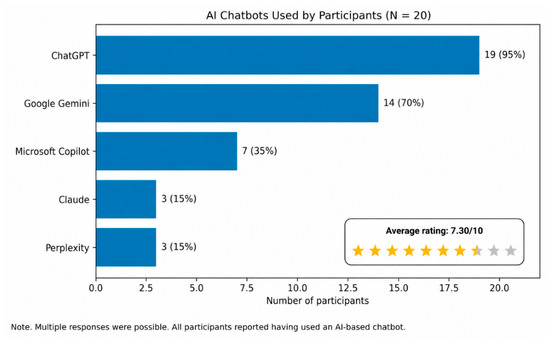
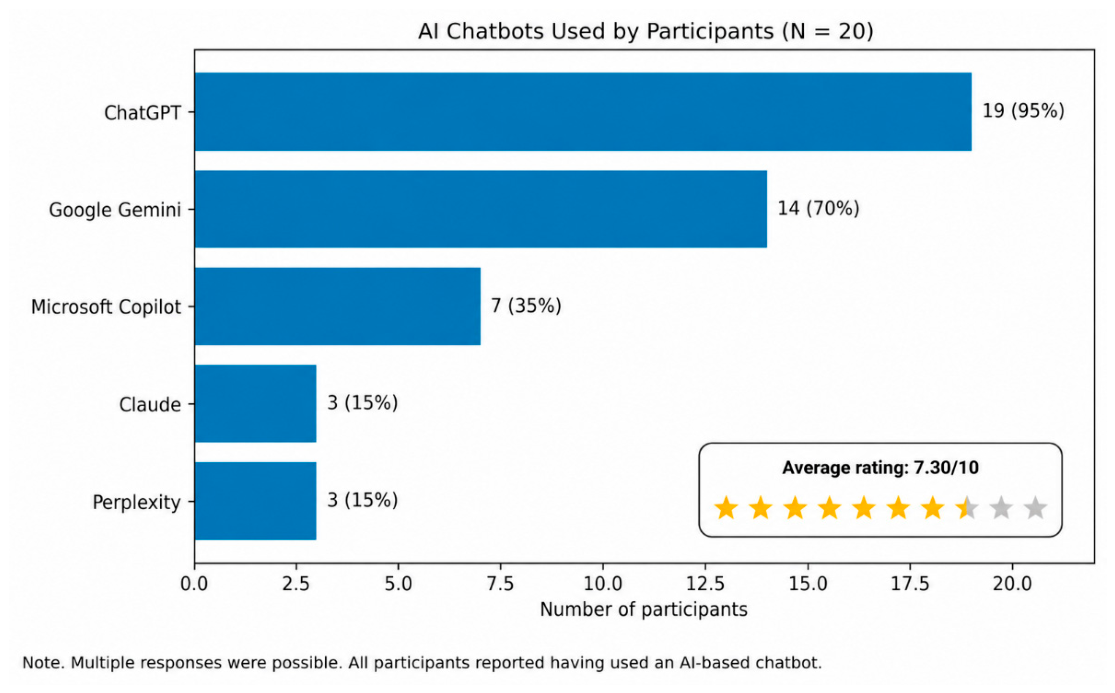
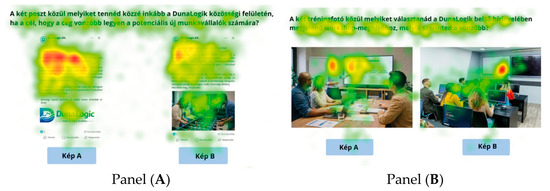
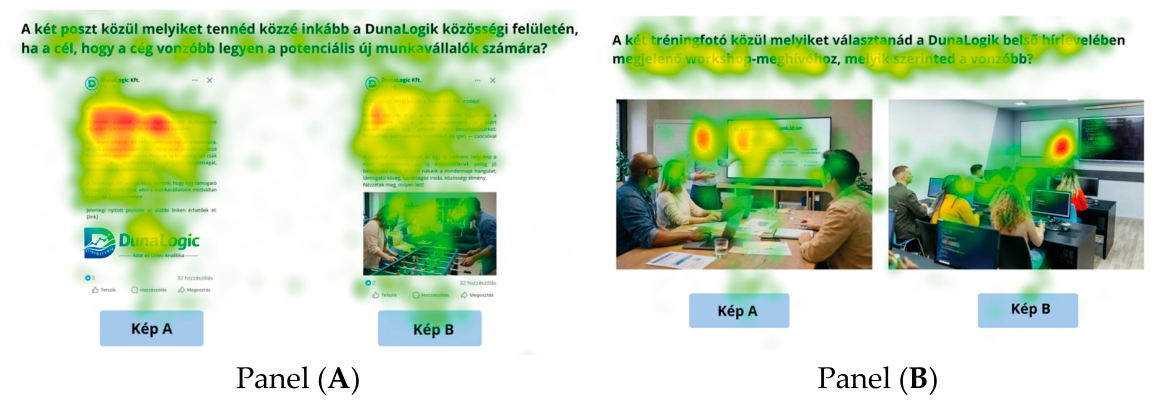
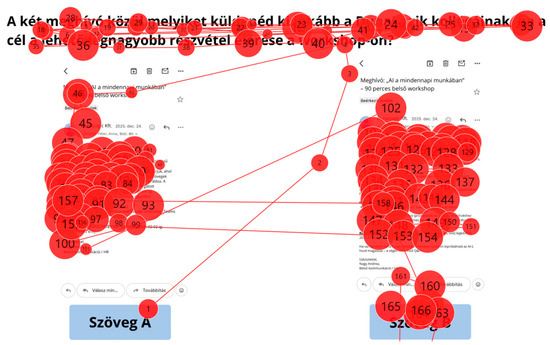
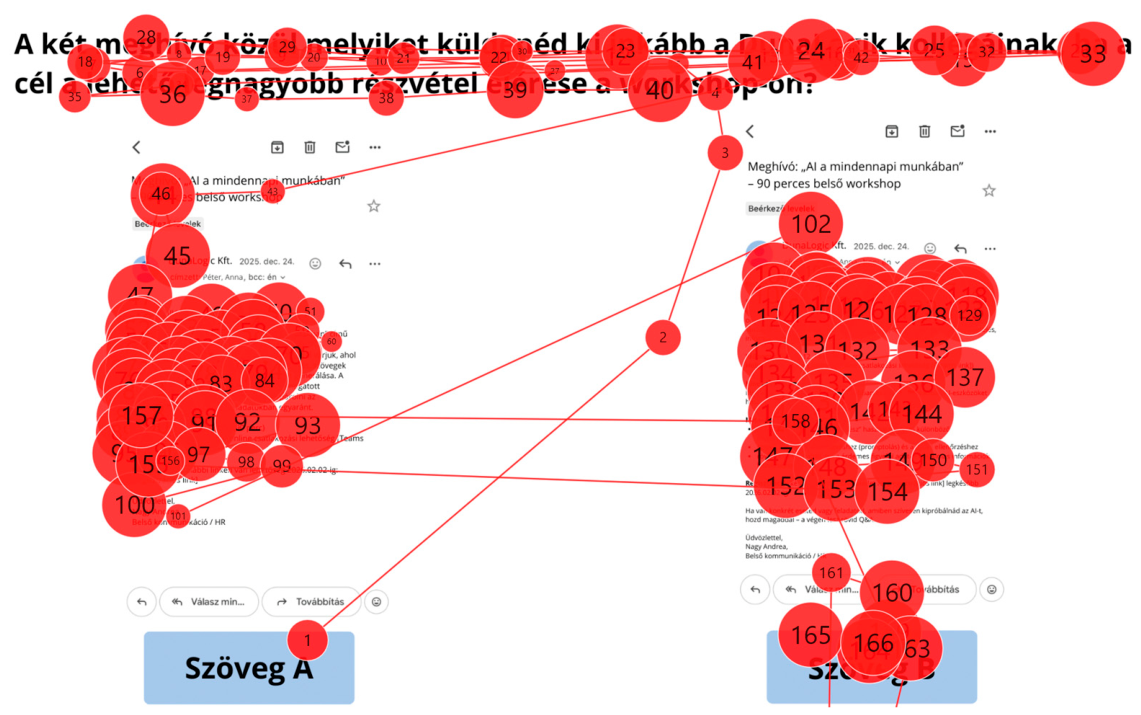
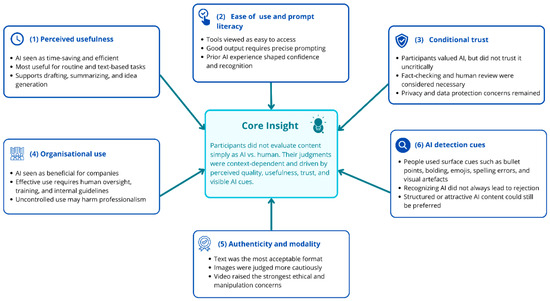
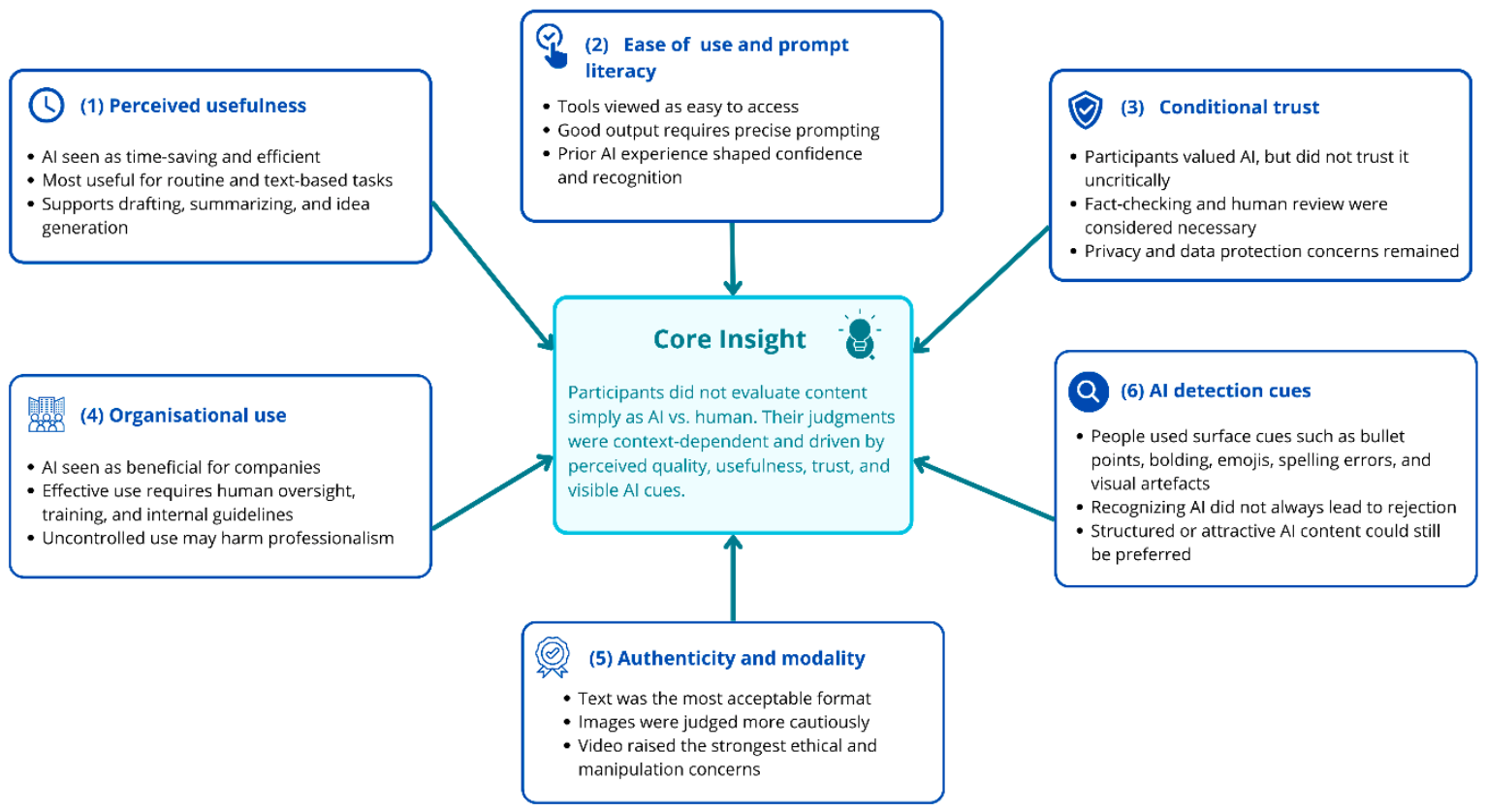

Disclaimer/Publisher’s Note: The statements, opinions and data contained in all publications are solely those of the individual author(s) and contributor(s) and not of MDPI and/or the editor(s). MDPI and/or the editor(s) disclaim responsibility for any injury to people or property resulting from any ideas, methods, instructions or products referred to in the content. |
© 2026 by the authors. Licensee MDPI, Basel, Switzerland. This article is an open access article distributed under the terms and conditions of the Creative Commons Attribution (CC BY) license.