


Abstract
Intellectual capital disclosure (ICD) is believed to enhance transparency and reduce information asymmetry, yet its voluntary nature raises questions about its effectiveness, particularly in emerging markets. This study investigates whether ICD mediates the relationship between corporate governance and firm performance in Jordan, an emerging market that mandated corporate governance reports in 2017. Using panel data from 391 firm-year observations (2021–2023) of firms listed on the Amman Stock Exchange, we employ pooled OLS regression with robust standard errors. Only three of eighteen hypotheses are supported. Board size significantly influences relational (RCD) and structural capital disclosures (SCD). Audit committee meetings influence RCD. However, no ICD component affects firm performance, and no mediation effects exist. The results indicate that ICD does not mediate the corporate governance-firm performance relationship. The findings question the effectiveness of voluntary ICD; this type of voluntary disclosure may be insufficient to achieve transparency goals in emerging markets. We argue that mandatory, standardized ICD requirements may be necessary to enhance comparability, reduce information asymmetry, and improve governance effectiveness. Regulators should consider piloting mandatory ICD reporting for large listed firms.
1. Introduction
Intangible assets, specifically intellectual capital (IC), such as employees’ skills and knowledge, technological innovations, and external relations, have been recognized as significant for companies’ value generation (Rossi et al., 2021). Many researchers believe that intellectual capital disclosure (ICD) increases accountability by reducing information asymmetry (Nadeem, 2020). Ideally, ICD can increase stakeholders’ ability to appreciate a company’s performance. However, the voluntary nature of the ICD and the lack of standard reporting requirements have made it less useful. ICD among firms in growing countries tends to be less than that of companies in advanced economies (Mamun & Aktar, 2021).
The importance of ICD is particularly pronounced in emerging economies, where capital markets are characterized by high information asymmetry and weaker investor protection (Alfraih, 2018). While IC is recognized as significant for value generation, the voluntary nature of ICD and lack of standardized reporting requirements may limit its usefulness. In emerging economies with high information asymmetry and weaker investor protection, understanding ICD’s effectiveness is particularly critical. Nevertheless, past studies have shown that ICD practices are influenced by certain board characteristics, but the direction and significance of these influences vary depending on the institutional and cultural contexts. For example, Mooneeapen et al. (2022) found that firms with a higher proportion of independent directors tend to disclose less IC information. This is somewhat counterintuitive because independent directors are expected to enhance transparency (Nel et al., 2022; Nguyen et al., 2024). Independent boards may be more cautious about disclosing strategic intangible information, perceiving it as sensitive or competitive.
ICD refers to the voluntary disclosure of information about IC, human capital (HC), structural capital (SC), and relational capital (RC). These three components represent the established framework in the IC literature (Haji & Ghazali, 2013; Salvi et al., 2020). ICD is intended to enhance transparency by providing stakeholders with information about a firm’s intangible assets, which are often not captured in traditional financial statements. The ICD components are interrelated and collectively drive firm performance and innovation capacity (Chen et al., 2006; Pablos, 2004; Urban & Joubert, 2017). In contrast, firm performance refers to the financial outcomes of a firm’s operations, typically measured through accounting-based indicators that reflect profitability, efficiency, and value creation (Taouab & Issor, 2019). In this study, firm performance is operationalized using return on assets (ROA) and return on equity (ROE), which are widely used measures of profitability.
While ICD and firm performance are distinct constructs, they are theoretically linked. Agency theory suggests that ICD reduces information asymmetry between managers and stakeholders, enabling more accurate evaluation of firm performance and potentially leading to improved market valuations and stakeholder trust (Jensen & Meckling, 1976; Nadeem, 2020). However, the ICD and performance relationship is contested in the literature. Some studies have found positive associations between ICD and firm performance, particularly in developed markets where disclosure quality is higher and stakeholders are more sophisticated in utilizing non-financial information (Nadeem et al., 2017a; Salvi et al., 2020). These studies argue that ICD signals quality, reduces uncertainty, and lowers the cost of capital, ultimately enhancing firm value. Conversely, other studies have found no systematic relationship between ICD and firm performance (Williams, 2001; Abeysekera, 2006). These contrasting findings suggest that the ICD and performance relationship may be context-dependent, influenced by institutional factors such as investor protection, enforcement mechanisms, and stakeholder sophistication.
Corporate governance mechanisms (board size, independence, audit committee size, and meetings) are theoretically expected to influence disclosure transparency. Agency theory predicts that stronger governance reduces information asymmetry and improves disclosure and performance (Jensen & Meckling, 1976). However, institutional theory suggests governance practices may represent symbolic compliance rather than substantive monitoring in emerging markets (DiMaggio & Powell, 1983). Testing these competing predictions allows for examination of which theoretical mechanisms operate in Jordan’s unique institutional context.
While corporate governance–IC relationships and IC–firm performance relationships have been examined separately in the prior literature (e.g., Bayraktaroglu & Baskak, 2019; Inkinen, 2015), few studies have examined whether ICD mediates the governance–performance relationship in emerging markets. This is a significant gap because governance mechanisms (e.g., board independence, audit committee effectiveness) are expected to influence the extent and quality of ICD, which in turn should shape stakeholder perceptions and firm performance. However, the mediating role of ICD remains underexplored in contexts characterized by concentrated ownership, family dominance, and weak investor protection. Jordan’s corporate governance mandate provides a unique opportunity to examine these relationships in a context where governance reforms are recent and enforcement may be weak (Jordan Securities Commission, 2017). By testing whether ICD mediates the governance and performance relationship, this study contributes to understanding the mechanisms through which governance creates value in emerging markets and whether voluntary disclosure practices are sufficient to achieve transparency goals.
Hence, this study aims to explain ICD based on the corporate governance–firm performance relationship. Specifically, this study was conducted with the following objectives: (i) to determine the influence of corporate governance on ICD, (ii) to assess the extent to which ICD is reflective of firm performance, and (iii) to test the mediating role of ICD in the corporate governance and firm performance relationship.
Set in Jordan, this study offers a unique opportunity to explore these relationships, given the country’s institutional setting, where investor protection is being enhanced through capital market reforms and regulatory frameworks are actively being developed to align with international standards (Al-Momani et al., 2024; Al-Khatib & Zaid, 2026). Jordan offers a unique opportunity, as the 2017 mandate for separate corporate governance reports provides a natural experiment to examine governance and disclosure relationships (Jordan Securities Commission, 2017).
This study provides novel insights into corporate governance practices and their implications for ICD. As part of its efforts to enhance transparency, Jordan mandated that listed firms provide separate corporate governance reports in their annual disclosures beginning in 2017 (Securities Depository Center, 2017). Despite these reforms, evidence suggests that corporate governance mechanisms in Jordan remain relatively weak in promoting business continuity, transparency (Almaqtari et al., 2023), and firm performance (Alshirah et al., 2022). However, Ajlouni et al. (2024) and Alodat et al. (2023) highlight the potential of corporate governance mechanisms to enhance productivity and monitoring effectiveness, implying the potential of governance structures to influence ICD and, ultimately, firm performance. The results may also have valuable implications for other emerging economies with similar institutional characteristics.
Given the voluntary nature of ICD and the inconsistent findings on its effectiveness, this study aims to provide evidence that can inform regulatory decisions regarding mandatory ICD. If ICD does not translate into measurable performance benefits under current voluntary reporting regimes, this raises fundamental questions about whether voluntary disclosure alone is sufficient. Our findings may therefore contribute to the ongoing policy debate in emerging markets about the need for standardized, mandatory IC reporting frameworks.
The remainder of this paper is organized as follows: Section 2 presents the literature review and develops the hypotheses. Section 3 describes the research methodology. Section 4 presents the empirical results, including descriptive statistics, correlation analysis, and regression results. Section 5 discusses the findings, theoretical implications, and practical recommendations. Section 6 concludes the paper with a summary of key findings, limitations, and directions for future research.
2. Literature Review and Hypotheses
ICD comprises three main components: human capital (HC), structural capital (SC) and relational capital (RC). HC encompasses the knowledge, skills, competencies, and abilities possessed by organizational members. SC includes the infrastructure, processes, databases, organizational routines, and intellectual property that remain within the organization even when employees leave. RC involves the relationships and networks that an organization maintains with external stakeholders, including customers, suppliers, partners, and communities, enabling collaboration, knowledge sharing, and trust (Paoloni et al., 2023).
These three components are interrelated, with HC influencing and being supported by SC and RC, collectively driving firm performance and innovation capacity. RC is influential in fostering interactions with external partners, while SC represents the organization’s ability to embed and utilize knowledge strategically, and HC embodies the individual expertise and creativity necessary for knowledge generation (Alkhatib & Valeri, 2024; Ali et al., 2024). Given that ICD is multidimensional and often strategically managed, this study disaggregates ICD into three components: HC, SC, and RC disclosures. This approach allows for a more refined examination of how firms selectively disclose different types of IC information and how such disclosures influence firm performance.
Agency theory (Jensen & Meckling, 1976) predicts that independent directors and active audit committees enhance monitoring, reduce information asymmetry, and improve disclosure and performance (Abdelhak & Hussainey, 2025; Khan et al., 2025). Resource dependency theory (Pfeffer & Salancik, 1978) emphasizes boards’ advisory and network functions, predicting that larger boards bring diverse expertise and resource access that benefit performance, without strong predictions about independent directors’ monitoring roles (Garcia Pont, 2026; Bakri et al., 2024). Institutional theory (DiMaggio & Powell, 1983) suggests that in emerging markets with concentrated ownership and weak investor protection, governance practices such as board independence may represent symbolic compliance with regulatory norms rather than substantive monitoring, potentially imposing costs without benefits (Mooneeapen et al., 2022; Nsour & Al-Rjoub, 2022). These competing predictions allow for testing which theoretical mechanisms operate in Jordan’s unique institutional context, where governance reforms have been adopted but enforcement remains limited (Al-Momani et al., 2024; Alshirah et al., 2022).
Based on this framework, we developed hypotheses in three areas: (i) governance effects on ICD, (ii) ICD effects on firm performance, and (iii) ICD effects on the governance–performance relationship. We included two control variables: firm size and industry. These variables have previously been found to affect relationships (Kweh et al., 2022; Liu et al., 2022). This allows us to test whether our predicted effects are real and not just caused by some firms being larger or from a different industry. The proposed relationships are illustrated in Figure 1.
Figure 1.
Conceptual framework.
2.1. The Influence of Corporate Governance on ICD
Agency theory (Jensen & Meckling, 1976) predicts that governance mechanisms (board independence, audit committee activity, and board size) enhance monitoring, reduce information asymmetry, and improve disclosure and performance. However, institutional theory (DiMaggio & Powell, 1983) argues that, in emerging markets with concentrated ownership structures and weak investor protection, governance practices such as board independence may be adopted primarily to meet legitimacy expectations rather than to enhance monitoring effectiveness. As a result, these mechanisms may generate compliance costs without delivering meaningful governance benefits (Mooneeapen et al., 2022; Nsour & Al-Rjoub, 2022). Empirical studies strongly support the influence of corporate governance on ICD. Vo et al. (2023) found that corporate governance positively influences ICD. The study also showed that ICD plays a moderating role in the relationship between corporate governance and corporate social responsibility. Similar results were also reported in Abdelhaq et al. (2025), Nassirzadeh et al. (2023), and Shubita and Alrawashedh (2023).
Larger boards bring diverse perspectives that enhance monitoring (Shuaib & Dabor, 2025) and are associated with higher ICD levels (Isa et al., 2024). Independent directors are expected to strengthen oversight and promote disclosures (Al Amosh & Khatib, 2022). Therefore, we predict a positive effect of these factors on ICD.
H1a.
Board size positively affects human capital disclosure.
H1b.
Board size positively affects relational capital disclosure.
H1c.
Board size positively affects structural capital disclosure.
H2a.
Board independence positively affects human capital disclosure.
H2b.
Board independence positively affects relational capital disclosure.
H2c.
Board independence positively affects structural capital disclosure.
Similar to board characteristics, larger and more active audit committees enhance disclosure quality in developed and emerging markets (Alomair & Al Naim, 2025). These findings are consistent with agency theory and confirm that effective audit committees reduce information asymmetry by demanding greater transparency. In the Jordanian context, corporate governance reforms (e.g., the 2017 Jordanian Corporate Governance Code) have strengthened the role of audit committees. Thus, the following hypotheses are proposed:
H3a.
Audit committee size positively affects human capital disclosure.
H3b.
Audit committee size positively affects relational capital disclosure.
H3c.
Audit committee size positively affects structural capital disclosure.
H4a.
Audit committee meetings positively affect human capital disclosure.
H4b.
Audit committee meetings positively affect relational capital disclosure.
H4c.
Audit committee meetings positively affect structural capital disclosure.
2.2. The Influence of ICD on Firm Performance
The relationship between ICD and firm performance has been extensively examined across different institutional contexts, yielding heterogeneous findings that reflect the importance of contextual factors. In emerging economies, where information asymmetry is high and investor protection is relatively weak, understanding this relationship is particularly critical. Studies from various emerging economies have examined the relationship between ICD and firm performance, with mixed results. Research from Kenya has further established links between financial performance, ICD, and firm value, demonstrating that voluntary disclosure of IC information can enhance market valuations when stakeholders perceive the information as credible and relevant (Keter et al., 2024).
In Bangladesh, Rana and Hossain (2023) found that intellectual capital and human capital make a positive contribution to firm performance. In contrast, relational capital was found to have a significant negative effect on firm performance. Structural capital, however, was not significantly associated with firm performance. Evidence from Malaysian non-financial firms presents a somewhat different picture. Ahmed et al. (2022) reported that firm performance is positively and significantly influenced by intellectual capital, human capital, and structural capital. In India, a panel data analysis of 116 non-financial firms showed that larger board sizes, increased independence, and specific ownership structures negatively affected the contribution of IC and HC to firm performance. These findings suggest that the relationship between intellectual capital disclosure and firm performance may be shaped by various contextual factors, even within the same sector.
Financial performance refers to the financial outcomes of a firm’s operations, measured through accounting-based indicators that reflect profitability, efficiency, and value creation (Vintilă et al., 2025). It is a multidimensional construct, frequently represented by dimensions such as profitability, liquidity, leverage, growth, and market value (Sa’adah & Rochayatun, 2026). However, the most commonly used dimension in corporate governance and IC research is profitability, as it directly reflects the economic outcomes of management decisions and organizational capabilities. Accordingly, we propose the following hypotheses:
H5a.
Human capital disclosure positively affects firm performance.
H5b.
Structural capital disclosure positively affects firm performance.
H5c.
Relational capital disclosure positively affects firm performance.
2.3. The Mediating Role of ICD in the Governance–Performance Relationship
Empirical evidence regarding the mediating role of intellectual capital disclosure (ICD) remains mixed. Yuliusman (2022) found that ICD does not mediate the relationship between corporate governance and firm value, while Zuhroh et al. (2024) reported that although ICD positively affects firm value, it does not function as a significant intervening variable between corporate governance and firm value. In contrast, Riswandari et al. (2026) demonstrated that corporate governance influences firm performance indirectly through intermediate mechanisms, highlighting the importance of mediation processes in governance–performance relationships.
Despite these inconsistent findings, there are strong theoretical reasons to expect ICD to mediate the relationship between corporate governance and firm performance. Effective corporate governance mechanisms enhance transparency, accountability, and oversight, thereby encouraging firms to disclose more comprehensive information regarding their intellectual capital. Greater disclosure reduces information asymmetry, improves stakeholder confidence, and enhances the firm’s ability to attract resources and support from investors and other stakeholders. Consequently, the benefits of corporate governance may be transmitted to firm performance through improved intellectual capital disclosure rather than through governance mechanisms alone.
This reasoning is consistent with agency theory, which suggests that stronger governance structures improve disclosure practices by reducing information asymmetry, and with resource dependence theory, which views disclosure as a means of securing critical external resources. Furthermore, previous studies have documented significant associations between corporate governance and ICD (e.g., Alfraih, 2018; Haji & Ghazali, 2013; Mooneeapen et al., 2022), as well as between ICD and firm performance (e.g., Salvi et al., 2020; Keter et al., 2024). Taken together, these findings indicate that ICD may serve as an important mechanism through which corporate governance contributes to superior firm performance. Therefore, this study proposes that intellectual capital disclosure mediates the relationship between corporate governance and firm performance. The following mediation hypotheses were developed:
H6a.
Human capital disclosure mediates the relationship between corporate governance and firm performance.
H6b.
Structural capital disclosure mediates the relationship between corporate governance and firm performance.
H6c.
Relational capital disclosure mediates the relationship between corporate governance and firm performance.
3. Methods
3.1. Research Design and Sample
This study adopts a quantitative panel data design to examine (i) the association between corporate governance and ICD, (ii) the association between ICD and firm performance, and (iii) the mediating effects of ICD on the relationship between corporate governance and firm performance among Jordanian firms. Banks and insurance institutions were excluded because they are subject to different disclosure regulations.
The sample comprises all firms listed on the Amman Stock Exchange from 2021 to 2023, yielding 391 firm-year observations (138 firm-years in 2021, 123 in 2022, and 130 in 2023). The panel is unbalanced, which is typical in emerging market research, where firms may be delisted, merged, or have missing annual reports.
To ensure transparency and reproducibility, this study draws on multiple data sources. Annual reports were downloaded from the Amman Stock Exchange website (www.ase.com.jo) and the Securities Depository Center (www.sdc.com.jo), which serve as the primary sources for financial and disclosure information. Corporate governance data, including board size, board independence, audit committee size, and audit committee meeting frequency, were extracted from separate corporate governance reports filed by listed firms, which have been mandatory in Jordan since 2017. Financial performance data, including ROA and ROE, were obtained from annual financial statements and the Amman Stock Exchange database. Firm characteristics, such as industry classification and total assets, were collected from company websites and annual reports.
The period in this study was selected for several reasons. First, it captures the period following the 2017 Jordanian Corporate Governance Code implementation (Jordan Securities Commission, 2017), allowing sufficient time for firms to adapt to the new governance reporting requirements. Second, 2021–2023 represent the most recent available data at the time of study commencement. Third, this period allows for examination of governance and disclosure relationships under post-pandemic economic conditions, providing insights into how firms manage transparency during economic recovery phases. While the post-COVID period may not be representative of normal economic conditions, it offers a unique opportunity to examine governance effectiveness during challenging times.
To mitigate the potential impacts of the unbalanced panel structure on our analysis, we employed several methodological safeguards. First, we used pooled Ordinary Least Squares (OLS) with robust standard errors, which are appropriate for unbalanced panels and short time dimensions. Second, we employed White cross-section robust standard errors to address heteroskedasticity, which is common in cross-sectional data pooled over time. Third, we included all available observations to maximize statistical power (n = 391), rather than restricting the sample to a balanced panel, which would have substantially reduced the sample size and potentially introduced selection bias. As Cameron and Trivedi (2010) note, unbalanced panels are common in empirical research, and pooled OLS with robust standard errors provides consistent estimates when the missing data mechanism is not correlated with the error term.
We attempted both fixed effects (FE) and random effects (RE) specifications to assess the suitability of pooled OLS. However, due to the short panel (T = 3 years), these models produced near-singular matrices, indicating insufficient within-firm variation to estimate firm-specific effects. This is a common limitation in short panels. Consistent with Cameron and Trivedi’s (2010) recommendation, pooled OLS is preferred when the time dimension is limited and FE/RE models are infeasible. The use of robust standard errors further addresses potential heteroskedasticity and serial correlation concerns.
3.2. Measurement
3.2.1. Dependent Variable
Firm performance was measured using return on assets (ROA) and return on equity (ROE), two of the most widely used accounting-based indicators in corporate governance and intellectual capital research (Bayraktaroglu & Baskak, 2019). ROA and ROE capture complementary dimensions of profitability. ROA reflects a firm’s ability to generate profits from its asset base, whereas ROE measures the returns generated for shareholders (Xu & Li, 2022; Tutcu et al., 2024). Using both indicators therefore provides a more comprehensive assessment of firm performance.
These measures facilitate comparison with prior studies, particularly in emerging market contexts such as Jordan (Al-Momani et al., 2024). Profitability was selected because it directly reflects a firm’s ability to generate value from its resources and is therefore appropriate for assessing whether ICD translates into financial returns. In addition, ROA and ROE are readily available from annual reports, enhancing data reliability and reproducibility.
Prior studies have commonly employed ROA and ROE to examine the effects of intellectual capital on firm performance. For example, Nadeem et al. (2017a) found that intellectual capital positively influences profitability in BRICS economies, while Al-Momani et al. (2024) used both measures to assess the intellectual capital–performance relationship in Jordan. Consistent with this literature, the present study focuses on profitability rather than liquidity, leverage, or growth, because these indicators are more closely associated with risk and operational conditions than with value creation (Marimira & Gumel, 2025).
3.2.2. Independent Variables
Four independent variables representing corporate governance were included in this study. Board size (BS) was measured by the total number of board members. Board independence (BI) was gauged based on the proportion of independent directors to total board members (Isnalita & Romadhon, 2018). Audit committee size (ACS) was measured based on the number of members serving on the audit committee, and audit committee meetings (ACM) were measured based on the annual frequency of audit committee meetings. These measures follow the established governance literature (Balasundaram, 2019).
ICD was measured based on the frameworks established by Haji and Ghazali (2013) and Salvi et al. (2020). ICD components were operationalized as follows: human capital disclosure (HCD) comprising eight items, SCD comprising sixteen items, and RCD comprising eleven items. These components were measured via content analysis of annual re-ports. Following prior ICD studies that employed raw frequency counts (e.g., Sonnier, 2008; Dharni & Jameel, 2022), we measured ICD as the raw number of keyword occurrences per annual report. This approach remains widely used and methodologically robust for several reasons. First, the raw keyword frequency count approach is considered a reliable, replicable method for content analysis in IC research. Second, our measurement approach follows established ICD frameworks and allows comparability with prior studies in emerging markets. Third, the keyword list captures the three established ICD components as recognized in the IC literature (Bontis, 2003; Chen et al., 2006). Fourth, raw frequency counts minimize subjective interpretation in content analysis, enhancing replicability and objectivity.
To ensure measurement validity and reliability, we undertook several validation procedures. First, we cross-validated our keyword list with prior ICD studies to ensure comprehensive coverage of each IC component. Second, we conducted a pilot content analysis to refine the coding scheme and resolve any ambiguities in keyword identification. Third, we used Atlas.ti Student Version 26.2.1 to ensure systematic coding and minimize human error. Fourth, we performed robustness checks using alternative ICD measurements (per-item averages and log-transformed counts), which yielded qualitatively identical conclusions, confirming that our findings are not sensitive to measurement choices.
3.2.3. Control Variables
The control variables included in this study are firm size and industry type. Firm size (LSIZE) was measured as the natural logarithm of total assets, and industry type (IND) was a dummy variable (manufacturing = 1, services = 0). The inclusion of these control variables is based on the findings of Albitar (2015) and Nicolò et al. (2020), who found that firm size and industry significantly influence corporate disclosure practices. Larger firms have greater resources to invest in IC development and disclosure systems, while manufacturing and service firms differ in their IC composition and disclosure practices.
3.3. Analytical Approach
To test the hypotheses, panel least squares regression (EViews 12) was used. Two models were used to test the hypotheses. Model 1 examines the influence of corporate governance mechanisms on ICD. Model 2 examines the influence of ICD on firm performance and establishes the mediation effect of ICD on the corporate governance-firm performance relationship.
Given the short panel dimension (T = 3 years), pooled OLS with robust standard errors is the most appropriate approach for this study. Pooled OLS assumes that the error term is independent and identically distributed, with constant variance (homoscedasticity) and no serial correlation. It also assumes linearity in the parameters and no perfect multicollinearity among independent variables. While these assumptions are standard in OLS regression, short panels present challenges for fixed and random effects models, which require sufficient within-firm variation over time. Fixed effects models require variation within each firm across the three years, which is limited in short panels. Random effects require assuming no correlation between individual effects and regressors, which is unlikely in corporate governance research where unobserved firm characteristics (e.g., corporate culture, management quality) are correlated with governance choices. We attempted both FE and RE specifications but encountered near-singular matrices, consistent with Cameron and Trivedi’s (2010) recommendation that pooled OLS is preferred for short panels. Using White cross-section robust standard errors addressed heteroskedasticity, which is common in cross-sectional data pooled over time. The functional specification of the regression models is as follows:
Model 1 (Governance → ICD): Examines the influence of corporate governance mechanisms on each ICD component.
where ICD is measured separately as HCD, RCD, and SCD; BS = board size; BI = board independence; ACS = audit committee size; ACM = audit committee meeting; LSIZE = firm size; and IND = industry type.
ICDit = β0 + β1(BSit) + β2(BIit) + β3(ACSit) + β4(ACMit) + β5(LSIZEit) + β6(INDi) + εit
Model 2 (ICD → Performance): Examines the influence of ICD on firm performance.
where FP is measured as ROA and ROE separately. HCD = human capital disclosure; RCD = relational capital disclosure; SCD = structural capital disclosure.
FPit = β0 + β1(HCDit) + β2(RCDit) + β3(SCDit) + β4(LSIZEit) + β5(INDi) + εit
3.4. Mediation Testing
According to Baron and Kenny (1986), mediation is tested only if three conditions are met: (i) corporate governance significantly affects ICD, (ii) ICD significantly affects firm performance, and (iii) the corporate governance effect reduces when ICD is added. The Sobel test (Sobel, 1982) was used only for ICD components with a significant firm performance association.
3.5. Robustness Checks and Diagnostic Tests
Multicollinearity (VIF): Variance Inflation Factor (VIF) tests were conducted to detect multicollinearity among independent variables. VIF values exceeding 10 indicate problematic multicollinearity that could inflate standard errors and make coefficient estimates unstable (Hair et al., 1995). All centered VIF values were below 5, confirming no multicollinearity concerns.
Heteroskedasticity (White test): White cross-section robust standard errors were applied to address heteroskedasticity, a common issue in cross-sectional data where the variance of errors is not constant across observations. Heteroskedasticity can lead to inefficient estimates and biased standard errors, affecting significance testing. The robust standard errors provide consistent estimates even in the presence of heteroskedasticity.
Autocorrelation (Durbin–Watson and Breusch–Godfrey tests): Durbin–Watson statistics (1.82–2.00) and Breusch–Godfrey tests were conducted to detect serial correlation in the residuals. Serial correlation occurs when errors are correlated across observations, which can lead to inefficient estimates and underestimated standard errors. The test results indicated no serious serial correlation.
Outlier Influence (Winsorized ROE): To ensure that extreme values did not drive our findings, ROE was winsorized at the 1st and 99th percentiles. This produced materially similar results, confirming that outliers do not significantly influence our estimates.
Alternative ICD Measurement: To ensure that our results are not sensitive to measurement choices, we re-estimated the models using per-item averages and log-transformed ICD counts. These alternative specifications yielded qualitatively identical conclusions, confirming the robustness of our findings to measurement.
4. Results
Table 1 presents the descriptive statistics (n = 391). Among the ICD components, HC disclosure is the lowest (18.08), while RC disclosure (31.99) and SC disclosure (33.87) are higher, suggesting that firms prioritize disclosing RC and SC over proprietary HC. The average board size is 7.24 members with 42.9% independence. Audit committees have an average of 3.2 members and meet 4.2 times annually. The mean ROA is 1.1%, and the mean ROE is −11.6%, reflecting extreme negative outliers (min = −50.34) that capture genuine post-COVID distress and are thus retained as real economic conditions. Wide ICD ranges (HCD: 0–131, RCD: 0–291, and SCD: 0–394) indicate substantial variation across firms.
Table 1.
Descriptive statistics.
The sample comprises 391 firm-year observations distributed across three years: 138 firm-years in 2021, 123 in 2022, and 130 in 2023. The panel is unbalanced, reflecting typical patterns in emerging market research where firms may be delisted, merged, or have missing annual reports. Manufacturing firms represent 75% of the sample, which is consistent with the composition of the Amman Stock Exchange.
Several observations regarding outliers and extreme values warrant discussion. First, the extreme negative ROE minimum (−50.34) reflects genuine post-COVID distress rather than data errors. We retained these observations as they represent real economic conditions during the pandemic recovery period. Winsorization of ROE at the 1st and 99th percentiles produced materially similar results, confirming that these extreme values do not drive our findings.
Second, the wide ranges in ICD components (HCD: 0–131, RCD: 0–291, SCD: 0–394) reflect substantial variation in disclosure practices across firms. Zero values in ICD components represent cases where firms did not disclose IC information in their annual reports, not data errors.
Third, zero values for board size and audit committee size require careful interpretation. These zeros do not indicate that a firm operates without a board or audit committee, which would violate Jordanian listing requirements. Rather, they represent cases where the firm did not disclose this information in its annual reports. While these observations are retained for descriptive completeness, readers should interpret coefficients involving these variables with caution, as zeros reflect missing data rather than true governance characteristics.
To address potential outlier influence on our estimates, we employed several methodological safeguards. Robust standard errors were used to address heteroskedasticity and potential outlier influence. Sensitivity analyses with winsorized ROE confirmed similar results. All available observations were retained to maximize statistical power (n = 391) and avoid selection bias that could result from excluding observations with extreme values.
4.1. Correlation Analysis
Table 2 presents the correlation matrix for all variables included in this study. The strongest correlation is between RC disclosure and SC disclosure (0.757), indicating that these capitals are highly overlapping and may capture the same underlying construct. This suggests that firms that disclose more about their external relationships also tend to disclose more about their organizational systems and processes, perhaps reflecting a broader organizational commitment to transparency.
Table 2.
Correlation matrix.
Several correlations follow the direction expected in the literature. Board size shows a meaningful positive relationship with firm size (LSIZE) at 0.416 and audit committee size at 0.398, suggesting that larger firms tend to have larger boards with more developed audit committees. This is consistent with resource dependency theory, which predicts that larger organizations require more extensive governance structures to manage complex stakeholder relationships (Pfeffer & Salancik, 1978). Similarly, audit committee size and audit committee meetings are positively linked (0.348), indicating that larger committees tend to meet more frequently, which aligns with agency theory predictions that active committees enhance monitoring (Jensen & Meckling, 1976). Additionally, LSIZE is moderately correlated with RC disclosure (0.275) and audit committee meetings (0.222), consistent with prior research indicating that larger firms have greater resources for disclosure and more active governance (Albitar, 2015; Nicolò et al., 2020).
However, some correlations exhibit unexpected behavior. Firm size shows a negative correlation with board independence (−0.230), implying that larger firms tend to have lower proportions of independent directors. This is counterintuitive, as agency theory would predict that larger, more complex firms require greater independent oversight. This finding may reflect family ownership patterns in Jordan, where large firms often maintain family-dominated boards that limit independent director representation (Nsour & Al-Rjoub, 2022). Similarly, board independence shows a negative relationship with ROA (−0.202), implying that more independent boards are weakly associated with lower profitability. This supports institutional theory predictions that independent directors may represent symbolic compliance rather than value creation in emerging markets (DiMaggio & Powell, 1983; Mooneeapen et al., 2022).
Crucially, neither ROA nor ROE exhibits meaningful correlations with most board characteristics (most values fall below 0.16), suggesting that corporate governance structures, as measured here, are not significantly related to financial performance in this context. This lack of correlation has important implications for the subsequent econometric analyses. The weak bivariate relationships suggest that the regression models will likely explain limited variation in both ICD and performance, which is confirmed by the low R-squared values (6–11%) in the subsequent regression analyses. Furthermore, HCD shows weak correlations with governance variables, supporting the regression findings that governance mechanisms primarily influence RCD and SCD rather than HCD. The absence of strong correlations between governance variables and performance measures also suggests that any governance–performance relationship, if present, may operate through indirect channels such as ICD or other mediating mechanisms, which we test in our mediation analysis. Table 2 provides the correlation matrix.
4.2. Regression Models
4.2.1. The Effect of Governance Mechanisms on ICD
The proposed relationships between governance mechanisms and ICD were tested in Model 1. The results are presented in Table 3. The statistics show that none of the governance variables significantly affect HC disclosure.
Table 3.
Regression results for Model 1.
HCD is weakly positively associated with audit committee meetings (H4a partially supported). Both larger firm size and being in the manufacturing industry were linked to greater HCD. However, audit committee size, board independence, and board size had no significant effects (H1a, H2a, H3a: not supported).
RCD was significantly and positively associated with both audit committee meetings and board size (H1b and H4b supported). Larger firms also disclosed more RC. However, audit committee size and board independence showed no effect (H2b and H3b not supported). RC disclosure was significantly influenced by audit committee meetings and board size. SC disclosure was found to be affected only by board size.
4.2.2. The Effects of ICD on Firm Performance
Table 4 presents the regression results for testing the effects of ICD on firm performance. HCD, RCD and SCD show no relationship with either ROA or ROE. Firm size shows a positive relationship with firm performance. Overall, ICD does not appear to influence short-term financial performance. Consequently, H5a, H5b, and H5c are not supported. The absence of a direct link between ICD and performance implies that the proposed mediation effect of ICD on the relationship between corporate governance and firm performance is also non-existent. Therefore, mediation hypotheses H6a, H6b, and H6c are not supported.
Table 4.
Regression results for Model 2.
4.2.3. Robustness Checks
To ensure the reliability of our findings, we conducted several robustness checks (Table 5). The VIF values (all < 5) confirmed no multicollinearity. White robust standard errors were used to address heteroskedasticity. The Durbin–Watson statistics (1.82–2.00) indicate no serious autocorrelation. The winsorized ROE produced materially similar results. Alternative ICD measurements (per-item averages, log-transformed) yielded identical conclusions. Fixed/random effects produce near-singular matrices due to the short panel (T = 3); pooled OLS is preferred (Cameron & Trivedi, 2010).
Table 5.
Summary of robustness and diagnostic tests.
4.3. Results of Hypothesis Testing
Table 6 summarizes the results of the hypothesis testing. Overall, only three hypotheses were supported. Board size influenced both RCD and SCD. Audit committee meetings influenced RCD. None of the ICD components affected firm performance (ROA/ROE), and no mediation effects existed. Thus, most hypotheses (H1a, H2a–H2c, H3a–H3c, H4a, H4c, H5a–H5c, and H6a–H6c) were not supported.
Table 6.
Outcomes of hypothesis testing.
5. Discussion
This study investigates whether ICD mediates the relationship between corporate governance mechanisms and firm performance among firms listed on the Amman Stock Exchange from 2021 to 2023. Using a sample of 391 firm-year observations, the study yielded several main findings that warrant comprehensive discussion.
5.1. The Influence of Governance on Intellectual Capital Disclosure
Our findings reveal that corporate governance mechanisms selectively influence ICD rather than exerting uniform effects across all disclosure dimensions. Board size significantly influences RCD and SCD but not HCD. The frequency of audit committee meetings influences only RCD. Other corporate governance variables (board independence and audit committee size) are not significant determinants of any ICD components. The low R-squared values (6–11%) indicate that governance mechanisms explain only a small fraction of ICD variation, suggesting that unobserved factors such as firm culture, CEO characteristics, and ownership structure may matter more.
The finding that board size positively influences RCD, and SCD provides support for hypotheses H1b and H1c, which is consistent with resource dependency theory (Pfeffer & Salancik, 1978). Larger boards bring diverse expertise, perspectives, and monitoring capabilities that encourage firms to disclose information related to external relationships, organizational systems, processes, innovation, and internal infrastructure. This aligns with prior studies in both developed and emerging markets (Cerbioni & Parbonetti, 2007; Alfraih, 2018; Vitolla et al., 2020), suggesting that board size facilitates broader disclosure of strategic organizational resources. However, board size does not significantly influence HCD (Hypothesis H1a). This finding suggests that employee-related information such as skills, training, and competencies may not be strongly prioritized by board composition alone. Another explanation is that HC is perceived as more competitively sensitive and difficult to measure objectively (Folloni & Vittadini, 2010). Additionally, larger boards may focus their monitoring on externally oriented information affecting stakeholder perceptions, while HC matters are delegated to management.
The non-significant findings for board independence across all three ICD components warrant particular attention (hypotheses H2a, H2b and H2c). Our results contradict agency theory predictions (Jensen & Meckling, 1976) and prior studies in developed markets (Cerbioni & Parbonetti, 2007; Vitolla et al., 2020) that found positive relationships between board independence and disclosure quality. However, our findings align with Al-Musalli and Ismail (2012), who found that independent directors have a negative relationship with IC.
Several explanations may account for this divergence. First, as institutional theory predicts (DiMaggio & Powell, 1983), board independence in Jordan may represent symbolic compliance with regulatory norms rather than substantive monitoring. The 2017 Jordanian Corporate Governance Code mandates independent directors, but firms may comply with the letter rather than the spirit of the regulation. Independent directors may lack genuine authority in family-dominated firms, where concentrated ownership structures limit their influence (Nsour & Al-Rjoub, 2022).
Second, independent directors may prioritize compliance with mandatory financial reporting requirements over voluntary disclosures such as IC information. In environments with weak investor protection, independent directors may focus on regulatory compliance and risk mitigation rather than strategic transparency (Almaqtari et al., 2023).
Third, independent directors may perceive IC information as competitively sensitive, particularly in emerging markets where competitive advantages may be more fragile. Disclosing detailed information about HC, innovation capabilities, and strategic relationships could potentially negatively affect competitive positions (Mooneeapen et al., 2022). Our findings suggest that merely having a higher proportion of independent directors does not necessarily enhance IC transparency.
The absence of significant effects for audit committee size across all ICD components suggests that mere structural presence of larger audit committees does not guarantee functional effectiveness (hypotheses H3a, H3b and H3c). This finding aligns with Lari Dashtbayaz et al. (2020), who found a negative link between audit committee size and IC components HC and SC. This finding confirms that audit committee effectiveness depends more on quality, independence, and expertise than size alone. In Jordan’s institutional context, audit committees may focus primarily on mandatory financial compliance rather than voluntary non-financial disclosures.
The significant influence of audit committee meeting frequency on RCD (Hypothesis H4b) suggests that more active audit committees enhance oversight and monitoring functions, particularly in areas associated with stakeholder relationships, customer engagement, reputation, and external collaboration. Frequent meetings may improve scrutiny of disclosures that directly affect external stakeholders and market perceptions.
However, the absence of significant effects on HCD and SCD (Hypotheses H4a and H4c) suggests that audit committee activity may focus more on externally oriented information rather than internally driven IC components. This selective influence may reflect audit committees’ prioritization of information that affects market perceptions, investor confidence, and regulatory compliance. Internal HC and organizational systems may be viewed as management responsibilities rather than audit committee oversight priorities.
5.2. The Influence of Control Variables
Our findings confirm that firm size positively influences ICD across all three components. This is consistent with the prior literature (e.g., Nicolò et al., 2020) indicating that larger firms have greater resources to invest in IC development and disclosure systems, more sophisticated reporting mechanisms, and face higher stakeholder scrutiny that compels greater transparency. Larger firms also employ more professional management teams with stronger disclosure cultures.
Industry type, specifically manufacturing and non-manufacturing firms, shows significant influence on ICD. Manufacturing firms disclose significantly more HC and SC compared to service firms. This finding may reflect that manufacturing firms possess more tangible IC (patents, processes, R&D activities), which lends them to disclosure. In contrast, service firms’ IC may be more tacit, relationship-based, and less documentable in annual reports. The regulatory environment and disclosure traditions may also differ across industries, with manufacturing firms facing more stringent transparency requirements.
5.3. The Absence of ICD–Firm Performance Relationships
A particularly noteworthy finding is that no ICD component showed a statistically significant association with either ROA or ROE. The coefficients are extremely close to zero, and the R-squared values are very low (ROA: 2.6%; ROE: 0.02%), indicating that ICD explains virtually none of the variation in accounting-based performance measures. Consequently, H5a, H5b, and H5c are not supported. Several interpretations warrant consideration. Grounded in the proprietary cost hypothesis, some firms may reduce disclosure when performance is strong to protect their competitive advantage from rivals (Bernard et al., 2018; Botosan & Stanford, 2005), suggesting that the ICD–performance relationship is complex and context-dependent.
Additionally, the benefits of ICD may be long-term and indirect rather than immediate. Investments in HC, innovation, organizational systems, and stakeholder relationships often require substantial time before they contribute to profitability. The three-year observation window (2021–2023) may be insufficient for capturing delayed or cumulative performance effects. As Nadeem et al. (2017b) note, IC investments may require 5–10 years to generate measurable financial returns.
Moreover, disclosure quality may differ from actual IC performance. Firms may disclose IC information symbolically or selectively without necessarily possessing strong IC resources or capabilities that enhance operational efficiency and profitability. Voluntary disclosure may reflect reporting practices rather than genuine IC strength.
In Jordan’s institutional context, stakeholders may not value ICD in evaluating firm performance. Concentrated ownership, family dominance, and weak investor protection may mean that disclosure is primarily for regulatory compliance rather than market signaling. In such environments, ICD may be regarded as a legitimacy-seeking practice rather than a source of substantive information about firm capabilities. Moreover, the post-COVID period (2021–2023) may not be representative of normal economic conditions. During economic uncertainty, firms may reduce their IC investments, or stakeholders may prioritize immediate survival metrics over long-term value indicators.
Our null findings align with past studies (Firer & Mitchell Williams, 2003; Hang Chan, 2009; Buallay, 2017; Pitre-Cedeño & Herrera-Rodríguez, 2024) that found no relationship or at most mixed, varied relationships between ICD and firm performance. These findings reflect broader structural challenges in IC research, beyond the reasons previously discussed. Many other factors could lead to different results between studies, such as industry differences, measurement tools (VAIC versus content analysis), and regulatory environments. When researchers fail to find a link between IC and company performance, it usually comes down to these factors, which collectively explain why voluntary ICD does not translate into measurable short-term financial returns in Jordan’s institutional context.
5.4. The Absence of Mediation Effects
The absence of a direct link between ICD and performance implies that the proposed mediation effect of ICD on the relationship between corporate governance and firm performance is also non-existent. Following Baron and Kenny’s (1986) conditions for mediation, since ICD does not affect firm performance, it cannot serve as a mediator. Therefore, mediation hypotheses H6a, H6b, and H6c are not supported. This finding has critical implications for understanding the governance and performance relationship in emerging markets. While governance mechanisms may influence ICD, and while theoretical arguments suggest ICD should enhance performance, the intervening linkage does not materialize in practice. The current voluntary ICD practices are insufficient to create value. Under voluntary reporting regimes, firms may disclose IC information selectively or symbolically, or do not even disclose it at all, limiting its usefulness for performance enhancement. As our findings question the effectiveness of voluntary ICD, mandatory, standardized ICD requirements may be necessary to enhance comparability, reduce information asymmetry, and improve governance effectiveness.
5.5. Theoretical Contributions
The findings largely challenge the assumptions of agency theory (Jensen & Meckling, 1976), which posits that governance mechanisms mitigate information asymmetry and improve organizational outcomes. In Jordan’s concentrated ownership environment, however, these governance mechanisms appear to function differently than in more dispersed ownership contexts. The insignificant effects of board independence and audit committees suggest that independent directors may lack genuine authority and that monitoring mechanisms may operate more symbolically than substantively. This interpretation aligns with institutional theory (DiMaggio & Powell, 1983), which argues that organizations often adopt governance structures to satisfy legitimacy and regulatory expectations rather than to enhance monitoring effectiveness.
At the same time, the positive influence of board size on relational capital disclosure (RCD) and structural capital disclosure (SCD) provides partial support for resource dependence theory (Pfeffer & Salancik, 1978). Larger boards may contribute valuable expertise, networks, and organizational resources that facilitate the disclosure of external relationships and internal organizational capabilities. The absence of significant board independence effects further suggests that, in the Jordanian context, the resource-provision role of boards may be more influential than their monitoring function.
Taken together, these results provide stronger overall support for institutional theory than for agency theory. The selective impact of governance mechanisms on ICD suggests that firms may adopt governance structures primarily as institutionalized templates in order to conform to prevailing norms and regulations. While certain governance mechanisms, such as larger boards, can enhance specific dimensions of disclosure, governance practices do not appear to consistently improve overall transparency. This pattern indicates a gap between the formal adoption of governance structures and their substantive implementation.
The findings also challenge the predictions of signaling theory (Spence, 1978). Signaling theory suggests that voluntary disclosure communicates firm quality and future prospects to external stakeholders and should therefore be associated with superior performance. However, the absence of a significant relationship between ICD and firm performance indicates that ICD may not function as a credible signal in Jordan. In an environment characterized by weak investor protection and limited enforcement, stakeholders may perceive ICD as symbolic disclosure rather than substantive information about firm capabilities, thereby reducing its influence on performance outcomes.
5.6. Practical Implications
From a managerial perspective, the findings indicate that ICD should not be viewed as a guaranteed pathway to improved short-term profitability. Instead, firms should prioritize the development and effective utilization of intellectual capital, with disclosure serving as a complement to, rather than a substitute for, sound intellectual capital management. The positive effects of board size on relational capital disclosure (RCD) and structural capital disclosure (SCD) suggest that boards with diverse expertise and broader professional networks can contribute to greater transparency in specific disclosure areas. However, the insignificant impact of board independence highlights that board effectiveness depends more on engagement, expertise, and active participation than on structural characteristics alone. Similarly, the significance of audit committee meeting frequency suggests that active audit committees can strengthen oversight of non-financial disclosures. Firms should therefore encourage substantive board and audit committee involvement in intellectual capital reporting, particularly as human capital disclosure (HCD) appears unlikely to improve through governance structures alone and may require dedicated reporting policies and disclosure strategies.
For investors, the results imply that ICD should not be interpreted as an immediate indicator of financial strength or profitability. Likewise, strong formal governance structures do not necessarily translate into higher-quality intellectual capital disclosure. Greater attention should be directed toward governance effectiveness, board activity, and the extent to which disclosed intellectual capital information reflects genuine organizational capabilities rather than symbolic reporting practices. Consequently, ICD should be evaluated within the broader institutional context, taking into account both disclosure quality and the firm’s actual management of intellectual capital resources.
From a policy perspective, the findings support the introduction of more structured ICD reporting requirements in Jordan and similar emerging markets. The limited effect of voluntary disclosure practices suggests that existing governance reforms alone may be insufficient to enhance transparency. Regulators could consider a phased approach to mandatory intellectual capital reporting, beginning with larger listed firms and focusing on key disclosure dimensions such as relational capital. Standardized reporting requirements could improve comparability, reduce information asymmetry, and encourage greater board and audit committee attention to intellectual capital reporting. However, regulatory reforms must be supported by effective monitoring and enforcement mechanisms. Without credible enforcement, mandatory ICD requirements risk becoming symbolic compliance exercises rather than meaningful tools for transparency and accountability.
5.7. Broader Implications for Other Emerging and Developed Markets
The findings have broader implications for both emerging and developed markets. In emerging economies characterized by concentrated ownership, family-controlled firms, weak investor protection, and evolving governance frameworks, governance reforms may not automatically translate into greater transparency or improved performance. Instead, firms may adopt governance structures primarily to satisfy regulatory expectations, resulting in symbolic rather than substantive compliance. This suggests that regulators should focus not only on the adoption of governance codes but also on their effective implementation, monitoring, and enforcement.
The results also indicate that voluntary ICD may be insufficient to reduce information asymmetry. Firms may have limited incentives to voluntarily disclose strategically sensitive intellectual capital information, limiting the effectiveness of disclosure as a transparency mechanism. Consequently, standardized or mandatory ICD frameworks may be necessary to improve comparability and enhance stakeholder confidence. However, the effectiveness of such frameworks will depend on credible enforcement and institutional support.
More broadly, the findings highlight the context-dependent nature of governance and disclosure practices. Governance mechanisms that are effective in developed markets may not produce similar outcomes in emerging economies because differences in ownership structures, legal systems, enforcement quality, and stakeholder sophistication shape their effectiveness. Likewise, the absence of a significant ICD–performance relationship suggests that disclosure alone may not generate value unless supported by strong institutional environments and informed stakeholders who can interpret and utilize the information disclosed.
These insights are also relevant to developed markets. The findings reinforce the view that structural governance characteristics, such as board composition and committee arrangements, are not sufficient to ensure transparency. Instead, governance effectiveness depends on board engagement, expertise, and strategic orientation. Similarly, disclosure quality appears to be more important than disclosure quantity. Regulators and stakeholders should therefore place greater emphasis on the credibility, relevance, and usefulness of disclosed information rather than simply encouraging higher levels of reporting. Ultimately, the value of ICD depends not only on the disclosure itself but also on the institutional context in which it is produced and interpreted.
5.8. Limitations and Future Research
This study has several limitations that should be considered when interpreting the findings. First, the analysis was conducted during the post-COVID-19 recovery period, which may not fully reflect normal business conditions. The pandemic and its aftermath likely influenced corporate governance practices, disclosure behavior, and firm performance. As the study does not include a pre-pandemic comparison period, the extent to which the findings are attributable to post-pandemic conditions cannot be determined. Future research could compare crisis and non-crisis periods to assess whether the relationships among corporate governance, ICD, and firm performance vary across different economic environments.
Second, the relatively short panel period limited the ability to identify long-term effects, establish causality, and employ more advanced panel data techniques. The short time dimension also created estimation challenges for fixed- and random-effects models. Future studies should utilize longer observation periods to examine whether the effects of ICD on firm performance are delayed, cumulative, or more pronounced over time. Incorporating lagged variables or alternative analytical approaches, such as structural equation modeling, may also provide deeper insights into the dynamic relationships among the study variables.
Third, ICD was measured using content analysis based on disclosure frequency in the annual reports. Although widely used, this approach may not fully capture the quality, credibility, specificity, or strategic relevance of disclosed information. Firms may engage in symbolic disclosure without providing meaningful information about their intellectual capital resources. Future research should therefore move beyond disclosure quantity and consider qualitative dimensions of ICD, including disclosure quality, tone, timeliness, and firm specificity. Advanced methods such as automated text analysis, sentiment analysis, and qualitative coding may provide a more comprehensive assessment of intellectual capital reporting.
Fourth, this study uses only accounting-based performance measures, ROA and ROE. These measures have limitations: they are historical, susceptible to manipulation, and may not capture long-term value creation. Accounting-based measures focus on short-term profitability rather than the long-term value implications of IC investments. Future research should incorporate both accounting- and market-based measures (e.g., Tobin’s Q, stock returns, market capitalization, cost of equity capital) to capture different aspects of firm performance. Market-based measures may better capture how investors value IC and disclosure.
Fifth, manufacturing and service firms exhibit distinct structural characteristics that may influence the interpretation of financial indicators. The composition of assets may vary substantially across industries, affecting ROA comparability. Similarly, the descriptive statistics suggest substantial dispersion in firm size within the sample. The literature indicates that the composition of IC tends to vary according to organizational size. In smaller firms, SC generally represents a relatively smaller share, whereas HC may assume greater relative importance. Depending on the sample distribution, this heterogeneity may influence average results. Future research could examine industry-specific ICD-performance relationships or use industry-adjusted performance measures. It is also recommended that future studies examine subsamples by firm size or incorporate size-interaction effects.
Finally, this study does not explicitly account for the maturation period of intellectual capital investments. The benefits of intellectual capital often emerge gradually and may not be immediately reflected in financial performance. Consequently, the absence of a significant relationship between ICD and firm performance may reflect timing issues rather than the absence of economic benefits. Future research should explicitly model time lags between intellectual capital disclosure and performance outcomes to determine whether the value of intellectual capital is realized over a longer horizon.
COVID-19 Context: The post-COVID period may have unique characteristics affecting governance and disclosure relationships. Without a pre-pandemic comparison period, we cannot empirically attribute the findings solely to the effects of the pandemic. Future research should examine whether ICD and performance relationships differ between crisis and normal periods.
6. Conclusions
This study examined whether intellectual capital disclosure (ICD) mediates the relationship between corporate governance mechanisms and firm performance among firms listed on the Amman Stock Exchange from 2021 to 2023. The findings indicate that corporate governance has a selective influence on ICD, with board size positively affecting relational capital disclosure (RCD) and structural capital disclosure (SCD), while audit committee meeting frequency positively influences RCD. However, none of the ICD components significantly affect firm performance, and no evidence of a mediating effect was found.
The absence of a significant relationship between ICD and firm performance is particularly noteworthy, as it raises questions about the effectiveness of voluntary ICD in emerging markets. The findings suggest that voluntary disclosure alone may be insufficient to enhance transparency, reduce information asymmetry, or improve organizational outcomes. The results challenge key assumptions of agency theory, provide partial support for resource dependence theory, and highlight the importance of examining ICD as a multidimensional construct rather than a single aggregated measure.
From a practical perspective, managers should not expect immediate financial benefits from increased ICD, investors should interpret ICD cautiously, and regulators may need to consider more structured and standardized reporting requirements. More broadly, the findings underscore the importance of effective implementation and enforcement of governance practices rather than reliance on formal governance structures alone.
Overall, ICD, in its current voluntary and non-standardized form, does not appear to enhance short-term financial performance in Jordan. Whether ICD contributes to long-term value creation, market-based performance, or outcomes in different institutional contexts remains an important avenue for future research. The findings also support consideration of standardized or mandatory ICD requirements to improve comparability, strengthen transparency, and reduce information asymmetry.
Author Contributions
Conceptualization, K.A., Z.A. and Y.Y.Y.; Methodology, K.A. and Z.A.; Software, K.A.; Validation, K.A., Z.A. and Y.Y.Y.; Formal Analysis, K.A., Z.A. and Y.Y.Y.; Data curation, K.A.; Writing, original draft preparation, K.A. and Z.A.; Writing, review and editing, K.A., Z.A. and Y.Y.Y.; Visualization, K.A. and Z.A.; Supervision, Z.A. and Y.Y.Y.; Project administration, K.A. and Z.A. All authors have read and agreed to the published version of the manuscript.
Funding
This research received no external funding.
Institutional Review Board Statement
Not applicable.
Informed Consent Statement
Not applicable.
Data Availability Statement
The data used in this study were derived from publicly available annual reports of firms listed on the Amman Stock Exchange. The dataset, including the coded ICD content analysis results, is available from the first author upon reasonable request. The analysis code for EViews 12 is also available upon request.
Acknowledgments
Generative AI tools were used only to improve the readability and grammar of the manuscript. The intellectual content, research design, data analysis, interpretation of results, and all conclusions were developed entirely by the authors. All outputs from AI were carefully reviewed and edited by the authors to ensure accuracy and alignment with the research objectives. The authors take full responsibility for the content of this work. The authors acknowledge the support of the AIX Stats Lab, a joint initiative between Multimedia University (MMU) and the Malaysian Communications and Multimedia Commission (MCMC).
Conflicts of Interest
The authors declare no conflicts of interest.
References
- Abdelhak, E. E., & Hussainey, K. (2025). The impact of audit quality and corporate governance on financial segment disclosure in Egypt. International Journal of Financial Studies, 13(2), 57. [Google Scholar] [CrossRef]
- Abdelhaq, R., Salem, A., Rabaia, D. J., Jardaneh, L., Nour, A. I., & Al-Sartawi, A. M. M. (2025). Corporate governance and intellectual capital efficiency: Empirical evidence from Palestine. International Journal of Intellectual Property Management, 15(2), 180–203. [Google Scholar] [CrossRef]
- Abeysekera, I. (2006). The project of intellectual capital disclosure: Researching the research. Journal of Intellectual Capital, 7(1), 61–77. [Google Scholar] [CrossRef]
- Ahmed, Z., Hussin, M. R. A., & Pirzada, K. (2022). The impact of intellectual capital and ownership structure on firm performance. Journal of Risk and Financial Management, 15(12), 553. [Google Scholar] [CrossRef]
- Ajlouni, A., Bastida, F., & Nurunnabi, M. (2024). Corporate governance employee productivity: Evidence from Jordan. International Journal of Financial Studies, 12(4), 97. [Google Scholar] [CrossRef]
- Al Amosh, H., & Khatib, S. F. (2022). Ownership structure and environmental, social and governance performance disclosure: The moderating role of the board independence. Journal of Business and Socio-Economic Development, 2(1), 49–66. [Google Scholar] [CrossRef]
- Albitar, K. (2015). Firm characteristics, governance attributes and corporate voluntary disclosure: A study of Jordanian listed companies. International Business Research, 8(3), 1–10. [Google Scholar] [CrossRef]
- Alfraih, M. M. (2018). The role of corporate governance in intellectual capital disclosure. International Journal of Ethics and Systems, 34(1), 101–121. [Google Scholar] [CrossRef]
- Ali, Q. B., Zin, M. L. M., & Ismail, S. A. (2024). The role of human capital, structural capital, and relational capital in higher education institutions performance. Journal of Management Info, 11(2), 185–196. [Google Scholar] [CrossRef]
- Alkhatib, A. W., & Valeri, M. (2024). Can intellectual capital promote the competitive advantage? Service innovation and big data analytics capabilities in a moderated mediation model. European Journal of Innovation Management, 27(1), 263–289. [Google Scholar] [CrossRef]
- Al-Khatib, A. W., & Zaid, M. A. (2026). How is intellectual capital reshaping sustainable supply chain outcomes? Exploring the mediating effects of circular innovation. Corporate Social Responsibility and Environmental Management, 33(2), 1173–1190. [Google Scholar] [CrossRef]
- Almaqtari, F. A., Farhan, N. H. S., Yahya, A. T., Al-Dalaien, B. O. A., & Shamim, M. (2023). The mediating effect of IT governance between corporate governance mechanisms, business continuity, and transparency and disclosure: An empirical study of the COVID-19 pandemic in Jordan. Information Security Journal: A Global Perspective, 32(1), 39–57. [Google Scholar] [CrossRef]
- Al-Momani, K. M. D. K., Al-Wadi, B. M., Alghizzawi, M., Al-Wadi, S. H., & Nour, A. I. (2024). Intellectual capital and firm performance in Jordan: A comparative study before and after the Arab spring. In Proceedings of the international conference on technology and innovation management (pp. 563–570). Springer Nature Switzerland. [Google Scholar] [CrossRef]
- Al-Musalli, M. A. K., & Ismail, K. N. I. K. (2012). Intellectual capital performance and board characteristics of GCC banks. Procedia Economics and Finance, 2, 219–226. [Google Scholar] [CrossRef]
- Alodat, A. Y., Salleh, Z., & Hashim, H. A. (2023). Corporate governance and sustainability disclosure: Evidence from Jordan. Corporate Governance: The International Journal of Business in Society, 23(3), 587–606. [Google Scholar] [CrossRef]
- Alomair, A., & Al Naim, A. S. (2025). Audit committee leadership and audit quality: How audit committee chairman traits shape audit quality? Evidence from emerging markets. Cogent Business & Management, 12(1), 2502545. [Google Scholar] [CrossRef]
- Alshirah, M. H., Alfawareh, F. S., Alshira’h, A. F., Al-Eitan, G., Bani-Khalid, T., & Alsqour, M. (2022). Do corporate governance and gender diversity matter in firm performance (ROE)? Empirical evidence from Jordan. Economies, 10(4), 84. [Google Scholar] [CrossRef]
- Bakri, M. A., Ayub, N., & Gazali, H. M. (2024). Integrating agency and resource dependency theories: The moderating effect of board size on the relationship between dividends and firm value in Malaysia. Future Business Journal, 10(1), 37. [Google Scholar] [CrossRef]
- Balasundaram, N. (2019). Audit committee characteristics and their impact on intellectual capital disclosure: A study of listed manufacturing companies in Sri Lanka. Asia-Pacific Management Accounting Journal, 14(1), 135–149. [Google Scholar] [CrossRef]
- Baron, R. M., & Kenny, D. A. (1986). The moderator–mediator variable distinction in social psychological research: Conceptual, strategic, and statistical considerations. Journal of Personality and Social Psychology, 51(6), 1173–1182. [Google Scholar] [CrossRef] [PubMed]
- Bayraktaroglu, A., & Baskak, F. (2019). Intellectual capital and firm performance: An extended VAIC model. Journal of Intellectual Capital, 20(3), 406–425. [Google Scholar] [CrossRef]
- Bernard, D., Burgstahler, D., & Kaya, D. (2018). Size management by European private firms to avoid disclosure and audit costs. Journal of Accounting and Economics, 66(1), 94–122. [Google Scholar] [CrossRef]
- Bontis, N. (2003). Intellectual capital disclosure in Canadian corporations. Journal of Human Resource Costing & Accounting, 7(1), 9–20. [Google Scholar] [CrossRef]
- Botosan, C. A., & Stanford, M. (2005). Managers’ motives to withhold segment disclosures and the effect of SFAS no. 131 on analysts’ information environment. The Accounting Review, 80(3), 751–772. [Google Scholar] [CrossRef]
- Buallay, A. M. (2017). The relationship between intellectual capital and firm performance. Corporate Governance and Organizational Behavior Review, 1(1), 32–41. [Google Scholar] [CrossRef]
- Cameron, A. C., & Trivedi, P. K. (2010). Microeconometrics using stata (2nd ed.). Stata Press. [Google Scholar]
- Cerbioni, F., & Parbonetti, A. (2007). Exploring the effects of corporate governance on intellectual capital disclosure: An analysis of European biotechnology companies. European Accounting Review, 16(4), 791–826. [Google Scholar] [CrossRef]
- Chen, Y. S., Lin, M. J. J., & Chang, C. H. (2006). The influence of intellectual capital on new product development performance: The manufacturing companies of Taiwan as an example. Total Quality Management & Business Excellence, 17(10), 1323–1339. [Google Scholar] [CrossRef]
- Dharni, K., & Jameel, S. (2022). Trends and relationship among intellectual capital disclosures, patent statistics and firm performance in Indian manufacturing sector. Journal of Intellectual Capital, 23(4), 936–956. [Google Scholar] [CrossRef]
- DiMaggio, P. J., & Powell, W. W. (1983). The iron cage revisited: Institutional isomorphism and collective rationality in organizational fields. American Sociological Review, 48(2), 147–160. [Google Scholar] [CrossRef]
- Firer, S., & Mitchell Williams, S. (2003). Intellectual capital and traditional measures of corporate performance. Journal of Intellectual Capital, 4(3), 348–360. [Google Scholar] [CrossRef]
- Folloni, G., & Vittadini, G. (2010). Human capital measurement: A survey. Journal of Economic Surveys, 24(2), 248–279. [Google Scholar] [CrossRef]
- Garcia Pont, C. (2026). Building a board composition, selection, independence, and dynamics (SSRN Working Paper No. 6491081). SSRN. [CrossRef]
- Hair, J. F., Anderson, R. E., Tatham, R. L., & Black, W. C. (1995). Multivariate data analysis (4th ed.). Prentice Hall. [Google Scholar]
- Haji, A. A., & Ghazali, N. A. M. (2013). A longitudinal examination of intellectual capital disclosures and corporate governance attributes in Malaysia. Asian Review of Accounting, 21(1), 27–52. [Google Scholar] [CrossRef]
- Hang Chan, K. (2009). Impact of intellectual capital on organisational performance: An empirical study of companies in the hang Seng index (part 2). The Learning Organization, 16(1), 22–39. [Google Scholar] [CrossRef]
- Inkinen, H. (2015). Review of empirical research on intellectual capital and firm performance. Journal of Intellectual Capital, 16(3), 518–565. [Google Scholar] [CrossRef]
- Isa, M. A., Lawal, T., Jibril, R. S., & Tijjani, B. (2024). Board diversity and intellectual capital disclosure: Does ownership concentration of firms improve the disclosure requirement in an emerging economy? Qeios, X0OAXF. [Google Scholar] [CrossRef]
- Isnalita, I., & Romadhon, F. (2018). The effect of company characteristics and corporate governance on the practices of intellectual capital disclosure. International Research Journal of Business Studies, 11(3), 217–230. [Google Scholar] [CrossRef]
- Jensen, M. C., & Meckling, W. H. (1976). Theory of the firm: Managerial behavior, agency costs and ownership structure. Journal of Financial Economics, 3(4), 305–360. [Google Scholar] [CrossRef]
- Jordan Securities Commission. (2017). Instructions of corporate governance for shareholding listed companies for the year 2017. Available online: https://www.jsc.gov.jo/Uploads/Files/corporate%20governance%20instructions%202017%20new.pdf (accessed on 23 May 2026).
- Keter, C. K. S., Cheboi, J. Y., & Kosgei, D. (2024). Financial performance, intellectual capital disclosure and firm value: The winning edge. Cogent Business & Management, 11(1), 2302468. [Google Scholar] [CrossRef]
- Khan, I., Saha, A. K., Kamal, Y., & Islam, M. S. (2025). Do ownership structure and board composition matter in firm performance? Regulatory influence in developing economy. International Journal of Disclosure and Governance, 22(2), 263–283. [Google Scholar] [CrossRef]
- Kweh, Q. L., Lu, W. M., Ting, I. W. K., & Thi My Le, H. (2022). The cubic S-curve relationship between board independence and intellectual capital efficiency: Does firm size matter? Journal of Intellectual Capital, 23(5), 1025–1051. [Google Scholar] [CrossRef]
- Lari Dashtbayaz, M., Salehi, M., Mirzaei, A., & Nazaridavaji, H. (2020). The impact of corporate governance on intellectual capitals efficiency in Iran. International Journal of Islamic and Middle Eastern Finance and Management, 13(4), 749–766. [Google Scholar] [CrossRef]
- Liu, L., Zhang, J., Xu, J., & Wang, Y. (2022). Intellectual capital and financial performance of Chinese manufacturing SMEs: An analysis from the perspective of different industry types. Sustainability, 14(17), 10657. [Google Scholar] [CrossRef]
- Mamun, S. A. A., & Aktar, A. (2021). Intellectual capital disclosure practices of financial institutions in an emerging economy. PSU Research Review, 5(1), 33–53. [Google Scholar] [CrossRef]
- Marimira, N., & Gumel, B. I. (2025). The effect of liquidity risk on operational efficiency: A study of some micro-financial institutions within sub-Saharan region. Asian Journal of Economics, Business and Accountancy, 25(4), 558–576. [Google Scholar] [CrossRef]
- Mooneeapen, O., Abhayawansa, S., Ramdhony, D., & Atchia, Z. (2022). New insights into the nexus between board characteristics and intellectual capital disclosure: The case of the emerging economy of Mauritius. Journal of Accounting in Emerging Economies, 12(1), 29–51. [Google Scholar] [CrossRef]
- Nadeem, M. (2020). Does board gender diversity influence voluntary disclosure of intellectual capital in initial public offering prospectuses? Evidence from China. Corporate Governance: An International Review, 28(2), 100–118. [Google Scholar] [CrossRef]
- Nadeem, M., Gan, C., & Nguyen, C. (2017a). Does intellectual capital efficiency improve firm performance in BRICS economies? A dynamic panel estimation. Measuring Business Excellence, 21(1), 65–85. [Google Scholar] [CrossRef]
- Nadeem, M., Gan, C., & Nguyen, C. (2017b). The importance of intellectual capital for firm performance: Evidence from Australia. Australian Accounting Review, 28(3), 334–344. [Google Scholar] [CrossRef]
- Nassirzadeh, F., Askarany, D., & Arefi-Asl, S. (2023). The relationship between changes in corporate governance characteristics and intellectual capital. Journal of Risk and Financial Management, 16(2), 133. [Google Scholar] [CrossRef]
- Nel, G., Scholtz, H., & Engelbrecht, W. (2022). Relationship between online corporate governance and transparency disclosures and board composition: Evidence from JSE listed companies. Journal of African Business, 23(2), 304–325. [Google Scholar] [CrossRef]
- Nguyen, Q. T., Nguyen, T. H., & Tran, T. H. M. (2024). Firm ownership, board characteristics and corporate social responsibility disclosures in Vietnamese listed companies. Quality—Access to Success, 25(201), 121–132. [Google Scholar] [CrossRef]
- Nicolò, G., Manes-Rossi, F., Christiaens, J., & Aversano, N. (2020). Accountability through intellectual capital disclosure in Italian universities. Journal of Management and Governance, 24(4), 1055–1087. [Google Scholar] [CrossRef]
- Nsour, M. F., & Al-Rjoub, S. A. M. (2022). Building a corporate governance index (JCGI) for an emerging market: Case of Jordan. International Journal of Disclosure and Governance, 19(2), 232–248. [Google Scholar] [CrossRef]
- Pablos, P. O. D. (2004). The importance of relational capital in service industry: The case of the Spanish banking sector. International Journal of Learning and Intellectual Capital, 1(4), 431–440. [Google Scholar] [CrossRef]
- Paoloni, P., Modaffari, G., Ricci, F., & Della Corte, G. (2023). Intellectual capital between measurement and reporting: A structured literature review. Journal of Intellectual Capital, 24(1), 115–176. [Google Scholar] [CrossRef]
- Pfeffer, J., & Salancik, G. R. (1978). The external control of organizations: A resource dependence perspective. Harper & Row. [Google Scholar]
- Pitre-Cedeño, O. J., & Herrera-Rodríguez, E. E. (2024). Intellectual capital and performance of banking and financial institutions in Panama: An application of the VAIC™ model. Journal of Risk and Financial Management, 17(9), 416. [Google Scholar] [CrossRef]
- Rana, M. S., & Hossain, S. Z. (2023). Intellectual capital, firm performance, and sustainable growth: A study on DSE-listed nonfinancial companies in Bangladesh. Sustainability, 15(9), 7206. [Google Scholar] [CrossRef]
- Riswandari, E., Zarkasyi, W., Suharman, H., & Dahlan, M. (2026). An examination of mediating mechanisms in the relationship between intellectual capital, good corporate governance, and firm performance. Business: Theory and Practice, 27(1), 203–215. [Google Scholar] [CrossRef]
- Rossi, M., Festa, G., Ch, S., Fait, M., & Papa, A. (2021). The effects of business ethics and corporate social responsibility on intellectual capital voluntary disclosure. Journal of Intellectual Capital, 22(1), 1–23. [Google Scholar] [CrossRef]
- Sa’adah, A. M., & Rochayatun, S. (2026). Leverage, intellectual capital, and corporate governance on financial performance: The moderating role of firm size. Account: Jurnal Akuntansi, Keuangan dan Perbankan, 13(1), 2838–2855. [Google Scholar] [CrossRef]
- Salvi, A., Vitolla, F., Raimo, N., Rubino, M., & Petruzzella, F. (2020). Does intellectual capital disclosure affect the cost of equity capital? An empirical analysis in the integrated reporting context. Journal of Intellectual Capital, 21(6), 985–1007. [Google Scholar] [CrossRef]
- Securities Depository Center. (2017). Instructions of corporate governance for shareholding listed companies for the year 2017. Available online: https://sdc.com.jo/sites/default/files/2023-07/corporate_governance_instructions.pdf (accessed on 23 May 2026).
- Shuaib, Y. M., & Dabor, A. O. P. (2025). Board composition, ownership structure, and earnings management among listed deposit money banks (DMBs) in Nigeria. International Journal of Spectrum Research in Social and Management Sciences, 1(1), 176–204. [Google Scholar] [CrossRef]
- Shubita, M. F., & Alrawashedh, N. H. (2023). Corporate governance components and intellectual capital: Evidence from Jordanian banks. Investment Management and Financial Innovations, 20(4), 272–282. [Google Scholar] [CrossRef]
- Sobel, M. E. (1982). Asymptotic confidence intervals for indirect effects in structural equation models. Sociological Methodology, 13, 290–312. [Google Scholar] [CrossRef]
- Sonnier, B. M. (2008). Intellectual capital disclosure: High-tech versus traditional sector companies. Journal of Intellectual Capital, 9(4), 705–722. [Google Scholar] [CrossRef]
- Spence, M. (1978). Job market signaling. In Uncertainty in economics (pp. 281–306). Academic Press. [Google Scholar] [CrossRef]
- Taouab, O., & Issor, Z. (2019). Firm performance: Definition and measurement models. European Scientific Journal, 15(1), 93–106. [Google Scholar] [CrossRef]
- Tutcu, B., Kayakuş, M., Terzioğlu, M., Ünal Uyar, G. F., Talaş, H., & Yetiz, F. (2024). Predicting financial performance in the IT industry with machine learning: ROA and ROE analysis. Applied Sciences, 14(17), 7459. [Google Scholar] [CrossRef]
- Urban, B., & Joubert, G. C. D. S. (2017). Multidimensional and comparative study on intellectual capital and organisational performance. Journal of Business Economics and Management, 18(1), 84–99. [Google Scholar] [CrossRef]
- Vintilă, G., Onofrei, M., Vintilă, A. I., & Fometescu, V. I. (2025). Exploring the key drivers of financial performance in the context of corporate and public governance: Empirical evidence. Information, 16(8), 691. [Google Scholar] [CrossRef]
- Vitolla, F., Raimo, N., Marrone, A., & Rubino, M. (2020). The role of board of directors in intellectual capital disclosure after the advent of integrated reporting. Corporate Social Responsibility and Environmental Management, 27(5), 2188–2200. [Google Scholar] [CrossRef]
- Vo, D. H., Van, L. T. H., Hoang, H. T. T., & Tran, N. P. (2023). The interrelationship between intellectual capital, corporate governance and corporate social responsibility. Social Responsibility Journal, 19(6), 1023–1036. [Google Scholar] [CrossRef]
- Williams, S. M. (2001). Is intellectual capital performance and disclosure practices related? Journal of Intellectual Capital, 2(3), 192–203. [Google Scholar] [CrossRef]
- Xu, J., & Li, J. (2022). The interrelationship between intellectual capital and firm performance: Evidence from China’s manufacturing sector. Journal of Intellectual Capital, 23(2), 313–341. [Google Scholar] [CrossRef]
- Yuliusman, Y. (2022). Governance mechanism, intellectual capital disclosure, and firm value. International Journal of Recent Technology and Engineering, 10(5), 4–13. [Google Scholar] [CrossRef]
- Zuhroh, N., Prasetyo, E., & Antoro, E. W. (2024). Hubungan mediasi intellectual capital disclosure Dengan good corporate governance dan firm value Dalam Sebuah Pengaruh. Jurnal Management Bisnis Equilibrium, 10(2), 199–208. [Google Scholar] [CrossRef]
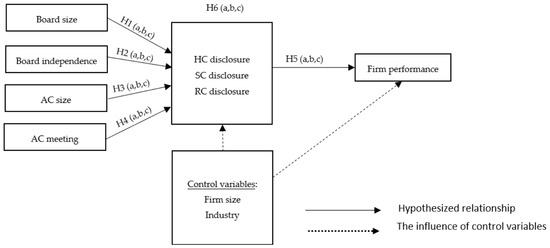
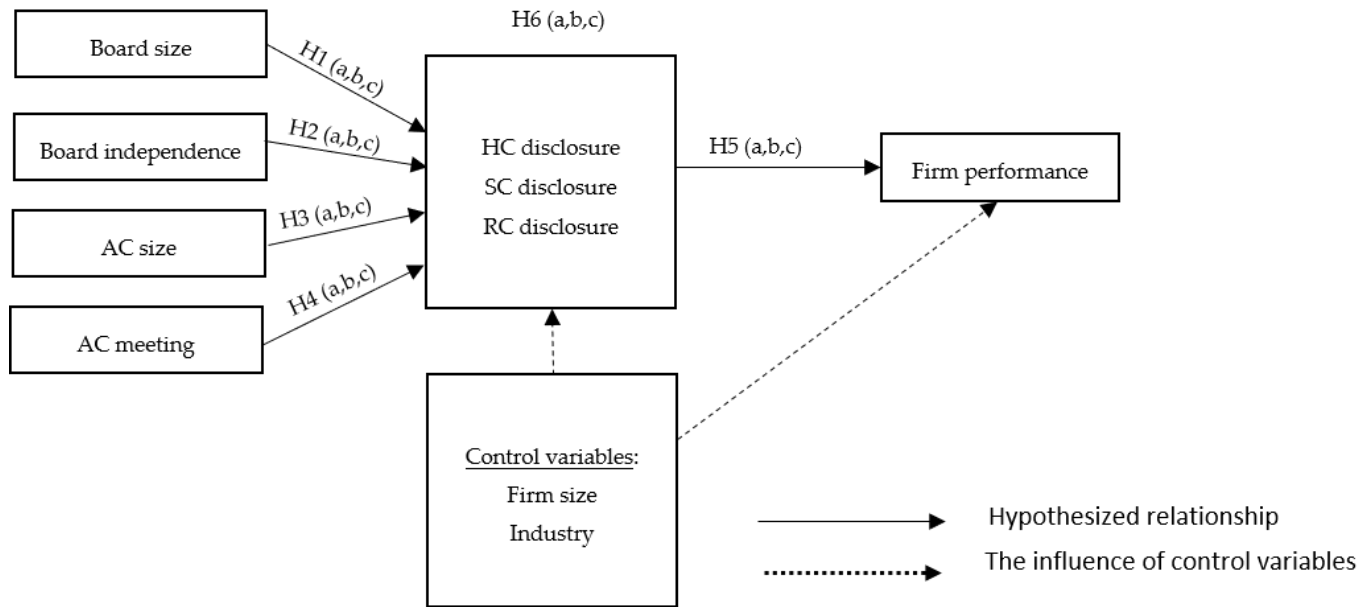

Disclaimer/Publisher’s Note: The statements, opinions and data contained in all publications are solely those of the individual author(s) and contributor(s) and not of MDPI and/or the editor(s). MDPI and/or the editor(s) disclaim responsibility for any injury to people or property resulting from any ideas, methods, instructions or products referred to in the content. |
© 2026 by the authors. Licensee MDPI, Basel, Switzerland. This article is an open access article distributed under the terms and conditions of the Creative Commons Attribution (CC BY) license.