1. Introduction
Digital transformation is among the most decisive drivers of contemporary business competitiveness, reshaping organizational processes, value chains, and modes of engagement with global markets. Beyond the mere adoption of digital tools, it entails profound strategic and organizational change, fundamentally altering how firms create, communicate, and capture value in increasingly complex international environments (
Vial, 2019;
Warner & Wäger, 2019). In traditional, territorially embedded sectors such as wine, where value is intrinsically linked to origin, craft, and symbolic attributes, digitalization presents a dual challenge: it requires technological modernization while also demanding the careful preservation and digital translation of unique territorial identities (
Azevedo, 2021;
Kavaratzis & Hatch, 2013).
This study examines how digital transformation may shape wine internationalization through a focal empirical study of Sogrape, Portugal’s leading wine company, situated within the Vinho Verde wine sector. Sogrape’s strong international footprint, diversified brand portfolio, and commitment to innovation provide a salient context for exploring how digital technologies may support international expansion while preserving territorial identity and long-term value creation. The inclusion of independent producers from the Vinho Verde wine sector provides complementary contextual perspectives, particularly regarding resource constraints, firm heterogeneity, and alternative digital adoption patterns. The core objective is therefore not to provide representative evidence of the Vinho Verde wine sector as a whole, but to develop a focal-case-based understanding of how digital marketing, data analytics, e-commerce, and digital storytelling may contribute to international positioning and sustainability-oriented competitiveness in a territorially embedded wine sector.
Recent scholarship acknowledges the role of digital tools in lowering market-entry barriers and enhancing cross-border coordination (
Cavusgil et al., 2022;
Jean & Kim, 2020). However, significant gaps persist in applied research, particularly within traditional industries characterized by strong place-based identities and a predominance of small- and medium-sized enterprises (SMEs). Existing studies offer limited empirical insight into how territorial identity can be strategically integrated with digital practices, or into how digital transformation models can be adapted to regional ecosystems where resources are often constrained and traditions remain deeply embedded (
García-Murillo & Annabi, 2002;
Bargoni et al., 2024;
Costa et al., 2023;
R. Santos & Amaral, 2023). More critically, there is a lack of theoretical frameworks that explicitly connect digitalization to sustainable international growth, a process that must balance global reach with local embeddedness and resilience.
To address these gaps, this study is guided by the following research question: How does digital transformation, conceptualized as a smart innovation process, shape the internationalization of a leading wine firm embedded in the Vinho Verde wine sector, and how are these dynamics qualified by complementary perspectives from independent regional producers?
To answer this question, the research adopts an exploratory qualitative approach, combining a two-round Delphi technique with thematic analysis of insights from industry experts and managers. This design enables a contextualized and in-depth understanding of the dynamics, barriers, and opportunities associated with digital transformation in the wine sector, while remaining sensitive to the organizational, cultural, and territorial factors that mediate its impact.
The study culminates in the development of the Sogrape Intelligent Platform for Internationalization (SIPI), conceptualized as a focal-case-derived strategic architecture. SIPI comprises three interrelated components: a Data & Insights Hub, a Digital Engagement Engine, and a Wine Internationalization Canvas (WIC). Rather than being presented as a tested, predictive, or universally applicable framework, SIPI is proposed as an analytical and exploratory structure that organizes the mechanisms identified in the empirical study. While developed from the Sogrape context, its modular logic may inform future comparative research on digital transformation and internationalization in territorially embedded agri-food industries.
In doing so, this study makes three core contributions to the literature, directly addressing the gaps outlined above. First, it advances an integrative conceptual framework that positions digital transformation as a smart innovation process, mediated by dynamic capabilities and organizational readiness. Second, it provides focal-case-based empirical insight into how a leading wine firm structures digital transformation in support of internationalization, while also identifying boundary conditions emerging from the perspectives of independent regional producers. Third, it highlights how digital storytelling and place branding may function as mechanisms for translating territorial identity into international value propositions. These contributions are analytical and theory-building in nature and should be interpreted as a basis for future comparative and quantitative validation rather than as evidence of region-wide patterns.
2. Literature Review
This study is situated at the intersection of digital transformation, internationalization, and sustainable competitiveness in territorially embedded industries. To examine the complex interplay between these phenomena, an integrative theoretical lens is required, one that moves beyond isolated technological adoption to consider the strategic, organizational, and value-based dimensions of change. This section synthesizes three complementary theoretical streams: smart innovation and digital affordances, dynamic capabilities and organizational resilience, and sustainable business model innovation, and integrates them with sector-specific insights from the wine industry and international business literature. The resulting framework provides a foundation for analyzing how digital transformation, mediated by organizational capabilities, may shape internationalization processes while reinforcing territorial identity and long-term sustainability.
2.1. Digital Transformation as a Strategic Driver: From Tools to Smart Innovation
Digital transformation represents a paradigmatic shift in how firms create, deliver, and capture value. It transcends the mere adoption of digital tools, constituting instead a broader strategic and organizational process that reconfigures business models, operational processes, and market engagements (
Kotler & Keller, 2021;
Chaffey, 2023;
Vial, 2019). At its core lies a new logic of digital innovation, characterized by the modularity, re-programmability, and generative recombination of digital and physical resources (
Yoo et al., 2010;
Nambisan et al., 2017;
Kotler et al., 2023). This logic enables what is increasingly termed smart innovation: the intelligent alignment of digital technologies, data analytics, and organizational capabilities to generate adaptive and potentially sustainable forms of value creation (
Cardoso et al., 2024).
A key mechanism through which smart innovation operates is the creation of digital and spatial affordances (
Autio et al., 2018). Digital affordances refer to the possibilities for action enabled by digital platforms and tools, such as reaching global audiences via social media or automating customer service through AI. Spatial affordances refer to the reduced significance of geographical distance, allowing firms to manage international operations and engage with foreign customers with greater ease. Together, these affordances may lower traditional barriers to internationalization, particularly for small- and medium-sized enterprises (SMEs) and firms in peripheral regions (
Jean & Kim, 2020). This conceptualization shifts the discussion from specific technologies (e.g., e-commerce, IoT) to the broader innovation logic that such technologies may enable.
Rather than assuming deterministic effects, this perspective suggests that digital transformation should be understood as a process whose outcomes depend on how digital affordances are interpreted, integrated, and strategically mobilized within firms. In this sense, smart innovation is not reducible to technological sophistication alone, but refers to a context-sensitive process through which firms align digital capabilities, organizational processes, and strategic objectives in ways that may support internationalization and longer-term competitiveness.
2.2. Sectoral Context: Digitalization in the Wine Industry
The application of digital innovation logic is inherently context-dependent. The wine industry represents a paradigmatic case of a traditional, territorially embedded sector undergoing digital transition, where value creation is intrinsically linked to terroir, heritage, and artisanal reputation, attributes that are not easily digitized (
Azevedo, 2021). As such, digital transformation in this sector entails not only technological upgrading but also the careful translation of territorial identity into digital formats that may support international differentiation.
Digitalization is reshaping the wine sector across the entire value chain (
Mendes et al., 2026), from precision viticulture and production optimization through the use of IoT and big data analytics (
Dressler & Paunovic, 2021) to significant changes in marketing, distribution, and consumer engagement. Digital tools such as e-commerce platforms, social media marketing, and data analytics have become increasingly relevant for international market reach and brand building (
Finotto & Mauracher, 2020;
Bresciani et al., 2016;
Cavusgil et al., 2022;
Jean & Kim, 2020). However, the impact of these technologies is uneven. A persistent digital maturity gap characterizes the sector, with larger firms typically leading in the implementation of integrated digital strategies, while many SMEs face structural constraints related to limited resources, skills shortages, and strategic myopia (
Mendes et al., 2026;
Costa et al., 2023;
Gerrit et al., 2017;
Gao et al., 2026). This asymmetry is particularly evident in regions such as Vinho Verde, where a small number of large exporters coexist with a wide base of small producers (
R. Santos & Amaral, 2023).
Beyond production and distribution, digital transformation increasingly reshapes the experiential and territorial dimensions of the wine industry, particularly through wine tourism and digitally mediated wine experiences. The Vinho Verde region is currently at a turning point where traditional viticultural practices coexist with digital tools, evolving consumer expectations, and growing demands for environmental and social sustainability. In the context of wine tourism, evidence from Italy suggests that more digitally advanced wineries also tend to exhibit stronger sustainability practices and superior market performance, indicating a reinforcing relationship between digitalization, sustainability, and performance (
Festa et al., 2023). Similar patterns are observed in other wine-producing contexts, where digital transformation is associated with gains in efficiency, traceability, and organizational resilience, while simultaneously supporting economic, environmental, and social objectives (
Dressler & Paunovic, 2020;
Finotto & Mauracher, 2020;
Richter & Hanf, 2021;
Stojanova et al., 2022;
Piras, 2024).
Digitalization thus extends beyond operational processes to encompass the tourism experience and the construction of a digital winescape, including websites, social media, and online storytelling. Comparative studies in Greece demonstrate that the way wineries design and manage their digital presence significantly influences both competitiveness and the sustainability of the wine value chain (
Alebaki et al., 2022). In contexts of so-called heroic viticulture, social media management emerges as a central instrument for promoting rural territories and wine tourism sustainably, effectively articulating landscape, tradition, and gastronomy into a coherent territorial narrative (
Cruz-Ruiz et al., 2023).
At the same time, sustainability in wine tourism is increasingly conceptualized from a systemic perspective that links innovation, circular economy practices, and rural development. Recent research highlights that sustainable practices combined with immersive tourism experiences may enhance winery revenues, support population retention, and strengthen territorial cohesion (
Alonso et al., 2020;
Dinya, 2023;
del Campo-Villares & Fuentes-Fernández, 2025). In this sense, the sustainable internationalization of wine regions such as Vinho Verde depends on their capacity to integrate digital transformation with sustainability-oriented practices and long-term territorial value creation.
Finally, digitalization plays a critical role in territorial branding and storytelling. Digital platforms provide powerful channels to communicate authentic narratives of origin, tradition, and sustainability that underpin wine quality and differentiation (
Hanna et al., 2021;
Kavaratzis & Hatch, 2013). When effectively managed, digital storytelling may strengthen place brand equity and foster emotional connections with global consumers (
Ferreira, 2022). However, its effectiveness depends on coherence and credibility, as digital narratives must align with the actual product experience and territorial reality to avoid perceptions of inauthenticity (
Gupta, 2025).
2.3. Digital Transformation as a Multidimensional Driver: Mechanisms, Contingencies, and Ecosystem Effects
Contemporary research indicates that digital transformation may operate as a multidimensional driver of internationalization and sustainable competitiveness through three interrelated mechanisms. First, market virtualization may reduce traditional spatial and transactional barriers, lowering market-entry costs and facilitating access to international customers (
Bargoni et al., 2024;
Azman et al., 2025). Second, enhanced information-processing capabilities may enable firms to sense, acquire, and exploit knowledge about foreign markets with greater speed and precision, potentially improving strategic decision-making under conditions of uncertainty (
Cassetta et al., 2020). Third, digitalization may foster operational and strategic flexibility, allowing firms to adapt products, services, and business models to heterogeneous and volatile international market dynamics (
Kolagar et al., 2022;
Azman et al., 2025).
Crucially, the relationship between digital transformation and internationalization is not technologically deterministic, but strongly contingent on organizational and contextual conditions. Digital technologies tend to generate competitive advantages primarily when embedded within complementary process and organizational innovations and supported by strategic investments in digital skills and absorptive capacity (
Cassetta et al., 2020). Empirical evidence further suggests that the effects of digitalization vary systematically across firm types and sectors. Medium-to-large firms and high-tech industries often benefit more from advanced, capital-intensive technologies such as IoT, big data analytics, and robotics, which may support the optimization and coordination of global value chains (
Neirotti et al., 2024). In contrast, small- and medium-sized enterprises (SMEs) more frequently leverage platform-based digital tools, such as e-commerce and social media marketing, which require lower upfront investment and provide more immediate channels for international reach (
Azman et al., 2025;
Bargoni et al., 2024).
These differentiated patterns are clearly observable in the wine industry. Larger wineries and internationally oriented producers tend to invest in integrated CRM systems, IoT-enabled precision viticulture, and blockchain-based traceability solutions (
Malisic et al., 2023;
Bresciani et al., 2016). Smaller producers, by contrast, often rely on cost-effective digital tools such as direct-to-consumer e-commerce platforms, social media storytelling, and regional tourism applications to access niche international markets (
V. Santos et al., 2019;
Costa et al., 2023). This uneven adoption may contribute to a persistent digital maturity gap within wine regions, shaping both firm-level and collective international competitiveness (
Mendes et al., 2026).
Beyond firm-level characteristics, internationalization outcomes may also be influenced by territorial and ecosystem-level effects. Territorially embedded firms may benefit from cluster-based access to complementary competencies, shared international networks, and collective learning processes, which can facilitate digitally enabled internationalization (
Osarenkhoe & Fjellström, 2019). In this context, the strategic interplay between territorial brand associations, such as terroir, heritage, and origin, and digital channels becomes particularly salient. Prior research suggests that digital platforms may enable the articulation of authentic narratives that enhance differentiation and legitimacy in global markets (
Matarazzo et al., 2021;
V. Santos et al., 2019).
Digitalization may also facilitate the communication of sustainability credentials, production practices, and circular economy initiatives, aligning territorial narratives with evolving international consumer values and supporting sustainable business model innovation (
Annunziata et al., 2018). These effects are further conditioned by the broader national and regional digital ecosystem, including infrastructure, regulatory frameworks, and institutional support mechanisms, which may enable or constrain the digital internationalization capacity of SMEs (
Deđanski et al., 2024).
From a dynamic perspective, digital internationalization can be understood as an evolutionary process rather than a discrete transition. Firms may progress through stages of digital maturity, from initial awareness and adoption to more advanced forms of digital service innovation and mass customization, with each stage enabling increasingly sophisticated internationalization strategies (
Kolagar et al., 2022). While digitally enabled competitive advantages may become more resilient over time, significant barriers persist, including high investment costs, regulatory fragmentation across markets, and digital skills shortages, which disproportionately affect smaller firms (
Bargoni et al., 2024;
Azman et al., 2025).
Overall, this literature suggests that digital transformation acts as a multidimensional and contingent driver of internationalization. Its effects depend not only on the type of digital technologies adopted, but also on firm characteristics, territorial embeddedness, and ecosystem conditions. Crucially, a firm’s ability to capitalize on these ecosystem affordances and mitigate associated constraints is not automatic; rather, it is fundamentally shaped by its internal organizational capacities. This observation motivates the examination of dynamic capabilities as key mediating mechanisms in the following section.
2.4. The Critical Mediator: Dynamic Capabilities, Organizational Resilience, and Readiness
The contingent and ecosystem-dependent nature of digital transformation outlined above suggests that the mere availability of digital affordances is insufficient to generate sustained internationalization outcomes. To explain how firms navigate and leverage these contextual conditions to translate digital potential into realized outcomes, the theory of dynamic capabilities provides a robust analytical framework. Within this perspective, dynamic capabilities, organizational resilience, and organizational readiness are increasingly understood as critical mediating mechanisms.
The literature consistently indicates that the adoption of digital technologies does not automatically translate into successful internationalization or sustainable competitive advantage. To address this gap between digital potential and realized outcomes, dynamic capabilities are defined as a firm’s ability to integrate, build, and reconfigure internal and external competencies in response to rapidly changing environments (
Teece, 2018). These capabilities are commonly conceptualized through three interrelated micro-foundations: sensing opportunities and threats through scanning, learning, and analytical activities; seizing opportunities through strategic decision-making and investment; and reconfiguring organizational assets and processes to sustain competitiveness over time.
Digital transformation may act both as a trigger for and an enabler of these capabilities. Digital tools may enhance sensing by providing real-time access to market intelligence, performance data, and customer insights, potentially improving firms’ ability to identify international opportunities and emerging risks. Seizing capabilities may be supported through digitally enabled business model experimentation, e-commerce platforms, and new forms of international customer engagement that reduce entry costs and uncertainty. Reconfiguring capabilities may be facilitated by cloud-based infrastructures, agile work practices, and cross-functional digital platforms that enable the continuous reallocation of resources and adaptation of organizational processes (
Warner & Wäger, 2019).
Recent research increasingly links digitally enabled dynamic capabilities to organizational resilience, understood as the capacity to anticipate, absorb, and adapt to external shocks while maintaining strategic direction and long-term performance. Empirical evidence suggests that firms characterized by strong digital capabilities, learning-oriented cultures, and strategic commitment may be better positioned to transform disruption into opportunity, particularly in volatile international contexts (
Cardoso et al., 2024;
Cardoso et al., 2025). In this sense, digital transformation may contribute not only to operational efficiency or short-term performance gains, but also to the development of adaptive capacity and strategic renewal.
However, the effectiveness of this process is strongly contingent on organizational readiness. Organizational readiness encompasses leadership commitment, digital skills, governance structures, and an innovation-oriented culture that supports experimentation and learning (
Vial, 2019). In the absence of these enabling conditions, digital initiatives may remain fragmented, underutilized, or misaligned with strategic objectives. Prior studies consistently identify skills shortages, resistance to change, and siloed organizational structures as critical barriers that constrain the development of dynamic capabilities, particularly in traditional and resource-constrained industries (
Westerman et al., 2021;
Gao et al., 2026).
Importantly, these organizational barriers do not merely delay digital transformation; they shape its outcomes. When digital investments are not accompanied by corresponding changes in culture, incentives, and coordination mechanisms, their potential contribution to internationalization and sustainable competitiveness may be limited. This reinforces the view that digital transformation is fundamentally a socio-organizational process, in which technologies act as enablers rather than determinants of strategic outcomes.
This body of literature suggests that the relationship between digital transformation and internationalization is indirect and mediated. Digital technologies create affordances, but it is the firm’s dynamic capabilities, organizational resilience, and readiness that shape how these affordances are translated into internationalization processes and potential competitiveness outcomes.
2.5. Sustainability-Oriented Competitiveness and Territorial Value Creation
In territorially embedded industries such as wine, internationalization is not only associated with export growth or market expansion. It is also connected to the preservation and renewal of territorial value, organizational adaptability, and long-term economic resilience. For this reason, sustainability is treated in this study as a conceptual orientation rather than as a directly measured outcome.
This perspective is aligned with the literature on sustainable business model innovation (SBMI), which emphasizes that long-term competitiveness increasingly depends on the capacity of firms to create value across economic, environmental, and social dimensions (
Bocken et al., 2014;
Nosratabadi et al., 2019;
Elkington, 2018). Recent bibliometric evidence also confirms the consolidation of sustainable business model innovation as a growing research field connecting sustainability, innovation, and the reconfiguration of value-creation mechanisms (
Pan et al., 2023). Subsequent work on sustainable business model archetypes and implementation practices further highlights that sustainability-oriented innovation requires the integration of strategic intent, organizational capabilities, and value-creation mechanisms (
Geissdoerfer et al., 2018). In the wine sector, these dimensions are particularly relevant because product differentiation is closely linked to origin, heritage, production practices, landscape, and authenticity.
Digital transformation may support sustainability-oriented competitiveness in several ways. At the operational level, technologies such as data analytics, traceability systems, and blockchain may improve transparency, coordination, and resource efficiency, thereby supporting more credible ethical and environmental claims (
Conceição et al., 2026;
Malisic et al., 2023). At the strategic level, digital platforms may support more informed international decision-making, improve responsiveness to market changes, and facilitate the communication of sustainability-related practices. Such digitally supported strategic renewal may contribute to organizational resilience and adaptive capacity in international markets, particularly when digital tools are embedded in learning-oriented cultures and strategic decision-making processes (
Cardoso et al., 2025).
Evidence from the adjacent hospitality sector similarly suggests that analytics, automation, and digital platforms may reinforce sustainability-oriented competitiveness through greater operational efficiency, customer engagement, and organizational resilience, provided that these technologies are supported by appropriate governance, human capital, and dynamic capabilities (
Pastor, 2025).
At the territorial level, digital platforms provide channels through which firms may communicate narratives of origin, tradition, and sustainability that underpin product differentiation (
Hanna et al., 2021;
Kavaratzis & Hatch, 2013). When these narratives are credible and coherent, digital storytelling and place branding may contribute to the development of place brand equity and to the international recognition of territorial value (
Zenker & Braun, 2017). In territorially embedded industries, sustainability is therefore closely linked to the preservation and enhancement of territorial capital. Digital storytelling may help translate origin, heritage, local grape varieties, and production traditions into differentiated value propositions in international markets.
However, these relationships should not be understood as automatic. International expansion does not necessarily generate territorial value, and digitalization does not necessarily produce sustainability outcomes. The contribution of digital transformation depends on the alignment between digital narratives, organizational practices, product characteristics, and the underlying territorial reality. When this alignment is weak, digital communication may become merely promotional and may fail to reinforce authenticity, trust, or long-term value.
Within the scope of this study, sustainability-oriented competitiveness is therefore understood as a conceptual pathway rather than as an empirically measured construct. It refers to the potential contribution of digital transformation to four dimensions: economic resilience, through market diversification and international revenue stability; organizational adaptability, through capability development, learning, and strategic renewal; operational transparency, through efficiency, traceability, and credible sustainability communication; and territorial value preservation, through the credible communication of origin, heritage, authenticity, and place-based differentiation. These dimensions provide a basis for interpreting the expert evidence and for guiding future empirical operationalization, but they are not directly measured in the present study.
2.6. Integrative Framework and Analytical Propositions
Synthesizing the preceding discussion, this study proposes an integrative framework that articulates the relationships between digital transformation, organizational capabilities, territorial identity, and wine internationalization.
The framework posits that:
- (i)
Digital transformation provides technological and communicational affordances associated with smart innovation, including data analytics, digital marketing, e-commerce, traceability, and digital storytelling;
- (ii)
Its influence on internationalization processes such as market visibility, market entry, expansion, branding, and customer engagement is mediated by dynamic capabilities, organizational readiness, and strategic integration;
- (iii)
The development and effectiveness of these capabilities are conditioned by firm-level characteristics, including size, resources, digital maturity, leadership commitment, skills, culture, and strategic coherence;
- (iv)
When aligned with credible territorial narratives and organizational capabilities, digital transformation may support sustainability-oriented pathways, including economic resilience, organizational adaptability, operational transparency, and territorial value preservation.
Importantly, this framework does not assume deterministic, universally applicable or directly measurable relationships. Rather, it provides a mechanism-based and context-sensitive analytical structure, aimed at identifying plausible relationships grounded in theory and informed by expert interpretation. The sustainability-oriented dimensions included in the framework are conceptual implications to be explored and operationalized in future research, not outcomes measured in the present study.
To guide the empirical investigation of this framework in the context of the Vinho Verde wine sector, the study advances five analytical propositions (P1–P5). These are not formulated as testable hypotheses, but as theory-informed analytical lenses (
Creswell & Poth, 2018) designed to structure the exploration of relationships within the framework:
P1 (Digital Visibility & Reach): The adoption of digital marketing and communication tools may support international visibility and facilitate market reach by leveraging digital affordances that reduce spatial and informational barriers.
P2 (Operational Efficiency & Transparency): The implementation of emerging digital technologies (e.g., AI, IoT, blockchain) may contribute to improvements in operational efficiency, supply chain transparency, and traceability, supporting more coordinated international value chains.
P3 (Territorial Identity & Storytelling): The strategic use of digital storytelling and place branding may strengthen the perceived relevance of territorial identity in international markets, supporting differentiation and potentially contributing to territorial value creation.
P4 (Integrated Presence & Strategic Expansion): A coherent and integrated digital presence across platforms and channels may support market diversification and international expansion by enabling coordination, experimentation, and resource alignment.
P5 (Organizational Mediation & Barriers): The effects of digital transformation on internationalization processes are mediated by organizational capabilities and resilience, and are conditioned by barriers related to skills, culture, resources, and strategic coherence.
To further clarify the theoretical grounding of these propositions,
Table 1 summarizes their conceptual focus, underlying theoretical foundations, and supporting literature.
These propositions provide a structured analytical basis for examining how digital transformation may influence internationalization processes through mediated and context-dependent mechanisms. Rather than assuming direct causal relationships, the framework emphasizes the importance of organizational capabilities, territorial conditions, and strategic alignment in shaping outcomes.
This study adopts an abductive and theory-building logic. The analytical propositions (P1–P5) are not intended as statistically testable hypotheses, but as conceptual devices for identifying and interpreting patterns emerging from qualitative data. The objective is therefore mechanism clarification and conceptual integration, rather than causal verification or predictive modeling.
3. Methodology
This study adopts an exploratory qualitative research design based on a modified Delphi-based expert elicitation approach embedded within a focal-case research strategy. This design is appropriate for examining complex, context-dependent, and emergent phenomena such as the relationship between digital transformation, smart innovation, and wine internationalization in territorially embedded industries. Qualitative inquiry is particularly suitable for exploring processes, meanings, and contextual mechanisms that are not readily captured through quantitative approaches, especially where theoretical consolidation remains ongoing (
Creswell & Poth, 2018;
Stake, 2020).
Rather than seeking statistically representative evidence of the Vinho Verde wine sector as a whole, the study focuses on Sogrape as the primary empirical case. Sogrape was selected because of its strong international presence, organizational complexity, and strategic engagement with innovation and digital transformation. Following a case-oriented logic (
Yin, 2018), this focal-case orientation enables an in-depth examination of the organizational mechanisms through which digital technologies may support internationalization, while remaining attentive to the territorial and sectoral context in which the firm operates.
The study is grounded in an interpretivist epistemological perspective and follows an abductive research logic. This approach is consistent with research that conceptualizes digitalization as a strategic, organizational, and capability-based process rather than as a purely technological phenomenon (
Yoo et al., 2010;
Nambisan et al., 2017). It is also appropriate for addressing the “how” and “why” questions central to this investigation.
The five analytical propositions developed in
Section 2.6 are used as theory-informed sensitizing devices rather than as testable hypotheses. Their purpose is to guide data collection and interpretation around key mechanisms identified in the literature, including digital affordances, dynamic capabilities, territorial identity, organizational readiness, and barriers to digital transformation. The use of propositions as sensitizing devices is consistent with qualitative research traditions and is particularly appropriate in Delphi-based studies, where expert judgment is mobilized to explore complex phenomena (
Creswell & Poth, 2018;
Okoli & Pawlowski, 2004).
The Delphi component of the study should therefore be understood as a modified expert elicitation process rather than as a classical Delphi aimed at producing statistically measurable consensus across a heterogeneous regional panel. Expert convergence is interpreted as thematic stability within a focal organizational and sectoral context, not as evidence of region-wide consensus. The inclusion of independent producers from the Vinho Verde wine sector provides complementary contextual perspectives, particularly regarding firm heterogeneity, resource constraints, and alternative digital adoption patterns. A two-round modified Delphi structure was adopted because it allows the systematic elicitation, refinement, and stabilization of expert perspectives in contexts characterized by uncertainty and complexity (
Okoli & Pawlowski, 2004;
Hsu & Sandford, 2007).
3.1. Delphi Panel Composition
The Delphi panel comprised 12 experts: eight senior managers or specialists from Sogrape and four independent producers or regional actors from the Vinho Verde wine sector.
This composition reflects the focal-case orientation of the study. The Sogrape participants were selected because of their direct involvement in internationalization, marketing, sales, innovation, digital strategy, and data-driven decision-making. Their perspectives provide detailed insight into how a large internationally active wine firm interprets and organizes digital transformation in support of internationalization.
The four external participants were included to provide complementary perspectives from smaller territorially embedded producers. Their role was not to make the panel statistically representative of the Vinho Verde region, but to contextualize and qualify the focal-firm findings by identifying alternative digital adoption patterns, resource constraints, and SME-specific challenges.
This panel composition introduces a potential limitation, as the predominance of Sogrape-affiliated experts may reflect shared organizational culture, strategic assumptions, and managerial priorities. This risk was addressed in three ways. First, all interviews were conducted individually, avoiding direct interaction among participants and reducing the possibility of group dominance. Second, the synthesis shared between Delphi rounds was anonymized, preventing participants from attributing specific views to identifiable colleagues or hierarchical roles. Third, the external participants were used analytically to identify divergences and boundary conditions rather than merely to reinforce focal-firm convergence.
Accordingly, the findings should be interpreted as analytically grounded in a focal-firm case, complemented by regional perspectives, rather than as representative evidence of the full Vinho Verde ecosystem.
Table 2 presents a detailed profile of the Delphi panel participants, including their organizational affiliation, professional roles, functional areas, years of experience, and key responsibilities, thereby enhancing transparency and supporting the credibility of the expert-based analysis.
Panel members were selected through purposeful sampling, based on four criteria: (i) direct involvement in internationalization, digital transformation, innovation, marketing, sales, or wine business management; (ii) professional experience in the wine or agri-food sector; (iii) knowledge of international market dynamics and/or territorial positioning; and (iv) availability to participate in both Delphi rounds. For Sogrape participants, selection also considered their involvement in strategic functions directly related to the study’s focus. For external participants, selection prioritized independent producers with direct responsibility for business development, market access, and brand communication.
3.2. Data Collection and Delphi Process
Data were collected through individual semi-structured interviews, conducted online between April and June 2024. Each interview lasted approximately 60 min and followed an interview protocol developed from the literature review and the integrative theoretical framework. The protocol was organized around the five analytical propositions (P1–P5), while allowing flexibility for emergent themes and follow-up questions.
Round 1 consisted of individual interviews exploring participants’ views on the role of digital tools in internationalization, the perceived opportunities and barriers associated with digital transformation, the relevance of territorial identity and storytelling, and the organizational capabilities required to transform digital initiatives into international outcomes. All interviews were audio-recorded, transcribed, and reviewed for accuracy.
After Round 1, each participant received a transcript or transcript summary for validation. Participants were invited to correct factual inaccuracies, clarify meanings, or add contextual information. These corrections did not substantially alter the thematic structure of the data, but they improved accuracy and interpretive clarity.
A synthesis report was then prepared for Round 2. This report summarized the main themes emerging from Round 1, highlighted areas of convergence and divergence, and included anonymized illustrative statements. The report did not identify individual participants or organizational roles, thereby reducing the risk of hierarchical influence or intra-firm conformity.
Round 2 was conducted through follow-up interviews or structured written feedback. Participants were asked to comment on the preliminary thematic synthesis, indicate whether they agreed with the interpretation of the main themes, clarify ambiguous points, and identify any missing or overstated issues. Round 2 did not aim to force consensus. Instead, it was designed to assess thematic stability, refine interpretations, and identify boundary conditions, particularly differences between Sogrape-affiliated experts and independent producers.
The second round resulted primarily in clarification and refinement rather than in the emergence of substantially new themes. Some participants nuanced their initial positions, especially regarding the distinction between digital visibility and actual international market conversion, and the difference between large-firm integration challenges and SME resource constraints. These refinements were incorporated into the final thematic analysis.
Two examples illustrate how participant feedback refined the interpretation. First, Round 2 feedback led the analysis to distinguish digital visibility from actual international market conversion, making explicit that visibility alone does not generate international sales without logistics, distribution, and commercial follow-up. Second, the independent-producer perspective led digital integration to be differentiated by firm size: enterprise-wide data and functional integration in the focal firm versus the pragmatic coordination of websites, social media, e-commerce, and importer relationships in resource-constrained SMEs. These clarifications were incorporated into the final thematic interpretation and the boundary conditions summarized in
Table 2.
3.3. Data Analysis
Data analysis followed a rigorous qualitative approach combining the Delphi technique with thematic analysis. All interviews and written contributions from the two Delphi rounds were fully transcribed and systematically analyzed using the six-phase thematic analysis framework proposed by
Braun and Clarke (
2021): (1) familiarization with the data; (2) generation of initial codes; (3) searching for themes; (4) reviewing themes; (5) defining and naming themes; and (6) producing the analytical narrative.
Code development followed an iterative process beginning with theoretically informed deductive codes derived from P1–P5, followed by inductive refinement through constant comparison. Themes were mapped to relational patterns to ensure coherence between empirical evidence and the integrative framework.
The analysis adopted a hybrid deductive–inductive logic. The five analytical propositions (P1–P5), derived from the integrative theoretical framework, informed the initial coding structure and served as analytical lenses to guide interpretation. At the same time, openness to emergent patterns was maintained, allowing themes and sub-themes to evolve iteratively from the data. This approach ensured sensitivity to context while preserving theoretical coherence. Coding and theme refinement were conducted through constant comparison across participants and between Delphi rounds, enabling the identification of convergent patterns and points of emphasis.
The two-round Delphi design played a critical role in strengthening analytical robustness. Insights generated in the first round were synthesized and fed back to participants in the second round, allowing for reflection, clarification, and refinement of perspectives. Round 2 indicated thematic stability rather than statistical consensus. The second round primarily enabled clarification, refinement, and validation of the preliminary thematic interpretation, while also helping to identify divergences and boundary conditions between Sogrape-affiliated experts and independent producers (
Okoli & Pawlowski, 2004;
Hsu & Sandford, 2007).
To enhance the trustworthiness of the study, established qualitative research criteria were systematically applied throughout the research process. These included transparency in data collection and analytical procedures, triangulation of perspectives across different types of experts (internal and external to Sogrape), and participant validation of interview transcripts and preliminary thematic interpretations (
Creswell & Poth, 2018;
Miles et al., 2020). The iterative and reflexive nature of the thematic analysis further contributed to analytical rigor by enabling continuous reassessment of codes and themes in light of emerging evidence.
To further clarify the methodological rationale, the selected Delphi design parameters follow established qualitative research standards rather than arbitrary choices. A two-round modified Delphi structure is widely recognized as sufficient in exploratory research when the objective is convergence and refinement of expert judgment rather than statistical consensus (
Okoli & Pawlowski, 2004;
Hsu & Sandford, 2007). The panel size (
n = 12) falls within the recommended range for homogeneous expert panels, balancing diversity of perspectives with depth of insight. Convergence was assessed through thematic stability between rounds, whereby no substantially new themes emerged in Round 2, indicating robustness of expert judgements. The structuring of the interview protocol around the five analytical propositions (P1–P5) served as a theory-informed sensitizing device, ensuring systematic alignment between empirical inquiry and the integrative theoretical framework while maintaining interpretative flexibility.
Ethical standards were strictly observed at all stages of the research. All participants received detailed information about the study’s objectives and procedures, provided informed consent before participation, and were assured anonymity and confidentiality. Data collection, storage, and processing complied fully with the General Data Protection Regulation (GDPR), ensuring responsible handling of sensitive information and protection of participants’ rights.
The final analytical step consisted of synthesizing the validated themes into a coherent interpretative narrative. This synthesis systematically mapped the empirical findings onto the analytical propositions (P1–P5) and the integrative theoretical framework, enabling a structured assessment of how the data illustrated the mechanisms linking digital transformation to internationalization and sustainable competitiveness.
The SIPI framework is therefore treated as a theory-building and focal-case-derived analytical architecture, whose broader applicability requires future comparative and empirical validation.
Given the focal-case composition of the panel, convergence was not assessed as statistical consensus or as evidence of regional representativeness. Instead, convergence was assessed through thematic stability between rounds, recurrence of interpretive patterns across participants, and the absence of substantially new themes in Round 2. Particular attention was paid to divergences between Sogrape-affiliated experts and independent producers, as these differences were treated as analytically relevant boundary conditions rather than as noise in the data.
4. Results
The analysis of the two-round modified Delphi study provides a structured interpretation of how digital transformation may support wine internationalization within a focal-firm context. The empirical findings are organized around the five analytical propositions (P1–P5) derived from the integrative framework. However, the purpose of this section is not merely to confirm these propositions, but to examine how they are supported, qualified, or bounded by the expert evidence.
Data analysis followed the six-phase thematic analysis procedure proposed by
Braun and Clarke (
2021), combining deductive and inductive logics. While the analytical propositions informed the initial coding structure, themes and sub-themes emerged iteratively from the data through systematic comparison across participants and between Delphi rounds. Given the focal-case composition of the panel, convergence is interpreted as thematic stability within the expert group rather than as statistical consensus or evidence of regional representativeness.
Particular attention was given to differences between Sogrape-affiliated experts and independent producers. These differences were treated as analytically meaningful boundary conditions, especially regarding firm size, digital maturity, resource availability, strategic integration, and the distinction between collective regional visibility and firm-level market access.
Table 3 provides an initial mapping of the analytical propositions (P1–P5), linking the identified themes and sub-themes to illustrative empirical evidence and theoretical implications. This table should be read as a first-order synthesis of the thematic structure. A second analytical layer, presented in
Table 4, further assesses the degree of proposition support, divergent evidence, and boundary conditions emerging from the comparison between Sogrape-affiliated experts and independent producers.
Table 4 indicates that the five propositions are not uniformly supported in the same way across all participants. P1, P3, and P5 received strong cross-panel support, although their interpretation differed between Sogrape and independent producers. P2 was more contingent, as the relevance of advanced technologies such as AI, IoT, and blockchain was more evident in the focal-firm context than among smaller producers. P4 was strongly supported in relation to Sogrape’s organizational complexity, but its meaning was more tactical and resource-constrained among independent producers. These findings suggest that digital transformation does not operate as a uniform pathway to internationalization. Rather, its effects depend on firm size, digital maturity, organizational integration, and the capacity to align digital initiatives with territorial identity and commercial processes.
4.1. Digital Visibility and International Reach (P1)
Digital transformation may be understood as a foundational enabler of international visibility and market reach by reducing informational and spatial barriers, thereby supporting the initial stages of internationalization in territorially embedded industries. However, the findings indicate that, in the context of the Vinho Verde wine sector, digital visibility is not solely a firm-level concern but rather a collective, category-level challenge.
This perspective is clearly articulated by the Head of Marketing Studio at Sogrape, who emphasized the need for coordinated, region-wide digital efforts: “It should be about simple awareness. The category is very, very low compared to other regions of the world and other types of products. (…) There is a priority effort here, which has to do with a category movement, not an independent brand movement.”
This insight suggests that digital tools are perceived less as instruments for short-term brand promotion and more as mechanisms for building international awareness of the Vinho Verde category as a whole. In this sense, digital transformation may contribute to expanding the visibility of the region before enabling firm-level differentiation, highlighting the collective dimension of internationalization processes in territorially embedded sectors.
Similar perceptions were expressed by regional producers, who highlighted the role of digital channels in overcoming traditional constraints related to scale, distance, and market access. As the founder of Valados de Melgaço noted: “The technological factors that most influence the internationalization of wine regions are marketplaces, webinars, and importer databases.”
Likewise, the founder of Turíaco emphasized the importance of sustained investment in digital presence and marketing for building international credibility: “Digital transformation is one of the main engines for building awareness and credibility for our products.”
The evidence therefore supports P1, but with an important qualification: digital visibility operates differently for a large internationally structured firm and for smaller independent producers. For Sogrape, visibility is closely connected to category-level positioning and coordinated regional awareness, whereas for smaller producers, it is more directly associated with firm-level recognition, importer access, and commercial credibility.
These findings suggest that digital transformation may enable firms to reconfigure aspects of their market access mechanisms by enhancing visibility and facilitating connections with international stakeholders. However, they also indicate that, in contexts such as the Vinho Verde Region, the effectiveness of digital strategies depends on their alignment with broader category-level dynamics. As such, digital visibility may be interpreted as an important, though not sufficient, condition for internationalization, providing a foundational layer upon which more advanced smart innovation processes may develop (P1).
4.2. Operational Efficiency and Transparency (P2)
Beyond enhancing visibility, digital transformation may also contribute to improvements in operational efficiency, decision-making quality, and transparency across international value chains. However, the findings suggest that these outcomes do not derive from the isolated adoption of digital technologies, but from their effective integration into organizational processes. In this sense, operational efficiency and transparency may be interpreted as outcomes of smart innovation, understood as the alignment between digital capabilities, organizational structures, and strategic objectives.
Respondents identified several enabling technologies, particularly big data analytics, IoT, and blockchain, highlighting their differentiated levels of maturity and impact within the organization. According to Sogrape’s Digital & Data Manager, data-driven tools are already shaping export-related decisions, whereas other technologies remain unevenly deployed: “Big Data is already a lever for better export decisions (…) IoT is a promising operational lever for quality and logistics but not yet scaled consistently in Sogrape; blockchain is currently more of a credibility and traceability play for specific use cases.”
Crucially, participants emphasized that technological adoption alone does not guarantee improvements in performance or international competitiveness. Instead, the effectiveness of digital transformation depends on the extent to which these technologies are embedded within coherent organizational processes and governance structures. As the same informant noted: “The common success factor across the three is not technology; it is integration, governance, and adoption. Without that, we create fragmented initiatives that do not translate into measurable international competitiveness.”
Independent producers framed the practical value of digitalization differently, emphasizing accessible tools and immediate market-facing benefits rather than advanced operational infrastructures. As the founder of Turíaco observed: “Digital transformation is one of the main engines for building awareness and credibility for our products.” This perspective qualifies P2 by showing that, for smaller firms, the most relevant efficiency gains may initially arise from resource-efficient communication and market access rather than from capital-intensive data, IoT, or blockchain systems.
These findings suggest that the benefits of digital transformation are contingent upon the organization’s ability to orchestrate and integrate multiple technological and organizational elements. Rather than acting as standalone drivers of efficiency, digital technologies may contribute to internationalization processes when aligned with internal coordination mechanisms and strategic intent. Accordingly, operational efficiency and transparency may be understood as emergent properties of smart innovation processes, reinforcing the importance of integration and alignment in shaping internationalization outcomes (P2).
These findings provide qualified support for P2. While advanced technologies may contribute to efficiency and transparency, their practical relevance is uneven across firm types. For larger firms, the main challenge lies in integration and governance; for smaller producers, the key limitation concerns access to resources, skills, and affordable digital tools.
4.3. Territorial Identity and Digital Storytelling (P3)
A central theme emerging from the findings concerns the strategic role of territorial identity and digital storytelling in shaping international differentiation. In contrast to the operational and efficiency-oriented dimensions discussed previously, respondents emphasized the symbolic and narrative dimensions of digital transformation, highlighting their importance in translating territorial distinctiveness into competitive positioning in global markets.
Across all participant groups, there was strong agreement that, particularly in the case of prestige and origin-based products, digital narratives must be authentic, credible, and closely aligned with the underlying territorial reality. As noted by a Senior Marketing Advisor at Sogrape: “In prestige brands (…) the role of storytelling is pivotal, a foundational role. (…) The narrative must be well built, credible, authentic, and differentiating.”
From the perspective of smaller regional producers, digital territorial branding was also seen as essential for making the region intelligible and attractive to international audiences. As the founder of Turíaco observed: “Digital territorial branding has a very big importance because it identifies a product, a region, and a country.”
Similarly, the founder of Quinta das Pereirinhas highlighted the role of digital channels in communicating the uniqueness of local grape varieties: “Digital territorial branding is quite important, especially because it presents wines made from grape varieties that are unknown to many international audiences.”
These insights suggest that digital storytelling may operate as a mechanism through which territorial value is constructed and communicated in international markets. Rather than merely supporting promotional activities, storytelling may enable firms to translate local identity, heritage, and authenticity into differentiated value propositions that resonate with global consumers. In this sense, territorial identity does not operate as a static attribute but as a strategically mobilized resource, activated through digital channels to support market positioning.
Accordingly, digital storytelling may be understood as a central component of smart innovation processes, mediating the relationship between territorial resources and international differentiation. By enabling the co-creation of symbolic and economic value, it may play an important role in shaping how territorially embedded firms compete in global markets (P3).
The evidence strongly supports P3, while also indicating different modes of operationalization. In the focal firm, territorial storytelling is embedded in broader brand architecture and international positioning. Among independent producers, it is more closely linked to direct communication, authenticity, founder identity, grape varieties, and proximity to the territory.
4.4. Integrated Digital Presence for Market Expansion (P4)
The findings further suggest that internationalization outcomes are closely associated with the organization’s ability to develop and sustain an integrated digital presence across tools, platforms, and functional areas. Rather than being a purely technical issue, digital integration may be understood as a strategic organizational capability that supports coordinated market expansion.
Respondents consistently identified fragmentation and lack of coordination as key barriers to scaling international digital strategies. This challenge was clearly articulated by Sogrape’s Chief Marketing Officer: “Each tool has its role (…) but the big challenge is the capability of having all the tools interconnected and working together. That is the key differentiating factor.”
This emphasis on integration highlights that the value of digital technologies lies not in their individual functionalities, but in the organization’s capacity to orchestrate them into a coherent and aligned system. From a commercial perspective, the Head of Sales at Sogrape described how this integration is unfolding unevenly across business activities: “At the level of Marketing and Sales, the integration of digital technologies has been carried out on two levels: B2B (…) and B2C, through consumer-oriented marketing tools such as social media and websites.”
From an independent-producer perspective, digital integration was understood more pragmatically as the coordination of a limited set of market-facing channels. As the founder of Quinta das Pereirinhas explained: “Digital territorial branding is quite important, especially because it presents wines made from grape varieties that are unknown to many international audiences.” This illustrates how, for smaller producers, an integrated digital presence may consist of aligning websites, social media, e-commerce, and importer-facing communication around a coherent territorial and product narrative.
These findings suggest that digital transformation requires the development of integrative capabilities that bridge organizational silos and align marketing, sales, and data-driven processes. In this sense, internationalization is not simply enabled by digital presence, but by the organization’s ability to coordinate and synchronize multiple digital and functional elements across different market interfaces.
Accordingly, an integrated digital presence may be understood as an organizational capability that mediates the relationship between digital transformation and internationalization processes. Firms that are able to align digital tools, processes, and strategic objectives may be better positioned to scale their international activities, whereas fragmented approaches appear to limit the translation of digital investments into competitive advantage (P4).
The findings support P4 primarily in the focal-firm context, where internationalization requires coordination across multiple platforms, brands, functions, and markets. For independent producers, digital integration appears less as a complex organizational architecture and more as the pragmatic coordination of a smaller number of channels.
4.5. Organizational and Cultural Barriers (P5)
The fifth theme highlights the organizational, cultural, and resource-related constraints that shape the effectiveness of digital transformation in internationalization processes. Rather than operating as isolated obstacles, these factors may be understood as boundary conditions that influence how, and to what extent, digital initiatives translate into international outcomes.
Across respondents, a recurring concern relates to limited visibility, fragmented organizational structures, and insufficient strategic alignment, all of which constrain the scalability and impact of digital initiatives. This was explicitly acknowledged by Sogrape’s Chief Commercial Officer: “I have no visibility at all (…) there is no tracking, because we still operate very separately and in silos (…) there is no conversion funnel.”
These limitations point to the absence of integrated performance monitoring systems and highlight the persistence of organizational silos, which hinder the effective coordination of digital activities across functions and markets.
More critically, participants emphasized the role of leadership commitment and strategic prioritization in shaping digital transformation trajectories. As noted by the Head of Prestige Sales at Sogrape: “It’s about mindset. (…) The buy-in at the very top level hasn’t happened for a more robust digital strategy. I also feel that this has never really been presented compellingly; clearly, nobody has managed to convince our board that we should take a more ‘muscular’ approach to our digital presence. From there, everything cascades (…) This becomes a self-fulfilling prophecy: when you deliver with scarce resources, it’s not enough to generate results.”
These insights illustrate how organizational inertia, limited strategic commitment, and resource constraints may reinforce a cycle of underinvestment and underperformance, thereby constraining the potential of digital transformation. In this sense, digital transformation may be interpreted not primarily as a technological challenge, but as a socio-organizational process contingent on leadership, culture, and strategic coherence.
The findings suggest that sustainable internationalization pathways appear to depend not only on the adoption of digital technologies or the development of integrative capabilities, but also on the alignment of organizational structures, cultural orientations, and strategic priorities. Accordingly, organizational and cultural factors may be understood as key conditioning elements that shape the effectiveness and scalability of smart innovation processes, reinforcing the need for a context-sensitive approach to digital transformation (P5).
The evidence strongly supports P5, but the nature of the barriers differs across firm types. In Sogrape, the central barriers concern strategic alignment, leadership commitment, internal silos, and performance monitoring. Among smaller producers, the main constraints are more closely related to limited resources, digital skills, time availability, and implementation capacity.
4.6. Synthesis: Convergence, Divergence, and Boundary Conditions
The results reveal both thematic convergence and meaningful divergence across the expert panel. The strongest areas of convergence concern the relevance of digital visibility (P1), territorial storytelling (P3), and organizational mediation (P5). Across both Sogrape-affiliated experts and independent producers, digital channels were perceived as important tools for increasing international awareness, communicating territorial identity, and supporting market access. Similarly, participants consistently emphasized that digital transformation outcomes depend less on technology alone than on organizational readiness, leadership, capabilities, and strategic alignment.
However, the analysis also reveals important divergences between the focal firm and independent producers. Sogrape-affiliated experts tended to interpret digital transformation through the lens of organizational integration, data-driven decision-making, brand architecture, and coordinated international expansion. Their concerns focused on internal silos, governance, strategic prioritization, and the need to connect marketing, sales, data, and distribution systems. By contrast, independent producers framed digital transformation more pragmatically, emphasizing visibility, social media presence, direct communication, importer access, and the resource constraints that limit digital adoption.
These differences are particularly relevant for interpreting P2 and P4. The potential of advanced technologies such as AI, IoT, blockchain, and big data analytics was more salient in the Sogrape context, where organizational scale and international complexity make these tools strategically relevant. Among smaller producers, however, the emphasis was placed on more accessible tools, such as websites, social media, e-commerce platforms, webinars, and importer databases. This suggests that operational efficiency and digital integration are strongly conditioned by firm size, investment capacity, digital maturity, and organizational complexity.
The results therefore support a contingent interpretation of smart innovation. Digital transformation may facilitate internationalization, but its effects are mediated by organizational capabilities and shaped by firm-level conditions. For a large focal firm such as Sogrape, the main challenge is not simply adopting digital tools, but integrating them into a coherent strategic architecture. For smaller territorially embedded producers, the challenge lies in using accessible digital tools to overcome scale limitations, increase visibility, and build credible international relationships.
Overall, the findings indicate that P1–P5 are best understood not as universally applicable propositions, but as analytical lenses whose relevance varies according to organizational context. The study therefore contributes to theory-building by identifying the mechanisms, tensions, and boundary conditions through which digital transformation may support wine internationalization in a territorially embedded sector.
Table 5 presents an interpretive synthesis of the potential sustainability implications associated with the digital transformation outcomes identified in the Delphi analysis. These implications should not be interpreted as measured sustainability outcomes, but as conceptually grounded pathways through which digital transformation may contribute to economic resilience, organizational adaptability, territorial value creation, and operational transparency. The table therefore provides a basis for future empirical operationalization rather than evidence of direct sustainability performance.
The implications summarized in
Table 5 are interpretive rather than confirmatory. They identify potential sustainability-oriented pathways suggested by the expert evidence, but they do not demonstrate that digital transformation has produced measurable sustainability outcomes. Future research should test these relationships using longitudinal, comparative, and quantitative designs.
5. Discussion
This discussion interprets the findings as a focal-case-based contribution to understanding how digital transformation may support wine internationalization in a territorially embedded sector. Rather than treating digital technologies as isolated enablers, the results suggest that their effects depend on organizational capabilities, strategic integration, and the capacity to translate territorial identity into international value propositions.
The revised interpretation is deliberately cautious regarding sustainability. The study does not measure sustainability performance, nor does it demonstrate causal effects between digital transformation and sustainable competitiveness. Instead, sustainability is treated as a conceptual and interpretive dimension associated with long-term economic resilience, organizational adaptability, operational transparency, and territorial value preservation. In this sense, the findings identify plausible sustainability-oriented pathways rather than empirically validated sustainability outcomes.
Building on the empirical findings presented in
Section 4, this discussion focuses on three interrelated contributions. First, it clarifies how digital transformation operates as a smart innovation process mediated by dynamic capabilities and organizational readiness. Second, it identifies boundary conditions that differentiate the focal firm from smaller independent producers. Third, it positions SIPI as a focal-case-derived strategic architecture that may inform future comparative research, rather than as a validated or universally applicable framework.
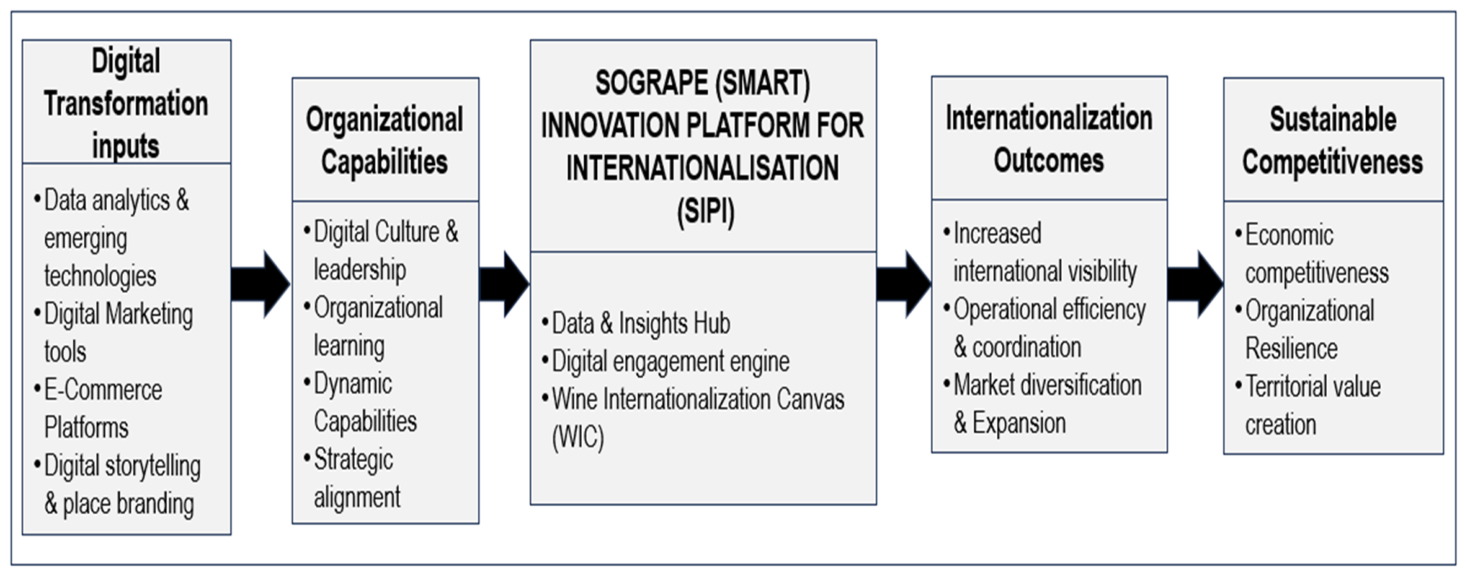
Figure 1 provides a theoretically informed abstraction of the mediating mechanisms identified through the modified Delphi analysis. The model illustrates how digital technologies provide foundational affordances that, when mediated by organizational capabilities and coordinated through a smart innovation logic, may shape internationalization processes such as visibility, operational efficiency, storytelling, and market expansion. The right-hand side of the model should be interpreted as a set of potential sustainability-oriented implications, not as measured outcomes. The model therefore offers a conceptual pathway for future empirical testing rather than a validated explanatory or predictive model.
By explicitly mapping empirically grounded themes onto a structured relational pathway, the model clarifies the conditional mechanisms through which digital transformation interacts with organizational capabilities to support internationalization in territorially embedded industries.
Building on this integrative framework, the study proposes the Sogrape Intelligent Platform for Internationalization (SIPI) as an applied instantiation of the identified mechanisms. Rather than representing a proprietary technological artefact, SIPI operationalizes the smart innovation logic emerging from the data by embedding the micro-foundations of dynamic capabilities (sensing, seizing, and reconfiguring) into a structured managerial tool.
The platform integrates three interrelated components:
- (i)
Data & Insights Hub (Sensing): supports environmental scanning, export intelligence, and performance monitoring;
- (ii)
Digital Engagement Engine (Seizing): enables coordinated digital storytelling, multichannel communication, and market activation;
- (iii)
Wine Internationalization Canvas (Reconfiguring): facilitates strategic alignment, resource orchestration, and adaptive reconfiguration.
By linking SIPI explicitly to the sensing–seizing–reconfiguring triad (
Teece, 2018), the platform should be understood not as a predictive model, but as a capability-enabling framework that translates abstract theoretical mechanisms into an adaptable strategic logic for firms operating in territorially embedded industries.
5.1. SIPI as a Focal-Case-Derived Strategic Architecture
The Sogrape Intelligent Platform for Internationalization (SIPI) should be interpreted as a focal-case-derived strategic architecture rather than as a tested smart innovation framework. Its three components—the Data & Insights Hub, the Digital Engagement Engine, and the Wine Internationalization Canvas—synthesize the main organizational mechanisms identified in the empirical analysis: data-informed decision-making, coordinated digital engagement, and structured international market reflection.
The contribution of SIPI is therefore conceptual and managerial. It does not demonstrate superior performance relative to existing frameworks, nor does it claim universal applicability across the Vinho Verde region or the wine sector more broadly. Instead, SIPI translates the findings of the focal case into an analytical structure that can be used to organize strategic reflection and guide future research. Its broader relevance depends on subsequent comparative validation across firms with different sizes, resource bases, digital maturity levels, and internationalization trajectories.
This repositioning is important because the empirical evidence indicates that digital transformation is shaped by firm-level conditions. In Sogrape, the central challenge concerns integration across functions, markets, data systems, and brand architectures. Among independent producers, the priority is more closely related to accessible digital tools, direct visibility, importer relationships, and resource-efficient market access. SIPI therefore reflects the organizational complexity of the focal firm, while also offering a modular logic that may be adapted, tested, or simplified in other contexts.
For example, a resource-constrained SME could implement a simplified SIPI configuration centered on the Digital Engagement Engine and a reduced Wine Internationalization Canvas, prioritizing a basic website or e-commerce presence, social media storytelling, importer databases, and a small set of market indicators. Its Data & Insights Hub could initially rely on spreadsheets and native platform analytics rather than integrated CRM or business-intelligence infrastructure. By contrast, a larger organization could deploy all three modules more fully through centralized data integration, advanced analytics, cross-brand governance, and coordinated B2B and B2C market orchestration. This modular differentiation illustrates how SIPI may be calibrated to organizational scale, resource availability, and digital maturity.
5.2. Digital Transformation, Visibility, and International Reach
The findings suggest that digital transformation may play a foundational role in enhancing international visibility and market reach, particularly by reducing informational and spatial barriers. This interpretation is consistent with prior research highlighting the role of digital tools in lowering entry costs and facilitating international expansion, especially for firms operating in peripheral or resource-constrained contexts (
Jean & Kim, 2020;
Cavusgil et al., 2022). However, the present study extends this literature by indicating that, in territorially embedded industries such as wine, visibility is not solely a firm-level concern but also a collective, category-level challenge.
While existing studies often emphasize firm-specific digital strategies (
Bresciani et al., 2016), the findings suggest that, in territorially embedded industries, digital visibility operates simultaneously at firm and category levels. This indicates that digital transformation may reinforce cluster-based internationalization dynamics, where collective visibility becomes a precondition for individual brand differentiation (
Osarenkhoe & Fjellström, 2019). In doing so, the study challenges purely firm-centric interpretations of digital internationalization and introduces a meso-level analytical lens that connects digital affordances with territorial ecosystem coordination. This refinement may contribute to the International Business literature by suggesting that, in traditional industries, digital expansion may depend as much on collective strategic alignment as on firm-level technological investment.
This contribution should be interpreted with caution, since digital visibility operated differently across the panel. For the focal firm, visibility was linked to category-level positioning and international brand architecture; for independent producers, it was more directly associated with market access, importer contact, and firm-level credibility.
5.3. Operational Efficiency, Data-Driven Decision-Making, and Transparency
In line with prior research, the findings suggest that digital technologies such as big data analytics, IoT, and blockchain may contribute to operational efficiency, transparency, and improved decision-making in international value chains (
Dressler & Paunovic, 2021;
Conceição et al., 2026). These findings are consistent with studies linking digitalization to enhanced traceability and logistics performance in agri-food sectors (
Toader et al., 2024).
However, the present study adds an important interpretative layer by suggesting that the performance effects of these technologies are highly contingent on organizational integration and governance. This aligns with the dynamic capabilities perspective (
Teece, 2018), which emphasizes that technological resources generate value only when effectively orchestrated. The emphasis placed by Delphi participants on integration and adoption echoes
Warner and Wäger’s (
2019) argument that digital transformation is an ongoing process of strategic renewal rather than a discrete technological upgrade. Thus, the findings reinforce and empirically ground the view that digital transformation outcomes depend less on technology per se and more on the organizational conditions that enable its effective use.
Beyond extending existing evidence, the findings introduce a conditional and mediated interpretation of digital performance effects. Rather than assuming a direct or linear relationship between technological adoption and international competitiveness, the results suggest that digital technologies are more likely to generate value when embedded within coherent governance structures, cross-functional coordination, and organizational learning processes. This perspective challenges deterministic views of digitalization and advances dynamic capabilities theory by indicating that, in traditional industries, orchestration capacity and capability alignment may be more influential than technological sophistication alone in shaping sustainable internationalization pathways.
These insights reinforce the mediated and non-linear nature of digital transformation outcomes in internationalization processes.
The evidence therefore supports the relevance of operational efficiency and transparency, but only under specific conditions. Advanced technologies appear more salient in the focal-firm context, whereas smaller producers prioritize lower-cost and more immediately actionable digital tools.
5.4. Territorial Identity, Digital Storytelling, and Value Co-Creation
A particularly salient contribution of this study concerns the role of digital storytelling and territorial identity in international differentiation. The findings are consistent with existing research highlighting the importance of authenticity and narrative coherence in digital branding (
Hanna et al., 2021;
Gupta, 2025), especially for products whose value is closely tied to origin and heritage. However, the present study advances this literature by framing digital storytelling as a mechanism of territorial value co-creation rather than merely a marketing communication tool.
By positioning digital storytelling as a mechanism of territorial value co-creation, the study extends place branding theory beyond symbolic representation. By empirically grounding digital narratives in internationalization processes, the findings suggest how embedded local identity may be translated into internationally scalable symbolic and economic value (
Kavaratzis & Hatch, 2013), linking digital transformation to place-based resilience and long-term territorial competitiveness.
The findings suggest that territorial storytelling is one of the strongest cross-panel mechanisms, but its form varies across firm types. While Sogrape embeds territorial identity within broader brand and prestige strategies, independent producers mobilize authenticity through personal reputation, local grape varieties, proximity, and direct communication.
5.5. Integration, Strategic Alignment, and Scalable Internationalization
The findings highlight the importance of integrating digital tools, platforms, and organizational functions to support scalable international expansion. This interpretation is consistent with prior studies emphasizing the role of platform-based coordination and omni-channel strategies in internationalization (
Yoo et al., 2010;
Mathews et al., 2021;
Ciasullo et al., 2022). The emphasis placed by participants on fragmentation and silos echoes earlier research identifying organizational misalignment as a key barrier to digital value creation (
Vial, 2019).
Looking forward, expert insights suggest that the value of integration lies not only in operational coordination but also in enabling greater strategic focus, supporting a shift from dispersed efforts towards more concentrated, data-informed market prioritization. As Sogrape’s Innovation Manager articulated, digital tools provide the clarity required for this strategic shift: “Technology will push us to be clearer about where we can win, by market, by category, and by brand role, because digital signals and performance data increasingly make ‘spread thin everywhere’ visibly inefficient.”
This perspective suggests that digital integration may support strategic prioritization and resource concentration in international markets, moving beyond mere operational connectivity.
By situating these findings within the integrative model presented in
Figure 1, the study suggests that integration may operate as a mediating mechanism between digital inputs and internationalization processes. This reinforces the view that digital transformation is inherently systemic, requiring cross-functional coordination and strategic coherence. In doing so, the findings extend the existing internationalization literature by highlighting how integration capabilities may condition the scalability and sustainability of digitally enabled growth.
Importantly, the empirical evidence also suggests a strategic prioritization effect associated with digital integration. As digital signals and performance data become more visible, dispersed international efforts appear increasingly identifiable as inefficient. This indicates that digital transformation may induce a shift from opportunistic market expansion towards more selective, data-informed market concentration. Such a shift refines internationalization theory by suggesting that digitalization not only reduces barriers to entry but may also increase strategic selectivity and focus in global market engagement.
This mechanism is particularly relevant for the focal firm, where international scale creates the need for integration across brands, markets, data systems, and commercial functions. In smaller firms, integration is less an architectural challenge and more a pragmatic issue of coordinating a limited number of digital channels.
5.6. Organizational Capabilities, Barriers, and Resilient Competitive Advantage
The findings suggest that digital transformation may be understood as a socio-organizational process rather than a purely technological transition. While prior research acknowledges organizational readiness as a relevant factor (
Westerman et al., 2021;
Gao et al., 2026), the present study indicates that leadership commitment, cross-functional alignment, and internal advocacy mechanisms may act as critical conditioning factors shaping digital impact. In this sense, technology adoption appears necessary but not sufficient for sustainable international competitiveness. This interpretation is consistent with dynamic capabilities theory, by illustrating how the sensing–seizing–reconfiguring triad may be operationalized through cultural and governance mechanisms in territorially embedded firms.
At the same time, the findings contribute to the resilience literature by suggesting that digital transformation, when mediated by dynamic capabilities, may support adaptive and resilient international growth trajectories (
Cardoso et al., 2025). This interpretation is consistent with the argument that sustainable competitiveness depends not on isolated digital investments but on the cumulative development of organizational capabilities that enable firms to sense, seize, and reconfigure resources over time (
Teece, 2018).
These insights reinforce the view that digital transformation outcomes are contingent upon organizational alignment and strategic coherence, rather than technological adoption alone.
These findings reinforce the centrality of organizational mediation, but also show that the nature of the barriers differs across firm types. In the focal firm, barriers are mainly related to silos, governance, leadership prioritization, and performance monitoring; in smaller producers, they are more strongly associated with skills, time, financial resources, and implementation capacity.
5.7. Integrative Interpretation and Theoretical Implications
The findings support a mechanism-based interpretation of digital transformation in wine internationalization. Digital technologies create affordances for visibility, information processing, engagement, and coordination, but these affordances become strategically meaningful only when mediated by organizational capabilities and aligned with territorial identity. This interpretation contributes to digital transformation research by reinforcing the view that technology adoption alone does not generate international competitiveness; rather, outcomes depend on the firm’s ability to sense opportunities, seize digital possibilities, and reconfigure organizational processes.
The study also contributes to internationalization research by showing that digital transformation may simultaneously support market reach and strategic selectivity. In the focal firm, digital signals and performance data appear to encourage more focused market prioritization, reducing the inefficiencies associated with dispersed international efforts. This suggests that digitalization may not only lower entry barriers but also reshape how firms evaluate where and how to compete internationally.
A further contribution concerns territorial embeddedness. The findings indicate that territorial identity may be digitally translated into international value through storytelling, place branding, and authenticity-based communication. However, this process is not automatic. Digital narratives create value only when they remain credible and aligned with product characteristics, production practices, and the lived territorial reality.
Finally, the study clarifies the boundary conditions of the proposed model. The relevance of each mechanism depends on firm size, digital maturity, resource availability, organizational complexity, and strategic orientation. For this reason, the model should be understood as an analytical framework for theory-building and future empirical testing, rather than as a region-wide explanation of digital internationalization in the Vinho Verde sector.
6. Conclusions
This study examined how digital transformation, conceptualized as a smart innovation process, may shape internationalization within a focal-firm context situated in the Vinho Verde wine sector. Using a modified Delphi-based expert elicitation approach, the study explored the perspectives of Sogrape-affiliated experts and independent regional producers to identify the mechanisms through which digital tools, organizational capabilities, and territorial identity interact in internationalization processes.
The findings indicate that digital transformation may support internationalization through five interrelated mechanisms: digital visibility and market reach, operational efficiency and transparency, territorial storytelling, integrated digital presence, and organizational mediation. However, these mechanisms do not operate uniformly across firms. In the focal firm, digital transformation is mainly associated with the need to integrate data, marketing, sales, brand architecture, and international market coordination. Among independent producers, digital tools are more closely linked to direct visibility, importer access, customer communication, and resource-efficient market presence.
The study therefore contributes to theory-building by clarifying the contingent and mediated nature of smart innovation in a territorially embedded wine sector. Digital technologies create affordances for internationalization, but their strategic value depends on organizational readiness, leadership commitment, digital capabilities, and alignment with territorial identity. This reinforces the view that digital transformation is not only a technological process, but also an organizational and strategic process.
The proposed SIPI architecture should be interpreted as a focal-case-derived managerial synthesis rather than as a validated or universally applicable framework. Its three components—the Data & Insights Hub, the Digital Engagement Engine, and the Wine Internationalization Canvas—organize the main mechanisms identified in the Sogrape case and provide a structure for strategic reflection. Their applicability to other firms, particularly smaller producers with different resource bases and digital maturity levels, requires further comparative validation.
The study also offers a cautious contribution to the sustainability debate. The findings suggest possible sustainability-oriented pathways associated with digital transformation, including economic resilience, organizational adaptability, operational transparency, and territorial value preservation. However, these are conceptual implications rather than measured sustainability outcomes. Future research should operationalize these dimensions using specific indicators, such as export diversification, revenue stability, digital capability development, traceability, resource efficiency, and international perceptions of authenticity and territorial value.
The study has several limitations. First, the empirical base is concentrated on Sogrape, with eight of the twelve Delphi participants affiliated with the focal firm. This provides depth of organizational insight but limits the extent to which the findings can be interpreted as representative of the Vinho Verde region as a whole. Second, the external participants provide important contextual perspectives, but they do not fully capture the heterogeneity of the regional ecosystem. Third, the qualitative and exploratory nature of the modified Delphi design supports conceptual development and mechanism identification, but does not allow statistical generalization or causal testing.
Future research should address these limitations through comparative studies involving a more balanced sample of large firms, SMEs, cooperatives, regional institutions, and export intermediaries. Quantitative studies could test the relationships proposed in the conceptual model and assess the relative importance of organizational capabilities, digital maturity, and territorial identity in explaining internationalization outcomes. Longitudinal research would also be valuable to examine how digital transformation trajectories evolve over time and whether architectures such as SIPI contribute to measurable improvements in international performance or sustainability-related outcomes.
In conclusion, this study provides a focal-case-based analytical contribution to understanding how digital transformation may support wine internationalization in a territorially embedded sector. Its main contribution lies not in claiming region-wide representativeness or validated sustainability effects, but in identifying the mechanisms and boundary conditions through which smart innovation may connect digital capabilities, organizational processes, and territorial value in international markets.



 ,
,