


Abstract
The dynamic capabilities perspective explains how firms sustain a competitive advantage in contemporary rapidly changing environments, yet it still lacks empirical accounts of how the three high-level capabilities of sensing, seizing, and transforming become observable processes through managerial practices. The study examines Thunder Tiger, a firm that developed into a leading global brand in the technologically dynamic and highly competitive radio-control model industry, and uses 30 strategic initiatives identified from its 36-year development trajectory as the units of analysis. Adopting the extended case method, we conduct simultaneous coding across two dimensions: the core content of high-level capabilities and observable managerial practices. We develop an analytical framework for dynamic capability processes comprising three layers: the three high-level capabilities, four functional domains, and twelve process items. Through this framework, we show how high-level capabilities can be linked to observable managerial practices in Thunder Tiger’s strategic initiatives.
1. Introduction
Firms today face complex and dynamic environmental challenges driven by rapid technological advancement, globalization, and increasing competitive pressure (Cristofaro et al., 2025; Witschel et al., 2022). The dynamic capabilities perspective developed by Teece et al. (1997) offers an important lens for understanding how firms sustain competitive advantage in such environments by continuously adjusting resources, transforming organizations, and renewing competences (Eisenhardt & Martin, 2000; Helfat, 2022). Within this perspective, the three high-level capabilities of sensing, seizing, and transforming proposed by Teece (2007) have been widely adopted in subsequent research (Ellström et al., 2022; Foss et al., 2023; Markovich et al., 2022; Qiu et al., 2022). In addition, prior studies have examined the observable managerial practices associated with dynamic capabilities from multiple angles (Arndt et al., 2022; Schilke & Helfat, 2025). Yet existing research still provides limited explanation of how these three high-level capabilities become observable as processes through managerial practices (Schilke et al., 2018; Teece, 2023). Strategic initiatives, however, provide a suitable unit for analyzing dynamic capability processes because they have clear boundaries (Lechner & Floyd, 2012), preserve traceable event sequences (Saunders et al., 2008), are embedded in organizational contexts (Harrison et al., 2010; Lovas & Ghoshal, 2000), and relate directly to capability renewal (Ergene et al., 2023).
Consistent with the type of firms highlighted in Teece et al. (1997), we selected Thunder Tiger as the research case after comparing and screening candidate firms. Operating in the radio-control model industry, which was characterized by rapid technological change and intense global competition, Thunder Tiger gradually developed into one of the industry’s leading global brands. From its 36-year development trajectory, we identified 30 firm-level strategic initiatives, which serve as the units of analysis in this study of dynamic capability processes.
This study adopts the extended case method (ECM) (Burawoy, 1998; Nguyen & Tull, 2022). For the events embedded in these 30 strategic initiatives, we conducted simultaneous coding along two dimensions—the core content of high-level capabilities and managerial practices (Saldaña, 2021). Through an ongoing dialogue among literature review, data analysis, and data collection (Burawoy, 2009; Danneels, 2011), we developed an analytical framework for dynamic capability processes in Thunder Tiger’s strategic initiatives. This framework consists of three layers: the three high-level capabilities, four functional domains, and twelve process items. It provides a case-based account of how the theoretical lens of high-level capabilities can be connected with managerial practices.
2. Theoretical Framework
Teece et al. (1997, p. 516) define dynamic capabilities as “the firm’s ability to integrate, build, and reconfigure internal and external competences to address rapidly changing environments.” In the contemporary context of rapid technological and industrial change (Cavusgil & Deligonul, 2025; Helfat, 2022), this perspective has become a prominent theoretical lens in strategic management research (Arndt et al., 2022; Cristofaro et al., 2025; Helfat & Winter, 2011).
Within dynamic capability research, Teece’s (2007) high-level capability framework of sensing, seizing, and transforming has become one of the most widely used analytical frameworks (Ellström et al., 2022; Markovich et al., 2022; Qiu et al., 2022). In this framework, sensing refers to identifying changes in internal and external environments and recognizing emerging opportunities, seizing refers to designing a business model and mobilizing the resources needed to realize those opportunities, and transforming refers to reconfiguring resources, assets, and organizational arrangements in response to continuing change (Teece, 2007). Teece (2018a, 2023) emphasizes that this high-level capability framework explains how firms sustain competitive advantage amid ongoing change.
Over the past two decades, dynamic capability research has also turned to more concrete and observable managerial practices to examine how dynamic capabilities are manifested (Helfat, 2022; Schilke & Helfat, 2025). Because scholars have approached this issue from different questions, levels of analysis, and analytic foci, related research has developed in multiple directions (Teece, 2011, 2023). For example, some studies examine organizational routines, learning, experience accumulation, and knowledge transformation in competence formation (Danneels, 2016; Eisenhardt & Martin, 2000; Helfat & Winter, 2011). Others focus on managerial cognition and decision-making in strategy evolution (Araújo et al., 2022; Pisano, 2017; Wilden et al., 2013). Additional research addresses activities related to business model design and value creation planning (Funke et al., 2023; Witschel et al., 2022). Other studies focus on resource-related activities such as allocation, integration, reconfiguration, and mobilization (Ambrosini et al., 2009; Helfat & Raubitschek, 2018; Muneeb et al., 2023).
Although prior research has provided foundations in both high-level capability frameworks and managerial practices (Cristofaro et al., 2025; Helfat, 2022), studies that use managerial practices to explain the three high-level capabilities and thereby show how dynamic capability processes unfold remain relatively limited (Schilke & Helfat, 2025; Teece, 2023). One reason is that research on high-level capabilities has focused on the capabilities required for sustaining competitive advantage (Teece, 2007, 2018a), whereas research on managerial practices has focused on specific activities involved in dynamic capabilities (Ambrosini et al., 2009; Schulze & Brusoni, 2022); the two have therefore served different analytical purposes. In addition, the empirical analysis of dynamic capability processes requires longitudinal data with clear boundaries, traceable event sequences, and links to organizational context, which are often difficult to obtain (Schilke et al., 2018; Schilke & Helfat, 2025).
This study uses an empirical case to examine how dynamic capability processes unfold (Danneels, 2011). Specifically, it examines these processes through two related dimensions, coded simultaneously (Saldaña, 2021). The first dimension is based on the core content embedded in Teece’s (2007) account of the nature of sensing, seizing, and transforming. The second dimension captures the managerial practices through which dynamic capabilities are manifested in practice (Helfat, 2022; Schilke & Helfat, 2025).
Strategic initiatives are adopted as the unit of analysis to examine dynamic capability processes for the following reasons. First, prior research describes strategic initiatives as proactive and temporary undertakings (Ergene et al., 2023; Lechner & Floyd, 2012), giving them relatively clear boundaries. Second, Saunders et al. (2008) show that strategic initiatives are strategy-oriented and often continue to evolve over time, making their event sequences more traceable. Third, strategic initiatives are driven by groups and situated within processes of strategy formation and deliberate strategizing, which allows them to be analyzed in relation to organizational context (Harrison et al., 2010; Lechner & Floyd, 2012; Lovas & Ghoshal, 2000). Finally, Ergene et al. (2023) explicitly link strategic initiatives to organizational capability renewal and resource allocation, while Saunders et al. (2008) show that their deployment can affect operations and alter day-to-day routines; these characteristics are closely related to dynamic capabilities.
3. Materials and Methods
This study selected a firm with a long development trajectory as the research case and adopted the ECM (Burawoy, 1998). It combined secondary data, primary data, and retrospective participant-observation data (Iacono et al., 2009), and analyzed the data through simultaneous coding (Saldaña, 2021). This research design is consistent with the recommendations of Schilke and Helfat (2025) for empirical dynamic capability research, particularly with respect to longitudinal observation, triangulation, multiple data sources, and a focus on a limited number of analyzable dimensions.
3.1. Research Case: Thunder Tiger
This study selected the research case through theoretical sampling (Eisenhardt, 1989; Glaser & Strauss, 1967). To identify multiple strategic initiatives within the same organizational context and analyze the temporal sequence of events within each initiative (Langley, 1999; Pettigrew, 1990), we first reviewed publicly available information on well-known firms across several industries and retained six firms with a development history of more than 30 years as candidate cases. We then established case-selection criteria based on the firm characteristics emphasized in Teece et al.’s (1997) dynamic capabilities perspective and on the objective availability of case data (Danneels, 2011; Eisenhardt, 1989; Gioia et al., 2013). After conducting preliminary interviews with one or two senior executives from each candidate firm and cross-checking these interviews against publicly available documentary materials, we compared the six candidate cases according to the case-selection criteria, as shown in Table 1. The five non-selected candidate firms, labeled A–E in Table 1, came from the electronic components, bicycle components, industrial machinery, composite materials, and semiconductor industries, respectively. Because these firms are not analyzed as research cases in this study, they are identified by letters rather than by company name. Thunder Tiger was selected as the research case because it was the only candidate case that met all five criteria. Table 2 summarizes Thunder Tiger’s fit with the case-selection criteria.
Table 1.
Comparison of candidate cases based on the case-selection criteria.
Table 2.
Thunder Tiger’s fit with the case-selection criteria.
3.2. Extended Case Method
This study adopted the ECM for two reasons (Burawoy, 1998, 2009). First, the ECM emphasizes iterative dialogue among theory, data analysis, and field materials (Burawoy, 2009), which helps researchers capture the concrete content of how dynamic capabilities operate in practice (Danneels, 2003, 2011). Second, the ECM is closely associated with participant observation as a means of connecting situated field experience with theoretical interpretation (Burawoy, 1998, 2009; Wacquant, 2004). After selecting the case, we confirmed that one member of the research team had worked at Thunder Tiger for an extended period and had directly participated in strategic decision-making. This background provided an insider perspective, while requiring reflexive safeguards to reduce interpretive bias in the analysis (Brannick & Coghlan, 2007; Finlay, 2002).
3.3. Data Collection
The data collection covered Thunder Tiger’s 36-year development trajectory from its founding in 1979 to 2014. In 2014, external shareholders gained control of the company, leading to a complete restructuring of the senior management team. The company’s management approach and strategic direction also changed thereafter, making 2014 a critical turning point for defining the boundary of the analysis (Langley, 1999; Yin, 2014). This study therefore used 2014 as the endpoint of the analysis.
First, we collected secondary data covering the study period. These materials included more than 4000 pages of public disclosure documents, approximately 1000 pages of academic studies, and approximately 1000 pages of newspaper and magazine materials. The public disclosure documents were mainly obtained from the Market Observation Post System of the Taiwan Stock Exchange and company-released materials, including prospectuses, annual reports, material information announcements, and press releases. Academic studies were searched and screened through Google Scholar using “Thunder Tiger” and its Chinese name as keywords. Newspaper and magazine materials were first collected through online searches using the same keywords and were then supplemented by manual searches of library holdings.
Primary data were obtained from 6 former senior executives of Thunder Tiger, all of whom had left the firm at the time of the interviews. Their periods of employment overlapped with one another, enabling cross-verification among their accounts, and collectively covered the entire 36-year period examined in this study. The interviews followed the iterative dialogue principle emphasized by the ECM and were conducted throughout the data analysis process (Burawoy, 1998). When the analysis revealed inconsistencies between the collected data and the literature, between different interpretations of events, or between the two coding dimensions, we conducted follow-up interviews to supplement the data and verify the accounts (Danneels, 2011). Between 2022 and 2026, we conducted 23 semi-structured interviews, each lasting between one and three hours. All interviews were audio-recorded and transcribed verbatim. At the request of the interviewees and in accordance with research ethics, this study does not disclose individual interview dates and identifies interviewees only by broad role labels to reduce their identifiability. Table 3 reports the interviewees’ broad role labels, main responsibilities, and the number of interviews conducted with each interviewee.
Table 3.
Overview of interviewees.
In addition, this study used retrospective participant observation (Bulmer, 1982; Iacono et al., 2009). The experience and understanding accumulated by one member of the research team during his employment at Thunder Tiger supplemented details that some interviewees did not explicitly state and were cross-checked against documentary and interview data (Calvey, 2019).
To reduce recall bias and narrative distortion (Hassan, 2005), we provided relevant secondary materials before the interviews to help interviewees recall events (Danneels, 2011), and we cross-checked accounts from different interviewees against secondary data (Golder, 2000). In addition, the author who had worked at Thunder Tiger provided participatory reflection (Burawoy, 1998), while the other author maintained analytical distance; both authors jointly reviewed the data to strengthen research rigor (Finlay, 2002; Patton, 1999).
3.4. Data Analysis
Danneels (2002, 2008, 2011) suggests that processes suitable for empirical analysis of dynamic capabilities should show how resource allocation adjustments unfold over time, how existing competences are renewed, and how firm growth or changes in the way the firm operates are affected. Following this principle, we identified 30 firm-level strategic initiatives from the full set of case materials and used them as the units of analysis for subsequent simultaneous coding (see Appendix A).
This study used the events embedded in each strategic initiative as the smallest coding units and conducted simultaneous coding along two dimensions: the core content of high-level capabilities and managerial practices (Saldaña, 2021). Each event represented a concrete action taken in the development of a strategic initiative. In conducting this simultaneous coding, we first generated preliminary event-level codes based on the content and meaning of each event, without imposing preexisting theoretical categories. These preliminary event-level codes were then assigned to the two analytical dimensions. For the first dimension, we referred to Teece’s (2007) account of the nature of sensing, seizing, and transforming and used the core content of these high-level capabilities to theoretically classify the preliminary event-level codes. For the managerial practice dimension, we classified the same preliminary event-level codes according to the managerial practice reflected in each event, while referring to relevant dynamic capability literature.
During the analysis, we compared the coding results from the two dimensions to examine whether stable correspondences formed between the core content of high-level capabilities and managerial practices (Miles et al., 2014). In this study, stable correspondence means that the same managerial practice code repeatedly corresponded to the same high-level capability content code across different strategic initiatives. When the same managerial practice code corresponded to different high-level capability content codes, or when the same high-level capability content code could not be linked to a consistent managerial practice code, we treated the classification as not yet stable and used these inconsistencies as analytical clues (Yin, 2014). Following the iterative dialogue principle of the ECM, we moved back and forth among literature review, data analysis, and follow-up interviews to revise, split, merge, and recheck the classifications until the correspondence between the two dimensions was sufficiently stable for analytical classification (Burawoy, 1998, 2009). This procedure allowed event-level data from different strategic initiatives to be classified within a common analytical framework. Through this procedure, this study derived four codes for the core content of high-level capabilities and twelve codes for managerial practices.
Figure 1a,b present the above coding and correspondence procedure in the form of a Gioia-type scheme (Gioia et al., 2013). Because of space limitations, the complete coding structure is not presented in the main text. Instead, we use Strategy Framing as an illustrative example to show how one aggregate dimension in the core content of high-level capabilities formed stable correspondences with managerial practice aggregate dimensions. Figure 1a shows how event-level first-order concepts were classified into second-order themes in the core content dimension of high-level capabilities and further aggregated into Strategy Framing. Figure 1b shows how the same first-order concepts were classified into corresponding second-order themes in the managerial practice dimension and further aggregated into three managerial practice aggregate dimensions. The identical first-order concepts in Figure 1a,b are used to illustrate the final correspondence of the same set of event-level codes across the two analytical dimensions; they do not indicate that all strategic initiatives had identical first-order concepts or second-order themes.
Figure 1.
(a). Illustrative Gioia-Type Coding Structure for a Selected Higher-Level Capability Content Aggregate Dimension. (b). Corresponding Gioia-Type Coding Structure for Managerial Practice Aggregate Dimensions Associated with the Selected Higher-Level Capability Content.
To improve coding consistency and reduce the potential influence of the researcher’s insider position on data interpretation, the entire coding process was conducted jointly by the two authors. Following Richards and Hemphill’s (2018) collaborative qualitative data analysis approach, this study enhanced analytical rigor through collaborative analysis and cross-checking between researchers. Following Hill et al.’s (2005) consensual qualitative research approach, classification differences and potential researcher bias were addressed through discussion and consensus formation. The author with Thunder Tiger experience first reconstructed event sequences, identified contextual details, and proposed preliminary classifications based on interview data, documentary materials, and retrospective participant-observation notes. The other author then examined these preliminary classifications from the perspectives of theoretical consistency, evidentiary support, and classificatory appropriateness, assessing whether they were consistent with the empirical evidence and the dynamic capability literature. When the two authors had different judgments about preliminary classifications, conceptual assignment, or the degree of evidentiary support, they returned to the original interviews, documentary materials, follow-up interviews, and relevant literature for reexamination and formed consensus through repeated discussion. A coding result was retained only when both authors agreed on the classification and when the classification was supported by the data.
4. Results
The case data show that, over the 36-year period examined in this study, Thunder Tiger repeatedly exhibited the high-level capabilities of sensing, seizing, and transforming as it pursued strategic change and sustained competitive advantage (Teece, 2007, 2023). First, the chairman sensed the emergence of the global radio-control model market and the possibility of converting technical experience accumulated through his personal hobby into a business opportunity. He seized this opportunity by establishing Thunder Tiger, developing external technical cooperation, and building international channels. These actions transformed a personal hobby into a firm-level business direction centered on technical upgrading and global market participation.
Subsequently, Thunder Tiger sensed that existing users sought higher-end products, while potential new customers required products that were easier to use. The firm seized these opportunities by integrating product resources to develop ready-to-run entry-level products and by collaborating with leading external designers to strengthen higher-end models. These initiatives supported the firm’s transformation from a founder-led business into a more decentralized organization capable of handling broader product lines and market segments.
Next, Thunder Tiger sensed additional market-segment opportunities and the broader applicability of internal and external technical resources. It seized these opportunities by developing European off-road radio-control car markets and new segments between competition-level and advanced hobbyist products. To support this expansion, the firm obtained external capital through public issuance, thereby transforming its resource base and organizational scale.
In the following stage, Thunder Tiger sensed that cross-industry resources and adjacent customer groups could be converted into new demand for radio-control model products. It seized this opportunity by cooperating with publishers to link motorsport enthusiasts with radio-control model kits and by listing on the Taiwan Stock Exchange. These actions transformed the firm’s market reach, capital structure, and organizational level.
Finally, Thunder Tiger sensed that technologies accumulated in radio-control models could be extended to other emerging fields. It seized these opportunities by combining external technologies and channel resources to enter dental equipment and drone-related businesses. Through these moves, the firm gradually transformed from a radio-control model specialist into a multi-business group.
However, when these five broad stages are used as the unit of analysis, it remains difficult to identify how the three high-level capabilities and their related managerial practices were connected in the process of strategic change. The case data show that each broad stage contained multiple overlapping strategic initiatives, causing high-level capability manifestations and managerial practices to be intermingled within the same stage-level narrative. This makes it difficult to present the observable process through which dynamic capabilities operated. Therefore, this study shifts the unit of analysis from broad developmental stages to the 30 strategic initiatives and re-examines the events embedded in each initiative. Through simultaneous coding and iterative comparison, the analysis gradually organized the core content of high-level capabilities into four functional domains and managerial practices into twelve process items. The following sections explain these two sets of findings and their relationships.
4.1. Four Functional Domains
Based on the simultaneous coding and iterative comparison described above, this study identified four functional domains in Thunder Tiger’s strategic initiative process: strategy framing, business model definition, resource deployment, and competence building. Because these domains capture the different functional tasks performed by dynamic capabilities in the advancement of strategic initiatives, this study refers to them as functional domains.
4.1.1. Strategy Framing: Framing Sensed Opportunities into Strategic Concepts
The analysis identifies “strategy framing” as the first functional domain in the strategic initiative process. Its core content includes environmental scanning, opportunity exploration, and team evaluation. These three elements jointly enable opportunities initially identified by senior executives to be examined by organizational members and then framed as strategic concepts.
The case data show that senior executives’ sensing judgments served only as potential sources of strategy and still had to be evaluated by organizational members before they could be framed as strategic concepts. As Thunder Tiger’s CAO stated, “The chairman spent more than two-thirds of his time around the world looking for new business opportunities. Every time he came back, he assigned several cases for us to evaluate, but probably fewer than one-tenth were actually implemented” (CAO).
Teece (2007) indicates that the nature of sensing capability involves scanning, searching, exploring, learning, and interpreting relevant internal and external information to identify business opportunities. Pisano (2017) and Teece (2023) connect this type of sensing with senior executives’ strategic judgment. However, Harvey (2025) and Harvey et al. (2022) argue that sensing judgments also need to incorporate the analysis and evaluation of other organizational members. Riviere et al. (2025) also link environmental sensing with strategic-orientation adjustment, explaining that identified new business opportunities must still undergo internal organizational analysis, examination, and refinement before they can be framed as strategic concepts.
For example, in the acquisition of a U.S. marketing channel (Strategy 11), the CEO stated, “When I saw that ACE R/C had nearly 50 years of transaction records with more than 3000 retailers in North America, I immediately realized that this would help us expand locally. After the marketing team analyzed it, they reached a similar view, allowing us to form a consensus and put it into action.”
4.1.2. Business Model Definition: Defining a Business Model for Seizing Identified Opportunities
The second functional domain in the strategic initiative process was identified as “business model definition.” Its core content is operation planning, and its function is to define an executable business model through which a new business opportunity, already framed as a strategic concept, can be seized.
Teece (2007) indicates that seizing includes planning feasible customer solutions and operating approaches, as well as committing related investments and resources to seize identified opportunities. However, the case data show that operation planning and resource commitment followed a clear sequence in the strategic initiative process and served distinct functions. For example, in the ready-to-run model strategy (Strategy 10), the COO stated that Thunder Tiger first completed an operation plan for launching fully assembled radio-control models, and then invested in a new assembly line and expanded the R&D team to support the plan. This is consistent with the established distinction in strategy research between strategy formulation and strategy implementation: operation planning belongs to strategy formulation, whereas resource commitment belongs to strategy implementation; the two activities differ in content, timing, and function (Guth & MacMillan, 1986; Kaplan & Norton, 2005; Noble, 1999).
With respect to operation planning itself, Teece (2018a) further specifies this content as the design and refinement of business models. This core content specifies how new products, new services, or new operating models create, deliver, and capture value in order to seize new business opportunities (Heider et al., 2021; Leih et al., 2015; Teece, 2010). Accordingly, this study organized the case evidence related to this core content as “business model definition.”
As the CBDO stated, “After the company decided to invest in and operate a bicycle-component business, I consolidated the operation plans provided by different departments and completed the business plan. After that, I was assigned to this company and focused fully on improving its product precision and mass-production capability.”
4.1.3. Resource Deployment: Deploying Resources Required to Seize Identified Opportunities
The third functional domain in the strategic initiative process was identified as “resource deployment.” Its core content includes resource commitment and resource reconfiguration, and its function is to deploy the resources required to support the business model already defined.
Teece (2007) indicates that seizing includes committing related investments and resources to seize identified opportunities. The case data show that resource reconfiguration, originally part of the core content of transforming, occurred at the same execution stage as resource commitment in the strategic initiative process, and both served the purpose of deploying the resources required to support the defined business model. According to Teece (2007), resource reconfiguration adjusts the resource base through alignment, reconfiguration, and redeployment, thereby making the required resources available. Danneels (2011) also treats accessing external resources and altering the existing resource base as related resource-alteration processes through which dynamic capability operates. Thus, this study organized the case evidence related to resource commitment and resource reconfiguration as “resource deployment.”
For example, in explaining the installment-based magazine kit strategy (Strategy 22), the COO stated, “To respond to large-volume and rapidly changing production demand, I decided to adjust the original source of mass production and replace internal production with external manufacturers.” Here, resource reconfiguration and external resource introduction occurred together to deploy the production resources required for this operating approach. Another example is the cooperative production of high-end helicopters (Strategy 13). The CTO indicated that, to enable new R&D technology to take shape rapidly within the organization, the firm simultaneously introduced new R&D resources and disbanded the existing team.
4.1.4. Competence Building: Developing New Competences Through Transforming Organizational Arrangements
The fourth functional domain in the strategic initiative process was identified as “competence building.” Its core content includes organizational reconfiguration, attention control, and problem solving, and its function is to develop the new competences required to advance strategic initiatives through the adjustment of organizational arrangements and managerial intervention.
Teece (2007) indicates that transforming involves the continuous alignment, realignment, and reconfiguration of resources, assets, and organizational structures to address environmental change and sustain competitiveness. As noted earlier, the content related to resource reconfiguration, originally associated with transforming, appeared in the strategic initiative process as part of the resource deployment domain. By contrast, the content related to organizational reconfiguration mainly involved adjusting organizational structures, management systems, and work processes so that new resources could be used effectively within the organization and support the gradual development of new competences that advanced strategic initiatives.
However, the case data show that the formation of new competences required more than organizational reconfiguration. It also required institutionalized mechanisms that kept the organization continuously attentive to the advancement of strategic initiatives, as well as direct intervention by senior executives to solve concrete problems that emerged during this process. This can be seen in the establishment of the European marketing subsidiary (Strategy 23). As the CEO stated, “After acquiring the former German distributor, I personally stayed in Germany for three months, redesigned the organizational structure and management systems… directly resolved differences in management understanding among employees from different countries… and used regular review meetings to guide the team in continuously improving its efficiency, gradually accumulating the subsidiary’s operating capability.”
Related studies provide theoretical support for this finding. Danneels (2008, 2012) indicates that formal institutional change alone is insufficient for building the new competences required to respond to change. Schulze and Brusoni (2022) show that two specific forms of managerial intervention are also required when organizations are adjusted to build new competences. The first is attention control, through which institutionalized mechanisms keep the organization continuously attentive to the advancement of strategic initiatives (Love, 2024). The second is problem solving, through which leaders directly intervene to resolve obstacles that arise within the team during implementation (Foss et al., 2023). Accordingly, this study organized the case evidence related to organizational reconfiguration, attention control, and problem solving as “competence building.”
4.1.5. Temporal Sequence and Feedback Loops of the Four Functional Domains
The case data show that the four functional domains identified above appeared across Thunder Tiger’s 30 strategic initiatives in a forward-moving sequence from strategy framing to business model definition, to resource deployment, and finally to competence building. In other words, a strategic initiative typically began with an identified opportunity being framed as a strategic concept, followed by the definition of a business model for seizing that opportunity, the deployment of resources required to support that business model, and the development of new competences through organizational arrangements and managerial intervention.
For example, in the mass production of competition-level radio-control cars (Strategy 18), the chairman first identified the brand and design resources of Associated Electrics and, after team evaluation, framed the opportunity as a strategic concept. The CEO then directed the completion of an operation plan for the collaboration, through which the business model was defined. The management team subsequently committed and prepared the related resources, thereby enabling resource deployment. Finally, the COO modified related management systems and gradually built the organizational competence required to support the mass production of this high-end model.
This finding is also consistent with Teece’s (2007, p. 1342) “Foundations of dynamic capabilities and business performance” framework. In that framework, the three high-level capabilities of sensing, seizing, and transforming are conceptually linked in a forward-moving relationship. This study further shows that, in Thunder Tiger’s strategic initiative process, this high-level capability sequence can be observed more concretely through the temporal sequence of the four functional domains.
However, the return arrows in Teece’s (2007) framework suggest that the three high-level capabilities may mutually support one another and be repeatedly activated. Teece (2018a) more explicitly states that, to build and sustain competitive advantage, firms must continuously adjust and apply the three high-level capabilities of sensing, seizing, and transforming. Therefore, the forward-moving relationship among sensing, seizing, and transforming should also be understood as a structure that incorporates feedback loops, iterative cycles, and deviations (Teece, 2018b, 2023).
The case data show that a similar structure was evident among the four functional domains. For example, in Strategy 17, Thunder Tiger acquired ACE and developed it into a marketing and distribution center for North America. The accumulated results of this initiative later shaped Strategy 20, through which ACE was relocated to Los Angeles and repositioned as a global marketing center. This cross-initiative linkage constitutes a feedback loop in the strategic initiative process. In Strategy 21, the development of the dental handpiece business showed iterative cycles. As the business evolved, Thunder Tiger recognized limitations in its technological resources and market-entry approach. It therefore collaborated with W&H Dentalwerk in 2006 to extend its technological-resource deployment and later with Henry Schein, a global dental equipment distributor, in 2010 to redefine the business model. Although these collaborations deviated from the originally planned resource deployment and business model, they helped this business sustain its competitive advantage.
Figure 2 summarizes the findings of Section 4.1. Drawing on Teece’s (2007) framework, the upper layer presents the three high-level capabilities, their associated core content, and their forward-moving and feedback relationships. The lower layer then shows how this core content is organized into four functional domains and how these domains exhibit a dominant temporal direction and feedback loops.
Figure 2.
Deriving Four Functional Domains from High-Level Dynamic Capabilities: Temporal Sequence and Feedback Loops.
4.2. Twelve Process Items
Within the same analytical process described above, we identified twelve process items in the managerial practice dimension. These items capture recurring managerial practices through which Thunder Tiger’s strategic initiatives were advanced; this study therefore refers to them as process items. Because these twelve process items were developed through simultaneous coding and iterative comparison with the four functional domains identified in Section 4.1, they are organized according to the four functional domains. Table 4 summarizes the correspondence between the four functional domains and the twelve process items. The following subsections detail the twelve process items.
Table 4.
Functional Domains and Corresponding Process Items.
4.2.1. Environmental Scanning and Competence Demonstration
The case data show that Thunder Tiger’s senior executives actively engaged in environmental scanning and competence demonstration. These activities enabled them to recognize emerging external resources and market opportunities, identify the applicability of internal resources to new markets, and make the firm’s existing competences visible to external actors, thereby triggering strategic initiatives. As the chairman stated, “I spent more than two-thirds of my time visiting firms and attending exhibitions around the world. This allowed me not only to grasp external trends but also to present our capabilities and attract potential partners.”
The chairman further explained that this active scanning enabled him to recognize the engine-design expertise of Japan’s O.S. Engines, which led to the development of high-performance engines (Strategy 3). Similarly, Thunder Tiger’s competence demonstration attracted the Industrial Technology Research Institute in Taiwan to initiate contact with the firm, thereby triggering exploration into the aerospace field (Strategy 9). In addition, annual internal competence reviews enabled the firm to identify the possible application of jet-engine technology to dental equipment, which initiated its expansion into the dental-equipment business (Strategy 21).
Teece (2007) indicates that sensing involves scanning, searching, exploring, learning, and interpreting internal and external information to identify opportunities. Cristofaro et al. (2025) and Helfat (2022) also emphasize that dynamic capabilities should be understood through the relationship between the firm and its external environment. Qiu et al. (2022) further show that firms may make their competences visible in open interactions, thereby attracting potential partners and enabling new opportunities to emerge.
4.2.2. Matching Resources with Market Opportunities
The case data show that, after new resources and market opportunities had been recognized, Thunder Tiger’s senior executives and team members evaluated the fit between them as an important basis for deciding whether to advance a strategic initiative. Eisenhardt and Martin (2000) explain that dynamic capabilities involve the ways in which resource configurations match market change; Zahra et al. (2006) similarly indicate that dynamic capabilities involve adjusting resources to match perceived opportunities. Boccardelli and Magnusson (2006) also argue that the dynamic capabilities perspective is concerned with how firms search for a fit between resources and market opportunities.
In the cooperative production of high-end helicopters (Strategy 13), for example, the chairman judged that the helicopter design expertise of Japanese designer Shigetada Taya was highly consistent with the expanding market for radio-control helicopters, and the marketing team reached the same assessment; therefore, the firm decided to implement this initiative. Another example is the establishment of a production base in China (Strategy 6). As the CEO recalled, “I believed that the large-scale production resources made available by China’s economic opening would help us enter the global market, and the team also considered it feasible after evaluation.”
4.2.3. Formulating Strategy
The chairman stated that, after Thunder Tiger identified a new business opportunity, the firm would formulate it as a named strategy to guide subsequent action. Porter (1996) explains that strategy involves choosing directions for action. Teece et al. (1997) emphasize that dynamic capabilities can help firms form and execute strategy; Teece (2019) further indicates that dynamic capabilities involve senior managers’ judgments about opportunities, resource allocation, and directions for action. As Araújo et al. (2022) note, dynamic capabilities and strategic planning are closely connected. Leonidou et al. (2025) explain that, when firms identify a match between market-side opportunities and supply-side resources, this match provides a basis for strategic planning and action.
For example, the Taiwan mail-order business (Strategy 2) and the launch of entry-level radio-control products (Strategy 25) were respectively named and advanced as “establishing a mail-order department to expand the Taiwan market” and “developing affordable radio-control model products to expand the global market.” This pattern can also be seen in the CAO’s recollection of the mass production of competition-level radio-control cars (Strategy 18): “After the chairman and the team evaluated the possibility of working with Associated Electrics to develop niche products, he named the strategy ‘cooperating with AE in production to develop competition-level cars for the mass market’ and instructed me to explain it at a company meeting so that employees could understand it.”
4.2.4. Developing Operation Plans
The CEO stated, “After each strategy was confirmed, I required the team to develop a complete operation plan to ensure that the strategy could be implemented effectively.” The case data also show that Thunder Tiger used operation plans to connect strategies with subsequent implementation arrangements.
Nutt (1989) indicates that strategy implementation requires concrete implementation plans through which strategic directions can be translated into actionable activities. Teece (2018a) suggests that strategy, business models, and organizational design are interdependent, indicating that strategic intent must be supported by workable operating arrangements. Tawse and Tabesh (2021) also note that strategy implementation depends on clear action arrangements, coordination mechanisms, and implementation activities. Araújo et al. (2022) explain that strategic planning and dynamic capabilities are mutually reinforcing.
The CAO stated that he had been responsible for consolidating and completing the operation plans corresponding to 12 of the strategic initiatives. The presence of operation plans in the remaining strategic initiatives was also confirmed through the accounts provided by other interviewees.
4.2.5. Ensuring Consistency Between Resources and Objectives
The case data show that, after operation plans had been developed, Thunder Tiger’s senior executives further examined whether the resource arrangements in those plans were consistent with the strategic objectives. For example, when launching the U.S. e-commerce initiative (Strategy 12), the CAO decided to upgrade the originally planned information system to improve customer-service efficiency. In the mass production of competition-level radio-control cars (Strategy 18), the CEO stated, “The operation plan for this initiative estimated a gross margin of only 17.5%, far below our previous standard. After reviewing it, I decided to reduce part of the R&D and marketing investment so that, even under such a low gross margin, the final net profit margin could still reach our expected target.”
Teece (2007) emphasizes that seizing opportunities requires ensuring that resource allocation supports value creation and strategic advancement. If the resource base cannot support a new strategic direction, the expected outcomes will be difficult to achieve (Danneels, 2011). Kaplan and Norton (2008) also indicate that senior executives should assess whether the resources planned for allocation can adequately support the achievement of strategic objectives.
4.2.6. Forming Business Models
Teece (2010, 2018a) indicates that business models describe how firms create, deliver, and capture value, while also connecting strategy, organizational arrangements, and value-creation activities. Their core content includes value propositions, revenue models, and cost structures (Schön, 2012). Heider et al. (2021) and Witschel et al. (2022) further show that dynamic capabilities can support firms in building and adjusting business models that continuously create and capture value.
As the chairman explained in relation to the mass production of competition-level radio-control cars (Strategy 18), “The value of this strategy was to provide world-championship-level products at an affordable price… our two companies sold through our respective channels… in addition to our own manufacturing costs, we also had to bear the design-side costs of Associated Electrics.”
Beyond this example, the CAO stated that all 12 operation plans he completed clearly described the value offered to customers, estimated revenue sources, and analyzed cost structures; in other words, they specified the three core elements of a business model (Schön, 2012).
4.2.7. Adjusting Resources
The case data show that, in implementing operation plans, Thunder Tiger adjusted resources through integration, reconfiguration, acquisition, and release to support business model implementation. Teece et al. (1997) extend the resource-based view by emphasizing that firms need to continuously integrate, build, and reconfigure resources to respond to rapidly changing environments. Eisenhardt and Martin (2000) further indicate that dynamic capabilities adjust resources through processes such as integration, reconfiguration, acquisition, and release; Danneels (2011) also shows that dynamic capabilities operate through resource alteration processes. Agustí et al. (2024) note that, when facing rapidly changing environments, organizations need to continuously adjust resources to support business model implementation.
For example, in building precision-machining competence (Strategy 1), the COO explained that the firm integrated existing production management expertise, reconfigured R&D and precision-machining competences, acquired the required machinery and equipment, and released more basic production facilities. In explaining the development of high-end off-road radio-control cars (Strategy 15), the CTO also indicated that Thunder Tiger integrated existing manufacturing facilities, acquired external design technology for off-road cars, reconfigured the product planning team, and released the design team and related resources previously assigned to conventional car models.
4.2.8. Determining Resource-Sourcing Modes
The case data show that, when adjusting resources, Thunder Tiger’s senior executives evaluated the most appropriate sourcing mode to optimize resource effectiveness. For example, in the acquisition of a high-end radio-control boat brand (Strategy 14), the COO decided to build an in-house composite-material production line to ensure product quality. In the acquisition of Associated Electrics (Strategy 26), the CAO explained, “We originally planned to have our U.S. subsidiary, ACE Hobby, take over Associated Electrics’ North American distribution channel, but later decided to retain its original channel system in order to maintain market contact and reduce risk.”
Teece (2018a) emphasizes that, when adjusting resources, senior executives must decide which resources should be internalized and which should be outsourced in order to optimize resource allocation. Heaton et al. (2023) indicate that decisions about resource-sourcing modes affect the effectiveness of strategy execution, while judgments about multiple sourcing options can enhance organizational responsiveness and adaptability (Leonidou et al., 2025).
4.2.9. Preparing Required Resources
As the CEO stated, “Before implementing each strategy and operation plan, we would prepare the resources required to complete those plans.” Thunder Tiger’s senior executives prepared the relevant resources before strategy execution. For example, in launching fully assembled products (Strategy 10), the chairman stated that the firm prepared resources related to product planning, design, production management, and distribution to advance the strategy. In expanding its manufacturing base in China (Strategy 28), the CEO explained that the firm assembled resources including capital, land, plant design, equipment, and production management.
Kaplan and Norton (2005) indicate that strategy execution requires linking strategic objectives, action plans, and resource allocation. Saunders et al. (2008) note that the effective implementation of strategic initiatives depends on the availability of corresponding resources. Tawse and Tabesh (2021) explain that strategy implementation requires the capabilities, commitment, and coordination conditions needed to advance action. Preparing the required resources enables firms to execute strategy effectively and implement business models.
4.2.10. Adjusting Organizational Structures and Processes
The case data show that Thunder Tiger adjusted organizational structures and processes to enable the resources already prepared to be used effectively and thereby support the implementation of operation plans. Teece (2014) indicates that the operation of dynamic capabilities depends on organizational processes and asset orchestration, through which firms can translate resource combinations into executable organizational action. Teece (2018a) further indicates that organizational design affects whether resources can be used effectively to advance strategy. Leih et al. (2015) also show that adjustments to organizational structures and processes support the implementation of dynamic capabilities.
For example, in the collaboration with a North American distribution partner (Strategy 5), the CEO stated that the firm added a project-based organizational structure alongside its existing hierarchical organization to interface with the North American distribution partner. In the establishment of the European marketing subsidiary (Strategy 23), the CAO stated, “After acquiring the former German distributor and establishing the new company, we also adjusted the group management structure and granted the company greater decision-making authority in order to build consensus within the new team.”
4.2.11. Assessing Organizational Support for Strategy
The case data show that, after organizational structures and processes had been adjusted, Thunder Tiger’s senior executives further assessed whether the revised organizational arrangements could support the achievement of strategic objectives. For example, when ACE was relocated to Los Angeles (Strategy 20) and transformed into a global marketing center, the CAO considered that the originally planned management system could not accommodate the greater need for autonomy among marketing professionals; therefore, he decided to redesign the management processes. In expanding the manufacturing base in China (Strategy 29), the CEO stated, “Although the staff had revised the interaction and management processes between the new Chinese plant and headquarters, I considered that, given the scale of this plant, it should be granted greater room for independent operation; therefore, I comprehensively revised the management structure.”
Porter (1996) indicates that the core of strategic management is to ensure consistency between organizational actions and strategy. Pisano (2017) emphasizes that dynamic capabilities involve senior managers’ judgments about the relationships among strategic choices, resource allocation, and organizational arrangements. Teece et al. (2016) further note that, in rapidly changing environments, firms need to maintain strategic agility through organizational and managerial arrangements; Teece (2018a) explains that organizational design affects whether strategy can be effectively implemented.
4.2.12. Developing New Competences
The analysis shows that, after organizational structures and processes had been adjusted and could support strategy advancement, Thunder Tiger developed the new competences required to carry out strategic initiatives. Danneels (2008, 2012) conceptualizes dynamic capabilities through second-order competences. In contrast to first-order competences, which support a firm’s routine operations, second-order competences enable firms, through adjustments to organizational structures and processes, to modify and extend existing competences and develop new competences in response to market and technological change (Schilke, 2014; Zollo & Winter, 2002). Schulze and Brusoni (2022) also show that dynamic capabilities change existing capabilities through managerial activities such as organizational structuring, attention control, and problem solving, thereby supporting the formation of new competences.
For example, in the development of high-performance engines (Strategy 3), the CTO stated, “To implement the collaboration with O.S. Engines, we restructured the entire R&D process. This not only allowed us to complete the project but also helped us develop the capability to create high-end radio-control models.”
In entering the bicycle-component industry (Strategy 19), the CBDO similarly stated, “By participating in the investment and jointly operating this business with the original operator, which was entirely different from our core business, the company accumulated and established the capability to enter and operate in other industries.”
Integrated Illustration of the Twelve Process Items
To illustrate how the twelve process items unfold within a single strategic initiative, this article uses the installment-based magazine kit strategy (Strategy 22) as an example. This initiative was selected because interviewees consistently identified it as one of the most influential strategic initiatives in Thunder Tiger’s development, and documentary evidence shows that its revenue once accounted for more than 40% of the firm’s total revenue.
First, the chairman had long participated in international trade fairs such as the Nuremberg International Toy Fair and attracted the attention of the globally known publisher Hachette Livre by demonstrating Thunder Tiger’s product-development competence. At the same time, the chairman recognized Hachette’s media channels and reader base. Hachette subsequently considered Thunder Tiger’s model products suitable for combination with its magazine distribution channels, while the Thunder Tiger team re-examined its own products and judged radio-control cars to be a more accessible product category for cooperation. Accordingly, Thunder Tiger translated this opportunity into a clear strategy: “to cooperate with Hachette, develop a magazine distribution channel through story-based marketing, and convert motorsport fans into radio-control model consumers.”
Next, the CAO integrated opinions from different departments and developed an operation plan. When reviewing the plan, the chairman considered that Thunder Tiger and Hachette might differ in communication style and working logic. He therefore decided to introduce a consultant familiar with both the media industry and the radio-control model industry to reduce implementation risk. After senior executives reviewed and revised the plan, the business model gradually became explicit: the value proposition was to provide motorsport viewers with a concrete hands-on experience; the revenue model was based on sales through Hachette’s media channels; and the cost structure included Thunder Tiger’s design and production costs as well as Hachette’s story-based marketing and channel distribution costs.
Thunder Tiger then began adjusting resources. The team used its existing production-management competence to develop the design and production technologies required for modular component kits, while also obtaining access to Hachette’s media channels. The COO subsequently decided that all products under this strategy should be produced by external contractors to enhance production flexibility and supply efficiency. After these arrangements were completed, Thunder Tiger prepared the resources required for implementation, including modular component-design technology, media sales channels, external subcontracting capacity, and coordination mechanisms for large-scale shipment.
Finally, Thunder Tiger shifted its production-management logic from manual assembly to machine capacity and subcontracting coordination. The COO anticipated that this shift would bring in a large volume of subcontracted components and that the originally planned quality-inspection system would become overloaded. He therefore revised the supplier-management process by moving incoming inspection of subcontracted components upstream to the subcontractors’ side in order to reduce pressure on the firm. Through these organizational adjustments and process revisions, Thunder Tiger gradually developed new competences in modular design and highly flexible production.
This illustration shows that the twelve process items are not isolated categories; rather, they are interrelated managerial practices that emerge as a strategic initiative advances.
4.3. Analytical Framework for Dynamic Capability Processes
Integrating the findings presented above, this study develops an analytical framework for dynamic capability processes (Figure 3). The framework consists of three high-level capabilities, four functional domains, and twelve process items. It is used to analyze how dynamic capabilities operate within Thunder Tiger’s strategic initiatives. The first layer presents the high-level capabilities required for a firm to sustain competitive advantage in response to environmental change (Teece, 2007, 2018a, 2023). The second layer identifies the functional domains fulfilled as Thunder Tiger operated dynamic capabilities to advance its strategic initiatives (Teece, 2018b; Danneels, 2011; Schulze & Brusoni, 2022). The third layer specifies the process items through which dynamic capabilities operated within Thunder Tiger’s strategic initiatives (Eisenhardt & Martin, 2000; Ambrosini et al., 2009; Helfat, 2022; Schilke & Helfat, 2025).
Figure 3.
Analytical Framework for Dynamic Capability Processes.
This analytical framework helps illustrate how Thunder Tiger gradually accumulated new competences through repeated strategic initiatives and thereby supported its competitive position in the global radio-control model industry. As the chairman recalled, “When I started the business, my resources and knowledge were very limited. However, we kept taking on new challenges, and each time we learned something new, which allowed us to take on even larger challenges.”
5. Discussion
The case company in this study was selected based on three conditions: rapid technological change, participation in global markets, and a leading position in its industry (Teece et al., 1997). The selected case company, Thunder Tiger, is headquartered in Taiwan, a small open economy (Ho & Yeh, 2010; Tsai, 2023), and operates in the radio-control model industry, which can be described as a global niche market (Kamp & Murciego, 2025; Schenkenhofer, 2022). Together, these three selection conditions and two contextual characteristics define the five boundary conditions within which the theoretical and managerial implications of this study should be understood.
The organizational form of the case company is understood as part of its long-term organizational context rather than as a single fixed boundary condition (Langley, 1999; Welch et al., 2011). During the study period, Thunder Tiger developed from a small entrepreneurial firm into a publicly listed company and expanded its organizational scope. Accordingly, this study understands Thunder Tiger as a longitudinal case of organizational evolution, emphasizing time, process, and context rather than a static classification at a single point in time (Pettigrew, 1990, 1997).
5.1. Theoretical Implications
This study develops an analytical framework for dynamic capability processes and its associated elements as an analytical reference for future case-based research on dynamic capability processes. Unlike many existing analytical frameworks for dynamic capabilities, which have been developed primarily through literature synthesis or conceptual theorization (Teece, 2007, 2018b; Schilke et al., 2018; Baía & Ferreira, 2024), this framework is derived from a longitudinal analysis of 30 strategic initiatives identified across 36 years of data from the selected case company (Danneels, 2011). It may therefore serve as a reference for future case-based analysis of dynamic capability processes.
The four functional domains in this framework are derived from the high-level capabilities framework (Teece, 2007) and important managerial concepts in the dynamic capabilities perspective (Teece, 2018b). These domains are rooted in the core content of sensing, seizing, and transforming (Teece, 2018a). Teece (2023) also identifies strategy, business models, resources, and competences as important managerial concepts related to dynamic capabilities. Unlike prior studies that focus on the nature and microfoundations of each high-level capability (Kump et al., 2019; Qiu et al., 2022; Teece, 2007), this study uses longitudinal case data and simultaneous coding (Saldaña, 2021) to link the three high-level capabilities with managerial practices. Accordingly, in this study, the four functional domains extend the discussion of high-level capabilities from their nature and microfoundations to four observable and analyzable functional tasks. Future case-based research on the three high-level capabilities may therefore use these four functional domains as an analytical reference.
The twelve process items in this framework are derived from prior discussions of managerial practices in the dynamic capabilities literature (Araújo et al., 2022; Danneels, 2011; Pisano, 2017; Wilden et al., 2013). Prior studies have translated the concept of dynamic capabilities into diverse managerial practices (Schilke & Helfat, 2025). However, these practice-oriented concepts remain dispersed across different analytical contexts and have not yet been fully organized as a process structure (Teece, 2023). Through simultaneous coding, this study reorganizes these managerial practices into twelve process items that correspond to the four functional domains. These process items therefore provide an organized analytical reference for future case-based research on managerial practices in dynamic capability processes.
Taken together, the three-layered framework links the theoretical lens of high-level capabilities with observable managerial practices in the case analyzed in this study. Prior studies have widely used the three high-level capabilities to analyze dynamic capabilities (Kump et al., 2019; Teece, 2007) and have examined managerial practices related to dynamic capabilities from different perspectives (Arndt et al., 2022; Pavlou & El Sawy, 2011). However, the connection between these high-level capabilities and managerial practices has remained less clearly articulated (Schilke et al., 2018; Teece, 2023). In the analytical framework for dynamic capability processes developed in this study, the four functional domains serve as an intermediate analytical layer that connects the high-level capabilities with the twelve process items.
5.2. Managerial Implications
Following Danneels (2011), some managerial implications can reasonably be drawn despite the limitations of a single-case study. For firms that broadly correspond to the five boundary conditions identified above, the analytical framework for dynamic capability processes developed in this study may provide a reference for developing and strengthening the three high-level capabilities (Teece, 2007). More specifically, the twelve process items can help managers examine whether their teams have implemented managerial practices related to dynamic capability processes (Schilke et al., 2018; Schulze & Brusoni, 2022). The four functional domains can further help senior executives assess whether the organization has fulfilled the functional tasks involved in dynamic capability processes. They may use this assessment as one way to understand whether their firms are gradually developing and strengthening the three high-level capabilities.
5.3. Limitations and Future Research
Dynamic capability processes may vary depending on organizational size and organizational characteristics (Schreyögg & Kliesch-Eberl, 2007; Zahra et al., 2006). Because the analytical framework for dynamic capability processes developed in this study is based on a single case within the boundary conditions identified above, its transferability to other contexts requires further examination. Future research may adopt comparative case designs to examine dynamic capability processes across different types of firms, industries, and national contexts, thereby assessing the applicability of this analytical framework across different firms and settings (Pitelis et al., 2024; Schilke & Helfat, 2025).
Moreover, this study focuses primarily on dynamic capability processes within the firm and does not fully address their interorganizational dimensions. The formation and advancement of dynamic capabilities may therefore occur not only within a single firm but also through interorganizational collaboration and the configuration of external relationships (Teece, 2018b). Future research may extend this inquiry to interorganizational relationships and examine how firms advance dynamic capability processes through cross-organizational collaboration, external resource linkages, and partner interactions (Qiu et al., 2022; Randhawa et al., 2022).
Furthermore, the observation period of this study does not cover the major technological change associated with the rapid diffusion of artificial intelligence. Artificial intelligence may reshape firms’ knowledge work, resource allocation, and strategic transformation in ways that differ from more incremental forms of technological change (Brynjolfsson et al., 2025; Damioli et al., 2025). Therefore, whether the analytical framework for dynamic capability processes developed in this study remains applicable to AI-driven technological change contexts requires further examination. Future research may examine firms facing AI-driven strategic transformation and resource reconfiguration to assess whether similar dynamic capability processes can be observed in such contexts (Schilke & Helfat, 2025).
6. Conclusions
This study draws on an empirical case to examine high-level capabilities and managerial practices together, although these two areas have often been discussed separately. Existing research on high-level capabilities (Teece, 2007, 2018a) and managerial practices (Ambrosini et al., 2009; Schulze & Brusoni, 2022) has served different analytical purposes. Moreover, empirical research on dynamic capability processes requires longitudinal data that connect organizational context and temporal sequences (Schilke & Helfat, 2025). Therefore, empirical research that links these two areas remains relatively limited (Teece, 2023). This study adopts the extended case method (Burawoy, 1998), selects the research case through theoretical sampling (Eisenhardt, 1989), conducts longitudinal analysis (Yin, 2014), uses strategic initiatives as the units of analysis, and conducts simultaneous coding across two dimensions (Saldaña, 2021), thereby developing an analytical framework that explains how high-level capabilities unfold into dynamic capability processes through managerial practices.
This framework may support the development of empirical research on dynamic capabilities. Sensing, seizing, and transforming constitute a theoretical framework for explaining how firms sustain competitive advantage through dynamic capabilities (Teece, 2007; Qiu et al., 2022). However, related research still provides limited explanation of how these high-level capabilities operate in practice and become analyzable dynamic capability processes (Schilke et al., 2018; Schilke & Helfat, 2025; Teece, 2023). By using four functional domains to link the three high-level capabilities with twelve process items derived from managerial practices, this study provides an analytical reference for examining dynamic capability processes in empirical case data.
Author Contributions
Conceptualization, C.-C.L. and H.-M.L.; data curation, C.-C.L. and H.-M.L.; formal analysis, C.-C.L. and H.-M.L.; investigation, C.-C.L. and H.-M.L.; methodology, C.-C.L. and H.-M.L.; validation, C.-C.L.; visualization, C.-C.L. and H.-M.L.; writing—original draft preparation, C.-C.L.; writing—review and editing, C.-C.L. and H.-M.L. All authors have read and agreed to the published version of the manuscript.
Funding
This research received no external funding.
Institutional Review Board Statement
Ethical review and approval were not required for this study under the applicable local legislation in Taiwan. Article 4 of Taiwan’s Human Subjects Research Act defines human subject research as research involving the obtaining, investigating, analyzing, or using of human specimens or an individual person’s biological behavior, physiological, psychological, genetic, or medical information. This study involved interviews with former senior executives about organizational history and strategic events. It did not involve medical intervention, human specimens, human tissues, biological behavior, physiological information, psychological testing, genetic information, medical information, or sensitive personal data. Accordingly, the study did not fall within the statutory category of human subject research requiring Ethics Committee or IRB approval.
Informed Consent Statement
Informed consent was obtained from all interviewees involved in the study.
Data Availability Statement
Public disclosure documents used in this study are available from the Market Observation Post System of the Taiwan Stock Exchange and from company-released materials. The interview transcripts are not publicly available due to confidentiality commitments made to the interviewees. Other documentary materials used in the analysis may be made available upon reasonable request, where disclosure does not conflict with confidentiality commitments.
Acknowledgments
During the preparation of this manuscript, the authors used ChatGPT (OpenAI, GPT-5.5 Thinking) for language editing, wording refinement, and manuscript formatting support. The authors reviewed and edited all outputs and take full responsibility for the content of this publication.
Conflicts of Interest
One author previously worked for the case company but left the company more than ten years ago and has no current employment relationship, financial interest, sponsorship, or other ongoing relationship with the company. The authors declare no other conflicts of interest.
Abbreviations
The following abbreviations are used in this manuscript:
| ECM | Extended Case Method |
| CEO | Chief Executive Officer |
| CAO | Chief Administrative Officer |
| COO | Chief Operating Officer |
| CTO | Chief Technology Officer |
| CBDO | Chief Business Development Officer |
| R&D | Research and Development |
Appendix A
Table A1.
The 30 Firm-Level Strategic Initiatives Identified in Thunder Tiger’s Development.
References
- Agustí, M. A., Aguilar-Caro, R., Galán, J. L., & Acedo, F. J. (2024). Dynamic resource management and slack resources. Management Decision, 62(13), 223–242. [Google Scholar] [CrossRef] [Scilit]
- Ambrosini, V., Bowman, C., & Collier, N. (2009). Dynamic capabilities: An exploration of how firms renew their resource base. British Journal of Management, 20(S1), S9–S24. [Google Scholar] [CrossRef] [Scilit]
- Araújo, G. R., Kato, H. T., & Del Corso, J. M. (2022). Dynamic capabilities, strategic planning and performance: A virtuous and mutually reinforcing cycle. Journal of Management & Organization, 28(5), 1116–1132. [Google Scholar] [CrossRef] [Scilit]
- Arndt, F., Galvin, P., Jansen, R. J. G., Lucas, G. J. M., & Su, P. (2022). Dynamic capabilities: New ideas, microfoundations, and criticism. Journal of Management & Organization, 28(3), 423–428. [Google Scholar] [CrossRef] [Scilit]
- Baía, E. P., & Ferreira, J. J. (2024). Dynamic capabilities and performance: How has the relationship been assessed? Journal of Management & Organization, 30, 188–217. [Google Scholar] [CrossRef] [Scilit]
- Boccardelli, P., & Magnusson, M. G. (2006). Dynamic capabilities in early-phase entrepreneurship. Knowledge and Process Management, 13(3), 162–174. [Google Scholar] [CrossRef] [Scilit]
- Brannick, T., & Coghlan, D. (2007). In defense of being “native”: The case for insider academic research. Organizational Research Methods, 10(1), 59–74. [Google Scholar] [CrossRef] [Scilit]
- Brynjolfsson, E., Li, D., & Raymond, L. (2025). Generative AI at work. The Quarterly Journal of Economics, 140(2), 889–942. [Google Scholar] [CrossRef] [Scilit]
- Bulmer, M. (1982). When is disguise justified? Alternatives to covert participant observation. Qualitative Sociology, 5(4), 251–264. [Google Scholar] [CrossRef] [Scilit]
- Burawoy, M. (1998). The extended case method. Sociological Theory, 16(1), 4–33. [Google Scholar] [CrossRef] [Scilit]
- Burawoy, M. (2009). The extended case method: Four countries, four decades, four great transformations, and one theoretical tradition. University of California Press. [Google Scholar] [CrossRef] [Scilit]
- Calvey, D. (2019). The everyday world of bouncers: A rehabilitated role for covert ethnography. Qualitative Research, 19(3), 247–262. [Google Scholar] [CrossRef] [Scilit]
- Cavusgil, S. T., & Deligonul, S. Z. (2025). Dynamic capabilities framework and its transformative contributions. Journal of International Business Studies, 56(1), 33–42. [Google Scholar] [CrossRef] [Scilit]
- Cristofaro, M., Helfat, C. E., & Teece, D. J. (2025). Adapting, shaping, evolving: Refocusing on the dynamic capabilities–environment nexus. Academy of Management Collections, 4(1), 20–46. [Google Scholar] [CrossRef] [Scilit]
- Damioli, G., Van Roy, V., Vertesy, D., & Vivarelli, M. (2025). Is artificial intelligence leading to a new technological paradigm? Structural Change and Economic Dynamics, 72, 347–359. [Google Scholar] [CrossRef] [Scilit]
- Danneels, E. (2002). The dynamics of product innovation and firm competences. Strategic Management Journal, 23(12), 1095–1121. [Google Scholar] [CrossRef] [Scilit]
- Danneels, E. (2003). Tight–loose coupling with customers: The enactment of customer orientation. Strategic Management Journal, 24(6), 559–576. [Google Scholar] [CrossRef] [Scilit]
- Danneels, E. (2008). Organizational antecedents of second-order competences. Strategic Management Journal, 29(5), 519–543. [Google Scholar] [CrossRef] [Scilit]
- Danneels, E. (2011). Trying to become a different type of company: Dynamic capability at Smith Corona. Strategic Management Journal, 32(1), 1–31. [Google Scholar] [CrossRef] [Scilit]
- Danneels, E. (2012). Second-order competences and Schumpeterian rents. Strategic Entrepreneurship Journal, 6(1), 42–58. [Google Scholar] [CrossRef] [Scilit]
- Danneels, E. (2016). Survey measures of first- and second-order competences. Strategic Management Journal, 37(10), 2174–2188. [Google Scholar] [CrossRef] [Scilit]
- Eisenhardt, K. M. (1989). Building theories from case study research. Academy of Management Review, 14(4), 532–550. [Google Scholar] [CrossRef] [Scilit]
- Eisenhardt, K. M., & Martin, J. A. (2000). Dynamic capabilities: What are they? Strategic Management Journal, 21(10–11), 1105–1121. [Google Scholar] [CrossRef] [Scilit]
- Ellström, D., Holtström, J., Berg, E., & Josefsson, C. (2022). Dynamic capabilities for digital transformation. Journal of Strategy and Management, 15(2), 272–286. [Google Scholar] [CrossRef] [Scilit]
- Ergene, E., Floyd, S. W., & Ergene, S. (2023). Managing goal heterogeneity in strategic initiatives. Long Range Planning, 56(4), 102344. [Google Scholar] [CrossRef] [Scilit]
- Finlay, L. (2002). “Outing” the researcher: The provenance, process, and practice of reflexivity. Qualitative Health Research, 12(4), 531–545. [Google Scholar] [CrossRef] [Scilit] [PubMed]
- Foss, N. J., Schmidt, J., & Teece, D. J. (2023). Ecosystem leadership as a dynamic capability. Long Range Planning, 56(1), 102270. [Google Scholar] [CrossRef] [Scilit]
- Funke, A., Wilden, R., & Gudergan, S. (2023). Only senior managers lead business model innovation, or do they? Levels of management and dynamic capability deployment. Industrial Marketing Management, 114, 181–195. [Google Scholar] [CrossRef] [Scilit]
- Gioia, D. A., Corley, K. G., & Hamilton, A. L. (2013). Seeking qualitative rigor in inductive research: Notes on the gioia methodology. Organizational Research Methods, 16(1), 15–31. [Google Scholar] [CrossRef] [Scilit]
- Glaser, B. G., & Strauss, A. L. (1967). The discovery of grounded theory: Strategies for qualitative research. Aldine. [Google Scholar]
- Golder, P. N. (2000). Historical method in marketing research with new evidence on long-term market share stability. Journal of Marketing Research, 37(2), 156–172. [Google Scholar] [CrossRef] [Scilit]
- Guth, W. D., & MacMillan, I. C. (1986). Strategy implementation versus middle management self-interest. Strategic Management Journal, 7(4), 313–327. [Google Scholar] [CrossRef] [Scilit]
- Harrison, D., Holmen, E., & Pedersen, A.-C. (2010). How companies strategise deliberately in networks using strategic initiatives. Industrial Marketing Management, 39(6), 947–955. [Google Scholar] [CrossRef] [Scilit]
- Harvey, J.-F. (2025). Microfoundations of sensing capabilities: From managerial cognition to team behavior. Strategic Organization, 23(2), 167–194. [Google Scholar] [CrossRef] [Scilit] [PubMed]
- Harvey, J.-F., Bresman, H., Edmondson, A. C., & Pisano, G. P. (2022). A strategic view of team learning in organizations. Academy of Management Annals, 16(2), 476–507. [Google Scholar] [CrossRef] [Scilit]
- Hassan, E. (2005). Recall bias can be a threat to retrospective and prospective research designs. The Internet Journal of Epidemiology, 3(2), 4. Available online: https://ispub.com/IJE/3/2/13060 (accessed on 6 July 2026).
- Heaton, S., Teece, D., & Agronin, E. (2023). Dynamic capabilities and governance: An empirical investigation of financial performance of the higher education sector. Strategic Management Journal, 44(2), 520–548. [Google Scholar] [CrossRef] [Scilit]
- Heider, A., Gerken, M., van Dinther, N., & Hülsbeck, M. (2021). Business model innovation through dynamic capabilities in small and medium enterprises—Evidence from the German Mittelstand. Journal of Business Research, 130, 635–645. [Google Scholar] [CrossRef] [Scilit]
- Helfat, C. E. (2022). Strategic organization, dynamic capabilities, and the external environment. Strategic Organization, 20(4), 734–742. [Google Scholar] [CrossRef] [Scilit]
- Helfat, C. E., & Raubitschek, R. S. (2018). Dynamic and integrative capabilities for profiting from innovation in digital platform-based ecosystems. Research Policy, 47(8), 1391–1399. [Google Scholar] [CrossRef] [Scilit]
- Helfat, C. E., & Winter, S. G. (2011). Untangling dynamic and operational capabilities: Strategy for the (n)ever-changing world. Strategic Management Journal, 32(11), 1243–1250. [Google Scholar] [CrossRef] [Scilit]
- Hill, C. E., Knox, S., Thompson, B. J., Williams, E. N., Hess, S. A., & Ladany, N. (2005). Consensual qualitative research: An update. Journal of Counseling Psychology, 52(2), 196–205. [Google Scholar] [CrossRef] [Scilit]
- Ho, T.-K., & Yeh, K.-C. (2010). Measuring monetary policy in a small open economy with managed exchange rates: The case of Taiwan. Southern Economic Journal, 76(3), 811–826. [Google Scholar] [CrossRef] [Scilit]
- Iacono, J., Brown, A., & Holtham, C. (2009). Research methods—A case example of participant observation. Electronic Journal of Business Research Methods, 7(1), 39–46. [Google Scholar]
- Kamp, B., & Murciego, A. (2025). International niche market leaders as drivers of industrial districts: A value chain perspective. Review of Regional Research, 45(4), 677–709. [Google Scholar] [CrossRef] [Scilit]
- Kaplan, R. S., & Norton, D. P. (2005). The office of strategy management. Harvard Business Review, 83(10), 72. [Google Scholar] [PubMed]
- Kaplan, R. S., & Norton, D. P. (2008). Mastering the management system. Harvard Business Review, 86(1), 62–77. [Google Scholar] [PubMed]
- Kump, B., Engelmann, A., Kessler, A., & Schweiger, C. (2019). Toward a dynamic capabilities scale: Measuring organizational sensing, seizing, and transforming capacities. Industrial and Corporate Change, 28(5), 1149–1172. [Google Scholar] [CrossRef] [Scilit]
- Langley, A. (1999). Strategies for theorizing from process data. Academy of Management Review, 24(4), 691–710. [Google Scholar] [CrossRef] [Scilit]
- Lechner, C., & Floyd, S. W. (2012). Group influence activities and the performance of strategic initiatives. Strategic Management Journal, 33(5), 478–495. [Google Scholar] [CrossRef] [Scilit]
- Leih, S., Linden, G., & Teece, D. J. (2015). Business model innovation and organizational design: A dynamic capabilities perspective. In N. J. Foss, & T. Saebi (Eds.), Business model innovation: The organizational dimension (pp. 24–42). Oxford University Press. [Google Scholar] [CrossRef] [Scilit]
- Leonidou, L. C., Palihawadana, D., Aykol, B., Nilssen, F., & Christodoulides, P. (2025). Dynamic capability drivers and performance outcomes of strategic import planning: The moderating role of organizational resources and market factors. Management International Review, 65, 637–672. [Google Scholar] [CrossRef] [Scilit]
- Lovas, B., & Ghoshal, S. (2000). Strategy as guided evolution. Strategic Management Journal, 21(9), 875–896. [Google Scholar] [CrossRef] [Scilit]
- Love, E. G. (2024). Attentional control systems for emergent strategic issues in post-chandlerian organizations. Strategic Organization, 22(4), 928–955. [Google Scholar] [CrossRef] [Scilit]
- Markovich, A., Raban, D. R., & Efrat, K. (2022). Tailoring competitive information sources to the sequence of dynamic capabilities. Journal of Management & Organization, 30(1), 73–88. [Google Scholar] [CrossRef] [Scilit]
- Miles, M. B., Huberman, A. M., & Saldaña, J. (2014). Qualitative data analysis: A methods sourcebook (3rd ed.). SAGE Publications. [Google Scholar]
- Muneeb, D., Ahmad, S. Z., Abu Bakar, A. R., & Tehseen, S. (2023). Empowering resources recombination through dynamic capabilities of an enterprise. Journal of Enterprise Information Management, 36(1), 1–21. [Google Scholar] [CrossRef] [Scilit]
- Nguyen, D. C., & Tull, J. (2022). Context and contextualization: The extended case method in qualitative international business research. Journal of World Business, 57(5), 101348. [Google Scholar] [CrossRef] [Scilit]
- Noble, C. H. (1999). Building the strategy implementation network. Business Horizons, 42(6), 19–28. [Google Scholar] [CrossRef] [Scilit]
- Nutt, P. C. (1989). Selecting tactics to implement strategic plans. Strategic Management Journal, 10(2), 145–161. [Google Scholar] [CrossRef] [Scilit]
- Patton, M. Q. (1999). Enhancing the quality and credibility of qualitative analysis. Health Services Research, 34(5), 1189–1208. [Google Scholar] [PubMed]
- Pavlou, P. A., & El Sawy, O. A. (2011). Understanding the elusive black box of dynamic capabilities. Decision Sciences, 42(1), 239–273. [Google Scholar] [CrossRef] [Scilit]
- Pettigrew, A. M. (1990). Longitudinal field research on change: Theory and practice. Organization Science, 1(3), 267–292. [Google Scholar] [CrossRef] [Scilit]
- Pettigrew, A. M. (1997). What is a processual analysis? Scandinavian Journal of Management, 13(4), 337–348. [Google Scholar] [CrossRef] [Scilit]
- Pisano, G. P. (2017). Toward a prescriptive theory of dynamic capabilities: Connecting strategic choice, learning, and competition. Industrial and Corporate Change, 26(5), 747–762. [Google Scholar] [CrossRef] [Scilit]
- Pitelis, C. N., Teece, D. J., & Yang, H. (2024). Dynamic capabilities and MNE global strategy: A systematic literature review-based novel conceptual framework. Journal of Management Studies, 61(7), 3003–3035. [Google Scholar] [CrossRef] [Scilit]
- Porter, M. E. (1996). What is strategy? Harvard Business Review, 74(6), 61–78. [Google Scholar]
- Qiu, X., Holmen, E., Havenvid, M. I., De Boer, L., & Hermundsdottir, F. (2022). Open for business: Towards an interactive view on dynamic capabilities. Industrial Marketing Management, 107, 148–160. [Google Scholar] [CrossRef] [Scilit]
- Randhawa, K., Wilden, R., & Akaka, M. A. (2022). Innovation intermediaries as collaborators in shaping service ecosystems: The importance of dynamic capabilities. Industrial Marketing Management, 103, 183–197. [Google Scholar] [CrossRef] [Scilit]
- Richards, K. A. R., & Hemphill, M. A. (2018). A practical guide to collaborative qualitative data analysis. Journal of Teaching in Physical Education, 37(2), 225–231. [Google Scholar] [CrossRef] [Scilit]
- Riviere, M., Zámborský, P., & Dumoulin, R. (2025). Environmental sensing, strategic-orientation evolution, and founding imprint: Rethinking strategic fit in dynamic capabilities research. Strategic Organization. Advance online publication. [Google Scholar] [CrossRef] [Scilit]
- Saldaña, J. (2021). The coding manual for qualitative researchers (4th ed.). SAGE Publications. [Google Scholar]
- Saunders, M., Mann, R., & Smith, R. (2008). Implementing strategic initiatives: A framework of leading practices. International Journal of Operations & Production Management, 28(11), 1095–1123. [Google Scholar] [CrossRef] [Scilit]
- Schenkenhofer, J. (2022). Hidden champions: A review of the literature & future research avenues. Management Review Quarterly, 72(2), 417–482. [Google Scholar] [CrossRef] [Scilit]
- Schilke, O. (2014). Second-order dynamic capabilities: How do they matter? Academy of Management Perspectives, 28(4), 368–380. [Google Scholar] [CrossRef] [Scilit]
- Schilke, O., & Helfat, C. E. (2025). Unlocking dynamic capabilities: Pathways for empirical research. Journal of Management Scientific Reports, 3(2), 71–87. [Google Scholar] [CrossRef] [Scilit]
- Schilke, O., Hu, S., & Helfat, C. E. (2018). Quo vadis, dynamic capabilities? A content-analytic review of the current state of knowledge and recommendations for future research. Academy of Management Annals, 12(1), 390–439. [Google Scholar] [CrossRef] [Scilit]
- Schön, O. (2012). Business model modularity: A way to gain strategic flexibility? Controlling & Management, 56(2), 73–78. [Google Scholar] [CrossRef] [Scilit]
- Schreyögg, G., & Kliesch-Eberl, M. (2007). How dynamic can organizational capabilities be? Towards a dual-process model of capability dynamization. Strategic Management Journal, 28(9), 913–933. [Google Scholar] [CrossRef] [Scilit]
- Schulze, A., & Brusoni, S. (2022). How dynamic capabilities change ordinary capabilities: Reconnecting attention control and problem-solving. Strategic Management Journal, 43(12), 2447–2477. [Google Scholar] [CrossRef] [Scilit]
- Tawse, A., & Tabesh, P. (2021). Strategy implementation: A review and an introductory framework. European Management Journal, 39(1), 22–33. [Google Scholar] [CrossRef] [Scilit]
- Teece, D. J. (2007). Explicating dynamic capabilities: The nature and microfoundations of (sustainable) enterprise performance. Strategic Management Journal, 28(13), 1319–1350. [Google Scholar] [CrossRef] [Scilit]
- Teece, D. J. (2010). Business models, business strategy and innovation. Long Range Planning, 43(2–3), 172–194. [Google Scholar] [CrossRef] [Scilit]
- Teece, D. J. (2011). Achieving integration of the business school curriculum using the dynamic capabilities framework. Journal of Management Development, 30(5), 499–518. [Google Scholar] [CrossRef] [Scilit]
- Teece, D. J. (2014). The foundations of enterprise performance: Dynamic and ordinary capabilities in an (economic) theory of firms. Academy of Management Perspectives, 28(4), 328–352. [Google Scholar] [CrossRef] [Scilit]
- Teece, D. J. (2018a). Business models and dynamic capabilities. Long Range Planning, 51(1), 40–49. [Google Scholar] [CrossRef] [Scilit]
- Teece, D. J. (2018b). Dynamic capabilities as (workable) management systems theory. Journal of Management & Organization, 24(3), 359–368. [Google Scholar] [CrossRef] [Scilit]
- Teece, D. J. (2019). A capability theory of the firm: An economics and (strategic) management perspective. New Zealand Economic Papers, 53(1), 1–43. [Google Scholar] [CrossRef] [Scilit]
- Teece, D. J. (2023). The evolution of the dynamic capabilities framework. In R. Adams, D. Grichnik, A. Pundziene, & C. Volkmann (Eds.), Artificiality and sustainability in entrepreneurship (pp. 113–129). Springer. [Google Scholar] [CrossRef] [Scilit]
- Teece, D. J., Peteraf, M., & Leih, S. (2016). Dynamic capabilities and organizational agility: Risk, uncertainty, and strategy in the innovation economy. California Management Review, 58(4), 13–35. [Google Scholar] [CrossRef] [Scilit]
- Teece, D. J., Pisano, G., & Shuen, A. (1997). Dynamic capabilities and strategic management. Strategic Management Journal, 18(7), 509–533. [Google Scholar] [CrossRef] [Scilit]
- Tsai, I.-J. (2023). Trade options for a small open economy: The different impact of Taiwan exports to China and to other countries. Journal of Policy Modeling, 45(1), 202–227. [Google Scholar] [CrossRef] [Scilit]
- Wacquant, L. (2004). Body & soul: Notebooks of an apprentice boxer. Oxford University Press. [Google Scholar]
- Welch, C., Piekkari, R., Plakoyiannaki, E., & Paavilainen-Mäntymäki, E. (2011). Theorising from case studies: Towards a pluralist future for international business research. Journal of International Business Studies, 42(5), 740–762. [Google Scholar] [CrossRef] [Scilit]
- Wilden, R., Gudergan, S. P., Nielsen, B. B., & Lings, I. (2013). Dynamic capabilities and performance: Strategy, structure and environment. Long Range Planning, 46(1–2), 72–96. [Google Scholar] [CrossRef] [Scilit]
- Witschel, D., Baumann, D., & Voigt, K.-I. (2022). How manufacturing firms navigate through stormy waters of digitalization: The role of dynamic capabilities, organizational factors and environmental turbulence for business model innovation. Journal of Management & Organization, 28(3), 681–714. [Google Scholar] [CrossRef] [Scilit]
- Yin, R. K. (2014). Case study research: Design and methods (5th ed.). SAGE Publications. [Google Scholar]
- Zahra, S. A., Sapienza, H. J., & Davidsson, P. (2006). Entrepreneurship and dynamic capabilities: A review, model and research agenda. Journal of Management Studies, 43(4), 917–955. [Google Scholar] [CrossRef] [Scilit]
- Zollo, M., & Winter, S. G. (2002). Deliberate learning and the evolution of dynamic capabilities. Organization Science, 13(3), 339–351. [Google Scholar] [CrossRef] [Scilit]
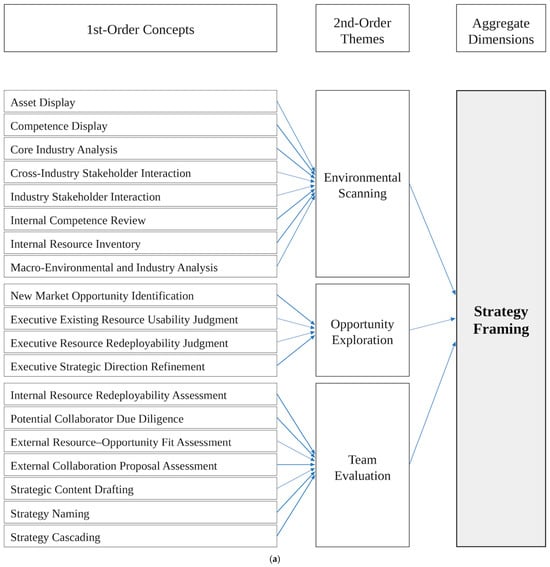
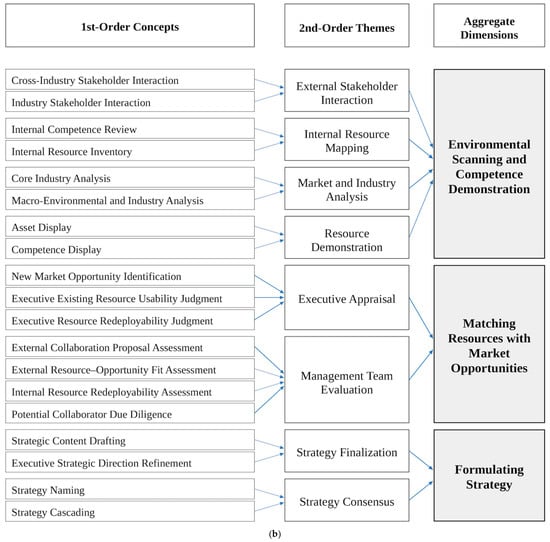
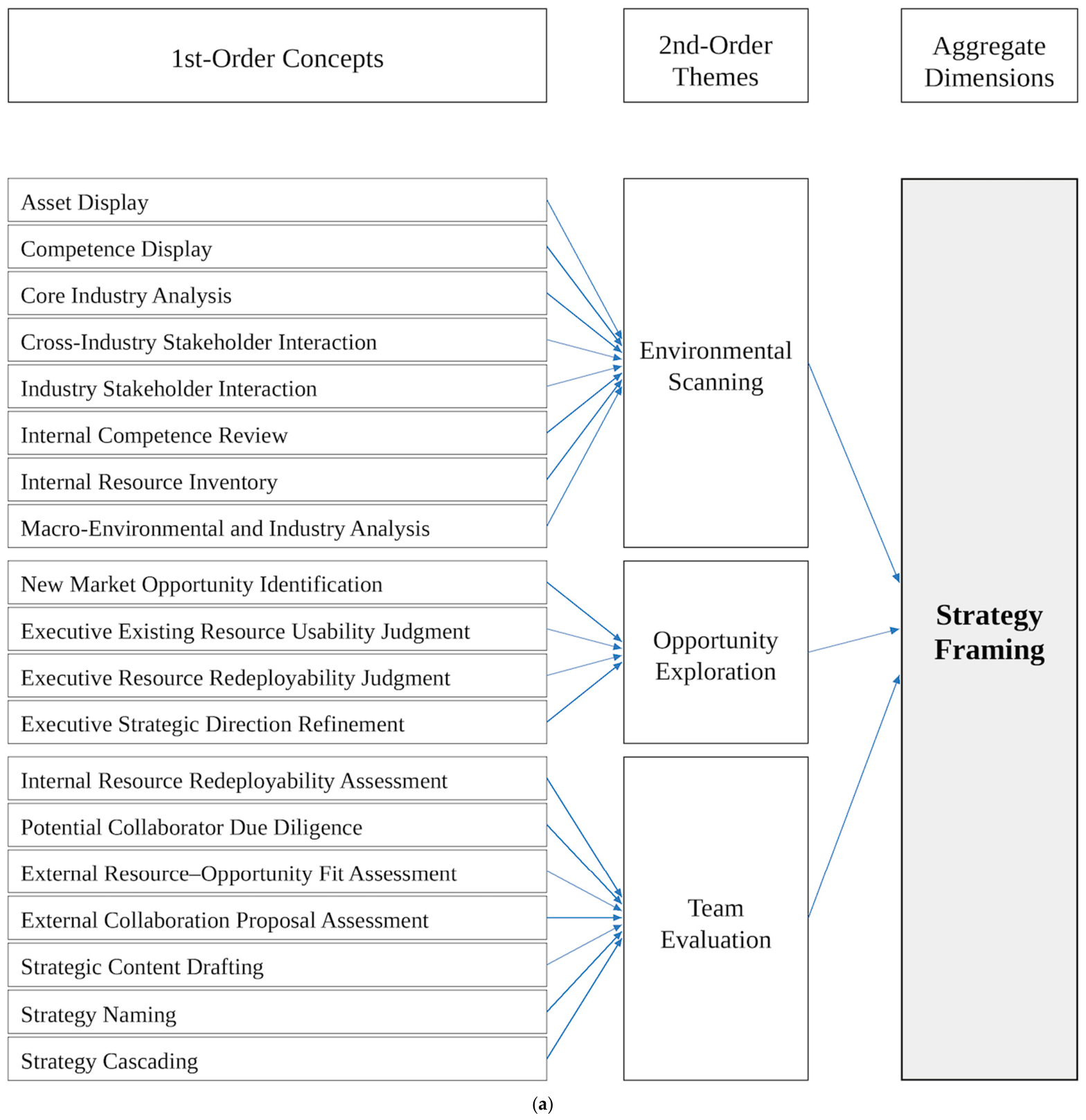
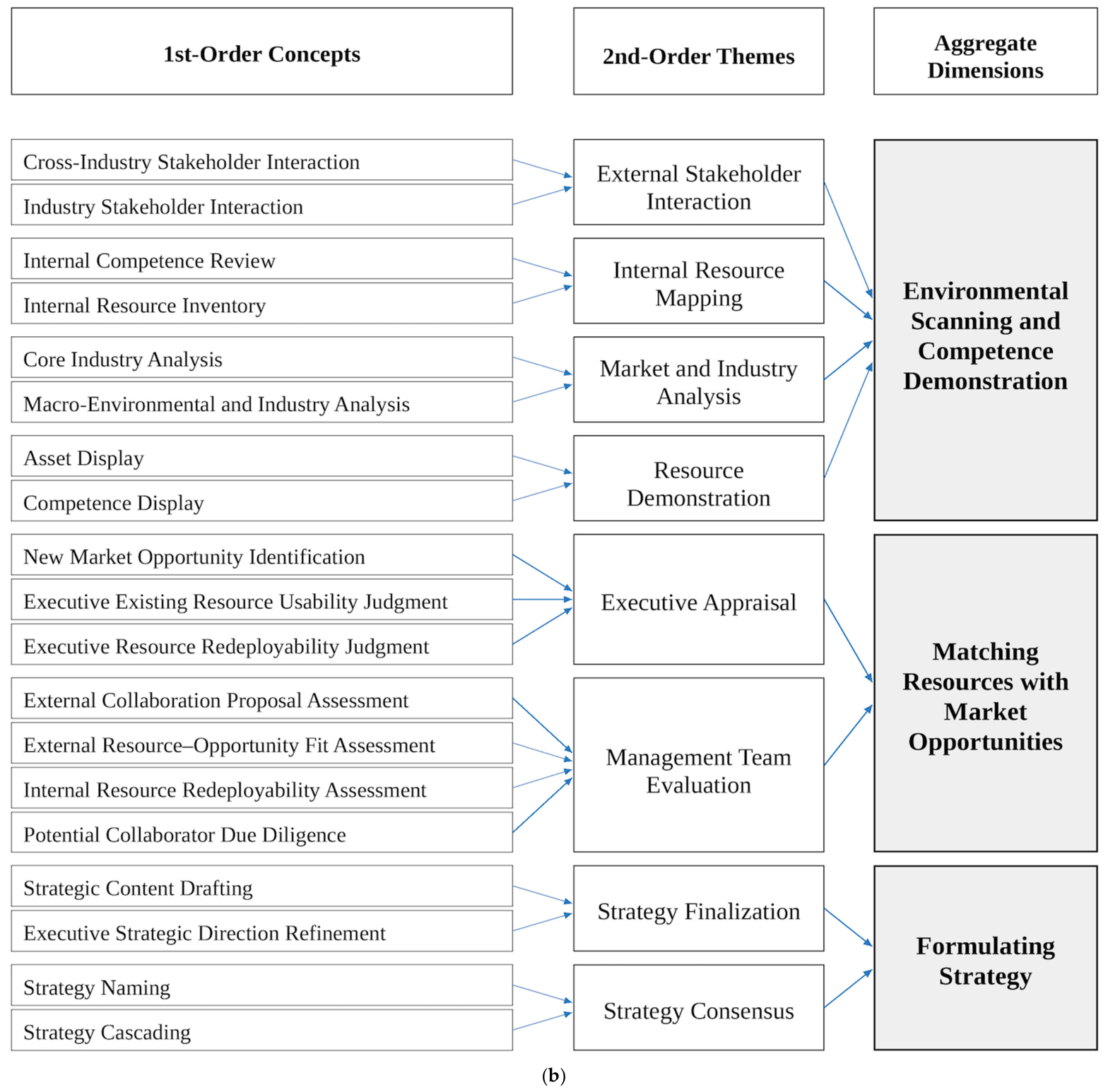
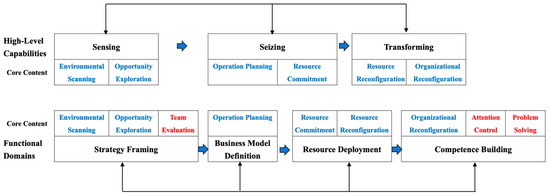
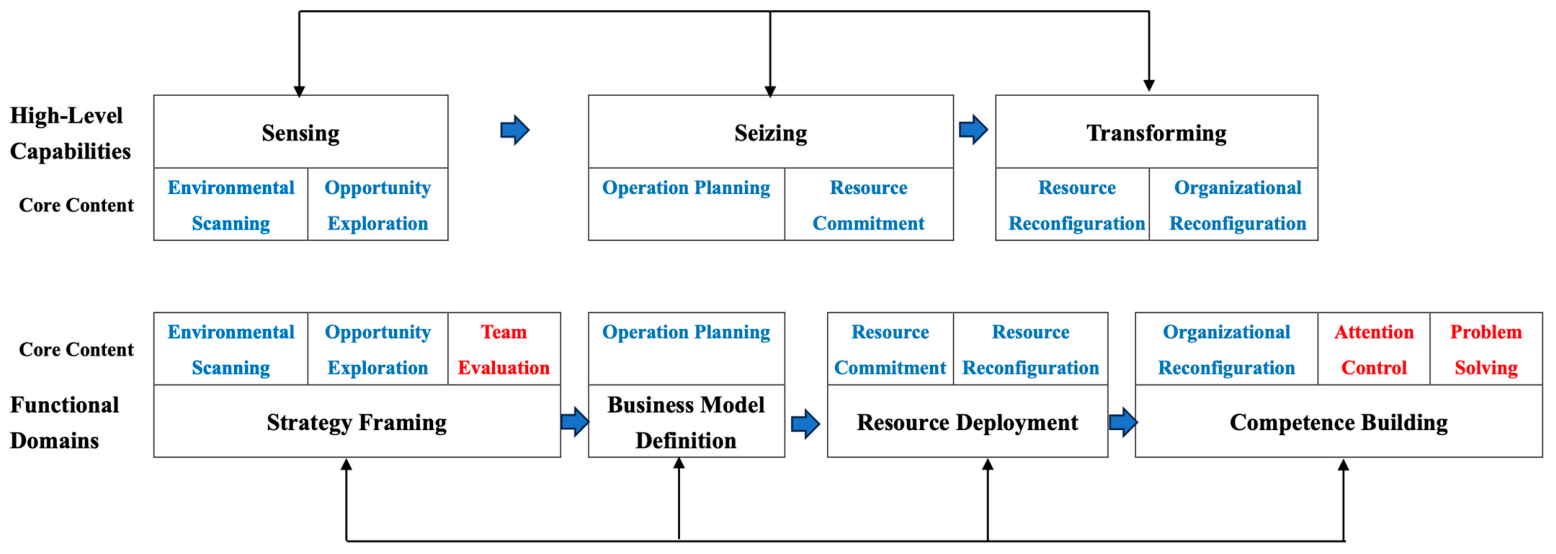
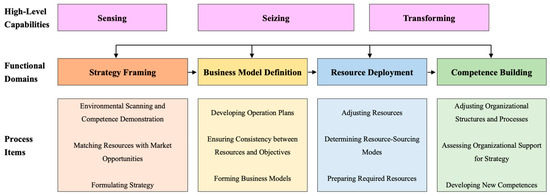
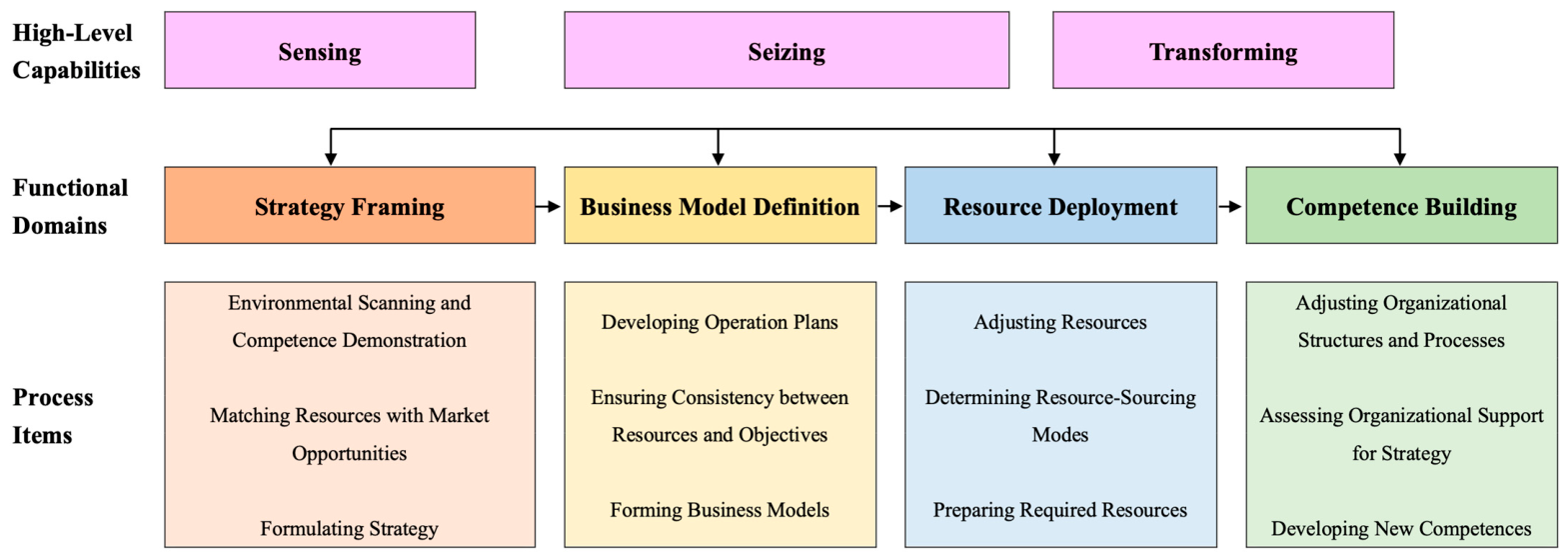

Disclaimer/Publisher’s Note: The statements, opinions and data contained in all publications are solely those of the individual author(s) and contributor(s) and not of MDPI and/or the editor(s). MDPI and/or the editor(s) disclaim responsibility for any injury to people or property resulting from any ideas, methods, instructions or products referred to in the content. |
© 2026 by the authors. Licensee MDPI, Basel, Switzerland. This article is an open access article distributed under the terms and conditions of the Creative Commons Attribution (CC BY) license.