


Abstract
The study examines the role of Human Capital Development Programs in helping employees cope with Work–Family Conflict and maintain performance and wellbeing in the context of Lebanon’s long poly-crisis post COVID-19. In a climate of economic downturn, inflation, organizational uncertainty, and social unrest, SMEs face greater pressure to protect both productivity and employee well-being. The study tests the proposed model using SEM-PLS based on data from 209 employees in Lebanese SMEs. The results show that human capital development programs have a significant negative association with work–family conflict, and the latter has a significant negative association with employee performance and employee wellbeing. Additionally, employee resilience also weakens the negative relationship between work–family conflict and employee performance, highlighting the protective role of resilience in crisis conditions. The study contributes to the human resource management and work–family literature by positioning developmental HR practices and resilience as critical resources in crisis-prone environments. The results are practically useful for the Lebanese SMEs in designing employee-oriented strategies that promote adaptability, well-being, and organizational continuity.
1. Introduction
In today’s organizational environment characterized by uncertainty, instability, and rapid socio-economic transformation, human resources have become one of the most valuable strategic assets for organizational sustainability and competitiveness. Organizations can no longer survive in turbulent environments with financial or technological resources alone but must continually invest in the development, adaptability, and well-being of their employees (Barney, 1991; Becker, 1993). Hence, human capital development programs (HCDPs) like employee development, mentoring, coaching, career development programs, knowledge sharing activities, and professional development interventions have become important organizational mechanisms for strengthening employee capacities and organizational resilience (Garavan et al., 2016).
Lebanon now represents one of the worst examples of a prolonged “poly-crisis” situation, involving simultaneous economic collapse, political instability, a declining financial system, hyperinflation, social insecurity, breakdown of infrastructure, energy shortages, and regional geopolitical tensions (World Bank, 2024). These conditions have greatly disrupted organizational functioning and made employees’ everyday struggles even more difficult. Lebanese employees are facing growing challenges in terms of transportation costs, reduced purchasing power, job insecurity, emotional exhaustion, and deteriorating living conditions. These have significant consequences for employees’ well-being and workplace functioning (Saade et al., 2025).
Recent reports indicate that the current crisis environment has led to operational instability, workforce migration, and reduced organizational resources of many Lebanese organizations, particularly small and medium-sized enterprises (SMEs) (Maalouf et al., 2025). SMEs are particularly vulnerable as they represent the backbone of the Lebanese economy and at the same time, have limited financial and organizational capacities to absorb environmental shocks. Under such circumstances, organizations need to focus not only on operational continuity but also on supporting employees psychologically and professionally in order to sustain performance and organizational survival. Many studies have found that work–family conflict is negatively related to a number of employee outcomes, including psychological well-being, emotional health, organizational commitment, job satisfaction, and employee performance (Amstad et al., 2011; Karatepe & Karadas, 2016; Zakhem et al., 2022).
Antecedents and consequences of work–family conflict have been extensively researched in prior work–family conflict literature; however, a considerable part of the literature has focused on traditional workplace factors, such as workload, leadership style, organization support, and job stress (Allen et al., 2020). Although developmental programs may help employees increase their competencies, confidence, adaptability, and coping mechanisms to better manage work and personal demands, few studies have examined the role of human capital development programs in alleviating work–family conflict. The development of human capital can help employees develop skills, communicate more effectively, develop problem-solving skills, and be emotionally prepared, which can help reduce the perception of conflict between work and family.
Moreover, empirical evidence on the relationship between employee development and work–family outcomes is limited and inconsistent in developing economies and crisis contexts. Most of the existing studies have focused on the direct relationship between human capital development and the organizational performance outcomes such as productivity, innovation, and competitive advantage (Garavan et al., 2016). In cases of long-standing instability, such as the Lebanese poly-crisis, understanding the psychological and behavioral mechanisms through which developmental initiatives influence employees’ personal well-being and work–family experiences is important. But there is very little research in this domain.
In addition, despite the increasing recognition of the importance of employee well-being in organizational research, little is known about how to protect employee well-being under extreme environmental stressors. Employee well-being is defined as the psychological, emotional, and overall life satisfaction of employees in the context of the workplace. Employee well-being is increasingly considered a key factor for the sustainability of the organization and employee retention in the long run (Danna & Griffin, 1999). If organizations do not protect the well-being of employees in high-risk settings, they will experience increased absenteeism, lower commitment, lower productivity, and higher intentions to leave.
Previous studies have found that employees with high levels of work–family conflict often have problems with concentration, emotional exhaustion, and motivation, all of which negatively affect task performance and organizational contribution (Nohe et al., 2015). Yet, empirical evidence examining these relationships in the Lebanese context is limited despite the country’s exceptional socio-economic conditions. Moreover, the extant literature has gradually highlighted the importance of personal psychological resources in assisting employees to adapt to adverse working environments. One of the most important resources is employee resilience. Employee resilience is defined as an individual’s ability to adapt positively, recover from adversity, maintain emotional stability, and continue to function effectively in the face of stressful conditions and environmental disruptions (Luthans, 2002). Employees with resilience usually cope better with uncertainty, manage stress, and sustain their well-being when times get tough.
In crisis contexts such as Lebanon, employee resilience may be particularly important in buffering the negative outcomes of work–family conflict. Although there is increasing recognition of resilience as an important construct in the organizational behavior literature, empirical studies exploring the moderating role of resilience between work–family conflict and employee well-being are still relatively scarce, especially for SMEs under the long-term socio-economic crises. The majority of previous research has viewed resilience as a direct predictor of well-being or performance, and not as a mechanism that buffers against the negative outcomes of work–family conflict.
Thus, the purpose of this study is to fill some theoretical and contextual gaps in the literature. First, it investigates the association between human capital development programs and work–family conflict in Lebanese SMEs’ employees during the ongoing poly-crisis period. Second, it explores the role of work–family conflict on two important organizational outcomes: employee performance and employee well-being. Third, the study examined the moderating role of employee resilience in the relationship between work–family conflict and employee performance. This study adds to the literature on human resource management, organizational behavior, and employee well-being in crisis contexts by bringing these variables together into an integrated conceptual framework.
The present study also has a great practical significance. But while Lebanon is in the throes of deep economic and social instability, Lebanese organizations are working hard to retain top talent and to keep productivity and morale high. Understanding how human capital development programs can help employees cope with work and family pressures can provide managers and policy makers with valuable insight into effective human resource strategies to use in times of crisis. Furthermore, acknowledging the buffering role of employee resilience may motivate organizations to invest in resources for not only technical skill building but also resilience-building efforts, psychological support interventions, and employee-centric HR policies.
Based on the above, this study seeks to answer the following research questions:
- RQ1: How do human capital development programs affect work–family conflict of employees of Lebanese SMEs in the poly-crisis era?
- RQ2: What is the role of work–family conflict on employee performance among Lebanese SME employees?
- RQ3: Work–family conflict and its impact on employee well-being: What about Lebanese SME employees?
- RQ4: Does employee resilience moderate work–family conflict and employee performance?
The rest of this paper is organized as follows. The theoretical framework is presented in Section 2, which also develops the study hypotheses by linking human capital development programs, work–family conflict, employee performance, employee well-being, and employee resilience. Section 3 describes the research methodology. This includes the research design, population and sample, data collection procedure, measurement of variables, and data analysis approach. Section 4 presents empirical results, including the measurement model, the structural model, mediation analysis, predictive evaluation, and moderation results. Section 5 discusses the findings in light of the existing literature as well as the Lebanese poly-crisis context. Finally, Section 6 contains the conclusion, practical and theoretical implications, study limitations, and recommendations for future research.
2. Theoretical Framework
Recent studies of human resource management in unstable contexts in which employees face continuous economic, social, and organizational pressure have highlighted the interaction between employee development and work–family conflict, performance, wellbeing and resilience. Recent literature has emphasized that employee well-being and performance is not only an individual-level outcome but a strategic organizational matter influenced by job resources, work demands, psychological resources, and contextual pressures (Pandey et al., 2025; Sohal et al., 2025). This is particularly relevant in the case of Lebanon where SMEs operate in a continuous poly-crisis context. Economic downturn, political unrest, economic uncertainty, migration of workforce, and recurrent shocks put pressure on organizations and employees (Maalouf et al., 2025; Itani et al., 2025). Therefore, it would be theoretically and practically useful to conceptualize human capital development programmes as an organizational resource, work–family conflict as a stress mechanism, and employee resilience as a buffering psychological resource to understand how SMEs in Lebanon can protect employee well-being and performance under conditions of crisis.
2.1. Human Capital Development Programs and Work–Family Conflict
Human capital development programmes are formalized organizational processes that develop the knowledge, skills, abilities, competencies, adaptability, and career progression of employees through training, mentoring, coaching, learning opportunities, and professional development programmes (Aguinis & Kraiger, 2009; Garavan et al., 2016). The Human Capital Theory suggests that investing in employees increases their productivity and ability to contribute to organizational outcomes (Becker, 1993). Similarly, the Resource-Based View suggests that developed human capital can be a valuable and inimitable organizational resource that supports sustainability and competitiveness (Barney, 1991).
In theory, human capital development programs can potentially reduce work–family conflict through the heightening of employees’ ability to meet work demands. When the demands of their jobs are higher than the resources available, employees are strained, whereas the job resources help employees to cope with the pressure and to stay motivated (Bakker & Demerouti, 2007; Demerouti et al., 2001; Silva & Rodrigues, 2025). Therefore, human capital development programs can function as job resources by enhancing employees’ competence, confidence, problem-solving skills, time management, adaptability, and perceived organizational support (Aguinis & Kraiger, 2009; Garavan et al., 2016). When workers become better able to cope with work demands, there may be less work-related stress spilling over into family life.
Work–family conflict occurs when the demands of work and family roles are incompatible, such that involvement in one role is made more difficult by involvement in the other role (Greenhaus & Beutell, 1985). Greenhaus and Beutell (1985) identified three main types of work–family conflict, namely, time-based conflict, strain-based conflict, and behaviour-based conflict. Human capital development programs can help reduce time-based conflict by improving efficiency, strain-based conflict by improving coping capacity, and behavior-based conflict by helping employees develop more flexible interpersonal and managerial skills (Greenhaus & Beutell, 1985; Bakker & Demerouti, 2007).
Nevertheless, development programs can also contribute to work–family conflict when they are poorly designed, mandatory, scheduled outside working hours, or perceived as an additional workload instead of support (Greenhaus & Beutell, 1985; Bakker & Demerouti, 2007). This means that the role of programs of human capital development on employees depends on whether they are considered as development resources or extra-demands. This differentiation is important in crisis settings such as Lebanon, where employees are already under economic insecurity, financial pressure from family members, transportation challenges, and emotional strain (Maalouf et al., 2025; Saade et al., 2025). Therefore, Lebanese SMEs can heighten work–family balance by providing supportive, flexible, and relevant human capital programs, rather than increasing other commitments. Then the relation can be written as follows:
H1.
The development of human capital development programs is inversely associated with employees’ work–family conflict in Lebanon’s poly-crisis work environment.
2.2. Work–Family Conflict and Employee Performance
Work–family conflict has been extensively studied as a predictor of lower employee performance because it drains employees’ scarce time, energy, attention, and psychological resources (Amstad et al., 2011; Nohe et al., 2015; Aybas et al., 2022). Based on Role Theory, individuals occupy various roles and experience conflict when the demands of one role interfere with the performance of another role (Kahn et al., 1964; Greenhaus & Beutell, 1985). Those who experience high work–family conflict may be distracted, emotionally exhausted, less focused, and less able to meet job expectations (Amstad et al., 2011; Nohe et al., 2015).
The negative relationship between work–family conflict and performance can also be explained by the Conservation of Resources theory. Hobfoll (1989) characterizes stress as the loss of resources, threat of loss of resources, or the failure to gain resources. Work–family conflict depletes employees’ emotional, cognitive, and physical resources, which, in turn, leaves employees with fewer resources to do a good job at work (Hobfoll, 1989; Nohe et al., 2015). This explains why employees with high work–family conflict may have lower task performance, work quality, concentration, and productivity (Amstad et al., 2011; Karatepe & Karadas, 2016; Moreira et al., 2023).
Recent literature identified work–family conflict as a serious organizational problem. Sohal et al. (2025) reviewed the literature on work–family conflict and argued that the need for understanding work–family conflict and its impact has become more important with the changes in family structures, dual-career households, technological demands, and workplace expectations. This link might be more obvious in Lebanon, where employees have to balance work and family roles with inflation, job insecurity, decreased purchasing power, and unstable organizational conditions (Maalouf et al., 2025; Saade et al., 2025). Therefore, work–family conflict may represent a serious threat to the performance of employees working in Lebanese SMEs, where organizational survival is often highly contingent on the productivity and adaptability of limited human resources. In the literature, the following hypothesis is derived:
H2.
There is a negative association between work–family conflict and employee performance in Lebanon’s crisis-affected work environment.
2.3. Work–Family Conflict and Employee Wellbeing
At work, the well-being of the employee is the psychological, emotional, and functional state of the employee. It encompasses mental health, job satisfaction, life satisfaction, emotional stability, and less strain (Danna & Griffin, 1999; Warr, 1990). Work–family conflict is harmful for well-being as it causes a persistent conflict between two important spheres of life, work and family (Greenhaus & Beutell, 1985; Amstad et al., 2011). When the work demands do not permit the employees to meet their family responsibilities, the family members may feel guilty, emotionally exhausted, stressed, and less satisfied with life (Amstad et al., 2011; French et al., 2018; Tavassoli & Sunyer, 2025).
The relationship is supported by Spillover Theory, in which experiences in one domain can be transferred into another domain (Edwards & Rothbard, 2000). In this way, work-related stress may spill over to family life, and family-related stress may spill over to employees’ work experiences (Edwards & Rothbard, 2000; Amstad et al., 2011). This is also supported by the Job Demands-Resources model. Work–family conflict can also be viewed as a demand that increases strain and decreases well-being when employees have insufficient resources (Bakker & Demerouti, 2007; Andrade & Petiz Lousã, 2021; Brandão & Matias, 2024).
More recent studies continue to highlight employee well-being as an outcome for organizations. Pandey et al. (2025) reviewed the literature on employee well-being. They reported that well-being is influenced by multi-level antecedents and linked to important organizational outcomes. Work–family conflict was negatively related to the employee well-being of physicians, and work engagement and job satisfaction played important mediating roles (Yang et al., 2024). The results further support the view that work–family conflict is not just a family matter but a salient phenomenon in the workplace with consequences for psychological and organizational functioning.
The national crisis has significantly impacted the employees’ well-being in Lebanon by jeopardizing their income security, access to healthcare, living conditions, and psychological well-being (Saade et al., 2025). The work–family conflict might be more detrimental regarding Lebanese SME employees, as the family responsibilities might be increased during the crisis while the organizations require more flexibility, effort, and endurance from employees (Maalouf et al., 2025). Hence, this study on work–family conflict effects on employee well-being in Lebanon contributes to a more context-sensitive understanding of HRM and organizational behavior in crisis contexts. Thus, the literature supports the following hypothesis:
H3.
Work–family conflict is negatively related to employees’ well-being among employees in the crisis-affected work environment in Lebanon.
2.4. Role of Employee Resilience
Employee resilience is the ability of employees to adapt positively, to bounce back from adversity, and still perform well under pressure (Luthans, 2002; Youssef & Luthans, 2007). In Positive Organizational Behavior, resilience is a psychological capacity that can be trained to help employees manage challenges and be successful in difficult work situations (Luthans, 2002; Youssef & Luthans, 2007). Resilience can moderate the association between work–family conflict and employee performance. Resilience can minimize the negative role of conflict on performance.
The conservation of resources theory offers a powerful explanation for this moderating role. As work–family conflict drains employees’ emotional and cognitive resources, resilient employees may be better able to protect, recover, and rebuild their resources (Hobfoll, 1989; Youssef & Luthans, 2007). Hence, employees with higher resilience may be able to maintain a higher degree of focus, motivation, emotional control, and task persistence even when facing work–family conflict (Luthans, 2002; Youssef & Luthans, 2007). On the other hand, employees with low resilience may be more likely to have a performance decline under the same work–family conflict.
The moderating role of resilience is also supported by the Job Demands-Resources model, which proposes personal resources as a buffer for the detrimental effect of job demands on employee outcomes (Bakker & Demerouti, 2007; Xanthopoulou et al., 2007). Thus, employee resilience can be considered as a personal resource for employees to deal with work–family pressure and sustain performance. Resilience has also been highlighted recently in times of crisis and under high pressure. Though Misfin et al. (2024) investigated a different population, female high-school teachers in Ethiopia, their study is relevant as it demonstrated resilience as a psychological resource in the work–family interface. Yet, their results should be read as evidence that is context-specific, because their sample, sector, gender composition, and outcome variables differ from those of the present study. Therefore, Misfin et al. (2024) is only used here to support the broader theoretical argument that resilience may buffer the negative consequences of work–family conflict, while the present study extends this argument to Lebanese SME employees and employee performance in a poly-crisis context. Recent research in Lebanon indicates that resilience is still a major issue in long-term adversity and crisis (Itani et al., 2025; Bouzakhem, 2026).
The moderating role of resilience is particularly relevant in the Lebanese context, where the stressors are repeated and chronic, and not short-term disruptions. Lebanese SMEs are working in an environment of constant crisis (Maalouf et al., 2025). The complexity of resilience in the face of prolonged adversity in Lebanon has been discussed (Itani et al., 2025). Thus, resilient employees may maintain performance despite experiencing work–family conflict, whereas less resilient employees may exhibit more degraded performance. This renders employee resilience a relevant psychological resource for Lebanese SMEs to protect performance in poly-crisis contexts. Hence, the hypothesis is formulated as follows:
H4.
Employee resilience moderates the relationship between work–family conflict and employee performance such that the negative relationship is weaker when employee resilience is high.
Based on the aforementioned, the theoretical framework of the study is illustrated in Figure 1.
Figure 1.
Theoretical Framework (Source: author’s own elaboration).
3. Methods
3.1. Research Method
The present study followed a quantitative research design to examine the relationships between human capital development programs, work–family conflict, employee performance, employee well-being, and employee resilience among employees in small and medium-sized enterprises (SMEs) in Lebanon. A cross-sectional survey approach was adopted as data was collected from respondents at one particular point in time. This design was suitable because the study tested hypothesized relationships among the selected variables and assessed both direct and moderating roles in the proposed research model. The study has taken place in Lebanon during the poly-crisis era characterized by the overlapping economic, political, financial, institutional, social, and organizational pressures. This context was very relevant because Lebanese SME employees are constantly exposed to uncertainty, resource constraints, job-related pressures, and work–family demands. Therefore, understanding the role of human capital development programs and employee resilience in influencing work–family conflict, employee performance, and well-being can provide valuable insights into employee experiences in unstable work environments.
3.2. Population and Sample
The target population of this study pertains to employees working for SMEs in Lebanon, as SMEs constitute the backbone of the Lebanese economy, representing about 93–95% of the enterprises in the country and providing employment to around 50% of the working population (Ministry of Economy and Trade, 2014; Hamdar et al., 2017). The study has employed a purposive and convenience sampling method. Respondents who meet the criteria of the study have been selected using purposive sampling. Convenience sampling has been used to help the researcher reach employees who are accessible and willing to participate.
The respondents were selected from SMEs in different sectors, including real estate, insurance, finance, education, manufacturing, information technology, and other service-related sectors. This study has concentrated on employees with regular hours working under work and family demands in the unstable business environment of Lebanon. This was important because employees in SMEs are often directly impacted by organizational constraints, lack of resources, and work pressures related to a crisis.
According to the Lebanese SME classification of firms as per the number of workers and the annual turnover of the business, SMEs constitute both micro-enterprises and small to medium-sized businesses. In Lebanon, micro-enterprises generally have less than 10 workers; small enterprises are those with less than 50; and medium-sized businesses have less than 100 (Ministry of Economy and Trade, 2014; Hamdar et al., 2017). The present study specifically focused on employees who were engaged in small to medium-sized businesses. Microenterprises were excluded specifically because the study investigated HR policies relating to Human Capital Development Programs; Work/Family Conflict; Employee Resiliency; Employee Performance; and Employee Well Being, all of which require that there be formal HR policies and Employee Development programs in place to support employees when they are being impacted by the research variables in the study; therefore, it is consistent with the previous human resource management research indicating that with increased company size comes greater formalization and structuring of human resource policies (Kotey & Slade, 2005). The response sample comprised employees of small and medium-sized companies from multiple sectors in the Lebanese economy include Real Estate, Insurance, Finance, Education, Manufacturing, Information Technology, and Other Services.
G*Power software (version 3.1.9.7) has been employed to calculate the sample size. A statistical power level of 80% is often used in behavioral and social science research, and G*Power is a commonly used program to conduct statistical power analyses (Faul et al., 2007). Furthermore, the recommendations for PLS-SEM sample adequacy, as PLS-SEM is appropriate for models with latent variables, prediction-oriented analysis, and relatively moderate sample sizes (Shmueli et al., 2019), have been taken into account in this study. Therefore, the study aimed to collect data from at least 180 valid respondents to have sufficient statistical power to test the proposed model. The survey was distributed to 300 participants, and responses received were 216 (response rate of 72%), out of which 209 were considered valid for interpretation.
3.3. Data Collection
Data were collected using a structured online questionnaire distributed to the employees working in SMEs in Lebanon. Managers or representatives of the organization were contacted before the main data collection phase to explain the purpose of the study and to help to gain access to potential respondents. A pilot test was done with 20 employees prior to the final questionnaire. The pilot test was conducted to check whether the questionnaire items are clear, understandable, and appropriate (Gani et al., 2020) for the Lebanese poly-crisis context. The pilot test was also used to identify any ambiguous wording, structural problems, or difficulties in completing the survey. The final analysis did not include responses from the pilot testing. Results showed that the questionnaire items were clear and understandable with minor modifications to the wording.
After the pilot test, the final questionnaire was distributed to the target respondents. The returned questionnaires were carefully screened, and answers with missing data, incomplete answers, or obvious errors in response were eliminated. The final statistical analysis was based on complete and valid responses.
The questionnaire was conducted in English only. This is a relevant decision since the respondents are educated employees working in Lebanese SMEs and were familiar with English workplace and business- related terminology. The reason for not using translation into Arabic was to avoid possible inconsistencies, distortion of wording, or bias that may occur if an attempt is made to adapt the measurement items across languages. To preserve the conceptual meaning of the validated scales and to maintain consistency with the wording used in the original instruments, the original English version was also used.
3.4. Variables Measurement
All constructs were measured using previously validated scales adapted from prior literature. The reliability and validity of the study were established by using existing validated measurement scales. To measure human capital development programs, the scale developed by Lai Wan (2007) was used. Work–family conflict was measured using items adapted from Frone (2000) that assess the interference of work into family and family into work. Items adapted from Näswall et al. (2013) were used to measure employee resilience. Employee well-being was measured using items based on Arnold et al. (2007), and employee performance was measured using items adapted from Singh (2019). All questionnaire items were measured using a five-point Likert scale, from strongly disagree to strongly agree. The questionnaire is listed in Appendix A.
3.5. Data Analysis
Data analysis was performed using partial least squares structural equation modelling (PLS-SEM) with SmartPLS version 4.1.1.8. This method is appropriate because the study tests a model that includes latent variables and direct and moderating relationships. PLS-SEM is also recommended for prediction-oriented research and studies with small to medium sample sizes (Hair et al., 2019).
The analysis began with an assessment of the measurement model. Reliability was assessed by Cronbach’s alpha, Rho_A, and composite reliability. Outer loadings and average variance extracted were used to assess convergent validity. Discriminant validity was tested by the heterotrait–monotrait ratio (HTMT), which is generally suggested for testing the discriminant validity in variance-based structural equation modelling (Henseler et al., 2015). Consequently, the structural model was assessed to test the hypotheses proposed. This included examining path coefficients, t-statistics, significance levels, R2 values, Q2 values, and effect sizes (Wong, 2013).
The collinearity assessment was conducted using the variance inflation factor (VIF). As shown in Table 1, all VIF values ranged from 1.002 to 1.785, which are clearly below the recommended threshold of 3.3 (Kim, 2019). This indicates that multicollinearity was not a serious concern in the structural model. Therefore, the predictor constructs were sufficiently distinct, and the structural path coefficients could be interpreted without concern for collinearity-related bias (Kock, 2015).
Table 1.
Collinearity Assessment Using VIF.
Besides the collinearity check, common method bias was also checked by using the unmeasured latent method factor approach (Podsakoff et al., 2003). All manifest indicators were allowed to load on their respective theoretical variables as well as on a common latent method factor. This analysis was performed to estimate the amount of variance in the manifest indicators due to the common method rather than the theoretical variable itself, as recommended by previous methodological literature (Williams et al., 1989; Williams & McGonagle, 2016). The results of the latent method factor assessment are presented in Table 2. The mean standardized substantive loading was 0.813, and the mean absolute loading on the common method factor was 0.128. The average substantive variance explained by the theoretical constructs was 66.1%, and the average method-based variance was 1.6%. The ratio of substantive variance to method variance was approximately 41.3:1. Moreover, only 5 of the 36 method-factor loadings were statistically significant, with the highest method-factor loading being 0.246. These results suggest that the substantive constructs accounted for considerably more variance in the indicators than the common method factor.
Table 2.
Unmeasured Latent Method Factor Assessment.
4. Findings
The demographic profile of survey participants was assessed before results were reported on measurement and structural models (Table 3). A sample size of 209 valid participants in Lebanese SMEs was established for the survey sample; of these, 112 or 53.6% were male and 97 or 46.4% were female. In terms of age, the largest group of participants was those between 25 and 34 years (41.1%), this was followed by 35–44 years (28.2%), <25 years (16.3%), and >45 years (14.4%). Participants were distributed across a variety of sectors, including education (18.2%), other services (16.3%), finance (14.8%), manufacturing (13.9%), insurance (12.9%), IT (12.4%), and real estate (11.5%). With respect to job tenure, survey participants were as follows: 3–5 years (30.6%), 6–10 years (29.2%), <3 years (20.1%), >10 years (20.1%). This demonstrates a diverse respondent profile based on demographics, sectors, and occupations.
Table 3.
Descriptive Statistics of Respondents.
The measurement model was first assessed to assess the reliability and validity of the constructs that were included in the study. The outer loadings, as presented in Table 4, were all above the recommended threshold of 0.70, ranging from 0.719 to 0.942 for Human Capital Development Programs (HCDP), 0.724 to 0.887 for Employee Wellbeing (EWB), 0.741 to 0.872 for Employee Resilience (ER), 0.751 to 0.853 for Employee Performance (EP), and 0.721 to 0.882 for Work–Family Conflict (WFC). These results show adequate reliability of indicators (Hair et al., 2019).
Table 4.
Measurement Model.
In addition, Cronbach’s alpha, rho_A, and composite reliability (CR) values were greater than the minimum threshold of 0.70 and less than the maximum threshold of 0.95, indicating sufficient internal consistency reliability (Jöreskog, 1971; Hair et al., 2019). In particular, the Cronbach’s alpha values ranged from 0.864 to 0.936, and the composite reliability values ranged from 0.909 to 0.944. Moreover, all Average Variance Extracted (AVE) values were above the minimum threshold of 0.50, ranging from 0.589 to 0.784, thereby confirming the convergent validity of the constructs (Henseler et al., 2015; Hair et al., 2017).
The results showed that the measurement model has good reliability and convergent validity and is suitable for further assessment of the structural model.
The discriminant validity was assessed using the Heterotrait–Monotrait ratio (HTMT). All of the HTMT values (Table 5) were below the recommended value of 0.85, between 0.541 and 0.726. According to Henseler et al. (2015), HTMT values below 0.85 indicate satisfactory discriminant validity among the constructs.
Table 5.
Heterotrait–Monotrait ratio (HTMT).
The highest HTMT value was between Employee Performance and Employee Resilience (0.726), and the lowest was between Employee Wellbeing and Employee Performance (0.541). As all values are below the critical threshold, discriminant validity was established, meaning the constructs are empirically different from each other. Thus, the measurement model satisfies the necessary validity criteria, and the analysis of the structural model can be conducted.
Gender was introduced into the employee well-being equation as a dummy-coded control variable. The male respondents were coded as 0 and the female respondents as 1, so that male respondents served as the reference category. A positive gender coefficient means that female respondents experience higher employee well-being than male respondents, while a negative coefficient means that female respondents experience lower employee well-being than male respondents.
The structural model was tested to examine the hypothesized relationships among the study variables. As shown in Table 6, the Human Capital Development Programs had a significant negative association with Work–Family Conflict (β = −0.318, t = 5.487, p < 0.001, f2 = 0.121), confirming H1. This implies that the higher the level of human capital development programs, the lower the work–family conflict among employees.
Table 6.
Structural Model Assessment and Hypothesis Testing.
The findings further reveal that Work–Family Conflict significantly and negatively affected Employee Performance (β = −0.397, t = 6.529, p < 0.001, f2 = 0.147), thus providing support to H2. That is, the higher the work–family conflict of employees, the lower their performance.
Similarly, Work–Family Conflict was found to negatively affect Employee Wellbeing (β = −0.224, t = 3.142, p = 0.002, f2 = 0.092), supporting H3. This result indicates work–family conflict is detrimental to employees’ well-being.
The interaction effect showed that Employee Resilience significantly moderated the relationship between Work–Family Conflict and Employee Performance (β = 0.331, t = 1.987, p = 0.047, f2 = 0.109), which supported H4. This implies that resilience is an important moderator in the relationship between Work–Family Conflict and performance. This implies that the more resilient the employee is, the less negative the association of work–family conflict with employee performance will be.
The control variables indicated that gender was significantly associated with employee well-being (β = 0.132, t = 2.287, p = 0.022). Given that gender was coded as a dummy variable, with male respondents as the reference category (0 = male, 1 = female), the positive coefficient suggests that female respondents reported higher employee well-being than male respondents in this sample, controlling for work–family conflict and age. Age was also significantly related to employee well-being (β = 0.119, t = 2.118, p = 0.034), suggesting that older respondents tended to report higher employee well-being. These findings should be interpreted as associations with control variables rather than causal effects, since the study used a cross-sectional design and the demographic variables were included to control for potential background differences in employee well-being.
However, caution should be exercised with this result. Gender was used as a control variable rather than as a central theoretical predictor. Thus, the result should be understood as a sample-specific association rather than a causal effect of gender on employee well-being. The result suggests a tendency for female respondents to report slightly higher well-being than male respondents, after controlling for work–family conflict and age, within the present sample of Lebanese SME employees. This might suggest differences in the way male and female respondents felt, appraised or reported well-being in the context of the Lebanese crisis, but the current study was not intended to explain gender-based differences in well-being.
Age and gender were controlled for only in the employee well-being equation because employee well-being is a subjective psychological and affective outcome that may differ across demographic groups. Age and sex can influence subjective well-being, emotional evaluations, and affective work experiences (Diener et al., 1999; Dolan et al., 2008; Batz-Barbarich et al., 2018). Demographic factors may be particularly relevant in the context of Lebanese SMEs operating under prolonged crisis conditions. Age may reflect differences in life stage, accumulated work experience, family responsibilities, financial obligations, and coping resources that may shape the way employees view and report their well-being. Also, gender may be indicative of differences in social expectations, caregiving duties, household responsibilities, and family-related pressures, which may impact employees’ psychological and emotional well-being during periods of economic and organizational instability. Thus, by controlling for age and gender, we minimized the possibility that the observed relationship between work–family conflict and employee well-being was due to demographic differences rather than work–family conflict per se.
In this study, however, employee performance was viewed as a more task-specific and work-related behavioral outcome. The theoretical model implied that work–family conflict and employee resilience are the main factors affecting employee performance. Work–family conflict may consume employees’ time, attention, energy, and psychological resources, while resilience may allow employees to remain focused and effective under pressure. In the case of employee well-being, no particular theoretical argument or hypothesis was developed that age or gender would systematically explain employee performance in the present model. Therefore, the demographic controls were not included in the employee performance equation. This choice was also made to preserve model parsimony and to avoid adding control paths not directly supported by the theoretical framework of the study. Age and gender were controlled for employee well-being because they were conceptually relevant to subjective well-being, and employee performance was assessed through the hypothesized effects of work–family conflict and employee resilience.
The standardized root mean square residual (SRMR) and the normed fit index (NFI) were used to evaluate model fit (Table 7). The estimated model had an SRMR value of 0.021, well below the conservative cutoff value of 0.08, indicating a very good approximate model fit (Hu & Bentler, 1999). The use of SRMR is also relevant in the context of PLS-SEM, because it has been introduced as a goodness-of-fit measure for the detection of potential model misspecification in PLS path models (Henseler et al., 2014). Moreover, the NFI value was 0.923, which is higher than the generally recommended cut-off point of 0.90 (Bentler & Bonett, 1980), indicating an acceptable incremental model fit. However, since NFI does not penalize for the complexity of the model, it was interpreted as additional evidence rather than as the sole determinant of model fit. Overall, both indices suggest that the estimated PLS-SEM model is adequate.
Table 7.
Overall Model Fit.
The robustness of the structural relations was also tested by a comparison between the original structural model and the method factor-adjusted model. As shown in Table 8, the inclusion of the common method factor did not alter the direction, statistical significance, or substantive meaning of the hypothesized relationships (Richardson et al., 2009). The differences between the original and adjusted path coefficients were small, ranging from 0.011 to 0.015 for the main hypothesized paths.
Table 8.
Comparison of Structural Paths Before and After Controlling for the Unmeasured Latent Method Factor.
Overall, the results of the unmeasured latent method factor analysis suggest that common method bias did not materially distort the study’s main findings.
To further interpret the significant interaction effect, a simple slope analysis was conducted at low, mean, and high levels of employee resilience. The results are presented in Table 9 and illustrated in Figure 2.
Table 9.
Simple Slope Analysis for the Moderating Effect of Employee Resilience.
Figure 2.
Simple slopes of the relationship between work–family conflict and employee performance at low, mean, and high levels of employee resilience.
The analysis of simple slopes demonstrated the moderation of employee resilience on the relationship between work–family conflict and employee performance. As presented in Table 6 and illustrated in Figure 2, the relationship between work–family conflict and employee performance decreased as employee resilience increased. The conditional slope of work–family conflict on employee performance grew less negative from low employee resilience levels to mean employee resilience levels to high employee resilience levels. Overall, these results support H4, which posits that resilient employees will have greater performance levels when confronted with work–family conflict than will those employees who have lower levels of resilience.
The values of the coefficient of determination (R2) and predictive relevance (Q2) of the endogenous constructs are shown in Table 10. The findings show that Human Capital Development Programs contribute to 10.1% of the variance in Work–Family Conflict (R2 = 0.101), while the joint contribution of Work–Family Conflict and Employee Resilience to the variance in Employee Performance is 46.2% (R2 = 0.462). Furthermore, Work–Family Conflict contributes 60.8% variance of Employee Wellbeing (R2 = 0.608).
Table 10.
Coefficient of Determination and Predictive Relevance.
These values indicate moderate model explanatory power according to Hair et al. (2019), particularly for Employee Performance and Employee Wellbeing. Furthermore, the value of Q2 of Work–Family Conflict (0.084), Employee Performance (0.251), and Employee Wellbeing (0.364) were all positive; thus, confirming the predictive relevance of the structural model (Henseler et al., 2009; Hair et al., 2019).
The findings show that the proposed model has a satisfactory predictive power and sufficiently explains the endogenous constructs examined in the present study.
The PLSpredict assessment was used to evaluate how well the proposed model predicted results. The model provided evidence of out-of-sample prediction for the endogenous constructs by yielding positive Q2 predict values for all of the constructs tested (Table 11). Although the Q2 predict values for Work–Family Conflict were positive, they were relatively low, and this is consistent with the modest explanatory power previously reported for this construct. However, the Q2 predict values for Employee Performance and Employee Well-Being were both positive and considerably higher than those for Work–Family Conflict; therefore, their values indicate a higher degree of predictive relevance, which corresponds with their greater R2 values and Q2 values. The results also support using the PLS-SEM approach, as evidenced by consistently lower PLS-SEM RMSE and MAE values than their corresponding LM benchmark values across all indicators, suggesting that the PLS-SEM model created smaller prediction errors than did the benchmark model. Thus, the findings provide further support for the overall predictive power of the model with regard to predicting Work–Family Conflict among employees of SMEs in Lebanon, as well as providing additional support for both Employee Performance and Employee Well-Being.
Table 11.
PLSpredict Assessment.
The mediation analysis was conducted as an exploratory post hoc analysis to further examine whether work–family conflict statistically explains the relationship between human capital development programs and employee outcomes. Given the cross-sectional design, these results were interpreted as statistical indirect effects rather than evidence of causal mediation.
The results of the mediation analysis are presented in Table 12. The results show that Work–Family Conflict significantly mediates the relationship between Human Capital Development Programs and Employee Performance (β = 0.126, t = 4.214, p < 0.001, 95% CI [0.071, 0.188]). Hence, Human Capital Development Programs indirectly predict Employee Performance through a reduction in Work–Family Conflict.
Table 12.
Mediation Analysis.
Likewise, Work–Family Conflict was also found to have a significant mediating role on the relationship between Human Capital Development Programs and Employee Wellbeing (β = 0.071, t = 2.684, p = 0.007, 95% CI [0.024, 0.126]). The findings suggest that development interventions improve employee well-being by reducing employee work–family conflict.
Both mediation roles were significant as their 95% confidence intervals did not include zero. The mediating results overall indicate that Work–Family Conflict plays an important role in explaining the relationship between Human Capital Development Programs and Employee Performance and Employee Wellbeing.
5. Discussion
The current study has examined the impact of Human Capital Development Programs (HCDPs) on Work–Family Conflict (WFC) and its further impact on Employee Performance (EP) and Employee Wellbeing (EWB). The study also looked into the moderating role of Employee Resilience (ER) in the association between Work–Family Conflict and Employee Performance in Lebanese SMEs working in the ongoing poly-crisis era. The results showed that all proposed variables had significant relationships and provided meaningful theoretical and practical insights into the management of employees under the long-term crisis conditions in Lebanon.
The findings revealed that Human Capital Development Programs have a modest association with regard to reducing Work–Family Conflict among employees. This indicates that employees with greater perceptions of developmental support from their organizations are likely to experience less work–family conflict. The Human Capital Theory strongly supports this finding. It states that when an organization invests in the development of its employees, the knowledge, adaptability, competencies, and overall effectiveness of the employees are improved (Becker, 1993). The results are also consistent with the Job Demands–Resources (JD-R) theory, which posits that organizational resources buffer employee strain and predict employees’ ability to cope with demanding work environments (Bakker & Demerouti, 2007).
Although there was a statistically significant and negative relationship between Human Capital Development Programs (HCDP) and work–family conflict (WFC), HCDP accounted for relatively little of the total variation in work–family conflict, only 10.1% of the explained variance. This indicates that HCDP development support is but one driver of employee work–family experiences and that most of the variance in employee work–family conflict is due to unmodeled, explanatory factors. The broader contextual issues affecting the Lebanese multipartite crisis are key examples of potential unmodeled factors that will continue to contribute significantly to work–family conflict for employees. Examples of these unmodeled factors include economic insecurity, inflation, transportation difficulties, financial pressures on families, inadequate/unstable infrastructure, excessive workload, job insecurity, and broader organizational uncertainty. As a result, the findings should be interpreted with caution. Human Capital Development Programs can help reduce employee work–family conflict, but they are unlikely to be the sole solution. Their utility results from their place within a larger organizational support system that includes workload, employee flexibility, employee well-being, and a plethora of pressures associated with crisis.
The present finding corroborates earlier research that highlights the strategic significance of employee development activities. Training and development programs help in strengthening the competencies, confidence, and psychological readiness of the employees and thus improving their ability to deal with work-related demands (Aguinis & Kraiger, 2009). Similarly, Garavan et al. (2016) indicated that human capital development contributes to organizational sustainability and employee adaptability, especially in uncertain environmental conditions. The findings are also applicable to Fraij’s (2021) research on e-HRM during the COVID-19 pandemic in Jordan. He found that the pandemic threw recruitment, training, performance management, and compensation practices into disarray, and also made it difficult to track employee performance and work–life balance issues. This is relevant for the present study because Lebanese SMEs are in similar crisis conditions where traditional HR practices might not be enough to protect employee performance and well-being. The fact that human capital development programs can reduce work–family conflict suggests that development-oriented and technology-supported HR practices can help employees maintain skills, adapt to disruption, and cope with work and family pressures better. The study thus lends support to the argument that flexible and digitally enabled HRM practices are useful tools for the sustainability of employee outcomes in times of uncertainty and disruption (Fraij, 2021).
This finding is particularly relevant in the Lebanese context, where employees are still working in one of the most severe and protracted poly-crisis settings in the world. Since 2019, Lebanon has been grappling with a cocktail of economic collapse, hyperinflation, currency devaluation, banking restrictions, energy shortages, political instability, institutional deterioration, and recurrent security tensions. These conditions have resulted in a rise in psychological stress, financial insecurity, and job continuity uncertainty for employees (Saade et al., 2025; Maalouf et al., 2025). Employees in many Lebanese SMEs are expected to be productive despite difficult transport, rising prices of living, unstable wages, and deteriorating public services. In such a situation, the Human Capital Development Programs can provide employees a sense of stability, support, competence, and employability, thus reducing stress and minimizing interference between work and family responsibilities. It seems then that developmental HR practices in Lebanon are not just tools for performance enhancement, but also crucial coping and stabilization mechanisms in the face of protracted crisis situations.
The results also indicated that work–family conflict negatively affected the performance of the employees. This means that the higher degree of work–family conflict leads to lower abilities of employees to maintain effective job performance. This finding is well supported by Role Theory, which assumes that people do not have unlimited psychological, emotional, and temporal resources to perform multiple roles simultaneously (Kahn et al., 1964). When work and family demands do not fit together, employees can become overloaded, emotionally exhausted, distracted, and less effective at work.
This result is also consistent with the Conservation of Resources (COR) theory, which posits that stress arises when individuals lose valuable resources or are unable to recover them (Hobfoll, 1989). Work–Family Conflict drains employees’ emotional and cognitive resources, leaving fewer resources to maintain productivity and performance. This result is consistent with the previous literature that work–family conflict harms employee productivity, concentration, engagement, and work outcomes (Amstad et al., 2011; Karatepe & Karadas, 2016; Nohe et al., 2015).
In Lebanon’s poly-crisis context, the adverse association between Work–Family Conflict and Employee Performance might be considerably amplified. Lebanese employees face the dual challenge of juggling work and family responsibilities and coping with continuous socio-economic instability. Employees often have delayed salaries, loss of purchasing power, fluctuating transportation costs, fuel shortages, electricity outages, and fear for family financial survival. Furthermore, many Lebanese households are increasingly relying on multiple family members working, given the worsening economic conditions. Such accumulated pressures increase the conflict between work and family domains and further drain employees’ ability to maintain effective performance. Therefore, the Work–Family Conflict in Lebanon is not only a work–life balance issue but a multi-dimensional stress mechanism, owing to the long-standing national instability and socio-economic deterioration.
The results also showed the negative association of Work–Family Conflict and Employee Well-being. This implies that higher levels of work–family conflict are detrimental to employees’ psychological and emotional well-being. This finding is in line with Spillover Theory, which argues that stress in one domain of life spills over into other domains (Edwards & Rothbard, 2000). Stress and pressure related to work can spill over into family life and diminish employees’ emotional stability, life satisfaction, and mental well-being.
This finding is consistent with a large body of previous research that has described the negative association between Work–Family Conflict and psychological well-being and health outcomes (Amstad et al., 2011; French et al., 2018). Moreover, recent research still confirms that Work–Family Conflict remains a strong predictor of psychological strain and reduced employee well-being in today’s organizations (Pandey et al., 2025; Yang et al., 2024; Geremias & Lopes, 2025).
This finding is amplified in the Lebanese context. The prolonged crisis in Lebanon has had a significant impact on the mental health of individuals, their access to health care, their living conditions, and their sense of future stability (Saade et al., 2025). Many Lebanese employees continue to suffer from chronic stress as a result of inflation, salary cuts, insecurity, concerns about migration, and uncertainty about the sustainability of organizations. Accordingly, workers suffering from Work–Family Conflict in Lebanon are more susceptible to increased psychological stress from the demands of the workplace and pressures of family and national instability outside simultaneously. Thus, the present results reveal that not only the work environment but also the socio-economic stressors that employees face daily should be attended to by Lebanese organizations to protect employee well-being.
Another important finding is the moderating role of Employee Resilience. The results showed that resilience can minimize the negative association between Work–Family Conflict and Employee Performance. In particular, the negative association between Work–Family Conflict and performance remains, but is minimized, for employees with higher levels of resilience. This finding suggests that resilient employees are better at handling work and family strains and are able to sustain performance under adverse conditions.
This finding is theoretically rooted in the Positive Organizational Behavior theory, which defines resilience as an important psychological resource that helps employees to recover from adversity, adjust to challenges, and perform under pressure (Luthans, 2002; Youssef & Luthans, 2007). This finding also supports the JD-R model that assumes that personal resources buffer the negative role of demanding job conditions (Bakker & Demerouti, 2007). In this sense, resilience functions as a protective psychological mechanism that helps employees to stay emotionally stable, focused, and motivated in the face of Work–Family pressures. The results are also related to the study by Al-Aghbari and Baadhem (2025) concerning the challenges and reforms of HRM in Yemen, but the latter is focused on the public sector rather than SMEs. Their relevance is that they investigate how HRM weaknesses in a developing country experiencing crises can weaken institutional efficiency, employee capacity, and service continuity. They call for context-specific and technology-enabled HRM reforms to re-establish HR capability and accountability. Similarly, the present study shows that human capital development programs are significantly related to reduced work–family conflict. Whereas, work–family conflict is negatively related to employee performance and well-being among employees of Lebanese SMEs. Therefore, both studies support the assertion that HRM in fragile and crisis-prone contexts should not be viewed as an administrative function alone but rather as a strategic mechanism for building employee capacity, maintaining performance, and ensuring organizational continuity (Al-Aghbari & Baadhem, 2025).
This finding is consistent with recent studies reporting the buffering role of resilience in stressful work settings. Misfin et al. (2024) investigated the moderating role of resilience on the association between family–work/work–family conflict and well-being-related outcomes in female teachers in Ethiopia. The study was therefore carried out in a specific country, work environment, and gender-specific sample. Their dependent variables were mainly job satisfaction, life satisfaction, and health-related well-being outcomes, whereas the present study investigated employee performance among mixed-gender SME employees in Lebanon. Thus, Misfin et al. (2024) do not provide direct evidence that resilience functions in the same way across countries, sectors, gender, or employee outcomes. Rather, their study is used here as a piece of context-specific supporting evidence of the wider theoretical argument that resilience may be a personal psychological resource to help individuals cope with the strain generated by work–family pressures. The current study applies this argument to another crisis-affected context by demonstrating that employee resilience significantly moderated the negative relationship between work–family conflict and employee performance among Lebanese SME employees. Specifically, work–family conflict was negatively related to employee performance, and the interaction of work–family conflict with employee resilience was positively and significantly related to employee performance, such that resilience offset the negative association between work–family conflict and employee performance. Additional support for this interpretation was obtained from the simple slope results, which indicated that the negative relation between work–family conflict and performance was strongest at low levels of resilience and weakest at high levels of resilience. Thus, while Misfin et al. (2024) support the general idea that resilience can buffer work–family strain, the current study provides further evidence by showing that resilience may also protect employee performance, not only well-being-related outcomes, in Lebanese SMEs working under prolonged poly-crisis conditions. Moreover, recent research on organizations in crisis contexts (Itani et al., 2025) provided additional evidence that resilience is important in determining employee functioning and organizational sustainability.
Resilience is particularly important in Lebanon, where staff are subject to chronic and repeated stressors, rather than short-term disruptions. Lebanese workers have been fighting for years to hold onto their jobs, support their families, and maintain their mental health against the backdrop of economic collapse and instability. Thus, resilient employees would be more productive at work and experience less uncertainty and stress in facing prolonged adversity. The results show that the resilience of Lebanese SMEs is a basic psychological survival mechanism that often forces employees to work in emotionally and financially straining environments.
This study makes several important contributions to the literature. First, it extends the existing Work–Family Conflict literature by investigating Human Capital Development Programs as an antecedent of Work–Family Conflict, an area that has received limited empirical attention. Second, the study contributes to the resilience literature by considering Employee Resilience as a moderator in the association between Work–Family Conflict and Employee Performance, and thus, contributes to the organizational behavior and HRM literature. Third, the study contributes to the scarce organizational research in emerging economies prone to crises, especially in Lebanon.
Much of the previous research on Work–Family Conflict, employee wellbeing, and resilience was conducted in relatively stable Western contexts characterized by institutional stability and stronger organizational support systems. Relatively few studies have investigated these relationships in the context of extended socio-economic crises, in which employees face chronic instability and resource depletion. Thus, the current study adds a strong contextual novelty by investigating employee experiences in the ongoing poly-crisis context in Lebanon. The findings suggest that employee attitudes and workplace experiences cannot be fully understood without taking into account the wider national and socio-economic context in which organizations operate.
The findings also highlight the importance of employee-centered HR practices in times of instability. This reconciles with the study of Fraij (2021) conducted in Jordan, assuring that digital HRM became important for maintaining HR functions during crisis conditions in a developing Arab context. The organizations that want to maintain employee well-being and performance should not be limited to operational continuity and financial survival. Organizations should invest in developmental initiatives and psychological support systems that foster employees’ coping capacities, minimize work-related strain, and improve resilience. This is especially true for Lebanese SMEs that rely heavily on the resilience and psychological robustness of their employees to get through long periods of environmental uncertainty.
6. Conclusions, Implications, and Recommendations
6.1. Conclusions
This study investigated the association between Human Capital Development Programs and Work–Family Conflict, and the subsequent association between Work–Family Conflict and Employee Performance and Employee Wellbeing among employees working in Lebanese SMEs in the era of the ongoing poly-crisis. The research also investigated the moderating effect of Employee Resilience on the relationship between Work–Family Conflict and Employee Performance.
The results showed that Human Capital Development Programs have a significant association with Work–Family Conflict, and Work–Family Conflict has a negative association with Employee Performance and Employee Wellbeing, respectively. In addition, Employee Resilience was proven to mitigate the adverse effect of Work–Family Conflict on Employee Performance. Collectively, these findings suggest that developmental HR practices and psychological resilience are important factors in protecting employees from the negative implications of prolonged crisis conditions.
This study emphasizes the importance of understanding employee behavior in volatile and crisis-prone contexts. Employees in Lebanon are subject to economic collapse, inflation, financial insecurity, organizational instability, banking restrictions, energy shortages, and social uncertainty, which compound work and family pressures. In such an environment, organizations that do not provide psychological and professional support to their employees may find it difficult to sustain productivity, wellbeing and organizational continuity.
The findings thus demonstrate that employee well-being and performance should not be viewed simply as outcomes of individual effort, but rather as outcomes shaped by organizational support systems, developmental initiatives, and psychological coping mechanisms. The findings suggest that Human Capital Development Programs seem to increase employees’ confidence, flexibility, competence, and perceptions of organizational support and thus help minimize Work–Family Conflict. In parallel, Employee Resilience allows employees to continue functioning and performing amid adversity and uncertainty.
The current study also reveals that organizational sustainability in the poly-crisis environment of Lebanon is largely dependent on the organization’s ability to support employees psychologically, professionally, and emotionally. In highly unstable environments such as Lebanon, employee resilience and developmental support become critical organizational resources, not optional HR practices. As such, organizations that build employee resilience and invest in workforce development may be better poised to maintain workforce stability, productivity, and long-term sustainability in the face of ongoing environmental turbulence.
6.2. Practical Implications
The findings have important implications for managers and practitioners, especially in the context of Lebanese SMEs operating under crisis conditions.
First, organizations may consider human capital development programs as one component of a broader support strategy. Training initiatives, mentoring systems, leadership development, coaching, and continuous learning opportunities may help employees to cope better with work demands and reduce role-related pressure. In Lebanon, where employees often face uncertainty as to future employability and financial stability, developmental programmes can also help to give employees feelings of security, confidence, and support from the organization. Such initiatives should also be designed flexibly to avoid unintended increases in employees’ workload or Work–Family Conflict.
Secondly, organizations should view employee well-being as a strategic organizational goal. Lebanese employees continue to work under immense psychological and financial pressure due to inflation, declining living conditions, and continuing instability. Managers should therefore create supportive work environments that foster communication, flexibility, emotional support, and work–life balance. Employee assistance programs, flexible scheduling arrangements, counselling services, and wellbeing initiatives may be effective in reducing Work–Family Conflict and boosting psychological wellbeing during times of crisis.
Third, organizations need to make active investments in resilience-building initiatives. As resilience mitigates the negative association between Work–Family Conflict and Employee Performance, organizations should organize stress-management workshops, resilience development programs, coping-skills training, and psychological support systems to strengthen the ability of employees to cope with ambiguity and stress. In Lebanon, where employees are frequently exposed to chronic stressors and recurrent disruptions, the augmentation of resilience could be an important approach to sustaining employee effectiveness and organizational continuity.
Fourth, Lebanese SMEs should be aware of the fact that employees working under long-lasting crisis conditions need more organizational support than employees working in stable settings. Managers should therefore implement more employee-centered HR practices that acknowledge employees’ emotional, financial, and psychological difficulties during times of instability.
6.3. Theoretical Implications
The present study also has multiple implications for academic research.
First, the study highlights the need for research on HRM and organizational behavior in crisis-prone and emerging market economies rather than focusing mainly on evidence from stable Western economies. There is a need for researchers to investigate the impact of long-term socio-economic instability on employees’ work attitudes, well-being, and behavior.
Second, future research should investigate other Human Capital Development Programs as antecedents of psychological and behavioral outcomes other than traditional productivity indicators. The available literature has widely discussed the competitiveness and organizational performance. However, there has been little focus on developmental initiatives as mechanisms to lessen employee strain and improve well-being.
Third, future researchers should further investigate the role of resilience as a psychological moderator resource in organizational contexts. Other possible moderators, such as emotional intelligence, perceived organizational support, leadership style, organizational culture, and psychological capital, may be explored in future studies, especially in volatile contexts such as Lebanon.
Fourth, future studies may adopt longitudinal or mixed-method research designs that would help to better understand the ways that employees adjust to long-term crisis circumstances over time. Such approaches can provide more insight into the coping mechanisms of employees, psychological adaptation processes, and organizational survival strategies in crisis-prone environments.
6.4. Limitations and Recommendations for Future Research
The present study makes a contribution to the literature but has some limitations.
First, the cross-sectional nature of the study limited the ability to establish causality between variables. Future research should use longitudinal designs to better understand causal effects and changes over time, especially in long-term crisis environments where employee experiences are constantly evolving.
Secondly, the study targeted SMEs in Lebanon. This context provides strong novelty and practical relevance, but the findings may not be fully generalizable to larger organizations or other national contexts. Hence, future research should investigate similar models in different industries, organization sizes, and countries with different levels of socio-economic instability.
Third, self-reported questionnaires were used in the study, which may increase the possibility of common method bias and social desirability bias. Future research could combine self-report measures with supervisor ratings or objective measures of organizational performance.
Fourth, the study was carried out specifically on Employee Resilience as a moderating variable. Future studies may study other personal and organizational resources that may buffer the detrimental role of Work–Family Conflict, such as organizational support, flexible work arrangements, emotional intelligence, leadership support, or psychological capital.
Fifth, future research may explore other organizational outcomes related to Work–Family Conflict, such as burnout, turnover intention, organizational commitment, employee engagement, creativity, and innovative behavior, especially in crisis and post-crisis contexts such as Lebanon.
Sixth, the mediation analysis indicated an indirect effect of human capital development programs on employee performance and employee well-being through work–family conflict; however, because of the cross-sectional design, we cannot confirm temporal ordering between the variables. Therefore, the mediation findings are interpreted as statistical indirect effects, rather than as evidence supporting longitudinal causal mediation. Future studies can utilize longitudinal or time-lagged designs to more accurately assess if human capital development programs decrease work–family conflict over time and how those reductions affect employee outcomes.
Seventh, common method bias cannot be ruled out completely, as data were collected from the same respondents at one point in time. Future research is encouraged to use longitudinal designs, temporal separation, marker variables, or multi-source data (e.g., supervisor-rated performance) to further minimize the possibility of common method bias.
Eighth, the questionnaire was given in English only. This decision was appropriate for educated SME employees familiar with English business terminology and helped preserve the original wording of the validated scales, but may have limited the inclusiveness of the sample. The English-only tool may have skewed participation toward more educated employees or employees with greater English proficiency. Hence, the findings need to be generalized with caution to the larger population of Lebanese SME employees. Future research could explore using Arabic or bilingual versions of the questionnaire to access more SME employees.
Funding
This research received no external funding.
Institutional Review Board Statement
The study was conducted in accordance with the Declaration of Helsinki, and approved by the Research Ethics Committee of Girne American University (protocol code 21-22-Spr-0015 and 22 July 2022).
Informed Consent Statement
Informed consent was obtained from all subjects involved in the study.
Data Availability Statement
Data will be shared upon request for confidentiality purposes.
Conflicts of Interest
The author declares no conflicts of interest.
Appendix A. Questionnaire
- What is your gender?a. Maleb. Female
- What is your age range?a. Below 25 yearsb. 25–34 yearsc. 35–44 yearsd. 45 years and above
- In which sector do you currently work?a. Real Estateb. Insurancec. Financed. Educatione. Manufacturingf. Information Technologyg. Other service-related sector
- For how long have you been working for this firm?a. Less than 3 yearsb. 3–5 yearsc. 6–10 yearsd. More than 10 years
| Statement | 1 SD | 2 D | 3 N | 4 A | 5 SA | |
| Human Capital Development Programs | ||||||
| 1. | The company does a good job of providing the training/skill building I need to improve my job performance. | □ | □ | □ | □ | □ |
| 2. | Training schedules are convenient and meet my needs. | □ | □ | □ | □ | □ |
| 3. | We have, as employees, equal access to job-related training opportunities. | □ | □ | □ | □ | □ |
| 4. | I have the opportunity to work with up-to-date technologies. | □ | □ | □ | □ | □ |
| 5. | I am provided with adequate opportunities for career growth. | □ | □ | □ | □ | □ |
| 6. | I have the opportunity to learn skills that will improve my chances for promotion. | □ | □ | □ | □ | □ |
| 7. | There are people to whom I can go for help when I have work-related problems. | □ | □ | □ | □ | □ |
| 8. | My manager provides me with the appropriate amount of guidance. | □ | □ | □ | □ | □ |
| 9. | My manager assists me to identify my training and development needs. | □ | □ | □ | □ | □ |
| 10. | My manager encourages my professional development. | □ | □ | □ | □ | □ |
| 11. | My manager helps me progress in my career. | □ | □ | □ | □ | □ |
| Work–Family Conflict | ||||||
| 12. | Things going on at work make me tense and irritable at home. | □ | □ | □ | □ | □ |
| 13. | The demands of my job interfere with my family life. | □ | □ | □ | □ | □ |
| 14. | Things going on at home make me tense and irritable on the job. | □ | □ | □ | □ | □ |
| 15. | The demands of my family interfere with my work on the job. | □ | □ | □ | □ | □ |
| 16. | I cannot separate my work duties from my home duties. | □ | □ | □ | □ | □ |
| 17. | I see blurred boundaries between my job and my family commitments. | □ | □ | □ | □ | □ |
| Employee Resilience | ||||||
| 18. | I effectively collaborate with others to handle challenges at work. | □ | □ | □ | □ | □ |
| 19. | I successfully manage a high workload for long periods of time. | □ | □ | □ | □ | □ |
| 20. | I re-evaluate my performance and continually improve the way I do my work. | □ | □ | □ | □ | □ |
| 21. | I effectively respond to feedback at work, even criticism. | □ | □ | □ | □ | □ |
| 22. | I approach managers when I need their support. | □ | □ | □ | □ | □ |
| 23. | I use change at work as an opportunity for growth. | □ | □ | □ | □ | □ |
| 24. | I learn from my mistakes at work and improve the way I do my job. | □ | □ | □ | □ | □ |
| Employee Well-Being | ||||||
| 25. | In the past 6 months, I felt motivated. | □ | □ | □ | □ | □ |
| 26. | In the past 6 months, I felt energetic. | □ | □ | □ | □ | □ |
| 27. | In the past 6 months, I felt enthusiastic. | □ | □ | □ | □ | □ |
| 28. | In the past 6 months, I felt lively. | □ | □ | □ | □ | □ |
| 29. | In the past 6 months, I felt joyful. | □ | □ | □ | □ | □ |
| 30. | In the past 6 months, I felt active. | □ | □ | □ | □ | □ |
| 31. | In the past 6 months, I felt cheerful. | |||||
| Employee Performance | ||||||
| 32. | I am able to meet job objectives well. | □ | □ | □ | □ | □ |
| 33. | I am happy with my overall job performance. | □ | □ | □ | □ | □ |
| 34. | I am able to meet performance standards at the organizational level of expectations. | □ | □ | □ | □ | □ |
| 35. | I am happy with my technical competencies. | □ | □ | □ | □ | □ |
| 36. | I am always able to meet specific job responsibilities. | □ | □ | □ | □ | □ |
Ethical considerations: Participation in this study was voluntary. Respondents were made aware of the purpose of the research prior to completing the questionnaire. They were also assured that their answers would be handled confidentially and would be used only for the purposes of academic research. In addition, no personally identifiable or sensitive information was collected. Ethical research principles such as voluntary participation, anonymity, confidentiality, informed consent, and the right to withdraw before submission of the questionnaire were clearly communicated and observed in the study.
References
- Aguinis, H., & Kraiger, K. (2009). Benefits of training and development for individuals and teams, organizations, and society. Annual Review of Psychology, 60, 451–474. [Google Scholar] [CrossRef] [Scilit] [PubMed]
- Al-Aghbari, A. G., & Baadhem, A. M. S. (2025). Enhancing public sector efficiency in Yemen: Human resource management challenges and solutions. Review of Management, Accounting, and Business Studies, 6(1), 1–10. [Google Scholar] [CrossRef] [Scilit]
- Allen, T. D., French, K. A., Dumani, S., & Shockley, K. M. (2020). A cross-national meta-analytic examination of predictors and outcomes associated with work-family conflict. Journal of Applied Psychology, 105(6), 539–576. [Google Scholar] [CrossRef] [Scilit] [PubMed]
- Amstad, F. T., Meier, L. L., Fasel, U., Elfering, A., & Semmer, N. K. (2011). A meta-analysis of work–family conflict and various outcomes with a special emphasis on cross-domain versus matching-domain relations. Journal of Occupational Health Psychology, 16(2), 151–169. [Google Scholar] [CrossRef] [Scilit] [PubMed]
- Andrade, C., & Petiz Lousã, E. (2021). Telework and work–family conflict during COVID-19 lockdown in Portugal: The influence of job-related factors. Administrative Sciences, 11(3), 103. [Google Scholar] [CrossRef] [Scilit]
- Arnold, K. A., Turner, N., Barling, J., Kelloway, E. K., & McKee, M. C. (2007). Transformational leadership and psychological well-being: The mediating role of meaningful work. Journal of Occupational Health Psychology, 12(3), 193. [Google Scholar] [CrossRef] [Scilit] [PubMed]
- Aybas, M., Elmas, S., & Dündar, G. (2022). Can decent work explain employee-level outcomes? The roles of work–family and family–work conflict. Sustainability, 14(18), 11488. [Google Scholar] [CrossRef] [Scilit]
- Bakker, A. B., & Demerouti, E. (2007). The job demands–resources model: State of the art. Journal of Managerial Psychology, 22(3), 309–328. [Google Scholar] [CrossRef] [Scilit]
- Barney, J. (1991). Firm resources and sustained competitive advantage. Journal of Management, 17(1), 99–120. [Google Scholar] [CrossRef] [Scilit]
- Batz-Barbarich, C., Tay, L., Kuykendall, L., & Cheung, H. K. (2018). A meta-analysis of gender differences in subjective well-being: Estimating effect sizes and associations with gender inequality. Psychological Science, 29(9), 1491–1503. [Google Scholar] [CrossRef] [Scilit] [PubMed]
- Becker, G. S. (1993). Human capital: A theoretical and empirical analysis, with special reference to education (3rd ed.). University of Chicago Press. [Google Scholar]
- Bentler, P. M., & Bonett, D. G. (1980). Significance tests and goodness of fit in the analysis of covariance structures. Psychological Bulletin, 88(3), 588–606. [Google Scholar] [CrossRef]
- Bouzakhem, N. (2026). Sustaining well-being in the post-crisis era: Minimizing conflict through autonomy, resilience, and informational support among SME employees. Sustainability, 18(4), 1862. [Google Scholar] [CrossRef] [Scilit]
- Brandão, L., & Matias, M. (2024). Organizational and individual resources as buffers of work–family conflict linkages to affect: An application of the job demands and resources health impairment model. Administrative Sciences, 14(4), 68. [Google Scholar] [CrossRef] [Scilit]
- Danna, K., & Griffin, R. W. (1999). Health and wellbeing in the workplace: A review and synthesis of the literature. Journal of Management, 25(3), 357–384. [Google Scholar] [CrossRef]
- Demerouti, E., Bakker, A. B., Nachreiner, F., & Schaufeli, W. B. (2001). The job demands–resources model of burnout. Journal of Applied Psychology, 86(3), 499–512. [Google Scholar] [CrossRef]
- Diener, E., Suh, E. M., Lucas, R. E., & Smith, H. L. (1999). Subjective well-being: Three decades of progress. Psychological Bulletin, 125(2), 276–302. [Google Scholar] [CrossRef]
- Dolan, P., Peasgood, T., & White, M. (2008). Do we really know what makes us happy? A review of the economic literature on the factors associated with subjective well-being. Journal of Economic Psychology, 29(1), 94–122. [Google Scholar] [CrossRef] [Scilit]
- Edwards, J. R., & Rothbard, N. P. (2000). Mechanisms linking work and family. Academy of Management Review, 25(1), 178–199. [Google Scholar] [CrossRef] [Scilit]
- Faul, F., Erdfelder, E., Lang, A. G., & Buchner, A. (2007). G* Power 3: A flexible statistical power analysis program for the social, behavioral, and biomedical sciences. Behavior Research Methods, 39(2), 175–191. [Google Scholar] [CrossRef] [Scilit] [PubMed]
- Fraij, J. (2021). E-HRM to overcome HRM challenges in the pandemic. SEA: Practical Application of Science, 9(25), 41–49. [Google Scholar]
- French, K. A., Dumani, S., Allen, T. D., & Shockley, K. M. (2018). A meta-analysis of work–family conflict and social support. Psychological Bulletin, 144(3), 284–314. [Google Scholar] [CrossRef] [Scilit] [PubMed]
- Frone, M. R. (2000). Work–family conflict and employee psychiatric disorders: The national comorbidity survey. Journal of Applied Psychology, 85(6), 888. [Google Scholar] [CrossRef] [Scilit] [PubMed]
- Gani, A., Imtiaz, N., & Krishnasamy, H. N. (2020). A pilot test for establishing validity and reliability of qualitative interview in the blended learning English proficiency course. Journal of Critical Reviews, 7(05), 140–143. [Google Scholar] [CrossRef] [Scilit]
- Garavan, T. N., McCarthy, A., & Morley, M. J. (2016). Global human resource development (Vol. 10, p. 9781315818177). Routledge. [Google Scholar]
- Geremias, R. L., & Lopes, M. P. (2025). Evaluating the serial mediating role of job satisfaction and self-efficacy in the relationship between work–family conflict and turnover intention. Administrative Sciences, 15(3), 93. [Google Scholar] [CrossRef] [Scilit]
- Greenhaus, J. H., & Beutell, N. J. (1985). Sources of conflict between work and family roles. Academy of Management Review, 10(1), 76–88. [Google Scholar] [CrossRef] [Scilit]
- Hair, J. F., Risher, J. J., Sarstedt, M., & Ringle, C. M. (2019). When to use and how to report the results of PLS-SEM. European Business Review, 31(1), 2–24. [Google Scholar] [CrossRef] [Scilit]
- Hair, J. F., Sarstedt, M., Ringle, C. M., & Gudergan, S. P. (2017). Advanced issues in partial least squares structural equation modeling. Sage. [Google Scholar]
- Hamdar, B. C., Najjar, R., & Karameh, K. (2017). The Lebanese perception of the impact of small & medium enterprises (SMEs) on the national economy. Journal of Economics and Public Finance, 3(3), 330–342. [Google Scholar] [CrossRef] [Scilit]
- Henseler, J., Dijkstra, T. K., Sarstedt, M., Ringle, C. M., Diamantopoulos, A., Straub, D. W., Ketchen, D. J., Hair, J. F., Hult, G. T. M., & Calantone, R. J. (2014). Common beliefs and reality about partial least squares: Comments on Rönkkö and Evermann (2013). Organizational Research Methods, 17(2), 182–209. [Google Scholar] [CrossRef] [Scilit]
- Henseler, J., Ringle, C. M., & Sarstedt, M. (2015). A new criterion for assessing discriminant validity in variance-based structural equation modeling. Journal of the Academy of Marketing Science, 43, 115–135. [Google Scholar] [CrossRef] [Scilit]
- Henseler, J., Ringle, C. M., & Sinkovics, R. R. (2009). The use of partial least squares path modeling in international marketing. In R. R. Sinkovics, & P. N. Ghauri (Eds.), New challenges to international marketing (Vol. 20, pp. 277–319). Emerald Group Publishing Limited. [Google Scholar] [CrossRef] [Scilit]
- Hobfoll, S. E. (1989). Conservation of resources: A new attempt at conceptualizing stress. American Psychologist, 44(3), 513–524. [Google Scholar] [CrossRef] [PubMed]
- Hu, L. T., & Bentler, P. M. (1999). Cutoff criteria for fit indexes in covariance structure analysis: Conventional criteria versus new alternatives. Structural Equation Modeling: A Multidisciplinary Journal, 6(1), 1–55. [Google Scholar] [CrossRef] [Scilit]
- Itani, M., Jamali, D., & Okazaki, S. (2025). Rebellion against resilience? The experience of women entrepreneurs in the context of poly-crisis. International Small Business Journal, 43(5), 589–627. [Google Scholar] [CrossRef] [Scilit]
- Jöreskog, K. G. (1971). Simultaneous factor analysis in several populations. Psychometrika, 36, 409–426. [Google Scholar] [CrossRef] [Scilit]
- Kahn, R. L., Wolfe, D. M., Quinn, R. P., Snoek, J. D., & Rosenthal, R. A. (1964). Organizational stress: Studies in role conflict and ambiguity. Wiley. [Google Scholar]
- Karatepe, O. M., & Karadas, G. (2016). Service employees’ fit, work-family conflict, and work engagement. Journal of Services Marketing, 30(5), 554–566. [Google Scholar] [CrossRef] [Scilit]
- Kim, J. H. (2019). Multicollinearity and misleading statistical results. Korean Journal of Anesthesiology, 72(6), 558–569. [Google Scholar] [CrossRef] [Scilit] [PubMed]
- Kock, N. (2015). Common method bias in PLS-SEM: A full collinearity assessment approach. International Journal of e-Collaboration, 11(4), 1–10. [Google Scholar] [CrossRef] [Scilit]
- Kotey, B., & Slade, P. (2005). Formal human resource management practices in small growing firms. Journal of Small Business Management, 43(1), 16–40. [Google Scholar] [CrossRef] [Scilit]
- Lai Wan, H. (2007). Human capital development policies: Enhancing employees’ satisfaction. Journal of European Industrial Training, 31(4), 297–322. [Google Scholar] [CrossRef] [Scilit]
- Luthans, F. (2002). Positive organizational behavior: Developing and managing psychological strengths. Academy of Management Executive, 16(1), 57–72. [Google Scholar] [CrossRef] [Scilit]
- Maalouf, J., Miklian, J., & Hoelscher, K. (2025). Business survival strategies in a polycrisis: SME experiences from Beirut, Lebanon. Business Horizons, 68(4), 461–477. [Google Scholar] [CrossRef] [Scilit]
- Ministry of Economy and Trade. (2014). Lebanon SME strategy: A roadmap to 2020. Available online: https://www.economy.gov.lb/media/10312/lebanon-sme-strategy-english-web.pdf (accessed on 7 February 2026).
- Misfin, E. W., Singh, M., & Phoolka, S. (2024). Impact of family and work conflicts on job satisfaction, life satisfaction and health of female teachers in Ethiopia: The moderating role of resilience. Cogent Business & Management, 11(1), 2430458. [Google Scholar] [CrossRef] [Scilit]
- Moreira, A., Encarnação, T., Viseu, J., & Au-Yong-Oliveira, M. (2023). Conflict (work-family and family-work) and task performance: The role of well-being in this relationship. Administrative Sciences, 13(4), 94. [Google Scholar] [CrossRef] [Scilit]
- Näswall, K., Kuntz, J., Hodliffe, M., & Malinen, S. (2013). Employee resilience scale (EmpRes): Technical report (No. 6). Resilient Organisations Research Programme. [Google Scholar]
- Nohe, C., Meier, L. L., Sonntag, K., & Michel, A. (2015). The chicken or the egg? A meta-analysis of panel studies of the relationship between work-family conflict and strain. Journal of Applied Psychology, 100(2), 522–536. [Google Scholar] [CrossRef] [Scilit] [PubMed]
- Pandey, A., Maheshwari, S., & Sharma, R. (2025). A systematic literature review on employee well-being: Mapping multi-level antecedents, moderators, mediators and future research agenda. Acta Psychologica, 257, 105020. [Google Scholar] [CrossRef] [Scilit] [PubMed]
- Podsakoff, P. M., MacKenzie, S. B., Lee, J. Y., & Podsakoff, N. P. (2003). Common method biases in behavioral research: A critical review of the literature and recommended remedies. Journal of Applied Psychology, 88(5), 879–903. [Google Scholar] [CrossRef] [Scilit] [PubMed]
- Richardson, H. A., Simmering, M. J., & Sturman, M. C. (2009). A tale of three perspectives: Examining post hoc statistical techniques for detection and correction of common method variance. Organizational Research Methods, 12(4), 762–800. [Google Scholar] [CrossRef] [Scilit]
- Saade, S., Abi Ramia, J., Farhat, C., & Ammar, W. (2025). A severe and chronic socio-economic crisis: How much can people in Lebanon endure? BMC Public Health, 13, 1185. [Google Scholar] [CrossRef] [Scilit]
- Shmueli, G., Sarstedt, M., Hair, J. F., Cheah, J. H., Ting, H., Vaithilingam, S., & Ringle, C. M. (2019). Predictive model assessment in PLS-SEM: Guidelines for using PLSpredict. European Journal of Marketing, 53(11), 2322–2347. [Google Scholar] [CrossRef] [Scilit]
- Silva, M., & Rodrigues, R. I. (2025). Training and job satisfaction in Portugal’s public sector: A sequential mediation model based on competency acquisition, performance appraisal, and career progression. Administrative Sciences, 15(5), 189. [Google Scholar] [CrossRef] [Scilit]
- Singh, S. K. (2019). Territoriality, task performance, and workplace deviance: Empirical evidence on role of knowledge hiding. Journal of Business Research, 97, 10–19. [Google Scholar] [CrossRef] [Scilit]
- Sohal, A., Sharma, D., & Sharma, S. (2025). Work–family conflict: A systematic literature review and research agenda. European Management Journal. in press. [Google Scholar] [CrossRef] [Scilit]
- Tavassoli, T., & Sunyer, A. (2025). The impact of work–family conflict and burnout on satisfaction and turnover intentions across a Middle Eastern and a European country. Administrative Sciences, 15(3), 81. [Google Scholar] [CrossRef] [Scilit]
- Warr, P. (1990). The measurement of well-being and other aspects of mental health. Journal of Occupational Psychology, 63(3), 193–210. [Google Scholar] [CrossRef] [Scilit]
- Williams, L. J., Cote, J. A., & Buckley, M. R. (1989). Lack of method variance in self-reported affect and perceptions at work: Reality or artifact? Journal of Applied Psychology, 74(3), 462–468. [Google Scholar] [CrossRef]
- Williams, L. J., & McGonagle, A. K. (2016). Four research designs and a comprehensive analysis strategy for investigating common method variance with self-report measures using latent variables. Journal of Business and Psychology, 31(3), 339–359. [Google Scholar]
- Wong, K. K. K. (2013). Partial least squares structural equation modeling (PLS-SEM) techniques using SmartPLS. Marketing Bulletin, 24(1), 1–32. [Google Scholar]
- World Bank. (2024). Lebanon economic monitor. In The grip of a new crisis. World Bank. [Google Scholar]
- Xanthopoulou, D., Bakker, A. B., Demerouti, E., & Schaufeli, W. B. (2007). The role of personal resources in the job demands–resources model. International Journal of Stress Management, 14(2), 121–141. [Google Scholar] [CrossRef] [Scilit]
- Yang, X., Kong, X., Qian, M., Zhang, X., Li, L., Gao, S., Ning, L., & Yu, X. (2024). The effect of work-family conflict on employee well-being among physicians: The mediating role of job satisfaction and work engagement. BMC Psychology, 12(1), 530. [Google Scholar] [CrossRef] [Scilit] [PubMed]
- Youssef, C. M., & Luthans, F. (2007). Positive organizational behavior in the workplace. Journal of Management, 33(5), 774–800. [Google Scholar] [CrossRef] [Scilit]
- Zakhem, N. B., Farmanesh, P., Zargar, P., & Kassar, A. (2022). Wellbeing during a pandemic: An empirical research examining autonomy, work-family conflict and informational support among SME employees. Frontiers in Psychology, 13, 890265. [Google Scholar] [CrossRef] [Scilit] [PubMed]
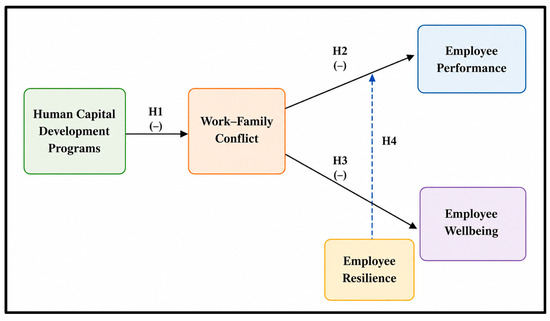
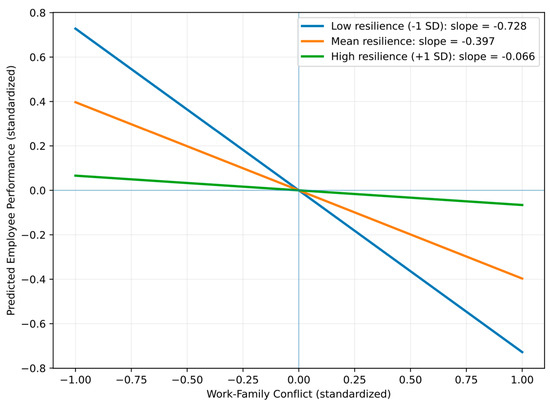

Disclaimer/Publisher’s Note: The statements, opinions and data contained in all publications are solely those of the individual author(s) and contributor(s) and not of MDPI and/or the editor(s). MDPI and/or the editor(s) disclaim responsibility for any injury to people or property resulting from any ideas, methods, instructions or products referred to in the content. |
© 2026 by the author. Licensee MDPI, Basel, Switzerland. This article is an open access article distributed under the terms and conditions of the Creative Commons Attribution (CC BY) license.