


Abstract
The study examines the impact of Work Social Media Usage (WSMU) on employee skills through the mediating roles of perceived relatedness, perceived autonomy, and perceived competence. A comprehensive questionnaire was formulated to measure WSMU and employee skills, based on self-determination theory, along with collecting data using a five-scale Likert questionnaire. The study focused on local and international consulting and training firms that are registered and operational in Jordan. Managers, trainers, marketers, evaluators, consultants, and academics were the main participants of the sample, which was chosen with convenience sampling. There was a total of 518 employees in the sample. The results obtained through structural equation modeling show that WSMU greatly increases employee skills, with perceived competence being the strongest mediator. The research illustrates how social media is useful in promoting the sharing of knowledge, emotional care, and skill acquisition, which can be helpful to organizations in making use of digital interactions for the development of employees.
1. Introduction
In general, people and employees constitute the most critical resources of an organization, and they affect its ability to adapt to change in turbulent and uncertain environments. The level of preparedness or vulnerability of an organization is determined by the skillsets and resources its employees possess, together with the prevailing management systems in place (Nyaupane et al., 2020). Skill itself is a complex concept; there is no single definition of it, and finding reasonable proxies is even more challenging. Some components of skill that are deemed relevant in a given workplace situation are particularly problematic for a social science researcher; those are: skill in the job, soft skills, and skill in social interactions.
The emergence of the internet has radically transformed globalization in knowledge, information, and data exchanges for people from any geographical location. This has facilitated the emergence of new social media platforms. Social media emerged from social networking and has become a very important means of communication between members of society at large (El Khatib & Khan, 2017; Alawamreh et al., 2025a). These are digital platforms that empower and encourage people to communicate, provide information, and interact with other people (C. Song & Lee, 2016). The increasing use of social media in the workplace has prompted researchers to examine its effects on employees and various organizational outcomes. A central question that often arises is what sets work-related social media use (WSMU) apart from general social media activity. WSMU is broadly defined as the sharing of content related to work experiences within a particular organization or industry, often involving the exchange of documents and work-relevant information (Liang et al., 2020).
Much of the existing empirical research on workplace social media use falls into four thematic areas. One area explores the relationship between social networking and employee productivity. For instance, X. Chen et al. (2020) and Q. Song et al. (2019) found that features of social media, such as visibility, association, editability, and persistence, enhance social connections, which, in turn, support creativity and effective job performance (X. Chen et al., 2020). Another stream of research focuses on how social media enables information sharing and knowledge transfer. Zhao et al. (2020) introduced the concept of ambient awareness, suggesting that features like communication tracking and data analysis help spread knowledge more effectively within organizations. Additionally, researchers have investigated how employees use social media for communication, both peer-to-peer (horizontal) and between employees and supervisors (vertical). Studies by X. Chen et al. (2020), Y. Chen et al. (2016), and others show that this usage improves relationships among team members and between leaders and subordinates. Lastly, a growing body of work examines how social media fosters organizational innovation and employee development. Companies are increasingly using these platforms for marketing communication and customer engagement while also influencing employee attitudes and skill-building. Research by Muninger et al. (2019), Testa et al. (2020), Obeidat et al. (2026) and Demircioglu (2018) suggests that social media plays a vital role in motivating employees to perform well, invest effort, and develop professionally.
The current literature indicates that social media has become an integral part of the modern workplace, contributing to enhanced communication and collaboration among employees. Previous studies have also demonstrated the impact of social media on job performance and work behavior. However, the relationship between social media use and employee skills development remains an underexplored area. While studies have addressed the impact of social media in workplaces, a clear knowledge gap exists regarding how these platforms specifically affect employee skills, particularly from a self-determination theory perspective. Questions about how employees leverage the autonomy, competence and relatedness associated with social media use to develop their skills remain. This study aims to bridge this gap by exploring the relationship between social media use at work and employee skills development, focusing on the role of autonomy, competence and relatedness as an intermediary. In doing so, this study will contribute new insights into the importance of social media in enhancing employee effectiveness, making it a timely and relevant area of research.
Through the use of structural equation modeling (SEM), this study seeks to investigate the direct and indirect effects of work-related social media usage on employee skills that are mediated by autonomy, competence, and relatedness. Self-determination theory (SDT) is concerned with social and environmental contexts that either aid or impede positive facets of self-motivation. This paradigm suggests that positive self-motivation originates from both internal and external components that face an organism directly (Ryan & Deci, 2000, p. 54). This article contends that using social media at work either directly or indirectly increases employee skills by fostering their sense of self-determination.
2. Literature Review and Hypothesis Development
2.1. Work Social Media Usage and Self-Determination Theory
Users’ psychological needs motivate them to use social media because it possesses functionalities capable of servicing these needs (Castillo et al., 2021). Employees utilize social media to interact with one another and with themselves, which can ultimately improve their autonomy, competence, and relatedness, according to Mergel (2013). Employees’ psychological needs, which are human instincts, are what motivate the use of social media in differentiated workplaces (Karahanna et al., 2015; Alawamreh et al., 2025b). Employees’ social media engagement can be categorized as behavior that is done by the person without external pressure (Karahanna et al., 2015, 2018). Hence, self-determination is a prominent facet of social media. This is grounded in the fundamental proposition of the innate need of employees for self-determining and self-initiating action (autonomy), connecting with others (relatedness), and taking action (competence, wish figure of speech take and be effective). Self-determination theory (SDT) postulates that action is motivated by the need for the fulfillment of three basic biological needs, which drive such activity. According to Wei et al. (2022), relatedness is the intrinsic psychological and social need of the worker to engage with and relate to others. A person experiences a greater sense of relatedness the more they feel loved by and close to others.
Employees who use social media for work can readily learn from their peers and comprehend how they behave at work (Wang et al., 2021). Work Social Media Usage can help people acquire information that may improve their job performance. The development of these skills enables people to deal with challenges in an adaptive way, thereby achieving a high level of autonomy. Therefore, people may independently manage time, processes, and approaches to dealing with monotonous work in ways that are most appropriate to their knowledge of the tasks. In other words, more frequent use of ESM for social purposes lets employees capture information, networking opportunities, and autonomy (Pitafi & Xie, 2024). Perceived competence means the ability to control and change one’s environment and to identify opportunities for acquiring new skills, talents, and abilities.
Using social media, employees can interact with colleagues in different departments of a company. It motivates employees to seek appropriate help and emotional support from colleagues in order to successfully manage a wide range of complex tasks, thus developing a sense of mastery. Furthermore, Employee Social Media Use enables employees to bond with their coworkers and receive vital information and knowledge. Employees can meet their competence needs by learning, thus improving their competencies (X. Chen & Wei, 2019; Cao et al., 2016; Al-Shaikh et al., 2025). With this understanding, the following hypotheses are formulated:
H1.
Work Social Media Usage positively impacts perceived relatedness.
H2.
Work Social Media Usage positively impacts perceived autonomy.
H3.
Work Social Media Usage positively impacts perceived competence.
2.2. Self-Determination Theory and Employee Skills
The skills required by employees have constituted a significant and extensive research area over many decades, with several skills emerging as essential not only for enabling employees to perform their jobs effectively but also for improving organizational performance and resilience during times of stress (Lengnick-Hall et al., 2011). Baum (2002) identified communication, teamwork, information technology, and a positive attitude toward continuous learning as key skills for success in the training sector. Employee skills also encompass a wide range of abilities, including soft skills, such as communication and teamwork, and technical skills, such as proficiency in using technology (Bindawas, 2025).
The connection-based aspect of human nature is classified as perceived relatedness, which is our basic need to feel we belong and “matter” to others (Rigby & Ryan, 2018). Researchers agree that this type of social psychological construct is important in the context of a supportive working environment where people value being close to others and social interaction (Fotiadis et al., 2019). In a workplace, relatedness need satisfaction is the feeling of being connected to and cared for by important others at work and the organization. For employees to feel connected and cared for, they need to identify as an organization or team member, feel communion within the organization, and have strong interpersonal relationships with colleagues. These factors are what enable employees to enhance their competencies (Jorissen, 2019).
The concept of autonomy is defined as feeling volitional and like the agent of one’s behavior, rather than feeling compelled to act by external forces (Grenier et al., 2024). Perceived autonomy is thought to have a positive impact on both the individual and the organization. For example, it is thought to increase job satisfaction among employees and improve the effectiveness, efficiency, and performance of the organization (Stazyk, 2016). According to Jong (2016), feedback enhances employee perceptions of their motivation and efficacy. As stated by Jong (2016, p. 820), when an individual has high autonomy and receives helpful feedback, they will feel competent with their work, which leads to elevated motivation and skills.
Informed, evaluative self-attribute self-perception is seen as competence motivated by one’s feelings and individual impressions of how skills or abilities interact with one’s environment (Wood, 2016). Competence refers to the belief in one’s capability to perform work activities with skill (Abbas et al., 2019). Competence motivation refers to a person’s inner need to master specific context areas because knowledge, skills, and understanding are regarded as important. The need to develop, demonstrate, or attain competence propels this motivation. As Zhou et al. (2021) have posited, this type of motivation seems to emerge as an inner force that calls for and allows behaviors to be guided and directed towards enhanced competence, allowing it to flourish.
H4.
Perceived relatedness positively impacts employee skills.
H5.
Perceived autonomy positively impacts employee skills.
H6.
Perceived competence positively impacts employee skills.
2.3. Mediating Role of Self-Determination Theory
Businesses have thought about using social media to help employees communicate, work together, and share knowledge. Employee productivity can increase with the use of social media (Karahanna et al., 2018). Moreover, social media enables workers to engage in social and professional activities (X. Chen & Wei, 2019). Additionally, social media can be used by staff members for both horizontal and vertical networking (Ali-Hassan et al., 2015). The influence of social media on work behavior might be positive or negative. Users will be more satisfied if they have interesting interactions (Novak et al., 2000). As it has been noted, users who feel social media fulfills their self-determination needs tend to be more satisfied (Hoffman & Novak, 2012). Social media may also have adverse effects, such as low productivity and performance of employees, bullying, misconduct, and time wastage.
It is true that some studies indicate that social media negatively affects individual performance and privacy within a company (Demircioglu, 2018). The impact of social media communication in the working environment is so significant that new knowledge and skills are required to cope in this era of user-centric media. There is a need for employees to integrate and interpret data, formulate constructive opinions, and present such viewpoints in the appropriate way (Pekkala & van Zoonen, 2022). There has been scant attention given to social media use by employees and the related management practices that facilitate and leverage their social media use, as well as the positive outcomes for firms. Relatively little attention has been given to individual employees’ social self-efficacy in the context of social media. This is puzzling because it could not only enhance the communicative competence of these employees but also enable them to manage or sidestep the negative consequences of social media use (Baccarella et al., 2020; Pekkala, 2020).
Studies show that workers who use social media for work-related purposes are generally happier with their positions and their career advancement. Thus, we predict that employees’ use of social media will boost their self-determination (competence, relatedness, and autonomy), which will then boost their job satisfaction and their abilities (Ganapati & Reddick, 2014).
H7.
Perceived relatedness mediates the relationship between Work Social Media Usage and employee skills.
H8.
Perceived autonomy mediates the relationship between Work Social Media Usage and employee skills.
H9.
Perceived competence mediates the relationship between Work Social Media Usage and employee skills.
H10.
Work Social Media Usage positively impacts employee skills.
3. Methodology
3.1. Scale Development
The participants in the study were given a questionnaire, named Social Media Usage Effect on Employee Skills Based on Self-Determination Theory, which uses a five-point Likert scale ranging from 1 “strongly disagree” to 5 “strongly agree”. Information for this study was obtained through empirical research involving a questionnaire, which serves as the primary tool for data collection (Johnson & Turner, 2003). To guarantee the credibility of the research questions concerning Work Social Media Usage, employees’ skills, and self-determination, plausible responses were carefully created using well-established studies in the field. To ensure the reliability of the questionnaire, well-established research was employed to enable the respondents’ personal views to be properly scrutinized.
The survey measured only four dimensions: social media use at work, competence, relatedness and autonomy, and employee skills. All survey items were adapted from previously approved scales to suit the organizational context of consulting and training firms in Jordan. Prior to the main survey, the questionnaire was reviewed for contextual clarity and internal consistency, and items that did not demonstrate sufficient psychometric performance based on predefined criteria were removed. Responses related to the independent variable, social media use at work, were collected using the five-item scale developed by Bode and Goodlad (2023). Additionally, responses related to employee skills were collected using a six-item scale (one item was removed) developed by Wickenhauser et al. (2021). The mediating variable, self-determination, was assessed using three dimensions: competence, sense of belonging, and autonomy. This variable was assessed using twelve items (two items were removed) developed by Fong et al. (2015).
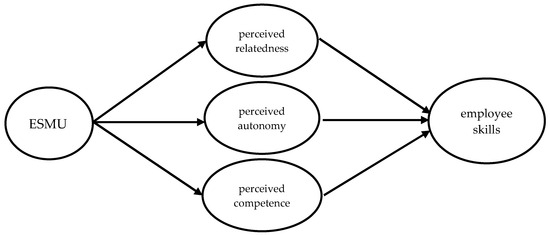
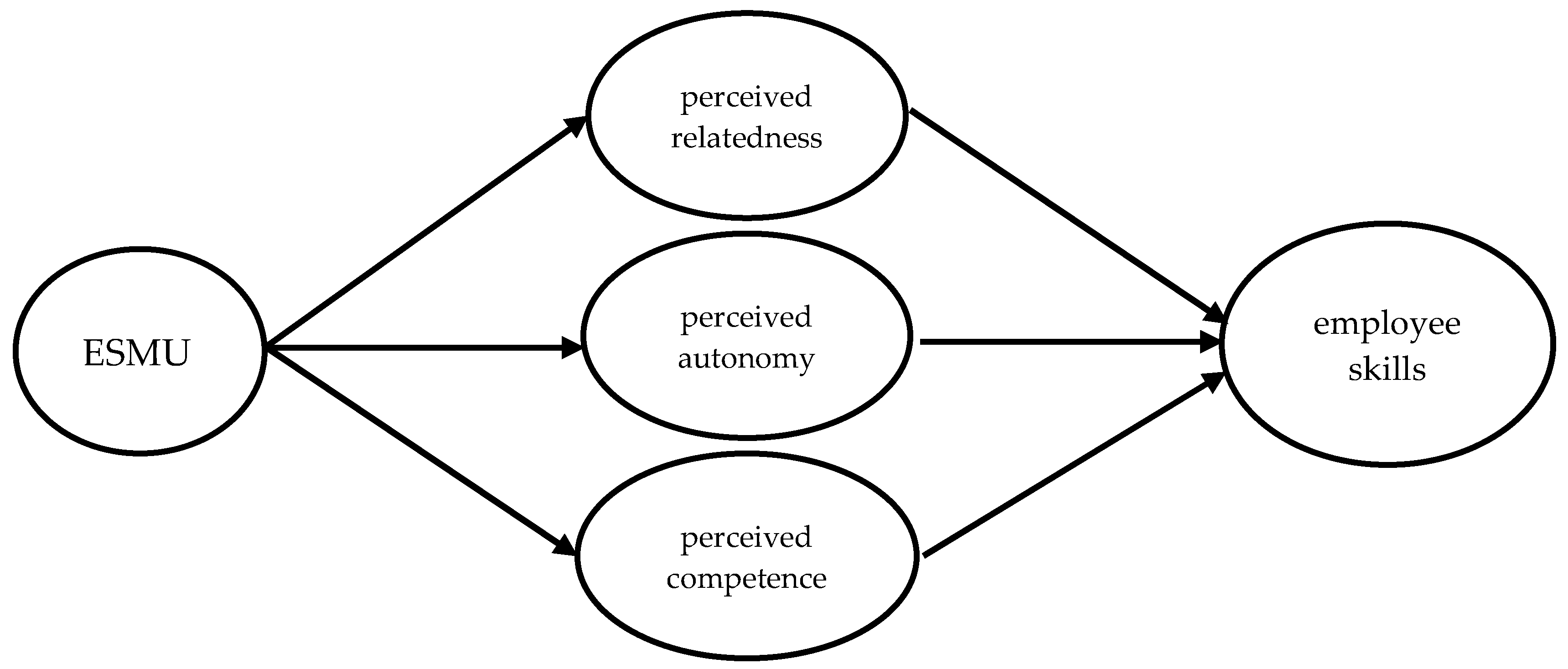
Figure 1 depicts the research framework that underpins this investigation and shows the proposed connections among employees’ skills, self-determination, and Work Social Media Usage.
Figure 1.
Research framework.
3.2. Research Design, Population and Sampling
Consulting and Training Companies offer remarkable training programs in the region, and the target population includes all companies engaged in consulting and training that are registered and active in Jordan. This is inclusive of institutions that are local and international and offer training and consulting services. A convenient sampling approach was employed to select participants for the study. This sampling method was used because it was not possible to define the study population precisely. A structured questionnaire and a self-administered approach were used to collect data from respondents who were in management positions at different levels, as well as from academicians and consultants. Data was collected within two months, which was done in the month of April 2025. A total of 518 employees were surveyed from these companies, of which 64% were males and 36% females. With regard to positions held, respondents reported the following: manager 18%, employee 1%, Trainer 22%, Marketing 17%, Evaluation 16%, and Consulting 20%. Degrees were as follows: diploma holders 8%, first degree 56%, master’s 19%, and, finally, PhD 17%.
Before beginning to fill out the questionnaires, each participant gave verbal informed consent. The participants received a thorough explanation of the study goals, methods, confidentiality, and freedom to discontinue participation at any moment. Verbal informed consent was chosen instead of written consent in order to minimize potential discomfort, ensure accessibility for all participants, and encourage openness by reducing any perceived formality or pressure associated with signing documents.
4. Results
The study findings give an in-depth insight into the way Work Social Media Usage (WSMU) affects the skills of employees via the mediation of fundamental psychological needs. In particular, the roles of perceived relatedness, perceived autonomy, and perceived competence were considered in the study as mediating factors. The sections below will provide the descriptive statistics of the measurement items, the measurement model test, and the test of the structural relationship between the constructs.
The descriptive statistics of the items measured in the study, namely, means and standard deviations, are determined and presented in Table 1. This information shows that perceived autonomy and relatedness were reported as moderate to high by the participants (the average scores of 3.788 and 3.790 on items PA4 and PR3, respectively, were the highest), and that the participants tended to agree with statements such as PA4 (I engage in activities that genuinely interest and motivate me) and PR3 (I experience a strong sense of closeness and connection to important people in my life). By contrast, the scores of the items pertaining to certain work-related social media activities, e.g., WSMU5 (I use social media to share documents and files with colleagues), were lower on the mean (3.012), which indicates that even though social media is a common element of everyday behaviors (WSMU1 mean = 3.582), sharing of documents via social media is less common. The standard deviations of all items are between 1.068 and 1.309, indicating that there is a steady amount of variability in the responses of the participants and serving as a strong base for further structural equation modeling.
Table 1.
Descriptive statistics of observed items.
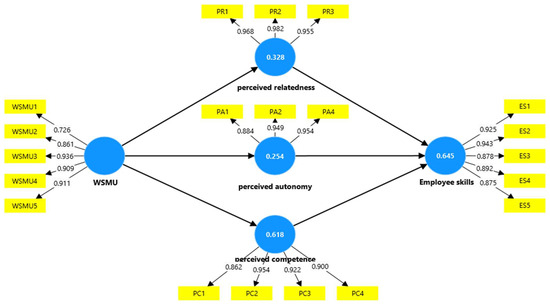
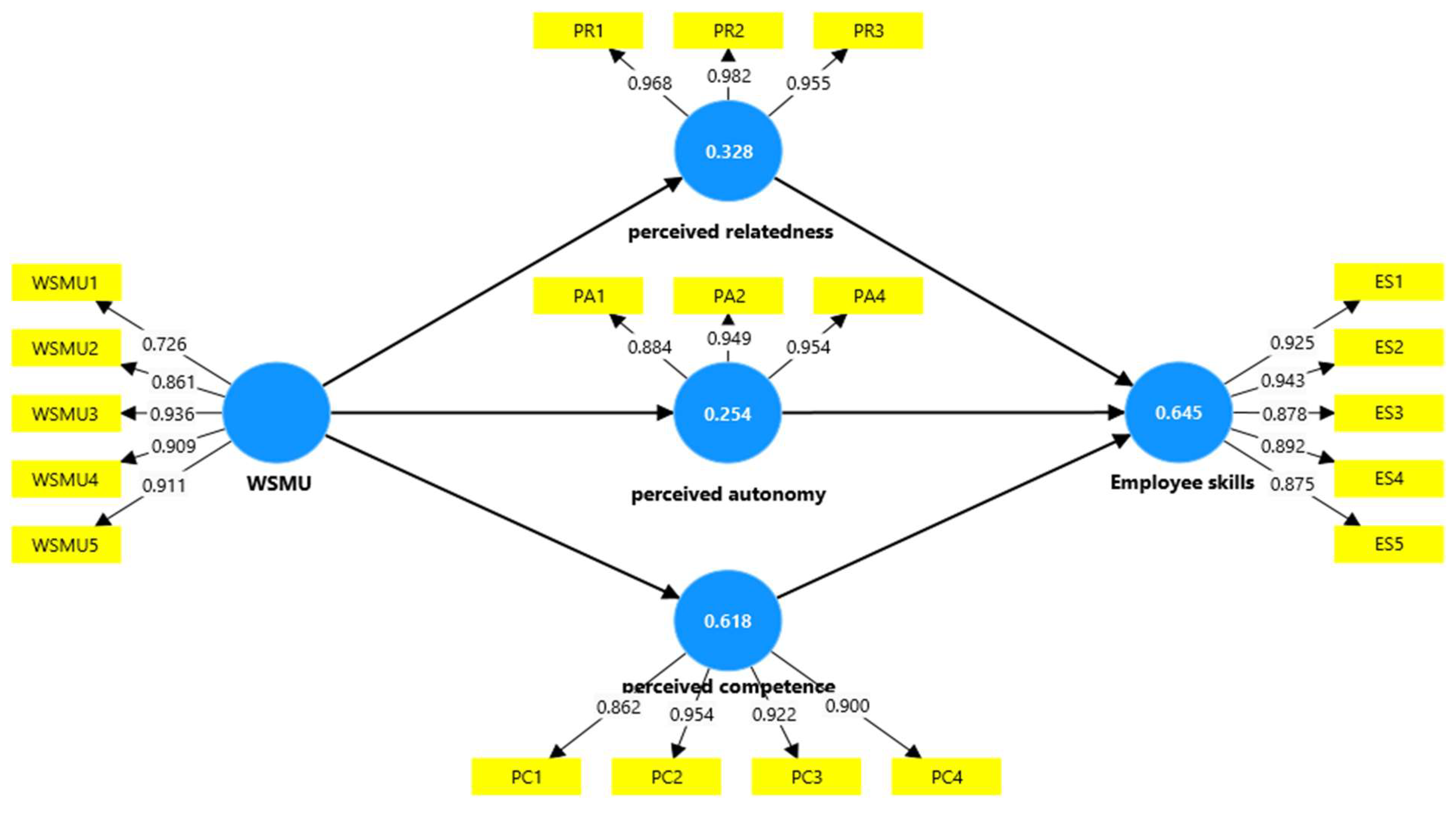
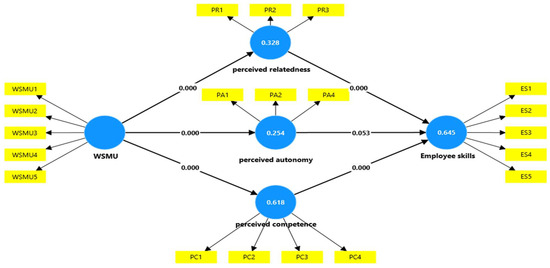
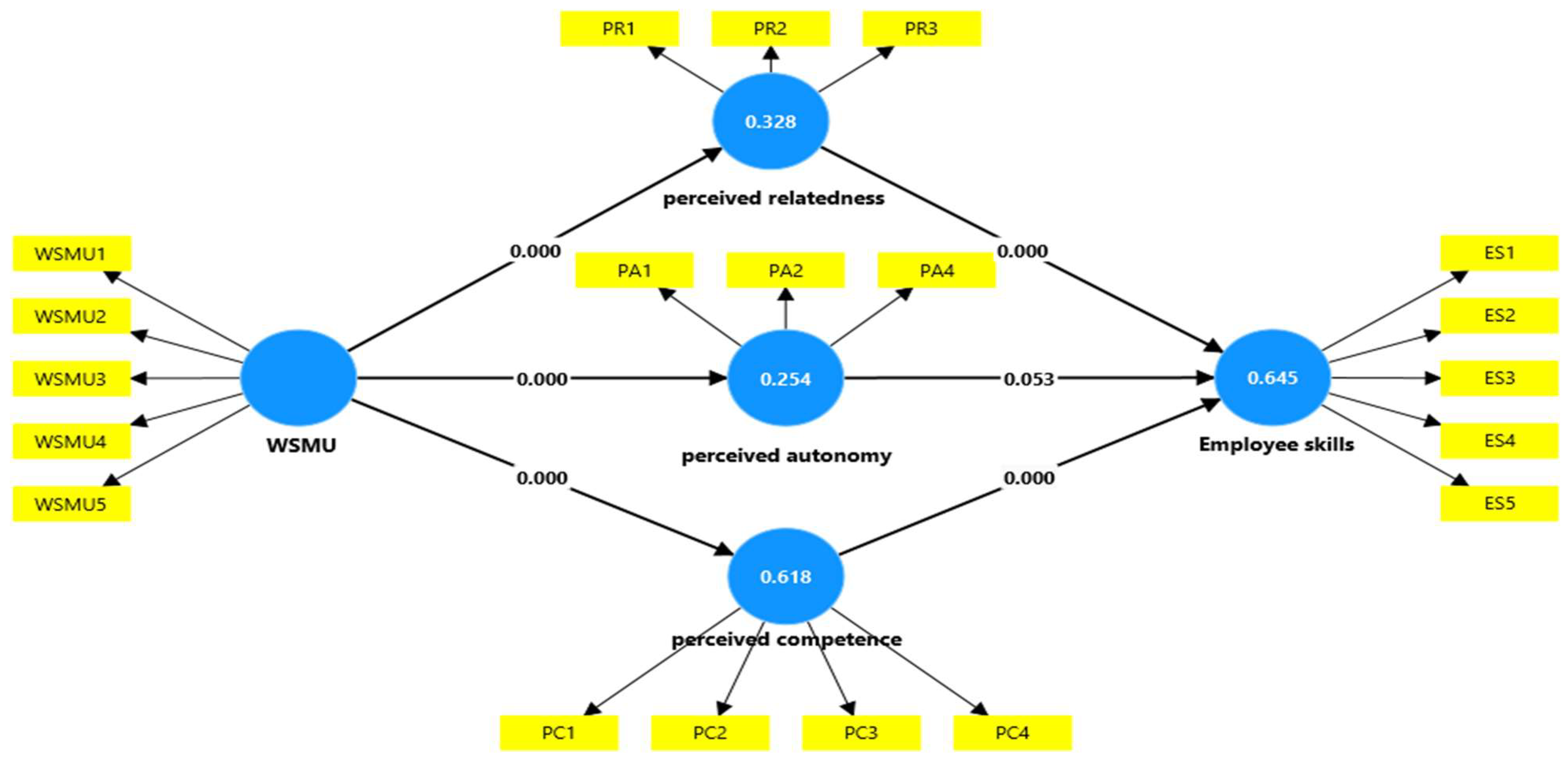
The analysis suggests that Work Social Media Usage (WSMU) has a profound, favorable effect (0.645) on employee skills because of its effect on perceived relatedness (0.328), perceived autonomy (0.254), and perceived competence (0.618). Of these mediators, perceived competence has the highest impact, which indicates its importance in the development of skills. The model’s validity is supported by the findings of observed variables, along with the constructs’ measurement, showing high reliability, which confirms the model’s explanation of the impact of WSMU on employee skills. Figure 2 shows the measurement model, which illustrates the structural relationships between WSMU, the mediating variables, and employee skills. This helps to visually represent these relationships and measurement pathways.
Figure 2.
Measurement model.
4.1. Construct Reliability and Validity
The outer model explains the relationship between each indicator and other related variables (Priyadi et al., 2020). The purpose of validity testing is to establish the degree to which a specific measuring tool can accurately assess the reality it intends to measure (Manullang & Mesra, 2024). Thus, this research study performed validity and reliability tests. Table 2 shows the results of the construct reliability, validity tests, and Cronbach’s alpha for each variable.
Table 2.
Construct reliability and validity.
The measurement model was carried out with Cronbach’s alpha and composite reliability (CR) to determine its reliability. Although all constructs met the generally suggested 0.7 threshold, which is considered an acceptable internal consistency, extremely high scores, especially on the perceived relatedness construct, can be an indication of the redundancy of some items. So, despite the overall reliability of the scales, these large scores cannot be considered as clear-cut indicators of a notion such as trustworthiness and should be treated with caution (Waluyo & Mohammad, 2020). In the same manner, the scores of the composite reliability prove the internal consistency of the constructs, that is, the measurement items are sufficient to reflect the theoretical concepts.
The heterotrait–monotrait ratio (HTMT) was used to determine discriminant validity. All values are lower than the suggested value of 0.85, which proves that the constructs are quite different. Nonetheless, the value of the HTMT that compares WSMU and perceived competence is almost equal to this value (0.847), which means that there is some conceptual closeness between the two constructs. This closeness should also be taken into consideration when interpreting full discriminant validity, and one should take great care to provide theoretical justification when distinguishing these constructs (Hair & Alamer, 2022). On the whole, the measurement model shows a sufficient level of reliability and discriminant validity, which explains a strong basis for further structural model analyses and outlines the areas where the overlap of the items can affect the meaning of the constructs.
The results of the correlations between employee skills and Work Social Media Usage (WSMU), perceived autonomy, perceived competence, perceived relatedness and the diagonal values, which show construct reliability, are presented in Table 3. All constructs have high internal consistency, as has been exhibited by the diagonal values (0.872 to 0.968). The correlations are positive, and WSMU is strongly correlated with perceived competence (0.786) and moderately with autonomy (0.504) and relatedness (0.573), indicating that the use of social media promotes various dimensions of employee development (Hammadi et al., 2024; Hair & Alamer, 2022).
Table 3.
Discriminant validity, heterotrait–monotrait ratio (HTMT) matrix.
Perceived autonomy and perceived relatedness have a high correlation (0.862), which signifies conceptual proximity. Despite the fact that the diagonal values indicate that the constructs are discriminately valid for the Fornell–Larker criterion, the large correlation indicates that the constructs refer to related but different aspects of the employee experience. In particular, autonomy conveys employees’ feelings of power and autonomy in their work, and relatedness shows the level of social and human relations. It is theoretically right to treat them as separate mediators regardless of their high level of association, Table 4 show the result for Fornell–Larcker criterion as below. Moreover, the elaborate Figure 3 show the structural model.
Table 4.
Fornell–Larcker criterion.
Figure 3.
Structural model.
Table 5 shows that the overall model fit was examined before determining the structural relationships. SRMR was also 0.065, which is lower than the suggested value of 0.08, showing that the model fits well. In addition, the normed fit index was 0.920, which is higher than the recommended value of 0.90, once again confirming the suitability of the model. These findings demonstrate that the model is suitable and the error between the actual and the predictive covariance matrices is small (Hair & Alamer, 2022; AlRaggad et al., 2025). Furthermore, as it was determined in the measurement model assessment, the constructs exhibit reasonable reliability and validity, which proves the measurement items are suitable for use in the structural model analysis.
Table 5.
Global model fit indices.
Table 6 shows the variance inflation factor (VIF) that was used to measure collinearity between the constructs. The VIF values are between 1.523 and 2.105, which is significantly lower than the recommended VIF value of 5, as well as the more conservative value of 3.3 proposed in the PLS-SEM literature. In particular, the VIF values of WSMU (1.523), perceived autonomy (1.876), perceived competence (2.105), and perceived relatedness (1.987) are low, and therefore, multicollinearity is not a problem in the model.
Table 6.
Construct VIF values.
Notably, all the values reported are not near critical levels, with the biggest VIF (2.105) value being well within the range of acceptable values. This indicates that the predictor constructs are not too close, do not have problematic overlap with each other, and, hence, may bias the estimation of path coefficients. Accordingly, it is reasonable to interpret the structural relationships with certainty since there is no multicollinearity to guarantee the stability and reliability of the estimates of regression. Altogether, the findings validate the structure of the model, as the collinearity assumptions that have to be satisfied are met in order to conduct PLS-SEM analysis, and no corrective actions (e.g., the removal of constructs or model re-specification) are needed.
4.2. Hypotheses Testing
Table 7 shows the path coefficients, standard deviation, t-value, and p-value of the structural relations between Work Social Media Usage (WSMU), the mediating variables (perceived autonomy, perceived competence, and perceived relatedness) and employee skills. The findings reveal that WSMU is significantly related to the three mediators, perceived autonomy (β = 0.504, p < 0.001), perceived competence (β = 0.786, p < 0.001), and perceived relatedness (β = 0.573, p < 0.001), with a significant value of the relationship. These results confirm that WSMU is significant in improving the psychological perceptions of the employees in the workplace.
Table 7.
Path coefficients, mean, STDEV, T-values, and p-values.
Concerning the impacts of the mediators on employee skills, perceived relevance (β = 0.532, p = 0.001) and perceived relatedness (β = 0.263, p = 0.001) have significant positive values, which implies the importance of the mediators in enhancing the skills of the employees. On the contrary, perceived autonomy lacks a statistically significant influence on employee skills (β = 0.098, p-value =0.053), as the p-value is above the 0.05 threshold. This result is a clear indication that mediation using perceived autonomy is not substantiated in this example. Generally, the results indicate that though WSMU contributes to a significant increase in all three psychological variables, only perceived competence and perceived relatedness can be considered as significant mediating variables in the conversion of WSMU into better employee skills. Thus, the mediating mechanism works more on competence and relatedness, as opposed to autonomy, and the difference must be maintained at all times when describing and discussing the results.
The mediation analysis has looked at the indirect influences of WSMU on the skills of employees, as perceived relatedness, perceived autonomy and perceived competence. The specific indirect effects and the total indirect effect are given in Table 8. The indirect effects through perceived competence (beta = 0.419 and p = 0.001) and perceived relatedness (beta = 0.151 and p = 0.001) were significant, showing that they played a significant role in mediating the effect of WSMU on skill development. On the other hand, the perceived autonomy effect was not statistically significant (beta = 0.049, p = 0.066), which supports the observation that perceived autonomy is not a significant mediator in this model. The overall mediation of WSMU on worker skills, including all three of the mediators, was also strong (beta = 0.619, p < 0.001). This indicates that the effect of WSMU on skill development is mostly mediated by psychological states, which are considered to be perceived competence and relatedness, and that perceived autonomy does not affect a given mediation ability.
Table 8.
Mediation analysis: specific and total indirect effects.
5. Discussion and Conclusions
Considering the significance of employee skills, the current study intended to design a new model for improving these skills within the boundaries of an organization. This study concentrated on analyzing the connections between social network usage at the workplace and employee skills in the context of self-determination theory, which involved formulating and testing ten hypotheses. The findings are outlined below:
Our findings suggest that the developmental value of the use of work social media is not in digital interaction per se but in the degree to which the latter enhances the perceived competence and relatedness of employees. The theoretical relevance of this point is that recent digital studies have demonstrated that the blistering development of technology-related studies is typically accompanied by conceptual fragmentation (Medina & Lodeiros-Zubiria, 2025). Considering that, the current findings suggest that not every psychological process linked to digital tools is equally effective since the impact varies based on the type of psychological need that is triggered in the organizational setting. The factual data affirm that the use of social media in the work environment has a direct and positive relationship with employee skill development. WSMU platforms create a special space for self-expression, knowledge sharing, and feedback, which are fundamental to the process of acquiring modern skills (M. Chen et al., 2023). The benefits of such interaction with social media professionals help employees to see varied viewpoints and self-directed learning opportunities that may not be available in a traditional organizational structure. This observation supports the notion that digital tools are not communication streams but active agents of professional development.
Moreover, owing to the interactive features of social media, real-time feedback can be established, which is not always achievable in formal training programs. In cases where employees post their work or ideas on these platforms, the instantaneous feedback from their colleagues and managers may also constitute micro-learning, where incremental skills are enhanced through repeated social validation and criticism. This indicates that WSMU promotes a more vibrant and organic process of skill development, which is more appropriate to the fast-evolving needs of the modern workplace. One of the main conclusions of this paper is that the most influential mediator between WSMU and employee skills is perceived competence (H9: beta = 0.419, p = 0.001). This implies that the main way in which social media improves skills is by increasing one’s confidence to believe that he/she is capable of doing something well. WSMU enables staff to show mastery, positive reinforcement, and collaborative problem-solving, all of which strengthen their feeling of mastery.
This imbalance of mediators indicates that in the newer digital domains, research expansion does not discredit the necessity of increased conceptual aura in the method of technology absorption (Medina & Lodeiros-Zubiria, 2025). The findings suggest that the social media value of work is specifically whether this interaction supports competence perceptions. Once employees feel more competent due to their online communication, they are more willing to take up more demanding tasks and continue to overcome difficulties, which results in quantifiable growth in their professional competence (Kultalahti et al., 2023; AlKhawaldah et al., 2025).
Theoretically, this result is consistent with the competence-first perspective of skill learning, in which the psychological motivation of mastery is the main force driving learning. When it comes to digital tools, this implies that the most efficient ones are those that give clear signs of success and improvement, including likes, shares, or positive feedback from reputable colleagues. These online validations are external verifications of the internal feeling of competence of a worker, and the virtuous circle of motivation and skill development occurs.
It was also found that WSMU generates a significant impact on perceived relatedness (H1), which also positively correlates with the skills of employees (H4). The concept of perceived relatedness is also a strong mediator (H7), which implies that the sociability and community spirit brought about by Enterprise Social Media (ESM) preconditions an environment where the culture of information sharing and skill development may flourish. Employees are more likely to take part in open communication, which is a requirement of collective problem-solving and sharing of ideas, when they feel part of and integrated into their workplace (Martela & Riekki, 2018; Pitafi & Xie, 2024). This is especially relevant in online situations because, in the online world, the absence of physical proximity may easily create a feeling of isolation. WSMU can be useful in this area by offering an informal socializing environment, which creates a sense of trust and psychological safety that allows employees to take risks and learn through their errors. A more supportive learning atmosphere can be established by encouraging the feeling of a digital community in which employees feel free to seek assistance and share their expertise with others.
Unlike the competence and relatedness roles, perceived autonomy was not supported as an important mediator (H8) or a driving force of employee skills (H5). Although the positive influence of WSMU on perceived autonomy was identified to be positive (H2), this augmented sense of independence proved not to be translated into the development of skills within this specific sample.
This result is important in the conceptual sense because it shows that not every psychological process related to digital technologies works identically. The absence of a meaningful mediating effect of autonomy implies that access to information and the right to take action through social media alone is not enough to build skills without at the same time strengthening the sense of competence or relatedness. In other organizational settings, the perceived benefits of independent decision-making may be diluted by information overload or a sense of being monitored all the time, which can be compensated for with the perceived advantage of autonomy offered by digital tools (Ahmad et al., 2022; Sahebi & Formosa, 2022). Additionally, the insignificance of autonomy can be due to the character of the tasks or the organizational culture at the firms that were surveyed. Workers in highly standardized work settings or those who act in areas of strong collective performance may not require as much individual freedom as they do social bonds and technical mastery in the development of skill. This implies that the effects of digital tools are very contextual and that organizations need to pay detailed attention to the interaction between their own culture and structure and the psychological needs of their employees.
5.1. Practical Implications
These findings are important to management and policy makers, especially in the teaching and consulting areas, because they recommend that management in the surveyed firms formulate effective training instruments concerning social media with the aim of enhancing employees’ feelings of competence and connection, which, in turn, will help in developing their skills and productivity (Pitafi & Xie, 2024). In addition to social media, it is also possible to improve the work environment by emphasizing the platform’s role in communication and collaboration among employees, which further fosters their sense of belonging and job satisfaction. Furthermore, training and consulting firms should mitigate potential unfavorable outcomes resulting from overuse, such as a reduction in productivity, by formulating clear usage policies. There is a need for organizations to formulate policies that would allow the desired positive effects to be achieved without negative consequences on job performance. Lastly, there is a need for these firms to establish social programs in which employees can be motivated to utilize social media in a way that aids in developing their competencies and enhances their sense of skills by sharing achievements and knowledge.
5.2. Theoretical Implications
The study makes an important theoretical contribution, in light of self-determination theory, to determining the impact of social media use at work on employees’ skills. The research has some theoretical ramifications, which are described here. First, the study improves the theoretical framework on intrinsic motivation. The findings indicate that social media use while at work can foster the experience of competence and a sense of belonging among employees. This positive result aligns with self-determination theory, which stresses the need to meet fundamental psychological needs within a social system in order to enhance intrinsic motivation (Demircioglu, 2018). Second, the results relate to self-determination theory and broaden its domain. The study aids in the application of self-determination theory by examining the influence of social media usage on employee skill acquisition, which is a relatively new area of study, and stimulates further research in this field.
5.3. Limitations and Future Research Directions
Though this study offers some valuable insights, it faces quite a number of limitations. The use of a convenience sample consisting of consulting and training firms in Jordan can also restrict the external validity of the results to other sectors or cultures. The cross-sectional design does not allow for establishing the cause–effect links or tracking the development of skills over time. Moreover, the self-reported data implies the risk of common method bias. To the extent that it is measured, the WSMU and employee skills measurement, though based on existing scales, may not be a complete measure of what these constructs entail in every organizational context. Finally, the insignificance of perceived autonomy should also be examined in greater detail, as it does not align with some of the overall expectations of SDT and may be affected by a particular context that is not considered in detail in this study.
Future studies can overcome these limitations by using longitudinal research to trace how the capabilities of employees change in response to WSMU. An increase in the sample to different industries and geographical locations would increase the generalizability of the results. To understand the subtle processes by which employees understand autonomy and its interaction with WSMU in various organizational settings, qualitative methods, like interviews or case studies, might be more informative. Moreover, it would be useful to examine the peculiarities and capabilities of social media platforms that can best encourage competence and relatedness. Researchers might also examine possible moderators, including organizational culture, leadership styles or personal differences, which may mediate the observed relationships in this study. Last but not least, the analysis of the negative effects that WSMU may have, including digital distraction or privacy issues, and how they interact with the process of skill formation, would provide a deeper insight into this multifaceted phenomenon.
Funding
This research received no external funding.
Institutional Review Board Statement
The study was approved by the Ethical Review Committee at Jadara University (protocol code A.D/16-10/113 and date 15 March 2026).
Informed Consent Statement
Informed consent was obtained from all subjects involved in the study.
Data Availability Statement
The datasets generated and/or analyzed during the current study are not publicly available due to ethical and privacy considerations, including the protection of participants’ confidentiality.
Acknowledgments
The author are grateful to the Jadara University for providing financial support for this publication.
Conflicts of Interest
The research findings could not have been impacted by any financial or personal conflicts of interest according to the author.
References
- Abbas, M., Raja, U., Anjum, M., & Bouckenooghe, D. (2019). Perceived competence and impression management: Testing the mediating and moderating mechanisms. International Journal of Psychology, 54(5), 668–677. [Google Scholar] [CrossRef] [Scilit]
- Ahmad, M. B., Hussain, A., & Ahmad, F. (2022). The use of social media at work place and its influence on the productivity of the employees in the era of COVID-19. SN Business & Economics, 2(10), 156. [Google Scholar] [CrossRef] [Scilit] [PubMed]
- Alawamreh, A. R., Musleh, S., Alalwan, B. A., Ramadnah, N. M., Obeidat, A. M., Mohadat, M., Kanan, M., & Al-Shaikh, M. S. (2025a). Teachers’ occupational well-being for improving quality of instruction. In Comprehensive insights in technological sustainability, education and business: Exploring diverse perspectives and impactful strategies. Emerald Publishing Limited. [Google Scholar]
- Alawamreh, A. R., Obeidat, A. M., Al Salaheen, J. A., Binsaddig, R., Mohadat, M., & Al-Shaikh, M. S. (2025b). Flowing minds: The impact of social media on the cognitive abilities of graduate students. In Comprehensive insights in technological sustainability, education and business: Exploring diverse perspectives and impactful strategies. Emerald Publishing Limited. [Google Scholar]
- Ali-Hassan, H., Nevo, D., & Wade, M. (2015). Linking dimensions of social media use to job performance: The role of social capital. Journal of Strategic Information Systems, 24(2), 65–89. [Google Scholar] [CrossRef] [Scilit]
- AlKhawaldah, A. A., Mutazam, M., & Alawamreh, A. R. (2025). Evaluating leadership in e-learning: A Jordanian perspective using toe theory. Contemporary Journal of Social Science Review, 3(2), 2256–2266. [Google Scholar]
- AlRaggad, A. M., Alawamreh, A. R., Olimat, K. N., Obeidat, A. M., Al-Radaideh, A. T., Kanan, M., Abd Alrahman Al Awamrah, N. R., & Al-Shaikh, M. S. (2025). The role of educational platforms in improving the quality of education among secondary school students in Jordan. In Comprehensive insights in technological sustainability, education and business: Exploring diverse perspectives and impactful strategies. Emerald Publishing Limited. [Google Scholar]
- Al-Shaikh, M. S., Alsarawi, W., Alzeaideen, K., Binsaddig, R., & Alawamreh, A. R. (2025). Social media and its impact on purchasing decision for residential property: Empirical study on apartments on city of Zarqa–Jordan. In Comprehensive insights in technological sustainability, education and business: Exploring diverse perspectives and impactful strategies. Emerald Publishing Limited. [Google Scholar]
- Baccarella, C. V., Wagner, T. F., Kietzmann, J. H., & McCarthy, I. P. (2020). Averting the rise of the dark side of social media: The role of sensitization and regulation. European Management Journal, 38(1), 3–6. [Google Scholar] [CrossRef] [Scilit]
- Baum, T. (2002). Skills and training for the hospitality sector: A review of issues. Journal of Vocational Education & Training, 54(3), 343–364. [Google Scholar] [CrossRef] [Scilit]
- Bindawas, A. M. (2025). Promoting sustainable tourism through employee skills: Contextualizing quality education and the human resource management perspective (SDG-4). Sustainability, 17(2), 748. [Google Scholar] [CrossRef] [Scilit]
- Bode, K., & Goodlad, L. M. (2023). Data worlds: An introduction. Critical AI, 1(1–2). [Google Scholar] [CrossRef] [Scilit]
- Cao, X., Guo, X., Vogel, D., & Zhang, X. (2016). Exploring the influence of social media on employee work performance. Internet Research, 26(2), 529–545. [Google Scholar] [CrossRef] [Scilit]
- Castillo, A., Benitez, J., Llorens, J., & Luo, X. (2021). Social media-driven customer engagement and movie performance: Theory and empirical evidence. Decision Support Systems, 145, 113516. [Google Scholar] [CrossRef] [Scilit]
- Chen, M., Babar, M., Ahmed, A., & Irfan, M. (2023). Analyzing the impact of enterprise social media on employees’ competency through the mediating role of knowledge sharing. Sustainability, 15(12), 9499. [Google Scholar] [CrossRef] [Scilit]
- Chen, X., & Wei, S. (2019). Enterprise social media use and overload: A curvilinear relationship. Journal of Information Technology, 34(1), 22–38. [Google Scholar] [CrossRef] [Scilit]
- Chen, X., Wei, S., Davison, R. M., & Rice, R. E. (2020). How do enterprise social media affordances affect social network ties and job performance? Information Technology and People, 33(1), 361–388. [Google Scholar] [CrossRef] [Scilit]
- Chen, Y., Wen, Z., Peng, J., & Liu, X. (2016). Leader-follower congruence in loneliness, LMX and turnover intention. Journal of Managerial Psychology, 31(4), 864–879. [Google Scholar] [CrossRef] [Scilit]
- Demircioglu, M. A. (2018). Examining the effects of social media use on job satisfaction in the Australian public service: Testing self-determination theory. Public Performance & Management Review, 41(2), 300–327. [Google Scholar] [CrossRef] [Scilit]
- El Khatib, M., & Khan, F. R. (2017). Implications of social media networks technology in interpersonal skills and academic performances. International Journal of Management, Innovation & Entrepreneurial Research, 3(2), 99–110. [Google Scholar] [CrossRef] [Scilit]
- Fong Lam, U., Chen, W. W., Zhang, J., & Liang, T. (2015). It feels good to learn where I belong: School belonging, academic emotions, and academic achievement in adolescents. School Psychology International, 36(4), 393–409. [Google Scholar] [CrossRef] [Scilit]
- Fotiadis, A., Abdulrahman, K., & Spyridou, A. (2019). The mediating roles of psychological autonomy, competence and relatedness on work-life balance and well-being. Frontiers in Psychology, 10, 1267. [Google Scholar] [CrossRef] [Scilit]
- Ganapati, S., & Reddick, C. G. (2014). The use of ICT for open government in US municipa lities: Perceptions of chief administrative officers. Public Performance & Management Review, 37(3), 365–387. [Google Scholar]
- Grenier, S., Gagné, M., & O’Neill, T. (2024). Self-determination theory and its implications for team motivation. Applied Psychology, 73(4), 1833–1865. [Google Scholar] [CrossRef] [Scilit]
- Hair, J., & Alamer, A. (2022). Partial Least Squares Structural Equation Modeling (PLS-SEM) in second language and education research: Guidelines using an applied example. Research Methods in Applied Linguistics, 1(3), 100027. [Google Scholar] [CrossRef] [Scilit]
- Hammadi, N. Q., Mohadat, M. A., & Alawamreh, A. R. (2024). Gamification and attitudes in engaging children in the learning process: A case of online math games. Edelweiss Applied Science and Technology, 8(6), 9743–9755. [Google Scholar] [CrossRef] [Scilit]
- Hoffman, D. L., & Novak, T. P. (2012). Why do people use social media? Empirical findings and a new theoretical framework for social media goal pursuit. SSRN Electronic Journal. [Google Scholar] [CrossRef] [Scilit]
- Johnson, B., & Turner, L. A. (2003). Data collection strategies in mixed methods research. In Handbook of mixed methods in social and behavioral research (Vol. 10, pp. 297–319). SAGE Publications. [Google Scholar]
- Jong, J. (2016). The role of performance feedback and job autonomy in mitigating the negative effect of role ambiguity on employee satisfaction. Public Performance & Management Review, 39(4), 814–834. [Google Scholar] [CrossRef] [Scilit]
- Jorissen, J. C. M. (2019). How employees feel at work: Relatedness Need Satisfaction within organizational context [Master’s thesis, University of Twente]. [Google Scholar]
- Karahanna, E., Xu, S. X., Zhang, A. N., & Xu, Y. (2018). The needs-affordances-features (NAF) perspective for the use of social media. MIS Quarterly, 42(3), 737–756. [Google Scholar] [CrossRef] [Scilit]
- Karahanna, E., Xu, S. X., & Zhang, N. (2015). Psychological ownership motivation and use of social media. Journal of Marketing Theory and Practice, 23(2), 185–207. [Google Scholar] [CrossRef] [Scilit]
- Kultalahti, S., Viitala, R., Hujala, M., & Kekale, T. (2023). Employee well-being: The role of perceived competence. Journal of Workplace Learning, 35(7), 648–661. [Google Scholar] [CrossRef] [Scilit]
- Lengnick-Hall, C., Beck, T., & Lengnick-Hall, M. (2011). Developing a capacity for organizational resilience through strategic human resource management. Human Resource Management Review, 21(3), 243–255. [Google Scholar] [CrossRef] [Scilit]
- Liang, M., Xin, Z., Yan, D. X., & Jianxiang, F. (2020). How to improve employee satisfaction and efficiency through different enterprise social media use. Journal of Enterprise Information Management, 34(3), 922–947. [Google Scholar] [CrossRef] [Scilit]
- Manullang, S., & Mesra, T. (2024). Penerapan sistem manajemen rantai pasok ukm dodol nenas dengan menggunakan metode partial least square. Jurnal Industri, Manajemen, Dan Rekayasa Sistem Industri, 2(2), 60–68. [Google Scholar]
- Martela, F., & Riekki, T. J. (2018). Autonomy, competence, relatedness, and beneficence: A multicultural comparison of the four pathways to meaningful work. Frontiers in Psychology, 9, 327587. [Google Scholar] [CrossRef] [Scilit]
- Medina, F., & Lodeiros-Zubiria, M. L. (2025). The role of social media influencers and eWOM in driving purchase intention: Insights from SMEs in the Gamarra cluster. Cogent Business & Management, 12(1), 2519969. [Google Scholar] [CrossRef] [Scilit]
- Mergel, I. (2013). A framework for interpreting social media interactions in the public sector. Government Information Quarterly, 30(4), 327–334. [Google Scholar] [CrossRef] [Scilit]
- Muninger, M.-I., Hammedi, W., & Mahr, D. (2019). The value of social media for innovation: A capability perspective. Journal of Business Research, 95, 116–127. [Google Scholar] [CrossRef] [Scilit]
- Novak, T. P., Hoffman, D. L., & Yung, Y.-F. (2000). Measuring the customer experience in online environments: A structural modeling approach. Marketing Science, 19(1), 22–42. [Google Scholar] [CrossRef] [Scilit]
- Nyaupane, G. P., Prayag, G., Godwyll, J., & White, D. (2020). Toward a resilient organization: Analysis of employee skills and organization adaptive traits. Journal of Sustainable Tourism, 29(4), 658–677. [Google Scholar] [CrossRef] [Scilit]
- Obeidat, A. M., Khaddam, A. A., Alzghoul, A., Al Afeshat, M. T. M., & Al Ghizzawi, M. (2026). How business intelligence shapes service innovation: Knowledge sharing as a mediator and culture as a moderator in the Jordanian context. Economics, 14(1), 391–411. [Google Scholar] [CrossRef] [Scilit]
- Pekkala, K. (2020). Managing the communicative organization: A qualitative analysis of knowledge-intensive companies. Corporate Communications: An International Journal, 25(3), 551–571. [Google Scholar] [CrossRef] [Scilit]
- Pekkala, K., & van Zoonen, W. (2022). Work-related social media use: The mediating role of social media communication self-efficacy. European Management Journal, 40(1), 67–76. [Google Scholar] [CrossRef] [Scilit]
- Pitafi, A. H., & Xie, W. (2024). Exploring how enterprise social media usage affects employee creativity: Based on self-determination theory. Heliyon, 10(5), e27632. [Google Scholar] [CrossRef] [Scilit] [PubMed]
- Priyadi, A. N. W., Kuswanto, H., & Sumarna. (2020,Android physics comics to train the mathematical representation ability on momentum and impulse of senior high school students. Journal of Physics: Conference Series, 1440(1), 012041. [Google Scholar] [CrossRef] [Scilit]
- Rigby, C. S., & Ryan, R. M. (2018). Self-determination theory in human resource development: New directions and practical considerations. Advances in Developing Human Resources, 20(2), 133–147. [Google Scholar] [CrossRef] [Scilit]
- Ryan, R. M., & Deci, E. L. (2000). Intrinsic and extrinsic motivations: Classic definitions and new directions. Contemporary Educational Psychology, 25(1), 54–67. [Google Scholar] [CrossRef] [Scilit]
- Sahebi, S., & Formosa, P. (2022). Social media and its negative impacts on autonomy. Philosophy & Technology, 35(3), 70. [Google Scholar] [CrossRef] [Scilit]
- Song, C., & Lee, J. (2016). Citizens’ use of social media in government, perceived transparency, and trust in government. Public Performance & Management Review, 39(2), 430–453. [Google Scholar]
- Song, Q., Wang, Y., Chen, Y., Benitez, J., & Hu, J. (2019). Impact of the usage of social media in the workplace on team and employee performance. Information and Management, 56(8), 103160. [Google Scholar] [CrossRef] [Scilit]
- Stazyk, E. C. (2016). The prevalence of reinvention reforms in local governments and their relationship with organizational goal clarity and employee job satisfaction. Public Performance & Management Review, 39(3), 701–727. [Google Scholar] [CrossRef] [Scilit]
- Testa, S., Massa, S., Martini, A., & Appio, F. P. (2020). Social media-based innovation: A review of trends and a research agenda. Information and Management, 57(3), 103196. [Google Scholar] [CrossRef] [Scilit]
- Waluyo, M., & Mohammad, R. (2020). Mudah cepat tepat dalam aplikasi structural equation modelling (edisi revisi). Penerbit Literasi Nusantara. [Google Scholar]
- Wang, Y., Huang, Q., Davison, R. M., & Yang, F. (2021). Role stressors, job satisfaction, and employee creativity: The cross-level moderating role of social media use within teams. Information & Management, 58(3), 103317. [Google Scholar] [CrossRef] [Scilit]
- Wei, S., Chen, X., & Liu, C. (2022). What motivates employees to use social media at work? A perspective of self-determination theory. Industrial Management & Data Systems, 122(1), 55–77. [Google Scholar]
- Wickenhauser, J., Ebner, P., Flaherty, E. A., & Karcher, E. L. (2021). Essential skill questionnaire: A self-report measure to identify student level of essential job skills. NACTA Journal, 65, 414–418. [Google Scholar]
- Wood, D. R. (2016). The impact of students’ perceived relatedness and competence upon their motivated engagement with learning activities: A self-determination theory perspective [Doctoral dissertation, University of Birmingham]. [Google Scholar]
- Zhao, Y., Zhang, X., Wang, J., Zhang, K., & de Pablos, P. O. (2020). How do features of social media influence knowledge sharing? An ambient awareness perspective. Journal of Knowledge Management, 24(2), 439–462. [Google Scholar] [CrossRef] [Scilit]
- Zhou, X., Chai, C. S., Jong, M. S. Y., & Xiong, X. B. (2021). Does relatedness matter for online self-regulated learning to promote perceived learning gains and satisfaction? The Asia-Pacific Education Researcher, 30(3), 205–215. [Google Scholar] [CrossRef] [Scilit]

Disclaimer/Publisher’s Note: The statements, opinions and data contained in all publications are solely those of the individual author(s) and contributor(s) and not of MDPI and/or the editor(s). MDPI and/or the editor(s) disclaim responsibility for any injury to people or property resulting from any ideas, methods, instructions or products referred to in the content. |
© 2026 by the author. Licensee MDPI, Basel, Switzerland. This article is an open access article distributed under the terms and conditions of the Creative Commons Attribution (CC BY) license.