


Abstract
Online brand communities enable knowledge exchange, peer support, content creation, and value co-creation, yet technically simple participation can feel costly while objectively demanding activity can feel smooth. This conceptual article develops the Effortless Brand Community Engagement Framework (EBCEF) to explain that anomaly. A structured integrative review directly consulted 58 cited sources, using a published review of 88 records and 41 included studies as inherited synthesis rather than as a newly screened corpus. Abductive theory development distinguishes perceived participation effort as a seven-dimensional resource appraisal from interaction fluency as the subsequent technological, interpretive, and social smoothness of participation. The five-stage framework links design and governance to psychological and relational mechanisms, effort, fluency, consumer engagement, observable participation behavior, continued participation, and downstream outcomes. Twelve proposition sets specify core paths and selected moderators, while the effortlessness paradox predicts when high-intensity or low-control features generate overload, privacy concern, reactance, or fatigue. The EBCEF advances theory by separating engagement from its behavioral and longitudinal consequences and offers managers a diagnostic basis for removing unnecessary burdens while preserving autonomy, meaningful challenge, trust, and consumer control. The constructs and dimensions remain theoretical expectations requiring empirical validation.
1. Introduction
Digital platforms have transformed consumers from relatively passive recipients of marketing communication into active participants in brand-related processes. Consumers now evaluate products, answer other customers’ questions, create and distribute brand-related content, suggest product improvements, participate in innovation initiatives, and publicly advocate for or criticize brands. Many of these activities occur within online brand communities: digitally mediated social environments organized around a shared interest in a brand, product, service, or consumption activity.
A brand community was originally conceptualized as a specialized, non-geographically bounded community founded on a structured set of social relationships among admirers of a brand (Muniz & O’Guinn, 2001). Subsequent research expanded this understanding by showing that brand communities consist of relationships among consumers, brands, products, organizations, and other community members (McAlexander et al., 2002). In digital environments, these relationships are reproduced and extended through recurring interaction, knowledge sharing, peer support, and user-generated content (Brodie et al., 2013; Dessart et al., 2015; Wirtz et al., 2013).
Online brand communities create potential value for consumers and organizations (Heinonen et al., 2019). Consumers may receive information, practical assistance, social connection, recognition, entertainment, and opportunities for self-expression (Veloutsou & Liao, 2023; Zheng et al., 2023). Organizations can gain access to customer knowledge, voluntary peer support, user-generated communication, product ideas, and continuing feedback. Community participation also creates value through social networking, impression management, community engagement, and brand-use practices (Schau et al., 2009). The strategic value of a community, however, depends on more than the number of registered members or followers. It depends on whether members are willing to visit, interact, contribute, and remain involved over time.
Meaningful participation is rarely costless. Consumers must allocate attention, learn platform functions, interpret community norms, locate relevant information, and decide how and when to contribute. Active participation can additionally expose members to evaluation, conflict, emotional strain, and uncertainty about the use of personal data or user-generated content. These demands correspond to seven analytically distinct but related dimensions of perceived participation effort: cognitive, procedural, learning, temporal, social, emotional, and privacy-related effort. Even nominally simple actions can therefore become burdensome when interfaces are confusing, rules are ambiguous, feedback is delayed, visibility is difficult to control, or participation feels socially unsafe.
These demands can discourage participation even among consumers who hold favorable attitudes toward a brand. Conversely, consumers may willingly invest substantial time and creativity when participation is self-endorsed, meaningful, enjoyable, socially rewarding, or identity-consistent. Effort should therefore not be equated with objective task difficulty or the number of required actions. Its effect depends on how consumers appraise the resources required relative to their competence, control, psychological safety, and expected functional, social, hedonic, and identity value.
Existing research provides several explanations for online participation. Self-Determination Theory emphasizes autonomy, competence, and relatedness (Deci & Ryan, 2000; Ryan & Deci, 2000). Self-efficacy research focuses on confidence in one’s ability to contribute (Bandura, 1997). Social Exchange Theory explains participation through expected reciprocal value (Blau, 1964; Cropanzano et al., 2017), while trust and fairness perspectives emphasize relational security and predictable governance (McKnight et al., 2002). Research also investigates affordances such as usability, visibility, feedback, rewards, gamification, and personalization (Baldus et al., 2015; Morschheuser et al., 2017; Treem & Leonardi, 2013).
The central theoretical problem is not simply that several research streams remain unintegrated. It is that existing perspectives do not adequately explain a recurring anomaly: an objectively complex contribution can feel smooth and sustainable, whereas a technically simple action can feel costly. Ease-of-use accounts emphasize interface demands but understate ambiguity, social exposure, privacy vigilance, and the value attached to effort. Motivation and engagement accounts explain why members want to participate, but not why motivation sometimes survives substantial task demands and sometimes collapses under apparently minor friction. The anomaly therefore requires two linked but nonredundant concepts: perceived participation effort as a resource-demand appraisal and interaction fluency as the experienced continuity and coherence of acting in the community.
This article addresses this anomaly through a structured integrative review and abductive theory development. It proposes a five-stage framework connecting (1) community design and governance; (2) psychological and relational mechanisms; (3) the participation experience; (4) consumer engagement, its observable behavioral expression, and longitudinal continuance; and (5) consumer-, community-, and brand-level outcomes. The term effortless in the framework title is an organizing descriptor, not an additional latent construct. It denotes the condition in which participation demands are appraised as manageable and interaction proceeds fluently; engagement remains a distinct Stage 4 psychological state.
Terminology is standardized as follows. Perceived participation effort is the Stage 3 appraisal of resources required. Interaction fluency is the subsequent Stage 3 experience of technological, interpretive, and social smoothness. Consumer engagement is the Stage 4 cognitive, emotional, and behavioral investment in community-related interaction. Participation behavior is its observable expression through observing, reacting, contributing, creating, or leading. Continued participation is a longitudinal behavioral outcome—the recurrence of participation over time—and is not used as a synonym for engagement. The effortlessness paradox refers only to the possibility that selected facilitating features can generate countervailing resource demands at high intensity, long duration, low transparency, or low user control.
The study addresses four questions: (RQ1) Which design, governance, psychological, and relational mechanisms shape perceived participation effort and interaction fluency? (RQ2) How do effort and fluency influence engagement, observable participation behavior, continued participation, and downstream outcomes? (RQ3) Which parsimonious boundary conditions modify the central framework paths? (RQ4) Under what feature-specific conditions does facilitation become overload, privacy concern, reactance, or fatigue? The synthesis develops 12 proposition sets and a focused agenda for construct validation and empirical testing.
2. Conceptual and Theoretical Foundations
2.1. Online Brand Communities
The foundational conception of brand community emphasizes shared consciousness, rituals and traditions, and moral responsibility (Muniz & O’Guinn, 2001). These characteristics distinguish a community from a collection of customers who merely purchase the same brand. McAlexander et al. (2002) subsequently adopted a customer-centric perspective in which community integration develops through relationships between the consumer and the brand, product, organization, and other consumers.
In online settings, communities may be brand-hosted, consumer-initiated, or embedded within third-party social platforms. They can be open or closed and differ in organizational control, accessibility, visibility, and member autonomy (Wirtz et al., 2013).
Brand-hosted communities can provide official information and direct feedback but may generate concerns about commercial control or censorship. Consumer-initiated communities may appear more authentic while providing fewer formal safeguards. Brand communities should be understood as systems of practices rather than merely communication channels. Schau et al. (2009) demonstrated that members create value through practices such as welcoming, empathizing, documenting, sharing brand stories, assisting product use, and collectively interpreting the brand. These practices require different levels of knowledge, visibility, and effort.
2.2. Participation and Consumer Engagement
Participation refers to observable involvement in community activities, including reading discussions, reacting to content, asking questions, sharing information, helping others, and joining collaborative activities (Kamboj & Rahman, 2017). Participation intention is an antecedent of such behavior. Consumer engagement is a distinct psychological state reflecting cognitive, emotional, and behavioral investment in brand-related interactions (Brodie et al., 2013; Dessart et al., 2015). Engagement may therefore exist without visible contribution, while a low-effort action performed solely for a reward may occur without meaningful engagement. In the framework, perceived effort and interaction fluency shape engagement; engagement influences participation roles—observer, reactor, contributor, creator, and leader—which subsequently generate consumer-, community-, and brand-level outcomes.
Participation is better understood as a continuum comprising observers, reactors, contributors, creators, and community leaders. Observation can represent legitimate peripheral participation through which consumers acquire knowledge and learn norms. Online brand-community engagement also reflects diverse motives, including information seeking, helping, social connection, self-expression, brand influence, validation, and rewards (Baldus et al., 2015).
Virtual-community participation is shaped by both individual motivation and social influence. Group norms and social identity affect participation, although the strength of these relationships differs by community type (Dholakia et al., 2004). Identification can strengthen engagement but also create normative pressure and reactance when expectations become controlling (Algesheimer et al., 2005).
2.3. Value Creation and Co-Creation
Participation can generate functional, social, hedonic, and identity-related value. At the consumer level, members obtain information, assistance, enjoyment, recognition, and belonging. At the community level, members create collective knowledge and reinforce norms. At the organizational level, participation provides market intelligence, innovation ideas, user-generated communication, and peer support (Dineva et al., 2025).
From a service-dominant perspective, consumers are resource integrators rather than passive recipients of value (Vargo & Lusch, 2004, 2008). Yet co-creation is not automatically beneficial. Community interaction can generate misinformation, exclusion, conflict, and value co-destruction. Trust may also decline when organizations appropriate consumer ideas or content without meaningful acknowledgement. Sustainable co-creation therefore requires transparency and an equitable distribution of the value produced.
2.4. Motivation and Psychological Need Satisfaction
Self-Determination Theory distinguishes autonomous motivation from controlled motivation. Autonomous participation occurs because an activity is interesting, enjoyable, meaningful, or aligned with personal values. Controlled participation is driven by external rewards, pressure, or avoidance of negative consequences (Deci & Ryan, 2000; Ryan & Deci, 2000).
Autonomy is supported when consumers can decide how, when, and to what extent they participate. Competence concerns the experience of being capable and effective. Relatedness concerns feeling accepted and connected to others. Evidence from crowdsourcing shows that satisfaction of these needs supports intrinsic motivation and continued participation (Leung et al., 2021; Suen et al., 2022; Wu et al., 2023). In brand communities, identification and rewards can stimulate engagement and loyalty (Kaur et al., 2020; Kelley & Alden, 2016), but rewards may undermine intrinsic motivation when they are perceived as controlling (Deci et al., 1999).
2.5. Self-Efficacy, Social Exchange, Trust, and Fairness
Self-efficacy concerns individuals’ beliefs about their capacity to perform a specific behavior (Bandura, 1986, 1997). Members who doubt their expertise may avoid contributing even when their experience is relevant. Clear instructions, examples, supportive feedback, and gradual participation opportunities can strengthen self-efficacy and reduce anticipated cognitive and social effort.
Social Exchange Theory treats participation as an exchange of material and nonmaterial resources (Blau, 1964; Cropanzano et al., 2017; Thibaut & Kelley, 1959). Consumers contribute time, attention, knowledge, and creativity in anticipation of assistance, reputation, recognition, belonging, or influence. Knowledge-sharing research demonstrates the importance of reputation, reciprocity, and commitment to a communal resource (Wasko & Faraj, 2005).
Trust reduces the uncertainty inherent in digitally mediated interaction. Consumers decide whether a platform is reliable, whether a brand will use contributions responsibly, and whether other members will behave constructively. Trusting beliefs are particularly important when individuals lack complete information or direct control (McKnight et al., 2002). Crowdfunding and crowdsourcing research similarly shows that trust mediates participation and intentions toward continued participation (Kim et al., 2020; Rodriguez-Ricardo et al., 2019).
Fairness makes community processes and outcomes predictable. Distributive fairness concerns the allocation of rewards and recognition, procedural fairness concerns the consistency and transparency of rules, and interactional fairness concerns respectful treatment. Justice perceptions affect continued participation in crowdsourcing markets (Liu & Liu, 2019) and are especially important when communities rank contributions, select ideas, or capture commercial value from member input.
2.6. Affordances, Perceived Effort, and Interaction Fluency
Technological affordances are perceived possibilities for action enabled by a technology. Visibility, persistence, editability, and association are particularly relevant to social media (Kavoura, 2014; Treem & Leonardi, 2013). Affordances do not determine behavior independently of consumers. Visibility can provide recognition for one member and evaluation anxiety for another; persistence can preserve useful knowledge while increasing privacy concerns.
Perceived participation effort is proposed as a consumer’s subjective appraisal of the cognitive, procedural, learning, temporal, social, emotional, and privacy-related resources required to participate. These seven dimensions are theoretically derived categories, not an empirically established factor structure. Customer-effort research demonstrates that demanding processes can weaken loyalty (Dixon et al., 2010), whereas conservation-of-resources reasoning explains why threatened attention, time, emotional energy, social standing, or control may produce strain and withdrawal (Hobfoll, 1989). Brand-community activity differs from service recovery because demanding participation can remain worthwhile when it yields mastery, belonging, identity expression, or influence.
Interaction fluency is proposed as the perceived continuity and coherence of carrying out a community interaction after resource demands have been appraised. Processing fluency supplies the cognitive foundation (Alter & Oppenheimer, 2009), but community interaction also requires technological execution, interpretation of rules and feedback, and navigation of interpersonal expectations. Accordingly, technological, interpretive, and social fluency are proposed dimensions requiring empirical validation. Effort and fluency are related but nonidentical: effort concerns resources believed necessary, whereas fluency concerns whether the unfolding interaction feels coherent and predictable. A demanding co-creation task can therefore be high-effort yet fluent; a one-click action can be low in objective effort but disfluent when its consequences or social meaning are unclear. Table 1 summarizes these distinctions and shows why interaction fluency is not inter-changeable with ease of use, usability, flow, interaction quality, processing fluency, or perceived participation effort.
Table 1.
Conceptual differentiation of interaction fluency from adjacent constructs.
2.7. Hierarchical Theoretical Architecture
The framework uses resource appraisal—not a stack of equivalent theories—as its primary explanatory logic. Conservation-of-resources reasoning explains why members appraise demands against available time, attention, emotional energy, social standing, and control. Self-Determination Theory and self-efficacy specify psychological resources: autonomy, competence, relatedness, and perceived capability determine whether demands are self-endorsed and manageable. Trust, fairness, and Social Exchange Theory explain how uncertainty, vulnerability, and expected reciprocity alter the resources reserved for monitoring or self-protection. Technological-affordance theory identifies the action possibilities that initiate these appraisals, while processing-fluency theory uniquely grounds the experienced coherence of information processing and is extended here to technological and social coordination. Each perspective therefore explains a different level or mechanism in the sequence.
3. Materials and Methods
3.1. Review Design and Analytical Orientation
This conceptual article used a structured integrative review combined with abductive theory development. The purpose was explanation and construct articulation rather than exhaustive effect estimation. Relevant concepts span online brand communities, consumer engagement, crowdsourcing and crowdfunding, information systems, and foundational theories. The design therefore integrates heterogeneous evidence while preserving a strict distinction between (a) evidence inherited through a published synthesis and (b) sources directly examined for the present conceptual analysis.
Two evidence streams were used. First, the published systematic review by Çubukcu et al. (2025) supplied an inherited map of participation determinants. Its aggregate findings informed sensitizing categories, but its constituent 41 studies were not represented as independently screened or recoded here. Second, the remaining 57 theoretical, review, and empirical sources appearing in the reference list were directly consulted at the level of their reported definitions, mechanisms, or findings. Fourteen of these also represent constituent or closely related participation studies associated with the seed stream. The second stream translated participation mechanisms into the brand-community context and developed constructs not established in the seed review. Abduction involved moving between these sources, emerging categories, counterexamples, and the developing framework.
3.2. Source Identification and Source Accounting
The published seed review reports 88 identified records and 41 included studies. The present authors did not rerun, rescreen, or independently code those records; the 41-study corpus is therefore incorporated indirectly through the published synthesis only (Table 2).
Table 2.
Source identification and analytical status across the two evidence streams.
The reference list contains 58 unique items: the seed review and 57 additional sources consulted for construct definition, theoretical mechanism, contradictory evidence, context transfer, or proposition development. The 41-study corpus reported inside the seed review is not added to this count and is not described as directly analyzed. This accounting distinguishes inherited aggregate evidence from sources consulted directly and avoids implying equivalent analytical treatment.
3.3. Search-Block Method
The direct theoretical corpus was assembled iteratively using the four concept blocks in Table 3, backward reference checking, and forward citation chaining. The surviving working files do not contain a complete discovery export, exact execution dates, or a defensible initial result count. Those retrospective details are therefore not invented. The blocks document the actual conceptual combinations used to locate and assess literature, whereas the Scopus syntax below is clearly identified as a confirmatory protocol that was not the source of the current corpus.
Table 3.
Search blocks used to organize the theoretical extension.
The community block was combined with participation, mechanism, and outcome blocks. Adjacent-context searches substituted crowdsourc*, crowdfund*, or online communit* for the focal context. Exact strings varied across publisher interfaces and cannot be reconstructed reliably from the retained records. Backward checking identified foundational definitions; forward chaining located applications and countervailing findings. This transparent limitation is consequential: the corpus supports conceptual proposition development, not prevalence estimates or claims of exhaustive coverage.
For confirmatory replication, the following Scopus-oriented protocol is proposed (not reported as executed for the present corpus): TITLE-ABS-KEY ((“online brand communit*” OR “virtual brand communit*” OR “social media brand communit*” OR “consumer brand communit*”) AND (participat* OR engag* OR contribut* OR interact* OR “knowledge sharing” OR co-creat* OR advoc*) AND (motivat* OR trust OR fairness OR “self-efficacy” OR autonom* OR competence OR relatedness OR reward* OR gamif* OR affordance* OR usability OR effort OR fluency OR overload)). A future review should execute this protocol in Scopus and Web of Science on a fixed date and report exports, deduplication, independent screening, exclusions, and separate flows for brand-community and adjacent-context searches.
3.4. Inclusion and Exclusion Criteria
Eligibility was assessed at the level of the study’s contribution to the emerging explanatory model (Table 4). Empirical studies, conceptual articles, systematic reviews, and foundational theoretical works were eligible because the objective was theoretical integration rather than statistical aggregation. Direct brand-community evidence was distinguished from adjacent-context evidence throughout coding and proposition development.
Table 4.
Inclusion and exclusion criteria.
Adjacent-context studies were retained only when the mechanism was plausibly transferable to voluntary brand-community participation. For example, findings about trust, feedback, self-efficacy, or reward interpretation could inform the model, whereas findings dependent exclusively on financial investment risk or compulsory paid crowdwork were not generalized. This rule preserved the value of the seed review without treating crowdsourcing, crowdfunding, and online brand communities as equivalent settings.
3.5. Screening and Selection Procedure
Selection operated differently across the two streams. The seed-review flow—88 records and 41 included studies—is reported only as published by Çubukcu et al. (2025). For the directly examined sources, purposive theoretical sampling retained work that defined a focal or adjacent construct, explained a mechanism, supplied brand-community evidence, challenged a simple linear prediction, or established a boundary condition. Selection continued until additional sources no longer changed the framework’s principal categories. Because the initial discovery universe was not logged, theoretical saturation is an interpretive judgment rather than a PRISMA-derived stopping rule.
3.6. Data-Extraction Framework
A structured extraction framework was applied to the 57 additional consulted sources, while the seed review was coded only as a secondary synthesis. The coding unit was a distinct definition, theoretical mechanism, or reported empirical relationship. Recorded fields included source, setting, study type, original construct or finding, theoretical basis, first-cycle code, second-cycle category, proposed framework stage, evidence status (direct brand-community or transferred adjacent-context), and proposition supported. Appendix A provides an auditable evidence-to-construct matrix illustrating the transformation from source language to framework category. The complete extraction categories and their analytical uses are presented in Table 5.
Table 5.
Data-extraction and coding framework.
3.7. Coding Procedure and Construct Consolidation
Coding proceeded in two cycles. First-cycle descriptive coding captured the terminology used by the original authors, research setting, sample, method, antecedents, mediators, moderators, outcomes, and reported direction of effects. Theory codes were assigned when a study explicitly used a theoretical framework; otherwise, the mechanism was recorded as author-described rather than inferred as a formal theory.
Second-cycle pattern coding compared conceptually related labels and assigned them to higher-order categories. Ease of use, navigation simplicity, and technical accessibility were grouped under community usability only when their definitions referred to completing platform actions. They were not treated as equivalent to perceived participation effort. Competence satisfaction was kept separate from self-efficacy: the former refers to an experienced psychological need, whereas the latter refers to an expectancy of successful performance. Participation behavior was likewise separated from cognitive, emotional, and behavioral engagement.
Constant comparison produced theoretically proposed—not psychometrically validated—categories. Resource-demand labels were provisionally organized into cognitive, procedural, learning, temporal, social, emotional, and privacy-related effort. Evidence about smooth enactment was provisionally organized into technological, interpretive, and social fluency. A category was retained when it was conceptually distinguishable, appeared across more than one source or explanatory stream, and resolved part of the central anomaly. Reliability, factor structure, convergent validity, and discriminant validity remain open empirical questions.
3.8. Synthesis and Proposition Development
The evidence was organized into a five-stage sequence: antecedents; resource and relational mechanisms; participation experience; engagement and behavioral expression; and outcomes. Within Stage 3, effort appraisal is theorized to precede interaction fluency, although particular design features may also affect fluency directly. Within Stage 4, consumer engagement is the psychological state; observable participation roles are behavioral expressions; and continued participation is the recurrence of behavior over time. Brand identification is assigned primarily to Stage 5 as a relational outcome, while prior identification may operate only as an explicitly labelled baseline moderator.
The synthesis examined convergence, complementarity, contradiction, and missing links. Convergence occurred when different research streams supported a comparable mechanism. Complementarity occurred when separate theories explained different stages of the process. Contradictory findings, particularly for rewards, gamification, personalization, moderation, and community pressure, were retained rather than averaged away. These contradictions informed the effortlessness paradox and the proposed curvilinear relationships.
A proposition was retained only when the synthesis provided a directional relationship, an identifiable explanatory mechanism, and at least one relevant supporting literature stream. Closely related statements were consolidated, producing 12 propositions. The propositions therefore represent theoretically grounded claims for future empirical testing rather than causal effects established by the integrative review itself.
3.9. Methodological Rigor, Reproducibility, and Limitations
Several procedures strengthened analytical credibility. Construct definitions were specified before variables were positioned in the framework; direct brand-community and adjacent-context evidence were distinguished; alternative and negative findings were retained; and each proposition was linked to an explicit mechanism. The source-accounting table separates records identified and studies synthesized in the published seed review from sources directly cited in this manuscript. Coding was conducted collaboratively by the authors through two iterative cycles; disagreements concerning construct boundaries or evidence transferability were resolved through comparison with the source definition and consensus. Because no independent duplicate coding or formal reliability coefficient was used, the procedure should be understood as interpretive theory development rather than quantitative content analysis.
The principal methodological limitation is the absence of a retained discovery log for the purposive extension and the reliance on a published synthesis rather than independent recoding of its 41 studies. The framework is therefore a conceptual and propositional product, not a completed systematic-review update. Appendix A improves auditability by tracing representative source statements through codes, categories, dimensions, and propositions; it does not substitute for duplicate coding or formal intercoder reliability. A confirmatory review should execute the stated protocol, retrieve the original seed studies, publish the full extraction file, apply independent screening and duplicate coding, and assess agreement before making stronger evidence-coverage claims.
4. Theoretical Synthesis
4.1. Community Design and Governance
The synthesis identifies community design and governance as the first stage of the framework. Technological accessibility, usability, mobile compatibility, clear navigation, contribution templates, searchable knowledge, and intelligible privacy controls can reduce procedural, learning, cognitive, and privacy-related effort. Information quality reduces the resources needed to assess relevance and credibility, whereas excessive, repetitive, or poorly organized information creates overload (Block et al., 2018; Gao et al., 2021). These design conditions are antecedents rather than effort itself: the same feature can produce different effort appraisals depending on members’ capabilities, goals, and context.
Feedback links design conditions to psychological mechanisms. Timely, diagnostic, and respectful responses show whether an action was noticed, understood, and valued; they can strengthen competence and self-efficacy while reducing interpretive uncertainty and temporal effort. Crowd voting and evaluation mechanisms make collective responses visible (Chen et al., 2020), but public evaluation may also increase social and emotional effort, particularly for inexperienced or socially anxious members. Feedback therefore facilitates participation when it is informative and proportionate, not merely frequent.
Personalization can reduce search and decision effort by directing members toward relevant content, while gamification can support enjoyment, competence, progress visibility, and relatedness (Feng et al., 2018; Morschheuser et al., 2017). Their effects nevertheless depend on transparency, voluntariness, intensity, and user control. Opaque personalization can increase privacy-related effort and perceived surveillance; narrow recommendations can reduce autonomy; and competitive leaderboards can heighten evaluation pressure. These mixed effects provide an antecedent-level basis for the effortlessness paradox developed in Proposition 12.
Rewards, recognition, moderation, and rules constitute core governance mechanisms. Rewards can attract attention and stimulate initial participation, but their effects depend on magnitude, duration, fairness, and whether they are interpreted as informational or controlling. Competence-affirming recognition may support autonomous motivation, whereas inadequate, unpredictable, or controlling rewards may weaken it. Transparent and consistent moderation can reduce social and emotional risk; insufficient moderation permits harassment and misinformation, while excessive or opaque moderation threatens autonomy and authenticity (Kumar & Kaushal, 2025). Governance must therefore reduce avoidable uncertainty while preserving meaningful choice and legitimate disagreement.
4.2. Psychological and Relational Mechanisms
The second stage of the framework comprises psychological and relational mechanisms. Autonomy makes participation self-endorsed; competence provides an experienced sense of effectiveness; relatedness makes interaction meaningful and socially supported; and self-efficacy increases confidence that a specific contribution can be performed successfully. These mechanisms do not eliminate objective task demands. Rather, they increase the personal resources with which consumers approach those demands and alter whether effort is interpreted as meaningful challenge or burdensome expenditure (Bandura, 1997; Deci & Ryan, 2000; Ryan & Deci, 2000).
Trust and fairness reduce defensive resource expenditure. Brand trust lowers the cognitive effort required to evaluate organizational intentions; platform trust reduces security and privacy concerns; and community trust reduces vigilance regarding criticism, opportunism, or conflict. Distributive, procedural, and interactional fairness make recognition, moderation, and organizational use of contributions more predictable. Together, these mechanisms support the third stage of the framework: lower perceived participation effort and greater technological, interpretive, and social fluency.
The synthesis therefore does not imply a direct, invariant effect of design features on engagement. Community conditions first influence autonomy, competence, relatedness, self-efficacy, trust, and fairness; these mechanisms shape the seven effort dimensions and three forms of fluency; and the resulting experience affects engagement and participation behavior. Individual differences remain important throughout this sequence. Digital literacy influences procedural and learning effort, expertise influences competence and cognitive effort, privacy sensitivity shapes reactions to personalization, and social anxiety affects responses to visibility and public evaluation. These contingencies are developed systematically in Section 6.
5. The Effortless Brand Community Engagement Framework
The proposed framework comprises five stages: (1) design and governance antecedents; (2) resource and relational mechanisms; (3) participation experience; (4) consumer engagement, behavioral expression, and continued participation; and (5) outcomes. The primary sequence is deliberately parsimonious. Design conditions are interpreted through autonomy, competence, relatedness, self-efficacy, trust, and fairness. Consumers then appraise required resources as perceived participation effort; this appraisal shapes the fluency of the unfolding interaction. Fluency influences engagement, which is expressed through participation roles and may recur as continued participation.
Stage 3 is partially sequential rather than purely parallel: perceived participation effort generally precedes interaction fluency, while interface clarity, feedback, and social predictability may also affect fluency directly. Stage 4 separates engagement from behavior. Observing, reacting, contributing, creating, and leading are observable roles; continued participation is repeated behavior over time. Knowledge sharing, peer support, co-creation, brand identification, advocacy, and loyalty are Stage 5 outcomes.
The word effortless is not modeled as a separate construct. It summarizes the configuration of manageable effort and high fluency that makes engagement more likely. This prevents circularity: low effort does not define engagement, fluency is not engagement, and visible activity does not prove cognitive or emotional investment.
The framework also includes reinforcing feedback loops, as depicted by the red dashed arrow in Figure 1. Unlike the solid arrows, which represent the primary forward sequence, the dashed arrow represents a dynamic learning process: successful or adverse participation experiences and outcomes feedback to Stage 2 by updating self-efficacy and trust and to Stage 3 by changing the effort expected in subsequent participation. The arrow does not imply that every outcome affects every mechanism equally; it identifies a general recursive pathway for longitudinal testing.
Figure 1.
Effortless Brand Community Engagement Framework. Note: Solid blue arrows represent the primary forward sequence. The red dashed arrow represents dynamic feedback whereby participation experiences and outcomes update self-efficacy, trust, and expected effort in subsequent participation. The lower dashed panel lists path-specific boundary conditions.
5.1. Conceptual Model
Figure 1 separates the core explanatory sequence from secondary mechanisms. The solid pathway displays effort appraisal preceding interaction fluency, followed by engagement, observable participation behavior, continued participation, and outcomes. Dashed links identify moderators tied to specific propositions, whereas contextual conditions listed without proposition-linked paths are exploratory variables for future research. A feedback path allows successful or adverse experience to update self-efficacy, trust, and expected future effort. Brand trust remains a Stage 2 relational mechanism and conditions the translation of engagement into co-creation; brand identification is principally a Stage 5 outcome, with pre-existing identification treated only as a baseline moderator when explicitly modeled.
5.2. Development of Propositions
5.2.1. Usability, Accessibility, and Participation Effort
Usability and accessibility determine whether consumers can identify available actions and complete them without unnecessary procedural demands. Technological affordances such as visibility, persistence, editability, and association create opportunities for participation, but these opportunities produce value only when members can understand and use them (Treem & Leonardi, 2013). Clear navigation, mobile compatibility, readable content, and comprehensible privacy controls should therefore reduce procedural and learning effort. This reasoning is consistent with signaling research showing that clear, readable, and higher-quality information reduces uncertainty and supports participation (Behl et al., 2024; Block et al., 2018; Gao et al., 2021).
Information quality and information quantity must nevertheless be distinguished. Relevant and well-organized information lowers cognitive effort, whereas repetitive, fragmented, or excessive information increases the resources required to locate and evaluate useful content. The positive effect of information quality on fluency should consequently weaken as information overload increases. Accessibility is also likely to matter most for entry and routine activities; it cannot remove the substantive effort required for creative co-production.
P1a.
Perceived usability and accessibility reduce procedural and learning effort.
P1b.
Information quality reduces cognitive effort, but information overload weakens its positive association with interaction fluency; digital literacy moderates both paths.
5.2.2. Feedback, Competence, and Interaction Fluency
Feedback makes the consequences of participation understandable. Replies, reactions, progress information, or explanations from the brand reduce uncertainty about whether a contribution was appropriate and valuable. From a Self-Determination Theory perspective, informative feedback supports competence when it communicates effectiveness without controlling behavior (Deci & Ryan, 2000; Ryan & Deci, 2000). Crowdsourcing research likewise associates feedback and visible evaluation with participation, although the effects depend on how evaluation is organized (Chen et al., 2020; Gao et al., 2021).
Timeliness and informational value are therefore more important than the mere presence of feedback. Generic automated acknowledgement may confirm receipt but provide little competence support, while delayed responses weaken the connection between effort and outcome. Highly public evaluation can also increase social–evaluative effort among newcomers. When feedback is constructive and proportionate, it should make the interaction more predictable and strengthen the willingness to return.
P2a.
Timely, informative feedback increases perceived competence and interpretive fluency.
P2b.
Interpretive fluency increases engagement and, through engagement, continued participation; public visibility weakens the competence benefit for members with low participation self-efficacy.
5.2.3. Personalization, Autonomy, and Privacy Concerns
Personalization can make communities easier to navigate by directing consumers toward relevant discussions, members, or tasks. Reduced search and decision costs should increase fluency, especially in large communities. Yet personalization depends on data collection and algorithmic selection. Consumers may therefore question how recommendations are produced, which information is being used, and which alternatives remain hidden (Changani & Kumar, 2024; Hao et al., 2024).
Self-Determination Theory suggests that personalization supports engagement when it enhances choice, but undermines engagement when it is experienced as behavioral control (Deci & Ryan, 2000). Transparent explanations, adjustable preferences, and the ability to disable recommendations should preserve autonomy. By contrast, opaque or mandatory personalization can increase privacy-related effort and perceived surveillance. The same feature can consequently reduce cognitive effort while increasing privacy and emotional effort.
P3a.
Personalization increases autonomy and reduces cognitive effort when consumers can understand and control it.
P3b.
Privacy sensitivity strengthens the positive association of opaque or non-optional personalization with privacy-related effort.
5.2.4. Gamification and Motivational Quality
Gamification can translate community activities into visible goals, progress, challenges, or recognition. Its motivational effect depends on the psychological meaning of the design. Gamification that communicates mastery can support competence; optional challenges can support autonomy; and collaborative achievements can support relatedness (Faganel et al., 2024; Sirola et al., 2020). Evidence from crowdsourcing indicates that gamification affects participation through intrinsic motivational mechanisms (Feng et al., 2018), while systematic work emphasizes that game elements cannot be evaluated independently of their context and design objectives (Huang et al., 2024; Morschheuser et al., 2017).
Competitive leaderboards, compulsory streaks, and intensive point systems can produce a different process. They may increase social comparison, pressure, and evaluation anxiety and direct attention away from the meaning of contribution. These effects should be particularly strong among members with lower self-efficacy or collaborative rather than competitive orientations. Gamification should therefore enhance consumer engagement only when it supports, rather than substitutes for, meaningful community participation.
P4a.
Autonomy-, competence-, or relatedness-supporting gamification increases intrinsic motivation and engagement.
P4b.
Competitive gamification increases social-evaluative effort more strongly among members with low competition orientation or low self-efficacy.
5.2.5. Rewards, Recognition, and Participation Duration
Extrinsic rewards can attract attention and make the benefits of participation immediately visible. Evidence from crowd platforms indicates that monetary and nonmonetary rewards can stimulate participation, although their effects vary with reward size, task duration, fairness, and the participant’s motivational orientation (Kaur et al., 2020; Shi et al., 2022; Suen et al., 2022; Yang & Qi, 2021). Rewards are especially suited to clearly bounded activities in which the required action and return are specified.
Continued participation requires more than a sequence of transactions (Sharma et al., 2026). According to cognitive evaluation research, rewards can weaken intrinsic motivation when interpreted as controlling, but can strengthen it when they acknowledge competence (Deci et al., 1999). Public recognition, privileged access, or evidence that an idea influenced the brand may therefore support continued participation when allocation is fair and the recognition is meaningful (Çubukcu et al., 2025). Small or opaque rewards may instead signal that substantial consumer effort is undervalued.
P5a.
Extrinsic rewards have a stronger positive association with initial, bounded participation than with continued participation.
P5b.
Competence-affirming and fairly allocated recognition supports intrinsic motivation and, indirectly, continued participation; task duration weakens the effect of purely extrinsic rewards.
5.2.6. Governance, Fairness, and Trust
Community governance establishes the rules under which contributions are evaluated, conflicts are managed, and value is distributed. Consistent moderation, transparent decision procedures, and respectful interaction reduce uncertainty about acceptable behavior. Justice research shows that perceived fairness supports continued participation in crowd markets (Liu & Liu, 2019), while Social Exchange Theory emphasizes that enduring relationships require credible reciprocity and balanced exchange (Cropanzano et al., 2017; Nikhashemi et al., 2025).
Governance also signals whether the brand and platform are trustworthy. Trusting beliefs reduce the need to monitor possible opportunism and therefore conserve cognitive and emotional resources (McKnight et al., 2002). Yet moderation is likely to have a nonlinear effect. Too little moderation increases misinformation, hostility, and social risk; excessive moderation can suppress legitimate criticism and reduce autonomy. Transparent justification and appeal processes should allow governance to protect members without becoming controlling.
P6a.
Transparent and consistent governance increases fairness and trust, thereby reducing social and emotional effort.
P6b.
Moderation is most likely to show diminishing or adverse returns when increasing intensity is accompanied by low transparency or weak appeal rights; a universal inverted-U form is not assumed.
5.2.7. Psychological Need Satisfaction and Perceived Effort
Autonomy, competence, and relatedness explain why objectively similar activities can be experienced differently. Self-endorsed actions generally feel less burdensome than activities undertaken under pressure. Competence reduces uncertainty about successful performance, while relatedness reduces the social risk of asking questions or sharing incomplete ideas. Studies of continued crowd participation consistently connect autonomy, competence-related beliefs, relatedness, hedonic value, and intrinsic motivation with sustained involvement (Leung et al., 2021; Suen et al., 2022; Wu et al., 2023).
Need satisfaction should therefore influence effort as well as motivation. Consumers may devote substantial time to a demanding contribution without experiencing it as burdensome when they chose the activity, believe they can succeed, and expect supportive interaction. Conversely, a technically simple action may feel effortful when it is imposed, socially unsafe, or beyond the consumer’s perceived capability.
P7a.
Autonomy, competence, and relatedness reduce perceived participation effort.
P7b.
Their association with engagement is mediated jointly by autonomous motivation and interaction fluency.
5.2.8. Participation Self-Efficacy
Self-efficacy concerns confidence in one’s capability to perform a particular action (Bandura, 1986, 1997). In online communities, members may possess relevant product experience but remain uncertain about their ability to express it, satisfy community standards, or manage responses. This anticipated difficulty increases cognitive and social effort before a contribution is made.
Successful initial participation, examples of acceptable contributions, and constructive feedback create mastery experiences that can strengthen self-efficacy. Crowdsourcing studies connect self-efficacy with participation and intentions toward continued participation (Leung et al., 2021; Yang & Qi, 2021). The effect should be stronger for complex and visible activities than for routine reactions because complex tasks create greater uncertainty about performance and evaluation.
P8a.
Participation self-efficacy reduces anticipated cognitive and social effort.
P8b.
This reduction is stronger for complex or publicly visible contributions, and successful contribution feeds back to increase subsequent self-efficacy.
5.2.9. Trust as an Effort-Reduction Mechanism
Trust has distinct objects within an online brand community (Chavadi et al., 2023). Brand trust concerns organizational competence, integrity, and benevolence; platform trust concerns reliability, security, and data handling; and community trust concerns the expected conduct of other members. These forms of trust reduce different monitoring demands. Trust in the brand reduces uncertainty about organizational use of contributions, platform trust reduces privacy-related effort, and community trust reduces fear of criticism or conflict.
Empirical evidence from crowdfunding shows that trust can mediate the effects of personality and attribution on participation (Kim et al., 2020; Rodriguez-Ricardo et al., 2019). The same logic is especially relevant to brand-community co-creation because consumers may provide ideas or content with commercial value. Transparency about ownership, selection, implementation, and acknowledgement should reduce perceived exploitation and make demanding contribution more acceptable.
P9a.
Brand trust reduces monitoring of organizational intentions; platform trust reduces privacy vigilance; and community trust reduces anticipated interpersonal risk.
P9b.
Transparency about contribution use strengthens brand trust and willingness to enter co-creation.
5.2.10. Perceived Effort and Interaction Fluency
Perceived effort and interaction fluency are related but nonidentical. Effort concerns the resources consumers believe they must invest; fluency concerns the smoothness and coherence of the participation experience. Processing-fluency research shows that subjective ease influences evaluation and judgment (Alter & Oppenheimer, 2009). In communities, the relevant experience extends beyond information processing to technological and social interaction.
Lower procedural, cognitive, and social effort should generally improve fluency. Nevertheless, activities can remain effortful but fluent when the steps are clear, feedback is predictable, and members understand how to coordinate. Interaction fluency should therefore explain why some complex activities sustain engagement while technically simpler but ambiguous activities do not. It acts as the immediate experiential bridge between the resources invested and the decision to continue.
P10a.
Lower perceived participation effort increases interaction fluency.
P10b.
Interaction fluency mediates the relationship between effort appraisal and consumer engagement.
P10c.
Objective task complexity reduces consumer engagement indirectly by increasing perceived participation effort and thereby lowering interaction fluency.
5.2.11. Engagement and Value Outcomes
Repeated participation allows consumers to develop knowledge, relationships, and identification that cannot be produced through isolated reactions. Engaged members share information, assist others, and enact the value-creating practices through which communities develop collective resources (Brodie et al., 2013; Schau et al., 2009). Knowledge contribution is supported by reciprocity, reputation, and commitment to a communal resource (Wasko & Faraj, 2005).
Brand outcomes arise through differentiated paths. Consumer engagement supports observable participation behavior, while reciprocity channels that behavior toward knowledge sharing and peer support. Because brand trust is already specified as a Stage 2 relational mechanism, it is not reintroduced as a post-engagement mediator; instead, it provides the relational security needed for engaged consumers to undertake co-creation. Brand identification develops as a Stage 5 outcome and can subsequently strengthen advocacy and loyalty because recommending or defending a brand exposes the consumer’s own identity and reputation (Kaur et al., 2020).
P11a.
Consumer engagement increases observable participation and continued participation.
P11b.
Reciprocity principally transmits engagement into knowledge sharing and peer support.
P11c.
The positive relationship between consumer engagement and co-creation is stronger when Stage 2 brand trust is high.
P11d.
Brand identification is a Stage 5 relational outcome that subsequently strengthens advocacy and loyalty in a feedback process.
5.2.12. The Effortlessness Paradox
Digital features designed to remove friction can create new resource demands. More personalization can reduce search while increasing privacy monitoring. More gamification can clarify goals while creating pressure. More notifications can improve responsiveness while fragmenting attention. Conservation-of-resources theory suggests that consumers withdraw when participation repeatedly threatens time, attention, emotional energy, or control (Hobfoll, 1989). Brand-community research also shows that identification and social influence can generate normative pressure and reactance rather than uniformly positive outcomes (Algesheimer et al., 2005).
The paradox should not be interpreted as a universal inverted U-shaped response to every feature. Nonlinearity is most plausible where greater intensity predictably introduces a countervailing mechanism: notifications fragment attention; compulsory streaks increase controlled motivation; competitive rankings amplify evaluation pressure; and opaque personalization increases privacy vigilance. Other features may be linear, threshold-based, or context-dependent. The propositions therefore identify feature-specific mechanisms and treat functional form and turning points as empirical questions.
P12a.
High-frequency notifications and compulsory streak mechanisms are more likely to show diminishing and potentially adverse effects on engagement through attention fragmentation and controlled motivation.
P12b.
Opaque, data-intensive personalization is more likely to show adverse effects through privacy concern and perceived manipulation.
P12c.
Consumer control and transparency weaken these adverse paths. Curvilinearity and turning points are feature-specific empirical possibilities, not universal properties of all engagement-supporting features.
6. Boundary Conditions
Boundary conditions are restricted to moderators with a defined theoretical role. Digital literacy conditions the effect of usability on effort (P1); self-efficacy and public visibility condition feedback and contribution effects (P2 and P8); consumer control and privacy sensitivity condition personalization (P3 and P12); competition orientation conditions gamification (P4); task duration conditions rewards (P5); and transparency and appeal rights condition moderation (P6). Objective task complexity enters the sequential mediation path specified in P10 rather than operating as a moderator. Other individual, community, product, and cultural characteristics remain priorities for exploratory research rather than formal moderators in the present model.
At the community level, ownership, openness, size, response speed, and prevailing norms may affect the baseline levels of trust, effort, and fluency. These characteristics are not assigned indiscriminately to every path. The formal framework uses moderation transparency and appeal rights specifically for P6; other community attributes are retained as exploratory contextual variables.
Task complexity and duration receive explicit roles: complexity conditions the self-efficacy effect in P8 and enters the sequential indirect path in P10, while duration conditions P5. Product involvement, perceived risk, and visibility may influence baseline resource appraisal, but the present synthesis does not provide sufficiently specific evidence to formulate directional moderation propositions for each. They should be examined without assuming invariance across product categories.
Cultural and institutional conditions may alter the meanings of autonomy, competition, recognition, criticism, privacy, and reciprocity. Because the current evidence does not establish path-specific directional effects, these factors are presented as limits to generalizability and priorities for comparative research rather than as unspecified moderators of the entire framework.
7. Discussion
The integrative synthesis reframes effortless marketing as a consumer-experience problem rather than a synonym for organizational efficiency or interface simplicity. Online brand communities may reduce firms’ communication and support costs because consumers voluntarily create content, answer questions, and assist innovation. For members, however, these activities require cognitive, procedural, learning, temporal, social, emotional, and privacy-related resources. A community cannot therefore be described as effortless merely because posting requires few clicks; effortlessness arises when participation demands are manageable, interaction is fluent, and the expected value justifies the resources invested.
The incremental value of the framework is clearest in contrasting predictions. Self-Determination Theory predicts that autonomous motivation supports engagement; EBCEF adds that high motivation combined with disfluent interaction produces fragile engagement because ambiguity and social unpredictability continue to consume resources. Ease-of-use perspectives predict benefits from low technical effort; EBCEF predicts that technically simple participation can still fail when autonomy is low or social and privacy demands are high. Engagement perspectives connect investment with favorable behavior; EBCEF separates that psychological state from visible activity and predicts that reward-driven clicks may occur without durable engagement.
A further contrast concerns high-effort participation. Conventional friction-reduction logic treats high effort as uniformly detrimental. EBCEF predicts that high objective or substantive effort can coexist with engagement when autonomy, capability, meaning, and interaction fluency are high. Conversely, low objective effort may not produce engagement when the member cannot understand consequences, anticipate responses, or control visibility. Interaction fluency thus explains variance left unresolved by usability or motivation alone.
Another contrast concerns trust and control. Relational accounts generally predict that trust supports participation; EBCEF specifies resource conservation as the mechanism and distinguishes the object of trust. High personalization paired with low consumer control may reduce search effort yet increase privacy vigilance and manipulation concerns. The framework therefore predicts weaker—or adverse—effects precisely where convenience-based models would expect additional facilitation.
The effortlessness paradox is consequently a set of conditional, feature-specific hypotheses rather than a universal curve. Notifications, compulsory streaks, competitive rankings, opaque personalization, and intensive moderation can introduce different countervailing costs. The model predicts diminishing or adverse effects only when increased feature intensity activates the stated mechanism; it does not assume a common turning point or functional form.
Taken together, the framework offers a conceptual and propositional explanation of how design and governance may translate into outcomes through resource and relational mechanisms, effort appraisal, fluency, engagement, participation behavior, and continued participation. The manuscript directly consults and cites 58 sources, including the seed review; the review’s complete 41-study corpus is incorporated only through that published synthesis and is not counted as independently recoded evidence. The propositions are not causal findings, and the proposed dimensions of effort and fluency are not established measurement structures. Their value lies in specifying discriminable constructs, competing predictions, and testable paths for subsequent scale development, longitudinal research, and experiments.
8. Contributions, Implications, Future Research, and Limitations
8.1. Theoretical Contributions
The article makes four bounded conceptual contributions. First, it proposes perceived participation effort as a multidimensional resource appraisal that may explain why favorable motivation does not always become engagement. Second, it proposes interaction fluency as the experienced continuity linking effort appraisal to engagement and differentiates it from processing fluency, ease of use, usability, flow, interaction quality, and effort. Third, it separates engagement, observable participation, and continued participation within a staged process. Fourth, it formulates feature-specific versions of the effortlessness paradox. These are conceptualizations and theoretical propositions; dimensionality, reliability, convergent validity, discriminant validity, causal order, and boundary conditions require empirical validation.
8.2. Managerial Implications
Managers should measure the effort consumers expend, not only visible activity. Community evaluation should include the ease of locating information, clarity of expectations, feedback quality, psychological safety, privacy control, and perceived fairness.
Communities should provide multiple participation pathways. Members should be able to observe, react, contribute, or create without being forced toward a single ideal role. Organizations should simplify registration, clarify contribution requirements, provide templates, organize knowledge, ensure mobile access, and make privacy settings understandable, while preserving meaningful challenge.
Autonomy should be protected through control over notifications, personalization, visibility, and participation timing. Competence can be developed through onboarding, examples, constructive feedback, and recognition of diverse contributions. Psychological safety requires transparent rules, consistent moderation, and prompt action against harassment without suppressing legitimate criticism.
Rewards should correspond to the value and effort of contributions and be allocated through transparent procedures. Brands should explain how ideas and content may be used and close the feedback loop when contributions influence decisions. Finally, managers should optimize rather than maximize engagement features and ensure that value flows to members as well as the organization.
8.3. Future Research Agenda
A priority is empirical construct development. Qualitative elicitation should first test whether consumers distinguish the proposed effort and fluency dimensions. Item generation and content-validity assessment should then precede exploratory and confirmatory factor analysis, reliability assessment, and tests of convergent and discriminant validity against ease of use, usability, complexity, flow, interaction quality, psychological safety, and engagement. Competing measurement models should be reported rather than assuming the proposed dimensional structures.
Qualitative interviews, digital ethnography, and critical-incident analysis should examine observers, former contributors, and highly active members experiencing fatigue. Survey research can test the complete framework, preferably through longitudinal designs. Experiments can manipulate contribution steps, feedback timing, public recognition, gamification, personalization transparency, moderation style, and organizational acknowledgement.
Behavioral platform data can reveal participation trajectories, but should be combined with surveys because activity records do not reveal subjective effort. Multilevel models can examine how community-level conditions such as size, response speed, and moderation affect individual experiences. Cross-cultural research should establish measurement invariance before comparing autonomy, privacy, recognition, or competition effects.
Artificial intelligence creates additional questions. AI can summarize discussions, recommend content, translate contributions, and help consumers formulate responses, potentially reducing cognitive and procedural effort. It may also weaken authenticity and generate uncertainty about data use, ownership, and whether interaction partners are human. Future work should study disclosure of AI-generated content, trust in AI moderation, algorithmic recommendations, AI-assisted contribution, and the relationship between automation and social presence.
Research should also examine constructive friction. Reflection prompts, staged disclosure, and confirmation steps may protect privacy or improve contribution quality. The goal is not to eliminate all friction, but to distinguish unnecessary burden from friction that protects consumers and community value.
8.4. Limitations
The framework integrates heterogeneous settings, including brand communities, crowdsourcing, and crowdfunding. These contexts differ in objectives, rewards, risk, and relationship duration, so transferability requires empirical assessment. The proposed dimensions of perceived effort and interaction fluency also require validation and may differ across activities.
The framework emphasizes subjective perceptions, although objective task duration and interface complexity remain relevant. Many relationships are dynamic, making cross-sectional designs insufficient. The framework is primarily intended for voluntary consumer communities and may require modification in professional or compulsory contexts. Finally, reducing effort is not always desirable: deliberate friction may protect privacy, improve information quality, or discourage harmful contributions.
9. Conclusions
Online brand communities connect consumers, organizations, and shared knowledge in ways conventional marketing communication cannot. Their potential depends on whether consumers are willing to invest attention, knowledge, creativity, and social resources over time.
This article argues that engagement and continued participation cannot be explained by motivation or technological convenience alone. Consumers appraise cognitive, procedural, learning, temporal, social, emotional, and privacy-related demands; the fluency of the subsequent interaction may then shape engagement, its observable behavioral expression, and continued participation. These pathways are theoretically proposed rather than empirically established.
The EBCEF positions perceived participation effort before interaction fluency in a partially sequential Stage 3. Engagement remains a distinct Stage 4 psychological state; participation behavior is its observable expression; and continued participation is recurrent behavior over time. This architecture explains why technically simple actions may feel difficult and why complex activities may be sustained over time when they are autonomous, meaningful, socially safe, and coherently organized.
Reducing unnecessary participation burdens does not mean maximizing convenience or eliminating all friction. It means preserving autonomy, authenticity, meaningful challenge, and consumer control while enabling consumers to contribute, connect, and co-create without avoidable difficulty, uncertainty, or risk. Under these conditions, engagement can be expressed in participation behavior and recur as continued participation, while the value created is shared fairly among consumers, communities, and brands.
Author Contributions
Conceptualization, A.F. and P.D.; methodology, A.F. and P.D.; validation, A.F. and P.D.; formal analysis, A.F. and P.D.; investigation, A.F. and P.D.; resources, A.F. and P.D.; data curation, A.F. and P.D.; writing—original draft preparation, A.F. and P.D.; writing—review and editing, A.F. and P.D. All authors have read and agreed to the published version of the manuscript.
Funding
This research received no external funding.
Institutional Review Board Statement
Not applicable.
Informed Consent Statement
Not applicable.
Data Availability Statement
The literature sources supporting this conceptual synthesis are listed in the References, and the evidence-to-construct audit matrix is provided in Appendix A. Further inquiries can be directed to the corresponding author.
Conflicts of Interest
The authors declare no conflicts of interest.
Appendix A. Evidence-to-Construct Audit Matrix
Table A1.
Tracing representative evidence from the directly examined corpus into first-cycle codes, higher-order categories, proposed dimensions, and propositions. This demonstrates analytical transformation but does not imply duplicate coding or psychometric validation.
References
- Algesheimer, R., Dholakia, U. M., & Herrmann, A. (2005). The social influence of brand community: Evidence from European car clubs. Journal of Marketing, 69(3), 19–34. [Google Scholar] [CrossRef] [Scilit]
- Alter, A. L., & Oppenheimer, D. M. (2009). Uniting the tribes of fluency to form a metacognitive nation. Personality and Social Psychology Review, 13(3), 219–235. [Google Scholar] [CrossRef] [Scilit] [PubMed]
- Baldus, B. J., Voorhees, C., & Calantone, R. (2015). Online brand community engagement: Scale development and validation. Journal of Business Research, 68(5), 978–985. [Google Scholar] [CrossRef] [Scilit]
- Bandura, A. (1986). Social foundations of thought and action: A social cognitive theory. Prentice Hall. [Google Scholar]
- Bandura, A. (1997). Self-efficacy: The exercise of control. W. H. Freeman. [Google Scholar]
- Behl, A., Bhutani, C., Jayawardena, N. S., & Balaji, M. (2024). The dark side revealed: Insights and implications from online brand communities. Journal of Product & Brand Management, 33(8), 1041–1054. [Google Scholar] [CrossRef] [Scilit]
- Blau, P. M. (1964). Exchange and power in social life. Wiley. [Google Scholar]
- Block, J., Hornuf, L., & Moritz, A. (2018). Which updates during an equity crowdfunding campaign increase crowd participation? Small Business Economics, 50(1), 3–27. [Google Scholar] [CrossRef] [Scilit]
- Brodie, R. J., Ilic, A., Juric, B., & Hollebeek, L. D. (2013). Consumer engagement in a virtual brand community: An exploratory analysis. Journal of Business Research, 66(1), 105–114. [Google Scholar] [CrossRef] [Scilit]
- Changani, S., & Kumar, R. (2024). Social media marketing activities, brand community engagement and brand loyalty: Modelling the role of self-brand congruency with moderated mediation approach. Global Business Review, 09721509241245558. [Google Scholar] [CrossRef] [Scilit]
- Chavadi, C. A., Sirothiya, M., Menon, S. R., & Vishwanatha, M. R. (2023). Modelling the effects of social media–based brand communities on brand trust, brand equity and consumer response. Vikalpa: The Journal for Decision Makers, 48(2), 114–141. [Google Scholar] [CrossRef] [Scilit]
- Chen, L., Xu, P., & Liu, D. (2020). Effect of crowd voting on participation in crowdsourcing contests. Journal of Management Information Systems, 37(2), 510–535. [Google Scholar] [CrossRef] [Scilit]
- Cropanzano, R., Anthony, E. L., Daniels, S. R., & Hall, A. V. (2017). Social exchange theory: A critical review with theoretical remedies. Academy of Management Annals, 11(1), 479–516. [Google Scholar] [CrossRef] [Scilit]
- Çubukcu, A., Ulusoy, T., & Akarçay Pervin, Ö. (2025). What drives people to participate in online communities? A systematic literature review and bibliometric analysis. Journal of Entrepreneurship and Innovation Management, 14(2), 1–24. [Google Scholar]
- Deci, E. L., Koestner, R., & Ryan, R. M. (1999). A meta-analytic review of experiments examining the effects of extrinsic rewards on intrinsic motivation. Psychological Bulletin, 125(6), 627–668. [Google Scholar] [CrossRef] [Scilit] [PubMed]
- Deci, E. L., & Ryan, R. M. (2000). The ‘what’ and ‘why’ of goal pursuits: Human needs and the self-determination of behavior. Psychological Inquiry, 11(4), 227–268. [Google Scholar] [CrossRef] [Scilit]
- Dessart, L., Veloutsou, C., & Morgan-Thomas, A. (2015). Consumer engagement in online brand communities: A social media perspective. Journal of Product & Brand Management, 24(1), 28–42. [Google Scholar] [CrossRef] [Scilit]
- Dholakia, U. M., Bagozzi, R. P., & Pearo, L. K. (2004). A social influence model of consumer participation in network- and small-group-based virtual communities. International Journal of Research in Marketing, 21(3), 241–263. [Google Scholar] [CrossRef] [Scilit]
- Dineva, D., Daunt, K., & Bacile, T. J. (2025). Communication accommodation for de-escalating consumer tensions in online brand communities. Journal of Business Research, 192, 115281. [Google Scholar] [CrossRef] [Scilit]
- Dixon, M., Freeman, K., & Toman, N. (2010). Stop trying to delight your customers. Harvard Business Review, 88(7/8), 116–122. [Google Scholar]
- Faganel, A., Pačarić, F., & Rižnar, I. (2024). The impact of gamification on Slovenian consumers’ online shopping. Administrative Sciences, 14(5), 86. [Google Scholar] [CrossRef] [Scilit]
- Feng, Y., Ye, H. J., Yu, Y., Yang, C., & Cui, T. (2018). Gamification artifacts and crowdsourcing participation: Examining the mediating role of intrinsic motivations. Computers in Human Behavior, 81, 124–136. [Google Scholar] [CrossRef] [Scilit]
- Gao, S., Jin, X., & Zhang, Y. (2021). User participation behavior in crowdsourcing platforms: Impact of information signaling theory. Sustainability, 13(11), 6290. [Google Scholar] [CrossRef] [Scilit]
- Hao, R., Liang, X., & Meng, H. (2024). Brand engagement and community user behaviors in online interest communities: Exploring a moderated mediation model. Asia Pacific Journal of Marketing and Logistics, 36(2), 512–530. [Google Scholar] [CrossRef] [Scilit]
- Heinonen, K., Campbell, C., & Ferguson, S. L. (2019). Strategies for creating value through individual and collective customer experiences. Business Horizons, 62(1), 95–104. [Google Scholar] [CrossRef] [Scilit]
- Hobfoll, S. E. (1989). Conservation of resources: A new attempt at conceptualizing stress. American Psychologist, 44(3), 513–524. [Google Scholar] [CrossRef] [PubMed]
- Huang, M., Mohamad Saleh, M., & Zolkepli, I. (2024). The moderating effect of environmental gamification on the relationship between social media marketing and consumer-brand engagement: A case study of ant forest Gen Z users. Heliyon, 10, e25948. [Google Scholar] [CrossRef] [Scilit] [PubMed]
- Kamboj, S., & Rahman, Z. (2017). Understanding customer participation in online brand communities: Literature review and future research agenda. Qualitative Market Research: An International Journal, 20(3), 306–334. [Google Scholar] [CrossRef] [Scilit]
- Kaur, H., Paruthi, M., Islam, J., & Hollebeek, L. D. (2020). The role of brand community identification and reward on consumer brand engagement and brand loyalty in virtual brand communities. Telematics and Informatics, 46, 101321. [Google Scholar] [CrossRef] [Scilit]
- Kavoura, A. (2014). Social media, online imagined communities and communication research. Library Review, 63(6/7), 490–504. [Google Scholar] [CrossRef] [Scilit]
- Kelley, J. B., & Alden, D. L. (2016). Online brand community: Through the eyes of Self-Determination Theory. Internet Research, 26(4), 790–808. [Google Scholar] [CrossRef] [Scilit]
- Kim, M. J., Hall, C. M., & Kim, D.-K. (2020). Why do investors participate in tourism incentive crowdfunding? The effects of attribution and trust on willingness to fund. Journal of Travel & Tourism Marketing, 37(2), 141–154. [Google Scholar] [CrossRef] [Scilit]
- Kumar, V., & Kaushal, V. (2025). Driving online brand community engagement through brand authenticity: Psychological brand ownership as a moderator. Global Knowledge, Memory and Communication. ahead-of-print. [Google Scholar] [CrossRef] [Scilit]
- Leung, G. S.-K., Cho, V., & Wu, C. H. (2021). Crowd workers’ continued participation intention in crowdsourcing platforms: An empirical study in compensation-based micro-task crowdsourcing. Journal of Global Information Management, 29(6), 1–28. [Google Scholar]
- Liu, Y., & Liu, Y. (2019). The effect of workers’ justice perception on continuance participation intention in the crowdsourcing market. Internet Research, 29(6), 1485–1508. [Google Scholar] [CrossRef] [Scilit]
- McAlexander, J. H., Schouten, J. W., & Koenig, H. F. (2002). Building brand community. Journal of Marketing, 66(1), 38–54. [Google Scholar] [CrossRef] [Scilit]
- McKnight, D. H., Choudhury, V., & Kacmar, C. (2002). Developing and validating trust measures for e-commerce: An integrative typology. Information Systems Research, 13(3), 334–359. [Google Scholar] [CrossRef] [Scilit]
- Morschheuser, B., Hamari, J., Koivisto, J., & Maedche, A. (2017). Gamified crowdsourcing: Conceptualization, literature review, and future agenda. International Journal of Human-Computer Studies, 106, 26–43. [Google Scholar] [CrossRef] [Scilit]
- Muniz, A. M., Jr., & O’Guinn, T. C. (2001). Brand community. Journal of Consumer Research, 27(4), 412–432. [Google Scholar] [CrossRef] [Scilit]
- Nikhashemi, S. R., Kennedy, R., & Mavondo, F. (2025). Leveraging virtual brand community engagement and consumer brand identification as a bounce-back brand recovery strategy: Role of brand endorsers. Journal of Marketing Communications, 31(1), 21–61. [Google Scholar] [CrossRef] [Scilit]
- Rodriguez-Ricardo, Y., Sicilia, M., & Lopez, M. (2019). Altruism and internal locus of control as determinants of the intention to participate in crowdfunding: The mediating role of trust. Journal of Theoretical and Applied Electronic Commerce Research, 14(3), 1–16. [Google Scholar] [CrossRef] [Scilit]
- Ryan, R. M., & Deci, E. L. (2000). Self-determination theory and the facilitation of intrinsic motivation, social development, and well-being. American Psychologist, 55(1), 68–78. [Google Scholar] [CrossRef] [PubMed]
- Schau, H. J., Muniz, A. M., Jr., & Arnould, E. J. (2009). How brand community practices create value. Journal of Marketing, 73(5), 30–51. [Google Scholar] [CrossRef] [Scilit]
- Sharma, A., Kaurav, R. P. S., & Koul, S. (2026). Customer engagement in online retailing: A systematic literature review and future research directions. International Journal of Consumer Studies, 50(1), e70154. [Google Scholar] [CrossRef] [Scilit]
- Shi, X., Evans, R., Pan, W., & Shan, W. (2022). Understanding the effects of personality traits on solver engagement in crowdsourcing communities: A moderated mediation investigation. Information Technology & People, 35(2), 750–780. [Google Scholar] [CrossRef] [Scilit]
- Sirola, A., Savela, N., Savolainen, I., Kaakinen, M., & Oksanen, A. (2020). The role of virtual communities in gambling and gaming behaviors: A systematic review. Journal of Gambling Studies, 37, 165–187. [Google Scholar] [CrossRef] [Scilit] [PubMed]
- Suen, T. Y., Cheung, S. K. S., Wang, F. L., & Hui, J. Y. (2022). Effects of intrinsic and extrinsic motivational factors on employee participation in internal crowdsourcing initiatives in China. Sustainability, 14(14), 8878. [Google Scholar] [CrossRef] [Scilit]
- Thibaut, J. W., & Kelley, H. H. (1959). The social psychology of groups. Wiley. [Google Scholar]
- Treem, J. W., & Leonardi, P. M. (2013). Social media use in organizations: Exploring the affordances of visibility, editability, persistence, and association. Annals of the International Communication Association, 36(1), 143–189. [Google Scholar] [CrossRef] [Scilit]
- Vargo, S. L., & Lusch, R. F. (2004). Evolving to a new dominant logic for marketing. Journal of Marketing, 68(1), 1–17. [Google Scholar] [CrossRef] [Scilit]
- Vargo, S. L., & Lusch, R. F. (2008). Service-dominant logic: Continuing the evolution. Journal of the Academy of Marketing Science, 36(1), 1–10. [Google Scholar] [CrossRef] [Scilit]
- Veloutsou, C., & Liao, J. (2023). Mapping brand community research from 2001 to 2021: Assessing the field’s stage of development and a research agenda. Psychology & Marketing, 40, 431–454. [Google Scholar] [CrossRef] [Scilit]
- Wasko, M. M., & Faraj, S. (2005). Why should I share? Examining social capital and knowledge contribution in electronic networks of practice. MIS Quarterly, 29(1), 35–57. [Google Scholar] [CrossRef] [Scilit]
- Wirtz, J., den Ambtman, A., Bloemer, J., Horvath, C., Ramaseshan, B., van de Klundert, J., Gurhan Canli, Z., & Kandampully, J. (2013). Managing brands and customer engagement in online brand communities. Journal of Service Management, 24(3), 223–244. [Google Scholar] [CrossRef] [Scilit]
- Wu, W., Yang, Q., Gong, X., & Davison, R. M. (2023). Understanding sustained participation in crowdsourcing platforms: The role of autonomy, temporal value, and hedonic value. Information Technology & People, 36(2), 734–757. [Google Scholar] [CrossRef] [Scilit]
- Yang, K., & Qi, H. (2021). The nonlinear impact of task rewards and duration on solvers’ participation behavior: A study on an online crowdsourcing platform. Journal of Theoretical and Applied Electronic Commerce Research, 16(4), 709–726. [Google Scholar] [CrossRef] [Scilit]
- Zheng, J., Liu, R., Zhong, X., & Zhang, R. (2023). Web of science-based virtual brand communities: A bibliometric review between 2000 and 2020. Internet Research, 33(2), 606–637. [Google Scholar] [CrossRef] [Scilit]
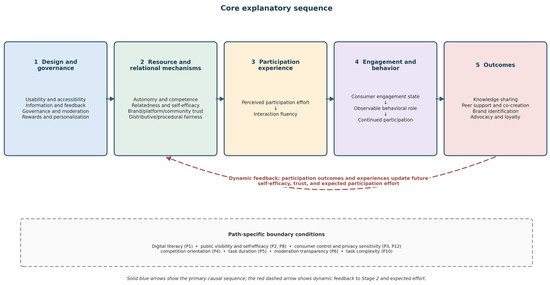
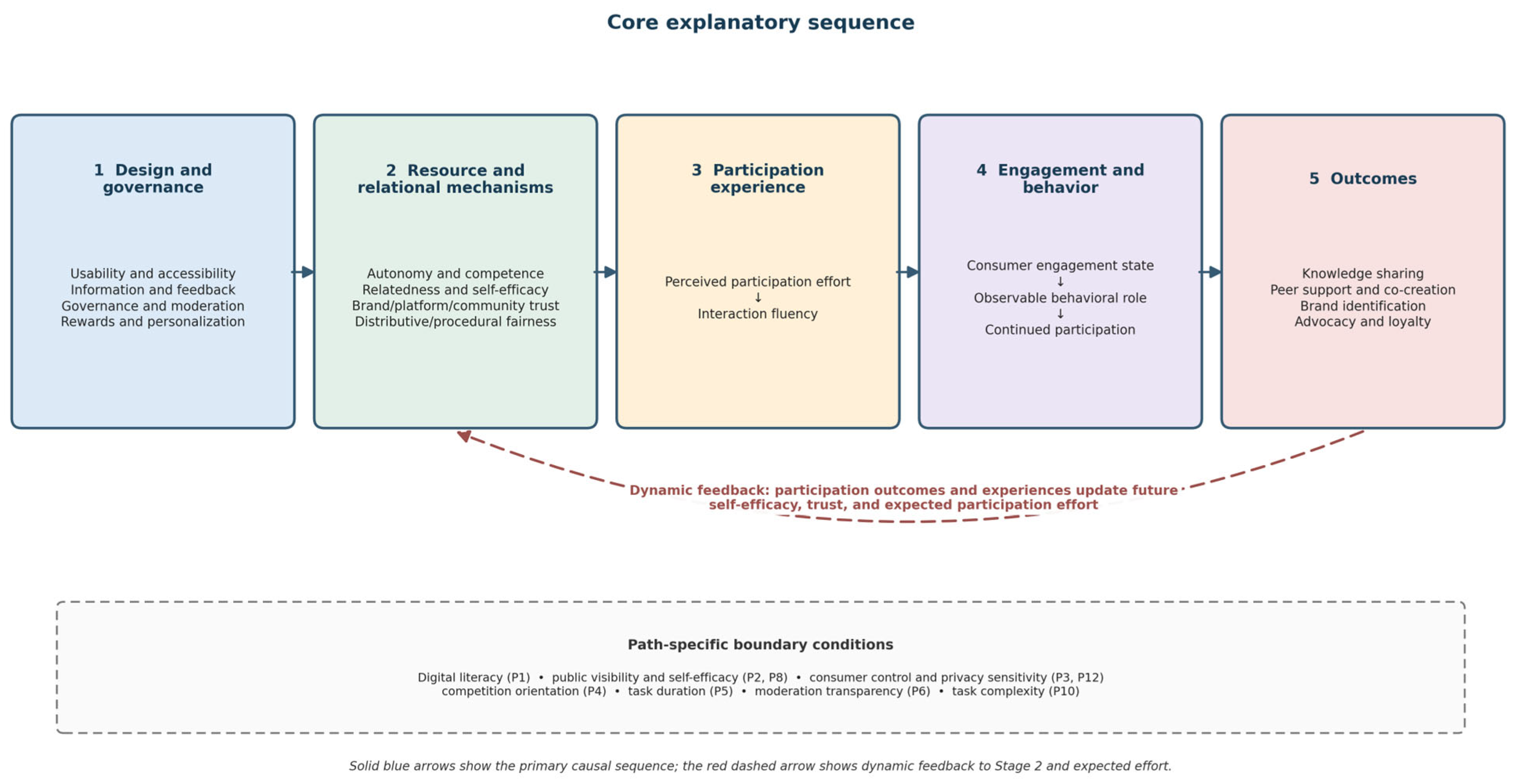

Disclaimer/Publisher’s Note: The statements, opinions and data contained in all publications are solely those of the individual author(s) and contributor(s) and not of MDPI and/or the editor(s). MDPI and/or the editor(s) disclaim responsibility for any injury to people or property resulting from any ideas, methods, instructions or products referred to in the content. |
© 2026 by the authors. Licensee MDPI, Basel, Switzerland. This article is an open access article distributed under the terms and conditions of the Creative Commons Attribution (CC BY) license.