


Abstract
Research laboratories in universities face a complex challenge: they must manage multiple projects, diverse teams, and tight deadlines, often with limited resources. While the business world has long used agile and quality management tools to navigate such complexity, these methods are surprisingly rare in academic research. In this study, we set out to bridge this gap. We implemented a combined management model, blending agile Scrum practices with proven quality tools like the Ishikawa diagram and PDCA cycle, within a pharmaceutical sciences research lab. Over a six-month period, we diagnosed key issues, created a structured action plan, and introduced an online platform to monitor progress continuously. Our approach led to a significant increase in productivity, with 65% of targeted articles being published or submitted and 75% of general lab activities completed. Perhaps just as importantly, communication improved dramatically, and the lab successfully met all its institutional deadlines. We conclude that this hybrid framework is not just a theoretical idea but a practical and powerful innovation. It provides a tangible blueprint for other research groups looking to enhance their productivity, streamline communication, and build a more adaptive and effective research culture in the face of academic complexity.
1. Introduction
Innovation in the public sector has become a central concern for governments and institutions seeking to enhance efficiency, accountability, and responsiveness to societal needs. Within higher education, research laboratories represent a strategic place for such innovation; in this context, research laboratories act as focal points for public sector innovation, combining scientific production, workforce training, and strategic resource allocation. Despite the relevance of these environments, the adoption of management and quality improvement tools remains limited, particularly when compared to their successful integration in the private sector. This gap reveals a persistent challenge in translating management innovation into the operational routines of public research institutions (Baker, 2018; Do Prado et al., 2021; Cerezo-Narváez et al., 2020; Martins & Laugeni, 2005; Briscoe & Staikoff, 2006).
Universities, as public entities, are uniquely positioned to act as laboratories for innovation in governance and administration. However, conventional management practices often prevail in research laboratories, constraining agility, collaboration, and productivity. While some public universities have implemented quality management tools in administrative and financial areas, their systematic integration into teaching and research processes remains incipient. Bridging this divide requires not only the adaptation of corporate management models but also the creation of frameworks tailored to the public mission of universities. Project management, when aligned with principles of innovation and continuous improvement, emerges as a key mechanism for transforming public research environments. Research projects, by nature temporary and outcome-oriented, demand structured yet flexible approaches that harmonize multiple domains of knowledge and ensure scientific rigor. Incorporating agile management tools into these contexts can foster transparency, participatory decision-making, and better use of public resources, aligning operational practices with broader objectives of innovation in public administration (Baker, 2018; Do Prado et al., 2021; Cerezo-Narváez et al., 2020; Martins & Laugeni, 2005; Briscoe & Staikoff, 2006).
Against this backdrop, this study adopts a practice-oriented descriptive case study approach to analyze the implementation of management tools designed to enhance productivity and coordination in university research laboratories. While offering a tangible, empirically grounded blueprint for practical application, the analysis remains informed by established theoretical frameworks from project and quality management. By bridging practical experience with conceptual insights, this work aims to contribute to the discourse on innovation strategies within the public sector, particularly in higher education and research management. The findings and reflections presented herein seek to inform policymakers, administrators, and researchers about viable pathways for institutional innovation, providing lessons that are both actionable for practitioners and conceptually relevant across disciplinary and national boundaries.
2. Theoretical Framework
The theoretical foundations of management science have evolved into what is now known as project management. It is defined as the coordinated use of knowledge, skills, tools, and techniques to deliver products, services, or results that meet predetermined goals, deadlines, and budgets (PMI, 2017). According to the PMBOK (Project Management Body of Knowledge) Guide, a project is a temporary endeavor directed towards producing a unique result, whose success depends on structured planning and the integration of different knowledge domains (Gharouni-Jafari & Noorzai, 2021).
Project management encompasses several areas (scope, schedule, cost, quality, resources, communication, risks, procurement, stakeholders, and integration) that must operate in alignment to ensure efficiency and organizational learning (Boydjian, 2019). Among these domains, Quality Management (QM) stands out as a central mechanism for achieving objectives and promoting continuous improvement in line with institutional needs (Baker, 2018). QM practices refine processes, reduce operational waste, and improve results through systematic evaluation.
2.1. Hypotheses on Exogenous Variables—Project Management and Quality Management Tools
The Ishikawa diagram, or cause-and-effect diagram, allows managers to identify and structure the main causes of a problem, facilitating evidence-based decision-making and transparency (Wong et al., 2016). The Project Breakdown Structure (PBS) complements this process, organizing complex projects into smaller, manageable components, enabling better resource allocation and a clearer definition of scope (Cerezo-Narváez et al., 2020).
Once the main problems and their causes have been identified using these tools, quality assurance techniques can be applied (in particular, the PDCA cycle). This model (Plan-Do-Check-Act) structures continuous improvement, guiding the planning, execution, verification, and standardization of actions (Martins & Laugeni, 2005).
Other instruments reinforce this structure. SWOT analysis (Strengths, Weaknesses, Opportunities, and Threats) supports strategic decisions and risk management (Longhurst et al., 2020), while the 5W2H framework (What, Who, When, Where, Why, How, and How Much) assists in building detailed and transparent action plans (Do Prado et al., 2021). The Scrum methodology introduces an agile management perspective based on short cycles (sprints), periodic evaluations, and adaptability, which improve performance in dynamic contexts, such as research laboratories (Briscoe & Staikoff, 2006). Given this theoretical context, the following hypotheses are proposed:
H1.
The adoption of structured project management tools (Ishikawa Diagram, PBS, PDCA, and 5W2H) positively influences the efficiency and organization of processes in public research laboratories.
H2.
The use of agile methodologies, such as Scrum, positively affects adaptability and collaborative performance in academic research teams.
2.2. Hypotheses on Quality Management and Innovation
Despite the consolidation of these methodologies in the private and industrial sectors, their presence in public institutions, especially in university laboratories, is still limited. Much of the scientific production in countries like Brazil occurs in public universities, where research and teaching intersect. These environments tend to follow traditional management routines based on institutional compliance, often neglecting innovation and continuous process improvement. The integration of Quality Management and agile project management tools can help these laboratories transition from bureaucratic control to a culture of innovation and performance optimization. This integration can also promote accountability, interdisciplinary collaboration, and greater alignment between research outcomes and public sector objectives (Aldenny et al., 2022; S. Fernandes et al., 2021; Prasetya & Pratama, 2021).
Based on this reasoning, the following hypotheses are proposed:
H3.
The implementation of Quality Management practices in public university laboratories has a positive effect on organizational innovation and process improvement.
H4.
The integration of Quality Management and agile project management tools contributes to greater productivity in research and professional development in public institutions.
3. Materials and Methods
3.1. Ethics Committee
To ensure a thorough practical and theoretical evaluation of the teaching and research laboratory’s current state and to assess the potential benefits of incorporating quality management tools for productivity and communication enhancement, it was essential to undertake a study involving human participants. Informed consent was obtained from all participants. Only those who consented to participate were requested to sign this form. All research protocols and procedures underwent rigorous review and received approval from the Research Ethics Committee of the School of Pharmaceutical Sciences at the University of São Paulo (protocol number 6.076.937).
3.2. Description of the Laboratory
This case study took place in a research laboratory within the field of pharmaceutical and biotechnology sciences at a public university in the state of São Paulo, Brazil. The laboratory comprises a supervisor, 10 graduate students (including three post-doctoral students, six doctoral students, and one master’s student), as well as two undergraduate students. Following an orientation session introducing the participants to project management concepts, methods, and tools, the Agile Scrum framework was implemented (Hron & Obwegeser, 2022; Neumann, 2022), with specific adaptations. The laboratory supervisor assumed the role of the “Project Owner” (PO), overseeing the project; a designated researcher responsible for implementing management techniques took on the role of the “Scrum Master” (SM); and the remaining researchers formed the “Scrum Team”. The methodology involved weekly “Sprint” meetings dedicated to presenting and analyzing deliverables, and fortnightly meetings to monitor project progress and devise new strategies. All methodologies and tools were applied collaboratively, with decisions made collectively, mediated by the “Scrum Master”, and guided by the “Project Owner”. Various approaches were employed to diagnose problems, construct an action plan centered on quality management (incorporating relevant tools), and develop an online platform to improve monitoring and communication, utilizing the following methodologies:
- ▪
- Creation of an Ishikawa Diagram: was aimed at identifying the primary productivity-related issues within the laboratory and their potential causes. This process was conducted as a group activity, involving everyone in listing the key problems hindering productivity improvement and their underlying causes. Models described in previous literature were referenced during this phase (Wong et al., 2016).
- ▪
- Construction of the WBS: aimed to identify the essential work components required to achieve the study’s objectives. Models previously outlined in the literature were employed for its development (PMI, 2017; Cerezo-Narváez et al., 2020).
- ▪
- Application of the PDCA, SWOT, and 5W2H methods: served the purpose of diagnosing challenges, monitoring progress, and leveraging opportunities. These methodologies were implemented as a group effort using the online management platform described below. The models referenced for these methods were established in prior literature (Martins & Laugeni, 2005; Longhurst et al., 2020; Do Prado et al., 2021).
- ▪
- Creation of a data management plan: the development of a data management plan aimed to systematically organize and outline the procedures for data generation, storage, protection, and accessibility. This plan was collaboratively crafted by the Scrum Master and Project Owner, addressing identified needs from earlier stages. This step holds particular significance as governmental entities funding laboratory research now seek more comprehensive data management plans.
- ▪
- Implementation of an online project management platform: an online project management platform (Monday, daPulse, Tel Aviv, Israel) was established to monitor the advancement of the implemented improvements from prior stages and to improve the communication.
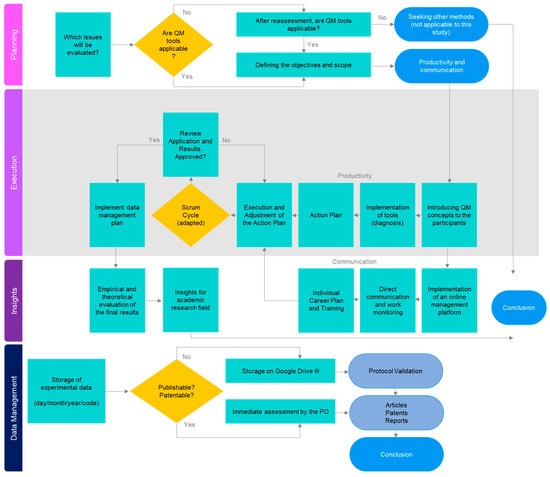
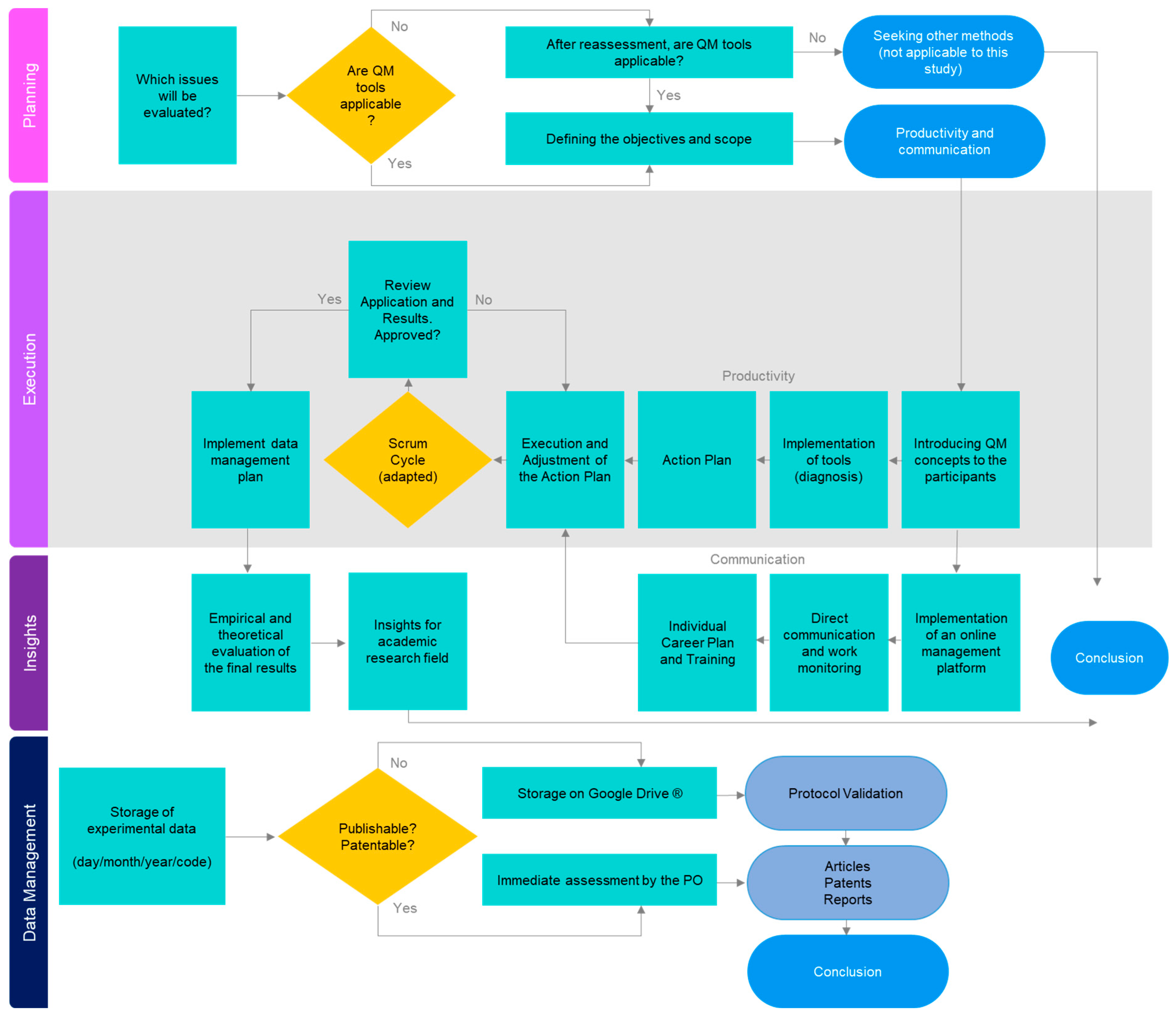
These approaches came together to establish the foundations for building the Quality Management action plan (Figure 1). Over a span of about six months, activities encompassed data collection, development of the action plan, establishment of the online work platform, and comprehensive sessions held for all research laboratory employees. The aim was to acquaint them with the fundamental concepts of the techniques, emphasize their significance, and provide guidance on their accurate application in day-to-day activities.
Figure 1.
Simplified organizational chart of the proposed management method, for application by researchers and professors in academic research laboratories. The organizational chart comprises the phases of problem and opportunity diagnosis, action plan construction, project evolution monitoring, and data management plan. QM, Quality Management.
3.3. Customer Definition
The laboratory in which the research project took place has a research funding institution as its main client and evaluator of its productivity. This institution, a public entity situated in the State of São Paulo, Brazil, primarily focuses on funding scientific research, particularly within the academic sphere. The utilization of its resources necessitates project approval, wherein the projected outcomes contribute significantly to implementing socially impactful public policies. The institution determines its priority areas and, based on these, selects projects and laboratories for funding using its specified criteria. In return for resource allocation to a project, the expectation lies in proposing solutions to socially relevant issues. The manifestation of this engagement occurs through the creation of novel channels for disseminating acquired knowledge, predominantly through the publication of research findings. To maintain confidentiality, the customer will not be explicitly identified.
3.4. Definition of “Productivity”
By delineating the client’s identity and the envisioned objectives associated with their research funding initiatives, a clear definition of “productivity” emerged as a pivotal aspect within this project. Within this framework, productivity encompasses the comprehensive outcomes derived from the execution of the research project. These outcomes can be gauged and evaluated based on the client’s criteria, incorporating the activities essential for their delivery.
- ▪
- Proposing alternatives to problems of social relevance: the essence of the project lies in its inherent purpose to generate societal benefits. It’s integral that the project is constructed with this objective at its core. Consequently, only endeavors that strictly adhere to this guideline receive approval. Given that the current project has already secured approval from the institution, it aligns seamlessly with these prerequisites. However, owing to contractual considerations, particularly pertaining to intellectual property, the project’s theme will not be elaborated upon in detail.
- ▪
- Dissemination of acquired knowledge: the concept of productivity within this project revolves around the publication of articles in international scientific journals within the research area. These articles should have a high impact factor and be classified as Q1, aiming for a substantial volume of publications.
Moreover, to sustain the project’s funding, it became necessary to fulfill fundamental criteria set by the hosting educational institution. These criteria were also considered as productivity measures, namely:
- ▪
- Compliance with institutional deadlines: productivity is defined by providing internal reports detailing the project results and presenting these findings to evaluators.
- ▪
- Delivery of renovations, purchase of inputs and monitoring/repair of equipment: productivity is perceived as overseeing the fundamental resources essential for researchers’ work. Regular monitoring commenced to ensure the availability of all inputs, proper functionality of equipment, and adherence to renewal deadlines. Each cycle marked as completed if all inputs were available, equipment operated smoothly, and deadlines were met.
Ultimately, the percentage of completed activities was calculated at the conclusion.
3.5. Theoretical Assessment
The results of the empirical evaluation were discussed based on a theoretical analysis of bibliographic data. The theoretical discussion of the results was initially conducted using knowledge from the fields of project management and personnel management. Subsequently, pedagogical aspects were also considered in this evaluation. The bibliographic data were collected from important bibliographic databases such as PubMed (www.pubmed.ncbi.nlm.nih.gov), Scielo (www.scielo.org), Scopus (www.scopus.com), and Web of Science (www.webofscience.com).
4. Results
In this section, we will address the empirical results obtained after 6 months of applying quality management tools and the action plan. Then, we will qualitatively discuss the problems, solutions, and insights that the empirical approach of this work allowed us to observe.
4.1. Diagnosing Faults and Their Causes
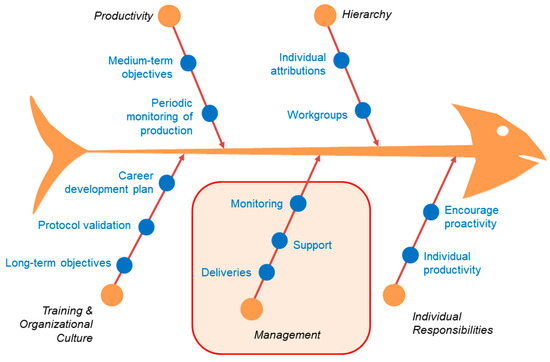
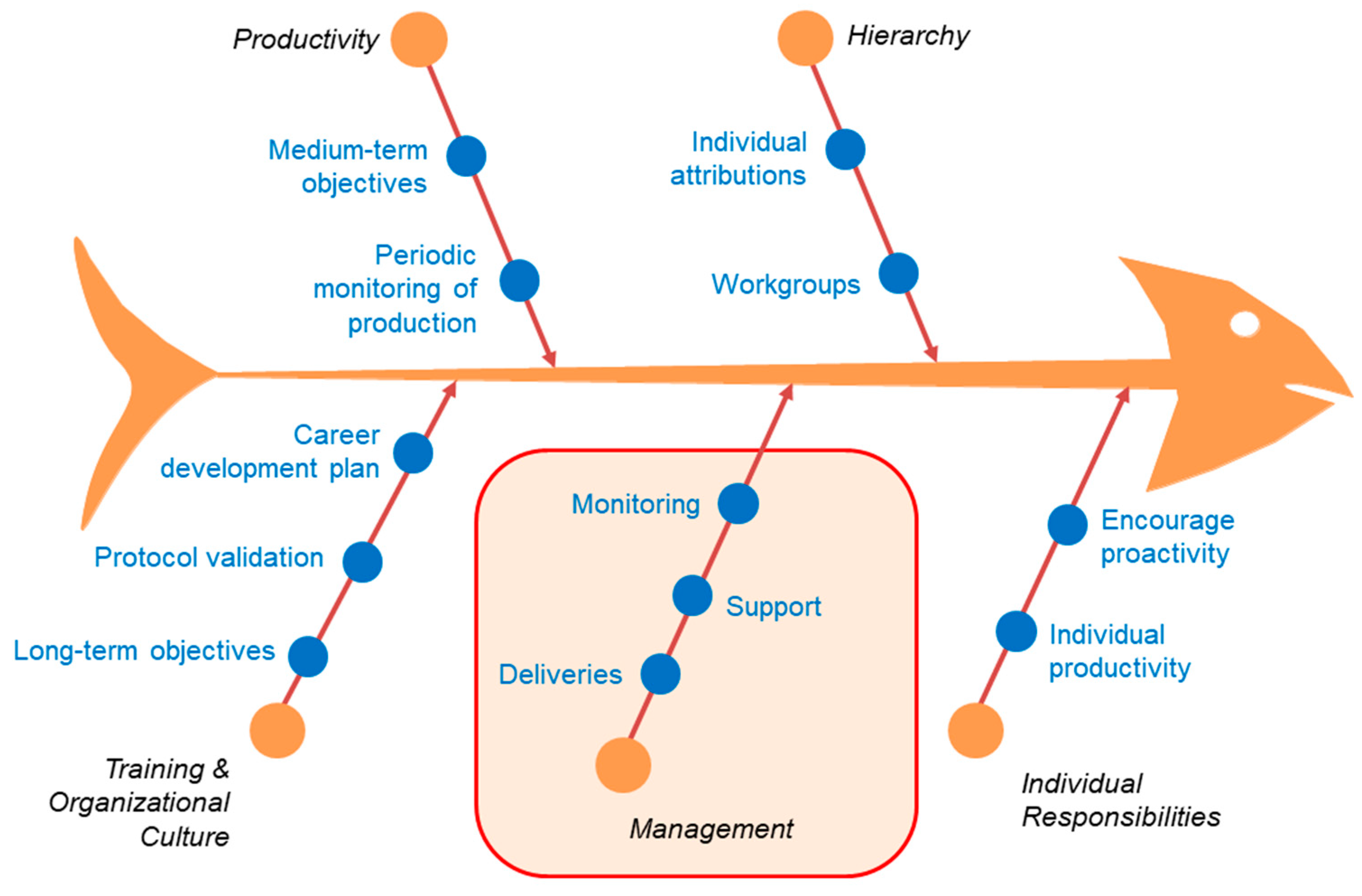
As the initial phase of this study, planning meetings were conducted, engaging all laboratory members and coordinated by the Scrum Master. In these sessions, the application of methods and tools commenced. The starting point involved utilizing the Ishikawa Diagram. During the meeting, the Scrum Master prompted the Scrum Team to identify the primary target for applying quality management techniques within the laboratory. Unanimously, it was agreed that constant improvement in productivity and communication stood out as the most crucial aspects for the growth of the laboratory and its members. Subsequently, the construction of the Ishikawa Diagram commenced with active participation from everyone. The diagram was structured into six areas with defined causes, namely: Productivity: clearly define collective and individual short/medium-term objectives; enhance periodic monitoring of production. Hierarchy: define individual attributions at a general level; establish work centers with designated leaders; ensure clear, centralized positioning on specific subjects. Management: increase monitoring of various aspects related to work; enforce rigor in meeting deadlines; develop more detailed planning for processes and deliveries. Training: create a comprehensive training plan and career development strategy for all individuals; implement and validate work protocols. Individual Responsibilities: increase personal support; gradually enhance individual productivity; eliminate non-compliance with institutional deadlines; foster proactivity. Organizational Culture: clearly define the overall objectives of the laboratory in the medium/long term; increase the participation of agents in problem solving (Figure 2).
Figure 2.
Application of the Ishikawa Diagram for diagnosing failures and opportunities.
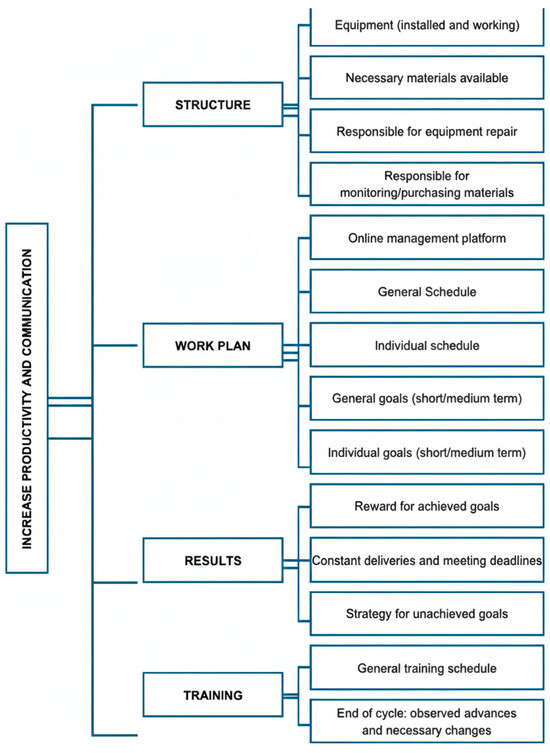
Management and communication failures were identified, primarily attributed to the absence of a tool for project and schedule control. As an initial step, comprehensive meetings were conducted with the entire laboratory team. In these sessions, the study’s objectives were elaborated in greater detail, clarifying the concept of Quality Management along with its associated tools. Emphasis was placed on the significance of leveraging an online project management tool (Monday®) and how it could facilitate the attainment of established goals at both individual and general levels. Following this initial diagnosis, the outcomes were presented and deliberated upon in a subsequent meeting, this time involving the Project Owner, Scrum Master, and Scrum Team. Subsequently, the WBS was meticulously structured (Figure 3).
Figure 3.
Work Breakdown Structure of the project and division of project work with focus on deliverables.
During this phase, once again, all laboratory members were invited to participate. The Scrum Master assumed the role of the moderator, addressing any uncertainties participants had regarding the goals of the WBS. Members were actively encouraged to engage in the construction of the WBS, with a particular emphasis on contributing to the division into deliverables and their subsequent subdivision into work packages. Through the development of the WBS, it became possible to discern the priority work fronts within the project and align them with the objectives and deadlines set by the Project Owner. These major areas were then categorized as follows:
- ▪
- Structure: encompasses the physical components essential for the proper functioning of research activities.
- ▪
- Work Plan: involves monitoring stipulated goals, meeting deadlines, and short/medium-term objectives; noted the existing targets were medium/long term, posing a risk to meeting delivery deadlines; as a solution, the approval was given for constructing an online platform (Monday®) to monitor schedules and deliveries.
- ▪
- Results/Training: encompasses the primary parameters to be evaluated, because the reason for the laboratory’s existence lies in deliveries and training; it is anticipated that the investments made will yield results beneficial to society and ensure high-quality training for students.
To conclude the diagnostic stage, the SWOT tool was employed to provide vital information for enhancing the strategic planning of the action plan. Similar to previous steps, this tool involved the participation of all individuals, with the Scrum Team proposing ideas, the Scrum Master mediating, and the Project Owner making the final decisions. The detailed outcome of the meeting applying the SWOT tool is presented in Table 1. The components related to “Strengths” and “Opportunities” were utilized to formulate the laboratory’s development strategy employing quality management tools (outlined below). Special attention was directed towards addressing the “Weaknesses” and “Threats”. Strategies to mitigate “Weaknesses” included the creation of schedules for the delivery of activities/products at both general and individual levels. Additionally, weekly lectures and discussions with the Scrum Team emphasized the importance of quality management tools. To address “Threats”, the approach involved constant monitoring and heightened attention to schedule delays. Furthermore, consistent presentation of responses to criticism and suggestions from specialists was implemented.
Table 1.
Application of the SWOT tool.
The subsequent phase of the study progressed through the construction of strategies using the PDCA method, divided into four stages. The objectives of each stage and the corresponding activities undertaken to achieve them are detailed in Table 2. To guarantee the successful application of the PDCA method, the 5W2H tool was employed for precise planning, as detailed in Table 3.
Table 2.
PDCA method according to project specifics.
Table 3.
Application of the 5W2H tool.
4.2. Data Management Plan
To ensure the preservation and integrity of the data obtained during the project’s execution, as well as the accurate dissemination of its results, a data management plan was formulated. Critical aspects for proper management, including the dissemination and valuation of data at every stage, were considered (from project conception to the completion of planned activities). The management plan encompassed the following steps: build, archive, share, and secure (Figure 1). All laboratory data was stored in Google Drive (Google®). The implementation of this procedure noticeably enhanced access to protocols, results of previous research, and other relevant documents for laboratory researchers. This approach significantly reduced the time that would have been otherwise spent searching for necessary data. The improved organization of laboratory data appears to be a factor directly contributing to the enhanced laboratory productivity compared to the six months preceding the implementation of this Quality Management plan. Moreover, the impact extended to individual productivity, with none of the researchers or students missing a deadline for delivering their institutional reports. It is crucial to note that the laboratory has a comprehensive data management plan, providing guidelines on how researchers should handle their data during and after a project. The plan encompasses the creation, sharing, and preservation of research data of any kind.
4.3. Online Management Platform
At the conclusion of the planning phase, this work and its results were presented first to the Project Owner and subsequently to the collaborators. This ensured that everyone was well-informed about the methods and tools that would be employed moving forward. The online project management platform was also introduced, addressing all queries raised by researchers. The platform, collaboratively constructed by the Scrum Master and the Project Owner, underwent an experimental application scheduled for six months. To facilitate this, the primary work fronts and the schedule, both at the general and individual levels, were enumerated. The platform was structured into four main work areas, namely:
- ▪
- General Activities: intended for general laboratory activities, including replacement/repairs, material procurement, development/validation of new protocols, equipment installation, etc.; constructed based on specific meetings with all laboratory employees, where workplace demands were gathered through discussions.
- ▪
- Publications and Reports: dedicated to the project’s products, such as articles, reports, and patents; enables monitoring of all products, their respective phases, delivery dates, and responsible parties; established after a meeting between the Scrum Master and the Project Owner, where publication goals for the semester, as well as general and individual project deadlines, were defined.
- ▪
- Individual Projects: aims to monitor progress/delays at the level of individual projects, specifically academic research projects crucial for employees to obtain academic titles.
- ▪
- Protocols and Documents: designed for the storage and easy access of all knowledge produced and validated by the laboratory; contains validated protocols, reference articles, reagent leaflets, equipment manuals, and a list of working materials available in the laboratory; constructed through the Scrum Master’s inventory of all protocols, products, equipment, and reference articles/theses used in the laboratory.
4.4. Empirical Evaluation of the Results After 6 Months of Assessment
After a six-month period during which quality management tools were applied, particularly the utilization of the online management platform, the following results pertaining to the Ishikawa Diagram were observed:
- ▪
- Efficiency: productivity objectives, encompassing publication of articles, approval of reports by government research funding agencies, and implementation of reforms, were collectively listed, detailing the responsible parties and their respective delivery schedules. Additionally, individual objectives tied to scientific article publication and report submissions to the university were also outlined, along with their accountable parties and deadlines (Figure 1). Progress was tracked by monitoring adherence to these schedules through weekly and fortnightly meetings.
- ▪
- Hierarchy: establishing a clear hierarchy, we defined levels of authority: from the general coordinator to postdoctoral, doctoral, master’s, and undergraduate students. Three working groups, spearheaded by our laboratory’s three postdoctoral students, were formed. Critical decisions on pivotal matters were designated to the general coordinator during bi-weekly meetings.
- ▪
- Management: regarding management, the integration of an online platform amplified project oversight and adherence to schedules.
- ▪
- Training: for training, a monthly regimen for presentations and skill showcases was instituted. These sessions featured student presentations evaluated by external professors. This initiative aimed to foster knowledge exchange among teachers and validate all laboratory protocols, accessible on our online platform. Future studies will integrate career planning into this structure.
- ▪
- Individual responsibilities: were fortified through the creation of working groups and the management platform. Weekly monitoring of deadlines led to increased productivity and timely deliveries, ensuring no missed institutional deadlines during the study period.
- ▪
- Organizational Culture: addressing organizational culture, while acknowledging its complexity and requiring a longer resolution period, this facet was not the primary focus. It will merit attention in future studies, evaluating outcomes post-implementation of our new methodologies.
Likewise, the following WBS-related results were observed:
- ▪
- Structure: a comprehensive schedule outlining equipment maintenance and repair was established. Specific individuals were assigned responsibility for monitoring equipment requiring repairs and identifying the need for new supplies.
- ▪
- Work Plan: detailed schedules were devised both at a general level and for individuals, each aligned with their respective objectives.
- ▪
- Results/Training: consistent progress and goal attainment were ensured through weekly meetings and utilization of the management platform. To address unmet goals, a strategy was implemented: any overdue objectives would immediately be elevated to priority status for the responsible individual (at an individual level) or the group (at a collective level).
Regarding the online management platform, the following results were observed:
- ▪
- General Activities: the primary achievement in this area was guaranteeing optimal working conditions for all employees, thereby preventing time and material wastage. Immediate communication with the Project Owner upon encountering new issues streamlined laboratory communication, reducing repair and material procurement time that could potentially impact productivity. Over the 6-month tool implementation period, 27 out of 36 proposed activities were successfully completed (75%). The remaining activities couldn’t be finished due to external factors, particularly replacements contingent upon resource allocation by the university.
- ▪
- Publications and Reports: the major accomplishment in this domain was streamlining progress tracking and adherence to action plans, ensuring timely project completions and deliveries. At the conclusion of the 6-month tool implementation, 15 out of 23 planned articles either were published or submitted (65%). Additionally, the laboratory’s production report for a research funding institution received approval.
- ▪
- Individual Projects: the primary achievement in this aspect was enhancing the oversight of progress and potential delays within individual projects, ensuring the success of each employee’s initiatives. Simultaneously, it facilitated real-time progress monitoring for the Project Owner, aiding in identifying employees requiring additional support.
- ▪
- Protocols and Documents: the major achievement in this domain was standardizing work procedures, significantly reducing the likelihood of errors and delays in execution.
Our experience after 6 months of work left us convinced that a structured approach to Quality Management has enormous potential to improve the productivity, the quality of research and enhance communication.
5. Discussion
5.1. The Limited Use of Management Tools in Academic Research Represents a Loss of Opportunities
By enhancing productivity and communication through valuable project management knowledge among laboratory students, this strategic approach not only increased operational efficiency but also enriched academic training. After six months, it was possible to verify that there is a significant opportunity for improvement in university research laboratories through the adoption of Quality Management techniques. Similarly, we believe that the insights gained in this case study provide valuable guidance for researchers worldwide seeking to optimize efficiency in their research laboratories. In the context of academic research, scientific production should always be associated with the technical and theoretical training of undergraduate and graduate students. Since research and teaching are tied to their respective fields of activity, management methods tend to be more traditional, as researchers in non-Management-related areas, such as biomedical sciences, generally have little or no knowledge in the field of management. Perhaps this is the explanation for one of the scenarios observed during this study. We found that, although quality management methodologies are widely applied in private companies (Aldenny et al., 2022; S. Fernandes et al., 2021; Campbell et al., 2020; Prasetya & Pratama, 2021), they are seldom used in academic research. Given that a substantial portion of scientific production in various countries, such as Brazil, comes from university research laboratories, this scenario could represent a significant loss of resources and opportunities for universities, professors, and researchers. This scenario was also observed in the theoretical evaluation phase of the results obtained in this case study. A quick search in major literary databases reveals that the number of studies evaluating the benefits of using quality management methods in research laboratories is quite limited. However, we see the current scenario as a window of opportunity, as after six months of implementing management methods, we observed a substantial increase in productivity, improved communication, and compliance with institutional deadlines.
5.2. The Role of Management in the Field of Academic Research
Productivity stands as a paramount parameter for success within a university research laboratory, directly linked to the creation of knowledge, technologies, and their dissemination through articles, theses, and patents. Therefore, the main focus of this study was on the application of Quality Management techniques to increase the productivity of a research laboratory. Understanding that communication is a key element in achieving this goal, we also included communication improvements as one of the targets of this study.
The Ishikawa Diagram, one of the methodologies used, is a valuable and easily applicable tool whose role in the preliminary stages was to identify the laboratory’s weaknesses. According to Wong et al. (2016), the Ishikawa Diagram allows for unraveling, organizing, and understanding the demands of a public to establish connections between an “effect” and its potential “causes”. Through this analysis, it became evident that most productivity-related problems were associated with management and communication deficiencies, particularly the absence of a unified tool for schedule control, goal setting, and short/medium-term results, both collectively and individually. At this stage, it was possible to observe in practice a scenario that we had already mentioned in the introduction of this article, the low or almost non-existent application of management tools in the context of academic research in areas unrelated to management sciences. This is in line with the findings of Campbell et al. (2020), where poor communication and management failures are regarded as the main causes of decreased productivity in various work environments. The authors noted that implementing measures that promote employee engagement can significantly increase productivity. Therefore, based on this empirical evidence and also on the literature reports, we decided that, in addition to the action plan, the implementation of an online project management platform would be necessary.
Other tools used in this study, such as WBS, PDCA, and 5W2H, yielded positive results in structuring the action plan based on the diagnoses made in the previous stage and can be useful for researchers who also seek efficiency in their laboratories. According to Cerezo-Narváez et al. (2020), the WBS serves to divide tasks into deliverables and further segment them into manageable units, emphasizing project hierarchy and requirements. Due to its deliverable-focused structure, the WBS becomes indispensable for shaping project scopes during the initial phases, as emphasized in previous literature. In other words, the WBS can be useful for charting a clearer path to set objectives (which often may seem large or unattainable). Through it, researchers can define intermediate steps, or the “step-by-step” of a more solidified and easily understandable and manageable strategy. Thus, global objectives can be achieved through coordinated small advances. G. Fernandes et al. (2018) conducted a study similar to ours but aimed to identify and propose a hybrid management approach adapted to meet the needs of the research and development sector in the university-industry spectrum. Among the various methods cited, they highlighted the importance of the WBS as a versatile tool, applicable in various contexts in the university-industry interface. They emphasized its extended benefits when combined with project monitoring software, directly influencing project deadlines compliance.
Another example is the PDCA, SWOT and 5W2H tools, considered vital, and with accessible application even for non-specialists in the management field, to increase the chances of achieving the expected results of an action plan. Do Prado et al. (2021) highlighted in their work the numerous advances observed in their projects after the development of a data management plan. In the field of academic research, public and private institutions funding research projects increasingly require researchers to provide a management plan for their projects. Specific requirements vary among institutions, but generally, scientists must outline, before commencing the research, how the project will be carried out, timelines, necessary resources, the data to be collected, how it will be recorded, described, stored, and securely evaluated, and specify post-investigation access (Schiermeier, 2018). Therefore, it is possible to assert that researchers who do not associate their projects with management methods not only have a greater chance of not achieving their objectives but also now have fewer chances of obtaining financial resources for their laboratories.
During the months of executing this work, another important parameter consistently emphasized by researchers was the need to ensure confidence in the results of laboratory research. To achieve this, it is necessary to ensure greater traceability of data, safeguarding the quality of results destined for future social impact. Therefore, the use of management tools can be a viable solution to address this issue, particularly through data management. The concern of the research group in which this project was applied reflects a global scenario. The international scientific community has been facing a reproducibility crisis in recent years, often attributed to factors such as the absence of a data management plan, pressures for increasing numbers of new publications and patents, limited statistical knowledge, and inadequate supervision. On the other hand, effective organization, adequate technical training, and adherence to management practices can improve project quality, streamline workflows, prevent errors, and ensure data traceability (Baker, 2018).
During this project, it was also possible to confirm a scenario already described in the literature, that research laboratories in universities mainly utilize traditional management methods. Considering that research in the biomedical sciences area requires great adaptability and constant reorganization, the use of traditional management methods can lead to significant losses. This study observed that replacing traditional methods with agile management methods proved to be crucial in advancing productivity rates, with the online management platform serving as the cornerstone for these changes. However, academic laboratories encounter multiple barriers when attempting to adopt and implement new methodologies and best practices (Adamo et al., 2012; Timóteo et al., 2021). Timóteo et al. (2021) suggest that online management platforms in academic environments should explore tools that facilitate goal supervision and compliance. In this context, digital systems stand out as essential tools for efficient management. Information management systems for laboratories, especially online management platforms, offer databases and automation resources that enable the tracking and secure storage of experimental data. These tools provide comprehensive solutions for laboratory management, addressing various aspects of quality assurance related to communication, personnel, scheduling and equipment maintenance, standard procedures, and inventory control, all integral components of a laboratory workflow (Timóteo et al., 2021). Gulden et al. (2020) emphasize the perpetual pressure that universities face from various sectors (political, economic, and social) and suggest that the implementation of quality management practices can improve internal organization, streamline processes, generate better results, and attract investments. Gunasekaran et al. (2019) state that the adoption of quality management tools has become increasingly imperative in the current dynamic scenario, given the continuous changes in markets, business paradigms, technologies, and human dynamics. Nasim et al. (2020) emphasize that the use of management methods is essential for universities, as institutions of higher education operate in a highly competitive sphere, with diverse external influences and markedly distinct from other sectors, such as industries.
The role of management in the university setting is notably challenging, requiring a differentiated application of quality management tools that meet the specificities of each institution. Therefore, the use of tools that allow for accurate diagnosis of the problem is crucial. Many researchers who have introduced quality management tools into their laboratories wonder why these methodologies have not permeated academia (particularly in university research laboratories) on a larger scale. Unlike clinical practice and pharmaceutical R&D, where quality management tools are widely used, they remain relatively unknown in pre-clinical research laboratories. The discrepancy lies in the considerable investments in R&D in the pharmaceutical industry, requiring meticulous planning to achieve optimal results, maximum profit, and compliance with various health regulations. This makes it a highly competitive sector, where not using management methods represents an implicit risk. In contrast, university scientists typically do not use quality management methods or even project management methods. Additionally, most existing quality management systems have been adapted for businesses or service providers, limiting their applicability and making it difficult to integrate them into university environments (we will discuss more about this topic below) (Dirnagl et al., 2018). After six months of implementing this project, we can affirm that Quality Management in the academic context should: (a) be conducted by a project manager who has knowledge of the particularities of the university environment; (b) incorporate specific characteristics, such as scalability and adaptability to the research environment, sustainability, alignment with daily laboratory practices, encompassing both general and specific aspects; (c) foster more transparent and reliable research.
5.3. The Challenges of Applying Management Techniques in the Field of Academic Research
As one of the objectives of this work is to ensure that the results described here can serve as a guide for other researchers, it is also necessary to discuss the challenges that the implementation of such tools may pose, especially for non-management specialists. Among the potential challenges, we can mention: compatibility of tools/methodologies with research laboratories, complexity, costs, and training needs. Management tools are generally built to serve both large and small projects in different contexts. In order for this study to serve as a guide for other researchers, we chose to use only simple, free, and effective tools/methodologies for the context of academic research. Also for this reason, we provided a complete description of the purpose of each tool/methodology and how to apply them, as this study is also aimed at professionals who may not have a background in management. During the initial phase of this project, in which we introduced basic management concepts to the students and researchers in the laboratory that would be used in this project, we noticed that a large portion of them had no knowledge about the subject. This seems to be merely a reflection of the field of education of these professionals (biomedical sciences). However, after this period, we noticed that everyone quickly understood the importance of the management tools/methodologies that would be used, and when productivity results and, especially, communication among researchers significantly improved, everyone truly understood how academic research can be positively affected by the use of quality management.
However, in more complex cases where the use of other tools/methodologies is necessary, there may be a need for a more thorough analysis by a professional with knowledge in the field of management to understand which tools may be useful according to the specificities of each project. In these cases, without the analysis of a management professional, the application of a certain tool/methodology may add unnecessary complexity to a research project (Vidal & Marle, 2008). Depending on the tool applied, there may also be an increase in project costs, as many of these management tools have subscription fees or require purchasing a license for their use, which can generate extra financial burdens for researchers. In this study, we used an online management tool in its free version. We observed that, even with limitations, its use was suitable for this context (small laboratory, group communication, and overall laboratory management).
Even with the use of appropriate tools/methodologies, we observed significant limitations that need to be discussed, such as the learning curve and data security concerns. In this project, it was only possible to observe good results through monitoring over a longer period (six months). This is because, even with the application of the correct tool/methodology, there is a learning curve that needs to be observed. It is common for students and researchers, who are usually not accustomed to using these tools, to be careless in the early stages of the project. We observed that many of them only truly embraced this new form of organization when the results were already more evident, which takes time. Thus, a paradox arises: if project managers are not engaged in the application of the tools/methodologies during the initial phase, there will be no real improvement; by not observing such changes, the group of students tends not to adhere to the new practices, which can result in the project’s failure. Similarly, researchers may express concerns about the security of data stored in management tools, especially regarding the results of research in innovative fields with high competitiveness. Therefore, it is necessary to choose tools committed to protecting the data of their clients (King & Jessen, 2010).
5.4. Applications of Management Tools in the Context of Academic Research
Zhang et al. (2019) argued that traditional teaching methods in universities are no longer sufficient to meet the demands of the market, forcing universities to face numerous new challenges. They proposed implementing new process control methods, focusing on Quality Management. From the results of the empirical analysis, it was possible to determine that management methods can efficiently be applied in the academic context as valuable pedagogical tools.
The activities performed in academic research should be interconnected by the production of science and the technical and social training of students (Correio & Correio, 2017; Limoges et al., 1994). Therefore, the use of management knowledge in the context of academic research can play an important role in improving the quality and efficiency of universities. In addition to improving task planning and execution, it facilitates data analysis, review, and monitoring of researchers’ personal development. Furthermore, it also allows professors and laboratory heads to simplify their work—these individuals are generally responsible for multiple functions, such as teaching, leading their research groups, managing resources, and being accountable to their funders (Martín-Sómer et al., 2024; Ngo, 2023; Koretsky et al., 2018; Zamaletdinov et al., 2016). In the months when we applied the action plan, this was one of the main findings we observed. With the application of the tools, especially the online management platform, the laboratory leader could quickly and effectively improve project monitoring, communicate with students more easily, monitor work (both overall and personal levels), and establish new objectives based on the insights generated by the platform in real-time. On the other hand, by feeling that their academic supervisor was more present in solving their project problems, students felt more confident, optimized their time better, and the result was observed in the substantial number of articles published during the study period.
Management tools can be integrated into pedagogical practices in various ways to enhance the teaching, learning, and research processes developed in academic laboratories (Tynjälä & Häkkinen, 2005; Júnior et al., 2020). We observe that the role of management tools in active learning within the pedagogical process of undergraduate and graduate education, such as guided inquiry practices, can significantly affect student engagement and learning outcomes. Guided inquiry activities provide support to help students engage in scientific practices and problem-solving, contributing to a more interactive and productive learning environment. Overall, integrating management tools into pedagogical practices involves leveraging innovative teaching methodologies, active learning strategies, and researcher management tools to create engaging, effective, and impactful learning experiences for students in various disciplines (Koretsky et al., 2018). Therefore, management can be useful and applicable even in areas unrelated to administration, with good results observed in all aspects evaluated in this study.
6. Conclusions
In the landscape of innovation in the public sector, scientific research laboratories in universities represent a critical, yet often neglected, point. They are engines of knowledge production and important training centers for future talent. However, they frequently operate with traditional management practices, leading to inefficiencies that can hinder productivity and impede the fulfillment of their public mission. This case study addressed this gap by proposing and implementing a hybrid framework of Agile Management and Quality Management in a public academic research laboratory. Our findings demonstrate that the systematic application of quality management principles, uncommon in academic environments, can significantly increase operational effectiveness. The development of a clear strategy, along with the introduction of a structured action plan and a dedicated online management platform, led to tangible improvements in a short period. Specifically, the framework resolved central problems of project monitoring, deadline compliance, and communication at multiple levels, fostering a new, more responsive organizational culture. The success of this initiative offers a compelling model for innovation in the public sector. By adopting and adapting management tools proven in the corporate world, public research laboratories can achieve higher levels of productivity. The implementation of the online data and personnel management platform laid the foundation for a modern approach to the flow of scientific productions, quality control, improved internal communication, and compliance with project schedules and institutional report deadlines. Furthermore, it was observed that this managerial innovation creates significant multiplier effects. The structured environment provides students and researchers with invaluable experience in modern project management methodologies, enriching their academic training and expanding their career prospects in both academia and industry. For the laboratory manager (a public servant with teaching, research, and administrative duties), this framework acts as a force multiplier. It optimizes the time spent on management, allowing for more efficient monitoring of student work and development, which can be seen as an innovative pedagogical strategy enabled by a superior management system. In conclusion, this study provides a practical and viable plan for increasing productivity and communication in public research institutions. We believe that sharing this experience offers a valuable reference for professors and researchers who lead similar laboratories. By adopting these management innovations, public universities can unlock the full potential of their research units, ensuring that they are more effective, communicative, and better equipped to fulfill their dual mission of advancing knowledge and educating the next generation.
Author Contributions
Conceptualization, W.A.P. and D.M.; Methodology, W.A.P.; Formal analysis, G.M. and E.G.F.V.; Investigation, W.A.P. and G.M.; Data curation, E.G.F.V. and R.P.d.S.O.; Project administration, R.P.d.S.O.; Funding acquisition, R.P.d.S.O. All authors have read and agreed to the published version of the manuscript.
Funding
This research was funded by the São Paulo Research Foundation (FAPESP) [grant numbers 2018/25511-1, 2022/07543-9]; Fund for the Promotion of Scientific and Technological Development of ANID, FONDECYT INICIACIÓN [grant number 11230690] Chile and the National Council for Scientific and Technological Development (CNPq) [grant number 304635/2025-1].
Institutional Review Board Statement
The study was conducted in accordance with the Declaration of Helsinki and approved by the Ethics Committee of the University of São Paulo (protocol code 6.076.937), date 23 May 2023.
Informed Consent Statement
Informed consent was obtained from all subjects involved in the study.
Data Availability Statement
Data available on request from the corresponding author.
Conflicts of Interest
The authors declare no conflicts of interest.
References
- Adamo, J. E., Bauer, G., Berro, M. M., Burnett, B. K., Hartman, K. A., Masiello, L. M., Moorman-White, D., Rubinstein, E. P., & Schuff, K. G. (2012). A roadmap for academic health centers to establish good laboratory practice–compliant infrastructure. Academic Medicine, 87(3), 279. [Google Scholar] [CrossRef] [Scilit] [PubMed]
- Aldenny, M., Kristian, H., Gaol, F. L., Matsuo, T., & Nugroho, A. (2022). The implementation of Failure Mode and Effects Analysis (FMEA) of the information system security on the government electronic procurement service (LPSE) system. In Pervasive computing and social networking (Vol. 317). Springer. [Google Scholar] [CrossRef] [Scilit]
- Baker, B. (2018). Project quality management practice & theory. American Journal of Management, 18(3), 10–17. [Google Scholar] [CrossRef] [Scilit]
- Boydjian, J. C. (2019). Gestão de Projetos: Conhecendo os grupos de processo e suas áreas de conhecimento [Project Management: Understandin process groups and their knowledge areas] (1st ed.). Série Didática, PECEGE. (In Portuguese) [Google Scholar]
- Briscoe, T. J., & Staikoff, R. L. (2006, October 21–24). PMBOK® Guide versus SCRUM mastery: Points of convergence and divergence. PMI® Global Congress 2006—North America, Seattle, WA, USA. [Google Scholar]
- Campbell, S., Campbell-Phillips, S., & Phillips, D. (2020). Lack of communication between management and employees. SIASAT, 5(3), 32–39. [Google Scholar] [CrossRef] [Scilit]
- Cerezo-Narváez, A., Pastor-Fernández, A., Otero-Mateo, M., & Ballesteros-Pérez, P. (2020). Integration of cost and work breakdown structures in the management of construction projects. Applied Sciences, 10(4), 1386. [Google Scholar] [CrossRef] [Scilit]
- Correio, S. M., & Correio, B. G. A. C. (2017). About social innovation: Epistemological, technical, theoretical and methodological considerations on the academic production from 2008 to 2012. Revista de Administração da Universidade Federal de Santa Maria, 10, 1122–1136. [Google Scholar]
- Dirnagl, U., Kurreck, C., Castaños-Vélez, E., & Bernard, R. (2018). Quality management for academic laboratories: Burden or boon? EMBO Reports, 19(11), e47143. [Google Scholar] [CrossRef] [Scilit]
- Do Prado, M. B., Júnior, J. D. S. F., Raphanhin, J. F., & Sarreta, M. D. Â. M. (2021). Determinação e gestão de causas raízes de falhas e proposta de melhoria por meio do 5W2H no setor de atendimento de uma pizzaria em Minas Gerais. Brazilian Journal of Business, 3(4), 3295–3305. [Google Scholar] [CrossRef] [Scilit]
- Fernandes, G., Moreira, S., Araújo, M., Pinto, E. B., & Machado, R. J. (2018). Project management practices for collaborative university-industry R&D: A hybrid approach. Procedia Computer Science, 138, 805–814. [Google Scholar] [CrossRef] [Scilit]
- Fernandes, S., Dinis-Carvalho, J., & Ferreira-Oliveira, A. T. (2021). Improving the performance of student teams in project-based learning with Scrum. Education Sciences, 11(8), 444. [Google Scholar] [CrossRef] [Scilit]
- Gharouni-Jafari, K., & Noorzai, E. (2021). Selecting the most appropriate project manager to improve the performance of occupational groups in road construction projects in warm regions. Journal of Construction Engineering and Management, 147(10), 04021131. [Google Scholar] [CrossRef] [Scilit]
- Gulden, M., Saltanat, K., Raigul, D., Dauren, T., & Assel, A. (2020). Quality management of higher education: Innovation approach from perspectives of institutionalism. Cogent Business & Management, 7(1), 1749217. [Google Scholar] [CrossRef] [Scilit]
- Gunasekaran, A., Subramanian, N., & Ngai, W. T. E. (2019). Quality management in the 21st-century enterprises: Research pathway towards Industry 4.0. International Journal of Production Economics, 207, 125–129. [Google Scholar] [CrossRef] [Scilit]
- Hron, M., & Obwegeser, N. (2022). Why and how is Scrum being adapted in practice: A systematic review. Journal of Systems and Software, 183, 111110. [Google Scholar] [CrossRef] [Scilit]
- Júnior, N. N. T., Periotto, T. R. C., Bernardelli, F. R. T., & Urpia, A. G. B. D. C. (2020). Learning channels and knowledge management tools and practices in vocational training. Revista Alcance, 28(3), 315–323. [Google Scholar] [CrossRef] [Scilit]
- King, N. J., & Jessen, P. W. (2010). Profiling the mobile customer: Is industry self-regulation adequate to protect consumer privacy when behavioural advertisers target mobile phones? Part II. Computer Law & Security Review, 26(6), 595–612. [Google Scholar]
- Koretsky, M., Keeler, J., Ivanovitch, J., & Cao, Y. (2018). The role of pedagogical tools in active learning: A case for sense-making. International Journal of STEM Education, 5(1), 18. [Google Scholar] [CrossRef] [Scilit]
- Limoges, C., Scott, P., Schwartzman, S., Nowotny, H., & Gibbons, M. (1994). The new production of knowledge: The dynamics of science and research in contemporary societies. Sage Publications. [Google Scholar]
- Longhurst, G. J., Stone, D. M., Dulohery, K., Scully, D., Campbell, T., & Smith, C. F. (2020). Strength, weakness, opportunity, threat (SWOT) analysis of the adaptations to anatomical education in the UK and Ireland in response to the COVID-19 pandemic. Anatomical Sciences Education, 13(3), 301–311. [Google Scholar] [CrossRef] [Scilit]
- Martins, P. G., & Laugeni, F. P. (2005). Administração da produção [Production Management] (2nd ed.). Saraiva. ISBN 9788502046160. (In Portuguese) [Google Scholar]
- Martín-Sómer, M., Casado, C., & Gómez-Pozuelo, G. (2024). Utilising interactive applications as educational tools in higher education: Perspectives from teachers and students, and an analysis of academic outcomes. Education for Chemical Engineers, 46, 1–9. [Google Scholar] [CrossRef] [Scilit]
- Nasim, K., Sikander, A., & Tian, X. (2020). Twenty years of research on total quality management in higher education: A systematic literature review. Higher Education Quarterly, 74(1), 75–97. [Google Scholar] [CrossRef] [Scilit]
- Neumann, M. (2022). The integrated list of agile practices—A tertiary study. In International conference on lean and agile software development (pp. 19–37). Springer International Publishing. [Google Scholar]
- Ngo, T. T. A. (2023). The perception by university students of the use of ChatGPT in education. International Journal of Emerging Technologies in Learning, 18(17), 4–19. [Google Scholar] [CrossRef] [Scilit]
- Prasetya, K. D., & Pratama, D. (2021). Effectiveness analysis of distributed Scrum model compared to waterfall approach in third-party application development. Procedia Computer Science, 179, 103–111. [Google Scholar] [CrossRef] [Scilit]
- Project Management Institute (PMI). (2017). Guia PMBOK®: A guide to the project management body of knowledge (6th ed.). Project Management Institute. [Google Scholar]
- Schiermeier, Q. (2018). For the record: Making project data freely available is vital for open science. Nature, 555(7696), 403–405. [Google Scholar] [CrossRef] [Scilit]
- Timóteo, M., Lourenço, E., Brochado, A. C., Domenico, L., da Silva, J., Oliveira, B., & Alves, G. (2021). Digital management systems in academic health sciences laboratories: A scoping review. Healthcare, 9(6), 739. [Google Scholar] [CrossRef] [Scilit]
- Tynjälä, P., & Häkkinen, P. (2005). E-learning at work: Theoretical underpinnings and pedagogical challenges. Journal of Workplace Learning, 17(5/6), 318–336. [Google Scholar] [CrossRef] [Scilit]
- Vidal, L. A., & Marle, F. (2008). Understanding project complexity: Implications on project management. Kybernetes, 37(8), 1094–1110. [Google Scholar] [CrossRef] [Scilit]
- Wong, K. C., Woo, K. Z., & Woo, K. H. (2016). Ishikawa diagram. In Quality improvement in behavioral health (pp. 119–132). Springer. [Google Scholar] [CrossRef] [Scilit]
- Zamaletdinov, R. R., Kuznetsov, I. A., Sakharova, N. S., Gladkikh, V. G., & Erofeeva, N. E. (2016). Pedagogical tools of professional ideals management of modern student. International Review of Management and Marketing, 6(2), 364–369. [Google Scholar]
- Zhang, M., Liu, Z., Cao, J., Yuan, H., & Wang, C. (2019). Application of PDCA cycle in quality management of mechanical experiment teaching in colleges and universities. DEStech Transactions on Social Science, Education and Human Science, 4, 1–5. [Google Scholar] [CrossRef] [Scilit] [PubMed]

Disclaimer/Publisher’s Note: The statements, opinions and data contained in all publications are solely those of the individual author(s) and contributor(s) and not of MDPI and/or the editor(s). MDPI and/or the editor(s) disclaim responsibility for any injury to people or property resulting from any ideas, methods, instructions or products referred to in the content. |
© 2026 by the authors. Licensee MDPI, Basel, Switzerland. This article is an open access article distributed under the terms and conditions of the Creative Commons Attribution (CC BY) license.